EP1031233B1 - Verfahren und vorrichtung zur leitweglenkung eines fernsprechanrufs durch ein rechnernetzwerk - Google Patents
Verfahren und vorrichtung zur leitweglenkung eines fernsprechanrufs durch ein rechnernetzwerk Download PDFInfo
- Publication number
- EP1031233B1 EP1031233B1 EP98959861A EP98959861A EP1031233B1 EP 1031233 B1 EP1031233 B1 EP 1031233B1 EP 98959861 A EP98959861 A EP 98959861A EP 98959861 A EP98959861 A EP 98959861A EP 1031233 B1 EP1031233 B1 EP 1031233B1
- Authority
- EP
- European Patent Office
- Prior art keywords
- computer network
- exchange
- call
- subscriber
- allocated
- Prior art date
- Legal status (The legal status is an assumption and is not a legal conclusion. Google has not performed a legal analysis and makes no representation as to the accuracy of the status listed.)
- Expired - Lifetime
Links
Images


Classifications
-
- H—ELECTRICITY
- H04—ELECTRIC COMMUNICATION TECHNIQUE
- H04M—TELEPHONIC COMMUNICATION
- H04M7/00—Arrangements for interconnection between switching centres
- H04M7/006—Networks other than PSTN/ISDN providing telephone service, e.g. Voice over Internet Protocol (VoIP), including next generation networks with a packet-switched transport layer
Definitions
- This invention relates to a method of handling a telephone call, and in particular to a method which allows long-distance telephone calls to be routed over the internet, to take advantage of the fact that this may be more cost effective for the telephone subscriber than relying on the normal telephone network.
- WO96/20553 describes one possible communication system, in which the internet is used for an intermediate leg of a long-distance telephone call.
- Voice mail or facsimile messages can be sent to a subscriber, and will be stored at a dedicated node in the network, from which they may be retrieved by the subscriber.
- This document also describes an arrangement whereby one such subscriber may route a long-distance telephone call to another such subscriber, with the internet being used for an intermediate leg of the transmission, between the dedicated access nodes to which the two subscribers are connected.
- WO97/28628 describes a system in which, when a subscriber wishes to use a packet-switched data network to route a long distance telephone call, he dials the number of a local originating server and also enters the called party's number. The originating server then communicates with a destination server over the data network, and the destination server places a telephone call to the called party.
- This system requires the user to determine that such routing is appropriate, and to dial a specific number to access the service.
- the call can be routed over the internet without requiring either subscriber to have taken any special steps such as registering with a particular service provider, before the call is placed.
- the exchanges LE1 and LE2 are advantageously, in each case, the local exchanges to which the respective subscribers are connected, but it will be appreciated that the connection to the internet may be made at any exchange within the communications path.
- the term "local exchange” is used herein to mean an exchange connected to the internet for handling a call to or from a subscriber.
- the local exchange has an internet address, which is used for routing packetised data between the exchanges.
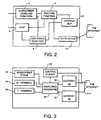
- the exchanges include hardware (HW) blocks, and blocks implemented in software (SW).
- FIG. 3 is a schematic representation of the hardware within an exchange. The details thereof are well known to the person skilled in the art.
- the exchange includes a subscriber stage 22, E1 (that is, a 30B+D 2048 kbit/s PCM link) terminal 24, T1 (that is, a 23B+D 1544 kbit/s PCM link) terminal 26, switching hardware 28, computer-based control system 30, and a plurality of gateways 32, with switch inlets 34, which provide connections to the internet, for example.
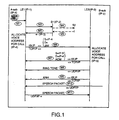
- the internet ISUP block 12 then allocates to the A-subscriber, for the duration of the call, a particular internet address (IP-4) and a switching inlet position.
- IP-4 internet address
- the routing function 4 controls the determination of the internet address of the B-subscriber's local exchange.
- Enquiries from local exchanges to their respective servers might preferably be sent using a protocol based on the Domain Server Message protocol used in DNS, and for this purpose appropriate software is provided in the routing function of each local exchange.
- the network of servers is hierarchical, and may advantageously be based on the E.164 telephone numbering plan.
- TCP/IP connection between exchanges on a per call basis is that, at configuration of the exchanges, a signalling route is defined. At definition of the route, a TCP/IP connection is established. Local exchange LE1 would then use the internet address IP-3 to find the established TCP/IP connection over which the call set up should take place.
- the A-side exchange LE1 allocates an internet address (IP-4) for the call. This address is used by the internet ISUP block 12 to identify the call to which a specific ISUP message, received on the TCP/IP connection between exchanges, relates.
- IP-4 internet address
- the local exchange LE1 then sends an IAM message M6 over the TCP/IP connection using a modified ISUP format.
- Figures 4 and 5 show in more detail the way in which ISUP messages are transmitted in preferred embodiments of the invention.
- Figure 4 shows the signalling protocol/stack
- Figure 5 shows the structure of the internet ISUP message.
- a pool of local IP-addresses can be used, with tunnelling between the exchanges. That is, the IP-address for the exchange can be used to tunnel the other local IP-addresses through. For example, when a packet reaches an exchange, it is addressed to the address of the exchange, but the tunnelling allows the exchange to look into the packet to find a local IP-address transmitted therewith, and the packet can then be transmitted to a gateway, and be assigned to the relevant call to which it corresponds.
- the ISUP internet block 12 is able to identify a gateway 32 ( Figure 3) with at least one free port.
- the switch port and UDP port mapping are transmitted to the gateway 32, and the identity of the switch port is transmitted to the switching function 6 ( Figure 2), which orders the connection through the switching hardware 28 ( Figure 3) when the two ports have been identified.
- the IAM message is used to seize the routing function.
- the B-number is analysed, and a message confirms that the required switching path has been reserved. Messages then inform the gateway of the A-side internet address IP-4 which is to act as the destination address for transmissions from the B-subscriber to the A-subscriber, and the allocated sending address IP-5. This address IP-5 is the other part of the session ID mentioned earlier.
- the B-side local exchange LE2 then sends an acknowledge message ACM (message M7 in Figure 1 and a ringing tone (M8 in Figure 1) to the A-subscriber.
- ACM acknowledge message
- the ACM message is sent when the internet ISUP block 12 receives a confirmation message from the routing function 4, and is sent over the established TCP/IP connection as discussed above.
- the ringing tone is compressed in the gateway, and is sent to the A-subscriber using UDP packets.
- the ACM message received from the B-side local exchange is received and the B-subscriber internet address IP-5, which is to be used as the destination address for transmissions from the A-side, is noted.
- this address is passed down to the gateway, so that UDP packets received in the gateway can be associated with the correct switch inlet, as discussed above.
- the ACM message is passed to the routing function 4, and the switch inlet is sent to the switching function 6, to operate the reserved speech paths.
- the UDP packets representing the ringing tone, received at the A-side local exchange LE1, are now decompressed in the gateway, and sent to the A-subscriber.
Landscapes
- Engineering & Computer Science (AREA)
- Computer Networks & Wireless Communication (AREA)
- Signal Processing (AREA)
- Telephonic Communication Services (AREA)
- Data Exchanges In Wide-Area Networks (AREA)
Claims (14)
- Verfahren zur Wegelenkung eines Telefonrufs von einem ersten Telefonteilnehmer zu einem zweiten Telefonteilnehmer über ein Computernetz, wobei das Verfahren das Zuordnen von Computernetzadressen zu einer Vielzahl von Vermittlungszentren in einem Telekommunikationsnetz umfasst, die mit dem Computernetz verbunden sind, wobei jedes Vermittlungszentrum mit einer Vielzahl von Teilnehmern entweder direkt oder indirekt über andere Vermittlungszentren verbunden ist und das Verfahren umfasst:Bestimmen eines ersten Vermittlungszentrums, das mit dem Computernetz verbunden ist und direkt oder indirekt mit dem ersten Teilnehmer, zu dem der Ruf über das Computernetz zu leiten ist;Senden einer Meldung (M2) von dem ersten Vermittlungszentrum zu einer Analyseeinrichtung;Bestimmen der Computernetzadresse eines zweiten fernen Vermittlungszentrums, das mit dem Computernetz verbunden ist und das direkt oder indirekt mit dem zweiten Teilnehmer verbunden ist in der Analyseeinrichtung;Senden einer Meldung (M6) an das zweite Vermittlungszentrum;Temporäres Zuordnen von Computernetzadressen (IP-4, IP-5) zu jeweils dem ersten und zweiten Teilnehmer für die Dauer des Rufs in dem ersten und zweiten Vermittlungszentrum, wobei diese temporären Computernetzadressen aus einem Vorrat von Computernetzadressen, die für eine solche Zuordnung verfügbar sind, zugeordnet werden;Melden der dem zweiten Teilnehmer zugeordneten Computernetzadresse an das erste Vermittlungszentrum; undWegelenken des Telefonrufs über das Computernetz zwischen dem ersten und zweiten Vermittlungszentrum unter Verwendung der zugeordneten temporären Computernetzadressen.
- Verfahren nach Anspruch 1, umfassend:das Übertragen von Meldungen zwischen dem ersten und zweiten Vermittlungszentrum unter Verwendung des ISUP-Protokolls mit einem modifizierten ISUP-Meldungsformat, das die erste und zweite temporäre Computernetzadresse enthält, um den Ruf einzurichten.
- Verfahren nach Anspruch 1, wobei die jedem Beteiligten zugeordnete temporäre Computernetzadresse ausgewählt ist aus einem jeweiligen Vorrat von Adressen, die dem jeweiligen Vermittlungszentrum zugeordnet ist.
- Verfahren nach Anspruch 1, wobei die jedem Beteiligten zugeordnete temporäre Computernetzadresse ein Gateway innerhalb des jeweiligen Vermittlungszentrums identifiziert, das mit dem Computernetz verbunden ist und eine innerhalb des Gateways für den Ruf ausgewählte UDP-Portadresse.
- Verfahren nach Anspruch 1, in dem das Computernetz das Internet ist und die Adressen IP-Adressen sind.
- Verfahren nach Anspruch 2, in dem jede zugeordnete temporäre Computernetzadresse innerhalb des jeweiligen Vermittlungszentrum (1) verwendet wird zum Identifizieren des Rufs, den die modifizierte ISUP-Meldung betrifft bei dem jeweiligen Vermittlungszentrum und (2) zum Identifizieren eines physikalischen Orts einer Computernetzschnittstelle des jeweiligen Vermittlungszentrums, um die Übertragung von Sprachoder Datenpaketen zwischen den beiden Beteiligten zu ermöglichen.
- Verfahren nach Anspruch 2, wobei eine Meldung in dem modifizierten ISUP-Meldungsformat eine Sitzungs-ID einschließt, die die den beiden Beteiligten zugeordneten Adressen umfasst.
- Verfahren nach Anspruch 1, wobei die Analyseeinrichtung ein dedizierter Server ist.
- Verfahren nach Anspruch 8, wobei das Kommunikationsnetz eine Vielzahl von dedizierten Servern einschließt, von denen jeder in der Lage ist, die Computernetzadresse einer Vielzahl von Vermittlungszentren zu bestimmen und jeder eine Vorrichtung umfasst zum Weiterleiten einer Meldung, die ein Vermittlungszentrum betrifft, deren Computernetzadresse der Server nicht bestimmen kann, an einen geeigneten Server.
- Telekommunikationsvermittlungszentrum zur Wegelenkung eines Telefonrufs von einem ersten Telefonteilnehmer zu einem zweiten Telefonteilnehmer über ein Computernetz, wobei das Vermittlungszentrum in der Lage ist, entweder direkt oder indirekt über andere Vermittlungszentren mit einer Vielzahl von Teilnehmern verbunden zu werden und das Vermittlungszentrum umfasst:eine Vorrichtung (4) zum Bestimmen, dass ein von einem ersten Teilnehmer, der direkt oder indirekt daran verbunden ist empfangener Ruf über das Computernetz zu einem zweiten Teilnehmer zu lenken ist;eine Vorrichtung zum Senden einer Meldung an eine Analyseeinrichtung;eine Vorrichtung zum Aufzeichnen der Computernetzadresse eines zweiten fernen mit dem Computernetz verbundenen Vermittlungszentrums, das direkt oder indirekt mit dem zweiten Teilnehmer verbunden ist;eine Vorrichtung zum Senden einer Meldung an das zweite Vermittlungszentrum;eine Vorrichtung (12) zum Zuordnen einer temporären Computernetzadresse zu dem ersten Teilnehmer für die Dauer des Rufs, wobei die temporäre Computernetzadresse aus einem Vorrat von Computernetzadressen zugeordnet wird, die für solche Zuordnung verfügbar sind;eine Vorrichtung zum Aufzeichnen einer temporären Computernetzadresse, die bei dem zweiten Vermittlungszentrum dem zweiten Teilnehmer zugeordnet ist;eine Vorrichtung (10) zum Lenken des Telefonrufs über das Computernetz vom ersten Vermittlungszentrum zum zweiten Vermittlungszentrum unter Verwendung der zugeordneten temporären Computernetzadressen.
- Vermittlungszentrum nach Anspruch 10, umfassend:eine Vorrichtung zum Meldungsaustausch mit dem zweiten Vermittlungszentrum unter Verwendung eines ISUP-Protokolls mit einem modifizierten ISUP-Meldungsformat, das die erste und zweite temporäre Computernetzadresse enthält, um den Ruf einzurichten.
- Vermittlungszentrum nach Anspruch 10, eine Vorrichtung umfassend zum Auswählen der temporären Computernetzadresse aus einem Vorrat von dem Vermittlungszentrum zugeordneten Adressen.
- Vermittlungszentrum nach Anspruch 10, wobei die temporäre Computernetzadresse, die dem ersten Beteiligten zugeordnet ist, ein Gateway innerhalb des Vermittlungszentrums identifiziert und eine UDP-Portadresse innerhalb des für den Ruf ausgewählten Gateways.
- Vermittlungszentrum nach Anspruch 11, eine Vorrichtung umfassend zur Verwendung der zugeordneten temporären Computernetzadresse (1) zum Identifizieren des Rufs, auf den sich die modifizierte ISUP-Meldung bezieht von dem jeweiligen Vermittlungszentrum und (2) zum Identifizieren eines physikalischen Ports in einer Computernetzschnittstelle des jeweiligen Vermittlungszentrums, um die Übertragung von Sprachoder Datenpaketen zwischen den beiden Beteiligten zu ermöglichen.
Applications Claiming Priority (3)
| Application Number | Priority Date | Filing Date | Title |
|---|---|---|---|
| GB9723803A GB2331197B (en) | 1997-11-11 | 1997-11-11 | Method of handling a telephone call |
| GB9723803 | 1997-11-11 | ||
| PCT/EP1998/007127 WO1999025109A1 (en) | 1997-11-11 | 1998-11-09 | Method and system for routing a telephone call through a computer network |
Publications (2)
| Publication Number | Publication Date |
|---|---|
| EP1031233A1 EP1031233A1 (de) | 2000-08-30 |
| EP1031233B1 true EP1031233B1 (de) | 2003-04-02 |
Family
ID=10821899
Family Applications (1)
| Application Number | Title | Priority Date | Filing Date |
|---|---|---|---|
| EP98959861A Expired - Lifetime EP1031233B1 (de) | 1997-11-11 | 1998-11-09 | Verfahren und vorrichtung zur leitweglenkung eines fernsprechanrufs durch ein rechnernetzwerk |
Country Status (5)
| Country | Link |
|---|---|
| US (1) | US6493339B1 (de) |
| EP (1) | EP1031233B1 (de) |
| AU (1) | AU1561199A (de) |
| GB (1) | GB2331197B (de) |
| WO (1) | WO1999025109A1 (de) |
Families Citing this family (13)
| Publication number | Priority date | Publication date | Assignee | Title |
|---|---|---|---|---|
| FR2784837B1 (fr) * | 1998-10-16 | 2004-05-21 | Sagem | Procede economique de mise en communication de deux terminaux a travers l'internet et terminal de communication |
| GB2348566A (en) * | 1999-03-31 | 2000-10-04 | Ibm | Computer network telephony |
| EP1054569A1 (de) * | 1999-05-19 | 2000-11-22 | Alcatel | Verfahren zur Verbindungsherstellung über ein Telefonnetzwerk und ein IP-Netzwerk |
| GB2352111A (en) * | 1999-07-14 | 2001-01-17 | Ericsson Telefon Ab L M | IP telecommunications |
| US6937596B2 (en) | 1999-08-04 | 2005-08-30 | Telefonaktiebolaget Lm Ericsson (Publ) | IP based telephone system |
| DE60029105T2 (de) * | 1999-08-04 | 2006-12-21 | Telefonaktiebolaget Lm Ericsson (Publ) | Ip - basiertes fernsprechsystem |
| FR2798035B1 (fr) * | 1999-08-24 | 2002-05-31 | Sagem | Procede d'etablissement d'une communication a travers un reseau de type internet a partir d'un telephone mobile en phase d'itinerance et son telephone mobile associe |
| DE19948433A1 (de) * | 1999-10-08 | 2001-04-19 | Alcatel Sa | Verfahren zur Unterstützung des Aufbaus von Fernsprechverbindungen |
| US6707813B1 (en) | 2000-02-21 | 2004-03-16 | Telefonaktiebolaget L M Ericsson (Publ) | Method of call control to minimize delays in launching multimedia or voice calls in a packet-switched radio telecommunications network |
| US6856992B2 (en) | 2001-05-15 | 2005-02-15 | Metatomix, Inc. | Methods and apparatus for real-time business visibility using persistent schema-less data storage |
| US7058367B1 (en) * | 2003-01-31 | 2006-06-06 | At&T Corp. | Rate-adaptive methods for communicating over multiple input/multiple output wireless systems |
| EP1509033B1 (de) * | 2003-08-19 | 2012-10-17 | Alcatel Lucent | Verfahren und Vorrichtung zum Verbinden von IP-Anschlüssen und PSTN-Anschlüssen |
| US8542815B2 (en) | 2006-11-02 | 2013-09-24 | Digifonica (International) Limited | Producing routing messages for voice over IP communications |
Family Cites Families (15)
| Publication number | Priority date | Publication date | Assignee | Title |
|---|---|---|---|---|
| FI104869B (fi) * | 1995-05-24 | 2000-04-14 | Ericsson Telefon Ab L M | Menetelmä verkkojen välisen puheyhteyden muodostamiseksi ja älyverkkopalvelu |
| US6108704A (en) * | 1995-09-25 | 2000-08-22 | Netspeak Corporation | Point-to-point internet protocol |
| US20010040885A1 (en) * | 1995-10-13 | 2001-11-15 | Howard Jonas | Method and apparatus for transmitting and routing voice telephone calls over a packet switched computer network |
| US6243373B1 (en) * | 1995-11-01 | 2001-06-05 | Telecom Internet Ltd. | Method and apparatus for implementing a computer network/internet telephone system |
| JP2001503572A (ja) * | 1996-01-23 | 2001-03-13 | ファイアトーク,インコーポレイテッド | インターネット遠距離通信システム |
| JP2000504183A (ja) * | 1996-01-31 | 2000-04-04 | ラブズ・オブ・アドバンスト・テクノロジーズ・インターナショナル・コーポレーション | リアルタイム電話対電話間音声通信用複合ネットワーク |
| KR100923483B1 (ko) * | 1996-02-09 | 2009-10-27 | 아이-링크 시스템즈, 아이엔씨. | 오디오 전송 시스템 및 방법 |
| WO1997033412A1 (en) * | 1996-03-06 | 1997-09-12 | Bear Creek Technologies, Inc. | System for interconnecting standard telephony communications equipment to internet protocol networks |
| CA2250902C (en) * | 1996-04-12 | 2002-02-05 | Northern Telecom Limited | Terminating data voice call architecture |
| US6125113A (en) * | 1996-04-18 | 2000-09-26 | Bell Atlantic Network Services, Inc. | Internet telephone service |
| US6122255A (en) * | 1996-04-18 | 2000-09-19 | Bell Atlantic Network Services, Inc. | Internet telephone service with mediation |
| US5978672A (en) * | 1996-09-27 | 1999-11-02 | Global Mobility Systems, Inc. | Mobility extended telephone application programming interface and method of use |
| US6292478B1 (en) * | 1996-11-21 | 2001-09-18 | Bell Atlantic Network Services, Inc. | Telecommunications system |
| US6151390A (en) * | 1997-07-31 | 2000-11-21 | Cisco Technology, Inc. | Protocol conversion using channel associated signaling |
| US6208642B1 (en) * | 1997-12-19 | 2001-03-27 | Ericsson Inc | Architecture independent application invocation over a telephony network |
-
1997
- 1997-11-11 GB GB9723803A patent/GB2331197B/en not_active Expired - Lifetime
-
1998
- 1998-11-09 AU AU15611/99A patent/AU1561199A/en not_active Abandoned
- 1998-11-09 WO PCT/EP1998/007127 patent/WO1999025109A1/en not_active Ceased
- 1998-11-09 EP EP98959861A patent/EP1031233B1/de not_active Expired - Lifetime
- 1998-11-10 US US09/188,361 patent/US6493339B1/en not_active Expired - Lifetime
Also Published As
| Publication number | Publication date |
|---|---|
| GB2331197A9 (en) | |
| AU1561199A (en) | 1999-05-31 |
| GB2331197B (en) | 2002-10-02 |
| GB9723803D0 (en) | 1998-01-07 |
| WO1999025109A1 (en) | 1999-05-20 |
| GB2331197A (en) | 1999-05-12 |
| US6493339B1 (en) | 2002-12-10 |
| EP1031233A1 (de) | 2000-08-30 |
Similar Documents
| Publication | Publication Date | Title |
|---|---|---|
| US6546003B1 (en) | Telecommunications system | |
| US6674745B1 (en) | Method and system for mapping phone numbers to IP addresses | |
| US6718030B1 (en) | Virtual private network system and method using voice over internet protocol | |
| US20040030620A1 (en) | Method and system for charging a consumer for a packet based telecommunications transmission | |
| JP3940122B2 (ja) | 一次接続の代替接続に対する使用可能フューチャの形成方法 | |
| US8447024B2 (en) | Systems and methods for providing ENUM in an LNP environment | |
| US8031712B1 (en) | Voice over IP service implementation for providing multimedia features | |
| JP2000022828A (ja) | インタ―ネット呼出装置及び方法 | |
| JPH10303990A (ja) | オーディオ接続を確立する方法および分散型データベース | |
| EP1515506A1 (de) | Verfahren zum Aufbauen von einer Paketdatenübermittlungssitzung zwischen Anschlussanordnungen eines Paketdatennetzwerks und einer Nebenstellenanlage dafür | |
| JPH0865363A (ja) | 電話の転送方法 | |
| US6493339B1 (en) | Method of handling a telephone call | |
| US7894406B2 (en) | System for routing remote VoIP emergency calls | |
| US6801615B2 (en) | Carrier identification codes (CIC) conversion | |
| JP2003510977A (ja) | Ip電話システムと、ss7ネットワークを使用するその動作方法 | |
| US20030046400A1 (en) | Contacting a destination terminal from an originating terminal via a packet-based communications network | |
| US20040028057A1 (en) | Method and system for rating a packet based communication | |
| EP1054569A1 (de) | Verfahren zur Verbindungsherstellung über ein Telefonnetzwerk und ein IP-Netzwerk | |
| US20010003092A1 (en) | System and method relating to private telecommunication systems | |
| RU2295201C1 (ru) | Способ и система для направления вызовов в межсетевом интерфейсе передачи речи по протоколу интернет (voip) | |
| US6956843B1 (en) | Method for improving the setup of telephone-to-telephone calls | |
| WO2000051395A2 (en) | Call routing between a circuit switched and a packet switched network | |
| US20050025128A1 (en) | Integration of an IP private branch exchange with a telecommunication switch provides users with additional features | |
| EP1279269B1 (de) | Verfahren und system zum kommunikationsaufbau zwischen einer ersten und einer zweiten kommunikationseinheit | |
| US20020093916A1 (en) | Method for routing and interchanging messages in a telecommunications system, and associated telecommunications system |
Legal Events
| Date | Code | Title | Description |
|---|---|---|---|
| PUAI | Public reference made under article 153(3) epc to a published international application that has entered the european phase |
Free format text: ORIGINAL CODE: 0009012 |
|
| 17P | Request for examination filed |
Effective date: 20000530 |
|
| AK | Designated contracting states |
Kind code of ref document: A1 Designated state(s): IT SE |
|
| 17Q | First examination report despatched |
Effective date: 20010504 |
|
| GRAG | Despatch of communication of intention to grant |
Free format text: ORIGINAL CODE: EPIDOS AGRA |
|
| GRAG | Despatch of communication of intention to grant |
Free format text: ORIGINAL CODE: EPIDOS AGRA |
|
| GRAG | Despatch of communication of intention to grant |
Free format text: ORIGINAL CODE: EPIDOS AGRA |
|
| GRAH | Despatch of communication of intention to grant a patent |
Free format text: ORIGINAL CODE: EPIDOS IGRA |
|
| GRAH | Despatch of communication of intention to grant a patent |
Free format text: ORIGINAL CODE: EPIDOS IGRA |
|
| GRAA | (expected) grant |
Free format text: ORIGINAL CODE: 0009210 |
|
| AK | Designated contracting states |
Designated state(s): IT SE |
|
| REG | Reference to a national code |
Ref country code: SE Ref legal event code: TRGR |
|
| PLBE | No opposition filed within time limit |
Free format text: ORIGINAL CODE: 0009261 |
|
| STAA | Information on the status of an ep patent application or granted ep patent |
Free format text: STATUS: NO OPPOSITION FILED WITHIN TIME LIMIT |
|
| 26N | No opposition filed |
Effective date: 20040105 |
|
| PGFP | Annual fee paid to national office [announced via postgrant information from national office to epo] |
Ref country code: IT Payment date: 20171123 Year of fee payment: 20 Ref country code: SE Payment date: 20171129 Year of fee payment: 20 |
|
| REG | Reference to a national code |
Ref country code: SE Ref legal event code: EUG |