EP1024795B1 - Formulations a liberation prolongee - Google Patents
Formulations a liberation prolongee Download PDFInfo
- Publication number
- EP1024795B1 EP1024795B1 EP98950189A EP98950189A EP1024795B1 EP 1024795 B1 EP1024795 B1 EP 1024795B1 EP 98950189 A EP98950189 A EP 98950189A EP 98950189 A EP98950189 A EP 98950189A EP 1024795 B1 EP1024795 B1 EP 1024795B1
- Authority
- EP
- European Patent Office
- Prior art keywords
- film
- amylose
- active material
- forming
- polymer
- Prior art date
- Legal status (The legal status is an assumption and is not a legal conclusion. Google has not performed a legal analysis and makes no representation as to the accuracy of the status listed.)
- Expired - Lifetime
Links
- 239000000203 mixture Substances 0.000 title claims abstract description 74
- 238000013270 controlled release Methods 0.000 title abstract description 8
- 238000009472 formulation Methods 0.000 title description 4
- 229920000856 Amylose Polymers 0.000 claims abstract description 90
- 229920000642 polymer Polymers 0.000 claims abstract description 42
- XLYOFNOQVPJJNP-UHFFFAOYSA-N water Substances O XLYOFNOQVPJJNP-UHFFFAOYSA-N 0.000 claims abstract description 37
- 239000002904 solvent Substances 0.000 claims abstract description 34
- 239000011149 active material Substances 0.000 claims abstract description 30
- 239000003960 organic solvent Substances 0.000 claims abstract description 24
- 238000004519 manufacturing process Methods 0.000 claims abstract description 3
- LFQSCWFLJHTTHZ-UHFFFAOYSA-N Ethanol Chemical compound CCO LFQSCWFLJHTTHZ-UHFFFAOYSA-N 0.000 claims description 41
- 238000000034 method Methods 0.000 claims description 35
- 239000001856 Ethyl cellulose Substances 0.000 claims description 26
- ZZSNKZQZMQGXPY-UHFFFAOYSA-N Ethyl cellulose Chemical group CCOCC1OC(OC)C(OCC)C(OCC)C1OC1C(O)C(O)C(OC)C(CO)O1 ZZSNKZQZMQGXPY-UHFFFAOYSA-N 0.000 claims description 26
- 235000019325 ethyl cellulose Nutrition 0.000 claims description 26
- 229920001249 ethyl cellulose Polymers 0.000 claims description 26
- LZCLXQDLBQLTDK-UHFFFAOYSA-N ethyl 2-hydroxypropanoate Chemical compound CCOC(=O)C(C)O LZCLXQDLBQLTDK-UHFFFAOYSA-N 0.000 claims description 24
- 239000004014 plasticizer Substances 0.000 claims description 13
- BDERNNFJNOPAEC-UHFFFAOYSA-N propan-1-ol Chemical group CCCO BDERNNFJNOPAEC-UHFFFAOYSA-N 0.000 claims description 13
- 229940116333 ethyl lactate Drugs 0.000 claims description 12
- 230000003111 delayed effect Effects 0.000 claims description 7
- 239000002552 dosage form Substances 0.000 claims description 7
- 238000005507 spraying Methods 0.000 claims description 6
- 230000015572 biosynthetic process Effects 0.000 claims description 5
- 229920000058 polyacrylate Polymers 0.000 claims description 5
- 239000007787 solid Substances 0.000 claims description 3
- 230000004584 weight gain Effects 0.000 claims description 3
- 235000019786 weight gain Nutrition 0.000 claims description 3
- 210000001072 colon Anatomy 0.000 abstract description 18
- 239000003814 drug Substances 0.000 abstract description 10
- 229940124597 therapeutic agent Drugs 0.000 abstract description 3
- 239000000463 material Substances 0.000 description 22
- 239000000243 solution Substances 0.000 description 16
- 238000000576 coating method Methods 0.000 description 15
- 239000011248 coating agent Substances 0.000 description 13
- 239000006185 dispersion Substances 0.000 description 13
- 230000015556 catabolic process Effects 0.000 description 10
- 238000006731 degradation reaction Methods 0.000 description 10
- 238000002360 preparation method Methods 0.000 description 9
- 210000000813 small intestine Anatomy 0.000 description 9
- 210000002784 stomach Anatomy 0.000 description 8
- 239000004480 active ingredient Substances 0.000 description 7
- 150000001875 compounds Chemical class 0.000 description 7
- KBOPZPXVLCULAV-UHFFFAOYSA-N mesalamine Chemical compound NC1=CC=C(O)C(C(O)=O)=C1 KBOPZPXVLCULAV-UHFFFAOYSA-N 0.000 description 7
- 229960004963 mesalazine Drugs 0.000 description 7
- 239000002002 slurry Substances 0.000 description 7
- 229920002472 Starch Polymers 0.000 description 6
- 229920002678 cellulose Polymers 0.000 description 6
- 239000001913 cellulose Substances 0.000 description 6
- 235000010980 cellulose Nutrition 0.000 description 6
- 229940079593 drug Drugs 0.000 description 6
- 239000008107 starch Substances 0.000 description 6
- 235000019698 starch Nutrition 0.000 description 6
- 238000012360 testing method Methods 0.000 description 6
- 238000002474 experimental method Methods 0.000 description 5
- 244000005700 microbiome Species 0.000 description 5
- KWGRBVOPPLSCSI-WPRPVWTQSA-N (-)-ephedrine Chemical compound CN[C@@H](C)[C@H](O)C1=CC=CC=C1 KWGRBVOPPLSCSI-WPRPVWTQSA-N 0.000 description 4
- IJGRMHOSHXDMSA-UHFFFAOYSA-N Atomic nitrogen Chemical compound N#N IJGRMHOSHXDMSA-UHFFFAOYSA-N 0.000 description 4
- 150000002148 esters Chemical class 0.000 description 4
- 239000002861 polymer material Substances 0.000 description 4
- URAYPUMNDPQOKB-UHFFFAOYSA-N triacetin Chemical compound CC(=O)OCC(OC(C)=O)COC(C)=O URAYPUMNDPQOKB-UHFFFAOYSA-N 0.000 description 4
- QPRQEDXDYOZYLA-UHFFFAOYSA-N 2-methylbutan-1-ol Chemical compound CCC(C)CO QPRQEDXDYOZYLA-UHFFFAOYSA-N 0.000 description 3
- ZCYVEMRRCGMTRW-UHFFFAOYSA-N 7553-56-2 Chemical compound [I] ZCYVEMRRCGMTRW-UHFFFAOYSA-N 0.000 description 3
- NIXOWILDQLNWCW-UHFFFAOYSA-M Acrylate Chemical compound [O-]C(=O)C=C NIXOWILDQLNWCW-UHFFFAOYSA-M 0.000 description 3
- 229920000945 Amylopectin Polymers 0.000 description 3
- 102000004190 Enzymes Human genes 0.000 description 3
- 108090000790 Enzymes Proteins 0.000 description 3
- GUBGYTABKSRVRQ-QKKXKWKRSA-N Lactose Natural products OC[C@H]1O[C@@H](O[C@H]2[C@H](O)[C@@H](O)C(O)O[C@@H]2CO)[C@H](O)[C@@H](O)[C@H]1O GUBGYTABKSRVRQ-QKKXKWKRSA-N 0.000 description 3
- OKKJLVBELUTLKV-UHFFFAOYSA-N Methanol Chemical compound OC OKKJLVBELUTLKV-UHFFFAOYSA-N 0.000 description 3
- 229920000168 Microcrystalline cellulose Polymers 0.000 description 3
- LRHPLDYGYMQRHN-UHFFFAOYSA-N N-Butanol Chemical compound CCCCO LRHPLDYGYMQRHN-UHFFFAOYSA-N 0.000 description 3
- 239000002253 acid Substances 0.000 description 3
- 239000000440 bentonite Substances 0.000 description 3
- 229910000278 bentonite Inorganic materials 0.000 description 3
- SVPXDRXYRYOSEX-UHFFFAOYSA-N bentoquatam Chemical compound O.O=[Si]=O.O=[Al]O[Al]=O SVPXDRXYRYOSEX-UHFFFAOYSA-N 0.000 description 3
- 238000005266 casting Methods 0.000 description 3
- 235000019621 digestibility Nutrition 0.000 description 3
- 238000004090 dissolution Methods 0.000 description 3
- 229910052740 iodine Inorganic materials 0.000 description 3
- 239000011630 iodine Substances 0.000 description 3
- 239000008101 lactose Substances 0.000 description 3
- 239000007788 liquid Substances 0.000 description 3
- 235000019813 microcrystalline cellulose Nutrition 0.000 description 3
- 239000008188 pellet Substances 0.000 description 3
- 239000008363 phosphate buffer Substances 0.000 description 3
- 239000000126 substance Substances 0.000 description 3
- RZVAJINKPMORJF-UHFFFAOYSA-N Acetaminophen Chemical compound CC(=O)NC1=CC=C(O)C=C1 RZVAJINKPMORJF-UHFFFAOYSA-N 0.000 description 2
- GUBGYTABKSRVRQ-XLOQQCSPSA-N Alpha-Lactose Chemical compound O[C@@H]1[C@@H](O)[C@@H](O)[C@@H](CO)O[C@H]1O[C@@H]1[C@@H](CO)O[C@H](O)[C@H](O)[C@H]1O GUBGYTABKSRVRQ-XLOQQCSPSA-N 0.000 description 2
- 208000019399 Colonic disease Diseases 0.000 description 2
- PYGXAGIECVVIOZ-UHFFFAOYSA-N Dibutyl decanedioate Chemical compound CCCCOC(=O)CCCCCCCCC(=O)OCCCC PYGXAGIECVVIOZ-UHFFFAOYSA-N 0.000 description 2
- AMQJEAYHLZJPGS-UHFFFAOYSA-N N-Pentanol Chemical compound CCCCCO AMQJEAYHLZJPGS-UHFFFAOYSA-N 0.000 description 2
- ZFOZVQLOBQUTQQ-UHFFFAOYSA-N Tributyl citrate Chemical compound CCCCOC(=O)CC(O)(C(=O)OCCCC)CC(=O)OCCCC ZFOZVQLOBQUTQQ-UHFFFAOYSA-N 0.000 description 2
- 230000002378 acidificating effect Effects 0.000 description 2
- 239000008199 coating composition Substances 0.000 description 2
- KWGRBVOPPLSCSI-UHFFFAOYSA-N d-ephedrine Natural products CNC(C)C(O)C1=CC=CC=C1 KWGRBVOPPLSCSI-UHFFFAOYSA-N 0.000 description 2
- 238000001212 derivatisation Methods 0.000 description 2
- 238000003745 diagnosis Methods 0.000 description 2
- 238000001035 drying Methods 0.000 description 2
- 238000005538 encapsulation Methods 0.000 description 2
- 230000007515 enzymatic degradation Effects 0.000 description 2
- 229960002179 ephedrine Drugs 0.000 description 2
- 238000000855 fermentation Methods 0.000 description 2
- 230000004151 fermentation Effects 0.000 description 2
- 239000012530 fluid Substances 0.000 description 2
- 235000013773 glyceryl triacetate Nutrition 0.000 description 2
- 125000002887 hydroxy group Chemical group [H]O* 0.000 description 2
- 238000000338 in vitro Methods 0.000 description 2
- 238000011534 incubation Methods 0.000 description 2
- JVTAAEKCZFNVCJ-UHFFFAOYSA-N lactic acid Chemical compound CC(O)C(O)=O JVTAAEKCZFNVCJ-UHFFFAOYSA-N 0.000 description 2
- 210000002429 large intestine Anatomy 0.000 description 2
- 229920002521 macromolecule Polymers 0.000 description 2
- HQKMJHAJHXVSDF-UHFFFAOYSA-L magnesium stearate Chemical compound [Mg+2].CCCCCCCCCCCCCCCCCC([O-])=O.CCCCCCCCCCCCCCCCCC([O-])=O HQKMJHAJHXVSDF-UHFFFAOYSA-L 0.000 description 2
- 239000002609 medium Substances 0.000 description 2
- 230000000813 microbial effect Effects 0.000 description 2
- 239000008108 microcrystalline cellulose Substances 0.000 description 2
- 229940016286 microcrystalline cellulose Drugs 0.000 description 2
- 239000011259 mixed solution Substances 0.000 description 2
- 238000002156 mixing Methods 0.000 description 2
- 229910052757 nitrogen Inorganic materials 0.000 description 2
- 229960005489 paracetamol Drugs 0.000 description 2
- 239000002245 particle Substances 0.000 description 2
- 230000035699 permeability Effects 0.000 description 2
- 238000010587 phase diagram Methods 0.000 description 2
- 239000002244 precipitate Substances 0.000 description 2
- 239000000047 product Substances 0.000 description 2
- 238000011084 recovery Methods 0.000 description 2
- 230000001225 therapeutic effect Effects 0.000 description 2
- 238000002560 therapeutic procedure Methods 0.000 description 2
- 238000004448 titration Methods 0.000 description 2
- 229960002622 triacetin Drugs 0.000 description 2
- 229920003176 water-insoluble polymer Polymers 0.000 description 2
- 125000006702 (C1-C18) alkyl group Chemical group 0.000 description 1
- MSXVEPNJUHWQHW-UHFFFAOYSA-N 2-methylbutan-2-ol Chemical compound CCC(C)(C)O MSXVEPNJUHWQHW-UHFFFAOYSA-N 0.000 description 1
- QZCLKYGREBVARF-UHFFFAOYSA-N Acetyl tributyl citrate Chemical compound CCCCOC(=O)CC(C(=O)OCCCC)(OC(C)=O)CC(=O)OCCCC QZCLKYGREBVARF-UHFFFAOYSA-N 0.000 description 1
- 102000013142 Amylases Human genes 0.000 description 1
- 108010065511 Amylases Proteins 0.000 description 1
- 241000698776 Duma Species 0.000 description 1
- XEKOWRVHYACXOJ-UHFFFAOYSA-N Ethyl acetate Chemical compound CCOC(C)=O XEKOWRVHYACXOJ-UHFFFAOYSA-N 0.000 description 1
- 229920003136 Eudragit® L polymer Polymers 0.000 description 1
- 229920003134 Eudragit® polymer Polymers 0.000 description 1
- 206010020751 Hypersensitivity Diseases 0.000 description 1
- KFZMGEQAYNKOFK-UHFFFAOYSA-N Isopropanol Chemical compound CC(C)O KFZMGEQAYNKOFK-UHFFFAOYSA-N 0.000 description 1
- CERQOIWHTDAKMF-UHFFFAOYSA-M Methacrylate Chemical compound CC(=C)C([O-])=O CERQOIWHTDAKMF-UHFFFAOYSA-M 0.000 description 1
- VVQNEPGJFQJSBK-UHFFFAOYSA-N Methyl methacrylate Chemical compound COC(=O)C(C)=C VVQNEPGJFQJSBK-UHFFFAOYSA-N 0.000 description 1
- DOOTYTYQINUNNV-UHFFFAOYSA-N Triethyl citrate Chemical compound CCOC(=O)CC(O)(C(=O)OCC)CC(=O)OCC DOOTYTYQINUNNV-UHFFFAOYSA-N 0.000 description 1
- 238000013019 agitation Methods 0.000 description 1
- -1 alcohol ethers Chemical class 0.000 description 1
- 150000008044 alkali metal hydroxides Chemical class 0.000 description 1
- 230000002009 allergenic effect Effects 0.000 description 1
- 230000007815 allergy Effects 0.000 description 1
- 239000012736 aqueous medium Substances 0.000 description 1
- 239000007864 aqueous solution Substances 0.000 description 1
- 230000004888 barrier function Effects 0.000 description 1
- 239000002585 base Substances 0.000 description 1
- 239000011230 binding agent Substances 0.000 description 1
- 238000007664 blowing Methods 0.000 description 1
- 230000036760 body temperature Effects 0.000 description 1
- 239000004067 bulking agent Substances 0.000 description 1
- 150000001735 carboxylic acids Chemical class 0.000 description 1
- 239000012876 carrier material Substances 0.000 description 1
- 235000013339 cereals Nutrition 0.000 description 1
- 239000003153 chemical reaction reagent Substances 0.000 description 1
- 239000003795 chemical substances by application Substances 0.000 description 1
- 230000000112 colonic effect Effects 0.000 description 1
- 230000001010 compromised effect Effects 0.000 description 1
- 239000012141 concentrate Substances 0.000 description 1
- 229940039231 contrast media Drugs 0.000 description 1
- 239000002872 contrast media Substances 0.000 description 1
- 229920001577 copolymer Polymers 0.000 description 1
- 239000002537 cosmetic Substances 0.000 description 1
- 230000001419 dependent effect Effects 0.000 description 1
- 238000000113 differential scanning calorimetry Methods 0.000 description 1
- 238000009792 diffusion process Methods 0.000 description 1
- 230000029087 digestion Effects 0.000 description 1
- 102000038379 digestive enzymes Human genes 0.000 description 1
- 108091007734 digestive enzymes Proteins 0.000 description 1
- 230000000694 effects Effects 0.000 description 1
- 150000002170 ethers Chemical class 0.000 description 1
- 125000001495 ethyl group Chemical group [H]C([H])([H])C([H])([H])* 0.000 description 1
- 238000001704 evaporation Methods 0.000 description 1
- 230000008020 evaporation Effects 0.000 description 1
- 235000013305 food Nutrition 0.000 description 1
- 210000001035 gastrointestinal tract Anatomy 0.000 description 1
- 238000001879 gelation Methods 0.000 description 1
- 238000007429 general method Methods 0.000 description 1
- 230000009477 glass transition Effects 0.000 description 1
- 229930182478 glucoside Natural products 0.000 description 1
- 150000008131 glucosides Chemical class 0.000 description 1
- 150000004676 glycans Chemical class 0.000 description 1
- 239000001087 glyceryl triacetate Substances 0.000 description 1
- 238000004128 high performance liquid chromatography Methods 0.000 description 1
- 230000003301 hydrolyzing effect Effects 0.000 description 1
- 230000002209 hydrophobic effect Effects 0.000 description 1
- 238000003384 imaging method Methods 0.000 description 1
- 238000001727 in vivo Methods 0.000 description 1
- 239000011261 inert gas Substances 0.000 description 1
- 239000004615 ingredient Substances 0.000 description 1
- 210000000936 intestine Anatomy 0.000 description 1
- 238000011835 investigation Methods 0.000 description 1
- 235000014655 lactic acid Nutrition 0.000 description 1
- 239000004310 lactic acid Substances 0.000 description 1
- 239000000314 lubricant Substances 0.000 description 1
- 235000019359 magnesium stearate Nutrition 0.000 description 1
- 230000014759 maintenance of location Effects 0.000 description 1
- 235000016709 nutrition Nutrition 0.000 description 1
- 238000005191 phase separation Methods 0.000 description 1
- 239000004033 plastic Substances 0.000 description 1
- 229920001282 polysaccharide Polymers 0.000 description 1
- 239000005017 polysaccharide Substances 0.000 description 1
- 239000004810 polytetrafluoroethylene Substances 0.000 description 1
- 229920001343 polytetrafluoroethylene Polymers 0.000 description 1
- 239000011148 porous material Substances 0.000 description 1
- 239000000843 powder Substances 0.000 description 1
- 238000001556 precipitation Methods 0.000 description 1
- 230000001681 protective effect Effects 0.000 description 1
- 239000008213 purified water Substances 0.000 description 1
- 238000011160 research Methods 0.000 description 1
- 230000000630 rising effect Effects 0.000 description 1
- 150000003839 salts Chemical class 0.000 description 1
- 239000011877 solvent mixture Substances 0.000 description 1
- 238000012289 standard assay Methods 0.000 description 1
- 230000002277 temperature effect Effects 0.000 description 1
- 239000001069 triethyl citrate Substances 0.000 description 1
- VMYFZRTXGLUXMZ-UHFFFAOYSA-N triethyl citrate Natural products CCOC(=O)C(O)(C(=O)OCC)C(=O)OCC VMYFZRTXGLUXMZ-UHFFFAOYSA-N 0.000 description 1
- 235000013769 triethyl citrate Nutrition 0.000 description 1
Images



Classifications
-
- A—HUMAN NECESSITIES
- A61—MEDICAL OR VETERINARY SCIENCE; HYGIENE
- A61K—PREPARATIONS FOR MEDICAL, DENTAL OR TOILETRY PURPOSES
- A61K9/00—Medicinal preparations characterised by special physical form
- A61K9/48—Preparations in capsules, e.g. of gelatin, of chocolate
- A61K9/50—Microcapsules having a gas, liquid or semi-solid filling; Solid microparticles or pellets surrounded by a distinct coating layer, e.g. coated microspheres, coated drug crystals
- A61K9/5005—Wall or coating material
- A61K9/5021—Organic macromolecular compounds
- A61K9/5036—Polysaccharides, e.g. gums, alginate; Cyclodextrin
- A61K9/5042—Cellulose; Cellulose derivatives, e.g. phthalate or acetate succinate esters of hydroxypropyl methylcellulose
- A61K9/5047—Cellulose ethers containing no ester groups, e.g. hydroxypropyl methylcellulose
-
- A—HUMAN NECESSITIES
- A61—MEDICAL OR VETERINARY SCIENCE; HYGIENE
- A61K—PREPARATIONS FOR MEDICAL, DENTAL OR TOILETRY PURPOSES
- A61K9/00—Medicinal preparations characterised by special physical form
- A61K9/48—Preparations in capsules, e.g. of gelatin, of chocolate
- A61K9/50—Microcapsules having a gas, liquid or semi-solid filling; Solid microparticles or pellets surrounded by a distinct coating layer, e.g. coated microspheres, coated drug crystals
- A61K9/5005—Wall or coating material
- A61K9/5021—Organic macromolecular compounds
- A61K9/5036—Polysaccharides, e.g. gums, alginate; Cyclodextrin
-
- A—HUMAN NECESSITIES
- A61—MEDICAL OR VETERINARY SCIENCE; HYGIENE
- A61P—SPECIFIC THERAPEUTIC ACTIVITY OF CHEMICAL COMPOUNDS OR MEDICINAL PREPARATIONS
- A61P1/00—Drugs for disorders of the alimentary tract or the digestive system
Definitions
- the present invention relates to controlled, usually delayed release formulations, where the release characteristics are controlled by a polymer.
- the present invention provides a method for producing a controlled release composition comprising an active ingredient and a film formed from a film-forming composition comprising a mixture of a substantially water-insoluble film-forming polymer and amylose, the method comprising contacting the active ingredient with a solution of the film-forming composition in a solvent system comprising (1) water and (2) a water-miscible organic solvent which on its own is capable of dissolving the film-forming polymer and removing the water and organic solvent, wherein the weight ratio of amylose to film-forming polymer is in the range 1:2 to 3:2 and the solvent system contains at least 50% w/w organic solvent.
- the temperature used in the process generally need be no higher than 60°C and may often be ambient. Preferably the temperature is in the range 20 to 40°C.
- the controlled release composition formed according to the method of the present invention finds particular application in the delivery of an active material to the colon.
- the composition has been found to be substantially resistant to the conditions present in the stomach and the small intestine but is susceptible to attack by the micro-organisms of the colon.
- the present invention should generally be accompanied by solvent recovery.
- the vapour which generally comprises a mixture of water vapour and solvent vapour, should be recovered, condensed and the solvent preferably recycled in the process.
- the condensed solvent mixture may be separated to render the solvent substantially free of water, or a mixture of water and solvent of known solvent concentration may be reused in the process.
- Suitable condenser equipment for solvent removal and recovery from an active ingredient coating station is known and is available, for instance from the manufacturers Glatt.
- the organic solvent which is used in the invention is selected for its miscibility with water. It is preferably sufficiently water-miscible such that a homogeneous blend containing 10 to 90% of an organic solvent at room temperature and pressure can be formed.
- the solvent should also be selected for its ability to solubilise the film-forming polymer and the amylose. Thus those components should be soluble in the organic solvent (in the absence of water) at a concentration of at least 5 or 6%, preferably at least 10%, at a temperature of 40°C.
- Suitable solvents are C 2-10 -alkanols, ethers, alcohol ethers and esters of mono or higher base carboxylic acids, generally with mono alkanols, which are liquid at room temperature and miscible with water in the stated amounts.
- Suitable esters are, for instance, esters of lactic acid, such as ethyl lactate.
- the solvent is a C 2-4 alkanol, and is most preferably selected from ethanol and propanol.
- the relative amounts of solvent and water required for use in the solvent system of the present invention have been found to depend upon the nature of both the organic solvent used and the water-insoluble polymer.
- the organic solvent comprises at least 50% by weight (w/w) of the solvent system, preferably between 60 and 90% of the solvent system.
- the organic solvent system used in the preparation of the film-forming composition preferably contains at least 60% by weight organic solvent when propanol is used and at least 70% by weight organic solvent when ethanol is used.
- compositions of choice used in the method of the present invention are those which give rise to films in which the amylose is present in the glassy state.
- Films comprising glassy amylose have been found to be resistant to degradation by both the stomach and the amylase enzymes of the small intestine, but have been found to be susceptible to attack by the micro-organisms present in the colon.
- Glassy amylose is one of the two forms of predominantly amorphous amylose, the other being a rubbery form.
- the particular Tg of a given preparation of amylose depends upon its purity and other properties.
- the theoretical Tg for pure, dry amylose may be predicted to be 210°C but the presence of water depresses this figure: with 10% w/w of water the Tg is 80°C and at 20% w/w of water it is 7°C.
- ⁇ -amylolytic enzymes such as those present in the small intestine do not readily degrade glassy amylose and this effect is still apparent at up to 20°C above the Tg.
- Such materials have been found to be sufficiently insoluble in aqueous media over the pH range 1-9 at 37°C to be resistant to degradation in the stomach or intestine. They are, however, degraded by faecal micro-organisms present in the colon.
- the ability of glassy amylose to provide the required delayed release characteristics is not lost immediately the glassy amylose passes through the Tg and films containing amylose which has been produced in the glassy condition at temperatures less than the Tg may therefore then be utilized at the Tg or at temperatures slightly higher than the Tg as well as at temperatures less than the Tg, whilst still retaining its glassy properties.
- the glassy amylose present in the films formed from the film-forming compositions used according to the method of the present invention preferably has a Tg of no more than 20°C below the temperature at which use of the composition is envisaged, i.e. at body temperature of about 37°C, i.e.
- the Tg can be predetermined by controlling the amount of water in it. This can be achieved by varying the concentration of the amylose in the film-forming composition.
- the ultimate test of the suitability of a particular sample of amylose in a film formed under any given conditions is of course its ability to resist hydrolytic degradation under aqueous conditions, particularly at a pH of 1-9 and a temperature of 37°C, and conveniently also to resist enzymatic degradation in the presence of the digestive enzymes such as normally occur in the stomach and the small intestine, but to undergo enzymatic degradation in the presence of amylose-cleaving enzymes such as are provided by the microbial flora normally present in the large intestine.
- Films comprising amylose in the glassy state may conveniently be prepared from the film-forming compositions used in the method of the present invention by forming a gel by casting or spraying and drying that gel.
- the gel forms by a phase separation which produces a concentrated polymer-rich phase and a polymer-poor phase.
- the polymer-rich phase may have only, say 10% w/w water and hence be glassy at room temperature, even though the whole gel may contain up to 50% of water.
- the whole preparation may be dried if necessary or desirable at between 20 to 80°C, and more preferably between 20 to 40°C in air or in an inert atmosphere such as nitrogen.
- the amylose used in the film-forming composition may be prepared from any suitable source although it is preferably prepared from starch, for example cereal starch or tuber starch or starch from pulses, for example smooth-seeded pea starch, conveniently by precipitation from aqueous solution as a complex with an alcohol, for example 1-butanol, methanol, ethanol, propan-1-ol, propan-2-ol, pentanol, 2-methylbutan-2-ol or 2-methylbutan-1-ol as described by Ring et al ., Macromolecules, 1985, 18 , 182.
- the alcohol may conveniently then be removed from an aqueous dispersion of that complex by blowing through a suitable heated inert gas, for example nitrogen.
- the glassy amylose in the film is substantially free (i.e. contains no more than 20% by weight and preferably no more than 10% or 5% by weight) of any material which is susceptible to digestion in the stomach or small intestine.
- the glassy amylose preferably contains no more than 10% or 5% by weight of amylopectin, for example 1 or 2% or less, and conveniently also of any material containing glucoside linkages of the type found in amylopectin.
- the glassy amylose in the film formed from the film-forming composition does not contain hydroxy groups in derivative form and, if any derivatization is present that this is conveniently to an extent of no more than 10% of the hydroxy groups present, in particular no more than 4 or 5% and particularly 1 or 2% less.
- amylose A convenient test for the purity of the amylose is provided by its iodine binding ability in a standard assay procedure such as is described by Banks et al , Starke, 1971, 23 , 118.
- a standard assay procedure such as is described by Banks et al , Starke, 1971, 23 , 118.
- amylopectin binds less than 2.0% w/w and derivatization of the amylose will also reduce this binding ability.
- amylose used in the present intention binds with iodine to a level of 15.0% ⁇ 0.5% w/w, or above, preferably to a level of 18.0% ⁇ 0.5% w/w or above, and particularly to a level of 19.5 ⁇ 0.5% w/w.
- the molecular weight of the amylose used in the invention may conveniently be at least 20000 g/mol (or daltons) and is preferably higher so that it is advantageous to use amylose with a molecular weight of at least 100000, 200000, 300000, 400000 or 500000 g/mol depending on the particular circumstances.
- film-forming compositions that can be used to form films containing glassy amylose in the controlled release compositions of the present invention it is also possible to use film-forming compositions that give rise to films containing rubbery amylose.
- Preparation of films containing rubbery amylose may be conveniently be brought about by the addition of a plasticiser to the film-forming composition.
- the addition of a plasticiser conveniently leads to the formation of films containing amylose which is rubbery rather than glassy at ambient temperature since the plasticiser can depress the Tg of amylose in the film which would otherwise be glassy to some tens of degrees, i.e. 10°, 20°, 30°C or more, below ambient temperature.
- the amylose in the film may well then be rubbery at physiological temperature if not also at ambient temperature.
- Films containing rubbery amylose are however also of value, particularly when prepared with a water soluble plasticiser since such plasticisers will tend to be leached out in an aqueous environment to produce a porous amylose material. It will be appreciated, therefore, that it may be appropriate for reasons of aiding the coating procedure, controlling permeability or otherwise to add a plasticiser to the film-forming composition.
- the film-forming compositions used in the method of the present invention are prepared by admixing a solution of the water-insoluble polymer in an organic solvent with an aqueous dispersion of an amylose-butanol complex.
- the relative amounts in which the two component systems are mixed will depend upon the solid ratios of amylose and the insoluble polymer required in the final film.
- solutions containing between 2 and 25% w/w insoluble polymer, preferably between 2 and 8% w/w and especially between 3 and 5% w/w insoluble polymer in an organic solvent are mixed with an aqueous dispersion containing between 3 and 12% w/w of an amylose-butanol complex, preferably between 3 and 8% w/w and especially between 3 and 6% w/w. It may be necessary to concentrate the arnylose-butanol dispersion to an appropriate concentration before mixing.
- the solutions are mixed and stirred until fully blended.
- the resultant solution is then passed through a sieve to remove agglomerates.
- the film-forming composition thus prepared typically comprises between 2 and 8% w/w of film-forming solids in the solvent system, preferably between 3 and 6% w/w and especially between 4 and 5% w/w.
- the films can be prepared by casting or spraying the film-forming composition at a temperature of between 20 and 60°C.
- the films are formed by spraying the compositions onto the active material, the active material being maintained at a temperature of between 20 and 40°C, preferably between 30 and 40°C and especially between 35 and 40°C during the spraying process.
- the substantially water-insoluble film-forming polymer should be water-insoluble, as well as insoluble in aqueous acidic and alkaline environments.
- solubility of the film-forming polymer in water at room temperature should be less than 10%.
- the level of solubility in aqueous acidic medium at a pH 1 should be less than about 1% and in aqueous alkaline medium at a pH of 7.2 should be less than about 1%.
- the polymer should, on the other hand, be sufficiently soluble in the coating composition such that suitable coating/protective film formation can be achieved.
- the polymer should thus have a solubility of at least 5% in the organic solvent (in the absence of water) selected for the liquid composition.
- Suitable film-forming materials are preferably water-insoluble cellulosic or acrylic polymer materials. Mixtures of different cellulosic or acrylic polymer materials may be used. The use of ethyl cellulose as a film-forming polymer is especially preferred.
- acrylic polymer materials may also be employed in the compositions of the present invention either alone or in admixture with a cellulose material.
- acrylic polymer materials may also be employed in the compositions of the present invention either alone or in admixture with a cellulose material.
- both acrylate and methacrylate polymers may be used and especially copolymers thereof, the esterifying groups in these polymers being of various types, for example of C 1-18 alkyl groups.
- a preferred molecular weight range for the film-forming cellulose materials is 42,000 to 280,000 g/mol (or daltons) and for the film-forming acrylic polymer materials is 150,000 to 250,000 g/mol (or daltons) but materials with molecular weights outside these ranges, for example of a higher molecular weight, can be used where appropriate.
- the degradation of the cellulose materials in vivo is in general not pH dependent and it is preferred that this is also true for the acrylate materials. This may be achieved by the selection of appropriate forms of side chain on the main polymer chain, in particular of side chains which have a low negative charge or preferably which are uncharged, as opposed to those having a positive charge.
- Preferred forms of acrylate materials are those marketed by Dumas (UK) Limited of Tunbridge Wells under the Trade Mark Eudragit, particularly the materials Eudragit L whose degradation is independent of pH.
- the preferred cellulose materials, ethyl cellulose is marketed by the Dow Chemical Company and Shinetsu Chemical Products under the Trade Mark Ethocel.
- the ratio of the amylose to the film-forming polymer in the process should be in the range 1:2 to 3:2, preferably in the range 2:3 to 3:2, for instance about 1:1. Where the level of amylose is higher than the upper limit, it is found that the films mechanical characteristics may be inadequate. Where the amount of amylose is lower, the degradation of the amylose in the desired location for release (for instance the colon) may be inadequate.
- plasticiser As indicated above it may be desirable to incorporate a plasticiser into the blend of amylose and film-forming polymer in order to facilitate formation of the film, control the porosity and improve the mechanical properties of the film.
- the amount of plasticiser used will depend upon the nature of the insoluble polymer.
- plasticisers particularly in the case of the cellulose materials, are dicarboxy-acid and tricarboxy-acid esters such as triethylcitrate, glycerol triacetate, acetyl tributylcitrate, tributylcitrate, triacetin and dibutyl sebacate.
- the proportions of substantially insoluble polymer, amylose and plasticiser can be varied according to the nature of the materials used to give a coating with the required delayed and controlled release and porosity characteristics.
- Ethylcellulose can be plasticised with both hydrophobic and hydrophilic plasticisers.
- the thickness of the film also influences the rate at which an active material is released from a dosage form. Depending upon the solubility of the active material in the dosage form, release is generally slower when thicker films are employed. Thicker films are also required when highly soluble active materials are employed in order to prepare a dosage form in which the release of active material in the colon can be adequately controlled.
- TWG total weight gain
- the nature of the amylose in the film is important in providing a slow release barrier and controlling the degradation thereof by micro-organisms (microbial flora) thereby to control release of the active material once the composition reaches the colon.
- micro-organisms microbial flora
- Control can therefore be exercised over release of the active material with respect to time by varying one or more of the parameters controlling release, e.g. coat thickness, method of coating and ratio of coating ingredients. It is also possible to employ a mixture of, for example, spherules having coatings designed to provide differing release times so as to allow pulsed release of the active material.
- active material includes any material which is or may be sensitive to temperatures above low ambient, for example 20 to 40°C, but also includes materials that are not degraded at temperatures outside this range.
- the active material could, for example, be a foodstuff, pharmaceutical, electrically conducting component, without limitation. However, it particularly includes any compound or composition useful in human or veterinary medicine in therapy or diagnosis.
- Therapeutic agents of particular interest have been referred to hereinbefore.
- the compositions of the invention are also of interest in a diagnostic context, for example in delivering agents such as contrast media to the colon in connection with X-ray and NMR imaging techniques.
- An alternative diagnostic area lies in the delivery of potentially allergenic foodstuff components to the colon for the diagnosis of allergies.
- the active compound may be mixed with other carrier materials suitable to its particular use.
- the active compound will often be mixed with one or more of a bulking agent and a lubricant, for example lactose and magnesium stearate, respectively.
- a bulking agent and a lubricant for example lactose and magnesium stearate, respectively.
- Dosages of active compounds for therapeutic use will be as disclosed in the literature, for example in the ABPI Data Sheet Compendium, or may sometimes be less owing to the more efficient delivery of the compound.
- 5-aminosalicylic acid a drug which is used orally in the treatment of colonic disorders.
- the present invention provides a composition comprising 5-ASA which can be administered orally with delayed release of a substantial amount of the active ingredient in the colon.
- the 5-ASA is preferably provided in the form of spherules, suitably spheronized in admixture with microcrystalline cellulose and a minor proportion of an inorganic binder such as bentonite.
- suitable active materials include ephedrine and paracetamol.
- Figure 1 shows the percentage film loss after 24 hours incubation of film cast from ethanol:water solutions of amylose/ethyl cellulose based on the level of amylose in the mixture.
- Figure 2 shows the film loss values based on the level of amylose in the amylose/ethyl cellulose mixture for films cast from propanol:water mixtures.
- Figure 3 shows the percentage film loss for similar films cast from ethylactate.
- 5-ASA 5-aminosalicyclic acid
- Microcrystalline cellulose (AvicelPH101), lactose, bentonite powder and the active ingredient were mixed for 5 minutes and purified water was added followed by further mixing for 10 minutes.
- the final mixture contained about 10 weight % 5ASA, 55 weight % MCC, 30% lactose, 5% bentonite plus water.
- the resulting plastic mass was extruded and the extrudate processed in a spheroniser.
- the resulting spheres were dried in a fluidised bed for 30 minutes at 60°C and sieved to obtain spheres having diameters in the range 1.00 to 1.40 mm and a total ASA level of about 10%.
- the spheres obtained above were coated using mixed water/solvent amylose/ethyl cellulose coating composition prepared at a total polymer concentration of 5% by spraying the spheres in a fluidised bed coater at a bed temperature of 35-40°C to prepare products with varying coating thicknesses (expressed as total weight gain, TWG).
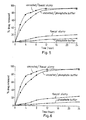
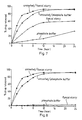
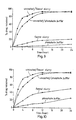
- the release of 5ASA from the spheres was measured using a quantity of spheres containing a known level of 5ASA into 100 ml dissolution fluid at a temperature of 37°C and under agitation.
- the dissolution fluids used were phosphate buffer at pH 7.2 and faecal slurry (10-15%). Samples were taken at 2 hour intervals up to 8 hours and subsequently after 12 hours and 24 hours and analysed by HPLC. For control purposes, uncoated pellets were subjected to the same release tests.
Landscapes
- Health & Medical Sciences (AREA)
- Public Health (AREA)
- Medicinal Chemistry (AREA)
- Chemical & Material Sciences (AREA)
- Engineering & Computer Science (AREA)
- Pharmacology & Pharmacy (AREA)
- General Health & Medical Sciences (AREA)
- Life Sciences & Earth Sciences (AREA)
- Animal Behavior & Ethology (AREA)
- Bioinformatics & Cheminformatics (AREA)
- Veterinary Medicine (AREA)
- Epidemiology (AREA)
- Chemical Kinetics & Catalysis (AREA)
- General Chemical & Material Sciences (AREA)
- Nuclear Medicine, Radiotherapy & Molecular Imaging (AREA)
- Organic Chemistry (AREA)
- Medicinal Preparation (AREA)
- Agricultural Chemicals And Associated Chemicals (AREA)
- Manufacture Of Macromolecular Shaped Articles (AREA)
- Compositions Of Macromolecular Compounds (AREA)
Claims (15)
- Procédé pour produire une composition à libération retardée comprenant une matière active ou une forme posologique contenant une matière active, et un film formé à partir d'une composition filmogène comprenant un mélange d'un polymère filmogène substantiellement insoluble dans l'eau et d'amylose, le procédé comprenant la mise en contact de la matière active ou d'une forme posologique contenant une matière active avec une solution de la composition filmogène dans un système solvant comprenant (1) de l'eau et (2) un solvant organique miscible avec l'eau qui est apte de lui-même à dissoudre le polymère filmogène, et l'élimination du solvant, dans lequel le rapport pondéral de l'amylose au polymère filmogène est dans la gamme de 1:2 à 3:2 et le système solvant contient au moins 50 % de solvant organique.
- Procédé selon la revendication 1, dans lequel le rapport pondéral de l'amylose au polymère filmogène est dans la gamme de 2:3 à 3:2.
- Procédé selon la revendication 1 ou 2, dans lequel la concentration d'amylose dans la composition filmogène est telle que lors de la formation d'un film, l'amylose prend l'état vitreux.
- Procédé selon l'une quelconque des revendications 1 à 3, dans lequel la concentration de matières solides filmogènes dans la composition filmogène est entre 2 et 8 % p/p.
- Procédé selon l'une quelconque des revendications précédentes, dans lequel le polymère insoluble est choisi dans le groupe constitué par un polymère cellulosique et un polymère acrylique.
- Procédé selon la revendication 5, dans lequel le polymère cellulosique est l'éthylcellulose.
- Procédé selon l'une quelconque des revendications précédentes, dans lequel le système solvant contient entre 60 et 90 % p/p de solvant organique.
- Procédé selon l'une quelconque des revendications précédentes, dans lequel le solvant organique est choisi parmi le propanol, l'éthanol et le lactate d'éthyle.
- Procédé selon l'une quelconque des revendications précédentes, dans lequel la matière active est mise en contact avec une solution de la composition filmogène à une température allant jusqu'à 60 °C.
- Procédé selon l'une quelconque des revendications précédentes, dans lequel la matière active est mise en contact avec une solution de la composition filmogène à une température entre 20 et 40 °C.
- Procédé selon la revendication 9, dans lequel la matière active est pulvérisée avec une solution de la composition filmogène à une température entre 30 et 40 °C.
- Procédé selon la revendication 9, dans lequel la matière active est pulvérisée avec une solution de la composition filmogène à une température entre 35 et 40 °C.
- Procédé selon l'une quelconque des revendications précédentes, dans lequel le contact de la matière active avec la composition filmogène est effectué par pulvérisation.
- Procédé selon l'une quelconque des revendications précédentes, dans lequel la composition filmogène inclut en outre un plastifiant.
- Procédé selon l'une quelconque des revendications précédentes, dans lequel l'épaisseur du film formé par contact de la composition filmogène avec la matière active est entre 3 et 20 % du gain de poids théorique (TWG).
Applications Claiming Priority (3)
| Application Number | Priority Date | Filing Date | Title |
|---|---|---|---|
| GBGB9722426.5A GB9722426D0 (en) | 1997-10-23 | 1997-10-23 | Controlled release formulations |
| GB9722426 | 1997-10-23 | ||
| PCT/GB1998/003178 WO1999021536A1 (fr) | 1997-10-23 | 1998-10-23 | Formulations a liberation prolongee |
Publications (2)
| Publication Number | Publication Date |
|---|---|
| EP1024795A1 EP1024795A1 (fr) | 2000-08-09 |
| EP1024795B1 true EP1024795B1 (fr) | 2002-08-07 |
Family
ID=10820995
Family Applications (1)
| Application Number | Title | Priority Date | Filing Date |
|---|---|---|---|
| EP98950189A Expired - Lifetime EP1024795B1 (fr) | 1997-10-23 | 1998-10-23 | Formulations a liberation prolongee |
Country Status (10)
| Country | Link |
|---|---|
| US (1) | US6534549B1 (fr) |
| EP (1) | EP1024795B1 (fr) |
| JP (2) | JP2001520986A (fr) |
| AT (1) | ATE221773T1 (fr) |
| CA (1) | CA2302585C (fr) |
| DE (1) | DE69807104T2 (fr) |
| DK (1) | DK1024795T3 (fr) |
| ES (1) | ES2178268T3 (fr) |
| GB (1) | GB9722426D0 (fr) |
| WO (1) | WO1999021536A1 (fr) |
Cited By (1)
| Publication number | Priority date | Publication date | Assignee | Title |
|---|---|---|---|---|
| FR2862654A1 (fr) * | 2003-11-20 | 2005-05-27 | Roquette Freres | Composition amylacee filmogene |
Families Citing this family (32)
| Publication number | Priority date | Publication date | Assignee | Title |
|---|---|---|---|---|
| US6929884B2 (en) | 2001-04-19 | 2005-08-16 | Zinc Matrix Power, Inc. | Method for manufacture of films containing insoluble solids embedded in cellulose-based films |
| US8282955B2 (en) | 2001-10-15 | 2012-10-09 | Ferring B.V. | Method for the preparation of a pharmaceutical composition comprising 5-aminosalicylic acid for use in treatment of ulcerative colitis and Crohn's disease |
| GB0203421D0 (en) * | 2002-02-13 | 2002-04-03 | Alizyme Therapeutics Ltd | Composition |
| JP2007523664A (ja) | 2003-04-23 | 2007-08-23 | フェリング ベスローテン フェンノートシャップ | 医薬組成物用サシェ |
| EP1547601A1 (fr) | 2003-12-23 | 2005-06-29 | Ferring B.V. | Procédé de revêtement |
| US20050260275A1 (en) * | 2004-04-01 | 2005-11-24 | Procyte Corporation | Encapsulated peptide copper complexes and compositions and methods related thereto |
| US8048919B2 (en) * | 2004-06-28 | 2011-11-01 | Archer Daniels Midland Company | Use of ethyl lactate as an excipient for pharmaceutical compositions |
| US7384916B2 (en) * | 2005-03-16 | 2008-06-10 | Procyte Corporation | Methods and compositions for preventing and treating aging or photodamaged skin |
| US20090017110A1 (en) * | 2005-05-31 | 2009-01-15 | Capricorn Pharma Inc. | Modified release formulations of anti-irritability drugs |
| GB0607534D0 (en) | 2006-04-13 | 2006-05-24 | Univ London Pharmacy | Colonic drug delivery formulation |
| US20090285863A1 (en) * | 2006-07-27 | 2009-11-19 | Gisela Fridrun Podczeck | Coating Composition Comprising Starch |
| US20090036414A1 (en) * | 2007-08-02 | 2009-02-05 | Mutual Pharmaceutical Company, Inc. | Mesalamine Formulations |
| AU2009229167B2 (en) | 2008-03-27 | 2014-01-23 | Zpower, Llc | Electrode separator |
| GB0808537D0 (en) | 2008-05-12 | 2008-06-18 | Archimedes Dev Ltd | Compositions |
| FR2934467B1 (fr) * | 2008-07-31 | 2014-08-22 | Roquette Freres | Forme solide pelliculee et procede de pelliculage a temperature ambiante. |
| ES2425762T3 (es) * | 2008-10-27 | 2013-10-17 | Roquette Freres | Polímero insoluble en agua: revestimientos de película a base de derivados de almidón modificado para la liberación dirigida al colon |
| DE102008059206A1 (de) | 2008-11-27 | 2010-06-10 | Bayer Schering Pharma Aktiengesellschaft | Pharmazeutische Darreichungsform enthaltend Nifedipin oder Nisoldipin und einen Angiotensin-II Antagonisten und/oder ein Diuretikum |
| US8470885B2 (en) | 2009-01-12 | 2013-06-25 | Biokier, Inc. | Composition and method for treatment of diabetes |
| US9006288B2 (en) | 2009-01-12 | 2015-04-14 | Biokier, Inc. | Composition and method for treatment of diabetes |
| US9314444B2 (en) | 2009-01-12 | 2016-04-19 | Biokier, Inc. | Composition and method for treatment of NASH |
| EP2480246A4 (fr) | 2009-09-23 | 2013-02-27 | Biokier Inc | Composition et procédé pour le traitement du diabète |
| EP2482822B1 (fr) | 2009-10-01 | 2018-08-01 | Adare Pharmaceuticals, Inc. | Compositions de corticostéroïdes administrées par voie orale |
| ES3033485T3 (en) | 2010-11-15 | 2025-08-04 | Archer Daniels Midland Co | Compositions for converting contaminants |
| ES2655622T3 (es) | 2012-04-30 | 2018-02-20 | Tillotts Pharma Ag | Una formulación de fármaco de liberación retardada |
| US20140271931A1 (en) * | 2013-03-12 | 2014-09-18 | Perosphere Inc. | Anti-Acne Topical Films |
| WO2015034678A2 (fr) | 2013-09-06 | 2015-03-12 | Aptalis Pharmatech, Inc. | Corticostéroïde contenant des compositions de comprimés se désintégrant par voie orale pour œsophagite à éonisophiles |
| AU2013404367B2 (en) | 2013-10-29 | 2020-02-27 | Tillotts Pharma Ag | A delayed release drug formulation |
| EP3662901B1 (fr) | 2018-12-07 | 2025-01-01 | Tillotts Pharma AG | Formulation de médicaments à une liberation ralentie avec une couche extérieure comprenant un polymère dégradable par des enzymes, sa composition et son processus de production |
| EP3662902B1 (fr) | 2018-12-07 | 2024-07-31 | Tillotts Pharma AG | Formulation pour la liberation de médicaments dans le côlon |
| EP3662900A1 (fr) | 2018-12-07 | 2020-06-10 | Tillotts Pharma AG | Formulation d'administration de médicament colonique |
| EP3662898A1 (fr) | 2018-12-07 | 2020-06-10 | Tillotts Pharma AG | Formulation solide comprenant de la mésalamine |
| US11896719B2 (en) | 2022-01-24 | 2024-02-13 | Calliditas Therapeutics Ab | Pharmaceutical compositions |
Family Cites Families (1)
| Publication number | Priority date | Publication date | Assignee | Title |
|---|---|---|---|---|
| GB8926639D0 (en) * | 1989-11-24 | 1990-01-17 | Agricultural & Food Res | Delayed release formulations |
-
1997
- 1997-10-23 GB GBGB9722426.5A patent/GB9722426D0/en not_active Ceased
-
1998
- 1998-10-23 AT AT98950189T patent/ATE221773T1/de active
- 1998-10-23 JP JP2000517696A patent/JP2001520986A/ja not_active Ceased
- 1998-10-23 EP EP98950189A patent/EP1024795B1/fr not_active Expired - Lifetime
- 1998-10-23 ES ES98950189T patent/ES2178268T3/es not_active Expired - Lifetime
- 1998-10-23 WO PCT/GB1998/003178 patent/WO1999021536A1/fr not_active Ceased
- 1998-10-23 CA CA002302585A patent/CA2302585C/fr not_active Expired - Fee Related
- 1998-10-23 DE DE69807104T patent/DE69807104T2/de not_active Expired - Lifetime
- 1998-10-23 DK DK98950189T patent/DK1024795T3/da active
-
2000
- 2000-03-01 US US09/516,253 patent/US6534549B1/en not_active Expired - Fee Related
-
2010
- 2010-07-02 JP JP2010151886A patent/JP2010270335A/ja not_active Withdrawn
Cited By (2)
| Publication number | Priority date | Publication date | Assignee | Title |
|---|---|---|---|---|
| FR2862654A1 (fr) * | 2003-11-20 | 2005-05-27 | Roquette Freres | Composition amylacee filmogene |
| WO2005060944A1 (fr) * | 2003-11-20 | 2005-07-07 | Roquette Freres | Composition amylacee filmogene |
Also Published As
| Publication number | Publication date |
|---|---|
| JP2001520986A (ja) | 2001-11-06 |
| CA2302585A1 (fr) | 1999-05-06 |
| ES2178268T3 (es) | 2002-12-16 |
| DE69807104D1 (de) | 2002-09-12 |
| DE69807104T2 (de) | 2002-12-05 |
| DK1024795T3 (da) | 2002-12-02 |
| JP2010270335A (ja) | 2010-12-02 |
| ATE221773T1 (de) | 2002-08-15 |
| CA2302585C (fr) | 2007-09-25 |
| GB9722426D0 (en) | 1997-12-24 |
| US6534549B1 (en) | 2003-03-18 |
| WO1999021536A1 (fr) | 1999-05-06 |
| EP1024795A1 (fr) | 2000-08-09 |
Similar Documents
| Publication | Publication Date | Title |
|---|---|---|
| CA2302585C (fr) | Formulations a liberation prolongee | |
| EP0502032B1 (fr) | Compositions a liberation retardee | |
| US6743445B2 (en) | Low temperature coatings | |
| Milojevic et al. | Amylose as a coating for drug delivery to the colon: preparation and in vitro evaluation using 5-aminosalicylic acid pellets | |
| JP2504740B2 (ja) | 飼料添加物用被覆組成物及び被覆された飼料添加物 | |
| US5851579A (en) | Aqueous enteric coating compositions | |
| Fulzele et al. | Polymerized rosin: novel film forming polymer for drug delivery | |
| US5108758A (en) | Delayed release formulations | |
| CA2077658A1 (fr) | Methode permettant de masquer le gout d'un medicament | |
| Liu et al. | Preparation and evaluation of pectin-based colon-specific pulsatile capsule in vitro and in vivo | |
| EP2046306B1 (fr) | Composition de revêtement contenant de l'amidon | |
| AU732210B2 (en) | Colonic delivery of weak acid drugs | |
| CA2570153A1 (fr) | Granules permettant la liberation controlee de tamsulosine | |
| MXPA99003093A (en) | Colonic delivery of weak acid drugs | |
| WO2003074030A1 (fr) | Composition pharmaceutique orale a liberation modifiee |
Legal Events
| Date | Code | Title | Description |
|---|---|---|---|
| PUAI | Public reference made under article 153(3) epc to a published international application that has entered the european phase |
Free format text: ORIGINAL CODE: 0009012 |
|
| 17P | Request for examination filed |
Effective date: 20000406 |
|
| AK | Designated contracting states |
Kind code of ref document: A1 Designated state(s): AT BE CH DE DK ES FI FR GB GR IT LI LU MC NL SE |
|
| 17Q | First examination report despatched |
Effective date: 20010307 |
|
| GRAG | Despatch of communication of intention to grant |
Free format text: ORIGINAL CODE: EPIDOS AGRA |
|
| GRAG | Despatch of communication of intention to grant |
Free format text: ORIGINAL CODE: EPIDOS AGRA |
|
| GRAH | Despatch of communication of intention to grant a patent |
Free format text: ORIGINAL CODE: EPIDOS IGRA |
|
| GRAH | Despatch of communication of intention to grant a patent |
Free format text: ORIGINAL CODE: EPIDOS IGRA |
|
| GRAA | (expected) grant |
Free format text: ORIGINAL CODE: 0009210 |
|
| AK | Designated contracting states |
Kind code of ref document: B1 Designated state(s): AT BE CH DE DK ES FI FR GB GR IT LI LU MC NL SE |
|
| REF | Corresponds to: |
Ref document number: 221773 Country of ref document: AT Date of ref document: 20020815 Kind code of ref document: T |
|
| REG | Reference to a national code |
Ref country code: GB Ref legal event code: FG4D |
|
| REG | Reference to a national code |
Ref country code: CH Ref legal event code: NV Representative=s name: KIRKER & CIE SA Ref country code: CH Ref legal event code: EP |
|
| REF | Corresponds to: |
Ref document number: 69807104 Country of ref document: DE Date of ref document: 20020912 |
|
| REG | Reference to a national code |
Ref country code: DK Ref legal event code: T3 Ref country code: GR Ref legal event code: EP Ref document number: 20020403625 Country of ref document: GR |
|
| REG | Reference to a national code |
Ref country code: ES Ref legal event code: FG2A Ref document number: 2178268 Country of ref document: ES Kind code of ref document: T3 |
|
| ET | Fr: translation filed | ||
| PLBE | No opposition filed within time limit |
Free format text: ORIGINAL CODE: 0009261 |
|
| STAA | Information on the status of an ep patent application or granted ep patent |
Free format text: STATUS: NO OPPOSITION FILED WITHIN TIME LIMIT |
|
| 26N | No opposition filed |
Effective date: 20030508 |
|
| REG | Reference to a national code |
Ref country code: CH Ref legal event code: PUE Owner name: ALIZYME THERAPEUTICS LIMITED Free format text: BTG INTERNATIONAL LIMITED#10 FLEET PLACE, LIMEBURNER LANE#LONDON EC4M 7SB (GB) -TRANSFER TO- ALIZYME THERAPEUTICS LIMITED#GRANTA PARK GREAT ABINGTON#CAMBRIDGE CB1 6GX (GB) |
|
| REG | Reference to a national code |
Ref country code: GB Ref legal event code: 732E |
|
| NLS | Nl: assignments of ep-patents |
Owner name: ALIZYME THERAPEUTICS LIMITED Effective date: 20060612 |
|
| REG | Reference to a national code |
Ref country code: FR Ref legal event code: TP |
|
| PGFP | Annual fee paid to national office [announced via postgrant information from national office to epo] |
Ref country code: AT Payment date: 20101014 Year of fee payment: 13 |
|
| PGFP | Annual fee paid to national office [announced via postgrant information from national office to epo] |
Ref country code: DE Payment date: 20101020 Year of fee payment: 13 |
|
| PG25 | Lapsed in a contracting state [announced via postgrant information from national office to epo] |
Ref country code: IT Free format text: LAPSE BECAUSE OF NON-PAYMENT OF DUE FEES Effective date: 20091023 |
|
| PGFP | Annual fee paid to national office [announced via postgrant information from national office to epo] |
Ref country code: GB Payment date: 20101020 Year of fee payment: 13 |
|
| PGFP | Annual fee paid to national office [announced via postgrant information from national office to epo] |
Ref country code: IT Payment date: 20101015 Year of fee payment: 13 |
|
| PGRI | Patent reinstated in contracting state [announced from national office to epo] |
Ref country code: IT Effective date: 20110616 |
|
| PGFP | Annual fee paid to national office [announced via postgrant information from national office to epo] |
Ref country code: MC Payment date: 20110928 Year of fee payment: 14 |
|
| PGFP | Annual fee paid to national office [announced via postgrant information from national office to epo] |
Ref country code: GR Payment date: 20110930 Year of fee payment: 14 |
|
| PGFP | Annual fee paid to national office [announced via postgrant information from national office to epo] |
Ref country code: SE Payment date: 20111011 Year of fee payment: 14 Ref country code: BE Payment date: 20111012 Year of fee payment: 14 Ref country code: CH Payment date: 20111012 Year of fee payment: 14 Ref country code: ES Payment date: 20111115 Year of fee payment: 14 Ref country code: NL Payment date: 20111021 Year of fee payment: 14 Ref country code: LU Payment date: 20111013 Year of fee payment: 14 Ref country code: FR Payment date: 20111103 Year of fee payment: 14 Ref country code: FI Payment date: 20111011 Year of fee payment: 14 Ref country code: DK Payment date: 20111011 Year of fee payment: 14 |
|
| BERE | Be: lapsed |
Owner name: *ALIZYME THERAPEUTICS LTD Effective date: 20121031 |
|
| REG | Reference to a national code |
Ref country code: NL Ref legal event code: V1 Effective date: 20130501 |
|
| PG25 | Lapsed in a contracting state [announced via postgrant information from national office to epo] |
Ref country code: MC Free format text: LAPSE BECAUSE OF NON-PAYMENT OF DUE FEES Effective date: 20121031 |
|
| REG | Reference to a national code |
Ref country code: CH Ref legal event code: PL |
|
| REG | Reference to a national code |
Ref country code: DK Ref legal event code: EBP |
|
| REG | Reference to a national code |
Ref country code: AT Ref legal event code: MM01 Ref document number: 221773 Country of ref document: AT Kind code of ref document: T Effective date: 20121023 |
|
| REG | Reference to a national code |
Ref country code: GR Ref legal event code: ML Ref document number: 20020403625 Country of ref document: GR Effective date: 20130508 |
|
| GBPC | Gb: european patent ceased through non-payment of renewal fee |
Effective date: 20121023 |
|
| REG | Reference to a national code |
Ref country code: FR Ref legal event code: ST Effective date: 20130628 |
|
| PG25 | Lapsed in a contracting state [announced via postgrant information from national office to epo] |
Ref country code: LI Free format text: LAPSE BECAUSE OF NON-PAYMENT OF DUE FEES Effective date: 20121031 Ref country code: CH Free format text: LAPSE BECAUSE OF NON-PAYMENT OF DUE FEES Effective date: 20121031 Ref country code: GB Free format text: LAPSE BECAUSE OF NON-PAYMENT OF DUE FEES Effective date: 20121023 Ref country code: SE Free format text: LAPSE BECAUSE OF NON-PAYMENT OF DUE FEES Effective date: 20121024 Ref country code: AT Free format text: LAPSE BECAUSE OF NON-PAYMENT OF DUE FEES Effective date: 20121023 Ref country code: DE Free format text: LAPSE BECAUSE OF NON-PAYMENT OF DUE FEES Effective date: 20130501 Ref country code: BE Free format text: LAPSE BECAUSE OF NON-PAYMENT OF DUE FEES Effective date: 20121031 |
|
| REG | Reference to a national code |
Ref country code: DE Ref legal event code: R119 Ref document number: 69807104 Country of ref document: DE Effective date: 20130501 |
|
| PG25 | Lapsed in a contracting state [announced via postgrant information from national office to epo] |
Ref country code: IT Free format text: LAPSE BECAUSE OF NON-PAYMENT OF DUE FEES Effective date: 20121023 Ref country code: FR Free format text: LAPSE BECAUSE OF NON-PAYMENT OF DUE FEES Effective date: 20121031 Ref country code: NL Free format text: LAPSE BECAUSE OF NON-PAYMENT OF DUE FEES Effective date: 20130501 Ref country code: GR Free format text: LAPSE BECAUSE OF NON-PAYMENT OF DUE FEES Effective date: 20130508 Ref country code: FI Free format text: LAPSE BECAUSE OF NON-PAYMENT OF DUE FEES Effective date: 20121023 |
|
| PG25 | Lapsed in a contracting state [announced via postgrant information from national office to epo] |
Ref country code: DK Free format text: LAPSE BECAUSE OF NON-PAYMENT OF DUE FEES Effective date: 20121031 |
|
| REG | Reference to a national code |
Ref country code: ES Ref legal event code: FD2A Effective date: 20140207 |
|
| PG25 | Lapsed in a contracting state [announced via postgrant information from national office to epo] |
Ref country code: LU Free format text: LAPSE BECAUSE OF NON-PAYMENT OF DUE FEES Effective date: 20121023 Ref country code: ES Free format text: LAPSE BECAUSE OF NON-PAYMENT OF DUE FEES Effective date: 20121024 |