EP1022284B1 - Taxoid derivatives and process for producing the same - Google Patents
Taxoid derivatives and process for producing the same Download PDFInfo
- Publication number
- EP1022284B1 EP1022284B1 EP97943156A EP97943156A EP1022284B1 EP 1022284 B1 EP1022284 B1 EP 1022284B1 EP 97943156 A EP97943156 A EP 97943156A EP 97943156 A EP97943156 A EP 97943156A EP 1022284 B1 EP1022284 B1 EP 1022284B1
- Authority
- EP
- European Patent Office
- Prior art keywords
- represented
- following formula
- paclitaxel
- compound
- tetrabenzyl
- Prior art date
- Legal status (The legal status is an assumption and is not a legal conclusion. Google has not performed a legal analysis and makes no representation as to the accuracy of the status listed.)
- Expired - Lifetime
Links
- 0 CCC(*C(C(C1O)O)OCC(O[C@@](C(CC)=O)C(C(C)(C)[C@@](C2)([C@]([C@@](C[C@](C3)O)[C@@]4(C)[C@@]3OC4)OBr)O)=C(C)[C@]2O)=O)C1O Chemical compound CCC(*C(C(C1O)O)OCC(O[C@@](C(CC)=O)C(C(C)(C)[C@@](C2)([C@]([C@@](C[C@](C3)O)[C@@]4(C)[C@@]3OC4)OBr)O)=C(C)[C@]2O)=O)C1O 0.000 description 6
Images
Classifications
-
- C—CHEMISTRY; METALLURGY
- C07—ORGANIC CHEMISTRY
- C07H—SUGARS; DERIVATIVES THEREOF; NUCLEOSIDES; NUCLEOTIDES; NUCLEIC ACIDS
- C07H15/00—Compounds containing hydrocarbon or substituted hydrocarbon radicals directly attached to hetero atoms of saccharide radicals
- C07H15/02—Acyclic radicals, not substituted by cyclic structures
- C07H15/04—Acyclic radicals, not substituted by cyclic structures attached to an oxygen atom of the saccharide radical
-
- A—HUMAN NECESSITIES
- A61—MEDICAL OR VETERINARY SCIENCE; HYGIENE
- A61P—SPECIFIC THERAPEUTIC ACTIVITY OF CHEMICAL COMPOUNDS OR MEDICINAL PREPARATIONS
- A61P35/00—Antineoplastic agents
-
- C—CHEMISTRY; METALLURGY
- C07—ORGANIC CHEMISTRY
- C07H—SUGARS; DERIVATIVES THEREOF; NUCLEOSIDES; NUCLEOTIDES; NUCLEIC ACIDS
- C07H15/00—Compounds containing hydrocarbon or substituted hydrocarbon radicals directly attached to hetero atoms of saccharide radicals
- C07H15/26—Acyclic or carbocyclic radicals, substituted by hetero rings
Definitions
- the present invention relates to taxoid derivatives and process for producing the same and more particularly to taxoid derivatives having improved physiological activity and solubility in water by linking galactose or mannose to any one of paclitaxel, docetaxel and 10-deacetyl-baccatin III through a spacer, and process for producing the same.
- Paclitaxel is a diterpene compound isolated from the bark of a yew tree of North American growth (Taxus brevifolia) [M.C. Wani et al. : J. Am. Chem. Soc., 93, 2325 (1971)] and is a potent antitumor agent having improving effect against tumors that cannot be cured by conventional chemical therapy.
- the mechanism by which taxol controls a tumor is specific; it causes excessive formation of a microtubule to inhibit mitosis in contrast to many conventional antitumor agents that inhibit the formation of a microtubule, which is a major component of a spindle, mitotic apparatus.
- paclitaxel is an important antitumor agent, it is low solubility in water and hence its application as a therapeutic drug is limited. Accordingly, studies on improvement of its solubility by use of a solubilizing agent or converting it into derivatives have been made intensively. However, no satisfactory solution has been found yet.
- paclitaxel is administered together with "Cremophor", a solubilizing agent. This is performed by administering 1 liter over 6 hours every 2 weeks, which is practiced for 4 cycles, and imposes the patient with a heavy burden [Eric K. Rowinsky et al.: CANCER RESEARCH, 49, 4640 (1989)] and in addition has the problem that the solubilizing agent has side effects.
- docetaxel has been developed as a paclitaxel derivative having improved solubility.
- the solubility in water of docetaxel is only 35 times as high as taxol [I. Ringel et al.: J. Natl. Cancer Inst., 83, 288 (1991)], and is not so much improved.
- JP 9-241292 discloses a process for producing taxoid derivative inclusion components to improve the solubility of the taxoid derivative by the use of cyclodextrines.
- Chemical glycosylation of paclitaxel includes many known methods as described in, for example, "Experimental Chemistry Course 26, Organic Synthesis VIII, Chapter 3, 4th Edition, edited by Japan Chemical Society", any of which methods must use a heavy metal or strong Lewis acid.
- paclitaxel and docetaxel have an oxetane skeleton, which is unstable to acids, and a basic skeleton having high stereo hindrance, conventional chemical glycosylation process does not proceed efficiently.
- glycosylation with an enzyme results in failure of obtaining the target compound because of very low solubility in water of paclitaxel and docetaxel.
- 10-deacetyl-baccatin III extracted from a yew tree of North American growth (Taxus brevifolia) like paclitaxel is a precursor of docetaxel, so that development of a method for producing hydrophilic taxoid derivatives can be expected by use of this substance.
- an object of the present invention is to develop derivatives of paclitaxel, etc. having improved solubility and physiological activity and provide an effective therapeutic drug for tumors that imposes less burden on patients.
- the present inventors have made intensive research with view to developing derivatives of paclitaxel and as a result found that there can be obtained paclitaxel derivatives that consists of paclitaxel, and galactose or mannose linked thereto via an ester bond through a spacer and that the resulting derivatives show improved solubility in water and physiological activity.
- the present invention has been accomplished based on this discovery. Also, as for docetaxel and 10-deacetyl-baccatin III described above, the present inventors have established methods for preparing taxoid derivatives in which galactose or mannose is linked via an ester bond in a similar manner.
- the present invention relates to taxoid derivatives comprising any one of paclitaxel, docetaxel and 10-deacetyl-baccatin III to which galactose or mannose is linked through a spacer, to methods for producing the same and to their use.
- Ph shows a phenyl group
- Bz shows a benzyl group
- Ac shows an acetyl group, respectively.
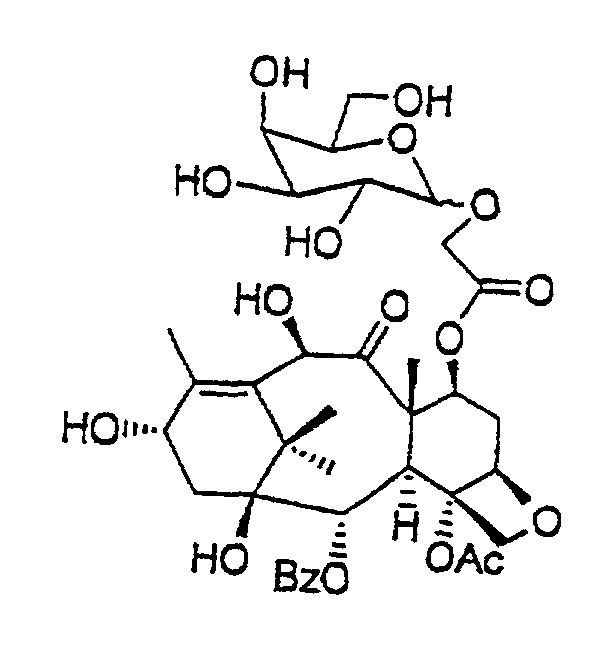
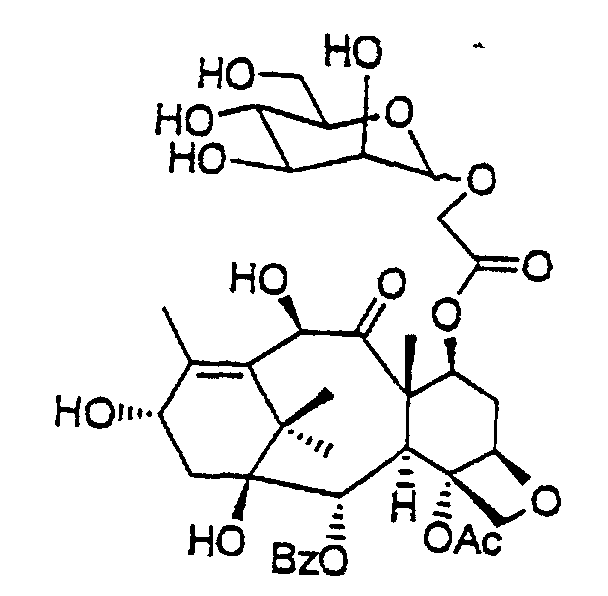
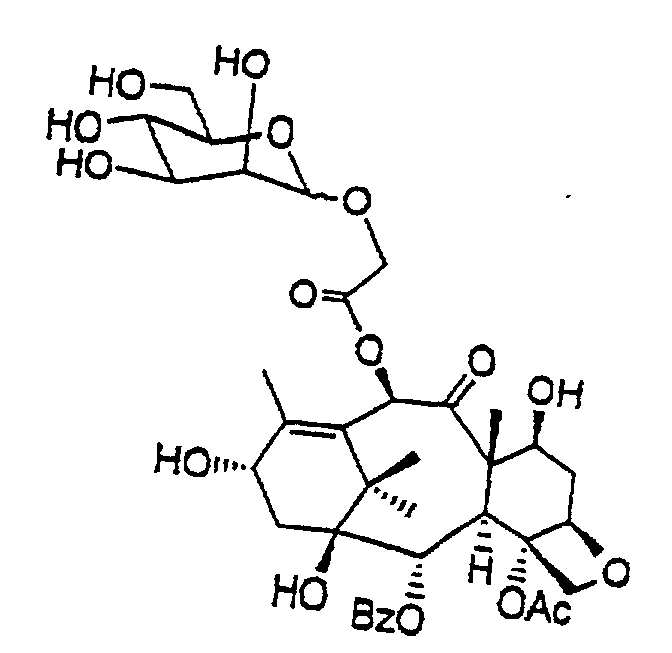
- 7-MAG-PT Mannosyloxyacetyl-7-paclitaxel
- 10-GAG-PT Galactosyloxyacetyl-10-paclitaxel
- 10-MAG-PT Mannosyloxyacetyl-10-paclitaxel
- 7-MAG-DT Mannosyloxyacetyl-7-docetaxel
- 10-MAG-DT Mannosyloxyacetyl-10-docetaxel
- 10-MAG-baccatin-III Mannosyloxyacetyl-10-baccatin III
- taxoid derivatives of the present invention are those that contain any of paclitaxel, docetaxel and 10-deacetyl-baccatin III to which galactose or mannose is linked through a spacer, as described above.
- Paclitaxel can be obtained by isolation from the bark of a yew tree (Taxus brevifolia) of North American growth by the method described in Springfield, D.G.I.: Pharmacol. Ther., 52, 1 (1992) and besides, chemically synthesized one (R.A. Holton: Europian Patent-A 400971, 1990) etc. can be used.
- Docetaxel can be derived from 10-deacetyl-baccatin III by the method described in Green, A.E. et al.: J. Org. Chem., 59, 1238 (1994). 10-Deacetyl-baccatin III, as described above, is a natural substance extracted from the yew tree of North American growth.
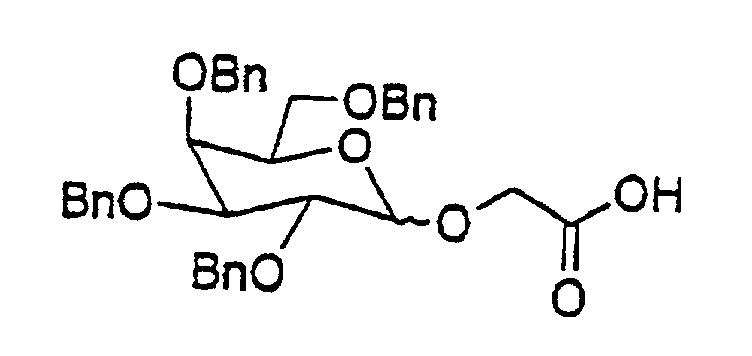
- the reaction to link galactose or mannose to any of paclitaxel, docetaxel and 10-deacetyl-baccatin III through a spacer is carried out by use of tetrabenzyl acetyloxygalactoside or tetrabenzyl acetyloxymannoside.
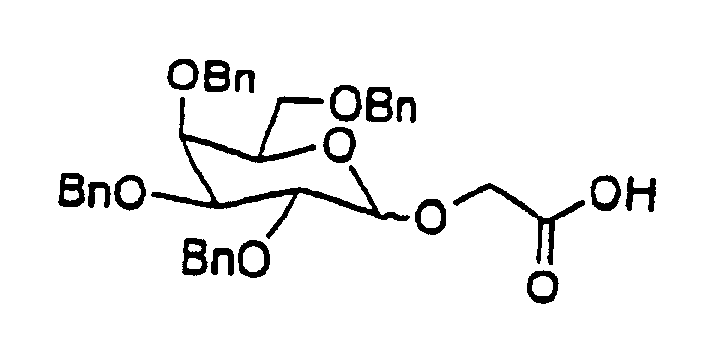
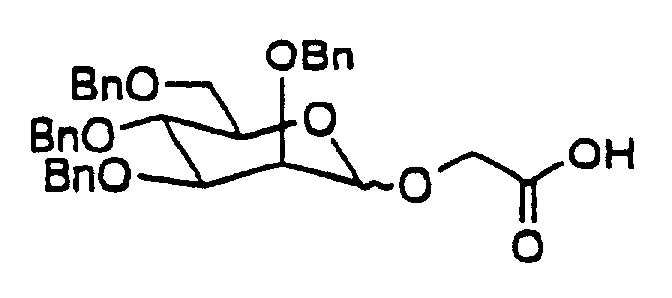
- the tetrabenzyl acetyloxygalactoside or tetrabenzyl acetyloxymannoside is one obtained by linking a glycolate such as ethyl glycolate as a spacer to tetrabenzylgalactose or tetrabenzylmannose obtained respectively from galactose or mannose as a starting substance by a conventional method to form an ester compound and then deethylating the ester compound to form a carboxylic acid compound and they are represented by the following two formulae.
- Tetrabenzylgalactose (1) obtained by a conventional method is reacted with ethyl glycolate together with p-toluenesulfonic acid in benzene at 0 to 150°C, preferably 110°C, for 0.5 to 50 hours, preferably 8 hours, to link ethyl glycolate to the 1-position thereof to obtain an ethyl ester compound (2).
- the compound (2) is treated in an alkali (for example, 6N NaOH) methanol-dioxane solution at room temperature to 100°C for 0.5 to 50 hours, preferably 3 hours and then converted to acidic with hydrochloric acid (for example, 1N HCl) to effect deethylation to obtain a carboxylic acid compound (3).
- alkali for example, 6N NaOH
- hydrochloric acid for example, 1N HCl
- Tetrabenzylmannose (4) obtained by a conventional method is reacted with ethyl glycolate together with p-toluenesulfonic acid in benzene at 0 to 150°C, preferably 110°C, for 0.5 to 50 hours, preferably 8 hours, to link ethyl glycolate to the 1-position thereof to obtain an ethyl ester compound (5).
- the compound (5) is treated in an alkali (for example, 6N NaOH) methanol-dioxane solution at room temperature to 100°C for 0.5 to 50 hours, preferably 3 hours and then converted to acidic with hydrochloric acid (for example, 1N HCl) to effect deethylation to obtain a carboxylic acid compound (6).
- alkali for example, 6N NaOH
- hydrochloric acid for example, 1N HCl
- a glycolate such as ethyl glycolate
- a spacer for the sugar donor.
- a glycolate such as ethyl glycolate
- the length of spacer can be adjusted with ease.
- 3-hydroxybutyric acid or the like can be used as a spacer.
- the taxoid derivatives of the present invention can be produced by reacting any of paclitaxel, docetaxel, and 10-deacetyl-baccatin III with tetrabenzyl acetyloxygalactoside or tetrabenzyl acetyloxymannoside.
- Specific examples of the production method for taxoid derivatives include the methods illustrated by the following Reaction Schemes (I), (II), (III), (IV), and (V), respectively.
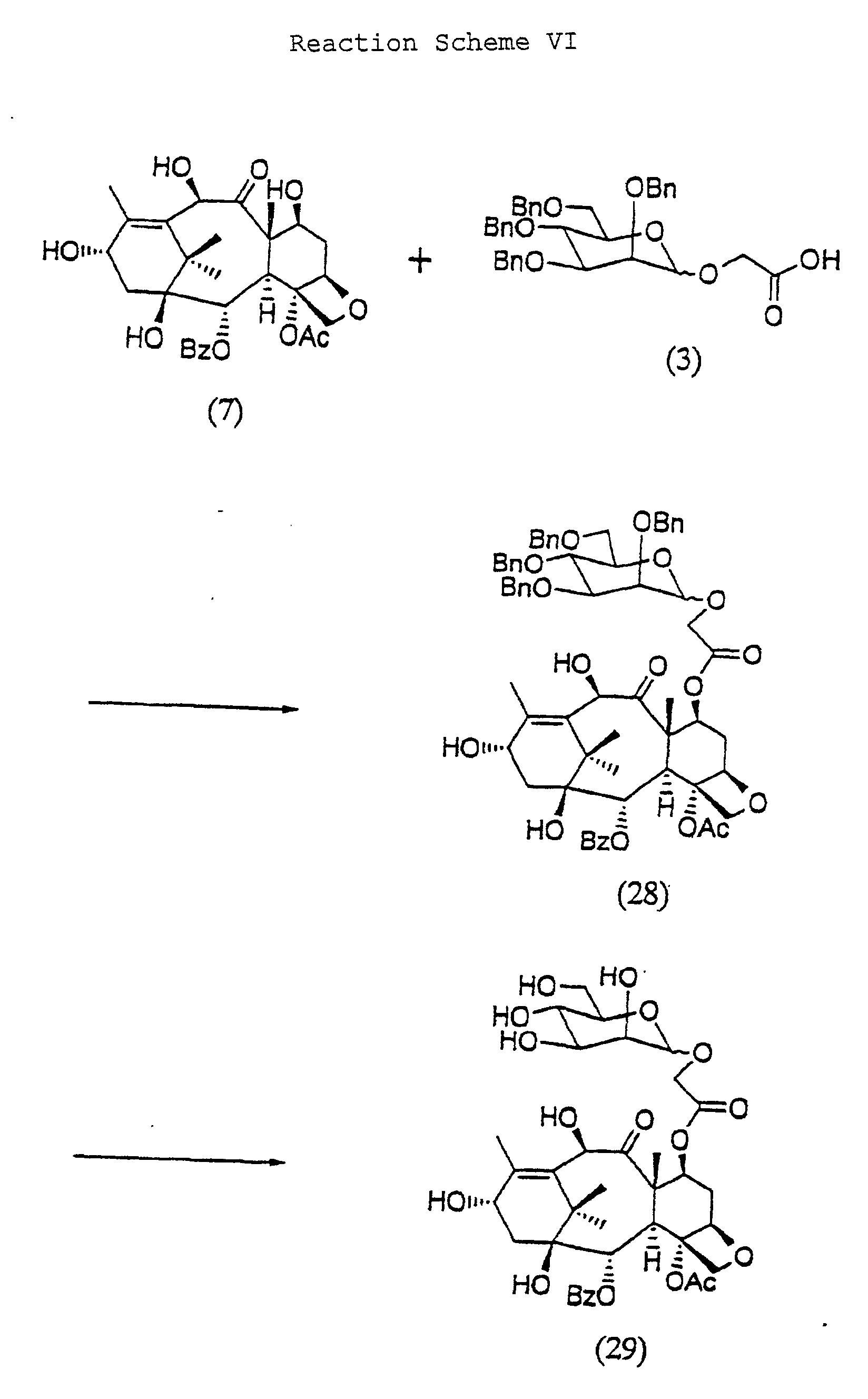
- Reaction Scheme (I) The method illustrated in Reaction Scheme (I) is to react 10-deacetyl-baccatin III (7) with tetrabenzyl acetyloxygalactoside (3) and then debenzylate the product and by this method 7-GAG-baccatin III (9) represented by the above formula can be obtained.
- 10-deacetyl-baccatin III (7) and tetrabenzyl acetyloxygalactoside (3) are reacted at room temperature for 0.5 to 100 hours, preferably 3 hours in argon atmosphere in the presence of a base such as 4-dimethylaminopyridine (DMAP) , a condensing agent such as dicyclohexylcarbodiimide (DCC), and a solvent such as dichloromethane to obtain a glycoside compound (8).
- a base such as 4-dimethylaminopyridine (DMAP)
- DCC dicyclohexylcarbodiimide
- DCC dicyclohexylcarbodiimide
- the compound (8) together with a catalyst such as palladium black and an acid such as acetic acid, is reacted by vigorously stirring in a hydrogen atmosphere at room temperature for 0. 5 to 100 hours, preferably 15 hours to allow debenzylation to occur to obtain 7-GAG, 10-deacetyl-baccatin III (9).
- a catalyst such as palladium black
- an acid such as acetic acid
- Reaction Scheme (II) The method illustrated in Reaction Scheme (II) is to react docetaxel, after protecting the 2'-position or the 2'- and 7-positions thereof with a triethylsilyl group, with tetrabenzyl acetyloxygalactoside (3) and then debenzylate and detriethylsilylate.
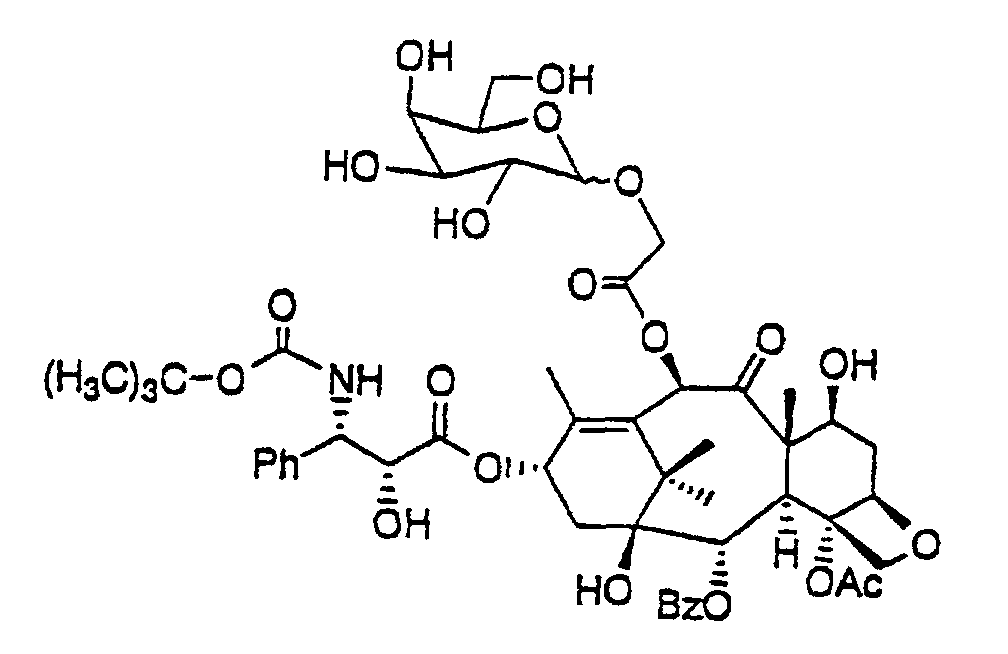
- 7-GAG-DT (15) or 10-GAG-DT (16) described above can be obtained.
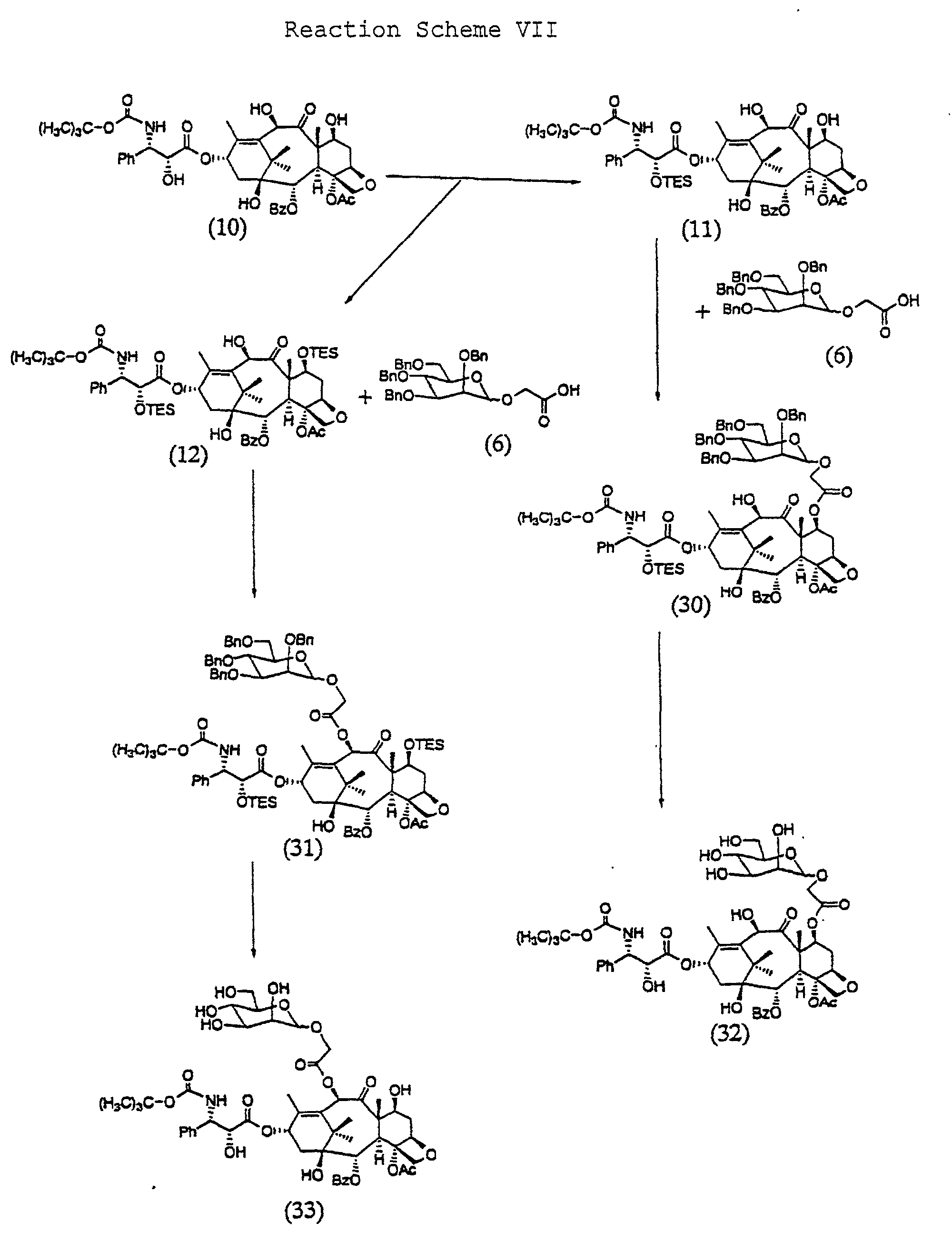
- docetaxel (10) and a protecting agent such as chlorotriethylsilane (TESCl), a base such as imidazole, and a solvent such as dimethylformamide (DMF) are reacted in an argon atmosphere at room temperature for 0.5 to 50 hours, preferably 3 hours to protect the 2'-position or the 2'- and 7-positions thereof with a triethylsilyl group to obtain the compound (11) or compound (12).
- a protecting agent such as chlorotriethylsilane (TESCl)
- a base such as imidazole
- DMF dimethylformamide
- the compound (13) or compound (14) together with a catalyst such as palladium black and an acid such as acetic acid are reacted in a hydrogen atmosphere with vigorously stirring at room temperature for 0.5 to 100 hours, preferably 15 hours. Further, a solvent such as tetrahydrofuran (THF) and water are added and the mixture is allowed to react at room temperature for 0.5 to 50 hours, preferably 15 hours, to obtain the target compound (15) or compound (16).
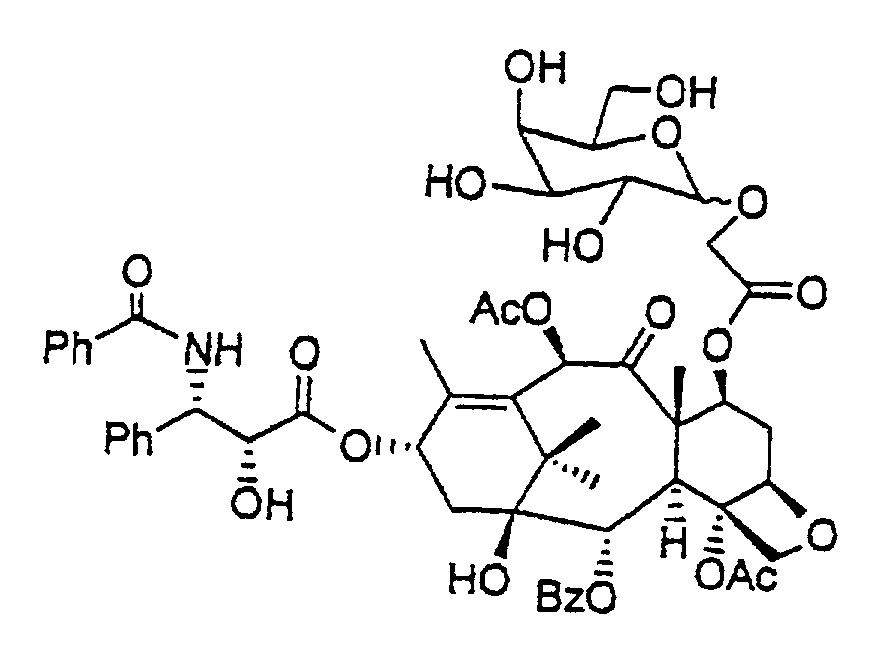
- the compound (15) is 7-GAG-DT represented by the above formula and the compound (16) is 10-GAG-DT represented by the above formula.
- 10-GAG-PT (20) represented by the above formula can be obtained according to Reaction Scheme (III) via the compound (19) obtained by reacting the compound (18), whose 2'- and 7-positions are protected, with tetrabenzyl acetyloxygalactoside (3).
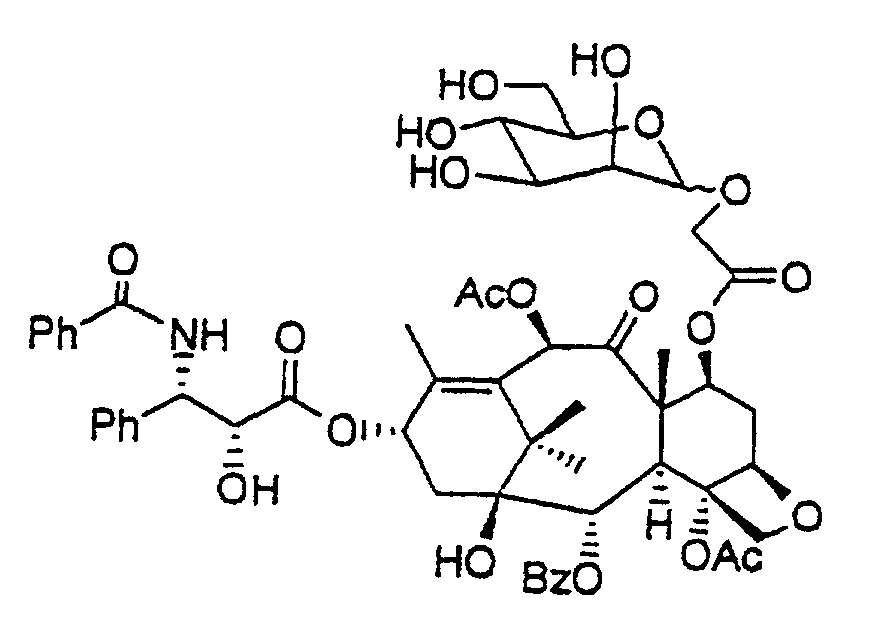
- 10-MAG-PT represented by the above formula can be obtained.
- 7-GAG-PT (24) represented by the above formula can be obtained according to Reaction Scheme (IV) via the compound (23) obtained by reacting the compound (22), whose 2'-position is protected, with tetrabenzyl acetyloxygalactoside (3).
- 7-MAG-PT represented by the above formula can be obtained.
- 10-GAG-baccatin III (27) represented by the above formula can be obtained according to Reaction Scheme (V) via the compound (26) obtained by reacting the compound (25), whose 7-position is protected, with tetrabenzyl acetyloxygalactoside (3).
- 10-MAG-baccatin III represented by the above formula can be obtained.
- Anomers of the taxoid derivatives of the present invention can be removed by application of liquid chromatography using a carrier containing silica gel as a matrix, such as ODS, so that purified preparation utilizable as a medicine can be obtained.
- Each of these taxoid derivatives has an improved solubility in water; paclitaxel has a solubility of 0.4 ⁇ g/ml in contrast to 67.8 ⁇ g/ml (169 times) for 7-GAG-PT, 103.0 ⁇ g/ml (257 times) for 7-MAG-PT, 481.7 ⁇ g/ml (1204 times) for 10-GAG-DT ( ⁇ -anomer), 301.4 ⁇ g/ml (753 times) for 10-GAG-DT ( ⁇ -anomer), and 1038.6 ⁇ g/ml (2596 times) for 10-MAG-DT ( ⁇ -anomer).
- the taxoid derivatives have improved solubility in alcohols also.
- glycoside forms could be obtained in the same manner as in Example 3 above.
- the compounds (11) and (12) obtained by protecting the 2'-position or 2'- and 7-positions of docetaxel with TES were reacted with the tetrabenzyl acetyloxymannoside (6) to obtain compounds (30) and (31). Thereafter, the benzyl groups and TES were removed from the compounds (30) and (31) to obtain 7-MAG-DT (32) (C 51 H 65 NO 21 , molecular weight: 1, 028.07) and 10-MAG-DT (33) (C 51 H 65 NO 21 , molecular weight: 1,028.07).
- glycoside forms could be obtained in the same manner as in Example 5 above.
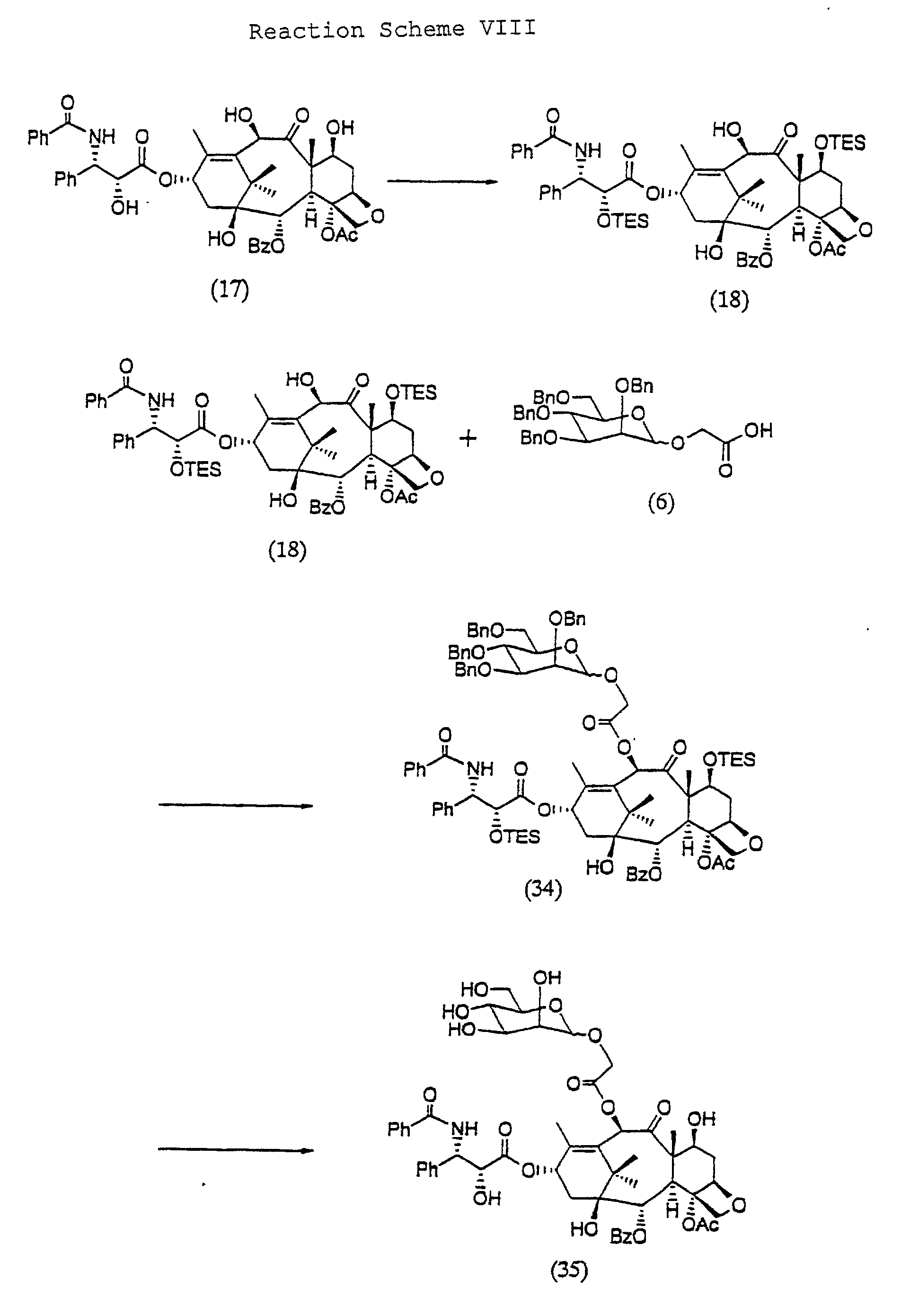
- the compound (18) was obtained by protecting the 2'-and 7-positions of paclitaxel with TES groups. Then, the obtained compound was reacted with the tetrabenzyl acetyloxymannoside (6) obtained in Production Example 2 to obtain compound (34). Thereafter, the benzyl groups and TES groups were removed from the compound (34) to obtain 10-MAG-PT (35) (C 53 H 61 NO 20 , molecular weight: 1,032.06). This compound was produced according to the following Reaction Scheme (VIII).
- paclitaxel (21) instead of docetaxel, a compound (22) was obtained by protecting the 2'-position of paclitaxel with TES group in the same manner as in Example 3 above. Thereafter, the obtained compound was reacted with the tetrabenzyl acetyloxygalactoside (3) obtained in Production Example 1 to obtain a compound (23). Thereafter, the benzyl groups and TES group were removed from the compound (23) to obtain 7-GAG-PT (24) (C 55 H 63 NO 21 , molecular weight: 1,074.10). This compound was produced according to Reaction Scheme (IV).
- glycoside forms could be obtained in the same manner as in Example 7 above.
- the compound (22) was obtained by protecting the 2'-position of paclitaxel with TES group. Then, the obtained compound was reacted with the tetrabenzyl acetyloxymannoside (6) obtained in Production Example 2 to obtain a compound (36). Thereafter, the benzyl groups and TES group were removed from the compound (36) to obtain 7-MAG-PT (37) (C 55 H 63 NO 21 , molecular weight: 1,074.10) .
- This compound was produced according to the following Reaction Scheme (IX).
- a compound (25) was obtained by protecting the 7-position of 10-deacetyl-baccatin III with TES group in the same manner as in Example 3 above. Thereafter, the obtained compound was reacted with the tetrabenzyl acetyloxygalactoside (3) obtained in Production Example 1 to obtain a compound (26). Thereafter, the benzyl groups and TES group were removed from the compound (26) to obtain 10-GAG-baccatin III (27) (C 37 H 48 NO 17 , molecular weight: 764.78). This compound was produced according to Reaction Scheme (V).
- glycoside forms could be obtained in the same manner as in Example 9 above.
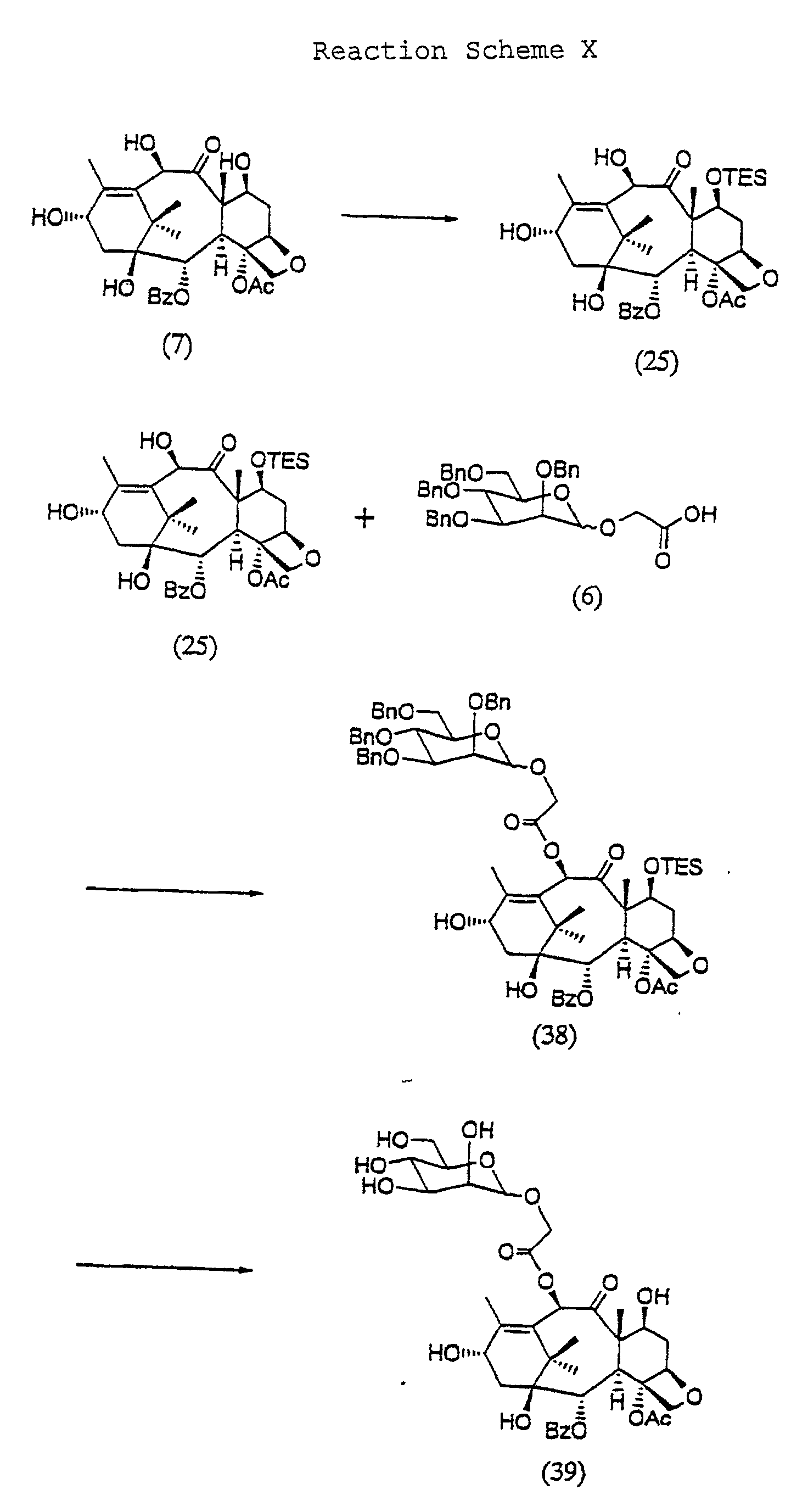
- the compound (25) was obtained by protecting the 7-position of 10-deacetyl-baccatin III with TES group. Then, the obtained compound was reacted with the tetrabenzyl acetyloxymannoside (6) obtained in Production Example 2 to obtain a compound (38). Thereafter, the benzyl groups and TES group were removed from the compound (38) to obtain 10-MAG-baccatin III (39) (C 37 H 48 NO 17 , molecular weight: 764.78). This compound was produced according to the following Reaction Scheme (X).
- taxoid derivatives were increased by leaps and bounds as compared with paclitaxel.
- the taxoid derivatives were not decomposed in aqueous solutions and were stable.
- Antitumor tests were carried out on paclitaxel, 10-GAG-DT ( ⁇ -anomer), 10-GAG-DT ( ⁇ -anomer) and 10-MAG-DT ( ⁇ -anomer) using mice implanted with P388 leukemia cells.
- mice used were 7 weeks age CDF1 mice (male).
- P388 leukemia cells subcultured in DBA/2 mouse abdominal cavity were injected in the abdominal cavity in an amount of 10 6 cells per mouse.
- the tests were performed by administering the sample for consecutive 5 days starting from the day next to the day when the P388 leukemia cells were injected into the abodominal cavity and observing survival days and change in body weight.
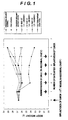
- Table 2 shows the results of survival days and Fig. 1 shows changes in body weight.
- Treatment Number of Animals Survival Day by Individual Median of Survival Days %T/C No treatment control 10 7 7 7 7 7 7 7 7 10 7 - Paclitaxel solvent control 10 7 7 7 7 7 7 7 7 7 7 7 100 Paclitaxel 20 mg/kg 9 9 9 10 10 10 11 11 12 10 143 Paclitaxel derivative solvent control 10 7 7 7 7 7 7 7 7 7 7 7 100 10-MAG-DT ( ⁇ -anomer) 20 mg/kg 10 8 9 9 9 9 9 9 10 11 15 9 129 10-GAG-DT ( ⁇ -anomer) 20 mg/kg 10 11 11 11 12 12 12 12 13 14 12 171 10-GAG-DT ( ⁇ -anomer) 20 mg/kg 10 11 11 11 11 12 12 12 12 13 20 12 171
- the median of survival days was 7 days for the control group while it was 10 days for paclitaxel group, 9 days for 10-MAG-DT ( ⁇ -anomer) group, 12 days 10-GAG-DT ( ⁇ -anomer) group, and 12 days for 10-GAG-DT ( ⁇ -anomer) group. From this it follows that the taxoid derivatives have antitumor activity equivalent to or higher than that of paclitaxel. In particular, 10-GAG-DT has excellent antitumor activity.
- the paclitaxel group showed an abrupt decrease in body weight after the administration in contrast to the taxoid derivatives, which showed substantially no change in body weight, so that the latter are also excellent in safety.
- the present invention provides taxoid derivatives having increased solubility in water and improved physiological activity and production method therefor.
- the taxoid derivatives alleviate burden imposed on patients and their utilization as an effective therapeutic drug can be expected.
Landscapes
- Chemical & Material Sciences (AREA)
- Organic Chemistry (AREA)
- Health & Medical Sciences (AREA)
- Life Sciences & Earth Sciences (AREA)
- General Health & Medical Sciences (AREA)
- Biochemistry (AREA)
- Biotechnology (AREA)
- Engineering & Computer Science (AREA)
- Genetics & Genomics (AREA)
- Molecular Biology (AREA)
- Crystallography & Structural Chemistry (AREA)
- Nuclear Medicine, Radiotherapy & Molecular Imaging (AREA)
- General Chemical & Material Sciences (AREA)
- Medicinal Chemistry (AREA)
- Chemical Kinetics & Catalysis (AREA)
- Pharmacology & Pharmacy (AREA)
- Animal Behavior & Ethology (AREA)
- Public Health (AREA)
- Veterinary Medicine (AREA)
- Pharmaceuticals Containing Other Organic And Inorganic Compounds (AREA)
- Epoxy Compounds (AREA)
- Saccharide Compounds (AREA)
Description







| Sample | Solubility (µg/ml) |
| Paclitaxel | 0.4 |
| 7-GAG-PT | 67.8 |
| 7-MAG-PT | 103.0 |
| 10-GAG-DT (α-anomer) | 481.7 |
| 10-GAG-DT (β-anomer) | 301.4 |
| 10-MAG-DT (α-anomer) | 1,038.6 |
| Treatment | Number of Animals | Survival Day by Individual | Median of Survival Days | %T/C |
| | 10 | 7 7 7 7 7 7 7 7 7 10 | 7 | - |
| Paclitaxel | 10 | 7 7 7 7 7 7 7 7 7 7 | 7 | 100 |
| | 9 | 9 9 10 10 10 10 11 11 12 | 10 | 143 |
| Paclitaxel derivative | 10 | 7 7 7 7 7 7 7 7 7 7 | 7 | 100 |
| 10-MAG-DT (α-anomer) 20 mg/ | 10 | 8 9 9 9 9 9 9 10 11 15 | 9 | 129 |
| 10-GAG-DT (α-anomer) 20 mg/ | 10 | 10 11 11 11 12 12 12 12 13 14 | 12 | 171 |
| 10-GAG-DT (β-anomer) 20 mg/ | 10 | 11 11 11 11 12 12 12 12 13 20 | 12 | 171 |
Claims (24)
- A taxoid derivative comprising any one of paclitaxel, docetaxel and 10-deacetyl-baccatin III to which galactose or mannose is linked through a spacer.
- The taxoid derivative as claimed in claim 1, wherein the spacer is a glycolate.
- A taxoid derivative of claim 1 which is galactosyloxyacetyl-7-paclitaxel represented by the following formula.
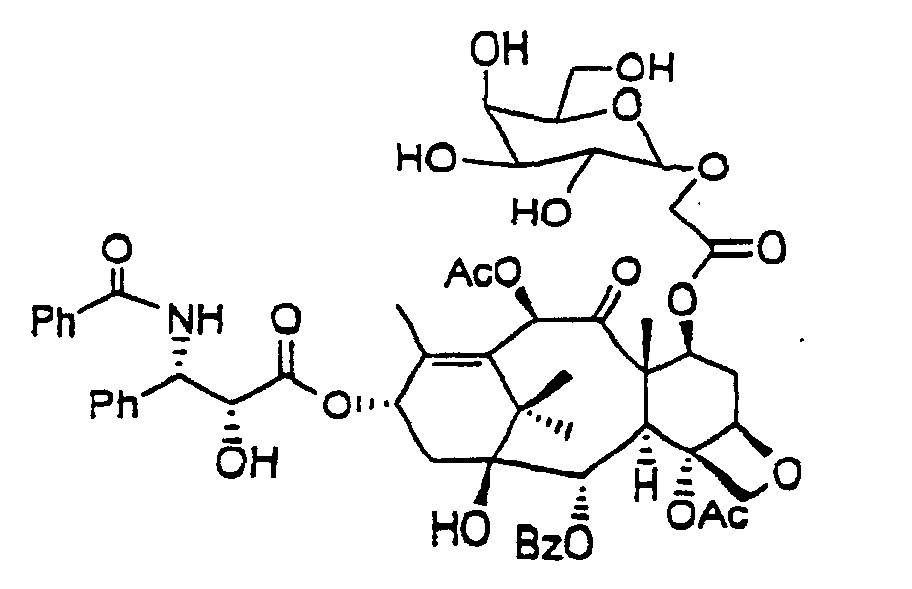
- A taxoid derivative of claim 1 which is mannosyloxyacetyl-7-paclitaxel represented by the following formula.

- A taxoid derivative of claim 1 which is galactosyloxyacetyl-10-paclitaxel represented by the following formula.
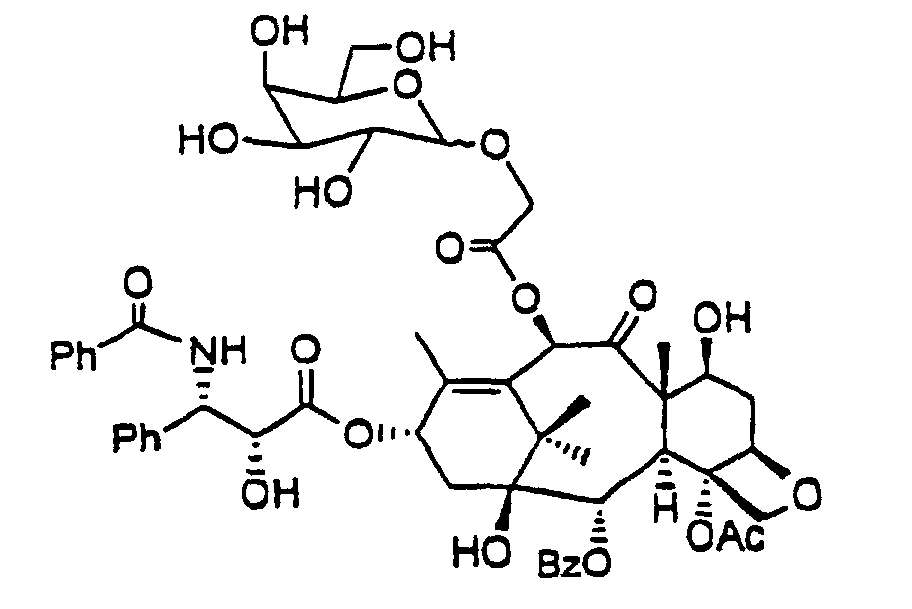
- A taxoid derivative of claim 1 which is mannosyloxyacetyl-10-paclitaxel represented by the following formula.
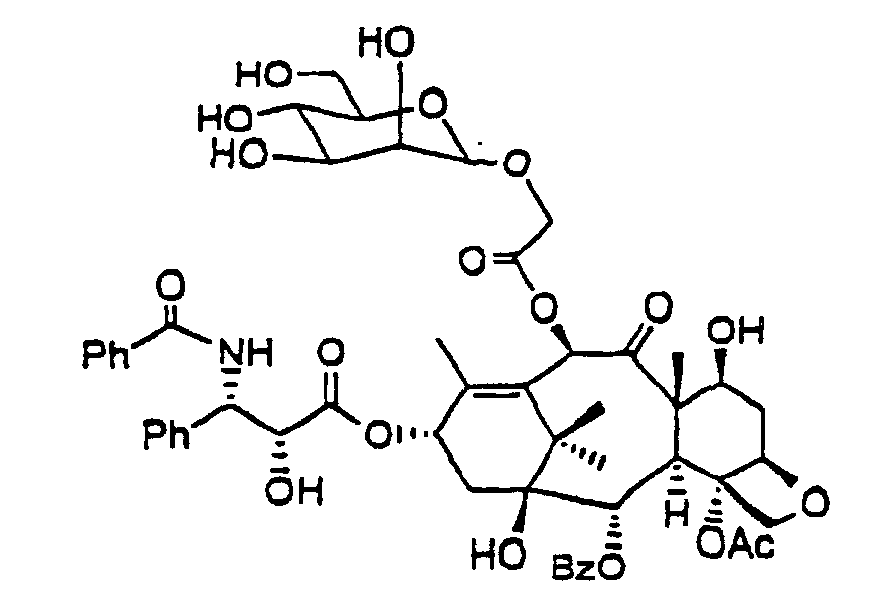
- A taxoid derivative of claim 1 which is galactosyloxyacetyl-7-docetaxel represented by the following formula.

- A taxoid derivative of claim 1 which is mannosyloxyacetyl-7-docetaxel represented by the following formula.

- A taxoid derivative of claim 1 which is galactosyloxyacetyl-10-docetaxel represented by the following formula.
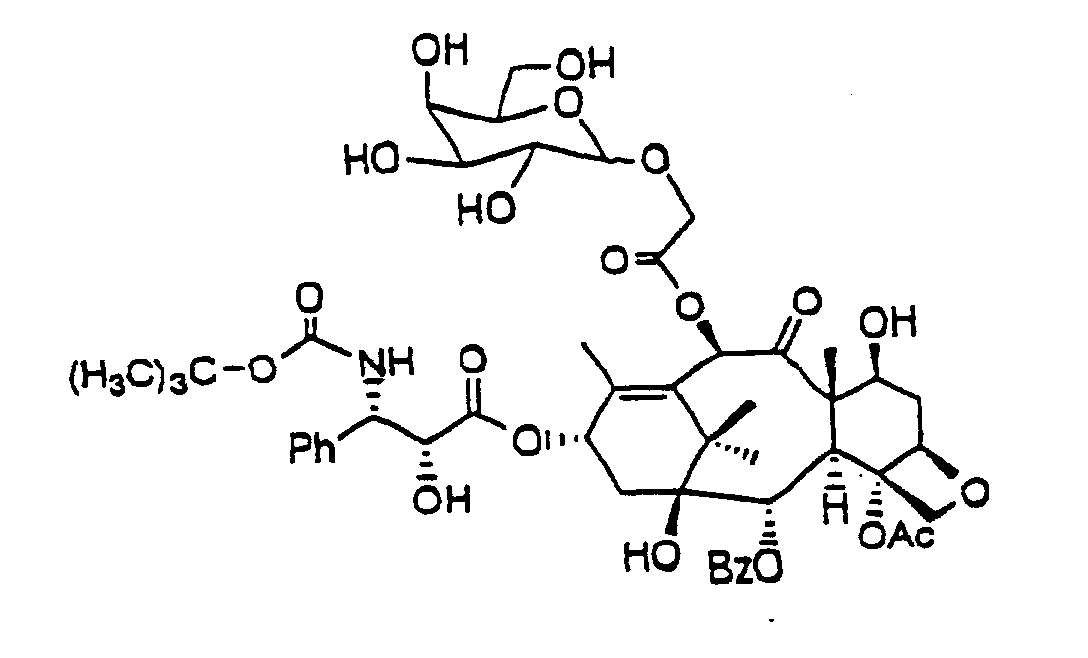
- A taxoid derivative of claim 1 which is mannosyloxyacetyl-10-docetaxel represented by the following formula.
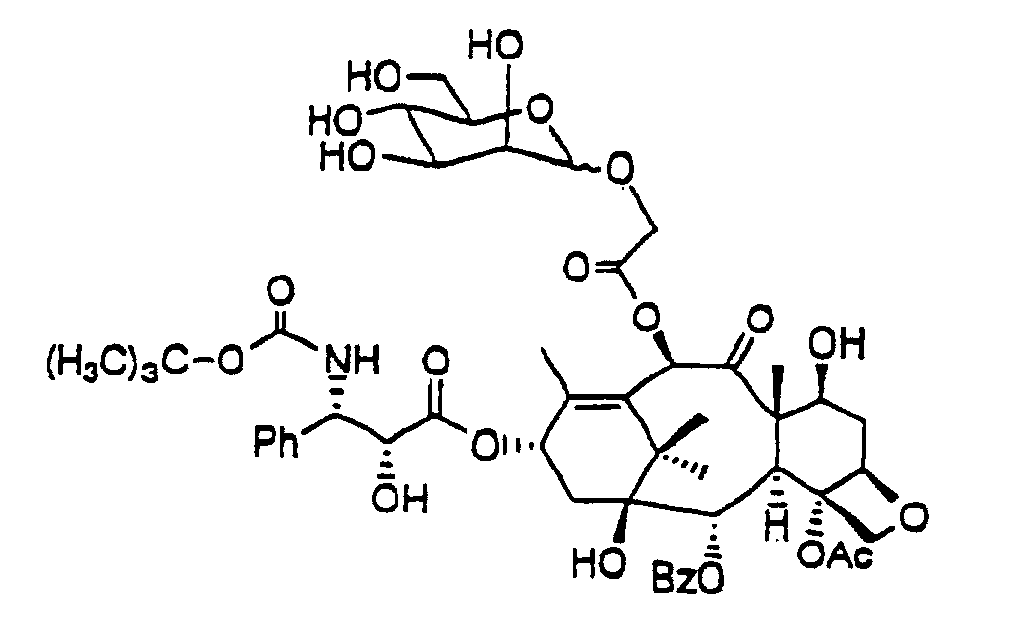
- A taxoid derivative of claim 1 which is galactosyloxyacetyl-7-baccatin III represented by the following formula.

- A taxoid derivative of claim 1 which is mannosyloxyacetyl-7-baccatin III represented by the following formula.

- A taxoid derivative of claim 1 which is galactosyloxyacetyl-10-baccatin III represented by the following formula.
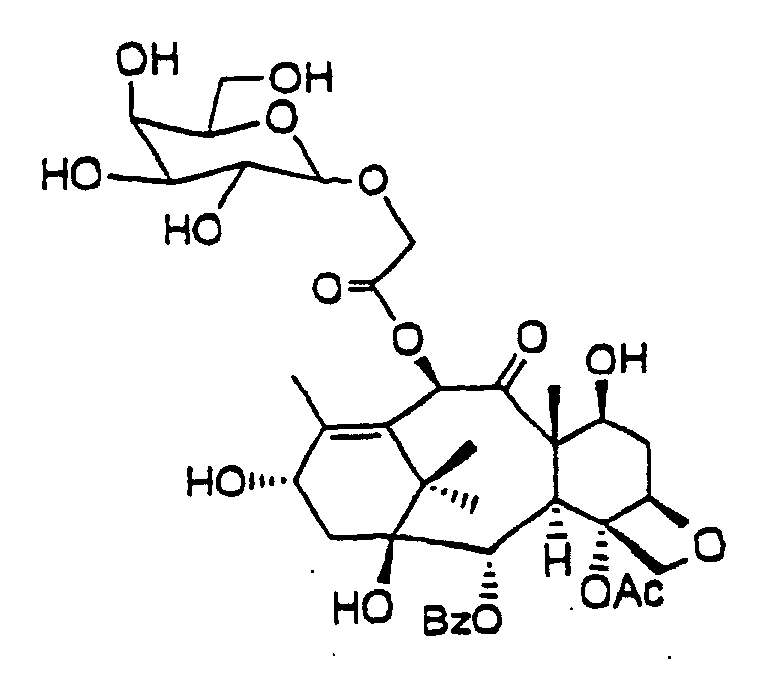
- A taxoid derivative of claim 1 which is mannosyloxyacetyl-10-baccatin III represented by the following formula.

- A method for producing the taxoid derivative of claim 3 or 7, comprising after protecting a hydroxyl group at the 2'-position of paclitaxel or docetaxel with chlorotriethylsilane, reacting the product with tetrabenzyl acetyloxygalactoside represented by the following formula, and then subjecting the product to debenzylation or detriethylsilylation reaction.
- A method for producing the taxoid derivative of claim 4 or 8, comprising after protecting a hydroxyl group at the 2'-position of paclitaxel or docetaxel with chlorotriethylsilane, reacting the product with tetrabenzyl acetyloxymannoside represented by the following formula, and then subj ecting the product to debenzylation or detriethylsilylation reaction.
- A method for producing the taxoid derivative of claim 5 or 9, comprising after protecting hydroxyl groups at the 2'- and 7-positions of 10-deacetyl-paclitaxel or docetaxel, respectively, with chlorotriethylsilane, reacting the product with tetrabenzyl acetyloxygalactoside represented by the following formula, and then subjecting the product to debenzylation or detriethylsilylation reaction.

- A method for producing the taxoid derivative of claim 6 or 10, comprising after protecting hydroxyl groups at the 2'- and 7-positions of 10-deacetyl-paclitaxel or docetaxel, respectively, with chlorotriethylsilane, reacting the product with tetrabenzyl acetyloxymannoside represented by the following formula, and then subjecting the product to debenzylation or detriethylsilylation reaction.
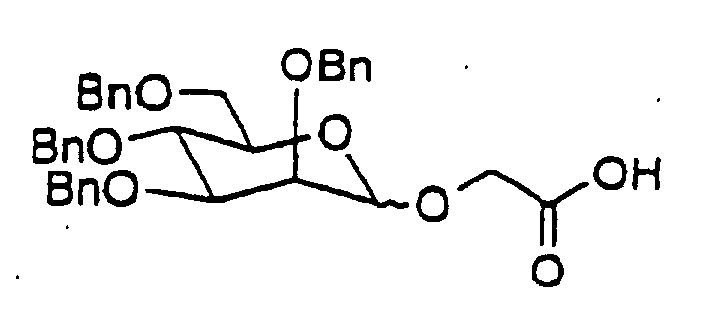
- A method for producing the taxoid derivative of claim 13, comprising after protecting a hydroxyl group at the 7-position of 10-deacetyl-baccatin III with chlorotriethylsilane, reacting the product with tetrabenzyl acetyloxygalactoside represented by the following formula, and then subjecting the product to debenzylation or detriethylsilylation reaction.

- A method for producing the taxoid derivative of claim 14, comprising after protecting a hydroxyl group at the 7-position of 10-deacetyl-baccatin III with chlorotriethylsilane, reacting the product with tetrabenzyl acetyloxymannoside represented by the following formula, and then subjecting the product to debenzylation or detriethylsilylation reaction.

- A method for producing the taxoid derivative of claim 11, comprising reacting 10-deacetyl-baccatin III with tetrabenzyl acetyloxygalactoside represented by the following formula, and then subjecting the product to debenzylation reaction.

- A method for producing the taxoid derivative of claim 12, comprising reacting 10-deacetyl-baccatin III with tetrabenzyl acetyloxymannoside represented by the following formula, and then subjecting the product to debenzylation reaction.

- An antitumor agent comprising galactosyloxyacetyl-10-docetaxel as an active ingredient.
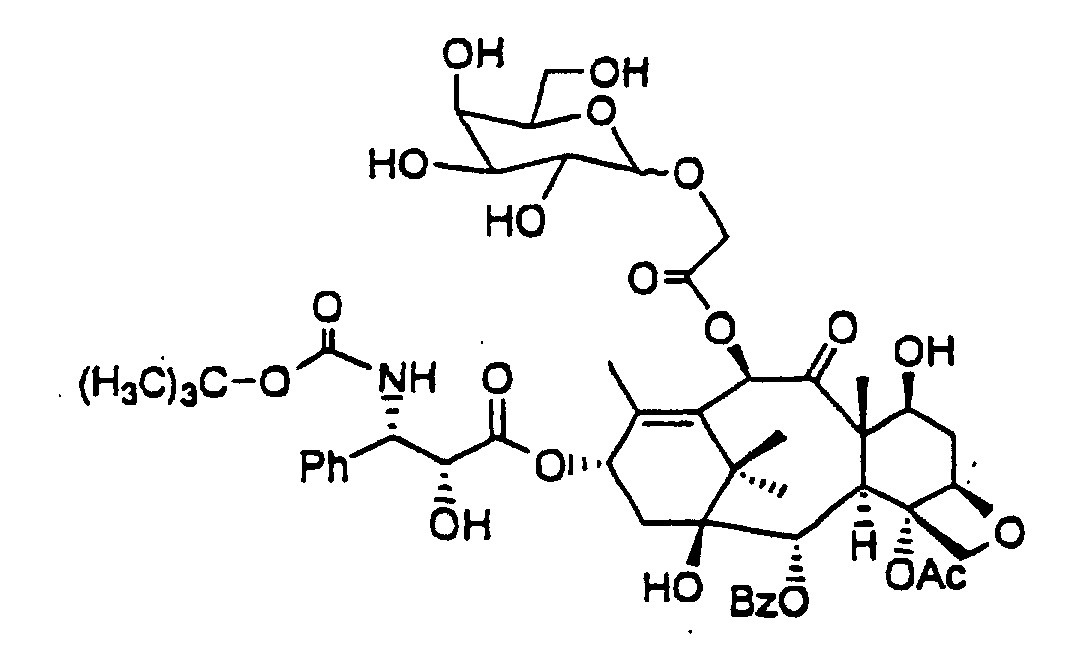
- An antitumor agent comprising mannosyloxyacetyl-10-docetaxel as an active ingredient.

Applications Claiming Priority (1)
| Application Number | Priority Date | Filing Date | Title |
|---|---|---|---|
| PCT/JP1997/003615 WO1999018113A1 (en) | 1997-10-08 | 1997-10-08 | Taxoid derivatives and process for producing the same |
Publications (3)
| Publication Number | Publication Date |
|---|---|
| EP1022284A1 EP1022284A1 (en) | 2000-07-26 |
| EP1022284A4 EP1022284A4 (en) | 2002-01-30 |
| EP1022284B1 true EP1022284B1 (en) | 2004-05-12 |
Family
ID=14181286
Family Applications (1)
| Application Number | Title | Priority Date | Filing Date |
|---|---|---|---|
| EP97943156A Expired - Lifetime EP1022284B1 (en) | 1997-10-08 | 1997-10-08 | Taxoid derivatives and process for producing the same |
Country Status (7)
| Country | Link |
|---|---|
| US (1) | US6306893B1 (en) |
| EP (1) | EP1022284B1 (en) |
| JP (1) | JP4153660B2 (en) |
| AU (1) | AU741433B2 (en) |
| CA (1) | CA2305399A1 (en) |
| DE (1) | DE69729128T2 (en) |
| WO (1) | WO1999018113A1 (en) |
Families Citing this family (52)
| Publication number | Priority date | Publication date | Assignee | Title |
|---|---|---|---|---|
| CO5280224A1 (en) * | 2000-02-02 | 2003-05-30 | Univ Florida State Res Found | SUBSTITUTED TAXANS WITH ESTER IN C7, USEFUL AS ANTITUMOR AGENTS AND PHARMACEUTICAL COMPOSITIONS CONTAINING THEM |
| US7351542B2 (en) | 2002-05-20 | 2008-04-01 | The Regents Of The University Of California | Methods of modulating tubulin deacetylase activity |
| JP4975964B2 (en) | 2002-06-26 | 2012-07-11 | メディゲーネ アクチエンゲゼルシャフト | Preparation of cationic liposomes composed of lipophilic compounds |
| KR20050032110A (en) | 2002-08-02 | 2005-04-06 | 이뮤노젠 아이엔씨 | Cytotoxic agents containing novel potent taxanes and their therapeutic use |
| US7390898B2 (en) | 2002-08-02 | 2008-06-24 | Immunogen Inc. | Cytotoxic agents containing novel potent taxanes and their therapeutic use |
| JP2007525188A (en) | 2003-05-16 | 2007-09-06 | インターミューン インコーポレイテッド | Synthetic chemokine receptor ligands and methods of use thereof |
| US7407973B2 (en) | 2003-10-24 | 2008-08-05 | Intermune, Inc. | Use of pirfenidone in therapeutic regimens |
| WO2006089218A2 (en) | 2005-02-17 | 2006-08-24 | The Board Of Trustees Of The Leland Stanford Junior University | Methods and compositions for modulating angiogenesis |
| JP4954983B2 (en) | 2005-05-18 | 2012-06-20 | ファーマサイエンス・インコーポレイテッド | BIR domain binding compound |
| AU2007228984B2 (en) | 2006-03-22 | 2012-05-03 | Syncore Biotechnology Co., Ltd | Treatment of triple receptor negative breast cancer |
| SG10201407457UA (en) | 2006-05-16 | 2014-12-30 | Pharmascience Inc | Iap bir domain binding compounds |
| EP2296645B1 (en) | 2008-05-22 | 2014-11-19 | Galera Therapeutics, LLC | Combination antitumor therapy |
| WO2010005850A1 (en) | 2008-07-08 | 2010-01-14 | The J. David Gladstone Institutes | Methods and compositions for modulating angiogenesis |
| MX340870B (en) | 2010-02-12 | 2016-07-27 | Pharmascience Inc | Iap bir domain binding compounds. |
| US10682330B2 (en) | 2012-03-22 | 2020-06-16 | Ensuiko Sugar Refining Co., Ltd. | Method for producing liposome encapsulating paclitaxel monoglycoside and/or docetaxel monoglycoside |
| JP6578206B2 (en) | 2012-07-19 | 2019-09-18 | レッドウッド バイオサイエンス, インコーポレイテッド | Antibodies specific for CD22 and methods of use thereof |
| WO2014074218A1 (en) | 2012-11-12 | 2014-05-15 | Redwood Bioscience, Inc. | Compounds and methods for producing a conjugate |
| SI3300745T1 (en) | 2013-02-15 | 2020-01-31 | The Regents Of The University Of California | Chimeric antigen receptor and methods for their use |
| WO2014160185A2 (en) | 2013-03-14 | 2014-10-02 | The Board Of Trustees Of The Leland Stanford Junior University | Mitochondrial aldehyde dehydrogenase-2 modulators and methods of use thereof |
| CN105744935B (en) | 2013-11-27 | 2022-09-30 | 雷德伍德生物科技股份有限公司 | Hydrazino-pyrrolo compounds and methods for forming conjugates |
| WO2015127137A1 (en) | 2014-02-19 | 2015-08-27 | Aldea Pharmaceuticals, Inc. | Mitochondrial aldehyde dehydrogenase 2 (aldh2) binding polycyclic amides and their use for the treatment of cancer |
| TW202214691A (en) | 2014-03-21 | 2022-04-16 | 美商艾伯維有限公司 | Anti-egfr antibodies and antibody drug conjugates |
| WO2017083637A1 (en) | 2015-11-12 | 2017-05-18 | The Board Of Trustees Of The Leland Stanford Junior University | Cell-penetrating, guanidinium-rich oligophosphotriesters for drug and probe delivery |
| TWI760319B (en) | 2015-12-30 | 2022-04-11 | 杏國新藥股份有限公司 | Treatment of breast cancer |
| EP3231421A1 (en) | 2016-04-11 | 2017-10-18 | Greenaltech, S.L. | Uses of a carotenoid in the treatment or prevention of stress induced conditions |
| CN109071634A (en) | 2016-04-26 | 2018-12-21 | R.P.谢勒技术有限责任公司 | Antibody coupling matter and its preparation and application |
| EP3463308B2 (en) | 2016-06-01 | 2026-01-07 | Servier IP UK Limited | Formulations of polyalkylene oxide-asparaginase and methods of making and using the same |
| WO2017214458A2 (en) | 2016-06-08 | 2017-12-14 | Abbvie Inc. | Anti-cd98 antibodies and antibody drug conjugates |
| EP3468598A1 (en) | 2016-06-08 | 2019-04-17 | AbbVie Inc. | Anti-cd98 antibodies and antibody drug conjugates |
| TWI762487B (en) | 2016-06-08 | 2022-05-01 | 美商艾伯維有限公司 | Anti-b7-h3 antibodies and antibody drug conjugates |
| BR112018075649A2 (en) | 2016-06-08 | 2019-04-09 | Abbvie Inc. | anti-b7-h3 antibodies and antibody drug conjugates |
| CA3027044A1 (en) | 2016-06-08 | 2017-12-14 | Abbvie Inc. | Anti-b7-h3 antibodies and antibody drug conjugates |
| TWI852903B (en) | 2017-01-05 | 2024-08-21 | 杏國新藥股份有限公司 | Treatment of pancreatic cancer |
| KR102905343B1 (en) | 2017-01-18 | 2025-12-29 | 바이오아트라, 인코퍼레이티드 | Chimeric antigen receptors for AXL or ROR2 and methods of using the same |
| EP3388082A1 (en) | 2017-04-13 | 2018-10-17 | Galera Labs, LLC | Combination cancer immunotherapy with pentaaza macrocyclic ring complex |
| CN118652192A (en) | 2017-05-24 | 2024-09-17 | 德克萨斯州大学系统董事会 | Linkers for antibody drug conjugates |
| EP3773632A4 (en) | 2018-04-06 | 2022-05-18 | The Regents of The University of California | METHODS OF TREATMENT OF EGFRVIII-EXPRESSING GLIOBLASTOMAS |
| CA3095757A1 (en) | 2018-04-06 | 2019-10-10 | The Regents Of The University Of California | Methods of treating glioblastomas |
| CN112368011A (en) | 2018-04-11 | 2021-02-12 | 俄亥俄州创新基金会 | Methods and compositions for sustained release microparticles for ocular drug delivery |
| MX2021000644A (en) | 2018-07-18 | 2021-08-19 | Manzanita Pharmaceuticals Inc | Conjugates for delivering an anti-cancer agent to nerve cells, methods of use and methods of making thereof. |
| CN110003291B (en) * | 2019-01-23 | 2022-11-29 | 天津科技大学 | A fluoroglycosyl-modified paclitaxel compound and its synthesis method and application |
| BR112021019701A2 (en) | 2019-04-02 | 2021-12-14 | Kenjockety Biotechnology Inc | Multispecific antibodies to efflux pump cancer antigen and compositions, reagents, kits and methods related thereto |
| BR112022013870A2 (en) | 2020-01-29 | 2022-09-13 | Kenjockety Biotechnology Inc | ANTI-MDR1 ANTIBODIES AND USES THEREOF |
| WO2021247426A1 (en) | 2020-06-04 | 2021-12-09 | Kenjockety Biotechnology, Inc. | Anti-abcg2 antibodies and uses thereof |
| EP4161564A1 (en) | 2020-06-04 | 2023-04-12 | Kenjockety Biotechnology, Inc. | Abcg2 efflux pump-cancer antigen multi-specific antibodies and compositions, reagents, kits and methods related thereto |
| JP7747741B2 (en) | 2020-09-02 | 2025-10-01 | ウィリアム ロバート アラスーン リビング トラスト デイテッド オーガスト 29, 2016 | Anti-ABCC1 antibodies and uses thereof |
| EP4244257A1 (en) | 2020-11-13 | 2023-09-20 | Kenjockety Biotechnology, Inc. | Anti-mrp4 (encoded by abcc4 gene) antibodies and uses thereof |
| MX2023005979A (en) | 2020-11-20 | 2023-08-11 | Scherer Technologies Llc R P | Glycoside dual-cleavage linkers for antibody-drug conjugates. |
| AR124681A1 (en) | 2021-01-20 | 2023-04-26 | Abbvie Inc | ANTI-EGFR ANTIBODY-DRUG CONJUGATES |
| KR20240116829A (en) | 2021-12-13 | 2024-07-30 | 윌리엄 로버트 아라툰 리빙 트러스트 데이티드 어거스트 29, 2016 | anti-ABCB1 antibody |
| WO2023159220A1 (en) | 2022-02-18 | 2023-08-24 | Kenjockety Biotechnology, Inc. | Anti-cd47 antibodies |
| JPWO2025047983A1 (en) * | 2023-08-31 | 2025-03-06 |
Family Cites Families (7)
| Publication number | Priority date | Publication date | Assignee | Title |
|---|---|---|---|---|
| FR2601676B1 (en) * | 1986-07-17 | 1988-09-23 | Rhone Poulenc Sante | PROCESS FOR THE PREPARATION OF TAXOL AND DESACETYL-10 TAXOL |
| US5760072A (en) | 1995-12-29 | 1998-06-02 | Pharmachemie B.V. | Paclitaxel prodrugs, method for preparation as well as their use in selective chemotherapy |
| US5767297A (en) * | 1997-02-05 | 1998-06-16 | Ensuiko Sugar Refining Co., Ltd. | Taxoid derivative and method of producing thereof |
| JP3816621B2 (en) * | 1996-02-20 | 2006-08-30 | 塩水港精糖株式会社 | Taxoid derivatives and process for producing the same |
| JP3786463B2 (en) * | 1996-03-07 | 2006-06-14 | 塩水港精糖株式会社 | Method for producing taxoid derivative inclusions |
| JP3786462B2 (en) * | 1996-03-07 | 2006-06-14 | 塩水港精糖株式会社 | Glycosylated derivatives of taxoid and method for producing the same |
| CA2206739C (en) * | 1997-06-03 | 2006-10-10 | Ensuiko Sugar Refining Co., Ltd. | Taxoid derivative and method of producing thereof |
-
1997
- 1997-10-08 JP JP2000514922A patent/JP4153660B2/en not_active Expired - Fee Related
- 1997-10-08 WO PCT/JP1997/003615 patent/WO1999018113A1/en not_active Ceased
- 1997-10-08 DE DE69729128T patent/DE69729128T2/en not_active Expired - Lifetime
- 1997-10-08 CA CA002305399A patent/CA2305399A1/en not_active Abandoned
- 1997-10-08 EP EP97943156A patent/EP1022284B1/en not_active Expired - Lifetime
- 1997-10-08 AU AU44716/97A patent/AU741433B2/en not_active Ceased
- 1997-10-27 US US09/529,208 patent/US6306893B1/en not_active Expired - Lifetime
Also Published As
| Publication number | Publication date |
|---|---|
| JP4153660B2 (en) | 2008-09-24 |
| CA2305399A1 (en) | 1999-04-15 |
| WO1999018113A1 (en) | 1999-04-15 |
| EP1022284A4 (en) | 2002-01-30 |
| DE69729128D1 (en) | 2004-06-17 |
| AU4471697A (en) | 1999-04-27 |
| EP1022284A1 (en) | 2000-07-26 |
| DE69729128T2 (en) | 2005-04-28 |
| AU741433B2 (en) | 2001-11-29 |
| US6306893B1 (en) | 2001-10-23 |
Similar Documents
| Publication | Publication Date | Title |
|---|---|---|
| US6306893B1 (en) | Taxoid derivatives and process for producing the same | |
| JPWO1999018113A1 (en) | Taxoid derivatives and methods for producing the same | |
| US5817840A (en) | Water soluble taxol derivatives | |
| CN1051082C (en) | Baccatine III derivatives | |
| RU2134688C1 (en) | Semisynthetic taxane, intermediate compounds, methods of synthesis and pharmaceutical composition | |
| JP2001521493A (en) | 6-halo- or nitrate-substituted paclitaxel | |
| EP2223929A1 (en) | Gambogic glycoside derivatives and analogs, the preparation and the application thereof | |
| RU2119485C1 (en) | Derivatives of taxane-iii, methods of their synthesis and a pharmaceutical composition | |
| US5767297A (en) | Taxoid derivative and method of producing thereof | |
| RU2074185C1 (en) | Derivative of 4-deoxy-4-epipodophyllotoxin or its pharmaceutically acceptable salt and pharmaceutical composition based on thereof | |
| CN100335470C (en) | 10-Deacetylbaccatin III and 10-deacetyl-14β-hydroxybaccatin III derivatives, their preparation methods and pharmaceutical compositions containing them | |
| US5773464A (en) | C-10 epoxy taxanes | |
| EP0882732B1 (en) | Taxoid derivative and method of producing thereof | |
| Wu et al. | Design, synthesis, and anti-tobacco mosaic virus (TMV) activity of glycoconjugates of phenanthroindolizidines alkaloids | |
| JP3816621B2 (en) | Taxoid derivatives and process for producing the same | |
| CN116514744B (en) | Sugar-targeted GSH-responsive paclitaxel derivatives and preparation methods and applications thereof | |
| EP0675895B1 (en) | Etoposide derivatives, process for their preparation, their use as a drug and in the preparation of a drug for treating cancer | |
| AU724591B2 (en) | 7-methylthiooxomethyl and 7-methylthiodioxomethyl paclitaxels | |
| WO1999037631A1 (en) | Novel taxaneterpine compounds | |
| JP3786462B2 (en) | Glycosylated derivatives of taxoid and method for producing the same | |
| CN110003291A (en) | A kind of paclitaxel analog compound that fluoro is glycosyl modified and its synthetic method and application | |
| JP3786463B2 (en) | Method for producing taxoid derivative inclusions | |
| WO2001034589A1 (en) | Semi-synthesis of baccatin iii from 9-dihydro-13-acetylbaccatin iii | |
| DE69727916T2 (en) | Taxoid derivatives and process for their preparation |
Legal Events
| Date | Code | Title | Description |
|---|---|---|---|
| PUAI | Public reference made under article 153(3) epc to a published international application that has entered the european phase |
Free format text: ORIGINAL CODE: 0009012 |
|
| 17P | Request for examination filed |
Effective date: 20000419 |
|
| AK | Designated contracting states |
Kind code of ref document: A1 Designated state(s): CH DE FR GB IT LI |
|
| A4 | Supplementary search report drawn up and despatched |
Effective date: 20011213 |
|
| AK | Designated contracting states |
Kind code of ref document: A4 Designated state(s): CH DE FR GB IT LI |
|
| RIC1 | Information provided on ipc code assigned before grant |
Free format text: 7C 07H 15/04 A, 7C 07D 305/14 B, 7A 61K 31/70 B |
|
| 17Q | First examination report despatched |
Effective date: 20020809 |
|
| GRAP | Despatch of communication of intention to grant a patent |
Free format text: ORIGINAL CODE: EPIDOSNIGR1 |
|
| GRAS | Grant fee paid |
Free format text: ORIGINAL CODE: EPIDOSNIGR3 |
|
| GRAJ | Information related to disapproval of communication of intention to grant by the applicant or resumption of examination proceedings by the epo deleted |
Free format text: ORIGINAL CODE: EPIDOSDIGR1 |
|
| RAP1 | Party data changed (applicant data changed or rights of an application transferred) |
Owner name: MANDAI, TADAKATSU Owner name: ENSUIKO SUGARREFINING COMPANY, LIMITED Owner name: BIO RESEARCH CORPORATION OF YOKOHAMA |
|
| GRAP | Despatch of communication of intention to grant a patent |
Free format text: ORIGINAL CODE: EPIDOSNIGR1 |
|
| GRAA | (expected) grant |
Free format text: ORIGINAL CODE: 0009210 |
|
| AK | Designated contracting states |
Kind code of ref document: B1 Designated state(s): CH DE FR GB IT LI |
|
| PG25 | Lapsed in a contracting state [announced via postgrant information from national office to epo] |
Ref country code: LI Free format text: LAPSE BECAUSE OF FAILURE TO SUBMIT A TRANSLATION OF THE DESCRIPTION OR TO PAY THE FEE WITHIN THE PRESCRIBED TIME-LIMIT Effective date: 20040512 Ref country code: IT Free format text: LAPSE BECAUSE OF FAILURE TO SUBMIT A TRANSLATION OF THE DESCRIPTION OR TO PAY THE FEE WITHIN THE PRESCRIBED TIME-LIMIT;WARNING: LAPSES OF ITALIAN PATENTS WITH EFFECTIVE DATE BEFORE 2007 MAY HAVE OCCURRED AT ANY TIME BEFORE 2007. THE CORRECT EFFECTIVE DATE MAY BE DIFFERENT FROM THE ONE RECORDED. Effective date: 20040512 Ref country code: CH Free format text: LAPSE BECAUSE OF FAILURE TO SUBMIT A TRANSLATION OF THE DESCRIPTION OR TO PAY THE FEE WITHIN THE PRESCRIBED TIME-LIMIT Effective date: 20040512 |
|
| REG | Reference to a national code |
Ref country code: GB Ref legal event code: FG4D |
|
| REG | Reference to a national code |
Ref country code: CH Ref legal event code: EP |
|
| REF | Corresponds to: |
Ref document number: 69729128 Country of ref document: DE Date of ref document: 20040617 Kind code of ref document: P |
|
| REG | Reference to a national code |
Ref country code: CH Ref legal event code: PL |
|
| ET | Fr: translation filed | ||
| PLBE | No opposition filed within time limit |
Free format text: ORIGINAL CODE: 0009261 |
|
| STAA | Information on the status of an ep patent application or granted ep patent |
Free format text: STATUS: NO OPPOSITION FILED WITHIN TIME LIMIT |
|
| 26N | No opposition filed |
Effective date: 20050215 |
|
| PGFP | Annual fee paid to national office [announced via postgrant information from national office to epo] |
Ref country code: GB Payment date: 20141030 Year of fee payment: 18 Ref country code: DE Payment date: 20141125 Year of fee payment: 18 Ref country code: FR Payment date: 20141021 Year of fee payment: 18 |
|
| REG | Reference to a national code |
Ref country code: DE Ref legal event code: R119 Ref document number: 69729128 Country of ref document: DE |
|
| GBPC | Gb: european patent ceased through non-payment of renewal fee |
Effective date: 20151008 |
|
| PG25 | Lapsed in a contracting state [announced via postgrant information from national office to epo] |
Ref country code: GB Free format text: LAPSE BECAUSE OF NON-PAYMENT OF DUE FEES Effective date: 20151008 Ref country code: DE Free format text: LAPSE BECAUSE OF NON-PAYMENT OF DUE FEES Effective date: 20160503 |
|
| REG | Reference to a national code |
Ref country code: FR Ref legal event code: ST Effective date: 20160630 |
|
| PG25 | Lapsed in a contracting state [announced via postgrant information from national office to epo] |
Ref country code: FR Free format text: LAPSE BECAUSE OF NON-PAYMENT OF DUE FEES Effective date: 20151102 |