EP1019887B1 - Fluorescent cyanine dyes - Google Patents
Fluorescent cyanine dyes Download PDFInfo
- Publication number
- EP1019887B1 EP1019887B1 EP98903434A EP98903434A EP1019887B1 EP 1019887 B1 EP1019887 B1 EP 1019887B1 EP 98903434 A EP98903434 A EP 98903434A EP 98903434 A EP98903434 A EP 98903434A EP 1019887 B1 EP1019887 B1 EP 1019887B1
- Authority
- EP
- European Patent Office
- Prior art keywords
- dye
- labeled
- independently
- dna
- phosphoramidite
- Prior art date
- Legal status (The legal status is an assumption and is not a legal conclusion. Google has not performed a legal analysis and makes no representation as to the accuracy of the status listed.)
- Expired - Lifetime
Links
- ZKUDWHJATRLZCN-OQLLNIDSSA-N CC(C)(C(/C=C/CCCC1[I](C)C2C=Cc3ccccc3C2C1(C)C)=C)c(c(cccc1)c1cc1)c1[IH]C[NH+](/C=[I]\C)[O-] Chemical compound CC(C)(C(/C=C/CCCC1[I](C)C2C=Cc3ccccc3C2C1(C)C)=C)c(c(cccc1)c1cc1)c1[IH]C[NH+](/C=[I]\C)[O-] ZKUDWHJATRLZCN-OQLLNIDSSA-N 0.000 description 1
Classifications
-
- C—CHEMISTRY; METALLURGY
- C07—ORGANIC CHEMISTRY
- C07D—HETEROCYCLIC COMPOUNDS
- C07D209/00—Heterocyclic compounds containing five-membered rings, condensed with other rings, with one nitrogen atom as the only ring hetero atom
- C07D209/56—Ring systems containing three or more rings
- C07D209/58—[b]- or [c]-condensed
- C07D209/60—Naphtho [b] pyrroles; Hydrogenated naphtho [b] pyrroles
-
- C—CHEMISTRY; METALLURGY
- C09—DYES; PAINTS; POLISHES; NATURAL RESINS; ADHESIVES; COMPOSITIONS NOT OTHERWISE PROVIDED FOR; APPLICATIONS OF MATERIALS NOT OTHERWISE PROVIDED FOR
- C09B—ORGANIC DYES OR CLOSELY-RELATED COMPOUNDS FOR PRODUCING DYES, e.g. PIGMENTS; MORDANTS; LAKES
- C09B23/00—Methine or polymethine dyes, e.g. cyanine dyes
- C09B23/02—Methine or polymethine dyes, e.g. cyanine dyes the polymethine chain containing an odd number of >CH- or >C[alkyl]- groups
- C09B23/08—Methine or polymethine dyes, e.g. cyanine dyes the polymethine chain containing an odd number of >CH- or >C[alkyl]- groups more than three >CH- groups, e.g. polycarbocyanines
- C09B23/083—Methine or polymethine dyes, e.g. cyanine dyes the polymethine chain containing an odd number of >CH- or >C[alkyl]- groups more than three >CH- groups, e.g. polycarbocyanines five >CH- groups
-
- C—CHEMISTRY; METALLURGY
- C12—BIOCHEMISTRY; BEER; SPIRITS; WINE; VINEGAR; MICROBIOLOGY; ENZYMOLOGY; MUTATION OR GENETIC ENGINEERING
- C12Q—MEASURING OR TESTING PROCESSES INVOLVING ENZYMES, NUCLEIC ACIDS OR MICROORGANISMS; COMPOSITIONS OR TEST PAPERS THEREFOR; PROCESSES OF PREPARING SUCH COMPOSITIONS; CONDITION-RESPONSIVE CONTROL IN MICROBIOLOGICAL OR ENZYMOLOGICAL PROCESSES
- C12Q1/00—Measuring or testing processes involving enzymes, nucleic acids or microorganisms; Compositions therefor; Processes of preparing such compositions
- C12Q1/68—Measuring or testing processes involving enzymes, nucleic acids or microorganisms; Compositions therefor; Processes of preparing such compositions involving nucleic acids
- C12Q1/6869—Methods for sequencing
-
- G—PHYSICS
- G01—MEASURING; TESTING
- G01N—INVESTIGATING OR ANALYSING MATERIALS BY DETERMINING THEIR CHEMICAL OR PHYSICAL PROPERTIES
- G01N33/00—Investigating or analysing materials by specific methods not covered by groups G01N1/00 - G01N31/00
- G01N33/48—Biological material, e.g. blood, urine; Haemocytometers
- G01N33/50—Chemical analysis of biological material, e.g. blood, urine; Testing involving biospecific ligand binding methods; Immunological testing
- G01N33/53—Immunoassay; Biospecific binding assay; Materials therefor
- G01N33/531—Production of immunochemical test materials
- G01N33/532—Production of labelled immunochemicals
- G01N33/533—Production of labelled immunochemicals with fluorescent label
Definitions
- This invention relates to new and useful cyanine dyes.
- the dyes are useful as fluorescent labels of biomolecules, such as oligonucleotides and deoxyribonucleosides.
- the biomolecules can be labeled with the dyes either directly or indirectly through a phosphoramidite.
- DNA sequencing is an important analytical technique of molecular biology. The development of sequencing techniques has led to advances in both the analysis and manipulation of genetic material.
- DNA fragments are labeled with one or more fluorescent dyes. Excitation with an appropriate light source (laser) causes a characteristic emission from the dye, thereby identifying the band. Even minute amounts of a biomolecule can be detected using such a method.
- laser light source
- WO96/23525 discloses a diagnostic marker comprising a detection system and a fluorescent functional group bound to the detection system.
- the marker emits fluorescence when irradiated with infrared rays and is useful for infrared endoscopic diagnosis or identification of a focus in surgical operations.
- Novel sulfonated cyanine compounds are useful for labeling various types of biomolecules.
- the compounds have the general formula wherein R is -NCS or O-phosphoramidite; and each of x and y, independently, is an integer from 1 to about 10.
- the invention also provides nucleotide analogs and DNA chain terminator labelled with a dye of formula I wherein R is OH, -CO 2 H, -NH 2 or -NCS, and x and y, independently are integers between 1 and 10.
- R is -OH, x is 6 and y is 4.
- R is -CO 2 H, x is 6 and y is 4.
- the compounds of formula I wherein R is -CO 2 H can be attached to a nucleotide analog or DNA chain terminator through an amine group or a hydroxyl group on the latter.
- the compounds of this invention wherein R is -NCS can be attached to a biomolecule through an amine group on the latter.
- the compounds of formula I wherein R is -OH can be attached to a nucleotide analog or DNA chain terminator indirectly through a phosphoramidite ultimately forming a phosphate linkage.
- the labelled biomolecule then can be excited with a solid state laser and detected with high sensitivity through the fluorescence of the label.
- the dyes used in this invention have advantageous solubility and light absorbing/emitting properties.
- the dyes for use in this invention have the general formula wherein R is -OH, -CO 2 H, -NH 2 , or -NCS and each of x and y, independently, is an integer selected from 1 to about 10. In preferred embodiments, each of x and y, independently, is an integer between about 2 and 6. In one most preferred embodiment, the dye is N-(6-hydroxyhexyl)N'-(4-sulfonatobutyl)-3,3,3',3'-tetramethylbenz(e)indodicarbocyanine, which has the formula:
- the dye is N-(5-carboxypentyl)N'-(4-sulfonatobutyl)3,3,3',3'-tetramethylbenz(e)indodicarbocyanine, which has the formula:
- These two dyes are preferred because they have commercially available precursors for the linking groups: 6-bromohexanol, 6-bromohexanoic acid and 1,4-butane sultone (all available from Aldrich Chemical Co., Milwaukee, WI).
- the linking groups provide adequate distance between the dye and the biomolecule for efficient attachment without imparting excessive hydrophobicity.
- the resulting labeled biomolecules retain their solubility in water and are well-accepted by enzymes.
- the dyes for use in this invention wherein R is -CO 2 H or -OH can be synthesized, as set forth in detail in the examples below, by reacting the appropriate N-(carboxyalkyl)- or N-(hydroxyalkyl)-1,1,2-trimethyl-1H-benz(e)indolinium halide, preferably bromide, with sulfonatobutyl-1,1,2-trimethyl-1H-benz(e)indole at a relative molar ratio of about 0.9:1 to about 1:0.9, preferably 1:1 in an organic solvent, such as pyridine, and heated to reflux, followed by the addition of 1,3,3-trimethoxypropene in a relative molar ratio of about 1:1 to about 3:1 to the reaction product and continued reflux. The mixture subsequently is cooled and poured into an organic solvent such as ether. The resulting solid or semi-solid can be purified by chromatography on a silica gel column using a series of methanol/chloroform solvents.
- N-4-sulfonatobutyl-1,1,2-trimethyl-1H-benz(e)indole and malonaldehyde bis(phenylimine)-monohydrochloride in a 1:1 molar ratio can be dissolved in acetic anhydride and the mixture heated.
- the acetic anhydride is removed under high vacuum and the residue washed with an organic solvent such as ether.
- the residual solid obtained is dried and subsequently mixed with the appropriate N-(carboxyalkyl)- or N-(hydroxyalkyl)-1,1,2-trimethyl-1H-benz(e)indolinium halide in the presence of an organic solvent, such as pyridine.
- the reaction mixture is heated, then the solvent is removed under vacuum, leaving the crude desired dye compound.
- the procedure was adapted from the two step procedure set forth in Ernst, L.A., et al., Cytometry 10:3-10 (1989).
- the dyes also can be prepared with an amine or isothiocyanate terminating group.
- N-( ⁇ -amino-alkyl)-1,1,2-trimethyl-1H-benz(e)indolenium bromide hydrobromide (synthesized as in N. Narayanan and G. Patonay, J. Org. Chem. 60:2391-5 (1995)) can be reacted to form dyes of formula 1 wherein R is -NH 2 .
- Salts of these amino dyes can be converted to the corresponding isothiocyanates by treatment at room temperature with thiophosgene in an organic solvent such as chloroform and aqueous sodium carbonate.
- the dye compounds for use in this invention have a maximum light absorption which occurs near 680 nm. They thus can be excited efficiently by commercially available laser diodes that are compact, reliable and inexpensive and emit light at this wavelength. Suitable commercially available lasers include, for example, Toshiba TOLD9225, TOLD9140 and TOLO9150, Phillips CQL806D, Blue Sky Research PS 015-00 and NEC NDL 3230SU. This near infrared/far red wavelength also is advantageous in that the background fluorescence in this region normally is low in biological systems and high sensitivity can be achieved.
- the isothiocyanate groups of the dyes of the invention provide linking groups for attachment to a wide variety of biologically important molecules, including proceins, peptides, enzyme substrates, hormones, antibodies, antigens, haptens, avidin, streptavidin, carbohydrates, oligosaccharides, polysaccharides, nucleic acids, deoxy nucleic acids, fragments of DNA or RNA, cells and synthetic combinations of biological fragments such as peptide nucleic acids (PNAs).
- PNAs peptide nucleic acids
- the dyes for use in this invention have sufficient solubility in aqueous solutions that once they are attached to a soluble biomolecule, the biomolecule retains its solubility. They also have good solubility in organic media, which provides considerable versatility in synthetic approaches to the labeling of desired materials.
- the compound is either linked directly to the biomolecule of interest or linked indirectly through phosphoramidite chemistry.
- the phosphoramidites are useful for labeling such biomolecules as DNA, RNA and peptide nucleic acids. They are useful in dry (i.e., water-free) conditions such as dry acetonitrile.
- the carboxylic acid reactive groups can react with amine groups of biomolecules in water or aqueous organic solvent mixtures.
- the dye carboxylic acid When linking a dye carboxylic acid to an amine-containing biomolecule in accordance with this invention, the dye carboxylic acid first is converted to a more reactive form, such as N-hydroxy succinimide (NHS) ester or a mixed anhydride.
- a more reactive form such as N-hydroxy succinimide (NHS) ester or a mixed anhydride.
- the amine-contalning biomolecule then is treated with the resulting activated acid to form an amide linkage.
- this reaction is carried out in mixtures of aqueous buffer and an organic solvent such as DMF at pH 8 to 9.
- an isothiocyanate dye is analogous to the procedure for the carboxy dye, but no activation step is required.
- the amine-containing biomolecule is treated directly with the NOS dye to form a thiourea linkage.
- the reaction is carried out in mixtures of aqueous buffer and an organic solvent, such as DMF, at pH 8 to 9.
- the dye compound has a reactive hydroxyl group, it is linked to a biomolecule, such as DNA or RNA, through a phosphoramidite chemistry.
- a phosphoramidite chemistry Use of the phosphoramidite allows labeling of the DNA or RNA during the synthesis process.
- the protected nucleotide is labeled while attached to a solid phase support.
- the free 5'-OH group is reacted with the phosphoramidite and a tetrazole activator to form a phosphite linkage which subsequently is oxidized to phosphate.
- the labeled DNA or RNA then is cleaved from the solid phase using ammonia or other standardized procedure.
- the compounds of this invention can be used as labeling reagents for analytical determination of proteins or for automated sequencing of DNA. Standard sequencing methodologies performed with labeled primers can produce high quality sequencing ladders and accurate DNA sequence data.
- the compounds of this invention can be attached, for example, to analogs of nucleotide triphosphates (dNTPs and ddNTPs) to provide a reagent for enzymatic labeling of various DNA molecules and for facilitating their detection with an automated DNA sequencing and analysis system.
- DNA sequencing reaction products can be labeled internally by performing limited polymerization utilizing the labeled dNTP as the sole source of a particular deoxynucleotide prior to a dideoxy-specific termination reaction.
- PCR products also can be labeled fluorescently by the addition of limited quantities of the labeled dNTP to the amplification reaction.
- Such labeling can be useful, for example, for the detection of short tandem repeat polymorphisms (STRPs), which in turn are useful for gene mapping, genetic diagnostics, forensic analyses and paternity testing.
- STPs short tandem repeat polymorphisms
- nucleotide triphosphate analogs labeled with a dye of the present invention are represented below: wherein each of x and y, independently, is an integer between 1 and 10 and each M, independently, is selected from Li, Na, K, NH 4 , (CH 3 ) 3 NH, (CH 3 CH 2 ) 3 NH, (CH 3 CH 2 ) 4 N or (CH 3 ) 4 N.
- terminators to which fluorescent dyes have been attached include: wherein x and y are as defined above.
- the fluorescent dye-labeled DNA chain terminators are employed for the generation of fluorescent dye-labeled DNA sequencing fragments.
- a photometric detection system detects the fragments separated by electrophoresis. Fluorescence detection allows one to either scan a gel containing spatially resolved bands (i.e., resolution in space) or to sit at a single point on the gel and detect bands as they pass sequentially through the detection zone (i.e., resolution in time).
- the resultant mixture was cooled and poured into 100 ml ether and the resulting solid was washed several times with additional 10 ml portions of ether.
- the crude washed product was recovered after evaporation of the solvent and purified by chromatography on a silica gel column by eluting the column successively with 2L of 10%, 15% and 20% methanol in chloroform.
- the yield of the recovered pure hydroxy dye was 97 mg. (14%).
- the hydroxy dye obtained above (97 mg., 0.140 mmol) was dissolved in 10 ml of dry methylene chloride and stirred under argon at 0°C for 30 minutes.
- a solution of bis(N,N-diisopropylamino)-cyanoethyl phosphine (2.13 ml., 0.15 M in methylene chloride) (Monomer Sciences, Huntsville, Ala) was added to the dye solution. With the solution maintained at 0°C, tetrazole (0.128 ml., 0.5 M) (obtained from PerSeptive Biosystems, Framingham, Mass.) in acetonitrile was added.
- the cooling was removed after 20 minutes and the reaction was continued for an additional 1.5 hours at room temperature.
- the reaction mixture was quenched with 5% NaHCO 3 , washed twice with water and dried with sodium sulfate.
- the solvent was removed under vacuum and the crude product was taken up in 1.5 ml of methylene chloride. The product was obtained by precipitation into hexane.
- the phosphoramidite of the fluorescent dye N-(6-hydroxyhexyl)N'-(4-sulfonatobutyl)-3,3,3',3'-tetramethyl-benz(e)indodicarbocyanine can be used to label DNA molecules prepared in a DNA synthesis machine.
- the dye is attached to the 5' end of the protected, support-bonded oligonucleotide via standard phosphoramidite chemistry.
- On syntheses at 200 nmol scale typical crude yields of dye-labeled oligonucleotides are 150 nmol or higher.
- the 5'-fluorescent labeled DNA oligonucleotide was produced following oxidation, cleavage, deprotection and purification by HPLC.
- HPLC purification of the labeled oligonucleotide a C18 reverse phase column having 5 ⁇ particles, 300 A pore size (Waters DeltaPak), 1.7 ml/min was used.
- Solvent A was 4% acetonitrile in 0.1M triethylammonium acetate
- Solvent B was an 80% acetonitrile in 0.1M triethylammonium acetate.
- the gradient profile was 10 to 45% B over 35 minutes, 45 to 100% B over 15 minutes, 100 to 10% B in 10 minutes.
- the labeled oligonucleotide eluted at about 40 minutes.
- the labeled oligonucleotide can be used, for example, as a primer in the Sanger method of DNA sequencing referenced above, as a tailed primer for genotyping or as a hybridization probe.
- N-(5-carboxypentyl)-1,1,2-trimethyl-1H-benz(e)indolinium bromide 100 mg., 0.25 mmol
- N-sulfonatobutyl-1,1,2-trimethyl-lH-benz(e)indole 85 mg., 0.25 mmol
- 1,3,3-trimethoxypropene (66 mg., 0.50 mmol) (obtained from ACROS Organics) was added dropwise to the refluxing solution and heating was continued for 2 hours.
- the solvent was removed under vacuum and the residue was purified by chromatography on a silica gel column using a methylene chloride and methylene chloride/methanol gradient as in Example 1. The yield was 89 mg (0.126 mmol., 50%) of the desired dye carboxylic acid.
- the dye carboxylic acid (5 mg., .007 mmol) was dissolved in dry DMF and treated with N,N-diisopropylethylamine (DIPEA) (2.75 mg., 0.021 mmol) and then with ethyl chloroformate (1.5 mg, 0.014 mmol) and stirred at room temperature for four hours.
- DIPEA N,N-diisopropylethylamine
- ethyl chloroformate 1.5 mg, 0.014 mmol
- a nucleotide triphosphate, 8-(5-aminopentylamino)-2'-deoxyadenosine-5'-triphosphate (from Boehringer Mannheim Biochemicals) (4.5 mg, 0.0073 mmol, 1.04 eq.) was dissolved in borate buffer at pH 8.5 and the mixed anhydride from the foregoing reaction (0.007 mmol) in DMF (both equal volumes) were mixed together and the reaction followed by HPLC. The labeled nucleotide conjugate was purified by preparative HPLC.
- the labeled oligonucleotide can be used, for example, in genotyping or Cycle Labeling and Sequencing (CLS).
- CLS Cycle Labeling and Sequencing
- N-4-sulfonatobutyl-1,1,2-trimethyl-1H-benz(e)indole (690mg., 2.0 mmol), synthesized in accordance with the procedure set forth in Cyanine dyes and Related Compounds, referenced above, and malonaldehyde bis(phenylimine)monohydrochloride (518 mg, 2.0 mmol) obtained from Aldrich Chemical Co. (catalog #38353-8) were dissolved in 50 ml of acetic anhydride and the mixture heated to 125°C over an oil bath for 30 minutes. The acetic anhydride was removed under high vacuum and washed with ether (3x 100 ml). the residual brown solid obtained was dried (900 mg, 93%) and used without further purification for the synthesis of a desired dye.
- Example 2 To make the dye of Example 2, the same procedures were followed, mixing 100 mg (0.208 mmol) of the salt adduct with 84 mg (0.208 mmol) N-(carboxy pentyl)-1,1,2-trimethyl -1H-benz(e)indoleninium bromide in 10 ml of pyridine. The crude yield of the desired product was approximately 150 mg. Purification using silica gel chromatography is expected to give >90% yield.
- the M13 fwd (-29) primer (1.5 pmol) labeled with the cyanine dye via the phosphoramidite in Example 1 was used to sequence M13 vector (purchased from Epicentre Technologies Corporation, Madison, WI)(0.2 pmol) in accordance with the SequiThermTM Cycle Sequencing Protocol (Sequencing Bulletin #13 published by LI-COR, Inc., Lincoln, NE). In brief, the procedures were as follows:
- thermocycler A drop (10-15 ⁇ l) of mineral oil was placed on top of the reaction mixture in each of the four thermocycler tubes. The four tubes were inserted in the thermocycler and the thermocycler was started. The thermocycler was programmed for the following cycles:
- the resulting array of labeled DNA fragments was loaded onto a 41 cm electrophoresis gel (6% deionized LongRangerTM solution) in a LI-COR Model 4200 Automated DNA Sequencer.
- the solution was made as follows: 25.2g urea were added to 7.2 ml of LongRangerTM 50% gel concentrate (FMC Bioproducts Rockland, Maine) and the volume was brought up to 52.8 ml with ddH 2 O. 7.2 ml of standard 10X TBE buffer was added and the solution was mixed. The gel solution was added to a filter cup and filtered.
- the Cycle Labeling and Sequencing (CLS) method for sequencing DNA is a two step procedure which involves cycle labeling where an unlabeled primer is partially extended and labeled with three dNTPs and infrared dye-labeled dATP and cycle sequencing where the labeled primer is used in dideoxy chain termination reactions.
- the procedure was done in accordance with the teachings of Sequencing Bulletin #41 published by LI-COR, Inc. The procedure briefly was as follows:
Landscapes
- Chemical & Material Sciences (AREA)
- Health & Medical Sciences (AREA)
- Life Sciences & Earth Sciences (AREA)
- Organic Chemistry (AREA)
- Immunology (AREA)
- Engineering & Computer Science (AREA)
- Proteomics, Peptides & Aminoacids (AREA)
- Molecular Biology (AREA)
- General Health & Medical Sciences (AREA)
- Biomedical Technology (AREA)
- Urology & Nephrology (AREA)
- Microbiology (AREA)
- Analytical Chemistry (AREA)
- Wood Science & Technology (AREA)
- Zoology (AREA)
- Biochemistry (AREA)
- Biotechnology (AREA)
- Hematology (AREA)
- Physics & Mathematics (AREA)
- Bioinformatics & Cheminformatics (AREA)
- Genetics & Genomics (AREA)
- Cell Biology (AREA)
- General Engineering & Computer Science (AREA)
- Biophysics (AREA)
- Food Science & Technology (AREA)
- Medicinal Chemistry (AREA)
- General Physics & Mathematics (AREA)
- Pathology (AREA)
- Measuring Or Testing Involving Enzymes Or Micro-Organisms (AREA)
- Indole Compounds (AREA)
- Investigating Or Analysing Biological Materials (AREA)
- Plural Heterocyclic Compounds (AREA)
- Luminescent Compositions (AREA)
- Compositions Of Macromolecular Compounds (AREA)
- Thermal Transfer Or Thermal Recording In General (AREA)
- Investigating Or Analysing Materials By The Use Of Chemical Reactions (AREA)
- Saccharide Compounds (AREA)
Abstract
Description
- This invention relates to new and useful cyanine dyes. The dyes are useful as fluorescent labels of biomolecules, such as oligonucleotides and deoxyribonucleosides. The biomolecules can be labeled with the dyes either directly or indirectly through a phosphoramidite.
- DNA sequencing is an important analytical technique of molecular biology. The development of sequencing techniques has led to advances in both the analysis and manipulation of genetic material.
- Well-known methods of DNA sequencing include the Maxam-Gilbert chemical degradation method, described in Maxam et al., Meth. in Enzym. 65:499 (1980), and the Sanger dideoxy chain termination technique, described in Sanger et al., P.N.A.S. USA 74:5463 (1977). In each method DNA fragments labeled with 32P are generated which are analyzed by gel electrophoresis. Both methods are useful, although they can prove to be difficult and slow.
- As a result, other methods have been sought, including those which do not rely upon short-lived radioisotopes, such as 32P. Several alternative methods of detection have been developed based on fluorescent labels. DNA fragments are labeled with one or more fluorescent dyes. Excitation with an appropriate light source (laser) causes a characteristic emission from the dye, thereby identifying the band. Even minute amounts of a biomolecule can be detected using such a method.
- Among the fluorescent dyes which have been developed are a number of cyanine dyes which have been used to label various biomolecules for highly sensitive detection schemes. For example, U.S. Patent 5,268,486, issued to Waggoner et al. (1993), discloses and claims fluorescent arylsulfonated cyanine dyes having large extinction coefficients and quantum yields for the purpose of detection and quantification of labeled components. Although the dyes described in this patent are useful, additional cyanine dyes are sought.
- WO96/23525 discloses a diagnostic marker comprising a detection system and a fluorescent functional group bound to the detection system. The marker emits fluorescence when irradiated with infrared rays and is useful for infrared endoscopic diagnosis or identification of a focus in surgical operations.
- S.R. Mujumdar et al in Bioconjugate Chem., 4/2, 105 (1993), disclose sulfobenzindocyanine succinimidyl esters as fluorescent labeling reagents.
- Recent advances in solid state laser technology have led to the commercial availability of inexpensive, reliable lasers with wavelengths near 680 nm. Suitable dyes excited with such lasers will fluoresce in the near infrared (NIR) region of the electromagnetic spectrum. These fluorescence signals will be free of background fluorescence from most biological systems. Unfortunately, there are few dyes available commercially which have suitable absorption/fluorescence properties and useful linking groups for attachment to biomolecules, and those that presently are available are quite expensive.
- Accordingly, it is an object of the present invention to provide new cyanine dyes useful in labeling biomolecules.
- Novel sulfonated cyanine compounds are useful for labeling various types of biomolecules. The compounds have the general formulawherein R is -NCS or O-phosphoramidite; and each of x and y, independently, is an integer from 1 to about 10.

- The invention also provides nucleotide analogs and DNA chain terminator labelled with a dye of formula I wherein R is OH, -CO2H, -NH2 or -NCS, and x and y, independently are integers between 1 and 10. In one preferred embodiment, R is -OH, x is 6 and y is 4. In a second preferred embodiment, R is -CO2H, x is 6 and y is 4.
- The compounds of formula I wherein R is -CO2H can be attached to a nucleotide analog or DNA chain terminator through an amine group or a hydroxyl group on the latter. The compounds of this invention wherein R is -NCS can be attached to a biomolecule through an amine group on the latter. The compounds of formula I wherein R is -OH can be attached to a nucleotide analog or DNA chain terminator indirectly through a phosphoramidite ultimately forming a phosphate linkage. In each embodiment the labelled biomolecule then can be excited with a solid state laser and detected with high sensitivity through the fluorescence of the label. The dyes used in this invention have advantageous solubility and light absorbing/emitting properties.
- The dyes for use in this invention have the general formulawherein R is -OH, -CO2H, -NH2, or -NCS and each of x and y, independently, is an integer selected from 1 to about 10. In preferred embodiments, each of x and y, independently, is an integer between about 2 and 6. In one most preferred embodiment, the dye is N-(6-hydroxyhexyl)N'-(4-sulfonatobutyl)-3,3,3',3'-tetramethylbenz(e)indodicarbocyanine, which has the formula:


- In a second most preferred embodiment, the dye is N-(5-carboxypentyl)N'-(4-sulfonatobutyl)3,3,3',3'-tetramethylbenz(e)indodicarbocyanine, which has the formula:
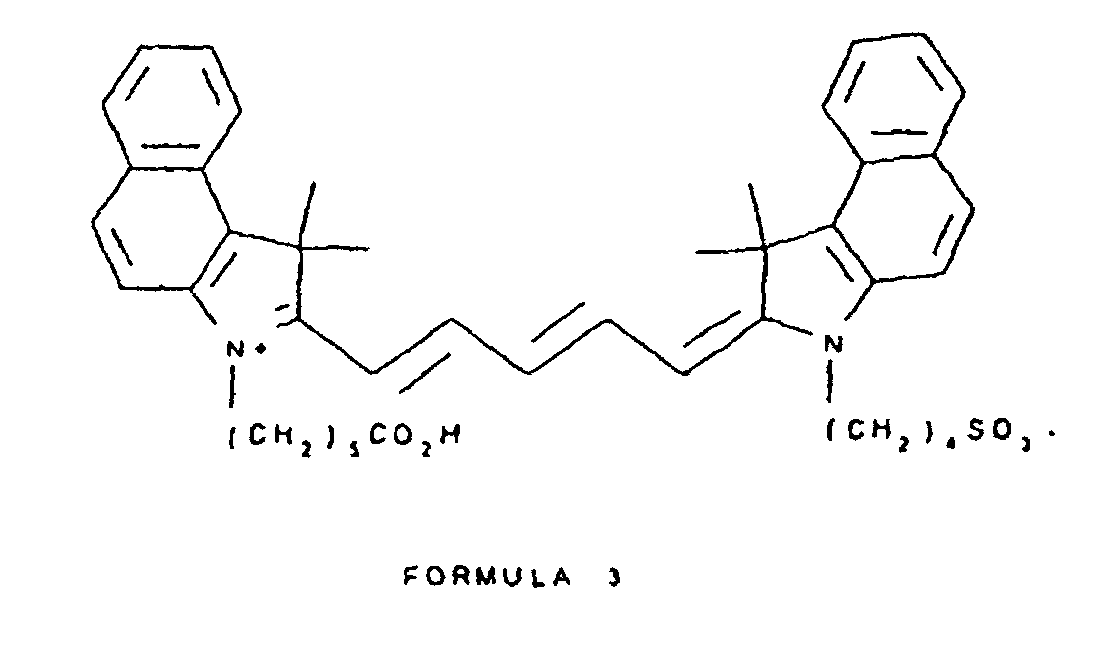
- These two dyes are preferred because they have commercially available precursors for the linking groups: 6-bromohexanol, 6-bromohexanoic acid and 1,4-butane sultone (all available from Aldrich Chemical Co., Milwaukee, WI). The linking groups provide adequate distance between the dye and the biomolecule for efficient attachment without imparting excessive hydrophobicity. The resulting labeled biomolecules retain their solubility in water and are well-accepted by enzymes.
- The dyes for use in this invention wherein R is -CO2H or -OH can be synthesized, as set forth in detail in the examples below, by reacting the appropriate N-(carboxyalkyl)- or N-(hydroxyalkyl)-1,1,2-trimethyl-1H-benz(e)indolinium halide, preferably bromide, with sulfonatobutyl-1,1,2-trimethyl-1H-benz(e)indole at a relative molar ratio of about 0.9:1 to about 1:0.9, preferably 1:1 in an organic solvent, such as pyridine, and heated to reflux, followed by the addition of 1,3,3-trimethoxypropene in a relative molar ratio of about 1:1 to about 3:1 to the reaction product and continued reflux. The mixture subsequently is cooled and poured into an organic solvent such as ether. The resulting solid or semi-solid can be purified by chromatography on a silica gel column using a series of methanol/chloroform solvents.
- As an alternative, two-step, synthesis procedure, also detailed in the examples below, N-4-sulfonatobutyl-1,1,2-trimethyl-1H-benz(e)indole and malonaldehyde bis(phenylimine)-monohydrochloride in a 1:1 molar ratio can be dissolved in acetic anhydride and the mixture heated. The acetic anhydride is removed under high vacuum and the residue washed with an organic solvent such as ether. The residual solid obtained is dried and subsequently mixed with the appropriate N-(carboxyalkyl)- or N-(hydroxyalkyl)-1,1,2-trimethyl-1H-benz(e)indolinium halide in the presence of an organic solvent, such as pyridine. The reaction mixture is heated, then the solvent is removed under vacuum, leaving the crude desired dye compound. The procedure was adapted from the two step procedure set forth in Ernst, L.A., et al., Cytometry 10:3-10 (1989).
- The dyes also can be prepared with an amine or isothiocyanate terminating group. For example, N-(ω-amino-alkyl)-1,1,2-trimethyl-1H-benz(e)indolenium bromide hydrobromide (synthesized as in N. Narayanan and G. Patonay, J. Org. Chem. 60:2391-5 (1995)) can be reacted to form dyes of formula 1 wherein R is -NH2. Salts of these amino dyes can be converted to the corresponding isothiocyanates by treatment at room temperature with thiophosgene in an organic solvent such as chloroform and aqueous sodium carbonate.
- The dye compounds for use in this invention have a maximum light absorption which occurs near 680 nm. They thus can be excited efficiently by commercially available laser diodes that are compact, reliable and inexpensive and emit light at this wavelength. Suitable commercially available lasers include, for example, Toshiba TOLD9225, TOLD9140 and TOLO9150, Phillips CQL806D, Blue Sky Research PS 015-00 and NEC NDL 3230SU. This near infrared/far red wavelength also is advantageous in that the background fluorescence in this region normally is low in biological systems and high sensitivity can be achieved.
- The isothiocyanate groups of the dyes of the invention provide linking groups for attachment to a wide variety of biologically important molecules, including proceins, peptides, enzyme substrates, hormones, antibodies, antigens, haptens, avidin, streptavidin, carbohydrates, oligosaccharides, polysaccharides, nucleic acids, deoxy nucleic acids, fragments of DNA or RNA, cells and synthetic combinations of biological fragments such as peptide nucleic acids (PNAs).
- The dyes for use in this invention have sufficient solubility in aqueous solutions that once they are attached to a soluble biomolecule, the biomolecule retains its solubility. They also have good solubility in organic media, which provides considerable versatility in synthetic approaches to the labeling of desired materials.
- Depending upon whether the dye has a reactive carboxyl group, isothiocyanate group or hydroxyl group, the compound is either linked directly to the biomolecule of interest or linked indirectly through phosphoramidite chemistry. The phosphoramidites are useful for labeling such biomolecules as DNA, RNA and peptide nucleic acids. They are useful in dry (i.e., water-free) conditions such as dry acetonitrile. The carboxylic acid reactive groups can react with amine groups of biomolecules in water or aqueous organic solvent mixtures.
- When linking a dye carboxylic acid to an amine-containing biomolecule in accordance with this invention, the dye carboxylic acid first is converted to a more reactive form, such as N-hydroxy succinimide (NHS) ester or a mixed anhydride. The amine-contalning biomolecule then is treated with the resulting activated acid to form an amide linkage. Typically, this reaction is carried out in mixtures of aqueous buffer and an organic solvent such as DMF at pH 8 to 9.
- The attachment of an isothiocyanate dye is analogous to the procedure for the carboxy dye, but no activation step is required. The amine-containing biomolecule is treated directly with the NOS dye to form a thiourea linkage. Typically, the reaction is carried out in mixtures of aqueous buffer and an organic solvent, such as DMF, at pH 8 to 9.
- If the dye compound has a reactive hydroxyl group, it is linked to a biomolecule, such as DNA or RNA, through a phosphoramidite chemistry. Use of the phosphoramidite allows labeling of the DNA or RNA during the synthesis process. The protected nucleotide is labeled while attached to a solid phase support. The free 5'-OH group is reacted with the phosphoramidite and a tetrazole activator to form a phosphite linkage which subsequently is oxidized to phosphate. The labeled DNA or RNA then is cleaved from the solid phase using ammonia or other standardized procedure.
- As illustrations of the uses of the present invention, the compounds of this invention can be used as labeling reagents for analytical determination of proteins or for automated sequencing of DNA. Standard sequencing methodologies performed with labeled primers can produce high quality sequencing ladders and accurate DNA sequence data.
- The compounds of this invention can be attached, for example, to analogs of nucleotide triphosphates (dNTPs and ddNTPs) to provide a reagent for enzymatic labeling of various DNA molecules and for facilitating their detection with an automated DNA sequencing and analysis system. DNA sequencing reaction products can be labeled internally by performing limited polymerization utilizing the labeled dNTP as the sole source of a particular deoxynucleotide prior to a dideoxy-specific termination reaction. PCR products also can be labeled fluorescently by the addition of limited quantities of the labeled dNTP to the amplification reaction. Such labeling can be useful, for example, for the detection of short tandem repeat polymorphisms (STRPs), which in turn are useful for gene mapping, genetic diagnostics, forensic analyses and paternity testing.
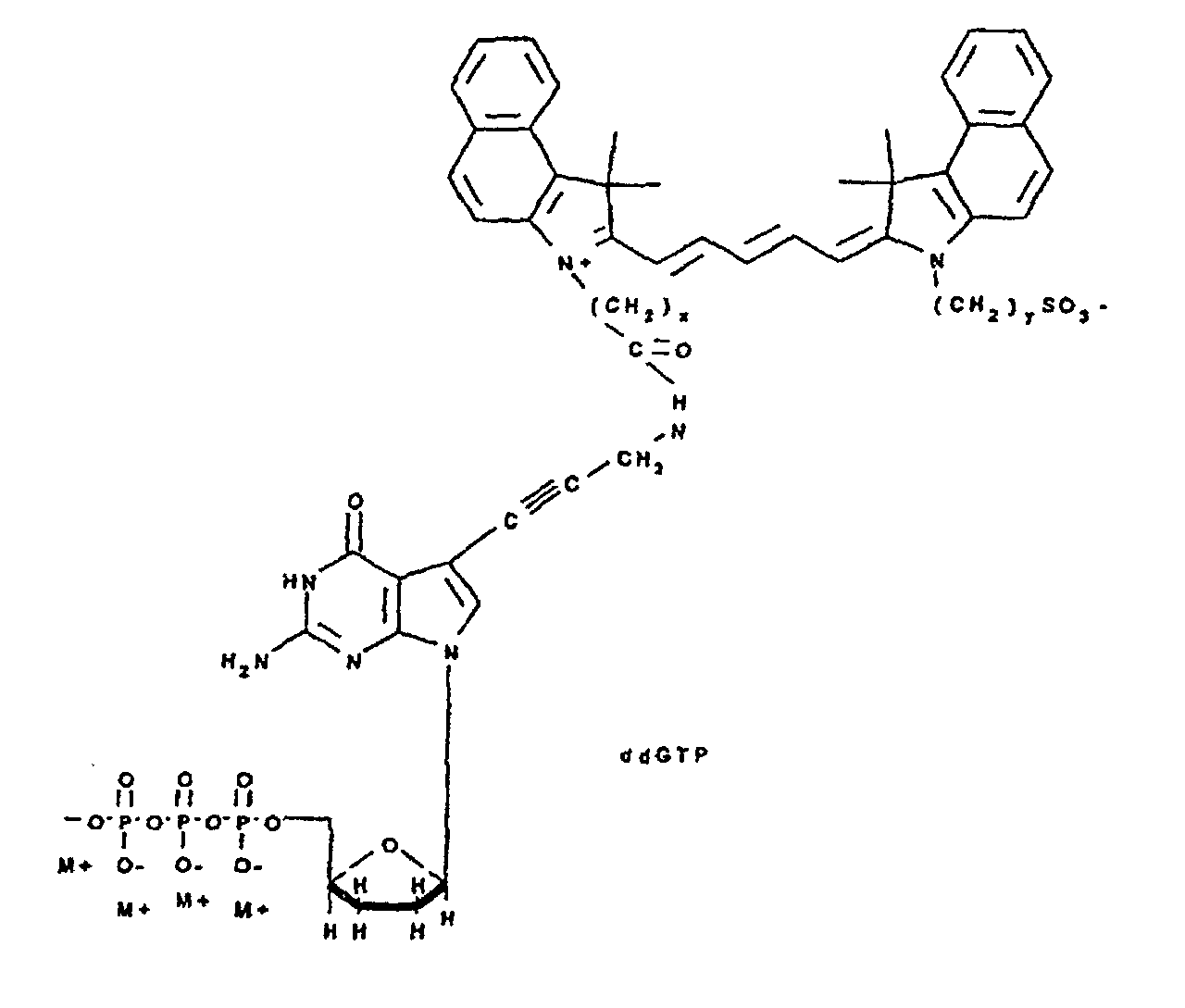
- Examples of nucleotide analogs and DNA chain terminators that can be labeled with the dyes of this invention include those listed, for example, in U.S. Patents 5,332,666; 5,151,507; 5,047,519; 5,091,519; 4,711,955 and 5,241,060 and PCT Application publication WO 9504747. Two specific illustrations of nucleotide triphosphate analogs labeled with a dye of the present invention are represented below:
 wherein each of x and y, independently, is an integer between 1 and 10 and each M, independently, is selected from Li, Na, K, NH4, (CH3)3NH, (CH3CH2)3NH, (CH3CH2)4N or (CH3)4N.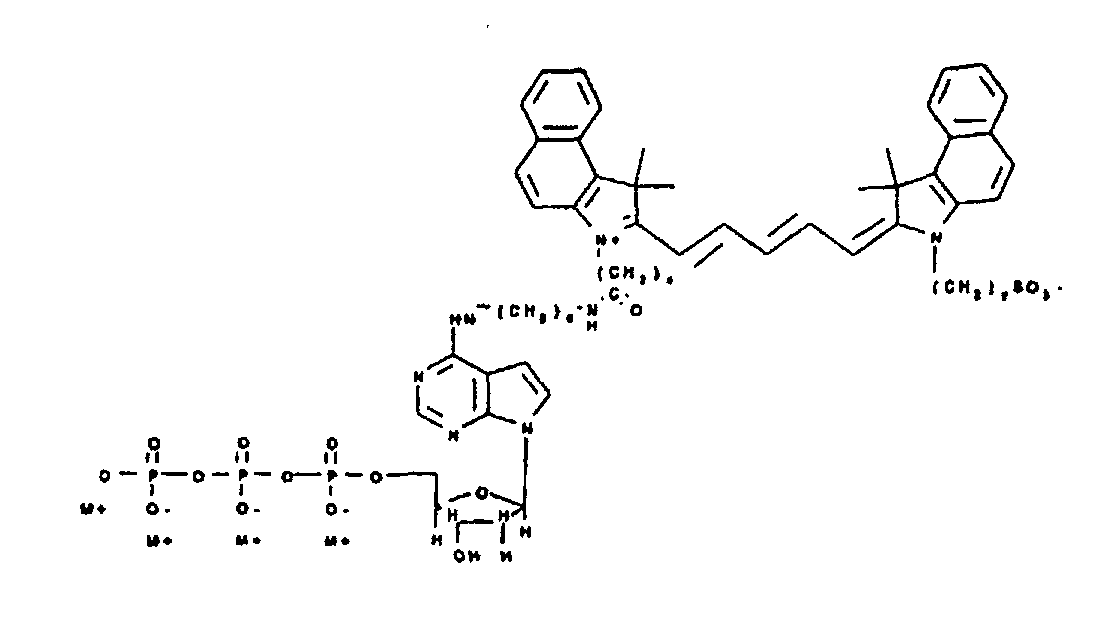
- Illustrations of terminators to which fluorescent dyes have been attached include:

 wherein x and y are as defined above.
- The fluorescent dye-labeled DNA chain terminators are employed for the generation of fluorescent dye-labeled DNA sequencing fragments. A photometric detection system detects the fragments separated by electrophoresis. Fluorescence detection allows one to either scan a gel containing spatially resolved bands (i.e., resolution in space) or to sit at a single point on the gel and detect bands as they pass sequentially through the detection zone (i.e., resolution in time).
- The present invention is illustrated below by the following examples. These examples are provided for illustrative purposes only and are not intended to be construed as limiting the scope of the invention.
- 9.0 g of 6-bromo-1-hexanol (105 mmol), obtained from Aldrich Chemical Company, Milwaukee, WI, and 21.96 g. of 1,1,2 trimethyl-1H-benz(e)indole (105 mmol), obtained from ACROS Organics, a division of Fisher Scientific, Pittsburgh, PA, were heated in a pressure tube with stirring to 95-100 °C. The melt solidified after heating for 3 hours. The mixture was heated for an additional 3 hours, cooled and dissolved in 200 ml of chloroform. This solution was extracted three times with 100 ml portions of water. The water layers were combined and extracted three times with 100 ml portions of ether. The aqueous layer was evaporated in vacuo to provide N-(6-hydroxyhexyl)-1,1,2-trimethyl-1H-benz(e)indolinium bromide in the form of a colorless oil (26.4 g., 65% yield), which could be used without further purification.
- 390 mg of the N-(6-hydroxyhexyl)-1,1,2-trimethyl-1H-benz(e)indolinium bromide (390 mg, 1 mmol) and N-sulfonatobutyl-1,1,2-trimethyl-lH-benz(e)indole (395 mg, 1 mmol) (obtained in accordance with the procedure taught by Hamer, F.M., in Cyanine Dyes and Related Compounds, Weissberger, M.A., ed., Wiley Interscience, N.Y., 1964) were dissolved in pyridine (10 ml) and heated to reflux for 30 minutes, then 250 µl (265 mg, 2.0 mmol)of 1,3,3-trimethoxypropene (also obtained from ACROS Organics) was added dropwise and refluxing was continued for 45 minutes. The resultant mixture was cooled and poured into 100 ml ether and the resulting solid was washed several times with additional 10 ml portions of ether. The crude washed product was recovered after evaporation of the solvent and purified by chromatography on a silica gel column by eluting the column successively with 2L of 10%, 15% and 20% methanol in chloroform. The yield of the recovered pure hydroxy dye was 97 mg. (14%).
- The hydroxy dye obtained above (97 mg., 0.140 mmol) was dissolved in 10 ml of dry methylene chloride and stirred under argon at 0°C for 30 minutes. A solution of bis(N,N-diisopropylamino)-cyanoethyl phosphine (2.13 ml., 0.15 M in methylene chloride) (Monomer Sciences, Huntsville, Ala) was added to the dye solution. With the solution maintained at 0°C, tetrazole (0.128 ml., 0.5 M) (obtained from PerSeptive Biosystems, Framingham, Mass.) in acetonitrile was added. The cooling was removed after 20 minutes and the reaction was continued for an additional 1.5 hours at room temperature. The reaction mixture was quenched with 5% NaHCO3, washed twice with water and dried with sodium sulfate. The solvent was removed under vacuum and the crude product was taken up in 1.5 ml of methylene chloride. The product was obtained by precipitation into hexane.
- The phosphoramidite of the fluorescent dye N-(6-hydroxyhexyl)N'-(4-sulfonatobutyl)-3,3,3',3'-tetramethyl-benz(e)indodicarbocyanine can be used to label DNA molecules prepared in a DNA synthesis machine. The dye is attached to the 5' end of the protected, support-bonded oligonucleotide via standard phosphoramidite chemistry. On syntheses at 200 nmol scale typical crude yields of dye-labeled oligonucleotides are 150 nmol or higher.
- Each of the DNA oligonucleotides M13 fwd (-29), M13 rev, T7, T3 and SP6, was synthesized in the PerSeptive Biosystems Expedite 8909 DNA synthesis machine in accordance with standard reagents and the methodology taught by the manufacturer. The same apparatus then was used to attach the fluorescent label to the 5' end of each oligonucleotide by treatment with a 0.1M solution of the dye phosphoramidite produced above in acetonitrile. For the attachment of the dye phosphoramidite a three minute delay was inserted after the delivery of the dye in the tetrazole to the synthesis column to allow additional time for the coupling reaction. The 5'-fluorescent labeled DNA oligonucleotide was produced following oxidation, cleavage, deprotection and purification by HPLC. For HPLC purification of the labeled oligonucleotide, a C18 reverse phase column having 5 µ particles, 300 A pore size (Waters DeltaPak), 1.7 ml/min was used. Solvent A was 4% acetonitrile in 0.1M triethylammonium acetate and Solvent B was an 80% acetonitrile in 0.1M triethylammonium acetate. The gradient profile was 10 to 45% B over 35 minutes, 45 to 100% B over 15 minutes, 100 to 10% B in 10 minutes. The labeled oligonucleotide eluted at about 40 minutes.
- The labeled oligonucleotide can be used, for example, as a primer in the Sanger method of DNA sequencing referenced above, as a tailed primer for genotyping or as a hybridization probe.
- N-(5-carboxypentyl)-1,1,2-trimethyl-1H-benz(e)indolinium bromide (100 mg., 0.25 mmol) (made in accordance with the procedure taught by Hamer, F.M. in Cyanine Dyes and Related Compounds, Weissberger, M.A., ed., Wiley Interscience, N.Y., 1964) and N-sulfonatobutyl-1,1,2-trimethyl-lH-benz(e)indole (85 mg., 0.25 mmol) (also in accordance with the procedures in Cyanine Dyes and Related Compounds, supra) were dissolved in 10 ml. pyridine and heated to reflux for 1 hour. Subsequently, 1,3,3-trimethoxypropene (66 mg., 0.50 mmol) (obtained from ACROS Organics) was added dropwise to the refluxing solution and heating was continued for 2 hours. The solvent was removed under vacuum and the residue was purified by chromatography on a silica gel column using a methylene chloride and methylene chloride/methanol gradient as in Example 1. The yield was 89 mg (0.126 mmol., 50%) of the desired dye carboxylic acid.
- The dye carboxylic acid (5 mg., .007 mmol) was dissolved in dry DMF and treated with N,N-diisopropylethylamine (DIPEA) (2.75 mg., 0.021 mmol) and then with ethyl chloroformate (1.5 mg, 0.014 mmol) and stirred at room temperature for four hours. The reaction solvent, DIPEA, and ethyl chloroformate were removed under vacuum. The resulting mixed anhydride was used without any further treatment or purification in the following step.
- A nucleotide triphosphate, 8-(5-aminopentylamino)-2'-deoxyadenosine-5'-triphosphate (from Boehringer Mannheim Biochemicals) (4.5 mg, 0.0073 mmol, 1.04 eq.) was dissolved in borate buffer at pH 8.5 and the mixed anhydride from the foregoing reaction (0.007 mmol) in DMF (both equal volumes) were mixed together and the reaction followed by HPLC. The labeled nucleotide conjugate was purified by preparative HPLC.
- The same procedure was followed using N6-deaza dATP as the nucleotide triphosphate (obtained from DuPont NEN).
- The labeled oligonucleotide can be used, for example, in genotyping or Cycle Labeling and Sequencing (CLS).
- N-4-sulfonatobutyl-1,1,2-trimethyl-1H-benz(e)indole (690mg., 2.0 mmol), synthesized in accordance with the procedure set forth in Cyanine dyes and Related Compounds, referenced above, and malonaldehyde bis(phenylimine)monohydrochloride (518 mg, 2.0 mmol) obtained from Aldrich Chemical Co. (catalog #38353-8) were dissolved in 50 ml of acetic anhydride and the mixture heated to 125°C over an oil bath for 30 minutes. The acetic anhydride was removed under high vacuum and washed with ether (3x 100 ml). the residual brown solid obtained was dried (900 mg, 93%) and used without further purification for the synthesis of a desired dye.
- To make the dye of Example 1, 276 mg. (0.57 mmol) of the salt adduct obtained from the foregoing procedure was mixed with N-(6-hydroxy hexyl)1,1,2-trimethyl-1H-benz(e)indoleninium bromide (224 mg., 0.57 mmol) in a flask and the solids were dissolved in pyridine (15 ml). the mixture was heated to 125 °C for 30 minutes. The pyridine was removed under vacuum. The asymmetric dye formed was the only dye product by TLC. Crude yield was about 400 mg. Purification using silica gel column chromatography is expected to give >90% yield.
- To make the dye of Example 2, the same procedures were followed, mixing 100 mg (0.208 mmol) of the salt adduct with 84 mg (0.208 mmol) N-(carboxy pentyl)-1,1,2-trimethyl -1H-benz(e)indoleninium bromide in 10 ml of pyridine. The crude yield of the desired product was approximately 150 mg. Purification using silica gel chromatography is expected to give >90% yield.
- The M13 fwd (-29) primer (1.5 pmol) labeled with the cyanine dye via the phosphoramidite in Example 1 was used to sequence M13 vector (purchased from Epicentre Technologies Corporation, Madison, WI)(0.2 pmol) in accordance with the SequiTherm™ Cycle Sequencing Protocol (Sequencing Bulletin #13 published by LI-COR, Inc., Lincoln, NE). In brief, the procedures were as follows:
- The following were combined in a 0.5 ml
microcentrifuge tube:
- M13 vector: 0.2 pmol
- 680 nm dye-labeled M13 fwd (-29) primer: 1.5 pmol 10x sequencing buffer
- SequiTherm™ thermostable DNA polymerase
- ddH2O to bring total volume to 17 µl. Four 0.2 ml thermocycler tubes were labeled A,T,G and C. Into each tube was placed 2.0 µl of the appropriate SequiTherm™ Long-Read Termination mix. 4.0µl of the template/primer/enzyme mix from the microcentrifuge tube above were pipetted into each of the four thermocycler termination tubes.
-
- A drop (10-15 µl) of mineral oil was placed on top of the reaction mixture in each of the four thermocycler tubes. The four tubes were inserted in the thermocycler and the thermocycler was started. The thermocycler was programmed for the following cycles:
- a. 95°C for 2 minutes
- b. 95°C for 30 seconds
- c. 60°C for 15 seconds
- d. 70°C for 15 seconds
steps b-d were repeated for a total of 30 cycles - e. 4°C soak
-
- After the cycling was completed, 4.0 µl of SequiThermTM Stop Solution was injected into each of he reaction mixtures under the mineral oil and mixed thoroughly. The samples were denatured by heating at 95°C for three minutes.
- The resulting array of labeled DNA fragments was loaded onto a 41 cm electrophoresis gel (6% deionized LongRanger™ solution) in a LI-COR Model 4200 Automated DNA Sequencer. The solution was made as follows: 25.2g urea were added to 7.2 ml of LongRanger™ 50% gel concentrate (FMC Bioproducts Rockland, Maine) and the volume was brought up to 52.8 ml with ddH2O. 7.2 ml of standard 10X TBE buffer was added and the solution was mixed. The gel solution was added to a filter cup and filtered.
- Electric current was applied. The electrophoresis parameters were those set forth in Sequencing Bulletin #28 published by LI-COR, Inc.:
Parameter 41 cm Apparatus Gel thickness 0.25 mm Gel composition 5% Long Ranger™ Buffer type 10X TBE (890 mM TRIS, 890 mM Boric Acid, 20 mM EDTA) Gel buffer 1.2X TBE Running buffer 1.0X TBE Voltage 1500 V Current 35.0 mA Power 31.5 W Temperature 50°C Pre-run time 30 minutes Total run time 7 hours - As the fragments passed the detector at the other end of the gel, fluorescence was excited with a 680 nm laser diode and detected from 710 to 750 nm. A high quality sequence ladder was obtained.
- N6-deaza dATP labeled with N-(5-carboxypentyl)N'-(4-sulfonatobutyl)-3,3,3',3'-tetramethylbenz(e)indodicarbocyanine (10 pmol), made in accordance with the procedures in example 2, was used with unlabeled M13 fwd (-29) primer (4 pmol) to sequence M13 vector (0.3 pmol) (obtained from Epicentre Technologies Corporation, Madison, WI). The Cycle Labeling and Sequencing (CLS) method for sequencing DNA is a two step procedure which involves cycle labeling where an unlabeled primer is partially extended and labeled with three dNTPs and infrared dye-labeled dATP and cycle sequencing where the labeled primer is used in dideoxy chain termination reactions. The procedure was done in accordance with the teachings of Sequencing Bulletin #41 published by LI-COR, Inc. The procedure briefly was as follows:
- The following reagents were combined in a 0.2 ml
PCR tube:
- M13 vector: 0.3 pmol
- primer: 4 pmol
- dNTP Mix (5µM of dCTP, dGTP and dTTP)
- dye-labeled N6-deaza dATP : 10 pmol
- 10x SequiTherm™ reaction buffer
- SequiTherm™ DNA polymerase: 5U/µl
- sterile, deionized water to bring total volume to 17 µl The reagents were mixed well, a drop of mineral oil was placed on top of the reaction mixture and the tube was inserted in an MJ Research thermal cycler. The following labeling reaction program for the thermocycler was set:
- a. 92°C for 2 minutes
- b. 92°C for 30 seconds
- c. 40°C for 10 seconds
- d. 50°C for 15 seconds
- e. 70°C for 15 seconds
repeat steps b to e for a total of 30 cycles - f. 4°C soak
-
Claims (17)
- A fluorescent dye having the general formula:wherein R is -NCS, and x and y, independently, are integers between 1 and 10.

- A dye-labeled nucleotide analog comprising the general structurewherein each of x and y, independently, is an integer between 1 and 10 and each M, independently, is selected from Li, Na, K, NH4, (CH3)3NH, (CH3CH2)3NH, (CH3CH2)4N or (CH3)4N.
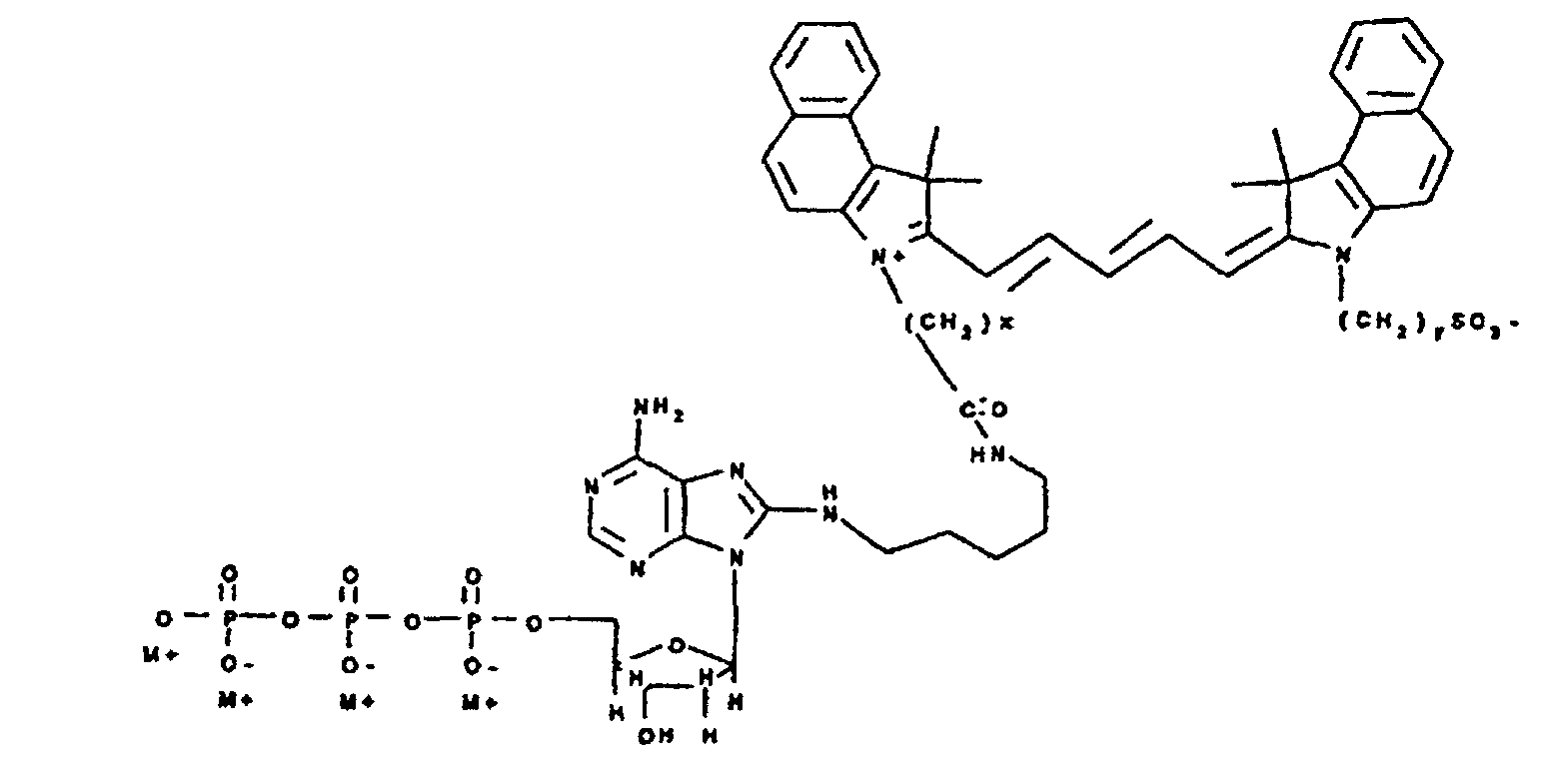
- A dye-labeled nucleotide analog comprising the general structurewherein each of x and y, independently, is an integer between 1 and 10 and each M, independently, is selected from Li, Na, K, NH4, (CH3)3NH, (CH3CH2)3NH, (CH3CH2)4N or (CH3)4N.
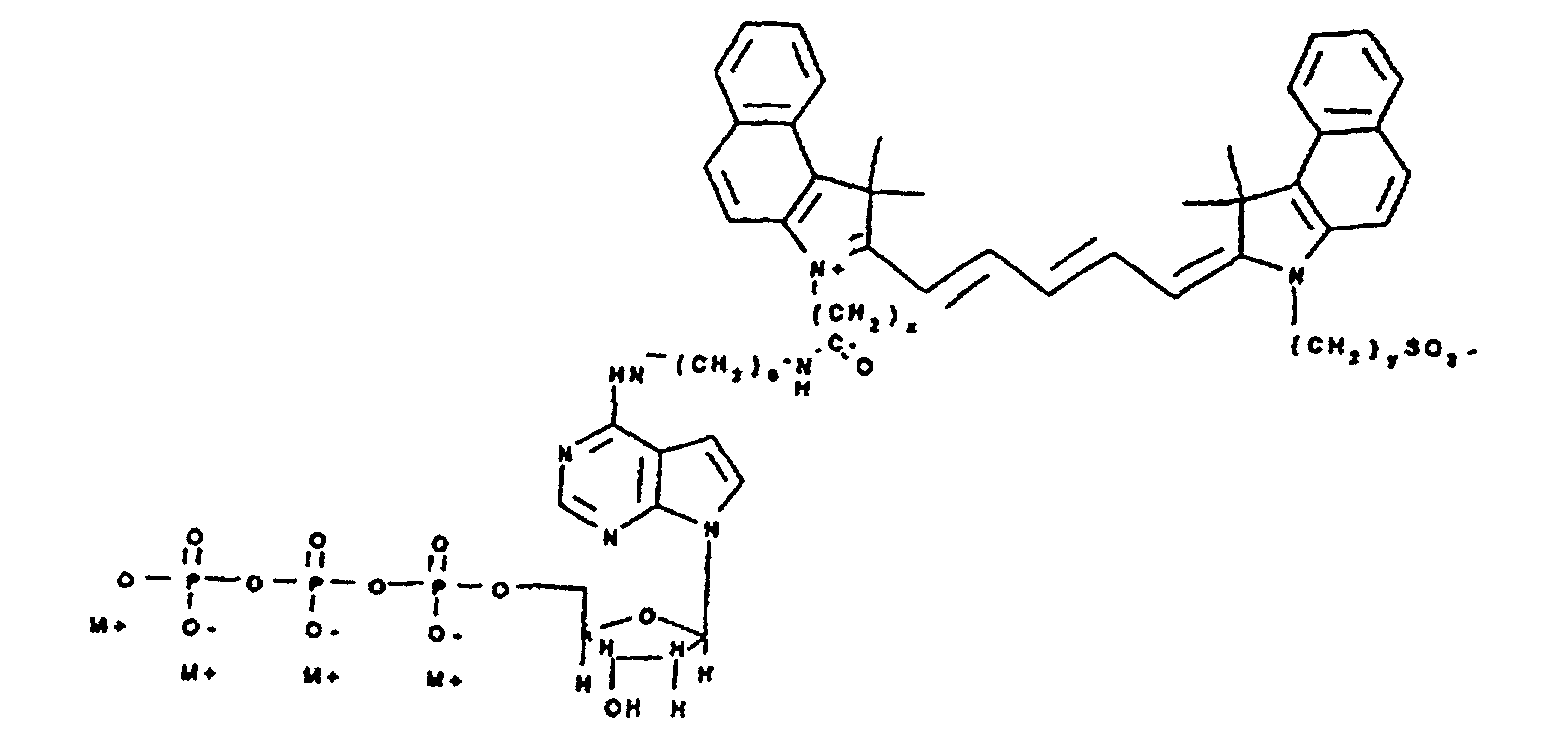
- A dye-labeled nucleotide analog in accordance with claim 2 or 3 wherein each of x and y is an integer from 2 to 6.
- A fluorescent dye labeled DNA chain terminator having the general structure:wherein each of x and y, independently, is an integer selected from 1 to 10.

- A fluorescent dye labeled DNA chain terminator having the general structure:wherein each of x and y, independently, is an integer selected from 1 to 10.

- A fluorescent dye labeled DNA chain terminator having the general structure:wherein each of x and y, independently, is an integer selected from 1 to 10.

- A fluorescent dye labeled DNA chain terminator having the general structure:wherein each of x and y, independently, is an integer selected from 1 to 10.
- A fluorescent dye-labeled DNA chain terminator in accordance with any of claims 5 to 8 where each of x and y independently is an integer from 2 to 6.
- N-(6-hydroxyhexyl)-1,1,2-trimethyl-1H-benz(e)indolinium halide.
- N-(6-hydroxyhexyl)-1,1,2-trimethyl-1H-benz(e)indolinium bromide.
- A phosphoramidite derivative of a dye having the general formulawherein R is O-phosphoramidite and x and y, independently, are integers between 1 and 10.
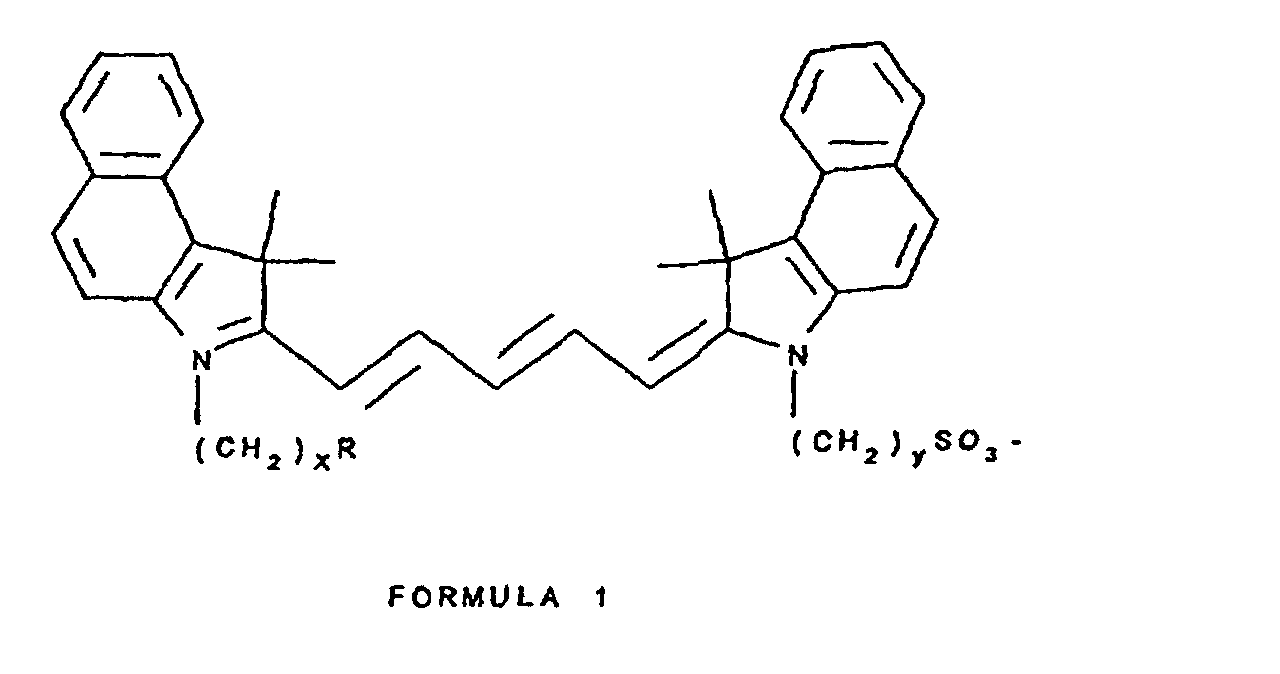
- A nucleotide analog labelled with a dye of the general formula:wherein R is -OH, -CO2H, NH2 or -NCS, and x and y, independently, are integers between 1 and 10.

- A DNA chain terminator labelled with a dye of the general formula:wherein R is -OH, -CO2H, -NH2 or -NCS and x and y, independently, are integers between 1 and 10.

- A dye phosphoramidite having the formula
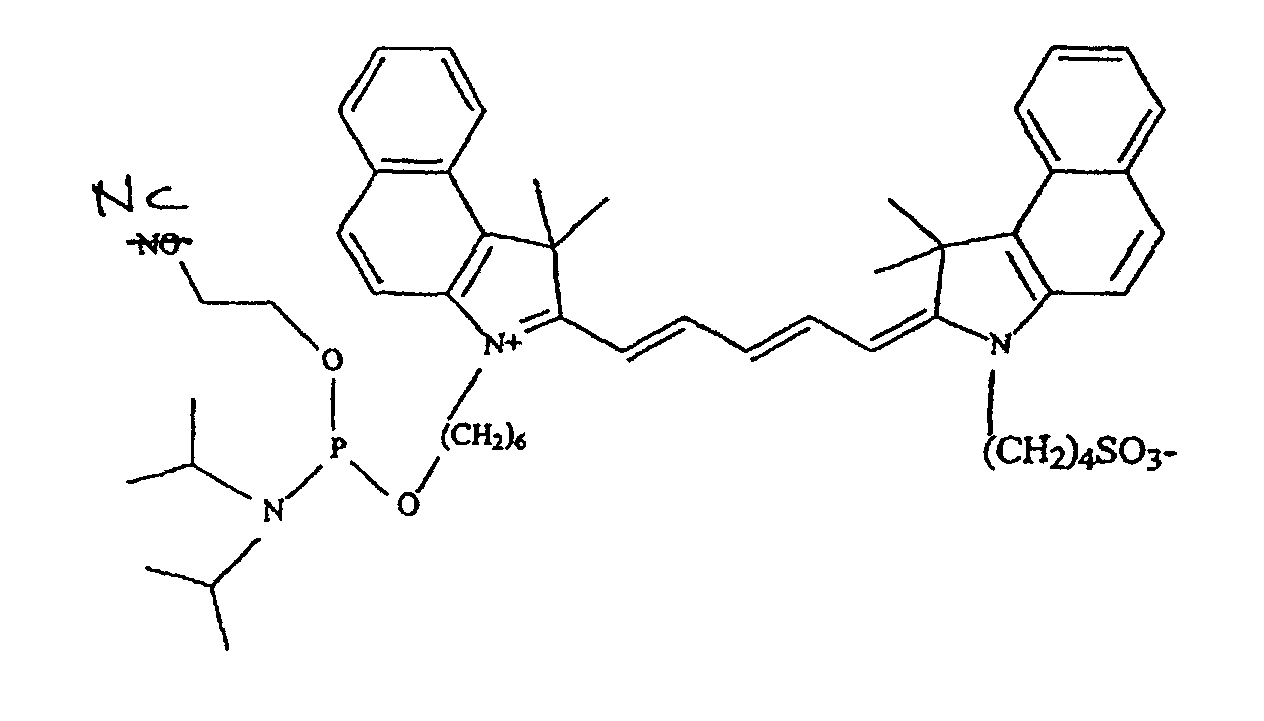
- An oligonucleotide labeled with a dye phosphoramidite of claim 12.
- An oligonucleotide labeled with a dye phosphoramidite of claim 15.
Applications Claiming Priority (3)
| Application Number | Priority Date | Filing Date | Title |
|---|---|---|---|
| US781326 | 1997-01-10 | ||
| US08/781,326 US6027709A (en) | 1997-01-10 | 1997-01-10 | Fluorescent cyanine dyes |
| PCT/US1998/000475 WO1998030992A2 (en) | 1997-01-10 | 1998-01-08 | Fluorescent cyanine dyes |
Publications (2)
| Publication Number | Publication Date |
|---|---|
| EP1019887A2 EP1019887A2 (en) | 2000-07-19 |
| EP1019887B1 true EP1019887B1 (en) | 2003-04-02 |
Family
ID=25122364
Family Applications (1)
| Application Number | Title | Priority Date | Filing Date |
|---|---|---|---|
| EP98903434A Expired - Lifetime EP1019887B1 (en) | 1997-01-10 | 1998-01-08 | Fluorescent cyanine dyes |
Country Status (8)
| Country | Link |
|---|---|
| US (1) | US6027709A (en) |
| EP (1) | EP1019887B1 (en) |
| JP (1) | JP4361138B2 (en) |
| AT (1) | ATE236442T1 (en) |
| AU (1) | AU739930B2 (en) |
| CA (1) | CA2278313C (en) |
| DE (1) | DE69812982T2 (en) |
| WO (1) | WO1998030992A2 (en) |
Cited By (1)
| Publication number | Priority date | Publication date | Assignee | Title |
|---|---|---|---|---|
| EP3891225A1 (en) * | 2018-12-06 | 2021-10-13 | Futuresynthesis Spólka z o.o. | Method for fluorescence labeling of biological materials, thermally removable fluorescent labels for this method, and methods of their preparation and use |
Families Citing this family (85)
| Publication number | Priority date | Publication date | Assignee | Title |
|---|---|---|---|---|
| US6379897B1 (en) * | 2000-11-09 | 2002-04-30 | Nanogen, Inc. | Methods for gene expression monitoring on electronic microarrays |
| EP1009802B1 (en) * | 1997-02-12 | 2004-08-11 | Eugene Y. Chan | Methods for analyzimg polymers |
| US6114350A (en) * | 1999-04-19 | 2000-09-05 | Nen Life Science Products, Inc. | Cyanine dyes and synthesis methods thereof |
| DE19921234B4 (en) * | 1999-05-07 | 2005-07-28 | Few Chemicals Gmbh | Cyanine dyes |
| US20030223935A1 (en) * | 2001-03-05 | 2003-12-04 | Gray Brian D. | Fluorescent membrane intercalating probes and methods for their use |
| AU2001245424B2 (en) * | 2000-03-03 | 2005-08-18 | Phanos Technologies, Inc. | Fluorescent membrane intercalating probes and methods for their use |
| WO2001074950A2 (en) * | 2000-04-03 | 2001-10-11 | Sun Chemical Corporation | Mono- and bis-hydrazone pigments |
| JP2001288197A (en) * | 2000-04-10 | 2001-10-16 | Fuji Photo Film Co Ltd | Fluorescent nucleotide |
| DE10018199A1 (en) | 2000-04-12 | 2001-10-31 | Few Chemicals Gmbh | Fluorescent marker |
| US20070172866A1 (en) * | 2000-07-07 | 2007-07-26 | Susan Hardin | Methods for sequence determination using depolymerizing agent |
| ATE377093T1 (en) * | 2000-07-07 | 2007-11-15 | Visigen Biotechnologies Inc | REAL-TIME SEQUENCE DETERMINATION |
| US6397150B1 (en) | 2000-07-27 | 2002-05-28 | Visible Genetics Inc. | Method and apparatus for sequencing of DNA using an internal calibrant |
| JP4989013B2 (en) * | 2000-09-19 | 2012-08-01 | リ−コール インコーポレーティッド | Cyanine dye |
| US7597878B2 (en) * | 2000-09-19 | 2009-10-06 | Li-Cor, Inc. | Optical fluorescent imaging |
| DE10046215B4 (en) * | 2000-09-19 | 2004-04-15 | Institut für Chemo- und Biosensorik Münster e.V. i.Ins. | Fluorochromes and their use |
| ATE352586T2 (en) | 2000-09-29 | 2007-02-15 | Molecular Probes Inc | MODIFIED CARBOCYANINE DYES AND CONJUGATES THEREOF |
| CA2425663C (en) * | 2000-10-11 | 2009-12-29 | Applera Corporation | Fluorescent nucleobase conjugates having anionic linkers |
| US6663847B1 (en) * | 2000-10-13 | 2003-12-16 | Mallinckrodt Inc. | Dynamic organ function monitoring agents |
| WO2002038190A2 (en) * | 2000-10-27 | 2002-05-16 | Beth Israel Deaconess Medical Center | Non-isotopic detection of osteoblastic activity in vivo using modified bisphosphonates |
| US6331632B1 (en) * | 2000-11-09 | 2001-12-18 | Beckman Coulter, Inc. | Cyanine dye phosphoramidites |
| US7211414B2 (en) * | 2000-12-01 | 2007-05-01 | Visigen Biotechnologies, Inc. | Enzymatic nucleic acid synthesis: compositions and methods for altering monomer incorporation fidelity |
| EP1221465A1 (en) * | 2001-01-03 | 2002-07-10 | Innosense S.r.l. | Symmetric, monofunctionalised polymethine dyes labelling reagents |
| US6887690B2 (en) * | 2001-06-22 | 2005-05-03 | Pe Corporation | Dye-labeled ribonucleotide triphosphates |
| US7668697B2 (en) * | 2006-02-06 | 2010-02-23 | Andrei Volkov | Method for analyzing dynamic detectable events at the single molecule level |
| JP4676654B2 (en) * | 2001-07-19 | 2011-04-27 | 富士フイルム株式会社 | Fluorescent nucleotide and labeling method using the same |
| US6533396B2 (en) | 2001-08-16 | 2003-03-18 | Benq Corporation | Printhead cartridge with asymmetrical contacts |
| US20050032060A1 (en) * | 2001-08-31 | 2005-02-10 | Shishir Shah | Arrays comprising pre-labeled biological molecules and methods for making and using these arrays |
| US7439346B2 (en) * | 2001-10-12 | 2008-10-21 | Perkinelmer Las Inc. | Nucleic acids arrays and methods of use therefor |
| EP1451318A4 (en) | 2001-10-12 | 2007-06-27 | Perkinelmer Las Inc | NUCLEIC ACID COMPILATIONS, NETWORKS AND METHODS OF USE THEREOF |
| US6838289B2 (en) * | 2001-11-14 | 2005-01-04 | Beckman Coulter, Inc. | Analyte detection system |
| US7222059B2 (en) * | 2001-11-15 | 2007-05-22 | Siemens Medical Solutions Diagnostics | Electrophoretic trace simulator |
| AU2003225763A1 (en) * | 2002-03-11 | 2003-09-29 | Visen Medical, Inc. | Optical imaging probes |
| US6916621B2 (en) * | 2002-03-27 | 2005-07-12 | Spectral Genomics, Inc. | Methods for array-based comparitive binding assays |
| CA2490961A1 (en) * | 2002-07-01 | 2004-01-08 | Guava Technologies, Inc. | Fluorescent dyes, energy transfer couples and methods |
| US8188116B2 (en) * | 2002-09-04 | 2012-05-29 | Vanderbilt University | Agents for therapy efficacy monitoring and deep tissue imaging |
| US7754884B2 (en) | 2005-01-03 | 2010-07-13 | Vanderbilt University | Targeted, NIR imaging agents for therapy efficacy monitoring, deep tissue disease demarcation and deep tissue imaging |
| US7005518B2 (en) * | 2002-10-25 | 2006-02-28 | Li-Cor, Inc. | Phthalocyanine dyes |
| US20040132092A1 (en) * | 2003-01-03 | 2004-07-08 | Stetson Christopher M. | Determining the density of functional moieties on polymer reagents |
| US20090186343A1 (en) * | 2003-01-28 | 2009-07-23 | Visigen Biotechnologies, Inc. | Methods for preparing modified biomolecules, modified biomolecules and methods for using same |
| WO2004087950A2 (en) | 2003-04-04 | 2004-10-14 | Roche Diagnostics Gmbh | Improved system for multi color real time pcr |
| US7572581B2 (en) | 2003-06-30 | 2009-08-11 | Roche Molecular Systems, Inc. | 2′-terminator nucleotide-related methods and systems |
| US7727752B2 (en) * | 2003-07-29 | 2010-06-01 | Life Technologies Corporation | Kinase and phosphatase assays |
| CA2445420A1 (en) * | 2003-07-29 | 2005-01-29 | Invitrogen Corporation | Kinase and phosphatase assays |
| US7619059B2 (en) * | 2003-07-29 | 2009-11-17 | Life Technologies Corporation | Bimolecular optical probes |
| US7271265B2 (en) | 2003-08-11 | 2007-09-18 | Invitrogen Corporation | Cyanine compounds and their application as quenching compounds |
| ATE458200T1 (en) * | 2003-09-12 | 2010-03-15 | Life Technologies Corp | APPLICATIONS OF RESONANCE ENERGY TRANSFER BETWEEN TERBIUM AND GFP |
| WO2005044086A2 (en) * | 2003-10-30 | 2005-05-19 | Tufts-New England Medical Center | Prenatal diagnosis using cell-free fetal dna in amniotic fluid |
| EP1720945B1 (en) | 2003-12-05 | 2016-03-16 | Life Technologies Corporation | Methine-substituted cyanine dye compounds |
| US7776529B2 (en) | 2003-12-05 | 2010-08-17 | Life Technologies Corporation | Methine-substituted cyanine dye compounds |
| US7446202B2 (en) | 2003-12-05 | 2008-11-04 | Molecular Probes, Inc. | Cyanine dye compounds |
| JP4127204B2 (en) * | 2003-12-17 | 2008-07-30 | セイコーエプソン株式会社 | Manufacturing method of liquid crystal display device |
| US7230117B2 (en) * | 2004-07-12 | 2007-06-12 | Beckman Coulter, Inc. | Stable cyanine dye phosphoramidites |
| JP5306811B2 (en) | 2005-05-11 | 2013-10-02 | ライフ テクノロジーズ コーポレーション | Fluorescent chemicals with high selectivity to double-stranded DNA and their use |
| US7737281B2 (en) * | 2005-05-24 | 2010-06-15 | Enzo Life Sciences, Inc. C/O Enzo Biochem, Inc. | Purine based fluorescent dyes |
| US7569695B2 (en) * | 2005-05-24 | 2009-08-04 | Enzo Life Sciences, Inc. | Dyes for the detection or quantification of desirable target molecules |
| US8227621B2 (en) * | 2005-06-30 | 2012-07-24 | Li-Cor, Inc. | Cyanine dyes and methods of use |
| FR2889700B1 (en) | 2005-08-11 | 2012-11-23 | Synthinnove Lab | MARKERS, METHOD FOR PRODUCING THE SAME, AND APPLICATIONS THEREOF |
| DK1937676T3 (en) * | 2005-09-02 | 2017-03-06 | Visen Medical Inc | Biocompatible fluorescent imaging compounds |
| CN101296927A (en) | 2005-09-02 | 2008-10-29 | Visen医药公司 | Biocompatible Fluorescent Dye Labeling Containing N,N-Disubstituted Sulfonamides |
| WO2007028118A2 (en) | 2005-09-02 | 2007-03-08 | Visen Medical, Inc. | Nicotinic acid and picolinic acid derived near-infrared fluorophores |
| US20080091005A1 (en) * | 2006-07-20 | 2008-04-17 | Visigen Biotechnologies, Inc. | Modified nucleotides, methods for making and using same |
| US20080241951A1 (en) * | 2006-07-20 | 2008-10-02 | Visigen Biotechnologies, Inc. | Method and apparatus for moving stage detection of single molecular events |
| US20080241938A1 (en) * | 2006-07-20 | 2008-10-02 | Visigen Biotechnologies, Inc. | Automated synthesis or sequencing apparatus and method for making and using same |
| MY150548A (en) * | 2007-09-27 | 2014-01-30 | Sysmex Corp | Reagent kit for sample analysis and sample analysis method |
| US20090214436A1 (en) | 2008-02-18 | 2009-08-27 | Washington University | Dichromic fluorescent compounds |
| WO2009133545A2 (en) | 2008-04-30 | 2009-11-05 | Ben Gurion University Of The Negev Research And Development Authority | Vascular delivery systems |
| JP5500875B2 (en) * | 2009-01-30 | 2014-05-21 | キヤノン株式会社 | Novel compound, probe using the novel compound, and contrast agent for fluorescence imaging using the novel compound or the probe |
| US9155471B2 (en) | 2009-05-27 | 2015-10-13 | Lumicell, Inc'. | Methods and systems for spatially identifying abnormal cells |
| US20110021908A1 (en) * | 2009-05-27 | 2011-01-27 | Lumicell Diagnostics, Inc. | Methods and systems for spatially identifying abnormal cells |
| US10167319B2 (en) | 2010-05-29 | 2019-01-01 | Ben-Gurion University Of Negev Research & Development Authority | Caged cell penetrating peptide-polymer conjugates for diagnostic and therapeutic applications |
| EP2630196B1 (en) | 2010-10-20 | 2017-09-06 | Li-Cor, Inc. | Cyanine dyes and their conjugates |
| US9314304B2 (en) | 2010-12-08 | 2016-04-19 | Lumicell, Inc. | Methods and system for image guided cell ablation with microscopic resolution |
| EP3553075B1 (en) | 2012-01-23 | 2025-01-08 | Washington University | Goggle imaging systems and methods |
| KR20160037834A (en) | 2013-03-14 | 2016-04-06 | 루미셀, 아이엔씨. | Medical imaging device and methods of use |
| CA2901000C (en) * | 2013-03-15 | 2023-03-14 | Visen Medical, Inc. | 4,4-disubstituted cyclohexyl bridged heptamethine cyanine dyes and uses thereof |
| AR102743A1 (en) | 2014-11-26 | 2017-03-22 | Li Cor Inc | CONTRAST MEANS GO FOR FLUORESCENCE IMAGES |
| US10806804B2 (en) | 2015-05-06 | 2020-10-20 | Washington University | Compounds having RD targeting motifs and methods of use thereof |
| US10300153B2 (en) | 2015-11-30 | 2019-05-28 | Asthra, Llc | Immunological detection of altered cells |
| CN106280533B (en) * | 2016-08-17 | 2018-03-09 | 赣南师范大学 | A kind of near infrared fluorescent dye and its synthetic method and for parasite fluorescence labeling |
| AU2018250548A1 (en) | 2017-04-11 | 2019-10-31 | Li-Cor, Inc. | Solid cyanine dyes |
| WO2019213543A1 (en) | 2018-05-04 | 2019-11-07 | Li-Cor, Inc. | 2-[2-[4-[bis(2-sulfoethyl)amino]phenyl]ethenyl]-1-butyl-3,3-dimethyl-3h-indolium hemicyanine dyes for the detection of antibodies and other biomolecules |
| WO2021119423A1 (en) | 2019-12-13 | 2021-06-17 | Washington University | Near infrared fluorescent dyes, formulations and related methods |
| US20250019739A1 (en) | 2021-10-26 | 2025-01-16 | Caribou Biosciences, Inc. | Exonuclease-coupled real-time endonuclease activity assay |
| US20250263555A1 (en) * | 2024-02-20 | 2025-08-21 | The Government Of The United States Of America, As Represented By The Secretary Of The Navy | Controlled linker length modulation of dna scaffolded dye aggregates |
| WO2026050087A1 (en) | 2024-08-27 | 2026-03-05 | Caribou Biosciences, Inc. | Real-time crispr endonuclease activity assay |
Family Cites Families (19)
| Publication number | Priority date | Publication date | Assignee | Title |
|---|---|---|---|---|
| US4711955A (en) * | 1981-04-17 | 1987-12-08 | Yale University | Modified nucleotides and methods of preparing and using same |
| US5241060A (en) * | 1982-06-23 | 1993-08-31 | Enzo Diagnostics, Inc. | Base moiety-labeled detectable nucleatide |
| US5571388A (en) * | 1984-03-29 | 1996-11-05 | Li-Cor, Inc. | Sequencing near infrared and infrared fluorescense labeled DNA for detecting using laser diodes and suitable labels thereof |
| US5268486A (en) * | 1986-04-18 | 1993-12-07 | Carnegie-Mellon Unversity | Method for labeling and detecting materials employing arylsulfonate cyanine dyes |
| US5091519A (en) * | 1986-05-01 | 1992-02-25 | Amoco Corporation | Nucleotide compositions with linking groups |
| US5047519A (en) * | 1986-07-02 | 1991-09-10 | E. I. Du Pont De Nemours And Company | Alkynylamino-nucleotides |
| US5151507A (en) * | 1986-07-02 | 1992-09-29 | E. I. Du Pont De Nemours And Company | Alkynylamino-nucleotides |
| CA1340806C (en) * | 1986-07-02 | 1999-11-02 | James Merrill Prober | Method, system and reagents for dna sequencing |
| DE3912046B4 (en) * | 1988-09-02 | 2004-03-25 | Carnegie Mellon University | Method of labeling a component of an aqueous liquid and luminescent photostable reaction product |
| JPH07145148A (en) * | 1992-06-02 | 1995-06-06 | Bio Sensor Kenkyusho:Kk | Polymethine-based compound and measuring method using the same |
| US5366623A (en) * | 1992-09-11 | 1994-11-22 | Colonel Clair | Apparatus for magnetically treating a fluid |
| JP3176163B2 (en) * | 1993-01-28 | 2001-06-11 | イビデン株式会社 | Fluorescent labeling reagent and fluorescent immunoassay |
| DE69407467T2 (en) * | 1993-04-12 | 1998-04-16 | Ibiden Co Ltd | Resin compositions and circuit boards using them |
| US5436134A (en) * | 1993-04-13 | 1995-07-25 | Molecular Probes, Inc. | Cyclic-substituted unsymmetrical cyanine dyes |
| DE4326466A1 (en) * | 1993-08-06 | 1995-02-09 | Boehringer Mannheim Gmbh | Infrared dye-labeled nucleotides and their use in nucleic acid detection |
| JP3399598B2 (en) * | 1993-09-17 | 2003-04-21 | イビデン株式会社 | Labeling reagent for immunoassay using N-partially substituted aminoglycan |
| JPH0783925A (en) * | 1993-09-17 | 1995-03-31 | Ibiden Co Ltd | Fluorescent labeled reagent and fluorescent immunity measurement method |
| US5622821A (en) * | 1994-06-29 | 1997-04-22 | The Regents Of The University Of California | Luminescent lanthanide chelates and methods of use |
| KR100397020B1 (en) * | 1995-01-30 | 2004-04-29 | 다이이치 가가쿠 야쿠힝 가부시키가이샤 | Diagnostic marker |
-
1997
- 1997-01-10 US US08/781,326 patent/US6027709A/en not_active Expired - Lifetime
-
1998
- 1998-01-08 CA CA002278313A patent/CA2278313C/en not_active Expired - Lifetime
- 1998-01-08 DE DE69812982T patent/DE69812982T2/en not_active Expired - Lifetime
- 1998-01-08 AU AU60206/98A patent/AU739930B2/en not_active Ceased
- 1998-01-08 AT AT98903434T patent/ATE236442T1/en not_active IP Right Cessation
- 1998-01-08 WO PCT/US1998/000475 patent/WO1998030992A2/en not_active Ceased
- 1998-01-08 EP EP98903434A patent/EP1019887B1/en not_active Expired - Lifetime
- 1998-01-08 JP JP53116298A patent/JP4361138B2/en not_active Expired - Lifetime
Cited By (1)
| Publication number | Priority date | Publication date | Assignee | Title |
|---|---|---|---|---|
| EP3891225A1 (en) * | 2018-12-06 | 2021-10-13 | Futuresynthesis Spólka z o.o. | Method for fluorescence labeling of biological materials, thermally removable fluorescent labels for this method, and methods of their preparation and use |
Also Published As
| Publication number | Publication date |
|---|---|
| ATE236442T1 (en) | 2003-04-15 |
| AU739930B2 (en) | 2001-10-25 |
| WO1998030992A3 (en) | 1998-11-12 |
| JP4361138B2 (en) | 2009-11-11 |
| CA2278313A1 (en) | 1998-07-16 |
| AU6020698A (en) | 1998-08-03 |
| JP2001511195A (en) | 2001-08-07 |
| US6027709A (en) | 2000-02-22 |
| DE69812982T2 (en) | 2003-11-13 |
| WO1998030992A2 (en) | 1998-07-16 |
| CA2278313C (en) | 2008-03-18 |
| EP1019887A2 (en) | 2000-07-19 |
| DE69812982D1 (en) | 2003-05-08 |
Similar Documents
| Publication | Publication Date | Title |
|---|---|---|
| US6027709A (en) | Fluorescent cyanine dyes | |
| US6447724B1 (en) | DNA sequencing using multiple fluorescent labels being distinguishable by their decay times | |
| JP4843044B2 (en) | Non-fluorescent energy transfer | |
| JP5651374B2 (en) | Real-time nucleic acid detection method and composition | |
| US6232103B1 (en) | Methods useful for nucleic acid sequencing using modified nucleotides comprising phenylboronic acid | |
| US6716394B2 (en) | DNA sequencing using multiple fluorescent labels being distinguishable by their decay times | |
| EP1088035B1 (en) | Efficient activated cyanine dyes | |
| EP0359225A2 (en) | Reagents for the preparation of 5'-tagged oligonucleotides | |
| JP3895369B2 (en) | Probes labeled with energy transfer linked dyes | |
| CA2368581A1 (en) | Detection using degradation of a tagged sequence | |
| JP2004004048A (en) | Labeled reagent and labeled target, target-labeling method and other method for using them in nucleic acid measurement and analysis | |
| US8993784B2 (en) | Polymethine compounds and their use as fluorescent labels | |
| US9309409B2 (en) | Polymethine compounds and their use as fluorescent labels | |
| JP2023552933A (en) | Alkylpyridinium coumarin dyes and their use in sequencing applications | |
| JP2001002951A (en) | New fluorescent dyes and their use as fluorescent markers | |
| JPH08503604A (en) | Green fluorescently labeled nucleotide for use in a probe | |
| EP1223226B1 (en) | Novel fluorescent dye and method of measuring nucleic acid | |
| US6432637B1 (en) | Method for determining a base sequence of a nucleotide strand | |
| EP1889880A2 (en) | Method for optical measurement of multi-stranded nucleic acid | |
| JP7794737B2 (en) | Dicationic fluorescent dyes | |
| HK1125678B (en) | Non-fluorescent energy transfer |
Legal Events
| Date | Code | Title | Description |
|---|---|---|---|
| PUAI | Public reference made under article 153(3) epc to a published international application that has entered the european phase |
Free format text: ORIGINAL CODE: 0009012 |
|
| 17P | Request for examination filed |
Effective date: 19990806 |
|
| AK | Designated contracting states |
Kind code of ref document: A2 Designated state(s): AT BE CH DE DK ES FI FR GB GR IE IT LI LU MC NL PT SE |
|
| 17Q | First examination report despatched |
Effective date: 20010606 |
|
| GRAG | Despatch of communication of intention to grant |
Free format text: ORIGINAL CODE: EPIDOS AGRA |
|
| GRAG | Despatch of communication of intention to grant |
Free format text: ORIGINAL CODE: EPIDOS AGRA |
|
| GRAH | Despatch of communication of intention to grant a patent |
Free format text: ORIGINAL CODE: EPIDOS IGRA |
|
| GRAH | Despatch of communication of intention to grant a patent |
Free format text: ORIGINAL CODE: EPIDOS IGRA |
|
| GRAA | (expected) grant |
Free format text: ORIGINAL CODE: 0009210 |
|
| AK | Designated contracting states |
Designated state(s): AT BE CH DE DK ES FI FR GB GR IE IT LI LU MC NL PT SE |
|
| PG25 | Lapsed in a contracting state [announced via postgrant information from national office to epo] |
Ref country code: NL Free format text: LAPSE BECAUSE OF FAILURE TO SUBMIT A TRANSLATION OF THE DESCRIPTION OR TO PAY THE FEE WITHIN THE PRESCRIBED TIME-LIMIT Effective date: 20030402 Ref country code: LI Free format text: LAPSE BECAUSE OF FAILURE TO SUBMIT A TRANSLATION OF THE DESCRIPTION OR TO PAY THE FEE WITHIN THE PRESCRIBED TIME-LIMIT Effective date: 20030402 Ref country code: IT Free format text: LAPSE BECAUSE OF FAILURE TO SUBMIT A TRANSLATION OF THE DESCRIPTION OR TO PAY THE FEE WITHIN THE PRESCRIBED TIME-LIMIT;WARNING: LAPSES OF ITALIAN PATENTS WITH EFFECTIVE DATE BEFORE 2007 MAY HAVE OCCURRED AT ANY TIME BEFORE 2007. THE CORRECT EFFECTIVE DATE MAY BE DIFFERENT FROM THE ONE RECORDED. Effective date: 20030402 Ref country code: FI Free format text: LAPSE BECAUSE OF FAILURE TO SUBMIT A TRANSLATION OF THE DESCRIPTION OR TO PAY THE FEE WITHIN THE PRESCRIBED TIME-LIMIT Effective date: 20030402 Ref country code: CH Free format text: LAPSE BECAUSE OF FAILURE TO SUBMIT A TRANSLATION OF THE DESCRIPTION OR TO PAY THE FEE WITHIN THE PRESCRIBED TIME-LIMIT Effective date: 20030402 Ref country code: BE Free format text: LAPSE BECAUSE OF FAILURE TO SUBMIT A TRANSLATION OF THE DESCRIPTION OR TO PAY THE FEE WITHIN THE PRESCRIBED TIME-LIMIT Effective date: 20030402 Ref country code: AT Free format text: LAPSE BECAUSE OF FAILURE TO SUBMIT A TRANSLATION OF THE DESCRIPTION OR TO PAY THE FEE WITHIN THE PRESCRIBED TIME-LIMIT Effective date: 20030402 |
|
| REG | Reference to a national code |
Ref country code: GB Ref legal event code: FG4D |
|
| REG | Reference to a national code |
Ref country code: CH Ref legal event code: EP |
|
| REG | Reference to a national code |
Ref country code: IE Ref legal event code: FG4D |
|
| REF | Corresponds to: |
Ref document number: 69812982 Country of ref document: DE Date of ref document: 20030508 Kind code of ref document: P |
|
| PG25 | Lapsed in a contracting state [announced via postgrant information from national office to epo] |
Ref country code: SE Free format text: LAPSE BECAUSE OF FAILURE TO SUBMIT A TRANSLATION OF THE DESCRIPTION OR TO PAY THE FEE WITHIN THE PRESCRIBED TIME-LIMIT Effective date: 20030702 Ref country code: PT Free format text: LAPSE BECAUSE OF FAILURE TO SUBMIT A TRANSLATION OF THE DESCRIPTION OR TO PAY THE FEE WITHIN THE PRESCRIBED TIME-LIMIT Effective date: 20030702 Ref country code: GR Free format text: LAPSE BECAUSE OF FAILURE TO SUBMIT A TRANSLATION OF THE DESCRIPTION OR TO PAY THE FEE WITHIN THE PRESCRIBED TIME-LIMIT Effective date: 20030702 Ref country code: DK Free format text: LAPSE BECAUSE OF FAILURE TO SUBMIT A TRANSLATION OF THE DESCRIPTION OR TO PAY THE FEE WITHIN THE PRESCRIBED TIME-LIMIT Effective date: 20030702 |
|
| NLV1 | Nl: lapsed or annulled due to failure to fulfill the requirements of art. 29p and 29m of the patents act | ||
| REG | Reference to a national code |
Ref country code: CH Ref legal event code: PL |
|
| PG25 | Lapsed in a contracting state [announced via postgrant information from national office to epo] |
Ref country code: ES Free format text: LAPSE BECAUSE OF FAILURE TO SUBMIT A TRANSLATION OF THE DESCRIPTION OR TO PAY THE FEE WITHIN THE PRESCRIBED TIME-LIMIT Effective date: 20031030 |
|
| ET | Fr: translation filed | ||
| PG25 | Lapsed in a contracting state [announced via postgrant information from national office to epo] |
Ref country code: LU Free format text: LAPSE BECAUSE OF NON-PAYMENT OF DUE FEES Effective date: 20040108 Ref country code: IE Free format text: LAPSE BECAUSE OF NON-PAYMENT OF DUE FEES Effective date: 20040108 |
|
| PG25 | Lapsed in a contracting state [announced via postgrant information from national office to epo] |
Ref country code: MC Free format text: LAPSE BECAUSE OF NON-PAYMENT OF DUE FEES Effective date: 20040131 |
|
| PLBE | No opposition filed within time limit |
Free format text: ORIGINAL CODE: 0009261 |
|
| STAA | Information on the status of an ep patent application or granted ep patent |
Free format text: STATUS: NO OPPOSITION FILED WITHIN TIME LIMIT |
|
| 26N | No opposition filed |
Effective date: 20040105 |
|
| REG | Reference to a national code |
Ref country code: IE Ref legal event code: MM4A |
|
| REG | Reference to a national code |
Ref country code: FR Ref legal event code: PLFP Year of fee payment: 19 |
|
| REG | Reference to a national code |
Ref country code: FR Ref legal event code: PLFP Year of fee payment: 20 |
|
| PGFP | Annual fee paid to national office [announced via postgrant information from national office to epo] |
Ref country code: FR Payment date: 20161215 Year of fee payment: 20 |
|
| PGFP | Annual fee paid to national office [announced via postgrant information from national office to epo] |
Ref country code: DE Payment date: 20170104 Year of fee payment: 20 |
|
| PGFP | Annual fee paid to national office [announced via postgrant information from national office to epo] |
Ref country code: GB Payment date: 20170104 Year of fee payment: 20 |
|
| REG | Reference to a national code |
Ref country code: DE Ref legal event code: R071 Ref document number: 69812982 Country of ref document: DE |
|
| REG | Reference to a national code |
Ref country code: GB Ref legal event code: PE20 Expiry date: 20180107 |
|
| PG25 | Lapsed in a contracting state [announced via postgrant information from national office to epo] |
Ref country code: GB Free format text: LAPSE BECAUSE OF EXPIRATION OF PROTECTION Effective date: 20180107 |