EP1013273A1 - Use of AT-1 receptor antagonist or AT-2 receptor modulator for treating diseases associated with an increase of AT-1 or AT-2 receptors - Google Patents
Use of AT-1 receptor antagonist or AT-2 receptor modulator for treating diseases associated with an increase of AT-1 or AT-2 receptors Download PDFInfo
- Publication number
- EP1013273A1 EP1013273A1 EP98811258A EP98811258A EP1013273A1 EP 1013273 A1 EP1013273 A1 EP 1013273A1 EP 98811258 A EP98811258 A EP 98811258A EP 98811258 A EP98811258 A EP 98811258A EP 1013273 A1 EP1013273 A1 EP 1013273A1
- Authority
- EP
- European Patent Office
- Prior art keywords
- treatment
- receptor
- lung
- receptors
- epithelial
- Prior art date
- Legal status (The legal status is an assumption and is not a legal conclusion. Google has not performed a legal analysis and makes no representation as to the accuracy of the status listed.)
- Withdrawn
Links
- 239000002333 angiotensin II receptor antagonist Substances 0.000 title claims abstract description 15
- 201000010099 disease Diseases 0.000 title claims abstract description 13
- 208000037265 diseases, disorders, signs and symptoms Diseases 0.000 title claims abstract description 13
- 239000000400 angiotensin II type 1 receptor blocker Substances 0.000 title claims abstract description 11
- 229940075993 receptor modulator Drugs 0.000 title claims abstract description 11
- 101710124361 Arylamine N-acetyltransferase 2 Proteins 0.000 title 2
- 150000003839 salts Chemical class 0.000 claims abstract description 26
- 239000000825 pharmaceutical preparation Substances 0.000 claims abstract description 10
- 210000004072 lung Anatomy 0.000 claims description 32
- 208000006545 Chronic Obstructive Pulmonary Disease Diseases 0.000 claims description 10
- 210000002919 epithelial cell Anatomy 0.000 claims description 9
- 206010001052 Acute respiratory distress syndrome Diseases 0.000 claims description 8
- 206010020772 Hypertension Diseases 0.000 claims description 8
- 206010058467 Lung neoplasm malignant Diseases 0.000 claims description 7
- 208000013616 Respiratory Distress Syndrome Diseases 0.000 claims description 7
- 206010006451 bronchitis Diseases 0.000 claims description 7
- 201000005202 lung cancer Diseases 0.000 claims description 7
- 208000020816 lung neoplasm Diseases 0.000 claims description 7
- 210000000981 epithelium Anatomy 0.000 claims description 6
- 208000027771 Obstructive airways disease Diseases 0.000 claims description 5
- 206010006458 Bronchitis chronic Diseases 0.000 claims description 4
- 239000004072 C09CA03 - Valsartan Substances 0.000 claims description 4
- 208000007451 chronic bronchitis Diseases 0.000 claims description 4
- 208000014674 injury Diseases 0.000 claims description 4
- 210000002570 interstitial cell Anatomy 0.000 claims description 4
- 230000002062 proliferating effect Effects 0.000 claims description 4
- 229960004699 valsartan Drugs 0.000 claims description 4
- 206010006187 Breast cancer Diseases 0.000 claims description 3
- 208000026310 Breast neoplasm Diseases 0.000 claims description 3
- 102000008186 Collagen Human genes 0.000 claims description 3
- 108010035532 Collagen Proteins 0.000 claims description 3
- 206010014561 Emphysema Diseases 0.000 claims description 3
- 206010016654 Fibrosis Diseases 0.000 claims description 3
- 206010061218 Inflammation Diseases 0.000 claims description 3
- 208000004852 Lung Injury Diseases 0.000 claims description 3
- 206010033645 Pancreatitis Diseases 0.000 claims description 3
- 206010035664 Pneumonia Diseases 0.000 claims description 3
- 206010053879 Sepsis syndrome Diseases 0.000 claims description 3
- 206010051379 Systemic Inflammatory Response Syndrome Diseases 0.000 claims description 3
- 206010069363 Traumatic lung injury Diseases 0.000 claims description 3
- 238000009825 accumulation Methods 0.000 claims description 3
- 208000006673 asthma Diseases 0.000 claims description 3
- 230000002612 cardiopulmonary effect Effects 0.000 claims description 3
- 210000000038 chest Anatomy 0.000 claims description 3
- 229920001436 collagen Polymers 0.000 claims description 3
- 230000004761 fibrosis Effects 0.000 claims description 3
- 230000002496 gastric effect Effects 0.000 claims description 3
- 230000004054 inflammatory process Effects 0.000 claims description 3
- 231100000515 lung injury Toxicity 0.000 claims description 3
- 230000035755 proliferation Effects 0.000 claims description 3
- 230000035939 shock Effects 0.000 claims description 3
- 230000001988 toxicity Effects 0.000 claims description 3
- 231100000419 toxicity Toxicity 0.000 claims description 3
- 230000008733 trauma Effects 0.000 claims description 3
- 201000003883 Cystic fibrosis Diseases 0.000 claims description 2
- 208000029523 Interstitial Lung disease Diseases 0.000 claims description 2
- 208000011191 Pulmonary vascular disease Diseases 0.000 claims description 2
- SJSNUMAYCRRIOM-QFIPXVFZSA-N valsartan Chemical compound C1=CC(CN(C(=O)CCCC)[C@@H](C(C)C)C(O)=O)=CC=C1C1=CC=CC=C1C1=NN=N[N]1 SJSNUMAYCRRIOM-QFIPXVFZSA-N 0.000 claims 1
- 108020003175 receptors Proteins 0.000 description 58
- 102000005962 receptors Human genes 0.000 description 58
- 150000001875 compounds Chemical class 0.000 description 43
- 238000009826 distribution Methods 0.000 description 24
- 210000001519 tissue Anatomy 0.000 description 20
- 238000000034 method Methods 0.000 description 13
- 210000004907 gland Anatomy 0.000 description 10
- 239000000523 sample Substances 0.000 description 10
- 210000000329 smooth muscle myocyte Anatomy 0.000 description 10
- -1 mineral acids Chemical class 0.000 description 9
- 238000010186 staining Methods 0.000 description 8
- 210000004027 cell Anatomy 0.000 description 7
- 210000002950 fibroblast Anatomy 0.000 description 7
- 230000004807 localization Effects 0.000 description 7
- 238000003752 polymerase chain reaction Methods 0.000 description 7
- CUKWUWBLQQDQAC-VEQWQPCFSA-N (3s)-3-amino-4-[[(2s)-1-[[(2s)-1-[[(2s)-1-[[(2s,3s)-1-[[(2s)-1-[(2s)-2-[[(1s)-1-carboxyethyl]carbamoyl]pyrrolidin-1-yl]-3-(1h-imidazol-5-yl)-1-oxopropan-2-yl]amino]-3-methyl-1-oxopentan-2-yl]amino]-3-(4-hydroxyphenyl)-1-oxopropan-2-yl]amino]-3-methyl-1-ox Chemical compound C([C@@H](C(=O)N[C@@H]([C@@H](C)CC)C(=O)N[C@@H](CC=1NC=NC=1)C(=O)N1[C@@H](CCC1)C(=O)N[C@@H](C)C(O)=O)NC(=O)[C@@H](NC(=O)[C@H](CCCN=C(N)N)NC(=O)[C@@H](N)CC(O)=O)C(C)C)C1=CC=C(O)C=C1 CUKWUWBLQQDQAC-VEQWQPCFSA-N 0.000 description 6
- 102000005862 Angiotensin II Human genes 0.000 description 6
- 101800000733 Angiotensin-2 Proteins 0.000 description 6
- 239000002253 acid Substances 0.000 description 6
- 210000004404 adrenal cortex Anatomy 0.000 description 6
- 229950006323 angiotensin ii Drugs 0.000 description 6
- 238000009396 hybridization Methods 0.000 description 6
- 210000002540 macrophage Anatomy 0.000 description 6
- 102000008873 Angiotensin II receptor Human genes 0.000 description 5
- 239000000463 material Substances 0.000 description 5
- 210000000110 microvilli Anatomy 0.000 description 5
- 239000000203 mixture Substances 0.000 description 5
- ACWBQPMHZXGDFX-QFIPXVFZSA-N valsartan Chemical compound C1=CC(CN(C(=O)CCCC)[C@@H](C(C)C)C(O)=O)=CC=C1C1=CC=CC=C1C1=NN=NN1 ACWBQPMHZXGDFX-QFIPXVFZSA-N 0.000 description 5
- 108050000824 Angiotensin II receptor Proteins 0.000 description 4
- 150000007513 acids Chemical class 0.000 description 4
- 210000001943 adrenal medulla Anatomy 0.000 description 4
- 208000011341 adult acute respiratory distress syndrome Diseases 0.000 description 4
- 201000000028 adult respiratory distress syndrome Diseases 0.000 description 4
- 239000002585 base Substances 0.000 description 4
- 210000004204 blood vessel Anatomy 0.000 description 4
- 238000010191 image analysis Methods 0.000 description 4
- 238000011065 in-situ storage Methods 0.000 description 4
- 108020004999 messenger RNA Proteins 0.000 description 4
- 239000003826 tablet Substances 0.000 description 4
- QTBSBXVTEAMEQO-UHFFFAOYSA-N Acetic acid Chemical compound CC(O)=O QTBSBXVTEAMEQO-UHFFFAOYSA-N 0.000 description 3
- 238000012408 PCR amplification Methods 0.000 description 3
- OFOBLEOULBTSOW-UHFFFAOYSA-N Propanedioic acid Natural products OC(=O)CC(O)=O OFOBLEOULBTSOW-UHFFFAOYSA-N 0.000 description 3
- RWRDLPDLKQPQOW-UHFFFAOYSA-N Pyrrolidine Chemical compound C1CCNC1 RWRDLPDLKQPQOW-UHFFFAOYSA-N 0.000 description 3
- 230000001919 adrenal effect Effects 0.000 description 3
- 230000003510 anti-fibrotic effect Effects 0.000 description 3
- 230000001028 anti-proliverative effect Effects 0.000 description 3
- 210000000424 bronchial epithelial cell Anatomy 0.000 description 3
- KRKNYBCHXYNGOX-UHFFFAOYSA-N citric acid Chemical compound OC(=O)CC(O)(C(O)=O)CC(O)=O KRKNYBCHXYNGOX-UHFFFAOYSA-N 0.000 description 3
- 238000001514 detection method Methods 0.000 description 3
- 210000002889 endothelial cell Anatomy 0.000 description 3
- 238000003365 immunocytochemistry Methods 0.000 description 3
- 239000013642 negative control Substances 0.000 description 3
- 239000012188 paraffin wax Substances 0.000 description 3
- 230000000861 pro-apoptotic effect Effects 0.000 description 3
- 235000018102 proteins Nutrition 0.000 description 3
- 102000004169 proteins and genes Human genes 0.000 description 3
- 108090000623 proteins and genes Proteins 0.000 description 3
- 230000028327 secretion Effects 0.000 description 3
- 239000000126 substance Substances 0.000 description 3
- 230000003827 upregulation Effects 0.000 description 3
- 210000003556 vascular endothelial cell Anatomy 0.000 description 3
- QGZKDVFQNNGYKY-UHFFFAOYSA-N Ammonia Chemical compound N QGZKDVFQNNGYKY-UHFFFAOYSA-N 0.000 description 2
- CIWBSHSKHKDKBQ-JLAZNSOCSA-N Ascorbic acid Natural products OC[C@H](O)[C@H]1OC(=O)C(O)=C1O CIWBSHSKHKDKBQ-JLAZNSOCSA-N 0.000 description 2
- 241000283707 Capra Species 0.000 description 2
- WSFSSNUMVMOOMR-UHFFFAOYSA-N Formaldehyde Chemical compound O=C WSFSSNUMVMOOMR-UHFFFAOYSA-N 0.000 description 2
- AEMRFAOFKBGASW-UHFFFAOYSA-N Glycolic acid Natural products OCC(O)=O AEMRFAOFKBGASW-UHFFFAOYSA-N 0.000 description 2
- JVTAAEKCZFNVCJ-UHFFFAOYSA-N Lactic Acid Natural products CC(O)C(O)=O JVTAAEKCZFNVCJ-UHFFFAOYSA-N 0.000 description 2
- 208000019693 Lung disease Diseases 0.000 description 2
- AFVFQIVMOAPDHO-UHFFFAOYSA-N Methanesulfonic acid Chemical compound CS(O)(=O)=O AFVFQIVMOAPDHO-UHFFFAOYSA-N 0.000 description 2
- YNAVUWVOSKDBBP-UHFFFAOYSA-N Morpholine Chemical compound C1COCCN1 YNAVUWVOSKDBBP-UHFFFAOYSA-N 0.000 description 2
- 108091034117 Oligonucleotide Proteins 0.000 description 2
- 241000283973 Oryctolagus cuniculus Species 0.000 description 2
- MUBZPKHOEPUJKR-UHFFFAOYSA-N Oxalic acid Natural products OC(=O)C(O)=O MUBZPKHOEPUJKR-UHFFFAOYSA-N 0.000 description 2
- 102000004270 Peptidyl-Dipeptidase A Human genes 0.000 description 2
- 108090000882 Peptidyl-Dipeptidase A Proteins 0.000 description 2
- NBIIXXVUZAFLBC-UHFFFAOYSA-N Phosphoric acid Chemical compound OP(O)(O)=O NBIIXXVUZAFLBC-UHFFFAOYSA-N 0.000 description 2
- NQRYJNQNLNOLGT-UHFFFAOYSA-N Piperidine Chemical compound C1CCNCC1 NQRYJNQNLNOLGT-UHFFFAOYSA-N 0.000 description 2
- QAOWNCQODCNURD-UHFFFAOYSA-N Sulfuric acid Chemical compound OS(O)(=O)=O QAOWNCQODCNURD-UHFFFAOYSA-N 0.000 description 2
- FEWJPZIEWOKRBE-UHFFFAOYSA-N Tartaric acid Natural products [H+].[H+].[O-]C(=O)C(O)C(O)C([O-])=O FEWJPZIEWOKRBE-UHFFFAOYSA-N 0.000 description 2
- KKEYFWRCBNTPAC-UHFFFAOYSA-N Terephthalic acid Chemical compound OC(=O)C1=CC=C(C(O)=O)C=C1 KKEYFWRCBNTPAC-UHFFFAOYSA-N 0.000 description 2
- SXEHKFHPFVVDIR-UHFFFAOYSA-N [4-(4-hydrazinylphenyl)phenyl]hydrazine Chemical compound C1=CC(NN)=CC=C1C1=CC=C(NN)C=C1 SXEHKFHPFVVDIR-UHFFFAOYSA-N 0.000 description 2
- 210000001552 airway epithelial cell Anatomy 0.000 description 2
- 150000003973 alkyl amines Chemical class 0.000 description 2
- 235000001014 amino acid Nutrition 0.000 description 2
- 150000001413 amino acids Chemical class 0.000 description 2
- 238000004458 analytical method Methods 0.000 description 2
- 230000000692 anti-sense effect Effects 0.000 description 2
- WPYMKLBDIGXBTP-UHFFFAOYSA-N benzoic acid Chemical compound OC(=O)C1=CC=CC=C1 WPYMKLBDIGXBTP-UHFFFAOYSA-N 0.000 description 2
- 230000001413 cellular effect Effects 0.000 description 2
- 239000002299 complementary DNA Substances 0.000 description 2
- 238000011161 development Methods 0.000 description 2
- 230000003828 downregulation Effects 0.000 description 2
- 230000000694 effects Effects 0.000 description 2
- MURGITYSBWUQTI-UHFFFAOYSA-N fluorescin Chemical compound OC(=O)C1=CC=CC=C1C1C2=CC=C(O)C=C2OC2=CC(O)=CC=C21 MURGITYSBWUQTI-UHFFFAOYSA-N 0.000 description 2
- 239000000499 gel Substances 0.000 description 2
- 239000007903 gelatin capsule Substances 0.000 description 2
- 239000008187 granular material Substances 0.000 description 2
- 229910052736 halogen Inorganic materials 0.000 description 2
- 150000002367 halogens Chemical class 0.000 description 2
- 230000005764 inhibitory process Effects 0.000 description 2
- 239000003446 ligand Substances 0.000 description 2
- HQKMJHAJHXVSDF-UHFFFAOYSA-L magnesium stearate Chemical compound [Mg+2].CCCCCCCCCCCCCCCCCC([O-])=O.CCCCCCCCCCCCCCCCCC([O-])=O HQKMJHAJHXVSDF-UHFFFAOYSA-L 0.000 description 2
- 238000010369 molecular cloning Methods 0.000 description 2
- XNGIFLGASWRNHJ-UHFFFAOYSA-N o-dicarboxybenzene Natural products OC(=O)C1=CC=CC=C1C(O)=O XNGIFLGASWRNHJ-UHFFFAOYSA-N 0.000 description 2
- 230000001575 pathological effect Effects 0.000 description 2
- 230000007170 pathology Effects 0.000 description 2
- 239000000243 solution Substances 0.000 description 2
- RMMXLENWKUUMAY-UHFFFAOYSA-N telmisartan Chemical compound CCCC1=NC2=C(C)C=C(C=3N(C4=CC=CC=C4N=3)C)C=C2N1CC(C=C1)=CC=C1C1=CC=CC=C1C(O)=O RMMXLENWKUUMAY-UHFFFAOYSA-N 0.000 description 2
- JOXIMZWYDAKGHI-UHFFFAOYSA-N toluene-4-sulfonic acid Chemical compound CC1=CC=C(S(O)(=O)=O)C=C1 JOXIMZWYDAKGHI-UHFFFAOYSA-N 0.000 description 2
- VZCYOOQTPOCHFL-UHFFFAOYSA-N trans-butenedioic acid Natural products OC(=O)C=CC(O)=O VZCYOOQTPOCHFL-UHFFFAOYSA-N 0.000 description 2
- HFVMEOPYDLEHBR-UHFFFAOYSA-N (2-fluorophenyl)-phenylmethanol Chemical compound C=1C=CC=C(F)C=1C(O)C1=CC=CC=C1 HFVMEOPYDLEHBR-UHFFFAOYSA-N 0.000 description 1
- BJEPYKJPYRNKOW-REOHCLBHSA-N (S)-malic acid Chemical compound OC(=O)[C@@H](O)CC(O)=O BJEPYKJPYRNKOW-REOHCLBHSA-N 0.000 description 1
- UUUHXMGGBIUAPW-UHFFFAOYSA-N 1-[1-[2-[[5-amino-2-[[1-[5-(diaminomethylideneamino)-2-[[1-[3-(1h-indol-3-yl)-2-[(5-oxopyrrolidine-2-carbonyl)amino]propanoyl]pyrrolidine-2-carbonyl]amino]pentanoyl]pyrrolidine-2-carbonyl]amino]-5-oxopentanoyl]amino]-3-methylpentanoyl]pyrrolidine-2-carbon Chemical compound C1CCC(C(=O)N2C(CCC2)C(O)=O)N1C(=O)C(C(C)CC)NC(=O)C(CCC(N)=O)NC(=O)C1CCCN1C(=O)C(CCCN=C(N)N)NC(=O)C1CCCN1C(=O)C(CC=1C2=CC=CC=C2NC=1)NC(=O)C1CCC(=O)N1 UUUHXMGGBIUAPW-UHFFFAOYSA-N 0.000 description 1
- QISOBCMNUJQOJU-UHFFFAOYSA-N 4-bromo-1h-pyrazole-5-carboxylic acid Chemical compound OC(=O)C=1NN=CC=1Br QISOBCMNUJQOJU-UHFFFAOYSA-N 0.000 description 1
- 101150059573 AGTR1 gene Proteins 0.000 description 1
- 229920000936 Agarose Polymers 0.000 description 1
- 102000002260 Alkaline Phosphatase Human genes 0.000 description 1
- 108020004774 Alkaline Phosphatase Proteins 0.000 description 1
- 229940123413 Angiotensin II antagonist Drugs 0.000 description 1
- 101800000734 Angiotensin-1 Proteins 0.000 description 1
- 102400000344 Angiotensin-1 Human genes 0.000 description 1
- 102000004881 Angiotensinogen Human genes 0.000 description 1
- 108090001067 Angiotensinogen Proteins 0.000 description 1
- 102000015427 Angiotensins Human genes 0.000 description 1
- 108010064733 Angiotensins Proteins 0.000 description 1
- CKLJMWTZIZZHCS-UHFFFAOYSA-N Aspartic acid Chemical compound OC(=O)C(N)CC(O)=O CKLJMWTZIZZHCS-UHFFFAOYSA-N 0.000 description 1
- 239000005711 Benzoic acid Substances 0.000 description 1
- 239000002083 C09CA01 - Losartan Substances 0.000 description 1
- 239000002080 C09CA02 - Eprosartan Substances 0.000 description 1
- 239000002947 C09CA04 - Irbesartan Substances 0.000 description 1
- 239000002053 C09CA06 - Candesartan Substances 0.000 description 1
- 239000005537 C09CA07 - Telmisartan Substances 0.000 description 1
- 206010007559 Cardiac failure congestive Diseases 0.000 description 1
- VZCYOOQTPOCHFL-OWOJBTEDSA-N Fumaric acid Natural products OC(=O)\C=C\C(O)=O VZCYOOQTPOCHFL-OWOJBTEDSA-N 0.000 description 1
- WHUUTDBJXJRKMK-UHFFFAOYSA-N Glutamic acid Natural products OC(=O)C(N)CCC(O)=O WHUUTDBJXJRKMK-UHFFFAOYSA-N 0.000 description 1
- 206010019280 Heart failures Diseases 0.000 description 1
- 101500024730 Homo sapiens Angiotensin-2 Proteins 0.000 description 1
- CZGUSIXMZVURDU-JZXHSEFVSA-N Ile(5)-angiotensin II Chemical compound C([C@@H](C(=O)N[C@@H]([C@@H](C)CC)C(=O)N[C@@H](CC=1NC=NC=1)C(=O)N1[C@@H](CCC1)C(=O)N[C@@H](CC=1C=CC=CC=1)C([O-])=O)NC(=O)[C@@H](NC(=O)[C@H](CCCNC(N)=[NH2+])NC(=O)[C@@H]([NH3+])CC([O-])=O)C(C)C)C1=CC=C(O)C=C1 CZGUSIXMZVURDU-JZXHSEFVSA-N 0.000 description 1
- DGAQECJNVWCQMB-PUAWFVPOSA-M Ilexoside XXIX Chemical compound C[C@@H]1CC[C@@]2(CC[C@@]3(C(=CC[C@H]4[C@]3(CC[C@@H]5[C@@]4(CC[C@@H](C5(C)C)OS(=O)(=O)[O-])C)C)[C@@H]2[C@]1(C)O)C)C(=O)O[C@H]6[C@@H]([C@H]([C@@H]([C@H](O6)CO)O)O)O.[Na+] DGAQECJNVWCQMB-PUAWFVPOSA-M 0.000 description 1
- WHUUTDBJXJRKMK-VKHMYHEASA-N L-glutamic acid Chemical compound OC(=O)[C@@H](N)CCC(O)=O WHUUTDBJXJRKMK-VKHMYHEASA-N 0.000 description 1
- 229920000168 Microcrystalline cellulose Polymers 0.000 description 1
- WHNWPMSKXPGLAX-UHFFFAOYSA-N N-Vinyl-2-pyrrolidone Chemical compound C=CN1CCCC1=O WHNWPMSKXPGLAX-UHFFFAOYSA-N 0.000 description 1
- 206010028980 Neoplasm Diseases 0.000 description 1
- 229930040373 Paraformaldehyde Natural products 0.000 description 1
- 102000003992 Peroxidases Human genes 0.000 description 1
- 102000004160 Phosphoric Monoester Hydrolases Human genes 0.000 description 1
- 108090000608 Phosphoric Monoester Hydrolases Proteins 0.000 description 1
- ZLMJMSJWJFRBEC-UHFFFAOYSA-N Potassium Chemical compound [K] ZLMJMSJWJFRBEC-UHFFFAOYSA-N 0.000 description 1
- 108090000783 Renin Proteins 0.000 description 1
- 239000005478 Saprisartan Substances 0.000 description 1
- DUEWVPTZCSAMNB-UHFFFAOYSA-N Saprisartan Chemical compound NC(=O)C=1N(CC=2C=C3C(Br)=C(OC3=CC=2)C=2C(=CC=CC=2)NS(=O)(=O)C(F)(F)F)C(CC)=NC=1C1CC1 DUEWVPTZCSAMNB-UHFFFAOYSA-N 0.000 description 1
- BLRPTPMANUNPDV-UHFFFAOYSA-N Silane Chemical compound [SiH4] BLRPTPMANUNPDV-UHFFFAOYSA-N 0.000 description 1
- DBMJMQXJHONAFJ-UHFFFAOYSA-M Sodium laurylsulphate Chemical compound [Na+].CCCCCCCCCCCCOS([O-])(=O)=O DBMJMQXJHONAFJ-UHFFFAOYSA-M 0.000 description 1
- KDYFGRWQOYBRFD-UHFFFAOYSA-N Succinic acid Natural products OC(=O)CCC(O)=O KDYFGRWQOYBRFD-UHFFFAOYSA-N 0.000 description 1
- 108010006785 Taq Polymerase Proteins 0.000 description 1
- GSEJCLTVZPLZKY-UHFFFAOYSA-N Triethanolamine Chemical compound OCCN(CCO)CCO GSEJCLTVZPLZKY-UHFFFAOYSA-N 0.000 description 1
- 208000027418 Wounds and injury Diseases 0.000 description 1
- JLCPHMBAVCMARE-UHFFFAOYSA-N [3-[[3-[[3-[[3-[[3-[[3-[[3-[[3-[[3-[[3-[[3-[[5-(2-amino-6-oxo-1H-purin-9-yl)-3-[[3-[[3-[[3-[[3-[[3-[[5-(2-amino-6-oxo-1H-purin-9-yl)-3-[[5-(2-amino-6-oxo-1H-purin-9-yl)-3-hydroxyoxolan-2-yl]methoxy-hydroxyphosphoryl]oxyoxolan-2-yl]methoxy-hydroxyphosphoryl]oxy-5-(5-methyl-2,4-dioxopyrimidin-1-yl)oxolan-2-yl]methoxy-hydroxyphosphoryl]oxy-5-(6-aminopurin-9-yl)oxolan-2-yl]methoxy-hydroxyphosphoryl]oxy-5-(6-aminopurin-9-yl)oxolan-2-yl]methoxy-hydroxyphosphoryl]oxy-5-(6-aminopurin-9-yl)oxolan-2-yl]methoxy-hydroxyphosphoryl]oxy-5-(6-aminopurin-9-yl)oxolan-2-yl]methoxy-hydroxyphosphoryl]oxyoxolan-2-yl]methoxy-hydroxyphosphoryl]oxy-5-(5-methyl-2,4-dioxopyrimidin-1-yl)oxolan-2-yl]methoxy-hydroxyphosphoryl]oxy-5-(4-amino-2-oxopyrimidin-1-yl)oxolan-2-yl]methoxy-hydroxyphosphoryl]oxy-5-(5-methyl-2,4-dioxopyrimidin-1-yl)oxolan-2-yl]methoxy-hydroxyphosphoryl]oxy-5-(5-methyl-2,4-dioxopyrimidin-1-yl)oxolan-2-yl]methoxy-hydroxyphosphoryl]oxy-5-(6-aminopurin-9-yl)oxolan-2-yl]methoxy-hydroxyphosphoryl]oxy-5-(6-aminopurin-9-yl)oxolan-2-yl]methoxy-hydroxyphosphoryl]oxy-5-(4-amino-2-oxopyrimidin-1-yl)oxolan-2-yl]methoxy-hydroxyphosphoryl]oxy-5-(4-amino-2-oxopyrimidin-1-yl)oxolan-2-yl]methoxy-hydroxyphosphoryl]oxy-5-(4-amino-2-oxopyrimidin-1-yl)oxolan-2-yl]methoxy-hydroxyphosphoryl]oxy-5-(6-aminopurin-9-yl)oxolan-2-yl]methoxy-hydroxyphosphoryl]oxy-5-(4-amino-2-oxopyrimidin-1-yl)oxolan-2-yl]methyl [5-(6-aminopurin-9-yl)-2-(hydroxymethyl)oxolan-3-yl] hydrogen phosphate Polymers Cc1cn(C2CC(OP(O)(=O)OCC3OC(CC3OP(O)(=O)OCC3OC(CC3O)n3cnc4c3nc(N)[nH]c4=O)n3cnc4c3nc(N)[nH]c4=O)C(COP(O)(=O)OC3CC(OC3COP(O)(=O)OC3CC(OC3COP(O)(=O)OC3CC(OC3COP(O)(=O)OC3CC(OC3COP(O)(=O)OC3CC(OC3COP(O)(=O)OC3CC(OC3COP(O)(=O)OC3CC(OC3COP(O)(=O)OC3CC(OC3COP(O)(=O)OC3CC(OC3COP(O)(=O)OC3CC(OC3COP(O)(=O)OC3CC(OC3COP(O)(=O)OC3CC(OC3COP(O)(=O)OC3CC(OC3COP(O)(=O)OC3CC(OC3COP(O)(=O)OC3CC(OC3COP(O)(=O)OC3CC(OC3COP(O)(=O)OC3CC(OC3CO)n3cnc4c(N)ncnc34)n3ccc(N)nc3=O)n3cnc4c(N)ncnc34)n3ccc(N)nc3=O)n3ccc(N)nc3=O)n3ccc(N)nc3=O)n3cnc4c(N)ncnc34)n3cnc4c(N)ncnc34)n3cc(C)c(=O)[nH]c3=O)n3cc(C)c(=O)[nH]c3=O)n3ccc(N)nc3=O)n3cc(C)c(=O)[nH]c3=O)n3cnc4c3nc(N)[nH]c4=O)n3cnc4c(N)ncnc34)n3cnc4c(N)ncnc34)n3cnc4c(N)ncnc34)n3cnc4c(N)ncnc34)O2)c(=O)[nH]c1=O JLCPHMBAVCMARE-UHFFFAOYSA-N 0.000 description 1
- 239000004480 active ingredient Substances 0.000 description 1
- 201000003352 adrenal gland pheochromocytoma Diseases 0.000 description 1
- 229910052783 alkali metal Inorganic materials 0.000 description 1
- 150000001340 alkali metals Chemical class 0.000 description 1
- 229910052784 alkaline earth metal Inorganic materials 0.000 description 1
- BJEPYKJPYRNKOW-UHFFFAOYSA-N alpha-hydroxysuccinic acid Natural products OC(=O)C(O)CC(O)=O BJEPYKJPYRNKOW-UHFFFAOYSA-N 0.000 description 1
- 230000004075 alteration Effects 0.000 description 1
- 229910000147 aluminium phosphate Inorganic materials 0.000 description 1
- 150000001412 amines Chemical class 0.000 description 1
- 229910021529 ammonia Inorganic materials 0.000 description 1
- ORWYRWWVDCYOMK-HBZPZAIKSA-N angiotensin I Chemical compound C([C@@H](C(=O)N[C@@H]([C@@H](C)CC)C(=O)N[C@@H](CC=1NC=NC=1)C(=O)N1[C@@H](CCC1)C(=O)N[C@@H](CC=1C=CC=CC=1)C(=O)N[C@@H](CC=1NC=NC=1)C(=O)N[C@@H](CC(C)C)C(O)=O)NC(=O)[C@@H](NC(=O)[C@H](CCCN=C(N)N)NC(=O)[C@@H](N)CC(O)=O)C(C)C)C1=CC=C(O)C=C1 ORWYRWWVDCYOMK-HBZPZAIKSA-N 0.000 description 1
- 239000005557 antagonist Substances 0.000 description 1
- 230000003466 anti-cipated effect Effects 0.000 description 1
- 239000000427 antigen Substances 0.000 description 1
- 230000000890 antigenic effect Effects 0.000 description 1
- 102000036639 antigens Human genes 0.000 description 1
- 108091007433 antigens Proteins 0.000 description 1
- 239000002220 antihypertensive agent Substances 0.000 description 1
- 229940030600 antihypertensive agent Drugs 0.000 description 1
- 239000002787 antisense oligonuctleotide Substances 0.000 description 1
- 235000003704 aspartic acid Nutrition 0.000 description 1
- 238000011888 autopsy Methods 0.000 description 1
- 238000000376 autoradiography Methods 0.000 description 1
- 235000010233 benzoic acid Nutrition 0.000 description 1
- OQFSQFPPLPISGP-UHFFFAOYSA-N beta-carboxyaspartic acid Natural products OC(=O)C(N)C(C(O)=O)C(O)=O OQFSQFPPLPISGP-UHFFFAOYSA-N 0.000 description 1
- 230000004071 biological effect Effects 0.000 description 1
- 230000015572 biosynthetic process Effects 0.000 description 1
- 210000000988 bone and bone Anatomy 0.000 description 1
- 239000012888 bovine serum Substances 0.000 description 1
- 239000000872 buffer Substances 0.000 description 1
- 229960000932 candesartan Drugs 0.000 description 1
- SGZAIDDFHDDFJU-UHFFFAOYSA-N candesartan Chemical compound CCOC1=NC2=CC=CC(C(O)=O)=C2N1CC(C=C1)=CC=C1C1=CC=CC=C1C1=NN=N[N]1 SGZAIDDFHDDFJU-UHFFFAOYSA-N 0.000 description 1
- 239000002775 capsule Substances 0.000 description 1
- BVKZGUZCCUSVTD-UHFFFAOYSA-N carbonic acid Chemical class OC(O)=O BVKZGUZCCUSVTD-UHFFFAOYSA-N 0.000 description 1
- 150000001735 carboxylic acids Chemical class 0.000 description 1
- 210000003321 cartilage cell Anatomy 0.000 description 1
- 239000003153 chemical reaction reagent Substances 0.000 description 1
- 210000001612 chondrocyte Anatomy 0.000 description 1
- 239000007979 citrate buffer Substances 0.000 description 1
- 235000015165 citric acid Nutrition 0.000 description 1
- 239000013599 cloning vector Substances 0.000 description 1
- 239000011248 coating agent Substances 0.000 description 1
- 238000000576 coating method Methods 0.000 description 1
- 229960000913 crospovidone Drugs 0.000 description 1
- 230000009260 cross reactivity Effects 0.000 description 1
- 230000006378 damage Effects 0.000 description 1
- 230000007423 decrease Effects 0.000 description 1
- 230000003247 decreasing effect Effects 0.000 description 1
- 150000001991 dicarboxylic acids Chemical class 0.000 description 1
- 125000004177 diethyl group Chemical group [H]C([H])([H])C([H])([H])* 0.000 description 1
- 239000012895 dilution Substances 0.000 description 1
- 238000010790 dilution Methods 0.000 description 1
- 238000001962 electrophoresis Methods 0.000 description 1
- 210000003038 endothelium Anatomy 0.000 description 1
- OROAFUQRIXKEMV-LDADJPATSA-N eprosartan Chemical compound C=1C=C(C(O)=O)C=CC=1CN1C(CCCC)=NC=C1\C=C(C(O)=O)/CC1=CC=CS1 OROAFUQRIXKEMV-LDADJPATSA-N 0.000 description 1
- 229960004563 eprosartan Drugs 0.000 description 1
- 238000002474 experimental method Methods 0.000 description 1
- 230000003176 fibrotic effect Effects 0.000 description 1
- 238000009472 formulation Methods 0.000 description 1
- 239000011521 glass Substances 0.000 description 1
- 235000013922 glutamic acid Nutrition 0.000 description 1
- 239000004220 glutamic acid Substances 0.000 description 1
- 238000005469 granulation Methods 0.000 description 1
- 230000003179 granulation Effects 0.000 description 1
- 206010020718 hyperplasia Diseases 0.000 description 1
- 238000011534 incubation Methods 0.000 description 1
- 229910052500 inorganic mineral Inorganic materials 0.000 description 1
- 229960002198 irbesartan Drugs 0.000 description 1
- YCPOHTHPUREGFM-UHFFFAOYSA-N irbesartan Chemical compound O=C1N(CC=2C=CC(=CC=2)C=2C(=CC=CC=2)C=2[N]N=NN=2)C(CCCC)=NC21CCCC2 YCPOHTHPUREGFM-UHFFFAOYSA-N 0.000 description 1
- 230000002427 irreversible effect Effects 0.000 description 1
- 210000003734 kidney Anatomy 0.000 description 1
- 238000002372 labelling Methods 0.000 description 1
- 239000004310 lactic acid Substances 0.000 description 1
- 235000014655 lactic acid Nutrition 0.000 description 1
- 229960004773 losartan Drugs 0.000 description 1
- KJJZZJSZUJXYEA-UHFFFAOYSA-N losartan Chemical compound CCCCC1=NC(Cl)=C(CO)N1CC1=CC=C(C=2C(=CC=CC=2)C=2[N]N=NN=2)C=C1 KJJZZJSZUJXYEA-UHFFFAOYSA-N 0.000 description 1
- 159000000003 magnesium salts Chemical class 0.000 description 1
- 235000019359 magnesium stearate Nutrition 0.000 description 1
- 230000014759 maintenance of location Effects 0.000 description 1
- VZCYOOQTPOCHFL-UPHRSURJSA-N maleic acid Chemical compound OC(=O)\C=C/C(O)=O VZCYOOQTPOCHFL-UPHRSURJSA-N 0.000 description 1
- 239000001630 malic acid Substances 0.000 description 1
- 235000011090 malic acid Nutrition 0.000 description 1
- 238000005259 measurement Methods 0.000 description 1
- 229910052751 metal Inorganic materials 0.000 description 1
- 239000002184 metal Substances 0.000 description 1
- 229940098779 methanesulfonic acid Drugs 0.000 description 1
- 235000019813 microcrystalline cellulose Nutrition 0.000 description 1
- 239000008108 microcrystalline cellulose Substances 0.000 description 1
- 229940016286 microcrystalline cellulose Drugs 0.000 description 1
- 239000011707 mineral Substances 0.000 description 1
- 150000007522 mineralic acids Chemical class 0.000 description 1
- 238000002156 mixing Methods 0.000 description 1
- 208000031225 myocardial ischemia Diseases 0.000 description 1
- ZUHZZVMEUAUWHY-UHFFFAOYSA-N n,n-dimethylpropan-1-amine Chemical class CCCN(C)C ZUHZZVMEUAUWHY-UHFFFAOYSA-N 0.000 description 1
- IPSIPYMEZZPCPY-UHFFFAOYSA-N new fuchsin Chemical compound [Cl-].C1=CC(=[NH2+])C(C)=CC1=C(C=1C=C(C)C(N)=CC=1)C1=CC=C(N)C(C)=C1 IPSIPYMEZZPCPY-UHFFFAOYSA-N 0.000 description 1
- 229920002866 paraformaldehyde Polymers 0.000 description 1
- 108040007629 peroxidase activity proteins Proteins 0.000 description 1
- 230000000144 pharmacologic effect Effects 0.000 description 1
- 235000013809 polyvinylpolypyrrolidone Nutrition 0.000 description 1
- 229920000523 polyvinylpolypyrrolidone Polymers 0.000 description 1
- 235000013855 polyvinylpyrrolidone Nutrition 0.000 description 1
- 229920000036 polyvinylpyrrolidone Polymers 0.000 description 1
- 229910052700 potassium Inorganic materials 0.000 description 1
- 239000011591 potassium Substances 0.000 description 1
- 238000002360 preparation method Methods 0.000 description 1
- 238000012545 processing Methods 0.000 description 1
- 239000002464 receptor antagonist Substances 0.000 description 1
- 229940044551 receptor antagonist Drugs 0.000 description 1
- 230000002829 reductive effect Effects 0.000 description 1
- 230000029865 regulation of blood pressure Effects 0.000 description 1
- 230000036454 renin-angiotensin system Effects 0.000 description 1
- 238000011160 research Methods 0.000 description 1
- 238000002271 resection Methods 0.000 description 1
- 208000023504 respiratory system disease Diseases 0.000 description 1
- 230000002441 reversible effect Effects 0.000 description 1
- 229950006241 saprisartan Drugs 0.000 description 1
- 229920006395 saturated elastomer Polymers 0.000 description 1
- 210000002966 serum Anatomy 0.000 description 1
- 229910000077 silane Inorganic materials 0.000 description 1
- 230000000391 smoking effect Effects 0.000 description 1
- 229910052708 sodium Inorganic materials 0.000 description 1
- 239000011734 sodium Substances 0.000 description 1
- 235000019333 sodium laurylsulphate Nutrition 0.000 description 1
- 239000012439 solid excipient Substances 0.000 description 1
- 241000894007 species Species 0.000 description 1
- 238000010561 standard procedure Methods 0.000 description 1
- 210000003537 structural cell Anatomy 0.000 description 1
- 150000003460 sulfonic acids Chemical class 0.000 description 1
- 239000000829 suppository Substances 0.000 description 1
- 239000011975 tartaric acid Substances 0.000 description 1
- 235000002906 tartaric acid Nutrition 0.000 description 1
- 229960005187 telmisartan Drugs 0.000 description 1
- 238000012360 testing method Methods 0.000 description 1
- BRNULMACUQOKMR-UHFFFAOYSA-N thiomorpholine Chemical compound C1CSCCN1 BRNULMACUQOKMR-UHFFFAOYSA-N 0.000 description 1
- 238000004448 titration Methods 0.000 description 1
- 210000003437 trachea Anatomy 0.000 description 1
- 229960004418 trolamine Drugs 0.000 description 1
- 210000004291 uterus Anatomy 0.000 description 1
- 238000009423 ventilation Methods 0.000 description 1
- 238000005406 washing Methods 0.000 description 1
- XLYOFNOQVPJJNP-UHFFFAOYSA-N water Substances O XLYOFNOQVPJJNP-UHFFFAOYSA-N 0.000 description 1
Classifications
-
- A—HUMAN NECESSITIES
- A61—MEDICAL OR VETERINARY SCIENCE; HYGIENE
- A61K—PREPARATIONS FOR MEDICAL, DENTAL OR TOILETRY PURPOSES
- A61K31/00—Medicinal preparations containing organic active ingredients
- A61K31/33—Heterocyclic compounds
- A61K31/395—Heterocyclic compounds having nitrogen as a ring hetero atom, e.g. guanethidine or rifamycins
- A61K31/41—Heterocyclic compounds having nitrogen as a ring hetero atom, e.g. guanethidine or rifamycins having five-membered rings with two or more ring hetero atoms, at least one of which being nitrogen, e.g. tetrazole
- A61K31/4164—1,3-Diazoles
- A61K31/4174—Arylalkylimidazoles, e.g. oxymetazolin, naphazoline, miconazole
-
- A—HUMAN NECESSITIES
- A61—MEDICAL OR VETERINARY SCIENCE; HYGIENE
- A61K—PREPARATIONS FOR MEDICAL, DENTAL OR TOILETRY PURPOSES
- A61K31/00—Medicinal preparations containing organic active ingredients
-
- A—HUMAN NECESSITIES
- A61—MEDICAL OR VETERINARY SCIENCE; HYGIENE
- A61K—PREPARATIONS FOR MEDICAL, DENTAL OR TOILETRY PURPOSES
- A61K31/00—Medicinal preparations containing organic active ingredients
- A61K31/33—Heterocyclic compounds
- A61K31/395—Heterocyclic compounds having nitrogen as a ring hetero atom, e.g. guanethidine or rifamycins
- A61K31/41—Heterocyclic compounds having nitrogen as a ring hetero atom, e.g. guanethidine or rifamycins having five-membered rings with two or more ring hetero atoms, at least one of which being nitrogen, e.g. tetrazole
-
- A—HUMAN NECESSITIES
- A61—MEDICAL OR VETERINARY SCIENCE; HYGIENE
- A61K—PREPARATIONS FOR MEDICAL, DENTAL OR TOILETRY PURPOSES
- A61K31/00—Medicinal preparations containing organic active ingredients
- A61K31/33—Heterocyclic compounds
- A61K31/395—Heterocyclic compounds having nitrogen as a ring hetero atom, e.g. guanethidine or rifamycins
- A61K31/41—Heterocyclic compounds having nitrogen as a ring hetero atom, e.g. guanethidine or rifamycins having five-membered rings with two or more ring hetero atoms, at least one of which being nitrogen, e.g. tetrazole
- A61K31/415—1,2-Diazoles
-
- A—HUMAN NECESSITIES
- A61—MEDICAL OR VETERINARY SCIENCE; HYGIENE
- A61K—PREPARATIONS FOR MEDICAL, DENTAL OR TOILETRY PURPOSES
- A61K31/00—Medicinal preparations containing organic active ingredients
- A61K31/33—Heterocyclic compounds
- A61K31/395—Heterocyclic compounds having nitrogen as a ring hetero atom, e.g. guanethidine or rifamycins
- A61K31/41—Heterocyclic compounds having nitrogen as a ring hetero atom, e.g. guanethidine or rifamycins having five-membered rings with two or more ring hetero atoms, at least one of which being nitrogen, e.g. tetrazole
- A61K31/4164—1,3-Diazoles
- A61K31/4178—1,3-Diazoles not condensed 1,3-diazoles and containing further heterocyclic rings, e.g. pilocarpine, nitrofurantoin
-
- A—HUMAN NECESSITIES
- A61—MEDICAL OR VETERINARY SCIENCE; HYGIENE
- A61K—PREPARATIONS FOR MEDICAL, DENTAL OR TOILETRY PURPOSES
- A61K31/00—Medicinal preparations containing organic active ingredients
- A61K31/33—Heterocyclic compounds
- A61K31/395—Heterocyclic compounds having nitrogen as a ring hetero atom, e.g. guanethidine or rifamycins
- A61K31/41—Heterocyclic compounds having nitrogen as a ring hetero atom, e.g. guanethidine or rifamycins having five-membered rings with two or more ring hetero atoms, at least one of which being nitrogen, e.g. tetrazole
- A61K31/4164—1,3-Diazoles
- A61K31/4184—1,3-Diazoles condensed with carbocyclic rings, e.g. benzimidazoles
-
- A—HUMAN NECESSITIES
- A61—MEDICAL OR VETERINARY SCIENCE; HYGIENE
- A61K—PREPARATIONS FOR MEDICAL, DENTAL OR TOILETRY PURPOSES
- A61K31/00—Medicinal preparations containing organic active ingredients
- A61K31/33—Heterocyclic compounds
- A61K31/395—Heterocyclic compounds having nitrogen as a ring hetero atom, e.g. guanethidine or rifamycins
- A61K31/435—Heterocyclic compounds having nitrogen as a ring hetero atom, e.g. guanethidine or rifamycins having six-membered rings with one nitrogen as the only ring hetero atom
- A61K31/4353—Heterocyclic compounds having nitrogen as a ring hetero atom, e.g. guanethidine or rifamycins having six-membered rings with one nitrogen as the only ring hetero atom ortho- or peri-condensed with heterocyclic ring systems
- A61K31/437—Heterocyclic compounds having nitrogen as a ring hetero atom, e.g. guanethidine or rifamycins having six-membered rings with one nitrogen as the only ring hetero atom ortho- or peri-condensed with heterocyclic ring systems the heterocyclic ring system containing a five-membered ring having nitrogen as a ring hetero atom, e.g. indolizine, beta-carboline
-
- A—HUMAN NECESSITIES
- A61—MEDICAL OR VETERINARY SCIENCE; HYGIENE
- A61K—PREPARATIONS FOR MEDICAL, DENTAL OR TOILETRY PURPOSES
- A61K31/00—Medicinal preparations containing organic active ingredients
- A61K31/33—Heterocyclic compounds
- A61K31/395—Heterocyclic compounds having nitrogen as a ring hetero atom, e.g. guanethidine or rifamycins
- A61K31/435—Heterocyclic compounds having nitrogen as a ring hetero atom, e.g. guanethidine or rifamycins having six-membered rings with one nitrogen as the only ring hetero atom
- A61K31/44—Non condensed pyridines; Hydrogenated derivatives thereof
-
- A—HUMAN NECESSITIES
- A61—MEDICAL OR VETERINARY SCIENCE; HYGIENE
- A61K—PREPARATIONS FOR MEDICAL, DENTAL OR TOILETRY PURPOSES
- A61K31/00—Medicinal preparations containing organic active ingredients
- A61K31/33—Heterocyclic compounds
- A61K31/395—Heterocyclic compounds having nitrogen as a ring hetero atom, e.g. guanethidine or rifamycins
- A61K31/435—Heterocyclic compounds having nitrogen as a ring hetero atom, e.g. guanethidine or rifamycins having six-membered rings with one nitrogen as the only ring hetero atom
- A61K31/44—Non condensed pyridines; Hydrogenated derivatives thereof
- A61K31/4427—Non condensed pyridines; Hydrogenated derivatives thereof containing further heterocyclic ring systems
- A61K31/4439—Non condensed pyridines; Hydrogenated derivatives thereof containing further heterocyclic ring systems containing a five-membered ring with nitrogen as a ring hetero atom, e.g. omeprazole
-
- A—HUMAN NECESSITIES
- A61—MEDICAL OR VETERINARY SCIENCE; HYGIENE
- A61K—PREPARATIONS FOR MEDICAL, DENTAL OR TOILETRY PURPOSES
- A61K31/00—Medicinal preparations containing organic active ingredients
- A61K31/33—Heterocyclic compounds
- A61K31/395—Heterocyclic compounds having nitrogen as a ring hetero atom, e.g. guanethidine or rifamycins
- A61K31/435—Heterocyclic compounds having nitrogen as a ring hetero atom, e.g. guanethidine or rifamycins having six-membered rings with one nitrogen as the only ring hetero atom
- A61K31/47—Quinolines; Isoquinolines
- A61K31/4709—Non-condensed quinolines and containing further heterocyclic rings
-
- A—HUMAN NECESSITIES
- A61—MEDICAL OR VETERINARY SCIENCE; HYGIENE
- A61K—PREPARATIONS FOR MEDICAL, DENTAL OR TOILETRY PURPOSES
- A61K9/00—Medicinal preparations characterised by special physical form
- A61K9/20—Pills, tablets, discs, rods
- A61K9/2004—Excipients; Inactive ingredients
- A61K9/2022—Organic macromolecular compounds
- A61K9/2027—Organic macromolecular compounds obtained by reactions only involving carbon-to-carbon unsaturated bonds, e.g. polyvinyl pyrrolidone, poly(meth)acrylates
-
- A—HUMAN NECESSITIES
- A61—MEDICAL OR VETERINARY SCIENCE; HYGIENE
- A61K—PREPARATIONS FOR MEDICAL, DENTAL OR TOILETRY PURPOSES
- A61K9/00—Medicinal preparations characterised by special physical form
- A61K9/20—Pills, tablets, discs, rods
- A61K9/2004—Excipients; Inactive ingredients
- A61K9/2022—Organic macromolecular compounds
- A61K9/205—Polysaccharides, e.g. alginate, gums; Cyclodextrin
- A61K9/2059—Starch, including chemically or physically modified derivatives; Amylose; Amylopectin; Dextrin
-
- A—HUMAN NECESSITIES
- A61—MEDICAL OR VETERINARY SCIENCE; HYGIENE
- A61K—PREPARATIONS FOR MEDICAL, DENTAL OR TOILETRY PURPOSES
- A61K9/00—Medicinal preparations characterised by special physical form
- A61K9/20—Pills, tablets, discs, rods
- A61K9/28—Dragees; Coated pills or tablets, e.g. with film or compression coating
- A61K9/2806—Coating materials
- A61K9/2833—Organic macromolecular compounds
- A61K9/286—Polysaccharides, e.g. gums; Cyclodextrin
- A61K9/2866—Cellulose; Cellulose derivatives, e.g. hydroxypropyl methylcellulose
Definitions
- Angiotensinogen an ⁇ 2-macroglycoprotein
- renin an ⁇ 2-macroglycoprotein
- angiotensin I an ⁇ 2-macroglycoprotein
- ACE angiotensin converting enzyme
- Angiotensin II interacts with specific receptors on the surface of the target cell. Success has by now been achieved in identifying receptor subtypes which are, for example, designated AT 1 receptors and AT 2 receptors. Studies on the renin-angiotensin system, particularly in relation to hypertension, have increased almost exponentially over the last decade. As a result, the number of receptors for Angiotensin II have now been identified and some of them have been cloned and analysed. Recently, considerable efforts have been made to identify the substances which bind to the AT 1 receptor, with active compounds of this nature frequently being termed angiotensin II antagonists. As a consequence of the inhibition of the AT 1 receptor, these antagonists can, for example, be employed as antihypertensives or for treating congestive heart failure.
- the AT 1 and AT 2 receptors have also been studied for their distribution and biological properties and have been shown, despite a 30% homology, to have a very different distribution and activity.
- the AT 1 receptor which plays a major part in blood pressure regulation, has been found in the adrenal cortex, kidney, uterus etc. At a cellular level it has been found on fibroblasts, macrophages and smooth muscle cells (SMC).
- the AT 2 receptor has been found mainly in foetal tissues but also in adult pathological tissue such as in ischaemic heart disease. Here it has been located on fibroblasts and endothelial cells.
- the aim of the studies described hereafter is to evaluate the distribution of AT 1 and AT 2 receptors in the human lung using essentially the immunocytochemical and the in situ hybridisation methodology.
- ISH antibody and in situ hybridisation
- paraffin embedded blocks of normal human adrenal are obtained from the archives of the Pathology Dept., University Hospital, Ghent, Belgium, and used as test material.
- AT 1 receptors are known to be predominantly located in the adrenal cortex and AT 2 in the medulla.
- control material is obtained from autopsies where the patients have died from causes other than lung disease e.g. fatal accidents. Some of this material comes from Ghent as above, some from the archives of the Pathology Dept. of The Pennsylvania Hospital, Philadelphia, USA. Tissue containing small airways is selected as they appear to be more sensitive to injury.
- pairs of sequential sections are mounted on each slide, one for AT 1 and the other for AT 2 antibody exposure.
- Up to 20 slides are treated at the same time so that, with the exception of the primary antibody, al reagents including the chromogen are identical. Section thickness is therefore the only variable which could not be totally controlled.
- AT 2 receptor antibody available from Santa Cruz (clone C18) which is tested and is found that it gives the identical staining pattern in adrenal medulla and lung as the first one.
- Oligonucleotides specific to human angiotensin II receptor type I (GenBank accession number M93394) and angiotensin II receptor type II (GenBank accession number U15592) were designed using the Oligo 5.0 software programme to homologous regions from both sequences (Table 1).
- cDNA from human bone tissue was prepared following standard methods (Sambrook J, Fritsch EF, Maniatis T. Molecular Cloning: a Laboratory Manual, 2nd Ed., Cold Spring Harbor Laboratory Press, Cold Spring Harbor, NY, 1989).
- angiotensin II receptor type I 5'-CTggCTgACTTATgCTTTTTACTgACT-3' and 5'-gATgCAggTgACTTTggCTACA-3'; (PCR product size 236 base pairs) and for angiotensin II receptor type II, 5'-ATTTACTCCTTTTggCTACTCTTCCTC-3' and 5'-ggTCACgggTTATCCTgTTCTTC-3' (PCR product size 489 base pairs).
- PCR amplifications were performed with 10 ng of template cDNA using a MJ Research PCR Cycle machine and the following PCR cycles : 1) 94 °C/2 min, 2) 94 °C/10 sec, 60 °C/30 sec, 72 °C/15 sec for 35 cycles, using High Fidelity Taq polymerase (Boehringer Mannheim) with components provided in the manufacturers kit. Products of the PCR amplifications were identified by electrophoresis through a 0.8% agarose/TBE gel (Sambrook J, Fritsch EF, Maniatis T. Molecular Cloning: a Laboratory Manual, 2nd Ed., Cold Spring Harbor Laboratory Press, Cold Spring Harbor, NY, 1989).
- Each probe, both sense and anti-sense for the AT 1 and anti-sense only as described above, are labelled with fluorescin (FITC) and the presence of mRNA in the cells detected following hybridisation with the probe and use of a mouse anti-FITC probe plus the alkaline phosphatase anti-alkaline phosphatase (APAAP) detection system.
- FITC fluorescin
- APAAP alkaline phosphatase anti-alkaline phosphatase
- 5 ⁇ m sections are deparaffinised and then exposed to 'in situ' hybridisation following well establised techniques.
- the sections are first treated with pre-hybridisation solution for 20 minutes at 55°C. They are then washed before exposure to the probes overnight at 55°C. After further washing, they are treated with a mouse anti-FITC antibody and the APAAP detection system for location of the specific message.
- the sense probe is the negative control
- the probe is omitted.
- the slides are viewed in the Leica MR500 and the amount of stain per unit area of tissue recorded in pixels following Leica's instruction. This is done to establish the ratios of AT 1 to AT 2 receptor in different regions. These are a) airways epithelium, b) the sub-epithelial interstium, c) SMC around blood vessels and d) mucous glands.
- Angiotensin II receptors in adrenal cortex and medulla has previously been demonstrated by both biochemical and histological means.
- the data are obtained with both commercially available and privately supplied antibodies both confirming these findings but also establishing the reliability of the instant immunocytochemical and ISH methodology.
- AT 1 receptors in the lung has previously been shown biochemically and now their exact cellular location has been demonstrated. This information is vital for establishing the proportions of AT 1 and AT 2 receptors in different regions of the lung under normal and pathological conditions.
- the presence of considerable amounts of the protein on the brush border of the epithelial cells could well be associated with the amount of mucous secretion as some of the epithelial cells of the mucous glands have also been shown to carry the receptor. From the ISH data, some glands contain a high level of mRNA.
- the airways are carefully dissected out of the lungs immediately after removal of the lung from the patient for tumour resection or other reasons.
- the region is carefully selected to be free of any cancerous tissue.
- the small blocks are then fixed in 4% paraformaldehyde for 2 h at room temperature before embedding in paraffin wax. This is to ensure optimum structural integrity and retention of antigenic activity.
- the findings of a lung epithelial localisation for the AT 2 receptor has a number of consequences.
- this receptor has been shown to be both anti-proliferative, anti-fibrotic and pro-apoptotic its up-regulation is anticipated to have consequences for a number of lung diseases; e.g.that smoking alone has any influence. It is a role in such fibrotic conditions as adult respiratory distress syndrome (ARDS), or even in reducing the proliferative capacity of the epithelium in lung cancer.
- ARDS adult respiratory distress syndrome
- the Leica equipment (image analyser MR 500) translates the stain intensity into a grey scale (0-250) , each unit being one pixel. This allows one to quantitate the data accurately.
- the ratio of AT 1 distribution in the sub-epithelial and AT 2 in epithelial in normal lung tissue is significantly below 1, whereas this ratio is close to or above 1 in diseased lung tissues.
- the epithelial forms the inner lining of the trachea and the main bronchii.
- AT 1 receptors which modulate angiotensin II are located in sub-epithelial lung tissue and especially the distribution in corresponding lung tissue is increased. Accordingly, the inhibition of angiotensin II by means of AT 1 receptor antagonists leads to decrease in airways obstruction.
- the experiments show that the distribution of AT 2 in epithelial lung tissue, especially in corresponding diseased tissue, e.g. mainly on the bronchial epithelial cells, and also in structural cells of the alveola, e.g. on mucous glands of the alveola, is increased.
- AT 2 receptors are know to be anti-proliferative, anti-fibrotic and pro-apoptotic, their modulation is useful for the treatment of specific forms of lung conditions and diseases, especially for the treatment of adults respiratory distress syndrome (ARDS) and for reducing the proliferative capacity of the epithelium in lung and breast cancer, furthermore, for the treatment of sepsis syndrome, lung injury forms, such as pneumonia, aspiration of gastric content, chest trauma, shock, burns, fat embolia, cardiopulmonary bypass, O 2 toxicity, haemorhagic pancreatitis, interstitial and bronchoalveolar inflammation, proliferation of epithelial and interstitial cells, collagen accumulation, fibrosis.
- lung injury forms such as pneumonia, aspiration of gastric content, chest trauma, shock, burns, fat embolia, cardiopulmonary bypass, O 2 toxicity, haemorhagic pancreatitis, interstitial and bronchoalveolar inflammation, proliferation of epithelial and interstitial cells, collagen accumulation, fibro
- AT 1 receptor antagonist or AT 2 receptor modulator may be used for the treatment of conditions or diseases associated with the increase of AT 1 receptors in the sub-epithelial area or increase of AT 2 receptors in the epithelia, especially for the treatment of obstructive airways diseases.
- Obstructive airways diseases a classification of respiratory diseases which are characterized by decreased airway size and increased airway secretion, resulting in reduced alveolar ventilation.
- Obstructive airways diseases comprise reversible and irreversible conditions and are selected, for example, from chronic obstructive pulmonary disease, such as bronchitis, e.g.
- chronic bronchitis and emphysema likewise from asthma, cystic fibrosis, interstitial lung disease, lung cancer, pulmonary vascular disease, and increased resistance to airflow during forced expiration.
- Any such treatment may also, but not necessarily, be associated with the treatment of hypertension as well as both non-smokers and smokers.
- any AT 2 receptor modulator may be used for the treatment of conditions or diseases associated with an increase of AT 2 receptors in epithelial lung tissue, especially for the treatment of specific forms of lung conditions and diseases, especially for the treatment of adults respiratory distress syndrome (ARDS) and for reducing the proliferative capacity of the epithelium in lung and breast cancer, furthermore, for the treatment of sepsis syndrome, lung injury forms, such as pneumonia, aspiration of gastric content, chest trauma, shock, burns, fat embolia, cardiopulmonary bypass, O 2 toxicity, haemorhagic pancreatitis, interstitial and bronchoalveolar inflammation, proliferation of epithelial and interstitial cells, collagen accumulation, fibrosis.
- lung injury forms such as pneumonia, aspiration of gastric content, chest trauma, shock, burns, fat embolia, cardiopulmonary bypass, O 2 toxicity, haemorhagic pancreatitis, interstitial and bronchoalveolar inflammation, proliferation of epithelial and interstitial cells, collagen accumulation,
- AT 1 receptor antagonists include compounds having differing structural features. For example, mention may be made of the compounds which are listed in the European Patent Application having the publication No. 443983 (EP 443983), in particular in the compound claims and the final products of the working examples, the subject-matter of which claims is hereby incorporated into the present application by reference to this publication.
- AT 2 receptor ligands include compounds having differing structural features.
- AT 1 receptor antagonists or AT 2 receptor ligands which, for example, possess at least one basic centre can form acid addition salts.
- These are formed, for example, using strong inorganic acids, such as mineral acids, e.g. sulfuric acid, a phosphoric acid or a hydrohalic acid, using strong organic carboxylic acids, such as C 1 -C 4 alkanecarboxylic acids which are unsubstituted or substituted, for example, by halogen, e.g. acetic acid, such as saturated or unsaturated dicarboxylic acids, e.g.
- oxalic, malonic, succinic, maleic, fumaric, phthalic or terephthalic acid such as hydroxycarboxylic acids, e.g. ascorbic, glycolic, lactic, malic, tartaric or citric acid, such as amino acids, e.g. aspartic or glutamic acid, or such as benzoic acid, or using organic sulfonic acids, such as C 1 -C 4 alkanesulfonic acids or arylsulfonic acids which are unsubstituted or substituted, for example, by halogen, e.g. methanesulfonic acid or p-toluenesulfonic acid.
- halogen e.g. methanesulfonic acid or p-toluenesulfonic acid.
- suitable salts with bases are metal salts, such as alkali metal or alkaline earth metal salts, e.g. sodium, potassium or magnesium salts, or salts with ammonia or an organic amine, such as morpholine, thiomorpholine, piperidine, pyrrolidine, a mono-, di- or tri-lower alkyl amine, e.g. ethyl-, tert-butyl-, diethyl-, diisopropyl-, triethyl-, tributyl- or dimethylpropyl-amines, or a mono-, di- or tri-hydroxy lower alkyl amine, e.g. mono-, di- or tri-ethanolamine.
- corresponding internal salts can be formed.
- the invention provides pharmaceutical preparations, which comprise an AT 1 receptor antagonist or an AT 2 receptor modulator, respectively, or a pharmaceutically acceptable salt thereof, for the treatment of conditions or diseases associated with the increase of AT1 receptors in the sub-epithelial area or increase of AT 2 receptors in the epithelia.
- the invention also provides the use of an AT 1 receptor antagonist or or an AT 2 receptor modulator, respectively, or a pharmaceutically acceptable salt thereof, for producing a pharmaceutical preparation for the treatment of conditions or diseases associated with the increase of AT 1 receptors in the sub-epithelial area or increase of AT 2 receptors in the epithelia.
- the invention furthermore provides a method for the treatment of conditions or diseases associated with the increase of AT 1 receptors in the sub-epithelial area or increase of AT 2 receptors in the epithelia, which comprises administering a therapeutically effective amount of an AT 1 receptor antagonist or an AT 2 receptor modulator, respectively, or a pharmaceutically acceptable salt thereof.
- the invention also provides the use of an AT 1 receptor antagonist or an AT 2 receptor modulator, respectively, or a pharmaceutically acceptable salt thereof, for the treatment of conditions or diseases associated with the increase of AT 1 receptors in the sub-epithelial area or increase of AT 2 receptors in the epithelia.
- These pharmaceutical preparations are for enteral, such as oral, and also rectal or parenteral, administration to homeotherms, with the preparations comprising the pharmacological active compound either alone or together with customary pharmaceutical auxiliary substances.
- the pharmaceutical preparations consist of from about 0.1 % to 100 %, preferably of from about 1 % to about 80 %, of the active compound.
- Pharmaceutical preparations for enteral or parenteral, and also for ocular, administration are, for example, in unit dose forms, such as coated tablets, tablets, capsules or suppositories and also ampoules. These are prepared in a manner which is known per se, for example using conventional mixing, granulation, coating, solubulizing or lyophilizing processes.
- compositions for oral use can be obtained by combining the active compound with solid excipients, if desired granulating a mixture which has been obtained, and, if required or necessary, processing the mixture or granulate into tablets or coated tablet cores after having added suitable auxiliary substances.
- the dosage of the active compound can depend on a variety of factors, such as mode of administration, homeothermic species, age and/or individual condition. Normally, in the case of oral administration, an approximate daily dose of from about 10 mg to about 360 mg, for example in the case of Valsartan e.g. of about 40 mg, 80 mg, 160 mg or 320 mg, is to be estimated for a patient of approximately 75 kg in weight.
- a hard gelatin capsule comprising as active ingredient e.g. (S)-N-(1-carboxy-2-methyl prop-1-yl)-N-pentanoyl-N-[2'(1H-tetrazol-5-yl)biphenyl-4-yl-methyl]amine, can be formulated, for example, as follows:
- valsartan 80.0 mg (2) microcrystalline cellulose 110.0 mg (3) polyvidone K30 45.2 mg (4) sodium lauryl sulfate 1.2 mg (5) crospovidone 26.0 mg (6) magnesium stearate 2.6 mg
- Components (1) and (2) are granulated with a solution of components (3) and (4) in water.
- the components (5) and (6) are added to the dry granulate and the mixture is filled into size 1 hard gelatin capsules.
Landscapes
- Health & Medical Sciences (AREA)
- Chemical & Material Sciences (AREA)
- Medicinal Chemistry (AREA)
- Pharmacology & Pharmacy (AREA)
- Epidemiology (AREA)
- Life Sciences & Earth Sciences (AREA)
- Animal Behavior & Ethology (AREA)
- General Health & Medical Sciences (AREA)
- Public Health (AREA)
- Veterinary Medicine (AREA)
- Medicines That Contain Protein Lipid Enzymes And Other Medicines (AREA)
- Pharmaceuticals Containing Other Organic And Inorganic Compounds (AREA)
Abstract
Description
- Angiotensinogen, an α2-macroglycoprotein, is cleaved by the enzyme renin into the decapeptide angiotensin I, which is itself only very slightly active biologically. In the next step of the cascade, two further amino acids are cleaved off by the action of the enzyme angiotensin converting enzyme (ACE), which is mainly bound in the endothelium, with the formation of angiotensin II. The latter is regarded as being one of the most powerful natural vasconstrictors.
- Angiotensin II interacts with specific receptors on the surface of the target cell. Success has by now been achieved in identifying receptor subtypes which are, for example, designated AT1 receptors and AT2 receptors. Studies on the renin-angiotensin system, particularly in relation to hypertension, have increased almost exponentially over the last decade. As a result, the number of receptors for Angiotensin II have now been identified and some of them have been cloned and analysed. Recently, considerable efforts have been made to identify the substances which bind to the AT1 receptor, with active compounds of this nature frequently being termed angiotensin II antagonists. As a consequence of the inhibition of the AT1 receptor, these antagonists can, for example, be employed as antihypertensives or for treating congestive heart failure.
- The AT1 and AT2 receptors have also been studied for their distribution and biological properties and have been shown, despite a 30% homology, to have a very different distribution and activity.
- The AT1 receptor, which plays a major part in blood pressure regulation, has been found in the adrenal cortex, kidney, uterus etc. At a cellular level it has been found on fibroblasts, macrophages and smooth muscle cells (SMC).
- In contrast, the AT2 receptor has been found mainly in foetal tissues but also in adult pathological tissue such as in ischaemic heart disease. Here it has been located on fibroblasts and endothelial cells.
- The aim of the studies described hereafter is to evaluate the distribution of AT1 and AT2 receptors in the human lung using essentially the immunocytochemical and the in situ hybridisation methodology.
- Previously, specific antibodies have been made against epitopes of the AT1 receptor but no such specific tools existed for the AT2 receptor. Histological studies therefore depended on radio-labelled receptor antagonists together with autoradiography which only gave a relatively crude tissue localisation. In the last two years, however, specific well-characterised antibodies to the human receptor have become available and have therefore been used in the studies relied upon hereafter.
- In order to confirm the specificity of the immunocytochemical (ICC) and ISH studies, paraffin embedded blocks of normal human adrenal (cortex and medulla) are obtained from the archives of the Pathology Dept., University Hospital, Ghent, Belgium, and used as test material. AT1 receptors are known to be predominantly located in the adrenal cortex and AT2 in the medulla.
- For the human lung studies, control material is obtained from autopsies where the patients have died from causes other than lung disease e.g. fatal accidents. Some of this material comes from Ghent as above, some from the archives of the Pathology Dept. of The Pennsylvania Hospital, Philadelphia, USA. Tissue containing small airways is selected as they appear to be more sensitive to injury.
- All samples have been fixed in 10% buffered formalin as rapidly as possible post-mortem, dehydrated and embedded in paraffin wax. 3-5 µm sections are cut and mounted on silane coated glass slides.
- In order to minimise any variations in the processsing, pairs of sequential sections are mounted on each slide, one for AT1 and the other for AT2 antibody exposure. Up to 20 slides are treated at the same time so that, with the exception of the primary antibody, al reagents including the chromogen are identical. Section thickness is therefore the only variable which could not be totally controlled.
- Two AT1 receptor antibodies, from Santa Cruz Inc., San Diego, CA, USA, (clones N 10 and 306) are tested and found to give identical adrenal cortex receptor distribution.
- The major part of the study is done with an AT2 receptor antibody available from Santa Cruz (clone C18) which is tested and is found that it gives the identical staining pattern in adrenal medulla and lung as the first one.
- All the antibodies have been rigorously tested by the commercial and individual suppliers for specificity and cross-reactivity.
- PCR (Polymerase Chain Reaction) products were prepared and used as follows:
- Oligonucleotides specific to human angiotensin II receptor type I (GenBank accession number M93394) and angiotensin II receptor type II (GenBank accession number U15592) were designed using the Oligo 5.0 software programme to homologous regions from both sequences (Table 1). cDNA from human bone tissue was prepared following standard methods (Sambrook J, Fritsch EF, Maniatis T. Molecular Cloning: a Laboratory Manual, 2nd Ed., Cold Spring Harbor Laboratory Press, Cold Spring Harbor, NY, 1989). For PCR the following oligonucleotide primer pairs were used: angiotensin II receptor type I, 5'-CTggCTgACTTATgCTTTTTACTgACT-3' and 5'-gATgCAggTgACTTTggCTACA-3'; (PCR product size 236 base pairs) and for angiotensin II receptor type II, 5'-ATTTACTCCTTTTggCTACTCTTCCTC-3' and 5'-ggTCACgggTTATCCTgTTCTTC-3' (PCR product size 489 base pairs). PCR amplifications were performed with 10 ng of template cDNA using a MJ Research PCR Cycle machine and the following PCR cycles : 1) 94 °C/2 min, 2) 94 °C/10 sec, 60 °C/30 sec, 72 °C/15 sec for 35 cycles, using High Fidelity Taq polymerase (Boehringer Mannheim) with components provided in the manufacturers kit. Products of the PCR amplifications were identified by electrophoresis through a 0.8% agarose/TBE gel (Sambrook J, Fritsch EF, Maniatis T. Molecular Cloning: a Laboratory Manual, 2nd Ed., Cold Spring Harbor Laboratory Press, Cold Spring Harbor, NY, 1989). To confirm the identity of the PCR amplification products, the DNA was eluted from the gel and cloned into the A/T cloning vector pMOSBlue (Amersham). Colonies containing a DNA insert of the correct size (Table 1) were fully sequenced on both strands to confirm their identity.
- Each probe, both sense and anti-sense for the AT1 and anti-sense only as described above, are labelled with fluorescin (FITC) and the presence of mRNA in the cells detected following hybridisation with the probe and use of a mouse anti-FITC probe plus the alkaline phosphatase anti-alkaline phosphatase (APAAP) detection system. This labelling technique enhanced the detection of very low copy numbers.
- For all the antibodies the procedure is as follows. 5 µm sections are first treated by antigen retrieval techniques, together with microwaving, in citrate buffer (pH 6.0).
- Exposure is for 20 minutes and the slides left to cool down in the buffer. Where the antibodies are goat polyclonal, the peroxidase anti-peroxidase (PAP) method with diaminobenzidine (DAB) as chromogen is utilised, otherwise for rabbit polyclonals the APAAP system with new Fuchsin is used. The sections are first blocked with 1% bovine serum albumen (BSA) for 30 minutes to block non-specific receptors, followed by incubation with the primary antibody for 30 minutes at room temperature. Each antibody is titrated out and the optimal dilutions are as follows:
Antibodies Used: Lung Tissue Adrenal AT1 Clone N 10 1:200 1:500 Clone N 306 1:200 1:500 AT2 Clone C 18 1:150 1:500 - As a negative control, for the rabbit polyclonal a negative serum from Dako (Prosan, Ghent, Belgium) is used, for the goat polyclonal the primary antibody is omitted.
- 5 µm sections are deparaffinised and then exposed to 'in situ' hybridisation following well establised techniques. The sections are first treated with pre-hybridisation solution for 20 minutes at 55°C. They are then washed before exposure to the probes overnight at 55°C. After further washing, they are treated with a mouse anti-FITC antibody and the APAAP detection system for location of the specific message. For the AT1 receptor, the sense probe is the negative control, for the AT2 receptor, the probe is omitted.
- In order to measure the stain intensity quantitatively, the slides are viewed in the Leica MR500 and the amount of stain per unit area of tissue recorded in pixels following Leica's instruction. This is done to establish the ratios of AT1 to AT2 receptor in different regions. These are a) airways epithelium, b) the sub-epithelial interstium, c) SMC around blood vessels and d) mucous glands.
-
- AT1 Distribution: All two antibodies give the following distribution pattern in the adrenal cortex, that is distinctive staining around the smooth muscle cells surrounding the blood vessels and also on the interstitial network on and around fibroblasts as predicted. There is no staining of endothelial cells.
- AT2 Distribution: The antibody is tested against adrenal medulla where strong staining of adrenal pheochromocytoma cells is seen.
- ISH: Both antisense probes give a similar picture.
-
-
- AT1 Distribution: Very clar staining of the interstitial cells underlying the airways epithelium (sub-epithelial) is seen and also the margins of the smooth muscle cell (SMC) surrounding the blood vessels. In addition macrophages are also positive.
- AT2 Distribution: This receptor appears to be strongly associated with the airway epithelial cells, with dense staining of the brush border. Positive cells are also seen in some of the mucous glands, on some vascular endothelial cells and on fibroblasts, chondrocytes and macrophages. There is no staining of SMC.
- ISH: Again the probes give a similar picture. In particular the AT2 probe give a strong signal on endothelial cells and on some mucous glands only.
-
- The distribution of the protein and therefore the receptor as represented by stain intensity i.e. pixels per µm2 of tissue is given in the following table.
Antibody Airway Epithelial Sub-Epithelial Glands SMC AT1 0.00 8 0.00 10 AT2 5 0-1 5 0.00 - The presence of Angiotensin II receptors in adrenal cortex and medulla has previously been demonstrated by both biochemical and histological means. The data are obtained with both commercially available and privately supplied antibodies both confirming these findings but also establishing the reliability of the instant immunocytochemical and ISH methodology.
- In view of the results of these studies, the distribution of the AT1 and AT2 receptors in normal and diseased lung tissues has to be compared, in order to determine the specific AT1 and AT2 distributions and ratios.
- The presence of AT1 receptors in the lung has previously been shown biochemically and now their exact cellular location has been demonstrated. This information is vital for establishing the proportions of AT1 and AT2 receptors in different regions of the lung under normal and pathological conditions.
- The data on the distribution of the AT2 receptor is totally new as no previous data exist as to their presence or distribution. Several important points arise from this study.
- First the presence of the receptor on the bronchial epithelial cells of the small airways. As it is already known this receptor is considered to be anti-fibrotic, anti-proliferative and pro-apoptotic. Therefore up-or down-regulation on epithelial cells has profound effects on epithelial cell replacement, development of hyperplasia and even a role in the development of lung cancer.
- Secondly, the presence of considerable amounts of the protein on the brush border of the epithelial cells could well be associated with the amount of mucous secretion as some of the epithelial cells of the mucous glands have also been shown to carry the receptor. From the ISH data, some glands contain a high level of mRNA.
- Finally, the presence of the AT2 receptor on vascular endothelial cells has now been confirmed both by immunocytochemistry and in situ hybridisation. Its distribution to be both infrequent and not on all the cells of one particular vessel hasbeen found.
- These studies confirm and extend existing data on the presence and distribution of Angiotensin II type AT1 and AT2 in the human lung. The presence of the AT2 receptor on the small airway epithelial cells has considerable consequences for the understanding of diseases arising from alteration in the function of these cells.
- Very little is known on the localisation of the AT receptors in the human lung and about their distribution, up or down regulation and ratio in normal and diseased lung tissue. For this study, samples are collected from normal lung, and from patients with chronic obstructive pulmonary disease (COPD) ± hypertension.
- These have been obtained from the following groups of patients all clinically defined.
- NN
- (n=3) - non-smokers, normal tissue
- C
- (n=5) - smokers but otherwise normal
- COPD
- (n=8) - COPD positive, normal BP
- COPD/H
- (n=3) - COPD plus hypertension
- H
- (n=4) - smokers with raised BP
- The airways are carefully dissected out of the lungs immediately after removal of the lung from the patient for tumour resection or other reasons. The region is carefully selected to be free of any cancerous tissue. The small blocks are then fixed in 4% paraformaldehyde for 2 h at room temperature before embedding in paraffin wax. This is to ensure optimum structural integrity and retention of antigenic activity.
-
- a) Immunocytochemistry (ICC). 2 x AT1 antibodies are tested, Santa Cruz (clones N-10 and 306). One AT2 antibody has also been tested, Santa Cruz (clone C 18).
-
-
- Distribution of the AT2 receptor in bronchiolar epithelial cells including the brush border and on the mucous gland cells.
- Adjacent section stained for AT1 receptor illustrating the very different distribution on smooth muscle cells, fibroblasts/stroma and macrophages.
-
- All material obtained to date has been sectioned and stained by ICC for both AT1 and AT2 receptor localisation with appropriate negative controls. Image analysis has been started with readings from one section per patient to date (this is a slow process as base lines have to rigidly adhered to). Measurements have been made of the epithelial v subepithelial and blood vessel. This analysis is being done in a "blinded" manner so that no comment can be made other than the fact that some "patients" clearly have levels well away from the average. Discrepancies due to varying section thickness and staining have been minimised by doing the AT1 and AT2 ICC simultaneously with sequential sections. Thus the same batch of chromogen could also be used.
- The findings of a lung epithelial localisation for the AT2 receptor has a number of consequences. As this receptor has been shown to be both anti-proliferative, anti-fibrotic and pro-apoptotic its up-regulation is anticipated to have consequences for a number of lung diseases; e.g.that smoking alone has any influence. It is a role in such fibrotic conditions as adult respiratory distress syndrome (ARDS), or even in reducing the proliferative capacity of the epithelium in lung cancer.
- All the antibodies and riboprobes are tested on normal adrenal cortex and medulla where both receptor types are known to be present in relative abundance.
- The process is repeated on normal lung tissue where we are able to detect both AT1 and AT2 receptors and their mRNA. The localisation is as follows:
- AT1 - on smooth muscle cells, fibroblasts/stroma, macrophages. This is fairly predictable except the intensity and number of receptors in normal lung is quite high.
- AT2 - on bronchial epithelial cells (especially the brush border), on mucous glands (some). In addition, on the vascular endothelial cells, fibroblasts, macrophages and cartilage cells.
-
- This is a totally unexpected and novel finding which needs investigating further. The epithelial cell and mucous gland location is confirmed by both protein and mRNA content, the brush border location relates to mucous secretion.
-
Group Epithelial Sub-epithelial Ratio AT1 AT2 AT1 AT2 AT1(Epithelia)/AT2(Sub-epithelial) Control (1) Smokers - N=4 0.02 7.15 4.07 0.01 0.56 Control (2) Non-Smokers N=5 0.02 9.49 6.45 1.3 0.67 Control (3) Smokers Hypertension 0.1 7.97 11.02 0.04 1.38 COPD Smokers No hypertension N=7 0.10 6.84 19.64 0.11 2.87 COPD Smokers Hypertension N=3 0.30 6.01 6.12 0.05 1.01 - The Leica equipment (image analyser MR 500) translates the stain intensity into a grey scale (0-250) , each unit being one pixel. This allows one to quantitate the data accurately.
- These data are based on image analysis of the patient. Data is expressed as pixels per unit area of positively stained tissue and the mean of five fields per slide.
- As can be taken from these results, the ratio of AT1 distribution in the sub-epithelial and AT2 in epithelial in normal lung tissue is significantly below 1, whereas this ratio is close to or above 1 in diseased lung tissues. The epithelial forms the inner lining of the trachea and the main bronchii.
- The above results clearly demonstrate that AT1 receptors which modulate angiotensin II are located in sub-epithelial lung tissue and especially the distribution in corresponding lung tissue is increased. Accordingly, the inhibition of angiotensin II by means of AT1 receptor antagonists leads to decrease in airways obstruction.
- Furthermore, the experiments show that the distribution of AT2 in epithelial lung tissue, especially in corresponding diseased tissue, e.g. mainly on the bronchial epithelial cells, and also in structural cells of the alveola, e.g. on mucous glands of the alveola, is increased. As AT2 receptors are know to be anti-proliferative, anti-fibrotic and pro-apoptotic, their modulation is useful for the treatment of specific forms of lung conditions and diseases, especially for the treatment of adults respiratory distress syndrome (ARDS) and for reducing the proliferative capacity of the epithelium in lung and breast cancer, furthermore, for the treatment of sepsis syndrome, lung injury forms, such as pneumonia, aspiration of gastric content, chest trauma, shock, burns, fat embolia, cardiopulmonary bypass, O2 toxicity, haemorhagic pancreatitis, interstitial and bronchoalveolar inflammation, proliferation of epithelial and interstitial cells, collagen accumulation, fibrosis.
- These surprising results clearly demonstrate that any AT1 receptor antagonist or AT2 receptor modulator may be used for the treatment of conditions or diseases associated with the increase of AT1 receptors in the sub-epithelial area or increase of AT2 receptors in the epithelia, especially for the treatment of obstructive airways diseases. Obstructive airways diseases a classification of respiratory diseases which are characterized by decreased airway size and increased airway secretion, resulting in reduced alveolar ventilation. Obstructive airways diseases comprise reversible and irreversible conditions and are selected, for example, from chronic obstructive pulmonary disease, such as bronchitis, e.g. chronic bronchitis and emphysema, likewise from asthma, cystic fibrosis, interstitial lung disease, lung cancer, pulmonary vascular disease, and increased resistance to airflow during forced expiration. Any such treatment may also, but not necessarily, be associated with the treatment of hypertension as well as both non-smokers and smokers.
- These surprising results clearly demonstrate that any AT2 receptor modulator may be used for the treatment of conditions or diseases associated with an increase of AT2 receptors in epithelial lung tissue, especially for the treatment of specific forms of lung conditions and diseases, especially for the treatment of adults respiratory distress syndrome (ARDS) and for reducing the proliferative capacity of the epithelium in lung and breast cancer, furthermore, for the treatment of sepsis syndrome, lung injury forms, such as pneumonia, aspiration of gastric content, chest trauma, shock, burns, fat embolia, cardiopulmonary bypass, O2 toxicity, haemorhagic pancreatitis, interstitial and bronchoalveolar inflammation, proliferation of epithelial and interstitial cells, collagen accumulation, fibrosis.
- AT1 receptor antagonists include compounds having differing structural features. For example, mention may be made of the compounds which are listed in the European Patent Application having the publication No. 443983 (EP 443983), in particular in the compound claims and the final products of the working examples, the subject-matter of which claims is hereby incorporated into the present application by reference to this publication.
- Preference is given to (S)-N-(1-carboxy-2-methylprop-1-yl)-N-pentanoyl-N-[2'(1H-tetrazol-5-yl)biphenyl-4-ylmethyl]amine [Valsartan] of the formulaand its pharmaceutically utilizable salts.
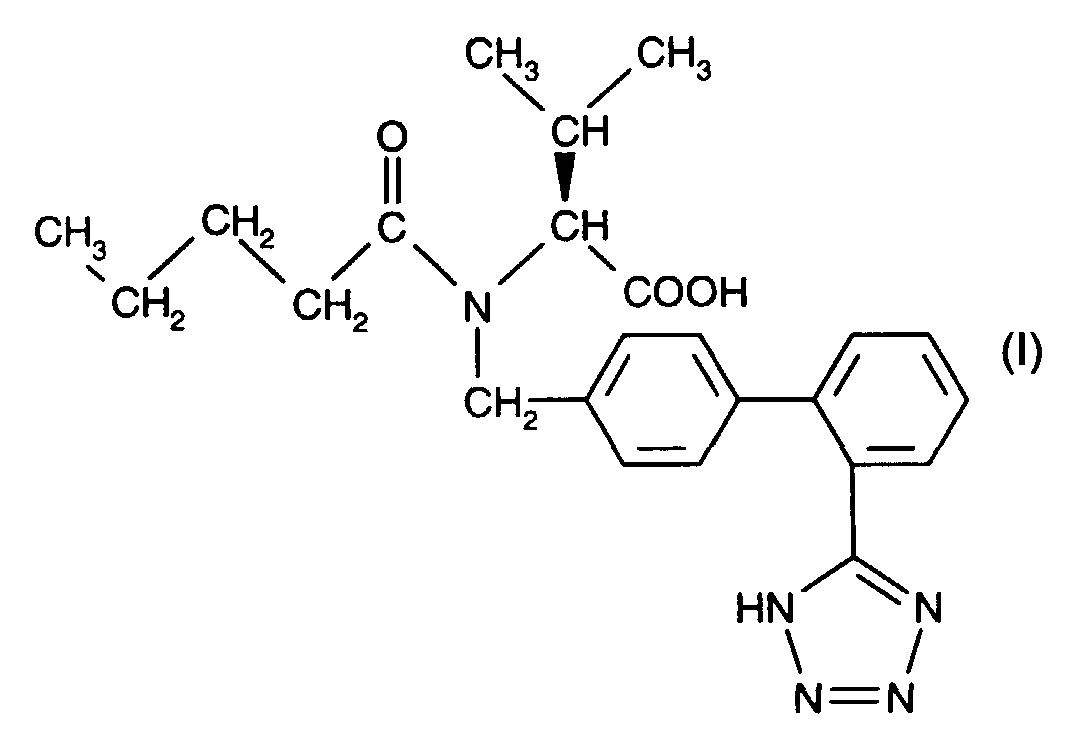
- Furthermore, the compounds which are listed in European Patent Application having the publication No. 253310 (EP 253310), in particular in the compound claims and the final products of the working examples, are hereby incorporated into the present application by reference to this publication.
- Preference is given to the compound [Losartan] of the following formulaand its pharmaceutically utilizable salts.

- Furthermore, the compounds listed in the European Patent Application having the publication No. 403159 (EP 403159), in particular in the compound claims and the final products of the working examples, are hereby incorporated into the present application by reference to this publication.
- Preference is given to the compound [Eprosartan] of the following formulaand its pharmaceutically utilizable salts.
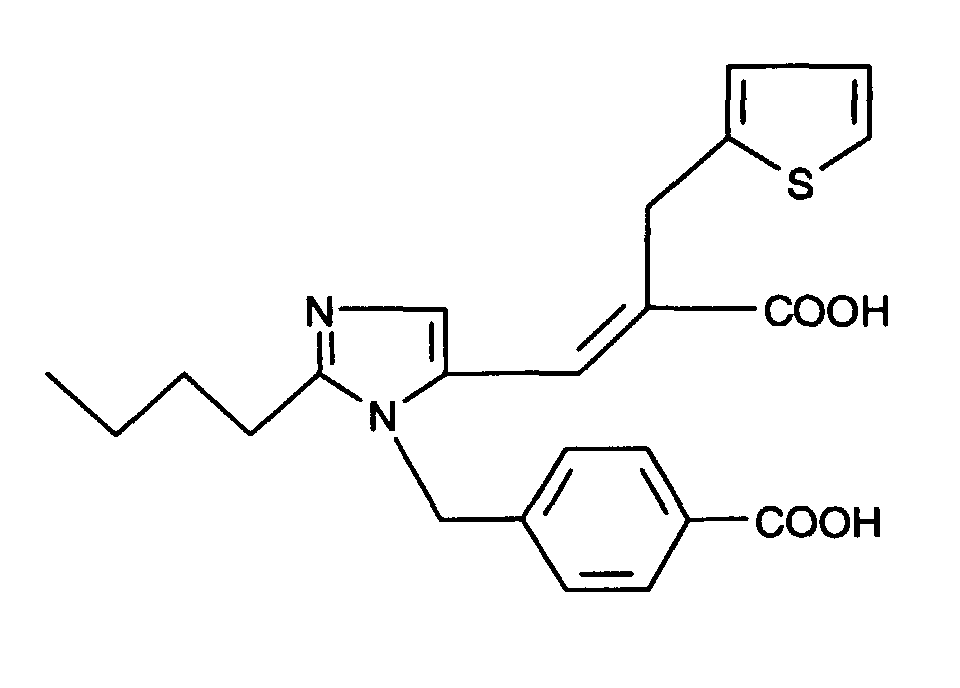
- Furhermore, the compounds listed in the PCT Patent Application having the publication No. WO 91/14679, in particular in the compound claims and the final products of the working examples, are hereby incorporated into the present application by reference to this publication.
- Preference is given to the compound [Irbesartan] of the following formulaand its pharmaceutically utilizable salts.

- Furthermore, the compounds listed in the European Patent Application having the publication No. EP 420237 (EP 420237), in particular in the compound claims and the final products of the working examples, are hereby incorporated into the present application by reference to this publication.
- Preference is given to the compound [E-1477] of the following formulaand its pharmaceutically utilizable salts.

- Furthermore, the compounds listed in the European Patent Application having the publication No. 502314 (EP 502314), in particular in the compound claims and the final products of the working examples, are hereby incorporated into the present application by reference to this publication.
- Preference is given to the compound [Telmisartan] of the following formulaand its pharmaceutically utilizable salts.
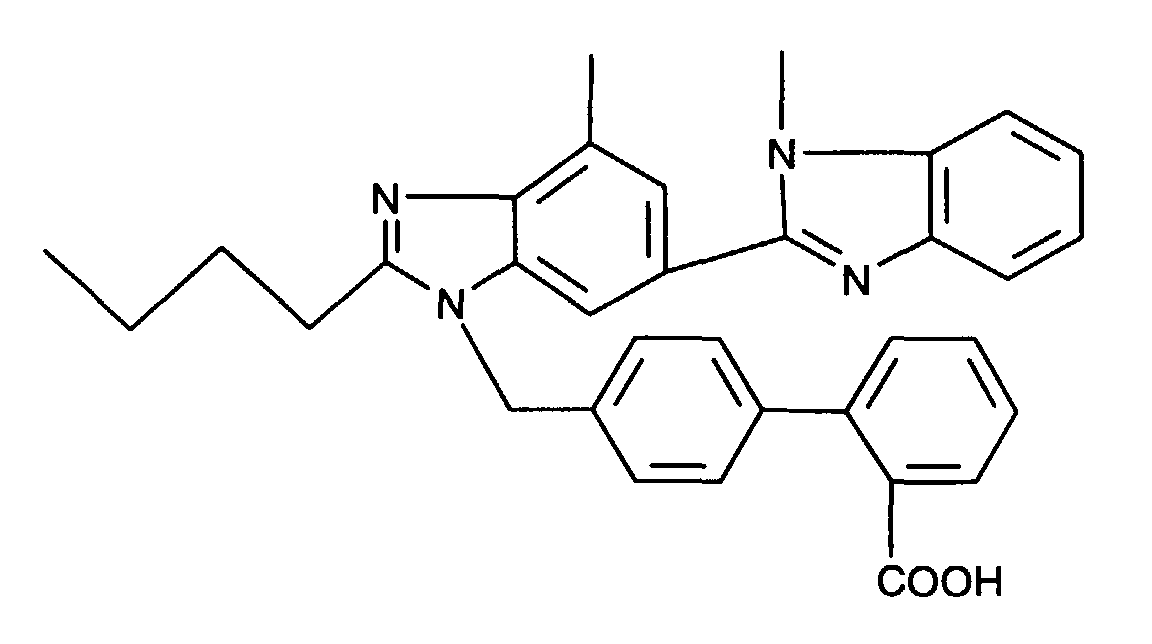
- Furthermore, the compounds listed in the European Patent Application having the publication No. 459136 (EP 459136), in particular in the compound claims and the final products of the working examples, are hereby incorporated into the present application by reference to this publication.
- Preference is given to the compound [Candesartan] of the following formulaand its pharmaceutically utilizable salts.
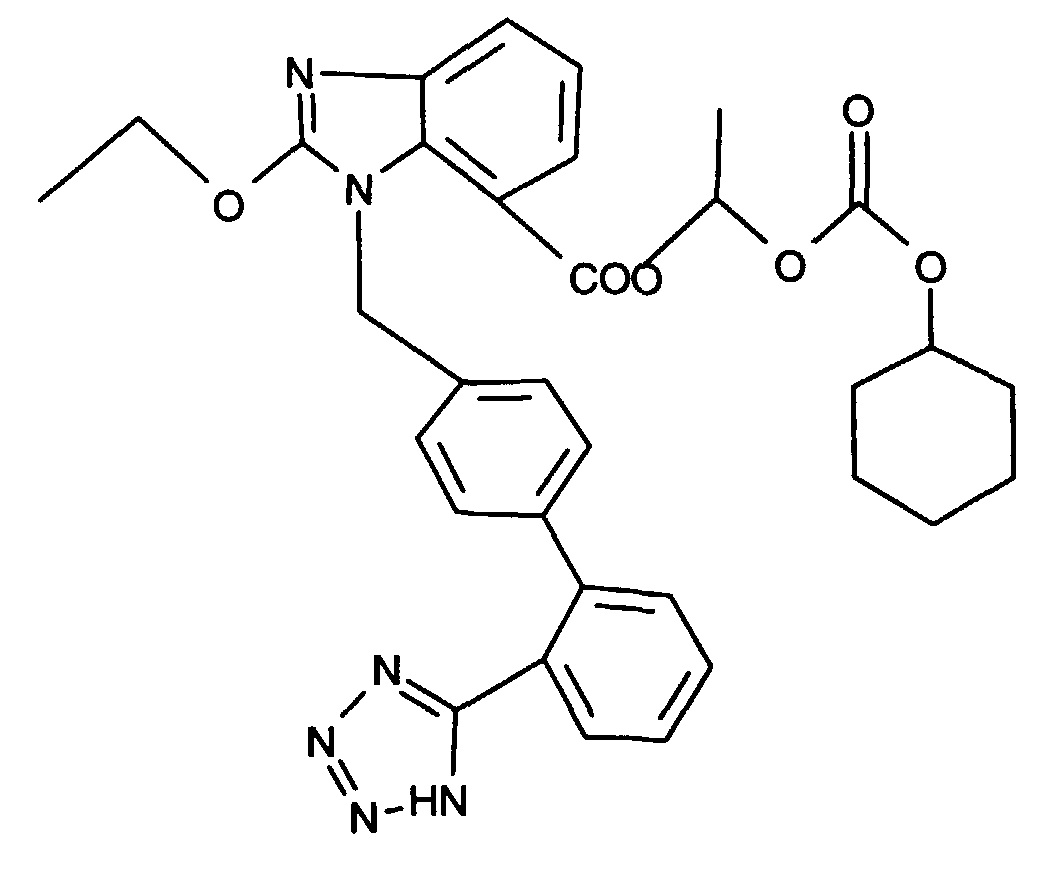
- Furthermore, the compounds listed in European Patent Application having the publication No. 504888 (EP 504888), in particular in the compound claims and the final products of the working examples, are hereby incorporated into the present application by reference to this publication.
- Preference is given to the compound [SC-52458] of the following formulaand its pharmaceutically utilizable salts.
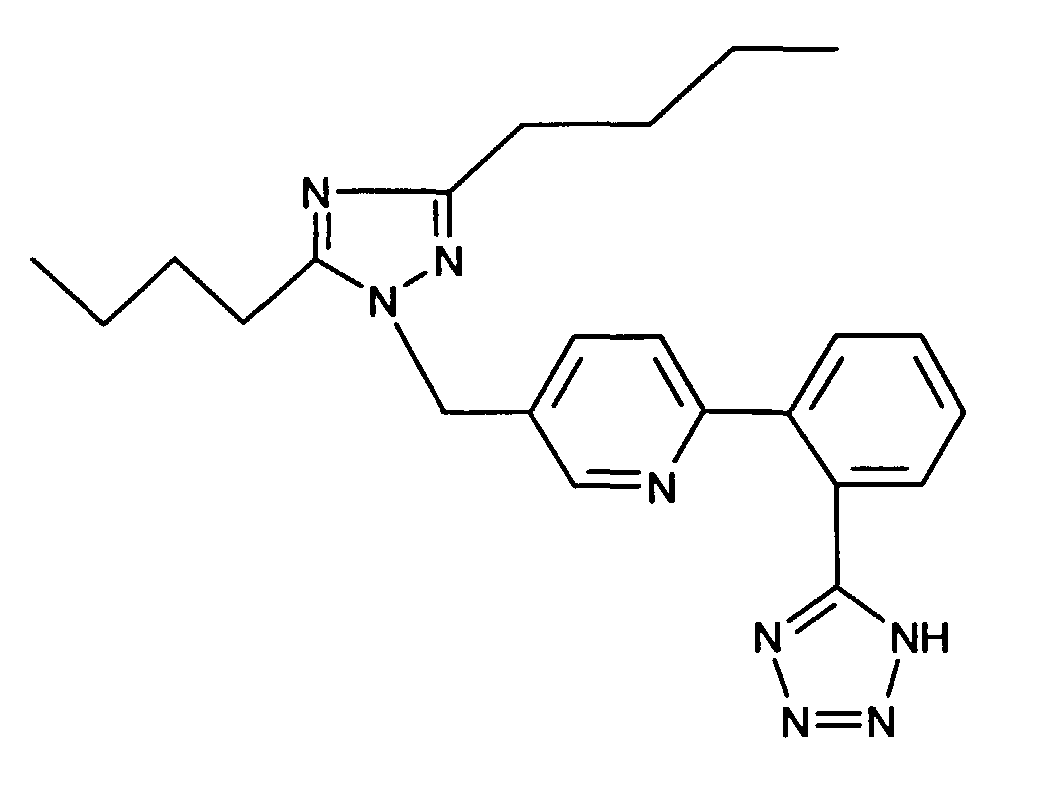
- Furthermore, the compounds listed in the European Patent Application having the publication No. 514198 (EP 514198), in particular in the compound claims and the final products of the working examples, are hereby incorporated into the present application by reference to this publication.
- Preference is given to the compound [Saprisartan] of the following formulaand its pharmaceutically utilizable salts.

- Furthermore, the compounds listed in the European Patent Application having the publication No. 475206 (EP 475206), in particular in the compound claims and the final products of the working examples, are hereby incorporated into the present application by reference to this publication.
- Preference is given to the compound of the following formulaand its pharmaceutically utilizable salts.
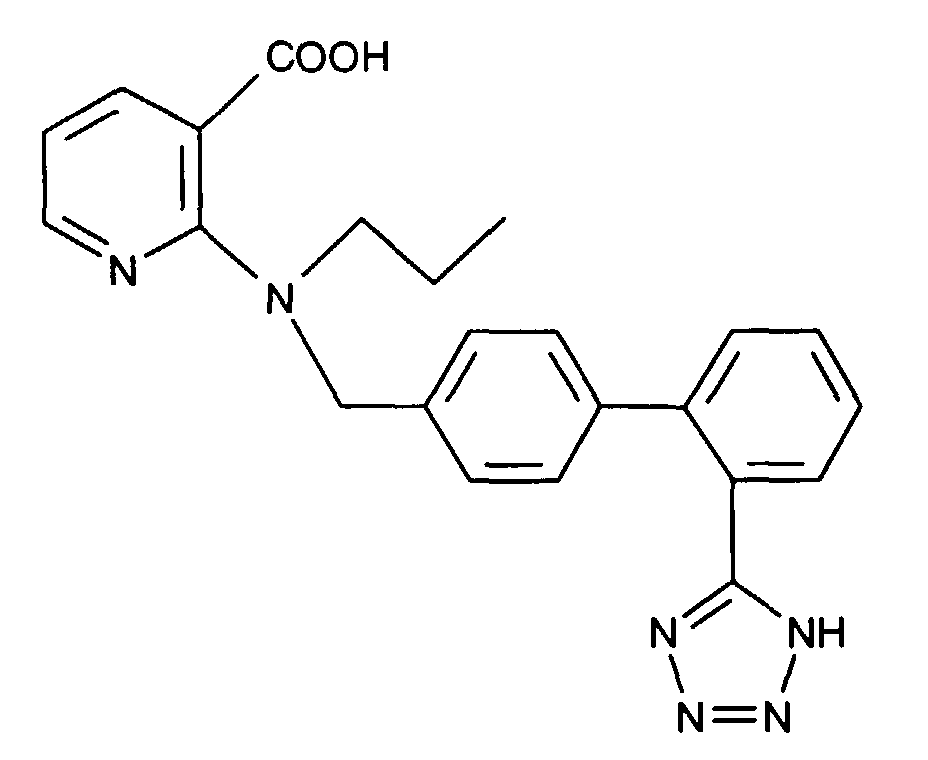
- Furthermore, the compounds listed in the PCT Patent Application having the publication No. WO 93/20816, in particular in the compound claims and the final products of the working examples, are hereby incorporated into the present application by reference to this publication.
- Preference is given to the compound [ZD-8731] of the following formulaand its pharmaceutically utilizable salts.

- AT2 receptor ligands (modulators) include compounds having differing structural features. For example, mention may be made of the compounds which are listed in WO 94/13651 , in particular in the compound claims and the final products of the working examples, the subject-matter of which claims is hereby incorporated into the present application by reference to this publication.
- Furthermore, the compounds listed in WO 94/13642, in particular in the compound claims and the final products of the working examples, are hereby incorporated into the present application by reference to this publication.
- AT1 receptor antagonists or AT2 receptor ligands, respectively, which, for example, possess at least one basic centre can form acid addition salts. These are formed, for example, using strong inorganic acids, such as mineral acids, e.g. sulfuric acid, a phosphoric acid or a hydrohalic acid, using strong organic carboxylic acids, such as C1-C4alkanecarboxylic acids which are unsubstituted or substituted, for example, by halogen, e.g. acetic acid, such as saturated or unsaturated dicarboxylic acids, e.g. oxalic, malonic, succinic, maleic, fumaric, phthalic or terephthalic acid, such as hydroxycarboxylic acids, e.g. ascorbic, glycolic, lactic, malic, tartaric or citric acid, such as amino acids, e.g. aspartic or glutamic acid, or such as benzoic acid, or using organic sulfonic acids, such as C1-C4alkanesulfonic acids or arylsulfonic acids which are unsubstituted or substituted, for example, by halogen, e.g. methanesulfonic acid or p-toluenesulfonic acid. Examples of suitable salts with bases are metal salts, such as alkali metal or alkaline earth metal salts, e.g. sodium, potassium or magnesium salts, or salts with ammonia or an organic amine, such as morpholine, thiomorpholine, piperidine, pyrrolidine, a mono-, di- or tri-lower alkyl amine, e.g. ethyl-, tert-butyl-, diethyl-, diisopropyl-, triethyl-, tributyl- or dimethylpropyl-amines, or a mono-, di- or tri-hydroxy lower alkyl amine, e.g. mono-, di- or tri-ethanolamine. Furthermore, corresponding internal salts can be formed.
- The invention provides pharmaceutical preparations, which comprise an AT1 receptor antagonist or an AT2 receptor modulator, respectively, or a pharmaceutically acceptable salt thereof, for the treatment of conditions or diseases associated with the increase of AT1 receptors in the sub-epithelial area or increase of AT2 receptors in the epithelia.
- The invention also provides the use of an AT1 receptor antagonist or or an AT2 receptor modulator, respectively, or a pharmaceutically acceptable salt thereof, for producing a pharmaceutical preparation for the treatment of conditions or diseases associated with the increase of AT1 receptors in the sub-epithelial area or increase of AT2 receptors in the epithelia.
- The invention furthermore provides a method for the treatment of conditions or diseases associated with the increase of AT1 receptors in the sub-epithelial area or increase of AT2 receptors in the epithelia, which comprises administering a therapeutically effective amount of an AT1 receptor antagonist or an AT2 receptor modulator, respectively, or a pharmaceutically acceptable salt thereof.
- The invention also provides the use of an AT1 receptor antagonist or an AT2 receptor modulator, respectively, or a pharmaceutically acceptable salt thereof, for the treatment of conditions or diseases associated with the increase of AT1 receptors in the sub-epithelial area or increase of AT2 receptors in the epithelia.
- These pharmaceutical preparations are for enteral, such as oral, and also rectal or parenteral, administration to homeotherms, with the preparations comprising the pharmacological active compound either alone or together with customary pharmaceutical auxiliary substances. For example, the pharmaceutical preparations consist of from about 0.1 % to 100 %, preferably of from about 1 % to about 80 %, of the active compound. Pharmaceutical preparations for enteral or parenteral, and also for ocular, administration are, for example, in unit dose forms, such as coated tablets, tablets, capsules or suppositories and also ampoules. These are prepared in a manner which is known per se, for example using conventional mixing, granulation, coating, solubulizing or lyophilizing processes. Thus, pharmaceutical preparations for oral use can be obtained by combining the active compound with solid excipients, if desired granulating a mixture which has been obtained, and, if required or necessary, processing the mixture or granulate into tablets or coated tablet cores after having added suitable auxiliary substances.
- The dosage of the active compound can depend on a variety of factors, such as mode of administration, homeothermic species, age and/or individual condition. Normally, in the case of oral administration, an approximate daily dose of from about 10 mg to about 360 mg, for example in the case of Valsartan e.g. of about 40 mg, 80 mg, 160 mg or 320 mg, is to be estimated for a patient of approximately 75 kg in weight.
- The following examples illustrate the above-described invention; however, it is not intended to restrict the scope of this invention in any manner.
- A hard gelatin capsule, comprising as active ingredient e.g. (S)-N-(1-carboxy-2-methyl prop-1-yl)-N-pentanoyl-N-[2'(1H-tetrazol-5-yl)biphenyl-4-yl-methyl]amine, can be formulated, for example, as follows:
-
(1) valsartan 80.0 mg (2) microcrystalline cellulose 110.0 mg (3) polyvidone K30 45.2 mg (4) sodium lauryl sulfate 1.2 mg (5) crospovidone 26.0 mg (6) magnesium stearate 2.6 mg - Components (1) and (2) are granulated with a solution of components (3) and (4) in water. The components (5) and (6) are added to the dry granulate and the mixture is filled into size 1 hard gelatin capsules.
Claims (5)
- Use of an AT1 receptor antagonist or or an AT2 receptor modulator, respectively, or a pharmaceutically acceptable salt thereof, for producing a pharmaceutical preparation for the treatment of conditions or diseases associated with the increase of AT1 receptors in the sub-epithelial area or increase of AT2 receptors in the epithelia.
- Use of an AT1 receptor antagonist or or an AT2 receptor modulator, respectively, or a pharmaceutically acceptable salt thereof, for producing a pharmaceutical preparation for the treatment of treatment of obstructive airways diseases are selected from chronic obstructive pulmonary disease, such as bronchitis, e.g. chronic bronchitis and emphysema, likewise from asthma, cystic fibrosis, interstitial lung disease, lung cancer, pulmonary vascular disease, and increased resistance to airflow during forced expiration, any such treatment may also be associated with the treatment of hypertension as well as both non-smokers and smokers; for the treatment of specific forms of lung conditions and diseases; for the treatment of adults respiratory distress syndrome (ARDS); for reducing the proliferative capacity of the epithelium in lung and breast cancer; for the treatment of sepsis syndrome, lung injury forms, such as pneumonia, aspiration of gastric content, chest trauma, shock, burns, fat embolia, cardiopulmonary bypass, O2 toxicity, haemorhagic pancreatitis, interstitial and bronchoalveolar inflammation, proliferation of epithelial and interstitial cells, collagen accumulation, or fibrosis.
- Use of an AT1 receptor antagonist or or an AT2 receptor modulator, respectively, or a pharmaceutically acceptable salt thereof, for producing a pharmaceutical preparation for the treatment of treatment of chronic obstructive pulmonary disease, such as bronchitis, e.g. chronic bronchitis or emphysema, or of asthma.
- Use of an AT1-receptor antagonist selected from the group consisting of:
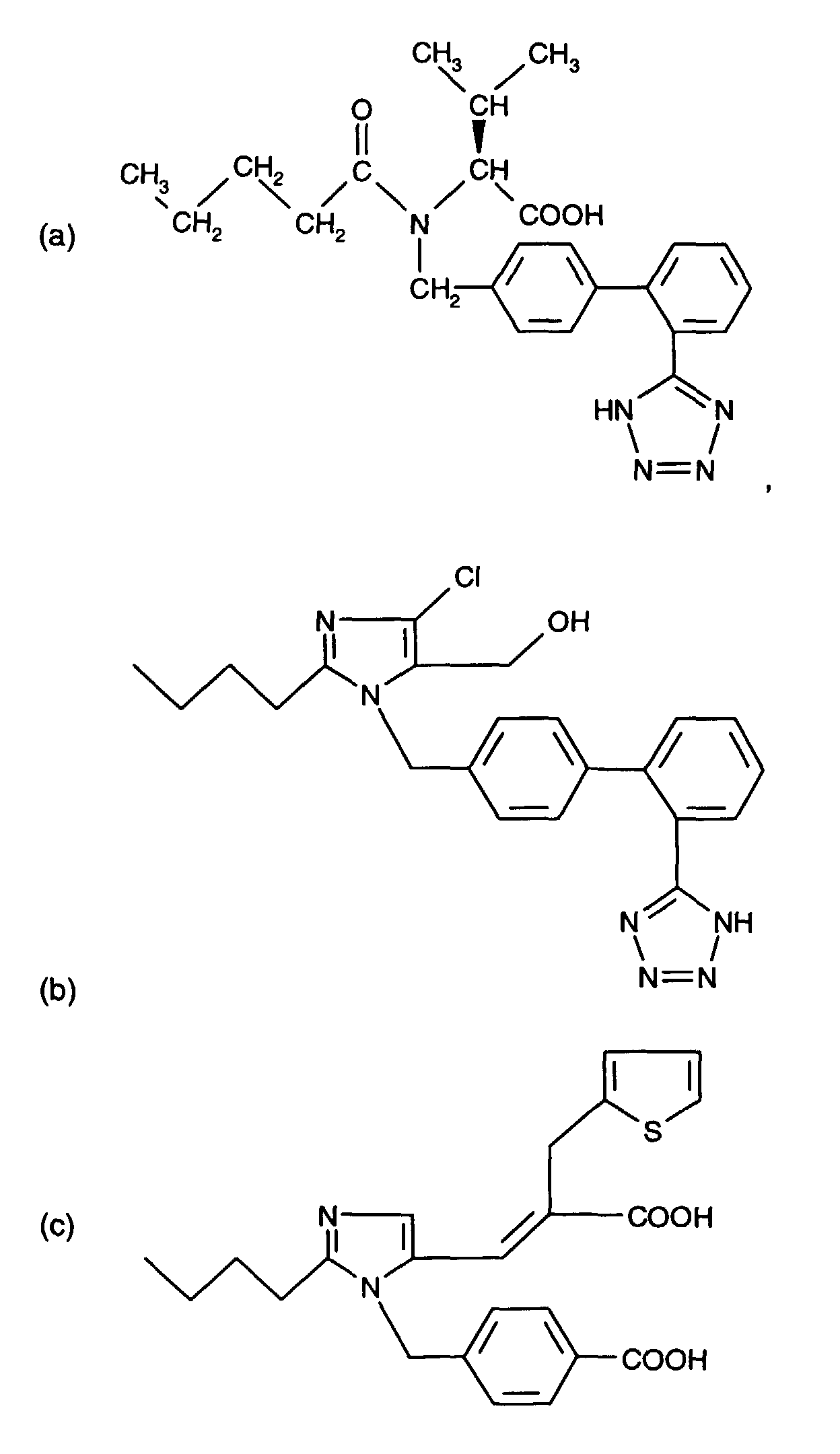

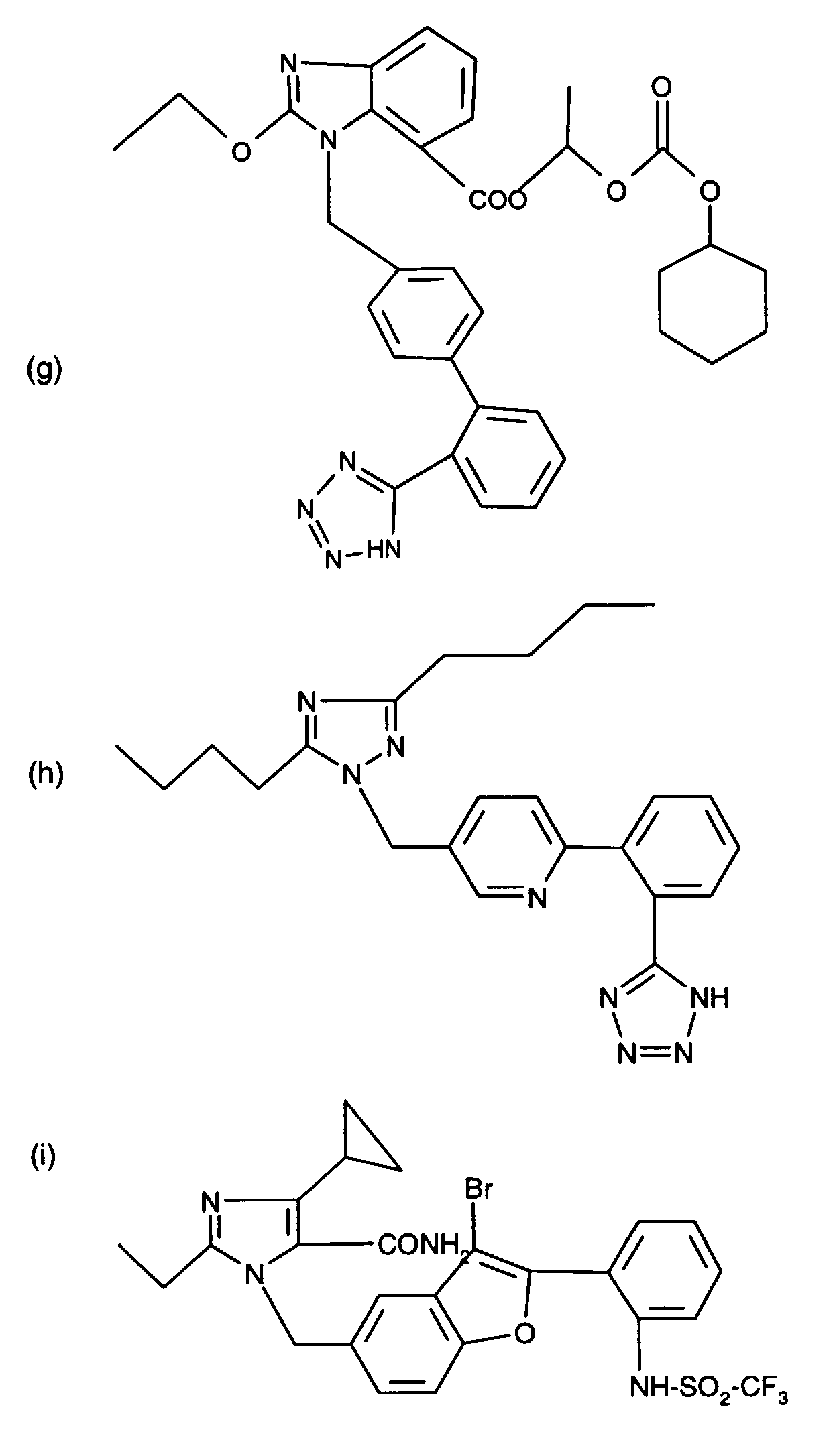 or, in each case, of a pharmaceutically acceptable salt thereof according to any one of claims 1-3.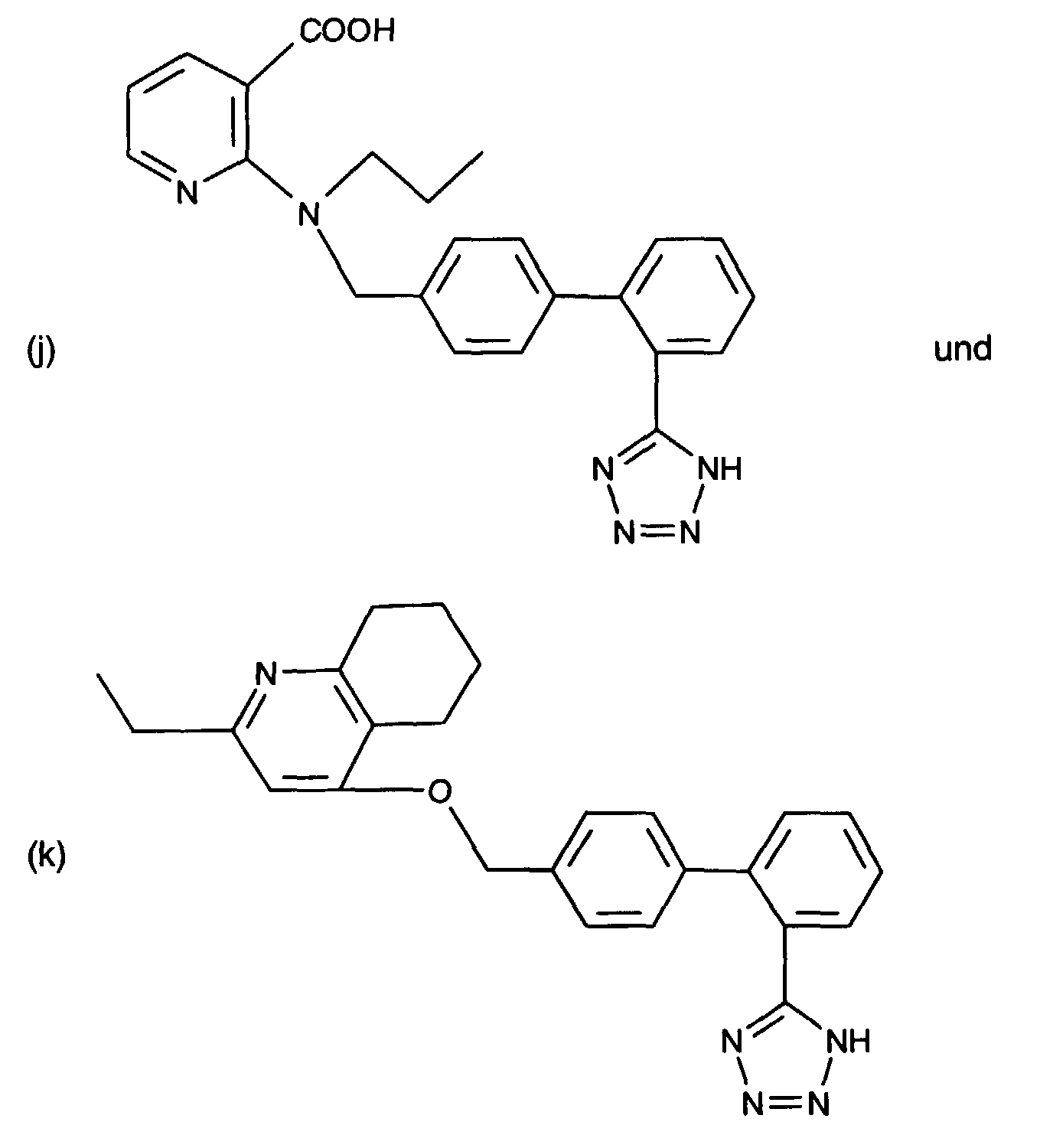
- Use of valsartan of formulaor of a salt thereof according to any one of claims 1-3.

Priority Applications (57)
| Application Number | Priority Date | Filing Date | Title |
|---|---|---|---|
| EP98811258A EP1013273A1 (en) | 1998-12-23 | 1998-12-23 | Use of AT-1 receptor antagonist or AT-2 receptor modulator for treating diseases associated with an increase of AT-1 or AT-2 receptors |
| NZ553010A NZ553010A (en) | 1998-12-23 | 1999-12-22 | Use of AT-1 receptor antagonist or AT-2 receptor modulator for treating diseases associated with an increase of AT-1 or AT-2 receptors |
| RU2001119990/15A RU2271809C2 (en) | 1998-12-23 | 1999-12-22 | Using receptor at-1 antagonist or receptor at-2 modulator in treatment of diseases associated with increase content of at-1 or at-2 receptors |
| TR2001/01784T TR200101784T2 (en) | 1998-12-23 | 1999-12-22 | Use of the AT-1 receptor antagonist or AT-2 receptor modulator for the treatment of diseases caused by an increase in AT-1 or AT-2 receptors. |
| CNA200410087973XA CN1636561A (en) | 1998-12-23 | 1999-12-22 | Use of at-1 receptor antagonist for treating diseases associated with an increase of at-1 receptors |
| CNB998150452A CN1304000C (en) | 1998-12-23 | 1999-12-22 | Use of valsartan in the preparation of medicines for the treatment of lung cancer |
| PT05013209T PT1588706E (en) | 1998-12-23 | 1999-12-22 | Valsartan tablet |
| KR1020017007996A KR100646716B1 (en) | 1998-12-23 | 1999-12-22 | Use of an AT-1 receptor antagonist or an AT-2 receptor modulator in the treatment of a disease associated with elevated AT-1 or AT-2 receptors. |
| EP10010334A EP2298298A3 (en) | 1998-12-23 | 1999-12-22 | Use of AT-1 receptor antagonist or AT-2 receptor modulator for treating diseases associated with an increase of AT-1 or AT-2 receptors |
| TR2008/05741T TR200805741T2 (en) | 1998-12-23 | 1999-12-22 | Use of at-1 receptor antagonist or at-2 receptor modulator for the treatment of diseases caused by increased at-1 or at-2 receptors. |
| CA2622805A CA2622805C (en) | 1998-12-23 | 1999-12-22 | Compressed tablets comprising valsartan |
| DE69935249T DE69935249T2 (en) | 1998-12-23 | 1999-12-22 | USE OF AT-1 RECEPTOR ANTAGONISTS OR AT-2 RECEPTOR MODULATORS FOR THE TREATMENT OF DISEASES ASSOCIATED WITH AN INCREASE IN AT-1 OR AT-2 RECEPTORS |
| ES99964665T ES2281978T3 (en) | 1998-12-23 | 1999-12-22 | USE OF AN AT-1 RECEIVER ANTAGONIST OR AT-2 RECEIVER MODULATOR TO TREAT DISEASES ASSOCIATED WITH AN INCREASE OF AT-1 OR AT-2 RECEIVERS. |
| NZ511938A NZ511938A (en) | 1998-12-23 | 1999-12-22 | Use of AT-1 receptor antagonist or treating diseases associated with an increase of AT-1 receptor |
| DK99964665T DK1140071T3 (en) | 1998-12-23 | 1999-12-22 | Use of AT-1 receptor antagonist or AT-2 receptor modulator for the treatment of diseases associated with an increase in AT-1 or AT-2 receptors |
| IDW00200101299Q ID29856A (en) | 1998-12-23 | 1999-12-22 | THE USE OF AT-1 RECEPTOR ANTAGONISTS OR AT-2 MODULATORS RECEPTORS TO TREAT RELATING TO THE RELATIONSHIP WITH THE IMPROVEMENTS OF AT-1 OR AT-2 RECEPTORS |
| TR2006/05471T TR200605471T2 (en) | 1998-12-23 | 1999-12-22 | Use of the at-1 receptor antagonist or at-2 receptor modulator for the treatment of diseases caused by increased AT-1 or AT-2 receptors. |
| BR9916576-7A BR9916576A (en) | 1998-12-23 | 1999-12-22 | Use of at-1 receptor antagonist or at-2 receptor modulator for the treatment of diseases associated with an increase in at-1 or at-2 receptors |
| TR2008/05275T TR200805275T2 (en) | 1998-12-23 | 1999-12-22 | Use of the AT-1 receptor antagonist or AT-2 receptor modulator for the treatment of diseases caused by increased AT-1 or AT-2 receptors. |
| TR2002/00764T TR200200764T2 (en) | 1998-12-23 | 1999-12-22 | Use of an at-1 receptor antagonist or at-2 receptor modulator for the treatment of diseases caused by an increase in at-1 or at-2 receptors |
| SI9931064T SI1588706T1 (en) | 1998-12-23 | 1999-12-22 | Valsartan tablet |
| AT99964665T ATE354364T1 (en) | 1998-12-23 | 1999-12-22 | USE OF AT-1 RECEPTOR ANTAGONISTS OR AT-2 RECEPTOR MODULATORS FOR THE TREATMENT OF DISEASES ASSOCIATED WITH AN INCREASE IN AT-1 OR AT-2 RECEPTORS |
| AU30430/00A AU3043000A (en) | 1998-12-23 | 1999-12-22 | Use of AT-1 receptor antagonist or AT-2 receptor modulator for treating diseases associated with an increase of AT-1 or AT-2 receptors |
| CA002351357A CA2351357A1 (en) | 1998-12-23 | 1999-12-22 | Use of at-1 receptor antagonist or at-2 receptor modulator for treating diseases associated with an increase of at-1 or at-2 receptors |
| NZ587909A NZ587909A (en) | 1998-12-23 | 1999-12-22 | Process of making a compressed tablets containing valsartan and microcrystalline cellulose |
| SI9930963T SI1140071T1 (en) | 1998-12-23 | 1999-12-22 | Use of at-1 receptor antagonist or at-2 receptor modulator for treating diseases associated with an increase of at-1 or at-2 receptors |
| EP99964665A EP1140071B1 (en) | 1998-12-23 | 1999-12-22 | Use of at-1 receptor antagonist or at-2 receptor modulator for treating diseases associated with an increase of at-1 or at-2 receptors |
| PCT/EP1999/010330 WO2000038676A1 (en) | 1998-12-23 | 1999-12-22 | Use of at-1 receptor antagonist or at-2 receptor modulator for treating diseases associated with an increase of at-1 or at-2 receptors |
| TR2008/05740T TR200805740T1 (en) | 1998-12-23 | 1999-12-22 | Use of the AT-1 receptor antagonist or AT-2 receptor modulator for the treatment of diseases caused by increased AT-1 or AT-2 receptors. |
| CZ20032559A CZ297795B6 (en) | 1998-12-23 | 1999-12-22 | Valsartan-containing tablets |
| PL349424A PL199100B1 (en) | 1998-12-23 | 1999-12-22 | Use of at-1 receptor antagonist or at-2 receptor modulator for treating diseases associated with an increase of at-1 or at-2 receptors |
| AT05013209T ATE524176T1 (en) | 1998-12-23 | 1999-12-22 | VALSARTAN TABLET |
| SK913-2001A SK9132001A3 (en) | 1998-12-23 | 1999-12-22 | Use of at-1 receptor antagonist or at-2 receptor modulator for treating diseases associated with an increase of at-1 or at-2 receptors |
| EP05013209A EP1588706B1 (en) | 1998-12-23 | 1999-12-22 | Valsartan tablet |
| ES05013209T ES2373556T3 (en) | 1998-12-23 | 1999-12-22 | COMPRESSED VALSARTAN. |
| TR2006/05472T TR200605472T1 (en) | 1998-12-23 | 1999-12-22 | Use of the AT-1 receptor antagonist or AT-2 receptor modulator for the treatment of diseases caused by increased AT-1 or AT-2 receptors. |
| CZ20012306A CZ293257B6 (en) | 1998-12-23 | 1999-12-22 | Pharmaceutical preparation containing AT-1 receptor antagonist for treating diseases associated with an increase of AT-1 in the sub-epithelial area |
| JP2000590630A JP2002533390A (en) | 1998-12-23 | 1999-12-22 | Use of an AT-1 receptor antagonist or an AT-2 receptor modulator for the treatment of a disease associated with increased AT-1 or AT-2 receptor |
| HU0104780A HUP0104780A3 (en) | 1998-12-23 | 1999-12-22 | Use of at-1 receptor antagonist or at-2 receptor modulator for treating diseases associated with an increase of at-1 or at-2 receptors |
| IL14323399A IL143233A0 (en) | 1998-12-23 | 1999-12-22 | Use of at-1 receptor antagonist or at-2 receptor modulator for treating diseases associated with an increase of at-1 or at-2 receptors |
| DK05013209.1T DK1588706T3 (en) | 1998-12-23 | 1999-12-22 | Valsartan tablet |
| PT99964665T PT1140071E (en) | 1998-12-23 | 1999-12-22 | Use of at-1 receptor antagonist or at-2 receptor modulator for treating diseases associated with an increase of at-1 or at-2 receptors |
| HK02100661.6A HK1038888B (en) | 1998-12-23 | 1999-12-22 | Use of at-1 receptor antagonist or at-2 receptor modulator for treating diseases associated with an increase of at-1 or at-2 receptors |
| IL143233A IL143233A (en) | 1998-12-23 | 2001-05-17 | Use of valsartan or a pharmaceutically acceptable salt thereof for producing a pharmaceutical preparation for the treatment of invasive lung and invasive breast cancer |
| NO20013143A NO328775B1 (en) | 1998-12-23 | 2001-06-22 | Compressed tablets comprising valsartan. |
| AU2003266433A AU2003266433B2 (en) | 1998-12-23 | 2003-12-02 | Use of AT-1 receptor antagonist or AT-2 receptor modulator for treating diseases associated with an increase of AT-1 or AT-2 receptors |
| RU2005124363/15A RU2361575C2 (en) | 1998-12-23 | 2005-08-01 | Solid peroral dosed out forms of valsartan |
| AU2006203077A AU2006203077B2 (en) | 1998-12-23 | 2006-07-18 | Use of AT-1 receptor antagonist or AT-2 receptor modulator for treating diseases associated with an increase of AT-1 or AT-2 receptors |
| IL179016A IL179016A0 (en) | 1998-12-23 | 2006-11-02 | Compressed tablet comprising valsarta |
| IL179017A IL179017A0 (en) | 1998-12-23 | 2006-11-02 | Solid oral dosage form comprising valsartan |
| IL179015A IL179015A0 (en) | 1998-12-23 | 2006-11-02 | Compressed tablet comprising valsartan |
| CY20071100642T CY1106581T1 (en) | 1998-12-23 | 2007-05-10 | USE OF AN AT-1 ANTAGONIST OR AN AT-2 RECEPTOR MODULATOR FOR THE THERAPEUTIC TREATMENT OF DISEASES ASSOCIATED WITH AN INCREASED AT-1 OR AT-2 RECEPTOR |
| RU2008143545/15A RU2008143545A (en) | 1998-12-23 | 2008-11-05 | APPLICATION OF AT-1 RECEPTOR ANTAGONIST OR AT-2 RECEPTOR MODULATOR FOR TREATMENT OF DISEASES ASSOCIATED WITH INCREASING THE CONTENT OF AT-1 OR AT-2 RECEPTORS |
| AU2009220022A AU2009220022B2 (en) | 1998-12-23 | 2009-09-24 | Use of AT-1 receptor antagonist or AT-2 receptor modulator for treating diseases associated with an increase of AT-1 or AT-2 receptors |
| NO20100041A NO20100041L (en) | 1998-12-23 | 2010-01-12 | Use of AT-1 receptor antagonist or AT-2 receptor modulator for the treatment of diseases associated with an increase of AT-1 or AT-2 receptors |
| JP2010008140A JP5254258B2 (en) | 1998-12-23 | 2010-01-18 | Use of AT-1 receptor antagonists or AT-2 receptor modulators for the treatment of diseases associated with increased AT-1 or AT-2 receptors |
| CY20111101213T CY1112395T1 (en) | 1998-12-23 | 2011-12-06 | Valsartan Disc |
Applications Claiming Priority (1)
| Application Number | Priority Date | Filing Date | Title |
|---|---|---|---|
| EP98811258A EP1013273A1 (en) | 1998-12-23 | 1998-12-23 | Use of AT-1 receptor antagonist or AT-2 receptor modulator for treating diseases associated with an increase of AT-1 or AT-2 receptors |
Publications (1)
| Publication Number | Publication Date |
|---|---|
| EP1013273A1 true EP1013273A1 (en) | 2000-06-28 |
Family
ID=8236501
Family Applications (1)
| Application Number | Title | Priority Date | Filing Date |
|---|---|---|---|
| EP98811258A Withdrawn EP1013273A1 (en) | 1998-12-23 | 1998-12-23 | Use of AT-1 receptor antagonist or AT-2 receptor modulator for treating diseases associated with an increase of AT-1 or AT-2 receptors |
Country Status (1)
| Country | Link |
|---|---|
| EP (1) | EP1013273A1 (en) |
Cited By (5)
| Publication number | Priority date | Publication date | Assignee | Title |
|---|---|---|---|---|
| JP2004520268A (en) * | 2000-08-22 | 2004-07-08 | ベーリンガー インゲルハイム ファルマ ゲゼルシャフト ミット ベシュレンクテル ハフツング ウント コンパニー コマンディトゲゼルシャフト | Pharmaceutical composition containing an angiotensin II antagonist and an angiotensin I converting enzyme inhibitor |
| EP1733729A1 (en) | 2003-02-13 | 2006-12-20 | Boehringer Ingelheim International Gmbh | Use of dipyridamole in combination with acetylsalicylic acid and an angiotensin ii antagonist for stroke prevention |
| EP1356815A4 (en) * | 2001-01-29 | 2007-03-07 | Takeda Pharmaceutical | PAIN-RELIEF AND ANTI-INFLAMMATORY ACTIVE SUBSTANCES |
| WO2009010492A3 (en) * | 2007-07-18 | 2009-04-02 | Boehringer Ingelheim Int | Combinations comprising telmisartan and an anticholinergic such as tiotropium or a glycopyrronium salt for the treatment of respiratory diseases such as copd or asthma |
| WO2025209456A1 (en) * | 2024-04-03 | 2025-10-09 | 北京泰德制药股份有限公司 | Angiotensin ii type 2 receptor antagonist and use thereof for treating cancerous pain |
Citations (10)
| Publication number | Priority date | Publication date | Assignee | Title |
|---|---|---|---|---|
| EP0443983A1 (en) * | 1990-02-19 | 1991-08-28 | Ciba-Geigy Ag | Acyl compounds |
| WO1992005784A1 (en) * | 1990-10-02 | 1992-04-16 | Warner-Lambert Company | 4,5,6,7-tetrahydro-1h-imidazo[4,5-c]pyridine derivatives and analogues as angiotensin ii receptor antagonists |
| EP0502314A1 (en) * | 1991-02-06 | 1992-09-09 | Dr. Karl Thomae GmbH | Benzimidazol, medicaments containing them and process for their preparation |
| DE4132632A1 (en) * | 1991-10-01 | 1993-04-08 | Bayer Ag | SUBSTITUTED IMIDAZOLYL-PROPENSAEUREDERIVATE |
| WO1994013642A1 (en) * | 1992-12-11 | 1994-06-23 | Ciba-Geigy Ag | Substituted benzazepinones |
| DE4309968A1 (en) * | 1993-03-26 | 1994-09-29 | Bayer Ag | Phenylglycinamides of heterocyclic substituted phenylacetic acid derivatives |
| WO1995023792A1 (en) * | 1994-03-04 | 1995-09-08 | Roussel Uclaf | Use of imidazole derivatives for treating disorders involving angiotensin receptors at1 and at2, certain such products, preparation thereof, use thereof as drugs, and pharmaceutical compositions containing same |
| DE4408497A1 (en) * | 1994-03-14 | 1995-09-21 | Thomae Gmbh Dr K | Benzimidazoles, medicaments containing these compounds and process for their preparation |
| EP0702013A2 (en) * | 1994-09-15 | 1996-03-20 | MERCK PATENT GmbH | Imidazopyridines |
| WO1997031634A1 (en) * | 1996-02-29 | 1997-09-04 | Novartis Ag | At1 receptor antagonist for the stimulation of apoptosis |
-
1998
- 1998-12-23 EP EP98811258A patent/EP1013273A1/en not_active Withdrawn
Patent Citations (10)
| Publication number | Priority date | Publication date | Assignee | Title |
|---|---|---|---|---|
| EP0443983A1 (en) * | 1990-02-19 | 1991-08-28 | Ciba-Geigy Ag | Acyl compounds |
| WO1992005784A1 (en) * | 1990-10-02 | 1992-04-16 | Warner-Lambert Company | 4,5,6,7-tetrahydro-1h-imidazo[4,5-c]pyridine derivatives and analogues as angiotensin ii receptor antagonists |
| EP0502314A1 (en) * | 1991-02-06 | 1992-09-09 | Dr. Karl Thomae GmbH | Benzimidazol, medicaments containing them and process for their preparation |
| DE4132632A1 (en) * | 1991-10-01 | 1993-04-08 | Bayer Ag | SUBSTITUTED IMIDAZOLYL-PROPENSAEUREDERIVATE |
| WO1994013642A1 (en) * | 1992-12-11 | 1994-06-23 | Ciba-Geigy Ag | Substituted benzazepinones |
| DE4309968A1 (en) * | 1993-03-26 | 1994-09-29 | Bayer Ag | Phenylglycinamides of heterocyclic substituted phenylacetic acid derivatives |
| WO1995023792A1 (en) * | 1994-03-04 | 1995-09-08 | Roussel Uclaf | Use of imidazole derivatives for treating disorders involving angiotensin receptors at1 and at2, certain such products, preparation thereof, use thereof as drugs, and pharmaceutical compositions containing same |
| DE4408497A1 (en) * | 1994-03-14 | 1995-09-21 | Thomae Gmbh Dr K | Benzimidazoles, medicaments containing these compounds and process for their preparation |
| EP0702013A2 (en) * | 1994-09-15 | 1996-03-20 | MERCK PATENT GmbH | Imidazopyridines |
| WO1997031634A1 (en) * | 1996-02-29 | 1997-09-04 | Novartis Ag | At1 receptor antagonist for the stimulation of apoptosis |
Cited By (5)
| Publication number | Priority date | Publication date | Assignee | Title |
|---|---|---|---|---|
| JP2004520268A (en) * | 2000-08-22 | 2004-07-08 | ベーリンガー インゲルハイム ファルマ ゲゼルシャフト ミット ベシュレンクテル ハフツング ウント コンパニー コマンディトゲゼルシャフト | Pharmaceutical composition containing an angiotensin II antagonist and an angiotensin I converting enzyme inhibitor |
| EP1356815A4 (en) * | 2001-01-29 | 2007-03-07 | Takeda Pharmaceutical | PAIN-RELIEF AND ANTI-INFLAMMATORY ACTIVE SUBSTANCES |
| EP1733729A1 (en) | 2003-02-13 | 2006-12-20 | Boehringer Ingelheim International Gmbh | Use of dipyridamole in combination with acetylsalicylic acid and an angiotensin ii antagonist for stroke prevention |
| WO2009010492A3 (en) * | 2007-07-18 | 2009-04-02 | Boehringer Ingelheim Int | Combinations comprising telmisartan and an anticholinergic such as tiotropium or a glycopyrronium salt for the treatment of respiratory diseases such as copd or asthma |
| WO2025209456A1 (en) * | 2024-04-03 | 2025-10-09 | 北京泰德制药股份有限公司 | Angiotensin ii type 2 receptor antagonist and use thereof for treating cancerous pain |
Similar Documents
| Publication | Publication Date | Title |
|---|---|---|
| AU2009220022B2 (en) | Use of AT-1 receptor antagonist or AT-2 receptor modulator for treating diseases associated with an increase of AT-1 or AT-2 receptors | |
| US6465502B1 (en) | Additional therapeutic use | |
| JP4989476B2 (en) | Methods for assaying the effects of angiogenesis inhibitors | |
| EP3134084B1 (en) | Method of treating lung adenocarcinoma | |
| CA3212705A1 (en) | Sotorasib dosing regimen | |
| HK1032193A (en) | Use of at-1 receptor antagonist or at-2 receptor modulator for treating diseases associated with an increase of at-1 or at-2 receptors | |
| NZ725576B2 (en) | Method of treating lung adenocarcinoma |
Legal Events
| Date | Code | Title | Description |
|---|---|---|---|
| PUAI | Public reference made under article 153(3) epc to a published international application that has entered the european phase |
Free format text: ORIGINAL CODE: 0009012 |
|
| AK | Designated contracting states |
Kind code of ref document: A1 Designated state(s): AT BE CH CY DE DK ES FI FR GB GR IE IT LI LU MC NL PT SE |
|
| AX | Request for extension of the european patent |
Free format text: AL;LT;LV;MK;RO;SI |
|
| STAA | Information on the status of an ep patent application or granted ep patent |
Free format text: STATUS: THE APPLICATION IS DEEMED TO BE WITHDRAWN |
|
| 18D | Application deemed to be withdrawn |
Effective date: 20000425 |
|
| REG | Reference to a national code |
Ref country code: HK Ref legal event code: WD Ref document number: 1032193 Country of ref document: HK |