EP1009827B1 - Chimeric binding peptide library screening method - Google Patents
Chimeric binding peptide library screening method Download PDFInfo
- Publication number
- EP1009827B1 EP1009827B1 EP98940455A EP98940455A EP1009827B1 EP 1009827 B1 EP1009827 B1 EP 1009827B1 EP 98940455 A EP98940455 A EP 98940455A EP 98940455 A EP98940455 A EP 98940455A EP 1009827 B1 EP1009827 B1 EP 1009827B1
- Authority
- EP
- European Patent Office
- Prior art keywords
- dna
- polynucleotide
- sequence
- chimeric protein
- nucleotide
- Prior art date
- Legal status (The legal status is an assumption and is not a legal conclusion. Google has not performed a legal analysis and makes no representation as to the accuracy of the status listed.)
- Expired - Lifetime
Links
- 238000000034 method Methods 0.000 title claims abstract description 57
- 230000027455 binding Effects 0.000 title claims description 105
- 238000012216 screening Methods 0.000 title claims description 20
- 108010067902 Peptide Library Proteins 0.000 title description 5
- 108020004414 DNA Proteins 0.000 claims abstract description 205
- 108090000765 processed proteins & peptides Proteins 0.000 claims abstract description 134
- 102000037865 fusion proteins Human genes 0.000 claims abstract description 96
- 108020001507 fusion proteins Proteins 0.000 claims abstract description 96
- 108090000623 proteins and genes Proteins 0.000 claims abstract description 72
- 239000013598 vector Substances 0.000 claims abstract description 67
- 102000004169 proteins and genes Human genes 0.000 claims abstract description 53
- 102000004196 processed proteins & peptides Human genes 0.000 claims abstract description 32
- 230000014509 gene expression Effects 0.000 claims abstract description 27
- 238000004519 manufacturing process Methods 0.000 claims abstract description 6
- 239000002773 nucleotide Substances 0.000 claims description 118
- 125000003729 nucleotide group Chemical group 0.000 claims description 118
- 102000040430 polynucleotide Human genes 0.000 claims description 100
- 108091033319 polynucleotide Proteins 0.000 claims description 100
- 239000002157 polynucleotide Substances 0.000 claims description 100
- 239000000262 estrogen Substances 0.000 claims description 60
- 210000004027 cell Anatomy 0.000 claims description 53
- 230000004568 DNA-binding Effects 0.000 claims description 35
- 230000002068 genetic effect Effects 0.000 claims description 33
- 210000004899 c-terminal region Anatomy 0.000 claims description 28
- 108091008146 restriction endonucleases Proteins 0.000 claims description 13
- 102000053602 DNA Human genes 0.000 claims description 12
- 108090000565 Capsid Proteins Proteins 0.000 claims description 10
- 108020004682 Single-Stranded DNA Proteins 0.000 claims description 9
- 229920001184 polypeptide Polymers 0.000 claims description 8
- 102000003998 progesterone receptors Human genes 0.000 claims description 7
- 108090000468 progesterone receptors Proteins 0.000 claims description 7
- 108091014756 nucleotide binding proteins Proteins 0.000 claims description 6
- 102000026415 nucleotide binding proteins Human genes 0.000 claims description 6
- 238000003780 insertion Methods 0.000 claims description 4
- 230000037431 insertion Effects 0.000 claims description 4
- 238000012258 culturing Methods 0.000 claims description 3
- 230000009089 cytolysis Effects 0.000 claims description 3
- 230000009466 transformation Effects 0.000 claims description 3
- 230000001131 transforming effect Effects 0.000 claims description 2
- 239000002245 particle Substances 0.000 abstract description 44
- 108091028043 Nucleic acid sequence Proteins 0.000 abstract description 21
- 239000013604 expression vector Substances 0.000 abstract description 16
- 238000010348 incorporation Methods 0.000 abstract description 6
- 102000052510 DNA-Binding Proteins Human genes 0.000 abstract description 5
- 101710096438 DNA-binding protein Proteins 0.000 abstract description 3
- 108700020911 DNA-Binding Proteins Proteins 0.000 abstract description 2
- 238000001261 affinity purification Methods 0.000 abstract description 2
- 108020003175 receptors Proteins 0.000 description 48
- 102000005962 receptors Human genes 0.000 description 45
- 239000002953 phosphate buffered saline Substances 0.000 description 42
- 239000002299 complementary DNA Substances 0.000 description 38
- 238000006243 chemical reaction Methods 0.000 description 33
- 238000002965 ELISA Methods 0.000 description 26
- 241001515965 unidentified phage Species 0.000 description 22
- 239000000047 product Substances 0.000 description 21
- XLYOFNOQVPJJNP-UHFFFAOYSA-N water Substances O XLYOFNOQVPJJNP-UHFFFAOYSA-N 0.000 description 21
- 108091034117 Oligonucleotide Proteins 0.000 description 20
- 229960000723 ampicillin Drugs 0.000 description 20
- AVKUERGKIZMTKX-NJBDSQKTSA-N ampicillin Chemical compound C1([C@@H](N)C(=O)N[C@H]2[C@H]3SC([C@@H](N3C2=O)C(O)=O)(C)C)=CC=CC=C1 AVKUERGKIZMTKX-NJBDSQKTSA-N 0.000 description 20
- 241000894006 Bacteria Species 0.000 description 19
- TWRXJAOTZQYOKJ-UHFFFAOYSA-L Magnesium chloride Chemical compound [Mg+2].[Cl-].[Cl-] TWRXJAOTZQYOKJ-UHFFFAOYSA-L 0.000 description 18
- FAPWRFPIFSIZLT-UHFFFAOYSA-M Sodium chloride Chemical compound [Na+].[Cl-] FAPWRFPIFSIZLT-UHFFFAOYSA-M 0.000 description 16
- QDZOEBFLNHCSSF-PFFBOGFISA-N (2S)-2-[[(2R)-2-[[(2S)-1-[(2S)-6-amino-2-[[(2S)-1-[(2R)-2-amino-5-carbamimidamidopentanoyl]pyrrolidine-2-carbonyl]amino]hexanoyl]pyrrolidine-2-carbonyl]amino]-3-(1H-indol-3-yl)propanoyl]amino]-N-[(2R)-1-[[(2S)-1-[[(2R)-1-[[(2S)-1-[[(2S)-1-amino-4-methyl-1-oxopentan-2-yl]amino]-4-methyl-1-oxopentan-2-yl]amino]-3-(1H-indol-3-yl)-1-oxopropan-2-yl]amino]-1-oxo-3-phenylpropan-2-yl]amino]-3-(1H-indol-3-yl)-1-oxopropan-2-yl]pentanediamide Chemical compound C([C@@H](C(=O)N[C@H](CC=1C2=CC=CC=C2NC=1)C(=O)N[C@@H](CC(C)C)C(=O)N[C@@H](CC(C)C)C(N)=O)NC(=O)[C@@H](CC=1C2=CC=CC=C2NC=1)NC(=O)[C@H](CCC(N)=O)NC(=O)[C@@H](CC=1C2=CC=CC=C2NC=1)NC(=O)[C@H]1N(CCC1)C(=O)[C@H](CCCCN)NC(=O)[C@H]1N(CCC1)C(=O)[C@H](N)CCCNC(N)=N)C1=CC=CC=C1 QDZOEBFLNHCSSF-PFFBOGFISA-N 0.000 description 15
- 108010090804 Streptavidin Proteins 0.000 description 15
- 102400000096 Substance P Human genes 0.000 description 15
- 101800003906 Substance P Proteins 0.000 description 15
- 150000001413 amino acids Chemical class 0.000 description 15
- 239000011324 bead Substances 0.000 description 15
- 239000012634 fragment Substances 0.000 description 15
- LFQSCWFLJHTTHZ-UHFFFAOYSA-N Ethanol Chemical compound CCO LFQSCWFLJHTTHZ-UHFFFAOYSA-N 0.000 description 14
- JLCPHMBAVCMARE-UHFFFAOYSA-N [3-[[3-[[3-[[3-[[3-[[3-[[3-[[3-[[3-[[3-[[3-[[5-(2-amino-6-oxo-1H-purin-9-yl)-3-[[3-[[3-[[3-[[3-[[3-[[5-(2-amino-6-oxo-1H-purin-9-yl)-3-[[5-(2-amino-6-oxo-1H-purin-9-yl)-3-hydroxyoxolan-2-yl]methoxy-hydroxyphosphoryl]oxyoxolan-2-yl]methoxy-hydroxyphosphoryl]oxy-5-(5-methyl-2,4-dioxopyrimidin-1-yl)oxolan-2-yl]methoxy-hydroxyphosphoryl]oxy-5-(6-aminopurin-9-yl)oxolan-2-yl]methoxy-hydroxyphosphoryl]oxy-5-(6-aminopurin-9-yl)oxolan-2-yl]methoxy-hydroxyphosphoryl]oxy-5-(6-aminopurin-9-yl)oxolan-2-yl]methoxy-hydroxyphosphoryl]oxy-5-(6-aminopurin-9-yl)oxolan-2-yl]methoxy-hydroxyphosphoryl]oxyoxolan-2-yl]methoxy-hydroxyphosphoryl]oxy-5-(5-methyl-2,4-dioxopyrimidin-1-yl)oxolan-2-yl]methoxy-hydroxyphosphoryl]oxy-5-(4-amino-2-oxopyrimidin-1-yl)oxolan-2-yl]methoxy-hydroxyphosphoryl]oxy-5-(5-methyl-2,4-dioxopyrimidin-1-yl)oxolan-2-yl]methoxy-hydroxyphosphoryl]oxy-5-(5-methyl-2,4-dioxopyrimidin-1-yl)oxolan-2-yl]methoxy-hydroxyphosphoryl]oxy-5-(6-aminopurin-9-yl)oxolan-2-yl]methoxy-hydroxyphosphoryl]oxy-5-(6-aminopurin-9-yl)oxolan-2-yl]methoxy-hydroxyphosphoryl]oxy-5-(4-amino-2-oxopyrimidin-1-yl)oxolan-2-yl]methoxy-hydroxyphosphoryl]oxy-5-(4-amino-2-oxopyrimidin-1-yl)oxolan-2-yl]methoxy-hydroxyphosphoryl]oxy-5-(4-amino-2-oxopyrimidin-1-yl)oxolan-2-yl]methoxy-hydroxyphosphoryl]oxy-5-(6-aminopurin-9-yl)oxolan-2-yl]methoxy-hydroxyphosphoryl]oxy-5-(4-amino-2-oxopyrimidin-1-yl)oxolan-2-yl]methyl [5-(6-aminopurin-9-yl)-2-(hydroxymethyl)oxolan-3-yl] hydrogen phosphate Polymers Cc1cn(C2CC(OP(O)(=O)OCC3OC(CC3OP(O)(=O)OCC3OC(CC3O)n3cnc4c3nc(N)[nH]c4=O)n3cnc4c3nc(N)[nH]c4=O)C(COP(O)(=O)OC3CC(OC3COP(O)(=O)OC3CC(OC3COP(O)(=O)OC3CC(OC3COP(O)(=O)OC3CC(OC3COP(O)(=O)OC3CC(OC3COP(O)(=O)OC3CC(OC3COP(O)(=O)OC3CC(OC3COP(O)(=O)OC3CC(OC3COP(O)(=O)OC3CC(OC3COP(O)(=O)OC3CC(OC3COP(O)(=O)OC3CC(OC3COP(O)(=O)OC3CC(OC3COP(O)(=O)OC3CC(OC3COP(O)(=O)OC3CC(OC3COP(O)(=O)OC3CC(OC3COP(O)(=O)OC3CC(OC3COP(O)(=O)OC3CC(OC3CO)n3cnc4c(N)ncnc34)n3ccc(N)nc3=O)n3cnc4c(N)ncnc34)n3ccc(N)nc3=O)n3ccc(N)nc3=O)n3ccc(N)nc3=O)n3cnc4c(N)ncnc34)n3cnc4c(N)ncnc34)n3cc(C)c(=O)[nH]c3=O)n3cc(C)c(=O)[nH]c3=O)n3ccc(N)nc3=O)n3cc(C)c(=O)[nH]c3=O)n3cnc4c3nc(N)[nH]c4=O)n3cnc4c(N)ncnc34)n3cnc4c(N)ncnc34)n3cnc4c(N)ncnc34)n3cnc4c(N)ncnc34)O2)c(=O)[nH]c1=O JLCPHMBAVCMARE-UHFFFAOYSA-N 0.000 description 13
- WQZGKKKJIJFFOK-GASJEMHNSA-N Glucose Natural products OC[C@H]1OC(O)[C@H](O)[C@@H](O)[C@@H]1O WQZGKKKJIJFFOK-GASJEMHNSA-N 0.000 description 12
- 230000004927 fusion Effects 0.000 description 12
- 239000008103 glucose Substances 0.000 description 12
- 108020004999 messenger RNA Proteins 0.000 description 12
- 241000588724 Escherichia coli Species 0.000 description 11
- 238000010367 cloning Methods 0.000 description 11
- 210000004698 lymphocyte Anatomy 0.000 description 11
- 101100136076 Aspergillus oryzae (strain ATCC 42149 / RIB 40) pel1 gene Proteins 0.000 description 10
- 101710125418 Major capsid protein Proteins 0.000 description 10
- 229920001213 Polysorbate 20 Polymers 0.000 description 10
- 230000001580 bacterial effect Effects 0.000 description 10
- 239000000872 buffer Substances 0.000 description 10
- 229930027917 kanamycin Natural products 0.000 description 10
- 229960000318 kanamycin Drugs 0.000 description 10
- SBUJHOSQTJFQJX-NOAMYHISSA-N kanamycin Chemical compound O[C@@H]1[C@@H](O)[C@H](O)[C@@H](CN)O[C@@H]1O[C@H]1[C@H](O)[C@@H](O[C@@H]2[C@@H]([C@@H](N)[C@H](O)[C@@H](CO)O2)O)[C@H](N)C[C@@H]1N SBUJHOSQTJFQJX-NOAMYHISSA-N 0.000 description 10
- 229930182823 kanamycin A Natural products 0.000 description 10
- 239000003446 ligand Substances 0.000 description 10
- 101150040383 pel2 gene Proteins 0.000 description 10
- 101150050446 pelB gene Proteins 0.000 description 10
- 239000000256 polyoxyethylene sorbitan monolaurate Substances 0.000 description 10
- 235000010486 polyoxyethylene sorbitan monolaurate Nutrition 0.000 description 10
- QKNYBSVHEMOAJP-UHFFFAOYSA-N 2-amino-2-(hydroxymethyl)propane-1,3-diol;hydron;chloride Chemical compound Cl.OCC(N)(CO)CO QKNYBSVHEMOAJP-UHFFFAOYSA-N 0.000 description 9
- 101710132601 Capsid protein Proteins 0.000 description 9
- 101710094648 Coat protein Proteins 0.000 description 9
- PEDCQBHIVMGVHV-UHFFFAOYSA-N Glycerine Chemical compound OCC(O)CO PEDCQBHIVMGVHV-UHFFFAOYSA-N 0.000 description 9
- 102100021181 Golgi phosphoprotein 3 Human genes 0.000 description 9
- 101710141454 Nucleoprotein Proteins 0.000 description 9
- 101710083689 Probable capsid protein Proteins 0.000 description 9
- KRKNYBCHXYNGOX-UHFFFAOYSA-N citric acid Chemical compound OC(=O)CC(O)(C(O)=O)CC(O)=O KRKNYBCHXYNGOX-UHFFFAOYSA-N 0.000 description 9
- 239000000499 gel Substances 0.000 description 9
- 229910001629 magnesium chloride Inorganic materials 0.000 description 9
- 239000008188 pellet Substances 0.000 description 9
- 210000001322 periplasm Anatomy 0.000 description 9
- 239000011535 reaction buffer Substances 0.000 description 9
- NKDFYOWSKOHCCO-YPVLXUMRSA-N 20-hydroxyecdysone Chemical compound C1[C@@H](O)[C@@H](O)C[C@]2(C)[C@@H](CC[C@@]3([C@@H]([C@@](C)(O)[C@H](O)CCC(C)(O)C)CC[C@]33O)C)C3=CC(=O)[C@@H]21 NKDFYOWSKOHCCO-YPVLXUMRSA-N 0.000 description 8
- HEDRZPFGACZZDS-UHFFFAOYSA-N Chloroform Chemical compound ClC(Cl)Cl HEDRZPFGACZZDS-UHFFFAOYSA-N 0.000 description 8
- 108010014303 DNA-directed DNA polymerase Proteins 0.000 description 8
- 102000016928 DNA-directed DNA polymerase Human genes 0.000 description 8
- ISWSIDIOOBJBQZ-UHFFFAOYSA-N Phenol Chemical compound OC1=CC=CC=C1 ISWSIDIOOBJBQZ-UHFFFAOYSA-N 0.000 description 8
- 239000011543 agarose gel Substances 0.000 description 8
- 239000007795 chemical reaction product Substances 0.000 description 8
- 230000000694 effects Effects 0.000 description 8
- 238000002955 isolation Methods 0.000 description 8
- 239000013612 plasmid Substances 0.000 description 8
- 238000002360 preparation method Methods 0.000 description 8
- 239000011780 sodium chloride Substances 0.000 description 8
- 230000032258 transport Effects 0.000 description 8
- ZMANZCXQSJIPKH-UHFFFAOYSA-N Triethylamine Chemical compound CCN(CC)CC ZMANZCXQSJIPKH-UHFFFAOYSA-N 0.000 description 7
- 125000003630 glycyl group Chemical group [H]N([H])C([H])([H])C(*)=O 0.000 description 7
- 238000013519 translation Methods 0.000 description 7
- 229920001817 Agar Polymers 0.000 description 6
- 101710186027 Propionyl-CoA carboxylase alpha chain Proteins 0.000 description 6
- 108010076504 Protein Sorting Signals Proteins 0.000 description 6
- 239000008272 agar Substances 0.000 description 6
- BPHPUYQFMNQIOC-NXRLNHOXSA-N isopropyl beta-D-thiogalactopyranoside Chemical compound CC(C)S[C@@H]1O[C@H](CO)[C@H](O)[C@H](O)[C@H]1O BPHPUYQFMNQIOC-NXRLNHOXSA-N 0.000 description 6
- 102000039446 nucleic acids Human genes 0.000 description 6
- 108020004707 nucleic acids Proteins 0.000 description 6
- 150000007523 nucleic acids Chemical class 0.000 description 6
- 238000002823 phage display Methods 0.000 description 6
- 101150059999 pro gene Proteins 0.000 description 6
- 150000003839 salts Chemical class 0.000 description 6
- 239000006228 supernatant Substances 0.000 description 6
- 238000011144 upstream manufacturing Methods 0.000 description 6
- 102000012410 DNA Ligases Human genes 0.000 description 5
- 108010061982 DNA Ligases Proteins 0.000 description 5
- 238000001712 DNA sequencing Methods 0.000 description 5
- 108010006785 Taq Polymerase Proteins 0.000 description 5
- 238000000246 agarose gel electrophoresis Methods 0.000 description 5
- 238000010804 cDNA synthesis Methods 0.000 description 5
- 230000006037 cell lysis Effects 0.000 description 5
- 238000010276 construction Methods 0.000 description 5
- 239000012228 culture supernatant Substances 0.000 description 5
- 238000005516 engineering process Methods 0.000 description 5
- 239000000203 mixture Substances 0.000 description 5
- 108050007957 Cadherin Proteins 0.000 description 4
- 102000000905 Cadherin Human genes 0.000 description 4
- 241000724791 Filamentous phage Species 0.000 description 4
- 239000008118 PEG 6000 Substances 0.000 description 4
- 229920002584 Polyethylene Glycol 6000 Polymers 0.000 description 4
- 239000007983 Tris buffer Substances 0.000 description 4
- 102000036639 antigens Human genes 0.000 description 4
- 108091007433 antigens Proteins 0.000 description 4
- YTRQFSDWAXHJCC-UHFFFAOYSA-N chloroform;phenol Chemical compound ClC(Cl)Cl.OC1=CC=CC=C1 YTRQFSDWAXHJCC-UHFFFAOYSA-N 0.000 description 4
- 230000029087 digestion Effects 0.000 description 4
- 238000010790 dilution Methods 0.000 description 4
- 239000012895 dilution Substances 0.000 description 4
- 238000001727 in vivo Methods 0.000 description 4
- 208000015181 infectious disease Diseases 0.000 description 4
- 229920002113 octoxynol Polymers 0.000 description 4
- 230000001681 protective effect Effects 0.000 description 4
- 230000001105 regulatory effect Effects 0.000 description 4
- 239000000758 substrate Substances 0.000 description 4
- LENZDBCJOHFCAS-UHFFFAOYSA-N tris Chemical compound OCC(N)(CO)CO LENZDBCJOHFCAS-UHFFFAOYSA-N 0.000 description 4
- UAIUNKRWKOVEES-UHFFFAOYSA-N 3,3',5,5'-tetramethylbenzidine Chemical compound CC1=C(N)C(C)=CC(C=2C=C(C)C(N)=C(C)C=2)=C1 UAIUNKRWKOVEES-UHFFFAOYSA-N 0.000 description 3
- 102000004414 Calcitonin Gene-Related Peptide Human genes 0.000 description 3
- 108090000932 Calcitonin Gene-Related Peptide Proteins 0.000 description 3
- KCXVZYZYPLLWCC-UHFFFAOYSA-N EDTA Chemical compound OC(=O)CN(CC(O)=O)CCN(CC(O)=O)CC(O)=O KCXVZYZYPLLWCC-UHFFFAOYSA-N 0.000 description 3
- DHMQDGOQFOQNFH-UHFFFAOYSA-N Glycine Natural products NCC(O)=O DHMQDGOQFOQNFH-UHFFFAOYSA-N 0.000 description 3
- 239000004471 Glycine Substances 0.000 description 3
- 102100034343 Integrase Human genes 0.000 description 3
- 101710163270 Nuclease Proteins 0.000 description 3
- 238000012408 PCR amplification Methods 0.000 description 3
- QAOWNCQODCNURD-UHFFFAOYSA-N Sulfuric acid Chemical compound OS(O)(=O)=O QAOWNCQODCNURD-UHFFFAOYSA-N 0.000 description 3
- 239000000427 antigen Substances 0.000 description 3
- 230000015572 biosynthetic process Effects 0.000 description 3
- 210000001185 bone marrow Anatomy 0.000 description 3
- 230000015556 catabolic process Effects 0.000 description 3
- 238000005119 centrifugation Methods 0.000 description 3
- 239000003153 chemical reaction reagent Substances 0.000 description 3
- 238000003776 cleavage reaction Methods 0.000 description 3
- 210000000805 cytoplasm Anatomy 0.000 description 3
- 238000006731 degradation reaction Methods 0.000 description 3
- 238000011534 incubation Methods 0.000 description 3
- 101150109249 lacI gene Proteins 0.000 description 3
- 238000010841 mRNA extraction Methods 0.000 description 3
- 239000013642 negative control Substances 0.000 description 3
- 229920002492 poly(sulfone) Polymers 0.000 description 3
- 229920001223 polyethylene glycol Polymers 0.000 description 3
- 238000000746 purification Methods 0.000 description 3
- 238000003259 recombinant expression Methods 0.000 description 3
- 230000007017 scission Effects 0.000 description 3
- 230000028327 secretion Effects 0.000 description 3
- 239000012064 sodium phosphate buffer Substances 0.000 description 3
- 239000000243 solution Substances 0.000 description 3
- 238000003786 synthesis reaction Methods 0.000 description 3
- 230000003612 virological effect Effects 0.000 description 3
- DLZKEQQWXODGGZ-KCJUWKMLSA-N 2-[[(2r)-2-[[(2s)-2-amino-3-(4-hydroxyphenyl)propanoyl]amino]propanoyl]amino]acetic acid Chemical group OC(=O)CNC(=O)[C@@H](C)NC(=O)[C@@H](N)CC1=CC=C(O)C=C1 DLZKEQQWXODGGZ-KCJUWKMLSA-N 0.000 description 2
- 108020004705 Codon Proteins 0.000 description 2
- 238000007399 DNA isolation Methods 0.000 description 2
- 108010074860 Factor Xa Proteins 0.000 description 2
- 101000714537 Homo sapiens Cadherin-2 Proteins 0.000 description 2
- 102000003839 Human Proteins Human genes 0.000 description 2
- 108090000144 Human Proteins Proteins 0.000 description 2
- 108060003951 Immunoglobulin Proteins 0.000 description 2
- 102000001706 Immunoglobulin Fab Fragments Human genes 0.000 description 2
- 108010054477 Immunoglobulin Fab Fragments Proteins 0.000 description 2
- 108091036060 Linker DNA Proteins 0.000 description 2
- 102000018697 Membrane Proteins Human genes 0.000 description 2
- 108010052285 Membrane Proteins Proteins 0.000 description 2
- 108050000637 N-cadherin Proteins 0.000 description 2
- 101710193132 Pre-hexon-linking protein VIII Proteins 0.000 description 2
- 108010092799 RNA-directed DNA polymerase Proteins 0.000 description 2
- 108091036066 Three prime untranslated region Proteins 0.000 description 2
- 241000700605 Viruses Species 0.000 description 2
- 230000003321 amplification Effects 0.000 description 2
- 102000023732 binding proteins Human genes 0.000 description 2
- 108091008324 binding proteins Proteins 0.000 description 2
- 230000004071 biological effect Effects 0.000 description 2
- 210000004369 blood Anatomy 0.000 description 2
- 239000008280 blood Substances 0.000 description 2
- 238000010805 cDNA synthesis kit Methods 0.000 description 2
- 238000004520 electroporation Methods 0.000 description 2
- 238000001976 enzyme digestion Methods 0.000 description 2
- 235000013861 fat-free Nutrition 0.000 description 2
- 230000036541 health Effects 0.000 description 2
- 102000048721 human CDH2 Human genes 0.000 description 2
- 230000001900 immune effect Effects 0.000 description 2
- 102000018358 immunoglobulin Human genes 0.000 description 2
- 230000003993 interaction Effects 0.000 description 2
- 239000006166 lysate Substances 0.000 description 2
- 239000000463 material Substances 0.000 description 2
- 239000008267 milk Substances 0.000 description 2
- 210000004080 milk Anatomy 0.000 description 2
- 235000013336 milk Nutrition 0.000 description 2
- 238000002156 mixing Methods 0.000 description 2
- 108091008569 nuclear steroid hormone receptors Proteins 0.000 description 2
- 238000003199 nucleic acid amplification method Methods 0.000 description 2
- 238000004806 packaging method and process Methods 0.000 description 2
- 239000000843 powder Substances 0.000 description 2
- 210000004777 protein coat Anatomy 0.000 description 2
- 230000012743 protein tagging Effects 0.000 description 2
- 238000011160 research Methods 0.000 description 2
- HOZOZZFCZRXYEK-HNHWXVNLSA-M scopolamine butylbromide Chemical compound [Br-].C1([C@@H](CO)C(=O)OC2C[C@@H]3[N+]([C@H](C2)[C@@H]2[C@H]3O2)(C)CCCC)=CC=CC=C1 HOZOZZFCZRXYEK-HNHWXVNLSA-M 0.000 description 2
- 238000012163 sequencing technique Methods 0.000 description 2
- 238000013207 serial dilution Methods 0.000 description 2
- 230000009870 specific binding Effects 0.000 description 2
- 230000001225 therapeutic effect Effects 0.000 description 2
- 239000011534 wash buffer Substances 0.000 description 2
- DGVVWUTYPXICAM-UHFFFAOYSA-N β‐Mercaptoethanol Chemical compound OCCS DGVVWUTYPXICAM-UHFFFAOYSA-N 0.000 description 2
- 108091032973 (ribonucleotides)n+m Proteins 0.000 description 1
- NFGXHKASABOEEW-UHFFFAOYSA-N 1-methylethyl 11-methoxy-3,7,11-trimethyl-2,4-dodecadienoate Chemical compound COC(C)(C)CCCC(C)CC=CC(C)=CC(=O)OC(C)C NFGXHKASABOEEW-UHFFFAOYSA-N 0.000 description 1
- GNFTZDOKVXKIBK-UHFFFAOYSA-N 3-(2-methoxyethoxy)benzohydrazide Chemical compound COCCOC1=CC=CC(C(=O)NN)=C1 GNFTZDOKVXKIBK-UHFFFAOYSA-N 0.000 description 1
- USFZMSVCRYTOJT-UHFFFAOYSA-N Ammonium acetate Chemical compound N.CC(O)=O USFZMSVCRYTOJT-UHFFFAOYSA-N 0.000 description 1
- 239000005695 Ammonium acetate Substances 0.000 description 1
- 101710192393 Attachment protein G3P Proteins 0.000 description 1
- 101000693922 Bos taurus Albumin Proteins 0.000 description 1
- FGUUSXIOTUKUDN-IBGZPJMESA-N C1(=CC=CC=C1)N1C2=C(NC([C@H](C1)NC=1OC(=NN=1)C1=CC=CC=C1)=O)C=CC=C2 Chemical compound C1(=CC=CC=C1)N1C2=C(NC([C@H](C1)NC=1OC(=NN=1)C1=CC=CC=C1)=O)C=CC=C2 FGUUSXIOTUKUDN-IBGZPJMESA-N 0.000 description 1
- 101710169873 Capsid protein G8P Proteins 0.000 description 1
- 108091026890 Coding region Proteins 0.000 description 1
- 108091035707 Consensus sequence Proteins 0.000 description 1
- 102000004190 Enzymes Human genes 0.000 description 1
- 108090000790 Enzymes Proteins 0.000 description 1
- 101000714545 Gallus gallus Cadherin-2 Proteins 0.000 description 1
- 229920002527 Glycogen Polymers 0.000 description 1
- 101000840257 Homo sapiens Immunoglobulin kappa constant Proteins 0.000 description 1
- 102000017727 Immunoglobulin Variable Region Human genes 0.000 description 1
- 108010067060 Immunoglobulin Variable Region Proteins 0.000 description 1
- 101710203526 Integrase Proteins 0.000 description 1
- 108010054278 Lac Repressors Proteins 0.000 description 1
- 108091026898 Leader sequence (mRNA) Proteins 0.000 description 1
- 101710156564 Major tail protein Gp23 Proteins 0.000 description 1
- 108010085747 Methylmalonyl-CoA Decarboxylase Proteins 0.000 description 1
- 101710135898 Myc proto-oncogene protein Proteins 0.000 description 1
- 102100038895 Myc proto-oncogene protein Human genes 0.000 description 1
- 102000003797 Neuropeptides Human genes 0.000 description 1
- 108090000189 Neuropeptides Proteins 0.000 description 1
- 108091092724 Noncoding DNA Proteins 0.000 description 1
- 201000004681 Psoriasis Diseases 0.000 description 1
- 108020004511 Recombinant DNA Proteins 0.000 description 1
- 108010034634 Repressor Proteins Proteins 0.000 description 1
- 102000009661 Repressor Proteins Human genes 0.000 description 1
- 108091027981 Response element Proteins 0.000 description 1
- 239000012506 Sephacryl® Substances 0.000 description 1
- VMHLLURERBWHNL-UHFFFAOYSA-M Sodium acetate Chemical compound [Na+].CC([O-])=O VMHLLURERBWHNL-UHFFFAOYSA-M 0.000 description 1
- 108020005038 Terminator Codon Proteins 0.000 description 1
- 101710150448 Transcriptional regulator Myc Proteins 0.000 description 1
- 108091023045 Untranslated Region Proteins 0.000 description 1
- 238000003314 affinity selection Methods 0.000 description 1
- 125000003275 alpha amino acid group Chemical group 0.000 description 1
- 229940043376 ammonium acetate Drugs 0.000 description 1
- 235000019257 ammonium acetate Nutrition 0.000 description 1
- 238000004458 analytical method Methods 0.000 description 1
- 208000006673 asthma Diseases 0.000 description 1
- 239000013602 bacteriophage vector Substances 0.000 description 1
- 230000001588 bifunctional effect Effects 0.000 description 1
- 239000012620 biological material Substances 0.000 description 1
- 210000004900 c-terminal fragment Anatomy 0.000 description 1
- 239000000969 carrier Substances 0.000 description 1
- 239000013592 cell lysate Substances 0.000 description 1
- 210000003855 cell nucleus Anatomy 0.000 description 1
- 230000017455 cell-cell adhesion Effects 0.000 description 1
- 238000012512 characterization method Methods 0.000 description 1
- 230000000295 complement effect Effects 0.000 description 1
- 230000001086 cytosolic effect Effects 0.000 description 1
- 230000001419 dependent effect Effects 0.000 description 1
- 238000013461 design Methods 0.000 description 1
- 238000001514 detection method Methods 0.000 description 1
- 239000013024 dilution buffer Substances 0.000 description 1
- 239000000539 dimer Substances 0.000 description 1
- 238000006471 dimerization reaction Methods 0.000 description 1
- LOKCTEFSRHRXRJ-UHFFFAOYSA-I dipotassium trisodium dihydrogen phosphate hydrogen phosphate dichloride Chemical compound P(=O)(O)(O)[O-].[K+].P(=O)(O)([O-])[O-].[Na+].[Na+].[Cl-].[K+].[Cl-].[Na+] LOKCTEFSRHRXRJ-UHFFFAOYSA-I 0.000 description 1
- 208000037265 diseases, disorders, signs and symptoms Diseases 0.000 description 1
- 208000035475 disorder Diseases 0.000 description 1
- 238000006073 displacement reaction Methods 0.000 description 1
- 238000010494 dissociation reaction Methods 0.000 description 1
- 230000005593 dissociations Effects 0.000 description 1
- 239000003623 enhancer Substances 0.000 description 1
- 230000002255 enzymatic effect Effects 0.000 description 1
- 210000003527 eukaryotic cell Anatomy 0.000 description 1
- 238000000605 extraction Methods 0.000 description 1
- 239000011536 extraction buffer Substances 0.000 description 1
- 230000009395 genetic defect Effects 0.000 description 1
- 238000010353 genetic engineering Methods 0.000 description 1
- 229940096919 glycogen Drugs 0.000 description 1
- ZJYYHGLJYGJLLN-UHFFFAOYSA-N guanidinium thiocyanate Chemical compound SC#N.NC(N)=N ZJYYHGLJYGJLLN-UHFFFAOYSA-N 0.000 description 1
- 239000005556 hormone Substances 0.000 description 1
- 229940088597 hormone Drugs 0.000 description 1
- 210000005104 human peripheral blood lymphocyte Anatomy 0.000 description 1
- 238000009396 hybridization Methods 0.000 description 1
- 230000005847 immunogenicity Effects 0.000 description 1
- 230000001939 inductive effect Effects 0.000 description 1
- 230000002757 inflammatory effect Effects 0.000 description 1
- 230000000977 initiatory effect Effects 0.000 description 1
- 150000002632 lipids Chemical class 0.000 description 1
- 230000007246 mechanism Effects 0.000 description 1
- 238000002844 melting Methods 0.000 description 1
- 230000008018 melting Effects 0.000 description 1
- 239000002480 mineral oil Substances 0.000 description 1
- 235000010446 mineral oil Nutrition 0.000 description 1
- 108091005601 modified peptides Proteins 0.000 description 1
- 210000004940 nucleus Anatomy 0.000 description 1
- 230000003287 optical effect Effects 0.000 description 1
- 230000002018 overexpression Effects 0.000 description 1
- 238000012858 packaging process Methods 0.000 description 1
- 210000005105 peripheral blood lymphocyte Anatomy 0.000 description 1
- 239000013600 plasmid vector Substances 0.000 description 1
- 238000003752 polymerase chain reaction Methods 0.000 description 1
- 230000008569 process Effects 0.000 description 1
- 239000011541 reaction mixture Substances 0.000 description 1
- 230000010076 replication Effects 0.000 description 1
- 230000003362 replicative effect Effects 0.000 description 1
- 230000004044 response Effects 0.000 description 1
- 239000000523 sample Substances 0.000 description 1
- 239000001632 sodium acetate Substances 0.000 description 1
- 235000017281 sodium acetate Nutrition 0.000 description 1
- 239000001509 sodium citrate Substances 0.000 description 1
- NLJMYIDDQXHKNR-UHFFFAOYSA-K sodium citrate Chemical compound O.O.[Na+].[Na+].[Na+].[O-]C(=O)CC(O)(CC([O-])=O)C([O-])=O NLJMYIDDQXHKNR-UHFFFAOYSA-K 0.000 description 1
- 239000007787 solid Substances 0.000 description 1
- 239000008223 sterile water Substances 0.000 description 1
- 239000011550 stock solution Substances 0.000 description 1
- 230000001988 toxicity Effects 0.000 description 1
- 231100000419 toxicity Toxicity 0.000 description 1
- 238000013518 transcription Methods 0.000 description 1
- 230000035897 transcription Effects 0.000 description 1
Images




Classifications
-
- C—CHEMISTRY; METALLURGY
- C07—ORGANIC CHEMISTRY
- C07K—PEPTIDES
- C07K14/00—Peptides having more than 20 amino acids; Gastrins; Somatostatins; Melanotropins; Derivatives thereof
- C07K14/435—Peptides having more than 20 amino acids; Gastrins; Somatostatins; Melanotropins; Derivatives thereof from animals; from humans
- C07K14/705—Receptors; Cell surface antigens; Cell surface determinants
- C07K14/70567—Nuclear receptors, e.g. retinoic acid receptor [RAR], RXR, nuclear orphan receptors
-
- C—CHEMISTRY; METALLURGY
- C12—BIOCHEMISTRY; BEER; SPIRITS; WINE; VINEGAR; MICROBIOLOGY; ENZYMOLOGY; MUTATION OR GENETIC ENGINEERING
- C12N—MICROORGANISMS OR ENZYMES; COMPOSITIONS THEREOF; PROPAGATING, PRESERVING, OR MAINTAINING MICROORGANISMS; MUTATION OR GENETIC ENGINEERING; CULTURE MEDIA
- C12N15/00—Mutation or genetic engineering; DNA or RNA concerning genetic engineering, vectors, e.g. plasmids, or their isolation, preparation or purification; Use of hosts therefor
- C12N15/09—Recombinant DNA-technology
- C12N15/10—Processes for the isolation, preparation or purification of DNA or RNA
- C12N15/1034—Isolating an individual clone by screening libraries
- C12N15/1075—Isolating an individual clone by screening libraries by coupling phenotype to genotype, not provided for in other groups of this subclass
-
- C—CHEMISTRY; METALLURGY
- C07—ORGANIC CHEMISTRY
- C07K—PEPTIDES
- C07K2319/00—Fusion polypeptide
Definitions
- the present invention relates generally to methods for screening nucleotide libraries for sequences that encode peptides of interest.
- Isolating an unknown gene which encodes a desired peptide from a recombinant DNA library can be a difficult task.
- the use of hybridisation probes may facilitate the process, but their use is generally dependent on knowing at least a portion of the sequence of the gene which encodes the protein.
- DNA libraries can be expressed in an expression vector, and antibodies have been used to screen for plaques or colonies displaying the desired protein antigen. This procedure has been useful in screening small libraries, but rarely occurring sequences which are represented in less than about 1 in 10 5 clones (as is the case with rarely occurring cDNA molecules or synthetic peptides) can be easily missed, making screening libraries larger than 10 6 clones at best laborious and difficult.
- Methods designed to address the isolation of rarely occurring sequences by screening libraries of 10 6 clones have been developed and include phage display methods and LacI fusion phage display, discussed in more detail below.
- Phage display methods Members of DNA libraries which are fused to the N-terminal end of filamentous bacteriophage pIII and pVIII coat proteins have been expressed from an expression vector resulting in the display of foreign peptides on the surface of the phage particle with the DNA encoding the fusion protein packaged in the phage particle (Smith G. P., 1985, Science 228: 1315-1317).
- the expression vector can be the bacteriophage genome itself, or a phagemid vector, into which a bacteriophage coat protein has been cloned.
- helper phage autonomously replicating bacteriophage
- the helper phage normally has a genetic defect in the origin of replication which results in the preferential packaging of the phagemid genome.
- Expression of the fusion protein following helper phage infection allows incorporation of both fusion protein and wild type coat protein into the phage particle during assembly. Libraries of fusion proteins incorporated into phage, can then be selected for binding members against targets of interest (ligands). Bound phage can then be allowed to reinfect Escherichia coli ( E.
- US Patent No 5,403,484 describes production of a chimeric protein formed from the viral coat protein and the peptide of interest. In this method at least a functional portion of a viral coat protein is required to cause display of the chimeric protein or a processed form thereof on the outer surface of the virus.
- US Patent No 5,571,698 describes a method for obtaining a nucleic acid encoding a binding protein, a key component of which comprises preparing a population of amplifiable genetic packages which have a genetically determined outer surface protein, to cause the display of the potential binding domain on the outer surface of the genetic package.
- the genetic packages are selected from the group consisting of cells, spores and viruses.
- the outer surface transport signal is derived from a bacterial outer surface protein
- the outer surface transport signal is provided by the gene pIII (minor coat protein) or pVIII (major coat protein) of the filamentous phage.
- WO-A-92/01047 and WO-A-92/20791 describe methods for producing multimeric specific binding pairs, by expressing a first polypeptide chain fused to a viral coat protein, such as the gene pIII protein, of a secreted replicable genetic display package (RGDP) which displays a polypeptide at the surface of the package, and expressing a second polypeptide chain of the multimer, and allowing the two chains to come together as part of the RGDP.
- a viral coat protein such as the gene pIII protein
- RGDP secreted replicable genetic display package
- LacI fusion plasmid display This method is based on the DNA binding ability of the lac repressor. Libraries of random peptides are fused to the lacI repressor protein, normally to the C-terminal end, through expression from a plasmid vector carrying the fusion gene. Linkage of the LacI-peptide fusion to its encoding DNA occurs via the laco sequences on the plasmid, forming a stable peptide-LacI-peptide complex. These complexes are released from their host bacteria by cell lysis, and peptides of interest isolated by affinity purification on an immobilised target. The plasmids thus isolated can then be reintroduced into E. coli by electroporation to amplify the selected population for additional rounds of screening (Cull, M. G. et al. 1992. Proc. Natl. Acad. Sci. U.S.A. 89:1865-1869).
- US Patent No 5498530 describes a method for constructing a library of random peptides fused to a DNA binding protein in appropriate host cells and culturing the host cells under conditions suitable for expression of the fusion proteins intra-cellularly, in the cytoplasm of the host cells. This method also teaches that the random peptide is located at the carboxy terminus of the fusion protein and that the fusion protein-DNA complex is released from the host cell by cell lysis. No method is described for the protection of the DNA from degradation once released from the lysed cell.
- DNA binding proteins are claimed but no examples are shown except lacI.
- the present invention describes an alternative method for isolating peptides of interest from libraries and has significant advantages over the prior art methods.
- the present invention relates to a method for screening a nucleotide library (usually a DNA library) for a nucleotide sequence which encodes a target peptide of interest.
- the method involves physically linking each peptide to a polynucleotide including the specific nucleotide sequence encoding that peptide. Linkage of a peptide to its encoding nucleotide sequence is achieved via linkage of the peptide to a nucleotide binding domain.
- a bifunctional chimeric protein with a nucleotide binding domain and a library member or target peptide (preferably with a function of interest) is thus obtained.
- the peptide of interest is bound to the polynucleotide encoding that peptide via the nucleotide binding domain of the chimeric protein.
- the polynucleotide-chimeric protein complex is then incorporated within a peptide display carrier package (PDCP), protecting the polynucleotide from subsequent degradation, while displaying the target peptide portion on the outer surface of the peptide display carrier package (PDCP).
- PDCP peptide display carrier package
- the present invention provides a peptide display carrier package (PDCP), said package comprising a recombinant polynucleotide-chimeric protein complex wherein the chimeric protein has a nucleotide binding portion and a target peptide portion, wherein said polynucleotide comprises a nucleotide sequence motif which is specifically bound by said nucleotide binding portion, and wherein at least the chimeric protein encoding portion of the polynucleotide not bound by the nucleotide binding portion of the chimeric protein is protected by a non-sequence-specific polynucleotide binding moiety.
- PDCP peptide display carrier package
- the polynucleotide is protected by a protein which binds non-specifically to naked polynucleotide.
- a protein which binds non-specifically to naked polynucleotide examples include viral coat proteins, many of which are well-known in the art. Where the chosen viral coat protein requires an initiation sequence to commence general binding to the polynucleotide, this will be provided on the polynucleotide at appropriate location(s).
- a preferred coat protein is coat protein from a bacteriophage, especially M13.
- the nucleic binding portion of the chimeric protein is selected for its specificity for the nucleotide sequence motif present in the recombinant polynucleotide encoding the chimeric protein.
- the nucleotide sequence motif may be an integral part of the protein encoding region of the polynucleotide. Alternatively, and more usually, the motif may be present in a non-coding region of the polynucleotide. For the purposes of this invention, all that is required is for the motif to be located on the polynucleotide such that the nucleotide binding portion of the chimeric protein is able to recognise and bind to it. Desirably the polynucleotide-chimeric protein complex has a dissociation constant of at least one hour.
- the recombinant polynucleotide may comprise two or more nucleotide sequence motifs, each of which will be bound by a chimeric protein molecule.
- the motifs are positioned along the length of the polynucleotide to avoid steric hindrance between the bound chimeric proteins.
- the nucleotide sequence motif is not affected by the presence of additional nucleotide sequence (e.g. encoding sequence) at its 5' and/or 3' ends.
- the chimeric fusion protein may include a target peptide portion at its N terminal end, at its C terminal end or may include two target peptide portions (which may be the same or different) at each end of the nucleotide binding portion, ie at both the N and C terminal ends of the chimeric protein.
- one target peptide may be an antibody of known specificity and the other peptide may be a peptide of potential interest.
- target peptide portion of the chimeric protein is displayed externally on the peptide display carrier package, and is thus available for detection, reaction and/or binding.
- the PDCP may be composed two distinct elements:
- the invention described herein demonstrates that peptides fused to a nucleotide binding domain can be displayed externally, even through a bacteriophage carrier package protein coat, while still bound to the polynucleotide encoding the displayed peptide.
- the present invention also provides a recombinant polynucleotide comprising a nucleotide sequence encoding a chimeric protein having a nucleotide binding portion operably linked to a target peptide portion, wherein said polynucleotide includes a specific nucleotide sequence motif which is bound by the nucleotide binding portion of said chimeric protein and further encoding a non-sequence-specific nucleotide binding protein.
- the non-sequence-specific nucleotide binding protein is a viral coat protein.
- the recombinant polynucleotide is a recombinant expression system, able to express the chimeric protein when placed in a suitable environment, for example a compatible host cell. After its expression, the chimeric protein binds to the specific nucleotide sequence (motif) present in the polynucleotide comprising the nucleotide sequence encoding the chimeric protein.
- a suitable environment for example a compatible host cell.
- the chimeric protein binds to the specific nucleotide sequence (motif) present in the polynucleotide comprising the nucleotide sequence encoding the chimeric protein.
- linker sequence located between the nucleotide sequence encoding the nucleotide binding portion and the polynucleotide inserted into the restriction enzyme site of the construct.
- nucleotide binding portion is a DNA binding domain of an oestrogen or progesterone receptor, or a functional equivalent thereof.
- sequences encoding such nucleotide binding portions are set out in SEQ ID Nos 11 and 13.
- the recombinant polynucleotide described above will be DNA.
- the polynucleotide binding portion of the expressed chimeric portion will be single-stranded DNA.
- the nucleotide binding portion may be selected to bind preferentially to double-stranded DNA or to double or single-stranded RNA, as convenient.
- the present invention provides a vector containing such a recombinant expression system and host cells transformed with such a recombinant expression system (optionally in the form of a vector).
- the recombinant polynucleotide described above forms an important part of the present invention, we are also concerned with the ability to screen large (e.g. of at least 10 5 members, for example 10 6 or even 10 7 members) libraries of genetic material.
- One of the prime considerations therefore is the provision of a recombinant genetic construct into which each member of said library can individually be incorporated to form the recombinant polynucleotide described above and to express the chimeric protein thereby encoded (the target peptide of which is encoded by the nucleotide library member incorporated into the construct).
- the present invention provides a genetic construct or set of genetic constructs comprising a polynucleotide having a sequence which includes:
- linker sequence located between the nucleotide sequence encoding the nucleotide binding portion and the sequence of the polynucleotide from the library inserted into the restriction enzyme site of the construct.
- nucleotide binding portion is a DNA binding domain of an oestrogen or progesterone receptor, or a functional equivalent thereof.
- sequences encoding such nucleotide binding portions are set out in SEQ ID Nos 11 and 13.
- Suitable genetic constructs according to the invention include pDM12, pDM14 and pDM16, deposited at NCIMB on 28 August 1998 under Nos NCIMB 40970, NCIMB 40971 and NCIMB 40972 respectively.
- each individual member of the genetic library will be separately incorporated into the genetic construct and the library will be present in the form of a library of recombinant polynucleotides (as described above), usually in the form of vectors, each recombinant polynucleotide including as library member.
- the present invention provides a library of recombinant polynucleotides (as defined above) wherein each polynucleotide includes a polynucleotide obtained from a genetic library and which encodes the target peptide portion of the chimeric protein expressed by the recombinant polynucleotide.
- the chimeric protein may further include a linker sequence located between the nucleotide binding portion and the target peptide portion.
- the linker sequence will reduce steric interference between the two portions of the protein. Desirably the linker sequence exhibits a degree of flexibility.
- the resulting polynucleotide sequences can therefore be more readily identified, recloned and expressed.
- a method of constructing a genetic library comprising:
- the present invention further provides a method of screening a genetic library, said method comprising:
- the genetic construct is pDM12, pDM14 or pDM16.
- step f) the peptide display package carrier is extruded from the transformed host cell without lysis of the host cell.
- the transformed host cells will be plated out or otherwise divided into single colonies following transformation and prior to expression of the chimeric protein.
- the screening step g) described above may look for a particular target peptide either on the basis of function (e.g. enzymic activity) or structure (e.g. binding to a specific antibody).
- function e.g. enzymic activity
- structure e.g. binding to a specific antibody.
- the current invention differs from the prior art teaching of the previous disclosures US Patent No 5,403,484 and US Patent No 5,571,698, as the invention does not require outer surface transport signals, or functional portions of viral coat proteins, to enable the display of chimeric binding proteins on the outer surface of the viral particle or genetic package.
- the current invention also differs from the teaching of WO-A-92/01047 and WO-A-92/20791, as no component of a secreted replicable genetic display package, or viral coat protein is required, to enable display of the target peptide on the outer surface of the viral particle.
- the current invention differs from the teaching of US Patent No 5498530, as it enables the display of chimeric proteins, linked to the polynucleotide encoding the chimeric protein, extra-cellularly, not in the cytoplasm of a host cell.
- the chimeric proteins are presented on the outer surface of a peptide display carrier package (PDCP) which protects the DNA encoding the chimeric protein, and does not require cell lysis to obtain access to the chimeric protein-DNA complex.
- PDCP peptide display carrier package
- the current invention does not rely upon the lacI DNA binding protein to form the chimeric protein-DNA complex.
- the nucleotide binding portion of the chimeric protein comprises a DNA binding domain from one or more of the nuclear steroid receptor family of proteins, or a functional equivalent of such a domain.
- a DNA binding domain of the oestrogen receptor or the progesterone receptor or functional equivalents thereof.
- HRE hormone response elements
- the oestrogen receptor is especially referred to below by way of example, for convenience since:
- This bivalent display can aid in the isolation of low affinity peptides and peptides that are required to form a bivalent conformation in order to bind to a particular target, or activate a target receptor.
- the oestrogen receptor is capable of binding to its 38 base pair target HRE sequence, consensus sequence: with high affinity and specificity, under the salt and pH conditions normally required for selection of binding peptides.
- binding affinity is increased 60-fold for the single-stranded coding, or "plus", strand (i.e. SEQ ID No 78) of the HRE nucleotide sequence over the double stranded form of the specific target nucleotide sequence (Peale et al. 1988, Proc. Natl. Acad. Sci. USA 85: 1038-1042; Lannigan & Notides, 1989, Proc. Natl. Acad. Sci. USA 86: 863-867).
- the nucleotide (DNA) binding portion contains a minimum sequence of amino acids 176-282 of the oestrogen receptor protein.
- the consensus oestrogen receptor target HRE sequence is cloned in such a way that if single stranded DNA can be produced then the coding, or "plus", strand of the oestrogen receptor HRE nucleotide sequence is incorporated into single-stranded DNA.
- An example of a vector suitable for this purpose is pUC119 (see Viera et al., Methods in Enzymology, Vol 153, pages 3-11, 1987).
- a peptide display carrier package can be assembled when a bacterial host cell is transformed with a bacteriophage vector, which vector comprises a recombinant polynucleotide as described above.
- the expression vector will also comprise the specific nucleotide motif that can be bound by the nucleotide binding portion of the chimeric protein. Expression of recombinant polynucleotide results in the production of the chimeric protein which comprises the target peptide and the nucleotide binding portion.
- the host cell is grown under conditions suitable for chimeric protein expression and assembly of the bacteriophage particles, and the association of the chimeric protein with the specific nucleotide sequence in the expression vector.
- the nucleotide binding portion preferably has an affinity for single-stranded DNA. Incorporation of the vector single-stranded DNA-chimeric protein complex into bacteriophage particles results in the assembly of the peptide display carrier package (PDCP), and display of the target peptide on the outer surface of the PDCP.
- PDCP peptide display carrier package
- both of the required elements for producing peptide display carrier packages are contained on the same vector.
- Incorporation of the DNA-chimeric protein complex into a peptide display carrier package (PDCP) is preferred as DNA degradation is prevented, large numbers of PDCPs are produced per host cell, and the PDCPs are easily separated from the host cell without recourse to cell lysis.
- PDCP peptide display carrier package
- the vector of the is a phagemid vector (for example pUC119) where expression of the chimeric protein is controlled by an inducible promoter.
- the PDCP can only be assembled following infection of the host cell with both phagemid vector and helper phage. The transfected host cell is then cultivated under conditions suitable for chimeric protein expression and assembly of the bacteriophage particles.
- the elements of the PDCP are provided by two separate vectors.
- the phagemid derived PDCP is superior to phagemid derived display packages disclosed in WO-A-92/01047 where a proportion of packages displaying bacteriophage coat protein fusion proteins will contain the helper phage DNA, not the fusion protein DNA sequence.
- a PDCP can display the chimeric fusion protein only when the package contains the specific nucleotide motif recognised by the nucleotide binding portion. In most embodiments this sequence will be present on the same DNA segment that encodes the fusion protein.
- the prior art acknowledges that when mutant and wild type proteins are co-expressed in the same bacterial cell, the wild type protein is produced preferentially.
- both wild type gene pIII and target peptide-gene pIII chimeric proteins are produced in the same cell.
- the result of this is that the wild type gene pIII protein is preferentially packaged into bacteriophage particles, over the chimeric protein.
- the target peptide is displayed in a location exposed to the external environment of the PDCP, after the PDCP particle has been released from the host cell without recourse to cell lysis.
- the target peptide is then accessible for binding to its ligand.
- the target peptide may be located at or near the N-terminus or the C-terminus of a nucleotide binding domain, for example the DNA binding domain of the oestrogen receptor.
- the present invention also provides a method for screening a DNA library expressing one or more polypeptide chains that are processed, folded and assembled in the periplasmic space to achieve biological activity.
- the PDCP may be assembled by the following steps:
- the invention concerns methods for screening a DNA library whose members require more than one chain for activity, as required by, for example, antibody Fab fragments for ligand binding.
- heavy or light chain antibody DNA is joined to a nucleotide sequence encoding a DNA binding domain of, for example, the oestrogen receptor in a phagemid vector.
- the antibody DNA library sequences for either the heavy (VH and CH1) or light chain (VL and CL) genes are inserted in the 5' region of the oestrogen receptor DBD DNA, behind an appropriate promoter and translation sequences and a sequence encoding a signal peptide leader directing transport of the downstream fusion protein to the periplasmic space.
- a DBD fused to a DNA library member-encoded protein is produced and assembled in to the viral particle after infection with bacteriophage.
- the second and any subsequent chain(s) are expressed separately either:
- the invention concerns screening libraries of bi-functional peptide display carrier packages where two or more activities of interest are displayed on each PDCP.
- a first DNA library sequence(s) is inserted next to a first DNA binding domain (DBD) DNA sequence, for example the oestrogen receptor DBD, in an appropriate vector, behind an appropriate promoter and translation sequences and a sequence encoding a signal peptide leader directing transport of this first chimeric protein to the periplasmic space.
- DBD DNA binding domain
- a second chimeric protein is also produced from the same, or separate, vector by inserting a second DNA library sequence(s) next to a second DBD DNA sequence which is different from the first DBD DNA sequence, for example the progesterone receptor DBD, behind an appropriate promoter and translation sequences and a sequence encoding a signal peptide leader.
- the first, or only, vector contains the specific HRE nucleotide sequences for both oestrogen and progesterone receptors. Expression of the two chimeric proteins, results in a PDCP with two different chimeric proteins displayed. As an example, one chimeric protein could possess a binding activity for a particular ligand of interest, while the second chimeric protein could possess an enzymatic activity.
- a bi-functional PDCP may be created using a single DBD, by cloning one peptide at the 5'-end of the DBD, and a second peptide at the 3'-end of the DBD. Expression of this single bi-functional chimeric protein results in a PDCP with two different activities.
- polynucleotide having the nucleotide sequence as set out in SEQ ID No 15 or SEQ ID No 17.
- the invention described herein provides a significant breakthrough in DNA library screening technology.
- T4 DNA ligase and cDNA synthesis reagents were purchased from Life Technologies Ltd (Paisley, Scotland; U.K.). Oligonucleotides were obtained from Cruachem Ltd (Glasgow, Scotland, U.K.), or Genosys Biotechnologies Ltd (Cambridge, U.K.).
- Taq DNA polymerase, Wizard SV plasmid DNA isolation kits, streptavidin coated magnetic beads and mRNA isolation reagents (PolyATract 1000) were obtained from Promega Ltd (Southampton, Hampshire, U.K.). Taqplus DNA polymerase was obtained from Stratagene Ltd (Cambridge, U.K.).
- PBS, BSA, streptavidin, substance P and anti-pan cadherin antibody were obtained from SIGMA Ltd (Poole, Dorset, U.K.).
- Anti-M13-HRP conjugated antibody, Kanamycin resistant M13K07 helper bacteriophage and RNAguard were obtained from Pharmacia Ltd (St. Albans, Herts, U.K.) and anti-human Ig ⁇ antibody from Harlan-Seralab (Loughborough, Leicestershire, U.K.)
- Biotinylated substance P and biotinylated calcitonin gene related peptide (CGRP) were obtained from Peninsula Laboratories (St. Helens, Merseyside, U.K.).
- Example 1 Construction of a N-terminal PDCP display phagemid vector pDM12.
- the pDM12 vector was constructed by inserting an oestrogen receptor DNA binding domain, modified by appropriate PCR primers, into a phagemid vector pDM6.
- the pDM6 vector is based on the pUC119 derived phage display vector pHEN1 (Hoogenboom et al., 1991, Nucleic Acids Res. 19: 4133-4137). It contains (Gly) 4 Ser linker, Factor Xa cleavage site, a full length gene III, and streptavidin tag peptide sequence (Schmidt, T.G.
- the pDM12 vector was constructed by inserting an oestrogen receptor DNA binding domain, modified by appropriate PCR primers, into a phagemid vector pDM6.
- the pDM6 vector is based on the gene pIII phage display vector pHEN1 (Hoogenboom et al., 1991, Nucleic Acids Res. 19: 4133-4137), itself derived from pUC119 (Viera, J. and Messing, J., 1987, Methods in Enzymol. 153: 3-11).
- the pDM6 vector contains a (Gly) 4 Ser linker, Factor Xa cleavage site, a full length gene III, and streptavidin tag peptide sequence (Schmidt, T.G.
- cDNA prepared from human bone marrow (Clontech, Palo Alto, California, U.S.A.).
- cDNA can be prepared by many procedures well known to those skilled in the art. As an example, the following method using a Superscript plasmid cDNA synthesis kit can be used:
- the following reagents were added to the first strand reaction: DEPC-treated water 93 ⁇ l 5x second strand buffer 30 ⁇ l 10mM dNTPs 3 ⁇ l 10u/ ⁇ l E. coli DNA ligase 1 ⁇ l 10u/ ⁇ l E . coli DNA polymerase 4 ⁇ l 2u/ ⁇ l E. coli RNase H 1 ⁇ l
- the reaction was vortex mixed and incubated at 16°C for 2 hours.
- 2 ⁇ l (10u) of T4 DNA polymerase was added and incubation continued at 16°C for 5 minutes.
- the reaction was placed on ice and 10 ⁇ l 0.5M EDTA added, then phenol-chloroform extracted, precipitated and vacuum dried.
- the cDNA pellet was resuspended in 25 ⁇ l DEPC-treated water, and ligation set up as follows. cDNA 25 ⁇ l 5x T4 DNA ligase buffer 10 ⁇ l 1 ⁇ g/ ⁇ l Sal I adapters 10 ⁇ l 1u/ ⁇ lT4 DNA ligase 5 ⁇ l The ligation was mixed gently and incubated for 16 hours at 16°C, then phenol-chloroform extracted, precipitated and vacuum dried. The cDNA/adaptor pellet was resuspended in 41 ⁇ l of DEPC-treated water and digested with 60 units of NotI at 37°C for 2 hours, then phenol-chloroform extracted, precipitated and vacuum dried.
- the cDNA pellet was re-dissolved in 100 ⁇ l TEN buffer (10mM Tris pH 7.5, 0.1mM EDTA, 25mM NaCl) and size fractionated using a Sephacryl S-500 HR column to remove unligated adapters and small cDNA fragments ( ⁇ 400bp) according to the manufacturers instructions. Fractions were checked by agarose gel electrophoresis and fractions containing cDNA less than 400 base pairs discarded, while the remaining fractions were pooled.
- TEN buffer 10mM Tris pH 7.5, 0.1mM EDTA, 25mM NaCl
- the oestrogen receptor was PCR amplified from 5 ⁇ l (150-250ng) of bone marrow cDNA using 25pmol of each of the primers pDM12FOR (SEQ ID No 24) (5'-AAAAGAATTCTGAATGTGTTATTTTAGCTCAGGTCACTCTGACCTGATTATCAAG ACCCCACTTCACCCCCT) and pDM12BAK (SEQ ID No 25) (5'-AAAAGCGGCCGCAGGGGGAGGAGGGTCCATGGAATCTGCCAAGGAG-3') in two 50 ⁇ l reactions containing 0.1mM dNTPs, 2.5 units Taq DNA polymerase, and 1x PCR reaction buffer (10mM Tris-HCl pH 9.0, 5mM KCl, 0.01% Triton X"-100, 1.5mM MgCl 2 ) (Promega Ltd, Victoria, U.K.).
- the pDM12FOR primer anneals to the 3'-end of the DNA binding domain of the oestrogen receptor and incorporates two stop codons, the 38 base pair consensus oestrogen receptor HRE sequence, and an EcoRI restriction site.
- the pDM12BAK primer anneals to the 5'-end of the DNA binding domain of the oestrogen receptor and incorporates the (Gly) 4 Ser linker and the NotI restriction site.
- Reactions were overlaid with mineral oil and PCR carried out on a Techne PHC-3 thermal cycler for 30 cycles of 94°C, 1 minute; 65°C, 1 minute; 72°C, 1 minute. Reaction products were electrophoresed on an agarose gel, excised and products purified from the gel using a Geneclean II kit according to the manufacturers instructions (Bio101, La Jolla, California, U.S.A.).
- the PCR reaction appended NotI and EcoRI restriction sites, the (Gly) 4 Ser linker, stop codons and the 38 base pair oestrogen receptor target HRE nucleotide sequence to the oestrogen receptor DNA binding domain sequence (see Figure 1).
- the DNA PCR fragment and the target pDM6 vector (approximately 500ng) were NotI and EcoRI digested for 1 hour at 37°C, and DNA purified by agarose gel electrophoresis and extraction with Geneclean II kit (Bio101, La Jolla, California, U.S.A.).
- the oestrogen receptor DNA binding domain cassette was ligated into the NotI-EcoRI digested pDM6 vector overnight at 16°C, phenol/chloroform extracted and precipitated then electroporated into TG1 E. coli (genotype: K12, ( ⁇ lac-pro), supE, thi, hsD5/F'traD36, proA + B + , LacI q , LacZ ⁇ 15) and plated onto 2xTY agar plates supplemented with 1% glucose and 100 ⁇ g/ml ampicillin. Colonies were allowed to grow overnight at 37°C. Individual colonies were picked into 5ml 2xTY supplemented with 1% glucose and 100 ⁇ g/ml ampicillin and grown overnight at 37°C.
- Double stranded phagemid DNA was isolated with a Wizard SV plasmid DNA isolation kit and the sequence confirmed with a Prism dyedeoxy cycle sequencing kit (Perkin-Elmer, Warrington, Lancashire, U.K.) using M13FOR (SEQ ID No 26) (5'-GTAAAACGACGGCCAGT) and M13REV (SEQ ID No 27) (5'-GGATAACAATTTCACACAGG) oligonucleotides.
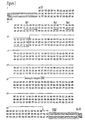
- the pDM12 PDCP display vector DNA sequence between the HindIII and EcoRI restriction sites is shown in Figure 1.
- Example 2 Insertion of a random-primed human lymphocyte cDNA into pDM12 and preparation of a master PDCP stock.
- Libraries of peptides can be constructed by many methods known to those skilled in the art.
- the example given describes a method for constructing a peptide library from randomly primed cDNA, prepared from mRNA isolated from a partially purified cell population.
- mRNA was isolated from approximately 10 9 human peripheral blood lymphocytes using a polyATract 1000 mRNA isolation kit (Promega, Southampton, UK). The cell pellet was resuspended in 4ml extraction buffer (4M guanidine thiocyanate, 25mM sodium citrate pH 7.1, 2% ⁇ -mercaptoethanol). 8ml of pre-heated (70°C) dilution buffer (6xSSC, 10mM Tris pH 7.4, 1mM EDTA, 0.25% SDS, 1% ⁇ -mercaptoethanol) was added to the homogenate and mixed thoroughly by inversion.
- extraction buffer 4M guanidine thiocyanate, 25mM sodium citrate pH 7.1, 2% ⁇ -mercaptoethanol.
- 8ml of pre-heated (70°C) dilution buffer (6xSSC, 10mM Tris pH 7.4, 1mM EDTA, 0.25% SDS, 1% ⁇ -mercaptoethanol) was added to the homogenate and mixed
- Double stranded cDNA was synthesised as described in Example 1 using 5 ⁇ g of lymphocyte mRNA as template.
- the cDNA was PCR amplified using oligonucleotides CDNAPCRFOR (SEQ ID No 28) (5'-AAAGCGGCCGCACTGGCCTGAGAGA), which anneals to the cDNA synthesis oligonucleotide described in Example 1 which is present at the 3'-end of all synthesised cDNA molecules incorporates a NotI restriction site, and an equimolar mixture of CDNAPCRBAK1, CDNAPCRBAK2 and CDNAPCRBAK3.
- CDNAPCRBAK1 (SEQ ID No 29) 5'-AAAAGGCCCAGCCGGCCATGGCCCAGCCCACCACGCGTCCG
- CDNAPCRBAK2 (SEQ ID No 30) 5'-AAAAGGCCCAGCCGGCCATGGCCCAGTCCCACCACGCGTCCG
- CDNAPCRBAK3 (SEQ ID No 31) 5'-AAAAGGCCCAGCCGGCCATGGCCCAGTACCCACCACGCGTCCG), all three of which anneal to the SalI adaptor sequence found at the 5'-end of the cDNA and incorporate a SfiI restriction site at the cDNA 5'-end.
- 5 ⁇ g of pDM12 vector DNA and lymphocyte cDNA PCR product were SfiI-NotI digested phenol/chloroform extracted and small DNA fragments removed by size selection on Chromaspin 1000 spin columns (Clontech, Palo Alto, California, U.S.A.) by centrifugation at 700g for 2 minutes at room temperature.
- Digested pDM12 and lymphocyte cDNA were ethanol precipitated and ligated together for 16 hours at 16°C. The ligated DNA was precipitated and electroporated in to TG1 E. coli .
- Cells were grown in 1ml SOC medium per cuvette used for 1 hour at 37°C, and plated onto 2xTY agar plates supplemented with 1% glucose and 100 ⁇ g/ml ampicillin. 10 -4 , 10 -5 and 10 -6 dilutions of the electroporated bacteria were also plated to assess library size. Colonies were allowed to grow overnight at 30°C. 2x10 8 ampicillin resistant colonies were recovered on the agar plates. The bacteria were then scraped off the plates into 40ml 2xTY broth supplemented with 20% glycerol, 1% glucose and 100 ⁇ g/ml ampicillin.
- 5ml was added to a 20ml 2xTY culture broth supplemented with 1% glucose and 300 ⁇ g/ml ampicillin and infected with 10 11 kanamycin resistance units (kru) M13K07 helper phage at 37°C for 30 minutes without shaking, then for 30 minutes with shaking at 200rpm.
- Infected bacteria were transferred to 200ml 2xTY broth supplemented with 25 ⁇ g/ml kanamycin, 100 ⁇ g/ml ampicillin, and 20 ⁇ M IPTG, then incubated overnight at 37°C, shaking at 200rpm.
- Example 3 Isolation of human immunoglobulin kappa light chains by repeated rounds of selection against anti-human kappa antibody.
- pDM12-lymphocyte cDNA PDCP stock was added in 2ml 2% BSA/PBS/0.05% Tween 20, and incubated for 30 minutes on a blood mixer, then for 90 minutes standing at ambient temperature. The tube was washed ten times with PBS/0.1% Tween 20, then a further ten times with PBS only. Bound particles were eluted in 1ml of freshly prepared 0.1M triethylamine for 10 minutes at ambient temperature on a blood mixer. Eluted particles were transferred to 0.5ml 1M Tris pH 7.4, vortex mixed briefly and transferred to ice.
- Neutralised particles were added to 10ml log phase TG1 E coli bacteria (optical density: OD 600nm 0.3-0.5) and incubated at 37°C without shaking for 30 minutes, then with shaking at 200rpm for 30 minutes.
- 10 -3 , 10 -4 & 10 -5 dilutions of the infected culture were prepared to estimate the number of particles recovered, and the remainder was spun at 4000 rpm for 10 minutes, and the pellet resuspended in 300 ⁇ l 2xTY medium by vortex mixing.
- Bacteria were plated onto 2xTY agar plates supplemented with 1% glucose and 100 ⁇ g/ml ampicillin. Colonies were allowed to grow overnight at 30°C.
- a PDCP stock was prepared from the bacteria recovered from the first round of selection, as described in Example 2 from a 100ml overnight culture. 250 ⁇ l of the round 1 amplified PDCP stock was then selected against anti-human kappa antibody as described above with the tube was washed twelve times with PBS/0.1% Tween 20, then a further twelve times with PBS only.
- a Dynatech Immulon 4 ELISA plate was coated with 200ng/well anti-human kappa antibody in 100 ⁇ l /well PBS for one hour at 37°C.
- the plate was washed 2x200 ⁇ l/well PBS and blocked for 1 hour at 37°C with 200 ⁇ l/well 2% BSA/PBS and then washed 2x200 ⁇ l/well PBS.
- 50 ⁇ l PDCP culture supernatant was added to each well containing 50 ⁇ l/well 4% BSA/PBS/0.1%Tween 20, and allowed to bind for 1 hour at ambient temperature.
- the plate was washed three times with 200 ⁇ l/well PBS/0.1% Tween 20, then three times with 200 ⁇ l/well PBS.
- Bound PDCPs were detected with 100 ⁇ l/well, 1:5000 diluted anti-M13-HRP conjugate (Pharmacia) in 2% BSA/PBS/0.05% Tween 20 for 1 hour at ambient temperature and the plate washed six times as above. The plate was developed for 5 minutes at ambient temperature with 100 ⁇ l/well freshly prepared TMB (3,3',5,5'-Tetramethylbenzidine) substrate buffer (0.005% H 2 O 2 , 0.1mg/ml TMB in 24mM citric acid/52mM sodium phosphate buffer pH 5.2). The reaction was stopped with 100 ⁇ l/well 12.5% H 2 SO 4 and read at 450nm. (ELISA data for binding clones is shown in Figure 2).
- the oligonucleotide 5'-AAAAGAATTCGAGGTTACATTAACTTTGTT CCGGTCAGACTGACCCAAGTCGACCTGAATGTTATTTTAG-3' (SEQ ID No 32) was synthesised and used to mutagenise pDM12 by PCR with pDM12BAK oligonucleotide as described in Example 1 using 100ng pDM12 vector DNA as template.
- the resulting DNA fragment which contained the oestrogen receptor DBD and two HRE sequences separated by a SalI restriction enzyme site, was NotI-EcoRI restriction enzyme digested and cloned into NotI-EcoRI digested pDM12 vector DNA as described in Example 1 to create pDM14.
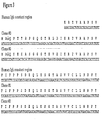
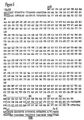
- the sequence of pDM14 between the HindIII and EcoRI restriction enzyme sites was checked by DNA sequencing. The final vector sequence between these two sites is shown in Figure 4 (see SEQ ID Nos 11 and 12).
- pDM16 the pelB leader DNA sequence is fused directly to the oestrogen receptor DBD sequence removing the multiple cloning sites and the Gly 4 Ser linker DNA sequence found in pDM12 and pDM14, which are appended to the C-terminal end of the DBD sequence upstream of the HRE DNA sequence.
- the 5'-untranslated region and pelB leader DNA sequence was amplified from 100ng of pDM12 vector DNA using 50pmol of each of the oligonucleotides pelBFOR (SEQ ID No 33) (5'-CCTTGGCAGATTCCATCT CGGCCATTGCCGGC-3') and M13REV (SEQ ID NO 27) (see above) in a 100 ⁇ l reaction containing 0.1mM dNTPs, 2.5 units Taqplus DNA polymerase, and 1x High Salt PCR reaction buffer (20mM Tris-HCl pH 9.2, 60mM KCl, 2mM MgCl 2 ) (Stratagene Ltd, Cambridge, U.K.).
- the 3'-end of the pelB leader sequence and the oestrogen receptor DBD was amplified from 100ng of pDM12 vector DNA using 50pmol of each of the oligonucleotides pelBBAK (SEQ ID No 34) (5'-CCGGCAA TGGCCGAGATGGAATCTGCCAAGG-3') and pDM16FOR (SEQ ID No 35) (5'-TTTTGTCGACTCAATCAGTTATGCGGCCGCCAGCTGCAGG AGGGCCGGCTGGGCCGACCCTCCTCCCCCAGACCCCACTTCACCCC-3') in a 100 ⁇ l reaction containing 0.1mM dNTPs, 2.5 units Taqplus DNA polymerase, and 1x High Salt PCR reaction buffer (Stratagene Ltd, Cambridge, U.K.).
- the resulting DNA fragment was HindIII-SalI restriction enzyme digested and cloned into HindIII-SalI digested pDM14 vector DNA as described in Example 1 to create pDM16.
- the sequence of pDM16 between the HindIII and EcoRI restriction enzyme sites was checked by DNA sequencing. The final vector sequence between these two sites is shown in Figure 5 (see SEQ ID Nos 13 and 14).
- Example 6 Display of the C-terminal fragment of human N-cadherin on the surface of a PDCP
- cDNA libraries of peptides can be constructed by many methods known to those skilled in the art.
- One commonly used method for constructing a peptide library uses oligo dT primed cDNA, prepared from polyA+ mRNA.
- the first-strand synthesis is carried out using an oligonucleotide which anneals to the 3'-end polyA tail of the mRNA composed of T n (where n is normally between 10 and 20 bases) and a restriction enzyme site such as NotI to facilitate cloning of cDNA.
- the cDNA cloned by this method is normally composed of the polyA tail, the 3'- end untranslated region and the C-terminal coding region of the protein.
- a human cDNA isolated from a library constructed by the above method was chosen.
- the protein N-cadherin is a cell surface molecule involved in cell-cell adhesion.
- the C-terminal cytoplasmic domain of the human protein (Genbank database accession number: M34064) is recognised by a commercially available monoclonal antibody which was raised against the C-terminal 23 amino acids of chicken N-cadherin (SIGMA catalogue number: C-1821).
- the 1.4kb human cDNA fragment encoding the C-terminal 99 amino acids, 3'- untranslated region and polyA tail was amplified from approximately 20ng pDM7-NCAD#C with 25pmol of each oligonucleotide M13FOR (SEQ ID No 26) and CDNPCRBAK1 (SEQ ID No 29) (see above) in a 50 ⁇ l reaction containing 0.1mM dNTPs, 2.5 units Taqplus DNA polymerase, and 1x High Salt PCR reaction buffer (20mM Tris-HCl pH 9.2, 60mM KCl, 2mM MgCl 2 ) (Stratagene Ltd, Cambridge, U.K.) on a Techne Progene thermal cycler for 30 cycles of 94°C, 1 minute; 60°C, 1 minute; 72°C, 1 minute. Following gel purification and digestion with SfiI and NotI restiction enzymes, the PCR product was clo
- Clones containing inserts were identified by ELISA of 96 individual PDCP cultures prepared as described in Example 3.
- a Dynatech Immulon 4 ELISA plate was coated with 1:250 diluted anti-pan cadherin monoclonal antibody in 100 ⁇ l /well PBS overnight at 4oC. The plate was washed 3x200 ⁇ l/well PBS and blocked for 1 hour at 37°C with 200 ⁇ l/well 2% Marvel non-fat milk powder/PBS and then washed 2x200 ⁇ l/well PBS. 50 ⁇ l PDCP culture supernatant was added to each well containing 50 ⁇ l/well 4% Marvel/PBS, and allowed to bind for 1 hour at ambient temperature.
- the plate was washed three times with 200 ⁇ l/well PBS/0.1% Tween 20, then three times with 200 ⁇ l/well PBS. Bound PDCPs were detected with 100 ⁇ l/well, 1:5000 diluted anti-M13-HRP conjugate (Pharmacia) in 2% Marvel/PBS for 1 hour at ambient temperature and the plate washed six times as above. The plate was developed for 15 minutes at ambient temperature with 100 ⁇ l/well freshly prepared TMB (3,3',5,5'-Tetramethylbenzidine) substrate buffer (0.005% H 2 O 2 , 0.1mg/ml TMB in 24mM citric acid/52mM sodium phosphate buffer pH 5.2).
- TMB 3,3',5,5'-Tetramethylbenzidine
- the reaction was stopped with 100 ⁇ l/well 12.5% H 2 SO 4 and read at 450nm.
- the nucleotide sequence of an ELISA positive clone insert and DBD junction was checked by DNA sequencing using oligonucleotides M13FOR (SEQ ID No 26) (see Example 1) and ORSEQBAK (SEQ ID No 36) (5'-TGTTGAAACACAAGCGCCAG-3').
- a fifty-fold concentrated stock of C-terminal N-cadherin PDCP particles was prepared by growing the uninfected TG1 clone in 1ml 2xTY culture broth supplemented with 1% glucose and 100 ⁇ g/ml ampicillin for five hours at 37°C, shaking at 200rpm and infecting with 10 8 kanamycin resistance units (kru) M13K07 helper phage at 37°C for 30 minutes without shaking, then for 30 minutes with shaking at 200rpm. Infected bacteria were transferred to 20ml 2xTY broth supplemented with 25 ⁇ g/ml kanamycin, 100 ⁇ g/ml ampicillin, and 20 ⁇ M IPTG, then incubated overnight at 30°C, shaking at 200rpm.
- Bacteria were pelleted at 4000rpm for 20 minutes in 50ml Falcon tubes, and 4ml 2.5M NaCl/20% PEG 6000 was added to 20ml of PDCP supernatant, mixed vigorously and incubated on ice for 1 hour to precipitate particles.
- the particles were pelleted at 11000rpm for 30 minutes in 50ml Oakridge tubes at 4°C in a Sorvall RC5B centrifuge, then resuspended in PBS buffer after removing all traces of PEG/NaCl with a pipette, then bacterial debris removed by a 5 minute 13500rpm spin in a microcentrifuge. The supernatant was filtered through a 0.45 ⁇ m polysulfone syringe filter. The concentrated stock was two-fold serially diluted and used in ELISA against plates coated with anti-pan-cadherin antibody as described above (see Figure 6).
- This example demonstrates the principle of C-terminal display using PDCPs, that C-terminal DBD-peptide fusion PDCPs can be made which can be detected in ELISA, and the possibility that oligo dT primed cDNA libraries may be displayed using this method.
- Example 7 Display of in vivo biotinylated C-terminal domain of human propionyl CoA carboxylase on the surface of a PDCP
- Example 6 shows that the C-terminal domain of human N-cadherin can be expressed on the surface of a PDCP as a C-terminal fusion with the DBD.
- the C-terminal domain of another human protein propionyl CoA carboxylase alpha chain (Genbank accession number: X14608) can similarly be displayed, suggesting that this methodology may be general.
- the alpha sub-unit of propionyl CoA carboxylase alpha chain contains 703 amino acids and is normally biotinylated at position 669. It is demonstrated that the PCC peptide displayed on the PDCP is biotinylated, as has been shown to occur when the protein is expressed in bacterial cells (Leon-Del-Rio & Gravel; 1994, J. Biol. Chem. 37, 22964-22968).
- the 0.8kb human cDNA fragment of PCC alpha encoding the C-terminal 95 amino acids, 3'- untranslated region and polyA tail was amplified and cloned into pDM16 from approximately 20ng pDM7-PCC#C with 25pmol of each oligonucleotide M13FOR (SEQ ID No 26) and CDNPCRBAK1 (SEQ ID No 29) as described in Example 6.
- Clones containing inserts were identified by ELISA as described in Example 6, except that streptavidin was coated onto the ELISA plate at 250ng/well, in place of the anti-cadherin antibody.
- the nucleotide sequence of an ELISA positive clone insert and DBD junction was checked by DNA sequencing using oligonucleotides M13FOR (SEQ ID No 26) and ORSEQBAK (SEQ ID No 36) (see above).
- a fifty-fold concentrated stock of C-terminal PCC PDCP particles was prepared and tested in ELISA against streptavidin as described in Example 6 (see Figure 7).
- This example shows not only that the peptide can be displayed as a C-terminal fusion on a PDCP, but also that in vivo modified peptides can be displayed.
- This example describes the generation of a human antibody library of scFvs made from an un-immunised human.
- the overall strategy for the PCR assembly of scFv fragments is similar to that employed by Marks, J. D. et al. 1991, J. Mol. Biol. 222: 581-597.
- the antibody gene oligonucleotides used to construct the library are derived from the Marke et al., paper and from sequence data extracted from the Kabat database (Kabat, E. A. et al., Sequences of Proteins of Immunological Interest. 4 th edition. U.S. Department of Health and Human Services. 1987).
- the three linker oligonucleotides are described by Zhou et al. (1994, Nucleic Acids Res., 22: 888-889), all oligonucleotides used are detailed in Table 1.
- mRNA was isolated from peripheral blood lymphocytes and cDNA prepared for four repertoires of antibody genes IgD, IgM, Ig ⁇ and Ig ⁇ , using four separate cDNA synthesis primers.
- VH genes were amplified from IgD and IgM primed cDNA
- VL genes were amplified from Ig ⁇ and Ig ⁇ primed cDNA.
- a portion of each set of amplified heavy chain or light chain DNA was then spliced with a separate piece of linker DNA encoding the 15 amino acids (Gly 4 Ser) 3 (Huston, J. S. et al. 1989, Gene, 77: 61).
- VH PCR products and the 5'-end of the VL PCR products overlap the linker sequence as a result of incorporating linker sequence in the JH, V ⁇ and V ⁇ family primer sets (Table 1).
- Each VH-linker or linker-VL DNA product was then spliced with either VH or VL DNA to produce the primary scFv product in a VH-linker-VL configuration.
- This scFv product was then amplified and cloned into pDM12 as a SfiI-NotI fragment, electroporated into TG1 and a concentrated PDCP stock prepared.
- Human lymphocyte mRNA was purified as described in Example 2. Separate cDNA reactions were performed with IGDCDNAFOR (SEQ ID No 37), IGMCDNAFOR (SEQ ID No 38), IGKCDNAFOR (SEQ ID No 39) and IG ⁇ CDNAFOR (SEQ ID No 40) oligonucleotides.
- each primer was added to approximately 5 ⁇ g of mRNA in 20 ⁇ l of nuclease free water and heated to 70°C for 5 minutes and cooled rapidly on ice,-then made up to a final reaction volume of 100 ⁇ l containing 50mM Tris pH 8.3, 75mM KCl, 3mM MgCl 2 , 10mM DTT, 0.5mM dNTPs, and 2000 units of Superscript II reverse transcriptase (Life Technologies, Paisley, Scotland, U.K.). The reactions were incubated at 37°C for two hours, then heated to 95°C for 5 minutes.
- IgM IgD and Ig ⁇ cDNA six separate reactions were set up, and seven for Ig ⁇ cDNA.
- a 50 ⁇ l reaction mixture was prepared containing 2 ⁇ l cDNA, 25pmol of the appropriate FOR and BAK primers, 0.1mM dNTPs, 2.5 units Taqplus DNA polymerase, and 1x High Salt PCR reaction buffer (20mM Tris-HCl pH 9.2, 60mM KCl, 2mM MgCl 2 ) (Stratagene Ltd, Cambridge, U.K.).
- Reactions were amplified on a Techne Progene thermal cycler for 30 cycles of 94°C, 1 minute; 60°C, 1 minute; 72°C, 2 minutes, followed by 10 minutes at 72°C. Fifty microlitres of all 25 reaction products were electrophoresed on an agarose gel, excised and products purified from the gel using a Geneclean II kit according to the manufacturers instructions (Bio101, La Jolla, California, U.S.A.). All sets of IgD, IgM, IgK or Ig ⁇ reaction products were pooled to produce VH or VL DNA sets for each of the four repertoires. These were then adjusted to approximately 20ng/ ⁇ l.
- Linker product was prepared from eight 100 ⁇ l reactions containing 5ng LINKAMP3T (SEQ ID No 76) template oligonucleotide, 50pmol of LINKAMP3 (SEQ ID No 74) and LINKAMP5 (SEQ ID No 75) primers, 0.1mM dNTPs, 2.5 units Taqplus DNA polymerase, and 1x High Salt PCR reaction buffer (20mM Tris-HCl pH 9.2, 60mM KCl, 2mM MgCl 2 ) (Stratagene Ltd, Cambridge, U.K.).
- Reactions were amplified on a Techne Progene thermal cycler for 30 cycles of 94°C, 1 minute; 60°C, 1 minute; 72°C, 1 minute, followed by 10 minutes at 72°C. All reaction product was electrophoresed on a 2% low melting point agarose gel, excised and products purified from the gel using a Mermaid kit according to the manufacturers instructions (Bio101, La Jolla, California, U.S.A.) and adjusted to 5ng/ ⁇ l.
- Reactions were amplified on a Techne Progene thermal cycler for 30 cycles of 94°C, 1 minute; 60°C, 1 minute; 72°C, 2 minutes, followed by 10 minutes at 72°C.
- Reaction products were electrophoresed on an agarose gel, excised and products purified from the gel using a Geneclean II kit according to the manufacturers instructions (Bio101, La Jolla, California, U.S.A.) and adjusted to 20ng/ ⁇ l.
- reaction products were electrophoresed on an agarose gel, excised and products purified from the gel using a Geneclean II kit according to the manufacturers instructions (Bio101, La Jolla, California, U.S.A.) and adjusted to 20ng/ ⁇ l.
- Each of the four repertoires was then re-amplified in a 100 ⁇ l reaction volume containing 2ng of each linked product, with 50pmol VHBAK1-6 (SEQ ID Nos 53 to 58) and either the JKFOR (SEQ ID Nos 66 to 70) or J ⁇ FOR (SEQ ID Nos 71 to 73) primer sets, in the presence of 0.1mM dNTPs, 2.5 units Taq DNA polymerase, and 1x PCR reaction buffer (10mM Tris-HCl pH 9.0, 5mM KCl, 0.01% Triton X"-100, 1.5mM MgCl 2 ) (Promega Ltd, Victoria, U.K.). Thirty reactions were performed per repertoire to generate enough DNA for cloning.
- Reactions were amplified on a Techne Progene thermal cycler for 25 cycles of 94°C, 1 minute; 65°C, 1 minute; 72°C, 2 minutes, followed by 10 minutes at 72°C. Reaction products were phenol-chloroform extracted, ethanol precipitated, vacuum dried and re-suspended in 80 ⁇ l nuclease free water.
- Each of the four repertoires was SfiI-NotI digested, and electrophoresed on an agarose gel, excised and products purified from the gel using a Geneclean II kit according to the manufacturers instructions (Bio101, La Jolla, California, U.S.A.).
- Each of the four repertoires was ligated overnight at 16°C in 140 ⁇ l with 10 ⁇ g of SfiI-NotI cut pDM12 prepared as in Example 2, and 12 units of T4 DNA ligase (Life Technologies, Paisley, Scotland, U.K.).
- ligations were adjusted to 200 ⁇ l with nuclease free water, and DNA precipitated with 1 ⁇ l 20mg/ml glycogen, 100 ⁇ l 7.5M ammonium acetate and 900 ⁇ l ice-cold (-20°C) absolute ethanol, vortex mixed and spun at 13,000rpm for 20 minutes in a microfuge to pellet DNA.
- the pellets were washed with 500 ⁇ l ice-cold 70% ethanol by centrifugation at 13,000rpm for 2 minutes, then vacuum dried and re-suspended in 10 ⁇ l DEPC-treated water. 1 ⁇ l aliquots of each repertoire was electroporated into 80 ⁇ l E. coli (TG1).
- PDCP stocks were prepared for each repertoire library. The bacteria were then scraped off the plates into 30ml 2xTY broth supplemented with 20% glycerol, 1% glucose and 100 ⁇ g/ml ampicillin. 3ml was added to a 50ml 2xTY culture broth supplemented with 1% glucose and 100 ⁇ g/ml ampicillin and infected with 10 11 kanamycin resistance units (kru) M13K07 helper phage at 37°C for 30 minutes without shaking, then for 30 minutes with shaking at 200rpm.
- kru kanamycin resistance units
- Infected bacteria were transferred to 500ml 2xTY broth supplemented with 25 ⁇ g/ml kanamycin, 100 ⁇ g/ml ampicillin, and 20 ⁇ M IPTG, then incubated overnight at 30°C, shaking at 200rpm. Bacteria were pelleted at 4000rpm for 20 minutes in 50ml Falcon tubes, and 80ml 2.5M NaCl/20% PEG 6000 was added to 400ml of particle supernatant, mixed vigorously and incubated on ice for 1 hour to precipitate PDCP particles.
- Particles were pelleted at 11000rpm for 30 minutes in 250ml Oakridge tubes at 4°C in a Sorvall RC5B centrifuge, then resuspended in 40ml water and 8ml 2.5M NaCl/20% PEG 6000 added to reprecipitate particles, then incubated on ice for 20 minutes. Particles were again pelleted at 11000rpm for 30 minutes in 50ml Oakridge tubes at 4°C in a Sorvall RC5B centrifuge, then resuspended in 5ml PBS buffer, after removing all traces of PEG/NaCl with a pipette. Bacterial debris was removed by a 5 minute 13500rpm spin in a microcentrifuge. The supernatant was filtered through a 0.45 ⁇ m polysulfone syringe filter, adjusted to 20% glycerol and stored at -70°C.
- Example 9 Isolation of binding activity from a N-terminal display PDCP library of human scFvs
- Substance P is an eleven amino acid neuropeptide involved in inflammatory and pain responses in vivo . It has also been implicated in a variety of disorders such as psoriasis and asthma amongst others (Misery, L. 1997, Br. J. Dertmatol., 137: 843-850; Maggi, C. A. 1997, Regul. Pept. 70: 75-90; Choi, D. C. & Kwon, O.J., 1998, Curr. Opin. Pulm. Med., 4: 16-24). Human antibodies which neutralise this peptide may therefore have some therapeutic potential. As this peptide is too small to coat efficiently on a tube, as described in Example 3, selection of binding activities was performed in-solution, using N-terminal biotinylated substance P and capturing bound PDCP particles on streptavidin-coated magnetic beads.
- Bacteria were plated onto 2xTY agar plates supplemented with 1% glucose and 100 ⁇ g/ml ampicillin. Colonies were allowed to grow overnight at 30°C.
- a 100-fold concentrated PDCP stock was prepared from a 200ml amplified culture of these bacteria as described above, and 0.5ml used in as second round of selection with 500ng biotinylated substance P. For this round 100 ⁇ g/ml streptavidin was included in the wash buffer.
- Binding clones were identified by ELISA of 96 individual PDCP cultures prepared as described in Example 3 from colonies recovered after the second round of selection.
- a Dynatech Immulon 4 ELISA plate was coated with 200ng/well streptavidin in 100 ⁇ l /well PBS for 1 hour at 37°C. The plate was washed 3x200 ⁇ l/well PBS and incubated with 10ng/well biotinylated substance P in 100 ⁇ l /well PBS for 30 minutes at 37°C The plate was washed 3x200 ⁇ l/well PBS and blocked for 1 hour at 37°C with 200 ⁇ l/well 2% Marvel non-fat milk powder/PBS and then washed 2x200 ⁇ l/well PBS.
- a 50-fold concentrated PDCP stock was prepared from a 100ml amplified culture of a single ELISA positive clone as described above. 10 ⁇ l per well of this stock was tested in ELISA as described above for binding to streptavidin, streptavidin-biotinylated-substance P and streptavidin-biotinylated-CGRP (N-terminal biotinylated). Binding was only observed in streptavidin-biotinylated-substance P coated wells indicating that binding was specific. In addition, binding to streptavidin-biotinylated substance P was completely inhibited by incubating the PDCP with 1 ⁇ g/ml free substance P (see Figure 8).
- the invention provides methods for screening a DNA library whose members require more than one chain for activity, as required by, for example, antibody Fab fragments for ligand binding.
- libraries of unknown light chains co-expressed with a known heavy chain are screened for higher affinity antibodies.
- the known heavy chain antibody DNA sequence is joined to a nucleotide sequence encoding a oestrogen receptor DNA binding domain in a phage vector which does not contain the oestrogen receptor HRE sequence.
- the antibody DNA sequence for the known heavy chain (VH and CH1) gene is inserted in the 5' region of the oestrogen receptor DBD DNA, behind an appropriate promoter and translation sequences and a sequence encoding a signal peptide leader directing transport of the downstream fusion protein to the periplasmic space.
- the library of unknown light chains (VL and CL) is expressed separately from a phagemid expression vector which also contains the oestrogen receptor HRE sequence.
- the light chain proteins are transported to the periplasm where they assemble with the heavy chain that is fused to the DBD protein as it exits the cell on the PDCP.
- the DBD fusion protein and the HRE DNA sequences are not encoded on the same vector, the unknown peptide sequences are present on the same vector as the HRE sequence.
- Peptide display carrier packages which encode the protein of interest can then be selected by means of a ligand specific for the antibody.
Landscapes
- Health & Medical Sciences (AREA)
- Life Sciences & Earth Sciences (AREA)
- Chemical & Material Sciences (AREA)
- Genetics & Genomics (AREA)
- Organic Chemistry (AREA)
- Engineering & Computer Science (AREA)
- Zoology (AREA)
- Wood Science & Technology (AREA)
- Biochemistry (AREA)
- Biophysics (AREA)
- Biotechnology (AREA)
- General Engineering & Computer Science (AREA)
- Molecular Biology (AREA)
- Biomedical Technology (AREA)
- Bioinformatics & Cheminformatics (AREA)
- General Health & Medical Sciences (AREA)
- Physics & Mathematics (AREA)
- Bioinformatics & Computational Biology (AREA)
- Toxicology (AREA)
- Microbiology (AREA)
- Plant Pathology (AREA)
- High Energy & Nuclear Physics (AREA)
- Cell Biology (AREA)
- Immunology (AREA)
- Crystallography & Structural Chemistry (AREA)
- Gastroenterology & Hepatology (AREA)
- Medicinal Chemistry (AREA)
- Proteomics, Peptides & Aminoacids (AREA)
- Peptides Or Proteins (AREA)
- Micro-Organisms Or Cultivation Processes Thereof (AREA)
- Measuring Or Testing Involving Enzymes Or Micro-Organisms (AREA)
- Preparation Of Compounds By Using Micro-Organisms (AREA)
- Investigating Or Analysing Biological Materials (AREA)
Abstract
Description


The protein(s) of interest are expressed and transported to the periplasmic space, and the properly assembled proteins are incorporated into the PDCP particle by virtue of the high affinity interaction of the DBD with the specific target nucleotide sequence present on the phagemid vector DNA which is naturally packaged into phage particles in a single-stranded form. The high affinity interaction between the DBD protein and its specific target nucleotide sequence prevents displacement by bacteriophage coat proteins resulting in the incorporation of the protein(s) of interest onto the surface of the PDCP as it is extruded from the cell.
Numerous types of libraries of peptides fused to the DBD can be screened under this embodiment including:
or


| 1000u/ml RNAguard | 1µl |
| 5x first strand buffer | 4µl |
| 0.1M DTT | 2µl |
| 10mM dNTPs | 1µl |
| DEPC-treated water | 93µl |
| 5x second strand buffer | 30µl |
| 10mM dNTPs | 3µl |
| 10u/µl E. coli DNA ligase | 1µl |
| 10u/µl E. coli DNA polymerase | 4µl |
| 2u/µl E. coli RNase H | 1µl |
| cDNA | 25µl |
| 5x T4 DNA ligase buffer | 10µl |
| 1µg/µl Sal I adapters | 10µl |
| 1u/µlT4 DNA ligase | 5µl |


<141> 1998-09-02
<211> 521
<212> DNA
<213> Recombinant human oestrogen
<221> CDS
<222> (41)..(475)
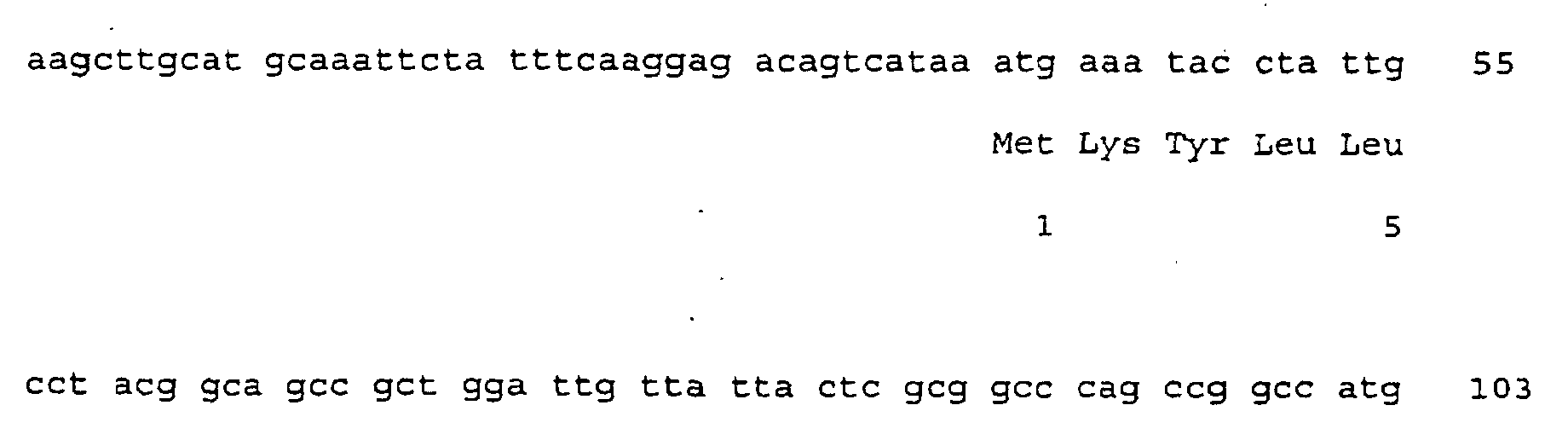
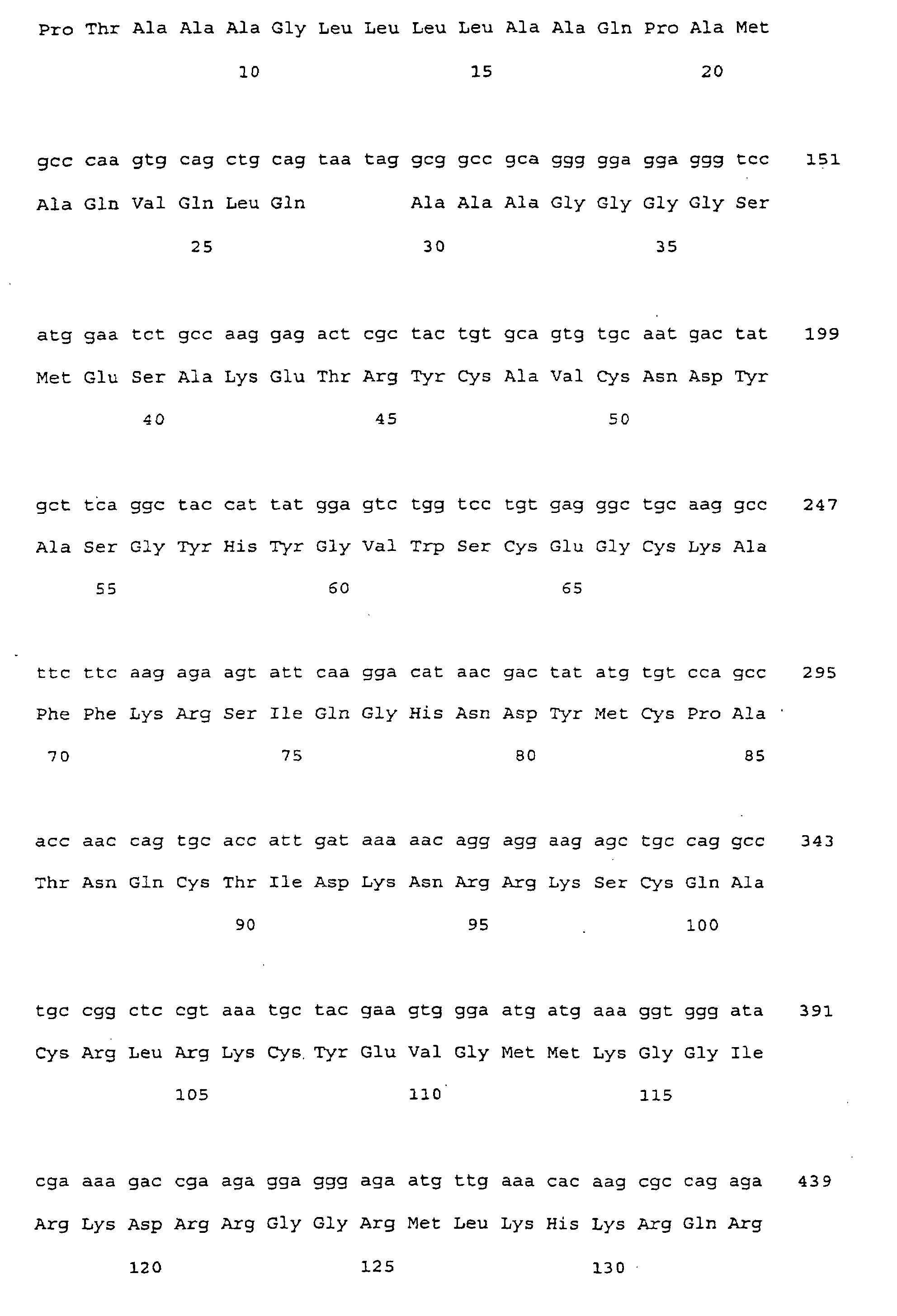
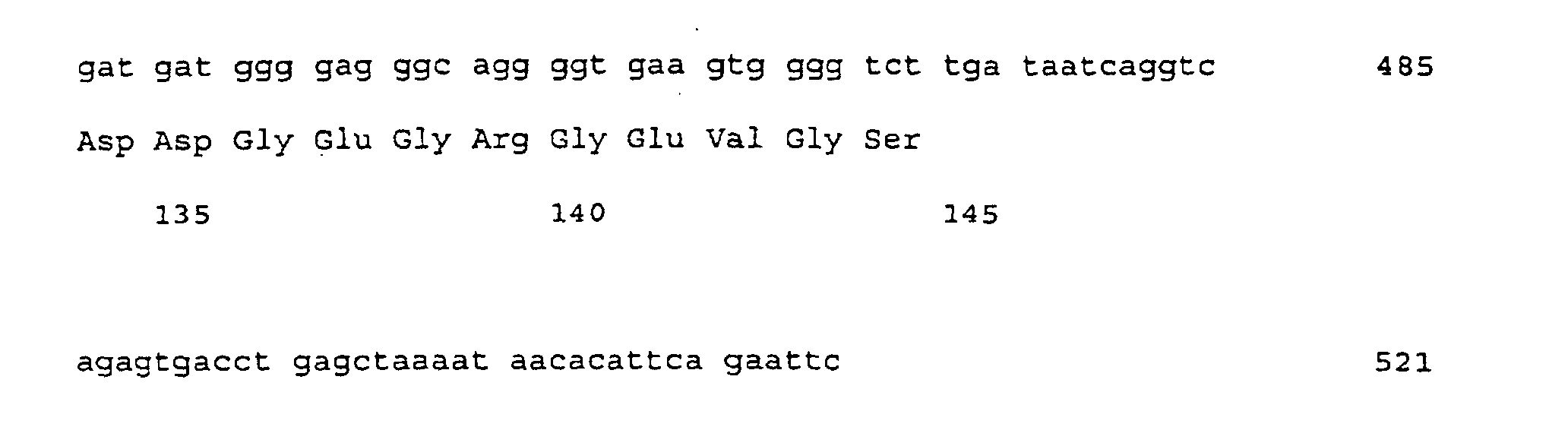
<211> 27
<212> PRT
<213> Recombinant human oestrogen
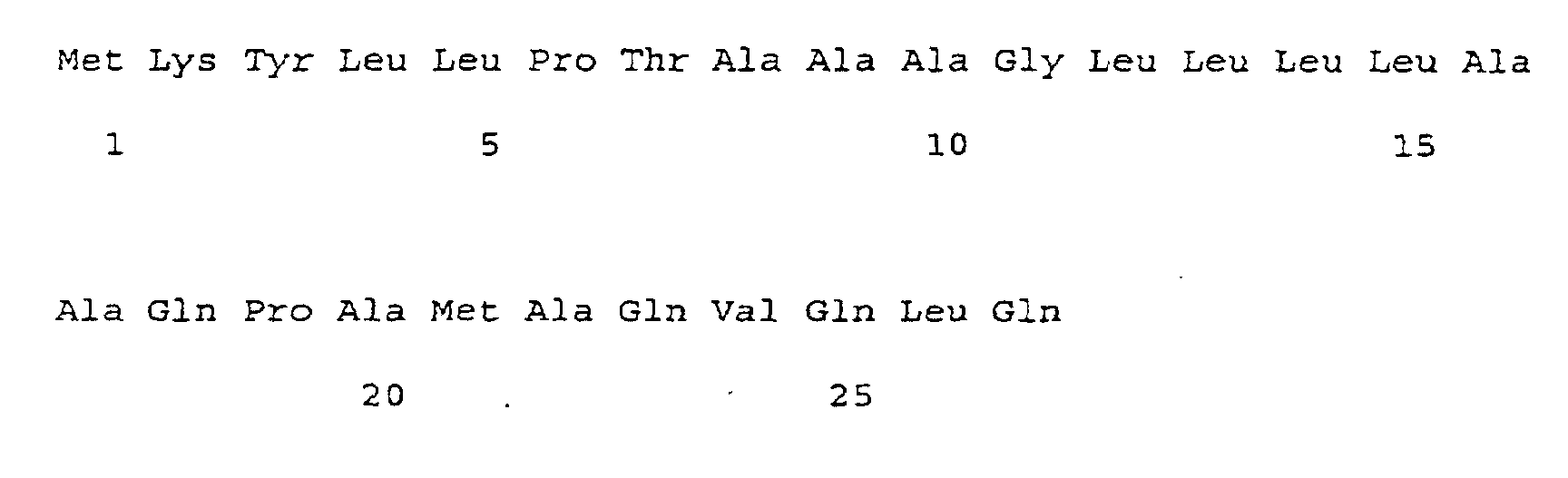
<211> 115
<212> PRT
<213> Recombinant human oestrogen

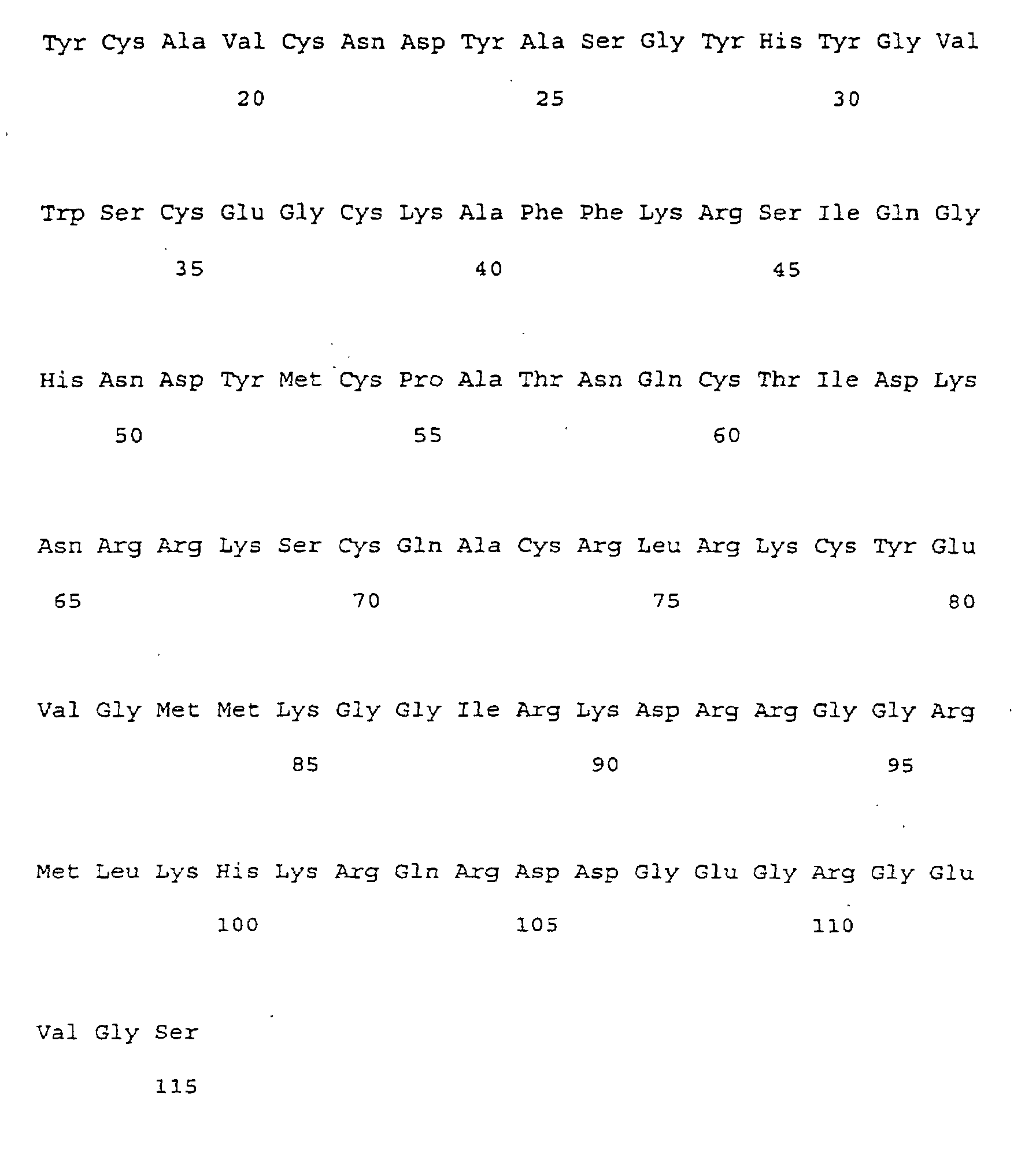
<211> 102
<212> DNA
<213> human
<221> CDS
<222> (1)..(102)

<211> 34
<212> PRT
<213> human

<211> 150
<212> DNA
<213> Human lymphocyte
<221> CDS
<222> (1)..(150)
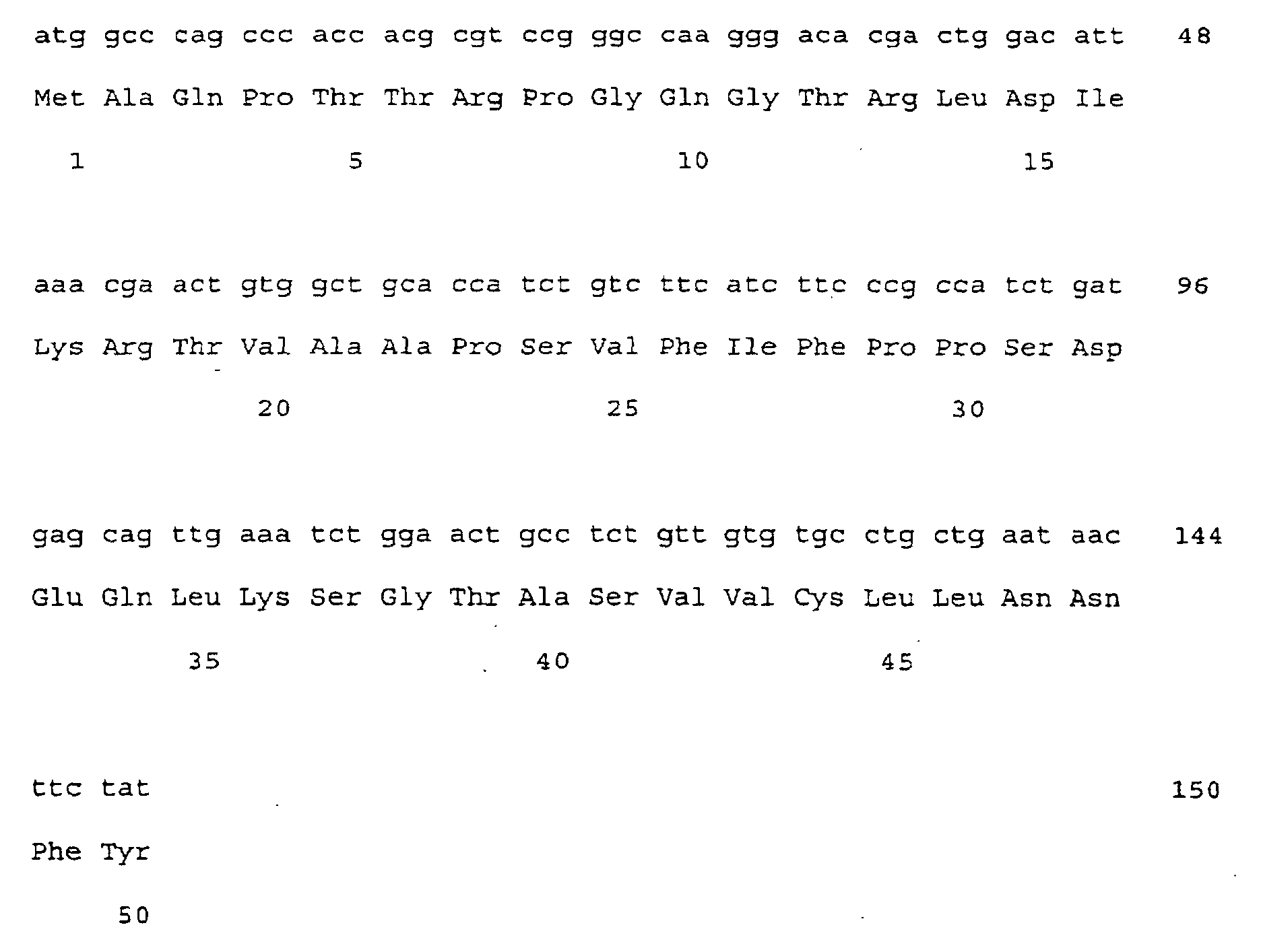
<211> 50
<212> PRT
<213> Human lymphocyte

<211> 150
<212> DNA
<213> Human lymphocyte
<221> CDS
<222> (1)..(150)


<211> 50
<212> PRT
<213> Human lymphocyte
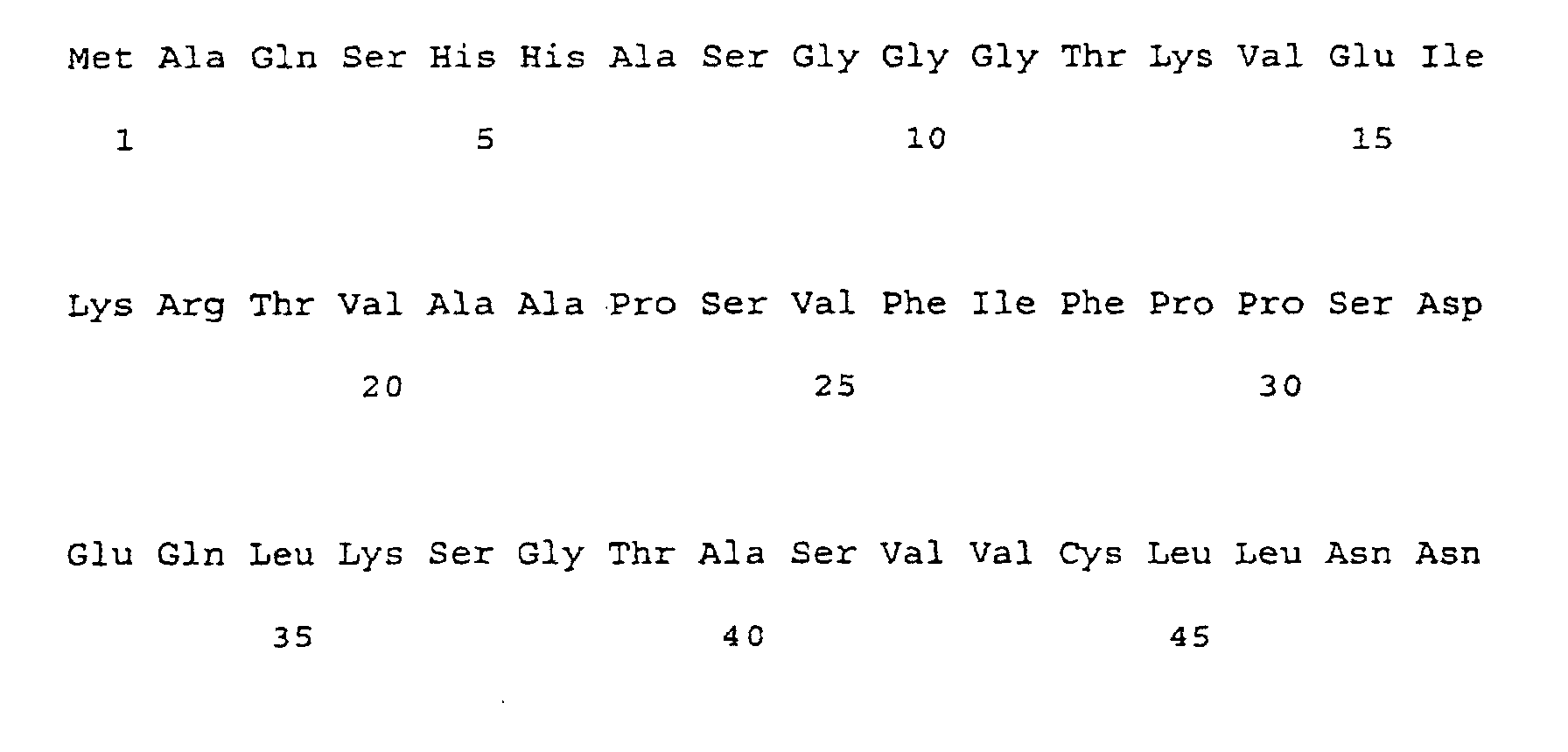
<211> 566
<212> DNA
<213> Recombinant human oestrogen
<221> CDS
<222> (41)..(475)
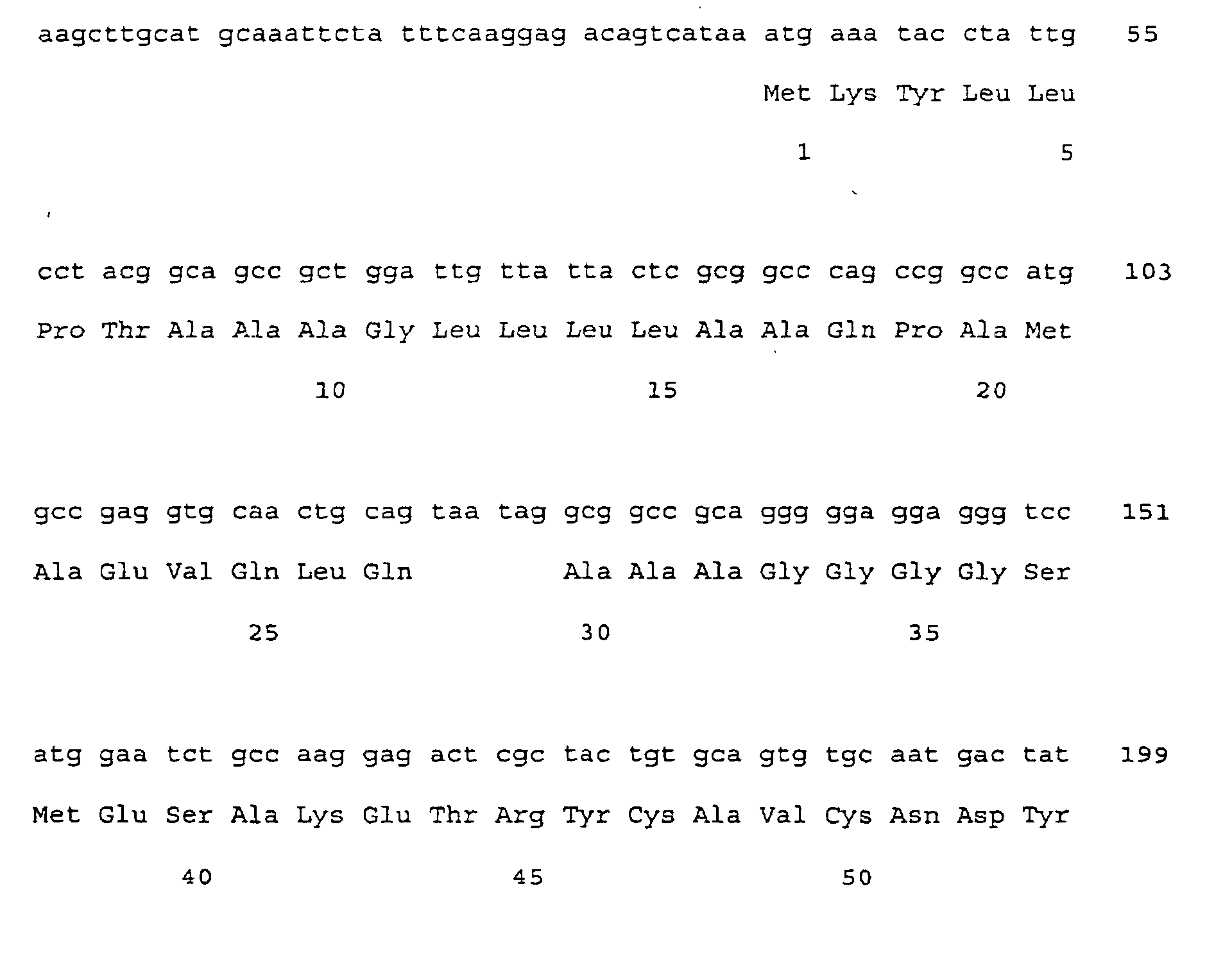
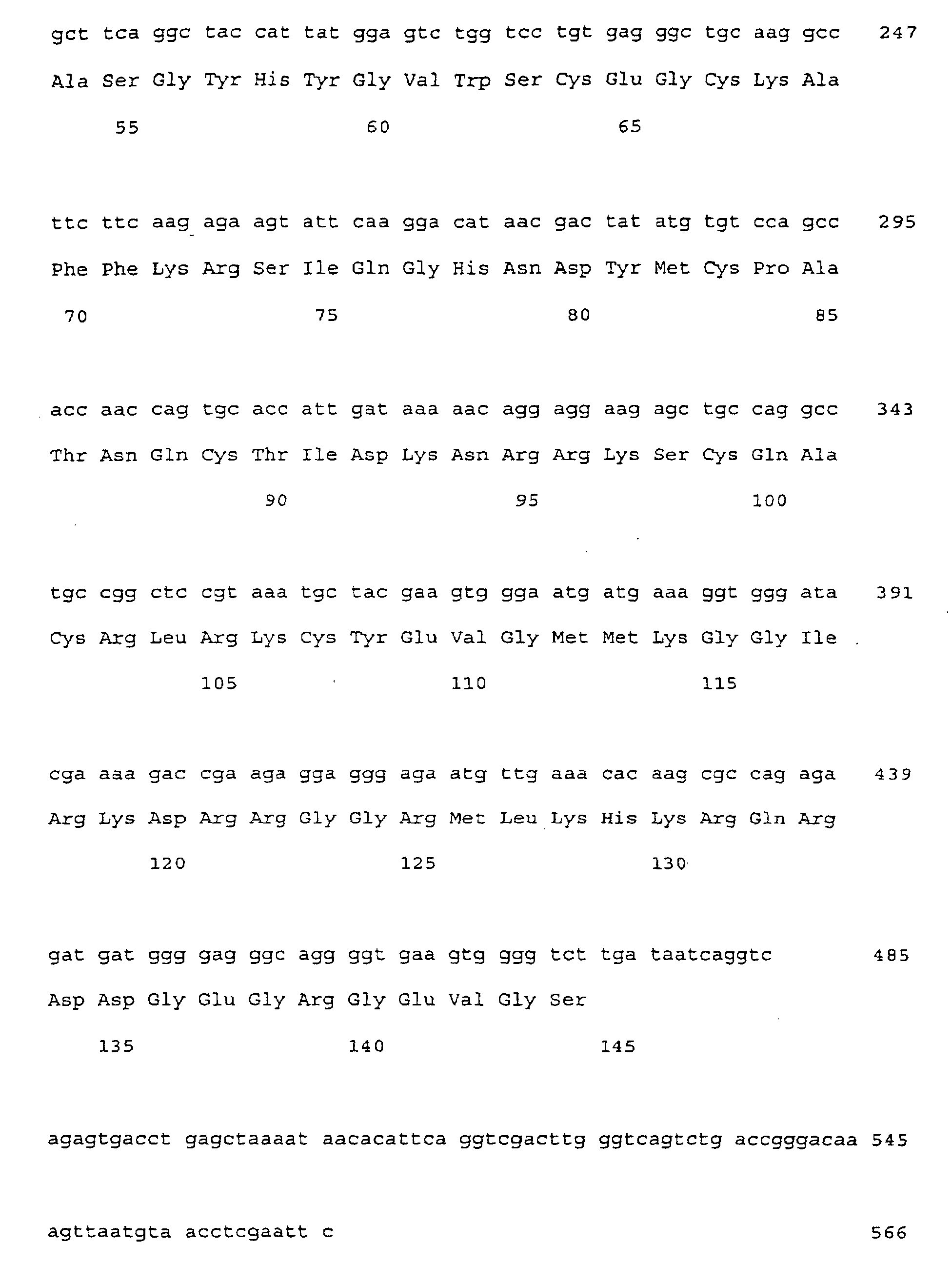
<211> 27
<212> PRT
<213> Recombinant human oestrogen
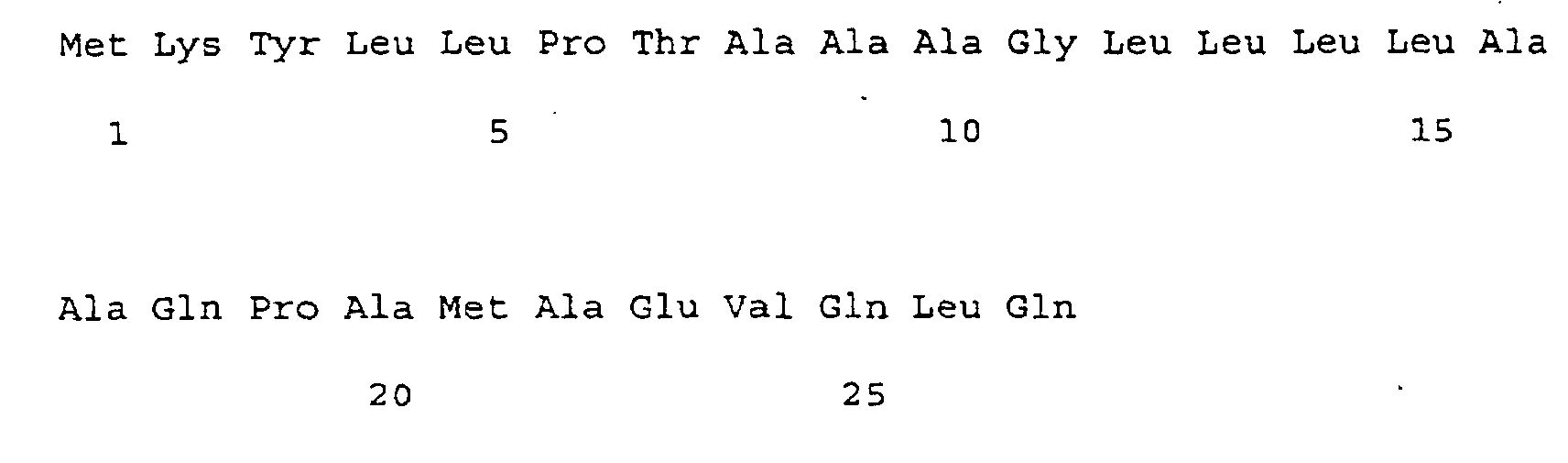
<211> 115
<212> PRT
<213> Recombinant human oestrogen
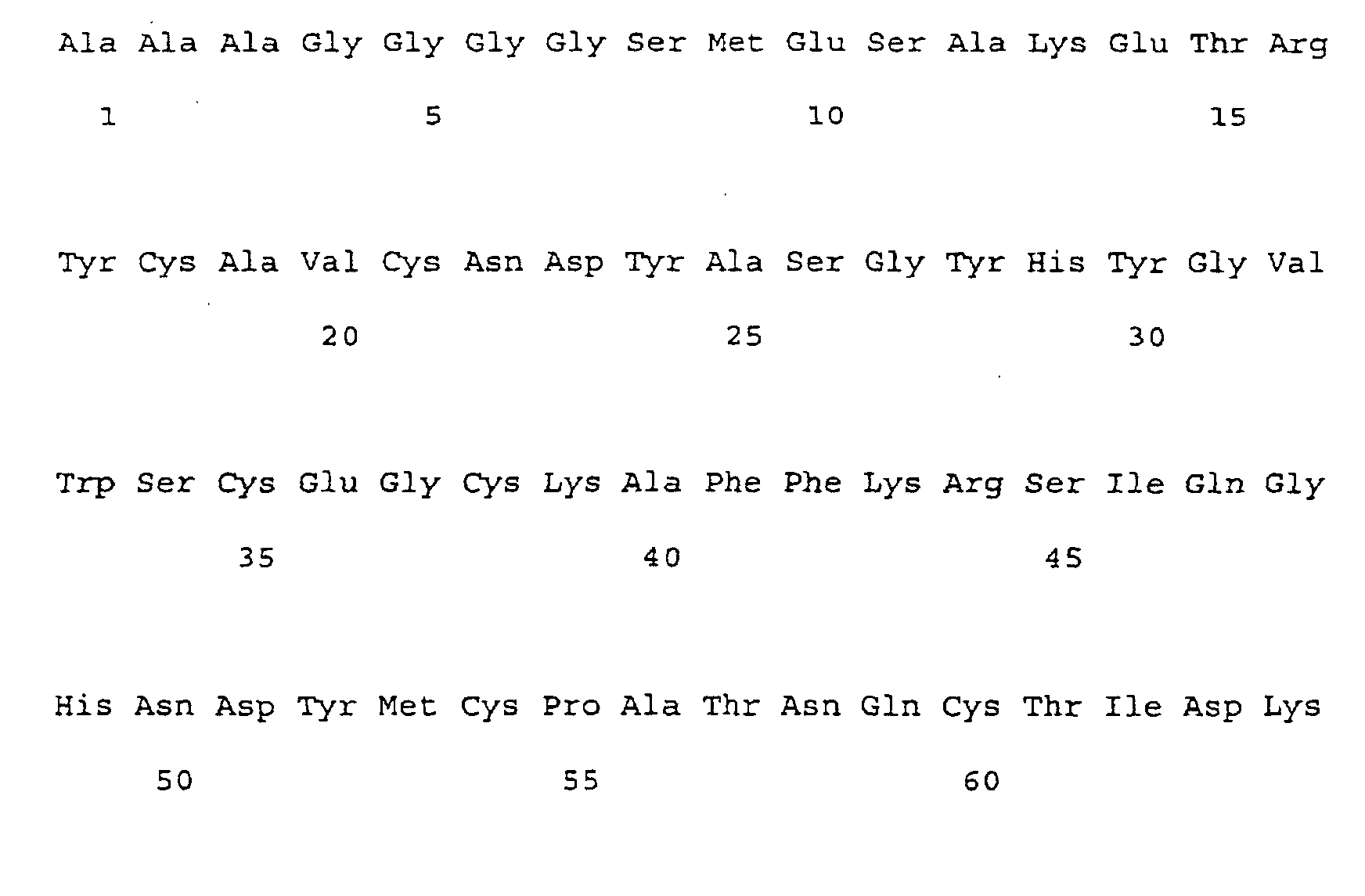
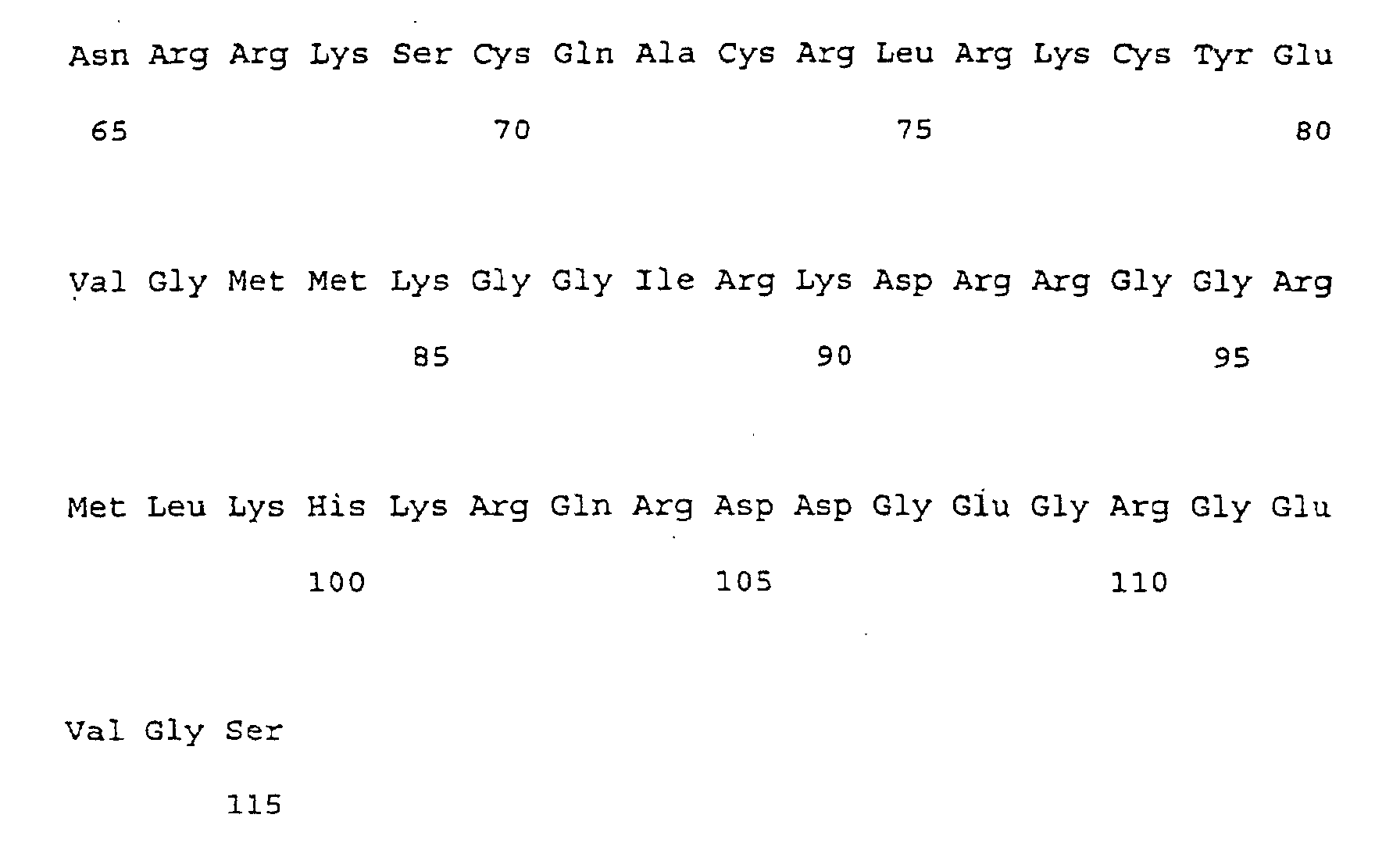
<211> 539
<212> DNA
<213> Recombinant human oestrogen
<221> CDS
<222> (41)..(478)
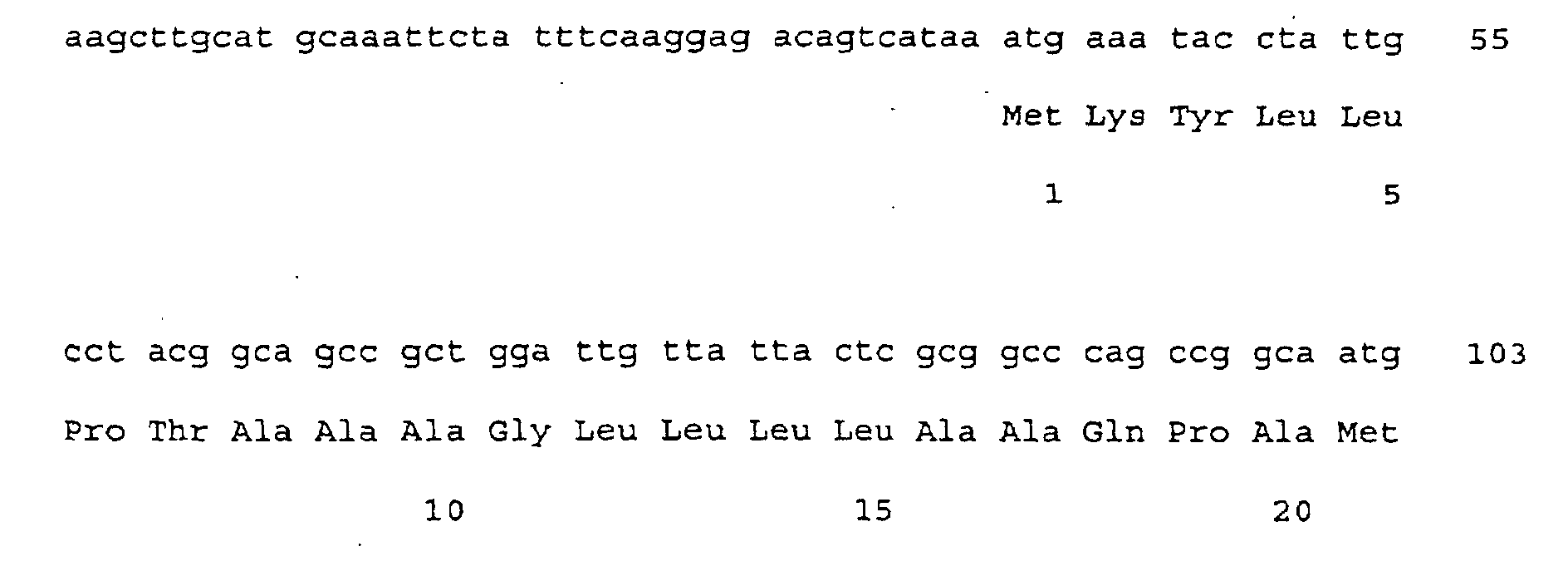


<211> 146
<212> PRT
<213> Recombinant human oestrogen
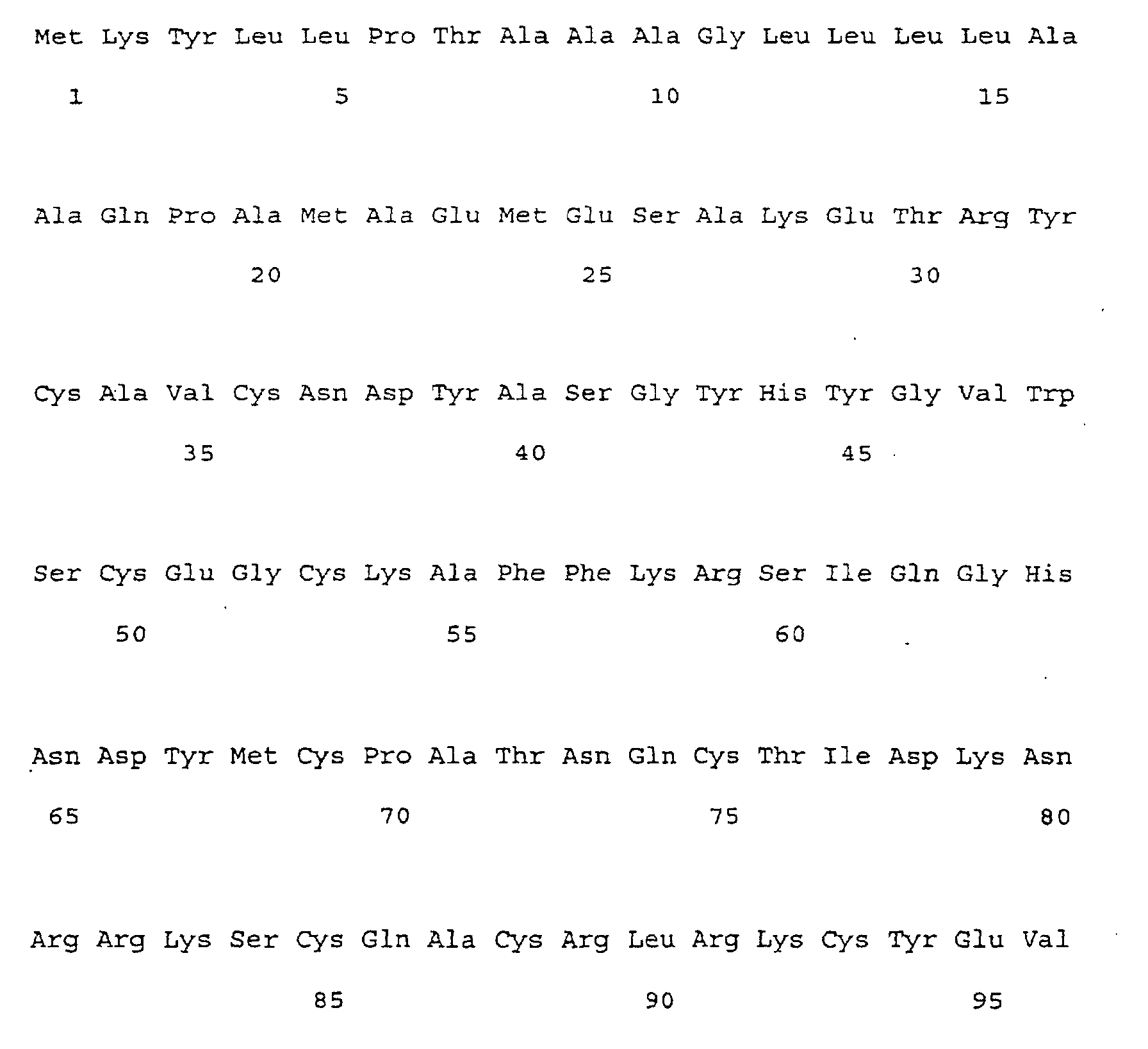

<211> 372
<212> DNA
<213> Human
<221> CDS
<222> (1)..(372)
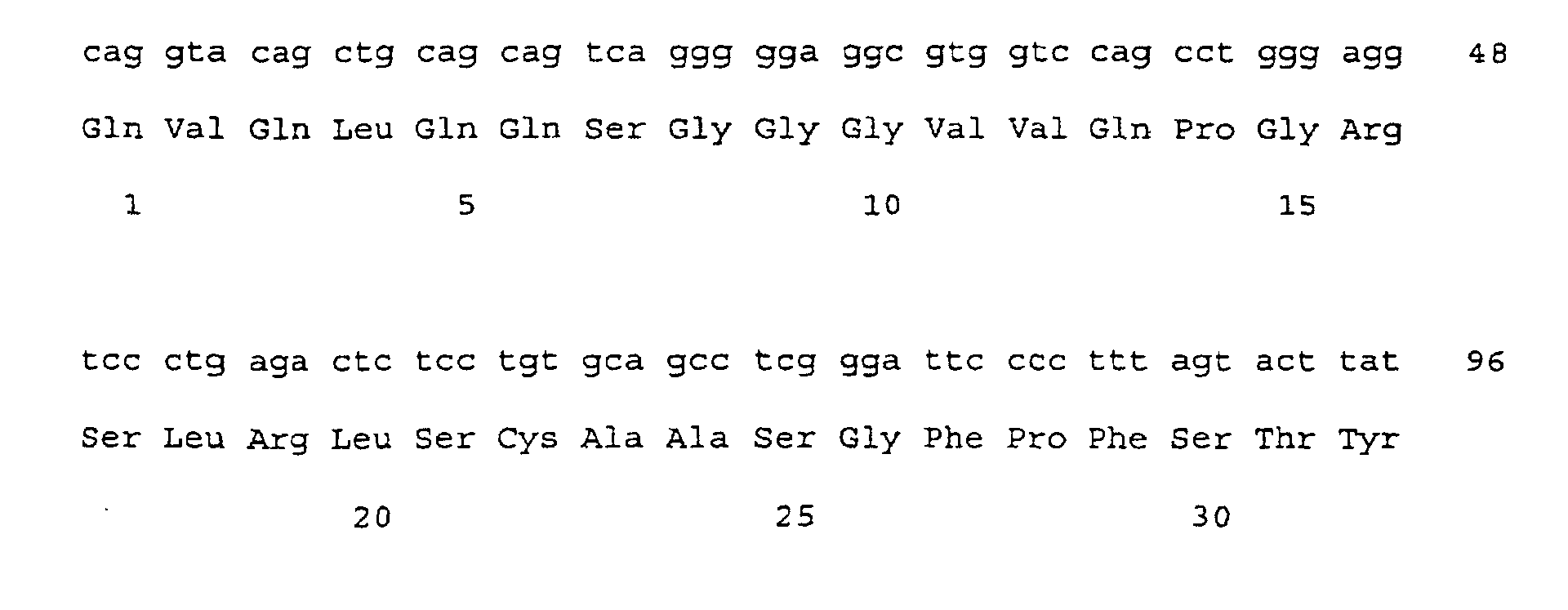
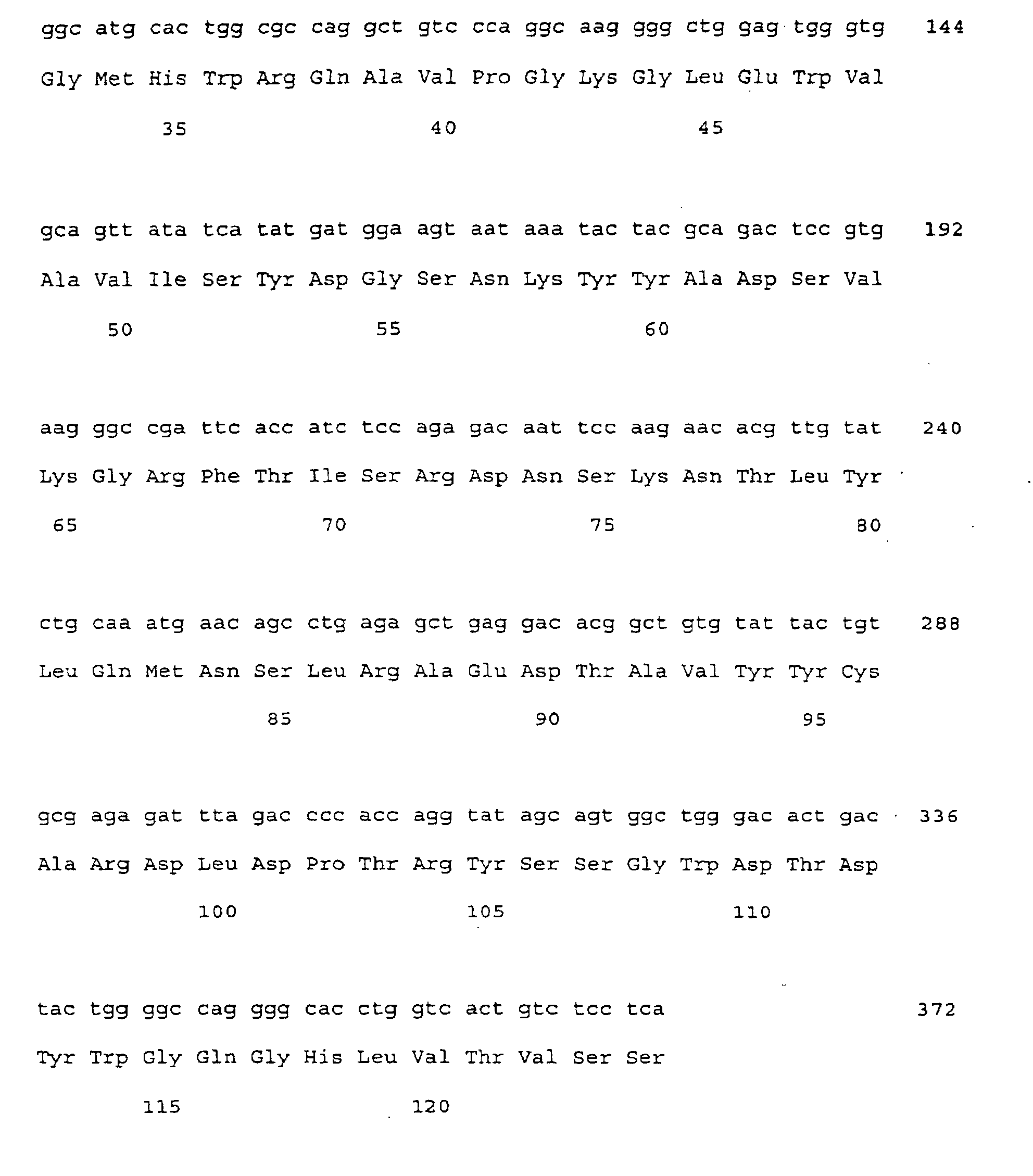
<211> 124
<212> PRT
<213> Human
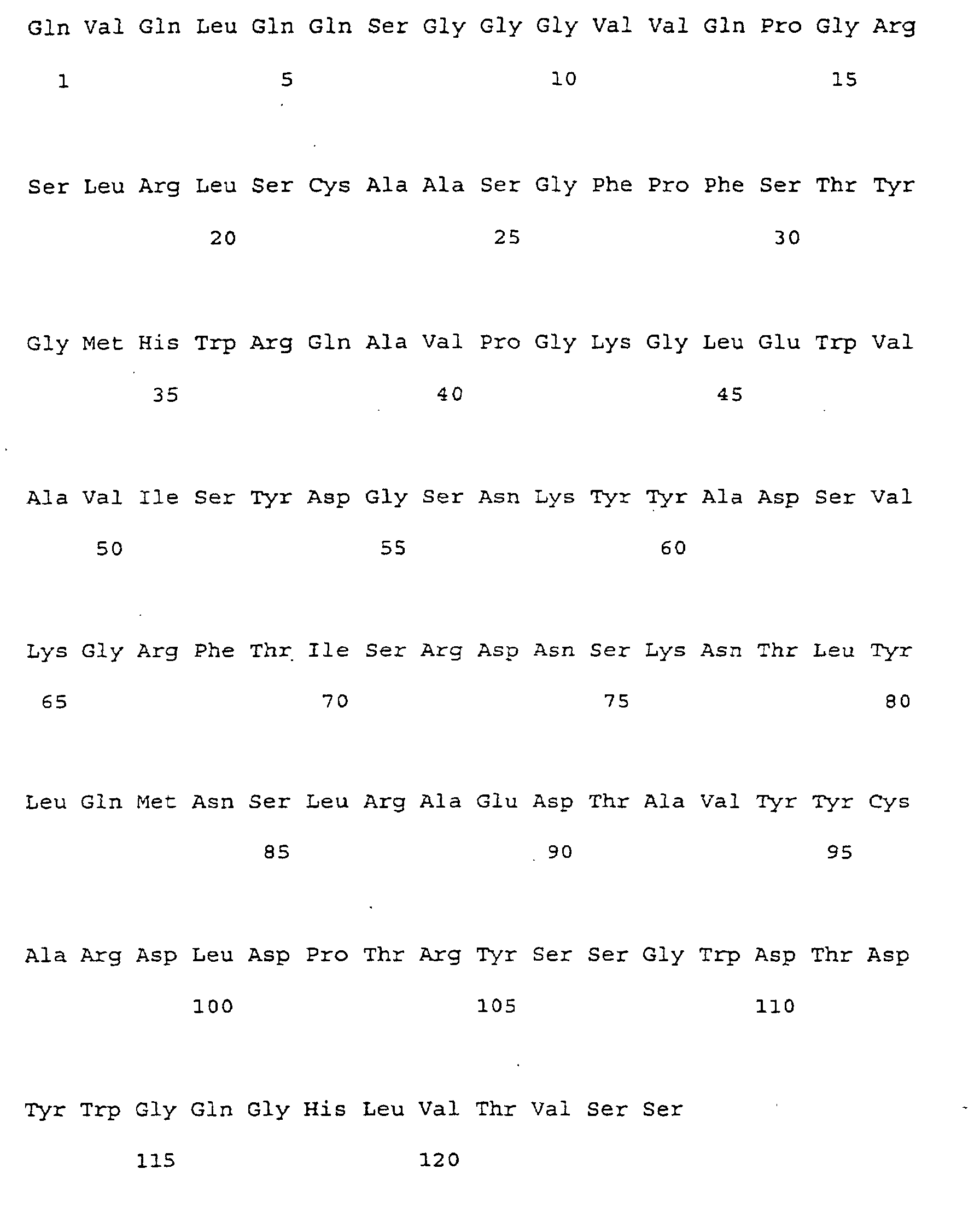
<211> 327
<212> DNA
<213> Human
<221> CDS
<222> (1)..(327)
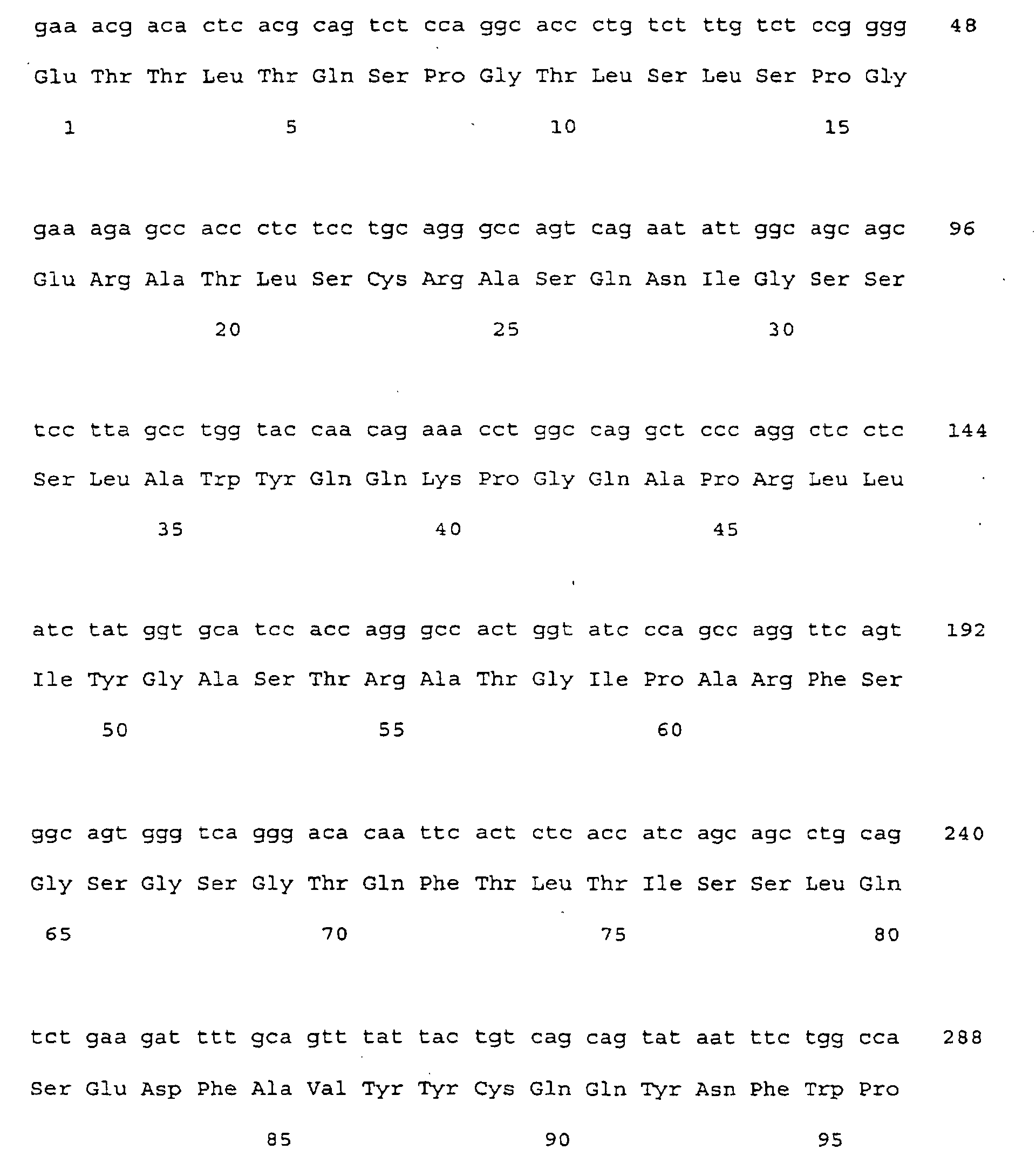

<211> 109
<212> PRT
<213> Human


<211> 72
<212> DNA
<213> Artificial Sequence
<223> Description of Artificial Sequence: synthetic DNA

<211> 75
<212> DNA
<213> Artificial Sequence
<223> Description of Artificial Sequence: synthetic DNA

<211> 32
<212> DNA
<213> Artificial Sequence
<223> Description of Artificial Sequence: synthetic DNA

<211> 16
<212> DNA
<213> Artificial Sequence
<223> Description of Artificial Sequence: synthetic DNA

<211> 12
<212> DNA
<213> Artificial Sequence
<223> Description of Artificial Sequence: synthetic DNA

<211> 72
<212> DNA
<213> Artificial Sequence
<223> Description of Artificial Sequence: synthetic DNA

<211> 46
<212> DNA
<213> Artificial Sequence
<223> Description of Artificial Sequence: synthetic DNA

<211> 17
<212> DNA
<213> Artificial Sequence
<223> Description of Artificial Sequence: synthetic DNA

<211> 20
<212> DNA
<213> Artificial Sequence
<223> Description of Artificial Sequence: synthetic DNA

<211> 25
<212> DNA
<213> Artificial Sequence
<223> Description of Artificial Sequence: synthetic DNA

<211> 41
<212> DNA
<213> Artificial Sequence
<223> Description of Artificial Sequence: synthetic DNA

<211> 42
<212> DNA
<213> Artificial Sequence
<223> Description of Artificial Sequence: synthetic DNA

<211> 43
<212> DNA
<213> Artificial Sequence
<223> Description of Artificial Sequence: synthetic DNA

<211> 72
<212> DNA
<213> Artificial Sequence
<223> Description of Artificial Sequence: synthetic DNA

<211> 32
<212> DNA
<213> Artificial Sequence
<223> Description of Artificial Sequence: synthetic DNA

<211> 31
<212> DNA
<213> Artificial Sequence
<223> Description of Artificial Sequence: synthetic DNA

<211> 86
<212> DNA
<213> Artificial Sequence
<223> Description of Artificial Sequence: synthetic DNA

<211> 20
<212> DNA
<213> Artificial Sequence
<223> Description of Artificial Sequence: synthetic DNA

<211> 24
<212> DNA
<213> Artificial Sequence
<223> Description of Artificial Sequence: synthetic DNA

<211> 24
<212> DNA
<213> Artificial Sequence
<223> Description of Artificial Sequence: synthetic DNA

<211> 24
<212> DNA
<213> Artificial Sequence
<223> Description of Artificial Sequence: synthetic DNA

<211> 27
<212> DNA
<213> Artificial Sequence
<223> Description of Artificial Sequence: synthetic DNA

<211> 39
<212> DNA
<213> Artificial Sequence
<223> Description of Artificial Sequence: synthetic DNA

<211> 39
<212> DNA
<213> Artificial Sequence
<223> Description of Artificial Sequence: synthetic DNA

<211> 39
<212> DNA
<213> Artificial Sequence
<223> Description of Artificial Sequence: synthetic DNA

<211> 39
<212> DNA
<213> Artificial Sequence
<223> Description of Artificial Sequence: synthetic DNA

<211> 47
<212> DNA
<213> Artificial Sequence
<223> Description of Artificial Sequence: synthetic DNA

<211> 47
<212> DNA
<213> Artificial Sequence
<223> Description of Artificial Sequence: synthetic DNA

<211> 47
<212> DNA
<213> Artificial Sequence
<223> Description of Artificial Sequence: synthetic DNA

<211> 47
<212> DNA
<213> Artificial Sequence
<223> Description of Artificial Sequence: synthetic DNA

<211> 47
<212> DNA
<213> Artificial Sequence
<223> Description of Artificial Sequence: synthetic DNA

<211> 47
<212> DNA
<213> Artificial Sequence
<223> Description of Artificial Sequence: synthetic DNA

<211> 39
<212> DNA
<213> Artificial Sequence
<223> Description of Artificial Sequence: synthetic DNA

<211> 39
<212> DNA
<213> Artificial Sequence
<223> Description of Artificial Sequence: synthetic DNA

<211> 41
<212> DNA
<213> Artificial Sequence
<223> Description of Artificial Sequence: synthetic DNA

<211> 41
<212> DNA
<213> Artificial Sequence
<223> Description of Artificial Sequence: synthetic DNA

<211> 41
<212> DNA
<213> Artificial Sequence
<223> Description of Artificial Sequence: synthetic DNA

<211> 41
<212> DNA
<213> Artificial Sequence
<223> Description of Artificial Sequence: synthetic DNA

<211> 41
<212> DNA
<213> Artificial Sequence
<223> Description of Artificial Sequence: synthetic DNA

<211> 41
<212> DNA
<213> Artificial Sequence
<223> Description of Artificial Sequence: synthetic DNA

<211> 42
<212> DNA
<213> Artificial Sequence
<223> Description of Artificial Sequence: synthetic DNA

<211> 42
<212> DNA
<213> Artificial Sequence
<223> Description of Artificial Sequence: synthetic DNA

<211> 42
<212> DNA
<213> Artificial Sequence
<223> Description of Artificial Sequence: synthetic DNA

<211> 42
<212> DNA
<213> Artificial Sequence
<223> Description of Artificial Sequence: synthetic DNA

<211> 42
<212> DNA
<213> Artificial Sequence
<223> Description of Artificial Sequence: synthetic DNA

<211> 41
<212> DNA
<213> Artificial Sequence
<223> Description of Artificial Sequence: synthetic DNA

<211> 41
<212> DNA
<213> Artificial Sequence
<223> Description of Artificial Sequence: synthetic DNA

<211> 41
<212> DNA
<213> Artificial Sequence
<223> Description of Artificial Sequence: synthetic DNA

<211> 41
<212> DNA
<213> Artificial Sequence
<223> Description of Artificial Sequence: synthetic DNA

<211> 41
<212> DNA
<213> Artificial Sequence
<223> Description of Artificial Sequence: synthetic DNA

<211> 41
<212> DNA
<213> Artificial Sequence
<223> Description of Artificial Sequence: synthetic DNA

<211> 41
<212> DNA
<213> Artificial Sequence
<223> Description of Artificial Sequence: synthetic DNA

<211> 42
<212> DNA
<213> Artificial Sequence
<223> Description of Artificial Sequence: synthetic DNA

<211> 42
<212> DNA
<213> Artificial Sequence
<223> Description of Artificial Sequence: synthetic DNA

<211> 42
<212> DNA
<213> Artificial Sequence
<223> Description of Artificial Sequence: synthetic DNA

<211> 18
<212> DNA
<213> Artificial Sequence
<223> Description of Artificial Sequence: synthetic DNA

<211> 18
<212> DNA
<213> Artificial Sequence
<223> Description of Artificial Sequence: synthetic DNA

<211> 54
<212> DNA
<213> Artificial Sequence
<223> Description of Artificial Sequence: synthetic DNA

<211> 38
<212> DNA
<213> Artificial Sequence
<223> Description of Artificial Sequence: synthetic DNA

<211> 38
<212> DNA
<213> Artificial Sequence
<223> Description of Artificial Sequence: synthetic DNA

Claims (23)
- A peptide display carrier package (PDCP), said package comprising a recombinant polynucleotide-chimeric protein complex wherein the chimeric protein has a nucleotide binding portion and a target peptide portion, wherein said recombinant polynucleotide comprises a nucleotide sequence motif which is specifically bound by said nucleotide binding portion, and wherein at least the chimeric protein-encoding portion of the recombinant polynucleotide not bound by the chimeric protein nucleotide binding portion is protected by a non-sequence-specific polynucleotide binding moiety.
- A peptide display carrier package (PDCP) as claimed in Claim 1, wherein said chimeric protein-encoding portion of the recombinant polynucleotide not bound by the chimeric protein nucleotide binding portion is protected by a non-sequence-specific protein.
- A peptide display carrier package (PDCP) as claimed in Claim 2, wherein said non-sequence-specific protein is a viral coat protein.
- A peptide display carrier package (PDCP) as claimed in any one of Claims 1 to 3, wherein said target peptide portion is displayed externally on the package.
- A peptide display carrier package (PDCP) as claimed in any one of Claims 1 to 4 wherein said recombinant polynucleotide includes a linker sequence between the nucleotide sequence encoding the nucleotide binding portion and the nucleotide sequence encoding the target peptide portion.
- A peptide display carrier package (PDCP) as claimed in any one of Claims 1 to 5 wherein said recombinant polynucleotide has two or more nucleotide sequence motifs each of which can be bound by the nucleotide binding portion of the chimeric protein.
- A peptide display carrier package (PDCP) as claimed in any one of Claims 1 to 6 wherein said nucleotide binding portion is a DNA binding domain of an oestrogen or progesterone receptor.
- A peptide display carrier package (PDCP) as claimed in any one of Claims 1 to 7 wherein said recombinant polynucleotide is bound to said chimeric protein as single stranded DNA.
- A peptide display carrier package (PDCP) as claimed in any one of Claims 1 to 8 wherein said target peptide portion is located at the N and/or C terminal ends of the chimeric protein.
- A peptide display carrier package (PDCP) as claimed in any one of Claims 1 to 9 which is produced in a host cell transformed with said recombinant polynucleotide and extruded therefrom without lysis of the host cell.
- A recombinant polynucleotide comprising a nucleotide sequence encoding a chimeric protein having a nucleotide binding portion operably linked to a target peptide portion, wherein said polynucleotide includes a specific nucleotide sequence motif which is bound by the nucleotide binding portion of said chimeric protein and further encoding a non-sequence-specific nucleotide binding protein.
- A recombinant polynucleotide as claimed in Claim 11 wherein said non-sequence-specific nucleotide binding protein is a viral coat protein.
- A recombinant polynucleotide as claimed in either one of Claims 11 and 12 which includes a linker sequence between the nucleotide sequence encoding the nucleotide binding portion and the nucleotide sequence encoding the target peptide portion.
- A recombinant polynucleotide as claimed in any one of Claims 11 to 13 which has two or more nucleotide sequence motifs each of which can be bound by the nucleotide binding portion of the chimeric protein.
- A recombinant polynucleotide as claimed in any one of Claims 11 to 14 wherein said nucleotide binding portion is a DNA binding domain of an oestrogen or progesterone receptor.
- A recombinant polynucleotide as claimed in any one of Claims 11 to 15 wherein said recombinant polynucleotide is bound to said chimeric protein as single stranded DNA.
- A genetic construct or set of genetic constructs which collectively comprises a polynucleotide having a sequence which includes:i) a sequence encoding a nucleotide binding portion able to recognise and bind to a specific sequence motif;ii) the sequence motif recognised and bound by the nucleotide binding portion encoded by (i);iii) a restriction enzyme site which permits insertion of a polynucleotide, said site being designed to operably link said polynucleotide to the sequence encoding the nucleotide binding portion so that expression of the operably linked polynucleotide sequences yields a chimeric protein; andiv) a sequence encoding a nucleotide binding protein which binds non-specifically to naked polynucleotide.
- A genetic construct or set of genetic constructs as claimed in Claim 17 wherein a linker sequence is located between the nucleotide sequence encoding the nucleotide binding portion and the site for insertion of the polynucleotide.
- A genetic construct or set of genetic constructs as claimed in either one of Claims 17 and 18 which includes a vector pDM12, pDM14 or pDM16, deposited at NCIMB under Nos 40970, 40971 and 40972 respectively.
- A method of constructing a genetic library, said method comprising:a) constructing multiple copies of a recombinant vector comprising a polynucleotide sequence which encodes a nucleotide binding portion able to recognise and bind to a specific sequence motif;b) operably linking each said vector to a polynucleotide encoding a target polypeptide, such that expression of said operably linked vector results in expression of a chimeric protein comprising said target peptide and said nucleotide binding portions; wherein said multiple copies of said operably linked vectors collectively express a library of target peptide portions;c) transforming host cells with the vectors of step b) ;d) culturing the host cells of step c) under conditions suitable for expression of said chimeric protein;e) providing a recombinant polynucleotide comprising the nucleotide sequence motif specifically recognised by the nucleotide binding portion and exposing this polynucleotide to the chimeric protein of step d) to yield a polynucleotide-chimeric protein complex; andf) causing production of a non-sequence-specific moiety able to bind to the non-protected portion of the polynucleotide encoding the chimeric protein to form a peptide display carrier package.
- A method of screening a genetic library, said method comprising:a) exposing the polynucleotide members of said library to multiple copies of a genetic construct comprising a nucleotide sequence encoding a nucleotide binding portion able to recognise and bind to a specific sequence motif, under conditions suitable for the polynucleotides of said library each to be individually ligated into one copy of said genetic construct, to create a library of recombinant polynucleotides;b) exposing said recombinant polynucleotides to a population of host cells, under conditions suitable for transformation of said host cells by said recombinant polynucleotides;c) selecting for transformed host cells;d) exposing said transformed host cells to conditions suitable for expression of said recombinant polynucleotide to yield a chimeric protein; ande) providing a recombinant polynucleotide comprising the nucleotide sequence motif specifically recognised by the nucleotide binding portion and exposing this polynucleotide to the chimeric protein of step d) to yield a polynucleotide-chimeric protein complex;f) protecting any exposed portions of the polynucleotide in the complex of step e) to form a peptide display carrier package; andg) screening said peptide display carrier package to select only those packages displaying a target peptide portion having the characteristics required.
- A method as claimed in Claim 21 wherein the peptide display package carrier is extruded from the host cell without lysis thereof.
- A polynucleotide comprising the nucleotide sequence as set out in SEQ ID No. 15 or SEQ ID No 17.
Priority Applications (1)
| Application Number | Priority Date | Filing Date | Title |
|---|---|---|---|
| DK98940455T DK1009827T3 (en) | 1997-09-02 | 1998-09-02 | Method for screening chimeric binding peptide library |
Applications Claiming Priority (3)
| Application Number | Priority Date | Filing Date | Title |
|---|---|---|---|
| GBGB9718455.0A GB9718455D0 (en) | 1997-09-02 | 1997-09-02 | Chimeric binding peptide library screening method |
| GB9718455 | 1997-09-02 | ||
| PCT/GB1998/002630 WO1999011785A1 (en) | 1997-09-02 | 1998-09-02 | Chimeric binding peptide library screening method |
Publications (2)
| Publication Number | Publication Date |
|---|---|
| EP1009827A1 EP1009827A1 (en) | 2000-06-21 |
| EP1009827B1 true EP1009827B1 (en) | 2004-11-24 |
Family
ID=10818309
Family Applications (1)
| Application Number | Title | Priority Date | Filing Date |
|---|---|---|---|
| EP98940455A Expired - Lifetime EP1009827B1 (en) | 1997-09-02 | 1998-09-02 | Chimeric binding peptide library screening method |
Country Status (9)
| Country | Link |
|---|---|
| US (2) | US7312074B1 (en) |
| EP (1) | EP1009827B1 (en) |
| JP (1) | JP4221148B2 (en) |
| AT (1) | ATE283359T1 (en) |
| AU (1) | AU741002B2 (en) |
| CA (1) | CA2301826C (en) |
| DE (1) | DE69827810T2 (en) |
| GB (1) | GB9718455D0 (en) |
| WO (1) | WO1999011785A1 (en) |
Families Citing this family (24)
| Publication number | Priority date | Publication date | Assignee | Title |
|---|---|---|---|---|
| US7842476B2 (en) | 2002-09-06 | 2010-11-30 | Isogenica Limited | In vitro peptide expression library |
| AU2003276403B2 (en) | 2002-11-09 | 2010-04-15 | Adaptimmune Limited | T cell receptor display |
| GB0418651D0 (en) * | 2004-08-20 | 2004-09-22 | Medical Res Council | Method |
| WO2010127186A1 (en) | 2009-04-30 | 2010-11-04 | Prognosys Biosciences, Inc. | Nucleic acid constructs and methods of use |
| US10787701B2 (en) | 2010-04-05 | 2020-09-29 | Prognosys Biosciences, Inc. | Spatially encoded biological assays |
| AU2011237729B2 (en) | 2010-04-05 | 2014-04-03 | Prognosys Biosciences, Inc. | Spatially encoded biological assays |
| US20190300945A1 (en) | 2010-04-05 | 2019-10-03 | Prognosys Biosciences, Inc. | Spatially Encoded Biological Assays |
| EP2694709B1 (en) | 2011-04-08 | 2016-09-14 | Prognosys Biosciences, Inc. | Peptide constructs and assay systems |
| GB201106254D0 (en) | 2011-04-13 | 2011-05-25 | Frisen Jonas | Method and product |
| US9593365B2 (en) | 2012-10-17 | 2017-03-14 | Spatial Transcriptions Ab | Methods and product for optimising localised or spatial detection of gene expression in a tissue sample |
| EP2972366B1 (en) | 2013-03-15 | 2020-06-17 | Prognosys Biosciences, Inc. | Methods for detecting peptide/mhc/tcr binding |
| DK3013983T3 (en) | 2013-06-25 | 2023-03-06 | Prognosys Biosciences Inc | SPATIALLY ENCODED BIOLOGICAL ASSAYS USING A MICROFLUIDIC DEVICE |
| US10288608B2 (en) | 2013-11-08 | 2019-05-14 | Prognosys Biosciences, Inc. | Polynucleotide conjugates and methods for analyte detection |
| JP2017511151A (en) | 2014-03-14 | 2017-04-20 | イムノコア リミテッド | TCR library |
| CN120425026A (en) | 2015-04-10 | 2025-08-05 | 十程基因技术瑞典公司 | Spatial differentiation of biological samples and multiplex nucleic acid analysis |
| GB201516270D0 (en) | 2015-09-15 | 2015-10-28 | Adaptimmune Ltd And Immunocore Ltd | TCR Libraries |
| GB201516265D0 (en) | 2015-09-15 | 2015-10-28 | Adaptimmune Ltd And Immunocore Ltd | TCR Libraries |
| GB201516274D0 (en) | 2015-09-15 | 2015-10-28 | Adaptimmune Ltd And Immunocore Ltd | TCR Libraries |
| GB201516269D0 (en) | 2015-09-15 | 2015-10-28 | Adaptimmune Ltd And Immunocore Ltd | TCR Libraries |
| GB201516275D0 (en) | 2015-09-15 | 2015-10-28 | Adaptimmune Ltd And Immunocore Ltd | TCR Libraries |
| GB201516277D0 (en) | 2015-09-15 | 2015-10-28 | Adaptimmune Ltd And Immunocore Ltd | TCR libraries |
| GB201516272D0 (en) | 2015-09-15 | 2015-10-28 | Adaptimmune Ltd And Immunocore Ltd | TCR Libraries |
| WO2021178263A1 (en) * | 2020-03-05 | 2021-09-10 | Merck Sharp & Dohme Corp. | Human-like heavy chain antibody variable domain (vhh) display libraries |
| EP4567108A1 (en) * | 2023-12-05 | 2025-06-11 | Kutzner, Christoph | Screening of target peptides using fusion polypeptides |
Family Cites Families (7)
| Publication number | Priority date | Publication date | Assignee | Title |
|---|---|---|---|---|
| US5223409A (en) | 1988-09-02 | 1993-06-29 | Protein Engineering Corp. | Directed evolution of novel binding proteins |
| US5597693A (en) * | 1989-03-17 | 1997-01-28 | The Salk Institute For Biological Studies | Hormone response element compositions and assay |
| GB9015198D0 (en) | 1990-07-10 | 1990-08-29 | Brien Caroline J O | Binding substance |
| CA2109602C (en) * | 1990-07-10 | 2002-10-01 | Gregory P. Winter | Methods for producing members of specific binding pairs |
| US5270170A (en) * | 1991-10-16 | 1993-12-14 | Affymax Technologies N.V. | Peptide library and screening method |
| DE19646372C1 (en) * | 1995-11-11 | 1997-06-19 | Evotec Biosystems Gmbh | Conjugates of polypeptide and encoding nucleic acid |
| US6451527B1 (en) * | 1997-08-29 | 2002-09-17 | Selective Genetics, Inc. | Methods using genetic package display for selecting internalizing ligands for gene delivery |
-
1997
- 1997-09-02 GB GBGB9718455.0A patent/GB9718455D0/en active Pending
-
1998
- 1998-09-02 AU AU88778/98A patent/AU741002B2/en not_active Ceased
- 1998-09-02 AT AT98940455T patent/ATE283359T1/en not_active IP Right Cessation
- 1998-09-02 US US09/486,882 patent/US7312074B1/en not_active Expired - Fee Related
- 1998-09-02 CA CA2301826A patent/CA2301826C/en not_active Expired - Fee Related
- 1998-09-02 WO PCT/GB1998/002630 patent/WO1999011785A1/en not_active Ceased
- 1998-09-02 EP EP98940455A patent/EP1009827B1/en not_active Expired - Lifetime
- 1998-09-02 DE DE69827810T patent/DE69827810T2/en not_active Expired - Lifetime
- 1998-09-02 JP JP2000508795A patent/JP4221148B2/en not_active Expired - Fee Related
-
2007
- 2007-11-13 US US11/985,355 patent/US8735146B2/en not_active Expired - Fee Related
Also Published As
| Publication number | Publication date |
|---|---|
| JP4221148B2 (en) | 2009-02-12 |
| US7312074B1 (en) | 2007-12-25 |
| EP1009827A1 (en) | 2000-06-21 |
| AU741002B2 (en) | 2001-11-22 |
| WO1999011785A1 (en) | 1999-03-11 |
| CA2301826C (en) | 2011-02-15 |
| DE69827810D1 (en) | 2004-12-30 |
| AU8877898A (en) | 1999-03-22 |
| ATE283359T1 (en) | 2004-12-15 |
| CA2301826A1 (en) | 1999-03-11 |
| US20080220981A1 (en) | 2008-09-11 |
| JP2001514853A (en) | 2001-09-18 |
| DE69827810T2 (en) | 2005-11-10 |
| US8735146B2 (en) | 2014-05-27 |
| GB9718455D0 (en) | 1997-11-05 |
Similar Documents
| Publication | Publication Date | Title |
|---|---|---|
| US8735146B2 (en) | Chimeric binding peptide library screening method | |
| KR101051245B1 (en) | In Vitro Peptide Expression Libraries | |
| JP3176917B2 (en) | Methods for producing members of a specific binding pair | |
| EP0527839B1 (en) | Recombinant library screening methods | |
| US6406863B1 (en) | High throughput generation and screening of fully human antibody repertoire in yeast | |
| JP4323317B2 (en) | Methods for cloning variable region sequences | |
| JP4813656B2 (en) | V-like domain binding molecule | |
| US6410271B1 (en) | Generation of highly diverse library of expression vectors via homologous recombination in yeast | |
| JP3507073B2 (en) | Methods for producing members of a specific binding pair | |
| US6410246B1 (en) | Highly diverse library of yeast expression vectors | |
| EP2401295B1 (en) | Method for producing antibodies | |
| US8003757B2 (en) | Receptor-based interaction trap | |
| AU1117095A (en) | Recombinant binding proteins and peptides | |
| DK2098537T3 (en) | Identification of antigen- or ligand-specific binding proteins | |
| US6599697B1 (en) | Process for preparing a multicombinatorial library of vectors for expressing antibody genes | |
| Pope et al. | Construction and use of antibody gene repertoires | |
| JPH08116978A (en) | Method for producing antibody Fab library | |
| WO2026006919A1 (en) | Method for the generation of large, multispecific antibody libraries and applications for ultra-high-throughput functional screening |
Legal Events
| Date | Code | Title | Description |
|---|---|---|---|
| PUAI | Public reference made under article 153(3) epc to a published international application that has entered the european phase |
Free format text: ORIGINAL CODE: 0009012 |
|
| 17P | Request for examination filed |
Effective date: 20000327 |
|
| AK | Designated contracting states |
Kind code of ref document: A1 Designated state(s): AT BE CH CY DE DK ES FI FR GB GR IE IT LI LU MC NL PT SE |
|
| AX | Request for extension of the european patent |
Free format text: AL PAYMENT 20000327;LT PAYMENT 20000327;LV PAYMENT 20000327;MK PAYMENT 20000327;RO PAYMENT 20000327;SI PAYMENT 20000327 |
|
| 17Q | First examination report despatched |
Effective date: 20030806 |
|
| GRAP | Despatch of communication of intention to grant a patent |
Free format text: ORIGINAL CODE: EPIDOSNIGR1 |
|
| RAP1 | Party data changed (applicant data changed or rights of an application transferred) |
Owner name: ROWETT RESEARCH SERVICES LIMITED |
|
| GRAS | Grant fee paid |
Free format text: ORIGINAL CODE: EPIDOSNIGR3 |
|
| GRAA | (expected) grant |
Free format text: ORIGINAL CODE: 0009210 |
|
| AK | Designated contracting states |
Kind code of ref document: B1 Designated state(s): AT BE CH CY DE DK ES FI FR GB GR IE IT LI LU MC NL PT SE |
|
| AX | Request for extension of the european patent |
Extension state: AL LT LV MK RO SI |
|
| PG25 | Lapsed in a contracting state [announced via postgrant information from national office to epo] |
Ref country code: FI Free format text: LAPSE BECAUSE OF FAILURE TO SUBMIT A TRANSLATION OF THE DESCRIPTION OR TO PAY THE FEE WITHIN THE PRESCRIBED TIME-LIMIT Effective date: 20041124 Ref country code: AT Free format text: LAPSE BECAUSE OF FAILURE TO SUBMIT A TRANSLATION OF THE DESCRIPTION OR TO PAY THE FEE WITHIN THE PRESCRIBED TIME-LIMIT Effective date: 20041124 |
|
| REG | Reference to a national code |
Ref country code: GB Ref legal event code: FG4D |
|
| REG | Reference to a national code |
Ref country code: CH Ref legal event code: EP |
|
| REF | Corresponds to: |
Ref document number: 69827810 Country of ref document: DE Date of ref document: 20041230 Kind code of ref document: P |
|
| REG | Reference to a national code |
Ref country code: IE Ref legal event code: FG4D |
|
| PG25 | Lapsed in a contracting state [announced via postgrant information from national office to epo] |
Ref country code: SE Free format text: LAPSE BECAUSE OF FAILURE TO SUBMIT A TRANSLATION OF THE DESCRIPTION OR TO PAY THE FEE WITHIN THE PRESCRIBED TIME-LIMIT Effective date: 20050224 Ref country code: GR Free format text: LAPSE BECAUSE OF FAILURE TO SUBMIT A TRANSLATION OF THE DESCRIPTION OR TO PAY THE FEE WITHIN THE PRESCRIBED TIME-LIMIT Effective date: 20050224 |
|
| PG25 | Lapsed in a contracting state [announced via postgrant information from national office to epo] |
Ref country code: ES Free format text: LAPSE BECAUSE OF FAILURE TO SUBMIT A TRANSLATION OF THE DESCRIPTION OR TO PAY THE FEE WITHIN THE PRESCRIBED TIME-LIMIT Effective date: 20050306 |
|
| REG | Reference to a national code |
Ref country code: DK Ref legal event code: T3 |
|
| LTIE | Lt: invalidation of european patent or patent extension |
Effective date: 20041124 |
|
| PG25 | Lapsed in a contracting state [announced via postgrant information from national office to epo] |
Ref country code: CY Free format text: LAPSE BECAUSE OF FAILURE TO SUBMIT A TRANSLATION OF THE DESCRIPTION OR TO PAY THE FEE WITHIN THE PRESCRIBED TIME-LIMIT Effective date: 20050902 |
|
| PLBE | No opposition filed within time limit |
Free format text: ORIGINAL CODE: 0009261 |
|
| STAA | Information on the status of an ep patent application or granted ep patent |
Free format text: STATUS: NO OPPOSITION FILED WITHIN TIME LIMIT |
|
| ET | Fr: translation filed | ||
| 26N | No opposition filed |
Effective date: 20050825 |
|
| PG25 | Lapsed in a contracting state [announced via postgrant information from national office to epo] |
Ref country code: PT Free format text: LAPSE BECAUSE OF NON-PAYMENT OF DUE FEES Effective date: 20050424 |
|
| PG25 | Lapsed in a contracting state [announced via postgrant information from national office to epo] |
Ref country code: IT Free format text: LAPSE BECAUSE OF NON-PAYMENT OF DUE FEES Effective date: 20100902 |
|
| PGRI | Patent reinstated in contracting state [announced from national office to epo] |
Ref country code: IT Effective date: 20110616 |
|
| REG | Reference to a national code |
Ref country code: GB Ref legal event code: 732E Free format text: REGISTERED BETWEEN 20111103 AND 20111109 |
|
| REG | Reference to a national code |
Ref country code: CH Ref legal event code: PUE Owner name: THE UNIVERSITY COURT OF THE UNIVERSITY OF ABERDEE Free format text: ROWETT RESEARCH SERVICES LIMITED#GREENBURN ROAD#BUCKSBURN, ABERDEEN AB21 9SB (GB) -TRANSFER TO- THE UNIVERSITY COURT OF THE UNIVERSITY OF ABERDEEN#UNIVERSITY OFFICE REGENT WALK#ABERDEEN AB24 3FX (GB) Ref country code: CH Ref legal event code: NV Representative=s name: MURGITROYD & COMPANY |
|
| REG | Reference to a national code |
Ref country code: FR Ref legal event code: TP Owner name: THE UNIVERSITY COURT OF THE UNIVERSITY OF ABER, GB Effective date: 20120106 |
|
| REG | Reference to a national code |
Ref country code: DE Ref legal event code: R081 Ref document number: 69827810 Country of ref document: DE Owner name: THE UNIVERSITY COURT OF THE UNIVERSITY OF ABER, GB Free format text: FORMER OWNER: ROWETT RESEARCH SERVICES LTD., BUCKSBURN, ABERDEEN, GB Effective date: 20120413 |
|
| REG | Reference to a national code |
Ref country code: NL Ref legal event code: SD Effective date: 20121114 |
|
| PGFP | Annual fee paid to national office [announced via postgrant information from national office to epo] |
Ref country code: DE Payment date: 20130920 Year of fee payment: 16 Ref country code: MC Payment date: 20130925 Year of fee payment: 16 Ref country code: DK Payment date: 20130920 Year of fee payment: 16 Ref country code: IE Payment date: 20130927 Year of fee payment: 16 Ref country code: CH Payment date: 20130918 Year of fee payment: 16 Ref country code: NL Payment date: 20130917 Year of fee payment: 16 |
|
| PGFP | Annual fee paid to national office [announced via postgrant information from national office to epo] |
Ref country code: GB Payment date: 20130919 Year of fee payment: 16 |
|
| PGFP | Annual fee paid to national office [announced via postgrant information from national office to epo] |
Ref country code: IT Payment date: 20130920 Year of fee payment: 16 |
|
| PGFP | Annual fee paid to national office [announced via postgrant information from national office to epo] |
Ref country code: BE Payment date: 20131001 Year of fee payment: 16 Ref country code: LU Payment date: 20131001 Year of fee payment: 16 |
|
| PGFP | Annual fee paid to national office [announced via postgrant information from national office to epo] |
Ref country code: FR Payment date: 20140929 Year of fee payment: 17 |
|
| REG | Reference to a national code |
Ref country code: DE Ref legal event code: R119 Ref document number: 69827810 Country of ref document: DE |
|
| REG | Reference to a national code |
Ref country code: DK Ref legal event code: EBP Effective date: 20140930 |
|
| PG25 | Lapsed in a contracting state [announced via postgrant information from national office to epo] |
Ref country code: LU Free format text: LAPSE BECAUSE OF NON-PAYMENT OF DUE FEES Effective date: 20140902 Ref country code: MC Free format text: LAPSE BECAUSE OF NON-PAYMENT OF DUE FEES Effective date: 20140930 |
|
| REG | Reference to a national code |
Ref country code: CH Ref legal event code: PL |
|
| GBPC | Gb: european patent ceased through non-payment of renewal fee |
Effective date: 20140902 |
|
| REG | Reference to a national code |
Ref country code: IE Ref legal event code: MM4A |
|
| PG25 | Lapsed in a contracting state [announced via postgrant information from national office to epo] |
Ref country code: NL Free format text: LAPSE BECAUSE OF NON-PAYMENT OF DUE FEES Effective date: 20150401 Ref country code: BE Free format text: LAPSE BECAUSE OF NON-PAYMENT OF DUE FEES Effective date: 20140930 |
|
| PG25 | Lapsed in a contracting state [announced via postgrant information from national office to epo] |
Ref country code: CH Free format text: LAPSE BECAUSE OF NON-PAYMENT OF DUE FEES Effective date: 20140930 Ref country code: LI Free format text: LAPSE BECAUSE OF NON-PAYMENT OF DUE FEES Effective date: 20140930 Ref country code: GB Free format text: LAPSE BECAUSE OF NON-PAYMENT OF DUE FEES Effective date: 20140902 Ref country code: DE Free format text: LAPSE BECAUSE OF NON-PAYMENT OF DUE FEES Effective date: 20150401 |
|
| PG25 | Lapsed in a contracting state [announced via postgrant information from national office to epo] |
Ref country code: IT Free format text: LAPSE BECAUSE OF NON-PAYMENT OF DUE FEES Effective date: 20140902 Ref country code: IE Free format text: LAPSE BECAUSE OF NON-PAYMENT OF DUE FEES Effective date: 20140902 |
|
| PG25 | Lapsed in a contracting state [announced via postgrant information from national office to epo] |
Ref country code: DK Free format text: LAPSE BECAUSE OF NON-PAYMENT OF DUE FEES Effective date: 20140930 |
|
| REG | Reference to a national code |
Ref country code: FR Ref legal event code: ST Effective date: 20160531 |
|
| PG25 | Lapsed in a contracting state [announced via postgrant information from national office to epo] |
Ref country code: FR Free format text: LAPSE BECAUSE OF NON-PAYMENT OF DUE FEES Effective date: 20150930 |