EP1009813B1 - Die auf der physiologischen uhr bezogenen gene gro-1, gop-2, gop-2, gop-3, und hap-1 - Google Patents
Die auf der physiologischen uhr bezogenen gene gro-1, gop-2, gop-2, gop-3, und hap-1 Download PDFInfo
- Publication number
- EP1009813B1 EP1009813B1 EP98940027A EP98940027A EP1009813B1 EP 1009813 B1 EP1009813 B1 EP 1009813B1 EP 98940027 A EP98940027 A EP 98940027A EP 98940027 A EP98940027 A EP 98940027A EP 1009813 B1 EP1009813 B1 EP 1009813B1
- Authority
- EP
- European Patent Office
- Prior art keywords
- seq
- gro
- gene
- sequence
- gop
- Prior art date
- Legal status (The legal status is an assumption and is not a legal conclusion. Google has not performed a legal analysis and makes no representation as to the accuracy of the status listed.)
- Expired - Lifetime
Links
Images















Classifications
-
- C—CHEMISTRY; METALLURGY
- C12—BIOCHEMISTRY; BEER; SPIRITS; WINE; VINEGAR; MICROBIOLOGY; ENZYMOLOGY; MUTATION OR GENETIC ENGINEERING
- C12N—MICROORGANISMS OR ENZYMES; COMPOSITIONS THEREOF; PROPAGATING, PRESERVING, OR MAINTAINING MICROORGANISMS; MUTATION OR GENETIC ENGINEERING; CULTURE MEDIA
- C12N9/00—Enzymes; Proenzymes; Compositions thereof; Processes for preparing, activating, inhibiting, separating or purifying enzymes
- C12N9/10—Transferases (2.)
- C12N9/1085—Transferases (2.) transferring alkyl or aryl groups other than methyl groups (2.5)
-
- A—HUMAN NECESSITIES
- A01—AGRICULTURE; FORESTRY; ANIMAL HUSBANDRY; HUNTING; TRAPPING; FISHING
- A01K—ANIMAL HUSBANDRY; AVICULTURE; APICULTURE; PISCICULTURE; FISHING; REARING OR BREEDING ANIMALS, NOT OTHERWISE PROVIDED FOR; NEW BREEDS OF ANIMALS
- A01K2217/00—Genetically modified animals
- A01K2217/07—Animals genetically altered by homologous recombination
- A01K2217/075—Animals genetically altered by homologous recombination inducing loss of function, i.e. knock out
Definitions
- the invention relates to the identification of gro-1 gene and four other genes located within the same operon and to show that the gro-1 gene is involved in the control of a central physiological clock.
- the gro -1 gene was originally defined by a spontaneous mutation isolated from of a Caenorhabditis elegans strain that had recently been established from a wild isolate ( J. Hodgkin and T. Doniach, Genetics 146: 149-164 (1997 )). We have shown that the activity of the gro - 1 gene controls how fast the worms live and how soon they die. The time taken to progress through embryonic and post-embryonic development, as well as the life span of gro-1 mutants is increased ( Lakowski and Hekimi, Science 272:1010-1013, (1996 )).
- these defects are maternally rescuable: when homozygous mutants (gro-1 / gro-1) derive from a heterozygous mother (gro-1 / +), these animals appear to be phenotypically wild-type. The defects are seen only when homozygous mutants derive from a homozygous mother ( Lakowski and Hekimi, Science 272:1010-1013, (1996 )).
- the properties of the gro-1 gene are similar to those of three other genes, clk-1, clk-2 and clk-3 ( Wong et al., Genetics 139: 1247-1259 (1995 ); Hekimi et al., Genetics, 141: 1351-1367 (1995 ); Lakowski and Hekimi, Science 272:1010-1013, (1996 )), and this combination of phenotypes has been called the Clk ("clock”) phenotype. All four of these genes interact to determine developmental rate and longevity in the nematode.
- One aim of the present invention is to provide the molecular identity of the gro-1 gene and four other genes located within the same operon.
- an isolated polynucleotide that encodes a polypeptide having the amino acid sequence encoded by the nucleotide sequence of SEQ ID NO:3 or a complement of said polynucleotide.
- the isolated polynucleotide has a nucleotide sequence of SEQ ID NO:3 or a complement thereof.
- a fragment of the polypeptide encoded by the isolated polypeptide of the first aspect of the invention wherein said fragment can rescue at least one phenotype in a gro-1 (e2400) C. elegans mutant.
- the polynucleotide preferably further comprises one or more nucleotide sequences encoding a heterologous polypeptide.
- the heterologous polypeptide is preferably green fluorescent protein (GFP).
- the gro-1 gene is located with an operon which has the nucleotide sequence set forth in SEQ ID NO: 1 and which also codes for four other genes, referred to as gop-1, gop-2, gop-3, and hap-1 genes.
- a gro-1 protein encoded by the polynucleotide of the first or second aspect of the present invention.
- a gop-3 gene which codes for a gop-3 protein having the amino acid sequence set forth in SEQ ID NO:6, wherein said gop-3 gene is located in the gro-1 operon and said gop-3 gene is transcriptionally co-expressed with gro-1 gene present in said operon. Also provided is a gop-3 protein encoded by same, having the amino acid sequence set forth in SEQ ID NO: 6.
- a hap-1 gene which codes for a hap-1 protein having the amino acid sequence set forth in SEQ ID NO:7, wherein said hap-1 gene is located in the gro-1 operon and said hap-1 gene is transcriptionally co-expressed with gro-1 gene present in said operon. Also provided is a hap-1 protein encoded by same and having the amino acid sequence set forth in SEQ ID NO: 7.
- mutant gro-1 protein comprising the amino acid sequence of HAEYINHSKY GVTLVLKNSF HGSIWTHQKW IHSMGINCSS KDAMM.
- a gro-1 protein having the amino acid sequence of SEQ ID NO:2.
- a method for the diagnosis and/or prognosis of cancer in a sample from a patient which comprises analyzing DNA of said patient in said sample to determine if the human gro-1 gene sequence is altered in comparison to the human gro-1 nucleotide sequence set forth in SEQ ID NO:3, wherein alteration of the human gro-1 gene is indicative of cancer.
- a mouse model of aging and cancer which comprises a gene knock-out of the murine gro-1 gene that is homologous to the polypeptide of the first aspect of the present invention.
- a phosphate nucleotide for the manufacture of a medicament for interfering with enzymatic activity of gro-1 of the third or seventh aspect of the present invention.
- the vector preferably comprises the gene of the fourth or fifth aspects of the present invention.
- the vector preferably is an expression vector.
- gro-1 mutants were temperature-sensitive for fertility. At 25°C the progeny of these mutants is reduced so much that a viable strain cannot be propagated. In contrast, gro-1 strains can easily be propagated at 15 and 20°C.
- gro-1(e2400) mutation increases the incidence of spontaneous mutations.
- gro-1(e2400) was originally identified in a non-standard background ( Hodgkin and Doniach, Genetics 146: 149-164 (1997 ))
- Unc uncoordinated mutants
- Dpy dumpy mutants
- gro-1 lies on linkage group III, very close to the gene clk-1.
- 54 recombinants in the dpy-17 to lon-1 interval were selected from among the self progeny of a strain which was unc-79 (e1030) + + c1k-1 (e2519) lon-1 (e678) + / + dpy-17 (e164) gro- 1 (e2400) + sma-4 (e729).
- Three of these showed neither the Gro-1 nor the Clk-1 phenotypes, but carried unc-79 and sma-4, indicating that these recombination events had occurred between gro-1 and clk-1.
- gro-1 was estimated to be approximately 20 kb to the left of clk-1 .
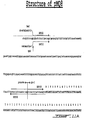
- Eight cosmids (represented by medium bold lines) were selected as candidates for transformation rescue (Fig. 1B).
- Those which were capable of rescuing the gro-1(e2400) mutant phenotype are represented as heavy bold lines (Fig. 1B).
- pMQ2 One subclone pMQ2, spanned 3.9 kb and was also able to completely rescue the growth rate defect and recapitulate the maternal effect.
- the sequences in pMQ2 potentially encodes two genes.
- pMQ3 a second subclone, which contained only the first of the potential genes (named ZC395.7 in Fig. 2A), was unable to rescue.
- pMQ2 was generated by deleting a 29.9 kb Spe I fragment from ZC395, leaving the left-most 3.9 kb region containing the predicted genes ZC395.7 and ZC395.6 (Fig. 2B).
- pMQ3 was created in the same fashion, by deleting a 31.4 kb NdeI fragment from ZC395, leaving only ZC395.7 intact.
- a frameshift was induced in ZC395.7 by degrading the 4 bp overhang of the Apa I site.
- a frameshift was also induced in pMQ5 by filling in the 2 bp overhang of the NdeI site found in the second exon of ZC395.6. These frameshifts presumably abolish any function of ZC395.7 and ZC395.6 respectively.
- the dotted lines represent the extent of frameshift that resulted from these alterations.
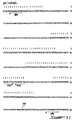
- cDNAs encompassing the 5' and 3' halves of the gene were produced by reverse transcription-PCR and sequenced (Fig. 3).
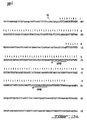
- genomic DNA was amplified by PCR from a strain containing the gro-1(e2400) mutation and the amplified product was sequenced. A lesion was found in the 5th exon, where a 9 base-pair sequence has been replaced by a 2 base-pair insertion, leading to a frameshift (Fig. 3C). Fig. 3C illustrates those residues which differ from wild type are in bold.
- the reading frame continues out-of-frame for another 33 residues before terminating.
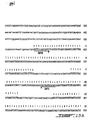
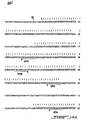
- Figs. 3A-B illustrate the coding sequence in capital letters, while the introns, and the untranslated and intergenic sequence are in lower case letters.
- the protein sequence is shown underneath the coding sequence.
- Position 1 of the nucleotide sequence is the first base after the SL2 trans-splice acceptor sequence.
- Position 1 of the protein sequence is the initiator methionine.
- All PCR primers used for genomic and cDNA amplification are represented by arrows. For primers extending downstream (arrows pointing right) the primer sequence corresponds exactly to the nucleotides over which the arrow extends. But for primers extending upstream (arrows pointing left) the primer sequence is actually the complement of the sequence under the arrow.
- the sequence of the two primers which flank gro-1 (SHP93 and SHP92) are not represented in this figure. Their sequences are: SHP93 TTTCTGGATTTTAACCTTCC (SEQ. ID. N0:10) and SHP92 GATAGTTCCCTTCGTTCGGG (SEQ. ID. NO:9).
- the wild type splicing pattern was determined by sequencing of the cDNA. Identification of the e2400 lesion was accomplished by sequencing the e2400 allele. The e2400 lesion consists of a 9 bp deletion and a 2 bp insertion at position 1196, resulting in a frameshift.
- gro-1 is part of a complex operon (Figs. 3A-3B)
- SL2 is used for trans-splicing to the downstream gene when two genes are organized into an operon ( Spieth et al., Cell 73: 521-532 (1993) ; Zorio et al., Nature 372: 270-272 (1994) ). This indicates that at least one gene upstream of gro-1 is co-transcribed with gro-1 from a common promoter.
- Fig. 4A illustrates a schematic of the gro-1 operon showing the coding sequences of each gene and the primers (represented by flags) used to establish the trans-splicing patterns.
- Fig. 4B illustrates the products of the PCR with SL1 and SL2 specific primers for each of the five genes.
- the sequences of the primers used are as follows: SL1: TTTAATTACCCAAGTTTGAG (SEQ. ID. NO:61), SL2: TTTTAACCCAGTTACTCAAG (SEQ. ID. NO:62), SHP141: AAAACTTCTACCAACAATGG (SEQ. ID. NO:30), SHP142: CGTAATCTCTCTCGATTAGC (SEQ. ID. NO:31), SHP143: CCGTGGGATGGCTACTTGCC (SEQ. ID. NO:32), SHP144: TGGATTTGTGGCACGAGCGG (SEQ. ID.
- SHP145 TTGATTGCCTCTCCTCGTCC (SEQ. ID. NO:34), SHP146: ATCAACATCTGATTGATTCC (SEQ. ID. NO:35), SHP130: CATCCAAAAGGAGTATCACC (SEQ. ID. NO:24), SHP119: ACATCTTTATCCATTTCTCC (SEQ. ID. NO:21), SHP95: TACAGGAATTTTTGAACGGG (SEQ. ID. NO:12), SHP99: ATCGATACCACCGTCTCTGG (SEQ. ID. NO:16).
- hap-1 The gene immediately upstream of gro-1, has homology to the yeast gene HAM1, and we have renamed the gene hap-1.
- sequences which were predicted to belong to ZC395.7 now hap-1) are in fact spliced to the exons of C34E10.1. This is consistent with our finding that hap-1 is SL2 spliced as it puts the end of the C34E10.1 very close to the start of hap-1 (Fig. 4).
- gro-1 transcript encodes a protein of 430 amino acids highly similar to a strongly conserved cellular enzyme: dimethylallyldiphosphate:tRNA dimethylallyltransferase (DMAPP transferase).
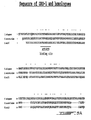
- Fig. 5 shows an alignment of gro-1 with the published sequences of the E . coli (P16384) and yeast (P07884) enzymes. Residues where the biochemical character of the amino acids is conserved are shown in bold. Identical amino acids are indicated further with a dot. The ATP/GTP binding site and the C2H2 zinc finger site are predicted and not experimental. The point at which the gro-1(e2400) mutation alters the reading frame of the sequence is shown. The two alternative initiator methionines in the yeast sequence, and the putative corresponding methionines in the worm sequence, are underlined.
- DMAPP transferase catalyzes the modification of adenosine 37 of tRNAs whose anticodon begins with U (Fig. 6).
- dimethylallyldiphosphate as a donor to generate dimethylallyl-adenosine (dma 6 A37), one base 3' to the anticodon
- dimethylallyldiphosphate as a donor to generate dimethylallyl-adenosine (dma 6 A37)
- one base 3' to the anticodon for review and biochemical characterization of the bacterial enzyme see Persson et al., Biochimie 76: 1152-1160 (1994) ; Leung et al., J Biol Chem 272: 13073-13083 (1997) ; Moore and Poulter, Biochemistry 36:604-614 (1997 )).
- this modification is often referred to as isopentenyl adenosine (i 6 A37).
- the high degree of conservation of the protein sequence between GRO-1 and DMAPP in S . cerevisiae and E. coli suggest that GRO-1 possesses the same enzymatic activity as the previously characterized genes.
- the sequence contains a number of conserved structural motifs (Fig. 5), including a region with an ATP/GTP binding motif which is generally referred to as the 'A' consensus sequence ( Walker et al., EMBO J 1: 945-951 (1982) ) or the 'P-loop' ( Saraste et al., Trends Biochem Sci 15: 430-434 (1990) ).
- yeast DMAPP transferase is the product of the MOD5 gene, and exists in two forms: one form which is targeted principally to the mitochondria, and one form which is found in the cytoplasm and nucleus. These two forms differ only by a short N-terminal sequence whose presence or absence is determined by differential translation initiation at two "in frame" ATG codons. ( Gillman et al., Mol & Cell Biol 11: 2382-90 (1991 )). The gro -1 open reading frame also contains two ATG codons at comparable positions, with the coding sequence between the two codons constituting a plausible mitochondrial sorting signal (Figs. 3 and 5). It is likely therefore that DMAPP transferase in worms also exists in two forms, mitochondrial and cytoplasmic.
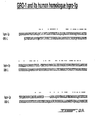
- the sequence of hgro-1 shows only one in-frame methionine before the conserved ATP/GTP binding site (Fig. 9). As we cannot be assured to have determined the sequence of the full length transcript, it is possible that further 5' sequence might reveal an additional methionine. Alternatively, in humans, the mechanism by which the enzyme is targeted to several compartments might not involved differential translation initiation. In this context, it should be noted that the sorting signals which can be predicted from the sequence of hgro-1p are predicted to be highly ambiguous by the prediction program PSORT II.
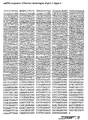
- the promotor of the reporter gene is the sequence upstream of gop-1 (Figs. 13A-13C), the first gene in the operon (see Fig. 4).
- the promotor sequence is 306 bp long starting 32 nucleotides upstream of the gop-1 ATG. It is fused at the exact level upstream of gro-1 where trans-splicing to SL2 normally occurs.
- the genes gop-2 (Fig. 14) and gop-3 (Figs. 15A-15B) are also located in the operon (see Fig. 4), the second and third genes in the operon.
- the reporter construct fully rescues the phenotype of a gro-1(e2400) mutant upon injection and extrachromosomal array formation, indicating that the fusion to the GFP moiety does not significantly inhibit the function of GRO-1. Fluorescent microscopy indicated that gro-1 is expressed in most or all somatic cells. Furthermore, the GRO-1::GFP fusion protein is localized in the mitochondria, in the cytoplasm as well as in the nucleus.
- hap-1 is homologous to the yeast gene HAM1 as well as to sequences in many organisms including bacteria and mammals (Fig. 7).
- the origin of the worm and yeast sequence is as described above and below.
- the human sequence was inferred from a cDNA sequence assembled from expressed sequence tags (ESTs); the accession numbers of the sequences used were: AA024489, AA024794, AA025334, AA026396, AA026452, AA026502, AA026503, AA026611, AA026723, AA035035, AA035523, AA047591, AA047599, AA056452, AA115232, AA115352, AA129022, AA129023, AA159841, AA160353, AA204926, AA226949, AA227197 and D20115.
- the E . coli sequence is a predicted gene (accession 1723866).
- HAP 6-N-hydroxylaminopurine
- Mutations in miaA the bacterial homologue of gro-1, show multiple phenotypes and affect cellular growth in complex ways. For example, in Salmonella typhimurium , such mutations result in 1) a decreased efficacy of suppression by some suppressor tRNA, 2) a slowing of ribosomal translation, 3) slow growth under various nutritional conditions, 4) altered regulation of several amino acid biosynthetic operons, 5) sensitivity to chemical oxidants and 6) temperature sensitivity for aerobic growth ( Ericson and Björk, J. Bacteriol. 166: 1013-1021 (1986) ; Blum, J. Bacteriol. 170: 5125-5133 (1988) ).
- MiaAp appears to be important in the regulation of multiple parallel processes of cellular physiology.
- gro-1 and the other genes with a Clk phenotype, regulate many disparate physiological and metabolic processes in C . elegans ( Wong et al., Genetics 139: 1247-1259 (1995) ; Lakowski and Hekimi, Science 272: 1010-1013 (1996) ; Ewbank et al., Science 275: 980-983 (1997) ).
- miaA mutations increase the frequency of spontaneous mutations ( Connolly and Winkler, J Bacteriol 173(5): 1711-21 (1991) ; Connolly and Winkler, J Bacteriol 171: 3233-46 (1989) ).
- gro-1(e2400) also increases the frequency of spontaneous mutations in worms.
- Attenuation is a phenomenon by which the transcription of a gene is interrupted depending on the rate at which ribosomes can translate the nascent transcript. Ribosomal translation is slowed in miaA mutants, and thus, through an effect on attenuation, could affect the expression of many genes whose expression is regulated by attenuation.
- gro - 1 ( e 2400) also produces pleiotropic effects and, in addition, displays a maternal-effect, suggesting that it is involved in a regulatory process ( Wong et al., Genetics 139: 1247-1259 (1995) .
- attenuation involves the co-transcriptional translation of nascent transcripts, which is not possible in eukaryotic cells were transcription and translation are spatially separated by the nuclear membrane. If the basis of the pleiotropy in miaA and gro-1 is the same, then a mechanism distinct from attenuation has to be involved. Below we argue that this mechanism could be the modification by DMAPP transferase of adenine residues in DNA in addition to modification of tRNAs.
- gro-1 can be rescued by a maternal effect, so that adult worms homozygous for the mutation, but issued from mother carrying one wild type copy of the gene display a wild type phenotype, in spite of the fact that such adults are up to 1000 fold larger than the egg produced by their mother. It is unlikely that enough wild type product can be deposited by the mother in the egg to rescue a adult which is 1000 times larger. This observation suggests therefore that gro-1 can induce an epigenetic state which is not altered by subsequent somatic growth.
- gro-1 and miaA increase the rate of spontaneous mutations, which is generally suggestive of a role in DNA metabolism, and can be related to the observation that methylation is linked to spontaneous mutagenesis, genome instability, and cancer ( Jones and Gonzalgo, Proc. Natl. Acad. Sci. USA, 94: 2103-2105 (1997) ).
- gro-1 contains a zinc finger, a nuclei acid binding motif.
- the zinc finger could bind tRNAs, but as it is in the C-terminal domain of gro-1 and human hgro-1 that has no equivalent in miaA, it is clearly not necessary for the basic enzymatic function. We speculate that it might be necessary to increase the specificity of DNA binding in the large metazoan genome.
- Mod5p which is localized to mitochondria also has the opportunity to bind and possibly modify DNA as it has access to the mitochondrial genome. See the previous section entitled "A role for gro-1 in a central mechanism of physiological coordination" for an alternative possibility as to the function of GRO-1 in the nucleus.
- miaA and gro-1 are found in complex operons
- gro-1 is part of a complex operon of five genes (Fig. 4). It is believed that genes are regulated coordinately by single promoters when they participate in a common function ( Spieth et al., Cell 73: 521-532 (1993) ). In some cases, this is well documented. For example, the proteins LIN-15A and LIN-15B which are both required for vulva formation in C. elegans, are unrelated products from two genes transcribed in a common operon ( Huang et al., Mol Biol Cell 5(4): 395-411 (1994) ).
- hap-1 whose yeast homologue has been shown to be involved in the control of mutagenesis ( Nostov et al., Yeast 12: 17-29 (1996) ).
- gro-1 modifies DNA
- it suggest an involvement of hap-1 in this or similar processes.
- the presence in the same operon also suggest that all five genes might collaborate in a common function.
- the phenotype of gro-1 suggests that this function is regulatory.
- miaA also is part of a particularly complex operon ( Tsui and Winkler, Biochimie 76: 1168-1177 (1994) ), although, except for miaAlgro-1, there are no other homologous genes in the two operons.
- clk-1 encodes a mitochondrial protein (unpublished observations), and its homologue in yeast has also been shown to be mitochondrial ( Jonassen, T (1998) Journal of Biological Chemistry 273:3351-3357 ).
- the yeast clk-1 homologue is involved in the regulation of the biosynthesis of ubiquinone ( Marbois, B.N. and Clarke, C.F. (1996) Journal of Biological Chemistry 271:2995-3004 ).
- Ubiquinone also called coenzyme Q, is central to the production of ATP in mitochondria.
- clk-1 is not strictly required for respiration. How might gro-1 fit into this picture?
- dimethylallyldiphosphate is known to be the precursor of the lipid side-chain of ubiquinone.
- ubiquinone is the major lipid made from DMAPP.
- cholesterol and its derivatives are also made from DMAPP.
- C. elegans requires cholesterol in the growth medium for optimal growth. This link, however, remains tenuous, in particular in the absence of an understanding of the biochemical function of CLK-1.
- the adenosine modification carried out by DMAPP transferase is only the first step in a series of further modification of this base ( Persson et al., Biochimie 76: 1152-1160 (1994 )). These additional modifications have been proposed to play the role of a sensor for the metabolic state of the cell ( Buck and Ames, Cell 36: 523-531 (1984 ); Persson and Björk, J. Bacteriol. 175: 7776-7785 (1993 )).
- the synthesis of 2-methylthio-cis-ribozeatin is carried out by a hydroxylase encoded by the gene miaE. When the cells lack miaE they become incapable of using intermediates of the citric acid cycle such as fumarate and malate as the sole carbon source.
- GRO-1 could act in the crosstalk between nuclear and mitochondrial genomes.
- the nuclear and mitochondrial genomes both contribute gene products to the mitochondrion energy-producing machinery and these physically separate genomes must therefore exchange information somehow to coordinate their contributions (reviewed in Poyton, R.O. and McEwen J.E. (1996) Annu. Rev. Biochem. 65:563-607 ).
- the energy producing activity of the mitochondria is essential to the rest of the cell, and the needs of a particular cell at a particular time must be somehow convey to the organelle to regulate its activity.
- GRO-1 could participate in this coordination in the following manner. GRO-1 is found in three compartments, the nucleus, the cytoplasm and the mitochondria (see above), and thus has the opportunity to regulate gene expression in more that one way.
- GRO-1 could partition between the mitochondria and the nucleus and its relative distribution could be determined by the amount of RNA (or mtDNA) in the mitochondria ( Parikh, V.S. et al. (1987) Science 235:576-580 ). For example, if the cell is rich in mitochondria, much GRO-1 will be bound there which could result in a relative depletion of activity in the cytoplasm with regulatory consequences on the translation machinery. Binding of GRO-1 in the nucleus could have similar consequences and provide information about nuclear gene expression to the translation machinery.
Landscapes
- Life Sciences & Earth Sciences (AREA)
- Chemical & Material Sciences (AREA)
- Health & Medical Sciences (AREA)
- Genetics & Genomics (AREA)
- Organic Chemistry (AREA)
- Zoology (AREA)
- Engineering & Computer Science (AREA)
- Bioinformatics & Cheminformatics (AREA)
- Wood Science & Technology (AREA)
- Microbiology (AREA)
- Biotechnology (AREA)
- Biomedical Technology (AREA)
- Molecular Biology (AREA)
- Biochemistry (AREA)
- General Engineering & Computer Science (AREA)
- General Health & Medical Sciences (AREA)
- Medicinal Chemistry (AREA)
- Micro-Organisms Or Cultivation Processes Thereof (AREA)
- Peptides Or Proteins (AREA)
- Saccharide Compounds (AREA)
- Medicines That Contain Protein Lipid Enzymes And Other Medicines (AREA)
- Measuring Or Testing Involving Enzymes Or Micro-Organisms (AREA)
Claims (19)
- Isoliertes Polynucleotid, das ein Polypeptid mit der Aminosäuresequenz, codiert durch die Nucleotidsequenz von SEQ ID NO:3, codiert oder ein Komplement des Polynucleotids.
- Isoliertes Polynucleotid nach Anspruch 1 mit einer Nucleotidsequenz von SEQ ID NO:3 oder einem Komplement davon.
- Fragment des Polypeptids, codiert durch das isolierte Polypeptid von Anspruch 1, wobei das Fragment mindestens einen Phänotyp in einer gro-1 (e2400)-C.-elegans-Mutante retten kann.
- Polynucleotid nach Anspruch 1 oder 2, weiterhin umfassend eine oder mehrere Nucleotidsequenzen, codierend ein heterologes Polypeptid.
- Polynucleotid nach Anspruch 4, wobei das heterologe Polypeptid grün fluoreszierendes Protein (GFP) ist.
- Gro-1-Protein, codiert durch das Polynucleotid nach Anspruch 1 oder 2.
- Gop-3-Gen, welches für ein gop-3-Protein mit der Aminosäuresequenz, angegeben in SEQ ID NO:6, codiert; wobei das gop-3-Gen sich in dem gro-1-Operon befindet und das gop-3-Gen transkriptionell mit dem gro-1-Gen, vorhanden in dem Operon, coexprimiert wird.
- Hap-1-Gen, welches für ein hap-1-Protein mit der Aminosäuresequenz, angegeben in SEQ ID NO:7, codiert; wobei sich das hap-1-Gen in dem gro-1-Operon befindet und das hap-1-Gen transkriptionell mit dem gro-1-Gen, vorhanden in dem Operon, coexprimiert wird.
- Mutantes gro-1-Protein, umfassend die Aminosäuresequenz von HAEYINHSKYGVTLVLKNSFHGSIWTHQKWIHSMGINCSSKDAMM.
- Gro-1-Protein mit der Aminosäuresequenz von SEQ ID NO:2.
- Gop-3-Protein, codiert durch das Gen gemäß Anspruch 7, wobei das Protein die Aminosäuresequenz, angegeben in SEQ ID NO:6, hat.
- Hap-1-Protein, codiert durch das Gen gemäß Anspruch 8, wobei das Protein die Aminosäuresequenz, angegeben in SEQ ID NO:7, hat.
- Verfahren für die Diagnose und/oder Prognose von Krebs in einer Probe von einem Patienten, welches Analysieren von DNA des Patienten in der Probe umfasst, um zu bestimmen, ob die humane gro-1-Gensequenz im Vergleich zu der humanen gro-1-Nucleotidsequenz, angegeben in SEQ ID NO:3, verändert ist, wobei Veränderung des humanen gro-1-Gens ein Anzeichen von Krebs ist.
- Maus, welche ein Gen-Knockout des murinen gro-1-Gens umfasst, das homolog zu dem Polypeptid von Anspruch 1 oder 2 ist.
- Verwendung eines Phosphatnucleotids für die Herstellung eines Medikaments zum Beeinträchtigen der enzymatischen Aktivität von gro-1 nach Anspruch 6 oder 10.
- Vektor, umfassend das Polynucleotid nach Anspruch 1, 2, 4 oder 5.
- Vektor, umfassend das Gen nach Anspruch 7 oder 8.
- Vektor nach Anspruch 16 oder 17, der ein Expressionsvektor ist.
- Wirtszelle, welche den Vektor nach Anspruch 16 oder 17 umfasst.
Applications Claiming Priority (3)
| Application Number | Priority Date | Filing Date | Title |
|---|---|---|---|
| CA2210251 | 1997-08-25 | ||
| CA002210251A CA2210251A1 (en) | 1997-08-25 | 1997-08-25 | The c. elegans clock gene gro-1 |
| PCT/CA1998/000803 WO1999010482A1 (en) | 1997-08-25 | 1998-08-20 | The c. elegans gro-1 gene |
Publications (2)
| Publication Number | Publication Date |
|---|---|
| EP1009813A1 EP1009813A1 (de) | 2000-06-21 |
| EP1009813B1 true EP1009813B1 (de) | 2007-06-20 |
Family
ID=4161052
Family Applications (1)
| Application Number | Title | Priority Date | Filing Date |
|---|---|---|---|
| EP98940027A Expired - Lifetime EP1009813B1 (de) | 1997-08-25 | 1998-08-20 | Die auf der physiologischen uhr bezogenen gene gro-1, gop-2, gop-2, gop-3, und hap-1 |
Country Status (7)
| Country | Link |
|---|---|
| EP (1) | EP1009813B1 (de) |
| AT (1) | ATE365207T1 (de) |
| AU (1) | AU735436B2 (de) |
| CA (1) | CA2210251A1 (de) |
| DE (1) | DE69837967D1 (de) |
| NZ (1) | NZ503078A (de) |
| WO (1) | WO1999010482A1 (de) |
Families Citing this family (5)
| Publication number | Priority date | Publication date | Assignee | Title |
|---|---|---|---|---|
| US8642284B1 (en) | 1999-12-15 | 2014-02-04 | Massachusetts Institute Of Technology | Methods for identifying agents that alter NAD-dependent deacetylation activity of a SIR2 protein |
| US7452664B2 (en) | 1999-12-15 | 2008-11-18 | Massachusetts Institute Of Technology | Methods for identifying agents which alter histone protein acetylation |
| WO2002059310A2 (en) | 2000-12-12 | 2002-08-01 | University Of Connecticut | Polynucleotides encoding cellular transporters and methods of use thereof |
| US7572575B2 (en) | 2000-12-13 | 2009-08-11 | Massachusetts Institute Of Technology | SIR2 activity |
| US20070099830A1 (en) | 2005-04-21 | 2007-05-03 | Massachusetts Institute Of Technology | Sirt4 activities |
-
1997
- 1997-08-25 CA CA002210251A patent/CA2210251A1/en not_active Abandoned
-
1998
- 1998-08-20 EP EP98940027A patent/EP1009813B1/de not_active Expired - Lifetime
- 1998-08-20 AU AU88495/98A patent/AU735436B2/en not_active Ceased
- 1998-08-20 AT AT98940027T patent/ATE365207T1/de not_active IP Right Cessation
- 1998-08-20 NZ NZ503078A patent/NZ503078A/en unknown
- 1998-08-20 WO PCT/CA1998/000803 patent/WO1999010482A1/en not_active Ceased
- 1998-08-20 DE DE69837967T patent/DE69837967D1/de not_active Expired - Lifetime
Also Published As
| Publication number | Publication date |
|---|---|
| NZ503078A (en) | 2002-06-28 |
| AU8849598A (en) | 1999-03-16 |
| ATE365207T1 (de) | 2007-07-15 |
| DE69837967D1 (de) | 2007-08-02 |
| EP1009813A1 (de) | 2000-06-21 |
| AU735436B2 (en) | 2001-07-05 |
| CA2210251A1 (en) | 1999-02-25 |
| WO1999010482A1 (en) | 1999-03-04 |
Similar Documents
| Publication | Publication Date | Title |
|---|---|---|
| Dahl et al. | A testis-specific form of the human pyruvate dehydrogenase E1α subunit is coded for by an intronless gene on chromosome 4 | |
| Chitnis et al. | Structure and targeted mutagenesis of the gene encoding 8-kDa subunit of photosystem I from the cyanobacterium Synechocystis sp. PCC 6803 | |
| Epstein et al. | A mutation within intron 3 of the Pax-3 gene produces aberrantly spliced mRNA transcripts in the splotch (Sp) mouse mutant. | |
| White et al. | PUM2, a novel murine puf protein, and its consensus RNA-binding site. | |
| Mashimo et al. | Structural and functional genomics and evolutionary relationships in the cluster of genes encoding murine 2′, 5′-oligoadenylate synthetases | |
| Yee et al. | Mutation of RNA Pol III subunit rpc2/polr3b leads to deficiency of subunit Rpc11 and disrupts zebrafish digestive development | |
| Bell et al. | Genomic structure, chromosomal location, and evolution of the mouse Hox 8 gene | |
| Jaramillo-Lambert et al. | Rapid and efficient identification of Caenorhabditis elegans legacy mutations using Hawaiian SNP-based mapping and whole-genome sequencing | |
| Yu et al. | Constitutive expression, not a particular primary sequence, is the important feature of the H3 replacement variant hv2 in Tetrahymena thermophila | |
| EP4065702A1 (de) | System und verfahren für zur aktivierung von genexpression | |
| Yamamoto et al. | An Arabidopsis cDNA related to animal phosphoinositide-specific phospholipase C genes | |
| Ackermann et al. | The catalytic subunit α′ gene of human protein kinase CK2 (CSNK2A2): Genomic organization, promoter identification and determination of Ets1 as a key regulator | |
| CN117363595A (zh) | 一种rna甲基化的编辑系统及其应用 | |
| AU735436B2 (en) | The C. elegans Gro-1 gene | |
| Del Gaudio et al. | Organization and nucleotide sequence of the cluster of five histone genes in the polichaete worm Chaetopterus variopedatus: first record of a H1 histone gene in the phylum annelida | |
| KING et al. | A conserved motif in the yeast nucleolar protein Nop2p contains an essential cysteine residue | |
| Mashimo et al. | Innate resistance to flavivirus infections and the functions of 2′-5′ oligoadenylate synthetases | |
| US6949378B1 (en) | C. elegans gro-1 gene | |
| Da Lage et al. | Molecular characterization and evolution of the amylase multigene family of Drosophila ananassae | |
| Zhao et al. | Cloning and characterization of human DDX24 and mouse Ddx24, two novel putative DEAD-Box proteins, and mapping DDX24 to human chromosome 14q32 | |
| Leroux et al. | Characterization of four new tcp-1-related cct genes from the nematode Caenorhabditis elegans | |
| Cheng et al. | Characterization of a heat-shock-inducible hsp70 gene of the green alga Volvox carteri | |
| Houle et al. | The Drosophila ortholog of the human XPG gene | |
| CA2301696A1 (en) | The c. elegans gro-1 gene | |
| MXPA00001948A (en) | The c. elegans gro-1 gene |
Legal Events
| Date | Code | Title | Description |
|---|---|---|---|
| PUAI | Public reference made under article 153(3) epc to a published international application that has entered the european phase |
Free format text: ORIGINAL CODE: 0009012 |
|
| 17P | Request for examination filed |
Effective date: 20000225 |
|
| AK | Designated contracting states |
Kind code of ref document: A1 Designated state(s): AT BE CH CY DE DK ES FI FR GB GR IE IT LI LU MC NL PT SE |
|
| 17Q | First examination report despatched |
Effective date: 20031117 |
|
| GRAP | Despatch of communication of intention to grant a patent |
Free format text: ORIGINAL CODE: EPIDOSNIGR1 |
|
| RIC1 | Information provided on ipc code assigned before grant |
Ipc: A01K 67/027 20060101ALI20060911BHEP Ipc: C12Q 1/68 20060101ALI20060911BHEP Ipc: C12N 9/10 20060101AFI20060911BHEP |
|
| GRAS | Grant fee paid |
Free format text: ORIGINAL CODE: EPIDOSNIGR3 |
|
| GRAA | (expected) grant |
Free format text: ORIGINAL CODE: 0009210 |
|
| AK | Designated contracting states |
Kind code of ref document: B1 Designated state(s): AT BE CH CY DE DK ES FI FR GB GR IE IT LI LU MC NL PT SE |
|
| PG25 | Lapsed in a contracting state [announced via postgrant information from national office to epo] |
Ref country code: LI Free format text: LAPSE BECAUSE OF FAILURE TO SUBMIT A TRANSLATION OF THE DESCRIPTION OR TO PAY THE FEE WITHIN THE PRESCRIBED TIME-LIMIT Effective date: 20070620 Ref country code: CH Free format text: LAPSE BECAUSE OF FAILURE TO SUBMIT A TRANSLATION OF THE DESCRIPTION OR TO PAY THE FEE WITHIN THE PRESCRIBED TIME-LIMIT Effective date: 20070620 |
|
| REG | Reference to a national code |
Ref country code: GB Ref legal event code: FG4D |
|
| REG | Reference to a national code |
Ref country code: CH Ref legal event code: EP |
|
| REG | Reference to a national code |
Ref country code: IE Ref legal event code: FG4D |
|
| REF | Corresponds to: |
Ref document number: 69837967 Country of ref document: DE Date of ref document: 20070802 Kind code of ref document: P |
|
| PG25 | Lapsed in a contracting state [announced via postgrant information from national office to epo] |
Ref country code: SE Free format text: LAPSE BECAUSE OF FAILURE TO SUBMIT A TRANSLATION OF THE DESCRIPTION OR TO PAY THE FEE WITHIN THE PRESCRIBED TIME-LIMIT Effective date: 20070920 |
|
| PG25 | Lapsed in a contracting state [announced via postgrant information from national office to epo] |
Ref country code: AT Free format text: LAPSE BECAUSE OF FAILURE TO SUBMIT A TRANSLATION OF THE DESCRIPTION OR TO PAY THE FEE WITHIN THE PRESCRIBED TIME-LIMIT Effective date: 20070620 |
|
| NLV1 | Nl: lapsed or annulled due to failure to fulfill the requirements of art. 29p and 29m of the patents act | ||
| REG | Reference to a national code |
Ref country code: CH Ref legal event code: PL |
|
| PG25 | Lapsed in a contracting state [announced via postgrant information from national office to epo] |
Ref country code: BE Free format text: LAPSE BECAUSE OF FAILURE TO SUBMIT A TRANSLATION OF THE DESCRIPTION OR TO PAY THE FEE WITHIN THE PRESCRIBED TIME-LIMIT Effective date: 20070620 |
|
| PG25 | Lapsed in a contracting state [announced via postgrant information from national office to epo] |
Ref country code: PT Free format text: LAPSE BECAUSE OF FAILURE TO SUBMIT A TRANSLATION OF THE DESCRIPTION OR TO PAY THE FEE WITHIN THE PRESCRIBED TIME-LIMIT Effective date: 20071120 Ref country code: NL Free format text: LAPSE BECAUSE OF FAILURE TO SUBMIT A TRANSLATION OF THE DESCRIPTION OR TO PAY THE FEE WITHIN THE PRESCRIBED TIME-LIMIT Effective date: 20070620 Ref country code: ES Free format text: LAPSE BECAUSE OF FAILURE TO SUBMIT A TRANSLATION OF THE DESCRIPTION OR TO PAY THE FEE WITHIN THE PRESCRIBED TIME-LIMIT Effective date: 20071001 |
|
| EN | Fr: translation not filed | ||
| PLBE | No opposition filed within time limit |
Free format text: ORIGINAL CODE: 0009261 |
|
| STAA | Information on the status of an ep patent application or granted ep patent |
Free format text: STATUS: NO OPPOSITION FILED WITHIN TIME LIMIT |
|
| PG25 | Lapsed in a contracting state [announced via postgrant information from national office to epo] |
Ref country code: MC Free format text: LAPSE BECAUSE OF NON-PAYMENT OF DUE FEES Effective date: 20070831 Ref country code: IT Free format text: LAPSE BECAUSE OF FAILURE TO SUBMIT A TRANSLATION OF THE DESCRIPTION OR TO PAY THE FEE WITHIN THE PRESCRIBED TIME-LIMIT Effective date: 20070620 Ref country code: GR Free format text: LAPSE BECAUSE OF FAILURE TO SUBMIT A TRANSLATION OF THE DESCRIPTION OR TO PAY THE FEE WITHIN THE PRESCRIBED TIME-LIMIT Effective date: 20070921 Ref country code: DK Free format text: LAPSE BECAUSE OF FAILURE TO SUBMIT A TRANSLATION OF THE DESCRIPTION OR TO PAY THE FEE WITHIN THE PRESCRIBED TIME-LIMIT Effective date: 20070620 Ref country code: DE Free format text: LAPSE BECAUSE OF FAILURE TO SUBMIT A TRANSLATION OF THE DESCRIPTION OR TO PAY THE FEE WITHIN THE PRESCRIBED TIME-LIMIT Effective date: 20070924 |
|
| 26N | No opposition filed |
Effective date: 20080325 |
|
| GBPC | Gb: european patent ceased through non-payment of renewal fee |
Effective date: 20070920 |
|
| PG25 | Lapsed in a contracting state [announced via postgrant information from national office to epo] |
Ref country code: FR Free format text: LAPSE BECAUSE OF FAILURE TO SUBMIT A TRANSLATION OF THE DESCRIPTION OR TO PAY THE FEE WITHIN THE PRESCRIBED TIME-LIMIT Effective date: 20080222 |
|
| PG25 | Lapsed in a contracting state [announced via postgrant information from national office to epo] |
Ref country code: IE Free format text: LAPSE BECAUSE OF NON-PAYMENT OF DUE FEES Effective date: 20070820 |
|
| PG25 | Lapsed in a contracting state [announced via postgrant information from national office to epo] |
Ref country code: GB Free format text: LAPSE BECAUSE OF NON-PAYMENT OF DUE FEES Effective date: 20070920 |
|
| PG25 | Lapsed in a contracting state [announced via postgrant information from national office to epo] |
Ref country code: FI Free format text: LAPSE BECAUSE OF FAILURE TO SUBMIT A TRANSLATION OF THE DESCRIPTION OR TO PAY THE FEE WITHIN THE PRESCRIBED TIME-LIMIT Effective date: 20070620 |
|
| PG25 | Lapsed in a contracting state [announced via postgrant information from national office to epo] |
Ref country code: CY Free format text: LAPSE BECAUSE OF FAILURE TO SUBMIT A TRANSLATION OF THE DESCRIPTION OR TO PAY THE FEE WITHIN THE PRESCRIBED TIME-LIMIT Effective date: 20070620 |
|
| PG25 | Lapsed in a contracting state [announced via postgrant information from national office to epo] |
Ref country code: LU Free format text: LAPSE BECAUSE OF NON-PAYMENT OF DUE FEES Effective date: 20070820 |