EP1002768B1 - Method and apparatus for sludge reduction in a waste water treatment system - Google Patents
Method and apparatus for sludge reduction in a waste water treatment system Download PDFInfo
- Publication number
- EP1002768B1 EP1002768B1 EP19980309529 EP98309529A EP1002768B1 EP 1002768 B1 EP1002768 B1 EP 1002768B1 EP 19980309529 EP19980309529 EP 19980309529 EP 98309529 A EP98309529 A EP 98309529A EP 1002768 B1 EP1002768 B1 EP 1002768B1
- Authority
- EP
- European Patent Office
- Prior art keywords
- solubilization
- nitrification
- denitrification
- waste water
- returning
- Prior art date
- Legal status (The legal status is an assumption and is not a legal conclusion. Google has not performed a legal analysis and makes no representation as to the accuracy of the status listed.)
- Expired - Lifetime
Links
Images

Classifications
-
- C—CHEMISTRY; METALLURGY
- C02—TREATMENT OF WATER, WASTE WATER, SEWAGE, OR SLUDGE
- C02F—TREATMENT OF WATER, WASTE WATER, SEWAGE, OR SLUDGE
- C02F3/00—Biological treatment of water, waste water, or sewage
- C02F3/02—Aerobic processes
- C02F3/12—Activated sludge processes
- C02F3/1205—Particular type of activated sludge processes
- C02F3/1221—Particular type of activated sludge processes comprising treatment of the recirculated sludge
-
- C—CHEMISTRY; METALLURGY
- C02—TREATMENT OF WATER, WASTE WATER, SEWAGE, OR SLUDGE
- C02F—TREATMENT OF WATER, WASTE WATER, SEWAGE, OR SLUDGE
- C02F11/00—Treatment of sludge; Devices therefor
- C02F11/18—Treatment of sludge; Devices therefor by thermal conditioning
-
- C—CHEMISTRY; METALLURGY
- C02—TREATMENT OF WATER, WASTE WATER, SEWAGE, OR SLUDGE
- C02F—TREATMENT OF WATER, WASTE WATER, SEWAGE, OR SLUDGE
- C02F3/00—Biological treatment of water, waste water, or sewage
- C02F3/30—Aerobic and anaerobic processes
- C02F3/302—Nitrification and denitrification treatment
-
- Y—GENERAL TAGGING OF NEW TECHNOLOGICAL DEVELOPMENTS; GENERAL TAGGING OF CROSS-SECTIONAL TECHNOLOGIES SPANNING OVER SEVERAL SECTIONS OF THE IPC; TECHNICAL SUBJECTS COVERED BY FORMER USPC CROSS-REFERENCE ART COLLECTIONS [XRACs] AND DIGESTS
- Y02—TECHNOLOGIES OR APPLICATIONS FOR MITIGATION OR ADAPTATION AGAINST CLIMATE CHANGE
- Y02W—CLIMATE CHANGE MITIGATION TECHNOLOGIES RELATED TO WASTEWATER TREATMENT OR WASTE MANAGEMENT
- Y02W10/00—Technologies for wastewater treatment
- Y02W10/10—Biological treatment of water, waste water, or sewage
-
- Y—GENERAL TAGGING OF NEW TECHNOLOGICAL DEVELOPMENTS; GENERAL TAGGING OF CROSS-SECTIONAL TECHNOLOGIES SPANNING OVER SEVERAL SECTIONS OF THE IPC; TECHNICAL SUBJECTS COVERED BY FORMER USPC CROSS-REFERENCE ART COLLECTIONS [XRACs] AND DIGESTS
- Y10—TECHNICAL SUBJECTS COVERED BY FORMER USPC
- Y10S—TECHNICAL SUBJECTS COVERED BY FORMER USPC CROSS-REFERENCE ART COLLECTIONS [XRACs] AND DIGESTS
- Y10S210/00—Liquid purification or separation
- Y10S210/902—Materials removed
- Y10S210/903—Nitrogenous
-
- Y—GENERAL TAGGING OF NEW TECHNOLOGICAL DEVELOPMENTS; GENERAL TAGGING OF CROSS-SECTIONAL TECHNOLOGIES SPANNING OVER SEVERAL SECTIONS OF THE IPC; TECHNICAL SUBJECTS COVERED BY FORMER USPC CROSS-REFERENCE ART COLLECTIONS [XRACs] AND DIGESTS
- Y10—TECHNICAL SUBJECTS COVERED BY FORMER USPC
- Y10S—TECHNICAL SUBJECTS COVERED BY FORMER USPC CROSS-REFERENCE ART COLLECTIONS [XRACs] AND DIGESTS
- Y10S210/00—Liquid purification or separation
- Y10S210/902—Materials removed
- Y10S210/908—Organic
Definitions
- the present invention relates to a method and an apparatus for treating organic wastes comprising organic solids by means of biological digestion. More specifically, the present invention provides a method and an apparatus for treating organic waste water comprising organic waste sludge which includes, for example, organic sludge containing raw sludge and biological sludge discharged from a sewage treatment plant, a night soil treatment plant or the like, and organic sludge discharged from a waste water treatment process in a food factory, a chemical factory or the like.
- the excess sludge portion is disposed of in the sea or in land-fill sites.
- disposing of such excess sludge in the sea would lead to environmental disruption. Therefore, disposing of excess sludge has almost been prohibited because global atmospheric protection has recently been advocated.
- shore of land-fill it has become increasingly difficult to secure suitable sites year after year.
- the method described in the above publication could be disadvantageous because the temperature in the solubilization device 6 ranges from 60 to 70°C and the top of the solubilization device 6 is open. Therefore, the retained potential heat in the solubilization device 6 may be taken off with the exhaust gas diffused in the atmosphere, thus energy loss can be large. Furthermore, the odour of the exhaust gas containing nitrogen compounds, due to the several proteins usually contained in the sludge, discharged from the solubilization device 6 can be problematic.
- the present invention provides a method and an apparatus wherein organic sludge is biologically treated, characterized in that a gas (gas predominantly containing NH 3 gas) discharged from a solubilization device is introduced into a nitrification device to convert NH 3 into NO 2 - or NO 3 - and to further convert the thus obtained NO 2 - or NO 3 - into N 2 in a denitrification device, thereby reducing the quantity of the nitrogen-containing component in the effluent to be discharged out of the treating system. Therefore, heat of the gas exhausted trom the solubilization device is effectively utilized for the nitrification in the nitrification device, and it is possible to deodorize the exhaust gas diffused into the atmosphere.
- a gas gas predominantly containing NH 3 gas
- Fig. 1 is a schematic diagram showing one embodiment of the apparatus for treating organic waste water of the present invention.
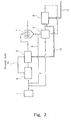
- Fig. 2 is a schematic diagram showing another embodiment of the apparatus for treating organic waste water of the present invention.
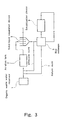
- Fig. 3 is a schematic diagram showing an apparatus for treating organic waste water according to the prior art.
- a method for biologically treating organic waste water comprises solubilizing organic solids at a high temperature in a solubilization device; charging a gas exhausted from the solubilization device into a nitrification device to nitrify the ammonium in the gas; and returning a portion or all of the solution from the solubilization device into a denitrification device as a substrate for denitrifier.
- the second aspect of the present invention is to provide a method for treating organic waste water, which comprises nitrifying the ammonium in the waste water in a nitrification device; introducing the nitrified effluent into a denitrification device to denitrify the nitrified product; subjecting the liquid after denitrification to aerobic biological treatment in an aeration tank; solid-liquid separating this mixture after the biological treatment into a supernatant and a sediment sludge in a solid-liquid separation device; returning a portion of this sediment sludge to the nitrification device; solubilizing an excess sludge portion separated by the solid-liquid separation device at a high temperature in a solubilization device and returning the solution after the solubilization treatment to the denitrification device as a substrate for denitrifier; charging a gas exhausted from the solubilization device into the nitrification device to nitrify the ammonium in the gas.
- the third aspect of the present invention is to provide a method for treating organic waste water, which comprises denitrifying organic waste water in a denitrification device; introducing the denitrified effluent into a nitrification device to nitrify the ammonium in the denitrified effluent and returning a portion of the nitrified mixture in the nitrification device into the denitrification device to denitrify the nitrified product while solid-liquid separating the residue of the nitrified mixture into a supernatant and a sediment sludge in a solid-liquid separation device; returning a portion of this separated sludge into the denitrification device; solubilizing an excess sludge portion separated in the solid-liquid separation device at a high temperature in a solubilization device; returning the solution after the solubilization treatment into the denitrification device as a substrate for denitrifier; and charging a gas exhausted from the solubilization device into the nit
- the forth aspect of the present invention is to provide a method for treating organic waste water of any of the above invention, wherein the solubilization treatment in the solubilization device is performed in a closed reactor.
- the fifth aspect of the present invention is to provide an apparatus for treating organic waste water, comprising a solubilization device for solubilizing organic solids at a high temperature and a nitrification device as a pre- or post-treatment device of a denitrification device, with a return route for returning a portion or all of the solution from the solubilization device to the denitrification device and a passage route for charging a gas exhausted from the solubilization device to the nitrification device.
- the sixth aspect of the present invention is to provide an apparatus for treating organic waste water, comprising a nitrification device, denitrification device, an aeration tank, a solid-liquid separation device and a solubilization device, which are arranged in this order to be connected with each other, with a recycle route for returning a portion of a sludge separated by the solid-liquid separation device to the nitrification device, a return route for returning the solution from the solubilization device to the denitrification device and a passage route for charging a gas exhausted from the solubilization device to the nitrification device.
- the seventh aspect of the present invention is to provide an apparatus for treating organic waste water, comprising a denitrification device, a nitrification device, a solid-liquid separation device and a solubilization device, which are arranged in this order to be connected with each other, with a return route for returning a portion of the nitrified liquid from the nitrification device to the denitrification device, a recycle route for returning a portion of a sludge separated by the solid-liquid separation to the denitrification device, a return route for returning the solution from the solubilization device to the denitrification device and a passage route for charging a gas exhausted from the solubilization device to the nitrification device.
- Further aspect of the present invention is to provide an apparatus as above mentioned for treating organic waste water, wherein the solubilization device is a closed reactor.
- the NH 4 + component in the organic waste water is converted into NO 2 - or NO 3 - by a nitrifier in a nitrification device, and NO 2 - or NO 3 - is then converted into N 2 by a denitrifier with hydrogen donor in the denitrification device.
- a portion or all of the treated solution solubilized by thermophilic microorganisms in the solubilization device is then returned to the denitrification device and subjected to the identical denitrification treatment as described above. While the solubilization proceeds, a gas exhausted from the solubilization device is charged into the nitrification device and subjected to the identical nitrification treatment as described above.
- Fig. 1 is a schematic diagram showing one example of the apparatus for treating organic waste water of the present invention.
- the identical reference number is assigned to the same portion as that of Fig. 3.
- a nitrification device 8, a denitrification device 9 and an aeration tank 10 are arranged in this order between an organic waste water reservoir 1 and a solid-liquid separation device 3.
- a portion of the sludge separated in the solid-liquid separation device 3 is returned to the nitrification device 8 through a recycle route 4, while the solution from the solubilization device 6 is returned to the denitrification device 9 through a return route 7.
- air charged into the solubilization device 6 through a route 11 is charged into the nitrification device 8 through a passage route 12.
- the nitrification device 8, the denitrification device 9 and the aeration tank 10 of the present invention were a 15 liter, 20 liter and 5 liter square-shaped vessels made of transparent polyvinyl chloride resin, respectively, and the solubilization device 6 was a 2 liter cylindrical container made of glass.
- the aeration tank 2 of the apparatus according to the prior art was a 40 liter square-shaped vessel made of transparent polyvinyl chloride resin and the solubilization device 6 was identical to that of the present invention described above.
- both of the amount of carbon and nitrogen in the treated liquid can be reduced when compared with the method which was conducted using the apparatus of the prior art.
- the effect of reducing the amount of nitrogen is particularly large.
- the odour of the exhaust gas can also be reduced by the method of the present invention, because the gas exhausted from the solubilization device 6 is returned to the nitrification device 8.
- high temperature (50°C) of the gas exhausted from the solubilization device 6 makes it possible to augment the nitrification rate in the nitrification device 8.
- hydrogen donor for example, CH 3 OH and the like
- to be applied in the denitrification device 9 can be reduced because a large amount of the biodegradable organic matter is contained in the solution discharged from the solubilization device 6.
- Fig. 2 is schematic diagram showing another example of an apparatus for treatment of the present invention.
- the denitrification device 9 is provided prior to the nitrification device 8, and the aeration tank is not provided and further, a recycle route 13 from the nitrification device 8 to the denitrification device 9 is provided.
- the nitrification treatment which uses nitrifier in the nitrification device 8 can be smoothly progressed, because the organic matter can be first treated in the denitrification device 9.
- nitrification device and the denitrification device were separately provided in the examples shown in Fig. 1 and Fig. 2. However, they can also be provided integrally.
- a device comprising one tank wherein the lower portion serves as a denitrification device, and the upper portion serves as a nitrification device can be employed.
- solid-liquid separation was performed by gravity sedimentation using a precipitator, but is not limited thereto. Solid-liquid separation may also be performed by centrifugation, membrane separation or the like.
- the present invention as described above can reduce a loss of heat energy, besides, a nitrification rate can be augmented, when a waste water containing an organic sludge is biologically treated. Further, the amount of the hydrogen donor to be applied in the denitrification device can also be reduced and the amount of the organic or inorganic nitrogen compounds in the effluent from the apparatus can be small. Moreover, deodorizing an exhaust gas diffused to the atmosphere can be accomplished.
Landscapes
- Life Sciences & Earth Sciences (AREA)
- Water Supply & Treatment (AREA)
- Hydrology & Water Resources (AREA)
- Engineering & Computer Science (AREA)
- Environmental & Geological Engineering (AREA)
- Chemical & Material Sciences (AREA)
- Organic Chemistry (AREA)
- Biodiversity & Conservation Biology (AREA)
- Microbiology (AREA)
- Thermal Sciences (AREA)
- Physics & Mathematics (AREA)
- Purification Treatments By Anaerobic Or Anaerobic And Aerobic Bacteria Or Animals (AREA)
- Treatment Of Sludge (AREA)
Description
- The present invention relates to a method and an apparatus for treating organic wastes comprising organic solids by means of biological digestion. More specifically, the present invention provides a method and an apparatus for treating organic waste water comprising organic waste sludge which includes, for example, organic sludge containing raw sludge and biological sludge discharged from a sewage treatment plant, a night soil treatment plant or the like, and organic sludge discharged from a waste water treatment process in a food factory, a chemical factory or the like.
- As a method for treating organic wastes as mentioned above, there has hitherto been used methods for biologically digesting organic components in organic sludge by means of aerobic or anaerobic microbial decomposition such as aerobic digestion methods, anaerobic methane fermentation methods or the like to convert organic matter into a gas composition such as carbon dioxide gas, methane gas or the like. Thereafter, the resulting excess sludge containing microbial biomass which predominantly comprises microbial cells, and the sludge comprising untreated residual sludge, which has been generated by the biological digestion of the organic waste water, are suitably treated by means of solid-liquid separation in a precipitation tank. while the resulting liquid portion from the separation is suitably processed, the excess sludge portion is disposed of in the sea or in land-fill sites. However, disposing of such excess sludge in the sea would lead to environmental disruption. Therefore, disposing of excess sludge has almost been prohibited because global atmospheric protection has recently been advocated. Furthermore, in case of land-fill, it has become increasingly difficult to secure suitable sites year after year.
- In view of such circumstances, the applicant has filed a patent application relating to a method and an apparatus for treating an activated sludge, as shown in Figure 3, "comprising subjecting an organic waste water delivered from an organic waste water reservoir 1 to an
aeration tank 2 for aerobic biological treatment; solid-liquid separating thus treated mixture into a supernatant and a sludge in a solid-liquid separation device 3; returning a portion of the sludge separated in the solid-liquid separation device 3 to theaeration tank 2 through arecycle route 4; heat-exchanging the excess sludge obtained by the separation in the solid-liquid separation device 3 using a heat exchanger; solubilizing at a high temperature in asolubilization device 6; and returning the solution to theaeration tank 2 through areturn route 7" (Japanese Laid-Open Patent Publication No. 7-163355). This patent application discloses an invention directed to a method and an apparatus for treating activated sludge, capable of drastically reducing the quantity of the excess sludge produced. - However, the method described in the above publication could be disadvantageous because the temperature in the
solubilization device 6 ranges from 60 to 70°C and the top of thesolubilization device 6 is open. Therefore, the retained potential heat in thesolubilization device 6 may be taken off with the exhaust gas diffused in the atmosphere, thus energy loss can be large. Furthermore, the odour of the exhaust gas containing nitrogen compounds, due to the several proteins usually contained in the sludge, discharged from thesolubilization device 6 can be problematic. - In addition, it is also disadvantageous that a portion of the nitrogen compounds contained in the solution returned from the
solubilization device 6 to theaeration tank 2 is discharged to the outside together with the supernatant discharged from the solid-liquid separation device 3. - It is an object of the present invention to provide a method and an apparatus for treating organic waste water, capable of deodorizing an exhaust gas diffused into an atmosphere, wherein the loss of heat energy is small and organic or inorganic matter containing nitrogen in the treated liquid to be discharged outside can be diminished.
- In order to attain the object mentioned above, the present invention provides a method and an apparatus wherein organic sludge is biologically treated, characterized in that a gas (gas predominantly containing NH3 gas) discharged from a solubilization device is introduced into a nitrification device to convert NH3 into NO2 - or NO3 - and to further convert the thus obtained NO2 - or NO3 - into N2 in a denitrification device, thereby reducing the quantity of the nitrogen-containing component in the effluent to be discharged out of the treating system. Therefore, heat of the gas exhausted trom the solubilization device is effectively utilized for the nitrification in the nitrification device, and it is possible to deodorize the exhaust gas diffused into the atmosphere.
- Fig. 1 is a schematic diagram showing one embodiment of the apparatus for treating organic waste water of the present invention.
- Fig. 2 is a schematic diagram showing another embodiment of the apparatus for treating organic waste water of the present invention.
- Fig. 3 is a schematic diagram showing an apparatus for treating organic waste water according to the prior art.
- As the first aspect of the present invention, a method for biologically treating organic waste water is provided, which comprises solubilizing organic solids at a high temperature in a solubilization device; charging a gas exhausted from the solubilization device into a nitrification device to nitrify the ammonium in the gas; and returning a portion or all of the solution from the solubilization device into a denitrification device as a substrate for denitrifier.
- The second aspect of the present invention is to provide a method for treating organic waste water, which comprises nitrifying the ammonium in the waste water in a nitrification device; introducing the nitrified effluent into a denitrification device to denitrify the nitrified product; subjecting the liquid after denitrification to aerobic biological treatment in an aeration tank; solid-liquid separating this mixture after the biological treatment into a supernatant and a sediment sludge in a solid-liquid separation device; returning a portion of this sediment sludge to the nitrification device; solubilizing an excess sludge portion separated by the solid-liquid separation device at a high temperature in a solubilization device and returning the solution after the solubilization treatment to the denitrification device as a substrate for denitrifier; charging a gas exhausted from the solubilization device into the nitrification device to nitrify the ammonium in the gas.
- The third aspect of the present invention is to provide a method for treating organic waste water, which comprises denitrifying organic waste water in a denitrification device; introducing the denitrified effluent into a nitrification device to nitrify the ammonium in the denitrified effluent and returning a portion of the nitrified mixture in the nitrification device into the denitrification device to denitrify the nitrified product while solid-liquid separating the residue of the nitrified mixture into a supernatant and a sediment sludge in a solid-liquid separation device; returning a portion of this separated sludge into the denitrification device; solubilizing an excess sludge portion separated in the solid-liquid separation device at a high temperature in a solubilization device; returning the solution after the solubilization treatment into the denitrification device as a substrate for denitrifier; and charging a gas exhausted from the solubilization device into the nitrification device to nitrify the ammonium in the gas.
- The forth aspect of the present invention is to provide a method for treating organic waste water of any of the above invention, wherein the solubilization treatment in the solubilization device is performed in a closed reactor.
- The fifth aspect of the present invention is to provide an apparatus for treating organic waste water, comprising a solubilization device for solubilizing organic solids at a high temperature and a nitrification device as a pre- or post-treatment device of a denitrification device, with a return route for returning a portion or all of the solution from the solubilization device to the denitrification device and a passage route for charging a gas exhausted from the solubilization device to the nitrification device.
- The sixth aspect of the present invention is to provide an apparatus for treating organic waste water, comprising a nitrification device, denitrification device, an aeration tank, a solid-liquid separation device and a solubilization device, which are arranged in this order to be connected with each other, with a recycle route for returning a portion of a sludge separated by the solid-liquid separation device to the nitrification device, a return route for returning the solution from the solubilization device to the denitrification device and a passage route for charging a gas exhausted from the solubilization device to the nitrification device.
- The seventh aspect of the present invention is to provide an apparatus for treating organic waste water, comprising a denitrification device, a nitrification device, a solid-liquid separation device and a solubilization device, which are arranged in this order to be connected with each other, with a return route for returning a portion of the nitrified liquid from the nitrification device to the denitrification device, a recycle route for returning a portion of a sludge separated by the solid-liquid separation to the denitrification device, a return route for returning the solution from the solubilization device to the denitrification device and a passage route for charging a gas exhausted from the solubilization device to the nitrification device.
- Further aspect of the present invention is to provide an apparatus as above mentioned for treating organic waste water, wherein the solubilization device is a closed reactor.
- According the above first aspect of the present invention, the NH4 + component in the organic waste water is converted into NO2 - or NO3 - by a nitrifier in a nitrification device, and NO2 - or NO3 - is then converted into N2 by a denitrifier with hydrogen donor in the denitrification device. A portion or all of the treated solution solubilized by thermophilic microorganisms in the solubilization device is then returned to the denitrification device and subjected to the identical denitrification treatment as described above. While the solubilization proceeds, a gas exhausted from the solubilization device is charged into the nitrification device and subjected to the identical nitrification treatment as described above. Thus, a treated liquid containing almost no nitrogen compounds is discharged out of the solid-liquid separation device. Furthermore, since the gas exhausted from the solubilization device is diffused into the atmosphere after being introduced into the nitrification device, the amount of carrying over of heat from the solubilization device is low. Additionally, the odour of the gas diffused into the atmosphere is drastically eliminated.
- In case that an amount of the organic matter which is contained in the raw waste water is not so large, a method wherein the denitrification is carried out after nitrification is preferred, in accordance with the second aspect of the invention.
- However, when the amount of the organic matter which is contained in raw waste water is large, microorganisms which can decompose the organic compounds are increased during the treatment, thus the nitrification by nitrifier is inhibited. Therefore, a method wherein removing the organic matter contained in the raw waste water in the denitrification device is carried out first, and then nitrification is conducted using a nitrifier in the nitrification device is preferred in accordance with the third aspect of the invention. In this case, the treated solution after the nitrification treatment is returned to the denitrification device, thus the treated liquid containing almost no nitrogen compounds can be discharged outside from the solid-liquid separation device.
- Moreover, when the solubilization treatment in the solubilization device is performed in a closed reactor, energy loss can be remarkably reduced because heat in the solubilization device is not diffused into the atmosphere.
- While examples of the present invention are described below, the scope of the present invention should not be restricted thereto.
- Fig. 1 is a schematic diagram showing one example of the apparatus for treating organic waste water of the present invention. The identical reference number is assigned to the same portion as that of Fig. 3. In this first example, a
nitrification device 8, adenitrification device 9 and anaeration tank 10 are arranged in this order between an organic waste water reservoir 1 and a solid-liquid separation device 3. A portion of the sludge separated in the solid-liquid separation device 3 is returned to thenitrification device 8 through arecycle route 4, while the solution from thesolubilization device 6 is returned to thedenitrification device 9 through areturn route 7. Furthermore, air charged into thesolubilization device 6 through aroute 11 is charged into thenitrification device 8 through apassage route 12. Furthermore, the solubilization device in this apparatus is closed. The organic waste water was actually treated using an apparatus in accordance with this first example as constituted above, and also a conventional apparatus for treating an organic waste water according to the prior art shown in Fig. 3. The results are described below. - The
nitrification device 8, thedenitrification device 9 and theaeration tank 10 of the present invention were a 15 liter, 20 liter and 5 liter square-shaped vessels made of transparent polyvinyl chloride resin, respectively, and thesolubilization device 6 was a 2 liter cylindrical container made of glass. On the other hand, theaeration tank 2 of the apparatus according to the prior art was a 40 liter square-shaped vessel made of transparent polyvinyl chloride resin and thesolubilization device 6 was identical to that of the present invention described above. - When the example according to the present invention was carried out, all of the solution from the
solubilization device 6 was returned to thedenitrification device 9, and the gas exhausted from thesolubilization device 6 was introduced into thenitrification device 8. On the other hand, in the treatment apparatus according to the prior art, the solution from thesolubilization device 6 was returned to theaeration tank 2, while the gas exhausted from thesolubilization device 6 was diffused into the atmosphere and subjected to exhaust gas treatment in an additional step. Further, the temperature in thesolubilization device 6 was maintained at about 65°C by a heater (not shown in the Figures). The residence time of the liquid in thesolubilization device 6 was 2.2 days and total residence time in the whole apparatus was 8 days. Changes in the amount of total organic carbon (TOC) and that in the total amount of nitrogen (T-N) are respectively shown in Table 1 below.Raw waste water Prior art Present invention TOC (mg/l 930 75 54 T-N (mg/l) 110 87 14 - As shown in Table 1, according to the present invention, both of the amount of carbon and nitrogen in the treated liquid can be reduced when compared with the method which was conducted using the apparatus of the prior art. The effect of reducing the amount of nitrogen is particularly large. Additionally, the odour of the exhaust gas can also be reduced by the method of the present invention, because the gas exhausted from the
solubilization device 6 is returned to thenitrification device 8. Furthermore, high temperature (50°C) of the gas exhausted from thesolubilization device 6 makes it possible to augment the nitrification rate in thenitrification device 8. In addition, hydrogen donor (for example, CH3OH and the like) to be applied in thedenitrification device 9 can be reduced because a large amount of the biodegradable organic matter is contained in the solution discharged from thesolubilization device 6. - Fig. 2 is schematic diagram showing another example of an apparatus for treatment of the present invention. In this example, the
denitrification device 9 is provided prior to thenitrification device 8, and the aeration tank is not provided and further, arecycle route 13 from thenitrification device 8 to thedenitrification device 9 is provided. When the amount of the organic matter contained in raw waste water is large, the nitrification treatment which uses nitrifier in thenitrification device 8 can be smoothly progressed, because the organic matter can be first treated in thedenitrification device 9. - The nitrification device and the denitrification device were separately provided in the examples shown in Fig. 1 and Fig. 2. However, they can also be provided integrally. For example, a device comprising one tank wherein the lower portion serves as a denitrification device, and the upper portion serves as a nitrification device can be employed. Furthermore, solid-liquid separation was performed by gravity sedimentation using a precipitator, but is not limited thereto.
Solid-liquid separation may also be performed by centrifugation, membrane separation or the like. - Consequently, the present invention as described above can reduce a loss of heat energy, besides, a nitrification rate can be augmented, when a waste water containing an organic sludge is biologically treated. Further, the amount of the hydrogen donor to be applied in the denitrification device can also be reduced and the amount of the organic or inorganic nitrogen compounds in the effluent from the apparatus can be small. Moreover, deodorizing an exhaust gas diffused to the atmosphere can be accomplished.
- Although the present invention has been described by way of example with reference to the accompanying drawings, it is to be understood that various changes and modifications will occur to those skilled in the art. Therefore, unless otherwise such changes and modifications depart from the scope of the invention, they should be construed as being included therein.
Claims (8)
- A method for biologically treating organic waste water, comprising the steps of: solubilizing organic solids at a high temperature in a solubilization device (6); charging a gas exhausted from the solubilization device into a nitrification device to nitrify ammonia in the gas (12,8); and returning a portion or all of the solution from the solubilization device into a denitrification device (7,9) as a substrate for a denitrifier.
- A method for treating organic waste water according to claim 1 comprising the steps of: nitrifying the ammonia in the waste water in a nitrification device (8); introducing the nitrified effluent into a denitrification device to denitrify the nitrified product (9); subjecting the liquid after denitrification to an aerobic biological treatment in an aeration tank (10); solid-liquid separating this mixture after the biological treatment into a supernatant and a sediment sludge in a solid-liquid separation device (3); returning a portion of this sediment sludge to the nitrification device (4); solubilizing an excess sludge portion separated by the solid-liquid separation device at a high temperature in a solubilization device (6) and returning the solution after the solubilization treatment to the denitrification device as a substrate for a denitrifier (7,9); and charging a gas exhausted from the solubilization device into the nitrification device to nitrify ammonia in the gas (12,8).
- A method for treating organic waste water according to claim 1 comprising the steps of: denitrifying organic waste water in a denitrification device (9); introducing the denitrified effluent into a nitrification device (8) to nitrify the ammonium in the denitrified effluent; returning a portion of the nitrified mixture in the nitrification device into the denitrification device to denitrify the nitrified product (13); solid-liquid separating the residue of the nitrified mixture into a supernatant and a sediment sludge in a solid-liquid separation device (3); returning a portion of this separated sludge into the denitrification device (4); solubilizing an excess sludge portion separated in the solid-liquid separation device at a high temperature in a solubilization device (6); returning the solution after the solubilization treatment into the denitrification device as a substrate for a denitrifier (7); and charging a gas exhausted from the solubilization device into the nitrification device to nitrify ammonia in the gas (12).
- A method for treating organic waste water according to any one of claims 1,2 or 3, wherein the solubilization treatment in the solubilization device is performed in a closed reactor.
- An apparatus for treating organic waste water, comprising a solubilization device for solubilizing organic solids at a high temperature (6) and a nitrification device (8) as a pre- or post-treatment device of a denitrification device (9), with a return route (7) for returning a portion or all of the solution from the solubilization device to the denitrification device and a passage route (12) for charging a gas exhausted from the solubilization device to the nitrification device.
- An apparatus for treating organic waste water according to claim 5, comprising a nitrification device, denitrification device, an aeration tank (10), a solid-liquid separation device (3) and a solubilization device, which are arranged in this order to be connected with each other, with a recycle route for returning a portion of a sludge separated by the solid-liquid separation device to the nitrification device (4), a return route for returning the solution from the solubilization device to the denitrification device and a passage route for charging a gas exhausted from the solubilization device to the nitrification device.
- An apparatus for treating organic waste water according to claim 5, comprising a denitrification device, a nitrification device, a solid-liquid separation device (3) and a solubilization device, which are arranged in this order to be connected with each other, with a return route for returning a portion of the nitrified liquid from the nitrification device to the denitrification device (13), a recycle route for returning a portion of a sludge separated by the solid-liquid separation to the denitrification device (4), a return route for returning the solution from the solubilization device to the denitrification device and a passage route for charging a gas exhausted from the solubilization device to the nitrification device.
- An apparatus for treating organic waste water according to any one of claims 5, 6 or 7, wherein the solubilization device is a closed reactor.
Priority Applications (5)
| Application Number | Priority Date | Filing Date | Title |
|---|---|---|---|
| JP15665297A JP3212909B2 (en) | 1997-06-13 | 1997-06-13 | Method and apparatus for treating organic waste liquid |
| US09/184,370 US6126828A (en) | 1997-06-13 | 1998-11-02 | Method and apparatus for treating organic waste water |
| DE1998623358 DE69823358T2 (en) | 1997-06-13 | 1998-11-20 | Method and device for treating organic waste water |
| DK98309529T DK1002768T3 (en) | 1997-06-13 | 1998-11-20 | Process and apparatus for reducing sludge in a wastewater treatment system |
| EP19980309529 EP1002768B1 (en) | 1997-06-13 | 1998-11-20 | Method and apparatus for sludge reduction in a waste water treatment system |
Applications Claiming Priority (3)
| Application Number | Priority Date | Filing Date | Title |
|---|---|---|---|
| JP15665297A JP3212909B2 (en) | 1997-06-13 | 1997-06-13 | Method and apparatus for treating organic waste liquid |
| US09/184,370 US6126828A (en) | 1997-06-13 | 1998-11-02 | Method and apparatus for treating organic waste water |
| EP19980309529 EP1002768B1 (en) | 1997-06-13 | 1998-11-20 | Method and apparatus for sludge reduction in a waste water treatment system |
Publications (2)
| Publication Number | Publication Date |
|---|---|
| EP1002768A1 EP1002768A1 (en) | 2000-05-24 |
| EP1002768B1 true EP1002768B1 (en) | 2004-04-21 |
Family
ID=27239585
Family Applications (1)
| Application Number | Title | Priority Date | Filing Date |
|---|---|---|---|
| EP19980309529 Expired - Lifetime EP1002768B1 (en) | 1997-06-13 | 1998-11-20 | Method and apparatus for sludge reduction in a waste water treatment system |
Country Status (5)
| Country | Link |
|---|---|
| US (1) | US6126828A (en) |
| EP (1) | EP1002768B1 (en) |
| JP (1) | JP3212909B2 (en) |
| DE (1) | DE69823358T2 (en) |
| DK (1) | DK1002768T3 (en) |
Cited By (1)
| Publication number | Priority date | Publication date | Assignee | Title |
|---|---|---|---|---|
| CN101659505B (en) * | 2009-09-15 | 2011-10-19 | 深圳市蓝凤凰环保科技有限公司 | System and method for automatically separating solid from liquid by self-thermal high-temperature aerobic digestion of mud |
Families Citing this family (7)
| Publication number | Priority date | Publication date | Assignee | Title |
|---|---|---|---|---|
| US4839307A (en) * | 1986-05-14 | 1989-06-13 | Omron Tateisi Electronics Co. | Method of manufacturing a stripe-shaped heterojunction laser with unique current confinement |
| JP3212909B2 (en) * | 1997-06-13 | 2001-09-25 | 神鋼パンテツク株式会社 | Method and apparatus for treating organic waste liquid |
| MY119807A (en) * | 1998-10-06 | 2005-07-29 | Kobelco Eco Solutions Co Ltd | Method and apparatus for treating organic waste water |
| DE10352636B4 (en) * | 2003-11-11 | 2005-11-10 | Hamann Ag | Process and plant for the treatment of waste water on ships |
| DE102007032125B4 (en) * | 2007-07-03 | 2016-05-25 | Stadt Bad Sachsa Bauamt Liegenschaften | Process for wastewater treatment with a wastewater treatment plant |
| JP5685265B2 (en) | 2009-12-01 | 2015-03-18 | リ、ジンミン | Sludge treatment method using sludge biological treatment method, and sludge treatment apparatus and apparatus |
| CN110745949A (en) * | 2019-09-27 | 2020-02-04 | 中车环境科技有限公司 | Two-stage method biological enhanced denitrification process |
Family Cites Families (10)
| Publication number | Priority date | Publication date | Assignee | Title |
|---|---|---|---|---|
| US3930998A (en) * | 1974-09-18 | 1976-01-06 | Sterling Drug Inc. | Wastewater treatment |
| JPS61133197A (en) * | 1984-11-30 | 1986-06-20 | Mitsubishi Kakoki Kaisha Ltd | Method for deodorizing night soil sewage treating apparatus |
| US4894162A (en) * | 1988-04-27 | 1990-01-16 | Ciba-Geigy Corporation | Treatment of volatile organic substances at waste water treatment plants |
| JP2973761B2 (en) * | 1993-01-11 | 1999-11-08 | 栗田工業株式会社 | Aerobic treatment of organic wastewater |
| JP3048889B2 (en) * | 1995-06-29 | 2000-06-05 | 神鋼パンテツク株式会社 | Activated sludge treatment method and activated sludge treatment apparatus therefor |
| JPH0999298A (en) * | 1995-10-06 | 1997-04-15 | Shinko Pantec Co Ltd | Sludge treatment method |
| JP3408371B2 (en) * | 1996-04-16 | 2003-05-19 | 株式会社荏原製作所 | Method and apparatus for treating organic sewage |
| JP3893654B2 (en) * | 1997-01-08 | 2007-03-14 | 栗田工業株式会社 | Organic wastewater treatment method |
| SE9700302D0 (en) * | 1997-01-30 | 1997-01-30 | Scanvironment Ab | Method for more efficient biological nutrient reduction |
| JP3212909B2 (en) * | 1997-06-13 | 2001-09-25 | 神鋼パンテツク株式会社 | Method and apparatus for treating organic waste liquid |
-
1997
- 1997-06-13 JP JP15665297A patent/JP3212909B2/en not_active Expired - Lifetime
-
1998
- 1998-11-02 US US09/184,370 patent/US6126828A/en not_active Expired - Lifetime
- 1998-11-20 DE DE1998623358 patent/DE69823358T2/en not_active Expired - Fee Related
- 1998-11-20 DK DK98309529T patent/DK1002768T3/en active
- 1998-11-20 EP EP19980309529 patent/EP1002768B1/en not_active Expired - Lifetime
Cited By (1)
| Publication number | Priority date | Publication date | Assignee | Title |
|---|---|---|---|---|
| CN101659505B (en) * | 2009-09-15 | 2011-10-19 | 深圳市蓝凤凰环保科技有限公司 | System and method for automatically separating solid from liquid by self-thermal high-temperature aerobic digestion of mud |
Also Published As
| Publication number | Publication date |
|---|---|
| DE69823358D1 (en) | 2004-05-27 |
| JPH11690A (en) | 1999-01-06 |
| DE69823358T2 (en) | 2004-08-26 |
| US6126828A (en) | 2000-10-03 |
| EP1002768A1 (en) | 2000-05-24 |
| JP3212909B2 (en) | 2001-09-25 |
| DK1002768T3 (en) | 2004-07-19 |
Similar Documents
| Publication | Publication Date | Title |
|---|---|---|
| CA1144665A (en) | Waste-water treatment plant and method | |
| JP3821011B2 (en) | Wastewater treatment method and treatment apparatus | |
| JP2000015288A (en) | Wastewater treatment method and apparatus | |
| CA2281338A1 (en) | Method and apparatus for wastewater treatment | |
| CN1186050A (en) | System and method for removing biologically both nitrogen and phosphorous removal in sewage and wastewater | |
| NO20040931L (en) | A method for biological purification of wastewater and a plant, preferably a mini-purification plant, to use the method | |
| US6126828A (en) | Method and apparatus for treating organic waste water | |
| KR100430382B1 (en) | Treatment method for livestock waste water including highly concentrated organoc, nitrogen and phosphate and treatment system used therein | |
| WO2005019121A1 (en) | Method and apparatus for treating organic waste | |
| KR20110045812A (en) | Anaerobic Digestion Tissue Nitrogen Removal Device and Nitrogen Removal Method for Anaerobic Digestion Tissue | |
| KR100432645B1 (en) | Method and System for treating wastewater which contains high organic matter, nitrogen and phosphorus | |
| KR100479649B1 (en) | The procces and apparatus of Livestock wastewater treatment. | |
| SI9400402A (en) | Method of waste water treatment in order to reduce nitrogen contents. | |
| KR100331898B1 (en) | Advanced Treatment Process of Domestic Wastewater by Biological and Chemical | |
| JP2002361279A (en) | Method and apparatus for treating waste water | |
| JP3645513B2 (en) | Organic wastewater treatment method and apparatus | |
| EP0202387B1 (en) | Integrated biological adsorption process for treating wastewater | |
| JPH08309366A (en) | Removal of nitrogen and phosphorus from wastewater | |
| KR20010076873A (en) | Organic and nitrogen compound removal methods from landfill leachate using an anaerobic-aerobic-anoxic system | |
| KR20000056873A (en) | Method for removing nitrogen from waste water through sulfur-utilizing denitrification | |
| JP3364018B2 (en) | Wastewater treatment method | |
| KR100714825B1 (en) | Wastewater and high concentration organic wastewater treatment method using anaerobic / aerobic reactor combined with membrane and aerobic filter bed | |
| JP2001149981A (en) | Wastewater and sludge treatment methods | |
| KR20050023060A (en) | The system & equipment for treating food waste and waste water, by using complex process with anaerobic and aerobic microbe | |
| JP3440643B2 (en) | Wastewater treatment method |
Legal Events
| Date | Code | Title | Description |
|---|---|---|---|
| PUAI | Public reference made under article 153(3) epc to a published international application that has entered the european phase |
Free format text: ORIGINAL CODE: 0009012 |
|
| AK | Designated contracting states |
Kind code of ref document: A1 Designated state(s): BE DE DK FR GB NL |
|
| AX | Request for extension of the european patent |
Free format text: AL;LT;LV;MK;RO;SI |
|
| 111L | Licence recorded |
Free format text: 20000614 0100 DEGREMONT S.A. |
|
| 17P | Request for examination filed |
Effective date: 20000929 |
|
| AKX | Designation fees paid |
Free format text: BE DE DK FR GB NL |
|
| 17Q | First examination report despatched |
Effective date: 20020827 |
|
| GRAP | Despatch of communication of intention to grant a patent |
Free format text: ORIGINAL CODE: EPIDOSNIGR1 |
|
| GRAS | Grant fee paid |
Free format text: ORIGINAL CODE: EPIDOSNIGR3 |
|
| GRAA | (expected) grant |
Free format text: ORIGINAL CODE: 0009210 |
|
| RAP1 | Party data changed (applicant data changed or rights of an application transferred) |
Owner name: KOBELCO ECO-SOLUTIONS CO., LTD. |
|
| AK | Designated contracting states |
Kind code of ref document: B1 Designated state(s): BE DE DK FR GB NL |
|
| REG | Reference to a national code |
Ref country code: GB Ref legal event code: FG4D |
|
| REF | Corresponds to: |
Ref document number: 69823358 Country of ref document: DE Date of ref document: 20040527 Kind code of ref document: P |
|
| REG | Reference to a national code |
Ref country code: DK Ref legal event code: T3 |
|
| ET | Fr: translation filed | ||
| PLBE | No opposition filed within time limit |
Free format text: ORIGINAL CODE: 0009261 |
|
| STAA | Information on the status of an ep patent application or granted ep patent |
Free format text: STATUS: NO OPPOSITION FILED WITHIN TIME LIMIT |
|
| 26N | No opposition filed |
Effective date: 20050124 |
|
| PGFP | Annual fee paid to national office [announced via postgrant information from national office to epo] |
Ref country code: NL Payment date: 20071128 Year of fee payment: 10 Ref country code: DK Payment date: 20071120 Year of fee payment: 10 Ref country code: DE Payment date: 20071127 Year of fee payment: 10 |
|
| PGFP | Annual fee paid to national office [announced via postgrant information from national office to epo] |
Ref country code: BE Payment date: 20071203 Year of fee payment: 10 |
|
| PGFP | Annual fee paid to national office [announced via postgrant information from national office to epo] |
Ref country code: GB Payment date: 20071112 Year of fee payment: 10 |
|
| BERE | Be: lapsed |
Owner name: *KOBELCO ECO-SOLUTIONS CO. LTD Effective date: 20081130 |
|
| REG | Reference to a national code |
Ref country code: DK Ref legal event code: EBP |
|
| GBPC | Gb: european patent ceased through non-payment of renewal fee |
Effective date: 20081120 |
|
| PG25 | Lapsed in a contracting state [announced via postgrant information from national office to epo] |
Ref country code: NL Free format text: LAPSE BECAUSE OF NON-PAYMENT OF DUE FEES Effective date: 20090601 |
|
| NLV4 | Nl: lapsed or anulled due to non-payment of the annual fee |
Effective date: 20090601 |
|
| PG25 | Lapsed in a contracting state [announced via postgrant information from national office to epo] |
Ref country code: BE Free format text: LAPSE BECAUSE OF NON-PAYMENT OF DUE FEES Effective date: 20081130 |
|
| PG25 | Lapsed in a contracting state [announced via postgrant information from national office to epo] |
Ref country code: DK Free format text: LAPSE BECAUSE OF NON-PAYMENT OF DUE FEES Effective date: 20081130 Ref country code: DE Free format text: LAPSE BECAUSE OF NON-PAYMENT OF DUE FEES Effective date: 20090603 |
|
| PG25 | Lapsed in a contracting state [announced via postgrant information from national office to epo] |
Ref country code: GB Free format text: LAPSE BECAUSE OF NON-PAYMENT OF DUE FEES Effective date: 20081120 |
|
| PGFP | Annual fee paid to national office [announced via postgrant information from national office to epo] |
Ref country code: FR Payment date: 20101210 Year of fee payment: 13 |
|
| REG | Reference to a national code |
Ref country code: FR Ref legal event code: ST Effective date: 20120731 |
|
| PG25 | Lapsed in a contracting state [announced via postgrant information from national office to epo] |
Ref country code: FR Free format text: LAPSE BECAUSE OF NON-PAYMENT OF DUE FEES Effective date: 20111130 |