EP0996409B1 - Composition for delaying hair growth and corresponding use - Google Patents
Composition for delaying hair growth and corresponding use Download PDFInfo
- Publication number
- EP0996409B1 EP0996409B1 EP97932281A EP97932281A EP0996409B1 EP 0996409 B1 EP0996409 B1 EP 0996409B1 EP 97932281 A EP97932281 A EP 97932281A EP 97932281 A EP97932281 A EP 97932281A EP 0996409 B1 EP0996409 B1 EP 0996409B1
- Authority
- EP
- European Patent Office
- Prior art keywords
- composition
- hair
- trypsin
- skin
- hair growth
- Prior art date
- Legal status (The legal status is an assumption and is not a legal conclusion. Google has not performed a legal analysis and makes no representation as to the accuracy of the status listed.)
- Expired - Lifetime
Links
Images


Classifications
-
- A—HUMAN NECESSITIES
- A61—MEDICAL OR VETERINARY SCIENCE; HYGIENE
- A61Q—SPECIFIC USE OF COSMETICS OR SIMILAR TOILETRY PREPARATIONS
- A61Q5/00—Preparations for care of the hair
- A61Q5/08—Preparations for bleaching the hair
-
- A—HUMAN NECESSITIES
- A61—MEDICAL OR VETERINARY SCIENCE; HYGIENE
- A61K—PREPARATIONS FOR MEDICAL, DENTAL OR TOILETRY PURPOSES
- A61K8/00—Cosmetics or similar toiletry preparations
- A61K8/02—Cosmetics or similar toiletry preparations characterised by special physical form
- A61K8/14—Liposomes; Vesicles
-
- A—HUMAN NECESSITIES
- A61—MEDICAL OR VETERINARY SCIENCE; HYGIENE
- A61K—PREPARATIONS FOR MEDICAL, DENTAL OR TOILETRY PURPOSES
- A61K8/00—Cosmetics or similar toiletry preparations
- A61K8/18—Cosmetics or similar toiletry preparations characterised by the composition
- A61K8/30—Cosmetics or similar toiletry preparations characterised by the composition containing organic compounds
- A61K8/33—Cosmetics or similar toiletry preparations characterised by the composition containing organic compounds containing oxygen
- A61K8/37—Esters of carboxylic acids
- A61K8/375—Esters of carboxylic acids the alcohol moiety containing more than one hydroxy group
-
- A—HUMAN NECESSITIES
- A61—MEDICAL OR VETERINARY SCIENCE; HYGIENE
- A61K—PREPARATIONS FOR MEDICAL, DENTAL OR TOILETRY PURPOSES
- A61K8/00—Cosmetics or similar toiletry preparations
- A61K8/18—Cosmetics or similar toiletry preparations characterised by the composition
- A61K8/30—Cosmetics or similar toiletry preparations characterised by the composition containing organic compounds
- A61K8/33—Cosmetics or similar toiletry preparations characterised by the composition containing organic compounds containing oxygen
- A61K8/39—Derivatives containing from 2 to 10 oxyalkylene groups
-
- A—HUMAN NECESSITIES
- A61—MEDICAL OR VETERINARY SCIENCE; HYGIENE
- A61K—PREPARATIONS FOR MEDICAL, DENTAL OR TOILETRY PURPOSES
- A61K8/00—Cosmetics or similar toiletry preparations
- A61K8/18—Cosmetics or similar toiletry preparations characterised by the composition
- A61K8/30—Cosmetics or similar toiletry preparations characterised by the composition containing organic compounds
- A61K8/49—Cosmetics or similar toiletry preparations characterised by the composition containing organic compounds containing heterocyclic compounds
- A61K8/494—Cosmetics or similar toiletry preparations characterised by the composition containing organic compounds containing heterocyclic compounds with more than one nitrogen as the only hetero atom
-
- A—HUMAN NECESSITIES
- A61—MEDICAL OR VETERINARY SCIENCE; HYGIENE
- A61K—PREPARATIONS FOR MEDICAL, DENTAL OR TOILETRY PURPOSES
- A61K8/00—Cosmetics or similar toiletry preparations
- A61K8/18—Cosmetics or similar toiletry preparations characterised by the composition
- A61K8/30—Cosmetics or similar toiletry preparations characterised by the composition containing organic compounds
- A61K8/63—Steroids; Derivatives thereof
-
- A—HUMAN NECESSITIES
- A61—MEDICAL OR VETERINARY SCIENCE; HYGIENE
- A61K—PREPARATIONS FOR MEDICAL, DENTAL OR TOILETRY PURPOSES
- A61K8/00—Cosmetics or similar toiletry preparations
- A61K8/18—Cosmetics or similar toiletry preparations characterised by the composition
- A61K8/30—Cosmetics or similar toiletry preparations characterised by the composition containing organic compounds
- A61K8/64—Proteins; Peptides; Derivatives or degradation products thereof
- A61K8/66—Enzymes
-
- A—HUMAN NECESSITIES
- A61—MEDICAL OR VETERINARY SCIENCE; HYGIENE
- A61P—SPECIFIC THERAPEUTIC ACTIVITY OF CHEMICAL COMPOUNDS OR MEDICINAL PREPARATIONS
- A61P17/00—Drugs for dermatological disorders
- A61P17/14—Drugs for dermatological disorders for baldness or alopecia
-
- A—HUMAN NECESSITIES
- A61—MEDICAL OR VETERINARY SCIENCE; HYGIENE
- A61Q—SPECIFIC USE OF COSMETICS OR SIMILAR TOILETRY PREPARATIONS
- A61Q7/00—Preparations for affecting hair growth
-
- A—HUMAN NECESSITIES
- A61—MEDICAL OR VETERINARY SCIENCE; HYGIENE
- A61Q—SPECIFIC USE OF COSMETICS OR SIMILAR TOILETRY PREPARATIONS
- A61Q7/00—Preparations for affecting hair growth
- A61Q7/02—Preparations for inhibiting or slowing hair growth
-
- A—HUMAN NECESSITIES
- A61—MEDICAL OR VETERINARY SCIENCE; HYGIENE
- A61Q—SPECIFIC USE OF COSMETICS OR SIMILAR TOILETRY PREPARATIONS
- A61Q9/00—Preparations for removing hair or for aiding hair removal
- A61Q9/02—Shaving preparations
-
- A—HUMAN NECESSITIES
- A61—MEDICAL OR VETERINARY SCIENCE; HYGIENE
- A61K—PREPARATIONS FOR MEDICAL, DENTAL OR TOILETRY PURPOSES
- A61K2800/00—Properties of cosmetic compositions or active ingredients thereof or formulation aids used therein and process related aspects
- A61K2800/70—Biological properties of the composition as a whole
Definitions
- This invention is related to a composition for bringing about programmed cell death and apoptosis in the follicular papillae. More specifically, the present invention is directed to a composition for topical application for delaying hair growth or hair pigmentation comprising a serine protease.
- mammalian hair growth may be altered by applying a cysteine pathway enzyme inhibitor to the skin, which will slow or stop the metabolic pathways for rate and character of hair growth with which cysteine is associated.
- this inhibition of cysteine also causes a shortage of this amino acid in the treated area.
- U.S. Patent No. 5,095,007 by Ahluwalia U.S. Patent Nos. 5,096,911 and 5,468,476 by Ahluwalia et al . and U.S. Patent Nos. 5,132,293 and 5,143,925 by Shander et al .
- enzyme inhibitors are utilized to alter hair growth. In each of these cases a biochemical pathway was altered to inhibit the production of a final product.
- WO93/25694 discloses drugs comprising C. elegans cell death gene (ced-3), interleukin-1 ⁇ convertase (ICE), other ced-3/ICE family members, their RNA and protein products, constitutively activated mutants of the genes and encoded products and peptide and non-peptide mimetics of the proteins.
- Such drugs are, amongst other things, useful for causing or preventing hair loss.
- European patent application EP 0 079 074 discloses a hair tonic composition for the prevention of hair loss comprising a gibberellin and an optional proteolytic enzyme as effective ingredients.
- compositions for topical application to the skin of a mammal for delaying mammalian hair growth or pigmentation comprising a serine protease and a pharmaceutically or cosmetically acceptable vehicle comprising at least are liposome.
- composition of the present invention for application to the skin of a mammal during shaving, electrolysis, wax depilation, chemical depilation or combinations thereof.
- composition of the present invention for application to the skin of a mammal, wherein said application takes place immediately before, simultaneously with or immediately following hair growth induction, for instance of telogen hair follicles.
- mammal shall mean any member “of the higher vertebrae animals comprising the class Mammalia,” as defined in Webster's Medical Desk Dictionary 407 (1986), and includes but is not limited to humans.
- (%, w/v) shall mean grams of a given component per 100 ml of the total composition.
- receptor shall include both intracellullar and extracellular receptors and shall mean those molecules capable of receiving and transducing a signal.
- Preferred serine proteases include, but are not limited to, trypsin, carboxypeptidase-Y, protease IV, subtilysin, or mixtures thereof.
- the protease of choice is trypsin. While not willing to be bound by this theory, we believe that the proteases capable of delaying hair growth and hair pigmentation do so by altering the hair growth cycle via the induction of programmed cell death and apoptosis within the follicular papillae, and that this alteration is likely induced by a receptor-mediated signal transduction.
- the protease is present in an amount, based upon the total volume of the composition of the present invention, of from about 0% (w/v) to about 5% (w/v), and more preferably from about 0.01% (w/v) to about 1% (w/v).
- proteolytic activity of a protease is not the only factor which contributes to the induction of programmed cell death. While not wishing to be bound by any theory, we further believe that a receptor-mediated signal transduction event may also contribute to the induction of programmed cell death of the follicular papillae, and that this type of agent might be related to a structural component of the topically active agent.
- composition of the present invention comprises a pharmaceutically or cosmetically acceptable vehicle comprising at least are liposome.
- the liposomes are more preferably non-ionic and comprised of a) glycerol dilaurate or glycerol distearate; b) compounds having the steroid backbone found in cholesterol; and c) fatty acid ethers having from about 12 to about 18 carbon atoms, wherein the constituent compounds of the liposomes are in a ratio of about 53: 10: 22 to about 63: 20: 32 , and preferably from about 55:12:24 to about 61:18:30, respectively.
- Liposomes comprised of glycerol dilaurate / cholesterol/ polyoxyethylene - 10-stearyl ether (GDL) are most preferred.
- the liposomes are present in an amount, based upon the total volume of the composition, of from about 10 mg/mL to about 100 mg/mL, and more preferably from about 25 mg/mL to about 50 mg/mL. A ratio of about 58:15:27 is most preferred.
- Suitable liposomes may preferably be prepared in accordance with the protocol set forth in Example 2, though other methods commonly used in the art are also acceptable.
- composition may be prepared by combining the desired components in a suitable container and mixing them under ambient conditions in any conventional high shear mixing means well known in the art for non-ionic liposomes preparations, such as those disclosed in Niemiec et al. , "Influence of Nonionic Liposomal Composition On Topical Delivery of Peptide Drugs Into Pilosebacious Units: An In vivo Study Using the Hamster Ear Model," 12 Pharm. Res. 1184-88 (1995) ("Niemiec”).
- the pH of the topically active pharmaceutical or cosmetic composition may be adjusted with a known pH adjuster including but not limited to N-2-hydroxyethylpiperazine-N'-2-ethane sulfonic acid available from, for example, Life Technologies under the tradename "Hopes", or (hydroxymethyl) aminomethane, available from, for example, Life Technologies under the tradename, "Tris", citric acid, and mixtures thereof to yield a pH of from about 2 to about 8 in the final composition.
- a known pH adjuster including but not limited to N-2-hydroxyethylpiperazine-N'-2-ethane sulfonic acid available from, for example, Life Technologies under the tradename "Hopes”, or (hydroxymethyl) aminomethane, available from, for example, Life Technologies under the tradename, "Tris", citric acid, and mixtures thereof to yield a pH of from about 2 to about 8 in the final composition.
- the topically active pharmaceutical or cosmetic composition may be optionally combined with other ingredients such as moisturizers, foaming agents, cosmetic adjuvants, anti-oxidants, surfactants, foaming agents; conditioners, humectants, fragrances, viscosifiers, buffering agents, preservatives, and the like in an amount which will not destroy the liposomal structure in order to produce cosmetic or pharmaceutical products such as, non-exclusively, shaving creams, shaving gels, shaving powders, chemical depilatory creams and the like.
- other ingredients such as moisturizers, foaming agents, cosmetic adjuvants, anti-oxidants, surfactants, foaming agents; conditioners, humectants, fragrances, viscosifiers, buffering agents, preservatives, and the like in an amount which will not destroy the liposomal structure in order to produce cosmetic or pharmaceutical products such as, non-exclusively, shaving creams, shaving gels, shaving powders, chemical depilatory creams and the like.
- composition of the invention for delaying mammalian hair growth and hair pigmentation comprised of applying the topically active pharmaceutical or cosmetic composition to the surface of an animal's skin at about the time of hair growth induction.
- Hair growth induction from telogen follicles can be performed by any method well known in the art, including, but not limited to, shaving, wax depilation, chemical depilation and combinations thereof.
- the time at which the topically active pharmaceutical or cosmetic composition is applied to the skin as well as the amount of time for which the composition remains on the skin may vary, one skilled in the art would readily realize without undue experimentation that the topically active composition is preferably applied to the skin surface either immediately before, immediately after or simultaneously with hair growth induction from a telogen state.
- “immediately” shall be defined as within a period of about one hour. More preferably, the topically active pharmaceutical or cosmetic composition is applied either simultaneously with or immediately following hair growth induction and is left on the skin for a period sufficient to delay hair growth, which is preferably at least about five minutes and more preferably is at least about fifteen minutes after the time of application.
- the topically active pharmaceutical or cosmetic composition should be applied in an amount effective to delay mammalian hair growth and hair pigmentation.
- amount effective shall mean an amount sufficient to cover the region of skin surface where a delay in hair growth and hair pigmentation is desired.
- the composition is applied to the skin surface such that, based upon a square cm of skin surface, from about 2 ⁇ l /cm 2 to about 8 ⁇ l /cm 2 of topically active agent is present when a delay in hair growth and hair pigmentation is desired.
- the hair growth was visible several days after depilation as the pink skin of the animal began to darken. This is likely due to hair pigmentation in the shaft since the C57BI/6 mouse contained melanocytes only in the hair follicles and not in the epidermis.
- the hair growth from telogen of 12 similar C57BI/6 mice was also induced by chemical depilation with a hair remover available from Carter-Wallace, Incorporated under the tradename "Nair" in an amount sufficient to wet the back of each mouse.
- a hair remover available from Carter-Wallace, Incorporated under the tradename "Nair” in an amount sufficient to wet the back of each mouse.
- the lower portion of the follicles remained intact and lower portions of hair shafts of the previous cycle remained intact in the dermis until pushed out by the newly-grown hairs.
- the growth pattern of the new hair cycle was identical to the one described in Table 1.
- This Example shows that the hair growth cycle for C57BI/6 mice averaged about 25 days and reports similar timing of hair follicle and shaft development regardless of the method used for depilation.
- Example 2 Twelve days after plucking the hairs from about a 6 cm by 2 cm section of the skin surface of 4 C57BI/6 female, 7 to 8 week old mice available from Charles River (Kingston, NY), about 100 ⁇ L/mouse of the topically active composition of Example 2 was applied thereto.
- the trypsin used in this Example was fluorescently-labeled with a FluoReporter protein labelling kit available from Molecular Probes, Inc. in accordance with its accompanying protocol (1997) and using a fluoroscein isothiocyanate (FITC) fluorescent label, also available from Molecular Probes, Inc.
- FITC fluoroscein isothiocyanate
- Example 2 This Example was repeated on 4 similar C57BI/6 female, 7 to 8 week old mice, but with the exception that the mice were also treated daily for 12 days post-induction with the 1% (w/v) trypsin treatment of Example 2.
- the skins of the mice were analyzed using similar histological methods. As illustrated in FIG. 1b, no major change was observed in the delivery route of the trypsin into the hair follicles of the treated skins. However, the minimal staining at the outer portion of the stratum corneum of the trypsin-treated skins indicated some loss of barrier integrity.
- This Example shows that the application of a topically active composition containing trypsin to the skin surface of anagen animals resulted in the delivery of the trypsin primarily to the hair follicle, both after short term and long term use.
- a single topical application of the topically active composition prepared in Example 2 was applied to 12 C57BI/6 female, 7 to 8 week old mice immediately after hair growth induction in accordance with the method set forth in Example 3.
- FIG. 2 a single application of trypsin applied post-hair growth induction delayed both hair growth and hair pigmentation.
- the darker skin color indicated a more progressive stage of the hair cycle, which is before the hair shafts were visible.
- Untreated and liposome (vehicle)-treated controls exhibited dark skin at 7-8 days post-hair growth induction (FIG. 2a; left is treated and right is untreated), while their hair shafts were visible at 11-13 days (FIG. 2b; left is untreated; middle is vehicle; right is treated).
- the trypsin-treated animals remained pink until day 8 (FIG. 2a; left mouse); were slightly darker pink at day 11 (FIG. 2b; right mouse); and exhibited gray skin by day 14 (FIG.
- a single topically active composition as prepared in Example 2 was applied to the skin surface of 3 C57BL/6 female, 7 to 8 week old mice after hair induction in accordance with the method set forth in Example 3.
- This Example further showed via histological analysis that the topical application of trypsin to the skin of hair growth induced mice significantly delayed hair growth and hair pigmentation.
- a single topically active composition as prepared in Example 2 was applied to the skin surface of 3 C57BL/6 female, 7 to 8 week old mice after hair induction in accordance with the method set forth in Example 3.
- TUNEL TdT-mediated dUTP-biotin nick end labeling
- FIG. 4 shows a histological analysis wherein the stain has a peroxidase end point (brown) and a methyl green counter-stain.
- paraffin sections suitable for TUNEL staining were prepared from the untreated skins of mice. These sections were stained and analyzed histologically; the resulting representations of which are provided in FIG. 4A(a-c).
- the TUNEL-stained samples defined apoptotic cells by both morphology (condensed or fragmented nuclei and cytoplasm or apoptotic bodies) and by the color of its stain (fragmented DNA within the condensed nuclei were stained brown). More specifically, FIG. 4B(a - e) illustrated that apoptotic bodies were detected within the treated follicular papilla throughout the first week after hair growth induction. However, no other portions of the follicle, epidermis or dermis were affected by the trypsin treatment.
- a minimal level of apoptosis was occasionally detected in untreated early anagen follicles as illustrated in the TUNEL-stained untreated sample in FIG. 4A(a-c); however, the apoptosis was always at the isthmus of the follicle and thus well above the follicular papilla. Most of the untreated follicles did not display any cell death.
- EXAMPLE 7 Trypsin Induces Changes in Gene Expression During the Hair Cycle
- a single topically active composition as prepared in Example 2 was applied to the skin surface of 6 C57BL/6 female, 7 to 8 week old mice after hair induction in accordance with the method set forth in Example 3.
- RNA Stat-60 reagent available from Tel-Test "B,” Incorporated as described in Chomczymski, "Single Step Method of RNA Isolation By Acid Guanidinium Thiocyanate-phenol-chloroform extraction," 162 Anal. Biochem. 156-59 (1987).
- RNase-free DNase available from Promega, Corporation under the tradename "RQ1 RNase-free DNase” was then added to the extracted RNA from each mouse such that each respective product contained 200ng of DNased-RNA using the procedure set forth in "RNase-free DNase", protocol published by Promega, Corporation (May, 1995).
- the resulting 200ng of DNased-RNA was reverse transcribed ("RT") via the procedure set forth in "Superscript II Reverse Transcriptase” a protocol published by Gibco-BRL (now Life Technologies, Incorporated) (April 1992), using random hexamers such as the random primers which are commercially available from Life Technologies, Incorporated.
- RT products were then amplified via polymerase chain reaction ("PCR") using about a 0.5 unit (per 100 ⁇ l reaction) of a thermostable DNA polymerase which is commercially available from Perkin-Elmer-Cetus Corporation under the tradename "Taq polymerase” and about 0.1 ⁇ mol/reaction of gene-specific primers available from Clontech Laboratories, Inc. ("Clontech”) or designed as set forth in Table 2 in accordance with the procedures set forth in the protocol accompanying the primers from Clontech for mouse glyceraldehyde-3-phosphate-dehydrogenase (G3PDH), transcription factors and cytokines, or as described in Table 2.
- PCR polymerase chain reaction
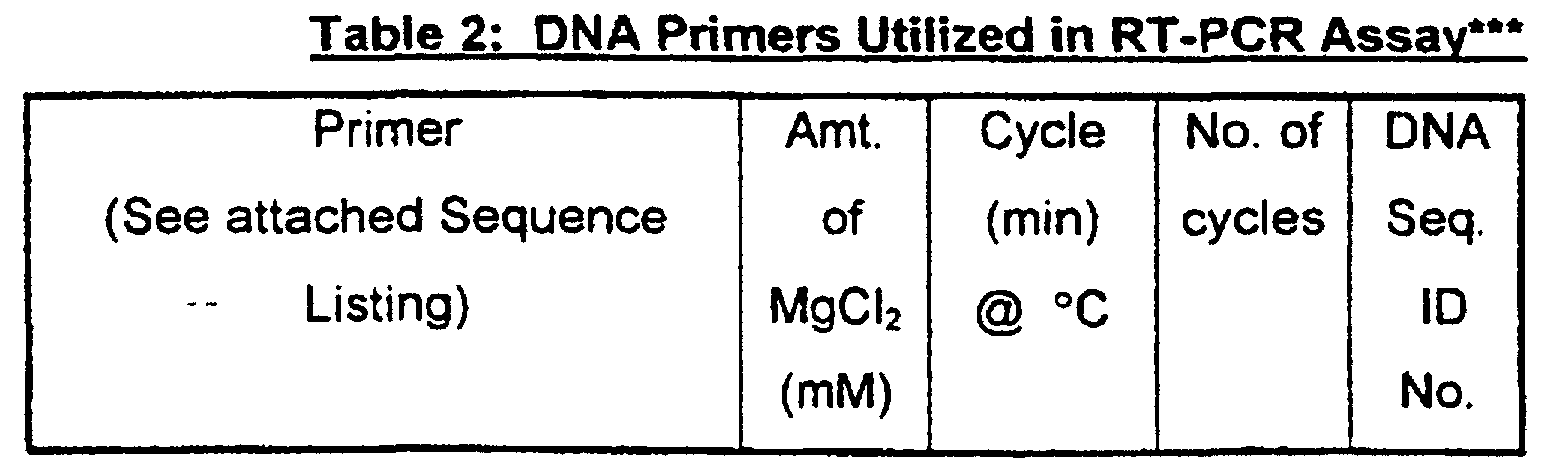
- Table 2 illustrates some of the DNA primers used, the amount of MgCl 2 required for the PCR reaction, and the length of the PCR cycle.
- PCR products were then analyzed by 2% agarose/ethidium bromide gels and analyzed according to methods well-known in the art in order to compare the level of expression of certain genes during the hair cycle of both trypsin-treated and untreated mice. When necessary for better visualization, the resulting PCR products were precipitated with ethanol according to well-known procedures. When primers for G3PDH were used, only 10% of the PCR reaction products were used. An RNA sample from the skin of a C57BL/6 female, 7 to 8 week old mouse that was not reverse-transcribed was used as a negative control for each PCR amplification.
- RNA sample from the skin of a six month old C57BI/6 female mouse having a non-synchronized hair cycle was used as a positive control when positive controls were not commercially available.
- the migration of the RT-PCR products on the gels was always identical to that of the positive controls, and to that of the reported amplimer sizes.
- TEWL transepidermal water loss
- tyrosinase a key enzyme for hair pigmentation
- POMC the precursor of the melanogenic peptide melanocyte stimulating hormone (MSH)
- MSH melanogenic peptide melanocyte stimulating hormone
- This Example showed that the trypsin perturbation of the hair cycle may be understood by examination of the expression pattern of a series of genes throughout the delay period. Trypsin-induced changes in mRNA levels along the hair cycle were dearly evidenced, indicating a regulatory role for trypsin in hair growth and hair pigmentation. Moreover, this Example further reflected the specificity of the topical application of trypsin on hair growth and hair pigmentation genes.
- a single topically active composition as prepared in Example 2 was applied to the skin surface of C57BL/6 female, 7 to 8 week old mice after hair induction in accordance with the method set forth in Example 3.
- Example 3 The procedure of Example 3 was repeated, but with the substitution of carboxypeptidase-Y, protease IV, and subtilysin, respectively, for the trypsin.
- this Example supports the belief that the effect of trypsin on hair growth and hair pigmentation may not be exclusively the result of a non-specific proteolytic digestion, but rather it may also be the result of a specific activity induced by trypsin that causes the activation of the programmed cell death pathway.
- a single topically active composition as prepared in Example 2 was applied to the skin surface of 3 C57BL/6 female, 7 to 8 week old mice after hair induction in accordance with the method set forth in Example 3. This procedure was repeated on nine additional mice, but the treatment was applied either two, three or seven times per week, respectively.
- Example 2 In order to determine the timing of this specific event, a single topically active composition as described in Example 2 was applied to the skin surface of C57BL/6 female, 7 to 8 week old mice after hair induction in accordance with the method set forth in Example 3, except that the treatment was applied at various time intervals as indicated in Table 6.
- the skin color chromametric measurements obtained in accordance with the method set forth in Example 8 demonstrated an increase in darkness (more pigment, less of the delay) that correlated with the increased time between hair growth induction and trypsin application.
- Mice treated immediately after hair growth induction showed the longest delay in hair growth and hair pigmentation.
- Mice treated 2 hours and 4 hours after hair growth induction also exhibited a delayed, but progressively shorter hair cycle.
- Mice treated 6 or more hours after depilation were not delayed for hair growth and were indistinguishable from the untreated control.
- This Example shows that the application of trypsin to the skin is effective for delaying hair growth and hair pigmentation when applied within about 4 hours, and preferably immediately after hair growth induction.
- a single topically active composition as prepared in Example 2 was applied to the skin surface of C57BL/6 female, 7 to 8 week old mice after hair induction in accordance with the method set forth in Example 3, with the exception that the concentration of the trypsin was varied between 1% (w/v) to 0.01% (w/v) (4x10 -4 M - 4x10 -6 M). At 9 days post-depitation, the mice were analyzed colorimetrically via the procedure set forth in Example 9.
- EXAMPLE 11 The Proteolytic Activity of Trypsin is Unnecessary for Delaying Hair Growth
- Example 2 After the composition of Example 2 was incubated at room temperature for 48 hours, its proteolytic activity was analyzed via a serine protease activity detection kit available from PanVera, Corporation, which showed that the preparation had no detectable proteolytic activity.
- the inactive composition was applied to the skin surface of 3 C57BL/6 female, 7 to 8 week old mice after hair induction in accordance with the method set forth in Example 10. At 9 days post-depiliation, the mice were analyzed colorimetrically via the procedure set forth in Example 8. As illustrated in Table 7, it was evident that the lack of proteolytic activity of trypsin did not reduce the activity of this preparation in delaying hair growth.
- this Example suggested that the configuration of the trypsin molecule might also have been responsible for the induction of programmed cell death and apoptosis in the follicular papillae.
- Glycerol dilaurate/cholesterol/polyoxyethylene-10-stearyl ether liposomes are prepared in accordance with the procedures set forth in Niemiec, wherein the constituent compounds of the liposomes are in a ratio of about 58:15:27, respectively.
- the liposomes After cooling the resulting liposomes to a temperature of about 40 °C, the liposomes are added with normal mixing to an amount of a thickening agent composed of polyacrylamide (and) C13-C14 isoparaffin (and) laureth-7, available from Seppic, Inc. under the trade name "SEPIGEL 305,” such that the amount of the thickening agent in the final composition is about 1-3% (w/v).
- a thickening agent composed of polyacrylamide (and) C13-C14 isoparaffin (and) laureth-7, available from Seppic, Inc. under the trade name "SEPIGEL 305,” such that the amount of the thickening agent in the final composition is about 1-3% (w/v).
- trypsin a 1% trypsin (w/v) composition. This composition is appropriate for immediate topical application.
- the resulting product possesses characteristics and properties of an effective shaving gel.
Landscapes
- Health & Medical Sciences (AREA)
- Life Sciences & Earth Sciences (AREA)
- Veterinary Medicine (AREA)
- Public Health (AREA)
- General Health & Medical Sciences (AREA)
- Animal Behavior & Ethology (AREA)
- Epidemiology (AREA)
- Birds (AREA)
- Dermatology (AREA)
- Emergency Medicine (AREA)
- Chemical & Material Sciences (AREA)
- Bioinformatics & Cheminformatics (AREA)
- Nuclear Medicine, Radiotherapy & Molecular Imaging (AREA)
- Medicinal Chemistry (AREA)
- General Chemical & Material Sciences (AREA)
- Chemical Kinetics & Catalysis (AREA)
- Organic Chemistry (AREA)
- Engineering & Computer Science (AREA)
- Pharmacology & Pharmacy (AREA)
- Cosmetics (AREA)
- Medicines That Contain Protein Lipid Enzymes And Other Medicines (AREA)
- Medicines Containing Material From Animals Or Micro-Organisms (AREA)
- Steroid Compounds (AREA)
- Mechanical Treatment Of Semiconductor (AREA)
- Acyclic And Carbocyclic Compounds In Medicinal Compositions (AREA)
Abstract
Description
- This invention is related to a composition for bringing about programmed cell death and apoptosis in the follicular papillae. More specifically, the present invention is directed to a composition for topical application for delaying hair growth or hair pigmentation comprising a serine protease.
- One main function of mammalian hair is to provide environmental protection. However, that function has largely been lost in humans, in whom hair is kept or removed essentially for cosmetic purposes.
- Many procedures are used to remove unwanted hair including shaving, electrolysis, plucking and injection of therapeutic antiandrogens. These conventional methods are not without their shortcomings. Shaving, for instance, may result in nicks and cuts in the skin's surface, may leave a perception of an increase in the rate of hair regrowth, and may also leave an undesirable stubble. While electrolysis may keep an area free of unwanted hair for a prolonged period of time, the process is often expensive and painful and may further result in scarring. Not only may plucking cause pain and discomfort, but if often results in a poor removal of short hair. Several unwanted side effects, such as effects on muscularity, often accompany the use of antiandrogens. Furthermore, with the exception of electrolysis, all of these methods must be repeated on what is often a daily basis, creating an inconvenience for the user. For these reasons, chemical methods for delaying hair growth are needed.
- As disclosed in U.S. Patent No. 5,455,234 by Ahluwalia, et al, mammalian hair growth may be altered by applying a cysteine pathway enzyme inhibitor to the skin, which will slow or stop the metabolic pathways for rate and character of hair growth with which cysteine is associated. However, this inhibition of cysteine also causes a shortage of this amino acid in the treated area. Similarly, in U.S. Patent No. 5,095,007 by Ahluwalia, U.S. Patent Nos. 5,096,911 and 5,468,476 by Ahluwalia et al. and U.S. Patent Nos. 5,132,293 and 5,143,925 by Shander et al., enzyme inhibitors are utilized to alter hair growth. In each of these cases a biochemical pathway was altered to inhibit the production of a final product.
- International patent application WO93/25694 discloses drugs comprising C. elegans cell death gene (ced-3), interleukin-1β convertase (ICE), other ced-3/ICE family members, their RNA and protein products, constitutively activated mutants of the genes and encoded products and peptide and non-peptide mimetics of the proteins. Such drugs are, amongst other things, useful for causing or preventing hair loss.
- European patent application EP 0 079 074 discloses a hair tonic composition for the prevention of hair loss comprising a gibberellin and an optional proteolytic enzyme as effective ingredients.
- It would be desirable to provide a method for chemically affecting hair growth and hair pigmentation which does not deprive the user of needed amino acids or cause unwanted side effects to the user.
- In accordance with the present invention, we have found a composition for topical application to the skin of a mammal for delaying mammalian hair growth or pigmentation comprising a serine protease and a pharmaceutically or cosmetically acceptable vehicle comprising at least are liposome.
- In another embodiment of the present invention, we have found a use of the composition of the present invention for application to the skin of a mammal during shaving, electrolysis, wax depilation, chemical depilation or combinations thereof.
- In another embodiment of the present invention, we have found a use of the composition of the present invention for application to the skin of a mammal, wherein said application takes place immediately before, simultaneously with or immediately following hair growth induction, for instance of telogen hair follicles.
- The file of this patent contains at least one drawing executed in color. Copies of this patent with color drawing(s) will be provided by the Patent and Trademark Office upon request and payment of the necessary fee.
- The invention will be more fully understood and further advantages will become apparent when reference is made to the following detailed description of the invention and the accompanying drawings in which:
- FIGS. 1 (a) and 1(c) are representations which illustrate a cross-sectional view of the skin of an untreated C57BI/6 mouse labeled with fluorescent trypsin. FIG. 1(b) is a representation which illustrates a cross-sectional view of the skin of a C57BI/6 mouse 12 days post-topical treatment with trypsin mouse labeled with fluorescent trypsin.
- FIG. 2 are color representations of the dorsal view of the skin of C57BI/6 mice, some of which were treated with vehicle or trypsin (1%) immediately after induction for hair growth, taken: (a) 8 days after hair growth induction; (b) 11 days after hair growth induction; and (c) 14 days after hair growth induction. In FIG. 2(a), the left mouse was treated, while the right mouse was untreated. In FIGS. 2(b) and 2(c), the left mouse was untreated, the center mouse was treated with the vehicle and right mouse was treated with trypsin.
- FIG. 3A is a representation which illustrates the histology of hair follicles of untreated mouse skins at: (a) 4 days; (b) 5 days; (c) 8 days; and (d) 12 days post hair induction. FIG. 3B is a representation which illustrates the histology of hair follicles of trypsin-treated mouse skins at: (a) 4 days; (b) 5 days; (c) 6 days; (d,e) 8; and (f) 12 days post hair induction.
- FIG. 4(A) is a representation which illustrates the cross-sectional view of TUNEL-stained skin tissue of an untreated mouse at: (a) 1 day; (b) 2 days; and (c) 3 days post hair induction. FIG. 4(B) is a representation which illustrates the cross-sectional view of TUNEL-stained skin tissue of a trypsin-treated mouse at: (a) 1 day; (b) 2 days; (c) 3 days; (d) 4 days; (e) 5 days post hair induction ((a - e) were single trypsin applications); and (f) 8 days post hair induction (daily trypsin applications).
- FIG. 5 is a representation which illustrates the profile of gene
expression of a trypsin-treated mouse skin and an untreated mouse skin
during a delayed hair cycle as detected by Reverse Transcription-Polymer
Chain Reaction ("RT-PCR"). FIG. 5(A) illustrates the mRNA levels
throughout
days 1 to 11 of the delayed hair cycle. FIG. 5(B) illustrates the mRNA levels at day 8 of the delayed hair growth cycle. The RT-PCR products of 25ng (A) and 250ng (B) of total RNA are shown. -
- As used herein, "mammal" shall mean any member "of the higher vertebrae animals comprising the class Mammalia," as defined in Webster's Medical Desk Dictionary 407 (1986), and includes but is not limited to humans. As used herein "(%, w/v)" shall mean grams of a given component per 100 ml of the total composition. As used herein, "receptor" shall include both intracellullar and extracellular receptors and shall mean those molecules capable of receiving and transducing a signal.
- Preferred serine proteases include, but are not limited to, trypsin, carboxypeptidase-Y, protease IV, subtilysin, or mixtures thereof. The protease of choice is trypsin. While not willing to be bound by this theory, we believe that the proteases capable of delaying hair growth and hair pigmentation do so by altering the hair growth cycle via the induction of programmed cell death and apoptosis within the follicular papillae, and that this alteration is likely induced by a receptor-mediated signal transduction. Preferably, the protease is present in an amount, based upon the total volume of the composition of the present invention, of from about 0% (w/v) to about 5% (w/v), and more preferably from about 0.01% (w/v) to about 1% (w/v).
- As evidenced by Example 10 herein, we have unexpectedly found that the proteolytic activity of a protease is not the only factor which contributes to the induction of programmed cell death. While not wishing to be bound by any theory, we further believe that a receptor-mediated signal transduction event may also contribute to the induction of programmed cell death of the follicular papillae, and that this type of agent might be related to a structural component of the topically active agent.
- The composition of the present invention comprises a pharmaceutically or cosmetically acceptable vehicle comprising at least are liposome. The liposomes are more preferably non-ionic and comprised of a) glycerol dilaurate or glycerol distearate; b) compounds having the steroid backbone found in cholesterol; and c) fatty acid ethers having from about 12 to about 18 carbon atoms, wherein the constituent compounds of the liposomes are in a ratio of about 53: 10: 22 to about 63: 20: 32 , and preferably from about 55:12:24 to about 61:18:30, respectively. Liposomes comprised of glycerol dilaurate / cholesterol/ polyoxyethylene - 10-stearyl ether (GDL) are most preferred. Preferably the liposomes are present in an amount, based upon the total volume of the composition, of from about 10 mg/mL to about 100 mg/mL, and more preferably from about 25 mg/mL to about 50 mg/mL. A ratio of about 58:15:27 is most preferred. Suitable liposomes may preferably be prepared in accordance with the protocol set forth in Example 2, though other methods commonly used in the art are also acceptable.
- The above described composition may be prepared by combining the desired components in a suitable container and mixing them under ambient conditions in any conventional high shear mixing means well known in the art for non-ionic liposomes preparations, such as those disclosed in Niemiec et al., "Influence of Nonionic Liposomal Composition On Topical Delivery of Peptide Drugs Into Pilosebacious Units: An In vivo Study Using the Hamster Ear Model," 12 Pharm. Res. 1184-88 (1995) ("Niemiec").
- in a preferred embodiment, the pH of the topically active pharmaceutical or cosmetic composition may be adjusted with a known pH adjuster including but not limited to N-2-hydroxyethylpiperazine-N'-2-ethane sulfonic acid available from, for example, Life Technologies under the tradename "Hopes", or (hydroxymethyl) aminomethane, available from, for example, Life Technologies under the tradename, "Tris", citric acid, and mixtures thereof to yield a pH of from about 2 to about 8 in the final composition.
- In alternative embodiments, the topically active pharmaceutical or cosmetic composition may be optionally combined with other ingredients such as moisturizers, foaming agents, cosmetic adjuvants, anti-oxidants, surfactants, foaming agents; conditioners, humectants, fragrances, viscosifiers, buffering agents, preservatives, and the like in an amount which will not destroy the liposomal structure in order to produce cosmetic or pharmaceutical products such as, non-exclusively, shaving creams, shaving gels, shaving powders, chemical depilatory creams and the like.
- In another embodiment of the present invention, we have found a use of the composition of the invention for delaying mammalian hair growth and hair pigmentation comprised of applying the topically active pharmaceutical or cosmetic composition to the surface of an animal's skin at about the time of hair growth induction.
- Hair growth induction from telogen follicles can be performed by any method well known in the art, including, but not limited to, shaving, wax depilation, chemical depilation and combinations thereof.
- Although the time at which the topically active pharmaceutical or cosmetic composition is applied to the skin as well as the amount of time for which the composition remains on the skin may vary, one skilled in the art would readily realize without undue experimentation that the topically active composition is preferably applied to the skin surface either immediately before, immediately after or simultaneously with hair growth induction from a telogen state. As used herein, "immediately" shall be defined as within a period of about one hour. More preferably, the topically active pharmaceutical or cosmetic composition is applied either simultaneously with or immediately following hair growth induction and is left on the skin for a period sufficient to delay hair growth, which is preferably at least about five minutes and more preferably is at least about fifteen minutes after the time of application.
- The topically active pharmaceutical or cosmetic composition should be applied in an amount effective to delay mammalian hair growth and hair pigmentation. As used herein "amount effective" shall mean an amount sufficient to cover the region of skin surface where a delay in hair growth and hair pigmentation is desired. Preferably, the composition is applied to the skin surface such that, based upon a square cm of skin surface, from about 2 µl /cm2 to about 8 µl /cm2 of topically active agent is present when a delay in hair growth and hair pigmentation is desired.
- We have unexpectedly found that when topically active agents, such serine proteases, are topically applied to an animal's skin at about the time of hair growth induction, a significant delay in hair growth and hair pigmentation of at least about 9 days was achieved. We further believe that since the hair growth cycle for humans is often slower than that for mice, it is further likely that the hair growth delay in humans would be considerably longer than 9 days.
- The invention illustratively disclosed herein suitably may be practiced in the absence of any component, ingredient, or step which is not specifically disclosed herein. Several examples are set forth below to further illustrate the nature of the invention and the manner of carrying it out. However, the invention should not be considered as being limited to the details thereof.
- The hair growth of 12 C57BI/6 female mice obtained from Charles River (Kingston, NY), which were 6-10 weeks of age and were in the resting (telogen) phase of their respective hair cycle, was induced by wax depilation (plucking) of each respective animal's back fur according to the procedure set forth in Stenn, et al., "Glucocorticoid Effect on Hair Growth Initiation: A Reconsideration," 6 Skin Pharmacol., 125 -134 (1993). As well-known in mice, the growth phase (anagen) starts synchronously in all hair follicles at the time of depilation.
- As illustrated in Table 1, the following observations were noticed at the induction site:
Observations at Induction Site Days Post-Induction MORPHOLOGICAL AND Histological
Observations at the induction site1 - 2 (early anagen) new follicle starts to grow 3 to 4 hair follicles were fully developed, but the hair shafts were not yet visible 8 (late anagen) each mouse had very dark skin; their hair shafts are histologically visible 11 - 12 the hair shafts started to penetrate through the epidermis. 14 each mouse was covered with short hairs 19 the regression of the follicle (catagen)
was observed histologically21 to 25 the hair follicle is back to resting phase. - The hair growth from telogen of 12 similar C57BI/6 mice was also induced by chemical depilation with a hair remover available from Carter-Wallace, Incorporated under the tradename "Nair" in an amount sufficient to wet the back of each mouse. In chemical depilation, the lower portion of the follicles remained intact and lower portions of hair shafts of the previous cycle remained intact in the dermis until pushed out by the newly-grown hairs. The growth pattern of the new hair cycle was identical to the one described in Table 1.
- Since the murine hair cycle varies not only between strains, but also amongst individual animals, a 2 cm by 1 cm skin sample was isolated from each mouse with scissors, fixed with a 10% buffered formalin solution having a pH of about 6.9 - 7.1 at 25 °C available from Stephens Scientific, and then formed into a paraffin block according to well-known procedures. The block was then microtomed, stained with H&E stain, and examined histologically in order to verify the phase of the hair cycle using procedures well-known in the art. The histological representations obtained from this Example are illustrated in FIG. 3A.
- This Example shows that the hair growth cycle for C57BI/6 mice averaged about 25 days and reports similar timing of hair follicle and shaft development regardless of the method used for depilation.
- A sufficient amount of lyophilyzed trypsin available from Sigma-Aldrich Corporation was mixed into a buffered aqueous solution of 0.05 M N-2-hydroxyethylpiperazine-N'-2-ethane sulfonic acid available from Life Technologies under the tradename "Hepes" such that the pH of the resulting solution was about 7.4 and the concentration of trypsin in the solution was about 2% (w/v). 1 volume of the resulting trypsin solution was then mixed with 1 volume of (5 %) glycerol dilaurate/cholesterol/polyoxyethylene-10-stearyl ether liposomes in water vehicle, which was prepared by the methods described in Niemiec, in order to yield a 1% (w/v) concentration of trypsin in the resulting topically active composition.
- Twelve days after plucking the hairs from about a 6 cm by 2 cm section of the skin surface of 4 C57BI/6 female, 7 to 8 week old mice available from Charles River (Kingston, NY), about 100 µL/mouse of the topically active composition of Example 2 was applied thereto. The trypsin used in this Example was fluorescently-labeled with a FluoReporter protein labelling kit available from Molecular Probes, Inc. in accordance with its accompanying protocol (1997) and using a fluoroscein isothiocyanate (FITC) fluorescent label, also available from Molecular Probes, Inc.
- At one and four hours after the application of the fluorescent trypsin treatment, a 2 cm x 1 cm sample of the skin surface of each mouse was isolated and formed into a paraffin block which was then microtomed and examined histologically in accordance with the procedure set forth in Example 1.
- As shown in FIG, 1, almost all of the fluorescent labeling was found within the hair follicle. The mice were examined at the 1 hour (FIG. 1(c)) interval and the 4 hour (FIG. 1(a)) interval displayed identical histological staining patterns, with no additional skin penetration at the later time point. This observation suggests against a possible non-specific extracellular matrix digestion by the protease, which would have likely shown a deeper penetration of the fluorescent stain into the stratum corneum at the later time point.
- This Example was repeated on 4 similar C57BI/6 female, 7 to 8 week old mice, but with the exception that the mice were also treated daily for 12 days post-induction with the 1% (w/v) trypsin treatment of Example 2. Four hours after the application of the fluorescent-trypsin treatment on the twelfth day post-induction, the skins of the mice were analyzed using similar histological methods. As illustrated in FIG. 1b, no major change was observed in the delivery route of the trypsin into the hair follicles of the treated skins. However, the minimal staining at the outer portion of the stratum corneum of the trypsin-treated skins indicated some loss of barrier integrity.
- This Example shows that the application of a topically active composition containing trypsin to the skin surface of anagen animals resulted in the delivery of the trypsin primarily to the hair follicle, both after short term and long term use.
- A single topical application of the topically active composition prepared in Example 2 was applied to 12 C57BI/6 female, 7 to 8 week old mice immediately after hair growth induction in accordance with the method set forth in Example 3.
- As shown in FIG. 2, a single application of trypsin applied post-hair growth induction delayed both hair growth and hair pigmentation. The darker skin color indicated a more progressive stage of the hair cycle, which is before the hair shafts were visible. Untreated and liposome (vehicle)-treated controls exhibited dark skin at 7-8 days post-hair growth induction (FIG. 2a; left is treated and right is untreated), while their hair shafts were visible at 11-13 days (FIG. 2b; left is untreated; middle is vehicle; right is treated). By contrast, the trypsin-treated animals remained pink until day 8 (FIG. 2a; left mouse); were slightly darker pink at day 11 (FIG. 2b; right mouse); and exhibited gray skin by day 14 (FIG. 2c; right mouse). Although the hair shafts of the trypsin-treated animals were first visible at days 15 to 17, these hair shafts were of reduced quality and were not as thick as in the control; however, within about 4 to 7 additional days, these hair shafts were almost indistinguishable from those in the controls in all characteristics except for length.
- This Example shows that trypsin was effective for delaying both hair growth and hair pigmentation.
- A single topically active composition as prepared in Example 2 was applied to the skin surface of 3 C57BL/6 female, 7 to 8 week old mice after hair induction in accordance with the method set forth in Example 3.
- 1 cm x 2 cm samples of the skins of untreated, vehicle-treated (not shown), and trypsin-treated mice were obtained, H&E stained, then examined histologically via the procedure set forth in Example 1. As illustrated in FIG. 3, histological analysis of the stained samples evidenced that the development of the hair follicles in trypsin-treated mice was significantly delayed. More specifically, the characteristic layered structure, the expanded follicular papillae and the new hair pigmentation were first observed several days later than the date of first observation of such characteristics in the untreated and vehicle-treated controls. In addition, the follicles in the skin of trypsin-treated mice displayed a dilated infundibulum, as best illustrated in FIG. 38(a-e), which was not present in the untreated and the vehicle-treated mice as shown in FIG. 3A(a-b). This observation supports the fact that treatment with the trypsin-containing composition also resulted in hair growth having a reduced quality, i.e. thinner and more sparse. At 7-8 days post- treatment with trypsin, the lower part of some treated follicles started to form an epithelial layering structure as illustrated in FIG. 3B(d - e), but the upper part still displayed an empty structure as best shown in FIG. 3B(d). By 11-12 days post-treatment with trypsin, most of the treated follicles matured, but still displayed reduced hair pigmentation and shorter shaft length that resembled the characteristics of the untreated follicle at 4 to 5 days post-induction (compare FIG. 3A(d) to FIG. 3B(f)).
- This Example further showed via histological analysis that the topical application of trypsin to the skin of hair growth induced mice significantly delayed hair growth and hair pigmentation.
- A single topically active composition as prepared in Example 2 was applied to the skin surface of 3 C57BL/6 female, 7 to 8 week old mice after hair induction in accordance with the method set forth in Example 3.
- 1 cm x 2 cm samples of the skins of untreated and trypsin-treated mice were obtained via the procedure set forth in Example 1 then analyzed via a TdT-mediated dUTP-biotin nick end labeling ("TUNEL") procedure as disclosed in Gavrieli et al., "Identification of Programmed Cell Death in situ Via Specific Labelling of Nuclear DNA Fragmentation", 119 JI. Cell Biology 493-501 (1992)("Gavrieli"). During this procedure, the prepared paraffin sections of the skins were stained using an "ApopTag ™ Plus InSitu Apoptosis Detection Kit" available from Oncor, Inc. as specified in the "ApopTag ™ Plus InSitu Apoptosis Detection Kit" protocol by Oncor, Inc. (Feb. 1995), which is based upon the labeling of fragmented DNA ends as described in Gavrieli. FIG. 4 shows a histological analysis wherein the stain has a peroxidase end point (brown) and a methyl green counter-stain.
- Similarly, paraffin sections suitable for TUNEL staining were prepared from the untreated skins of mice. These sections were stained and analyzed histologically; the resulting representations of which are provided in FIG. 4A(a-c).
- As illustrated in FIG. 4, the TUNEL-stained samples defined apoptotic cells by both morphology (condensed or fragmented nuclei and cytoplasm or apoptotic bodies) and by the color of its stain (fragmented DNA within the condensed nuclei were stained brown). More specifically, FIG. 4B(a - e) illustrated that apoptotic bodies were detected within the treated follicular papilla throughout the first week after hair growth induction. However, no other portions of the follicle, epidermis or dermis were affected by the trypsin treatment. By contrast, a minimal level of apoptosis was occasionally detected in untreated early anagen follicles as illustrated in the TUNEL-stained untreated sample in FIG. 4A(a-c); however, the apoptosis was always at the isthmus of the follicle and thus well above the follicular papilla. Most of the untreated follicles did not display any cell death.
- This Example showed that the application of trypsin to depilated skin resulted in an increase in apoptotic figures within the follicular papillae of the trypsin treated follicles, relative to that of either untreated or vehicle treated controls.
- A single topically active composition as prepared in Example 2 was applied to the skin surface of 6 C57BL/6 female, 7 to 8 week old mice after hair induction in accordance with the method set forth in Example 3.
- At the time intervals indicated in FIG. 5, the skins of untreated mice and trypsin-treated mice were obtained as described in Example 1, then their total RNAs were extracted using "RNA Stat-60" reagent available from Tel-Test "B," Incorporated as described in Chomczymski, "Single Step Method of RNA Isolation By Acid Guanidinium Thiocyanate-phenol-chloroform extraction," 162 Anal. Biochem. 156-59 (1987). A sufficient amount of RNase-free DNase available from Promega, Corporation under the tradename "RQ1 RNase-free DNase" was then added to the extracted RNA from each mouse such that each respective product contained 200ng of DNased-RNA using the procedure set forth in "RNase-free DNase", protocol published by Promega, Corporation (May, 1995). The resulting 200ng of DNased-RNA was reverse transcribed ("RT") via the procedure set forth in "Superscript II Reverse Transcriptase" a protocol published by Gibco-BRL (now Life Technologies, Incorporated) (April 1992), using random hexamers such as the random primers which are commercially available from Life Technologies, Incorporated.
- The resulting RT products were then amplified via polymerase chain reaction ("PCR") using about a 0.5 unit (per 100 µl reaction) of a thermostable DNA polymerase which is commercially available from Perkin-Elmer-Cetus Corporation under the tradename "Taq polymerase" and about 0.1 µmol/reaction of gene-specific primers available from Clontech Laboratories, Inc. ("Clontech") or designed as set forth in Table 2 in accordance with the procedures set forth in the protocol accompanying the primers from Clontech for mouse glyceraldehyde-3-phosphate-dehydrogenase (G3PDH), transcription factors and cytokines, or as described in Table 2.
- Table 2 illustrates some of the DNA primers used, the amount of MgCl2 required for the PCR reaction, and the length of the PCR cycle.

- The PCR products were then analyzed by 2% agarose/ethidium bromide gels and analyzed according to methods well-known in the art in order to compare the level of expression of certain genes during the hair cycle of both trypsin-treated and untreated mice. When necessary for better visualization, the resulting PCR products were precipitated with ethanol according to well-known procedures. When primers for G3PDH were used, only 10% of the PCR reaction products were used. An RNA sample from the skin of a C57BL/6 female, 7 to 8 week old mouse that was not reverse-transcribed was used as a negative control for each PCR amplification. An RNA sample from the skin of a six month old C57BI/6 female mouse having a non-synchronized hair cycle was used as a positive control when positive controls were not commercially available. The migration of the RT-PCR products on the gels was always identical to that of the positive controls, and to that of the reported amplimer sizes.
- The relative quality of each respective RT-PCR reaction product was then compared by analyzing the mRNA level of G3PDH, a "housekeeping" gene, in each respective product. As illustrated in FIG. 5, G3PDH gene expression was found to be similar at all the time points examined, which thereby enabled the comparison of the relative levels of gene expression for the desired genes.
- To verify that the delay in follicular development was not the result of a non-specific irritation or inflammatory response, we analyzed the mRNA levels of genes that are typically upregulated during such situations. After examination of the mRNA levels of genes from the RT-PCR products, we found that there was no change in the mRNA levels of IL-6, IL-10 and GM-CSF, a slight upregulation of TNFα, a slight down regulation of TNFβ and TNF-RI, and a moderate down regulation in Macrophage Inducible Protein (MIP) as illustrated in Table 3.
Patterns of Gene Expression Gene Untreated Trypsin-Treated IL-6 - - IL-10 +/- +/- GM-CSF - - TNFα +/- + TNFβ + +/- TNF-RI +/- +/- - TNF-RII - - MIP + - IL-1α + ++ IL-1β +/- + + + IL-1R - - IFNγ - + + + c-myc + - c-myb ++ + c-fos + +/- c-jun +/- + Collagenase + +/- Tyrosinase +++ +/- POMC + +/- Transglutaminase + + * Note that RT-PCR is only semi-quantitative. Comparisons are valid only for each amplified sequence within the different hair cycles, and not among the different genes.
- no detectable expression + a strong band
+/- - a very weak band + + a stronger band
+/- a weak band + + + a very strong band - A moderate upregulation was observed in IL-1α mRNA level (FIG. 5b & Table 3), a gene associated with the inhibition of hair growth in culture. Since the 1L-1α induction could have also resulted from the loss of the epidermal barrier function, we analyzed the barrier integrity by measuring transepidermal water loss (TEWL). TEWL was measured with an "Evaporimeter EPI" evaporimeter available from Servomed AB by first normalizing the evaporimeter with the ambient humidity and then placing the probe on the dorsal skin of the test subject. The results showed only a moderate increase in TEWL which did not correlate with trypsin concentration as shown in Table 4.
TEWL in Trypsin Treated Skins Treatment Sample Size TEWL Untreated 6 27.01 ± 3.8 0.01% Trypsin 4 36.89 ± 4.6 0.1% Trypsin 4 43.2 ± 5.2 0.5% Trypsin 4 34.53 ± 4.9 1% Trypsin 4 37.5 ± 3.9 1% Trypsin - inactive
(mild)3 33.99 ±6.2 - As illustrated in FIGS. 5a-b & Table 3, a stronger increase in mRNA levels was demonstrated for 1L-1β and IFNγ, which Are both known to be upregulated in Alopecia Areata and to be associated with the inhibition of hair growth. This further suggested that the only inflammatory-associated genes upregulated by trypsin were those associated with inhibition of hair growth.
- As illustrated in Table 3, a slight reduction was detected in the mRNA levels of c-myb, c-myc and c-fos, while c-jun level was slightly increased throughout the delay period. Collagenase, a gene regulated via an AP-1 response element, was slightly reduced as well. This observation of a general slight reduction in mRNA levels of several genes was further reflective of the overall slow down in hair growth of trypsin-treated skin.
- As illustrated in FIG. 5A and Table 3, tyrosinase, a key enzyme for hair pigmentation, was downregulated during the delay in hair growth period, while its mRNA level increased as the follicles started to overcome the delay. POMC, the precursor of the melanogenic peptide melanocyte stimulating hormone (MSH), was moderately downregulated throughout the delay period as shown in FIG. 5A and Table 3. The downregulation of these two genes indicated that trypsin also affected the regulation of hair pigmentation.
- This Example showed that the trypsin perturbation of the hair cycle may be understood by examination of the expression pattern of a series of genes throughout the delay period. Trypsin-induced changes in mRNA levels along the hair cycle were dearly evidenced, indicating a regulatory role for trypsin in hair growth and hair pigmentation. Moreover, this Example further reflected the specificity of the topical application of trypsin on hair growth and hair pigmentation genes.
- A single topically active composition as prepared in Example 2 was applied to the skin surface of C57BL/6 female, 7 to 8 week old mice after hair induction in accordance with the method set forth in Example 3.
- The procedure of Example 3 was repeated, but with the substitution of carboxypeptidase-Y, protease IV, and subtilysin, respectively, for the trypsin.
- After 8 days post-treatment, the skin of each respective mouse was examined using a Minolta Chromameter Model CR300 chromameter in order to compare their respective skin colors.
- We observed that trypsin, a member of the endopeptidase family which cuts a protein at the C-side of Arginine and Lysine, induced the longest delay in hair growth. By contrast, the carboxypeptidase-Y, which hydrolyzes L-amino acids at the C-termini of proteins, and protease IV, a member of the nonspecific endopeptidase family which cuts 56% of peptide bonds at neutral pH, had only minimal delaying effect, while subtilysin, a member of the nonspecific peptidase family which cuts peptide bonds at alkaline pH, only slightly increased the rate of hair growth. The results of this Example are illustrated in Table 5.
Color Measurements of Serine Protease Treated Skins Treatment Sample Size Untreated 6 49 ± 0.30 1% Trypsin 6 56.1 ± 0.81 1% Subtilysin 4 42.9 ± 2.87 1% Endopeptidase 4 51.8 ± 0.11 1% Carboxypeptidase-Y 4 51.9 ± 0.47 - As illustrated in Table 5, the trypsin-treated hair follicles were the least developed and thus appeared to impart the lightest color to the skin. This Example suggests that the appearance of skin color is related to hair development in the hair follicle.
- Since the results obtained from the trypsin-treated skins showed trypsin to be relatively superior at delaying hair growth and hair pigmentation, this Example supports the belief that the effect of trypsin on hair growth and hair pigmentation may not be exclusively the result of a non-specific proteolytic digestion, but rather it may also be the result of a specific activity induced by trypsin that causes the activation of the programmed cell death pathway.
- A single topically active composition as prepared in Example 2 was applied to the skin surface of 3 C57BL/6 female, 7 to 8 week old mice after hair induction in accordance with the method set forth in Example 3. This procedure was repeated on nine additional mice, but the treatment was applied either two, three or seven times per week, respectively.
- After observing the skin color of the mice for 8 days, the skin of the treated mice was lighter than that for the untreated controls. This further suggested that the trypsin-treated hair follicles were the least developed and thus appeared to impart the lightest color to the skin.
- 1 cm x 2 cm samples of the skins of the respectively-treated mice were obtained, H&E stained, then examined histologically via the procedure set forth in Example 1. Histological analysis of the stained samples supports the fact that the additional daily treatments of the animals with trypsin did not prolong the delay in hair growth. This indicated that the induction of cell death by a serine protease resulted from a specific and timely event.
- In order to determine the timing of this specific event, a single topically active composition as described in Example 2 was applied to the skin surface of C57BL/6 female, 7 to 8 week old mice after hair induction in accordance with the method set forth in Example 3, except that the treatment was applied at various time intervals as indicated in Table 6.
- As illustrated in Table 6, the skin color chromametric measurements obtained in accordance with the method set forth in Example 8 demonstrated an increase in darkness (more pigment, less of the delay) that correlated with the increased time between hair growth induction and trypsin application. Mice treated immediately after hair growth induction showed the longest delay in hair growth and hair pigmentation. Mice treated 2 hours and 4 hours after hair growth induction also exhibited a delayed, but progressively shorter hair cycle. Mice treated 6 or more hours after depilation were not delayed for hair growth and were indistinguishable from the untreated control.
Color Measurements of Trypsin Treated Skin Treatment Sample Size L* Untreated 6 49 ± 0.32 1% Trypsin, immediately 6 56.1 ± 1.54 1% Trypsin, after 2 hours 4 54.4 ±1.30 1% Trypsin, after 4 hours 4 53.3 ± 1.23 1% Trypsin, after 6 hours 4 48.0 ± 2.01 1% Trypsin, after 18
hours4 49.2 ± 1.07 1% Trypsin, after 48
hours4 50.4 ± 1.01 - This Example shows that the application of trypsin to the skin is effective for delaying hair growth and hair pigmentation when applied within about 4 hours, and preferably immediately after hair growth induction.
- A single topically active composition as prepared in Example 2 was applied to the skin surface of C57BL/6 female, 7 to 8 week old mice after hair induction in accordance with the method set forth in Example 3, with the exception that the concentration of the trypsin was varied between 1% (w/v) to 0.01% (w/v) (4x10⁻⁴ M - 4x10⁻⁶ M). At 9 days post-depitation, the mice were analyzed colorimetrically via the procedure set forth in Example 9.
- As illustrated in Table 7, the results of the colorimetric analysis showed an increase in brightness (L*, more white, less pigment) which correlated with a decrease in trypsin concentration and with an increase in the delay of the hair cycle.
Skin Brightness of Trypsin Treated Skins Treatment Sample Size Untreated 6 45 ± 0.97 0.01% Trypsin 4 48.6 ± 1.01 0.1% Trypsin 4 49.5 ± 1.07 0.5% Trypsin 4 47.7 ± 0.3 1% Trypsin 4 47.9 ± 0.08 1% Trypsin - inactive
(mild)3 52.2 ± 0.17 - After the composition of Example 2 was incubated at room temperature for 48 hours, its proteolytic activity was analyzed via a serine protease activity detection kit available from PanVera, Corporation, which showed that the preparation had no detectable proteolytic activity. The inactive composition was applied to the skin surface of 3 C57BL/6 female, 7 to 8 week old mice after hair induction in accordance with the method set forth in Example 10. At 9 days post-depiliation, the mice were analyzed colorimetrically via the procedure set forth in Example 8. As illustrated in Table 7, it was evident that the lack of proteolytic activity of trypsin did not reduce the activity of this preparation in delaying hair growth.
- This Example was repeated, except that the incubated trypsin was substituted with trypsin boiled for 10 minutes at temperature of 100 °C . The results showed that the use of boiled trypsin, which was proteolytically inactive as well, had no delaying effect on hair growth. The act of boiling, which denatured the three-dimensional structure of trypsin, sugoested that the three-dimensional structure of trypsin, and not just its proteolytic activity, contributed to the delaying effect on the hair cycle. Regardless of whether the trypsin blocked a survival signal or activated a death receptor to induce this process, this Example suggested that the configuration of the trypsin molecule might also have been responsible for the induction of programmed cell death and apoptosis in the follicular papillae.
- Glycerol dilaurate/cholesterol/polyoxyethylene-10-stearyl ether liposomes are prepared in accordance with the procedures set forth in Niemiec, wherein the constituent compounds of the liposomes are in a ratio of about 58:15:27, respectively.
- After cooling the resulting liposomes to a temperature of about 40 °C, the liposomes are added with normal mixing to an amount of a thickening agent composed of polyacrylamide (and) C13-C14 isoparaffin (and) laureth-7, available from Seppic, Inc. under the trade name "SEPIGEL 305," such that the amount of the thickening agent in the final composition is about 1-3% (w/v).
- A sufficient amount of trypsin is then added thereto to produce a 1% trypsin (w/v) composition. This composition is appropriate for immediate topical application.
- The resulting product possesses characteristics and properties of an effective shaving gel.
Claims (16)
- A composition for topical application to the skin of a mammal for delaying mammalian hair growth or hair pigmentation comprising a serine protease and a pharmaceutically or cosmetically acceptable vehicle comprising at least one liposome.
- The composition of claim 1, wherein the protease is trypsin, carboxypeptidase-Y, protease IV, subtilysin or a mixture thereof.
- The composition of claim 2, wherein the protease is trypsin.
- The composition of any one of claims 1 to 3, wherein the protease is mixed with a buffer comprising
N-2-hydroxyethylpiperazine-N'-2-ethane sulphonic acid,
(hydroxymethyl)aminomethane or
a mixture thereof. - The composition of any one of claims 1 to 4, comprising up to 5% (w/v), preferably from 0.01 to 1% (w/v) (based on the total volume of the composition) of the protease.
- The composition of any one of claims 1 to 5, wherein the liposome(s) is (are) non-ionic.
- The composition of any one of claims 1 - 5, wherein the liposome(s) is (are) comprised of:a) glycerol dilaurate, glycerol distearate or a mixture thereof;b) a compound having a steroid backbone as found in cholesterol or a mixture of such compounds; andc) a fatty acid ether having from 12 to 18 carbon atoms or a mixture of such ethers.
- The composition of claim 7, wherein said liposome(s) is (are) comprised of:(a) glycerol dilaurate; (b) cholesterol; and (c) polyoxyethylene-10-stearyl ether.
- The composition of claim 8 or claim 9, wherein said components (a), (b) and (c) are present in a ratio of from 53:10:22 to 63:20:32.
- The composition of any one of claims 5 to 9, wherein said vehicle is present in an amount of up to 100 mg/ml.
- The composition of any one of claims 1 to 10, further comprising a surfactant, a moisturizer, a humectant, a foaming agent, a cosmetic adjuvant, a buffering agent, a preservative, an anti-oxidant, a conditioner, a fragrance, a colorant or a mixture thereof.
- The composition of any one of claims 1 to 10, in the form of a shaving cream, a shaving gel, a shaving powder, a chemical depilatory cream or another product whose purpose is to either facilitate the removal of hair or actually remove hair or combinations thereof.
- The composition of claims 1 to 12, wherein the composition is for delaying mammalian hair growth.
- Non-therapeutic use of a composition as defined in any one of claims 1 to 13 for topical application to the skin of a mammal during shaving, electrolysis, wax depilation, chemical depilation or combinations thereof.
- Non-therapeutic use of a composition as defined in any one of claims 1 to 13 for topical application to the skin of a mammal, wherein said application takes place immediately before, simultaneously with or immediately following hair growth induction, for instance of telogen hair follicles.
- The use of claim 14 or 15, wherein the composition is left on the skin for a period of time, such as at least about 15 minutes, sufficient to effect said changes.
Applications Claiming Priority (3)
| Application Number | Priority Date | Filing Date | Title |
|---|---|---|---|
| US2162996P | 1996-07-12 | 1996-07-12 | |
| US21629P | 1996-07-12 | ||
| PCT/US1997/011033 WO1998002134A1 (en) | 1996-07-12 | 1997-06-25 | Methods for altering hair growth and hair pigmentation by apoptosis in the follicular papillae and compositions therefor |
Publications (2)
| Publication Number | Publication Date |
|---|---|
| EP0996409A1 EP0996409A1 (en) | 2000-05-03 |
| EP0996409B1 true EP0996409B1 (en) | 2003-04-23 |
Family
ID=21805280
Family Applications (1)
| Application Number | Title | Priority Date | Filing Date |
|---|---|---|---|
| EP97932281A Expired - Lifetime EP0996409B1 (en) | 1996-07-12 | 1997-06-25 | Composition for delaying hair growth and corresponding use |
Country Status (16)
| Country | Link |
|---|---|
| EP (1) | EP0996409B1 (en) |
| JP (1) | JP2000515511A (en) |
| KR (1) | KR20000023665A (en) |
| CN (1) | CN1225575A (en) |
| AT (1) | ATE238024T1 (en) |
| AU (1) | AU722917B2 (en) |
| BR (1) | BR9710303A (en) |
| CA (1) | CA2260966A1 (en) |
| CZ (1) | CZ7099A3 (en) |
| DE (1) | DE69721329T2 (en) |
| DK (1) | DK0996409T3 (en) |
| ES (1) | ES2196348T3 (en) |
| IL (1) | IL127806A0 (en) |
| PL (1) | PL331082A1 (en) |
| PT (1) | PT996409E (en) |
| WO (1) | WO1998002134A1 (en) |
Families Citing this family (31)
| Publication number | Priority date | Publication date | Assignee | Title |
|---|---|---|---|---|
| ZA9711121B (en) * | 1996-12-13 | 1998-06-23 | Handelman Joseph H | Reduction of hair growth. |
| US8039026B1 (en) * | 1997-07-28 | 2011-10-18 | Johnson & Johnson Consumer Companies, Inc | Methods for treating skin pigmentation |
| US8093293B2 (en) | 1998-07-06 | 2012-01-10 | Johnson & Johnson Consumer Companies, Inc. | Methods for treating skin conditions |
| US8106094B2 (en) | 1998-07-06 | 2012-01-31 | Johnson & Johnson Consumer Companies, Inc. | Compositions and methods for treating skin conditions |
| US6020006A (en) * | 1998-10-27 | 2000-02-01 | The Gillette Company | Reduction of hair growth |
| US6121269A (en) * | 1999-02-22 | 2000-09-19 | Henry; James P. | Reduction of hair growth |
| CA2309373A1 (en) * | 1999-05-27 | 2000-11-27 | Johnson & Johnson Consumer Companies, Inc. | Novel topical formulations |
| US6375948B1 (en) * | 1999-07-12 | 2002-04-23 | Kao Corporation | Treating method for suppressing hair growth |
| US7309688B2 (en) | 2000-10-27 | 2007-12-18 | Johnson & Johnson Consumer Companies | Topical anti-cancer compositions and methods of use thereof |
| US6235737B1 (en) * | 2000-01-25 | 2001-05-22 | Peter Styczynski | Reduction of hair growth |
| US6299865B1 (en) | 2000-05-02 | 2001-10-09 | Peter Styczynski | Reduction of hair growth |
| US8431550B2 (en) | 2000-10-27 | 2013-04-30 | Johnson & Johnson Consumer Companies, Inc. | Topical anti-cancer compositions and methods of use thereof |
| US7192615B2 (en) | 2001-02-28 | 2007-03-20 | J&J Consumer Companies, Inc. | Compositions containing legume products |
| US7439271B2 (en) | 2001-06-27 | 2008-10-21 | The Gillette Company | Reduction of hair growth |
| FR2826569A1 (en) * | 2001-06-28 | 2003-01-03 | Oreal | Relaxing hair comprises applying a capillary composition of a relaxing agent from proteases and/or protease-containing extracts in a carrier |
| US6743822B2 (en) | 2001-08-10 | 2004-06-01 | The Gillette Company | Reduction of hair growth |
| US7261878B2 (en) | 2001-08-10 | 2007-08-28 | The Gillette Company | Reduction of hair growth |
| US7160921B2 (en) | 2002-01-29 | 2007-01-09 | The Gillette Company | Reduction of hair growth |
| US7015349B2 (en) | 2003-03-26 | 2006-03-21 | The Gillette Company | Reduction of hair growth |
| DE602004020910D1 (en) * | 2003-10-10 | 2009-06-10 | Cosmedical Aps | HAIR GROWTH INHIBITION |
| US7722901B2 (en) | 2004-01-16 | 2010-05-25 | Cognis Ip Management Gmbh | Uses for the extract of a plant of the family Asclepiadaceae |
| WO2006069259A2 (en) * | 2004-12-22 | 2006-06-29 | The Gillette Company | Reduction of hair growth |
| ES2350583T3 (en) * | 2005-05-23 | 2011-01-25 | Reckitt Benckiser (Uk) Limited | COMPOSITION THAT WORTMANINA INCLUDES AND TOPICAL USE OF THE SAME TO REDUCE THE GROWTH OF THE HUMAN VELLO. |
| US7618956B2 (en) | 2005-05-31 | 2009-11-17 | The Gillette Company | Reduction of hair growth |
| JP2007217369A (en) * | 2006-02-17 | 2007-08-30 | Trendy:Kk | Hair remover, production method and hair removing method |
| US20080254055A1 (en) * | 2007-04-11 | 2008-10-16 | John Erich Oblong | Compositions for Regulation of Hair Growth |
| DE102010015120B4 (en) * | 2010-04-16 | 2012-05-16 | Sami Güleryüz | Use of a protease-containing hair growth reducing agent |
| CN107648538A (en) * | 2017-10-11 | 2018-02-02 | 广州勇达生物科技有限公司 | A kind of Chinese medicine composition for suppressing body hair growth |
| JP2023522068A (en) * | 2020-04-15 | 2023-05-26 | ヘンレズ・アンパルツセルスケープ | Compositions and methods for treating hair follicle-related conditions |
| JP2022035899A (en) * | 2020-08-21 | 2022-03-04 | 均 石井 | Depilatories |
| CN114467858A (en) * | 2022-02-22 | 2022-05-13 | 中南大学湘雅医院 | Method for inducing white hair model |
Family Cites Families (4)
| Publication number | Priority date | Publication date | Assignee | Title |
|---|---|---|---|---|
| JPS5879913A (en) * | 1981-11-09 | 1983-05-13 | Taizo Ayukawa | hair tonic composition |
| JPH05276939A (en) * | 1992-04-02 | 1993-10-26 | Noevir Co Ltd | Culture of human hair cell and culture medium |
| JPH08500482A (en) * | 1992-06-12 | 1996-01-23 | マサチューセッツ インスティテュート オブ テクノロジー | Inhibitors of Ced-3 and related proteins |
| US5962301A (en) * | 1992-06-12 | 1999-10-05 | Massachusetts Institute Of Technology | Relatedness of human interleukin-1β convertase gene to a C. elegans cell death gene, inhibitory portions of these genes and uses therefor |
-
1997
- 1997-06-25 WO PCT/US1997/011033 patent/WO1998002134A1/en not_active Ceased
- 1997-06-25 BR BR9710303A patent/BR9710303A/en not_active Application Discontinuation
- 1997-06-25 PT PT97932281T patent/PT996409E/en unknown
- 1997-06-25 PL PL97331082A patent/PL331082A1/en unknown
- 1997-06-25 DE DE69721329T patent/DE69721329T2/en not_active Expired - Lifetime
- 1997-06-25 ES ES97932281T patent/ES2196348T3/en not_active Expired - Lifetime
- 1997-06-25 AU AU35778/97A patent/AU722917B2/en not_active Ceased
- 1997-06-25 CN CN97196355A patent/CN1225575A/en active Pending
- 1997-06-25 IL IL12780697A patent/IL127806A0/en unknown
- 1997-06-25 CZ CZ9970A patent/CZ7099A3/en unknown
- 1997-06-25 DK DK97932281T patent/DK0996409T3/en active
- 1997-06-25 JP JP10506033A patent/JP2000515511A/en active Pending
- 1997-06-25 EP EP97932281A patent/EP0996409B1/en not_active Expired - Lifetime
- 1997-06-25 CA CA002260966A patent/CA2260966A1/en not_active Abandoned
- 1997-06-25 AT AT97932281T patent/ATE238024T1/en not_active IP Right Cessation
-
1999
- 1999-01-09 KR KR1019997000120A patent/KR20000023665A/en not_active Withdrawn
Also Published As
| Publication number | Publication date |
|---|---|
| AU3577897A (en) | 1998-02-09 |
| WO1998002134A1 (en) | 1998-01-22 |
| DK0996409T3 (en) | 2003-08-11 |
| KR20000023665A (en) | 2000-04-25 |
| CN1225575A (en) | 1999-08-11 |
| BR9710303A (en) | 1999-08-17 |
| JP2000515511A (en) | 2000-11-21 |
| ES2196348T3 (en) | 2003-12-16 |
| PT996409E (en) | 2003-08-29 |
| EP0996409A1 (en) | 2000-05-03 |
| AU722917B2 (en) | 2000-08-17 |
| IL127806A0 (en) | 1999-10-28 |
| DE69721329D1 (en) | 2003-05-28 |
| CA2260966A1 (en) | 1998-01-22 |
| DE69721329T2 (en) | 2004-02-12 |
| ATE238024T1 (en) | 2003-05-15 |
| PL331082A1 (en) | 1999-06-21 |
| CZ7099A3 (en) | 1999-09-15 |
Similar Documents
| Publication | Publication Date | Title |
|---|---|---|
| AU722917B2 (en) | Methods for altering hair growth and hair pigmentation by apoptosis in the follicular papillae and compositions therefor | |
| EP0863740B1 (en) | Reduction of hair growth | |
| CA2347975C (en) | Reduction of hair growth | |
| US7985404B1 (en) | Reducing hair growth, hair follicle and hair shaft size and hair pigmentation | |
| EP1077063B1 (en) | Methods for treating skin pigmentation | |
| EP0754024B1 (en) | Inhibition of hair growth | |
| US6299865B1 (en) | Reduction of hair growth | |
| US6407056B1 (en) | Methods for altering hair growth and hair pigmentation by apoptosis in the follicular papillae and compositions therefor | |
| US6020327A (en) | Control of hair growth | |
| Seiberg et al. | Soymilk reduces hair growth and hair follicle dimensions | |
| Seiberg et al. | Trypsin‐induced follicular papilla apoptosis results in delayed hair growth and pigmentation | |
| JP2002515903A (en) | Composition of serine protease and topical retinoid | |
| WO1998048775A9 (en) | Serine protease and topical retinoid compositions | |
| MXPA99000515A (en) | Methods to alter the growth and pigmentation of the hair through apoptosis in the folicular papilas, and compositions for the my | |
| AU749215B2 (en) | Serine protease and topical retinoid compositions | |
| AU2008212016B2 (en) | Reducing hair growth, hair follicle and hair shaft size and hair pigmentation | |
| AU2005237545A1 (en) | Use of heat shock protein inhibitors for the reduction of hair growth | |
| MXPA01004124A (en) | Reduction of hair growth | |
| JPH05246838A (en) | Collagen metabolism activation agent | |
| HK1032543B (en) | Methods for treating skin pigmentation |
Legal Events
| Date | Code | Title | Description |
|---|---|---|---|
| PUAI | Public reference made under article 153(3) epc to a published international application that has entered the european phase |
Free format text: ORIGINAL CODE: 0009012 |
|
| 17P | Request for examination filed |
Effective date: 19990203 |
|
| AK | Designated contracting states |
Kind code of ref document: A1 Designated state(s): AT BE CH DE DK ES FI FR GB GR IE IT LI NL PT SE |
|
| 17Q | First examination report despatched |
Effective date: 20011120 |
|
| GRAG | Despatch of communication of intention to grant |
Free format text: ORIGINAL CODE: EPIDOS AGRA |
|
| RTI1 | Title (correction) |
Free format text: COMPOSITION FOR DELAYING HAIR GROWTH AND CORRESPONDING USE |
|
| GRAG | Despatch of communication of intention to grant |
Free format text: ORIGINAL CODE: EPIDOS AGRA |
|
| GRAH | Despatch of communication of intention to grant a patent |
Free format text: ORIGINAL CODE: EPIDOS IGRA |
|
| GRAH | Despatch of communication of intention to grant a patent |
Free format text: ORIGINAL CODE: EPIDOS IGRA |
|
| GRAA | (expected) grant |
Free format text: ORIGINAL CODE: 0009210 |
|
| AK | Designated contracting states |
Designated state(s): AT BE CH DE DK ES FI FR GB GR IE IT LI NL PT SE |
|
| REG | Reference to a national code |
Ref country code: GB Ref legal event code: FG4D |
|
| REG | Reference to a national code |
Ref country code: CH Ref legal event code: EP |
|
| REF | Corresponds to: |
Ref document number: 69721329 Country of ref document: DE Date of ref document: 20030528 Kind code of ref document: P |
|
| REG | Reference to a national code |
Ref country code: IE Ref legal event code: FG4D |
|
| PG25 | Lapsed in a contracting state [announced via postgrant information from national office to epo] |
Ref country code: IE Free format text: LAPSE BECAUSE OF NON-PAYMENT OF DUE FEES Effective date: 20030625 Ref country code: FI Free format text: LAPSE BECAUSE OF NON-PAYMENT OF DUE FEES Effective date: 20030625 Ref country code: AT Free format text: LAPSE BECAUSE OF NON-PAYMENT OF DUE FEES Effective date: 20030625 |
|
| PG25 | Lapsed in a contracting state [announced via postgrant information from national office to epo] |
Ref country code: BE Free format text: LAPSE BECAUSE OF NON-PAYMENT OF DUE FEES Effective date: 20030630 |
|
| REG | Reference to a national code |
Ref country code: CH Ref legal event code: NV Representative=s name: E. BLUM & CO. PATENTANWAELTE |
|
| PG25 | Lapsed in a contracting state [announced via postgrant information from national office to epo] |
Ref country code: DK Free format text: LAPSE BECAUSE OF NON-PAYMENT OF DUE FEES Effective date: 20030731 |
|
| REG | Reference to a national code |
Ref country code: DK Ref legal event code: T3 |
|
| REG | Reference to a national code |
Ref country code: SE Ref legal event code: TRGR |
|
| REG | Reference to a national code |
Ref country code: GR Ref legal event code: EP Ref document number: 20030402671 Country of ref document: GR |
|
| REG | Reference to a national code |
Ref country code: ES Ref legal event code: FG2A Ref document number: 2196348 Country of ref document: ES Kind code of ref document: T3 |
|
| BERE | Be: lapsed |
Owner name: *JOHNSON & JOHNSON CONSUMER COMPANIES INC. Effective date: 20030630 |
|
| ET | Fr: translation filed | ||
| PLBE | No opposition filed within time limit |
Free format text: ORIGINAL CODE: 0009261 |
|
| STAA | Information on the status of an ep patent application or granted ep patent |
Free format text: STATUS: NO OPPOSITION FILED WITHIN TIME LIMIT |
|
| REG | Reference to a national code |
Ref country code: DK Ref legal event code: EBP |
|
| REG | Reference to a national code |
Ref country code: IE Ref legal event code: MM4A |
|
| 26N | No opposition filed |
Effective date: 20040126 |
|
| PG25 | Lapsed in a contracting state [announced via postgrant information from national office to epo] |
Ref country code: GR Free format text: LAPSE BECAUSE OF NON-PAYMENT OF DUE FEES Effective date: 20040705 |
|
| PG25 | Lapsed in a contracting state [announced via postgrant information from national office to epo] |
Ref country code: PT Free format text: LAPSE BECAUSE OF NON-PAYMENT OF DUE FEES Effective date: 20041015 |
|
| REG | Reference to a national code |
Ref country code: CH Ref legal event code: PFA Owner name: JOHNSON & JOHNSON CONSUMER COMPANIES, INC. Free format text: JOHNSON & JOHNSON CONSUMER COMPANIES, INC.#GRANDVIEW ROAD#SKILLMAN, NEW JERSEY 08558-9418 (US) -TRANSFER TO- JOHNSON & JOHNSON CONSUMER COMPANIES, INC.#GRANDVIEW ROAD#SKILLMAN, NEW JERSEY 08558-9418 (US) |
|
| PG25 | Lapsed in a contracting state [announced via postgrant information from national office to epo] |
Ref country code: GR Free format text: LAPSE BECAUSE OF NON-PAYMENT OF DUE FEES Effective date: 20030423 |
|
| PG25 | Lapsed in a contracting state [announced via postgrant information from national office to epo] |
Ref country code: PT Free format text: LAPSE BECAUSE OF NON-PAYMENT OF DUE FEES Effective date: 20030625 |
|
| PGFP | Annual fee paid to national office [announced via postgrant information from national office to epo] |
Ref country code: GB Payment date: 20140625 Year of fee payment: 18 |
|
| PGFP | Annual fee paid to national office [announced via postgrant information from national office to epo] |
Ref country code: ES Payment date: 20140513 Year of fee payment: 18 Ref country code: DE Payment date: 20140618 Year of fee payment: 18 Ref country code: SE Payment date: 20140611 Year of fee payment: 18 Ref country code: CH Payment date: 20140612 Year of fee payment: 18 Ref country code: IT Payment date: 20140612 Year of fee payment: 18 |
|
| PGFP | Annual fee paid to national office [announced via postgrant information from national office to epo] |
Ref country code: NL Payment date: 20140610 Year of fee payment: 18 |
|
| PGFP | Annual fee paid to national office [announced via postgrant information from national office to epo] |
Ref country code: FR Payment date: 20140609 Year of fee payment: 18 |
|
| REG | Reference to a national code |
Ref country code: DE Ref legal event code: R119 Ref document number: 69721329 Country of ref document: DE |
|
| PG25 | Lapsed in a contracting state [announced via postgrant information from national office to epo] |
Ref country code: IT Free format text: LAPSE BECAUSE OF NON-PAYMENT OF DUE FEES Effective date: 20150625 |
|
| REG | Reference to a national code |
Ref country code: CH Ref legal event code: PL |
|
| REG | Reference to a national code |
Ref country code: SE Ref legal event code: EUG |
|
| GBPC | Gb: european patent ceased through non-payment of renewal fee |
Effective date: 20150625 |
|
| PG25 | Lapsed in a contracting state [announced via postgrant information from national office to epo] |
Ref country code: SE Free format text: LAPSE BECAUSE OF NON-PAYMENT OF DUE FEES Effective date: 20150626 |
|
| REG | Reference to a national code |
Ref country code: NL Ref legal event code: MM Effective date: 20150701 |
|
| REG | Reference to a national code |
Ref country code: FR Ref legal event code: ST Effective date: 20160229 |
|
| PG25 | Lapsed in a contracting state [announced via postgrant information from national office to epo] |
Ref country code: GB Free format text: LAPSE BECAUSE OF NON-PAYMENT OF DUE FEES Effective date: 20150625 Ref country code: DE Free format text: LAPSE BECAUSE OF NON-PAYMENT OF DUE FEES Effective date: 20160101 Ref country code: CH Free format text: LAPSE BECAUSE OF NON-PAYMENT OF DUE FEES Effective date: 20150630 Ref country code: LI Free format text: LAPSE BECAUSE OF NON-PAYMENT OF DUE FEES Effective date: 20150630 Ref country code: NL Free format text: LAPSE BECAUSE OF NON-PAYMENT OF DUE FEES Effective date: 20150701 |
|
| PG25 | Lapsed in a contracting state [announced via postgrant information from national office to epo] |
Ref country code: FR Free format text: LAPSE BECAUSE OF NON-PAYMENT OF DUE FEES Effective date: 20150630 |
|
| REG | Reference to a national code |
Ref country code: ES Ref legal event code: FD2A Effective date: 20160727 |
|
| PG25 | Lapsed in a contracting state [announced via postgrant information from national office to epo] |
Ref country code: ES Free format text: LAPSE BECAUSE OF NON-PAYMENT OF DUE FEES Effective date: 20150626 |