EP0994955B1 - Increased production of secreted proteins by recombinant yeast cells - Google Patents
Increased production of secreted proteins by recombinant yeast cells Download PDFInfo
- Publication number
- EP0994955B1 EP0994955B1 EP98933668A EP98933668A EP0994955B1 EP 0994955 B1 EP0994955 B1 EP 0994955B1 EP 98933668 A EP98933668 A EP 98933668A EP 98933668 A EP98933668 A EP 98933668A EP 0994955 B1 EP0994955 B1 EP 0994955B1
- Authority
- EP
- European Patent Office
- Prior art keywords
- protein
- seb1
- yeast
- gene
- dna molecule
- Prior art date
- Legal status (The legal status is an assumption and is not a legal conclusion. Google has not performed a legal analysis and makes no representation as to the accuracy of the status listed.)
- Expired - Lifetime
Links
- 108090000623 proteins and genes Proteins 0.000 title claims abstract description 171
- 102000004169 proteins and genes Human genes 0.000 title claims abstract description 100
- 238000004519 manufacturing process Methods 0.000 title claims abstract description 42
- 230000001965 increasing effect Effects 0.000 title claims abstract description 36
- 210000005253 yeast cell Anatomy 0.000 title claims abstract description 21
- 101100275159 Arabidopsis thaliana COBL7 gene Proteins 0.000 claims abstract description 90
- 101100180341 Arabidopsis thaliana IWS1 gene Proteins 0.000 claims abstract description 90
- 101150005224 SBH1 gene Proteins 0.000 claims abstract description 90
- 101100256357 Schizosaccharomyces pombe (strain 972 / ATCC 24843) seb1 gene Proteins 0.000 claims abstract description 90
- 101100351303 Caenorhabditis elegans pdfr-1 gene Proteins 0.000 claims abstract description 60
- 210000004027 cell Anatomy 0.000 claims abstract description 46
- 102000004190 Enzymes Human genes 0.000 claims abstract description 15
- 108090000790 Enzymes Proteins 0.000 claims abstract description 15
- 230000003301 hydrolyzing effect Effects 0.000 claims abstract description 12
- 240000004808 Saccharomyces cerevisiae Species 0.000 claims description 133
- 235000014680 Saccharomyces cerevisiae Nutrition 0.000 claims description 128
- 108020004414 DNA Proteins 0.000 claims description 40
- 239000013598 vector Substances 0.000 claims description 39
- 238000000034 method Methods 0.000 claims description 37
- 102000053602 DNA Human genes 0.000 claims description 34
- 230000008569 process Effects 0.000 claims description 27
- 239000012634 fragment Substances 0.000 claims description 22
- 230000001131 transforming effect Effects 0.000 claims description 20
- 230000014509 gene expression Effects 0.000 claims description 17
- 125000003275 alpha amino acid group Chemical group 0.000 claims description 14
- 239000013604 expression vector Substances 0.000 claims description 11
- 238000012216 screening Methods 0.000 claims description 9
- 230000007062 hydrolysis Effects 0.000 claims description 6
- 238000006460 hydrolysis reaction Methods 0.000 claims description 6
- 101150072210 SEC61 gene Proteins 0.000 claims description 5
- 239000002994 raw material Substances 0.000 claims description 5
- 230000014616 translation Effects 0.000 claims description 4
- 239000002028 Biomass Substances 0.000 claims description 2
- 238000005516 engineering process Methods 0.000 abstract description 3
- 150000001875 compounds Chemical class 0.000 abstract description 2
- 229920002521 macromolecule Polymers 0.000 abstract description 2
- 235000018102 proteins Nutrition 0.000 description 82
- 239000013612 plasmid Substances 0.000 description 52
- 108090000637 alpha-Amylases Proteins 0.000 description 44
- 102000004139 alpha-Amylases Human genes 0.000 description 37
- 229940024171 alpha-amylase Drugs 0.000 description 37
- 230000028327 secretion Effects 0.000 description 20
- 241001138401 Kluyveromyces lactis Species 0.000 description 17
- 241000193830 Bacillus <bacterium> Species 0.000 description 16
- 230000002018 overexpression Effects 0.000 description 14
- 230000000694 effects Effects 0.000 description 11
- 229940088598 enzyme Drugs 0.000 description 11
- 230000003248 secreting effect Effects 0.000 description 11
- 101150050575 URA3 gene Proteins 0.000 description 10
- 230000006870 function Effects 0.000 description 10
- 239000001963 growth medium Substances 0.000 description 10
- 101100246753 Halobacterium salinarum (strain ATCC 700922 / JCM 11081 / NRC-1) pyrF gene Proteins 0.000 description 8
- FQVLRGLGWNWPSS-BXBUPLCLSA-N (4r,7s,10s,13s,16r)-16-acetamido-13-(1h-imidazol-5-ylmethyl)-10-methyl-6,9,12,15-tetraoxo-7-propan-2-yl-1,2-dithia-5,8,11,14-tetrazacycloheptadecane-4-carboxamide Chemical compound N1C(=O)[C@@H](NC(C)=O)CSSC[C@@H](C(N)=O)NC(=O)[C@H](C(C)C)NC(=O)[C@H](C)NC(=O)[C@@H]1CC1=CN=CN1 FQVLRGLGWNWPSS-BXBUPLCLSA-N 0.000 description 7
- 102100034035 Alcohol dehydrogenase 1A Human genes 0.000 description 7
- 101000892220 Geobacillus thermodenitrificans (strain NG80-2) Long-chain-alcohol dehydrogenase 1 Proteins 0.000 description 7
- 101000780443 Homo sapiens Alcohol dehydrogenase 1A Proteins 0.000 description 7
- 230000012010 growth Effects 0.000 description 7
- 241000196324 Embryophyta Species 0.000 description 6
- 108010091732 SEC Translocation Channels Proteins 0.000 description 6
- 102000018673 SEC Translocation Channels Human genes 0.000 description 6
- 238000013459 approach Methods 0.000 description 6
- 230000010354 integration Effects 0.000 description 6
- 230000001629 suppression Effects 0.000 description 6
- 108091028043 Nucleic acid sequence Proteins 0.000 description 5
- 241000235648 Pichia Species 0.000 description 5
- DBMJMQXJHONAFJ-UHFFFAOYSA-M Sodium laurylsulphate Chemical compound [Na+].CCCCCCCCCCCCOS([O-])(=O)=O DBMJMQXJHONAFJ-UHFFFAOYSA-M 0.000 description 5
- 108010051210 beta-Fructofuranosidase Proteins 0.000 description 5
- 238000009396 hybridization Methods 0.000 description 5
- 235000011073 invertase Nutrition 0.000 description 5
- 239000001573 invertase Substances 0.000 description 5
- 239000012528 membrane Substances 0.000 description 5
- 230000035772 mutation Effects 0.000 description 5
- 238000001262 western blot Methods 0.000 description 5
- 241000206602 Eukaryota Species 0.000 description 4
- 241001465754 Metazoa Species 0.000 description 4
- 241000235347 Schizosaccharomyces pombe Species 0.000 description 4
- 241000235015 Yarrowia lipolytica Species 0.000 description 4
- 210000000349 chromosome Anatomy 0.000 description 4
- 238000010367 cloning Methods 0.000 description 4
- 238000010276 construction Methods 0.000 description 4
- 238000001514 detection method Methods 0.000 description 4
- 230000002068 genetic effect Effects 0.000 description 4
- 239000002609 medium Substances 0.000 description 4
- 230000001105 regulatory effect Effects 0.000 description 4
- 230000003362 replicative effect Effects 0.000 description 4
- 239000006152 selective media Substances 0.000 description 4
- 241000894006 Bacteria Species 0.000 description 3
- 241000222120 Candida <Saccharomycetales> Species 0.000 description 3
- 241000235646 Cyberlindnera jadinii Species 0.000 description 3
- 241000233866 Fungi Species 0.000 description 3
- 101150009006 HIS3 gene Proteins 0.000 description 3
- 208000020584 Polyploidy Diseases 0.000 description 3
- 241000235070 Saccharomyces Species 0.000 description 3
- 241000235060 Scheffersomyces stipitis Species 0.000 description 3
- 235000001014 amino acid Nutrition 0.000 description 3
- 229940024606 amino acid Drugs 0.000 description 3
- 150000001413 amino acids Chemical class 0.000 description 3
- 238000004458 analytical method Methods 0.000 description 3
- 239000002585 base Substances 0.000 description 3
- 230000008901 benefit Effects 0.000 description 3
- 210000000170 cell membrane Anatomy 0.000 description 3
- 239000002299 complementary DNA Substances 0.000 description 3
- 238000007796 conventional method Methods 0.000 description 3
- 230000004927 fusion Effects 0.000 description 3
- 238000012261 overproduction Methods 0.000 description 3
- 230000037361 pathway Effects 0.000 description 3
- 210000003705 ribosome Anatomy 0.000 description 3
- 210000001519 tissue Anatomy 0.000 description 3
- 238000012546 transfer Methods 0.000 description 3
- 230000009466 transformation Effects 0.000 description 3
- 230000005945 translocation Effects 0.000 description 3
- FWMNVWWHGCHHJJ-SKKKGAJSSA-N 4-amino-1-[(2r)-6-amino-2-[[(2r)-2-[[(2r)-2-[[(2r)-2-amino-3-phenylpropanoyl]amino]-3-phenylpropanoyl]amino]-4-methylpentanoyl]amino]hexanoyl]piperidine-4-carboxylic acid Chemical compound C([C@H](C(=O)N[C@H](CC(C)C)C(=O)N[C@H](CCCCN)C(=O)N1CCC(N)(CC1)C(O)=O)NC(=O)[C@H](N)CC=1C=CC=CC=1)C1=CC=CC=C1 FWMNVWWHGCHHJJ-SKKKGAJSSA-N 0.000 description 2
- 239000004382 Amylase Substances 0.000 description 2
- 102000013142 Amylases Human genes 0.000 description 2
- 108010065511 Amylases Proteins 0.000 description 2
- 101100440481 Arabidopsis thaliana COBL8 gene Proteins 0.000 description 2
- 108010084185 Cellulases Proteins 0.000 description 2
- 102000005575 Cellulases Human genes 0.000 description 2
- ZHNUHDYFZUAESO-UHFFFAOYSA-N Formamide Chemical compound NC=O ZHNUHDYFZUAESO-UHFFFAOYSA-N 0.000 description 2
- 101000579123 Homo sapiens Phosphoglycerate kinase 1 Proteins 0.000 description 2
- 241000235058 Komagataella pastoris Species 0.000 description 2
- KJWZYMMLVHIVSU-IYCNHOCDSA-N PGK1 Chemical compound CCCCC[C@H](O)\C=C\[C@@H]1[C@@H](CCCCCCC(O)=O)C(=O)CC1=O KJWZYMMLVHIVSU-IYCNHOCDSA-N 0.000 description 2
- 102100028251 Phosphoglycerate kinase 1 Human genes 0.000 description 2
- 101100394989 Rhodopseudomonas palustris (strain ATCC BAA-98 / CGA009) hisI gene Proteins 0.000 description 2
- 101100420761 Saccharomyces cerevisiae (strain ATCC 204508 / S288c) SBH2 gene Proteins 0.000 description 2
- 238000002105 Southern blotting Methods 0.000 description 2
- 241000700605 Viruses Species 0.000 description 2
- 241000235013 Yarrowia Species 0.000 description 2
- 235000019418 amylase Nutrition 0.000 description 2
- 210000001124 body fluid Anatomy 0.000 description 2
- 239000010839 body fluid Substances 0.000 description 2
- 210000002421 cell wall Anatomy 0.000 description 2
- 230000002759 chromosomal effect Effects 0.000 description 2
- 239000010432 diamond Substances 0.000 description 2
- 230000029087 digestion Effects 0.000 description 2
- 108020001507 fusion proteins Proteins 0.000 description 2
- 102000037865 fusion proteins Human genes 0.000 description 2
- 244000000011 human parasite Species 0.000 description 2
- 230000006872 improvement Effects 0.000 description 2
- 230000002401 inhibitory effect Effects 0.000 description 2
- 231100000518 lethal Toxicity 0.000 description 2
- 230000001665 lethal effect Effects 0.000 description 2
- 239000006166 lysate Substances 0.000 description 2
- 239000000463 material Substances 0.000 description 2
- 244000005700 microbiome Species 0.000 description 2
- 229920000642 polymer Polymers 0.000 description 2
- 239000013615 primer Substances 0.000 description 2
- 108090000765 processed proteins & peptides Proteins 0.000 description 2
- 238000002708 random mutagenesis Methods 0.000 description 2
- 239000000523 sample Substances 0.000 description 2
- 238000012360 testing method Methods 0.000 description 2
- SEHFUALWMUWDKS-UHFFFAOYSA-N 5-fluoroorotic acid Chemical compound OC(=O)C=1NC(=O)NC(=O)C=1F SEHFUALWMUWDKS-UHFFFAOYSA-N 0.000 description 1
- 102000002260 Alkaline Phosphatase Human genes 0.000 description 1
- 108020004774 Alkaline Phosphatase Proteins 0.000 description 1
- 108700028369 Alleles Proteins 0.000 description 1
- 108010070255 Aspartate-ammonia ligase Proteins 0.000 description 1
- 241000193744 Bacillus amyloliquefaciens Species 0.000 description 1
- 101100327917 Caenorhabditis elegans chup-1 gene Proteins 0.000 description 1
- 241000283707 Capra Species 0.000 description 1
- 108010059892 Cellulase Proteins 0.000 description 1
- 108091026890 Coding region Proteins 0.000 description 1
- 239000003155 DNA primer Substances 0.000 description 1
- 102000016928 DNA-directed DNA polymerase Human genes 0.000 description 1
- 108010014303 DNA-directed DNA polymerase Proteins 0.000 description 1
- 241000588724 Escherichia coli Species 0.000 description 1
- LFQSCWFLJHTTHZ-UHFFFAOYSA-N Ethanol Chemical compound CCO LFQSCWFLJHTTHZ-UHFFFAOYSA-N 0.000 description 1
- 241000710198 Foot-and-mouth disease virus Species 0.000 description 1
- 108010058643 Fungal Proteins Proteins 0.000 description 1
- 101150094690 GAL1 gene Proteins 0.000 description 1
- 101150038242 GAL10 gene Proteins 0.000 description 1
- 102100028501 Galanin peptides Human genes 0.000 description 1
- 102100024637 Galectin-10 Human genes 0.000 description 1
- 108700039691 Genetic Promoter Regions Proteins 0.000 description 1
- 108700007698 Genetic Terminator Regions Proteins 0.000 description 1
- 108010073178 Glucan 1,4-alpha-Glucosidase Proteins 0.000 description 1
- 102100022624 Glucoamylase Human genes 0.000 description 1
- 101100121078 Homo sapiens GAL gene Proteins 0.000 description 1
- 101001093116 Homo sapiens Protein transport protein Sec61 subunit beta Proteins 0.000 description 1
- 101000801742 Homo sapiens Triosephosphate isomerase Proteins 0.000 description 1
- 102000004157 Hydrolases Human genes 0.000 description 1
- 108090000604 Hydrolases Proteins 0.000 description 1
- 241000235649 Kluyveromyces Species 0.000 description 1
- 102000018697 Membrane Proteins Human genes 0.000 description 1
- 108010052285 Membrane Proteins Proteins 0.000 description 1
- 101100476756 Neurospora crassa (strain ATCC 24698 / 74-OR23-1A / CBS 708.71 / DSM 1257 / FGSC 987) sec-61 gene Proteins 0.000 description 1
- 239000004677 Nylon Substances 0.000 description 1
- 241000320412 Ogataea angusta Species 0.000 description 1
- 108700026244 Open Reading Frames Proteins 0.000 description 1
- 241000283973 Oryctolagus cuniculus Species 0.000 description 1
- 101150012394 PHO5 gene Proteins 0.000 description 1
- 241000223960 Plasmodium falciparum Species 0.000 description 1
- 102000029797 Prion Human genes 0.000 description 1
- 108091000054 Prion Proteins 0.000 description 1
- 108010076504 Protein Sorting Signals Proteins 0.000 description 1
- 102100036308 Protein transport protein Sec61 subunit beta Human genes 0.000 description 1
- 206010037742 Rabies Diseases 0.000 description 1
- 108020004511 Recombinant DNA Proteins 0.000 description 1
- 108020005091 Replication Origin Proteins 0.000 description 1
- 230000021194 SRP-dependent cotranslational protein targeting to membrane Effects 0.000 description 1
- 241000235346 Schizosaccharomyces Species 0.000 description 1
- 229920002472 Starch Polymers 0.000 description 1
- 241000223259 Trichoderma Species 0.000 description 1
- 102100033598 Triosephosphate isomerase Human genes 0.000 description 1
- 208000003152 Yellow Fever Diseases 0.000 description 1
- 238000009825 accumulation Methods 0.000 description 1
- 239000011543 agarose gel Substances 0.000 description 1
- 230000003698 anagen phase Effects 0.000 description 1
- 210000004102 animal cell Anatomy 0.000 description 1
- 230000003466 anti-cipated effect Effects 0.000 description 1
- 230000001580 bacterial effect Effects 0.000 description 1
- 235000013405 beer Nutrition 0.000 description 1
- 230000009286 beneficial effect Effects 0.000 description 1
- 235000013361 beverage Nutrition 0.000 description 1
- 230000033228 biological regulation Effects 0.000 description 1
- 238000004113 cell culture Methods 0.000 description 1
- 239000013592 cell lysate Substances 0.000 description 1
- 229940106157 cellulase Drugs 0.000 description 1
- 238000012512 characterization method Methods 0.000 description 1
- 238000006243 chemical reaction Methods 0.000 description 1
- 239000013611 chromosomal DNA Substances 0.000 description 1
- 238000003776 cleavage reaction Methods 0.000 description 1
- 108091036078 conserved sequence Proteins 0.000 description 1
- 210000000805 cytoplasm Anatomy 0.000 description 1
- 230000002950 deficient Effects 0.000 description 1
- 238000013461 design Methods 0.000 description 1
- 238000011161 development Methods 0.000 description 1
- 230000018109 developmental process Effects 0.000 description 1
- 239000005546 dideoxynucleotide Substances 0.000 description 1
- 239000003814 drug Substances 0.000 description 1
- 210000002472 endoplasmic reticulum Anatomy 0.000 description 1
- 230000002708 enhancing effect Effects 0.000 description 1
- 210000003527 eukaryotic cell Anatomy 0.000 description 1
- 238000002474 experimental method Methods 0.000 description 1
- 238000000855 fermentation Methods 0.000 description 1
- 230000004151 fermentation Effects 0.000 description 1
- 239000012467 final product Substances 0.000 description 1
- 235000013305 food Nutrition 0.000 description 1
- 235000012041 food component Nutrition 0.000 description 1
- 239000005417 food ingredient Substances 0.000 description 1
- 230000002538 fungal effect Effects 0.000 description 1
- 210000002288 golgi apparatus Anatomy 0.000 description 1
- 239000003102 growth factor Substances 0.000 description 1
- 239000000122 growth hormone Substances 0.000 description 1
- 108010002430 hemicellulase Proteins 0.000 description 1
- 229940094991 herring sperm dna Drugs 0.000 description 1
- HNDVDQJCIGZPNO-UHFFFAOYSA-N histidine Natural products OC(=O)C(N)CC1=CN=CN1 HNDVDQJCIGZPNO-UHFFFAOYSA-N 0.000 description 1
- 229940088597 hormone Drugs 0.000 description 1
- 244000052637 human pathogen Species 0.000 description 1
- 238000000338 in vitro Methods 0.000 description 1
- 230000003993 interaction Effects 0.000 description 1
- 230000010189 intracellular transport Effects 0.000 description 1
- 238000002955 isolation Methods 0.000 description 1
- 108010062085 ligninase Proteins 0.000 description 1
- 201000004792 malaria Diseases 0.000 description 1
- 210000004962 mammalian cell Anatomy 0.000 description 1
- 239000003550 marker Substances 0.000 description 1
- 230000000813 microbial effect Effects 0.000 description 1
- 238000013508 migration Methods 0.000 description 1
- 230000005012 migration Effects 0.000 description 1
- 239000000203 mixture Substances 0.000 description 1
- 210000003739 neck Anatomy 0.000 description 1
- 102000039446 nucleic acids Human genes 0.000 description 1
- 108020004707 nucleic acids Proteins 0.000 description 1
- 150000007523 nucleic acids Chemical class 0.000 description 1
- 239000002773 nucleotide Substances 0.000 description 1
- 125000003729 nucleotide group Chemical group 0.000 description 1
- 229920001778 nylon Polymers 0.000 description 1
- 231100000590 oncogenic Toxicity 0.000 description 1
- 230000002246 oncogenic effect Effects 0.000 description 1
- 244000052769 pathogen Species 0.000 description 1
- 230000008092 positive effect Effects 0.000 description 1
- 230000004481 post-translational protein modification Effects 0.000 description 1
- 230000001323 posttranslational effect Effects 0.000 description 1
- 102000004196 processed proteins & peptides Human genes 0.000 description 1
- 230000002035 prolonged effect Effects 0.000 description 1
- 230000007398 protein translocation Effects 0.000 description 1
- 238000000746 purification Methods 0.000 description 1
- 108091008146 restriction endonucleases Proteins 0.000 description 1
- 108020004418 ribosomal RNA Proteins 0.000 description 1
- 201000005404 rubella Diseases 0.000 description 1
- 230000007017 scission Effects 0.000 description 1
- 210000004739 secretory vesicle Anatomy 0.000 description 1
- 238000012163 sequencing technique Methods 0.000 description 1
- 101150106567 ser1 gene Proteins 0.000 description 1
- 210000002966 serum Anatomy 0.000 description 1
- 239000013605 shuttle vector Substances 0.000 description 1
- 238000002415 sodium dodecyl sulfate polyacrylamide gel electrophoresis Methods 0.000 description 1
- 241000894007 species Species 0.000 description 1
- 238000010561 standard procedure Methods 0.000 description 1
- 235000019698 starch Nutrition 0.000 description 1
- 239000008107 starch Substances 0.000 description 1
- 239000000758 substrate Substances 0.000 description 1
- 239000004753 textile Substances 0.000 description 1
- 230000001225 therapeutic effect Effects 0.000 description 1
- 238000013518 transcription Methods 0.000 description 1
- 230000035897 transcription Effects 0.000 description 1
- 230000009261 transgenic effect Effects 0.000 description 1
- 210000002700 urine Anatomy 0.000 description 1
- 229960005486 vaccine Drugs 0.000 description 1
- 244000000009 viral human pathogen Species 0.000 description 1
- 230000003612 virological effect Effects 0.000 description 1
- 238000005406 washing Methods 0.000 description 1
Images




Classifications
-
- C—CHEMISTRY; METALLURGY
- C12—BIOCHEMISTRY; BEER; SPIRITS; WINE; VINEGAR; MICROBIOLOGY; ENZYMOLOGY; MUTATION OR GENETIC ENGINEERING
- C12N—MICROORGANISMS OR ENZYMES; COMPOSITIONS THEREOF; PROPAGATING, PRESERVING, OR MAINTAINING MICROORGANISMS; MUTATION OR GENETIC ENGINEERING; CULTURE MEDIA
- C12N15/00—Mutation or genetic engineering; DNA or RNA concerning genetic engineering, vectors, e.g. plasmids, or their isolation, preparation or purification; Use of hosts therefor
- C12N15/09—Recombinant DNA-technology
- C12N15/63—Introduction of foreign genetic material using vectors; Vectors; Use of hosts therefor; Regulation of expression
- C12N15/79—Vectors or expression systems specially adapted for eukaryotic hosts
- C12N15/80—Vectors or expression systems specially adapted for eukaryotic hosts for fungi
- C12N15/81—Vectors or expression systems specially adapted for eukaryotic hosts for fungi for yeasts
-
- C—CHEMISTRY; METALLURGY
- C07—ORGANIC CHEMISTRY
- C07K—PEPTIDES
- C07K14/00—Peptides having more than 20 amino acids; Gastrins; Somatostatins; Melanotropins; Derivatives thereof
- C07K14/37—Peptides having more than 20 amino acids; Gastrins; Somatostatins; Melanotropins; Derivatives thereof from fungi
- C07K14/39—Peptides having more than 20 amino acids; Gastrins; Somatostatins; Melanotropins; Derivatives thereof from fungi from yeasts
Definitions
- This invention relates to recombinant-DNA-technology. Specifically this invention relates to new recombinant yeast cells transformed with SEB1 gene or its homologs.
- a yeast cell transformed with several copies of a SEB1 gene or a gene homologous to SEB1 has an increased capacity to produce secreted foreign or endogenous proteins.
- said new recombinant yeast cells when transformed with genes expressing suitable hydrolytic enzymes can hydrolyze and/or utilize appropriate macromolecular/polymeric compounds more efficiently, which results in increased cell mass production and/or more versatile utilization of the compounds in relevant biotechnical applications.
- proteins in heterologous host systems greatly facilitates production of e.g. proteins of therapeutic importance which normally occur in nature in very low amounts or are otherwise difficult to isolate or purify.
- proteins include growth factors, hormones and other biologically active proteins or peptides which traditionally have been isolated from human or animal tissues or body fluids e.g. blood serum or urine.
- human pathogenic viruses such as HBV, HIV, and oncogenic viruses, prions, or other pathogens in the human or animal tissues or body fluids has greatly speeded up the search for heterologous production systems for these therapeutics.
- viruses like HBV, HIV, yellow fever, rubella, FMDV, rabies, and human parasites such as Plasmodium falciparum causing malaria.
- a further group of proteins for which heterologous production systems have been or are being developed are secreted enzymes, especially those hydrolyzing plant material, and which are needed in food and fodder production as well as in other industrial processes including textile industry and pulp and paper industry.
- secreted enzymes especially those hydrolyzing plant material, and which are needed in food and fodder production as well as in other industrial processes including textile industry and pulp and paper industry.
- the possibility of producing proteins in heterologous systems or production of endogenous proteins in genetically engineered cells increases their yields and greatly facilitates their purification and has already by now had a great impact on studies of structure and function of many important enzymes and other proteins.
- the production and secretion of foreign hydrolytic enzymes in yeast results in improvements in processes based on industrial yeast strains such as distiller's, brewer's or baker's yeasts.
- the yeast Saccharomyces cerevisiae is at the moment the best known eukaryote at genetic level. Its whole genome sequence became public in data bases on April 24, 1996.
- the large scale fermentation systems are well developed for S. cerevisiae which has a long history as a work horse of biotechnology including production of food ingredients and beverages such as beer and wine.
- yeast genetic methods are by far the best developed among eukaryotes based on the vast knowledge obtained by classical genetics. This made it easy to adopt and further develop for yeast the gene technology procedures first described for Escherichia coli. Along other lines the methods for constructing yeast strains producing foreign proteins have been developed to a great extent (Romanos et. al ., 1992).
- Secretion of the proteins into the culture medium involves transfer of the proteins through the various membrane enclosed compartments constituting the secretory pathway. First the proteins are translocated into the lumen of the endoplasmic reticulum, ER. From there on the proteins are transported in membrane vesicles to the Golgi complex and from Golgi to plasma membrane. The secretory process involves several steps in which vesicles containing the secreted proteins are pinched off from the donor membrane, targetted to and fused with the acceptor membrane. At each of these steps function of several different proteins are needed.
- yeast secretory pathway and a great number of genes involved in it have been elucidated by isolation of conditional lethal mutants deficient in certain steps of the secretory process (Novick et al ., 1980; 1981). Mutation in a protein, needed for a particular transfer step results in accumulation of the secreted proteins in the preceding membrane compartment. Thus proteins can accumulate in the cytoplasm, at ER, Golgi or in vesicles between ER and Golgi, or in vesicles between Golgi and plasma membrane.
- SEB SE c61 Beta subunit
- yeasts such as Kluyveromyces, Schizosaccharomyces, Pichia and Hansenula which, however, have proven useful hosts for production of foreign proteins (Buckholz and Gleeson, 1991; Romanos et al ., 1992), or Candida and Yarrowia which also are interesting as host systems.
- the genetics and molecular biology of these yeasts are not as developed as for Saccharomyces but the advantages of these yeasts as production hosts are the same as for Saccharomyces.
- Random mutagenesis and screening for a secreted protein (Smith et al ., 1985; Sakai et al ., 1988; Shuster et al ., 1989; Suzuki et al ., 1989; Sleep et al ., 1991; Lamsa and Bloebaum, 1990; Dunn-Coleman et al ., 1991) or fusion of the foreign protein to an efficiently secreted endogenous protein (Ward et al ., 1990; Harkki et al ., 1989; Nyyssönen et al . 1993; Nyyssönen et al ., 1992) have been widely used both for yeast and filamentous fungi in order to make the secretion of foreign proteins more efficient.
- the SEB1 gene according to the invention was cloned using a yeast genetic approach and it was shown to interact genetically with the SEC61 gene, encoding the major component of the ER translocation complex.
- the fact that overexpression of SEB1 gene increases the production of secreted proteins into the culture medium suggests that the Seb1 protein is a rate limiting component in the translocation process. This was surprising since Seb1 protein is a component of a multiprotein complex and the enhancing effect did not require increased levels of the other components of the complex and since the SEB1 gene is not essential for yeast growth.
- SEB1 there is another gene which can perform the same function as SEB1 .
- SEB2 homologous to SEB1 but disruption of both SEB1 and SEB2 was not lethal either, indicating that the function of SEB1 is not essential for yeast growth.
- the present invention describes a method for enhanced production of secreted proteins based on overexpression of the previously isolated SEB1 gene of Saccharomyces cerevisiae .
- the present invention describes the construction of S . cerevisiae strains overexpressing the SEB1 gene either on a multicopy plasmid or when integrated into the yeast genome in single or multiple copies or placed under regulation of a strong promoter.
- this invention describes identification of SEB1 homologs from other yeasts, and detection of Seb1p homologous protein in Kluyveromyces lactis .
- This invention thus provides new recombinant yeast cells expressing enhanced levels of Seb1 protein of S. cerevisiae .
- This invention also provides process(es) for production of increased amounts of secreted proteins by overexpressing genes interacting with the SEB1 gene, such as SEC61 .
- the yeast cells according to the invention being transformed with the SEB1 gene or genes interacting with the SEB1 gene have an increased capacity to produce secreted proteins.
- the new yeast cells according to the invention can also be used for more efficient production of hydrolytic enzymes and hydrolysis of e.g. polymeric substrates which results in improvements in biotechnical processes such as single cell or baker's yeast production due to increased cell mass or in other processes where efficient production of hydrolytic enzymes and/or efficient hydrolysis of plant material is beneficial.
- homologous genes Genes which are related, but not identical, in their DNA sequence and perform the same function are homologous with each other and are called each other's homologs.
- Overexpression of a gene A protein encoded by said gene is produced in increased amounts in the cell. This can be achieved by increasing the copy number of the gene by introducing extra copies of the gene into the cell on a plasmid, or integrated into the genome. Overexpression can also be achieved by placing the gene under a promoter stronger than its own promoter. The amount of the protein in the cell can be varied by varying the copy number of the gene and/or the strength of the promoter used for the expression.
- Secreted proteins Proteins which inside of the cell are directed to the secretory pathway and transported through it to the exterior of the cell, outside of the plasma membrane, are called secreted proteins.
- yeast the proteins may remain associated with the cell wall such as invertase or may be released through the cell wall into the growth medium such as the foreign protein Bacillus ⁇ -amylase.
- Suppression of a mutation When the effect of a mutation in a given gene is alleviated or abolished by a mutation in another gene, this second gene is called a suppressor of the first gene. Suppression can occur also by overexpression of the wild type allele of the second gene by the means described above. This is called overexpression suppression. If the overexpression is caused by multiple copies of the suppressing gene the suppression can also be called multicopy suppression. Suppression phenomenon indicates that these two genes interact at genetic level. The interaction may also occur at physical level as direct, physical contact between the two proteins encoded by the interacting genes.
- Transformant/segregant When yeast is transformed with a plasmid it is called transformant, i.e. a transformed strain. When the plasmid is lost, i.e. segregated away from the transformant the strain is called a segregant.
- SEB1 gene to be used in this invention is isolated from an organism containing this gene, e.g. Saccharomyces cerevisiae or Kluyveromyces lactis . Also other suitable yeasts, such as Schizosaccharomyces pombe, Yarrowia lipolytica, Candida spp., Pichia spp. and Hansenula spp. can be used. It is to be noted that homologous genes from other organisms can also be used.
- the host to be transformed with the genes of the invention can be any yeast cell suitable for foreign or endogenous protein production, e.g. any S. cerevisiae yeast strain, (e.g. DBY746, AH22, S150-2B, GPY55-15Ba, VTT-A-63015) any Kluyveromyces lactis yeast (e.g. MW270-7B, MW179-1D), Schizosaccharomyces pombe, Hansenula polymorpha, Candida, Pichia or Yarrowia spp. Transfer of the genes into these cells can be achieved, for instance, by using the conventional methods described for these organisms.
- any yeast cell suitable for foreign or endogenous protein production e.g. any S. cerevisiae yeast strain, (e.g. DBY746, AH22, S150-2B, GPY55-15Ba, VTT-A-63015) any Kluyveromyces lactis yeast (e.g. MW270-7B, MW
- the DNA sequence containing SEB1 is isolated from S. cerevisiae by conventional methods.
- the known DNA sequence of the SEB1 gene of S. cerevisiae (Toikkanen et al ., 1996) and SEB1 -like genes is used to design probes for heterologous hybridization or PCR primers for cloning the SEB1 gene.
- antibodies to the proteins encoded by the known SEB1 and SEB1 -like genes are used for cloning the gene by standard methods.
- K lactis containing the K. lactis SEB1 gene is isolated from the chromosomal DNA or from a cDNA or a chromosomal gene bank prepared from K. lactis by heterologous hybridization in non-stringent conditions as described in Example 5, and characterized by conventional methods, and its function can be shown as described above. Similar approach is suitable for all organisms which have shown to possess chromosomal sequences homologous to the yeast SEB1 gene as analyzed for instance by Southern hybridization of total DNA. It is also possible to isolate the gene from an expression library with antibodies prepared against the yeast Seb1 protein.
- oligonucleotide primers can be designed based on the homologies found between the sequences of the corresponding genes isolated from several organisms. These primers are used to amplify the K. lactis gene in a PCR reaction.
- the SEB1 gene is cloned into a suitable yeast expression vector, such as pAAH5 (Ammerer, 1983) or vectors derived from it (Ruohonen et al ., 1991; Ruohonen et al ., 1995) comprising the appropriate yeast regulatory regions.
- yeast genes such as the ADH1, GAL1 / GAL10, PGK1, CUP1, GAP, CYC1, PHO5, TPI1 or asparagine synthetase gene, for instance.
- yeast genes such as the ADH1, GAL1 / GAL10, PGK1, CUP1, GAP, CYC1, PHO5, TPI1 or asparagine synthetase gene, for instance.
- yeast genes such as the ADH1, GAL1 / GAL10, PGK1, CUP1, GAP, CYC1, PHO5, TPI1 or asparagine synthetase gene, for instance.
- the regulatory regions of SEB1 can be used
- the plasmid carrying the SEB1 gene is capable of replicating autonomously when transformed into the recipient yeast strain.
- the gene SEB1 together with the appropriate yeast regulatory regions can also be cloned into a single copy yeast vector such as pHR70 of Hans Ronne or pRS313, pRS314, pRS315 or pRS316 (Sikorski and Hieter, 1989).
- extra copies of SEB1 gene can also be integrated into the yeast chromosome, into the ribosomal RNA locus, for instance.
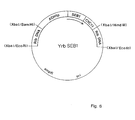
- the ribosomal sequences of a suitable plasmid e.g. plasmid pIRL9 (Hallborn et al ., 1991) are released, and cloned appropriately into BS+ vector, as shown in Fig. 6.
- the gene SEB1 coupled in between suitable yeast promoter and terminator regions, is released from the hybrid vector comprising the gene and cloned into the plasmid obtained at the previous stage. From this resulting plasmid the expression cassette, flanked by ribosomal sequences can be released.
- This fragment is cotransformed into a yeast with an autonomously replicating plasmid carrying a suitable marker for transformation.
- the plasmid can be later on removed from the cells containing the extra copies of SEB1 gene integrated in the chromosome by cultivating the cells in non-selective conditions. Using this procedure recombinant strains can be obtained which carry no extra foreign DNA such as bacterial vector sequences. If a polyploid yeast strain, such as VTT-A-63015, is used the gene can be integrated also to an essential locus such as the ADH1 or the PGK1 locus.
- the SEB1 gene between the ADH1 promoter and CYC1 terminator is transformed into a K. lactis strain either on a multicopy plasmid or integrated in the genome using methods known in the art.
- Suitable promoters in addition to the ADH1 promoter or promoter of the SEB1 gene itself are for instance the other S. cerevisiae promoters, as listed hereinbefore.
- the processes of this invention thus use yeast strains overexpressing the SEB1 gene of S. cerevisiae as well as homologous gene(s) of K. lactis and other yeasts.
- the sequence of the genes can be determined from the plasmids carrying them by using e.g. the double stranded dideoxy nucleotide sequencing method (Zagursky et al ., 1986).
- the nucleotide sequence of the open reading frame of SEB1 gene of S. cerevisiae is given as the SEQ ID NO:1.
- yeast strains carry specific vectors comprising the SEB1 genes.
- a vector is either an autonomously replicating multicopy or a single copy plasmid or a vector capable of integrating into the chromosome, as described above.
- Yeast strains containing extra copies of SEB1 gene either on replicating plasmid(s) or integrated into the chromosome provide increased production of secreted proteins, such as Bacillus ⁇ -amylase, yeast invertase or Trichoderma cellulases or other hydrolases.
- a method for constructing hew yeast cells capable of expressing enhanced levels of Seb1 protein comprises:
- yeast cells which in addition to extra copies of SEB1 gene comprise a DNA molecule encoding a secreted foreign or endogenous protein, such as ⁇ -amylase, cellulase, or an antibody, and are capable of expressing this protein, are provided.
- Secretion may be improved by optimizing the Seb1 protein level using different promoters and different copy numbers of the gene and combining the SEB1 gene with other genes involved in secretion, such as SEC61 .
- the invention provides a process for producing increased amounts of a secreted foreign or endogenous protein in a yeast cell, which process consists of the steps of:
- the present invention also provides a process for increased production of an endogenous secreted protein, which process consists of the steps of:
- Yeast strains used in this invention may, in addition to extra copies of SEB1 gene or its homolog, also comprise a DNA sequence coding for a hydrolytic enzyme such as ⁇ -amylase and/or glucoamylase or lignocellulose hydrolyzing enzymes such as cellulases, hemicellulases or ligninases, which render the yeast capable of increased hydrolysis of, and/or enhanced growth on polymeric compounds such as starch or lignocellulose.
- a hydrolytic enzyme such as ⁇ -amylase and/or glucoamylase or lignocellulose hydrolyzing enzymes such as cellulases, hemicellulases or ligninases
- Possible applications of said recombinant cells are e.g. in single cell production, in improved alcohol production or in processes where efficient hydrolysis of raw material is desired.
- the S. cerevisiae strain used in all experiments was DBY746 ( a his3Dl leu2-3 leu2-112 ura3-52 trpl -289 Cyh R ) (obtained from David Botstein, Department of Biology, Massachusetts Institute of Technology, Cambridge, MA)
- Example 1 Overexpression of the Seb1 protein in yeast transformed with YEpSEB1
- Example 2 Enhanced production of a secreted foreign protein, Bacillus ⁇ - amylase and an endogenous protein, invertase in a yeast strain overexpressing SEB1
- the S. cerevisiae strain harboring the plasmid YEp ⁇ a6 containing Bacillus ⁇ -amylase gene ligated between the ADH1 promoter and terminator (Ruohonen et al ., 1987), modified for more efficient expression by deleting predicted inhibitory sequences 5' to the promoter element (Ruohonen et al ., 1991; 1995) was transformed either with YEpSEB1 or with the control plasmid pMA56 (Ammerer, 1983).
- the yeast strains obtained containing YEpSEB1 and YEp ⁇ a6 or pMA56 and YEp ⁇ a6 were grown in selective medium at 30°C and secretion of ⁇ -amylase into the culture medium was monitored by measuring the ⁇ -amylase activity using the Phadebas amylase test (Pharmacia Diagnostics AB, Sweden). As shown in Fig. 3, increased ⁇ -amylase activity was obtained in the strain which carried SEB1 on the multicopy plasmid compared with the control strain transformed with the control plasmid without SEB1 gene. No difference was observed in the yeast growth between the control transformant and SEB1 transformant.
- Example 3 Enhanced production of secreted foreign protein, Bacillus ⁇ - amylase in a yeast strain in which the ⁇ -amylase gene is integrated in the genome at HIS3 locus and the SEB1 gene is over-expressed
- the cassette expressing ⁇ -amylase of Bacillus amyloliquefaciens was released from the plasmid YEp ⁇ a6 (Ruohonen et al ., 1995) as 3.35 kb fragment by digesting with Bam HI and Sal I and it was cloned into the yeast integrating vector pRS403 (Sikorski and Hieter, 1989) between the Bam HI and Sal I sites to obtain plasmid YIp ⁇ a1.
- the plasmid was linearized by Pst I digestion inside the HIS3 gene and used for transformation of yeast. The transformants were selected for histidine prototrophy. Integration of the ⁇ -amylase expression cassette at the HIS3 locus was confirmed by Southern analysis.
- the integrant strain thus obtained was transformed with YEpSEB1 or with the control plasmid pMA56.
- the transformants were grown in selective medium at 30°C and secretion of ⁇ -amylase into the culture medium was monitored by measuring the ⁇ -amylase activity as described in Example 2.
- Clearly enhanced levels of secreted ⁇ -amylase were detected in the YEpSEB1 transformant, in which the ⁇ -amylase level in the culture medium was 4.2 fold compared to the control strain.
- Example 4 Enhanced production of secreted foreign protein, Bacillus ⁇ - amylase in a yeast strain in which the ⁇ -amylase gene is integrated in the genome at URA3 locus and the SEB1 gene is over-expressed
- An integration cassette for integration of the ⁇ -amylase gene in the URA3 locus was construted as follows. Two URA3 fragments were made by PCR and cloned into the multiple cloning site of pBluescript SK(-). The first fragment comprising base pairs (bp) 71-450 of the 1135 bp long URA3 was cloned as a Sac I- Xba I fragment. The second fragment (781-1135 bp) was cloned as a Xho I- Kpn I fragment. The resultant plasmid is pBUF.
- the 3.35 kb long ⁇ -amylase expression cassette was cut as a Bam HI- Sal I fragment from the plasmid YEp ⁇ a6 (Ruohonen et al ., 1995) and cloned into the pBluescript vector yielding plasmid pB ⁇ a6.
- the expression cassette was then released again as a Bam HI -Sal I fragment and inserted into pBUF between the URA3 fagments. This construct is pUI ⁇ a1.
- the S. cerevisiae strain which is ura3-52 was first converted to wt URA3 by transforming with a fragment containing the entire URA3 gene.
- This strain was then transformed with the ⁇ -amylase integration cassette released as a Sac I- Nsi I fragment from pUI ⁇ a1 and the transformants were selected in the presence of 5-FOA which selects for strains in which the URA3 gene is inactivated by integration of the ⁇ -amylase cassette. Integration at the URA3 locus was confirmed by Southern analysis.
- the strain thus obtained was transformed with YEpSEB1 or with the control plasmid pMA56.
- the YEpSEB1 transformant obtained was named VTT C-97280 and was deposited according to the Budapest Treaty at DSMZ (Deutsche Sammlung von Mikroorganismen und Zellkulturen GmbH) on 16 June 1997 with the accession number DSM 11615.
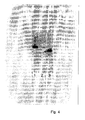
- the transformants were grown in selective medium at 30°C and secretion of ⁇ -amylase into the culture medium was monitored by measuring the ⁇ -amylase activity as described in Example 2. As shown in Fig. 4 and Fig. 5 clearly enhanced levels of secreted ⁇ -amylase were detected in the YEpSEB1 transformant both by Western blotting and by measuring the ⁇ -amylase activity.
- Genomic DNA from the fungal species Saccharomyces cerevisiae, Schizosaccharomyces pombe, Kluyveromyces lactis, Pichia pastoris, Pichia stipitis, Candida utilis , and Yarrowia lipolytica were isolated, digested with the Hin dIII restriction enzyme, separated electrophoretically in an 0.8% agarose gel and blotted on a nylon filter. Southern hybridization of the filter was carried out at different stringencies using the Saccharomyces SEB1 gene coding region as a probe.
- the plasmid YEpSEB1 S. cerevisiae vector containing SEB1 gene
- the K. lactis replication origin (Chen et al ., 1986) was released from the KEp6 plasmid as about 1000 bp fragment (digestion with Aat II and Cla I, fill-in by T4 DNA polymerase) and purified and ligated in the Pvu II site of YEpSEB1 and the vector control, pMA56 to obtain plasmids KEpSEB1 and KpMA56, respectively.
- the plasmids were transformed into K.
- lactis and the transformants were selected for growth on SC-Trp plates.
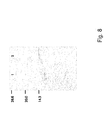
- SDS lysates prepared from the transformants were analyzed by Western blotting using Seb1p specific antibody as described in Example 1. The antibody detected a band with slightly slower migration than that of Seb1p of S. cerevisiae (Fig. 8).
- Example 7 Enhanced production of secreted foreign protein, Bacillus ⁇ - amylase in yeast overexpressing SEC61 in combination with normal or increased levels of functional Seb1 protein.
- the S. cerevisiae strain in which the Bacillus ⁇ -amylase expression cassette is integrated at the URA3 locus was transformed either with a multicopy plasmid YEpSEC61 expressing the SEC61 gene or with the control plasmid pRS425 (Christianson et al ., 1992).
- the transformants were grown in selective medium at 30°C and secretion of ⁇ -amylase into the culture medium was monitored by measuring the ⁇ -amylase activity using the Phadebas amylase test (Pharmacia Diagnostics AB, Sweden). Increased ⁇ -amylase activity (1.3 fold) was obtained in the strain which carries SEC61 on a multicopy plasmid compared with the strain transformed with the vector without SEC61 gene.
Landscapes
- Life Sciences & Earth Sciences (AREA)
- Health & Medical Sciences (AREA)
- Genetics & Genomics (AREA)
- Chemical & Material Sciences (AREA)
- Mycology (AREA)
- Organic Chemistry (AREA)
- Engineering & Computer Science (AREA)
- General Engineering & Computer Science (AREA)
- Bioinformatics & Cheminformatics (AREA)
- Biophysics (AREA)
- Zoology (AREA)
- Molecular Biology (AREA)
- Wood Science & Technology (AREA)
- Biochemistry (AREA)
- General Health & Medical Sciences (AREA)
- Microbiology (AREA)
- Biomedical Technology (AREA)
- Biotechnology (AREA)
- Gastroenterology & Hepatology (AREA)
- Plant Pathology (AREA)
- Physics & Mathematics (AREA)
- Proteomics, Peptides & Aminoacids (AREA)
- Medicinal Chemistry (AREA)
- Micro-Organisms Or Cultivation Processes Thereof (AREA)
- Preparation Of Compounds By Using Micro-Organisms (AREA)
- Peptides Or Proteins (AREA)
- Seeds, Soups, And Other Foods (AREA)
Abstract
Description
| Strain | Accession number | Deposit date |
| Saccharomyces cerevisiae VTT C-97280 carrying the integrated α-amylase gene and plasmid YEpSEB1 | DSM 11615 | 16.06.1997 |


Claims (5)
- A process for producing increased amounts of a secreted foreign or endogenous protein in a yeast cell, characterized in that the process consists of the steps of:(a) obtaining a vector comprising an isolated DNA molecule encoding said protein;(b1) transforming the vector obtained into a suitable yeast host comprising a DNA molecule encoding the Seb1 protein which has an amino acid sequence depicted in SEQ ID NO:2, or a DNA molecule encoding a homologous Seb1 protein from another yeast, and overexpressing SEB1 gene, to obtain recombinant yeast host cells; or(b2) transforming the vector into a suitable yeast host and retransforming this transformant with a yeast expression vector comprising a DNA molecule encoding Seb1 protein which has an amino acid sequence depicted in SEQ ID NO:2, or a DNA molecule encoding a homologous Seb1 protein from another yeast, or a functional fragment thereof, to obtain recombinant yeast host cells overexpressing SEB1 gene; or(b3) transforming the vector obtained into a suitable yeast host overexpressing SEB1 gene and another gene encoding a protein functioning at the same step with Seb1 protein to obtain recombinant yeast host cells; or(b4) transforming the vector into a suitable yeast host and retransforming this transformant with a yeast expression vector comprising a DNA molecule encoding Seb 1 protein which has an amino acid sequence depicted in SEQ ID NO:2, or a DNA molecule encoding a homologous Seb 1 protein from another yeast, or a functional fragment thereof, and with another gene encoding a protein functioning at the same step with Seb1 protein to obtain transformed yeast cells overexpressing SEB1 gene and another gene encoding a protein functioning at the same step with Seb1 protein; and(c) screening for cells with enhanced production of said protein; and(d) cultivating said recombinant yeast host cells under conditions permitting expression of said protein.
- A process for increased production of an endogenous secreted protein, characterized in that the process consists of the steps of:(a) transforming cells producing said protein with a yeast expression vector comprising a DNA molecule encoding Seb1 protein which has an amino acid sequence depicted in SEQ ID NO:2, or a DNA molecule encoding a homologous Seb1 protein from another yeast, or a functional fragment thereof, alone or together with another gene encoding a protein functioning at the same step with Seb1 protein;(b) screening for transformants producing enhanced levels of said protein thus obtaining recombinant cells for enhanced protein production; and(c) cultivating said recombinant cells in conditions permitting expression of said protein.
- A process for efficient biomass production on a raw material or efficient hydrolysis of a raw material, characterized in that the process consists of the steps of:(a) obtaining a vector comprising an isolated DNA molecule encoding an endogenous or a foreign hydrolytic enzyme;(b1) transforming the vector obtained into a suitable yeast host comprising a DNA molecule encoding the Seb1 protein which has an amino acid sequence depicted in SEQ ID NO:2, or a DNA molecule encoding a homologous Seb1 protein from another yeast, and overexpressing SEB1 gene, to obtain recombinant yeast host cells; or(b2) transforming said vector into a suitable yeast host and retransforming this transformant with a yeast expression vector comprising a DNA molecule encoding Seb1 protein which has an amino acid sequence depicted in SEQ ID NO:2, or a DNA molecule encoding a homologous Seb1 protein from another yeast, or a functional fragment thereof, to obtain recombinant host cells overexpressing SEB1 gene; or(b3) transforming the vector obtained into a suitable yeast host overexpressing SEB1 gene and another gene encoding a protein functioning at the same step with Seb1 protein, to obtain recombinant yeast host cells; or(b4) transforming the vector into a suitable yeast host and retransforming this transformant with a yeast expression vector comprising a DNA molecule encoding Seb1 protein which has an amino acid sequence depicted in SEQ ID NO:2, or a DNA molecule encoding a homologous Seb1 protein from another yeast, or a functional fragment thereof, and with another gene encoding a protein functioning at the same step with Seb1 protein, to obtain transformed yeast cells overexpressing SEB1 gene and another gene encoding a protein functioning at the same step with Seb1 protein; and(c) screening for cells with enhanced production of said enzyme; and(d) cultivating said recombinant yeast host cells under conditions permitting expression of said hydrolytic enzyme.
- The process according to any one of claims 1 to 3, wherein the gene encoding a protein functioning at the same step with Seb1 protein is SEC61 gene.
- Recombinant yeast cells being the cells of Saccharomyces cerevisiae strain VTT C-97280 having the deposit accession number DSM 11615.
Applications Claiming Priority (3)
| Application Number | Priority Date | Filing Date | Title |
|---|---|---|---|
| FI972909 | 1997-07-09 | ||
| FI972909A FI972909A0 (en) | 1997-07-09 | 1997-07-09 | Oekad Produktion av avsoendrade proteiner genom recombinatjaestceller |
| PCT/FI1998/000576 WO1999002716A1 (en) | 1997-07-09 | 1998-07-08 | Increased production of secreted proteins by recombinant yeast cells |
Publications (2)
| Publication Number | Publication Date |
|---|---|
| EP0994955A1 EP0994955A1 (en) | 2000-04-26 |
| EP0994955B1 true EP0994955B1 (en) | 2005-08-17 |
Family
ID=8549223
Family Applications (1)
| Application Number | Title | Priority Date | Filing Date |
|---|---|---|---|
| EP98933668A Expired - Lifetime EP0994955B1 (en) | 1997-07-09 | 1998-07-08 | Increased production of secreted proteins by recombinant yeast cells |
Country Status (11)
| Country | Link |
|---|---|
| US (1) | US6344341B1 (en) |
| EP (1) | EP0994955B1 (en) |
| JP (1) | JP2001509392A (en) |
| AT (1) | ATE302282T1 (en) |
| AU (1) | AU734541B2 (en) |
| CA (1) | CA2296084A1 (en) |
| DE (1) | DE69831242T2 (en) |
| DK (1) | DK0994955T3 (en) |
| ES (1) | ES2247704T3 (en) |
| FI (1) | FI972909A0 (en) |
| WO (1) | WO1999002716A1 (en) |
Families Citing this family (5)
| Publication number | Priority date | Publication date | Assignee | Title |
|---|---|---|---|---|
| DK1756145T3 (en) * | 2004-06-16 | 2014-09-29 | Dsm Ip Assets Bv | PRODUCTION OF POLYPEPTIDES THROUGH IMPROVED SECRETION |
| EP2511372A1 (en) | 2006-11-02 | 2012-10-17 | DSM IP Assets B.V. | Improved production of secreted proteins by filamentous fungi |
| EP2663633B1 (en) * | 2011-04-22 | 2016-02-24 | Danisco US Inc. | Filamentous fungi having an altered viscosity phenotype |
| SG10201809152QA (en) * | 2014-04-17 | 2018-11-29 | Boehringer Ingelheim Rcv Gmbh | Recombinant host cell for expressing proteins of interest |
| AU2015248815B2 (en) | 2014-04-17 | 2021-07-08 | Boehringer Ingelheim Rcv Gmbh & Co Kg | Recombinant host cell engineered to overexpress helper proteins |
Family Cites Families (1)
| Publication number | Priority date | Publication date | Assignee | Title |
|---|---|---|---|---|
| CA1304020C (en) | 1987-03-23 | 1992-06-23 | Meher H. Irani | High level expression in yeast |
-
1997
- 1997-07-09 FI FI972909A patent/FI972909A0/en not_active Application Discontinuation
-
1998
- 1998-07-08 EP EP98933668A patent/EP0994955B1/en not_active Expired - Lifetime
- 1998-07-08 JP JP2000502210A patent/JP2001509392A/en active Pending
- 1998-07-08 WO PCT/FI1998/000576 patent/WO1999002716A1/en not_active Ceased
- 1998-07-08 ES ES98933668T patent/ES2247704T3/en not_active Expired - Lifetime
- 1998-07-08 AU AU83410/98A patent/AU734541B2/en not_active Ceased
- 1998-07-08 CA CA002296084A patent/CA2296084A1/en not_active Abandoned
- 1998-07-08 US US09/446,920 patent/US6344341B1/en not_active Expired - Lifetime
- 1998-07-08 DE DE69831242T patent/DE69831242T2/en not_active Expired - Lifetime
- 1998-07-08 DK DK98933668T patent/DK0994955T3/en active
- 1998-07-08 AT AT98933668T patent/ATE302282T1/en not_active IP Right Cessation
Also Published As
| Publication number | Publication date |
|---|---|
| FI972909A0 (en) | 1997-07-09 |
| US6344341B1 (en) | 2002-02-05 |
| DE69831242T2 (en) | 2006-06-29 |
| EP0994955A1 (en) | 2000-04-26 |
| JP2001509392A (en) | 2001-07-24 |
| AU8341098A (en) | 1999-02-08 |
| DE69831242D1 (en) | 2005-09-22 |
| AU734541B2 (en) | 2001-06-14 |
| WO1999002716A1 (en) | 1999-01-21 |
| CA2296084A1 (en) | 1999-01-21 |
| DK0994955T3 (en) | 2005-11-28 |
| ES2247704T3 (en) | 2006-03-01 |
| ATE302282T1 (en) | 2005-09-15 |
Similar Documents
| Publication | Publication Date | Title |
|---|---|---|
| JP4307563B2 (en) | Agrobacterium-mediated transformation of filamentous fungi, especially those belonging to the genus Aspergillus | |
| Jeenes et al. | 9 Heterologous Protein Production by Filamentous Fungi | |
| AU571181B2 (en) | Cloning system for kluyveromyces species | |
| AU2005254734B9 (en) | Production of polypeptides by improved secretion | |
| Fowler et al. | Gene expression systems for filamentous fungi | |
| WO1993018167A1 (en) | A method for production of proteins in yeast | |
| EP0665890B1 (en) | Increased production of secreted proteins by recombinant eukaryotic cells | |
| AU734541B2 (en) | Increased production of secreted proteins by recombinant yeast cells | |
| EP0362183B1 (en) | Process for the production of human lysozyme | |
| WO1994008024A9 (en) | Increased production of secreted proteins by recombinant eukaryotic cells | |
| Suominen et al. | Enhanced recovery and purification of Aspergillus glucoamylase from Saccharomyces cerevisiae by the addition of poly (aspartic acid) tails | |
| KR100915670B1 (en) | A novel YlMPO1 gene derived from Yarrowia lipolytica and a process for preparing a glycoprotein not being mannosylphosphorylated by using a mutated Yarrowia lipolytica in which YlMPO1 gene is disrupted | |
| CN113015782A (en) | Leader sequences for yeast | |
| CN113316641B (en) | Tandem protein expression | |
| CN113056554A (en) | Recombinant yeast cells | |
| WO2004003205A1 (en) | Hansenula polymorpha mutant strains with defect in outer chain biosynthesis and the production of recombinant glycoproteins using the same strains | |
| KR0185980B1 (en) | Albumin gene-containing plasmid transformant carrying same production of such transformant and production of albumin | |
| WO2008136564A1 (en) | A novel ylmpo1 gene derived from yarrowia lipolytica and a process for preparing a glycoprotein not being mannosylphosphorylated by using a mutated yarrowia lipolytica in which ylmpo1 gene is disrupted | |
| Liua et al. | Improved secretory production of glucoamylase in Pichia pastoris by combination of genetic manipulationsq | |
| Da Silva | Expression and secretion of foreign proteins by'Aspergillus' | |
| JPH06253858A (en) | Fused gene having rodentian apolipoprotein e, plasmid comprising the same inserted thereinto and use thereof |
Legal Events
| Date | Code | Title | Description |
|---|---|---|---|
| PUAI | Public reference made under article 153(3) epc to a published international application that has entered the european phase |
Free format text: ORIGINAL CODE: 0009012 |
|
| 17P | Request for examination filed |
Effective date: 20000118 |
|
| AK | Designated contracting states |
Kind code of ref document: A1 Designated state(s): AT BE CH CY DE DK ES FI FR GB GR IE IT LI LU MC NL PT SE |
|
| 17Q | First examination report despatched |
Effective date: 20030605 |
|
| GRAP | Despatch of communication of intention to grant a patent |
Free format text: ORIGINAL CODE: EPIDOSNIGR1 |
|
| GRAS | Grant fee paid |
Free format text: ORIGINAL CODE: EPIDOSNIGR3 |
|
| GRAL | Information related to payment of fee for publishing/printing deleted |
Free format text: ORIGINAL CODE: EPIDOSDIGR3 |
|
| GRAS | Grant fee paid |
Free format text: ORIGINAL CODE: EPIDOSNIGR3 |
|
| RIN1 | Information on inventor provided before grant (corrected) |
Inventor name: SOEDERLUND, HANS Inventor name: TIEAHO, VILLE Inventor name: TOIKKANEN, JAANA Inventor name: KERAENEN, SIRKKA |
|
| GRAA | (expected) grant |
Free format text: ORIGINAL CODE: 0009210 |
|
| AK | Designated contracting states |
Kind code of ref document: B1 Designated state(s): AT BE CH CY DE DK ES FI FR GB GR IE IT LI LU MC NL PT SE |
|
| REG | Reference to a national code |
Ref country code: GB Ref legal event code: FG4D |
|
| REG | Reference to a national code |
Ref country code: CH Ref legal event code: EP |
|
| REG | Reference to a national code |
Ref country code: IE Ref legal event code: FG4D |
|
| REF | Corresponds to: |
Ref document number: 69831242 Country of ref document: DE Date of ref document: 20050922 Kind code of ref document: P |
|
| REG | Reference to a national code |
Ref country code: SE Ref legal event code: TRGR |
|
| PG25 | Lapsed in a contracting state [announced via postgrant information from national office to epo] |
Ref country code: GR Free format text: LAPSE BECAUSE OF FAILURE TO SUBMIT A TRANSLATION OF THE DESCRIPTION OR TO PAY THE FEE WITHIN THE PRESCRIBED TIME-LIMIT Effective date: 20051117 |
|
| REG | Reference to a national code |
Ref country code: DK Ref legal event code: T3 |
|
| REG | Reference to a national code |
Ref country code: CH Ref legal event code: NV Representative=s name: BOVARD AG PATENTANWAELTE |
|
| PG25 | Lapsed in a contracting state [announced via postgrant information from national office to epo] |
Ref country code: PT Free format text: LAPSE BECAUSE OF FAILURE TO SUBMIT A TRANSLATION OF THE DESCRIPTION OR TO PAY THE FEE WITHIN THE PRESCRIBED TIME-LIMIT Effective date: 20060117 |
|
| REG | Reference to a national code |
Ref country code: ES Ref legal event code: FG2A Ref document number: 2247704 Country of ref document: ES Kind code of ref document: T3 |
|
| ET | Fr: translation filed | ||
| PLBE | No opposition filed within time limit |
Free format text: ORIGINAL CODE: 0009261 |
|
| STAA | Information on the status of an ep patent application or granted ep patent |
Free format text: STATUS: NO OPPOSITION FILED WITHIN TIME LIMIT |
|
| 26N | No opposition filed |
Effective date: 20060518 |
|
| PG25 | Lapsed in a contracting state [announced via postgrant information from national office to epo] |
Ref country code: MC Free format text: LAPSE BECAUSE OF NON-PAYMENT OF DUE FEES Effective date: 20060731 |
|
| PGFP | Annual fee paid to national office [announced via postgrant information from national office to epo] |
Ref country code: FI Payment date: 20070613 Year of fee payment: 10 |
|
| PGFP | Annual fee paid to national office [announced via postgrant information from national office to epo] |
Ref country code: SE Payment date: 20070615 Year of fee payment: 10 Ref country code: CH Payment date: 20070615 Year of fee payment: 10 |
|
| PGFP | Annual fee paid to national office [announced via postgrant information from national office to epo] |
Ref country code: IE Payment date: 20070618 Year of fee payment: 10 |
|
| PGFP | Annual fee paid to national office [announced via postgrant information from national office to epo] |
Ref country code: AT Payment date: 20070607 Year of fee payment: 10 |
|
| PGFP | Annual fee paid to national office [announced via postgrant information from national office to epo] |
Ref country code: BE Payment date: 20070711 Year of fee payment: 10 |
|
| PG25 | Lapsed in a contracting state [announced via postgrant information from national office to epo] |
Ref country code: LU Free format text: LAPSE BECAUSE OF NON-PAYMENT OF DUE FEES Effective date: 20060708 |
|
| PG25 | Lapsed in a contracting state [announced via postgrant information from national office to epo] |
Ref country code: CY Free format text: LAPSE BECAUSE OF FAILURE TO SUBMIT A TRANSLATION OF THE DESCRIPTION OR TO PAY THE FEE WITHIN THE PRESCRIBED TIME-LIMIT Effective date: 20050817 |
|
| REG | Reference to a national code |
Ref country code: CH Ref legal event code: PL |
|
| EUG | Se: european patent has lapsed | ||
| REG | Reference to a national code |
Ref country code: IE Ref legal event code: MM4A |
|
| PG25 | Lapsed in a contracting state [announced via postgrant information from national office to epo] |
Ref country code: AT Free format text: LAPSE BECAUSE OF NON-PAYMENT OF DUE FEES Effective date: 20080708 |
|
| PG25 | Lapsed in a contracting state [announced via postgrant information from national office to epo] |
Ref country code: FI Free format text: LAPSE BECAUSE OF NON-PAYMENT OF DUE FEES Effective date: 20080708 |
|
| PG25 | Lapsed in a contracting state [announced via postgrant information from national office to epo] |
Ref country code: LI Free format text: LAPSE BECAUSE OF NON-PAYMENT OF DUE FEES Effective date: 20080731 Ref country code: CH Free format text: LAPSE BECAUSE OF NON-PAYMENT OF DUE FEES Effective date: 20080731 |
|
| PG25 | Lapsed in a contracting state [announced via postgrant information from national office to epo] |
Ref country code: IE Free format text: LAPSE BECAUSE OF NON-PAYMENT OF DUE FEES Effective date: 20080708 |
|
| PG25 | Lapsed in a contracting state [announced via postgrant information from national office to epo] |
Ref country code: SE Free format text: LAPSE BECAUSE OF NON-PAYMENT OF DUE FEES Effective date: 20080709 Ref country code: BE Free format text: LAPSE BECAUSE OF NON-PAYMENT OF DUE FEES Effective date: 20080731 |
|
| PGFP | Annual fee paid to national office [announced via postgrant information from national office to epo] |
Ref country code: DK Payment date: 20110720 Year of fee payment: 14 |
|
| PGFP | Annual fee paid to national office [announced via postgrant information from national office to epo] |
Ref country code: ES Payment date: 20120713 Year of fee payment: 15 Ref country code: IT Payment date: 20120724 Year of fee payment: 15 |
|
| PGFP | Annual fee paid to national office [announced via postgrant information from national office to epo] |
Ref country code: NL Payment date: 20120719 Year of fee payment: 15 |
|
| REG | Reference to a national code |
Ref country code: NL Ref legal event code: V1 Effective date: 20140201 |
|
| REG | Reference to a national code |
Ref country code: DK Ref legal event code: EBP Effective date: 20130731 |
|
| PG25 | Lapsed in a contracting state [announced via postgrant information from national office to epo] |
Ref country code: NL Free format text: LAPSE BECAUSE OF NON-PAYMENT OF DUE FEES Effective date: 20140201 |
|
| PG25 | Lapsed in a contracting state [announced via postgrant information from national office to epo] |
Ref country code: IT Free format text: LAPSE BECAUSE OF NON-PAYMENT OF DUE FEES Effective date: 20130708 |
|
| REG | Reference to a national code |
Ref country code: ES Ref legal event code: FD2A Effective date: 20140909 |
|
| PG25 | Lapsed in a contracting state [announced via postgrant information from national office to epo] |
Ref country code: DK Free format text: LAPSE BECAUSE OF NON-PAYMENT OF DUE FEES Effective date: 20130731 |
|
| PG25 | Lapsed in a contracting state [announced via postgrant information from national office to epo] |
Ref country code: ES Free format text: LAPSE BECAUSE OF NON-PAYMENT OF DUE FEES Effective date: 20130709 |
|
| REG | Reference to a national code |
Ref country code: FR Ref legal event code: PLFP Year of fee payment: 19 |
|
| REG | Reference to a national code |
Ref country code: FR Ref legal event code: PLFP Year of fee payment: 20 |
|
| PGFP | Annual fee paid to national office [announced via postgrant information from national office to epo] |
Ref country code: GB Payment date: 20170719 Year of fee payment: 20 Ref country code: DE Payment date: 20170731 Year of fee payment: 20 Ref country code: FR Payment date: 20170724 Year of fee payment: 20 |
|
| REG | Reference to a national code |
Ref country code: DE Ref legal event code: R071 Ref document number: 69831242 Country of ref document: DE |
|
| REG | Reference to a national code |
Ref country code: GB Ref legal event code: PE20 Expiry date: 20180707 |
|
| PG25 | Lapsed in a contracting state [announced via postgrant information from national office to epo] |
Ref country code: GB Free format text: LAPSE BECAUSE OF EXPIRATION OF PROTECTION Effective date: 20180707 |