EP0991663B1 - Mycobacterium strain with modified erp gene and vaccine composition containing same - Google Patents
Mycobacterium strain with modified erp gene and vaccine composition containing same Download PDFInfo
- Publication number
- EP0991663B1 EP0991663B1 EP98940318A EP98940318A EP0991663B1 EP 0991663 B1 EP0991663 B1 EP 0991663B1 EP 98940318 A EP98940318 A EP 98940318A EP 98940318 A EP98940318 A EP 98940318A EP 0991663 B1 EP0991663 B1 EP 0991663B1
- Authority
- EP
- European Patent Office
- Prior art keywords
- erp
- mycobacterium
- gene
- strain
- bcg
- Prior art date
- Legal status (The legal status is an assumption and is not a legal conclusion. Google has not performed a legal analysis and makes no representation as to the accuracy of the status listed.)
- Expired - Lifetime
Links
- 101150025819 erp gene Proteins 0.000 title claims abstract description 137
- 241000186359 Mycobacterium Species 0.000 title claims abstract description 44
- 229960005486 vaccine Drugs 0.000 title claims abstract description 21
- 239000000203 mixture Substances 0.000 title claims abstract description 17
- 230000004048 modification Effects 0.000 claims abstract description 8
- 238000012986 modification Methods 0.000 claims abstract description 8
- 108090000623 proteins and genes Proteins 0.000 claims description 52
- 239000013598 vector Substances 0.000 claims description 29
- 102000004169 proteins and genes Human genes 0.000 claims description 26
- SBUJHOSQTJFQJX-NOAMYHISSA-N kanamycin Chemical compound O[C@@H]1[C@@H](O)[C@H](O)[C@@H](CN)O[C@@H]1O[C@H]1[C@H](O)[C@@H](O[C@@H]2[C@@H]([C@@H](N)[C@H](O)[C@@H](CO)O2)O)[C@H](N)C[C@@H]1N SBUJHOSQTJFQJX-NOAMYHISSA-N 0.000 claims description 21
- 229930027917 kanamycin Natural products 0.000 claims description 19
- 229960000318 kanamycin Drugs 0.000 claims description 19
- 229930182823 kanamycin A Natural products 0.000 claims description 19
- 238000000034 method Methods 0.000 claims description 18
- 230000037431 insertion Effects 0.000 claims description 15
- 238000003780 insertion Methods 0.000 claims description 15
- 238000004519 manufacturing process Methods 0.000 claims description 12
- 241001302239 Mycobacterium tuberculosis complex Species 0.000 claims description 11
- 229930006000 Sucrose Natural products 0.000 claims description 11
- CZMRCDWAGMRECN-UGDNZRGBSA-N Sucrose Chemical compound O[C@H]1[C@H](O)[C@@H](CO)O[C@@]1(CO)O[C@@H]1[C@H](O)[C@@H](O)[C@H](O)[C@@H](CO)O1 CZMRCDWAGMRECN-UGDNZRGBSA-N 0.000 claims description 11
- 241000186366 Mycobacterium bovis Species 0.000 claims description 10
- 239000000427 antigen Substances 0.000 claims description 10
- 108091007433 antigens Proteins 0.000 claims description 10
- 102000036639 antigens Human genes 0.000 claims description 10
- 230000003115 biocidal effect Effects 0.000 claims description 10
- 239000005720 sucrose Substances 0.000 claims description 9
- 230000009466 transformation Effects 0.000 claims description 9
- 241000187479 Mycobacterium tuberculosis Species 0.000 claims description 8
- LWGJTAZLEJHCPA-UHFFFAOYSA-N n-(2-chloroethyl)-n-nitrosomorpholine-4-carboxamide Chemical compound ClCCN(N=O)C(=O)N1CCOCC1 LWGJTAZLEJHCPA-UHFFFAOYSA-N 0.000 claims description 8
- 108091033319 polynucleotide Proteins 0.000 claims description 8
- 239000002157 polynucleotide Substances 0.000 claims description 8
- 102000040430 polynucleotide Human genes 0.000 claims description 8
- 239000003242 anti bacterial agent Substances 0.000 claims description 7
- 241000894007 species Species 0.000 claims description 6
- YQYJSBFKSSDGFO-UHFFFAOYSA-N Epihygromycin Natural products OC1C(O)C(C(=O)C)OC1OC(C(=C1)O)=CC=C1C=C(C)C(=O)NC1C(O)C(O)C2OCOC2C1O YQYJSBFKSSDGFO-UHFFFAOYSA-N 0.000 claims description 5
- 230000002163 immunogen Effects 0.000 claims description 5
- 238000002360 preparation method Methods 0.000 claims description 5
- 229960000268 spectinomycin Drugs 0.000 claims description 5
- UNFWWIHTNXNPBV-WXKVUWSESA-N spectinomycin Chemical compound O([C@@H]1[C@@H](NC)[C@@H](O)[C@H]([C@@H]([C@H]1O1)O)NC)[C@]2(O)[C@H]1O[C@H](C)CC2=O UNFWWIHTNXNPBV-WXKVUWSESA-N 0.000 claims description 5
- 230000000694 effects Effects 0.000 claims description 3
- 239000000546 pharmaceutical excipient Substances 0.000 claims description 3
- 230000000644 propagated effect Effects 0.000 claims description 3
- 101150025220 sacB gene Proteins 0.000 claims description 3
- 238000012258 culturing Methods 0.000 claims description 2
- 108020005091 Replication Origin Proteins 0.000 claims 1
- 230000001131 transforming effect Effects 0.000 claims 1
- 230000002688 persistence Effects 0.000 abstract description 9
- 230000001018 virulence Effects 0.000 abstract description 7
- 230000007423 decrease Effects 0.000 abstract description 2
- 201000008827 tuberculosis Diseases 0.000 description 46
- 239000012634 fragment Substances 0.000 description 20
- 210000004027 cell Anatomy 0.000 description 18
- 239000013612 plasmid Substances 0.000 description 17
- 210000002540 macrophage Anatomy 0.000 description 16
- 241000894006 Bacteria Species 0.000 description 11
- 239000002609 medium Substances 0.000 description 11
- 108020004414 DNA Proteins 0.000 description 10
- 241000699670 Mus sp. Species 0.000 description 10
- 230000000875 corresponding effect Effects 0.000 description 10
- 210000000056 organ Anatomy 0.000 description 10
- 229960004793 sucrose Drugs 0.000 description 10
- 241000588724 Escherichia coli Species 0.000 description 9
- 230000012010 growth Effects 0.000 description 9
- 230000008348 humoral response Effects 0.000 description 9
- 241001465754 Metazoa Species 0.000 description 8
- PXHVJJICTQNCMI-UHFFFAOYSA-N Nickel Chemical compound [Ni] PXHVJJICTQNCMI-UHFFFAOYSA-N 0.000 description 8
- 241000283973 Oryctolagus cuniculus Species 0.000 description 8
- 210000002966 serum Anatomy 0.000 description 8
- 241000699666 Mus <mouse, genus> Species 0.000 description 7
- 241000186362 Mycobacterium leprae Species 0.000 description 7
- 230000003053 immunization Effects 0.000 description 7
- 208000015181 infectious disease Diseases 0.000 description 7
- 210000004072 lung Anatomy 0.000 description 7
- 241001467552 Mycobacterium bovis BCG Species 0.000 description 6
- 230000029087 digestion Effects 0.000 description 6
- 238000002474 experimental method Methods 0.000 description 6
- 238000009396 hybridization Methods 0.000 description 6
- 238000002649 immunization Methods 0.000 description 6
- 230000035772 mutation Effects 0.000 description 6
- 239000002773 nucleotide Substances 0.000 description 6
- 125000003729 nucleotide group Chemical group 0.000 description 6
- 239000002953 phosphate buffered saline Substances 0.000 description 6
- 239000000047 product Substances 0.000 description 6
- 238000012360 testing method Methods 0.000 description 6
- NHBKXEKEPDILRR-UHFFFAOYSA-N 2,3-bis(butanoylsulfanyl)propyl butanoate Chemical compound CCCC(=O)OCC(SC(=O)CCC)CSC(=O)CCC NHBKXEKEPDILRR-UHFFFAOYSA-N 0.000 description 5
- 108091081062 Repeated sequence (DNA) Proteins 0.000 description 5
- 238000004458 analytical method Methods 0.000 description 5
- 238000011161 development Methods 0.000 description 5
- 230000018109 developmental process Effects 0.000 description 5
- 230000004927 fusion Effects 0.000 description 5
- 230000002068 genetic effect Effects 0.000 description 5
- 210000004185 liver Anatomy 0.000 description 5
- 210000000680 phagosome Anatomy 0.000 description 5
- 239000002243 precursor Substances 0.000 description 5
- 210000000952 spleen Anatomy 0.000 description 5
- 208000027930 type IV hypersensitivity disease Diseases 0.000 description 5
- 108700028369 Alleles Proteins 0.000 description 4
- 241000193830 Bacillus <bacterium> Species 0.000 description 4
- 108010054576 Deoxyribonuclease EcoRI Proteins 0.000 description 4
- 238000002105 Southern blotting Methods 0.000 description 4
- 239000002671 adjuvant Substances 0.000 description 4
- 239000000872 buffer Substances 0.000 description 4
- 238000001514 detection method Methods 0.000 description 4
- PCHJSUWPFVWCPO-UHFFFAOYSA-N gold Chemical compound [Au] PCHJSUWPFVWCPO-UHFFFAOYSA-N 0.000 description 4
- 230000028993 immune response Effects 0.000 description 4
- 238000003365 immunocytochemistry Methods 0.000 description 4
- 238000002347 injection Methods 0.000 description 4
- 239000007924 injection Substances 0.000 description 4
- 230000003834 intracellular effect Effects 0.000 description 4
- 238000002703 mutagenesis Methods 0.000 description 4
- 231100000350 mutagenesis Toxicity 0.000 description 4
- 229910052759 nickel Inorganic materials 0.000 description 4
- 239000000243 solution Substances 0.000 description 4
- 230000004083 survival effect Effects 0.000 description 4
- XLYOFNOQVPJJNP-UHFFFAOYSA-N water Chemical compound O XLYOFNOQVPJJNP-UHFFFAOYSA-N 0.000 description 4
- 108091003079 Bovine Serum Albumin Proteins 0.000 description 3
- 244000026610 Cynodon dactylon var. affinis Species 0.000 description 3
- PEDCQBHIVMGVHV-UHFFFAOYSA-N Glycerine Chemical compound OCC(O)CO PEDCQBHIVMGVHV-UHFFFAOYSA-N 0.000 description 3
- 241000699729 Muridae Species 0.000 description 3
- 244000052616 bacterial pathogen Species 0.000 description 3
- 239000012472 biological sample Substances 0.000 description 3
- 230000015572 biosynthetic process Effects 0.000 description 3
- 238000012512 characterization method Methods 0.000 description 3
- 239000003795 chemical substances by application Substances 0.000 description 3
- 150000001875 compounds Chemical class 0.000 description 3
- 239000012153 distilled water Substances 0.000 description 3
- 238000001493 electron microscopy Methods 0.000 description 3
- 125000000487 histidyl group Chemical group [H]N([H])C(C(=O)O*)C([H])([H])C1=C([H])N([H])C([H])=N1 0.000 description 3
- 238000002744 homologous recombination Methods 0.000 description 3
- 230000006801 homologous recombination Effects 0.000 description 3
- 210000000987 immune system Anatomy 0.000 description 3
- 239000007788 liquid Substances 0.000 description 3
- 230000008569 process Effects 0.000 description 3
- 230000001681 protective effect Effects 0.000 description 3
- 230000006798 recombination Effects 0.000 description 3
- 238000005215 recombination Methods 0.000 description 3
- 230000003362 replicative effect Effects 0.000 description 3
- 239000006228 supernatant Substances 0.000 description 3
- 238000003786 synthesis reaction Methods 0.000 description 3
- 238000011282 treatment Methods 0.000 description 3
- 238000002255 vaccination Methods 0.000 description 3
- 102000002260 Alkaline Phosphatase Human genes 0.000 description 2
- 108020004774 Alkaline Phosphatase Proteins 0.000 description 2
- IJGRMHOSHXDMSA-UHFFFAOYSA-N Atomic nitrogen Chemical compound N#N IJGRMHOSHXDMSA-UHFFFAOYSA-N 0.000 description 2
- 241000304886 Bacilli Species 0.000 description 2
- OKTJSMMVPCPJKN-UHFFFAOYSA-N Carbon Chemical compound [C] OKTJSMMVPCPJKN-UHFFFAOYSA-N 0.000 description 2
- 241000700198 Cavia Species 0.000 description 2
- 108090000695 Cytokines Proteins 0.000 description 2
- 102000004127 Cytokines Human genes 0.000 description 2
- 241001596967 Escherichia coli M15 Species 0.000 description 2
- 108010010803 Gelatin Proteins 0.000 description 2
- SXRSQZLOMIGNAQ-UHFFFAOYSA-N Glutaraldehyde Chemical compound O=CCCCC=O SXRSQZLOMIGNAQ-UHFFFAOYSA-N 0.000 description 2
- 108010065805 Interleukin-12 Proteins 0.000 description 2
- 102000013462 Interleukin-12 Human genes 0.000 description 2
- 108010002350 Interleukin-2 Proteins 0.000 description 2
- 102000000588 Interleukin-2 Human genes 0.000 description 2
- 206010024227 Lepromatous leprosy Diseases 0.000 description 2
- 101710175625 Maltose/maltodextrin-binding periplasmic protein Proteins 0.000 description 2
- 241001467553 Mycobacterium africanum Species 0.000 description 2
- 241001646725 Mycobacterium tuberculosis H37Rv Species 0.000 description 2
- 108091034117 Oligonucleotide Proteins 0.000 description 2
- 102000004160 Phosphoric Monoester Hydrolases Human genes 0.000 description 2
- 108090000608 Phosphoric Monoester Hydrolases Proteins 0.000 description 2
- 108010076504 Protein Sorting Signals Proteins 0.000 description 2
- 102000007056 Recombinant Fusion Proteins Human genes 0.000 description 2
- 108010008281 Recombinant Fusion Proteins Proteins 0.000 description 2
- 241000607768 Shigella Species 0.000 description 2
- 101100309436 Streptococcus mutans serotype c (strain ATCC 700610 / UA159) ftf gene Proteins 0.000 description 2
- 101100489892 Sus scrofa ABCG2 gene Proteins 0.000 description 2
- JLCPHMBAVCMARE-UHFFFAOYSA-N [3-[[3-[[3-[[3-[[3-[[3-[[3-[[3-[[3-[[3-[[3-[[5-(2-amino-6-oxo-1H-purin-9-yl)-3-[[3-[[3-[[3-[[3-[[3-[[5-(2-amino-6-oxo-1H-purin-9-yl)-3-[[5-(2-amino-6-oxo-1H-purin-9-yl)-3-hydroxyoxolan-2-yl]methoxy-hydroxyphosphoryl]oxyoxolan-2-yl]methoxy-hydroxyphosphoryl]oxy-5-(5-methyl-2,4-dioxopyrimidin-1-yl)oxolan-2-yl]methoxy-hydroxyphosphoryl]oxy-5-(6-aminopurin-9-yl)oxolan-2-yl]methoxy-hydroxyphosphoryl]oxy-5-(6-aminopurin-9-yl)oxolan-2-yl]methoxy-hydroxyphosphoryl]oxy-5-(6-aminopurin-9-yl)oxolan-2-yl]methoxy-hydroxyphosphoryl]oxy-5-(6-aminopurin-9-yl)oxolan-2-yl]methoxy-hydroxyphosphoryl]oxyoxolan-2-yl]methoxy-hydroxyphosphoryl]oxy-5-(5-methyl-2,4-dioxopyrimidin-1-yl)oxolan-2-yl]methoxy-hydroxyphosphoryl]oxy-5-(4-amino-2-oxopyrimidin-1-yl)oxolan-2-yl]methoxy-hydroxyphosphoryl]oxy-5-(5-methyl-2,4-dioxopyrimidin-1-yl)oxolan-2-yl]methoxy-hydroxyphosphoryl]oxy-5-(5-methyl-2,4-dioxopyrimidin-1-yl)oxolan-2-yl]methoxy-hydroxyphosphoryl]oxy-5-(6-aminopurin-9-yl)oxolan-2-yl]methoxy-hydroxyphosphoryl]oxy-5-(6-aminopurin-9-yl)oxolan-2-yl]methoxy-hydroxyphosphoryl]oxy-5-(4-amino-2-oxopyrimidin-1-yl)oxolan-2-yl]methoxy-hydroxyphosphoryl]oxy-5-(4-amino-2-oxopyrimidin-1-yl)oxolan-2-yl]methoxy-hydroxyphosphoryl]oxy-5-(4-amino-2-oxopyrimidin-1-yl)oxolan-2-yl]methoxy-hydroxyphosphoryl]oxy-5-(6-aminopurin-9-yl)oxolan-2-yl]methoxy-hydroxyphosphoryl]oxy-5-(4-amino-2-oxopyrimidin-1-yl)oxolan-2-yl]methyl [5-(6-aminopurin-9-yl)-2-(hydroxymethyl)oxolan-3-yl] hydrogen phosphate Polymers Cc1cn(C2CC(OP(O)(=O)OCC3OC(CC3OP(O)(=O)OCC3OC(CC3O)n3cnc4c3nc(N)[nH]c4=O)n3cnc4c3nc(N)[nH]c4=O)C(COP(O)(=O)OC3CC(OC3COP(O)(=O)OC3CC(OC3COP(O)(=O)OC3CC(OC3COP(O)(=O)OC3CC(OC3COP(O)(=O)OC3CC(OC3COP(O)(=O)OC3CC(OC3COP(O)(=O)OC3CC(OC3COP(O)(=O)OC3CC(OC3COP(O)(=O)OC3CC(OC3COP(O)(=O)OC3CC(OC3COP(O)(=O)OC3CC(OC3COP(O)(=O)OC3CC(OC3COP(O)(=O)OC3CC(OC3COP(O)(=O)OC3CC(OC3COP(O)(=O)OC3CC(OC3COP(O)(=O)OC3CC(OC3COP(O)(=O)OC3CC(OC3CO)n3cnc4c(N)ncnc34)n3ccc(N)nc3=O)n3cnc4c(N)ncnc34)n3ccc(N)nc3=O)n3ccc(N)nc3=O)n3ccc(N)nc3=O)n3cnc4c(N)ncnc34)n3cnc4c(N)ncnc34)n3cc(C)c(=O)[nH]c3=O)n3cc(C)c(=O)[nH]c3=O)n3ccc(N)nc3=O)n3cc(C)c(=O)[nH]c3=O)n3cnc4c3nc(N)[nH]c4=O)n3cnc4c(N)ncnc34)n3cnc4c(N)ncnc34)n3cnc4c(N)ncnc34)n3cnc4c(N)ncnc34)O2)c(=O)[nH]c1=O JLCPHMBAVCMARE-UHFFFAOYSA-N 0.000 description 2
- 238000001042 affinity chromatography Methods 0.000 description 2
- WNROFYMDJYEPJX-UHFFFAOYSA-K aluminium hydroxide Chemical compound [OH-].[OH-].[OH-].[Al+3] WNROFYMDJYEPJX-UHFFFAOYSA-K 0.000 description 2
- 230000002238 attenuated effect Effects 0.000 description 2
- 230000001580 bacterial effect Effects 0.000 description 2
- 210000001185 bone marrow Anatomy 0.000 description 2
- 229940098773 bovine serum albumin Drugs 0.000 description 2
- 210000004899 c-terminal region Anatomy 0.000 description 2
- 229910052799 carbon Inorganic materials 0.000 description 2
- 210000000170 cell membrane Anatomy 0.000 description 2
- 210000002421 cell wall Anatomy 0.000 description 2
- 239000013611 chromosomal DNA Substances 0.000 description 2
- 239000013599 cloning vector Substances 0.000 description 2
- 230000001332 colony forming effect Effects 0.000 description 2
- 238000010276 construction Methods 0.000 description 2
- 230000034994 death Effects 0.000 description 2
- 231100000517 death Toxicity 0.000 description 2
- 230000002950 deficient Effects 0.000 description 2
- 230000037430 deletion Effects 0.000 description 2
- 238000012217 deletion Methods 0.000 description 2
- 235000013681 dietary sucrose Nutrition 0.000 description 2
- 238000010790 dilution Methods 0.000 description 2
- 239000012895 dilution Substances 0.000 description 2
- 230000008034 disappearance Effects 0.000 description 2
- 208000037265 diseases, disorders, signs and symptoms Diseases 0.000 description 2
- 238000004520 electroporation Methods 0.000 description 2
- 230000008030 elimination Effects 0.000 description 2
- 238000003379 elimination reaction Methods 0.000 description 2
- 238000005516 engineering process Methods 0.000 description 2
- 230000008029 eradication Effects 0.000 description 2
- 239000013604 expression vector Substances 0.000 description 2
- 239000008273 gelatin Substances 0.000 description 2
- 229920000159 gelatin Polymers 0.000 description 2
- 235000019322 gelatine Nutrition 0.000 description 2
- 235000011852 gelatine desserts Nutrition 0.000 description 2
- 239000010931 gold Substances 0.000 description 2
- 229910052737 gold Inorganic materials 0.000 description 2
- 239000001963 growth medium Substances 0.000 description 2
- 230000036039 immunity Effects 0.000 description 2
- 238000003364 immunohistochemistry Methods 0.000 description 2
- 238000001727 in vivo Methods 0.000 description 2
- 230000001939 inductive effect Effects 0.000 description 2
- 230000010354 integration Effects 0.000 description 2
- 238000002372 labelling Methods 0.000 description 2
- 230000004807 localization Effects 0.000 description 2
- 230000037353 metabolic pathway Effects 0.000 description 2
- 244000005700 microbiome Species 0.000 description 2
- 238000000386 microscopy Methods 0.000 description 2
- 230000001717 pathogenic effect Effects 0.000 description 2
- 210000001539 phagocyte Anatomy 0.000 description 2
- 238000000746 purification Methods 0.000 description 2
- 230000009257 reactivity Effects 0.000 description 2
- 230000003252 repetitive effect Effects 0.000 description 2
- 230000010076 replication Effects 0.000 description 2
- 239000011347 resin Substances 0.000 description 2
- 229920005989 resin Polymers 0.000 description 2
- 239000000523 sample Substances 0.000 description 2
- 238000010186 staining Methods 0.000 description 2
- UCSJYZPVAKXKNQ-HZYVHMACSA-N streptomycin Chemical compound CN[C@H]1[C@H](O)[C@@H](O)[C@H](CO)O[C@H]1O[C@@H]1[C@](C=O)(O)[C@H](C)O[C@H]1O[C@@H]1[C@@H](NC(N)=N)[C@H](O)[C@@H](NC(N)=N)[C@H](O)[C@H]1O UCSJYZPVAKXKNQ-HZYVHMACSA-N 0.000 description 2
- 239000000126 substance Substances 0.000 description 2
- YNJBWRMUSHSURL-UHFFFAOYSA-N trichloroacetic acid Chemical compound OC(=O)C(Cl)(Cl)Cl YNJBWRMUSHSURL-UHFFFAOYSA-N 0.000 description 2
- 229960001005 tuberculin Drugs 0.000 description 2
- 238000005406 washing Methods 0.000 description 2
- 238000001262 western blot Methods 0.000 description 2
- QENJLXATANVWMR-UHFFFAOYSA-N 2-[(3-amino-3-imino-2-methylpropanethioyl)amino]acetic acid Chemical compound NC(=N)C(C)C(=S)NCC(O)=O QENJLXATANVWMR-UHFFFAOYSA-N 0.000 description 1
- FMYBFLOWKQRBST-UHFFFAOYSA-N 2-[bis(carboxymethyl)amino]acetic acid;nickel Chemical compound [Ni].OC(=O)CN(CC(O)=O)CC(O)=O FMYBFLOWKQRBST-UHFFFAOYSA-N 0.000 description 1
- 101710149506 28 kDa protein Proteins 0.000 description 1
- 241000251468 Actinopterygii Species 0.000 description 1
- 229920001817 Agar Polymers 0.000 description 1
- 229920000936 Agarose Polymers 0.000 description 1
- 229920000856 Amylose Polymers 0.000 description 1
- 208000035143 Bacterial infection Diseases 0.000 description 1
- 241000157302 Bison bison athabascae Species 0.000 description 1
- 101800001415 Bri23 peptide Proteins 0.000 description 1
- 101800000655 C-terminal peptide Proteins 0.000 description 1
- 102400000107 C-terminal peptide Human genes 0.000 description 1
- 108010012236 Chemokines Proteins 0.000 description 1
- 102000019034 Chemokines Human genes 0.000 description 1
- 208000035473 Communicable disease Diseases 0.000 description 1
- 101710137943 Complement control protein C3 Proteins 0.000 description 1
- 102000004594 DNA Polymerase I Human genes 0.000 description 1
- 108010017826 DNA Polymerase I Proteins 0.000 description 1
- 230000004544 DNA amplification Effects 0.000 description 1
- 108050009160 DNA polymerase 1 Proteins 0.000 description 1
- 239000003155 DNA primer Substances 0.000 description 1
- 108010014303 DNA-directed DNA polymerase Proteins 0.000 description 1
- 102000016928 DNA-directed DNA polymerase Human genes 0.000 description 1
- 239000006144 Dulbecco’s modified Eagle's medium Substances 0.000 description 1
- 241000701533 Escherichia virus T4 Species 0.000 description 1
- 241000192125 Firmicutes Species 0.000 description 1
- 229930182566 Gentamicin Natural products 0.000 description 1
- CEAZRRDELHUEMR-URQXQFDESA-N Gentamicin Chemical compound O1[C@H](C(C)NC)CC[C@@H](N)[C@H]1O[C@H]1[C@H](O)[C@@H](O[C@@H]2[C@@H]([C@@H](NC)[C@@](C)(O)CO2)O)[C@H](N)C[C@@H]1N CEAZRRDELHUEMR-URQXQFDESA-N 0.000 description 1
- 108010093488 His-His-His-His-His-His Proteins 0.000 description 1
- 241000725303 Human immunodeficiency virus Species 0.000 description 1
- 206010061598 Immunodeficiency Diseases 0.000 description 1
- 108010002352 Interleukin-1 Proteins 0.000 description 1
- 102000000589 Interleukin-1 Human genes 0.000 description 1
- 108090000174 Interleukin-10 Proteins 0.000 description 1
- 102000003814 Interleukin-10 Human genes 0.000 description 1
- 102000004388 Interleukin-4 Human genes 0.000 description 1
- 108090000978 Interleukin-4 Proteins 0.000 description 1
- 239000006137 Luria-Bertani broth Substances 0.000 description 1
- 102000008072 Lymphokines Human genes 0.000 description 1
- 108010074338 Lymphokines Proteins 0.000 description 1
- 101710175243 Major antigen Proteins 0.000 description 1
- 108010052285 Membrane Proteins Proteins 0.000 description 1
- 102000018697 Membrane Proteins Human genes 0.000 description 1
- MSFSPUZXLOGKHJ-UHFFFAOYSA-N Muraminsaeure Natural products OC(=O)C(C)OC1C(N)C(O)OC(CO)C1O MSFSPUZXLOGKHJ-UHFFFAOYSA-N 0.000 description 1
- 241001529936 Murinae Species 0.000 description 1
- 206010062207 Mycobacterial infection Diseases 0.000 description 1
- 241000949972 Mycobacterium bovis BCG str. Pasteur 1173P2 Species 0.000 description 1
- 241000797465 Mycobacterium tuberculosis 10 Species 0.000 description 1
- 206010028980 Neoplasm Diseases 0.000 description 1
- 108700019961 Neoplasm Genes Proteins 0.000 description 1
- 102000048850 Neoplasm Genes Human genes 0.000 description 1
- 101100285000 Neurospora crassa (strain ATCC 24698 / 74-OR23-1A / CBS 708.71 / DSM 1257 / FGSC 987) his-3 gene Proteins 0.000 description 1
- 239000000020 Nitrocellulose Substances 0.000 description 1
- 241000283977 Oryctolagus Species 0.000 description 1
- 238000012408 PCR amplification Methods 0.000 description 1
- 229910019142 PO4 Inorganic materials 0.000 description 1
- 229930040373 Paraformaldehyde Natural products 0.000 description 1
- 108010013639 Peptidoglycan Proteins 0.000 description 1
- 241000224016 Plasmodium Species 0.000 description 1
- 108091036414 Polyinosinic:polycytidylic acid Proteins 0.000 description 1
- 101100084022 Pseudomonas aeruginosa (strain ATCC 15692 / DSM 22644 / CIP 104116 / JCM 14847 / LMG 12228 / 1C / PRS 101 / PAO1) lapA gene Proteins 0.000 description 1
- 241000607142 Salmonella Species 0.000 description 1
- FAPWRFPIFSIZLT-UHFFFAOYSA-M Sodium chloride Chemical compound [Na+].[Cl-] FAPWRFPIFSIZLT-UHFFFAOYSA-M 0.000 description 1
- 229920002125 Sokalan® Polymers 0.000 description 1
- 235000002595 Solanum tuberosum Nutrition 0.000 description 1
- 244000061456 Solanum tuberosum Species 0.000 description 1
- 101710152003 Suppressor of silencing P0 Proteins 0.000 description 1
- 210000001744 T-lymphocyte Anatomy 0.000 description 1
- COQLPRJCUIATTQ-UHFFFAOYSA-N Uranyl acetate Chemical compound O.O.O=[U]=O.CC(O)=O.CC(O)=O COQLPRJCUIATTQ-UHFFFAOYSA-N 0.000 description 1
- 241000607479 Yersinia pestis Species 0.000 description 1
- 230000001594 aberrant effect Effects 0.000 description 1
- 230000002378 acidificating effect Effects 0.000 description 1
- 238000007792 addition Methods 0.000 description 1
- 230000000240 adjuvant effect Effects 0.000 description 1
- 239000000443 aerosol Substances 0.000 description 1
- 239000008272 agar Substances 0.000 description 1
- 229940037003 alum Drugs 0.000 description 1
- 210000001132 alveolar macrophage Anatomy 0.000 description 1
- APUPEJJSWDHEBO-UHFFFAOYSA-P ammonium molybdate Chemical compound [NH4+].[NH4+].[O-][Mo]([O-])(=O)=O APUPEJJSWDHEBO-UHFFFAOYSA-P 0.000 description 1
- 239000011609 ammonium molybdate Substances 0.000 description 1
- 229940010552 ammonium molybdate Drugs 0.000 description 1
- 235000018660 ammonium molybdate Nutrition 0.000 description 1
- 230000003321 amplification Effects 0.000 description 1
- 230000003698 anagen phase Effects 0.000 description 1
- 238000010171 animal model Methods 0.000 description 1
- 229940088710 antibiotic agent Drugs 0.000 description 1
- 230000000890 antigenic effect Effects 0.000 description 1
- 101150057950 aph gene Proteins 0.000 description 1
- 101150037081 aroA gene Proteins 0.000 description 1
- -1 aromatic amino acid Chemical class 0.000 description 1
- 238000003556 assay Methods 0.000 description 1
- 208000022362 bacterial infectious disease Diseases 0.000 description 1
- 230000008901 benefit Effects 0.000 description 1
- 230000005540 biological transmission Effects 0.000 description 1
- 230000000740 bleeding effect Effects 0.000 description 1
- 230000000903 blocking effect Effects 0.000 description 1
- 210000004369 blood Anatomy 0.000 description 1
- 239000008280 blood Substances 0.000 description 1
- 238000009395 breeding Methods 0.000 description 1
- 230000001488 breeding effect Effects 0.000 description 1
- 239000007978 cacodylate buffer Substances 0.000 description 1
- 201000011510 cancer Diseases 0.000 description 1
- 230000010261 cell growth Effects 0.000 description 1
- 238000006243 chemical reaction Methods 0.000 description 1
- 239000003153 chemical reaction reagent Substances 0.000 description 1
- 239000003593 chromogenic compound Substances 0.000 description 1
- 210000000349 chromosome Anatomy 0.000 description 1
- 230000002596 correlated effect Effects 0.000 description 1
- 238000005520 cutting process Methods 0.000 description 1
- 230000000120 cytopathologic effect Effects 0.000 description 1
- 210000000805 cytoplasm Anatomy 0.000 description 1
- 230000003247 decreasing effect Effects 0.000 description 1
- 230000007812 deficiency Effects 0.000 description 1
- 230000003111 delayed effect Effects 0.000 description 1
- 238000003745 diagnosis Methods 0.000 description 1
- 238000002405 diagnostic procedure Methods 0.000 description 1
- LOKCTEFSRHRXRJ-UHFFFAOYSA-I dipotassium trisodium dihydrogen phosphate hydrogen phosphate dichloride Chemical compound P(=O)(O)(O)[O-].[K+].P(=O)(O)([O-])[O-].[Na+].[Na+].[Cl-].[K+].[Cl-].[Na+] LOKCTEFSRHRXRJ-UHFFFAOYSA-I 0.000 description 1
- 201000010099 disease Diseases 0.000 description 1
- 238000001962 electrophoresis Methods 0.000 description 1
- 238000010828 elution Methods 0.000 description 1
- 239000003995 emulsifying agent Substances 0.000 description 1
- 230000002255 enzymatic effect Effects 0.000 description 1
- 210000002919 epithelial cell Anatomy 0.000 description 1
- 239000013613 expression plasmid Substances 0.000 description 1
- 239000012894 fetal calf serum Substances 0.000 description 1
- 239000000706 filtrate Substances 0.000 description 1
- 239000012530 fluid Substances 0.000 description 1
- 238000009472 formulation Methods 0.000 description 1
- 239000000499 gel Substances 0.000 description 1
- 238000010353 genetic engineering Methods 0.000 description 1
- ZDXPYRJPNDTMRX-UHFFFAOYSA-N glutamine Natural products OC(=O)C(N)CCC(N)=O ZDXPYRJPNDTMRX-UHFFFAOYSA-N 0.000 description 1
- HNDVDQJCIGZPNO-UHFFFAOYSA-N histidine Natural products OC(=O)C(N)CC1=CN=CN1 HNDVDQJCIGZPNO-UHFFFAOYSA-N 0.000 description 1
- 230000002209 hydrophobic effect Effects 0.000 description 1
- 230000000521 hyperimmunizing effect Effects 0.000 description 1
- 230000002519 immonomodulatory effect Effects 0.000 description 1
- 238000000338 in vitro Methods 0.000 description 1
- 230000002779 inactivation Effects 0.000 description 1
- 210000003000 inclusion body Anatomy 0.000 description 1
- 230000006698 induction Effects 0.000 description 1
- 239000012678 infectious agent Substances 0.000 description 1
- 230000002458 infectious effect Effects 0.000 description 1
- 238000011081 inoculation Methods 0.000 description 1
- 239000002054 inoculum Substances 0.000 description 1
- 238000001990 intravenous administration Methods 0.000 description 1
- 238000010253 intravenous injection Methods 0.000 description 1
- 238000002955 isolation Methods 0.000 description 1
- 229960003350 isoniazid Drugs 0.000 description 1
- QRXWMOHMRWLFEY-UHFFFAOYSA-N isoniazide Chemical compound NNC(=O)C1=CC=NC=C1 QRXWMOHMRWLFEY-UHFFFAOYSA-N 0.000 description 1
- 239000006193 liquid solution Substances 0.000 description 1
- 239000006194 liquid suspension Substances 0.000 description 1
- 239000006166 lysate Substances 0.000 description 1
- 210000003712 lysosome Anatomy 0.000 description 1
- 230000001868 lysosomic effect Effects 0.000 description 1
- 239000000463 material Substances 0.000 description 1
- 230000007246 mechanism Effects 0.000 description 1
- 239000012528 membrane Substances 0.000 description 1
- 229920000609 methyl cellulose Polymers 0.000 description 1
- 239000001923 methylcellulose Substances 0.000 description 1
- 230000005012 migration Effects 0.000 description 1
- 238000013508 migration Methods 0.000 description 1
- 230000000877 morphologic effect Effects 0.000 description 1
- 238000010172 mouse model Methods 0.000 description 1
- 125000001446 muramyl group Chemical group N[C@@H](C=O)[C@@H](O[C@@H](C(=O)*)C)[C@H](O)[C@H](O)CO 0.000 description 1
- 231100000219 mutagenic Toxicity 0.000 description 1
- 230000003505 mutagenic effect Effects 0.000 description 1
- 208000027531 mycobacterial infectious disease Diseases 0.000 description 1
- 229920001220 nitrocellulos Polymers 0.000 description 1
- 229910052757 nitrogen Inorganic materials 0.000 description 1
- 238000003199 nucleic acid amplification method Methods 0.000 description 1
- 230000008520 organization Effects 0.000 description 1
- 239000006179 pH buffering agent Substances 0.000 description 1
- 229920002866 paraformaldehyde Polymers 0.000 description 1
- 244000052769 pathogen Species 0.000 description 1
- 230000007170 pathology Effects 0.000 description 1
- 230000037361 pathway Effects 0.000 description 1
- 230000000737 periodic effect Effects 0.000 description 1
- 230000002085 persistent effect Effects 0.000 description 1
- 101150009573 phoA gene Proteins 0.000 description 1
- NBIIXXVUZAFLBC-UHFFFAOYSA-K phosphate Chemical compound [O-]P([O-])([O-])=O NBIIXXVUZAFLBC-UHFFFAOYSA-K 0.000 description 1
- 239000010452 phosphate Substances 0.000 description 1
- 239000008363 phosphate buffer Substances 0.000 description 1
- 230000001323 posttranslational effect Effects 0.000 description 1
- 108090000765 processed proteins & peptides Proteins 0.000 description 1
- 238000012545 processing Methods 0.000 description 1
- 230000035755 proliferation Effects 0.000 description 1
- 125000001500 prolyl group Chemical group [H]N1C([H])(C(=O)[*])C([H])([H])C([H])([H])C1([H])[H] 0.000 description 1
- 238000011321 prophylaxis Methods 0.000 description 1
- 238000001742 protein purification Methods 0.000 description 1
- 230000017854 proteolysis Effects 0.000 description 1
- 230000005180 public health Effects 0.000 description 1
- 108020003175 receptors Proteins 0.000 description 1
- 230000009467 reduction Effects 0.000 description 1
- 230000004044 response Effects 0.000 description 1
- 108091008146 restriction endonucleases Proteins 0.000 description 1
- 238000007894 restriction fragment length polymorphism technique Methods 0.000 description 1
- 230000000717 retained effect Effects 0.000 description 1
- JQXXHWHPUNPDRT-WLSIYKJHSA-N rifampicin Chemical compound O([C@](C1=O)(C)O/C=C/[C@@H]([C@H]([C@@H](OC(C)=O)[C@H](C)[C@H](O)[C@H](C)[C@@H](O)[C@@H](C)\C=C\C=C(C)/C(=O)NC=2C(O)=C3C([O-])=C4C)C)OC)C4=C1C3=C(O)C=2\C=N\N1CC[NH+](C)CC1 JQXXHWHPUNPDRT-WLSIYKJHSA-N 0.000 description 1
- 229960001225 rifampicin Drugs 0.000 description 1
- 238000012216 screening Methods 0.000 description 1
- 230000028327 secretion Effects 0.000 description 1
- 238000000926 separation method Methods 0.000 description 1
- 238000012163 sequencing technique Methods 0.000 description 1
- 239000011780 sodium chloride Substances 0.000 description 1
- 238000002415 sodium dodecyl sulfate polyacrylamide gel electrophoresis Methods 0.000 description 1
- 239000007787 solid Substances 0.000 description 1
- 238000001179 sorption measurement Methods 0.000 description 1
- 238000011895 specific detection Methods 0.000 description 1
- 210000000278 spinal cord Anatomy 0.000 description 1
- 230000002269 spontaneous effect Effects 0.000 description 1
- 229960005322 streptomycin Drugs 0.000 description 1
- 238000006467 substitution reaction Methods 0.000 description 1
- 235000000346 sugar Nutrition 0.000 description 1
- 239000000725 suspension Substances 0.000 description 1
- 229920001059 synthetic polymer Polymers 0.000 description 1
- 230000001225 therapeutic effect Effects 0.000 description 1
- 210000001519 tissue Anatomy 0.000 description 1
- 238000000844 transformation Methods 0.000 description 1
- 210000005239 tubule Anatomy 0.000 description 1
- 238000000539 two dimensional gel electrophoresis Methods 0.000 description 1
- 210000000689 upper leg Anatomy 0.000 description 1
- 229920002554 vinyl polymer Polymers 0.000 description 1
- 229960004854 viral vaccine Drugs 0.000 description 1
- 230000007923 virulence factor Effects 0.000 description 1
- 239000000304 virulence factor Substances 0.000 description 1
- 238000009736 wetting Methods 0.000 description 1
- 239000000080 wetting agent Substances 0.000 description 1
- 244000000057 wild-type pathogen Species 0.000 description 1
Images



Classifications
-
- C—CHEMISTRY; METALLURGY
- C07—ORGANIC CHEMISTRY
- C07K—PEPTIDES
- C07K14/00—Peptides having more than 20 amino acids; Gastrins; Somatostatins; Melanotropins; Derivatives thereof
- C07K14/195—Peptides having more than 20 amino acids; Gastrins; Somatostatins; Melanotropins; Derivatives thereof from bacteria
- C07K14/35—Peptides having more than 20 amino acids; Gastrins; Somatostatins; Melanotropins; Derivatives thereof from bacteria from Mycobacteriaceae (F)
-
- A—HUMAN NECESSITIES
- A61—MEDICAL OR VETERINARY SCIENCE; HYGIENE
- A61K—PREPARATIONS FOR MEDICAL, DENTAL OR TOILETRY PURPOSES
- A61K39/00—Medicinal preparations containing antigens or antibodies
- A61K2039/51—Medicinal preparations containing antigens or antibodies comprising whole cells, viruses or DNA/RNA
- A61K2039/52—Bacterial cells; Fungal cells; Protozoal cells
- A61K2039/522—Bacterial cells; Fungal cells; Protozoal cells avirulent or attenuated
-
- A—HUMAN NECESSITIES
- A61—MEDICAL OR VETERINARY SCIENCE; HYGIENE
- A61K—PREPARATIONS FOR MEDICAL, DENTAL OR TOILETRY PURPOSES
- A61K39/00—Medicinal preparations containing antigens or antibodies
Definitions
- the invention relates to a strain of Mycobacterium whose erp gene is modified and the vaccine composition containing it.
- Tuberculosis is an infectious disease caused in most cases by the inhalation of bacteria belonging to the species complex Mycobacterium tuberculosis (M. africanum, M. bovis, M. tuberculosis ) . With eight million new annual human cases causing three million deaths globally, TB remains a major public health problem (Sudre et al., 1992). The discovery of effective antibiotics (Streptomycin, Isoniazid, Rifampicin, 7) seemed to allow the eradication of this disease. However, it is estimated that currently only 50% of patients are screened for treatment.
- Attenuated pathogenic bacteria as a component of a vaccine has been widely described and practiced in the prior art. Methods for obtaining such attenuated bacteria include random selection of chemically induced or irradiated mutants, or production of recombinant pathogenic bacteria in which a gene involved in a metabolic pathway has been inactivated by genetic engineering.
- tuberculosis the etiological agent of tuberculosis (TB), which infects one-third of the world's population and kills three million people a year.
- Tuberculosis is the most important cause of death in the world caused by a group of infectious organisms (Bloom and Murray, 1992) grouped under the name " M. tuberculosis complex" .
- M. tuberculosis complex M. tuberculosis complex
- M. tuberculosis Bacteria in the M. tuberculosis complex parasitize the phagocytic cells within which they reside and multiply in a specialized vacuolar compartment, called the phagosome. Phagosomes containing M. Live tuberculosis does not acidify and escape fusion with lysosomes. The mechanisms by which M. tuberculosis make their More hospital-grade phagosomes remain unknown and mycobacterial genes affecting their growth and intracellular multiplication are actively sought.
- allelic exchange mutagenesis One method for creating mutants is allelic exchange mutagenesis. Recently, low-frequency allelic exchange has been demonstrated in M. tuberculosis complex bacteria using a suicide vector (Reyrat et al., 1995, Azad et al., 1996) and new protocols allowing easier detection of mutants by allelic exchange have also been developed (Norman et al., 1995, Balasubramamian et al., 1996, Pelicic et al., FEMS Microbiol Lett, 1996). However, very rare allelic exchange event detection is prevented by the low efficiency of transformations and the high frequency of illegitimate recombinations. Thus, many Mycobacterium genes still remain refractory to allelic exchange using available technologies.
- allelic exchange mutagenesis systems require the implementation of more efficient methods.
- the problems encountered can be circumvented by the use of a replicative vector that is effectively conditionally lost.
- the possibility of introducing such vectors avoids the problems resulting from the low processing efficiencies.
- the clones which still contain the vector are eliminated thus allowing the detection of very rare genetic events.
- Such a system has recently been developed. Using a replicative vector under certain conditions that is lost at 39 ° C in M. smegatis, the first library of mycobacterial insertional mutants was constructed in this fast-growing model strain (Guilhot et al., 1994).
- the thermosensitive vectors used are only weakly thermosensitive in slow-growing mycobacteria of the M. tuberculosis complex and therefore can not be used in these species for mutagenesis by allelic exchange (unpublished data).
- the inventors have been successful in affecting the virulence and persistence of Mycobacterium strains in host cells.
- modified gene is meant a gene having undergone a modification abolishing the production of the corresponding protein or allowing the production of a protein differing by at least 20% in terms of activity relative to the natural protein.
- BCG Bacillus Calmette and Guerin
- M. bovis an avirulent strain derived from M. bovis
- BCG can be administered without problems to individuals who do not have an immune deficiency, this is not the case in immunocompromised individuals such as infected persons. by the AIDS virus, people who have had a bone marrow transplant, people with cancer, or people who are affected in the functioning of one of the components of the immune system.
- the modified gene in the Mycobacterium strain according to the invention is the erp gene . It can also be a gene having a homology (at least 80%) by complementation with the ERP gene .
- the analysis of the protein sequence deduced from the erp gene shows that it encodes a protein whose calculated molecular mass is 28 kDa.
- the presence of an export signal sequence in the N-terminal situation as well as the existence of a C-terminal hydrophobic region suggest that the molecule can be anchored in the plasma membrane or located on the surface of the bacilli.
- the central region of the protein has two repetitive regions each composed of 6 copies of an LTS P (G / A) pattern positioned in tandem. This organization is reminiscent of that found in many surface proteins associated with peptidoglycan in Gram-positive bacteria and Plasmodium.
- leprae gene that encodes a 28kDa protein, potentially localized to the surface of the bacillus.
- this protein is a major antigen of M. leprae, recognized by lepromatous leprosy patients ( WO 9607745 ).
- M. leprae a major antigen of M. leprae, recognized by lepromatous leprosy patients ( WO 9607745 ).
- M. africanum, M. bovis, M. bovis BCG M. africanum, M. bovis, M. bovis BCG
- ERP protein in fusion with the maltose-binding protein (MalE / MBP) or in fusion with a C-terminal peptide containing 6 histidine residues was produced.
- MalE / MBP maltose-binding protein
- This strategy made it possible to obtain in large quantities recombinant ERP-MalE and ERP (His) 6 proteins, expressed in Escherichia coli. Purification of these molecules was performed using affinity chromatography techniques on amylose resin (MalE system) or chelated nickel (Histidine system). The relative molecular weight determined by PAGE-SDS electrophoresis is 36K.
- a rabbit immunization protocol using the purified ERP-MalE and ERP (His) 6 chimeras, made it possible to obtain high-titre polyclonal sera, allowing specific detection of the ERP protein.
- the modification of the erp gene is carried out by mutation, insertion, deletion or substitution; modifying at least one base pair is sufficient.
- the erp gene is modified by insertion of a nucleotide or polynucleotide which may be a selection gene.
- This gene can in particular code for resistance to an antibiotic such as kanamycin, spectinomycin or hygromycin.
- the preferred Mycobacterium strains are those belonging to the genus Mycobacterium, preferably to the Mycobacterium tuberculosis complex and more preferably still to the Mycobacterium tuberculosis species or to the Mycobacterium bovis species .
- the present invention more particularly relates to the BCG erp :: Kn strain also called BCG erp :: aph (CNCM No. 1- 1896) or a variant incapable of expressing the product of the active erp gene as well as the strain M. tuberculosis H37Rv erp:: aph (CNCM No. 1-2048) or a variant unable to express the gene product.
- the invention also relates to a strain of Mycobacterium whose erp gene is modified and which is capable of producing, as a result of recombination events, epitopes or antigenic determinants capable of immunizing and / or protecting against pathogens such as infectious agents or cancer genes, or to produce molecules leading to modulation of the immune system such as cytokines, chemokines, soluble receptors of molecules interacting with agents leading to pathology or inducing immune responses such as IL2 , IL4, IL10 or IL12 (in humans or animals).
- the present invention therefore also relates to a strain of Mycobacterium as described above which is also capable of expressing a polynucleotide encoding a mycobacterial antigen of another species than that to which said strain belongs.
- the polynucleotide in question may be foreign to the genus Mycobacterium.
- the invention also relates to a purified polynucleotide comprising a modified erp gene and a fragment of at least 60 nucleotides corresponding to all or part of a gene coding for an antigen exported from the genus Mycobacterium or coding for a foreign antigen to the genus Mycobacterium. .
- the modification of the erp gene can be obtained for example by addition, insertion or modification of nucleotides.
- the selection of the strain of Mycobacterium whose erp gene is thus modified can be carried out by gene amplification and nucleotide sequencing or RFLP of the mutated nucleic region in said strain isolated on agar according to the counter-protocol. selection in the presence of sucrose (Pelicic et al., 1996) for example.
- An alternative is to perform hybridizations under conditions of strong stringcnccs (Berthet et al., 1995) characterized by the use of a probe corresponding to all or part of the erp gene genetically modified but having retained at least 20% of its activity and hybridizing preferentially with all or part of the modified gene present in the desired strain.
- the modification of the erp gene can also be carried out using a recombinant vector comprising the inactivated erp gene.
- This vector is used for the transformation of a strain of Mycobacterium and must allow allelic exchange with the wild-type erp gene in order to modify it.
- the vector according to the invention comprises a heat-sensitive origin of replication in mycobacteria. It may also include the selection against the sacB gene-with, optionally a gene allowing a positive selection such as a gene encoding resistance to an antibiotic.
- the modification of the erp gene in the vector according to the invention can be carried out as described above.
- said vector corresponds to the recombinant plasmid pIPX56 (CNCM No. I-1895).
- this plasmid consists of an E. coli -mycobacteria shuttle cloning vector of the pPR27 type (deposited at the CNCM under the number 1-1730) comprising a heat-sensitive origin of replication in the mycobacteria, the sacB counter-selection gene and conferring resistance to gentamycin.
- plasmid pIPX56 a 5.1 kb insertion of a PstI fragment was performed at the unique PstI site of pPR27. This 5.1 kb fragment corresponds to a 3.9 kb DNA fragment of M.
- the subject of the invention is therefore also the use of a recombinant vector as described above for the preparation of a strain of Mycobacterium according to the invention by allelic exchange.
- the selection product is an antibiotic such as kanamycin, spectinomycin or hygromycin.
- the invention also relates to an immunogenic composition
- an immunogenic composition comprising a strain of Mycobacterium according to the invention or obtained by the implementation of the above mentioned method.
- a vaccine composition comprising a strain of Mycobacterium according to the invention or obtained by the implementation of the above-mentioned method, in combination with at least one pharmaceutically compatible excipient.
- This vaccine composition is intended for the immunization of humans and animals against a pathogenic strain of mycobacteria and comprises an immunogenic composition as described above in combination with a pharmaceutically compatible excipient (such as a saline buffer), optionally in combination with at least one immunity adjuvant such as aluminum hydroxide or a compound belonging to the muramyl peptide family.
- a pharmaceutically compatible excipient such as a saline buffer
- at least one immunity adjuvant such as aluminum hydroxide or a compound belonging to the muramyl peptide family.
- agents such as aluminum hydroxide or phosphate (alum), commonly used as a solution grading 0.05 to 0.01% in phosphate buffered saline, mixed with synthetic polymers of sugar (Carbopol) in 0.25% solution.
- alum aluminum hydroxide or phosphate
- Another suitable adjuvant compound is DDA (2-dimethyldioctadecylammonium bromide), as well as immunomodulating substances such as lymphokines (for example gamma-1FN, IL-1, IL-2 and IL-12) or also inducing compounds.
- lymphokines for example gamma-1FN, IL-1, IL-2 and IL-12
- gamma-IFN such as poly I: C.
- the vaccine composition according to the present invention is advantageously prepared in injectable form, for oral administration or by inhalation, either in liquid solution or in suspension; suitable solid forms for solution or liquid suspension prior to injection may also be prepared.
- the vaccine composition may contain minor components of auxiliary substance such as wetting or emulsifying agents, pH buffering agents, or adjuvants that enhance the effectiveness of the vaccines.
- auxiliary substance such as wetting or emulsifying agents, pH buffering agents, or adjuvants that enhance the effectiveness of the vaccines.
- the vaccine compositions of the invention are administered in a manner compatible with the assay formulation and in a therapeutically effective and immunogenic amount.
- the amount to be administered depends on the subject to be treated including, for example, the individual's ability of the immune system to induce an immune response.
- the dosage of the vaccine will depend on the route of administration and will vary according to the age of the patient to be vaccinated and to a lesser extent the size of that patient.
- the vaccine composition according to the present invention is administered by an intradermal route at one time or orally or by aerosol.
- the invention also relates to a diagnostic method for discriminating between individuals on the one hand having been vaccinated using a strain of Mycobacterium no longer producing ERP active and secondly those having undergone a natural infection or vaccination with a strain producing the natural ERP protein.
- individuals who have undergone vaccination with a strain of Mycobacterium no longer producing the natural ERP protein can be distinguished by the absence from a biological sample, such as for example serum, antibodies directed against ERP and / or by the absence of T reactivity (measured for example during a proliferation test or a cytokine secretion test or CTL test) against the purified ERP protein.
- a biological sample such as for example serum
- antibodies directed against ERP and / or by the absence of T reactivity measured for example during a proliferation test or a cytokine secretion test or CTL test
- T reactivity measured for example during a proliferation test or a cytokine secretion test or CTL test
- An alternative is also to look for differential reactivity using antibodies directed against the unmodified portion of the native ERP protein as compared to the portion of the corresponding mutated ERP protein.
- the subject of the present invention is therefore also a method for screening individuals to whom a vaccine composition according to the invention has been administered comprising demonstrating the absence, in a biological sample of said individuals, of antibodies or T cells. directed against all or part of the purified ERP protein, the biological sample may be blood.
- the subject of the invention is also a composition comprising the modified ERP protein.
- Another aspect of the present invention relates to the repeat sequences present in the erp gene, in particular strains of the M. tuberculosis complex .
- the tuberculous patients did not develop a humoral response against erp.
- Mice vaccinated with BCG do not develop a humoral response against erp either.
- lepromatous patients develop an important response against erp.
- the difference The major difference between the ERP protein of M. tuberculosis and the similar protein of M. leprae lies in the absence of repetitions in M. leprae.
- repetitions could be responsible for blocking the humoral response specifically against erp or even in general against other antigens. It is indeed known that TB patients develop little humoral response to the early TB disease. It may therefore be possible to use the erp- borne repeats to inhibit the development of a specific humoral response by associating these repeats with any antigen against which it is desired to avoid a humoral response being induced or may even be used these repeats. to inhibit any humoral response in certain advantageous contexts. This type of strategy may be suitable for the following situations: avoid the development of the humoral response against viral vaccine vectors. (See table)
- the present invention relates to the use of the repeated sequences of the erp gene , optionally in combination with at least one other antigen, to inhibit the development of a humoral response.
- an expression vector in a microorganism characterized in that it comprises a nucleotide sequence coding for the ERP protein lacking its repeated sequences.
- the microorganism hosting the expression vector may for example be E. coli or any other organism likely to be suitable for expressing a nucleotide sequence coding for the ERP protein lacking its repeated sequences, including mycobacteria.
- the subject of the present invention is also a strain of mycobacteria characterized in that the erp gene is devoid of its repeated sequences. Indeed, such a strain, having ERP without repetition would be immunogenic while having a protective effect.
- the ERP-coding region deprived of its signal sequence was amplified by PCR using His-2 (5'-AAGGAGATCTTGTGCATATTTTCTTGTCTAC-3 ') and His-3 (5'-AAGGAGATCTGGCGACCGGCACGGTGATTGG-3') oligonucleotide primers, digested with Bgl. II and cloned into the Bam HI site of the expression plasmid pQE70 (QIAGEN GmbH, Hilden Germany). The resulting plasmid, designated pHis233, was electroporated into Escherichia coli strain M15 .
- Cells were fixed with a 0.1M buffer of 1% paraformaldehyddein, washed in the same buffer and then applied to a Formvar carbon-coated nickel grid, previously rendered hydrophilic by the electrical glow discharge method.
- the grids were then prepared for immunocytochemistry, rinsed with Distilled water and negatively stained with 1% Ammonium Molybdate in water.
- Grids were treated with drops of the following reagents: NH 4 Cl (50 mM) in PBS, 10 minutes, Bovine Serum Albumin (BSA) 1% (w / v) in PBS, 5 minutes, an anti-ERP anti-serum diluted 1/100 in PBS-BSA, 1 hour, PBS-BSA (three washings of 2 to 5 minutes each), conjugated to the gold IgG antibody (H + L chains) anti- rabbits (10nm or 5nm in size, British Biocell International, UK) diluted 1/20 in PBS-0.1% fish skin gelatin (Sigma), 30-45 minutes, PBS (one washing, 1 minute) and distilled water (three washes of one minute each). The examples were then fixed with 1% glutaraldehyde in 0.1 M cacodylate buffer (pH 7.4) for 2 minutes.
- BSA Bovine Serum Albumin
- a 3.9 kb DNA fragment comprising the total length of the erp gene was cut from p1X412 by Pst I digestion and cloned into the corresponding pACYC177 site.
- the resulting plasmid designated pB1 was linearized with Eco R1 which cut to a single site inside erp.
- a kanamycin resistant conferring aph cassette was cut by Pst I digestion into plasmid pUC-4K.
- pPB1 and the aph fragment were cut with T4 DNA polymerase (Boehringer Mannheim) as recommended by the manufacturer, and ligated together to give pPB2.
- a 5.2 kb DNA fragment containing erp :: aph was cut from pPB2 by Pst I digestion and cloned into non-replicating pJQ200 giving rise to the pPB3 vector.
- Five ⁇ g of pPB3 were electroporated in M. bovi s BCG which was then plated on Middelbrook 7H11 plates supplemented with kanamycin (20 ⁇ g / ml). Colonies were screened by PCR with oligonucleotides flanking the Eco RI sites used for aph insertion and reported (replica spotting) on plates containing kanamycin (20 g / ml) and 2% sucrose.
- a clone containing an insertion of 1.3 kb and more sucrose sensitive was analyzed by Southern blot as described in Berthet et al. 1995.
- mice were maintained and handled according to the guidelines of the Institut Pasteur for the breeding of laboratory animals. Macrophages derived from the spinal cord were isolated from femurs aged seven weeks, female BALB / c mice. Cells were seeded at 5 ⁇ 10 5 cells per well in Labtek TM 8-well culture chambers (Nunc) and cultured for seven days as described in Chastellier et al. 1995).
- ERP his protein
- Secondary immunizations were carried out every 15 days with 150, 200 and then 250 ⁇ g of purified protein. From two months after the first immunization, the collected sera had a sufficient titre to be used for immunodetection in Western blot and immunohistochemistry in electron microscopy. For immunohistochemistry experiments in electron microscopy, the sera were purified by adsorption / elution on ERP-containing nitrocellulose strips.
- a bacterial stock stored at -70 ° C. of the strain BCG erp :: Kn was carried out as follows: a colony grown on 7H11 + Kn (20 ⁇ g / ml) was seeded on potato / bison medium in the presence of kanamycin (20 ⁇ g / ml) until a haze is formed. This veil was used to produce an inoculum (10 ⁇ g / ml) for balloons containing liquid jump medium. After 8 days of growth, the veil thus formed in jump is recovered, crushed and resuspended in Beck-Proskauer medium supplemented with 6% glycerol (Vol./Vol.). The stock thus obtained titrated 4.8 ⁇ 10 8 colony forming units (CFU) / ml.
- CFU colony forming units
- BCG erp wild-type and mutant BCG
- PBS PBS
- the organs were crushed in Beck-Proskauer medium and the bacteria were seeded at different dilutions on 7H11 dishes with or without kanamycin (20 ⁇ g / ml).
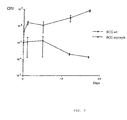
- the number of viable bacteria present in the different organs as a function of time was determined by CFU counting ( Figure 2).
- BCG erp :: Kn strain no longer persists in mice.
- the organ in which the elimination of BCG erp :: Kn is most marked is the lung.
- Alveolar macrophages are the primary target for mycobacterial infection of the M. tuberculosis complex .
- BMDP mouse medullary precursors
- femoral BMDPs from female BALB / CBYJICO mice aged 7 weeks were isolated and cultured (DMEM medium (Gibco (BRL), Glutamine 2 mM, fetal calf serum (Dominique Subscriber SA) 10% Vol 10% L229 cell supernatant) in 8-well Labtek TM chambers, at a cell density of 5 ⁇ 10 4 cells in 400 ⁇ l of medium
- DMEM medium Gibco (BRL), Glutamine 2 mM, fetal calf serum (Dominique Subscriber SA) 10% Vol 10% L229 cell supernatant
- BCG 1173 P2 parental strain
- BCG erp Kn (mutated strain) at a multiplicity of infection of 1.
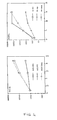
- the infected macrophages were lysed in a buffer preserving the integrity of the mycobacteria and the obtained lysate was spread on plates of 7H11 medium at different dilution (from 10 0 to 10 -6 ). Petri dishes were incubated at 37 ° C for one month to measure the evolution of the number of colony forming units shown in Figure 3.
- the diameter of the induration was measured 48 hours after the injection of the various antigens on each of the 5 animals constituting the group. Positive induration greater than 8-10 mm is considered positive.
- BCG erp Kn induced DTH after immunization with PPD and the M. leprae 65kD protein .
- the expression of the ERP protein was analyzed in wild BCG and in BCG erp :: Kn by immunodetection according to the so-called "Western blot" method (Sambrook et al., 1989) using an anti-ERP rabbit serum.
- the ERP protein is no longer detectable in the BCG erp :: Kn supernatant .
- the strain H37RV erp :: kn is derived from the reference strain Micobacterium tuberculosis.
- the strain has the particularity of no longer producing the protein corresponding to the erp gene .
- the erp gene determines the synthesis of a repetitive exported protein located on the surface of Micobacterium tuberculosis complex bacteria .
- This strain was constructed during a homologous recombination experiment by replacing the wild-type copy of the erp gene with a mutated copy, using the plasmid pIPX56 as previously described.
- the mutated version of the erp gene contains an insertion of a cassette conferring resistance to kanamycin at the Eco RI restriction site . Such a mutation abolishes gene synthesis of a functional erp protein.
- One of the phenotypes associated with the introduction of this mutation is the loss of the ability to persist in mice.
- ERP-6His 6 histidine residues
- ERP-6His is separated into two species having the same molecular weight (36 kDa) but different with respect to their isoelectric point (pI).
- the majority form has a pI of 5.3 which corresponds to that calculated for ERP-6His.
- the minority form is more acidic (pH 5.2) and may correspond to an aberrant form appearing in the cytoplasm of E. coli.
- This ERP-6His preparation was used to immunize rabbits and a highly titrated polyclonal serum was obtained. Using this serum, 36- and 34-kDa immunoreactive bands were detected in both the cell-associated fractions and the culture filtrates precipitated by TCA (trichloroacetic acid) of BCG and M. tuberculosis (strain Mt 103).
- the upper band co-migrated with recombinant ERP-6His.
- the 34 kDa band could be the result of proteolytic degradation or alternatively of a post-translational treatment taking place in M. tuberculosis.
- ERP protein can also be present on the surface of bacteria.
- the fixed M. tuberculosis bacillus was contacted with anti-ERP serum and then incubated with a gold-labeled anti-rabbit conjugate. Transmission observation in electron microscopy revealed intense surface labeling at the periphery of the bacillus, indicating that ERP is a molecule exposed on the surface. This result was confirmed by observation of the cell wall labeled on section tubules of M. tuberculosis (data not shown).
- ERP-immunized rabbit serum While no significant staining was observed with pre-immune ERP serum, specific mycobacterial cell wall staining of phagosomal lumen was observed with ERP-immunized rabbit serum. In addition, small ERP labeled vesicles were observed in the near phagosome environment. This demonstrates that ERP is produced in M. tuberculosis phagosomes and suggests that ERP moves within cells.
- ERP was an essential bacterial component for the intracellular growth stage.
- a targeted null mutation was introduced into the erp locus of the M. tuberculosis strain H37Rv and the BCG strain of M. bovis and the model vaccine strain of M. bovis BCG.
- a pJQ200 sucrose-substituted suicide vector was used to introduce a mutant erp (erp :: aph) allele into the chromosome of M. bovis BCG.
- BCG erp :: aph and H37Rv erp :: aph.
- MS6 mycobacteriophage derived integrative vector MS6
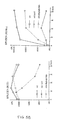
- BCG erp:: aph and H37Rv erp :: aph were examined. For this purpose, the multiplication of mutant and parental strains in a culture of macrophages derived from cell marrow was compared. As shown in Figure 4A, counting CFUs indicates erp:: aph mutants do not multiply within mouse macrophages while parental and complemented strains have normal growth.
- the H37Rv erp :: aph strain shows a reduction in the cytopathic effects compared to the parental and complemented strains (FIG. 4B).
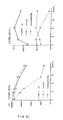
- mice To determine whether the erp:: aph mutation also affects multiplication within the host, the persistence of BCG erp :: aph and H37Rv erp :: aph in mice was analyzed. 106 viable units of parental, mutant erp :: aph and erp-complemented strains were injected intravenously into mice. Balb / c and bacterial infection was monitored by counting CFUs beyond a 56-day period (Lagranderie et al., 1996). Counting was performed in the lungs, liver and spleen, three organs known to contain the highest microbacterial burden after intravenous inoculation.
- BCG mutants aph were rapidly cleared from the lungs of infected animals while the corresponding parental and complemented strains colonized this tissue and survived.
- H37Rv erp : aph mutant survived but multiplied very slowly compared to the parental and complemented strains.
- the lungs represent the site of infection by members of the M. tuberculosis complex during tuberculosis.
- the multiplication of erp: aph mutants also greatly decreased in the liver (Figure 5B) and the spleen (Figure 5C).
- the morphology of the BCG colonies after having infected an animal is very different: while the parental BCG gives rise to a morphology of so-called "diffuse" colonies, the BCG erp:: aph no longer diffuses and shows a delayed growth (until 'to one week compared to the parental strain).
- the significance of this observation is unknown but the loss of the "diffuse" phenotype has been correlated with the lowest levels of residual virulence among BCG sub-strains (Dubos and Pierce, 1956, Pierce and Dubos, 1956, Pierce Dubos and Scheiffer , 1956 and Dubos and Pierce, 1956).
- the "non-diffuse" phenotype is not permanent and is lost after restriction of the culture medium to 7H11. In addition, the reintroduction of erp restores the parental phenotype. Be that as it may, these data demonstrate that erp expression is required during the intracellular growth stage of mycobacteria belonging to the M. tuberculosis complex . ⁇ B> TABLE ⁇ / b> Origin Nb of will be tested MBP-ERP * ERP-His6 65kDa BCG Controlled humans 4 - - +/- Humans ( Bligny ) Tuberculosis M. tuberculosis 21 - - + (In Pool) Humans ( Kenya ) Tuberculosis M.
- tuberculosis 10 ND +++ (3/10) ND Children (Necker) Tuberculosis M. tuberculosis (Direct Exam +) 4 - - + (In Pool) Humans Madagascar Tuberculosis M. bovis 6 - - + Humans (Nepal) Lepromatous leprosy M. leprae 1 Pool +++ +++ +++ Tuberculosis Cattle M. bovis 4 +++ +++ +++ * ERP protein in fusion with Maltose Binding Protein
- the serum of the individuals tested (or the pool in the case of lepers) was brought into contact with each of the three proteins mentioned in the table. The immune response was measured.
Landscapes
- Chemical & Material Sciences (AREA)
- Organic Chemistry (AREA)
- Health & Medical Sciences (AREA)
- General Health & Medical Sciences (AREA)
- Biochemistry (AREA)
- Biophysics (AREA)
- Life Sciences & Earth Sciences (AREA)
- Genetics & Genomics (AREA)
- Medicinal Chemistry (AREA)
- Molecular Biology (AREA)
- Proteomics, Peptides & Aminoacids (AREA)
- Gastroenterology & Hepatology (AREA)
- Medicines Containing Antibodies Or Antigens For Use As Internal Diagnostic Agents (AREA)
- Micro-Organisms Or Cultivation Processes Thereof (AREA)
Abstract
Description
L'invention concerne une souche de Mycobacterium dont le gène erp est modifié et la composition vaccinale la contenant.The invention relates to a strain of Mycobacterium whose erp gene is modified and the vaccine composition containing it.
La tuberculose est une maladie infectieuse causée dans la plupart des cas par l'inhalation de bactéries appartenant au complexe d'espèce Mycobacterium tuberculosis (M. africanum, M. bovis, M. tuberculosis). Avec huit millions de nouveaux cas humains annuels causant trois millions de décès au niveau mondial, la tuberculose demeure un problème majeur de santé publique (Sudre et al., 1992). La découverte d'antibiotiques efficaces (Streptomycine, Isoniazide, Rifampicine,...) semblait permettre l'éradication de cette maladie. Cependant, on estime qu'actuellement seulement 50 % des malades sont dépistés et reçoivent un traitement. Ce traitement est souvent inapproprié ou mal suivi et conduit à l'apparition d'un nombre croissant de souches résistantes aux antibiotiques et même polychimiorésistantes (Dooley et al., 1992). Dans ce contexte, la mise au point d'une prophylaxie vaccinale apparaît comme une solution privilégiée pour le contrôle et l'éradication de la tuberculose.Tuberculosis is an infectious disease caused in most cases by the inhalation of bacteria belonging to the species complex Mycobacterium tuberculosis (M. africanum, M. bovis, M. tuberculosis ) . With eight million new annual human cases causing three million deaths globally, TB remains a major public health problem (Sudre et al., 1992). The discovery of effective antibiotics (Streptomycin, Isoniazid, Rifampicin, ...) seemed to allow the eradication of this disease. However, it is estimated that currently only 50% of patients are screened for treatment. This treatment is often inappropriate or poorly monitored and leads to the emergence of a growing number of antibiotic-resistant and even multidrug-resistant strains (Dooley et al., 1992). In this context, the development of vaccine prophylaxis appears to be a preferred solution for the control and eradication of tuberculosis.
Le fait d'utiliser une bactérie pathogène atténuée en tant que composant d'un vaccin a été largement décrit et mis en oeuvre dans l'art antérieur. Les méthodes pour obtenir de telles bactéries atténuées comprennent la sélection au hasard de mutants induits chimiquement ou par irradiation, ou la production de bactéries recombinantes d'origine pathogène dans lesquelles un gène impliqué dans une voie métabolique a été inactivé par génie génétique.The use of attenuated pathogenic bacteria as a component of a vaccine has been widely described and practiced in the prior art. Methods for obtaining such attenuated bacteria include random selection of chemically induced or irradiated mutants, or production of recombinant pathogenic bacteria in which a gene involved in a metabolic pathway has been inactivated by genetic engineering.
Straley et al. (1984) ont étudié la survivance de mutants avirulents de Yersinia pestis qui sont défectueux dans une ou plusieurs voies métaboliques.Straley et al. (1984) studied the survival of avirulent mutants of Yersinia pestis that are defective in one or more metabolic pathways.
Noriega et al. (1994) ont fabriqué par génie génétique une souche de Shigella orale destinée à être utilisée en tant que prototype vaccinal par l'introduction de délétions dans un gène (aroA) codant pour une protéine impliquée dans une voie métobolique d'un acide aminé arômatique et ils ont démontré que les souches de Shigella résultantcs recombinantes défectives étaient capables d'induire des anticorps protecteurs contre le pathogène de type sauvage.Noriega et al. (1994) genetically engineered an oral Shigella strain for use as a vaccine prototype by introducing deletions into an aroA gene encoding a protein involved in a metobolic pathway of an aromatic amino acid and they demonstrated that the defective recombinant resulting Shigella strains were able to induce protective antibodies against the wild-type pathogen.
Un travail important a également été réalisé utilisant Salmonella comme modèle. Voir par exemple les rapports de Hoiseth et al. (1981), Levine et al. (1987), Oyston et al (1995) et Curtiss (1990).Important work has also been done using Salmonella as a model. See for example the reports of Hoiseth et al. (1981), Levine et al. (1987), Oyston et al (1995) and Curtiss (1990).
Cependant, des travaux similaires n'ont pas encore été réalisés pour Mycobacterium tuberculosis, l'agent étiologique de la tuberculose (TB), qui infecte un tiers de la population mondiale et tue trois millions de personnes par an. La tuberculose est la plus importante cause de mortalité dans le monde occasionnée par un ensemble d'organismes infectieux (Bloom et Murray, 1992) regroupés sous l'appellation «complexe M. tuberculosis». Selon le WHO, plus de personnes sont décédées de la tuberculose en 1995 qu'au cours d'une quelconque année antérieure. Il a été estimé que jusqu'à un demi milliard de personnes souffriront de tuberculose dans les 50 prochaines années. Cependant, en dépit de son importance, les déterminants génétiques de la virulence et de persistance de M. tuberculosis restent faiblement caractérisés.However, similar work has not yet been done on Mycobacterium tuberculosis, the etiological agent of tuberculosis (TB), which infects one-third of the world's population and kills three million people a year. Tuberculosis is the most important cause of death in the world caused by a group of infectious organisms (Bloom and Murray, 1992) grouped under the name " M. tuberculosis complex" . According to the WHO, more people died of tuberculosis in 1995 than in any previous year. It has been estimated that up to half a billion people will suffer from TB in the next 50 years. However, despite its importance, the genetic determinants of virulence and persistence of M. tuberculosis remain poorly characterized.
En effet, la virulence des mycobactéries pathogènes est associée à leur aptitude à croître et persister au niveau intracellulaire. Les bactéries du complexe M. tuberculosis parasitent les cellules phagocitaires à l'intérieur desquelles elles résident et se multiplient dans un compartiment vacuolaire spécialisé, appelé le phagosome. Les phagosomes contenant des M. tuberculosis vivants n'acidifient pas et échappent à la fusion avec les lysosomes. Les mécanismes par lesquels les M. tuberculosis rendent leur phagosome plus hospitalier restent inconnus et les gènes mycobactériens affectant leur croissance et leur multiplication intracellulaire sont activement recherchés.Indeed, the virulence of pathogenic mycobacteria is associated with their ability to grow and persist intracellularly. Bacteria in the M. tuberculosis complex parasitize the phagocytic cells within which they reside and multiply in a specialized vacuolar compartment, called the phagosome. Phagosomes containing M. Live tuberculosis does not acidify and escape fusion with lysosomes. The mechanisms by which M. tuberculosis make their More hospital-grade phagosomes remain unknown and mycobacterial genes affecting their growth and intracellular multiplication are actively sought.
L'extrême difficulté à créer des mutants définis de M. tuberculosis, soit par échange allélique ou par mutagénèse par transposon, a empêché l'identification de ces facteurs de virulence selon les postulats de Koch (Falkow, 1988 ; Jacobs, 1992). Des stratégies génétiques alternatives ont plutôt été utilisées, incluant la complémentation d'une bactérie non pathogène (Arruda et al., 1993) et des mutants avirulents spontannés avec des bibliothèques d'ADN chromosomiques de M. tuberculosis (Pascopella et al. 1994) et M. bovis (Collins et al., 1995) virulents. Bien que ces études ait identifié des gènes potentiellement impliqués dans l'entrée à l'intérieur des cellules épithéliales et conférant un avantage de croissance in vivo, la grande majorité des gènes mycobactériens impliqués dans la virulence et la survie dans l'organisme hôte restent inconnus. Le développement de systèmes de mutagène efficace est donc la priorité pour la génétique mycobactérienne.The extreme difficulty in creating definite mutants of M. tuberculosis, either by allelic exchange or by transposon mutagenesis, has prevented the identification of these virulence factors according to Koch's postulates (Falkow 1988, Jacobs 1992). Instead, alternative genetic strategies have been used, including the complementation of a non-pathogenic bacterium (Arruda et al., 1993) and spontaneous avirulent mutants with chromosomal DNA libraries of M. tuberculosis (Pascopella et al., 1994) and M. bovis (Collins et al., 1995) virulent. Although these studies identified genes potentially involved in entry into epithelial cells and conferring a growth advantage in vivo, the vast majority of mycobacterial genes involved in virulence and survival in the host organism remain unknown. . The development of effective mutagenic systems is therefore the priority for mycobacterial genetics.
Une méthode pour la création de mutants est la mutagénèse par échange allélique. Récemment, des échanges alléliques ayant lieu avec une faible fréquence ont été mis en évidence chez des bactéries du complexe M. tuberculosis utilisant un vecteur à effet suicide (Reyrat et al., 1995 ; Azad et al., 1996) et de nouveaux protocoles permettant une détection plus facile des mutants par échange allélique ont également été développés (Norman et al., 1995 ; Balasubramamian et al., 1996 ; Pelicic et al., FEMS Microbiol. Lett. 1996). Cependant, la détection d'événement par échange allélique très rare est empêchée par les faibles efficacités de transformations et la fréquence importante de recombinaisons illégitimes. Ainsi, de nombreux gènes de Mycobacterium restent encore réfractaires à l'échange allélique au moyen des technologies disponibles.One method for creating mutants is allelic exchange mutagenesis. Recently, low-frequency allelic exchange has been demonstrated in M. tuberculosis complex bacteria using a suicide vector (Reyrat et al., 1995, Azad et al., 1996) and new protocols allowing easier detection of mutants by allelic exchange have also been developed (Norman et al., 1995, Balasubramamian et al., 1996, Pelicic et al., FEMS Microbiol Lett, 1996). However, very rare allelic exchange event detection is prevented by the low efficiency of transformations and the high frequency of illegitimate recombinations. Thus, many Mycobacterium genes still remain refractory to allelic exchange using available technologies.
Plus particulièrement, les systèmes de mutagénèse par échange allélique requièrent la mise en oeuvre de procédés plus efficaces. Les problèmes rencontrés peuvent être contournés par l'utilisation d'un vecteur replicatif qui est efficacement perdu de manière conditionnelle. La possibilité d'introduire de tels vecteurs permet d'éviter les problèmes résultant des faibles efficacités de transformation. Ainsi, dans des conditions de contre-sélection, les clones qui contiennent encore le vecteur sont éliminés permettant ainsi la détection d'événements génétiques très rares. Un tel système a récemment été développé. Utilisant un vecteur replicatif dans certaines conditions qui est perdu à 39°C chez M. smegatis, la première bibliothèque de mutants insertionnels mycobactériens a été construite dans cette souche modèle à croissance rapide (Guilhot et al., 1994). Cependant, les vecteurs thermosensibles utilisés ne sont que faiblement thermosensibles dans des mycobactéries à croissance lente du complexe M. tuberculosis et donc ne peuvent pas être utilisés dans ces espèces pour la mutagénèsc par échange allélique (donnée non publiée).More particularly, allelic exchange mutagenesis systems require the implementation of more efficient methods. The problems encountered can be circumvented by the use of a replicative vector that is effectively conditionally lost. The possibility of introducing such vectors avoids the problems resulting from the low processing efficiencies. Thus, under counter-selection conditions, the clones which still contain the vector are eliminated thus allowing the detection of very rare genetic events. Such a system has recently been developed. Using a replicative vector under certain conditions that is lost at 39 ° C in M. smegatis, the first library of mycobacterial insertional mutants was constructed in this fast-growing model strain (Guilhot et al., 1994). However, the thermosensitive vectors used are only weakly thermosensitive in slow-growing mycobacteria of the M. tuberculosis complex and therefore can not be used in these species for mutagenesis by allelic exchange (unpublished data).
Les inventeurs ont réussi à affecter la virulence et la persistance des souches de Mycobacterium dans les cellules hôtes.The inventors have been successful in affecting the virulence and persistence of Mycobacterium strains in host cells.
Ils ont en effet réalisé une souche de Mycobacterium dont un gène a été modifié de façon à en atténuer la virulence.They have in fact made a strain of Mycobacterium whose gene has been modified to reduce its virulence.
Par gène modifié, on entend un gène ayant subi une modification abolissant la production de la protéine correspondante ou permettant la production d'une protéine différant d'au moins 20 % en terme d'activité par rapport à la protéine naturelle.By modified gene is meant a gene having undergone a modification abolishing the production of the corresponding protein or allowing the production of a protein differing by at least 20% in terms of activity relative to the natural protein.
Le BCG (Bacille de Calmette et Guérin), une souche avirulente dérivée de M. bovis, est très utilisée de par le monde comme vaccin contre la tuberculose. Cependant si le BCG peut être administré sans problème à des individus ne présentant pas de déficience immunitaire, il n'en est pas de même chez les individus immunodéprimés tels que les personnes infectées par le virus du SIDA, les personnes ayant subi une greffe de moëlle, les personnes atteintes d'un cancer, ou les personnes affectées dans le fonctionnement d'un des composants du système immunitaire.BCG (Bacillus Calmette and Guerin), an avirulent strain derived from M. bovis, is widely used around the world as a vaccine against tuberculosis. However, if BCG can be administered without problems to individuals who do not have an immune deficiency, this is not the case in immunocompromised individuals such as infected persons. by the AIDS virus, people who have had a bone marrow transplant, people with cancer, or people who are affected in the functioning of one of the components of the immune system.
C'est la raison pour laquelle la présente invention concerne une souche de Mycobacterium dont la persistence est limitéeThis is the reason why the present invention relates to a strain of Mycobacterium whose persistence is limited.
Le gène modifié dans la souche de Mycobacterium conforme à l'invention est le gène erp. Il peut également s'agir d'un gène possédant une homologie (d'au moins 80 %) par complémentation avec le gène erp. The modified gene in the Mycobacterium strain according to the invention is the erp gene . It can also be a gene having a homology (at least 80%) by complementation with the ERP gene .
L'analyse de la séquence protéique déduite du gène erp montre que celui-ci code pour une protéine dont la masse moléculaire calculée est de 28kDa. La présence d'une séquence signal d'exportation en situation N-terminal ainsi que l'existence d'une région hydrophobe en C-terminal suggèrent que la molécule puisse être ancrée dans la membrane plasmique ou localisée à la surface des bacilles. De plus, la région centrale de la protéine comporte deux régions répétées composées chacune de 6 exemplaires d'un motif P(G/A)LTS positionnés en tandem. Cette organisation rappelle celle trouvée chez de nombreuses protéines de surface, associées au peptidoglycane chez les bactéries à Gram positif et chez Plasmodium. The analysis of the protein sequence deduced from the erp gene shows that it encodes a protein whose calculated molecular mass is 28 kDa. The presence of an export signal sequence in the N-terminal situation as well as the existence of a C-terminal hydrophobic region suggest that the molecule can be anchored in the plasma membrane or located on the surface of the bacilli. In addition, the central region of the protein has two repetitive regions each composed of 6 copies of an LTS P (G / A) pattern positioned in tandem. This organization is reminiscent of that found in many surface proteins associated with peptidoglycan in Gram-positive bacteria and Plasmodium.
Une méthodologie génétique permettant la sélection et l'identification de fragments d'ADN codant pour des protéines exportées, a été récemment adaptée à M. tuberculosis au laboratoire. Ce système repose sur la réalisation de banques de fragments d'ADN de M. tuberculosis fusionnés avec le gène de la phosphatase alcaline (phoA) de E. coli, dépourvu de ses signaux d'expression et d'exportation. La phosphatase alcaline (PhoA) ne possède d'activité enzymatique détectable qu'après exportation au travers de la membrane plasmique. En utilisant ce système, plusieurs fragments d'ADN permettant l'exportation de PhoA chez les mycobactéries ont été sélectionnés en présence de substrat chromogène, et partiellement séquencés. Une des fusions portée par le plasmide recombinant pExp53, présente des similarités de séquence avec un gène de M. leprae qui code pour une protéine de 28kDa, potentiellement localisée à la surface du bacille. De plus, cette protéine est un antigène majeur de M. leprae, reconnu par les sera des patients lépreux lépromateux (
Afin de permettre l'étude de ERP et de confirmer sa localisation à la surface, des anticorps spécifiques anti-ERP ont été produits. Pour cela, la protéine ERP en fusion avec la protéine liant le maltose (MalE/MBP) ou en fusion avec un peptide C-terminal contenant 6 résidus histidine a été produite. Cette stratégie a permis d'obtenir en grande quantité les protéines ERP-MalE et ERP(His)6 recombinantes, exprimées dans Escherichia coli. La purification de ces molécules a été réalisée en utilisant les techniques de chromatographie d'affinité sur résine d'amylose (système MalE) ou de nickel chélaté (système Histidine). Le poids moléculaire relatif déterminé en électrophorèse PAGE-SDS est de 36K. La différence avec le poids moléculaire théorique peut être attribuée a un retard de migration électrophorétique dû à la forte teneur (15%) en résidus proline. Un protocole d'immunisation de lapins, à l'aide des chimères ERP-MalE et ERP(His)6 purifiées, a permis d'obtenir des sera polyclonaux à haut titre, permettant la détection spécifique de la protéine ERP.In order to allow the study of ERP and to confirm its localization on the surface, anti-ERP specific antibodies have been produced. For this, the ERP protein in fusion with the maltose-binding protein (MalE / MBP) or in fusion with a C-terminal peptide containing 6 histidine residues was produced. This strategy made it possible to obtain in large quantities recombinant ERP-MalE and ERP (His) 6 proteins, expressed in Escherichia coli. Purification of these molecules was performed using affinity chromatography techniques on amylose resin (MalE system) or chelated nickel (Histidine system). The relative molecular weight determined by PAGE-SDS electrophoresis is 36K. The difference with the theoretical molecular weight can be attributed to an electrophoretic migration delay due to the high content (15%) of proline residues. A rabbit immunization protocol, using the purified ERP-MalE and ERP (His) 6 chimeras, made it possible to obtain high-titre polyclonal sera, allowing specific detection of the ERP protein.
A l'aide des anti-séra obtenus chez le lapin, la localisation de la protéine ERP chez Mycobacterium tuberculosis a été précisée. Des observations en microscopie électronique après un immunomarquage à l'or colloïdal ont permis de détecter la présence de la protéine ERP à la surface de bacilles tuberculeux issus de culture in vitro. Ainsi, la protéine ERP est susceptible de présenter à la surface des mycobactérics des épitopcs d'autres antigènes et des fins vaccinales ou thérapeutiques. De plus, des expériences similaires ont permis de mettre en évidence la protéine ERP dans des macrophages murins infectés par M. tuberculosis. Using antiseras obtained in rabbits, the localization of the ERP protein in Mycobacterium tuberculosis was clarified. Electron microscopic observations after immunolabeling with colloidal gold detected the presence of the ERP protein on the surface of tubercle bacilli from in vitro culture . So, the ERP protein is likely to have on the surface of mycobacteria epitopes of other antigens and vaccine or therapeutic purposes. In addition, similar experiments have made it possible to demonstrate the ERP protein in murine macrophages infected with M. tuberculosis.
Afin d'analyser la fonction de la protéine ERP, une souche de BCG dans laquelle le gène erp a été modifié par échange allélique a été construite. La survie de cette souche en comparaison avec la souche sauvage a été analysée dans le modèle souris. Il a été mis en évidence que la mutation du gène erp affecte sévèrement la persistence de M. bovis BCG. Cette diminution de la persistance est observée dans tous les organes testés (Rate, foie, Poumons). Outre le rôle du gène dans le processus de survie du BCG, ces observations impliquent que le gène erp soit exprimé durant la phase de croissance in vivo chez l'hôte.In order to analyze the function of the ERP protein, a BCG strain in which the erp gene was modified by allelic exchange was constructed. The survival of this strain in comparison with the wild strain was analyzed in the mouse model. It has been shown that the mutation of the erp gene severely affects the persistence of M. bovis BCG. This decrease in persistence is observed in all organs tested (spleen, liver, lungs). In addition to the role of the gene in the BCG survival process, these observations imply that the erp gene is expressed during the in vivo growth phase in the host.
Plus particulièrement, la modification du gène erp est réalisée par mutation, insertion, délétion ou substitution ; la modification d'au moins une paire de base est suffisante.More particularly, the modification of the erp gene is carried out by mutation, insertion, deletion or substitution; modifying at least one base pair is sufficient.
Selon un mode de réalisation avantageux de la souche conforme à l'invention, le gène erp est modifié par insertion d'un nucléotide ou polynucléotide qui peut être un gène de sélection. Ce gène peut notamment coder pour la résistance à un antibiotique tel que la kanamycine, la spectinomycine ou l'hygromycine.According to an advantageous embodiment of the strain according to the invention, the erp gene is modified by insertion of a nucleotide or polynucleotide which may be a selection gene. This gene can in particular code for resistance to an antibiotic such as kanamycin, spectinomycin or hygromycin.
Les souches de Mycobacterium préférées sont celles appartenant au genre Mycobacterium, préférentiellement au complexe de Mycobacterium tuberculosis et plus préférentiellement encore à l'espèce Mycobacterium tuberculosis ou à l'espèce Mycobacterium bovis. The preferred Mycobacterium strains are those belonging to the genus Mycobacterium, preferably to the Mycobacterium tuberculosis complex and more preferably still to the Mycobacterium tuberculosis species or to the Mycobacterium bovis species .
La présente invention concerne plus particulièrement la souche BCG erp::Kn également appelée BCG erp: :aph (CNCM No 1- 1896) ou un variant incapable d'exprimer le produit du gène erp actif ainsi que la souche M. tuberculosis H37Rv erp : : aph (CNCM No 1-2048) ou un variant incapable d'exprimer le produit du gène.The present invention more particularly relates to the BCG erp :: Kn strain also called BCG erp :: aph (CNCM No. 1- 1896) or a variant incapable of expressing the product of the active erp gene as well as the strain M. tuberculosis H37Rv erp:: aph (CNCM No. 1-2048) or a variant unable to express the gene product.
L'invention concerne également une souche de Mycobacterium dont le gène erp est modifié et qui est capable de produire, suite à des événements de recombinaison, des épitopes ou des déterminants antigéniques susceptibles d'immuniser et/ou protéger contre des agents pathogènes tels que des agents infectieux ou des gènes de cancer, ou de produire des molécules conduisant à une modulation du système immunitaire telles que les cytokines, les chémokines, des récepteurs solubles de molécules interagissant avec des agents conduisant à une pathologie ou des inducteurs des réponses immunitaires tels que IL2, IL4, IL10 ou IL12 (chez l'homme ou l'animal).The invention also relates to a strain of Mycobacterium whose erp gene is modified and which is capable of producing, as a result of recombination events, epitopes or antigenic determinants capable of immunizing and / or protecting against pathogens such as infectious agents or cancer genes, or to produce molecules leading to modulation of the immune system such as cytokines, chemokines, soluble receptors of molecules interacting with agents leading to pathology or inducing immune responses such as IL2 , IL4, IL10 or IL12 (in humans or animals).
La présente invention concerne donc également une souche de Mycobacterium telle que précédemment décrite capable en outre d'exprimer un polynucléotide codant pour un antigène de mycobacterie d'une autre espèce que celle à laquelle ladite souche appartient. Le polynucléotide en question pouvant être étranger au genre Mycobacterium. The present invention therefore also relates to a strain of Mycobacterium as described above which is also capable of expressing a polynucleotide encoding a mycobacterial antigen of another species than that to which said strain belongs. The polynucleotide in question may be foreign to the genus Mycobacterium.
L'invention a également pour objcct un polynucléotide purifié comprenant un gène erp modifié et un fragment d'au moins 60 nucléotides correspondant à tout ou partie d'un gène codant pour un antigène exporté du genre Mycobacterium ou codant pour un antigène étranger au genre Mycobacterium. The invention also relates to a purified polynucleotide comprising a modified erp gene and a fragment of at least 60 nucleotides corresponding to all or part of a gene coding for an antigen exported from the genus Mycobacterium or coding for a foreign antigen to the genus Mycobacterium. .
La modification du gène erp peut être obtenue par exemple par addition, insertion ou modification de nucléotides. Dans le cadre de l'invention, la sélection de la souche de Mycobacterium dont le gène erp est ainsi modifié peut être réalisée par amplification génique et séquençage nucléotidique ou RFLP de la région nucléique mutée dans ladite souche isolée sur gélose selon le protocole de contre-sélection en présence de sucrose (Pelicic et al., 1996) par exemple. Une alternative consiste à effectuer des hybridations dans des conditions de fortes stringcnccs (Berthet et al., 1995) caractérisées par l'utilisation d'une sonde correspondant à tout ou partie du gène erp modifié génétiquement mais ayant conservé au moins 20 % de son activité et s'hybridant préférentiellement avec tout ou partie du gène modifié présent dans la souche recherchée.The modification of the erp gene can be obtained for example by addition, insertion or modification of nucleotides. In the context of the invention, the selection of the strain of Mycobacterium whose erp gene is thus modified can be carried out by gene amplification and nucleotide sequencing or RFLP of the mutated nucleic region in said strain isolated on agar according to the counter-protocol. selection in the presence of sucrose (Pelicic et al., 1996) for example. An alternative is to perform hybridizations under conditions of strong stringcnccs (Berthet et al., 1995) characterized by the use of a probe corresponding to all or part of the erp gene genetically modified but having retained at least 20% of its activity and hybridizing preferentially with all or part of the modified gene present in the desired strain.
La modification du gène erp peut également être réalisée au moyen d'un vecteur recombinant comprenant le gène erp inactivé. Ce vecteur est utilisé pour la transformation d'une souche de Mycobacterium et doit permettre un échange allélique avec le gène erp sauvage dans le but de le modifier.The modification of the erp gene can also be carried out using a recombinant vector comprising the inactivated erp gene. This vector is used for the transformation of a strain of Mycobacterium and must allow allelic exchange with the wild-type erp gene in order to modify it.
Avantageusement, le vecteur conforme à l'invention comprend une origine de replication thermosensible chez les mycobactéries. Il peut comprendre également le gène de contre-sélection sacB avec, de façon facultative un gène permettant une sélection positive tel qu'un gène codant pour la résistance à un antibiotique.Advantageously, the vector according to the invention comprises a heat-sensitive origin of replication in mycobacteria. It may also include the selection against the sacB gene-with, optionally a gene allowing a positive selection such as a gene encoding resistance to an antibiotic.
La modification du gène erp dans le vecteur conforme à l'invention peut être réalisée comme décrit ci-dessus.The modification of the erp gene in the vector according to the invention can be carried out as described above.
Plus particulièrement, ledit vecteur correspond au plasmide recombinant pIPX56 (CNCM No I-1895). En effet, ce plasmide consiste en un vecteur de clonage navette E. coli - mycobactéries du type pPR27 (déposé à la CNCM sous le numéro 1-1730) comportant une origine de réplication thermosensible chez les mycobactéries, le gène de contre-sélection sacB et conferrant la résistance à la gentamycine. Dans le plasmide pIPX56, une insertion de 5,1 kb d'un fragment PstI a été réalisée au niveau du site unique Pstl de pPR27. Ce fragment de 5,1 kb correspond à un fragment d'ADN de 3,9 kb de M. tuberculosis comportant le gène erp, au niveau duquel a été inséré une cassette (1,2 kb) conférant la résistance à la kanamycine. Ce plasmide permet donc d'effectuer des expériences d'échange allélique au niveau du locus erp chez les mycobactéries.More particularly, said vector corresponds to the recombinant plasmid pIPX56 (CNCM No. I-1895). Indeed, this plasmid consists of an E. coli -mycobacteria shuttle cloning vector of the pPR27 type (deposited at the CNCM under the number 1-1730) comprising a heat-sensitive origin of replication in the mycobacteria, the sacB counter-selection gene and conferring resistance to gentamycin. In plasmid pIPX56, a 5.1 kb insertion of a PstI fragment was performed at the unique PstI site of pPR27. This 5.1 kb fragment corresponds to a 3.9 kb DNA fragment of M. tuberculosis with the erp gene , at which a kanamycin resistance conferring cassette (1.2 kb) was inserted. This plasmid therefore makes it possible to perform allelic exchange experiments at the level of the erp locus in mycobacteria.
Dans le cadre de la présente invention, il est également intéressant de pouvoir disposer d'un vecteur dérivé de pIPX56 comprenant le gène erp non modifié.In the context of the present invention, it is also advantageous to have a vector derived from pIPX56 comprising the unmodified erp gene.
L'invention a donc également pour objet l'utilisation d'un vecteur recombinant tel que décrit ci-dessus pour la préparation d'une souche de Mycobacterium conforme à l'invention par échange allélique.The subject of the invention is therefore also the use of a recombinant vector as described above for the preparation of a strain of Mycobacterium according to the invention by allelic exchange.
Un autre objet de l'invention est un procédé pour la production d'une souche de Mycobacterium telle que ci-dessus décrite comprenant les étapes de :
- transformation avec un vecteur tel que décrit ci-dessus d'une souche de Mycobacterium propagée à une température permissive,
- mise en culture des colonies résultant de la transformation sur un milieu supplémenté avec un produit de sélection et du saccharose,
- isolement de la souche recombinante.
- transformation with a vector as described above of a Mycobacterium strain propagated at a permissive temperature,
- culturing the colonies resulting from the transformation on a medium supplemented with a selection product and sucrose,
- isolation of the recombinant strain.
Selon un mode de réalisation avantageux du procédé conforme à l'invention, le produit de sélection est un antibiotique tel que la kanamycine, la spectinomycine ou l'hygromycine.According to an advantageous embodiment of the process according to the invention, the selection product is an antibiotic such as kanamycin, spectinomycin or hygromycin.
A titre d'exemple, une souche de Mycobacterium recombinant est produite conformément à l'invention comme suit :
- a) le plasmide pIPX56 est introduit par électroporation dans une souche du complexe Mycobacterium tuberculosis propagée à température permissive (32°C). Cette étape permet de disposer d'une population de bactéries dans laquelle chaque individu possède plusieurs copies de la cassette erp::Kn ;
- b) une colonie résultant de la transformation est cultivée en milieu liquide à 32°
C durant 10 jours, puis la culture est ensemencée sur des boîtes contenant de la Kanamycine (50 mg/ml) et du saccharose 2 % (poids/vol.) incubées à température non permissive à 39°C. Cette étape permet d'enrichir en événements de double recombinaison homologue par contre-sélection et élimination des intégrations de vecteurs (simple recombinaison homologue ou recombinaison illégitime).
- a) the plasmid pIPX56 is introduced by electroporation into a Mycobacterium tuberculosis complex propagated at a permissive temperature (32 ° C.). This step makes it possible to have a population of bacteria in which each individual has several copies of the erp :: Kn cassette ;
- b) a colony resulting from the transformation is cultured in liquid medium at 32 ° C for 10 days, then the culture is seeded on dishes containing Kanamycin (50 mg / ml) and
sucrose 2% (w / v) incubated at non-permissive temperature at 39 ° C. This step makes it possible to enrich in events of double homologous recombination by counter-selection and elimination of the integrations of vectors (simple homologous recombination or illegitimate recombination).
L'invention concerne également une composition immunogène comprenant une souche de Mycobacterium conforme à l'invention ou obtenue par la mise en oeuvre du procédé ci-dessus mentionné.The invention also relates to an immunogenic composition comprising a strain of Mycobacterium according to the invention or obtained by the implementation of the above mentioned method.
Elle concerne également une composition vaccinale comprenant une souche de Mycobacterium conforme à l'invention ou obtenue par la mise en oeuvre du procédé ci-dessus mentionné, en combinaison avec au moins un excipient pharmaceutiquement compatible.It also relates to a vaccine composition comprising a strain of Mycobacterium according to the invention or obtained by the implementation of the above-mentioned method, in combination with at least one pharmaceutically compatible excipient.
Cette composition vaccinale est destinée à l'immunisation des humains et des animaux contre une souche pathogène de mycobactéries et comprend une composition immunogène telle que décrite ci-dessus en combinaison avec un excipient pharmaceutiquement compatible (tel qu'un tampon salin), de façon facultative en combinaison avec au moins un adjuvant de l'immunité tel que l'hydroxyde d'aluminium ou un composé appartenant à la famille du peptide muramyl.This vaccine composition is intended for the immunization of humans and animals against a pathogenic strain of mycobacteria and comprises an immunogenic composition as described above in combination with a pharmaceutically compatible excipient (such as a saline buffer), optionally in combination with at least one immunity adjuvant such as aluminum hydroxide or a compound belonging to the muramyl peptide family.
Pour obtenir un effet adjuvant pour le vaccin, de nombreuses méthodes prévoient l'utilisation d'agents tels que l'hydroxyde ou le phosphate (alun) d'aluminium, communément utilisés en tant que solution titrant 0,05 à 0,01 % dans un tampon salin de phosphate, mélangés avec des polymères synthétiques de sucre (Carbopol) en que solution à 0,25 %. Un autre composé adjuvant convenable est le DDA (bromure 2 diméthyldioctadécylammonium), ainsi que des substances immuno-modulantes telles que les lymphokines (par exemple gamma-1FN, IL-1, IL-2 et IL-12) ou également des composés inducteurs de gamma-IFN tels que le poly I:C.To obtain an adjuvant effect for the vaccine, numerous methods provide for the use of agents such as aluminum hydroxide or phosphate (alum), commonly used as a solution grading 0.05 to 0.01% in phosphate buffered saline, mixed with synthetic polymers of sugar (Carbopol) in 0.25% solution. Another suitable adjuvant compound is DDA (2-dimethyldioctadecylammonium bromide), as well as immunomodulating substances such as lymphokines (for example gamma-1FN, IL-1, IL-2 and IL-12) or also inducing compounds. gamma-IFN such as poly I: C.
La composition vaccinale conforme à la présente invention est de façon avantageuse préparée sous forme injectable, pour une administration orale ou par inhalation, soit en solution liquide soit en suspension ; des formes solides convenables destinées à être mises en solution ou en suspension liquide avant l'injection peuvent également être préparées.The vaccine composition according to the present invention is advantageously prepared in injectable form, for oral administration or by inhalation, either in liquid solution or in suspension; suitable solid forms for solution or liquid suspension prior to injection may also be prepared.
De plus, la composition vaccinale peut contenir des composants mineurs de substance auxiliaire telle que des agents mouillant ou émulsifiant, des agents tamponnant le pH ou des adjuvants qui stimulent l'efficacité des vaccins.In addition, the vaccine composition may contain minor components of auxiliary substance such as wetting or emulsifying agents, pH buffering agents, or adjuvants that enhance the effectiveness of the vaccines.
Les compositions vaccinales de l'invention sont administrées d'une façon compatible avec la formulation de dosage et en une quantité thérapeutiquement efficace et immunogène. La quantité à administrer dépend du sujet à traiter y compris par exemple la capacité individuelle de son système immunitaire à induire une réponse immunitaire.The vaccine compositions of the invention are administered in a manner compatible with the assay formulation and in a therapeutically effective and immunogenic amount. The amount to be administered depends on the subject to be treated including, for example, the individual's ability of the immune system to induce an immune response.
Le dosage du vaccin dépendra de la voie d'administration et variera selon l'âge du patient à vacciner et dans un moindre degré de la taille de ce patient. De façon préférentielle, la composition vaccinale selon la présente invention est administrée par une voie intradermique en une seule fois ou par voie orale ou par aérosol.The dosage of the vaccine will depend on the route of administration and will vary according to the age of the patient to be vaccinated and to a lesser extent the size of that patient. Preferably, the vaccine composition according to the present invention is administered by an intradermal route at one time or orally or by aerosol.
Dans certains cas, il sera nécessaire de procéder à de multiples administrations de la composition vaccinale conforme à la présente invention sans toutefois généralement dépasser six administrations, de préférence quatre vaccinations. Les administrations successives se feront normalement avec un intervalle de 2 à 12 semaines, préférentiellement de 3 à 5 semaines. Des rappels périodiques à des intervalles de 1 à 5 ans, préférentiellement 3 ans, sont souhaitables pour maintenir le niveau désiré de l'immunité protectrice.In some cases, it will be necessary to proceed to multiple administrations of the vaccine composition according to the present invention without however generally exceeding six administrations, preferably four vaccinations. Successive administrations will normally be carried out with an interval of 2 to 12 weeks, preferably 3 to 5 weeks. Periodic recalls at intervals of 1 to 5 years, preferably 3 years, are desirable to maintain the desired level of protective immunity.
L'invention concerne également une méthode de diagnostic permettant de discriminer entre des individus d'une part ayant été vaccinés à l'aide d'une souche de Mycobacterium ne produisant plus ERP actif et d'autre part ceux ayant subis une infection naturelle ou une vaccination à l'aide d'une souche produisant la protéine ERP naturelle.The invention also relates to a diagnostic method for discriminating between individuals on the one hand having been vaccinated using a strain of Mycobacterium no longer producing ERP active and secondly those having undergone a natural infection or vaccination with a strain producing the natural ERP protein.
En effet, les individus ayant subis une vaccination par une souche de Mycobacterium ne produisant plus la protéine ERP naturelle peuvent être distingués par l'absence à partir d'un échantillon biologique, tel que par exemple le sérum, d'anticorps dirigés contre ERP et/ou par l'absence de réactivité T (mesurée par exemple au cours d'un test de prolifération ou d'un test de sécrétion des cytokines ou de test CTL) contre la protéine ERP purifiée. Une alternative consiste également à rechercher une réactivité différentielle à l'aide d'anticorps dirigés contre la partie non modifiée de la protéine ERP naturelle en comparaison avec la partie de la protéine ERP mutée correspondante.Indeed, individuals who have undergone vaccination with a strain of Mycobacterium no longer producing the natural ERP protein can be distinguished by the absence from a biological sample, such as for example serum, antibodies directed against ERP and / or by the absence of T reactivity (measured for example during a proliferation test or a cytokine secretion test or CTL test) against the purified ERP protein. An alternative is also to look for differential reactivity using antibodies directed against the unmodified portion of the native ERP protein as compared to the portion of the corresponding mutated ERP protein.
La présente invention a donc également pour objet une méthode de dépistage des individus auxquels a été administrée une composition vaccinale conforme à l'invention comprenant la mise en évidence de l'absence, dans un échantillon biologique desdits individus, d'anticorps ou de cellules T dirigés contre tout ou partie de la protéine ERP purifiée, l'échantillon biologique pouvant être du sang.The subject of the present invention is therefore also a method for screening individuals to whom a vaccine composition according to the invention has been administered comprising demonstrating the absence, in a biological sample of said individuals, of antibodies or T cells. directed against all or part of the purified ERP protein, the biological sample may be blood.
L'invention a également pour objet une composition comprenant la protéine ERP modifiée.The subject of the invention is also a composition comprising the modified ERP protein.
Un autre aspect de la présente invention concerne les séquences répétées présentent dans le gène erp notamment des souches du complexe M. tuberculosis. En effet, dans la majorité des cas étudiés par les Inventeurs, les patients tuberculeux ne développaient pas de réponse humorale contre erp. Les souris vaccinées par le BCG ne développent pas non plus de réponse humorale contre erp. A l'opposé, les patients lépromateux développent une importante réponse contre erp. La différence majeure entre la protéine ERP de M. tuberculosis et la protéine similaire de M. leprae réside dans l'absence de répétitions chez M. leprae. Another aspect of the present invention relates to the repeat sequences present in the erp gene, in particular strains of the M. tuberculosis complex . In fact, in the majority of the cases studied by the inventors, the tuberculous patients did not develop a humoral response against erp. Mice vaccinated with BCG do not develop a humoral response against erp either. In contrast, lepromatous patients develop an important response against erp. The difference The major difference between the ERP protein of M. tuberculosis and the similar protein of M. leprae lies in the absence of repetitions in M. leprae.
Par conséquent, les répétitions pourraient être à l'origine du blocage de la réponse humorale spécifiquement contre erp ou même d'une façon générale contre d'autres antigènes. Il est en effet connu que les patients tuberculeux développent peu de réponse humorale au début de la tuberculose maladie. Il pourrait donc être possible d'utiliser les répétitions portées par erp pour inhiber le développement d'une réponse humorale spécifique en associant ces répétitions à tout antigène contre lequel on veut éviter qu'une réponse humorale ne soit induite ou peut être même utilisée ces répétitions pour inhiber toute réponse humorale dans certains contextes avantageux. Ce type de stratégie pourrait convenir aux situations suivantes : éviter le développement de la réponse humorale contre des vecteurs vaccinaux viraux. (voir tableau)Therefore, repetitions could be responsible for blocking the humoral response specifically against erp or even in general against other antigens. It is indeed known that TB patients develop little humoral response to the early TB disease. It may therefore be possible to use the erp- borne repeats to inhibit the development of a specific humoral response by associating these repeats with any antigen against which it is desired to avoid a humoral response being induced or may even be used these repeats. to inhibit any humoral response in certain advantageous contexts. This type of strategy may be suitable for the following situations: avoid the development of the humoral response against viral vaccine vectors. (See table)
Ainsi, la présente invention concerne l'utilisation des séquences répétées du gène erp, facultativement en association avec au moins un autre antigène, pour inhiber le développement d'une réponse humorale.Thus, the present invention relates to the use of the repeated sequences of the erp gene , optionally in combination with at least one other antigen, to inhibit the development of a humoral response.
Elle concerne également un vecteur d'expression dans un microorganisme, caractérisé par le fait qu'il comprend un séquence nucléotidique codant pour la protéine ERP dépourvue de ses séquences répétées. Le microorganisme hébergeant le vecteur d'expression peut par exemple être E. coli ou tout autre organisme susceptible de convenir à l'expression d'une séquence nucléotidique codant pour la protéine ERP dépourvue de ses séquences répétées, y compris les mycobactéries.It also relates to an expression vector in a microorganism, characterized in that it comprises a nucleotide sequence coding for the ERP protein lacking its repeated sequences. The microorganism hosting the expression vector may for example be E. coli or any other organism likely to be suitable for expressing a nucleotide sequence coding for the ERP protein lacking its repeated sequences, including mycobacteria.
La présente invention a également pour objet une souche de mycobactéries caractérisée en ce que le gène erp est dépourvu de ses séquences répétées. En effet, une telle souche, présentant ERP sans répétition serait immunogène tout en ayant un effet protecteur.The subject of the present invention is also a strain of mycobacteria characterized in that the erp gene is devoid of its repeated sequences. Indeed, such a strain, having ERP without repetition would be immunogenic while having a protective effect.
De plus, la présente invention a pour objet une protéine recombinant ERP purifiée produite préférentiellement par E. coli. Avantageusement, cette protéine recombinante comprend six résidus histidine à son extrémité C-terminale.
- La figure 1 représente l'obtention d'une souche de BCG dont le gène erp a été inactivé par insertion d'une cassette de résistance à la kanamycine.
- La figure 2 représente le nombre de cfu persistant dans chacun des organes concernés en fonction du nombre de jour suivant l'injection intraveineuse soit du BCG sauvage soit du BCG mutant (BCG erp::Kn aussi appelé BCG erp::aph).
- La figure 3 représente le nombre de cfu résultant de la multiplication du BCG parental (1173P2) et du BCG muté (erp::aph) dans des cultures de macrophages dérivés de précurseurs médullaires de souris BALB/C.
- La figure 4 représente le nombre de cfu résultant de la multiplication des souches parentales (wt), mutées (ERP') et complémentées de BCG et H37Rv dans des cultures de macrophages dérivés de précurseurs médullaires de souris Balb/c.
- La figure 5 représente la comparaison du nombre de cfu résultant de la multiplication du BCG parental, muté et complémenté d'une part avec celle du H37Rv parental, muté et complémenté d'autre part, dans des cultures de macrophages dérivés de précurseurs médullaires de souris Balb/c, en fonction des organes (poumons, rate ou foie).
- FIG. 1 represents the production of a BCG strain whose erp gene has been inactivated by insertion of a kanamycin resistance cassette.
- FIG. 2 represents the number of persistent cfu in each of the organs concerned as a function of the number of days following the intravenous injection of either wild-type BCG or mutant BCG (BCG erp :: Kn also called BCG erp :: aph).
- FIG. 3 represents the number of cfu resulting from the multiplication of parental BCG (1173P2) and mutated BCG (erp :: aph) in macrophage cultures derived from BALB / C mouse medullary precursors.
- FIG. 4 represents the number of cfu resulting from the multiplication of parental (wt), mutated (ERP ') and complemented BCG and H37Rv strains in macrophage cultures derived from Balb / c mouse medullary precursors.
- FIG. 5 represents the comparison of the number of cfu resulting from the multiplication of the parental BCG, mutated and complemented on the one hand with that of the parental H37Rv, mutated and complemented on the other hand, in macrophage cultures derived from mouse medullary precursors. Balb / c, depending on the organs (lungs, spleen or liver).
L'invention ne se limite pas à la description ci-dessus et sera mieux comprise à la lumière des exemples.The invention is not limited to the description above and will be better understood in the light of the examples.
La région codant pour ERP privée de sa séquence signale a été amplifiée par PCR au moyen des amorces oligonucléotidiques His-2 (5'-AAGGAGATCTTGTGCATATTTTCTTGTCTAC-3') et His-3 (5'-AAGGAGATCTGGCGACCGGCACGGTGATTGG-3'), digérée par Bg/II et clônée dans le site BamHI du plasmide d'expression pQE70 (QIAGEN GmbH, Hilden Allemagne). Le plasmide résultant, désigné pHis233, a subi une électroporation dans la souche M15 d'Escherichia coli. The ERP-coding region deprived of its signal sequence was amplified by PCR using His-2 (5'-AAGGAGATCTTGTGCATATTTTCTTGTCTAC-3 ') and His-3 (5'-AAGGAGATCTGGCGACCGGCACGGTGATTGG-3') oligonucleotide primers, digested with Bgl. II and cloned into the Bam HI site of the expression plasmid pQE70 (QIAGEN GmbH, Hilden Germany). The resulting plasmid, designated pHis233, was electroporated into Escherichia coli strain M15 .
Deux litres de cultures de la souche M15 d'Esherichia coli (pHis233) ont été mis à croître dans un bouillon Luria-Bertani, induits avec de l'ITPG et ont été traités au fin de purification protéique dans des conditions dénaturantes utilisant une résine agarose d'acide nickel-nitrilotriacétique (NTA) tel que décrit par le fournisseur (QIAGEN GmbH). ERP-His6 élué a été dialysé deux fois pendant 12 heures avec du PBS et stocké au froid à - 20°C. Deux lapins (souche de Nouvelle Zélande) ont été immunisés avec 100 µg de protéine et ensuite tous les quinze jours avec 150, 200 et 250 µg de ERP-His6 émulsifié dans l'adjuvant de Freund incomplet. Les sera anti-ERP hyper-immun ont été obtenus par la saignée des animaux six semaines après l'immunisation. La séparation par électrophorèse sous SDS-PAGE et l'immunoabsorption ont été réalisées comme décrit dans (J. Sambrook et al., 1987).Two liters of cultures of Escherichia coli strain M15 (pHis233) were grown in Luria-Bertani broth, induced with ITPG and treated for protein purification under denaturing conditions using an agarose resin. nickel-nitrilotriacetic acid (NTA) as described by the supplier (QIAGEN GmbH). ERP-His6 eluted was dialyzed twice for 12 hours with PBS and stored cold at -20 ° C. Two rabbits (strain of New Zealand) were immunized with 100 μg of protein and then every two weeks with 150, 200 and 250 μg of ERP-His6 emulsified in incomplete Freund's adjuvant. The hyperimmune anti-ERP sera were obtained by bleeding animals six weeks after immunization. Electrophoretic separation under SDS-PAGE and immunoabsorption were performed as described in (J. Sambrook et al., 1987).
Des cellules ont été fixées avec un tampon à 0,1 M de paraformaldéhydéine à 1 %, lavées dans le même tampon et ensuite appliquées à une grille de nickel revêtue de carbone Formvar, préalablement rendue hydrophile par le procédé électrique de « glow discharge ». Les grilles ont ensuite été préparées pour immunocytochimie, rincées avec de l'eau distillée et colorées négativement avec du molybdate d'amonium 1 % dans de l'eau.Cells were fixed with a 0.1M buffer of 1% paraformaldehyddein, washed in the same buffer and then applied to a Formvar carbon-coated nickel grid, previously rendered hydrophilic by the electrical glow discharge method. The grids were then prepared for immunocytochemistry, rinsed with Distilled water and negatively stained with 1% Ammonium Molybdate in water.
Les bactéries ou macrophages infectés (m.o.i. = 1) ont été fixés avec 2 % de paraformaldéhyde et 0,2 % de glutaraldéhyde dans 0,1 M de tampon phosphate. Les cellules ont été récoltées et emprisonnées dans de la gélatine à 10 %. Les cellules agglomérées ont été incubées de deux heures à toute une nuit dans du sucrose 1,8 et du pyrolidone de polyvinyl à 15 % (MW 10000). De petits blocs ont été montés sur des «porte-objets», refroidis dans l'azote liquide et cryosectionnés à -120°C avec un cryo-ultramicrotome Reickert FCS. Des sections minces ont ensuite été récupérées dans une goutte de sucrose 2,3 M et appliquées sur des grilles de nickel revêtues de carbone Formvar. Les grilles ont ensuite été traitées pour immunocytochimie, ensuite rincées avec de l'eau distillée et englobées dans de la méthylcellulose contenant de l'acétate d'uranyle à 0,3 %.Infected bacteria or macrophages (m.o.i. = 1) were fixed with 2% paraformaldehyde and 0.2% glutaraldehyde in 0.1 M phosphate buffer. The cells were harvested and trapped in 10% gelatin. Agglomerated cells were incubated for two hours overnight in 1.8 sucrose and 15% polyvinyl pyrolidone (MW 10000). Small blocks were mounted on "slides", cooled in liquid nitrogen and cryosected at -120 ° C with a cryo-ultramicrotome Reickert FCS. Thin sections were then recovered in a drop of 2.3 M sucrose and applied to Formvar carbon-coated nickel grids. The grids were then treated for immunocytochemistry, then rinsed with distilled water and embedded in methylcellulose containing 0.3% uranyl acetate.
Des grilles ont été traitées avec des gouttes de réactifs suivants: NH4Cl (50 mM) dans du PBS, 10 minutes, de l'Albumine de Sérum Bovin (BSA) 1 % (w/v) dans du PBS, 5 minutes, un anti-sérum anti-ERP dilué à 1/100 dans du PBS-BSA, 1 heure, PBS-BSA (trois lavages de 2 à 5 minutes chacun), conjugués à l'or anticorps IgG (chaînes H+L) anti-lapins (grains de 10 nm ou 5 nm en taille, British Biocell International, UK) dilués à 1/20 dans de la gélatine issue de peau de poisson PBS-0,1 % (Sigma), 30 à 45 minutes, PBS (un lavage, 1 minute) et eau distillée (trois lavages d'une minute chacun). Les exemples ont ensuite été fixés avec 1 % de glutaraldéhyde dans un tampon cacodylate 0,1 M (pH 7,4) pendant 2 minutes.Grids were treated with drops of the following reagents: NH 4 Cl (50 mM) in PBS, 10 minutes, Bovine Serum Albumin (BSA) 1% (w / v) in PBS, 5 minutes, an anti-ERP anti-serum diluted 1/100 in PBS-BSA, 1 hour, PBS-BSA (three washings of 2 to 5 minutes each), conjugated to the gold IgG antibody (H + L chains) anti- rabbits (10nm or 5nm in size, British Biocell International, UK) diluted 1/20 in PBS-0.1% fish skin gelatin (Sigma), 30-45 minutes, PBS (one washing, 1 minute) and distilled water (three washes of one minute each). The examples were then fixed with 1% glutaraldehyde in 0.1 M cacodylate buffer (pH 7.4) for 2 minutes.
Un fragment d'ADN de 3,9 kb comprenant la longueur totale du gène erp a été coupé à partir de p1X412 par une digestion PstI et cloné dans le site correspondant de pACYC 177. Le plasmide résultant désigné pB1a été linéarisé avec EcoR1 qui coupe à un site unique à l'intérieur de erp. En parallèle, une cassette aph conférant la résistance à la kanamycine a été coupée par digestion PstI dans le plasmide pUC-4K. pPB1 et le fragment aph ont été coupé avec la polymérase à ADN T4 (Boehringer Mannheim) tel que recommandé par le fabricant, et ligaturé ensemble pour donner pPB2. Un fragment d'ADN de 5,2 kb contenant erp: :aph a été coupé de pPB2 par digestion PstI et cloné dans pJQ200 non réplicatif donnant lieu au vecteur pPB3. Cinq µg de pPB3 ont subi une électroporation dans M. bovis BCG qui a ensuite été étalé sur des plaques 7H11 Middelbrook supplémentées avec de la kanamycine (20 µg/ml). Des colonies ont été triées par PCR avec des oligonucléotides flanquant les sites EcoRI utilisés pour l'insertion d'aph et reportés (replica spotting) sur des plaques contenant de la kanamycine (20 g/ml) et 2 % de sucrose. Un clone contenant une insertion de 1,3 kb et plus sensible au sucrose a été analysé par Southern blot tel que décrit dans Berthet et al. 1995.A 3.9 kb DNA fragment comprising the total length of the erp gene was cut from p1X412 by Pst I digestion and cloned into the corresponding pACYC177 site. The resulting plasmid designated pB1 was linearized with Eco R1 which cut to a single site inside erp. In parallel, a kanamycin resistant conferring aph cassette was cut by Pst I digestion into plasmid pUC-4K. pPB1 and the aph fragment were cut with T4 DNA polymerase (Boehringer Mannheim) as recommended by the manufacturer, and ligated together to give pPB2. A 5.2 kb DNA fragment containing erp :: aph was cut from pPB2 by Pst I digestion and cloned into non-replicating pJQ200 giving rise to the pPB3 vector. Five μg of pPB3 were electroporated in M. bovi s BCG which was then plated on Middelbrook 7H11 plates supplemented with kanamycin (20 μg / ml). Colonies were screened by PCR with oligonucleotides flanking the Eco RI sites used for aph insertion and reported (replica spotting) on plates containing kanamycin (20 g / ml) and 2% sucrose. A clone containing an insertion of 1.3 kb and more sucrose sensitive was analyzed by Southern blot as described in Berthet et al. 1995.
Des souris ont été maintenues et manipulées selon les directives de l'Institut Pasteur pour l'élevage d'animaux de laboratoires. Les macrophages issus de la moelle épinière ont été isolés à partir de fémures âgés de sept semaines, de souris femelles BALB/c. Les cellules ont été ensemencées à 5.105 cellules par puits dans des chambres de cultures à 8 puits Labtek™ (Nunc) et ont été cultivées pendant sept jours tel que décrit dans Chastellier et al. 1995).Mice were maintained and handled according to the guidelines of the Institut Pasteur for the breeding of laboratory animals. Macrophages derived from the spinal cord were isolated from femurs aged seven weeks, female BALB / c mice. Cells were seeded at 5 × 10 5 cells per well in Labtek ™ 8-well culture chambers (Nunc) and cultured for seven days as described in Chastellier et al. 1995).
Le comptage des CFU a été réalisé tel que décrit dans Lagranderie et al. 1996.The counting of CFUs was performed as described in Lagranderie et al. 1996.
Quatre lapins Néozélandais femelles ont été immunisés une première fois avec 100µg de protéine ERP(his)6. Des immunisations secondaires (rappels) ont été effectués tous les 15 jours avec 150, 200 puis 250 µg de protéine purifiée. A partir de deux mois après la première immunisation, les sera collectés avaient un titre suffisant pour être utilisés pour l'immunodétection en Western blot et par immunohistochimie en microscopie électronique. Pour les expériences d'immunohistochimie en microscopie électronique, les séra ont été purifiés par adsorptiort/élution sur des bandelettes de nitrocellulose contenant ERP.Four female New Zealand rabbits were first immunized with 100 μg of ERP (his) protein 6. Secondary immunizations (boosters) were carried out every 15 days with 150, 200 and then 250 μg of purified protein. From two months after the first immunization, the collected sera had a sufficient titre to be used for immunodetection in Western blot and immunohistochemistry in electron microscopy. For immunohistochemistry experiments in electron microscopy, the sera were purified by adsorption / elution on ERP-containing nitrocellulose strips.
Un fragment d'ADN de M. tuberculosis de 3,9kbp contenant le gène erp a été obtenu par digestion PstI du plasmide pIPX412 (CNCM No 1-1463) (Berthet et al., 1995). Ce fragment a été introduit dans le vecteur de clonage pACYC177, donnant naissance au plasmide pPB1. Le plasmide pPB1 a été ensuite linéarisé par l'enzyme de restriction EcoRI, coupant une seule fois au niveau d'un site situé dans le gène erp. En parallèle, une cassette (aph) génétique de petite taille (1,3kbp), conferrant la résistance à l'antibiotique kanamycine, a été préparée par restriction du plasmide pUC-4K par Pst I. Les fragments pACYC177/EcoRI et aph/Pst I ont été traités dans les conditions décrites par le fournisseur, par le fragment de Klenow de l'ADN polymerase 1 de Escherichia coli et par la polymerase du phage T4 respectivement, afin de générer des fragments aux extrémités franches. Ces deux fragments ont ensuite été ligaturés et transformés chez E. coli. Un plasmide recombinant ayant inséré la cassette aph au niveau du gène erp a été sélectionnée par hybridation sur colonies et dénommé pPB2. Le fragment contenant erp::aph a ensuite été excisé de pPB2 par digestion PstI et introduit dans le vecteur pJQ200 permettant éventuellement la contre sélection en présence de sucrose. Le plasmide résultant a été appelé pPB3. Le plasmide pPB3 (trois microgrammes) a été introduit dans la souche Mycobacterium bovis BCG Pasteur 1173 P2 par électroporation (Gene pulser BioRad, 2500V, 200Ω, 25 µF). Les cellules transformées ont été incubées durant 24 heures à 37°C dans du milieu 7119 (5ml) puis étalées sur des boites 7H11 contenant de la kanamycine (2µg/ml). Les boites ont été incubées durant 25 jours à 37°C et trente colonies de bactéries résistantes à la kanamycine ont été repiquées individuellement à la fois par PCR en utilisant un couple d'oligonucléotides flanquant le site EcoRI du gène erp, et par Southern blot en utilisant une sonde interne de erp. Un clone recombinant, dénommé BCG erp::Kn, a été sélectionné sur les critères suivants:
- 1- Par PCR, disparition de la bande correspondant à l'allèle sauvage (500bp) pour le BCG erp::Kn mutant. Obtention d'un fragment d'amplification PCR de 1800bp (500+1300) signant l'insertion de la cassette aph dans la copie génomique du gène erp
- 2- Par Southern blot, détection d'un signal d'hybridation à 5.2kbp avec l'ADN du BCG 13K au lieu de 3.9kbp pour le BCG sauvage. Perte du site EcoRI interne au gène erp::aph.
- 1- By PCR, disappearance of the band corresponding to the wild-type allele (500bp) for the BCG erp :: Kn mutant. Obtaining a 1800bp PCR Amplification Fragment (500 + 1300) Signing the Insertion of the Aph Cassette into the Genomic Copy of the ERP Gene
- 2- By Southern blot, detection of a 5.2kbp hybridization signal with 13K BCG DNA instead of 3.9kbp for wild-type BCG. Loss of the internal EcoRI site to the erp :: aph gene .
Un stock bactérien conservé à -70°C de la souche BCG erp::Kn a été réalisé de la manière suivante: une colonie poussée sur 7H11+Kn (20µg/ml) a été ensemencée sur milieu pomme de terre/sauton en présence de kanamycine (20µg/ml) jusqu'à formation d'un voile. Ce voile a servi à réaliser un inoculum (10µg/ml) pour des ballons contenant du milieu sauton liquide. Après 8 jours de croissance, le voile ainsi formé en sauton est récupéré, broyé et est resuspendu dans du milieu Beck-Proskauer additionné de glycérol 6% (Vol./Vol.). Le stock ainsi obtenu titrait 4,8 108 unités formant des colonies (CFU) /ml.A bacterial stock stored at -70 ° C. of the strain BCG erp :: Kn was carried out as follows: a colony grown on 7H11 + Kn (20 μg / ml) was seeded on potato / bison medium in the presence of kanamycin (20 μg / ml) until a haze is formed. This veil was used to produce an inoculum (10 μg / ml) for balloons containing liquid jump medium. After 8 days of growth, the veil thus formed in jump is recovered, crushed and resuspended in Beck-Proskauer medium supplemented with 6% glycerol (Vol./Vol.). The stock thus obtained titrated 4.8 × 10 8 colony forming units (CFU) / ml.
A l'aide de ce stock, des souris BALB/c ont été injectées par voie intraveineuse avec 106 cfu de BCG sauvage et mutant (BCG erp::Kn) en suspension dans du PBS. Trois organes, la rate, le foie et les poumons, ont été prélevés stérilements aux jours 1, 7, 14, 28, 42, 56 et 70. A chaque point, les organes ont été broyés en milieu Beck-Proskauer et les bactéries ont été énsemencées à différentes dilutions sur des boites 7H11 avec ou sans kanamycine (20µg/ml). Le nombre de bactéries viables présentent dans les différents organes en fonction du temps a été déterminé par le comptage des CFU (Figure 2).Using this stock, BALB / c mice were injected intravenously with 10 6 cfu of wild-type and mutant BCG (BCG erp :: Kn) suspended in PBS. Three organs, the spleen, the liver and the lungs, were removed sterilely on
Des expériences précédentes ont montré que la souche BCG erp::Kn ne persiste plus chez la souris. L'organe dans lequel l'élimination du BCG erp::Kn est la plus marquée est le poumon. Les macrophages alvéolaires représentent la cible primaire de l'infection par les mycobactéries du complexe M. tuberculosis. Afin de préciser le type cellulaire dans lequel la persistance du BCG erp::Kn est affectée, nous avons étudié la multiplication de cette souche dans des macrophages dérivés de précurseurs médullaire (BMDP) de souris. Pour celà, des BMDP issus de fémur de souris femelles BALB/CBYJICO agées de 7 semaines ont été isolés et mis en culture (milieu DMEM (Gibco (BRL), Glutamine 2 mM, Sérum de veau foetal (Dominique Deutscher SA) 10% Vol./Vol., Surnageant de cellules L229 10%) dans des chambres Labtek™ 8 puits, à une densité cellulaire de 5.104 cellules dans 400µl de milieu. Les cellules ont été cultivées durant 7 jours avant d'être infectées durant quatre heures par du BCG 1173 P2 (souche parentale) ou du BCG erp::Kn (souche mutée) à une multiplicité d'infection de 1. A différents temps post-infection (Jour 0, Jour 1, Jour 5, Jour 12, Jour 17) les macrophages infectées ont été lysés dans un tampon préservant l'intégrité des mycobactéries et le lysat obtenu a été étalé sur des boites de milieu 7H11 à différentes dilution (de 100 à 10-6). Les boites de pétri ont été incubées à 37°C durant un mois afin de mesurer l'évolution du nombre d'unités formant des colonies représenté figure 3.Previous experiments have shown that the BCG erp :: Kn strain no longer persists in mice. The organ in which the elimination of BCG erp :: Kn is most marked is the lung. Alveolar macrophages are the primary target for mycobacterial infection of the M. tuberculosis complex . In order to specify the cell type in which the persistence of BCG erp :: Kn is affected, we studied the multiplication of this strain in macrophages derived from mouse medullary precursors (BMDP). For this, femoral BMDPs from female BALB / CBYJICO mice aged 7 weeks were isolated and cultured (DMEM medium (Gibco (BRL),
La réaction d'hypersensibilité retardée (DTH) reflète l'induction de réponses immunitaires dirigées contre des composantes mycobactériens. Une induration d'un diamètre supérieur à une valeur seuil, provoquée par l'injection intradermique de tuberculine signe un contact au préalable avec des mycobactéries. Ce test permet un diagnostic rapide de l'infection tuberculeuse chez les sujets non vaccinés. Cependant ce test est difficilement utilisable chez les sujets vaccinés par le BCG qui sont alors positifs. Nous avons testé la capacité du BCG erp::Kn à induire une réaction DTH. Pour celà, deux groupes de 5 cobayes (mâles de 300gr, souche Dunkin Hartley) ont été immunisés par 5.105 unité viables de BCG 1173P2 ou erp::Kn respectivement. Un mois plus tard, les mêmes animaux ont été immunisés par voie intradermique avec les préparation suivantes:
- * "Purified Protein derivative" (PPD)/ tuberculine (WEYBRIDGE) 2µg
- * Protéine 65kDa M. leprae purifiée 50ug et 100µg
- * "Purified Protein derivative" (PPD) / tuberculin (WEYBRIDGE) 2μg
- * Protein 65kDa M. purified leprae 50ug and 100μg
Le diamètre de l'induration a été mesurée 48h après l'injection des différents antigènes sur chacun des 5 animaux constituant le groupe. Une induration positive supérieure à 8-10 mm est considérée comme positive.The diameter of the induration was measured 48 hours after the injection of the various antigens on each of the 5 animals constituting the group. Positive induration greater than 8-10 mm is considered positive.
Il a été observé que le BCG erp::Kn induisait une DTH après immunisation par la PPD et la protéine 65kD de M. leprae. It was observed that BCG erp :: Kn induced DTH after immunization with PPD and the M. leprae 65kD protein .
La caractérisation du mutant M. bovis BCG erp::Kn a été entreprise de deux manières. Dans un premier temps, l'ADN génomique du BCG mutant (M) a été extrait et analysé par la technique hybridation moléculaire de Southern (Berthet et al., 1995) en comparaison avec l'ADN génomique de la souche de BCG parentale (P). Une digestion par EcoRI indique que le génome du BCG erp::Kn a perdu un tel site, localisé dans le gène erp et détruit par l'insertion de la cassette kanamycine. De plus une digestion par PstI, indique que le fragment de restriction portant erp chez BCG erp::Kn comporte une insertion de 1,3 kbp correspondant à la présence de la cassette kanamycine. Ces données confirment le remplacement de l'allèle sauvage erp par un allèle muté erp::Kn chez BCG erp::Kn. Characterization of the mutant M. bovis BCG erp :: Kn has been undertaken in two ways. Firstly, the genomic DNA of the mutant BCG (M) was extracted and analyzed by the Southern molecular hybridization technique (Berthet et al., 1995) in comparison with the genomic DNA of the parental BCG strain (P). ). EcoRI digestion indicates that the BCG erp :: Kn genome has lost such a site, located in the erp gene and destroyed by the insertion of the kanamycin cassette. Further digested with PstI, indicating that the restriction fragment carrying erp at BCG erp :: Kn comprises an insert of 1.3 kbp corresponding to the presence of the kanamycin cassette. These data confirm the replacement of the erp wild-type allele by a mutated erp :: Kn allele in BCG erp :: Kn.
Dans un second temps, l'expression de la protéine ERP a été analysée chez le BCG sauvage et chez le BCG erp::Kn par immunodétection selon la méthode dite de «Western blot» (Sambrook et al., 1989) à l'aide d'un sérum de lapin anti-ERP. La protéine ERP n'est plus détectable dans le surnageant du BCG erp::Kn. In a second step, the expression of the ERP protein was analyzed in wild BCG and in BCG erp :: Kn by immunodetection according to the so-called "Western blot" method (Sambrook et al., 1989) using an anti-ERP rabbit serum. The ERP protein is no longer detectable in the BCG erp :: Kn supernatant .
La souche H37RV erp : :kn dérive de la souche de référence Micobacterium tuberculosis. La souche a pour particularité de ne plus produire la protéine correspondant au gène erp. Le gène erp détermine la synthèse d'une protéine exportée répétitive localisée à la surface des bactéries complexes Micobacterium tuberculosis. Cette souche a été construite au cours d'une expérience de recombinaison homologue par remplacement de la copie sauvage du gène erp par une copie mutée, en utilisant le plasmide pIPX56 comme décrit précédemment. La version mutée du gène erp contient une insertion d'une cassette conférant la résistance à la kanamycine au niveau du site de restriction EcoRI. Une telle mutation abolit la synthèse du gène d'une protéine erp fonctionnelle. Un des phénotypes associé à l'introduction de cette mutation est la perte de la capacité de persister chez la souris.The strain H37RV erp :: kn is derived from the reference strain Micobacterium tuberculosis. The strain has the particularity of no longer producing the protein corresponding to the erp gene . The erp gene determines the synthesis of a repetitive exported protein located on the surface of Micobacterium tuberculosis complex bacteria . This strain was constructed during a homologous recombination experiment by replacing the wild-type copy of the erp gene with a mutated copy, using the plasmid pIPX56 as previously described. The mutated version of the erp gene contains an insertion of a cassette conferring resistance to kanamycin at the Eco RI restriction site . Such a mutation abolishes gene synthesis of a functional erp protein. One of the phenotypes associated with the introduction of this mutation is the loss of the ability to persist in mice.
Pour caractériser le produit du gène erp de M. tuberculosis, la protéine recombinante ERP a été purifiée et surproduite. La protéine a été synthétisée dans E. coli en fusion avec 6 résidus histidine (ERP-6His). ERP-6His forme des corps d'inclusion cytoplasmic et est ensuite purifiée par immobilisation sur chromatographie d'affinité au nickel dans des conditions dénaturantes. Renaturée, ERP-6His soluble est analysée par un gel d'électrophorèse à deux dimensions. (Laurent-Winter, 1997)To characterize the product of the M. tuberculosis erp gene, the recombinant ERP protein was purified and overproduced. The protein was synthesized in E. coli merged with 6 histidine residues (ERP-6His). ERP-6His forms cytoplasmic inclusion bodies and is then purified by immobilization on nickel affinity chromatography under denaturing conditions. Renaturated, soluble ERP-6His is analyzed by a two-dimensional electrophoresis gel. (Laurent-Winter, 1997)
ERP-6His est séparée en deux espèces ayant le même poids moléculaire (36 kDa) mais différent en ce qui concerne leur point isoélectrique (pI). La forme majoritaire a un pI de 5,3 qui correspond à celui calculé pour ERP-6His. La forme minoritaire est plus acide (pI 5,2) est susceptible de correspondre à une forme aberrante apparaissant dans le cytoplasme de E. coli. Cette préparation de ERP-6His a été utilisée pour immuniser des lapins et un sérum polyclonal fortement titré a été obtenu. Au moyen de ce sérum, des bandes immunoréactives de 36 et 34 kDa ont été détectées à la fois dans les fractions associées aux cellules et au filtrats de culture précipités par le TCA (acide trichloracétique) de BCG et de M. tuberculosis (souche Mt 103). La bande supérieure a co-migré avec ERP-6His recombinante. La bande 34 kDa pourrait être le résultat d'une dégradation protéolytique ou alternativement d'un traitement post-traductionnel ayant lieu chez M. tuberculosis. Ces données sont en accord avec celles montrant que l'antigène PGLTS, une protéine de M.bovis ayant plus de 99% d'identité avec la protéine ERP de M. tuberculosis, est présente sous forme d'un doublet de MW similaire dans des fluides cellulaires concentrés (BIGI et al 1995).ERP-6His is separated into two species having the same molecular weight (36 kDa) but different with respect to their isoelectric point (pI). The majority form has a pI of 5.3 which corresponds to that calculated for ERP-6His. The minority form is more acidic (pH 5.2) and may correspond to an aberrant form appearing in the cytoplasm of E. coli. This ERP-6His preparation was used to immunize rabbits and a highly titrated polyclonal serum was obtained. Using this serum, 36- and 34-kDa immunoreactive bands were detected in both the cell-associated fractions and the culture filtrates precipitated by TCA (trichloroacetic acid) of BCG and M. tuberculosis (strain Mt 103). The upper band co-migrated with recombinant ERP-6His. The 34 kDa band could be the result of proteolytic degradation or alternatively of a post-translational treatment taking place in M. tuberculosis. These data are in agreement with those showing that PGLTS antigen, a M. bovis protein having greater than 99% identity with the ERP protein of M. tuberculosis, is present as a doublet of similar MW in concentrated cell fluids (BIGI et al 1995).
Sur la base des caractéristiques structurelles, il a déjà été avancé que la protéine ERP peut également être présente à la surface des bactéries. Pour déterminer précisément la localisation subcellulaire de ERP, le bacille de M. tuberculosis fixé a été mis en contact avec un sérum anti-ERP et ensuite incubé avec un conjugué anti-lapin marqué à l'or. L'observation par transmission en microscopie électronique a révélé un marquage de surface intense à la périphérie du bacille, indiquant que ERP est une molécule exposée à la surface. Ce résultat a été confirmé par l'observation de la paroi cellulaire marquée sur des tuyaux section de M.tuberculosis (données non montrées).Based on the structural features, it has already been argued that ERP protein can also be present on the surface of bacteria. To accurately determine the subcellular location of ERP, the fixed M. tuberculosis bacillus was contacted with anti-ERP serum and then incubated with a gold-labeled anti-rabbit conjugate. Transmission observation in electron microscopy revealed intense surface labeling at the periphery of the bacillus, indicating that ERP is a molecule exposed on the surface. This result was confirmed by observation of the cell wall labeled on section tubules of M. tuberculosis (data not shown).
Il a ensuite été déterminé si ERP était produite durant la multiplication intra cellulaire de M. tuberculosis à l'intérieur des macrophages cultivés. Dans ce but, des macrophages de souris J774 ont été infectés avec un isolat clinique de M. tuberculosis et ont ensuite été observés par microscopie immunoélectronique.It was then determined whether ERP was produced during intracellular multiplication of M. tuberculosis within cultured macrophages. For this purpose, J774 mouse macrophages were infected with a clinical isolate of M. tuberculosis and then observed by immunoelectron microscopy.
Tandis qu'aucun marquage significatif n'a été observé avec le sérum pré-immun de ERP, un marquage spécifique de la paroi cellulaire mycobactérienne est du lumen phagosomal a été observé avec le sérum de lapin immunisé par ERP. De plus, de petites vésicules contenant ERP marqué ont été observées dans l'environnement proche des phagosomes. Ceci démontre que ERP est produite dans les phagosomes de M. tuberculosis et suggère que ERP se déplace à l'intérieur des cellules.While no significant staining was observed with pre-immune ERP serum, specific mycobacterial cell wall staining of phagosomal lumen was observed with ERP-immunized rabbit serum. In addition, small ERP labeled vesicles were observed in the near phagosome environment. This demonstrates that ERP is produced in M. tuberculosis phagosomes and suggests that ERP moves within cells.
Il a ensuite été examiné si ERP était un composant bactérien essentiel pour l'étape de croissance intra cellulaire. Dans ce but, une mutation nulle ciblée a été introduite dans le locus erp de la souche H37Rv de M. tuberculosis et dans la souche BCG de M. bovis et dans la souche vaccinale modèle de M. bovis BCG. Un vecteur suicide à contre sélection par le sucrose pJQ200 a été utilisé pour introduire un allèle mutant de erp (erp::aph) dans le chromosome de M. bovis BCG.It was then examined whether ERP was an essential bacterial component for the intracellular growth stage. For this purpose, a targeted null mutation was introduced into the erp locus of the M. tuberculosis strain H37Rv and the BCG strain of M. bovis and the model vaccine strain of M. bovis BCG. A pJQ200 sucrose-substituted suicide vector was used to introduce a mutant erp (erp :: aph) allele into the chromosome of M. bovis BCG.
M. tuberculosis correspondante a été construite utilisant la technologie ts-sacB (Pelisic et al., 1997).Corresponding M. tuberculosis was constructed using ts-sacB technology (Pelisic et al., 1997).
Des souches mutantes résultant de l'échange allélique ont été appelées BCG erp::aph et H37Rv erp::aph. Au moyen du vecteur intégratif dérivé du mycobactériophage MS6 (pAV6950) une simple copie de erp a été réintroduite au site attB de BCG erp::aph et H37Rv erp::aph. L'analyse de l'ADN chromosomique extrait de la souche parental (P), mutante (M) ou complémentée (par complémenté, on entend la réintroduction d'un gène erp fonctionnel capable de diriger la synthèse de la protéine ERP) a révélé que le site EcoR1 coupé durant la construction de erp::aph était également perdu dans le génome des souches mutantes et complémentées. De plus, l'analyse utilisant PstI indique une insertion de 1,3 kb à l'intérieur du fragment de restriction portant erp. L'hybridation de la même membrane avec les séquences des vecteurs pJQ200 et pPR27 n'a pas permis de détecter un quelconque signal (données non montrées) suggérant que seule la cassette erp::aph était introduite dans le génome de BCG erp::aph et H37Rv erp::aph. L'analyse des fractions associées aux cellules et des surnageants concentrés à partir des cultures de BCG erp::aph et H37Rv erp::aph a indiqué que l'interruption de erp avait aboli la production de ERP. Ceci a été confirmé par microscopie immunoelectronique par la disparition du marquage à l'or sur les cryosections BCG erp::aph de M. bovis. Au contraire, l'intégration de erp au site attB des souches mutantes erp::aph a restauré la production de ERP, à la fois à la surface des cellules et dans le milieu de culture de M. tuberculosis et M., bovis. L'analyse morphologique de la colonie, doublant la durée du temps et les caractéristiques de croissance dans la culture 7H9/ADC du Middelbrook ou du milieu Sauton minimum, n'a pas permis d'identifier une quelconque différence entre les souches mutantes parentales et complémentées de BCG et de H37Rv. Prises ensemble, ces données montrent que erp n'est pas essentiel à la croissance de BCG et H37Rv dans des conditions de laboratoire.Mutant strains resulting from allelic exchange have been called BCG erp :: aph and H37Rv erp :: aph. Using the mycobacteriophage derived integrative vector MS6 (pAV6950) a simple copy of erp was reintroduced to the attB site of BCG erp :: aph and H37Rv erp :: aph. The analysis of the chromosomal DNA extracted from the parental strain (P), mutant (M) or complemented (by complemented is meant the reintroduction of a functional erp gene capable of directing the synthesis of the ERP protein) revealed that the Eco R1 site cut during the construction of erp :: aph was also lost in the genome of the mutant and complemented strains. In addition, analysis using PstI indicates an insertion of 1.3 kb within the restriction fragment carrying erp . Hybridization of the same membrane with the pJQ200 and pPR27 vector sequences failed to detect any signal (data not shown) suggesting that only the erp :: aph cassette was introduced into the BCG erp :: aph genome and H37Rv erp :: aph. The analysis of cell-associated fractions and Concentrated supernatants from BCG cultures erp :: aph and H37Rv erp :: aph reported that the interruption of erp had abolished ERP production. This was confirmed by immunoelectron microscopy by the disappearance of gold labeling on M. bovis BCG erp :: aph cryosections . In contrast, the integration of erp at the attB site of erp :: aph mutant strains restored ERP production, both at the cell surface and in the culture medium of M. tuberculosis and M., bovis. Morphological analysis of the colony, doubling the duration of time and growth characteristics in the Middelbrook 7H9 / ADC culture or Sauton minimum medium, failed to identify any difference between parental mutant and complemented strains. BCG and H37Rv. Taken together, these data show that erp is not essential for the growth of BCG and H37Rv under laboratory conditions.
La capacité de BCG erp : :aph et H37Rv erp : :aph à croître au sein des cellules phagocytiques a été examinée. Dans ce but, la multiplication des souches mutantes et parentales dans une culture de macrophages dérivés de moelle cellulaire a été comparée. Comme montré à la figure 4A, le dénombrement des CFU indique les mutants erp : :aph ne se multiplient pas au sein des macrophages de souris tandis que les souches parentales et complémentées ont une croissance normale. De plus, la souche H37Rv erp : :aph montre une réduction des effets cytopathiques comparés aux souches parentales et complémentées (figure 4B). Pour déterminer si la mutation erp : :aph affecte également la multiplication au sein de l'hôte, la persistance de BCG erp : :aph et H37Rv erp ::aph dans les souris a été analysée. 106 unités viables des souches parentales, mutantes erp : :aph et erp-complémentées ont été injectées par voie intra-veineuse à des souris Balb/c et l'infection bactérienne a été contrôlée par le comptage des CFU au delà d'une période de 56 jours (Lagranderie et al., 1996). Le comptage a été réalisé dans les poumons, le foie et la rate, trois organes connus pour contenir la plus importante charge microbactérienne après inoculation par voie intra-veineuse. Tel que représenté dans la figure 5A, les mutants BCG erp: :aph ont été rapidement éliminés des poumons des animaux infectés tandis que les souches correspondantes parentales et complémentées ont colonisé ce tissu et ont survécu. Au contraire, le mutant H37Rv erp : :aph a survécu mais s'est multiplié très lentement en comparaison avec les souches parentales et complémentées. Les poumons représentent le site d'infection par les membres du complexe M. tuberculosis durant la tuberculose. La multiplication des mutants erp : aph a également fortement diminuée dans le foie (figure 5B) et la rate (figure 5C). De plus, la morphologie des colonies BCG après avoir infecté un animal est très différente : tandis que le BCG parental donne lieu à une morphologie de colonies dites « diffuses », le BCG erp : :aph ne diffuse plus et montre une croissance retardée (jusqu'à une semaine comparée à la souche parentale). La signification de cette observation est inconnue mais la perte du phénotype « diffus » a été corrélée avec les niveaux les plus bas de virulences résiduelles parmi les sous-souches BCG (Dubos et Pierce, 1956, Pierce et Dubos, 1956, Pierce Dubos et Scheiffer, 1956 et Dubos et Pierce, 1956). Le phénotype « non diffus » n'est pas permanent et est perdu après restriction du milieu de culture sur 7H11. De plus, la réintroduction de erp restaure le phénotype parental. Quoiqu'il en soit, ces données démontrent que l'expression erp est requise durant l'étape de croissance intra-cellulaire des mycobactéries appartenant au complexe M. tuberculosis.
Le sérum des individus testés (ou le pool dans le cas de lépreux) a été mis en contact avec chacune des trois protéines mentionnées dans le tableau. La réponse immunitaire a été mesurée.The serum of the individuals tested (or the pool in the case of lepers) was brought into contact with each of the three proteins mentioned in the table. The immune response was measured.
-
Arruda, S., Bornfim, G., Knights, R., Huima-Byron, T. & Riley, L. W. (1993) Science 261: 1454-1457 Arruda, S., Bornfim, G., Knights, R., Huima-Byron, T. & Riley, LW (1993) Science 261: 1454-1457 -
Azad, A. K., Sirakova, T.D., Rogers, L. M. & Kolattukudy, P.B. (1996) Proc. Nat. Acad. Sci. USA 93:4787-4792 Azad, AK, Sirakova, TD, Rogers, LM & Kolattukudy, PB (1996) Proc. Nat. Acad. Sci. USA 93: 4787-4792 -
Balasubramanian, V., Pavelka Jr., M.S., Bardarov, S.S., Martin, J., Weisbrod, T.R., McAdam, R.A., Bloom, B.R. & Jacobs Jr, W.R. (1996) J. Bacteriol. 178:273-279 Balasubramanian, V., Pavelka Jr., MS, Bardarov, SS, Martin, J., Weisbrod, TR, McAdam, RA, Bloom, BR & Jacobs Jr, WR (1996) J. Bacteriol. 178: 273-279 -
Balasuc A.-M., Deriaud E., Leclerc C. D., Georghiu M. Infect. Immunn. 64, 1 (1996 Balasuc A.-M., Deriaud E., Leclerc CD, Georghiu M. Infect. Immunn. 64, 1 (1996) -
Berthet, F.X., Rauzier J., Lim, E.M., Philipp, W., Gicquel B. and D. Portnoi (1995) Characterization of the Mycobacterium tuberculosis erp gene encoding a potential cell surface protein with repetitive strutures. Microbiology 141:2123-2310 Berthet, FX, Rauzier J, Lim, EM, Philipp, W., Gicquel B. and Portnoi D. (1995) Characterization of the Mycobacterium tuberculosis erp gene encoding a potential cell surface protein with repetitive strutures. Microbiology 141: 2123-2310 -
Bigi F., Alito A., Fisanotti J. C., Romano M. I., Cataldi A., Infect. Immun. 63, 2581 (1995 Bigi F., Alito A., Fisanotti JC, Romano MI, Cataldi A., Infect. Immun. 63, 2581 (1995) -
Bloom, B.R. & Murray, C.J.L. (1992) Science 257:1055-1064 Bloom, BR & Murray, CJL (1992) Science 257: 1055-1064 -
Chastellier de C., Lang T., Thilo L., Eur. J. Cell Biol. 68, 167 (1995 Chastellier of C., Lang T., Thilo L., Eur. J. Cell Biol. 68, 167 (1995) -
Collins, D.M., Kawakami, R.P., de Lisle, G.W., Pascopella, L., Bloom, B.R. & Jacobs Jr, W. R. (1995) Proc. Nat. Acad. Sci. USA 92:8036-8040 Collins, DM, Kawakami, RP, Lisle, GW, Pascopella, L., Bloom, BR & Jacobs Jr, WR (1995) Proc. Nat. Acad. Sci. USA 92: 8036-8040 -
Curtiss, III, Roy, (1990) New Generation Vaccines, pp. 161-165 Curtiss, III, Roy, (1990) New Generation Vaccines, pp. 161-165 -
Dooley, S. W., Jarvis, W.R., Martone, W.J. and D.E. Snider (1992). Multidrug resistant tuberculosis. Ann. Intern. Med. 117:257-259 Dooley, SW, Jarvis, WR, Marton, WJ and DE Snider (1992). Multidrug resistant tuberculosis. Ann. Intern. Med. 117: 257-259 -
Dubos R. J., Pierce C. H., Amer. Rev. Tuberc. 74, 655-666, (1956) Dubos RJ, Pierce CH, Amer. Rev. Tuberc. 74, 655-666, (1956) -
Dubos R.J., Pierce C. H., ibid. 74, 699-717, (1956 Dubos RJ, Pierce CH, ibid. 74, 699-717, (1956 -
Falkow, S. (1988) Rev. Infect. Dis. 10:5274-5276 Falkow, S. (1988) Rev. Infect. Dis. 10: 5274-5276 -
Guilhot, C., Otal, I., van Rompaey, I., Martin, C. & Gicquel, B. (1994) J. Bacteriol. 176:535-539 Guilhot, C., Otal, I., van Rompaey, I., Martin, C. & Gicquel, B. (1994) J. Bacteriol. 176: 535-539 -
Hoiseth, Susan K. & Stocker, B.A. D., (1981) Nature, 291:238-239 Hoiseth, Susan K. & Stocker, BAD, (1981) Nature, 291: 238-239 -
Jacobs Jr., W.R. (1992) Immunobiol. 184:147-156 Jacobs Jr., WR (1992) Immunobiol. 184: 147-156 -
Lagranderie M.R., Balazuc A.-M., Deriaud E., Leclerc C.D., Georghiu M., Infect. Immun. 64, 1 (1996 Lagranderie MR, Balazuc A.-M., Deriaud E., Leclerc CD, Georghiu M., Infect. Immun. 64, 1 (1996) -
Laurent-Winter C., Ngo S., Danchin A., Bertin P., Eur. J. Biochem. 244, 767 (1997 Laurent-Winter C., Ngo S., Danchin A., Bertin P., Eur. J. Biochem. 244, 767 (1997) -
Levin, M.M., Herrington, D., Murphy, J.R., Morris, J.G., Losonsky, G., Tall, B., Lindberg, A., Norman, B., Dellagostin, O.A., McFadden, J. & Dale, J.W. (1995) Mol. Microbiol. 16:755-760 Levin, MM, Herrington, D., Murphy, JR, Morris, JG, Losonsky, G., Tall, B., Lindberg, A., Norman, B., Dellagostin, OA, McFadden, J. & Dale, JW ( 1995) Mol. Microbiol. 16: 755-760 -
Noriega, Fernando R., Wang, J.Y., Losonsky, G., Maneval D.R., Hone, D.M. & Levin, M.M., (1994) Infect. Immum., 62 (11):5168-5172 Noriega, Fernando R., Wang, JY, Losonsky, G., Maneval DR, Hone, DM & Levin, MM, (1994) Infect. Immum., 62 (11): 5168-5172 -
Oyston, P.C.F., Willimson, E.D., Leary, S.E.C., Eley, S.M., Griffin, K.F. & Titball, R.W., (1995) Infec. Immun., 63(2):563-568 Oyston, PCF, Willimson, ED, Leary, SEC, Eley, MS, Griffin, KF & Titball, RW, (1995) Infec. Immun., 63 (2): 563-568 -
Pascopella, L., Collins, F.M., Martin, J.M., Lee, M.H., Hatftill, G.F., Stover, C.K., Bloom, B.R. & Jacobs Jr., W.R. (1994) Infect.Immun. 62:1313-1319 Pascopella, L., Collins, FM, Martin, JM, Lee, MH, Hatftill, GF, Stover, CK, Bloom, BR & Jacobs Jr., WR (1994) Infect.Immun. 62: 1313-1319 -
Pelicic, V., Reyrat, J.-M. & Gicquel, B. (1996) FEMS Microbiol. Lett. 144:161-166 Pelicic, V., Reyrat, J.-M. & Gicquel, B. (1996) FEMS Microbiol. Lett. 144: 161-166 -
Pelicic V., Jackson M., Reyrat J.M., Jacobs W.R., Gickel B. and Guilhot C., 1997, Efficient allelic exchange and tranposon mutagenesis in M. tuberculosis, PROC. NATL. ACAD. SCIE. USA, vol 94, 10955-10960 Pelicic V., Jackson M., Reyrat JM, Jacobs WR, Gickel B. and Guilhot C., 1997, Efficient allelic exchange and tranposon mutagenesis in M. tuberculosis, PROC. NATL. ACAD. SAW. USA, Flight 94, 10955-10960 -
Pierce C. H., Dubos R. J., ibid. 74, 667-682, (1956 Pierce CH, Dubos RJ, ibid. 74, 667-682, (1956 -
Pierce C. H., Dubos R. J.,Schaefer W. B., ibid. 74, 683-698, (1956 Pierce CH, Dubos RJ, Schaefer WB, ibid. 74, 683-698, (1956 -
Reyrat, J.-M., Berthet, F.-X. & Gicquel, B. (1995) Proc. Nat. Acad. Sci. USA 92:8768-8772 Reyrat, J.-M., Berthet, F.-X. & Gicquel, B. (1995) Proc. Nat. Acad. Sci. USA 92: 8768-8772 -
Sambrook, J. Fritsch, E.F., and T. Maniatis. 1989. Molecular cloning: a laboratory manual. 2ed Cold Spring Harbor Laboralory, Cold spring Harbor, New YorkSambrook, J. Fritsch, E. F., and T. Maniatis. 1989. Molecular cloning: a laboratory manual. 2ed Cold Spring Harbor Laboralory, Cold Spring Harbor, New York -
Sambrook J., Frietsch E.F., Maniatis T., Molecular cloning: a laboratory manual (Cold Spring Harbor Laboratory Press, 1987) pp. 18.47-18.74 [Second éditi Sambrook J., Frietsch EF, Maniatis T., Molecular cloning: a laboratory manual (Cold Spring Harbor Laboratory Press, 1987) pp. 18.47-18.74 [Second edition -
Straley, Susan C. and Harmon, Paula A, (1984) Infection and Immunity, 45(3):649-654 Straley, Susan C. and Harmon, Paula A, (1984) Infection and Immunity, 45 (3): 649-654 -
Sudre, P., Ten Dam, G. and A. Kochi (1992). La tuberculose aujourd'hui dans le monde. Bull. WHO 70 (3):297-308 Sudre, P., Ten Dam, G. and A. Kochi (1992). Tuberculosis today in the world. Bull. WHO 70 (3): 297-308
Claims (20)
- Mycobacterium strain whose erp gene has undergone a modification abolishing the production of the corresponding protein or allowing the production of a protein which is at least 20% different in terms of activity compared with the natural protein, by insertion of a polynucleotide comprising a selectable gene.
- Mycobacterium strain according to Claim 1, characterized in that the selectable gene encodes the resistance to an antibiotic.
- Mycobacterium strain according to Claim 2, characterized in that the antibiotic is kanamycin, spectinomycin or hygromycin.
- Mycobacterium strain according to one of Claims 1 to 3, characterized in that it belongs to the Mycobacterium genus, preferably to the M. tuberculosis complex.
- Mycobacterium strain according to Claim 4, characterized in that it belongs to the Mycobacterium tuberculosis species or to the Mycobacterium bovis species.
- Mycobacterium strain according to Claim 5, characterized in that it corresponds to the BCG erp::Kn strain (CNCM No. 1-1896) or a variant incapable of expressing the product of the active erp gene.
- Mycobacterium strain according to Claim 5, characterized in that it comprises the H37Rv erp::aph strain (CNCM No. 1-2048) or a variant incapable of expressing the product of the active erp gene.
- Mycobacterium strain according to one of Claims 1 to 5, characterized in that it is capable of expressing a polynucleotide encoding an antigen of the mycobacterium of a species other than that to which said strain belongs.
- Mycobacterium strain according to one of Claims 1 to 5, characterized in that it is capable of expressing a polynucleotide foreign to the Mycobacterium genus.
- Recombinant vector comprising the whole or part of the erp gene is modified by insertion of a polynucleotide comprising a selectable gene.
- Recombinant vector according to Claim 10, characterized in that it comprises a replication origin which is heat-sensitive in mycobacteria.
- Recombinant vector according to Claim 10 or 11, characterized in that it comprises the sacB gene.
- Recombinant vector according to Claim 10, characterized in that the selectable gene encodes the resistance to an antibiotic.
- Recombinant vector according to Claim 13, characterized in that the antibiotic is kanamycin, spectinomycin or hygromycin.
- Recombinant vector according to one of Claims 10 to 14, characterized in that it comprises an insert corresponding to the modified erp gene and in that it is pIPX56 (CNCM No. 1-1895).
- Use of a recombinant vector according to one of Claims 10 to 15 for the preparation, by allelic exchange, of a Mycobacterium strain according to one of Claims 1 to 9.
- Method for the production of a Mycobacterium strain according to one of Claims 1 to 9 comprising the steps of:- transforming, with a recombinant vector according to any one of Claims 10 to 15, a Mycobacterium strain propagated at a permissive temperature,- culturing the colonies resulting from the transformation on a medium supplemented with a selectable product and sucrose,- isolating the strain thus selected.
- Method according to Claim 17, characterized in that the selectable product is an antibiotic chosen from kanamycin, spectinomycin and hygromycin.
- Immunogenic composition comprising a Mycobacterium strain according to one of Claims 1 to 9.
- Vaccine composition comprising a Mycobacterium strain according to one of Claims 1 to 9, in combination with at least one pharmaceutically compatible excipient.
Applications Claiming Priority (3)
| Application Number | Priority Date | Filing Date | Title |
|---|---|---|---|
| FR9709303 | 1997-07-22 | ||
| FR9709303A FR2766495B1 (en) | 1997-07-22 | 1997-07-22 | MYCOBACTERIUM STRAIN IN WHICH THE ERP GENE IS MODIFIED AND THE VACCINE COMPOSITION CONTAINING THE SAME |
| PCT/FR1998/001627 WO1999005168A1 (en) | 1997-07-22 | 1998-07-22 | Mycobacterium strain with modified erp gene and vaccine composition containing same |
Publications (2)
| Publication Number | Publication Date |
|---|---|
| EP0991663A1 EP0991663A1 (en) | 2000-04-12 |
| EP0991663B1 true EP0991663B1 (en) | 2007-09-26 |
Family
ID=9509488
Family Applications (1)
| Application Number | Title | Priority Date | Filing Date |
|---|---|---|---|
| EP98940318A Expired - Lifetime EP0991663B1 (en) | 1997-07-22 | 1998-07-22 | Mycobacterium strain with modified erp gene and vaccine composition containing same |
Country Status (8)
| Country | Link |
|---|---|
| US (3) | US6585976B1 (en) |
| EP (1) | EP0991663B1 (en) |
| AT (1) | ATE374209T1 (en) |
| AU (1) | AU8867198A (en) |
| CA (1) | CA2298063A1 (en) |
| DE (1) | DE69838480D1 (en) |
| FR (1) | FR2766495B1 (en) |
| WO (1) | WO1999005168A1 (en) |
Families Citing this family (5)
| Publication number | Priority date | Publication date | Assignee | Title |
|---|---|---|---|---|
| WO2001051649A2 (en) * | 2000-01-11 | 2001-07-19 | The Board Of Regents Of The University Of Nebraska | Identification of virulence determinants |
| AU2007352618B2 (en) | 2007-05-02 | 2013-07-18 | Boehringer Ingelheim Animal Health USA Inc. | DNA plasmids having improved expression and stability |
| MX2010000427A (en) * | 2007-07-12 | 2010-08-18 | Univ Washington State | Allelic exchange mutagenesis in map. |
| CA2695385A1 (en) * | 2007-07-31 | 2009-02-05 | Atul Bedi | Polypeptide-nucleic acid conjugate for immunoprophylaxis or immunotherapy for neoplastic or infectious disorders |
| US10156025B2 (en) | 2015-05-04 | 2018-12-18 | University Of South Carolina | Monolithic heterogeneous single crystals with multiple regimes for solid state laser applications |
Family Cites Families (2)
| Publication number | Priority date | Publication date | Assignee | Title |
|---|---|---|---|---|
| FR2724183B1 (en) | 1994-09-02 | 1997-04-11 | Pasteur Institut | FUNCTIONAL SCREENING AND / OR EXPRESSION VECTORS IN MYCOBACTERIA - USE FOR IDENTIFICATION AND EXPRESSION OF EXPORTED POLYPEPTIDES |
| US5714593A (en) * | 1995-02-01 | 1998-02-03 | Institut Pasteur | DNA from mycobacterium tuberculosis which codes for a 45/47 kilodalton protein |
-
1997
- 1997-07-22 FR FR9709303A patent/FR2766495B1/en not_active Expired - Fee Related
-
1998
- 1998-07-22 AT AT98940318T patent/ATE374209T1/en not_active IP Right Cessation
- 1998-07-22 WO PCT/FR1998/001627 patent/WO1999005168A1/en not_active Ceased
- 1998-07-22 CA CA002298063A patent/CA2298063A1/en not_active Abandoned
- 1998-07-22 EP EP98940318A patent/EP0991663B1/en not_active Expired - Lifetime
- 1998-07-22 DE DE69838480T patent/DE69838480D1/en not_active Expired - Lifetime
- 1998-07-22 US US09/463,194 patent/US6585976B1/en not_active Expired - Fee Related
- 1998-07-22 AU AU88671/98A patent/AU8867198A/en not_active Abandoned
-
2002
- 2002-09-30 US US10/259,460 patent/US7160548B2/en not_active Expired - Fee Related
-
2006
- 2006-01-26 US US11/339,502 patent/US7597896B2/en not_active Expired - Fee Related
Non-Patent Citations (1)
| Title |
|---|
| None * |
Also Published As
| Publication number | Publication date |
|---|---|
| WO1999005168A1 (en) | 1999-02-04 |
| AU8867198A (en) | 1999-02-16 |
| US20030091597A1 (en) | 2003-05-15 |
| US20060115497A1 (en) | 2006-06-01 |
| US6585976B1 (en) | 2003-07-01 |
| US7597896B2 (en) | 2009-10-06 |
| CA2298063A1 (en) | 1999-02-04 |
| ATE374209T1 (en) | 2007-10-15 |
| FR2766495B1 (en) | 2001-07-13 |
| FR2766495A1 (en) | 1999-01-29 |
| EP0991663A1 (en) | 2000-04-12 |
| DE69838480D1 (en) | 2007-11-08 |
| US7160548B2 (en) | 2007-01-09 |
Similar Documents
| Publication | Publication Date | Title |
|---|---|---|
| JP4583607B2 (en) | Attenuated microorganisms for the treatment of infectious diseases | |
| US5830702A (en) | Live, recombinant listeria monocytogenes and production of cytotoxic T-cell response | |
| EP1076566B1 (en) | Attenuated mutants of salmonella which constitutively express the vi antigen | |
| WO1993015212A1 (en) | Attenuated mutant of listeria monocytogenes; recombinant strain of listeria monocytogenes, use as heterologous vaccinal antigene vectors and use as vaccine or diagnostic composition | |
| US20190248856A1 (en) | Listeria-Based Immunogenic Compositions Comprising Wilms Tumor Protein Antigens And Methods Of Use Thereof | |
| KR102071743B1 (en) | A novel live attenuated shigella vaccine | |
| CA2466937C (en) | Methylated heparin-binding hemagglutinin recombinant mycobacterial antigen, preparation processes and immunogene compositions containing such an antigen | |
| FR2687410A1 (en) | RECOMBINANT BETA-LACTAMASE, USEFUL AS A CARRIER MOLECULE FOR THE PREPARATION OF IMMUNOGENIC COMPOSITIONS. | |
| FR2798291A1 (en) | ACELLULAR IMMUNOGENIC COMPOSITIONS AND ACELLULAR VACCINAL COMPOSITIONS AGAINST BACILLUS ANTHRACIS | |
| EP0991663A1 (en) | $i(MYCOBACTERIUM) STRAIN WITH MODIFIED $i(ERP) GENE AND VACCINE COMPOSITION CONTAINING SAME | |
| WO1992019720A1 (en) | Immunogenic recombinant strains of b. anthracis and immunogenic compositions containing same | |
| EP0666917A1 (en) | M. paratuberculosis promoter and use thereof in immunogenic sequence expression | |
| FR2736064A1 (en) | New immunogenic fragments of Bordetella adenyl:cyclase haemolysin | |
| BE1022553A1 (en) | MUTANTS OF SPY0269 | |
| BE1022553B1 (en) | MUTANTS OF SPY0269 | |
| EP1468076A1 (en) | Defective entities and uses therefor | |
| Lehner et al. | The role of gd cells and b-chemokines in mucosal protection against SIV infection |
Legal Events
| Date | Code | Title | Description |
|---|---|---|---|
| PUAI | Public reference made under article 153(3) epc to a published international application that has entered the european phase |
Free format text: ORIGINAL CODE: 0009012 |
|
| 17P | Request for examination filed |
Effective date: 20000214 |
|
| AK | Designated contracting states |
Kind code of ref document: A1 Designated state(s): AT BE CH CY DE DK ES FI FR GB GR IE IT LI LU MC NL PT SE |
|
| RIN1 | Information on inventor provided before grant (corrected) |
Inventor name: BERTHET, FRANCOIS-XAVIER Inventor name: GICQUEL, BRIGITTE |
|
| RTI1 | Title (correction) |
Free format text: MYCOBACTERIUM STRAIN WITH MODIFIED ERP GENE AND VACCINE COMPOSITION CONTAINING SAME |
|
| 17Q | First examination report despatched |
Effective date: 20030616 |
|
| GRAP | Despatch of communication of intention to grant a patent |
Free format text: ORIGINAL CODE: EPIDOSNIGR1 |
|
| RAP1 | Party data changed (applicant data changed or rights of an application transferred) |
Owner name: INSTITUT PASTEUR |
|
| GRAS | Grant fee paid |
Free format text: ORIGINAL CODE: EPIDOSNIGR3 |
|
| GRAA | (expected) grant |
Free format text: ORIGINAL CODE: 0009210 |
|
| AK | Designated contracting states |
Kind code of ref document: B1 Designated state(s): AT BE CH CY DE DK ES FI FR GB GR IE IT LI LU MC NL PT SE |
|
| REG | Reference to a national code |
Ref country code: GB Ref legal event code: FG4D Free format text: NOT ENGLISH |
|
| REG | Reference to a national code |
Ref country code: CH Ref legal event code: NV Representative=s name: MICHELI & CIE SA Ref country code: CH Ref legal event code: EP |
|
| REF | Corresponds to: |
Ref document number: 69838480 Country of ref document: DE Date of ref document: 20071108 Kind code of ref document: P |
|
| REG | Reference to a national code |
Ref country code: IE Ref legal event code: FG4D Free format text: LANGUAGE OF EP DOCUMENT: FRENCH |
|
| PG25 | Lapsed in a contracting state [announced via postgrant information from national office to epo] |
Ref country code: FI Free format text: LAPSE BECAUSE OF FAILURE TO SUBMIT A TRANSLATION OF THE DESCRIPTION OR TO PAY THE FEE WITHIN THE PRESCRIBED TIME-LIMIT Effective date: 20070926 |
|
| PG25 | Lapsed in a contracting state [announced via postgrant information from national office to epo] |
Ref country code: AT Free format text: LAPSE BECAUSE OF FAILURE TO SUBMIT A TRANSLATION OF THE DESCRIPTION OR TO PAY THE FEE WITHIN THE PRESCRIBED TIME-LIMIT Effective date: 20070926 |
|
| NLV1 | Nl: lapsed or annulled due to failure to fulfill the requirements of art. 29p and 29m of the patents act | ||
| GBV | Gb: ep patent (uk) treated as always having been void in accordance with gb section 77(7)/1977 [no translation filed] | ||
| PG25 | Lapsed in a contracting state [announced via postgrant information from national office to epo] |
Ref country code: NL Free format text: LAPSE BECAUSE OF FAILURE TO SUBMIT A TRANSLATION OF THE DESCRIPTION OR TO PAY THE FEE WITHIN THE PRESCRIBED TIME-LIMIT Effective date: 20070926 Ref country code: GR Free format text: LAPSE BECAUSE OF FAILURE TO SUBMIT A TRANSLATION OF THE DESCRIPTION OR TO PAY THE FEE WITHIN THE PRESCRIBED TIME-LIMIT Effective date: 20071227 Ref country code: ES Free format text: LAPSE BECAUSE OF FAILURE TO SUBMIT A TRANSLATION OF THE DESCRIPTION OR TO PAY THE FEE WITHIN THE PRESCRIBED TIME-LIMIT Effective date: 20080106 |
|
| REG | Reference to a national code |
Ref country code: IE Ref legal event code: FD4D |
|
| PG25 | Lapsed in a contracting state [announced via postgrant information from national office to epo] |
Ref country code: PT Free format text: LAPSE BECAUSE OF FAILURE TO SUBMIT A TRANSLATION OF THE DESCRIPTION OR TO PAY THE FEE WITHIN THE PRESCRIBED TIME-LIMIT Effective date: 20080226 |
|
| PG25 | Lapsed in a contracting state [announced via postgrant information from national office to epo] |
Ref country code: SE Free format text: LAPSE BECAUSE OF FAILURE TO SUBMIT A TRANSLATION OF THE DESCRIPTION OR TO PAY THE FEE WITHIN THE PRESCRIBED TIME-LIMIT Effective date: 20071226 |
|
| PG25 | Lapsed in a contracting state [announced via postgrant information from national office to epo] |
Ref country code: DK Free format text: LAPSE BECAUSE OF FAILURE TO SUBMIT A TRANSLATION OF THE DESCRIPTION OR TO PAY THE FEE WITHIN THE PRESCRIBED TIME-LIMIT Effective date: 20070926 Ref country code: DE Free format text: LAPSE BECAUSE OF FAILURE TO SUBMIT A TRANSLATION OF THE DESCRIPTION OR TO PAY THE FEE WITHIN THE PRESCRIBED TIME-LIMIT Effective date: 20071228 |
|
| PLBE | No opposition filed within time limit |
Free format text: ORIGINAL CODE: 0009261 |
|
| STAA | Information on the status of an ep patent application or granted ep patent |
Free format text: STATUS: NO OPPOSITION FILED WITHIN TIME LIMIT |
|
| 26N | No opposition filed |
Effective date: 20080627 |
|
| PG25 | Lapsed in a contracting state [announced via postgrant information from national office to epo] |
Ref country code: IE Free format text: LAPSE BECAUSE OF FAILURE TO SUBMIT A TRANSLATION OF THE DESCRIPTION OR TO PAY THE FEE WITHIN THE PRESCRIBED TIME-LIMIT Effective date: 20070926 |
|
| PG25 | Lapsed in a contracting state [announced via postgrant information from national office to epo] |
Ref country code: GB Free format text: LAPSE BECAUSE OF FAILURE TO SUBMIT A TRANSLATION OF THE DESCRIPTION OR TO PAY THE FEE WITHIN THE PRESCRIBED TIME-LIMIT Effective date: 20070926 |
|
| PG25 | Lapsed in a contracting state [announced via postgrant information from national office to epo] |
Ref country code: CY Free format text: LAPSE BECAUSE OF FAILURE TO SUBMIT A TRANSLATION OF THE DESCRIPTION OR TO PAY THE FEE WITHIN THE PRESCRIBED TIME-LIMIT Effective date: 20070926 |
|
| PGFP | Annual fee paid to national office [announced via postgrant information from national office to epo] |
Ref country code: MC Payment date: 20100618 Year of fee payment: 13 Ref country code: LU Payment date: 20100625 Year of fee payment: 13 Ref country code: FR Payment date: 20100621 Year of fee payment: 13 |
|
| PGFP | Annual fee paid to national office [announced via postgrant information from national office to epo] |
Ref country code: CH Payment date: 20100708 Year of fee payment: 13 |
|
| PG25 | Lapsed in a contracting state [announced via postgrant information from national office to epo] |
Ref country code: IT Free format text: LAPSE BECAUSE OF NON-PAYMENT OF DUE FEES Effective date: 20080731 |
|
| PGFP | Annual fee paid to national office [announced via postgrant information from national office to epo] |
Ref country code: BE Payment date: 20100803 Year of fee payment: 13 |
|
| BERE | Be: lapsed |
Owner name: INSTITUT PASTEUR Effective date: 20110731 |
|
| PG25 | Lapsed in a contracting state [announced via postgrant information from national office to epo] |
Ref country code: MC Free format text: LAPSE BECAUSE OF NON-PAYMENT OF DUE FEES Effective date: 20110731 |
|
| REG | Reference to a national code |
Ref country code: CH Ref legal event code: PL |
|
| REG | Reference to a national code |
Ref country code: FR Ref legal event code: ST Effective date: 20120330 |
|
| PG25 | Lapsed in a contracting state [announced via postgrant information from national office to epo] |
Ref country code: FR Free format text: LAPSE BECAUSE OF NON-PAYMENT OF DUE FEES Effective date: 20110801 Ref country code: BE Free format text: LAPSE BECAUSE OF NON-PAYMENT OF DUE FEES Effective date: 20110731 Ref country code: LI Free format text: LAPSE BECAUSE OF NON-PAYMENT OF DUE FEES Effective date: 20110731 Ref country code: CH Free format text: LAPSE BECAUSE OF NON-PAYMENT OF DUE FEES Effective date: 20110731 |
|
| PG25 | Lapsed in a contracting state [announced via postgrant information from national office to epo] |
Ref country code: LU Free format text: LAPSE BECAUSE OF NON-PAYMENT OF DUE FEES Effective date: 20110722 |