EP0984274A2 - Charakterisierung von heterogenen Katalysatoren mittels elektrischer Messungen - Google Patents
Charakterisierung von heterogenen Katalysatoren mittels elektrischer Messungen Download PDFInfo
- Publication number
- EP0984274A2 EP0984274A2 EP99116790A EP99116790A EP0984274A2 EP 0984274 A2 EP0984274 A2 EP 0984274A2 EP 99116790 A EP99116790 A EP 99116790A EP 99116790 A EP99116790 A EP 99116790A EP 0984274 A2 EP0984274 A2 EP 0984274A2
- Authority
- EP
- European Patent Office
- Prior art keywords
- catalyst
- conductivity
- activity
- catalytic
- monitoring
- Prior art date
- Legal status (The legal status is an assumption and is not a legal conclusion. Google has not performed a legal analysis and makes no representation as to the accuracy of the status listed.)
- Withdrawn
Links
Images




Classifications
-
- C—CHEMISTRY; METALLURGY
- C10—PETROLEUM, GAS OR COKE INDUSTRIES; TECHNICAL GASES CONTAINING CARBON MONOXIDE; FUELS; LUBRICANTS; PEAT
- C10G—CRACKING HYDROCARBON OILS; PRODUCTION OF LIQUID HYDROCARBON MIXTURES, e.g. BY DESTRUCTIVE HYDROGENATION, OLIGOMERISATION, POLYMERISATION; RECOVERY OF HYDROCARBON OILS FROM OIL-SHALE, OIL-SAND, OR GASES; REFINING MIXTURES MAINLY CONSISTING OF HYDROCARBONS; REFORMING OF NAPHTHA; MINERAL WAXES
- C10G45/00—Refining of hydrocarbon oils using hydrogen or hydrogen-generating compounds
- C10G45/72—Controlling or regulating
-
- B—PERFORMING OPERATIONS; TRANSPORTING
- B01—PHYSICAL OR CHEMICAL PROCESSES OR APPARATUS IN GENERAL
- B01J—CHEMICAL OR PHYSICAL PROCESSES, e.g. CATALYSIS OR COLLOID CHEMISTRY; THEIR RELEVANT APPARATUS
- B01J35/00—Catalysts, in general, characterised by their form or physical properties
- B01J35/30—Catalysts, in general, characterised by their form or physical properties characterised by their physical properties
- B01J35/33—Electric or magnetic properties
-
- B—PERFORMING OPERATIONS; TRANSPORTING
- B01—PHYSICAL OR CHEMICAL PROCESSES OR APPARATUS IN GENERAL
- B01J—CHEMICAL OR PHYSICAL PROCESSES, e.g. CATALYSIS OR COLLOID CHEMISTRY; THEIR RELEVANT APPARATUS
- B01J8/00—Chemical or physical processes in general, conducted in the presence of fluids and solid particles; Apparatus for such processes
- B01J8/001—Controlling catalytic processes
-
- C—CHEMISTRY; METALLURGY
- C10—PETROLEUM, GAS OR COKE INDUSTRIES; TECHNICAL GASES CONTAINING CARBON MONOXIDE; FUELS; LUBRICANTS; PEAT
- C10G—CRACKING HYDROCARBON OILS; PRODUCTION OF LIQUID HYDROCARBON MIXTURES, e.g. BY DESTRUCTIVE HYDROGENATION, OLIGOMERISATION, POLYMERISATION; RECOVERY OF HYDROCARBON OILS FROM OIL-SHALE, OIL-SAND, OR GASES; REFINING MIXTURES MAINLY CONSISTING OF HYDROCARBONS; REFORMING OF NAPHTHA; MINERAL WAXES
- C10G35/00—Reforming naphtha
- C10G35/24—Controlling or regulating of reforming operations
-
- G—PHYSICS
- G01—MEASURING; TESTING
- G01N—INVESTIGATING OR ANALYSING MATERIALS BY DETERMINING THEIR CHEMICAL OR PHYSICAL PROPERTIES
- G01N27/00—Investigating or analysing materials by the use of electric, electrochemical, or magnetic means
- G01N27/02—Investigating or analysing materials by the use of electric, electrochemical, or magnetic means by investigating impedance
- G01N27/04—Investigating or analysing materials by the use of electric, electrochemical, or magnetic means by investigating impedance by investigating resistance
- G01N27/043—Investigating or analysing materials by the use of electric, electrochemical, or magnetic means by investigating impedance by investigating resistance of a granular material
-
- G—PHYSICS
- G01—MEASURING; TESTING
- G01N—INVESTIGATING OR ANALYSING MATERIALS BY DETERMINING THEIR CHEMICAL OR PHYSICAL PROPERTIES
- G01N31/00—Investigating or analysing non-biological materials by the use of the chemical methods specified in the subgroup; Apparatus specially adapted for such methods
- G01N31/10—Investigating or analysing non-biological materials by the use of the chemical methods specified in the subgroup; Apparatus specially adapted for such methods using catalysis
-
- B—PERFORMING OPERATIONS; TRANSPORTING
- B01—PHYSICAL OR CHEMICAL PROCESSES OR APPARATUS IN GENERAL
- B01J—CHEMICAL OR PHYSICAL PROCESSES, e.g. CATALYSIS OR COLLOID CHEMISTRY; THEIR RELEVANT APPARATUS
- B01J2208/00—Processes carried out in the presence of solid particles; Reactors therefor
- B01J2208/00008—Controlling the process
- B01J2208/00601—Controlling the conductivity
Definitions
- the present invention is concerned with heterogenous catalysts, methods to determine their activity, and more particularly, to rapid degree of activity detection.
- heterogeneous catalysts has traditionally been assessed by chemical measurements.
- the activity of potassium-promoted Fe 2 O 3 catalyst used to convert ethyl benzene to styrene can be measured by the amount of styrene produced by a unit (weight or volume) amount of catalyst (J. Matsui, T. Sodesawa and F. Nozaki: Applied Catalysis 51, 203 (1989)).
- the catalyst is considered exhausted when the production of the desired compound falls below a predetermined limit.
- the reactor temperature is increased to compensate for the decreased activity of the catalyst, and the reactor is taken off-line when the reactor temperature reaches an upper limit (K.M. Sundaram, H. Sardian, J.M.
- the catalytic activity of binary metal oxides was investigated by acid-base titrations, X-ray and IR spectroscopy, and TGA and DTA measurements (M.A. Mousa, E.M. Diefallah, A.A. Abdel Fattah, Z.A. Omran: J. Mater, Sci. 25, 3067 (1990)).
- the specific electrical conductivity of the catalyst was measured and correlated with with the ZnO content of the catalyst. At lower than 1000 °C calcination temperatures higher ZnO content showed higher conductivity, while at a 1000 °C calcination temperature a minimum conductivity was observed at 50% ZnO content.
- the conductivity increase in the lower calcination temperature range was explained by the increase of the Al i 3+ ion concentration with increasing ZnO content, which is reported to be the charge carrier in Al 2 O 3 .
- the catalytic activity of the Al 2 O 3 + ZnO catalysts with varying amount of ZnO (0-100 wt %) was investigated using the chemical reaction of hydrogen peroxide decomposition. The catalytic activity of the fresh catalysts was then correlated with the ZnO content. The catalytic activity increased with increasing ZnO content, reaching a maximum value at about 30% ZnO, dropping to a minimum at 50% ZnO and going back to the maximum above 80% ZnO for all three calcination temperatures investigated.
- the present invention addresses the problems of the prior art by employing novel methods to detect subtle changes on the surface and/or in the bulk of heterogeneous catalysts.
- the present invention is directed to a method of monitoring the relative activity of the catalyst at various stages in a heterogeneous catalytic process by measuring an electrical property of the catalyst which relates to conductivity of the catalyst, and correlating level of conductivity with level of catalyst exhaustion or optimum regeneration.
- the method is used as an on-line indicator of catalyst activity in industrial catalytic processes.
- Electrodes are placed within a packed bed to be used as an indicator of progressive catalyst exhaustion throughout the bed.
- the difference between the conductivity of a single bead and that of a packed bed of the same beads may be used as a measure of the void.
- the present invention is concerned with easy monitoring methods to follow and interpret chemical and/or physical reactions on the surface and/or in the bulk of heterogeneous catalysts.
- Heterogeneous catalysts are extensively used in industry. They are classified traditionally as a) conductors, b) semiconductors, and c) insulators, but a large number of catalyst are mixtures of a, b and/or c.
- the difference between insulators, semiconductors and conductors is due to the ability of their electrons to move and transfer the electric current. Basically, electrons around the atom nuclei are at different energy levels. The highest energy level corresponds to the outermost or valence electrons. This upper occupied band is called the valence band. In an insulator, the valence band is full and the energy gap between the top of the valence band and the next allowed band is so large (a few eVs, e.g.
- the conduction band is the energy level at which the electrons can conduct electric currents.
- the uppermost occupied level is very close to the conduction band. Therefore, an applied voltage can easily drive the electrons to a conduction band.
- the energy gap between the uppermost occupied level and the conduction band is small (less than 1 eV) and the electrons in the valence band, which is full, can go to the conduction band with a small amount of energy, such as heat or light.
- Figure 1 shows graphically the different classes. There are intrinsic semiconductors, such as pure germanium, which show this behavior.
- the semiconductor By adding small amount of impurities called dopants to a semiconductor material, different semiconductors can be made. If the impurities supply extra electrons, the semiconductor is called a donor or n-type and if they can accept electrons from the valence band, a p-type semiconductor is produced. The addition of both types of impurities results in a mixed-type semiconductor.
- Catalysts especially metals of transition metal complexes are often used on a carrier.
- the carrier can be inactive or can participate in the catalytic process. This latter is called a promoter. Examples of the various types are given in Table 2.
- EXAMPLES OF CATALYSTS METALS USE REFERENCE Ag Dehydrogenation of methanol A. Aicher, H.Haas, H. Diem, C. Dudeck, F. Brunnmuller and G. Lehmann, UK Patent, 1,526,245 (1978); German Patent 2,444,586 (1976).
- the device 10 comprises a base 12 of suitable rigid material such as "Plexiglas" mounted on the base is a support 14 for fixing the position of a conductive rod 16 which may be of stainless steel.
- a second standard 18 is mounted on the base 12 and supports a conductive rod 20 which is spring loaded by way of compression spring 22.
- the sample to be tested which is normally in particle form, is shown at 24 and is captured between the end portions 26 and 28 of the respective rods 16 and 20.
- the conductivity of the catalyst particle is measured by way of a conductivity measurement device 26.
- the device 26 has its two terminals 28 and 30 connected to the conductive rods 16 and 20.
- the conductivity measurement device include a visual display 28 to provide the operator with a readout on the conductivity.
- the device of Figure 3 is provided for measuring the conductivity of a bulk sample of catalyst.
- a support 32 is provided for a container 34 which contains the bulk catalyst 36.
- the container has a lid 38 with a cylindrical land 40.
- the land supports and has extending there through electrodes 42 and 44.
- the electrodes extend down into the bed of catalyst 36.
- the terminals 46 and 48 are connected to a suitable conductivity measuring device.
- a device 50 is schematically shown for measuring voltage drop. This device is compared to a standard system for measuring resistivity.
- Voltage meters 52 and 54 are provided for measuring the voltage drop across a catalyst particle or catalyst bed 56.
- the voltage meter has the electrodes 58 and 60 which may be connected to the electrical wires 28 and 30 of Figure 2 for measuring voltage drop or electrodes 46 and 48 of Figure 3.
- Voltage meter 52 measures the voltage drop across a resistor 62 having a known resistance value.
- Power for the circuitry is delivered via AC lines 64 which is then stabilized to a voltage of 120 volts and 60 hertz by way of stabilizer 66.
- a comparison of the voltage drop across the known resistance 62 and the catalyst particle 56 provides a measurement for the voltage drop across the catalyst.
- the resistance is obtained from calibration curves constructed by using known resistors as R x , to account for the internal impedance of the electrometer (Keithley Model 600 B).
- the direct resistance measurement and the voltage drop measurement yield identical values within experimental error as expected.
- the resistance in a packed bed is a combination of the resistance of the catalyst beads and the voids (in this case air).
- the change in conductivity from fresh to used catalysts is very large (100% to several order of magnitude).
- the conductivity of regenerated catalyst samples are nearly identical to that of the fresh samples.
- the change may be due to the appearance of conductive species such as ions and/or carbon. Upon regeneration, the carbon is burned, while the ionic species may be reduced to less ionic or neutral metallic species, ready to catalyze the specific reactions again.
- Conductivity measurements do not differentiate between conductive species, but from the practical point of view it is enough to pinpoint a change signaling catalyst exhaustion. This change is specific to the catalyst, reaction conditions and parameters such as flow pattern of fluidization regimes.
- This method applies to any type of heterogeneous catalyst where an electrical surface property of the catalyst can be measured.
- Exemplary types of catalysts include zeolytes, silicalites, precious metal catalysts such as platinum or palladium, activated carbon, transition metal catalysts, and the like.
- In order to establish the correlation of measured conductivity to catalyst activity one generally measures conductivity of fresh catalyst and compares the conductivity measurements obtained as the catalyst is gradually used and exhausted.
- this measurement conceivably can be used to measure voidage in a fixed bed.
- a fixed bed one can a) measure the resistivity of a single particle, b) measure the resistivity in a packed bed, and c) correlate the difference with voidage.
- This measurement can also be used to predict the movement of a reaction (adsorption) front in a fixed bed. A number of electrodes are placed along the bed and the change in resistivity is monitored to predict the reaction front.
- the catalyst specific surface can be predicted by measuring the change in resistivity of a single bead or measuring the change in the active surface area (e.g. analysis of reaction products) and correlating the two measurements.
- the change in resistivity is monitored and the stepwise change in resistivity is correlated to the number of adsorbed layer.
- This system can also be used to control catalytic fixed bed reactors. To do this, the change in resistivity during the reaction is measured and the process is calibrated for the given reaction. Deviation from the expected values will be due to the side reaction, poisoning etc.
- Example 1 Since the direct resistance and voltage drop measurements provide similar results, the results obtained by these two methods are presented only in Example 1.
- the catalysts used in industrial units are usually subjected to uneven temperature distribution, deposition of side products, occurrence of side reactions etc. Therefore individual catalyst particles might show relatively large variations in their properties.
- the relatively high standard deviation found in certain samples with single bead measurements might be construed as an indicator of uneven process conditions within a catalyst bed. In case of packed bed measurements, the standard deviation is small as the errors arising from the individual measurements are averaged out.
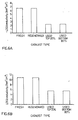
- a commercial catalyst used for the dehydrogenation of ethyl benzene to produce styrene was investigated. These examples are labeled as "New 3, New 045 and Old 045". These types of catalysts are iron oxide based, containing K 2 Fe 22 O 34 , with about 50% Fe content.
- the spent catalyst contains Fe 2 O 3 and K 2 CO 3 (50% Fe and 8-10 % K).
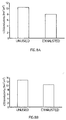
- a commercial hydrotreating catalyst was investigated. These type of catalysts are alumina based, containing Ni - Mo or Co-Mo and used to remove sulfur and nitrogen from crude oil distillates such as gasoline or gas oil.
- Al 2 O 3 Al 2 O 3
- Table 7 The data are summarized in Table 7 and the comparison is shown in Figure 9.
Landscapes
- Chemical & Material Sciences (AREA)
- Chemical Kinetics & Catalysis (AREA)
- Oil, Petroleum & Natural Gas (AREA)
- Organic Chemistry (AREA)
- Life Sciences & Earth Sciences (AREA)
- Engineering & Computer Science (AREA)
- Health & Medical Sciences (AREA)
- Analytical Chemistry (AREA)
- Immunology (AREA)
- Physics & Mathematics (AREA)
- General Chemical & Material Sciences (AREA)
- Biochemistry (AREA)
- General Health & Medical Sciences (AREA)
- General Physics & Mathematics (AREA)
- Pathology (AREA)
- Molecular Biology (AREA)
- Electrochemistry (AREA)
- Materials Engineering (AREA)
- Catalysts (AREA)
- Investigating Or Analyzing Materials By The Use Of Electric Means (AREA)
- Investigating Or Analyzing Non-Biological Materials By The Use Of Chemical Means (AREA)
Applications Claiming Priority (2)
| Application Number | Priority Date | Filing Date | Title |
|---|---|---|---|
| US09/146,991 US20020019054A1 (en) | 1998-09-04 | 1998-09-04 | Characterization of heterogeneous catalysts by electrical measurements |
| US146991 | 1998-09-04 |
Publications (2)
| Publication Number | Publication Date |
|---|---|
| EP0984274A2 true EP0984274A2 (de) | 2000-03-08 |
| EP0984274A3 EP0984274A3 (de) | 2002-07-17 |
Family
ID=22519897
Family Applications (1)
| Application Number | Title | Priority Date | Filing Date |
|---|---|---|---|
| EP99116790A Withdrawn EP0984274A3 (de) | 1998-09-04 | 1999-08-31 | Charakterisierung von heterogenen Katalysatoren mittels elektrischer Messungen |
Country Status (4)
| Country | Link |
|---|---|
| US (1) | US20020019054A1 (de) |
| EP (1) | EP0984274A3 (de) |
| JP (1) | JP2000088783A (de) |
| CA (1) | CA2282047A1 (de) |
Cited By (2)
| Publication number | Priority date | Publication date | Assignee | Title |
|---|---|---|---|---|
| EP1941079A4 (de) * | 2005-10-28 | 2011-03-16 | Catelectric Corp | Verfahren und vorrichtung zur steuerung von katalytischen verfahren einschliesslich katalysatorregeneration und russeliminierung |
| US11525114B2 (en) * | 2015-12-18 | 2022-12-13 | Caron Products And Services, Inc. | System and method for vaporized hydrogen peroxide cleaning of an incubation chamber |
Families Citing this family (5)
| Publication number | Priority date | Publication date | Assignee | Title |
|---|---|---|---|---|
| IL171450A (en) * | 2005-10-16 | 2011-03-31 | Starling Advanced Comm Ltd | Antenna panel |
| US20090090615A1 (en) * | 2007-10-05 | 2009-04-09 | Atomic Energy Council - Institute Of Nuclear Energy Research | Apparatus and method for controlling the oxidation state of catalyst |
| US8119904B2 (en) * | 2009-07-31 | 2012-02-21 | International Business Machines Corporation | Silicon wafer based structure for heterostructure solar cells |
| JP6161588B2 (ja) * | 2014-12-10 | 2017-07-12 | 株式会社ノリタケカンパニーリミテド | 導電性粉体の評価方法 |
| JP6600816B2 (ja) * | 2016-04-12 | 2019-11-06 | パナソニックIpマネジメント株式会社 | 触媒の評価装置と評価方法 |
Family Cites Families (4)
| Publication number | Priority date | Publication date | Assignee | Title |
|---|---|---|---|---|
| US3283243A (en) * | 1962-10-22 | 1966-11-01 | Exxon Research Engineering Co | Apparatus for indicating the thermal e. m. f. and a.c. conductivity of a catalyst |
| US3540868A (en) * | 1967-12-29 | 1970-11-17 | Exxon Research Engineering Co | Control of carbon deposition in catalyst beds |
| US3864083A (en) * | 1970-06-26 | 1975-02-04 | Exxon Research Engineering Co | Carbon Detection |
| DE19546192A1 (de) * | 1995-12-11 | 1997-06-12 | Harald Prof Dr Sc Nat Vos | Verfahren und Vorrichtung zur schnellen Ermittlung der Aktivität und Stabilität von Katalysatoren |
-
1998
- 1998-09-04 US US09/146,991 patent/US20020019054A1/en not_active Abandoned
-
1999
- 1999-08-30 CA CA002282047A patent/CA2282047A1/en not_active Abandoned
- 1999-08-31 JP JP11245113A patent/JP2000088783A/ja active Pending
- 1999-08-31 EP EP99116790A patent/EP0984274A3/de not_active Withdrawn
Cited By (3)
| Publication number | Priority date | Publication date | Assignee | Title |
|---|---|---|---|---|
| EP1941079A4 (de) * | 2005-10-28 | 2011-03-16 | Catelectric Corp | Verfahren und vorrichtung zur steuerung von katalytischen verfahren einschliesslich katalysatorregeneration und russeliminierung |
| US11525114B2 (en) * | 2015-12-18 | 2022-12-13 | Caron Products And Services, Inc. | System and method for vaporized hydrogen peroxide cleaning of an incubation chamber |
| US11965150B2 (en) | 2015-12-18 | 2024-04-23 | Caron Products And Services, Inc. | System and method for vaporized hydrogen peroxide cleaning of an incubation chamber |
Also Published As
| Publication number | Publication date |
|---|---|
| US20020019054A1 (en) | 2002-02-14 |
| EP0984274A3 (de) | 2002-07-17 |
| CA2282047A1 (en) | 2000-03-04 |
| JP2000088783A (ja) | 2000-03-31 |
Similar Documents
| Publication | Publication Date | Title |
|---|---|---|
| Kottwitz et al. | Single atom catalysts: a review of characterization methods | |
| Chang et al. | γ-alumina-supported Pt catalysts for aromatics reduction: a structural investigation of sulfur poisoning catalyst deactivation | |
| Schierbaum et al. | Conductance, work function and catalytic activity of SnO2-based gas sensors | |
| Müller et al. | Exploiting synergies in catalysis and gas sensing using noble metal‐loaded oxide composites | |
| Siemons et al. | Preparation and gas sensing properties of nanocrystalline La-doped CoTiO3 | |
| CA1115775A (en) | Carbon monoxide detecting device | |
| Garrick et al. | The effect of the surface composition of Ru-Pt bimetallic catalysts for methanol oxidation | |
| US6593747B2 (en) | Method and apparatus for monitoring adsorbent activity in situ | |
| US20090218235A1 (en) | Gas sensor | |
| Zaera | Infrared absorption spectroscopy of adsorbed CO: new applications in nanocatalysis for an old approach | |
| EP0984274A2 (de) | Charakterisierung von heterogenen Katalysatoren mittels elektrischer Messungen | |
| Williams et al. | Classification of reactive sites on the surface of polycrystalline tin dioxide | |
| JP2001509879A (ja) | 金属−絶縁膜−半導体センサによる流体の検出 | |
| Sahm et al. | Sensing of CH4, CO and ethanol with in situ nanoparticle aerosol-fabricated multilayer sensors | |
| EP0206236B1 (de) | Gasfühler | |
| Avgouropoulos et al. | CO tolerance of Pt and Rh catalysts: Effect of CO in the gas-phase oxidation of H2 over Pt and Rh supported catalysts | |
| Totarella et al. | Particle size effects in the selective hydrogenation of alkadienes over supported Cu nanoparticles | |
| Wolfschmidt et al. | Enhanced reactivity for hydrogen reactions at Pt nanoislands on Au (111) | |
| EP0591240B1 (de) | Gassensor | |
| Occelli et al. | Metal contaminant effects on the properties of a silica-rich fluid cracking catalyst | |
| US20050029102A1 (en) | Sensor for determining the carbon monoxide concentration of a gas mixture | |
| Vogel | Interaction of a nanosized Pd catalyst with active C from the carbon support: an advanced in situ XRD study | |
| US3540868A (en) | Control of carbon deposition in catalyst beds | |
| Vicerich et al. | Ru‐Pt catalysts supported on Al2O3 and SiO2─ Al2O3 for the selective ring opening of naphthenes | |
| Deviney et al. | Catalyst characterization science: Surface and solid state chemistry |
Legal Events
| Date | Code | Title | Description |
|---|---|---|---|
| PUAI | Public reference made under article 153(3) epc to a published international application that has entered the european phase |
Free format text: ORIGINAL CODE: 0009012 |
|
| AK | Designated contracting states |
Kind code of ref document: A2 Designated state(s): AT BE CH CY DE DK ES FI FR GB GR IE IT LI LU MC NL PT SE |
|
| AX | Request for extension of the european patent |
Free format text: AL;LT;LV;MK;RO;SI |
|
| PUAL | Search report despatched |
Free format text: ORIGINAL CODE: 0009013 |
|
| AK | Designated contracting states |
Kind code of ref document: A3 Designated state(s): AT BE CH CY DE DK ES FI FR GB GR IE IT LI LU MC NL PT SE |
|
| AX | Request for extension of the european patent |
Free format text: AL;LT;LV;MK;RO;SI |
|
| RIC1 | Information provided on ipc code assigned before grant |
Free format text: 7G 01N 27/04 A, 7B 01J 8/24 B, 7C 10G 11/18 B, 7C 10G 35/24 B, 7C 10G 45/72 B |
|
| STAA | Information on the status of an ep patent application or granted ep patent |
Free format text: STATUS: THE APPLICATION HAS BEEN WITHDRAWN |
|
| 18W | Application withdrawn |
Withdrawal date: 20020918 |