EP0984036A2 - Curable polyolefin compositions containing organosilicon compounds as adhesion additives - Google Patents

Curable polyolefin compositions containing organosilicon compounds as adhesion additives Download PDF

Info

Publication number
EP0984036A2
EP0984036A2 EP99116149A EP99116149A EP0984036A2 EP 0984036 A2 EP0984036 A2 EP 0984036A2 EP 99116149 A EP99116149 A EP 99116149A EP 99116149 A EP99116149 A EP 99116149A EP 0984036 A2 EP0984036 A2 EP 0984036A2
Authority
EP
European Patent Office
Prior art keywords
polyolefin
group
groups
composition according
composition
Prior art date
Legal status (The legal status is an assumption and is not a legal conclusion. Google has not performed a legal analysis and makes no representation as to the accuracy of the status listed.)
Withdrawn
Application number
EP99116149A
Other languages
German (de)
French (fr)
Other versions
EP0984036A3 (en
Inventor
Qian Jane Feng
Kenneth Michael Lee
Michael Andrew Lutz
Robert Edward Kalinowski
Susan Victoria Perz
Toshio Suzuki
Michael James Owen
Current Assignee (The listed assignees may be inaccurate. Google has not performed a legal analysis and makes no representation or warranty as to the accuracy of the list.)
Dow Silicones Corp
Original Assignee
Dow Corning Corp
Priority date (The priority date is an assumption and is not a legal conclusion. Google has not performed a legal analysis and makes no representation as to the accuracy of the date listed.)
Filing date
Publication date
Application filed by Dow Corning Corp filed Critical Dow Corning Corp
Publication of EP0984036A2 publication Critical patent/EP0984036A2/en
Publication of EP0984036A3 publication Critical patent/EP0984036A3/en
Withdrawn legal-status Critical Current

Links

Classifications

    • C—CHEMISTRY; METALLURGY
    • C08—ORGANIC MACROMOLECULAR COMPOUNDS; THEIR PREPARATION OR CHEMICAL WORKING-UP; COMPOSITIONS BASED THEREON
    • C08L—COMPOSITIONS OF MACROMOLECULAR COMPOUNDS
    • C08L23/00—Compositions of homopolymers or copolymers of unsaturated aliphatic hydrocarbons having only one carbon-to-carbon double bond; Compositions of derivatives of such polymers
    • C08L23/02—Compositions of homopolymers or copolymers of unsaturated aliphatic hydrocarbons having only one carbon-to-carbon double bond; Compositions of derivatives of such polymers not modified by chemical after-treatment
    • C08L23/18—Homopolymers or copolymers of hydrocarbons having four or more carbon atoms
    • C08L23/20—Homopolymers or copolymers of hydrocarbons having four or more carbon atoms having four to nine carbon atoms
    • C08L23/22—Copolymers of isobutene; Butyl rubber; Homopolymers or copolymers of other iso-olefins
    • C—CHEMISTRY; METALLURGY
    • C08—ORGANIC MACROMOLECULAR COMPOUNDS; THEIR PREPARATION OR CHEMICAL WORKING-UP; COMPOSITIONS BASED THEREON
    • C08K—Use of inorganic or non-macromolecular organic substances as compounding ingredients
    • C08K5/00—Use of organic ingredients
    • C08K5/54—Silicon-containing compounds
    • C08K5/541—Silicon-containing compounds containing oxygen
    • C08K5/5425—Silicon-containing compounds containing oxygen containing at least one C=C bond
    • C—CHEMISTRY; METALLURGY
    • C08—ORGANIC MACROMOLECULAR COMPOUNDS; THEIR PREPARATION OR CHEMICAL WORKING-UP; COMPOSITIONS BASED THEREON
    • C08L—COMPOSITIONS OF MACROMOLECULAR COMPOUNDS
    • C08L43/00—Compositions of homopolymers or copolymers of compounds having one or more unsaturated aliphatic radicals, each having only one carbon-to-carbon double bond, and containing boron, silicon, phosphorus, selenium, tellurium or a metal; Compositions of derivatives of such polymers
    • C08L43/04—Homopolymers or copolymers of monomers containing silicon
    • C—CHEMISTRY; METALLURGY
    • C08—ORGANIC MACROMOLECULAR COMPOUNDS; THEIR PREPARATION OR CHEMICAL WORKING-UP; COMPOSITIONS BASED THEREON
    • C08L—COMPOSITIONS OF MACROMOLECULAR COMPOUNDS
    • C08L83/00—Compositions of macromolecular compounds obtained by reactions forming in the main chain of the macromolecule a linkage containing silicon with or without sulfur, nitrogen, oxygen or carbon only; Compositions of derivatives of such polymers
    • C08L83/04—Polysiloxanes

Definitions

  • This invention provides curable polyolefin compositions that contain at least one of a specified class of organosilicon compounds to achieve strong bonding to a variety of substrates, particularly glass and metals.
  • polyolefin compositions are desirable for a variety of end use applications, particularly in construction, packaging, automotive and consumer markets.
  • the polyolefin compositions are useful as pressure sensitive adhesives for paper labels, for sealing tires and as adhesives for assembly of single ply roofing.
  • One benefit of polyolefin compositions is the ability to prepare solventless compositions which, following application and curing, exhibit properties similar to those of solvent-based adhesives.
  • a shortcoming of polyolefin compositions is their inability to develop strong adhesion to a variety of substrates, particularly glass and certain metals, following curing under commercially feasible conditions of time and temperature.
  • One method for remedying this deficiency is by using primer compositions or adhesion promoting additives containing one or more silanes and/or organopolysiloxanes with a plurality of silicon-bonded hydrolyzable groups and at least one organofunctional substituent that is bonded to silicon through at least one carbon atom.
  • Primer compositions are applied to substrates to which adhesion is desired prior to application of a curable composition.
  • Adhesion promoters are present as additional ingredients in the curable composition.
  • compositions for automotive masking tape include a moisture curable alpha olefin copolymer containing hydrolyzable or condensable silyl groups.
  • U.S. Patent 5,002,808 teaches blending a monomeric or oligomeric precursor of a polyolefin with a silane adhesion aid containing a benzocyclobutane group as a substituent.
  • the monomer or oligomer preferably contains these groups.
  • U.S. Patents 3,424,376 and 3,644,315 describe sealants for glass containing a hydrocarbon-based polymer with at least one silicon atom bonded to OH or a hydrolyzable group.
  • U.S. Patent 4,975,488 describes compositions containing 1) a vinyl polymer containing at least one silicon atom bonded to a hydrolyzable group and 2) a silane or disilane containing at least one OH or a hydrolyzable group.
  • the hydrolyzable group can be alkenyloxy, however, no specific silanes of this type are disclosed in the specifications or examples of the patent.
  • U.S. Patent 4,518,726 describes metal-containing paint compositions containing a vinyl polymer with at least one silicon-bonded hydrolyzable group.
  • a silicon-containing coupling agent is preferably present to retain metal powder in suspension.
  • Adhesion promoting additives described in the prior art typically contain at least two functional groups.
  • U.S. Patents 5,233,006, 5,339,738 and 5,532,298 describe novel polymerizable silanes containing hydrolyzable groups and acrylate or methacrylate groups.
  • U.S. Patents 4,659,851, 4,719,262 and 4,906,686 teach reaction products of unsaturated alcohols with alkoxysilanes as adhesion promoting additives for use with organosiloxane compositions.
  • U.S. Patent 5,424,384 teaches curable organosiloxane compositions containing adhesion promoters that are reaction products of a 1) polyol that is free of ethylenic unsaturation and 2) a silane or disiloxane containing at least three alkoxy groups bonded to each silicon atom. There is no teaching in the patent suggesting the utility of the disclosed adhesion promoters as adhesion promoters for polyolefins.
  • Japanese Patent Publication (Kokai) 09-316293 describes saturated hydrocarbon polymers curable by a hydrosilation reaction.
  • the polymers contain a silane coupling agent to improve their adhesion.
  • Glycidoxypropyltrimethoxysilane is one of the adhesion promoters disclosed. This publication does not describe adhesion promoters containing silicon-bonded alkenyloxy groups.
  • One objective of our invention is to provide a group of organosilicon compounds, that when present in curable polyolefin compositions, result in strong cohesive bonding between the cured compositions and a variety of substrates during curing of the compositions.
  • the present invention is based on the discovery that the adhesion of curable polyolefin compositions to a variety of substrates is improved by the addition of certain moisture curable organosilicon compounds.
  • the silicon atoms in these compounds are bonded to at least one alkenyloxy group and at least one moisture-reactive group.
  • the organosilicon compound is preferably prepared by the reaction of an ethylenically unsaturated alcohol containing at least one hydroxyl group with an organosilicon compound containing at least three moisture reactive groups.
  • Organosilicon compounds of this type are described in the aforementioned U.S. Patents 4,659,851, 4,719,262 and 4,906,686.
  • the polyolefin portion of the composition is cured utilizing any of the following types of reactions:
  • compositions exhibiting improved adhesion, said composition comprising
  • the adhesion promoter referred to hereinafter as ingredient B, is a reaction product of ingredients comprising
  • the adhesion promoter preferably constitutes from 1 to 10 percent by weight of said polyolefin composition and is a liquid at 25°C.
  • cure means the conversion of a liquid or semi-solid composition to a crosslinked gel, elastomer or resinous material by the reaction of ethylenically unsaturated groups present on the polyolefin referred to as ingredient A of the present compositions with a curing agent.
  • the organic compound, referred to herein as ingredient B1 that is reacted with the organosilicon compound B2, must be capable of becoming part of the cured polyolefin network.
  • moisture reactive group includes silicon-bonded functional groups that react in the presence of water to form silanol groups that in turn are capable of reacting with other silanol groups to form siloxane (Si-O-Si) bonds.
  • moisture reactive groups are alkoxy, isoalkenyloxy, acyloxy, ketoximo, amino and amido.
  • the preferred curing reaction for the polyolefin is a hydrosilation reaction that involves reaction of an organohydrogenpolysiloxane with alkenyl groups, such as allyl, that are present on the polyolefin. Platinum or a platinum compound is also present as the catalyst for the hydrosilation reaction.
  • the characterizing feature of the present curable polyolefin compositions is the presence as an adhesion promoting additive (B) comprising at least one reaction product of ingredients (B1) and (B2), wherein ingredient B1 is a compound containing at least one carbinol group and at least one ethylenically unsaturated group, ingredient B2 is a silane or a bis-silylalkane containing at least three silicon-bonded moisture-reactive groups that are preferably alkoxy or isoalkenyloxy.
  • Suitable unsaturated groups that can be present in ingredient B1 are hydrocarbon groups such as vinyl, allyl, acryloxy and methacryloxy groups.
  • B1 contains 1) at least one ethylenically unsaturated group that reacts during curing of the present compositions and 2) at least one hydroxyl group.
  • B1 is represented by the formula R 2 (OH) n .
  • R 2 in this formula is an ethylenically unsaturated radical containing at least 3 carbon atoms and n is an integer with a value of at least 1.
  • the ethylenically unsaturated radical represented by R 2 preferably contains from 4 to 20 carbon atoms, most preferably, from 5 to 12 carbon atoms.
  • the ethylenically unsaturated portion of R 2 can contain atoms other than carbon and hydrogen, providing these do not interfere with the curing reaction of R 2 with the polyolefin.
  • R 2 represents an ethylenically unsaturated hydrocarbon radical.
  • 10-Undecen-1-ol, 4-penten-1-ol and dihydrocarveol are particularly preferred alcohols for use as ingredient B1.
  • alkoxy or isoalkenyloxy groups that constitute the preferred hydrolyzable groups of ingredient B2 can be replaced by other hydrolyzable groups such as ketoximo or amino, providing these alternative groups do not interfere with curing or storage of the present organosiloxane compositions.
  • ingredient B2 is a silane, it is represented by the general formula R 1 m SiX 4-m where R 1 represents a substituted or unsubstituted monovalent hydrocarbon radical, X represents a hydrolyzable group and m is 0 or 1.
  • hydrolyzable group represented by X is alkoxy
  • this group contains from 1 to 20 carbon atoms, preferably from 1 to 4 carbon atoms, and is most preferably methoxy or ethoxy.
  • R is methyl
  • R' and R'' are hydrogen and the isoalkenyloxy group is isopropenyloxy.
  • R 1 in the formula for ingredient B2 contains a substituent
  • R 1 The only proviso for any substituents present on R 1 is that they do not interfere with curing of the polyolefin compositions containing the present adhesion promoters.
  • Silanes preferred for use as ingredient B2 are tetramethoxysilane, tetraethoxysilane, methyltrimethoxysilane, methyltriethoxysilane, 3-glycidoxypropyltrimethoxysilane, 3-methacryloxypropyl-trimethoxysilane, hexenyltrimethoxysilane, mercaptopropyl-trimethoxysilane and methyltriisopropenyloxysilane.
  • Preferred adhesion promoters comprise as ingredient B2 a tetraalkoxysilane selected from tetramethoxysilane and tetraethoxysilane; methyltrimethoxysilane, methyltriethoxy-silane and glycidoxypropyltrimethoxysilane and as ingredient B1 an ethylenically unsaturated monohydric alcohol containing from 5 to 12 carbon atoms.
  • the organosilicon compound (ingredient B2) constitutes from 10 to 90 percent, preferably from 30 to 70 percent, of the combined weight of this ingredient and the alcohol (ingredient B1) used to prepare ingredient B.
  • ingredient B1 contains one hydroxyl group
  • the formula for ingredient B is represented by Formula 1 R 1 m Si(OR 2 ) p X 4-m-p , where R 1 , R 2 and m are previously defined and p is 1 or 2. (4-m-p) is preferably at least 2.
  • ingredient B1 contains more than one hydroxyl group
  • ingredient B is typically a mixture of monomeric and oligomeric compounds.
  • One of these species will usually predominate. The predominant species is dependent upon a number of variables, namely the number of carbon atoms and hydroxyl groups present in ingredient B1, the relative amounts of ingredients B1 and B2 used to prepare this ingredient and the conditions under which these ingredients are reacted together.
  • Formula 1 does not represent the only formula for ingredient B. If more than one polyhydric alcohol residue is bonded to each silicon atom, the reaction product is a linear polymer of the general formula X 3-m R 1 m Si[OR 2 OSiR 1 m X 2-m ] x OR 2 OSiR 1 m X 3-m where m is 0 or 1 and x is at least 1.
  • Preferred embodiments of ingredient B are flowable at 25 to 35°C.
  • ingredient B2 is an alkoxysilane
  • this ingredient can be prepared and isolated prior to reaction with the unsaturated alcohol (ingredient B1) or it can be prepared by reaction of the corresponding chlorosilane with the desired monohydric alcohol in the same reactor in which it is subsequently reacted with ingredient B1.
  • the cholorosilane can be reacted with ingredient B1, following which the remaining silicon-bonded chlorine atoms are converted to alkoxy groups.
  • the present adhesion promoter compositions optionally include from 10 to 90 weight percent, preferably from 40 to 70 weight percent, based on total organosilicon compounds, of at least one organosilicon compound (ingredient B3) selected from organosilanes and organopolysiloxanes containing (a) at least one of a first functional group selected from silanol and hydrolyzable groups such as alkoxy or isoalkenyloxy that will not interfere with curing of the polyolefin; and (b) at least one of a second functional group capable of reacting with either groups or polyolefin (A), or groups on the cure agent therefor, during curing of the polyolefin.
  • organosilicon compound comprisingredient B3 selected from organosilanes and organopolysiloxanes containing (a) at least one of a first functional group selected from silanol and hydrolyzable groups such as alkoxy or isoalkenyloxy that will not interfere with curing of the poly
  • the second reactive group of ingredient B3 can be a silicon-bonded hydrogen atom, a mercapto group or an ethylenically unsaturated group.
  • Preferred unsaturated groups are vinyl, allyl, 5-hexenyl, 10-undecenyl and other hydrocarbon radicals containing a carbon-to-carbon double bond at a terminal position.
  • the unsaturated group can also contain ether (R 4 -O-R 5 -), or ester (-C(O)OR 4 or -OC(O)R 4 ) groups, providing these do not interfere with curing of the polyolefin composition.
  • R 4 is a monovalent hydrocarbon radical and R 5 is a divalent hydrocarbon radical.
  • Silanes preferred for use as ingredient B3 have the formula R 6 q R 7 r Si(OY) 4-q-r .
  • Preferred optional siloxanes contain at least one unit of the formula R 6 q R 7 r SiO (4-q-r)/2 and at least one unit of the formula (OY) s R 7 t SiO (4-s-t)/2 .
  • R 6 represents hydrogen or an ethylenically unsaturated group capable of undergoing a hydrosilation reaction.
  • R 6 is preferably hydrogen, alkenyl or 3-methacryloxypropyl.
  • R 7 represents an unsubstituted or substituted monovalent hydrocarbon radical, preferably alkyl containing from 1 to 4 carbon atoms; q and s are 1, 2 or 3; r and t are 0, 1, 2 or 3; and the sums of q+r and s+t do not exceed 3, with the proviso that s is 1 when OY represents a hydroxyl group.
  • OY represents a hydroxyl, an alkoxy group containing from 1 to 4 carbon atoms, an isoalkenyloxy group or other hydrolyzable group that does not interfere with curing of the polyolefin composition.
  • ingredient B3 can also contain adhesion promoting reactive groups such as epoxide groups, that are bonded through carbon to the silicon atom of this ingredient, provided that these adhesion promoting groups do not interfere with curing or storage stability of the present silicone compositions.
  • adhesion promoting reactive groups such as epoxide groups
  • Preferred epoxy-substituted groups include 3-glycidoxypropyl and 3,4-epoxycyclohexylethyl.
  • a preferred silane for use as ingredient B3 is hexenyltrimethoxysilane.
  • the present composition can also include a catalyst for increasing the rate of reaction of moisture-reactive groups present on ingredients B2 and on any optional silane and/or siloxane present as ingredient B3 in the curable compositions of this invention.
  • ingredients B1, B2 and any optional ingredient B3 is conducted under conditions that are typical for interchange reactions between alcohols and silanes containing alkoxy, isoalkenyloxy or other moisture reactive groups. These reactions are typically conducted under an inert, anhydrous atmosphere such as nitrogen at temperatures from ambient to 200°C. and may employ a catalyst.
  • Suitable catalysts include acids, bases and organotitanium compounds. Sulfonic acids such as trifluoromethanesulfonic acid are preferred catalysts.
  • the weight of catalyst typically constitutes from 0.1 to 5 percent of the combined weight of all reactants.
  • Methanol and ethanol are the lowest boiling alcohols, and hence are easily removed during preparation of the present adhesion-promoting additives. It is, therefore, preferable that the alkoxy groups of the present adhesion additives, represented by OR 1 in the foregoing formulae, be methoxy or ethoxy.
  • the isoalkenyloxy group is preferably isopropenyloxy.
  • the reactants and any catalyst(s) used to prepare ingredient B are heated for a period of time sufficient to achieve a substantially complete reaction, as indicated by the amount of by-product alcohol or ketone collected. This time period is typically from 1 to 5 hours and the reaction mixture is preferably heated from 50 to 120°C.
  • Suitable diluents include aliphatic and aromatic hydrocarbons that are liquid at ambient temperature and boil within the range of from 50 to 200°C.
  • Representative diluents include aliphatic hydrocarbons such as hexane and heptane and liquid aromatic hydrocarbons such as toluene and xylene.
  • the present adhesion promoting additives are preferably liquids at 25°C. These additives are particularly useful in polyolefin compositions that cure by a platinum group metal-catalyzed hydrosilation reaction at temperatures below 150°C. The additives are also useful in polyolefin compositions that cure by the reaction of free radicals with double-bonded carbon atoms.
  • the free radicals can be generated by the heat-induced decomposition of organic peroxides or by photoinitiators that decompose to free radicals in the presence of ultraviolet or other type of radiation.
  • the concentration of adhesion promoting additive, ingredient B, is sufficient to provide cohesive bonding of the cured composition to the desired substrate. This typically requires at least 1 percent by weight of the adhesion promoter, based on the weight of the curable composition. A concentration of between 1 and 10 weight percent is preferred.
  • the ability of the polyolefin composition to cure completely under the desired conditions and/or the properties of the cured composition is adversely affected when the concentration of adhesion promoting additive exceeds 10 weight percent, based on the weight of the curable composition.
  • cohesive bonding is characterized by cohesive failure, which occurs when the strength of the bond between the cured polyolefin and the substrate exceeds the tensile strength of the cured material.
  • cohesive failure occurs within the body of the cured polyolefin material rather than at the interface between the material and the substrate that the material is in contact with during the curing reaction. At least a portion of the cured material remains adhered to the substrate.
  • the polyolefin is referred to hereinafter as ingredient A.
  • the repeating units of the polyolefin contains from 2 to 10 or more carbon atoms, preferably from 2 to 6 carbon atoms which can be identical or different. Polymers derived at least in part from butylene and isobutylene are particularly preferred.
  • the polyolefin cures to form a crosslinked material by a variety of reactions described hereinbefore involving ethylenically unsaturated groups with a variety of curing agents.
  • the reaction between the polyolefin and curing agent may also require the presence of a catalyst, such as the platinum catalyst required for the reaction of silicon-bonded hydrogen atoms with ethylenically unsaturated functional groups.
  • a preferred reaction for curing the polyolefin is hydrosilation, the reaction between ethylenically unsaturated groups and silicon-bonded hydrogen atoms.
  • the polyolefin preferably contains at least two alkenyl radicals in each molecule.
  • Suitable alkenyl radicals contain from 2 to 10 carbon atoms and are exemplified by but not limited to vinyl, allyl and 5-hexenyl.
  • the molecular structure of the polyolefin is not critical to the present invention and will be determined by the physical properties desired in the cured composition. To achieve a useful level of tensile properties in the elastomers and other products prepared by curing the present compositions, the molecular weight of this ingredient should be sufficient to achieve a viscosity at 25°C. greater than 0.1 Pa ⁇ s.
  • the upper limit for the molecular weight of the polyolefin is not specifically restricted and is typically limited only by the processability of the curable composition.
  • the viscosity of the polyolefin can range from a pourable liquid to a gum type polymer that is typically characterized by Williams plasticity values.
  • the molecular weight of the polyolefin is not critical.
  • the polymer should be a liquid under ambient conditions.
  • the repeating units present in the polyolefin will depend, at least in part, on the desired physical properties of the cured polymer.
  • the olefin(s) used to prepare the polyolefin include ethylene, propylene, the isomeric butylenes, particularly isobutylene, styrene and dienes such as butadiene.
  • Ingredient A can also be a copolymer of two or more olefins, such as isobutylene/butadiene copolymers.
  • Preferred embodiments of ingredient A are isobutylene polymers and copolymers having the general formula I, II or III.
  • R 10 [C(CH 3 ) 2 CH 2 ] u [R 8 (R 9 )] v
  • R 10 [C(CH 3 ) 2 CH 2 ] u [R 11 ] v
  • R 8 represents a trivalent hydrocarbon radical
  • R 11 represents a divalent olefinically unsaturated hydrocarbon radical
  • Ph represents a phenylene group.
  • the degree of polymerization represented the sums of u + v and v + w, are selected to provide a viscosity of at least 100 centipoise (0.1 Pa ⁇ s), preferably from 0.1 to 1000 Pa ⁇ s., to the polymer.
  • u is from 10 to 1000, preferably from 100 to 500; v is from 0 to 50, preferably from 0 to 10;l and w is from 5 to 500, preferably from 50 to 250.
  • Preferred curing agents for the polyolefin, ingredient A of the present compositions are organohydrogensiloxanes, compounds containing at least two mercapto groups per molecule, organic peroxides and compounds generating free radicals or cations upon exposure to ultraviolet radiation or high energy gamma rays.
  • Particularly preferred curing agents for the polyolefin are organosiloxanes containing at least two silicon-bonded hydrogen atoms.
  • a hydrosilation catalyst the silicon-bonded hydrogen atoms in the curing agent undergo an addition reaction, referred to as hydrosilation, with the alkenyl groups in the polyolefin, resulting in crosslinking and curing of the composition.
  • preferred curing agents include but are not limited to organopolysiloxanes containing from 2 to 30 siloxane units and at least two silicon-bonded hydrogen atoms.
  • the curing agent when it is an organohydrogenpolysiloxane, it can contain groups other than silicon-bonded hydrogen atoms and saturated or aromatic hydrocarbon radicals, so long as these groups do not interfere with curing of the polyolefin. Suitable groups include silicon-bonded hydrolyzable groups and epoxide groups. Methyl is the preferred hydrocarbon radical.
  • the curing agent can be a single organohydrogenpolysiloxane or a mixture of two different organohydrogenpolysiloxanes.
  • one of the organohydrogenpolysiloxanes is a copolymer consisting essentially of methylhydrogensiloxane and dimethylsiloxane units and the second organohydrogenpolysiloxane is a copolymer consisting essentially of methylhydrogensiloxane units and two types of diorganosiloxane units.
  • diorganosiloxane unit is the dimethylsiloxane unit and the second type of unit has the general formula (CH 3 )(C a H 2a+1 )SiO where the value of a is from 10 to 20. Most preferably, the total number of diorganosiloxane units is equal to the number of methylhydrogensiloxane units in the copolymer.
  • the curing agent must contain an average of more than two silicon-bonded hydrogen atoms to achieve a crosslinked structure in the final cured product.
  • the organic groups in the organohydrogenpolysiloxane are preferably substantially free of ethylenic or acetylenic unsaturation.
  • the molecular structure of the organohydrogenpolysiloxane can be straight chain, branch-containing straight chain, cyclic or network.
  • the concentration of organohydrogenpolysiloxane is sufficient to provide a molar ratio of silicon-bonded hydrogen atoms to alkenyl radicals in the curable composition of from 0.4 to 20. A range of from 0.4 to 4 is preferred.
  • the curable composition contains less than 0.4 moles of silicon-bonded hydrogen atoms per mole of alkenyl radicals it may not be possible to achieve the desired physical properties following curing.
  • the physical properties of the cured article may vary with time when this ratio exceeds 20 moles of silicon-bonded hydrogen per mole of alkenyl radicals.
  • the reaction between silicon-bonded hydrogen atoms and ethylenically unsaturated groups is catalyzed by metals from the platinum group of the periodic table and compounds of these metals.
  • the metals include platinum, palladium and rhodium. Platinum compounds are preferred based on the high activity level of these catalysts in hydrosilation reactions.
  • Examples of preferred curing catalysts include platinum black, platinum metal on various solid supports, chloroplatinic acid, alcohol solutions of chloroplatinic acid and complexes of chloroplatinic acid with liquid ethylenically unsaturated compounds such as olefins and organopolysiloxanes containing ethylenically unsaturated hydrocarbon radicals bonded to silicon.
  • Complexes of chloroplatinic acid with the aforementioned organopolysiloxanes containing ethylenically unsaturated hydrocarbon radicals are described in U.S. Patent 3,419,593.
  • the concentration of hydrosilation catalyst in the present compositions is equivalent to a platinum concentration of from 0.1 to 500 parts by weight of platinum metal, preferably from 1 to 50 parts by weight of platinum metal, per million parts (ppm), based on the weight of ingredient A.
  • Curing does not proceed satisfactorily below 0.1 ppm of platinum, while using more than 500 ppm results in no appreciable increase in cure rate and is therefore uneconomical.
  • Mixtures containing the aforementioned ingredient A, the curing agent, and the hydrosilation catalyst may begin to cure at ambient temperature.
  • the activity of the catalyst under ambient conditions can be retarded or suppressed by addition of a suitable inhibitor.
  • Known platinum catalyst inhibitors include the acetylenic compounds disclosed in U.S. Patent 3,445,420.
  • Acetylenic alcohols such as 2-methyl-3-butyn-2-ol constitute a preferred class of inhibitors that will suppress the activity of a platinum-containing catalyst at 25°C.
  • Compositions containing these catalyst inhibitors typically require heating at temperatures of 70°C. or above to cure at a practical rate.
  • Inhibitor concentrations as low as one mole of inhibitor per mole of platinum will, in some instances, impart satisfactory storage stability and cure rate. In other instances, inhibitor concentrations of up to 500 or more moles of inhibitor per mole of platinum are required.
  • the type and concentration of inhibitor that will provide excellent adhesion in a given composition can readily be determined by routine experimentation. Certain types of catalyst inhibitors may adversely affect the degree of adhesion that is developed under a given set of curing conditions compared to compositions containing a different type of inhibitor.
  • the present polyolefin compositions can contain one or more additives that are conventionally present in curable compositions of this type to impart or enhance certain physical properties of the cured composition in addition to adhesion or to facilitate processing of the curable composition.
  • Typical additives include reinforcing fillers such as finely divided silica; non-reinforcing fillers such as quartz, alumina, mica and calcium carbonate; pigments such as carbon black and titanium dioxide; dyes, flame retardants and heat and/or ultraviolet light stabilizers.
  • compositions of this invention can be prepared by combining all of the ingredients at ambient temperature. Any of the mixing techniques and devices described in the prior art can be used for this purpose. The particular device used will be determined by the viscosity of the ingredients and the final curable composition. Suitable mixers include but are not limited to paddle type mixers, kneader type mixers, single screw or twin screw extruders and two- or three-roll rubber mills.
  • Cooling of the ingredients during mixing may be desirable to avoid premature curing of the composition.
  • the curable polyolefin compositions are preferably kept in closed containers until used. If greater storage stability is desired, the compositions can be packaged in two or more containers with the compound containing silicon-bonded hydrogen atoms and the platinum group metal catalyst in separate containers.
  • Cured polyolefin materials prepared using the present compositions can vary in properties from brittle resins to elastomers to gels and are useful in a variety of end-use applications such as coatings or as molded or extruded articles. Unfilled materials are particularly useful as gels and coatings for protecting delicate electronic devices, such as integrated circuits, from damage by moisture and other materials present in the environment that can adversely affect operation of the device.
  • the compositions can be used to coat either the individual devices or a circuit board containing a number of these devices together with other electronic components.
  • compositions containing reinforcing and/or non-reinforcing fillers are useful as adhesives, encapsulants and potting materials.
  • compositions can be applied to substrates by spraying, dipping, pouring, extrusion or by the use of a brush, roller or coating bar.
  • the selection of a particular application method will be determined at least in part by the viscosity of the curable composition.
  • the viscosity of the composition can be reduced using suitable plasticizers or solvents as known in the art.
  • a three-necked, round bottom glass reactor was charged with 245.6 parts of tetraethoxysilane as ingredient B2 and 0.45 part of tetrabutyl titanate.
  • the reactor was then equipped with a magnetic stirrer, thermometer, addition funnel, distillation head, condenser, receiver flask cooled with dry ice, dry ice-cooled finger trap and a tube for introducing nitrogen into the reactor. All the glassware was dried at 120°C. prior to use. 199.6 parts of 10-undecen-1-ol (ingredient B1) was placed in the addition funnel.
  • the reactor was then flushed using dry nitrogen and the contents were stirred and heated to 100°C., at which time the alcohol was added slowly over 8 hours. A flow of nitrogen was maintained throughout the reaction.
  • the resultant reaction mixture was allowed to cool to ambient temperature and brought to atmospheric pressure.
  • This reaction product is referred to hereinafter as the adhesion promoter (AP).
  • Curable polyisobutylene formulations were prepared by blending (1) 76.9 parts of a telechelic allyl-functional polyisobutylene exhibiting a molecular weight of 5000 available as Epion(R) 5000 from Kanegafuchi Kogyo Kabushiki Kaisha,, Japan; (2) 23.1 parts of an organic plasticizer, a long-chain hydrocarbon oil available from Apollo America Corporation as KP-32; (3) the quantity of adhesion promoter specified in Table 1; and (4) as the curing agent, one of two different organohydrogenpolysiloxanes in an amount sufficient to provide a molar ratio of silicon bonded hydrogen atoms to allyl radicals in the polyolefin of 2:1.
  • the curing catalyst a 0.1 weight percent solution in a liquid hydrogenated polybutene of a complex formed from platinum dichloride and sym-tetramethyldivinyldisiloxane.
  • the complex contained 21 percent platinum and the amount added was sufficient to provide 15 parts of platinum per million parts of curable composition.
  • the number average molecular weight of the hydrogenated polybutene was 363.
  • the organohydrogenpolysiloxanes used were Me 3 SiO(Me 2 SiO) 3 (MeHSiO) 5 SiMe 3 (Crosslinker I) and Me 3 SiO(Me 2 SiO) 5 (MeHSiO) 10 (MeC 16 H 33 SiO) 3 SiMe 3 (Crosslinker II). Mixtures containing weight ratios of 1:1, 3:7 and 7:3 of crosslinker I:crosslinker II were also used as indicated in Table 1.
  • the platinum catalyst inhibitors used were cyclic methylvinylsiloxanes (MVC) at a molar ratio of inhibitor to platinum of 57:1 or methylbutynol (MB) at a molar ratio of inhibitor to platinum of 60:1.
  • MVC cyclic methylvinylsiloxanes
  • MB methylbutynol
  • Portions of each of the polyolefin compositions evaluated were applied as 10 mil (0.02 cm)-thick liquid films to the desired substrate using a draw-down bar.
  • the coatings were cured by heating the coated substrates for 90 minutes at 120°C. in a forced air oven and then allowed to age for 7 days under ambient conditions before the adhesion of the coating was evaluated.
  • the substrates used were glass, milled aluminum (milled Al), bare aluminum (bare Al) and stainless steel (SS).
  • the adhesion test consisted of attempting to separate the cured coatings from the substrate using the blade of a metal spatula and determining whether the coating could be removed without leaving a residue on the surface. The coating was rated 0 if it could be removed completely without a residue.
  • the amount of adhesion promoter (AP), type and amount of catalyst inhibitor (Inhib.) and type(s) of organohydrogen-siloxane crosslinker(s) (XL) present in the thirteen compositions evaluated are summarized in Table 1.
  • the relative amounts of the two organhydrogensiloxane crosslinkers in mixtures are expressed as weight ratios.
  • This example demonstrates the effect on adhesion of varying the concentration of silicon-bonded hydrogen relative to allyl groups present in the polyisobutylene from the value of 2.5 in Example 1 to the values shown in Table 3.
  • Coatings were prepared and evaluated as described in Example 1 of the present specification.
  • the concentration of adhesion promoter (ingredient A) was 2.5% in all compositions and the organohydrogenpolysiloxane was a 1:1 weight ratio of the two organohydrogenpolysiloxanes (I and II) described in Example 1.

Landscapes

  • Chemical & Material Sciences (AREA)
  • Health & Medical Sciences (AREA)
  • Chemical Kinetics & Catalysis (AREA)
  • Medicinal Chemistry (AREA)
  • Polymers & Plastics (AREA)
  • Organic Chemistry (AREA)
  • Compositions Of Macromolecular Compounds (AREA)
  • Adhesives Or Adhesive Processes (AREA)
  • Processes Of Treating Macromolecular Substances (AREA)
  • Manufacture Of Macromolecular Shaped Articles (AREA)
  • Silicon Polymers (AREA)

Abstract

The presence in curable polyolefin compositions of a moisture curable organosilicon compound containing at least one alkenyloxy group bonded to the silicon atoms improves the adhesion to a variety of substrates that is developed during the curing reaction of polyolefin compositions cured by a hydrosilation reaction. The organosilicon compound is preferably a reaction product of ingredients comprising 1) a silane or bis-silylalkane containing at least three silicon-bonded moisture-reactive groups per molecule and 2) an organic compound containing at least one carbinol group and at least one ethylenically unsaturated group.

Description

This invention provides curable polyolefin compositions that contain at least one of a specified class of organosilicon compounds to achieve strong bonding to a variety of substrates, particularly glass and metals.
The properties of polyolefin compositions are desirable for a variety of end use applications, particularly in construction, packaging, automotive and consumer markets. The polyolefin compositions are useful as pressure sensitive adhesives for paper labels, for sealing tires and as adhesives for assembly of single ply roofing. One benefit of polyolefin compositions is the ability to prepare solventless compositions which, following application and curing, exhibit properties similar to those of solvent-based adhesives.
A shortcoming of polyolefin compositions, particularly those that cure by a platinum group metal catalyzed hydrosilation reaction, is their inability to develop strong adhesion to a variety of substrates, particularly glass and certain metals, following curing under commercially feasible conditions of time and temperature. One method for remedying this deficiency is by using primer compositions or adhesion promoting additives containing one or more silanes and/or organopolysiloxanes with a plurality of silicon-bonded hydrolyzable groups and at least one organofunctional substituent that is bonded to silicon through at least one carbon atom.
Primer compositions are applied to substrates to which adhesion is desired prior to application of a curable composition. Adhesion promoters are present as additional ingredients in the curable composition.
U.S. Patent 5,397,648 describes pressure sensitive compositions for automotive masking tape. The compositions include a moisture curable alpha olefin copolymer containing hydrolyzable or condensable silyl groups.
U.S. Patent 5,002,808 teaches blending a monomeric or oligomeric precursor of a polyolefin with a silane adhesion aid containing a benzocyclobutane group as a substituent. The monomer or oligomer preferably contains these groups.
U.S. Patents 3,424,376 and 3,644,315 describe sealants for glass containing a hydrocarbon-based polymer with at least one silicon atom bonded to OH or a hydrolyzable group.
U.S. Patent 4,975,488 describes compositions containing 1) a vinyl polymer containing at least one silicon atom bonded to a hydrolyzable group and 2) a silane or disilane containing at least one OH or a hydrolyzable group. The hydrolyzable group can be alkenyloxy, however, no specific silanes of this type are disclosed in the specifications or examples of the patent.
U.S. Patent 4,518,726 describes metal-containing paint compositions containing a vinyl polymer with at least one silicon-bonded hydrolyzable group. A silicon-containing coupling agent is preferably present to retain metal powder in suspension.
Adhesion promoting additives described in the prior art typically contain at least two functional groups.
U.S. Patents 5,233,006, 5,339,738 and 5,532,298 describe novel polymerizable silanes containing hydrolyzable groups and acrylate or methacrylate groups. The compounds are prepared by reacting a silane containing hydrolyzable groups and an isocyanate group with a hydroxyl- or amino-substituted compound containing at least one C=C group.
U.S. Patents 4,659,851, 4,719,262 and 4,906,686 teach reaction products of unsaturated alcohols with alkoxysilanes as adhesion promoting additives for use with organosiloxane compositions.
U.S. Patent 5,424,384 teaches curable organosiloxane compositions containing adhesion promoters that are reaction products of a 1) polyol that is free of ethylenic unsaturation and 2) a silane or disiloxane containing at least three alkoxy groups bonded to each silicon atom. There is no teaching in the patent suggesting the utility of the disclosed adhesion promoters as adhesion promoters for polyolefins.
Japanese Patent Publication (Kokai) 09-316293 describes saturated hydrocarbon polymers curable by a hydrosilation reaction. The polymers contain a silane coupling agent to improve their adhesion. Glycidoxypropyltrimethoxysilane is one of the adhesion promoters disclosed. This publication does not describe adhesion promoters containing silicon-bonded alkenyloxy groups.
One objective of our invention is to provide a group of organosilicon compounds, that when present in curable polyolefin compositions, result in strong cohesive bonding between the cured compositions and a variety of substrates during curing of the compositions.
The present invention is based on the discovery that the adhesion of curable polyolefin compositions to a variety of substrates is improved by the addition of certain moisture curable organosilicon compounds. The silicon atoms in these compounds are bonded to at least one alkenyloxy group and at least one moisture-reactive group. The organosilicon compound is preferably prepared by the reaction of an ethylenically unsaturated alcohol containing at least one hydroxyl group with an organosilicon compound containing at least three moisture reactive groups. Organosilicon compounds of this type are described in the aforementioned U.S. Patents 4,659,851, 4,719,262 and 4,906,686.
The polyolefin portion of the composition is cured utilizing any of the following types of reactions:
  • 1) the platinum-catalyzed reaction of silicon-bonded hydrogen atoms with alkenyl radicals present on the polyolefin; 2) the reaction of mercapto groups with alkenyl radicals in the presence of a catalyst that is typically a metal carboxylate of a chelated organometallic compound such as ferrocene; 3) reactions involving ethylenically unsaturated groups present on the polyolefin with the free radicals and cations formed by the decomposition of organic peroxides or the irradiation of photosensitive compounds with ultraviolet light and 4) reactions involving ethylenically unsaturated groups present on the polyolefin that are initiated by high energy particles such as those present in electron beams.
  • Our invention provides polyolefin compositions exhibiting improved adhesion, said composition comprising
  • (A) a polyolefin comprising repeating units derived from at least one olefin, wherein each molecule of said polyolefin contains at least two ethylenically unsaturated groups capable of reacting to cure said polyolefin; and
  • (B) an effective amount of an adhesion promoter for said polyolefin; wherein said adhesion promoter comprises at least one organosilicon compound having at least one silicon-bonded alkenyloxy group and at least one silicon-bonded moisture reactive group.
  • In a preferred embodiment of the present invention, the adhesion promoter, referred to hereinafter as ingredient B, is a reaction product of ingredients comprising
  • (B1) at least one organic compound containing at least one carbinol group and at least one ethylenically unsaturated group capable of reacting with either groups or polyolefin(A), or groups on the cure agent therefore, during curing of said polyolefin; and
  • (B2) at least one organosilicon compound selected from the group consisting of silanes and bis-silylalkanes; wherein said organosilicon compound, referred to hereinafter as ingredient B2, contains at least three silicon-bonded moisture-reactive groups and constitutes from 10 to 90 percent of the total weight of said organic and organosilicon compounds; and the concentration of said adhesion promoter is sufficient to impart adhesion to said composition without adversely affecting curing of said composition.
  • The adhesion promoter preferably constitutes from 1 to 10 percent by weight of said polyolefin composition and is a liquid at 25°C.
    As used in this specification, the term "cure" means the conversion of a liquid or semi-solid composition to a crosslinked gel, elastomer or resinous material by the reaction of ethylenically unsaturated groups present on the polyolefin referred to as ingredient A of the present compositions with a curing agent. The organic compound, referred to herein as ingredient B1, that is reacted with the organosilicon compound B2, must be capable of becoming part of the cured polyolefin network.
    As used in the present specification, the term "moisture reactive group" includes silicon-bonded functional groups that react in the presence of water to form silanol groups that in turn are capable of reacting with other silanol groups to form siloxane (Si-O-Si) bonds. Examples of moisture reactive groups are alkoxy, isoalkenyloxy, acyloxy, ketoximo, amino and amido.
    The preferred curing reaction for the polyolefin is a hydrosilation reaction that involves reaction of an organohydrogenpolysiloxane with alkenyl groups, such as allyl, that are present on the polyolefin. Platinum or a platinum compound is also present as the catalyst for the hydrosilation reaction.
    The characterizing feature of the present curable polyolefin compositions is the presence as an adhesion promoting additive (B) comprising at least one reaction product of ingredients (B1) and (B2), wherein ingredient B1 is a compound containing at least one carbinol group and at least one ethylenically unsaturated group, ingredient B2 is a silane or a bis-silylalkane containing at least three silicon-bonded moisture-reactive groups that are preferably alkoxy or isoalkenyloxy.
    Suitable unsaturated groups that can be present in ingredient B1 are hydrocarbon groups such as vinyl, allyl, acryloxy and methacryloxy groups.
    B1 contains 1) at least one ethylenically unsaturated group that reacts during curing of the present compositions and 2) at least one hydroxyl group. B1 is represented by the formula R2(OH)n. R2 in this formula is an ethylenically unsaturated radical containing at least 3 carbon atoms and n is an integer with a value of at least 1.
    The ethylenically unsaturated radical represented by R2 preferably contains from 4 to 20 carbon atoms, most preferably, from 5 to 12 carbon atoms. The ethylenically unsaturated portion of R2 can contain atoms other than carbon and hydrogen, providing these do not interfere with the curing reaction of R2 with the polyolefin. Most preferably, R2 represents an ethylenically unsaturated hydrocarbon radical.
    10-Undecen-1-ol, 4-penten-1-ol and dihydrocarveol are particularly preferred alcohols for use as ingredient B1.
    The alkoxy or isoalkenyloxy groups that constitute the preferred hydrolyzable groups of ingredient B2 can be replaced by other hydrolyzable groups such as ketoximo or amino, providing these alternative groups do not interfere with curing or storage of the present organosiloxane compositions.
    When ingredient B2 is a silane, it is represented by the general formula R1 mSiX4-m where R1 represents a substituted or unsubstituted monovalent hydrocarbon radical, X represents a hydrolyzable group and m is 0 or 1.
    When the hydrolyzable group represented by X is alkoxy, this group contains from 1 to 20 carbon atoms, preferably from 1 to 4 carbon atoms, and is most preferably methoxy or ethoxy.
    The isoalkenyloxy groups represented by X can be represented by the formula -OCR=CR'R'', where R is an alkyl radical, and R' and R'' are individually selected from hydrogen atoms and alkyl radicals containing from 1 to 4 or more carbon atoms, with the proviso that the isoalkenyloxy group contains from 3 to 8 carbon atoms. R' and R'' can be joined to from a cycloalkylene radical.
    Preferably R is methyl, R' and R'' are hydrogen and the isoalkenyloxy group is isopropenyloxy.
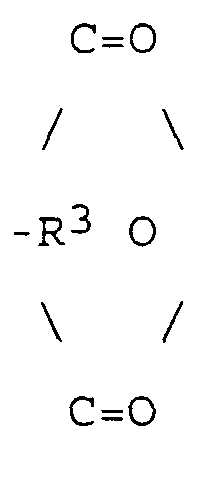
    When R1 in the formula for ingredient B2 contains a substituent, this substituent can be an organofunctional group selected from CH2=CH-, acryloxy, methacryloxy, epoxy, carboxy, amino, amido, acrylamido, methacrylamido,
    Figure 00090001
    or mercapto where R3represents a trivalent hydrocarbon radical.
    The only proviso for any substituents present on R1 is that they do not interfere with curing of the polyolefin compositions containing the present adhesion promoters.
    Silanes preferred for use as ingredient B2 are tetramethoxysilane, tetraethoxysilane, methyltrimethoxysilane, methyltriethoxysilane, 3-glycidoxypropyltrimethoxysilane, 3-methacryloxypropyl-trimethoxysilane, hexenyltrimethoxysilane, mercaptopropyl-trimethoxysilane and methyltriisopropenyloxysilane.
    Preferred adhesion promoters comprise as ingredient B2 a tetraalkoxysilane selected from tetramethoxysilane and tetraethoxysilane; methyltrimethoxysilane, methyltriethoxy-silane and glycidoxypropyltrimethoxysilane and as ingredient B1 an ethylenically unsaturated monohydric alcohol containing from 5 to 12 carbon atoms.
    The organosilicon compound (ingredient B2) constitutes from 10 to 90 percent, preferably from 30 to 70 percent, of the combined weight of this ingredient and the alcohol (ingredient B1) used to prepare ingredient B.
    When ingredient B1 contains one hydroxyl group, the formula for ingredient B is represented by Formula 1 R1 mSi(OR2)pX4-m-p, where R1, R2 and m are previously defined and p is 1 or 2. (4-m-p) is preferably at least 2.
    If ingredient B1 contains more than one hydroxyl group, ingredient B is typically a mixture of monomeric and oligomeric compounds. One of these species will usually predominate. The predominant species is dependent upon a number of variables, namely the number of carbon atoms and hydroxyl groups present in ingredient B1, the relative amounts of ingredients B1 and B2 used to prepare this ingredient and the conditions under which these ingredients are reacted together.
    Formula 1 does not represent the only formula for ingredient B. If more than one polyhydric alcohol residue is bonded to each silicon atom, the reaction product is a linear polymer of the general formula X3-mR1 mSi[OR2OSiR1 mX2-m]xOR2OSiR1 mX3-m where m is 0 or 1 and x is at least 1.
    Preferred embodiments of ingredient B are flowable at 25 to 35°C.
    When ingredient B2 is an alkoxysilane, this ingredient can be prepared and isolated prior to reaction with the unsaturated alcohol (ingredient B1) or it can be prepared by reaction of the corresponding chlorosilane with the desired monohydric alcohol in the same reactor in which it is subsequently reacted with ingredient B1. Alternatively, the cholorosilane can be reacted with ingredient B1, following which the remaining silicon-bonded chlorine atoms are converted to alkoxy groups.
    To enhance the adhesion of cured polyolefin compositions in the presence of water or a high humidity environment, the present adhesion promoter compositions optionally include from 10 to 90 weight percent, preferably from 40 to 70 weight percent, based on total organosilicon compounds, of at least one organosilicon compound (ingredient B3) selected from organosilanes and organopolysiloxanes containing (a) at least one of a first functional group selected from silanol and hydrolyzable groups such as alkoxy or isoalkenyloxy that will not interfere with curing of the polyolefin; and (b) at least one of a second functional group capable of reacting with either groups or polyolefin (A), or groups on the cure agent therefor, during curing of the polyolefin.
    Depending upon the reaction used to cure the polyolefin, the second reactive group of ingredient B3 can be a silicon-bonded hydrogen atom, a mercapto group or an ethylenically unsaturated group. Preferred unsaturated groups are vinyl, allyl, 5-hexenyl, 10-undecenyl and other hydrocarbon radicals containing a carbon-to-carbon double bond at a terminal position. The unsaturated group can also contain ether (R4-O-R5-), or ester (-C(O)OR4 or -OC(O)R4) groups, providing these do not interfere with curing of the polyolefin composition. R4 is a monovalent hydrocarbon radical and R5 is a divalent hydrocarbon radical.
    Silanes preferred for use as ingredient B3 have the formula R6 qR7 rSi(OY)4-q-r. Preferred optional siloxanes contain at least one unit of the formula R6 qR7 rSiO(4-q-r)/2 and at least one unit of the formula (OY)sR7 tSiO(4-s-t)/2. In these formulae, R6 represents hydrogen or an ethylenically unsaturated group capable of undergoing a hydrosilation reaction. R6 is preferably hydrogen, alkenyl or 3-methacryloxypropyl.
    R7 represents an unsubstituted or substituted monovalent hydrocarbon radical, preferably alkyl containing from 1 to 4 carbon atoms; q and s are 1, 2 or 3; r and t are 0, 1, 2 or 3; and the sums of q+r and s+t do not exceed 3, with the proviso that s is 1 when OY represents a hydroxyl group.
    OY represents a hydroxyl, an alkoxy group containing from 1 to 4 carbon atoms, an isoalkenyloxy group or other hydrolyzable group that does not interfere with curing of the polyolefin composition.
    Preferred embodiments of ingredient B3 are described in U.S. Patent 5,399,651.
    In addition to silanol and/or hydrolyzable groups and substituents capable of participating in a hydrosilation reaction, ingredient B3 can also contain adhesion promoting reactive groups such as epoxide groups, that are bonded through carbon to the silicon atom of this ingredient, provided that these adhesion promoting groups do not interfere with curing or storage stability of the present silicone compositions.
    Preferred epoxy-substituted groups include 3-glycidoxypropyl and 3,4-epoxycyclohexylethyl.
    A preferred silane for use as ingredient B3 is hexenyltrimethoxysilane.
    The present composition can also include a catalyst for increasing the rate of reaction of moisture-reactive groups present on ingredients B2 and on any optional silane and/or siloxane present as ingredient B3 in the curable compositions of this invention.
    The reaction between ingredients B1, B2 and any optional ingredient B3 is conducted under conditions that are typical for interchange reactions between alcohols and silanes containing alkoxy, isoalkenyloxy or other moisture reactive groups. These reactions are typically conducted under an inert, anhydrous atmosphere such as nitrogen at temperatures from ambient to 200°C. and may employ a catalyst.
    Suitable catalysts include acids, bases and organotitanium compounds. Sulfonic acids such as trifluoromethanesulfonic acid are preferred catalysts.
    The weight of catalyst typically constitutes from 0.1 to 5 percent of the combined weight of all reactants.
    Reactions involving exchanges of silicon bonded alkoxy and isoalkenyloxy groups generate the alcohol or ketone corresponding to the original silicon-bonded alkoxy or isoalkenyloxy group as a by-product. Because these reactions are often reversible, it is usually desirable to remove this by-product alcohol or ketone by distillation as the reaction progresses.
    The course of exchange reactions involving the generation and removal of alcohol and ketone by-product are followed by measuring the amount of by-product collected.
    Methanol and ethanol are the lowest boiling alcohols, and hence are easily removed during preparation of the present adhesion-promoting additives. It is, therefore, preferable that the alkoxy groups of the present adhesion additives, represented by OR1 in the foregoing formulae, be methoxy or ethoxy. For the same reason, the isoalkenyloxy group is preferably isopropenyloxy.
    The reactants and any catalyst(s) used to prepare ingredient B are heated for a period of time sufficient to achieve a substantially complete reaction, as indicated by the amount of by-product alcohol or ketone collected. This time period is typically from 1 to 5 hours and the reaction mixture is preferably heated from 50 to 120°C.
    It may be desirable to include in the reaction mixture a liquid diluent that also functions as a solvent for the reactants. Suitable diluents include aliphatic and aromatic hydrocarbons that are liquid at ambient temperature and boil within the range of from 50 to 200°C. Representative diluents include aliphatic hydrocarbons such as hexane and heptane and liquid aromatic hydrocarbons such as toluene and xylene.
    The present adhesion promoting additives are preferably liquids at 25°C. These additives are particularly useful in polyolefin compositions that cure by a platinum group metal-catalyzed hydrosilation reaction at temperatures below 150°C. The additives are also useful in polyolefin compositions that cure by the reaction of free radicals with double-bonded carbon atoms. The free radicals can be generated by the heat-induced decomposition of organic peroxides or by photoinitiators that decompose to free radicals in the presence of ultraviolet or other type of radiation.
    The concentration of adhesion promoting additive, ingredient B, is sufficient to provide cohesive bonding of the cured composition to the desired substrate. This typically requires at least 1 percent by weight of the adhesion promoter, based on the weight of the curable composition. A concentration of between 1 and 10 weight percent is preferred.
    The ability of the polyolefin composition to cure completely under the desired conditions and/or the properties of the cured composition is adversely affected when the concentration of adhesion promoting additive exceeds 10 weight percent, based on the weight of the curable composition.
    For purposes of the present invention, cohesive bonding is characterized by cohesive failure, which occurs when the strength of the bond between the cured polyolefin and the substrate exceeds the tensile strength of the cured material. In a typical adhesion test, increasing force is applied to the layer of cured material until it is removed from the substrate. Cohesive failure occurs within the body of the cured polyolefin material rather than at the interface between the material and the substrate that the material is in contact with during the curing reaction. At least a portion of the cured material remains adhered to the substrate.
    The ingredients of preferred polyolefin compositions suitable for use with the present adhesion promoting additives will now be discussed.
    The polyolefin is referred to hereinafter as ingredient A. The repeating units of the polyolefin contains from 2 to 10 or more carbon atoms, preferably from 2 to 6 carbon atoms which can be identical or different. Polymers derived at least in part from butylene and isobutylene are particularly preferred.
    The polyolefin cures to form a crosslinked material by a variety of reactions described hereinbefore involving ethylenically unsaturated groups with a variety of curing agents. The reaction between the polyolefin and curing agent may also require the presence of a catalyst, such as the platinum catalyst required for the reaction of silicon-bonded hydrogen atoms with ethylenically unsaturated functional groups.
    A preferred reaction for curing the polyolefin is hydrosilation, the reaction between ethylenically unsaturated groups and silicon-bonded hydrogen atoms.
    The polyolefin preferably contains at least two alkenyl radicals in each molecule. Suitable alkenyl radicals contain from 2 to 10 carbon atoms and are exemplified by but not limited to vinyl, allyl and 5-hexenyl.
    The molecular structure of the polyolefin is not critical to the present invention and will be determined by the physical properties desired in the cured composition. To achieve a useful level of tensile properties in the elastomers and other products prepared by curing the present compositions, the molecular weight of this ingredient should be sufficient to achieve a viscosity at 25°C. greater than 0.1 Pa·s.
    The upper limit for the molecular weight of the polyolefin is not specifically restricted and is typically limited only by the processability of the curable composition. The viscosity of the polyolefin can range from a pourable liquid to a gum type polymer that is typically characterized by Williams plasticity values.
    The molecular weight of the polyolefin is not critical. For convenience in processing, the polymer should be a liquid under ambient conditions.
    The repeating units present in the polyolefin will depend, at least in part, on the desired physical properties of the cured polymer. The olefin(s) used to prepare the polyolefin include ethylene, propylene, the isomeric butylenes, particularly isobutylene, styrene and dienes such as butadiene. Ingredient A can also be a copolymer of two or more olefins, such as isobutylene/butadiene copolymers.
    Preferred embodiments of ingredient A are isobutylene polymers and copolymers having the general formula I, II or III. R10[C(CH3)2CH2]u[R8(R9)]vR10 R9[C(CH3)2CH2]u[R11]vR9 CH2=CHCH2[C(CH3)2CH2]vC(CH3)2-Ph-C(CH3)2[CH2C(CH3)2]wC- CH2CH=CH2
    In these formulae, R8 represents a trivalent hydrocarbon radical, R9 and R10 are monovalent hydrocarbon radicals containing the -CH=CH2 group, R11 represents a divalent olefinically unsaturated hydrocarbon radical and Ph represents a phenylene group. The degree of polymerization, represented the sums of u + v and v + w, are selected to provide a viscosity of at least 100 centipoise (0.1 Pa·s), preferably from 0.1 to 1000 Pa·s., to the polymer. In preferred isobutylene polymers and copolymers, u is from 10 to 1000, preferably from 100 to 500; v is from 0 to 50, preferably from 0 to 10;l and w is from 5 to 500, preferably from 50 to 250.
    Preferred curing agents for the polyolefin, ingredient A of the present compositions, are organohydrogensiloxanes, compounds containing at least two mercapto groups per molecule, organic peroxides and compounds generating free radicals or cations upon exposure to ultraviolet radiation or high energy gamma rays.
    Particularly preferred curing agents for the polyolefin are organosiloxanes containing at least two silicon-bonded hydrogen atoms. In the presence of a hydrosilation catalyst, the silicon-bonded hydrogen atoms in the curing agent undergo an addition reaction, referred to as hydrosilation, with the alkenyl groups in the polyolefin, resulting in crosslinking and curing of the composition.
    Specific classes of preferred curing agents include but are not limited to organopolysiloxanes containing from 2 to 30 siloxane units and at least two silicon-bonded hydrogen atoms.
    When the curing agent is an organohydrogenpolysiloxane, it can contain groups other than silicon-bonded hydrogen atoms and saturated or aromatic hydrocarbon radicals, so long as these groups do not interfere with curing of the polyolefin. Suitable groups include silicon-bonded hydrolyzable groups and epoxide groups. Methyl is the preferred hydrocarbon radical.
    The curing agent can be a single organohydrogenpolysiloxane or a mixture of two different organohydrogenpolysiloxanes. In preferred mixtures, one of the organohydrogenpolysiloxanes is a copolymer consisting essentially of methylhydrogensiloxane and dimethylsiloxane units and the second organohydrogenpolysiloxane is a copolymer consisting essentially of methylhydrogensiloxane units and two types of diorganosiloxane units. One type of diorganosiloxane unit is the dimethylsiloxane unit and the second type of unit has the general formula (CH3)(CaH2a+1)SiO where the value of a is from 10 to 20. Most preferably, the total number of diorganosiloxane units is equal to the number of methylhydrogensiloxane units in the copolymer.
    If the polyolefin contains only two alkenyl radicals per molecule, the curing agent must contain an average of more than two silicon-bonded hydrogen atoms to achieve a crosslinked structure in the final cured product.
    The organic groups in the organohydrogenpolysiloxane are preferably substantially free of ethylenic or acetylenic unsaturation. The molecular structure of the organohydrogenpolysiloxane can be straight chain, branch-containing straight chain, cyclic or network.
    While the molecular weight of the preferred organohydrogenpolysiloxane is not specifically restricted, viscosities in the range of 3 to 10,000 centipoise (0.003 to 10 Pa·s) at 25°C. are preferred.
    The concentration of organohydrogenpolysiloxane is sufficient to provide a molar ratio of silicon-bonded hydrogen atoms to alkenyl radicals in the curable composition of from 0.4 to 20. A range of from 0.4 to 4 is preferred.
    When the curable composition contains less than 0.4 moles of silicon-bonded hydrogen atoms per mole of alkenyl radicals it may not be possible to achieve the desired physical properties following curing. The physical properties of the cured article may vary with time when this ratio exceeds 20 moles of silicon-bonded hydrogen per mole of alkenyl radicals.
    The reaction between silicon-bonded hydrogen atoms and ethylenically unsaturated groups is catalyzed by metals from the platinum group of the periodic table and compounds of these metals. The metals include platinum, palladium and rhodium. Platinum compounds are preferred based on the high activity level of these catalysts in hydrosilation reactions.
    Examples of preferred curing catalysts include platinum black, platinum metal on various solid supports, chloroplatinic acid, alcohol solutions of chloroplatinic acid and complexes of chloroplatinic acid with liquid ethylenically unsaturated compounds such as olefins and organopolysiloxanes containing ethylenically unsaturated hydrocarbon radicals bonded to silicon. Complexes of chloroplatinic acid with the aforementioned organopolysiloxanes containing ethylenically unsaturated hydrocarbon radicals are described in U.S. Patent 3,419,593.
    The concentration of hydrosilation catalyst in the present compositions is equivalent to a platinum concentration of from 0.1 to 500 parts by weight of platinum metal, preferably from 1 to 50 parts by weight of platinum metal, per million parts (ppm), based on the weight of ingredient A.
    Curing does not proceed satisfactorily below 0.1 ppm of platinum, while using more than 500 ppm results in no appreciable increase in cure rate and is therefore uneconomical.
    Mixtures containing the aforementioned ingredient A, the curing agent, and the hydrosilation catalyst may begin to cure at ambient temperature. To obtain a longer working time or "pot life", the activity of the catalyst under ambient conditions can be retarded or suppressed by addition of a suitable inhibitor.
    Known platinum catalyst inhibitors include the acetylenic compounds disclosed in U.S. Patent 3,445,420. Acetylenic alcohols such as 2-methyl-3-butyn-2-ol constitute a preferred class of inhibitors that will suppress the activity of a platinum-containing catalyst at 25°C. Compositions containing these catalyst inhibitors typically require heating at temperatures of 70°C. or above to cure at a practical rate.
    Using an alkenyl substituted siloxane of the type described in U.S. Patent 3,989,667 increases the pot life of a curable composition under ambient conditions. Cyclic methylvinylsiloxanes are preferred.
    Inhibitor concentrations as low as one mole of inhibitor per mole of platinum will, in some instances, impart satisfactory storage stability and cure rate. In other instances, inhibitor concentrations of up to 500 or more moles of inhibitor per mole of platinum are required. The type and concentration of inhibitor that will provide excellent adhesion in a given composition can readily be determined by routine experimentation. Certain types of catalyst inhibitors may adversely affect the degree of adhesion that is developed under a given set of curing conditions compared to compositions containing a different type of inhibitor.
    The present polyolefin compositions can contain one or more additives that are conventionally present in curable compositions of this type to impart or enhance certain physical properties of the cured composition in addition to adhesion or to facilitate processing of the curable composition.
    Typical additives include reinforcing fillers such as finely divided silica; non-reinforcing fillers such as quartz, alumina, mica and calcium carbonate; pigments such as carbon black and titanium dioxide; dyes, flame retardants and heat and/or ultraviolet light stabilizers.
    The compositions of this invention can be prepared by combining all of the ingredients at ambient temperature. Any of the mixing techniques and devices described in the prior art can be used for this purpose. The particular device used will be determined by the viscosity of the ingredients and the final curable composition. Suitable mixers include but are not limited to paddle type mixers, kneader type mixers, single screw or twin screw extruders and two- or three-roll rubber mills.
    Cooling of the ingredients during mixing may be desirable to avoid premature curing of the composition.
    To maximize storage stability of preferred curable polyolefin compositions that cure by a hydrosilation reaction, the curable polyolefin compositions are preferably kept in closed containers until used. If greater storage stability is desired, the compositions can be packaged in two or more containers with the compound containing silicon-bonded hydrogen atoms and the platinum group metal catalyst in separate containers.
    Cured polyolefin materials prepared using the present compositions can vary in properties from brittle resins to elastomers to gels and are useful in a variety of end-use applications such as coatings or as molded or extruded articles. Unfilled materials are particularly useful as gels and coatings for protecting delicate electronic devices, such as integrated circuits, from damage by moisture and other materials present in the environment that can adversely affect operation of the device. The compositions can be used to coat either the individual devices or a circuit board containing a number of these devices together with other electronic components.
    Compositions containing reinforcing and/or non-reinforcing fillers are useful as adhesives, encapsulants and potting materials.
    The present compositions can be applied to substrates by spraying, dipping, pouring, extrusion or by the use of a brush, roller or coating bar. The selection of a particular application method will be determined at least in part by the viscosity of the curable composition. The viscosity of the composition can be reduced using suitable plasticizers or solvents as known in the art.
    The following examples describe preferred curable compositions of the present invention. Unless otherwise specified all parts and percentages in the example are by weight and viscosities were measured at 25°C.
    The following procedure was used to prepare the adhesion-promoting additives:
    A three-necked, round bottom glass reactor was charged with 245.6 parts of tetraethoxysilane as ingredient B2 and 0.45 part of tetrabutyl titanate. The reactor was then equipped with a magnetic stirrer, thermometer, addition funnel, distillation head, condenser, receiver flask cooled with dry ice, dry ice-cooled finger trap and a tube for introducing nitrogen into the reactor. All the glassware was dried at 120°C. prior to use. 199.6 parts of 10-undecen-1-ol (ingredient B1) was placed in the addition funnel.
    The reactor was then flushed using dry nitrogen and the contents were stirred and heated to 100°C., at which time the alcohol was added slowly over 8 hours. A flow of nitrogen was maintained throughout the reaction. The resultant reaction mixture was allowed to cool to ambient temperature and brought to atmospheric pressure. This reaction product is referred to hereinafter as the adhesion promoter (AP).
    Curable polyisobutylene formulations were prepared by blending (1) 76.9 parts of a telechelic allyl-functional polyisobutylene exhibiting a molecular weight of 5000 available as Epion(R) 5000 from Kanegafuchi Kogyo Kabushiki Kaisha,, Japan; (2) 23.1 parts of an organic plasticizer, a long-chain hydrocarbon oil available from Apollo America Corporation as KP-32; (3) the quantity of adhesion promoter specified in Table 1; and (4) as the curing agent, one of two different organohydrogenpolysiloxanes in an amount sufficient to provide a molar ratio of silicon bonded hydrogen atoms to allyl radicals in the polyolefin of 2:1.
    To the resultant mixture was added the curing catalyst, a 0.1 weight percent solution in a liquid hydrogenated polybutene of a complex formed from platinum dichloride and sym-tetramethyldivinyldisiloxane. The complex contained 21 percent platinum and the amount added was sufficient to provide 15 parts of platinum per million parts of curable composition.
    The number average molecular weight of the hydrogenated polybutene was 363.
    The organohydrogenpolysiloxanes used were Me3SiO(Me2SiO)3(MeHSiO)5SiMe3 (Crosslinker I) and Me3SiO(Me2SiO)5(MeHSiO)10 (MeC16H33SiO)3SiMe3 (Crosslinker II). Mixtures containing weight ratios of 1:1, 3:7 and 7:3 of crosslinker I:crosslinker II were also used as indicated in Table 1.
    The platinum catalyst inhibitors used were cyclic methylvinylsiloxanes (MVC) at a molar ratio of inhibitor to platinum of 57:1 or methylbutynol (MB) at a molar ratio of inhibitor to platinum of 60:1.
    Portions of each of the polyolefin compositions evaluated were applied as 10 mil (0.02 cm)-thick liquid films to the desired substrate using a draw-down bar. The coatings were cured by heating the coated substrates for 90 minutes at 120°C. in a forced air oven and then allowed to age for 7 days under ambient conditions before the adhesion of the coating was evaluated.
    The substrates used were glass, milled aluminum (milled Al), bare aluminum (bare Al) and stainless steel (SS).
    The adhesion test consisted of attempting to separate the cured coatings from the substrate using the blade of a metal spatula and determining whether the coating could be removed without leaving a residue on the surface. The coating was rated 0 if it could be removed completely without a residue.
    If some residue remained on the substrate, the residue was rubbed using a fingertip to determine the pressure required to remove it and rated according to the following scale.
  • 1 = light pressure
  • 2 = moderate pressure
  • 3 = heavy pressure
  • 4 = no coating could be removed
  • Example 1
    The amount of adhesion promoter (AP), type and amount of catalyst inhibitor (Inhib.) and type(s) of organohydrogen-siloxane crosslinker(s) (XL) present in the thirteen compositions evaluated are summarized in Table 1. The relative amounts of the two organhydrogensiloxane crosslinkers in mixtures are expressed as weight ratios.
    Comp. No. AP(%) Inhibitor XL
    1() None MVC I
    2() None MVC II
    3 1.5% MB I/II (1:1)
    4 1.5% MB I
    5 1.5% MB I
    6 2.5 MB II
    7 2.5 MVC I
    8 2.5 MB I
    9 2.5 MB I/II (1/1)
    10 2.5 MB I/II (7/3)
    11 2.5 MB I/II (3/7)
    12 5.0 MB I
    13 5.0 MVC II
    The results of the adhesion evaluations are recorded in Table 2.
    Comp. No. Adhesion Ratings
    Glass Milled Al Bare Al SS
    1 0 0 3 0
    2 0 0 0 0
    3 4 4 4 4
    4 3 2 4 4
    5 3 3 2 4
    6 0 4 4 0
    7 4 4 4 4
    8 4 4 4 4
    9 4 4 4 4
    10 4 2 4 4
    11 4 4 4 4
    12 4 4 4 4
    13 0 4 4 4
    Al - Aluminum
    SS - Stainless Steel
    The data in Table 2 demonstrate that 75 percent of the samples tested demonstrated cohesive failure (a rating of 4). Only two of the samples containing an adhesion promoter of the present invention failed to adhere to the substrate.
    Example 2
    This example demonstrates the effect on adhesion of varying the concentration of silicon-bonded hydrogen relative to allyl groups present in the polyisobutylene from the value of 2.5 in Example 1 to the values shown in Table 3. Coatings were prepared and evaluated as described in Example 1 of the present specification. The concentration of adhesion promoter (ingredient A) was 2.5% in all compositions and the organohydrogenpolysiloxane was a 1:1 weight ratio of the two organohydrogenpolysiloxanes (I and II) described in Example 1.
    Comp. No. SiH:allyl ratio
    14 1.25:1
    15 1.5:1
    16 1.75:1
    17 2.25:1
    The results of the evaluations of the cured coatings corresponding to Compositions 14, 15, 16 and 17 are recorded in Table 4.
    Comp. No. Adhesion Ratings
    Glass Milled Al Bare Al SS
    14 0 1 4 4
    15 0 4 4 4
    16 0 4 4 4
    17 1 4 4 4

    Claims (12)

    1. A polyolefin composition exhibiting improved adhesion, said composition comprising
      (A) a polyolefin comprising repeating units derived from at least one olefin wherein each molecule of said polyolefin contains at least two ethylenically unsaturated groups capable of reacting to cure said polyolefin; and
      (B) 1 to 10 percent by weight of said composition of an adhesion promoter for said polyolefin;
      wherein said adhesion promoter comprises at least one organosilicon compound comprising at least one silicon-bonded alkenyloxy group and at least one silicon-bonded moisture reactive group.
    2. A polyolefin composition according to claim 1 wherein said adhesion promoter is a reaction product of ingredients comprising
      (B1) at least one organic compound containing at least one carbinol group and at least one ethylenically unsaturated group capable of reacting during curing of said polyolefin; and
      (B2) at least one organosilicon compound selected from silanes or bis-silylalkanes;
      and wherein said compound B2 contains at least three moisture-reactive groups and constitutes from 10 to 90 percent of the total weight of said ingredients.
    3. A polyolefin composition according to claim 2 wherein said compound B2 is a silane having the general formula R1 mSiX4-m and said ingredient B1 has the formula R2(OH)n, where R1 represents a substituted or unsubstituted monovalent hydrocarbon radical; R2 represents an ethylenically unsaturated radical containing at least 3 carbon atoms; X represents a hydrolyzable group; m is 0 or 1; and n is at least 1.
    4. A composition according to claim 3 wherein X is selected from methoxy, ethoxy or isopropenyloxy, R2 is an alkenyl radical containing from 4 to 20 carbon atoms and n is from 1 to 3, inclusive.
    5. A composition according to claim 4 where R1 contains at least one organofunctional group selected from CH2=CH-, acryloxy, methacryloxy, epoxy, carboxy, amino, amido, acrylamido, methacrylamido, or
      Figure 00340001
      mercapto, wherein R3 represents a trivalent hydrocarbon radical.
    6. A composition according to claim 1 wherein said ingredients additionally comprise a catalytically effective amount of a catalyst for increasing the rate of reaction of said moisture-reactive groups.
    7. A composition according to claim 2 wherein said composition additionally comprises from 10 to 90 weight percent, based on all organosilicon compounds present, of an organosilicon compound (B3) selected from organosilanes or organopolysiloxanes containing at least one first functional group selected from silanol and hydrolyzable groups which will not interfer with the cure of said polyolefin; and at least one second functional group capable of reacting during curing of said polyolefin.
    8. A composition according to claim 7 wherein said compound B3 is a silane having the general formula R6 qR7 rSi(OY)4-q-r, wherein R6 is selected from hydrogen, alkenyl and 3-methacryloxypropyl; R7 represents an unsubstituted or substituted monovalent hydrocarbon radical; q is an integer from 1 to 3, inclusive; r is selected from 0, 1, 2 or 3; the sum of q+r does not exceed 3 and OY is selected from the group consisting of hydroxyl, alkoxy groups having from 1 to 4 carbon atoms and isoalkenyloxy groups.
    9. A composition according to claim 7 where said compound B3 is an organopolysiloxane containing at least one unit of the formula R5 qR7 rSiO(4-q-r)/2 and at least one unit of the formula (OY)sR7 tSiO(4-s-t)/2 ; wherein R6 represents hydrogen or an ethylenically unsaturated group capable of undergoing a hydrosilation reaction; R7 represents an unsubstituted or substituted alkyl radical containing from 1 to 4 carbon atoms; q and s are 1, 2 or 3; r and t are 0, 1, 2 or 3; the sums of q+r and s+t do not exceed 3; and OY is selected from the group consisting of hydroxyl, alkoxy groups having from 1 to 4 carbon atoms and isoalkenyloxy groups, with the proviso that s is 1 when OY is hydroxyl.
    10. A composition according to claim 1 wherein said polyolefin is selected from homopolymers or copolymers of isobutylene.
    11. A composition according to claims 1 or 10 where the said polyolefin contains at least two alkenyl radicals and said curable composition additionally comprises a curing agent selected from the group consisting of organohydrogen-polysiloxanes; compounds containing at least two mercapto groups per molecule; organic peroxides and compounds generating free radicals or cations upon exposure to ultraviolet radiation or high energy gamma rays.
    12. A composition according to claim 11 where said curing agent comprises at least one organohydrogen-siloxane and said composition further comprises a platinum compound as a hydrosilation catalyst.
    EP99116149A 1998-09-04 1999-08-19 Curable polyolefin compositions containing organosilicon compounds as adhesion additives Withdrawn EP0984036A3 (en)

    Applications Claiming Priority (2)

    Application Number Priority Date Filing Date Title
    US148856 1998-09-04
    US09/148,856 US6060559A (en) 1998-09-04 1998-09-04 Curable polyolefin compositions containing organosilicon compounds as adhesion additives

    Publications (2)

    Publication Number Publication Date
    EP0984036A2 true EP0984036A2 (en) 2000-03-08
    EP0984036A3 EP0984036A3 (en) 2000-03-22

    Family

    ID=22527721

    Family Applications (1)

    Application Number Title Priority Date Filing Date
    EP99116149A Withdrawn EP0984036A3 (en) 1998-09-04 1999-08-19 Curable polyolefin compositions containing organosilicon compounds as adhesion additives

    Country Status (3)

    Country Link
    US (1) US6060559A (en)
    EP (1) EP0984036A3 (en)
    JP (1) JP2000087002A (en)

    Cited By (3)

    * Cited by examiner, † Cited by third party
    Publication number Priority date Publication date Assignee Title
    WO2002088247A3 (en) * 2001-04-30 2003-02-13 Dow Corning Polyolefin thermoplastic silicone elastomers employing radical cure
    EP1209161A3 (en) * 2000-11-28 2003-12-03 Korea Kumho Petrochemical Co. Ltd. Multi-reactive silicon compound having polyalkyleneglycol substituents and synthetic method thereof
    EP2138538A1 (en) 2008-06-27 2009-12-30 Borealis AG Polyolefin composition reinforced with a filler and pipe comprising the polyolefin composition

    Families Citing this family (39)

    * Cited by examiner, † Cited by third party
    Publication number Priority date Publication date Assignee Title
    US6400372B1 (en) * 1999-11-29 2002-06-04 Xerox Corporation Methods and apparatuses for selecting levels of detail for objects having multi-resolution models in graphics displays
    JP3786185B2 (en) * 2001-06-22 2006-06-14 信越化学工業株式会社 Rubber composition for sealing polymer electrolyte fuel cell separator, sealing material using the same, and polymer electrolyte fuel cell separator
    US6956084B2 (en) 2001-10-04 2005-10-18 Bridgestone Corporation Nano-particle preparation and applications
    US6838539B2 (en) 2002-02-12 2005-01-04 Bridgestone Corporation Cureable silane functionalized sealant composition and manufacture of same
    JP4683928B2 (en) * 2002-12-18 2011-05-18 株式会社ブリヂストン Clay exfoliation method, composition obtained from the method, and modified rubber containing the composition
    US6875818B2 (en) 2003-01-16 2005-04-05 Bridgestone Corporation Polymer nano-strings
    CA2459507C (en) * 2003-03-03 2012-08-21 Fiberspar Corporation Tie-layer materials, articles, and methods for making and using same
    US7205370B2 (en) * 2004-01-12 2007-04-17 Bridgestone Corporation Polymeric nano-particles of flower-like structure and applications
    US7112369B2 (en) * 2004-03-02 2006-09-26 Bridgestone Corporation Nano-sized polymer-metal composites
    US7718737B2 (en) * 2004-03-02 2010-05-18 Bridgestone Corporation Rubber composition containing functionalized polymer nanoparticles
    US8063142B2 (en) 2004-03-02 2011-11-22 Bridgestone Corporation Method of making nano-particles of selected size distribution
    US20050215693A1 (en) * 2004-03-29 2005-09-29 Xiaorong Wang Clay modified rubber composition and a method for manufacturing same
    US20050228074A1 (en) * 2004-04-05 2005-10-13 Bridgestone Corporation Amphiphilic polymer micelles and use thereof
    US20050282956A1 (en) * 2004-06-21 2005-12-22 Xiaorong Wang Reversible polymer/metal nano-composites and method for manufacturing same
    US7998554B2 (en) * 2004-07-06 2011-08-16 Bridgestone Corporation Hydrophobic surfaces with nanoparticles
    US7572855B2 (en) 2005-01-28 2009-08-11 Bridgestone Corporation Nano-composite and compositions manufactured thereof
    US7579398B2 (en) * 2005-02-02 2009-08-25 Bridgestone Corporation Nano-composite and compositions therefrom
    US7659342B2 (en) * 2005-02-03 2010-02-09 Bridgestone Corporation Polymer nano-particle with polar core and method for manufacturing same
    US7484306B2 (en) * 2005-11-14 2009-02-03 Eugene Emerson Straight edge clamping device
    US7538159B2 (en) 2005-12-16 2009-05-26 Bridgestone Corporation Nanoparticles with controlled architecture and method thereof
    US9061900B2 (en) * 2005-12-16 2015-06-23 Bridgestone Corporation Combined use of liquid polymer and polymeric nanoparticles for rubber applications
    US7884160B2 (en) 2005-12-19 2011-02-08 Bridgestone Corporation Non-spherical nanoparticles made from living triblock polymer chains
    US8288473B2 (en) 2005-12-19 2012-10-16 Bridgestone Corporation Disk-like nanoparticles
    US8877250B2 (en) * 2005-12-20 2014-11-04 Bridgestone Corporation Hollow nano-particles and method thereof
    US8697775B2 (en) * 2005-12-20 2014-04-15 Bridgestone Corporation Vulcanizable nanoparticles having a core with a high glass transition temperature
    US7601772B2 (en) * 2005-12-20 2009-10-13 Bridgestone Corporation Nano-composite and method thereof
    US7560510B2 (en) 2005-12-20 2009-07-14 Bridgestone Corporation Nano-sized inorganic metal particles, preparation thereof, and application thereof in improving rubber properties
    US7935184B2 (en) 2006-06-19 2011-05-03 Bridgestone Corporation Method of preparing imidazolium surfactants
    WO2008014464A2 (en) 2006-07-28 2008-01-31 Bridgestone Corporation Polymeric core-shell nanoparticles with interphase region
    US7597959B2 (en) * 2006-12-19 2009-10-06 Bridgestone Corporation Core-shell fluorescent nanoparticles
    US7649049B2 (en) * 2006-12-20 2010-01-19 Bridgestone Corporation Rubber composition containing a polymer nanoparticle
    US7829624B2 (en) * 2007-06-29 2010-11-09 Bridgestone Corporation One-pot synthesis of nanoparticles and liquid polymer for rubber applications
    ES2527600T3 (en) 2008-12-31 2015-01-27 Bridgestone Corporation Procedure of formation of nanoparticles first forming the nucleus, nanoparticle and composition
    US9062144B2 (en) * 2009-04-03 2015-06-23 Bridgestone Corporation Hairy polymeric nanoparticles with first and second shell block polymer arms
    US9115222B2 (en) 2009-12-29 2015-08-25 Bridgestone Corporation Well defined, highly crosslinked nanoparticles and method for making same
    US20110172364A1 (en) * 2009-12-29 2011-07-14 Chen Yaohong Charged Nanoparticles And Method Of Controlling Charge
    US9090503B2 (en) 2012-12-28 2015-07-28 Owens-Brockway Glass Container Inc. Coatings for enhancing glass strength
    EP4172245B1 (en) * 2020-06-24 2026-09-30 Dow Silicones Corporation Silicone elastomer compositions
    CN116940651A (en) * 2021-03-03 2023-10-24 陶氏环球技术有限责任公司 Curable polyolefin compositions and cured products

    Family Cites Families (33)

    * Cited by examiner, † Cited by third party
    Publication number Priority date Publication date Assignee Title
    GB450875A (en) * 1935-01-30 1936-07-27 Ig Farbenindustrie Ag Improvements in the manufacture and production of silicic acid esters
    US2349338A (en) * 1940-06-08 1944-05-23 Carbide & Carbon Chem Corp Noncorrosive heat-transfer liquid
    US2630446A (en) * 1948-08-04 1953-03-03 Du Pont Polymeric silicates
    US2776307A (en) * 1953-12-30 1957-01-01 California Research Corp Polyglycol silicates
    US3029269A (en) * 1956-08-21 1962-04-10 California Research Corp Silicon esters
    NL131800C (en) * 1965-05-17
    NL129346C (en) * 1966-06-23
    US3644315A (en) * 1969-03-14 1972-02-22 Exxon Research Engineering Co Moisture-curable polymers
    US3989667A (en) * 1974-12-02 1976-11-02 Dow Corning Corporation Olefinic siloxanes as platinum inhibitors
    JPS57179261A (en) * 1981-04-27 1982-11-04 Kanegafuchi Chem Ind Co Ltd Paint for metallic base
    US4659851A (en) * 1986-03-26 1987-04-21 Dow Corning Corporation Novel organosilicon compounds
    US4719262A (en) * 1986-03-26 1988-01-12 Dow Corning Corporation Organosilicon primer compositions
    GB8705481D0 (en) * 1987-03-09 1987-04-15 Ici Plc Fillers
    JP2593155B2 (en) * 1987-07-01 1997-03-26 三井東圧化学株式会社 Method for producing silane-modified polymer
    JP2558125B2 (en) * 1987-09-18 1996-11-27 鐘淵化学工業株式会社 Room temperature curable resin composition
    JP2614472B2 (en) * 1987-12-29 1997-05-28 東レ・ダウコーニング・シリコーン株式会社 Curable organopolysiloxane composition
    US5002808A (en) * 1988-03-23 1991-03-26 The Dow Chemical Company Adhesion methods employing benzocyclobutene-based organosilane adhesion aids
    JP2813801B2 (en) * 1989-02-01 1998-10-22 鐘淵化学工業株式会社 Bonding method
    JPH03188166A (en) * 1989-12-15 1991-08-16 Kanegafuchi Chem Ind Co Ltd Curable composition of excellent storage stability
    DE4011044A1 (en) * 1990-04-05 1991-10-10 Fraunhofer Ges Forschung SILANES, METHOD FOR THE PRODUCTION THEREOF AND THEIR USE FOR THE PRODUCTION OF POLYMERISATS AND POLYCONDENSATES
    CA2090326C (en) * 1990-09-19 2002-10-29 Gaddam N. Babu Moisture curable polyolefin pressure-sensitive adhesives
    JP3097783B2 (en) * 1992-03-24 2000-10-10 鐘淵化学工業株式会社 Curable composition
    JP3354973B2 (en) * 1992-10-06 2002-12-09 鐘淵化学工業株式会社 Curable composition
    US5339651A (en) * 1993-01-19 1994-08-23 Mega Manufacturing, Inc. Method and apparatus for surface freezing followed by complete freezing of meat products
    JP3334938B2 (en) * 1993-03-24 2002-10-15 鐘淵化学工業株式会社 Curable composition and sealing material
    US5424384A (en) * 1994-05-10 1995-06-13 Dow Corning Corporation Curable organosiloxane compositions containing low temperature reactive adhesion additives
    US5486565A (en) * 1994-12-02 1996-01-23 Dow Corning Corporation Organosilicon compounds and low temperature curing organosiloxane compositions containing same
    JPH08198644A (en) * 1995-01-13 1996-08-06 Kanegafuchi Chem Ind Co Ltd Composition for double glazing
    US5532298A (en) * 1995-02-10 1996-07-02 International Paper Degradable agricultural mat
    US5595826A (en) * 1995-10-11 1997-01-21 Dow Corning Corporation Curable organopolysiloxane compositions with improved adhesion
    JP3571144B2 (en) * 1996-05-29 2004-09-29 鐘淵化学工業株式会社 Curable composition
    US5928794A (en) * 1996-12-24 1999-07-27 Dow Corning Gmbh Addition curable composition having self adhesion to substrates
    US5683527A (en) * 1996-12-30 1997-11-04 Dow Corning Corporation Foamable organosiloxane compositions curable to silicone foams having improved adhesion

    Cited By (3)

    * Cited by examiner, † Cited by third party
    Publication number Priority date Publication date Assignee Title
    EP1209161A3 (en) * 2000-11-28 2003-12-03 Korea Kumho Petrochemical Co. Ltd. Multi-reactive silicon compound having polyalkyleneglycol substituents and synthetic method thereof
    WO2002088247A3 (en) * 2001-04-30 2003-02-13 Dow Corning Polyolefin thermoplastic silicone elastomers employing radical cure
    EP2138538A1 (en) 2008-06-27 2009-12-30 Borealis AG Polyolefin composition reinforced with a filler and pipe comprising the polyolefin composition

    Also Published As

    Publication number Publication date
    JP2000087002A (en) 2000-03-28
    US6060559A (en) 2000-05-09
    EP0984036A3 (en) 2000-03-22

    Similar Documents

    Publication Publication Date Title
    US6060559A (en) Curable polyolefin compositions containing organosilicon compounds as adhesion additives
    US5468826A (en) Adhesion promoting additives and curable organosiloxane compositions containing same
    US4329273A (en) Self-bonding silicone rubber compositions
    US5486565A (en) Organosilicon compounds and low temperature curing organosiloxane compositions containing same
    JP3461404B2 (en) Curable organopolysiloxane composition
    US4311739A (en) Self-bonding silicone rubber compositions
    JPH08143672A5 (en)
    US5424384A (en) Curable organosiloxane compositions containing low temperature reactive adhesion additives
    EP0682068B1 (en) Adhesion promoting compositions and curable organosiloxane compositions containing same
    JP3574226B2 (en) Curable silicone composition and cured product thereof
    JPH08225742A5 (en)
    US5492994A (en) Adhesion additives and curable organosiloxane compositions containing same
    KR20190105599A (en) Silicone composition, release paper and release film
    EP0682069B1 (en) Adhesion promoting additives and low temperature curing organosiloxane compositions containing same
    US6034179A (en) Polyolefin compositions containing organosilicon compounds as adhesion additives
    US6077892A (en) Curable polyolefin compositions containing organosilicon compounds as adhesion additives
    JPH04311765A (en) Curable organopolysiloxane composition
    EP0982349A2 (en) Adhesion promoting organosiloxane compositions
    WO2022172614A1 (en) Curable silicone composition, and adhesive
    JPH06107947A (en) Gel-forming silicone composition
    JPS6128549A (en) Self-adhesive polyorganosiloxane composition
    JPH07138482A (en) Curable organopolysiloxane composition

    Legal Events

    Date Code Title Description
    PUAI Public reference made under article 153(3) epc to a published international application that has entered the european phase

    Free format text: ORIGINAL CODE: 0009012

    PUAL Search report despatched

    Free format text: ORIGINAL CODE: 0009013

    AK Designated contracting states

    Kind code of ref document: A2

    Designated state(s): DE FR GB

    AX Request for extension of the european patent

    Free format text: AL;LT;LV;MK;RO;SI

    AK Designated contracting states

    Kind code of ref document: A3

    Designated state(s): AT BE CH CY DE DK ES FI FR GB GR IE IT LI LU MC NL PT SE

    AX Request for extension of the european patent

    Free format text: AL;LT;LV;MK;RO;SI

    RIC1 Information provided on ipc code assigned before grant

    Free format text: 7C 08K 5/5425 A, 7C 09J 11/06 B, 7C 09J 151/06 B, 7C 08G 77/60 B, 7C 09J 123/26 B

    17P Request for examination filed

    Effective date: 20000517

    AKX Designation fees paid

    Free format text: DE FR GB

    STAA Information on the status of an ep patent application or granted ep patent

    Free format text: STATUS: THE APPLICATION HAS BEEN WITHDRAWN

    18W Application withdrawn

    Effective date: 20021206