EP0983587B1 - Sprecherverifikationsverfahren unter verwendung von mehreren klassengruppen - Google Patents
Sprecherverifikationsverfahren unter verwendung von mehreren klassengruppen Download PDFInfo
- Publication number
- EP0983587B1 EP0983587B1 EP98922171A EP98922171A EP0983587B1 EP 0983587 B1 EP0983587 B1 EP 0983587B1 EP 98922171 A EP98922171 A EP 98922171A EP 98922171 A EP98922171 A EP 98922171A EP 0983587 B1 EP0983587 B1 EP 0983587B1
- Authority
- EP
- European Patent Office
- Prior art keywords
- utterances
- speaker
- test
- utterance
- male
- Prior art date
- Legal status (The legal status is an assumption and is not a legal conclusion. Google has not performed a legal analysis and makes no representation as to the accuracy of the status listed.)
- Expired - Lifetime
Links
- 238000012795 verification Methods 0.000 title claims description 61
- 238000000034 method Methods 0.000 title claims description 48
- 238000012549 training Methods 0.000 claims description 43
- 238000012360 testing method Methods 0.000 claims description 37
- 239000013598 vector Substances 0.000 claims description 23
- 230000008569 process Effects 0.000 description 11
- 230000001419 dependent effect Effects 0.000 description 6
- 238000004891 communication Methods 0.000 description 3
- 238000010586 diagram Methods 0.000 description 3
- 238000000605 extraction Methods 0.000 description 3
- 238000012986 modification Methods 0.000 description 3
- 230000004048 modification Effects 0.000 description 3
- 230000004075 alteration Effects 0.000 description 2
- 238000013459 approach Methods 0.000 description 2
- 230000000694 effects Effects 0.000 description 2
- 238000011156 evaluation Methods 0.000 description 2
- 238000012545 processing Methods 0.000 description 2
- 230000008901 benefit Effects 0.000 description 1
- 239000002131 composite material Substances 0.000 description 1
- 238000011161 development Methods 0.000 description 1
- 238000002474 experimental method Methods 0.000 description 1
- 239000000284 extract Substances 0.000 description 1
- 238000013139 quantization Methods 0.000 description 1
- 238000012552 review Methods 0.000 description 1
- 230000003595 spectral effect Effects 0.000 description 1
- 238000001228 spectrum Methods 0.000 description 1
Images



Classifications
-
- G—PHYSICS
- G10—MUSICAL INSTRUMENTS; ACOUSTICS
- G10L—SPEECH ANALYSIS TECHNIQUES OR SPEECH SYNTHESIS; SPEECH RECOGNITION; SPEECH OR VOICE PROCESSING TECHNIQUES; SPEECH OR AUDIO CODING OR DECODING
- G10L17/00—Speaker identification or verification techniques
- G10L17/06—Decision making techniques; Pattern matching strategies
-
- G—PHYSICS
- G10—MUSICAL INSTRUMENTS; ACOUSTICS
- G10L—SPEECH ANALYSIS TECHNIQUES OR SPEECH SYNTHESIS; SPEECH RECOGNITION; SPEECH OR VOICE PROCESSING TECHNIQUES; SPEECH OR AUDIO CODING OR DECODING
- G10L17/00—Speaker identification or verification techniques
Definitions
- the present invention is related to the field of speech recognition systems and more particularly to a speaker verification method and to a computer readable storage medium carrying instructions for carrying out the method.
- Speech recognition and speaker verification use similar analysis tools to achieve their goals.
- An input utterance is first processed to determine its essential characteristics. Typically, input utterances are converted to cepstrum coefficients.
- a cepstrum is an inverse Fourier transform of the log power spectrum.
- the cepstrum coefficients are saved to form code books for specific utterances. For instance, a code book might have codes for the numeral zero through nine.
- an input utterance is compared to the codes (training utterances) in the code book to determine which is most similar.
- the code is a generalized representation of many people's way of forming an utterance (e.g., "zero").
- the codes represent the individual characteristics of the speaker and the verification system tries determine if a person's code is more similar to an input utterance, than an non-user code.
- the codes in a speaker verification system emphasis individual characteristics, while in a speech recognition system the codes generalize over many individual speakers.
- a text-independent speaker recognition method is disclosed in which speaker-specific patterns are produced by clustering the spectral distribution of each reference speaker, and are stored as elements in a codebook.
- an input-utterance is vector-quantised using the codebook of each reference speaker, and the distribution of the quantization error is calculated over the speech interval.
- the distribution parameters obtained using each reference codebook are examined to make the recognition decision.
- One variant of the method uses two separate codebooks for voiced and unvoiced speech for each speaker.
- a text-dependent method of speaker verification uses randomized phrase prompting. Each verification attempt consists of four "combination lock" phrases chosen at random and containing a keyword. In a training phase, the speaker is asked to repeat 24 of the combination lock phrases, keywords within a 16-word vocabulary are extracted from the phrases, and the extracted keywords are used to train speaker models for each extracted keyword.
- Training data from a pool of other speakers provides non-user training data which can be matched against the true speaker codebooks to determine an non-user distribution of vector quantized (VQ) distortions or probability scores.
- VQ vector quantized
- the speaker is asked to repeat four of the phrases and the keywords are extracted from the utterances, compared to the training models corresponding to the claimed speaker identity and local accept or reject decisions are made for each keyword.
- An overall speaker verification decision is arrived at by combining the results for the local decisions, and a simple majority rule may be used to reach the final decision.
- Speaker verification has potential applications in a number of voice activated systems, such as banking over the telephone. Unfortunately, present speaker verification systems have not proven reliable enough for these applications. Thus there exists a need for an improved speaker verification system.
- a speaker verification method comprises the steps of:
- the invention further provides a computer readable storage medium containing computer readable instructions that when executed by a computer perform the steps defined above.
- the invention also provides apparatus for providing a dial-up service that uses a speaker verification method, said apparatus comprising a public switched telephone network, a user's phone, and a remote address having a dial-up service computer, wherein the service computer contains computer-readable instructions for carrying out the method described above.
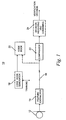
- FIG. 1 is a block diagram of an embodiment of a speaker verification system 10.
- the speaker verification system can be physically implemented in a number of ways.
- the system can be implemented as software in a general purpose computer connected to a microphone; or the system can be implemented as firmware in a general purpose microprocessor connected to memory and a microphone; or the system can be implemented using a Digital Signal Processor (DSP), a controller, a memory, and a microphone controlled by the appropriate software.
- DSP Digital Signal Processor
- a microphone 12 receives an input speech and converts the sound waves to an electrical signal.
- a feature extractor 14 analyzes the electrical signal and extracts key features of the speech. For instance, the feature extractor first digitizes the electrical signal. A cepstrum of the digitized signal is then performed to determine the cepstrum coefficients. In another embodiment, a linear predictive analysis is used to find the linear predictive coding (LPC) coefficients. Other feature extraction techniques are also possible.
- a switch 16 is shown attached to the feature extractor 14. This switch 16 represents that a different path is used in the training phase than in the verification phase.
- the cepstrum coefficients are analyzed by a code book generator 18.
- the output of the code book generator 18 is stored in the code book 20.
- the code book generator 18 compares samples of the same utterance from the same speaker to form a generalized representation of the utterance for that person.
- This generalized representation is a training utterance in the code book.
- the training utterance represents the generalized cepstrum coefficients of a user speaking the number "one" as an example.
- a training utterance could also be a part of speech, a phoneme, or a number like "twenty one" or any other segment of speech.
- utterances are taken from a group of non-users. These utterances are used to form a composite that represents an impostor code having a plurality of impostor utterances.
- the code book generator 18 determines whether the speaker (users and non-users) is male or female.
- the male training utterances (male group) are aggregated to determining a male variance vector.
- the female training utterances (female group) are aggregated to determine a female variance vector.
- the switch 16 connects the feature extractor 14 to the comparator 22.
- the comparator 22 performs a mathematical analysis of the closeness between a test utterance from a speaker with a training utterance stored in the code book 20 and between the test utterance and an impostor utterance.
- a test utterance such as a spoken "one” is compared with the "one” training utterance and the "one” impostor utterance in the code book 20.
- the comparator 22 determines a measure of closeness between the "one” training utterance, the "one” test utterance and the "one” impostor utterance.
- the speaker is verified as the true speaker. Otherwise the speaker is determined to be an impostor.
- the measure of closeness is a modified weighted Euclidean distance.
- the modification in one embodiment involves using a generalized variance vector instead of an individual variance vector for each of the registered users.
- a male variance vector is used for male speakers and a female variance vector is used for a female speaker.
- a decision weighting and combining system 24 uses the measure of closeness to determine if the test utterance is closest to the training utterance or the impostor utterance. When the test utterance is closer to the training utterance than impostor utterance, a verified decision is made. When the test utterance is not closer to the training utterance than the impostor utterance, an un-verified decision is made. These are preliminary decisions. Usually, the speaker is required to speak several utterances (e.g., "one", "three", “five”, “twenty one”). A decision is made for each of these test utterances. Each of the plurality of decisions is weighted and combined to form the verification decision.
- the verification decision is a true speaker. Otherwise the verification decision is an impostor.
- One weighting scheme is shown below:
- the verification decision is a true speaker.
- the sum of the weighted decision is less than or equal to zero, the decision is an impostor.
- the feature extractor 14 segments the speech signal into voiced sounds and unvoiced sounds.
- Voiced sounds generally include vowels, while most other sounds are unvoiced.
- the unvoiced sounds are discarded before the cepstrum coefficients are calculated in both the training phase and the verification phase.
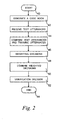
- FIG. 2 is a flow chart of an embodiment of the steps used to form a speaker verification decision.
- the process starts, at step 40, by generating a code book at step 42.
- the code book has a plurality of training utterances for each the plurality of speakers (registered users, plurality of people) and a plurality of impostor utterances.
- the training utterances in one embodiment are the cepstrum coefficients for a particular user speaking a particular utterance (e.g., "one).
- the training utterances are generated by a user speaking the utterances.
- the cepstrum coefficients of each of the utterances are determined to form the training utterances.
- a speaker is asked to repeat the utterance and a generalization of the two utterances is saved as the training utterance.
- both utterances are saved as training utterances.
- a data base of male speakers is used to determine a male variance vector and a data base of female speakers is used to determine a female variance vector.
- the data bases of male and female speakers are used to form a male impostor code book and a female impostor code book.
- the gender specific variance vectors are stored in the code book.
- a plurality of decision are formed, one for each of the plurality of training utterances.
- the comparison is determined by a Euclidean weighted distance between the test utterance and the training utterance and between the test utterance and an impostor utterance.
- the Euclidean weighted distance is calculated with the male variance vector if the speaker is a male or the female variance vector if the speaker is a female.
- Each of the plurality of decisions are weighted to form a plurality of weighted decisions at step 48. The weighting can be based on historical error rates for the utterance or based on a confidence level (confidence measure) of the decision for the utterance.
- the plurality of weighted decisions are combined at step 50.
- the step of combining involves summing the weighted decisions.
- a verification decision is then made based on the combined weighted decisions at step 52, ending the process at step 54. In one embodiment if the sum is greater than zero, the verification decision is the speaker is a true speaker, otherwise the speaker is an impostor.
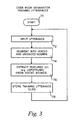
- FIG. 3 is a flow chart of an embodiment of the steps used to form a code book for a speaker verification decision.
- the process starts, at step 70, by receiving an input utterance at step 72.
- the input utterances are then segmented into a voiced sounds and an unvoiced sounds at step 74.
- the cepstrum coefficients are then calculated using the voiced sounds at step 76.
- the coefficients are stored as a training utterance for the speaker at step 78.
- the process then returns to step 72 for the next input utterance, until all the training utterances have been stored in the code book.
- FIG. 4 is a flow chart of an embodiment of the steps used to form a speaker verification decision.
- the process starts, at step 100, by receiving input utterances at step 102.
- the speaker purports to be someone in particular. If the person purports to be someone that is a male, then the speaker is assumed to be male even if the speaker is a female.
- the input utterances are then segmented into a voiced sounds and an unvoiced sounds at step 106.
- Features e.g., cepstrum coefficients
- the weighted Euclidean distance is calculated using either a generalized male variance vector if the purported speaker is a male. When the purported speaker is a female, the female variance vector is used. The WED is calculated between the test utterance and the training utterance for the speaker and the test utterance and the male (or female if appropriate) impostor utterance. A decision is formed for each test utterance based on the WED at step 112. The decisions are then weighted based on a confidence level (measure of confidence) determined using a Chi-squared detector at step 114. The weighted decisions are summed at step 116. A verification decision is made based on the sum of the weighted decisions at step 118.
- WED Euclidean distance
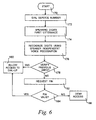
- a dial-up service that uses a speaker verification method as described above is shown in FIG. 5.
- the dial-up service is shown as a banking service.
- a user dials a service number on their telephone 150.
- the public switched telephone network (PSTN) 152 then connects the user's phone 150 with a dial-up service computer 154 at a bank 156.
- the dial-up service need not be located within a bank.
- the process starts, at step 170, by dialing a service number (communication service address, number) at step 172.
- the user is then prompted by the computer 154 to speak a plurality of digits (access code, plurality of numbers, access number) to form a first utterance at step 174.
- the digits are recognized using speaker independent voice recognition at step 176.
- verifying the user based on the first utterance at step 178.
- the user is verified as a true speaker at step 178, allowing access to the dial-up service at step 180.
- requesting the user input a personal identification number (PIN) at step 182.
- PIN personal identification number
- the PIN can be entered by the user either by speaking the PIN or by enter the PIN on a keypad.
- the dial-up service uses a speaker verification system as a PIN option, but does not deny access to the user if it cannot verify the user.
- FIG. 7 is a flow chart of another embodiment of the steps used in a dial-up service.
- the process starts, step 200, by the user speaking an access code to form a plurality of utterances at step 202.
- step 204 it is determined if the user has previously accessed the service.
- the speaker verification system attempts to verify the user (identity) at step 206.
- the speaker verification system can verify the user, the user is allowed access to the system at step 208.
- a PIN is requested at step 210. Note the user can either speak the PIN or enter the PIN on a keypad.
- the user is requested to enter a PIN at step 216.
- the PIN is not valid, denying access to the service at step 220.
- the PIN is valid the user is asked to speak the access code a second time to form a second utterance (plurality of second utterances) at step 222.
- the similarity between the first utterance (step 202) and the second utterance is compared to a threshold at step 224. In one embodiment the similarity is calculated using a weighted Euclidean distance. When the similarity is less than or equal to the threshold, the user is asked to speak the access code again at step 222.
- the second and third utterances would be compared for the required similarity.
- the user would not be required to repeat the access code at step 222 more than once or twice and the system would then allow the user access.
- the similarity is greater than the threshold, storing a combination of the two utterances as at step 226.
- both utterances are stored as reference utterances.
- Next access to the service is allowed at step 208.
- the reference utterance (plurality of reference utterances, reference voiced sounds) is used to verify the user the next time they access the service.
- the speaker verification part of the access to the dial-up service in one embodiment uses all the techniques discussed for a verification process. In another embodiment the verification process only uses one of the speaker verification techniques.
- the access number has a predetermined digit that is selected from a first set of digits (predefined set of digits) if the user is a male.
- the predetermined digit is selected from a second set of digits. This allows the system to determine if the user is suppose to be a male or a female. Based on this information, the male variance vector or female variance vector is used in the speaker verification process.
Landscapes
- Engineering & Computer Science (AREA)
- Business, Economics & Management (AREA)
- Computer Vision & Pattern Recognition (AREA)
- Game Theory and Decision Science (AREA)
- Health & Medical Sciences (AREA)
- Audiology, Speech & Language Pathology (AREA)
- Human Computer Interaction (AREA)
- Physics & Mathematics (AREA)
- Acoustics & Sound (AREA)
- Multimedia (AREA)
- Electrically Operated Instructional Devices (AREA)
- Telephonic Communication Services (AREA)
Claims (9)
- Verfahren zur Sprecherverifikation mit folgenden Schritten:dadurch gekennzeichnet, dass jeder der mehreren Entscheidungen ein Gewicht zugeteilt wird, das auf dem zugrundeliegenden Sprechmuster basiert, wobei historische Irrtumsraten für das Sprechmuster verwendet werden.Generieren eines Code-Buches (20, 42) für mehrere Sprecher, das mehrere Traninings-Sprechmuster für jeden der Sprecher enthält;Empfangen (44) mehrerer Test-Sprechmuster von einem Sprecher;Vergleichen (46) jedes der mehreren Test-Sprechmuster mit jedem Trainings-Sprechmuster für den Sprecher, um mehrere Entscheidungen hinsichtlich der Nähe der Test-Sprechmuster zu den Trainings-Sprechmustern zu bilden, wobei jeweils eine Entscheidung der mehreren Entscheidungen für jedes der mehreren Test-Sprechmuster gebildet wird;Wichten der mehreren Entscheidungen (48), um mehrere gewichtete Entscheidungen zu bilden; undKombinieren (50) der mehreren gewichteten Entscheidungen, um eine Verifikationsentscheidung (52) zu bilden,
- Verfahren nach Anspruch 1, wobei das Generieren des Code-Buches die folgenden Schritte einschließt:Empfangen eines Proben-Sprechmusters (72);Aufteilen des Proben-Sprechmusters in Stimmsignale und Pausensignale (74);Extrahieren (76) von Merkmalen aus den Stimmsignalen; undSpeichern (78) der Merkmale als eines der Trainings-Sprechmuster (Uj(Ci)).
- Verfahren nach Anspruch 2, wobei das Empfangen der Test-Sprechmuster folgende Schritte aufweist:Empfangen eines Eingangssatzes von Sprechmustern (102);Aufteilen (104) des Eingangssatzes der Sprechmuster in Stimmsignale und Pausensignale (106); undExtrahieren (108) von Merkmalen aus den Stimmsignalen, um die mehreren Test-Sprechmuster (Ux(Ci)) zu bilden.
- Verfahren nach einem vorhergehenden Anspruch, wobei der Schritt zum Generieren des Code-Buches ferner folgende Schritte aufweist:Auftrennen der mehreren Sprecher in eine männliche Gruppe und eine weibliche Gruppe;Bestimmen eines männlichen Varianz-Vektors aus der männlichen Gruppe;Bestimmen eines weiblichen Varianz-Vektors aus der weiblichen Gruppe; undEinführen des männlichen Varianz-Vektors und des weiblichen Varianz-Vektors in das Code-Buch.
- Verfahren nach Anspruch 4, wobei der Vergleichsschritt folgende Merkmale einschließt:Bestimmen (104), ob der Sprecher der mehreren Test-Sprechmuster den Eindruck eines Mannes oder einer Frau macht;Wenn der Sprecher den Eindruck eines Mannes macht, wird der männliche Varianz-Vektor verwendet (110), um eine gewichtete euklidische Distanz zwischen jedem der mehreren Test-Sprechmuster und jedem der mehreren Trainings-Sprechmuster für den Sprecher zu bestimmen; undBilden einer Entscheidung für jedes der mehreren Sprechmuster auf der Basis der gewichteten euklidischen Distanz (112).
- Verfahren nach Anspruch 4, wobei der Vergleichsschritt ferner folgende Merkmale aufweist:Bestimmen (104), ob der Sprecher der Test-Sprechmuster den Eindruck eines Mannes oder einer Frau macht;Wenn der Sprecher den Eindruck einer Frau macht, wird der weibliche Varianz-Vektor verwendet (110), um eine gewichtete euklidische Distanz zwischen jedem der mehreren Test-Sprechmuster und jedem der mehreren Trainings-Sprechmuster für den Sprecher zu bestimmen; undBilden (112) einer Entscheidung für jedes der mehreren Sprechmuster auf der Basis der gewichteten euklidischen Distanz.
- Verfahren nach einem vorhergehenden Anspruch, wobei:der Schritt zum Generieren des Code-Buches beinhaltet, in das Code-Buch mehrere Sprechmuster von Nicht-Benutzern einzufügen; undder Vergleichsschritt den Vergleich jedes der mehreren Test-Sprechmuster mit jedem der mehreren Sprechmuster von Nicht-Benutzern einschließt.
- Von einem Computer lesbares Speichermedium, das computer-lesbare Instruktionen enthält, die, wenn sie durch einen Computer ausgeführt werden, die Schritte gemäss einem vorhergehenden Anspruch durchführen.
- Vorrichtung zum Bereitstellen eines Anrufservices, die ein Verfahren zur Sprecherverifikation verwendet, wobei die Vorrichtung ein öffentliches Telefonnetz (152), ein Telefon (150) eines Benutzers und eine Femadresse verwendet, mit einem Computer für den Anrufservice (154), wobei der Service-Computer computer-lesbare Instruktionen enthält, um die Methode nach einem der Ansprüche 1 bis 7 auszuführen.
Applications Claiming Priority (3)
| Application Number | Priority Date | Filing Date | Title |
|---|---|---|---|
| US863444 | 1997-05-27 | ||
| US08/863,444 US6076055A (en) | 1997-05-27 | 1997-05-27 | Speaker verification method |
| PCT/US1998/009508 WO1998054694A1 (en) | 1997-05-27 | 1998-05-12 | Speaker verification method using multiple class groups |
Publications (3)
| Publication Number | Publication Date |
|---|---|
| EP0983587A1 EP0983587A1 (de) | 2000-03-08 |
| EP0983587A4 EP0983587A4 (de) | 2000-10-25 |
| EP0983587B1 true EP0983587B1 (de) | 2004-12-15 |
Family
ID=25341110
Family Applications (1)
| Application Number | Title | Priority Date | Filing Date |
|---|---|---|---|
| EP98922171A Expired - Lifetime EP0983587B1 (de) | 1997-05-27 | 1998-05-12 | Sprecherverifikationsverfahren unter verwendung von mehreren klassengruppen |
Country Status (4)
| Country | Link |
|---|---|
| US (2) | US6076055A (de) |
| EP (1) | EP0983587B1 (de) |
| AU (1) | AU7477598A (de) |
| WO (1) | WO1998054694A1 (de) |
Families Citing this family (32)
| Publication number | Priority date | Publication date | Assignee | Title |
|---|---|---|---|---|
| US7630895B2 (en) * | 2000-01-21 | 2009-12-08 | At&T Intellectual Property I, L.P. | Speaker verification method |
| US6076055A (en) * | 1997-05-27 | 2000-06-13 | Ameritech | Speaker verification method |
| US9978373B2 (en) | 1997-05-27 | 2018-05-22 | Nuance Communications, Inc. | Method of accessing a dial-up service |
| US6847717B1 (en) | 1997-05-27 | 2005-01-25 | Jbc Knowledge Ventures, L.P. | Method of accessing a dial-up service |
| CA2304747C (en) * | 1997-10-15 | 2007-08-14 | British Telecommunications Public Limited Company | Pattern recognition using multiple reference models |
| EP1159737B9 (de) * | 1999-03-11 | 2004-11-03 | BRITISH TELECOMMUNICATIONS public limited company | Sprecher-erkennung |
| US6556969B1 (en) * | 1999-09-30 | 2003-04-29 | Conexant Systems, Inc. | Low complexity speaker verification using simplified hidden markov models with universal cohort models and automatic score thresholding |
| DE19952049A1 (de) * | 1999-10-28 | 2001-05-10 | Siemens Ag | Verfahren und Anordnung zur Verifikation eines Sprechers anhand eines Rechners |
| US6973426B1 (en) | 2000-12-29 | 2005-12-06 | Cisco Technology, Inc. | Method and apparatus for performing speaker verification based on speaker independent recognition of commands |
| USH2187H1 (en) * | 2002-06-28 | 2007-04-03 | Unisys Corporation | System and method for gender identification in a speech application environment |
| US7676026B1 (en) | 2005-03-08 | 2010-03-09 | Baxtech Asia Pte Ltd | Desktop telephony system |
| US7650281B1 (en) | 2006-10-11 | 2010-01-19 | The U.S. Goverment as Represented By The Director, National Security Agency | Method of comparing voice signals that reduces false alarms |
| US20090259678A1 (en) * | 2008-04-11 | 2009-10-15 | Valencia John Alcario | Bluetooth volume tracker |
| US8504365B2 (en) | 2008-04-11 | 2013-08-06 | At&T Intellectual Property I, L.P. | System and method for detecting synthetic speaker verification |
| US8209174B2 (en) * | 2009-04-17 | 2012-06-26 | Saudi Arabian Oil Company | Speaker verification system |
| US8160877B1 (en) * | 2009-08-06 | 2012-04-17 | Narus, Inc. | Hierarchical real-time speaker recognition for biometric VoIP verification and targeting |
| US9318114B2 (en) * | 2010-11-24 | 2016-04-19 | At&T Intellectual Property I, L.P. | System and method for generating challenge utterances for speaker verification |
| US8897500B2 (en) | 2011-05-05 | 2014-11-25 | At&T Intellectual Property I, L.P. | System and method for dynamic facial features for speaker recognition |
| US11942095B2 (en) | 2014-07-18 | 2024-03-26 | Google Llc | Speaker verification using co-location information |
| US11676608B2 (en) | 2021-04-02 | 2023-06-13 | Google Llc | Speaker verification using co-location information |
| US9257120B1 (en) | 2014-07-18 | 2016-02-09 | Google Inc. | Speaker verification using co-location information |
| US9424841B2 (en) | 2014-10-09 | 2016-08-23 | Google Inc. | Hotword detection on multiple devices |
| US9318107B1 (en) | 2014-10-09 | 2016-04-19 | Google Inc. | Hotword detection on multiple devices |
| US9812128B2 (en) | 2014-10-09 | 2017-11-07 | Google Inc. | Device leadership negotiation among voice interface devices |
| US9779735B2 (en) | 2016-02-24 | 2017-10-03 | Google Inc. | Methods and systems for detecting and processing speech signals |
| US9972320B2 (en) | 2016-08-24 | 2018-05-15 | Google Llc | Hotword detection on multiple devices |
| EP4328905A3 (de) | 2016-11-07 | 2024-04-24 | Google Llc | Unterdrückung eines hotword-auslösers bei aufgezeichneten medien |
| US10559309B2 (en) | 2016-12-22 | 2020-02-11 | Google Llc | Collaborative voice controlled devices |
| EP3373208A1 (de) * | 2017-03-08 | 2018-09-12 | Nxp B.V. | Verfahren und system zur bereitstellung zuverlässiger mustererkennung |
| US10522137B2 (en) | 2017-04-20 | 2019-12-31 | Google Llc | Multi-user authentication on a device |
| US10395650B2 (en) | 2017-06-05 | 2019-08-27 | Google Llc | Recorded media hotword trigger suppression |
| US10692496B2 (en) | 2018-05-22 | 2020-06-23 | Google Llc | Hotword suppression |
Family Cites Families (43)
| Publication number | Priority date | Publication date | Assignee | Title |
|---|---|---|---|---|
| US4039754A (en) * | 1975-04-09 | 1977-08-02 | The United States Of America As Represented By The Administrator Of The National Aeronautics And Space Administration | Speech analyzer |
| US4181821A (en) * | 1978-10-31 | 1980-01-01 | Bell Telephone Laboratories, Incorporated | Multiple template speech recognition system |
| JPS5844500A (ja) * | 1981-09-11 | 1983-03-15 | シャープ株式会社 | 音声認識方式 |
| US5131043A (en) * | 1983-09-05 | 1992-07-14 | Matsushita Electric Industrial Co., Ltd. | Method of and apparatus for speech recognition wherein decisions are made based on phonemes |
| US4908865A (en) * | 1984-12-27 | 1990-03-13 | Texas Instruments Incorporated | Speaker independent speech recognition method and system |
| US4773093A (en) * | 1984-12-31 | 1988-09-20 | Itt Defense Communications | Text-independent speaker recognition system and method based on acoustic segment matching |
| US4827516A (en) * | 1985-10-16 | 1989-05-02 | Toppan Printing Co., Ltd. | Method of analyzing input speech and speech analysis apparatus therefor |
| US4805222A (en) * | 1985-12-23 | 1989-02-14 | International Bioaccess Systems Corporation | Method and apparatus for verifying an individual's identity |
| US4910782A (en) * | 1986-05-23 | 1990-03-20 | Nec Corporation | Speaker verification system |
| US4852170A (en) * | 1986-12-18 | 1989-07-25 | R & D Associates | Real time computer speech recognition system |
| US5548647A (en) * | 1987-04-03 | 1996-08-20 | Texas Instruments Incorporated | Fixed text speaker verification method and apparatus |
| US4989249A (en) * | 1987-05-29 | 1991-01-29 | Sanyo Electric Co., Ltd. | Method of feature determination and extraction and recognition of voice and apparatus therefore |
| DE3819178A1 (de) * | 1987-06-04 | 1988-12-22 | Ricoh Kk | Spracherkennungsverfahren und -einrichtung |
| DE3883701T2 (de) * | 1987-10-30 | 1994-02-10 | Nippon Telegraph & Telephone | Verfahren und Vorrichtung für multiplexierte Vektorquantifizierung. |
| JP2745535B2 (ja) * | 1988-05-24 | 1998-04-28 | 日本電気株式会社 | 音声認識装置 |
| US5216720A (en) * | 1989-05-09 | 1993-06-01 | Texas Instruments Incorporated | Voice verification circuit for validating the identity of telephone calling card customers |
| US5125022A (en) * | 1990-05-15 | 1992-06-23 | Vcs Industries, Inc. | Method for recognizing alphanumeric strings spoken over a telephone network |
| US5127043A (en) * | 1990-05-15 | 1992-06-30 | Vcs Industries, Inc. | Simultaneous speaker-independent voice recognition and verification over a telephone network |
| US5365574A (en) * | 1990-05-15 | 1994-11-15 | Vcs Industries, Inc. | Telephone network voice recognition and verification using selectively-adjustable signal thresholds |
| US5133011A (en) * | 1990-12-26 | 1992-07-21 | International Business Machines Corporation | Method and apparatus for linear vocal control of cursor position |
| JP3050934B2 (ja) * | 1991-03-22 | 2000-06-12 | 株式会社東芝 | 音声認識方式 |
| JPH0561496A (ja) * | 1991-08-30 | 1993-03-12 | Sony Corp | 音声認識装置 |
| US5371853A (en) * | 1991-10-28 | 1994-12-06 | University Of Maryland At College Park | Method and system for CELP speech coding and codebook for use therewith |
| DE69322894T2 (de) * | 1992-03-02 | 1999-07-29 | At & T Corp., New York, N.Y. | Lernverfahren und Gerät zur Spracherkennung |
| US5381512A (en) * | 1992-06-24 | 1995-01-10 | Moscom Corporation | Method and apparatus for speech feature recognition based on models of auditory signal processing |
| JPH0743598B2 (ja) * | 1992-06-25 | 1995-05-15 | 株式会社エイ・ティ・アール視聴覚機構研究所 | 音声認識方法 |
| US5339385A (en) * | 1992-07-22 | 1994-08-16 | Itt Corporation | Speaker verifier using nearest-neighbor distance measure |
| US5428707A (en) * | 1992-11-13 | 1995-06-27 | Dragon Systems, Inc. | Apparatus and methods for training speech recognition systems and their users and otherwise improving speech recognition performance |
| US5448679A (en) * | 1992-12-30 | 1995-09-05 | International Business Machines Corporation | Method and system for speech data compression and regeneration |
| JPH06332492A (ja) * | 1993-05-19 | 1994-12-02 | Matsushita Electric Ind Co Ltd | 音声検出方法および検出装置 |
| US5689616A (en) * | 1993-11-19 | 1997-11-18 | Itt Corporation | Automatic language identification/verification system |
| US5522012A (en) * | 1994-02-28 | 1996-05-28 | Rutgers University | Speaker identification and verification system |
| US5590242A (en) * | 1994-03-24 | 1996-12-31 | Lucent Technologies Inc. | Signal bias removal for robust telephone speech recognition |
| FI98162C (fi) * | 1994-05-30 | 1997-04-25 | Tecnomen Oy | HMM-malliin perustuva puheentunnistusmenetelmä |
| US5706398A (en) * | 1995-05-03 | 1998-01-06 | Assefa; Eskinder | Method and apparatus for compressing and decompressing voice signals, that includes a predetermined set of syllabic sounds capable of representing all possible syllabic sounds |
| US5687287A (en) * | 1995-05-22 | 1997-11-11 | Lucent Technologies Inc. | Speaker verification method and apparatus using mixture decomposition discrimination |
| US5839103A (en) * | 1995-06-07 | 1998-11-17 | Rutgers, The State University Of New Jersey | Speaker verification system using decision fusion logic |
| US5737489A (en) * | 1995-09-15 | 1998-04-07 | Lucent Technologies Inc. | Discriminative utterance verification for connected digits recognition |
| FR2748343B1 (fr) * | 1996-05-03 | 1998-07-24 | Univ Paris Curie | Procede de reconnaissance vocale d'un locuteur mettant en oeuvre un modele predictif, notamment pour des applications de controle d'acces |
| US5734797A (en) * | 1996-08-23 | 1998-03-31 | The United States Of America As Represented By The Secretary Of The Navy | System and method for determining class discrimination features |
| US6076055A (en) * | 1997-05-27 | 2000-06-13 | Ameritech | Speaker verification method |
| US6012027A (en) * | 1997-05-27 | 2000-01-04 | Ameritech Corporation | Criteria for usable repetitions of an utterance during speech reference enrollment |
| US6141644A (en) * | 1998-09-04 | 2000-10-31 | Matsushita Electric Industrial Co., Ltd. | Speaker verification and speaker identification based on eigenvoices |
-
1997
- 1997-05-27 US US08/863,444 patent/US6076055A/en not_active Expired - Lifetime
-
1998
- 1998-05-12 AU AU74775/98A patent/AU7477598A/en not_active Abandoned
- 1998-05-12 EP EP98922171A patent/EP0983587B1/de not_active Expired - Lifetime
- 1998-05-12 WO PCT/US1998/009508 patent/WO1998054694A1/en not_active Ceased
-
2000
- 2000-01-21 US US09/489,254 patent/US6931375B1/en not_active Expired - Lifetime
Non-Patent Citations (1)
| Title |
|---|
| ROSENBERG; PARTHASARATHY: "Speaker background models for connected digit password speaker verification", ICASSP 1996, vol. 1, 7 May 1996 (1996-05-07) - 10 May 1996 (1996-05-10), ATLANTA, GA, USA, pages 81 - 84, XP002079921, DOI: doi:10.1109/ICASSP.1996.540295 * |
Also Published As
| Publication number | Publication date |
|---|---|
| EP0983587A1 (de) | 2000-03-08 |
| EP0983587A4 (de) | 2000-10-25 |
| US6076055A (en) | 2000-06-13 |
| US6931375B1 (en) | 2005-08-16 |
| AU7477598A (en) | 1998-12-30 |
| WO1998054694A1 (en) | 1998-12-03 |
Similar Documents
| Publication | Publication Date | Title |
|---|---|---|
| EP0983587B1 (de) | Sprecherverifikationsverfahren unter verwendung von mehreren klassengruppen | |
| EP1019904B1 (de) | Verfahren zum lernen von mustern für die sprach- oder die sprechererkennung | |
| US8433569B2 (en) | Method of accessing a dial-up service | |
| EP0528990B1 (de) | Gleichzeitige sprecherunabhängige sprachererkennung und sprecherverifikation über einen fernsprechnetz | |
| US5897616A (en) | Apparatus and methods for speaker verification/identification/classification employing non-acoustic and/or acoustic models and databases | |
| EP0647344B1 (de) | Methode zur erkennung alphanumerischer zeichenketten, die über ein telefonnetz gesprochen werden | |
| US6119084A (en) | Adaptive speaker verification apparatus and method including alternative access control | |
| EP0892388B1 (de) | Verfahren und Vorrichtung zur Sprechererkennung durch Prüfung von mündlicher Information mittels Zwangsdekodierung | |
| US20080071538A1 (en) | Speaker verification method | |
| WO2000058947A1 (en) | User authentication for consumer electronics | |
| JP4245948B2 (ja) | 音声認証装置、音声認証方法及び音声認証プログラム | |
| US9978373B2 (en) | Method of accessing a dial-up service | |
| KEI | AN AUTOMATIC SPEAKER RECOGNITION SYSTEM |
Legal Events
| Date | Code | Title | Description |
|---|---|---|---|
| PUAI | Public reference made under article 153(3) epc to a published international application that has entered the european phase |
Free format text: ORIGINAL CODE: 0009012 |
|
| 17P | Request for examination filed |
Effective date: 19991109 |
|
| AK | Designated contracting states |
Kind code of ref document: A1 Designated state(s): BE FR GB |
|
| RBV | Designated contracting states (corrected) |
Designated state(s): BE FR GB |
|
| REG | Reference to a national code |
Ref country code: DE Ref legal event code: 8566 |
|
| RIC1 | Information provided on ipc code assigned before grant |
Free format text: 7G 10L 3/00 A, 7G 10L 17/00 B |
|
| A4 | Supplementary search report drawn up and despatched |
Effective date: 20000911 |
|
| AK | Designated contracting states |
Kind code of ref document: A4 Designated state(s): BE FR GB |
|
| 17Q | First examination report despatched |
Effective date: 20030212 |
|
| GRAP | Despatch of communication of intention to grant a patent |
Free format text: ORIGINAL CODE: EPIDOSNIGR1 |
|
| GRAS | Grant fee paid |
Free format text: ORIGINAL CODE: EPIDOSNIGR3 |
|
| GRAA | (expected) grant |
Free format text: ORIGINAL CODE: 0009210 |
|
| RIC1 | Information provided on ipc code assigned before grant |
Ipc: 7G 10L 17/00 A |
|
| AK | Designated contracting states |
Kind code of ref document: B1 Designated state(s): BE FR GB |
|
| REG | Reference to a national code |
Ref country code: GB Ref legal event code: FG4D |
|
| ET | Fr: translation filed | ||
| PLBE | No opposition filed within time limit |
Free format text: ORIGINAL CODE: 0009261 |
|
| STAA | Information on the status of an ep patent application or granted ep patent |
Free format text: STATUS: NO OPPOSITION FILED WITHIN TIME LIMIT |
|
| 26N | No opposition filed |
Effective date: 20050916 |
|
| REG | Reference to a national code |
Ref country code: FR Ref legal event code: PLFP Year of fee payment: 18 |
|
| REG | Reference to a national code |
Ref country code: FR Ref legal event code: PLFP Year of fee payment: 19 |
|
| REG | Reference to a national code |
Ref country code: FR Ref legal event code: PLFP Year of fee payment: 20 |
|
| PGFP | Annual fee paid to national office [announced via postgrant information from national office to epo] |
Ref country code: GB Payment date: 20170530 Year of fee payment: 20 Ref country code: FR Payment date: 20170529 Year of fee payment: 20 |
|
| PGFP | Annual fee paid to national office [announced via postgrant information from national office to epo] |
Ref country code: BE Payment date: 20170530 Year of fee payment: 20 |
|
| REG | Reference to a national code |
Ref country code: GB Ref legal event code: 732E Free format text: REGISTERED BETWEEN 20170921 AND 20170927 |
|
| REG | Reference to a national code |
Ref country code: GB Ref legal event code: 732E Free format text: REGISTERED BETWEEN 20170928 AND 20171004 |
|
| REG | Reference to a national code |
Ref country code: BE Ref legal event code: PD Owner name: SBC PROPERTIES, L.P.; US Free format text: DETAILS ASSIGNMENT: CHANGE OF OWNER(S), CESSION; FORMER OWNER NAME: SBC HOLDINGS PROPERTIES, L.P. Effective date: 20171211 Ref country code: BE Ref legal event code: HC Owner name: AT&T INTELLECTUAL PROPERTY I, L.P.; US Free format text: DETAILS ASSIGNMENT: CHANGE OF OWNER(S), CHANGEMENT DE NOM DU PROPRIETAIRE, RECTIFICATION; FORMER OWNER NAME: AT&T KNOWLEDGE VENTURES, L.P. Effective date: 20171211 |
|
| REG | Reference to a national code |
Ref country code: FR Ref legal event code: TP Owner name: AT&T INTELLECTUAL PROPERTY I, L.P., US Effective date: 20180222 Ref country code: FR Ref legal event code: RM Effective date: 20180222 Ref country code: FR Ref legal event code: CD Owner name: AT&T INTELLECTUAL PROPERTY I, L.P., US Effective date: 20180222 Ref country code: FR Ref legal event code: CA Effective date: 20180222 |
|
| REG | Reference to a national code |
Ref country code: GB Ref legal event code: PE20 Expiry date: 20180511 |
|
| REG | Reference to a national code |
Ref country code: BE Ref legal event code: MK Effective date: 20180512 |
|
| PG25 | Lapsed in a contracting state [announced via postgrant information from national office to epo] |
Ref country code: GB Free format text: LAPSE BECAUSE OF EXPIRATION OF PROTECTION Effective date: 20180511 |