EP0979836B1 - Paint of high weather resistance - Google Patents
Paint of high weather resistance Download PDFInfo
- Publication number
- EP0979836B1 EP0979836B1 EP19990306297 EP99306297A EP0979836B1 EP 0979836 B1 EP0979836 B1 EP 0979836B1 EP 19990306297 EP19990306297 EP 19990306297 EP 99306297 A EP99306297 A EP 99306297A EP 0979836 B1 EP0979836 B1 EP 0979836B1
- Authority
- EP
- European Patent Office
- Prior art keywords
- isocyanate
- weight
- compound
- monomer
- prepolymer
- Prior art date
- Legal status (The legal status is an assumption and is not a legal conclusion. Google has not performed a legal analysis and makes no representation as to the accuracy of the status listed.)
- Expired - Lifetime
Links
Classifications
-
- C—CHEMISTRY; METALLURGY
- C09—DYES; PAINTS; POLISHES; NATURAL RESINS; ADHESIVES; COMPOSITIONS NOT OTHERWISE PROVIDED FOR; APPLICATIONS OF MATERIALS NOT OTHERWISE PROVIDED FOR
- C09D—COATING COMPOSITIONS, e.g. PAINTS, VARNISHES OR LACQUERS; FILLING PASTES; CHEMICAL PAINT OR INK REMOVERS; INKS; CORRECTING FLUIDS; WOODSTAINS; PASTES OR SOLIDS FOR COLOURING OR PRINTING; USE OF MATERIALS THEREFOR
- C09D175/00—Coating compositions based on polyureas or polyurethanes; Coating compositions based on derivatives of such polymers
- C09D175/04—Polyurethanes
-
- C—CHEMISTRY; METALLURGY
- C08—ORGANIC MACROMOLECULAR COMPOUNDS; THEIR PREPARATION OR CHEMICAL WORKING-UP; COMPOSITIONS BASED THEREON
- C08G—MACROMOLECULAR COMPOUNDS OBTAINED OTHERWISE THAN BY REACTIONS ONLY INVOLVING UNSATURATED CARBON-TO-CARBON BONDS
- C08G18/00—Polymeric products of isocyanates or isothiocyanates
- C08G18/06—Polymeric products of isocyanates or isothiocyanates with compounds having active hydrogen
- C08G18/08—Processes
- C08G18/10—Prepolymer processes involving reaction of isocyanates or isothiocyanates with compounds having active hydrogen in a first reaction step
-
- C—CHEMISTRY; METALLURGY
- C08—ORGANIC MACROMOLECULAR COMPOUNDS; THEIR PREPARATION OR CHEMICAL WORKING-UP; COMPOSITIONS BASED THEREON
- C08G—MACROMOLECULAR COMPOUNDS OBTAINED OTHERWISE THAN BY REACTIONS ONLY INVOLVING UNSATURATED CARBON-TO-CARBON BONDS
- C08G18/00—Polymeric products of isocyanates or isothiocyanates
- C08G18/06—Polymeric products of isocyanates or isothiocyanates with compounds having active hydrogen
- C08G18/70—Polymeric products of isocyanates or isothiocyanates with compounds having active hydrogen characterised by the isocyanates or isothiocyanates used
- C08G18/72—Polyisocyanates or polyisothiocyanates
- C08G18/77—Polyisocyanates or polyisothiocyanates having heteroatoms in addition to the isocyanate or isothiocyanate nitrogen and oxygen or sulfur
- C08G18/771—Polyisocyanates or polyisothiocyanates having heteroatoms in addition to the isocyanate or isothiocyanate nitrogen and oxygen or sulfur oxygen
-
- C—CHEMISTRY; METALLURGY
- C08—ORGANIC MACROMOLECULAR COMPOUNDS; THEIR PREPARATION OR CHEMICAL WORKING-UP; COMPOSITIONS BASED THEREON
- C08G—MACROMOLECULAR COMPOUNDS OBTAINED OTHERWISE THAN BY REACTIONS ONLY INVOLVING UNSATURATED CARBON-TO-CARBON BONDS
- C08G18/00—Polymeric products of isocyanates or isothiocyanates
- C08G18/06—Polymeric products of isocyanates or isothiocyanates with compounds having active hydrogen
- C08G18/70—Polymeric products of isocyanates or isothiocyanates with compounds having active hydrogen characterised by the isocyanates or isothiocyanates used
- C08G18/72—Polyisocyanates or polyisothiocyanates
- C08G18/77—Polyisocyanates or polyisothiocyanates having heteroatoms in addition to the isocyanate or isothiocyanate nitrogen and oxygen or sulfur
- C08G18/78—Nitrogen
- C08G18/7875—Nitrogen containing heterocyclic rings having at least one nitrogen atom in the ring
- C08G18/7887—Nitrogen containing heterocyclic rings having at least one nitrogen atom in the ring having two nitrogen atoms in the ring
-
- Y—GENERAL TAGGING OF NEW TECHNOLOGICAL DEVELOPMENTS; GENERAL TAGGING OF CROSS-SECTIONAL TECHNOLOGIES SPANNING OVER SEVERAL SECTIONS OF THE IPC; TECHNICAL SUBJECTS COVERED BY FORMER USPC CROSS-REFERENCE ART COLLECTIONS [XRACs] AND DIGESTS
- Y10—TECHNICAL SUBJECTS COVERED BY FORMER USPC
- Y10T—TECHNICAL SUBJECTS COVERED BY FORMER US CLASSIFICATION
- Y10T428/00—Stock material or miscellaneous articles
- Y10T428/31504—Composite [nonstructural laminate]
- Y10T428/31551—Of polyamidoester [polyurethane, polyisocyanate, polycarbamate, etc.]
Definitions
- the present invention relates to a paint which is used for waterproofing of rooftops, floors and outer walls of buildings, building materials, sports facilities such as tennis courts and athletic sports stadia, automobiles, household appliances, woodworking products or plastic molded articles, and which can form a paint film excellent in weather resistance, for example, gloss retention, discoloration resistance, and crack resistance in long term outdoor use.
- the paint films comprising the above paint compositions are used for a long period of time, they suffer from problems of weather resistance, such as decrease of gloss, discoloration and cracking due to exposure to ultraviolet rays.
- an ultraviolet absorber or a light stabilizer is added to the paint compositions.
- the bleeding phenomenon of the ultraviolet absorber or light stabilizer coming to the surface is caused, and the effects of the additives cannot be retained for a long period of time.
- the polyisocyanate compound is inferior in weather resistance or the content of the polyisocyanate in the paint composition is high; the whole paint film sometimes deteriorates in weather resistance.
- dispersibility of pigments is inferior, and when pigment is contained, a chalking phenomenon of the paint film occurs after the lapse of a long time, and the weather resistance cannot be sufficiently retained for a longer period of time.
- EP-A-0029598 relates to a coating composition
- a coating composition comprising at least 50% by weight of a binder which comprises an organic polyisocyanate crosslinking agent and an acrylic polymer having a number average molecular weight of from 500 to 10,000, a hydroxyl content of at least 2% by weight and which contains about 2 to 10% per weight of the chain transfer agent.
- This composition also comprises an ultraviolet light stabiliser.
- DE 2648367 provides a UV-curable resin, for example one in which an organic urethane is reacted with a UV absorber.
- JP 57/049655 provides a polyurethane composition comprising a polyurethane which may comprise terminal NCO groups and a benzotriazole UV absorber.
- the object of the present invention is to provide a paint in which the ultraviolet absorber or light stabiliser added to the two-pack curing type paints does not bleed and which can provide a paint film excellent in long-term weather resistance such as gloss retention and discolouration resistance in long-term outdoor use by imparting weather resistance to both the isocyanate component and the component reacting with the isocyanate component, without damaging physical properties and chemical properties of the paint.
- the inventors have contained research on paint compositions in an attempt to retain long-term weather resistance of paints. As a result, they have succeeded in obtaining an isocyanate compound having ultraviolet absorbability by reacting a polyisocyanate compound with an ultraviolet absorber having active hydrogen, and by reacting the resulting compound with a polymeric compound having active hydrogen and a pendant functional group having ultraviolet absorbability, it has become possible to impart ultraviolet absorbability to both of these reacting compounds. Thus, a paint excellent in weather resistance has been provided, and the present invention has been accomplished.
- the invention provides a paint composition which is obtainable by a process which comprises reacting a polymeric compound having an active hydrogen; and an isocyanate compound (A) having a functional group with ultraviolet absorbability on a side chain and containing a residual isocyanate group, the compound (A) being obtainable by a process which comprises submitting a portion of the isocyanate groups in an isocyanate prepolymer or monomer having at least two free isocyanate mecanics to reaction with an ultraviolet absorber of the following formula (1) or formula (2): wherein each of R 1 and R 2 , which are the same or different, is hydrogen, a C 1 -C 10 hydrocarbon group or C 1 -C 10 alkoxy, R 3 is hydrogen, a halogen, C 1 -C 10 alkoxy, cyano or nitro, R 4 is hydrogen, a halogen, C 1 -C 10 alkoxy or a C 1 -C 10 hydrocarbon group and R 5 is hydrogen, C 1 -C 10 alkoxy or a C 1-
- the C 1 -C 10 hydrocarbon group may be, for instance, a C 1 -C 10 alkenyl group, a C 2 -C 10 alkenyl group or a C 2 -C 10 alkynyl group.
- the C 1 -C 10 alkyl group is typically C 1 -C 8 alkyl, or C 1 -C 6 alkyl. Preferably it is C 1 -C 4 alkyl.
- Examples of C 1 -C 10 alkyl include methyl, ethyl, i-propyl, n-propyl, t-butyl, s-butyl, n-butyl, pentyl, hexyl, heptyl, octyl, nonyl and decyl groups.
- the C 2 -C 10 alkenyl group is typically C 2 -C 8 alkenyl or C 2 -C 6 alkenyl. It may also be C 2 -C 4 alkenyl. Examples of C 2 -C 10 alkenyl include ethenyl, propenyl, butenyl, pentenyl, hexenyl, heptenyl, octenyl, nonenyl and decenyl groups.
- the C 2- C 10 alkynyl group is typically C 2 -C 8 alkynyl, or C 2 -C 6 alkynyl. It may also be C 2 -C 4 alkynyl.
- Examples of C 2 -C 10 alkynyl include ethynyl, propynyl, butynyl, pentynyl, hexynyl, heptynyl, octynyl, hexynyl, heptynyl, octynyl, nonynyl and decynyl groups.
- the C 1 -C 10 alkoxy group may be, for instance, a C 1 -C 8 alkoxy group or a C 1 -C 6 or C 1 -C 4 alkoxy group.
- Examples of C 1 -C 10 alkoxy include methoxy, ethoxy, i-propoxy, n-propoxy, t-butoxy, s-butoxy, n-butoxy, pentoxy, hexoxy, heptoxy, octoxy, nonoxy and decoxy groups.
- isocyanate prepolymers or monomers used in the present invention mention may be made of, for example, hexamethylene diisocyanate, isophorone diisocyanate, tolylene diisocyanate, m-xylylene diisocyanate, xylylene diisocyanate, hydrogenated xylylene diisocyanate, cyclohexylmethane diisocyanate, and naphthalene diisocyanate; their isocyanurate compounds, biuret compounds, trimethylolpropane adducts, adducts with compounds having active hydrogen, such as amines, carboxylic acids, and alcohols, and adducts with derivatives thereof. These may be used each alone or in combination of two or more.
- the ultraviolet absorbers having active hydrogen are those which are represented by the formulae (1) and (2) above.
- benzotriazole ultraviolet absorbers such as 2-(2'-hydroxy-5'-methylphenyl)benzotriazole, 2-(2'-hydroxy-5'-t-butylphenyl)benzotriazole, 2-(2'-hydroxy-3'-t-butyl-5'-methylphenyl)-5-chlorobenzotriazole, and 2-(2'-hydroxy-4'-octoxyphenyl)benzotriazole
- benzophenone ultraviolet absorbers such as 2-hydroxy-4-octoxybenzophenone, 2-hydroxy-4-ethoxybenzophenone, 2-hydroxy-4-methoxybenzophenone, 2-hydroxy-4-octoxy-2'-chlorobenzophenone, and 2-hydroxy-4-octoxy-3' -methylbenzophenone. These may be used alone or in combination of two or morse.
- reaction of the isocyanate prepolymer or monomer with the ultraviolet absorber having active hydrogen can be carried out with addition of compounds having active hydrogen, such as amines, carboxylic acids, alcohols and derivatives thereof, either alone or in combination, whereby the chemical properties and the physical properties of the products can be freely controlled.
- compounds having active hydrogen such as amines, carboxylic acids, alcohols and derivatives thereof, either alone or in combination, whereby the chemical properties and the physical properties of the products can be freely controlled.
- Solvents can be used for the reaction, and examples of preferred solvents include aromatic solvents, such as toluene and xylene; ketones, such as acetone, methyl ethyl ketone and methyl isobutyl ketone; esters, such as ethyl acetate, butyl acetate and iso-butyl acetate; cellosolve acetate and propylene glycol monomethyl ether acetate. These may be used alone or in combination. However, solvents having active hydrogen, such as alcohols, should not be used because they react with isocyanates.
- urethane reaction catalysts may be used, and examples of the catalysts include organic metal catalysts such as dibutyltin diacetate and dibutyltin dilaurate, and amine catalysts such as 1,4-diazabicyclo(2,2;2)octane, triethylamine, N,N,N',N'-tetramethylethylenediamine triethylenediamine and dimethylaminoethanol. These may be used alone or in combination.
- organic metal catalysts such as dibutyltin diacetate and dibutyltin dilaurate
- amine catalysts such as 1,4-diazabicyclo(2,2;2)octane, triethylamine, N,N,N',N'-tetramethylethylenediamine triethylenediamine and dimethylaminoethanol.
- the isocyanate prepolymer (B) to be mixed:with the component (A) is not limited.
- Monomers which constitute the prepolymer include, for example, isocyanate monomers such as hexamethylene diisocyanate, isophorone diisocyanate, tolylene diisocyanate, m-xylylene diisocyanate and diphenylmethane diisocyanate, their isocyanurate compounds, biuret compounds, adducts with compounds having active hydrogen, such as amines, carboxylic acids, alcohols and derivatives thereof. These may be used alone or in combination.
- the reaction process is not limited, and general processes can be used. However, it is desirable that the. reaction is effected in the absence of water.
- solvents of urethane grade or water removers may be used.
- water removers tosyl isocyanate, molecular sieves, etc. can be used.
- isocyanurate compounds or biuret compounds of hexamethylene diisocyanate as the starting materials for the compound (A).
- the reaction with the ultraviolet absorber is preferably carried out in such a manner that two or more on average of isocyanate groups remain per one molecule in the isocyanate compound (A). If it is less than two on average, when the compound (A) is reacted with a curing component, crosslinking occurs insufficiently and the properties of the paint may deteriorate.
- isocyanate prepolymer (B) preferred are non-yellowing isocyanate prepolymers such as hexamethylene diisocyanate type and isophorone diisocyanate type.
- the isocyanate prepolymer (B) can be mixed with the isocyanate compound (A) obtained by polymerization with the ultraviolet absorber so that the amount of (B) is from 0 to 99% based on the total amount of (A) and (B). If the amount of (A) is less than 1%, the amount of the ultraviolet absorber is conspicuously small and the desired effects cannot be obtained.
- the isocyanate compound or composition comprising (A) or (A) and (B) shows no bleeding out of the ultraviolet absorber which has occurred in conventional techniques because the ultraviolet absorber is incorporated into the isocyanate compound (A) in the present invention, and this is very effective for retaining long-term weather resistance.
- polymeric compounds having active hydrogen which are reacted with the above isocyanate compound or composition will be explained.
- the polymeric compounds can crosslink with the isocyanate to form a paint film.
- the polymeric compound having an active hydrogen is an acrylic polyol, and in the paint composition of the invention, a paint film excellent in weather resistance is provided.
- the monomer component is a polymerizable unsaturated monomer having a hydroxyl group; a polymerizable unsaturated monomer having a cycloalkyl group; a polymerizable light stable monomer; a polymerizable ultraviolet absorbing monomer; and a prepolymer which is a monomer having a polymerizable unsaturated ethylene group and a weight-average molecular weight of from 1000 to 30000, and having 30% by weight or more of basic functional groups and/or 30% by weight or more of acidic functional groups based on the weight of the prepolymers.
- the monomer component having a cycloalkyl group mention may be made of, for example, cyclohexyl (meth)acrylate, methylcyclohexyl (meth)acrylate, and tert-butylcyclohexyl (meth)acrylate. These may be used alone or in combination.
- the unsaturated monomer component having a hydroxyl group mention may be made of, for example, hydroxyethyl (meth)acrylate, hydroxypropyl (meth)acrylate, and caprolactone-modified hydroxy (meth)acrylate. These may be used alone or in combination.
- benzotriazole type polymerizable ultraviolet absorbers such as 2-[2'-hydroxy-5'-(methacryloyloxymethyl)phenyl]-2H-benzotriazole, 2-[2'-hydroxy-5'-(methacryloyloxyethyl)phenyl]-2H-benzotriazole, 2-[2'-hydroxy-5'-t-butyl-3'-(methacrylpyloxyethyl)phenyl]-2H-benzotriazole, and 2-[2'-hydroxy-5'-(methacryloyloxyethyl)phenyl]-5-chloro-2H-benzotriazole, and benzophenone type polymerizable ultraviolet absorbers such as 2-hydroxy-4-(3-acryloxy-2-hydroxypropoxy)benzophenone, 2-hydroxy-4-(3-methacryloxy-2-hydroxypropoxy)benzophenone and 2'-dihydroxy-4-(3
- the polymerizable light stable monomer component mention may be made of, for example, hindered amine light stabilizers such as 4-(meth)acryloyloxy-2,2,6,6-tetramethylpiperidine, 4-(meth)acryloylamino-2,2,6,6-tetramethylpiperidine, 4-(meth)acryloyloxy-1,2,2,6,6-pentamethylpiperidine, and 4-(meth) acryloylamino-1,2,2,6,6-pentamethylpiperidine. These may be used alone or in combination, and the amount of the component is preferably from 0.1 to 7% by weight based on the polymerizable monomer components.
- hindered amine light stabilizers such as 4-(meth)acryloyloxy-2,2,6,6-tetramethylpiperidine, 4-(meth)acryloylamino-2,2,6,6-tetramethylpiperidine, 4-(meth)acryloyloxy-1,2,2,6,6-pentamethylpipe
- the prepolymer which is a monomer having a polymerizable unsaturated ethylene group and a weight-average molecular weight of from 1000 to 30000, and having 30% by weight or more of basic functional groups and/or 30% by weight or more of acidic functional groups based on the weight of the prepolymer
- the prepolymer is prepared in the following manner.
- an amino-group containing monomer such as dimethylaminomethyl methacrylate, diethylaminomethyl methacrylate, dibutylaminomethyl methacrylate, or dihexylaminomethyl methacrylate each alone or in combination is used as the polymerizable compound having an amino group in an amount of 30% or more based on the prepolymer constituents, and one or more of them are polymerized using a polymerization initiator having a carboxyl group at an end. Then, the resulting product is subjected to an addition reaction with a polymerizable monomer having an epoxy group in the presence of a polymerization inhibitor and a tertiary amine.
- a polymerizable monomer having a carboxylic acid group such as acrylic acid, maleic acid, itaconic acid, 2-acryloyloxyethylsuccinic acid, or 2-acryloyloxyethylphthalic acid each alone or in combination is used as the polymerizable compound having a carboxyl group in an amount of 30% or more based on the prepolymer constituents, and one or more of them are polymerized using a conventional polymerization initiator. Then, the resulting product is subjected to an addition reaction with a polymerizable monomer having an epoxy group in the presence of a polymerization inhibitor and a tertiary amine.
- a polymerizable monomer having a carboxylic acid group such as acrylic acid, maleic acid, itaconic acid, 2-acryloyloxyethylsuccinic acid, or 2-acryloyloxyethylphthalic acid each alone or in combination is used as the polymerizable compound having a carboxyl group in
- polymerizable monomers mention may be made of, for example, methyl (meth)acrylate, ethyl (meth)acrylate, propyl (meth)acrylate, isopropyl (meth)acrylate, butyl (meth)acrylate, isobutyl (meth)acrylate, sec-butyl (meth)acrylate, tert-butyl (meth)acrylate, isopentyl (meth)acrylate, neopentyl (meth)acrylate, hexyl (meth)acrylate, heptyl (meth)acrylate, octyl (meth)acrylate, 2-ethylhexyl (meth)acrylate, stearyl (meth)acrylate, benzyl (meth)acrylate, styrene, ⁇ -methylstyrene, vinyltoluene, vinylidene chloride, and vinyl acetate. These may be used alone or in combination
- the method of copolymerizing the above monomer compositions is not limited, but solution polymerization is preferred.
- the solvents used in the copolymerization include, for example, aromatic solvents such as toluene and xylene, ketones such as acetone, methyl ethyl ketone, and methyl isobutyl ketone, esters such as ethyl acetate and butyl acetate, cellosolve acetate, and propylene glycol monomethyl ether acetate. These may be used alone or in combination.
- Polymerization initiators are used in the copolymerization of the above monomer compositions, and they may be the usual polymerization initiators, e.g., azo type such as azobisisobutyronitrile, and peroxide type such as benzoyl peroxide. These may be used alone or in combination.
- azo type such as azobisisobutyronitrile
- peroxide type such as benzoyl peroxide
- the prepolymer having a polymerizable ethylenically functional group which is a constituent of the polymeric compound having active hydrogen contains a basic functional group and/or an acidic functional group
- the finally obtained paint is excellent in dispersibility for any pigments such as basic pigments, acidic pigments, or mixtures thereof, and consequently weather resistance of the paint composition can be improved.
- the paint composition of the present invention can optionally contain accelerators for the reaction with isocyanate, organic solvents, additives, inorganic pigments, organic pigments, and extender pigments.
- the reaction accelerators include, for example, organic metal catalysts such as butyltin diacetate and dibutyltin dilaurate, and amine catalysts such as 1,4-diazabicyclo(2,2,2)octane, triethylamine, N,N,N',N'-tetramethylethylenediamine, triethylenediamine, and dimethylaminoethanol. These may be used alone or in combination of two or more.
- the organic solvents include, for example, aromatic solvents such as toluene and xylene, ketones such as acetone, methyl ethyl ketone, and methyl isobutyl ketone, esters such as ethyl acetate and butyl acetate, cellosolve acetate, and propylene glycol monomethyl ether acetate. These may be used alone or in combination.
- the additives include one or more of various additives for paints, such as antifoaming agents, dispersants, levelling agents, adhesion improvers, plasticizers, stabilizers, and anti-settling agents.
- the inorganic pigments include, for example, titanium oxide, zinc oxide, chrome yellow, red iron oxide, yellow iron oxide, iron black, and carbon black.
- the organic pigments include, for example, azo compounds and phthalocyanine compounds.
- the extender pigments include, for example, calcium carbonate, silicon oxide, clay, organic bentonite, and silica powder. These may be used alone or in combination.
- the materials which can be coated with the paint composition of the present invention are not limited.
- the materials to be coated are plastics such as urethane, FRP (fiber-reinforced plastics), polypropylene, polycarbonate, and acrylic resin, woods, metals, glasses, and ceramics.
- the long-term weather resistance of these materials can be retained by coating the surface with the paint composition of the present invention. That is, the paint composition of the present invention can be widely used as coating agents for plastic molded articles, household appliances, metallic articles, automobiles, constructions, building materials, sports facilities, woodworking, etc.
- the reaction product was cooled to room temperature and mixed with 38 parts by weight of an isocyanate prepolymer (Trade mark: ACRIT 8XA-012 manufactured by Taisei Kako Co., Ltd.; nonvolatile content: 50%; isocyanate content: 3.1%) to obtain a composition.
- an isocyanate prepolymer (Trade mark: ACRIT 8XA-012 manufactured by Taisei Kako Co., Ltd.; nonvolatile content: 50%; isocyanate content: 3.1%) to obtain a composition.
- Isocyanate prepolymers were obtained in the same manner as in Example 1 according to the formulations shown in Table 1. The properties of the resulting prepolymers are shown Table 2.
- Formulations of isocyanate prepolymers Example 2 3 4 5 6 7 8 Isocyanurate compound of HMDI 12 TMP adduct of HMDI 12 12 Biuret compound of HMDI 12 12 HMDI monomer 12 12 2 (2'-hydroxy-5'-methylphenyl)benzotriazole 2 2 1 2-hydroxy-4-n-octoxybenzophenone 2 2 2 1 PPG (average molecular weight: 1000, containing 3 hydroxyl groups in one molecule) 23 23 Butyl acetate 24 24 24 24 36 36 Dibutyltin dilaurate 0.01 0.01 0.01 0.01 0.01 0.01 0.01 Isocyanate prepolymer 38 38 38 38 38 72 72
- TMP isocyanate prepolymers
- Isocyanate prepolymers were obtained in the same manner as in Example 1 according to the formulations shown in Table 3. The properties of the resulting prepolymers are shown in Table 4.
- Formulations of isocyanate prepolymers Comparative Examples
- Comparative Example 1 2 3 Isocyanurate compound of HMDI 12 TMP adduct of HMDI 12 Biuret compound of HMDI 12 HMDI monomer 12 2(2'-hydroxy-5'-methyl-phenyl)benzotriazole 2-hydroxy-4-n-octoxy-benzophenone PPG (average molecular weight: 1000, containing 3 hydroxyl groups in one molecule) 23 Butyl acetate 24 24 24 35 Dibutyltin dilaurate 0.01 Isocyanate prepolymer 36 36 36 70 Properties of isocyanate prepolymer Comparative Example 1 2 3 4 Appearance Transparent Transparent Transparent Transparent Nonvolatile content (%) 42 42 42 50 Viscosity (mPa.s) 18 20 22 60
- a mixed solution comprising 0.2 part by weight of azobisisobutyronitrile and 10 parts by weight of xylene was added dropwise at an equal rate over a period of 2 hours.
- the content was kept at 120°C for 1 hour and, after cooling, diluted with 15.5 parts by weight of xylene to obtain an acrylic polyol having a viscosity of 2500 mPa s, a nonvolatile content of 50%, and a weight-average molecular weight of 32000.
- the acidic prepolymer (oligomer) and the basic prepolymer (oligomer) were prepared in the following manner.
- Preparation of the basic prepolymer 47 parts by weight of butyl acetate was charged in a flask equipped with a stirrer, a dropping funnel, a condenser tube, and a thermometer, and heated to 120°C in a nitrogen atmosphere.
- a mixture comprising 4.3 parts by weight of 4,4'-azobis-4-cyanovaleric acid, 1.4 part by weight of triethylamine and 22.0 parts by weight of cellosolve acetate, and a mixture comprising 17.3 parts by weight of dimethylaminoethyl methacrylate and 5 parts by weight of butyl acetate were separately charged in the dropping funnel and-added dropwise at an equal rate over a period of 3 hours. After 30 minutes from completion of the addition, 0.01 part by weight of hydroquinone was added, and then 3.6 parts by weight of glycidyl methaerylate was added, followed by reaction for further 2 hours to prepare the basic prepolymer.
- Preparation of the acidic prepolymer 35 parts parts by weight of butyl acetate were charged in a flask equipped with a stirrer, a dropping funnel, a condenser tube, and a thermometer, and heated to 120°C in a nitrogen atmosphere. A mixture comprising 20 parts by weight of 2-methacryloyloxyethylphthalic acid, 4 parts by weight of azobisisobutyronitrile and 10 parts by weight of butyl acetate was charged in the dropping funnel and added dropwise at an equal rate over a period of 3 hours.
- the above acrylic polyol had a viscosity of 2200 mPa s, a nonvolatile content of 49%, and a weight-average molecular weight of 30000.
- the resulting mixtures were coated on an urethane plate and subjected to an accelerated test for 2000 hours by a carbon sunshine weather meter, and a gloss retention rate was calculated on the basis of initial gloss value.
- the paints were applied to a glass plate at a film thickness of 200 microns by an applicator. Just before drying to the touch, the films were subjected to rubbing test with fingers, and color difference between the rubbed portion and the unrubbed portion was measured to evaluate the dispersibility. The results are shown in Table 5.
- a paint excellent in long-term weather resistances such as gloss retention and discoloration resistance in long-term outdoor use.
- the ultraviolet absorber-polymerized type isocyanate composition of the present invention When used, long-term weather resistance of the paint film can be improved without damaging properties, by selecting a composition which is capable of reacting with the said isocyanate composition and is superior in pigment dispersibility and weather resistance.
- the composition can be used for paints and inks which are required to have weather resistance.
Landscapes
- Chemical & Material Sciences (AREA)
- Organic Chemistry (AREA)
- Health & Medical Sciences (AREA)
- Polymers & Plastics (AREA)
- Chemical Kinetics & Catalysis (AREA)
- Medicinal Chemistry (AREA)
- Wood Science & Technology (AREA)
- Materials Engineering (AREA)
- Engineering & Computer Science (AREA)
- Life Sciences & Earth Sciences (AREA)
- Emergency Medicine (AREA)
- Paints Or Removers (AREA)
- Polyurethanes Or Polyureas (AREA)
- Laminated Bodies (AREA)
Abstract
Description
- The present invention relates to a paint which is used for waterproofing of rooftops, floors and outer walls of buildings, building materials, sports facilities such as tennis courts and athletic sports stadia, automobiles, household appliances, woodworking products or plastic molded articles, and which can form a paint film excellent in weather resistance, for example, gloss retention, discoloration resistance, and crack resistance in long term outdoor use.
- Hitherto, there have been known two-pack curing type paint compositions which comprise a composition containing active hydrogen and a composition having a functional group which reacts with active hydrogen. These paint compositions are excellent in chemical properties such as chemical resistance and, besides, can form a paint film superior in adhesion and strength and have been used as top coats of rooftops of buildings for waterproofing, outer walls of buildings, building materials and sports facilities.
- Especially, when an acrylic polyol is used in the composition to provide active hydrogen and an isocyanate is used as the functional group which reacts with active hydrogen, a paint film excellent in gloss, chemical properties and mechanical strength can be produced and these paint compositions have been generally used as outdoor paints
- However, when the paint films comprising the above paint compositions are used for a long period of time, they suffer from problems of weather resistance, such as decrease of gloss, discoloration and cracking due to exposure to ultraviolet rays. For the solution of these problems, an ultraviolet absorber or a light stabilizer is added to the paint compositions. However, when used for a long time, the bleeding phenomenon of the ultraviolet absorber or light stabilizer coming to the surface is caused, and the effects of the additives cannot be retained for a long period of time.
- In order to solve the above problems, attempts have been made to fix an ultraviolet absorber or a light stabilizer in the paint compositions. Thus, there has been proposed a method of copolymerizing an ultraviolet absorber or a light stabilizer which comprises an acrylic polyol having a polymerizable skeleton, and paint compositions comprising a polyisocyanate compound and a resin composition obtained by copolymerization of an acrylic polyol with an unsaturated monomer having a hydroxyl group, an unsaturated monomer having a cycloalkyl group, or the like have been reported (JP-A 9 (1997)-3393).
- However, according to the above method, if the polyisocyanate compound is inferior in weather resistance or the content of the polyisocyanate in the paint composition is high; the whole paint film sometimes deteriorates in weather resistance. Furthermore, in the case of the acrylic polyol of the above composition, dispersibility of pigments is inferior, and when pigment is contained, a chalking phenomenon of the paint film occurs after the lapse of a long time, and the weather resistance cannot be sufficiently retained for a longer period of time.
- EP-A-0029598 relates to a coating composition comprising at least 50% by weight of a binder which comprises an organic polyisocyanate crosslinking agent and an acrylic polymer having a number average molecular weight of from 500 to 10,000, a hydroxyl content of at least 2% by weight and which contains about 2 to 10% per weight of the chain transfer agent. This composition also comprises an ultraviolet light stabiliser.
- DE 2648367 provides a UV-curable resin, for example one in which an organic urethane is reacted with a UV absorber.
- JP 57/049655 provides a polyurethane composition comprising a polyurethane which may comprise terminal NCO groups and a benzotriazole UV absorber.
- The object of the present invention is to provide a paint in which the ultraviolet absorber or light stabiliser added to the two-pack curing type paints does not bleed and which can provide a paint film excellent in long-term weather resistance such as gloss retention and discolouration resistance in long-term outdoor use by imparting weather resistance to both the isocyanate component and the component reacting with the isocyanate component, without damaging physical properties and chemical properties of the paint.
- The inventors have contained research on paint compositions in an attempt to retain long-term weather resistance of paints. As a result, they have succeeded in obtaining an isocyanate compound having ultraviolet absorbability by reacting a polyisocyanate compound with an ultraviolet absorber having active hydrogen, and by reacting the resulting compound with a polymeric compound having active hydrogen and a pendant functional group having ultraviolet absorbability, it has become possible to impart ultraviolet absorbability to both of these reacting compounds. Thus, a paint excellent in weather resistance has been provided, and the present invention has been accomplished.
- The invention provides a paint composition which is obtainable by a process which comprises reacting a polymeric compound having an active hydrogen; and an isocyanate compound (A) having a functional group with ultraviolet absorbability on a side chain and containing a residual isocyanate group, the compound (A) being obtainable by a process which comprises submitting a portion of the isocyanate groups in an isocyanate prepolymer or monomer having at least two free isocyanate groupes to reaction with an ultraviolet absorber of the following formula (1) or formula (2):
 wherein each of R1 and R2, which are the same or different, is hydrogen, a C1-C10 hydrocarbon group or C1-C10 alkoxy, R3 is hydrogen, a halogen, C1-C10 alkoxy, cyano or nitro, R4 is hydrogen, a halogen, C1-C10 alkoxy or a C1-C10 hydrocarbon group and R5 is hydrogen, C1-C10 alkoxy or a C1-C10 hydrocarbon group, and wherein the polymeric compound having an active hydrogen, is an acrylic polyol in which the monomer component constituting the acrylic polyol is a polymerizable unsaturated monomer having a hydroxyl group; a polymerizable unsaturated monomer having a cycloalkyl group; a polymerizable light stable monomer; a polymerizable ultraviolet absorbing monomer; and a prepolymer which is a monomer having a polymerizable unsaturated ethylene group and a weight-average molecular weight of 1000-30000, and which has 30% by weight or more of a basic functional group and/or 30% by weight or more of an acidic functional group based on the weight of the prepolymer.
- The C1-C10 hydrocarbon group may be, for instance, a C1-C10 alkenyl group, a C2-C10 alkenyl group or a C2-C10 alkynyl group.
- The C1-C10 alkyl group is typically C1-C8 alkyl, or C1-C6 alkyl. Preferably it is C1-C4 alkyl. Examples of C1-C10 alkyl include methyl, ethyl, i-propyl, n-propyl, t-butyl, s-butyl, n-butyl, pentyl, hexyl, heptyl, octyl, nonyl and decyl groups.
- The C2-C10 alkenyl group is typically C2-C8 alkenyl or C2-C6 alkenyl. It may also be C2-C4 alkenyl. Examples of C2-C10 alkenyl include ethenyl, propenyl, butenyl, pentenyl, hexenyl, heptenyl, octenyl, nonenyl and decenyl groups.
- The C2-C10 alkynyl group is typically C2-C8 alkynyl, or C2-C6 alkynyl. It may also be C2-C4 alkynyl. Examples of C2-C10 alkynyl include ethynyl, propynyl, butynyl, pentynyl, hexynyl, heptynyl, octynyl, hexynyl, heptynyl, octynyl, nonynyl and decynyl groups.
- The C1-C10 alkoxy group may be, for instance, a C1-C8 alkoxy group or a C1-C6 or C1-C4 alkoxy group. Examples of C1-C10 alkoxy include methoxy, ethoxy, i-propoxy, n-propoxy, t-butoxy, s-butoxy, n-butoxy, pentoxy, hexoxy, heptoxy, octoxy, nonoxy and decoxy groups.
- As the isocyanate prepolymers or monomers used in the present invention, mention may be made of, for example, hexamethylene diisocyanate, isophorone diisocyanate, tolylene diisocyanate, m-xylylene diisocyanate, xylylene diisocyanate, hydrogenated xylylene diisocyanate, cyclohexylmethane diisocyanate, and naphthalene diisocyanate; their isocyanurate compounds, biuret compounds, trimethylolpropane adducts, adducts with compounds having active hydrogen, such as amines, carboxylic acids, and alcohols, and adducts with derivatives thereof. These may be used each alone or in combination of two or more.
- The ultraviolet absorbers having active hydrogen are those which are represented by the formulae (1) and (2) above.
- Examples thereof include benzotriazole ultraviolet absorbers such as 2-(2'-hydroxy-5'-methylphenyl)benzotriazole, 2-(2'-hydroxy-5'-t-butylphenyl)benzotriazole, 2-(2'-hydroxy-3'-t-butyl-5'-methylphenyl)-5-chlorobenzotriazole, and 2-(2'-hydroxy-4'-octoxyphenyl)benzotriazole, and benzophenone ultraviolet absorbers such as 2-hydroxy-4-octoxybenzophenone, 2-hydroxy-4-ethoxybenzophenone, 2-hydroxy-4-methoxybenzophenone, 2-hydroxy-4-octoxy-2'-chlorobenzophenone, and 2-hydroxy-4-octoxy-3' -methylbenzophenone. These may be used alone or in combination of two or morse.
- Furthermore, the reaction of the isocyanate prepolymer or monomer with the ultraviolet absorber having active hydrogen can be carried out with addition of compounds having active hydrogen, such as amines, carboxylic acids, alcohols and derivatives thereof, either alone or in combination, whereby the chemical properties and the physical properties of the products can be freely controlled. Solvents can be used for the reaction, and examples of preferred solvents include aromatic solvents, such as toluene and xylene; ketones, such as acetone, methyl ethyl ketone and methyl isobutyl ketone; esters, such as ethyl acetate, butyl acetate and iso-butyl acetate; cellosolve acetate and propylene glycol monomethyl ether acetate. These may be used alone or in combination. However, solvents having active hydrogen, such as alcohols, should not be used because they react with isocyanates.
- Moreover, for acceleration of the reaction, urethane reaction catalysts may be used, and examples of the catalysts include organic metal catalysts such as dibutyltin diacetate and dibutyltin dilaurate, and amine catalysts such as 1,4-diazabicyclo(2,2;2)octane, triethylamine, N,N,N',N'-tetramethylethylenediamine triethylenediamine and dimethylaminoethanol. These may be used alone or in combination.
- The isocyanate prepolymer (B) to be mixed:with the component (A) is not limited. Monomers which constitute the prepolymer include, for example, isocyanate monomers such as hexamethylene diisocyanate, isophorone diisocyanate, tolylene diisocyanate, m-xylylene diisocyanate and diphenylmethane diisocyanate, their isocyanurate compounds, biuret compounds, adducts with compounds having active hydrogen, such as amines, carboxylic acids, alcohols and derivatives thereof. These may be used alone or in combination.
- The reaction process is not limited, and general processes can be used. However, it is desirable that the. reaction is effected in the absence of water. For example, solvents of urethane grade or water removers may be used. As the water removers, tosyl isocyanate, molecular sieves, etc. can be used.
- In order to obtain especially excellent weather resistance and better properties, it is preferred to use isocyanurate compounds or biuret compounds of hexamethylene diisocyanate as the starting materials for the compound (A). The reaction with the ultraviolet absorber is preferably carried out in such a manner that two or more on average of isocyanate groups remain per one molecule in the isocyanate compound (A). If it is less than two on average, when the compound (A) is reacted with a curing component, crosslinking occurs insufficiently and the properties of the paint may deteriorate.
- As the isocyanate prepolymer (B), preferred are non-yellowing isocyanate prepolymers such as hexamethylene diisocyanate type and isophorone diisocyanate type. The isocyanate prepolymer (B) can be mixed with the isocyanate compound (A) obtained by polymerization with the ultraviolet absorber so that the amount of (B) is from 0 to 99% based on the total amount of (A) and (B). If the amount of (A) is less than 1%, the amount of the ultraviolet absorber is conspicuously small and the desired effects cannot be obtained.
- The isocyanate compound or composition comprising (A) or (A) and (B) shows no bleeding out of the ultraviolet absorber which has occurred in conventional techniques because the ultraviolet absorber is incorporated into the isocyanate compound (A) in the present invention, and this is very effective for retaining long-term weather resistance.
- Next, polymeric compounds having active hydrogen which are reacted with the above isocyanate compound or composition will be explained. The polymeric compounds can crosslink with the isocyanate to form a paint film.
- The polymeric compound having an active hydrogen is an acrylic polyol, and in the paint composition of the invention, a paint film excellent in weather resistance is provided. In the acrylic polyol, the monomer component is a polymerizable unsaturated monomer having a hydroxyl group; a polymerizable unsaturated monomer having a cycloalkyl group; a polymerizable light stable monomer; a polymerizable ultraviolet absorbing monomer; and a prepolymer which is a monomer having a polymerizable unsaturated ethylene group and a weight-average molecular weight of from 1000 to 30000, and having 30% by weight or more of basic functional groups and/or 30% by weight or more of acidic functional groups based on the weight of the prepolymers.
- In more detail, as the monomer component having a cycloalkyl group, mention may be made of, for example, cyclohexyl (meth)acrylate, methylcyclohexyl (meth)acrylate, and tert-butylcyclohexyl (meth)acrylate. These may be used alone or in combination.
- As the unsaturated monomer component having a hydroxyl group, mention may be made of, for example, hydroxyethyl (meth)acrylate, hydroxypropyl (meth)acrylate, and caprolactone-modified hydroxy (meth)acrylate. These may be used alone or in combination.
- As the polymerizable ultraviolet absorbing monomer component, mention may be made of, for example, benzotriazole type polymerizable ultraviolet absorbers such as 2-[2'-hydroxy-5'-(methacryloyloxymethyl)phenyl]-2H-benzotriazole, 2-[2'-hydroxy-5'-(methacryloyloxyethyl)phenyl]-2H-benzotriazole, 2-[2'-hydroxy-5'-t-butyl-3'-(methacrylpyloxyethyl)phenyl]-2H-benzotriazole, and 2-[2'-hydroxy-5'-(methacryloyloxyethyl)phenyl]-5-chloro-2H-benzotriazole, and benzophenone type polymerizable ultraviolet absorbers such as 2-hydroxy-4-(3-acryloxy-2-hydroxypropoxy)benzophenone, 2-hydroxy-4-(3-methacryloxy-2-hydroxypropoxy)benzophenone and 2'-dihydroxy-4-(3-methacryloxy-2-hydroxypropoxy)benzophenone. These may be used alone or in combination, and the amount of the component is preferably from 0.1 to 7% by weight based on the polymerizable monomer components.
- As the polymerizable light stable monomer component, mention may be made of, for example, hindered amine light stabilizers such as 4-(meth)acryloyloxy-2,2,6,6-tetramethylpiperidine, 4-(meth)acryloylamino-2,2,6,6-tetramethylpiperidine, 4-(meth)acryloyloxy-1,2,2,6,6-pentamethylpiperidine, and 4-(meth) acryloylamino-1,2,2,6,6-pentamethylpiperidine. These may be used alone or in combination, and the amount of the component is preferably from 0.1 to 7% by weight based on the polymerizable monomer components.
- In the case of the prepolymer which is a monomer having a polymerizable unsaturated ethylene group and a weight-average molecular weight of from 1000 to 30000, and having 30% by weight or more of basic functional groups and/or 30% by weight or more of acidic functional groups based on the weight of the prepolymer, the prepolymer is prepared in the following manner. As for the prepolymer having an amino group, an amino-group containing monomer such as dimethylaminomethyl methacrylate, diethylaminomethyl methacrylate, dibutylaminomethyl methacrylate, or dihexylaminomethyl methacrylate each alone or in combination is used as the polymerizable compound having an amino group in an amount of 30% or more based on the prepolymer constituents, and one or more of them are polymerized using a polymerization initiator having a carboxyl group at an end. Then, the resulting product is subjected to an addition reaction with a polymerizable monomer having an epoxy group in the presence of a polymerization inhibitor and a tertiary amine.
- As for the prepolymer having a carboxylic acid group, a polymerizable monomer having a carboxylic acid group such as acrylic acid, maleic acid, itaconic acid, 2-acryloyloxyethylsuccinic acid, or 2-acryloyloxyethylphthalic acid each alone or in combination is used as the polymerizable compound having a carboxyl group in an amount of 30% or more based on the prepolymer constituents, and one or more of them are polymerized using a conventional polymerization initiator. Then, the resulting product is subjected to an addition reaction with a polymerizable monomer having an epoxy group in the presence of a polymerization inhibitor and a tertiary amine.
- As other polymerizable monomers, mention may be made of, for example, methyl (meth)acrylate, ethyl (meth)acrylate, propyl (meth)acrylate, isopropyl (meth)acrylate, butyl (meth)acrylate, isobutyl (meth)acrylate, sec-butyl (meth)acrylate, tert-butyl (meth)acrylate, isopentyl (meth)acrylate, neopentyl (meth)acrylate, hexyl (meth)acrylate, heptyl (meth)acrylate, octyl (meth)acrylate, 2-ethylhexyl (meth)acrylate, stearyl (meth)acrylate, benzyl (meth)acrylate, styrene, α-methylstyrene, vinyltoluene, vinylidene chloride, and vinyl acetate. These may be used alone or in combination.
- The method of copolymerizing the above monomer compositions is not limited, but solution polymerization is preferred. The solvents used in the copolymerization include, for example, aromatic solvents such as toluene and xylene, ketones such as acetone, methyl ethyl ketone, and methyl isobutyl ketone, esters such as ethyl acetate and butyl acetate, cellosolve acetate, and propylene glycol monomethyl ether acetate. These may be used alone or in combination.
- Polymerization initiators are used in the copolymerization of the above monomer compositions, and they may be the usual polymerization initiators, e.g., azo type such as azobisisobutyronitrile, and peroxide type such as benzoyl peroxide. These may be used alone or in combination.
- Since the prepolymer having a polymerizable ethylenically functional group which is a constituent of the polymeric compound having active hydrogen contains a basic functional group and/or an acidic functional group, the finally obtained paint is excellent in dispersibility for any pigments such as basic pigments, acidic pigments, or mixtures thereof, and consequently weather resistance of the paint composition can be improved.
- The paint composition of the present invention can optionally contain accelerators for the reaction with isocyanate, organic solvents, additives, inorganic pigments, organic pigments, and extender pigments. The reaction accelerators include, for example, organic metal catalysts such as butyltin diacetate and dibutyltin dilaurate, and amine catalysts such as 1,4-diazabicyclo(2,2,2)octane, triethylamine, N,N,N',N'-tetramethylethylenediamine, triethylenediamine, and dimethylaminoethanol. These may be used alone or in combination of two or more. The organic solvents include, for example, aromatic solvents such as toluene and xylene, ketones such as acetone, methyl ethyl ketone, and methyl isobutyl ketone, esters such as ethyl acetate and butyl acetate, cellosolve acetate, and propylene glycol monomethyl ether acetate. These may be used alone or in combination.
- The additives include one or more of various additives for paints, such as antifoaming agents, dispersants, levelling agents, adhesion improvers, plasticizers, stabilizers, and anti-settling agents. The inorganic pigments include, for example, titanium oxide, zinc oxide, chrome yellow, red iron oxide, yellow iron oxide, iron black, and carbon black. The organic pigments include, for example, azo compounds and phthalocyanine compounds. The extender pigments include, for example, calcium carbonate, silicon oxide, clay, organic bentonite, and silica powder. These may be used alone or in combination.
- The materials which can be coated with the paint composition of the present invention are not limited. Examples of the materials to be coated are plastics such as urethane, FRP (fiber-reinforced plastics), polypropylene, polycarbonate, and acrylic resin, woods, metals, glasses, and ceramics. The long-term weather resistance of these materials can be retained by coating the surface with the paint composition of the present invention. That is, the paint composition of the present invention can be widely used as coating agents for plastic molded articles, household appliances, metallic articles, automobiles, constructions, building materials, sports facilities, woodworking, etc.
- The present invention will be explained by the following examples.
- 24 Parts by weight of butyl acetate, 12 parts by weight of hexamethylene diisocyanurate, 2 parts by weight of 2(2'-hydroxy-5'-methylphenyl)benzotriazole, and 0.01 part by weight of dibutyltin dilaurate were charged in a flask equipped with a stirrer, a condenser tube, and a thermometer, and heated to 70°C in a nitrogen atmosphere to carry out the reaction for 3 hours. The reaction product was cooled to room temperature and mixed with 38 parts by weight of an isocyanate prepolymer (Trade mark: ACRIT 8XA-012 manufactured by Taisei Kako Co., Ltd.; nonvolatile content: 50%; isocyanate content: 3.1%) to obtain a composition.
- Isocyanate prepolymers were obtained in the same manner as in Example 1 according to the formulations shown in Table 1. The properties of the resulting prepolymers are shown Table 2.
Formulations of isocyanate prepolymers (Examples) Example 2 3 4 5 6 7 8 Isocyanurate compound of HMDI 12 TMP adduct of HMDI 12 12 Biuret compound of HMDI 12 12 HMDI monomer 12 12 2 (2'-hydroxy-5'-methylphenyl)benzotriazole 2 2 1 2-hydroxy-4-n-octoxybenzophenone 2 2 2 1 PPG (average molecular weight: 1000, containing 3 hydroxyl groups in one molecule) 23 23 Butyl acetate 24 24 24 24 24 36 36 Dibutyltin dilaurate 0.01 0.01 0.01 0.01 0.01 0.01 0.01 Isocyanate prepolymer 38 38 38 38 38 72 72 In the above table, "TMP", "PPG" and "HMDI" are abbreviations of "trimethylolpropane", "polypropylene glycol" and "hexamethylene diisocyanate", respectively. Properties of isocyanate prepolymers Example 1 2 3 4 5 6 7 8 Appearance Transparent Transparent Transparent Transparent Transparent Transparent Transparent Transparent Nonvolatile content (%) 43 43 43 43 43 43 50 50 Viscosity (mPa.s) 20 22 25 25 21 19 60 60 Content of NCO group (%) 4.3 4.5 3.0 3.2 4.8 4.9 3.4 3.5 - Isocyanate prepolymers were obtained in the same manner as in Example 1 according to the formulations shown in Table 3. The properties of the resulting prepolymers are shown in Table 4.
Formulations of isocyanate prepolymers (Comparative Examples) Comparative Example 1 2 3 4 Isocyanurate compound of HMDI 12 TMP adduct of HMDI 12 Biuret compound of HMDI 12 HMDI monomer 12 2(2'-hydroxy-5'-methyl-phenyl)benzotriazole 2-hydroxy-4-n-octoxy-benzophenone PPG (average molecular weight: 1000, containing 3 hydroxyl groups in one molecule) 23 Butyl acetate 24 24 24 35 Dibutyltin dilaurate 0.01 Isocyanate prepolymer 36 36 36 70 Properties of isocyanate prepolymer Comparative Example 1 2 3 4 Appearance Transparent Transparent Transparent Transparent Nonvolatile content (%) 42 42 42 50 Viscosity (mPa.s) 18 20 22 60 Content of NCO group (%) 5.0 3.6 5.5 3.7 - 10 parts by weight of butyl acetate and 10 parts by weight of xylene were charged in a flask equipped with a stirrer, a dropping funnel, a condenser tube, and a thermometer, and heated to 120°C in a nitrogen atmosphere. Polymerizable monomers were charged in the dropping funnel according to the following formulation and added dropwise at an equal rate over a period of 2 hours.
Part by weight Cyclohexyl methacrylate 25 Methyl methacrylate 6 Butyl acrylate 10 2-hydroxyethyl methacrylate 7 Acrylic acid 0.3 2-[2'-hydroxy-5'-(methacryloyl)phenyl] enzotriazole 0.5 Methacryloylamino-2,2,6,6-tetramethyl piperidine 0.5 Basic prepolymer 2 Acidic prepolymer 2 Azobisisobutyronitrile 1 - After lapse of 1 hour from completion of the addition, a mixed solution comprising 0.2 part by weight of azobisisobutyronitrile and 10 parts by weight of xylene was added dropwise at an equal rate over a period of 2 hours. After completion of the addition, the content was kept at 120°C for 1 hour and, after cooling, diluted with 15.5 parts by weight of xylene to obtain an acrylic polyol having a viscosity of 2500 mPa s, a nonvolatile content of 50%, and a weight-average molecular weight of 32000.
- The acidic prepolymer (oligomer) and the basic prepolymer (oligomer) were prepared in the following manner. Preparation of the basic prepolymer: 47 parts by weight of butyl acetate was charged in a flask equipped with a stirrer, a dropping funnel, a condenser tube, and a thermometer, and heated to 120°C in a nitrogen atmosphere. A mixture comprising 4.3 parts by weight of 4,4'-azobis-4-cyanovaleric acid, 1.4 part by weight of triethylamine and 22.0 parts by weight of cellosolve acetate, and a mixture comprising 17.3 parts by weight of dimethylaminoethyl methacrylate and 5 parts by weight of butyl acetate were separately charged in the dropping funnel and-added dropwise at an equal rate over a period of 3 hours. After 30 minutes from completion of the addition, 0.01 part by weight of hydroquinone was added, and then 3.6 parts by weight of glycidyl methaerylate was added, followed by reaction for further 2 hours to prepare the basic prepolymer.
- Preparation of the acidic prepolymer: 35 parts parts by weight of butyl acetate were charged in a flask equipped with a stirrer, a dropping funnel, a condenser tube, and a thermometer, and heated to 120°C in a nitrogen atmosphere. A mixture comprising 20 parts by weight of 2-methacryloyloxyethylphthalic acid, 4 parts by weight of azobisisobutyronitrile and 10 parts by weight of butyl acetate was charged in the dropping funnel and added dropwise at an equal rate over a period of 3 hours. After 30 minutes from completion of the addition, 0.01 part by weight of hydroquinone was added, and then 2.0 parts by weight of glycidyl methacrylate and 0.6 part by weight of triethylamine were added, followed by reaction for a further 2 hours to prepare the acidic prepolymer.
- Polymerization was carried out in the same manner as in Example 9 according to the following formulation of the polymerizable monomers.
Part by weight Cyclohexyl methacrylate 25 Methyl methacrylate 6 Butyl acrylate 10 2-hydroxyethyl methacrylate 7 Acrylic acid 0.3 Azobisisobutyronitrile 1 - The above acrylic polyol had a viscosity of 2200 mPa s, a nonvolatile content of 49%, and a weight-average molecular weight of 30000.
- Using the varnish obtained in Example 9, pigments were dispersed at the following formulation by a sand mill to obtain black and white paints.
Mill base formulation (white): Titanium oxide 20 parts by weight Varnish 10 parts by weight Xylene 5 parts by weight 35 parts by weight Mill base formulation (black): Carbon 5 parts by weight Varnish 10 parts by weight Xylene 10 parts by weight 25 parts by weight Let down formulation (white): Mill base (white) 35 parts by weight Varnish 50 parts by weight Xylene 15 parts by weight 100 parts by weight Let down formulation (black): Mill base (black) 25 parts by weight Varnish 50 parts by weight Xylene 15 parts by weight 100 parts by weight - A paint comprising the above white paint and the above black paint at a ratio of 8:2 was mixed with the isocyanate prepolymers obtained in Examples 1 to 8 so as to give a ratio of NCO group/OH group=1/1. The resulting mixtures were coated on an urethane plate and subjected to an accelerated test for 2000 hours by a carbon sunshine weather meter, and a gloss retention rate was calculated on the basis of initial gloss value.
- Moreover, the paints were applied to a glass plate at a film thickness of 200 microns by an applicator. Just before drying to the touch, the films were subjected to rubbing test with fingers, and color difference between the rubbed portion and the unrubbed portion was measured to evaluate the dispersibility. The results are shown in Table 5.
- White and black paints were prepared in the same manner as in Example 10 using the varnish obtained in Comparative Example 5. A paint obtained by similarly mixing the white paint and the black paint at 8:2 was similarly mixed with the isocyanate prepolymers obtained in Comparative Examples 1 to 4, was subjected to the same tests as in Example 10. The results are shown in Table 5.
Formulations of paints and test results Example Comparative Example 1 2 3 4 5 6 7 8 1 2 3 4 Isocyanate composition
(part by weight)31 30 45 42 28 27 39 39 27 38 24 36 Paint obtained in Example
10 (part by weight)100 100 100 100 100 100 100 100 Paint obtained in Comparative Example 6
(part by weight)100 100 100 100 Gloss retention after acceleration (%) 86 83 84 82 85 80 82 81 69 65 68 62 Pigment separation ○ ○ ○ ○ ○ ○ ○ ○ × × × × - The results of evaluation on pigment separation as floating or flooding are shown by the following grades.
Color difference ΔE Grade Less than 0.5 ○ 0.5-1.5 × - It can be seen that the systems using the isocyanate compositions and the acrylic polyols of the Examples of the present invention were superior in gloss retention, dispersibility and weather resistance.
- According to the present invention, there is provided a paint excellent in long-term weather resistances such as gloss retention and discoloration resistance in long-term outdoor use.
- When the ultraviolet absorber-polymerized type isocyanate composition of the present invention is used, long-term weather resistance of the paint film can be improved without damaging properties, by selecting a composition which is capable of reacting with the said isocyanate composition and is superior in pigment dispersibility and weather resistance. Thus, the composition can be used for paints and inks which are required to have weather resistance.
Claims (4)
- A paint composition which is obtainable by a process which comprises reacting a polymeric compound having an active hydrogen; and an isocyanate compound (A) having a functional group with ultraviolet absorbability on a side chain and containing a residual isocyanate group, the compound (A) being obtainable by a process which comprises submitting a portion of the isocyanate groups in an isocyanate prepolymer or monomer having at least two free isocyanate groups to reaction with an ultraviolet absorber of the following formula (1) or formula (2):
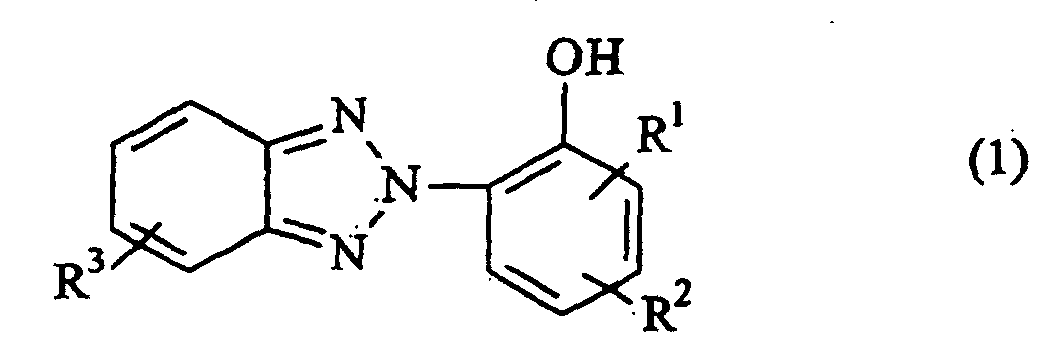 wherein each of R1 and R2, which are the same or different, is hydrogen, a C1-C10 hydrocarbon group or C1-C10 alkoxy, R3 is hydrogen, a halogen, C1-C10 alkoxy, cyano or nitro, R4 is hydrogen, a halogen, C1-C10 alkoxy or a C1-C10 hydrocarbon group and R5 is hydrogen, C1-C10 alkoxy or a C1-C10 hydrocarbon group, and wherein the polymeric compound having an active hydrogen is an acrylic polyol in which the monomer component constituting the acrylic polyol is a polymerizable unsaturated monomer having a hydroxyl group; a polymerizable unsaturated monomer having a cycloalkyl group; a polymerizable light stable monomer; a polymerizable ultraviolet absorbing monomer; and a prepolymer which is a monomer having a polymerizable unsaturated ethylene group and a weight-average molecular weight of 1000-30000, and which has 30% by weight or more of a basic functional group and/or 30% by weight or more of an acidic functional group based on the weight of the prepolymer.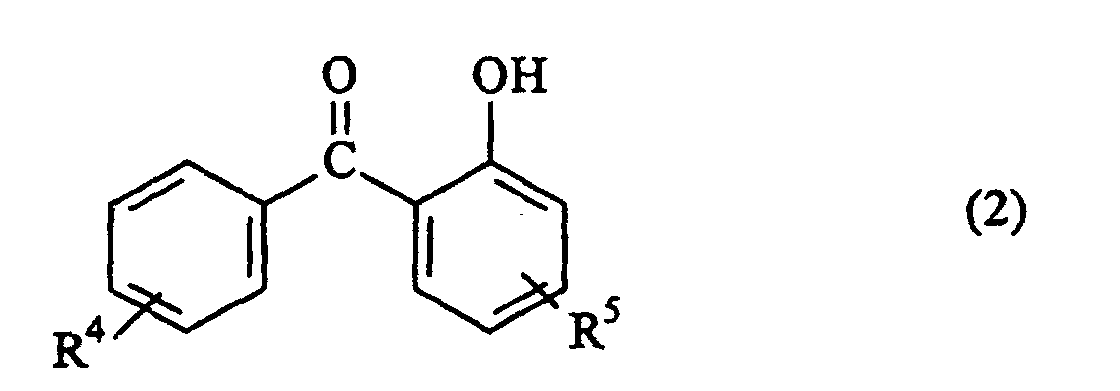
- A composition according to claim 1 which is obtainable by further reacting an isocyanate prepolymer (B) which is different from the isocyanate compound (A) with the polymeric compound having an active hydrogen and isocyanate compound (A).
- A composition according to claim. 1 or 2, wherein the isocyanate prepolymer or monomer having at least two free isocyariate groups is hexamethylene diisocyanate, an isocyanurate trimer or biuret compound of hexamethylene diisocyanate, an adduct compound of a polyol, or a prepolymer thereof.
- An article coated with a composition as defined in any one of the preceding claims.
Applications Claiming Priority (2)
| Application Number | Priority Date | Filing Date | Title |
|---|---|---|---|
| JP22644698 | 1998-08-11 | ||
| JP22644698A JP3059704B2 (en) | 1998-08-11 | 1998-08-11 | Paint with good weather resistance |
Publications (2)
| Publication Number | Publication Date |
|---|---|
| EP0979836A1 EP0979836A1 (en) | 2000-02-16 |
| EP0979836B1 true EP0979836B1 (en) | 2004-12-15 |
Family
ID=16845235
Family Applications (1)
| Application Number | Title | Priority Date | Filing Date |
|---|---|---|---|
| EP19990306297 Expired - Lifetime EP0979836B1 (en) | 1998-08-11 | 1999-08-10 | Paint of high weather resistance |
Country Status (5)
| Country | Link |
|---|---|
| US (1) | US6248828B1 (en) |
| EP (1) | EP0979836B1 (en) |
| JP (1) | JP3059704B2 (en) |
| AT (1) | ATE284909T1 (en) |
| DE (1) | DE69922596T2 (en) |
Cited By (1)
| Publication number | Priority date | Publication date | Assignee | Title |
|---|---|---|---|---|
| CN109161266A (en) * | 2018-07-26 | 2019-01-08 | 鳄鱼制漆(上海)有限公司 | A kind of no flatting silica transparent suboptical water-based exterior wall finish and preparation method thereof |
Families Citing this family (8)
| Publication number | Priority date | Publication date | Assignee | Title |
|---|---|---|---|---|
| JP3380226B2 (en) * | 2000-11-15 | 2003-02-24 | 大成化工株式会社 | Manufacturing method of weather resistant coating film |
| US6994745B2 (en) * | 2001-04-05 | 2006-02-07 | Kansai Paint Co., Ltd. | Pigment dispersing resin |
| KR100729804B1 (en) | 2005-12-29 | 2007-06-20 | (주)디피아이 홀딩스 | Ultraviolet Curing Transparent Paint and Manufacturing Method Thereof |
| JP5538713B2 (en) * | 2008-12-12 | 2014-07-02 | 株式会社日本触媒 | Curable resin composition |
| WO2014112946A1 (en) * | 2013-01-18 | 2014-07-24 | Esuan Concept Pte Ltd | Coating compound for resurfacing damaged wall/tiles and the method of using the same |
| WO2018169031A1 (en) | 2017-03-17 | 2018-09-20 | 三菱ケミカル株式会社 | Urethane (meth)acrylate polymer |
| TWI667266B (en) * | 2017-07-12 | 2019-08-01 | 臺灣永光化學工業股份有限公司 | Use of polymerizable ultraviolet absorber in polyurethane and composition for forming polyurethane comprising the same |
| JP7718114B2 (en) * | 2021-06-21 | 2025-08-05 | ブリヂストンスポーツ株式会社 | golf balls |
Family Cites Families (10)
| Publication number | Priority date | Publication date | Assignee | Title |
|---|---|---|---|---|
| GB1470413A (en) * | 1973-06-20 | 1977-04-14 | American Cyanamid Co | Polyurethane compositions |
| US4214016A (en) * | 1975-06-30 | 1980-07-22 | Toyoda Gosei Kabushiki-Kaisha (Toyoda Synthetics Co., Ltd.) | Process for manufacturing plastic articles having on the surface thereof a protected metal film |
| US4061652A (en) | 1975-10-28 | 1977-12-06 | General Electric Company | Urethanes of hydroxybenzotriazoles |
| CA1090025A (en) * | 1975-12-29 | 1980-11-18 | Keenan L. Crawley | Polyurethane metallic enamel |
| BR8007462A (en) | 1979-11-21 | 1981-06-02 | Du Pont | IMPROVEMENT IN COMPOSITION OF COATING AND SUBSTRATE WITH FINISHING A TOP LAYER OF TRANSPARENT COATING |
| JPS5749655A (en) | 1980-09-09 | 1982-03-23 | Idemitsu Kosan Co Ltd | Polyurethane composition |
| DE68913346T2 (en) | 1988-05-19 | 1994-09-15 | Du Pont | Bisureas as light stabilizers for organic polymers. |
| JPH0757857B2 (en) | 1993-11-29 | 1995-06-21 | 株式会社日本触媒 | Urethane resin coating composition |
| JPH093393A (en) | 1995-06-16 | 1997-01-07 | Nippon Shokubai Co Ltd | Coating composition |
| DE19645165A1 (en) | 1996-11-02 | 1998-05-07 | Huels Chemische Werke Ag | Lacquer polyisocyanates with built-in HALS stabilizer |
-
1998
- 1998-08-11 JP JP22644698A patent/JP3059704B2/en not_active Expired - Lifetime
-
1999
- 1999-08-05 US US09/369,122 patent/US6248828B1/en not_active Expired - Lifetime
- 1999-08-10 EP EP19990306297 patent/EP0979836B1/en not_active Expired - Lifetime
- 1999-08-10 AT AT99306297T patent/ATE284909T1/en not_active IP Right Cessation
- 1999-08-10 DE DE1999622596 patent/DE69922596T2/en not_active Expired - Lifetime
Cited By (1)
| Publication number | Priority date | Publication date | Assignee | Title |
|---|---|---|---|---|
| CN109161266A (en) * | 2018-07-26 | 2019-01-08 | 鳄鱼制漆(上海)有限公司 | A kind of no flatting silica transparent suboptical water-based exterior wall finish and preparation method thereof |
Also Published As
| Publication number | Publication date |
|---|---|
| DE69922596T2 (en) | 2005-12-15 |
| JP3059704B2 (en) | 2000-07-04 |
| DE69922596D1 (en) | 2005-01-20 |
| ATE284909T1 (en) | 2005-01-15 |
| JP2000053913A (en) | 2000-02-22 |
| US6248828B1 (en) | 2001-06-19 |
| EP0979836A1 (en) | 2000-02-16 |
Similar Documents
| Publication | Publication Date | Title |
|---|---|---|
| DE602004008856T2 (en) | Acrylate-functional blocked polyisocyanate resin for dual cure coatings | |
| JPH01261409A (en) | Acrylic polyol and composition for two-pack urethane resin coating containing it | |
| EP0882748A2 (en) | Coating compositions having extented pot life and short cure time | |
| EP1590391B1 (en) | Solvent borne 2k coating compositions | |
| EP4238736B1 (en) | Two-pack coating composition | |
| CA2097094A1 (en) | Coating composition and the use thereof in processes for producing multi-layer coatings | |
| TWI338023B (en) | Multi-component, waterborne coating compositions, related coatings and methods | |
| US4532300A (en) | Production of coatings | |
| US6248828B1 (en) | Paint of high weather resistance | |
| EP1454934B1 (en) | Two-component coating compositions | |
| JPH0757857B2 (en) | Urethane resin coating composition | |
| EP1207174B1 (en) | Process for producing weather resistant coating film | |
| EP0810246A2 (en) | Method of producing isocyanate-modified latex polymer | |
| EP1211267B1 (en) | Coating compositions based on hydroxy-functional (meth)acrylic copolymers | |
| RU2226536C2 (en) | Composition for filling agent | |
| EP0654069B1 (en) | Paint composition | |
| EP3845574B1 (en) | Polycarbonate-modified acrylic resin, paint, and plastic molded article painted by said paint | |
| KR0158534B1 (en) | Acryl urethane composition for polyethylene tube coating and coating method using the same | |
| EP0661317B1 (en) | Coating containing urethane and acrylic resin mixture for improved resistance to chipping | |
| US4251422A (en) | Coating compositions containing polymers with isocyano groups and alkylboranes | |
| JP2818231B2 (en) | Paint composition | |
| EP4688981A1 (en) | Clearcoat coating materials for plastic parts | |
| JPS61283668A (en) | Paint for pool | |
| JPS6315311B2 (en) | ||
| JPS6295354A (en) | Resin composition for acrylic urethane coating material |
Legal Events
| Date | Code | Title | Description |
|---|---|---|---|
| PUAI | Public reference made under article 153(3) epc to a published international application that has entered the european phase |
Free format text: ORIGINAL CODE: 0009012 |
|
| 17P | Request for examination filed |
Effective date: 19990819 |
|
| AK | Designated contracting states |
Kind code of ref document: A1 Designated state(s): AT BE CH CY DE DK ES FI FR GB GR IE IT LI LU MC NL PT SE |
|
| AX | Request for extension of the european patent |
Free format text: AL;LT;LV;MK;RO;SI |
|
| AKX | Designation fees paid |
Free format text: AT BE CH CY DE DK ES FI FR GB GR IE IT LI LU MC NL PT SE |
|
| 17Q | First examination report despatched |
Effective date: 20040116 |
|
| GRAP | Despatch of communication of intention to grant a patent |
Free format text: ORIGINAL CODE: EPIDOSNIGR1 |
|
| GRAS | Grant fee paid |
Free format text: ORIGINAL CODE: EPIDOSNIGR3 |
|
| GRAA | (expected) grant |
Free format text: ORIGINAL CODE: 0009210 |
|
| AK | Designated contracting states |
Kind code of ref document: B1 Designated state(s): AT BE CH CY DE DK ES FI FR GB GR IE IT LI LU MC NL PT SE |
|
| PG25 | Lapsed in a contracting state [announced via postgrant information from national office to epo] |
Ref country code: LI Free format text: LAPSE BECAUSE OF FAILURE TO SUBMIT A TRANSLATION OF THE DESCRIPTION OR TO PAY THE FEE WITHIN THE PRESCRIBED TIME-LIMIT Effective date: 20041215 Ref country code: FI Free format text: LAPSE BECAUSE OF FAILURE TO SUBMIT A TRANSLATION OF THE DESCRIPTION OR TO PAY THE FEE WITHIN THE PRESCRIBED TIME-LIMIT Effective date: 20041215 Ref country code: CH Free format text: LAPSE BECAUSE OF FAILURE TO SUBMIT A TRANSLATION OF THE DESCRIPTION OR TO PAY THE FEE WITHIN THE PRESCRIBED TIME-LIMIT Effective date: 20041215 Ref country code: AT Free format text: LAPSE BECAUSE OF FAILURE TO SUBMIT A TRANSLATION OF THE DESCRIPTION OR TO PAY THE FEE WITHIN THE PRESCRIBED TIME-LIMIT Effective date: 20041215 |
|
| REG | Reference to a national code |
Ref country code: GB Ref legal event code: FG4D Ref country code: CH Ref legal event code: EP |
|
| REG | Reference to a national code |
Ref country code: IE Ref legal event code: FG4D |
|
| REF | Corresponds to: |
Ref document number: 69922596 Country of ref document: DE Date of ref document: 20050120 Kind code of ref document: P |
|
| PG25 | Lapsed in a contracting state [announced via postgrant information from national office to epo] |
Ref country code: SE Free format text: LAPSE BECAUSE OF FAILURE TO SUBMIT A TRANSLATION OF THE DESCRIPTION OR TO PAY THE FEE WITHIN THE PRESCRIBED TIME-LIMIT Effective date: 20050315 Ref country code: GR Free format text: LAPSE BECAUSE OF FAILURE TO SUBMIT A TRANSLATION OF THE DESCRIPTION OR TO PAY THE FEE WITHIN THE PRESCRIBED TIME-LIMIT Effective date: 20050315 Ref country code: DK Free format text: LAPSE BECAUSE OF FAILURE TO SUBMIT A TRANSLATION OF THE DESCRIPTION OR TO PAY THE FEE WITHIN THE PRESCRIBED TIME-LIMIT Effective date: 20050315 |
|
| PG25 | Lapsed in a contracting state [announced via postgrant information from national office to epo] |
Ref country code: ES Free format text: LAPSE BECAUSE OF FAILURE TO SUBMIT A TRANSLATION OF THE DESCRIPTION OR TO PAY THE FEE WITHIN THE PRESCRIBED TIME-LIMIT Effective date: 20050326 |
|
| REG | Reference to a national code |
Ref country code: CH Ref legal event code: PL |
|
| PG25 | Lapsed in a contracting state [announced via postgrant information from national office to epo] |
Ref country code: LU Free format text: LAPSE BECAUSE OF NON-PAYMENT OF DUE FEES Effective date: 20050810 Ref country code: IE Free format text: LAPSE BECAUSE OF NON-PAYMENT OF DUE FEES Effective date: 20050810 Ref country code: CY Free format text: LAPSE BECAUSE OF FAILURE TO SUBMIT A TRANSLATION OF THE DESCRIPTION OR TO PAY THE FEE WITHIN THE PRESCRIBED TIME-LIMIT Effective date: 20050810 |
|
| PG25 | Lapsed in a contracting state [announced via postgrant information from national office to epo] |
Ref country code: MC Free format text: LAPSE BECAUSE OF NON-PAYMENT OF DUE FEES Effective date: 20050831 |
|
| ET | Fr: translation filed | ||
| PLBE | No opposition filed within time limit |
Free format text: ORIGINAL CODE: 0009261 |
|
| STAA | Information on the status of an ep patent application or granted ep patent |
Free format text: STATUS: NO OPPOSITION FILED WITHIN TIME LIMIT |
|
| 26N | No opposition filed |
Effective date: 20050916 |
|
| REG | Reference to a national code |
Ref country code: IE Ref legal event code: MM4A |
|
| PG25 | Lapsed in a contracting state [announced via postgrant information from national office to epo] |
Ref country code: PT Free format text: LAPSE BECAUSE OF NON-PAYMENT OF DUE FEES Effective date: 20050515 |
|
| REG | Reference to a national code |
Ref country code: FR Ref legal event code: PLFP Year of fee payment: 18 |
|
| REG | Reference to a national code |
Ref country code: FR Ref legal event code: PLFP Year of fee payment: 19 |
|
| REG | Reference to a national code |
Ref country code: DE Ref legal event code: R082 Ref document number: 69922596 Country of ref document: DE Representative=s name: PATENTANWAELTE HENKEL, BREUER & PARTNER MBB, DE Ref country code: DE Ref legal event code: R082 Ref document number: 69922596 Country of ref document: DE Representative=s name: PATENTANWAELTE HENKEL, BREUER & PARTNER, DE Ref country code: DE Ref legal event code: R081 Ref document number: 69922596 Country of ref document: DE Owner name: TAISEI HOLDINGS CO., LTD., JP Free format text: FORMER OWNER: TAISEI CHEMICAL INDUSTRIES LTD., TOKIO/TOKYO, JP |
|
| REG | Reference to a national code |
Ref country code: NL Ref legal event code: HC Owner name: TAISEI HOLDINGS CO., LTD; JP Free format text: DETAILS ASSIGNMENT: CHANGE OF OWNER(S), CHANGE OF OWNER(S) NAME; FORMER OWNER NAME: TAISEI CHEMICAL INDUSTRIES LTD Effective date: 20171103 |
|
| REG | Reference to a national code |
Ref country code: BE Ref legal event code: HC Owner name: TAISEI HOLDINGS CO., LTD.; JP Free format text: DETAILS ASSIGNMENT: CHANGE OF OWNER(S), CHANGEMENT NOM PROPRIETAIRE; FORMER OWNER NAME: TAISEI CHEMICAL INDUSTRIES LTD Effective date: 20171004 |
|
| REG | Reference to a national code |
Ref country code: FR Ref legal event code: CD Owner name: TAISEI HOLDINGS CO., LTD, JP Effective date: 20180119 |
|
| REG | Reference to a national code |
Ref country code: FR Ref legal event code: PLFP Year of fee payment: 20 |
|
| PGFP | Annual fee paid to national office [announced via postgrant information from national office to epo] |
Ref country code: FR Payment date: 20180620 Year of fee payment: 20 |
|
| PGFP | Annual fee paid to national office [announced via postgrant information from national office to epo] |
Ref country code: IT Payment date: 20180807 Year of fee payment: 20 Ref country code: DE Payment date: 20180827 Year of fee payment: 20 Ref country code: NL Payment date: 20180828 Year of fee payment: 20 |
|
| PGFP | Annual fee paid to national office [announced via postgrant information from national office to epo] |
Ref country code: GB Payment date: 20180808 Year of fee payment: 20 Ref country code: BE Payment date: 20180719 Year of fee payment: 20 |
|
| REG | Reference to a national code |
Ref country code: DE Ref legal event code: R071 Ref document number: 69922596 Country of ref document: DE |
|
| REG | Reference to a national code |
Ref country code: NL Ref legal event code: MK Effective date: 20190809 |
|
| REG | Reference to a national code |
Ref country code: GB Ref legal event code: PE20 Expiry date: 20190809 |
|
| REG | Reference to a national code |
Ref country code: BE Ref legal event code: MK Effective date: 20190810 |
|
| PG25 | Lapsed in a contracting state [announced via postgrant information from national office to epo] |
Ref country code: GB Free format text: LAPSE BECAUSE OF EXPIRATION OF PROTECTION Effective date: 20190809 |