EP0979243B1 - Aktivierung von peptiden - Google Patents
Aktivierung von peptiden Download PDFInfo
- Publication number
- EP0979243B1 EP0979243B1 EP98910872A EP98910872A EP0979243B1 EP 0979243 B1 EP0979243 B1 EP 0979243B1 EP 98910872 A EP98910872 A EP 98910872A EP 98910872 A EP98910872 A EP 98910872A EP 0979243 B1 EP0979243 B1 EP 0979243B1
- Authority
- EP
- European Patent Office
- Prior art keywords
- peptide
- active site
- peptides
- site
- activity
- Prior art date
- Legal status (The legal status is an assumption and is not a legal conclusion. Google has not performed a legal analysis and makes no representation as to the accuracy of the status listed.)
- Expired - Lifetime
Links
Images



Classifications
-
- C—CHEMISTRY; METALLURGY
- C07—ORGANIC CHEMISTRY
- C07K—PEPTIDES
- C07K7/00—Peptides having 5 to 20 amino acids in a fully defined sequence; Derivatives thereof
- C07K7/04—Linear peptides containing only normal peptide links
- C07K7/08—Linear peptides containing only normal peptide links having 12 to 20 amino acids
-
- A—HUMAN NECESSITIES
- A61—MEDICAL OR VETERINARY SCIENCE; HYGIENE
- A61K—PREPARATIONS FOR MEDICAL, DENTAL OR TOILETRY PURPOSES
- A61K47/00—Medicinal preparations characterised by the non-active ingredients used, e.g. carriers or inert additives; Targeting or modifying agents chemically bound to the active ingredient
- A61K47/50—Medicinal preparations characterised by the non-active ingredients used, e.g. carriers or inert additives; Targeting or modifying agents chemically bound to the active ingredient the non-active ingredient being chemically bound to the active ingredient, e.g. polymer-drug conjugates
- A61K47/51—Medicinal preparations characterised by the non-active ingredients used, e.g. carriers or inert additives; Targeting or modifying agents chemically bound to the active ingredient the non-active ingredient being chemically bound to the active ingredient, e.g. polymer-drug conjugates the non-active ingredient being a modifying agent
- A61K47/54—Medicinal preparations characterised by the non-active ingredients used, e.g. carriers or inert additives; Targeting or modifying agents chemically bound to the active ingredient the non-active ingredient being chemically bound to the active ingredient, e.g. polymer-drug conjugates the non-active ingredient being a modifying agent the modifying agent being an organic compound
- A61K47/542—Carboxylic acids, e.g. a fatty acid or an amino acid
-
- A—HUMAN NECESSITIES
- A61—MEDICAL OR VETERINARY SCIENCE; HYGIENE
- A61K—PREPARATIONS FOR MEDICAL, DENTAL OR TOILETRY PURPOSES
- A61K47/00—Medicinal preparations characterised by the non-active ingredients used, e.g. carriers or inert additives; Targeting or modifying agents chemically bound to the active ingredient
- A61K47/50—Medicinal preparations characterised by the non-active ingredients used, e.g. carriers or inert additives; Targeting or modifying agents chemically bound to the active ingredient the non-active ingredient being chemically bound to the active ingredient, e.g. polymer-drug conjugates
- A61K47/51—Medicinal preparations characterised by the non-active ingredients used, e.g. carriers or inert additives; Targeting or modifying agents chemically bound to the active ingredient the non-active ingredient being chemically bound to the active ingredient, e.g. polymer-drug conjugates the non-active ingredient being a modifying agent
- A61K47/62—Medicinal preparations characterised by the non-active ingredients used, e.g. carriers or inert additives; Targeting or modifying agents chemically bound to the active ingredient the non-active ingredient being chemically bound to the active ingredient, e.g. polymer-drug conjugates the non-active ingredient being a modifying agent the modifying agent being a protein, peptide or polyamino acid
-
- A—HUMAN NECESSITIES
- A61—MEDICAL OR VETERINARY SCIENCE; HYGIENE
- A61K—PREPARATIONS FOR MEDICAL, DENTAL OR TOILETRY PURPOSES
- A61K47/00—Medicinal preparations characterised by the non-active ingredients used, e.g. carriers or inert additives; Targeting or modifying agents chemically bound to the active ingredient
- A61K47/50—Medicinal preparations characterised by the non-active ingredients used, e.g. carriers or inert additives; Targeting or modifying agents chemically bound to the active ingredient the non-active ingredient being chemically bound to the active ingredient, e.g. polymer-drug conjugates
- A61K47/69—Medicinal preparations characterised by the non-active ingredients used, e.g. carriers or inert additives; Targeting or modifying agents chemically bound to the active ingredient the non-active ingredient being chemically bound to the active ingredient, e.g. polymer-drug conjugates the conjugate being characterised by physical or galenical forms, e.g. emulsion, particle, inclusion complex, stent or kit
- A61K47/6905—Medicinal preparations characterised by the non-active ingredients used, e.g. carriers or inert additives; Targeting or modifying agents chemically bound to the active ingredient the non-active ingredient being chemically bound to the active ingredient, e.g. polymer-drug conjugates the conjugate being characterised by physical or galenical forms, e.g. emulsion, particle, inclusion complex, stent or kit the form being a colloid or an emulsion
- A61K47/6911—Medicinal preparations characterised by the non-active ingredients used, e.g. carriers or inert additives; Targeting or modifying agents chemically bound to the active ingredient the non-active ingredient being chemically bound to the active ingredient, e.g. polymer-drug conjugates the conjugate being characterised by physical or galenical forms, e.g. emulsion, particle, inclusion complex, stent or kit the form being a colloid or an emulsion the form being a liposome
-
- C—CHEMISTRY; METALLURGY
- C07—ORGANIC CHEMISTRY
- C07K—PEPTIDES
- C07K1/00—General methods for the preparation of peptides, i.e. processes for the organic chemical preparation of peptides or proteins of any length
- C07K1/107—General methods for the preparation of peptides, i.e. processes for the organic chemical preparation of peptides or proteins of any length by chemical modification of precursor peptides
-
- C—CHEMISTRY; METALLURGY
- C07—ORGANIC CHEMISTRY
- C07K—PEPTIDES
- C07K14/00—Peptides having more than 20 amino acids; Gastrins; Somatostatins; Melanotropins; Derivatives thereof
- C07K14/001—Peptides having more than 20 amino acids; Gastrins; Somatostatins; Melanotropins; Derivatives thereof by chemical synthesis
-
- C—CHEMISTRY; METALLURGY
- C07—ORGANIC CHEMISTRY
- C07K—PEPTIDES
- C07K14/00—Peptides having more than 20 amino acids; Gastrins; Somatostatins; Melanotropins; Derivatives thereof
- C07K14/435—Peptides having more than 20 amino acids; Gastrins; Somatostatins; Melanotropins; Derivatives thereof from animals; from humans
- C07K14/43504—Peptides having more than 20 amino acids; Gastrins; Somatostatins; Melanotropins; Derivatives thereof from animals; from humans from invertebrates
- C07K14/43563—Peptides having more than 20 amino acids; Gastrins; Somatostatins; Melanotropins; Derivatives thereof from animals; from humans from invertebrates from insects
- C07K14/43572—Peptides having more than 20 amino acids; Gastrins; Somatostatins; Melanotropins; Derivatives thereof from animals; from humans from invertebrates from insects from bees
-
- C—CHEMISTRY; METALLURGY
- C07—ORGANIC CHEMISTRY
- C07K—PEPTIDES
- C07K14/00—Peptides having more than 20 amino acids; Gastrins; Somatostatins; Melanotropins; Derivatives thereof
- C07K14/435—Peptides having more than 20 amino acids; Gastrins; Somatostatins; Melanotropins; Derivatives thereof from animals; from humans
- C07K14/46—Peptides having more than 20 amino acids; Gastrins; Somatostatins; Melanotropins; Derivatives thereof from animals; from humans from vertebrates
- C07K14/47—Peptides having more than 20 amino acids; Gastrins; Somatostatins; Melanotropins; Derivatives thereof from animals; from humans from vertebrates from mammals
- C07K14/4701—Peptides having more than 20 amino acids; Gastrins; Somatostatins; Melanotropins; Derivatives thereof from animals; from humans from vertebrates from mammals not used
- C07K14/4723—Cationic antimicrobial peptides, e.g. defensins
-
- G—PHYSICS
- G01—MEASURING; TESTING
- G01N—INVESTIGATING OR ANALYSING MATERIALS BY DETERMINING THEIR CHEMICAL OR PHYSICAL PROPERTIES
- G01N33/00—Investigating or analysing materials by specific methods not covered by groups G01N1/00 - G01N31/00
- G01N33/48—Biological material, e.g. blood, urine; Haemocytometers
- G01N33/50—Chemical analysis of biological material, e.g. blood, urine; Testing involving biospecific ligand binding methods; Immunological testing
- G01N33/58—Chemical analysis of biological material, e.g. blood, urine; Testing involving biospecific ligand binding methods; Immunological testing involving labelled substances
- G01N33/585—Chemical analysis of biological material, e.g. blood, urine; Testing involving biospecific ligand binding methods; Immunological testing involving labelled substances with a particulate label, e.g. coloured latex
- G01N33/586—Liposomes, microcapsules or cells
-
- A—HUMAN NECESSITIES
- A61—MEDICAL OR VETERINARY SCIENCE; HYGIENE
- A61K—PREPARATIONS FOR MEDICAL, DENTAL OR TOILETRY PURPOSES
- A61K38/00—Medicinal preparations containing peptides
Definitions
- This invention relates to the activation of peptides, polypeptides or proteins.
- peptide will be used, but it is to be understood that the invention is not limited to peptides since the invention finds equal utility in polypeptides, proteins and their derivatives and analogues and homologues thereof.
- this invention relates to peptides or derivatives thereof whose functions may be altered in a reversible and/or competitive manner by specific reactions. More particularly, the present invention relates to the modification of the functions of a peptide at an activated or naturally-active site of the peptide by the modification of an amino acid introduced at the said site, which amino acid is absent from the remaining peptide structure; and the introduction of another modifiable amino acid at a site known not to affect the activity or function of the peptide. The position of the sites may vary depending on the nature of the peptide being modified at such sites.
- the method of this invention is particularly useful in relation to peptides capable of altering the integrity of lipid barriers and membranes, which may be activated by specific reactions.
- Lipids are important in a range of biological, medical and industrial applications, particularly where a barrier needs to be maintained to aqueous materials.
- Living organisms also possess various lipid-bounded structures, typically involving phospholipid bilayer membranes, such as may be found in the cell membrane or plasmalemma of cells or their organelles such as mitochondria, lysosomes, nucleus, endoplasmic reticulum.
- the functions of the membrane include the retention of the cytoplasm inside the cell, maintenance of optimal conditions within the cell or its organelles, sensing the environment outside the cell and effecting appropriate bio-chemical responses within the cell or its organelles.
- a number of agents are capable of breaching the barrier imposed by the lipid component of the cell membrane.
- these agents include detergents, which penetrate into the cell membrane disrupting its structure and eventually dissolving the lipid molecules.
- Some enzymes typically phospholipases, may also disrupt lipid membranes.
- Other proteins, polypeptides and peptides may also disrupt or breach the barrier, or are involved in the permeation of water soluble materials across lipid membranes.
- Natural biological membranes of the cell possess various proteins whose prime function is either to form an aqueous channel (or pore) or to act as a carrier to transport molecules from one side of the membrane to the other.
- cytolytic toxins which disrupt cell membranes.
- these toxins are called cytolytic toxins and many are based on peptide structures.
- Some of these cytolytic toxins act first on the protein components in the cell membrane of biological cells.
- these are larger proteins or polypeptides such as cholera toxin or botulinum toxin.
- WO97/33908 describes peptides with lytic activity having at least an amphipathic ⁇ -helix of sufficient length and character to function lytically.
- EP0106370 relates to an assay for an analyte using a ligand coupled to a liposome lysing agent.
- US4874710 relates to a peptide with lytic activity having a N- or C-terminal comprising one or more moieties which result in increased positive charge.
- the method of this invention is particularly useful when it is desirable to use lower molecular weight polypeptides and peptides acting on the lipid component of membranes.
- polypeptides and peptides may act by forming channels in the membrane or by physically disrupting the membrane, which processes may involve co-operative behaviour between the polypeptide or peptide molecules forming aggregates in the membranes.
- Preferred examples of this type of toxin are the lysins produced by pathogenic bacteria, a group of peptides called defensins, produced by a range of insects and mucosal cells in mammals, and also by cells involved in defence against pathogens, such as neutrophils and macrophages.
- the most studied of this group of peptides and the most preferred peptide for use in this invention is melittin, which is the main toxin in bee venom, together with phospholipases. Melittin functions by permeabilising membranes.
- Defensin peptides have a broad specificity, and are being developed as broad spectrum anti-microbials for topical applications such as contact lens fluids. Defensins also seem to promote wound healing. Pro-defensins and defensins from human and other sources are being cloned. Some are being considered for expression in plants to protect against microbial infection and diseases in plants.
- Litchfield et al's assay although shown to be useful for few analytes has serious limitations.
- One limitation is that the coupling of haptens to naturally occurring cytolysins does not always produce conjugates having adequate activity. For example, permethylation of melittin results in almost complete loss of activity (Biochem. J. (1992) 284, 663-665).
- Another limitation is that the active conjugate can not always be effectively inhibited by the binder thus giving a high background signal. Background signal is the signal obtained for the inactivated form of the peptide.
- Background signal is the signal obtained for the inactivated form of the peptide.
- the sensitivity of assay is limited because more than one hapten is usually present on the conjugate due to natural cytolysins often bearing more than one chemically modifiable functional group.
- Yet another limitation is significantly lowered aqueous solubility of the conjugates especially when hydrophobic haptens are used.
- a method of modifying the activity of a peptide comprising:
- the activity of the peptide may be cytolytic activity or membrane activity.
- the reactivation of the active site may be delayed reactivation, the reactivation preferably being delayed for at least 14 hours.
- the particle or surface may be a lipid membrane and the peptide may be integrated with the lipid membrane.
- the non-active site capable of conjugation is introduced into the peptide by substitution of at least one amino acid at a non-active site of the peptide. All the other amino acids may be replaced in the peptide.
- the peptide may be obtained or derived from natural peptides or polypeptides.
- the peptide has been produced synthetically.
- the active site of the peptide is modified using an ionisable group, a redox sensitive group, an affinity ligand, an enzyme substrate, a light sensitive group, a pH sensitive group or a chemical group sensitive to physical, chemical or biochemical effects.
- the peptide is preferably modified by the replacement of amino acids with other amino acids or groups whereby binding of the peptide to a lipid membrane is improved.
- this invention concerns the modification of biologically active peptides, such as hormones, drugs, toxins, and peptides which act on lipid bilayer membranes.
- the active site as defined by this invention need not be the same as the active or functional site as will be understood by those expert in the field, that is it may be a naturally occurring active site or an artificially introduced activated site.
- the active site of a peptide may be determined by a number of well known methods, and is typically determined by synthesising a range of peptides each housing a modifiable amino acid placed at a different position and determining the alteration of the activity or function of the peptide or its conjugate with ligands, upon binding to other molecules such as antibodies, upon cleavage of the ligand, or upon effecting changes physically, chemically, enzymically or by other means at the site.
- the position of an active site may depend on the nature of molecules attached at the site.
- a modifiable amino acid may be placed at a site so determined so as not to affect the function or activity of the peptide. This modified amino acid may possess different chemical properties to the first amino acid which it replaces.
- the invention uses synthetic peptides where chemically modifiable amino acids (for example lysine, cysteine, serine, threonine, tyrosine, aspartate, glutamate etc.) or amino acid analogues (such as ornithine) have been eliminated.
- modifiable amino acids for example lysine, cysteine, serine, threonine, tyrosine, aspartate, glutamate etc.
- amino acid analogues such as ornithine
- An important aspect of this invention is the introduction of such modifiable amino acids at either position altering the function or activity of the peptide or at a site in the peptide structure which does not affect the activity or function of the peptide or a combination of both aforesaid sites.
- the peptide has a modifiable amino acid at a site affecting its membrane active function, its modification or consequences thereof results in the efficient inactivation or inhibition of the activity of the peptide by binding to a binder.
- this involves the introduction of a modifiable amino acid at the site and its chemical modification with a ligand, such that binding of an antibody or another binding protein to the peptide efficiently inhibits the activity of the peptide.
- the method of the invention may also involve chemical modification of a peptide which results in a change of activity in the peptide, for example the reversible inactivation of the peptide.
- the modification may be effected using an ionisable group or groups whose reversible reactions with protons make the peptide responsive to pH, or, similarly, by modification with a radox sensitive group making the peptide sensitive to its redox environment.
- labile bonds would be citraconylation at the active site and then using acidity of media to activate the peptide.
- Another example is the modification of the activated site to include an enzyme substrate, such that on contact with the enzyme, and on subsequent enzymatic reaction, the peptide is activated.
- a bulky group for instance another short peptide or sugar or nucleic acids, DNA, etc.
- cleavage of the bulky group by specific enzyme will then activate the peptide.
- a further example is the introduction of chemical group sensitive to physical effects.
- a light sensitive group whose structure may be changed by photochemical reaction or by photoisomerism or light stimulation can be used.
- An example of light sensitive group would be to incorporate lightswitchable moiety such as azabenzene or light switchable amino acids (Bioorganic & Medicinal chemistry letters (1994), 4, 2145-2146) in order to regulate the peptide activity by structural changes.
- the activity of the peptide can be modified by specific physical, chemical, biochemical and biological reactions.
- Another aspect of this invention is the modification of a peptide at a site which does not affect its activity or function.
- a peptide can be readily coupled with other molecules, materials or to surfaces.
- other well-known reactions can be used to target the peptide to specific sites.
- a peptide can be coupled to specific chemical functional groups in the material, or to specific sites on its surface and, by the coupling of other structures to the peptide, it can specifically bind to other biological structures, for example to a specific receptor on the cell surface.
- the invention further provides peptides whose activity is controllable by specific reactions and whose activity can be targeted to specific sites.
- Such peptides may be highly useful in diagnostics, detection, sensors, therapeutic or other pharmaceutical applications.
- Such peptides offer a considerable improvement over the prior art. It is possible using the peptides of the invention to develop immunoassays for a wide range of potential analytes by very straightforward means. The presence of only one activated site in a peptide, results in higher sensitivity and it also results in a higher efficiency of interaction of the peptide conjugate by the aforesaid physical, chemical, biochemical or biological reactions resulting in a much lower backgroup activity compared to modification of peptides at other similarly modifiable sites that may exist.
- the active site can be chemically located at almost anywhere along the sequence of the peptide
- the best position may be selected by producing a series of analogues for a given analyte, or the most effective analogue can be developed further to form the basis of an assay for that particular analyte or for the other aforesaid applications.
- peptides of this invention Another characteristic of the use of peptides of this invention is the ability to introduce positive feedback amplification into the process of activation of the peptide.
- the activity of the peptide is blocked such that on release of activator from membrane bounded particles, higher activities of peptides are produced, which in turn release more activator resulting in a positive feedback effect and non-linear or exponential release of bio-active material or diagnostic marker.
- the peptide can be modified by binding to it a biotin analogue such that binding of streptavidin or avidin results in the blocking of activity until such times as biotin or a similar analogue is released which competes with the streptavidin or avidin activating the peptide.
- the peptide may be inactivated by incorporation of a moiety at the activate site such that on release of an enzyme from the particles the peptide is activated.
- a moiety such that on release of an enzyme from the particles the peptide is activated.
- proteases, and glucuronidases may be suitable enzymes
- modified binding proteins may be used which are relatively easy to release from the peptide.
- a biotin-modified peptide can be blocked by binding to nitroavidin until such time as the presence of free biotin activates the peptide by binding with the nitroavidin.
- pH can affect the binding of proteins (For example nitroavidin) to a modified peptide (For the above example biotin-peptide conjugate) and this can be useful parameter to effect activation/inactivation of the peptide.
- activation means on the peptide by inducing activity using both a specific ligand binding reaction and another parameter for instance pH change.
- a pH modified peptide can be specifically activated by ligand binding reaction at the activated site and only when both conditions are met the peptide becomes active.
- Peptides can be modified such that activity can be controlled by altering other parameters for instance redox change, photochemical means, enzymatic reactions, acid or alkali labile bonds, chemically cleavable bonds.
- another characteristic of this invention is the modification of the peptide such that it remains associated with the lipid membrane.
- this involves the introduction of hydrophobic amino acids or modification with a hydrophobic or amphiphilic chemical species, such as fatty acids (for example myristic acid).
- fatty acids for example myristic acid
- the peptide remains tightly attached or integrated into the lipid membrane, whilst retaining its ability to be specifically activated by the aforementioned reactions. Integration of the peptide into the lipid membrane is particularly useful when used in diagnostic assays and tests because the reagents need not be added separately providing one reagent (i.e. a liposome containing marker and peptide bound to the membrane) for the test.
- it is important that such peptides are not left free to interact with other membranes in the sample or body which would prevent their specific action on the lipid membrane bound diagnostic drug delivery systems.
- homobifunctional cross-linkers for example glutaraldehyde can be used to conjugate two amino groups
- heterobifunctional cross-linkers for example m-maleimidobenzyl-n-succiminide may be used to conjugate thiol and amino groups
- Different spacer arms can be incorporated between the two conjugating molecules either by using cross linkers or separately.
- Activating agents such as carbodiimides, or BOP could be used to link molecules together.
- Bonding methods such as oxidation of thiols to disulfides can also be used. Additionally it will be apparent to those skilled in the art that bonding may be carried out by non-covalent interactions such as salt bridges or hydrophobic interactions.
- this invention provides for a homogeneous peptide activation system which may be incorporated into a particle for the purposes of diagnostic assay and sensing, or the controlled release of drugs from particulate delivery systems where the inactivated peptide may be used directly or within a particle.
- a homogeneous peptide activation system which may be incorporated into a particle for the purposes of diagnostic assay and sensing, or the controlled release of drugs from particulate delivery systems where the inactivated peptide may be used directly or within a particle.
- it may be particularly important to achieve a low residual or background activity of the peptides, otherwise diagnostic signal or bio-active agents would be steadily released from the particle.
- the invention also allows the incorporation of the more than one function into peptides.
- a peptide that is active at low pH for instance GALA (J.Biol.Chem. (1988), 263, 4724-4730), HELP (Protein Eng. (1992), 5, 321-31) may be conjugated to a ligand.
- GALA J.Biol.Chem. (1988), 263, 4724-4730
- HELP Protein Eng. (1992), 5, 321-31
- more than one specifically activated function may be introduced into the peptide.
- the background activity of an inactivated peptide achieved by this invention is of the order of a few percent.
- the background activity of the second functionality is also of a similar order, the background is the result of both. It is, of course, quite possible to introduce further functionalities into the peptide structure, such as the aforementioned modifications at sites not affecting the function of the peptide.
- liposomes encapsulating Calcein (Sigma) dye were prepared by the extrusion method of Biochim. Biophys. Acta (1985) 812; 55. Specifically, Phosphotidylcholine (12mg) and cholesterol (2mg) were evaporated to form a lipid film in a round bottom flask. The film was hydrated with 2ml of 120mM Calcein in 10mM sodium phosphate/120mM Sodium chloride buffer of pH 7.4. Liposomes were then prepared by ten times extrusion through a 0.2 micron polycarbonate filter using the reported method. Any non-encapsulated dye was removed by gel filtration on a PD-10 column.
- Liposomes containing other markers including enzymes can also be prepared in a similar manner and used. Where liposomes containing enzymes are used in diagnostic assays, the signal is usually provided by its action on substrates.
- enzymes for instance alkaline phosphatase, Glucose Oxidase, HRP, Glactosidase, asparginase
- a 2ml buffer containing a known concentration (depending on the activity) of a peptide prepared as in Example 1 is treated with 3 ⁇ l liposomes prepared as in Example 2.
- the progress of dye leakage from the liposomes indicates release of the marker and is followed by recording an increase in fluorescence signal.
- the assay can be repeated in the presence of a binder. Where Calcein is used as the dye excitation and emission wavelengths of 490nm and 520nm were used.
- the assay can be repeated in the presence of binder.
- the concentration of binder required to fully bind the peptide can be evaluated using series of binder concentration at fixed peptide concentrations or vice versa.
- a peptide solution is prepared at 0.1 to 0.01mg/ml (several fold lower concentrations are used for a higher activity peptide) and a 10 ⁇ l volume of the peptide solution is added to 2ml buffer such as 20mM Tris-HCL containing 120mM NaCl pH 7.5.
- 2ml buffer such as 20mM Tris-HCL containing 120mM NaCl pH 7.5.
- binder protein at stochiometric or above levels can be added and incubation allowed to take place.
- a response is obtained by adding 3 ⁇ l aliquots of liposomes typically prepared as in Example 2 while the fluorescence is recorded continuously.
- the peptide conjugate and binder are mixed in a 2ml assay volume and then liposomes are added. The activation is then achieved by addition of an aliquot of the activating ligand at desired time.
- a 2ml volume of buffer containing a known concentration of ligand is added followed by addition of binder, (typically the binder to peptide conjugate ratio is arranged to be slightly in excess over 1:1 stochiometry) and peptide conjugate.
- binder typically the binder to peptide conjugate ratio is arranged to be slightly in excess over 1:1 stochiometry
- Liposomes (3 ⁇ l) prepared as described in Example 2 are then added and the progress of lysis of the liposomes is recorded as before. The signal obtained was found to be proportional to the analyte concentration.
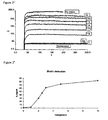
- FIG. 2A In the experiment represented by figure 2A the binder avidin containing the indicated levels of biotin ligand is used to bind to peptide of Example 1b after modification with biotin.
- Figure 2B is a plot of response verses biotin concentration for the same system.
- Figure 2C shows the quantitative detection of PETN using the peptide from Example 1b after conjugation with PETN analogue and using anti-PETN antibody as the binder.
- the peptide conjugate is bound to the binder and liposomes (3ml) added as above.
- the progress of lysis of the liposomes is recorded and then the binder is displaced by addition of free ligand of a similar structure to the ligand conjugated on the peptide thereby resulting in the release of free active peptide conjugate.
- Nitroavidin- biotin peptide complex was pre formed in 2ml of 10mM sodium phosphate+140mM NaCL buffer pH 7. Calcein-containing liposomes (3 ⁇ l) were then added to the buffer. After achieving the blocking of peptide (as indicated by a stable baseline on a plot of fluorescence against time) biotin was then added to reactivate the peptide by displacement. A control experiment was conducted in the absence of peptide.
- Figure 4A shows the stability of integrated system (single reagent) in the inactive form for under 2hrs. All the reagents namely the biotin modified peptide of example 1b, avidin, and liposomes containing calceium dye are added in 2ml buffer and signal recorded continually. Full lysis of the liposomes was obtained by adding triton-X100 at point X. The figure shows the system can be made very stable with little or no leakage of the contents.
- Figure 4B shows the stability and activation of integrated system form for under 17hrs. All the reagents namely the biotin modified peptide of example 1b, nitroavidin, and liposomes containing calceium dye are added in 2ml buffer and signal recorded continually. Activation of the peptide is achieved by adding biotin at point X. The figure shows the system can be made stable and activated specifically with ligand.
- Example 7 Preparation of nitroavidin Nitroavidin was prepared by a published method (Biochem .J. (1996) 316,193-199). 10mg of avidin in 2ml of 50mM Tris-HCl buffer at pH 8 was treated with 20mM of tetranitromethane for half an hour at room temperature. The sample was dialysed against 3L of 1M sodium chloride and twice against water. The biotin binding sites of the nitroavidin were then blocked with 0.6mM biotin solution at pH 4 using 50mM citrate buffer. The solution was then brought to pH 10 to release biotin from the modified sites. Extensive dialysis against 20mM sodium carbonate pH 10 buffer followed by dialysis against distilled water yielded nitroavidin with reversible biotin binding activity.
- a ferrocenic form of peptide in example 1b prepared as in Example 3b was dissolved at a concentration of 0.01mg/ml in water.
- a 10 ⁇ l aliquot of the peptide solution was added to 2ml assay buffer with the presence and absence of reducing agent (sodium dithionite).
- a 3 ⁇ l aliquot of liposomes was used for these assays.
- Figure 5 shows the activation of redox peptide by switching the oxidation state from low (lower trace) to high (upper trace).
- Fig. 6 shows a peptide 10 which has a first site 12 which confers a particular functionality on the peptide, e.g cytolysis. That site 12 is "cloaked” by binding of a binder 18, such as an antibody, to the site or to a modified amino acid adjacent the site or another binder such as nitroavidin where the peptides has been biotinylated as described in Example 3. the cloaked site 12 is inactive.
- the peptide 10 also comprises a second site 14 which facilitates binding of the peptide to membranes.
- the second site 14 may be naturally occurring in the peptide or may be introduced for example by introducing hydropobic residues at the respective end of the peptide.
- liposomes 16 containing a detectable marker in the case of diagnostic applications or a pharmacuetical in the case of therapuetic applictions.
- binder 18 binds to the peptide at the first site 12 inhibiting the function of that site.
- the peptide 10 can also bind to the liposome 16 through its second site 14.
- an activator 20 which in the case of diagnostic applictions might be an antigen which is the analyte of interest or in the case of therapeutic applications might be an antigen carried by cell type which is to be treated
- compeptition occurs between the binder and the first site and the activator (as the peptide has been modified to include a binding site which mimics the activator) such that the binder 18 binds preferentially to the activator 20.
- the active site 12 of the peptide is thus exposed and the membrane lysis function of the peptide causes it to disrupt the membrane of the liposome 16.
- the marker or therapeutic agent is released from the liposome.
- the invention provides diagnostic systems for the controlled release of markers and therapeutic systems for the controlled release of therapeutic agents.
- Fig. 7 shows another modified peptide 30 in accordance with the invention.
- the peptide comprises an active site 32 (e.g the conferring cytolysis ability) which is "cloaked” by binder 34 (e.g an antibody) as previously described. Conjugated to the peptide 30 is an antibody 36. The antibody is specific for an antigen 38 carried by a cell 40 (e.g a cancer cell).
- the peptide is supplied to a patient with the first site 32 cloaked by the binder 34.
- the peptide 30 becomes bound to the cell 40 through antibody 36 binding to antigen 38.
- An activator 42 is then supplied to the patient which competes with the site 32 for binding to the binder 34 whereby the bound binder is released from the peptide.
- the active site 32 become functional. Where the action of the peptide is cytolyis it then causes cytolyis of the cells to which it is attached.
- the antibody 36 has been described as being conjugated to the peptide 30 the peptide could be engineered so that it is able to bind antigens. In other words antibody-like antigen binding function may be provided.
Landscapes
- Chemical & Material Sciences (AREA)
- Health & Medical Sciences (AREA)
- Life Sciences & Earth Sciences (AREA)
- Organic Chemistry (AREA)
- General Health & Medical Sciences (AREA)
- Medicinal Chemistry (AREA)
- Molecular Biology (AREA)
- Biochemistry (AREA)
- Proteomics, Peptides & Aminoacids (AREA)
- Engineering & Computer Science (AREA)
- Genetics & Genomics (AREA)
- Biophysics (AREA)
- Veterinary Medicine (AREA)
- Public Health (AREA)
- Gastroenterology & Hepatology (AREA)
- Animal Behavior & Ethology (AREA)
- Zoology (AREA)
- Epidemiology (AREA)
- Pharmacology & Pharmacy (AREA)
- Bioinformatics & Cheminformatics (AREA)
- Chemical Kinetics & Catalysis (AREA)
- Cell Biology (AREA)
- General Chemical & Material Sciences (AREA)
- Hematology (AREA)
- Immunology (AREA)
- Analytical Chemistry (AREA)
- Urology & Nephrology (AREA)
- Insects & Arthropods (AREA)
- Toxicology (AREA)
- Biomedical Technology (AREA)
- Biotechnology (AREA)
- Dispersion Chemistry (AREA)
- Physics & Mathematics (AREA)
- Tropical Medicine & Parasitology (AREA)
- Food Science & Technology (AREA)
- Microbiology (AREA)
- Peptides Or Proteins (AREA)
- Pathology (AREA)
- General Physics & Mathematics (AREA)
- Organic Low-Molecular-Weight Compounds And Preparation Thereof (AREA)
Claims (12)
- Ein Verfahren des Abwandelns der Aktivität eines Peptides, wobei das Verfahren aufweist:a. Nehmen eines Peptides, das eine aktive Stelle und eine nicht-aktive Stelle aufweist, wobei die nicht-aktive Stelle zur Konjugation mit einem anderen Teilchen oder Oberfläche in der Lage ist; undb. Ersetzen einer ersten Aminosäure an einer ersten Stelle in der aktiven Stelle des Peptides durch eine Aminosäure, die durch eine Reaktion abwandelbar ist, wodurch die aktive Stelle des Peptides inaktiviert wird; undc. Ersetzen anderer chemisch abwandelbarer Aminosäuren in dem Peptid durch Aminosäuren, die nicht durch die Reaktion abwandelbar sind, wobei das Peptid ausgewählt oder abgeleitet ist aus lytischen Peptiden, Melittin, Gramacidin, Alamethicin, Paradixin, Ceropin, Maganinen, C18G, P14A, der Peptidfolge:LLQSLLSLLQSLLSLLQWLKRKRQQ, Peptidfolge: GFFALIPKIISSPLFK, delta-Hämolysin, Mastopparan, Bombolitin, Crabolin, KLLKLLLKLLKLLLKLLLKLLKKLLKLLLKLLLKLLK, Defensinen, antibakteriellen lytischen Peptiden, Paradaxin, kationischen Peptiden, amphipatischen Peptiden, GALA, KALA, HELP, LAGA, Grippe-Hämagglutinin-Peptid, HIV-Verschmelzungspeptid, der Peptidfolge: FEAALAEALAEALA, Signalfolgen, und P-25 und worin, wenn das Peptid der Reaktion ausgesetzt wird, die aktive Stelle durch Abwandlung an der ersten Stelle reaktiviert wird.
- Ein Verfahren nach Anspruch 1, in dem die Aktivität des Peptides eine zyklolytische Aktivität oder Membranaktivität ist.
- Ein Verfahren nach Anspruch 1 oder 2, worin die Reaktivierung der aktiven Stelle verzögerte Reaktivierung ist.
- Ein Verfahren nach Anspruch 3, worin die Reaktivierung um mindestens 14 Stunden verzögert ist.
- Ein Verfahren nach irgendeinem vorhergehenden Anspruch, worin das Teilchen oder die Oberfläche eine Lipidmembran ist.
- Ein Verfahren nach Anspruch 5, worin das Peptid mit der Lipidmembran integriert ist.
- Ein Verfahren nach irgendeinem vorhergehenden Anspruch, in dem die nicht-aktive Stelle, die der Konjugation fähig ist, in das Peptid durch Ersetzen mindestens einer Aminosäure an einer nicht-aktiven Stelle des Peptides eingeführt wird.
- Ein Verfahren nach irgendeinem vorhergehenden Anspruch, in dem all die anderen Aminosäuren ersetzt werden.
- Ein Verfahren nach irgendeinem vorhergehenden Anspruch, in dem das Peptid aus natürlichen Peptiden oder Polypeptiden erhalten oder abgeleitet ist.
- Ein Verfahren nach irgendeinem der Ansprüche 1 - 8, in dem das Peptid synthetisch erzeugt worden ist.
- Ein Verfahren nach irgendeinem vorhergehenden Anspruch, in dem die aktive Stelle des Peptids durch Verwenden einer ionisierbaren Gruppe, einer redoxempfindlichen Gruppe, eines Affinitäts-Liganden, eines Enzymsubstrates, einer lichtempfindlichen Gruppe, einer pH-empfindlichen Gruppe oder einer chemischen Gruppe, die auf physikalische, chemische oder bio-chemische Effekte empfindlich ist, abgewandelt wird.
- Ein Verfahren nach irgendeinem vorhergehenden Anspruch, in dem das Peptid durch die Ersetzung von Aminosäuren durch andere Aminosäuren oder Gruppen abgewandelt wird, wodurch die Bindung des Peptids an eine Lipidmembran verbessert wird.
Applications Claiming Priority (3)
| Application Number | Priority Date | Filing Date | Title |
|---|---|---|---|
| GB9705519 | 1997-03-18 | ||
| GBGB9705519.8A GB9705519D0 (en) | 1997-03-18 | 1997-03-18 | Activation of peptides |
| PCT/GB1998/000799 WO1998041535A2 (en) | 1997-03-18 | 1998-03-18 | Activation of peptides |
Publications (2)
| Publication Number | Publication Date |
|---|---|
| EP0979243A2 EP0979243A2 (de) | 2000-02-16 |
| EP0979243B1 true EP0979243B1 (de) | 2006-08-02 |
Family
ID=10809387
Family Applications (1)
| Application Number | Title | Priority Date | Filing Date |
|---|---|---|---|
| EP98910872A Expired - Lifetime EP0979243B1 (de) | 1997-03-18 | 1998-03-18 | Aktivierung von peptiden |
Country Status (8)
| Country | Link |
|---|---|
| EP (1) | EP0979243B1 (de) |
| JP (1) | JP2001522353A (de) |
| AT (1) | ATE334999T1 (de) |
| AU (1) | AU6509898A (de) |
| CA (1) | CA2284107C (de) |
| DE (1) | DE69835426T2 (de) |
| GB (1) | GB9705519D0 (de) |
| WO (1) | WO1998041535A2 (de) |
Families Citing this family (8)
| Publication number | Priority date | Publication date | Assignee | Title |
|---|---|---|---|---|
| GB0100196D0 (en) * | 2001-01-04 | 2001-02-14 | Anmat Technology Ltd | Peptides |
| JP5275217B2 (ja) * | 2006-04-03 | 2013-08-28 | ギブン イメージング リミテッド | 生体内分析のためのシステム |
| US8663093B2 (en) | 2006-04-03 | 2014-03-04 | Given Imaging Ltd. | Device, system and method for in-vivo analysis |
| US8497353B2 (en) | 2008-02-14 | 2013-07-30 | 3M Innovative Properties Company | Polypeptides for microbial detection |
| US8835361B2 (en) * | 2010-06-01 | 2014-09-16 | The Curators Of The University Of Missouri | High-throughput quantitation of crop seed proteins |
| WO2014046490A1 (ko) * | 2012-09-19 | 2014-03-27 | 주식회사 카엘젬백스 | 세포 투과성 펩티드, 그를 포함한 컨쥬게이트 및 그를 포함한 조성물 |
| AR111893A1 (es) * | 2017-05-26 | 2019-08-28 | Plant Health Care Inc | Péptidos derivados de inductores de la respuesta de hipersensibilidad y su uso |
| CN110498848B (zh) * | 2019-09-10 | 2020-05-12 | 中国医学科学院基础医学研究所 | 一种蜂毒肽变体及其应用 |
Family Cites Families (3)
| Publication number | Priority date | Publication date | Assignee | Title |
|---|---|---|---|---|
| US4517303A (en) * | 1982-10-20 | 1985-05-14 | E. I. Du Pont De Nemours And Company | Specific binding assays utilizing analyte-cytolysin conjugates |
| US4874710A (en) * | 1986-02-20 | 1989-10-17 | Becton Dickinson And Company | Assay and product in which binder and liposomes are supported on a solid support |
| AUPN861496A0 (en) * | 1996-03-13 | 1996-04-04 | Commonwealth Scientific And Industrial Research Organisation | Lytic peptides |
-
1997
- 1997-03-18 GB GBGB9705519.8A patent/GB9705519D0/en active Pending
-
1998
- 1998-03-18 JP JP54025598A patent/JP2001522353A/ja active Pending
- 1998-03-18 AT AT98910872T patent/ATE334999T1/de not_active IP Right Cessation
- 1998-03-18 EP EP98910872A patent/EP0979243B1/de not_active Expired - Lifetime
- 1998-03-18 DE DE69835426T patent/DE69835426T2/de not_active Expired - Lifetime
- 1998-03-18 CA CA002284107A patent/CA2284107C/en not_active Expired - Fee Related
- 1998-03-18 AU AU65098/98A patent/AU6509898A/en not_active Abandoned
- 1998-03-18 WO PCT/GB1998/000799 patent/WO1998041535A2/en not_active Ceased
Also Published As
| Publication number | Publication date |
|---|---|
| WO1998041535A3 (en) | 1998-12-23 |
| AU6509898A (en) | 1998-10-12 |
| JP2001522353A (ja) | 2001-11-13 |
| DE69835426T2 (de) | 2007-03-29 |
| CA2284107A1 (en) | 1998-09-24 |
| WO1998041535A2 (en) | 1998-09-24 |
| ATE334999T1 (de) | 2006-08-15 |
| CA2284107C (en) | 2008-06-10 |
| GB9705519D0 (en) | 1997-05-07 |
| EP0979243A2 (de) | 2000-02-16 |
| DE69835426D1 (de) | 2006-09-14 |
Similar Documents
| Publication | Publication Date | Title |
|---|---|---|
| Keinänen et al. | Biosynthetic lipid‐tagging of antibodies | |
| Popp et al. | Making and breaking peptide bonds: protein engineering using sortase | |
| Edwards et al. | Liposomes in analyses | |
| US6235535B1 (en) | Fluorescent energy transfer ligand interaction assay on a lipid film | |
| EP0979243B1 (de) | Aktivierung von peptiden | |
| Edupuganti et al. | Targeted delivery into motor nerve terminals of inhibitors for SNARE‐cleaving proteases via liposomes coupled to an atoxic botulinum neurotoxin | |
| EP1957038B1 (de) | Partikel | |
| JP2019518447A (ja) | ボツリヌス神経毒素の精製及び活性化のための方法 | |
| Boquet et al. | Low pH induces a hydrophobic domain in the tetanus toxin molecule | |
| US5445820A (en) | Streptolysin O peptide antigens and methods for the determination of streptolysin antibodies | |
| US7718613B2 (en) | Armed peptides | |
| Szunyogh et al. | Targeting the interface of the pathological complex of α-synuclein and TPPP/p25 | |
| Scheele et al. | Proteolytic processing of presecretory proteins is required for development of biological activities in pancreatic exocrine proteins. | |
| Pane et al. | Chemical cleavage of an Asp-Cys sequence allows efficient production of recombinant peptides with an N-terminal cysteine residue | |
| Kobayashi et al. | In vitro selection of random peptides against artificial lipid bilayers: a potential tool to immobilize molecules on membranes | |
| Lin et al. | Tunable membrane potential reconstituted in giant vesicles promotes permeation of cationic peptides at nanomolar concentrations | |
| ES et al. | AKTIVIERUNG VON PEPTIDEN ACTIVATION DE PEPTIDES | |
| WO2002055108A1 (en) | Targeted modification of intracellular compounds | |
| JP2020068746A (ja) | バイオセンサー | |
| Vandenbranden et al. | Interactions of γ-immunoglobulins with lipid mono-or bilayers and liposomes. Existence of two conformations of γ-immunoglobulins of different hydrophobicities | |
| WO1995011703A9 (en) | Nitrophenyl derivatives that can be activated by light | |
| Aojula et al. | Cloaking cytolytic peptides for liposome-based detection and potential drug delivery | |
| US20050032118A1 (en) | Nitrophenyl derivatives that can be activated by light | |
| Leese et al. | Duplication of clostridial binding domains for enhanced macromolecular delivery into neurons | |
| WO2025199001A1 (en) | Cleavable peptide linkers, fusion proteins, and methods thereof |
Legal Events
| Date | Code | Title | Description |
|---|---|---|---|
| PUAI | Public reference made under article 153(3) epc to a published international application that has entered the european phase |
Free format text: ORIGINAL CODE: 0009012 |
|
| 17P | Request for examination filed |
Effective date: 19991014 |
|
| AK | Designated contracting states |
Kind code of ref document: A2 Designated state(s): AT BE CH DE DK ES FI FR GB GR IE IT LI LU MC NL PT SE |
|
| 17Q | First examination report despatched |
Effective date: 20010411 |
|
| GRAP | Despatch of communication of intention to grant a patent |
Free format text: ORIGINAL CODE: EPIDOSNIGR1 |
|
| GRAS | Grant fee paid |
Free format text: ORIGINAL CODE: EPIDOSNIGR3 |
|
| GRAA | (expected) grant |
Free format text: ORIGINAL CODE: 0009210 |
|
| AK | Designated contracting states |
Kind code of ref document: B1 Designated state(s): AT BE CH DE DK ES FI FR GB GR IE IT LI LU MC NL PT SE |
|
| PG25 | Lapsed in a contracting state [announced via postgrant information from national office to epo] |
Ref country code: NL Free format text: LAPSE BECAUSE OF FAILURE TO SUBMIT A TRANSLATION OF THE DESCRIPTION OR TO PAY THE FEE WITHIN THE PRESCRIBED TIME-LIMIT Effective date: 20060802 Ref country code: LI Free format text: LAPSE BECAUSE OF FAILURE TO SUBMIT A TRANSLATION OF THE DESCRIPTION OR TO PAY THE FEE WITHIN THE PRESCRIBED TIME-LIMIT Effective date: 20060802 Ref country code: IT Free format text: LAPSE BECAUSE OF FAILURE TO SUBMIT A TRANSLATION OF THE DESCRIPTION OR TO PAY THE FEE WITHIN THE PRESCRIBED TIME-LIMIT;WARNING: LAPSES OF ITALIAN PATENTS WITH EFFECTIVE DATE BEFORE 2007 MAY HAVE OCCURRED AT ANY TIME BEFORE 2007. THE CORRECT EFFECTIVE DATE MAY BE DIFFERENT FROM THE ONE RECORDED. Effective date: 20060802 Ref country code: FI Free format text: LAPSE BECAUSE OF FAILURE TO SUBMIT A TRANSLATION OF THE DESCRIPTION OR TO PAY THE FEE WITHIN THE PRESCRIBED TIME-LIMIT Effective date: 20060802 Ref country code: CH Free format text: LAPSE BECAUSE OF FAILURE TO SUBMIT A TRANSLATION OF THE DESCRIPTION OR TO PAY THE FEE WITHIN THE PRESCRIBED TIME-LIMIT Effective date: 20060802 Ref country code: BE Free format text: LAPSE BECAUSE OF FAILURE TO SUBMIT A TRANSLATION OF THE DESCRIPTION OR TO PAY THE FEE WITHIN THE PRESCRIBED TIME-LIMIT Effective date: 20060802 Ref country code: AT Free format text: LAPSE BECAUSE OF FAILURE TO SUBMIT A TRANSLATION OF THE DESCRIPTION OR TO PAY THE FEE WITHIN THE PRESCRIBED TIME-LIMIT Effective date: 20060802 |
|
| REG | Reference to a national code |
Ref country code: GB Ref legal event code: FG4D |
|
| REG | Reference to a national code |
Ref country code: CH Ref legal event code: EP |
|
| REG | Reference to a national code |
Ref country code: IE Ref legal event code: FG4D |
|
| REF | Corresponds to: |
Ref document number: 69835426 Country of ref document: DE Date of ref document: 20060914 Kind code of ref document: P |
|
| PG25 | Lapsed in a contracting state [announced via postgrant information from national office to epo] |
Ref country code: SE Free format text: LAPSE BECAUSE OF FAILURE TO SUBMIT A TRANSLATION OF THE DESCRIPTION OR TO PAY THE FEE WITHIN THE PRESCRIBED TIME-LIMIT Effective date: 20061102 Ref country code: DK Free format text: LAPSE BECAUSE OF FAILURE TO SUBMIT A TRANSLATION OF THE DESCRIPTION OR TO PAY THE FEE WITHIN THE PRESCRIBED TIME-LIMIT Effective date: 20061102 |
|
| PG25 | Lapsed in a contracting state [announced via postgrant information from national office to epo] |
Ref country code: ES Free format text: LAPSE BECAUSE OF FAILURE TO SUBMIT A TRANSLATION OF THE DESCRIPTION OR TO PAY THE FEE WITHIN THE PRESCRIBED TIME-LIMIT Effective date: 20061113 |
|
| NLV1 | Nl: lapsed or annulled due to failure to fulfill the requirements of art. 29p and 29m of the patents act | ||
| PG25 | Lapsed in a contracting state [announced via postgrant information from national office to epo] |
Ref country code: PT Free format text: LAPSE BECAUSE OF FAILURE TO SUBMIT A TRANSLATION OF THE DESCRIPTION OR TO PAY THE FEE WITHIN THE PRESCRIBED TIME-LIMIT Effective date: 20070102 |
|
| REG | Reference to a national code |
Ref country code: CH Ref legal event code: PL |
|
| ET | Fr: translation filed | ||
| PLBE | No opposition filed within time limit |
Free format text: ORIGINAL CODE: 0009261 |
|
| STAA | Information on the status of an ep patent application or granted ep patent |
Free format text: STATUS: NO OPPOSITION FILED WITHIN TIME LIMIT |
|
| 26N | No opposition filed |
Effective date: 20070503 |
|
| PG25 | Lapsed in a contracting state [announced via postgrant information from national office to epo] |
Ref country code: MC Free format text: LAPSE BECAUSE OF NON-PAYMENT OF DUE FEES Effective date: 20070331 Ref country code: IE Free format text: LAPSE BECAUSE OF NON-PAYMENT OF DUE FEES Effective date: 20070319 |
|
| PG25 | Lapsed in a contracting state [announced via postgrant information from national office to epo] |
Ref country code: GR Free format text: LAPSE BECAUSE OF FAILURE TO SUBMIT A TRANSLATION OF THE DESCRIPTION OR TO PAY THE FEE WITHIN THE PRESCRIBED TIME-LIMIT Effective date: 20061103 |
|
| PG25 | Lapsed in a contracting state [announced via postgrant information from national office to epo] |
Ref country code: LU Free format text: LAPSE BECAUSE OF NON-PAYMENT OF DUE FEES Effective date: 20070318 |
|
| PGFP | Annual fee paid to national office [announced via postgrant information from national office to epo] |
Ref country code: IT Payment date: 20100325 Year of fee payment: 13 |
|
| PGFP | Annual fee paid to national office [announced via postgrant information from national office to epo] |
Ref country code: FR Payment date: 20110427 Year of fee payment: 14 Ref country code: GB Payment date: 20110310 Year of fee payment: 14 |
|
| PG25 | Lapsed in a contracting state [announced via postgrant information from national office to epo] |
Ref country code: DE Free format text: LAPSE BECAUSE OF NON-PAYMENT OF DUE FEES Effective date: 20111001 |
|
| PG25 | Lapsed in a contracting state [announced via postgrant information from national office to epo] |
Ref country code: IT Free format text: LAPSE BECAUSE OF NON-PAYMENT OF DUE FEES Effective date: 20110318 |
|
| PGFP | Annual fee paid to national office [announced via postgrant information from national office to epo] |
Ref country code: DE Payment date: 20110531 Year of fee payment: 14 |
|
| GBPC | Gb: european patent ceased through non-payment of renewal fee |
Effective date: 20120318 |
|
| REG | Reference to a national code |
Ref country code: FR Ref legal event code: ST Effective date: 20121130 |
|
| PG25 | Lapsed in a contracting state [announced via postgrant information from national office to epo] |
Ref country code: GB Free format text: LAPSE BECAUSE OF NON-PAYMENT OF DUE FEES Effective date: 20120318 Ref country code: FR Free format text: LAPSE BECAUSE OF NON-PAYMENT OF DUE FEES Effective date: 20120402 |
|
| REG | Reference to a national code |
Ref country code: DE Ref legal event code: R119 Ref document number: 69835426 Country of ref document: DE Effective date: 20121002 |