EP0977846B1 - Neuronal mort1 isoforms - Google Patents
Neuronal mort1 isoforms Download PDFInfo
- Publication number
- EP0977846B1 EP0977846B1 EP98915540A EP98915540A EP0977846B1 EP 0977846 B1 EP0977846 B1 EP 0977846B1 EP 98915540 A EP98915540 A EP 98915540A EP 98915540 A EP98915540 A EP 98915540A EP 0977846 B1 EP0977846 B1 EP 0977846B1
- Authority
- EP
- European Patent Office
- Prior art keywords
- mort1
- sequence
- seq
- isoform
- human
- Prior art date
- Legal status (The legal status is an assumption and is not a legal conclusion. Google has not performed a legal analysis and makes no representation as to the accuracy of the status listed.)
- Expired - Lifetime
Links
- 108010029485 Protein Isoforms Proteins 0.000 title claims abstract description 64
- 102000001708 Protein Isoforms Human genes 0.000 title claims abstract description 62
- 230000001537 neural effect Effects 0.000 title description 15
- 108010077716 Fas-Associated Death Domain Protein Proteins 0.000 claims abstract description 152
- 102000010579 Fas-Associated Death Domain Protein Human genes 0.000 claims abstract description 147
- 210000004556 brain Anatomy 0.000 claims abstract description 15
- 210000002569 neuron Anatomy 0.000 claims abstract description 4
- 108090000623 proteins and genes Proteins 0.000 claims description 39
- 102000004169 proteins and genes Human genes 0.000 claims description 22
- 108020004707 nucleic acids Proteins 0.000 claims description 11
- 102000039446 nucleic acids Human genes 0.000 claims description 11
- 150000007523 nucleic acids Chemical class 0.000 claims description 11
- 239000002773 nucleotide Substances 0.000 claims description 5
- 125000003729 nucleotide group Chemical group 0.000 claims description 5
- 125000003275 alpha amino acid group Chemical group 0.000 claims 4
- 102000040430 polynucleotide Human genes 0.000 claims 3
- 108091033319 polynucleotide Proteins 0.000 claims 3
- 239000002157 polynucleotide Substances 0.000 claims 3
- 210000004027 cell Anatomy 0.000 abstract description 39
- 108091026890 Coding region Proteins 0.000 abstract description 14
- 238000010367 cloning Methods 0.000 abstract description 9
- 238000006467 substitution reaction Methods 0.000 abstract description 9
- 238000012217 deletion Methods 0.000 abstract description 5
- 230000037430 deletion Effects 0.000 abstract description 5
- 238000001086 yeast two-hybrid system Methods 0.000 abstract description 4
- 230000005775 apoptotic pathway Effects 0.000 abstract description 3
- 230000001404 mediated effect Effects 0.000 abstract description 3
- 102000005962 receptors Human genes 0.000 abstract description 2
- 108020003175 receptors Proteins 0.000 abstract description 2
- 238000002955 isolation Methods 0.000 abstract 1
- 239000002299 complementary DNA Substances 0.000 description 40
- 239000013612 plasmid Substances 0.000 description 35
- 108091034117 Oligonucleotide Proteins 0.000 description 29
- 108020004414 DNA Proteins 0.000 description 25
- 240000004808 Saccharomyces cerevisiae Species 0.000 description 23
- 108020001507 fusion proteins Proteins 0.000 description 23
- 102000037865 fusion proteins Human genes 0.000 description 23
- 238000000034 method Methods 0.000 description 21
- 235000018102 proteins Nutrition 0.000 description 20
- 230000004927 fusion Effects 0.000 description 19
- JLCPHMBAVCMARE-UHFFFAOYSA-N [3-[[3-[[3-[[3-[[3-[[3-[[3-[[3-[[3-[[3-[[3-[[5-(2-amino-6-oxo-1H-purin-9-yl)-3-[[3-[[3-[[3-[[3-[[3-[[5-(2-amino-6-oxo-1H-purin-9-yl)-3-[[5-(2-amino-6-oxo-1H-purin-9-yl)-3-hydroxyoxolan-2-yl]methoxy-hydroxyphosphoryl]oxyoxolan-2-yl]methoxy-hydroxyphosphoryl]oxy-5-(5-methyl-2,4-dioxopyrimidin-1-yl)oxolan-2-yl]methoxy-hydroxyphosphoryl]oxy-5-(6-aminopurin-9-yl)oxolan-2-yl]methoxy-hydroxyphosphoryl]oxy-5-(6-aminopurin-9-yl)oxolan-2-yl]methoxy-hydroxyphosphoryl]oxy-5-(6-aminopurin-9-yl)oxolan-2-yl]methoxy-hydroxyphosphoryl]oxy-5-(6-aminopurin-9-yl)oxolan-2-yl]methoxy-hydroxyphosphoryl]oxyoxolan-2-yl]methoxy-hydroxyphosphoryl]oxy-5-(5-methyl-2,4-dioxopyrimidin-1-yl)oxolan-2-yl]methoxy-hydroxyphosphoryl]oxy-5-(4-amino-2-oxopyrimidin-1-yl)oxolan-2-yl]methoxy-hydroxyphosphoryl]oxy-5-(5-methyl-2,4-dioxopyrimidin-1-yl)oxolan-2-yl]methoxy-hydroxyphosphoryl]oxy-5-(5-methyl-2,4-dioxopyrimidin-1-yl)oxolan-2-yl]methoxy-hydroxyphosphoryl]oxy-5-(6-aminopurin-9-yl)oxolan-2-yl]methoxy-hydroxyphosphoryl]oxy-5-(6-aminopurin-9-yl)oxolan-2-yl]methoxy-hydroxyphosphoryl]oxy-5-(4-amino-2-oxopyrimidin-1-yl)oxolan-2-yl]methoxy-hydroxyphosphoryl]oxy-5-(4-amino-2-oxopyrimidin-1-yl)oxolan-2-yl]methoxy-hydroxyphosphoryl]oxy-5-(4-amino-2-oxopyrimidin-1-yl)oxolan-2-yl]methoxy-hydroxyphosphoryl]oxy-5-(6-aminopurin-9-yl)oxolan-2-yl]methoxy-hydroxyphosphoryl]oxy-5-(4-amino-2-oxopyrimidin-1-yl)oxolan-2-yl]methyl [5-(6-aminopurin-9-yl)-2-(hydroxymethyl)oxolan-3-yl] hydrogen phosphate Polymers Cc1cn(C2CC(OP(O)(=O)OCC3OC(CC3OP(O)(=O)OCC3OC(CC3O)n3cnc4c3nc(N)[nH]c4=O)n3cnc4c3nc(N)[nH]c4=O)C(COP(O)(=O)OC3CC(OC3COP(O)(=O)OC3CC(OC3COP(O)(=O)OC3CC(OC3COP(O)(=O)OC3CC(OC3COP(O)(=O)OC3CC(OC3COP(O)(=O)OC3CC(OC3COP(O)(=O)OC3CC(OC3COP(O)(=O)OC3CC(OC3COP(O)(=O)OC3CC(OC3COP(O)(=O)OC3CC(OC3COP(O)(=O)OC3CC(OC3COP(O)(=O)OC3CC(OC3COP(O)(=O)OC3CC(OC3COP(O)(=O)OC3CC(OC3COP(O)(=O)OC3CC(OC3COP(O)(=O)OC3CC(OC3COP(O)(=O)OC3CC(OC3CO)n3cnc4c(N)ncnc34)n3ccc(N)nc3=O)n3cnc4c(N)ncnc34)n3ccc(N)nc3=O)n3ccc(N)nc3=O)n3ccc(N)nc3=O)n3cnc4c(N)ncnc34)n3cnc4c(N)ncnc34)n3cc(C)c(=O)[nH]c3=O)n3cc(C)c(=O)[nH]c3=O)n3ccc(N)nc3=O)n3cc(C)c(=O)[nH]c3=O)n3cnc4c3nc(N)[nH]c4=O)n3cnc4c(N)ncnc34)n3cnc4c(N)ncnc34)n3cnc4c(N)ncnc34)n3cnc4c(N)ncnc34)O2)c(=O)[nH]c1=O JLCPHMBAVCMARE-UHFFFAOYSA-N 0.000 description 17
- 239000003153 chemical reaction reagent Substances 0.000 description 17
- 239000012634 fragment Substances 0.000 description 16
- 108091032973 (ribonucleotides)n+m Proteins 0.000 description 15
- 230000012010 growth Effects 0.000 description 15
- 230000003993 interaction Effects 0.000 description 15
- 238000005516 engineering process Methods 0.000 description 14
- 102100039556 Galectin-4 Human genes 0.000 description 13
- 101000911074 Homo sapiens FAS-associated death domain protein Proteins 0.000 description 12
- 230000006907 apoptotic process Effects 0.000 description 11
- 102000004091 Caspase-8 Human genes 0.000 description 10
- 108090000538 Caspase-8 Proteins 0.000 description 10
- 230000001580 bacterial effect Effects 0.000 description 10
- 239000013598 vector Substances 0.000 description 10
- 101100044298 Drosophila melanogaster fand gene Proteins 0.000 description 9
- 101150064015 FAS gene Proteins 0.000 description 9
- 102100026693 FAS-associated death domain protein Human genes 0.000 description 9
- 108010001515 Galectin 4 Proteins 0.000 description 9
- 101100335198 Pneumocystis carinii fol1 gene Proteins 0.000 description 9
- 238000006243 chemical reaction Methods 0.000 description 9
- 235000001014 amino acid Nutrition 0.000 description 8
- 150000001413 amino acids Chemical group 0.000 description 8
- 239000002609 medium Substances 0.000 description 8
- 102000010170 Death domains Human genes 0.000 description 7
- 108050001718 Death domains Proteins 0.000 description 7
- 150000001875 compounds Chemical class 0.000 description 7
- 238000010839 reverse transcription Methods 0.000 description 7
- 238000005382 thermal cycling Methods 0.000 description 7
- 238000002123 RNA extraction Methods 0.000 description 6
- 230000004913 activation Effects 0.000 description 6
- YPHMISFOHDHNIV-FSZOTQKASA-N cycloheximide Chemical compound C1[C@@H](C)C[C@H](C)C(=O)[C@@H]1[C@H](O)CC1CC(=O)NC(=O)C1 YPHMISFOHDHNIV-FSZOTQKASA-N 0.000 description 6
- 230000001086 cytosolic effect Effects 0.000 description 6
- 230000035772 mutation Effects 0.000 description 6
- 230000003169 placental effect Effects 0.000 description 6
- 239000006152 selective media Substances 0.000 description 6
- 208000000659 Autoimmune lymphoproliferative syndrome Diseases 0.000 description 5
- 101100245267 Caenorhabditis elegans pas-1 gene Proteins 0.000 description 5
- 241000588724 Escherichia coli Species 0.000 description 5
- 239000006142 Luria-Bertani Agar Substances 0.000 description 5
- 108700008625 Reporter Genes Proteins 0.000 description 5
- 108060008683 Tumor Necrosis Factor Receptor Proteins 0.000 description 5
- 229960000723 ampicillin Drugs 0.000 description 5
- AVKUERGKIZMTKX-NJBDSQKTSA-N ampicillin Chemical compound C1([C@@H](N)C(=O)N[C@H]2[C@H]3SC([C@@H](N3C2=O)C(O)=O)(C)C)=CC=CC=C1 AVKUERGKIZMTKX-NJBDSQKTSA-N 0.000 description 5
- 230000000295 complement effect Effects 0.000 description 5
- 230000001605 fetal effect Effects 0.000 description 5
- HNDVDQJCIGZPNO-UHFFFAOYSA-N histidine Natural products OC(=O)C(N)CC1=CN=CN1 HNDVDQJCIGZPNO-UHFFFAOYSA-N 0.000 description 5
- 238000002360 preparation method Methods 0.000 description 5
- 238000012216 screening Methods 0.000 description 5
- 230000009466 transformation Effects 0.000 description 5
- 102000003298 tumor necrosis factor receptor Human genes 0.000 description 5
- 230000004568 DNA-binding Effects 0.000 description 4
- 101000608765 Homo sapiens Galectin-4 Proteins 0.000 description 4
- 108091028043 Nucleic acid sequence Proteins 0.000 description 4
- 238000012408 PCR amplification Methods 0.000 description 4
- 230000011712 cell development Effects 0.000 description 4
- 230000010261 cell growth Effects 0.000 description 4
- 239000013599 cloning vector Substances 0.000 description 4
- HKSZLNNOFSGOKW-UHFFFAOYSA-N ent-staurosporine Natural products C12=C3N4C5=CC=CC=C5C3=C3CNC(=O)C3=C2C2=CC=CC=C2N1C1CC(NC)C(OC)C4(C)O1 HKSZLNNOFSGOKW-UHFFFAOYSA-N 0.000 description 4
- 238000011534 incubation Methods 0.000 description 4
- 108091008146 restriction endonucleases Proteins 0.000 description 4
- HKSZLNNOFSGOKW-FYTWVXJKSA-N staurosporine Chemical compound C12=C3N4C5=CC=CC=C5C3=C3CNC(=O)C3=C2C2=CC=CC=C2N1[C@H]1C[C@@H](NC)[C@@H](OC)[C@]4(C)O1 HKSZLNNOFSGOKW-FYTWVXJKSA-N 0.000 description 4
- CGPUWJWCVCFERF-UHFFFAOYSA-N staurosporine Natural products C12=C3N4C5=CC=CC=C5C3=C3CNC(=O)C3=C2C2=CC=CC=C2N1C1CC(NC)C(OC)C4(OC)O1 CGPUWJWCVCFERF-UHFFFAOYSA-N 0.000 description 4
- 210000001519 tissue Anatomy 0.000 description 4
- KLSJWNVTNUYHDU-UHFFFAOYSA-N Amitrole Chemical compound NC1=NC=NN1 KLSJWNVTNUYHDU-UHFFFAOYSA-N 0.000 description 3
- 108700024394 Exon Proteins 0.000 description 3
- 108091081021 Sense strand Proteins 0.000 description 3
- 108091081024 Start codon Proteins 0.000 description 3
- 108010006785 Taq Polymerase Proteins 0.000 description 3
- 206010067584 Type 1 diabetes mellitus Diseases 0.000 description 3
- 239000011543 agarose gel Substances 0.000 description 3
- SHGAZHPCJJPHSC-YCNIQYBTSA-N all-trans-retinoic acid Chemical compound OC(=O)\C=C(/C)\C=C\C=C(/C)\C=C\C1=C(C)CCCC1(C)C SHGAZHPCJJPHSC-YCNIQYBTSA-N 0.000 description 3
- 238000004458 analytical method Methods 0.000 description 3
- 230000000692 anti-sense effect Effects 0.000 description 3
- 239000006143 cell culture medium Substances 0.000 description 3
- 230000003247 decreasing effect Effects 0.000 description 3
- 201000010099 disease Diseases 0.000 description 3
- 208000037265 diseases, disorders, signs and symptoms Diseases 0.000 description 3
- 230000000694 effects Effects 0.000 description 3
- 102000048443 human FADD Human genes 0.000 description 3
- 230000007774 longterm Effects 0.000 description 3
- 238000013507 mapping Methods 0.000 description 3
- 108020004999 messenger RNA Proteins 0.000 description 3
- 239000013642 negative control Substances 0.000 description 3
- 230000037361 pathway Effects 0.000 description 3
- 238000003752 polymerase chain reaction Methods 0.000 description 3
- 229930002330 retinoic acid Natural products 0.000 description 3
- 238000012163 sequencing technique Methods 0.000 description 3
- 229960001727 tretinoin Drugs 0.000 description 3
- 208000035408 type 1 diabetes mellitus 1 Diseases 0.000 description 3
- 238000011144 upstream manufacturing Methods 0.000 description 3
- 210000005253 yeast cell Anatomy 0.000 description 3
- 101150028668 APO1 gene Proteins 0.000 description 2
- 101000835846 Arabidopsis thaliana Sucrose nonfermenting 4-like protein Proteins 0.000 description 2
- 206010006187 Breast cancer Diseases 0.000 description 2
- 208000026310 Breast neoplasm Diseases 0.000 description 2
- 102100035904 Caspase-1 Human genes 0.000 description 2
- 108090000426 Caspase-1 Proteins 0.000 description 2
- 108020004705 Codon Proteins 0.000 description 2
- 101000941893 Felis catus Leucine-rich repeat and calponin homology domain-containing protein 1 Proteins 0.000 description 2
- 101150009006 HIS3 gene Proteins 0.000 description 2
- 101000611023 Homo sapiens Tumor necrosis factor receptor superfamily member 6 Proteins 0.000 description 2
- 108091092195 Intron Proteins 0.000 description 2
- 102000035195 Peptidases Human genes 0.000 description 2
- 108091005804 Peptidases Proteins 0.000 description 2
- 239000004365 Protease Substances 0.000 description 2
- 108091034057 RNA (poly(A)) Proteins 0.000 description 2
- 101100394989 Rhodopseudomonas palustris (strain ATCC BAA-98 / CGA009) hisI gene Proteins 0.000 description 2
- 101100250396 Saccharomyces cerevisiae (strain ATCC 204508 / S288c) RPL28 gene Proteins 0.000 description 2
- 102100040403 Tumor necrosis factor receptor superfamily member 6 Human genes 0.000 description 2
- 101100527649 Wickerhamomyces ciferrii (strain ATCC 14091 / BCRC 22168 / CBS 111 / JCM 3599 / NBRC 0793 / NRRL Y-1031 F-60-10) RPL44 gene Proteins 0.000 description 2
- 239000000074 antisense oligonucleotide Substances 0.000 description 2
- 238000012230 antisense oligonucleotides Methods 0.000 description 2
- 210000005013 brain tissue Anatomy 0.000 description 2
- 230000030833 cell death Effects 0.000 description 2
- 239000003795 chemical substances by application Substances 0.000 description 2
- 230000002759 chromosomal effect Effects 0.000 description 2
- 230000006378 damage Effects 0.000 description 2
- 230000007547 defect Effects 0.000 description 2
- 239000003814 drug Substances 0.000 description 2
- 238000001976 enzyme digestion Methods 0.000 description 2
- 239000013604 expression vector Substances 0.000 description 2
- 108010052621 fas Receptor Proteins 0.000 description 2
- 102000018823 fas Receptor Human genes 0.000 description 2
- 238000001415 gene therapy Methods 0.000 description 2
- 239000001963 growth medium Substances 0.000 description 2
- 238000009396 hybridization Methods 0.000 description 2
- 230000001771 impaired effect Effects 0.000 description 2
- NOESYZHRGYRDHS-UHFFFAOYSA-N insulin Chemical compound N1C(=O)C(NC(=O)C(CCC(N)=O)NC(=O)C(CCC(O)=O)NC(=O)C(C(C)C)NC(=O)C(NC(=O)CN)C(C)CC)CSSCC(C(NC(CO)C(=O)NC(CC(C)C)C(=O)NC(CC=2C=CC(O)=CC=2)C(=O)NC(CCC(N)=O)C(=O)NC(CC(C)C)C(=O)NC(CCC(O)=O)C(=O)NC(CC(N)=O)C(=O)NC(CC=2C=CC(O)=CC=2)C(=O)NC(CSSCC(NC(=O)C(C(C)C)NC(=O)C(CC(C)C)NC(=O)C(CC=2C=CC(O)=CC=2)NC(=O)C(CC(C)C)NC(=O)C(C)NC(=O)C(CCC(O)=O)NC(=O)C(C(C)C)NC(=O)C(CC(C)C)NC(=O)C(CC=2NC=NC=2)NC(=O)C(CO)NC(=O)CNC2=O)C(=O)NCC(=O)NC(CCC(O)=O)C(=O)NC(CCCNC(N)=N)C(=O)NCC(=O)NC(CC=3C=CC=CC=3)C(=O)NC(CC=3C=CC=CC=3)C(=O)NC(CC=3C=CC(O)=CC=3)C(=O)NC(C(C)O)C(=O)N3C(CCC3)C(=O)NC(CCCCN)C(=O)NC(C)C(O)=O)C(=O)NC(CC(N)=O)C(O)=O)=O)NC(=O)C(C(C)CC)NC(=O)C(CO)NC(=O)C(C(C)O)NC(=O)C1CSSCC2NC(=O)C(CC(C)C)NC(=O)C(NC(=O)C(CCC(N)=O)NC(=O)C(CC(N)=O)NC(=O)C(NC(=O)C(N)CC=1C=CC=CC=1)C(C)C)CC1=CN=CN1 NOESYZHRGYRDHS-UHFFFAOYSA-N 0.000 description 2
- 230000003834 intracellular effect Effects 0.000 description 2
- 238000011835 investigation Methods 0.000 description 2
- 101150066555 lacZ gene Proteins 0.000 description 2
- 231100000518 lethal Toxicity 0.000 description 2
- 230000001665 lethal effect Effects 0.000 description 2
- 230000007246 mechanism Effects 0.000 description 2
- 231100000219 mutagenic Toxicity 0.000 description 2
- 230000003505 mutagenic effect Effects 0.000 description 2
- 230000008506 pathogenesis Effects 0.000 description 2
- 230000008488 polyadenylation Effects 0.000 description 2
- 238000012545 processing Methods 0.000 description 2
- 230000001105 regulatory effect Effects 0.000 description 2
- 239000000523 sample Substances 0.000 description 2
- 230000035945 sensitivity Effects 0.000 description 2
- 101710088758 23kDa protein Proteins 0.000 description 1
- 108091093088 Amplicon Proteins 0.000 description 1
- 210000002237 B-cell of pancreatic islet Anatomy 0.000 description 1
- 208000017897 Carcinoma of esophagus Diseases 0.000 description 1
- 238000001712 DNA sequencing Methods 0.000 description 1
- 101150071111 FADD gene Proteins 0.000 description 1
- CQAHWYDHKUWYIX-YUMQZZPRSA-N Glu-Pro-Gly Chemical group OC(=O)CC[C@H](N)C(=O)N1CCC[C@H]1C(=O)NCC(O)=O CQAHWYDHKUWYIX-YUMQZZPRSA-N 0.000 description 1
- 101100175482 Glycine max CG-3 gene Proteins 0.000 description 1
- 241000282412 Homo Species 0.000 description 1
- 101000983528 Homo sapiens Caspase-8 Proteins 0.000 description 1
- 101100066234 Homo sapiens FADD gene Proteins 0.000 description 1
- 101000850748 Homo sapiens Tumor necrosis factor receptor type 1-associated DEATH domain protein Proteins 0.000 description 1
- 208000026350 Inborn Genetic disease Diseases 0.000 description 1
- 102000004877 Insulin Human genes 0.000 description 1
- 108090001061 Insulin Proteins 0.000 description 1
- 102100034343 Integrase Human genes 0.000 description 1
- 208000008771 Lymphadenopathy Diseases 0.000 description 1
- PKVZBNCYEICAQP-UHFFFAOYSA-N Mecamylamine hydrochloride Chemical compound Cl.C1CC2C(C)(C)C(NC)(C)C1C2 PKVZBNCYEICAQP-UHFFFAOYSA-N 0.000 description 1
- 206010028980 Neoplasm Diseases 0.000 description 1
- 101710163270 Nuclease Proteins 0.000 description 1
- 108020005187 Oligonucleotide Probes Proteins 0.000 description 1
- 108010092799 RNA-directed DNA polymerase Proteins 0.000 description 1
- 108020004511 Recombinant DNA Proteins 0.000 description 1
- 102000006382 Ribonucleases Human genes 0.000 description 1
- 108010083644 Ribonucleases Proteins 0.000 description 1
- MTCFGRXMJLQNBG-UHFFFAOYSA-N Serine Natural products OCC(N)C(O)=O MTCFGRXMJLQNBG-UHFFFAOYSA-N 0.000 description 1
- 210000001744 T-lymphocyte Anatomy 0.000 description 1
- 101710195626 Transcriptional activator protein Proteins 0.000 description 1
- 102100031988 Tumor necrosis factor ligand superfamily member 6 Human genes 0.000 description 1
- 108050002568 Tumor necrosis factor ligand superfamily member 6 Proteins 0.000 description 1
- 102100033081 Tumor necrosis factor receptor type 1-associated DEATH domain protein Human genes 0.000 description 1
- 230000003213 activating effect Effects 0.000 description 1
- 230000003321 amplification Effects 0.000 description 1
- 238000010171 animal model Methods 0.000 description 1
- 230000002424 anti-apoptotic effect Effects 0.000 description 1
- 238000003782 apoptosis assay Methods 0.000 description 1
- 230000001363 autoimmune Effects 0.000 description 1
- 230000015572 biosynthetic process Effects 0.000 description 1
- 201000008275 breast carcinoma Diseases 0.000 description 1
- 238000004113 cell culture Methods 0.000 description 1
- 210000003169 central nervous system Anatomy 0.000 description 1
- 208000015114 central nervous system disease Diseases 0.000 description 1
- 230000008859 change Effects 0.000 description 1
- 210000000349 chromosome Anatomy 0.000 description 1
- 238000009833 condensation Methods 0.000 description 1
- 230000005494 condensation Effects 0.000 description 1
- 238000007796 conventional method Methods 0.000 description 1
- 235000018417 cysteine Nutrition 0.000 description 1
- XUJNEKJLAYXESH-UHFFFAOYSA-N cysteine Natural products SCC(N)C(O)=O XUJNEKJLAYXESH-UHFFFAOYSA-N 0.000 description 1
- 230000034994 death Effects 0.000 description 1
- 230000002950 deficient Effects 0.000 description 1
- 238000011161 development Methods 0.000 description 1
- 230000018109 developmental process Effects 0.000 description 1
- 206010012601 diabetes mellitus Diseases 0.000 description 1
- 238000003745 diagnosis Methods 0.000 description 1
- 230000002124 endocrine Effects 0.000 description 1
- 230000007613 environmental effect Effects 0.000 description 1
- 210000003238 esophagus Anatomy 0.000 description 1
- 238000002474 experimental method Methods 0.000 description 1
- 238000013467 fragmentation Methods 0.000 description 1
- 238000006062 fragmentation reaction Methods 0.000 description 1
- 208000016361 genetic disease Diseases 0.000 description 1
- 201000003911 head and neck carcinoma Diseases 0.000 description 1
- 201000000459 head and neck squamous cell carcinoma Diseases 0.000 description 1
- 206010019847 hepatosplenomegaly Diseases 0.000 description 1
- 102000048448 human CASP8 Human genes 0.000 description 1
- 210000004754 hybrid cell Anatomy 0.000 description 1
- 238000007901 in situ hybridization Methods 0.000 description 1
- 238000001727 in vivo Methods 0.000 description 1
- 230000006882 induction of apoptosis Effects 0.000 description 1
- 230000001939 inductive effect Effects 0.000 description 1
- 230000000977 initiatory effect Effects 0.000 description 1
- 229940125396 insulin Drugs 0.000 description 1
- 230000031146 intracellular signal transduction Effects 0.000 description 1
- 229930027917 kanamycin Natural products 0.000 description 1
- 229960000318 kanamycin Drugs 0.000 description 1
- SBUJHOSQTJFQJX-NOAMYHISSA-N kanamycin Chemical compound O[C@@H]1[C@@H](O)[C@H](O)[C@@H](CN)O[C@@H]1O[C@H]1[C@H](O)[C@@H](O[C@@H]2[C@@H]([C@@H](N)[C@H](O)[C@@H](CO)O2)O)[C@H](N)C[C@@H]1N SBUJHOSQTJFQJX-NOAMYHISSA-N 0.000 description 1
- 229930182823 kanamycin A Natural products 0.000 description 1
- 239000003446 ligand Substances 0.000 description 1
- XIXADJRWDQXREU-UHFFFAOYSA-M lithium acetate Chemical compound [Li+].CC([O-])=O XIXADJRWDQXREU-UHFFFAOYSA-M 0.000 description 1
- 230000004807 localization Effects 0.000 description 1
- 210000004072 lung Anatomy 0.000 description 1
- 201000005296 lung carcinoma Diseases 0.000 description 1
- 208000018555 lymphatic system disease Diseases 0.000 description 1
- 210000004698 lymphocyte Anatomy 0.000 description 1
- 230000005427 lymphocyte apoptotic process Effects 0.000 description 1
- 230000036210 malignancy Effects 0.000 description 1
- 238000004519 manufacturing process Methods 0.000 description 1
- 102000006240 membrane receptors Human genes 0.000 description 1
- 108020004084 membrane receptors Proteins 0.000 description 1
- 230000000869 mutational effect Effects 0.000 description 1
- 230000009223 neuronal apoptosis Effects 0.000 description 1
- 238000003199 nucleic acid amplification method Methods 0.000 description 1
- 239000002751 oligonucleotide probe Substances 0.000 description 1
- 238000010837 poor prognosis Methods 0.000 description 1
- 230000008569 process Effects 0.000 description 1
- 230000005522 programmed cell death Effects 0.000 description 1
- 235000004252 protein component Nutrition 0.000 description 1
- 230000004850 protein–protein interaction Effects 0.000 description 1
- 230000007115 recruitment Effects 0.000 description 1
- 230000010076 replication Effects 0.000 description 1
- 230000004044 response Effects 0.000 description 1
- 230000002441 reversible effect Effects 0.000 description 1
- 238000012552 review Methods 0.000 description 1
- 108091006024 signal transducing proteins Proteins 0.000 description 1
- 102000034285 signal transducing proteins Human genes 0.000 description 1
- 230000011664 signaling Effects 0.000 description 1
- 230000037432 silent mutation Effects 0.000 description 1
- 238000010561 standard procedure Methods 0.000 description 1
- 238000003786 synthesis reaction Methods 0.000 description 1
- 208000001608 teratocarcinoma Diseases 0.000 description 1
- 229940124597 therapeutic agent Drugs 0.000 description 1
- 230000001225 therapeutic effect Effects 0.000 description 1
- 230000002103 transcriptional effect Effects 0.000 description 1
- 230000026683 transduction Effects 0.000 description 1
- 238000010361 transduction Methods 0.000 description 1
- 230000014621 translational initiation Effects 0.000 description 1
- 239000013638 trimer Substances 0.000 description 1
- 230000004614 tumor growth Effects 0.000 description 1
- 238000010396 two-hybrid screening Methods 0.000 description 1
- 210000003932 urinary bladder Anatomy 0.000 description 1
- 208000010570 urinary bladder carcinoma Diseases 0.000 description 1
Images


Classifications
-
- C—CHEMISTRY; METALLURGY
- C07—ORGANIC CHEMISTRY
- C07K—PEPTIDES
- C07K14/00—Peptides having more than 20 amino acids; Gastrins; Somatostatins; Melanotropins; Derivatives thereof
- C07K14/435—Peptides having more than 20 amino acids; Gastrins; Somatostatins; Melanotropins; Derivatives thereof from animals; from humans
- C07K14/705—Receptors; Cell surface antigens; Cell surface determinants
- C07K14/715—Receptors; Cell surface antigens; Cell surface determinants for cytokines; for lymphokines; for interferons
Definitions
- the present invention relates to human intracellular death-domain-containing apoptosis signaling proteins.
- the present invention relates to novel human neuronal MORT1 isoforms.
- Fas also designated APO-1 and CD95
- APO-1 and CD95 a type I membrane receptor that, when crosslinked by its cognate ligand, induces apoptosis in a wide variety of cells.
- Fas ligand with the cell membrane-spanning Fas receptor activates an intracellular signal transduction cascade finally activating proteases in the IL-1 ⁇ -converting enzyme (ICE) family (Henkart, 1996).
- ICE IL-1 ⁇ -converting enzyme
- Transduction of an apoptosis signal depends on interaction between the intracellular "death domain" of Fas with a cytoplasmic 23-kDa protein, MORT1 [(Boldin, et al ., 1995), also termed FADD (Chinnaiyan, et al ., 1995)].
- MORT1 cytoplasmic 23-kDa protein
- FADD Chonaiyan, et al ., 1995
- the events leading from the production of an activated Fas trimer complex to cell destruction mediated by ICE-like proteases are yet to be determined, but recruitment of two MORT1/FADD molecules into a death-inducing signaling complex with the death domain of Fas appears to be a necessary step (Kischkel, et al ., 1995).
- the end result of this pathway is cell death by a distinctive mechanism characterized by nuclear and cytoplasmic condensation and DNA fragmentation.
- MORT1/FADD The human MORT1/FADD gene spans approximately 3.6 kb and contains two exons (286 and 341 bp) separated by a 2.0-kb intron.
- MORT1/FADD was mapped to chromosome 11q13.3 by the independent techniques of PCR screening of somatic cell hybrid mapping panels and fluorescence in situ hybridization (Kim, et al., 1996). Knowledge of the chromosomal location and gene structure of MORT1/FADD will assist efforts to determine its involvement in genetic disorders of apoptosis.
- IDDM4 a predisposing locus for familial insulin-dependent diabetes mellitus (IDDM) has been mapped to this region by linkage studies (Cordell, et al ., 1995; Davies, et al ., 1994; Hashimoto, et al ., 1995).
- the pathogenesis of IDDM may involve autoimmune T lymphocyte-mediated destruction of pancreatic ⁇ islet cells that produce insulin (Tisch and McDevitt, 1996).
- MORT1/FADD's chromosomal location coupled with its known role in lymphocyte apoptosis, makes it a candidate for mutational analysis in patients with IDDM4-linked familial diabetes.
- the 11q13 region is amplified in several human malignancies, including carcinoma of the breast, bladder, esophagus, head and neck, and lung (Schuuring, 1995; Szepetowski, et al ., 1995). Amplification of this region has been associated with poor prognosis in patients with operable breast cancer (Schuuring, et al ., 1992).
- the mapping of MORT1/FADD to the amplicon of the breast cancer cell line MDA-MB-134-VI raises the possibility of its involvement in tumor growth. Future linkage and mutation analysis of MORT1/FADD in other diseases may support the hypothesis that disregulation of cell death is a fundamental mechanism for the pathogenesis of human disease (Thompson, 1995).
- a single gene can encode more than one mRNA transcript by transcriptional processing events such as use of alternative promoters, alternative splicing, and alternative polyadenylation (Farrow, 1997; Lewin, 1994).
- the resulting variant transcript isoforms may differ in stability, translatability, or protein sequence encoded, each of which may impact upon the function of the encoded protein.
- Transcript variants resulting from alternative RNA processing can be tissue-specific, developmentally regulated, endocrine regulated, or can appear in response to specific exogenous cues.
- transcript variants of a gene can result from differences in genomic sequence (among individuals or among cell lines).
- the present invention is based on the discovery of novel transcript isoforms of the human neuronal MORT1 gene.
- the transcript isoforms and the proteins encoded by them are useful as screening agents in the diagnosis of CNS diseases and in the discovery of CNS-specific anti-apoptotic compounds.
- the DNA, RNA, and proteins encoded by them are useful in a "gene therapy" scenario, either as in vivo therapeutic agents in humans, or as experimental tools in manipulating neuronal apoptosis in cell culture and animal model systems.
- the invention is directed to a neuronal protein encoded by an MORT1 gene, wherein the gene is isolated from NTERA2 or adult human brain tissue.
- the cDNA encoding the neuronal protein differs from the known MORT1 gene by the deletion of 21 base pairs and by base pair substitutions.
- FIG. 1 Investigation of the MORT1 transcript isoforms with MACH ⁇ 1 C360S in a yeast two-hybrid system: Activation of the HIS3 reporter gene. Each MORT1 transcript isoforms was expressed as a fusion protein with Gal4 DNA binding domain. MACH ⁇ 1 C360S was expressed as a fusion protein with the Gal4 activation domain. Yeast strains were plated at a cell density of 5 x 10 1 , 5 x 10 2 , 5 x 10 3 , 5 x 10 4 and 5 x 10 5 (left to right within a plate.
- Sibling isolates from yeast strains expressing a MORT1 transcript isoform with MACH ⁇ 1 C360S fusion proteins were plated on histidine deficient media containing 0, 20 or 40 mM 3-aminotriazole (3-AT).
- the top row of plates (1) contained yeast strains that express two fusion proteins as follows: YCB5: MORT1-pAS1 / MACH ⁇ 1 C360S -pACTII; YCB9: MORT1 ⁇ 21-pAS1 / MACH ⁇ 1 C360S -pACTII; YCB16: MORT1 G173A -pAS1 / MACH ⁇ 1 C360S - pACTII.
- the bottom row of plates (3) contains negative control strains which express only the MORT1 transcript isoform fusion protein with a recombinant vector containing nonrelated heterologous DNA, as follows: YCB5.1: MORT1 -pAS1 / SNF4 -pACTII; YCB9.1: MORT1 G173A / SNF4-pACTII; YCB16.1: MORT1 ⁇ 21 -pAS1 / SNF4-pACTII.
- MORT1 transcript isoform fusion protein Functional interaction of the MORT1 transcript isoform fusion protein with the MACH ⁇ 1C360S fusion protein reconstitutes the function of the Gal4 protein and drives HIS3 reporter gene activity thereby linking MORT1 isoform / MACH ⁇ 1C360S interaction to histidine prototrophy and yeast cell growth.
- FIG. 2 Investigation of the MORT1 transcript isoforms with MACH ⁇ 1 C360S in a yeast two-hybrid system: Activation of the CYH2 reporter gene. Each MORT1 transcript isoforms was expressed as a fusion protein with Gal4 DNA binding domain. MACH ⁇ 1 C360S was expressed as a fusion protein with the Gal4 activation domain. Yeast strains were plated at a cell density of 5 x 10 1 , 5 x 10 2 , 5 x 10 3 , 5 x 10 4 and 5 x 10⁵ (left to right within a plate.
- Sibling isolates from yeast strains expressing a MORT1 transcript isoform with MACH ⁇ 1 C360S fusion proteins were plated on selective media containing 0, 8 or 12 ug cycloheximide / mL media.
- the top row of plates (1) contained yeast strains that express two fusion proteins as follows: YCB5: MORT1-pAS1 / MACH ⁇ 1 C360S -pACTII; YCB9: MORT1 ⁇ 21-pAS1 / MACH ⁇ 1 C360S - pACTII; YCB16: MORT1 G173A -pAS1 / MACH ⁇ 1 C360S -pACTII.
- the bottom row of plates (3) contains negative control strains which express only the MORT1 transcript isoform fusion protein with a recombinant vector containing nonrelated heterologous DNA, as follows: YCB5.1: MORT1 -pAS1 / SNF4 -pACTII; YCB9.1: MORT1 G173A / SNF4-pACTII; YCB16.1: MORT1 ⁇ 21 -pAS1 / SNF4-pACTII.
- MORT1 transcript isoform fusion protein with the MACH ⁇ 1C360S fusion protein reconstitutes the function of the Gal4 protein and drives CYH2 reporter gene activity thereby linking MORT1 isoform / MACH ⁇ 1C360S interaction to sensitivity to cycloheximide and abrogation of yeast cell growth.
- MORT1 transcript isoform is meant a nucleic acid molecule, including DNA, RNA, mRNA, cDNA derived from the mRNA, or even synthetic DNA, which is derived either directly or indirectly from a MORT1 genomic sequence.
- MORT1 ⁇ 21 denotes a cDNA isoform isolated from NTERA2 cells (SEQ. ID NO. 1) or adult human brain (SEQ.
- MORT1G173A (SEQ. ID NO. 5) denotes a cDNA isoform isolated from human brain that has a nucleotide substitution (A for G) at bp position 173 of the MORT1 coding sequence.
- a of the MORT1 translational initiation codon is designated position 1, and corresponds to bp 145 of Genbank sequence x84709.
- MORT1 transcript isoform encompass the genomic MORT1 sequence encoding them, including introns and exons.
- a transcript isoform can include transcripts of the genomic sequences which lack one or more introns or exons, or transcripts which incorporate noncoding or coding sequences different from those found in the full-length, wild-type genomic sequence.
- Transcript isoforms may arise by any of a number of naturally occurring processes, including but not limited to mutation, alternative initiation, alternative splicing, and alternative polyadenylation, each of which may affect the primary structure or some other aspect of the function of the encoded protein.
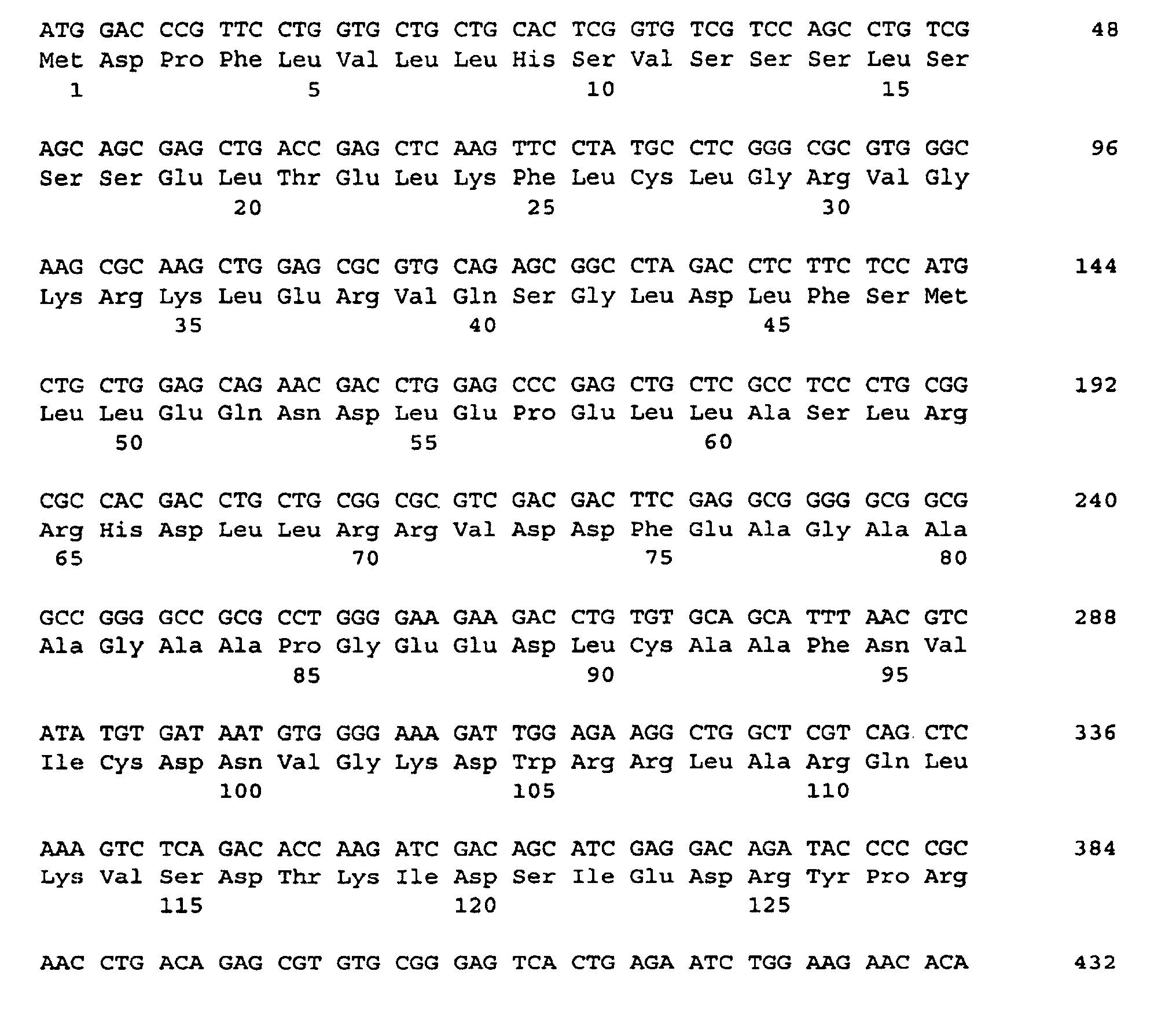
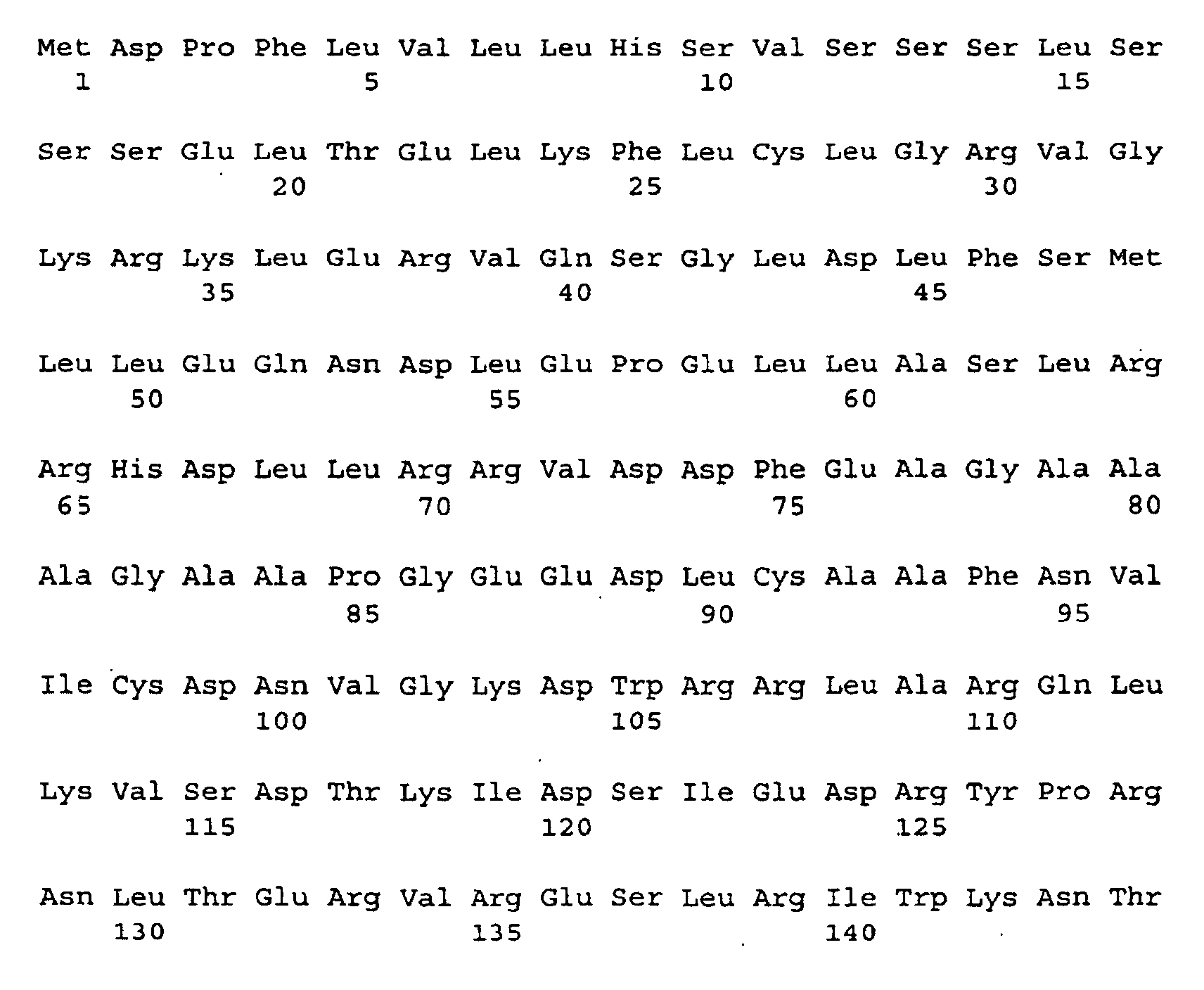
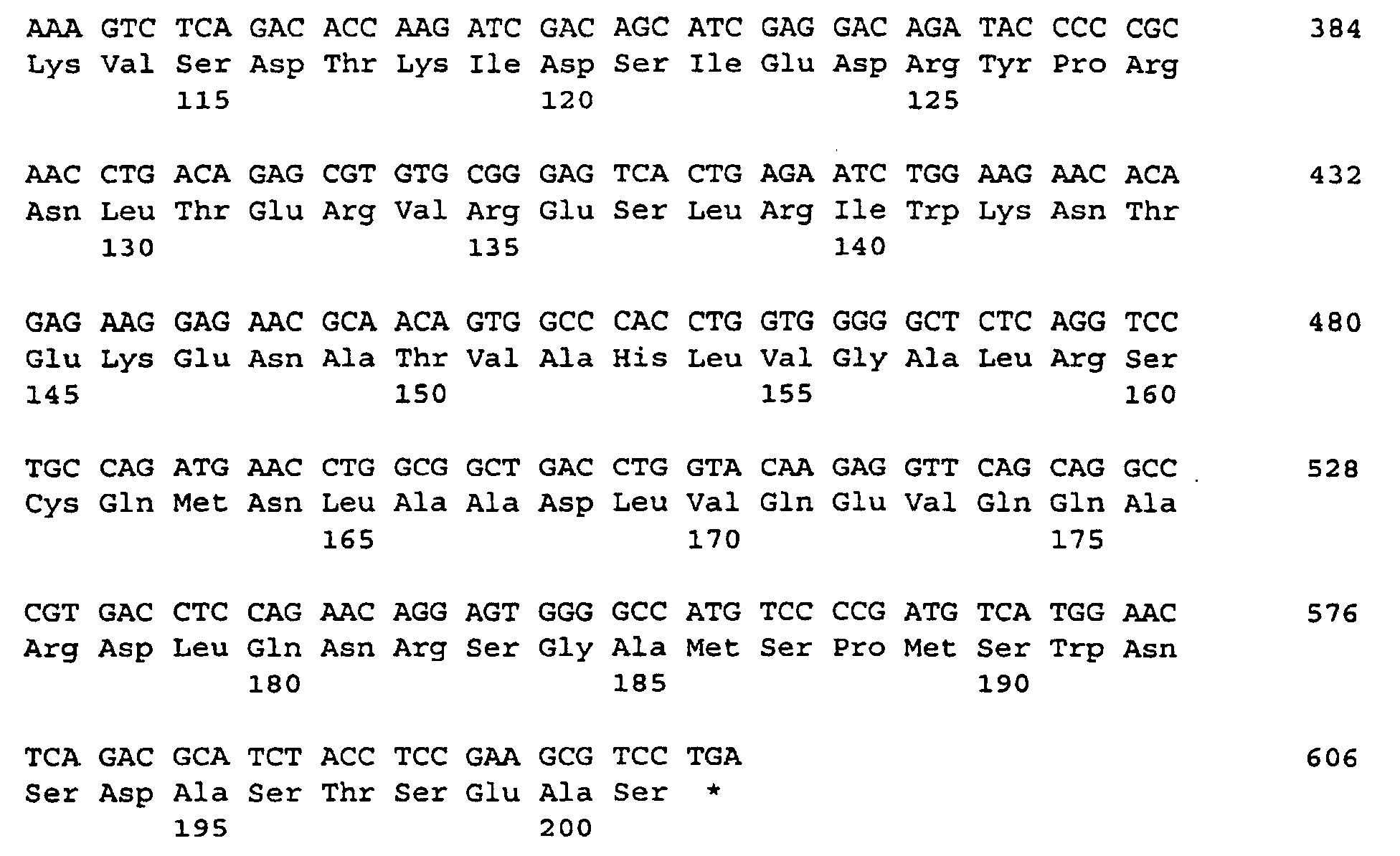
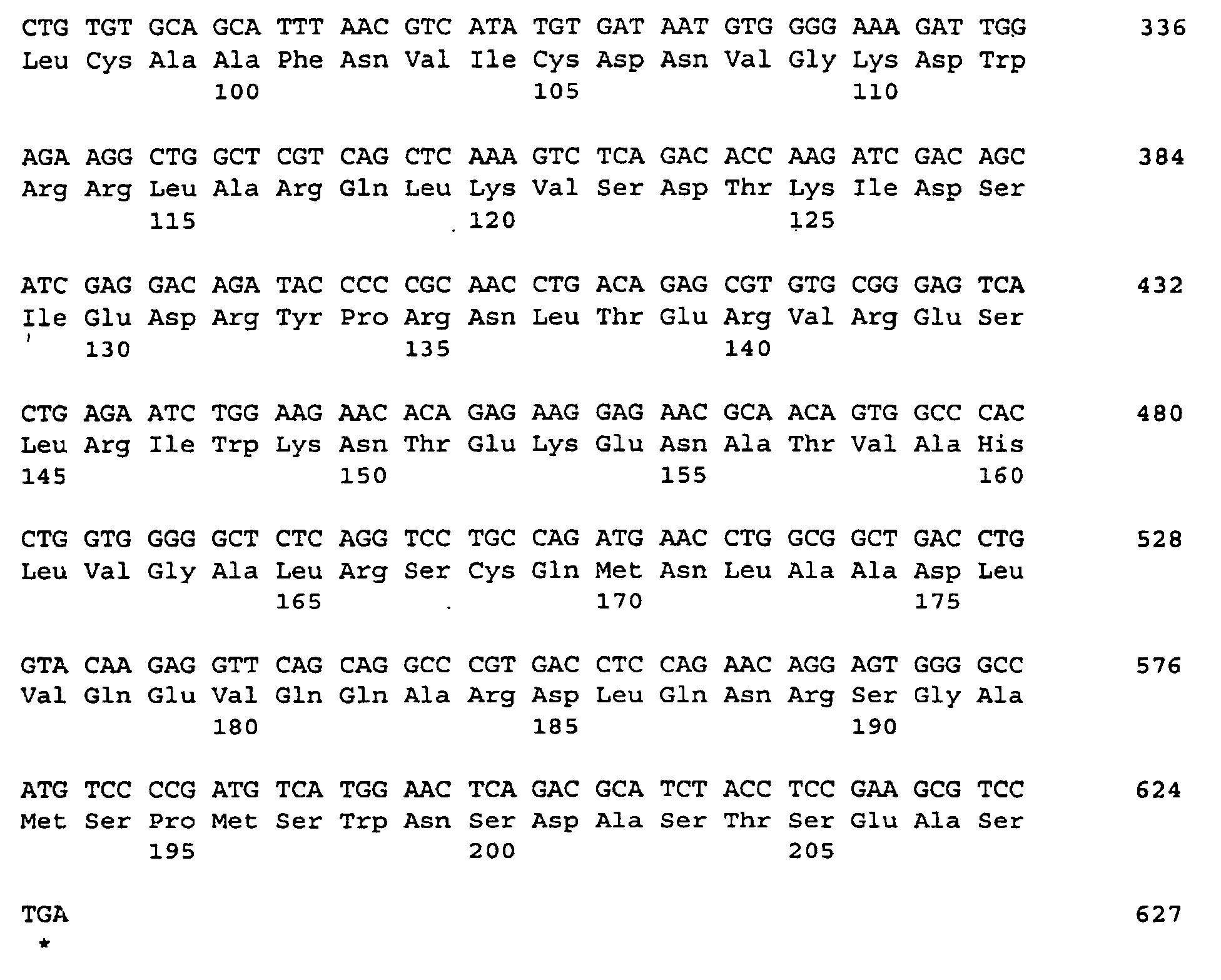
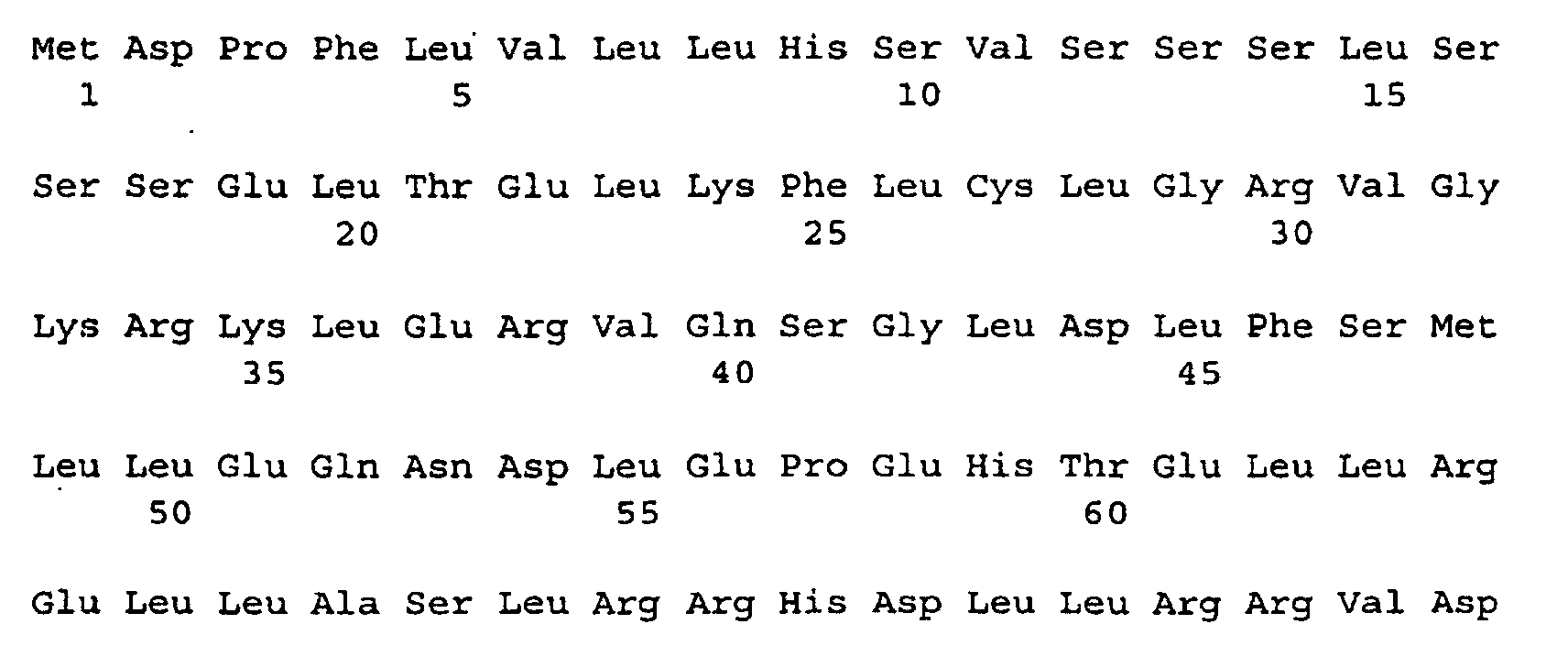
- the NTERA2 and the adult human brain isoforms of MORT1 are depicted in SEQ. ID NOS. 1 and 3.
- MORT1 The cDNA encoding intact MORT1 was generated using standard PCR techniques (Finney, 1993; Griffin and Griffin, 1994). HeLa cell cDNA prepared by standard reverse transcriptase/PCR was the source of DNA template. Additionally, MORT1 cDNA was generated using a human placental cDNA library as the template source. In each case, a MORT1 fragment was amplified by PCR, cloned and sequenced. DNA sequences obtained from placental and HeLa tissue were compared with the MORT1 sequence in Genbank deposit x84709.
- a human neuronal MORT1 transcript was determined by RT/PCR.
- Human neuronal NTERA2 cells were grown under conditions to promote terminal differentiation to the neuronal phenotype and induced to undergo apoptosis by incubation with staurosporine.
- RNA extracted from these cells was subjected to RT/PCR using MORT1-specific primers.
- the resulting MORT1 fragment was cloned and its sequence compared to the MORT1 sequence in Genbank deposit x84709.
- MORT1 was also cloned from fetal and adult human brain cDNA libraries by PCR. MORT1 fragments were amplified, cloned, and their sequence compared to the MORT1 sequence in Genbank deposit x84709.
- MORT1 clones deriving from HeLa cells, the human placental library, and fetal human brain matched the Genbank MORT1 sequence.
- MORT1 clones from NTERA2 cells and three of five clones derived from human adult brain were deleted for bp 172-192 of the MORT1 coding sequence. The other two of the five clones derived from human adult brain had a single base pair substitution (G173A) relative to the Genbank MORT1 sequence.
- the 21 bp deletion and the G173A substitution both generate a Glu-Pro-Glu amino acid sequence at positions 56-58 of the protein sequence, versus the corresponding Glu-Pro-Gly sequence of the wild-type protein.
- the human neuronal MORT1 isoforms include some other basepair substitutions relative to Genbank sequence, as depicted in SEQ. ID NO. 1 and 3.
- Human neuronal MORT1 transcript isoforms are also cloned from human cDNA phage libraries by probing with a radiolabelled MORT1 probe using published DNA hybridization methods (Ausubel et al., 1993; Sambrook, et al., 1989). Many human brain sub-region libraries are commercially available (Clontech; Stratagene) for screening. For tissues or neuronal cell lines for which no commercially available library exists, custom synthesis of a cDNA library is performed from poly(A) + RNA (service available from Clontech). Total RNA and poly(A) selection are performed according to published methods (Glover, 1985; Sambrook, et al., 1989).
- Human MORT1 genomic sequence is cloned using standard PCR techniques (Griffin and Griffin, 1994) from human genomic DNA prepared by standard methods (Glover, 1985; Sambrook, et al., 1989).
- oligonucleotide probes are designed to distinguish the 21 nucleotide difference between the deleted and intact MORT1 isoforms.
- Expression vectors were constructed by fusing the GAL4 DNA-binding domain to the MORT1 transcript isoforms.
- a second expression vector was constructed by fusing the GAL4 Activation domain to MACH ⁇ 1 C360S.
- yeast strains were generated expressing a single MORT1 transcript isoform with MACH ⁇ 1 C360S, or a single recombinant plasmid encoding a fusion protein with its companion vector containing unrelated heterologous DNA. Strains were tested for productive protein-protein interaction via reporter gene activity and a change in the yeast cell phenotype.
- MORT ⁇ 21 isoform fusion protein is impaired in its ability to functionally interact with MACH ⁇ 1 C360S fusion protein.
- the yeast strains expressing MORT ⁇ 21 with MACH ⁇ 1 C360S demonstrated decreased histidine prototrophy, and decreased cell growth, as well as decreased sensitivity to cycloheximide and increased cell growth. These were observed in comparison to the growth characteristics of yeast strain expressing the fusion proteins for MORT1 with MACH ⁇ 1 C360S, or MORTG173A with MACH ⁇ 1 C360S.
- the subject nucleic acids find a wide variety of applications including use as translatable transcripts, hybridization probes, PCR primers, therapeutic nucleic acids, etc.; use in detecting the presence of genes and gene transcripts involved in apoptosis, in detecting or amplifying nucleic acids encoding additional MORT1 homologs and structural analogs, and in gene therapy applications.
- the gene products encoded by these transcripts have utility in serving as target proteins in the development of therapeutics for the manipulation of the apoptotic pathway.
- Example 1 Cloning of MORT1 from HeLa cells and from a human placental cDNA library.
- MORT1 As a control, the intact MORT1 gene was cloned as described in Boldin, et al ., (1995). Oligonucleotides were prepared on an ABI oligosynthesizer, designed according to the published cDNA sequence of human MORT1 (Genbank x847091.
- a 25 base 5' sense oligonucleotide containing a Ncol site and the start codon (“5' MORT1,” 5'-ACC CCG CCA TGG ACC CGT TCC TGG T-3', corresponding to bases -8 to + 17), and a 24 base 3' antisense oligonucleotide spanning the stop codon ("3' MORT1," 5'-ACG GGC CCA TCA GGA CGC TTC GGA-3', complementary to bases 636 to 613 of the MORT1 coding sequence), were synthesized.
- the cDNA encoding intact MORT1 was generated using standard PCR techniques (Finney,1993).
- Example 2 Cloning of a neuronal MORT1 from NTERA2 cells by RT/PCR using a gene-specific RT primer
- NTERA-2 cells which originate from a human teratocarcinoma and represent a late embryonic human neuronal phenotype, were investigated for the presence of MORT1.
- NTERA2 cells (Stratagene) were grown under conditions to promote terminal differentiation to the neuronal phenotype, including long-term incubation in retinoic acid (Andrews, 1984).
- staurosporine (Calbiochem) was added to the cell culture medium to a final concentration of 100 nM to induce apoptosis.
- Total RNA extraction was by the RNeasy Total RNA Kit (Life Technologies) using reagents and instructions provided by the manufacturer.
- Reverse transcription of total RNA was performed with the reagents and instructions for gene-specific reverse transcription provided in the BRL Preamplification Kit (Life Technologies). Specifically, a 27 base 3' antisense oligonucleotide ("MORT1 downstream,” 5'-TAG ATG CCT GTG GTC CAC CAG CGC AAA-3', complementary to bases 663 to 637 of the MORT1 coding sequence) was synthesized on an ABI oligosynthesizer. Reverse transcription of 1 ⁇ g total RNA was primed using this oligonucleotide.
- PCR amplification of NTERA2 cDNA was performed using DNA Taq polymerase and other reagents provided by the manufacturer (Life Technologies) and equimolar amounts of oligonucleotides "5' MORT1" and "3' MORT1” (see above).
- Thermal cycling of the PCRs was in the Gene Amp 2400 thermal cycler (Perkin Elmer) under the regime, 1 min at 95C, 35 cycles (15 sec at 95C, 30 sec at 50C, 1 min at 72C), 7 min at 72C.
- the resulting PCR product (the cDNA corresponding to the MORT1 ⁇ 21 isoform) was agarose gel purified using Qiaex II reagents and instructions provided by the manufacturer (Qiagen) and ligated to the pCR2.1 cloning vector (Invitrogen).
- Recombinant plasmids were obtained by standard methodology, including transformation into One Shot E. coli cells (Invitrogen), growth of transformed bacterial cells on LB-agar plates containing 100 ⁇ g/mL ampicillin (Sigma), growth of bacterial colonies in LB Medium (Life Technologies,), and preparation of plasmid DNA using the QlAprep Spin Miniprep Kit (Qiagen).
- DNA sequence was obtained using cycle sequencing dideoxy terminator reagents (ABI) and synthetic oligonucleotides (see below) reacted in a Gene Amp 9600 thermal cycler (Perkin Elmer) under manufacturer's instructions. Reactions were run and data were generated on an ABI automated sequencer. Sequence data were analyzed using Lasergene software (DNA Star).
- Oligonucleotides for use in DNA sequencing were prepared (on an ABI synthesizer), designed according to the sequence of the polylinker region of pCR2.1 and published MORT1 sequence. The following oligonucleotides were generated: "TA Forward” (5'-CAG GAA ACA GCT ATG ACC ATG-3', corresponding to the sense strand of the lacZ gene in pCR2.1, 67 bp upstream of the TA cloning site), "TA Reverse” (5'-ACG TTG TAA AAC GAC GGC CAG-3', corresponding to the antisense strand of the lacZ gene in pCR2.1, 112 bases downstream of the TA cloning site), "MORT 150” (5'-ACC TCT TCT CCA TGC TGC TG-3', sense strand, corresponding to bases 131 to 150 of the MORT1 coding sequence), "MORT 230" (5'-TCG AAG TCG TCG ACG CGC CG-3', antisense strand
- NTERA2 cells (Stratagene) were grown under conditions to promote terminal differentiation to the neuronal phenotype, including long-term incubation in retinoic acid (Andrews, 1984). Eighteen hours prior to RNA extraction, staurosporine (Calbiochem) was added to the cell culture medium to a final concentration of 100 nM to induce apoptosis.
- Total RNA extraction was by the BRL RNeasy Total RNA Kit (Life Technologies, Inc.) using reagents and instructions provided by the manufacturer. Reverse transcription of total RNA was performed with the reagents and instructions provided in the BRL Preamplification Kit (Life Technologies, Inc.). Specifically, reverse transcription of 4 ⁇ g total RNA was primed using oligo(dT).
- Oligonucleotides for use in PCR were prepared (on an ABI oligosynthesizer), designed according to the published MORT1 sequence (Genbank x84709).
- a 25 base 5' sense oligonucleotide (“MORT1 upstream,” 5'-AAG CGG CGA GAC CTG GCC ACG GCC A-3', corresponding to bases -90 to -66, relative to the translational start site) was synthesized.
- PCR amplification of NTERA2 cDNA was performed using DNA Taq polymerase and other reagents provided by the manufacturer (Life Technologies) and equimolar amounts of "MORT1 upstream” and "MORT1 downstream” (see above) oligonucleotides.
- Thermal cycling of the PCRs was in the Gene Amp 2400 thermal cycler (Perkin Elmer, Inc.) under the regime, 1 min at 95C, 35 cycles (15 sec at 95C, 30 sec at 50C, 1 min at 72C), 7 min at 72C.
- a 2 ⁇ L aliquot of the 100 ⁇ L reaction served as the DNA template for further PCR amplification using equimolar amounts of oligonucleotides "5' MORT1" and "3' MORT1" (see above) under the same thermal cycling regime.
- the resulting PCR product (the cDNA corresponding to the MORT1 ⁇ 21 isoform) was agarose gel purified using Qiaex II reagents and instructions provided by the manufacturer (Qiagen) and ligated into the pCR2.1 cloning vector (Invitrogen).
- Recombinant plasmids were obtained by standard methodology, including transformation into One Shot E. coli cells (Invitrogen), growth of transformed bacterial cells on LB-agar plates containing 100 ⁇ g/mL ampicillin (Sigma), growth of bacterial colonies in LB Medium (Life Technologies), and preparation of plasmid DNA using the QIAprep Spin Miniprep Kit (Qiagen).
- DNA sequence was obtained using cycle sequencing dideoxy terminator reagents (ABI) and synthetic oligonucleotides (see above) reacted in a Gene Amp 9600 thermal cycler (Perkin Elmer) under manufacturer's instructions. Reactions were run and data were generated on an ABI automated sequencer. Sequence data were analyzed using Lasergene software (DNA Star).
- the MORT1 cDNA from human fetal brain was generated using standard PCR techniques. Thermal cycling was performed, using the regime, 1 min at 95C, then 30 cycles (40 sec at 95C, 1 min at 60C, 1 min at 72C), 10 min at 72C, and using the oligonucleotides "5' MORT1" and "3' MORT1" (see above).
- a human fetal brain (matchmaker) cDNA library (Clontech) and a human adult whole brain (matchmaker) cDNA library (Clontech) were used as DNA templates for PCR.
- PCR products of approximately 640 bp were obtained, ligated to the vector pCR II (Invitrogen), and recombinant plasmids were obtained by standard methodology, including transformation into competent One shot E. coli cells, growth of transformed bacterial cells on LB-agar plates containing 100 ⁇ g/mL ampicillin (Sigma), growth of bacterial colonies in LB Medium (Life Technologies), and preparation of plasmid DNA using by Wizard Plus Minipreps (Promega) or by Qiagen Midiprep (Qiagen). Recombinant plasmids were confirmed by restriction enzyme digestion.
- the cDNA sequence was determined by dye-deoxy terminator reaction using reagents and protocols from ABI-Perkin-Elmer and the ABI 373A automated sequencer.
- NTERA2 cells (Stratagene) were grown under conditions to promote terminal differentiation to the neuronal phenotype, including long-term incubation in retinoic acid (Andrews, 1984). Eighteen hours prior to RNA extraction, staurosporine (Calbiochem) was added to the cell culture medium to a final concentration of 100 nM to induce apoptosis.
- Total RNA extraction was by the BRL RNeasy Total RNA Kit (Life Technologies, Inc.) using reagents and instructions provided by the manufacturer. Reverse transcription of total RNA was performed with the reagents and instructions provided in the BRL Preamplification Kit (Life Technologies, Inc.). Specifically, reverse transcription of 4 ⁇ g total RNA was primed using oligo(dT).
- Oligonucleotides for use in PCR were prepared (on an ABI oligosynthesizer), designed according to the published MACH sequence (Boldin, et al ., 1996).
- a 24 base molecule (MACH 5' ⁇ , 5'-TTT-AAA-AAG-ATG-GAC-TTC-AGC-AGA-3', spanning the translational start codon of MACH ⁇ 1 and other MACH isoforms) was synthesized.
- Another 24 base molecule (MACH 3' ⁇ , 5'-ATA-GCA-CCA-TCA-ATC-AGA-AGG-GAA-3', complementary to coding sequence, and spanning the stop codon of MACH ⁇ 1 and MACH ⁇ 2.
- PCR amplification of NTERA2 cDNA was performed using DNA Taq polymerase and other reagents provided by the manufacturer (Life Technologies) and equimolar amounts of oligonucleotides MACH 5' ⁇ and MACH 3' ⁇ (see above).
- Thermal cycling of the PCRs was in the Gene Amp 2400 thermal cycler (Perkin Elmer) under the regime, 1 min at 95C, 35 cycles (15 sec at 95C, 30 sec at 50C, 1 min at 72C), 7 min at 72C. Two PCR products, both between 1.4 and 1.5 kb resulted.
- the larger product (the cDNA corresponding to the MACH ⁇ 1) was agarose gel purified using Qiaex II reagents and instructions provided by the manufacturer (Qiagen) and ligated to the pCR2.1 cloning vector (Invitrogen).
- Recombinant plasmids were obtained by standard methodology, including transformation into One Shot E. coli cells (Invitrogen), growth of transformed bacterial cells on LB-agar plates containing 100 ⁇ g/mL ampicillin (Sigma), growth of bacterial colonies in LB Medium (Life Technologies,), and preparation of plasmid DNA using the QIAprep Spin Miniprep Kit (Qiagen).
- DNA sequence was obtained using cycle sequencing dideoxy terminator reagents (ABI) and synthetic oligonucleotides reacted in a Gene Amp 9600 thermal cycler (Perkin Elmer) under manufacturer's instructions. Reactions were run and data were generated on an ABI automated sequencer. Sequence data were analyzed using Lasergene software (DNA Star).
- MORT1 and MACHa1 C360S Genes encoding the fusion proteins were generated by cloning MORT1 and MACHa1 C360S cDNA sequences into plasmids containing the coding regions for the domains of the yeast transcriptional activator proteins, Gal4.
- DNA binding domain (Gal4) fusion are constructed in pAS1 having a 2m origin of replication which is described in Wade-Harper et al ., (1993).
- Gene activation domain (Gal4) fusions are constructed in pACTII (described in Durfee et al., 1993).
- the yeast system used in this study is as described by Young and Ozenberger (1995).
- the MORT1 cDNA is obtained as a Ncol - Bam HI fragment from MORT1-pCRII plasmid and directionally cloned into pAS1 via Ncol and BamHI restrictions sites to generate MORT1-pAS1 plasmid.
- the MACHa1 wildtype protein is lethal in yeast. Mutation of the cysteine at amino acid position 360 to a serine prevents the lethal phenotype and does not interfere with the protein's ability to interact with MORT1 (Boldin, et al ., 1996).
- the amino acid substitution to generate MACHa1 C360S was obtained using standard PCR techniques (Finney, 1993).
- a 36 base 5' mutagenic oligonucleotide contained the C360S substitution (TGT to TCT) and a silent mutations at Ala 359 (GCT to GCA) to encrypt a diagnostic restriction enzyme site for Sfil [5'-GTG TTT TTT ATT CAG GCA TCT CAG GGG GAT AAC TAC - 3'].
- a 36 base 3' mutagenic oligonucleotide (oCB2) [5'-GTA GTT ATC CCC CTG AGA TGC CTG AAT AAA AAA CAC-3'] contained sequence complimentary to oCB1.
- the MACHa1-pCR2.1 plasmid (see example 5, above) was used as template with oligonucleotide pair oCB2 and oCB3 to generate a 1100 basepair fragment, and as template for oligonucleotide pair oCB1 and oCB4 to generate a 360 bp fragment.
- a subsequent PCR reaction was performed using the 1100 and 360 basepair fragments with oligonucleotide pair oCB3 and oCB4 to generate a 1460 bp fragment which was ligated to pCRII vector (Invitrogen) to generate MACHa1 C360S -pCRII.
- Recombinant plasmids were obtained by standard methodology, including transformation into One Shot E. coli cells (Invitrogen), growth of transformed bacterial cells on LB-agar (Gibco, Inc.) plates containing either 100 mg/mL ampicillin (Sigma) or 50 mg/mL Kanamycin (Sigma) as described in the manufacturer's (Invitrogen) standard protocol. Growth of bacterial colonies was in LB medium and preparation of plasmid DNA was performed using Qiagen Midiprep (Qiagen) or Wizard Plus Minipreps (Promega). Recombinant plasmids were confirmed restriction enzyme digestion.
- the cDNA sequence was obtained by dye-deoxy terminator reactions using reagents and protocols from ABI-Perkin-Elmer and the ABI 373A automated sequencer.
- the cDNA encoding MACHa1 C360S was obtained as a BamHI - SalI fragment and directionally cloned into pACTII via BamHI - Xhol sites to generate MACHa1 C360S - pACTII.
- DNA of final recombinant vectors were transformed into yeast strain(s) by the lithium acetate method (Rose et al., 1990).
- a yeast host strain (CY770) as described in Young and Ozenberger (1995) was transformed with both the MORT1 and MACHa1 C360S fusion constructs (YCB5) or a single fusion construct plus the opposing vector containing unrelated heterologous DNA (YCB5.1 or YCB2.1, respectively). All strains were found to exhibit equal growth on nonselective medium. Strains were then tested for growth on selective medium (i.e., growth medium lacking histidine). Only cells expressing both the MORT1 and MACHa1 C360S fusions are able to grow on selective medium while the strains containing either the MORT1 or the MACHa1 C360S fusion with an unrelated fusion cannot grow (data not shown).
- MORT1 G173A SEQ. (ID NO. 5) was obtained as a Ncol-BamHI fragment from MORT1 G173A-pCRII and directionally cloned into pAS1 to generate MORT1 G173A-pAS1 plasmid.
- MORT1 ⁇ 21 was obtained as a Ncol-BamHI fragment from MORT1 ⁇ 21-pCRII and directionally cloned into pAS1 to generated MORT1 ⁇ 21-pAS1 plasmid.
- These plasmids and the MACHa1 C360S -pACTII plasmid were used to transform the yeast host strain, CY770.
- Strains were generated that express MORT1 G173A and MACHa1 C360S fusion constructs (YCB16) or the MORT1 G173A fusion construct plus the opposing vector containing unrelated heterologous DNA (YCB16.1). Strains were generated that express MORT1 ⁇ 21 and MACHa1 C360S fusion constructs (YCB9) or the MORT1 ⁇ 21 fusion construct plus the opposing vector containing unrelated heterologous DNA (YCB9.1).
- Example 7 Screen for compounds affecting the interaction of MORT1 transcript isoforms with other interacting proteins (MACH family members)
- MORT1 G173A or MORT1 ⁇ 21 Low copy number plasmids expressing MORT1 transcript isoforms (MORT1 G173A or MORT1 ⁇ 21) and MACHa1 C360S as GAL4 fusion proteins are constructed to reduce expression of these proteins.
- cDNA inserts encoding the MORT1 transcript isoforms are subcloned directly from the recombinant pAS1 vector(s) to pUN30AS via NcoI-BamHI fragment to generate either MORT1 G173A-pUN30AS or MORT1 D 21-pUN30AS.
- the MACHa1 C360S is subcloned directly from the MACHa1 C360S - pCR II as a BamHI-Sal1 fragment into pUN100ACT via BamHI - Xhol sitess to generate MACHa1 C360S - pUN100ACT.
- These plasmids are transformed into yeast strain CY770 (Young and Ozenberger, 1995) with reporter plasmid pOZ146 (Young and Ozenberger, 1995) to generate yeast strain YCB6.
- the presence of all three plasmids is necessary to confer the necessary phenotype to enable a rescue screen method as described in Young and Ozenberger (1995).
- Example 8 Screen for compounds affecting the interaction of MORT1 transcript isoforms and protein containing a death domain motif (TRADD, Fas/APO1 receptor, TNFR)
- MORT1 G173A Low copy number plasmids expressing MORT1 transcript isoforms (MORT1 G173A, or MORT1 ⁇ 21) and the cytoplasmic domain of the TNF receptor containing a death domain motif as GAL4 fusion proteins are constructed to reduce expression of these proteins.
- cDNA inserts encoding the MORT1 transcript isoforms are subcloned directly from the MORT1 G173A-pAS1 or the MORT1 ⁇ 21-pAS1 recombinant to pUN30AS via NcoI-BamHI fragment to generate either MORT1 G173A-pUN30AS or MORT1 ⁇ 21-pUN30AS.
- the cytoplasmic domain of the TNFR is subcloned directly from TNFcyto-pCR II as an EcoRI fragment into pUN100ACT via EcoRI sites to generate TNFRcyto - pUN100ACT. Plasmids are transformed into the yeast strain CY770 (Young and Ozenberger, 1995) with the reporter plasmid pOZ146 (Young and Ozenberger, 1995). The presence of three plasmids is necessary to confer the necessary phenotype to enable a rescue screen method as described in Young and Ozenberger (1995).
Landscapes
- Health & Medical Sciences (AREA)
- Life Sciences & Earth Sciences (AREA)
- Chemical & Material Sciences (AREA)
- Organic Chemistry (AREA)
- Zoology (AREA)
- Genetics & Genomics (AREA)
- Gastroenterology & Hepatology (AREA)
- Immunology (AREA)
- Biochemistry (AREA)
- Biophysics (AREA)
- General Health & Medical Sciences (AREA)
- Toxicology (AREA)
- Medicinal Chemistry (AREA)
- Molecular Biology (AREA)
- Proteomics, Peptides & Aminoacids (AREA)
- Cell Biology (AREA)
- Micro-Organisms Or Cultivation Processes Thereof (AREA)
- Acyclic And Carbocyclic Compounds In Medicinal Compositions (AREA)
- Peptides Or Proteins (AREA)
- Preparation Of Compounds By Using Micro-Organisms (AREA)
Abstract
Description
Bingham, Brendan W
Young, Kathleen H
Birsan, Camelia






Claims (7)
- A composition comprising a polynucleotide comprising the MORT 1Δ21 nucleotide sequence set forth in SEQ. ID NO. 1, deposited under accession number ATCC 209013.
- A composition comprising a polynucleotide comprising the nucleotide sequence set forth as in SEQ. ID NO. 3, deposited under accession number ATCC 209018.
- A composition comprising a polynucleotide comprising the nucleotide sequence set forth in SEQ. ID NO. 5, deposited under accession number ATCC 209019.
- An isolated MORT1 nucleic acid isoform, wherein the isoform is a human NTERA2 neuronal cell or human brain isoform encoding a protein comprising the amino acid sequences selected from the group consisting of SEQ. ID NO. 2, SEQ. ID NO. 4 AND SEQ. ID NO. 6.
- An isolated MORT1 nucleic acid isoform comprising the amino acid sequence of SEQ. ID NO. 2.
- An isolated MORT1 nucleic acid isoform comprising the amino acid sequence of SEQ. ID. NO. 4.
- An isolated MORT1 nucleic acid isoform comprising the amino acid sequence of SEQ. ID NO. 6.
Applications Claiming Priority (3)
| Application Number | Priority Date | Filing Date | Title |
|---|---|---|---|
| US4483597P | 1997-04-25 | 1997-04-25 | |
| US44835P | 1997-04-25 | ||
| PCT/US1998/007439 WO1998049297A1 (en) | 1997-04-25 | 1998-04-14 | Neuronal mort1 isoforms |
Publications (2)
| Publication Number | Publication Date |
|---|---|
| EP0977846A1 EP0977846A1 (en) | 2000-02-09 |
| EP0977846B1 true EP0977846B1 (en) | 2002-06-19 |
Family
ID=21934583
Family Applications (1)
| Application Number | Title | Priority Date | Filing Date |
|---|---|---|---|
| EP98915540A Expired - Lifetime EP0977846B1 (en) | 1997-04-25 | 1998-04-14 | Neuronal mort1 isoforms |
Country Status (11)
| Country | Link |
|---|---|
| US (1) | US6248875B1 (en) |
| EP (1) | EP0977846B1 (en) |
| JP (1) | JP2001522247A (en) |
| AT (1) | ATE219516T1 (en) |
| AU (1) | AU6969998A (en) |
| CA (1) | CA2287537A1 (en) |
| DE (1) | DE69806146T2 (en) |
| DK (1) | DK0977846T3 (en) |
| ES (1) | ES2181197T3 (en) |
| PT (1) | PT977846E (en) |
| WO (1) | WO1998049297A1 (en) |
Families Citing this family (2)
| Publication number | Priority date | Publication date | Assignee | Title |
|---|---|---|---|---|
| AU1099601A (en) * | 1999-10-22 | 2001-05-08 | Millennium Pharmaceuticals, Inc. | Nucleic acid molecules derived from rat brain and programmed cell death models |
| US20080090234A1 (en) * | 2006-10-13 | 2008-04-17 | Kejian Zhang | Diagnostic assay for autoimmune lymphoproliferative syndrome (ALPS) and genetically related disorders |
Family Cites Families (5)
| Publication number | Priority date | Publication date | Assignee | Title |
|---|---|---|---|---|
| US5989808A (en) | 1994-06-14 | 1999-11-23 | American Cyanamid Company | Identification of compounds affecting specific interaction of peptide binding pairs |
| MX9704501A (en) * | 1994-12-15 | 1997-10-31 | Yeda Res & Dev | Modulators of the function of fas/apo1 receptors. |
| JP3860608B2 (en) * | 1995-02-22 | 2006-12-20 | イエダ リサーチ アンド ディベロップメント カンパニー リミテッド | Regulatory protein modulator |
| US7807783B1 (en) * | 1995-04-03 | 2010-10-05 | The Regents Of The University Of Michigan | Methods and compositions for regulating FAS-associated apoptosis |
| US6462175B1 (en) | 1995-11-13 | 2002-10-08 | Thomas Jefferson University | Mch3, a novel apoptotic protease, nucleic acids encoding and methods of use |
-
1998
- 1998-04-14 ES ES98915540T patent/ES2181197T3/en not_active Expired - Lifetime
- 1998-04-14 EP EP98915540A patent/EP0977846B1/en not_active Expired - Lifetime
- 1998-04-14 DK DK98915540T patent/DK0977846T3/en active
- 1998-04-14 DE DE69806146T patent/DE69806146T2/en not_active Expired - Fee Related
- 1998-04-14 AU AU69699/98A patent/AU6969998A/en not_active Abandoned
- 1998-04-14 PT PT98915540T patent/PT977846E/en unknown
- 1998-04-14 JP JP54702698A patent/JP2001522247A/en active Pending
- 1998-04-14 AT AT98915540T patent/ATE219516T1/en not_active IP Right Cessation
- 1998-04-14 CA CA002287537A patent/CA2287537A1/en not_active Abandoned
- 1998-04-14 WO PCT/US1998/007439 patent/WO1998049297A1/en not_active Ceased
- 1998-04-22 US US09/064,414 patent/US6248875B1/en not_active Expired - Fee Related
Also Published As
| Publication number | Publication date |
|---|---|
| JP2001522247A (en) | 2001-11-13 |
| DK0977846T3 (en) | 2002-10-14 |
| US6248875B1 (en) | 2001-06-19 |
| PT977846E (en) | 2002-11-29 |
| CA2287537A1 (en) | 1998-11-05 |
| ES2181197T3 (en) | 2003-02-16 |
| ATE219516T1 (en) | 2002-07-15 |
| DE69806146T2 (en) | 2003-01-02 |
| WO1998049297A1 (en) | 1998-11-05 |
| EP0977846A1 (en) | 2000-02-09 |
| DE69806146D1 (en) | 2002-07-25 |
| AU6969998A (en) | 1998-11-24 |
Similar Documents
| Publication | Publication Date | Title |
|---|---|---|
| AU2020270508B2 (en) | C/EBP alpha short activating RNA compositions and methods of use | |
| Stanger et al. | RIP: a novel protein containing a death domain that interacts with Fas/APO-1 (CD95) in yeast and causes cell death | |
| CA2443617C (en) | Repeat sequences of the ca125 gene and their use for diagnostic and therapeutic interventions | |
| AU707598B2 (en) | Cell death protein | |
| US6537775B1 (en) | Gene involved in cadasil, method of diagnosis and therapeutic application | |
| AU724681B2 (en) | Human genes | |
| WO1997029213A1 (en) | Coding sequences of the human brca1 gene | |
| KR20140139101A (en) | Artificial nucleic acid molecules comprising a 5'top utr | |
| Hadano et al. | Cloning and characterization of three novel genes, ALS2CR1, ALS2CR2, and ALS2CR3, in the juvenile amyotrophic lateral sclerosis (ALS2) critical region at chromosome 2q33–q34: candidate genes for ALS2 | |
| US20030143667A1 (en) | Repeat sequences of the CA125 gene and their use for diagnostic and therapeutic interventions | |
| JP2003510349A (en) | Genes required for striatal function, their use, and compounds for regulating them | |
| JP2005519584A5 (en) | ||
| WO2000008152A1 (en) | Novel orphan cytokine receptors | |
| US5871960A (en) | Nucleic acids encoding CR5 polypeptide, vector and transformed cell thereof, and expression thereof | |
| US6248875B1 (en) | Neuronal MORT1 isoforms | |
| KR20040028601A (en) | Osteoclast-associated receptor | |
| AU702844B2 (en) | Interleukin-1 receptor-associated protein kinase and assays | |
| JPWO2000029571A1 (en) | Genes encoding novel transmembrane proteins | |
| WO1996039427A1 (en) | Ligand-stimulated gene expression | |
| US5871961A (en) | Nucleic acids encoding CR2 polypeptides, vector and transformed cell thereof, and expression thereof | |
| JP2000189171A (en) | Novel guanosine triphosphate (GTP) binding protein-coupled receptor protein | |
| MXPA99009706A (en) | Neuronal mort1 isoforms | |
| EP0922052A1 (en) | Rat ob receptors and nucleotides encoding them | |
| JPH09501310A (en) | DNA encoding the human thyroid stimulating hormone releasing receptor | |
| Chen et al. | Cloning and characterization of the human CD200 promoter region |
Legal Events
| Date | Code | Title | Description |
|---|---|---|---|
| PUAI | Public reference made under article 153(3) epc to a published international application that has entered the european phase |
Free format text: ORIGINAL CODE: 0009012 |
|
| 17P | Request for examination filed |
Effective date: 19991025 |
|
| AK | Designated contracting states |
Kind code of ref document: A1 Designated state(s): AT BE CH CY DE DK ES FI FR GB GR IE IT LI LU MC NL PT SE |
|
| RIN1 | Information on inventor provided before grant (corrected) |
Inventor name: BIRSAN, CAMELIA Inventor name: WOOD, ANDREW, TIMOTHY Inventor name: YOUNG, KATHLEEN, H. Inventor name: BINGHAM, BRENDAN, WILLIAM |
|
| 17Q | First examination report despatched |
Effective date: 20000704 |
|
| GRAG | Despatch of communication of intention to grant |
Free format text: ORIGINAL CODE: EPIDOS AGRA |
|
| GRAG | Despatch of communication of intention to grant |
Free format text: ORIGINAL CODE: EPIDOS AGRA |
|
| GRAG | Despatch of communication of intention to grant |
Free format text: ORIGINAL CODE: EPIDOS AGRA |
|
| GRAH | Despatch of communication of intention to grant a patent |
Free format text: ORIGINAL CODE: EPIDOS IGRA |
|
| GRAH | Despatch of communication of intention to grant a patent |
Free format text: ORIGINAL CODE: EPIDOS IGRA |
|
| GRAA | (expected) grant |
Free format text: ORIGINAL CODE: 0009210 |
|
| AK | Designated contracting states |
Kind code of ref document: B1 Designated state(s): AT BE CH CY DE DK ES FI FR GB GR IE IT LI LU MC NL PT SE |
|
| RAP1 | Party data changed (applicant data changed or rights of an application transferred) |
Owner name: WYETH |
|
| REF | Corresponds to: |
Ref document number: 219516 Country of ref document: AT Date of ref document: 20020715 Kind code of ref document: T |
|
| REG | Reference to a national code |
Ref country code: GB Ref legal event code: FG4D |
|
| REG | Reference to a national code |
Ref country code: CH Ref legal event code: EP |
|
| REG | Reference to a national code |
Ref country code: IE Ref legal event code: FG4D |
|
| REF | Corresponds to: |
Ref document number: 69806146 Country of ref document: DE Date of ref document: 20020725 |
|
| REG | Reference to a national code |
Ref country code: CH Ref legal event code: NV Representative=s name: SCHMAUDER & PARTNER AG PATENTANWALTSBUERO |
|
| REG | Reference to a national code |
Ref country code: DK Ref legal event code: T3 |
|
| REG | Reference to a national code |
Ref country code: GR Ref legal event code: EP Ref document number: 20020402843 Country of ref document: GR |
|
| ET | Fr: translation filed | ||
| REG | Reference to a national code |
Ref country code: PT Ref legal event code: SC4A Free format text: AVAILABILITY OF NATIONAL TRANSLATION Effective date: 20020913 |
|
| REG | Reference to a national code |
Ref country code: ES Ref legal event code: FG2A Ref document number: 2181197 Country of ref document: ES Kind code of ref document: T3 |
|
| PGFP | Annual fee paid to national office [announced via postgrant information from national office to epo] |
Ref country code: MC Payment date: 20030401 Year of fee payment: 6 |
|
| PG25 | Lapsed in a contracting state [announced via postgrant information from national office to epo] |
Ref country code: CY Free format text: LAPSE BECAUSE OF FAILURE TO SUBMIT A TRANSLATION OF THE DESCRIPTION OR TO PAY THE FEE WITHIN THE PRESCRIBED TIME-LIMIT Effective date: 20030414 |
|
| PLBE | No opposition filed within time limit |
Free format text: ORIGINAL CODE: 0009261 |
|
| STAA | Information on the status of an ep patent application or granted ep patent |
Free format text: STATUS: NO OPPOSITION FILED WITHIN TIME LIMIT |
|
| 26N | No opposition filed |
Effective date: 20030320 |
|
| PG25 | Lapsed in a contracting state [announced via postgrant information from national office to epo] |
Ref country code: MC Free format text: LAPSE BECAUSE OF NON-PAYMENT OF DUE FEES Effective date: 20040430 |
|
| PGFP | Annual fee paid to national office [announced via postgrant information from national office to epo] |
Ref country code: AT Payment date: 20050314 Year of fee payment: 8 Ref country code: GB Payment date: 20050314 Year of fee payment: 8 Ref country code: DK Payment date: 20050314 Year of fee payment: 8 |
|
| PGFP | Annual fee paid to national office [announced via postgrant information from national office to epo] |
Ref country code: NL Payment date: 20050316 Year of fee payment: 8 |
|
| PGFP | Annual fee paid to national office [announced via postgrant information from national office to epo] |
Ref country code: FR Payment date: 20050401 Year of fee payment: 8 |
|
| PGFP | Annual fee paid to national office [announced via postgrant information from national office to epo] |
Ref country code: SE Payment date: 20050404 Year of fee payment: 8 Ref country code: PT Payment date: 20050404 Year of fee payment: 8 |
|
| PGFP | Annual fee paid to national office [announced via postgrant information from national office to epo] |
Ref country code: FI Payment date: 20050413 Year of fee payment: 8 |
|
| PGFP | Annual fee paid to national office [announced via postgrant information from national office to epo] |
Ref country code: IE Payment date: 20050414 Year of fee payment: 8 |
|
| PGFP | Annual fee paid to national office [announced via postgrant information from national office to epo] |
Ref country code: ES Payment date: 20050421 Year of fee payment: 8 |
|
| PGFP | Annual fee paid to national office [announced via postgrant information from national office to epo] |
Ref country code: GR Payment date: 20050422 Year of fee payment: 8 |
|
| PGFP | Annual fee paid to national office [announced via postgrant information from national office to epo] |
Ref country code: BE Payment date: 20050428 Year of fee payment: 8 |
|
| PGFP | Annual fee paid to national office [announced via postgrant information from national office to epo] |
Ref country code: DE Payment date: 20050429 Year of fee payment: 8 |
|
| PGFP | Annual fee paid to national office [announced via postgrant information from national office to epo] |
Ref country code: LU Payment date: 20050603 Year of fee payment: 8 |
|
| PGFP | Annual fee paid to national office [announced via postgrant information from national office to epo] |
Ref country code: CH Payment date: 20050613 Year of fee payment: 8 |
|
| PG25 | Lapsed in a contracting state [announced via postgrant information from national office to epo] |
Ref country code: IE Free format text: LAPSE BECAUSE OF NON-PAYMENT OF DUE FEES Effective date: 20060414 Ref country code: GB Free format text: LAPSE BECAUSE OF NON-PAYMENT OF DUE FEES Effective date: 20060414 Ref country code: FI Free format text: LAPSE BECAUSE OF NON-PAYMENT OF DUE FEES Effective date: 20060414 Ref country code: AT Free format text: LAPSE BECAUSE OF NON-PAYMENT OF DUE FEES Effective date: 20060414 |
|
| PG25 | Lapsed in a contracting state [announced via postgrant information from national office to epo] |
Ref country code: SE Free format text: LAPSE BECAUSE OF NON-PAYMENT OF DUE FEES Effective date: 20060415 Ref country code: ES Free format text: LAPSE BECAUSE OF NON-PAYMENT OF DUE FEES Effective date: 20060415 |
|
| PG25 | Lapsed in a contracting state [announced via postgrant information from national office to epo] |
Ref country code: LU Free format text: LAPSE BECAUSE OF NON-PAYMENT OF DUE FEES Effective date: 20060430 Ref country code: LI Free format text: LAPSE BECAUSE OF NON-PAYMENT OF DUE FEES Effective date: 20060430 Ref country code: CH Free format text: LAPSE BECAUSE OF NON-PAYMENT OF DUE FEES Effective date: 20060430 Ref country code: BE Free format text: LAPSE BECAUSE OF NON-PAYMENT OF DUE FEES Effective date: 20060430 |
|
| PGFP | Annual fee paid to national office [announced via postgrant information from national office to epo] |
Ref country code: IT Payment date: 20060430 Year of fee payment: 9 |
|
| PG25 | Lapsed in a contracting state [announced via postgrant information from national office to epo] |
Ref country code: DK Free format text: LAPSE BECAUSE OF NON-PAYMENT OF DUE FEES Effective date: 20060501 |
|
| PG25 | Lapsed in a contracting state [announced via postgrant information from national office to epo] |
Ref country code: PT Free format text: LAPSE BECAUSE OF NON-PAYMENT OF DUE FEES Effective date: 20061016 |
|
| PG25 | Lapsed in a contracting state [announced via postgrant information from national office to epo] |
Ref country code: NL Free format text: LAPSE BECAUSE OF NON-PAYMENT OF DUE FEES Effective date: 20061101 Ref country code: DE Free format text: LAPSE BECAUSE OF NON-PAYMENT OF DUE FEES Effective date: 20061101 |
|
| REG | Reference to a national code |
Ref country code: DK Ref legal event code: EBP |
|
| REG | Reference to a national code |
Ref country code: CH Ref legal event code: PL |
|
| EUG | Se: european patent has lapsed | ||
| GBPC | Gb: european patent ceased through non-payment of renewal fee |
Effective date: 20060414 |
|
| REG | Reference to a national code |
Ref country code: PT Ref legal event code: MM4A Free format text: LAPSE DUE TO NON-PAYMENT OF FEES Effective date: 20061016 |
|
| NLV4 | Nl: lapsed or anulled due to non-payment of the annual fee |
Effective date: 20061101 |
|
| REG | Reference to a national code |
Ref country code: IE Ref legal event code: MM4A |
|
| REG | Reference to a national code |
Ref country code: FR Ref legal event code: ST Effective date: 20061230 |
|
| REG | Reference to a national code |
Ref country code: ES Ref legal event code: FD2A Effective date: 20060415 |
|
| BERE | Be: lapsed |
Owner name: *WYETH Effective date: 20060430 |
|
| PG25 | Lapsed in a contracting state [announced via postgrant information from national office to epo] |
Ref country code: FR Free format text: LAPSE BECAUSE OF NON-PAYMENT OF DUE FEES Effective date: 20060502 |
|
| PG25 | Lapsed in a contracting state [announced via postgrant information from national office to epo] |
Ref country code: GR Free format text: LAPSE BECAUSE OF NON-PAYMENT OF DUE FEES Effective date: 20061102 |
|
| PG25 | Lapsed in a contracting state [announced via postgrant information from national office to epo] |
Ref country code: IT Free format text: LAPSE BECAUSE OF NON-PAYMENT OF DUE FEES Effective date: 20070414 |