EP0974696A1 - Sealed seams for waterproof, water vapour permeable article - Google Patents
Sealed seams for waterproof, water vapour permeable article Download PDFInfo
- Publication number
- EP0974696A1 EP0974696A1 EP99202401A EP99202401A EP0974696A1 EP 0974696 A1 EP0974696 A1 EP 0974696A1 EP 99202401 A EP99202401 A EP 99202401A EP 99202401 A EP99202401 A EP 99202401A EP 0974696 A1 EP0974696 A1 EP 0974696A1
- Authority
- EP
- European Patent Office
- Prior art keywords
- waterproof
- water vapour
- vapour permeable
- molecular weight
- group
- Prior art date
- Legal status (The legal status is an assumption and is not a legal conclusion. Google has not performed a legal analysis and makes no representation as to the accuracy of the status listed.)
- Withdrawn
Links
Classifications
-
- B—PERFORMING OPERATIONS; TRANSPORTING
- B32—LAYERED PRODUCTS
- B32B—LAYERED PRODUCTS, i.e. PRODUCTS BUILT-UP OF STRATA OF FLAT OR NON-FLAT, e.g. CELLULAR OR HONEYCOMB, FORM
- B32B27/00—Layered products comprising a layer of synthetic resin
- B32B27/12—Layered products comprising a layer of synthetic resin next to a fibrous or filamentary layer
-
- B—PERFORMING OPERATIONS; TRANSPORTING
- B32—LAYERED PRODUCTS
- B32B—LAYERED PRODUCTS, i.e. PRODUCTS BUILT-UP OF STRATA OF FLAT OR NON-FLAT, e.g. CELLULAR OR HONEYCOMB, FORM
- B32B27/00—Layered products comprising a layer of synthetic resin
- B32B27/28—Layered products comprising a layer of synthetic resin comprising synthetic resins not wholly covered by any one of the sub-groups B32B27/30 - B32B27/42
- B32B27/285—Layered products comprising a layer of synthetic resin comprising synthetic resins not wholly covered by any one of the sub-groups B32B27/30 - B32B27/42 comprising polyethers
-
- B—PERFORMING OPERATIONS; TRANSPORTING
- B32—LAYERED PRODUCTS
- B32B—LAYERED PRODUCTS, i.e. PRODUCTS BUILT-UP OF STRATA OF FLAT OR NON-FLAT, e.g. CELLULAR OR HONEYCOMB, FORM
- B32B27/00—Layered products comprising a layer of synthetic resin
- B32B27/36—Layered products comprising a layer of synthetic resin comprising polyesters
-
- D—TEXTILES; PAPER
- D06—TREATMENT OF TEXTILES OR THE LIKE; LAUNDERING; FLEXIBLE MATERIALS NOT OTHERWISE PROVIDED FOR
- D06M—TREATMENT, NOT PROVIDED FOR ELSEWHERE IN CLASS D06, OF FIBRES, THREADS, YARNS, FABRICS, FEATHERS OR FIBROUS GOODS MADE FROM SUCH MATERIALS
- D06M15/00—Treating fibres, threads, yarns, fabrics, or fibrous goods made from such materials, with macromolecular compounds; Such treatment combined with mechanical treatment
- D06M15/19—Treating fibres, threads, yarns, fabrics, or fibrous goods made from such materials, with macromolecular compounds; Such treatment combined with mechanical treatment with synthetic macromolecular compounds
- D06M15/37—Macromolecular compounds obtained otherwise than by reactions only involving carbon-to-carbon unsaturated bonds
- D06M15/507—Polyesters
-
- D—TEXTILES; PAPER
- D06—TREATMENT OF TEXTILES OR THE LIKE; LAUNDERING; FLEXIBLE MATERIALS NOT OTHERWISE PROVIDED FOR
- D06M—TREATMENT, NOT PROVIDED FOR ELSEWHERE IN CLASS D06, OF FIBRES, THREADS, YARNS, FABRICS, FEATHERS OR FIBROUS GOODS MADE FROM SUCH MATERIALS
- D06M15/00—Treating fibres, threads, yarns, fabrics, or fibrous goods made from such materials, with macromolecular compounds; Such treatment combined with mechanical treatment
- D06M15/19—Treating fibres, threads, yarns, fabrics, or fibrous goods made from such materials, with macromolecular compounds; Such treatment combined with mechanical treatment with synthetic macromolecular compounds
- D06M15/37—Macromolecular compounds obtained otherwise than by reactions only involving carbon-to-carbon unsaturated bonds
- D06M15/53—Polyethers
-
- D—TEXTILES; PAPER
- D06—TREATMENT OF TEXTILES OR THE LIKE; LAUNDERING; FLEXIBLE MATERIALS NOT OTHERWISE PROVIDED FOR
- D06M—TREATMENT, NOT PROVIDED FOR ELSEWHERE IN CLASS D06, OF FIBRES, THREADS, YARNS, FABRICS, FEATHERS OR FIBROUS GOODS MADE FROM SUCH MATERIALS
- D06M15/00—Treating fibres, threads, yarns, fabrics, or fibrous goods made from such materials, with macromolecular compounds; Such treatment combined with mechanical treatment
- D06M15/19—Treating fibres, threads, yarns, fabrics, or fibrous goods made from such materials, with macromolecular compounds; Such treatment combined with mechanical treatment with synthetic macromolecular compounds
- D06M15/37—Macromolecular compounds obtained otherwise than by reactions only involving carbon-to-carbon unsaturated bonds
- D06M15/59—Polyamides; Polyimides
-
- D—TEXTILES; PAPER
- D06—TREATMENT OF TEXTILES OR THE LIKE; LAUNDERING; FLEXIBLE MATERIALS NOT OTHERWISE PROVIDED FOR
- D06M—TREATMENT, NOT PROVIDED FOR ELSEWHERE IN CLASS D06, OF FIBRES, THREADS, YARNS, FABRICS, FEATHERS OR FIBROUS GOODS MADE FROM SUCH MATERIALS
- D06M23/00—Treatment of fibres, threads, yarns, fabrics or fibrous goods made from such materials, characterised by the process
- D06M23/16—Processes for the non-uniform application of treating agents, e.g. one-sided treatment; Differential treatment
- D06M23/18—Processes for the non-uniform application of treating agents, e.g. one-sided treatment; Differential treatment for the chemical treatment of borders of fabrics or knittings; for the thermal or chemical fixation of cuttings, seams or fibre ends
-
- D—TEXTILES; PAPER
- D06—TREATMENT OF TEXTILES OR THE LIKE; LAUNDERING; FLEXIBLE MATERIALS NOT OTHERWISE PROVIDED FOR
- D06N—WALL, FLOOR, OR LIKE COVERING MATERIALS, e.g. LINOLEUM, OILCLOTH, ARTIFICIAL LEATHER, ROOFING FELT, CONSISTING OF A FIBROUS WEB COATED WITH A LAYER OF MACROMOLECULAR MATERIAL; FLEXIBLE SHEET MATERIAL NOT OTHERWISE PROVIDED FOR
- D06N3/00—Artificial leather, oilcloth or other material obtained by covering fibrous webs with macromolecular material, e.g. resins, rubber or derivatives thereof
- D06N3/12—Artificial leather, oilcloth or other material obtained by covering fibrous webs with macromolecular material, e.g. resins, rubber or derivatives thereof with macromolecular compounds obtained otherwise than by reactions only involving carbon-to-carbon unsaturated bonds, e.g. gelatine proteins
-
- D—TEXTILES; PAPER
- D06—TREATMENT OF TEXTILES OR THE LIKE; LAUNDERING; FLEXIBLE MATERIALS NOT OTHERWISE PROVIDED FOR
- D06N—WALL, FLOOR, OR LIKE COVERING MATERIALS, e.g. LINOLEUM, OILCLOTH, ARTIFICIAL LEATHER, ROOFING FELT, CONSISTING OF A FIBROUS WEB COATED WITH A LAYER OF MACROMOLECULAR MATERIAL; FLEXIBLE SHEET MATERIAL NOT OTHERWISE PROVIDED FOR
- D06N7/00—Flexible sheet materials not otherwise provided for, e.g. textile threads, filaments, yarns or tow, glued on macromolecular material
-
- B—PERFORMING OPERATIONS; TRANSPORTING
- B32—LAYERED PRODUCTS
- B32B—LAYERED PRODUCTS, i.e. PRODUCTS BUILT-UP OF STRATA OF FLAT OR NON-FLAT, e.g. CELLULAR OR HONEYCOMB, FORM
- B32B2307/00—Properties of the layers or laminate
- B32B2307/70—Other properties
- B32B2307/724—Permeability to gases, adsorption
-
- B—PERFORMING OPERATIONS; TRANSPORTING
- B32—LAYERED PRODUCTS
- B32B—LAYERED PRODUCTS, i.e. PRODUCTS BUILT-UP OF STRATA OF FLAT OR NON-FLAT, e.g. CELLULAR OR HONEYCOMB, FORM
- B32B2307/00—Properties of the layers or laminate
- B32B2307/70—Other properties
- B32B2307/726—Permeability to liquids, absorption
- B32B2307/7265—Non-permeable
-
- B—PERFORMING OPERATIONS; TRANSPORTING
- B32—LAYERED PRODUCTS
- B32B—LAYERED PRODUCTS, i.e. PRODUCTS BUILT-UP OF STRATA OF FLAT OR NON-FLAT, e.g. CELLULAR OR HONEYCOMB, FORM
- B32B2367/00—Polyesters, e.g. PET, i.e. polyethylene terephthalate
-
- B—PERFORMING OPERATIONS; TRANSPORTING
- B32—LAYERED PRODUCTS
- B32B—LAYERED PRODUCTS, i.e. PRODUCTS BUILT-UP OF STRATA OF FLAT OR NON-FLAT, e.g. CELLULAR OR HONEYCOMB, FORM
- B32B2371/00—Polyethers, e.g. PEEK, i.e. polyether-etherketone; PEK, i.e. polyetherketone
-
- B—PERFORMING OPERATIONS; TRANSPORTING
- B32—LAYERED PRODUCTS
- B32B—LAYERED PRODUCTS, i.e. PRODUCTS BUILT-UP OF STRATA OF FLAT OR NON-FLAT, e.g. CELLULAR OR HONEYCOMB, FORM
- B32B2437/00—Clothing
-
- B—PERFORMING OPERATIONS; TRANSPORTING
- B32—LAYERED PRODUCTS
- B32B—LAYERED PRODUCTS, i.e. PRODUCTS BUILT-UP OF STRATA OF FLAT OR NON-FLAT, e.g. CELLULAR OR HONEYCOMB, FORM
- B32B2437/00—Clothing
- B32B2437/02—Gloves, shoes
-
- Y—GENERAL TAGGING OF NEW TECHNOLOGICAL DEVELOPMENTS; GENERAL TAGGING OF CROSS-SECTIONAL TECHNOLOGIES SPANNING OVER SEVERAL SECTIONS OF THE IPC; TECHNICAL SUBJECTS COVERED BY FORMER USPC CROSS-REFERENCE ART COLLECTIONS [XRACs] AND DIGESTS
- Y10—TECHNICAL SUBJECTS COVERED BY FORMER USPC
- Y10T—TECHNICAL SUBJECTS COVERED BY FORMER US CLASSIFICATION
- Y10T428/00—Stock material or miscellaneous articles
- Y10T428/13—Hollow or container type article [e.g., tube, vase, etc.]
- Y10T428/1352—Polymer or resin containing [i.e., natural or synthetic]
- Y10T428/1379—Contains vapor or gas barrier, polymer derived from vinyl chloride or vinylidene chloride, or polymer containing a vinyl alcohol unit
-
- Y—GENERAL TAGGING OF NEW TECHNOLOGICAL DEVELOPMENTS; GENERAL TAGGING OF CROSS-SECTIONAL TECHNOLOGIES SPANNING OVER SEVERAL SECTIONS OF THE IPC; TECHNICAL SUBJECTS COVERED BY FORMER USPC CROSS-REFERENCE ART COLLECTIONS [XRACs] AND DIGESTS
- Y10—TECHNICAL SUBJECTS COVERED BY FORMER USPC
- Y10T—TECHNICAL SUBJECTS COVERED BY FORMER US CLASSIFICATION
- Y10T428/00—Stock material or miscellaneous articles
- Y10T428/249921—Web or sheet containing structurally defined element or component
- Y10T428/249953—Composite having voids in a component [e.g., porous, cellular, etc.]
- Y10T428/249978—Voids specified as micro
-
- Y—GENERAL TAGGING OF NEW TECHNOLOGICAL DEVELOPMENTS; GENERAL TAGGING OF CROSS-SECTIONAL TECHNOLOGIES SPANNING OVER SEVERAL SECTIONS OF THE IPC; TECHNICAL SUBJECTS COVERED BY FORMER USPC CROSS-REFERENCE ART COLLECTIONS [XRACs] AND DIGESTS
- Y10—TECHNICAL SUBJECTS COVERED BY FORMER USPC
- Y10T—TECHNICAL SUBJECTS COVERED BY FORMER US CLASSIFICATION
- Y10T428/00—Stock material or miscellaneous articles
- Y10T428/31504—Composite [nonstructural laminate]
- Y10T428/31725—Of polyamide
-
- Y—GENERAL TAGGING OF NEW TECHNOLOGICAL DEVELOPMENTS; GENERAL TAGGING OF CROSS-SECTIONAL TECHNOLOGIES SPANNING OVER SEVERAL SECTIONS OF THE IPC; TECHNICAL SUBJECTS COVERED BY FORMER USPC CROSS-REFERENCE ART COLLECTIONS [XRACs] AND DIGESTS
- Y10—TECHNICAL SUBJECTS COVERED BY FORMER USPC
- Y10T—TECHNICAL SUBJECTS COVERED BY FORMER US CLASSIFICATION
- Y10T428/00—Stock material or miscellaneous articles
- Y10T428/31504—Composite [nonstructural laminate]
- Y10T428/31786—Of polyester [e.g., alkyd, etc.]
Definitions
- the invention pertains to a process for sealing the seams of a waterproof water vapour permeable article comprising a waterproof, water vapour permeable film and having seams, and to a waterproof, water vapour permeable article comprising a waterproof, water vapour permeable film having sealed seams.
- the waterproof, water vapour permeable article disclosed in said document comprises a waterproof insert for lining the interior of contoured articles of clothing, which comprises two superimposed layers, each of which is a laminate composed of a sheet of porous polymeric membrane that is breathable but waterproof laminated by an adhesive of breathable thermoplastic polymer to a sheet of a textile material.
- a laminate is produced by bonding a textile material and a water vapour permeable film together using a waterproof, but water vapour permeable adhesive applied across the entire surface area, after which sections of this laminate with the textile sides facing each other are heated following the contours of the material to be lined, so that the adhesive will melt in situ and/or is activated, and after cooling a lining with wholly waterproof seams is obtained.
- thermoplastic polyetherurethane is selected as the adhesive.
- a significant disadvantage of polyurethanes is constituted by the high toxicity of the polyisocyanates employed in their preparation and the long periods required for the adhesive to complete its reaction process.
- the invention now provides a process which obviates the drawback to the known process wholly or for the most part.
- the invention consists in that in a process of the known type mentioned in the opening paragraph a surface of the article is contacted at least at the seams of the film with a coating solution of a hydrophilic polymer in an organic solvent which acts as a swelling agent for the waterproof, water vapoour permeable film, after which the solvent is evaporated.
- a major advantage achieved when using the process according to the invention is that the article is ready for use immediately after evaporation of the solvent and can be processed without delay.
- a preferred method consists in that the contacting comprises dipping the film into the coating solution.
- the article being a lining comprising a laminate of the waterproof, water vapour permeable film and a textile material.
- the invented process further comprises, prior to the contacting step, joining together along contours of a material to be lined one or more sections of the lining in which textile sides of the lining are facing one another.
- the linings of which the seams can be waterproofed by the process according to the invention are used not only in the textile industry but also in the furniture and car industries. However, the advantages are especially evident in the case of use in the clothing industry in the manufacture of waterproof, but water vapour permeable gloves, garments or shoes.
- Copolyetheresters with a reduced melting point can be obtained, int. al., by the incorporation into the short-chain ester units of a dicarboxylic acid other than terephthalic acid or naphthalene dicarboxylic acid having a molecular weight of less than 300 or some other diol having a molecular weight of less than 250.
- dicarboxylic acids suitable for use are isophthalic acid and adipic acid.
- an alternative low-molecular weight diol to 1,4-butane diol may be mentioned ethylene glycol.
- halogenated solvents which are preferred according to the present invention can contain fluorine as well as chlorine, bromine or iodine. Since preference is given to solvents with a low boiling point, fluorine- and chlorine-containing solvents are especially eligible for use.
- the organic solvent used being a chlorinated organic solvent belonging to the group of methylene chloride, chloroform, dichloroethane, trichloroethane, and tetrachloroethane.
- copolyetheresters suitable for use according to the present invention have been described, int. al., in US-A-4,493,870 and US-A-5,562,977.
- copolyetheramides suitable for use according to the present invention have been described, int. al, in US-A-5,744,570.
- the selected hydrophilic polymer which after evaporation of the solvent forms a waterproof, but water vapour permeable coating is a copolyetherester of a similar type and composition as indicated above for use as a coating for a hydrophilic copolyetherester film.
- the amount to be incorporated generally corresponds to 5 to 30 mole% of the overall amount of diacid or diol present.
- a copolyetherester was prepared starting from 24,1 kg of the dimethylester of 2,6-naphthalene dicarboxylic acid (DM-2,6-NDC), 13,3 kg of 1,4-butane diol, 12,0 kg of polyethylene oxide glycol having an average molecular weight of 2000, and 12,0 kg of polytetramethylene oxide glycol (pTHF) having an average molecular weight of 1000.
- DM-2,6-NDC 2,6-naphthalene dicarboxylic acid
- pTHF polytetramethylene oxide glycol
- the reaction was carried out in the presence of 24,1 g of tetrabutyl titanate and 0,25 kg of 1,3,5-trimethyl-2,4,6-tris[3,5-di-tert.butyl-4-hydroxybenzyl] as anti-oxidant and 250 g of SiO 2 (as suspension in 1,4-butane diol).
- the polymerisation temperature was 246°C.
- the percentage by weight of short-chain ester units was 43,2, which corresponds to a percentage by weight of long-chain ester units of 56,8.
- This copolyetherester was cast to form a foil having a thickness of 13,5 ⁇ m, which was then laminated with a woven fabric of polyamide-6.
- a copolyetherester was prepared which contained 33,8 wt.% of short-chain ester units. The thus prepared copolyetherester was processed into an 8 wt.% solution in methylene chloride.
- Example II With the fingers pointing down, the lining made in Example I, with the copolyetherester film turned outward, was dipped three times for 15 seconds each in the methylene chloride solution of Example III. In the intermediate periods of 45 seconds each evaporation of the solvent took place. During this evaporation process proceeding at room temperature the lining was turned 180°, such that on conclusion of the evaporation process the fingers were pointing upwards. Afterwards, the lining was filled completely with water to check its impermeability to water. If there was no leakage after 10 minutes, the lining was characterised as waterproof. The waterproofness of the lining was amply sufficient.
Landscapes
- Engineering & Computer Science (AREA)
- Textile Engineering (AREA)
- Chemical & Material Sciences (AREA)
- Chemical Kinetics & Catalysis (AREA)
- General Chemical & Material Sciences (AREA)
- Dispersion Chemistry (AREA)
- Polyamides (AREA)
- Polyesters Or Polycarbonates (AREA)
- Laminated Bodies (AREA)
Abstract
The water vapour permeable film in the laminate preferably is made of a hydrophilic copolyetherester or copolyetheramide, while the hydrophilic polymer soluble in an organic solvent preferably is a copolyetherester.
Also claimed is a waterproof, water vapour permeable article having seams sealed with the invented process and which is shaped as a glove, garment or shoe.
Description
- The invention pertains to a process for sealing the seams of a waterproof water vapour permeable article comprising a waterproof, water vapour permeable film and having seams, and to a waterproof, water vapour permeable article comprising a waterproof, water vapour permeable film having sealed seams.
- Such a process is known from EP-A-410 291. The waterproof, water vapour permeable article disclosed in said document comprises a waterproof insert for lining the interior of contoured articles of clothing, which comprises two superimposed layers, each of which is a laminate composed of a sheet of porous polymeric membrane that is breathable but waterproof laminated by an adhesive of breathable thermoplastic polymer to a sheet of a textile material. According to the process disclosed therein, first a laminate is produced by bonding a textile material and a water vapour permeable film together using a waterproof, but water vapour permeable adhesive applied across the entire surface area, after which sections of this laminate with the textile sides facing each other are heated following the contours of the material to be lined, so that the adhesive will melt in situ and/or is activated, and after cooling a lining with wholly waterproof seams is obtained.
- A drawback to the process described in this document is that a thermoplastic polyetherurethane is selected as the adhesive. A significant disadvantage of polyurethanes is constituted by the high toxicity of the polyisocyanates employed in their preparation and the long periods required for the adhesive to complete its reaction process.
- The invention now provides a process which obviates the drawback to the known process wholly or for the most part.
- The invention consists in that in a process of the known type mentioned in the opening paragraph a surface of the article is contacted at least at the seams of the film with a coating solution of a hydrophilic polymer in an organic solvent which acts as a swelling agent for the waterproof, water vapoour permeable film, after which the solvent is evaporated.
- A major advantage achieved when using the process according to the invention is that the article is ready for use immediately after evaporation of the solvent and can be processed without delay.
- A preferred method consists in that the contacting comprises dipping the film into the coating solution.
Thus far, especially good results have been obtained with the article being a lining comprising a laminate of the waterproof, water vapour permeable film and a textile material.
The invented process further comprises, prior to the contacting step, joining together along contours of a material to be lined one or more sections of the lining in which textile sides of the lining are facing one another. - It is not necessary to treat the entire lining with a solution of a hydrophilic polymer. Preferably, only the section of the lining with the waterproof film turned inside out where the seams are is subjected to a dipping treatment.
- The linings of which the seams can be waterproofed by the process according to the invention are used not only in the textile industry but also in the furniture and car industries. However, the advantages are especially evident in the case of use in the clothing industry in the manufacture of waterproof, but water vapour permeable gloves, garments or shoes.
- It has been found that, as a rule, very favourable results are obtained when
- a) for the water vapour permeable, but waterproof film in the laminate use is
made of a copolyetherester consisting of a plurality of recurrent intralinear
long-chain ester units and short-chain ester units randomly joined head to
tail through ester bonds, the long-chain ester units corresponding to the
formula
and the short-chain ester units corresponding to the formula:
 wherein G is a divalent radical remaining after the removal of terminal hydroxyl groups from at least one long-chain glycol having an average molecular weight in the range of 600 to 4000 and an atomic ratio of carbon to oxygen in the range of 2,0 to 4,3, at least 20 wt.% of the long-chain glycol having a carbon to oxygen ratio in the range of 2,0 to 2,4, and 15 to 50 wt.% being part of the copolyetherester, R is a divalent radical remaining after the removal of carboxyl groups from at least one dicarboxylic acid having a molecular weight of less than 300, and D is a divalent radical remaining after the removal of hydroxyl groups from at least one diol having a molecular weight of less than 250, with at least 70 mole% of the dicarboxylic acid employed being either terephthalic acid or 2,6-naphthalene dicarboxylic acid or its ester forming equivalents and at least 70 mole% of the low-molecular weight diol consisting of 1,4-butane diol or its ester forming equivalents, with the sum of the mole percentage of dicarboxylic acid which is neither terephthalic acid nor 2,6-naphthalene dicarboxylic acid or its ester forming equivalents and the mole percentage of low-molecular weight diol which is not 1,4-butane diol or its ester forming equivalents being not more than 30, and the short-chain ester units making up 25-75 wt,% of the copolyetherester,
- b) the hydrophilic polymer which after evaporation of the solvent forms a waterproof, but water vapour permeable coating is made up of a copolyetherester of a similar type and composition as listed under a), with the proviso that preference is given to a polymer of which the melting point is at least 5°C and at most 35°C lower than that of the copolyetherester of which the waterproof film in the laminate is made, and
- c) the organic solvent is selected from the group of halogenated hydrocarbons.
-
- Copolyetheresters with a reduced melting point can be obtained, int. al., by the incorporation into the short-chain ester units of a dicarboxylic acid other than terephthalic acid or naphthalene dicarboxylic acid having a molecular weight of less than 300 or some other diol having a molecular weight of less than 250. Examples of dicarboxylic acids suitable for use are isophthalic acid and adipic acid. As an example of an alternative low-molecular weight diol to 1,4-butane diol may be mentioned ethylene glycol.
- The halogenated solvents which are preferred according to the present invention can contain fluorine as well as chlorine, bromine or iodine. Since preference is given to solvents with a low boiling point, fluorine- and chlorine-containing solvents are especially eligible for use.
- So far, optimum results have been obtained with the organic solvent used being a chlorinated organic solvent belonging to the group of methylene chloride, chloroform, dichloroethane, trichloroethane, and tetrachloroethane.
- Examples of copolyetheresters suitable for use according to the present invention have been described, int. al., in US-A-4,493,870 and US-A-5,562,977.
- Favourable results can also be obtained when the water vapour permeable, but waterproof film in the laminate is formed by a copolyetheramide composed of polyamide segments A and ethylene oxide groups-containing polyamide segments B, with the polyamide segments A comprising monomer units of the structure:wherein R1 stands for an alkylene group having 3 to 11 carbon atoms which may be substituted or not and R2 and R3 may be the same or different and stand for a (cyclo)alkylene group having 4 to 11 carbon atoms which may be substituted or not or a difunctional aromatic group, and the polyamide segments B comprising monomer units of the structure:
 wherein G stands for a divalent group remaining after the removal of the amino terminated groups of a polyoxyalkylene diamine which is connected or not via one or more lactam units included among the polyamide segments A according to the former formula with a dicarboxylic acid unit wherein R4 has the meaning of a (cyclo)alkylene group which may be substituted or not, a polyoxyalkylene group or a difunctional aromatic group, with
- α) at least 10 and at most 30 wt.% of the copolyetheramide being made up of ethylene oxide groups,
- β) 30 to 60 wt.% of the copolyetheramide being made up of polyamide segments A and 70 to 40 wt.% being made up of polyamide segments B containing the monomer units according to formula (III), wherein G stands for a polyoxyalkylene group having a molecular weight of 600 to 6000 and an atomic ratio of carbon to oxygen of 2,0 to 4,3, or when the group R4 stands for a divalent group obtained after removal of the carboxyl groups, for a dimeric fatty acid or for a polyoxyalkylene group having a molecular weight of 600 to 6000 and an atomic ratio of carbon to oxygen of 2,0 to 4,3, as well as for a (cyclo)alkylene group having 2 to 12 carbon atoms which may be substituted or not or for a difunctional aromatic group, and
- γ) the copolyetheramide having a melting point in the range of 180 to 260°C.
-
- Examples of copolyetheramides suitable for use according to the present invention have been described, int. al, in US-A-5,744,570.
- When a copolyetheramide film is used for the water vapour permeable, but waterproof film in the laminate, favourable results can also be obtained when the selected hydrophilic polymer which after evaporation of the solvent forms a waterproof, but water vapour permeable coating is a copolyetherester of a similar type and composition as indicated above for use as a coating for a hydrophilic copolyetherester film. Also in order to achieve enhanced solubility, preference is again given to a copolyetherester in which the short-chain ester units incorporate a comonomer of low molecular weight. Examples of such comonomers are isophthalic acid, adipic acid, and ethylene glycol. The amount to be incorporated generally corresponds to 5 to 30 mole% of the overall amount of diacid or diol present.
- The invention will be further elucidated with reference to the following examples. Needless to say, the scope of the invention is not restricted to the specific details of the examples.
- Into a 200 l autoclave were charged 25,95 kg of dimethyl terephthalate, 21,6 kg of 1,4-butane diol, and 12,5 kg of polyethylene oxide glycol having an average molecular weight of 4000. The reaction mixture was heated, with stirring, to 110°C, after which 500 ppm of tetrabutyl titanate (calculated on dimethyl terephthalate) were added. Upon a further increase in temperature to 160°C methanol distilled off, whereupon the pressure was slowly reduced to 100 Pa and the temperature increased to 245°C. In the course of this 3- to 4-hour long polycondensation reaction a product was obtained which had a relative viscosity of 2,76 (determined at a concentration of 1,0 g in 100 g m-cresol at 25°C).
The copolyetherester was subjected to a post-condensation in the solid phase until a relative viscosity in the range of 3,5 to 4 was achieved and blow-moulded into a film having a thickness of about 15 µm, followed by lamination with a woven fabric of polyamide 6. Out of the resulting laminate the front and back of a glove were cut. The two parts were sewn together along the edges with the textile sides facing each other to form a three-dimensional lining. - In a manner analogous to that indicated in Example I a copolyetherester was prepared starting from 24,1 kg of the dimethylester of 2,6-naphthalene dicarboxylic acid (DM-2,6-NDC), 13,3 kg of 1,4-butane diol, 12,0 kg of polyethylene oxide glycol having an average molecular weight of 2000, and 12,0 kg of polytetramethylene oxide glycol (pTHF) having an average molecular weight of 1000. The reaction was carried out in the presence of 24,1 g of tetrabutyl titanate and 0,25 kg of 1,3,5-trimethyl-2,4,6-tris[3,5-di-tert.butyl-4-hydroxybenzyl] as anti-oxidant and 250 g of SiO2 (as suspension in 1,4-butane diol). The polymerisation temperature was 246°C. The product had a relative dissolving viscosity of 2,50 (determined at a concentration of 1,0 g in 100 g m-cresol at 25°C). Post-condensation in the solid phase yielded a product having an ηrel = 4,32.
The percentage by weight of short-chain ester units was 43,2, which corresponds to a percentage by weight of long-chain ester units of 56,8. This copolyetherester was cast to form a foil having a thickness of 13,5 µm, which was then laminated with a woven fabric of polyamide-6. - In a manner analogous to that indicated in Example I, making use of 465 kg of dimethyl terephthalate, 82 kg of dimethyl isophthalate, 490 kg of polytetrahydrofuran having a molecular weight of 1000, and 350 kg of polyethylene oxide glycol having a molecular weight of 2000, a copolyetherester was prepared which contained 33,8 wt.% of short-chain ester units.
The thus prepared copolyetherester was processed into an 8 wt.% solution in methylene chloride. - With the fingers pointing down, the lining made in Example I, with the copolyetherester film turned outward, was dipped three times for 15 seconds each in the methylene chloride solution of Example III. In the intermediate periods of 45 seconds each evaporation of the solvent took place. During this evaporation process proceeding at room temperature the lining was turned 180°, such that on conclusion of the evaporation process the fingers were pointing upwards. Afterwards, the lining was filled completely with water to check its impermeability to water. If there was no leakage after 10 minutes, the lining was characterised as waterproof.
The waterproofness of the lining was amply sufficient.
Claims (14)
- A process for sealing the seams of a waterproof, water vapour permeable article comprising a waterproof, water vapour permeable film and having seams, characterised in that a surface of the article is contacted at least at the seams of the film with a coating solution of a hydrophilic polymer in an organic solvent which acts as a swelling agent for the waterproof, water vapour permeable film, after which the solvent is evaporated.
- A process according to claim 1, characterised in that the contacting comprises dipping the film into the coating solution.
- A process according to claim 1, characterised in that the article is a lining comprising a laminate of the waterproof, water vapour permeable film and a textile material.
- A process according to claim 3, characterised in that the method further comprises, prior to the contacting step, joining together along contours of a material to be lined one or more sections of the lining in which textile sides of the lining are facing one another.
- A process according to claim 3, characterised in that the seams of the lining are formed towards an inside portion of the lining, and the contacting comprises turning the lining inside out to expose the portion of the lining where the seams are, and dipping this portion into the coating solution.
- A process according to claim 1, characterised in thata) the waterproof, but water vapour permeable film takes the form of a copolyetherester consisting of a plurality of recurrent intralinear long-chain ester units and short-chain ester units randomly joined head to tail through ester bonds, the long-chain ester units corresponding to the formula:and the short-chain ester units corresponding to the formula:
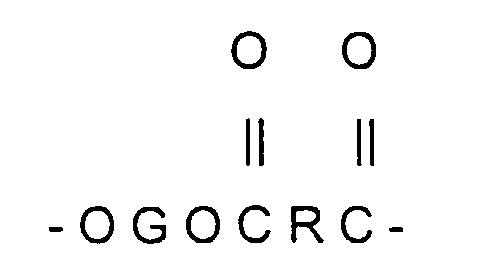 wherein G is a divalent radical remaining after the removal of terminal hydroxyl groups from at least one long-chain glycol having an average molecular weight in the range of 600 to 4000 and an atomic ratio of carbon to oxygen in the range of 2,0 to 4,3, at least 20 wt.% of the long-chain glycol having a carbon to oxygen ratio in the range of 2,0 to 2,4, and 15 to 50 wt.% being pad of the copolyetherester, R is a divalent radical remaining after the removal of carboxyl groups from at least one dicarboxylic acid having a molecular weight of less than 300, and D is a divalent radical remaining after the removal of hydroxyl groups from at least one diol having a molecular weight of less than 250, with at least 70 mole% of the dicarboxylic acid employed being either terephthalic acid or 2,6-naphthalene dicarboxylic acid or its ester forming equivalents and at least 70 mole% of the low-molecular weight diol consisting of 1,4-butane diol or its ester forming equivalents, with the sum of the mole percentage of dicarboxylic acid which is neither terephthalic acid nor 2,6-naphthalene dicarboxylic acid or its ester forming equivalents and the mole percentage of low-molecular weight diol which is not 1,4-butane diol or its ester forming equivalents being not more than 30, and the short-chain ester units making up 25-75 wt.% of the copolyetherester,
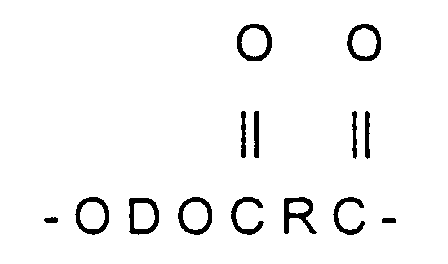 b) the hydrophilic polymer which after evaporation of the solvent forms a waterproof, but water vapour permeable coating, is made up of a copolyetherester of a similar type and composition as listed under a), andc) the organic solvent comprises one or more halogenated hydrocarbons.
 - A process according to claim 6, characterised in that the melting point of the copolyetherester of the waterproof, water vapour permeable coating is at least 5°C and at most 35°C lower than that of the copolyetherester of which the waterproof film is made.
- A process according to claim 1, characterised in that the organic solvent used is a chlorinated organic solvent selected from the group of methylene chloride, chloroform, dichloroethane, trichloroethane, and tetrachloroethane.
- A process according to claim 1, characterised in that the waterproof, water vapour permeable film comprises a copolyetheramide composed of polyamide segments A and ethylene oxide groups-containing polyamide segments B, with the polyamide segments A comprising monomer units of the structure:wherein R1 stands for an alkylene group having 3 to 11 carbon atoms which may be substituted or not and R2 and R3 may be the same or different and stand for a (cyclo)alkylene group having 4 to 11 carbon atoms which may be substituted or not or a difunctional aromatic group, and the polyamide segments B comprising monomer units of the structure:
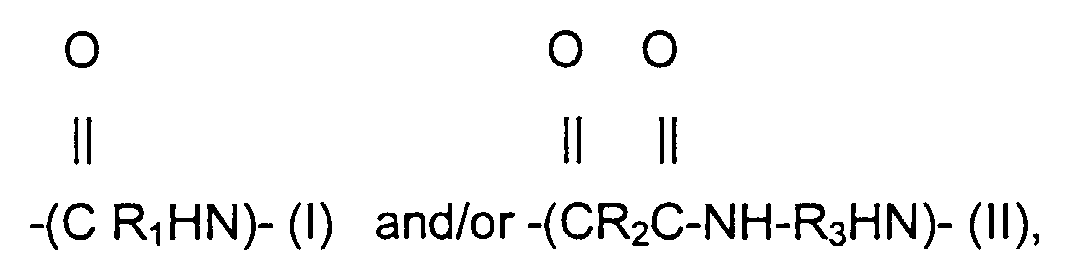 wherein G stands for a divalent group remaining after the removal of the amino terminated groups of a polyoxyalkylene diamine which is connected or not via one or more lactam units included among the polyamide segments A according to the former formula with a dicarboxylic acid unit wherein R4 has the meaning of a (cyclo)alkylene group which may be substituted or not, a polyoxyalkylene group or a difunctional aromatic group, with
 α) at least 10 and at most 30 wt.% of the copolyetheramide being made up of ethylene oxide groups,β) 30 to 60 wt.% of the copolyetheramide being made up of polyamide segments A and 70 to 40 wt.% being made up of polyamide segments B containing the monomer units according to formula (III), wherein G stands for a polyoxyalkylene group having a molecular weight of 600 to 6000 and an atomic ratio of carbon to oxygen of 2,0 to 4,3, or when the group R4 stands for a divalent group obtained after the removal of the carboxyl groups, for a dimeric fatty acid or for a polyoxyalkylene group having a molecular weight of 600 to 6000 and an atomic ratio of carbon to oxygen of 2,0 to 4,3, as well as for a (cyclo)alkylene group having 2 to 12 carbon atoms which may be substituted or not or for a difunctional aromatic group, andγ) the copolyetheramide having a melting point in the range of 180 to 260°C.
 - A waterproof, water vapour permeable article comprising a waterproof, water vapour permeable film having seams and comprised of at least a waterproof, water vapour permeable film and a waterproof, water vapour permeable hydrophilic polymer coating upon the waterproof, water vapour permeable film over at least the seams of the film, the article being produced by a method comprising:contacting a surface of the article at least at the seams of the film with a coating solution containing a hydrophilic polymer in an organic solvent which acts as a swelling agent for the waterproof, water vapour permeable film, andevaporating the organic solvent to form the waterproof, water vapour permeable hydrophilic polymer coating.
- A waterproof, water vapour permeable article comprising a waterproof, water vapour permeable film having seams and comprised of at least a waterproof, water vapour permeable film and a waterproof, water vapour permeable hydrophilic polymer coating upon the waterproof, water vapour permeable film over at least the seams of the film.
- A waterproof, water vapour permeable article according to claim 11, whereina) the waterproof, but water vapour permeable film takes the form of a copolyetherester consisting of a plurality of recurrent intralinear long-chain ester units and short-chain ester units randomly joined head to tail through ester bonds, the long-chain ester units corresponding to the formula:and the short-chain ester units corresponding to the formula:
 wherein G is a divalent radical remaining after the removal of terminal hydroxyl groups from at least one long-chain glycol having an average molecular weight in the range of 600 to 4000 and an atomic ratio of carbon to oxygen in the range of 2,0 to 4,3, at least 20 wt.% of the long-chain glycol having a carbon to oxygen ratio in the range of 2,0 to 2,4, and 15 to 50 wt.% being part of the copolyetherester, R is a divalent radical remaining after the removal of carboxyl groups from at least one dicarboxylic acid having a molecular weight of less than 300, and D is a divalent radical remaining after the removal of hydroxyl groups from at least one diol having a molecular weight of less than 250, with at least 70 mole% of the dicarboxylic acid employed being either terephthalic acid or 2,6-naphthalene dicarboxylic acid or its ester forming equivalents and at least 70 mole% of the low-molecular weight diol consisting of 1,4-butane diol or its ester forming equivalents, with the sum of the mole percentage of dicarboxylic acid which is neither terephthalic acid nor 2,6-naphthalene dicarboxylic acid or its ester forming equivalents and the mole percentage of low-molecular weight dial which is not 1,4-butane diol or its ester forming equivalents being not more than 30, and the short-chain ester units making up 25-75 wt.% of the copolyetherester, and
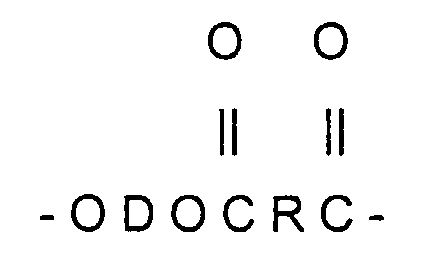 b) the hydrophilic polymer which after evaporation of the solvent forms a waterproof, but water vapour permeable coating, is made up of a copolyetherester of a similar type and composition as listed under a).
 - A waterproof, water vapour permeable article according to claim 11, wherein
the waterproof, water vapour permeable film comprises a copolyetheramide composed of polyamide segments A and ethylene oxide groups-containing polyamide segments B, with the polyamide segments A comprising monomer units of the structure:wherein R1 stands for an alkylene group having 3 to 11 carbon atoms which may be substituted or not and R2 and R3 may be the same or different and stand for a (cyclo)alkylene group having 4 to 11 carbon atoms which may be substituted or not or a difunctional aromatic group, and the polyamide segments B comprising monomer units of the structure: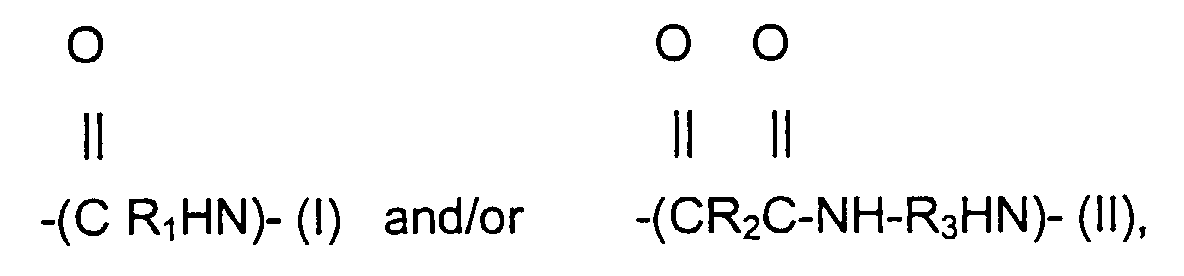 wherein G stands for a divalent group remaining after the removal of the amino terminated groups of a polyoxyalkylene diamine which is connected or not via one or more lactam units included among the polyamide segments A according to the former formula with a dicarboxylic acid unit wherein R4 has the meaning of a (cyclo)alkylene group which may be substituted or not, a polyoxyalkylene group or a difunctional aromatic group, with
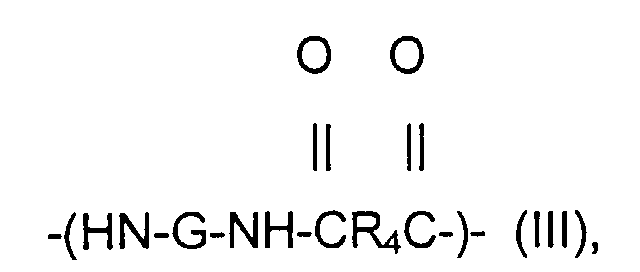 α) at least 10 and at most 30 wt.% of the copolyetheramide being made up of ethylene oxide groups,β) 30 to 60 wt.% of the copolyetheramide being made up of polyamide segments A and 70 to 40 wt.% being made up of polyamide segments B containing the monomer units according to formula (III), wherein G stands for a polyoxyalkylene group having a molecular weight of 600 to 6000 and an atomic ratio of carbon to oxygen of 2,0 to 4,3, or when the group R4 stands for a divalent group obtained after the removal of the carboxyl groups, for a dimeric fatty acid or for a polyoxyalkylene group having a molecular weight of 600 to 6000 and an atomic ratio of carbon to oxygen of 2,0 to 4,3, as well as for a (cyclo)alkylene group having 2 to 12 carbon atoms which may be substituted or not or for a difunctional aromatic group, andγ) the copolyetheramide having a melting point in the range of 180 to 260°C.
 - A waterproof, water vapour permeable article according to claim 11, wherein the waterproof, water vapour permeable article is shaped as a glove, garment or shoe.
Applications Claiming Priority (2)
| Application Number | Priority Date | Filing Date | Title |
|---|---|---|---|
| US09/121,051 US6203872B1 (en) | 1998-07-23 | 1998-07-23 | Waterproof and water vapour permeable lining |
| US121051 | 1998-07-23 |
Publications (1)
| Publication Number | Publication Date |
|---|---|
| EP0974696A1 true EP0974696A1 (en) | 2000-01-26 |
Family
ID=22394185
Family Applications (1)
| Application Number | Title | Priority Date | Filing Date |
|---|---|---|---|
| EP99202401A Withdrawn EP0974696A1 (en) | 1998-07-23 | 1999-07-21 | Sealed seams for waterproof, water vapour permeable article |
Country Status (2)
| Country | Link |
|---|---|
| US (1) | US6203872B1 (en) |
| EP (1) | EP0974696A1 (en) |
Cited By (3)
| Publication number | Priority date | Publication date | Assignee | Title |
|---|---|---|---|---|
| EP1026310A3 (en) * | 1999-02-01 | 2002-06-19 | Teijin Limited | Water vapor-permeable, waterproof fabric |
| US6811822B2 (en) * | 2000-03-17 | 2004-11-02 | Institut fur Mikrotechnik Mainz | Method of waterproofing the surface of a polymer work piece |
| EP2774936A1 (en) | 2009-12-11 | 2014-09-10 | Invista Technologies S.à.r.l. | Improved elastomeric compositions |
Families Citing this family (5)
| Publication number | Priority date | Publication date | Assignee | Title |
|---|---|---|---|---|
| US20040132367A1 (en) * | 1999-07-02 | 2004-07-08 | Moshe Rock | Multi-layer garment system |
| TW200409975A (en) * | 2002-12-13 | 2004-06-16 | Hon Hai Prec Ind Co Ltd | A light guide plate and its manufacturing method |
| WO2009094305A1 (en) * | 2008-01-22 | 2009-07-30 | Baacke Dennis R | Coated glove with multiple material layers |
| US20160374518A1 (en) | 2015-06-29 | 2016-12-29 | Maytex Mills, Inc. | Laminated shower curtains |
| TWI798545B (en) * | 2020-04-27 | 2023-04-11 | 財團法人紡織產業綜合研究所 | Single component fiber and method of manufacturing the same |
Citations (3)
| Publication number | Priority date | Publication date | Assignee | Title |
|---|---|---|---|---|
| EP0410291A2 (en) * | 1989-07-24 | 1991-01-30 | W.L. GORE & ASSOCIATES, INC. | Insert for articles of clothing |
| CH677584A5 (en) * | 1988-05-06 | 1991-06-14 | Bullson Ag | Seam-sealing material for rainproof clothing, etc. - contains medium-viscosity silicone polymer and solvent(s) |
| WO1992005308A1 (en) * | 1990-09-26 | 1992-04-02 | Lantor (Uk) Limited | Barrier fabrics and garments made therefrom |
Family Cites Families (16)
| Publication number | Priority date | Publication date | Assignee | Title |
|---|---|---|---|---|
| NL136133C (en) * | 1965-10-21 | |||
| DE2529670A1 (en) | 1975-07-03 | 1977-01-20 | Friedrich Seiz | Sewn leather waterproofed work glove - is dipped in flexible plastic after sewing to seal seams and prevent peeling |
| JPS57205586A (en) | 1981-06-11 | 1982-12-16 | Komatsu Seiren Co | Moisture permeable and water-proof coating process |
| JPS5930957A (en) | 1982-08-12 | 1984-02-18 | ユニチカ株式会社 | Production of air permeable waterproof fabric |
| CA1191439A (en) | 1982-12-02 | 1985-08-06 | Cornelius M.F. Vrouenraets | Flexible layered product |
| JPS59216983A (en) | 1983-05-23 | 1984-12-07 | 大日本インキ化学工業株式会社 | Resin processing of fiber product |
| JPH01192866A (en) | 1988-01-20 | 1989-08-02 | Kanbou Sofutetsuku Kk | Weldable, air-permeative and water-proof cloth, its production and device therefor |
| WO1991007278A1 (en) | 1989-11-17 | 1991-05-30 | W.L. Gore & Associates, Inc. | Thin seam sealing tape |
| AU6979791A (en) | 1989-12-12 | 1991-07-18 | E.I. Du Pont De Nemours And Company | Improved waterproofing of polyester fiberfill |
| US5253434A (en) | 1990-11-14 | 1993-10-19 | Reebok International Ltd. | Waterproof article of manufacture and method of manufacturing the same |
| US5208313A (en) | 1992-07-16 | 1993-05-04 | Surface Coatings, Inc. | Waterproof breathable polyurethane membranes and porous substrates protected therewith |
| US5238732A (en) | 1992-07-16 | 1993-08-24 | Surface Coatings, Inc. | Waterproof breathable polyurethane membranes and porous substrates protected therewith |
| US5239037A (en) | 1992-07-16 | 1993-08-24 | Surface Coatings, Inc. | Waterproof breathable polyurethane membranes and porous substrates protected therewith |
| ATE154956T1 (en) * | 1993-04-28 | 1997-07-15 | Akzo Nobel Nv | WATERPROOF, BREATHABLE RAINWEAR AND FOAM WATERPROOF ITEMS |
| NL9400130A (en) | 1994-01-28 | 1995-09-01 | Akzo Nobel Nv | Aqueous copolyetherester dispersion. |
| DE69630565T2 (en) * | 1995-08-17 | 2004-09-16 | Solar Dew | Copolyetheramide and water vapor permeable film made from it |
-
1998
- 1998-07-23 US US09/121,051 patent/US6203872B1/en not_active Expired - Lifetime
-
1999
- 1999-07-21 EP EP99202401A patent/EP0974696A1/en not_active Withdrawn
Patent Citations (3)
| Publication number | Priority date | Publication date | Assignee | Title |
|---|---|---|---|---|
| CH677584A5 (en) * | 1988-05-06 | 1991-06-14 | Bullson Ag | Seam-sealing material for rainproof clothing, etc. - contains medium-viscosity silicone polymer and solvent(s) |
| EP0410291A2 (en) * | 1989-07-24 | 1991-01-30 | W.L. GORE & ASSOCIATES, INC. | Insert for articles of clothing |
| WO1992005308A1 (en) * | 1990-09-26 | 1992-04-02 | Lantor (Uk) Limited | Barrier fabrics and garments made therefrom |
Cited By (4)
| Publication number | Priority date | Publication date | Assignee | Title |
|---|---|---|---|---|
| EP1026310A3 (en) * | 1999-02-01 | 2002-06-19 | Teijin Limited | Water vapor-permeable, waterproof fabric |
| US6521552B1 (en) | 1999-02-01 | 2003-02-18 | Teijin Limited | Water vapor-permeable, waterproof fabric |
| US6811822B2 (en) * | 2000-03-17 | 2004-11-02 | Institut fur Mikrotechnik Mainz | Method of waterproofing the surface of a polymer work piece |
| EP2774936A1 (en) | 2009-12-11 | 2014-09-10 | Invista Technologies S.à.r.l. | Improved elastomeric compositions |
Also Published As
| Publication number | Publication date |
|---|---|
| US6203872B1 (en) | 2001-03-20 |
Similar Documents
| Publication | Publication Date | Title |
|---|---|---|
| US4493870A (en) | Flexible layered product | |
| EP0265922B1 (en) | Vapor-permeable, waterproof bicomponent structure | |
| EP0322778B1 (en) | Bicomponent moisture barrier poly(etherimide) ester films | |
| US5447783A (en) | Vapor-permeable, water resistant multicomponent film structure | |
| US6203872B1 (en) | Waterproof and water vapour permeable lining | |
| US5932686A (en) | Adhesion promoter for a polyamid-compounds | |
| EP0622488B1 (en) | Waterproof, breathable rainwear and waterproof articles of foam plastic | |
| KR20060073582A (en) | Weather Resistant Garments Made from Composite Fabrics | |
| US4459389A (en) | Copolyether ester amides useful as thermoplastic adhesives for heat sealing textiles | |
| KR20020048290A (en) | Hot-Sterilizable, Biaxially Oriented Polyester Film with Good Metal Adhesion, its Use and Process for its Production | |
| JPH0583065B2 (en) | ||
| JP3484454B2 (en) | Method for producing moisture-permeable and waterproof fabric | |
| US4375540A (en) | Polyester modified with alkyl- or alkenylsuccinic anhydrides | |
| JPH10139988A (en) | Polyester resin composition and heat-shrinkable polyester film using the same | |
| JPH0971668A (en) | Heat-shrinkable polyester film, method for producing the same and copolymerized polyester composition used therefor | |
| JP3027264B2 (en) | Bonding method between polyester synthetic fiber and polyester elastomer | |
| JPH0220425B2 (en) | ||
| EP0665259A1 (en) | Process for manufacturing three-dimensional articles from copolyetherester dispersions | |
| JPH06128391A (en) | Adhesion method of polyester fiber and polyester elastomer | |
| JPS5817027B2 (en) | Thainetseinissugreta | |
| JPH1180334A (en) | Polyester resin and solution composition containing the same | |
| JPS5944996B2 (en) | Laminated products | |
| JPS63265635A (en) | Polyvinyl chloride laminated structure |
Legal Events
| Date | Code | Title | Description |
|---|---|---|---|
| PUAI | Public reference made under article 153(3) epc to a published international application that has entered the european phase |
Free format text: ORIGINAL CODE: 0009012 |
|
| AK | Designated contracting states |
Kind code of ref document: A1 Designated state(s): AT CH DE LI |
|
| AX | Request for extension of the european patent |
Free format text: AL;LT;LV;MK;RO;SI |
|
| 17P | Request for examination filed |
Effective date: 20000408 |
|
| AKX | Designation fees paid |
Free format text: AT CH DE LI |
|
| RAP1 | Party data changed (applicant data changed or rights of an application transferred) |
Owner name: SYMPATEX TECHNOLOGIES GMBH |
|
| 17Q | First examination report despatched |
Effective date: 20030703 |
|
| 17Q | First examination report despatched |
Effective date: 20030703 |
|
| GRAP | Despatch of communication of intention to grant a patent |
Free format text: ORIGINAL CODE: EPIDOSNIGR1 |
|
| STAA | Information on the status of an ep patent application or granted ep patent |
Free format text: STATUS: THE APPLICATION IS DEEMED TO BE WITHDRAWN |
|
| 18D | Application deemed to be withdrawn |
Effective date: 20070405 |