EP0967547A2 - Method and apparatus for delivery of a byte code and serialized objects stream - Google Patents
Method and apparatus for delivery of a byte code and serialized objects stream Download PDFInfo
- Publication number
- EP0967547A2 EP0967547A2 EP99304835A EP99304835A EP0967547A2 EP 0967547 A2 EP0967547 A2 EP 0967547A2 EP 99304835 A EP99304835 A EP 99304835A EP 99304835 A EP99304835 A EP 99304835A EP 0967547 A2 EP0967547 A2 EP 0967547A2
- Authority
- EP
- European Patent Office
- Prior art keywords
- header
- class
- code
- extracting
- byte code
- Prior art date
- Legal status (The legal status is an assumption and is not a legal conclusion. Google has not performed a legal analysis and makes no representation as to the accuracy of the status listed.)
- Withdrawn
Links
Images


Classifications
-
- H—ELECTRICITY
- H04—ELECTRIC COMMUNICATION TECHNIQUE
- H04L—TRANSMISSION OF DIGITAL INFORMATION, e.g. TELEGRAPHIC COMMUNICATION
- H04L67/00—Network arrangements or protocols for supporting network services or applications
- H04L67/34—Network arrangements or protocols for supporting network services or applications involving the movement of software or configuration parameters
-
- G—PHYSICS
- G06—COMPUTING OR CALCULATING; COUNTING
- G06F—ELECTRIC DIGITAL DATA PROCESSING
- G06F8/00—Arrangements for software engineering
-
- G—PHYSICS
- G06—COMPUTING OR CALCULATING; COUNTING
- G06F—ELECTRIC DIGITAL DATA PROCESSING
- G06F9/00—Arrangements for program control, e.g. control units
- G06F9/06—Arrangements for program control, e.g. control units using stored programs, i.e. using an internal store of processing equipment to receive or retain programs
- G06F9/44—Arrangements for executing specific programs
- G06F9/445—Program loading or initiating
Definitions
- This invention relates to a method and apparatus for delivery of a byte code and serialized object stream.
- JavaTM class file format Object-oriented applications are formed from multiple class files that are accessed from servers and downloaded individually as needed. Class files contain bytecode instructions. A "virtual machine" process that executes on a specific hardware platform loads the individual class files and executes the bytecodes contained within.
- a problem with the class file format and the class loading process is that no mechanism is provided to ensure timely delivery of class files. The timing of the storage, transfer and processing of the individual class files is thus not scheduled or guaranteed to occur within a particular time frame. Also, an application may contain many class files, all of which are loaded and processed in separate transactions. Thus, a delay in the delivery of even one class file slows down the application and degrades performance.
- Object-oriented programming is a method of creating computer programs by combining certain fundamental building blocks, and creating relationships among and between the building blocks.
- the building blocks in object-oriented programming systems are called "objects.”
- An object is a programming unit that groups together a data structure (one or more instance variables) and the operations (methods) that can use or affect that data.
- an object consists of data and one or more operations or procedures that can be performed on that data.
- the joining of data and operations into a unitary building block is called "encapsulation.”
- An object can be instructed to perform one of its methods when it receives a "message."
- a message is a command or instruction sent to the object to execute a certain method.
- a message consists of a method selection (e.g., method name) and a plurality of arguments.
- a message tells the receiving object what operations to perform.
- object-oriented programming is the way in which methods are invoked. When a message is sent to an object, it is not necessary for the message to instruct the object how to perform a certain method. It is only necessary to request that the object execute the method. This greatly simplifies program development.
- Object-oriented programming languages are predominantly based on a "class” scheme.
- the class-based object-oriented programming scheme is generally described in Lieberman, "Using Prototypical Objects to Implement Shared Behavior in Object-Oriented Systems," OOPSLA 86 Proceedings, September 1986, pp. 214-223.
- a class defines a type of object that typically includes both variables and methods for the class.
- An object class is used to create a particular instance of an object.
- An instance of an object class includes the variables and methods defined for the class. Multiple instances of the same class can be created from an object class. Each instance that is created from the object class is said to be of the same type or class.
- an employee object class can include "name” and “salary” instance variables and a "set_salary” method. Instances of the employee object class can be created, or instantiated for each employee in an organization. Each object instance is said to be of type “employee.” Each employee object instance includes “name” and “salary” instance variables and the "set_salary” method. The values associated with the "name” and “salary” variables in each employee object instance contain the name and salary of an employee in the organization. A message can be sent to an employee's employee object instance to invoke the "set_salary” method to modify the employee's salary (i.e., the value associated with the "salary" variable in the employee's employee object).
- a hierarchy of classes can be defined such that an object class definition has one or more subclasses.
- a subclass inherits its parent's (and grandparent's etc.) definition.
- Each subclass in the hierarchy may add to or modify the behavior specified by its parent class.
- Some object-oriented programming languages support multiple inheritance where a subclass may inherit a class definition from more than one parent class.
- Other programming languages support only single inheritance, where a subclass is limited to inheriting the class definition of only one parent class.
- the JavaTM programming language also provides a mechanism known as an "interface" which comprises a set of constant and abstract method declarations.
- An object class can implement the abstract methods defined in an interface. Both single and multiple inheritance are available to an interface. That is, an interface can inherit an interface definition from more than one parent interface.
- An object is a generic term that is used in the object-oriented programming environment to refer to a module that contains related code and variables.
- a software application can be written using an object-oriented programming language whereby the program's functionality is implemented using objects.
- JavaTM program is composed of a number of classes and interfaces. Unlike many programming languages, in which a program is compiled into machine-dependent, executable program code, JavaTM classes are compiled into machine independent bytecode class files. Each class contains code and data in a platform-independent format called the class file format.
- the computer system acting as the execution vehicle contains a program called a virtual machine, which is responsible for executing the code in JavaTM classes.
- the virtual machine provides a level of abstraction between the machine independence of the bytecode classes and the machine-dependent instruction set of the underlying computer hardware.
- a "class loader" within the virtual machine is responsible for loading the bytecode class files as needed, and either an interpreter executes the bytecodes directly, or a "just-in-time” (JIT) compiler transforms the bytecodes into machine code, so that they can be executed by the processor.
- JIT just-in-time
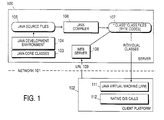
- Figure 1 is a block diagram illustrating a sample JavaTM network environment comprising a client platform 102 coupled over a network 101 to a server 100 for the purpose of accessing JavaTM class files for execution of a JavaTM application or applet.
- server 100 comprises JavaTM development environment 104 for use in creating the JavaTM class files for a given application.
- the JavaTM development environment 104 provides a mechanism, such as an editor and an applet viewer, for generating class files and previewing applets.
- a set of JavaTM core classes 103 comprise a library of JavaTM classes that can be referenced by source files containing other/new JavaTM classes.
- JavaTM source files 105 are generated.
- JavaTM source files 105 contain the programmer readable class definitions, including data structures, method implementations and references to other classes.
- JavaTM source files 105 are provided to JavaTM compiler 106, which compiles JavaTM source files 105 into compiled ".class" files 107 that contain bytecodes executable by a JavaTM virtual machine.
- Bytecode class files 107 are stored (e.g., in temporary or permanent storage) on server 100, and are available for download over network 101.
- Client platform 102 contains a JavaTM virtual machine (JVM) 111 which, through the use of available native operating system (O/S) calls 112, is able to execute bytecode class files and execute native O/S calls when necessary during execution.
- JVM JavaTM virtual machine
- O/S native operating system
- JavaTM class files are often identified in applet tags within an HTML (hypertext markup language) document.
- a web server application 108 is executed on server 100 to respond to HTTP (hypertext transport protocol) requests containing URLs (universal resource locators) to HTML documents, also referred to as "web pages.”
- HTTP hypertext transport protocol
- URLs universal resource locators
- client platform 102 requests an HTML document, such as by forwarding URL 109 to web server 108, the browser automatically initiates the download of the class files 107 identified in the applet tag of the HTML document.
- Class files 107 are typically downloaded from the server and loaded into virtual machine 111 individually as needed.
- JavaTM program It is typical for the classes of a JavaTM program to be loaded as late during the program's execution as possible; they are loaded on demand from the network (stored on a server), or from a local file system, when first referenced during the JavaTM program's execution.
- the virtual machine locates and loads each class file, parses the class file format, allocates memory for the class's various components, and links the class with other already loaded classes. This process makes the code in the class readily executable by the virtual machine.
- JavaTM byte code or serialized objects need to be delivered to clients in a timely fashion. For example, ensuring timely delivery of byte code is essential when JavaTM byte code is used to control time aware media in a push scenario.
- TCP Transmission Control Protocol
- time aware information is information that carries with it additional information representing timing relevant to the use of the information. For example, information that includes time stamps indicating deadlines by which the information should be processed in certain ways is considered “time aware” information.
- Media streams typically comprise information that is inherently tolerant of corruption or loss of integrity. For example, transient corruption of a few milliseconds of audio or video data creates only a brief distraction for a listener or viewer. However, the slightest corruption of executable byte code can prevent proper execution.
- a technique is needed to transform the class file (or a serialized object) into a time aware stream. If the JavaTM byte code stream were made time aware, other real time transport mechanisms like RTP could be used to transport the stream in a timely fashion. Such a scheme would facilitate the use of byte code in any multicast or broadcast scenario. This would make it possible to transmit byte code using internet protocols like User Datagram Protocol (UDP). Without such a scheme UDP is unsuitable for delivery of byte code since UDP is an unreliable protocol (one that does not guarantee delivery of data). Transmission of byte code over an unreliable protocol could result in loss of portions of the byte code, which would prevent the byte code from executing properly.
- UDP User Datagram Protocol
- Embodiments of the invention avoid the disadvantages of existing transport techniques. For example, untimeliness and unreliability of delivery are avoided.
- Embodiments of the invention enable timely delivery of JavaTM byte code in a multicast/broadcast scenario with or without a back channel.
- the same mechanisms can also be used for delivering (serialized) objects.
- Multicasting allows transmission of a specially addressed data stream to many users. With multicasting, the data stream does not need to be individually transmitted to each user. Rather, the users can subscribe to the multicasting service, for example by specifying the address of the specially addressed data stream. Broadcasting allows transmission to users without the subscription process of multicasting.
- Embodiments of the invention are suitable for use with "push” media, where information is transmitted to users without the need for users to request the information.
- "Push” media can be transmitted even in environments where there is no back channel to allow the users to communicate back to the source of the media.
- Embodiments of the invention are also suitable for use with "pull” media, where users request information from the source of the media.
- Embodiments of the invention serve to make the JavaTM byte code (in a class file) "time aware". To ensure timely delivery of byte code, the appropriate deadlines are carried along with the content as time stamps to the clients. These time stamps are used in a header to facilitate such a delivery mechanism. The header is attached to the byte code to allow timely delivery of the byte code stream.
- One aspect of transmission that is addressed in timely delivery of byte code is that of packet loss.
- Prior techniques have provided no way of recovering from a packet loss in the case of JavaTM byte code streaming.
- One possible approach involves retransmission of the entire class at regular intervals in the absence of a back channel. This would help to facilitate random access points in the case of media. However, this may not be possible when the number of clients is too high or when the class (or object) is very large, making retransmission prohibitive.
- packet loss can be signalled to the server, and the lost packet can be retransmitted.
- packet loss can also be retransmitted from places other than the server.
- Embodiments of the invention facilitate the use of any error resilience or any reliable multicast algorithm to overcome packet loss.
- Another aspect that is addressed is that of security.
- the byte code needs to authentic.
- Embodiments of the invention also accommodate the use of any security scheme within the security model in the JavaTM security APIs.
- a further aspect that is addressed is that of compression.
- Compression increases the efficiency of delivery by reducing the time required to transmit a given amount of information.
- a number of compression schemes such as LZW, LZS, etc., are available to compress class files for efficiency.
- Figure 1 is an embodiment of a JavaTM network application environment.
- Figure 2 is a block diagram of an embodiment of a computer system capable of providing a suitable execution environment for an embodiment of the invention.
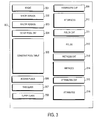
- Figure 3 is a block diagram of an embodiment of a class file format.
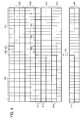
- Figure 4 is a diagram illustrating a header for class files or (serialized) objects to ensure timely delivery according to one embodiment of the invention.
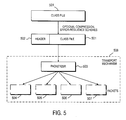
- Figure 5 is a schematic diagram illustrating a technique for delivery of class files in a timely manner according to one embodiment of the invention.
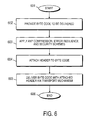
- Figure 6 is a flow diagram illustrating a process by which byte code is prepared for timely delivery according to one embodiment of the invention.
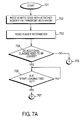
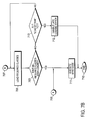
- Figures 7A and 7B are flow diagrams illustrating a process by which byte code is received and used in a timely manner according to one embodiment of the invention.
- Figure 8 is a flow diagram illustrating a process by which delivered byte code is prepared for execution and executed according to one embodiment of the invention.
- the invention provides a method and apparatus for providing timely delivery of a byte code stream.
- numerous specific details are set forth in order to provide a more thorough understanding of the present invention. It will be apparent, however, to one skilled in the art, that the present invention may be practiced without these specific details. In other instances, well-known features have not been described in detail in order not to unnecessarily obscure the present invention.
- An embodiment of the invention can be implemented as computer software in the form of computer readable program code executed on a general purpose computer such as computer 200 illustrated in Figure 2, or in the form of bytecode class files executable by a virtual machine running on such a computer.
- a keyboard 210 and mouse 211 are coupled to a bi-directional system bus 218.
- the keyboard and mouse are for introducing user input to the computer system and communicating that user input to central processing unit (CPU) 213.
- CPU central processing unit
- Other suitable input devices may be used in addition to, or in place of, the mouse 211 and keyboard 210.
- I/O (input/output) unit 219 coupled to bi-directional system bus 218 represents such I/O elements as a printer, A/V (audio/video) I/O, etc.
- Computer 200 includes a video memory 214, main memory 215 and mass storage 212, all coupled to bi-directional system bus 218 along with keyboard 210, mouse 211 and CPU 213.
- the mass storage 212 may include both fixed and removable media, such as magnetic, optical or magnetic optical storage systems or any other available mass storage technology.
- Bus 218 may contain, for example, thirty-two address lines for addressing video memory 214 or main memory 215.
- the system bus 218 also includes, for example, a 32-bit data bus for transferring data between and among the components, such as CPU 213, main memory 215, video memory 214 and mass storage 212. Alternatively, multiplex data/address lines may be used instead of separate data and address lines.
- the CPU 213 is a microprocessor manufactured by Motorola®, such as the 680X0 processor or a microprocessor manufactured by Intel®, such as the 80X86, or Pentium® processor, or a SPARC® microprocessor from Sun Microsystems®.
- Main memory 215 is comprised of dynamic random access memory (DRAM).
- Video memory 214 is a dual-ported video random access memory. One port of the video memory 214 is coupled to video amplifier 216.
- the video amplifier 216 is used to drive the cathode ray tube (CRT) raster monitor 217.
- Video amplifier 216 is well known in the art and may be implemented by any suitable apparatus. This circuitry converts pixel data stored in video memory 214 to a raster signal suitable for use by monitor 217.
- Monitor 217 is a type of monitor suitable for displaying graphic images.
- Computer 200 may also include a communication interface 220 coupled to bus 218.
- Communication interface 220 provides a two-way data communication coupling via a network link 221 to a local network 222.
- ISDN integrated services digital network
- communication interface 220 provides a data communication connection to the corresponding type of telephone line, which comprises part of network link 221.
- LAN local area network
- communication interface 220 provides a data communication connection via network link 221 to a compatible LAN.
- Wireless links are also possible.
- communication interface 220 sends and receives electrical, electromagnetic or optical signals which carry digital data streams representing various types of information.
- Network link 221 typically provides data communication through one or more networks to other data devices.
- network link 221 may provide a connection through local network 222 to host computer 223 or to data equipment operated by an Internet Service Provider (ISP) 224.
- ISP 224 in turn provides data communication services through the world wide packet data communication network now commonly referred to as the "Internet" 225.
- Internet 225 uses electrical, electromagnetic or optical signals which carry digital data streams.
- the signals through the various networks and the signals on network link 221 and through communication interface 220, which carry the digital data to and from computer 200, are exemplary forms of carrier waves transporting the information.
- Computer 200 can send messages and receive data, including program code, through the network(s), network link 221, and communication interface 220.
- server 226 might transmit a requested code for an application program through Internet 225, ISP 224, local network 222 and communication interface 220.
- one such downloaded application is the apparatus for pre-processing and packaging class files described herein.
- the received code may be executed by CPU 213 as it is received, and/or stored in mass storage 212, or other non-volatile storage for later execution. In this manner, computer 200 may obtain application code in the form of a carrier wave.
- Embodiments of the invention can be better understood with reference to aspects of the class file format. Description is provided below of the JavaTM class file format. Additional description of the JavaTM class file format can be found in Chapter 4, "The class File Format,” and Chapter 5, “Constant Pool Resolution,” of The JavaTM Virtual Machine Specification, by Tim Lindholm and Frank Yellin, published by Addison-Wesley in September 1996, ⁇ Sun Microsystems, Inc.
- the JavaTM class file consists of a stream of 8-bit bytes, with 16-bit, 32-bit and 64-bit structures constructed from consecutive 8-bit bytes.
- a single class or interface file structure is contained in the class file. This class file structure appears as follows: where u2 and u4 refer to unsigned two-byte and four-byte quantities. This structure is graphically illustrated in Figure 3.
- class file 300 comprises four-byte magic value 301, two-byte minor version number 302, two-byte major version number 303, two-byte constant pool count value 304, constant pool table 305 corresponding to the constant pool array of variable length elements, two-byte access flags value 306, two-byte "this class" identifier 307, two-byte super class identifier 308, two-byte interfaces count value 309, interfaces table 310 corresponding to the interfaces array of two-byte elements, two-byte fields count value 311, fields table 312 corresponding to the fields array of variable length elements, two-byte methods count value 313, methods table 314 corresponding to the methods array of variable length elements, two-byte attributes count value 315, and attributes table 316 corresponding to the attributes array of variable-length elements.
- Each of the above structures is briefly described below.
- Magic value 301 contains a number identifying the class file format.
- the magic number has the value 0xCAFEBABE.
- the minor version number 302 and major version number 303 specify the minor and major version numbers of the compiler responsible for producing the class file.
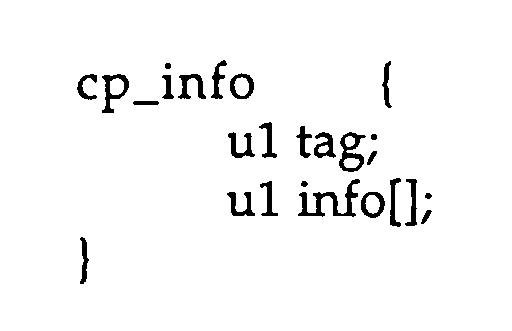
- Constant pool table 305 is a table of variable-length data structures representing various string constants, numerical constants, class names, field names, and other constants that are referred to within the ClassFile structure. Each entry in the constant pool table has the following general structure: where the one-byte "tag" specifies a particular constant type.
- the format of the info[] array differs based on the constant type.
- the info[] array may be a numerical value such as for integer and float constants, a string value for a string constant, or an index to another entry of a different constant type in the constant pool table. Further details on the constant pool table structure and constant types are available in Chapter 4 of The JavaTM Virtual Machine Specification ( supra ).
- Access flags value 306 is a mask of modifiers used with class and interface declarations.
- the "this class” value 307 is an index into constant pool table 305 to a constant type structure representing the class or interface defined by this class file.
- the super class value 308 is either zero, indicating the class is a subclass of java.lang.Object, or an index into the constant pool table to a constant type structure representing the superclass of the class defined by this class file.
- Interfaces count value 309 identifies the number of direct superinterfaces of this class or interface, and accordingly, the number of elements in interfaces table 310.
- Interfaces table 310 contains two-byte indices into constant pool table 305. Each corresponding entry in constant pool table 305 is a constant type structure representing an interface which is a direct superinterface of the class or interface defined by this class file.
- the fields count value 311 provides the number of structures in fields table 312.
- Each entry in fields table 312 is a variable-length structure providing a description of a field in the class type.
- Fields table 312 includes only those fields that are declared by the class or interface defined by this class file.
- the methods count value 313 indicates the number of structures in methods table 314.
- Each element of methods table 314 is a variable-length structure giving a description of, and virtual machine code for, a method in the class or interface.
- the attributes count value 315 indicates the number of structures in attributes table 316.
- Each element in attributes table 316 is a variable-length attribute structure. Attribute structures are discussed in section 4.7 of Chapter 4 of The JavaTM Virtual Machine Specification ( supra ).
- Embodiments of the invention enable timely delivery of JavaTM byte code in a multicast/broadcast scenario with or without a back channel.
- the same mechanisms can also be used for delivering (serialized) objects.
- Multicasting allows transmission of a specially addressed data stream to many users. With multicasting, the data stream does not need to be individually transmitted to each user. Rather, the users can subscribe to the multicasting service, for example by specifying the address of the specially addressed data stream. Broadcasting allows transmission to users without the subscription process of multicasting.
- Embodiments of the invention are suitable for use with "push” media, where information is transmitted to users without the need for users to request the information.
- "Push” media can be transmitted even in environments where there is no back channel to allow the users to communicate back to the source of the media.
- Embodiments of the invention are also suitable for use with "pull” media, where users request information from the source of the media.
- Embodiments of the invention serve to make the JavaTM byte code (in a class file) "time aware". To ensure timely delivery of byte code, the appropriate deadlines are carried along with the content as time stamps to the clients. These time stamps are used in a header to facilitate such a delivery mechanism. The header is attached to the byte code to allow timely delivery of the byte code stream.
- One aspect of transmission that is addressed in timely delivery of byte code is that of packet loss.
- Prior techniques have provided no way of recovering from a packet loss in the case of JavaTM byte code streaming.
- One possible approach involves retransmission of the entire class at regular intervals in the absence of a back channel. This would help to facilitate random access points in the case of media. However, this may not be possible when the number of clients is too high or when the class (or object) is very large, making retransmission prohibitive.
- packet loss can be signalled to the server, and the lost packet can be retransmitted.
- packet loss can also be retransmitted from places other than the server.
- Embodiments of the invention facilitate the use of any error resilience or any reliable multicast algorithm to overcome packet loss.
- a further aspect that is addressed is that of compression.
- Compression increases the efficiency of delivery by reducing the time required to transmit a given amount of information.
- a number of compression schemes such as LZW, LZS, etc., are available to compress class files for efficiency.
- FIG. 5 is a schematic diagram illustrating a technique for delivery of class files in a timely manner according to one embodiment of the invention.
- Class file (or object) 501 is provided.
- Class file (or object) 501 may or may not be processed according to one or more suitable optional compression, error-resilience, and security schemes.
- Header 502 is added to the class file (or object) 501.
- Class file (or object) 501 with header 502 is passed to transport mechanism 508 for delivery elsewhere.
- Transport mechanism 508 uses packetizer 503 to transport class file (or object) 501 with header 502 as a series of packets 504, 505, 506, and 507.
- Transport mechanism 508 determines the appropriate number of packets in which to transport any given class file (or object) 501 with header 502.
- Figure 4 is a diagram illustrating a header for class files or (serialized) objects to ensure timely delivery according to one embodiment of the invention.
- This header shown as a byte code header, is attached to the class file before it is packetized as illustrated in Figure 5.
- any "time aware" transport mechanism e.g., RTP, MPEG-2 transport stream, etc.
- RTP transport mechanism
- MPEG-2 transport stream transport stream, RTP, etc.
- One embodiment of a header comprises information representing the length of the header, the version, a flag denoting a class or an object, the number of required classes, a "start loading” time stamp, a "load by” time stamp, the size of the class, the type of compression being used, the type of security scheme being used, the type of error correction being used, other type information, the length of the class identifier (ID), the class identifier (ID), the lengths of the class ID for each of the required classes, and the class IDs for each of the required classes.
- One embodiment of length of header information 401 comprises 16 bits denoting the size in bytes of the header added to the byte code file to provide timely delivery.
- One embodiment of version information 402 comprises two bits denoting the version of the scheme used to provide timely delivery of the byte code file.
- One embodiment of class/object flag 403 comprises one bit denoting whether the byte code file to which the header is appended is a class or an object. For example, a one represents a class while a zero represents an object.
- One embodiment of the number of required classes information 404 comprises 13 bits denoting the number of classes that are required before loading this class (or before instantiation, in case of objects).
- One embodiment of the "start loading" time stamp 405 comprises 64 bits denoting the time after which class loading can begin once the class has been received and re-assembled completely. The length of the time stamps are set to 64 bits to accommodate NTP time stamps. Time stamps of fewer bits are padded with extra bits to fill the 64-bit length. Each scheme can define the location of the decimal point to represent fractional time stamps. In cases where clock ticks are used (MPEG-2), all 64 bits can be used.
- the time stamps may comprise representations of absolute or relative time.
- the time stamps may represent the actual time of day or some other absolute measurement of time, or the time stamps may represent the time elapsed since the beginning of a session, the occurrence of an event, or some other relative measurement of time.
- One embodiment of the "load by" time stamp 406 comprises 64 bits denoting the time by which the class has to be loaded absolutely.
- One embodiment of the size of class information 407 comprises 16 bits denoting the size in bytes of the data that is being transmitted.
- Compress type field 408 comprises 4 bits to specify the type of compression used (0000 for objects or when no compression is used).
- Security type 409 field comprises 4 bits to specify the security scheme used (0000 if none used).
- Error correction type field 410 comprises 4 bits to specify the error correction scheme used (0000 if none used).
- Type field 411 comprises 4 bits that are reserved for future use.
- class ID length information 412 comprises 32 bits denoting the length in bytes of class ID information 413.
- Class ID information 413 comprises a variable length string that identifies the classes (unique to each session). The string is padded so that the length of the combination of class ID length information 412 and class ID information 413 is a multiple of 32 bits.
- One embodiment of the header also comprises the class IDs and their lengths for each of the required classes.
- Class ID 1 length information 414 comprises 16 bits of information denoting the length of the class ID for the first required class.
- Class ID 1 information 415 comprises a variable length string that identifies the first required class and that is padded so that the combined length of class ID 1 length information 414 and class ID 1 information 415 is a multiple of 32 bits.
- Class ID length information and class ID information for required classes beyond the first required class follow class ID 1 information 415 and occupy region 416.
- Class ID n length information 417 comprises 16 bits and specifies the length of the class ID for the nth required class.
- Class ID n information 418 comprises a variable number of bits that identify the nth required class and are padded to the next 32 bit boundary.
- each class is packaged as a separate unit.
- a header is appended to each class to enable timely delivery.
- Timely delivery is facilitated by providing a time frame within which the class is to be loaded.
- a "start loading” time stamp is provided for each class to indicate the time after which that class can be loaded.
- a “load by” time stamp is provided for each class to indicate the time by which each class needs to be loaded. The “load by" time stamp provides the guaranteed time after which the class can be expected to be available at the application.
- the payload delivered by this scheme can be classes (compressed or uncompressed) or instances.
- classes compressed or uncompressed
- instances To provide efficient, secure, and reliable
- a portion (e.g., 4 bits) of the header is designated to provide identification of the type of compression scheme used.
- the bit pattern 0000 is used to denote no compression, while the bit patterns 0001 through 1111 are used to denote specific compression techniques.
- a portion (e.g., 4 bits) of the header is designated to provide identification of the type of security scheme used.
- the bit pattern 0000 is used to denote no use of a security scheme, while the bit patterns 0001 through 1111 are used to denote specific security schemes.
- Any suitable error resiliency scheme may be used in conjunction with an embodiment of the present invention.
- a portion (e.g., 4 bits) of the header is designated to provide identification of the type of error resiliency scheme used.
- the bit pattern 0000 is used to denote no use of an error resiliency scheme, while the bit patterns 0001 through 1111 are used to denote specific error resiliency schemes.
- a portion (e.g., 4 bits) of the header is reserved for future use.
- UDP unreliable protocols
- UDP unreliable protocols
- Classes are identified by an ID, which is unique to the session. This ID can be used to identify classes when it is received multiple times. This can be used by objects to identify the class of which each is an instance. JavaTM class names are used as ID's. Since these are variable length strings, the length of the string is also included in the header. The combination of the Class ID and its length (16 bits) are padded to the next 32-bit boundary.
- Embodiments of the invention also provide a list of required classes.
- the "load by" time of each required class needs to be before the "start loading” time of a class that requires it.
- a 13-bit number is used to specify the number of classes that are required before loading/instantiating the class/object data.
- the required classes are specified by their Class ID's (along with the length of their class ID's).
- FIG. 6 is a flow diagram illustrating a process by which byte code is prepared for timely delivery according to one embodiment of the invention.
- the process begins in step 601.
- step 602 the byte code to be delivered is provided.
- step 603 any desired compression, error resilience, and security schemes are performed on the byte code. Any combination of compression, error resilience, and security schemes may be performed in any order. For example, a security schemes may be applied, followed by an error resilience scheme without the use of a compression. Thus, any permutation of compression, error resilience, security schemes, or subsets thereof may be used.
- a header is attached to the byte code.
- the header comprises information about the byte code.
- One embodiment of such a header is described with respect to Figure 4 above.
- the header is described as being attached to the byte code such that the header information precedes the byte code, the header can be located at any position with respect to the byte code, for example, at the end of the byte code, between portions of the byte code, or interleaved with the byte code.
- step 605 the byte code with the attached header is delivered via a transport mechanism.
- Any suitable transport mechanism may be used.
- a transport mechanism that, by itself, guarantees delivery, but does not guarantee the timing of delivery, such as TCP, may be used.
- a transport mechanism that guarantees timeliness, such as RTP, may be used.
- a transport mechanism that does not guarantee delivery, such as UDP may be used.
- the process ends.
- FIGS 7A and 7B are flow diagrams illustrating a process by which byte code is received and used in a timely manner according to one embodiment of the invention.
- the process begins in step 701.
- step 702 the byte code with the attached header is received via a transport mechanism.
- the transport mechanism may be any suitable transport mechanism.
- step 703 the information contained in the header is read.
- step 704 a decision is made as to whether or not additional classes need to be loaded before the byte code can be executed. Information used to make this determination may be extracted from the header. If additional classes need to be loaded, the process continues in step 706.
- step 706 a decision is made as to whether or not the "start loading time” specified in the header has passed yet. If not, the process returns to step 706 and waits until the "start loading time” has arrived. If the "start loading time” has arrived, the process continues in step 708 via reference B 707. In step 708, the required classes are loaded. In step 709, a decision is made as to whether or not all required classes have been loaded. If not, the process continues to step 710. In step 710, a decision is made as to whether or not the "load by time” specified in the header has passed. If the "load by time” has not passed, the process returns to step 708, where the loading of required classes continues.
- step 712 the late loading error is handled.
- the late loading error handling may comprise notification that the required classes could not be loaded successfully by the "load by time” deadline. Based on this notification, a decision can be made as to whether the loading should be rescheduled (for example, by specifying a new "load by time” deadline or whether the loading process should be cancelled (without execution of the byte code). From step 712, the process ends in step 713.
- step 709 If in step 709, all required classes have been loaded, the process continues in step 711. Also, if in step 704, no additional classes needed to be loaded, the process continues in step 711 via reference A 705.
- step 711 the byte code is executed. The execution of the byte code may involve additional steps if security, compression, and/or error resilience schemes have been performed on the byte code. An example of a process comprising certain additional steps is illustrated in Figure 8. From step 711, the process ends in step 713.
- FIG 8 is a flow diagram illustrating a process by which delivered byte code is prepared for execution and executed according to one embodiment of the invention.
- the process begins in step 801.
- step 802 a decision is made as to whether or not a security scheme has been used. If a security scheme has been used, the process continues to step 803.
- step 803 the security scheme that has been used is identified and the byte code is processed according to that security scheme. Identification of the security scheme may be performed based on information found in the header information, such as that read in step 703. From step 803, the process continues to step 804. If, in step 802, it is determined that no security scheme was used, the process continues in step 804.
- step 804 a decision is made as to whether or not a compression scheme has been used. If a compression scheme has been used, the process continues to step 805. In step 805, the compression scheme that was used is identified and the byte code is decompressed according to that compression scheme. Identification of the compression scheme may be performed based on information found in the header information, such as that read in step 703. From step 805, the process continues in step 806. If, in step 804, it is determined that no compression scheme has been used, the process continues in step 806.
- step 806 a decision is made as to whether or not an error resilience scheme has been used. If an error resilience scheme has been used, the process continues to step 807. In step 807, the error resilience scheme that was used is identified and any errors or omissions that may have occurred are corrected or compensated. Identification of the compression scheme may be performed based on information found in the header information, such as that read in step 703. From step 806, the process continues in step 808. If, in step 806, it is determined that no error resilience scheme was used, the process continues in step 808.
- step 808 the byte code is executed. Since one embodiment of the invention provides a mechanism for insuring that all required classes have been loaded before attempting execution of the byte code, successful execution of the byte code is provided. In step 809, the process ends.
Landscapes
- Engineering & Computer Science (AREA)
- Software Systems (AREA)
- Theoretical Computer Science (AREA)
- General Engineering & Computer Science (AREA)
- Physics & Mathematics (AREA)
- General Physics & Mathematics (AREA)
- Computer Networks & Wireless Communication (AREA)
- Signal Processing (AREA)
- Stored Programmes (AREA)
- Information Transfer Between Computers (AREA)
- Detection And Correction Of Errors (AREA)
- Management, Administration, Business Operations System, And Electronic Commerce (AREA)
- Data Exchanges In Wide-Area Networks (AREA)
Abstract
Description

Claims (23)
- A method for delivering byte code comprising:transporting said byte code with a header;extracting from said header additional class information descriptive of additional classes to be loaded;extracting a first time stamp from said header;extracting a second time stamp from said header; andloading said additional classes after a first time specified by said first time stamp and before a second time specified by said second time stamp.
- The method of claim 1, further comprising:extracting a security code from said header; andexecuting a security scheme identified by said security code.
- The method of claim 1, further comprising:extracting a compression code from said header; anddecompressing said byte code in accordance with a compression scheme identified by said compression code.
- The method of claim 1, further comprising:extracting an error correction code from said header; andperforming error compensation in accordance with an error correction scheme identified by said error correction code.
- The method of claim 1, further comprising:extracting a flag value from said header; anddetermining whether said byte code comprises a class file or an object file based on said flag value.
- The method of claim 1, wherein extracting said additional class information comprises extracting a value representing the number of said additional classes.
- The method of claim 1, wherein extracting said additional class information comprises:extracting a class identifier length value; andextracting a class identifier using said class identifier length value.
- A computer program product comprising:a computer readable medium having computer program code embodied therein for delivering byte code, the computer readable medium comprising computer program code configured to cause a computer to:transport said byte code with a header;extract from said header additional class information descriptive of additional classes to be loaded;extract a first time stamp from said header;extract a second time stamp from said header; andload said additional classes after a first time specified by said first time stamp and before a second time specified by said second time stamp.
- The computer program product of claim 8, wherein said computer program code is further configured to cause said computer to:extract a security code from said header; andexecute a security scheme identified by said security code.
- The computer program product of claim 8 or 9, wherein said computer program code is further configured to cause said computer to:extract a compression code from said header; anddecompress said byte code in accordance with a compression scheme identified by said compression code.
- The computer program product of claim 8, 9 or 10, wherein said computer program code is further configured to cause said computer to:extract an error correction code from said header; andperform error compensation in accordance with an error correction scheme identified by said error correction code.
- The computer program product of any one of claims 8 to 11, wherein said computer program code is further configured to cause said computer to:extract a flag value from said header; anddetermine whether said byte code comprises a class file or an object file based on said flag value.
- The computer program product of any one of claims 8 to 12, wherein extracting said additional class information comprises extracting a value representing the number of said additional classes.
- The computer program product of any one of claims 8 to 13, wherein extracting said additional class information comprises:extracting a class identifier length value; andextracting a class identifier using said class identifier length value.
- An apparatus comprising:a server configured to attach a header to a byte code file;said header comprising a first time stamp, a second time stamp and class information descriptive of additional classes to be loaded; anda client receiving said byte code file with said header, said client configured to load said additional classes after a first time specified by said first time stamp and before a second time specified by said second time stamp.
- The apparatus of claim 15, wherein said header further comprises a security code identifying a security scheme.
- The apparatus of claim 15 or 16, wherein:said header further comprises a compression code; andsaid client is further configured to decompress said byte code file based on said compression code.
- The apparatus of claim 15, 16 or 17, wherein:said header further comprises an error correction code; andsaid client is further configured to perform error correction of said byte code file based on said error correction code.
- The apparatus of any one of claims 15 to 18, wherein said header further comprises a flag value identifying whether said byte code file comprises a class file or an object file.
- The apparatus of any one of claims 15 to 19, wherein said header further comprises a value identifying the number of said additional classes.
- The apparatus of any one of claims 15 to 20, wherein said header further comprises:a class identifier length value;a class identifier corresponding to one of said additional classes, said client configured to extract said class identifier based on said class identifier length value.
- The apparatus of any one of claims 15 to 21, further comprising a transport mechanism between said server and said client, said transport mechanism configured to transmit one or more packets comprising said byte code file with said header.
- An apparatus for delivering byte code comprising:means for transporting said byte code with a header;means for extracting from said header additional class information descriptive of additional classes to be loaded;means for extracting a first time stamp from said header;means for extracting a second time stamp from said header;means for loading said additional classes after a first time specified by said first time stamp and before a second time specified by said second time stamp.
Priority Applications (2)
| Application Number | Priority Date | Filing Date | Title |
|---|---|---|---|
| EP02006229A EP1233334A3 (en) | 1998-06-26 | 1999-06-21 | Method and apparatus for delivery of a byte code and serialized objects stream |
| EP02006233A EP1233335A3 (en) | 1998-06-26 | 1999-06-21 | Method and apparatus for delivery of a byte code and serialized objects stream |
Applications Claiming Priority (2)
| Application Number | Priority Date | Filing Date | Title |
|---|---|---|---|
| US09/105,963 US6092120A (en) | 1998-06-26 | 1998-06-26 | Method and apparatus for timely delivery of a byte code and serialized objects stream |
| US105963 | 1998-06-26 |
Related Child Applications (2)
| Application Number | Title | Priority Date | Filing Date |
|---|---|---|---|
| EP02006233A Division EP1233335A3 (en) | 1998-06-26 | 1999-06-21 | Method and apparatus for delivery of a byte code and serialized objects stream |
| EP02006229A Division EP1233334A3 (en) | 1998-06-26 | 1999-06-21 | Method and apparatus for delivery of a byte code and serialized objects stream |
Publications (2)
| Publication Number | Publication Date |
|---|---|
| EP0967547A2 true EP0967547A2 (en) | 1999-12-29 |
| EP0967547A3 EP0967547A3 (en) | 2003-01-15 |
Family
ID=22308743
Family Applications (3)
| Application Number | Title | Priority Date | Filing Date |
|---|---|---|---|
| EP02006229A Withdrawn EP1233334A3 (en) | 1998-06-26 | 1999-06-21 | Method and apparatus for delivery of a byte code and serialized objects stream |
| EP99304835A Withdrawn EP0967547A3 (en) | 1998-06-26 | 1999-06-21 | Method and apparatus for delivery of a byte code and serialized objects stream |
| EP02006233A Withdrawn EP1233335A3 (en) | 1998-06-26 | 1999-06-21 | Method and apparatus for delivery of a byte code and serialized objects stream |
Family Applications Before (1)
| Application Number | Title | Priority Date | Filing Date |
|---|---|---|---|
| EP02006229A Withdrawn EP1233334A3 (en) | 1998-06-26 | 1999-06-21 | Method and apparatus for delivery of a byte code and serialized objects stream |
Family Applications After (1)
| Application Number | Title | Priority Date | Filing Date |
|---|---|---|---|
| EP02006233A Withdrawn EP1233335A3 (en) | 1998-06-26 | 1999-06-21 | Method and apparatus for delivery of a byte code and serialized objects stream |
Country Status (4)
| Country | Link |
|---|---|
| US (3) | US6092120A (en) |
| EP (3) | EP1233334A3 (en) |
| JP (1) | JP4397460B2 (en) |
| KR (2) | KR100438143B1 (en) |
Cited By (5)
| Publication number | Priority date | Publication date | Assignee | Title |
|---|---|---|---|---|
| WO2000033532A3 (en) * | 1998-12-01 | 2000-08-10 | Sun Microsystems Inc | Method and apparatus for delivery of a bytecode embedded within a transport stream |
| FR2836317A1 (en) * | 2002-02-19 | 2003-08-22 | Michel Francis Monduc | METHOD FOR TRANSMITTING AUDIO OR VIDEO MESSAGES OVER THE INTERNET NETWORK |
| WO2002037265A3 (en) * | 2000-10-31 | 2004-02-26 | Sun Microsystems Inc | Frameworks for loading and execution of object-based programs |
| EP1259075A3 (en) * | 2001-05-15 | 2004-05-12 | Digita OY | Method for broadcasting applications in a DVB network |
| WO2007079176A3 (en) * | 2005-12-30 | 2007-09-07 | Edda Technology Inc | Process sharing among independent systems / applications via data encapsulation in medical imaging |
Families Citing this family (70)
| Publication number | Priority date | Publication date | Assignee | Title |
|---|---|---|---|---|
| US6591305B2 (en) * | 1998-06-30 | 2003-07-08 | Sun Microsystems, Inc. | Method and system for delivering data from a server object to a client object using a non-proprietary data transfer protocol |
| US6366898B2 (en) * | 1998-09-21 | 2002-04-02 | Sun, Microsystems, Inc. | Method and apparatus for managing classfiles on devices without a file system |
| GB2343021A (en) * | 1998-10-19 | 2000-04-26 | Ibm | Class loading model for object oriented programming |
| US6305012B1 (en) * | 1998-12-03 | 2001-10-16 | International Business Machines Corporation | Method and apparatus for dynamic selection of instructions for compiling using tags |
| US6336213B1 (en) * | 1998-12-03 | 2002-01-01 | International Business Machines Corporation | Method and apparatus for dynamic selection of which bytecodes should be just in time compiled |
| US6438751B1 (en) * | 1999-02-18 | 2002-08-20 | Joseph F. Voyticky | Integrated television and internet information system |
| FR2790844B1 (en) * | 1999-03-09 | 2001-05-25 | Gemplus Card Int | METHOD AND DEVICE FOR MONITORING THE PROGRESS OF A PROGRAM, PROGRAM DEVICE FOR MONITORING ITS PROGRAM |
| US8464302B1 (en) | 1999-08-03 | 2013-06-11 | Videoshare, Llc | Method and system for sharing video with advertisements over a network |
| GB9921720D0 (en) * | 1999-09-14 | 1999-11-17 | Tao Group Ltd | Loading object-oriented computer programs |
| JP3730835B2 (en) * | 2000-03-03 | 2006-01-05 | 株式会社エヌ・ティ・ティ・ドコモ | Packet transmission method, relay device, and data terminal |
| US20020056123A1 (en) | 2000-03-09 | 2002-05-09 | Gad Liwerant | Sharing a streaming video |
| GB2363866B (en) * | 2000-05-31 | 2002-11-06 | Intamission Ltd | Data processing apparatus, method and system |
| DE60109376T2 (en) * | 2000-08-01 | 2006-01-19 | Command Audio Corp., Redwood City | Method and signal for transmitting a broadcast program to a wireless receiver |
| US7386238B2 (en) * | 2000-08-15 | 2008-06-10 | Lockheed Martin Corporation | Method and system for infrared data communications |
| US20020040388A1 (en) * | 2000-08-15 | 2002-04-04 | Lockheed Martin Corporation | Method and apparatus for delivering services in a constrained environment |
| US7140016B2 (en) * | 2000-11-29 | 2006-11-21 | Texas Instruments Incorporated | Media accelerator quality of service |
| EP1227666A1 (en) * | 2001-01-18 | 2002-07-31 | Sony Service Centre (Europe) N.V. | Method and device for downloading application data |
| US6799147B1 (en) * | 2001-05-31 | 2004-09-28 | Sprint Communications Company L.P. | Enterprise integrated testing and performance monitoring software |
| US8205193B2 (en) | 2001-06-11 | 2012-06-19 | Hewlett-Packard Development Company, L.P. | Runtime updating of virtual machine class files |
| US20030115363A1 (en) * | 2001-12-06 | 2003-06-19 | Yared Peter A. | Method and apparatus for packaging a trimmed object graph |
| US7386723B2 (en) * | 2002-11-22 | 2008-06-10 | Intel Corporation | Method, apparatus and system for compressing IPSec-protected IP packets |
| US7073171B2 (en) * | 2003-02-28 | 2006-07-04 | Bea Systems, Inc. | EJB implementation class loading with removed dependencies with ability to replace EJB implementation class without full redeployment |
| US20050063575A1 (en) * | 2003-09-22 | 2005-03-24 | Ge Medical Systems Global Technology, Llc | System and method for enabling a software developer to introduce informational attributes for selective inclusion within image headers for medical imaging apparatus applications |
| GB0424756D0 (en) * | 2004-11-10 | 2004-12-08 | Ibm | Executing a native software routine in a virtual machine |
| US7581216B2 (en) * | 2005-01-21 | 2009-08-25 | International Business Machines Corporation | Preserving platform independence with native accelerators for performance critical program objects |
| JP4852906B2 (en) * | 2005-06-24 | 2012-01-11 | 富士ゼロックス株式会社 | Cooperation processing system and apparatus |
| EP2033145B1 (en) * | 2006-06-15 | 2011-04-06 | Kabushiki Kaisha Toshiba | Portable electronic device and control method thereof |
| US20080111977A1 (en) * | 2006-11-14 | 2008-05-15 | Asml Holding N.V. | Compensation techniques for fluid and magnetic bearings |
| US9178916B2 (en) | 2007-06-28 | 2015-11-03 | Voxer Ip Llc | Real-time messaging method and apparatus |
| US8533611B2 (en) * | 2009-08-10 | 2013-09-10 | Voxer Ip Llc | Browser enabled communication device for conducting conversations in either a real-time mode, a time-shifted mode, and with the ability to seamlessly shift the conversation between the two modes |
| US8180029B2 (en) | 2007-06-28 | 2012-05-15 | Voxer Ip Llc | Telecommunication and multimedia management method and apparatus |
| US20100198988A1 (en) * | 2009-01-30 | 2010-08-05 | Rebelvox Llc | Methods for using the addressing, protocols and the infrastructure of email to support near real-time communication |
| US20110019662A1 (en) | 2007-06-28 | 2011-01-27 | Rebelvox Llc | Method for downloading and using a communication application through a web browser |
| US8645477B2 (en) * | 2009-01-30 | 2014-02-04 | Voxer Ip Llc | Progressive messaging apparatus and method capable of supporting near real-time communication |
| US8825772B2 (en) | 2007-06-28 | 2014-09-02 | Voxer Ip Llc | System and method for operating a server for real-time communication of time-based media |
| US8688789B2 (en) * | 2009-01-30 | 2014-04-01 | Voxer Ip Llc | Progressive messaging apparatus and method capable of supporting near real-time communication |
| US11095583B2 (en) | 2007-06-28 | 2021-08-17 | Voxer Ip Llc | Real-time messaging method and apparatus |
| US20090277226A1 (en) * | 2007-10-16 | 2009-11-12 | Santangelo Salvatore R | Modular melter |
| US8380874B2 (en) | 2007-10-19 | 2013-02-19 | Voxer Ip Llc | Telecommunication and multimedia management method and apparatus |
| US8001261B2 (en) * | 2007-10-19 | 2011-08-16 | Voxer Ip Llc | Telecommunication and multimedia management method and apparatus |
| US8145780B2 (en) | 2007-10-19 | 2012-03-27 | Voxer Ip Llc | Telecommunication and multimedia management method and apparatus |
| US20090103529A1 (en) * | 2007-10-19 | 2009-04-23 | Rebelvox, Llc | Telecommunication and multimedia management method and apparatus |
| US8706907B2 (en) | 2007-10-19 | 2014-04-22 | Voxer Ip Llc | Telecommunication and multimedia management method and apparatus |
| US8699383B2 (en) | 2007-10-19 | 2014-04-15 | Voxer Ip Llc | Method and apparatus for real-time synchronization of voice communications |
| US8321581B2 (en) | 2007-10-19 | 2012-11-27 | Voxer Ip Llc | Telecommunication and multimedia management method and apparatus |
| US8559319B2 (en) * | 2007-10-19 | 2013-10-15 | Voxer Ip Llc | Method and system for real-time synchronization across a distributed services communication network |
| US8250181B2 (en) * | 2007-10-19 | 2012-08-21 | Voxer Ip Llc | Method and apparatus for near real-time synchronization of voice communications |
| US8099512B2 (en) * | 2007-10-19 | 2012-01-17 | Voxer Ip Llc | Method and system for real-time synchronization across a distributed services communication network |
| US8855276B2 (en) * | 2007-10-19 | 2014-10-07 | Voxer Ip Llc | Telecommunication and multimedia management method and apparatus |
| US8782274B2 (en) * | 2007-10-19 | 2014-07-15 | Voxer Ip Llc | Method and system for progressively transmitting a voice message from sender to recipients across a distributed services communication network |
| US8391312B2 (en) | 2007-10-19 | 2013-03-05 | Voxer Ip Llc | Telecommunication and multimedia management method and apparatus |
| US8682336B2 (en) | 2007-10-19 | 2014-03-25 | Voxer Ip Llc | Telecommunication and multimedia management method and apparatus |
| US7751362B2 (en) | 2007-10-19 | 2010-07-06 | Rebelvox Llc | Graceful degradation for voice communication services over wired and wireless networks |
| US8090867B2 (en) | 2007-10-19 | 2012-01-03 | Voxer Ip Llc | Telecommunication and multimedia management method and apparatus |
| US8111713B2 (en) * | 2007-10-19 | 2012-02-07 | Voxer Ip Llc | Telecommunication and multimedia management method and apparatus |
| US8699678B2 (en) | 2007-10-19 | 2014-04-15 | Voxer Ip Llc | Telecommunication and multimedia management method and apparatus |
| US7751361B2 (en) | 2007-10-19 | 2010-07-06 | Rebelvox Llc | Graceful degradation for voice communication services over wired and wireless networks |
| US8542804B2 (en) | 2008-02-08 | 2013-09-24 | Voxer Ip Llc | Voice and text mail application for communication devices |
| US8321582B2 (en) | 2008-02-08 | 2012-11-27 | Voxer Ip Llc | Communication application for conducting conversations including multiple media types in either a real-time mode or a time-shifted mode |
| US9054912B2 (en) | 2008-02-08 | 2015-06-09 | Voxer Ip Llc | Communication application for conducting conversations including multiple media types in either a real-time mode or a time-shifted mode |
| US8401583B2 (en) | 2008-04-11 | 2013-03-19 | Voxer Ip Llc | Time-shifting for push to talk voice communication systems |
| US8325662B2 (en) * | 2008-09-17 | 2012-12-04 | Voxer Ip Llc | Apparatus and method for enabling communication when network connectivity is reduced or lost during a conversation and for resuming the conversation when connectivity improves |
| US8447287B2 (en) * | 2008-12-05 | 2013-05-21 | Voxer Ip Llc | System and method for reducing RF radiation exposure for a user of a mobile communication device by saving transmission containing non time-sensitive media until the user of the mobile communication device is a safe distance away from the user |
| US8849927B2 (en) | 2009-01-30 | 2014-09-30 | Voxer Ip Llc | Method for implementing real-time voice messaging on a server node |
| US9043684B2 (en) * | 2012-03-22 | 2015-05-26 | Lsi Corporation | Systems and methods for variable redundancy data protection |
| US10884945B2 (en) * | 2015-06-30 | 2021-01-05 | International Business Machines Corporation | Memory state indicator check operations |
| US10635307B2 (en) * | 2015-06-30 | 2020-04-28 | International Business Machines Corporation | Memory state indicator |
| KR102599885B1 (en) | 2015-10-15 | 2023-11-08 | 삼성전자주식회사 | Refrigerator |
| CN111082951B (en) * | 2019-12-30 | 2022-04-22 | 中国联合网络通信集团有限公司 | Fault diagnosis method, device, equipment and storage medium |
| US12086119B2 (en) * | 2022-03-04 | 2024-09-10 | The Boeing Company | Discovering contexts and structured data structures from hazy data |
Family Cites Families (34)
| Publication number | Priority date | Publication date | Assignee | Title |
|---|---|---|---|---|
| US4989133A (en) * | 1984-11-30 | 1991-01-29 | Inmos Limited | System for executing, scheduling, and selectively linking time dependent processes based upon scheduling time thereof |
| CA1341310C (en) * | 1988-07-15 | 2001-10-23 | Robert Filepp | Interactive computer network and method of operation |
| US6018771A (en) * | 1992-11-25 | 2000-01-25 | Digital Equipment Corporation | Dynamic assignment of multicast network addresses |
| JP4279905B2 (en) | 1994-02-18 | 2009-06-17 | ソニー株式会社 | Broadcast system and receiving terminal |
| DE69410489T2 (en) * | 1994-03-16 | 1999-02-04 | International Business Machines Corp., Armonk, N.Y. | METHOD AND DEVICE FOR THE SYNCHRONIZATION AND SEQUENCE OF MULTIPLE DATA FLOWS AND REAL-TIME TASKS |
| US5689560A (en) * | 1994-04-25 | 1997-11-18 | International Business Machines Corporation | Method and apparatus for enabling trial period use of software products: method and apparatus for allowing a try-and-buy user interaction |
| FR2723653B1 (en) * | 1994-08-11 | 1996-09-13 | Cegelec | PROCESS FOR SCHEDULING SUCCESSIVE TASKS WHICH ARE SUBJECT TO ONLY TIMELINE CONSTRAINTS |
| JP3575100B2 (en) * | 1994-11-14 | 2004-10-06 | ソニー株式会社 | Data transmission / reception apparatus and method, and data recording / reproduction apparatus and method |
| US5630066A (en) * | 1994-12-20 | 1997-05-13 | Sun Microsystems, Inc. | System and method for locating object view and platform independent object |
| JPH096695A (en) | 1995-06-26 | 1997-01-10 | Hitachi Ltd | Information processing system communication method and inter-program communication method |
| US6282578B1 (en) * | 1995-06-26 | 2001-08-28 | Hitachi, Ltd. | Execution management method of program on reception side of message in distributed processing system |
| JPH0934710A (en) * | 1995-07-18 | 1997-02-07 | Fuji Xerox Co Ltd | Object orientated programming method |
| TW385431B (en) * | 1995-09-29 | 2000-03-21 | Matsushita Electric Industrial Co Ltd | A method and an apparatus for encoding a bitstream with plural possible searching reproduction paths information useful in multimedia optical disk |
| WO1997013362A1 (en) * | 1995-09-29 | 1997-04-10 | Matsushita Electric Industrial Co., Ltd. | Method and device for encoding seamless-connection of telecine-converted video data |
| TW335480B (en) * | 1995-09-29 | 1998-07-01 | Matsushita Electric Industrial Co Ltd | Method and apparatus for encoding a bistream for multi-angle connection |
| JPH09191453A (en) | 1995-11-07 | 1997-07-22 | Sony Corp | Apparatus and method for transmitting / receiving data, recording / reproducing data, and recording medium |
| JP4278177B2 (en) * | 1995-11-24 | 2009-06-10 | ペイス マイクロ テクノロジィ ピーエルシー | Send data item |
| GB9600823D0 (en) * | 1996-01-16 | 1996-03-20 | British Telecomm | Distributed processing |
| JP3684262B2 (en) * | 1996-01-17 | 2005-08-17 | 富士通株式会社 | Network system and line concentrator |
| US6047027A (en) * | 1996-02-07 | 2000-04-04 | Matsushita Electric Industrial Co., Ltd. | Packetized data stream decoder using timing information extraction and insertion |
| US6134603A (en) * | 1998-03-20 | 2000-10-17 | Sun Microsystems, Inc. | Method and system for deterministic hashes to identify remote methods |
| JPH09311781A (en) * | 1996-05-24 | 1997-12-02 | Toshiba Corp | Program development support method and system |
| US5907372A (en) * | 1996-06-28 | 1999-05-25 | Hitachi, Ltd. | Decoding/displaying device for decoding/displaying coded picture data generated by high efficiency coding for interlace scanning picture format |
| US6260078B1 (en) * | 1996-07-03 | 2001-07-10 | Sun Microsystems, Inc. | Using a distributed object system to find and download java-based applications |
| EP1331560B1 (en) | 1996-09-11 | 2005-01-12 | Matsushita Electric Industrial Co., Ltd. | Program reception/execution apparatus that can commence execution of a machine program having only received the program in part. |
| JP3431465B2 (en) | 1996-09-11 | 2003-07-28 | 松下電器産業株式会社 | Data presentation control device for controlling data presentation, data transmission device for transmitting information used for controlling data presentation |
| EP1309190B1 (en) | 1996-09-11 | 2004-11-24 | Matsushita Electric Industrial Co., Ltd. | Apparatus for controlling the display of data |
| US6173317B1 (en) * | 1997-03-14 | 2001-01-09 | Microsoft Corporation | Streaming and displaying a video stream with synchronized annotations over a computer network |
| US6269475B1 (en) * | 1997-06-02 | 2001-07-31 | Webgain, Inc. | Interface for object oriented programming language |
| US6292827B1 (en) * | 1997-06-20 | 2001-09-18 | Shore Technologies (1999) Inc. | Information transfer systems and method with dynamic distribution of data, control and management of information |
| US6208665B1 (en) * | 1997-08-25 | 2001-03-27 | Intel Corporation | Data synchronization unit for a headend |
| US6031584A (en) * | 1997-09-26 | 2000-02-29 | Intel Corporation | Method for reducing digital video frame frequency while maintaining temporal smoothness |
| US6502137B1 (en) * | 1997-10-09 | 2002-12-31 | International Business Machines Corporation | System and method for transferring information over a computer network |
| US6181713B1 (en) * | 1997-10-27 | 2001-01-30 | Sun Microsystems, Inc. | Selectable depacketizer architecture |
-
1998
- 1998-06-26 US US09/105,963 patent/US6092120A/en not_active Expired - Lifetime
-
1999
- 1999-06-21 EP EP02006229A patent/EP1233334A3/en not_active Withdrawn
- 1999-06-21 EP EP99304835A patent/EP0967547A3/en not_active Withdrawn
- 1999-06-21 EP EP02006233A patent/EP1233335A3/en not_active Withdrawn
- 1999-06-23 KR KR10-1999-0023824A patent/KR100438143B1/en not_active Expired - Lifetime
- 1999-06-23 JP JP17651799A patent/JP4397460B2/en not_active Expired - Lifetime
-
2000
- 2000-07-11 US US09/614,996 patent/US7185102B1/en not_active Expired - Fee Related
-
2001
- 2001-12-29 KR KR1020010087967A patent/KR20020022044A/en not_active Ceased
-
2005
- 2005-06-06 US US11/146,357 patent/US8312167B2/en not_active Expired - Fee Related
Cited By (9)
| Publication number | Priority date | Publication date | Assignee | Title |
|---|---|---|---|---|
| WO2000033532A3 (en) * | 1998-12-01 | 2000-08-10 | Sun Microsystems Inc | Method and apparatus for delivery of a bytecode embedded within a transport stream |
| US6460086B1 (en) | 1998-12-01 | 2002-10-01 | Sun Microsystems, Inc. | Method and apparatus for delivery of a bytecode embedded within a transport stream |
| WO2002037265A3 (en) * | 2000-10-31 | 2004-02-26 | Sun Microsystems Inc | Frameworks for loading and execution of object-based programs |
| EP1259075A3 (en) * | 2001-05-15 | 2004-05-12 | Digita OY | Method for broadcasting applications in a DVB network |
| FR2836317A1 (en) * | 2002-02-19 | 2003-08-22 | Michel Francis Monduc | METHOD FOR TRANSMITTING AUDIO OR VIDEO MESSAGES OVER THE INTERNET NETWORK |
| EP1337091A3 (en) * | 2002-02-19 | 2003-09-10 | Michel Francis Monduc | Method for transmission of audio or video messages over the Internet |
| WO2007079176A3 (en) * | 2005-12-30 | 2007-09-07 | Edda Technology Inc | Process sharing among independent systems / applications via data encapsulation in medical imaging |
| US7823163B2 (en) | 2005-12-30 | 2010-10-26 | Edda Technology, Inc. | Methods and system for process sharing among independent systems/applications via data encapsulation in medical imaging |
| CN101390051B (en) * | 2005-12-30 | 2016-05-25 | 美国医软科技公司 | Methods and system for process sharing among independent systems/applications by data encapsulation at medical imaging |
Also Published As
| Publication number | Publication date |
|---|---|
| KR100438143B1 (en) | 2004-07-01 |
| KR20000006395A (en) | 2000-01-25 |
| US6092120A (en) | 2000-07-18 |
| JP4397460B2 (en) | 2010-01-13 |
| JP2000105704A (en) | 2000-04-11 |
| EP1233334A2 (en) | 2002-08-21 |
| EP1233335A3 (en) | 2003-01-15 |
| EP1233334A3 (en) | 2003-01-15 |
| EP0967547A3 (en) | 2003-01-15 |
| EP1233335A2 (en) | 2002-08-21 |
| US20120266160A1 (en) | 2012-10-18 |
| US8312167B2 (en) | 2012-11-13 |
| KR20020022044A (en) | 2002-03-23 |
| US7185102B1 (en) | 2007-02-27 |
Similar Documents
| Publication | Publication Date | Title |
|---|---|---|
| US6092120A (en) | Method and apparatus for timely delivery of a byte code and serialized objects stream | |
| EP1133862B1 (en) | Method and apparatus for delivery of a bytecode embedded within a transport stream | |
| US6181713B1 (en) | Selectable depacketizer architecture | |
| US6530080B2 (en) | Method and apparatus for pre-processing and packaging class files | |
| US6654765B2 (en) | Method and apparatus for providing plug-in media decoders | |
| AU769976B2 (en) | Method and apparatus for automatically optimizing execution of a computer program | |
| US7069562B2 (en) | Application programming interface for connecting a platform independent plug-in to a web browser | |
| US6347342B1 (en) | Method and apparatus for dynamically brokering object messages among object models | |
| US7269833B2 (en) | Scriptable plug-in application programming interface | |
| US20030005019A1 (en) | Application frameworks for mobile devices | |
| US20040028049A1 (en) | XML encoding scheme | |
| US6675375B1 (en) | Method and apparatus for optimized multiprocessing in a safe language | |
| US20030167320A1 (en) | Registration service for registering plug-in applications with a management console | |
| Buford et al. | Delivery of MHEG-5 in a DAVIC ADSL network | |
| Foo et al. | System architectural design for delivering video mail over the World-Wide-Web |
Legal Events
| Date | Code | Title | Description |
|---|---|---|---|
| PUAI | Public reference made under article 153(3) epc to a published international application that has entered the european phase |
Free format text: ORIGINAL CODE: 0009012 |
|
| AK | Designated contracting states |
Kind code of ref document: A2 Designated state(s): AT BE CH CY DE DK ES FI FR GB GR IE IT LI LU MC NL PT SE |
|
| AX | Request for extension of the european patent |
Free format text: AL;LT;LV;MK;RO;SI |
|
| RIN1 | Information on inventor provided before grant (corrected) |
Inventor name: SPEER, MICHAEL Inventor name: FERNANDO, GERARD Inventor name: SWAMINATHAN, VISWANATHAN |
|
| PUAL | Search report despatched |
Free format text: ORIGINAL CODE: 0009013 |
|
| AK | Designated contracting states |
Kind code of ref document: A3 Designated state(s): AT BE CH CY DE DK ES FI FR GB GR IE IT LI LU MC NL PT SE |
|
| AX | Request for extension of the european patent |
Free format text: AL;LT;LV;MK;RO;SI |
|
| RAP1 | Party data changed (applicant data changed or rights of an application transferred) |
Owner name: SUN MICROSYSTEMS, INC. |
|
| AKX | Designation fees paid | ||
| REG | Reference to a national code |
Ref country code: DE Ref legal event code: 8566 |
|
| STAA | Information on the status of an ep patent application or granted ep patent |
Free format text: STATUS: THE APPLICATION IS DEEMED TO BE WITHDRAWN |
|
| 18D | Application deemed to be withdrawn |
Effective date: 20030716 |