EP0964055B1 - Photostable compositions - Google Patents
Photostable compositions Download PDFInfo
- Publication number
- EP0964055B1 EP0964055B1 EP99304204A EP99304204A EP0964055B1 EP 0964055 B1 EP0964055 B1 EP 0964055B1 EP 99304204 A EP99304204 A EP 99304204A EP 99304204 A EP99304204 A EP 99304204A EP 0964055 B1 EP0964055 B1 EP 0964055B1
- Authority
- EP
- European Patent Office
- Prior art keywords
- fatty acid
- composition
- acid
- absorber
- weight
- Prior art date
- Legal status (The legal status is an assumption and is not a legal conclusion. Google has not performed a legal analysis and makes no representation as to the accuracy of the status listed.)
- Expired - Lifetime
Links
- 239000000203 mixture Substances 0.000 title claims description 42
- 235000014113 dietary fatty acids Nutrition 0.000 claims description 48
- 239000000194 fatty acid Substances 0.000 claims description 48
- 229930195729 fatty acid Natural products 0.000 claims description 48
- 150000004665 fatty acids Chemical class 0.000 claims description 46
- DXGLGDHPHMLXJC-UHFFFAOYSA-N oxybenzone Chemical compound OC1=CC(OC)=CC=C1C(=O)C1=CC=CC=C1 DXGLGDHPHMLXJC-UHFFFAOYSA-N 0.000 claims description 25
- XEFQLINVKFYRCS-UHFFFAOYSA-N Triclosan Chemical compound OC1=CC(Cl)=CC=C1OC1=CC=C(Cl)C=C1Cl XEFQLINVKFYRCS-UHFFFAOYSA-N 0.000 claims description 23
- 229960003500 triclosan Drugs 0.000 claims description 22
- 239000000344 soap Substances 0.000 claims description 21
- 229960001173 oxybenzone Drugs 0.000 claims description 20
- 150000001875 compounds Chemical class 0.000 claims description 17
- 239000006096 absorbing agent Substances 0.000 claims description 16
- ISWSIDIOOBJBQZ-UHFFFAOYSA-N phenol group Chemical group C1(=CC=CC=C1)O ISWSIDIOOBJBQZ-UHFFFAOYSA-N 0.000 claims description 16
- GSEJCLTVZPLZKY-UHFFFAOYSA-N Triethanolamine Chemical compound OCCN(CCO)CCO GSEJCLTVZPLZKY-UHFFFAOYSA-N 0.000 claims description 11
- 238000000034 method Methods 0.000 claims description 9
- IPCSVZSSVZVIGE-UHFFFAOYSA-N hexadecanoic acid Chemical compound CCCCCCCCCCCCCCCC(O)=O IPCSVZSSVZVIGE-UHFFFAOYSA-N 0.000 claims description 8
- XDOFQFKRPWOURC-UHFFFAOYSA-N 16-methylheptadecanoic acid Chemical compound CC(C)CCCCCCCCCCCCCCC(O)=O XDOFQFKRPWOURC-UHFFFAOYSA-N 0.000 claims description 6
- 239000004599 antimicrobial Substances 0.000 claims description 6
- POULHZVOKOAJMA-UHFFFAOYSA-N dodecanoic acid Chemical compound CCCCCCCCCCCC(O)=O POULHZVOKOAJMA-UHFFFAOYSA-N 0.000 claims description 6
- 239000007787 solid Substances 0.000 claims description 6
- 239000003963 antioxidant agent Substances 0.000 claims description 5
- 235000006708 antioxidants Nutrition 0.000 claims description 5
- XLYOFNOQVPJJNP-UHFFFAOYSA-N water Substances O XLYOFNOQVPJJNP-UHFFFAOYSA-N 0.000 claims description 5
- 239000003205 fragrance Substances 0.000 claims description 4
- 239000005639 Lauric acid Substances 0.000 claims description 3
- 235000021314 Palmitic acid Nutrition 0.000 claims description 3
- 235000021355 Stearic acid Nutrition 0.000 claims description 3
- 230000000845 anti-microbial effect Effects 0.000 claims description 3
- 239000002738 chelating agent Substances 0.000 claims description 3
- 239000003086 colorant Substances 0.000 claims description 3
- 229910052751 metal Inorganic materials 0.000 claims description 3
- 239000002184 metal Substances 0.000 claims description 3
- WQEPLUUGTLDZJY-UHFFFAOYSA-N n-Pentadecanoic acid Natural products CCCCCCCCCCCCCCC(O)=O WQEPLUUGTLDZJY-UHFFFAOYSA-N 0.000 claims description 3
- 230000003472 neutralizing effect Effects 0.000 claims description 3
- QIQXTHQIDYTFRH-UHFFFAOYSA-N octadecanoic acid Chemical compound CCCCCCCCCCCCCCCCCC(O)=O QIQXTHQIDYTFRH-UHFFFAOYSA-N 0.000 claims description 3
- OQCDKBAXFALNLD-UHFFFAOYSA-N octadecanoic acid Natural products CCCCCCCC(C)CCCCCCCCC(O)=O OQCDKBAXFALNLD-UHFFFAOYSA-N 0.000 claims description 3
- 239000008117 stearic acid Substances 0.000 claims description 3
- 239000006097 ultraviolet radiation absorber Substances 0.000 claims description 3
- 230000003078 antioxidant effect Effects 0.000 claims description 2
- 238000001816 cooling Methods 0.000 claims description 2
- 239000003906 humectant Substances 0.000 claims description 2
- TUNFSRHWOTWDNC-HKGQFRNVSA-N tetradecanoic acid Chemical compound CCCCCCCCCCCCC[14C](O)=O TUNFSRHWOTWDNC-HKGQFRNVSA-N 0.000 claims description 2
- 239000006260 foam Substances 0.000 claims 1
- 239000003381 stabilizer Substances 0.000 claims 1
- HEMHJVSKTPXQMS-UHFFFAOYSA-M Sodium hydroxide Chemical compound [OH-].[Na+] HEMHJVSKTPXQMS-UHFFFAOYSA-M 0.000 description 24
- 235000011121 sodium hydroxide Nutrition 0.000 description 8
- 238000002845 discoloration Methods 0.000 description 7
- 239000000463 material Substances 0.000 description 7
- PEDCQBHIVMGVHV-UHFFFAOYSA-N Glycerine Chemical compound OCC(O)CO PEDCQBHIVMGVHV-UHFFFAOYSA-N 0.000 description 6
- 238000000862 absorption spectrum Methods 0.000 description 5
- 239000002585 base Substances 0.000 description 5
- 230000000694 effects Effects 0.000 description 5
- 238000006386 neutralization reaction Methods 0.000 description 5
- 238000007254 oxidation reaction Methods 0.000 description 5
- LFQSCWFLJHTTHZ-UHFFFAOYSA-N Ethanol Chemical compound CCO LFQSCWFLJHTTHZ-UHFFFAOYSA-N 0.000 description 4
- ABBQHOQBGMUPJH-UHFFFAOYSA-M Sodium salicylate Chemical compound [Na+].OC1=CC=CC=C1C([O-])=O ABBQHOQBGMUPJH-UHFFFAOYSA-M 0.000 description 4
- 230000015556 catabolic process Effects 0.000 description 4
- 230000000052 comparative effect Effects 0.000 description 4
- 238000006731 degradation reaction Methods 0.000 description 4
- 239000004615 ingredient Substances 0.000 description 4
- 239000000155 melt Substances 0.000 description 4
- 229960004025 sodium salicylate Drugs 0.000 description 4
- GEHJYWRUCIMESM-UHFFFAOYSA-L sodium sulfite Chemical compound [Na+].[Na+].[O-]S([O-])=O GEHJYWRUCIMESM-UHFFFAOYSA-L 0.000 description 4
- -1 C20 fatty acid Chemical class 0.000 description 3
- 239000000654 additive Substances 0.000 description 3
- KRKNYBCHXYNGOX-UHFFFAOYSA-N citric acid Chemical compound OC(=O)CC(O)(C(O)=O)CC(O)=O KRKNYBCHXYNGOX-UHFFFAOYSA-N 0.000 description 3
- 239000004872 foam stabilizing agent Substances 0.000 description 3
- 239000000499 gel Substances 0.000 description 3
- 235000011187 glycerol Nutrition 0.000 description 3
- 239000007788 liquid Substances 0.000 description 3
- 150000002989 phenols Chemical class 0.000 description 3
- 238000001782 photodegradation Methods 0.000 description 3
- 235000003441 saturated fatty acids Nutrition 0.000 description 3
- 150000004671 saturated fatty acids Chemical class 0.000 description 3
- 238000002211 ultraviolet spectrum Methods 0.000 description 3
- BDOYKFSQFYNPKF-UHFFFAOYSA-N 2-[2-[bis(carboxymethyl)amino]ethyl-(carboxymethyl)amino]acetic acid;sodium Chemical compound [Na].[Na].OC(=O)CN(CC(O)=O)CCN(CC(O)=O)CC(O)=O BDOYKFSQFYNPKF-UHFFFAOYSA-N 0.000 description 2
- DGAQECJNVWCQMB-PUAWFVPOSA-M Ilexoside XXIX Chemical compound C[C@@H]1CC[C@@]2(CC[C@@]3(C(=CC[C@H]4[C@]3(CC[C@@H]5[C@@]4(CC[C@@H](C5(C)C)OS(=O)(=O)[O-])C)C)[C@@H]2[C@]1(C)O)C)C(=O)O[C@H]6[C@@H]([C@H]([C@@H]([C@H](O6)CO)O)O)O.[Na+] DGAQECJNVWCQMB-PUAWFVPOSA-M 0.000 description 2
- 230000002421 anti-septic effect Effects 0.000 description 2
- 230000015572 biosynthetic process Effects 0.000 description 2
- 238000004090 dissolution Methods 0.000 description 2
- 235000019441 ethanol Nutrition 0.000 description 2
- 238000004519 manufacturing process Methods 0.000 description 2
- 239000002480 mineral oil Substances 0.000 description 2
- 235000010446 mineral oil Nutrition 0.000 description 2
- YGSDEFSMJLZEOE-UHFFFAOYSA-N salicylic acid Chemical compound OC(=O)C1=CC=CC=C1O YGSDEFSMJLZEOE-UHFFFAOYSA-N 0.000 description 2
- 229910052708 sodium Inorganic materials 0.000 description 2
- 239000011734 sodium Substances 0.000 description 2
- HRZFUMHJMZEROT-UHFFFAOYSA-L sodium disulfite Chemical compound [Na+].[Na+].[O-]S(=O)S([O-])(=O)=O HRZFUMHJMZEROT-UHFFFAOYSA-L 0.000 description 2
- 229940001584 sodium metabisulfite Drugs 0.000 description 2
- 235000010262 sodium metabisulphite Nutrition 0.000 description 2
- 235000010265 sodium sulphite Nutrition 0.000 description 2
- 238000001228 spectrum Methods 0.000 description 2
- BDACRXKSBPLSJG-UHFFFAOYSA-N (2-hydroxy-4-methoxyphenyl)-(4-methoxyphenyl)methanone Chemical compound C1=CC(OC)=CC=C1C(=O)C1=CC=C(OC)C=C1O BDACRXKSBPLSJG-UHFFFAOYSA-N 0.000 description 1
- TWJNQYPJQDRXPH-UHFFFAOYSA-N 2-cyanobenzohydrazide Chemical compound NNC(=O)C1=CC=CC=C1C#N TWJNQYPJQDRXPH-UHFFFAOYSA-N 0.000 description 1
- PUYOAVGNCWPANW-UHFFFAOYSA-N 2-methylpropyl 4-aminobenzoate Chemical compound CC(C)COC(=O)C1=CC=C(N)C=C1 PUYOAVGNCWPANW-UHFFFAOYSA-N 0.000 description 1
- LSNNMFCWUKXFEE-UHFFFAOYSA-M Bisulfite Chemical compound OS([O-])=O LSNNMFCWUKXFEE-UHFFFAOYSA-M 0.000 description 1
- 235000013162 Cocos nucifera Nutrition 0.000 description 1
- 244000060011 Cocos nucifera Species 0.000 description 1
- ZAKOWWREFLAJOT-CEFNRUSXSA-N D-alpha-tocopherylacetate Chemical group CC(=O)OC1=C(C)C(C)=C2O[C@@](CCC[C@H](C)CCC[C@H](C)CCCC(C)C)(C)CCC2=C1C ZAKOWWREFLAJOT-CEFNRUSXSA-N 0.000 description 1
- 239000003109 Disodium ethylene diamine tetraacetate Substances 0.000 description 1
- KCXVZYZYPLLWCC-UHFFFAOYSA-N EDTA Chemical compound OC(=O)CN(CC(O)=O)CCN(CC(O)=O)CC(O)=O KCXVZYZYPLLWCC-UHFFFAOYSA-N 0.000 description 1
- 235000021360 Myristic acid Nutrition 0.000 description 1
- TUNFSRHWOTWDNC-UHFFFAOYSA-N Myristic acid Natural products CCCCCCCCCCCCCC(O)=O TUNFSRHWOTWDNC-UHFFFAOYSA-N 0.000 description 1
- AOMUHOFOVNGZAN-UHFFFAOYSA-N N,N-bis(2-hydroxyethyl)dodecanamide Chemical compound CCCCCCCCCCCC(=O)N(CCO)CCO AOMUHOFOVNGZAN-UHFFFAOYSA-N 0.000 description 1
- QPCDCPDFJACHGM-UHFFFAOYSA-N N,N-bis{2-[bis(carboxymethyl)amino]ethyl}glycine Chemical compound OC(=O)CN(CC(O)=O)CCN(CC(=O)O)CCN(CC(O)=O)CC(O)=O QPCDCPDFJACHGM-UHFFFAOYSA-N 0.000 description 1
- 239000002250 absorbent Substances 0.000 description 1
- 230000002745 absorbent Effects 0.000 description 1
- 239000002253 acid Substances 0.000 description 1
- 150000007513 acids Chemical class 0.000 description 1
- 239000003513 alkali Substances 0.000 description 1
- IUWVALYLNVXWKX-UHFFFAOYSA-N butamben Chemical compound CCCCOC(=O)C1=CC=C(N)C=C1 IUWVALYLNVXWKX-UHFFFAOYSA-N 0.000 description 1
- 238000006243 chemical reaction Methods 0.000 description 1
- 239000003638 chemical reducing agent Substances 0.000 description 1
- 239000003795 chemical substances by application Substances 0.000 description 1
- 239000002537 cosmetic Substances 0.000 description 1
- 239000006071 cream Substances 0.000 description 1
- ZAKOWWREFLAJOT-UHFFFAOYSA-N d-alpha-Tocopheryl acetate Natural products CC(=O)OC1=C(C)C(C)=C2OC(CCCC(C)CCCC(C)CCCC(C)C)(C)CCC2=C1C ZAKOWWREFLAJOT-UHFFFAOYSA-N 0.000 description 1
- 239000008367 deionised water Substances 0.000 description 1
- 229910021641 deionized water Inorganic materials 0.000 description 1
- 239000003599 detergent Substances 0.000 description 1
- 235000019301 disodium ethylene diamine tetraacetate Nutrition 0.000 description 1
- GRWZHXKQBITJKP-UHFFFAOYSA-L dithionite(2-) Chemical compound [O-]S(=O)S([O-])=O GRWZHXKQBITJKP-UHFFFAOYSA-L 0.000 description 1
- 230000009977 dual effect Effects 0.000 description 1
- 230000002708 enhancing effect Effects 0.000 description 1
- 238000005187 foaming Methods 0.000 description 1
- 238000009472 formulation Methods 0.000 description 1
- 238000010438 heat treatment Methods 0.000 description 1
- 239000002502 liposome Substances 0.000 description 1
- 238000002844 melting Methods 0.000 description 1
- 230000008018 melting Effects 0.000 description 1
- 238000002156 mixing Methods 0.000 description 1
- 230000003647 oxidation Effects 0.000 description 1
- FJKROLUGYXJWQN-UHFFFAOYSA-N papa-hydroxy-benzoic acid Natural products OC(=O)C1=CC=C(O)C=C1 FJKROLUGYXJWQN-UHFFFAOYSA-N 0.000 description 1
- 239000002798 polar solvent Substances 0.000 description 1
- DJEHXEMURTVAOE-UHFFFAOYSA-M potassium bisulfite Chemical compound [K+].OS([O-])=O DJEHXEMURTVAOE-UHFFFAOYSA-M 0.000 description 1
- 229940099427 potassium bisulfite Drugs 0.000 description 1
- 239000001508 potassium citrate Substances 0.000 description 1
- 229960002635 potassium citrate Drugs 0.000 description 1
- QEEAPRPFLLJWCF-UHFFFAOYSA-K potassium citrate (anhydrous) Chemical compound [K+].[K+].[K+].[O-]C(=O)CC(O)(CC([O-])=O)C([O-])=O QEEAPRPFLLJWCF-UHFFFAOYSA-K 0.000 description 1
- 235000011082 potassium citrates Nutrition 0.000 description 1
- 235000010259 potassium hydrogen sulphite Nutrition 0.000 description 1
- RWPGFSMJFRPDDP-UHFFFAOYSA-L potassium metabisulfite Chemical compound [K+].[K+].[O-]S(=O)S([O-])(=O)=O RWPGFSMJFRPDDP-UHFFFAOYSA-L 0.000 description 1
- 229940043349 potassium metabisulfite Drugs 0.000 description 1
- 235000010263 potassium metabisulphite Nutrition 0.000 description 1
- 238000002360 preparation method Methods 0.000 description 1
- 239000008213 purified water Substances 0.000 description 1
- 239000010453 quartz Substances 0.000 description 1
- 230000005855 radiation Effects 0.000 description 1
- 229960004889 salicylic acid Drugs 0.000 description 1
- VYPSYNLAJGMNEJ-UHFFFAOYSA-N silicon dioxide Inorganic materials O=[Si]=O VYPSYNLAJGMNEJ-UHFFFAOYSA-N 0.000 description 1
- 239000001509 sodium citrate Substances 0.000 description 1
- NLJMYIDDQXHKNR-UHFFFAOYSA-K sodium citrate Chemical compound O.O.[Na+].[Na+].[Na+].[O-]C(=O)CC(O)(CC([O-])=O)C([O-])=O NLJMYIDDQXHKNR-UHFFFAOYSA-K 0.000 description 1
- JVBXVOWTABLYPX-UHFFFAOYSA-L sodium dithionite Chemical compound [Na+].[Na+].[O-]S(=O)S([O-])=O JVBXVOWTABLYPX-UHFFFAOYSA-L 0.000 description 1
- 235000010267 sodium hydrogen sulphite Nutrition 0.000 description 1
- 229940001482 sodium sulfite Drugs 0.000 description 1
- 239000002904 solvent Substances 0.000 description 1
- 230000000087 stabilizing effect Effects 0.000 description 1
- 238000003860 storage Methods 0.000 description 1
- 229940042585 tocopherol acetate Drugs 0.000 description 1
- 150000004670 unsaturated fatty acids Chemical class 0.000 description 1
- 235000021122 unsaturated fatty acids Nutrition 0.000 description 1
- 235000013311 vegetables Nutrition 0.000 description 1
- 238000004383 yellowing Methods 0.000 description 1
Images



Classifications
-
- C—CHEMISTRY; METALLURGY
- C11—ANIMAL OR VEGETABLE OILS, FATS, FATTY SUBSTANCES OR WAXES; FATTY ACIDS THEREFROM; DETERGENTS; CANDLES
- C11D—DETERGENT COMPOSITIONS; USE OF SINGLE SUBSTANCES AS DETERGENTS; SOAP OR SOAP-MAKING; RESIN SOAPS; RECOVERY OF GLYCEROL
- C11D3/00—Other compounding ingredients of detergent compositions covered in group C11D1/00
-
- C—CHEMISTRY; METALLURGY
- C11—ANIMAL OR VEGETABLE OILS, FATS, FATTY SUBSTANCES OR WAXES; FATTY ACIDS THEREFROM; DETERGENTS; CANDLES
- C11D—DETERGENT COMPOSITIONS; USE OF SINGLE SUBSTANCES AS DETERGENTS; SOAP OR SOAP-MAKING; RESIN SOAPS; RECOVERY OF GLYCEROL
- C11D3/00—Other compounding ingredients of detergent compositions covered in group C11D1/00
- C11D3/48—Medical, disinfecting agents, disinfecting, antibacterial, germicidal or antimicrobial compositions
-
- A—HUMAN NECESSITIES
- A61—MEDICAL OR VETERINARY SCIENCE; HYGIENE
- A61P—SPECIFIC THERAPEUTIC ACTIVITY OF CHEMICAL COMPOUNDS OR MEDICINAL PREPARATIONS
- A61P17/00—Drugs for dermatological disorders
- A61P17/16—Emollients or protectives, e.g. against radiation
-
- C—CHEMISTRY; METALLURGY
- C11—ANIMAL OR VEGETABLE OILS, FATS, FATTY SUBSTANCES OR WAXES; FATTY ACIDS THEREFROM; DETERGENTS; CANDLES
- C11D—DETERGENT COMPOSITIONS; USE OF SINGLE SUBSTANCES AS DETERGENTS; SOAP OR SOAP-MAKING; RESIN SOAPS; RECOVERY OF GLYCEROL
- C11D17/00—Detergent materials or soaps characterised by their shape or physical properties
- C11D17/0095—Solid transparent soaps or detergents
-
- C—CHEMISTRY; METALLURGY
- C11—ANIMAL OR VEGETABLE OILS, FATS, FATTY SUBSTANCES OR WAXES; FATTY ACIDS THEREFROM; DETERGENTS; CANDLES
- C11D—DETERGENT COMPOSITIONS; USE OF SINGLE SUBSTANCES AS DETERGENTS; SOAP OR SOAP-MAKING; RESIN SOAPS; RECOVERY OF GLYCEROL
- C11D9/00—Compositions of detergents based essentially on soap
- C11D9/04—Compositions of detergents based essentially on soap containing compounding ingredients other than soaps
-
- C—CHEMISTRY; METALLURGY
- C11—ANIMAL OR VEGETABLE OILS, FATS, FATTY SUBSTANCES OR WAXES; FATTY ACIDS THEREFROM; DETERGENTS; CANDLES
- C11D—DETERGENT COMPOSITIONS; USE OF SINGLE SUBSTANCES AS DETERGENTS; SOAP OR SOAP-MAKING; RESIN SOAPS; RECOVERY OF GLYCEROL
- C11D9/00—Compositions of detergents based essentially on soap
- C11D9/04—Compositions of detergents based essentially on soap containing compounding ingredients other than soaps
- C11D9/22—Organic compounds, e.g. vitamins
- C11D9/26—Organic compounds, e.g. vitamins containing oxygen
Definitions
- This invention relates to fatty acid-based compositions, and particularly to solid, non-opaque soaps containing phenolic compounds, which are resistant to discoloration by photodegradation.
- This discoloration effect is particularly pronounced when UV-labile materials are dissolved in processing to form transparent or translucent products. Dissolution of such materials is preferred in the production of a transparent or translucent product in order to avoid unsightly specks of the material in the finished product. However, dissolution increases the surface area of the UV-labile material. Generally, the greater the surface area of such material, the greater the rate of photodegradation.
- Clear fatty acid-based compositions typically discolor when exposed to sunlight because of the auto-oxidation of fatty acids. This discoloration is accelerated when phenol group-containing compounds, and particularly anti-microbial agents such as Triclosan are present because the alkaline pH of the soap and any polar solvents shift the UV spectrum of the Triclosan. This shift causes the Triclosan to absorb more solar UV energy (290-400 nm ), thereby increasing the rate of discoloration of the soap bar.
- this discoloration effect is not seen in opaque products because it is not necessary to dissolve photolabile materials when preparing an opaque product. Simple physical mixing is sufficient for production of an opaque product.
- Antioxidants and metal chelators have been used to combat color degradation due to auto-oxidation.
- U.S. Patent No. 4,469,338 describes the use of sodium metabisulfite, sodium sulfite, potassium bisulfite, sodium hydrosulfite, and potassium metabisulfite in combination with citric acid, sodium citrate or potassium citrate in sodium and triethanolamine salts to prevent color degradation.
- U.S. Patent No. 3,793,214 describes the direct neutralization of saturated fatty acids with caustic soda and alkanolamine
- European Patent No. 0335026 describes the use of alkanolamine alkalines to achieve and maintain the clarity of transparent soaps. However, results have not been fully satisfactory.
- U.S. Patent No. 2, 921, 907 relates to antiseptic detergent composition of improved light stability comprising a minor proportion of a phenolic antiseptic, a mild reducing agent selected from the group consisting of sodium sulfite, bisulfite and hydrosulfite together with an UV absorber selected from the group consisting of 2-hydroxy 4-methoxy benzophenone, 2-hydroxy 4,4'-dimethoxy benzophenone, isobutyl p-amino benzoate and n-butyl p-amino benzoate.
- a phenolic antiseptic a mild reducing agent selected from the group consisting of sodium sulfite, bisulfite and hydrosulfite together with an UV absorber selected from the group consisting of 2-hydroxy 4-methoxy benzophenone, 2-hydroxy 4,4'-dimethoxy benzophenone, isobutyl p-amino benzoate and n-butyl p-amino benzoate.
- photostable organic UV-absorbers are effective in maintaining the photostability of fatty acid-based compositions which contain phenol group-containing compounds and particularly in maintaining the clarity of non-opaque soaps containing phenolic compounds.
- fatty acid-based compositions which include:
- a method of preparing a fatty acid-based composition includes:
- compositions of the present invention are soaps that include a neutralized fatty acid, an anti-microbial agent which is Triclosan, and a photostable organic UV absorber which is benzophenone-3.
- These soaps may be liquids, gels, or solids.
- Other liquid or gel products are also encompassed such as, for example, gels such as, for example, shaving creams, and liquids such as, for example, foaming face washes. Although such products may be opaque, preferred products are non-opaque, i.e., transparent or translucent.
- the fatty acids useful in the compositions of the present invention are preferably saturated fatty acids which are either linear or branched. Saturated fatty acids are preferred because they impart better color stability to soaps than do unsaturated fatty acids.
- Single fatty acids or mixtures of two or more fatty acids may be used.
- examples of such fatty acids include, but are not limited to, vegetable-derived fatty acids such as lauric acid, myristic acid, palmitic acid, stearic acid, and isostearic acid.
- a mixture of fatty acids useful herein is a mixture, by weight, of about 4% C 12 -C 14 fatty acid, about 46% C 16 fatty acid, about 49% C 18 fatty acid, and about 1% C 18-1 fatty acid mixture, based upon 100% total weight of fatty acids.
- Another non-limiting example is a mixture, by weight, of about 2.5% C 12 - C 14 fatty acid, about 10% branched C 16 fatty acid, about 6% linear C 18 fatty acid, about 65% branched C 18 fatty acid, about 2% linear C 18 fatty acid, about 2.5% C 18-1 fatty add, about 8% branched C 20 fatty acid, and about 4% C 22 fatty acid, based upon 100% total weight of fatty acids.
- the fatty acid is formulated for use in the compositions of the present invention by neutralization with, for example, caustic soda, alkanolamine, or the like.
- a preferred alkanolamine is triethanolamine which is available as an 85%-95% solution.
- Combinations of neutralizing agents may be used, and neutralization by a dual alkali system is preferred. Excess triethanolamine can be added to enhance transparency. Such an excess amount is typically a clarity enhancing effective amount.
- Triclosan is 5-chloro-2-(2,4-dichlorophenoxy) phenol. Triclosan is particularly photolabile in alkaline-based formulations and degrades upon exposure to sunlight. This is manifested by a yellowing in color. The initial products of photodegradation may be subject to secondary photolytic reactions or oxidation, which leads to color formation.
- the absorption spectra of Triclosan in various solvents are shown in Figure 1.
- the spectrum of Triclosan in base solution is substantially the same as that in pure triethanolamine.
- Triclosan may be encapsulated by, for example, liposomes.
- the amount of anti-microbial agent present in the soaps of the present invention may vary but is typically an anti-microbially effective amount, preferably from about 0.1% to about 1% based upon 100% of the total weight of the composition.
- the UV absorber of the compositions of the present invention i.e. benzophenone-3 improves the aesthetic appearance of the compositions and enhances the activity of the photolabile component.
- the absorbent spectrum of benzophenone-3 is illustrated in Fig. 2 and overlaps that of Triclosan in a soap environment. Without being bound by any theory, it is believed that the UV absorber protects phenol group-containing compounds from UV degradation by competitively absorbing the energy of the UV-excited phenolic compounds.
- the UV absorber is typically present in a UV stabilizing effective amount, and preferably is present in an amount of less than or equal to about 1% by weight based upon 100% total weight of the composition.
- the amount of UV absorber, by weight ranges from about 0.05 % to about 0.25%, based upon 100% total weight of the composition.
- the weight ratio of UV absorber to phenol group-containing compound ranges from about 1:10 to about 5:1 and preferably from about 1:10 to about 2:1. Most preferably, the range is from about 1:4 to 2:1. Most preferably, less UV absorber than phenol group-containing compound, by weight, is present.
- antioxidants which may improve storage stability by preventing auto-oxidation. Auto-oxidation can result in rancidity which, in turn, can result in discoloration and malodor formation.
- a non-limiting example of a suitable antioxidant is alpha-tocopherol acetate.
- humectants such as glycerin
- foam stabilizers including, but not limited to, non-ionic foam stabilizers such as cocodiethanolamide
- metal chelating agents including, but not limited to, disodium ethylene diamine tetra acetic acid (disodium EDTA); purified or deionized water; fragrances; colorants; or any combination of any of the foregoing.
- the compounds of the present invention can be prepared by melting the fatty acid(s) at temperatures from about 55° C to about 60° C.
- the melt may then be pretreated with sodium metal-sulfite to improve color.
- the resultant melt is then neutralized with alkaline, such as a preblended solution of triethanolamine and sodium hydroxide (50% solution), at appropriate stoichiometric proportions with excess of triethanolamine for transparency.
- phenol group-containing compound and UV absorber are then added.
- Additives such as glycerin, DTPA, foam stabilizers, fragrances, colorants, water, antioxidants, and the like are also added as soon as neutralization is complete.
- the molten composition is then hot-poured into suitable trays and allowed to cool at ambient temperatures. When the desired bar hardening is achieved, the bars are cut, stamped and wrapped.
- Example 3 Two base clear soap mixtures were prepared as in Example 1. Either 0.25% sodium salicylate and 0.1 % benzophenone-3 (Example 3) or 0.25% sodium salicylate (Comparative Example 3A) were added to the base soaps.
- Example 1 Sunlight exposure tests were conducted in Example 1.
- the soap containing the combination of sodium salicylate and benzophenone-3 remained clear after 10 hours of exposure to sunlight, while the soap containing sodium salicylate but without benzophenone-3 yellowed after 10 hours of exposure to sunlight.
- the melt is hot poured into molds and is allowed to cool to a solid transparent bar.
- Example 4 The method of Example 4 is followed substituting the fatty acid mixture shown in Table 3 below, for the fatty acid mixture of Table 2.
- Fatty Acid % by Weight Based upon 100% Total Weight of Fatty Acids C 12 - C 14 4 C 18 46 C 18 49 C 18-1 1
Landscapes
- Chemical & Material Sciences (AREA)
- Life Sciences & Earth Sciences (AREA)
- Engineering & Computer Science (AREA)
- Chemical Kinetics & Catalysis (AREA)
- Organic Chemistry (AREA)
- Oil, Petroleum & Natural Gas (AREA)
- Wood Science & Technology (AREA)
- Health & Medical Sciences (AREA)
- Emergency Medicine (AREA)
- Bioinformatics & Cheminformatics (AREA)
- Animal Behavior & Ethology (AREA)
- Dermatology (AREA)
- General Chemical & Material Sciences (AREA)
- Medicinal Chemistry (AREA)
- Nuclear Medicine, Radiotherapy & Molecular Imaging (AREA)
- Pharmacology & Pharmacy (AREA)
- Toxicology (AREA)
- General Health & Medical Sciences (AREA)
- Public Health (AREA)
- Veterinary Medicine (AREA)
- Detergent Compositions (AREA)
- Cosmetics (AREA)
- Fats And Perfumes (AREA)
Description
- This invention relates to fatty acid-based compositions, and particularly to solid, non-opaque soaps containing phenolic compounds, which are resistant to discoloration by photodegradation.
- Many materials used in the cosmetics and personal care product industries are unstable in the presence of sunlight. These ingredients are photolabile or ultra violet (UV) labile in that absorbed solar radiation causes degradation of these ingredients. This, in turn, can affect both the activity of the ingredient and the color of products into which these ingredients are incorporated.
- This discoloration effect is particularly pronounced when UV-labile materials are dissolved in processing to form transparent or translucent products. Dissolution of such materials is preferred in the production of a transparent or translucent product in order to avoid unsightly specks of the material in the finished product. However, dissolution increases the surface area of the UV-labile material. Generally, the greater the surface area of such material, the greater the rate of photodegradation.
- Clear fatty acid-based compositions typically discolor when exposed to sunlight because of the auto-oxidation of fatty acids. This discoloration is accelerated when phenol group-containing compounds, and particularly anti-microbial agents such as Triclosan are present because the alkaline pH of the soap and any polar solvents shift the UV spectrum of the Triclosan. This shift causes the Triclosan to absorb more solar UV energy (290-400nm), thereby increasing the rate of discoloration of the soap bar.
- Typically, this discoloration effect is not seen in opaque products because it is not necessary to dissolve photolabile materials when preparing an opaque product. Simple physical mixing is sufficient for production of an opaque product.
- Antioxidants and metal chelators have been used to combat color degradation due to auto-oxidation. For example, U.S. Patent No. 4,469,338 describes the use of sodium metabisulfite, sodium sulfite, potassium bisulfite, sodium hydrosulfite, and potassium metabisulfite in combination with citric acid, sodium citrate or potassium citrate in sodium and triethanolamine salts to prevent color degradation. U.S. Patent No. 3,793,214 describes the direct neutralization of saturated fatty acids with caustic soda and alkanolamine, and European Patent No. 0335026 describes the use of alkanolamine alkalines to achieve and maintain the clarity of transparent soaps. However, results have not been fully satisfactory.
- U.S. Patent No. 2, 921, 907 relates to antiseptic detergent composition of improved light stability comprising a minor proportion of a phenolic antiseptic, a mild reducing agent selected from the group consisting of sodium sulfite, bisulfite and hydrosulfite together with an UV absorber selected from the group consisting of 2-hydroxy 4-methoxy benzophenone, 2-
hydroxy 4,4'-dimethoxy benzophenone, isobutyl p-amino benzoate and n-butyl p-amino benzoate. - The present inventors have discovered that photostable organic UV-absorbers are effective in maintaining the photostability of fatty acid-based compositions which contain phenol group-containing compounds and particularly in maintaining the clarity of non-opaque soaps containing phenolic compounds.
-
- Fig. 1 is a graphic illustration of the UV absorption spectra of 50 ppm Triclosan in triethanolamine, ethyl alcohol, and mineral oil.
- Fig. 2 is a graphic illustration of the UV absorption spectra of 50 ppm benzophenone-3 in ethyl alcohol, mineral oil, and 0.01N sodium hydroxide.
- Fig. 3 is a graphic illustration of the effect of benzophenone-3 levels on discoloration from direct sunlight exposure.
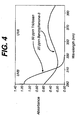
- Fig. 4 is a graphic illustration of a comparison of the UV absorption spectra of 50 ppm Triclosan and 20 ppm benzophenone-3 in 0.01N sodium hydroxide.
- Fig. 5 is a graphic illustration of a compound of the UV absorption spectra of 50 ppm salicylic acid at 29 ppm benzophenone-3 in 0.01N sodium hydroxide.
-
- According to one embodiment of the present invention, there are provided fatty acid-based compositions which include:
- (a) at least one neutralized fatty acid;
- (b) a phenol group-containing compound which is Triclosan; and
- (c) a photostable organic ultra-violet absorber which is benzophenone-3; wherein the weight ratio of the UV absorber to the phenol group-containing compound ranges from about 1:10 to about 5:1. Preferably, the compositions are solid, non-opaque anti-microbial soaps.
-
- According to an alternate embodiment of the present invention, there is provided a method of preparing a fatty acid-based composition. The method includes:
- (a) neutralizing at least one melted fatty acid;
- (b) adding an alkanolamine, a phenol group-containing compound which is Triclosan, and a photostable organic UV absorber which is benzophenone-3 to the neutralized melted fatty acid to form a pourable composition; and
- (c) cooling the pourable composition; wherein the weight ratio of said UV absorber to said phenol group-containing compound ranges from about 1:10 to about 5:1. Again, preferred compositions prepared by this method are solid, non-opaque anti-microbial soaps.
-
- Preferred compositions of the present invention are soaps that include a neutralized fatty acid, an anti-microbial agent which is Triclosan, and a photostable organic UV absorber which is benzophenone-3. These soaps may be liquids, gels, or solids. Other liquid or gel products are also encompassed such as, for example, gels such as, for example, shaving creams, and liquids such as, for example, foaming face washes. Although such products may be opaque, preferred products are non-opaque, i.e., transparent or translucent.
- The fatty acids useful in the compositions of the present invention are preferably saturated fatty acids which are either linear or branched. Saturated fatty acids are preferred because they impart better color stability to soaps than do unsaturated fatty acids.
- Single fatty acids or mixtures of two or more fatty acids may be used. Preferred fatty acids are C12-C20 linear fatty acids = C11-C20 branched fatty acids and combinations thereof. Examples of such fatty acids include, but are not limited to, vegetable-derived fatty acids such as lauric acid, myristic acid, palmitic acid, stearic acid, and isostearic acid. One non-limiting example of a mixture of fatty acids useful herein is a mixture, by weight, of about 4% C12-C14 fatty acid, about 46% C16 fatty acid, about 49% C18 fatty acid, and about 1% C18-1 fatty acid mixture, based upon 100% total weight of fatty acids. Another non-limiting example is a mixture, by weight, of about 2.5% C12 - C14 fatty acid, about 10% branched C16 fatty acid, about 6% linear C18 fatty acid, about 65% branched C18 fatty acid, about 2% linear C18 fatty acid, about 2.5% C18-1 fatty add, about 8% branched C20 fatty acid, and about 4% C22 fatty acid, based upon 100% total weight of fatty acids.
- The fatty acid is formulated for use in the compositions of the present invention by neutralization with, for example, caustic soda, alkanolamine, or the like. A preferred alkanolamine is triethanolamine which is available as an 85%-95% solution. Combinations of neutralizing agents may be used, and neutralization by a dual alkali system is preferred. Excess triethanolamine can be added to enhance transparency. Such an excess amount is typically a clarity enhancing effective amount.
- Phenol group-containing compound useful herein is Triclosan. Triclosan is 5-chloro-2-(2,4-dichlorophenoxy) phenol. Triclosan is particularly photolabile in alkaline-based formulations and degrades upon exposure to sunlight. This is manifested by a yellowing in color. The initial products of photodegradation may be subject to secondary photolytic reactions or oxidation, which leads to color formation. The absorption spectra of Triclosan in various solvents are shown in Figure 1. The spectrum of Triclosan in base solution is substantially the same as that in pure triethanolamine. Triclosan may be encapsulated by, for example, liposomes.
- The amount of anti-microbial agent present in the soaps of the present invention may vary but is typically an anti-microbially effective amount, preferably from about 0.1% to about 1% based upon 100% of the total weight of the composition.
- The UV absorber of the compositions of the present invention i.e. benzophenone-3 improves the aesthetic appearance of the compositions and enhances the activity of the photolabile component. The absorbent spectrum of benzophenone-3 is illustrated in Fig. 2 and overlaps that of Triclosan in a soap environment. Without being bound by any theory, it is believed that the UV absorber protects phenol group-containing compounds from UV degradation by competitively absorbing the energy of the UV-excited phenolic compounds. The UV absorber is typically present in a UV stabilizing effective amount, and preferably is present in an amount of less than or equal to about 1% by weight based upon 100% total weight of the composition. Most preferably, the amount of UV absorber, by weight, ranges from about 0.05 % to about 0.25%, based upon 100% total weight of the composition. The weight ratio of UV absorber to phenol group-containing compound ranges from about 1:10 to about 5:1 and preferably from about 1:10 to about 2:1. Most preferably, the range is from about 1:4 to 2:1. Most preferably, less UV absorber than phenol group-containing compound, by weight, is present.
- Additional components typically used in the preparation of such products may be added. Such additives include, but are not limited to, antioxidants, which may improve storage stability by preventing auto-oxidation. Auto-oxidation can result in rancidity which, in turn, can result in discoloration and malodor formation. A non-limiting example of a suitable antioxidant is alpha-tocopherol acetate. Other additives include, but are not limited to, humectants, such as glycerin; foam stabilizers, including, but not limited to, non-ionic foam stabilizers such as cocodiethanolamide; metal chelating agents including, but not limited to, disodium ethylene diamine tetra acetic acid (disodium EDTA); purified or deionized water; fragrances; colorants; or any combination of any of the foregoing.
- The compounds of the present invention can be prepared by melting the fatty acid(s) at temperatures from about 55° C to about 60° C. The melt may then be pretreated with sodium metal-sulfite to improve color. The resultant melt is then neutralized with alkaline, such as a preblended solution of triethanolamine and sodium hydroxide (50% solution), at appropriate stoichiometric proportions with excess of triethanolamine for transparency.
- The phenol group-containing compound and UV absorber are then added. Additives such as glycerin, DTPA, foam stabilizers, fragrances, colorants, water, antioxidants, and the like are also added as soon as neutralization is complete.
- The molten composition is then hot-poured into suitable trays and allowed to cool at ambient temperatures. When the desired bar hardening is achieved, the bars are cut, stamped and wrapped.
- The following examples illustrate the invention without limitation.
- Three base clear soap mixtures were prepared from the mixture of Table 1 below using a Caframo (Model R2R50) mixer and a hot plate for heating.
Fatty Acid % by Weight Based upon 100% Total Weight of Faffy Acids Lauric Acid 13.61 Myristic Acid 6.63 Palmitic Acid 8.90 Stearic Acid 8.90 Isostearic Acid 4.19 Sodium Hydroxide 4.17 Triethanolamine 40.48 Glycerin 1.00 Coconut Diethanolamide 1.00 EDTA 0.16 Fragrance RB 1001 0.20 Water q.s. - Either 0.25% Triclosan and 0.1% benzophenone-3 (Example 1); 0.25% Triclosan and 0.05% benzophenone-3 (Example 2); or 0.25% Triclosan and 0% benzophenone-3 (Comparative Example 1A) were added to one of the three base soaps.
- Sunlight exposure tests were conducted under direct sunlight from 8 a.m. to 4 p.m. daily, and observations were made every hour. Results are illustrated as Fig. 3.
- The ultra-violet spectra of a 1:2.5 weight ratio of benzophenone-3 to Triclosan was obtained using a Perkin Elmer Lambda 2 spectrophotometer using quartz cuvettes. Results are illustrated in Fig. 4.
- Two base clear soap mixtures were prepared as in Example 1. Either 0.25% sodium salicylate and 0.1 % benzophenone-3 (Example 3) or 0.25% sodium salicylate (Comparative Example 3A) were added to the base soaps.
- Sunlight exposure tests were conducted in Example 1. The soap containing the combination of sodium salicylate and benzophenone-3 remained clear after 10 hours of exposure to sunlight, while the soap containing sodium salicylate but without benzophenone-3 yellowed after 10 hours of exposure to sunlight.
- The ultra-violet spectra of a 2:5 weight ratio of benzophenone-3 to salicylic and was obtained by the method described in Example 1. Results are illustrated in Fig. 5.
- A mixture of fatty acids as shown in Table 2 below, is melted at a temperature between 55°C and 65°C.
Fatty Acid % by Weight Based upon 100% Total Weight of Fatty Acids C12 - C14 2.5 C14 Branched 10 C16 Linear 6 C10 Branched 65 C18 Linear 2 C18-1 2.5 C20 Branched 8 C 224 - Sodium metabisulfite is added to the melt. The melt is then neutralized with a solution of triethanolamine and sodium hydroxide with an excess of triethanolamine. Triclosan and benzophenone-3 are added after neutralization.
- The melt is hot poured into molds and is allowed to cool to a solid transparent bar.
- The method of Example 4 is followed substituting the fatty acid mixture shown in Table 3 below, for the fatty acid mixture of Table 2.
Fatty Acid % by Weight Based upon 100% Total Weight of Fatty Acids C12 - C14 4 C18 46 C18 49 C 18-11 - Many variations of the present invention will suggest themselves to those skilled in the art in light of the above, detailed description. All such obvious variations are within the patented scope of the appended claims.
Claims (7)
- A fatty acid-based composition comprising:wherein the weight ratio of said UV absorber to said phenol group-containing compound ranges from 1:10 to 5:1.(a) at least one neutralized fatty acid;(b) a phenol group-containing compound which is Triclosan; and(c) a photostable organic ultra-violet absorber which is benzophenone-3;
- The composition of claim 1, wherein said fatty acid is a C12 - C20 linear fatty acid, a C11 - C20 branched fatty acid or any combination thereof and is preferably lauric acid, myristic acid, palmitic acid, stearic acid, isostearic acid or any combination of any of the foregoing.
- The composition of claim 1 or claim 2, further comprising (d) an alkanolamine, which is preferably triethanolamine.
- The composition of any one of claims 1 to 3, comprising a non-opaque, solid, anti-microbial soap, a translucent soap, or a transparent soap.
- The composition of any one of claims 1 to 4, wherein said ultra-violet absorber comprises less than or about 1% by weight of the total weight of said composition, preferably from 0.05% by weight to 0.25% by weight of the total weight of said composition.
- A method of preparing a fatty acid-based composition, said method comprising:wherein the weight ratio of said UV absorber to said phenol group-containing compound ranges from 1:10 to 5:1.(a) neutralizing at least one melted fatty acid;(b) adding an alkanolamine, a phenol group-containing compound which is Triclosan, and a photostable organic UV absorber which is benzophenone-3 to said neutralized melted fatty acid to form a pourable composition; and(c) cooling said pourable composition;
- The method of claim 6, wherein step (b) of said method further includes adding an anti-oxidant, a metal chelator, a humectant, a fragrance, a foam stabilizer, a colorant, water, or any combination of any of the foregoing.
Applications Claiming Priority (2)
| Application Number | Priority Date | Filing Date | Title |
|---|---|---|---|
| US88465 | 1993-07-07 | ||
| US09/088,465 US6329330B1 (en) | 1998-06-01 | 1998-06-01 | Photostable compositions |
Publications (2)
| Publication Number | Publication Date |
|---|---|
| EP0964055A1 EP0964055A1 (en) | 1999-12-15 |
| EP0964055B1 true EP0964055B1 (en) | 2003-07-23 |
Family
ID=22211542
Family Applications (1)
| Application Number | Title | Priority Date | Filing Date |
|---|---|---|---|
| EP99304204A Expired - Lifetime EP0964055B1 (en) | 1998-06-01 | 1999-05-28 | Photostable compositions |
Country Status (9)
| Country | Link |
|---|---|
| US (1) | US6329330B1 (en) |
| EP (1) | EP0964055B1 (en) |
| KR (1) | KR20000005754A (en) |
| CN (1) | CN1125168C (en) |
| AU (1) | AU739337B2 (en) |
| BR (1) | BR9902630A (en) |
| CA (1) | CA2273389C (en) |
| DE (1) | DE69909680T2 (en) |
| ID (1) | ID23324A (en) |
Families Citing this family (1)
| Publication number | Priority date | Publication date | Assignee | Title |
|---|---|---|---|---|
| EP1369038A1 (en) * | 2002-06-05 | 2003-12-10 | Ciba SC Holding AG | Personal care products |
Family Cites Families (14)
| Publication number | Priority date | Publication date | Assignee | Title |
|---|---|---|---|---|
| US2921907A (en) | 1955-01-07 | 1960-01-19 | Monsanto Chemicals | Soap stabilization |
| DE1068411B (en) | 1955-04-14 | 1959-11-05 | Olin Mathieson Chemical Corporation, Baltimore, Md. (V. St. A.) | Stabilized soap |
| US3793214A (en) | 1971-10-22 | 1974-02-19 | Avon Prod Inc | Transparent soap composition |
| GB2025451B (en) | 1978-07-13 | 1982-09-15 | Kao Corp | Antibacterial soap |
| FR2524955B1 (en) | 1982-04-08 | 1986-05-30 | Legris | SEAL BETWEEN AN APPARATUS AND A SCREW CONNECTION FOR HIGH PRESSURE FLUID PIPING |
| JPH0678223B2 (en) * | 1986-01-14 | 1994-10-05 | 鐘紡株式会社 | Skin cosmetics |
| JP2546687B2 (en) * | 1987-09-11 | 1996-10-23 | 千寿製薬株式会社 | Antioxidant consisting of phosphoric acid diester or its salt |
| US4847072A (en) * | 1987-10-22 | 1989-07-11 | The Procter & Gamble Company | Photoprotection compositions comprising tocopherol sorbate |
| ES2034203T3 (en) | 1988-03-31 | 1993-04-01 | Unilever Nv | TRANSPARENT SOAP BAR. |
| GB8810188D0 (en) * | 1988-04-29 | 1988-06-02 | Unilever Plc | Detergent composition |
| US5439954A (en) * | 1991-10-11 | 1995-08-08 | The Procter & Gamble Company | Substituted phenyl-1,3-diketones as protectants against skin damage |
| FR2715565B1 (en) * | 1994-01-31 | 1996-03-15 | Oreal | Stabilized cosmetic or dermatological composition containing several precursors of the same active ingredient to maximize its release, its use. |
| US5728663A (en) | 1996-07-02 | 1998-03-17 | Johnson & Johnson Consumer Products, Inc. | Clear, colorless soap bar with superior mildness, lathering and discolorization resistence |
| US5994286A (en) | 1997-07-22 | 1999-11-30 | Henkel Corporation | Antibacterial composition containing triclosan and tocopherol |
-
1998
- 1998-06-01 US US09/088,465 patent/US6329330B1/en not_active Expired - Fee Related
-
1999
- 1999-05-28 DE DE69909680T patent/DE69909680T2/en not_active Expired - Lifetime
- 1999-05-28 EP EP99304204A patent/EP0964055B1/en not_active Expired - Lifetime
- 1999-05-31 KR KR1019990019707A patent/KR20000005754A/en not_active Withdrawn
- 1999-05-31 AU AU32337/99A patent/AU739337B2/en not_active Ceased
- 1999-05-31 BR BR9902630-9A patent/BR9902630A/en not_active Application Discontinuation
- 1999-05-31 CA CA002273389A patent/CA2273389C/en not_active Expired - Fee Related
- 1999-06-01 ID IDP990508D patent/ID23324A/en unknown
- 1999-06-01 CN CN99107681A patent/CN1125168C/en not_active Expired - Fee Related
Also Published As
| Publication number | Publication date |
|---|---|
| CN1125168C (en) | 2003-10-22 |
| DE69909680D1 (en) | 2003-08-28 |
| CA2273389C (en) | 2002-10-29 |
| AU739337B2 (en) | 2001-10-11 |
| AU3233799A (en) | 1999-12-09 |
| KR20000005754A (en) | 2000-01-25 |
| DE69909680T2 (en) | 2004-06-09 |
| CN1243869A (en) | 2000-02-09 |
| ID23324A (en) | 2000-04-05 |
| US6329330B1 (en) | 2001-12-11 |
| BR9902630A (en) | 2001-01-16 |
| CA2273389A1 (en) | 1999-12-01 |
| EP0964055A1 (en) | 1999-12-15 |
Similar Documents
| Publication | Publication Date | Title |
|---|---|---|
| US4426310A (en) | Low-irritation shampoo | |
| US4165293A (en) | Solid transparent cleanser | |
| US3903008A (en) | Cleansing bar | |
| US4186113A (en) | Low irritating detergent compositions | |
| CA2267765C (en) | Mild cleansing bar compositions | |
| US5728663A (en) | Clear, colorless soap bar with superior mildness, lathering and discolorization resistence | |
| KR20020052936A (en) | Transparent bar soap composition | |
| CA2588656A1 (en) | Antimicrobial hand wash formulations | |
| GB1496102A (en) | Transparent liquid shampoo | |
| EP0335027B1 (en) | Transparent toilet soap of light colour | |
| US3344018A (en) | Biocidal quaternary ammonium sulfamates | |
| EP0964047B1 (en) | Anti-oxidant system | |
| US6329330B1 (en) | Photostable compositions | |
| CA2617144A1 (en) | Color-stabilization of aromachemicals | |
| KR960703430A (en) | Manufacturing method of transparent soap material | |
| CA2524933C (en) | Transparent liquid soap composition | |
| USRE30641E (en) | Low irritating detergent compositions | |
| GB2319181A (en) | Antiseptic bar soap having low levels of chelating agents based on triclosan and a chloro & methyl substituted phenol | |
| JP3625828B2 (en) | Fragrance composition | |
| US6150314A (en) | Solid translucent or transparent soap composition comprising benzotriazole 2-(5-chloro-2H-benzotriazole-2-yl)-6-(1,1-dimethyl)-4-methyl-phenol | |
| JP3512147B2 (en) | Soap containing α, α-glucosylglucoside | |
| EP1438384B1 (en) | Stabilized transparent soap composition | |
| KR950013922B1 (en) | Hyperfat cosmetic soap composition | |
| GB916506A (en) | Substituted chlorophenols | |
| RU2036639C1 (en) | Deodorant paste for body skin |
Legal Events
| Date | Code | Title | Description |
|---|---|---|---|
| PUAI | Public reference made under article 153(3) epc to a published international application that has entered the european phase |
Free format text: ORIGINAL CODE: 0009012 |
|
| AK | Designated contracting states |
Kind code of ref document: A1 Designated state(s): DE FR GB IT |
|
| AX | Request for extension of the european patent |
Free format text: AL;LT;LV;MK;RO;SI |
|
| 17P | Request for examination filed |
Effective date: 20000522 |
|
| AKX | Designation fees paid |
Free format text: DE FR GB IT |
|
| 17Q | First examination report despatched |
Effective date: 20020607 |
|
| GRAH | Despatch of communication of intention to grant a patent |
Free format text: ORIGINAL CODE: EPIDOS IGRA |
|
| GRAH | Despatch of communication of intention to grant a patent |
Free format text: ORIGINAL CODE: EPIDOS IGRA |
|
| GRAA | (expected) grant |
Free format text: ORIGINAL CODE: 0009210 |
|
| AK | Designated contracting states |
Designated state(s): DE FR GB IT |
|
| REG | Reference to a national code |
Ref country code: GB Ref legal event code: FG4D |
|
| REF | Corresponds to: |
Ref document number: 69909680 Country of ref document: DE Date of ref document: 20030828 Kind code of ref document: P |
|
| ET | Fr: translation filed | ||
| PLBE | No opposition filed within time limit |
Free format text: ORIGINAL CODE: 0009261 |
|
| STAA | Information on the status of an ep patent application or granted ep patent |
Free format text: STATUS: NO OPPOSITION FILED WITHIN TIME LIMIT |
|
| 26N | No opposition filed |
Effective date: 20040426 |
|
| PGFP | Annual fee paid to national office [announced via postgrant information from national office to epo] |
Ref country code: GB Payment date: 20100329 Year of fee payment: 12 |
|
| PGFP | Annual fee paid to national office [announced via postgrant information from national office to epo] |
Ref country code: FR Payment date: 20100525 Year of fee payment: 12 |
|
| PGFP | Annual fee paid to national office [announced via postgrant information from national office to epo] |
Ref country code: IT Payment date: 20100520 Year of fee payment: 12 Ref country code: DE Payment date: 20100526 Year of fee payment: 12 |
|
| REG | Reference to a national code |
Ref country code: DE Ref legal event code: R119 Ref document number: 69909680 Country of ref document: DE |
|
| REG | Reference to a national code |
Ref country code: DE Ref legal event code: R119 Ref document number: 69909680 Country of ref document: DE |
|
| GBPC | Gb: european patent ceased through non-payment of renewal fee |
Effective date: 20110528 |
|
| REG | Reference to a national code |
Ref country code: FR Ref legal event code: ST Effective date: 20120131 |
|
| PG25 | Lapsed in a contracting state [announced via postgrant information from national office to epo] |
Ref country code: IT Free format text: LAPSE BECAUSE OF NON-PAYMENT OF DUE FEES Effective date: 20110528 |
|
| PG25 | Lapsed in a contracting state [announced via postgrant information from national office to epo] |
Ref country code: FR Free format text: LAPSE BECAUSE OF NON-PAYMENT OF DUE FEES Effective date: 20110531 |
|
| PG25 | Lapsed in a contracting state [announced via postgrant information from national office to epo] |
Ref country code: GB Free format text: LAPSE BECAUSE OF NON-PAYMENT OF DUE FEES Effective date: 20110528 |
|
| PG25 | Lapsed in a contracting state [announced via postgrant information from national office to epo] |
Ref country code: DE Free format text: LAPSE BECAUSE OF NON-PAYMENT OF DUE FEES Effective date: 20111130 |