EP0962135B1 - Insect repellant compositions - Google Patents
Insect repellant compositions Download PDFInfo
- Publication number
- EP0962135B1 EP0962135B1 EP99304289A EP99304289A EP0962135B1 EP 0962135 B1 EP0962135 B1 EP 0962135B1 EP 99304289 A EP99304289 A EP 99304289A EP 99304289 A EP99304289 A EP 99304289A EP 0962135 B1 EP0962135 B1 EP 0962135B1
- Authority
- EP
- European Patent Office
- Prior art keywords
- composition
- percent
- carbon atoms
- surfactant
- glycol
- Prior art date
- Legal status (The legal status is an assumption and is not a legal conclusion. Google has not performed a legal analysis and makes no representation as to the accuracy of the status listed.)
- Expired - Lifetime
Links
- 0 C[C@@]1[C@@](C[C@@](CCC*)C=C)CCCC1 Chemical compound C[C@@]1[C@@](C[C@@](CCC*)C=C)CCCC1 0.000 description 3
Images


Classifications
-
- A—HUMAN NECESSITIES
- A01—AGRICULTURE; FORESTRY; ANIMAL HUSBANDRY; HUNTING; TRAPPING; FISHING
- A01N—PRESERVATION OF BODIES OF HUMANS OR ANIMALS OR PLANTS OR PARTS THEREOF; BIOCIDES, e.g. AS DISINFECTANTS, AS PESTICIDES OR AS HERBICIDES; PEST REPELLANTS OR ATTRACTANTS; PLANT GROWTH REGULATORS
- A01N25/00—Biocides, pest repellants or attractants, or plant growth regulators, characterised by their forms, or by their non-active ingredients or by their methods of application, e.g. seed treatment or sequential application; Substances for reducing the noxious effect of the active ingredients to organisms other than pests
- A01N25/02—Biocides, pest repellants or attractants, or plant growth regulators, characterised by their forms, or by their non-active ingredients or by their methods of application, e.g. seed treatment or sequential application; Substances for reducing the noxious effect of the active ingredients to organisms other than pests containing liquids as carriers, diluents or solvents
-
- A—HUMAN NECESSITIES
- A01—AGRICULTURE; FORESTRY; ANIMAL HUSBANDRY; HUNTING; TRAPPING; FISHING
- A01N—PRESERVATION OF BODIES OF HUMANS OR ANIMALS OR PLANTS OR PARTS THEREOF; BIOCIDES, e.g. AS DISINFECTANTS, AS PESTICIDES OR AS HERBICIDES; PEST REPELLANTS OR ATTRACTANTS; PLANT GROWTH REGULATORS
- A01N37/00—Biocides, pest repellants or attractants, or plant growth regulators containing organic compounds containing a carbon atom having three bonds to hetero atoms with at the most two bonds to halogen, e.g. carboxylic acids
- A01N37/18—Biocides, pest repellants or attractants, or plant growth regulators containing organic compounds containing a carbon atom having three bonds to hetero atoms with at the most two bonds to halogen, e.g. carboxylic acids containing the group —CO—N<, e.g. carboxylic acid amides or imides; Thio analogues thereof
-
- A—HUMAN NECESSITIES
- A01—AGRICULTURE; FORESTRY; ANIMAL HUSBANDRY; HUNTING; TRAPPING; FISHING
- A01N—PRESERVATION OF BODIES OF HUMANS OR ANIMALS OR PLANTS OR PARTS THEREOF; BIOCIDES, e.g. AS DISINFECTANTS, AS PESTICIDES OR AS HERBICIDES; PEST REPELLANTS OR ATTRACTANTS; PLANT GROWTH REGULATORS
- A01N25/00—Biocides, pest repellants or attractants, or plant growth regulators, characterised by their forms, or by their non-active ingredients or by their methods of application, e.g. seed treatment or sequential application; Substances for reducing the noxious effect of the active ingredients to organisms other than pests
- A01N25/22—Biocides, pest repellants or attractants, or plant growth regulators, characterised by their forms, or by their non-active ingredients or by their methods of application, e.g. seed treatment or sequential application; Substances for reducing the noxious effect of the active ingredients to organisms other than pests containing ingredients stabilising the active ingredients
-
- A—HUMAN NECESSITIES
- A01—AGRICULTURE; FORESTRY; ANIMAL HUSBANDRY; HUNTING; TRAPPING; FISHING
- A01N—PRESERVATION OF BODIES OF HUMANS OR ANIMALS OR PLANTS OR PARTS THEREOF; BIOCIDES, e.g. AS DISINFECTANTS, AS PESTICIDES OR AS HERBICIDES; PEST REPELLANTS OR ATTRACTANTS; PLANT GROWTH REGULATORS
- A01N37/00—Biocides, pest repellants or attractants, or plant growth regulators containing organic compounds containing a carbon atom having three bonds to hetero atoms with at the most two bonds to halogen, e.g. carboxylic acids
- A01N37/44—Biocides, pest repellants or attractants, or plant growth regulators containing organic compounds containing a carbon atom having three bonds to hetero atoms with at the most two bonds to halogen, e.g. carboxylic acids containing at least one carboxylic group or a thio analogue, or a derivative thereof, and a nitrogen atom attached to the same carbon skeleton by a single or double bond, this nitrogen atom not being a member of a derivative or of a thio analogue of a carboxylic group, e.g. amino-carboxylic acids
- A01N37/46—N-acyl derivatives
-
- F—MECHANICAL ENGINEERING; LIGHTING; HEATING; WEAPONS; BLASTING
- F41—WEAPONS
- F41A—FUNCTIONAL FEATURES OR DETAILS COMMON TO BOTH SMALLARMS AND ORDNANCE, e.g. CANNONS; MOUNTINGS FOR SMALLARMS OR ORDNANCE
- F41A17/00—Safety arrangements, e.g. safeties
- F41A17/30—Multiple safeties, i.e. one safety element acting on at least one element of the firing mechanism and at least one other element of the gun, e.g. the moving barrel
- F41A17/32—Multiple safeties, i.e. one safety element acting on at least one element of the firing mechanism and at least one other element of the gun, e.g. the moving barrel the other element being the breech-block or bolt
-
- Y—GENERAL TAGGING OF NEW TECHNOLOGICAL DEVELOPMENTS; GENERAL TAGGING OF CROSS-SECTIONAL TECHNOLOGIES SPANNING OVER SEVERAL SECTIONS OF THE IPC; TECHNICAL SUBJECTS COVERED BY FORMER USPC CROSS-REFERENCE ART COLLECTIONS [XRACs] AND DIGESTS
- Y10—TECHNICAL SUBJECTS COVERED BY FORMER USPC
- Y10S—TECHNICAL SUBJECTS COVERED BY FORMER USPC CROSS-REFERENCE ART COLLECTIONS [XRACs] AND DIGESTS
- Y10S424/00—Drug, bio-affecting and body treating compositions
- Y10S424/10—Insect repellent
-
- Y—GENERAL TAGGING OF NEW TECHNOLOGICAL DEVELOPMENTS; GENERAL TAGGING OF CROSS-SECTIONAL TECHNOLOGIES SPANNING OVER SEVERAL SECTIONS OF THE IPC; TECHNICAL SUBJECTS COVERED BY FORMER USPC CROSS-REFERENCE ART COLLECTIONS [XRACs] AND DIGESTS
- Y10—TECHNICAL SUBJECTS COVERED BY FORMER USPC
- Y10S—TECHNICAL SUBJECTS COVERED BY FORMER USPC CROSS-REFERENCE ART COLLECTIONS [XRACs] AND DIGESTS
- Y10S977/00—Nanotechnology
- Y10S977/70—Nanostructure
- Y10S977/773—Nanoparticle, i.e. structure having three dimensions of 100 nm or less
- Y10S977/775—Nanosized powder or flake, e.g. nanosized catalyst
-
- Y—GENERAL TAGGING OF NEW TECHNOLOGICAL DEVELOPMENTS; GENERAL TAGGING OF CROSS-SECTIONAL TECHNOLOGIES SPANNING OVER SEVERAL SECTIONS OF THE IPC; TECHNICAL SUBJECTS COVERED BY FORMER USPC CROSS-REFERENCE ART COLLECTIONS [XRACs] AND DIGESTS
- Y10—TECHNICAL SUBJECTS COVERED BY FORMER USPC
- Y10S—TECHNICAL SUBJECTS COVERED BY FORMER USPC CROSS-REFERENCE ART COLLECTIONS [XRACs] AND DIGESTS
- Y10S977/00—Nanotechnology
- Y10S977/902—Specified use of nanostructure
- Y10S977/904—Specified use of nanostructure for medical, immunological, body treatment, or diagnosis
- Y10S977/926—Topical chemical, e.g. cosmetic or sunscreen
Definitions
- the present invention relates to methods for repelling insects from a host and compositions effective for the same. More specifically, these compositions have superior stability with respect to degradation of the active material and are gentle to the skin.
- insect repellent formulations that use a variety of insect repellent active materials. See, e.g., EP-A-0 097 812 and EP-A-0 097 813, and US-A-4,127,672, US-A-4,756,905, US-A-5,465,685, US-A-5,489,433, US-A-5,565,208, US-A-5,672,337 and US-A-5,716,602.
- W0-A-98 19538 discloses stable aqueous formulations of the insect repellent 3-(N-butylacetamido)-propionic acid ethylester, preferably in an amount of 1 to 50 weight %, in the presence of ethanol, preferably in an amount of 10 to 90 weight %, as a stabiliser, and cosmetic preparations containing such aqueous formulations.
- JP-A-02264703 relates to a water based repellent spray for harmful insects comprising DEET (N, N-diethyl-m-toluamide) as the active component, 0.5 to 1.5 part by weight of a non-ionic surfactant per 10 parts by weight of DEET, water and a jetting agent, such as liquid petroleum gas, freon gas or a mixture thereof.
- a jetting agent such as liquid petroleum gas, freon gas or a mixture thereof.
- Optional components include stabilising agent (e.g., cetanol and polyether degenerated silicone), an antiseptic agent (e.g., methyl p-oxybenzoate and propyl p-oxybenzoate), a low temperature stabilising agent (ethanol) and a perfume.
- stabilising agent e.g., cetanol and polyether degenerated silicone
- an antiseptic agent e.g., methyl p-oxybenzoate and propyl p-oxybenzoate
- ethanol low
- DATABASE WPI Section Ch, Week 7743 Derwent Publications Ltd., London, GB; Class C03, AN 77-76885Y XP002116427 & JP 52 110824 A (TSUMURA JUNTENDO KK), 17 September 1977 (1977-09-17) discloses an insect repellant composition obtained by solubilising or emulsifying DEFT into water using a surface active agent in the presence of an alkaline substance and then adjusting the pH to 7.5-9.0.
- the formulation is storage stable and gentle to the skin.
- insect repellent active materials which contain one or more ester, amide or urethane functionalities. Disadvantageously, these materials are hydrolytically sensitive and often degrade upon long term storage in contact with aqueous media.
- an insect repellent composition comprising, based upon the total weight of the composition:
- an insect repellent active material in an aqueous composition, said active material containing functionality selected from ester, amide, urethane or combinations thereof, comprising, consisting of, or consisting essentially of incorporating into the composition under conditions sufficient a degradation reducing amount of a surfactant.
- composition is suitable for use as an insect repellent, in particular in a method of repelling insects from a host comprising, consisting essentially of, or consisting of: topically applying to the host an insect repellent composition comprising, consisting essentially of, or consisting of, the composition of the present invention.
- compositions and methods of this invention provide a unique means for repelling insects with a reduced rate of degradation of the active material but without disadvantageously over-drying or over-irritating the skin.
- One aspect of the present invention relates to insect repellant compositions that are useful in repelling insects from a host.
- host it is meant any plant or being such as humans, mammals, animals, and the like, affected by insects.
- the first component of the composition of the present invention is an insect repellant active material selected from:
- N,N-diethyl toluamide refers to the material containing predominantly the meta isomer, i.e., N,N-diethyl -m -toluamide, which is also known as DEET.
- the natural pyrethroids are contained in pyrethrum, the extract of the ground flowers of Chrysanthemum cinerariaefolium or C coccineum.
- Synthetic pyrethroids are synthetically derived, and may be identical structurally or structurally analogous to one or more of the insect repellant active materials found in pyrethrum.
- the insect repellent active material is more preferably selected from N,N-diethyltoluamide, ethyl 3-(N-butylacetamido)propionate (formula I above wherein R 3 is a CH 3 group, R 1 is an n-butyl group, R 2 is H, X is COOR 4 and R 4 is ethyl) or mixtures thereof, and most preferably is ethyl 3-(N-butylacetamido)propionate, which is available commercially from Merck KGaA of Darmstadt, Germany under the name, "Insect Repellent 3535.”
- insects that are repelled by the composition of the present invention will depend upon the insect repellent active material selected. While some insect repellent active materials may be specific to a particular insect species, other active materials may broadly repel a variety of insects. Depending on the active material selected, the compositions has been found to be useful in repelling such insects as ticks, mites, lice, flies, fleas, mosquitoes, and the like.
- compositions of the present invention should contain sufficient amounts of insect repellant active material to be efficacious in repelling the insect over a prolonged period of time following its application to the host.
- the compositions should be efficacious at repelling insects for a period of at least several hours before re-application of the repellant is required.
- the insect repellant active material is effective when present in an amount, based upon the total weight of the composition, of from 6 percent to 30 percent, preferably from 10 percent to 15 percent, and most preferably from 11 percent to 14 percent.
- the second component of the present invention is at least one alcohol selected from
- monohydric alcohol refers to a compound containing a single hydroxyl group and the term “glycol” refers to a compound containing two hydroxyl groups.
- monohydric alcohols include, but are not limited to, ethanol and isopropanol.
- Suitable glycol monoalkyl ethers include diethylene glycol monoethyl ether, which has the structure CH 3 CH 2 OCH 2 CH 2 OCH 2 CH 2 OH IV This material is known by the Cosmetic, Toiletry, and Fragrance Association (CTFA) name ethoxydiglycol, and is available from the Union Carbide Company of Tarrytown, NY under the tradename, "CARBITOL.”
- CTFA Cosmetic, Toiletry, and Fragrance Association
- Preferred glycols for use in the compositions of the invention include 1,2-propylene glycol and 1,3-butylene glycol, the latter having the formula:
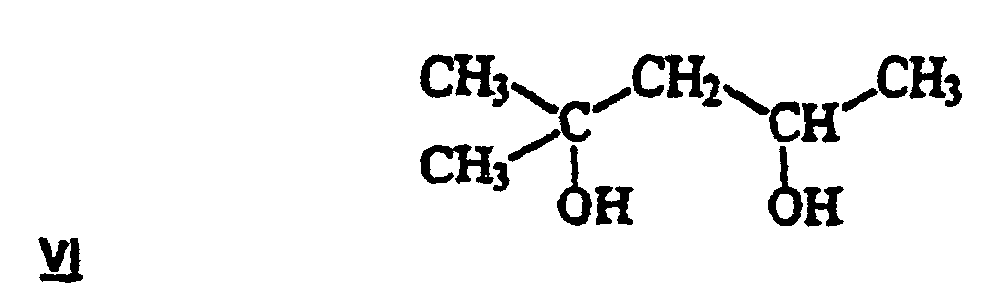
- Other preferred glycols include 1,2-pentanediol, otherwise known by its CTFA name as pentylene glycol, and 2-methyl-2,4-pentanediol, otherwise known as hexylene glycol, the latter having the formula:
- Alcohols that are useful in the compositions of the present invention include oligomers of ethylene glycol or propylene glycol.
- Exemplary alcohols that are within this class of materials include diethylene glycol, triethylene glycol, dipropylene glycol, and mixtures thereof.
- the alcohol is a glycol, and more preferably Is selected from propylene glycol, butylene glycol, pentylene glycol, hexylene glycol, oligomers of ethylene glycol, oligomers of propylene glycol or mixtures thereof. Of these, butylene glycol is most preferred.
- compositions of the present invention are substantially free of lower monohydric alcohols containing 2 to 4 carbon atoms, such as ethanol and isopropanol.
- substantially free of lower alcohols it is meant that the compositions should contain, based upon the total weight of the composition, less than 5 percent of such lower alcohols.
- composition of the present invention comprises, based on the overall weight of the composition, between 5 precent and 30 percent, and preferably from 10 percent to 15 percent of alcohol.
- the third component of the composition of the present invention is a nonionic surfactant as defined in claim 1.
- Exemplary alkoxylated alcohols i) of claim 1 useful as the nonionic surfactant in the compositions of the invention have the structure shown in formula II below: R 5 ⁇ (OCH 2 CH 2 )y ⁇ OH II wherein R 5 is a branched or unbranched alkyl group having from 6 to 22 carbon atoms and y is between 4 and 100, and preferably, between 10 and 100.
- a preferred surfactant of this class of materials is the species wherein R 5 is a lauryl group and y has an average value of 23. This surfactant is known by the CTFA name "laureth 23" and is available from ICI Americas, Inc. of Wilmington, Delaware under the tradename, "BRIJ 35".
- Lanolin alcohol is a mixture of organic alcohols obtained from the hydrolysis of lanolin.
- An example of an ethoxylated derivative of lanolin alcohol is laneth-10, which is the polyethylene glycol ether of lanolin alcohol with an average ethoxylation value of 10.
- alkoxylated alkyl phenols which generally conform to the structure: wherein R 6 is a branched or unbranched alkyl group having 6 to 22 carbon atoms and z is between 7 and 120, and preferably, between 10 and 120.
- R 6 is a branched or unbranched alkyl group having 6 to 22 carbon atoms and z is between 7 and 120, and preferably, between 10 and 120.
- An especially preferred member of this class of materials is the species wherein R 6 is a nonyl group and z has an average value of approximately 14. This material is known by the CTFA name “nonoxynol-14" and is available under the tradename, "MAKON 14" from the Stepan Company of Northfield, Illinois.
- Preferred nonionic surfactants include the alkoxylated alcohols and the alkoxylated alkyl phenols, with laureth-23 being more preferred.
- composition of the present invention comprise, based upon the total weight of the composition, from 1 percent to 10 percent, preferably from 1 percent to 7.5 percent, and more preferably from 3 percent to 6 percent of surfactant.
- compositions of the invention may also contain other optional additives known in the art of personal care product formulations, such as thickeners, buffering agents, chelating agents, preservatives, fragrances, and mixtures thereof.
- Preferred thickeners are the homopolymers or copolymers of acrylic acid or salts thereof.
- An exemplary thickener useful in the compositions of the invention is the material known by the CTFA name, "Acrylates/C10-30 Alkyl Acrylate Crosspolymer," which is a copolymer of C10-30 alkyl acrylates and one or more monomers of acrylic acid, methacrylic acid or one of their simple esters crosslinked with an allyl ether of sucrose or an allyl ether of pentaerythritol.
- CARBOPOL ETD 2020 One such material useful in the compositions of the invention is marketed by BFGoodrich Specialty Chemicals of Cleveland, Ohio under the tradename, "CARBOPOL ETD 2020.”
- Another useful thickener includes the material known by its CTFA name, "Carbomer,” which is a crosslinked homopolymer of acrylic acid.
- the thickener polymers are preferably neutralized with an inorganic or organic base.
- exemplary inorganic bases include sodium hydroxide and potassium hydroxide.
- exemplary organic bases include triethanolamine and tris(hydroxymethyl)amino methane, that latter of which is known by the CTFA name, "tromethamine.”
- the composition preferably has a viscosity of 100 to 30,000 centipoise, and more preferably from 10,000 to 20,000 centipoise.
- Buffering agents known in the art are preferably present in the composition of the present invention to maintain its pH in the range of 5.5 to 7.5.
- compositions of the present invention may also contain one or more therapeutically or cosmetically active ingredients.
- therapeutic or cosmetically active ingredients useful in the compositions of the invention include fungicides. sunscreening agents, sunblocking agents, vitamins, tanning agents, plant extracts, antiinflammatory agents, anti-oxidants, radical scavenging agents, retinoids, alpha-hydroxy acids, emollients, antiseptics, antibiotics, antibacterial agents or antihistamines, and may be present in an amount effective for achieving the therapeutic or cosmetic result desired.
- compositions of the invention may be formulated and packaged so as to deliver the product in a variety of forms including, but not limited to, a cologne, a lotion, a spray, an aerosol, a cream, a milk, a gel, an ointment, a suspension, a dispersion, a foam, a makeup, a shampoo, a hair lacquer or a hair rinse.
- the compositions of the invention are also preferably optically transparent.
- the method of applying the insect repellant composition will depend upon its form as enumerated above.
- the composition when the composition is in the form of a lotion, the composition could be dispensed on the hands or on other body parts of the host, and then uniformly spread over a larger portion of the body.
- the composition In the case of an aerosol or spray, the composition may be applied as such and either left on or further spread over parts of the body.
- the compositions For application to the hair or scalp, the compositions may be applied either as a leave-on or as a rinse-off type product.
- Another embodiment of the present invention is directed to a method of reducing the rate of degradation of the insect repellant active materials in aqueous solution.
- a degradation-reducing amount of the surfactants, and preferably the non-ionic surfactants, of the composition of the present invention the degradation rate of the insect repellant active materials was significantly reduced.
- Preferred degradation reducing surfactants include the alkoxylated alcohols and alkoxylated alkyl phenols of the types and in the amounts enumerated above, with laureth-23 and nonoxynol-14 being most preferred.
- degradation reducing amount means the amount of surfactant such that the decomposition of the insect repellant active material in the presence of the surfactant is at least 5%, preferably at least 10%, and more preferably at least 15% less than the amount of insect repellant active material that would have been degraded in the absence of the surfactant, with comparable time, temperature, and pressure conditions. For example, in a surfactant-free composition containing 100 parts of insect repellent active material, 10 parts of the material would have degraded under certain conditions.
- the degradation amount of surfactant in the composition would be the amount that would retard the degradation of the insect repellant active material to no more than 9.5 parts, or preferably 9 parts, or more preferably 8.5 parts.
- the degradation reducing amount of nonionic surfactant is, based upon the total weight of the composition, of from 1 percent to 10 percent and preferably, from 1 percent to 7.5 percent.
- the surfactant, the active material, and other Ingredients are combined under ambient conditions.
- Comparative Example 1 The composition of Comparative Example 1 was prepared in accordance with the procedure set forth in Example 1, except that the laureth-23 surfactant was omitted therefrom as shown in Table 1 above.
- the active ingredient, ethyl 3-(N-butylacetamido) propionate, when undergoing degradation in aqueous solution was expected to undergo hydrolysis according to the following equation: Since the hydrolysis product of this active ingredient is an acid, i.e., 3-(N-butylacetamido) propionic acid, its hydrolytic degradation was expected to be accompanied by a shift to lower pH.
- Table 2 shows the change in pH of the composition of Example 1 over time as compared with the pH changes of the surfactant-free composition of Comparative Example 1. pH Days at room temperature Example 1 Comparative Example 1 0 4.5 4.5 5 4.4 4.2 10 4.2 3.9 15 4.1 3.6 20 4.1 3.6 25 4.0 3.5
- Example 1 shows that the surfactant-containing composition of Example 1 did not decrease in pH to the same extent as the surfactant-free composition of Comparative Example 1, which thereby suggests that the nonionic surfactant contributes to the reduction in the degradation of the insect repellant active material in aqueous solution.
- Example 3 The formulations shown in Table 3 were prepared in accordance with the manner described in Example 1. The changes in pH stability of these formulations with time are shown in Table 4.
- Component Concentration (weight %) Component Example 2
- Example 3 Example 4 Comparative Example 2 ethyl 3-(N-butylacetamido) propionate 20 20 20 20 20 1,3-butylene glycol 20 20 20 20 laureth-23 3.5 5 7.5 0 water q.s. to 100% q.s. to 100% q.s. to 100% q.s..
- Example 4 Comparative Example 2 0 4.5 4.7 4.7 4.4 1 4.1 4.3 4.6 3.8 2 4.1 4.1 4.5 3.7 3 3.7 4.0 4.2 3.3 4 3.4 3.7 4.0 3.2 5 3.4 3.5 3.9 3.1 These Examples show that the formulations containing the nonionic surfactant have a reduced pH drift relative to the surfactant-free formulation. Furthermore, the rate of pH drift, which is indicative of the rate of hydrolysis, decreases as the amount of surfactant in the formulation increases. This Example therefore further supports our belief that the greater the amount of nonionic surfactant present in the composition, the lower the degradation rate of insect repellant active material.
- Example 4 shows that the formulation of Example 4 containing 7.5% laureth-23 showed less degradation that the surfactant-free formulation of Comparative Example 2, which further supports our belief that the selected nonionic surfactants contribute to the reduction in degradation of the active insect repellent material.
- Example 6 Example 7
- Example 8 Comparative Example 3 0 5.12 5.27 5.5 4.46 1 4.57 4.87 5.21 3.81 2 4.87 4.51 4.92 3.51 4 3.7 4.07 4.49 3.25 5 3.55 3.82 4.31 3.11
- Example 9 and Comparative Example 4 Thickener-Containing and Thickener-Free Compositions
- Premix A 2.0 parts laureth-23 were dissolved in 54.3 parts water to form Premix A.
- Premix B was then formed by adding 12.5 parts butylene glycol to 12.5 parts ethyl 3-(N-butylacetamido) propionate.
- Premix A was then added with stirring to Premix B until the mixture was homogeneous to form Premix C.
- Comparative Example 4 was made according to the procedure of Example 1.
- compositions of the resulting formulations are shown in Table 7: Component Concentration (Weight %) Component Example 9 Comparative Example 4 ethyl 3-(N-butylacetamido) propionate 12.5 12.5 1,3-butylene glycol 12.5 12.5 laureth-23 2.0 2.0 Acrylate/C10-30 Alkyl Acrylate Crosspolymer 0.25 0 triethanolamine 0.35 0 water q.s. to 100% q.s. to 100%
- the formulation of Example 9 has a viscosity of about 8000 to about 10000 centipoise.
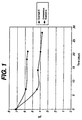
- the rate of change of the pH of these formulations as a function of time upon storage at a temperature of 50°C is shown in Figure 1.
- Example 8 has a lower rate of pH change, and hence, a lower implied rate of degradation of the active material, than the thickener-free formulation of Comparative Example 4.
- Example 9 The formulations shown in Table 9 were prepared in the manner described in Example 1.
- Component Concentration (weight %) Component
- Example 10 Example 11
- Example 12 Example 13 ethyl 3-(N-butylacetamido) propionate 12.5 12.5 12.5 12.5 1,3-butylene glycol 12.5 12.5 12.5 12.5 laureth-23 0 1.5 3.0 5.0 water q.s. to 100% q.s. to 100% q.s. to 100% q.s. to 100% q.s. to 100% q.s. to 100%
- a 15 second pre-treatment exposure of an untreated forearm was conducted for each subject at the beginning of each day of testing. Greater than 10 landings and bites were recorded in this period for each subject.
- Example 11 The formulations shown in Table 11 were prepared in the manner described in Example 1. Component Concentration (weight %) Component Example 14 Example 15 Example 16 ethyl 3-(N-butylacetamido) propionate 12.5 12.5 12.5 1,3-butylene glycol 12.5 12.5 12.5 laureth-23 0 3.5 5.0 water q.s. to 100% q.s. to 100% q.s. to 100% Number Weighted Distribution (nm) 9.6 ⁇ 2.0 (100%) 11.5 ⁇ 2.4 (100%) 4.3 ⁇ 0.5 (100%) All of these formulations were optically transparent.
- the particle sizes of the resultant formulations were analyzed by exposing each formulation to dynamic laser light scattering using a NICOMP 370 submicron particle analyzer available from Particle Sizing Systems, Inc. of Santa Barbara, CA.
- the number-weighted mean diameter of the particles in the compositions of Examples 14-16 are also recorded in Table 11.
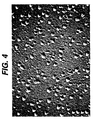
- compositions of Examples 14-16 were also examined using freeze-fracture transmission electron microscopy (TEM). Samples of the compositions were prepared in accordance with techniques described in chapter 5 of "Low Temperature Microscopy and Analysis” by Patrick Echlin, Plenum Publishing Corp., New York, 1992, which is incorporation herein by reference, except that the samples were rapidly cooled with liquid propane to -196°C and, after fracturing, were etched at -150°C to remove a surface layer of water. Freeze fracture photomicrographs at 150,000 X of the resulting specimens prepared from the compositions of Examples 14, 15 and 16 are shown in Figures 2, 3 and 4, respectively.
- TEM freeze-fracture transmission electron microscopy
- the photomicrograph of Figure 3 which was taken of the specimen prepared from the 3.5% laureth-23-containing composition of Example 15, shows some degree of agglomeration; however, the amount is greatly reduced relative to the amount of agglomeration in the composition of Example 14.
- This photomicrograph also shows the presence of ordered structures which are believed to be micelles or vesicles ranging in size from 13 to 25 nm.
- the preferred formulations of the present invention exhibit increased stability against degradation of the insect repellant active material because the active material is contained, at least in part, within the ordered micellar structures seen in the photomicrographs of Figures 3 and 4.
- the micelles are believed to protect the active material from degradation by the aqueous environment.
- Examples 18 - 21 are prepared according to the method of Example 17 using the components set forth in Table 12: Component Concentration (weight %) Component Example 18 Example 19
- Example 20 Example 21 ethyl 3-(N-butylacetamido) propionate 12.5 12.5 12.5 DEET 6.0 Ethanol 1,3-propylene glycol 12.5 1,3-butylene glycol 6.25 5.0 pentylene glycol 12.5 6.25 laureth-23 3.5 3.5 3.5 Laureth 12 Nonoxynol-14 5.0 fragrance 0.25 0.25 0.25 0.25 water q.s. to 100% q.s. to 100% q.s. to 100% q.s. to 100% q.s. to 100% q.s. to 100% q.s. to 100%
- the resulting formulations are useful as an insect repellent cologne.
- Example 22 The formulations of Examples 22 and 23 are prepared according to the method of Example 9 but with the components set forth in Table 13: Component Concentration (weight percent) Component Example 22 Example 23 ethyl 3-(N-butylacetamido) propionate 12.5 12.5 Butylene Glycol 12.5 12.5 polyvinyl pyrrolidone 5.0 5.00 Laureth-23 3.0 2.00 Carbomer 1.00 Triethanolamine or 1.00 Purified Water q.s. to 100% q.s. to 100%
- compositions are useful as a lice repellant hair spray and hair gel, respectively.
- Example 24 The formulation of Example 24 is prepared according to the method of Example 9, but with the components set forth in Table 14: Component Concentration (weight percent) Component Example 24 Triclosan 0.25 ethyl 3-(N-butylacetamido) propionate 12.50 Butylene Glycol 12.50 nonoxynol 14 7.00 Carbomer 0.25 Triethanolamine 0.35 Purified Water q.s. The resulting composition is useful as an antibacterial insect repellant.
Landscapes
- Life Sciences & Earth Sciences (AREA)
- Health & Medical Sciences (AREA)
- General Health & Medical Sciences (AREA)
- Engineering & Computer Science (AREA)
- Agronomy & Crop Science (AREA)
- Plant Pathology (AREA)
- Pest Control & Pesticides (AREA)
- Dentistry (AREA)
- Wood Science & Technology (AREA)
- Zoology (AREA)
- Environmental Sciences (AREA)
- Toxicology (AREA)
- General Engineering & Computer Science (AREA)
- Agricultural Chemicals And Associated Chemicals (AREA)
Description
- The present invention relates to methods for repelling insects from a host and compositions effective for the same. More specifically, these compositions have superior stability with respect to degradation of the active material and are gentle to the skin.
- There are many known insect repellent formulations that use a variety of insect repellent active materials. See, e.g., EP-A-0 097 812 and EP-A-0 097 813, and US-A-4,127,672, US-A-4,756,905, US-A-5,465,685, US-A-5,489,433, US-A-5,565,208, US-A-5,672,337 and US-A-5,716,602.
- W0-A-98 19538 discloses stable aqueous formulations of the insect repellent 3-(N-butylacetamido)-propionic acid ethylester, preferably in an amount of 1 to 50 weight %, in the presence of ethanol, preferably in an amount of 10 to 90 weight %, as a stabiliser, and cosmetic preparations containing such aqueous formulations..
- JP-A-02264703 relates to a water based repellent spray for harmful insects comprising DEET (N, N-diethyl-m-toluamide) as the active component, 0.5 to 1.5 part by weight of a non-ionic surfactant per 10 parts by weight of DEET, water and a jetting agent, such as liquid petroleum gas, freon gas or a mixture thereof. Optional components include stabilising agent (e.g., cetanol and polyether degenerated silicone), an antiseptic agent (e.g., methyl p-oxybenzoate and propyl p-oxybenzoate), a low temperature stabilising agent (ethanol) and a perfume.
- DATABASE WPI Section Ch, Week 7743 Derwent Publications Ltd., London, GB; Class C03, AN 77-76885Y XP002116427 & JP 52 110824 A (TSUMURA JUNTENDO KK), 17 September 1977 (1977-09-17) discloses an insect repellant composition obtained by solubilising or emulsifying DEFT into water using a surface active agent in the presence of an alkaline substance and then adjusting the pH to 7.5-9.0. The formulation is storage stable and gentle to the skin.
- Many of the commercially available insect repellent formulations include insect repellent active materials which contain one or more ester, amide or urethane functionalities. Disadvantageously, these materials are hydrolytically sensitive and often degrade upon long term storage in contact with aqueous media.
- Other commercially available insect repellent formulations that contain water insoluble active materials frequently contain a significant amount of solubilizers such as lower monohydric alcohols, i.e., ethanol and isopropanol. However, the amount of such lower alcohols present in these formulations often contributes to drying and irritation to the skin.
- It would be desirable to provide a composition that exhibited a reduced rate of decomposition of the insect repellent active material without causing significant drying and irritation to the skin
- In accordance with the present invention, there is provided an insect repellent composition comprising, based upon the total weight of the composition:
- a) from 6 to 30 percent of insect repellant active material, wherein the insect repellant
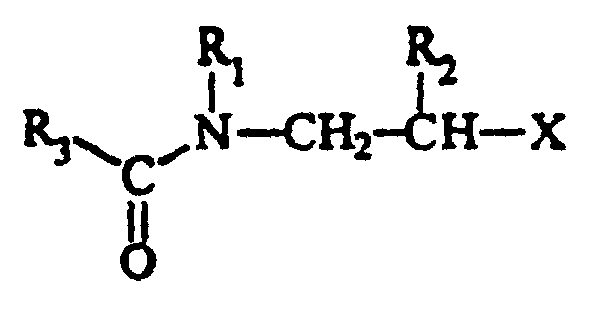
active material is: i) N,N-diethyltoluamide; ii) one or more compounds of the formula
wherein R1 is a branched or unbranched alkyl group having 1 carbon atom to 6 carbon atoms, R2 is H, methyl or ethyl, R3 is a branched or unbranched alkyl or alkoxy group having from 1 carbon atom to 8 carbon atoms, and X is a -CN or a -COOR4 group wherein R4 is a branched or unbranched alkyl group having from 1 carbon atom to 6 carbon atoms; iii) one or more natural or synthetic pyrethroids; or iv) a mixture thereof;
- b) from 5 to 30 percent of a glycol monoalkyl ether, said alkyl having from 1 to 4 carbon atoms; a glycol containing from 3 to 6 carbon atoms; an oligomer of ethylene glycol or propylene glycol; or a mixture thereof; and
- c) from 1 to 10 percent by weight of surfactant, wherein the surfactant is i) an
alkoxylated alcohol having the structure R5-(OCH2CH2)y-OH wherein R5 is a branched or
unbranched alkyl group having 6 to 22 carbon atoms and y is between 4 and 100,
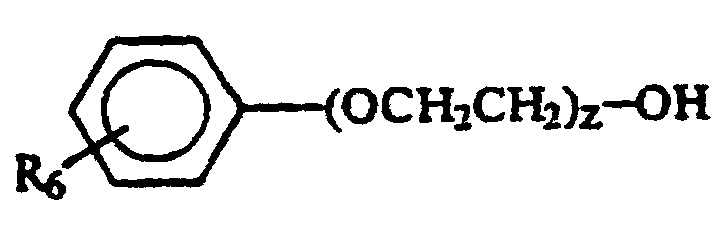
preferably between 10 and 100; ii) an alkoxylated alkyl phenol having the structure
wherein R6 is a branched or unbranched alkyl group having 6 to 22 carbon atoms and z is between 10 and 120; or iii) a mixture thereof;
 wherein said composition comprises less than 5 percent of monohydric alcohols containing
2 to 4 carbon atoms.
wherein said composition comprises less than 5 percent of monohydric alcohols containing
2 to 4 carbon atoms. -
- In another embodiment of the present invention we have found a method of reducing the rate of degradation of an insect repellent active material in an aqueous composition, said active material containing functionality selected from ester, amide, urethane or combinations thereof, comprising, consisting of, or consisting essentially of incorporating into the composition under conditions sufficient a degradation reducing amount of a surfactant.
- In yet another embodiment of the present invention we have found that the composition is suitable for use as an insect repellent, in particular in a method of repelling insects from a host comprising, consisting essentially of, or consisting of: topically applying to the host an insect repellent composition comprising, consisting essentially of, or consisting of, the composition of the present invention.
- The compositions and methods of this invention provide a unique means for repelling insects with a reduced rate of degradation of the active material but without disadvantageously over-drying or over-irritating the skin.
- The invention will be more fully understood and further advantages will become apparent which reference is made to the following detailed description of the invention and the accompanying drawings in which:
- Figure 1 is a graph depicting the pH stability versus time (days) for a surfactant-free insect repellent composition and for the composition of the present invention.
- Figure 2 is a freeze-fracture transmission electron photomicrograph at a magnification of 150.000 X of an aqueous surfactant-free composition containing an insect repellant active material.
- Figure 3 is a freeze-fracture transmission electron photomicrograph at a magnification of 150,000 X of an insect repellant composition of the present invention containing 3.5% laureth-23 surfactant.
- Figure 4 is another freeze-fracture transmission electron photomicrograph at a magnification of 150,000 X of an insect repellant composition of the present invention containing 5.0% laureth-23 surfactant.
-
- One aspect of the present invention relates to insect repellant compositions that are useful in repelling insects from a host. By "host," it is meant any plant or being such as humans, mammals, animals, and the like, affected by insects.
- The first component of the composition of the present invention is an insect repellant active material selected from:
- a. N,N-diethyltoluamide,
- b. one or more compounds of the formula
wherein

- R1 is a branched or unbranched alkyl group having about 1 to about 6 carbon atoms;
- R2 is H, methyl or ethyl;
- R3 is a branched or unbranched alkyl or alkoxy group having from about 1 to about 8 carbon atoms; and
- X is a -CN or a -COOR4 group, wherein
R4 is a branched or unbranched alkyl group having from about 1 to about 6 carbon atoms; - c. one or more natural or synthetic pyrethroids; or
- d. mixtures thereof.
-
- As used herein, N,N-diethyl toluamide refers to the material containing predominantly the meta isomer, i.e., N,N-diethyl-m-toluamide, which is also known as DEET. The natural pyrethroids are contained in pyrethrum, the extract of the ground flowers of Chrysanthemum cinerariaefolium or C coccineum. Synthetic pyrethroids are synthetically derived, and may be identical structurally or structurally analogous to one or more of the insect repellant active materials found in pyrethrum.
- The insect repellent active material is more preferably selected from N,N-diethyltoluamide, ethyl 3-(N-butylacetamido)propionate (formula I above wherein R3 is a CH3 group, R1 is an n-butyl group, R2 is H, X is COOR4 and R4 is ethyl) or mixtures thereof, and most preferably is ethyl 3-(N-butylacetamido)propionate, which is available commercially from Merck KGaA of Darmstadt, Germany under the name, "Insect Repellent 3535."
- The particular insects that are repelled by the composition of the present invention will depend upon the insect repellent active material selected. While some insect repellent active materials may be specific to a particular insect species, other active materials may broadly repel a variety of insects. Depending on the active material selected, the compositions has been found to be useful in repelling such insects as ticks, mites, lice, flies, fleas, mosquitoes, and the like.
- The compositions of the present invention should contain sufficient amounts of insect repellant active material to be efficacious in repelling the insect over a prolonged period of time following its application to the host. Preferably, the compositions should be efficacious at repelling insects for a period of at least several hours before re-application of the repellant is required. For the active materials disclosed herein, we have found that the insect repellant active material is effective when present in an amount, based upon the total weight of the composition, of from 6 percent to 30 percent, preferably from 10 percent to 15 percent, and most preferably from 11 percent to 14 percent.
- The second component of the present invention is at least one alcohol selected from
- i) a glycol monoalkyl ether having an alkyl group having from 1 carbon atom to 4 carbon atoms;
- ii) a glycol containing from 3 to 6 carbon atoms;
- iii) oligomers of ethylene glycol or propylene glycol; or
- iv) mixtures thereof.
-
- As used herein, the term "monohydric alcohol" refers to a compound containing a single hydroxyl group and the term "glycol" refers to a compound containing two hydroxyl groups. If present, monohydric alcohols include, but are not limited to, ethanol and isopropanol. Suitable glycol monoalkyl ethers include diethylene glycol monoethyl ether, which has the structure
IV - Preferred glycols for use in the compositions of the invention include 1,2-propylene glycol and 1,3-butylene glycol, the latter having the formula:Other preferred glycols include 1,2-pentanediol, otherwise known by its CTFA name as pentylene glycol, and 2-methyl-2,4-pentanediol, otherwise known as hexylene glycol, the latter having the formula:

- Other alcohols that are useful in the compositions of the present invention include oligomers of ethylene glycol or propylene glycol. Exemplary alcohols that are within this class of materials include diethylene glycol, triethylene glycol, dipropylene glycol, and mixtures thereof.
- Preferably the alcohol is a glycol, and more preferably Is selected from propylene glycol, butylene glycol, pentylene glycol, hexylene glycol, oligomers of ethylene glycol, oligomers of propylene glycol or mixtures thereof. Of these, butylene glycol is most preferred.
- As mentioned above, lower monohydric alcohols have a drying effect when applied to the skin. Accordingly, compositions of the present invention are substantially free of lower monohydric alcohols containing 2 to 4 carbon atoms, such as ethanol and isopropanol. By "substantially free" of lower alcohols, it is meant that the compositions should contain, based upon the total weight of the composition, less than 5 percent of such lower alcohols.
- The composition of the present invention comprises, based on the overall weight of the composition, between 5 precent and 30 percent, and preferably from 10 percent to 15 percent of alcohol.
- The third component of the composition of the present invention is a nonionic surfactant as defined in
claim 1. - Exemplary alkoxylated alcohols i) of
claim 1 useful as the nonionic surfactant in the compositions of the invention have the structure shown in formula II below:
II - Another exemplary alkoxylated alcohol surfactant/emulsifier is an ethoxylated derivative of lanolin alcohol. Lanolin alcohol is a mixture of organic alcohols obtained from the hydrolysis of lanolin. An example of an ethoxylated derivative of lanolin alcohol is laneth-10, which is the polyethylene glycol ether of lanolin alcohol with an average ethoxylation value of 10.
- Another class of surfactants ii) useful in the compositions of the invention are the alkoxylated alkyl phenols, which generally conform to the structure:wherein R6 is a branched or unbranched alkyl group having 6 to 22 carbon atoms and z is between 7 and 120, and preferably, between 10 and 120. An especially preferred member of this class of materials is the species wherein R6 is a nonyl group and z has an average value of approximately 14. This material is known by the CTFA name "nonoxynol-14" and is available under the tradename, "MAKON 14" from the Stepan Company of Northfield, Illinois.

- Preferred nonionic surfactants include the alkoxylated alcohols and the alkoxylated alkyl phenols, with laureth-23 being more preferred.
- The composition of the present invention comprise, based upon the total weight of the composition, from 1 percent to 10 percent, preferably from 1 percent to 7.5 percent, and more preferably from 3 percent to 6 percent of surfactant.
- The compositions of the invention may also contain other optional additives known in the art of personal care product formulations, such as thickeners, buffering agents, chelating agents, preservatives, fragrances, and mixtures thereof.
- Preferred thickeners are the homopolymers or copolymers of acrylic acid or salts thereof. An exemplary thickener useful in the compositions of the invention is the material known by the CTFA name, "Acrylates/C10-30 Alkyl Acrylate Crosspolymer," which is a copolymer of C10-30 alkyl acrylates and one or more monomers of acrylic acid, methacrylic acid or one of their simple esters crosslinked with an allyl ether of sucrose or an allyl ether of pentaerythritol. One such material useful in the compositions of the invention is marketed by BFGoodrich Specialty Chemicals of Cleveland, Ohio under the tradename, "CARBOPOL ETD 2020." Another useful thickener includes the material known by its CTFA name, "Carbomer," which is a crosslinked homopolymer of acrylic acid.
- In use, the thickener polymers are preferably neutralized with an inorganic or organic base. Exemplary inorganic bases include sodium hydroxide and potassium hydroxide. Exemplary organic bases include triethanolamine and tris(hydroxymethyl)amino methane, that latter of which is known by the CTFA name, "tromethamine."
- If it is desired to deliver the composition in the form of a thickened liquid or gel, the composition preferably has a viscosity of 100 to 30,000 centipoise, and more preferably from 10,000 to 20,000 centipoise.
- Buffering agents known in the art are preferably present in the composition of the present invention to maintain its pH in the range of 5.5 to 7.5.
- The compositions of the present invention may also contain one or more therapeutically or cosmetically active ingredients. Exemplary therapeutic or cosmetically active ingredients useful in the compositions of the invention include fungicides. sunscreening agents, sunblocking agents, vitamins, tanning agents, plant extracts, antiinflammatory agents, anti-oxidants, radical scavenging agents, retinoids, alpha-hydroxy acids, emollients, antiseptics, antibiotics, antibacterial agents or antihistamines, and may be present in an amount effective for achieving the therapeutic or cosmetic result desired.
- The compositions of the invention may be formulated and packaged so as to deliver the product in a variety of forms including, but not limited to, a cologne, a lotion, a spray, an aerosol, a cream, a milk, a gel, an ointment, a suspension, a dispersion, a foam, a makeup, a shampoo, a hair lacquer or a hair rinse. The compositions of the invention are also preferably optically transparent.
- The method of applying the insect repellant composition will depend upon its form as enumerated above. For example, when the composition is in the form of a lotion, the composition could be dispensed on the hands or on other body parts of the host, and then uniformly spread over a larger portion of the body. In the case of an aerosol or spray, the composition may be applied as such and either left on or further spread over parts of the body. For application to the hair or scalp, the compositions may be applied either as a leave-on or as a rinse-off type product.
- Another embodiment of the present invention is directed to a method of reducing the rate of degradation of the insect repellant active materials in aqueous solution. We have unexpectedly discovered that by combining under conditions sufficient the insect repellant active materials with a degradation-reducing amount of the surfactants, and preferably the non-ionic surfactants, of the composition of the present invention, the degradation rate of the insect repellant active materials was significantly reduced. Preferred degradation reducing surfactants include the alkoxylated alcohols and alkoxylated alkyl phenols of the types and in the amounts enumerated above, with laureth-23 and nonoxynol-14 being most preferred.
- As used herein, "degradation reducing" amount means the amount of surfactant such that the decomposition of the insect repellant active material in the presence of the surfactant is at least 5%, preferably at least 10%, and more preferably at least 15% less than the amount of insect repellant active material that would have been degraded in the absence of the surfactant, with comparable time, temperature, and pressure conditions. For example, in a surfactant-free composition containing 100 parts of insect repellent active material, 10 parts of the material would have degraded under certain conditions. By contrast, when surfactant is added to the same insect repellant active material-containing composition in the relevant concentrations, then the degradation amount of surfactant in the composition would be the amount that would retard the degradation of the insect repellant active material to no more than 9.5 parts, or preferably 9 parts, or more preferably 8.5 parts. Typically, the degradation reducing amount of nonionic surfactant is, based upon the total weight of the composition, of from 1 percent to 10 percent and preferably, from 1 percent to 7.5 percent. Preferably the surfactant, the active material, and other Ingredients are combined under ambient conditions.
- The invention illustratively disclosed herein suitably may be practiced in the absence of any component, ingredient, or step which is not specifically disclosed herein. Several examples are set forth below to further illustrate the nature of the invention and the manner of carrying it out. However, the invention should not be considered as being limited to the details thereof.
- Into a stirred vessel the ingredients set forth in Table 1 below were added in sequence and stirred until the mixture was homogeneous:
Concentration (weight %) Component/Supplier Ex. 1 Comparative
Example 1ethyl 3-(N-butyl-acetamido) propionate from Merck KgaA under the name, "Insect Repellent 3535" 12.5 12.5 1,3-butylene glycol 12.5 12.5 laureth-23 from ICI Americas, Inc. under the name, "BRIJ 35" 5.0 0 water q.s. to 100% q.s. to 100% - The composition of Comparative Example 1 was prepared in accordance with the procedure set forth in Example 1, except that the laureth-23 surfactant was omitted therefrom as shown in Table 1 above.
- The active ingredient, ethyl 3-(N-butylacetamido) propionate, when undergoing degradation in aqueous solution was expected to undergo hydrolysis according to the following equation:Since the hydrolysis product of this active ingredient is an acid, i.e., 3-(N-butylacetamido) propionic acid, its hydrolytic degradation was expected to be accompanied by a shift to lower pH. Table 2 shows the change in pH of the composition of Example 1 over time as compared with the pH changes of the surfactant-free composition of Comparative Example 1.

pH Days at room temperature Example 1 Comparative Example 1 0 4.5 4.5 5 4.4 4.2 10 4.2 3.9 15 4.1 3.6 20 4.1 3.6 25 4.0 3.5 - This Example shows that the surfactant-containing composition of Example 1 did not decrease in pH to the same extent as the surfactant-free composition of Comparative Example 1, which thereby suggests that the nonionic surfactant contributes to the reduction in the degradation of the insect repellant active material in aqueous solution.
- The formulations shown in Table 3 were prepared in accordance with the manner described in Example 1. The changes in pH stability of these formulations with time are shown in Table 4.
Component Concentration (weight %) Component Example 2 Example 3 Example 4 Comparative
Example 2ethyl 3-(N-butylacetamido) propionate 20 20 20 20 1,3- butylene glycol 20 20 20 20 laureth-23 3.5 5 7.5 0 water q.s. to 100% q.s. to 100% q.s. to 100% q.s. to 100% pH Weeks @ 50°C Example 2 Example 3 Example 4 Comparative
Example 20 4.5 4.7 4.7 4.4 1 4.1 4.3 4.6 3.8 2 4.1 4.1 4.5 3.7 3 3.7 4.0 4.2 3.3 4 3.4 3.7 4.0 3.2 5 3.4 3.5 3.9 3.1 - The degradation of the active material ethyl 3-(N-butylacetamido) propionate contained in the formulations of Example 4 and Comparative Example 2, respectively, was measured directly by liquid chromatography. Approximately 10 µl of each formulation was placed in an endcapped LiChroCART stainless steel column available from EM Sciences of Gibbstown, New Jersey (catalog No. 50995), having a 250 mm length by 4 mm diameter and containing
Lichrospher 100 RP-18 packing material having a film thickness of 5 µm. The analytical procedure used an isocratic mobile phase of acetonitrile/water (31:69) at a flow rate of 1.0 mL/min on a liquid chromatograph equipped with a 220 nm UV detector. The results are shown in Table 8.Analytically determined percent actives in formulation (percent degradation) Time @ 50°C (weeks) Example 4 Comparative Example 2 0 21.6 21.8 3 20.4 (5.5) 18.3 (16.1) 6 20.6 (4.6) 17.8 (18.3) - This Example shows that the formulation of Example 4 containing 7.5% laureth-23 showed less degradation that the surfactant-free formulation of Comparative Example 2, which further supports our belief that the selected nonionic surfactants contribute to the reduction in degradation of the active insect repellent material.
- The formulations shown in Table 2 were prepared in accordance with the manner described in Example 1, but the laureth-23 surfactant was replaced by nonoxynol-14 available from the Stepan Company under the tradename, "MAKON 14.- The compositions of these formulations are shown in Table 5 and the pH stability of these formulations is shown in Table 6.
Component Concentration (Weight %) Component Example 6 Example 7 Example 8 Comparative
Example 3ethyl 3-(N-butylacetamido) propionate 20 20 20 20 1,3- butylene glycol 20 20 20 20 Nonoxynol-14 3.5 5 7.5 0 water q.s. to 100% q.s. to 100% q.s. to 100% q.s. to 100% pH Time @ 50°C
(weeks)Example 6 Example 7 Example 8 Comparative
Example 30 5.12 5.27 5.5 4.46 1 4.57 4.87 5.21 3.81 2 4.87 4.51 4.92 3.51 4 3.7 4.07 4.49 3.25 5 3.55 3.82 4.31 3.11 - These Examples show that the formulations containing the nonoxynol-14 nonionic surfactant do not decrease in pH to the value of the corresponding surfactant-free formulation. Similarly, the rate of pH drift, Indicative of the rate of hydrolysis, also decreases with increasing quantities of surfactant in the formulation.
- 2.0 parts laureth-23 were dissolved in 54.3 parts water to form Premix A. Premix B was then formed by adding 12.5 parts butylene glycol to 12.5 parts ethyl 3-(N-butylacetamido) propionate. Premix A was then added with stirring to Premix B until the mixture was homogeneous to form Premix C.
- 0.25 parts of a crosslinked Acrylate/C10-30 Alkyl Acrylate Crosspolymer marketed by BFGoodrich Specialty Chemicals of Cleveland, Ohio as a under the tradename, "Carbopol ETD 2020" were added with stirring into a vessel containing 18.1 parts water until a uniform mucilage was formed. After neutralizing the mucilage by adding triethanolamine thereto with stirring until a dear gel was formed, the resulting mucilage was added with stirring into a vessel containing Premix C until a uniform gel was obtained.
- The composition of Comparative Example 4 was made according to the procedure of Example 1.
- The compositions of the resulting formulations are shown in Table 7:
Component Concentration
(Weight %)Component Example 9 Comparative
Example 4ethyl 3-(N-butylacetamido) propionate 12.5 12.5 1,3-butylene glycol 12.5 12.5 laureth-23 2.0 2.0 Acrylate/C10-30 Alkyl Acrylate Crosspolymer 0.25 0 triethanolamine 0.35 0 water q.s. to 100% q.s. to 100% - These Examples show that the thickener-containing formulation of Example 8 has a lower rate of pH change, and hence, a lower implied rate of degradation of the active material, than the thickener-free formulation of Comparative Example 4.
- The formulations shown in Table 9 were prepared in the manner described in Example 1.
Component Concentration (weight %) Component Example 10 Example 11 Example 12 Example 13 ethyl 3-(N-butylacetamido) propionate 12.5 12.5 12.5 12.5 1,3-butylene glycol 12.5 12.5 12.5 12.5 laureth-23 0 1.5 3.0 5.0 water q.s. to 100% q.s. to 100% q.s. to 100% q.s. to 100% - After applying 0.7 grams of each formulation in Examples 10 - 13, respectively, to the forearms of three male subjects, the subjects then inserted their forearms into 25
cm X 25 cm X 40 cm cheesecloth-covered wire cages containing approximately 500 seven-to-ten-day-old mixed sex Aedes aegypti mosquitoes. Assessments were conducted for three minutes per arm commencing immediately after the application of the formulation thereto and every hour thereafter until a confirmed bite was recorded. A confirmed bite was defined as more than one bite in a given exposure period or one bite in each of two consecutive exposure periods. - A 15 second pre-treatment exposure of an untreated forearm was conducted for each subject at the beginning of each day of testing. Greater than 10 landings and bites were recorded in this period for each subject.
- The data were analyzed using two-way analysis of variance with treatment means separated using least significant difference techniques. The repellency data for the formulations of Table 9 are shown in Table 10.
Composition of Example Subject # Bites in Treatment Hour Confirmed Bite Hour Mean Efficacy (hours) 0 1 2 3 4 5 10 1 0 0 0 2 3 10 2 0 0 0 3 3 3 10 3 0 0 0 1 3 3 11 1 0 0 1 3 2 11 2 0 0 0 0 2 4 3.7 11 3 0 0 0 0 0 3 5 12 1 0 0 0 0 0 5 5 12 2 0 0 0 0 2 4 4.3 12 3 0 0 0 0 5 4 13 1 0 0 3 2 13 2 0 0 0 0 4 4 3.3 13 3 0 0 0 0 3 4 - The formulations shown in Table 11 were prepared in the manner described in Example 1.
Component Concentration (weight %) Component Example 14 Example 15 Example 16 ethyl 3-(N-butylacetamido) propionate 12.5 12.5 12.5 1,3-butylene glycol 12.5 12.5 12.5 laureth-23 0 3.5 5.0 water q.s. to 100% q.s. to 100% q.s. to 100% Number Weighted Distribution (nm) 9.6 ± 2.0
(100%)11.5 ± 2.4
(100%)4.3 ± 0.5
(100%) - The compositions of Examples 14-16 were also examined using freeze-fracture transmission electron microscopy (TEM). Samples of the compositions were prepared in accordance with techniques described in
chapter 5 of "Low Temperature Microscopy and Analysis" by Patrick Echlin, Plenum Publishing Corp., New York, 1992, which is incorporation herein by reference, except that the samples were rapidly cooled with liquid propane to -196°C and, after fracturing, were etched at -150°C to remove a surface layer of water. Freeze fracture photomicrographs at 150,000 X of the resulting specimens prepared from the compositions of Examples 14, 15 and 16 are shown in Figures 2, 3 and 4, respectively. - The photomicrograph of Figure 2, which was taken of the specimen prepared from the surfactant-free composition of Example 14, shows the presence of large agglomerates ranging in size from 50 to 150 nm. These agglomerates are suggestive of unsolubilized insect repellent active material and are expected to be unstable on product storage.
- The photomicrograph of Figure 3, which was taken of the specimen prepared from the 3.5% laureth-23-containing composition of Example 15, shows some degree of agglomeration; however, the amount is greatly reduced relative to the amount of agglomeration in the composition of Example 14. This photomicrograph also shows the presence of ordered structures which are believed to be micelles or vesicles ranging in size from 13 to 25 nm.
- The photomicrograph of Figure 4, which was taken of the specimen prepared from the 5% laureth-23-containing composition of Example 16, shows no large agglomerates. This Example shows that the presence of more surfactant in the formulation of Example 15 also gives rise to a greater number of smaller, more uniform micelles of spherical shape than those of Example 15, and thus a more stable formulation.
- While not intending to be bound by the following theory, it is believed that the preferred formulations of the present invention exhibit increased stability against degradation of the insect repellant active material because the active material is contained, at least in part, within the ordered micellar structures seen in the photomicrographs of Figures 3 and 4. The micelles are believed to protect the active material from degradation by the aqueous environment.
- 0.68 parts of disodium hydrogen phosphate and 0.87 parts potassium dihydrogen phosphate were dissolved in 68.15 parts deionized water. 0.05 parts VERSENE NA disodium ethylenediamine tetraacetic acid (EDTA) was added with stirring thereto until it fully dissolved to form Premix A.
- In a separate vessel, the following ingredients were charged in succession with constant agitation: 12.5 parts ethyl 3-(N-butylacetamido) propionate; 12.5
parts 1,3-butylene glycol; 0.25 parts fragrance; 5.0 parts laureth-23; and Premix A in order to form an insect repellant formulation. - Examples 18 - 21 are prepared according to the method of Example 17 using the components set forth in Table 12:
Component Concentration (weight %) Component Example 18 Example 19 Example 20 Example 21 ethyl 3-(N-butylacetamido) propionate 12.5 12.5 12.5 DEET 6.0 Ethanol 1,3-propylene glycol 12.5 1,3-butylene glycol 6.25 5.0 pentylene glycol 12.5 6.25 laureth-23 3.5 3.5 3.5 Laureth 12 Nonoxynol-14 5.0 fragrance 0.25 0.25 0.25 0.25 water q.s. to 100% q.s. to 100% q.s. to 100% q.s. to 100% - The resulting formulations are useful as an insect repellent cologne.
- The formulations of Examples 22 and 23 are prepared according to the method of Example 9 but with the components set forth in Table 13:
Component Concentration
(weight percent)Component Example 22 Example 23 ethyl 3-(N-butylacetamido) propionate 12.5 12.5 Butylene Glycol 12.5 12.5 polyvinyl pyrrolidone 5.0 5.00 Laureth-23 3.0 2.00 Carbomer 1.00 Triethanolamine or 1.00 Purified Water q.s. to 100% q.s. to 100% - The resulting compositions are useful as a lice repellant hair spray and hair gel, respectively.
- The formulation of Example 24 is prepared according to the method of Example 9, but with the components set forth in Table 14:
Component Concentration
(weight percent)Component Example 24 Triclosan 0.25 ethyl 3-(N-butylacetamido) propionate 12.50 Butylene Glycol 12.50 nonoxynol 14 7.00 Carbomer 0.25 Triethanolamine 0.35 Purified Water q.s.
Claims (6)
- An insect repellant composition comprising, based upon the total weight of the composition:wherein said composition comprises less than 5 percent of monohydric alcohols containing 2 to 4 carbon atoms.a) from 6 to 30 percent of insect repellant active material, wherein the insect repellant active material is: i) N,N-diethyltoluamide; ii) one or more compounds of the formulawherein R1 is a branched or unbranched alkyl group having 1 carbon atom to 6 carbon atoms, R2 is H, methyl or ethyl, R3 is a branched or unbranched alkyl or alkoxy group having from 1 carbon atom to 8 carbon atoms, and X is a -CN or a -COOR4 group wherein R4 is a branched or unbranched alkyl group having from 1 carbon atom to 6 carbon atoms; iii) one or more natural or synthetic pyrethroids; or iv) a mixture thereof;
 b) from 5 to 30 percent of a glycol monoalkyl ether, said alkyl having from 1 to 4 carbon atoms; a glycol containing from 3 to 6 carbon atoms; an oligomer of ethylene glycol or propylene glycol; or a mixture thereof; andc) from 1 to 10 percent by weight of surfactant, wherein the surfactant is i) an alkoxylated alcohol having the structure R5-(OCH2CH2)y-OH wherein R5 is a branched or unbranched alkyl group having 6 to 22 carbon atoms and y is between 4 and 100, preferably between 10 and 100; ii) an alkoxylated alkyl phenol having the structurewherein R6 is a branched or unbranched alkyl group having 6 to 22 carbon atoms and z is between 10 and 120; or iii) a mixture thereof;
- The composition of claim 1 wherein the insect repellant active material is N,N-diethyltoluamide, ethyl 3-(N-butylacetamido) propionate or a mixture thereof.
- The composition of claim 1 or 2 wherein the alcohol is propylene glycol, butylene glycol, pentylene glycol, hexylene glycol, an oligomer of ethylene glycol, an oligomer of propylene glycol or a mixture thereof.
- The composition of any one of claims 1 to 3 which comprises, based upon the total weight of the composition, from 10 to 15 percent of insect repellant active material, 10 to 15 percent alcohol and 1 to 7.5 percent surfactant.
- A method of reducing the rate of degradation of an insect repellant active material in an aqueous composition, said active material being present in an amount of from 6 to 30 percent of the composition and being selected from active materials of component a ) as defined in claim 1, comprising incorporating into the composition a degradation reducing amount of a surfactant selected from the surfactants of component c ) as defined in claim 1, wherein said composition comprises less than 5 percent of monohydric alcohols containing 2 to 4 carbon atoms..
- A composition as defined in any one of claims 1 to 4 for use as an insect repellant.
Applications Claiming Priority (2)
| Application Number | Priority Date | Filing Date | Title |
|---|---|---|---|
| US09/089,762 US6646011B2 (en) | 1998-06-03 | 1998-06-03 | Insect repellant compositions |
| US89762 | 1998-06-03 |
Publications (2)
| Publication Number | Publication Date |
|---|---|
| EP0962135A1 EP0962135A1 (en) | 1999-12-08 |
| EP0962135B1 true EP0962135B1 (en) | 2003-03-19 |
Family
ID=22219464
Family Applications (1)
| Application Number | Title | Priority Date | Filing Date |
|---|---|---|---|
| EP99304289A Expired - Lifetime EP0962135B1 (en) | 1998-06-03 | 1999-06-02 | Insect repellant compositions |
Country Status (13)
| Country | Link |
|---|---|
| US (1) | US6646011B2 (en) |
| EP (1) | EP0962135B1 (en) |
| JP (1) | JPH11349409A (en) |
| KR (1) | KR20000005878A (en) |
| CN (1) | CN1237412A (en) |
| AR (1) | AR019607A1 (en) |
| AU (1) | AU761523B2 (en) |
| BR (1) | BR9902704A (en) |
| CA (1) | CA2273384C (en) |
| CO (1) | CO5021194A1 (en) |
| DE (1) | DE69905974T2 (en) |
| ES (1) | ES2197580T3 (en) |
| ID (1) | ID23722A (en) |
Cited By (1)
| Publication number | Priority date | Publication date | Assignee | Title |
|---|---|---|---|---|
| US10405552B2 (en) | 2017-05-22 | 2019-09-10 | S. C. Johnson & Son, Inc. | Composite insecticidal composition |
Families Citing this family (27)
| Publication number | Priority date | Publication date | Assignee | Title |
|---|---|---|---|---|
| DE10034396A1 (en) * | 2000-07-14 | 2002-01-31 | Bayer Ag | Creeping insect deterrent compositions |
| AU1788202A (en) * | 2000-11-28 | 2002-06-11 | Avon Prod Inc | Anhydrous insect repellent composition |
| DE60212474T2 (en) * | 2001-03-14 | 2007-03-01 | Johnson & Johnson Gmbh | Use of alkyl 3- (N-alkylacetamino) propionate derivatives as humectants |
| KR100442451B1 (en) * | 2001-07-13 | 2004-07-30 | 김원규 | Cosmetic composition having UV-blocking and insect-repellent effect |
| JP2003040703A (en) * | 2001-07-27 | 2003-02-13 | Earth Chem Corp Ltd | Pest repellent for human body |
| DE10141471A1 (en) * | 2001-08-29 | 2003-03-20 | Beiersdorf Ag | Stabilization of cosmetic or dermatological preparations that contain active repellent substances |
| US20050142080A1 (en) * | 2001-12-20 | 2005-06-30 | Beiersdorf Ag | Cosmetic or dermatological light protection formulation with a benzoxazole derivative |
| US6663876B2 (en) * | 2002-04-29 | 2003-12-16 | Piedmont Pharmaceuticals, Llc | Methods and compositions for treating ectoparasite infestation |
| DE10301906A1 (en) * | 2003-01-17 | 2004-07-29 | Bayer Healthcare Ag | Arthropod repellent, especially useful for repelling ticks, fleas, mosquitoes and fleas from humans or animals, contains combination of pyrethroid or pyrethrin and nicotinic agonist |
| KR20050009502A (en) * | 2003-07-16 | 2005-01-25 | 김종훈 | Pharmaceutical Composition comprising an Insect Repellent |
| WO2006050519A1 (en) * | 2004-11-03 | 2006-05-11 | E.I. Dupont De Nemours And Company | Insect repellent compositions comprising dihydronepetalactone, an alcohol, and an ester |
| PT1965639T (en) * | 2005-12-22 | 2017-01-05 | Merck Patent Gmbh | Insect repellent mixture |
| CN101442908B (en) * | 2006-05-10 | 2016-09-28 | 纳幕尔杜邦公司 | The tick of preparation and insect repellent composition |
| US20070264294A1 (en) * | 2006-05-10 | 2007-11-15 | Lance-Gomez Edward T | Insect control compositions |
| JP5068044B2 (en) * | 2006-07-04 | 2012-11-07 | アース製薬株式会社 | Aqueous pest repellent composition |
| PL2440061T3 (en) | 2009-06-12 | 2019-05-31 | Bayer Cropscience Lp | Methods of inhibiting, preventing, killing and/or repelling insects using simulated blends of chenopodium extracts |
| MX2014002890A (en) | 2011-09-12 | 2015-01-19 | Bayer Cropscience Lp | Methods of enhancing health and/or promoting growth of a plant and/or of improving fruit ripening. |
| JP2012077091A (en) * | 2012-01-10 | 2012-04-19 | Earth Chemical Co Ltd | Aqueous pest-repelling composition |
| WO2014095541A1 (en) * | 2012-12-20 | 2014-06-26 | Henkel Ag & Co. Kgaa | Insect repellent cleaning composition |
| JP6095427B2 (en) * | 2013-03-19 | 2017-03-15 | 大日本除蟲菊株式会社 | Tick repellent efficacy enhancer and tick repellent method using tick repellent composition containing the same |
| WO2018012595A1 (en) * | 2016-07-15 | 2018-01-18 | ライオン株式会社 | Pest repellent composition, and method for repelling pests |
| JP6588879B2 (en) * | 2016-08-31 | 2019-10-09 | 花王株式会社 | Flying pest repellent composition |
| KR101748157B1 (en) | 2017-01-18 | 2017-06-19 | 대한민국 | Composition of controlling termites and method for controlling termites using the same |
| US12342828B2 (en) * | 2020-09-14 | 2025-07-01 | Insight Pharmaceuticals Corporation | Repellant formulation and method |
| CN116784354B (en) * | 2023-06-26 | 2025-12-30 | 成都彩虹电器(集团)股份有限公司 | A fumigation-type air disinfectant formulated with plant-derived essential oils, its preparation method, and its application. |
| EP4736648A1 (en) * | 2023-06-30 | 2026-05-06 | Sumitomo Chemical Company, Limited | Composition, pest control preparation, and pest control method |
| WO2026073570A1 (en) * | 2024-10-01 | 2026-04-09 | Syngenta Crop Protection Ag | Composition |
Family Cites Families (30)
| Publication number | Priority date | Publication date | Assignee | Title |
|---|---|---|---|---|
| DE97813C (en) | ||||
| US3803303A (en) | 1972-01-27 | 1974-04-09 | Kibben G Mc | Polymeric compositions for attracting cotton boll weevils |
| US4127672A (en) | 1972-09-21 | 1978-11-28 | Beiersdorf Aktiengesellschaft | Insect repellants |
| JPS52110824A (en) | 1976-03-16 | 1977-09-17 | Tsumura Juntendo Kk | Insect preventive agent |
| DE2925589C2 (en) | 1979-06-25 | 1982-10-14 | Fichtel & Sachs Ag, 8720 Schweinfurt | Insect repellent |
| DE3208334A1 (en) * | 1982-03-09 | 1983-09-15 | Bayer Ag, 5090 Leverkusen | PESTICIDE POUR-ON FORMULATIONS |
| JPS58198403A (en) | 1982-05-14 | 1983-11-18 | Nippon Oil & Fats Co Ltd | Insect repellent composition |
| DE3220884A1 (en) | 1982-06-03 | 1983-12-08 | Bayer Ag, 5090 Leverkusen | INSECT DRIVER |
| DE3220885A1 (en) | 1982-06-03 | 1983-12-08 | Bayer Ag, 5090 Leverkusen | INSECT DRIVER |
| PH24021A (en) | 1986-03-31 | 1990-02-09 | Stauffer Chemical Co | Pesticide composition and method |
| US4816256A (en) * | 1986-10-10 | 1989-03-28 | Minnesota Mining And Manufacturing Company | Mosquito repellent compositions |
| US4756905A (en) | 1987-03-06 | 1988-07-12 | John Melnik | Insect-repellent camouflage composition |
| EP0318431B1 (en) * | 1987-11-24 | 1993-03-03 | Ciba-Geigy Ag | Protectant against moths and beetles |
| US5039516A (en) * | 1988-08-24 | 1991-08-13 | Dento-Med Industries, Inc. | Sunscreen preparation |
| JPH02264703A (en) * | 1989-04-06 | 1990-10-29 | Lion Katori Kk | Foaming insect pest repellent aerosol |
| US5489433A (en) | 1991-01-04 | 1996-02-06 | Safe-Tee Chemical Products Company | Environmentally safe insecticide |
| JP3405736B2 (en) | 1991-03-29 | 2003-05-12 | 株式会社資生堂 | Biting pest repellent |
| JPH0592915A (en) | 1991-03-29 | 1993-04-16 | Shiseido Co Ltd | Medicine for external use |
| US5443821A (en) * | 1992-03-04 | 1995-08-22 | Application Chemicals, Inc. | Alkoxylated compounds and their use in cosmetic stick formulations |
| JPH05310508A (en) * | 1992-05-13 | 1993-11-22 | Kanebo Ltd | Dermal external preparation composition |
| US5612047A (en) * | 1994-03-08 | 1997-03-18 | Duffy; Eric P. | Pesticidal microemulsion formulation |
| JP3483302B2 (en) * | 1994-05-26 | 2004-01-06 | 大和化学工業株式会社 | Washable blood-sucking pest repellent for textiles |
| US5465685A (en) | 1994-08-02 | 1995-11-14 | Citra Science Ltd. | Animal coat deodorizer and insect repellent |
| US5565208A (en) | 1994-11-03 | 1996-10-15 | Citra Science Ltd. | Insect repellent aerosol |
| FR2727861B1 (en) | 1994-12-12 | 1997-01-17 | Oreal | PROCESS FOR THE PHOTOSTABILIZATION OF DIBENZOYLMETHANE-DERIVED SOLAR FILTERS, PHOTOSTABILIZED FILTERING COSMETIC COMPOSITIONS THUS OBTAINED AND THEIR USES |
| US5716602A (en) | 1996-06-26 | 1998-02-10 | S. C. Johnson & Sons, Inc. | Insect repellent sunscreen |
| DE19642957A1 (en) * | 1996-10-17 | 1998-04-23 | Merck Patent Gmbh | cleaning supplies |
| DE19645250A1 (en) | 1996-11-02 | 1998-05-07 | Merck Patent Gmbh | Stable aqueous formulation of ethyl 3- (N-butylacetamino) propionate |
| DE19645920A1 (en) | 1996-11-07 | 1998-05-14 | Merck Patent Gmbh | Stable formulation of an insect repellent |
| JP3518218B2 (en) * | 1996-12-26 | 2004-04-12 | 株式会社コーセー | Oil-in-water skin external preparation |
-
1998
- 1998-06-03 US US09/089,762 patent/US6646011B2/en not_active Expired - Fee Related
-
1999
- 1999-05-20 AU AU30159/99A patent/AU761523B2/en not_active Ceased
- 1999-05-28 CO CO99033297A patent/CO5021194A1/en unknown
- 1999-05-28 CA CA002273384A patent/CA2273384C/en not_active Expired - Fee Related
- 1999-06-02 DE DE69905974T patent/DE69905974T2/en not_active Expired - Fee Related
- 1999-06-02 ES ES99304289T patent/ES2197580T3/en not_active Expired - Lifetime
- 1999-06-02 BR BR9902704-6A patent/BR9902704A/en not_active Application Discontinuation
- 1999-06-02 EP EP99304289A patent/EP0962135B1/en not_active Expired - Lifetime
- 1999-06-02 AR ARP990102606A patent/AR019607A1/en unknown
- 1999-06-03 JP JP11157013A patent/JPH11349409A/en active Pending
- 1999-06-03 KR KR1019990020427A patent/KR20000005878A/en not_active Withdrawn
- 1999-06-03 ID IDP990516A patent/ID23722A/en unknown
- 1999-06-03 CN CN99109475A patent/CN1237412A/en active Pending
Cited By (2)
| Publication number | Priority date | Publication date | Assignee | Title |
|---|---|---|---|---|
| US10405552B2 (en) | 2017-05-22 | 2019-09-10 | S. C. Johnson & Son, Inc. | Composite insecticidal composition |
| US10945436B2 (en) | 2017-05-22 | 2021-03-16 | S. C. Johnson & Son, Inc. | Composite insecticidal composition |
Also Published As
| Publication number | Publication date |
|---|---|
| JPH11349409A (en) | 1999-12-21 |
| BR9902704A (en) | 2000-04-11 |
| AR019607A1 (en) | 2002-02-27 |
| CN1237412A (en) | 1999-12-08 |
| CO5021194A1 (en) | 2001-03-27 |
| CA2273384A1 (en) | 1999-12-03 |
| DE69905974T2 (en) | 2004-01-08 |
| US6646011B2 (en) | 2003-11-11 |
| CA2273384C (en) | 2003-04-29 |
| DE69905974D1 (en) | 2003-04-24 |
| AU761523B2 (en) | 2003-06-05 |
| ES2197580T3 (en) | 2004-01-01 |
| AU3015999A (en) | 1999-12-16 |
| US20010009925A1 (en) | 2001-07-26 |
| HK1022077A1 (en) | 2000-07-28 |
| ID23722A (en) | 2000-05-11 |
| KR20000005878A (en) | 2000-01-25 |
| EP0962135A1 (en) | 1999-12-08 |
Similar Documents
| Publication | Publication Date | Title |
|---|---|---|
| US6646011B2 (en) | Insect repellant compositions | |
| AU733138B2 (en) | Hydroalcoholic compositions thickened using surfactant/polymer complexes | |
| EP0963158B1 (en) | Hydroalcoholic compositions thickened using polymers | |
| EP1250043B1 (en) | Extended duration insect repellent composition and method of application to the skin | |
| NZ260263A (en) | Sunscreen emulsion comprising microfine titanium dioxide and (as a dispersing agent) a long-chain saturated primary alcohol or a derivative thereof | |
| GB2054375A (en) | Stable benzoyl peroxide composition | |
| US5597574A (en) | UV protective aqueous emulsion and emulsifiable solids for cosmetic and agrichemical formulations | |
| HK1022077B (en) | Insect repellant compositions | |
| US11503831B2 (en) | Arthropoda repellent composition | |
| US6576223B2 (en) | Insect repellent | |
| WO2004010783A1 (en) | Insect repellant | |
| GB1604622A (en) | Use of polyoxyethylene derivatives as ectoparasiticides | |
| JP3158479B2 (en) | Pest repellent composition | |
| TH39033A (en) | Insect repellent mixture |
Legal Events
| Date | Code | Title | Description |
|---|---|---|---|
| PUAI | Public reference made under article 153(3) epc to a published international application that has entered the european phase |
Free format text: ORIGINAL CODE: 0009012 |
|
| AK | Designated contracting states |
Kind code of ref document: A1 Designated state(s): DE ES FR GB IT SE |
|
| AX | Request for extension of the european patent |
Free format text: AL;LT;LV;MK;RO;SI |
|
| 17P | Request for examination filed |
Effective date: 20000516 |
|
| AKX | Designation fees paid |
Free format text: DE ES FR GB IT SE |
|
| 17Q | First examination report despatched |
Effective date: 20011220 |
|
| GRAH | Despatch of communication of intention to grant a patent |
Free format text: ORIGINAL CODE: EPIDOS IGRA |
|
| GRAH | Despatch of communication of intention to grant a patent |
Free format text: ORIGINAL CODE: EPIDOS IGRA |
|
| GRAA | (expected) grant |
Free format text: ORIGINAL CODE: 0009210 |
|
| AK | Designated contracting states |
Designated state(s): DE ES FR GB IT SE |
|
| REG | Reference to a national code |
Ref country code: GB Ref legal event code: FG4D |
|
| REF | Corresponds to: |
Ref document number: 69905974 Country of ref document: DE Date of ref document: 20030424 Kind code of ref document: P |
|
| REG | Reference to a national code |
Ref country code: SE Ref legal event code: TRGR |
|
| ET | Fr: translation filed | ||
| REG | Reference to a national code |
Ref country code: ES Ref legal event code: FG2A Ref document number: 2197580 Country of ref document: ES Kind code of ref document: T3 |
|
| PLBE | No opposition filed within time limit |
Free format text: ORIGINAL CODE: 0009261 |
|
| STAA | Information on the status of an ep patent application or granted ep patent |
Free format text: STATUS: NO OPPOSITION FILED WITHIN TIME LIMIT |
|
| 26N | No opposition filed |
Effective date: 20031222 |
|
| PGFP | Annual fee paid to national office [announced via postgrant information from national office to epo] |
Ref country code: SE Payment date: 20090605 Year of fee payment: 11 Ref country code: IT Payment date: 20090616 Year of fee payment: 11 |
|
| PGFP | Annual fee paid to national office [announced via postgrant information from national office to epo] |
Ref country code: ES Payment date: 20090709 Year of fee payment: 11 |
|
| PGFP | Annual fee paid to national office [announced via postgrant information from national office to epo] |
Ref country code: GB Payment date: 20090527 Year of fee payment: 11 Ref country code: DE Payment date: 20090529 Year of fee payment: 11 |
|
| EUG | Se: european patent has lapsed | ||
| GBPC | Gb: european patent ceased through non-payment of renewal fee |
Effective date: 20100602 |
|
| REG | Reference to a national code |
Ref country code: FR Ref legal event code: ST Effective date: 20110228 |
|
| PG25 | Lapsed in a contracting state [announced via postgrant information from national office to epo] |
Ref country code: IT Free format text: LAPSE BECAUSE OF NON-PAYMENT OF DUE FEES Effective date: 20100602 |
|
| PG25 | Lapsed in a contracting state [announced via postgrant information from national office to epo] |
Ref country code: DE Free format text: LAPSE BECAUSE OF NON-PAYMENT OF DUE FEES Effective date: 20110101 |
|
| PG25 | Lapsed in a contracting state [announced via postgrant information from national office to epo] |
Ref country code: FR Free format text: LAPSE BECAUSE OF NON-PAYMENT OF DUE FEES Effective date: 20100630 |
|
| REG | Reference to a national code |
Ref country code: ES Ref legal event code: FD2A Effective date: 20110715 |
|
| PG25 | Lapsed in a contracting state [announced via postgrant information from national office to epo] |
Ref country code: ES Free format text: LAPSE BECAUSE OF NON-PAYMENT OF DUE FEES Effective date: 20110705 Ref country code: GB Free format text: LAPSE BECAUSE OF NON-PAYMENT OF DUE FEES Effective date: 20100602 |
|
| PG25 | Lapsed in a contracting state [announced via postgrant information from national office to epo] |
Ref country code: ES Free format text: LAPSE BECAUSE OF NON-PAYMENT OF DUE FEES Effective date: 20100603 |
|
| PG25 | Lapsed in a contracting state [announced via postgrant information from national office to epo] |
Ref country code: SE Free format text: LAPSE BECAUSE OF NON-PAYMENT OF DUE FEES Effective date: 20100603 |
|
| PGFP | Annual fee paid to national office [announced via postgrant information from national office to epo] |
Ref country code: FR Payment date: 20090611 Year of fee payment: 11 |