EP0958699B1 - Erkennung von videosequenzen - Google Patents
Erkennung von videosequenzen Download PDFInfo
- Publication number
- EP0958699B1 EP0958699B1 EP98901906A EP98901906A EP0958699B1 EP 0958699 B1 EP0958699 B1 EP 0958699B1 EP 98901906 A EP98901906 A EP 98901906A EP 98901906 A EP98901906 A EP 98901906A EP 0958699 B1 EP0958699 B1 EP 0958699B1
- Authority
- EP
- European Patent Office
- Prior art keywords
- sequence
- digital signatures
- frame
- frames
- stored
- Prior art date
- Legal status (The legal status is an assumption and is not a legal conclusion. Google has not performed a legal analysis and makes no representation as to the accuracy of the status listed.)
- Expired - Lifetime
Links
Images



Classifications
-
- H—ELECTRICITY
- H04—ELECTRIC COMMUNICATION TECHNIQUE
- H04H—BROADCAST COMMUNICATION
- H04H60/00—Arrangements for broadcast applications with a direct linking to broadcast information or broadcast space-time; Broadcast-related systems
- H04H60/56—Arrangements characterised by components specially adapted for monitoring, identification or recognition covered by groups H04H60/29-H04H60/54
- H04H60/59—Arrangements characterised by components specially adapted for monitoring, identification or recognition covered by groups H04H60/29-H04H60/54 of video
-
- G—PHYSICS
- G06—COMPUTING OR CALCULATING; COUNTING
- G06V—IMAGE OR VIDEO RECOGNITION OR UNDERSTANDING
- G06V20/00—Scenes; Scene-specific elements
- G06V20/40—Scenes; Scene-specific elements in video content
-
- H—ELECTRICITY
- H04—ELECTRIC COMMUNICATION TECHNIQUE
- H04H—BROADCAST COMMUNICATION
- H04H2201/00—Aspects of broadcast communication
- H04H2201/90—Aspects of broadcast communication characterised by the use of signatures
Definitions
- This invention relates to video processing and more particularly to a method and apparatus for the automatic recognition of video sequences.
- the reliable automatic recognition of video sequences has application in a number of areas.
- One application for example, is the recognition of video commercials.
- Marketing executives for example, may wish to know when and how often a particular commercial has been broadcast.
- EP 283570 teaches the use of digital signatures to match video sequences.
- signatures for example, representing the time between black scenes or color changes are insufficient to permit fast and accurate matching of complex video sequences.
- EP 367585 describes a method of video recognition that involves creating digital signatures for all the frames in a sequence. This method involves an undue amount of processing power.
- An object of the invention is to alleviate this problem and provide a practical method of recognizing a predetermined video sequence that is reasonably accurate yet at the same time requires an acceptable amount of processing power.
- a method of detecting video sequences comprising the steps of receiving an incoming video stream consisting of sequences of successive frames, creating on-the-fly digital signatures in accordance with a predetermined algorithm, comparing said digital signatures with a plurality of stored digital signatures created in accordance with said predetermined algorithm, and identifying a candidate sequence of said incoming video stream as corresponding to said stored sequence in the event of a positive match of said digital signatures in accordance with predetermined criteria, characterized in that selected special frames of predetermined type are identified in said sequences, unique digital signatures are created for said special frames, said unique digital signatures being uniquely dependent on the individual characteristics of said special frames, said digital signatures of said special frames of a sequence collectively form a signature file for the sequence, and the digital signatures of the special frames are matched with the digital signatures of frames of the same type in stored signature files to identify a candidate sequence.
- the video sequence is in digital form, either as a result of analog-to-digital conversion of an analog broadcast signal or the signal being in digital format.
- a video stream is composed of a sequence of frames, each being consisting of a grid of pixels. Pixel values can be represented, for instance, by their red, green, and blue components, or by hue, luminance and saturation.
- the digital signature is derived from the pixel values of the frames intelligently selected from those forming a video sequence.
- the digital signature can be created from a live or recorded video sequence. It can be stored in a file, which can, for example, contain the duration of the sequence, the number of hue or luminance categories considered, and for each selected frame in the sequence, a histogram representing the percentage of pixels in the defined categories, and scene information taken from a SmartFrameTM encoder, as described in our co-pending patent application number 2,190,785, filed on November 20, 1996 and entitled METHOD OF PROCESSING A VIDEO STREAM. This encoder extracts information relating the difference in pixel values pairs of frame in a sequence.
- the processing engine can then compare one or more stored signatures to a candidate live or recorded video stream to find a match.
- the candidate signature is created in the same manner as the stored signatures, except that in the case of the candidate sequence, the signature is created "on-the-fly", i.e. on a real-time basis.
- the candidate signature is a moving signature. This means that it is created from successive overlapping groups of frames.
- the processing engine must continually slot the stored signature in time with the target video stream and generate an alert when there is a positive match.
- a signature must be re-slotted when it is determined that the target stream stops following or matching it. This operation is performed using a slider routine to be described in detail below.
- the stored video signature frame size and sample rate do not have to match the video frame size and sample rate of the candidate sequence, which may, for example, be a broadcast signal.
- the video signature matching will tolerate varying broadcast quality.
- the signature file preferably only contains the signatures or histograms of a limited number of frames in a video sequence.
- These frames are preferably frames having a particular significance, namely "cuts” which represent sudden changes in scene, "time-outs”, which are frames which occur after a predetermined period of time in the sequence when no "cuts" have been detected, and "start-frames", which are simply the first frame in a particular sequence.
- start-frames which are simply the first frame in a particular sequence.
- the system then waits for the first frame corresponding to a cut, and stores this as the next signature unless a certain time, say two seconds, has elapsed without a cut occurring, in which case the signature of the next frame is taken and this is tagged as a "time-out" frame. This is to ensure that histograms are stored even when a sequence does not include cuts.
- the present invention can offer a high percentage hit rate and a low percentage false hit rate.
- the invention also provides an apparatus for detecting video sequences, comprising means for receiving an incoming video stream consisting of sequences of successive frames, means for creating on-the-fly digital signatures in accordance with a predetermined algorithm, means for comparing said digital signatures with a plurality of stored digital signatures created in accordance with said predetermined algorithm, and means for identifying a candidate sequence of said incoming video stream as corresponding to said stored sequence in the event of a positive match of said digital signatures in accordance with predetermined criteria, characterized in that said means for creating on-the-fly digital signatures is adapted to select special frames of predetermined characteristics of said special frames, and said digital signatures of said special frames of a sequence collectively forming a signature file for the sequence, and said means for identifying a candidate sequence is adapted to match the digital signatures of the special frames with the digital signatures of frames of the same type in stored signature files to identify the candidate sequence.
- the invention can be implemented in an IBM compatible personal computer equipped, for example, with a Pentium microprocessor and a commercial video card.
- an apparatus 1 in accordance with the invention which may, for example, be a PentiumTM computer with any suitable commercially available video card. Such cards are readily available in computer stores.
- the apparatus 1 comprises a first input 2 for an input video stream, for example, a video broadcast stream, and a second input 3 for loading signature files, for example, from a hard disk.
- the apparatus 1 has an alert output 4, a video output 5, and a signature file output 6 for storing signature files on a hard disk (not shown) when in the memorize mode.
- memorize module 7 takes a video input stream and operates on it in the manner described in the following algorithms to create a signature file, which is stored on the hard disk through output 6. This operation can be repeated for a number of video sequences, which it is desired to recognize, with the multiple signature files forming a library.
- search module 8 In the search mode, search module 8 first loads a signature file or a series of stored signature files from the hard disk through input 3. For convenience, the operation of the invention will be described on the assumption that only one signature file is loaded. For example, it might be desired to monitor a live video stream to find all occurrences of a particular commercial. In such as case, the search module loads the signature file corresponding to the particular commercial. It then takes a candidate video stream over input 2, creates a digital signature file on-the-fly for a candidate video sequence, and then sequentially compares the signature file with the loaded file to find a match. When a match is found, the apparatus outputs an alert signal on output 4.
- the alert signal can take any form. It can be a visual or audible alert, or it can be used to take some action such as increment a counter.
- Figure 2 shows the main routine for the memorize module 1.
- An incoming video stream on line 2 is continually monitored on a frame by frame basis.
- Block 10 determines whether the memorize routine has been started by the operator (Start frame), identifies cuts in a scene (Cut), for example, using the technique described in our co-pending application referred to above, or determines whether a timeout has occurred (Time-out).
- the memorize routine is normally started by an operator. This sets a MemorizeStarted flag, for example, a single memory bit, to mark the next frame. It also starts a timer that times out after a predetermined time, for example, two seconds.
- the memorize routine which is called by the timer operates on the first frame, when it is called by the Memorizestart flag, the first frame after a cut detection, or when a timeout occurs. A timeout occurs when the timer expires without a cut being detected. This ensures that frames are analyzed when the cuts are far apart or even when no cuts are present.
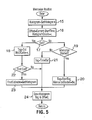
- Step 15 Upon detection of a frame matching one of the above criteria, the memorize routine shown in Figure 5 is called. At step 15, this creates a histogram for the current frame as described above and sets the variable Histogram to the histogram for the frame. Step 16 sets the variable Offset to the value of the current time - the start time of the sequence, and increments the histogram count.
- Step 17 determines whether the frame represents a cut, i.e. a change in scene. If so, the variable Tag is set to the value Cut, and the number of cuts is incremented at step 18. If not, step 19 determines whether the Memorizestarted flag is set, i.e. whether the frame represents the first frame of the sequence. If so, the variable Tag is set to StartTag, and the variable Memorizestarted is reset at step 20 since the next frame will not be the first frame of the sequence.
- variable Tag is set to timeout at step 21 since this is the only remaining possibility, namely that the memorize sequence has been started, no cut has been detected, but the timer has timed out, indicating that a frame should be analyzed and stored anyway.
- Step 22 determines whether the detected cut is the first, and if so sets the variable FirstcutIndex to the Histogram count at step 23.
- the GetHistogram routine called by step 15 is shown in Figure 4.
- the colour table is initialized if necessary.
- the colour table consists of a number of colour (hue) categories, typically 256, as well as a similar number of luminance categories.
- Step 31 determines for each value in the colour table the number of pixels whose colour lies within that value in the current frame.
- the resulting table is stored as the variable Histogram at step 15 of Figure 5.
- a typical sequence that can be memorized by an apparatus in accordance with the invention is a Sprint commercial. This has a length of 30 seconds or approximately 390 captured frames with 11 scene changes, which are either sharp or gradual cuts.
- the computer considers only 17 frames, of which 11 represent cuts, one represents the first frame, and five represent timeouts, i.e. where no cuts have been detected after a predetermined period of time.
- the signature for this sequence would contain 17 tables (histograms).
- tagged histograms according to whether they relate to frames that are Cuts, Start frames, or Time-outs, considerably enhances the efficiency of the search routine.
- Figure 5 shows the main search routine implemented by the search module 8 on an incoming video stream on line 5.
- the search may be started by operator intervention. This sets the SearchStarted flag in a similar manner to the Memorizestarted flag in Figure 2.
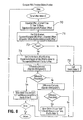
- Step 40 determines whether the Searchstarted flag has been set, which indicates the start of a new video sequence to search. If this has been set or a cut is detected or a timeout occurs in the absence of a detected cut, step 41 calls the search routine shown in Figure 6.
- Step 50 sets the variable Histogram using the routine shown in Figure 4 in a similar manner to the Memorize routine.
- the blocks generally designated 51 then decide whether the current frame represents a cut, a timeout or a Searchstarted frame, i.e. the first frame in a search sequence.
- Step 52 sets the variable FirstDifference equal to the difference between the current histogram and the first signature histogram (0), i.e. the histogram for frame zero in the signature file.
- Step 53 determines whether the frame represents a cut and the stored signature file contains at least one cut-tagged histogram. If so, block 57 sets the variable Index equal to Firstcutindex, and the variable SecondDifference equal to the result of comparing the histogram for the frame with the first cut-tagged histogram for the signature file. If not the variable Index is set to 1 in block 56 and the variable SecondDifference is set to the result of the comparison between the current histogram (Histogram) and the second histogram of the signature file (corresponding to the Index 1. The variable Index starts at 0).
- Step 54 determines whether either of the FirstDifference or Second Difference is less than a threshold. If yes, which indicates a positive match of the histogram for the current frame with the selected histogram in the signature file, the program sets the variable Position to the Index value that corresponds to the smaller of the two (FirstDifference and SecondDifference), and calls an assign slider routine (block 63), which will be described in more detail below. If not, which indicates the absence of a match, the program calls a compare with previous sliders routine at block 60. Both these routines will be described in more detail.
- the assign slider routine is shown in Figure 7.
- the slider is essentially a pointer identifying a particular frame in the signature file whose histogram matches the current or most recently matched frame in the video sequence. Each time a first match occurs, a "slider" is assigned.
- the compare sliders routine to be described below with reference to Figure 8 then attempts to match the subsequent histograms in the signature file with the current video sequence, and moves the pointer (slider) by one histogram towards the last histogram in the file whenever a match occurs.
- the system in effect builds one large file adding one table or histogram every time a scene changes (cut) or a timeout occurs. An attempt is made to fit the stored signature of the candidate sequence by "sliding" it within the large signature file until a complete match is found. This is the function of the portion of the routine generally shown in Figure 8.
- Figure 8 shows the routine for making a comparison with previous sliders.
- This routine in effect slides the candidate file within the stored signature file so as to determine whether the whole file matches the signature file. It is called by the block 60 shown in Figure 6.
- Block 70 sets the variable ExpectedOffset to the CurrentTime - the time the current slider was last moved + the offset of the signature histogram which the current slider points to.
- Block 71 looks N and M where the signature histogram offset is greater or equal, and smaller, respectively the ExpectedOffset. If no such index is found at condition step 73, the slider routine is terminated at block 72 and a determination made as to whether the current sequence matches the sequence for which the signatures are stored in the stored signature file.
- step 74 looks for a value C and F (from N and M) wherein the Offset is closer and further respectively to the ExpectedOffset set at step 70.
- the slider routine enables a complete video sequence to be matched "on the fly" with good accuracy. For example, assume a the histogram for a frame in the incoming video sequence, which is identified, for example, as a Cut, matches the first frame representing a cut in the signature file. This indicates the possibility of a sequence match, but the match could also be the result of chance. If however, the next Cut in the video sequence matches the second Cut in the signature file, the chances of a sequence match are increased, and so on until the end of the signature file is reached. If each successive Cut in a particular target sequence matches each corresponding successive Cut in the signature file, it becomes highly probable that the sequences do in fact match. Block 72 can assume a positive match if all or a predetermined number of frames within the stored signature file match the frames in the incoming sequence.
- the Clean up sliders routine called by block 64 and shown in Figure 9 removes redundant sliders on a particular histogram, retaining only the slider for which the largest number of comparisons have been performed.
- the described method permits video sequences to be matched with good accuracy in real time with the processing power available on a standard PC-based system and without having prohibitive memory requirements.
Landscapes
- Engineering & Computer Science (AREA)
- Multimedia (AREA)
- Physics & Mathematics (AREA)
- General Physics & Mathematics (AREA)
- Theoretical Computer Science (AREA)
- Signal Processing (AREA)
- Stereophonic System (AREA)
- Information Retrieval, Db Structures And Fs Structures Therefor (AREA)
- Television Signal Processing For Recording (AREA)
- Collating Specific Patterns (AREA)
- Processing Of Color Television Signals (AREA)
Claims (17)
- Verfahren zur Identifizierung von Video-Sequenzen, das aus den folgenden Schritten besteht:dadurch gekennzeichnet, daß ausgewählte Spezial-Frames eines vorgegebenen Typs in den Sequenzen identifiziert werden, eindeutige digitale Signaturen für die Spezial-Frames erstellt werden, wobei diese eindeutigen digitalen Signaturen einzig und allein von den einzelnen Charakteristiken der Spezial-Frames abhängig sind, die digitalen Signaturen der Spezial-Frames einer Sequenz in ihrer Gesamtheit eine Signaturdatei für die Sequenz bilden, und die digitalen Signaturen der Spezial-Frames mit den digitalen Signaturen der Frames des gleichen Typs in gespeicherten Signaturdateien verglichen werden, um eine in Frage kommende Sequenz zu identifizieren.Empfangen von einem ankommenden Video-Datenstrom (2), der aus einer Sequenz von aufeinanderfolgender Frames besteht;Erstellen kontinuierlicher digitaler Signaturen (7) gemäß einem vorgegebenen Algorithmus (30, 31);Vergleichen dieser digitalen Signaturen mit einer Reihe von gespeicherten digitalen Signaturen, die gemäß dem vorgegebenen Algorithmus (30, 31) erstellt werden; undIdentifizieren einer in Frage kommenden Sequenz (8) aus dem ankommenden Video-Datenstrom (2) als schon gespeicherte Sequenz, falls ihre digitalen Signaturen mit den vorgegebenen Kriterien übereinstimmen,
- Verfahren nach Anspruch 1, dadurch gekennzeichnet, daß die digitale Signatur eine Tabelle für jeden Spezial-Frame aufweist, die die Proportion von Pixelwerten in definierten Kategorien identifiziert.
- Verfahren nach Anspruch 1, dadurch gekennzeichnet, daß sich die definierten Kategorien auf Leuchtdichte und Farbton beziehen.
- Verfahren nach Anspruch 2 oder 3, dadurch gekennzeichnet, daß die Signaturdatei außerdem die Sequenzdauer umfaßt.
- Verfahren nach einem der Ansprüche 2 bis 4, dadurch gekennzeichnet, daß die Signaturdatei außerdem die Anzahl der in Betracht gezogenen Leuchtdicht- und Farbtonkategorien umfaßt.
- Verfahren nach einem der Ansprüche 2 bis 5, dadurch gekennzeichnet, daß die Signaturdatei außerdem Informationen zum Unterschied in Pixelwerten von Frame-Paaren einer Sequenz umfaßt.
- Verfahren nach einem der Ansprüche 1 bis 6, dadurch gekennzeichnet, daß die Spezial-Frames Stopp-, Start- und Zeitablauf-Frames entsprechen.
- Verfahren nach Anspruch 7, dadurch gekennzeichnet, daß - wenn eine Übereinstimmung zwischen der digitalen Signatur eines Frames in der in Frage kommenden Sequenz und der digitalen Signatur der gespeicherten Sequenz (6) identifiziert wird - der Frame in der gespeicherten Sequenz gekennzeichnet wird, sowie ein Versuch unternommen wird, jeden nachfolgenden Frame des gleichen Typs in der Zielsequenz mit dem entsprechenden Frame des gleichen Typs in der gespeicherten Sequenz zu vergleichen und so weiter, bis zum Ende der gespeicherten Sequenz, und eine Übereinstimmung der Sequenzen festgestellt wird, wenn die Anzahl der übereinstimmenden Frames in der betreffenden Sequenz einen vorgegebenen Wert überschreitet.
- Verfahren nach einem der Ansprüche 1 bis 8, dadurch gekennzeichnet, daß jedem Spezial-Frame in einer Signaturdatei, der mit einem Spezial-Frame in der in Frage kommenden Sequenz übereinstimmt, eine bewegliche Markierung zugeordnet wird, und diese Markierung um einen Spezial-Frame in Richtung zum Dateiende geschoben wird, wenn es zu einer Übereinstimmung kommt.
- Gerät (1) zur Identifizierung von Video-Sequenzen, bestehend aus:dadurch gekennzeichnet, daß die zum Erstellen kontinuierlicher digitaler Signaturen bestimmten Mittel (7) so ausgeführt sind, daß sie Spezial-Frames eines vorgegebenen Typs in den Sequenzen (6) auswählen, und außerdem so ausgeführt sind, daß sie für die Spezial-Frames eindeutige digitale Signaturen erstellen, wobei diese eindeutigen digitalen Signaturen einzig und allein von den einzelnen Charakteristiken der Spezial-Frames abhängig sind und die digitalen Signaturen der Spezial-Frames einer Sequenz in ihrer Gesamtheit eine Signaturdatei für die Sequenz bilden; und die zur Identifizierung einer in Frage kommenden Sequenz bestimmten Mittel (8) so ausgeführt sind, daß sie die digitalen Signaturen der Spezial-Frames mit den digitalen Signaturen der Frames des gleichen Typs in gespeicherten Signaturdateien vergleichen, um eine in Frage kommende Sequenz zu identifizieren.Mittel (1) zum Empfangen eines ankommenden Video-Datenstroms (2), der aus Sequenzen aufeinanderfolgender Frames besteht;Mittel (7) zum Erstellen kontinuierlicher digitaler Signaturen gemäß einem vorgegebenen Algorithmus (30, 31);Mittel (8) zum Vergleichen (40, 41) dieser digitalen Signaturen mit einer Reihe von gespeicherten digitalen Signaturen (10, 11), die gemäß dem vorgegebenen Algorithmus (30, 31) erstellt werden; undMittel (8) zum Identifizieren einer in Frage kommenden Sequenz aus dem ankommenden Video-Datenstrom (2) als schon gespeicherte Sequenz (6), falls ihre digitalen Signaturen mit den vorgegebenen Kriterien übereinstimmen,
- Gerät (1) nach Anspruch 10, das weiter einen Speicher aufweist zum Speichern einer Tabelle, die für jeden Spezial-Frame die Proportion von Pixelwerten in den definierten Kategorien identifiziert, wobei diese Tabelle eine gespeicherte digitale Signatur darstellt.
- Gerät (1) nach Anspruch 11, dadurch gekennzeichnet, daß sich die definierten Kategorien auf Leuchtdichte und Farbton beziehen.
- Gerät (1) nach Anspruch 11 oder 12, dadurch gekennzeichnet, daß die Signaturdatei außerdem die Sequenzdauer speichert.
- Gerät (1) nach einem der Ansprüche 11 bis 13, dadurch gekennzeichnet, daß die Signaturdatei außerdem die Anzahl der in Betracht gezogenen Leuchtdicht- und Farbtonkategorien speichert.
- Gerät (1) nach einem der Ansprüche 11 bis 14, dadurch gekennzeichnet, daß die Signaturdatei außerdem Informationen zum Unterschied in Pixelwerten von Frame-Paaren einer Sequenz umfaßt.
- Gerät (1) nach einem der Ansprüche 11 bis 15, dadurch gekennzeichnet, daß die Spezial-Frames Stopp-, Start- und Zeitablauf-Frames entsprechen.
- Gerät (1) nach Anspruch 16, dadurch gekennzeichnet, daß - wenn eine Übereinstimmung zwischen der digitalen Signatur eines Frames in der in Frage kommenden Sequenz und der digitalen Signatur der gespeicherten Sequenz (6) identifiziert wird - die Vergleichsmittel (8) so ausgeführt sind, daß sie den Frame in der gespeicherten Sequenz kennzeichnen und ein Versuch unternommen wird, jeden nachfolgenden Frame des gleichen Typs in der Zielsequenz mit dem entsprechenden Frame des gleichen Typs in der gespeicherten Sequenz zu vergleichen und so weiter, bis zum Ende der gespeicherten Sequenz, wobei die Identifizierungsmittel (8) so ausgeführt sind, daß sie eine Übereinstimmung der Sequenzen feststellen, wenn die Anzahl der übereinstimmenden Frames in der betreffenden Sequenz einen vorgegebenen Wert überschreitet.
Applications Claiming Priority (3)
| Application Number | Priority Date | Filing Date | Title |
|---|---|---|---|
| CA2196930 | 1997-02-06 | ||
| CA002196930A CA2196930C (en) | 1997-02-06 | 1997-02-06 | Video sequence recognition |
| PCT/CA1998/000069 WO1998035492A2 (en) | 1997-02-06 | 1998-02-05 | Method and apparatus for recognising video sequences |
Publications (2)
| Publication Number | Publication Date |
|---|---|
| EP0958699A2 EP0958699A2 (de) | 1999-11-24 |
| EP0958699B1 true EP0958699B1 (de) | 2003-04-23 |
Family
ID=4159847
Family Applications (1)
| Application Number | Title | Priority Date | Filing Date |
|---|---|---|---|
| EP98901906A Expired - Lifetime EP0958699B1 (de) | 1997-02-06 | 1998-02-05 | Erkennung von videosequenzen |
Country Status (6)
| Country | Link |
|---|---|
| US (1) | US6633651B1 (de) |
| EP (1) | EP0958699B1 (de) |
| AU (1) | AU5850698A (de) |
| CA (1) | CA2196930C (de) |
| DE (1) | DE69813777T2 (de) |
| WO (1) | WO1998035492A2 (de) |
Families Citing this family (66)
| Publication number | Priority date | Publication date | Assignee | Title |
|---|---|---|---|---|
| US20030131350A1 (en) | 2002-01-08 | 2003-07-10 | Peiffer John C. | Method and apparatus for identifying a digital audio signal |
| US7461392B2 (en) * | 2002-07-01 | 2008-12-02 | Microsoft Corporation | System and method for identifying and segmenting repeating media objects embedded in a stream |
| WO2004004351A1 (en) * | 2002-07-01 | 2004-01-08 | Microsoft Corporation | A system and method for providing user control over repeating objects embedded in a stream |
| AU2003288643A1 (en) * | 2003-01-06 | 2004-07-29 | Koninklijke Philips Electronics N.V. | Method and apparatus for similar video content hopping |
| US20040153647A1 (en) * | 2003-01-31 | 2004-08-05 | Rotholtz Ben Aaron | Method and process for transmitting video content |
| US20040194130A1 (en) * | 2003-03-07 | 2004-09-30 | Richard Konig | Method and system for advertisement detection and subsitution |
| US7738704B2 (en) * | 2003-03-07 | 2010-06-15 | Technology, Patents And Licensing, Inc. | Detecting known video entities utilizing fingerprints |
| US7694318B2 (en) * | 2003-03-07 | 2010-04-06 | Technology, Patents & Licensing, Inc. | Video detection and insertion |
| US7809154B2 (en) | 2003-03-07 | 2010-10-05 | Technology, Patents & Licensing, Inc. | Video entity recognition in compressed digital video streams |
| US20050149968A1 (en) * | 2003-03-07 | 2005-07-07 | Richard Konig | Ending advertisement insertion |
| MXPA05014162A (es) * | 2003-06-20 | 2006-03-13 | Nielsen Media Res Inc | Aparato y metodos de identificacion de programa a base de firma para uso con sistemas de difusion digital. |
| CA2540575C (en) | 2003-09-12 | 2013-12-17 | Kevin Deng | Digital video signature apparatus and methods for use with video program identification systems |
| WO2005079941A1 (en) | 2004-02-17 | 2005-09-01 | Nielsen Media Research, Inc. Et Al. | Methods and apparatus for monitoring video games |
| US20060015891A1 (en) * | 2004-07-13 | 2006-01-19 | Lazzaro Michael J | Television audience reporting system and method |
| CN101077014B (zh) | 2004-08-09 | 2013-09-25 | 尼尔森(美国)有限公司 | 用于监视来自各种源的音频/视觉内容的方法及装置 |
| CN100592789C (zh) | 2004-08-12 | 2010-02-24 | 皇家飞利浦电子股份有限公司 | 从视频或音频数据流选择内容 |
| MX2007002071A (es) * | 2004-08-18 | 2007-04-24 | Nielsen Media Res Inc | Metodos y aparatos para generar firmas. |
| US7623823B2 (en) * | 2004-08-31 | 2009-11-24 | Integrated Media Measurement, Inc. | Detecting and measuring exposure to media content items |
| US20060085812A1 (en) * | 2004-10-15 | 2006-04-20 | Shishegar Ahmad R | Method for monitoring television usage |
| US7826708B2 (en) * | 2004-11-02 | 2010-11-02 | Microsoft Corporation | System and method for automatically customizing a buffered media stream |
| US20060224798A1 (en) * | 2005-02-22 | 2006-10-05 | Klein Mark D | Personal music preference determination based on listening behavior |
| US20060195860A1 (en) * | 2005-02-25 | 2006-08-31 | Eldering Charles A | Acting on known video entities detected utilizing fingerprinting |
| GB2423882A (en) * | 2005-03-01 | 2006-09-06 | Half Minute Media Ltd | Acting on known video entities detected utilizing fingerprinting |
| GB2423881B (en) * | 2005-03-01 | 2011-03-09 | Half Minute Media Ltd | Detecting known video entities taking into account regions of disinterest |
| US20060242667A1 (en) * | 2005-04-22 | 2006-10-26 | Petersen Erin L | Ad monitoring and indication |
| US7690011B2 (en) | 2005-05-02 | 2010-03-30 | Technology, Patents & Licensing, Inc. | Video stream modification to defeat detection |
| US20070016918A1 (en) * | 2005-05-20 | 2007-01-18 | Alcorn Allan E | Detecting and tracking advertisements |
| US20060271947A1 (en) * | 2005-05-23 | 2006-11-30 | Lienhart Rainer W | Creating fingerprints |
| EP1961210A1 (de) * | 2005-12-15 | 2008-08-27 | Analog Devices, Inc. | Rsvp-algorithmus zur szenenwechselerkennung |
| US8019162B2 (en) * | 2006-06-20 | 2011-09-13 | The Nielsen Company (Us), Llc | Methods and apparatus for detecting on-screen media sources |
| US8260713B2 (en) * | 2006-08-23 | 2012-09-04 | Royaltyshare, Inc. | Web-based system providing royalty processing and reporting services |
| US8424049B2 (en) * | 2006-08-25 | 2013-04-16 | Verizon Laboratories Inc. | Measurement of video quality at customer premises |
| US10885543B1 (en) | 2006-12-29 | 2021-01-05 | The Nielsen Company (Us), Llc | Systems and methods to pre-scale media content to facilitate audience measurement |
| US10489795B2 (en) * | 2007-04-23 | 2019-11-26 | The Nielsen Company (Us), Llc | Determining relative effectiveness of media content items |
| JP4420085B2 (ja) * | 2007-08-20 | 2010-02-24 | ソニー株式会社 | データ処理装置、データ処理方法、プログラムおよび記録媒体 |
| JP4428424B2 (ja) * | 2007-08-20 | 2010-03-10 | ソニー株式会社 | 情報処理装置、情報処理方法、プログラムおよび記録媒体 |
| GB2457694B (en) * | 2008-02-21 | 2012-09-26 | Snell Ltd | Method of Deriving an Audio-Visual Signature |
| US20090307061A1 (en) * | 2008-06-10 | 2009-12-10 | Integrated Media Measurement, Inc. | Measuring Exposure To Media |
| US20090307084A1 (en) * | 2008-06-10 | 2009-12-10 | Integrated Media Measurement, Inc. | Measuring Exposure To Media Across Multiple Media Delivery Mechanisms |
| US8411752B2 (en) * | 2008-10-29 | 2013-04-02 | Nds Limited | Video signature |
| US20110302598A1 (en) * | 2010-06-04 | 2011-12-08 | David Lundgren | Method and system for content filtering in a broadband gateway |
| US20110067066A1 (en) | 2009-09-14 | 2011-03-17 | Barton James M | Multifunction Multimedia Device |
| US20110137976A1 (en) * | 2009-12-04 | 2011-06-09 | Bob Poniatowski | Multifunction Multimedia Device |
| US8682145B2 (en) * | 2009-12-04 | 2014-03-25 | Tivo Inc. | Recording system based on multimedia content fingerprints |
| US8433142B2 (en) | 2010-04-05 | 2013-04-30 | The Nielsen Company (Us), Llc | Methods and apparatus to detect differences between images |
| US9026034B2 (en) | 2010-05-04 | 2015-05-05 | Project Oda, Inc. | Automatic detection of broadcast programming |
| US20120060116A1 (en) * | 2010-09-08 | 2012-03-08 | Microsoft Corporation | Content signaturing user interface |
| US8984577B2 (en) * | 2010-09-08 | 2015-03-17 | Microsoft Technology Licensing, Llc | Content signaturing |
| CN102611932B (zh) * | 2011-01-25 | 2014-09-17 | 国基电子(上海)有限公司 | 机顶盒及其录制电视节目的方法 |
| EP2735141A4 (de) | 2011-07-18 | 2015-03-04 | Viggle Inc | System und verfahren zur verfolgung und belohnung einer medien- und unterhaltungsmittelverwendung mit praktisch in echtzeit erfolgenden belohnungen |
| US8908903B2 (en) | 2011-08-31 | 2014-12-09 | The Nielsen Company (Us), Llc | Image recognition to support shelf auditing for consumer research |
| US8737745B2 (en) | 2012-03-27 | 2014-05-27 | The Nielsen Company (Us), Llc | Scene-based people metering for audience measurement |
| US9185456B2 (en) | 2012-03-27 | 2015-11-10 | The Nielsen Company (Us), Llc | Hybrid active and passive people metering for audience measurement |
| US9918141B2 (en) * | 2015-08-05 | 2018-03-13 | Surewaves Mediatech Private Limited | System and method for monitoring and detecting television ads in real-time using content databases (ADEX reporter) |
| US9900636B2 (en) * | 2015-08-14 | 2018-02-20 | The Nielsen Company (Us), Llc | Reducing signature matching uncertainty in media monitoring systems |
| US10452707B2 (en) | 2015-08-31 | 2019-10-22 | The Nielsen Company (Us), Llc | Product auditing in point-of-sale images |
| US10366404B2 (en) | 2015-09-10 | 2019-07-30 | The Nielsen Company (Us), Llc | Methods and apparatus to group advertisements by advertisement campaign |
| EP3357019A4 (de) | 2015-09-30 | 2019-03-27 | The Nielsen Company (US), LLC. | Interaktives produktaudit mit einer mobilen vorrichtung |
| US11204991B1 (en) | 2015-10-29 | 2021-12-21 | Omnivu, Inc. | Identity verification system and method for gathering, identifying, authenticating, registering, monitoring, tracking, analyzing, storing, and commercially distributing dynamic markers and personal data via electronic means |
| US10785329B2 (en) | 2017-01-05 | 2020-09-22 | The Nielsen Company (Us), Llc | Methods and apparatus to facilitate meter to meter matching for media identification |
| US11023618B2 (en) * | 2018-08-21 | 2021-06-01 | Paypal, Inc. | Systems and methods for detecting modifications in a video clip |
| US10911824B2 (en) * | 2018-11-05 | 2021-02-02 | The Nielsen Company (Us), Llc | Methods and apparatus to generate reference signatures |
| US11695975B1 (en) | 2020-03-07 | 2023-07-04 | Stephen G. Giraud | System and method for live web camera feed and streaming transmission with definitive online identity verification for prevention of synthetic video and photographic images |
| CN112423021B (zh) * | 2020-11-18 | 2022-12-06 | 北京有竹居网络技术有限公司 | 视频的处理方法、装置、可读介质和电子设备 |
| US11935300B2 (en) * | 2021-11-05 | 2024-03-19 | Netflix, Inc. | Techniques for generating candidate match cuts |
| CN115736898B (zh) * | 2022-10-25 | 2026-01-02 | 南京理工大学 | 一种融合深度相机与惯性传感器的步态分析方法及系统 |
Family Cites Families (6)
| Publication number | Priority date | Publication date | Assignee | Title |
|---|---|---|---|---|
| US4230990C1 (en) * | 1979-03-16 | 2002-04-09 | John G Lert Jr | Broadcast program identification method and system |
| US4697209A (en) * | 1984-04-26 | 1987-09-29 | A. C. Nielsen Company | Methods and apparatus for automatically identifying programs viewed or recorded |
| US4739398A (en) * | 1986-05-02 | 1988-04-19 | Control Data Corporation | Method, apparatus and system for recognizing broadcast segments |
| US5019899A (en) * | 1988-11-01 | 1991-05-28 | Control Data Corporation | Electronic data encoding and recognition system |
| US5436653A (en) * | 1992-04-30 | 1995-07-25 | The Arbitron Company | Method and system for recognition of broadcast segments |
| US5404160A (en) * | 1993-06-24 | 1995-04-04 | Berkeley Varitronics Systems, Inc. | System and method for identifying a television program |
-
1997
- 1997-02-06 CA CA002196930A patent/CA2196930C/en not_active Expired - Lifetime
-
1998
- 1998-02-05 AU AU58506/98A patent/AU5850698A/en not_active Abandoned
- 1998-02-05 WO PCT/CA1998/000069 patent/WO1998035492A2/en not_active Ceased
- 1998-02-05 US US09/341,980 patent/US6633651B1/en not_active Expired - Lifetime
- 1998-02-05 EP EP98901906A patent/EP0958699B1/de not_active Expired - Lifetime
- 1998-02-05 DE DE69813777T patent/DE69813777T2/de not_active Expired - Fee Related
Also Published As
| Publication number | Publication date |
|---|---|
| EP0958699A2 (de) | 1999-11-24 |
| CA2196930A1 (en) | 1998-08-06 |
| WO1998035492A2 (en) | 1998-08-13 |
| WO1998035492A3 (en) | 1998-10-22 |
| US6633651B1 (en) | 2003-10-14 |
| DE69813777T2 (de) | 2004-01-29 |
| CA2196930C (en) | 2005-06-21 |
| AU5850698A (en) | 1998-08-26 |
| DE69813777D1 (de) | 2003-05-28 |
Similar Documents
| Publication | Publication Date | Title |
|---|---|---|
| EP0958699B1 (de) | Erkennung von videosequenzen | |
| WO1998035492A9 (en) | Method and apparatus for recognising video sequences | |
| Boreczky et al. | Comparison of video shot boundary detection techniques | |
| EP2164044B1 (de) | Verfahren und Vorrichtung zur Darstellung einer Gruppe von Bildern | |
| US6061471A (en) | Method and system for detecting uniform images in video signal | |
| AU747044B2 (en) | Method and system for recognition of broadcast segments | |
| US5778108A (en) | Method and system for detecting transitional markers such as uniform fields in a video signal | |
| EP0756426B1 (de) | Verfahren und Vorrichtung zum Extrahieren spezifischer Bildinformation zum Erzeugen von Videoinformation | |
| US5959697A (en) | Method and system for detecting dissolve transitions in a video signal | |
| US5801765A (en) | Scene-change detection method that distinguishes between gradual and sudden scene changes | |
| US8525935B2 (en) | Moving image processing apparatus and method, and computer readable memory | |
| US6055025A (en) | Method and apparatus for detecting abrupt and gradual scene changes in image sequences | |
| US5767923A (en) | Method and system for detecting cuts in a video signal | |
| EP0690413A2 (de) | System zur automatischen Lokalisierung von Videosegmentübergängen und zum Extrahieren von Schlüssel-Einzelbildern | |
| US7639873B2 (en) | Robust shot detection in a video | |
| US20030091235A1 (en) | Shot boundary detection | |
| Gauch et al. | Identification of new commercials using repeated video sequence detection | |
| US6434320B1 (en) | Method of searching recorded digital video for areas of activity | |
| US20200342023A1 (en) | Hash-based media search | |
| EP0940033B1 (de) | Verfahren zur verarbeitung eines videostroms | |
| US6678393B1 (en) | Image selection based on image content | |
| US7880815B2 (en) | Method for detecting and eliminating flash scene in digital video | |
| US20030202692A1 (en) | Method and system for processing images using histograms | |
| US5734735A (en) | Method and system for detecting the type of production media used to produce a video signal | |
| WO1998035495A2 (en) | Multichannel television sound stereo and surround sound encoder |
Legal Events
| Date | Code | Title | Description |
|---|---|---|---|
| PUAI | Public reference made under article 153(3) epc to a published international application that has entered the european phase |
Free format text: ORIGINAL CODE: 0009012 |
|
| 17P | Request for examination filed |
Effective date: 19990806 |
|
| AK | Designated contracting states |
Kind code of ref document: A2 Designated state(s): DE FR GB |
|
| 17Q | First examination report despatched |
Effective date: 20010529 |
|
| GRAH | Despatch of communication of intention to grant a patent |
Free format text: ORIGINAL CODE: EPIDOS IGRA |
|
| RTI1 | Title (correction) |
Free format text: VIDEO SEQUENCE RECOGNITION |
|
| RAP1 | Party data changed (applicant data changed or rights of an application transferred) |
Owner name: MARCH NETWORKS CORPORATION |
|
| GRAH | Despatch of communication of intention to grant a patent |
Free format text: ORIGINAL CODE: EPIDOS IGRA |
|
| GRAA | (expected) grant |
Free format text: ORIGINAL CODE: 0009210 |
|
| AK | Designated contracting states |
Designated state(s): DE FR GB |
|
| REG | Reference to a national code |
Ref country code: GB Ref legal event code: FG4D |
|
| REF | Corresponds to: |
Ref document number: 69813777 Country of ref document: DE Date of ref document: 20030528 Kind code of ref document: P |
|
| PG25 | Lapsed in a contracting state [announced via postgrant information from national office to epo] |
Ref country code: GB Free format text: LAPSE BECAUSE OF NON-PAYMENT OF DUE FEES Effective date: 20040205 |
|
| ET | Fr: translation filed | ||
| PLBE | No opposition filed within time limit |
Free format text: ORIGINAL CODE: 0009261 |
|
| STAA | Information on the status of an ep patent application or granted ep patent |
Free format text: STATUS: NO OPPOSITION FILED WITHIN TIME LIMIT |
|
| 26N | No opposition filed |
Effective date: 20040126 |
|
| PG25 | Lapsed in a contracting state [announced via postgrant information from national office to epo] |
Ref country code: DE Free format text: LAPSE BECAUSE OF NON-PAYMENT OF DUE FEES Effective date: 20040901 |
|
| GBPC | Gb: european patent ceased through non-payment of renewal fee |
Effective date: 20040205 |
|
| PG25 | Lapsed in a contracting state [announced via postgrant information from national office to epo] |
Ref country code: FR Free format text: LAPSE BECAUSE OF NON-PAYMENT OF DUE FEES Effective date: 20041029 |
|
| REG | Reference to a national code |
Ref country code: FR Ref legal event code: ST |