EP0956031B1 - Inhibition of 26 s and 20 s proteasome by indanones - Google Patents
Inhibition of 26 s and 20 s proteasome by indanones Download PDFInfo
- Publication number
- EP0956031B1 EP0956031B1 EP97943499A EP97943499A EP0956031B1 EP 0956031 B1 EP0956031 B1 EP 0956031B1 EP 97943499 A EP97943499 A EP 97943499A EP 97943499 A EP97943499 A EP 97943499A EP 0956031 B1 EP0956031 B1 EP 0956031B1
- Authority
- EP
- European Patent Office
- Prior art keywords
- meo
- leu
- group
- compound
- substituted
- Prior art date
- Legal status (The legal status is an assumption and is not a legal conclusion. Google has not performed a legal analysis and makes no representation as to the accuracy of the status listed.)
- Expired - Lifetime
Links
- QNXSIUBBGPHDDE-UHFFFAOYSA-N indan-1-one Chemical class C1=CC=C2C(=O)CCC2=C1 QNXSIUBBGPHDDE-UHFFFAOYSA-N 0.000 title abstract description 3
- 108090000708 Proteasome Endopeptidase Complex Proteins 0.000 title description 22
- 102000004245 Proteasome Endopeptidase Complex Human genes 0.000 title description 22
- 230000005764 inhibitory process Effects 0.000 title description 5
- 108010022579 ATP dependent 26S protease Proteins 0.000 title description 3
- 241000124008 Mammalia Species 0.000 claims abstract description 9
- 208000035269 cancer or benign tumor Diseases 0.000 claims abstract description 8
- 150000001875 compounds Chemical class 0.000 claims description 63
- ROHFNLRQFUQHCH-YFKPBYRVSA-N L-leucine Chemical compound CC(C)C[C@H](N)C(O)=O ROHFNLRQFUQHCH-YFKPBYRVSA-N 0.000 claims description 62
- 125000003118 aryl group Chemical group 0.000 claims description 34
- BEBCJVAWIBVWNZ-UHFFFAOYSA-N glycinamide Chemical compound NCC(N)=O BEBCJVAWIBVWNZ-UHFFFAOYSA-N 0.000 claims description 27
- 208000037265 diseases, disorders, signs and symptoms Diseases 0.000 claims description 23
- 125000003107 substituted aryl group Chemical group 0.000 claims description 17
- 201000010099 disease Diseases 0.000 claims description 15
- 229910052739 hydrogen Inorganic materials 0.000 claims description 15
- 239000001257 hydrogen Substances 0.000 claims description 15
- 229960003136 leucine Drugs 0.000 claims description 14
- 150000002431 hydrogen Chemical class 0.000 claims description 11
- 125000000008 (C1-C10) alkyl group Chemical group 0.000 claims description 8
- 208000035473 Communicable disease Diseases 0.000 claims description 7
- 208000026278 immune system disease Diseases 0.000 claims description 7
- 206010028980 Neoplasm Diseases 0.000 claims description 6
- 125000000539 amino acid group Chemical group 0.000 claims description 6
- 230000006907 apoptotic process Effects 0.000 claims description 6
- 125000001797 benzyl group Chemical group [H]C1=C([H])C([H])=C(C([H])=C1[H])C([H])([H])* 0.000 claims description 6
- WGQKYBSKWIADBV-UHFFFAOYSA-N benzylamine Chemical compound NCC1=CC=CC=C1 WGQKYBSKWIADBV-UHFFFAOYSA-N 0.000 claims description 6
- 201000011510 cancer Diseases 0.000 claims description 6
- 206010052779 Transplant rejections Diseases 0.000 claims description 5
- 206010025135 lupus erythematosus Diseases 0.000 claims description 5
- 201000006417 multiple sclerosis Diseases 0.000 claims description 5
- 239000008194 pharmaceutical composition Substances 0.000 claims description 5
- 208000037803 restenosis Diseases 0.000 claims description 5
- 206010001052 Acute respiratory distress syndrome Diseases 0.000 claims description 4
- ROHFNLRQFUQHCH-RXMQYKEDSA-N D-leucine Chemical compound CC(C)C[C@@H](N)C(O)=O ROHFNLRQFUQHCH-RXMQYKEDSA-N 0.000 claims description 4
- 208000031888 Mycoses Diseases 0.000 claims description 4
- 201000000028 adult respiratory distress syndrome Diseases 0.000 claims description 4
- 238000002360 preparation method Methods 0.000 claims description 4
- 206010039073 rheumatoid arthritis Diseases 0.000 claims description 4
- PQCUDKMMPTXMAL-UHFFFAOYSA-N (2,6-difluorophenyl)methanamine Chemical compound NCC1=C(F)C=CC=C1F PQCUDKMMPTXMAL-UHFFFAOYSA-N 0.000 claims description 3
- 208000030507 AIDS Diseases 0.000 claims description 3
- 208000023275 Autoimmune disease Diseases 0.000 claims description 3
- 229930182819 D-leucine Natural products 0.000 claims description 3
- BWLUMTFWVZZZND-UHFFFAOYSA-N Dibenzylamine Chemical compound C=1C=CC=CC=1CNCC1=CC=CC=C1 BWLUMTFWVZZZND-UHFFFAOYSA-N 0.000 claims description 3
- 201000005569 Gout Diseases 0.000 claims description 3
- UFHFLCQGNIYNRP-UHFFFAOYSA-N Hydrogen Chemical compound [H][H] UFHFLCQGNIYNRP-UHFFFAOYSA-N 0.000 claims description 3
- 201000004681 Psoriasis Diseases 0.000 claims description 3
- 206010067584 Type 1 diabetes mellitus Diseases 0.000 claims description 3
- 125000000956 methoxy group Chemical group [H]C([H])([H])O* 0.000 claims description 3
- 229960005235 piperonyl butoxide Drugs 0.000 claims description 3
- 208000030761 polycystic kidney disease Diseases 0.000 claims description 3
- 208000011231 Crohn disease Diseases 0.000 claims description 2
- 208000022559 Inflammatory bowel disease Diseases 0.000 claims description 2
- 239000004395 L-leucine Substances 0.000 claims description 2
- 235000019454 L-leucine Nutrition 0.000 claims description 2
- 208000002551 irritable bowel syndrome Diseases 0.000 claims description 2
- 125000002496 methyl group Chemical group [H]C([H])([H])* 0.000 claims description 2
- 125000001997 phenyl group Chemical group [H]C1=C([H])C([H])=C(*)C([H])=C1[H] 0.000 claims description 2
- 125000004591 piperonyl group Chemical group C(C1=CC=2OCOC2C=C1)* 0.000 claims description 2
- 125000006508 2,6-difluorobenzyl group Chemical group [H]C1=C([H])C(F)=C(C(F)=C1[H])C([H])([H])* 0.000 claims 2
- 208000015181 infectious disease Diseases 0.000 claims 2
- 125000000094 2-phenylethyl group Chemical group [H]C1=C([H])C([H])=C(C([H])=C1[H])C([H])([H])C([H])([H])* 0.000 claims 1
- 125000004217 4-methoxybenzyl group Chemical group [H]C1=C([H])C(=C([H])C([H])=C1OC([H])([H])[H])C([H])([H])* 0.000 claims 1
- GAWIXWVDTYZWAW-UHFFFAOYSA-N C[CH]O Chemical group C[CH]O GAWIXWVDTYZWAW-UHFFFAOYSA-N 0.000 claims 1
- 125000005073 adamantyl group Chemical group C12(CC3CC(CC(C1)C3)C2)* 0.000 claims 1
- 125000004210 cyclohexylmethyl group Chemical group [H]C([H])(*)C1([H])C([H])([H])C([H])([H])C([H])([H])C([H])([H])C1([H])[H] 0.000 claims 1
- 125000004435 hydrogen atom Chemical group [H]* 0.000 claims 1
- 125000004129 indan-1-yl group Chemical group [H]C1=C([H])C([H])=C2C(=C1[H])C([H])([H])C([H])([H])C2([H])* 0.000 claims 1
- 125000006503 p-nitrobenzyl group Chemical group [H]C1=C([H])C(=C([H])C([H])=C1[N+]([O-])=O)C([H])([H])* 0.000 claims 1
- 230000002401 inhibitory effect Effects 0.000 abstract description 12
- 239000000203 mixture Substances 0.000 abstract description 6
- 125000000217 alkyl group Chemical group 0.000 description 48
- 125000001072 heteroaryl group Chemical group 0.000 description 40
- 210000004027 cell Anatomy 0.000 description 27
- 125000004414 alkyl thio group Chemical group 0.000 description 19
- 108090000623 proteins and genes Proteins 0.000 description 19
- 235000018102 proteins Nutrition 0.000 description 18
- 102000004169 proteins and genes Human genes 0.000 description 18
- 102100023050 Nuclear factor NF-kappa-B p105 subunit Human genes 0.000 description 17
- 125000000623 heterocyclic group Chemical group 0.000 description 15
- 229910052736 halogen Inorganic materials 0.000 description 14
- 150000002367 halogens Chemical class 0.000 description 14
- 230000002797 proteolythic effect Effects 0.000 description 14
- ROHFNLRQFUQHCH-UHFFFAOYSA-N Leucine Natural products CC(C)CC(N)C(O)=O ROHFNLRQFUQHCH-UHFFFAOYSA-N 0.000 description 11
- 125000003545 alkoxy group Chemical group 0.000 description 11
- 125000004104 aryloxy group Chemical group 0.000 description 11
- 230000015556 catabolic process Effects 0.000 description 11
- 238000006731 degradation reaction Methods 0.000 description 11
- 239000002158 endotoxin Substances 0.000 description 11
- 229920006008 lipopolysaccharide Polymers 0.000 description 11
- 125000002924 primary amino group Chemical group [H]N([H])* 0.000 description 11
- 150000003573 thiols Chemical class 0.000 description 11
- 125000003178 carboxy group Chemical group [H]OC(*)=O 0.000 description 10
- 125000004093 cyano group Chemical group *C#N 0.000 description 10
- 108010057466 NF-kappa B Proteins 0.000 description 9
- 102000003945 NF-kappa B Human genes 0.000 description 9
- -1 alkyl alkynyl Chemical group 0.000 description 9
- 125000003368 amide group Chemical group 0.000 description 9
- 229940024606 amino acid Drugs 0.000 description 9
- 235000001014 amino acid Nutrition 0.000 description 9
- 150000001413 amino acids Chemical class 0.000 description 9
- 125000000753 cycloalkyl group Chemical group 0.000 description 9
- 125000000449 nitro group Chemical group [O-][N+](*)=O 0.000 description 9
- 108090000848 Ubiquitin Proteins 0.000 description 8
- 102000044159 Ubiquitin Human genes 0.000 description 8
- 125000002252 acyl group Chemical group 0.000 description 8
- 230000004663 cell proliferation Effects 0.000 description 8
- 208000035475 disorder Diseases 0.000 description 8
- 125000002887 hydroxy group Chemical group [H]O* 0.000 description 8
- 239000003112 inhibitor Substances 0.000 description 7
- 108090000765 processed proteins & peptides Proteins 0.000 description 7
- 239000000758 substrate Substances 0.000 description 7
- 125000002023 trifluoromethyl group Chemical group FC(F)(F)* 0.000 description 7
- OKKJLVBELUTLKV-UHFFFAOYSA-N Methanol Chemical compound OC OKKJLVBELUTLKV-UHFFFAOYSA-N 0.000 description 6
- 229940079156 Proteasome inhibitor Drugs 0.000 description 6
- 125000003710 aryl alkyl group Chemical group 0.000 description 6
- 230000000694 effects Effects 0.000 description 6
- 238000000034 method Methods 0.000 description 6
- 238000012545 processing Methods 0.000 description 6
- 230000002062 proliferating effect Effects 0.000 description 6
- 239000003207 proteasome inhibitor Substances 0.000 description 6
- 230000017854 proteolysis Effects 0.000 description 6
- 235000002639 sodium chloride Nutrition 0.000 description 6
- 239000000243 solution Substances 0.000 description 6
- 238000003556 assay Methods 0.000 description 5
- 230000006663 ubiquitin-proteasome pathway Effects 0.000 description 5
- FORGMRSGVSYZQR-YFKPBYRVSA-N L-leucinamide Chemical compound CC(C)C[C@H](N)C(N)=O FORGMRSGVSYZQR-YFKPBYRVSA-N 0.000 description 4
- DAQAKHDKYAWHCG-UHFFFAOYSA-N Lactacystin Natural products CC(=O)NC(C(O)=O)CSC(=O)C1(C(O)C(C)C)NC(=O)C(C)C1O DAQAKHDKYAWHCG-UHFFFAOYSA-N 0.000 description 4
- YNAVUWVOSKDBBP-UHFFFAOYSA-N Morpholine Chemical compound C1COCCN1 YNAVUWVOSKDBBP-UHFFFAOYSA-N 0.000 description 4
- NQRYJNQNLNOLGT-UHFFFAOYSA-N Piperidine Chemical compound C1CCNCC1 NQRYJNQNLNOLGT-UHFFFAOYSA-N 0.000 description 4
- FAPWRFPIFSIZLT-UHFFFAOYSA-M Sodium chloride Chemical compound [Na+].[Cl-] FAPWRFPIFSIZLT-UHFFFAOYSA-M 0.000 description 4
- 230000002159 abnormal effect Effects 0.000 description 4
- 238000009739 binding Methods 0.000 description 4
- 125000004432 carbon atom Chemical group C* 0.000 description 4
- 230000032823 cell division Effects 0.000 description 4
- 238000006243 chemical reaction Methods 0.000 description 4
- 239000000284 extract Substances 0.000 description 4
- 230000006870 function Effects 0.000 description 4
- DAQAKHDKYAWHCG-RWTHQLGUSA-N lactacystin Chemical compound CC(=O)N[C@H](C(O)=O)CSC(=O)[C@]1([C@@H](O)C(C)C)NC(=O)[C@H](C)[C@@H]1O DAQAKHDKYAWHCG-RWTHQLGUSA-N 0.000 description 4
- 230000034190 positive regulation of NF-kappaB transcription factor activity Effects 0.000 description 4
- 239000011347 resin Substances 0.000 description 4
- 229920005989 resin Polymers 0.000 description 4
- 150000003839 salts Chemical class 0.000 description 4
- 239000007787 solid Substances 0.000 description 4
- 238000012360 testing method Methods 0.000 description 4
- XJEVHMGJSYVQBQ-UHFFFAOYSA-N 2,3-dihydro-1h-inden-1-amine Chemical compound C1=CC=C2C(N)CCC2=C1 XJEVHMGJSYVQBQ-UHFFFAOYSA-N 0.000 description 3
- YEDUAINPPJYDJZ-UHFFFAOYSA-N 2-hydroxybenzothiazole Chemical compound C1=CC=C2SC(O)=NC2=C1 YEDUAINPPJYDJZ-UHFFFAOYSA-N 0.000 description 3
- 241000203069 Archaea Species 0.000 description 3
- 208000024172 Cardiovascular disease Diseases 0.000 description 3
- 102100025566 Chymotrypsin-like protease CTRL-1 Human genes 0.000 description 3
- 102000016736 Cyclin Human genes 0.000 description 3
- 108050006400 Cyclin Proteins 0.000 description 3
- 230000005778 DNA damage Effects 0.000 description 3
- 231100000277 DNA damage Toxicity 0.000 description 3
- ROSDSFDQCJNGOL-UHFFFAOYSA-N Dimethylamine Chemical compound CNC ROSDSFDQCJNGOL-UHFFFAOYSA-N 0.000 description 3
- LFQSCWFLJHTTHZ-UHFFFAOYSA-N Ethanol Chemical compound CCO LFQSCWFLJHTTHZ-UHFFFAOYSA-N 0.000 description 3
- 206010017533 Fungal infection Diseases 0.000 description 3
- DHMQDGOQFOQNFH-UHFFFAOYSA-N Glycine Chemical compound NCC(O)=O DHMQDGOQFOQNFH-UHFFFAOYSA-N 0.000 description 3
- 241000282412 Homo Species 0.000 description 3
- 101000856199 Homo sapiens Chymotrypsin-like protease CTRL-1 Proteins 0.000 description 3
- COLNVLDHVKWLRT-QMMMGPOBSA-N L-phenylalanine Chemical compound OC(=O)[C@@H](N)CC1=CC=CC=C1 COLNVLDHVKWLRT-QMMMGPOBSA-N 0.000 description 3
- RWRDLPDLKQPQOW-UHFFFAOYSA-N Pyrrolidine Chemical compound C1CCNC1 RWRDLPDLKQPQOW-UHFFFAOYSA-N 0.000 description 3
- 208000013616 Respiratory Distress Syndrome Diseases 0.000 description 3
- 239000002253 acid Substances 0.000 description 3
- 230000001154 acute effect Effects 0.000 description 3
- 150000001718 carbodiimides Chemical class 0.000 description 3
- 239000000969 carrier Substances 0.000 description 3
- 150000001768 cations Chemical class 0.000 description 3
- 230000022131 cell cycle Effects 0.000 description 3
- 239000003153 chemical reaction reagent Substances 0.000 description 3
- 238000003776 cleavage reaction Methods 0.000 description 3
- 239000000499 gel Substances 0.000 description 3
- 125000004404 heteroalkyl group Chemical group 0.000 description 3
- 125000004446 heteroarylalkyl group Chemical group 0.000 description 3
- NPZTUJOABDZTLV-UHFFFAOYSA-N hydroxybenzotriazole Substances O=C1C=CC=C2NNN=C12 NPZTUJOABDZTLV-UHFFFAOYSA-N 0.000 description 3
- 239000007788 liquid Substances 0.000 description 3
- 230000003389 potentiating effect Effects 0.000 description 3
- 239000002243 precursor Substances 0.000 description 3
- 102000004196 processed proteins & peptides Human genes 0.000 description 3
- 125000006239 protecting group Chemical group 0.000 description 3
- 230000001105 regulatory effect Effects 0.000 description 3
- 230000007017 scission Effects 0.000 description 3
- 125000005346 substituted cycloalkyl group Chemical group 0.000 description 3
- 239000006188 syrup Substances 0.000 description 3
- 235000020357 syrup Nutrition 0.000 description 3
- XLYOFNOQVPJJNP-UHFFFAOYSA-N water Substances O XLYOFNOQVPJJNP-UHFFFAOYSA-N 0.000 description 3
- 238000001262 western blot Methods 0.000 description 3
- MTCFGRXMJLQNBG-REOHCLBHSA-N (2S)-2-Amino-3-hydroxypropansäure Chemical compound OC[C@H](N)C(O)=O MTCFGRXMJLQNBG-REOHCLBHSA-N 0.000 description 2
- ZILSBZLQGRBMOR-UHFFFAOYSA-N 1,3-benzodioxol-5-ylmethanamine Chemical compound NCC1=CC=C2OCOC2=C1 ZILSBZLQGRBMOR-UHFFFAOYSA-N 0.000 description 2
- IDPURXSQCKYKIJ-UHFFFAOYSA-N 1-(4-methoxyphenyl)methanamine Chemical compound COC1=CC=C(CN)C=C1 IDPURXSQCKYKIJ-UHFFFAOYSA-N 0.000 description 2
- GWKCEYIWEQBVIE-UHFFFAOYSA-N 1-(aminomethyl)cyclohexane-1-carboxamide Chemical compound NCC1(C(N)=O)CCCCC1 GWKCEYIWEQBVIE-UHFFFAOYSA-N 0.000 description 2
- VBICKXHEKHSIBG-UHFFFAOYSA-N 1-monostearoylglycerol Chemical compound CCCCCCCCCCCCCCCCCC(=O)OCC(O)CO VBICKXHEKHSIBG-UHFFFAOYSA-N 0.000 description 2
- XNIOWJUQPMKCIJ-UHFFFAOYSA-N 2-(benzylamino)ethanol Chemical compound OCCNCC1=CC=CC=C1 XNIOWJUQPMKCIJ-UHFFFAOYSA-N 0.000 description 2
- HZAXFHJVJLSVMW-UHFFFAOYSA-N 2-Aminoethan-1-ol Chemical compound NCCO HZAXFHJVJLSVMW-UHFFFAOYSA-N 0.000 description 2
- WOXFMYVTSLAQMO-UHFFFAOYSA-N 2-Pyridinemethanamine Chemical compound NCC1=CC=CC=N1 WOXFMYVTSLAQMO-UHFFFAOYSA-N 0.000 description 2
- IZHVBANLECCAGF-UHFFFAOYSA-N 2-hydroxy-3-(octadecanoyloxy)propyl octadecanoate Chemical compound CCCCCCCCCCCCCCCCCC(=O)OCC(O)COC(=O)CCCCCCCCCCCCCCCCC IZHVBANLECCAGF-UHFFFAOYSA-N 0.000 description 2
- VHYFNPMBLIVWCW-UHFFFAOYSA-N 4-Dimethylaminopyridine Chemical compound CN(C)C1=CC=NC=C1 VHYFNPMBLIVWCW-UHFFFAOYSA-N 0.000 description 2
- PAYRUJLWNCNPSJ-UHFFFAOYSA-N Aniline Chemical compound NC1=CC=CC=C1 PAYRUJLWNCNPSJ-UHFFFAOYSA-N 0.000 description 2
- 208000006313 Delayed Hypersensitivity Diseases 0.000 description 2
- 108010016626 Dipeptides Proteins 0.000 description 2
- 108010010803 Gelatin Proteins 0.000 description 2
- PEDCQBHIVMGVHV-UHFFFAOYSA-N Glycerine Chemical compound OCC(O)CO PEDCQBHIVMGVHV-UHFFFAOYSA-N 0.000 description 2
- 208000009329 Graft vs Host Disease Diseases 0.000 description 2
- 206010020751 Hypersensitivity Diseases 0.000 description 2
- SIKJAQJRHWYJAI-UHFFFAOYSA-N Indole Chemical compound C1=CC=C2NC=CC2=C1 SIKJAQJRHWYJAI-UHFFFAOYSA-N 0.000 description 2
- 208000002260 Keloid Diseases 0.000 description 2
- ONIBWKKTOPOVIA-BYPYZUCNSA-N L-Proline Chemical compound OC(=O)[C@@H]1CCCN1 ONIBWKKTOPOVIA-BYPYZUCNSA-N 0.000 description 2
- HQMLIDZJXVVKCW-REOHCLBHSA-N L-alaninamide Chemical compound C[C@H](N)C(N)=O HQMLIDZJXVVKCW-REOHCLBHSA-N 0.000 description 2
- CKLJMWTZIZZHCS-REOHCLBHSA-N L-aspartic acid Chemical compound OC(=O)[C@@H](N)CC(O)=O CKLJMWTZIZZHCS-REOHCLBHSA-N 0.000 description 2
- WHUUTDBJXJRKMK-VKHMYHEASA-N L-glutamic acid Chemical compound OC(=O)[C@@H](N)CCC(O)=O WHUUTDBJXJRKMK-VKHMYHEASA-N 0.000 description 2
- OBSIQMZKFXFYLV-QMMMGPOBSA-N L-phenylalanine amide Chemical compound NC(=O)[C@@H](N)CC1=CC=CC=C1 OBSIQMZKFXFYLV-QMMMGPOBSA-N 0.000 description 2
- AYFVYJQAPQTCCC-GBXIJSLDSA-N L-threonine Chemical compound C[C@@H](O)[C@H](N)C(O)=O AYFVYJQAPQTCCC-GBXIJSLDSA-N 0.000 description 2
- 235000010643 Leucaena leucocephala Nutrition 0.000 description 2
- 240000007472 Leucaena leucocephala Species 0.000 description 2
- 208000009525 Myocarditis Diseases 0.000 description 2
- 108091034117 Oligonucleotide Proteins 0.000 description 2
- 102000043276 Oncogene Human genes 0.000 description 2
- BHHGXPLMPWCGHP-UHFFFAOYSA-N Phenethylamine Chemical compound NCCC1=CC=CC=C1 BHHGXPLMPWCGHP-UHFFFAOYSA-N 0.000 description 2
- ONIBWKKTOPOVIA-UHFFFAOYSA-N Proline Natural products OC(=O)C1CCCN1 ONIBWKKTOPOVIA-UHFFFAOYSA-N 0.000 description 2
- MTCFGRXMJLQNBG-UHFFFAOYSA-N Serine Natural products OCC(N)C(O)=O MTCFGRXMJLQNBG-UHFFFAOYSA-N 0.000 description 2
- AYFVYJQAPQTCCC-UHFFFAOYSA-N Threonine Natural products CC(O)C(N)C(O)=O AYFVYJQAPQTCCC-UHFFFAOYSA-N 0.000 description 2
- 239000004473 Threonine Substances 0.000 description 2
- KZSNJWFQEVHDMF-UHFFFAOYSA-N Valine Natural products CC(C)C(N)C(O)=O KZSNJWFQEVHDMF-UHFFFAOYSA-N 0.000 description 2
- 208000036142 Viral infection Diseases 0.000 description 2
- 238000009825 accumulation Methods 0.000 description 2
- 230000009471 action Effects 0.000 description 2
- 230000004913 activation Effects 0.000 description 2
- 208000002552 acute disseminated encephalomyelitis Diseases 0.000 description 2
- 150000001299 aldehydes Chemical class 0.000 description 2
- 125000005741 alkyl alkenyl group Chemical group 0.000 description 2
- 125000005119 alkyl cycloalkyl group Chemical group 0.000 description 2
- 208000026935 allergic disease Diseases 0.000 description 2
- 230000007815 allergy Effects 0.000 description 2
- 238000002399 angioplasty Methods 0.000 description 2
- 208000006673 asthma Diseases 0.000 description 2
- 230000005784 autoimmunity Effects 0.000 description 2
- 230000015572 biosynthetic process Effects 0.000 description 2
- 125000002837 carbocyclic group Chemical group 0.000 description 2
- 238000007796 conventional method Methods 0.000 description 2
- 230000008878 coupling Effects 0.000 description 2
- 238000010168 coupling process Methods 0.000 description 2
- 238000005859 coupling reaction Methods 0.000 description 2
- 125000004122 cyclic group Chemical group 0.000 description 2
- 210000000172 cytosol Anatomy 0.000 description 2
- 230000006378 damage Effects 0.000 description 2
- 239000003085 diluting agent Substances 0.000 description 2
- ZUOUZKKEUPVFJK-UHFFFAOYSA-N diphenyl Chemical compound C1=CC=CC=C1C1=CC=CC=C1 ZUOUZKKEUPVFJK-UHFFFAOYSA-N 0.000 description 2
- 239000003937 drug carrier Substances 0.000 description 2
- 239000000839 emulsion Substances 0.000 description 2
- 235000019441 ethanol Nutrition 0.000 description 2
- 125000000524 functional group Chemical group 0.000 description 2
- 239000008273 gelatin Substances 0.000 description 2
- 229920000159 gelatin Polymers 0.000 description 2
- 239000007903 gelatin capsule Substances 0.000 description 2
- 235000019322 gelatine Nutrition 0.000 description 2
- 235000011852 gelatine desserts Nutrition 0.000 description 2
- 208000024908 graft versus host disease Diseases 0.000 description 2
- 125000005842 heteroatom Chemical group 0.000 description 2
- NAQMVNRVTILPCV-UHFFFAOYSA-N hexane-1,6-diamine Chemical compound NCCCCCCN NAQMVNRVTILPCV-UHFFFAOYSA-N 0.000 description 2
- 238000000338 in vitro Methods 0.000 description 2
- 230000001939 inductive effect Effects 0.000 description 2
- 125000000959 isobutyl group Chemical group [H]C([H])([H])C([H])(C([H])([H])[H])C([H])([H])* 0.000 description 2
- 210000001117 keloid Anatomy 0.000 description 2
- 208000017169 kidney disease Diseases 0.000 description 2
- 239000012669 liquid formulation Substances 0.000 description 2
- 125000003588 lysine group Chemical group [H]N([H])C([H])([H])C([H])([H])C([H])([H])C([H])([H])C([H])(N([H])[H])C(*)=O 0.000 description 2
- HQKMJHAJHXVSDF-UHFFFAOYSA-L magnesium stearate Chemical compound [Mg+2].CCCCCCCCCCCCCCCCCC([O-])=O.CCCCCCCCCCCCCCCCCC([O-])=O HQKMJHAJHXVSDF-UHFFFAOYSA-L 0.000 description 2
- 238000003801 milling Methods 0.000 description 2
- 238000002156 mixing Methods 0.000 description 2
- 239000001788 mono and diglycerides of fatty acids Substances 0.000 description 2
- 229910052760 oxygen Inorganic materials 0.000 description 2
- BHAAPTBBJKJZER-UHFFFAOYSA-N p-anisidine Chemical compound COC1=CC=C(N)C=C1 BHAAPTBBJKJZER-UHFFFAOYSA-N 0.000 description 2
- 238000007911 parenteral administration Methods 0.000 description 2
- 238000010647 peptide synthesis reaction Methods 0.000 description 2
- 239000012071 phase Substances 0.000 description 2
- 125000003367 polycyclic group Chemical group 0.000 description 2
- 229920001184 polypeptide Polymers 0.000 description 2
- 229960002429 proline Drugs 0.000 description 2
- 229960001153 serine Drugs 0.000 description 2
- 239000011780 sodium chloride Substances 0.000 description 2
- 239000007790 solid phase Substances 0.000 description 2
- 125000001424 substituent group Chemical group 0.000 description 2
- 229910052717 sulfur Inorganic materials 0.000 description 2
- 238000003786 synthesis reaction Methods 0.000 description 2
- 229960002898 threonine Drugs 0.000 description 2
- 125000000341 threoninyl group Chemical group [H]OC([H])(C([H])([H])[H])C([H])(N([H])[H])C(*)=O 0.000 description 2
- 230000034512 ubiquitination Effects 0.000 description 2
- 238000010798 ubiquitination Methods 0.000 description 2
- 230000009385 viral infection Effects 0.000 description 2
- 239000012130 whole-cell lysate Substances 0.000 description 2
- 230000029663 wound healing Effects 0.000 description 2
- PXJACNDVRNAFHD-UHFFFAOYSA-N (2-methoxyphenyl)methanamine Chemical compound COC1=CC=CC=C1CN PXJACNDVRNAFHD-UHFFFAOYSA-N 0.000 description 1
- XDEHMKQLKPZERH-BYPYZUCNSA-N (2s)-2-amino-3-methylbutanamide Chemical compound CC(C)[C@H](N)C(N)=O XDEHMKQLKPZERH-BYPYZUCNSA-N 0.000 description 1
- 125000003088 (fluoren-9-ylmethoxy)carbonyl group Chemical group 0.000 description 1
- UWYZHKAOTLEWKK-UHFFFAOYSA-N 1,2,3,4-tetrahydroisoquinoline Chemical compound C1=CC=C2CNCCC2=C1 UWYZHKAOTLEWKK-UHFFFAOYSA-N 0.000 description 1
- YUBDLZGUSSWQSS-UHFFFAOYSA-N 1-benzylpiperidin-4-amine Chemical compound C1CC(N)CCN1CC1=CC=CC=C1 YUBDLZGUSSWQSS-UHFFFAOYSA-N 0.000 description 1
- RRVFYOSEKOTFOG-UHFFFAOYSA-N 1-phenylpropane-1,3-diol Chemical compound OCCC(O)C1=CC=CC=C1 RRVFYOSEKOTFOG-UHFFFAOYSA-N 0.000 description 1
- ZFFMLCVRJBZUDZ-UHFFFAOYSA-N 2,3-dimethylbutane Chemical group CC(C)C(C)C ZFFMLCVRJBZUDZ-UHFFFAOYSA-N 0.000 description 1
- SDGKUVSVPIIUCF-UHFFFAOYSA-N 2,6-dimethylpiperidine Chemical compound CC1CCCC(C)N1 SDGKUVSVPIIUCF-UHFFFAOYSA-N 0.000 description 1
- VYEGAEUUQMJXTM-UHFFFAOYSA-N 2-(chloromethyl)-1-methylimidazole Chemical compound CN1C=CN=C1CCl VYEGAEUUQMJXTM-UHFFFAOYSA-N 0.000 description 1
- JKMHFZQWWAIEOD-UHFFFAOYSA-N 2-[4-(2-hydroxyethyl)piperazin-1-yl]ethanesulfonic acid Chemical compound OCC[NH+]1CCN(CCS([O-])(=O)=O)CC1 JKMHFZQWWAIEOD-UHFFFAOYSA-N 0.000 description 1
- JUCGVCVPNPBJIG-UHFFFAOYSA-N 2-amino-1-phenylpropane-1,3-diol Chemical compound OCC(N)C(O)C1=CC=CC=C1 JUCGVCVPNPBJIG-UHFFFAOYSA-N 0.000 description 1
- 229940058020 2-amino-2-methyl-1-propanol Drugs 0.000 description 1
- NPTGVVKPLWFPPX-UHFFFAOYSA-N 2-amino-4-chloro-6-methylpyrimidine Chemical compound CC1=CC(Cl)=NC(N)=N1 NPTGVVKPLWFPPX-UHFFFAOYSA-N 0.000 description 1
- OTFOORSARCXWKK-UHFFFAOYSA-N 2-amino-4-hydroxy-5-methyl-1h-pyrimidin-6-one Chemical compound CC1=C(O)N=C(N)NC1=O OTFOORSARCXWKK-UHFFFAOYSA-N 0.000 description 1
- IGIDZGNPFWGICD-UHFFFAOYSA-N 2-amino-4-phenylphenol Chemical compound C1=C(O)C(N)=CC(C=2C=CC=CC=2)=C1 IGIDZGNPFWGICD-UHFFFAOYSA-N 0.000 description 1
- IBZKBSXREAQDTO-UHFFFAOYSA-N 2-methoxy-n-(2-methoxyethyl)ethanamine Chemical compound COCCNCCOC IBZKBSXREAQDTO-UHFFFAOYSA-N 0.000 description 1
- FCMRHMPITHLLLA-UHFFFAOYSA-N 2-methyl-6-nitroaniline Chemical compound CC1=CC=CC([N+]([O-])=O)=C1N FCMRHMPITHLLLA-UHFFFAOYSA-N 0.000 description 1
- WRXNJTBODVGDRY-UHFFFAOYSA-N 2-pyrrolidin-1-ylethanamine Chemical compound NCCN1CCCC1 WRXNJTBODVGDRY-UHFFFAOYSA-N 0.000 description 1
- SDYWXFYBZPNOFX-UHFFFAOYSA-N 3,4-dichloroaniline Chemical compound NC1=CC=C(Cl)C(Cl)=C1 SDYWXFYBZPNOFX-UHFFFAOYSA-N 0.000 description 1
- ANOUKFYBOAKOIR-UHFFFAOYSA-N 3,4-dimethoxyphenylethylamine Chemical compound COC1=CC=C(CCN)C=C1OC ANOUKFYBOAKOIR-UHFFFAOYSA-N 0.000 description 1
- AUUIARVPJHGTSA-UHFFFAOYSA-N 3-(aminomethyl)chromen-2-one Chemical compound C1=CC=C2OC(=O)C(CN)=CC2=C1 AUUIARVPJHGTSA-UHFFFAOYSA-N 0.000 description 1
- KQIGMPWTAHJUMN-UHFFFAOYSA-N 3-aminopropane-1,2-diol Chemical compound NCC(O)CO KQIGMPWTAHJUMN-UHFFFAOYSA-N 0.000 description 1
- FFCSRWGYGMRBGD-UHFFFAOYSA-N 3-iodoaniline Chemical compound NC1=CC=CC(I)=C1 FFCSRWGYGMRBGD-UHFFFAOYSA-N 0.000 description 1
- FAXDZWQIWUSWJH-UHFFFAOYSA-N 3-methoxypropan-1-amine Chemical compound COCCCN FAXDZWQIWUSWJH-UHFFFAOYSA-N 0.000 description 1
- LYUQWQRTDLVQGA-UHFFFAOYSA-N 3-phenylpropylamine Chemical compound NCCCC1=CC=CC=C1 LYUQWQRTDLVQGA-UHFFFAOYSA-N 0.000 description 1
- FZTIWOBQQYPTCJ-UHFFFAOYSA-N 4-[4-(4-carboxyphenyl)phenyl]benzoic acid Chemical compound C1=CC(C(=O)O)=CC=C1C1=CC=C(C=2C=CC(=CC=2)C(O)=O)C=C1 FZTIWOBQQYPTCJ-UHFFFAOYSA-N 0.000 description 1
- 229960000549 4-dimethylaminophenol Drugs 0.000 description 1
- UZOFELREXGAFOI-UHFFFAOYSA-N 4-methylpiperidine Chemical compound CC1CCNCC1 UZOFELREXGAFOI-UHFFFAOYSA-N 0.000 description 1
- KQKFQBTWXOGINC-UHFFFAOYSA-N 4-phenylpiperidin-4-ol Chemical compound C=1C=CC=CC=1C1(O)CCNCC1 KQKFQBTWXOGINC-UHFFFAOYSA-N 0.000 description 1
- MAXBVGJEFDMHNV-UHFFFAOYSA-N 5-chloropyridin-2-amine Chemical compound NC1=CC=C(Cl)C=N1 MAXBVGJEFDMHNV-UHFFFAOYSA-N 0.000 description 1
- DCPSTSVLRXOYGS-UHFFFAOYSA-N 6-amino-1h-pyrimidine-2-thione Chemical compound NC1=CC=NC(S)=N1 DCPSTSVLRXOYGS-UHFFFAOYSA-N 0.000 description 1
- ZCYVEMRRCGMTRW-UHFFFAOYSA-N 7553-56-2 Chemical group [I] ZCYVEMRRCGMTRW-UHFFFAOYSA-N 0.000 description 1
- 108091006112 ATPases Proteins 0.000 description 1
- 208000030090 Acute Disease Diseases 0.000 description 1
- 102000057290 Adenosine Triphosphatases Human genes 0.000 description 1
- 229920001817 Agar Polymers 0.000 description 1
- GUBGYTABKSRVRQ-XLOQQCSPSA-N Alpha-Lactose Chemical compound O[C@@H]1[C@@H](O)[C@@H](O)[C@@H](CO)O[C@H]1O[C@@H]1[C@@H](CO)O[C@H](O)[C@H](O)[C@H]1O GUBGYTABKSRVRQ-XLOQQCSPSA-N 0.000 description 1
- USFZMSVCRYTOJT-UHFFFAOYSA-N Ammonium acetate Chemical compound N.CC(O)=O USFZMSVCRYTOJT-UHFFFAOYSA-N 0.000 description 1
- 239000005695 Ammonium acetate Substances 0.000 description 1
- 239000004475 Arginine Substances 0.000 description 1
- DCXYFEDJOCDNAF-UHFFFAOYSA-N Asparagine Natural products OC(=O)C(N)CC(N)=O DCXYFEDJOCDNAF-UHFFFAOYSA-N 0.000 description 1
- 208000035143 Bacterial infection Diseases 0.000 description 1
- 241000283690 Bos taurus Species 0.000 description 1
- WKBOTKDWSSQWDR-UHFFFAOYSA-N Bromine atom Chemical compound [Br] WKBOTKDWSSQWDR-UHFFFAOYSA-N 0.000 description 1
- COVZYZSDYWQREU-UHFFFAOYSA-N Busulfan Chemical compound CS(=O)(=O)OCCCCOS(C)(=O)=O COVZYZSDYWQREU-UHFFFAOYSA-N 0.000 description 1
- 229940126074 CDK kinase inhibitor Drugs 0.000 description 1
- BVKZGUZCCUSVTD-UHFFFAOYSA-L Carbonate Chemical compound [O-]C([O-])=O BVKZGUZCCUSVTD-UHFFFAOYSA-L 0.000 description 1
- ZAMOUSCENKQFHK-UHFFFAOYSA-N Chlorine atom Chemical compound [Cl] ZAMOUSCENKQFHK-UHFFFAOYSA-N 0.000 description 1
- 208000017667 Chronic Disease Diseases 0.000 description 1
- 102100034770 Cyclin-dependent kinase inhibitor 3 Human genes 0.000 description 1
- 102000004127 Cytokines Human genes 0.000 description 1
- 108090000695 Cytokines Proteins 0.000 description 1
- FBPFZTCFMRRESA-KVTDHHQDSA-N D-Mannitol Chemical compound OC[C@@H](O)[C@@H](O)[C@H](O)[C@H](O)CO FBPFZTCFMRRESA-KVTDHHQDSA-N 0.000 description 1
- 230000009946 DNA mutation Effects 0.000 description 1
- 238000002965 ELISA Methods 0.000 description 1
- 102000004190 Enzymes Human genes 0.000 description 1
- 108090000790 Enzymes Proteins 0.000 description 1
- PXGOKWXKJXAPGV-UHFFFAOYSA-N Fluorine Chemical compound FF PXGOKWXKJXAPGV-UHFFFAOYSA-N 0.000 description 1
- 230000010190 G1 phase Effects 0.000 description 1
- WQZGKKKJIJFFOK-GASJEMHNSA-N Glucose Natural products OC[C@H]1OC(O)[C@H](O)[C@@H](O)[C@@H]1O WQZGKKKJIJFFOK-GASJEMHNSA-N 0.000 description 1
- WHUUTDBJXJRKMK-UHFFFAOYSA-N Glutamic acid Natural products OC(=O)C(N)CCC(O)=O WHUUTDBJXJRKMK-UHFFFAOYSA-N 0.000 description 1
- 239000004471 Glycine Substances 0.000 description 1
- 239000007995 HEPES buffer Substances 0.000 description 1
- WJYIASZWHGOTOU-UHFFFAOYSA-N Heptylamine Chemical compound CCCCCCCN WJYIASZWHGOTOU-UHFFFAOYSA-N 0.000 description 1
- 101000945639 Homo sapiens Cyclin-dependent kinase inhibitor 3 Proteins 0.000 description 1
- DGAQECJNVWCQMB-PUAWFVPOSA-M Ilexoside XXIX Chemical compound C[C@@H]1CC[C@@]2(CC[C@@]3(C(=CC[C@H]4[C@]3(CC[C@@H]5[C@@]4(CC[C@@H](C5(C)C)OS(=O)(=O)[O-])C)C)[C@@H]2[C@]1(C)O)C)C(=O)O[C@H]6[C@@H]([C@H]([C@@H]([C@H](O6)CO)O)O)O.[Na+] DGAQECJNVWCQMB-PUAWFVPOSA-M 0.000 description 1
- XUJNEKJLAYXESH-REOHCLBHSA-N L-Cysteine Chemical compound SC[C@H](N)C(O)=O XUJNEKJLAYXESH-REOHCLBHSA-N 0.000 description 1
- QNAYBMKLOCPYGJ-REOHCLBHSA-N L-alanine Chemical compound C[C@H](N)C(O)=O QNAYBMKLOCPYGJ-REOHCLBHSA-N 0.000 description 1
- ODKSFYDXXFIFQN-BYPYZUCNSA-P L-argininium(2+) Chemical compound NC(=[NH2+])NCCC[C@H]([NH3+])C(O)=O ODKSFYDXXFIFQN-BYPYZUCNSA-P 0.000 description 1
- DCXYFEDJOCDNAF-REOHCLBHSA-N L-asparagine Chemical compound OC(=O)[C@@H](N)CC(N)=O DCXYFEDJOCDNAF-REOHCLBHSA-N 0.000 description 1
- ZDXPYRJPNDTMRX-VKHMYHEASA-N L-glutamine Chemical compound OC(=O)[C@@H](N)CCC(N)=O ZDXPYRJPNDTMRX-VKHMYHEASA-N 0.000 description 1
- HNDVDQJCIGZPNO-YFKPBYRVSA-N L-histidine Chemical compound OC(=O)[C@@H](N)CC1=CN=CN1 HNDVDQJCIGZPNO-YFKPBYRVSA-N 0.000 description 1
- AGPKZVBTJJNPAG-WHFBIAKZSA-N L-isoleucine Chemical compound CC[C@H](C)[C@H](N)C(O)=O AGPKZVBTJJNPAG-WHFBIAKZSA-N 0.000 description 1
- KDXKERNSBIXSRK-YFKPBYRVSA-N L-lysine Chemical compound NCCCC[C@H](N)C(O)=O KDXKERNSBIXSRK-YFKPBYRVSA-N 0.000 description 1
- FFEARJCKVFRZRR-BYPYZUCNSA-N L-methionine Chemical compound CSCC[C@H](N)C(O)=O FFEARJCKVFRZRR-BYPYZUCNSA-N 0.000 description 1
- QIVBCDIJIAJPQS-VIFPVBQESA-N L-tryptophane Chemical compound C1=CC=C2C(C[C@H](N)C(O)=O)=CNC2=C1 QIVBCDIJIAJPQS-VIFPVBQESA-N 0.000 description 1
- OUYCCCASQSFEME-QMMMGPOBSA-N L-tyrosine Chemical compound OC(=O)[C@@H](N)CC1=CC=C(O)C=C1 OUYCCCASQSFEME-QMMMGPOBSA-N 0.000 description 1
- KZSNJWFQEVHDMF-BYPYZUCNSA-N L-valine Chemical compound CC(C)[C@H](N)C(O)=O KZSNJWFQEVHDMF-BYPYZUCNSA-N 0.000 description 1
- GUBGYTABKSRVRQ-QKKXKWKRSA-N Lactose Natural products OC[C@H]1O[C@@H](O[C@H]2[C@H](O)[C@@H](O)C(O)O[C@@H]2CO)[C@H](O)[C@@H](O)[C@H]1O GUBGYTABKSRVRQ-QKKXKWKRSA-N 0.000 description 1
- LESXFEZIFXFIQR-LURJTMIESA-N Leu-Gly Chemical compound CC(C)C[C@H](N)C(=O)NCC(O)=O LESXFEZIFXFIQR-LURJTMIESA-N 0.000 description 1
- LCPYQJIKPJDLLB-UWVGGRQHSA-N Leu-Leu Chemical compound CC(C)C[C@H](N)C(=O)N[C@H](C(O)=O)CC(C)C LCPYQJIKPJDLLB-UWVGGRQHSA-N 0.000 description 1
- KDXKERNSBIXSRK-UHFFFAOYSA-N Lysine Natural products NCCCCC(N)C(O)=O KDXKERNSBIXSRK-UHFFFAOYSA-N 0.000 description 1
- 239000004472 Lysine Substances 0.000 description 1
- 229930195725 Mannitol Natural products 0.000 description 1
- SJRJJKPEHAURKC-UHFFFAOYSA-N N-Methylmorpholine Chemical compound CN1CCOCC1 SJRJJKPEHAURKC-UHFFFAOYSA-N 0.000 description 1
- 125000000729 N-terminal amino-acid group Chemical group 0.000 description 1
- 206010029113 Neovascularisation Diseases 0.000 description 1
- 206010029260 Neuroblastoma Diseases 0.000 description 1
- 239000000020 Nitrocellulose Substances 0.000 description 1
- 108010077850 Nuclear Localization Signals Proteins 0.000 description 1
- 108700020796 Oncogene Proteins 0.000 description 1
- 235000019483 Peanut oil Nutrition 0.000 description 1
- 102000035195 Peptidases Human genes 0.000 description 1
- 108091005804 Peptidases Proteins 0.000 description 1
- 102000007079 Peptide Fragments Human genes 0.000 description 1
- 108010033276 Peptide Fragments Proteins 0.000 description 1
- 239000002202 Polyethylene glycol Substances 0.000 description 1
- 239000004365 Protease Substances 0.000 description 1
- 108700025701 Retinoblastoma Genes Proteins 0.000 description 1
- DBMJMQXJHONAFJ-UHFFFAOYSA-M Sodium laurylsulphate Chemical compound [Na+].CCCCCCCCCCCCOS([O-])(=O)=O DBMJMQXJHONAFJ-UHFFFAOYSA-M 0.000 description 1
- 229920002472 Starch Polymers 0.000 description 1
- 235000021355 Stearic acid Nutrition 0.000 description 1
- 241000187747 Streptomyces Species 0.000 description 1
- 241000204673 Thermoplasma acidophilum Species 0.000 description 1
- 102000040945 Transcription factor Human genes 0.000 description 1
- 108091023040 Transcription factor Proteins 0.000 description 1
- QIVBCDIJIAJPQS-UHFFFAOYSA-N Tryptophan Natural products C1=CC=C2C(CC(N)C(O)=O)=CNC2=C1 QIVBCDIJIAJPQS-UHFFFAOYSA-N 0.000 description 1
- 102000018478 Ubiquitin-Activating Enzymes Human genes 0.000 description 1
- 108010091546 Ubiquitin-Activating Enzymes Proteins 0.000 description 1
- 102000003431 Ubiquitin-Conjugating Enzyme Human genes 0.000 description 1
- 108060008747 Ubiquitin-Conjugating Enzyme Proteins 0.000 description 1
- 102000006275 Ubiquitin-Protein Ligases Human genes 0.000 description 1
- 108010083111 Ubiquitin-Protein Ligases Proteins 0.000 description 1
- 241000607479 Yersinia pestis Species 0.000 description 1
- 238000002835 absorbance Methods 0.000 description 1
- 239000008351 acetate buffer Substances 0.000 description 1
- 108010025756 acetyl-leucinyl-leucinyl-methional Proteins 0.000 description 1
- 230000002378 acidificating effect Effects 0.000 description 1
- 239000004480 active ingredient Substances 0.000 description 1
- 239000008272 agar Substances 0.000 description 1
- 235000010419 agar Nutrition 0.000 description 1
- 229960003767 alanine Drugs 0.000 description 1
- 235000004279 alanine Nutrition 0.000 description 1
- 150000001298 alcohols Chemical class 0.000 description 1
- 125000003342 alkenyl group Chemical group 0.000 description 1
- 150000004703 alkoxides Chemical class 0.000 description 1
- 125000002877 alkyl aryl group Chemical group 0.000 description 1
- 150000001356 alkyl thiols Chemical group 0.000 description 1
- 125000000304 alkynyl group Chemical group 0.000 description 1
- 150000001371 alpha-amino acids Chemical class 0.000 description 1
- 235000008206 alpha-amino acids Nutrition 0.000 description 1
- 150000001412 amines Chemical class 0.000 description 1
- 125000003277 amino group Chemical group 0.000 description 1
- 125000004202 aminomethyl group Chemical group [H]N([H])C([H])([H])* 0.000 description 1
- CBTVGIZVANVGBH-UHFFFAOYSA-N aminomethyl propanol Chemical compound CC(C)(N)CO CBTVGIZVANVGBH-UHFFFAOYSA-N 0.000 description 1
- AVKNGPAMCBSNSO-UHFFFAOYSA-O aminomethylcyclohexane Chemical compound [NH3+]CC1CCCCC1 AVKNGPAMCBSNSO-UHFFFAOYSA-O 0.000 description 1
- 235000019257 ammonium acetate Nutrition 0.000 description 1
- 229940043376 ammonium acetate Drugs 0.000 description 1
- 230000033115 angiogenesis Effects 0.000 description 1
- 125000002490 anilino group Chemical group [H]N(*)C1=C([H])C([H])=C([H])C([H])=C1[H] 0.000 description 1
- 125000005428 anthryl group Chemical group [H]C1=C([H])C([H])=C2C([H])=C3C(*)=C([H])C([H])=C([H])C3=C([H])C2=C1[H] 0.000 description 1
- 230000030741 antigen processing and presentation Effects 0.000 description 1
- 239000007864 aqueous solution Substances 0.000 description 1
- 239000007900 aqueous suspension Substances 0.000 description 1
- 229960003121 arginine Drugs 0.000 description 1
- ODKSFYDXXFIFQN-UHFFFAOYSA-N arginine Natural products OC(=O)C(N)CCCNC(N)=N ODKSFYDXXFIFQN-UHFFFAOYSA-N 0.000 description 1
- 235000009697 arginine Nutrition 0.000 description 1
- 229960001230 asparagine Drugs 0.000 description 1
- 235000009582 asparagine Nutrition 0.000 description 1
- 229940009098 aspartate Drugs 0.000 description 1
- 229960005261 aspartic acid Drugs 0.000 description 1
- 235000003704 aspartic acid Nutrition 0.000 description 1
- 230000001580 bacterial effect Effects 0.000 description 1
- 208000022362 bacterial infectious disease Diseases 0.000 description 1
- 125000001584 benzyloxycarbonyl group Chemical group C(=O)(OCC1=CC=CC=C1)* 0.000 description 1
- OQFSQFPPLPISGP-UHFFFAOYSA-N beta-carboxyaspartic acid Natural products OC(=O)C(N)C(C(O)=O)C(O)=O OQFSQFPPLPISGP-UHFFFAOYSA-N 0.000 description 1
- 125000003180 beta-lactone group Chemical group 0.000 description 1
- 239000004305 biphenyl Substances 0.000 description 1
- 235000010290 biphenyl Nutrition 0.000 description 1
- 210000004556 brain Anatomy 0.000 description 1
- 150000005693 branched-chain amino acids Chemical class 0.000 description 1
- GDTBXPJZTBHREO-UHFFFAOYSA-N bromine Substances BrBr GDTBXPJZTBHREO-UHFFFAOYSA-N 0.000 description 1
- 229910052794 bromium Inorganic materials 0.000 description 1
- OSGAYBCDTDRGGQ-UHFFFAOYSA-L calcium sulfate Chemical compound [Ca+2].[O-]S([O-])(=O)=O OSGAYBCDTDRGGQ-UHFFFAOYSA-L 0.000 description 1
- PASHVRUKOFIRIK-UHFFFAOYSA-L calcium sulfate dihydrate Chemical compound O.O.[Ca+2].[O-]S([O-])(=O)=O PASHVRUKOFIRIK-UHFFFAOYSA-L 0.000 description 1
- 108010050213 carbobenzoxy-leucyl-leucyl-norvalinal Proteins 0.000 description 1
- 229910052799 carbon Inorganic materials 0.000 description 1
- 230000003197 catalytic effect Effects 0.000 description 1
- 125000002091 cationic group Chemical group 0.000 description 1
- 238000004113 cell culture Methods 0.000 description 1
- 230000030833 cell death Effects 0.000 description 1
- 230000003915 cell function Effects 0.000 description 1
- 230000010261 cell growth Effects 0.000 description 1
- 239000013553 cell monolayer Substances 0.000 description 1
- 238000001516 cell proliferation assay Methods 0.000 description 1
- 230000001413 cellular effect Effects 0.000 description 1
- 230000033077 cellular process Effects 0.000 description 1
- 210000003850 cellular structure Anatomy 0.000 description 1
- 229910052801 chlorine Inorganic materials 0.000 description 1
- 239000000460 chlorine Substances 0.000 description 1
- 230000037012 chymotrypsin-like activity Effects 0.000 description 1
- 230000000052 comparative effect Effects 0.000 description 1
- 230000021615 conjugation Effects 0.000 description 1
- 239000000470 constituent Substances 0.000 description 1
- 239000012228 culture supernatant Substances 0.000 description 1
- 230000026374 cyclin catabolic process Effects 0.000 description 1
- 239000002875 cyclin dependent kinase inhibitor Substances 0.000 description 1
- 229940043378 cyclin-dependent kinase inhibitor Drugs 0.000 description 1
- KZZKOVLJUKWSKX-UHFFFAOYSA-N cyclobutanamine Chemical compound NC1CCC1 KZZKOVLJUKWSKX-UHFFFAOYSA-N 0.000 description 1
- NISGSNTVMOOSJQ-UHFFFAOYSA-N cyclopentanamine Chemical compound NC1CCCC1 NISGSNTVMOOSJQ-UHFFFAOYSA-N 0.000 description 1
- 125000004186 cyclopropylmethyl group Chemical group [H]C([H])(*)C1([H])C([H])([H])C1([H])[H] 0.000 description 1
- 229960002433 cysteine Drugs 0.000 description 1
- XUJNEKJLAYXESH-UHFFFAOYSA-N cysteine Natural products SCC(N)C(O)=O XUJNEKJLAYXESH-UHFFFAOYSA-N 0.000 description 1
- 235000018417 cysteine Nutrition 0.000 description 1
- 125000000151 cysteine group Chemical group N[C@@H](CS)C(=O)* 0.000 description 1
- 230000003413 degradative effect Effects 0.000 description 1
- 238000001514 detection method Methods 0.000 description 1
- 230000001627 detrimental effect Effects 0.000 description 1
- 239000008121 dextrose Substances 0.000 description 1
- HPNMFZURTQLUMO-UHFFFAOYSA-N diethylamine Chemical compound CCNCC HPNMFZURTQLUMO-UHFFFAOYSA-N 0.000 description 1
- 229940057307 dihydrate calcium sulfate Drugs 0.000 description 1
- 229940042399 direct acting antivirals protease inhibitors Drugs 0.000 description 1
- 239000003814 drug Substances 0.000 description 1
- 150000002148 esters Chemical class 0.000 description 1
- BPAMVBCECDGPHD-UHFFFAOYSA-N ethanol;pyrrolidin-2-one Chemical compound CCO.O=C1CCCN1 BPAMVBCECDGPHD-UHFFFAOYSA-N 0.000 description 1
- 125000001495 ethyl group Chemical group [H]C([H])([H])C([H])([H])* 0.000 description 1
- 230000001747 exhibiting effect Effects 0.000 description 1
- 230000031376 exit from mitosis Effects 0.000 description 1
- 238000011049 filling Methods 0.000 description 1
- 229910052731 fluorine Inorganic materials 0.000 description 1
- 239000011737 fluorine Substances 0.000 description 1
- 238000009472 formulation Methods 0.000 description 1
- 230000002538 fungal effect Effects 0.000 description 1
- 125000002541 furyl group Chemical group 0.000 description 1
- 102000034356 gene-regulatory proteins Human genes 0.000 description 1
- 108091006104 gene-regulatory proteins Proteins 0.000 description 1
- 239000003862 glucocorticoid Substances 0.000 description 1
- 229940049906 glutamate Drugs 0.000 description 1
- 229930195712 glutamate Natural products 0.000 description 1
- 229960002989 glutamic acid Drugs 0.000 description 1
- 235000013922 glutamic acid Nutrition 0.000 description 1
- 239000004220 glutamic acid Substances 0.000 description 1
- ZDXPYRJPNDTMRX-UHFFFAOYSA-N glutamine Natural products OC(=O)C(N)CCC(N)=O ZDXPYRJPNDTMRX-UHFFFAOYSA-N 0.000 description 1
- 235000004554 glutamine Nutrition 0.000 description 1
- 229960002743 glutamine Drugs 0.000 description 1
- 235000011187 glycerol Nutrition 0.000 description 1
- 229940074045 glyceryl distearate Drugs 0.000 description 1
- 229940075507 glyceryl monostearate Drugs 0.000 description 1
- 229960002449 glycine Drugs 0.000 description 1
- 125000003630 glycyl group Chemical group [H]N([H])C([H])([H])C(*)=O 0.000 description 1
- YMAWOPBAYDPSLA-UHFFFAOYSA-N glycylglycine Chemical compound [NH3+]CC(=O)NCC([O-])=O YMAWOPBAYDPSLA-UHFFFAOYSA-N 0.000 description 1
- 108010050848 glycylleucine Proteins 0.000 description 1
- 238000005469 granulation Methods 0.000 description 1
- 230000003179 granulation Effects 0.000 description 1
- 230000012010 growth Effects 0.000 description 1
- 239000003102 growth factor Substances 0.000 description 1
- 210000004524 haematopoietic cell Anatomy 0.000 description 1
- 230000036541 health Effects 0.000 description 1
- 125000004475 heteroaralkyl group Chemical group 0.000 description 1
- 239000000833 heterodimer Substances 0.000 description 1
- 125000004051 hexyl group Chemical group [H]C([H])([H])C([H])([H])C([H])([H])C([H])([H])C([H])([H])C([H])([H])* 0.000 description 1
- 229960002885 histidine Drugs 0.000 description 1
- HNDVDQJCIGZPNO-UHFFFAOYSA-N histidine Natural products OC(=O)C(N)CC1=CN=CN1 HNDVDQJCIGZPNO-UHFFFAOYSA-N 0.000 description 1
- 230000003301 hydrolyzing effect Effects 0.000 description 1
- XLYOFNOQVPJJNP-UHFFFAOYSA-M hydroxide Chemical compound [OH-] XLYOFNOQVPJJNP-UHFFFAOYSA-M 0.000 description 1
- 238000000099 in vitro assay Methods 0.000 description 1
- 238000001727 in vivo Methods 0.000 description 1
- 125000003392 indanyl group Chemical group C1(CCC2=CC=CC=C12)* 0.000 description 1
- 125000003406 indolizinyl group Chemical group C=1(C=CN2C=CC=CC12)* 0.000 description 1
- 230000006698 induction Effects 0.000 description 1
- 230000002757 inflammatory effect Effects 0.000 description 1
- 230000028709 inflammatory response Effects 0.000 description 1
- 230000000977 initiatory effect Effects 0.000 description 1
- 238000011835 investigation Methods 0.000 description 1
- 229960000310 isoleucine Drugs 0.000 description 1
- AGPKZVBTJJNPAG-UHFFFAOYSA-N isoleucine Natural products CCC(C)C(N)C(O)=O AGPKZVBTJJNPAG-UHFFFAOYSA-N 0.000 description 1
- 125000001449 isopropyl group Chemical group [H]C([H])([H])C([H])(*)C([H])([H])[H] 0.000 description 1
- 239000008101 lactose Substances 0.000 description 1
- 108010091798 leucylleucine Proteins 0.000 description 1
- 239000008176 lyophilized powder Substances 0.000 description 1
- 229960003646 lysine Drugs 0.000 description 1
- 235000019359 magnesium stearate Nutrition 0.000 description 1
- 239000000594 mannitol Substances 0.000 description 1
- 235000010355 mannitol Nutrition 0.000 description 1
- 239000000463 material Substances 0.000 description 1
- 230000007246 mechanism Effects 0.000 description 1
- 230000010534 mechanism of action Effects 0.000 description 1
- 239000002207 metabolite Substances 0.000 description 1
- 229930182817 methionine Natural products 0.000 description 1
- 229960004452 methionine Drugs 0.000 description 1
- SMJGJENXFSWIMQ-UHFFFAOYSA-N n-[(4-methoxyphenyl)methyl]pyridin-2-amine Chemical compound C1=CC(OC)=CC=C1CNC1=CC=CC=N1 SMJGJENXFSWIMQ-UHFFFAOYSA-N 0.000 description 1
- 125000004108 n-butyl group Chemical group [H]C([H])([H])C([H])([H])C([H])([H])C([H])([H])* 0.000 description 1
- RIWRFSMVIUAEBX-UHFFFAOYSA-N n-methyl-1-phenylmethanamine Chemical compound CNCC1=CC=CC=C1 RIWRFSMVIUAEBX-UHFFFAOYSA-N 0.000 description 1
- 125000004123 n-propyl group Chemical group [H]C([H])([H])C([H])([H])C([H])([H])* 0.000 description 1
- 125000004524 naphthpyridyl group Chemical group C1(=CC=NC2=C1C1=CC=CC=C1C=C2)* 0.000 description 1
- 125000001624 naphthyl group Chemical group 0.000 description 1
- 230000035407 negative regulation of cell proliferation Effects 0.000 description 1
- 230000014511 neuron projection development Effects 0.000 description 1
- 230000007935 neutral effect Effects 0.000 description 1
- 229920001220 nitrocellulos Polymers 0.000 description 1
- 229910052757 nitrogen Inorganic materials 0.000 description 1
- QIQXTHQIDYTFRH-UHFFFAOYSA-N octadecanoic acid Chemical compound CCCCCCCCCCCCCCCCCC(O)=O QIQXTHQIDYTFRH-UHFFFAOYSA-N 0.000 description 1
- OQCDKBAXFALNLD-UHFFFAOYSA-N octadecanoic acid Natural products CCCCCCCC(C)CCCCCCCCC(O)=O OQCDKBAXFALNLD-UHFFFAOYSA-N 0.000 description 1
- 239000004006 olive oil Substances 0.000 description 1
- 235000008390 olive oil Nutrition 0.000 description 1
- 108091008819 oncoproteins Proteins 0.000 description 1
- AICOOMRHRUFYCM-ZRRPKQBOSA-N oxazine, 1 Chemical compound C([C@@H]1[C@H](C(C[C@]2(C)[C@@H]([C@H](C)N(C)C)[C@H](O)C[C@]21C)=O)CC1=CC2)C[C@H]1[C@@]1(C)[C@H]2N=C(C(C)C)OC1 AICOOMRHRUFYCM-ZRRPKQBOSA-N 0.000 description 1
- 230000037361 pathway Effects 0.000 description 1
- 239000000312 peanut oil Substances 0.000 description 1
- 239000001814 pectin Substances 0.000 description 1
- 235000010987 pectin Nutrition 0.000 description 1
- 229920001277 pectin Polymers 0.000 description 1
- 239000000137 peptide hydrolase inhibitor Substances 0.000 description 1
- 239000000546 pharmaceutical excipient Substances 0.000 description 1
- 239000000825 pharmaceutical preparation Substances 0.000 description 1
- 125000005561 phenanthryl group Chemical group 0.000 description 1
- 229940117803 phenethylamine Drugs 0.000 description 1
- 229960005190 phenylalanine Drugs 0.000 description 1
- COLNVLDHVKWLRT-UHFFFAOYSA-N phenylalanine Natural products OC(=O)C(N)CC1=CC=CC=C1 COLNVLDHVKWLRT-UHFFFAOYSA-N 0.000 description 1
- UYWQUFXKFGHYNT-UHFFFAOYSA-N phenylmethyl ester of formic acid Natural products O=COCC1=CC=CC=C1 UYWQUFXKFGHYNT-UHFFFAOYSA-N 0.000 description 1
- 229910052698 phosphorus Inorganic materials 0.000 description 1
- HDOWRFHMPULYOA-UHFFFAOYSA-N piperidin-4-ol Chemical compound OC1CCNCC1 HDOWRFHMPULYOA-UHFFFAOYSA-N 0.000 description 1
- 229920001223 polyethylene glycol Polymers 0.000 description 1
- 239000011148 porous material Substances 0.000 description 1
- 239000000843 powder Substances 0.000 description 1
- 230000008569 process Effects 0.000 description 1
- 239000000047 product Substances 0.000 description 1
- 230000035755 proliferation Effects 0.000 description 1
- HVVNJUAVDAZWCB-UHFFFAOYSA-N prolinol Chemical compound OCC1CCCN1 HVVNJUAVDAZWCB-UHFFFAOYSA-N 0.000 description 1
- FVSKHRXBFJPNKK-UHFFFAOYSA-N propionitrile Chemical compound CCC#N FVSKHRXBFJPNKK-UHFFFAOYSA-N 0.000 description 1
- AOHJOMMDDJHIJH-UHFFFAOYSA-N propylenediamine Chemical compound CC(N)CN AOHJOMMDDJHIJH-UHFFFAOYSA-N 0.000 description 1
- 235000019419 proteases Nutrition 0.000 description 1
- TXQWFIVRZNOPCK-UHFFFAOYSA-N pyridin-4-ylmethanamine Chemical compound NCC1=CC=NC=C1 TXQWFIVRZNOPCK-UHFFFAOYSA-N 0.000 description 1
- JHHZLHWJQPUNKB-UHFFFAOYSA-N pyrrolidin-3-ol Chemical compound OC1CCNC1 JHHZLHWJQPUNKB-UHFFFAOYSA-N 0.000 description 1
- 125000002943 quinolinyl group Chemical group N1=C(C=CC2=CC=CC=C12)* 0.000 description 1
- 125000001567 quinoxalinyl group Chemical group N1=C(C=NC2=CC=CC=C12)* 0.000 description 1
- 230000002285 radioactive effect Effects 0.000 description 1
- 239000011541 reaction mixture Substances 0.000 description 1
- 230000004044 response Effects 0.000 description 1
- 229920006395 saturated elastomer Polymers 0.000 description 1
- 230000028327 secretion Effects 0.000 description 1
- 230000019491 signal transduction Effects 0.000 description 1
- 229910052708 sodium Inorganic materials 0.000 description 1
- 239000001632 sodium acetate Substances 0.000 description 1
- 235000017281 sodium acetate Nutrition 0.000 description 1
- 239000001509 sodium citrate Substances 0.000 description 1
- NLJMYIDDQXHKNR-UHFFFAOYSA-K sodium citrate Chemical compound O.O.[Na+].[Na+].[Na+].[O-]C(=O)CC(O)(CC([O-])=O)C([O-])=O NLJMYIDDQXHKNR-UHFFFAOYSA-K 0.000 description 1
- 238000002415 sodium dodecyl sulfate polyacrylamide gel electrophoresis Methods 0.000 description 1
- 235000019333 sodium laurylsulphate Nutrition 0.000 description 1
- 239000002904 solvent Substances 0.000 description 1
- 238000004611 spectroscopical analysis Methods 0.000 description 1
- 238000010561 standard procedure Methods 0.000 description 1
- 239000008107 starch Substances 0.000 description 1
- 235000019698 starch Nutrition 0.000 description 1
- 239000008117 stearic acid Substances 0.000 description 1
- PXQLVRUNWNTZOS-UHFFFAOYSA-N sulfanyl Chemical compound [SH] PXQLVRUNWNTZOS-UHFFFAOYSA-N 0.000 description 1
- 238000013268 sustained release Methods 0.000 description 1
- 239000012730 sustained-release form Substances 0.000 description 1
- 229940037128 systemic glucocorticoids Drugs 0.000 description 1
- 239000000454 talc Substances 0.000 description 1
- 235000012222 talc Nutrition 0.000 description 1
- 229910052623 talc Inorganic materials 0.000 description 1
- 125000000999 tert-butyl group Chemical group [H]C([H])([H])C(*)(C([H])([H])[H])C([H])([H])[H] 0.000 description 1
- CXWXQJXEFPUFDZ-UHFFFAOYSA-N tetralin Chemical compound C1=CC=C2CCCCC2=C1 CXWXQJXEFPUFDZ-UHFFFAOYSA-N 0.000 description 1
- 230000001225 therapeutic effect Effects 0.000 description 1
- 150000007970 thio esters Chemical class 0.000 description 1
- BRNULMACUQOKMR-UHFFFAOYSA-N thiomorpholine Chemical compound C1CSCCN1 BRNULMACUQOKMR-UHFFFAOYSA-N 0.000 description 1
- 230000002110 toxicologic effect Effects 0.000 description 1
- 231100000759 toxicological effect Toxicity 0.000 description 1
- 238000013518 transcription Methods 0.000 description 1
- 230000035897 transcription Effects 0.000 description 1
- 230000005945 translocation Effects 0.000 description 1
- 230000001810 trypsinlike Effects 0.000 description 1
- 229960004799 tryptophan Drugs 0.000 description 1
- 229960004441 tyrosine Drugs 0.000 description 1
- OUYCCCASQSFEME-UHFFFAOYSA-N tyrosine Natural products OC(=O)C(N)CC1=CC=C(O)C=C1 OUYCCCASQSFEME-UHFFFAOYSA-N 0.000 description 1
- 229960004295 valine Drugs 0.000 description 1
- 239000004474 valine Substances 0.000 description 1
- 238000005406 washing Methods 0.000 description 1
Images


Classifications
-
- C—CHEMISTRY; METALLURGY
- C07—ORGANIC CHEMISTRY
- C07D—HETEROCYCLIC COMPOUNDS
- C07D295/00—Heterocyclic compounds containing polymethylene-imine rings with at least five ring members, 3-azabicyclo [3.2.2] nonane, piperazine, morpholine or thiomorpholine rings, having only hydrogen atoms directly attached to the ring carbon atoms
- C07D295/16—Heterocyclic compounds containing polymethylene-imine rings with at least five ring members, 3-azabicyclo [3.2.2] nonane, piperazine, morpholine or thiomorpholine rings, having only hydrogen atoms directly attached to the ring carbon atoms acylated on ring nitrogen atoms
- C07D295/18—Heterocyclic compounds containing polymethylene-imine rings with at least five ring members, 3-azabicyclo [3.2.2] nonane, piperazine, morpholine or thiomorpholine rings, having only hydrogen atoms directly attached to the ring carbon atoms acylated on ring nitrogen atoms by radicals derived from carboxylic acids, or sulfur or nitrogen analogues thereof
- C07D295/182—Radicals derived from carboxylic acids
- C07D295/185—Radicals derived from carboxylic acids from aliphatic carboxylic acids
-
- A—HUMAN NECESSITIES
- A61—MEDICAL OR VETERINARY SCIENCE; HYGIENE
- A61K—PREPARATIONS FOR MEDICAL, DENTAL OR TOILETRY PURPOSES
- A61K31/00—Medicinal preparations containing organic active ingredients
- A61K31/12—Ketones
-
- A—HUMAN NECESSITIES
- A61—MEDICAL OR VETERINARY SCIENCE; HYGIENE
- A61K—PREPARATIONS FOR MEDICAL, DENTAL OR TOILETRY PURPOSES
- A61K31/00—Medicinal preparations containing organic active ingredients
- A61K31/16—Amides, e.g. hydroxamic acids
- A61K31/165—Amides, e.g. hydroxamic acids having aromatic rings, e.g. colchicine, atenolol, progabide
-
- A—HUMAN NECESSITIES
- A61—MEDICAL OR VETERINARY SCIENCE; HYGIENE
- A61K—PREPARATIONS FOR MEDICAL, DENTAL OR TOILETRY PURPOSES
- A61K31/00—Medicinal preparations containing organic active ingredients
- A61K31/33—Heterocyclic compounds
- A61K31/395—Heterocyclic compounds having nitrogen as a ring hetero atom, e.g. guanethidine or rifamycins
- A61K31/40—Heterocyclic compounds having nitrogen as a ring hetero atom, e.g. guanethidine or rifamycins having five-membered rings with one nitrogen as the only ring hetero atom, e.g. sulpiride, succinimide, tolmetin, buflomedil
-
- A—HUMAN NECESSITIES
- A61—MEDICAL OR VETERINARY SCIENCE; HYGIENE
- A61K—PREPARATIONS FOR MEDICAL, DENTAL OR TOILETRY PURPOSES
- A61K31/00—Medicinal preparations containing organic active ingredients
- A61K31/33—Heterocyclic compounds
- A61K31/395—Heterocyclic compounds having nitrogen as a ring hetero atom, e.g. guanethidine or rifamycins
- A61K31/435—Heterocyclic compounds having nitrogen as a ring hetero atom, e.g. guanethidine or rifamycins having six-membered rings with one nitrogen as the only ring hetero atom
- A61K31/44—Non condensed pyridines; Hydrogenated derivatives thereof
- A61K31/445—Non condensed piperidines, e.g. piperocaine
-
- A—HUMAN NECESSITIES
- A61—MEDICAL OR VETERINARY SCIENCE; HYGIENE
- A61K—PREPARATIONS FOR MEDICAL, DENTAL OR TOILETRY PURPOSES
- A61K31/00—Medicinal preparations containing organic active ingredients
- A61K31/33—Heterocyclic compounds
- A61K31/395—Heterocyclic compounds having nitrogen as a ring hetero atom, e.g. guanethidine or rifamycins
- A61K31/495—Heterocyclic compounds having nitrogen as a ring hetero atom, e.g. guanethidine or rifamycins having six-membered rings with two or more nitrogen atoms as the only ring heteroatoms, e.g. piperazine or tetrazines
- A61K31/505—Pyrimidines; Hydrogenated pyrimidines, e.g. trimethoprim
-
- A—HUMAN NECESSITIES
- A61—MEDICAL OR VETERINARY SCIENCE; HYGIENE
- A61K—PREPARATIONS FOR MEDICAL, DENTAL OR TOILETRY PURPOSES
- A61K38/00—Medicinal preparations containing peptides
- A61K38/04—Peptides having up to 20 amino acids in a fully defined sequence; Derivatives thereof
- A61K38/05—Dipeptides
-
- A—HUMAN NECESSITIES
- A61—MEDICAL OR VETERINARY SCIENCE; HYGIENE
- A61K—PREPARATIONS FOR MEDICAL, DENTAL OR TOILETRY PURPOSES
- A61K38/00—Medicinal preparations containing peptides
- A61K38/04—Peptides having up to 20 amino acids in a fully defined sequence; Derivatives thereof
- A61K38/06—Tripeptides
-
- A—HUMAN NECESSITIES
- A61—MEDICAL OR VETERINARY SCIENCE; HYGIENE
- A61P—SPECIFIC THERAPEUTIC ACTIVITY OF CHEMICAL COMPOUNDS OR MEDICINAL PREPARATIONS
- A61P29/00—Non-central analgesic, antipyretic or antiinflammatory agents, e.g. antirheumatic agents; Non-steroidal antiinflammatory drugs [NSAID]
-
- A—HUMAN NECESSITIES
- A61—MEDICAL OR VETERINARY SCIENCE; HYGIENE
- A61P—SPECIFIC THERAPEUTIC ACTIVITY OF CHEMICAL COMPOUNDS OR MEDICINAL PREPARATIONS
- A61P3/00—Drugs for disorders of the metabolism
- A61P3/08—Drugs for disorders of the metabolism for glucose homeostasis
- A61P3/10—Drugs for disorders of the metabolism for glucose homeostasis for hyperglycaemia, e.g. antidiabetics
-
- A—HUMAN NECESSITIES
- A61—MEDICAL OR VETERINARY SCIENCE; HYGIENE
- A61P—SPECIFIC THERAPEUTIC ACTIVITY OF CHEMICAL COMPOUNDS OR MEDICINAL PREPARATIONS
- A61P31/00—Antiinfectives, i.e. antibiotics, antiseptics, chemotherapeutics
-
- A—HUMAN NECESSITIES
- A61—MEDICAL OR VETERINARY SCIENCE; HYGIENE
- A61P—SPECIFIC THERAPEUTIC ACTIVITY OF CHEMICAL COMPOUNDS OR MEDICINAL PREPARATIONS
- A61P35/00—Antineoplastic agents
-
- A—HUMAN NECESSITIES
- A61—MEDICAL OR VETERINARY SCIENCE; HYGIENE
- A61P—SPECIFIC THERAPEUTIC ACTIVITY OF CHEMICAL COMPOUNDS OR MEDICINAL PREPARATIONS
- A61P37/00—Drugs for immunological or allergic disorders
-
- A—HUMAN NECESSITIES
- A61—MEDICAL OR VETERINARY SCIENCE; HYGIENE
- A61P—SPECIFIC THERAPEUTIC ACTIVITY OF CHEMICAL COMPOUNDS OR MEDICINAL PREPARATIONS
- A61P9/00—Drugs for disorders of the cardiovascular system
-
- C—CHEMISTRY; METALLURGY
- C07—ORGANIC CHEMISTRY
- C07C—ACYCLIC OR CARBOCYCLIC COMPOUNDS
- C07C233/00—Carboxylic acid amides
- C07C233/01—Carboxylic acid amides having carbon atoms of carboxamide groups bound to hydrogen atoms or to acyclic carbon atoms
- C07C233/16—Carboxylic acid amides having carbon atoms of carboxamide groups bound to hydrogen atoms or to acyclic carbon atoms having the nitrogen atom of at least one of the carboxamide groups bound to a carbon atom of a hydrocarbon radical substituted by singly-bound oxygen atoms
- C07C233/17—Carboxylic acid amides having carbon atoms of carboxamide groups bound to hydrogen atoms or to acyclic carbon atoms having the nitrogen atom of at least one of the carboxamide groups bound to a carbon atom of a hydrocarbon radical substituted by singly-bound oxygen atoms with the substituted hydrocarbon radical bound to the nitrogen atom of the carboxamide group by an acyclic carbon atom
- C07C233/22—Carboxylic acid amides having carbon atoms of carboxamide groups bound to hydrogen atoms or to acyclic carbon atoms having the nitrogen atom of at least one of the carboxamide groups bound to a carbon atom of a hydrocarbon radical substituted by singly-bound oxygen atoms with the substituted hydrocarbon radical bound to the nitrogen atom of the carboxamide group by an acyclic carbon atom having the carbon atom of the carboxamide group bound to an acyclic carbon atom of a carbon skeleton containing six-membered aromatic rings
-
- C—CHEMISTRY; METALLURGY
- C07—ORGANIC CHEMISTRY
- C07C—ACYCLIC OR CARBOCYCLIC COMPOUNDS
- C07C235/00—Carboxylic acid amides, the carbon skeleton of the acid part being further substituted by oxygen atoms
- C07C235/70—Carboxylic acid amides, the carbon skeleton of the acid part being further substituted by oxygen atoms having carbon atoms of carboxamide groups and doubly-bound oxygen atoms bound to the same carbon skeleton
- C07C235/72—Carboxylic acid amides, the carbon skeleton of the acid part being further substituted by oxygen atoms having carbon atoms of carboxamide groups and doubly-bound oxygen atoms bound to the same carbon skeleton with the carbon atoms of the carboxamide groups bound to acyclic carbon atoms
- C07C235/76—Carboxylic acid amides, the carbon skeleton of the acid part being further substituted by oxygen atoms having carbon atoms of carboxamide groups and doubly-bound oxygen atoms bound to the same carbon skeleton with the carbon atoms of the carboxamide groups bound to acyclic carbon atoms of an unsaturated carbon skeleton
- C07C235/78—Carboxylic acid amides, the carbon skeleton of the acid part being further substituted by oxygen atoms having carbon atoms of carboxamide groups and doubly-bound oxygen atoms bound to the same carbon skeleton with the carbon atoms of the carboxamide groups bound to acyclic carbon atoms of an unsaturated carbon skeleton the carbon skeleton containing rings
-
- C—CHEMISTRY; METALLURGY
- C07—ORGANIC CHEMISTRY
- C07C—ACYCLIC OR CARBOCYCLIC COMPOUNDS
- C07C2601/00—Systems containing only non-condensed rings
- C07C2601/04—Systems containing only non-condensed rings with a four-membered ring
-
- C—CHEMISTRY; METALLURGY
- C07—ORGANIC CHEMISTRY
- C07C—ACYCLIC OR CARBOCYCLIC COMPOUNDS
- C07C2602/00—Systems containing two condensed rings
- C07C2602/02—Systems containing two condensed rings the rings having only two atoms in common
- C07C2602/04—One of the condensed rings being a six-membered aromatic ring
- C07C2602/08—One of the condensed rings being a six-membered aromatic ring the other ring being five-membered, e.g. indane
Definitions
- This invention relates to a class of indanone compounds never before considered for inhibiting cell proliferation.
- the compounds are useful in the treatment of cancer, cardiovascular disease, e.g. restenosis, host graft rejection, gout, and other proliferative disorders as well as being potential therapeutics for autoimmune diseases, such as rheumatoid arthritis, lupus, type I diabetes, multiple sclerosis and similar disorders and diseases.
- the multicatalytic proteinase or proteasome is a highly conserved cellular structure that is responsible for the ATP-dependent proteolysis of most cellular proteins.
- the 20S (700-kDa) proteasome contains at least five distinct proteolytic activities that have a new type of mechanism involving a threonine residue at the active site (Coux, O., Tanaka, K. and Goldberg, A. 1996 Ann. Rev. Biochem. 65:801-47).
- the 20S proteasome has been crystallized from the archaebacteria Thermoplasma acidophilum (Lowe, J., Stock, D., Jap, B., Zwickl, P., Baumeister, W., and Huber, R. 1995 Science 268:533-539).
- the archaebacterial 20S proteasome contains fourteen copies of two distinct types of subunits, ⁇ and ⁇ , which form a cylindrical structure consisting of four stacked rings.
- the top and bottom rings contain seven ⁇ subunits each whilst the inner rings contain seven ⁇ subunits.
- a pore extends through the middle of the structure that contains the proteolytic active sites and proteins destined for degradation pass through this channel.
- the eukaryotic 20S proteasome is more complex than that of the archaebacteria because the number of distinct subunits has increased during evolution, however, the subunits can still be classed according to the ⁇ and ⁇ nomenclature of archaebacteria according to their homology.
- the quaternary structure of the eukaryotic complex is similar to that of the archaebacteria being comprised of two ⁇ and two ⁇ rings.
- the archaebacterial proteasome that primarily exhibits chymotrypsin-like proteolytic activity (Dahlmann, B., Kopp, F., Kuehn, L., Niedel, B., Pfeifer, G. Hegerl, R.
- the eukaryotic proteasome contains at least five identifiable protease activities. These are termed chymotrypsin-like, trypsin-like and peptidylglutamyl-peptide hydrolyzing.
- the 20S proteasome contains the proteolytic core, it cannot degrade proteins in vivo unless it is complexed with a 19S cap at either end of its structure, which itself contains multiple ATPase activities. This larger structure is known as the 26S proteasome and rapidly degrades proteins that have been targeted for degradation by the addition of multiple molecules of the 8.5-kDa polypeptide, ubiquitin.
- the first step towards the ubiquitination of a protein proceeds by activation of a ubiquitin molecule at its carboxyl terminal glycine residue by addition of ATP that creates a high energy thioester intermediate. This step is catalyzed by the ubiquitin-activating enzyme, El. Ubiquitin is then transferred to the active cysteine residue of a ubiquitin-conjugating enzyme, E2. E2 enzymes attach ubiquitin to the ⁇ -amino groups of lysine residues on the substrate protein that is destined to be degraded. This process, in some cases also requires a ubiquitin ligase, E3.
- Multi-ubiquitinated substrate proteins are recognized by the 26S proteasome and are degraded and the multi-ubiquitin chains are released from the complex and ubiquitin is recycled.
- N-acetyl-L-leucinyl-L-leucinal-L-norleucinal ALLN
- N-acetyl-L-leucinyl-L-leucinyl-methional (LLM) with a K i 's of 0.14 ⁇ M.
- the most potent inhibitor of this type is a structurally related compound, N-carbobenzoxyl-L-leucinyl-L-leucinyl-L-norvalinal (MG 115) which exhibits a K i of 0,021 ⁇ M.
- MG 115 N-carbobenzoxyl-L-leucinyl-L-leucinyl-L-norvalinal
- Lactacystin is a Streptomyces metabolite that specifically inhibits the proteolytic activity of the proteasome complex. This molecule was originally discovered for its ability to induce neurite outgrowth in a neuroblastoma cell line (Omura et al., 1991 J. Antibiot. 44:113) later it was shown to inhibit the proliferation of several cell types (Fenteany et al. 1994 Proc.Natl. Acad. Sci.
- lactacystin By using radiolabelled lactacystin, binding studies (Fenteany et al., 1995 Science 268:726-731) have identified the binding site and the mechanism of action. These studies have shown that lactacystin binds irreversibly to a threonine residue located at the amino terminus of the ⁇ subunit of the proteasomes. A series of analogues based upon the structure of lactacystin were also investigated (Fenteany et al., 1995 Science 268:726-731). These studies indicated that the ⁇ -lactone structure was essential for its inhibitory activity.
- proteasome is a major extralysosomal proteolytic system which is involved in the degradative pathways resulting in numerous and diverse cellular functions such as cell division, antigen processing and the degradation of short lived regulatory proteins such as transcription factors, oncogene products and cyclins (reviewed in Ciechanover, A. 1994 Cell 79:13-21).
- the primary function of the proteasome is to catalyze the proteolysis of proteins into small peptides.
- the ubiquitin-proteasome pathway can catalyze the regulated proteolytic processing of a large inactive precursor into an active protein.
- NF- ⁇ B transcription factor NF- ⁇ B
- the active form of NF- ⁇ B is a heterodimer consisting of a p65 and a p50 subunit.
- the latter is present in the cytosol of the cell in an inactive precursor form, namely p105, the 105-kDa polypeptide precursor of p50.
- the proteolytic processing of p105 to generate p50 occurs via the ubiquitin-proteasome pathway.
- processed p50 and p65 is maintained in the cytosol as an inactive complex with the inhibitory protein I ⁇ B.
- Inflammatory signals activate NF- ⁇ B by initiating the signalling pathway for the complete degradation of I ⁇ B, and also stimulate the processing of p105 into p50.
- two proteolytic events both governed by the ubiquitin-proteasome pathway, are required for signal induced activation of NF- ⁇ B.
- What causes the termination of proteolysis of p105 following generation of p50 is not known but it has been proposed that the conformation of p50 may render it resistant to further processing and cause it to dissociate from the 26S complex.
- proteasome plays a critical event in the activation of NF- ⁇ B could be exploited clinically by the use of inhibitors directed towards proteasome proteolysis.
- the normal function of active NF- ⁇ B can be detrimental to human health as observed in inflammatory responses following bacterial, fungal or viral infection.
- inhibitors of NF- ⁇ B activation due to their ability to prevent secretion of cytokines, may have potential utility in the treatment of ARDS (acute respiratory distress syndrome) and AIDS. Since activation of NF- ⁇ B is also essential for angiogenesis, proteasome inhibitors may have utility in the treatment of those diseases associated with abnormal neovascularization.
- p53 was first described as an oncoprotein but has since been shown to be involved in many cellular processes (reviewed by Ko, L.J. and Prives, C. 1996 Genes Dev . 10, 1054-1072). p53 has been shown to induce apoptosis in several haematopoietic cell lines (Oren, M., 1994 Semin. Cancer Biol . 5, 221-227) through the action of many different stimuli including DNA damage, viral infection and the removal of growth factors. However, it is important to note that apoptosis can be induced in a p53-independent manner for example by the action of glucocorticoids.
- Induction of p53 leads to cell growth arrest in the G1 phase of the cell cycle as well as cell death by apoptosis. Both of these functions allow p53 to control DNA damage thereby reducing the propagation of DNA mutations when cells divide. p53 arrests cells at G1 by inducing the cyclin-dependent kinase inhibitor, p21, which in turn causes an accumulation of the hypophosphorylated form of the retinoblastoma gene product It is thought that p53 acts as a check point in the cell following DNA damage, it first causes an arrest in cell division and apoptosis.
- proteasome degradation is known to be via the ubiquitin-proteasome pathway and disrupting p53 degradation is a possible mode of inducing apoptosis.
- Another potential utility of proteasome inhibitors may be in the treatment of diseases that result from abnormal cell proliferation.
- proteasome inhibitors are critical for the regulated destruction of cyclins that govern the exit from mitosis and allow cells to progress into the next phase of the cell cycle.
- proteasome inhibitors prevent growth arrest. Therefore another potential utility of proteasome inhibitors is their use in the treatment of diseases that result from an accelerated cell division.
- cardiovascular diseases such as myocarditis, restenosis following angioplasty
- renal diseases such as lupus, polycystic kidney disease, fungal infections
- dermatological diseases such as psoriasis, abnormal wound healing , keloids
- immunological diseases such as autoimmunity, asthma, and allergy, acute and delayed hypersensitivity, graft versus host disease, transplant rejection and neuroimmunological diseases such as multiple sclerosis and acute disseminated encephalomyelitis.
- this invention provides compounds which are useful for inhibiting cell proliferation in mammals and have the general formula: wherein R 1 , R 2 , R 4 , R 5 , R 6 , R 7 , R 8 , and R 9 are each hydrogen and R 3 is -OCH 3 ; and X is wherein D 1 and D 2 are each amino acid residues; and E is selected from the group consisting of an amino acid residue and -NRR', wherein R and R' are independently selected from the group consisting of hydrogen, C 1-10 alkyl, substituted C 1-10 alkyl, aryl and substituted aryl.
- the compounds are useful, when administered in therapeutic amounts, for treating mammals, and preferably for treating humans suffering from cell proliferative disorders, infectious diseases, and immunological diseases.
- Figure 1 is a Western Blot immunoreactivity assay using an anti-I ⁇ B ⁇ antibody of RAW cell extract which had been treated with compounds 173 and 187 which are described in Table 1 ;
- This invention provides compounds being useful for inhibiting cell proliferation disorders, infectious diseases, and immunological diseases in mammals and especially in humans and having the following general formula: wherein R 1 , R 2 , R 4 , R 5 , R 6 , R 7 , R 8 , and R 9 are each hydrogen and R 3 is -OCH 3 ; and X is wherein D 1 and D 2 are each amino acid residues; and E is selected from the group consisting of an amino acid residue and -NRR', wherein R and R' are independently selected from the group consisting of hydrogen, C 1-10 alkyl, substituted C 1-10 alkyl, aryl and substituted aryl.
- halogen refers to fluorine, bromine, chlorine, and iodine atoms.
- hydroxyl refers to the group -OH.
- thiol or “mercapto” refers to the group -SH, and -S(O) 0-2 .
- lower alkyl refers to a cyclic, branched or straight chain, alkyl group of one to ten carbon atoms. This term is further exemplified by such groups as methyl, ethyl, n-propyl, i-propyl, n-butyl, t-butyl, i-butyl (or 2-methylpropyl), cyclopropylmethyl, i-amyl, n-amyl, hexyl and the like.
- substituted lower alkyl refers to lower alkyl as just described including one or more groups such as hydroxyl, thiol, alkylthiol, halogen, alkoxy, amino, amido, carboxyl, cycloalkyl, substituted cycloalkyl, heterocycle, cycloheteroalkyl, substituted cycloheteroalkyl, acyl, aryl, substituted aryl, aryloxy, hetaryl, substituted hetaryl, aralkyl, heteroaralkyl, alkyl alkenyl, alkyl alkynyl, alkyl cycloalkyl, alkyl cycloheteroalkyl, and cyano. These groups may be attached to any carbon atom of the lower alkyl moiety.
- alkyl alkynyl refers to a group -RC ⁇ CR' where R is lower alkyl or substituted lower alkyl, R' is hydrogen, lower alkyl, substituted lower alkyl, acyl, aryl, substituted aryl, hetaryl, or substituted hetaryl as defined below.
- alkoxy refers to the group -OR, where R is lower alkyl, substituted lower alkyl, acyl, aryl, substituted aryl, aralkyl, substituted aralkyl, heteroalkyl, heteroarylalkyl, cycloalkyl, substituted cycloalkyl, cycloheteroalkyl, or substituted cycloheteroalkyl as defined below.
- alkylthio denotes the group -SR, -S(O) n-1-2 -R, where R is lower alkyl, substituted lower alkyl, aryl, substituted aryl, aralkyl or substituted aralkyl as defined below.
- acyl refers to groups -C(O)R, where R is hydrogen, lower alkyl substituted lower alkyl, aryl, substituted aryl and the like as defined below.
- aryloxy refers to groups -OAr, where Ar is an aryl, substituted aryl, heteroaryl, or substituted heteroaryl group as defined below.
- amino refers to the group NRR', where R and R' may independently be hydrogen, lower alkyl, substituted lower alkyl aryl, substituted aryl, hetaryl, cycloalkyl, or substituted hetaryl as defined below or acyl.
- amido refers to the group -C(O)NRR', where R and R' may independently be hydrogen, lower alkyl, substituted lower alkyl, aryl, substituted aryl, hetaryl, substituted hetaryl as defined below.
- Carboxyl refers to the group -C(O)OR, where R may independently be hydrogen, lower alkyl, substituted lower alkyl, aryl, substituted aryl, hetaryl, substituted hetaryl and the like as defined.
- aryl refers to an aromatic carbocyclic group having at least one aromatic ring (e.g., phenyl or biphenyl) or multiple condensed rings in which at least one ring is aromatic, (e.g., 1,2,3,4-tetrahydronaphthyl, naphthyl, anthryl, or phenanthryl).
- substituted aryl refers to aryl substituted with one or more functional groups, e.g., halogen, lower alkyl, lower alkoxy, lower alkylthio, trifluoromethyl, amino, amido, carboxyl, hydroxyl, aryl, aryloxy, heterocycle, hetaryl, substituted hetaryl, nitro, cyano, alkylthio, thiol, sulfamido and the like.
- functional groups e.g., halogen, lower alkyl, lower alkoxy, lower alkylthio, trifluoromethyl, amino, amido, carboxyl, hydroxyl, aryl, aryloxy, heterocycle, hetaryl, substituted hetaryl, nitro, cyano, alkylthio, thiol, sulfamido and the like.
- heterocycle refers to a saturated, unsaturated, or aromatic carbocyclic group having a single ring (e.g., morpholino, pyridyl or furyl) or multiple condensed rings (e.g., naphthpyridyl, quinoxalyl, quinolinyl, indolizinyl or benzo[b]thienyl) and having at least one hetero atom, such as N, O or S, within the ring, which can optionally be unsubstituted or substituted with, e.g., halogen, lower alkyl, lower alkoxy, lower alkylthio, trifluoromethyl, amino, amido, carboxyl, hydroxyl, aryl, aryloxy, heterocycle, hetaryl, substituted hetaryl, nitro, cyano, alkylthio, thiol, sulfamido and the like.
- a single ring e.g., morpholino,
- heteroaryl or “hetaryl” refer to a heterocycle in which at least one heterocyclic ring is aromatic.
- substituted heteroaryl refers to a heterocycle mono or poly substituted with one or more functional groups, e.g., halogen, lower alkyl, lower alkoxy, lower alkylthio, trifluoromethyl, amino, amido, carboxyl hydroxyl, aryl, aryloxy, heterocycle, hetaryl, substituted hetaryl, nitro, cyano, alkylthio, thiol, sulfamido and the like.
- functional groups e.g., halogen, lower alkyl, lower alkoxy, lower alkylthio, trifluoromethyl, amino, amido, carboxyl hydroxyl, aryl, aryloxy, heterocycle, hetaryl, substituted hetaryl, nitro, cyano, alkylthio, thiol, sulfamido and the like.
- aralkyl refers to the group -R-Ar where Ar is an aryl group and R is a lower alkyl or substituted lower alkyl group.
- Aryl groups can optionally be unsubstituted or substituted with, e.g., halogen, lower alkyl, alkoxy, alkyl thio, trifluoromethyl, amino, amido, carboxyl, hydroxyl, aryl, aryloxy, heterocycle, hetaryl, substituted hetaryl, nitro, cyano, alkylthio, thiol, sulfamido and the like.
- heteroalkyl refers to the group -R-Het where Het is a heterocycle group and R is a lower alkyl group.
- Heteroalkyl groups can optionally be unsubstituted or substituted with e.g., halogen, lower alkyl, lower alkoxy, lower alkylthio, trifluoromethyl, amino, amido, carboxyl, hydroxyl, aryl, aryloxy, heterocycle, hetaryl, substituted hetaryl, nitro, cyano, alkylthio, thiol, sulfamido and the like.
- heteroarylalkyl refers to the group -R-HetAr where HetAr is an heteroaryl group and R is lower alkyl or substituted lower alkyl.
- Heteroarylalkyl groups can optionally be unsubstituted or substituted with, e.g., halogen, lower alkyl, substituted lower alkyl, alkoxy, alkylthio, aryl, aryloxy, heterocycle, hetaryl, substituted hetaryl, nitro, cyano, alkylthio, thiol, sulfamido and the like.
- cycloalkyl refers to a divalent cyclic or polycyclic alkyl group containing 3 to 15 carbon atoms.
- these may be multiple condensed rings in which one of the distal rings may be aromatic (e . g ., indanyl, tetrahydronaphthalene, etc.).
- substituted cycloalkyl refers to a cycloalkyl group comprising one or more substituents e.g., halogen, lower alkyl, substituted lower alkyl, alkoxy, alkylthio, aryl, aryloxy, heterocycle, hetaryl, substituted hetaryl, nitro, cyano, alkylthio, thiol, sulfamido and the like.
- cycloheteroalkyl refers to a cycloalkyl group wherein one or more of the ring carbon atoms is replaced with a heteroatom (e.g., N, O, S or P).
- substituted cycloheteroalkyl refers to a cycloheteroalkyl group as herein defined which contains one or more substituents, such as halogen, lower alkyl, lower alkoxy, lower alkylthio, trifluoromethyl, amino, amido, carboxyl, hydroxyl, aryl, aryloxy, heterocycle, hetaryl, substituted hetaryl, nitro, cyano, alkylthio, thiol, sulfamido and the like.
- substituents such as halogen, lower alkyl, lower alkoxy, lower alkylthio, trifluoromethyl, amino, amido, carboxyl, hydroxyl, aryl, aryloxy, heterocycle, hetaryl, substituted hetaryl, nitro, cyano, alkylthio, thiol, sulfamido and the like.
- alkyl cycloalkyl refers to the group -R-cycloalkyl where cycloalkyl is a cycloalkyl group and R is a lower alkyl or substituted lower alkyl.
- Cycloalkyl groups can optionally be unsubstituted or substituted with e.g. halogen, lower alkyl, lower alkoxy, lower alkylthio, trifluoromethyl, amino, amido, carboxyl, hydroxyl, aryl, aryloxy, heterocycle, hetaryl, substituted hetaryl, nitro, cyano, alkylthio, thiol, sulfamido and the like.
- amino acid refers to the D- or L- isomer of naturally occurring and synthetic alpha amino acids, preferably the amino acids are naturally occurring alanine, arginine, asparagine, aspartic acid, cysteine, glutamine, glutamic acid, glycine, histidine, isoleucine, leucine, lysine, methionine, phenylalanine, proline, serine, threonine, tryptophan, tyrosine or valine.
- E may be an amino acid.
- lipophilic amino acids are preferred.
- the amino acid abbreviations follow the IUPAC-IUB Joint Commission on Biochemical Nomenclature as described in Eur. J. Biochem, 158, 9 (1984).
- -D 1 is leucine
- -D 2 is leucine
- E is NR'R
- -D 1 is l-leucine
- -D 2 is d-leucine and that E is selected from the group of compounds consisting of benzylamine, 1-indanylamine, N,N'-dibenzylamine, 2,6-difluorobenzylamine, 4-methoxybenzylamine, piperonyl amine, NH, and glycineamide.
- D 1 is leucine, D 2 is leucine, and E is benzylamine.
- D 1 is leucine, D 2 is leucine, and E is 1-indanylamine.
- D 1 is leucine, D 2 is leucine, and E is N,N-dibenzylamine.
- D 1 is leucine, D 2 is leucine, and E is 2,6-difluorobenzylamine.
- D 1 is L-Leucine and D 2 is D-Leucine.
- acid addition salts may be prepared. Acid addition salts of the compounds are prepared in a standard manner in a suitable solvent from the parent compound and an excess of acid, such as hydrochloric, hydrobromic, sulfuric, phosphoric, acetic, maleic, succinic, or methanesulfonic. If the final compound contains an acidic group, cationic salts may be prepared. Typically the parent compound is treated with an excess of an alkaline reagent, such as hydroxide, carbonate or alkoxide, containing the appropriate cation. Cations such as Na + , K + , Ca 2+ and NH 4 + are examples of cations present in pharmaceutically acceptable salts. Certain of the compounds form inner salts or zwitterions which may also be acceptable.
- Cell proliferative disorders that may be treated using the compounds described above include cancer, cardiovascular disease such as myocarditis and restenosis following angioplasty, renal diseases such as lupus and polycystic kidney disease, host graft rejection, gout, and other proliferative disorders.
- Autoimmune diseases that may be treated with the compounds described above include rheumatoid arthritis, lupus, type I diabetes, multiple sclerosis and similar disorders and diseases.
- Infectious diseases that may be treated using the compounds described above include IBD, Crohn's disease, AIDS, ARDS, and similar disorders.
- the compounds disclosed above can also be used to treat fungal infections, dermatological diseases such as psoriasis, abnormal wound healing, keloids, immunological diseases such as autoimmunity, asthma, allergy, acute and delayed hypersensitivity, graft versus host disease, transplant rejection, and neuroimmunological disease such as multiple sclerosis and acute disseminated encephalomyelitis.
- dermatological diseases such as psoriasis, abnormal wound healing, keloids
- immunological diseases such as autoimmunity, asthma, allergy, acute and delayed hypersensitivity, graft versus host disease, transplant rejection, and neuroimmunological disease such as multiple sclerosis and acute disseminated encephalomyelitis.
- the chosen compound or combinations thereof may be administered parenterally, or orally in an effective quantity, preferably dispersed in a pharmaceutical carrier.
- Dosage units of the active ingredient are generally selected from the range of 0.01 to 100 mg/kg, but will be readily determined by one skilled in the art depending upon the route of administration, age and condition of the patient. These dosage units may be administered one to ten times daily for acute or chronic disease. No unacceptable toxicological effects are expected when compounds of the invention are administered in accordance with the present invention.
- compositions of the compounds of this invention, or derivatives thereof may be formulated as solutions or lyophilized powders for parenteral administration.
- Powders may be reconstituted by addition of a suitable diluent or other pharmaceutically acceptable carrier prior to use.
- the liquid formulation is generally a buffered, isotonic, aqueous solution.
- suitable diluents are normal isotonic saline solution, standard 5% dextrose in water or buffered sodium or ammonium acetate solution.
- Such formulation is especially suitable for parenteral administration, but may also be used for oral administration.
- excipients such as polyvinylpyrrolidinone, gelatin, hydroxycellulose, acacia, polyethylene glycol, mannitol, sodium chloride or sodium citrate.
- these compounds may be encapsulated, tableted or prepared in an emulsion or syrup for oral administration.
- Pharmaceutically acceptable solid or liquid carriers may be added to enhance or stabilize the composition, or to facilitate the preparation of the composition.
- Liquid carriers include syrup, peanut oil, olive oil, glycerin, saline, alcohols and water.
- Solid carriers include starch, lactose, calcium sulfate, dihydrate, terra alba, magnesium stearate or stearic acid, talc, pectin, acacia, agar or gelatin.
- the carrier may also include a sustained release material such as glyceryl monostearate or glyceryl distearate, alone or with a wax.
- the amount of solid carrier varies but, preferably, will be between about 20 mg to about 1 g per dosage unit.
- the pharmaceutical preparations are made following the conventional techniques of pharmacy involving milling, mixing, granulation, and compressing, when necessary, for tablet forms; or milling, mixing and filling for hard gelatin capsule forms.
- the preparation When a liquid carrier is used, the preparation will be in the form of a syrup, elixir, emulsion or an aqueous or non-aqueous suspension. Such a liquid formulation may be administered directly p.o. or filled into a soft gelatin capsule.
- the compounds of this invention are prepared by conventional methods of organic chemistry. Coupling reagents are well known in the art, such as DCC and other carbodiimides, EDC, BOP and PPA, and they may optionally be used with other reagents, such as HOBT, NMM and DMAP, which may facilitate the reaction.
- Preparation of compounds of the formula (1) wherein E is an amino acid are well known in the art using either conventional solution phase or solid phase techniques as described in Bodanszky, "The Practice of Peptide Synthesis," Springer-Verlag, First Edition, 1984.
- Suitable protective groups for the amino group are those disclosed by Greene et al., "Protective Groups in Organic Synthesis," Second Edition, John Wiley and Sons, New York, 1991.
- the benzyloxycarbonyl, t-butoxycarbonyl and fluorenylmethoxycarbonyl groups are especially useful amino protecting groups.
- Solid phase peptide synthesis was accomplished as follows. Rink amide resin is placed in a syringed fitted with a fritted filter. The resin is deprotected using 20% piperidine in DMF. After 20 minutes, the resin was washed five times with DMF, five times with methanol, then five times with DMF. A solution of amino acid (E), carbodiimide and HOBT in DMF was drawn up into the syringe and the reaction mixture was allowed to mix for 4 to 20 hours. The reaction solution was ejected and the mixture washed five times with DMF, five times with methanol, then five times with DMF. This cycle was repeated until the desired sequence was attached.
- E amino acid
- HOBT HOBT
- the standard in vitro assay consists of 2 ⁇ g 20S proteasome, 0.1 - 100 ⁇ g/ml proteasome inhibitor in 200 ⁇ l 50mM HEPES, containing 0.1 % sodium dodecyl sulphate, pH7.5.
- the proteolytic reaction is initiated by the addition of 50 ⁇ M fluorogenic peptide substrate and allowed to progress for 15 minutes at 37°C.
- the reaction is terminated by the addition of 100 ⁇ l of 100mM acetate buffer, pH4.0.
- the rate of proteolysis is directly proportional to the amount of liberated aminomethylcoumarin which is measured by fluorescent spectroscopy (EX 370nm, EM 430nm).
- EX 370nm, EM 430nm fluorescent spectroscopy
- MeO d-leu d-asp-NH2 >10 131 MeO d-leu d-asn-NH2 >10 132 MeO d-leu d-cha-NH2 >10 133 MeO d-leu d-glu-NH2 >10 134 MeO d-leu d-nle-NH2 >10 135 MeO d-leu d-tyr-NH2 >10 136 MeO d-leu d-trp-NH2 >10 137 MeO d-leu d-gln-NH2 >10 138 MeO d-leu d-lys-NH2 >10 139 MeO d-leu d-nva-NH2 >10 140 MeO d-leu d-phg-NH2 >10 141 MeO d-leu d-ser-NH2 >10 142 MeO d-leu d-thi-NH2 >10 143 MeO
- MeO leu d-leu 4-nitrobenzyl 10 196 MeO leu d-leu 2,6-difluorobenzyl 0.08 197 MeO leu d-leu piperonyl 0.2 198 MeO d-leu benzyl >10 199 MeO d-leu dibenzyl >10 200 MeO d-leu isoamyl >10
- This Example examines the ability of compound 173 and particularly compound 187 described in Table 1 above to inhibit proteasome activity as indicated, in part, by the presence of I ⁇ B and/or p105 in inhibited cells.
- NF- ⁇ B In order for NF- ⁇ B to translocate to the nucleus in response to a stimulus such as lipopolysaccharide (LPS) and activate transcription two proteolytic events need to occur, namely degradation of the inhibitory protein I ⁇ B and processing of p105 to p50. These proteolytic events serve to unmask the nuclear localization signal of NF- ⁇ B.
- a stimulus such as lipopolysaccharide (LPS) and activate transcription
- RAW cells were pretreated with different concentrations of test compound for I hour prior to the administration of lipopolysaccharide (100ng/ml).
- Whole cell lysates were harvested after 1 hour, 10 ⁇ g protein was separated by SDS-PAGE, transferred to nitrocellulose and assayed for immunoreactivity with anti-I ⁇ Ba antibody.
- Western blots (see Figure 1), were visualized using the Boehringer Mannheim Chemiluminescent detection kit. The blot shows that I ⁇ B is present in cells treated with as little as 5 ⁇ g/ml of compounds 173 and 187.
- Compound 187 as described in Table 1 above was used to pretreat RAW cells as described above, and whole cell lysates prepared as described above were analyzed for immunoreactivity toward an aizti-p50 antibody.
- the results, set forth in Figure 2 indicate that p50 and p150 are both present in cells treated with as little as 5 ⁇ g/ml of compound 187, while in untreated cells, majority of p0105 has been processed to p50.
- RAW cells were treated for I hour with compound 1.87 (20 ⁇ g/ml) and then incubated with lipopolysaccharide (100 ng/ml) for a further one hour.
- Nuclear fractions were prepared according to standard procedures. Binding reactions for gel mobility shift assays contained 5 ⁇ g of nuclear extract protein, 50,000 cpm of 32 P-labeled NF- ⁇ B consensus binding oligonucleotide in the presence and absence of a fifty fold excess of unlabeled oligonucleotide.
- the gel mobility shift assay set forth in Figure 3 shows that compound 187 is effective in inhibiting the accumulation of NF- ⁇ B in the nucleus of cells.
Landscapes
- Health & Medical Sciences (AREA)
- Chemical & Material Sciences (AREA)
- Organic Chemistry (AREA)
- Life Sciences & Earth Sciences (AREA)
- Pharmacology & Pharmacy (AREA)
- Veterinary Medicine (AREA)
- Public Health (AREA)
- General Health & Medical Sciences (AREA)
- Medicinal Chemistry (AREA)
- Animal Behavior & Ethology (AREA)
- Epidemiology (AREA)
- Engineering & Computer Science (AREA)
- Bioinformatics & Cheminformatics (AREA)
- Nuclear Medicine, Radiotherapy & Molecular Imaging (AREA)
- General Chemical & Material Sciences (AREA)
- Chemical Kinetics & Catalysis (AREA)
- Immunology (AREA)
- Gastroenterology & Hepatology (AREA)
- Proteomics, Peptides & Aminoacids (AREA)
- Diabetes (AREA)
- Communicable Diseases (AREA)
- Cardiology (AREA)
- Obesity (AREA)
- Endocrinology (AREA)
- Oncology (AREA)
- Pain & Pain Management (AREA)
- Rheumatology (AREA)
- Heart & Thoracic Surgery (AREA)
- Emergency Medicine (AREA)
- Hematology (AREA)
- Pharmaceuticals Containing Other Organic And Inorganic Compounds (AREA)
- Medicines That Contain Protein Lipid Enzymes And Other Medicines (AREA)
- Acyclic And Carbocyclic Compounds In Medicinal Compositions (AREA)
- Nitrogen Condensed Heterocyclic Rings (AREA)
- Steroid Compounds (AREA)
- Organic Low-Molecular-Weight Compounds And Preparation Thereof (AREA)
- Preparation Of Compounds By Using Micro-Organisms (AREA)
- Medicines Containing Plant Substances (AREA)
Abstract
Description
- This invention relates to a class of indanone compounds never before considered for inhibiting cell proliferation. As inhibitors of cell proliferation, the compounds are useful in the treatment of cancer, cardiovascular disease, e.g. restenosis, host graft rejection, gout, and other proliferative disorders as well as being potential therapeutics for autoimmune diseases, such as rheumatoid arthritis, lupus, type I diabetes, multiple sclerosis and similar disorders and diseases.
- The multicatalytic proteinase or proteasome is a highly conserved cellular structure that is responsible for the ATP-dependent proteolysis of most cellular proteins. The 20S (700-kDa) proteasome contains at least five distinct proteolytic activities that have a new type of mechanism involving a threonine residue at the active site (Coux, O., Tanaka, K. and Goldberg, A. 1996 Ann. Rev. Biochem. 65:801-47).
- The 20S proteasome has been crystallized from the archaebacteria Thermoplasma acidophilum (Lowe, J., Stock, D., Jap, B., Zwickl, P., Baumeister, W., and Huber, R. 1995 Science 268:533-539). The archaebacterial 20S proteasome contains fourteen copies of two distinct types of subunits, ∝ and β, which form a cylindrical structure consisting of four stacked rings. The top and bottom rings contain seven ∝ subunits each whilst the inner rings contain seven β subunits. A pore extends through the middle of the structure that contains the proteolytic active sites and proteins destined for degradation pass through this channel. The eukaryotic 20S proteasome is more complex than that of the archaebacteria because the number of distinct subunits has increased during evolution, however, the subunits can still be classed according to the ∝ and β nomenclature of archaebacteria according to their homology. Thus the quaternary structure of the eukaryotic complex is similar to that of the archaebacteria being comprised of two ∝ and two β rings. However, unlike the archaebacterial proteasome that primarily exhibits chymotrypsin-like proteolytic activity (Dahlmann, B., Kopp, F., Kuehn, L., Niedel, B., Pfeifer, G. Hegerl, R. and Baumeister, W. 1989 FEBS Lett. 251:125-131, Seemuller, E., Lupas, A., Zuhl, F., Zwickl, P. and Baumeister, W. 1995 FEBS Lett. 359:173-178; and Lowe, J., Stock, D., Jap, B., Zwickl, P., Baumeister, W. and Huber, R. 1995 Science 268:533-539). The eukaryotic proteasome contains at least five identifiable protease activities. These are termed chymotrypsin-like, trypsin-like and peptidylglutamyl-peptide hydrolyzing. Two other activities have also been described, one exhibiting a preference for cleavage of peptide bonds on the carboxyl side of branched chain amino acids and the other toward bonds between small neutral amino acids. (Orlowski, M. 1990 Biochemistry 29: 10289-10297).
- Although the 20S proteasome contains the proteolytic core, it cannot degrade proteins in vivo unless it is complexed with a 19S cap at either end of its structure, which itself contains multiple ATPase activities. This larger structure is known as the 26S proteasome and rapidly degrades proteins that have been targeted for degradation by the addition of multiple molecules of the 8.5-kDa polypeptide, ubiquitin.
- The first step towards the ubiquitination of a protein proceeds by activation of a ubiquitin molecule at its carboxyl terminal glycine residue by addition of ATP that creates a high energy thioester intermediate. This step is catalyzed by the ubiquitin-activating enzyme, El. Ubiquitin is then transferred to the active cysteine residue of a ubiquitin-conjugating enzyme, E2. E2 enzymes attach ubiquitin to the ε-amino groups of lysine residues on the substrate protein that is destined to be degraded. This process, in some cases also requires a ubiquitin ligase, E3. Repeated conjugation of ubiquitin to lysine residues of formerly bound ubiquitin moieties leads to the formation of multi-ubiquitin chains and creates a scaffold of ubiquitin around the substrate protein. Multi-ubiquitinated substrate proteins are recognized by the 26S proteasome and are degraded and the multi-ubiquitin chains are released from the complex and ubiquitin is recycled.
- What causes a protein to become ubiquitinated and thus degraded is still under investigation. Clearly this must be a highly regulated series of events since the critical timing of specific protein degradation is crucial for many cell cycle functions. Several signals have been proposed which largely center upon internal structural sequences within the substrate itself. One such proposal is the "N-end rule" in which the amino terminal residue of a protein determines it's half life. Other proteins such as the cyclins contain a short sequence of highly conserved amino acids termed the "destruction box" that are apparently necessary for degradation. Furthermore "PEST" sequences, which consist of regions rich in proline, aspartate, glutamate, serine and threonine also seem to act as degradation signals. It is thought that such internal sequences act as recognition elements between the protein substrate and its specific ubiquitination machinery.
- Two types of inhibitors that inhibit the proteolytic activity of the proteasome, have been described. Certain peptide aldehydes have been reported to inhibit the chymotrypsin-like activity associated with the proteasome (Vinitsky, A., Michaud, C., Powers, J. and Orlowski, M. 1992 Biochemistry 31:9421-9428; Tsubuki, S., Kawasaki, H., Saito, Y., Miyashita, N., Inomata, M., and Kawashima, S., 1993 Biochem. Biophys. Res. Commun. 196:1195-1201; Rock, K.L., Gramm, C., Rothstein, L., Clark, K., Stein, R., Dick, L., Hwang, D., and Goldberg, A.L. 1994 Cell 78:761-771). These are N-acetyl-L-leucinyl-L-leucinal-L-norleucinal (ALLN) and a closely related compound, N-acetyl-L-leucinyl-L-leucinyl-methional (LLM) with a Ki's of 0.14 µM. The most potent inhibitor of this type is a structurally related compound, N-carbobenzoxyl-L-leucinyl-L-leucinyl-L-norvalinal (MG 115) which exhibits a Ki of 0,021 µM. Although these peptide aldehydes are most effective against the chymotrypsin-like proteolytic activity of the proteasomes, careful studies have shown that they are non-specific protease inhibitors. More recent reports have described series of potent dipeptide inhibitors that have IC50 values in the 10-100 nM range in vitro (Iqbal, M., Chatterjee, S., Kauer, J.C., Das, M., Messina, P., Freed, B., Biazzo, W., and Siman, R. 1995 J. Med. Chem. 38:2276-2277) and a series of similarly potent in vitro inhibitors from ∝-ketocarbonyl and boronic ester derived dipeptides (Iqbal; M., Chatterjee, S., Kauer, J.C., Mallamo, J.P., Messina, P.A., Reiboldt, A., and Siman, R. 1996 Bioorg. Med. Chem. Lett 6:287-290).
- Another report describes a class of compounds that exhibit specificity in inhibiting proteasome activity (Fenteany, G., Standaert, R.F., Lane, W.S., Choi, S., Corey, E.J., and Schreiber, S.L. 1995 Science 268:726-731). Lactacystin is a Streptomyces metabolite that specifically inhibits the proteolytic activity of the proteasome complex. This molecule was originally discovered for its ability to induce neurite outgrowth in a neuroblastoma cell line (Omura et al., 1991 J. Antibiot. 44:113) later it was shown to inhibit the proliferation of several cell types (Fenteany et al. 1994 Proc.Natl. Acad. Sci. USA 91: 3358). By using radiolabelled lactacystin, binding studies (Fenteany et al., 1995 Science 268:726-731) have identified the binding site and the mechanism of action. These studies have shown that lactacystin binds irreversibly to a threonine residue located at the amino terminus of the β subunit of the proteasomes. A series of analogues based upon the structure of lactacystin were also investigated (Fenteany et al., 1995 Science 268:726-731). These studies indicated that the β-lactone structure was essential for its inhibitory activity.
- It is now well established that the proteasome is a major extralysosomal proteolytic system which is involved in the degradative pathways resulting in numerous and diverse cellular functions such as cell division, antigen processing and the degradation of short lived regulatory proteins such as transcription factors, oncogene products and cyclins (reviewed in Ciechanover, A. 1994 Cell 79:13-21). The primary function of the proteasome is to catalyze the proteolysis of proteins into small peptides. However, it has also been demonstrated that the ubiquitin-proteasome pathway can catalyze the regulated proteolytic processing of a large inactive precursor into an active protein. The best documented case of this involves the activation of the transcription factor NF-κB (Palombella, V.J., Rando, O.J., Goldberg, A.L., and Maniatis, T. 1994 Cell 78:773-785). The active form of NF-κB is a heterodimer consisting of a p65 and a p50 subunit. The latter is present in the cytosol of the cell in an inactive precursor form, namely p105, the 105-kDa polypeptide precursor of p50. The proteolytic processing of p105 to generate p50 occurs via the ubiquitin-proteasome pathway. Additionally, processed p50 and p65 is maintained in the cytosol as an inactive complex with the inhibitory protein IκB. Inflammatory signals activate NF-κB by initiating the signalling pathway for the complete degradation of IκB, and also stimulate the processing of p105 into p50. Thus two proteolytic events, both governed by the ubiquitin-proteasome pathway, are required for signal induced activation of NF-κB. What causes the termination of proteolysis of p105 following generation of p50 is not known but it has been proposed that the conformation of p50 may render it resistant to further processing and cause it to dissociate from the 26S complex.
- The fact that the proteasome plays a critical event in the activation of NF-κB could be exploited clinically by the use of inhibitors directed towards proteasome proteolysis. In certain diseases the normal function of active NF-κB can be detrimental to human health as observed in inflammatory responses following bacterial, fungal or viral infection. Thus inhibitors of NF-κB activation, due to their ability to prevent secretion of cytokines, may have potential utility in the treatment of ARDS (acute respiratory distress syndrome) and AIDS. Since activation of NF-κB is also essential for angiogenesis, proteasome inhibitors may have utility in the treatment of those diseases associated with abnormal neovascularization.
- p53 was first described as an oncoprotein but has since been shown to be involved in many cellular processes (reviewed by Ko, L.J. and Prives, C. 1996 Genes Dev. 10, 1054-1072). p53 has been shown to induce apoptosis in several haematopoietic cell lines (Oren, M., 1994 Semin. Cancer Biol. 5, 221-227) through the action of many different stimuli including DNA damage, viral infection and the removal of growth factors. However, it is important to note that apoptosis can be induced in a p53-independent manner for example by the action of glucocorticoids. Induction of p53 leads to cell growth arrest in the G1 phase of the cell cycle as well as cell death by apoptosis. Both of these functions allow p53 to control DNA damage thereby reducing the propagation of DNA mutations when cells divide. p53 arrests cells at G1 by inducing the cyclin-dependent kinase inhibitor, p21, which in turn causes an accumulation of the hypophosphorylated form of the retinoblastoma gene product It is thought that p53 acts as a check point in the cell following DNA damage, it first causes an arrest in cell division and apoptosis. p53 degradation is known to be via the ubiquitin-proteasome pathway and disrupting p53 degradation is a possible mode of inducing apoptosis. Another potential utility of proteasome inhibitors may be in the treatment of diseases that result from abnormal cell proliferation.
- It is well documented that the ubiquitin-proteasome pathway is critical for the regulated destruction of cyclins that govern the exit from mitosis and allow cells to progress into the next phase of the cell cycle. Thus inhibiting degradation of cyclins by using proteasome inhibitors causes growth arrest. Therefore another potential utility of proteasome inhibitors is their use in the treatment of diseases that result from an accelerated cell division. These include cancer, cardiovascular diseases such as myocarditis, restenosis following angioplasty, renal diseases such as lupus, polycystic kidney disease, fungal infections, dermatological diseases such as psoriasis, abnormal wound healing , keloids, immunological diseases such as autoimmunity, asthma, and allergy, acute and delayed hypersensitivity, graft versus host disease, transplant rejection and neuroimmunological diseases such as multiple sclerosis and acute disseminated encephalomyelitis.
- It is an object of this invention to provide compounds useful for inhibiting cell proliferation in mammals.
- It is an object of this invention to provide compounds useful for the effective treatment of diseases that result from accelerated cell division.
- It is another object of this invention to provide compounds useful for the treatment of proliferative diseases by inhibiting the degradation of proteasome inhibitors.
- It is another object of this invention to use a therapeutically effective amount of the compounds to inhibit cell proliferative disorders in humans.
- In one embodiment, this invention provides compounds which are useful for inhibiting cell proliferation in mammals and have the general formula:wherein R1, R2, R4, R5, R6, R7, R8, and R9 are each hydrogen and R3 is -OCH3; and X is
 wherein D1 and D2 are each amino acid residues; and E is selected from the group consisting of an amino acid residue and -NRR', wherein R and R' are independently selected from the group consisting of hydrogen, C1-10 alkyl, substituted C1-10 alkyl, aryl and substituted aryl.
- The compounds are useful, when administered in therapeutic amounts, for treating mammals, and preferably for treating humans suffering from cell proliferative disorders, infectious diseases, and immunological diseases.
- In the Figures, Figure 1 is a Western Blot immunoreactivity assay using an anti-IκBα antibody of RAW cell extract which had been treated with compounds 173 and 187 which are described in Table 1 ;
- Figure 2 is a Western Blot immunoreactivity assay towards an anti-P50 antibody of RAW cell extracts which had been treated with compound 187 which is described in Table 1 prior to exposure to its LPS; and
- Figure 3 is a gel mobility shift assay using nuclear extract prepared from RAW cells that had been pretreated compound 187 which is described in Table 1 prior to exposure to LPS.
-
- This invention provides compounds being useful for inhibiting cell proliferation disorders, infectious diseases, and immunological diseases in mammals and especially in humans and having the following general formula:wherein R1, R2, R4, R5, R6, R7, R8, and R9 are each hydrogen and R3 is -OCH3; and X is
 wherein D1 and D2 are each amino acid residues; and E is selected from the group consisting of an amino acid residue and -NRR', wherein R and R' are independently selected from the group consisting of hydrogen, C1-10 alkyl, substituted C1-10 alkyl, aryl and substituted aryl.
- The following terms are used to describe various constituents of the compounds of this invention. The terms are defined as follows:
- The term "halogen" refers to fluorine, bromine, chlorine, and iodine atoms.
- The term "hydroxyl" refers to the group -OH.
- The term "oxo" refers to the group =O.
- The term "thiol" or "mercapto" refers to the group -SH, and -S(O)0-2.
- The term "lower alkyl" refers to a cyclic, branched or straight chain, alkyl group of one to ten carbon atoms. This term is further exemplified by such groups as methyl, ethyl, n-propyl, i-propyl, n-butyl, t-butyl, i-butyl (or 2-methylpropyl), cyclopropylmethyl, i-amyl, n-amyl, hexyl and the like.
- The term "substituted lower alkyl" refers to lower alkyl as just described including one or more groups such as hydroxyl, thiol, alkylthiol, halogen, alkoxy, amino, amido, carboxyl, cycloalkyl, substituted cycloalkyl, heterocycle, cycloheteroalkyl, substituted cycloheteroalkyl, acyl, aryl, substituted aryl, aryloxy, hetaryl, substituted hetaryl, aralkyl, heteroaralkyl, alkyl alkenyl, alkyl alkynyl, alkyl cycloalkyl, alkyl cycloheteroalkyl, and cyano. These groups may be attached to any carbon atom of the lower alkyl moiety.
- The term "alkenyl" refers to a group -CR'=CR"R" where R', R", R''' are each selected from hydrogen, halogen, lower alkyl, substituted lower alkyl, acyl, aryl, substituted aryl, heteroaryl, substituted heteroaryl or the like as defined.
- The term "alkynyl" refers to a group -C=-C-R' where R' is selected from hydrogen, halogen, lower alkyl, substituted lower alkyl, acyl, aryl, substituted aryl, heteroaryl, substituted heteroaryl or the like as defined.
- The term "alkyl alkenyl" refers to a group -R-CR'=CR'''R"", where R is lower alkyl, or substituted lower alkyl, R', R''', R"" are each independently selected from hydrogen, halogen, lower alkyl, substituted lower alkyl, acyl, aryl, substituted aryl, hetaryl, or substituted hetaryl as defined below.
- The term "alkyl alkynyl" refers to a group -RC≡CR' where R is lower alkyl or substituted lower alkyl, R' is hydrogen, lower alkyl, substituted lower alkyl, acyl, aryl, substituted aryl, hetaryl, or substituted hetaryl as defined below.
- The term "alkoxy" refers to the group -OR, where R is lower alkyl, substituted lower alkyl, acyl, aryl, substituted aryl, aralkyl, substituted aralkyl, heteroalkyl, heteroarylalkyl, cycloalkyl, substituted cycloalkyl, cycloheteroalkyl, or substituted cycloheteroalkyl as defined below.
- The term "alkylthio" denotes the group -SR, -S(O)n-1-2-R, where R is lower alkyl, substituted lower alkyl, aryl, substituted aryl, aralkyl or substituted aralkyl as defined below.
- The term "acyl" refers to groups -C(O)R, where R is hydrogen, lower alkyl substituted lower alkyl, aryl, substituted aryl and the like as defined below.
- The term "aryloxy" refers to groups -OAr, where Ar is an aryl, substituted aryl, heteroaryl, or substituted heteroaryl group as defined below.
- The term "amino" refers to the group NRR', where R and R' may independently be hydrogen, lower alkyl, substituted lower alkyl aryl, substituted aryl, hetaryl, cycloalkyl, or substituted hetaryl as defined below or acyl.
- The term "amido" refers to the group -C(O)NRR', where R and R' may independently be hydrogen, lower alkyl, substituted lower alkyl, aryl, substituted aryl, hetaryl, substituted hetaryl as defined below.
- The term "carboxyl" refers to the group -C(O)OR, where R may independently be hydrogen, lower alkyl, substituted lower alkyl, aryl, substituted aryl, hetaryl, substituted hetaryl and the like as defined.
- The terms "aryl" or "Ar" refer to an aromatic carbocyclic group having at least one aromatic ring (e.g., phenyl or biphenyl) or multiple condensed rings in which at least one ring is aromatic, (e.g., 1,2,3,4-tetrahydronaphthyl, naphthyl, anthryl, or phenanthryl).
- The term "substituted aryl" refers to aryl substituted with one or more functional groups, e.g., halogen, lower alkyl, lower alkoxy, lower alkylthio, trifluoromethyl, amino, amido, carboxyl, hydroxyl, aryl, aryloxy, heterocycle, hetaryl, substituted hetaryl, nitro, cyano, alkylthio, thiol, sulfamido and the like.
- The term "heterocycle" refers to a saturated, unsaturated, or aromatic carbocyclic group having a single ring (e.g., morpholino, pyridyl or furyl) or multiple condensed rings (e.g., naphthpyridyl, quinoxalyl, quinolinyl, indolizinyl or benzo[b]thienyl) and having at least one hetero atom, such as N, O or S, within the ring, which can optionally be unsubstituted or substituted with, e.g., halogen, lower alkyl, lower alkoxy, lower alkylthio, trifluoromethyl, amino, amido, carboxyl, hydroxyl, aryl, aryloxy, heterocycle, hetaryl, substituted hetaryl, nitro, cyano, alkylthio, thiol, sulfamido and the like.
- The terms "heteroaryl" or "hetaryl" refer to a heterocycle in which at least one heterocyclic ring is aromatic.
- The term "substituted heteroaryl" refers to a heterocycle mono or poly substituted with one or more functional groups, e.g., halogen, lower alkyl, lower alkoxy, lower alkylthio, trifluoromethyl, amino, amido, carboxyl hydroxyl, aryl, aryloxy, heterocycle, hetaryl, substituted hetaryl, nitro, cyano, alkylthio, thiol, sulfamido and the like.
- The term "aralkyl" refers to the group -R-Ar where Ar is an aryl group and R is a lower alkyl or substituted lower alkyl group. Aryl groups can optionally be unsubstituted or substituted with, e.g., halogen, lower alkyl, alkoxy, alkyl thio, trifluoromethyl, amino, amido, carboxyl, hydroxyl, aryl, aryloxy, heterocycle, hetaryl, substituted hetaryl, nitro, cyano, alkylthio, thiol, sulfamido and the like.
- The term "heteroalkyl" refers to the group -R-Het where Het is a heterocycle group and R is a lower alkyl group. Heteroalkyl groups can optionally be unsubstituted or substituted with e.g., halogen, lower alkyl, lower alkoxy, lower alkylthio, trifluoromethyl, amino, amido, carboxyl, hydroxyl, aryl, aryloxy, heterocycle, hetaryl, substituted hetaryl, nitro, cyano, alkylthio, thiol, sulfamido and the like.
- The term "heteroarylalkyl" refers to the group -R-HetAr where HetAr is an heteroaryl group and R is lower alkyl or substituted lower alkyl. Heteroarylalkyl groups can optionally be unsubstituted or substituted with, e.g., halogen, lower alkyl, substituted lower alkyl, alkoxy, alkylthio, aryl, aryloxy, heterocycle, hetaryl, substituted hetaryl, nitro, cyano, alkylthio, thiol, sulfamido and the like.
- The term "cycloalkyl" refers to a divalent cyclic or polycyclic alkyl group containing 3 to 15 carbon atoms. For polycyclic groups, these may be multiple condensed rings in which one of the distal rings may be aromatic (e.g., indanyl, tetrahydronaphthalene, etc.).
- The term "substituted cycloalkyl" refers to a cycloalkyl group comprising one or more substituents e.g., halogen, lower alkyl, substituted lower alkyl, alkoxy, alkylthio, aryl, aryloxy, heterocycle, hetaryl, substituted hetaryl, nitro, cyano, alkylthio, thiol, sulfamido and the like.
- The term "cycloheteroalkyl" refers to a cycloalkyl group wherein one or more of the ring carbon atoms is replaced with a heteroatom (e.g., N, O, S or P).
- The term "substituted cycloheteroalkyl" refers to a cycloheteroalkyl group as herein defined which contains one or more substituents, such as halogen, lower alkyl, lower alkoxy, lower alkylthio, trifluoromethyl, amino, amido, carboxyl, hydroxyl, aryl, aryloxy, heterocycle, hetaryl, substituted hetaryl, nitro, cyano, alkylthio, thiol, sulfamido and the like.
- The term "alkyl cycloalkyl" refers to the group -R-cycloalkyl where cycloalkyl is a cycloalkyl group and R is a lower alkyl or substituted lower alkyl. Cycloalkyl groups can optionally be unsubstituted or substituted with e.g. halogen, lower alkyl, lower alkoxy, lower alkylthio, trifluoromethyl, amino, amido, carboxyl, hydroxyl, aryl, aryloxy, heterocycle, hetaryl, substituted hetaryl, nitro, cyano, alkylthio, thiol, sulfamido and the like.
- The term "amino acid" refers to the D- or L- isomer of naturally occurring and synthetic alpha amino acids, preferably the amino acids are naturally occurring alanine, arginine, asparagine, aspartic acid, cysteine, glutamine, glutamic acid, glycine, histidine, isoleucine, leucine, lysine, methionine, phenylalanine, proline, serine, threonine, tryptophan, tyrosine or valine.
- Typically E may be an amino acid. Usually lipophilic amino acids are preferred. In general, the amino acid abbreviations follow the IUPAC-IUB Joint Commission on Biochemical Nomenclature as described in Eur. J. Biochem, 158, 9 (1984).
- It is preferred that -D1 is leucine, and -D2 is leucine, and E is NR'R". It is most preferred that -D1 is l-leucine, and -D2 is d-leucine and that E is selected from the group of compounds consisting of benzylamine, 1-indanylamine, N,N'-dibenzylamine, 2,6-difluorobenzylamine, 4-methoxybenzylamine, piperonyl amine, NH, and glycineamide.
- In one preferred embodiment, D1 is leucine, D2 is leucine, and E is benzylamine. In another preferred embodiment D1 is leucine, D2 is leucine, and E is 1-indanylamine. In still another preferred embodiment, D1 is leucine, D2 is leucine, and E is N,N-dibenzylamine. In another preferred embodiment D1 is leucine, D2 is leucine, and E is 2,6-difluorobenzylamine.
- In these preferred embodiments it is further preferred that D1 is L-Leucine and D2 is D-Leucine.
- It is within the knowledge of one of skill in the art that stereoisomers of the compounds described herein as well as isomer and stereoisomers of components that comprise the compounds identified herein all fall within the scope of compounds of this invention.
- If the compounds of this invention contain a basic group, acid addition salts may be prepared. Acid addition salts of the compounds are prepared in a standard manner in a suitable solvent from the parent compound and an excess of acid, such as hydrochloric, hydrobromic, sulfuric, phosphoric, acetic, maleic, succinic, or methanesulfonic. If the final compound contains an acidic group, cationic salts may be prepared. Typically the parent compound is treated with an excess of an alkaline reagent, such as hydroxide, carbonate or alkoxide, containing the appropriate cation. Cations such as Na+, K+, Ca2+ and NH4 + are examples of cations present in pharmaceutically acceptable salts. Certain of the compounds form inner salts or zwitterions which may also be acceptable.
- The compounds described above are useful for treating cell proliferation disorders, infectious diseases, and immunological diseases in mammals, and specifically, in human patients who require such treatment. Cell proliferative disorders that may be treated using the compounds described above include cancer, cardiovascular disease such as myocarditis and restenosis following angioplasty, renal diseases such as lupus and polycystic kidney disease, host graft rejection, gout, and other proliferative disorders. Autoimmune diseases that may be treated with the compounds described above include rheumatoid arthritis, lupus, type I diabetes, multiple sclerosis and similar disorders and diseases. Infectious diseases that may be treated using the compounds described above include IBD, Crohn's disease, AIDS, ARDS, and similar disorders. The compounds disclosed above can also be used to treat fungal infections, dermatological diseases such as psoriasis, abnormal wound healing, keloids, immunological diseases such as autoimmunity, asthma, allergy, acute and delayed hypersensitivity, graft versus host disease, transplant rejection, and neuroimmunological disease such as multiple sclerosis and acute disseminated encephalomyelitis.
- The chosen compound or combinations thereof, may be administered parenterally, or orally in an effective quantity, preferably dispersed in a pharmaceutical carrier. Dosage units of the active ingredient are generally selected from the range of 0.01 to 100 mg/kg, but will be readily determined by one skilled in the art depending upon the route of administration, age and condition of the patient. These dosage units may be administered one to ten times daily for acute or chronic disease. No unacceptable toxicological effects are expected when compounds of the invention are administered in accordance with the present invention.
- Pharmaceutical compositions of the compounds of this invention, or derivatives thereof, may be formulated as solutions or lyophilized powders for parenteral administration. Powders may be reconstituted by addition of a suitable diluent or other pharmaceutically acceptable carrier prior to use. The liquid formulation is generally a buffered, isotonic, aqueous solution. Examples of suitable diluents are normal isotonic saline solution, standard 5% dextrose in water or buffered sodium or ammonium acetate solution. Such formulation is especially suitable for parenteral administration, but may also be used for oral administration. It may be desirable to add excipients such as polyvinylpyrrolidinone, gelatin, hydroxycellulose, acacia, polyethylene glycol, mannitol, sodium chloride or sodium citrate. Alternatively, these compounds may be encapsulated, tableted or prepared in an emulsion or syrup for oral administration. Pharmaceutically acceptable solid or liquid carriers may be added to enhance or stabilize the composition, or to facilitate the preparation of the composition. Liquid carriers include syrup, peanut oil, olive oil, glycerin, saline, alcohols and water. Solid carriers include starch, lactose, calcium sulfate, dihydrate, terra alba, magnesium stearate or stearic acid, talc, pectin, acacia, agar or gelatin. The carrier may also include a sustained release material such as glyceryl monostearate or glyceryl distearate, alone or with a wax. The amount of solid carrier varies but, preferably, will be between about 20 mg to about 1 g per dosage unit. The pharmaceutical preparations are made following the conventional techniques of pharmacy involving milling, mixing, granulation, and compressing, when necessary, for tablet forms; or milling, mixing and filling for hard gelatin capsule forms. When a liquid carrier is used, the preparation will be in the form of a syrup, elixir, emulsion or an aqueous or non-aqueous suspension. Such a liquid formulation may be administered directly p.o. or filled into a soft gelatin capsule.
- The compounds of this invention are prepared by conventional methods of organic chemistry. Coupling reagents are well known in the art, such as DCC and other carbodiimides, EDC, BOP and PPA, and they may optionally be used with other reagents, such as HOBT, NMM and DMAP, which may facilitate the reaction. Preparation of compounds of the formula (1) wherein E is an amino acid are well known in the art using either conventional solution phase or solid phase techniques as described in Bodanszky, "The Practice of Peptide Synthesis," Springer-Verlag, First Edition, 1984. Suitable protective groups for the amino group are those disclosed by Greene et al., "Protective Groups in Organic Synthesis," Second Edition, John Wiley and Sons, New York, 1991. The benzyloxycarbonyl, t-butoxycarbonyl and fluorenylmethoxycarbonyl groups are especially useful amino protecting groups.
- Solid phase peptide synthesis was accomplished as follows. Rink amide resin is placed in a syringed fitted with a fritted filter. The resin is deprotected using 20% piperidine in DMF. After 20 minutes, the resin was washed five times with DMF, five times with methanol, then five times with DMF. A solution of amino acid (E), carbodiimide and HOBT in DMF was drawn up into the syringe and the reaction mixture was allowed to mix for 4 to 20 hours. The reaction solution was ejected and the mixture washed five times with DMF, five times with methanol, then five times with DMF. This cycle was repeated until the desired sequence was attached. The final coupling used, 5-methoxy-1-indanone-3-acetic acid, carbodiimide and HOBT. After final washings of the resin, the peptide fragment was cleaved from the resin using 95% TFA/5% water. Concentration of the cleavage mixture affords a white solid.
- Compounds of this invention prepared according to the method of Example I were tested as follows. The 20S catalytic subunit of the proteasome (also known as the multicatalytic proteinase complex) was purified to homogeneity from bovine brain according to published methods (Wilk S. and Orlowski, M. 1983 J. Neurochem 40:842-849). The chymotryptic activity of the complex is measured by the increase in fluorescence following, cleavage of the substrate peptide succinyl-leucine-leucine-valine-tyrosine-7-amino-4-methyl coumarin. The standard in vitro assay consists of 2µg 20S proteasome, 0.1 - 100µg/ml proteasome inhibitor in 200µl 50mM HEPES, containing 0.1 % sodium dodecyl sulphate, pH7.5. The proteolytic reaction is initiated by the addition of 50µM fluorogenic peptide substrate and allowed to progress for 15 minutes at 37°C. The reaction is terminated by the addition of 100µl of 100mM acetate buffer, pH4.0. The rate of proteolysis is directly proportional to the amount of liberated aminomethylcoumarin which is measured by fluorescent spectroscopy (EX 370nm, EM 430nm). The structures of the compounds tested as well as the test results are reported in Table 1, below. Compounds which are not encompassed by the claims of the present invention are disclosed for comparative purposes only.
Compound R3 D1 D2 E IC50 ug/ml 7 MeO leu d-leu-NH2 >10 8 MeO Nle-NH2 >10 9 MeO d-Nle-NH2 >10 10 MeO Nva-NH2 >10 11 MeO d-leu Aib-NH2 >10 12 MeO d-phe-NH2 >10 13 MeO CHA Leu-NH2 >10 14 MeO phe leu-NH2 >10 15 MeO Nle d-Leu-NH2 >10 16 MeO Nle leu-NH2 >10 17 MeO leu leu gly-NH2 >10 18 MeO d-leu Ieu gly-NH2 5 19 MeO d-leu d-leu gly-NH2 >10 20 21 MeO leu d-leu gly-NH2 0.1 22 MeO d-Nle d-leu-NH2 >10 23 MeO d-Nle leu-NH2 >10 24 MeO phe-NH2 >10 25 MeO Tic-NH2 >10 26 MeO Tic d-leu-NH2 >10 27 MeO d-phe d-leu-NH2 10 28 MeO leu Aib-NH2 >10 29 MeO CHA-NH2 >10 30 MeO d-val d-leu-NH2 >10 31 MeO d-pro d-leu-NH2 10 32 MeO d-cha d-leu-NH2 >10 33 MeO d-leu d-val-NH2 >10 34 MeO d-val d-val-NH2 >10 35 MeO d-cha d-cha-NH2 >10 36 MeO d-phg-NH2 >10 37 MeO d-phg d-leu-NH2 >10 38 MeO benzyl >10 39 MeO dibenzylamine >10 40 MeO gly gly gly-NH2 >10 41 MeO leu gly gly-NH2 >10 42 MeO gly d-leu gly-NH2 >10 43 MeO nle d-leu gly-NH2 >10 44 MeO nva d-leu gly-NH2 >10 45 MeO phe d-leu gly-NH2 >10 46 MeO cha d-leu gly-NH2 >10 47 MeO val d-leu gly-NH2 >10 48 MeO phg d-leu gly-NH2 >10 49 MeO pro d-leu gly-NH2 >10 50 MeO leu d-leu gly-NH2 0.5 51 MeO leu d-leu gly-NH2 0.5 52 MeO d-leu ala-NH2 >10 53 MeO d-leu d-ala-NH2 >10 54 MeO d-leu d-pro-NH2 >10 55 MeO d-pro-NH2 >10 56 MeO d-leu d-phe-NH2 >10 57 MeO d-nva d-leu-NH2 >10 58 MeO nva d-leu-NH2 >10 59 MeO d-ala d-leu-NH2 >10 60 MeO d-tic d-leu-NH2 >10 61 MeO d-ser d-leu-NH2 >10 62 MeO diisopropyl >1.0 63 MeO morpholine >10 64 MeO pyrrolidine >10 65 MeO phenethylamine >10 66 MeO phenpropylamine >10 67 MeO piperidine >10 68 MeO diethylamine >10 69 MeO cyclobutylamine >10 70 MeO heptylamine >10 71 MeO 3-methoxyprop ylamine >10 72 MeO 3,4-dimethoxyph enylethyl amine >10 73 MeO N-methylbenzyl amine >10 74 MeO cyclopentylamine >10 75 MeO 2,6-dimethylpiper idine >10 76 MeO N-benzylethanol amine >10 77 MeO indoline >10 78 MeO dimethylamine >10 79 MeO bis(2-methoxyethyl )amine >10 80 MeO piperonylamine >10 81 MeO 4-hydroxypiperidine >10 82 MeO 3-iodoaniline >10 83 MeO 1-aminoindane >10 84 MeO ethanolamine >10 85 MeO 4-methoxybenzylamine >10 86 MeO leu d-nle gly-NH2 >10 87 MeO leu d-nva gly-NH2 >10 88 MeO leu d-phe gly-NH2 >10 89 MeO leu d-cha gly-NH2 >10 90 MeO leu d-val gly-NH2 >10 91 MeO leu d-phg gly-NH2 10 92 MeO leu d-pro gly-NH2 >10 93 MeO d-arg d-leu-NH2 >10 94 MeO d-asp d-leu-NH2 >10 95 MeO d-asn d-leu-NH2 10 96 MeO d-asn d-leu-NH2 >10 97 MeO d-glu d-leu-NH2 >10 98 MeO d-gln d-leu-NH2 >10 99 MeO d-his d-leu-NH2 >10 100 MeO d-lys d-leu-NH2 >10 101 MeO d-thi d-leu-NH2 >10 102 MeO d-tyr d-leu-NH2 >10 103 MeO d-trp d-leu-NH2 >10 104 MeO 4-(aminomethyl )pyridine >10 105 MeO 1,2-diaminopropane >10 106 MeO thiomorpholine >10 107 MeO 2-methoxybenzylamine >10 108 MeO 4-methylpiperidine >10 109 MeO 3-pyrrolidinol >10 110 MeO 4-amino-1-benzylpiperid ine >10 111 MeO 3-amino-1,2-propandiol >10 112 MeO 1-(2-aminoethyl)pyrrolidine >10 113 MeO 2-amino-2-methyl-1-propanol >10 114 MeO 2-(aminomethyl)pyridine >10 115 MeO 2-(methylamib) ethanol >10 116 MeO 3-(3-pyridylmethy lamio)propio nitrile >10 117 MeO 2-methyoxethyl amine >10 118 MeO 2-amino-1(phenyl-1,3-propanediol >10 119 MeO 2-pyrrolidinon ethanol >10 120 MeO 3-phenyl-1-propylamine >10 121 MeO p-anisidine >10 122 MeO aniline >10 123 MeO leu d-leu d-val-NH2 >10 124 MeO leu d-leu val-NH2 >10 125 MeO leu d-leu d-ala-NH2 >10 126 MeO leu d-leu ala-NH2 >10 127 MeO leu d-leu d-phe-NH2 >10 128 MeO leu d-leu phe-NH2 >10 129 MeO d-leu d-arg-NH2. >10 130 MeO d-leu d-asp-NH2 >10 131 MeO d-leu d-asn-NH2 >10 132 MeO d-leu d-cha-NH2 >10 133 MeO d-leu d-glu-NH2 >10 134 MeO d-leu d-nle-NH2 >10 135 MeO d-leu d-tyr-NH2 >10 136 MeO d-leu d-trp-NH2 >10 137 MeO d-leu d-gln-NH2 >10 138 MeO d-leu d-lys-NH2 >10 139 MeO d-leu d-nva-NH2 >10 140 MeO d-leu d-phg-NH2 >10 141 MeO d-leu d-ser-NH2 >10 142 MeO d-leu d-thi-NH2 >10 143 MeO d-leu d-tic-NH2 >10 144 MeO N-(4-hydroxyphen yl)-2-napthylamine >10 145 MeO 2-amino-4,6-dihydroxy-5-methylpyrimi dine >10 146 MeO 5-(hydroxymeth yl)-2-pyrrolidinone >10 147 MeO 3-hydroxydiphe >10 nylamine 148 MeO 2-amino-4-phenylphenol >10 149 MeO 2-(4-methoxybenz ylamino)pyri dine >10 150 MeO hexamethylen ediamine >10 151 MeO 4-hydroxy-4-phenylpiperid ine >10 152 MeO 4-iodcaniline >10 153 MeO 2-methyl-6-nitroaniline >10 154 MeO (R)-(-)-5-(hydroxymeth yl)-2-pyrrolidinone >10 155 MeO 2-amino-4-chloro-6-methyl-pyrimidine >10 156 MeO 2-amino-5-chloropyridine >10 157 MeO 3,4-dichloroaniline >10 158 MeO 4-amino-2-mercaptopyri midine >10 159 H leu d-leu gly-NH2 >10 160 MeO indoline >10 161 MeO phenpropyl >50 162 MeO p-anisidine >50 163 MeO piperonyl >50 164 MeO 2-pyrrolidine-methanol >50 165 MeO 2-amino-1-phenyl-1,3-propanediol >50 166 MeO N-benzylethanolamine >50 167 MeO dimethylamid e >50 168 MeO anilino >50 169 MeO bis-2-methoxyethyl amine >50 170 MeO leu d-leu aib-NH2 >10 171 MeO leu d-leu-OH >10 172 MeO leu d-leu-OH >10 173 MeO leu d-leu benzyl 0.5 174 MeO leu d-leu morpholine >10 175 MeO leu d-leu piperdinyl >10 176 MeO leu d-leu pyrrolidino >10 177 MeO leu d-leu dibenzyl 1 178 MeO leu d-leu hydroxyethyl >10 179 MeO leu d-leu N-methylbenzyl >10 180 MeO leu d-leu N-methylbenzyl >10 181 MeO aminomethyl cyclohexanea >10 mide 182 MeO leu aminomethylcyclohexaneamide >10 183 MeO leu aminomethylcyclo hexaneamide gly-NH2 >10 184 MeO leu d-leu phenyl >10 185 MeO leu d-leu phenethyl >10 186 MeO leu d-leu phenpropyl >10 187 MeO leu d-leu indace 0.5 188 MeO leu d-leu aminomethylcyclohe xane >10 189 MeO leu d-leu aminomethylpyridin e >10 1.90 MeO leu d-leu adamantyl >10 191 MeO leu d-leu tetrahydroisoquinoli ne >10 192 MeO leu d-leu 4-pyridylmethyl 10 193 MeO leu d-leu N-benzylhydroxamin e 0.4 194 MeO leu d-leu 4-methoxybenzyl >10 195. MeO leu d-leu 4- nitrobenzyl 10 196 MeO leu d-leu 2,6-difluorobenzyl 0.08 197 MeO leu d-leu piperonyl 0.2 198 MeO d-leu benzyl >10 199 MeO d-leu dibenzyl >10 200 MeO d-leu isoamyl >10 - Compounds prepared according to the method of Example 1 were assayed against several different cell lines. Cell monolayers were cultured in the presence of test compound for 18 hours to assess their ability to inhibit cell proliferation. Cell proliferation was determined colorimetrically using the Celltiter 96 Aqueous non-radioactive cell proliferation assay (Promega) where cell proliferation is directly proportional to absorbance at 490nm. Results are quoted as the IC50 in µg/ml for inhibition of cell proliferation in various cell types.
Compound RAW MCF-7 OVCAR CaCo Panc-I 173 20 10 8 17 17 187 10 6 5 8 7 194 1 3 8 196 7 2 8 197 12 2 8 - Compounds prepared according to the method of Example 1 were tested for the inhibition of LPS induced TNF synthesis. RAW cells were pretreated with different concentrations of test compound for I hour prior to the administration of lipopolysaccharide (100ng/ml). Cell culture supernatants were harvested after I hour and assayed for TNF concentration by ELISA (Biosource).
Compound IC50 (µg/ml) 173 5 187 5 194 3 196 3 197 3 - This Example examines the ability of compound 173 and particularly compound 187 described in Table 1 above to inhibit proteasome activity as indicated, in part, by the presence of IκB and/or p105 in inhibited cells. In order for NF-κB to translocate to the nucleus in response to a stimulus such as lipopolysaccharide (LPS) and activate transcription two proteolytic events need to occur, namely degradation of the inhibitory protein IκB and processing of p105 to p50. These proteolytic events serve to unmask the nuclear localization signal of NF-κB.
- RAW cells were pretreated with different concentrations of test compound for I hour prior to the administration of lipopolysaccharide (100ng/ml). Whole cell lysates were harvested after 1 hour, 10µg protein was separated by SDS-PAGE, transferred to nitrocellulose and assayed for immunoreactivity with anti-IκBa antibody. Western blots, (see Figure 1), were visualized using the Boehringer Mannheim Chemiluminescent detection kit. The blot shows that IκB is present in cells treated with as little as 5µg/ml of compounds 173 and 187.
- Compound 187 as described in Table 1 above was used to pretreat RAW cells as described above, and whole cell lysates prepared as described above were analyzed for immunoreactivity toward an aizti-p50 antibody. The results, set forth in Figure 2 indicate that p50 and p150 are both present in cells treated with as little as 5µg/ml of compound 187, while in untreated cells, majority of p0105 has been processed to p50.
- RAW cells were treated for I hour with compound 1.87 (20µg/ml) and then incubated with lipopolysaccharide (100 ng/ml) for a further one hour. Nuclear fractions were prepared according to standard procedures. Binding reactions for gel mobility shift assays contained 5µg of nuclear extract protein, 50,000 cpm of 32P-labeled NF-κB consensus binding oligonucleotide in the presence and absence of a fifty fold excess of unlabeled oligonucleotide. The gel mobility shift assay, set forth in Figure 3 shows that compound 187 is effective in inhibiting the accumulation of NF-κB in the nucleus of cells.
Claims (22)
- A compound of the formula:wherein R1, R2, R4, R5, R6, R7, R8, and R9 are each hydrogen and R3 is -OCH3; and X is
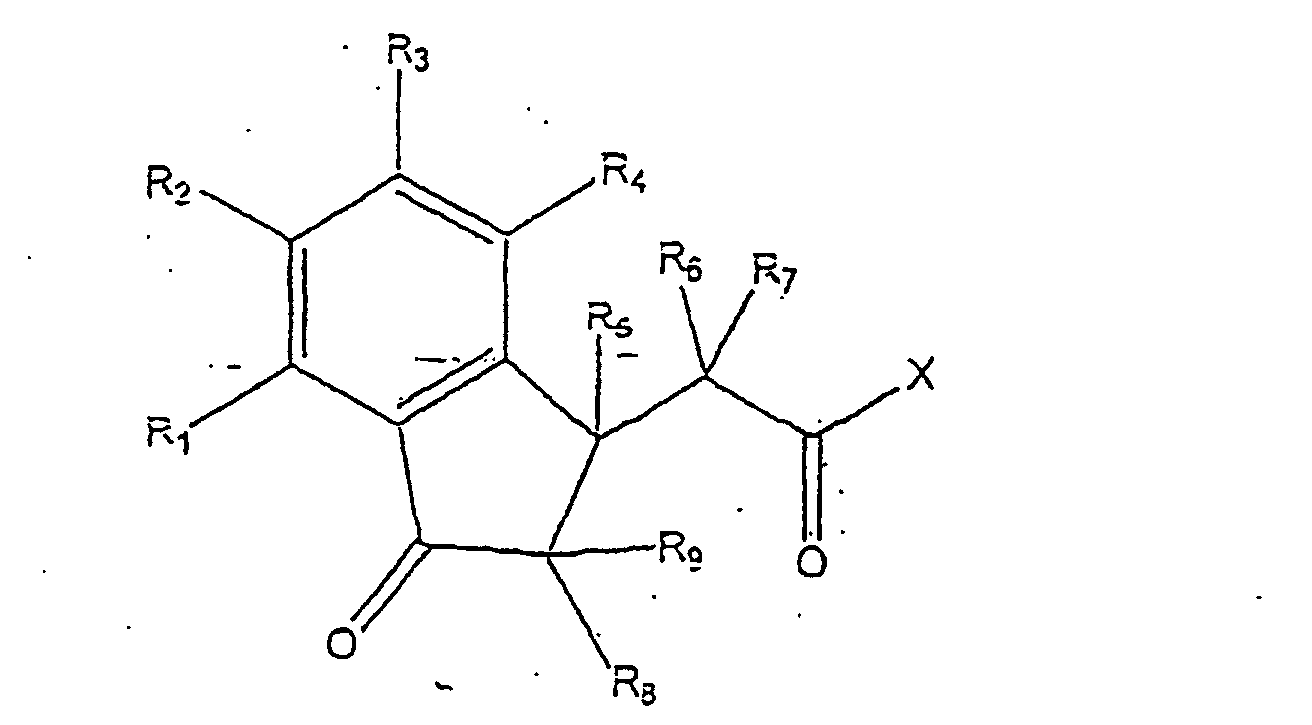 wherein D1 and D2 are each amino acid residues; and E is selected from the group consisting of an amino acid residue and -NRR', wherein R and R' are independently selected from the group consisting of hydrogen, C1-10 alkyl, substituted C1-10 alkyl, aryl and substituted aryl.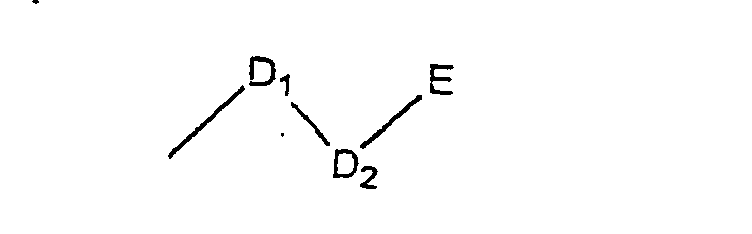
- The compound of claim 1, wherein the substituted C1-10 alkyl is C1-10 alkyl substituted with aryl or substituted aryl.
- The compound of claim 1 or 2 wherein D1 and D2 are each selected from the group consisting of -leucine and D-leucine.
- The compound of claim 3, wherein D1 is L-leucine, and D2 is D-leucine.
- The compound of claim 4 wherein E is selected from the group consisting of gly-NH2, benzylamine, dibenzylamine and 2,6-difluorobenzylamine.
- A compound of the formula:wherein R1 is H and R2 is selected from the group consisting of benzyl, hydroxyethyl, adamantyl, phenyl, phenethyl, and cyclohexylmethyl or R1 is benzyl and R2 methyl or benzyl.

- The compound of claim 6 wherein R1 is hydrogen and R2 is benzyl.
- A compound of the formula:wherein R is selected from the group consisting of 1-indanyl, piperonyl, 2,6-difluorobenzyl, benzyl, 4-methoxybenzyl, and 4-nitrobenzyl.

- The compound of claim 8 wherein R is 2,6-difluorobenzyl.
- The use of a therapeutically effective amount of a compound of any one of claims 1 to 9 for the preparation of a pharmaceutical composition for treating a disease selected from the group consisting of cell proliferation disorders, immune system disorders and infectious diseases in a mammal.
- The use of claim 10 wherein the mammal is a human.
- The use of claim 10 or 11 wherein the therapeutically effective amount ranges from 0.001 to 100 mg/kg weight of the mammal.
- The use of any one of claims 10 to 12 wherein the cell proliferation disorder is selected from the group consisting of rheumatoid arthritis, lupus, type I diabetes, multiple sclerosis, cancer, restenosis, host graft disease, and gout.
- The use of claim 13 wherein the cell proliferation disorder is restenosis.
- The use of claim 13 wherein the cell proliferation disorder is cancer.
- The use of claim 13 wherein the pharmaceutical composition induces apoptosis.
- The use of claim 13 wherein the cell proliferation disorder is polycystic kidney disease.
- The use of any one of claims 10 to 12 wherein the disease is an infectious disease.
- The use of claim 18 wherein the infectious disease is selected from the group consisting of IBD, Crohn's disease, AIDS, ARDS, and fungal diseases.
- The use of any one of claims 10 to 12 wherein the immune system disorder is selected from the group consisting of rheumatoid arthritis, autoimmune diseases, transplant rejection, and psoriasis.
- The use of any one of claims 11 to 20 wherein the pharmaceutical composition is in the form of a solution.
- The use of any one of claims 11 to 20 wherein the pharmaceutical composition is in the form of a tablet:
Applications Claiming Priority (3)
| Application Number | Priority Date | Filing Date | Title |
|---|---|---|---|
| US08/719,042 US5834487A (en) | 1996-09-24 | 1996-09-24 | Inhibition of 26S and 20S proteasome by indanones |
| US719042 | 1996-09-24 | ||
| PCT/US1997/017013 WO1998013061A1 (en) | 1996-09-24 | 1997-09-23 | Inhibition of 26s and 20s proteasome by indanones |
Publications (2)
| Publication Number | Publication Date |
|---|---|
| EP0956031A1 EP0956031A1 (en) | 1999-11-17 |
| EP0956031B1 true EP0956031B1 (en) | 2005-06-15 |
Family
ID=24888555
Family Applications (1)
| Application Number | Title | Priority Date | Filing Date |
|---|---|---|---|
| EP97943499A Expired - Lifetime EP0956031B1 (en) | 1996-09-24 | 1997-09-23 | Inhibition of 26 s and 20 s proteasome by indanones |
Country Status (22)
| Country | Link |
|---|---|
| US (2) | US5834487A (en) |
| EP (1) | EP0956031B1 (en) |
| JP (1) | JP3347332B2 (en) |
| KR (1) | KR100363067B1 (en) |
| CN (1) | CN1220520C (en) |
| AT (1) | ATE297748T1 (en) |
| AU (1) | AU710438B2 (en) |
| BR (1) | BR9711415A (en) |
| CA (1) | CA2266884C (en) |
| CZ (1) | CZ299837B6 (en) |
| DE (1) | DE69733573T2 (en) |
| ES (1) | ES2241057T3 (en) |
| GE (1) | GEP20012512B (en) |
| HU (1) | HUP9904693A3 (en) |
| IL (1) | IL128812A0 (en) |
| NO (1) | NO323627B1 (en) |
| NZ (1) | NZ334377A (en) |
| PL (1) | PL189262B1 (en) |
| RU (1) | RU2195310C2 (en) |
| TR (1) | TR199900656T2 (en) |
| UA (1) | UA57035C2 (en) |
| WO (1) | WO1998013061A1 (en) |
Families Citing this family (25)
| Publication number | Priority date | Publication date | Assignee | Title |
|---|---|---|---|---|
| CA2219867A1 (en) * | 1997-10-31 | 1999-04-30 | Jiangping Wu | The use of proteasome inhibitors for treating cancer, inflammation, autoimmune disease, graft rejection and septic shock |
| US6075150A (en) * | 1998-01-26 | 2000-06-13 | Cv Therapeutics, Inc. | α-ketoamide inhibitors of 20S proteasome |
| FR2779653B1 (en) * | 1998-06-11 | 2002-12-20 | Inst Nat Sante Rech Med | USE OF PROTEASOME MODULATING COMPOUNDS IN THERAPY |
| US6902721B1 (en) * | 1998-07-10 | 2005-06-07 | Osteoscreen, Inc. | Inhibitors of proteasomal activity for stimulating bone growth |
| CN1339970A (en) * | 1999-02-10 | 2002-03-13 | 鹤尾隆 | Anticancer agent potentiators |
| EP1053750A1 (en) * | 1999-04-22 | 2000-11-22 | Max-Planck-Gesellschaft zur Förderung der Wissenschaften e.V. | Use of proteasome-inhibitor for the induction of programmed cell death (apoptosis) |
| US20040116329A1 (en) * | 2002-01-29 | 2004-06-17 | Epstein Stephen E. | Inhibition of proteasomes to prevent restenosis |
| AU2003206945A1 (en) * | 2002-02-22 | 2003-09-09 | Max-Planck-Gesellschaft Zur Forderung Der Wissenschaften E.V. | Use of proteinase inhibitors in the treatment of autoimmune diseases |
| US7576206B2 (en) | 2003-08-14 | 2009-08-18 | Cephalon, Inc. | Proteasome inhibitors and methods of using the same |
| US7223745B2 (en) * | 2003-08-14 | 2007-05-29 | Cephalon, Inc. | Proteasome inhibitors and methods of using the same |
| BRPI0510802A (en) * | 2004-05-10 | 2007-11-06 | Proteolix Inc | enzyme inhibiting compounds |
| EP1637529A1 (en) * | 2004-09-20 | 2006-03-22 | 4Sc Ag | Novel piperidin-4-yl-thiazole-carboxamide analogues as inhibitors of T-cell proliferation and uses thereof |
| US7468383B2 (en) * | 2005-02-11 | 2008-12-23 | Cephalon, Inc. | Proteasome inhibitors and methods of using the same |
| US7319152B2 (en) | 2005-09-19 | 2008-01-15 | Wyeth | 5-Aryl-indan-1-one and analogs useful as progesterone receptor modulators |
| US7414142B2 (en) | 2005-09-19 | 2008-08-19 | Wyeth | 5-aryl-indan-1-one oximes and analogs useful as progesterone receptor modulators |
| US7442830B1 (en) | 2007-08-06 | 2008-10-28 | Millenium Pharmaceuticals, Inc. | Proteasome inhibitors |
| HRP20150592T4 (en) | 2008-06-17 | 2025-02-14 | Millennium Pharmaceuticals, Inc | ORGANOBORO ESTER COMPOUNDS AND THEIR PHARMACEUTICAL COMPOSITIONS |
| WO2011087822A1 (en) | 2009-12-22 | 2011-07-21 | Cephalon, Inc. | Proteasome inhibitors and processes for their preparation, purification and use |
| CN103570806B (en) * | 2012-07-26 | 2020-04-07 | 圣特莱国际公司 | Polypeptide epoxy ketone compound |
| SG10202003693RA (en) | 2014-05-20 | 2020-05-28 | Millennium Pharm Inc | Boron-containing proteasome inhibitors for use after primary cancer therapy |
| CN104370795B (en) * | 2014-10-15 | 2016-09-28 | 复旦大学 | A kind of indone compound of pair of targeting ovarian cancer cell tubulin and peripheral vessels thereof and preparation method and application |
| CN104557559B (en) * | 2015-01-14 | 2016-08-17 | 成都中医药大学 | Indandione chirality hexamethylene spiro-compound and preparation method thereof and purposes |
| CN108976145B (en) * | 2017-05-31 | 2020-12-01 | 首都医科大学 | Amino-n-hexanoylcarbamoylamino-n-hexanoyl polar amino acid, its synthesis, activity and application |
| CN111467331B (en) * | 2020-05-19 | 2021-01-26 | 北京大学 | Application of 1-indanone in preparation of medicine for treating or preventing autosomal dominant hereditary polycystic kidney disease |
| US11452708B2 (en) * | 2021-02-08 | 2022-09-27 | King Abdulaziz University | Discovery of potent [alpha]-glucosidase inhibitors from Heterophragma adenophyllum |
Family Cites Families (8)
| Publication number | Priority date | Publication date | Assignee | Title |
|---|---|---|---|---|
| US5021413B1 (en) * | 1988-08-24 | 1994-12-13 | Sankyo Co | Analgesic thiomorpholins, their preparation, and pharmaceutical compositions containing them |
| WO1992000961A1 (en) * | 1990-07-12 | 1992-01-23 | Pfizer Inc. | Indano pyrrolidine carbamates |
| CA2109515A1 (en) * | 1991-05-29 | 1992-11-30 | Robert L. Dow | Dihydroxyindanone tyrosine kinase inhibitors |
| TW306910B (en) * | 1992-09-11 | 1997-06-01 | Hoechst Ag | |
| US5409944A (en) * | 1993-03-12 | 1995-04-25 | Merck Frosst Canada, Inc. | Alkanesulfonamido-1-indanone derivatives as inhibitors of cyclooxygenase |
| US5693617A (en) * | 1994-03-15 | 1997-12-02 | Proscript, Inc. | Inhibitors of the 26s proteolytic complex and the 20s proteasome contained therein |
| IL112969A (en) * | 1994-03-17 | 2001-05-20 | Baxter Int | Pharmaceutical compositions for the treatment of cancer comprising allogenic lymphocytes or their combination with a t-cell activator |
| US6660268B1 (en) * | 1994-03-18 | 2003-12-09 | The President And Fellows Of Harvard College | Proteasome regulation of NF-KB activity |
-
1996
- 1996-09-24 US US08/719,042 patent/US5834487A/en not_active Expired - Fee Related
-
1997
- 1997-09-23 WO PCT/US1997/017013 patent/WO1998013061A1/en not_active Ceased
- 1997-09-23 NZ NZ334377A patent/NZ334377A/en unknown
- 1997-09-23 CZ CZ0095599A patent/CZ299837B6/en not_active IP Right Cessation
- 1997-09-23 DE DE69733573T patent/DE69733573T2/en not_active Expired - Fee Related
- 1997-09-23 UA UA99031659A patent/UA57035C2/en unknown
- 1997-09-23 CN CNB971982058A patent/CN1220520C/en not_active Expired - Fee Related
- 1997-09-23 AU AU44959/97A patent/AU710438B2/en not_active Ceased
- 1997-09-23 IL IL12881297A patent/IL128812A0/en not_active IP Right Cessation
- 1997-09-23 AT AT97943499T patent/ATE297748T1/en not_active IP Right Cessation
- 1997-09-23 TR TR1999/00656T patent/TR199900656T2/en unknown
- 1997-09-23 GE GEAP19974769A patent/GEP20012512B/en unknown
- 1997-09-23 BR BR9711415-4A patent/BR9711415A/en not_active IP Right Cessation
- 1997-09-23 JP JP51582998A patent/JP3347332B2/en not_active Expired - Fee Related
- 1997-09-23 KR KR1019997002504A patent/KR100363067B1/en not_active Expired - Fee Related
- 1997-09-23 ES ES97943499T patent/ES2241057T3/en not_active Expired - Lifetime
- 1997-09-23 RU RU99108459/14A patent/RU2195310C2/en not_active IP Right Cessation
- 1997-09-23 PL PL97332383A patent/PL189262B1/en not_active IP Right Cessation
- 1997-09-23 CA CA002266884A patent/CA2266884C/en not_active Expired - Fee Related
- 1997-09-23 HU HU9904693A patent/HUP9904693A3/en unknown
- 1997-09-23 EP EP97943499A patent/EP0956031B1/en not_active Expired - Lifetime
-
1998
- 1998-06-02 US US09/088,581 patent/US6117887A/en not_active Expired - Fee Related
-
1999
- 1999-03-23 NO NO19991406A patent/NO323627B1/en not_active IP Right Cessation
Also Published As
Similar Documents
| Publication | Publication Date | Title |
|---|---|---|
| US6117887A (en) | Inhibition of 26S and 20S proteasome by indanones | |
| CA2319150C (en) | .alpha.-ketoamide inhibitors of 20s proteasome | |
| DE69530993T2 (en) | MULTICATALYTIC PROTEASE INHIBITORS | |
| JP2019206531A (en) | Dipeptide and tripeptide epoxyketone protease inhibitor | |
| JP2003516405A (en) | Pyrrolo [2,3-d] pyrimidine compound | |
| Otrubova et al. | Comprehensive study of Sansalvamide A derivatives and their structure–activity relationships against drug-resistant colon cancer cell lines | |
| EP0356223A2 (en) | HIV protease inhibitors useful for the treatment of aids | |
| NZ197386A (en) | 2,5-dioxopiperazin-3-yl alkylamines(cyclic di-amino acids) | |
| CZ298625B6 (en) | Inhibitors of interleukin-1 beta converting enzyme, method of their selection and pharmaceutical compositions in which the inhibitors are comprised | |
| HRP980093A2 (en) | Heterocyclic compounds, pharmaceutical compositions comprising same, and methods for inhibiting "beta"-amyloid peptide release and/or its synthesis by use of such compounds | |
| WO1992006966A1 (en) | N-(2-alkyl-3-mercaptoglutaryl)-amino-diaza cycloalkanone derivatives and their use as collagenase inhibitors | |
| MX2008010557A (en) | Ubiquitin/proteasome inhibitors for the treatment of spinal muscular atrophy. | |
| JP2003512450A (en) | Hydroxamic acid derivatives as soluble human CD23 formation inhibitors | |
| MXPA99002255A (en) | Inhibition of 26s and 20s proteasome by indanones | |
| HK1020883B (en) | Inhibition of 26s and 20s proteasome by indanones | |
| CA2581564A1 (en) | Compounds that modulate trh actions | |
| TH32211A (en) | Peptide derivatives | |
| CZ312799A3 (en) | Preparations for modulating reaction to corticosteroids |
Legal Events
| Date | Code | Title | Description |
|---|---|---|---|
| PUAI | Public reference made under article 153(3) epc to a published international application that has entered the european phase |
Free format text: ORIGINAL CODE: 0009012 |
|
| 17P | Request for examination filed |
Effective date: 19990421 |
|
| AK | Designated contracting states |
Kind code of ref document: A1 Designated state(s): AT BE CH DE DK ES FI FR GB GR IE IT LI LU MC NL PT SE |
|
| AX | Request for extension of the european patent |
Free format text: AL PAYMENT 19990421;LT PAYMENT 19990421;LV PAYMENT 19990421;RO PAYMENT 19990421;SI PAYMENT 19990421 |
|
| 17Q | First examination report despatched |
Effective date: 20021017 |
|
| GRAP | Despatch of communication of intention to grant a patent |
Free format text: ORIGINAL CODE: EPIDOSNIGR1 |
|
| RIC1 | Information provided on ipc code assigned before grant |
Ipc: 7A 61P 37/00 B Ipc: 7A 61P 35/00 B Ipc: 7A 61P 31/00 B Ipc: 7A 61K 31/12 B Ipc: 7A 61K 38/05 B Ipc: 7A 61K 38/04 A |
|
| RTI1 | Title (correction) |
Free format text: INHIBITION OF 26 S AND 20 S PROTEASOME BY INDANONES |
|
| GRAS | Grant fee paid |
Free format text: ORIGINAL CODE: EPIDOSNIGR3 |
|
| GRAA | (expected) grant |
Free format text: ORIGINAL CODE: 0009210 |
|
| AK | Designated contracting states |
Kind code of ref document: B1 Designated state(s): AT BE CH DE DK ES FI FR GB GR IE IT LI LU MC NL PT SE |
|
| AX | Request for extension of the european patent |
Extension state: AL LT LV RO SI |
|
| PG25 | Lapsed in a contracting state [announced via postgrant information from national office to epo] |
Ref country code: NL Free format text: LAPSE BECAUSE OF FAILURE TO SUBMIT A TRANSLATION OF THE DESCRIPTION OR TO PAY THE FEE WITHIN THE PRESCRIBED TIME-LIMIT Effective date: 20050615 Ref country code: LI Free format text: LAPSE BECAUSE OF FAILURE TO SUBMIT A TRANSLATION OF THE DESCRIPTION OR TO PAY THE FEE WITHIN THE PRESCRIBED TIME-LIMIT Effective date: 20050615 Ref country code: FI Free format text: LAPSE BECAUSE OF FAILURE TO SUBMIT A TRANSLATION OF THE DESCRIPTION OR TO PAY THE FEE WITHIN THE PRESCRIBED TIME-LIMIT Effective date: 20050615 Ref country code: CH Free format text: LAPSE BECAUSE OF FAILURE TO SUBMIT A TRANSLATION OF THE DESCRIPTION OR TO PAY THE FEE WITHIN THE PRESCRIBED TIME-LIMIT Effective date: 20050615 Ref country code: BE Free format text: LAPSE BECAUSE OF FAILURE TO SUBMIT A TRANSLATION OF THE DESCRIPTION OR TO PAY THE FEE WITHIN THE PRESCRIBED TIME-LIMIT Effective date: 20050615 Ref country code: AT Free format text: LAPSE BECAUSE OF FAILURE TO SUBMIT A TRANSLATION OF THE DESCRIPTION OR TO PAY THE FEE WITHIN THE PRESCRIBED TIME-LIMIT Effective date: 20050615 |
|
| REG | Reference to a national code |
Ref country code: GB Ref legal event code: FG4D Ref country code: CH Ref legal event code: EP |
|
| REF | Corresponds to: |
Ref document number: 69733573 Country of ref document: DE Date of ref document: 20050721 Kind code of ref document: P |
|
| REG | Reference to a national code |
Ref country code: IE Ref legal event code: FG4D |
|
| PG25 | Lapsed in a contracting state [announced via postgrant information from national office to epo] |
Ref country code: SE Free format text: LAPSE BECAUSE OF FAILURE TO SUBMIT A TRANSLATION OF THE DESCRIPTION OR TO PAY THE FEE WITHIN THE PRESCRIBED TIME-LIMIT Effective date: 20050915 Ref country code: GR Free format text: LAPSE BECAUSE OF FAILURE TO SUBMIT A TRANSLATION OF THE DESCRIPTION OR TO PAY THE FEE WITHIN THE PRESCRIBED TIME-LIMIT Effective date: 20050915 Ref country code: DK Free format text: LAPSE BECAUSE OF FAILURE TO SUBMIT A TRANSLATION OF THE DESCRIPTION OR TO PAY THE FEE WITHIN THE PRESCRIBED TIME-LIMIT Effective date: 20050915 |
|
| PG25 | Lapsed in a contracting state [announced via postgrant information from national office to epo] |
Ref country code: MC Free format text: LAPSE BECAUSE OF NON-PAYMENT OF DUE FEES Effective date: 20050930 Ref country code: LU Free format text: LAPSE BECAUSE OF NON-PAYMENT OF DUE FEES Effective date: 20050930 |
|
| REG | Reference to a national code |
Ref country code: ES Ref legal event code: FG2A Ref document number: 2241057 Country of ref document: ES Kind code of ref document: T3 |
|
| PG25 | Lapsed in a contracting state [announced via postgrant information from national office to epo] |
Ref country code: PT Free format text: LAPSE BECAUSE OF FAILURE TO SUBMIT A TRANSLATION OF THE DESCRIPTION OR TO PAY THE FEE WITHIN THE PRESCRIBED TIME-LIMIT Effective date: 20051123 |
|
| LTIE | Lt: invalidation of european patent or patent extension |
Effective date: 20050615 |
|
| NLV1 | Nl: lapsed or annulled due to failure to fulfill the requirements of art. 29p and 29m of the patents act | ||
| REG | Reference to a national code |
Ref country code: CH Ref legal event code: PL |
|
| ET | Fr: translation filed | ||
| PLBE | No opposition filed within time limit |
Free format text: ORIGINAL CODE: 0009261 |
|
| STAA | Information on the status of an ep patent application or granted ep patent |
Free format text: STATUS: NO OPPOSITION FILED WITHIN TIME LIMIT |
|
| 26N | No opposition filed |
Effective date: 20060316 |
|
| PGFP | Annual fee paid to national office [announced via postgrant information from national office to epo] |
Ref country code: ES Payment date: 20080926 Year of fee payment: 12 |
|
| PGFP | Annual fee paid to national office [announced via postgrant information from national office to epo] |
Ref country code: IE Payment date: 20080925 Year of fee payment: 12 |
|
| PGFP | Annual fee paid to national office [announced via postgrant information from national office to epo] |
Ref country code: GB Payment date: 20080929 Year of fee payment: 12 |
|
| PGFP | Annual fee paid to national office [announced via postgrant information from national office to epo] |
Ref country code: DE Payment date: 20081031 Year of fee payment: 12 |
|
| PGFP | Annual fee paid to national office [announced via postgrant information from national office to epo] |
Ref country code: IT Payment date: 20090928 Year of fee payment: 13 |
|
| GBPC | Gb: european patent ceased through non-payment of renewal fee |
Effective date: 20090923 |
|
| REG | Reference to a national code |
Ref country code: IE Ref legal event code: MM4A |
|
| PG25 | Lapsed in a contracting state [announced via postgrant information from national office to epo] |
Ref country code: IE Free format text: LAPSE BECAUSE OF NON-PAYMENT OF DUE FEES Effective date: 20090923 Ref country code: DE Free format text: LAPSE BECAUSE OF NON-PAYMENT OF DUE FEES Effective date: 20100401 |
|
| PG25 | Lapsed in a contracting state [announced via postgrant information from national office to epo] |
Ref country code: GB Free format text: LAPSE BECAUSE OF NON-PAYMENT OF DUE FEES Effective date: 20090923 |
|
| PG25 | Lapsed in a contracting state [announced via postgrant information from national office to epo] |
Ref country code: IT Free format text: LAPSE BECAUSE OF NON-PAYMENT OF DUE FEES Effective date: 20100923 |
|
| REG | Reference to a national code |
Ref country code: FR Ref legal event code: ST Effective date: 20110531 |
|
| REG | Reference to a national code |
Ref country code: ES Ref legal event code: FD2A Effective date: 20110715 |
|
| PG25 | Lapsed in a contracting state [announced via postgrant information from national office to epo] |
Ref country code: ES Free format text: LAPSE BECAUSE OF NON-PAYMENT OF DUE FEES Effective date: 20110705 Ref country code: FR Free format text: LAPSE BECAUSE OF NON-PAYMENT OF DUE FEES Effective date: 20100930 |
|
| PG25 | Lapsed in a contracting state [announced via postgrant information from national office to epo] |
Ref country code: ES Free format text: LAPSE BECAUSE OF NON-PAYMENT OF DUE FEES Effective date: 20090924 |
|
| PGFP | Annual fee paid to national office [announced via postgrant information from national office to epo] |
Ref country code: FR Payment date: 20091006 Year of fee payment: 13 |