EP0945436B1 - Cytotrienins, process for preparing the same, and antitumor agent - Google Patents
Cytotrienins, process for preparing the same, and antitumor agent Download PDFInfo
- Publication number
- EP0945436B1 EP0945436B1 EP97946810A EP97946810A EP0945436B1 EP 0945436 B1 EP0945436 B1 EP 0945436B1 EP 97946810 A EP97946810 A EP 97946810A EP 97946810 A EP97946810 A EP 97946810A EP 0945436 B1 EP0945436 B1 EP 0945436B1
- Authority
- EP
- European Patent Office
- Prior art keywords
- iii
- cytotrienins
- cytotrienin
- compound
- medium
- Prior art date
- Legal status (The legal status is an assumption and is not a legal conclusion. Google has not performed a legal analysis and makes no representation as to the accuracy of the status listed.)
- Expired - Lifetime
Links
- 0 C[C@@](*1C2=CCCCC2)C1=[O+] Chemical compound C[C@@](*1C2=CCCCC2)C1=[O+] 0.000 description 2
Images




Classifications
-
- C—CHEMISTRY; METALLURGY
- C12—BIOCHEMISTRY; BEER; SPIRITS; WINE; VINEGAR; MICROBIOLOGY; ENZYMOLOGY; MUTATION OR GENETIC ENGINEERING
- C12P—FERMENTATION OR ENZYME-USING PROCESSES TO SYNTHESISE A DESIRED CHEMICAL COMPOUND OR COMPOSITION OR TO SEPARATE OPTICAL ISOMERS FROM A RACEMIC MIXTURE
- C12P17/00—Preparation of heterocyclic carbon compounds with only O, N, S, Se or Te as ring hetero atoms
- C12P17/10—Nitrogen as only ring hetero atom
-
- A—HUMAN NECESSITIES
- A61—MEDICAL OR VETERINARY SCIENCE; HYGIENE
- A61K—PREPARATIONS FOR MEDICAL, DENTAL OR TOILETRY PURPOSES
- A61K31/00—Medicinal preparations containing organic active ingredients
- A61K31/33—Heterocyclic compounds
- A61K31/395—Heterocyclic compounds having nitrogen as a ring hetero atom, e.g. guanethidine or rifamycins
-
- A—HUMAN NECESSITIES
- A61—MEDICAL OR VETERINARY SCIENCE; HYGIENE
- A61P—SPECIFIC THERAPEUTIC ACTIVITY OF CHEMICAL COMPOUNDS OR MEDICINAL PREPARATIONS
- A61P35/00—Antineoplastic agents
-
- C—CHEMISTRY; METALLURGY
- C07—ORGANIC CHEMISTRY
- C07D—HETEROCYCLIC COMPOUNDS
- C07D225/00—Heterocyclic compounds containing rings of more than seven members having one nitrogen atom as the only ring hetero atom
- C07D225/04—Heterocyclic compounds containing rings of more than seven members having one nitrogen atom as the only ring hetero atom condensed with carbocyclic rings or ring systems
- C07D225/06—Heterocyclic compounds containing rings of more than seven members having one nitrogen atom as the only ring hetero atom condensed with carbocyclic rings or ring systems condensed with one six-membered ring
Definitions
- the present invention relates to novel cytotrienins I , II, III and IV, a process for preparing the same and anti-tumor agents comprising the same as the active ingredient.
- the present invention is to fulfill the above requirements and to provide novel compounds having anti-tumor activity, cytotrienins I, II, III and IV, preparation method for the same and anti-tumor agents comprising the same as the active ingredient.
- Actinomyces sp. 95-74 strain which belongs to Streptomyces species and was isolated from a soil sample collected in Shiki city, Saitama prefecture. Japan produces materials having anti-tumor activity.
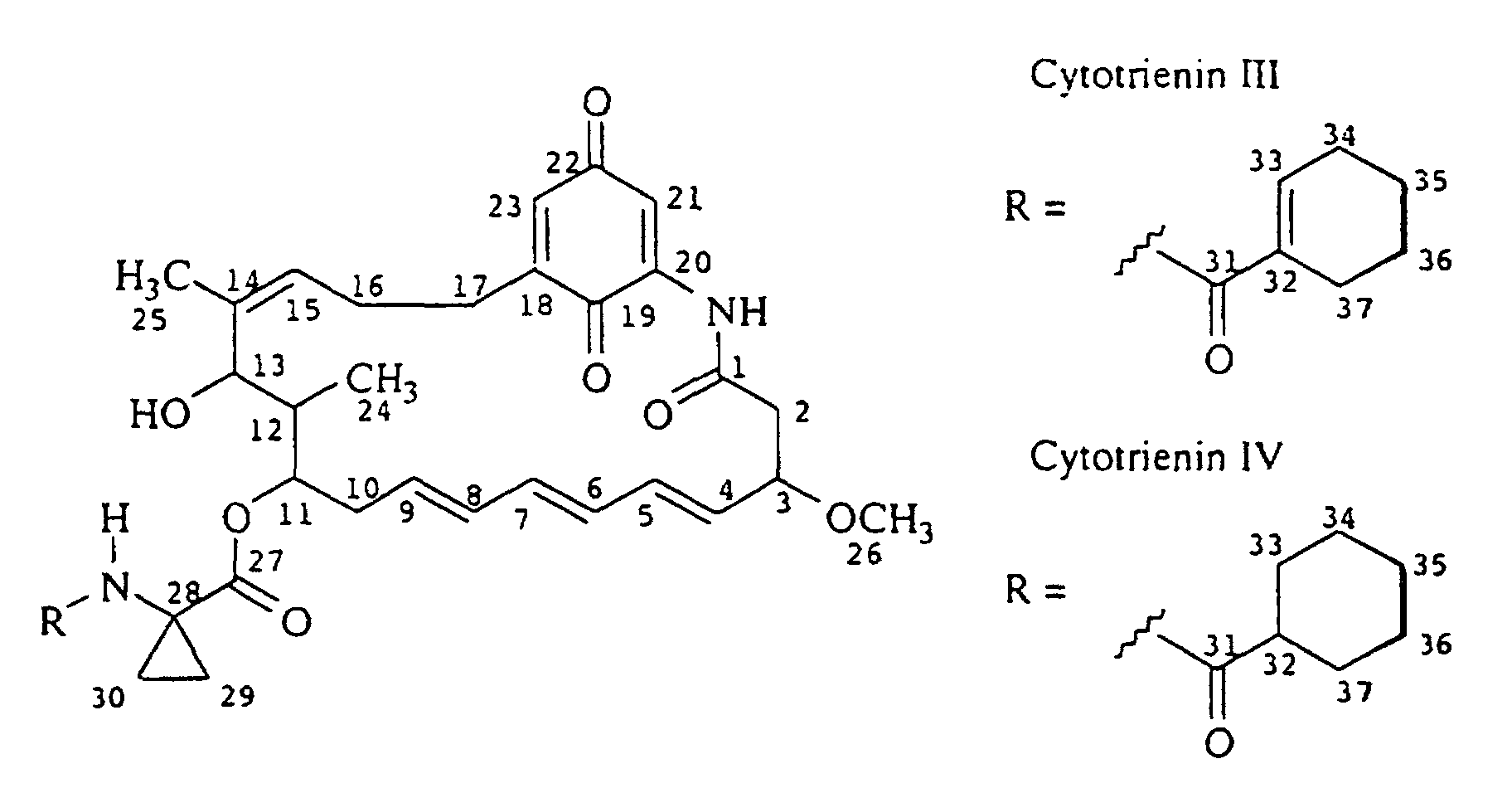
- the present invention provides cytotrienins I , II , III and IV represented by the following formulas.
- Cytotrienins I, II, III and IV can be prepared by culturing a bacterium capable of producing cytotrienins I, II. III and IV which belongs to Streptomyces species in a medium to produce and accumulate cytotrienins I, II, III and IV in the medium and harvesting them.
- a preferable bacterium of the present invention includes Streptomyces sp. 95-74 strain.
- the present invention provides anti-tumor agent comprising novel cytotrienin I, II, III or IV as the active ingredient.
- novel compounds of the present invention are represented by the following formulas.
- the present compounds cytotrienins I, II, III and N can be produced from a microorganism of Streptomyces species, for example, Streptomyces sp. 95-74 strain.
- Streptomyces sp. 95-74 strain has the following mycological characteristics. Physiological characteristics of Streptomyces sp. 95.74 strain growth temperature 12 ⁇ 38°C optimum temperature 16 ⁇ 38°C cell wall composition L,L-diaminopimelic acid spore chain spiral surface of spore plicated color of aerial mycelium gray ⁇ black color of substrate mycelium brown soluble pigment none melanin pigment none Cultural feature of Streptomyces sp.
- bacterium strain of the present invention was identified to be Streptomyces species. This strain was deposited on October 11, 1996 in the National Institute of Bioscience and Human Technology, Agency of Industrial Science and Technology, Japan (1-3, Higashi 1-chome, Tukuba City, Ibaraki Prefecture, Japan), which is an International Depository Authority, with the accession No. FERM BP-6185 under the provisions of the Budapest Treaty; all restrictions upon public access to the deposit will be irrevocably removed upon the grant of a patent on this application; and the deposit will be replaced if viable samples can not be dispensed by the depository.
- cytotrienins I , II, III and IV isolated from fermentation broth of the above described actinomycete Streptomyces sp. 95-74 strain can be conducted according to culturing procedures for bacterium which belongs to Streptomyces species, but the details of the procedures will be described in the preparation examples below. After incubation, purification and isolation of cytotrienins I , II. III and IV from the culture broth can be conducted by utilizing the conventional means for collecting biological metabolite.
- the mean includes use of a variety of ion exchange resin, nonionic adsorption resin, gel filtration chromatography, or chromatography or high performance liquid chromatography with adsorptive materials such as active carbon, alumina, silica gel, as well as crystallization, vacuum concentration and freeze-drying techniques.
- ion exchange resin nonionic adsorption resin
- gel filtration chromatography or chromatography or high performance liquid chromatography with adsorptive materials
- adsorptive materials such as active carbon, alumina, silica gel, as well as crystallization, vacuum concentration and freeze-drying techniques.
- the applying method, dosage form and dosage amount of the anti-tumor agent of the present invention comprising cytotrienins I, II, III and IV as the active ingredient will be determined according to the purpose of the use of the agent.
- the anti-tumor agent of the present invention comprising cytotrienins I , II, III and IV as the active ingredient can be administered orally or parenterally.
- the dosage form includes, for example, oral medicines such as tablets, powders, capsules, granules, extracts, syrups and the like and parenteral medicines such as injections and suppositories. These preparations can be prepared by known methods using pharmaceutically acceptable additives such as vehicles and binders.
- the clinical dose of the anti-tumor agent of the present invention comprising cytotrienins I , II, III and IV can be determined based on the age, weight, sensitivity and symptom of the patient. Generally, effective amount for one adult patient is approximately from 0.1 mg to 1 g per one day and this amount can be administered in a single dose or multiple doses. In addition, it is possible to use the amount outside of the above-described range, if necessary.
- the compound in the case that the compound is used as a reagent for chemical testing, growth of cell is exhibited by administering the compound dissolved in organic solvent or aqueous organic solvent directly to each culture cell line.
- organic solvent includes, for example, methanol, dimethylsulfoxide and the like.
- Usage formulation includes, for example, solid such as powder and granule, and liquid dissolved in organic solvent or aqueous organic solvent.
- Effective amount of the agents comprising cytotrienins I, II, III and IV as active ingredient to inhibit growth of tumor cell is generally from 1 ⁇ 10 -3 to 100 ⁇ g/mL. However, suitable amount would vary depending on the kind of culture cell line or the purpose of the compound to be used. It is possible to use the amount out of the above-described range, if necessary.
- Streptomyces sp. 95-74 strain was inoculated on a medium (pH 6.5) composed of 2% of glucose, 2.5% of soy flour, 1% of soluble starch, 0.4% of yeast, 0.1% of broth, 0.2% of salt and 0.005% of dipotassium hydrogen phosphate, and then incubation with shaking was continued for 96 hours at 28°C.
- Culture broth (1.8 L) was extracted with 2 L of 80% acetone. After vacuum filtration and vacuum concentration, the aqueous solution was adjusted to pH 7.0 and was extracted three times with 2.6 L of ethyl acetate. Ethyl acetate phases were combined and then concentrated under reduced pressure to obtain 571 mg of brown syrup.
- the syrup (571 mg) was dissolved in 1 ml of ethyl acetate/methanol (9:1) and applied on a silica gel column (which is composed of commercially available Sep-Pak® CARTRIDGE PLUS SILICA (diameter 10 mm, length 30 mm) connected to packed column (10 ml injection syringe) (Silica gel: diameter 20 mm, length 50 mm)) which was previously treated with ethyl acetate/methanol (9:1). The ratio of ethyl acetate and methanol was changed (90:10, 50:50) and 60 ml of each solution was eluted. Finally, 60 ml of methanol was eluted. The active component was eluted in the fraction of ethyl acetate-methanol (90:10). The fractions were concentrated under reduced pressure to obtain 484 mg of brown oily material.
- the material was purified by preparative high performance liquid chromatography using ODS column (diameter 20 mm, length 250 mm; capsule pack, Shiseido) and 62.5 % aqueous methanol as eluent under conditions that the flow rate was 9.0 mL/min and detection wavelength was 230 nm.
- ODS column diameter 20 mm, length 250 mm; capsule pack, Shiseido
- 62.5 % aqueous methanol as eluent under conditions that the flow rate was 9.0 mL/min and detection wavelength was 230 nm.
- 64.4 mg and 9.8 mg of cytotrienins I and II were obtained as light yellow powder, respectively.
- cytotrienins III and IV can be isolated from the culture products by the same purification procedures, these compounds can be easily obtained by oxidizing cytotrienins I and II with ferric chloride (III) (Fig. 8). In addition, cytotrienins III and IV can be converted to cytotrienins I and II through reductive reaction with sodium hydrosulfite (Fig. 9).
- cytotrienins I, II, III and IV Activity of cytotrienins I, II, III and IV to revert v-src ts -NRK cell (rat renal cell infected with temperature-sensitive Rous sarcoma virus) to normal morphology
- V-src ts -NRK cell, wherein temperature-sensitive v-SRC gene is transformed, shows cancer morphology at permissive temperature (32°C) and shows normal morphology at non-permissive temperature (39°C). This suggests that the agent which induces normal morphology inhibits the function of SRC protein and signal transduction system concerned to SRC protein and inhibits the proliferation of cancer cells selectively.
- V-src ts -NRK cell is typically cultured on Eagle's MEN medium comprising 10% of bovine serum at 32°C in a culture chamber which is saturated with 5% of carbon dioxide and steam. At the permissive temperature (32°C), a series of diluted Cytotrienin I, II, III or IV were added. After 18 hours, inducibility to normal morphology was analyzed. The result was shown in Table 8.
- Table 8 shows that cytotrienins I , II, III and IV are effective as antitumor agent.
- cell divides and proliferates in accordance with a cell cycle including a series of phases such as M phase, G1 phase, S phase and G2 phase. If something happens in the control mechanism of cell cycle, homeostasis breaks and possibility of suffering from cancer or immune diseases would increase.
- V-src ts -NRK cell wherein temperature-sensitive SRC gene is transformed, shows cancer morphology at permissive temperature (32°C) and many cells in S phase are observed, while at non-permissive temperature (39°C) the cell shows normal morphology and many cells in G0/G1 phase are observed. It is suggested that an agent which interrupts the progress of S phase at permissive temperature and induces to normal morphology inhibits the function of SRC protein and signal transduction system related to SRC protein as well as the proliferation of cancer cells selectively.
- Cytotrienins I II III IV 0.03 + + ++ ++ 0.1 ++ ++ +++ +++ 0.3 +++ +++ +++ +++ 1 +++ +++ +++ 3 +++ +++ +++ +++ + : weakly inhibits the progress of S phase, ++ : inhibits the progress of S phase, +++ : strongly inhibits the progress of S phase
- Table 9 shows that cytotrienins I, II, III and N are effective as anti-tumor agent.
- cytotrienins I , II, III and IV Inhibitory effect of cytotrienins I , II, III and IV on proliferation of cancer cells IC50 value [shown as concentration to inhibit 50% of proliferation ( ⁇ g/ml)] Tested cells Cytotrienins I II III IV K-562 0.02 0.005 0.005 0.001 HL-60 0.005 0.005 0.001 0.001 K-562 : Human chronic myelogenic leukemia cells HL-60 : Human acute promyelogenic leukemia cells
- Table 10 shows that cytotrienins I , II , III and IV are effective as anti-tumor agent.
- Cytotrienins I , II, III and IV were assayed by the agar dilution method in bouillon medium (examined microorganism: bacteria, 37°C, 1 day) and Sabouraud's medium (examined microorganism: fungus, 28°C, 2 days). Minimum inhibitory concentration is shown in Table 11.
- cytotrienins I, II, III and IV show Antimicrobial activity of cytotrienins I, II, III and IV (shown as minimum inhibitory concentration(MIC: ⁇ g/ml)) cytorienins microorganisms I II III IV Staphylococcus aureus > 100 > 100 > 100 > 100 > 100 > 100 > 100 > 100 > 100 > 100 > 100 > 100 > 100 > 100 > 100 > 100 > 100 Pyricularia oryzae 12.5 12.5 12.5 12.5 12.5 Candida albicans > 100 > 100 >100 > 100 Chlorella vulgaris > 100 > 100 > 100 > 100 > 100 > 100 > 100 > 100 > 100 > 100 > 100 > 100 > 100 > 100 > 100 > 100 > 100 > 100 > 100 > 100 > 100 > 100 > 100 > 100 > 100 > 100 > 100 > 100 > 100 > 100 > 100 > 100 > 100 > 100 > 100 > 100 > 100 > 100 > 100 > 100 > 100 > 100 > 100 > 100 > 100 > 100 > 100 > 100 > 100 > 100 > 100 > 100 > 100 > 100 > 100 >
- cytotrienin I, II, III or IV One gram of cytotrienin I, II, III or IV, 98 g of lactose and 1 g of hydroxypropylcellulose were combined and then formed into granular formulation according to the conventional method, followed by being dried to obtain granules, which may be suited to be packed in a vial or heat-sealed.
- the granules can be orally administered in the amount of 100 to 1000 mg/days.
Landscapes
- Chemical & Material Sciences (AREA)
- Organic Chemistry (AREA)
- Health & Medical Sciences (AREA)
- Life Sciences & Earth Sciences (AREA)
- General Health & Medical Sciences (AREA)
- Zoology (AREA)
- Wood Science & Technology (AREA)
- Engineering & Computer Science (AREA)
- General Chemical & Material Sciences (AREA)
- Chemical Kinetics & Catalysis (AREA)
- Medicinal Chemistry (AREA)
- Veterinary Medicine (AREA)
- Public Health (AREA)
- Animal Behavior & Ethology (AREA)
- Pharmacology & Pharmacy (AREA)
- Microbiology (AREA)
- Genetics & Genomics (AREA)
- General Engineering & Computer Science (AREA)
- Bioinformatics & Cheminformatics (AREA)
- Biochemistry (AREA)
- Biotechnology (AREA)
- Epidemiology (AREA)
- Nuclear Medicine, Radiotherapy & Molecular Imaging (AREA)
- Pharmaceuticals Containing Other Organic And Inorganic Compounds (AREA)
- Preparation Of Compounds By Using Micro-Organisms (AREA)
- Micro-Organisms Or Cultivation Processes Thereof (AREA)
- Other In-Based Heterocyclic Compounds (AREA)
Abstract
Description
- The present invention relates to novel cytotrienins I , II, III and IV, a process for preparing the same and anti-tumor agents comprising the same as the active ingredient.
- The recent studies have demonstrated that many products of oncogene act as signal transduction molecule and activation of such product induces neoplasia of cells. A number of oncogene products have been found and it has now become dear that more than half numbers of oncogenes encode tyrosine kinase and these oncogenes closely relate to malignant transformation of cells and to retention of cancer morphology. Thus, it is suggested that a compound which inhibits the functions of these oncogene products would be a potential anti-tumor agent and there is a requirement to develop novel anti-tumor agents having such new mode of action.
- In addition, although many anti-tumor compounds have already been developed as pharmaceutical compositions, there still exists further requirement for novel anti-tumor agents having a new chemical structure.
- The present invention is to fulfill the above requirements and to provide novel compounds having anti-tumor activity, cytotrienins I, II, III and IV, preparation method for the same and anti-tumor agents comprising the same as the active ingredient.
- In the study to solve the above problems, the inventors of the present invention found that Actinomyces sp. 95-74 strain which belongs to Streptomyces species and was isolated from a soil sample collected in Shiki city, Saitama prefecture. Japan produces materials having anti-tumor activity.
- The present invention provides cytotrienins I , II , III and IV represented by the following formulas.

- Cytotrienins I, II, III and IV can be prepared by culturing a bacterium capable of producing cytotrienins I, II. III and IV which belongs to Streptomyces species in a medium to produce and accumulate cytotrienins I, II, III and IV in the medium and harvesting them. A preferable bacterium of the present invention includes Streptomyces sp. 95-74 strain.
- Furthermore, the present invention provides anti-tumor agent comprising novel cytotrienin I, II, III or IV as the active ingredient.
- The present invention is described in detail hereinafter.
- The novel compounds of the present invention, cytotrienins I, II, III and IV are represented by the following formulas.
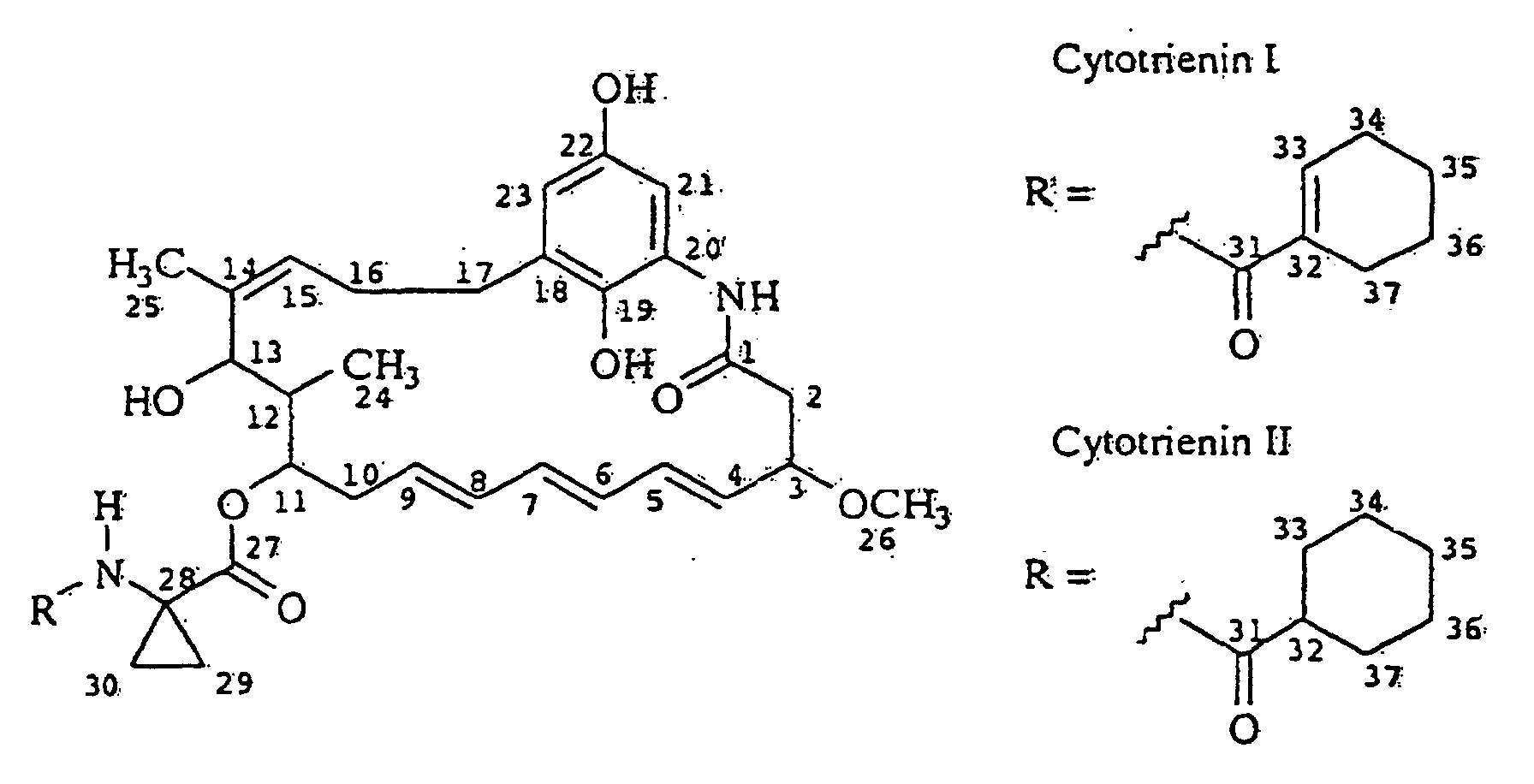

- The present compounds cytotrienins I, II, III and N can be produced from a microorganism of Streptomyces species, for example, Streptomyces sp. 95-74 strain. Streptomyces sp. 95-74 strain has the following mycological characteristics.
Physiological characteristics of Streptomyces sp. 95.74 strain growth temperature 12 ~ 38°C optimum temperature 16 ~ 38°C cell wall composition L,L-diaminopimelic acid spore chain spiral surface of spore plicated color of aerial mycelium gray ~ black color of substrate mycelium brown soluble pigment none melanin pigment none Cultural feature of Streptomyces sp. 95-74 strain medium color of aerial mycelium growt color of backside soluble pigment ISP-2 dark gray(10fe) ++ ocher(2ie) none ISP-3 black(5ih) + + light tan(2ge) none ISP-4 pearl(5ba) + caramel(2ea) none ISP-5 gray(5fe) + light tan(2ge) none ISP-6 dark gray(7ih) -~± caramel(2ea) none ISP-7 black coal(7ml) ++ mustand(2lg) none Utilization of carbon source by Streptomyces sp. 95-74 strain carbon source growth L-Arabinose + D-Xylose + D-Fructose + Sucrose + + i-inositol + L-rhamnose + + raffinose + D-mannitol ++ galactose + D-glucose + + - Based on the microbial characteristics in the above tables 1, 2 and 3, bacterium strain of the present invention was identified to be Streptomyces species. This strain was deposited on October 11, 1996 in the National Institute of Bioscience and Human Technology, Agency of Industrial Science and Technology, Japan (1-3, Higashi 1-chome, Tukuba City, Ibaraki Prefecture, Japan), which is an International Depository Authority, with the accession No. FERM BP-6185 under the provisions of the Budapest Treaty; all restrictions upon public access to the deposit will be irrevocably removed upon the grant of a patent on this application; and the deposit will be replaced if viable samples can not be dispensed by the depository.
- The isolation of novel cytotrienins I , II, III and IV from fermentation broth of the above described actinomycete Streptomyces sp. 95-74 strain can be conducted according to culturing procedures for bacterium which belongs to Streptomyces species, but the details of the procedures will be described in the preparation examples below. After incubation, purification and isolation of cytotrienins I , II. III and IV from the culture broth can be conducted by utilizing the conventional means for collecting biological metabolite. For example, the mean includes use of a variety of ion exchange resin, nonionic adsorption resin, gel filtration chromatography, or chromatography or high performance liquid chromatography with adsorptive materials such as active carbon, alumina, silica gel, as well as crystallization, vacuum concentration and freeze-drying techniques. Each of these means can be utilized alone or in combination, or repeatedly.
- Thus prepared novel cytotrienins I, II, III and IV show anti-tumor activities as shown in the paragraph of "Evaluation study".
- The applying method, dosage form and dosage amount of the anti-tumor agent of the present invention comprising cytotrienins I, II, III and IV as the active ingredient will be determined according to the purpose of the use of the agent. For example, the anti-tumor agent of the present invention comprising cytotrienins I , II, III and IV as the active ingredient can be administered orally or parenterally. The dosage form includes, for example, oral medicines such as tablets, powders, capsules, granules, extracts, syrups and the like and parenteral medicines such as injections and suppositories. These preparations can be prepared by known methods using pharmaceutically acceptable additives such as vehicles and binders. The clinical dose of the anti-tumor agent of the present invention comprising cytotrienins I , II, III and IV can be determined based on the age, weight, sensitivity and symptom of the patient. Generally, effective amount for one adult patient is approximately from 0.1 mg to 1 g per one day and this amount can be administered in a single dose or multiple doses. In addition, it is possible to use the amount outside of the above-described range, if necessary.
- In addition, in the case that the compound is used as a reagent for chemical testing, growth of cell is exhibited by administering the compound dissolved in organic solvent or aqueous organic solvent directly to each culture cell line. Such organic solvent includes, for example, methanol, dimethylsulfoxide and the like. Usage formulation includes, for example, solid such as powder and granule, and liquid dissolved in organic solvent or aqueous organic solvent. Effective amount of the agents comprising cytotrienins I, II, III and IV as active ingredient to inhibit growth of tumor cell is generally from 1 × 10⁻³ to 100 µg/mL. However, suitable amount would vary depending on the kind of culture cell line or the purpose of the compound to be used. It is possible to use the amount out of the above-described range, if necessary.
- The following examples are provided for purposes of illustrating the present invention.
- Streptomyces sp. 95-74 strain was inoculated on a medium (pH 6.5) composed of 2% of glucose, 2.5% of soy flour, 1% of soluble starch, 0.4% of yeast, 0.1% of broth, 0.2% of salt and 0.005% of dipotassium hydrogen phosphate, and then incubation with shaking was continued for 96 hours at 28°C.
- Culture broth (1.8 L) was extracted with 2 L of 80% acetone. After vacuum filtration and vacuum concentration, the aqueous solution was adjusted to pH 7.0 and was extracted three times with 2.6 L of ethyl acetate. Ethyl acetate phases were combined and then concentrated under reduced pressure to obtain 571 mg of brown syrup.
- The syrup (571 mg) was dissolved in 1 ml of ethyl acetate/methanol (9:1) and applied on a silica gel column (which is composed of commercially available Sep-Pak® CARTRIDGE PLUS SILICA (
diameter 10 mm,length 30 mm) connected to packed column (10 ml injection syringe) (Silica gel:diameter 20 mm,length 50 mm)) which was previously treated with ethyl acetate/methanol (9:1). The ratio of ethyl acetate and methanol was changed (90:10, 50:50) and 60 ml of each solution was eluted. Finally, 60 ml of methanol was eluted. The active component was eluted in the fraction of ethyl acetate-methanol (90:10). The fractions were concentrated under reduced pressure to obtain 484 mg of brown oily material. - Then, the material was purified by preparative high performance liquid chromatography using ODS column (
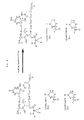
diameter 20 mm, length 250 mm; capsule pack, Shiseido) and 62.5 % aqueous methanol as eluent under conditions that the flow rate was 9.0 mL/min and detection wavelength was 230 nm. As the result, 64.4 mg and 9.8 mg of cytotrienins I and II were obtained as light yellow powder, respectively. - Although cytotrienins III and IV can be isolated from the culture products by the same purification procedures, these compounds can be easily obtained by oxidizing cytotrienins I and II with ferric chloride (III) (Fig. 8). In addition, cytotrienins III and IV can be converted to cytotrienins I and II through reductive reaction with sodium hydrosulfite (Fig. 9).
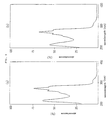
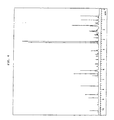
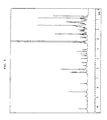
- Physiological features of the purified authentic cytotrienins I, II, III and IV are shown in Tables 4 and 5 and NMR spectral data of cytotrienins I and II are shown in Tables 6 and 7.
Physiological characteristics of cytotrienins I and II Cytotrienin I Cytotrienin II Appearance light yellow powder light yellow powder Melting point 132-135 °C 163-165 °C [α] D 25 +270.6 (c 1.00, MeOH) +211.2 (c 1.00, MeOH) Molecular formula C37H48N2O3 C37H50N2O3 Mass spectra (M+H)+ (M+H)+ FABMS (pos.) 649 651 HRFABMS (pos.) found (m/z) 649.3616 651.3704 calculated (m/z) 649.3498 651.3646 UVλmax MeOHnm(ε ) 214 (41560), 262 (35780), 260 (31590). 273 (46100), 283 (35330), 271 (39450). IR γmax KBr cm-1 3400, 1720,1660,1650, 282 (30550) 3400, 1720, 1660, 1490,1180, 1000, 850, 1650, 1500, 1180, 1000 Physiological characteristics of cytotrienins III and IV Cytotrienin III Cytotrienin IV Appearance light yellow powder light yellow powder Molecular formula C37H46N2O8 C37H48NO8 Mass spectra (M+H)+ (M+H)+ FABMS (pos.) 647 649 400 MHz 1H NMR and 100 MHz 13C NMR chemical shift (δ ppm) data for cytotrienin I Position 13C 1H (J/Hz) Position 13C 1H (J/Hz) 1 169.46s ― 19-OH 7.62 s 2 41.69t 2.80 m 20 125.90s ― 2.54m 20-NH 10.06 s 3 79.88d 4.01 m 21 107.08d 6.40s 4 130.39d 5.40dd(15.1, 8.8) 22 149.27s ― 5 134.49d 6.13dd(15.1, 9.7) 22-OH 8.82 s 6 128.95d 6.07dd(14.7, 9.6) 23 115.29d 6.40 s 7 134.09d 6.09dd(14.7, 8.7) 24 9.22q 0.64d(6.8) 8 132.59d 6.01dd(15.0, 8.7) 25 20.99q 1.60 s 9 130.39d 5.62td(15.0.10.7,4.4) 26 55.69q 3.20 s 10 32.44t 2.44dt(10.7,3.4) 27 171.64s ― 2.16m 28 33.31s ― 11 74.30d 4.61dq(10.3,4.8,2.0) 28-NH 8.49 s 12 37.48d 1.66 m 29 16.68t 1.35 m 13 66.69d 4.41 brs 30 16.45t 1.04m 13-OH 4.11d (5.4) 31 169.26s ― 14 139.38s ― 32 133.01s ― 15 122.12d 4.99brd(7.8) 33 132.68d 6.59 m 16 25.02t 2.16 m 34 24.81t 2.16 m 17 31.24t 2.82m 1.94m 2.04 m 35 21.24t 1.60 m 18 131.39s ― 36 21.79t 1.60 m 19 140.39s ― 37 23.75t 2.16 m 400 MHz 1H NMR and 100 MHz 13C NMR chemical shift (δppm) data for cytotrienin II Position 13C 1H (J/Hz) Position 13C 1H (J/Hz) 1 169.52s ― 20-NH 10.07 s 2 41.59t 2.76dd(13.2,4.9) 21 107.09d 6.32brd(2.4) 2.51 m 22 149.23s ― 3 79.88d 4.02td(10.7,4.9) 22-OH 8.26s 4 130.38d 5.35dd(15.1.8.8) 23 115.50d 6.37brd(2.4) 5 134.61d 6.09dd(15.1,8.3) 24 9.16q 0.59d (6.8) 6 128.96d 6.04dd(16.1,8.3) 25 21.06q 1.55 s 7 134.05d 5.95dd(16.1,7.8) 26 55.71q 3.17 s 8 132.53d 6.04dd(15.0.7.8) 27 171.66s ― 9 130.51d 5.67td(15.1.10.3,3.9) 28 32.84s ― 10 32.56t 2.35dt(9.3.4.9) 28-NH . 8.49s 2.16 m 29 16.68t 1.20m 11 74.17d 4.63brd(10.3) 0.99 m 12 37.38d 1.62 m 30 17.17t 1.38 m 13 66.85d 4.44brs 1.28m 13-OH 4.19d2 (5.4) 31 176.43s ― 14 139.41s ― 32 43.69d 2.06td(8.3,3.4) 15 122.08d 4.92brd(7.3) 33 29.23t 1.68 m 16 25.02t 2.16m 1.57 m 17 31.27t 2.84 m 34 25.39t ∼ 1.62m 1.99 m 35 25.49t ∼1.16 m 18 131.49s - 36 25.50t ∼1.16 m 19 140.63s - 37 28.90t 1.82m 19-OH 7.50s2) 1.19 m 20 125.87s ― - Biological activities of the compounds of the present invention were determined as described below.
- Activity of cytotrienins I, II, III and IV to revert v-srcts-NRK cell (rat renal cell infected with temperature-sensitive Rous sarcoma virus) to normal morphology
- Many oncogenes encode tyrosine kinase. Among them, v-src is believed to encode non-receptor type tyrosine kinase to induce the cell to transformed morphology. V-srcts-NRK cell, wherein temperature-sensitive v-SRC gene is transformed, shows cancer morphology at permissive temperature (32°C) and shows normal morphology at non-permissive temperature (39°C). This suggests that the agent which induces normal morphology inhibits the function of SRC protein and signal transduction system concerned to SRC protein and inhibits the proliferation of cancer cells selectively.
- V-srcts-NRK cell is typically cultured on Eagle's MEN medium comprising 10% of bovine serum at 32°C in a culture chamber which is saturated with 5% of carbon dioxide and steam. At the permissive temperature (32°C), a series of diluted Cytotrienin I, II, III or IV were added. After 18 hours, inducibility to normal morphology was analyzed. The result was shown in Table 8.
The reversion activity of cytotrienins I, II, III and IV to induce v-srcts-NRK cell to normal morphology concetration
(µg/ml)Cytotrienins I I I III IV 0.1 + + ++ ++ 0.3 ++ + +++ +++ 1 +++ +++ +++ +++ 3 +++ +++ +++ +++ 10 +++ +++ +++ +++ + : weakly induce normal morphology, ++ : induce normal morphology, + + + : highly induce normal morphology - Table 8 shows that cytotrienins I , II, III and IV are effective as antitumor agent.
- Generally cell divides and proliferates in accordance with a cell cycle including a series of phases such as M phase, G1 phase, S phase and G2 phase. If something happens in the control mechanism of cell cycle, homeostasis breaks and possibility of suffering from cancer or immune diseases would increase.
- V-srcts-NRK cell, wherein temperature-sensitive SRC gene is transformed, shows cancer morphology at permissive temperature (32°C) and many cells in S phase are observed, while at non-permissive temperature (39°C) the cell shows normal morphology and many cells in G0/G1 phase are observed. It is suggested that an agent which interrupts the progress of S phase at permissive temperature and induces to normal morphology inhibits the function of SRC protein and signal transduction system related to SRC protein as well as the proliferation of cancer cells selectively.
- When v-srcts-NRK cell is cultured at non-permissive temperature (39°C), the cell cycle stops at G0/G1 phase and if the temperature is downshifted to permissive temperature (32°C), the cell advances to S phase and then repeats the proliferation. A series of diluted Cytotrienin I , II, III or IV were added simultaneously with the downshift and, after 18 hours, the advancement of cell cycle to S phase was analyzed by flow cytometry. The results are shown in Table 9.
Inhibition effect of cytotrienins I , II, III and N on v-srcts-NRK cell cycle concentration
(µg/ml)Cytotrienins I II III IV 0.03 + + ++ ++ 0.1 ++ ++ +++ +++ 0.3 +++ +++ +++ +++ 1 +++ +++ +++ +++ 3 +++ +++ +++ +++ + : weakly inhibits the progress of S phase, ++ : inhibits the progress of S phase, +++ : strongly inhibits the progress of S phase - Table 9 shows that cytotrienins I, II, III and N are effective as anti-tumor agent.
- Human leukocyte cells K562 and HL-60 were incubated on PRM 1640 medium (comprising 10% bovine serum) in a culture chamber saturated with 5% carbon dioxide and steam. To the medium was added a series of diluted cytotrienin I . II, III or IV. After 17 hours, MTT reagent was added and growth was measured. The result was shown in Table 10.
Inhibitory effect of cytotrienins I , II, III and IV on proliferation of cancer cells IC50 value [shown as concentration to inhibit 50% of proliferation (µg/ml)] Tested cells Cytotrienins I II III IV K-562 0.02 0.005 0.005 0.001 HL-60 0.005 0.005 0.001 0.001 K-562 : Human chronic myelogenic leukemia cells HL-60 : Human acute promyelogenic leukemia cells - Table 10 shows that cytotrienins I , II , III and IV are effective as anti-tumor agent.
- Cytotrienins I , II, III and IV were assayed by the agar dilution method in bouillon medium (examined microorganism: bacteria, 37°C, 1 day) and Sabouraud's medium (examined microorganism: fungus, 28°C, 2 days). Minimum inhibitory concentration is shown in Table 11.
Antimicrobial activity of cytotrienins I, II, III and IV (shown as minimum inhibitory concentration(MIC:µg/ml)) cytorienins microorganisms I II III IV Staphylococcus aureus > 100 > 100 > 100 > 100 Escherichia coli BE 1186 > 100 > 100 > 100 > 100 Pseudomonas aeruginosa > 100 > 100 > 100 > 100 Pyricularia oryzae 12.5 12.5 12.5 12.5 Candida albicans > 100 > 100 >100 > 100 Chlorella vulgaris > 100 > 100 > 100 > 100 - Ten milligrams of cyrtotrienin I , II, III or IV with 5 g of powdered dextrose was weighed and sealed aseptically in a vial. The vial was filled with inert gas such as nitrogen and helium and kept in a cool and dark space. When it is used, the compound in the vial is dissolved in ethanol and 0.85% of physiological saline (100 ml) is added to the solution to form a preparation for intravenous injection, 10 to 100 ml/day of which is administered by intravenous injection or drip infusion according to the symptom of the disease.
- One gram of cytotrienin I, II, III or IV, 98 g of lactose and 1 g of hydroxypropylcellulose were combined and then formed into granular formulation according to the conventional method, followed by being dried to obtain granules, which may be suited to be packed in a vial or heat-sealed. The granules can be orally administered in the amount of 100 to 1000 mg/days.
- Figure 1 shows UV spectrum of cytotrienins I (Fig. 1a) and II (Fig. 1b) in methanol.
- Figure 2 shows infrared spectrum (KBr) of cytotrienin I.
- Figure 3 shows infrared spectrum (KBr) of cytotrienin II.
- Figure 4 shows 1H NMR spectrum (DMSO-d6) of cytotrienin I.
- Figure 5 shows 1H NMR spectrum (DMSO-d6) of cytotrienin II.
- Figure 6 shows 13C NMR spectrum (DMSO-d6) of cytotrienin I.
- Figure 7 shows 13C NMR spectrum (DMSO-d6) of cytotrienin II.
- Figure 8 shows conversion of cytotrienins I and II to III and IV. respectively.
- Figure 9 shows conversion of cytotrienins III and IV to I and II, respectively.
-
Claims (16)
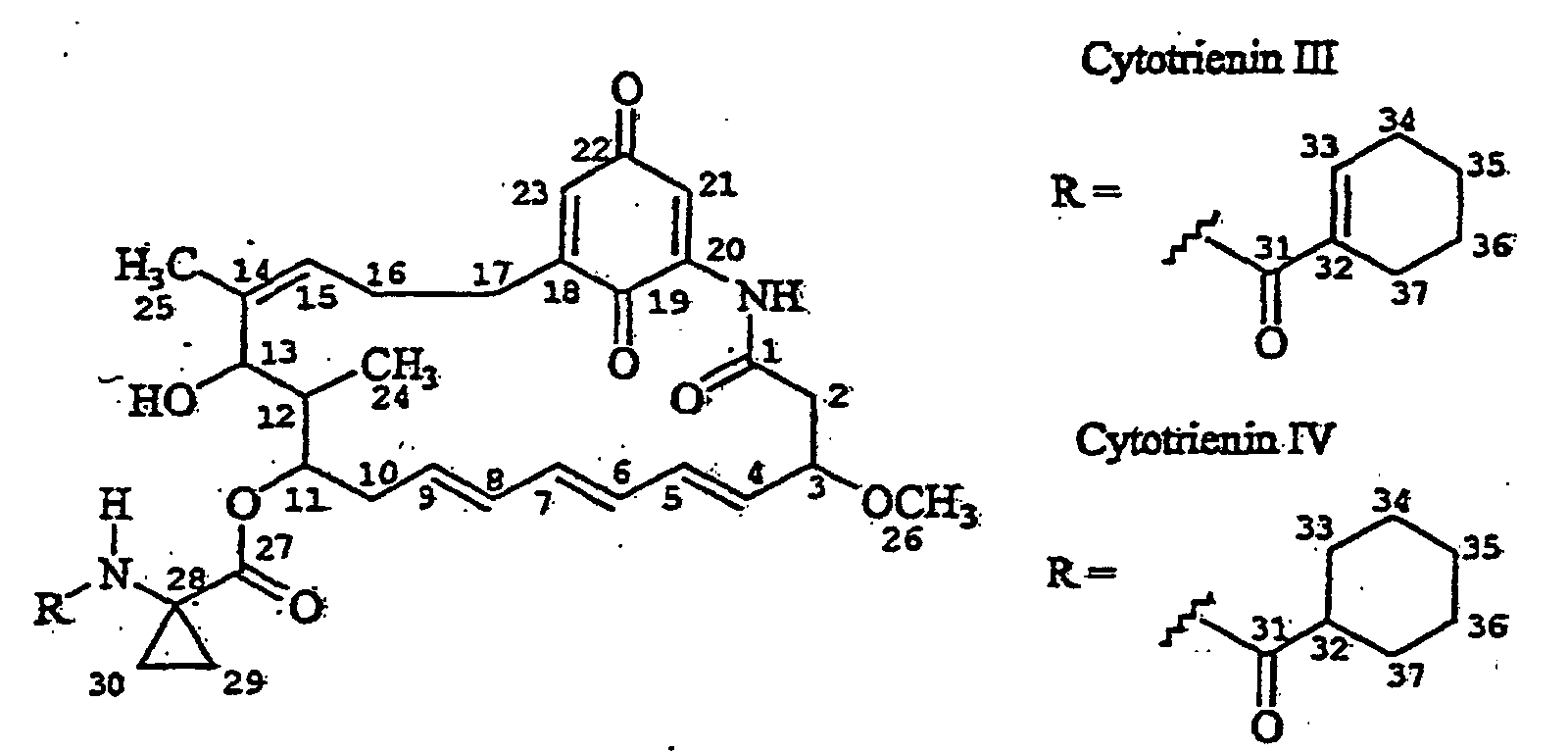
- A compound selected from the group consisting of Cytotrienins I, II, III and IV represented by the following formulas:

- The compound of claim 1, which is Cytotrienin I.
- The compound of claim 1, which is Cytotrienin II.
- The compound of claim 1, which is Cytotrienin III.
- The compound of claim 1, which is Cytotrienin IV.
- A method for preparing a compound selected from the group consisting of Cytotrienins I, II, III and IV according to claim 1 comprising culturing a bacterium capable of producing said compound which belongs to Streptomyces species in a medium, accumulating said compound in the medium and harvesting said compound.
- The method of claim 6 wherein the bacterium capable of producing a compound selected from the group consisting of Cytotrienins I, II, III and IV is Streptomyces sp. 95-74 strain (FERM BP6185).
- The method of claim 6 or 7, wherein the compound is is Cytotrienin I.
- The method of claim 6 or 7, wherein the the compound is Cytotrienin II.
- The method of claim 6 or 7, wherein the compound is Cytotrienin III.
- The method of claim 6 or 7, or wherein the compound is Cytotrienin IV.
- An anti-tumor agent comprising at least one compound selected from the group consisting of Cytotrienins I, II, III and IV according to claim 1 as an active ingredient.
- The anti-tumor agent of claim 12, wherein the compound is Cytotrienin I.
- The anti-tumor agent of claim 12, wherein the compound is Cytotrienin II.
- The anti-tumor agent of claim 12, wherein the compound is Cytotrienin III.
- The anti-tumor agent of claim 12, wherein the compound is Cytotrienin IV.
Applications Claiming Priority (3)
| Application Number | Priority Date | Filing Date | Title |
|---|---|---|---|
| JP32024196A JP3726980B2 (en) | 1996-11-29 | 1996-11-29 | Cytotrienins, production method thereof and antitumor agent |
| JP32024196 | 1996-11-29 | ||
| PCT/JP1997/004374 WO1998023594A1 (en) | 1996-11-29 | 1997-12-01 | Cytotrienins, process for preparing the same, and antitumor agent |
Publications (3)
| Publication Number | Publication Date |
|---|---|
| EP0945436A1 EP0945436A1 (en) | 1999-09-29 |
| EP0945436A4 EP0945436A4 (en) | 1999-12-15 |
| EP0945436B1 true EP0945436B1 (en) | 2004-06-30 |
Family
ID=18119305
Family Applications (1)
| Application Number | Title | Priority Date | Filing Date |
|---|---|---|---|
| EP97946810A Expired - Lifetime EP0945436B1 (en) | 1996-11-29 | 1997-12-01 | Cytotrienins, process for preparing the same, and antitumor agent |
Country Status (5)
| Country | Link |
|---|---|
| US (1) | US6251885B1 (en) |
| EP (1) | EP0945436B1 (en) |
| JP (1) | JP3726980B2 (en) |
| DE (1) | DE69729740T2 (en) |
| WO (1) | WO1998023594A1 (en) |
Families Citing this family (1)
| Publication number | Priority date | Publication date | Assignee | Title |
|---|---|---|---|---|
| JP3726980B2 (en) | 1996-11-29 | 2005-12-14 | 独立行政法人理化学研究所 | Cytotrienins, production method thereof and antitumor agent |
Citations (1)
| Publication number | Priority date | Publication date | Assignee | Title |
|---|---|---|---|---|
| GB2112776A (en) * | 1981-11-27 | 1983-07-27 | Nisshin Flour Milling Co | New heterocyclic anti-tumor substances |
Family Cites Families (4)
| Publication number | Priority date | Publication date | Assignee | Title |
|---|---|---|---|---|
| JPS5894393A (en) * | 1981-11-27 | 1983-06-04 | Nisshin Flour Milling Co Ltd | Preparation of antitumor substance |
| JP2641906B2 (en) * | 1988-06-30 | 1997-08-20 | 日清製粉株式会社 | Mycotrienine compounds |
| WO1996015114A1 (en) * | 1994-11-15 | 1996-05-23 | Kyowa Hakko Kogyo Co., Ltd. | Compounds ucf116 |
| JP3726980B2 (en) | 1996-11-29 | 2005-12-14 | 独立行政法人理化学研究所 | Cytotrienins, production method thereof and antitumor agent |
-
1996
- 1996-11-29 JP JP32024196A patent/JP3726980B2/en not_active Expired - Lifetime
-
1997
- 1997-12-01 DE DE69729740T patent/DE69729740T2/en not_active Expired - Fee Related
- 1997-12-01 EP EP97946810A patent/EP0945436B1/en not_active Expired - Lifetime
- 1997-12-01 WO PCT/JP1997/004374 patent/WO1998023594A1/en not_active Ceased
-
1999
- 1999-06-01 US US09/322,982 patent/US6251885B1/en not_active Expired - Fee Related
Patent Citations (1)
| Publication number | Priority date | Publication date | Assignee | Title |
|---|---|---|---|---|
| GB2112776A (en) * | 1981-11-27 | 1983-07-27 | Nisshin Flour Milling Co | New heterocyclic anti-tumor substances |
Also Published As
| Publication number | Publication date |
|---|---|
| EP0945436A1 (en) | 1999-09-29 |
| DE69729740T2 (en) | 2005-07-14 |
| JPH10158245A (en) | 1998-06-16 |
| DE69729740D1 (en) | 2004-08-05 |
| US6251885B1 (en) | 2001-06-26 |
| JP3726980B2 (en) | 2005-12-14 |
| WO1998023594A1 (en) | 1998-06-04 |
| EP0945436A4 (en) | 1999-12-15 |
Similar Documents
| Publication | Publication Date | Title |
|---|---|---|
| Isaka et al. | Hirsutellones A–E, antimycobacterial alkaloids from the insect pathogenic fungus Hirsutella nivea BCC 2594 | |
| US6358957B1 (en) | Phenylahistin and the phenylahistin analogs, a new class of anti-tumor compounds | |
| KR20100132518A (en) | Microorganisms Producing Cyclic Compounds | |
| CA2022609A1 (en) | Bu-4061t | |
| CN110818728B (en) | Preparation method and use of polythiodiketopiperazine compound Secoemestrin C | |
| EP0945436A1 (en) | Cytotrienins, process for preparing the same, and antitumor agent | |
| WO2000024747A1 (en) | Substance gm-95, process for producing the same and utilization thereof | |
| US7470714B2 (en) | GM-95-containing antitumor effect potentiator, combined antitumor preparation and antitumor agent | |
| WO2005121148A9 (en) | Anti-bacterial and anti-cancer spiro beta-lactone/gamma-lactams | |
| JP3719689B2 (en) | Novel substance triprostatin, process for producing the same, cell cycle inhibitor and antitumor agent | |
| US7803600B2 (en) | Micromonospora species that produces a bafilomycin-like metabolite | |
| JPWO2019189331A1 (en) | New K95-5901-1 substance and its manufacturing method | |
| CN101805699B (en) | Preparation method and application of gliocladicin C | |
| KR0145942B1 (en) | New anticancer composition | |
| KR100225458B1 (en) | Myxococcus spantitumor compound from myxococcus sp. and process for preparation thereof | |
| US7112581B2 (en) | Macrocyclic lactams | |
| US5061695A (en) | Antitumor substance be-12406 | |
| CN100500668C (en) | Geldanamycin derivative and its preparing method and use for preparing medicine | |
| JP4808853B2 (en) | New antitumor agent | |
| CN120842240A (en) | Preparation method and use of Nuphar alkalodipine dimer sesquiterpene alkaloids with cytotoxic activity | |
| JPH08176116A (en) | Sparoxomycin, a new antibiotic | |
| JP2009073791A (en) | New bioactive substance RKGS-A2215A | |
| JPH0622770A (en) | Compound TAN-1609, production method and use thereof | |
| JPH10237043A (en) | RKS-1778, production method thereof, cell cycle inhibitor and antitumor agent | |
| JPWO2000000631A1 (en) | Novel physiologically active substances that inhibit the proliferation of human immunodeficiency virus (HIV) |
Legal Events
| Date | Code | Title | Description |
|---|---|---|---|
| PUAI | Public reference made under article 153(3) epc to a published international application that has entered the european phase |
Free format text: ORIGINAL CODE: 0009012 |
|
| 17P | Request for examination filed |
Effective date: 19990624 |
|
| AK | Designated contracting states |
Kind code of ref document: A1 Designated state(s): CH DE FR GB IT LI |
|
| A4 | Supplementary search report drawn up and despatched |
Effective date: 19991103 |
|
| AK | Designated contracting states |
Kind code of ref document: A4 Designated state(s): CH DE FR GB IT LI |
|
| 17Q | First examination report despatched |
Effective date: 20001129 |
|
| RAP1 | Party data changed (applicant data changed or rights of an application transferred) |
Owner name: RIKEN |
|
| GRAP | Despatch of communication of intention to grant a patent |
Free format text: ORIGINAL CODE: EPIDOSNIGR1 |
|
| GRAS | Grant fee paid |
Free format text: ORIGINAL CODE: EPIDOSNIGR3 |
|
| GRAA | (expected) grant |
Free format text: ORIGINAL CODE: 0009210 |
|
| RIN1 | Information on inventor provided before grant (corrected) |
Inventor name: KOBINATA, KIMIE-THE INS. OF PHYSICAL AND CHEM. RES Inventor name: ZHANG, HUI-PING-THE INST.OF PHYSICAL AND CHEM. RES Inventor name: KAKEYA, HIDEAKI-THE INST.OF PHYSICAL AND CHEM. RES Inventor name: OSADA, HIROYUKI-THE INS.OF PHYSICAL AND CHEM. RES. |
|
| AK | Designated contracting states |
Kind code of ref document: B1 Designated state(s): CH DE FR GB IT LI |
|
| PG25 | Lapsed in a contracting state [announced via postgrant information from national office to epo] |
Ref country code: IT Free format text: LAPSE BECAUSE OF FAILURE TO SUBMIT A TRANSLATION OF THE DESCRIPTION OR TO PAY THE FEE WITHIN THE PRESCRIBED TIME-LIMIT;WARNING: LAPSES OF ITALIAN PATENTS WITH EFFECTIVE DATE BEFORE 2007 MAY HAVE OCCURRED AT ANY TIME BEFORE 2007. THE CORRECT EFFECTIVE DATE MAY BE DIFFERENT FROM THE ONE RECORDED. Effective date: 20040630 |
|
| REG | Reference to a national code |
Ref country code: GB Ref legal event code: FG4D Ref country code: CH Ref legal event code: EP |
|
| REF | Corresponds to: |
Ref document number: 69729740 Country of ref document: DE Date of ref document: 20040805 Kind code of ref document: P |
|
| REG | Reference to a national code |
Ref country code: CH Ref legal event code: NV Representative=s name: MICHELI & CIE INGENIEURS-CONSEILS |
|
| ET | Fr: translation filed | ||
| PLBE | No opposition filed within time limit |
Free format text: ORIGINAL CODE: 0009261 |
|
| STAA | Information on the status of an ep patent application or granted ep patent |
Free format text: STATUS: NO OPPOSITION FILED WITHIN TIME LIMIT |
|
| 26N | No opposition filed |
Effective date: 20050331 |
|
| PGFP | Annual fee paid to national office [announced via postgrant information from national office to epo] |
Ref country code: CH Payment date: 20081216 Year of fee payment: 12 |
|
| PGFP | Annual fee paid to national office [announced via postgrant information from national office to epo] |
Ref country code: FR Payment date: 20081212 Year of fee payment: 12 |
|
| PGFP | Annual fee paid to national office [announced via postgrant information from national office to epo] |
Ref country code: DE Payment date: 20081127 Year of fee payment: 12 |
|
| PGFP | Annual fee paid to national office [announced via postgrant information from national office to epo] |
Ref country code: GB Payment date: 20081126 Year of fee payment: 12 |
|
| REG | Reference to a national code |
Ref country code: CH Ref legal event code: PL |
|
| GBPC | Gb: european patent ceased through non-payment of renewal fee |
Effective date: 20091201 |
|
| REG | Reference to a national code |
Ref country code: FR Ref legal event code: ST Effective date: 20100831 |
|
| PG25 | Lapsed in a contracting state [announced via postgrant information from national office to epo] |
Ref country code: LI Free format text: LAPSE BECAUSE OF NON-PAYMENT OF DUE FEES Effective date: 20091231 Ref country code: FR Free format text: LAPSE BECAUSE OF NON-PAYMENT OF DUE FEES Effective date: 20091231 Ref country code: CH Free format text: LAPSE BECAUSE OF NON-PAYMENT OF DUE FEES Effective date: 20091231 |
|
| PG25 | Lapsed in a contracting state [announced via postgrant information from national office to epo] |
Ref country code: DE Free format text: LAPSE BECAUSE OF NON-PAYMENT OF DUE FEES Effective date: 20100701 |
|
| PG25 | Lapsed in a contracting state [announced via postgrant information from national office to epo] |
Ref country code: GB Free format text: LAPSE BECAUSE OF NON-PAYMENT OF DUE FEES Effective date: 20091201 |