EP0944735B1 - Bacillus strain and antibiotic screening method - Google Patents
Bacillus strain and antibiotic screening method Download PDFInfo
- Publication number
- EP0944735B1 EP0944735B1 EP97949030A EP97949030A EP0944735B1 EP 0944735 B1 EP0944735 B1 EP 0944735B1 EP 97949030 A EP97949030 A EP 97949030A EP 97949030 A EP97949030 A EP 97949030A EP 0944735 B1 EP0944735 B1 EP 0944735B1
- Authority
- EP
- European Patent Office
- Prior art keywords
- reporter
- gene
- promoter
- reporter genes
- bacillus strain
- Prior art date
- Legal status (The legal status is an assumption and is not a legal conclusion. Google has not performed a legal analysis and makes no representation as to the accuracy of the status listed.)
- Expired - Lifetime
Links
- 238000000034 method Methods 0.000 title claims description 30
- 241000193830 Bacillus <bacterium> Species 0.000 title claims description 20
- 230000003115 biocidal effect Effects 0.000 title claims description 3
- 238000012216 screening Methods 0.000 title claims description 3
- 108700008625 Reporter Genes Proteins 0.000 claims description 56
- 230000014509 gene expression Effects 0.000 claims description 20
- 230000032823 cell division Effects 0.000 claims description 17
- 230000028070 sporulation Effects 0.000 claims description 14
- 230000015572 biosynthetic process Effects 0.000 claims description 13
- 239000003795 chemical substances by application Substances 0.000 claims description 12
- 230000001419 dependent effect Effects 0.000 claims description 12
- 238000003786 synthesis reaction Methods 0.000 claims description 12
- 102000004190 Enzymes Human genes 0.000 claims description 10
- 108090000790 Enzymes Proteins 0.000 claims description 10
- 235000014469 Bacillus subtilis Nutrition 0.000 claims description 9
- 210000004027 cell Anatomy 0.000 claims description 9
- 101150066555 lacZ gene Proteins 0.000 claims description 8
- 101100437498 Escherichia coli (strain K12) uidA gene Proteins 0.000 claims description 7
- 239000003242 anti bacterial agent Substances 0.000 claims description 6
- 210000000349 chromosome Anatomy 0.000 claims description 6
- 241000894006 Bacteria Species 0.000 claims description 5
- 230000017047 asymmetric cell division Effects 0.000 claims description 5
- 239000004599 antimicrobial Substances 0.000 claims description 3
- 238000002798 spectrophotometry method Methods 0.000 claims description 3
- 230000001939 inductive effect Effects 0.000 claims description 2
- 101150100658 gpr gene Proteins 0.000 claims 3
- 101150029502 spoIIAA gene Proteins 0.000 claims 3
- 238000000338 in vitro Methods 0.000 claims 1
- 230000000694 effects Effects 0.000 description 27
- 238000003556 assay Methods 0.000 description 12
- 108090000623 proteins and genes Proteins 0.000 description 12
- 230000004913 activation Effects 0.000 description 10
- 108010005774 beta-Galactosidase Proteins 0.000 description 10
- 102000005936 beta-Galactosidase Human genes 0.000 description 10
- 239000003112 inhibitor Substances 0.000 description 10
- 108010060309 Glucuronidase Proteins 0.000 description 8
- 102000053187 Glucuronidase Human genes 0.000 description 8
- 150000001875 compounds Chemical class 0.000 description 7
- 239000000411 inducer Substances 0.000 description 5
- 102000004169 proteins and genes Human genes 0.000 description 5
- 241000288049 Perdix perdix Species 0.000 description 4
- 229940088710 antibiotic agent Drugs 0.000 description 4
- 230000005764 inhibitory process Effects 0.000 description 4
- 230000004260 plant-type cell wall biogenesis Effects 0.000 description 4
- 239000000126 substance Substances 0.000 description 4
- 230000002068 genetic effect Effects 0.000 description 3
- 230000006698 induction Effects 0.000 description 3
- 230000000977 initiatory effect Effects 0.000 description 3
- 230000009467 reduction Effects 0.000 description 3
- 239000000758 substrate Substances 0.000 description 3
- 238000012360 testing method Methods 0.000 description 3
- 108010001478 Bacitracin Proteins 0.000 description 2
- ULGZDMOVFRHVEP-RWJQBGPGSA-N Erythromycin Chemical compound O([C@@H]1[C@@H](C)C(=O)O[C@@H]([C@@]([C@H](O)[C@@H](C)C(=O)[C@H](C)C[C@@](C)(O)[C@H](O[C@H]2[C@@H]([C@H](C[C@@H](C)O2)N(C)C)O)[C@H]1C)(C)O)CC)[C@H]1C[C@@](C)(OC)[C@@H](O)[C@H](C)O1 ULGZDMOVFRHVEP-RWJQBGPGSA-N 0.000 description 2
- 230000009471 action Effects 0.000 description 2
- 229960003071 bacitracin Drugs 0.000 description 2
- 229930184125 bacitracin Natural products 0.000 description 2
- CLKOFPXJLQSYAH-ABRJDSQDSA-N bacitracin A Chemical compound C1SC([C@@H](N)[C@@H](C)CC)=N[C@@H]1C(=O)N[C@@H](CC(C)C)C(=O)N[C@H](CCC(O)=O)C(=O)N[C@@H]([C@@H](C)CC)C(=O)N[C@@H]1C(=O)N[C@H](CCCN)C(=O)N[C@@H]([C@@H](C)CC)C(=O)N[C@H](CC=2C=CC=CC=2)C(=O)N[C@@H](CC=2N=CNC=2)C(=O)N[C@H](CC(O)=O)C(=O)N[C@@H](CC(N)=O)C(=O)NCCCC1 CLKOFPXJLQSYAH-ABRJDSQDSA-N 0.000 description 2
- FPPNZSSZRUTDAP-UWFZAAFLSA-N carbenicillin Chemical compound N([C@H]1[C@H]2SC([C@@H](N2C1=O)C(O)=O)(C)C)C(=O)C(C(O)=O)C1=CC=CC=C1 FPPNZSSZRUTDAP-UWFZAAFLSA-N 0.000 description 2
- 229960003669 carbenicillin Drugs 0.000 description 2
- 230000006037 cell lysis Effects 0.000 description 2
- 238000002474 experimental method Methods 0.000 description 2
- 101150111615 ftsZ gene Proteins 0.000 description 2
- 239000011521 glass Substances 0.000 description 2
- 230000007062 hydrolysis Effects 0.000 description 2
- 238000006460 hydrolysis reaction Methods 0.000 description 2
- BPHPUYQFMNQIOC-NXRLNHOXSA-N isopropyl beta-D-thiogalactopyranoside Chemical compound CC(C)S[C@@H]1O[C@H](CO)[C@H](O)[C@H](O)[C@H]1O BPHPUYQFMNQIOC-NXRLNHOXSA-N 0.000 description 2
- 230000003287 optical effect Effects 0.000 description 2
- 239000007787 solid Substances 0.000 description 2
- 238000010561 standard procedure Methods 0.000 description 2
- 101150101900 uidA gene Proteins 0.000 description 2
- 229920001817 Agar Polymers 0.000 description 1
- 108050007599 Anti-sigma factor Proteins 0.000 description 1
- 101100116902 Bacillus subtilis (strain 168) divIC gene Proteins 0.000 description 1
- 241000588724 Escherichia coli Species 0.000 description 1
- 102000004160 Phosphoric Monoester Hydrolases Human genes 0.000 description 1
- 108090000608 Phosphoric Monoester Hydrolases Proteins 0.000 description 1
- 108091000080 Phosphotransferase Proteins 0.000 description 1
- 108091023040 Transcription factor Proteins 0.000 description 1
- 102000040945 Transcription factor Human genes 0.000 description 1
- 108010059993 Vancomycin Proteins 0.000 description 1
- 238000009825 accumulation Methods 0.000 description 1
- 239000008272 agar Substances 0.000 description 1
- 230000000845 anti-microbial effect Effects 0.000 description 1
- 230000001580 bacterial effect Effects 0.000 description 1
- 230000033228 biological regulation Effects 0.000 description 1
- 230000002153 concerted effect Effects 0.000 description 1
- 238000010276 construction Methods 0.000 description 1
- 230000009089 cytolysis Effects 0.000 description 1
- 238000001514 detection method Methods 0.000 description 1
- 238000011161 development Methods 0.000 description 1
- 230000018109 developmental process Effects 0.000 description 1
- 230000009699 differential effect Effects 0.000 description 1
- 230000008030 elimination Effects 0.000 description 1
- 238000003379 elimination reaction Methods 0.000 description 1
- 229960003276 erythromycin Drugs 0.000 description 1
- 239000007850 fluorescent dye Substances 0.000 description 1
- 101150071760 ftsL gene Proteins 0.000 description 1
- 238000013537 high throughput screening Methods 0.000 description 1
- 235000003642 hunger Nutrition 0.000 description 1
- 238000011534 incubation Methods 0.000 description 1
- 230000002401 inhibitory effect Effects 0.000 description 1
- 238000003780 insertion Methods 0.000 description 1
- 230000037431 insertion Effects 0.000 description 1
- 230000003993 interaction Effects 0.000 description 1
- 238000004519 manufacturing process Methods 0.000 description 1
- 230000007246 mechanism Effects 0.000 description 1
- 238000000386 microscopy Methods 0.000 description 1
- 238000012544 monitoring process Methods 0.000 description 1
- 230000021616 negative regulation of cell division Effects 0.000 description 1
- 102000020233 phosphotransferase Human genes 0.000 description 1
- 210000002973 prespore cell Anatomy 0.000 description 1
- 230000008569 process Effects 0.000 description 1
- 238000001243 protein synthesis Methods 0.000 description 1
- 230000004850 protein–protein interaction Effects 0.000 description 1
- 230000001105 regulatory effect Effects 0.000 description 1
- 108010088768 sporulation-specific sigma factors Proteins 0.000 description 1
- 230000037351 starvation Effects 0.000 description 1
- 230000001988 toxicity Effects 0.000 description 1
- 231100000419 toxicity Toxicity 0.000 description 1
- 230000014616 translation Effects 0.000 description 1
- 101150079396 trpC2 gene Proteins 0.000 description 1
- 229960003165 vancomycin Drugs 0.000 description 1
- MYPYJXKWCTUITO-LYRMYLQWSA-N vancomycin Chemical compound O([C@@H]1[C@@H](O)[C@H](O)[C@@H](CO)O[C@H]1OC1=C2C=C3C=C1OC1=CC=C(C=C1Cl)[C@@H](O)[C@H](C(N[C@@H](CC(N)=O)C(=O)N[C@H]3C(=O)N[C@H]1C(=O)N[C@H](C(N[C@@H](C3=CC(O)=CC(O)=C3C=3C(O)=CC=C1C=3)C(O)=O)=O)[C@H](O)C1=CC=C(C(=C1)Cl)O2)=O)NC(=O)[C@@H](CC(C)C)NC)[C@H]1C[C@](C)(N)[C@H](O)[C@H](C)O1 MYPYJXKWCTUITO-LYRMYLQWSA-N 0.000 description 1
- MYPYJXKWCTUITO-UHFFFAOYSA-N vancomycin Natural products O1C(C(=C2)Cl)=CC=C2C(O)C(C(NC(C2=CC(O)=CC(O)=C2C=2C(O)=CC=C3C=2)C(O)=O)=O)NC(=O)C3NC(=O)C2NC(=O)C(CC(N)=O)NC(=O)C(NC(=O)C(CC(C)C)NC)C(O)C(C=C3Cl)=CC=C3OC3=CC2=CC1=C3OC1OC(CO)C(O)C(O)C1OC1CC(C)(N)C(O)C(C)O1 MYPYJXKWCTUITO-UHFFFAOYSA-N 0.000 description 1
Images
Classifications
-
- C—CHEMISTRY; METALLURGY
- C12—BIOCHEMISTRY; BEER; SPIRITS; WINE; VINEGAR; MICROBIOLOGY; ENZYMOLOGY; MUTATION OR GENETIC ENGINEERING
- C12N—MICROORGANISMS OR ENZYMES; COMPOSITIONS THEREOF; PROPAGATING, PRESERVING, OR MAINTAINING MICROORGANISMS; MUTATION OR GENETIC ENGINEERING; CULTURE MEDIA
- C12N15/00—Mutation or genetic engineering; DNA or RNA concerning genetic engineering, vectors, e.g. plasmids, or their isolation, preparation or purification; Use of hosts therefor
- C12N15/09—Recombinant DNA-technology
- C12N15/63—Introduction of foreign genetic material using vectors; Vectors; Use of hosts therefor; Regulation of expression
- C12N15/74—Vectors or expression systems specially adapted for prokaryotic hosts other than E. coli, e.g. Lactobacillus, Micromonospora
- C12N15/75—Vectors or expression systems specially adapted for prokaryotic hosts other than E. coli, e.g. Lactobacillus, Micromonospora for Bacillus
Definitions
- the assay method described herein targets a group of related activities functioning in cell division.
- the assay is based on the observation that activation of the sporulation-specific transcription factor ⁇ F , which has been extensively studied in several laboratories (reviewed by Errington, 1996, Trends in Genetics 12, 31-34), requires the completion of cell division.
- Synthesis of the sigma factor begins at the onset of sporulation but its product is initially held in an inactive state by the action of an anti-sigma factor, SpollAB. Release from inhibition requires the concerted action of at least two other proteins, SpoIIAA and SpoIIE, through a series of biochemical interactions that are now well characterised (Errington, 1996). These proteins serve to allow release of ⁇ F activity only after the sporulating cell has undergone asymmetric cell division and to restrict the ⁇ F activity to the smaller prespore cell type. This mechanism works in such a way that it renders ⁇ F activation dependent on septation. Thus, mutants or genetically engineered strains of B.
- subtilis that are prevented from undergoing septation because of the absence of essential cell division gene products such as ftsZ (Beall and Lutkenhaus, 1991, Genes Devel. 5, 447-455), divIC (Levin and Losick, 1994, J. Bacteriol . 176, 716-722) or ftsL (Daniel, R.A. and Errington, J., unpublished results), synthesise but do not activate ⁇ F .
- the dependence of ⁇ F activation on septation is herein used as the basis for a sensitive assay for inhibitors of cell division. Although the assay is based on inhibition of the specialised asymmetric cell division which occurs at the onset of sporulation, there is ample evidence that this process is functionally very similar to cell division in vegetative cells.
- the invention relates to Bacillus strains having two reporter genes, a first reporter gene having a promoter which is dependent on active sigma ⁇ F (or ⁇ E ), and a second reporter gene whose promoter provides a measure of the synthesis of the (inactive) sigma factor.
- the invention provides a method of determining whether an agent inhibits cell division in Bacillus species, which method comprises inducing a Bacillus strain having a chromosome with two artificially introduced reporter genes, a first reporter gene having a promoter which is dependent on active ⁇ F or ⁇ E factors, and a second reporter gene whose promoter provides a measure of the synthesis of the ⁇ F or ⁇ E factor, to divide asymmetrically as during sporulation in the presence of the agent, and observing expression of the first and second reporter genes. It is thought that the property of inhibiting cell division, is indicative of actual or potential anti-microbial properties in the agent. The method is thus expected to be useful for screening possible anti-microbial agents.
- the invention provides a method which further comprises determining that the agent inhibits cell division in the Bacillus species, and using the agent as an antibiotic to kill bacteria.
- Agents so identified may be used in a method of killing bacteria which method comprises contacting the bacteria with a substance which does not inhibit ⁇ F (or ⁇ E ) synthesis but does inhibit ⁇ F (or ⁇ E ) activation.
- the assay described below is based on use of ⁇ F activation but it could have used ⁇ E , another sporulation specific sigma factor that is dependent on asymmetric septation (Stragier et al , 1988, Cell, 52, 697-704).
- ⁇ E another sporulation specific sigma factor that is dependent on asymmetric septation
- the dependence of ⁇ E on septation is now thought to be an indirect effect caused by the dependence of ⁇ E activity on ⁇ F activation (see Errington, 1996).
- Use of an ⁇ E -dependent reporter gene would be less desirable as it would probably detect more non-specific inhibitors than with ⁇ F .
- Bacillus species may be used that is capable of sporulating under suitable conditions and for which genetic constructions can be made.
- B. subtilis is conveniently accessible and well characterised and is preferred.
- the Bacillus strain constructed has a chromosome with two reporter genes each linked to a different promoter.
- a reporter gene is one which on expression gives rise to an easily detected or observed phenotype.
- the expressed protein may be an enzyme which acts on a substance to give a product that is easily observed e.g. because it is coloured or chemiluminescent or fluorescent.
- Reporter genes capable of being expressed in Bacillus species are well known and documented in the literature.
- the two reporter genes are preferably chosen so that their products can be readily assayed simultaneously. lacZ has been used for more than ten years with great success in B. subtilis . There are a range of useful substrates that generate coloured or fluorescent products upon hydrolysis by ⁇ -galactosidase.
- the uidA gene of E.coli also known as the gusA gene, has recently been harnessed for similar purposes, and the range of substrates available for the gene product, ⁇ -glucuronidase, is similar to that of ⁇ -galactosidase.
- the assay uses a specific strain of B. subtilis containing two reporter genes.
- the first ( gpr-uidA ) provides a means of monitoring ⁇ F (or ⁇ E ) activity: its promoter is ⁇ F (or ⁇ E )-dependent and it directs the production of an enzyme, ⁇ -glucuronidase, the activity of which can be readily measured by spectrophotometry or spectrofluorimetry.
- the second reporter gene ( spoIIA-lacZ ), which monitors expression of the gene encoding ⁇ F (or ⁇ E ), e.g.
- the product of the reporter gene is an enzyme, ⁇ -galactosidase, that can readily be measured.
- enzyme enzyme
- this B. subtilis strain would be induced to sporulate by the resuspension method (Sterlini and Mandelstam, 1969, Biochem. J . 113, 29-37; Partridge and Errington, 1993, Mol Microbiol 8 , 945-955).
- the culture would be dispensed into the wells of a microtitre plate just before the onset of asymmetric cell division (e.g. after 1 h at 37°C). Individual wells would contain one or more potential inhibitors.
- the microtitre plate cultures After a period of incubation sufficient for induction of the spoIIA operon and activation of ⁇ F (or ⁇ E ), the microtitre plate cultures would be assayed for the two reporter activities by standard methods. Potential "hits" would show inhibition of ⁇ -glucuronidase activity but normal ⁇ -galactosidase activity (indicating synthesis but not activation of ⁇ F (or ⁇ E )).
- test compounds can be dropped onto a lawn of sporulating cells on a solid surface (e.g. agar).
- a solid surface e.g. agar
- the effect of the test compounds on reporter gene activity will be assessed by the colour or fluorescence produced by hydrolysis of colourigenic or fluorogenic substrates incorporated into the solid medium.
- Two kinds of compounds might be expected to be detected by the assay.
- First the desired compounds that inhibit asymmetric cell division.
- the two classes could be readily distinguished by light microscopy because the latter class should form normal asymmetric septa.
- any compounds identified would be good potential candidates for development as antimicrobial agents because cell division is such a central target. Moreover, since cell division proteins tend to be highly conserved in bacteria, it is likely that broad spectrum inhibitors could be obtained.
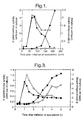
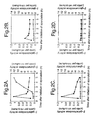
- a strain was constructed, containing the two reporter genes mentioned above (i.e., gpr-uidA and spoIIAA-lacZ ) but in addition, a genetic insertion which renders the essential cell-division gene ftsZ dependent on an inducer chemical IPTG (Beall and Lutkenhaus, 1991).
- the strain was induced to sporulate under conditions in which the inducer was either present or absent and the two reporter activities were measured.
- Figure 1 shows the effect of depletion of FtsZ on expression of spoIIAA-lacZ (circles) and gpr-uidA (squares).
- ⁇ -galactosidase from the lacZ gene
- ⁇ -glucuronidase from the uidA gene
- the strain was induced to sporulate by standard methods (Partridge and Errington, 1993, Mol. Microbiol. 8, 945-955).
- subtilis strains were obtained for cells grown in a microtitre plate format.
- cells of strain 846 were induced to sporulate by the normal method involving resuspension in a starvation medium (Partridge and Errington, 1993).
- the culture was divided into two portions. One portion was allowed to continue sporulating in the glass flask, as usual (filled symbols in Fig. 3).
- the other half of the culture was dispensed, in 50 ⁇ l aliquots, into the wells of a standard 8 by 12 microtitre plate with 360 ⁇ l wells (open symbols).
- microtitre plate was incubated alongside the glass flask, shaking at 37°C. At intervals, the contents of one well of the plate and 50 ⁇ l of the flask culture were removed and assayed for ⁇ -galactosidase (circles) and ⁇ -glucuronidase (squares). As shown in Fig. 3, the time courses showed good induction of both reporter enzymes in the microtitre plate sporulated culture, though there were minor qualitative differences in their time courses from those of the flask culture. Cells induced to sporulate in microtitre plates were also observed to form spores with similar efficiency to those in flasks. We conclude that the sporulation experiments required for the assay to be run in high throughput mode can be done in readily available microtitre plates.
Landscapes
- Genetics & Genomics (AREA)
- Health & Medical Sciences (AREA)
- Engineering & Computer Science (AREA)
- Life Sciences & Earth Sciences (AREA)
- Chemical & Material Sciences (AREA)
- Wood Science & Technology (AREA)
- Organic Chemistry (AREA)
- Biotechnology (AREA)
- General Engineering & Computer Science (AREA)
- Biomedical Technology (AREA)
- Zoology (AREA)
- Bioinformatics & Cheminformatics (AREA)
- Molecular Biology (AREA)
- Microbiology (AREA)
- Plant Pathology (AREA)
- Physics & Mathematics (AREA)
- Biochemistry (AREA)
- General Health & Medical Sciences (AREA)
- Biophysics (AREA)
- Measuring Or Testing Involving Enzymes Or Micro-Organisms (AREA)
- Micro-Organisms Or Cultivation Processes Thereof (AREA)
Description
Claims (24)
- A method of determining whether an agent inhibits cell division in Bacillus species, which method comprises inducing a Bacillus strain having a chromosome with two artificially introduced reporter genes, a first reporter gene having a promoter which is dependent on active σF or σE factors, and a second reporter gene whose promoter provides a measure of the synthesis of the σF or σE factor, to divide asymmetrically, as during sporulation, in the presence of the agent, and observing expression of the first and second reporter genes.
- A method as claimed in claim 1, wherein the promoter of the first reporter gene is that of the gpr gene and the promoter of the second reporter gene is that of the spoIIAA gene.
- A method as claimed in claim 1 or 2, wherein the expression of one or both of the reporter genes may be observed by fluorimetry or spectrophotometry.
- A method as claimed in any one of claims 1 to 3, wherein one or both of the reporter genes encodes an enzyme.
- A method as claimed in any one of claims 1 to 4, wherein one of the reporter genes is lacZ.
- A method as claimed in any one of claims 1 to 5, wherein one of the reporter genes is uidA.
- A method as claimed in claim 6, wherein the reporter genes are lacZ and uidA.
- A method as claimed in any one of claims 1 to 7, wherein the Bacillus strain is a B. subtilis strain.
- A method as claimed in any one of claims 1 to 8, wherein the Bacillus strain is induced to sporulate and is contacted, just prior to asymmetric cell division, with the agent.
- A method as claimed in any one of claims 1 to 9, wherein, in a case where expression of the first reporter gene is observed to be reduced relative to the second reporter gene, the cells are examined to determine whether normal asymmetric septa have formed.
- A method as claimed in any one of claims I to 10 which further comprises using the agent as an antibiotic to kill or inhibit cell division of bacteria in vitro.
- A method of constructing a Bacillus strain for use in screening possible anti-microbial agents, comprising artificially introducing into a chromosome of a Bacillus strain two reporter genes, each linked to a different promoter wherein the first reporter gene has a promoter which is dependent on active σF or σE factors, and the second reporter gene has a promoter which provides a measure of the synthesis of the σF or σE factor.
- A method as claimed in claim 12, wherein the promoter of the first reporter gene is that of the gpr gene and the promoter of the second reporter gene is that of the spoIIAA gene.
- A method as claimed in claim 12 or 13, wherein the expression of one or both of the reporter genes may be observed by fluorimetry or spectrophotometry.
- A method as claimed in any one of claims 12 to 14, wherein one or both of the reporter genes encodes an enzyme.
- A method as claimed in any one of claims 12 to 15, wherein one of the reporter genes is lacZ.
- A method as claimed in any one of claims 12 to 16, wherein one of the reporter genes is uidA.
- A method as claimed in claim 17, wherein the reporter genes are lacZ and uidA.
- A method as claimed in any one of claims 12 to 18, wherein the Bacillus strain is a B. subtilis strain.
- A Bacillus strain having a chromosome with two artificially introduced reporter genes, the first reporter gene having a promoter which is dependent on active σF or σE factors, and the second reporter gene having a promoter which provides a measure of the synthesis of the σF or σE factor, wherein one of the reporter genes is selected from lacZ and uidA.
- A Bacillus strain as claimed in claim 20, wherein the reporter genes are lacZ and uidA.
- A Bacillus strain having a chromosome with two artificially introduced reporter genes, the first reporter gene having a promoter which is dependent on active σF or σE factors, and the second reporter gene having a promoter which provides a measure of the synthesis of the σF or σE factor, wherein both of the reporter genes encode an enzyme.
- A Bacillus strain as claimed in any one of claims 20 to 22, wherein the promoter of the first reporter gene is that of the gpr gene and the promoter of the second reporter gene is that of the spoIIAA gene.
- A Bacillus strain according to any one of claims 20 to 23 which is a B. subtilis strain.
Applications Claiming Priority (3)
| Application Number | Priority Date | Filing Date | Title |
|---|---|---|---|
| GBGB9625832.2A GB9625832D0 (en) | 1996-12-12 | 1996-12-12 | Bacillus strain and assay method |
| GB9625832 | 1996-12-12 | ||
| PCT/GB1997/003414 WO1998026088A1 (en) | 1996-12-12 | 1997-12-11 | Bacillus strain and antibiotic screening method |
Publications (2)
| Publication Number | Publication Date |
|---|---|
| EP0944735A1 EP0944735A1 (en) | 1999-09-29 |
| EP0944735B1 true EP0944735B1 (en) | 2003-09-24 |
Family
ID=10804336
Family Applications (1)
| Application Number | Title | Priority Date | Filing Date |
|---|---|---|---|
| EP97949030A Expired - Lifetime EP0944735B1 (en) | 1996-12-12 | 1997-12-11 | Bacillus strain and antibiotic screening method |
Country Status (7)
| Country | Link |
|---|---|
| US (1) | US6255065B1 (en) |
| EP (1) | EP0944735B1 (en) |
| JP (1) | JP4414000B2 (en) |
| DE (1) | DE69725168T2 (en) |
| ES (1) | ES2206756T3 (en) |
| GB (1) | GB9625832D0 (en) |
| WO (1) | WO1998026088A1 (en) |
Families Citing this family (3)
| Publication number | Priority date | Publication date | Assignee | Title |
|---|---|---|---|---|
| US6063578A (en) * | 1998-10-22 | 2000-05-16 | Signal Pharmaceuticals, Inc. | Dual reporter system and methods of use therefor |
| GB9824682D0 (en) * | 1998-11-10 | 1999-01-06 | Isis Innovation | Bacillus strain and assay method |
| KR100997044B1 (en) | 2008-04-11 | 2010-11-29 | 재단법인서울대학교산학협력재단 | Sigma factor R and method for increasing antibiotic production using the same |
Family Cites Families (3)
| Publication number | Priority date | Publication date | Assignee | Title |
|---|---|---|---|---|
| DE3429823A1 (en) * | 1984-08-14 | 1986-02-27 | Merck Patent Gmbh, 6100 Darmstadt | MEANS AND METHOD FOR DETECTING ANTIMICROBIALLY EFFECTIVE SUBSTANCES |
| WO1996035804A1 (en) | 1995-05-08 | 1996-11-14 | Merck & Co., Inc. | A novel biochemical interaction in bacteria |
| GB9512109D0 (en) | 1995-06-14 | 1995-08-09 | Isis Innovation | Bacillus strain and assay method |
-
1996
- 1996-12-12 GB GBGB9625832.2A patent/GB9625832D0/en active Pending
-
1997
- 1997-12-11 ES ES97949030T patent/ES2206756T3/en not_active Expired - Lifetime
- 1997-12-11 WO PCT/GB1997/003414 patent/WO1998026088A1/en not_active Ceased
- 1997-12-11 DE DE69725168T patent/DE69725168T2/en not_active Expired - Lifetime
- 1997-12-11 US US09/319,778 patent/US6255065B1/en not_active Expired - Fee Related
- 1997-12-11 JP JP52637698A patent/JP4414000B2/en not_active Expired - Fee Related
- 1997-12-11 EP EP97949030A patent/EP0944735B1/en not_active Expired - Lifetime
Also Published As
| Publication number | Publication date |
|---|---|
| JP4414000B2 (en) | 2010-02-10 |
| ES2206756T3 (en) | 2004-05-16 |
| DE69725168D1 (en) | 2003-10-30 |
| US6255065B1 (en) | 2001-07-03 |
| EP0944735A1 (en) | 1999-09-29 |
| WO1998026088A1 (en) | 1998-06-18 |
| JP2001510335A (en) | 2001-07-31 |
| DE69725168T2 (en) | 2004-07-15 |
| GB9625832D0 (en) | 1997-01-29 |
Similar Documents
| Publication | Publication Date | Title |
|---|---|---|
| Shockman et al. | Bacterial walls, peptidoglycan hydrolases, autolysins, and autolysis | |
| Perego | A new family of aspartyl phosphate phosphatases targeting the sporulation transcription factor Spo0A of Bacillus subtilis | |
| Paidhungat et al. | Genetic requirements for induction of germination of spores of Bacillus subtilis by Ca2+-dipicolinate | |
| Youngman et al. | New ways to study developmental genes in spore-forming bacteria | |
| Errington et al. | Use of a lacZ gene fusion to determine the dependence pattern and the spore compartment expression of sporulation operon spoVA in spo mutants of Bacillus subtilis | |
| Ruzal et al. | Osmotic strength blocks sporulation at stage II by impeding activation of early sigma factors in Bacillus subtilis | |
| US6255065B1 (en) | Bacillus strain and antibiotic screening method | |
| EP0833931B1 (en) | Bacillus strain and sporulation assay method | |
| Wachi et al. | Irregular nuclear localization and anucleate cell production in Escherichia coli induced by a Ca2+ chelator, EGTA | |
| EP1129213B1 (en) | Bacillus strain and assay methods | |
| Charles et al. | Resistance to chloramphenicol in Proteus mirabilis by expression of a chromosomal gene for chloramphenicol acetyltransferase | |
| Sharrock et al. | Suppression of defective-sporulation phenotypes by the Bacillus subtilis mutation rev4 | |
| Warburg et al. | A detailed study of gerJ mutants of Bacillus subtilis | |
| WARBURG et al. | Influence of alkali metal cations on the germination of spores of wild-type and gerD mutants of Bacillus subtilis | |
| PéRez-GonzáLez et al. | The mechanism of resistance to puromycin and to the puromycin-precursor O-demethyl-puromycin in Streptomyces alboniger | |
| EP0944734B1 (en) | Bacillus strain and antibiotic screening method | |
| US20070298413A1 (en) | Topoisomerase Modulators Assays | |
| US20060281110A1 (en) | Methods to identify antimicrobial compounds that interrupt ribosome biogenesis | |
| WO1999023244A1 (en) | Methods and compositions for modulation of bacterial topoisomerase enzymes | |
| Osburne et al. | Phenotypes conferred by the Bacillus subtilis recM13 mutation and the din23 fusion | |
| KR20030081342A (en) | Method for Identifying Modulators of Transcription | |
| Khafagy et al. | Mechanism of action of bilharcid and tartar-emetic | |
| Cooksey et al. | Identification of antibacterial resistance mechanisms:: Advances in Laboratory Assays | |
| JP2002533095A (en) | Sequence identification method |
Legal Events
| Date | Code | Title | Description |
|---|---|---|---|
| PUAI | Public reference made under article 153(3) epc to a published international application that has entered the european phase |
Free format text: ORIGINAL CODE: 0009012 |
|
| 17P | Request for examination filed |
Effective date: 19990127 |
|
| AK | Designated contracting states |
Kind code of ref document: A1 Designated state(s): BE DE ES FR GB IT NL |
|
| 17Q | First examination report despatched |
Effective date: 20010913 |
|
| GRAH | Despatch of communication of intention to grant a patent |
Free format text: ORIGINAL CODE: EPIDOS IGRA |
|
| RAP1 | Party data changed (applicant data changed or rights of an application transferred) |
Owner name: ISIS INNOVATION LIMITED |
|
| GRAH | Despatch of communication of intention to grant a patent |
Free format text: ORIGINAL CODE: EPIDOS IGRA |
|
| GRAA | (expected) grant |
Free format text: ORIGINAL CODE: 0009210 |
|
| AK | Designated contracting states |
Kind code of ref document: B1 Designated state(s): BE DE ES FR GB IT NL |
|
| PG25 | Lapsed in a contracting state [announced via postgrant information from national office to epo] |
Ref country code: NL Free format text: LAPSE BECAUSE OF FAILURE TO SUBMIT A TRANSLATION OF THE DESCRIPTION OR TO PAY THE FEE WITHIN THE PRESCRIBED TIME-LIMIT Effective date: 20030924 Ref country code: BE Free format text: LAPSE BECAUSE OF FAILURE TO SUBMIT A TRANSLATION OF THE DESCRIPTION OR TO PAY THE FEE WITHIN THE PRESCRIBED TIME-LIMIT Effective date: 20030924 |
|
| REG | Reference to a national code |
Ref country code: GB Ref legal event code: FG4D |
|
| REF | Corresponds to: |
Ref document number: 69725168 Country of ref document: DE Date of ref document: 20031030 Kind code of ref document: P |
|
| NLV1 | Nl: lapsed or annulled due to failure to fulfill the requirements of art. 29p and 29m of the patents act | ||
| REG | Reference to a national code |
Ref country code: ES Ref legal event code: FG2A Ref document number: 2206756 Country of ref document: ES Kind code of ref document: T3 |
|
| ET | Fr: translation filed | ||
| PLBE | No opposition filed within time limit |
Free format text: ORIGINAL CODE: 0009261 |
|
| STAA | Information on the status of an ep patent application or granted ep patent |
Free format text: STATUS: NO OPPOSITION FILED WITHIN TIME LIMIT |
|
| 26N | No opposition filed |
Effective date: 20040625 |
|
| PGFP | Annual fee paid to national office [announced via postgrant information from national office to epo] |
Ref country code: FR Payment date: 20120110 Year of fee payment: 15 |
|
| PGFP | Annual fee paid to national office [announced via postgrant information from national office to epo] |
Ref country code: DE Payment date: 20111227 Year of fee payment: 15 |
|
| PGFP | Annual fee paid to national office [announced via postgrant information from national office to epo] |
Ref country code: IT Payment date: 20111228 Year of fee payment: 15 |
|
| PGFP | Annual fee paid to national office [announced via postgrant information from national office to epo] |
Ref country code: ES Payment date: 20111221 Year of fee payment: 15 |
|
| PGFP | Annual fee paid to national office [announced via postgrant information from national office to epo] |
Ref country code: GB Payment date: 20121220 Year of fee payment: 16 |
|
| REG | Reference to a national code |
Ref country code: GB Ref legal event code: 732E Free format text: REGISTERED BETWEEN 20130425 AND 20130501 |
|
| REG | Reference to a national code |
Ref country code: FR Ref legal event code: ST Effective date: 20130830 |
|
| REG | Reference to a national code |
Ref country code: DE Ref legal event code: R119 Ref document number: 69725168 Country of ref document: DE Effective date: 20130702 |
|
| PG25 | Lapsed in a contracting state [announced via postgrant information from national office to epo] |
Ref country code: DE Free format text: LAPSE BECAUSE OF NON-PAYMENT OF DUE FEES Effective date: 20130702 |
|
| PG25 | Lapsed in a contracting state [announced via postgrant information from national office to epo] |
Ref country code: FR Free format text: LAPSE BECAUSE OF NON-PAYMENT OF DUE FEES Effective date: 20130102 |
|
| PG25 | Lapsed in a contracting state [announced via postgrant information from national office to epo] |
Ref country code: IT Free format text: LAPSE BECAUSE OF NON-PAYMENT OF DUE FEES Effective date: 20121211 |
|
| REG | Reference to a national code |
Ref country code: ES Ref legal event code: FD2A Effective date: 20140509 |
|
| PG25 | Lapsed in a contracting state [announced via postgrant information from national office to epo] |
Ref country code: ES Free format text: LAPSE BECAUSE OF NON-PAYMENT OF DUE FEES Effective date: 20121212 |
|
| GBPC | Gb: european patent ceased through non-payment of renewal fee |
Effective date: 20131211 |
|
| PG25 | Lapsed in a contracting state [announced via postgrant information from national office to epo] |
Ref country code: GB Free format text: LAPSE BECAUSE OF NON-PAYMENT OF DUE FEES Effective date: 20131211 |