EP0939772B1 - Pflanzliche rhamnogalacturonane ii zur komplexbildung schwermetall-kationen - Google Patents
Pflanzliche rhamnogalacturonane ii zur komplexbildung schwermetall-kationen Download PDFInfo
- Publication number
- EP0939772B1 EP0939772B1 EP97949577A EP97949577A EP0939772B1 EP 0939772 B1 EP0939772 B1 EP 0939772B1 EP 97949577 A EP97949577 A EP 97949577A EP 97949577 A EP97949577 A EP 97949577A EP 0939772 B1 EP0939772 B1 EP 0939772B1
- Authority
- EP
- European Patent Office
- Prior art keywords
- heavy metal
- rhamnogalacturonan
- dimer
- metal cation
- drg
- Prior art date
- Legal status (The legal status is an assumption and is not a legal conclusion. Google has not performed a legal analysis and makes no representation as to the accuracy of the status listed.)
- Expired - Lifetime
Links
- 0 CC12OB(O)OC1C(OC)OC*2OC Chemical compound CC12OB(O)OC1C(OC)OC*2OC 0.000 description 3
- ODPLTUKMBCDUPZ-UHFFFAOYSA-N COC(C(C1(C2)O)O)OCC12OC Chemical compound COC(C(C1(C2)O)O)OCC12OC ODPLTUKMBCDUPZ-UHFFFAOYSA-N 0.000 description 1
Images


Classifications
-
- A—HUMAN NECESSITIES
- A62—LIFE-SAVING; FIRE-FIGHTING
- A62D—CHEMICAL MEANS FOR EXTINGUISHING FIRES OR FOR COMBATING OR PROTECTING AGAINST HARMFUL CHEMICAL AGENTS; CHEMICAL MATERIALS FOR USE IN BREATHING APPARATUS
- A62D3/00—Processes for making harmful chemical substances harmless or less harmful, by effecting a chemical change in the substances
- A62D3/30—Processes for making harmful chemical substances harmless or less harmful, by effecting a chemical change in the substances by reacting with chemical agents
- A62D3/33—Processes for making harmful chemical substances harmless or less harmful, by effecting a chemical change in the substances by reacting with chemical agents by chemical fixing the harmful substance, e.g. by chelation or complexation
-
- B—PERFORMING OPERATIONS; TRANSPORTING
- B09—DISPOSAL OF SOLID WASTE; RECLAMATION OF CONTAMINATED SOIL
- B09C—RECLAMATION OF CONTAMINATED SOIL
- B09C1/00—Reclamation of contaminated soil
- B09C1/02—Extraction using liquids, e.g. washing, leaching, flotation
-
- B—PERFORMING OPERATIONS; TRANSPORTING
- B09—DISPOSAL OF SOLID WASTE; RECLAMATION OF CONTAMINATED SOIL
- B09C—RECLAMATION OF CONTAMINATED SOIL
- B09C1/00—Reclamation of contaminated soil
- B09C1/10—Reclamation of contaminated soil microbiologically, biologically or by using enzymes
- B09C1/105—Reclamation of contaminated soil microbiologically, biologically or by using enzymes using fungi or plants
-
- C—CHEMISTRY; METALLURGY
- C08—ORGANIC MACROMOLECULAR COMPOUNDS; THEIR PREPARATION OR CHEMICAL WORKING-UP; COMPOSITIONS BASED THEREON
- C08B—POLYSACCHARIDES; DERIVATIVES THEREOF
- C08B37/00—Preparation of polysaccharides not provided for in groups C08B1/00 - C08B35/00; Derivatives thereof
- C08B37/0006—Homoglycans, i.e. polysaccharides having a main chain consisting of one single sugar, e.g. colominic acid
- C08B37/0045—Homoglycans, i.e. polysaccharides having a main chain consisting of one single sugar, e.g. colominic acid alpha-D-Galacturonans, e.g. methyl ester of (alpha-1,4)-linked D-galacturonic acid units, i.e. pectin, or hydrolysis product of methyl ester of alpha-1,4-linked D-galacturonic acid units, i.e. pectinic acid; Derivatives thereof
-
- A—HUMAN NECESSITIES
- A62—LIFE-SAVING; FIRE-FIGHTING
- A62D—CHEMICAL MEANS FOR EXTINGUISHING FIRES OR FOR COMBATING OR PROTECTING AGAINST HARMFUL CHEMICAL AGENTS; CHEMICAL MATERIALS FOR USE IN BREATHING APPARATUS
- A62D2101/00—Harmful chemical substances made harmless, or less harmful, by effecting chemical change
- A62D2101/40—Inorganic substances
- A62D2101/43—Inorganic substances containing heavy metals, in the bonded or free state
Definitions
- the present invention lies generally in the field of rhamnogalacturonan-II (RG-II) and to its ability to complex specific multivalent heavy metal cations that may be toxic or radioactive.
- the present invention relates to the utility of RG-II in methods for the detection and detoxification of specific heavy metal cation-contaminated milieu such as food, plasma, tissue, waters and soils.
- Rhamnogalacturonan-II (RG-II) is a low molecular weight, structurally well-defined, complex pectic polysaccharide that is released from the walls of plant cells by treatment with endo - ⁇ -1,4-polygalacturonase [York et al. (1985) Methods Enzymol. 118: 3-40].
- RG-II has also been isolated from the cell walls of many plant cells, for example, sycamore ( Acer pseudoplatanus ) [Darvill et al. (1980) in The Plant Cell (N.E. Tolbert, ed.) Academic Press, New York, pp.
- RG-II contains eleven different glycosyl residues [O'Neill et al. (1990) Methods Plant Biochem. 2:415-441], including the unusual monosaccharides apiose, 3- C -carboxy-5-deoxy-L-xylose (aceric acid), 3-deoxy-D- manno -octulosonic acid (Kdo), and 3-deoxy-D- lyxo -heptulosaric acid (Dha).
- RG-II also contains the seldom observed methyl-etherified sugars 2- O -methyl xylose and 2- O -methyl fucose, Many of the glycosidic linkages and ring forms of the glycosyl residues of RG-II, including ⁇ -D-galactosyluronic acid, ⁇ -L-arabinofuranose, ⁇ -L-arabinopyranose, and a fully substituted rhamnosyl residue, are also unusual. Some of the glycosyl residues in RG-II are O -acetylated.
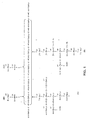
- the backbone of RG-II has been shown to be composed of at least seven 1,4-linked ⁇ -D-galactosyluronic acid residues [Puvanesarajah et el. (1991) Carbohydr. Res. 218 :211-222], schematically presented in Figure 1.
- RG-II (see Figure 1) has been shown to have the same structure in every plant from which it has been isolated.
- RG-II isolated from radish roots [Kobayashi et al. (1996) Plant Physiol. 110 :1017-1020; Matoh et al. (1993) Plant Cell. Physiol. 34 :639-642] and from sugar beet [Ishii et al. (1996) Carbohydr. Res. 284 :1-9] were found to contain borate esters. Boron is known to be an essential microelement for normal plant growth and development [Loomis et al. (1992) BioFactors 3 :229-239; Hu et al. (1994) Plant Physiol. 105 :681-689; Shelp et al. (1995) Physiol.
- borate-diol esters that covalently crosslink cell wall pectic polysaccharides (Kobayashi et al. (1996) Plant Physiol. 110 :1017-1020; Matoh et al. (1993) Plant Cell Physiol. 34 :639-642; Ishii et al. (1996) Carbohydr. Res. 284: 1-9]. Also, borate ester cross-linking of polysaccharides in vitro has been shown to be pH-dependent [Deuel et al. (1954) in Natural Plant Hydrocolloids [Adv. Chem. Series No. 11) pp. 51-61, American Chem. Society, Washington, D.C.].
- boron cross-links are the "load-bearing", acid-labile linkages that are hydrolyzed by a decrease in cell wall pH during auxin-induced cell expansion [Loomis et al. (1992) BioFactors 3 :229-239].
- RG-II is the only boron-containing polysaccharide that has been isolated from a biological source.
- Contamination of the environment with heavy metal ions and/or alkyl and thiol derivatives of metals has increased over the last several decades, with toxic levels of the contaminants being reached in air, water and/or soil in certain locations. Contamination may stem from human and industrial sources. Heavy metals are an increasing problem in the sludge produced by industries and populations centers [Adriano (1986) "Trace elements in the terrestrial environment," New York, Springer Verlag; Alloway (1990) "Heavy metals in soils” New York, John Wiley & Sons]. The wind borne residue of volatile metals have contaminated land at great distances from smelting operations, rendering it useless [Lepp (1981) "Effects of heavy metal pollution on plants” In Appl. Sci.
- heavy metals are often found in soil and marine sediments as heavy metal salts (e.g., thiol salts), as chelates with acidic humic substances (for example, methylmercury), and to a lesser extent other organocationic species, and as free multivalent cations.
- Some heavy metals cycle through the aqueous phase and into the atmosphere as volatile elemental cations, free or complexed, and are then oxidized and washed by rain into the marine environment [Barkay et al. (1992) Biodegradation 3 :147-159].
- Some bacteria in soil and sediments can detoxify heavy metal cations by reducing them to their metallic forms.
- Heavy metals are often found bound in the form of organocomplexes in contaminated animals and microbes [Barkay et al. (1992) supra; Robinson and Tuovinen (1984) Microbiological Reviews 48: 95-124]. In fish, where heavy metal toxicity is well studied, most of the tissue-associated heavy metals are found as organocomplexes [Pan Hou and Imura (1987) Arch . Microbiol. 131 :176-177]. Heavy metal organocomplexes may be volatile and extremely toxic to plants and, generally, to the environment [D'Itri and D'Itri (1987) Environ. Management 2 :3-16].
- the present invention provides an assay to detect specific heavy metal cations and a method to complex such, and enables phytoremediation and/or revegetation of contaminated environments via plants and plant components capable of heavy metal cation complexation and sequestration.
- RG-II complex pectic polysaccharide, rhamnogalacturonan-II
- RG-II rhamnogalacturonan-II
- mRG-II boron-free monomer
- dRG-II-B boron-containing dimer
- RG-II The molecular structure of RG-II is provided in Fig. 1.
- the glycosyl residue compositions for RG-II monomer and dimer were indistinguishable.
- the detection of a unique saccharide such as aceric acid in a plant component identifies the component as being RG-II.
- Isolated dimeric RG-II contains between 1 and 2 mole of boron per mole of dimer, whereas isolated monomeric RG-II contains ⁇ 0.05 mole of boron per mole of mRG-II.
- dRG-II-B but not mRG-II, was shown to contain a 1:2 borate-diol ester.
- the borate ester in dRG-II-B was found to be attached to two of the four apiosyl residues.
- the borate ester in dRG-II was stable above pH 4.
- dRG-II-B was formed in vitro when mRG-II was incubated with boric acid at a pH between approximately 2.2 and 4.5, and preferably between approximately 2.8 and 3.7, and more preferably between approximately 3.0 and 3.4.
- boric acid at a pH between approximately 2.2 and 4.5, and preferably between approximately 2.8 and 3.7, and more preferably between approximately 3.0 and 3.4.
- the extent of mRG-II dimerization was enhanced in the presence of specific multivalent heavy metal cations.
- mRG-II is incubated with boric acid in the presence of specific heavy metal cations, greater than 85% of the mRG-II is converted to the dimeric form.
- the present invention provides, therefore, for industrial applications of a complex formed between a specific multivalent heavy metal cation and a dimer of RG-II or a complex between a specific heavy metal cation and RG-II formed during the dimerization of monomeric RG-II in the presence of boric acid and specific heavy metal cations.
- the cations bound to the dRG-II-B were not directly complexed to the borate ester moiety, but formed metal coordination complexes with dRG-II-B.
- the method for the complexation of heavy metal cations can also be carried out with the dimeric form of RG-II (i.e., dRG-II-B).
- RG-II-B the dimeric form of RG-II
- complexation is more complete with the utilization of monomeric RG-II and boric acid than with dimeric RG-II.
- the invention further provides for industrial applications of specific heavy metal cations capable of forming complexes with RG-II.
- the heavy metal cations capable of complexation with RG-II comprise physical and chemical properties that include, but are not limited to, (a) a valence of 2+ or 3+, (b) a crystal ionic radius of >0.9 ⁇ , (c) an electronic configuration with an incompletely filled subshell and (d) an ionization energy that is low and associated with a low ionic potential.
- Such heavy metal cations capable of complexation with RG-II include, but are not limited to, metals, earth metals, lanthanides, actinides, etc., and are exemplified by cations such as Ba 2+ , Ce 3+ , Eu 3+ , La 3+ , Pb 2+ , Pr 3+ , Sr 2+ and the like.
- cation-RG-II complexes comprise approximately 1 mole of divalent cation per mole of dRG-II; in other embodiments, cation-RG-II complexes comprise approximately 2 mole of trivalent cation per mole of dRG-II.
- an assay for the detection of a heavy metal cation possessing the ability to form a complex with RG-II measures the difference in ratio of RG-II dimer to RG-II monomer after incubation of monomeric RG-II and boric acid in the presence and absence of said heavy metal cation.
- An increase in the ratio of dimer to monomer RG-II correlates with the ability of the heavy metal cation to form a complex with dimeric RG-II.
- wine was decontaminated of a heavy metal cation (lead). Removal of latent RG-II complexes in the wine by adsorption or anion-exchange chromatography or by filtration resulted in a concomitant removal of lead in the form of lead-RG-II complexes. The lead contents of different types of wine were reduced by approximately 89% to 97%.
- wine or other solution
- lead or other heavy metal cation
- monomeric RG-II in the presence of boric acid (or with a borate ester crosslinked RG-II dimer) for a time sufficient to allow formation of cation-RG-II complexes between the cation (e.g., lead) and dimers of RG-II.
- boric acid or with a borate ester crosslinked RG-II dimer
- the resultant cation-RG-II complexes were removed from the wine (or other contaminated solution) either chromatographically or by filtration.
- the residual lead content of the solution was either 0% or was decreased to between 0% and approximately 11%, depending on the means used to remove the lead-RG-II complexes from the solution.
- the lead-contaminated solution was treated with dimeric RG-II, the residual lead content of the solution was decreased to between approximately 5% and 29%. Removal of heavy metal cations from a contaminated medium appeared to be more effective with monomeric RG-II and boric acid than with dimeric RG-II.
- RG-II can be used for human and other indications to complex, sequester and remove specific heavy metal cations such as Ba 2+ , Ce 3+ , Eu 3+ , La 3+ , Pb 2+ , Pr 3+ , Sr 2+ , etc., without also complexing and removing such cations as Ca 2+ , Mg 2+ , Mn 2+ , etc.
- cation selectivity permits RG-II to be used preferentially, when compared with general cation chelators such as EDTA, etc., for the exclusive sequestration of specific heavy metal cations, for example, in cases of heavy metal poisoning, radioactive contaminations, etc.
- Plasma may also be detoxified of specific heavy metal cations by ex vivo treatment with RG-II.
- the resultant cation-RG-II complexes, being non-digestible in higher animals, are eliminated naturally from the body.
- these methods for complexation and sequestration of specific metal cations with monomeric and/or dimeric RG-II are applied, for example, to the decontamination and/or detoxification of specific heavy metal cation-contaminated foods used for human and animal consumption.
- Complexation of heavy metal cations with RG-II effectively eliminates the toxicity associated with the ingestion and assimilation of these heavy metal cations in the gastrointestinal tract.
- the invention also provides for industrial applications of a dRG-II-B-cation complex, wherein the cation is a multivalent specific heavy metal cation of the invention and includes exemplified cations such as Ba 2+ , Ce 3+ , Eu 3+ , La 3+ , Pb 2+ , Pr 3+ , Sr 2+ and the like, and wherein, for example, a complex comprises ⁇ 1 mole of a divalent cation or 2 mole of a trivalent cation per mole of dRG-II-B.
- a dRG-II-B-cation complex of the invention is useful in human.
- a Ba 2+ -dRG-II-B complex can be used as a barium carrier; a La 3+ -dRG-II-B complex is useful as a water-soluble chemical shift reagent for NMR spectroscopy, etc. It is further contemplated by the invention that the dRG-II-B is useful as a non-toxic complex for boron neutron capture therapy. Also, the invention contemplates the use of a dRG-II-B-cation complex as an ionophoric antibiotic by virtue of the toxicity inherent in specific heavy metal cations to microorganisms.
- the invention provides a method of bioremediation, based on the ability of plants to take up specific heavy metal cations which become complexed with endogenous RG-II synthesized in vivo as a cell wall component.
- Fig. 1 The partial structure of RG-II.
- the backbone of endopolygalacturonase-released RG-II is composed of nine 1,4-linked ⁇ -D-galactosyluronic acid residues to which four side chains are attached. The order in which the side chains are attached has not been determined, although it is known which ones are attached to O -2 and O -3 of the galactosyluronic acid residues.
- the backbone galactosyluronic acid residues to which the four side chains [designated as (A), (B), (C) and (D)] are attached have been arbitrarily assigned.
- R 1 H, ⁇ -L-Rha ⁇ .
- Ace f A 3-C-carboxy-5-deoxy-L-xylofuranosyl; Api f , apiofuranosyl; Ara f , arabinofuranosyl; Ara p , arabinopyranosyl; Dhap, 3-deoxy-D- lyxo -heptulopyranosylaric acid; Fuc p , fucopyranosyl; Gal p , galactopyranosyl; Gal p A, galactopyranosyluronic acid; Gl cp A, glucopyranosyluronic acid; Kdo p , 3-deoxy-D -manno -octulopyranosylonic acid; 2- O -MeFuc p , 2- O -methylfucopyranosyl; 2- O -MeXyl p , 2- O -methylxylopyranosyl; Rha
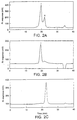
- Fig. 2 Superdex-75® HR 10/30 size excusion chromatography of RG-II.
- Panel A shows the elution profile of sycamore RG-II. The peaks labeled I and II were collected manually, and their glycosyl residue compositions (Table I) were determined by GLC analysis of their TMS methyl glycoside derivatives. Fraction I corresponds to dRG-II-B and Fraction II corresponds to mRG-II.
- Panel B shows the elution profile of etiolated pea stem RG-II. The dRG-II-B (peak I) was collected manually, and its glycosyl residue compositions were determined by GLC analysis of its TMS methyl glycoside derivatives (Table I).
- Panel C shows the elution profile of red wine RG-II.
- the glycosyl residue composition of red wine mRG-II was determined, without purification on the SEC column, by GLC analysis of its TMS methyl glycoside derivatives (Table I).
- the SEC column was eluited at 0.6 ml/min with 25 mM ammonium formate, pH 5.2, and the eluant monitored with a Hewlett-Packard 1037A refractive index detector (x 16 attenuation).
- the column void volume ( ⁇ 13.5 min) was determined with a dextran standard (25 kDa) and the column-included volume ( ⁇ 34 min) determined with glucose.
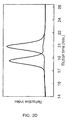
- Panel D shows the elution profile of RG-II prepared on a large scale from red wine.
- Two RG-II peaks were eluted from Superdex 75 HR 10/30 SEC: peak A, comprising approximately 90% of the dimer preparation and peak B, containing approximately 98% of the monomer preparation.
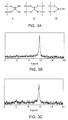
- FIG. 3 Proposed structures of borate esters and the 11 B NMR spectra of dRG-II-B.
- Panel A shows the structure of a 1:1 borate-diol ester ( I ), a 1:2 borate-diol ester ( II ), and a 1:1 boric acid-diol ester ( III ). These are the expected products of the reaction of borate and of boric acid with cis-diols.
- the 11 B signals (relative to boric acid at ⁇ 0.0) of I, II , and III are ⁇ -11.5 to -14.5, ⁇ -8.0 to -10.5, and ⁇ 0.0 to 0.4, respectively.
- Panel B shows the 11 B NMR spectrum of sycamore dRG-II-B (Fraction I in Fig. 2A).
- Panel C shows the 11 B NMR spectrum of pea dRG-II-B (Fraction I in Fig. 2C).
- Fig. 4 pH dependence for the formation of dRG-II-B from mRG-II.
- Panel A shows the effects of pH on the amount of dRG-II-B formed after 24 hours ( ⁇ ) and 72 hours ( ⁇ ) when red wine mRG-II (0.5 mM) is reacted, between pH 1.5 and 9, with boric acid (1.2 mM). The amount of dRG-II-B formed was determined by SEC.
- Panel B shows the effects of buffers between pH 2.7 and 4 on the amount of dRG-II-B formed after 24 hours when red wine mRG-II (0.5 mM) is reacted with boric acid (1.2 m).
- Panel C shows the effects of buffers between pH 1 and 7 on the amount of dRG-II-B formed after 24 hours when red wine mRG-II (0.5 mM) is reacted with boric acid (1.2 mM) and 0.5 mM SrCl 2 ( ⁇ ) or 0.5 mM Pb(NO 3 ) 2 ( ⁇ ).
- Fig. 5 The effect of selected divalent cations on the amount of dRG-II-B formed from mRG-II in 24 hours at pH 3.7.
- Panel A shows the amount of dRG-II-B formed after 24 hours at pH 3.7 by reacting red wine mRG-II (0.5 mM) with boric acid (1.2 mM) and selected divalent cations (0.5 mM).
- the amount of dRG-II-B formed was determined by SEC. The values shown above each bar represent the crystal ionic radius (in ⁇ ) of the divalent cation.
- Panel B shows the amount of dRG-II-B formed after 24 hours at pH 3.7 ( dark bars) or pH 5.3 ( gray bars) when sycamore mRG-II (0.5 mM) is reacted with boric acid (1.2 mM) in the presence of the indicated divalent cations (0.5 mM each).
- the amount of dRG-II-B formed was determined by SEC.
- Fig. 6 Displacement of Sr 2+ from dRG-II-B by divalent cations. Separate solutions of naturally occurring dRG-II-B from a Californian red wine containing approximately 0.35 moles Sr per mole dRG-II-B were incubated with salt solutions of Zn 2+ , Cu 2+ , Cd 2+ , Ca 2+ , Pb 2+ and Ba 2+ . After extensive dialysis, the residual Sr content in each sample of RG-II was measured. Only Pb 2+ and Ba 2+ were effective in displacing Sr 2+ .
- Dimeric RG-II (K204A) binds high levels of specific heavy metal cations.
- dRG-II-B isolated from red wine, takes up high levels of Cd 2+ , Pb 2+ , Sr 2+ , Ln 2+ and Cu 2+ when exposed to the cation for 24 hours at pH 5.
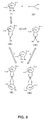
- Fig. 8 The proposed reaction of two 1,3' linked ⁇ -D-apiosyl residues ( I ) with boric acid ( II ).
- the 1:1 boric acid ester ( III ) and the 1:1 borate ester ( IV ) of an apiosyl residue can each react with a second 1 ⁇ 3'-linked ⁇ -D-apiosyl residue to generate one of the two diastereomeric forms of bis( ⁇ -D-apiofuranosyl)-( R )-2,3:2,3 and -( S )-2,3:2,3 borate ( V and VI ).
- rhamnogalacturonan-II or RG-II refers to a molecule having the molecular structure of Fig. 1.
- RG-II is a substituted 1,4-linked ⁇ -D-galacturonan wherein two different oligosaccharide side chains are attached at the 2-position of two different 4-linked galacturosyluronic acid residues and wherein two different oligosaccharide side chains are attached at the 3-position of two different 4-linked galactosyluronic acid residues. These four oligosaccharide side chains are illustrated in Fig. 1 as follows:
- An oligosaccharide (A), attached at the 2-position of a 4-linked galacturosyluronic acid residue is composed of a 3'-linked ⁇ -D-apiofuranosyl residue, a 2,3,4-linked ⁇ -L-rhamnopyranosyl residue, a 3,4-linked ⁇ -L-fucopyranosyl residue, a terminal non-reducing ⁇ -D-galactopyranosyl residue, a terminal non-reducing 2-O-methyl ⁇ -D-xylopyranosyl residue, a terminal non-reducing ⁇ -D-galactopyranosyluronic acid residue, a terminal non-reducing ⁇ -D-galactosyluronic acid residue, and a 2-linked ⁇ -D-glucopyranosyluronic acid residue.
- the glycosyl residues are linked together as shown in Fig. 1 at A.
- An oligosaccharide (B), attached at the 2-position of a 4-linked galacturosyluronic acid residue, is composed of a 3'-linked ⁇ -D-apiofuranosyl, a 3-linked ⁇ -L-rhamnopyranosyl residue, a 2-linked 3-C-carboxy-5-deoxy- ⁇ -L-xylofuranosyl residue (aceric acid), a 2,4-linked ⁇ -D-galactosyl residue, a terminal non-reducing 2-O-methyl ⁇ -L-fucosyl residue, a 2,3-linked ⁇ -L-arabinopyranosyl residue, a 2-linked ⁇ -L-rhamnopyronosyl residue, a terminal non-reducing ⁇ -L-arabinofuranosyl residue, and a terminal non-reducing ⁇ -L-rhamnopyranosyl residue.
- the 3-C-carboxy-5-deoxy- ⁇ -L-xylofuranosyl (aceric acid) residue is usually, but not always, O-acetylated at position 3.
- the terminal non-reducing 2-O-methyl ⁇ -L-fucosyl residue is usually, but not always, O-acetylated at position 3 or position 4.
- the glycosyl residues are linked together as illustrated in Fig. 1 at B.
- An oligosaccharide (C), attached at the 3-position of a 4-linked galacturosyluronic acid :residue, is composed of a terminal non-reducing ⁇ -L-rhamnopyranosyl residue and a 3-deoxy-D-manno-octulopyranosylonic acid residue (Kdo).
- the glycosyl residues are linked together as shown in Fig. 1 at C.
- An oligosaccharide (D), attached at the 3-position of a 4-linked galacturosyluronic acid residue is composed of a terminal non-reducing ⁇ -L-arabinofuranosyl residue and a 3-deoxy-D-lyxo-heptulopyranosylaric acid residue (Dha).
- the glycosyl residues are linked together as presented in Fig. 1 at D.
- glycosyl residue compositions and the glycosyl linkage compositions of each of the four oligosaccharide side chains distinguish RG-II from homogalacturonan, which is composed exclusively of 4-linked galactopyranosyluronic acid residues.
- RG-II is distinguished from rhamnogalacturonan I (RG-I), which contains a backbone composed of the disaccharide repeating unit: [-2)- ⁇ -L-rhamnopyranosyl-(1-4)- ⁇ -D-galactopyranosyluronic acid].
- the 2-linked ⁇ -L-rhamnopyranosyl residue is often, but not always, substituted at position 4 with oligosaccharides composed of arabinofuranosyl and galactopyranosyl residues.
- RG-II encompasses degradation products and derivatives of RG-II having a molecular structure essentially as defined herein, having a molecular weight for a monomeric RG-II of between approximately 3 and 5 kDa and for a dimeric RG-II of between approximately 6 and 10 kDa, wherein the backbone comprises from approximately 7 to approximately 50 galactosyluronic acid residues, wherein an oligosaccharide side chain may be deleted, and wherein an oligosaccharide side chain may comprise a deletion, addition or substitution of a glycosyl residue therein.
- An RG-II of the invention may be in a purified or partially purified form. A compound may be tested and identified as an RG-II by assaying for the presence of, for example, aceric acid which is an unusual and specific saccharide component found in plants only in RG-II.
- RG-II monomer or monomeric RG-II or mRG-II refers to a monomeric species of RG-II, having a molecular weight of approximately 4.9 kDa. mRG-II does not interact with boric acid to form a 1:1 borate-diol ester. However, monomeric RG-II, in the presence of boric acid, does form an RG-II dimer crosslinked by a 1:2 borate-diol ester.
- RG-II dimer or dimeric RG-II or dRG-II refers to a dimeric species of RG-II having a molecular weight of approximately 9.8 kDa.
- Dimeric RG-II is formed from mRG-II in the presence of a boric acid as a dimer crosslinked by a 1:2 borate-diol ester (dRG-II-B).
- a cation-rhamnogalacturonan-II complex or a cation-dRG-II-B or a cation-RG-II or a dRG-II-B-metal complex refers to a chemical association or complex formed between a heavy metal cation and a borate ester crosslinked RG-II dimer.
- the cations bound to dRG-II-B are unlikely to be directly complexed to the borate ester.
- the complex may be a metal coordination complex with dRG-II-B.
- multivalent heavy metal cation or heavy metal cation refers to a cation (a) that is capable of forming a complex with an RG-II dimer, (b) that comprises specific chemical and physical properties that include, but are not limited to, having:
- an effective amount refers to the quantity of active ingredient necessary to effect a change in a specific biochemical parameter.
- an effective amount of rhamnogalacturonan-II is the quantity of rhamnogalacturonan required to complex completely the heavy metal cations responsible for a condition of contamination or toxification or poisoning, such that said condition is ameliorated, neutralized or rendered moot.
- RG-II refers to the percentage of plant cell wall that is made up of RG-II, and refers preferentially to plants, and more preferentially to dicots, having an RG-II content of approximately 1-3% or greater of the cell wall.
- MALDI-TOF MS refers to matrix assisted laser desorprion/ionization time of flight mass spectroscopy, a technology well known in the art and detailed in Instrumental Methods of Analysis , 5th edition. Willard, Merritt, Dean, eds., D.Van Nostrand Co., New York, 1974.
- HR-SEC refers to high resolution size exclusion chromatography, a technology well known in the art and described in Instrumental Methods of Analysis, 5th edition. Willard, Merritt, Dean, eds., D.Van Nostrand Co., New York, 1974.
- ICP-AES refers to inductively-coupled-plasma atomic-emission spectroscopy, a technology well known in the art and described in Instrumental Methods of Analysis , 5th edition. Willard, Merritt, Dean, eds., D.Van Nostrand Co., New York, 1974.
- the present invention provides for industrial applications of an RG-II isolated from plant cell walls and from processed fruits and vegetables, e.g., wine.
- RG-II was isolated from sycamore and pea stem cell walls and from wine as mixtures of a boron-free monomer (mRG-II) and a boron-containing dimer (dRG-II-B).
- mRG-II boron-free monomer
- dRG-II-B boron-containing dimer
- Sycamore, pea, and red wine RG-II were subjected to SEC on a Superdex-75® column (Fig. 2).
- Sycamore RG-II was resolved (Fig. 2A) into two components (Fractions I and II), although both components had indistinguishable glycosyl residue compositions (Table I).
- MALDI-TOF MS showed that the components in Fractions I and II had molecular masses of 9.811 and 4.941 kDa, respectively.
- sycamore RG-II The calculated molecular mass of sycamore RG-II was 4.818 kDa, assuming that its backbone was composed of nine 1,4-linked ⁇ -D-galactosyluronic acid residues and that the aceric acid-containing side chain (see Fig. 1) contained two O -acetyl groups [Whitcombe et al. (1995) Carbohydr. Res. 271 :15-29]. Pea RG-II was resolved into a major peak and a minor peak that had the same retention volumes as Fractions I and II, respectively, of sycamore RG-II (Fig. 2B).
- the major component had a molecular mass of 10.205 kDa and has a glycosyl residue composition similar to that of sycamore RG-II (Table I).
- Red wine RG-II whose glycosyl residue composition was indistinguishable from sycamore RG-II, had a molecular mass of 4.713 kDa (Table I) and eluted as a single peak with a retention volume slightly greater than that of Fraction II of sycamore RG-II (Fig. 2C).
- red wine fraction A (dimer) eluted, as shown in Fig. 2(d), as a single peak comprising approximately 90% yield of the dimer preparation, while fraction B (monomer) eluted as a peak containing approximately 98% of the monomer preparation.
- the signals corresponding to the molecular ions of sycamore, pea, and red wine RG-II are ⁇ 800 a.m.u. wide at 50% peak height. These broad peaks may result in part from the formation of molecular ion salt adducts (e.g., [M + Na] + [M + 2Na] + , etc.) that are often present in the mass spectra of anionic carbohydrates.
- molecular ion salt adducts e.g., [M + Na] + [M + 2Na] + , etc.
- the number of galactosyluronic acid residues in the backbone of the various RG-IIs are apparently not identical (see Table I).
- RG-II backbones have been shown to contain between eight and eleven 1,4-linked ⁇ -D-galactosyluronic acid residues with nine residues being the most abundant [Whitcombe et al. (1995) Carbohydr. Res. 271 :15-29].
- dRG-II-B from sycamore and pea stem cell walls each contain between 1 and 2 mole of boron per mole of dimer.
- mRG-II from sycamore Fraction II in Fig. 2A
- red wine contains ⁇ 0.05 mole of boron per mole of mRG-II.
- Three additional fractions of RG-II have been isolated from red wine; dimers isolated from two of them have been shown to contain boron. Taken together, these results indicate that two mRG-II molecules are cross-linked by a borate ester to generate dRG-II-B.
- the 11 B NMR spectra of dRG-II-Bs isolated from sycamore and pea cell walls each contain a signal at ⁇ -9.6 ppm (relative to boric acid at ⁇ 0.0 ppm) that is characteristic of a 1:2 borate-diol ester (Fig. 3, B and C). No signals were detected in the region ( ⁇ -14.4 ppm) corresponding to a 1:1 borate-diol ester.
- the 11 B NMR spectra of the mRG-II from sycamore and red wine contains no signals corresponding to either the 1:1 or 1:2 borate-diol ester.
- dRG-II-B, but not mRG-II contains a 1:2 borate-diol ester, providing additional evidence that dRG-II-B is cross-linked by a borate ester.
- the borate ester in dRG-II-B is stable above pH 4.
- Treatment of sycamore and pea dRG-II-Bs at 20°C with 0.1 M HCl for 15 min resulted in the formation of mRG-II.
- Approximately 50% of the dRG-II-B is converted to mRG-II by treatment at pH 1.4 for 30 min at room temperature or by treatment at pH 2.8 for 24 hours at room temperature.
- dRG-II-B is stable above pH 4 for at least 72 hours at room temperature.
- dRG-II was formed in vitro between pH 2.2 and 4.5 when mRG-II was incubated with boric acid.
- borate ester cross-linking of RG-II required the boron-dependent in vitro formation of dRG-II-B.
- dRG-II-B formed between pH 2.2 and 4.5 in a time-dependent manner when mRG-II was reacted with boric acid.
- the maximum formation of dRG-II-B occurred between pH 3.0 and 3.4 (Fig. 4B).
- Time-resolved 11 B NMR spectroscopic analysis of the products generated by treating red wine mRG-II with boric acid established that a 1:2 borate-diol ester is formed, since the intensity of the signal ( ⁇ -9.6 ppm) corresponding to the 1:2 ester increased with time. No signal corresponding to the 1:1 borate-diol ester was detected.
- dRG-II-B Divalent cations increase the rate of formation of dRG-II-B.
- dRG-II-B accounts for only ⁇ 30% of RG-II when mRG-II is treated for 24 hours at pH 3.1 in the presence of boric acid (see Fig. 4, A and B).
- dRG-II-B released from the walls of suspension-cultured sycamore cells and pea stems contains Sr 2+ ( ⁇ 0.1 mole of Sr 2+ /mole of dRG-II-B), Ba 2+ ( ⁇ 0.1 mole of Ba 2+ /mole of dRG-II-B), and Pb 2+ ( ⁇ 0.1 mole of Pb 2+ /mole of dRG-II-B).
- dRG-II-B also contains Ca 2+ , Na + , K + , and Mg 2+ (1-4 mol/mole dRG-II-B).
- Sycamore mRG-II contains high levels of Ca 2+ , Na + , K + , and Mg 2+ but contains no Pb 2+ and markedly less Sr 2+ (0.008 mole of Sr 2+ /mole of mRG-II) and Ba 2+ (0.002 mole of Ba 2+ /mole of mRG-II).
- Naturally occurring dimeric RG-II of red wine contained approximately 0.25 moles of Sr 2+ , 0.01 moles of Ba 2+ and 0.02 moles of Pb 2+ per mole of dRG-II. Sr 2+ , Pb 2+ , and Ba 2+ could not be detected in naturally occurring red wine mRG-II.
- Aluminum has no discernible effect on dRG-II-B formation, whereas lanthanum and praseodymium enhance dRG-II-B formation, although they are less effective than lead.
- the increase in the formation of dRG-II-B in the presence of selected di- and trivalent cations does not result from the higher ionic strength of the reaction mixture since the addition of NaCl (100 mM) has no discernible effect on dRG-II-B formation.
- selected di- and trivalent cations enhance dimer formation was unexpected and indicated that steric factors may in part regulate dimer formation, since those di- and trivalent cations that enhance dimer formation all have ionic radii of >1.0 ⁇ (Weast (1983, supra ).
- Strontium, lead and barium bind to dRG-II-B but not to mRG-II.
- the ability of selected cations to enhance dRG-II-B formation (Fig. 5A) and the presence of Sr 2+ , Pb 2+ , and Ba 2+ in naturally occurring dRG-II-B arises from the cation-binding properties of mRG-II and dRG-II-B.
- dRG-II-B generated from mRG-II and boric acid in the presence of Sr 2+ , Pb 2+ , or Ba 2+ contained ⁇ 1 mole of divalent cation per mole of dimer (Table II).
- dRG-II-B has a high affinity for selected heavy metal cations.
- heavy metal cations that are complexed to RG-II can be displaced only by specific heavy metal cations.
- Sr 2+ that is bound in a naturally occurring cation-RG-II complex in red wine was incubated at pH 5 with various multivalent salts. Of these, only Pb 2+ and Ba 2+ were capable of displacing the Sr 2+ from th cation-RG-II complex. Zn 2+ , Cu 2+ , Cd 2+ and Ca 2+ were not effective.
- RG-II This property of RG-II in exhibiting a particular selectivity and affinity for specific heavy metal cations (e.g., Sr 2+ , Pb 2+ , Ba 2+ , etc.) endows RG-II with a particular advantage over other chelators of heavy metal cations which either have a greater affinity for divalent cations such as Mg 2+ , Ca 2+ , etc., or which show generally low affinities for many cations.
- RG-II can be used to complex and remove toxic heavy metal cations without the fear of also removing essential cations, for example, Ca 2+ , etc. from body fluids or tissues.
- Dimeric dRG-II-B is capable of complexing high levels of Cd 2+ , Pb 2+ , Sr 2+ , Zn 2+ and Cu.
- dRG-II-B isolated from a Californian red wine was incubated at pH 5 in the presence of various heavy metal cations and, after extensive dialysis, was analyzed for metal content. As presented in Fig. 7, dRG-II-B took up high levels of Ca 2+ , Cd 2+ , Pb 2+ , Sr 2+ , Zn 2+ and Cu 2+ , approximately 8.2, 5.8, 6.5, 5.5, 5.0 and 4.6 moles/mole dRG-II-B, respectively.
- the Ca 2+ associated with the dRG-II-B complex was easily displaced, as shown in Fig. 7, when the complex was incubated with any of the heavy metal cations tested.
- the association of Ca 2+ with the dimeric RG-II does not appear to exemplify the same high affinity cation-dRG-II-B complex that is formed with, for example, Pb 2+ , etc.
- the concentrations of heavy metals bound to mRG-II and dRG-II-B formed from mRG-II in the presence of S 2+ , Pb 2+ , and Ba 2+ All the solutions were dialyzed for 16 hours against deionized water.
- the 11 B NMR signals corresponding to the 1:2 borate-diol ester of dRG-II-B formed in the presence of Pb 2+ , La 3+ , and Pr 3+ have similar chemical shifts ( ⁇ -8.8 to-9.7) and line widths (75-120 Hz).
- La 3+ and Pr 3+ are cations that affect the chemical shift and cause line broadening of nuclei with which they interact [Peters et al. (1983) Recl. Trav. Chim. Pays-Bas 102 :391-392].
- the cations bound to dRG-II-B are unlikely to be directly complexed to the borate ester.
- the borate ester in dRG-II-B appears to be attached to only two of the four 1 ⁇ 3'-linked apiosyl residues.
- the only significant difference in the glycosyl-linkage compositions of mRG-II and dRG-II-B formed in vitro is in the apiosyl residues (Table III).
- the apiosyl residues are all 1 ⁇ 3'-linked in mRG-II but are a mixture of 1 ⁇ 3'- and 1 ⁇ 2,3,3'-linked apiosyl residues in dRG-II-B. This indicates that the borate ester is linked to C-2 and C-3 of at least one of the apiosyl residues.
- the borate ester of naturally occurring red wine dRG-II-B also appears to be located on the apiosyl residues.
- Apiose which has been reported to form a borate ester at pH 5 [Loomis et al. (1992) BioFactors 3 :229-239], is the only furanosyl residue in RG-II with free vicinal cis -diols.
- Glycofuranoses are known to form the most stable borate esters [Van den Berg et al. (1994) Carbohydr. Res. 253 :1-12].
- RG-II binds specific cations during the process of dimer formation.
- a solution of red wine mRG-II e.g., fraction II of Fig. 2C
- BaCl 2 , SrCl 2 or Pb(NO 3 ) 2 was incubated with either BaCl 2 , SrCl 2 or Pb(NO 3 ) 2 in the absence or presence of boric acid under conditions permitting more than 95% of the total RG-II to be in the dimeric form.
- ICP-AES analysis indicated that the dimers formed in the presence of the activator cations Ba, Sr and Pb contained approximately 1 mole of bound cation per mole of polysaccharide.
- RG-II dimers are also capable of binding specific cations.
- Dimeric wine RG-II possessing "free" sites of complexation was able to bind specific cations, e.g., Pb, Br, Sr.
- specific cations e.g., Pb, Br, Sr.
- the specific cations that are capable of binding to dimeric RG-II are characterized by the ability to induce dimer formation in vitro .
- the rate and yield of dimer formation is therefore an easy way to assess the ability of cations to form complexes with RG-II dimers.
- mRG-II from red wine (fraction II of Fig. 2C) was incubated with boric acid and either AlCl 3 , BaCl 2 , CaCl 2 , Ce(NO 3 ) 3 , Ce(SO 4 ) 2 , CuCl 2 , Eu(NO 3 ) 3 , Hg(NO 3) ) 2 , HgCl 2 , LaCl 3 , MgCl 2 , NaCI, NiCl 2 , Pb(NO 3 ) 2 , PrCl 3 , SbCl 3 , SnCl 2 , SrCl 2 , or Zn(NO 3 ) 2 to determine which of these cations were capable of enhancing the formation of dimeric RG-II.
- dRG-II-B complexes of the invention find utility as:
- RG-II forms complexes with toxic cations in beverages. These complexes can be effectively removed directly from the liquids by adsorption or exchange chromatography or by filtration methods as detailed in Example 3(b).
- Vitis vinifera i.e., Carignan Noir, Merlot, Grenache noir, Muscat d'Alexandrie, Chardonnay and Sauvignon.
- Table 5 all of the wine varieties tested contained lead.
- the wine unretained by the resin contained less than 10% of the initial lead content.
- Wine components retained by the resin were found to be RG-II and lead.
- RG-II was quantitatively adsorbed on the resin and more than 90% of the initial lead content was eliminated from the wine by the resin. Thus, removal of the lead contamination parallels the quantitative removal of the RG-II component from wine, indicating that in wine lead is associated with RG-II.
- Cation-RG-II complexes can be removed from liquids contaminated with heavy metal cations not only by adsorption chromatography on, for example, polystyrene-divinylbenzene resin and the like, but (as indicated in Example 3) also by adsorption on activated charcoal, or by filtration, for example, through ultrafiltration membranes and the like, or by anion-exchange chromatography, for example, on Dowex or other such anion exchangers, or by other means known in the art.
- the cation contaminant can be removed from the contaminated liquid by the addition of RG-II to the liquid in order to sequester the specific cations through complexation to the added RG-II.
- RG-II As described in Example 3(b)(ii), a lead-containing solution was treated with RG-II, in monomeric form, which in the presence of boric acid led to the formation of a dRG-II-lead complex, which was then easily and in routine fashion separated from the decontaminated wine.
- Treatment with monomeric RG-II and boric acid resulted in either a total removal of the contaminating heavy metal cation or a decrease to between 0% and approximately 11% of the initial cation level (see Table 6), depending on the means used for separation of the cation-RG-II complex formed.
- Dimeric RG-II can also be used to decontaminate a liquid containing specific heavy metal cations.
- lead can be removed from a lead-containing solution by the addition of dimeric RG-II followed by removal of the dRG-II-lead complex formed.
- Treatment with dimeric RG-II decreased the lead content of the contaminated solution to between approximately 5 and 29% (Table 6). Removal of a heavy metal cation from a contaminated solution appeared to be more complete with monomeric RG-II in the presence of boric acid than with dimeric RG-II.
- Residual lead content (relative %) after removal of the dRG-II-lead complex from lead-containing solutions by ultrafiltration, adsorption or anion-exchange chromatography Red wine A
- B C Lead content ( ⁇ g/L) 73 2700 1150 1300 Ultrafiltration 0 9 5 74 Adsorption on polystyrene-divinyl benzene resin 3 0 27 65 Adsorption on activated charcoal 0 11 29 50 Anion-exchange on Dowex 1X2-400 resin 40 0 19 60
- mRG-II 2.5 g/L, final concentration
- boric acid 1.2 mM, final concentration
- B dRG-II (100 mg/L, final concentration) was added to a 6.6 ⁇ M Pb(NO 3 ) 2 solution in 50 mM potassium hydrogen phthalate/HCl, pH 3.5.
- C A 6.6 ⁇ M Pb(NO 3 ) 2 solution in 50 mM potassium hydrogen phthalate/HCl, pH 3.5, in the absence of mRG-II or dRG-II.
- Dicots and non-graminaceous monocots have a higher requirement for boron than the Gramineae [Loomis et al. (1992) BioFactors 3 :229-239; Shelp et al. (1995) Physiol. Plant. 94 :356-361; Welch (1995) Crit. Rev. Plant Sci. 14 :49-82].
- the boron requirement of a plant appears to be correlated with the RG-II content of the cell wall since the walls of the Gramineae contain approximately 3-fold less RG-II than the walls of dicots and non-graminaceous monocots [Hu et al. (1996) J. Exp. Bot. 47 :227-232].
- the binding sites of Sr 2+ , Pb 2+ , and Ba 2+ appear to comprise anionic glycosyl residues in the plant cell wall. It is disclosed that in vitro dRG-II-B binds at least 10-time more Sr 2+ .
- dRG-II-B Pb 2+ , and Ba 2+ (Table II) than is present in naturally occurring sycamore and pea dRG-II-B and that these cations appear to form coordination complexes with dRG-II-B.
- the cation-binding capacity of dRG-II-B exceeds the levels of these large cations found in primary cell walls and may be a mechanism that allows plants to grow in the presence of toxic levels of Sr 2+ , Pb 2+ , or Ba 2+ .
- the methods for complexation and sequestration of specific heavy metal cations with monomeric and/or dimeric RG-II can be applied to the decontamination and/or detoxification of specific heavy metal cation-contaminated foods used for human and animal consumption.
- heavy metal cation-contaminated foods include, but are not limited to, fish, wine, water and the like.
- Purified RG-II can also be used as an antidote and a treatment for specific heavy metal cation poisoning in humans and animals by virtue of the ability of the RG-II to complex specific heavy metal cations present in plasma and tissues. Since RG-II is not metabolically degraded or digested by higher animals, the resultant complexes formed between toxic cations and RG-II are naturally eliminated from the body.
- the invention also contemplates an ex vivo method of removing specific heavy metal cations from the plasma of a human or animal patient suffering from the poisoning.
- the patient's plasma is exposed ex vivo either to dimeric RG-II, or to monomeric RG-II in the presence of boric acid, such that a cation-RG-II complex is formed.
- the resultant cation-RG-II complexes are removed by filtration or chromatographic methods known in the art, prior to restoring the detoxified plasma into the patient.
- plasma from a patient with heavy metal cation poisoning is exposed ex vivo to RG-II, e.g., dimeric RG-II-B, immobilized on a solid support, such that specific cations are sequestered from the plasma for binding with high affinity to the dRG-II-B affixed to the solid support, rendering the plasma free of the toxic heavy metal cations.
- RG-II e.g., dimeric RG-II-B
- immobilized on a solid support such that specific cations are sequestered from the plasma for binding with high affinity to the dRG-II-B affixed to the solid support, rendering the plasma free of the toxic heavy metal cations.
- RG-II can be used either in purified form or as a partially purified preparation from plants.
- Purified RG-II can be isolated from a plant source or produced by recombinant genetic technology and then purified to homogeneity; partially purified RG-II is isolated from a plant source but not purified to homogeneity.
- purified RG-II preparations would be administered in patients for human and animal blood applications.
- RG-II is not easily degraded and can be fed orally to adsorb specific toxic cations from the bloodstream into the gut and intestines and then it would be excreted.
- RG-II can be incorporated into processed food to bind up specific heavy metal cations in the food; the resultant RG-II-cation complexes would pass through the body following ingestion.
- Pectin preparations derived from plant sources are well-known commercially. These pectin preparations are known to bind cations due to the large number of negative charges on the polygalacturonic acid residues. However, in contrast to RG-II, pectin binds cations nonselectively and at a much lower affinity than does RG-II [Schlemmer (1986) Z. Lebensm. Unters 183 :339-343]. Thus, the complexation of specific heavy metal cations by RG-II is distinguished from and unrelated to the general complexes formed between cations and pectins.
- RG-II A further use of RG-II is found in bioremediation. Plants having high levels of RG-II can be used for remediation of soils and waters contaminated with specific heavy metal cations. Typically, monocots have about 0.1% of their cell walls as RG-II; dicots have between 1-3%. Since the RG-II content in plants can be accurately and easily measured based on the presence of sugars unique to RG-II (e.g., apiose, aceric acid, etc.), preferred plant species can be selected, based on the RG-II content of the plant cell walls, for such a role in bioremediation. Selection for high RG-II content is performed in a breeding population. There exist plants known in the art as "hyperaccumulators," which accumulate high levels of toxic metals [Brooks and Malaise (1985) supra ; Cunningham et al. (1996) Plant Physiol. 110 :715-719].
- the present invention provides a method of bioremediation of soils and waters contaminated with toxic specific heavy metal cations.
- plants selected for their ability to produce high levels of RG-II, are grown in heavy metal cation-contaminated regions. These plants readily take up from soil or water specific multivalent heavy metal cations which are complexed with RG-II in the plant cell wall. Plants, such as algae, etc., are useful for cleaning up cation-contaminated waters, whereas plants, as exemplified by dicots, are particularly utilized to clean up contaminated soils.
- Sycamore RG-II was isolated from the cell walls of suspension-cultured sycamore ( Acer pseudoplatanus ) cells by the action of an endopolygalacturonase (EPG) isolated from Colletotrichum lindemuthianum , as described in Darvill et al. (1978) Plant Physiol. 62 :418-422; Marfa et al. (1991) Plant J. 1 :217-225; York et al. (1985) Methods Enzymol. 118 :3-40. At least 90% of the RG-II present in the sycamore walls was solubilized by the EPG treatment.
- EPG endopolygalacturonase
- Pea RG-II was solubilized by EPG treatment of the walls isolated from etiolated pea stems and then purified by size exclusion chromatography (SEC) on a Bi-Gel P-100 column (1.2 x 100 cm). EPG treatment solubilizes at least 90% of the RG-II present in walls of the pea stems.
- Red wine 600 L obtained after fermentation of mature Carignan noir grapes harvested in 1991 at the INRA-Pech Rouge/Narbonne Experimental Station was concentrated to 25 L by ultrafiltration (20 kDa cut off). Total colloids were precipitated by the addition of five volumes of cold ethanol (4°C) to the concentrated wine. The precipitate (296 g) was then dissolved in water and dialysed. The solution of wine polysaccharides in water was adjusted to pH 4.6 by the addition of sodium citrate (final concentration 40 mM) and fractionated in 9 portions on a DEAE-Macroprep column (5 x 80 cm; Bio-Rad, USA) equilibrated at 20 mL/min in 40 mM sodium citrate buffer pH 4.6.
- Bound polysaccharides were eluted by stepwise addition of NaCl (1 L/step; 10, 50, 150, 250 mM in starting buffer). Two main RG-II-containing fractions were recovered at 10 (fraction A) and 50 (fraction B) mM NaCl.
- the RG-II from both fractions A and B was then separated from high molecular weight polysaccharides by size-exclusion chromatography on a Sephacryl S-400 HR column (5 x 80 cm; Pharmacia) equilibrated at 7 mL/min in 50 mM sodium acetate buffer (pH 5) containing 50 mM NaCl or on a Sephacryl S-200 HR column (1.6 x 95 cm; Pharmacia) equilibrated in the same buffer.
- the isolated wine RG-II samples represented 13.2 and 13.7 g for fractions A (dimer) and B (monomer), respectively (Fig. 2D).
- Glycosyl-residue compositions were determined by GC analysis of the per- O -trimethylsilylated methyl glycosides.
- the TMS derivatives were separated on fused-silica DB-1 capillary columns and identified by CI-MS.
- Matrix-assisted Laser Desorption/Ionization Time of Flight Mass Spectrometry was performed on a Hewlett Packard LDI 1700XP mass spectrometer operated in the positive ion mode at 30 kV accelerating voltage and a pressure of ⁇ 6 x 10 -7 torr. The mass spectrometer was calibrated with a mixture of malto-oligosaccharides.
- An aqueous solution of RG-II (10 mg/mL) was diluted 1:5 in aqueous 50% acetonitrile containing 100 mM, 2,5-dihydroxybenzoic acid and 30 mM 1-hydroxyisoquinoline.
- ICP-AES Inductively-Coupled-Plasma Atomic-Emission Spectroscopy
- Glycosyl-linkage compositions were determined by GC-EIMS of the partially methylated alditol acetates.
- Wine RG-II fractions II and III were methylated with sodium methyl sulfinyl anion and methyl iodide prior to carboxyl-reduction of their uronosyl groups using lithium triethylborodeuteride (Superdeuteride®, Aldrich) and hydrolysis, reduction and acetylation.
- Partially methylated alditol acetates were analyzed on fused-silica DB-225 and DB-1 capillary columns.
- Glycosyl-linkage compositions of monomeric and dimeric RG-II from red wine were in accordance with the molecular model given in Fig. 1.
- the only difference observed between both forms of the molecule was the presence of fully substituted 2,3,3'-linked apiosyl residues in the dimer that were absent in the monomer.
- This data indicated that the borate-diol esters are most likely to be located on C-2 and C-3 of at least one apiosyl residue of the R molecule (Fig. 6).
- Glycofuranoses are known to form stable borate esters and apiose is the only furanosyl residue with free vicinal cis-diol.
- a 0.5 mM solution of red wine mRG-II was incubated at room temperature in 50 mM potassium hydrogen phthalate/HCl pH 3.3, containing 1.2 mM boric acid and 0.5 mM of either BaCl 2 , CaCl 2 , CdCl 2 , CuCl 2 , MgCl 2 , NaCl, NiCl 2 , Pb(NO 3 ) 2 , SrCl 2 or Zn(NO 3 ) 2 .
- the pH of 50 mM potassium hydrogen phthalate was adjusted to 2.5, 3.0, 3.5 and 3.9 by the addition of HCI and to 4.5, 5.0, 5.6 and 6.7 by the addition of NaOH.
- sycamore RG-II (0.35 mM), which is a mixture of mRG-II and dRG-II-B, at room temperature for 40 minutes in 50 mM HCl/KCl (1.2 ml), pH 1. This treatment converts all the dRG-II-B to mRG-II and boric acid.
- the solution was adjusted to pH 3.7 by the addition of dilute NaOH and then divided into six 200- ⁇ l portions, and SrCl 2 , CaCl 2 , BaCl 2 , Pb(NO 3 ) 2 , or CuCl 2 was added to give a final concentration of 0.5 mM divalent cation.
- No boric acid was added since sycamore RG-II contains ⁇ 1 ⁇ g boron/mg.
- a control sample contained no added divalent cation.
- the reaction mixtures were kept at room temperature for 24 hours, and the amount of dRG-II-B formed was then determined by SEC.
- the pH of the reaction mixture was adjusted to pH 5.3 rather than pH 3.7, and the procedures were repeated.
- the solutions were freeze-dried and then analyzed by inductively coupled plasma atomic emission spectrometry (ICP-AES).
- ICP-AES inductively coupled plasma atomic emission spectrometry
- the amount of divalent cation that bound to mRG-II was determined by treating 500- ⁇ l solutions of mRG-II (0.9 mM) in 50 mM K + hydrogen phthalate, pH 3.8, at room temperature for 24 hours with SrCl 2 , Pb(NO 3 ) 2 , or BaCl 2 (2 mM).
- the solutions were dialyzed, treated with Chelex®100 resin, and then analyzed by ICP-AES.
- Dimeric RG-II is incubated at room temperature in 50 mM potassium hydrogen phthalate/HCl, pH 3.5, containing 0.5 mM of a multivalent cation such as AlCl 3 , BaCl 2 , CaCl 2 , CdCl 2 , Ce(NO 3 ) 3 , Ce(SO 4 ) 2 , CuCl 2 , Eu(NO 3 ) 3 , Hg(NO 3 ) 2 , HgCl 2 , MgCl 2 , NaCI, NiCl 2 , Pb(NO 3 ) 2 , SbCl 3 , SnCl 2 , SrCl 2 or Zn(NO 3 ) 2 in the presence and in the absence of 1.2 nM boric acid. After 24 hours of incubation, the solution is dialyzed exhaustively and subjected to ICP-AES analysis to confirm the cation complexation by the RG-II dimer.
- a multivalent cation such as AlC
- a dimeric RG-II preparation is tested for its ability to bind multivalent cations at pH 5.
- Dimeric RG-II (K204A) isolated from red wine was incubated at pH 5 (water) for 24 hours at room temperature in the presence of 5 mM divalent cations such as Ca 2+ , Cd 2+ , Pb 2+ , Sr 2+ , Zn 2+ and Cu 2+ . After incubation, the sample was analyzed for metal content by ICP-AES.
- the amount of Sr 2+ bound in a naturally occurring Sr 2+ -dRG-II-B complex of Californian red wine was determined by ICP-AES and found to be approximately 0.35 moles Sr 2+ per mole dRG-II-B.
- Individual samples of dRG-II-B (approximately 2 mg) were treated at pH 5 with salt solutions (5 mM) of Zn 2+ , Cu 2+ , Cd 2+ , Ca 2+ , Pb 2+ and Ba 2+ . All salt solutions were chloride except Pb(NO 3 ) 2 . After incubation for 24 hours at room temperature, each sample was dialyzed extensively and freeze-dried. The residual Sr content was determined for each sample.
- Cations that bind to dRG-II are characterized by the ability to induce the dimer formation in vitro .
- the dimer formation rate and yield is thus an easy way to assay the ability of cations to form complexes with RG-II dimers.
- lead can be removed from wine by adsorption of the RG-II dimer-lead complex on activated charcoal.
- Activated charcoal Norit® CA+ was added at 50 g/L to a red wine obtained from Merlot grapes (lead content: ⁇ 70 ⁇ g/L).
- Superdex-75 HR chromatography indicated that RG-II had been quantitatively removed from the wine.
- Lead content analysis by SAA confirmed that 99% of the lead had been removed by adsorption of the dRG-II-lead complex on the activated charcoal (Table 6).
- lead can be removed from wine by ultrafiltration of the dimeric RG-II-lead complex.
- a red wine sample obtained from Merlot grapes (lead content: ⁇ 70 ⁇ g/L) was submitted to ultrafiltration on a Centricon 30 ultrafiltration membrane (Amicon, MWCO 20 kDa).
- the lead content of the filtrate represented less than 1% of the initial content of the wine (Table 6) indicating that the dRG-II-lead complex had been quantitatively removed. This removal was confirmed by Superdex-75 HR chromatography analysis.
- Lead can also be removed from wine by anion-exchange chromatography of the RG-II dimer-lead complex.
- Dowex 1X2-400, a basic anion-exchanger resin (Sigma, Cl - form) was added at 50 g/L to a red wine obtained from Merlot grapes (lead content: ⁇ 70 ⁇ g/L).
- Dimeric RG-II (final concentration 100 mg/L) was added to a 6.6 ⁇ M Pb(NO 3 ) 2 solution (or some other solution contaminated with lead) in 50 mM potassium hydrogen phthalate/HCl pH 3.5 (Solution B). The solution B was incubated 24 hours at 25°C and the dRG-II-lead complex was removed quantitatively from solution with either:
- glycosyl residue compositions of sycamore, pea, and red wine RG-II were determined by GLC analysis of their trimethylsilyl methyl glycoside (methyl ester) derivatives.
- the glycosyl-linkage compositions of mRG-II and dRG-II-b (generated by treating red wine mRG-II (2.5 mM) for 24 hours with boric acid (5 mM) at pH 3.2) were determined by GLC-MS.
- Apiose was obtained by hydrolyzing 1,2-3,5-di-isopropylidene apiose (5 mg, Sigma) at 80°C for 30 minutes in 2 M trifluoroacetic acid. The resulting apiose was reduced with NaBD 4 and acetylated prior to analysis by GLC-MS.
- MALDI-TOF MS was performed with a Hewlett-Packard LDI 1700XP mass spectrometer operated in the positive ion mode at 30 kV with a pressure of 6 x 10 -7 torr.
- Solutions (0.5 ⁇ l) of RG-II (2 ⁇ g/ ⁇ l) in aqueous 50% acetonitrile containing 100 mM 2,5-dihydroxybenzoic acid and 30 mM 1-hydroxyisoquinoline [Mohr et al. (1995) Rapid Commun. Mass Spectrum 9 :809-814] were applied to the probe tip of the MS and dried under vacuum. Sample were desorbed from the probe tip with a nitrogen laser ( ⁇ 337 nm) having a pulse width of 3 ns and delivering ⁇ 16 ⁇ J of energy/laser pulse.
- the anion and cation compositions of mRG-II and dRG-II-B were determined, according to the manufacturer's instructions, with a Jarrell-Ash 965 Atomcomp plasma emission spectrograph.
Landscapes
- Life Sciences & Earth Sciences (AREA)
- Engineering & Computer Science (AREA)
- Health & Medical Sciences (AREA)
- Chemical & Material Sciences (AREA)
- General Health & Medical Sciences (AREA)
- Molecular Biology (AREA)
- Soil Sciences (AREA)
- Environmental & Geological Engineering (AREA)
- Mycology (AREA)
- Chemical Kinetics & Catalysis (AREA)
- Materials Engineering (AREA)
- Toxicology (AREA)
- Business, Economics & Management (AREA)
- Biochemistry (AREA)
- General Chemical & Material Sciences (AREA)
- Medicinal Chemistry (AREA)
- Polymers & Plastics (AREA)
- Organic Chemistry (AREA)
- Botany (AREA)
- Emergency Management (AREA)
- Biomedical Technology (AREA)
- Biotechnology (AREA)
- Microbiology (AREA)
- Agricultural Chemicals And Associated Chemicals (AREA)
- Saccharide Compounds (AREA)
- Pharmaceuticals Containing Other Organic And Inorganic Compounds (AREA)
- Polysaccharides And Polysaccharide Derivatives (AREA)
- Processing Of Solid Wastes (AREA)
- Solid-Sorbent Or Filter-Aiding Compositions (AREA)
- General Preparation And Processing Of Foods (AREA)
Claims (30)
- Assay-Verfahren zum Nachweis eines Schwermetallkations, welches zur Bildung eines Komplexes mit Rhamnogalacturonan-ll-Dimer befähigt ist, wobei das Verfahren die Schritte umfaßt, daß:(a) monomeres Rhamnogalacturonan-II und Borsäure in Gegenwart oder Abwesenheit des Schwermetallkations bei einem pH-Wert zwischen etwa 2,2 und 6,5 während eines Zeitraums inkubiert werden, der zur Bildung eines Komplexes ausreicht, welcher das Schwermetallkation und das Rhamnogalacturon-II-Dimer umfaßt, und(b) nach der Inkubation gemäß Schritt (a) das Verhältnis von dimerem Rhamnogalacturon-II zu monomerem Rhamnogalacturon-II bestimmt wird, wobei dieses Verhältnis mit der Fähigkeit des Schwermetallkations zur Bildung eines Komlexes mit dem Rhamnogalacturon-II-Dimer korreliert ist.
- Assay-Verfahren gemäß Anspruch 1, wobei der pH-Wert zwischen etwa 3,0 und 5,0 liegt.
- Verfahren zur Entfernung oder Dekontaminierung eines mehrwertigen Schwermetallkations aus einem mit diesem Schwermetallkation kontaminierten Medium, wobei das Verfahren die Schritte umfaßt, daß:(a) das Medium mit Rhamnogalacturon-II-Dimer bei einem pH-Wert zwischen etwa 2,2 und 4,5 inkubiert wird, so daß ein Komplex, welcher das Schwermetallkation und das Rhamnogalacturon-II-Dimer umfaßt, gebildet wird; und(b) der Komplex aus diesem Medium entfernt wird, so daß das Medium weniger oder gar kein Schwermetallkation aufweist.
- Verfahren zur Entfernung oder Dekontaminierung gemäß Anspruch 3, wobei das Rhamnogalacturon-II-Dimer ein Borsäureester-quervernetztes Dimer von Rhamnogalacturon-II ist und wobei die Inkubation mit Borsäure optional ist.
- Verfahren zur Entfernung oder Dekontaminierung gemäß Anspruch 3, wobei das Rhamnogalacturon-II-Dimer in Gegenwart von Borsäure in dem Inkubationsschritt (a) gebildet wird.
- Verfahren zur Entfernung oder Dekontaminierung gemäß Anspruch 3, wobei das mehrwertige Schwermetallkation physikalische und chemische Eigenschaften, ausgewählt aus der Gruppe, bestehend aus (a) eine Wertigkeit von 2+ oder 3+, (b) ein Kristall-lonradius von > 0,9 Å, (c) eine Elektronen-Konfiguration mit einer unvollständig gefüllten inneren Schale und (d) eine niedrige lonisationsenergie, die mit einem niedrigen lonisationspotential einhergeht, aufweist.
- Verfahren zur Entfernung oder Dekontaminierung gemäß Anspruch 3, wobei das Schwermetallkation ausgewählt ist aus der Gruppe, bestehend aus Ba2+, Ce3+, Eu3+, La3+, Pb2+, Pr3+ und Sr2+.
- Verfahren zur Entfernung oder Dekontaminierung gemäß Anspruch 3, wobei das Schwermetallkation ein zweiwertiges Kation ist.
- Verfahren zur Entfernung oder Dekontaminierung gemäß Anspruch 3, wobei das Schwermetallkation ein dreiwertiges Kation ist.
- Verfahren zur Entfernung oder Dekontaminierung gemäß Anspruch 3, wobei der Entfernungsschritt (b) eine Adsorptions- oder Anionenaustausch-Chromatographie umfaßt.
- Verfahren zur Entfernung oder Dekontaminierung gemäß Anspruch 10, wobei die Adsorptionschromatographie Polystyrol-Divinylbenzol-Harz oder Aktivkohle umfaßt.
- Verfahren zur Entfernung oder Dekontaminierung gemäß Anspruch 3, wobei der Entfernungsschritt (b) eine Filtration umfaßt.
- Pharmazeutische Zusammensetzung, welche Rhamnogalacturon-II-Dimer und einen pharmazeutisch akzeptablen Trägerstoff umfaßt.
- Pharmazeutische Zusammensetzung gemäß Anspruch 13, welche weiterhin Borsäure umfaßt.
- Pharmazeutische Zusammensetzung gemäß Anspruch 13, wobei das Rhamnogalacturon-II-Dimer ein gereinigtes Borsäureester-quervernetztes Dimer von Rhamnogalacturon-II ist.
- Verwendung eines gereinigten Rhamnogalacturon-II-Dimers zur Herstellung eines Medikaments zur Behandlung einer Schwermetallkationenvergiftung beim Menschen oder bei einem Tier.
- Verwendung gemäß Anspruch 16, wobei das Rhamnogalacturon-II-Dimer ein gereinigtes Borsäureester-quervernetztes Dimer von Rhamnogalacturon-II ist.
- Verwendung gemäß Anspruch 16, wobei das Rhamnogalacturon-II-Dimer aus einem gereinigten Monomer von Rhamnogalacturon-II in Gegenwart von Borsäure gebildet wird.
- Verwendung gemäß Anspruch 16, wobei das Schwermetall Pb2+ ist.
- Verwendung eines gereinigten Rhamnogalacturon-II-Dimers zur Herstellung eines zur ex vivo-Behandlung einer Schwermetallkationenvergiftung geeigneten Reagenzes.
- Verwendung gemäß Anspruch 20, wobei das Rhamnogalacturon-II-Dimer ein gereinigtes Borsäureester-quervernetztes Dimer von Rhamnogalacturon-II ist.
- Verwendung gemäß Anspruch 20, wobei das Rhamnogalacturon-II-Dimer in Gegenwart von Borsäure gebildet wird.
- Verwendung gemäß Anspruch 20, wobei das Rhamnogalacturon-II-Dimer auf einem festen Trägerstoff immobilisiert ist.
- Verwendung gemäß Anspruch 20, wobei das Schwermetall Pb2+ ist.
- Verfahren zur Entgiftung eines mit Schwermetallkationen kontaminierten für den Menschen und/oder für Tiere bestimmten Nahrungsmittels, wobei das Verfahren den Schritt umfaßt, daß das mit Schwermetallkationen kontaminierte Nahrungsmittel mit einer wirksamen Menge von Rhamnogalacturon-II-Dimer bei einem pH-Wert zwischen etwa 2,2 und 6,5 behandelt wird, so daß ein Komplex zwischen dem Schwermetallkation und dem Rhamnogalacturon-II-Dimer gebildet wird, wodurch das Nahrungsmittel vom Schwermetallkation entgiftet wird.
- Verfahren zur Entgiftung gemäß Anspruch 25, wobei das Rhamnogalacturon-II-Dimer als ein Dimer von Rhamnogalacturon-II oder als ein Monomer von Rhamnogalacturon-II in Gegenwart von Borsäure zur Anwendung kommt.
- Verfahren zur biologischen Aufbereitung von mit Schwermetallkationen kontaminiertem Wasser oder Boden, wobei das Verfahren den Schritt umfaßt, daß in dem Wasser oder im Boden eine Pflanze angebaut wird, die Rhamnogalacturon-II-Dimer bildet, so daß das Schwermetallkation von dieser Pflanze aufgenommen wird und ein Komplex zwischen dem von der Pflanze aufgenommenen Schwermetallkation und dem von der Pflanze gebildeten Rhamnogalacturon-II-Dimer gebildet wird.
- Verfahren zur biologischen Aufbereitung gemäß Anspruch 27, wobei die Pflanze in Gegenwart von Borsäure angebaut wird.
- Verfahren zur biologischen Aufbereitung gemäß Anspruch 27, wobei die Pflanze eine zweikeimblättrige Pflanze ist.
- Verfahren zur biologischen Aufbereitung gemäß Anspruch 27, wobei die Pflanze eine Alge ist.
Applications Claiming Priority (3)
| Application Number | Priority Date | Filing Date | Title |
|---|---|---|---|
| US08/755,058 US5877164A (en) | 1996-11-22 | 1996-11-22 | Plant rhamnogalacturonan II complexation of heavy metal cations |
| US755058 | 1996-11-22 | ||
| PCT/US1997/021485 WO1998022511A1 (en) | 1996-11-22 | 1997-11-19 | Plant rhamnogalacturonan ii complexation of heavy metal cations |
Publications (2)
| Publication Number | Publication Date |
|---|---|
| EP0939772A1 EP0939772A1 (de) | 1999-09-08 |
| EP0939772B1 true EP0939772B1 (de) | 2001-10-17 |
Family
ID=25037549
Family Applications (1)
| Application Number | Title | Priority Date | Filing Date |
|---|---|---|---|
| EP97949577A Expired - Lifetime EP0939772B1 (de) | 1996-11-22 | 1997-11-19 | Pflanzliche rhamnogalacturonane ii zur komplexbildung schwermetall-kationen |
Country Status (9)
| Country | Link |
|---|---|
| US (1) | US5877164A (de) |
| EP (1) | EP0939772B1 (de) |
| AT (1) | ATE207081T1 (de) |
| AU (1) | AU7301098A (de) |
| CA (1) | CA2272752A1 (de) |
| DE (1) | DE69707492T2 (de) |
| DK (1) | DK0939772T3 (de) |
| PT (1) | PT939772E (de) |
| WO (1) | WO1998022511A1 (de) |
Families Citing this family (2)
| Publication number | Priority date | Publication date | Assignee | Title |
|---|---|---|---|---|
| US6560920B1 (en) | 2000-09-29 | 2003-05-13 | Westinghouse Savannah River Company, L.L.C. | Soil remediation by coupled phytoextraction/biogeochemical treatment |
| CN105628684B (zh) * | 2015-12-30 | 2019-10-08 | 河南省有色金属地质勘查总院 | 一种利用icp-aes法测定铅锌矿中高含量铅的方法 |
-
1996
- 1996-11-22 US US08/755,058 patent/US5877164A/en not_active Expired - Fee Related
-
1997
- 1997-11-19 EP EP97949577A patent/EP0939772B1/de not_active Expired - Lifetime
- 1997-11-19 DE DE69707492T patent/DE69707492T2/de not_active Expired - Fee Related
- 1997-11-19 WO PCT/US1997/021485 patent/WO1998022511A1/en not_active Ceased
- 1997-11-19 AU AU73010/98A patent/AU7301098A/en not_active Abandoned
- 1997-11-19 CA CA002272752A patent/CA2272752A1/en not_active Abandoned
- 1997-11-19 AT AT97949577T patent/ATE207081T1/de not_active IP Right Cessation
- 1997-11-19 DK DK97949577T patent/DK0939772T3/da active
- 1997-11-19 PT PT97949577T patent/PT939772E/pt unknown
Also Published As
| Publication number | Publication date |
|---|---|
| PT939772E (pt) | 2002-04-29 |
| DK0939772T3 (da) | 2002-02-11 |
| DE69707492D1 (de) | 2001-11-22 |
| DE69707492T2 (de) | 2002-06-27 |
| US5877164A (en) | 1999-03-02 |
| ATE207081T1 (de) | 2001-11-15 |
| CA2272752A1 (en) | 1998-05-28 |
| AU7301098A (en) | 1998-06-10 |
| WO1998022511A1 (en) | 1998-05-28 |
| EP0939772A1 (de) | 1999-09-08 |
Similar Documents
| Publication | Publication Date | Title |
|---|---|---|
| Macfie et al. | The cell wall as a barrier to uptake of metal ions in the unicellular green alga Chlamydomonas reinhardtii (Chlorophyceae) | |
| Darvill et al. | Structure of Plant Cell Walls: XI. Glucuronoarabinoxylan, a second hemicellulose in the primary cell walls of suspension-cultured sycamore cells | |
| York et al. | Isolation and characterization of plant cell walls and cell wall components | |
| Davis et al. | Host-pathogen interactions: XXIX. Oligogalacturonides released from sodium polypectate by endopolygalacturonic acid lyase are elicitors of phytoalexins in soybean | |
| McKeague et al. | Organo‐mineral complexes in relation to pedogenesis | |
| EP0302034B1 (de) | Heparinderivate, Verfahren zu deren Herstellung und Verwendung für pharmazeutische Zwecke | |
| Thomas et al. | Isolation and structural characterization of the pectic polysaccharide rhamnogalacturonan II from walls of suspension-cultured rice cells | |
| Fransson | Structure of Dermatan Sulfate: III. THE HYBRID STRUCTURE OF DERMATAN SULFATE FROM UMBILICAL CORD | |
| Ahuja et al. | News & Notes: sorption and desorption of cobalt by Oscillatoria anguistissima | |
| Bacic et al. | Fine structure of the arabinogalactan-protein from Lolium multiflorum | |
| Kaul et al. | Isolation of six novel phosphoinositol-containing sphingolipids from tobacco leaves | |
| Cartier et al. | An arabinogalactan from the culture medium of Rubus fruticosus cells in suspension | |
| Jansson et al. | Structural studies of the capsular polysaccharide from Streptococcus pneumoniae type 4 | |
| US5877164A (en) | Plant rhamnogalacturonan II complexation of heavy metal cations | |
| US5362404A (en) | Dehalogenation of halogenated hydrocarbons in aqueous compositions | |
| Radtke et al. | Iron requirement for cellular DNA damage and growth inhibition by hydrogen peroxide and bleomycin | |
| Churms et al. | Structural studies of an arabinogalactan-protein from the gum exudate of Acacia robusta | |
| Pignolet et al. | Role of various microorganisms on Tc behavior in sediments | |
| Gardea-Torresdey et al. | Investigation of metal binding in alfalfa biomass through chemical modification of amino and sulfhydryl ligands | |
| Chance et al. | Disulfated oligosaccharides derived from tracheobronchial mucous glycoproteins of a patient suffering from cystic fibrosis | |
| Van Boeckel et al. | Synthesis and conformational analysis of an analogue of the antithrombin‐binding region of heparin: The role of the carboxylate function of α‐L‐idopyranuronate | |
| Brandin et al. | Polyphemin: a teichoic acid-binding lectin from the horseshoe crab, Limulus polyphemus | |
| Ohta et al. | Sugar sequences of allergenically active oligosaccharide alcohols isolated from a large-molecular-size sea squirt antigen termed H-antigen | |
| Kawashima et al. | Isolation and characterization of alkali-labile oligosaccharide units from porcine erythrocyte glycophorin | |
| Huljev | Trace metals in humic acids and their hydrolysis products |
Legal Events
| Date | Code | Title | Description |
|---|---|---|---|
| PUAI | Public reference made under article 153(3) epc to a published international application that has entered the european phase |
Free format text: ORIGINAL CODE: 0009012 |
|
| 17P | Request for examination filed |
Effective date: 19990622 |
|
| AK | Designated contracting states |
Kind code of ref document: A1 Designated state(s): AT BE CH DE DK ES FI FR GB GR IE IT LI LU MC NL PT SE |
|
| 17Q | First examination report despatched |
Effective date: 20000322 |
|
| GRAG | Despatch of communication of intention to grant |
Free format text: ORIGINAL CODE: EPIDOS AGRA |
|
| GRAG | Despatch of communication of intention to grant |
Free format text: ORIGINAL CODE: EPIDOS AGRA |
|
| GRAH | Despatch of communication of intention to grant a patent |
Free format text: ORIGINAL CODE: EPIDOS IGRA |
|
| GRAH | Despatch of communication of intention to grant a patent |
Free format text: ORIGINAL CODE: EPIDOS IGRA |
|
| GRAA | (expected) grant |
Free format text: ORIGINAL CODE: 0009210 |
|
| AK | Designated contracting states |
Kind code of ref document: B1 Designated state(s): AT BE CH DE DK ES FI FR GB GR IE IT LI LU MC NL PT SE |
|
| PG25 | Lapsed in a contracting state [announced via postgrant information from national office to epo] |
Ref country code: NL Free format text: LAPSE BECAUSE OF FAILURE TO SUBMIT A TRANSLATION OF THE DESCRIPTION OR TO PAY THE FEE WITHIN THE PRESCRIBED TIME-LIMIT Effective date: 20011017 Ref country code: LI Free format text: LAPSE BECAUSE OF FAILURE TO SUBMIT A TRANSLATION OF THE DESCRIPTION OR TO PAY THE FEE WITHIN THE PRESCRIBED TIME-LIMIT Effective date: 20011017 Ref country code: FI Free format text: LAPSE BECAUSE OF FAILURE TO SUBMIT A TRANSLATION OF THE DESCRIPTION OR TO PAY THE FEE WITHIN THE PRESCRIBED TIME-LIMIT Effective date: 20011017 Ref country code: CH Free format text: LAPSE BECAUSE OF FAILURE TO SUBMIT A TRANSLATION OF THE DESCRIPTION OR TO PAY THE FEE WITHIN THE PRESCRIBED TIME-LIMIT Effective date: 20011017 Ref country code: AT Free format text: LAPSE BECAUSE OF FAILURE TO SUBMIT A TRANSLATION OF THE DESCRIPTION OR TO PAY THE FEE WITHIN THE PRESCRIBED TIME-LIMIT Effective date: 20011017 |
|
| REF | Corresponds to: |
Ref document number: 207081 Country of ref document: AT Date of ref document: 20011115 Kind code of ref document: T |
|
| REG | Reference to a national code |
Ref country code: CH Ref legal event code: EP |
|
| REG | Reference to a national code |
Ref country code: IE Ref legal event code: FG4D |
|
| PG25 | Lapsed in a contracting state [announced via postgrant information from national office to epo] |
Ref country code: MC Free format text: LAPSE BECAUSE OF NON-PAYMENT OF DUE FEES Effective date: 20011119 Ref country code: LU Free format text: LAPSE BECAUSE OF NON-PAYMENT OF DUE FEES Effective date: 20011119 Ref country code: IE Free format text: LAPSE BECAUSE OF FAILURE TO SUBMIT A TRANSLATION OF THE DESCRIPTION OR TO PAY THE FEE WITHIN THE PRESCRIBED TIME-LIMIT Effective date: 20011119 |
|
| REF | Corresponds to: |
Ref document number: 69707492 Country of ref document: DE Date of ref document: 20011122 |
|
| REG | Reference to a national code |
Ref country code: GB Ref legal event code: IF02 |
|
| REG | Reference to a national code |
Ref country code: DK Ref legal event code: T3 |
|
| ET | Fr: translation filed | ||
| NLV1 | Nl: lapsed or annulled due to failure to fulfill the requirements of art. 29p and 29m of the patents act | ||
| REG | Reference to a national code |
Ref country code: PT Ref legal event code: SC4A Free format text: AVAILABILITY OF NATIONAL TRANSLATION Effective date: 20020109 |
|
| PG25 | Lapsed in a contracting state [announced via postgrant information from national office to epo] |
Ref country code: ES Free format text: LAPSE BECAUSE OF FAILURE TO SUBMIT A TRANSLATION OF THE DESCRIPTION OR TO PAY THE FEE WITHIN THE PRESCRIBED TIME-LIMIT Effective date: 20020430 |
|
| REG | Reference to a national code |
Ref country code: CH Ref legal event code: PL |
|
| REG | Reference to a national code |
Ref country code: GR Ref legal event code: EP Ref document number: 20020400101 Country of ref document: GR |
|
| PLBE | No opposition filed within time limit |
Free format text: ORIGINAL CODE: 0009261 |
|
| STAA | Information on the status of an ep patent application or granted ep patent |
Free format text: STATUS: NO OPPOSITION FILED WITHIN TIME LIMIT |
|
| REG | Reference to a national code |
Ref country code: IE Ref legal event code: MM4A |
|
| 26N | No opposition filed | ||
| PGFP | Annual fee paid to national office [announced via postgrant information from national office to epo] |
Ref country code: PT Payment date: 20061020 Year of fee payment: 10 |
|
| PGFP | Annual fee paid to national office [announced via postgrant information from national office to epo] |
Ref country code: GB Payment date: 20061025 Year of fee payment: 10 |
|
| PGFP | Annual fee paid to national office [announced via postgrant information from national office to epo] |
Ref country code: GR Payment date: 20061026 Year of fee payment: 10 |
|
| PGFP | Annual fee paid to national office [announced via postgrant information from national office to epo] |
Ref country code: FR Payment date: 20061030 Year of fee payment: 10 |
|
| PGFP | Annual fee paid to national office [announced via postgrant information from national office to epo] |
Ref country code: SE Payment date: 20061106 Year of fee payment: 10 |
|
| PGFP | Annual fee paid to national office [announced via postgrant information from national office to epo] |
Ref country code: DK Payment date: 20061127 Year of fee payment: 10 |
|
| PGFP | Annual fee paid to national office [announced via postgrant information from national office to epo] |
Ref country code: BE Payment date: 20061128 Year of fee payment: 10 |
|
| PGFP | Annual fee paid to national office [announced via postgrant information from national office to epo] |
Ref country code: IT Payment date: 20061130 Year of fee payment: 10 |
|
| PGFP | Annual fee paid to national office [announced via postgrant information from national office to epo] |
Ref country code: DE Payment date: 20070126 Year of fee payment: 10 |
|
| BERE | Be: lapsed |
Owner name: INSTITUT NATIONAL DE LA RECHERCHE AGRONOMIQUE *INR Effective date: 20071130 Owner name: *UNIVERSITY OF GEORGIA RESEARCH FOUNDATION INC. Effective date: 20071130 |
|
| REG | Reference to a national code |
Ref country code: PT Ref legal event code: MM4A Free format text: LAPSE DUE TO NON-PAYMENT OF FEES Effective date: 20080519 |
|
| REG | Reference to a national code |
Ref country code: DK Ref legal event code: EBP |
|
| EUG | Se: european patent has lapsed | ||
| GBPC | Gb: european patent ceased through non-payment of renewal fee |
Effective date: 20071119 |
|
| PG25 | Lapsed in a contracting state [announced via postgrant information from national office to epo] |
Ref country code: PT Free format text: LAPSE BECAUSE OF NON-PAYMENT OF DUE FEES Effective date: 20080519 Ref country code: BE Free format text: LAPSE BECAUSE OF NON-PAYMENT OF DUE FEES Effective date: 20071130 |
|
| PG25 | Lapsed in a contracting state [announced via postgrant information from national office to epo] |
Ref country code: SE Free format text: LAPSE BECAUSE OF NON-PAYMENT OF DUE FEES Effective date: 20071120 Ref country code: DK Free format text: LAPSE BECAUSE OF NON-PAYMENT OF DUE FEES Effective date: 20071130 Ref country code: DE Free format text: LAPSE BECAUSE OF NON-PAYMENT OF DUE FEES Effective date: 20080603 |
|
| REG | Reference to a national code |
Ref country code: FR Ref legal event code: ST Effective date: 20080930 |
|
| PG25 | Lapsed in a contracting state [announced via postgrant information from national office to epo] |
Ref country code: GB Free format text: LAPSE BECAUSE OF NON-PAYMENT OF DUE FEES Effective date: 20071119 |
|
| PG25 | Lapsed in a contracting state [announced via postgrant information from national office to epo] |
Ref country code: FR Free format text: LAPSE BECAUSE OF NON-PAYMENT OF DUE FEES Effective date: 20071130 |
|
| PG25 | Lapsed in a contracting state [announced via postgrant information from national office to epo] |
Ref country code: GR Free format text: LAPSE BECAUSE OF NON-PAYMENT OF DUE FEES Effective date: 20080605 |
|
| PG25 | Lapsed in a contracting state [announced via postgrant information from national office to epo] |
Ref country code: IT Free format text: LAPSE BECAUSE OF NON-PAYMENT OF DUE FEES Effective date: 20071119 |