EP0933706B1 - Sprachenverarbeitungsverfahren mit geringem Aufwand und Speicherbedarf bei der Profildatensammlung - Google Patents
Sprachenverarbeitungsverfahren mit geringem Aufwand und Speicherbedarf bei der Profildatensammlung Download PDFInfo
- Publication number
- EP0933706B1 EP0933706B1 EP99101338A EP99101338A EP0933706B1 EP 0933706 B1 EP0933706 B1 EP 0933706B1 EP 99101338 A EP99101338 A EP 99101338A EP 99101338 A EP99101338 A EP 99101338A EP 0933706 B1 EP0933706 B1 EP 0933706B1
- Authority
- EP
- European Patent Office
- Prior art keywords
- call
- language processing
- pair
- function call
- numerical identifier
- Prior art date
- Legal status (The legal status is an assumption and is not a legal conclusion. Google has not performed a legal analysis and makes no representation as to the accuracy of the status listed.)
- Expired - Lifetime
Links
Images




Classifications
-
- G—PHYSICS
- G06—COMPUTING OR CALCULATING; COUNTING
- G06F—ELECTRIC DIGITAL DATA PROCESSING
- G06F11/00—Error detection; Error correction; Monitoring
- G06F11/36—Prevention of errors by analysis, debugging or testing of software
- G06F11/3604—Analysis of software for verifying properties of programs
- G06F11/3612—Analysis of software for verifying properties of programs by runtime analysis
Definitions
- the present invention relates generally to a language processing system, a language processing method and a storage medium storing a language processing program. More particularly, the invention relates to a language processing system and a language processing method which can reduce a memory region necessary for profile information collection of a computer and can reduce overhead of the profile information collection upon program execution.
- the profile information is information collected by dynamically monitoring times of execution, execution period of a particular portion, branching information and so forth.
- the profile information thus obtained is used as an analysis information of the program. Optimization for improvement of execution speed and so forth is mainly performed on the basis of such profile information.
- the profile information is useful information enabling specific optimization of the program. Call pair information indicative of call frequency of caller/callee (caller side function/ callee side function) in the program is one of such profile information.
- Fig. 10 is a block diagram showing a construction of the conventional profile information collecting system and Figs. 11A, 11B and 11C are explanatory illustrations of a call pair information generating method in the system shown in Fig. 10.
- a profile process inserting portion 110 shown in Fig. 10 when a function call instruction is present in a source program 140, a source program containing a profiling process is generated by inserting a branching code to the profile information collection immediately before execution of the function call instruction.
- a compiling and program executing portion 120 executes compiling of the source program including the profile process.
- profiling process is executed, a two-dimensional call pair information processing table shown in Fig. 11A is mapped with taking a callerID indicative of caller side function and a calleeID indicative of callee side function as argument to establish a linear call pair information storage table 160 shown in Fig. 11C. Then, calling number of the call pair is incremented by 1.
- f(caller, callee) [(caller + callee -1) * (caller + callee -2)]/2 + callee - 1
- ID1, ID2, ID3 and ID4 correspond main routine (labeled as “main"), a function (labeled as “func1”), a function (labeled as “func2”) and a function (labeled as "func3”), respectively, as shown in Fig. 11B.
- main main
- func1 function
- func2 function
- func3 function
- the document US-A-5,606,699 discloses a method for storing and accessing execution-information of object-oriented programs running on a computer involving the extraction of information from an event stream by an execution model.
- Another object of the present invention is to provide a language processing system and a language processing method which can reduce an overhead due to profile process upon program execution as much as possible.
- a language processing system collecting a profile information during execution of a program comprises profile process inserting means for detecting function call in a source program by static analysis, inserting a branching code to profile process per function call detected in the source program and setting a region of a table storing number of times of corresponding function call per an identification number of call pair in function call, and program executing means for executing translation of the source program inserted the branching code to the profiling process, and incrementing number of function call of the table with taking the identification number corresponding to kind of call pair in corresponding function call, as index, when the branching code to the inserted profiling process is present.
- the language processing system further comprises profile information outputting means for generating information of number of times of call per kind of call pair by reading out number of times of function call of the table per identification number.
- the language processing system further comprises a database storing call pairs in the function call and identification number thereof, the profile process inserting means makes judgment whether the call pair in the detected function call is registered in the database and, if not, stores the call pair in the function call with adding the identification number per kind.
- the language processing system further comprises a database storing call pairs in the function call and identification number thereof
- the profile process inserting means makes judgment whether the call pair in the detected function call is registered in the database and, if not, stores the call pair in the function call with adding the identification number per kind
- profile information outputting means for generating information of times of call per kind of call pair by reading out number of function call of the table per identification number of the data base.
- the profile process inserting means performs initialization process upon setting of a region of the table.
- the profile process inserting means sets corresponding to a maximum number of the identification number of a region of the table.
- a language processing method collecting a profile information during execution of a program comprises step of detecting function call in a source program by static analysis, inserting a branching code to profile process per function call detected in the source program and setting a region of a table storing number of times of corresponding function call per an identification number of call pair in function call, and step of executing translation of the source program inserted the branching code to the profiling process, and incrementing number of function call of the table with taking the identification number corresponding to kind of call pair in corresponding function call, as index, when the branching code to the inserted profiling process is present.
- the language processing method further comprises step of generating information of number of times of call per kind of call pair by reading out number of times of function call of the table per identification number.
- the language processing method further includes a database storing call pairs in the function call and identification number thereof, the profile process inserting step makes judgment whether the call pair in the detected function call is registered in the database and, if not, stores the call pair in the function call with adding the identification number per kind, which further comprises step of generating information of times of call per kind of call pair by reading out number of function call of the table per identification number of the data base.
- the profile process inserting step performs initialization process upon setting of a region of the table.
- the profile process inserting step sets corresponding to a maximum number of the identification number of a region of the table.
- a computer readable memory storing a language processing program to be loaded and executed in a computer for collecting a profile information during execution of an objective program, comprises detecting function call in a source program by static analysis, inserting a branching code to profile process per function call detected in the source program and setting a region of a table storing number of times of corresponding function call per an identification number of call pair in function call, and executing translation of the source program inserted the branching code to the profiling process, and incrementing number of function call of the table with taking the identification number corresponding to kind of call pair in corresponding function call, as index, when the inserted profiling process is present.
- Fig. 1 is a block diagram showing a general construction of an electrical construction of one embodiment of a language processing system according to the present invention
- Fig. 2 is a flowchart showing a flow of process of a static analysis and profile process inserting portion in the system of Fig. 1
- Fig. 3 is a flowchart showing a process of the process of a compiling program executing portion in the system of Fig. 1
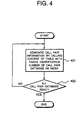
- Fig. 4 is a flowchart showing a flow of the process of a profile information combining portion in the system of Fig. 1
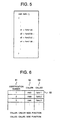
- Fig. 5 is an explanatory illustration of a source program in the system shown in Fig.
- Fig. 6 is an explanatory illustration of a call pair data base in the system of Fig. 1, Fig.
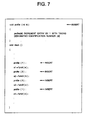
- FIG. 7 is an explanatory illustration of a source program incorporating a profile process in the system shown in Fig. 1
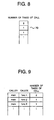
- Fig. 8 is an explanatory illustration of a call pair information storage table in the system of Fig. 1
- Fig. 9 is an explanatory illustration of a call pair information in the system shown in Fig. 1.
- the shown embodiment of the language processing system is generally constructed with a static analysis and profile process inserting portion 10, a compiling and program execution portion 20 and a profile information combining portion 30.
- the static analysis and profile process inserting portion 10 detects calling of a function in a source program 40 by static analysis. Then, an identification number of a call pair is registered in a call pair database 50 and a code for profile process is inserted in the source program 40. In conjunction therewith, a region for a call pair information storage table 70 for counts of number of times of call per call pair is set.
- the compiling and program execution portion 20 executes compiling of the source program containing the profiling process, in which the profiling process is inserted. When the profiling process is performed, number of times of call in the call pair information storage table 70 is incremented with taking the identification number of call pair in calling of function.
- the profile information combining portion 30 reads out the content of the call pair information storage table 70 to generate a call pair information.
- a function call routine is included in a main routine of the source program 40, as shown in Fig. 5, for example.
- main routine of the source program 40
- respective of a function func1, a function func2, a function func3, the function func1, ... are called from the main routine labeled as "main" to perform calculation with respective arguments a, b, c, d, ..., and to replace respective of x1, x2, x3, x4, ... with resultant values.
- static analysis is performed according to flowchart shown in Fig. 2 to perform a process of inserting code commanding the profiling process for the source program 40 (step 201 of Fig. 2).
- one instruction is taken out from the source program 40 (step 202). Then, the instruction is checked whether it is function call instruction or not (step 203). If the instruction is the function call instruction, a pair (call pair) consisted of a caller ands a callee in function call is checked whether it is registered in the call pair database 50 or not (step 204).
- step 204 If the result of checking at step 204 shows that the checked call pair is not registered in the call pair database 50, the call pair is registered in the call pair database 50 together with the identification number (step 205).
- a branching code to the profiling process is inserted immediately before a branching code to the callee in the source program (step 206). Such process is repeated up to the end of the source program (step 207).
- a region for the call pair information storage table 70 as the linear table is set, and, in conjunction therewith, an initialization process for the set region is inserted in the source program (step 208).
- a size of the region of the call pair information storage table 70 is set at a size capable of storing call information of the call pairs in number corresponding to a maximum number of the identification number.
- the source program 60 containing the profiling process as shown in Fig. 7 is generated.
- profiling process instruction a command for incrementing a relevant entry by one with taking the identification number of the call pair as index of the call pair information storage table 70.
- a code for performing branching to the profiling process is inserted immediately before a branching code to the callee per each function call instruction.
- step 301 of Fig. 3 the source program 40 is compiled (step 301 of Fig. 3).
- program translated into an executable format is executed.
- step 302 check is performed whether the currently executed instruction is for branching to the profiling process or not (step 303). If the currently executed instruction is for branching to the profiling process, number of times of calling of the relevant call pair is incremented by one with taking the identification number as index of the call pair information storage table 70 (step 304).
- step 305 the call pair information storage table 70 us stored in a form of file, for example (step 306).
- the profile information combining portion 30 performs process shown by the flowchart in Fig. 4.
- the content of the call pair information storage table 70 is read out with taking the identification number of the call pair database 50 as index, and a call pair information containing number of times of call of the call pair is generated (step 401 of Fig. 4).
- a process for outputting the call pair information ends.
- the content of the call pair information storage table is as illustrated in Fig. 8. Numbers of times of call of respective call pairs are recorded in sequential order of identification numbers of respective call pairs.
- names of callers and callees of respective call pairs and number of times are recorded in sequential order of the identification number of respective call pairs.
- the language to be used for programming is not limited to a high-level language but also can be assembly language, machine language and other low-level language.
- FORTRAN or C language may be preferred as the high-level language, any of ALGOL, COBOL, PL/I, BASIC and any other equivalent language may be applicable.
- Initialization of the call pair information storage table is not limited to that upon setting of the region but can be any arbitrary timing before writing of number of times of call.
- the size of the region for the call pair information storage table may be any arbitrary size as long as it is greater than that required for storing maximum number of identification numbers.
- the shown embodiment of the language processing system set forth above is realized by program-controlled CPU and RAM or other internal memory in the work station, personal computer and other computer systems.
- the language processing program realizing the foregoing function is provided in a formed stored in typical storage medium, such as magnetic disc, optical disc, semiconductor memory and so forth.
- the language processing program stored in the storage medium is loaded in the internal memory of the computer system to control CPU to realize functions of respective components.
- a memory region to be used as a table for storing the call pair information can be made small.
- overhead for collection of call pair information and overhead for outputting of call pair information can be made small.
- the present invention upon execution of the program for profiling process, kind of the call pair contained in the program is preliminarily checked by the static analysis to maintain in the call pair database and a memory region corresponding to number of kinds of the call pairs is certainly provided as the call pair information storage table, the region required as the call pair information storage table can be made smaller in comparison with the method providing a region for storing number of times of function call corresponding to all premised call pairs from kinds in the program.
Landscapes
- Engineering & Computer Science (AREA)
- Theoretical Computer Science (AREA)
- Software Systems (AREA)
- Computer Hardware Design (AREA)
- Quality & Reliability (AREA)
- Physics & Mathematics (AREA)
- General Engineering & Computer Science (AREA)
- General Physics & Mathematics (AREA)
- Debugging And Monitoring (AREA)
- Devices For Executing Special Programs (AREA)
- Stored Programmes (AREA)
Claims (16)
- Sprachverarbeitungssystem, das eine Profilinformation während der Ausführung eines Quellenprogramms sammelt, das Folgendes aufweist:eine Profilprozess-Einfügevorrichtung (10) zum Erfassen eines Funktionsrufs in dem Quellenprogramm (40) durch statische Analyse, Einfügen eines Verzweigungscodes in einen dem erfassten Funktionsruf entsprechenden Profilprozess, und Schaffen eines Bereichs in einer Tabelle zum Speichern einer Anzahl des Auftretens des erfassten Funktionsrufs, wobei der Ort des Bereichs innerhalb der Tabelle einer numerischen Stationskennung eines Rufpaares des erfassten Funktionsrufs entspricht; undeine Programm-Ausführvorrichtung (20) zum Ausführen der Übersetzung des Quellenprogramms einschließlich der in dem dem Quellenprogramm entsprechenden Profilprozess eingefügten Verzweigungscodes, und Erhöhen einer Anzahl des Auftretens, die in der Tabelle in einem Bereich gespeichert sind, der einer numerischen Stationskennung eines Rufpaares eines erfassten Funktionsrufs entspricht, wenn ein Verzweigungscode vorhanden ist.
- Sprachverarbeitungssystem nach Anspruch 1, das weiter eine Profilinformation-Ausgabevorrichtung (30) zum Erzeugen von Informationen über die Anzahl der Rufe pro Art des Rufpaares durch Auslesen der Anzahl der Funktionsrufe aus der Tabelle pro numerischer Stationskennung aufweist.
- Sprachverarbeitungssystem nach Anspruch 1, das weiter eine Datenbank (50) aufweist, die Rufpaare des Funktionsrufs und deren numerische Stationskennung speichert,
wobei die Profilprozess-Einfügevorrichtung (10) eine Beurteilung abgibt, ob das Rufpaar in dem erfassten Funktionsruf in der Datenbank (50) registriert ist, und die das Rufpaar in dem Funktionsruf speichert, wenn dies nicht der Fall ist, während sie die numerische Stationskennung pro Art hinzufügt. - Sprachverarbeitungssystem nach Anspruch 1, das weiter eine Datenbank (50) aufweist, die Rufpaare in dem Funktionsruf und deren numerische Stationskennung speichert,
wobei die Profilprozess-Einfügevorrichtung (10) eine Beurteilung abgibt, ob das Rufpaar in dem erfassten Funktionsruf in der Datenbank registriert ist, und das Rufpaar in dem Funktionsruf speichert, wenn dies nicht der Fall ist, während sie die numerische Stationskennung pro Art hinzufügt, und
das weiter eine Profilinformations-Ausgabevorrichtung (30) zum Erzeugen von Informationen über die Anzahl der Rufe pro Art des Rufpaares durch Auslesen der Anzahl der Funktionsrufe der Tabelle pro numerische Stationskennung der Datenbank (50) aufweist. - Sprachverarbeitungssystem nach Anspruch 1, wobei die Profilprozess-Einfügevorrichtung (10) einen Initialisierungsvorgang auf das Setzen eines Bereichs der Tabelle hin durchführt.
- Sprachverarbeitungssystem nach Anspruch 1, wobei die Profilprozess-Einfügevorrichtung (10) eine maximale Anzahl, die der numerischen Stationskennung entspricht, eines Bereichs der Tabelle (70) setzt.
- Sprachverarbeitungsverfahren, das eine Profilinformation während der Ausführung eines Quellenprogramms sammelt, das Folgendes aufweist:einen Schritt des Erfassens eines Funktionsrufs in dem Quellenprogramm (40) durch statische Analyse, Einfügen eines Verzweigungscodes in einen Profilprozess, der dem erfassten Funktionsruf entspricht, und Schaffen eines Bereichs in einer Tabelle zum Speichern einer Anzahl des Auftretens des erfassten Funktionsrufs, wobei die Stelle des Bereichs innerhalb der Tabelle einer numerischen Stationskennung eines Rufpaares des erfassten Funktionsrufs entspricht; undeinen Schritt des Ausführens der Übersetzung des Quellenprogramms einschließlich der in die dem Quellenprogramm entsprechenden Profilprozesse eingefügten Verzweigungscodes und Erhöhen der Anzahl des Auftretens, welche Anzahl in der Tabelle in einem der numerischen Stationskennung eines Rufpaares eines erfasssten Funktionsrufs entsprechenden Bereich gespeichert sind, wenn ein Verzweigungscode vorhanden ist.
- Sprachverarbeitungsverfahren nach Anspruch 7, das weiter einen Schritt des Erzeugens von Informationen über die Anzahl der Rufe pro Art Rufpaar durch Auslesen der Anzahl von Funktionsrufen der Tabelle pro numerischer Stationskennung aufweist.
- Sprachverarbeitungsverfahren nach Anspruch 7, das weiter eine Datenbank enthält, die Rufpaare des Funktionsrufs und deren numerische Stationskennung speichert,
wobei der Schritt der Profilprozess-Einfügung eine Beurteilung abgibt, ob das Rufpaar in dem erfassten Funktionsruf in der Datenbank registriert ist, und der das Rufpaar in dem Funktionsruf speichert, wenn dies nicht der Fall ist, während er die numerische Stationskennung pro Art hinzufügt,
das weiter den Schritt des Erzeugens von Informationen über die Anzahl der Rufe pro Art des Rufpaars durch Auslesen der Anzahl der Funktionrufe der Tabelle pro numerischer Stationskennung der Datenbank aufweist. - Sprachverarbeitungsverfahren nach Anspruch 7, wobei der Schritt des Profilprozess-Einfügens einen Initialisierungsvorgang auf das Setzen eines Bereichs der Tabelle hin durchführt.
- Sprachverarbeitungsverfahren nach Anspruch 7, wobei der Schritt des Profilprozesseinfügens eine maximale Anzahl, die der numerischen Stationskennung eines Bereichs der Tabelle entspricht, setzt.
- Computerlesbarer Speicher, der ein Sprachverarbeitungsprogramm speichert, das in einem Computer zum Sammeln einer Profilinformation während des Ausführens eines Quellenprogramms geladen und ausgeführt werden soll, der Folgendes aufweist:Erfassen eines Funktionsrufs in dem Quellenprogramm durch statische Analyse, Einfügen eines Verzweigungscodes in einen dem erfassten Funktionsruf entsprechenden Profilprozess, Schaffen eines Bereichs in einer Tabelle zum Speichern einer Anzahl von Vorfällen des erfassten Funktionsrufs, wobei die Stelle des Bereichs innerhalb der Tabelle einer numerischen Stationskennung eines Rufpaares des erfassten Funktionsrufes entspricht; undAusführen der Übersetzung des Quellenprogramms einschließlich des in den dem Quellenprogramm entsprechenden Profilprozess eingefügten Verzweigungscodes, und Erhöhen einer Anzahl des Auftretens, welche Anzahl in der Tabelle in einem der numerischen Stufenkennung eines Rufpaares eines erfassten Funktionruf entsprechenden Bereich gespeichert sind, wenn ein Verzweigungscode vorhanden ist.
- Sprachverarbeitungsprogramm nach Anspruch 12, das weiter einen Schritt des Erzeugens von Informationen über die Anzahl der Rufe pro Art Rufpaar durch Auslesen der Anzahl der Funktionsrufe aus der Tabelle pro numerische Stationskennzahl aufweist.
- Sprachverarbeitungsprogramm nach Anspruch 12, das weiter eine Datenbank aufweist, die Rufpaare des Funktionsrufs und deren numerische Stationkennung speichert, wobei der Schritt des Profilprozess-Einfügens eine Beurteilung vornimmt, ob das Rufpaar in dem erfassten Funktionsruf in der Datenbank registriert ist, und der das Rufpaar in dem Funktionsruf speichert, wenn dies nicht der Fall ist, während er die Stationskennung pro Art hinzufügt, und
das weiter einen Schritt des Erzeugens von Informationen über die Anzahl der Rufe pro Art des Rufpaares durch Auslesen der Anzahl der Funktionsrufe aus der Tabelle pro numerische Stationskennung der Datenbank aufweist. - Sprachverarbeitungsprogramm nach Anspruch 12, wobei der Schritt des Profilprozess-Einfügens einen Initialisierungsvorgang auf das Setzen eines Bereichs der Tabelle hin durchführt.
- Sprachverarbeitungsprogramm nach Anspruch 12, wobei der Schritt des Profilprozesseinfügens eine maximale Anzahl, die der numerischen Stationskennung eines Bereichs der Tabelle entspricht, setzt.
Applications Claiming Priority (2)
| Application Number | Priority Date | Filing Date | Title |
|---|---|---|---|
| JP1263498 | 1998-01-26 | ||
| JP01263498A JP3199013B2 (ja) | 1998-01-26 | 1998-01-26 | 言語処理方法及び言語処理装置並びに言語処理プログラムを記録した記憶媒体 |
Publications (2)
| Publication Number | Publication Date |
|---|---|
| EP0933706A1 EP0933706A1 (de) | 1999-08-04 |
| EP0933706B1 true EP0933706B1 (de) | 2003-03-12 |
Family
ID=11810824
Family Applications (1)
| Application Number | Title | Priority Date | Filing Date |
|---|---|---|---|
| EP99101338A Expired - Lifetime EP0933706B1 (de) | 1998-01-26 | 1999-01-25 | Sprachenverarbeitungsverfahren mit geringem Aufwand und Speicherbedarf bei der Profildatensammlung |
Country Status (4)
| Country | Link |
|---|---|
| US (1) | US6334210B1 (de) |
| EP (1) | EP0933706B1 (de) |
| JP (1) | JP3199013B2 (de) |
| DE (1) | DE69905776T2 (de) |
Families Citing this family (20)
| Publication number | Priority date | Publication date | Assignee | Title |
|---|---|---|---|---|
| JP3807860B2 (ja) | 1999-01-29 | 2006-08-09 | インターナショナル・ビジネス・マシーンズ・コーポレーション | コンパイル方法および装置、並びにメソッド活動度計算方法および装置 |
| JP4037079B2 (ja) * | 2000-10-10 | 2008-01-23 | 株式会社リコー | 画像形成装置、プロセス監視方法およびこの方法をコンピュータに実行させるプログラム |
| US7010796B1 (en) * | 2001-09-28 | 2006-03-07 | Emc Corporation | Methods and apparatus providing remote operation of an application programming interface |
| US6558409B1 (en) * | 2001-09-28 | 2003-05-06 | Tyco Healthcare Group Lp | Plasma treated surgical needles and methods for their manufacture |
| US8214819B2 (en) * | 2004-07-09 | 2012-07-03 | Hewlett-Packard Development Company, L.P. | Determining call counts in a program |
| US7774784B2 (en) * | 2005-03-17 | 2010-08-10 | Microsoft Corporation | Determining an actual amount of time a processor consumes in executing a portion of code |
| US7500077B2 (en) * | 2005-12-09 | 2009-03-03 | International Business Machines Corporation | Use of region-oriented memory profiling to detect heap fragmentation and sparse memory utilization |
| JP4681491B2 (ja) * | 2006-03-31 | 2011-05-11 | 富士通株式会社 | プロファイリングプログラムおよびプロファイリング方法 |
| JP4945296B2 (ja) * | 2007-02-09 | 2012-06-06 | 株式会社エヌ・ティ・ティ・ドコモ | コード検出装置及びコード検出方法 |
| JP4940996B2 (ja) * | 2007-02-23 | 2012-05-30 | 富士通セミコンダクター株式会社 | プロファイリング装置およびプロファイリングプログラム |
| JP5029245B2 (ja) * | 2007-09-20 | 2012-09-19 | 富士通セミコンダクター株式会社 | プロファイリング方法及びプログラム |
| US8280683B2 (en) * | 2008-07-17 | 2012-10-02 | International Business Machines Corporation | Probabilistic framework for the highly efficient correlation of call chains with hardware events |
| JP5553070B2 (ja) | 2009-07-02 | 2014-07-16 | 富士通株式会社 | アルゴリズム選択プログラム、アルゴリズム選択装置及び方法 |
| JP5496849B2 (ja) | 2010-10-15 | 2014-05-21 | インターナショナル・ビジネス・マシーンズ・コーポレーション | プロファイル計装方法、プログラム及びコンパイラ |
| JP5644642B2 (ja) * | 2011-04-07 | 2014-12-24 | 富士通株式会社 | コード変換方法、装置、プログラム、およびリクエストの残り時間応答方法 |
| CN103377045B (zh) * | 2012-04-27 | 2016-12-14 | 国际商业机器公司 | 用于翻译验证测试的方法和系统 |
| JP6471615B2 (ja) * | 2015-06-02 | 2019-02-20 | 富士通株式会社 | 性能情報生成プログラム、性能情報生成方法及び情報処理装置 |
| JP6540340B2 (ja) * | 2015-07-31 | 2019-07-10 | 富士通株式会社 | 関数呼び出し情報収集方法及び関数呼び出し情報収集プログラム |
| CN107269577B (zh) * | 2017-07-31 | 2023-04-07 | 重庆水泵厂有限责任公司 | 带l型叶片的半开式离心泵叶轮及使用该叶轮的离心泵 |
| CN112764990B (zh) * | 2021-01-12 | 2021-11-16 | 北京自如信息科技有限公司 | 一种目标进程的监控方法、装置及计算机设备 |
Family Cites Families (11)
| Publication number | Priority date | Publication date | Assignee | Title |
|---|---|---|---|---|
| JPS6320638A (ja) | 1986-07-15 | 1988-01-28 | Nec Corp | テストの網羅性測定方式 |
| JPH01184541A (ja) | 1988-01-19 | 1989-07-24 | Nec Corp | プログラム構造の正当性検査方式 |
| JPH04153743A (ja) | 1990-10-18 | 1992-05-27 | Nec Corp | モジュールの呼び出し情報表示方式 |
| US5325494A (en) * | 1991-06-21 | 1994-06-28 | Kabushiki Kaisha Toshiba | Computer |
| JPH07210424A (ja) | 1994-01-14 | 1995-08-11 | Toshiba Corp | ソフトウェアテスト支援システム |
| US5644709A (en) * | 1994-04-21 | 1997-07-01 | Wisconsin Alumni Research Foundation | Method for detecting computer memory access errors |
| US5694539A (en) * | 1994-08-10 | 1997-12-02 | Intrinsa Corporation | Computer process resource modelling method and apparatus |
| US5606699A (en) * | 1995-04-28 | 1997-02-25 | International Business Machines Corporation | Storing and querying execution information for object-oriented programs |
| JP3290567B2 (ja) | 1995-08-24 | 2002-06-10 | 富士通株式会社 | プロファイル計装方法 |
| JPH09198246A (ja) | 1996-01-22 | 1997-07-31 | Meidensha Corp | 関数呼出し状況の解析方法 |
| US6160883A (en) * | 1998-03-04 | 2000-12-12 | At&T Corporation | Telecommunications network system and method |
-
1998
- 1998-01-26 JP JP01263498A patent/JP3199013B2/ja not_active Expired - Fee Related
-
1999
- 1999-01-25 DE DE69905776T patent/DE69905776T2/de not_active Expired - Fee Related
- 1999-01-25 EP EP99101338A patent/EP0933706B1/de not_active Expired - Lifetime
- 1999-01-26 US US09/237,259 patent/US6334210B1/en not_active Expired - Fee Related
Also Published As
| Publication number | Publication date |
|---|---|
| JP3199013B2 (ja) | 2001-08-13 |
| DE69905776T2 (de) | 2004-02-05 |
| US6334210B1 (en) | 2001-12-25 |
| JPH11212837A (ja) | 1999-08-06 |
| EP0933706A1 (de) | 1999-08-04 |
| DE69905776D1 (de) | 2003-04-17 |
Similar Documents
| Publication | Publication Date | Title |
|---|---|---|
| US6334210B1 (en) | Language processing system and language processing method enabling reduction of memory region and overhead in profile information collection of computer | |
| US6292940B1 (en) | Program complete system and its compile method for efficiently compiling a source program including an indirect call for a procedure | |
| US5339431A (en) | Software compiler and linker with improved line-number table | |
| US6675379B1 (en) | Automatic removal of array memory leaks | |
| US5555417A (en) | Method and apparatus for compiling computer programs with interprocedural register allocation | |
| US7467376B2 (en) | Semantic analysis based compression of interpreted code by replacing object instruction groups with special instruction specifying a register representing the object | |
| US6175956B1 (en) | Method and computer program product for implementing method calls in a computer system | |
| US20030101380A1 (en) | Method and system for rewriting unwind data in the presence of exceptions | |
| JP3802058B2 (ja) | ソフトウェア・コンパイル・ユニットを条件付きでコンパイルするシステム、方法およびコンパイラ・プリプロセッサ | |
| US6625806B1 (en) | Language processing method and language processing system improving use efficiency of cache memory | |
| US7406681B1 (en) | Automatic conversion of source code from 32-bit to 64-bit | |
| US20010039653A1 (en) | Program conversion method, program conversion apparatus, storage medium for storing program conversion program and program conversion program | |
| US20070245326A1 (en) | Software/hardware partitioning program and method | |
| CN111399850B (zh) | 基于区块链的多语言智能合约编译方法 | |
| JP3785596B2 (ja) | 関数実行方法、関数実行装置、コンピュータプログラム、及び記録媒体 | |
| JP4864287B2 (ja) | 識別方法、記録媒体及びコンピュータシステム | |
| JP3049814B2 (ja) | マイクロコンピュータの言語処理装置 | |
| KR19990067823A (ko) | 최적화에 있어서 인터럽트 처리의 경감을 실현하는 컴파일러 및 그의 최적화 방법 | |
| US7065747B2 (en) | Identifying references to objects during bytecode verification | |
| JP2003256215A (ja) | プログラム変換方法、これを用いたデータ処理装置及びプログラム | |
| JP2002073345A (ja) | 情報処理装置及び記録媒体 | |
| JP2932812B2 (ja) | 言語処理プログラム実行装置 | |
| JPH0667942A (ja) | ログ採取方式 | |
| EP0647900A1 (de) | Parameterspeicherbereichszuordnung | |
| JPH06314221A (ja) | コンパイル方式 |
Legal Events
| Date | Code | Title | Description |
|---|---|---|---|
| PUAI | Public reference made under article 153(3) epc to a published international application that has entered the european phase |
Free format text: ORIGINAL CODE: 0009012 |
|
| AK | Designated contracting states |
Kind code of ref document: A1 Designated state(s): DE GB |
|
| AX | Request for extension of the european patent |
Free format text: AL;LT;LV;MK;RO;SI |
|
| 17P | Request for examination filed |
Effective date: 19990618 |
|
| AKX | Designation fees paid |
Free format text: DE GB |
|
| 17Q | First examination report despatched |
Effective date: 20010809 |
|
| GRAG | Despatch of communication of intention to grant |
Free format text: ORIGINAL CODE: EPIDOS AGRA |
|
| GRAG | Despatch of communication of intention to grant |
Free format text: ORIGINAL CODE: EPIDOS AGRA |
|
| GRAH | Despatch of communication of intention to grant a patent |
Free format text: ORIGINAL CODE: EPIDOS IGRA |
|
| GRAH | Despatch of communication of intention to grant a patent |
Free format text: ORIGINAL CODE: EPIDOS IGRA |
|
| GRAA | (expected) grant |
Free format text: ORIGINAL CODE: 0009210 |
|
| AK | Designated contracting states |
Designated state(s): DE GB |
|
| REG | Reference to a national code |
Ref country code: GB Ref legal event code: FG4D |
|
| REF | Corresponds to: |
Ref document number: 69905776 Country of ref document: DE Date of ref document: 20030417 Kind code of ref document: P |
|
| RAP2 | Party data changed (patent owner data changed or rights of a patent transferred) |
Owner name: NEC ELECTRONICS CORPORATION |
|
| PLBE | No opposition filed within time limit |
Free format text: ORIGINAL CODE: 0009261 |
|
| STAA | Information on the status of an ep patent application or granted ep patent |
Free format text: STATUS: NO OPPOSITION FILED WITHIN TIME LIMIT |
|
| 26N | No opposition filed |
Effective date: 20031215 |
|
| PGFP | Annual fee paid to national office [announced via postgrant information from national office to epo] |
Ref country code: GB Payment date: 20050119 Year of fee payment: 7 |
|
| PGFP | Annual fee paid to national office [announced via postgrant information from national office to epo] |
Ref country code: DE Payment date: 20050120 Year of fee payment: 7 |
|
| PG25 | Lapsed in a contracting state [announced via postgrant information from national office to epo] |
Ref country code: GB Free format text: LAPSE BECAUSE OF NON-PAYMENT OF DUE FEES Effective date: 20060125 |
|
| PG25 | Lapsed in a contracting state [announced via postgrant information from national office to epo] |
Ref country code: DE Free format text: LAPSE BECAUSE OF NON-PAYMENT OF DUE FEES Effective date: 20060801 |
|
| GBPC | Gb: european patent ceased through non-payment of renewal fee |
Effective date: 20060125 |