EP0932101A2 - Procédé, dispositif et programme d'ordinateur pour verrouiler des structures de données liées dans un environnement d' ordinateurs à fils multiples - Google Patents
Procédé, dispositif et programme d'ordinateur pour verrouiler des structures de données liées dans un environnement d' ordinateurs à fils multiples Download PDFInfo
- Publication number
- EP0932101A2 EP0932101A2 EP99100339A EP99100339A EP0932101A2 EP 0932101 A2 EP0932101 A2 EP 0932101A2 EP 99100339 A EP99100339 A EP 99100339A EP 99100339 A EP99100339 A EP 99100339A EP 0932101 A2 EP0932101 A2 EP 0932101A2
- Authority
- EP
- European Patent Office
- Prior art keywords
- group
- lock
- interrelated
- objects
- interrelated objects
- Prior art date
- Legal status (The legal status is an assumption and is not a legal conclusion. Google has not performed a legal analysis and makes no representation as to the accuracy of the status listed.)
- Granted
Links
Images



Classifications
-
- G—PHYSICS
- G06—COMPUTING OR CALCULATING; COUNTING
- G06F—ELECTRIC DIGITAL DATA PROCESSING
- G06F9/00—Arrangements for program control, e.g. control units
- G06F9/06—Arrangements for program control, e.g. control units using stored programs, i.e. using an internal store of processing equipment to receive or retain programs
- G06F9/46—Multiprogramming arrangements
- G06F9/52—Program synchronisation; Mutual exclusion, e.g. by means of semaphores
Definitions
- This invention relates to the field of locking data structures in a multi-threaded computing environment. Specifically, this invention is a method, apparatus, and computer program product for locking interrelated groups of data structures in a multi-threaded computing environment.
- Data structures contain organized information in a computer's memory. Each of these data structures can be independent or interrelated to other data structures. Access to the data structures is simple when the access occurs in a computing environment that has a single flow of execution (thread-of-execution) because the data in the interrelated data structures is always consistent during the execution of the single thread. However, if an asynchronous operation occurs (such as an interrupt, process context switch or similar operation that allows for concurrent access to the data structure) the contents of the data structure may be made inconsistent if an asynchronous operation changes the data structure while another operation is accessing the data structure. Modem computing systems often use threads-of-execution to parallelize computer operations.
- a thread-of-execution is a sequence of control within a programmed-process.
- a traditional single-threaded programmed-process follows a single sequence-of-control while executing.
- a multithreaded programmed-process has several sequences of control, and is capable of several independent actions.
- a particular implementation of a multi-threaded computing environment is discussed in SunOS Multi-thread Architecture , by Powell, Kleiman, Barton, Shah, Stein and Weeks, USENIX, Winter 1991, page 65.
- Posix® threads are described in Programming with POSIX Thread s, by David R. Butenhof, ⁇ 1997 by Addison Wesley Longman, Inc., ISBN 0-201-63392-2, pages 35-95.
- OOP object-oriented programming
- OOP object-oriented programming
- Objects associate an object's data with OOP methods for operating on that object's data.
- OOP objects are instantiated in a heap memory area and are based on classes that reference the programmed methods for the OOP object.
- Instantiated OOP objects are accessed through pointers and contain data (in instance variables) specific to that particular instantiated OOP object.
- an OOP object contains object-related information (such as the number of instance variables in the object), data structures for storing the object's instance variables, and addresses of called-routines (OOP methods) that access and/or manipulate the contents of the instance variables in the object.
- a useful data structure for image processing purposes is a modified directed acyclic graph (DAG) that represents images and the operations applied to these images.
- the DAG elements can be represented as objects.
- One or more DAGs can be constructed by an imaging library as the library captures a series of imaging operations directed to one or more source images.
- the resulting DAGs are contained within an object collection.
- the object collection generally contains both independent and interrelated DAG objects. Independent objects are those that do not depend on other objects. Interrelated objects access each other to perform their operation.
- An independent object can be locked by a thread to assure exclusive access to the thread. However, to lock an interrelated object, each interrelated object must also be locked to assure that the information in the object is not changed by a second thread while a first thread is processing
- One prior art approach to locking objects uses a mutex to serialize thread access to the object collection.
- the difficulty with this approach is that while one thread processes objects in the object collection other threads cannot.
- independent operations, controlled by threads, that need to access an object in the object collection cannot make the access until the locking thread releases the object collection.
- This approach limits the advantages of a multi-threaded computing environment by making the object collection a blocking resource.
- the present invention improves the performance of a multi-threaded computer application that uses groups of interrelated data structures containing values that must be exclusively accessed by a thread.
- the invention monitors interrelationships between the data structures and provides mechanisms to lock the minimal set of data structures needed for the exclusive thread access.
- the invention only locks interrelated data structures comprising a group while leaving independent data structures or unrelated groups of data structures unlocked and available to other threads. Because the group contains a minimal set of interrelated data structures, when the group is locked other threads are less likely to be blocked by the lock. Thus, these other threads are more likely to be able to simultaneously process data structures in other groups.
- One aspect of the invention is a computer controlled method for locking an object-of-interest in an object collection without keeping a non-interrelated object locked.
- the object collection is accessed by one or more threads in a multi-threaded computing environment.
- a group lock controls thread access to a respective group of interrelated objects containing the object-of-interest.
- the method includes the step of associating a reference lock with the object collection to control thread access to a plurality of group lock linkages used by the group lock.
- the method also includes the step of modifying the plurality of group lock linkages responsive to a change of relationship between a first object within the respective group of interrelated objects with a second object.
- An additional method step is of locking the respective group of interrelated objects, containing the object-of-interest. Thus, this step locks the object-of-interest and its interrelated objects.
- Another aspect of the invention is an apparatus, having a central processing unit (CPU) and a memory coupled to said CPU, for locking an object-of-interest in an object collection without keeping a non-interrelated object locked.
- the object collection is accessed by one or more threads in a multi-threaded computing environment.
- a group lock controls thread access to a respective group of interrelated objects containing the object-of-interest.
- the apparatus includes a reference lock mechanism that is configured to associate a reference lock with the object collection such that the reference lock mechanism controls thread access to a plurality of group lock linkages used by the group lock.
- the apparatus also includes a group modification mechanism that is configured to alter the respective group of interrelated objects.
- Yet a further aspect of the invention is a computer program product embedded on a computer usable medium for causing a computer to lock an object-of-interest in an object collection without keeping a non-interrelated object locked.
- the object collection is accessed by one or more threads in a multi-threaded computing environment.
- a group lock controls thread access to a respective group of interrelated objects that contains the object-of-interest.
- the computer readable code When executed on a computer, the computer readable code causes a computer to effect a reference lock mechanism, a group modification mechanism and a group locking mechanism. Each of these mechanisms having the same functions as the corresponding mechanisms for the previously described apparatus.
- the invention also relates to apparatus for performing these operations.
- This apparatus may be specially constructed for the required purposes or it may comprise a general purpose computer as selectively activated or reconfigured by a computer program stored in the memory of a computer.
- the procedures presented herein are not inherently related to a particular computer or other apparatus.
- various general purpose machines may be used with programs written in accordance with the teachings herein, or it may prove more convenient to construct more specialized apparatus to perform the required method steps. The required structure for a variety of these machines will appear from the following description.
- the invention may be embodied in a computer readable storage medium encoded with a program that causes a computer to perform the programmed logic.
- a preferred embodiment uses a modified directed acyclic graph (DAG) to represent images and the operations applied to these images.
- DAG directed acyclic graph
- data structures other than a DAG can be used with similar results.
- the DAG is constructed by an imaging library as the library captures a series of imaging operations.
- the invention can be practiced in field other than image processing and that the invention can be applied to objects and data structures other than ones subsequently used to illustrate the use of the invention.
- the invention uses a computer.
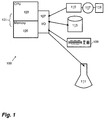
- a processor 101 configured to support the invention is shown in Fig. 1 wherein a processor 101 is shown, having a central processor unit (CPU) 103 , a memory section 105 and an input/output (I/O) section 107 .
- the I/O section 107 is connected to a keyboard 109 , a display unit 111 , a disk storage unit 113 and a CD-ROM drive unit 115 .
- the CD-ROM drive unit 115 can read a CD-ROM medium 117 that typically contains a program and data 119 .
- the CD-ROM drive unit 115 along with the CD-ROM medium 117 , and the disk storage unit 113 comprise a filestorage mechanism.
- CD-ROM drive unit 115 can be replaced by a floppy disk, magnetic tape unit or similar device that accepts a removable media that can contain the program and data 119 .
- Such a computer system is capable of executing applications that embody the invention.
- Fig. 2A illustrates a grouped object collection, indicated by general reference character 200 , that includes two independent groups that each contain interrelated objects.
- the two groups can be processed in parallel by separate threads.
- a 'first group of interrelated' objects 201 includes a 'first image' object 203 used to represent a first image, a 'second image' object 205 used to represent a second image, a 'summation operation' object 207 used to represent an image operation that generates the sum of the 'first image' object 203 and the 'second image' object 205 .
- This summed image is represented by a 'first result image' object 209 .
- each of the objects in the 'first group of interrelated' objects 201 are related to each other through the 'summation operation' object 207 and that a thread that executes the operation represented by the 'summation operation' object 207 must have exclusive access to the entire group of objects 203 , 205 , 207 , 209 .
- a second group of interrelated objects 211 independent from the 'first group of interrelated' objects 201 , includes a 'third image' object 213 and a 'LUT operation' object 215 that accesses a 'look up table data' object 217 .
- the 'LUT operation' object 215 operates on the 'third image' object 213 using the 'look up table data' object 217 to generate a 'second result image' object 219 .
- each of the objects in the second group of interrelated objects 211 are interrelated.
- a thread that executes the operation represented by the 'LUT operation' object 215 must have exclusive write access to the entire group of objects 213 , 215 , 217 , 219 .
- the objects in the 'first group of interrelated' objects 201 and the second group of interrelated objects 211 make up an object collection 221 . Because the two groups are independent of each other (in that the objects of one group are non-interrelated object with respect to the objects in the other group) they can be accessed by separate threads.
- the 'first group of interrelated' objects 201 can be locked by a 'first group lock' object 223 .
- the second group of interrelated objects 211 can be locked by a 'second group lock' object 225 .
- the links that interrelate the group locks and the objects in the object collection 221 can be locked by a 'reference lock' object 227 .
- Each of the lock objects is subsequently described.
- Fig. 2B illustrates a group linkage structure, indicated by general reference character 230 , for associating interrelated objects with a group.
- This example indicates how the second group of interrelated objects 211 is associated with the 'second group lock' object 22 5.
- Each object 213 , 215 , 217 , 219 in the second group of interrelated objects 211 includes a pointer to a 'group lock pointer' object 231 .
- the 'third image' object 213 includes a 'third image' link 233 that points to the 'group lock pointer' object 231 .
- the 'LUT operation' object 215 includes a 'LUT operation' link 235 ;
- the 'look up table data' object 217 includes a 'look up table data' link 237 ;
- the 'second result image' object 219 includes a 'second result image' link 239 ; each pointing to the 'group lock pointer' object 231 .
- the 'group lock pointer' object 231 includes a group link 241 to the 'second group lock' object 225 .
- the 'second group lock' object 225 includes a reverse group link 243 .
- each object 213 , 215 , 217 , 219 in the group can be attached to a different group by changing the pointer value in the 'group lock pointer' object 231 (along with appropriate modifications to the 'second group lock' object 225 and the reverse group link 243 ) and thus change the group link 241 from one group lock to another group lock without changing the links for each object 213 , 215 , 217 , 219 .
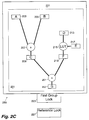
- Fig. 2C illustrates an object collection, indicated by general reference character 250 , that is the result of merging the 'first group of interrelated' objects 201 with the second group of interrelated objects 211 .
- These two groups became interrelated by the insertion of an 'image multiplication' object 251 that multiplied the 'first result image' object 209 with the 'second result image' object 219 to generate a 'third result image' object 253 . Because the 'image multiplication' object 251 interrelated the 'first group of interrelated' objects 201 with the second group of interrelated objects 211 , the two groups must be merged into one group. This is accomplished, as is subsequently described with respect to Fig.
- Fig. 3 illustrates a locking data structure, indicated by general reference character 300 , used in one embodiment.
- the locking data structure 300 includes a 'reference lock' object 301 , a 'group lock' object 303 , a 'group lock pointer' object 304 (containing a 'lock object' pointer 305 and a 'reference count' field 306 ), and a lockable object 307 .
- the 'reference lock' object 301 is used to provide exclusive access to subsequently described group lock linkages.
- the object collection may have more than one associated 'group lock' object 303 .
- Each group in the object collection contains interrelated objects that must be locked together before accessing any of the interrelated objects. Thus, each group in the object collection can be independently accessed by separate threads.
- the 'group lock pointer' object 304 contains the 'lock object' pointer 305 to the 'group lock' object 303 .
- Each interrelated object in the object collection contains a pointer to the 'group lock pointer' object 304 that in turn points to the 'group lock' object 303 for that group.
- each of the interrelated objects in a group can be assigned to a different 'group lock' object 303 by replacing the existing value of the 'lock object' pointer 305 with a pointer to the new 'group lock' object instead of traversing each object and updating its pointer.
- the lockable object 307 is an object within the object collection. In one preferred embodiment the 'reference lock' object 301 , the 'group lock' object 303 and the 'group lock pointer' object 304 are not included within the object collection.
- the 'reference lock' object 301 contains a 'reference lock' mutex 309 and a condition variable 311 that uses well-known techniques to serialize thread access.
- the 'reference lock' object 301 is used to obtain exclusive access to the group lock linkages.
- the 'reference lock' object 301 also contains a 'max lock object ID' field 313 that contains a monotonically increasing value used to uniquely identify lock objects.
- the 'reference lock' object 301 also contains programmed methods that provide functionality for the 'reference lock' object 301 . These programmed methods include a lockRefCreator programmed method 315 , a waitForLockObjUnlock programmed method 317 , and a signalUnlock programmed method 319 .
- the 'group lock' object 303 includes a group lock mutex 321 that is used to serialize thread access to a group of interrelated objects. To access the 'group lock' object 303 the program must first acquire the 'reference lock' object 301 .
- the 'group lock' object 303 also includes a 'number of references' field 323 containing the number of the objects in the object collection controlled by the 'group lock' object 303 .
- the 'number of references' field 323 and the 'reference count' field 306 are used to respectively determine when the 'group lock' object 303 and the 'group lock pointer' object 304 are no longer used.
- the 'group lock' object 303 also contains a 'group lock identification' field 325 that contains a monotonically increasing identification value generated by the lockRefCreator programmed method 315 as previously described.
- the 'group lock' object 303 also includes a 'reference lock pointer' field 327 that contains a pointer to the 'reference lock' object 301 .
- the 'group lock' object 303 includes a 'reference pointer' storage 328 that provides, or links to, a pointer to each 'group lock pointer' object 304 that references the 'group lock' object 303 .
- the 'reference lock' object 301 protects the 'group lock' object 303 , the 'lock object' pointer 305 , and the 'group reference pointer' field 331 such that the thread that has acquired the 'reference lock' object 301 has exclusive access to these group lock linkages.
- locking data structure 300 need not be implemented in an object-oriented manner and that traditional procedural data structuring techniques can be used to implement the previously described relationships and capabilities.
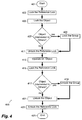
- the process 400 continues to a 'lock object' procedure 405 that acquires the object lock mutex 329 of the object-of-interest. Then an 'object interrelated' decision procedure 407 determines whether the lockable object 307 that will be accessed (the object-of-interest) is interrelated to other objects or whether it is independent of other objects. This determination is made by examining the 'group reference pointer' field 331 within the lockable object 307 .
- the lockable object 307 is independent of other objects in the object collection. If the lockable object 307 is not independent, the process 400 continues to a 'lock group' procedure 409 that acquires the group lock mutex 321 . Then the process 400 continues to an 'unlock reference lock' procedure 411 .
- the 'unlock reference lock' procedure 411 is also directly executed if the 'object interrelated' decision procedure 407 determined that the object-of-interest was independent.
- the 'unlock reference lock' procedure 411 unlocks the 'reference lock' mutex 309 .
- the process 400 continues to an 'operate on object' procedure 413 that performs the desired operation on the object-of-interest. Once the operation completes, the process 400 continues to a 'lock reference lock' procedure 415 that again locks the 'reference lock' mutex 309 to prohibit other threads from modifying group lock linkages in the object collection.
- an 'object interrelated' decision procedure 417 again checks to determine whether the object-of-interest is independent or interrelated with other objects. If the object-of-interest is interrelated an 'unlock group' procedure 419 releases the group locked by the 'lock group' procedure 409 .
- the process 400 continues to an 'unlock object' procedure 421 that releases the object lock mutex 329 acquired by the 'lock object' procedure 405 .
- the process 400 continues to an 'unlock reference lock' procedure 423 that unlocks the 'reference lock' mutex 309 locked by the 'lock reference lock' procedure 415 .
- the process 400 completes through an 'end' terminal 425 .
- the 'reference lock' object 301 is locked for a very short time to minimize delays to other threads that change relationships between objects and groups in the object collection.
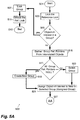
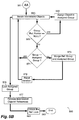
- Fig. 5A illustrates an insert-and-lock process, indicated by general reference character 500 , that inserts an object-of-interest into the object collection where the object-of-interest may interrelate another object.
- the insert-and-lock process 500 initiates at a 'start' terminal 501 and continues to a 'lock reference lock' procedure 503 .
- the 'lock reference lock' procedure 503 locks the 'reference lock' object 301 .
- the insert-and-lock process 500 determines whether the object-of-interest is independent or assigned to a group at an 'object-of-interest in group' decision procedure 505 . This determination is made by examining the 'group reference pointer' field 331 in the object-of-interest.
- the insert-and-lock process 500 continues to a 'lock group' procedure 507 that locks the 'group lock' object 303 that contains the object-of-interest by locking the group lock mutex 321 .
- an 'unlock reference lock' procedure 511 releases the 'reference lock' object 301 so that other threads can manipulate linkages between the objects in other groups.
- the insert-and-lock process 500 completes through an 'end' terminal 513 .
- the insert-and-lock process 500 continues to an 'gather group reference pointers' procedure 515 .
- the 'gather group reference pointers' procedure 515 gathers the group reference pointers from each object that is interrelated to the object-of-interest.
- an 'all group reference pointers NULL' decision procedure 517 determines whether all the group reference pointers in the interrelated objects are NULL. If all the group reference pointers are NULL, neither the object-of-interest nor any of its interrelated objects are assigned to a group.
- the insert-and-lock process 500 advances to a 'create new group' procedure 519 that creates a new group. Once the new group is created the insert-and-lock process 500 continues to an 'assign object-of-interest to new or selected group (assigned group)' procedure 521 . The 'assign object-of-interest to group' procedure 521 is subsequently described.
- the insert-and-lock process 500 continues to a 'select group' procedure 523 .
- the 'select group' procedure 523 selects any group from the group reference pointers gathered from the 'gather group reference pointers' procedure 515 .
- the insert-and-lock process 500 then continues to the 'assign object-of-interest to group' procedure 521 .
- the insert-and-lock process continues to a 'merge assigned-group and referenced group' procedure 573 , subsequently described with respect to Fig. 6, that merges the two groups.
- a 'reset iteration' procedure 574 resets the iteration of the 'iterate interrelated objects' procedure 563 so that all the group reference pointers from the newly merged group are iterated.
- the 'merge assigned-group and referenced group' procedure 573 may be again invoked to merge other groups with the just merged group.
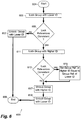
- Fig. 6 illustrates a group merge process, indicated by general reference character 600 , for merging two groups have become interrelated.
- the group merge process 600 is invoked by the 'merge assigned-group and referenced group' procedure 573 of Fig. 5B and initiates at a 'start' terminal 601 .
- the group merge process 600 continues to a 'lock older group' procedure 603 that locks the group having the lower identification value in the 'group lock identification' field 325 .
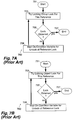
- the well-known locking procedure is subsequently described with respect to Fig. 7A and Fig. 7B.
- a 'lock check' decision procedure 605 determines whether the relevant linkages have been changed by another thread while the older group was being locked.
- the group merge process 600 continues to a 'lock newer group' procedure 611 that locks the group with the higher identification value (the newer group).
- a 'lock check' decision procedure 613 determines whether the relevant linkages have been changed by another thread while the newer group was being locked. If the relevant linkages have not been changed, the group merge process 600 continues to a 'merge newer group with older group' procedure 615 that sets the group reference of the newer group (the group having the larger group lock identification value) to the group lock identification value of the older group.
- the group merge process 600 simply completes through the 'unlock newer group' procedure 617 , the 'unlock older group' procedure 619 and the 'end' terminal 609 .
- the group merge process 600 simply completes through the 'unlock newer group' procedure 617 , the 'unlock older group' procedure 619 and the 'end' terminal 609 .
- the 'reset iteration' procedure 574 is always invoked after the 'merge assigned-group and referenced group' procedure 573 that the locking inconstancy detected by the 'lock check' decision procedure 613 will be subsequently retried.
- the object locking process 750 completes through an 'end' terminal 757 . If the object lock mutex 329 was not obtained, the object locking process 750 continues to a 'wait on condition variable' procedure 759 that unlocks the 'reference lock' mutex 309 and sleeps the calling thread dependent on a predicate that the object lock mutex 329 has become unlocked. Once the predicate is satisfied, current thread is continued with the 'reference lock' mutex 309 locked. Once the current thread is continued, the object locking process 750 continues to the 'trylock' procedure 753 to again attempt to lock the object lock mutex 329 .
- the invention maintains one or more groups of interrelated objects or data structures.
- a multi-threaded environment only a single thread can access a group at any given instance.
- the invention serializes thread access to a minimally sized group to maximize the number of threads that can be used to process the groups of interrelated data structures.
Landscapes
- Engineering & Computer Science (AREA)
- Software Systems (AREA)
- Theoretical Computer Science (AREA)
- Physics & Mathematics (AREA)
- General Engineering & Computer Science (AREA)
- General Physics & Mathematics (AREA)
- Information Retrieval, Db Structures And Fs Structures Therefor (AREA)
- Stored Programmes (AREA)
- Debugging And Monitoring (AREA)
Applications Claiming Priority (2)
| Application Number | Priority Date | Filing Date | Title |
|---|---|---|---|
| US09/012,683 US5995998A (en) | 1998-01-23 | 1998-01-23 | Method, apparatus and computer program product for locking interrelated data structures in a multi-threaded computing environment |
| US12683 | 1998-01-23 |
Publications (3)
| Publication Number | Publication Date |
|---|---|
| EP0932101A2 true EP0932101A2 (fr) | 1999-07-28 |
| EP0932101A3 EP0932101A3 (fr) | 2001-11-21 |
| EP0932101B1 EP0932101B1 (fr) | 2005-08-24 |
Family
ID=21756193
Family Applications (1)
| Application Number | Title | Priority Date | Filing Date |
|---|---|---|---|
| EP99100339A Expired - Lifetime EP0932101B1 (fr) | 1998-01-23 | 1999-01-13 | Procédé, dispositif et programme d'ordinateur pour verrouiler des structures de données liées dans un environnement d' ordinateurs à fils multiples |
Country Status (4)
| Country | Link |
|---|---|
| US (2) | US5995998A (fr) |
| EP (1) | EP0932101B1 (fr) |
| JP (1) | JPH11259313A (fr) |
| DE (1) | DE69926820T2 (fr) |
Cited By (3)
| Publication number | Priority date | Publication date | Assignee | Title |
|---|---|---|---|---|
| EP1542126A3 (fr) * | 2003-12-12 | 2009-09-23 | Alcatel Lucent | Blocaje adaptive par niveau d'objets |
| EP2538379A1 (fr) * | 2011-06-22 | 2012-12-26 | Canon Kabushiki Kaisha | Appareil de traitement dýinformations, procédé de commande et support de stockage |
| WO2013041366A1 (fr) * | 2011-09-23 | 2013-03-28 | International Business Machines Corporation | Traitement concomitant de messages mis en file d'attente |
Families Citing this family (41)
| Publication number | Priority date | Publication date | Assignee | Title |
|---|---|---|---|---|
| US6289410B1 (en) * | 1996-07-18 | 2001-09-11 | Electronic Data Systems Corporation | Method and system for maintaining consistency of shared objects based upon instance variable locking |
| CA2222389A1 (fr) * | 1997-11-27 | 1999-05-27 | Ibm Canada Limited-Ibm Canada Limitee | Moyen pour gerer le verrouillage et le deverrouillage d'objets en java |
| US5995998A (en) * | 1998-01-23 | 1999-11-30 | Sun Microsystems, Inc. | Method, apparatus and computer program product for locking interrelated data structures in a multi-threaded computing environment |
| US6366946B1 (en) * | 1998-12-16 | 2002-04-02 | Microsoft Corporation | Critical code processing management |
| US6898617B2 (en) * | 1999-11-18 | 2005-05-24 | International Business Machines Corporation | Method, system and program products for managing thread pools of a computing environment to avoid deadlock situations by dynamically altering eligible thread pools |
| US6742032B1 (en) * | 1999-12-17 | 2004-05-25 | Xerox Corporation | Method for monitoring and encouraging community activity in a networked environment |
| US7487152B1 (en) * | 2000-05-31 | 2009-02-03 | International Business Machines Corporation | Method for efficiently locking resources of a global data repository |
| US7086053B2 (en) * | 2000-06-12 | 2006-08-01 | Sun Microsystems, Inc. | Method and apparatus for enabling threads to reach a consistent state without explicit thread suspension |
| US20030131201A1 (en) * | 2000-12-29 | 2003-07-10 | Manoj Khare | Mechanism for efficiently supporting the full MESI (modified, exclusive, shared, invalid) protocol in a cache coherent multi-node shared memory system |
| JP2004518327A (ja) * | 2001-01-11 | 2004-06-17 | コーニンクレッカ フィリップス エレクトロニクス エヌ ヴィ | 逆進的にストリングを参照する為の識別子を用いたデータ圧縮方法 |
| US6748470B2 (en) * | 2001-11-13 | 2004-06-08 | Microsoft Corporation | Method and system for locking multiple resources in a distributed environment |
| US7406519B2 (en) * | 2001-11-13 | 2008-07-29 | Microsoft Corporation | Method and system for locking resources in a distributed environment |
| US20030105871A1 (en) * | 2001-11-13 | 2003-06-05 | Microsoft Corporation, | Method and system for modifying lock properties in a distributed environment |
| US7028300B2 (en) * | 2001-11-13 | 2006-04-11 | Microsoft Corporation | Method and system for managing resources in a distributed environment that has an associated object |
| JP4139613B2 (ja) * | 2002-03-18 | 2008-08-27 | 株式会社日立製作所 | データ処理方法 |
| US7293130B2 (en) | 2002-05-29 | 2007-11-06 | Intel Corporation | Method and system for a multi-level memory |
| US7653667B2 (en) * | 2002-09-09 | 2010-01-26 | Sap Ag | Methods and systems for data moving using locks |
| US20060149696A1 (en) * | 2002-09-09 | 2006-07-06 | Thorsten Pferdekaemper | Method and systems for controlling access to a data object by means of locks |
| US7457933B2 (en) * | 2002-09-09 | 2008-11-25 | Sap Ag | Methods and systems for archiving data |
| US7693881B2 (en) * | 2002-09-09 | 2010-04-06 | Sap Ag | Methods and systems for moving data using locks |
| US7756813B2 (en) * | 2002-09-09 | 2010-07-13 | Sap Ag | Electronic data structure for controlling access to data objects using locks |
| EP1540516B1 (fr) * | 2002-09-09 | 2009-11-25 | Sap Ag | Procedes et systemes d'archivage de donnees |
| US7539678B2 (en) * | 2004-01-30 | 2009-05-26 | Microsoft Corporation | Systems and methods for controlling access to an object |
| US7331010B2 (en) | 2004-10-29 | 2008-02-12 | International Business Machines Corporation | System, method and storage medium for providing fault detection and correction in a memory subsystem |
| CN100337204C (zh) * | 2004-11-05 | 2007-09-12 | 华为技术有限公司 | 软件在线升级的方法 |
| US7765547B2 (en) | 2004-11-24 | 2010-07-27 | Maxim Integrated Products, Inc. | Hardware multithreading systems with state registers having thread profiling data |
| US8802113B2 (en) * | 2005-10-27 | 2014-08-12 | University Of Notre Dame | Extracellular matrix cancer vaccine adjuvant |
| US7685392B2 (en) | 2005-11-28 | 2010-03-23 | International Business Machines Corporation | Providing indeterminate read data latency in a memory system |
| US8176022B1 (en) * | 2006-08-26 | 2012-05-08 | Radames Garcia | Locking protocol using dynamic locks and dynamic shared memory |
| US7870459B2 (en) * | 2006-10-23 | 2011-01-11 | International Business Machines Corporation | High density high reliability memory module with power gating and a fault tolerant address and command bus |
| US8914565B2 (en) * | 2007-06-08 | 2014-12-16 | Sap Ag | Locking or loading an object node |
| US20100082624A1 (en) * | 2008-09-30 | 2010-04-01 | Apple Inc. | System and method for categorizing digital media according to calendar events |
| US20100122253A1 (en) * | 2008-11-09 | 2010-05-13 | Mccart Perry Benjamin | System, method and computer program product for programming a concurrent software application |
| US8875107B2 (en) | 2009-03-24 | 2014-10-28 | International Business Machines Corporation | Component lock tracing by associating component type parameters with particular lock instances |
| US8595692B2 (en) * | 2010-03-22 | 2013-11-26 | International Business Machines Corporation | Identifying lock granularization opportunities |
| US8966491B2 (en) * | 2012-04-27 | 2015-02-24 | Oracle International Corporation | System and method for implementing NUMA-aware reader-writer locks |
| US9613112B2 (en) | 2013-03-15 | 2017-04-04 | Miosoft Corporation | Structuring data |
| US9665403B2 (en) * | 2013-03-15 | 2017-05-30 | Miosoft Corporation | Executing algorithms in parallel |
| US9996402B2 (en) | 2014-04-07 | 2018-06-12 | Oracle International Corporation | System and method for implementing scalable adaptive reader-writer locks |
| US10108931B2 (en) * | 2014-09-26 | 2018-10-23 | Oracle International Corporation | Lock-based updating of a document |
| US10901807B2 (en) | 2019-01-02 | 2021-01-26 | International Business Machines Corporation | Computer system with concurrency for multithreaded applications |
Family Cites Families (8)
| Publication number | Priority date | Publication date | Assignee | Title |
|---|---|---|---|---|
| US5319780A (en) * | 1987-10-19 | 1994-06-07 | International Business Machines Corporation | System that implicitly locks a subtree or explicitly locks a node based upon whether or not an explicit lock request is issued |
| JPH0784851A (ja) * | 1993-09-13 | 1995-03-31 | Toshiba Corp | 共有データ管理方法 |
| GB2301204A (en) * | 1995-05-23 | 1996-11-27 | Ibm | Collaborative data processing |
| US5852731A (en) * | 1995-06-05 | 1998-12-22 | International Business Machines Corporation | Computer program product for synchronizing static variable initialization and reference under a multi-threaded computer environment |
| US5771382A (en) * | 1995-06-05 | 1998-06-23 | International Business Machines Corporation | System and method for synchronizing static variable initialization and reference under a multi-threaded computer environment |
| US5822588A (en) * | 1995-06-09 | 1998-10-13 | Sun Microsystem, Inc. | System and method for checking the use of synchronization locks in a multi-threaded target program |
| US5701432A (en) * | 1995-10-13 | 1997-12-23 | Sun Microsystems, Inc. | Multi-threaded processing system having a cache that is commonly accessible to each thread |
| US5995998A (en) * | 1998-01-23 | 1999-11-30 | Sun Microsystems, Inc. | Method, apparatus and computer program product for locking interrelated data structures in a multi-threaded computing environment |
-
1998
- 1998-01-23 US US09/012,683 patent/US5995998A/en not_active Expired - Lifetime
-
1999
- 1999-01-13 DE DE69926820T patent/DE69926820T2/de not_active Expired - Lifetime
- 1999-01-13 EP EP99100339A patent/EP0932101B1/fr not_active Expired - Lifetime
- 1999-01-22 JP JP11014244A patent/JPH11259313A/ja active Pending
- 1999-09-16 US US09/398,915 patent/US6594683B1/en not_active Expired - Lifetime
Cited By (6)
| Publication number | Priority date | Publication date | Assignee | Title |
|---|---|---|---|---|
| EP1542126A3 (fr) * | 2003-12-12 | 2009-09-23 | Alcatel Lucent | Blocaje adaptive par niveau d'objets |
| EP2538379A1 (fr) * | 2011-06-22 | 2012-12-26 | Canon Kabushiki Kaisha | Appareil de traitement dýinformations, procédé de commande et support de stockage |
| WO2013041366A1 (fr) * | 2011-09-23 | 2013-03-28 | International Business Machines Corporation | Traitement concomitant de messages mis en file d'attente |
| US8756613B2 (en) | 2011-09-23 | 2014-06-17 | International Business Machines Corporation | Scalable, parallel processing of messages while enforcing custom sequencing criteria |
| US8763012B2 (en) | 2011-09-23 | 2014-06-24 | International Business Machines Corporation | Scalable, parallel processing of messages while enforcing custom sequencing criteria |
| GB2509443A (en) * | 2011-09-23 | 2014-07-02 | Ibm | Concurrent processing of queued messages |
Also Published As
| Publication number | Publication date |
|---|---|
| EP0932101B1 (fr) | 2005-08-24 |
| US5995998A (en) | 1999-11-30 |
| US6594683B1 (en) | 2003-07-15 |
| DE69926820T2 (de) | 2006-06-29 |
| DE69926820D1 (de) | 2005-09-29 |
| JPH11259313A (ja) | 1999-09-24 |
| EP0932101A3 (fr) | 2001-11-21 |
Similar Documents
| Publication | Publication Date | Title |
|---|---|---|
| EP0932101B1 (fr) | Procédé, dispositif et programme d'ordinateur pour verrouiler des structures de données liées dans un environnement d' ordinateurs à fils multiples | |
| US7117502B1 (en) | Linked-list implementation of a data structure with concurrent non-blocking insert and remove operations | |
| Fraser et al. | Concurrent programming without locks | |
| US5742785A (en) | Posting multiple reservations with a conditional store atomic operations in a multiprocessing environment | |
| US6826757B2 (en) | Lock-free implementation of concurrent shared object with dynamic node allocation and distinguishing pointer value | |
| US7017160B2 (en) | Concurrent shared object implemented using a linked-list with amortized node allocation | |
| US9323586B2 (en) | Obstruction-free data structures and mechanisms with separable and/or substitutable contention management mechanisms | |
| US7870344B2 (en) | Method and apparatus for emulating linked-load/store-conditional synchronization | |
| Jones | Concurrent operations on priority queues | |
| US7451146B2 (en) | Almost non-blocking linked stack implementation | |
| US6546443B1 (en) | Concurrency-safe reader-writer lock with time out support | |
| US20070157200A1 (en) | System and method for generating a lock-free dual queue | |
| US20030070021A1 (en) | Locking of computer resources | |
| WO2003060705A2 (fr) | Implementation sans verrouillage de structure de donnees partagees a taille dynamique | |
| US7890722B1 (en) | Sequentially performed compound compare-and-swap | |
| US7451438B2 (en) | Method, system and product for identifying and executing locked read regions and locked write regions in programming languages that offer synchronization without explicit means to distinguish between such regions | |
| Luchangco et al. | On the uncontended complexity of consensus | |
| WO2001001256A1 (fr) | Procede et appareil permettant l'analyse statique de code de logiciel | |
| US6490609B1 (en) | Method, apparatus and computer program product for invoking a thread-unaware routine that uses an operation-dependent temporary data structure | |
| Jenkins et al. | Redesigning go’s built-in map to support concurrent operations | |
| Skyrme et al. | A survey of support for structured communication in concurrency control models | |
| Walulya et al. | Concurrent lock-free unbounded priority queue with mutable priorities | |
| LaBorde | Practical Dynamic Transactional Data Structures | |
| Scherer et al. | BMP-RAP: Branching Multithreaded Pipeline for Real-time Applications with Pooled Resources | |
| Ohta | Design of a data class for parallel scientific computing |
Legal Events
| Date | Code | Title | Description |
|---|---|---|---|
| PUAI | Public reference made under article 153(3) epc to a published international application that has entered the european phase |
Free format text: ORIGINAL CODE: 0009012 |
|
| AK | Designated contracting states |
Kind code of ref document: A2 Designated state(s): AT BE CH CY DE DK ES FI FR GB GR IE IT LI LU MC NL PT SE Kind code of ref document: A2 Designated state(s): DE FR GB |
|
| AX | Request for extension of the european patent |
Free format text: AL;LT;LV;MK;RO;SI |
|
| PUAL | Search report despatched |
Free format text: ORIGINAL CODE: 0009013 |
|
| AK | Designated contracting states |
Kind code of ref document: A3 Designated state(s): AT BE CH CY DE DK ES FI FR GB GR IE IT LI LU MC NL PT SE |
|
| AX | Request for extension of the european patent |
Free format text: AL;LT;LV;MK;RO;SI |
|
| 17P | Request for examination filed |
Effective date: 20020517 |
|
| AKX | Designation fees paid |
Free format text: DE FR GB |
|
| 17Q | First examination report despatched |
Effective date: 20040419 |
|
| GRAP | Despatch of communication of intention to grant a patent |
Free format text: ORIGINAL CODE: EPIDOSNIGR1 |
|
| GRAS | Grant fee paid |
Free format text: ORIGINAL CODE: EPIDOSNIGR3 |
|
| GRAA | (expected) grant |
Free format text: ORIGINAL CODE: 0009210 |
|
| AK | Designated contracting states |
Kind code of ref document: B1 Designated state(s): DE FR GB |
|
| REG | Reference to a national code |
Ref country code: GB Ref legal event code: FG4D |
|
| REF | Corresponds to: |
Ref document number: 69926820 Country of ref document: DE Date of ref document: 20050929 Kind code of ref document: P |
|
| PLBE | No opposition filed within time limit |
Free format text: ORIGINAL CODE: 0009261 |
|
| STAA | Information on the status of an ep patent application or granted ep patent |
Free format text: STATUS: NO OPPOSITION FILED WITHIN TIME LIMIT |
|
| 26N | No opposition filed |
Effective date: 20060526 |
|
| EN | Fr: translation not filed | ||
| PG25 | Lapsed in a contracting state [announced via postgrant information from national office to epo] |
Ref country code: FR Free format text: LAPSE BECAUSE OF FAILURE TO SUBMIT A TRANSLATION OF THE DESCRIPTION OR TO PAY THE FEE WITHIN THE PRESCRIBED TIME-LIMIT Effective date: 20061020 |
|
| PGFP | Annual fee paid to national office [announced via postgrant information from national office to epo] |
Ref country code: GB Payment date: 20070110 Year of fee payment: 9 |
|
| GBPC | Gb: european patent ceased through non-payment of renewal fee |
Effective date: 20080113 |
|
| PG25 | Lapsed in a contracting state [announced via postgrant information from national office to epo] |
Ref country code: FR Free format text: LAPSE BECAUSE OF FAILURE TO SUBMIT A TRANSLATION OF THE DESCRIPTION OR TO PAY THE FEE WITHIN THE PRESCRIBED TIME-LIMIT Effective date: 20050824 |
|
| PG25 | Lapsed in a contracting state [announced via postgrant information from national office to epo] |
Ref country code: GB Free format text: LAPSE BECAUSE OF NON-PAYMENT OF DUE FEES Effective date: 20080113 |
|
| PGFP | Annual fee paid to national office [announced via postgrant information from national office to epo] |
Ref country code: DE Payment date: 20180103 Year of fee payment: 20 |
|
| REG | Reference to a national code |
Ref country code: DE Ref legal event code: R071 Ref document number: 69926820 Country of ref document: DE |