EP0930764B1 - Arrangement for equalizing levels of service among skills - Google Patents
Arrangement for equalizing levels of service among skills Download PDFInfo
- Publication number
- EP0930764B1 EP0930764B1 EP98309976A EP98309976A EP0930764B1 EP 0930764 B1 EP0930764 B1 EP 0930764B1 EP 98309976 A EP98309976 A EP 98309976A EP 98309976 A EP98309976 A EP 98309976A EP 0930764 B1 EP0930764 B1 EP 0930764B1
- Authority
- EP
- European Patent Office
- Prior art keywords
- call
- skill
- handler
- agent
- rare
- Prior art date
- Legal status (The legal status is an assumption and is not a legal conclusion. Google has not performed a legal analysis and makes no representation as to the accuracy of the status listed.)
- Expired - Lifetime
Links
- 238000000034 method Methods 0.000 claims description 11
- 230000004044 response Effects 0.000 claims description 11
- 230000001143 conditioned effect Effects 0.000 claims 2
- 239000003795 chemical substances by application Substances 0.000 description 122
- 238000004891 communication Methods 0.000 description 5
- 238000012986 modification Methods 0.000 description 3
- 230000004048 modification Effects 0.000 description 3
- QYSGYZVSCZSLHT-UHFFFAOYSA-N octafluoropropane Chemical compound FC(F)(F)C(F)(F)C(F)(F)F QYSGYZVSCZSLHT-UHFFFAOYSA-N 0.000 description 3
- 238000010586 diagram Methods 0.000 description 2
- 230000000694 effects Effects 0.000 description 2
- 238000005516 engineering process Methods 0.000 description 2
- 239000004744 fabric Substances 0.000 description 2
- 230000005540 biological transmission Effects 0.000 description 1
- 230000003467 diminishing effect Effects 0.000 description 1
- 230000002093 peripheral effect Effects 0.000 description 1
Images
Classifications
-
- H—ELECTRICITY
- H04—ELECTRIC COMMUNICATION TECHNIQUE
- H04M—TELEPHONIC COMMUNICATION
- H04M3/00—Automatic or semi-automatic exchanges
- H04M3/42—Systems providing special services or facilities to subscribers
- H04M3/50—Centralised arrangements for answering calls; Centralised arrangements for recording messages for absent or busy subscribers ; Centralised arrangements for recording messages
- H04M3/51—Centralised call answering arrangements requiring operator intervention, e.g. call or contact centers for telemarketing
- H04M3/523—Centralised call answering arrangements requiring operator intervention, e.g. call or contact centers for telemarketing with call distribution or queueing
- H04M3/5232—Call distribution algorithms
- H04M3/5233—Operator skill based call distribution
Definitions
- This invention relates to methods of assigning a call handler to handle a call in a program-controlled call distribution system, and to program-controlled call distribution systems for performing such methods
- ACD Automatic call distribution
- systems distribute calls -- whether inbound or outbound -- for handling to any suitable ones of available call-handling agents according to some predefined criteria.
- criteria for handling the call from the moment that the ACD system becomes aware of the call until the call is connected to an agent are customer-specifiable (i.e., programmable by the operator of the ACD system) via a capability called call vectoring.
- the controller detects that an agent has become available to handle a call, the controller identifies all predefined call-handling skills of the agent (usually in some order of priority) and delivers to the agent the highest-priority oldest-waiting call that matches the agent's highest-priority skill.
- the only condition that results in a call not being delivered to an available agent is that there are no calls waiting to be handled.
- agents are members of multiple skills (i.e., multiple agent splits corresponding to different agent skills). Some of these skills (e.g., general sales or inquiry skills) have many agent members while others (e.g., specialized sales or inquiry skills, non-native language skills, etc.) have only a few agent members. In these situations, even if the rare skill is appropriately staffed, when a rare call arrives, it is likely that all of the rare-skill agents are busy handling common-skill calls, with the result that, on average, the rare-skill call has to wait a significant amount of time for a rare-skill agent to become available. Furthermore, the same level of service is desired across all skills. This is typically expressed as average speed of answer (ASA) or a percentage of calls answered within a specified time interval; 80 percent in 20 seconds is an industry standard.
- ASA average speed of answer
- callers to the larger, general, skills experience a higher quality or level of service than callers to the smaller, rare, skills.
- this is due to the number of agents in the skills: the more agents there are in a skill, the higher is the level of service provided. This is due to the fact that when an incoming call arrives in a skill with no currently-available agents, the more working agents there are in the skill, the shorter is the time that the call has to wait before an agent becomes available to handle a call in that skill. In the extreme case of very rare skills, where the number of agents possessing that skill is very low, call wait-times can be so long that callers abandon the calls before the calls are answered.
- a way to equalize the level of service provided to smaller skills is to overstaff these skills, either by adding agents that have only the specialized skills or by moving the agents from the larger skills. Either solution is costly and inefficient; additional training resources are also required.
- a call handler (e.g., a call center agent) having a plurality of skills who has become available to handle a call is assigned to handle calls needing one or another of the call handler's skills such that no skill of the agent which is considered to be a "rare” skill is deprived of the last agent available to handle calls needing that skill.
- the term "call” is used broadly herein to mean any type of communication. Specifically, in response to a call handler having both a "rare” skill and a "common” skill becoming available to handle a call, it is determined whether assigning the call handler to handle a call needing the common skill would deprive calls needing the rare skill of an only available call handler having the rare skill.
- the call handler is assigned to handle a call needing the rare skill even when no call needing the rare skill is available for handling by the call handler, and the call handler is not assigned to handle calls needing the common skill even when a call needing the common skill is available for handling by the call handler.
- the call handler is thus reserved for calls needing the call handler's non-common skills (e.g., the "rare" skills and optionally any "normal” skills) and the call handler is made unavailable to handle any calls requiring the call handler's common skills even though such calls are waiting to be handled.
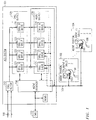
- FIG. 1 shows an illustrative call center.
- the call center comprises a plurality of telephone lines and/or trunks 100 selectively interconnected with a plurality of agent positions 102-104 via an ACD system 101.
- Each agent position 102-104 includes a voice-and-data terminal 105 for use by a corresponding agent 106-108 in handling calls.
- Terminals 105 are connected to ACD system 101 by a voice-and-data transmission medium 109.
- a conventional basic call management system (BCMS) and connected to ACD system 101 is a conventional call management system (CMS) 110 that gather call records and call-center statistics for use in managing the call center and in generating call-center reports.
- CMS and BCMS will hereafter be referred to jointly as CMS 110.
- ACD system 101 is illustratively the Lucent Technologies Definity® private-branch exchange (PBX)-based ACD system. It is a stored-program-controlled system that conventionally includes interfaces to external communications links, a communications switching fabric, service circuits (e.g., tone generators, announcement circuits, etc.), memory for storing control programs and data, and a processor (i.e., a computer) for executing the stored control programs to control the interfaces and the fabric and to provide automatic call-distribution functionality. Included among the data stored in ACD system 101 are a set of call queues 120 and a set of agent queues 130. Each call queue 121-129 corresponds to a different agent skill, as does each agent queue 131-139.
- PBX Lucent Technologies Definity® private-branch exchange
- calls are prioritized, and either are enqueued in individual ones of call queues 120 in their order of priority or are enqueued in different ones of a plurality of call queues that correspond to a skill and each one of which corresponds to a different priority.
- each agent's skills are prioritized according to his or her level of expertise in that skill, and either agents are enqueued in individual ones of agent queues 130 in their order of expertise level or are enqueued in different ones of a plurality of agent queues that correspond to a skill and each one of which corresponds to a different expertise level.
- Included among the control programs in ACD system 101 is a call vector 140.
- Calls incoming to the call center on lines or trunks 100 are assigned by call vector 140 to different call queues 121-129 based upon the agent skill that they require for their proper handling.
- Agents 106-108 who are available for handling calls are assigned to agent queues 131-139 based upon the skills which they possess.
- An agent may have multiple skills, and hence may be assigned to multiple agent queues 131-139 simultaneously.
- an agent may have different levels of skill expertise (e.g., skill levels 1-16 in one known system or merely primary (P) skills and secondary (S) skills in another known system), and hence may be assigned to different agent queues 131-139 at different expertise levels.
- Agent assignor 150 is stored either in the main memory or in a peripheral memory (e.g., disk, CD ROM, etc.) or some other computer-readable medium of ACD system 101. Agent assignor 150 effects an assignment between available agents and agent skill queues 131-139 in a way that tends to equalize the level of service provided to rare (less-often needed and therefore staffed by fewer agents) skills with that provided to common skills.
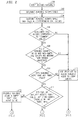
- agent assignor 150 is executed whenever one of the agents 102-104 becomes available to handle a call, at step 200. In response, agent assignor 150 determines what skills the available agent possesses, at step 202, by looking up this information in a stored agent profile of this agent. Agent assignor 150 then determines which of these skills have corresponding non-empty call queues among call queues 120, at step 204. Agent assignor 150 then checks stored skill profiles to determine if the skills of all of the non-empty call queues corresponding to the agent's skills are administratively specified as being "common", at step 206.
- agent selector 150 uses one of the known prior-art schemes to assign the agent to agent queues 130, at step 212. For example, agent selector 150 may assign the agent to each one of queues 131-139 which corresponds to any of the agent's skills. Agent assignor 150 then ends its execution, at step 226.
- agent assignor 150 checks the skill profiles to determine whether all of the agent's skills whose corresponding call queues are not empty are meeting their service objectives, at step 208. For example, each skill has its own average speed of answer (ASA) target that has been administratively assigned to it, and agent assignor 150 compares the skill's ASA target with the skill's actual, measured, ASA. If any of the agent's skills are not meeting their service objectives, agent assignor 150 proceeds to step 212 to effect a conventional agent assignment.
- ASA average speed of answer
- agent assignor 150 checks stored skill profiles to determine if any of the agent's skills are administratively specified as being "rare", at step 210. If there are none, agent assignor 150 again proceeds to step 212; if some of the agent's skills are designated as "rare”, agent assignor 150 checks those agent queues 131-139 that correspond to the agent's rare skills to determine which of those agent queues are empty, at step 214.
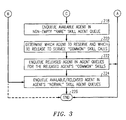
- agent assignor 150 For each agent queue 131-139 corresponding to the agent's rare skill that is determined to be empty, agent assignor 150 enqueues the available agent in the empty agent queue, at step 216. For each agent queue 131-139 corresponding to the agent's rare skill that is determined to not be empty, agent assignor 150 enqueues the available agent in the non-empty agent queue, at step 218. In either case, this reserves the agent for calls needing the agent's non-common skills and makes the agent unavailable to service any waiting calls requiring the agent's common skills. Following step 218, however, agent assignor 150 determines which of the now-multiple agents enqueued in the rare skill agent queue to release for servicing calls requiring common skills, at step 220.
- agent assignor 150 determines which of the enqueued agents is least occupied or most idle, and releases that agent. The release is effected by enqueuing the released agent in those agent queues 131-139 which correspond to the released agent's common skills, at step 222. If the system optionally includes a third category of skills administratively designated as "normal" skills, following steps 216 or 222, agent selector 150 enqueues the available agent (the one for whom the determination was made at step 214) in those agent queues which correspond to that agent's normal skills, at step 224. Following steps 216 or 222 if there is not a "normal" skills category, or following step 224 otherwise, agent assignment is completed, and so agent assignor ends its execution, at step 226.
- agent assignor 150 implements the following agent-assignment logic: IF the agent has a "rare” skill with NO calls in queue AND there are no other available agents for the "rare” skill AND the agent has a "common” skill with calls in queue AND the "common” skill is meeting its objectives for wait time THEN Do NOT service a call from the common queue and keep the agent reserved. In the event that another agent with the "rare” skill is available, release one of them to service calls from other queues.
- Selection of agents from agent queues 130 and of calls from call queues 120 and assignments of calls to agents is then effected in any conventional manner.
Landscapes
- Business, Economics & Management (AREA)
- Marketing (AREA)
- Engineering & Computer Science (AREA)
- Signal Processing (AREA)
- Telephonic Communication Services (AREA)
- Exchange Systems With Centralized Control (AREA)
Applications Claiming Priority (2)
| Application Number | Priority Date | Filing Date | Title |
|---|---|---|---|
| US08/992,307 US6088441A (en) | 1997-12-17 | 1997-12-17 | Arrangement for equalizing levels of service among skills |
| US992307 | 2001-11-19 |
Publications (2)
| Publication Number | Publication Date |
|---|---|
| EP0930764A1 EP0930764A1 (en) | 1999-07-21 |
| EP0930764B1 true EP0930764B1 (en) | 2001-03-28 |
Family
ID=25538166
Family Applications (1)
| Application Number | Title | Priority Date | Filing Date |
|---|---|---|---|
| EP98309976A Expired - Lifetime EP0930764B1 (en) | 1997-12-17 | 1998-12-04 | Arrangement for equalizing levels of service among skills |
Country Status (6)
| Country | Link |
|---|---|
| US (1) | US6088441A (enExample) |
| EP (1) | EP0930764B1 (enExample) |
| JP (1) | JP3504873B2 (enExample) |
| KR (1) | KR100553461B1 (enExample) |
| CA (1) | CA2252236C (enExample) |
| DE (1) | DE69800642T2 (enExample) |
Cited By (1)
| Publication number | Priority date | Publication date | Assignee | Title |
|---|---|---|---|---|
| US8577916B1 (en) | 2006-09-01 | 2013-11-05 | Avaya Inc. | Search-based contact initiation method and apparatus |
Families Citing this family (115)
| Publication number | Priority date | Publication date | Assignee | Title |
|---|---|---|---|---|
| US6493447B1 (en) * | 1997-11-21 | 2002-12-10 | Mci Communications Corporation | Contact server for call center for syncronizing simultaneous telephone calls and TCP/IP communications |
| CA2323444C (en) * | 1998-03-11 | 2016-10-11 | Digideal Corporation | Automated system for playing live casino table games having tabletop changeable playing card displays and play monitoring security features |
| US6292550B1 (en) * | 1998-06-01 | 2001-09-18 | Avaya Technology Corp. | Dynamic call vectoring |
| US6353667B1 (en) * | 1998-08-27 | 2002-03-05 | Avaya Technology Corp. | Minimum interruption cycle time threshold for reserve call center agents |
| US6510221B1 (en) * | 1999-12-06 | 2003-01-21 | Avaya Technology Corp. | System for automatically routing calls to call center agents in an agent surplus condition based on delay probabilities |
| US6408066B1 (en) * | 1999-12-15 | 2002-06-18 | Lucent Technologies Inc. | ACD skill-based routing |
| CA2328335A1 (en) * | 2000-01-24 | 2001-07-24 | Avaya Technology Corp. | Automated transaction distribution system and method allowing selection of agents by transaction initiators |
| US6724884B2 (en) | 2000-01-27 | 2004-04-20 | Avaya Technology Corp. | Call management system using fast response dynamic threshold adjustment |
| US6741698B1 (en) | 2000-01-27 | 2004-05-25 | Avaya Technology Corp. | Call management system using dynamic threshold adjustment |
| US6636599B1 (en) * | 2000-03-09 | 2003-10-21 | Avaya Technology Corp. | Reserving resources for anticipated work items via simulated work items |
| US6956941B1 (en) * | 2000-04-12 | 2005-10-18 | Austin Logistics Incorporated | Method and system for scheduling inbound inquiries |
| US6754333B1 (en) | 2000-04-27 | 2004-06-22 | Avaya Technology Corp. | Wait time prediction arrangement for non-real-time customer contacts |
| US6741699B1 (en) | 2000-04-27 | 2004-05-25 | Avaya Technology Corp. | Arrangement for controlling the volume and type of contacts in an internet call center |
| US7844504B1 (en) | 2000-04-27 | 2010-11-30 | Avaya Inc. | Routing based on the contents of a shopping cart |
| US6870807B1 (en) | 2000-05-15 | 2005-03-22 | Avaya Technology Corp. | Method and apparatus for suppressing music on hold |
| US7013255B1 (en) | 2000-06-09 | 2006-03-14 | Avaya Technology Corp. | Traffic simulation algorithm for asynchronous transfer mode networks |
| US7103173B2 (en) | 2001-07-09 | 2006-09-05 | Austin Logistics Incorporated | System and method for preemptive goals based routing of contact records |
| US7502460B2 (en) | 2006-11-20 | 2009-03-10 | Austin Logistics Incorporated | Method and system for distributing outbound telephone calls |
| US7142662B2 (en) | 2000-07-11 | 2006-11-28 | Austin Logistics Incorporated | Method and system for distributing outbound telephone calls |
| US6766014B2 (en) * | 2001-01-09 | 2004-07-20 | Avaya Technology Corp. | Customer service by batch |
| US8015042B2 (en) * | 2001-04-02 | 2011-09-06 | Verint Americas Inc. | Methods for long-range contact center staff planning utilizing discrete event simulation |
| US7715546B2 (en) | 2001-07-09 | 2010-05-11 | Austin Logistics Incorporated | System and method for updating contact records |
| US7054434B2 (en) | 2001-07-09 | 2006-05-30 | Austin Logistics Incorporated | System and method for common account based routing of contact records |
| US7088814B1 (en) * | 2001-12-13 | 2006-08-08 | Cisco Technology, Inc. | Method and system for automatic call distribution based on network resource availability and agent skills |
| EP2043326A3 (en) * | 2002-02-14 | 2009-04-22 | Avaya Technology Corp. | Presence tracking and name space interconnection techniques |
| US7415417B2 (en) | 2002-03-15 | 2008-08-19 | Avaya Technology Corp. | Presence awareness agent |
| US7336779B2 (en) * | 2002-03-15 | 2008-02-26 | Avaya Technology Corp. | Topical dynamic chat |
| US6707905B2 (en) | 2002-04-18 | 2004-03-16 | Avaya Technology Corp. | Location enhanced automatic work distribution |
| US7620169B2 (en) * | 2002-06-17 | 2009-11-17 | Avaya Inc. | Waiting but not ready |
| US7558739B2 (en) * | 2002-10-22 | 2009-07-07 | Avaya Inc. | Method and apparatus for meeting an on-site enterprise service level objective |
| US20040078209A1 (en) * | 2002-10-22 | 2004-04-22 | Thomson Rodney A. | Method and apparatus for on-site enterprise associate and consumer matching |
| US7023980B2 (en) * | 2002-12-04 | 2006-04-04 | Avaya Technology Corp. | Outbound dialing decision criteria based |
| US7474741B2 (en) | 2003-01-20 | 2009-01-06 | Avaya Inc. | Messaging advise in presence-aware networks |
| US20040215453A1 (en) * | 2003-04-25 | 2004-10-28 | Orbach Julian J. | Method and apparatus for tailoring an interactive voice response experience based on speech characteristics |
| US7050566B2 (en) * | 2003-06-13 | 2006-05-23 | Assurant, Inc. | Call processing system |
| US7770175B2 (en) | 2003-09-26 | 2010-08-03 | Avaya Inc. | Method and apparatus for load balancing work on a network of servers based on the probability of being serviced within a service time goal |
| US20050071212A1 (en) * | 2003-09-26 | 2005-03-31 | Flockhart Andrew D. | Method and apparatus for business time computation in a resource allocation system |
| US8094804B2 (en) | 2003-09-26 | 2012-01-10 | Avaya Inc. | Method and apparatus for assessing the status of work waiting for service |
| US6973176B1 (en) | 2003-09-30 | 2005-12-06 | Avaya Technology Corp. | Method and apparatus for rotating auto reserve agents |
| US7660715B1 (en) | 2004-01-12 | 2010-02-09 | Avaya Inc. | Transparent monitoring and intervention to improve automatic adaptation of speech models |
| US8457300B2 (en) | 2004-02-12 | 2013-06-04 | Avaya Inc. | Instant message contact management in a contact center |
| US7729490B2 (en) | 2004-02-12 | 2010-06-01 | Avaya Inc. | Post-termination contact management |
| US7085367B1 (en) | 2004-02-24 | 2006-08-01 | Avaya Technology Corp. | Call duration alert |
| US9398152B2 (en) | 2004-02-25 | 2016-07-19 | Avaya Inc. | Using business rules for determining presence |
| US7885401B1 (en) | 2004-03-29 | 2011-02-08 | Avaya Inc. | Method and apparatus to forecast the availability of a resource |
| US7953859B1 (en) | 2004-03-31 | 2011-05-31 | Avaya Inc. | Data model of participation in multi-channel and multi-party contacts |
| US7734032B1 (en) | 2004-03-31 | 2010-06-08 | Avaya Inc. | Contact center and method for tracking and acting on one and done customer contacts |
| US8000989B1 (en) | 2004-03-31 | 2011-08-16 | Avaya Inc. | Using true value in routing work items to resources |
| US7158909B2 (en) * | 2004-03-31 | 2007-01-02 | Balboa Instruments, Inc. | Method and system for testing spas |
| US20050276407A1 (en) * | 2004-06-09 | 2005-12-15 | Avaya Technology Corp. | Telephony device ring determination by scheduler |
| US7769154B1 (en) | 2004-06-09 | 2010-08-03 | Avaya Inc. | Aggregated perceived presence |
| US7983148B1 (en) | 2004-07-12 | 2011-07-19 | Avaya Inc. | Disaster recovery via alternative terminals and partitioned networks |
| US8738412B2 (en) | 2004-07-13 | 2014-05-27 | Avaya Inc. | Method and apparatus for supporting individualized selection rules for resource allocation |
| US7949121B1 (en) | 2004-09-27 | 2011-05-24 | Avaya Inc. | Method and apparatus for the simultaneous delivery of multiple contacts to an agent |
| US7949123B1 (en) | 2004-09-28 | 2011-05-24 | Avaya Inc. | Wait time predictor for long shelf-life work |
| US7657021B2 (en) * | 2004-09-29 | 2010-02-02 | Avaya Inc. | Method and apparatus for global call queue in a global call center |
| US7892648B2 (en) * | 2005-01-21 | 2011-02-22 | International Business Machines Corporation | SiCOH dielectric material with improved toughness and improved Si-C bonding |
| US7567653B1 (en) | 2005-03-22 | 2009-07-28 | Avaya Inc. | Method by which call centers can vector inbound TTY calls automatically to TTY-enabled resources |
| US7817796B1 (en) | 2005-04-27 | 2010-10-19 | Avaya Inc. | Coordinating work assignments for contact center agents |
| US7529670B1 (en) | 2005-05-16 | 2009-05-05 | Avaya Inc. | Automatic speech recognition system for people with speech-affecting disabilities |
| US7809127B2 (en) | 2005-05-26 | 2010-10-05 | Avaya Inc. | Method for discovering problem agent behaviors |
| EP1729247A1 (de) * | 2005-06-01 | 2006-12-06 | InVision Software AG | Mitarbeitereinsatzplanung |
| US7779042B1 (en) | 2005-08-08 | 2010-08-17 | Avaya Inc. | Deferred control of surrogate key generation in a distributed processing architecture |
| US7881450B1 (en) | 2005-09-15 | 2011-02-01 | Avaya Inc. | Answer on hold notification |
| US8577015B2 (en) | 2005-09-16 | 2013-11-05 | Avaya Inc. | Method and apparatus for the automated delivery of notifications to contacts based on predicted work prioritization |
| US8116446B1 (en) | 2005-10-03 | 2012-02-14 | Avaya Inc. | Agent driven work item awareness for tuning routing engine work-assignment algorithms |
| US8073129B1 (en) | 2005-10-03 | 2011-12-06 | Avaya Inc. | Work item relation awareness for agents during routing engine driven sub-optimal work assignments |
| US10572879B1 (en) | 2005-10-03 | 2020-02-25 | Avaya Inc. | Agent driven media-agnostic work item grouping and sharing over a consult medium |
| US7822587B1 (en) * | 2005-10-03 | 2010-10-26 | Avaya Inc. | Hybrid database architecture for both maintaining and relaxing type 2 data entity behavior |
| US8411843B1 (en) | 2005-10-04 | 2013-04-02 | Avaya Inc. | Next agent available notification |
| US7787609B1 (en) | 2005-10-06 | 2010-08-31 | Avaya Inc. | Prioritized service delivery based on presence and availability of interruptible enterprise resources with skills |
| US7752230B2 (en) | 2005-10-06 | 2010-07-06 | Avaya Inc. | Data extensibility using external database tables |
| US8238541B1 (en) | 2006-01-31 | 2012-08-07 | Avaya Inc. | Intent based skill-set classification for accurate, automatic determination of agent skills |
| US7406222B2 (en) * | 2006-02-16 | 2008-07-29 | Pavel Kornilovich | Composite evanescent waveguides and associated methods |
| US8737173B2 (en) | 2006-02-24 | 2014-05-27 | Avaya Inc. | Date and time dimensions for contact center reporting in arbitrary international time zones |
| US7653543B1 (en) | 2006-03-24 | 2010-01-26 | Avaya Inc. | Automatic signal adjustment based on intelligibility |
| US8442197B1 (en) | 2006-03-30 | 2013-05-14 | Avaya Inc. | Telephone-based user interface for participating simultaneously in more than one teleconference |
| US8842818B2 (en) * | 2006-06-30 | 2014-09-23 | Avaya Inc. | IP telephony architecture including information storage and retrieval system to track fluency |
| US7936867B1 (en) | 2006-08-15 | 2011-05-03 | Avaya Inc. | Multi-service request within a contact center |
| US7962342B1 (en) | 2006-08-22 | 2011-06-14 | Avaya Inc. | Dynamic user interface for the temporarily impaired based on automatic analysis for speech patterns |
| US7925508B1 (en) | 2006-08-22 | 2011-04-12 | Avaya Inc. | Detection of extreme hypoglycemia or hyperglycemia based on automatic analysis of speech patterns |
| US8391463B1 (en) | 2006-09-01 | 2013-03-05 | Avaya Inc. | Method and apparatus for identifying related contacts |
| US8938063B1 (en) | 2006-09-07 | 2015-01-20 | Avaya Inc. | Contact center service monitoring and correcting |
| US8811597B1 (en) | 2006-09-07 | 2014-08-19 | Avaya Inc. | Contact center performance prediction |
| US8855292B1 (en) | 2006-09-08 | 2014-10-07 | Avaya Inc. | Agent-enabled queue bypass to agent |
| US7835514B1 (en) | 2006-09-18 | 2010-11-16 | Avaya Inc. | Provide a graceful transfer out of active wait treatment |
| US7573996B1 (en) | 2006-10-03 | 2009-08-11 | Avaya Inc. | Presence based callback |
| US8971520B1 (en) | 2006-10-27 | 2015-03-03 | Answer Financial Inc. | Method for optimizing skill assignment in call center agent applications |
| US20080162246A1 (en) * | 2007-01-03 | 2008-07-03 | International Business Machines Corporation | Method and system for contract based call center and/or contact center management |
| US8767944B1 (en) | 2007-01-03 | 2014-07-01 | Avaya Inc. | Mechanism for status and control communication over SIP using CODEC tunneling |
| US8150003B1 (en) | 2007-01-23 | 2012-04-03 | Avaya Inc. | Caller initiated undivert from voicemail |
| US7675411B1 (en) | 2007-02-20 | 2010-03-09 | Avaya Inc. | Enhancing presence information through the addition of one or more of biotelemetry data and environmental data |
| US7747705B1 (en) | 2007-05-08 | 2010-06-29 | Avaya Inc. | Method to make a discussion forum or RSS feed a source for customer contact into a multimedia contact center that is capable of handling emails |
| US8041344B1 (en) | 2007-06-26 | 2011-10-18 | Avaya Inc. | Cooling off period prior to sending dependent on user's state |
| US10671600B1 (en) | 2007-07-24 | 2020-06-02 | Avaya Inc. | Communications-enabled dynamic social network routing utilizing presence |
| US8504534B1 (en) | 2007-09-26 | 2013-08-06 | Avaya Inc. | Database structures and administration techniques for generalized localization of database items |
| US8737600B2 (en) * | 2008-01-10 | 2014-05-27 | At&T Intellectual Property I, L.P. | Skills-based communication routing |
| US8856182B2 (en) | 2008-01-25 | 2014-10-07 | Avaya Inc. | Report database dependency tracing through business intelligence metadata |
| US8831206B1 (en) | 2008-05-12 | 2014-09-09 | Avaya Inc. | Automated, data-based mechanism to detect evolution of employee skills |
| US8385532B1 (en) | 2008-05-12 | 2013-02-26 | Avaya Inc. | Real-time detective |
| US8082159B1 (en) | 2008-07-03 | 2011-12-20 | Extend Health, Inc. | Method and systems for routing items to resources |
| US10375244B2 (en) | 2008-08-06 | 2019-08-06 | Avaya Inc. | Premises enabled mobile kiosk, using customers' mobile communication device |
| US8116237B2 (en) | 2008-09-26 | 2012-02-14 | Avaya Inc. | Clearing house for publish/subscribe of status data from distributed telecommunications systems |
| US8621011B2 (en) | 2009-05-12 | 2013-12-31 | Avaya Inc. | Treatment of web feeds as work assignment in a contact center |
| US8964958B2 (en) | 2009-05-20 | 2015-02-24 | Avaya Inc. | Grid-based contact center |
| US8644491B2 (en) | 2009-08-21 | 2014-02-04 | Avaya Inc. | Mechanism for multisite service state description |
| US8385533B2 (en) | 2009-09-21 | 2013-02-26 | Avaya Inc. | Bidding work assignment on conference/subscribe RTP clearing house |
| US8301581B2 (en) | 2009-09-24 | 2012-10-30 | Avaya Inc. | Group compositing algorithms for presence |
| US8565386B2 (en) | 2009-09-29 | 2013-10-22 | Avaya Inc. | Automatic configuration of soft phones that are usable in conjunction with special-purpose endpoints |
| US9516069B2 (en) | 2009-11-17 | 2016-12-06 | Avaya Inc. | Packet headers as a trigger for automatic activation of special-purpose softphone applications |
| US8306212B2 (en) | 2010-02-19 | 2012-11-06 | Avaya Inc. | Time-based work assignments in automated contact distribution |
| US8675860B2 (en) | 2012-02-16 | 2014-03-18 | Avaya Inc. | Training optimizer for contact center agents |
| US10990906B2 (en) * | 2015-10-13 | 2021-04-27 | [24]7.ai, Inc. | Method and apparatus for reserving zero-wait time agent interactions |
| US11463587B1 (en) | 2019-03-04 | 2022-10-04 | United Services Automobile Association (Usaa) | Predictive mapping for routing telephone calls |
| US11368588B1 (en) * | 2020-05-20 | 2022-06-21 | Amazon Technologies, Inc. | Dynamic communication routing at contact centers |
Family Cites Families (7)
| Publication number | Priority date | Publication date | Assignee | Title |
|---|---|---|---|---|
| US5206903A (en) * | 1990-12-26 | 1993-04-27 | At&T Bell Laboratories | Automatic call distribution based on matching required skills with agents skills |
| US5335269A (en) * | 1992-03-12 | 1994-08-02 | Rockwell International Corporation | Two dimensional routing apparatus in an automatic call director-type system |
| US5309513A (en) * | 1992-07-02 | 1994-05-03 | Rockwell International Corporation | Telephone system with ubiquitous agents |
| CA2147601C (en) * | 1992-10-21 | 1998-08-25 | Norman J. Donaghue, Jr. | Integrated intelligent call blending |
| US5784452A (en) * | 1994-06-01 | 1998-07-21 | Davox Corporation | Telephony call center with agent work groups |
| EP0740450B1 (en) * | 1995-04-24 | 2006-06-14 | International Business Machines Corporation | Method and apparatus for skill-based routing in a call center |
| US5903641A (en) * | 1997-01-28 | 1999-05-11 | Lucent Technologies Inc. | Automatic dynamic changing of agents' call-handling assignments |
-
1997
- 1997-12-17 US US08/992,307 patent/US6088441A/en not_active Expired - Lifetime
-
1998
- 1998-10-28 CA CA002252236A patent/CA2252236C/en not_active Expired - Fee Related
- 1998-12-04 EP EP98309976A patent/EP0930764B1/en not_active Expired - Lifetime
- 1998-12-04 DE DE69800642T patent/DE69800642T2/de not_active Expired - Lifetime
- 1998-12-17 JP JP35848998A patent/JP3504873B2/ja not_active Expired - Lifetime
- 1998-12-17 KR KR1019980056589A patent/KR100553461B1/ko not_active Expired - Lifetime
Cited By (1)
| Publication number | Priority date | Publication date | Assignee | Title |
|---|---|---|---|---|
| US8577916B1 (en) | 2006-09-01 | 2013-11-05 | Avaya Inc. | Search-based contact initiation method and apparatus |
Also Published As
| Publication number | Publication date |
|---|---|
| EP0930764A1 (en) | 1999-07-21 |
| JP3504873B2 (ja) | 2004-03-08 |
| KR100553461B1 (ko) | 2006-05-23 |
| US6088441A (en) | 2000-07-11 |
| DE69800642T2 (de) | 2001-09-20 |
| JPH11317813A (ja) | 1999-11-16 |
| DE69800642D1 (de) | 2001-05-03 |
| CA2252236A1 (en) | 1999-06-17 |
| CA2252236C (en) | 2001-08-14 |
| KR19990063257A (ko) | 1999-07-26 |
Similar Documents
| Publication | Publication Date | Title |
|---|---|---|
| CA2252236C (en) | Arrangement for equalizing levels of service among skills | |
| US6052460A (en) | Arrangement for equalizing levels of service among skills | |
| CA2258357C (en) | Call center agent selection that optimizes call wait times | |
| EP0982917B1 (en) | Skill-value queuing in a call center | |
| US5828747A (en) | Call distribution based on agent occupancy | |
| US6563920B1 (en) | Methods and apparatus for processing of communications in a call center based on variable rest period determinations | |
| EP1032188B1 (en) | Rules-based queuing of calls to call-handling resources | |
| US6925165B2 (en) | Call selection based on continuum skill levels in a call center | |
| US6661889B1 (en) | Methods and apparatus for multi-variable work assignment in a call center | |
| US5721770A (en) | Agent vectoring programmably conditionally assigning agents to various tasks including tasks other than handling of waiting calls | |
| EP1107558B1 (en) | System for automatically routing calls to call center agents in an agent surplus condition based on agent occupancy | |
| EP1107559B1 (en) | System for automatically routing calls to call center agents in an agent surplus condition based on service levels | |
| EP1107557B1 (en) | System for automatically routing calls to call center agents in an agent surplus condition based on delay probabilities | |
| EP1107556B1 (en) | System for automatically predicting call center agent work time in a multi-skilled agent environment | |
| JPH11317813A5 (enExample) | ||
| JP2001237971A (ja) | コールセンタにおける通信をサービス状態を基にして処理する方法および装置 | |
| US6973176B1 (en) | Method and apparatus for rotating auto reserve agents | |
| US8036372B2 (en) | Methods and apparatus for dynamically reallocating a preferred request to one or more generic queues |
Legal Events
| Date | Code | Title | Description |
|---|---|---|---|
| PUAI | Public reference made under article 153(3) epc to a published international application that has entered the european phase |
Free format text: ORIGINAL CODE: 0009012 |
|
| 17P | Request for examination filed |
Effective date: 19981224 |
|
| AK | Designated contracting states |
Kind code of ref document: A1 Designated state(s): DE FR GB |
|
| AX | Request for extension of the european patent |
Free format text: AL;LT;LV;MK;RO;SI |
|
| 17Q | First examination report despatched |
Effective date: 19990825 |
|
| AKX | Designation fees paid |
Free format text: DE FR GB |
|
| GRAG | Despatch of communication of intention to grant |
Free format text: ORIGINAL CODE: EPIDOS AGRA |
|
| GRAG | Despatch of communication of intention to grant |
Free format text: ORIGINAL CODE: EPIDOS AGRA |
|
| GRAG | Despatch of communication of intention to grant |
Free format text: ORIGINAL CODE: EPIDOS AGRA |
|
| GRAH | Despatch of communication of intention to grant a patent |
Free format text: ORIGINAL CODE: EPIDOS IGRA |
|
| GRAH | Despatch of communication of intention to grant a patent |
Free format text: ORIGINAL CODE: EPIDOS IGRA |
|
| GRAA | (expected) grant |
Free format text: ORIGINAL CODE: 0009210 |
|
| AK | Designated contracting states |
Kind code of ref document: B1 Designated state(s): DE FR GB |
|
| REF | Corresponds to: |
Ref document number: 69800642 Country of ref document: DE Date of ref document: 20010503 |
|
| ET | Fr: translation filed | ||
| REG | Reference to a national code |
Ref country code: GB Ref legal event code: IF02 |
|
| PLBE | No opposition filed within time limit |
Free format text: ORIGINAL CODE: 0009261 |
|
| STAA | Information on the status of an ep patent application or granted ep patent |
Free format text: STATUS: NO OPPOSITION FILED WITHIN TIME LIMIT |
|
| 26N | No opposition filed | ||
| PGFP | Annual fee paid to national office [announced via postgrant information from national office to epo] |
Ref country code: FR Payment date: 20130107 Year of fee payment: 15 |
|
| REG | Reference to a national code |
Ref country code: FR Ref legal event code: ST Effective date: 20140829 |
|
| PG25 | Lapsed in a contracting state [announced via postgrant information from national office to epo] |
Ref country code: FR Free format text: LAPSE BECAUSE OF NON-PAYMENT OF DUE FEES Effective date: 20131231 |
|
| PGFP | Annual fee paid to national office [announced via postgrant information from national office to epo] |
Ref country code: DE Payment date: 20171211 Year of fee payment: 20 |
|
| PGFP | Annual fee paid to national office [announced via postgrant information from national office to epo] |
Ref country code: GB Payment date: 20171221 Year of fee payment: 20 |
|
| REG | Reference to a national code |
Ref country code: DE Ref legal event code: R071 Ref document number: 69800642 Country of ref document: DE |
|
| REG | Reference to a national code |
Ref country code: GB Ref legal event code: PE20 Expiry date: 20181203 |
|
| PG25 | Lapsed in a contracting state [announced via postgrant information from national office to epo] |
Ref country code: GB Free format text: LAPSE BECAUSE OF EXPIRATION OF PROTECTION Effective date: 20181203 |