EP0927049B1 - Labelled elastase inhibitors - Google Patents
Labelled elastase inhibitors Download PDFInfo
- Publication number
- EP0927049B1 EP0927049B1 EP97940242A EP97940242A EP0927049B1 EP 0927049 B1 EP0927049 B1 EP 0927049B1 EP 97940242 A EP97940242 A EP 97940242A EP 97940242 A EP97940242 A EP 97940242A EP 0927049 B1 EP0927049 B1 EP 0927049B1
- Authority
- EP
- European Patent Office
- Prior art keywords
- labelled
- inhibitor
- hle
- azetidinone
- compound
- Prior art date
- Legal status (The legal status is an assumption and is not a legal conclusion. Google has not performed a legal analysis and makes no representation as to the accuracy of the status listed.)
- Expired - Lifetime
Links
- 0 C*1CCCCC1 Chemical compound C*1CCCCC1 0.000 description 5
Classifications
-
- A—HUMAN NECESSITIES
- A61—MEDICAL OR VETERINARY SCIENCE; HYGIENE
- A61K—PREPARATIONS FOR MEDICAL, DENTAL OR TOILETRY PURPOSES
- A61K51/00—Preparations containing radioactive substances for use in therapy or testing in vivo
- A61K51/02—Preparations containing radioactive substances for use in therapy or testing in vivo characterised by the carrier, i.e. characterised by the agent or material covalently linked or complexing the radioactive nucleus
- A61K51/04—Organic compounds
- A61K51/08—Peptides, e.g. proteins, carriers being peptides, polyamino acids, proteins
- A61K51/088—Peptides, e.g. proteins, carriers being peptides, polyamino acids, proteins conjugates with carriers being peptides, polyamino acids or proteins
-
- A—HUMAN NECESSITIES
- A61—MEDICAL OR VETERINARY SCIENCE; HYGIENE
- A61K—PREPARATIONS FOR MEDICAL, DENTAL OR TOILETRY PURPOSES
- A61K49/00—Preparations for testing in vivo
- A61K49/06—Nuclear magnetic resonance [NMR] contrast preparations; Magnetic resonance imaging [MRI] contrast preparations
- A61K49/08—Nuclear magnetic resonance [NMR] contrast preparations; Magnetic resonance imaging [MRI] contrast preparations characterised by the carrier
- A61K49/085—Nuclear magnetic resonance [NMR] contrast preparations; Magnetic resonance imaging [MRI] contrast preparations characterised by the carrier conjugated systems
-
- A—HUMAN NECESSITIES
- A61—MEDICAL OR VETERINARY SCIENCE; HYGIENE
- A61K—PREPARATIONS FOR MEDICAL, DENTAL OR TOILETRY PURPOSES
- A61K49/00—Preparations for testing in vivo
- A61K49/06—Nuclear magnetic resonance [NMR] contrast preparations; Magnetic resonance imaging [MRI] contrast preparations
- A61K49/08—Nuclear magnetic resonance [NMR] contrast preparations; Magnetic resonance imaging [MRI] contrast preparations characterised by the carrier
- A61K49/10—Organic compounds
- A61K49/14—Peptides, e.g. proteins
-
- A—HUMAN NECESSITIES
- A61—MEDICAL OR VETERINARY SCIENCE; HYGIENE
- A61K—PREPARATIONS FOR MEDICAL, DENTAL OR TOILETRY PURPOSES
- A61K51/00—Preparations containing radioactive substances for use in therapy or testing in vivo
- A61K51/02—Preparations containing radioactive substances for use in therapy or testing in vivo characterised by the carrier, i.e. characterised by the agent or material covalently linked or complexing the radioactive nucleus
- A61K51/04—Organic compounds
- A61K51/041—Heterocyclic compounds
- A61K51/044—Heterocyclic compounds having nitrogen as a ring hetero atom, e.g. guanethidine, rifamycins
- A61K51/0444—Heterocyclic compounds having nitrogen as a ring hetero atom, e.g. guanethidine, rifamycins having four-membered rings, e.g. azetidine
-
- A—HUMAN NECESSITIES
- A61—MEDICAL OR VETERINARY SCIENCE; HYGIENE
- A61K—PREPARATIONS FOR MEDICAL, DENTAL OR TOILETRY PURPOSES
- A61K51/00—Preparations containing radioactive substances for use in therapy or testing in vivo
- A61K51/02—Preparations containing radioactive substances for use in therapy or testing in vivo characterised by the carrier, i.e. characterised by the agent or material covalently linked or complexing the radioactive nucleus
- A61K51/04—Organic compounds
- A61K51/041—Heterocyclic compounds
- A61K51/044—Heterocyclic compounds having nitrogen as a ring hetero atom, e.g. guanethidine, rifamycins
- A61K51/0455—Heterocyclic compounds having nitrogen as a ring hetero atom, e.g. guanethidine, rifamycins having six-membered rings with one nitrogen as the only ring hetero atom
-
- A—HUMAN NECESSITIES
- A61—MEDICAL OR VETERINARY SCIENCE; HYGIENE
- A61K—PREPARATIONS FOR MEDICAL, DENTAL OR TOILETRY PURPOSES
- A61K51/00—Preparations containing radioactive substances for use in therapy or testing in vivo
- A61K51/02—Preparations containing radioactive substances for use in therapy or testing in vivo characterised by the carrier, i.e. characterised by the agent or material covalently linked or complexing the radioactive nucleus
- A61K51/04—Organic compounds
- A61K51/041—Heterocyclic compounds
- A61K51/044—Heterocyclic compounds having nitrogen as a ring hetero atom, e.g. guanethidine, rifamycins
- A61K51/0459—Heterocyclic compounds having nitrogen as a ring hetero atom, e.g. guanethidine, rifamycins having six-membered rings with two nitrogen atoms as the only ring hetero atoms, e.g. piperazine
-
- A—HUMAN NECESSITIES
- A61—MEDICAL OR VETERINARY SCIENCE; HYGIENE
- A61K—PREPARATIONS FOR MEDICAL, DENTAL OR TOILETRY PURPOSES
- A61K2121/00—Preparations for use in therapy
-
- A—HUMAN NECESSITIES
- A61—MEDICAL OR VETERINARY SCIENCE; HYGIENE
- A61K—PREPARATIONS FOR MEDICAL, DENTAL OR TOILETRY PURPOSES
- A61K2123/00—Preparations for testing in vivo
Definitions
- the present invention relates to a class of compounds useful in the diagnosis or radiotherapy of infection, inflammation or thrombi, pharmaceutical formulations containing them, their use in diagnosis of disease and methods for their preparation.
- Diagnostic imaging of infection or inflammation in clinical practice typically uses either the radiopharmaceutical 67 Ga citrate, or radiolabelled white blood cells (leucocytes) since leucocytes are known to accumulate at sites of infection/inflammation.
- 111 In or 99m Tc are the radioisotopes normally used to label leucocytes.
- Labelled leucocytes have become the method of choice in current clinical practice for the diagnostic imaging of sites of infection/inflammation. With the favourable imaging characteristics of 99m Tc, the specificity of labelled leucocytes and good background clearance, this approach lends itself to the diagnosis of gut lesions such as inflammatory bowel disease or appendicitis. Such diseases cannot be diagnosed with non-specific agents due to the high gut background levels.
- the problem with the ex-vivo labelled leucocyte approach is that the current cell labelling agents used are non-specific. This means that the leucocytes have to be first separated from the excess red blood cells in blood taken from the patient to be imaged. The cell separation is a labour-intensive operation which requires a skilled operator to achieve efficient separation without compromising white cell integrity. There is also the intrinsic hazard associated with manipulation of blood samples. There has therefore been considerable interest in the field in developing an agent which could be used to image sites of infection which does not require this onerous cell separation prior to labelling and administration to the patient.
- HLE Human leucocyte elastase
- EP 0595557 A1(Merck) discloses that the following compounds are useful as HLE inhibitors for the treatment of inflammatory pathologies such as emphysema or rheumatoid arthritis: where:
- Radiolabelled HLE inhibitors have been little studied.
- Moser et al .[Am.J.Med., 84 (Suppl.6A), 70 (1988)] report that 131 I-labelled ⁇ 1 -antitrypsin persists in the human lung for up to one week post injection with little or no uptake in the liver or spleen.
- the paper does not, however, discuss potential applications of radiolabelled ⁇ 1 -antitrypsin.
- a tritium-labelled synthetic HLE inhibitor has been used to study the pharmacokinetics of the HLE inhibitor in rats and monkeys [ J.B.Doherty et al , Proc.Nat.Acad.Sci.USA, 90 , 8727-31 (1993)].
- a 13 C-labelled synthetic HLE inhibitor has been prepared to study the interaction of the inhibitor with HLE in vitro [ B.G.Green et al , Biochem. 34 , 14331-14355 (1995)].
- Neither publication discloses the use of labelled HLE inhibitors for diagnostic imaging of infection, inflammation or thrombi nor are 3 H or 13 C suitable labelling moieties for external diagnostic imaging.
- Rusckowski et al [ J.Nucl.Med., abstract P667 (1996)] report that a genetically engineered protein inhibitor of HLE named EPI-hNE-2 (molecular weight 6759) can be radiolabelled with 99m Tc via a bifunctional chelate. The radiolabelled protein is reported to show some uptake in a mouse infection model.
- EPI-hNE-2 is an oligopeptide and could suffer from the same immunogenic problems as Fab' or larger fragments of antibodies. Furthermore, the size of the molecule limits migration across cell membranes (e.g. those of granulocytes), hence intracellular HLE would not be targeted using this approach.
- labelled synthetic HLE inhibitors are useful in the detection of sites of infection or inflammation.
- Use of a synthetic as opposed to a proteinaceous or polypeptide inhibitor has the significant advantages that the chemical nature of the agent can be fully defined, and potential concerns over immunogenicity are avoided.
- the position of the label is known unambiguously, and unlike chemotactic peptides or interleukins, the labelled elastase inhibitor is not required to be of very high specific activity because there is an excess of elastase present both within granulocytes and at sites of infection/inflammation.
- the labelled HLE inhibitors are also useful in the detection of thrombi.
- the present invention relates to diagnostic agents for the detection of sites of infection or inflammation or thrombi in the human body.
- the agents comprise a synthetic human leucocyte elastase (HLE) inhibitor which has a molecular weight of less than 2000 Daltons and is labelled with a detectable moiety suitable for external imaging (e.g. by scintigraphy or MRI), such as a radionuclide or a paramagnetic metal ion.
- the agent acts by targeting HLE either within leucocytes ( in vivo or in vitro ), or at sites of HLE release such as sites of infection, inflammation or thrombi.
- Radiolabelled HLE inhibitors have been shown to selectively label human granulocytes in vitro and to target sites of infection/ inflammation in vivo in an animal model of this pathology.
- the "detectable moiety” is a substance suitable for external imaging after human administration such as a radionuclide which emits radiation that can penetrate soft tissue; a paramagnetic moiety as a contrast agent for MRI (e.g. certain metal ions such as gadolinium(III), or manganese(II)); a radiopaque moiety such as lopamidol for X-ray contrast imaging (computer assisted tomography) or an ultrasound contrast agent.
- a radionuclide which emits radiation that can penetrate soft tissue
- a paramagnetic moiety as a contrast agent for MRI (e.g. certain metal ions such as gadolinium(III), or manganese(II))
- a radiopaque moiety such as lopamidol for X-ray contrast imaging (computer assisted tomography) or an ultrasound contrast agent.
- the detectable moiety is a radionuclide which is either a positron emitter (such as 18 F, 11 C, 15 O, 13 N, 68 Ga or 64 Cu) or a ⁇ -emitter such as 123 I, 99m Tc, 111 In, 113m In or 67 Ga.
- a radionuclide which is either a positron emitter (such as 18 F, 11 C, 15 O, 13 N, 68 Ga or 64 Cu) or a ⁇ -emitter such as 123 I, 99m Tc, 111 In, 113m In or 67 Ga.
- Most preferred radionuclides are ⁇ -emitters, especially 123 I and 99m Tc. 3 H and 14 C do not have radioactive emissions suitable for external imaging and are therefore outside the scope of the present invention. It is also envisaged that certain radionuclides will confer useful radiotherapeutic properties on the labelled HLE inhibitors.
- HLE inhibitors could be used in the treatment of rheumatoid arthritis and other bone infections/inflammations.
- the therapeutic effect would be due to the local targeted radioactive dose delivered to specific cells, as opposed to any pharmacological effect due to the inhibitor.
- Whichever detectable moiety is chosen, it is strongly preferred that it is bound to the synthetic HLE inhibitor in such a way that it does not undergo facile metabolism in blood ( in vivo or in vitro ) with the result that the biodistribution of the detectable moiety no longer reflects that of the HLE inhibitor.
- radiolabelled synthetic HLE inhibitors offer a novel and convenient method for targeting sites of infection/inflammation or thrombosis.
- the mechanism is believed to involve binding to HLE present within circulating granulocytes in the bloodstream (which then concentrate at the site of pathology), or binding to free, extracellular HLE released at sites of pathology.
- Such a directly-injectable infection/inflammation imaging compound offers significant advantages over existing and proposed radiopharmaceuticals.
- the specificity for HLE means that the agents should, like ex vivo labelled leucocytes, be capable of imaging lesions associated with leucocyte infiltration such as appendicitis or inflammatory bowel disease.
- Use of a relatively small synthetic molecule means that the background clearance problems associated with macromolecules are avoided, and substituents can readily be varied in a controlled manner to adjust lipophilicity, plasma protein binding and rate of clearance.
- Preferred HLE inhibitors for use in the present invention are the mechanism-based inhibitors, especially ⁇ -lactams which can be monocyclic (i.e. azetidinones) or have more than one fused ring (such as penicillins, cephalosporins or clavulanic acid analogues) and ynenol lactones. Most preferred are ⁇ -lactams, especially monocyclic ⁇ -lactams (i.e. azetidinones).
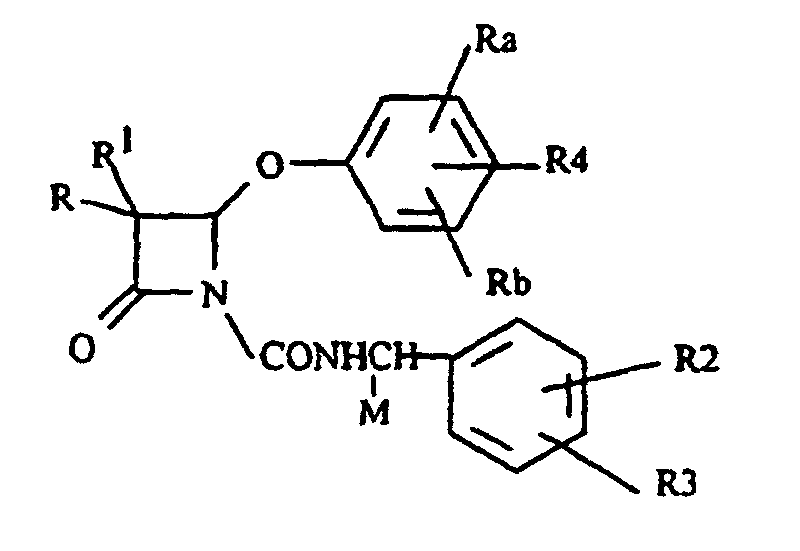
- Preferred ⁇ -lactams are of formula:
- Preferred azetidinones are of formula:
- Attachment of the detectable moiety at the R 4 position is least preferred since this group is believed to be lost from the ⁇ -lactam as a consequence of covalent binding to the active site of the elastase enzyme.
- Groups R 2 and R 3 on the ⁇ -lactam are responsible for binding to the S 1 site on the enzyme, and literature evidence suggests that these groups need to be relatively small (e.g. the size of an ethyl moiety). Hence it is likely that only a limited range of detectable moieties could be successfully attached at the R 2 /R 3 positions.
- the detectable moiety is therefore most preferably attached at the R 1 position of the ⁇ -lactam or azetidinone.
- R 1 groups are those of formula: where R 6 is an optionally substituted alkyl or phenyl group to which the detectable moiety is attached and R 7 is H or a C 1-6 alkyl group.
- the metal is always chelated, i.e. a chelate-HLE inhibitor conjugate is used.
- Metal complexes of the HLE inhibitor alone i.e. HLE inhibitors without at least one substituent which is designed to coordinate to metal atoms
- the term chelate-HLE conjugate covers the situations where the chelating agent is attached as a discrete chemical entity (i.e. as a single substituent on the HLE inhibitor), and when two or more metal donor atoms are attached as substituents at different positions on the HLE molecule.
- the chelate-HLE inhibitor conjugate is complexed with metal ions (such as technetium, gadolinium or yttrium) giving a metal complex of the chelating agent which is linked to the synthetic HLE inhibitor.
- the chelating agent is preferably polydentate and/or macrocyclic so that a stable metal complex is formed which can survive challenge by endogenous competing ligands for the metal in vivo such as transferrin or plasma proteins.
- the metal complex is preferably neutral since this facilitates transport of the labelled inhibitor conjugate across cell membranes such as those of granulocytes.
- the metal complex should also preferably be of low lipophilicity (since high lipophilicity is often related to non-specific uptake), and exhibit low plasma protein binding (PPB) since plasma-bound label again contributes to undesirable high, non-specific blood background for the imaging agent.
- Suitable chelating agents for technetium are diaminedioximes (US 4615876) or such ligands incorporating amide donors (WO 94/08949 ); the tetradentate ligands of WO 94/22816 ; diaminedithiols, tetraamines or dithiosemicarbazones.
- Stable technetium complexes are also formed with macrocyclic amine or amide ligands such as cyclam, oxocyclam (which forms a neutral technetium complex) or dioxocyclam.
- Suitable ligands for indium, yttrium and gadolinium are described in Sandoz WO 91/01144, preferred are macrocyclic aminocarboxylate and aminophosphonic acid ligands.
- Non-ionic (i.e. neutral) metal complexes of gadolinium are known and examples are described in US 4885363.
- the detectable moiety is a radioactive isotope of iodine
- the radioiodine atom is preferably attached via a direct covalent bond to an aromatic ring such as a benzene ring, or a vinyl group since it is known that iodine atoms bound to saturated aliphatic systems are prone to in vivo metabolism and hence loss of the detectable moiety.
- the compounds of the present invention may be prepared as follows:
- the R 1-5 group is chosen to include either a non-radioactive halogen atom (to permit radioiodine exchange), an activated aryl ring (e.g. a phenol group) or an organometallic precursor compound such as a trialkyltin, trialkylsilyl or other such moiety known to those skilled in the art.
- a non-radioactive halogen atom to permit radioiodine exchange
- an activated aryl ring e.g. a phenol group
- an organometallic precursor compound such as a trialkyltin, trialkylsilyl or other such moiety known to those skilled in the art.
- the metal is preferably attached as a metal complex, i.e. a chelating agent is attached to the synthetic HLE inhibitor giving a chelate-HLE inhibitor conjugate.
- a chelating agent is attached to the synthetic HLE inhibitor giving a chelate-HLE inhibitor conjugate.
- chelate-HLE inhibitor conjugates can be prepared using the bifunctional chelate approach.
- Functional groups which have been attached to chelating agents include: amine, thiocyanate, maleimide and active ester such as N-hydroxysuccinimide.
- Such bifunctional chelates can be reacted with suitable functional groups on the HLE inhibitor to form the desired conjugate.
- chelate-amine conjugates for diaminedioxime ligands are given in WO 95/19187.
- a chelating agent can be attached at the R 1 position as follows. First a chelate-amine conjugate is converted to a chelate-isocyanate conjugate using phosgene, trichloromethylchloroformate or similar. The chelating agent may optionally be protected with protecting groups known to those skilled in the art. The resulting chelate-NCO (isocyanate) conjugate can then be reacted with the amine NH of an azetidinone ring secondary amine giving a chelating agent attached at R 1 via a urea linkage.
- a chelate-amine conjugate can be converted to a chelating agent with a pendant isothiocyanate group (as e.g. described in US 5006643 or WO 91/01144) and then reacted with an azetidinone to give a chelating agent-azetidinone conjugate linked via a thiourea bond.
- reaction of a chelate-active ester conjugate with the amine NH of an azetidinone ring would give a chelate-azetidinone conjugate linked via an amide bond.
- a further approach to an amide-linked conjugate would be to couple the amine group of an chelate-amine conjugate to the pendant carboxyl group of a carboxyl-functionalised azetidinone.
- Persons skilled in the art will recognise that many alternative syntheses of chelate-HLE inhibitor conjugates are possible based on this disclosure.
- kits for the preparation of synthetic HLE inhibitors labelled with a detectable moiety are designed to give sterile products suitable for human administration, e.g. via injection into the bloodstream. Possible embodiments are discussed below.
- the detectable moiety is 99m Tc
- the kit would comprise a vial containing the chelate-HLE inhibitor conjugate together with a pharmaceutically acceptable reducing agent such as sodium dithionite, sodium bisulphite, ascorbic acid, formamidine sulphonic acid, stannous ion, Fe(II) or Cu(I), preferably a stannous salt such as stannous chloride or stannous tartrate.
- the chelating agent-HLE inhibitor conjugate could be present as a metal complex which, upon addition of the radiometal, undergoes transmetallation (i.e. ligand exchange) giving the desired product.
- the kit is preferably lyophilised and is designed to be reconstituted with sterile 99m Tc-pertechnetate (TcO 4 - ) from a 99m Tc radioisotope generator to give a solution suitable for human administration without further manipulation.
- the agents of the present invention may also be provided in a unit dose form ready for human injection and could for example be supplied in a pre-filled sterile syringe.
- the detectable moiety is a radioactive isotope such as 99m Tc
- the syringe containing the unit dose would also be supplied within a syringe shield (to protect the operator from potential radioactive dose).
- kits or pre-filled syringes may optionally contain further ingredients such as buffers; pharmaceutically acceptable solubilisers (e.g. cyclodextrins or surfactants such as Pluronic, Tween or phospholipids); pharmaceutically acceptable stabilisers/antioxidants (such as ascorbic acid, gentisic acid or para -aminobenzoic acid) or bulking agents for lyophilisation (such as sodium chloride or mannitol).
- solubilisers e.g. cyclodextrins or surfactants such as Pluronic, Tween or phospholipids
- stabilisers/antioxidants such as ascorbic acid, gentisic acid or para -aminobenzoic acid
- bulking agents for lyophilisation such as sodium chloride or mannitol
- the desired agent is required to label human granulocytes selectively in whole blood (either in vitro or in vivo ).
- human blood erythrocytes outnumber granulocytes by a factor of at least 1000:1 but erythrocytes do not accumulate at sites of infection/inflammation hence the labelled compound must exhibit high selectivity for granulocytes.
- Studies on the in vitro human blood cell uptake of 123 I-labelled and 99m Tc-labefled ⁇ -lactam HLE inhibitors have demonstrated selective uptake in human granulocytes (see Example 14 and Table 23).
- Table 23 shows that compounds 4, 4a, 4b, 16, 17, 24, 28, 38, 42, 48, 49, 51 and 52 all show some degree of selectivity for granulocytes over a mixture of monocytes/lymphocytes when approximately equivalent numbers of monocytes/lymphocytes and granulocytes are present. Since human granulocytes contain significant levels of HLE whereas erythrocytes (red blood cells), monocytes and lymphocytes (subsets of the leucocyte cell population) contain essentially no HLE, this selectivity is a strong indication that affinity for HLE is involved.
- Table 23 shows that there is a correlation between the in vitro potency (measured for the non-radioactive iodine-labelled compounds and for the unlabelled chelate conjugates, compounds 38, 42, 48, 49, 51 and 52) and selectivity for granulocytes. The implication is that retention within the granulocyte is due to binding to intracellular elastase.
- Preferred synthetic HLE inhibitors of the present invention are therefore those with an in vitro potency (k inact /K i ) of greater than 10,000 M/sec.
- Whole blood also contains plasma proteins which are capable of binding to a wide range of substances and hence may compete effectively for the compound once it is introduced into the blood.
- the preferred agent should also exhibit low plasma protein binding (PPB).
- PPB plasma protein binding
- Preferred compounds have a PPB of less than 95%. Most preferred have a PPB of less than 60%. Since lipophilic compounds are particularly susceptible to non-specific plasma protein binding, preferred compounds have an octanol/water partition coefficient (LogP) of ⁇ 2. When intracellular HLE is the target and consequently the agent must be capable of crossing cell membranes, compounds with a minimum octanol/water partition coefficient (P) of 0.3 are preferred.
- Table 23 shows that, in human whole blood, compounds 4, 16 and 24 exhibit equivalent uptake in granulocytes and erythrocytes. This implies a selectivity factor for granulocytes over erythrocytes of at least 1000:1 and shows that the compounds of the present invention are capable of successfully labelling granulocytes in human whole blood despite the competition from excess erythrocytes and plasma proteins. It is believed that the superior granulocyte selectivity of compound 4 may be due to a combination of HLE potency and reduced non-specific binding to red blood cells or plasma proteins.
- the amine substituent facilitates selective retention in granulocytes due to diffusion of the uncharged inhibitor into the cell and its subsequent trapping via protonation of the basic piperazine amine within the more acidic milieu of the azurophil granule of the granulocyte.
- the protonated inhibitor cannot readily diffuse back across the granulocyte membrane.
- Such more acidic environments are not present within erythrocytes, monocytes or lymphocytes.
- the radiolabelled ⁇ -lactam HLE inhibitors of the present invention have also been studied in vivo in a rat model of inflammation/infection. The results on such studies are given in Table 24.
- the known inflammation/infection agent 99m Tc-HMPAO ex-vivo labelled human leucocytes was shown to locate at the site of infection in the model used.
- 99m Tc-red blood cells was used as the negative control agent comparison. It can be seen that 123 I-labelled compounds 4/4a show significantly better uptake in the infected region than the 99m Tc-rbc control, and have characteristics which more closely resemble the proven infection agent 99m Tc-wbc.
- Table 25 compares the thyroid uptake of the radioiodine compounds of the present invention with that of free 123 I-iodide ion.
- the lack of thyroid uptake is evidence that the compounds do not undergo in vivo metabolic de-iodination. There was no evidence either for the release of pertechnetate in animals dosed with 99m Tc-labelled HLE inhibitors. This implies that the technetium is not released from the chelate conjugate in vivo .
- Step B 4-[4-[(1,1-Dimethylethoxy)carbonyl]phenoxy]-1-[(4-iodo)benzyl aminocarbonyl]-3,3-diethyl-2-azetidinone (compound 2)
- Step C 4-[(4-Carboxy)phenoxy]-3,3-diethyl-1-[(4-iodo)benzylamino carbonyl]-2-azetidinone (compound 3)
- Step D 4-[4-[[(4-Methyl)piperazin-1-yl]carbonyl]phenoxy]-1-[(4-iodo)benzylaminocarbonyl]-3,3-diethyl-2-azetidinone (compound 4)
- Step E 4-[4-[[(4-Methyl)piperazin-1-yl]carbonyl]phenoxy]-1-[[4-tri-( n -butyl)stannyl]benzylaminocarbonyl]-3,3-diethyl-2-azetidinone (compound 5)
- Step F Resolution of the enantiomers of 4-[4-[[(4-methyl)piperazin-1-yl]carbonyl] phenoxy]-1-[(4-iodo)benzylaminocarbonyl]-3,3-diethyl-2-azetidinone (compound 4)
- a sample of 123 I-compound 4 racemate was synthesised and purified according to the HPLC method detailed in system C, example 12. This was to ensure that the pH of the purified racemic compound was compatible with the HPLC column material used for purification of optical isomers (below).
- the organic HPLC eluent was removed in vacuo at ambient laboratory temperature and the sample then diluted with sodium phosphate buffer (pH 6.0) to make the total volume ca 1 ml.
- the racemate was purified into the two optical isomers using the HPLC system D, example 12.
- the two enantiomers, 4a and 4b were collected and the HPLC organic eluent removed in vacuo and the radiochemical (chiral) purity measured after testing using HPLC system D, Example 12. Results of RCP testing are presented in Table 20.
- Step B N - t -Butoxycarbonyl (4-benzyloxy)-2-phenylethylamine (compound 7)
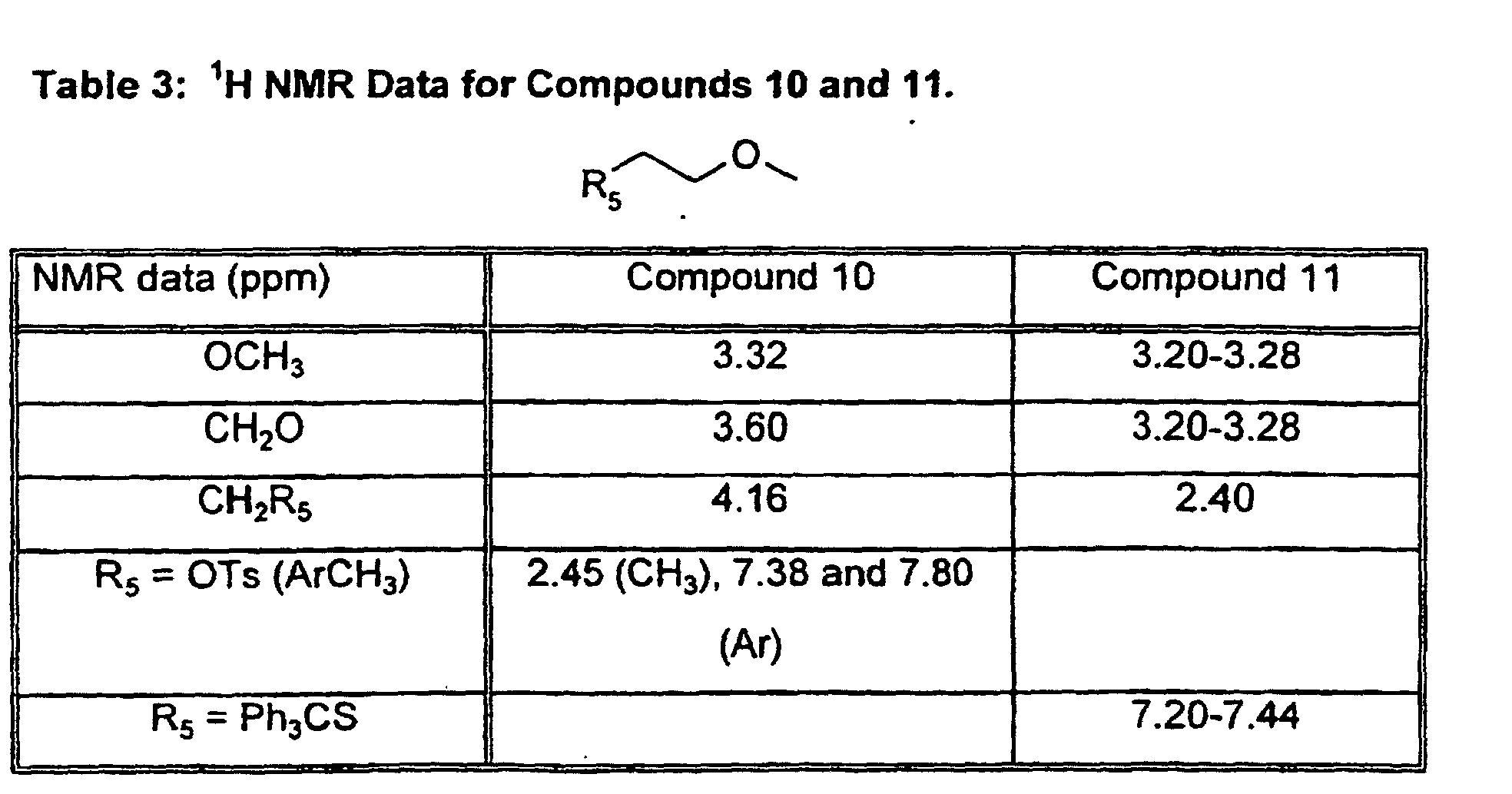
- Step E Ethylene glycol methyl ether tosylate (compound 10)
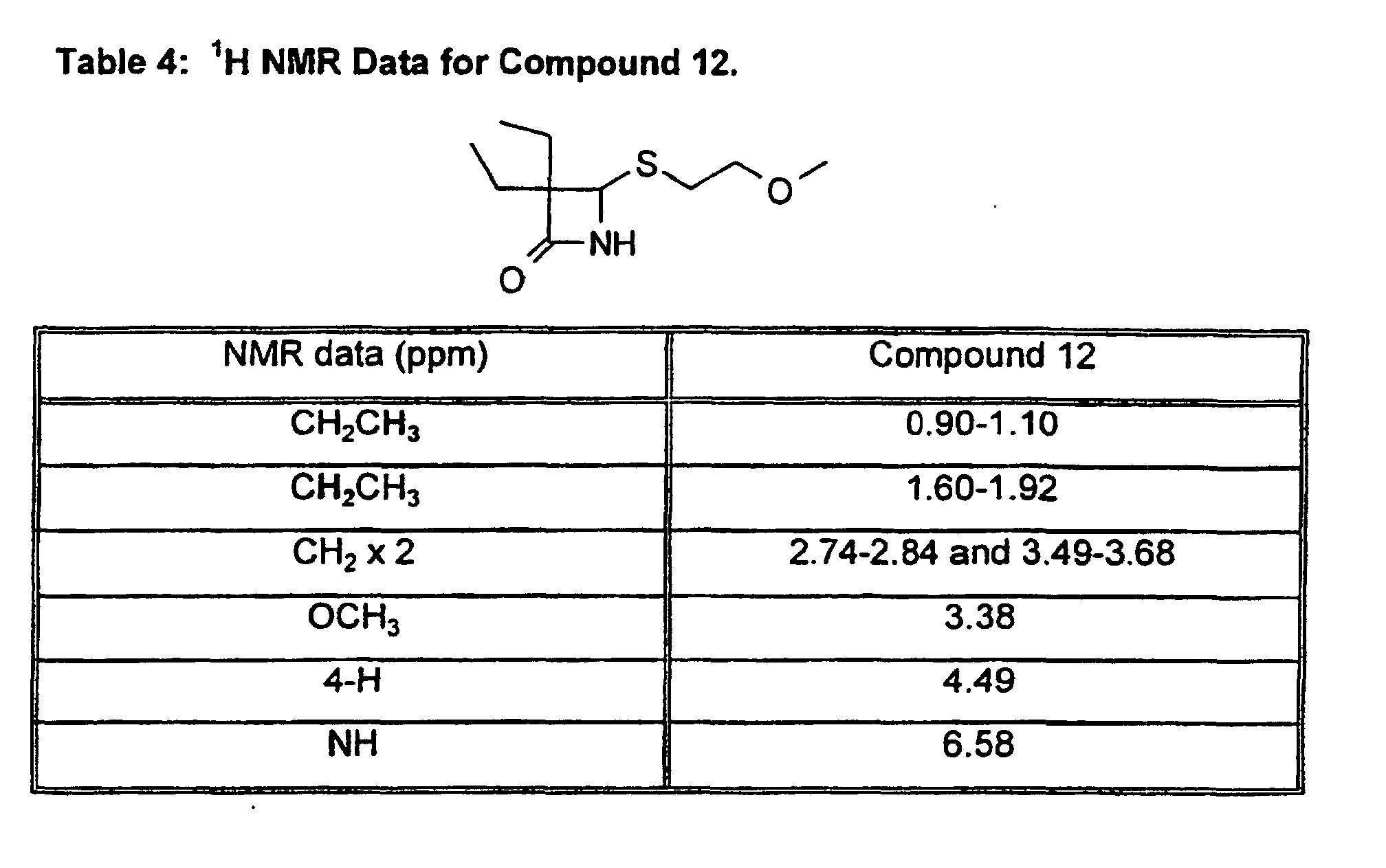
- Step G 4-[2-Methoxyethylthio]-3,3-diethyl-2-azetidinone (compound 12)
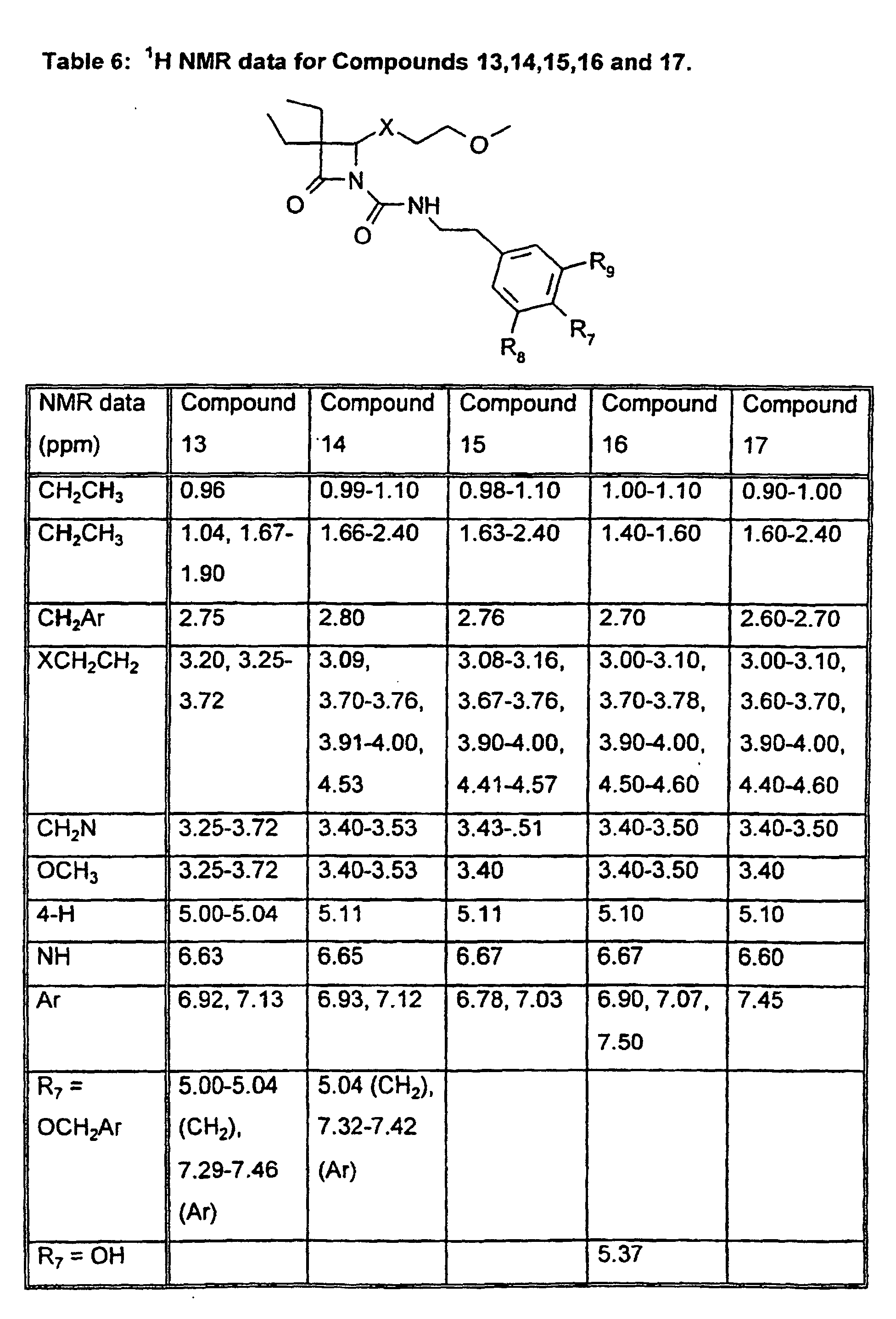
- Step H 4-[2-Methoxyethylthio]-1-[(4-benzyloxy)phenylethylaminocarbonyl]-3,3-diethyl-2-azetidinone (compound 13)
- Step I 4-[2-Methoxyethylsulfonyl]-1-(4-benzyloxy)phenylethylaminocarbonyl]-3,3-diethyl-2-azetidinone (compound 14)
- Step K 4-[2-Methoxyethylsulfonyl]-1-[(4-hydroxy)(3-iodo)phenylethylamino carbonyl]-3,3-diethyl-2-azetidinone (compound 16)
- Step L 4-(2-Methoxyethylsulfonyl)-1-[(3,5-diiodo)(4-hydroxy)phenylethyl aminocarbonyl]-3,3-diethyl-2-azetidinone (compound 17)
- the synthesis of the title compound was identical to the method used in example 1, step G. This method produces a mixture (roughly 50:50) of mono-iodo and di-iodo species.
- the desired product was purified by HPLC using system A, Example 12, the organic eluent removed and the sample diluted with aqueous sodium phosphate buffer prior to testing as detailed in example 1, step G.
- the radiochemical purity of the purified compound was measured before and after screening using HPLC system A, Example 12. Results of RCP measurement are detailed in Table 20.
- the identity of the 123 I-species was confirmed by HPLC co-elution with the chemically characterised 127 I analogue (Example 2, step L). The retention times of the 123 I and 127 I species are presented in Table 21.
- the salt was taken up in 2M aqueous HCl (100 ml) and extracted into dichloromethane (100 ml). The organic layer was dried (Na 2 SO 4 ) and concentrated in vacuo to give the title compound (3.72 g) as an oil.
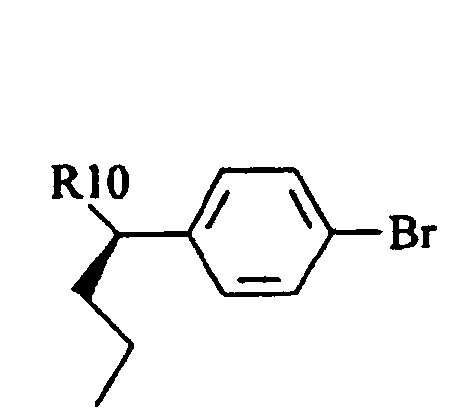
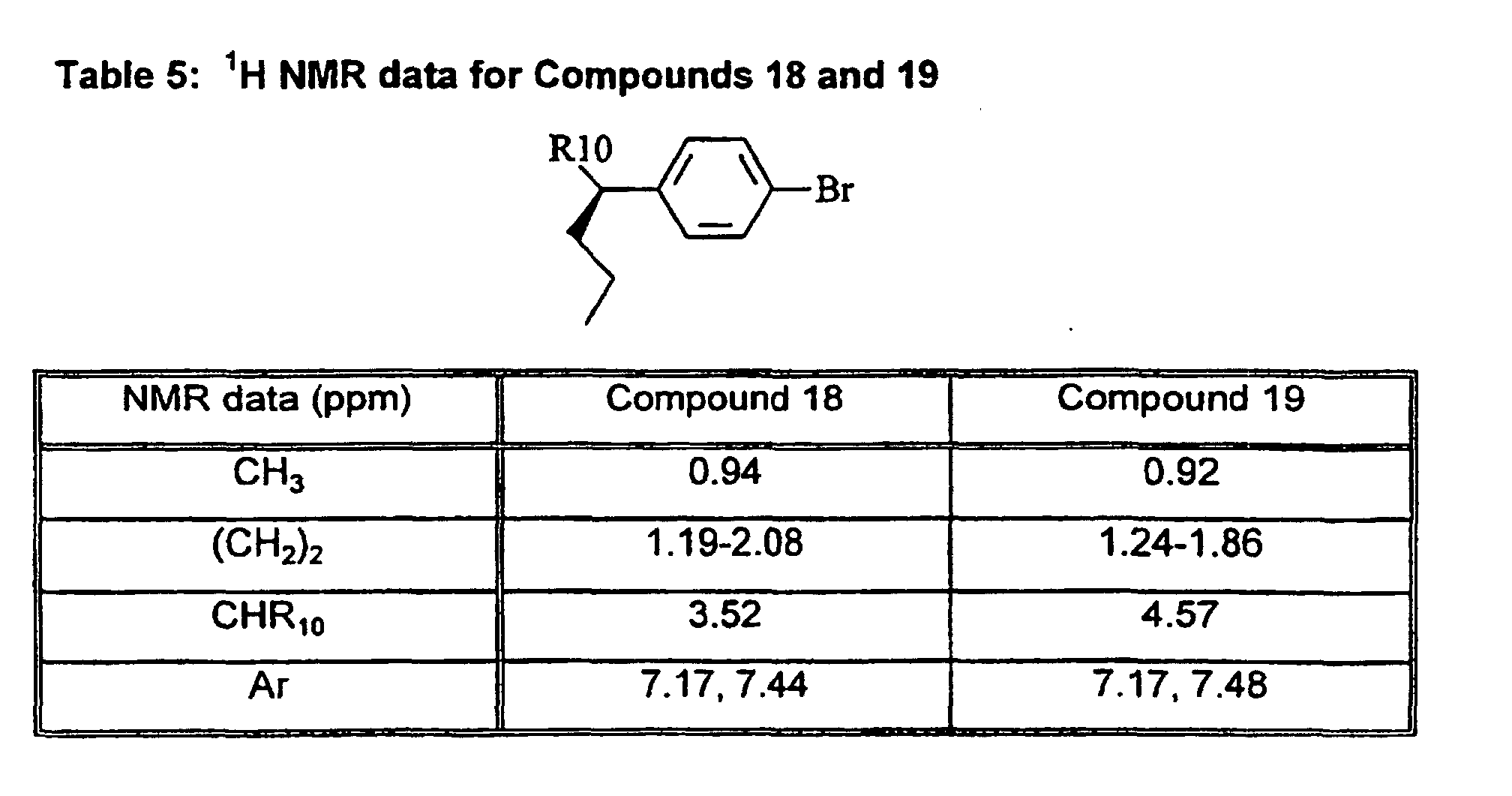
- Step B R- ⁇ -n-Propyl-(4-bromo)phenylmethyl isocyanate (compound 19)
- Step C 4S-[4-[(1,1-Dimethylethoxy)carbonyl]phenoxy]-1-[(R- ⁇ -n-propyl)-(4-bromo)benzylaminocarbonyl]-3,3-diethyl-2-azetidinone (compound 20)
- Step D 4S-[(4-Carboxy)phenoxy]-1-[(R- ⁇ -n-propyl)-(4-bromo)benzylaminocarbonyl]-3,3-diethyl-2-azetidinone (compound 21)
- Step E 4S-[4-[[(4-Methyl)piperazin-1-yl]carbonyl]phenoxy]-1-[(R- ⁇ -n-propyl)-(4-bromo)benzylaminocarbonyl]-3,3-diethyl-2-azetidinone (compound 22)
- Step F 4S-[4-[[(4-Methyl)piperazin-1-yl]carbonyl]phenoxy]-1-[(R- ⁇ -n-propyl)-[4-(tri-( n -butyl)-stannyl]benzylaminocarbonyl]-3,3-diethyl-2-azetidinone (compound 23)
- step E 4S-[4-[[(4-methyl)piperazin-1-yl]carbonyl]phenoxy]-1-[(R- ⁇ -n-propyl)-(4-bromo)benzylaminocarbonyl]-3,3-diethyl-2-azetidinone (80 mg, 0.13 mmol) gave, following purification by HPLC using system J, Example 12, the title compound (15.5 mg, 15%) as an oil.
- step G 4S-[4-[[(4-methyl)piperazin-1-yl]carbonyl]phenoxy]-1-[(R- ⁇ -n-propyl)-[4-[tri-( n -butyl)-stannyl]benzylaminocarbonyl]-3,3-diethyl-2-azetidinone (50 ⁇ g, 6.18x10 -8 mol) gave the title compound.
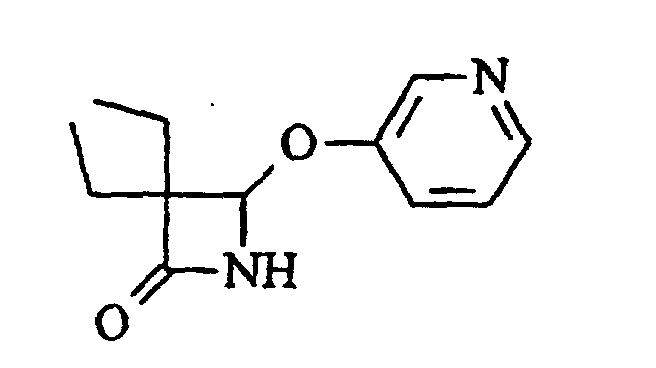
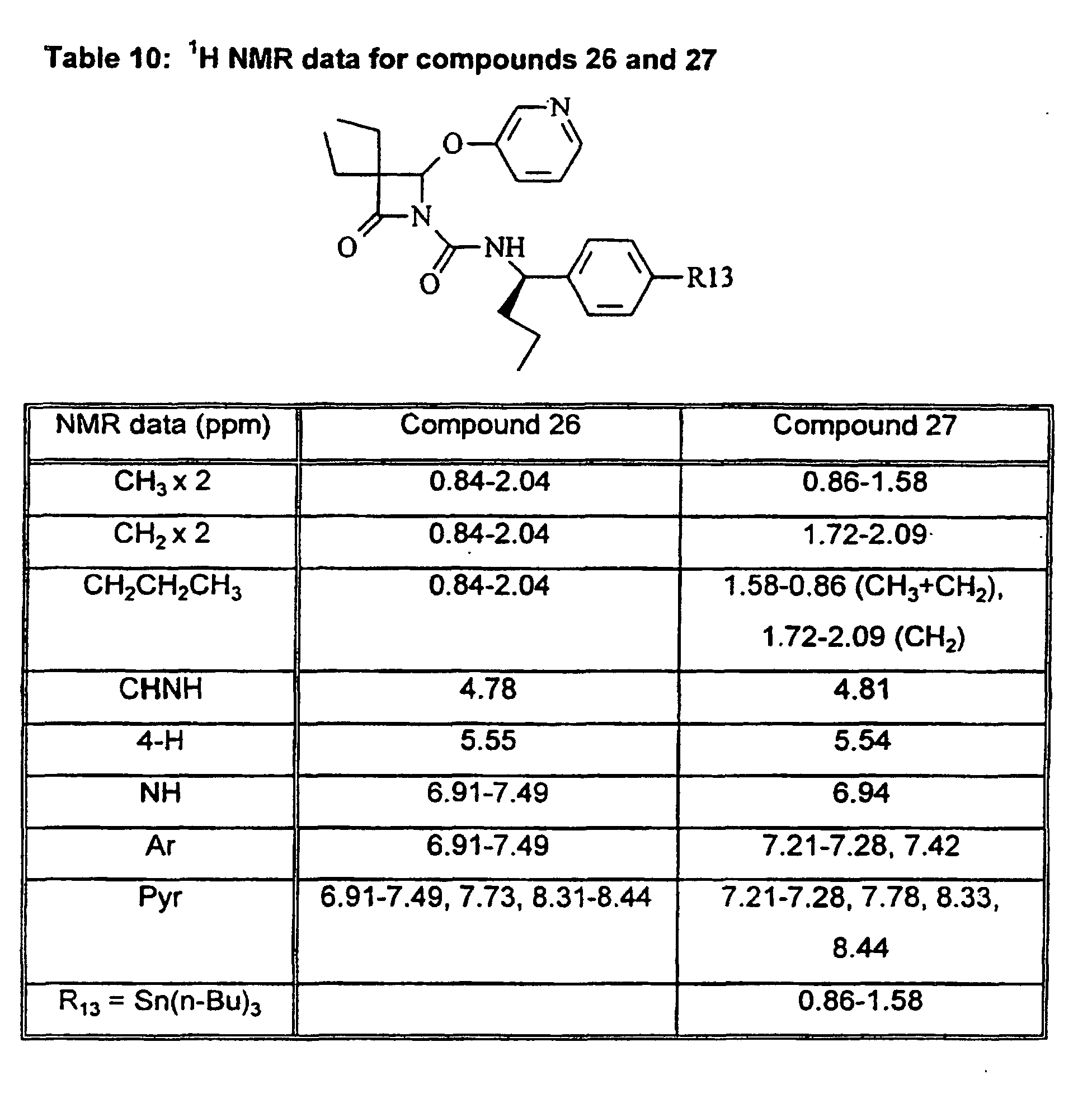
- Step B 4S-(Pyridyl-3-oxy)-1-[(R- ⁇ -n-propyl)-(4-bromo)benzylaminocarbonyl]-3,3-diethyl-2-azetidinone (compound 26)
- R- ⁇ -n-propyl-(4-bromo)phenylmethyl isocyanate prepared as in example 3, step B (1.32 g, 5.19 mmol) and 4-(pyridyl-3-oxy)-3,3-diethyl-2-azetidinone (0.573 mg, 2.60 mmol) gave, following purification by flash column chromatography (gradient from diethyl ether/petrol, 1:1 to diethyl ether/petrol, 7:1 to diethyl ether/petrol, 9:1), the title compound (0.35 g, 28%) as an oil.
- Step C 4S-(Pyridyl-3-oxy)-1-[(R- ⁇ -n-propyl)-[[4-tri-( n -butyl)-stannyl]benzylaminocarbonyl]-3,3-diethyl-2-azetidinone (compound 27)
- step E 4S-(pyridyl-3-oxy)-1-[(R- ⁇ -n-propyl)-(4-bromo)benzylaminocarbonyl]-3,3-diethyl-2-azetidinone (90 mg, 0.19 mmol) gave, following purification by flash column chromatography (gradient from EtOAc/petrol, 1:4 to EtOAc/petrol, 1:1 to EtOAc/petrol, 7:3), the title compound (29 mg, 22%) as an oil.
- step G 4S-(pyridyl-3-oxy)-1-[(R- ⁇ -n-propyl)-[[4-tri-( n -butyl)-stannyl]benzylaminocarbonyl]-3,3-diethyl-2-azetidinone(50 ⁇ g, 7.31x10 -8 mol) gave the title compound.
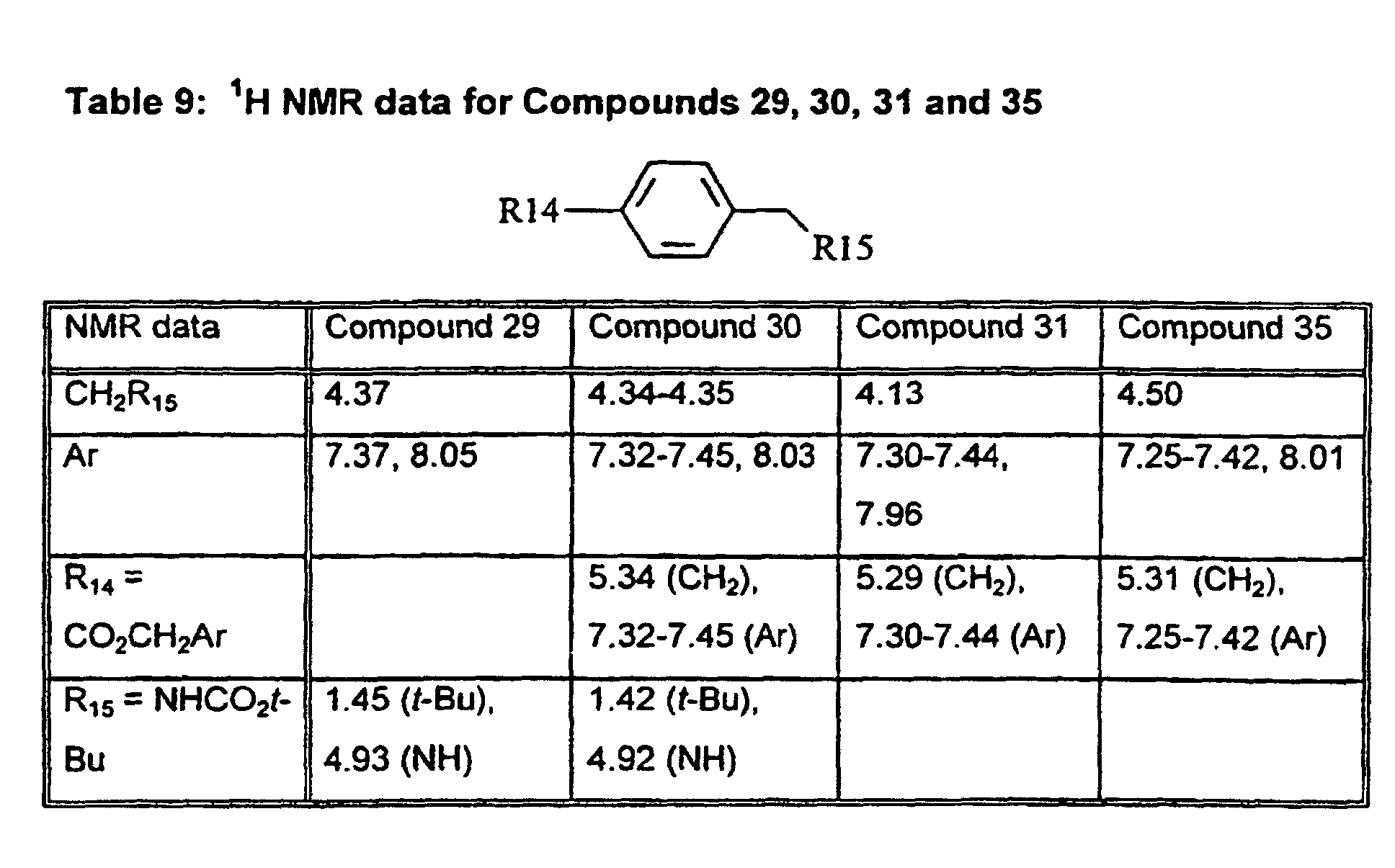
- Step B 4-(N-Boc-aminomethyl)benzoic acid, benzyl ester (compound 30)
- step C 4-(N-Boc-aminomethyl)benzoic acid, benzyl ester (398 mg, 1.17 mmol) gave the title compound (288 mg, 93%) as a solid.
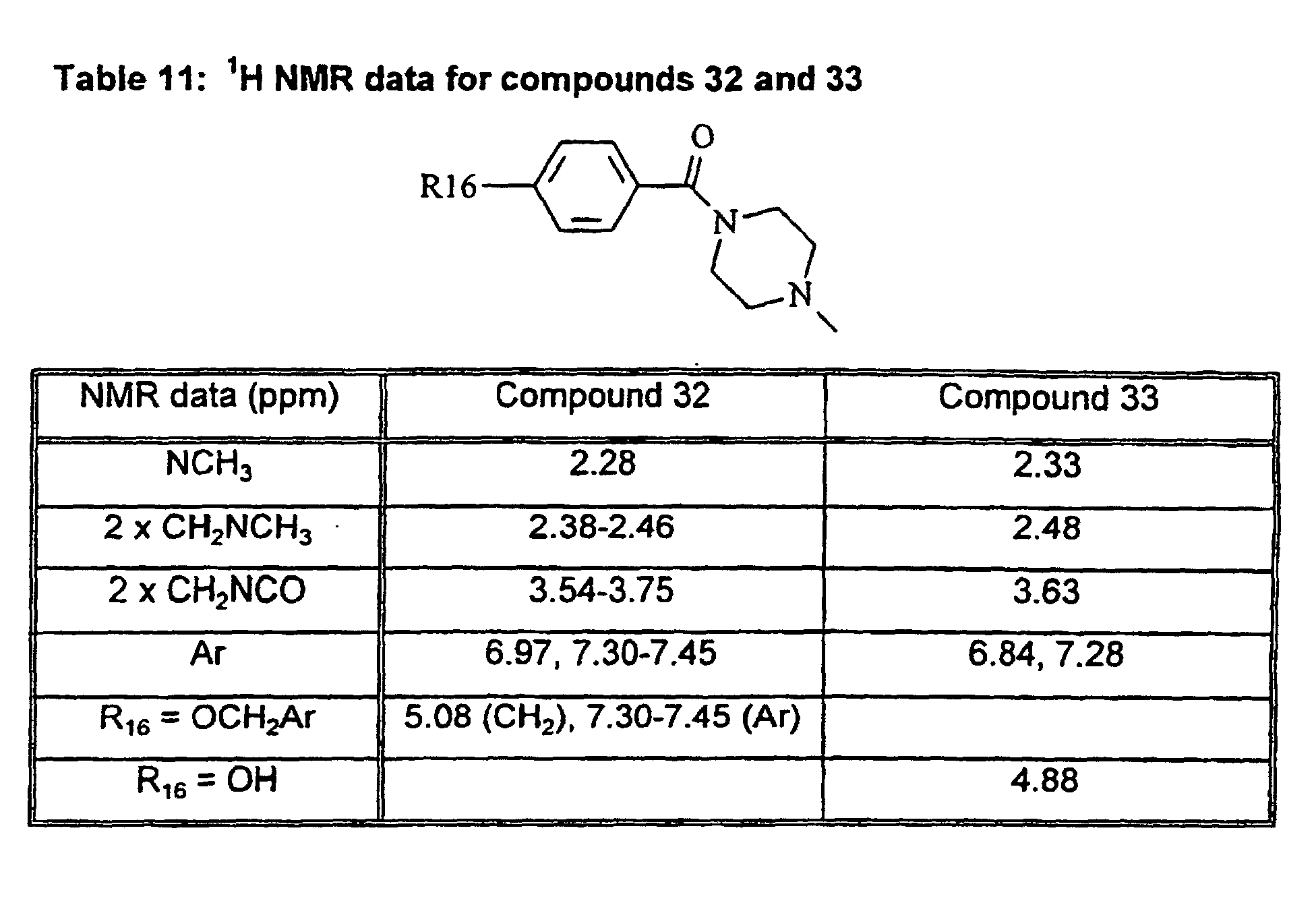
- step J 4-benzyloxy-(1-N-methylpiperazine)benzamide (4.555 g, 0.015 mol) gave, following purification by flash column chromatography (MeOH/EtOAc, 1:9), the title compound (2.41 g, 73%) as a solid.
- Step F 4-[4-[[(4-Methyl)piperazin-1-yl]carbonyl]phenoxy]-3,3-diethyl-2-azetidinone (compound 34)
- step C To 4-(aminomethyl)benzoic acid, benzyl ester, hydrochloride salt, prepared as in Example 5, step C (288 mg, 1.04 mmol) at 0°C was added saturated aqueous NaHCO 3 (15 ml) and dichloromethane (20 ml). After 20 minutes stirring was ceased and the two layers were allowed to separate. Phosgene (20% solution in toluene, 1.1 ml, 2.18 mmol) was added rapidly to the lower layer and stirring resumed immediately. After 1 hour the organic layer was isolated. The aqueous layer was extracted with dichloromethane (3 x 20 ml). The four organic layers were combined, dried (Na 2 SO 4 ) and concentrated in vacuo to give the title compound (261 mg, 94%) as an oil.
- Step H 4-[4-[[(4-Methyl)piperazin-1-yl]carbonyl]phenoxy]-1-[4-(benzyloxycarbonyl)benzylaminocarbonyl]-3,3-diethyl-2-azetidinone (compound 36)
- Step I 4-[4-[[(4-Methyl)piperazin-1-yl]carbonyl]phenoxy]-1-[(4-carboxy)benzylaminocarbonyl]-3,3-diethyl-2-azetidinone (compound 37)
- step J 4-[4-[[(4-methyl)piperazin-1-yl]carbonyl]phenoxy]-1-[4-(benzyloxycarbonyl)benzylaminocarbonyl]-3,3-diethyl-2-azetidinone (159 mg, 0.26 mmol) gave the title compound (107 mg, 79%) as a solid.
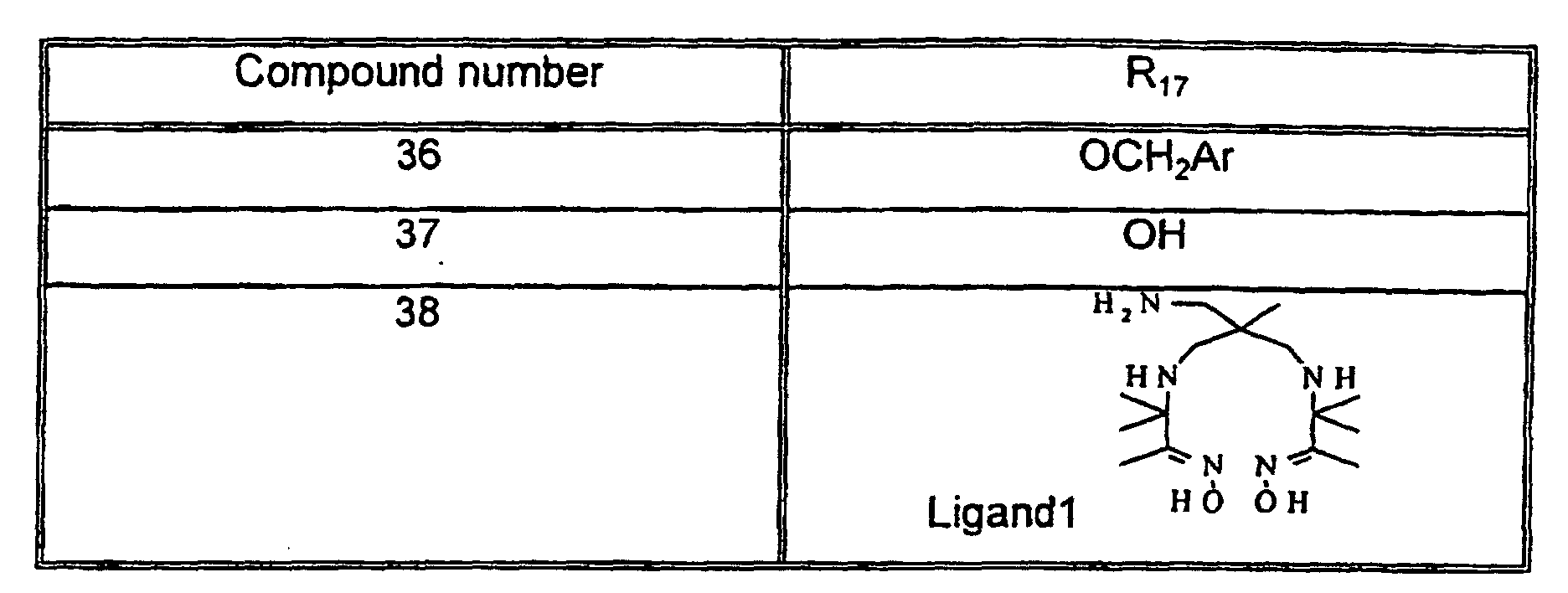
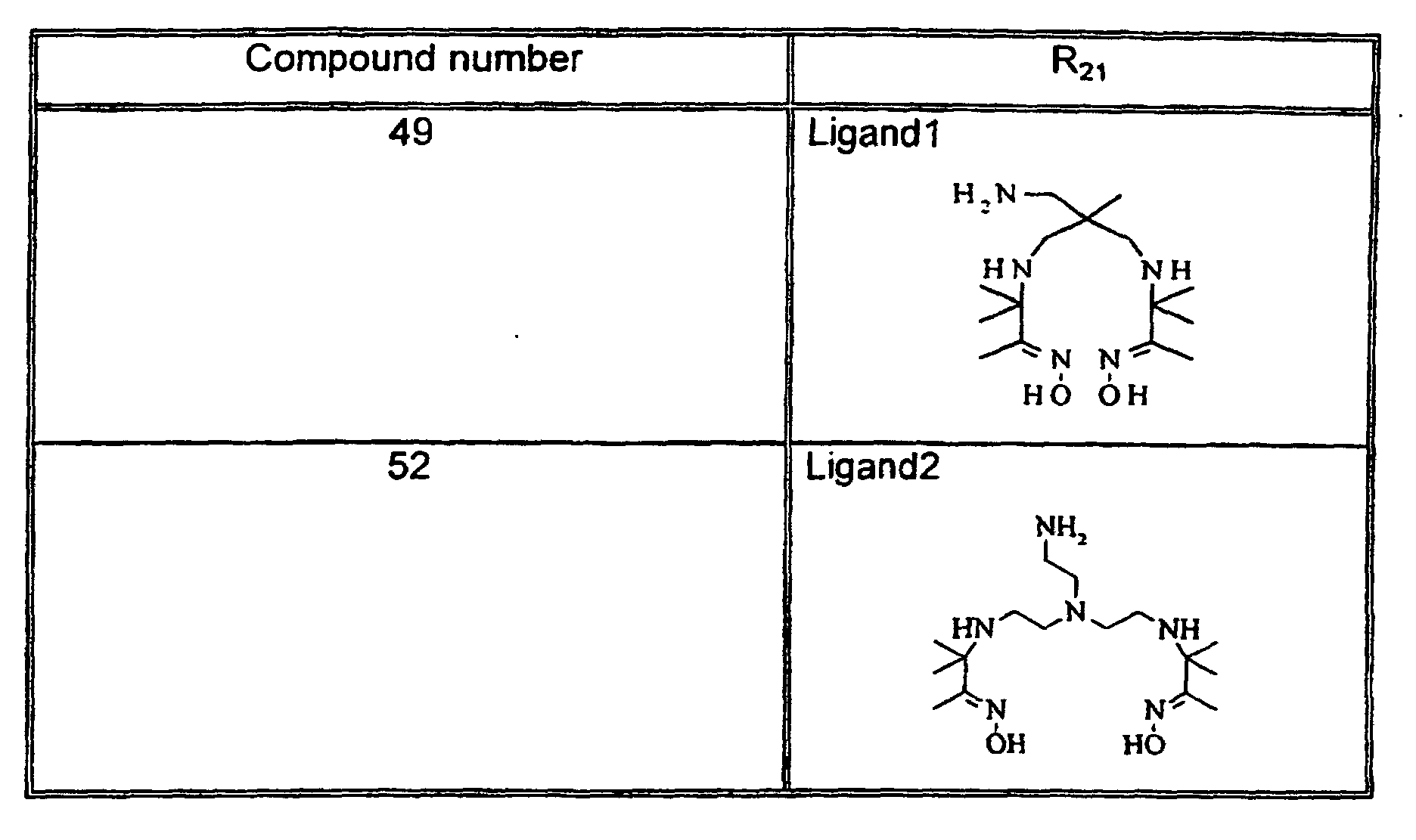
- Step J Conjugate between chelate, 3,3,6,9,9-pentamethyl-6-aminomethyl-4,8-diazaundecane-2,10-dionedioxime and 4-[4-[[(4-methyl)piperazin-1-yl]carbonyl]phenoxy]-1-[(4-carboxy)benzylaminocarbonyl]-3,3-diethyl-2-azetidinone (compound 38)
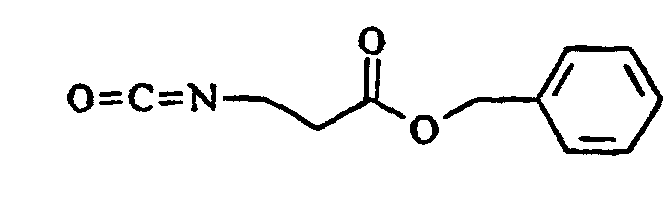
- step G ⁇ -alanine benzylester-p-toluene sulphonate (3 g, 8.53 mmol) gave the title compound (1.44 g, 94%) as a liquid.
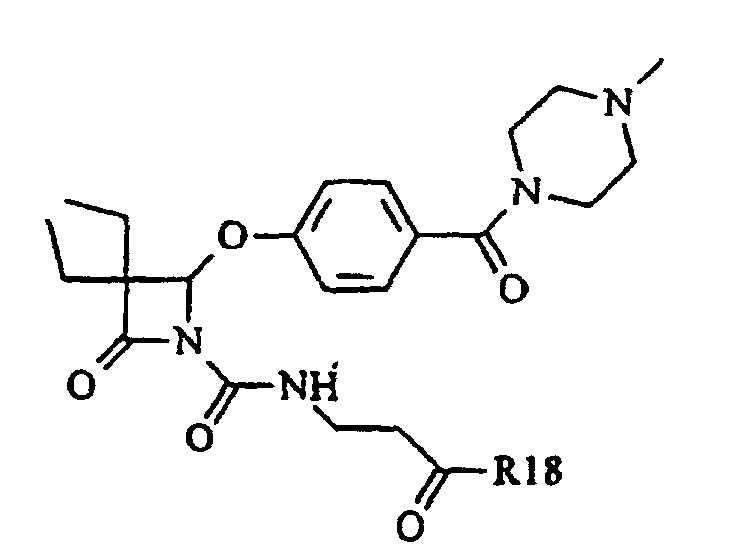
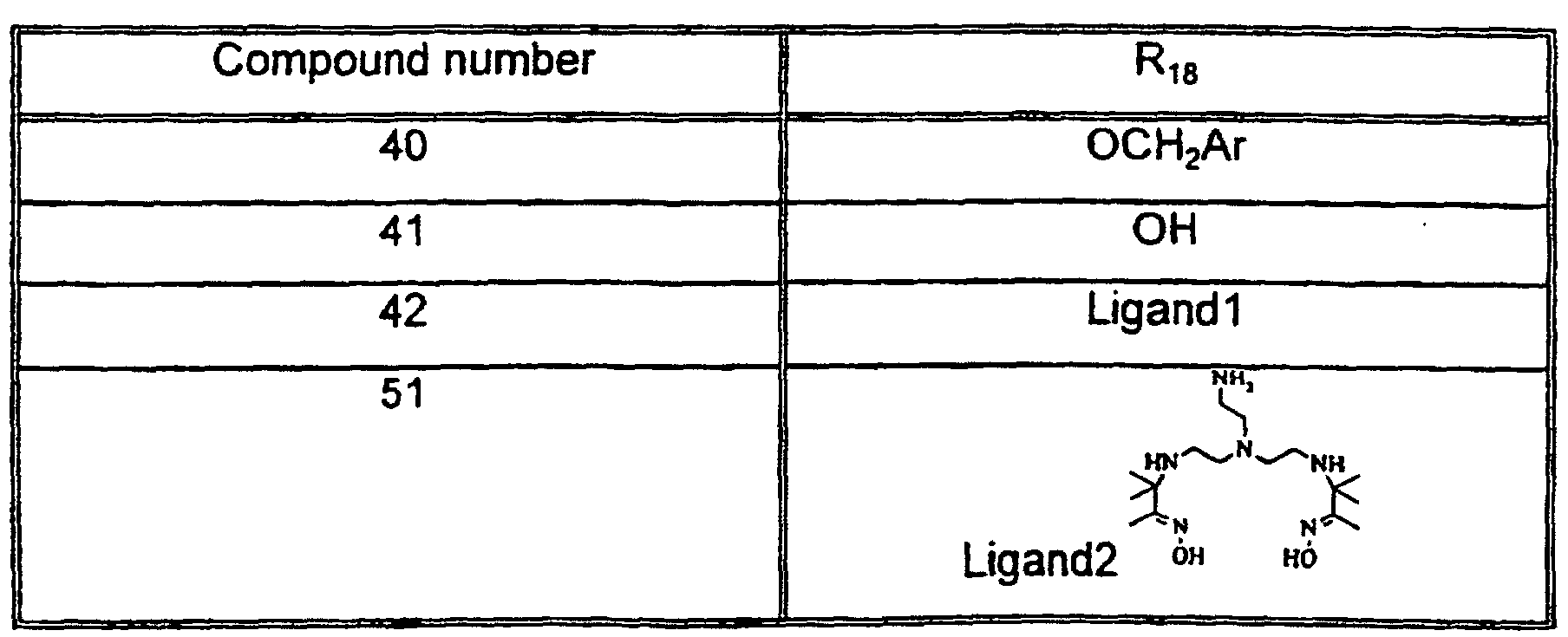
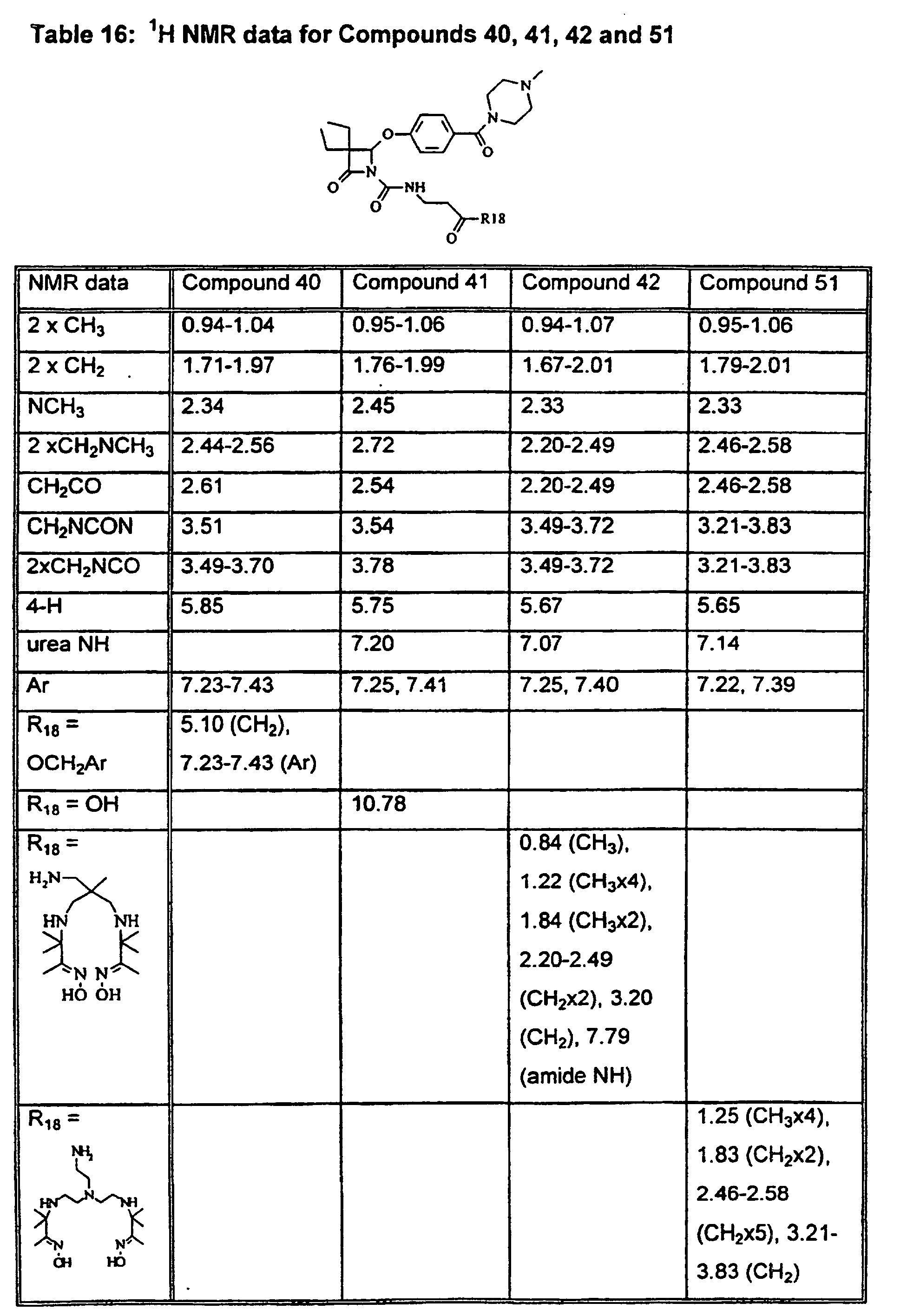
- Step B 4-[4-[[(4-Methyl)piperazin-1-yl]carbonyl]phenoxy]-1-[2-(benzyloxycarbonyl)ethylaminocarbonyl]-3,3-diethyl-2-azetidinone (compound 40)
- step F 4-[4-[[(4-methyl)piperazin-1-yl]carbonyl]phenoxy]-3,3-diethyl-2-azetidinone, prepared as in Example 5, step F, (0.68 g, 1.97 mmol) and 2-(benzyloxycarbonyl)ethyl isocyanate (0.705 g, 3.94 mmol) gave, following purification by flash column chromatography (gradient from petrol/EtOAc, 1:1 to MeOH/EtOAc, 1:9 to MeOH/EtOAc, 1:1), the title compound (840 mg, 78%) as an oil.
- Step C 4-[4-[[(4-Methyl)piperazin-1-yl]carbonyl]phenoxy]-1-[(2-carboxy)ethylaminocarbonyl]-3,3-diethyl-2-azetidinone (compound 41)
- step J 4-[4-[[(4-methyl)piperazin-1-yl]carbonyl]phenoxy]-1-[2-(benzyloxycarbonyl)ethylaminocarbonyl]-3,3-diethyl-2-azetidinone (420 mg, 0.76 mmol) gave the title compound (280 mg, 80%) as a solid.
- Step D Conjugate between chelate, 3,3,6,9,9-pentamethyl-6-aminomethyl-4,8-diazaundecane-2,10-dionedioxime and 4-[4-[[(4-methyl)piperazin-1-yl]carbonyl]phenoxy]-1-[(2-carboxy)ethylaminocarbonyl]-3,3-diethyl-2-azetidinone (compound 42)
- step J 4-[4-[[(4-methyl)piperazin-1-yl]carbonyl]phenoxy]-1-[(2-carboxy)ethylaminocarbonyl]-3,3-diethyl-2-azetidinone (100 mg, 0.22 mmol) and 3,3,6,9,9-pentamethyl-6-aminomethyl-4,8-diazaundecane-2,10-dionedioxime (WO 95/19187, 82 mg. 0.26 mmol) gave, following purification by HPLC using system H, Example 12, the title compound (4 mg, 3%) as an oil.
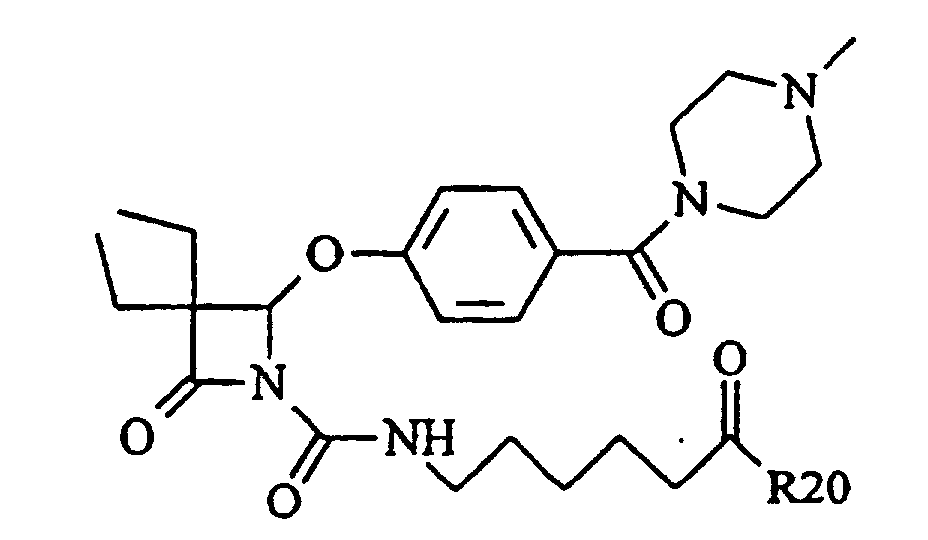
- step B N-Boc aminocaproic acid (1.0 g, 4.32 mmol) gave, following purification by flash column chromatography (petrol/EtOAc, 4:1), the title compound (1.34 g, 96%) as a liquid.
- step G aminocaproic acid, benzyl ester (1.17 g, 3.50 mmol) gave the title compound (0.922 g, 100%) as an oil.
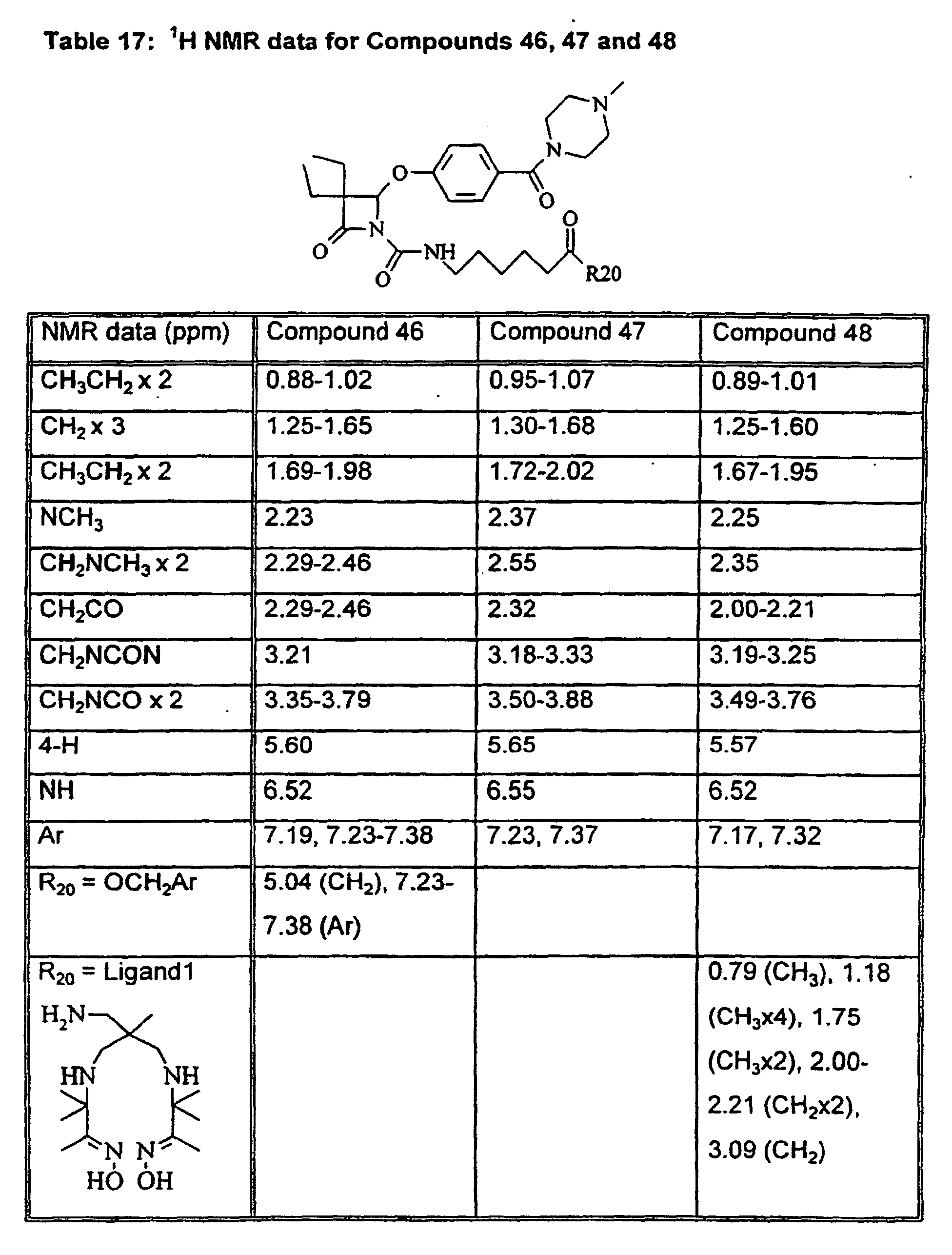
- Step D 4-[4-[[(4-Methyl)piperazin-1-yl]carbonyl]phenoxy]-1-[5-(benzyloxycarbonyl)ethylaminocarbonyl]-3,3-diethyl-2-azetidinone (compound 46)
- Step E 4-[4-[[(4-Methyl)piperazin-1-yl]carbonyl]phenoxy]-1-[5-(carboxy)pentylaminocarbonyl]-3,3-diethyl-2-azetidinone (compound 47)
- step J 4-[4-[[(4-methyl)piperazin-1-yl]carbonyl]phenoxy]-1-[5-(benzyloxycarbonyl)ethylaminocarbonyl]-3,3-diethyl-2-azetidinone (421 mg, 0.71 mmol) gave the title compound (320 mg, 90%) as a solid.
- Step F Conjugate between chelate, 3,3,6,9,9-pentamethyl-6-aminomethyl-4,8-diazaundecane-2,10-dionedioxime and 4-[4-[[(4-methyl)piperazin-1-yl]carbonyl]phenoxy]-1-[(5-carboxy)pentylaminocarbonyl]-3,3-diethyl-2-azetidinone (compound 48)
- step J 4-[4-[[(4-methyl)piperazin-1-yl]carbonyl]phenoxy]-1-[5-(carboxy)pentylaminocarbonyl]-3,3-diethyl-2-azetidinone (98 mg, 0.20 mmol) and 3,3,6,9,9-pentamethyl-6-aminomethyl-4,8-diazaundecane-2,10-dionedioxime (WO 95/19187, 76 mg, 0.24 mmol) gave, following purification by HPLC using system H, Example 12, the title compound (19.7 mg, 12%) as an oil.
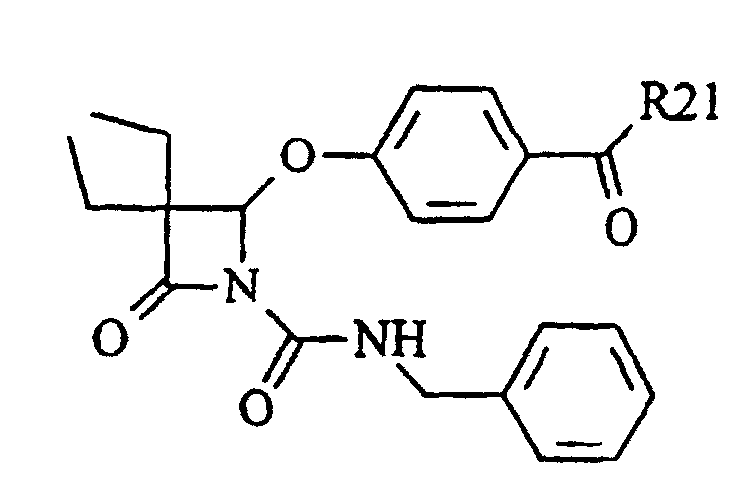
- Step A Conjugate between chelate, 3,3,6,9,9-pentamethyl-6-aminomethyl-4,8-diazaundecane-2,10-dionedioxime and 4-[(4-carboxy)phenoxy]-1-[benzylaminocarbonyl]-3,3-diethyl-2-azetidinone (compound 49)
- step J 4-[(4-carboxy)phenoxy]-1-[benzylaminocarbonyl]-3,3-diethyl-2-azetidinone (J.Med.Chem., 35 , 3745-3754 (1992), 100 mg, 0.25 mmol) and 3,3,6,9,9-pentamethyl-6-aminomethyl-4,8-diazaundecane-2,10-dionedioxime (WO 95/19187, 95 mg, 0.30 mmol) gave, following purification by HPLC using system H, Example 12, the title compound (18 mg, 10%) as an oil.
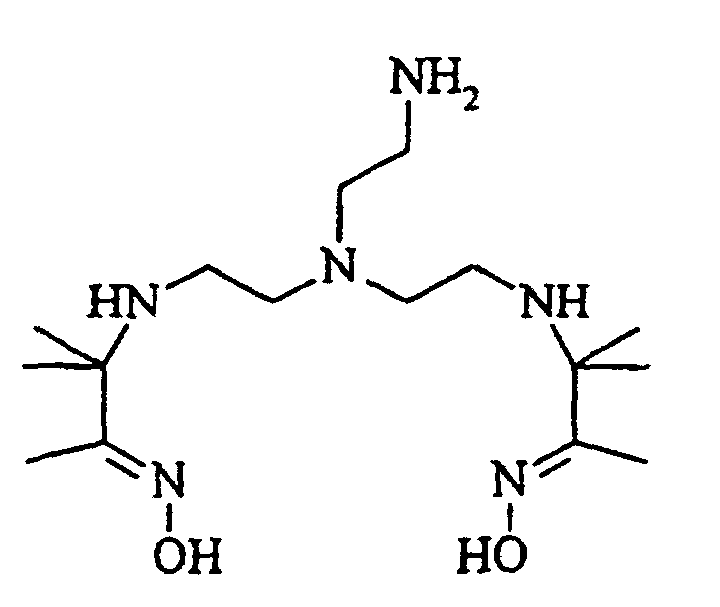
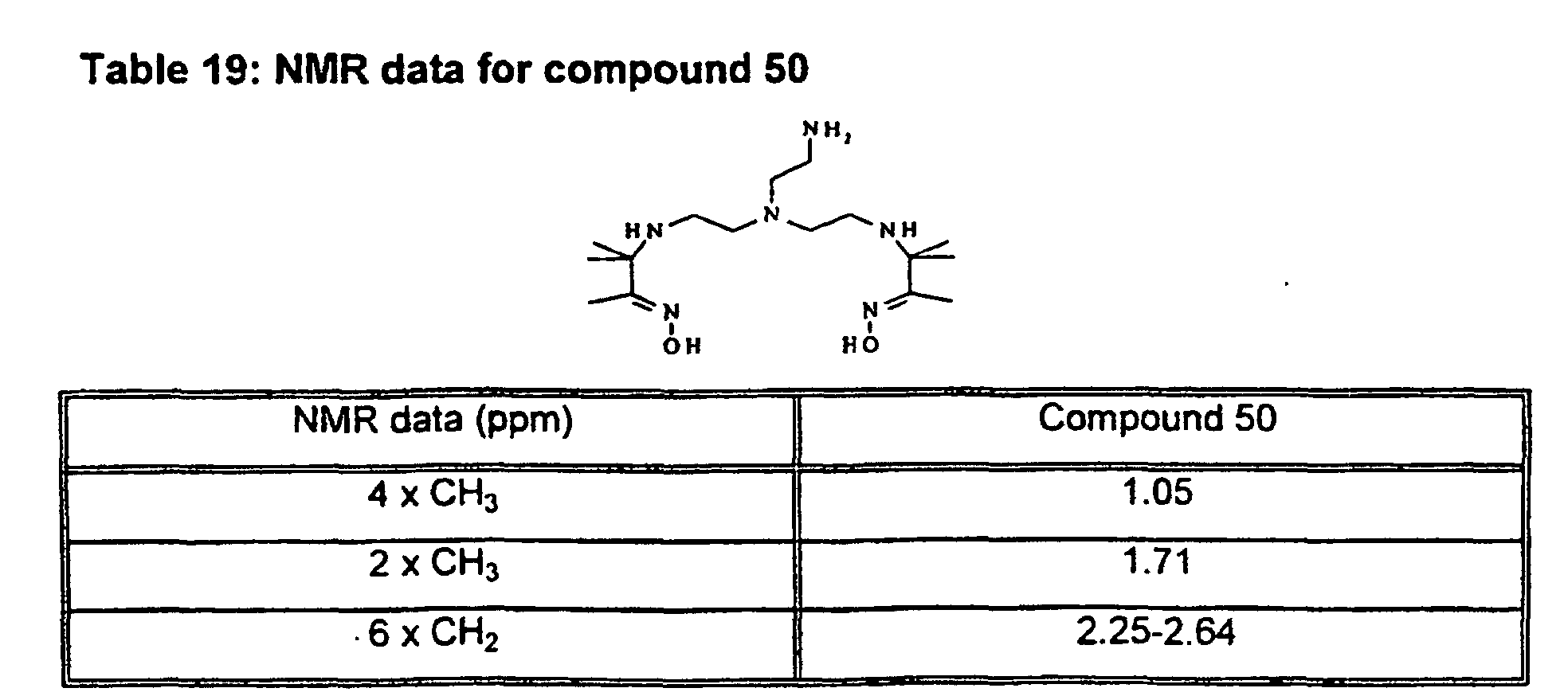
- Step B Conjugate between chelate, 3,3,11,11-tetramethyl-7-aminomethyl-4,7,10-triazatridecane-2,12-dionedioxime and 4-[4-[[(4-methyl)piperazin-1-yl]carbonyl]phenoxy]-1-[(2-carboxy)ethylaminocarbonyl]-3,3-diethyl-2-azetidinone (compound 51)
- Step A Conjugate between chelate, 3,3,11,11-tetramethyl-7-aminomethyl-4,7,10-triazatridecane-2,12-dionedioxime and 4-[(4-carboxy)phenoxy]-1-[benzylaminocarbonyl]-3,3-diethyl-2-azetidinone (compound 52)
- step B 4-[(4-carboxy)phenoxy]-1-[benzylaminocarbonyl]-3,3-diethyl-2-azetidinone (J.Med.Chem., 35 , 3745-3754 (1992), 100 mg, 0.253 mmol) and 3,3,11,11-tetramethyl-7-aminomethyl-4,7,10-triazatridecane-2,12-dionedioxime, prepared as in Example 9, step A, (87 mg, 0.253 mmol) gave, following HPLC purification using system K, Example 12, the title compound (110 mg, 60%) as a solid.
- Vials were incubated at ambient temperature for 1 to 2 hours and the 99m Tc labelled product purified by HPLC using system A, Example 12, collecting the product into a plasma coated Schott vial containing unlabelled compound (200 ⁇ g in 250 ⁇ l methanol). The organic eluant was removed in vacuo and the sample diluted with buffer as described in Example 1, step G. The radiochemical purity of the purified compounds was measured using HPLC system A, Example 12 (results are in Table 22) and the thin layer chromatography (TLC) systems described below.
- HPLC system A Example 12 (results are in Table 22) and the thin layer chromatography (TLC) systems described below.
- Compounds 38, 42, 48, 49, 51 and 52 remain at, or close to, the origin in TLC system (i), between the origin and the solvent front in system (ii) and close to the solvent front in system (iii).
- Eluent A Ammonium acetate buffer (pH 4, 0.05M)
- Eluent 18% B, 82% A
- Eluent A Na phosphate buffer (pH 6, 0.05M)
- Inhibitor potency against HLE is described by the parameter k inact / K i as previously reported [Knight et al ., Biochem., 8160-8170,(1992)]. Lyophilised enzyme was reconstituted with TrisHCl buffer, 100mM, 0.5M NaCl at 0.05 units/ml (approximately nanomolar concentration) in a final reaction volume of 1 ml to which was added methoxysucc-ala-ala-pro-val-pNA substrate (1mM) and the elastase inhibitor dissolved in DMSO. The reaction was monitored by detecting the change of absorbance at 410 nm (hydrolysis of the substrate releasing p-nitroaniline) over a timescale of 25 minutes. Values of k inact / K i were estimated according to the Knight et al method.
- Free radioactive material was then removed from the cells by addition of an excess of HBSS:CFP and centrifugation of the leucocytes at 150g for 7 minutes. The supernatant and cell pellet were taken for radioactive counting for calculation of percentage cell uptake. The distribution of radioactivity within the cell pellet was assessed by separation of the cell types using Percoll density gradient centrifugation (38%, 55% and 73% Percoll in HBSS step gradients). The residual plasma and free activity was recovered from the top of the gradient, the mononuclear cells (lymphocytes and monocytes) from the interface between 38% and 55%, and the granulocytes were recovered from the interface between 55% and 73% Percoll. Results are given in Table 23.
- the radioactive compound was also incubated with an isolated leucocyte preparation to which an erythrocyte fraction had been added back.
- the packed erythrocytes obtained after blood sedimentation were washed twice with HBSS and then resuspended in their original blood volume with HBSS.
- Leucocytes obtained from 30ml blood were resuspended in 0.5ml erythrocyte suspension and 0.5ml CFP.
- the cell suspension was then incubated with compound as above. Analysis of the distribution of activity in the cell pellet in the presence of red blood cells was carried out using Ficoll-Hypaque discontinuous density gradients (densities 1.04, 1.077 and 1.119 g/ml Histopaque steps). Results are given in Table 23.
- the radioactive compound was added to 1ml whole blood anticoagulated with ACD and incubated at 37°C for 1 hour.
- the blood was diluted with HBSS and the cellular component separated by centrifugation. Distribution of activity within the cellular pellet was assessed by separation of cell fractions on Ficoll-Hypaque gradients as above. Results are given in Table 23. Comparison of potency with in vitro human blood cell uptake Compound Potency (M/sec) WHITE CELLS WHITE AND RED CELLS WHOLE BLOOD Mon. Gran. Mon. Gran. Eryth. Mon. Gran. Eryth.
- the model into the right gracilis (thigh) muscle of male Wistar rats (250-325g) were injected 1 ml/kg of an E.coli suspension containing » 5 x 10 8 /ml organisms. Over the next 24 hours a pustulent abscess developed at the site of the popliteum lymph node with the surrounding muscle also showing signs of inflammation. These visible observations were confirmed by histology.
- Validation the model was validated for use in the development of diagnostic imaging agents of infection/inflammation by the intravenous injection of 99m Tc-HMPAO ex-vivo labelled human wbc or 67 Ga-citrate when the abscesses were 24 hours old. Animals were dissected between 4 and 24 hours after injection. 99m Tc-labelled red blood cells were used as a negative control.
- a mixed population of human leucocytes was incubated with elastase inhibitor for 30 minutes at 37°C.
- the cells were then spun down and resuspended in a known volume of rat plasma for intravenous injection into rats bearing a 24 hour old abscess. Animals were dissected at 4 and 24 hours post injection. Results are shown in Table 24.
- radioiodinated HLE inhibitors The in vivo stability of radioiodinated HLE inhibitors was monitored by determination of the percentage uptake in the thyroid as a function of time after administration. Thus radioiodinated compounds and 123 I free iodide were injected into male Wistar rats. The percentage of injected dose distributing to the thyroid was calculated by dissection at 4 and 24 hours post injection and counting. Results are given in Table 25.
- ⁇ -lactam elastase inhibitor 1 ⁇ M of a potent ( K inact / K i >3000000 M/sec) ⁇ -lactam elastase inhibitor was added to aliquots of human plasma pooled from 6 volunteers.
- the test sample contained plasma with added granulocytes (see example 14 for isolation method) to a final concentration of 10 6 /ml and 2 volumes of 50mM Tris buffered saline containing 15mM calcium chloride.
- the control sample consisted of plasma and Tris buffer without calcium. Clots were allowed to form for 60 minutes after the addition of 4 units of bovine thrombin and a roughened glass rod to induce clot formation.
Landscapes
- Health & Medical Sciences (AREA)
- Life Sciences & Earth Sciences (AREA)
- Veterinary Medicine (AREA)
- Epidemiology (AREA)
- Public Health (AREA)
- General Health & Medical Sciences (AREA)
- Animal Behavior & Ethology (AREA)
- Proteomics, Peptides & Aminoacids (AREA)
- Medicinal Chemistry (AREA)
- Chemical & Material Sciences (AREA)
- Pharmacology & Pharmacy (AREA)
- Optics & Photonics (AREA)
- Physics & Mathematics (AREA)
- Nuclear Medicine, Radiotherapy & Molecular Imaging (AREA)
- Radiology & Medical Imaging (AREA)
- Medicines Containing Antibodies Or Antigens For Use As Internal Diagnostic Agents (AREA)
- Medicines That Contain Protein Lipid Enzymes And Other Medicines (AREA)
Abstract
Description
- Short chain (3-5 mer) peptides and peptide analogues (e.g. trifluoroacetyl peptides), hydrophobic inhibitors (e.g. elasnin and synthetic analogues).
- Inhibitors against the active site histidine (e.g. peptide chloromethyl ketones).
- Covalent inhibitors (e.g. peptide aldehydes, peptide ketones, halomethylketones, peptide boronic acids) and acylating agents (sulphonyl fluorides, aminoalkyl phosphono fluoridates, azapeptide nitrophenyl esters, activated carbamates and latent isocyanates, benzoxazin-4-ones, 3-alkoxyl-4-chloroisocoumarins, isatoic anhydrides, acyl saccharins).
- Mechanism based inhibitors (e.g. chloropyrones and chloroisocoumarins, 7-amino-4-chloroisocournacins, ynenol lactones and β-lactams).

characterised in that the β-lactam contains or has covalently bonded thereto at least one detectable moiety, and with the proviso that when R4 is XR8, X is S and R1 and R4 are combined to form a cyclic carboxyalkyl group, then the detectable moiety is not 125I.

bonded thereto at least one detectable moiety.


| Compound number | R1 | R2 |
| 2 | Ot-Bu | I |
| 3 | OH | I |
| 4 | 4-methyl-piperazinyl | I |
| 5 | 4-methyl-piperazinyl | Sn(n-Bu)3 |

| Compound number | R3 | R4 | n |
| 1 | I | NCO | 1 |
| 6 | OH | NHBOC | 2 |
| 7 | OBn | NHBOC | 2 |
| 8 | OBn | NH2 | 2 |
| 9 | OBn | NCO | 2 |

| Compound number | R5 |
| 10 | TsO |
| 11 | Ph3CS |

| Compound number | R6 |
| 12 | SCH2CH2OCH3 |

| Compound number | X | R7 | R8 | R9 |
| 13 | S | OBn | H | H |
| 14 | SO2 | OBn | H | H |
| 15 | SO2 | OH | H | H |
| 16 | SO2 | OH | I | H |
| 17 | SO2 | OH | I | I |
| Compound number | R10 |
| 18 | COOH |
| 19 | CNO |

| Compound number | R11 | R12 |
| 20 | Ot-Bu | Br |
| 21 | OH | Br |
| 22 | 4-methylpiperazinyl | Br |
| 23 | 4-methylpiperazinyl | Sn(n-Bu)3 |
| 24 | 4-methylpiperazinyl | I |

| Compound number | R13 |
| 26 | Br |
| 27 | Sn(n-Bu)3 |
| 28 | I |

| Compound number | R14 | R15 |
| 29 | COOH | NHCO2 t-Bu |
| 30 | CO2CH2Ar | NHCO2 t-Bu |
| 31 | CO2CH2Ar | NH3 +Cl- |
| 35 | CO2CH2Ar | NCO |

| Compound number | R16 |
| 32 | OCH2Ar |
| 33 | OH |



| Compound number | R19 |
| 43 | NHCO2 t-Bu |
| 44 | NH3 + |
| 45 | NCO |


Experiments with human plasma clots in vitro have been performed as described in Example 17. In clots enriched with granulocytes to a final concentration of 106/ml there was an approximate 7-9 fold increase in the uptake of a potent elastase inhibitor compared to those clots formed without added cells. This observation indicates the potential for radiolabelled β-lactam HLE inhibitors to be specifically taken up in thrombi and other lesions where granulocyte accumulation is active.
- HLE =
- human leucocyte elastase
- PPB =
- plasma protein binding
- rbc =
- red blood cell
- wbc =
- white blood cell
- ACD =
- acid citrate dextrose
- HBSS =
- Hanks balanced salt solution
- RCP =
- radiochemical purity
- Me =
- methyl
- Et =
- ethyl
- t-Bu =
- tertiary-butyl
- Ph =
- phenyl
- Bn =
- benzyl
- Ac =
- acetyl
- Ts =
- tosyl, i.e. para-toluenesulphonyl
- Ar =
- aryl
- DMF =
- N,N-dimethyl formamide
- DMSO =
- dimethyl sulphoxide
- THF =
- tetrahydrofuran
- LDA =
- lithium diisopropylamide
- PAA =
- peracetic acid
- TFA =
- trifluoroacetic acid
- BOC =
- tertiary-butoxycarbonyl
- HBTU =
- O-(1H-benzotriazol-1-yl)-N,N,N',N'-tetramethyluronium hexafluorophosphate
- DMAP =
- 4 -(N,N-dimethylamino)pyridine
- MCPBA =
- meta-chloroperbenzoic acid
| System A | |
| Gilson 715 control software. | |
| Gradient T0' = | 100%A, 0%B, T20' = 0%A, 100%B. |
| Eluent A = | 0.1% TFA in H2O |
| Eluent B = | 0.1% TFA in MeCN |
| Flow rate = | 1 ml/min |
| Column = | 150 x 3.9 mm Waters NovaPak C-18, 4µ packing |
| Detection= | UV (I=220nm); activity (g) |
| System B | |
| Gilson 715 control software. | |
| Gradient T0' = | 60%A, 40%B, T20' = 0%A, 100%B. |
| Eluent A = | 0.1% TFA in H2O |
| Eluent B = | 0.1% TFA in MeCN |
| Flow rate = | 1 ml/min |
| Column = | 150 x 3.9 mm Waters NovaPak C-18, 4µ packing |
| Detection= | UV (I=220 nm); activity (g) |
| System C | |
| Gilson 715 control software. | |
| Gradient T0' = | 60%A, 40%B, T20' = 0%A, 100%B. |
| Eluent A = | Ammonium acetate buffer (pH 4, 0.05M) |
| Eluent B = | Acetonitrile |
| Flow rate = | 1 ml/min |
| Column = | 150 x 3.9 mm Waters NovaPak C-18, 4µ packing |
| Detection= | UV, (I=220 nm); activity (g) |
| System D | |
| Gilson 715 control software. | |
| Isocratic; Eluent 18% B, 82% A | |
| Eluent A = | Na phosphate buffer (pH 6, 0.05M) |
| Eluent B = | Acetonitrile |
| Flow rate = | 1 ml/min |
| Column = | Chromtech Chiral AGP 150x4mm |
| Detection= | UV (I=220 nm); activity (g) |
| System E | |
| Gilson 715 control software. | |
| Gradient T0' = | 100%A, 0%B, T20' = 0%A, 100%B. |
| Eluent A = | H2O |
| Eluent B = | MeCN |
| Flow rate = | 3 ml/min |
| Column = | 300 x 7.8 mm Waters NovaPak C-18, 6µm packing |
| Detection = | UV (I=220 nm or 254 nm) |
| System F | |
| Gilson 715 control software. | |
| Gradient = | T0' = 100% A, 0%B, T3' = 100% A, 0%B |
| T20' = 0%A, 100%B | |
| Eluent A = | sodium acetate buffer (pH 5.6, 50mM) |
| Eluent B = | MeCN |
| Flow rate = | 1 ml/min |
| Column = | 150x3.9mm Waters NovaPak C-18 4µ packing |
| Detection = | Activity = g and b- scintillation detection |
| (Packard Canberra Radiomatic 150TR scintillation analyser) |
| System G | |
| Gilson 715 control software. | |
| Isocratic; 18% B, 82% A | |
| Eluent A = | Na phosphate buffer (pH 6, 0.05M) |
| Eluent B = | Acetonitrile |
| Flow rate = | 1 ml/min |
| Column = | 150x10.0mm Chromtech Chiral AGP |
| Detection= | UV (I=254nm) |
| System H | |
| Gilson 715 Software | |
| Gradient = | T0' = 100% A, 0% B, T20' = 0% A, 100% B |
| Eluent A = | 0.1% TEA in H2O |
| Eluent B = | 0.1% TEA in MeCN |
| Flow rate = | 3 ml/min |
| Column = | 305 x 7 mm Hamilton PRP-1, 10µ packing |
| Detection = | UV (I=254 nm) |
| System I | |
| Gilson 715 Software | |
| Gradient = | T0' = 100% A, T30' = 60% A, 40% B, T40' = 0% A, 100% B |
| Eluent A = | 2% NH3 in H2O |
| Eluent B = | 2% NH3 in MeCN |
| Flow rate = | 3 ml/min |
| Column = | 305 x 7 mm Hamilton PRP-1, 10µ packing |
| Detection = | U.V. (I = 210 nm) |
| System J | |
| Gilson Unipoint Software | |
| Gradient = | T0' = 50% A, 50% B, T15' = 0% A, 100% B |
| Eluent A = | 0.2% TEA in H2O |
| Eluent B = | 0.2% TEA in MeCN |
| Flow rate = | 3 ml/min |
| Column = | NovaPak C18, 7.8 x 300 mm |
| Detection = | U.V. (I = 254 nm) |
| System K | |
| Gilson 715 Software | |
| Gradient = | T0' = 70% A, 30% B, T20' = 0% A, 100% B |
| Eluent A = | 0.2% TEA in H2O |
| Eluent B = | 0.2% TEA in MeCN |
| Flow rate = | 3 ml/min |
| Column = | NovaPak C18, 7.8 x 300 mm |
| Detection = | UV (I=254 nm) |






| RCP of 123I-compounds before and after testing | ||||||
| Compound | Pre-testing | Post-testing | ||||
| Time (min) | Retention time (min) | RCP | Time (min) | Retention time (min) | RCP | |
| [123I]-4 | 119 | 7.6 | >95% | 166 | 7.6 | >90% |
| [123I]-4a | - | - | - | 371 | ca 14.0 | >95% |
| [123I]-4b | - | - | - | 428 | ca 18.0 | >95% |
| [123I]-16 | 101 | 17.3 | >95% | 154 | 17.3 | >95% |
| [123I]-17 | 111 | 19.1. | >95% | 304 | 19.0 | >95% |
| HPLC retention times (tR) for 123I and 127I analogues | ||
| Compound | tR 123I compound(g-detector) (min) | tR 127I compound (UV detector)(min) |
| 4 | 6.6 | 6.4 |
| 16 | 17.3 | 17.1 |
| 17 | 19.1 | 18.9 |
| RCP of 99mTc-labelled compounds before testing | |||
| Compound | Time (min) after HPLC purification | Retention time (min) | RCP |
| 99mTc-38 | 60 | 15.5 | >85% |
| 99mTc-42 | 30 | 14.1 | >85% |
| 99mTc-48 | 60 | 15.1 | >85% |
| 99mTc-49 | 30 | 18.3 | >85% |
| 99mTc-51 | 60 | 12.5 | >85% |
| 99mTc-52 | 60 | 17.1 | >85% |
| Comparison of potency with in vitro human blood cell uptake | |||||||||
| Compound | Potency (M/sec) | WHITE CELLS | WHITE AND RED CELLS | WHOLE BLOOD | |||||
| Mon. | Gran. | Mon. | Gran. | Eryth. | Mon. | Gran. | Eryth. | ||
| 4 | 32,000 | 2.0 | 25.7 | 3.4 | 14.4 | 14.2 | 3.9 | 5.0 | 6.5 |
| 4a | 63,000 | 14.3 | 68.6 | 14.6 | 53.2 | 8.4 | - | - | - |
| 4b | 1350 | 0.9 | 4.8 | 3.8 | 3.3 | 1.6 | - | - | - |
| 16 | 2,700 | 0.0 | 0.55 | 0.6 | 0.3 | 0.6 | 0.6 | 0.2 | 0.2 |
| 17 | 600 | 0.0 | 0.4 | - | - | - | - | - | - |
| 24 | 2830000 | 3.4 | 83.2 | 4.0 | 40.4 | 41.7 | 13.6 | 24.3 | 16.6 |
| 28 | 650000 | 14.8 | 67.4 | 14.9 | 41.9 | 17.5 | - | - | - |
| 38 | 58500 | 8.5 | 75.5 | 6.7 | 32.5 | 28.4 | - | - | - |
| 42 | 1400 | 1.2 | 8.4 | 6.9 | 2.5 | 18.9 | - | - | - |
| 48 | 5500 | 7.3 | 64.5 | 7.2 | 16.2 | 38.7 | 22.7 | 10.6 | 9.17 |
| 49 | 20000 | 10.1 | 47.3 | 13.9 | 17.5 | 18.0 | 24.6 | 6.9 | 14.3 |
| 51 | 2500 | 0.4 | 3.9 | 13.4 | 1.9 | 11.2 | 28.7 | 1.7 | 0.8 |
| 52 | 7800 | 0.8 | 1.9 | 8.2 | 1.8 | 7.1 | 10.9 | 9.1 | 37.4 |
Results are given in Table 25.
After incubation (c.20°C) the reaction was discontinued by the addition of ≈ 400µL cold 33.5mM ethylenediaminetetraacetic acid disodium salt. Solutions were filtered by the use of a vacuum manifold onto 0.45µm nitrocellulose filters (pre-soaked in 1.5% bovine serum albumin/Tris buffered saline, pH 7.5 containing 0.1% Tween 20) and washed with the same buffer minus BSA.
The fraction of radioactivity retained on the filter, after subtraction of non-specific binding is a measure of % incorporation into the filtered clots.
| Screening of elastase inhibitors by direct intravenous injection and injection of ex vivo labelled human leucocytes | |||||||
| Compound | kinact/Ki (human elastase) | Infected/normal | Infected/blood | Relative conc. In infected area | |||
| Directly injected [123I]-4 | 32000 | 4hrs | 1.3 | 4hrs | 0.62 | 4hrs | 0.51 |
| 24hrs | 1.3 | 24hrs | 0.51 | 24hrs | 0.12 | ||
| Directly injected [123I]-4a | 36000 | 4hrs | 1.0 | 4hrs | 0.62 | 4hrs | 0.52 |
| 24hrs | 1.6 | 24hrs | 0.53 | 24hrs | 0.28 | ||
| Ex vivo labelled [123I]-4 | 32000 | 4hrs | 1.5 | 4hrs | 0.61 | 4hrs | 0.7 |
| 24hrs | 1.9 | 24hrs | 0.75 | 24hrs | 0.19 | ||
| Directly injected [123I]-24 | 2830000 | 4hrs | 1.3 | 4hrs | 1.3 | 4hrs | 0.38 |
| 24hrs | 1.1 | 24hrs | 0.9 | 24hrs | 0.16 | ||
| Ex vivo labelled [123I]-24 | 2830000 | 4hrs | 1.3 | 4hrs | 0.9 | 4hrs | 0.53 |
| 24hrs | 1.3 | 24hrs | 0.9 | 24hrs | 0.20 | ||
| Directly injected [123I]-28 | 650000 | 4hrs | 1.3 | 4hrs | 1.1 | 4hrs | 0.22 |
| 24hrs | 1.2 | 24hrs | 1.2 | 24hrs | 0.12 | ||
| Ex vivo labelled [123I]-28 | 650000 | 4hrs | 1.5 | 4hrs | 0.9 | 4hrs | 0.45 |
| 24hrs | 1.2 | 24hrs | 0.9 | 24hrs | 0.16 | ||
| Directly injected [99mTc]-38 | 58500 | 4hrs | 1.4 | 4hrs | 1.0 | 4hrs | 0.08 |
| 24hrs | nc | 24hrs | 1.4 | 24hrs | 0.14 | ||
| Directly injected [99mTc]-42 | 1400 | 4hrs | 2.7 | 4hrs | 0.9 | 4hrs | 0.10 |
| 24hrs | nc | 24hrs | 2.2 | 24hrs | 0.11 | ||
| Directly injected [99mTc]-48 | 5500 | 4hrs | 1.7 | 4hrs | 1.0 | 4hrs | 0.07 |
| 24hrs | nc | 24hrs | 2.5 | 24hrs | 0.08 | ||
| Directly injected [99mTc]-49 | 20000 | 4hrs | 1.5 | 4hrs | 0.5 | 4hrs | 0.05 |
| 24hrs | 2.0 | 24hrs | 1.5 | 24hrs | 0.16 | ||
| Ex vivo labelled 99mTc HMPAO wbc | - | 4hrs | 3.3 | 4hrs | 0.4 | 4hrs | 0.2 |
| 24hrs | 4.0 | 24hrs | 0.7 | 24hrs | 0.1 | ||
| Directly injected 99mTc-RBC's | - | 4hrs | 0.6 | 4hrs | <0.01 | 4hrs | 0.1 |
| 24hrs | 0.8 | 24hrs | <0.01 | 24hrs | 0.1 | ||
| 67Ga-citrate | - | 24hrs | 2.2 | 24hrs | 3.9 | 24hrs | 0.9 |
| 48hrs | 3.9 | 48hrs | 9.7 | 48hrs | 1.1 |
| % Thyroid uptake following i.v. injection of free [123I]- iodide and 123 I-labelled compounds | ||
| Compound | % dose in Thyroid | |
| 4 hours | 24 hours | |
| [123I]-iodide | 6.8 | 22.2 |
| [123I]-4 | 0.1 | 0.9 |
| [123I]-4a | 0.1 | 0.3 |
| [123I]-16 | 0.3 | 2.4 |
| [123I]-24 | 0.2 | 0.6 |
Claims (20)
- A human leucocyte elastase (HLE) inhibitor labelled with a detectable moiety where the inhibitor is synthetic and has a molecular weight of less than 2000 and where the detectable moiety is a substance suitable for external imaging after human administration.
- The labelled HLE inhibitor of claim 1 where the detectable moiety is a radioactive isotope.
- The labelled HLE inhibitor of claim 1 where the detectable moiety is a paramagnetic ion.
- The labelled HLE inhibitor of claim 1 where the detectable moiety is a radiopaque compound.
- The labelled HLE inhibitor of claim 2 where the radioactive isotope is a gamma emitter.
- The labelled HLE inhibitor of claim 5 where the radioactive isotope is 123I, 99mTc, 111In or 67Ga.
- The labelled HLE inhibitor of claims 1-6 where the inhibitor is a β-lactam.
- The labelled HLE inhibitor of claims 1-6 where the inhibitor is an ynenol lactone.
- The labelled HLE inhibitor of claims 1-6 where the inhibitor is a trifluoroacetyl peptide.
- The labelled HLE inhibitor of claims 1-6 where the inhibitor is a peptide ketone.
- The labelled HLE inhibitor of claims 1-6 where the inhibitor is a benzoxazin-4-one.
- The labelled HLE inhibitor of claim 7 where the β-lactam has the general formula:where:
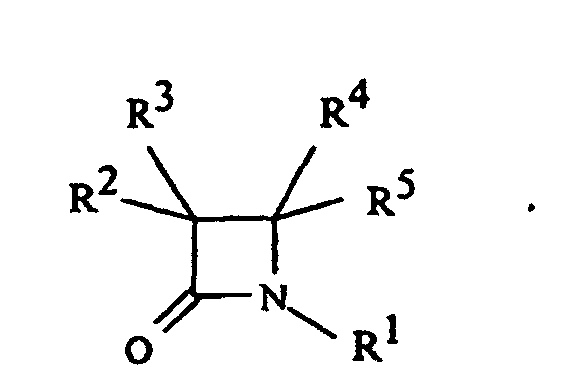 whereby two or more of the groups R1, R2, R3, R4 and R5 may be combined to form a substituted or unsubstituted carbocyclic or heterocyclic ring which may be saturated or unsaturated,Where R1 is R8, XR8, (CRR)n(C=X)R8 or (C=X)NR8 2X is O or Sn is 0-3.R8 is H, OH, a substituted or unsubstituted C3-12 carbocyclic or heterocyclic ring which may be saturated or unsaturated, C1-10 alkyl, C3-12 aryl, C4-12 alkylaryl, C2-10 alkenyl, C2-10 alkynyl, C1-10 alkoxy, C1-10 alkoxyalkyl, C1-10 hydroxyalkyl, C1-10 aminoalkyl, C1-10 perfluoroalkyl, C1-10 haloalkyl, C1-10 carboxyalkyl, C1-10 amidoalkyl or C1-10 ketoalkyl.R2, R3 are the same or different and each H, C1-4 alkyl, C2-4 alkenyl, C2-4 alkynyl, C1-4 alkoxyalkyl, C1-4 hydroxyalkyl, C1-4 aminoalkyl, C1-4 perfluoroalkyl, C1-4 haloalkyl, Hal, C1-4 carboxyalkyl, OR, SR, NRR, (CH2)nCONRR, NR(CO)R or (CH2)nCO2R.R4 is a leaving group chosen from Hal, XR8, X(C=X)R8, OSOR8, OSO2R8 OSO2Hal, SOR8 SO2R8, SO2NR8 2 NRSO2R, (C=X)R8, (C=X)NR8 2, (C=X)R8, NO2, CN, POnR8 2 or XC6H4-nYnY is the same or different and is R, NO2, Hal, CONR8 2, SO2NR8 2 or CO2R.R5 is R or R4R is the same or different and is H, C1-4 alkyl, C2-4 alkenyl, C2-4 alkynyl, C1-4 alkoxy, C1-4 alkoxyalkyl, C1-4 hydroxyalkyl, C1-4 aminoalkyl, C1-4 perfluoroalkyl, C1-4 haloalkyl or C1-4 carboxyalkyl.
characterised in that the β-lactam contains or has covalently bonded thereto at least one detectable moiety, and with the proviso that when R4 is XR8, X is S and R1 and R4 are combined to form a cyclic carboxyalkyl group, then the detectable moiety is not 125I. - The labelled HLE inhibitor of claim 7 where the inhibitor is an azetidinone.
- The labelled HLE inhibitor of claim 10 where the azetidinone has the formula:where:
 characterised in that the azetidinone contains or has covalently bonded thereto at least one detectable moiety.Where R1 is R8, XR8, (CRR)n(C=X)R8 or (C=X)NR8 2X is O or Sn is 0-3.R8 is H, OH, a substituted or unsubstituted C3-12 carbocyclic or heterocyclic ring which may be saturated or unsaturated, C1-10 alkyl, C3-12 aryl, C4-12 alkylaryl, C2-10 alkenyl, C2-10 alkynyl, C1-10 alkoxy, C1-10 alkoxyalkyl, C1-10 hydroxyalkyl, C1-10 aminoalkyl, C1-10 perfluoroalkyl, C1-10 haloalkyl, C1-10 carboxyalkyl, C1-10 amidoalkyl or C1-10 ketoalkyl.R2, R3 are the same or different and each H, C1-4 alkyl, C2-4 alkenyl, C2-4 alkynyl, C1-4 alkoxyalkyl, C1-4 hydroxyalkyl, C1-4 aminoalkyl, C1-4 perfluoroalkyl, C1-4 haloalkyl, Hal, C1-4 carboxyalkyl, OR, SR, NRR, (CH2)nCONRR, NR(CO)R or (CH2)nCO2R.R4 is a leaving group chosen from Hal, XR8, X(C=X)R8, OSOR8, OSO2R8 OSO2Hal, SOR8 SO2R8, SO2NR8 2 NRSO2R, (C=X)R8, (C=X)NR8 2, (C=X)R8, NO2, CN, POnR8 2 or XC6H4-nYnY is the same or different and is R, NO2, Hal, CONR8 2, SO2NR8 2 or CO2R.R5 is R or R4R is the same or different and is H, C1-4 alkyl, C2-4 alkenyl, C2- 4 alkynyl, C1-4 alkoxy, C1-4 alkoxyalkyl, C1-4 hydroxyalkyl, C1-4 aminoalkyl, C1-4 perfluoroalkyl, C1-4 haloalkyl or C1-4 carboxyalkyl.
 - The labelled HLE inhibitor of claim 11 where the detectable moiety is attached at the R1 position.
- The labelled HLE inhibitor of claim 11 where at least one of the groups R1-5 bears an amine substituent.
- The labelled HLE inhibitor of claims 1-13 for use in the diagnostic imaging of sites of inflammation or infection in vivo.
- Use of the labelled HLE inhibitor of claims 1-13 for labelling leucocytes in vitro.
- The labelled HLE inhibitor of claims 1-13 for use in the diagnostic imaging of thrombi in vivo.
- The labelled HLE inhibitor of claims 2 and 5-13 for use in the radiotherapy of arthritis or bone infection or other hyperproliferative disease.
Priority Applications (1)
| Application Number | Priority Date | Filing Date | Title |
|---|---|---|---|
| EP97940242A EP0927049B1 (en) | 1996-09-16 | 1997-09-10 | Labelled elastase inhibitors |
Applications Claiming Priority (4)
| Application Number | Priority Date | Filing Date | Title |
|---|---|---|---|
| EP96306718 | 1996-09-16 | ||
| EP96306718 | 1996-09-16 | ||
| EP97940242A EP0927049B1 (en) | 1996-09-16 | 1997-09-10 | Labelled elastase inhibitors |
| PCT/GB1997/002467 WO1998010800A2 (en) | 1996-09-16 | 1997-09-10 | Labelled elastase inhibitors |
Publications (2)
| Publication Number | Publication Date |
|---|---|
| EP0927049A2 EP0927049A2 (en) | 1999-07-07 |
| EP0927049B1 true EP0927049B1 (en) | 2005-05-11 |
Family
ID=8225085
Family Applications (1)
| Application Number | Title | Priority Date | Filing Date |
|---|---|---|---|
| EP97940242A Expired - Lifetime EP0927049B1 (en) | 1996-09-16 | 1997-09-10 | Labelled elastase inhibitors |
Country Status (8)
| Country | Link |
|---|---|
| US (1) | US6375926B1 (en) |
| EP (1) | EP0927049B1 (en) |
| JP (1) | JP2001500152A (en) |
| AU (1) | AU4214897A (en) |
| CA (1) | CA2265945A1 (en) |
| DE (1) | DE69733263T2 (en) |
| ES (1) | ES2242230T3 (en) |
| WO (1) | WO1998010800A2 (en) |
Families Citing this family (13)
| Publication number | Priority date | Publication date | Assignee | Title |
|---|---|---|---|---|
| WO2000005204A1 (en) * | 1998-07-23 | 2000-02-03 | Shionogi & Co., Ltd. | MONOCYCLIC β-LACTAM COMPOUNDS AND CHYMASE INHIBITORS CONTAINING THE SAME |
| US7321065B2 (en) * | 2003-04-18 | 2008-01-22 | The Regents Of The University Of California | Thyronamine derivatives and analogs and methods of use thereof |
| US20050281798A1 (en) * | 2004-06-16 | 2005-12-22 | Glen Gong | Targeting sites of damaged lung tissue using composition |
| US20050281799A1 (en) | 2004-06-16 | 2005-12-22 | Glen Gong | Targeting damaged lung tissue using compositions |
| US20050281796A1 (en) * | 2004-06-16 | 2005-12-22 | Glen Gong | Targeting damaged lung tissue |
| US7678767B2 (en) * | 2004-06-16 | 2010-03-16 | Pneumrx, Inc. | Glue compositions for lung volume reduction |
| US20050281739A1 (en) * | 2004-06-16 | 2005-12-22 | Glen Gong | Imaging damaged lung tissue using compositions |
| US7608579B2 (en) * | 2004-06-16 | 2009-10-27 | Pneumrx, Inc. | Lung volume reduction using glue compositions |
| US7553810B2 (en) * | 2004-06-16 | 2009-06-30 | Pneumrx, Inc. | Lung volume reduction using glue composition |
| CA2570261C (en) * | 2004-07-08 | 2014-06-10 | Pneumrx, Inc. | Pleural effusion treatment device, method and material |
| US8722937B2 (en) | 2006-02-27 | 2014-05-13 | University Of South Florida | Asymmetric disulfides and aryl-alkyl disulfides as anti-bacterial agents |
| WO2008033278A1 (en) * | 2006-09-13 | 2008-03-20 | University Of South Florida | Heterosubstituted n-thiolated beta-lactam compounds and methods of use |
| US20100297218A1 (en) * | 2006-09-20 | 2010-11-25 | Pneumrx, Inc. | Tissue adhesive compositions and methods thereof |
Family Cites Families (5)
| Publication number | Priority date | Publication date | Assignee | Title |
|---|---|---|---|---|
| US5091514A (en) * | 1987-03-26 | 1992-02-25 | Neorx Corporation | Metal-radionuclide-labeled proteins and glycoproteins for diagnosis and therapy |
| US5486529A (en) * | 1992-04-16 | 1996-01-23 | Zeneca Limited | Certain pyridyl ketones for treating diseases involving leukocyte elastase |
| GB9211783D0 (en) | 1992-06-04 | 1992-07-15 | Ici Plc | Amide derivatives |
| US5986076A (en) * | 1994-05-11 | 1999-11-16 | Trustees Of Boston University | Photocleavable agents and conjugates for the detection and isolation of biomolecules |
| GB9502152D0 (en) * | 1995-02-03 | 1995-03-29 | Zeneca Ltd | Proline derivatives |
-
1997
- 1997-09-10 DE DE69733263T patent/DE69733263T2/en not_active Expired - Fee Related
- 1997-09-10 ES ES97940242T patent/ES2242230T3/en not_active Expired - Lifetime
- 1997-09-10 EP EP97940242A patent/EP0927049B1/en not_active Expired - Lifetime
- 1997-09-10 US US09/254,541 patent/US6375926B1/en not_active Expired - Fee Related
- 1997-09-10 WO PCT/GB1997/002467 patent/WO1998010800A2/en not_active Ceased
- 1997-09-10 CA CA002265945A patent/CA2265945A1/en not_active Abandoned
- 1997-09-10 JP JP10513385A patent/JP2001500152A/en not_active Ceased
- 1997-09-10 AU AU42148/97A patent/AU4214897A/en not_active Abandoned
Also Published As
| Publication number | Publication date |
|---|---|
| DE69733263T2 (en) | 2006-01-12 |
| WO1998010800A2 (en) | 1998-03-19 |
| US6375926B1 (en) | 2002-04-23 |
| ES2242230T3 (en) | 2005-11-01 |
| CA2265945A1 (en) | 1998-03-19 |
| EP0927049A2 (en) | 1999-07-07 |
| DE69733263D1 (en) | 2005-06-16 |
| JP2001500152A (en) | 2001-01-09 |
| AU4214897A (en) | 1998-04-02 |
| WO1998010800A3 (en) | 1998-05-07 |
Similar Documents
| Publication | Publication Date | Title |
|---|---|---|
| US5753205A (en) | Radiolabelled peptide compounds | |
| CA2131816C (en) | Technetium-99m labeled peptides for imaging inflammation | |
| CA2156390C (en) | Technetium-99m labeled peptides for diagnostic imaging | |
| EP0804252B1 (en) | Monoamine, diamide, thiol-containing metal chelating agents | |
| JP2831073B2 (en) | Macrocyclic bifunctional chelating agents, their complexes and their antibody conjugates | |
| AU681080B2 (en) | Technetium-99m labeled peptides for imaging | |
| US6248304B1 (en) | Scintigraphic imaging agents | |
| US5371184A (en) | Radiolabelled peptide compounds | |
| IL275317B (en) | Complex comprising a psma-targeting compound linked to a lead or thorium radionuclide | |
| JPH11503420A (en) | Radiolabeled peptides for diagnostics and therapeutics | |
| US6375926B1 (en) | Labelled elastase inhibitors | |
| JPH10507180A (en) | Somatostatin analog radiolabeled with TC or RE | |
| KR100241169B1 (en) | Radiolabelled compounds for thrombus imaging | |
| AU666059B2 (en) | New agents for diagnosis of vascular diseases | |
| US6056940A (en) | Radiolabeled compounds for thrombus imaging | |
| US6171578B1 (en) | Benzodiazepine derivatives for imaging thrombi | |
| EP0642357B1 (en) | Radiolabelled somatostatin | |
| EP1437145A1 (en) | Enhanced scintigraphic imaging agents for imaging of infection and inflammation | |
| EP0750610A1 (en) | Piperidyl-4-substituted thyrosine derivatives as scintigraphic imaging agents for the diagnosis of thrombosis | |
| JP2001504801A (en) | Radiopharmaceutical composition localizable to thrombus site | |
| CA3256871A1 (en) | Radioisotope labeled sstr2-agonists with linkers | |
| AU2005202649A1 (en) | Benzodiazepine derivatives for imaging thrombi | |
| JPH11505852A (en) | Isolated diagnostic imaging agent |
Legal Events
| Date | Code | Title | Description |
|---|---|---|---|
| PUAI | Public reference made under article 153(3) epc to a published international application that has entered the european phase |
Free format text: ORIGINAL CODE: 0009012 |
|
| 17P | Request for examination filed |
Effective date: 19990215 |
|
| AK | Designated contracting states |
Kind code of ref document: A2 Designated state(s): BE CH DE DK ES FR GB IE IT LI NL |
|
| RAP1 | Party data changed (applicant data changed or rights of an application transferred) |
Owner name: AMERSHAM PLC |
|
| 17Q | First examination report despatched |
Effective date: 20030502 |
|
| GRAP | Despatch of communication of intention to grant a patent |
Free format text: ORIGINAL CODE: EPIDOSNIGR1 |
|
| GRAS | Grant fee paid |
Free format text: ORIGINAL CODE: EPIDOSNIGR3 |
|
| GRAA | (expected) grant |
Free format text: ORIGINAL CODE: 0009210 |
|
| RIN1 | Information on inventor provided before grant (corrected) |
Inventor name: STOREY, ANTHONY EAMONAMERSHAM PLC Inventor name: MENDIZABAL, MARIVIAMERSHAM PLC Inventor name: KNOX, PETER Inventor name: FORSTER, ALAN MICHAELAMERSHAM PLC Inventor name: BOWER, GARY ROBERT Inventor name: BARNES, KAREN JANE |
|
| AK | Designated contracting states |
Kind code of ref document: B1 Designated state(s): BE CH DE DK ES FR GB IE IT LI NL |
|
| PG25 | Lapsed in a contracting state [announced via postgrant information from national office to epo] |
Ref country code: IT Free format text: LAPSE BECAUSE OF FAILURE TO SUBMIT A TRANSLATION OF THE DESCRIPTION OR TO PAY THE FEE WITHIN THE PRE;WARNING: LAPSES OF ITALIAN PATENTS WITH EFFECTIVE DATE BEFORE 2007 MAY HAVE OCCURRED AT ANY TIME BEFORE 2007. THE CORRECT EFFECTIVE DATE MAY BE DIFFERENT FROM THE ONE RECORDED.SCRIBED TIME-LIMIT Effective date: 20050511 |
|
| REG | Reference to a national code |
Ref country code: GB Ref legal event code: FG4D |
|
| REG | Reference to a national code |
Ref country code: CH Ref legal event code: EP |
|
| BECN | Be: change of holder's name |
Owner name: *GE HEALTHCARE LTD Effective date: 20050511 |
|
| REG | Reference to a national code |
Ref country code: IE Ref legal event code: FG4D |
|
| REF | Corresponds to: |
Ref document number: 69733263 Country of ref document: DE Date of ref document: 20050616 Kind code of ref document: P |
|
| RAP2 | Party data changed (patent owner data changed or rights of a patent transferred) |
Owner name: GE HEALTHCARE LIMITED |
|
| PG25 | Lapsed in a contracting state [announced via postgrant information from national office to epo] |
Ref country code: DK Free format text: LAPSE BECAUSE OF FAILURE TO SUBMIT A TRANSLATION OF THE DESCRIPTION OR TO PAY THE FEE WITHIN THE PRESCRIBED TIME-LIMIT Effective date: 20050811 |
|
| REG | Reference to a national code |
Ref country code: CH Ref legal event code: NV Representative=s name: ISLER & PEDRAZZINI AG |
|
| NLT2 | Nl: modifications (of names), taken from the european patent patent bulletin |
Owner name: GE HEALTHCARE LIMITED Effective date: 20050727 |
|
| REG | Reference to a national code |
Ref country code: ES Ref legal event code: FG2A Ref document number: 2242230 Country of ref document: ES Kind code of ref document: T3 |
|
| NLT1 | Nl: modifications of names registered in virtue of documents presented to the patent office pursuant to art. 16 a, paragraph 1 |
Owner name: GE HEALTHCARE LIMITED |
|
| PLBE | No opposition filed within time limit |
Free format text: ORIGINAL CODE: 0009261 |
|
| STAA | Information on the status of an ep patent application or granted ep patent |
Free format text: STATUS: NO OPPOSITION FILED WITHIN TIME LIMIT |
|
| ET | Fr: translation filed | ||
| 26N | No opposition filed |
Effective date: 20060214 |
|
| PGFP | Annual fee paid to national office [announced via postgrant information from national office to epo] |
Ref country code: IE Payment date: 20070924 Year of fee payment: 11 |
|
| PGFP | Annual fee paid to national office [announced via postgrant information from national office to epo] |
Ref country code: ES Payment date: 20070926 Year of fee payment: 11 |
|
| REG | Reference to a national code |
Ref country code: CH Ref legal event code: PCAR Free format text: ISLER & PEDRAZZINI AG;POSTFACH 1772;8027 ZUERICH (CH) |
|
| PGFP | Annual fee paid to national office [announced via postgrant information from national office to epo] |
Ref country code: CH Payment date: 20070924 Year of fee payment: 11 |
|
| BECN | Be: change of holder's name |
Owner name: *GE HEALTHCARE LTD Effective date: 20050511 |
|
| PGFP | Annual fee paid to national office [announced via postgrant information from national office to epo] |
Ref country code: GB Payment date: 20070926 Year of fee payment: 11 |
|
| PGFP | Annual fee paid to national office [announced via postgrant information from national office to epo] |
Ref country code: NL Payment date: 20070923 Year of fee payment: 11 Ref country code: DE Payment date: 20071031 Year of fee payment: 11 |
|
| PGFP | Annual fee paid to national office [announced via postgrant information from national office to epo] |
Ref country code: BE Payment date: 20071025 Year of fee payment: 11 |
|
| PGFP | Annual fee paid to national office [announced via postgrant information from national office to epo] |
Ref country code: FR Payment date: 20070917 Year of fee payment: 11 |
|
| BERE | Be: lapsed |
Owner name: *GE HEALTHCARE LTD Effective date: 20080930 |
|
| REG | Reference to a national code |
Ref country code: CH Ref legal event code: PL |
|
| GBPC | Gb: european patent ceased through non-payment of renewal fee |
Effective date: 20080910 |
|
| PG25 | Lapsed in a contracting state [announced via postgrant information from national office to epo] |
Ref country code: NL Free format text: LAPSE BECAUSE OF NON-PAYMENT OF DUE FEES Effective date: 20090401 |
|
| NLV4 | Nl: lapsed or anulled due to non-payment of the annual fee |
Effective date: 20090401 |
|
| REG | Reference to a national code |
Ref country code: IE Ref legal event code: MM4A |
|
| REG | Reference to a national code |
Ref country code: FR Ref legal event code: ST Effective date: 20090529 |
|
| PG25 | Lapsed in a contracting state [announced via postgrant information from national office to epo] |
Ref country code: IE Free format text: LAPSE BECAUSE OF NON-PAYMENT OF DUE FEES Effective date: 20080910 Ref country code: BE Free format text: LAPSE BECAUSE OF NON-PAYMENT OF DUE FEES Effective date: 20080930 |
|
| PG25 | Lapsed in a contracting state [announced via postgrant information from national office to epo] |
Ref country code: DE Free format text: LAPSE BECAUSE OF NON-PAYMENT OF DUE FEES Effective date: 20090401 |
|
| PG25 | Lapsed in a contracting state [announced via postgrant information from national office to epo] |
Ref country code: LI Free format text: LAPSE BECAUSE OF NON-PAYMENT OF DUE FEES Effective date: 20080930 Ref country code: FR Free format text: LAPSE BECAUSE OF NON-PAYMENT OF DUE FEES Effective date: 20080930 Ref country code: CH Free format text: LAPSE BECAUSE OF NON-PAYMENT OF DUE FEES Effective date: 20080930 |
|
| REG | Reference to a national code |
Ref country code: ES Ref legal event code: FD2A Effective date: 20080911 |
|
| PG25 | Lapsed in a contracting state [announced via postgrant information from national office to epo] |
Ref country code: GB Free format text: LAPSE BECAUSE OF NON-PAYMENT OF DUE FEES Effective date: 20080910 |
|
| PG25 | Lapsed in a contracting state [announced via postgrant information from national office to epo] |
Ref country code: ES Free format text: LAPSE BECAUSE OF NON-PAYMENT OF DUE FEES Effective date: 20080911 |