EP0925569B1 - Training apparatus and method - Google Patents
Training apparatus and method Download PDFInfo
- Publication number
- EP0925569B1 EP0925569B1 EP97939081A EP97939081A EP0925569B1 EP 0925569 B1 EP0925569 B1 EP 0925569B1 EP 97939081 A EP97939081 A EP 97939081A EP 97939081 A EP97939081 A EP 97939081A EP 0925569 B1 EP0925569 B1 EP 0925569B1
- Authority
- EP
- European Patent Office
- Prior art keywords
- dialogue
- input
- text
- user
- output
- Prior art date
- Legal status (The legal status is an assumption and is not a legal conclusion. Google has not performed a legal analysis and makes no representation as to the accuracy of the status listed.)
- Expired - Lifetime
Links
Images




Classifications
-
- G—PHYSICS
- G09—EDUCATION; CRYPTOGRAPHY; DISPLAY; ADVERTISING; SEALS
- G09B—EDUCATIONAL OR DEMONSTRATION APPLIANCES; APPLIANCES FOR TEACHING, OR COMMUNICATING WITH, THE BLIND, DEAF OR MUTE; MODELS; PLANETARIA; GLOBES; MAPS; DIAGRAMS
- G09B5/00—Electrically-operated educational appliances
- G09B5/08—Electrically-operated educational appliances providing for individual presentation of information to a plurality of student stations
- G09B5/14—Electrically-operated educational appliances providing for individual presentation of information to a plurality of student stations with provision for individual teacher-student communication
-
- G—PHYSICS
- G09—EDUCATION; CRYPTOGRAPHY; DISPLAY; ADVERTISING; SEALS
- G09B—EDUCATIONAL OR DEMONSTRATION APPLIANCES; APPLIANCES FOR TEACHING, OR COMMUNICATING WITH, THE BLIND, DEAF OR MUTE; MODELS; PLANETARIA; GLOBES; MAPS; DIAGRAMS
- G09B19/00—Teaching not covered by other main groups of this subclass
- G09B19/06—Foreign languages
-
- G—PHYSICS
- G09—EDUCATION; CRYPTOGRAPHY; DISPLAY; ADVERTISING; SEALS
- G09B—EDUCATIONAL OR DEMONSTRATION APPLIANCES; APPLIANCES FOR TEACHING, OR COMMUNICATING WITH, THE BLIND, DEAF OR MUTE; MODELS; PLANETARIA; GLOBES; MAPS; DIAGRAMS
- G09B7/00—Electrically-operated teaching apparatus or devices working with questions and answers
- G09B7/02—Electrically-operated teaching apparatus or devices working with questions and answers of the type wherein the student is expected to construct an answer to the question which is presented or wherein the machine gives an answer to the question presented by a student
- G09B7/04—Electrically-operated teaching apparatus or devices working with questions and answers of the type wherein the student is expected to construct an answer to the question which is presented or wherein the machine gives an answer to the question presented by a student characterised by modifying the teaching program in response to a wrong answer, e.g. repeating the question or supplying a further explanation
Definitions
- This invention relates to apparatus and methods for training; particularly, but not exclusively, for language training.
- Training and dialogue is carried out by human teachers who are experienced in the target language (i.e. the language to be learnt). In such training, the teacher will understand what is being said, even when the grammar is imperfect, and can exercise judgment in indicating when a serious or trivial mistake is made, and in explaining what the correct form should be.
- EP-A-0665523 briefly discloses a foreign language skills maintenance system, in which role playing is permitted, comprising an input for receiving input dialogue from a user and an output at which the "correct" dialogue which would be anticipated from the user is displayed, for comparison with the input dialogue by the user (or by the computer).
- An object of the present invention is to provide a training system (particularly for language training but possibly applicable more widely) which utilises limited volumes of memory to store limited numbers of words and grammatical data, but is nonetheless capable of recognising input language errors and of carrying on a dialogue with a student.
- the present invention provides a display of a person, and is arranged to vary the display to have different expressions, corresponding to comprehension, and at least one degree of incomprehension.
- two degrees of incomprehension are provided; one corresponding to an assumed error in an otherwise comprehensible input and the other corresponding to incomprehensible input.
- a display which indicates target language responses generated by the invention, together with text (preferably in the target language) indicating the level of comprehension achieved.
- text preferably in the target language
- the invention provides for the generation of source language text for the guidance of the student.
- the source language text is normally hidden and is displayed on command by the user.
- the source language text comprises guidance as to what the last target language output text means.
- the guidance text comprises an explanation of what any detected error is assumed to be.
- the guidance text comprises text indicating what suitable next responses by the student might be.
- the invention may comprise speech recognition means for the input of speech and/or speech synthesis means for the generation of speech, to replace input and/or output text in the above embodiments.
- the invention comprises a terminal for use by the student at which input is accepted and output is generated, and a remote computer at which the processing necessary to convert each input from the user to corresponding outputs is performed, the two being linked together by a telecommunications channel.
- a terminal for use by the student at which input is accepted and output is generated
- a remote computer at which the processing necessary to convert each input from the user to corresponding outputs is performed, the two being linked together by a telecommunications channel.
- This arrangement permits the processing resources required to be centralised, rather than requiring them to be present for each user (language student). It also provides for effective use of the telecommunications channel, since much of the traffic is relative low bandwidth text information.
- the telecommunications channel comprises the network of high bandwidth links interconnecting computer sites known as the "Internet".
- Internet interconnecting computer sites
- the invention may convenient be realised as a mobile program ("applet") which is downloaded initially, and operates with conventional resident communications programs referred to as "HTML browsers".
- the invention operates by reference to data relating to words, and data relating to grammatical rules.
- the presence of errors may be detected by providing a first set of rules which are grammatically correct, and associated with each of the first set, a respective second set of rules each of which relaxes a constraint of the respective first rule to which it relates.
- Input text is then parsed by using rules of the first set and, at least where this is unsuccessful, rules of the second sets; where text is successfully parsed by a rule of the second set but not by the first set rule to which that second set relates, the error determined to be present is that corresponding to the constraint which was relaxed in the rule of the second set.
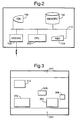
- the system of a first embodiment of the invention comprises a terminal 10 such as a personal computer connected, via a telecommunications link 12 such as a telephone line, to a telecommunications network 14 such as the Internet, which in turn is connected to a host computer 20.
- a terminal 10 such as a personal computer connected, via a telecommunications link 12 such as a telephone line, to a telecommunications network 14 such as the Internet, which in turn is connected to a host computer 20.
- Both the terminal 10 and the host computer 20 are conveniently arranged to communicate in a common file transfer protocol such as TCP/IP.
- the terminal 10 comprises a central processing unit 102, a keyboard 104, a modem 106 for communication with the telecommunications link 12, a display device 108 such as a CRT, and a store 110, schematically indicated as a single unit but comprising read only memory, random access memory, and mass storage such as a hard disk. These are interconnected via a bus structure 112.
- a frame buffer area to which pixels of the display device 108 are memory mapped.
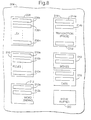
- the contents of the frame buffer comprise a number of different window areas when displayed on the display device 108, as shown in Figure 3; namely, an area 302 defining an input text window; an area 304 carrying a visual representation of a person; an area 306 defining an output text window; an area 308 defining a comprehension text window; an area 310 displaying a list of possible items; an area 312 defining a transaction result window; and an area 314 defining a user guidance window.
- the CPU 102 is arranged selectively to hide the response guidance window 314, and to display an icon 315, the response guidance window being displayed only when the icon 315 is selected via the keyboard or other input device.
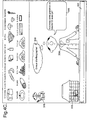
- Figure 4a illustrates the appearance of the display device 108 in use; the response guidance display area 314 is hidden, and icon 315 is displayed.
- a standardised format such as for example a .GIF or .PIC format
- the host computer 20 comprises a communications port 202 connected (e.g. a via an ISDN link) to the internet 12; a central processing unit 204; and a store 206.
- the host computer 20 is a mainframe computer, and the store comprises a large scale off line storage system (such as a RAID disk system) and random access memory.
- the terminal 10 and host computer 20 may operate under conventional control and communications programs.
- the terminal 10 may operate under the control of a GUI such as Windows (TM) and a Worldwide Web browser such as Netscape (TM) Navigator (TM) which is capable of receiving and running programs ("Applets") received from the Internet 12.
- the host computer 20 may operate under the control of an operating system such as Unix (TM) running a Worldwide Web server program (e.g. httpd).
- TM Unix
- httpd Worldwide Web server program
- the scenario used to assist in language training is that of the grocer's shop selling a variety of foods.
- the object of the present embodiment is to address input text in the target language to the grocer. If the text can be understood as an instruction to supply a type of item, this will be confirmed with visual feedback of several types; firstly, a positive expression will be displayed on the face of the grocer (area 304); secondly, the requested item will appear in the grocery basket transaction area (area 312) displayed on the screen 108; and thirdly the instruction will be confirmed by output text in the target language from the grocer (area 306).
- the input text can be understood as an instruction to purchase an item, but contains recognised spelling or grammatical errors
- visual feedback of the transaction is given in the form of a confirmation of what the understood transaction should be as output text, and the display of the item in the grocery basket (area 312).
- step 402 a program (applet) for controlling the display of the image data is downloaded.
- the host computer 20 then downloads a file of data representing the background image, a plurality of files of data representing the different possible expressions of the grocer, and a plurality of files of data representing all the items on sale, in step 406.
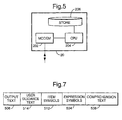
- initial control data is received from the computer 20, in the form of a control data message 500 which, as shown in Figure 7, comprises a target language output text string 506, corresponding to words to be spoken by the grocer and hence to be displayed in the display area 306; a source language user guidance text string 514 to be displayed in the user guidance display area 314 if this is selected for display by the user; one or more item symbols 512 which will cause the selection for display of the images of one or more items in the display area 312; an expression symbol 504 for selecting one of the downloaded expression image files for display on the face of the grocer in the display area 304; and a target language comprehension text string 508 for display in the display area 308 to indicate what the grocer would understand by target language text input by a user as described below.
- a control data message 500 which, as shown in Figure 7, comprises a target language output text string 506, corresponding to words to be spoken by the grocer and hence to be displayed in the display area 306; a source language user guidance text string 514 to be displayed
- the item symbol field 512 and comprehension text field 508 are both empty.
- step 410 the CPU 102, under control of the program downloaded in step 404, first loads the background image to the frame store within the storage unit 110, and then overwrites the areas 304, 306, and, where applicable, 312 and 314; by generating image data representing the text strings and inserting it in the relevant windows 306, 308, 314; by selecting the facial expression image indicated by the expression symbol 504 and displaying this in the upper area of the person display area 304; and by selecting an item image indicated by the item symbol and displaying these in the area 312.
- the background display consists of the display of all the item images in the display area 310 together with a corresponding text label indicating, in each case, the item name; the display of the icon 315 indicating tutorial assistance; the display of the figure of a grocer with one of the selected expressions; the display of a speech bubble containing the grocer's speech output 306; and the display of a basket 312 receiving items placed therein by the grocer in response to shopping instructions.
- step 412 If, in step 412, an instruction to log off or exit is input by the user, the process terminates. Otherwise, the CPU 102 scans the keyboard 104 (step 414) for the input of a string of text terminated by a carriage return or other suitable character, which is displayed in the input text display area 302 and, when input is complete, transmitted to the computer 20 in step 416 via the modem and Internet 12.
- the computer 20 In response to the transmission of input text in step 416, the computer 20 returns another control message 500 (received in step 418) and, in response thereto, the terminal returns 10 to step 410 to update the display to reflect the contents of the control message.
- the result of the input of the text string shown in area 302 of Figure 4a is to cause the display of the text message "Voila un kilo de pommes! Et Electrode?" in the output text area 306 (this representing the contents of the field 506 of the received control message).
- Field 504 contains a symbol corresponding to a cheerful or positive expression, and the corresponding bit map image is displayed in the upper portion of field 304.
- Field 512 contains a symbol indicating the appearance of an apple and accordingly this symbol is displayed in display area 312. No data is contained in the comprehension text field 508. Data is contained in the user guidance text field 514 but not displayed since the user has not selected the icon 315.
- step 418 If, at this stage, the text input in step 414 is as displayed in the field 302 of Figure 4b (which contains the words "Trois cents grammes de beure"), the control data received in step 418 leads to the display indicated in Figure 4c.
- the target language text indicated in the field 306 (“Voila Peru cents grammes de blunt! EtUNEdress?”) indicates what the correct word is presumed to be, but the comprehension text field 508 of the received control message contains the target language text, displayed in field 308, "Erreur d'orthographe! in a "thinks bubble” representation to indicate the thoughts of the grocer.
- the expression symbol field 504 contains a symbol causing the display to a puzzled expression on the face of the grocer as shown in field 304. Since the transaction has been understood, the item (butter) is represented by a symbol in the item symbol field 512 and displayed in the area 312.
- the guidance text contains three text fields; a first field 314a indicating generally, in the source language (e.g. English), what the words in the field 306 mean; an error analysis display 314b indicating, in the source language (e.g. English), the meaning of the words in the comprehension text field 308 and indicating what, in this case, the spelling error is assumed to be; and an option field 314c containing text listing the options for user input in response to the situation.
- a first field 314a indicating generally, in the source language (e.g. English), what the words in the field 306 mean
- an error analysis display 314b indicating, in the source language (e.g. English), the meaning of the words in the comprehension text field 308 and indicating what, in this case, the spelling error is assumed to be
- an option field 314c containing text listing the options for user input in response to the situation.
- the operation of the terminal 10 will therefore be understood to consist of uploading input text to the computer 20; and downloading and acting upon control messages in response thereto from the computer 20.
- the host computer 20 will be understood to be performing the following functions:
- the computer 20 does not need to "understand” a large number of possible different input text strings or their meanings; provided the input text can be reliably associated with one of the expected transactions, it is necessary only to confirm whether all input words are correctly spelt and conform to an acceptable word order, without needing to know in detail the nuances of meaning that input text may contain.
- the store 206 contains the following data: a lexical database 208 comprising a plurality of word records 208a, 208b ... 208n each comprising:
- a rule database 210 comprising a plurality (e.g. 44 in this embodiment) of rules 210a, 210b ... 210n each specifying a rule of syntax structure of the target language and associated with a particular syntactic category.
- the rule for a noun phrase will specify that it must comprise a noun and the associated article, whereas that for a verb phrase specifies that it must include a verb and its associated complement(s), and may include a subject, with which the form of the verb must agree, and which may (together with the object of the verb) be one of several different syntactic categories (e.g. a noun, a noun phrase, a pronoun and so on).
- rules will specify which types of words (or clauses) must be present in which order, and with what agreements of form, for a given semantic structure (e.g. a question).
- the rules stored in the rules database 210 comprise, for at least some of the rules, a first rule which specifies those agreements (for example of gender and number) which are grammatically necessary for the corresponding syntactic structure to be correct, but also a plurality of relaxed versions of the same rule, in each of which one or more of the agreement constraints is relaxed.
- the relaxed rules are stored following the correct rules with which they are associated.
- an inflection table 212 is provided consisting of a plurality of inflection records, each consisting of a word stem and, for each of a predetermined plurality of different inflecting circumstances (such as cases, tenses and so on), the changes to the word endings of the stem.
- the number of records 212a, 212b in the inflection table 212 is significantly smaller than the number of lexical records 208a ... 208n in the lexical database 208.
- Each record in the lexical database 208 contains a pointer to one of the records in the inflection table 212, and the relationship is usually many to one (that is, several words reference the same inflection model record in the inflection table 212).
- the CPU 204 Before each use, or period of use, of the host computer 20 the CPU 204 reads the lexical records 208, and expands the lexical records table 208 to included a new record for each inflected version of the word, using the inflection table 212.
- the CPU 204 After operation of the present invention ceases, the CPU 204 correspondingly deletes all such additional entries. Thus, in periods when the invention is not in use, memory capacity within the computer 20 is conserved.
- the lexical table 208 in this embodiment contains 265 records.
- Specific information about the transactions making up the grocer shop scenario is stored in a transaction table 214 consisting of a number of entries 214a, 214b ... 214n.
- the entries include information defining the items (e.g. apples) as being goods for sale, and defining units of measurement (e.g. kilos), and relating each kind of item to the units of measure in which it is sold and the price per unit. Data is also stored associating each item with the item symbol and the graphics data representing the item (to be initially transmitted to the terminal 10).
- items e.g. apples
- units of measurement e.g. kilos
- a response table 216 consists of a plurality of entries 216a, 216b ... each corresponding to one type of output control message 500 generated by the computer 20, and storing, for that output, the anticipated types of response, ranked in decreasing order of likelihood.
- the likely responses to the opening message "Vous desirez?" are, firstly, an attempt to buy produce; secondly, an attempt to enquire about produce (for example to ask the price).
- the next response could be an attempt to complete a transaction for the subject of the enquiry, or could be a different enquiry, or an attempt to purchase something different, or an instruction to end the session.
- Each entry in the response table also includes the associated source language response assistance text displayed in the text areas 314a and 314c.
- Each of the possible responses in the response table 216 contains a pointer to an entry in a syntactic category table 218, indicating what syntactic category the response from the user is likely to fall into; for example, if the last output text displayed in the text area 306 asks "How many would you like?", the answer could be a sentence including a verb ("I would like three kilos please") or a noun phrase ("Three kilos").
- a buffer 220 of most recent system outputs is stored, storing the last, or the last few (e.g. two or three), system outputs as high level semantic structures.
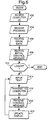
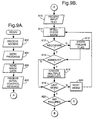
- step 602 an attempt by a terminal 10 to access the computer 20 is detected.
- step 604 the CPU 204 accesses the stored file within the store 206 storing the program to be downloaded and transmits the file (e.g. in the form of an Applet, for example in the Java (TM) programming language) to the terminal 10.
- the file e.g. in the form of an Applet, for example in the Java (TM) programming language
- step 606 the CPU 204 reads the transaction data table 214 and transmits, from each item record, the item image data file and the item type symbol.
- the initial control message 500 sent in step 608 is predetermined, and consists of the data shown in Figure 4a (and described above in relation thereto) together with the stored text for display, if required, in the fields 314a and 314c which is stored in the response table 216 in the entry relating to this opening system output.
- step 610 the host computer 20 awaits a text input from the terminal 10.
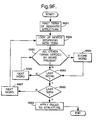
- step 611 if the language permits contractions such as "l'orange", the contraction is expanded as a first step. Then, each word is compared with all the lexical entries in the table 208. Any word not present in these tables is assumed to be a mis-spelling which may correspond to one or more valid words; if a mis-spelling exists which could correspond to more than one valid word (step 614) then a node is created in the input text prior to the mis-spelling and each possible corresponding valid word is recorded as a new branch in the input text in place of the mis-spelt word (step 616).
- step 612 If the word is not recognised even after spell correction (step 612) the word is retained and an indication of failure to recognise it is stored (step 613).
- This process is repeated (step 620) until the end of the input text is reached (step 618).
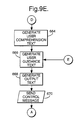
- step 622 If (step 622) any words were not recognised in steps 612, it will be necessary to generate an output text indicating missing words and accordingly the process of 204 proceeds to Figure 9f (discussed below). Otherwise, at this stage, the input text consists entirely of words found in the table 208, several of which may appear in several alternative versions where a spelling error was detected, so as to define, in such cases, a stored lattice of words branching before each such mis-spelling into two or more alternative word paths.
- the or each mis-spelling is stored prior to its replacement.
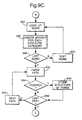
- each word is looked up in the word store 208 and each possible syntactic category for each word (e.g. noun, verb) is read out, to create for each word a list of alternative forms defining more branches in the lattice of words (step 626).
- the process is repeated (step 630) until the end of the input text is reached (step 628).
- the processor 204 selects a first path through the lattice of words thus created and reads each of the rules in the rule store 210 in turn, and compares the word path with each set of rules.
- the CPU 204 applies the correct form of each rule (e.g. 210a) which specifies the necessary agreements between all words making up the syntactic category of the rule, and then in succession the relaxed forms of the same rule. When one of the forms of the rule is met, the syntactic category which is the subject of the rule is deemed to be present, and a successful parse is recorded.
- each rule e.g. 210a
- the CPU 204 additionally stores information on any error encountered, by referring to the identity of the relaxed rule which successfully parsed the text; if the rule relaxes the gender agreement criterion, for example, a gender agreement error is recorded as being present between the words which were not in agreement.
- the parse may pass twice (or more times) through the input text, since some rules may accept as their input the syntactic structures generated in response to other rules (for example noun phrases and verb phrases).
- step 636 If, after the parsing processing has concluded, it has been possible to parse the complete input text (step 636), the semantic structure thus derived is stored (step 636) and the next word path is selected (step 640) until all word paths through the word lattice have been parsed (step 641).
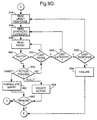
- step 644 the CPU 204 reads the output response buffer 220, notes its previous output, and looks up the entry in the response table 214 associated with it.
- the response first read from the list is that considered most likely to correspond to the last output.
- the CPU 204 accesses, for that response, the corresponding entry in the syntactic category table 218 (again, the first entry selected corresponds to that most likely to be found).
- step 646 the or each semantic structure derived above as a result of the parse of the input text is compared (steps 648-652) with the expected response syntactic category until a match is found.
- the CPU 204 first reviews the parses performed by the strict forms of grammatical rules and, where a complete parse is stored based on the strict rules (i.e. with no errors recorded as being present) this is selected. Where no such parse exists, the CPU 204 then selects a comparison the or each parse including recorded errors, based on the relaxed forms of the rules.
- the CPU 204 ascertains whether the semantic structure contains an action which could be performed.
- the semantic structure may correspond to:
- the input semantic structure needs to correspond to a question and needs to mention the type of item of which the price is being asked (in this embodiment price represents the only datum stored in relation to each transaction, but in general other properties could be questioned).
- the input statement needs to specify a kind of item to be sold and a quantity which is valid for that kind of goods (e.g. "apples” and "three kilos”). It may be phrased as a sentence in the target language ("I would like three kilos of apples") or as a question ("Could I have three kilos of apples?") or as a noun phrase ("Three kilos of apples").
- the input text could take a number of forms, ranging from a word to a sentence.
- step 652 the CPU 204 returns to step 652 and if no possible action is ultimately determined, (or if one or more words are not recognised in step 612 above) then the CPU 204 determines that the input text cannot be understood (step 656).
- the CPU 204 formulates (step 660) a query to elucidate the missing information for the performance of the action.
- the CPU 204 determines that the intended action is to purchase apples, accesses the record for apples in the transaction table 214; and notes that the quantity information is missing.
- the CPU 204 is arranged to derive output text, user guidance text and an indication of suitable images for display, for transmission to the terminal 10.
- the CPU 204 generates user guidance text (step 666) indicating to the user the words which have not been understood and prompting the user for replacements.
- step 668 output text (in the target language) is generated indicating that the grocer cannot understand the words concerned.
- step 656 the input text was not understood for other reasons, except that the output text and user guidance texts refer to general misunderstanding rather than specific words.
- the semantic structure corresponding to the action to be undertaken (for example indicating that three kilograms of apples are to be sold, or that a question is to be asked requesting the quantity of apples) is stored in the output buffer 220.
- step 662 the CPU 204 determines whether spelling or grammatical errors were entered. If so, then in step 664, the CPU 204 selects comprehension text consisting of one or both of the pre-stored target language phrases "Erreur d'orthographe! or "Erreur de grammaire!”) for transmission in the comprehension text field 508 and display in the comprehension text area 308.
- the CPU generates source language help text for transmission in the user guidance text field 514 and display in the user guidance area 314b.
- the text comprises, in the source language, the words "What the tutor thinks you did wrong is .... I think you made a spelling mistake, (stored input word) should be (word with which it was replaced in the successful parse)".
- the CPU determines which rule failed to be met, and thereby determines whether the error was an error of gender or number, or an error of subject/verb agreement.
- step 666 the CPU 204 selects the text to be output for the user guidance text areas 314a and 314c.
- the text for the area 314a is obtained by looking up the stored last output in the buffer 220 and accessing the text stored in the corresponding record 216 for that output.
- This text describes the response selected in step 658 or the query formulated in step 660; for example, where the action of supply of goods has been successfully completed (step 658) the text in field 314a will read (in the source language) "What the shop keeper has just said is .... The shop keeper has supplied your goods, and is waiting for you to give him a new instruction.”
- the text in the field 314c offers the user logical response options, and is obtained by looking up the text stored with the anticipated responses in the field within the table 216 which relates to the action or query just generated in step 658 or 660 and stored in the buffer 220.
- step 668 the output text field 506 to be sent in the message 500 and displayed in the output text area 306 is generated.
- the generation could take the form of simple selections of corresponding text, as in the above described text generation stages, but it is preferred in this embodiment to generate the output text in a freer format, since this is likely to lead to greater variability of the responses experienced by the user and lower memory requirements.
- the CPU 204 utilises the rules stored in the rule table 210 and the words stored in the lexicon 208 to generate text from the high level response generated in steps 658 or 660.
- the process is the reverse of the parsing process described above, but simpler since the process starts from a known and deterministic semantic structure rather than an unknown string of text.
- the first stage is to select from the lexicon table 208 a subset of words which could be used in the output text.
- the CPU 204 reviews the first term in the semantic structure generated in step 658 or 660.
- the CPU 204 looks up, in the lexical table 208, each word the record of which begins with that term.
- step 6683 the CPU 204 compares the record for the word with the output semantic structure. If all other terms required by the word are present in the output semantic structure, then in step 6684 the word is stored for possible use in text generation; if not, the next word beginning with that term is selected (step 6685).
- step 6686 When the last word is reached (step 6686), the next term is selected (step 6687) and the process is repeated until the last term is reached (step 6688), at which point all words which could contribute to the generation of the output text have been stored.
- step 6689 the CPU 204 accesses the rules table 210 and applies the rules relating to the stored terms of the output semantic structure to the words selected in the preceding steps to generate output text.
- the semantic structure includes a term specifying a query; a term specifying that the subject of the query is quantity; and a term specifying that the object of the query is that which an attempt was previously made to purchase; namely apples.
- the words selected in steps 6681-6888 consist of the word for "apples" in the target language; and the query word or phrase which specifies quantity. Application of the rules for construction of a query then leads to the generation of a grammatically correctly worded question.
- step 670 the CPU 204 transmits the control message 500 formed by the above steps to the terminal 10.
- the CPU 204 then returns to step 610 of Figure 9b to await the next received input text.
- the semantic processing performed on the host processor 20 may be written in the Prolog language, and the parsing may be performed by Prolog backtracking.
- terminal 10 and computer 20 could be located in different jurisdictions, or that parts of the invention could further be separated into different jurisdictions connected by appropriate communication means. Accordingly, the present invention extends to any and all inventive subcomponents and subcombinations of the above described embodiments located within the jurisdiction hereof, that fall within the scope of the appended claims.
- the terminal 10 may be arranged to accept input speech via a microphone and transmit the speech as a sound file to the computer 10, which is correspondingly arranged to apply a speech recognition algorithm to determine the words present in the input.
- the output text generated by the grocer may be synthesised speech, and accordingly in this embodiment the computer 10 comprises a text to speech synthesizer arranged to generate a sound file transmitted to the terminal 10.
- a suitable browser program other than the above described Netscape (TM) browser is employed.
- the transactions described above need not be those of a grocer shop.
- the scenario could, for example, involve a clothes shop (in which case the articles sold would comprise items of clothing) or a butcher's shop (in which the case the items sold would comprise cuts of meat).
- a clothes shop in which case the articles sold would comprise items of clothing
- a butcher's shop in which the case the items sold would comprise cuts of meat.
- other forms of training than foreign language training could be involved, in which case the scenarios could involve familiarity in the source language with scenarios such as emergency or military procedures.
Landscapes
- Engineering & Computer Science (AREA)
- Business, Economics & Management (AREA)
- Theoretical Computer Science (AREA)
- Physics & Mathematics (AREA)
- Educational Administration (AREA)
- Educational Technology (AREA)
- General Physics & Mathematics (AREA)
- Entrepreneurship & Innovation (AREA)
- Machine Translation (AREA)
Description
a
- the word itself, in the target language;
- the syntactic category of the word (e.g. whether it is a noun, a pronoun, a verb etc);
- the values for a number of standard features of the word (specifically, the gender of the word, for example);
- information (a symbol) relating to the meaning of the word; for example, where the word is a noun or verb, the symbol may be its translation in the source language or where the word is another part of speech such as an article, data indicating whether it is the definite or indefinite article and whether it is singular or plural.
Claims (19)
- Training apparatus for training a user to engage in transactions with another person whom the apparatus is arranged to simulate, the apparatus comprising:an input for receiving input dialogue from a user;a processor arranged to process the input dialogue and to generate output dialogue indicating when correct input dialogue has been recognised; and an output device for making the output dialogue available to the use,characterised in that the apparatus further comprises,a lexical store containing data relating to individual words of said input dialogue;a rule store containing rules specifying grammatically allowable relationships between words of said input dialogue;a transaction store containing data relating to allowable transactions between said user and said person;and that the processor is further arranged to recognise the occurrence therein of words contained in said lexical store in the relationships specified by the rules contained in said rule store in accordance with the data specified in the transaction store, and, in dependence upon said recognition, to generate said output dialogue.
- Apparatus according to claim 1, in which said rule store contains first rules comprising criteria specifying correct relationships between words of said word store, and, associated with said first rules, one or more second rules each corresponding to a said first rule but with one relationship criterion relaxed.
- Apparatus according to claim 2, wherein said relationship criteria correspond to agreements between words (for example, agreements of gender or number).
- Apparatus according to any preceding claim, in which the processor is arranged to generated output dialogue responsive to input dialogue, and to detect recognised errors in said input dialogue, and, on detection thereof, to indicate said recognised errors separately of said responsive output dialogue.
- Apparatus according to claim 4 when appended to claim 2 or claim 3, in which said processor is arranged to detect said recognised errors on detection of input dialogue containing words which meet said second, but not said first, rules.
- Apparatus according to any preceding claim which is arranged to provide language training, in which said rules, said words, and said output dialogue are in a training target language, and further arranged to generate user guidance dialogue in a source language for said user and different to said target language.
- Apparatus according to claim 6 in which the user guidance dialogue comprises guidance as to the meaning of the output dialogue.
- Apparatus according to claim 6 or claim 7 in which the user guidance dialogue comprises an explanation of any detected errors in the input dialogue.
- Apparatus according to any of claims 6 to 8, in which the user guidance dialogue indicates suitable further input dialogue which could be provided.
- Apparatus according to any preceding claim in which said input dialogue and/or said output dialogue comprise text.
- Apparatus according to any of claims 1 to 9 in which said input dialogue comprises speech, and further comprising a speech recogniser arranged to recognise the words of said speech.
- Apparatus according to any claims 1 to 9 in which said output dialogue comprises speech, said apparatus further comprising a speech synthesizer.
- Apparatus according to any preceding claim, further comprising a user interface arranged to accept said input dialogue and make available said output dialogue to the user.
- Apparatus according to claim 13, in which said user interface comprises a display and in which said output dialogue is displayed on said display.
- Apparatus according to claim 14 when appended to any of claims 6 to 9, in which said user guidance text is normally not displayed on said display, and further comprising an input device via which a user may selectively cause the display of said user guidance text on said display.
- Apparatus according to any of claims 13 to 15, in which said user interface is located remotely from said processor and is coupled thereto via a communications channel.
- Language training apparatus comprising a processor arranged to accept input dialogue in the target language, characterised in that said processor is further arranged to detect recognised errors in said input dialogue, to generate responsive output dialogue in the target language and, when a said recognised error is detected, to generate a separate indication of the presence of said recognised error.
- Apparatus according to claim 17 in which the separate indication of the recognised error is an indication in the target language.
- Apparatus according to claim 17 or claim 18 in which the separate indication comprises explanatory text in a source language of the user different to said target language.
Applications Claiming Priority (3)
| Application Number | Priority Date | Filing Date | Title |
|---|---|---|---|
| GBGB9619165.5A GB9619165D0 (en) | 1996-09-13 | 1996-09-13 | Training apparatus and method |
| GB9619165 | 1996-09-13 | ||
| PCT/GB1997/002438 WO1998011523A1 (en) | 1996-09-13 | 1997-09-11 | Training apparatus and method |
Publications (2)
| Publication Number | Publication Date |
|---|---|
| EP0925569A1 EP0925569A1 (en) | 1999-06-30 |
| EP0925569B1 true EP0925569B1 (en) | 2001-05-09 |
Family
ID=10799894
Family Applications (1)
| Application Number | Title | Priority Date | Filing Date |
|---|---|---|---|
| EP97939081A Expired - Lifetime EP0925569B1 (en) | 1996-09-13 | 1997-09-11 | Training apparatus and method |
Country Status (7)
| Country | Link |
|---|---|
| US (1) | US6853962B2 (en) |
| EP (1) | EP0925569B1 (en) |
| AU (1) | AU4130297A (en) |
| CA (1) | CA2266036A1 (en) |
| DE (1) | DE69704781T2 (en) |
| GB (1) | GB9619165D0 (en) |
| WO (1) | WO1998011523A1 (en) |
Families Citing this family (37)
| Publication number | Priority date | Publication date | Assignee | Title |
|---|---|---|---|---|
| WO2000014700A1 (en) * | 1998-09-04 | 2000-03-16 | N.V. De Wilde Cbt | Apparatus and method for personalized language exercise generation |
| AU6292799A (en) * | 1998-10-15 | 2000-05-01 | Luther Marvin Shannon | Method for computer-aided foreign language instruction |
| DE19852937A1 (en) * | 1998-11-17 | 2000-05-18 | Alcatel Sa | Process for the automatic monitoring of the achievement of learning goals by a computer |
| WO2000041157A1 (en) * | 1998-12-30 | 2000-07-13 | Eftim Cesmedziev | The elimination of a language barrier |
| US6234802B1 (en) * | 1999-01-26 | 2001-05-22 | Microsoft Corporation | Virtual challenge system and method for teaching a language |
| NL1011141C2 (en) * | 1999-01-27 | 2000-07-31 | Ronald Antony Willem Van Loon | Presentation of interactive learning material tailored to experience and associations of student using, inter alia, advertisements |
| US6296489B1 (en) * | 1999-06-23 | 2001-10-02 | Heuristix | System for sound file recording, analysis, and archiving via the internet for language training and other applications |
| US20010037386A1 (en) * | 2000-03-06 | 2001-11-01 | Susumu Takatsuka | Communication system, entertainment apparatus, recording medium, and program |
| JP3522644B2 (en) * | 2000-04-28 | 2004-04-26 | 株式会社講談社 | Display language conversion system and storage medium |
| US8200485B1 (en) * | 2000-08-29 | 2012-06-12 | A9.Com, Inc. | Voice interface and methods for improving recognition accuracy of voice search queries |
| JP2003029615A (en) * | 2001-07-13 | 2003-01-31 | Nova:Kk | Ranking system and ranking method |
| JP3980331B2 (en) * | 2001-11-20 | 2007-09-26 | 株式会社エビデンス | Multilingual conversation support system |
| JP2003173137A (en) * | 2001-11-29 | 2003-06-20 | Eigyotatsu Kofun Yugenkoshi | System and method for learning foreign language conversation utilizing peer-to-peer matching in online virtual community |
| US20030134257A1 (en) * | 2002-01-15 | 2003-07-17 | Ahmed Morsy | Interactive learning apparatus |
| CN1452102A (en) * | 2002-04-19 | 2003-10-29 | 英业达股份有限公司 | Incomplete prompting sentence-making system and method |
| US7292984B2 (en) * | 2002-04-22 | 2007-11-06 | Global Success Co., Ltd. | Method of producing voice data method of playing back voice data, method of playing back speeded-up voice data, storage medium, method of assisting memorization, method of assisting learning a language, and computer program |
| JP3895766B2 (en) * | 2004-07-21 | 2007-03-22 | 松下電器産業株式会社 | Speech synthesizer |
| CN1963887A (en) * | 2005-11-11 | 2007-05-16 | 王薇茜 | Self-help language study system comply to speech sense |
| US8170868B2 (en) * | 2006-03-14 | 2012-05-01 | Microsoft Corporation | Extracting lexical features for classifying native and non-native language usage style |
| US20080003551A1 (en) * | 2006-05-16 | 2008-01-03 | University Of Southern California | Teaching Language Through Interactive Translation |
| US8706471B2 (en) * | 2006-05-18 | 2014-04-22 | University Of Southern California | Communication system using mixed translating while in multilingual communication |
| US8032355B2 (en) * | 2006-05-22 | 2011-10-04 | University Of Southern California | Socially cognizant translation by detecting and transforming elements of politeness and respect |
| US8032356B2 (en) * | 2006-05-25 | 2011-10-04 | University Of Southern California | Spoken translation system using meta information strings |
| TWI291143B (en) * | 2006-08-04 | 2007-12-11 | Kuo-Ping Yang | Method of learning the second language through picture guiding |
| US8571463B2 (en) * | 2007-01-30 | 2013-10-29 | Breakthrough Performancetech, Llc | Systems and methods for computerized interactive skill training |
| BRPI0916749A2 (en) | 2008-07-28 | 2015-11-03 | Breakthrough Perfomancetech Llc | system and training methods set up to train computer-based users and computer-readable tangible media |
| DE102009021779A1 (en) * | 2008-08-04 | 2010-06-10 | Annette Kux-Bergsch | Method for representing words and sentences |
| KR20100036841A (en) * | 2008-09-30 | 2010-04-08 | 삼성전자주식회사 | Display apparatus and control method thereof |
| US8682640B2 (en) * | 2009-11-25 | 2014-03-25 | International Business Machines Corporation | Self-configuring language translation device |
| KR20140089863A (en) * | 2013-01-07 | 2014-07-16 | 삼성전자주식회사 | Display apparatus, Method for controlling display apparatus and Method for controlling display apparatus in Voice recognition system thereof |
| US9177553B1 (en) * | 2013-06-25 | 2015-11-03 | Google Inc. | Identifying underserved command inputs |
| CN103399906B (en) * | 2013-07-29 | 2015-07-29 | 百度在线网络技术(北京)有限公司 | The method and apparatus of candidate word is provided based on social relationships when inputting |
| US20150104763A1 (en) * | 2013-10-15 | 2015-04-16 | Apollo Group, Inc. | Teaching students to recognize and correct sentence fragments |
| US10769375B2 (en) | 2017-08-17 | 2020-09-08 | International Business Machines Corporation | Domain-specific lexical analysis |
| US10445423B2 (en) | 2017-08-17 | 2019-10-15 | International Business Machines Corporation | Domain-specific lexically-driven pre-parser |
| DE102017010113B3 (en) | 2017-11-02 | 2019-03-28 | Veronika Caspers | Language teaching means for representing a language in different tenses |
| WO2022122061A1 (en) * | 2020-12-09 | 2022-06-16 | VAN SPRANG, Lowie | Device for syntactic parsing of natural languages |
Family Cites Families (29)
| Publication number | Priority date | Publication date | Assignee | Title |
|---|---|---|---|---|
| JPH0782498B2 (en) * | 1985-01-14 | 1995-09-06 | 株式会社日立製作所 | Machine translation system |
| US6182062B1 (en) * | 1986-03-26 | 2001-01-30 | Hitachi, Ltd. | Knowledge based information retrieval system |
| CA2015410C (en) * | 1989-05-17 | 1996-04-02 | Chin H. Lee | Speech recognition employing key word modeling and non-key word modeling |
| US5477451A (en) * | 1991-07-25 | 1995-12-19 | International Business Machines Corp. | Method and system for natural language translation |
| WO1994020952A1 (en) * | 1993-03-12 | 1994-09-15 | Sri International | Method and apparatus for voice-interactive language instruction |
| US5528491A (en) * | 1992-08-31 | 1996-06-18 | Language Engineering Corporation | Apparatus and method for automated natural language translation |
| AU677605B2 (en) * | 1992-09-04 | 1997-05-01 | Caterpillar Inc. | Integrated authoring and translation system |
| US5393236A (en) * | 1992-09-25 | 1995-02-28 | Northeastern University | Interactive speech pronunciation apparatus and method |
| GB9223066D0 (en) * | 1992-11-04 | 1992-12-16 | Secr Defence | Children's speech training aid |
| US5636325A (en) * | 1992-11-13 | 1997-06-03 | International Business Machines Corporation | Speech synthesis and analysis of dialects |
| US5524195A (en) * | 1993-05-24 | 1996-06-04 | Sun Microsystems, Inc. | Graphical user interface for interactive television with an animated agent |
| US5652897A (en) * | 1993-05-24 | 1997-07-29 | Unisys Corporation | Robust language processor for segmenting and parsing-language containing multiple instructions |
| JPH0756933A (en) * | 1993-06-24 | 1995-03-03 | Xerox Corp | Method for retrieval of document |
| US5458494A (en) * | 1993-08-23 | 1995-10-17 | Edutech Research Labs, Ltd. | Remotely operable teaching system and method therefor |
| US5741136A (en) * | 1993-09-24 | 1998-04-21 | Readspeak, Inc. | Audio-visual work with a series of visual word symbols coordinated with oral word utterances |
| US5510981A (en) * | 1993-10-28 | 1996-04-23 | International Business Machines Corporation | Language translation apparatus and method using context-based translation models |
| US5810599A (en) * | 1994-01-26 | 1998-09-22 | E-Systems, Inc. | Interactive audio-visual foreign language skills maintenance system and method |
| US5748841A (en) * | 1994-02-25 | 1998-05-05 | Morin; Philippe | Supervised contextual language acquisition system |
| US5642519A (en) * | 1994-04-29 | 1997-06-24 | Sun Microsystems, Inc. | Speech interpreter with a unified grammer compiler |
| US5774860A (en) * | 1994-06-27 | 1998-06-30 | U S West Technologies, Inc. | Adaptive knowledge base of complex information through interactive voice dialogue |
| US5748973A (en) * | 1994-07-15 | 1998-05-05 | George Mason University | Advanced integrated requirements engineering system for CE-based requirements assessment |
| NL9401314A (en) * | 1994-08-15 | 1996-03-01 | Polydoc Nv | System and method for producing documents. |
| US5697789A (en) * | 1994-11-22 | 1997-12-16 | Softrade International, Inc. | Method and system for aiding foreign language instruction |
| US5717828A (en) * | 1995-03-15 | 1998-02-10 | Syracuse Language Systems | Speech recognition apparatus and method for learning |
| US5809493A (en) * | 1995-12-14 | 1998-09-15 | Lucent Technologies Inc. | Knowledge processing system employing confidence levels |
| US5730603A (en) * | 1996-05-16 | 1998-03-24 | Interactive Drama, Inc. | Audiovisual simulation system and method with dynamic intelligent prompts |
| US5797123A (en) * | 1996-10-01 | 1998-08-18 | Lucent Technologies Inc. | Method of key-phase detection and verification for flexible speech understanding |
| US5991712A (en) * | 1996-12-05 | 1999-11-23 | Sun Microsystems, Inc. | Method, apparatus, and product for automatic generation of lexical features for speech recognition systems |
| US6044347A (en) * | 1997-08-05 | 2000-03-28 | Lucent Technologies Inc. | Methods and apparatus object-oriented rule-based dialogue management |
-
1996
- 1996-09-13 GB GBGB9619165.5A patent/GB9619165D0/en active Pending
-
1997
- 1997-09-11 US US09/051,070 patent/US6853962B2/en not_active Expired - Fee Related
- 1997-09-11 CA CA002266036A patent/CA2266036A1/en not_active Abandoned
- 1997-09-11 EP EP97939081A patent/EP0925569B1/en not_active Expired - Lifetime
- 1997-09-11 AU AU41302/97A patent/AU4130297A/en not_active Abandoned
- 1997-09-11 DE DE69704781T patent/DE69704781T2/en not_active Expired - Fee Related
- 1997-09-11 WO PCT/GB1997/002438 patent/WO1998011523A1/en not_active Ceased
Also Published As
| Publication number | Publication date |
|---|---|
| GB9619165D0 (en) | 1996-10-23 |
| US6853962B2 (en) | 2005-02-08 |
| AU4130297A (en) | 1998-04-02 |
| DE69704781T2 (en) | 2001-11-29 |
| US20020059056A1 (en) | 2002-05-16 |
| CA2266036A1 (en) | 1998-03-19 |
| WO1998011523A1 (en) | 1998-03-19 |
| DE69704781D1 (en) | 2001-06-13 |
| EP0925569A1 (en) | 1999-06-30 |
Similar Documents
| Publication | Publication Date | Title |
|---|---|---|
| EP0925569B1 (en) | Training apparatus and method | |
| US7386453B2 (en) | Dynamically changing the levels of reading assistance and instruction to support the needs of different individuals | |
| US10720078B2 (en) | Systems and methods for extracting keywords in language learning | |
| Heift et al. | Web delivery of adaptive and interactive language tutoring | |
| US10319252B2 (en) | Language capability assessment and training apparatus and techniques | |
| US20070184427A1 (en) | System and method of virtual schooling | |
| WO2005017688A2 (en) | Method and apparatus for teaching | |
| Wang et al. | Automated generation of multiple-choice cloze questions for assessing English vocabulary using GPT-turbo 3.5 | |
| JP4827163B2 (en) | Test question distribution system | |
| US20070011160A1 (en) | Literacy automation software | |
| EP1118069A2 (en) | Apparatus and method for personalized language exercise generation | |
| JP2887660B2 (en) | Translation Correction Support Device | |
| Vandeventer Faltin | Syntactic error diagnosis in the context of computer assisted language learning | |
| Kempen | Language technology and language instruction: computational diagnosis of word level errors | |
| Fairon | A web-based system for automatic language skill assessment: Evaling | |
| JP2005134691A (en) | Automatic scoring system for education system via network | |
| US12411892B2 (en) | Information processing apparatus, information processing method, and recording medium | |
| Hou et al. | AI-assisted second-language teaching and learning in the Zone of Proximal Development | |
| König | Automating vocabulary tests and enriching online courses for language learners | |
| AU2007226806A1 (en) | System and method of virtual schooling | |
| JPH05188847A (en) | Computer aided education support system and its processing method | |
| Walter | Natural Language Processing: A Tutorial. Revision | |
| Poinsette et al. | Intelligent tutor for elementary Spanish | |
| Birdsong | The Development of Metalinguistic Ability | |
| Dickinson | The Computer and Natural Language (Ling 445/515) |
Legal Events
| Date | Code | Title | Description |
|---|---|---|---|
| PUAI | Public reference made under article 153(3) epc to a published international application that has entered the european phase |
Free format text: ORIGINAL CODE: 0009012 |
|
| 17P | Request for examination filed |
Effective date: 19990331 |
|
| AK | Designated contracting states |
Kind code of ref document: A1 Designated state(s): DE FR GB |
|
| GRAG | Despatch of communication of intention to grant |
Free format text: ORIGINAL CODE: EPIDOS AGRA |
|
| 17Q | First examination report despatched |
Effective date: 19991208 |
|
| GRAG | Despatch of communication of intention to grant |
Free format text: ORIGINAL CODE: EPIDOS AGRA |
|
| GRAG | Despatch of communication of intention to grant |
Free format text: ORIGINAL CODE: EPIDOS AGRA |
|
| GRAH | Despatch of communication of intention to grant a patent |
Free format text: ORIGINAL CODE: EPIDOS IGRA |
|
| GRAH | Despatch of communication of intention to grant a patent |
Free format text: ORIGINAL CODE: EPIDOS IGRA |
|
| GRAH | Despatch of communication of intention to grant a patent |
Free format text: ORIGINAL CODE: EPIDOS IGRA |
|
| GRAA | (expected) grant |
Free format text: ORIGINAL CODE: 0009210 |
|
| AK | Designated contracting states |
Kind code of ref document: B1 Designated state(s): DE FR GB |
|
| REF | Corresponds to: |
Ref document number: 69704781 Country of ref document: DE Date of ref document: 20010613 |
|
| ET | Fr: translation filed | ||
| REG | Reference to a national code |
Ref country code: GB Ref legal event code: IF02 |
|
| PLBE | No opposition filed within time limit |
Free format text: ORIGINAL CODE: 0009261 |
|
| STAA | Information on the status of an ep patent application or granted ep patent |
Free format text: STATUS: NO OPPOSITION FILED WITHIN TIME LIMIT |
|
| 26N | No opposition filed | ||
| PGFP | Annual fee paid to national office [announced via postgrant information from national office to epo] |
Ref country code: FR Payment date: 20080811 Year of fee payment: 12 |
|
| PGFP | Annual fee paid to national office [announced via postgrant information from national office to epo] |
Ref country code: GB Payment date: 20080822 Year of fee payment: 12 |
|
| PGFP | Annual fee paid to national office [announced via postgrant information from national office to epo] |
Ref country code: DE Payment date: 20080829 Year of fee payment: 12 |
|
| GBPC | Gb: european patent ceased through non-payment of renewal fee |
Effective date: 20090911 |
|
| REG | Reference to a national code |
Ref country code: FR Ref legal event code: ST Effective date: 20100531 |
|
| PG25 | Lapsed in a contracting state [announced via postgrant information from national office to epo] |
Ref country code: FR Free format text: LAPSE BECAUSE OF NON-PAYMENT OF DUE FEES Effective date: 20090930 Ref country code: DE Free format text: LAPSE BECAUSE OF NON-PAYMENT OF DUE FEES Effective date: 20100401 |
|
| PG25 | Lapsed in a contracting state [announced via postgrant information from national office to epo] |
Ref country code: GB Free format text: LAPSE BECAUSE OF NON-PAYMENT OF DUE FEES Effective date: 20090911 |