EP0923028A2 - Verfahren zur Objektheapanalyse zum Nachweis von Speicherverlusten und sonstigen Laufzeitinformationen - Google Patents
Verfahren zur Objektheapanalyse zum Nachweis von Speicherverlusten und sonstigen Laufzeitinformationen Download PDFInfo
- Publication number
- EP0923028A2 EP0923028A2 EP98309791A EP98309791A EP0923028A2 EP 0923028 A2 EP0923028 A2 EP 0923028A2 EP 98309791 A EP98309791 A EP 98309791A EP 98309791 A EP98309791 A EP 98309791A EP 0923028 A2 EP0923028 A2 EP 0923028A2
- Authority
- EP
- European Patent Office
- Prior art keywords
- objects
- information regarding
- time
- computer
- active
- Prior art date
- Legal status (The legal status is an assumption and is not a legal conclusion. Google has not performed a legal analysis and makes no representation as to the accuracy of the status listed.)
- Granted
Links
Images











Classifications
-
- G—PHYSICS
- G06—COMPUTING OR CALCULATING; COUNTING
- G06F—ELECTRIC DIGITAL DATA PROCESSING
- G06F11/00—Error detection; Error correction; Monitoring
- G06F11/36—Prevention of errors by analysis, debugging or testing of software
- G06F11/362—Debugging of software
- G06F11/366—Debugging of software using diagnostics
-
- G—PHYSICS
- G06—COMPUTING OR CALCULATING; COUNTING
- G06F—ELECTRIC DIGITAL DATA PROCESSING
- G06F11/00—Error detection; Error correction; Monitoring
- G06F11/36—Prevention of errors by analysis, debugging or testing of software
- G06F11/362—Debugging of software
- G06F11/3636—Debugging of software by tracing the execution of the program
Definitions
- the present invention relates to techniques for analyzing (e.g., optimization, locating errors or "debugging") software applications. More specifically, the invention relates to techniques for storing information about objects existing during run-time of an application on a JavaTM virtual machine for later analysis.
- JavaTM programming language is an object-oriented high level programming language developed by Sun Microsystems and designed to be portable enough to be executed on a wide range of computers ranging from small devices (e.g., pagers, cell phones and smart cards) up to supercomputers.
- Computer programs written in Java may be compiled into virtual machine instructions for execution by a Java virtual machine.
- the Java virtual machine is an interpreter that decodes and executes the virtual machine instructions.
- the virtual machine instructions for the Java virtual machine are bytecodes, meaning they include one or more bytes.
- the bytecodes are stored in a particular file format called a "class file" that includes bytecodes for methods of a class.
- the class file includes a symbol table as well as other ancillary information.
- a computer program embodied as Java bytecodes in one or more class files is platform independent.
- the computer program may be executed, unmodified, on any computer that is able to run an implementation of the Java virtual machine.
- the Java virtual machine is a software emulator of a "generic" computer that is a major factor in allowing computer programs for the Java virtual machine to be platform independent.
- the Java virtual machine is commonly implemented as a software interpreter.
- Conventional interpreters decode and execute the virtual machine instructions of an interpreted program one instruction at a time during execution, which is in contrast to compilers that decode source code into native machine instructions prior to execution so that decoding is not performed during execution.
- the Java virtual machine will be written in a programming language other than the Java programming language (e.g., the C++ programming language). Therefore, execution of a Java program may involve execution of functions written in multiple programming languages.
- the bytecodes themselves may call functions (e.g., system functions for input/output) that are not written in the Java programming language. It is therefore common for an executing Java program to entail the execution of functions that were written in multiple programming languages.
- Java programs may still benefit from analysis techniques that provide a window into the operation of the program during run-time. For example, the analysis may be utilized to optimize the program or locate bugs in the code. Accordingly, it would be desirable to provide innovative techniques of analyzing applications executing on a Java virtual machine. Additionally, it would be beneficial to provide a snapshot of objects that exist during run-time of an application so that, for example, memory leaks may be detected.
- embodiments of the present invention provide innovative techniques for analyzing object-oriented computer programs.
- a snapshot of the objects that are active (“active objects") at a specific point in time during execution may be stored.
- An analysis tool may be utilized to generate hypertext documents that allow a user to analyze the active objects.
- a user may be able to identify memory leaks by browsing through HyperText Markup Language (HTML) documents and determining that there are too many instances of a class than is expected. The user may then follow the references (or pointers) to the unnecessary instances in order to determine what is causing the memory leak.
- HTML HyperText Markup Language
- a user may compare two different snapshots of active objects at two different run-times so that, for example, new instances of a class may be easily identified.
- a computer-implemented method for analyzing the execution of an object-oriented program includes receiving input during run-time to store information regarding active objects.
- the system may begin scanning active objects beginning with objects that are a member of the root set of objects. Then, objects that referenced by the root set of objects may be identified, and objects that are referenced by these objects, and so on until all the active objects are identified.
- Information regarding the active objects may be stored (e.g., in a file).
- the active objects are instances of Java classes.
- a computer-implemented method for analyzing the execution of an object-oriented program includes retrieving information regarding active objects at a point in time in the execution.
- the information may be recursively scanned to identify objects that are members of the root set and maintain the hierarchy of the active objects.
- a hypertext document may be generated to present the information regarding the active objects to a user for analysis.
- a computer-implemented method for analyzing the execution of an object-oriented program includes storing information regarding active objects at two different run-times. The differences between the first and second run-times, e.g., new instances, may then be determined. A hypertext document may be generated to present the differences to a user for analysis.
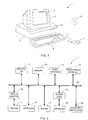
- FIG. 1 illustrates an example of a computer system that may be utilized to execute the software of an embodiment of the invention.
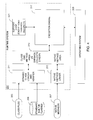
- FIG. 2 shows a system block diagram of the computer system of FIG. 1.
- FIG. 3 shows how a Java source code program is executed.
- FIG. 4 shows the components of an implementation of a Java runtime system.
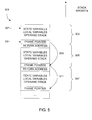
- FIG. 5 illustrates frames for functions that are stored on a Java stack.
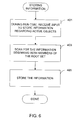
- FIG. 6 shows a process of storing information regarding active objects obtained during run-time.
- FIG. 7 shows a process of presenting information regarding active objects obtained during run-time.
- FIGS. 8A-8E show a hypertext document of all classes that had instances that were active when the snapshot was taken.
- FIG. 9 shows a hypertext document of a class that had instances that were active when the snapshot was taken.
- FIG. 10 shows a hypertext document of instances of a class excluding subclasses.
- FIG. 11 shows a hypertext document of instances of a class including subclasses.
- FIG. 12 shows a hypertext document of information regarding an active object.
- FIG. 13 shows a hypertext document of root set references to an active object that excludes weak references.
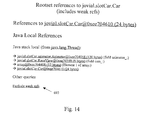
- FIG. 14 shows a hypertext document of root set references to an active object that includes weak references.
- FIGS. 15A and 15B show a hypertext document of all objects reachable from an active object.
- FIGS. 16A-16E show a hypertext document of all members of the root set.
- FIG. 17 shows a process of determining differences (e.g., new instances) between active objects at two different run-times.
- FIG. 18 shows a hypertext document of new instances of a class.
- FIG. 19 shows a hypertext document of new instances of a class including subclasses.
- FIGS. 20A-20B describe a data structure that may be utilized to store information regarding active objects.
- FIG. 21 shows an embodiment of a BOD server.
- Class - An object-oriented data type that defines objects that share the same characteristics, typically including both data and functions that operate on the data.
- Object (or instance) - An instantiated member of a class.
- Root set of objects - Objects that may be referenced directly without chaining through other objects.
- Active object - An object that has been instantiated and is a member of the root set or may be referenced by members of the root set either directly or indirectly.
- FIG. 1 illustrates an example of a computer system that may be used to execute the software of an embodiment of the invention.
- FIG. 1 shows a computer system 1 that includes a display 3, screen 5, cabinet 7, keyboard 9, and mouse 11. Mouse 11 may have one or more buttons for interacting with a graphical user interface.
- Cabinet 7 houses a CD-ROM drive 13, system memory and a hard drive (see FIG. 2) which may be utilized to store and retrieve software programs incorporating computer code that implements the invention, data for use with the invention, and the like.
- the CD-ROM 15 is shown as an exemplary computer readable storage medium, other computer readable storage media including floppy disk, tape, flash memory, system memory, and hard drive may be utilized.
- a data signal embodied in a carrier wave (e.g., in a network including the Internet) may be the computer readable storage medium.
- FIG. 2 shows a system block diagram of computer system 1 used to execute the software of an embodiment of the invention.
- computer system 1 includes monitor 3 and keyboard 9, and mouse 11.
- Computer system 1 further includes subsystems such as a central processor 51, system memory 53, fixed storage 55 (e.g., hard drive), removable storage 57 (e.g., CD-ROM drive), display adapter 59, sound card 61, speakers 63, and network interface 65.
- Other computer systems suitable for use with the invention may include additional or fewer subsystems.
- another computer system could include more than one processor 51 (i.e., a multi-processor system), or a cache memory.
- the system bus architecture of computer system 1 is represented by arrows 67. However, these arrows are illustrative of any interconnection scheme serving to link the subsystems. For example, a local bus could be utilized to connect the central processor to the system memory and display adapter.
- Computer system 1 shown in FIG. 2 is but an example of a computer system suitable for use with the invention. Other computer architectures having different configurations of subsystems may also be utilized.
- FIG. 3 shows a progression of a simple piece of Java source code through execution by an interpreter, the Java virtual machine.
- Java source code 101 includes the classic Hello World program written in Java.
- the source code is then input into a bytecode compiler 103 that compiles the source code into bytecodes.
- the bytecodes are virtual machine instructions as they will be executed by a software emulated computer. Typically, virtual machine instructions are generic (i.e., not designed for any specific microprocessor or computer architecture) but this is not required.
- the bytecode compiler outputs a Java class file 105 that includes the bytecodes for the Java program.
- the Java class file is input into a Java virtual machine 107.
- the Java virtual machine is an interpreter that decodes and executes the bytecodes in the Java class file.
- the Java virtual machine is an interpreter, but is commonly referred to as a virtual machine as it emulates a microprocessor or computer architecture in software (e.g., the microprocessor or computer architecture that may not exist in hardware).
- FIG. 4 shows the components of an implementation of a Java runtime system.
- Implementations of the Java virtual machine are known as Java runtime systems.
- a Java runtime system 201 may receive input of Java class files 203, standard built-in Java classes 205 and native methods 207 in order to execute a Java program.
- the standard built-in Java classes may be classes for objects such as threads, strings and the like.
- the native methods may be written in programming languages other than the Java programming language.
- the native methods are typically stored in dynamic link libraries (DLLs) or shared libraries.
- DLLs dynamic link libraries
- the Java runtime system may also interface with an operating system 209.
- input/output functions may be handled by the operating system, including providing the Java runtime system with interfaces to Java class files 203, standard built-in Java classes 205 and native methods 207.
- a dynamic class loader and verifier 211 loads Java class files 203 and standard built-in Java classes 205 via operating system 209 into a memory 213. Additionally, the dynamic class loader and verifier may verify the correctness of the bytecodes in the Java class files, reporting any errors that are detected.
- a native method linker 215 links in native methods 207 via operating system 209 into the Java runtime system and stores the native methods in memory 213.
- memory 213 may include a class and method area for the Java classes and a native method area for native methods.
- the class and method area in memory 213 may be stored in a garbage collected heap. As new objects are created, they are stored in the garbage collected heap.
- the Java runtime system not the application, is responsible for reclaiming memory in the garbage collected heap when space is no longer being utilized.
- Execution engine 217 At the heart of the Java runtime system shown in FIG. 4 is an execution engine 217.
- the execution engine carries out the instructions stored in memory 213 and may be implemented in software, hardware or a combination of the two.
- the execution engine supports object-oriented applications and conceptually, there are multiple execution engines running concurrently, one for each Java thread.
- Execution engine 217 may also utilize support code 221.
- the support code may provide functionality relating to exceptions, threads, security, and the like.
- FIG. 5 illustrates frames for Java functions that are stored on an execution stack.
- An execution stack 301 is shown having a frame 303 on the top of the execution stack and frames 305 and 307 stored below frame 303, respectively.
- a stack pointer SP points to the top of the execution stack while a frame pointer FP points to a frame pointer in the frame on the top of execution stack 301.
- Each frame is shown to include state variables, local variables and an operand stack for the function corresponding to the frame. Additionally, the last item stored in the frame is a frame pointer which points to the frame pointer in the frame below the current frame on the execution stack as shown by arrows 309 and 311. Although the execution stack that stores frames for native methods may look different, the basic principles are typically similar to the execution stack shown.
- FIG. 6 shows a process of storing information regarding active objects obtained during run-time of a Java program.
- the system receives input during run-time to store information regarding active objects.
- the user may depress certain keystrokes (e.g., ⁇ control> ⁇ ) to indicate to the system that information regarding active objects should be stored.
- the system then scans for the requested information beginning with members of the root set at a step 403.
- Objects that are members of the root set may be directly referenced.
- objects that are members of the root set may be referenced by static data members of a Java class, referenced locally by the Java or native execution stack, or referenced globally by native code (global Java Native Interface reference).
- the system may start with objects that are members of the root set and recursively follow references to any other objects referenced by members of the root set.
- all objects that are members of the root set or may be referenced directly or indirectly from the members of the root set will be identified (i.e., transitive closure of reachable objects from the root set). These objects are the active objects at this point in time.
- a mark and sweep algorithm is utilized similar to a garbage collection algorithm.
- the system stores information about the objects at a step 405.
- the information may include an id of the object, flags indicating if the object is a member of the root set and why (e.g., referenced by static data members of a Java class), a thread id if applicable, class id, data of the object, and the like.
- Information that is stored in preferred embodiments is shown in FIGS. 18A-18B.
- objects of the class Class store the structure of other objects (i.e., the structure of all objects of a specific class) so the information regarding the active objects may include objects that define the structure of other objects.
- the information regarding active objects may be stored in a file or any other computer storage (e.g., memory).
- the information may be stored when an active object is identified or subsequently all at one time. Therefore, the steps in the flowcharts are shown for illustration purposes and one of skill in the art would readily recognize that steps may be combined, deleted or inserted in other embodiments.
- FIG. 7 shows a process of presenting information regarding active objects obtained during run-time.
- the system retrieves stored information regarding active objects.
- the information may include not only information about the active objects themselves, but also their relationships to each other.
- the relationships between active objects may resemble a directed graph structure that begins with members of the root set and typically proceeds to other objects through various levels of indirection.
- active objects that are not members of the root set may be identified by following references from a member of the root set in a manner similar to step 403 of FIG. 6.
- the system receives a user query at a step 453.
- the query is specified as a Uniform Resource Locator (URL) into a HyperText Transport Protocol (HTTP) server.
- URL Uniform Resource Locator
- HTTP HyperText Transport Protocol
- An "All Classes Query” shows all of the classes that were present on the heap at run-time.
- the classes may be sorted by their fully-qualified class name and organized by package.
- An example of the results of this query is shown in FIGS. 8A-8E.
- a "Class Query” shows information about a desired class.
- the information may include the superclass, any subclasses, instance data members, and static data members.
- An example of the results of this query are shown in FIG. 9.
- An "Instances Query” shows all the instances of a specified class. An example of the results of this query are shown in FIG. 10.
- An "Object Query” shows information about an object that was on the heap at run-time. Most notably, one may navigate to objects that refer to this object, which may be utilized to track down errors. An example of the results of this query are shown in FIG. 12.
- a "Roots Query” provides the reference chains from to root set to a specific object.
- a chain will be provided from each member of the root set from which the object of interest is reachable.
- the chains are calculated by a depth-first search in order to reduce the length of the chains. Other search techniques may also be utilized.
- the "Roots Query” is very valuable query for tracking down memory leaks as it may be utilized to determine why an object is still active. An example of the results of this query are shown in FIG. 13.
- a "Reachable Objects Query” shows the transitive closure of all objects that are reachable from a specific object. This query may be useful for determining the total run-time footprint of an object in memory. An example of the results of this query are shown in FIG. (after FIG. 12).
- An "All Roots Query” shows all the members of the root set. An example of the results of this query are shown in FIG. ???.
- the system Unless the query indicates the user is finished at a step 455, the system generates a hypertext document or documents to present the information that fulfills the query at a step 455.
- a hypertext document includes links to other portions of the document or other documents altogether.
- the hypertext document(s) is/are written in the HyperText Markup Language (HTML).
- the system presents the hypertext document to a user for analysis. This may be done by creating an HTTP server for presenting an HTML document viewable with a Web browser.
- FIGS. 8A-8E show a hypertext document of all classes that had instances that were active when the snapshot was taken. As shown, the class are organized by package. The words that are underlined represent hypertext links to other HTML documents. As an example, a link 503 in FIG. 8D may be selected to see more details about the class jovial.slotCar.track.TrackSegment.
- FIG. 9 shows a hypertext document of a class that had instances that were active when the snapshot was taken, which is in this case the class jovial.slotCar.track.TrackSegment.
- the hypertext document shown in FIG. 9. information such as superclass, subclasses, instance data members, and static data members may be present with hypertext links to more detailed information.
- a user may request to see the active instances of the class by a link 553 that excludes subclasses or a link 575 that includes subclasses.
- link 553 will show all instances of the class jovial.slotCar.track.TrackSegment but will not include instances of subclasses of this class.
- Link 575 will show all instances of the class jovial.slotCar.Track.TrackSegment including instances of subclasses of this class (e.g., classes jovial.slotCar.track.CurvedTrackSegment and jovial.slotCar.track.StraightTrackSegment).
- FIG. 10 shows a hypertext document of instances of a class excluding subclasses.
- the hypertext document would not be the one presented when link 553 is selected, it nevertheless represents an example of how the hypertext document may appear.
- a link 607 will be described in more detail in reference to FIG. 12.
- FIG. 11 shows a hypertext document of instances of a class including subclasses. This figure shows what may be presented if a user clicked on link 575 of FIG. 9. Since instances of subclasses are shown, some of the instances may include more data or functions than jovial.slotCar.track.TrackSegment. However, all these instances will inherit from this parent class.
- FIG. 12 shows a hypertext document of information regarding an active object.
- the active object is the one that may be selected by link 607 in FIG. 10.
- the class, instance data members, references to the object, and reference chains from the root set may be presented.
- a link 635 would show reference chains from the root set excluding weak references and a link 675 would show reference chains from the root set including weak references.
- a weak reference is a reference that the garbage collector may remove if more memory or heap space is needed.
- a link 681 would show all objects that are reachable (or referenced) by this object.
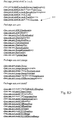
- FIG. 13 shows a hypertext document of root set references to an active object that excludes weak references
- FIG. 14 shows a hypertext document of root set references to an active object that includes weak references.
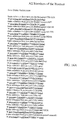
- FIGS. 15A and 15B show a hypertext document of all the objects that are reachable from an active object. This may be displayed when a user activates link 681 of FIG. 12. The objects may be identified by searching a directed graph of active objects.
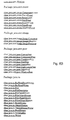
- FIGS. 16A-16E shows a hypertext document of all members of the root set that may be presented if link 705 is activated. As shown, the members of the root set may be organized according to how the members are referenced. For example, by Java static references, Java local references, native static references, and native local references.
- a link 715 in FIG. 16E allows a user to request all the classes that had active instances, such as FIGS. 8A-8E.
- hypertext document examples illustrate that a user may easily analyze the active objects in preferred embodiments.
- the invention is not limited to presentation by hypertext documents and one of skill in the art would realize other methods may be utilized.
- a memory leak generally refers to memory that has been allocated but is no longer being used by a computer program. In worst case scenarios, memory leaks result in memory allocation errors because there is not enough available memory. A memory leak may be due to programmer error when there is a reference from the root set to an object in the heap that is no longer needed.
- the user may count the number of instances of a class that should be active at a certain run-time. The user may then generate a snapshot of active objects according to an embodiment of the invention. The user may then analyze the stored information to determine how many instances were active. If there are more than expected, the user may follow the references from the errant active objects to determine what object is maintaining an erroneous reference.
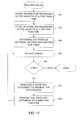
- FIG. 17 shows a process of determining differences (e.g., new instances) between active objects at two different run-times.
- the system stores information regarding active objects at a first run-time. Subsequently at a step 753, the system stores information regarding active objects at a second run-time.
- the system may be instructed to store the information by user input as described above.
- a user may instruct the system to determine differences between the first and second run-times at a step 755.
- the user may specify the files that store the snapshots at the two run-times.
- the system may then compare the snapshots and determine the differences between the snapshots, such as what new instances are present at the second run-time.
- the system receives a user query at a step 757.
- a "New Instances Query” may be available that shows only new instances in the second run-time.
- An instance may be considered “new” if it is in the first snapshot but there is no object with the same id in the second snapshot.
- An object's id may be a 32-bit integer (or handle) that is assigned by the virtual machine and uniquely identifies the object.
- handles may be re-used, snapshots that are taken within relatively short time intervals generally produce excellent results. An example of the results of this query are shown in FIG. 18.
- the system Unless the query indicates the user is finished at a step 759, the system generates a hypertext document or documents to present the information that fulfills the query (e.g., the differences between the two snapshots) at a step 761.
- the system may present the hypertext document to a user for analysis at a step 763, typically by creating an HTTP server for presenting an HTML document viewable with a Web browser.
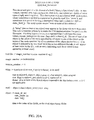
- FIG. 18 A hypertext document of new instances of a class is shown in FIG. 18. As shown, a link 801 allow a user to see more details about the class and links 803 allow a user to see more details about the new instances. In the hypertext document of FIG. 18, subclasses are not shown. FIG. 19 shows a hypertext document of new instances of a class that includes subclasses, of which there are no additional instances in this example.
- a user is not only able to take multiple snapshots of active objects during run-time, but is also able to have the system compare snapshots and present differences for further analysis.
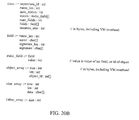
- FIGS. 20A-20B describe a data structure that may be utilized to store information regarding active objects in preferred embodiments.
- a binary object dump (BOD) file may be stored according to the structure specified in these figures. Although this structure may be utilized in preferred embodiments, other structures may be utilized without departing from the spirit of the invention.
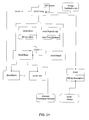
- FIG. 21 shows a model part of a BOD server.
- the server When the server is started, it reads a BOD file and builds the structure shown in memory.
- the top level of this structure is an instance of Snapshot (the objects shown are data members of Snapshot).
- Snapshot the objects shown are data members of Snapshot.
- the server treats the snapshot as a read-only representation of the contents of the heap.
Landscapes
- Engineering & Computer Science (AREA)
- Theoretical Computer Science (AREA)
- Computer Hardware Design (AREA)
- Quality & Reliability (AREA)
- Physics & Mathematics (AREA)
- General Engineering & Computer Science (AREA)
- General Physics & Mathematics (AREA)
- Stored Programmes (AREA)
- Debugging And Monitoring (AREA)
- Devices For Executing Special Programs (AREA)
Applications Claiming Priority (4)
| Application Number | Priority Date | Filing Date | Title |
|---|---|---|---|
| US60226P | 1997-09-26 | ||
| US6799397P | 1997-12-09 | 1997-12-09 | |
| US67993 | 1997-12-09 | ||
| US09/060,226 US6167535A (en) | 1997-12-09 | 1998-04-14 | Object heap analysis techniques for discovering memory leaks and other run-time information |
Publications (3)
| Publication Number | Publication Date |
|---|---|
| EP0923028A2 true EP0923028A2 (de) | 1999-06-16 |
| EP0923028A3 EP0923028A3 (de) | 2001-09-12 |
| EP0923028B1 EP0923028B1 (de) | 2003-04-09 |
Family
ID=26739710
Family Applications (1)
| Application Number | Title | Priority Date | Filing Date |
|---|---|---|---|
| EP98309791A Expired - Lifetime EP0923028B1 (de) | 1997-12-09 | 1998-11-30 | Verfahren zur Objekt-Heap-Analyse zum Nachweis von Speicherverlusten und sonstigen Laufzeitinformationen |
Country Status (5)
| Country | Link |
|---|---|
| US (1) | US6167535A (de) |
| EP (1) | EP0923028B1 (de) |
| JP (1) | JPH11312097A (de) |
| CN (1) | CN1149470C (de) |
| DE (1) | DE69813160T2 (de) |
Families Citing this family (66)
| Publication number | Priority date | Publication date | Assignee | Title |
|---|---|---|---|---|
| US6308270B1 (en) * | 1998-02-13 | 2001-10-23 | Schlumberger Technologies, Inc. | Validating and certifying execution of a software program with a smart card |
| US6694346B1 (en) * | 1999-04-30 | 2004-02-17 | International Business Machines Corporation | Long running, reusable, extendible, virtual machine |
| US6738757B1 (en) * | 1999-06-02 | 2004-05-18 | Workwise, Inc. | System for database monitoring and agent implementation |
| US6742123B1 (en) * | 1999-09-10 | 2004-05-25 | Sun Microsystems, Inc. | Apparatus and methods for preventing denial of service attacks |
| US6839894B1 (en) | 1999-11-19 | 2005-01-04 | Oracle International Corporation | Method and apparatus for debugging a software program using dynamic debug patches and copy on write views |
| US6745344B1 (en) * | 1999-11-19 | 2004-06-01 | Oracle International Corporation | Debug and data collection mechanism utilizing a difference in database state by using consecutive snapshots of the database state |
| US6671825B1 (en) * | 1999-11-19 | 2003-12-30 | Oracle International Corporation | Method and apparatus for debugging a software program |
| US6817011B1 (en) * | 1999-12-14 | 2004-11-09 | International Business Machines Corporation | Memory allocation profiling to discover high frequency allocators |
| EP1237080A1 (de) * | 2001-03-02 | 2002-09-04 | Siemens Aktiengesellschaft | Überprüfung eines Computersystems auf gesperrte Speicherbereiche nach einem Abbruch eines Prozesses |
| US7203756B2 (en) * | 2001-04-27 | 2007-04-10 | International Business Machines Corporation | Mechanism to cache references to Java RMI remote objects implementing the unreferenced interface |
| US7873872B1 (en) * | 2001-07-10 | 2011-01-18 | Versata Development Group, Inc. | System and method for remotely debugging application programs |
| US7096388B2 (en) * | 2001-08-08 | 2006-08-22 | Avaya Technology Corp. | Fault tolerance software system with periodic external self-test failure detection |
| US20030196061A1 (en) * | 2002-04-16 | 2003-10-16 | Hideya Kawahara | System and method for secure execution of multiple applications using a single GC heap |
| GB0213218D0 (en) * | 2002-06-08 | 2002-07-17 | Koninkl Philips Electronics Nv | Operation of java virtual machine |
| US7870431B2 (en) * | 2002-10-18 | 2011-01-11 | Computer Associates Think, Inc. | Transaction tracer |
| US7234080B2 (en) * | 2002-10-18 | 2007-06-19 | Computer Associates Think, Inc. | Locating potential sources of memory leaks |
| US7293263B2 (en) * | 2002-12-20 | 2007-11-06 | Bea Systems, Inc. | System and method for memory leak detection in a virtual machine environment |
| US7730449B2 (en) * | 2003-03-19 | 2010-06-01 | Toshiba Corporation | Auto reference counting pointer for C++ objects with ability to re-cast and lookup from a free pointer |
| GB2399897B (en) * | 2003-03-26 | 2006-02-01 | Advanced Risc Mach Ltd | Memory recycling in computer systems |
| US20040243379A1 (en) * | 2003-05-29 | 2004-12-02 | Dominic Paulraj | Ideal machine simulator with infinite resources to predict processor design performance |
| CN1327352C (zh) * | 2003-09-23 | 2007-07-18 | 中兴通讯股份有限公司 | 一种实现嵌入式实时系统内存泄漏检测和定位的方法 |
| US7761852B2 (en) * | 2003-11-26 | 2010-07-20 | International Business Machines Corporation | Fast detection of the origins of memory leaks when using pooled resources |
| US7496615B2 (en) * | 2004-03-11 | 2009-02-24 | International Business Machines Corporation | Method, system and article for detecting critical memory leaks causing out-of-memory errors in Java software |
| JP4512402B2 (ja) * | 2004-04-12 | 2010-07-28 | 株式会社日立製作所 | メモリリークの原因箇所検出方法、及びその実行プログラム |
| US7162605B2 (en) * | 2004-06-24 | 2007-01-09 | International Business Machines Corporation | Method and system for obtaining memory usage information for a heap when a peak live count is updated |
| US7444484B2 (en) * | 2004-06-24 | 2008-10-28 | International Business Machines Corporation | Method and system for determining memory usage of a heap |
| US20060085156A1 (en) * | 2004-10-18 | 2006-04-20 | Kolawa Adam K | Method and system for predicting memory leaks from unit testing |
| US7434206B2 (en) * | 2005-03-10 | 2008-10-07 | Hewlett-Packard Development Company, L.P. | Identifying memory leaks in computer systems |
| US20060212852A1 (en) * | 2005-03-16 | 2006-09-21 | Jinwoo Hwang | Methods, systems and computer program products for detecting memory leaks |
| US7870170B2 (en) * | 2005-05-03 | 2011-01-11 | International Business Machines Corporation | Method and apparatus for determining leaks in a Java heap |
| JP2006350876A (ja) | 2005-06-20 | 2006-12-28 | Hitachi Ltd | ヒープダンプ取得方法 |
| GB0515405D0 (en) * | 2005-07-27 | 2005-08-31 | Ibm | Memory leak detection |
| US20070250820A1 (en) * | 2006-04-20 | 2007-10-25 | Microsoft Corporation | Instruction level execution analysis for debugging software |
| DE102006029138A1 (de) * | 2006-06-22 | 2007-12-27 | Dspace Digital Signal Processing And Control Engineering Gmbh | Verfahren und Computerprogrammprodukt zur Detektion von Speicherlecks |
| US7908591B1 (en) * | 2006-07-17 | 2011-03-15 | The Mathworks, Inc. | Memory profiling |
| US7743280B2 (en) * | 2007-02-27 | 2010-06-22 | International Business Machines Corporation | Method and system for analyzing memory leaks occurring in java virtual machine data storage heaps |
| JP4585534B2 (ja) * | 2007-03-01 | 2010-11-24 | 富士通株式会社 | システム監視プログラム、システム監視方法およびシステム監視装置 |
| CN101615143B (zh) * | 2008-06-27 | 2013-04-17 | 国际商业机器公司 | 用于内存泄漏诊断的方法和装置 |
| US8032568B2 (en) * | 2008-06-30 | 2011-10-04 | International Business Machines Corporation | Method for performing memory leak analysis inside a virtual machine |
| US8438532B2 (en) | 2011-04-19 | 2013-05-07 | Sonatype, Inc. | Method and system for scoring a software artifact for a user |
| US8612936B2 (en) | 2011-06-02 | 2013-12-17 | Sonatype, Inc. | System and method for recommending software artifacts |
| US9286182B2 (en) * | 2011-06-17 | 2016-03-15 | Microsoft Technology Licensing, Llc | Virtual machine snapshotting and analysis |
| US8473894B2 (en) | 2011-09-13 | 2013-06-25 | Sonatype, Inc. | Method and system for monitoring metadata related to software artifacts |
| US8627270B2 (en) | 2011-09-13 | 2014-01-07 | Sonatype, Inc. | Method and system for monitoring a software artifact |
| US9141378B2 (en) | 2011-09-15 | 2015-09-22 | Sonatype, Inc. | Method and system for evaluating a software artifact based on issue tracking and source control information |
| US8656343B2 (en) | 2012-02-09 | 2014-02-18 | Sonatype, Inc. | System and method of providing real-time updates related to in-use artifacts in a software development environment |
| US8924437B2 (en) * | 2012-03-13 | 2014-12-30 | Microsoft Corporation | Memory usage data collection and analysis for dynamic objects |
| US8825689B2 (en) | 2012-05-21 | 2014-09-02 | Sonatype, Inc. | Method and system for matching unknown software component to known software component |
| US9141408B2 (en) * | 2012-07-20 | 2015-09-22 | Sonatype, Inc. | Method and system for correcting portion of software application |
| US8938722B2 (en) | 2012-10-17 | 2015-01-20 | International Business Machines Corporation | Identifying errors using context based class names |
| US9135263B2 (en) | 2013-01-18 | 2015-09-15 | Sonatype, Inc. | Method and system that routes requests for electronic files |
| US9495395B2 (en) | 2013-04-11 | 2016-11-15 | Oracle International Corporation | Predictive diagnosis of SLA violations in cloud services by seasonal trending and forecasting with thread intensity analytics |
| US10740358B2 (en) | 2013-04-11 | 2020-08-11 | Oracle International Corporation | Knowledge-intensive data processing system |
| CN104679741B (zh) * | 2013-11-26 | 2021-03-12 | 腾讯科技(深圳)有限公司 | 一种获取实例占用内存的方法及装置 |
| KR101801581B1 (ko) * | 2013-12-19 | 2017-11-27 | 인텔 코포레이션 | 머신 학습 스냅샷 평가를 포함하는 보호 시스템 |
| CN105630662B (zh) * | 2014-10-28 | 2019-07-19 | 腾讯科技(深圳)有限公司 | 内存检测方法和装置 |
| US10248561B2 (en) | 2015-06-18 | 2019-04-02 | Oracle International Corporation | Stateless detection of out-of-memory events in virtual machines |
| US9720823B2 (en) | 2015-06-18 | 2017-08-01 | Oracle International Corporation | Free memory trending for detecting out-of-memory events in virtual machines |
| CN105260294A (zh) * | 2015-11-16 | 2016-01-20 | 曙光信息产业(北京)有限公司 | 一种应用程序占用内存的监控方法及装置 |
| US10534706B1 (en) * | 2015-12-15 | 2020-01-14 | Workday, Inc. | Automated garbage collection architecture |
| US10467123B2 (en) | 2016-05-09 | 2019-11-05 | Oracle International Corporation | Compression techniques for encoding stack trace information |
| US10146661B2 (en) * | 2016-06-10 | 2018-12-04 | Apple Inc. | Memory debugging tool for displaying objects within a navigable graph |
| US9971594B2 (en) | 2016-08-16 | 2018-05-15 | Sonatype, Inc. | Method and system for authoritative name analysis of true origin of a file |
| CN107967205B (zh) * | 2016-10-18 | 2020-12-29 | 阿里巴巴(中国)有限公司 | 一种内存分析方法、装置、系统以及计算设备 |
| CN111274082B (zh) * | 2020-01-13 | 2023-04-18 | 北京字节跳动网络技术有限公司 | 一种内存性能的分析方法、装置、介质和电子设备 |
| US12076668B2 (en) | 2021-07-22 | 2024-09-03 | Pall Corporation | Filter with electrically-conductive wrap |
Family Cites Families (3)
| Publication number | Priority date | Publication date | Assignee | Title |
|---|---|---|---|---|
| US5592600A (en) * | 1994-09-27 | 1997-01-07 | International Business Machines Corporation | Animated display showing execution of object-oriented programs |
| US5740440A (en) * | 1995-01-06 | 1998-04-14 | Objective Software Technology | Dynamic object visualization and browsing system |
| US5606661A (en) * | 1995-06-07 | 1997-02-25 | Tandem Computers Incorporated | Apparatus and method for scan-based testing in an object-oriented programming environment |
-
1998
- 1998-04-14 US US09/060,226 patent/US6167535A/en not_active Expired - Lifetime
- 1998-11-30 EP EP98309791A patent/EP0923028B1/de not_active Expired - Lifetime
- 1998-11-30 DE DE69813160T patent/DE69813160T2/de not_active Expired - Lifetime
- 1998-12-09 JP JP10350354A patent/JPH11312097A/ja active Pending
- 1998-12-09 CN CNB981227953A patent/CN1149470C/zh not_active Expired - Fee Related
Also Published As
| Publication number | Publication date |
|---|---|
| EP0923028A3 (de) | 2001-09-12 |
| DE69813160D1 (de) | 2003-05-15 |
| DE69813160T2 (de) | 2003-10-16 |
| EP0923028B1 (de) | 2003-04-09 |
| CN1221912A (zh) | 1999-07-07 |
| CN1149470C (zh) | 2004-05-12 |
| JPH11312097A (ja) | 1999-11-09 |
| US6167535A (en) | 2000-12-26 |
Similar Documents
| Publication | Publication Date | Title |
|---|---|---|
| US6167535A (en) | Object heap analysis techniques for discovering memory leaks and other run-time information | |
| US6381737B1 (en) | Automatic adapter/stub generator | |
| EP0664027B1 (de) | Programmodellierungssystem. | |
| US5956479A (en) | Demand based generation of symbolic information | |
| US6704927B1 (en) | Static binding of dynamically-dispatched calls in the presence of dynamic linking and loading | |
| US5784553A (en) | Method and system for generating a computer program test suite using dynamic symbolic execution of JAVA programs | |
| US6651080B1 (en) | Techniques for implementing pluggable virtual machines | |
| JP3354425B2 (ja) | 実行可能ファイルの実行効率を改善するための方法及びシステム | |
| US7496615B2 (en) | Method, system and article for detecting critical memory leaks causing out-of-memory errors in Java software | |
| US20060064677A1 (en) | Debugger and method for debugging computer programs across multiple programming languages | |
| Deng et al. | Efficient and formal generalized symbolic execution | |
| US7565364B1 (en) | Annotation processor discovery | |
| US8776010B2 (en) | Data type provider for a data store | |
| US6654951B1 (en) | Removal of unreachable methods in object-oriented applications based on program interface analysis | |
| EP0950947B1 (de) | Statische Bindung von dynamisch abgesendeten Anrufen in Anwesenheit von dynamischer Verknüpfung und Ladung | |
| US20210036944A1 (en) | Ranking service implementations for a service interface | |
| US11106522B1 (en) | Process memory resurrection: running code in-process after death | |
| Lance et al. | Bytecode-based Java program analysis | |
| US7272827B2 (en) | Statically detecting externally referenced interfaces of a program | |
| Henderson et al. | The Mercury User’s Guide | |
| Thiele | A comparative study of bytecode in Scala 2 and 3 and its impact on parsing algorithms | |
| Troost et al. | Implementation Details of Integrating Dynamic Data-Flow Coverage Analysis with Symbolic Execution | |
| Lösch | Instrumentation of Java program code for control flow analysis | |
| Allen | NextGen Developer’s Guide | |
| Korn et al. | Reverse engineering of java applets |
Legal Events
| Date | Code | Title | Description |
|---|---|---|---|
| PUAI | Public reference made under article 153(3) epc to a published international application that has entered the european phase |
Free format text: ORIGINAL CODE: 0009012 |
|
| 17P | Request for examination filed |
Effective date: 19981223 |
|
| AK | Designated contracting states |
Kind code of ref document: A2 Designated state(s): AT BE CH CY DE DK ES FI FR GB GR IE IT LI LU MC NL PT SE Kind code of ref document: A2 Designated state(s): DE FR GB |
|
| AX | Request for extension of the european patent |
Free format text: AL;LT;LV;MK;RO;SI |
|
| PUAL | Search report despatched |
Free format text: ORIGINAL CODE: 0009013 |
|
| AK | Designated contracting states |
Kind code of ref document: A3 Designated state(s): AT BE CH CY DE DK ES FI FR GB GR IE IT LI LU MC NL PT SE |
|
| AX | Request for extension of the european patent |
Free format text: AL;LT;LV;MK;RO;SI |
|
| 17Q | First examination report despatched |
Effective date: 20011130 |
|
| GRAG | Despatch of communication of intention to grant |
Free format text: ORIGINAL CODE: EPIDOS AGRA |
|
| AKX | Designation fees paid |
Free format text: DE FR GB |
|
| RTI1 | Title (correction) |
Free format text: OBJECT HEAP ANALYSIS TECHNIQUES FOR DISCOVERING MEMORY LEAKS AND OTHER RUN-TIME INFORMATION |
|
| RTI1 | Title (correction) |
Free format text: OBJECT HEAP ANALYSIS TECHNIQUES FOR DISCOVERING MEMORY LEAKS AND OTHER RUN-TIME INFORMATION |
|
| GRAG | Despatch of communication of intention to grant |
Free format text: ORIGINAL CODE: EPIDOS AGRA |
|
| GRAH | Despatch of communication of intention to grant a patent |
Free format text: ORIGINAL CODE: EPIDOS IGRA |
|
| GRAH | Despatch of communication of intention to grant a patent |
Free format text: ORIGINAL CODE: EPIDOS IGRA |
|
| GRAA | (expected) grant |
Free format text: ORIGINAL CODE: 0009210 |
|
| AK | Designated contracting states |
Designated state(s): DE FR GB |
|
| REG | Reference to a national code |
Ref country code: GB Ref legal event code: FG4D |
|
| ET | Fr: translation filed | ||
| PLBE | No opposition filed within time limit |
Free format text: ORIGINAL CODE: 0009261 |
|
| STAA | Information on the status of an ep patent application or granted ep patent |
Free format text: STATUS: NO OPPOSITION FILED WITHIN TIME LIMIT |
|
| 26N | No opposition filed |
Effective date: 20040112 |
|
| PGFP | Annual fee paid to national office [announced via postgrant information from national office to epo] |
Ref country code: FR Payment date: 20061108 Year of fee payment: 9 |
|
| REG | Reference to a national code |
Ref country code: FR Ref legal event code: ST Effective date: 20080930 |
|
| PG25 | Lapsed in a contracting state [announced via postgrant information from national office to epo] |
Ref country code: FR Free format text: LAPSE BECAUSE OF NON-PAYMENT OF DUE FEES Effective date: 20071130 |
|
| PGFP | Annual fee paid to national office [announced via postgrant information from national office to epo] |
Ref country code: DE Payment date: 20171121 Year of fee payment: 20 |
|
| PGFP | Annual fee paid to national office [announced via postgrant information from national office to epo] |
Ref country code: GB Payment date: 20171129 Year of fee payment: 20 |
|
| REG | Reference to a national code |
Ref country code: DE Ref legal event code: R071 Ref document number: 69813160 Country of ref document: DE |
|
| REG | Reference to a national code |
Ref country code: GB Ref legal event code: PE20 Expiry date: 20181129 |
|
| PG25 | Lapsed in a contracting state [announced via postgrant information from national office to epo] |
Ref country code: GB Free format text: LAPSE BECAUSE OF EXPIRATION OF PROTECTION Effective date: 20181129 |