EP0914392B1 - Luminescing inks and use of such inks in coding and other marking operations - Google Patents
Luminescing inks and use of such inks in coding and other marking operations Download PDFInfo
- Publication number
- EP0914392B1 EP0914392B1 EP97931964A EP97931964A EP0914392B1 EP 0914392 B1 EP0914392 B1 EP 0914392B1 EP 97931964 A EP97931964 A EP 97931964A EP 97931964 A EP97931964 A EP 97931964A EP 0914392 B1 EP0914392 B1 EP 0914392B1
- Authority
- EP
- European Patent Office
- Prior art keywords
- ink composition
- phosphorescence
- moisture
- activator
- naphthalene
- Prior art date
- Legal status (The legal status is an assumption and is not a legal conclusion. Google has not performed a legal analysis and makes no representation as to the accuracy of the status listed.)
- Expired - Lifetime
Links
- 239000000976 ink Substances 0.000 title description 50
- 239000000203 mixture Substances 0.000 claims abstract description 39
- 239000012190 activator Substances 0.000 claims description 40
- 239000011230 binding agent Substances 0.000 claims description 16
- 239000000758 substrate Substances 0.000 claims description 12
- 229920002125 Sokalan® Polymers 0.000 claims description 11
- 239000000126 substance Substances 0.000 claims description 11
- 239000004584 polyacrylic acid Substances 0.000 claims description 10
- XLYOFNOQVPJJNP-UHFFFAOYSA-N water Substances O XLYOFNOQVPJJNP-UHFFFAOYSA-N 0.000 claims description 10
- 239000000975 dye Substances 0.000 claims description 9
- 238000000034 method Methods 0.000 claims description 9
- 230000008569 process Effects 0.000 claims description 9
- 239000002904 solvent Substances 0.000 claims description 8
- AZRQQTKALKINGP-UHFFFAOYSA-N dinaphthalen-1-ylmethanone Chemical class C1=CC=C2C(C(C=3C4=CC=CC=C4C=CC=3)=O)=CC=CC2=C1 AZRQQTKALKINGP-UHFFFAOYSA-N 0.000 claims description 5
- YDZMBBUGMWYVNW-UHFFFAOYSA-N naphthalen-1-yl-(4-phenylphenyl)methanone Chemical class C=1C=CC2=CC=CC=C2C=1C(=O)C(C=C1)=CC=C1C1=CC=CC=C1 YDZMBBUGMWYVNW-UHFFFAOYSA-N 0.000 claims description 5
- MRQCWYJFXPJHGP-UHFFFAOYSA-N 4-(naphthalene-1-carbonyl)benzoic acid Chemical class C1=CC(C(=O)O)=CC=C1C(=O)C1=CC=CC2=CC=CC=C12 MRQCWYJFXPJHGP-UHFFFAOYSA-N 0.000 claims description 4
- NGSWKAQJJWESNS-UHFFFAOYSA-N 4-coumaric acid Chemical compound OC(=O)C=CC1=CC=C(O)C=C1 NGSWKAQJJWESNS-UHFFFAOYSA-N 0.000 claims description 4
- HSHNITRMYYLLCV-UHFFFAOYSA-N 4-methylumbelliferone Chemical compound C1=C(O)C=CC2=C1OC(=O)C=C2C HSHNITRMYYLLCV-UHFFFAOYSA-N 0.000 claims description 4
- 230000001476 alcoholic effect Effects 0.000 claims description 4
- 239000003795 chemical substances by application Substances 0.000 claims description 4
- 230000005284 excitation Effects 0.000 claims description 4
- RODXRVNMMDRFIK-UHFFFAOYSA-N scopoletin Chemical compound C1=CC(=O)OC2=C1C=C(OC)C(O)=C2 RODXRVNMMDRFIK-UHFFFAOYSA-N 0.000 claims description 4
- 229920001169 thermoplastic Polymers 0.000 claims description 4
- VIJYEGDOKCKUOL-UHFFFAOYSA-N 9-phenylcarbazole Chemical compound C1=CC=CC=C1N1C2=CC=CC=C2C2=CC=CC=C21 VIJYEGDOKCKUOL-UHFFFAOYSA-N 0.000 claims description 3
- CUFNKYGDVFVPHO-UHFFFAOYSA-N Azulene Natural products C1=CC=CC2=CC=CC2=C1 CUFNKYGDVFVPHO-UHFFFAOYSA-N 0.000 claims description 3
- 238000005282 brightening Methods 0.000 claims description 3
- 239000007850 fluorescent dye Substances 0.000 claims description 3
- CXAYOCVHDCXPAI-UHFFFAOYSA-N naphthalen-1-yl(phenyl)methanone Chemical class C=1C=CC2=CC=CC=C2C=1C(=O)C1=CC=CC=C1 CXAYOCVHDCXPAI-UHFFFAOYSA-N 0.000 claims description 3
- 230000003287 optical effect Effects 0.000 claims description 3
- 239000004416 thermosoftening plastic Substances 0.000 claims description 3
- QBZIEGUIYWGBMY-FUZXWUMZSA-N (5Z)-5-hydroxyimino-6-oxonaphthalene-2-sulfonic acid iron Chemical compound [Fe].O\N=C1/C(=O)C=Cc2cc(ccc12)S(O)(=O)=O.O\N=C1/C(=O)C=Cc2cc(ccc12)S(O)(=O)=O.O\N=C1/C(=O)C=Cc2cc(ccc12)S(O)(=O)=O QBZIEGUIYWGBMY-FUZXWUMZSA-N 0.000 claims description 2
- POVRXYLNLVVNGW-UHFFFAOYSA-N 2,3-Diphenyl-1-indanone Chemical compound C12=CC=CC=C2C(=O)C(C=2C=CC=CC=2)=C1C1=CC=CC=C1 POVRXYLNLVVNGW-UHFFFAOYSA-N 0.000 claims description 2
- KZMRYBLIGYQPPP-UHFFFAOYSA-M 3-[[4-[(2-chlorophenyl)-[4-[ethyl-[(3-sulfonatophenyl)methyl]azaniumylidene]cyclohexa-2,5-dien-1-ylidene]methyl]-n-ethylanilino]methyl]benzenesulfonate Chemical compound C=1C=C(C(=C2C=CC(C=C2)=[N+](CC)CC=2C=C(C=CC=2)S([O-])(=O)=O)C=2C(=CC=CC=2)Cl)C=CC=1N(CC)CC1=CC=CC(S([O-])(=O)=O)=C1 KZMRYBLIGYQPPP-UHFFFAOYSA-M 0.000 claims description 2
- LSKWDEYBJACPBB-UHFFFAOYSA-N 5-(aziridin-1-ylsulfonyl)-n,n-dimethylnaphthalen-1-amine Chemical compound C1=CC=C2C(N(C)C)=CC=CC2=C1S(=O)(=O)N1CC1 LSKWDEYBJACPBB-UHFFFAOYSA-N 0.000 claims description 2
- CNGYZEMWVAWWOB-VAWYXSNFSA-N 5-[[4-anilino-6-[bis(2-hydroxyethyl)amino]-1,3,5-triazin-2-yl]amino]-2-[(e)-2-[4-[[4-anilino-6-[bis(2-hydroxyethyl)amino]-1,3,5-triazin-2-yl]amino]-2-sulfophenyl]ethenyl]benzenesulfonic acid Chemical compound N=1C(NC=2C=C(C(\C=C\C=3C(=CC(NC=4N=C(N=C(NC=5C=CC=CC=5)N=4)N(CCO)CCO)=CC=3)S(O)(=O)=O)=CC=2)S(O)(=O)=O)=NC(N(CCO)CCO)=NC=1NC1=CC=CC=C1 CNGYZEMWVAWWOB-VAWYXSNFSA-N 0.000 claims description 2
- CJIJXIFQYOPWTF-UHFFFAOYSA-N 7-hydroxycoumarin Natural products O1C(=O)C=CC2=CC(O)=CC=C21 CJIJXIFQYOPWTF-UHFFFAOYSA-N 0.000 claims description 2
- XEHFSYYAGCUKEN-UHFFFAOYSA-N Dihydroscopoletin Natural products C1CC(=O)OC2=C1C=C(OC)C(O)=C2 XEHFSYYAGCUKEN-UHFFFAOYSA-N 0.000 claims description 2
- 108010043121 Green Fluorescent Proteins Proteins 0.000 claims description 2
- XKTMIJODWOEBKO-UHFFFAOYSA-M Guinee green B Chemical compound [Na+].C=1C=C(C(=C2C=CC(C=C2)=[N+](CC)CC=2C=C(C=CC=2)S([O-])(=O)=O)C=2C=CC=CC=2)C=CC=1N(CC)CC1=CC=CC(S([O-])(=O)=O)=C1 XKTMIJODWOEBKO-UHFFFAOYSA-M 0.000 claims description 2
- BULLHRADHZGONG-UHFFFAOYSA-N [cyclopenta-2,4-dien-1-ylidene(phenyl)methyl]benzene Chemical compound C1=CC=CC1=C(C=1C=CC=CC=1)C1=CC=CC=C1 BULLHRADHZGONG-UHFFFAOYSA-N 0.000 claims description 2
- DGOBMKYRQHEFGQ-UHFFFAOYSA-L acid green 5 Chemical compound [Na+].[Na+].C=1C=C(C(=C2C=CC(C=C2)=[N+](CC)CC=2C=C(C=CC=2)S([O-])(=O)=O)C=2C=CC(=CC=2)S([O-])(=O)=O)C=CC=1N(CC)CC1=CC=CC(S([O-])(=O)=O)=C1 DGOBMKYRQHEFGQ-UHFFFAOYSA-L 0.000 claims description 2
- 239000004305 biphenyl Substances 0.000 claims description 2
- 235000010290 biphenyl Nutrition 0.000 claims description 2
- 125000006267 biphenyl group Chemical group 0.000 claims description 2
- AFYCEAFSNDLKSX-UHFFFAOYSA-N coumarin 460 Chemical compound CC1=CC(=O)OC2=CC(N(CC)CC)=CC=C21 AFYCEAFSNDLKSX-UHFFFAOYSA-N 0.000 claims description 2
- GNBHRKFJIUUOQI-UHFFFAOYSA-N fluorescein Chemical compound O1C(=O)C2=CC=CC=C2C21C1=CC=C(O)C=C1OC1=CC(O)=CC=C21 GNBHRKFJIUUOQI-UHFFFAOYSA-N 0.000 claims description 2
- SXQCTESRRZBPHJ-UHFFFAOYSA-M lissamine rhodamine Chemical compound [Na+].C=12C=CC(=[N+](CC)CC)C=C2OC2=CC(N(CC)CC)=CC=C2C=1C1=CC=C(S([O-])(=O)=O)C=C1S([O-])(=O)=O SXQCTESRRZBPHJ-UHFFFAOYSA-M 0.000 claims description 2
- KKSDGJDHHZEWEP-UHFFFAOYSA-N m-hydroxycinnamic acid Natural products OC(=O)C=CC1=CC=CC(O)=C1 KKSDGJDHHZEWEP-UHFFFAOYSA-N 0.000 claims description 2
- PMOWTIHVNWZYFI-UHFFFAOYSA-N o-Coumaric acid Natural products OC(=O)C=CC1=CC=CC=C1O PMOWTIHVNWZYFI-UHFFFAOYSA-N 0.000 claims description 2
- ZUOUZKKEUPVFJK-UHFFFAOYSA-N phenylbenzene Natural products C1=CC=CC=C1C1=CC=CC=C1 ZUOUZKKEUPVFJK-UHFFFAOYSA-N 0.000 claims description 2
- 238000009877 rendering Methods 0.000 claims description 2
- PYWVYCXTNDRMGF-UHFFFAOYSA-N rhodamine B Chemical class [Cl-].C=12C=CC(=[N+](CC)CC)C=C2OC2=CC(N(CC)CC)=CC=C2C=1C1=CC=CC=C1C(O)=O PYWVYCXTNDRMGF-UHFFFAOYSA-N 0.000 claims description 2
- FWYIBGHGBOVPNL-UHFFFAOYSA-N scopoletin Natural products COC=1C=C2C=CC(OC2=C(C1)O)=O FWYIBGHGBOVPNL-UHFFFAOYSA-N 0.000 claims description 2
- 238000001228 spectrum Methods 0.000 claims description 2
- -1 2,2'-dihydroxy benzophenone 2,4-dihydroxy benzophenone dibenzothiophene Chemical compound 0.000 claims 2
- 230000004913 activation Effects 0.000 abstract description 4
- 230000000694 effects Effects 0.000 abstract description 2
- 239000000463 material Substances 0.000 description 12
- NIXOWILDQLNWCW-UHFFFAOYSA-N acrylic acid group Chemical group C(C=C)(=O)O NIXOWILDQLNWCW-UHFFFAOYSA-N 0.000 description 8
- 229920005989 resin Polymers 0.000 description 8
- 239000011347 resin Substances 0.000 description 8
- 229920000877 Melamine resin Polymers 0.000 description 7
- 239000000243 solution Substances 0.000 description 7
- 238000009472 formulation Methods 0.000 description 5
- 239000011159 matrix material Substances 0.000 description 5
- 230000008901 benefit Effects 0.000 description 4
- 150000001875 compounds Chemical class 0.000 description 4
- 238000001035 drying Methods 0.000 description 4
- 229920000642 polymer Polymers 0.000 description 4
- 238000012360 testing method Methods 0.000 description 4
- DZNJMLVCIZGWSC-UHFFFAOYSA-N 3',6'-bis(diethylamino)spiro[2-benzofuran-3,9'-xanthene]-1-one Chemical compound O1C(=O)C2=CC=CC=C2C21C1=CC=C(N(CC)CC)C=C1OC1=CC(N(CC)CC)=CC=C21 DZNJMLVCIZGWSC-UHFFFAOYSA-N 0.000 description 3
- WSFSSNUMVMOOMR-UHFFFAOYSA-N Formaldehyde Chemical compound O=C WSFSSNUMVMOOMR-UHFFFAOYSA-N 0.000 description 3
- OKKJLVBELUTLKV-UHFFFAOYSA-N Methanol Chemical compound OC OKKJLVBELUTLKV-UHFFFAOYSA-N 0.000 description 3
- YXFVVABEGXRONW-UHFFFAOYSA-N Toluene Chemical compound CC1=CC=CC=C1 YXFVVABEGXRONW-UHFFFAOYSA-N 0.000 description 3
- 238000001514 detection method Methods 0.000 description 3
- 239000007787 solid Substances 0.000 description 3
- 239000004094 surface-active agent Substances 0.000 description 3
- QFMDFTQOJHFVNR-UHFFFAOYSA-N 1-[2,2-dichloro-1-(4-ethylphenyl)ethyl]-4-ethylbenzene Chemical compound C1=CC(CC)=CC=C1C(C(Cl)Cl)C1=CC=C(CC)C=C1 QFMDFTQOJHFVNR-UHFFFAOYSA-N 0.000 description 2
- OAICVXFJPJFONN-UHFFFAOYSA-N Phosphorus Chemical compound [P] OAICVXFJPJFONN-UHFFFAOYSA-N 0.000 description 2
- 229920003171 Poly (ethylene oxide) Polymers 0.000 description 2
- 239000004793 Polystyrene Substances 0.000 description 2
- 239000000654 additive Substances 0.000 description 2
- 150000001298 alcohols Chemical class 0.000 description 2
- 239000002518 antifoaming agent Substances 0.000 description 2
- 238000006243 chemical reaction Methods 0.000 description 2
- 238000009833 condensation Methods 0.000 description 2
- 230000005494 condensation Effects 0.000 description 2
- IYYZUPMFVPLQIF-UHFFFAOYSA-N dibenzothiophene Chemical compound C1=CC=C2C3=CC=CC=C3SC2=C1 IYYZUPMFVPLQIF-UHFFFAOYSA-N 0.000 description 2
- 239000012153 distilled water Substances 0.000 description 2
- 238000005516 engineering process Methods 0.000 description 2
- 230000007613 environmental effect Effects 0.000 description 2
- IVJISJACKSSFGE-UHFFFAOYSA-N formaldehyde;1,3,5-triazine-2,4,6-triamine Chemical compound O=C.NC1=NC(N)=NC(N)=N1 IVJISJACKSSFGE-UHFFFAOYSA-N 0.000 description 2
- 230000001965 increasing effect Effects 0.000 description 2
- JDSHMPZPIAZGSV-UHFFFAOYSA-N melamine Chemical compound NC1=NC(N)=NC(N)=N1 JDSHMPZPIAZGSV-UHFFFAOYSA-N 0.000 description 2
- WSFSSNUMVMOOMR-NJFSPNSNSA-N methanone Chemical compound O=[14CH2] WSFSSNUMVMOOMR-NJFSPNSNSA-N 0.000 description 2
- 239000003960 organic solvent Substances 0.000 description 2
- 229920002223 polystyrene Polymers 0.000 description 2
- 230000004044 response Effects 0.000 description 2
- GUAFOGOEJLSQBT-UHFFFAOYSA-N scoparone Chemical compound C1=CC(=O)OC2=C1C=C(OC)C(OC)=C2 GUAFOGOEJLSQBT-UHFFFAOYSA-N 0.000 description 2
- 229920001187 thermosetting polymer Polymers 0.000 description 2
- JDAKNHYIEKOZLC-UHFFFAOYSA-N (2-aminonaphthalen-1-yl)-phenylmethanone Chemical compound NC1=CC=C2C=CC=CC2=C1C(=O)C1=CC=CC=C1 JDAKNHYIEKOZLC-UHFFFAOYSA-N 0.000 description 1
- MAOBFOXLCJIFLV-UHFFFAOYSA-N (2-aminophenyl)-phenylmethanone Chemical compound NC1=CC=CC=C1C(=O)C1=CC=CC=C1 MAOBFOXLCJIFLV-UHFFFAOYSA-N 0.000 description 1
- UGSYXNDKIWVIRW-UHFFFAOYSA-N (4-aminophenyl)-naphthalen-1-ylmethanone Chemical class C1=CC(N)=CC=C1C(=O)C1=CC=CC2=CC=CC=C12 UGSYXNDKIWVIRW-UHFFFAOYSA-N 0.000 description 1
- XZUMSVDKXOELLE-UHFFFAOYSA-N (4-chlorophenyl)-naphthalen-1-ylmethanone Chemical compound C1=CC(Cl)=CC=C1C(=O)C1=CC=CC2=CC=CC=C12 XZUMSVDKXOELLE-UHFFFAOYSA-N 0.000 description 1
- VPURGMWFNZFHNK-UHFFFAOYSA-N (4-hydroxyphenyl)-naphthalen-1-ylmethanone Chemical compound C1=CC(O)=CC=C1C(=O)C1=CC=CC2=CC=CC=C12 VPURGMWFNZFHNK-UHFFFAOYSA-N 0.000 description 1
- MJKZGSBXCWNUHV-UHFFFAOYSA-N (6-hydroxynaphthalen-2-yl)-phenylmethanone Chemical compound C1=CC2=CC(O)=CC=C2C=C1C(=O)C1=CC=CC=C1 MJKZGSBXCWNUHV-UHFFFAOYSA-N 0.000 description 1
- OWRCNXZUPFZXOS-UHFFFAOYSA-N 1,3-diphenylguanidine Chemical compound C=1C=CC=CC=1NC(=N)NC1=CC=CC=C1 OWRCNXZUPFZXOS-UHFFFAOYSA-N 0.000 description 1
- NKPAEWGNNNGLJZ-UHFFFAOYSA-N 1-(4-phenylbenzoyl)-2H-naphthalene-1-sulfonic acid Chemical compound C1C=CC2=CC=CC=C2C1(C(=O)C3=CC=C(C=C3)C4=CC=CC=C4)S(=O)(=O)O NKPAEWGNNNGLJZ-UHFFFAOYSA-N 0.000 description 1
- FBTOLQFRGURPJH-UHFFFAOYSA-N 1-phenyl-9h-carbazole Chemical compound C1=CC=CC=C1C1=CC=CC2=C1NC1=CC=CC=C12 FBTOLQFRGURPJH-UHFFFAOYSA-N 0.000 description 1
- YIYBRXKMQFDHSM-UHFFFAOYSA-N 2,2'-Dihydroxybenzophenone Chemical compound OC1=CC=CC=C1C(=O)C1=CC=CC=C1O YIYBRXKMQFDHSM-UHFFFAOYSA-N 0.000 description 1
- ZXDDPOHVAMWLBH-UHFFFAOYSA-N 2,4-Dihydroxybenzophenone Chemical compound OC1=CC(O)=CC=C1C(=O)C1=CC=CC=C1 ZXDDPOHVAMWLBH-UHFFFAOYSA-N 0.000 description 1
- SMZOUWXMTYCWNB-UHFFFAOYSA-N 2-(2-methoxy-5-methylphenyl)ethanamine Chemical compound COC1=CC=C(C)C=C1CCN SMZOUWXMTYCWNB-UHFFFAOYSA-N 0.000 description 1
- BOBATFKNMFWLFG-UHFFFAOYSA-N 2-amino-2-cyano-n-methylacetamide Chemical compound CNC(=O)C(N)C#N BOBATFKNMFWLFG-UHFFFAOYSA-N 0.000 description 1
- WTZQJWITZKKMAB-UHFFFAOYSA-N 9h-carbazole-1-sulfonic acid Chemical compound C12=CC=CC=C2NC2=C1C=CC=C2S(=O)(=O)O WTZQJWITZKKMAB-UHFFFAOYSA-N 0.000 description 1
- 206010007269 Carcinogenicity Diseases 0.000 description 1
- 102100040066 Interleukin-27 receptor subunit alpha Human genes 0.000 description 1
- 101710089672 Interleukin-27 receptor subunit alpha Proteins 0.000 description 1
- CERQOIWHTDAKMF-UHFFFAOYSA-N Methacrylic acid Chemical compound CC(=C)C(O)=O CERQOIWHTDAKMF-UHFFFAOYSA-N 0.000 description 1
- 239000004952 Polyamide Substances 0.000 description 1
- 206010040880 Skin irritation Diseases 0.000 description 1
- XSQUKJJJFZCRTK-UHFFFAOYSA-N Urea Chemical compound NC(N)=O XSQUKJJJFZCRTK-UHFFFAOYSA-N 0.000 description 1
- ASSKVGFMXSHBSW-UHFFFAOYSA-N [4-hydroxy-3-(2-hydroxyphenyl)phenyl]-phenylmethanone Chemical compound OC1=CC=CC=C1C1=CC(C(=O)C=2C=CC=CC=2)=CC=C1O ASSKVGFMXSHBSW-UHFFFAOYSA-N 0.000 description 1
- 238000010521 absorption reaction Methods 0.000 description 1
- 230000001154 acute effect Effects 0.000 description 1
- 230000000996 additive effect Effects 0.000 description 1
- 230000032683 aging Effects 0.000 description 1
- 125000003277 amino group Chemical group 0.000 description 1
- 238000004458 analytical method Methods 0.000 description 1
- 239000007864 aqueous solution Substances 0.000 description 1
- 239000003125 aqueous solvent Substances 0.000 description 1
- 239000003849 aromatic solvent Substances 0.000 description 1
- JXLHNMVSKXFWAO-UHFFFAOYSA-N azane;7-fluoro-2,1,3-benzoxadiazole-4-sulfonic acid Chemical compound N.OS(=O)(=O)C1=CC=C(F)C2=NON=C12 JXLHNMVSKXFWAO-UHFFFAOYSA-N 0.000 description 1
- 230000009286 beneficial effect Effects 0.000 description 1
- 125000003236 benzoyl group Chemical group [H]C1=C([H])C([H])=C(C([H])=C1[H])C(*)=O 0.000 description 1
- 230000015572 biosynthetic process Effects 0.000 description 1
- 239000004202 carbamide Substances 0.000 description 1
- 230000007670 carcinogenicity Effects 0.000 description 1
- 231100000260 carcinogenicity Toxicity 0.000 description 1
- 230000000052 comparative effect Effects 0.000 description 1
- 239000007859 condensation product Substances 0.000 description 1
- 230000003247 decreasing effect Effects 0.000 description 1
- 230000007812 deficiency Effects 0.000 description 1
- 239000000839 emulsion Substances 0.000 description 1
- 230000002708 enhancing effect Effects 0.000 description 1
- 238000002474 experimental method Methods 0.000 description 1
- 150000002576 ketones Chemical class 0.000 description 1
- 230000002045 lasting effect Effects 0.000 description 1
- 239000007791 liquid phase Substances 0.000 description 1
- 238000004020 luminiscence type Methods 0.000 description 1
- 238000005259 measurement Methods 0.000 description 1
- SJNXJRVDSTZUFB-UHFFFAOYSA-N naphthalen-2-yl(phenyl)methanone Chemical compound C=1C=C2C=CC=CC2=CC=1C(=O)C1=CC=CC=C1 SJNXJRVDSTZUFB-UHFFFAOYSA-N 0.000 description 1
- YZMHQCWXYHARLS-UHFFFAOYSA-N naphthalene-1,2-disulfonic acid Chemical compound C1=CC=CC2=C(S(O)(=O)=O)C(S(=O)(=O)O)=CC=C21 YZMHQCWXYHARLS-UHFFFAOYSA-N 0.000 description 1
- 239000012071 phase Substances 0.000 description 1
- 238000000013 phosphorescence detection Methods 0.000 description 1
- 230000000704 physical effect Effects 0.000 description 1
- 239000000049 pigment Substances 0.000 description 1
- 229920000058 polyacrylate Polymers 0.000 description 1
- 229920002647 polyamide Polymers 0.000 description 1
- 229920006316 polyvinylpyrrolidine Polymers 0.000 description 1
- 239000002244 precipitate Substances 0.000 description 1
- 238000001556 precipitation Methods 0.000 description 1
- 239000002243 precursor Substances 0.000 description 1
- 125000002924 primary amino group Chemical group [H]N([H])* 0.000 description 1
- 230000002035 prolonged effect Effects 0.000 description 1
- 230000000171 quenching effect Effects 0.000 description 1
- 230000005855 radiation Effects 0.000 description 1
- 230000035484 reaction time Effects 0.000 description 1
- 238000011160 research Methods 0.000 description 1
- 230000035945 sensitivity Effects 0.000 description 1
- 230000036556 skin irritation Effects 0.000 description 1
- 231100000475 skin irritation Toxicity 0.000 description 1
- 229910052708 sodium Inorganic materials 0.000 description 1
- 239000011734 sodium Substances 0.000 description 1
- 239000007858 starting material Substances 0.000 description 1
- 230000000638 stimulation Effects 0.000 description 1
- 238000010998 test method Methods 0.000 description 1
- 239000012815 thermoplastic material Substances 0.000 description 1
- 239000004634 thermosetting polymer Substances 0.000 description 1
- KKSDGJDHHZEWEP-SNAWJCMRSA-N trans-3-coumaric acid Chemical compound OC(=O)\C=C\C1=CC=CC(O)=C1 KKSDGJDHHZEWEP-SNAWJCMRSA-N 0.000 description 1
- 238000012546 transfer Methods 0.000 description 1
- 238000009281 ultraviolet germicidal irradiation Methods 0.000 description 1
- ORHBXUUXSCNDEV-UHFFFAOYSA-N umbelliferone Chemical compound C1=CC(=O)OC2=CC(O)=CC=C21 ORHBXUUXSCNDEV-UHFFFAOYSA-N 0.000 description 1
Images

Classifications
-
- C—CHEMISTRY; METALLURGY
- C09—DYES; PAINTS; POLISHES; NATURAL RESINS; ADHESIVES; COMPOSITIONS NOT OTHERWISE PROVIDED FOR; APPLICATIONS OF MATERIALS NOT OTHERWISE PROVIDED FOR
- C09D—COATING COMPOSITIONS, e.g. PAINTS, VARNISHES OR LACQUERS; FILLING PASTES; CHEMICAL PAINT OR INK REMOVERS; INKS; CORRECTING FLUIDS; WOODSTAINS; PASTES OR SOLIDS FOR COLOURING OR PRINTING; USE OF MATERIALS THEREFOR
- C09D11/00—Inks
- C09D11/50—Sympathetic, colour changing or similar inks
Definitions
- This invention relates to luminescing inks and use of such inks in coding and other marking operations.
- the invention relates to the use in such inks of phosphors comprising molecules of at least one phosphorescent activator.
- Organic phosphors comprising molecules of at least one phosphorescent activator are known for example from British Patent Specifications Nos. 870,504, 1,494,102 and 1,494,103, as well as EP-A-0325825. These organic phosphors contain molecules of at least one phosphorescent activator held within a matrix of a condensation resin that does not itself absorb ultraviolet or visible radiation at the excitation and emission frequencies of the phosphorescent activators.
- the resin itself is formed by condensation of a precursor thereof in the presence of phosphorescent activators so that the molecules of the latter are trapped and isolated from one another in the matrix.
- the resin is preferably a condensation product of formaldehyde, generally with an amine group-containing compound, especially urea or melamine.
- the phosphor is a solid generally insoluble in water and organic solvents and, for use in a phosphorescent printing ink, may be ground finely and dispersed in a suitable solvent, for example toluene.
- phosphorescent activators for use as aforesaid include carbazole sulphonic acid, naphthalene disulphonic acid, diphenylguanidine and 2-amino benzophenone.
- carbazole sulphonic acid naphthalene disulphonic acid
- diphenylguanidine 2-amino benzophenone.
- phosphorescent activators according to EP-A-0325825 which are optionally sulphonated substituted (preferably amino) aryl-aryl-ketones.
- the most effective yellow/green phosphorescent activator according to EP-A-0325825, is sulphonated 1-(4-aminobenzoyl)-naphthalene, which, combined with the melamine-formaldehyde resin in solution at a level of about 30% solids, gives an ink which can be read on a very wide range of letter envelopes, including manilla and white.
- the dynamic range of the signal strength between white and manilla was also a problem, signal differences of as much as a factor of 10 often occurring.
- thermosetting polymer as binder in a reactive ink
- binders as aforementioned
- further phosphorescent materials made up from mixtures of appropriate activator and polymer were investigated.
- a wide range of polymers was used for this purpose, including polystyrene, polyethylene oxide and acrylic polymers based inter alia on acrylic and/or methacrylic acid, using a variety of solvents therefor.
- an ink composition comprising, in solution in an aqueous and/or alcoholic medium, a substance which fluoresces but does not phosphoresce when the ink composition has been applied to a substrate, moisture is present and the substrate is being exposed to ultraviolet light; a substance which phosphoresces and fluoresces when the ink composition has been applied to a substrate, moisture is substantially absent and the substrate has been exposed to ultraviolet light, and a binder which is soluble or emulsifiable in said medium.
- a process for rendering at least part of a moisture-absorbing surface luminescent both when the surface is moist and when it holds no moisture, as well as at intermediate levels of moisture content which comprises applying to at least part of said surface an ink composition comprising, in an aqueous and/or alcoholic medium, both a fluorescence activator which fluoresces but does not phosphoresce when the surface is exposed to ultraviolet light and moisture is present and a phosphorescence activator which phosphoresces and fluoresces when applied to a surface and exposed to ultraviolet light, moisture being substantially absent, such that exposure of the surface to ultraviolet light will lead to emission of detectable phosphorescence, fluorescence and combined phosphorescence and fluorescence, the extent of phosphorescence depending upon the amount of moisture at the surface.
- a fluorescent substance is a light-emitting substance having an afterglow having a duration of the order of nanoseconds while phosphorescent materials will have an afterglow lasting up to 500 milliseconds or more.
- fluorescent materials will be detected while illuminated with an ultraviolet source say of 365nm wavelength with moisture being present and, as a result of the simultaneous use of a lamp of 310nm output, red phosphorescent materials will glow when the amount of moisture present has dropped sufficiently and will provide an afterglow with the ultraviolet light extinguished.
- an ultraviolet source say of 365nm wavelength
- red phosphorescent materials will glow when the amount of moisture present has dropped sufficiently and will provide an afterglow with the ultraviolet light extinguished.
- Such use of lamps of two wavelengths will obviously require two detectors for the respective emissions.
- the present invention makes use of combinations of substances which, at certain wavelengths, will exhibit phosphorescence and also fluorescence, the brightness of phosphorescence depending on the excitation wavelength and the amount of water present.
- results may be less than satisfactory, as may occur when the moisture content of envelopes being handled is too high. This may well be the case when sorting newly arrived mail.
- phosphorescent activator alone, the intensity, initially, of the emissions may be insignificant.
- this invention proposes to compensate for this deficiency in the ink by the inclusion of a second luminescencing substance, specifically a fluorescent material.
- a second luminescencing substance specifically a fluorescent material.
- Separate detection systems may be employed to detect phosphorescent and fluorescent light emissions. Such scanners respond to the brightest single emission and are sensitive to red wavelengths, inter alia, the benefit of which will be apparent hereinafter.
- the phosphorescent activators most effective when used in a thermoplastic binder/solvent system are the sulphonated derivatives of, in particular, 1-(4-phenylbenzoyl)-naphthalene, 1-naphthoylnaphthalene, 1-(4-carboxybenzoyl)-naphthalene and 1-benzoylnaphthalene.
- the latter two compounds may also be used to some advantage in unsulphonated form.
- Two other compounds that have shown potential were phenyl carbazole and benzoyl biphenol.
- thermoplastic binders are used in preferred practice embodying this invention.
- Polyacrylic acids are available which are soluble in water and methanol-based solvents up to molecular weights of the order of 6000.
- binder materials Of particular interest as binder materials have been found to be polyacrylic acid of molecular weight 2000-3000.
- an ink embodying this invention should have the physical properties set out in the following table.
- thermoplastic materials including polyethylene oxide of molecular weight 100,000, polyvinylpyrrolidine of molecular weight 10,000, a polyamide and polystyrene. These were tried with a number of activators but gave less satisfactory results than with polyacrylic acid, in terms of brightness. In general, brightness determinations were carried out on activators present in rigid amorphous thermoplastic polymers at low temperatures.
- the drying speed of the ink which may be thought of as a two stage process. Firstly, there is rapid drying by absorption to give smudge free surface conditions. This is followed by a much slower process whereby the polymer loses the remaining solvent. This latter process would be significantly influenced by the moisture present in the substrate to which the ink has been applied. The latter process is of particular importance because it controls the time it takes for the ink to phosphoresce. Hence the amount of moisture present will determine the phosphorescence signal obtained, but the reading problem when such signal is too weak will be compensated for by the fluorescent activator present in solution in the ink.
- the red phosphorescence may be achieved by introducing a red fluorescent dyestuff into the composition in addition to the phosphorescence activator. This may be a sulphonated rhodamine base such as Acid red 52 (rhodamine B base).
- Enhanced fluorescence intensity can be achieved by the addition of a yellow fluorescent dye-stuff, sulphonated Duasyn, i.e. 1,H-xantheneno[2,1,9-Def]isoquinoline-1,3-(2H)-dione-2-(2-hydroxyethyl)-7-sodium sulphonate, and fluorescein DT being two examples.
- Some green fluorescent dyestuffs have also been found to have a beneficial effect in enhancing the level of fluorescence. These include naphthol green B, lissamine green, guinea green and acid green.
- the dye, Colour Index 264 is a blue fluorescent dye which can be utilised.
- optical brightening agents may be added which emit in the blue region of the spectrum to effect transfer of energy from blue through yellow to red.
- fluorescent activators are also fluorescent activators.
- the compounds which may be utilised for this purpose are the following:
- Ink particularly suitable for post coding mail and embodying the invention will thus contain a phosphorescent activator and a fluorescent dyestuff from the range of red, yellow, green and blue fluorescent additives to produce the correct intensity of luminescence suitable for accurate reading of post codes applied to the mail.
- the ink will also preferably comprise a solvent, usually water, and a polyacrylic acid binder of low to medium molecular weight. Surfactants and anti-foaming agents will be added as appropriate to the printer system in use.
- a typical red formulation as such would be as follows:- Material Quantity Polyacrylic acid of molecular weight 2000 12.5 Kilograms 1-(4-Phenylbenzoyl)-naphthalene sulphonate (PBNS) 250.0 grams Sulphonated rhodamine B Base 15 grams Modified alcohol ethoxylate surfactant, e.g.Ethylan CPG660 (produced by Harcross Chemicals (UK) Ltd) 16.25 grams Dow Corning DB-110A (EU) Antifoam agent 8.0 grams Distilled water 10.0 kilograms
- a typical formulation for maximum performance which contains yellow, blue and red dyestuffs will be: Material Quantity (g) Polyacrylic Acid MW 2000 2611.0 Sulphonated Duasyn 74.0 Sulphonated Rhodamine B Base 3.2 PBNS 78.0 Modified alcohol ethoxylate surfactant, e.g. Ethylan CPG 660 3.5 Dow Corning DB - 110A (EU) 1.7 Blue Fluorescent Dye Colour Index 264 96.0 Distilled Water 2132.0
- the invention enables a consistently high brightness reading to be obtained from substrates coated with inks embodying this invention at whatever the prevailing relative humidity.
- This enables the Philtec reader as aforesaid to be used for scanning mail. This will activate fluorescence and provide phosphorescence according to the prevailing relative humidity to give acceptable signal levels whether due to fluorescence, phosphorescence or a simultaneous scanning of fluorescence and phosphorescence.
- Comparative brightness measurements were made for aqueous solutions of phosphorescent activator-containing inks spotted onto white and manilla papers using the Philtec reader for determining phosphorescent brightness at activation wavelength 310nm, in addition to the Post Office Mark III phosphorimeter.
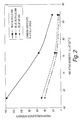
- red and blue acrylic inks (and also blue melamine-formaldehyde resin ink) are shown in Figures 2 and 3 of the accompanying drawings which show that much reduced brightness is achieved in each case as relative humidity increases from 62.5% It can be seen that a red acrylic ink is considerably superior to blue acrylic ink and for that matter blue melamine-formaldehyde inks containing aminobenzoyl naphthalene as phosphorescent activator in respect of phosphorescent code mark brightness at relative humidity values of up to about 85% or more in the case of white paper.
Landscapes
- Chemical & Material Sciences (AREA)
- Life Sciences & Earth Sciences (AREA)
- Engineering & Computer Science (AREA)
- Materials Engineering (AREA)
- Wood Science & Technology (AREA)
- Organic Chemistry (AREA)
- Inks, Pencil-Leads, Or Crayons (AREA)
- Printing Methods (AREA)
Abstract
Description
- This invention relates to luminescing inks and use of such inks in coding and other marking operations. In particular, the invention relates to the use in such inks of phosphors comprising molecules of at least one phosphorescent activator.
- Organic phosphors comprising molecules of at least one phosphorescent activator are known for example from British Patent Specifications Nos. 870,504, 1,494,102 and 1,494,103, as well as EP-A-0325825. These organic phosphors contain molecules of at least one phosphorescent activator held within a matrix of a condensation resin that does not itself absorb ultraviolet or visible radiation at the excitation and emission frequencies of the phosphorescent activators. The resin itself is formed by condensation of a precursor thereof in the presence of phosphorescent activators so that the molecules of the latter are trapped and isolated from one another in the matrix. The resin is preferably a condensation product of formaldehyde, generally with an amine group-containing compound, especially urea or melamine. The phosphor is a solid generally insoluble in water and organic solvents and, for use in a phosphorescent printing ink, may be ground finely and dispersed in a suitable solvent, for example toluene.
- Examples of phosphorescent activators for use as aforesaid include carbazole sulphonic acid, naphthalene disulphonic acid, diphenylguanidine and 2-amino benzophenone. Of particular interest have proved to be phosphorescent activators according to EP-A-0325825 which are optionally sulphonated substituted (preferably amino) aryl-aryl-ketones.
- The chemical make up of such inks has been a source of difficulty. Carcinogenicity and odour are problems often of concern with aromatic solvents and ketones. Moreover the early inks based on melamine-formaldehyde and like resins showed in a few cases evidence of acute skin irritation properties attributable to the presence of traces of free formaldehyde.
- It is well known that phosphorescence does not easily occur in solution and is best obtained with a rigid polymeric matrix, such as described above. In respect of the composition of jet printer inks, initially the same starting materials, melamine and formaldehyde, were used as for the pigment on coding tape, except that the reaction was terminated at a much earlier time resulting in a resin of relatively low molecular weight. The most effective yellow/green phosphorescent activator according to EP-A-0325825, is sulphonated 1-(4-aminobenzoyl)-naphthalene, which, combined with the melamine-formaldehyde resin in solution at a level of about 30% solids, gives an ink which can be read on a very wide range of letter envelopes, including manilla and white. However, despite such improvements to the ink because of sulphonation of the activator and the resin to prevent precipitate formation particularly when the ink is subject to temperatures lower than 10°C, the dynamic range of the signal strength between white and manilla was also a problem, signal differences of as much as a factor of 10 often occurring.
- Moreover, such ink, when made exactly to formulation, was found to require far too long, typically 15 to 30 minutes, for full brightness to occur. This was considered to be too slow, particularly, for the increased speeds of automated sorting processes. The material was in fact touch dry within one minute, but this was also considered to be too slow.
- Thus, while phosphorescence does not easily occur in solution and is best obtained within a rigid polymeric matrix, for reasons as aforesaid, there are many application benefits in having binder and activator in solution, or at least not in a solid polymeric matrix, and subsequent research has been based upon the need to fulfil this requirement with binder and activator resin being present in liquid phase until the ink has dried on the surface to which it has been applied.
- It is known, however, that when using a thermosetting polymer as binder in a reactive ink, this will, given sufficient time, increase in molecular weight to the point of gelling or precipitation. In an attempt to avoid the use of binders as aforementioned, further phosphorescent materials made up from mixtures of appropriate activator and polymer were investigated. A wide range of polymers was used for this purpose, including polystyrene, polyethylene oxide and acrylic polymers based inter alia on acrylic and/or methacrylic acid, using a variety of solvents therefor.
- It was rapidly found that most of the new binders which were based on polyacrylic acid had a much greater affinity for water than for organic solvents. While water is the most attractive solvent in terms of environmental considerations, it is by far the slowest drying, and thus, while the use of polyacrylic acid in an aqueous solvent has many advantages, both environmental and practical from the point of view of non-clogging ink formulations, there remains the problem that the phosphorescence exhibited by the inks is initially poor while the phosphorescence activators remain in the solution phase. This problem is exacerbated with items of mail which have remained under damp conditions, such as during prolonged storage in mail boxes. Not only will there be inherent moisture, but moisture from the ink, which moisture, prior to full drying, will inhibit the full manifestation of phosphorescent behaviour. This problem has, however, been reduced to some extent by reducing the droplet volume applied by the jet printer to about one tenth of that used for earlier inks.
- It is an object of the present invention to provide inks which manifest luminescent behaviour for an extended period of time on exposure to ultraviolet light, with the luminescent behaviour being achieved immediately on irradiation irrespective of the amount of moisture present.
- According to one aspect of the invention, there is provided an ink composition comprising, in solution in an aqueous and/or alcoholic medium, a substance which fluoresces but does not phosphoresce when the ink composition has been applied to a substrate, moisture is present and the substrate is being exposed to ultraviolet light; a substance which phosphoresces and fluoresces when the ink composition has been applied to a substrate, moisture is substantially absent and the substrate has been exposed to ultraviolet light, and a binder which is soluble or emulsifiable in said medium.
- According to a second aspect of this invention, there is provided a process for rendering at least part of a moisture-absorbing surface luminescent both when the surface is moist and when it holds no moisture, as well as at intermediate levels of moisture content, which comprises applying to at least part of said surface an ink composition comprising, in an aqueous and/or alcoholic medium, both a fluorescence activator which fluoresces but does not phosphoresce when the surface is exposed to ultraviolet light and moisture is present and a phosphorescence activator which phosphoresces and fluoresces when applied to a surface and exposed to ultraviolet light, moisture being substantially absent, such that exposure of the surface to ultraviolet light will lead to emission of detectable phosphorescence, fluorescence and combined phosphorescence and fluorescence, the extent of phosphorescence depending upon the amount of moisture at the surface.
- For the purposes of understanding the invention set out herein, a fluorescent substance is a light-emitting substance having an afterglow having a duration of the order of nanoseconds while phosphorescent materials will have an afterglow lasting up to 500 milliseconds or more. Thus, in terms of detection of post code marks, fluorescent materials will be detected while illuminated with an ultraviolet source say of 365nm wavelength with moisture being present and, as a result of the simultaneous use of a lamp of 310nm output, red phosphorescent materials will glow when the amount of moisture present has dropped sufficiently and will provide an afterglow with the ultraviolet light extinguished. Such use of lamps of two wavelengths will obviously require two detectors for the respective emissions.
- Thus, the present invention makes use of combinations of substances which, at certain wavelengths, will exhibit phosphorescence and also fluorescence, the brightness of phosphorescence depending on the excitation wavelength and the amount of water present. At the beginning of a mail sorting run, results may be less than satisfactory, as may occur when the moisture content of envelopes being handled is too high. This may well be the case when sorting newly arrived mail. If use is made of phosphorescent activator alone, the intensity, initially, of the emissions may be insignificant. Hence, this invention proposes to compensate for this deficiency in the ink by the inclusion of a second luminescencing substance, specifically a fluorescent material. Moreover, as will become clear hereinafter a much enhanced dynamic range on manilla paper is experienced, the range being reduced from 10 x as previously to the order of 2-4 x.
- Separate detection systems may be employed to detect phosphorescent and fluorescent light emissions. Such scanners respond to the brightest single emission and are sensitive to red wavelengths, inter alia, the benefit of which will be apparent hereinafter.
- For the purpose of this invention, use may be made typically of the following phosphorescent activators:
- N-Phenyl-carbazole
- 2,2'-Dihydroxy benzophenone
- 2,4-Dihydroxy benzophenone
- Dibenzothiophene
- Dansyl aziridine
- Azulene
- 1-(4-Phenylbenzoyl) naphthalene
- 1-Naphthoylnaphthalene
- 1-(4-Carboxybenzoyl)-naphthalene
- 1-(4-Chlorobenzoyl)-naphthalene
- 1-(4-Hydroxybenzoyl)-naphthalene
- 1-Benzoylnaphthalene
- 2-Benzoylnaphthalene
- 6-Benzoyl-2-naphthol
- 4-Benzoylbiphenol
- N-Phenylcarbazole
- Diphenylfulvene
- 2,3-Diphenylindenone
- Diphenyl.
-
- As experiments described hereinafter will show, the phosphorescent activators most effective when used in a thermoplastic binder/solvent system are the sulphonated derivatives of, in particular, 1-(4-phenylbenzoyl)-naphthalene, 1-naphthoylnaphthalene, 1-(4-carboxybenzoyl)-naphthalene and 1-benzoylnaphthalene. The latter two compounds may also be used to some advantage in unsulphonated form. Two other compounds that have shown potential were phenyl carbazole and benzoyl biphenol. When account is taken of the responses on different papers, sulphonated 1-(4-phenylbenzoyl)-naphthalene (PBAS) and sulphonated 1-naphthoylnaphthalene were most effective.
- Whereas hitherto use has been made of melamine-formaldehyde resin binder, this is a thermosetting system and only by careful control of reaction time, temperature and pH, can the molecular weight of the polymer be kept sufficiently low, to approximately 600, for use in formulations. However, because the system has a low reaction rate at ambient temperatures, the resulting inks have a shelf life of around 6 months, after which their viscosity increases above that tolerated by ink jet printers.
- It is for this reason, that attention has been diverted to more stable emulsified resin systems which, being inherently non-reactive, will not have this aging problem. Hence the aforementioned thermoplastic binders are used in preferred practice embodying this invention.
- Polyacrylic acids are available which are soluble in water and methanol-based solvents up to molecular weights of the order of 6000. Of particular interest as binder materials have been found to be polyacrylic acid of molecular weight 2000-3000. For practical purposes it has been found that an ink embodying this invention should have the physical properties set out in the following table.
Characteristic Test Method Requirements Viscosity Brookfield viscometer using small sample adapter 3-20, preferably 8.0 - 9.0, mPa.s Surface tension Surface tension balance (DuNuoy ring) 20-40 Dynes/cm Density Density meter 1.1-1.4 g/cm3 Turbidity Turbidity meter Less than 10 National Turbidity Units (NTU) Conductivity Conductivity cell > 10 millisiemens/cm Phosphorescence intensity Using a Post Office Mark III Mark IV phosphorimeter 1.5 or phosphorescence units minimum on white filter paper, 0.4 phosphorescence units minimum on buff paper - These requirements have been found to be met particulary well by using stabilised emulsions of polyacrylic acid of M.W. about 2000-2200 in water.
- Tests have also been carried out with other thermoplastic materials including polyethylene oxide of molecular weight 100,000, polyvinylpyrrolidine of molecular weight 10,000, a polyamide and polystyrene. These were tried with a number of activators but gave less satisfactory results than with polyacrylic acid, in terms of brightness. In general, brightness determinations were carried out on activators present in rigid amorphous thermoplastic polymers at low temperatures.
- Also important is the time to reach maximum brightness since it determines the minimum time between printing and reading of the code marks. This is controlled by the drying speed of the ink which may be thought of as a two stage process. Firstly, there is rapid drying by absorption to give smudge free surface conditions. This is followed by a much slower process whereby the polymer loses the remaining solvent. This latter process would be significantly influenced by the moisture present in the substrate to which the ink has been applied. The latter process is of particular importance because it controls the time it takes for the ink to phosphoresce. Hence the amount of moisture present will determine the phosphorescence signal obtained, but the reading problem when such signal is too weak will be compensated for by the fluorescent activator present in solution in the ink.
- All the aforementioned phosphors, if used alone, produce a blue or yellow emission. Insofar as there is a need to achieve satisfactory phosphorescence detection irrespective of paper background colour, it has been found in practice to be desirable to produce a red phosphorescence emission and detectors appropriate to such emission. Previously, use was made of phosphorescence activators which, when excited at 365nm, produced a blue and yellow-green emission more suited to the photomultiplier detectors employed in the previous generation of sorting equipment. However, new detection equipment is available commercially, in particular the Philtec reader of Philips Technology, Eindhoven, NL, which is sensitive to 600-620nm and in the red range which occurs when the phosphor is excited at 310nm. Such readers use a WSX-1 line scan camera supplied by Wessex Technology which works on a greyscale of sensitivity which can be controlled by software and programmed to analyse in detail any marks which are detected. The red phosphorescence may be achieved by introducing a red fluorescent dyestuff into the composition in addition to the phosphorescence activator. This may be a sulphonated rhodamine base such as Acid red 52 (rhodamine B base).
- For fluorescence to be utilized in coding mail items, the concentration of fluorescing substance must be maintained reliably. Thus, it has become desirable to enhance the intensity of fluorescence in a sustainable manner and so as to minimise mis-readings against background interference.
- Enhanced fluorescence intensity can be achieved by the addition of a yellow fluorescent dye-stuff, sulphonated Duasyn, i.e. 1,H-xantheneno[2,1,9-Def]isoquinoline-1,3-(2H)-dione-2-(2-hydroxyethyl)-7-sodium sulphonate, and fluorescein DT being two examples. Some green fluorescent dyestuffs have also been found to have a beneficial effect in enhancing the level of fluorescence. These include naphthol green B, lissamine green, guinea green and acid green. The dye, Colour Index 264, is a blue fluorescent dye which can be utilised.
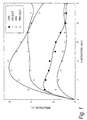
- Maximum phosphorescent brightness occurs at an optimum activator concentration. Reference is made in this connection to Figure 1 of the accompanying drawings. Increasing the amount of activator above this results in decreasing brightness due to self quenching effects. This optimum value depends on the binder material concentration and so can only be measured once this has been selected. Among the brightest activators are 1-naphthoylnaphthalene, 1-(4-phenylbenzoyl) naphthalene and 1-(4-carboxybenzoyl)naphthalene.
- In order to further improve the fluorescent response of the phosphorescent additive, optical brightening agents may be added which emit in the blue region of the spectrum to effect transfer of energy from blue through yellow to red. These are also fluorescent activators. Among the compounds which may be utilised for this purpose are the following:
- 7-Hydroxy-4-methyl coumarin
- 3 -Hydroxycinnamic acid
- 2-Hydroxycinnamic acid
- 7-Hydroxycoumarin
- 3-4-Dihydroxycinnamic acid
- 4-Hydroxycinnamic acid
- Fluorescent brightener 28
-
Fluorescent brightener 140 - Scopoletin
- 6,7-Dimethoxycoumarin
-
- Ink particularly suitable for post coding mail and embodying the invention will thus contain a phosphorescent activator and a fluorescent dyestuff from the range of red, yellow, green and blue fluorescent additives to produce the correct intensity of luminescence suitable for accurate reading of post codes applied to the mail. The ink will also preferably comprise a solvent, usually water, and a polyacrylic acid binder of low to medium molecular weight. Surfactants and anti-foaming agents will be added as appropriate to the printer system in use.
- A typical red formulation as such would be as follows:-
Material Quantity Polyacrylic acid of molecular weight 2000 12.5 Kilograms 1-(4-Phenylbenzoyl)-naphthalene sulphonate (PBNS) 250.0 grams Sulphonated rhodamine B Base 15 grams Modified alcohol ethoxylate surfactant, e.g.Ethylan CPG660 (produced by Harcross Chemicals (UK) Ltd) 16.25 grams Dow Corning DB-110A (EU) Antifoam agent 8.0 grams Distilled water 10.0 kilograms - A typical formulation for maximum performance which contains yellow, blue and red dyestuffs will be:
Material Quantity (g) Polyacrylic Acid MW 2000 2611.0 Sulphonated Duasyn 74.0 Sulphonated Rhodamine B Base 3.2 PBNS 78.0 Modified alcohol ethoxylate surfactant, e.g. Ethylan CPG 660 3.5 Dow Corning DB - 110A (EU) 1.7 Blue Fluorescent Dye Colour Index 264 96.0 Distilled Water 2132.0 - The invention enables a consistently high brightness reading to be obtained from substrates coated with inks embodying this invention at whatever the prevailing relative humidity. This enables the Philtec reader as aforesaid to be used for scanning mail. This will activate fluorescence and provide phosphorescence according to the prevailing relative humidity to give acceptable signal levels whether due to fluorescence, phosphorescence or a simultaneous scanning of fluorescence and phosphorescence.
- The following test was carried out to illustrate the merits of this invention.
- Comparative brightness measurements were made for aqueous solutions of phosphorescent activator-containing inks spotted onto white and manilla papers using the Philtec reader for determining phosphorescent brightness at activation wavelength 310nm, in addition to the Post Office Mark III phosphorimeter. The results obtained for red and blue acrylic inks (and also blue melamine-formaldehyde resin ink) are shown in Figures 2 and 3 of the accompanying drawings which show that much reduced brightness is achieved in each case as relative humidity increases from 62.5% It can be seen that a red acrylic ink is considerably superior to blue acrylic ink and for that matter blue melamine-formaldehyde inks containing aminobenzoyl naphthalene as phosphorescent activator in respect of phosphorescent code mark brightness at relative humidity values of up to about 85% or more in the case of white paper.
- Moreover, while the ratio of phosphorescence signal to background light emission signal was low for blue MF ink bars it was much more satisfactory with red acrylic ink bars. Values measured in this connection appear in the following Table 2. The background greyscale value for the Philtec reader is largely independent of envelope colour in the phosphorescence mode and is generally of the order of 0 to 1.
Phosphorescent Coding Materials Comparison Typical greyscale brightness values taken from a Philtec reader Material Blue coding tape dots Blue MF ink bars Red Acrylic ink bars White average 110 41 158 Manilla average 53 8 46 Signal range x 2 x 5.3 x 3.4 - While the above tests were of value in establishing the relative merits of blue MF, blue acrylic and red acrylic inks and show that improved read rates are obtained with red acrylic inks over either of the blue inks, they also show that at very high levels of humidity, problems are still encountered. It is for this reason that fluorescence activators are utilised in inks according to the invention to enable reading of codes to take place immediately on excitation of the ink activator content. UV irradiation for fluorescence activation and stimulation of phosphorescence being continued until phosphorescence afterglow is available for reading.
Claims (25)
- An ink composition comprising, in solution in an aqueous and/or alcoholic medium, a substance which fluoresces but does not phosphoresce when the ink composition has been applied to a substrate, moisture is present and the substrate is being exposed to ultraviolet light; a substance which phosphoresces and fluoresces when the ink composition has been applied to a substrate, moisture is substantially absent and the substrate has been exposed to ultraviolet light, and a binder which is soluble or emulsifiable in said medium.
- An ink as claimed in claim 1, which comprises a thermoplastic binder.
- An ink composition as claimed in claim 2, wherein the binder is a polyacrylic acid of molecular weight 2000-3000.
- An ink composition as claimed in any preceding claim which has a viscosity obtained using a Brookfield Viscometer of from 3 - 20 mPa.s. at 22±2°C.
- An ink composition as claimed in any preceding claim which has a surface tension of from 20 to 40 dynes/cm at 22±2°C.
- An ink composition as claimed in any preceding claim, which has a density of from 1.1 - 1.4g/cm3.
- An ink composition as claimed in any preceding claim which has a turbidity of less than 10 National Turbidity Units at 22±2°C.
- An ink composition as claimed in any preceding claim having a turbidity of less than 10 MTU at 22±2°C.
- An ink composition as claimed in any preceding claim which has a conductivity of more than 10 millisiemens/cm at 22±2°C.
- An ink composition as claimed in any preceding claim, wherein the binder is a polyacrylic acid and the solvent is water.
- An ink composition as claimed in any preceding claim which contains a phosphorescence activator selected from:and diphenyl, and sulphonation derivatives thereof.n-phenyl-carbazole2,2'-dihydroxy benzophenone2,4-dihydroxy benzophenonedibenzothiophenedansyl aziridineazulene1-(4-phenylbenzoyl)-naphthalene1-naphthoyl-naphthalene1-(4-carboxybenzoyl)-naphthalene1-(4-chlorobenzoyl)-naphthalene1-(4-hydroxybenzoyl)-naphthalene1-Benzoylnaphthalene2-benzoylnaphthalene6-benzoyl-2-naphthol4-benzoylbiphenolN-phenylcarbazolediphenyl fulvene2,3-diphenylindenone
- An ink composition as claimed in any one of claims 1 to 10 which contains a phosphorescence activator selected from sulphonated derivatives of 1-(4-phenylbenzoyl)-naphthalene and 1-naphthoylnaphthalene, and 1-(4-carboxybenzoyl)-naphthalene and 1-benzoylnaphthalene as such and in sulphonated form.
- An ink composition as claimed in any one of claims 1 to 10 which contains a phosphorescence activator producing blue or yellow phosphorescence.
- An ink composition as claimed in any one of claims 1 to 10, wherein the phosphorescence activator has an excitation optimum at about 310nm.
- An ink composition as claimed in any one of claims 1 to 13, which additionally contains a red fluorescent dyestuff whereby red phosphorescence is obtained.
- An ink composition as claimed in claim 15, wherein the red dyestuff is a sulphonated Rhodamine Base, in particular Acid red 52.
- An ink composition as claimed in any preceding claim which contains a green fluorescent dyestuff selected from naphthol green B, lissamine green, guinea green and acid green.
- An ink composition as claimed in any one of claims 1 to 17, which contains a yellow fluorescent dyestuff selected from sulphonated Duasyn and fluorescein DT.
- An ink composition as claimed in any one of claims 1 to 18 which contains blue fluorescent dye, the dye Colour Index 264.
- An ink composition as claimed in any preceding claim which contains a fluorescent optical brightening agent which emits in the blue region of the spectrum.
- An ink composition as claimed in claim 20, wherein the optical brightening agent is selected from:7-hydroxy 4 methyl coumarin3-hydroxycinnamic acid2-hydroxycinnamic acid7-hydroxycoumarin3-4-dihydroxycinnamic acid4-hydroxycinnamic acidFluorescent brightener 28Fluorescent brightener 140Scopoletin and6-7-dimethoxycoumarin.
- An ink composition as claimed in any preceding claim, which is applied to a Manilla substrate.
- A process for rendering at least part of a moisture-absorbing surface luminescent both when the surface is moist and when it holds no moisture, as well as at intermediate levels of moisture content, which comprises applying to at least part of said surface an ink composition comprising in an aqueous and/or alcoholic medium, both a fluorescence activator which fluoresces but does not phosphoresce when the surface is exposed to ultraviolet light and moisture is present and a phosphorescence activator which phosphoresces and fluoresces when applied to a surface and exposed to ultraviolet light, moisture being substantially absent, such that exposure of the surface to ultraviolet light will lead to emission of detectable phosphorescence, fluorescence and combined phosphorescence and fluorescence, the extent of phosphorescence depending upon the amount of moisture at the surface.
- A process as claimed in claim 23, wherein the phosphorescence activator and fluorescence activator are comprised by an ink composition as claimed in any one of claims 1 to 22.
- A process as claimed in claim 23 or 24, wherein said composition is applied to a Manilla substrate.
Applications Claiming Priority (3)
| Application Number | Priority Date | Filing Date | Title |
|---|---|---|---|
| GBGB9615110.5A GB9615110D0 (en) | 1996-07-18 | 1996-07-18 | Luminescing inks and use of such inks in coding and other marking operations |
| GB9615110 | 1996-07-18 | ||
| PCT/GB1997/001950 WO1998003596A1 (en) | 1996-07-18 | 1997-07-18 | Luminescing inks and use of such inks in coding and other marking operations |
Publications (2)
| Publication Number | Publication Date |
|---|---|
| EP0914392A1 EP0914392A1 (en) | 1999-05-12 |
| EP0914392B1 true EP0914392B1 (en) | 2000-10-25 |
Family
ID=10797130
Family Applications (1)
| Application Number | Title | Priority Date | Filing Date |
|---|---|---|---|
| EP97931964A Expired - Lifetime EP0914392B1 (en) | 1996-07-18 | 1997-07-18 | Luminescing inks and use of such inks in coding and other marking operations |
Country Status (6)
| Country | Link |
|---|---|
| EP (1) | EP0914392B1 (en) |
| AU (1) | AU3554397A (en) |
| DE (1) | DE69703390T2 (en) |
| ES (1) | ES2154050T3 (en) |
| GB (1) | GB9615110D0 (en) |
| WO (1) | WO1998003596A1 (en) |
Families Citing this family (3)
| Publication number | Priority date | Publication date | Assignee | Title |
|---|---|---|---|---|
| US6107346A (en) * | 1997-08-11 | 2000-08-22 | Eli Lilly And Company | Methods for treating hyperlipidemia |
| US8110281B2 (en) * | 2004-07-02 | 2012-02-07 | 3Dtl, Inc. | Systems and methods for creating optical effects on media |
| EP2428512B1 (en) | 2010-09-08 | 2014-10-22 | Semiconductor Energy Laboratory Co., Ltd. | Fluorene compound, light-emitting element, light-emitting device, electronic device and lighting device |
Family Cites Families (4)
| Publication number | Priority date | Publication date | Assignee | Title |
|---|---|---|---|---|
| JPS5133076B2 (en) * | 1971-12-24 | 1976-09-17 | ||
| US4186020A (en) * | 1974-11-04 | 1980-01-29 | A. B. Dick Company | Fluorescent ink for automatic identification |
| GB1494103A (en) * | 1975-01-21 | 1977-12-07 | Post Office | Process for rendering at least part of a surface phosphorescent |
| US5256192A (en) * | 1992-05-15 | 1993-10-26 | Dataproducts Corporation | Solvent based fluorescent ink compositions for ink jet printing |
-
1996
- 1996-07-18 GB GBGB9615110.5A patent/GB9615110D0/en active Pending
-
1997
- 1997-07-18 ES ES97931964T patent/ES2154050T3/en not_active Expired - Lifetime
- 1997-07-18 EP EP97931964A patent/EP0914392B1/en not_active Expired - Lifetime
- 1997-07-18 WO PCT/GB1997/001950 patent/WO1998003596A1/en not_active Ceased
- 1997-07-18 DE DE69703390T patent/DE69703390T2/en not_active Expired - Fee Related
- 1997-07-18 AU AU35543/97A patent/AU3554397A/en not_active Abandoned
Also Published As
| Publication number | Publication date |
|---|---|
| DE69703390T2 (en) | 2001-05-23 |
| DE69703390D1 (en) | 2000-11-30 |
| AU3554397A (en) | 1998-02-10 |
| GB9615110D0 (en) | 1996-09-04 |
| WO1998003596A1 (en) | 1998-01-29 |
| EP0914392A1 (en) | 1999-05-12 |
| ES2154050T3 (en) | 2001-03-16 |
Similar Documents
| Publication | Publication Date | Title |
|---|---|---|
| EP1401970B1 (en) | Photosensitive optically variable ink heterogeneous compositions for ink jet printing | |
| US6793723B2 (en) | Homogeneous photosensitive optically variable ink compositions for ink jet printing | |
| US6106910A (en) | Print media with near infrared fluorescent sense mark and printer therefor | |
| US5093147A (en) | Providing intelligible markings | |
| US6905538B2 (en) | Invisible ink jet inks | |
| US6165937A (en) | Thermal paper with a near infrared radiation scannable data image | |
| EP0934370B1 (en) | Organic solvent based ink for invisible marking/identification | |
| AU714019B2 (en) | Invisible fluorescent jet ink | |
| CA2550757C (en) | Fluorescent ink | |
| US20050031838A1 (en) | Taggant security system for paper products as a deterrent to counterfeiting | |
| US7192474B2 (en) | IR absorbing photosensitive optically variable ink compositions and process | |
| US6060426A (en) | Thermal paper with security features | |
| CA2570879A1 (en) | Signature protected photosensitive optically variable ink compositions and process | |
| CA2246781A1 (en) | Ultraviolet fluorescent ink for non-contact ink jet printers | |
| EP0914392A1 (en) | Luminescing inks and use of such inks in coding and other marking operations | |
| US20050279249A1 (en) | Photosensitive optically variable ink compositions useful for ink jet printing | |
| EP0933228A1 (en) | Thermosensitive recording material | |
| EP0933227B1 (en) | Method of dispensing a print medium comprising a near infrared fluorescent sense mark and apparatus therefor | |
| US20070138285A1 (en) | Black fluorescent optical codes and process for printing and reading | |
| JP2002088292A (en) | Ink composition and printed matter | |
| Harrison et al. | Session 1 (c): Basic Techniques—Coding Materials: Preparation, Properties and Application of Luminescent Organic Resins for Letter Facing, Classification and Address Coding |
Legal Events
| Date | Code | Title | Description |
|---|---|---|---|
| PUAI | Public reference made under article 153(3) epc to a published international application that has entered the european phase |
Free format text: ORIGINAL CODE: 0009012 |
|
| 17P | Request for examination filed |
Effective date: 19990218 |
|
| AK | Designated contracting states |
Kind code of ref document: A1 Designated state(s): DE ES FR GB IE IT NL |
|
| GRAG | Despatch of communication of intention to grant |
Free format text: ORIGINAL CODE: EPIDOS AGRA |
|
| 17Q | First examination report despatched |
Effective date: 19990809 |
|
| GRAG | Despatch of communication of intention to grant |
Free format text: ORIGINAL CODE: EPIDOS AGRA |
|
| GRAH | Despatch of communication of intention to grant a patent |
Free format text: ORIGINAL CODE: EPIDOS IGRA |
|
| GRAH | Despatch of communication of intention to grant a patent |
Free format text: ORIGINAL CODE: EPIDOS IGRA |
|
| GRAA | (expected) grant |
Free format text: ORIGINAL CODE: 0009210 |
|
| AK | Designated contracting states |
Kind code of ref document: B1 Designated state(s): DE ES FR GB IE IT NL |
|
| REG | Reference to a national code |
Ref country code: IE Ref legal event code: FG4D |
|
| REF | Corresponds to: |
Ref document number: 69703390 Country of ref document: DE Date of ref document: 20001130 |
|
| ITF | It: translation for a ep patent filed | ||
| ET | Fr: translation filed | ||
| REG | Reference to a national code |
Ref country code: ES Ref legal event code: FG2A Ref document number: 2154050 Country of ref document: ES Kind code of ref document: T3 |
|
| REG | Reference to a national code |
Ref country code: GB Ref legal event code: 732E |
|
| RAP2 | Party data changed (patent owner data changed or rights of a patent transferred) |
Owner name: CONSIGNIA PLC |
|
| PLBE | No opposition filed within time limit |
Free format text: ORIGINAL CODE: 0009261 |
|
| STAA | Information on the status of an ep patent application or granted ep patent |
Free format text: STATUS: NO OPPOSITION FILED WITHIN TIME LIMIT |
|
| NLT2 | Nl: modifications (of names), taken from the european patent patent bulletin |
Owner name: CONSIGNIA PLC |
|
| 26N | No opposition filed | ||
| NLS | Nl: assignments of ep-patents |
Owner name: CONSIGNIA PLC |
|
| REG | Reference to a national code |
Ref country code: FR Ref legal event code: TP |
|
| REG | Reference to a national code |
Ref country code: GB Ref legal event code: IF02 |
|
| NLT1 | Nl: modifications of names registered in virtue of documents presented to the patent office pursuant to art. 16 a, paragraph 1 |
Owner name: ROYAL MAIL GROUP LIMITED Owner name: ROYAL MAIL GROUP PLC. |
|
| REG | Reference to a national code |
Ref country code: FR Ref legal event code: CD |
|
| REG | Reference to a national code |
Ref country code: ES Ref legal event code: PC2A |
|
| PGFP | Annual fee paid to national office [announced via postgrant information from national office to epo] |
Ref country code: NL Payment date: 20060731 Year of fee payment: 10 Ref country code: IT Payment date: 20060731 Year of fee payment: 10 Ref country code: FR Payment date: 20060731 Year of fee payment: 10 |
|
| PGFP | Annual fee paid to national office [announced via postgrant information from national office to epo] |
Ref country code: GB Payment date: 20060802 Year of fee payment: 10 |
|
| PGFP | Annual fee paid to national office [announced via postgrant information from national office to epo] |
Ref country code: DE Payment date: 20060803 Year of fee payment: 10 |
|
| PGFP | Annual fee paid to national office [announced via postgrant information from national office to epo] |
Ref country code: IE Payment date: 20060814 Year of fee payment: 10 |
|
| PGFP | Annual fee paid to national office [announced via postgrant information from national office to epo] |
Ref country code: ES Payment date: 20060816 Year of fee payment: 10 |
|
| GBPC | Gb: european patent ceased through non-payment of renewal fee |
Effective date: 20070718 |
|
| NLV4 | Nl: lapsed or anulled due to non-payment of the annual fee |
Effective date: 20080201 |
|
| PG25 | Lapsed in a contracting state [announced via postgrant information from national office to epo] |
Ref country code: NL Free format text: LAPSE BECAUSE OF NON-PAYMENT OF DUE FEES Effective date: 20080201 Ref country code: DE Free format text: LAPSE BECAUSE OF NON-PAYMENT OF DUE FEES Effective date: 20080201 |
|
| REG | Reference to a national code |
Ref country code: IE Ref legal event code: MM4A |
|
| PG25 | Lapsed in a contracting state [announced via postgrant information from national office to epo] |
Ref country code: GB Free format text: LAPSE BECAUSE OF NON-PAYMENT OF DUE FEES Effective date: 20070718 |
|
| REG | Reference to a national code |
Ref country code: FR Ref legal event code: ST Effective date: 20080331 |
|
| PG25 | Lapsed in a contracting state [announced via postgrant information from national office to epo] |
Ref country code: FR Free format text: LAPSE BECAUSE OF NON-PAYMENT OF DUE FEES Effective date: 20070731 |
|
| REG | Reference to a national code |
Ref country code: ES Ref legal event code: FD2A Effective date: 20070719 |
|
| PG25 | Lapsed in a contracting state [announced via postgrant information from national office to epo] |
Ref country code: IE Free format text: LAPSE BECAUSE OF NON-PAYMENT OF DUE FEES Effective date: 20070718 |
|
| PG25 | Lapsed in a contracting state [announced via postgrant information from national office to epo] |
Ref country code: ES Free format text: LAPSE BECAUSE OF NON-PAYMENT OF DUE FEES Effective date: 20070719 |
|
| PG25 | Lapsed in a contracting state [announced via postgrant information from national office to epo] |
Ref country code: IT Free format text: LAPSE BECAUSE OF NON-PAYMENT OF DUE FEES Effective date: 20070718 |