EP0913397B1 - A proces for the synthesis of 1-(4-Arylpiperazine-1-y1)-3-(2-oxypyrrolidin/piperidin-1-yl)propanes as therapeutic agents for hypertension, ischemia, cardiovascular and other adrenergic receptors related disorders - Google Patents
A proces for the synthesis of 1-(4-Arylpiperazine-1-y1)-3-(2-oxypyrrolidin/piperidin-1-yl)propanes as therapeutic agents for hypertension, ischemia, cardiovascular and other adrenergic receptors related disorders Download PDFInfo
- Publication number
- EP0913397B1 EP0913397B1 EP19970308381 EP97308381A EP0913397B1 EP 0913397 B1 EP0913397 B1 EP 0913397B1 EP 19970308381 EP19970308381 EP 19970308381 EP 97308381 A EP97308381 A EP 97308381A EP 0913397 B1 EP0913397 B1 EP 0913397B1
- Authority
- EP
- European Patent Office
- Prior art keywords
- piperazin
- propane
- formula
- oxopyrrolidin
- oxopiperidin
- Prior art date
- Legal status (The legal status is an assumption and is not a legal conclusion. Google has not performed a legal analysis and makes no representation as to the accuracy of the status listed.)
- Expired - Lifetime
Links
Images


Classifications
-
- C—CHEMISTRY; METALLURGY
- C07—ORGANIC CHEMISTRY
- C07D—HETEROCYCLIC COMPOUNDS
- C07D207/00—Heterocyclic compounds containing five-membered rings not condensed with other rings, with one nitrogen atom as the only ring hetero atom
- C07D207/02—Heterocyclic compounds containing five-membered rings not condensed with other rings, with one nitrogen atom as the only ring hetero atom with only hydrogen or carbon atoms directly attached to the ring nitrogen atom
- C07D207/18—Heterocyclic compounds containing five-membered rings not condensed with other rings, with one nitrogen atom as the only ring hetero atom with only hydrogen or carbon atoms directly attached to the ring nitrogen atom having one double bond between ring members or between a ring member and a non-ring member
- C07D207/22—Heterocyclic compounds containing five-membered rings not condensed with other rings, with one nitrogen atom as the only ring hetero atom with only hydrogen or carbon atoms directly attached to the ring nitrogen atom having one double bond between ring members or between a ring member and a non-ring member with hetero atoms or with carbon atoms having three bonds to hetero atoms with at the most one bond to halogen, e.g. ester or nitrile radicals, directly attached to ring carbon atoms
- C07D207/24—Oxygen or sulfur atoms
- C07D207/26—2-Pyrrolidones
- C07D207/263—2-Pyrrolidones with only hydrogen atoms or radicals containing only hydrogen and carbon atoms directly attached to other ring carbon atoms
- C07D207/27—2-Pyrrolidones with only hydrogen atoms or radicals containing only hydrogen and carbon atoms directly attached to other ring carbon atoms with substituted hydrocarbon radicals directly attached to the ring nitrogen atom
-
- C—CHEMISTRY; METALLURGY
- C07—ORGANIC CHEMISTRY
- C07D—HETEROCYCLIC COMPOUNDS
- C07D211/00—Heterocyclic compounds containing hydrogenated pyridine rings, not condensed with other rings
- C07D211/04—Heterocyclic compounds containing hydrogenated pyridine rings, not condensed with other rings with only hydrogen or carbon atoms directly attached to the ring nitrogen atom
- C07D211/68—Heterocyclic compounds containing hydrogenated pyridine rings, not condensed with other rings with only hydrogen or carbon atoms directly attached to the ring nitrogen atom having one double bond between ring members or between a ring member and a non-ring member
- C07D211/72—Heterocyclic compounds containing hydrogenated pyridine rings, not condensed with other rings with only hydrogen or carbon atoms directly attached to the ring nitrogen atom having one double bond between ring members or between a ring member and a non-ring member with hetero atoms or with carbon atoms having three bonds to hetero atoms, with at the most one bond to halogen, directly attached to ring carbon atoms
- C07D211/74—Oxygen atoms
- C07D211/76—Oxygen atoms attached in position 2 or 6
Definitions
- the present invention relates, to a process for the synthesis of novel 1-[4-Arylpiperazin-1-yl]-3-[2-oxopyrrolidin-1-yl]propanes and 1-[4-Arylpiperazin-1-yl]-3-[2-oxopiperidin-1-yl]propanes which can be used as therapeutic agents for hypertension, ischemia, cardiovascular and other adrenergic receptors related disorders.
- the present invention relates, to a process for the synthesis of 1-[4-[Arylpiperazin-1-yl]-3-[2-oxopyrrolidin-1-yl]propanes and 1-[4-Arylpiperazin-1-yl]-3-[2-oxopiperidin-1-yl]propanes, and to their use in medicine.
- This invention provides the compounds of the formula 1.
- the compounds of the invention have shown to possess antihypertensive activity in different test models.
- the compounds also prevent post-ischemic reperfusion injury and may be useful in the treatment of hypertension, diseases arising out of alterations/impairment in central/peripheral circulations and adrenergic receptors systems such as myocardial ischemia, myocardial infarction (MI), angina pectoris, any cardiac surgical interventions renal ischemia, circulatory insufficiency in extremities, stroke and trauma.
- the compounds of the present invention can be used as pharmaceutical compositions comprising compounds of the present invention with a suitable pharmaceutical carrier.
- these compositions are used to produce antihypertensive and antiischemic activities and contain an effective amount of the compounds useful in the method of the invention.
- the most preferred compound of the invention is 1-[4-(4-fluorophenyl)piperazin-1-yl]-3-[2-oxopyrrolidin-1-yl]propane.
- Hypertension is the most common of all cardiovascular diseases afflicting about 10-20% adult population.
- Several classes of drugs may be used in the treatment and management of hypertension such as alpha-adrenoceptor antagonists, ACE inhibitors, angiotensin I chymase inhibitors, renin inhibitors, angiotensin II antagonists, vasopressin V 1 antagonists, endothelin antagonists, endothelin-converting enzyme inhibitors, potassium channel activators, calcium channels antagonists, adenosine A 2 agonists, adenosine A 1 antagonists, neutral endopeptidase inhibitors, dual-action ACE and neutral endopeptidase inhibitors.
- these drugs belong to structurally diverse class of heterocyclics including substituted arylpiperazines.
- the 1-[4-Arylpiperazin-1-yl]-3-[2-oxopyrrolidin-1-yl]propanes and 1-[4-Arylpiperazin-1-yl]-3-[2-oxopiperidin-1-yl]propanes of the formula 1 are structurally novel compounds and show significant antihypertensive and antiischemic activities. Thus, these compounds would be useful in the treatment of hypertension and in preventing post-ischemic reperfusion injury (ischemia).
- ACE's inhibitors captopril and related drugs
- Ca ++ channel blocker nifedipine, verapamil, diltiazen
- peripheral alpha 1 - adrenergic antagonist such as prazosin.
- endothelin antagonists include mainly endothelin antagonists [Gulati, A. and Srimal, R.C. Drug Dev. Res., 26, 361, 1992; Antihypertensive Drugs. The Year's Drug News, 145-167, 1994].
- the invention is mainly centered around the following objects:
- This invention is concerned with novel pharmacologically active substances and relates to new 1-(4-arylpiperazin-1-yl)-3-(2-oxopyrrolidin-1-yl) propanes and 1-(4-arylpiperazin-1-yl)-3-(2-oxopyrrolidin-1-yl) propanes as potential therapeutic agents for hypertension, ischemia, cardiovascular and other adrenergic receptors related disorders.
- the invention also provides compounds of formula I as defined above, and their use as medicaments.
- a compound of the invention in the manufacture of a medicament for treating any of the following disorders: hypertension in mammals, peripheral vascular diseases in mammals, diseases arising out of alterations/impairment in central/peripheral circulations and adrenergic receptors systems, such as myocardial ischemia, myocardial infarction (MI), angina pectoris, any cardiac surgical interventions, renal ischemia, circulatory insufficiency in extremities, stroke and trauma, reperfusion injury in mammals, ischemic diseases like myocardial infarction (MI) or angina pectoris.
- myocardial ischemia myocardial infarction
- MI myocardial infarction
- angina pectoris any cardiac surgical interventions
- renal ischemia circulatory insufficiency in extremities
- stroke and trauma reperfusion injury in mammals
- ischemic diseases like myocardial infarction (MI) or angina pectoris.
- Aryl designates a pyridyl or phenyl, or a phenyl group substituted by one or more alkyl, alkoxy or halogen groups.
- the compounds of this invention have useful biological activities and have in particular strong antihypertensive and antiischemic activities.
- This reaction may be carried out in solvents selected from acetone, methylethyl ketone, tetrahydrofuran or dimethylformamide using bases selected from triethylamine, pyridine, sodium or potassium carbonate and catalysts selected from sodium/potassium iodide to improve the yield of the compounds of formula 1 and the said method is the subject matter of the co-pending US application number ..........
- the substituted piperazine (4) was condensed with 1-bromo-3-chloropropane in presence of bases selected from sodium or potassium carbonate and catalytic amounts of sodium or potassium iodide in solvents selected from DMF, toluene, xylene etc. at a temperature ranging from 70 to 150°C for 8 to 14 hrs to give 1-chloro-3-(4-substituted piperazin-1-yl)propane (5) which on condensation with 2-oxo-pyrrolidine or 2-oxopiperidine in presence of bases selected from potassium tert . butoxide or pulverised sodium or potassium in nonpolar solvents selected from xylene, toluene at a temperature ranging from 110 to 150°C for 1.15 to 14 hrs yield the required compounds of formula 1.
- Salts which may be formed comprise, for example, salts with inorganic acids such as hydrochloride, hydrobromide, hydroiodide, sulphate and phosphate.
- They may also comprise salts with organic acids including mono basic acids such as acetate or propionate and especially those with hydroxy organic acids and dibasic acids such as the citrate, tartarate, malate and maleate.
- organic acids including mono basic acids such as acetate or propionate and especially those with hydroxy organic acids and dibasic acids such as the citrate, tartarate, malate and maleate.
- useful quaternary ammonium salts are those formed by such alkyl halides as methyl iodine and n-hexyl bromide.
- the compounds of the invention show marked antihypertensive alpha-adrenergic blocking and antiischemic activities and can be used as therapeutic agents in diseases arising out of alterations/impairment in central/peripheral circulations and adrenergic receptors systems, such as myocardial ischemia, myocardial infarction (MI), angina pectoris, any cardiac surgical interventions, renal ischemia, circulatory insufficiency in extremities, stroke and trauma as shown for instance by the following data of the compound 1-[4-(4-fluorophenyl)piperazin-1-yl]-3-[2-oxopyrrolidin -1-yl]propane.
- MI myocardial infarction
- any cardiac surgical interventions such as myocardial ischemia, myocardial infarction (MI), angina pectoris, any cardiac surgical interventions, renal ischemia, circulatory insufficiency in extremities, stroke and trauma as shown for instance by the following data of the compound 1-[4-(4
- reaction mixture was filtered and xylene was removed under reduced pressure to give 3 which was purified by flash column chromatography over silica gel using chloroform as eluent, yield 2.46 g (65% ), M.P. 78-80°C.
- the rats were killed by decapitation, heart were rapidly excised and placed in ice-cold HEPES tyrode buffer. Then isolated hearts were perfused retrogradely through coronary arteries using the Langendorff technique.
- the perfusion buffer consisted (in mM) NaCl 137, KCl 5.4, CaCl 2 1.8, MgCl 2 1.0, glucose 11.2 and HEPES 3.0.
- the buffer (pH 7.4) was continuously gassed with oxygen and maintained at 37°C. Coronary flow rate was maintained at 10 ml/min.
- the heart contracted spontaneously.
- the perfused heart was allowed to equilibrate for 30 min. before initiation of any insult protocol.
- the test compounds were given at the time of reperfusion. Some of the compounds were dissolved in ethanol. Final concentration of ethanol in the perfusion buffer was 0.0001% and had no effect of its own on the parameter used.
Landscapes
- Chemical & Material Sciences (AREA)
- Organic Chemistry (AREA)
- Pharmaceuticals Containing Other Organic And Inorganic Compounds (AREA)
Description
- The present invention relates, to a process for the synthesis of novel 1-[4-Arylpiperazin-1-yl]-3-[2-oxopyrrolidin-1-yl]propanes and 1-[4-Arylpiperazin-1-yl]-3-[2-oxopiperidin-1-yl]propanes which can be used as therapeutic agents for hypertension, ischemia, cardiovascular and other adrenergic receptors related disorders. More, particularly the present invention relates, to a process for the synthesis of 1-[4-[Arylpiperazin-1-yl]-3-[2-oxopyrrolidin-1-yl]propanes and 1-[4-Arylpiperazin-1-yl]-3-[2-oxopiperidin-1-yl]propanes, and to their use in medicine. This invention provides the compounds of the
formula 1.
- Wherein Ar represents a phenyl ring substituted by the groups like halo, alkoxy, alkyl or heteroaryl and n=1 or n=2.
- The compounds of the invention have shown to possess antihypertensive activity in different test models. The compounds also prevent post-ischemic reperfusion injury and may be useful in the treatment of hypertension, diseases arising out of alterations/impairment in central/peripheral circulations and adrenergic receptors systems such as myocardial ischemia, myocardial infarction (MI), angina pectoris, any cardiac surgical interventions renal ischemia, circulatory insufficiency in extremities, stroke and trauma.
- A general method of preparation of the inventive compounds starts from the condensation of 1-bromo-3-chloropropane with 2-pyrrolidone or 2-piperidone to give the key intermediate 1-chloro-3-[2-oxopyrrolindin-1-yl]propanes (n=1) of
formula 3 or 1-chloro-3-[2-oxopiperidin-1-yl]propanes (n=2) followed by its condensation with different 1-substituted piperazines offormula 4 to get the compounds offormula 1 and the said method is the subject matter of the co-pending US application number ............. According to the method, the process of which starts from the condensation of 1-bromo-3-chloropropane with different 1-substituted piperazines offormula 4 to give the 1-chloro-3-(4-substituted piperazin-1-yl)propanes offormula 5 followed by their condensation with 2-pyrrolidone or 2-piperidone offormula 2 to get the compounds of formula 1 (formula 2 to 5 are shown inscheme 1 of the accompanying drawings). - The compounds of the present invention can be used as pharmaceutical compositions comprising compounds of the present invention with a suitable pharmaceutical carrier. Preferably, these compositions are used to produce antihypertensive and antiischemic activities and contain an effective amount of the compounds useful in the method of the invention. The most preferred compound of the invention is 1-[4-(4-fluorophenyl)piperazin-1-yl]-3-[2-oxopyrrolidin-1-yl]propane.
- Hypertension is the most common of all cardiovascular diseases afflicting about 10-20% adult population. Several classes of drugs may be used in the treatment and management of hypertension such as alpha-adrenoceptor antagonists, ACE inhibitors, angiotensin I chymase inhibitors, renin inhibitors, angiotensin II antagonists, vasopressin V1 antagonists, endothelin antagonists, endothelin-converting enzyme inhibitors, potassium channel activators, calcium channels antagonists, adenosine A2 agonists, adenosine A1 antagonists, neutral endopeptidase inhibitors, dual-action ACE and neutral endopeptidase inhibitors.
- These drugs belong to structurally diverse class of heterocyclics including substituted arylpiperazines. In this context, the 1-[4-Arylpiperazin-1-yl]-3-[2-oxopyrrolidin-1-yl]propanes and 1-[4-Arylpiperazin-1-yl]-3-[2-oxopiperidin-1-yl]propanes of the
formula 1 are structurally novel compounds and show significant antihypertensive and antiischemic activities. Thus, these compounds would be useful in the treatment of hypertension and in preventing post-ischemic reperfusion injury (ischemia). - The most commonly used antihypertensive drugs are ACE's inhibitors (captopril and related drugs), Ca++ channel blocker (nifedipine, verapamil, diltiazen) and peripheral alpha1- adrenergic antagonist such as prazosin. As these drugs have one or the other side effects, there has been a continuous search for new and safe antihypertensive agents acting by these mechanism and by other novel mechanism which include mainly endothelin antagonists [Gulati, A. and Srimal, R.C. Drug Dev. Res., 26, 361, 1992; Antihypertensive Drugs. The Year's Drug News, 145-167, 1994].
- There are no drugs available to prevent post-ischemic reperfusion injury. However, the existing drugs or chemical agents like Ca++ channel blockers [Hensch, G. Cardiovascular Res., 26, 14, 1992; Karin Pazyklenk, Robert A. Kloner. Cardiovascular Research, 26 82, 1992], KATP openers [Allen W. Gomoll et al., J. Phalmacol. Exp. Ther., 281, 24, 1997; Arthur A.M. Wilde, Cardiovascular Research, 35, 181, 1997] Na+/H+ exchange inhibitors [Wolfgang Scholz et al., Cardiovas. Res., 29, 260, 1995] have been shown to promote myocardial salvage and enhance function recovery in vivo, only when given before or during ischemic episode. However, administration of these agents only during reperfusion does not result in cardioprotective activity (Grover, G.J. et al., Cardiovasc. Drugs Ther., 4, 465, 1990 & Eur. J. Pharmacol., 191, 11, 1990; Mizumura, T. et al., Circulation, 92, 1236, 1995). Besides the use of antiischemic agents in prevention of ischemic/reperfusion injury, there is an unmet medical need for agents to treat post-ischemic reperfusion injury which may simulate the real clinical situation of myocardial infarction.
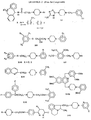
- Among a large number of the molecules incorporating arylpiperazines and showing antihypertensive activity, some relevant ones are thienopyrimidine-2,4-diones of formula I of the accompanying drawings - 1 (US Patent No. 4,670560, 1989), pyrazoles of formula II of the accompanying drawings - 1 (Arya, V.P. et al., Experentia, 23, 514, 1967), tetrazoles of formula III of the accompanying drawings - I (Hayae, S. et al. J. Med. Chem., 10, 400, 1967), prazocin analogs of formula IV of the accompanying drawings -1 (Luther, R.R. et al., Am. Heart J., 117, 842, 1989; Ames, R.P. & Kiyasu, J.Y. J. Clin. Pharmacol., 29, 123, 1989), 2-[3-[4-(4-fluorophenyl)piperazin-1-yl]propanes]-1,4-benzothiazin-3(4H)-one of formula V of the accompanying drawings - 1 (Kajine, M. et al., Chem. Pharm. Bull., 39, 2885, 1991), uracil derivatives of formula VI & VII of the accompanying drawings - 1 (Klmm, Von K. et al., Arzneim. Forsch., 27, 1875, 1977), dihydropyridines of formula VIII of the accompanying drawings 1 (Suzuki H. & Saruta, T, Cardiovasc. Drug Rev., 7, 25, 1989; Kubo, K. and Karawasawa, A. 10th Int. Cong. Pharmacol., 734, 1987; Drugs of the Future, 14, 291, 1989; Meguro, K. et al., Chem. Pharm. Bull., 33, 3787, 1985; Nakaya, H. et al., Eur. J. Pharmacol., 146, 35, 1988; Kakihand, M. et al., Jpn. J. Pharmacol., 48, 223, 1988; Takenaka, T. et al., Arzneim. Forsch., 26, 2127, 1976; Kajimo, M. et al., Chem. Pharm. Bull., 37, 2225, 1989; Tricerri, S.Z. et al., US Pat. 4,894,460, 1990: Chem. Abst., 113, 132218b, 1990), zolertine of formula IX of the accompanying drawings - 1 (Arya, V.P. et al., Experientia, 23, 514, 1967; Hayao, S. et al., J. Med. Chem., 10, 400, 1967), thiepin derivatives of formula X of the accompanying drawings - 2 (Uno, H. et al., US Patent. 4,749,703, 1988), triazolylamine of formula XI of the accompanying drawings -1 (Mayer, W.E. et al., J. Med. Chem., 32, 593, 1989), aryloxypropanolamines of formula XII of the accompanying drawings - 2 (Ing, H.R. & Ormerod, W.E., J. Pharm. Pharmacol., 4, 21, 1952; Petrow, V. et al., J. Pharm. Pharmacol., 8, 666, 1956; Moran, N.C. and Perkins, M.E., Pharmacol. Exp. Ther., 124, 223, 1958), aryloxy/thioaryloxy arylpiperazinylpropanes of formula XIII of the accompanying drawings - 2 (Agarwal, S.K. et al., Ind. J. Chem., 2 1 B, 435, 1982; Ind. J. Chem., 21B, 914, 1982; Ind. J. Chem., 30B, 413, 1991; Rao, J. et al., Ind. J. Chem., 26B, 761, 1987; Saxena, A.K. et al., Ind. J. Chem., 32B, 1249, 1993), quinolylethanes of formula XIV of the accompanying drawings - 2 Murti, A. et al., Ind. J. Chem., 28B, 934, 1989), trinetazidine of formula XV of the drawing 2 (Fujita, Y, Jpn. J. Pharmacol., 17, 19, 1976), lidoflazine of formula XVI of the drawing 2 (Daenen, W. & Flameng, W., Angiology, 32, 543, 1981), isoquinolylmethyl derivatives of formula XVII of the accompanying drawings - 2 (Nakajiza, T. et al., Arzneim-Forsch., 37, 674, 1987), dihydropyridazinone derivative of formula XVIII of the accompanying drawings - 2 (Yao, F.M. et al., Yaaxue Xuebao, 28, 548, 1993), pyrroloquinoline derivative of formula XIX of the accompanying drawings - 2 (Jasserand, D. et al., Ger. Offen. DE 4,128,015:, 1993 Chem. Abst., 119, 139255f, 1993).
- The invention is mainly centered around the following objects:
- (i) The first object of the invention is to provide a Process for preparing novel molecules incorporating piperazine flanked on one side by aromatic system and on the other side by 2-(oxopyrrolidin-1-yl)propanes or 2-(oxopiperidin-1-yl)propanes that exhibit better therapeutic efficacy to treat hypertension over the existing antihypertensive agents.
- (ii) The second object of the invention is to provide a process for preparing novel 1-(4-arylpiperazin-1-yl)-3-(2-oxopytrrolidin-1-yl) propanes and 1-(4-arylpiperazin-1-yl)-3-(2-oxopiperidin-1-yl) propanes exhibiting activity against ischemic reperfusion injury for which there is no agent available till date to best of our knowledge.
- (iii) The third object of the invention is to provide 1-(4-arylpiperazin-1-yl)-3-(2-oxopyrrolidin-1-yl) propanes and 1-4-arylpiperazin-1-yl)-3-2-oxopiperidin-1-yl) propanes as the therapeutic agents for the diseases arising out of alterations/impairment in central/peripheral circulations and adrenergic receptors systems, such as myocardial ischemia, myocardial infarction (MI), angina pectoris, any cardiac surgical interventions, renal ischemia, circulatory insufficiency in extremities, stroke and trauma.
- This invention is concerned with novel pharmacologically active substances and relates to new 1-(4-arylpiperazin-1-yl)-3-(2-oxopyrrolidin-1-yl) propanes and 1-(4-arylpiperazin-1-yl)-3-(2-oxopyrrolidin-1-yl) propanes as potential therapeutic agents for hypertension, ischemia, cardiovascular and other adrenergic receptors related disorders.
- According to the present invention, there is provided a process for preparing compounds of formula I

formula 5 where Ar is above in the presence of a base and organic solvent at a temperature ranging from 120-150°C for a period varying between 90 min. to 14 hrs. to produce the corresponding 1-[4-substituted arylpiperazin-1-yl]-3-[2-oxopyrrolidin/piperazin-1-yl] propanes of formula I. - The invention also provides compounds of formula I as defined above, and their use as medicaments.
- In a further aspect, there is provided the use of a compound of the invention in the manufacture of a medicament for treating any of the following disorders: hypertension in mammals, peripheral vascular diseases in mammals, diseases arising out of alterations/impairment in central/peripheral circulations and adrenergic receptors systems, such as myocardial ischemia, myocardial infarction (MI), angina pectoris, any cardiac surgical interventions, renal ischemia, circulatory insufficiency in extremities, stroke and trauma, reperfusion injury in mammals, ischemic diseases like myocardial infarction (MI) or angina pectoris.
- The preferred compounds of formula I are shown here below:
- (a) 1-[4-(3-chlorophenyl)piperazin-1-yl]-3-[2-oxopyrrolidin-1-yl] propane.
- (b) 1-[4-(4-chlorophenyl)piperazin-1-yl]-3-[2-oxopyrrolidin-I-yl] propane.
- (c) 1-[4-(3-fluorophenyl)piperazin-1-yl]-3-[2-oxopyrrolidin-1-yl] propane.
- (d) 1-[4-(4-fluorophenyl)piperazin-1-yl]-3-[2-oxopyrrolidin-1-yl] propane.
- (e) 1-[4-(4-ethylphenyl)piperazin-1-yl]-3-[2-oxopyrrolidin-1-yl] propane.
- (f) 1-[4-(2-ethylphenyl)piperazin-1-yl]-3-[2-oxopyrrolidin-1-yl] propane.
- (g) 1-[4-(4-chlorophenyl)piperazin-1-yl]-3-[2-oxopiperidin-1-yl] propane.
- (h) 1-[4-(3-chlorophenyl)piperazin-1-yl]-3-[2-oxopiperidin-1-yl] propane.
- (i) 1-[4-(4-fluorophenyl)piperazin-1-yl]-3-[2-oxopiperidin-1-yl] propane.
- (j) 1-[4-(2-ethylphenyll)piperazin-1-yl]-3-[2-oxopiperidin-1-yl] propane.
- (k) 1-[4-(2-methoxyphenyl)piperazin-1-yl]-3-[2-oxopiperidin-1-yl] propane.
- (l) 1-[4-(2-pyridyl)piperazin-1-yl]-3-[2-oxopiperadin-1-yl]propane.
- (m) 1-[4-(3-trifluoromethylphenyl)piperazin-1-yl]-3-[2-oxopiperadinl-yl] propane.
- In the specification and claims, the compounds with n=1 designates 2-oxopyrrolidin-1-yl while with n=2, 2-oxopiperidin-1-yl groups. Aryl designates a pyridyl or phenyl, or a phenyl group substituted by one or more alkyl, alkoxy or halogen groups. A preferred group of compound comprises those in which n=1 or n=2, aryl group is 2 or 4-pyridyl, phenyl, or phenyl group substituted by groups like H or CF3, alkyl groups like C2H5, alkoxy like methoxy, halo like chloro, fluoro etc. The compounds of this invention have useful biological activities and have in particular strong antihypertensive and antiischemic activities.
- The general reaction sequence leading to 1-[4-arylpiperazin-1-yl]-3-[2-oxopyrrolidin-1-yl] propanes or 1-4-arylpiperazin-1-yl]-3-2-oxopiperidin-1-yl] propanes is shown in
scheme 1 of the accompanying drawings. - It will be noted that according to the foregoing schemes there are two general methods leading to the synthesis of 1. In the first general method the 2-pyrrolidone (2, n=1) or 2-piperidone (2, n=2) is condensed with 1-bromo-3-chloropropane in presence of bases selected from potassium tert. butoxide, pulverized alkali metals selected from sodium or potassium in nonpolar solvents selected from benzene, xylene, toluene at a temperature ranging from 110 to 150°C for 1.15 to 14 hrs to give 1-chloro-3[2-oxo-pyrrolidin-1-yl]propane (3, n=1) or 1-chloro-3-[2-oxo-piperidin-1-yl]propane (3, n=2) which on condensation with appropriately substituted piperazines, gave the required compounds of
formula 1. This reaction may be carried out in solvents selected from acetone, methylethyl ketone, tetrahydrofuran or dimethylformamide using bases selected from triethylamine, pyridine, sodium or potassium carbonate and catalysts selected from sodium/potassium iodide to improve the yield of the compounds offormula 1 and the said method is the subject matter of the co-pending US application number .......... - According to the method, the substituted piperazine (4) was condensed with 1-bromo-3-chloropropane in presence of bases selected from sodium or potassium carbonate and catalytic amounts of sodium or potassium iodide in solvents selected from DMF, toluene, xylene etc. at a temperature ranging from 70 to 150°C for 8 to 14 hrs to give 1-chloro-3-(4-substituted piperazin-1-yl)propane (5) which on condensation with 2-oxo-pyrrolidine or 2-oxopiperidine in presence of bases selected from potassium tert. butoxide or pulverised sodium or potassium in nonpolar solvents selected from xylene, toluene at a temperature ranging from 110 to 150°C for 1.15 to 14 hrs yield the required compounds of
formula 1. - The 1-[4-arylpiperazin-1-yl]-3-[2-oxopyrrolidin-1-yl]propanes (1 n=1) and 1-[4-arylpiperazin-1-yl]-3-[2-oxopiperidin-1-yl]propanes (1 n=2) in free form can, if desired be converted in to, their non-toxic pharmaceutically acceptable acid addition and quaternary ammonium salts. Salts which may be formed comprise, for example, salts with inorganic acids such as hydrochloride, hydrobromide, hydroiodide, sulphate and phosphate. They may also comprise salts with organic acids including mono basic acids such as acetate or propionate and especially those with hydroxy organic acids and dibasic acids such as the citrate, tartarate, malate and maleate. Among useful quaternary ammonium salts are those formed by such alkyl halides as methyl iodine and n-hexyl bromide.
- The compounds of the invention show marked antihypertensive alpha-adrenergic blocking and antiischemic activities and can be used as therapeutic agents in diseases arising out of alterations/impairment in central/peripheral circulations and adrenergic receptors systems, such as myocardial ischemia, myocardial infarction (MI), angina pectoris, any cardiac surgical interventions, renal ischemia, circulatory insufficiency in extremities, stroke and trauma as shown for instance by the following data of the compound 1-[4-(4-fluorophenyl)piperazin-1-yl]-3-[2-oxopyrrolidin -1-yl]propane.
- Mice 147.0 mg/kg i.p. (C.L. = 85.3-253)
562.0 mg/kg p.o. (C.L. = 383-825) - 2. Effect on blood pressure, heart rate and adrenaline vasopressor response of anaesthetized (pentobarbitone sodium 40 & 60 mg/kg i.p. in cat and rat respectively) normotensive & hypertensive rat & cat model preparations.
Dose (uMol/kg i.d.) B.P. fall (%) Dur. (min.) Heart rate Pre/post treatment Adrenaline vasopressure response % inhibition No. of exp. (A) CAT (i) Naturally occurring hypertensive cat 10 16 110 195/195 49 n=4 20 22 >156.75 177/185 R 26 n=4 (ii) Normotensive cat 10 22 85 200/170 26 n=4 20 21 >102.5 185/165 34.75 n=4 Dose (uMol/kg i.d.) B.P. fall (%) Dur. (min.) Heart rate Pre/post treatment Adrenaline vasopressure response % inhibition No. of exp. (B) RAT (i) Hypertensive rat model preparation 5 27 51 346/320 33 n=3 10 22 76 356/340 23 n=5 20 29 100 310/275 54 n=1 (ii) Normotensive rat model preparation 2 i.v. 25 11 350/370 +7 R22 n=2 10 i.v. 10 3 315/360 +14 R28 n=2 20 i.v. 21 27.5 315/285 -9.5 R42 n=2 i.d. = Intraduodenal route; R = Reversal -
(i) Spinal transected catDose (uMol/kg i.d. B.P. fall (%) Dur. (min.) 2-10 14-18 15-30 0.34-1.36 8-10 10-15
(ii) ICV
(iii) Rat hind limb perfusionTotal dose (ug) Percent change in flow 10 no effect 25 +35 (Vasodilatation) 50 +50 (Vasolidatation) -
- (A) In vitro
- (i) Isolated aortic strip:
- * Endothelin induced contraction was inhibited significantly.
- * Even after washing the preparation endothelin caused relaxation rather than contraction.
(II) Isolated Guinea pig ileum preparation endothelin relaxation rather than contraction. - * Compound showed significant antihistaminic activity (0.5-5.0 ug/ml).
- (iii) Langendorffs perfused rat heart preparation:
- * Lower dose of this compound (1 ug) showed some negative chronotropic effect (30% for 10 min.) but higher doses (3-5 ug) showed less negative chronotropic effect (26 & 5% for 14 & 5 min. respectively).
- (iv) Konzett and Rossler preparation:
- * Compound showed some antihistaminic activity against histamine induced bronchoconstriction.
- (v) Rat aortic ring preparation:
- * NE induced contraction was inhibited by the compound.
- (i) Isolated aortic strip:
- (B) In vivo
Drug antagonism studies at 2 uMol dose i.v. in cat:- (i) Pretreatment with alpha1-adrenergic receptor blocker, prazosin significantly (90%) reduced antihypertensive effect.
- (ii) Pretreatment with Ca++ channel blocker, verapamil significantly reduced antihypertensive effect (50%).
- iii) Pretreatment with captopril (an ACE inhibitor) or Dup-753 (an angiotension II-receptor antagonist) also reduced the antihypertensive effect (33%).
- (iv) ATP sensitive potassium channel (KATP) blocker glibenclamide pretreatment only partially reduced the fall in blood pressure.
- (v) Pretreatment with, atropine sulphate, mepyramine maleate, propranolol, or yohimbine failed to alter the antihypertensive effect of this compound.
-
Drug B.P. fall (%) Dur. (min.) (i) Verapamil 55 22 (ii) Captopril 14 28 (iii) Compound 1 offormula 1, where Ar=C6H4-4-F, n=122 25 - The most interesting observation is its cardioprotective effect against myocardial stunning at a much smaller dose than antihypertensive dose. Further, in Langendorff perfused rat heart preparation subjected to even up to 90 min. global ischemia, the compound at 0.001 ug/ml conc. given at the time of reperfusion revived normal rhythmic contraction started within 2 min. (Table 1) and incidence of reperfusion induced arrhythmia were abolished.
Table 1: Compound administered at the time reperfusion at the dose of 0.001 ug/ml on prolong period (90min.) of ischemic insult. S. No. Compound Onset (min.) Percentage recovery 15 min. 30 min. 1. Control a3 0.5 17.5 2. Compound 1 offormula 1, where Ar=C6H4-4-F, n=14 81.25 87.15 3. Nifedipinea (10-6M) 2.5 0.66 0.0 a - Ischemic insult (45 min.) Table 2: Effect on blood pressure, heart rate and adrenaline vasopressure response at an anaesthetized (pentobarbitone sodium 35 mg/kg i.v.) cat. Compound of formula 1Dose (umol/kg i.v.) B. P. fall % Dur. (min.) Adrenalinea vasopressure response % inhibition Ar n C6H4-4- F 1 2.0 25 71 9 10.0 31 >112 R C6H4-2-C2H5 1 2.0 13 10 Pt 10.0 62 10 - C6H4-3- Cl 1 2.0 25 20 Pt 10.0 55 >57 - C6H4-4-C2H5 1 2.0 9 Tr - 10.0 20 14 - C6H4-3- F 1 2.0 18 3 80 10.0 32 30 R C6H4-2- OCH 31 2.0 19 19 47 10.0 23 67 R 2- Pyridyl 1 2.0 22 16 40 10.0 40 43 Pt 2- Pyridyl 2 2.0 34 53 28 10.0 42 >71 Pt C6H4-4- Cl 2 2.0 24 20 20 10.0 46 25 25 C6H4-3- Cl 2 2.0 27 9 33 10.0 44 62 10 C6H4-3- CF 32 2.0 - - Pt 10.0 10 Tr 25 C6H4-2-C2H5 2 2.0 35 55 68 10.0 20 63 R C6H4-4- F 2 2.0 23 40 46 10.0 33 >84 R a R=Reversal; Pt=potentiation (was within 20%) Table 3: Compound administered at the time of reperfusion at a dose of 0.001 ug/ml on brief period (16 min.) of ischemic insult. Compound of formula 1Onset (min.) Percentage recovery Ar n 15 min. 30 min. Control - 2.0 104.50 118.10a C6H4-4-F I 1.5 81.25 78.12 C6H4-2-C2H5 1 3.0 106.06 136.36 C6H4-3- Cl 1 1.0 50.00 88.80 C6H4-4-C2H5 1 2.0 103.03 60.60 C6H4-3- F 1 2.0 120.00 180.00 C6H4-3- Cl 2 3.0 31.50 39.40 C6H4-2- OCH 31 2.0 45.50 59.09 C6H4-4- Cl 1 1.0 87.50 120.80 2- Pyridyl 2 2.0 47.60 71.40 a - Arrhythmia present - The following examples are provided by the way of illustration of the present invention and should in no way be construed as a limitation thereof including the linker (propyl) between pyrrolidone/piperidone and N-arylpiperazine which may be ethyl or butyl.
-
(i) A mixture of 2-pyrrolidone (1 g, 12.0 mmol) and finely pulverized sodium metal (0.28 g, 12.0 mmol) in dry xylene (60 ml) was heated at 110°C with vigorous stirring, 1-bromo-3-chloropropane (1.8 g, 12.0 mmol) was added to the stirred reaction mixture after 3 hours and the heating at 110°C was continued for 6 hours. The reaction mixture was filtered and xylene was removed under reduced pressure. The residue was distilled under reduced pressure to give 3 (n=1), B.P. 145°C/l mm., yield 1.52 g (80%). IR (Neat) : 2980, 2880, 1710, 1460, 1420, 1280, 1050. 1H NMR (CDCl3): 1.92-2.18 (m, 4H, 4' & 2-CH2), 2.40(t, 2H, J=6.0 Hz, 3'-CH2), 3.42(t, 4H, J=6.0 Hz, 5' & 3-CH 2), 3.58 (t, 2H, J=6.0 Hz, 1-CH2). MS: m/z 161 (M+).Mol. formula C7H12NOCl : Found : C, 51.96; H, 7.48; N, 8.61 Calcd.: C, 52.11; H, 7.45; N, 8.69%.
(ii) A mixture of 2-pyrrolidone (10 g, 120.0 mmol) and finely pulverized sodium metal (2.76 g, 120.0 mmol) in dry xylene (600 ml) was heated at 150°C with vigorous stirring. 1-Bromo-3-chloropropane (18.84 g, 120.0 mmol) was added to the stirred reaction mixture after 30 minutes and the heating at 150°C was continued for 1 hour. The reaction mixture was filtered and xylene was removed under reduced pressure. The residue was distilled under reduced pressure to give 3 (n=1), B. P. 145°C/ 1 mm., yield 16.09g (85%).
(iii) A mixture of 2-pyrrolidone (2 g, 23.0 mmol) and finely pulverized sodium metal (0.529 g, 23.0 mmol) in dry toluene (120 ml) was heated at 120°C with vigorous stirring. 1-Bromo-3-chloropropane (3.97 g, 25.0 mmol) was added to the stirred reaction mixture after 6-7 hours and the heating at 120°C was continued for 7 hours. The reaction mixture was filtered and toluene was removed under reduced pressure. The residue was distilled under reduced pressure to give the compound 3 (n=1), B.P. 145°C/1mm., yield 2.86g (75%).
(iv) A mixture of 2-pyrrolidone (1 g, 12.0 mmol) and finely pulverized potassium metal (0.47 g, 12.0 mmol) in dry xylene (60 ml) was heated at 150°C with vigorous stirring. 1-Bromo-3-chloropropane (1.8 g, 12.0 mmol) was added to the stirred reaction mixture after 20 minutes and the heating at 150°C was continued for 1 hour. The reaction mixture was filtered and xylene was removed under reduced pressure. The residue was distilled under reduced pressure to give 3 (n=1), B.P. 145°/lmm., yield 1.43g (75%).
(v) A mixture of 2-pyrrolidone (1 g, 12.0 mmol) and potassium tert. butoxide (1.34 g, 12.0 mmol) in dry xylene (60 ml) was heated at 150°C with vigorous stirring. 1-Bromo-3-chloropropane (1.8 g, 12.0 mmol) was added to the stirred reaction mixture after 2 hours and the heating at 150°C was continued for 3 hours. The reaction mixture was filtered and xylene was removed under reduced pressure. The residue was distilled under reduced pressure to give 3 (n=1), B.P. 145°C/l mm., yield 1.24 g (65%). - A mixture of 2-piperidone (1.19 g, 12.0 mmol) and finely pulverized sodium metal (0.28 g, 12.0 mmol) in dry xylene (70 ml) was heated at 110°C with vigorous stirring, 1-bromo-3-chloropropane (1.89 g, 12.0 mmol) was added to the stirred reaction mixture after 3 hours and the heating at 110°C was continued for 6 hours. The reaction mixture was filtered and xylene was removed under reduced pressure. The residue was chromatographed on silica gel using hexane and chloroform as eluant to get 3 (n=2), B.P. 91°C/0.01 mm., yield 1.33 g (63.33%). IR (Neat): 3862., 3298, 2950, 2474, 2324, 1640, 1478, 1432, 1336, 1184, 1096, 754. 1H NMR (CDCl3) 1.79-2.36 (m, 8H), 3.15-3.67 (m,6H). MS: m/z 175 (M+).
Mol. formula C8H14NOCL : Found : C, 54.90; H, 8.28; N, 8.25 Calcd.: C, 54. 69; H.8.03; N, 7.97%. - A mixture of 1-chloro-3-[2-oxopyrrolidin-1-yl]propane (1g, 6.2 mmol), 1-(3-chlorophenyl)piperazine (1.22 g, 6.2 mmol) anhydrous Na2CO3 (0.33 g, 3.1 mmol) and NaI (0.093 g, 0.6 mmol) in dry DMF (5 ml) was stirred at 70°C for 14 hours. The reaction mixture was cooled, poured on water (20 ml) and the separated residue was extracted with CHCl3 (2x25 ml). The extracts were dried over Na2SO4 and concentrated under reduced pressure to give 1-[4-(3-chlorophenyl)piperazin-1-yl]-3-[2-oxopyrrolidin-1-yl] propane as an oil which was purified by flash column chromatography over silica gel using chloroform as eluent, yield 1.50 g (75%) . IR (Neat): 3020, 2820, 1660, 1590, 1450, 1210, 730. 1H NMR (CDCl3): 1.30-2.60 (m, 12H, 3', 4', 2, 1 & 2xN-CH2), 2.40-3.50 (m, 8H, 5', 3 & 2xN-CH 2), 6.40-7.20(m, 4H, ArH). MS: m/z 321 (M+) 323 (M+2).
Mol. Formula C17H24ClN3O : Found : C, 63.58; H, 7.82; N, 13. 17 Calcd : C, 63.44; H, 7.52; N, 13.06%. - (b) A mixture of 2-pyrrolidone (1 g, 12 mmol) and finely pulverized sodium metal (0.28 g, 12.0 mmol) in dry toluene (60 ml) was heated at 120°C with vigrous stirring for 6 hours, 1-[4-(3-chlorophenyl)-piperazin-1-yl]-3-chloropropane (3.26 g, 12.0 mmol) was added to this reaction mixture and the reaction mixture was heated under stirring at 120°C for 7 hour. The reaction mixture was filtered and toluene was removed under reduced pressure. The residue was chromatographed over flash silica gel using chloroform as eluent to give the title product, yield 2.65 g (70%), oil.
- (c) A mixture of 1-chloro-3-[2-oxopyrrolidin-1-yl]propane (1.0 g, 6.2 mmol), 1-(3-chlorophenyl)piperazine (1.22 g, 6.2 mmol), anhydrous Na2CO3 (0.33 g, 3.1mmol) and NaI (0.093 g, 0.6 mmol) in dry toluene (10 ml) was stirred at 110°C for 12 hrs. The solvent was removed at reduced pressure and residue was poured on water (20 ml). The separated residue was extracted with ethylacetate (3x20 ml), dried over Na2SO4 and concentrated under reduced pressure to give 1-[4-(3-chlorophenyl)piperazin-1-yl]-3-[2-oxopyrrolidin-1-yl]propane as an oil which was purified by flash column chromatography over silica gel using chloroform as eluent, yield 0.60 g (30.0%).
- (d) A mixture of 1-chloro-3-[2-oxopyrrolidin-1-yl]propane (1 g, 6.2 mmol), 1-(3-chlorophenyl)piperazine (1.22 g, 6.2 mmol) anhydrous Na2CO3 (0.33 g, 3.1 mmol) and NaI (0.093 g, 0.6 mmol) in dry xylene (15 ml) was stirred at 150°C for 14 hrs. The solvent was removed at reduced pressure and residue was poured on water (30 ml). The separated residue was extracted with dichloromethane (2x25 ml), dried over Na2SO4 and concentrated to give 1-[4-(3-chlorophenyl)piperazin-1-yl]-3-[2-oxopyrrolidin-1-yl]propane as an oil which was, purified by flash column chromatography over silica gel using chloroform as eluent, yield 0.72 g (36%).
- A mixture of 1-chloro-3-[2-oxopyrrolidin-1-yl]propane (1 g, 6.2 mmol), 1-(4-chlorophenyl)piperazine (1.22 g, 6.2 mmol) anhydrous Na2CO3 (0.33 g, 3.1 mmol) and NaI (0.09 g, 0.6 mmol) in dry DMF (5 ml) was stirred at 70°C for 12 hrs. The reaction mixture was cooled, poured on water (20 ml) and the separated residue was extracted with CHCl3 (2x25 ml). The extracts were dried over Na2SO4 and concentrated under reduced pressure to give 1-[4-(4-chlorophenyl)piperazin-1-yl]-3-[2-oxopyrrolidin-1-yl]-propane which was purified by flash column chromatography over silica gel using chloroform as eluent, yield 1.48 g (74%), M.P. 78-80°C. IR (KBr): 3440, 2820, 1660, 1490, 1230, 1130, 810. 1H NMR (CDCl3): 1.50-2.80(m, 12H, 3', 4', 2, 1 & 2xN-CH2), 3.00-3.60 (m, 8H, 5', 3 & 2xN-CH2), 6.80 (d, 2H, J=9.0 Hz, ArH, o to Cl), 7.20 (d, 2H, J=9.0 Hz, ArH, m to Cl). MS: m/z 321 (M+) 323 (M+2).
Mol. formula C17H24ClN3O : Found : C, 63.84; H, 7.32; N, 13.12 Calcd.: C, 63.44; H, 7.52; N, 13. 06%. - (b) A mixture of 2-pyrrolidone (1 g, 12 mmol) and finely pulverized sodium metal (0.28 g, 12.0 mmol) in dry xylene (60 ml) was heated at 140°C with vigrous stirring, 1-[4(4-chlorophenyl)piperazin-1-yl]-3-chloropropane (3.26 g, 12.0 mmol) was added to the stirred reaction mixture after 30 minutes and the heating at 140°C was continued for 1 hour. The reaction mixture was filtered and xylene was removed under reduced pressure to give 3 which was purified by flash column chromatography over silica gel using chloroform as eluent, yield 2.83 g (75%), M.P. 78-80°C.
- (c) A mixture of 2-pyrrolidone (1 g, 12 mmol) and finely pulverized potassium metal (0.47 g, 12.0 mmol) in dry xylene (60 ml) was heated at 150°C with vigrous stirring, 1-[4-(4-chlorophenyl)piperazin-1-yl]-3-chloropropane (3.26 g, 12.0 mmol) was added to the stirred reaction mixture after 20 minutes and the heating at 150°C was continued for 1 hour. The reaction mixture was filtered and xylene was removed under reduced pressure to give 3 which was purified by flash column chromatography over silica gel using chloroform as eluent, yield 2.78 g (73.5%), M.P. 78-80°C.
- (d) A mixture of 2-pyrrolidone (1 g, 12 mmol) and finely pulverized potassium tert. butoxide (1.34 g, 12.0 mmol) in dry xylene (60 ml) was heated at 150°C with vigrous stirring, 1-[4-(4-chlorophenyl)piperazin-1-yl]-3-chloropropane (3.26 g, 12.0 mmol) was added to the stirred reaction mixture after 2 hrs and the heating at 150°C was continued for 4 hour. The reaction mixture was filtered and xylene was removed under reduced pressure to give 3 which was purified by flash column chromatography over silica gel using chloroform as eluent, yield 2.46 g (65% ), M.P. 78-80°C.
- A mixture of 1-chloro-3-[2-oxopyrrolidin-1-yl]propane(1 g, 6.2 mmol), 1-(3-fluorophenyl)piperazine (1.12 g, 6.2 mmol), anhydrous K2CO3 (0.434 g, 3.1 mmol) and KI (0.10 g, 0.6 mmol) in dry DMF (5 ml) was stirred at 90°C for 12 hrs. The reaction mixture was cooled, poured on water (25 ml) and the separated residue was extracted with CHCl3 (2x25 ml). The extracts were dried over Na2SO4 and concentrated under reduced pressure to give 1-[4-(3-fluorophenyl)piperazin-1-yl]-3-[2-oxopyrrolidin-1-yl]propane as an oil which was purified by flash column chromatography over silica gel using chloroform as eluent, yield 1.32 g (69.6%). 1R (Neat): 2920, 2800, 1650, 1440, 1240, 1150, 740. 1H NMR (CDCl3): 1.50-2.70 (m, 12H, 3', 4', 2, 1 & 2xN-CH 2), 3.00-3.60 (m, 8H, 5', 3 & 2xN-CH2), 6.30-6.80 (m, 4H, ArH). MS: m/z 305 (M+) 307 (M+2).
Mol. formula C17H24FN3O: Found: C, 67.22; H, 7.72; N, 13.97 Calcd: C, 66.88; H, 7.92; N, 13.76%. - (b) A mixture of 2-pyrrolidone (1g, 12 mmol) and finely pulverized sodium metal (0.28g, 12.0 mmol) in dry xylene (60 ml) was heated at 150°C with vigrous stirring, 1-[4-(3-fluorophenyl)piperazin-1-yl]-3-chloropropane (3.07g, 12 mmol) was added to the stirred reaction mixture and the heating at 150°C was continued for 1 hour. The product was obtained by the similar method as in example 3, yield 2.94g (82%), oil.
- A mixture of 1-chloro-3-[2-oxopyrrolidin-1-yl]propane (4g, 25.0 mmol), 1-(4-fluorophenyl)piperazine (4.47 g, 25.0 mmol), anhydrous Na2CO3 (1.325 g, 12.5 mmol) and NaI (0.38g, 2.5 mmol) in dry DMF (20 ml) was stirred at 120°C for 8 hrs. The reaction mixture was cooled, poured on water (30 ml) and the separated residue was extracted with CHCl3 (2x30 ml). The extracts were dried over Na2SO4 and concentrated under reduced pressure to give 1-[4-(4-fluorophenyl)piperazin-1-yl]-3-[2-oxopyrrolidin-1-yl]-propane as an oil which was purified by flash column chromatography over silica gel using chloroform as eluent, yield 5.72 g (75.5%). IR (Neat): 2920, 2820, 1660, 1500, 1250, 730. 1H NMR (CDCl3): 1.50-2.80 (m, 12H, 3', 4', 2, 1 & 2xN-CH 2), 3.00-3.60(m, 8H, 5', 3 & 2xN-CH2), 6.70-7.10(m, 4H, ArH). MS: m/z 305 (M+).
Mol. formula C17H24FN3O : Found : C, 66.55; H, 8.07; N, 13.69 Calcd.: C, 66.86; H, 7.92; N, 13.76% - (b) A mixture of 2-pyrrolidone (3g, 35 mmol) and finely pulverized sodium metal (0.81 g, 35.0 mmol) in dry xylene (180 ml) was heated at 150°C with vigrous stirring, 1-[4-(4-fluorophenyl)piperazin-1-yl]-3-chloropropane (8.96 g, 35.0 mmol) was added to the stirred reaction mixture after 30 minutes and the heating at 150°C was continued for 1 hour. The reaction mixture was filtered and xylene was removed under reduced pressure to give 3 which was purified by flash column chromatography over silica gel using chloroform as eluent, yield 9.15 g (85%), oil.
- A mixture of 1-chloro-3-[2-oxopyrrolidin-1-yl]propane (2.0 g, 12.0 mmol), 1-(4-ethylphenyl)piperazine (2.36 g, 12.0 mmol), anhydrous Na2CO3 (0.658 g, 6.2 mmol) and NaI (0.18 g, 1.2 mmol) in dry DMF (10 ml) was stirred at 80°C for 12 hrs. The reaction mixture was cooled, poured on water (30 ml) and the separated residue was extracted with CHCl3 (2X30ml). The extracts were dried over Na2SO4 and concentrated under reduced pressure to give 1-[4-(4-ethylphenyl)piperazin-1-yl]-3-[2-oxopyrrolidin-1-yl]propane as an oil which was purified by flash column chromatography over silica gel using chloroform as eluent, yield 2.43 g (62.0%). 1R (Neat): 2940, 2800, 1660, 1440, 1000, 900, 800. 1H NMR (CDCl3): 1.20(t, 3H, J=6.0 Hz, CH2CH 3 1.60-2.80(m, 14H, 3',4',2,1 & 2xN-CH2, CH 2CH3), 3.00-3.60 (m, 8H, 5', 3 & 2xN-CH 2). MS: m/z 315 (M+).
Mol. formula C19H29N3O: Found : C, 71.94; H, 9.16; N, 13.15 Calcd.: C, 72.34; H, 9.27; N, 13.32%. - (b) A mixture of 2-pyrrolidone (2 g, 24 mmol) and finely pulverized sodium metal (0.56 g, 24.0 mmol) in dry xylene (120 ml) was heated at 150°C with vigrous stirring, 1-[4-(4-ethylphenyl)piperazin-1-yl]-3-chloropropane (6.38g, 24.0mmol) was added to the stirred reaction mixture after 30 minutes and the heating at 150°C was continued for 1 hour. The product was obtained by the similar method as in example-3, yield 6.42g (78%), oil.
- A mixture of 1-chloro-3-[2-oxopyrrolidin-1-yl]propane (2.0 g, 12.0 mmol), 1-(2-ethylphenyl)piperazine (2.36g, 12.0 mmol), anhydrous Na2CO3 (0.658 g, 6.2 mmol) and NaI (0.18 g, 1.2 mmol) in dry DMF (10 ml) was stirred at 80°C for 12 hrs. The reaction mixture was cooled, poured on water (30 ml) and the separated residue was extracted with CHCl3 (2X20ml). The extracts were dried over NaS2O4 and concentrated under reduced pressure to give 1-[4-(4-ethylphenyl)piperazin-1-yl]-3-[2-oxopyrrolidin-1-yl]propane as an oil which was purified by flash column chromatography over silica gel using chloroform as eluent, yield 2.17 g (60.0%). IR (Neat): 2940, 2820, 1660, 1430, 1010, 900, 800. 1H NMR (CDCl3): 1.24(t, 3H, J=6 Hz, CH2-CH 3), 1.68-1.85(m, 2H, 4'-CH2), 1.98-2.10 (m, 2H, 2-CH2), 2.34-2.50 (m, 4H, 3' & 1-CH2), 2.62(bs, 4H, 2xN-CH2), 2.68(q, 2H, CH3-CH 2), 2.94(t, 4H, J=6.0 Hz, 2xN-CH 2), 2.35(t, 2H, J=6.0 Hz, 3-CH2). 3.42(t 2H, J=6.0 Hz, 5'-CH2), 7.00-7.28(m, 4H, Ar-H). MS: m/z 315 (M+).
Mol. formula C19H29N3O : Found : C, 72.64; H, 9.11; N, 13.64 Calcd.: C, 72.34; H, 9.27; N, 13.32% - (b) A mixture of 2-pyrrolidone (1g, 12 mmol) and finely pulverized sodium metal (0.28g, 12.0 mmol) in dry xylene (60 ml) was heated at 150°C with vigrous stirring, 1-[4-(3-ethylphenyl)piperazin-1-yl]-3-chloropropane (3.19 g, 12.0 mmol) was added to the stirred reaction mixture after 30 minutes and the heating at 150°C was continued for 1 hour. The product was obtained by the similar method as in example-3,
yield 3. 13 g (76%), oil. - A mixture of 2-piperidone (1g, 10 mmol) and finely pulverized sodium metal (0.23 g, 10 mmol) in dry xylene (60 ml) was heated at 140°C with vigrous stirring, 1-[4-(4-chlorophenyl)piperazin-1-yl]-3-chloropropane (2.72 g, 10 mmol) was added to the stirred reaction mixture after 30 minutes and the heating at 140°C was continued for 1 hour. The reaction mixture was filtered and xylene was removed under reduced pressure to give 3 which was purified by flash column chromatography over silica gel using chloroform as eluent, yield 2.54 g (75%), m.p. 106°C. IR (Neat): 3761, 3408, 3017, 2957, 2882, 2826, 2785, 2502, 1659, 1599, 1499, 1456, 1385, 1346, 1219, 1148, 1105, 760, 667. PMR (CDCl3): 0.89-1.80(m, 6H, 4',5' & 2-CH2), 2.33-2.65(m, 8H, 3',1 & 2xN-CH2), 3.15-3.62(m, 8H, 6',3 & 2xN-CH2), 6.81-7.00(2xdd, 4xArH). MS: m/z 337 (M+2).
Mol. formula C18H26N3OCl : Found: C, 64.23; H, 7.87; N, 12.24 Calcd .: C, 64.37; H, 7.80; N, 12.51%. - (b) A mixture of 2-piperidone (1.0 g, 10 mmol) and finely pulverized potassium tert. butoxide (1.12 g, 10 mmol) in dry xylene (60 ml) was heated at 150°C with vigrous stirring, 1-[4-(4-chlorophenyl)piperazin-1-yl]-3-chloropropane (2.72 g, 10 mmol) was added to the stirred reaction mixture after 2 hours and the heating at 150°C was continued for 4-hour. The reaction mixture was filtered and xylene was removed under reduced pressure to give 3 which was purified by flash column chromatography over silica gel using chloroform as eluent, yield 2.17g (64%), m.p. 106°C.
- A mixture of 2-piperidone (1.0 g, 10 mmol) and finely pulverized sodium metal (0.23 g, 10 mmol) in dry toluene (60 ml) was heated at 120°C with vigrous stirring for 6 hours, 1-[4-(3-chlorophenyl)piperazin-1-yl]-3-chloropropane (2.72g, 10 mmol) was added to this reaction mixture and the reaction mixture was heated under stirring at 120°C for 7 hour. The reaction mixture was filtered and toluene was removed under reduced pressure. The residue was chromatographed over flash silica gel using chloroform as eluent to give 3, yield 2.59 g (76.5%), oil. IR (Neat): 3406, 2951, 2878, 1626, 1597, 1491, 1454, 1383, 1352, 1219, 1142, 1103. 1H NMR (CDCl3): 1.17-1.84 (m, 6H, 2, 4' & 5'-CH 2), 2.27-2.65(m, 8H, 1, 3' & 2xN-CH2), 3.15-3.37(m, 8H, 6', 3 & 2xN-CH2), 6.68-6.79 (dd, 2xArH), 7.05-7.1 (t, 1xArH), 7.19 (s, 1xArH). MS: m/z 335 (M+).
Mol. formula C18H26N3OCl : Found: C, 64.17; H, 7.92; N, 12.21 Calcd.: C, 64.37; H, 7.80; N, 12.51% - A mixture of 2-piperidone (2g, 20 mmol) and finely pulverized sodium metal (0.46 g, 20 mmol) in dry xylene (120 ml) was heated at 150°C with vigrous stirring, 1-[4-(4-fluorophenyl)piperazin-1-yl]-3-chloropropane (5.17 g, 20 mmol) was added to the stirred reaction mixture after 30 minutes out the heating at 150°C was continued for 1 hour. The reaction mixture was filtered and xylene was removed under reduced pressure to give 3 which was purified by flash column chromatography over silica gel using chloroform as eluent, yield 4.64 g (72%), oil. IR (Neat): 3408, 3014, 2931, 2880, 2825, 1626, 1508, 1458, 1219, 824, 760, 667. 1H NMR (CDCl3): 1.72-1.86(m, 6H, 4', 5' & 2-CH2)2.37-2.69 (m, 8H, 3', 1 & 2xN-CH2), 3.12-3.46(m, 8H, 6', 3 & 2xN-CH2), 6.83-7.00 (2xdd, 4xArH). MS: 319 (M+).
Mol. formula C19H26N3OF : Found : C, 71.23; H, 8.26; N, 12.95 Calcd.: C, 71.47; H, 8.15; N, 13.17%. - (b) a mixture of 1-chloro-3-[2-oxopiperidin-1-yl]propane (2.1g, 12 mmol), 1-(4-fluorophenyl)piperazine (2.16g, 12 mmol), anhydrous Na2CO3 (0.618g, 6.2 mmol) and Na (0.18g, 1.2 mmol) in dry DMF (10 ml) was stirred at 80°C for 14 hrs. The reaction mixture was cooled, poured on water (30 ml) and the separated residue was extracted with CHCl3 (2x35 ml). The extracts were dried over Na2SO4 and concentrated under reduced pressure to give 1-[4-(4-fluorophenyl)piperazin-1-yl]-3-[2-oxopiperidin-1-yl] propane as an oil which was purified by column chromatography over silica gel using chloroform as eluent, yield 2.40 g (63.0%)
- A mixture of 2-piperidone (1.0 g, 10 mmol) and finely pulverized sodium metal (0.23g, 10 mmol) in dry xylene (60ml) was heated at 150°C with vigrous stirring, 1-[4-(2-ethylphenyl)piperazin-1-yl]-3-chloropropane (2.66 g, 10 mmol) was added to the stirred reaction mixture after 30 minutes and the heating at 150°C was continued for 1 hour. The reaction mixture was filtered and xylene was removed under reduced pressure to give 3 which was purified by flash column chromatography on silica gel using chloroform as eluent, yield 2.49 g (75%), oil. IR (Neat): 3680, 3440, 3000, 2960, 2870, 2820, 1620, 1490, 1450, 1350, 1210, 1140, 1005, 920, 725. 1H NMR (CDCl3): 1.00 (t, 3H, CH2CH 3), 1.20-1.90 (m, 6H, 4', 5' & 2-CH2), 2.20-3.50(m, 18H, 3', 6', 3, 1 & 4xN-CH2, CH 2CH3), 7.00-7.20(m, 4H, ArH). MS: m/z 329 (M+).
Mol. formula C20H31N3O : Found : C, 72.67; H, 9.60; N, 12.49 Calcd.: C, 72.95; H, 9.42; N, 12.77%. - A mixture of 2-piperidone (1.0 g, 10 mmol) and finely pulverized potassium metal (0.40 g, 10 mmol) in dry xylene (60 ml) was heated at 150°C with vigrous stirring, 1-[4-(2-methoxyphenyl)piperazin-1-yl]-3-chloropropane (2.52 g, 10 mmol) was added to the stirred reaction mixture after 20 minutes and the heating at 150°C was continued for 1 hour. The reaction mixture was filtered and xylene was removed under reduced pressure to give 3 which was purified by flash column chromatography over silica gel using chloroform as eluent, yield 2.41g (72%), oil. IR (Neat): 2945, 1626, 1500, 1460, 1242, 908, 735, 648. PMR (CDCl3): 1.69-1.84(m, 6H, 4', 5' & 2-CH2), 2.26-2.70(m, 8H, 3', 1 & 2xN-CH2), 3.07-3.36 (m, 8H, 6', 3 & 2xN-CH2), 3.75 (s, 3H, OCH3), 6.76-6.95 (m, 4H, ArH). MS: m/z 331 (M+).
Mol. formula C19H29N3O2 : Found : C, 68.61; H, 8.92; N, 12.56 Calcd .: C, 68.85; H, 8.81; N, 12 68%. - A mixture of 2-piperidone (2g, 20 mmol) and finely pulverized sodium metal (0.46 g, 20 mmol) in dry xylene (120 ml) was heated at 150°C with vigrous stirring, 1-[4-(2-pyridyl)piperazin-1-yl]-3-chloropropane (4.78g, 20 mmol) was added to the reaction mixture after 30 minutes and the heating at 150°C was continued for 1 hour. The reaction mixture was filtered and xylene was removed under reduced pressure to give 3 which was purified by flash column chromatography over silica gel using chloroform as eluent, yield 4.39g (72%), oil. IR (Neat): 3420, 2940, 2800, 1629, 1580, 1470, 1420, 1230, 1150, 1125, 960, 720. 1H NMR (CDCl3): 1.50-2.20 (m, 6H, 4', 5' & 2-CH2), 2.25-2.80(m, 8H, 3', 1 & 2xN-CH2), 3.10-4.80 (m, 8H, 6', 3 & 2xN-CH2), 6.48-7.67 (m, 2H, 3,5-pyridyl H), 7.40 (m, 1H, 4-pyridyl H), 8.15 (m, 1H, 6-pyridyl H). MS: m/z 302 (M+).
Mol. formula C17H26N4 : Found : C, 67.32; H, 8.49; N, 18.38 Calcd .: C, 67.52; H, 8.67; N, 18.53%. - A mixture of 2-piperidone (1.0 g, 10 mmol) and finely pulverized sodium metal (0.23 g, 10 mmol) in dry xylene (60 ml) was heated at 150°C with vigorous stirring, 1-[4-(3-CF3-phenyl) piperazin-1-yl]-3-chloropropane (3.06 g, 10 mmol) was added to the stirred reaction mixture after 30 minutes and the heating at 150°C was continued for I hour. The reaction mixture was filtered and xylene was furnished by flush column chromatography on silica gel using CHCl3 as eluent, yield 2.80 g (75%), oil. IR (Neat): 3402, 3015, 2951, 2880, 2827, 2785, 1622, 1449, 1450, 1352 1315, 1217, 1167, 1126, 1076, 997, 951. 1H NMR (CDCl3): 1.75-1.93 (m, 6H, 4', 5' & 2-CH2), 2.35 -2.75 (m, 8H, 3', 1 & 2xN-CH2), 3.310-3.84 (m, 8H, 6', 3 & 2xN-CH2), 7.04-7.10 (dd, 2H, 4, 6-ArH), 7.26 (s, H, 2-ArH), 7.32-7.37 (t, H, 5-ArH). MS: m/z 369 (M+)
Mol. formula C19H26N3OF3 -: Found: C, 61.48; H, 7.23; N, 11.21 Calcd.: C, 61.79; H, 7.05; N, 11.38% -
- (a) Cats (2.6-4.0 kg) of either sex anaesthetized with pentobarbitone sodium (40 mg/kg i.v.) and showing basal mean arterial blood pressure below 150 mm (Hg) were categorised as normotensive and above 150 mm Hg as hypertensive. Arterial blood pressure (BP) was recorded from one of the carotid artery through a stathum P23 DC pressure transducer and 7P1 low level DC preamplifier on a Grass Model P7 Polygraph, Signals from
7P 1 preamplifier were used to trigger 7P4 Tachograph preamplifier for recording the heart rate (HR). Right femoral vein and Trachea were cannulated for intravenous injections and artificial ventilation respectively. Control responses to intravenous injection of noradrenaline (2-4 ug); acetyl choline (1-2 ug); histamine (1-2 ug) and isoprenaline (1-2 ug) were taken before and after the administration of test doses of each compounds. All the compounds were tested at fixed doses of 2.0 and 10 uM/kg i.v. Significant results are given in Table 2. - (b) Antihypertensive activity was observed in naturally hypertensive cats, rat abdominal aorta coarctation model of hypertension (Liu, J; Bishop, S.P. & Overbeck, H.W. Morphometric evidence for non pressure related arterial wall thickening in hypertension Circ. Res. 62, 1001-1010, 1988) and L-NAME (No synthase inhibitor) induced hypertensive cats.
- The rats were killed by decapitation, heart were rapidly excised and placed in ice-cold HEPES tyrode buffer. Then isolated hearts were perfused retrogradely through coronary arteries using the Langendorff technique. The perfusion buffer consisted (in mM) NaCl 137, KCl 5.4, CaCl2 1.8, MgCl 2 1.0, glucose 11.2 and HEPES 3.0. The buffer (pH 7.4) was continuously gassed with oxygen and maintained at 37°C. Coronary flow rate was maintained at 10 ml/min. The heart contracted spontaneously.
The perfused heart was allowed to equilibrate for 30 min. before initiation of any insult protocol. The test compounds were given at the time of reperfusion. Some of the compounds were dissolved in ethanol. Final concentration of ethanol in the perfusion buffer was 0.0001% and had no effect of its own on the parameter used. - (a) For brief period of ischemic insult (Hideo et al. Pathophysiology and pathogenesis of stunned myocardium. J. Clin. Invest., 79, 950-961, 1987). Ischemia was initiated by stopping the flow for 16 min. followed by 30 min. reperfusion period. The durations were decided on the initial pilot experiments leading to 50% recovery of function.
- (b) For prolong period of ischemic insult (Becker, L.C. & Ambrosio, G. Myocardial consequences of reperfusion Prog. Cardiovas. Dis., 30, 23-44, 1987). Ischemia was initiated by stopping the flow for 30 min. followed by 30 min. reperfusion.
Claims (10)
- A process for the synthesis of compounds of formula I

- A process as claimed in claim 1 wherein the preferred compounds are defined herebelow:(a) 1-[4-(3-chlorophenyl)piperazin-1-yl]-3-[2-oxopyrrolidin-1-yl] propane.(b) 1-[4-(4-chlorophenyl)piperazin-1-yl]-3-[2-oxopyrrolidin-1-yl] propane.(c) 1-[4-(3-fluorophenyl)piperazin-1-yl]-3-[2-oxopyrrolidin-1-yl] propane.(d) 1-[4-(4-fluorophenyl)piperazin-1-yl]-3-[2-oxopyrrolidin-1-yl] propane.(e) 1-[4-(4-ethylphenyl)piperazin-1-yl]-3-[2-oxopyrrolidin-1-yl] propane.(f) 1-[4-(2-ethylphenyl)piperazin-1-yl]-3-[2-oxopyrrolidin-1-yl] propane.(g) 1-[4-(4-chlorophenyl)piperazin-1-yl]-3-[2-oxopiperidin-1-yl] propane.(h) 1-[4-(3-chlorophenyl)piperazin-1-yl]-3-[2-oxopiperidin-1-yl] propane.(i) 1-[4-(4-fluorophenyl)piperazin-1-yl]-3-[2-oxopiperidin-1-yl] propane.(j) 1-[4-(2-ethylphenyll)piperazin-1-yl]-3-[2-oxopiperidin-1-yl] propane.(k) 1-[4-(2-methoxyphenyl)piperazin-1-yl]-3-[2-oxopiperidin-1-yl] propane.(l) 1-[4-(2-pyridyl)piperazin-1-yl]-3-[2-oxopiperidin-1-yl]propane.(m) 1-[4-(3-trifluoromethylphenyl)piperazin-1-yl]-3-[2-oxopiperidin-1-yl] propane.
- A process as claimed in claim 1 wherein the molar ratio of the compounds of formula 2 and 5 is 1:1.
- A process as claimed in claim 1 wherein the solvent used is selected from toluene or xylene and the amount of the solvent used ranges from 5 to 6ml per mmol of the reacting compounds of formula 2 and 5.
- A process as claimed in claim 1 where atomic/molar ratio of the base sodium/potassium metal or potassium tert. butoxide to the compounds of formula 2 and 5 is 1:1.
- A pharmaceutical composition comprising a compound of formula 1 as defined in claim 1 in admixture with a pharmaceutically acceptable conventional carrier.
- A process for the preparation of a pharmaceutical composition which comprises bringing a compound of the formula 1 as defined in claim 1 into association with a pharmaceutically acceptable carrier.
- The use of a compound of formula 1, as defined in claim 1, in the manufacture of a medicament for treating any of the following disorders: hypertension in mammals, peripheral vascular diseases in mammals, diseases arising out of alterations/impairment in central/peripheral circulations and adrenergic receptors systems, such as myocardial ischemia, myocardial infarction (MI), angina pectoris, any cardiac surgical interventions, renal ischemia, circulatory insufficiency in extremities, stroke and trauma, reperfusion injury in mammals, ischemic diseases like myocardial infarction (MI) or angina pectoris.
- A compound of formula I
 (a) 1-[4-(3-chlorophenyl)piperazin-1-yl]-3-[2-oxopyrrolidin-1-yl] propane.(b) 1-[4-(4-chlorophenyl)piperazin-1-yl]-3-[2-oxopyrrolidin-I-yl] propane.(c) 1-[4-(3-fluorophenyl)piperazin-1-yl]-3-[2-oxopyrrolidin-1-yl] propane.(d) 1-[4-(4-fluorophenyl)piperazin-1-yl]-3-[2-oxopyrrolidin-1-yl] propane.(e) 1-[4-(4-ethylphenyl)piperazin-1-yl]-3-[2-oxopyrrolidin-1-yl] propane.(f) 1-[4-(2-ethylphenyl)piperazin-1-yl]-3-[2-oxopyrrolidin-1-yl] propane.(g) 1-[4-(4-chlorophenyl)piperazin-1-yl]-3-[2-oxopiperidin-1-yl] propane.(h) 1-[4-(3-chlorophenyl)piperazin-1-yl]-3-[2-oxopiperidin-1-yl] propane.(i) 1-[4-(4-fluorophenyl)piperazin-1-yl]-3-[2-oxopiperidin-1-yl] propane.(j) 1-[4-(2-ethylphenyll)piperazin-1-yl]-3-[2-oxopiperidin-1-yl] propane.(k) 1-[4-(2-methoxyphenyl)piperazin-1-yl]-3-[2-oxopiperidin-1-yl] propane.(l) 1-[4-(2-pyridyl)piperazin-1-yl]-3-[2-oxopiperidin-1-yl]propane.(m) 1-[4-(3-trifluoromethylphenyl)piperazin-1-yl]-3-[2-oxopiperidin-1-yl] propane.
 - A compound according to claim 9 for use as a medicament.
Priority Applications (2)
| Application Number | Priority Date | Filing Date | Title |
|---|---|---|---|
| DE1997636291 DE69736291T2 (en) | 1997-10-22 | 1997-10-22 | A process for the synthesis of 1- (4-arylpiperazin-1-yl) -3- (oxopyrrolidine / piperidin-1-yl) propanes as therapeutic agents in hypertension, ischemia, cardiovascular and other disorders associated with adrenergic receptors |
| EP19970308381 EP0913397B1 (en) | 1997-10-22 | 1997-10-22 | A proces for the synthesis of 1-(4-Arylpiperazine-1-y1)-3-(2-oxypyrrolidin/piperidin-1-yl)propanes as therapeutic agents for hypertension, ischemia, cardiovascular and other adrenergic receptors related disorders |
Applications Claiming Priority (1)
| Application Number | Priority Date | Filing Date | Title |
|---|---|---|---|
| EP19970308381 EP0913397B1 (en) | 1997-10-22 | 1997-10-22 | A proces for the synthesis of 1-(4-Arylpiperazine-1-y1)-3-(2-oxypyrrolidin/piperidin-1-yl)propanes as therapeutic agents for hypertension, ischemia, cardiovascular and other adrenergic receptors related disorders |
Publications (2)
| Publication Number | Publication Date |
|---|---|
| EP0913397A1 EP0913397A1 (en) | 1999-05-06 |
| EP0913397B1 true EP0913397B1 (en) | 2006-07-05 |
Family
ID=8229557
Family Applications (1)
| Application Number | Title | Priority Date | Filing Date |
|---|---|---|---|
| EP19970308381 Expired - Lifetime EP0913397B1 (en) | 1997-10-22 | 1997-10-22 | A proces for the synthesis of 1-(4-Arylpiperazine-1-y1)-3-(2-oxypyrrolidin/piperidin-1-yl)propanes as therapeutic agents for hypertension, ischemia, cardiovascular and other adrenergic receptors related disorders |
Country Status (2)
| Country | Link |
|---|---|
| EP (1) | EP0913397B1 (en) |
| DE (1) | DE69736291T2 (en) |
Family Cites Families (1)
| Publication number | Priority date | Publication date | Assignee | Title |
|---|---|---|---|---|
| AU521110B2 (en) * | 1978-06-20 | 1982-03-18 | Synthelabo | Phenylpiperazine derivatives |
-
1997
- 1997-10-22 EP EP19970308381 patent/EP0913397B1/en not_active Expired - Lifetime
- 1997-10-22 DE DE1997636291 patent/DE69736291T2/en not_active Expired - Lifetime
Also Published As
| Publication number | Publication date |
|---|---|
| DE69736291D1 (en) | 2006-08-17 |
| EP0913397A1 (en) | 1999-05-06 |
| DE69736291T2 (en) | 2006-11-23 |
Similar Documents
| Publication | Publication Date | Title |
|---|---|---|
| DE69718177T2 (en) | SUBSTITUTED PYRIMID DERIVATIVES AND THEIR PHARMACEUTICAL APPLICATION | |
| US4007196A (en) | 4-Phenylpiperidine compounds | |
| US6288068B1 (en) | Muscarinic antagonists | |
| RU2296751C2 (en) | Derivatives of bipiperidine and pharmaceutical composition based on thereof | |
| WO1988002365A1 (en) | Cyclic amine derivatives | |
| HU179745B (en) | Process for preparing new phthalazine derivatives and pharmaceutical compositions containing these compounds | |
| US6544992B1 (en) | Urotensin-II receptor antagonists | |
| Boegesoe et al. | Antihypertensive activity in a series of 1-piperazino-3-phenylindans with potent 5-HT2-antagonistic activity | |
| US4261990A (en) | N-alkyleneiminoalkyl-dicarboximides as antiallergics and antiasthmatics | |
| SK281815B6 (en) | OXAZOLIDINONE DERIVATIVE, METHOD OF ITS PREPARATION, ITS USE AND PHARMACEUTICAL PRODUCT CONTAINS | |
| EP0399414B1 (en) | Piperidine derivative, method for preparation thereof, and a pharmaceutical composition comprising the same | |
| EP0406739A2 (en) | Piperidine derivative, method for preparation thereof, and a pharmaceutical composition comprising the same | |
| JP3645856B2 (en) | Ethanesulfonyl-piperidine derivatives | |
| DE60015187T2 (en) | UROTENSIN-II RECEPTOR ANTAGONISTS | |
| JP3240143B2 (en) | Cyclic benzylamino, benzylamide and benzylimide derivatives as antipsychotics | |
| EP0911330B1 (en) | 1-(4-Arylpiperazine-1-y1)-3-(2-oxopyrrolidin/piperidin-1-y1) propanes as therapeutic agents for hypertension, ischemia, cardiovascular and other adrenergic receptors related disorders | |
| US20100113549A1 (en) | Pyrrolidine compounds | |
| US6084097A (en) | Methods for preparing 1-[4-arylpiperazin-1-yl]-3-[2-oxopyrrolidin/piperidin-1-yl] propanes | |
| US6150367A (en) | 1-[4-arylpiperazin-1-yl]-3-[2-oxopyrrolidin/piperidin-1-yl]propanes and their use in medical treatments | |
| EP0913397A1 (en) | A proces for the synthesis of 1-(4-Arylpiperazine-1-y1)-3-(2-oxypyrrolidin/piperidin-1-y1) propanes as therapeutic agents for hypertension, ischemia, cardiovascular and other adrenergic receptors related disorders | |
| JP3204936B2 (en) | 1- [4-Arylpiperazin-1-yl] -3- [2-oxopyrrolidin / piperidin-1-yl used as a potential therapeutic for hypertension, ischemia, cardiovascular and other adrenergic receptor related diseases ] Propane, a method for producing the compound and a method for treating the above-mentioned diseases using the compound | |
| US4241207A (en) | Organonitrogen derivatives of 2-benzopyranone | |
| AU755526B2 (en) | 1-(4-arylpiperazin-1-YL)-3-(2-oxopyrrolidin/piperidin-1-YL) propanes used as potential therapeutic agents for hypertension, ischemia, cardiovascular and other adrenergic receptors related disorders, a process for preparing such compounds and a method of treating above diseases using the compounds | |
| JP3204935B2 (en) | 1- [4-arylpiperazin-1-yl] -3- [2-oxopyrrolidin / piperidin-1-yl used as a potential therapeutic for hypertension, ischemia, cardiovascular and other adrenergic receptor related diseases Method for Propane Synthesis | |
| AU762684B2 (en) | A process for the synthesis of 1-(4-arylpiperazin-1-YL)-3-(2-oxopyrrolidin/piperidin-1-YL) propanes used as potential therapeutic agents for hypertension, ischemia, cardiovascular and other adrenergic receptors related disorders |
Legal Events
| Date | Code | Title | Description |
|---|---|---|---|
| PUAI | Public reference made under article 153(3) epc to a published international application that has entered the european phase |
Free format text: ORIGINAL CODE: 0009012 |
|
| AK | Designated contracting states |
Kind code of ref document: A1 Designated state(s): DE FR GB IT |
|
| 17P | Request for examination filed |
Effective date: 19990818 |
|
| AKX | Designation fees paid |
Free format text: DE FR GB IT |
|
| 17Q | First examination report despatched |
Effective date: 20020716 |
|
| GRAP | Despatch of communication of intention to grant a patent |
Free format text: ORIGINAL CODE: EPIDOSNIGR1 |
|
| RTI1 | Title (correction) |
Free format text: A PROCES FOR THE SYNTHESIS OF 1-(4-ARYLPIPERAZINE-1-Y1)-3-(2-OXYPYRROLIDIN/PIPERIDIN-1-YL)PROPANES AS THERAPEUTIC AGENTS FOR HYPERTENSION, ISCHEMIA, CARDIOVASCULAR AND OTHER ADRE |
|
| GRAS | Grant fee paid |
Free format text: ORIGINAL CODE: EPIDOSNIGR3 |
|
| GRAA | (expected) grant |
Free format text: ORIGINAL CODE: 0009210 |
|
| RIN1 | Information on inventor provided before grant (corrected) |
Inventor name: PATNAIK, GYANENDRA KUMAR Inventor name: DUBEY, MANGAL PRASAD Inventor name: SAXENA, RAM MOHAN Inventor name: ANAND, NITYA Inventor name: SAXENA, ANIL KUMAR Inventor name: JAIN, SANJAY Inventor name: SINHA, NEELIMA |
|
| AK | Designated contracting states |
Kind code of ref document: B1 Designated state(s): DE FR GB IT |
|
| PG25 | Lapsed in a contracting state [announced via postgrant information from national office to epo] |
Ref country code: IT Free format text: LAPSE BECAUSE OF FAILURE TO SUBMIT A TRANSLATION OF THE DESCRIPTION OR TO PAY THE FEE WITHIN THE PRESCRIBED TIME-LIMIT;WARNING: LAPSES OF ITALIAN PATENTS WITH EFFECTIVE DATE BEFORE 2007 MAY HAVE OCCURRED AT ANY TIME BEFORE 2007. THE CORRECT EFFECTIVE DATE MAY BE DIFFERENT FROM THE ONE RECORDED. Effective date: 20060705 |
|
| REG | Reference to a national code |
Ref country code: GB Ref legal event code: FG4D |
|
| REF | Corresponds to: |
Ref document number: 69736291 Country of ref document: DE Date of ref document: 20060817 Kind code of ref document: P |
|
| EN | Fr: translation not filed | ||
| PLBE | No opposition filed within time limit |
Free format text: ORIGINAL CODE: 0009261 |
|
| 26N | No opposition filed |
Effective date: 20070410 |
|
| GBPC | Gb: european patent ceased through non-payment of renewal fee |
Effective date: 20061022 |
|
| PG25 | Lapsed in a contracting state [announced via postgrant information from national office to epo] |
Ref country code: GB Free format text: LAPSE BECAUSE OF NON-PAYMENT OF DUE FEES Effective date: 20061022 |
|
| PG25 | Lapsed in a contracting state [announced via postgrant information from national office to epo] |
Ref country code: FR Free format text: LAPSE BECAUSE OF FAILURE TO SUBMIT A TRANSLATION OF THE DESCRIPTION OR TO PAY THE FEE WITHIN THE PRESCRIBED TIME-LIMIT Effective date: 20070511 |
|
| PG25 | Lapsed in a contracting state [announced via postgrant information from national office to epo] |
Ref country code: FR Free format text: LAPSE BECAUSE OF FAILURE TO SUBMIT A TRANSLATION OF THE DESCRIPTION OR TO PAY THE FEE WITHIN THE PRESCRIBED TIME-LIMIT Effective date: 20060705 |
|
| REG | Reference to a national code |
Ref country code: DE Ref legal event code: R082 Ref document number: 69736291 Country of ref document: DE Representative=s name: BOEHMERT & BOEHMERT ANWALTSPARTNERSCHAFT MBB -, DE Ref country code: DE Ref legal event code: R082 Ref document number: 69736291 Country of ref document: DE Representative=s name: BOEHMERT & BOEHMERT, DE |
|
| PGFP | Annual fee paid to national office [announced via postgrant information from national office to epo] |
Ref country code: DE Payment date: 20121102 Year of fee payment: 16 |
|
| REG | Reference to a national code |
Ref country code: DE Ref legal event code: R119 Ref document number: 69736291 Country of ref document: DE Effective date: 20140501 |
|
| PG25 | Lapsed in a contracting state [announced via postgrant information from national office to epo] |
Ref country code: DE Free format text: LAPSE BECAUSE OF NON-PAYMENT OF DUE FEES Effective date: 20140501 |