This invention relates to compositions and
processes that maintain the integrity of fruit that
generally exhibits loss of color, loss of texture, and
changes in flavor or aroma when cut, and is more
specifically related to compositions and processes that
are effective in preventing the discoloration, loss of
texture, and changes in flavor of freshly-cut apples.
Background of the Invention
When fruit tissue is cut or injured, physiological
changes occur. These changes are exemplified by the
production of ethylene, by a change in color due to
oxidative reactions, by moisture migration, and by a
diversity of enhanced enzymatic activity, all of which
lead to deterioration in the quality of the fruit
tissue and a decline in sensory attributes, such as the
texture and flavor typically associated with fresh
fruit. The organoleptic characteristics of fruit are
greatly modified by the accumulation of brown pigments
that replace the natural color of the fruit tissue.
Although some browning may be nonenzymatic, most of the
browning in fruit tissue is due to enzymatic oxidation
of phenolic compounds when they mix with polyphenol
oxidases upon cutting or wounding of the tissue. Such
changes are considered to be signs of deterioration
that lower the fruit quality both visually and with
regard to other sensory attributes, such as flavor and
texture. Deterioration can subsequently lead to
increased microbial growth.
The retention of fresh flavor and texture are also
very important to the eating quality of freshly-cut
fruit, and it is the delicate and complex flavors of
fruit that are extremely susceptible to change when
fruit is freshly cut. Driven by consumer interest and
demand for convenience, freshly cut vegetables have
received the most emphasis by technologists. As new
cut vegetable products with acceptable shelf life have
been successfully introduced into the market, there has
been an increasing interest in the development of
freshly cut fruit as the next generation of ready-to-eat
cut produce.
Discoloration of freshly cut fruit is the most
noticeable loss of quality and is of considerable
economic importance. As the food becomes unsightly, it
signifies that the food is no longer edible. The
appearance of cut fruit is generally considered
significant from a safety point of view. Cut fruit is
considered safe for consumption only as long as it
looks good. In fact, it is important that it look bad
before it actually becomes unsafe to eat due to the
presence of undesirable microorganisms.
Discoloration of freshly cut fruit has received
the most attention by the technologists because of the
visibility and economic impact of discoloration. The
browning and blackening of cut tissue is due to the
mixing of enzyme and substrate. This discoloration
response to cutting is often attributed to the
oxidation of the substrates, i.e. o-hydroxyphenols,
such as chlorogenic acid, which is catalyzed by
polyphenol oxidase (PPO) enzyme.
Oxidative browning of cut fruits has been the
subject of several reviews (Vamos-Vigyazo, L. Crit.
Rev. Food Sci. Nutr. 1981, Vol. 15, pp. 49-127 1981;
Whitaker, 1985; Mayer, A.M. Phytochemistry 1987 Vol.
26, pp. 11-20; Marques, L. In Enzymatic Browning and
its Prevention, 1995, pp. 90-102). The majority of
polyphenoloxidases that are involved in the browning of
fruits are catecholoxidases (Mayer, A.M.; Harel, E. In
Food Enzymology; Fox, P.F., Eds; Elsevier Applied
Sciences London, 1991, pp. 373-398), also designated o-diphenoloxidases.
Overall studies indicate high
heterogeneity in expression of PPO in the fruit that
may be due to differential genomic expression in
species, the physiological age of the fruit, or the
biochemical and physiological nature of the tissue
studied. The activity and mode of action of PPO has
been reviewed by Vamos-Vigyazo, supra; Whitaker, supra;
Mayer, 1987 supra. It is a copper-requiring enzyme
that in the presence of oxygen catalyzes the oxidation
of phenolic substrates, such as chlorogenic acid, to
quinones, which through subsequent reactions are
polymerized to brown, pink or black pigments.
There are numerous reports of polyphenol oxidase
(PPO) isozymes causing discoloration in apples,
potatoes, grapes, avocados, parsnips, peaches and
pears. PPO activity has been detected in all fruit
tissue including the peel, flesh, and cortex (Macheix,
J.J.; Fleuriet, A.; Billot, J.J., Fruit Phenolics; CRC
Press; Boca Raton, FL, 1990, pp. 295-312). Activity is
mainly concentrated in the peel and the cortex with
chlorogenic acid oxidase localized mainly at the core
of the apple fruit and near the skin (Munata, P.,1981,
Am. Pot. J. Vol. 58, pp. 85). Munata supra reports
that enzymatic browning in potatoes can be mitigated by
inhibiting PPO activity by adjusting the pH, adding
bisulfite or sulfhydryl compounds, chelating the copper
from PPO, using reducing compounds that reduce the
whole-quinones to the o-hydroxyphenol state, or
applying chemicals which react with o-quinone to yield
colorless additive products.
According to Mayer and Harel (Mayer, A.M.; Harel,
E., 1979, Phytochemistry Vol. 18, pp. 193-215),
inhibitors of PPO can be grouped into two classes:
compounds that interact with the copper moiety and
those that affect the active site for the phenolic
substrate, such as chlorogenic acid. Grom (U.S. Patent
No. 3,895,119 issued July, 1975) teaches the
application of calcium chloride in combination with
sulfite or ascorbic acid to the cut surface of plant
tissue, wherein the calcium helps to maintain texture
and the sulfite or ascorbic acid inhibits
discoloration. Steiner (U.S. Patent No. 4,818,549
issued April, 1989 and U.S. Patent No. 4,911,940 issued
March, 1990) teaches the combination of citric acid,
calcium chloride, and sodium chloride for use in
maintaining the color of the cortex of the fruit
tissue, and Warren (U.S. Patent No. 5,055,313 issued
August, 1991) presents a combination of ascorbic acid,
calcium chloride, or other sources of halides, citric
acid, and sodium acid pyrophosphate to maintain the
integrity of cut plant tissue. However, the methods
of Steiner supra and Warren supra provide shelf life of
less than four days.
Pizzocaro, et al. (J. Food Proc. and Pres. 1993,
Vol. 17, pp. 21) has reported inhibition of PPO
activity in apples using a mixture of ascorbic acid,
citric acid and sodium chloride. Sapers (Sapers, G.M.,
Ziolkowski, M.A.,; J. Food Sci. 1987, Vol. 52, pp.
1732-1733) reported the use of ascorbic acid and
erythorbic acid to inhibit PPO activity in apple tissue
and in apple cider. Sapers et al. (Sapers, G.M. et al.
J. Food Sci. 1989, Vol. 54, pp. 997) evaluated ascorbic
acid derivatives for their capacity to inhibit browning
in apple juice and apple tissue. Ascorbic acid -2-phosphate
and -triphosphate showed promise for cut
apple pieces but were not effective in juice. Ascorbic
acid -6-fatty acid esters showed anti-browning activity
in juice.
Monsalve-Gonzalez et al. (Monsalve-Gonzalez, A. et
al., J. Food Sci. 1993, Vol. 58, pp. 797) demonstrated
efficacy of 4-hexylresorcinol in retarding browning in
apple pieces and further demonstrated that in
combination with vacuum packaging browning inhibition
could be achieved for several weeks. McEvily (U.S.
Patent No. 5,059,438 issued October 1991) discloses the
use of resorcinol derivatives as inhibitors of
enzymatic browning in foods and beverages. Cysteine,
as a reducing agent, has been demonstrated to mitigate
browning of tissue by reacting with o-quinones to form
colorless addition products or by reducing the o-quinones
to their phenol precursors (Richard-Forget,
F.C., et al., J. Agric. Food Chem. 1992, Vol. 40, pp.
2108) (Richard, 1991). The authors report that cysteine
has no direct effect on apple PPO activity. Janovitz-Klapp
(Janovitz-Klapp, A.H. et al., J. Agric. Food
Chem. 1990, Vol. 38, pp. 926) carried out studies on
the inhibition of PPO. When they added ascorbic acid,
cysteine, or bisulfite color formation was retarded.
Molnar-Perl and Freidman (Molnar-Perl, I.; Friedman,
M.; 1990 J. Agric. Food Chem. Vol. 38, pp. 1652)
revealed that SH-containing N-acetyl-L-cysteine and
reduced glutathione were almost as effective as sodium
sulfite in preventing enzymatic and nonenzymatic
browning of apple juice.
Calcium chloride has been reported to maintain the
texture of fruit tissue, but calcium has not been
implicated in the inhibition of browning.
In 1994, apple production in the United States was
reported to be 10,634.8 million pounds, with per capita
consumption at about 17 lbs. With continued planting
of apple trees and continued increase in yields and
total fruit harvested, the search is on for the
development of diverse apple markets to maintain the
demand for apples and to sustain price. A considerable
volume of apples are sliced, treated with an anti-browning
inhibitor and refrigerated or frozen to
provide apple pieces for the baking industry. More
recently there has evolved considerable interest in
supplying fresh-like quality apple pieces to retail and
food service markets where consumer expectations are
for a fresh-tasting apple slice.
The problems with the apple pieces that are
currently sold to the baking industry is that they
still discolor to some degree even though they are
treated with sulfites and preservatives (and are thus
no longer "fresh" by FDA definition), and they are
subjected to handling and freezing operations that
result in the loss of texture associated with freshly-cut
quality. Sulfites also tend to cause translucency
of the apple tissue. Furthermore, most mixtures of
anti-browning treatments now in use alter the flavor of
the apple pieces, or fail to maintain a flavor profile
similar to a freshly cut apple slice. To date no
treatment other than sulfite-based treatments has been
able to maintain the color of freshly cut apple pieces.
Thus, to date, technology does not exist that will
maintain the quality of freshly cut apple pieces over
an acceptable shelf life without the use of prior art
sulfites and preservatives.
While no single agent has been found to replace
sulfites, numerous combinations of agents have been
tried, but all have failed to date to provide shelf
life stability to freshly cut apple pieces and to
maintain the sensory characteristics associated with
freshly-cut apple pieces.
Summary of the Invention
Compositions and processes are disclosed for
treating fresh-cut apple pieces by dipping cut apple
pieces in an aqueous solution containing a synergistic
combination of GRAS (Generally Recognized As Safe)
chemicals that protect the cut apple pieces during an
extended shelf life from deterioration due to increased
enzymatic activity, oxidative reactions, water
migration and microbial effects. Cut apple tissue may
be treated by contacting the cut apple pieces with an
aqueous solution containing the composition of the
present invention, removing the excess composition from
the apple tissue, and then packaging the apple pieces
in a protective film that further retards oxidative
reactions. This film may be a barrier film of very low
oxygen transmission and the apple slices would be
packaged under vacuum or in a nitrogen environment.
Alternatively, a breathable film of low oxygen
transmission may be used and the apple slices would be
packaged in a modified atmosphere or in the normal
atmosphere and the film itself will yield a modified
atmosphere. The combination of treatment compositions,
process, and packaging maintains the integrity of the
freshly cut apple tissue for 14-20 days.
The GRAS materials utilized in the preferred
embodiments of the present invention are edible agents
that are compatible with each other, that are freely
soluble in water, and that provide a simple and
effective dipping solution. The preferred compositions
of the present invention include: an antioxidant or
reducing agent, a divalent cation to facilitate
browning inhibition and maintain texture of the fruit
pieces, and an osmolite to maintain cellular turgor
pressure during treatment and to assist in retention of
active components at the surface, and a chelator to
remove metal catalysts of the enzymatic reactions.
The preferred compositions of the present
invention consist principally of L-cysteine, sorbitol
and calcium chloride in combination. A chelator, such
as sodium hexametaphosphate, may also be added to
enhance the efficacy of the other preferred
constituents. Cysteine is preferably present in a
concentration of about 1.00-4.00 g/l of solution,
sorbitol preferably present at about 2.00 g/l, and
calcium chloride preferably present at about 1.0-10.0
g/l. The concentrations of the constituents are
altered to meet the different needs of specific apple
cultivars, the different conditions of the raw apple
materials (firmness, starch content, and soluble
sugars), and the differing post-treatment distribution
requirements.
Apple cultivars that have responded well to
treatment with the compositions of the present
invention, when combined with the appropriate modified
atmosphere packaging, include Gala, Empire, Fuji,
Granny Smith, Golden Delicious, Red Delicious, Idared
Red, Pippin, Rome, and Gravenstein. A synergistic
effect has been observed when apple pieces that have
been treated with the compositions of the present
invention are packaged in a protective film that will
equilibrate the oxygen and carbon dioxide levels to the
range of about 0.1-5.0% and about 7.0-30.0%,
respectively.
The compositions, treatment parameters,
packaging film, and packaging type (e.g. tray, bags)
are selected based on the specific apple cultivar, the
quality of the starting raw apple material, the final
product specifications, and the intended distribution
channels. The treatment protocol of the present
invention is therefore tailored to meet the needs of
particular apple processors.
The compositions and processes for maintaining
fresh sensory attributes of freshly-cut apple pieces of
the present invention together provide a fruit
preservation system comprised of a combination of GRAS
materials, processing and packaging, that maintains the
fresh-like characteristics of freshly-cut apples over
an extended shelf life and that imparts no off-color or
taste to the apple pieces to which the compositions are
applied. The fruit preservation system of the present
invention effectively prevents the discoloration of
apples when cut or wounded during processing and
maintains the flavor and texture associated with
freshly harvested apples. The apple preservation
system of the present invention has been demonstrated
to be an effective replacement for sulfite treatments,
and thereby avoiding the tissue translucency problem
often associated with the use of sulfites.
Detailed Description of the Preferred Embodiments
In the following description of the preferred
embodiments, all compositions are represented as
percentages by weight (or g/l of aqueous solution)
unless otherwise indicated. Composite mixtures are
usually prepared by mechanically blending the desired
components in the dry state. Obviously, other means of
blending may be employed, and the components could be
blended by adding them singularly to an aqueous medium
to yield the specified blend in aqueous solution for
use in the preferred processes of the present
invention.
The antioxidant or reducing component of the
preferred compositions of the present invention is
preferably L-cysteine. Cysteine is normally added in
the range of about 0.1-0.4% of the aqueous solution.
The concentration selected depends on the apple
cultivar, the condition of the raw apple material, the
available temperature controls, and the required shelf
life. Higher concentrations of the antioxidant
component protects the cut apple surfaces from
discoloring under conditions of temperature abuse,
which accelerates the oxidative processes. L-cysteine
has been determined to be the most effective inhibitor
of discoloration. However, the stereoisomer, D-cysteine,
or a mixture of D- and L-cysteine could also
be used.
Most previous attempts to develop a blend of
ingredients to inhibit browning of plant tissue have
utilized high levels of organic acids that severely
depress the pH of the solution, leading to increased
damage to the plant tissue. Short exposure times and
removal of the excess material mitigate much of this
potential damage.
Upon cutting or wounding, some plant material,
such as mushroom, apple, pear, and potato, rapidly
discolors due to enzymatic activity. It has been
further discovered that calcium in combination with
cysteine improves the inhibition of discoloration in
apple tissue. Calcium is preferably provided in the
form of calcium chloride, but could be provided in the
form of calcium lactate, at a concentration of the
calcium ion of about 0.4% of the aqueous solution. As
with other components of the invention, the
concentration of calcium selected depends on the apple
cultivar, the condition of the raw apple material, the
available temperature controls, and the anticipated
shelf life.
The third component of the preservative
composition of the present invention is an osmolite.
The osmolite assists in maintaining the turgor pressure
of the cells of the apple tissue, thus preventing
further injury to the cells. Further injury would
result in the mixing of the substrate and enzymes and
would lead to discoloration. It is also speculated
that, during treatment, the osmolite, such as sorbitol,
maintains the active ingredients, i.e. cysteine, in
contact with the surface of the apple tissue for
greater efficacy. Studies to date have also
demonstrated the synergy of cysteine and sorbitol in
inhibiting discoloration.
Although cysteine has been demonstrated to inhibit
purified PPO activity, this knowledge has not been
applied to the inhibition of browning in apple tissues.
In fact, if only cysteine is applied and allowed to
remain on the apple tissue, sulfur notes are detectable
when the packaging is opened. Also, the use of
cysteine alone does not address the maintenance of the
other organoleptic properties of fruit tissue such as
flavor and texture. If the maintenance of these
attributes are not properly addressed there will be a
significant loss of texture leading to browning and the
development of off flavors, generally recognized as
those notes resulting from fermentation and subsequent
development of esters. However, if L-cysteine is
combined with calcium chloride and sorbitol, with the
concentration of cysteine at about 1.00 - 4.00 g/l of
solution, calcium chloride at about 1.0 - 10.0 g/l of
solution and sorbitol at about 2.00 g/l of solution,
the color, texture and flavor associated with fresh
apples is retained post-processing. A water solution
of this mixture has been found to prevent discoloration
of apple pieces, maintain the crisp texture, and avoid
the occurrence of off flavors associated with prior art
packaged apple pieces.
A fourth optional component of the preservative
composition of the present invention is a metal ion
chelator. The metal ion chelator may also be added to
enhance the efficacy of the other preferred
constituents of the preferred compositions of the
present invention. Sodium hexametaphosphate has been
the preferred metal ion chelator in testing completed
to date. It proved to be more effective than sodium
acid pyrophosphate (SAAP) or ethylenediamine
tetraacetate (EDTA) or its salts.
It is most desirable to remove the excess
preservative composition of the present invention from
the apple tissue after treatment such that no off
flavors are developed and such that the residual levels
of the preservative compositions on the apple tissue
are insignificant.
To deliver a consumable consumer product, treated
apple pieces must also be placed in a package that
limits the amount of oxygen available for oxidative
reaction, which leads to discoloration. This is
achieved by selecting semi-permeable films that upon
reaching equilibration maintain oxygen levels at about
0.1-5.0% oxygen and about 7.0-30% carbon dioxide.
Alternatively, an impermeable (barrier) film may be
used and the apple slices packaged in nitrogen or under
vacuum.
Therefore, treating apple tissue according to the
preferred embodiments of the present invention,
processing the apple tissue to remove any excess
treatment, and packaging the tissue in an atmosphere of
reduced oxygen and increased carbon dioxide has been
found in testing completed to date to constitute an
effective system for the preservation of the freshly-cut
apple tissue that maintains the sensory properties
associated with freshly-cut apple tissue over an
extended shelf life. As prior art processes for
preparing ready to eat fruit pieces include washing,
chlorination, rinsing, inspection, and packaging, the
system of the present invention readily fits most
existing processing lines, and thus may be readily
implemented and may immediately become very cost
effective.
The compositions and processes of the present
invention define a preservation system that embodies
novel combinations of edible GRAS ingredients that in a
single dip process provides surprising retention of
sensory properties in cut apple tissue in conditions in
which the integrity of the fruit would be otherwise
difficult to maintain. Another advantage of the
compositions and processes of the present invention is
that treatment of cut apple tissue can be carried out
over a broad range of temperatures, from 3°C to ambient
temperature. However, it is best if the treatment is
applied at lower temperatures, as the rate of browning
reactions and other deteriorative processes increase
with temperature, and it can take considerable time
after processing to lower the temperature of apple
tissue to the desired post-treatment level.
The preferred constituents of the preferred
compositions of the present invention are summarized
below. Table 1 includes the function and preferred
choice for each constituent and the preferred
concentrations of each preferred constituent in
solution.
| Function | Component | Concentration Range |
| Antioxidant or Reducing Agent | L-cysteine, D-cysteine, D.L-cysteine | 0.1-0.4% |
| Preservation of Cell Wall and Cellular Membrane Integrity | Calcium chloride, Calcium lactate | 0.1-1.0% |
| Osmolite | Sorbitol | 0.2-1.0% |
| Metal Ion Chelator (optional) | Sodium hexametaphosphate, Calcium hexametaphosphate | 0.2-1.0% |
The preferred compositions of the present
invention are most conveniently produced by blending
the constituents in a dry particulate form by dry
mechanical blending to insure that a uniform and
consistent mixture is achieved. Solutions are made by
solubilizing the constituents in dry particulate form
in a suitable amount of water. Depending on the apple
cultivar and the condition of the raw material, the
treatment solution will preferably contain between
about 1.0 and 3.0% of the dry formulation. Higher
amounts may be used, but the benefits of extended shelf
life have not been proportionally increased in testing
completed to date, and there is a slight risk of
developing off flavors in the apple tissue should too
high a concentration be used. Satisfactory results are
generally obtained when the treatment solution consists
of about 1.0% of the dry formulation in solution.
It has been further noted in testing completed to
date that to obtain maximum efficacy in the retention
of the sensory attributes of freshly-cut fruit tissue,
whole fruit is preferably washed, chlorinated, cut,
rinsed and immersed in the preferred dipping solutions
as described herein as quickly after cutting as
practical in the commercial environment. A second
rinse follows to minimize residuals and off-taste. To
increase the efficacy in situations of inferior raw
apple material or in more rapidly browning apple
cultivars, the exposure time to the preferred treatment
solutions may be extended. Generally the dipping
exposure time is about 30 - 180 seconds, depending on
the apple cultivar, condition of the raw apple
material, and shelf life requirements.
The amount of each constituent of the preferred
compositions of the present invention that contact the
cut surface of the apple pieces will vary within
certain limitations. However, the amount of each
constituent that contacts the cut surface of the apple
tissue is largely controlled by the concentration of
the dry constituents of the compositions that is
solubilized in aqueous solution. Most preferably, the
aqueous solutions will contain by weight the amount of
each constituent of the compositions of the present
invention set forth in Table 1, above.
The following examples are provided herein to
illustrate the preferred embodiments of the present
invention. Each constituent of the compositions of the
present invention either dry or in aqueous solutions is
represented in weight percent of the solution, unless
otherwise indicated.
Example 1
A test solution (T2) was formulated as follows: a
dry mixture of about 68.6% calcium chloride dihydrate,
about 17.9% L-cysteine monohydrate and about 13.6%
sorbitol was solubilized with water until the
concentration of the mixture was about 1.48% of the
resulting aqueous solution. Using this same formula,
three additional test solutions were formulated, one
without L-cysteine (T3), one without calcium choride
(T4), and one without sorbitol (T5).
Whole Fuji and Red Delicious apples were scrubbed
under running water and were then sanitized for two
minutes in a 100 ppm chlorine solution (pH 6.0-7.0) at
ambient temperature. The whole apples were then cored
and sliced with the skins left on the pieces. One
group of apple pieces was then dipped in ice-cold water
(the control, T1), and four other groups were dipped in
ice-cold test solutions T2, T3, T4 and T5 for 3
minutes. The treated pieces were then rinsed with
water at the rate of 2 oz. per pound, were shaken to
remove excess water, and were packaged in non-perforated
film (O2TR of 1400 cm -2 da -1) obtained from
Respire Films, Inc. (Respire G80). The packages were
heat sealed and stored at 39°F for 7 days.
After 7 days, discoloration was evaluated with a
Minolta Colorimeter ([L] and [a] values) and also
visually. A subjective sensory evaluation was also
made of the smell, taste, texture and surface
moisture/dryness of each test group's pieces. Oxygen
and carbon dioxide levels within the packages were
measured using a CO2/O2 analyzer to provide an
indication of the depletion of oxygen and to determine
if the package environment was reaching anaerobic
conditions. All data were recorded on 1, 2, or 3
replicates in this Example. The data of CO2%, O2%, [L]
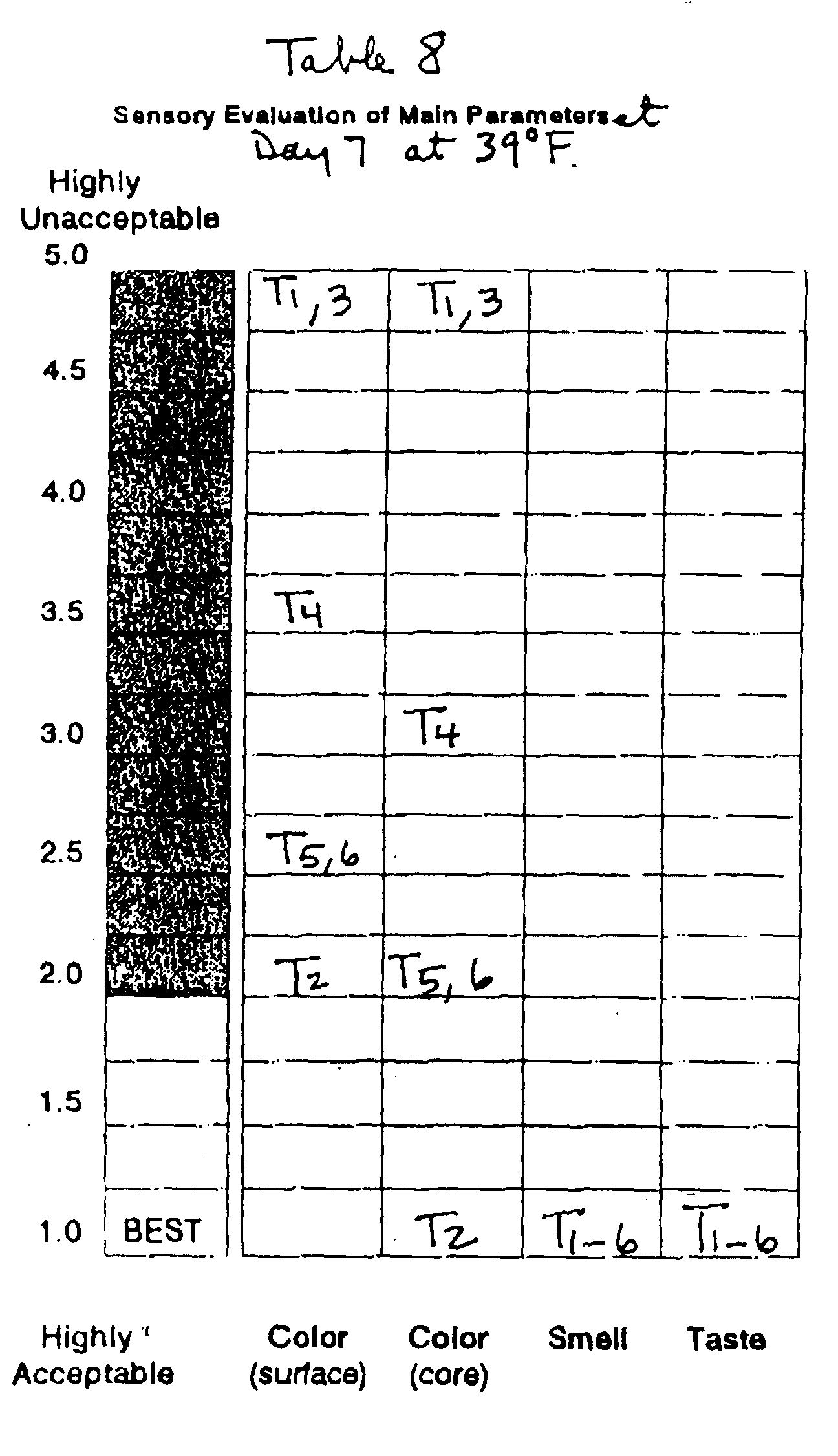
and [a] are presented in Tables 2 and 3, and the
averages of the sensory evaluations are presented in
Table 4. The effect of test solution T2 was taken as
the reference point, and all data were calculated as
above or below the effect of test solution T2, and this
data is used in all Tables.
This Example demonstrates the synergy between
cysteine, sorbitol, and calcium chloride for retarding
the discoloration and maintaining the quality of Fuji
and Red Delicious apple pieces over a 7-day storage
period.
| [L] and [a] Values by Minolta Colorimeterat day 7 at 39 F |
| Cultivar | Parameter | T1 | T2 | T3 | T4 | T5 |
| Red Delicious |
| 1- Measured Values |
| | [L] Replicare 1 | 72.41 | 74.60 | 72.48 | 70.32 | 75.61 |
| | Replicare 2 | 69.74 | 74.44 | 70.45 | 70.83 | 75.53 |
| | Mean | 71.08 | 74.52 | 71.47 | 70.58 | 75.57 |
| | Standard Deviation | 1.34 | 0.08 | 1.02 | 0.26 | 0.04 |
| | [a] Replicare 1 | -2.08 | -5.41 | -0.79 | 1.33 | -4.73 |
| | Replicare 2 | -0.53 | -5.25 | -0.42 | 1.77 | -5.84 |
| | Mean | -1.31 | -5.33 | -0.61 | 1.55 | -5.29 |
| | Standard Deviation | 0.78 | 0.08 | 0.19 | 0.22 | 0.56 |
| 2- Calculated Values Above or Below T2 |
| | [L] | -3.45 | 0.00 | -3.06 | -3.95 | 1.05 |
| | [a] | 4.03 | 0.00 | 4.73 | 6.88 | 0.05 |
| Fuji |
| 1- Measured Values |
| | [L] Replicare 1 | 71.61 | 76.72 | 71.46 | 76.27 | 78.45 |
| | Replicare 2 | 70.94 | 76.82 | 71.64 | 74.45 | 77.03 |
| | Mean | 71.28 | 76.77 | 71.55 | 75.36 | 77.74 |
| | Standard Deviation | 0.33 | 0.05 | 0.09 | 0.91 | 0.71 |
| | [a] Replicare 1 | 0.31 | -4.05 | 0.62 | -2.06 | -4.11 |
| | Replicare 2 | 0.65 | -4.36 | -0.04 | -1.22 | -3.73 |
| | Mean | 0.48 | -4.21 | 0.29 | -1.64 | -3.92 |
| | Standard Deviation | 0.17 | 0.15 | 0.33 | 0.42 | 0.19 |
| 2- Calculated Values Above or Below T2 |
| | [L] | -5.50 | 0.00 | -5.22 | -1.41 | 0.97 |
| | [a] | 4.69 | 0.00 | 4.50 | 2.57 | 0.28 |
| Effect on Headspace CO2% and O2% at Day 7 at 39 F |
| Cultivar | Parameter | T1 | T2 | T3 | T4 | T5 |
| Red Delicious |
| 1- Measured Values |
| CO2% | Replicare 1 | 8.4% | 11.4% | 9.0% | 9.7% | 10.3% |
| | Replicare 2 | 7.7% | 11.4% | 8.0% | 10.0% | 10.7% |
| | Mean | 8.1% | 11.4% | 8.5% | 9.9% | 10.5% |
| | Standard Deviation | 0.4% | 0.0% | 0.5% | 0.2% | 0.2% |
| O2% | Replicare 1 | 5.6% | 0.7% | 5.4% | 1.0% | 2.5% |
| | Replicare 2 | 4.9% | 1.2% | 4.6% | 0.7% | 2.1% |
| | Mean | 5.3% | 1.0% | 5.0% | 0.8% | 2.3% |
| | Standard Deviation | 0.3% | 0.2% | 0.4% | 0.1% | 0.2% |
| 2- Calculated Values Above or Below T2 |
| CO2% | | -3.4% | 0.0% | -2.9% | -1.5% | -0.9% |
| O2% | | 4.3% | 0.0% | 4.0% | -0.1% | 1.3% |
| Fuji |
| 1- Measured Values |
| CO2% | Replicare 1 | 11.9% | 13.4% | 11.2% | 13.6% | 12.9% |
| | Replicare 2 | 12.4% | 12.6% | 12.5% | 13.3% | 11.6% |
| | Mean | 12.2% | 13.0% | 11.9% | 13.5% | 12.3% |
| | Standard Deviation | 0.3% | 0.4% | 0.7% | 0.1% | 0.7% |
| O2% | Replicare 1 | 1.9% | 0.9% | 1.2% | 0.4% | 1.1% |
| | Replicare 2 | 5.7% | 0.6% | 0.5% | 0.5% | 0.4% |
| | Mean | 3.8% | 0.8% | 0.9% | 0.4% | 0.7% |
| | Standard Deviation | 1.9% | 0.2% | 0.4% | 0.1% | 0.3% |
| 2- Calculated Values Above or Below T2 |
| CO2% | | -0.9% | 0.0% | -1.1% | 0.5% | -0.7% |
| O2% | | 3.1% | 0.0% | 0.1% | -0.3% | -0.0% |
With respect to the discoloration measurements
made with the Minolta Colorimeter, the [L] and [a]
values are presented in Tables 2 and 3 and are
illustrated in relation to the values of [L] and [a]
for the T2 test solution, i.e., above or below that of
T2.
As compared with the control, or when one of the
constituents was removed from the T2 test solution, the
T2 test solution had the highest effect on minimizing
discoloration. Removal of the L-cysteine constituent
significantly reduced the effectiveness of the
remaining two constituents, calcium chloride and
sorbitol, to minimize discoloration to a level as close
as 90-95% of that of the T1 control solution. Removal
of the calcium chloride constituent significantly
reduced the effectiveness of the remaining two
constituents, L-cysteine and sorbitol, to minimize
discoloration. For the Red Delicious cultivar, the
level of discoloration in response to the removal of
the calcium chloride constituent was higher than that
experienced when L-cysteine was removed, indicating the
significance and the essential role of calcium chloride
in the T2 test solution. For the Fuji cultivar, the
removal of the calcium chloride constituent also
reduced the effectiveness of the test solution, but not
as much as observed with the Red Delicious cultivar.
Removal of the sorbitol constituent resulted in
increased discoloration, however, the effect of
sorbitol on discoloration may be marginal and may be
dependent upon the physiological status of the apple
cultivar.
With respect to the headspace measurements of CO2
and O2, as a measure of metabolic activity, removal of
any of the constituents of the T2 test solution may
adversely effect the metabolic rate. The highest
adverse effect on metabolic rate was observed when the
sorbitol constituent was removed, and the least effect
resulted when the L-cysteine constituent was removed.
The effects on metabolic rates were also more
pronounced with the Fuji cultivar than with the Red
Delicious cultivar.
With respect to the sensory evaluations, the
subjective color sensory evaluations were, in general,
in line with the Minolta Colorimeter measurements. For
the Red Delicious cultivar, the discoloration levels,
in decreasing order, were the T1 control test solution
(highly unacceptable), which was equal to or greater
than the L-cysteine-free T3 test solution (highly
unacceptable), which was greater than the calcium
chloride-free T4 test solution (highly unacceptable),
which was greater than the sorbitol-free T5 test
solution (varied from highly acceptable to highly
unacceptable), which was greater than the T2 test
solution, which had the lowest discoloration rating and
was judged best overall. For the Fuji cultivar,
discoloration was highest for the T1 control test
solution (highly unacceptable) and the L-cysteine-free
T3 test solution (highly unacceptable). The calcium
choride-free T4 test solution resulted in intermediate
levels of discoloration (acceptable). The sorbitol-free
T5 test solution and the T2 test solution produced
highly acceptable color.
Only the removal of the calcium chloride
constituent resulted in a softer texture of the Red
Delicious cultivar.
Only the removal of the calcium or the sorbitol
constituent negatively impacted the smell and taste of
the treated apple pieces. The effect was not
significant, however.
The combination of L-cysteine, calcium choride and
sorbitol yielded the highest 'L' values, excellent
visual quality and sufficiently high O2 levels to avoid
anaerobic conditions.
Example 2
A test solution (T2) was formulated as follows, a
dry mixture of about 55.5% calcium chloride dihydrate,
about 14.4% L-cysteine monohydrate, about 11.0%
sorbitol and about 19.1% sodium hexametaphospohate was
solubilized with water until the concentration was
about 1.83% of the resulting aqueous solution. Using
this same formula, four additional test solutions were
formulated, one without L-cysteine (T3), one without
calcium chloride (T4), one without sorbitol (T5) and
one without sodium hexametaphosphate (T6).
Whole Red Delicious apples were scrubbed under
running water and were then sanitized for 2 minutes in
a 100 ppm chlorine solution (pH 6.0-7.0) at ambient
temperature. The whole apples were then cored and
sliced with the skins left on the pieces. One group of
apple pieces was then dipped in ice-cold water (the
control, T1), and five other groups were dipped in ice-cold
test solutions T2, T3, T4, T5, and T6 for 3
minutes. The treated pieces were then rinsed with
water, and were packed and stored as described in
Example 1. After 11 days, the pieces were evaluated as
indicated in Example 1. The data are presented in
Tables 5 and 6.
This Example demonstrates the synergy between
cysteine, calcium chloride, sodium hexametaphosphate
and sorbitol in retarding the discoloration and
maintaining the quality of Red Delicious apple pieces
over an 11-day period.
As compared with the control, T1, or when one of
the constituents was removed from T2 test solution,
i.e. T3, T4, T5 and T6, the T2 test solution exhibited
the highest effect on minimizing discoloration.
Removal of the L-cysteine constituent, T3,
significantly reduced the effectiveness of the
remaining three constituents, calcium chloride, sodium
hexametaphosphate and sorbitol, in minimizing
discoloration. Removal of calcium chloride
constituent, T4, reduced the effectiveness of the
remaining three constituents, L-cysteine, sodium
hexametaphosphate and sorbitol, to minimize
discoloration. As measured instrumentally, the level
of discoloration in response to the removal of the
calcium chloride was higher than that experienced when
L-cysteine was removed, indicating the significance and
the essential role of calcium chloride in the T2 test
solution. Removal of sorbitol (T5) or sodium
hexametaphosphate (T6) adversely affected discoloration
as measured by [a] value and observed visually. The
effect, however, is not as strong as when L-cysteine or
calcium chloride was removed.
With the exception of L-cysteine which resulted in
no adverse effect on headspace CO2% and/or 02% when it
was removed from the test solution, removal of any of
the other three constituents, calcium chloride,
sorbitol or sodium hexametaphosphate adversely affected
CO2% and/or 02% levels indicating that the removal of
any of these three constituents may adversely effect
metabolic rate.
Example 3
A test solution (T2) was formulated as follows: a
dry mixture of about 53.5% calcium chloride dihydrate,
about 17.4% L-cysteine monohydrate, about 10.6%
sorbitol and about 18.5% sodium hexametaphosphate was
solubilized with water until the concentration of the
mixture was about 1.90% of the resulting aqueous
solution. Using this same formula, four additional
test solutions were formulated, one without L-cysteine
(T3), one without calcium chloride (T4), one without
sorbitol (T5), and one without sodium hexametaphosphate
(T6).
Whole Red Delicious apples were handled and sliced
with the skins left on the pieces as indicated in
Example 2. One group of the apple pieces was then
dipped in ice-cold water (the control, T1), and five
other groups were dipped in ice-cold test solutions T2,
T3, T4 , T5 and T6 for 3 minutes. The treated pieces
were then handled, packaged, stored and evaluated at
day 7, as indicated in Example 1. The data are
indicated in Tables 7 and 8.
As noted in Example 2, this Example also
demonstrates the synergy between L-cysteine, calcium
chloride, sodium hexametaphosphate and sorbitol in
minimizing the discoloration and maintaining the
quality of Red Delicious apples pieces over a 7-day
storage period. The formula used in this Example had a
total strength of 1.90% in aqueous solution compared to
1.83% for the formula used in Example 2. The
difference in strength was due to the fact that the
formula used in this Example had 3.3 grams/liter L-cysteine
as compared to 2.6 grams/liter for the formula
used in Example 2.
Basically, the data of this Example support and
reinforce the observations and conclusion of Example 2,
namely: (1) test solution T2 exhibited the strongest
effect on minimizing discoloration when compared to the
control, T1, or to the solutions T3, T4, T5 and T6
where one of the constituents was removed; (2) removal
of L-cysteine constituent, T3, significantly reduced
the effectiveness of the remaining three constituents,
calcium chloride, sodium hexametaphosphate and
sorbitol; (3) removal of calcium chloride constituent,
T4, significantly reduced the effectiveness of the
remaining three constituents, L-cysteine, sodium
hexametaphosphate, and sorbitol, to minimize
discoloration. As measured instrumentally by [L] and
[a] values by the Minolta Colorimeter, the level of
discoloration in response to the removal of calcium
chloride was higher than that experienced when L-cysteine
was removed, emphasizing the significance and
the essential role of calcium chloride in the T2 test
solution; and (4) removal of sodium hexametaphosphate
or sorbitol strongly adversely affected discoloration
as measured instrumentally by [L] and [a] observed
visually.
Under the test condition of this Example, the
effect of removal of any of the four constituents did
not follow the pattern established in Example 2. This
may be affected by the physiological status of the raw
apple used in the test.
Example 4
A test solution (T3) was formulated as follows: a
dry mixture of about 55.5% calcium chloride dihydrate,
about 14.4% L-cysteine monohydrate, about 11.0%
sorbitol and about 19.1% sodium hexametaphosphate was
solubilized with water until the concentration of the
mixture was about 1.83% of the resulting aqueous
solution. Using this same formula, one additional test
solution was formulated without the addition of sodium
hexametaphosphate (T2).
Whole fruits of Granny Smith apples grown in three
different regions, California, Washington state and
British Columbia, were tested. These fruits included
two different fruit grades, Extra Fancy and culls. The
fruits were handled, sanitized, cored and sliced as
indicated in Example 1. One group of apple pieces was
then dipped in ice-cold water (the control, T1), and
two other groups were dipped in ice-cold test solutions
T2 and T3 for 3 minutes. The treated pieces were then
handled, packaged, stored and evaluated as indicated in
Example 1.
This Example demonstrates the synergy between L-cysteine,
calcium chloride and sorbitol (T2), and
between L-cysteine, calcium chloride, sorbitol and
sodium hexametaphosphate (T3), for retarding the
discoloration and maintaining the quality of Granny
Smith apple pieces of different growing areas and of
different fruit grades.
Discoloration was evaluated with a Minolta
Colorimeter ([L] and [a] values) and visually. A
subjective sensory evaluation was also made of the
smell, taste, texture, and surface (moisture/dryness)
of each test group's pieces. Oxygen and carbon dioxide
levels within the packages were measured using a CO2/O2
gas analyzer to provide an indication of the depletion
of oxygen, accumulation of carbon dioxide and to
determine if the package environment was reaching
anaerobic conditions. All data are recorded on three
replicates of this Example. The data of CO2% and O2%
and [L] and [a] values were presented in Table 9
(Granny Smith of California State, Extra Fancy fruit
grade), Table 11 (Granny Smith of Washington State,
culls fruit grade), and Table 13 (Granny Smith of
British Columbia, Canada, Extra Fancy fruit grade).
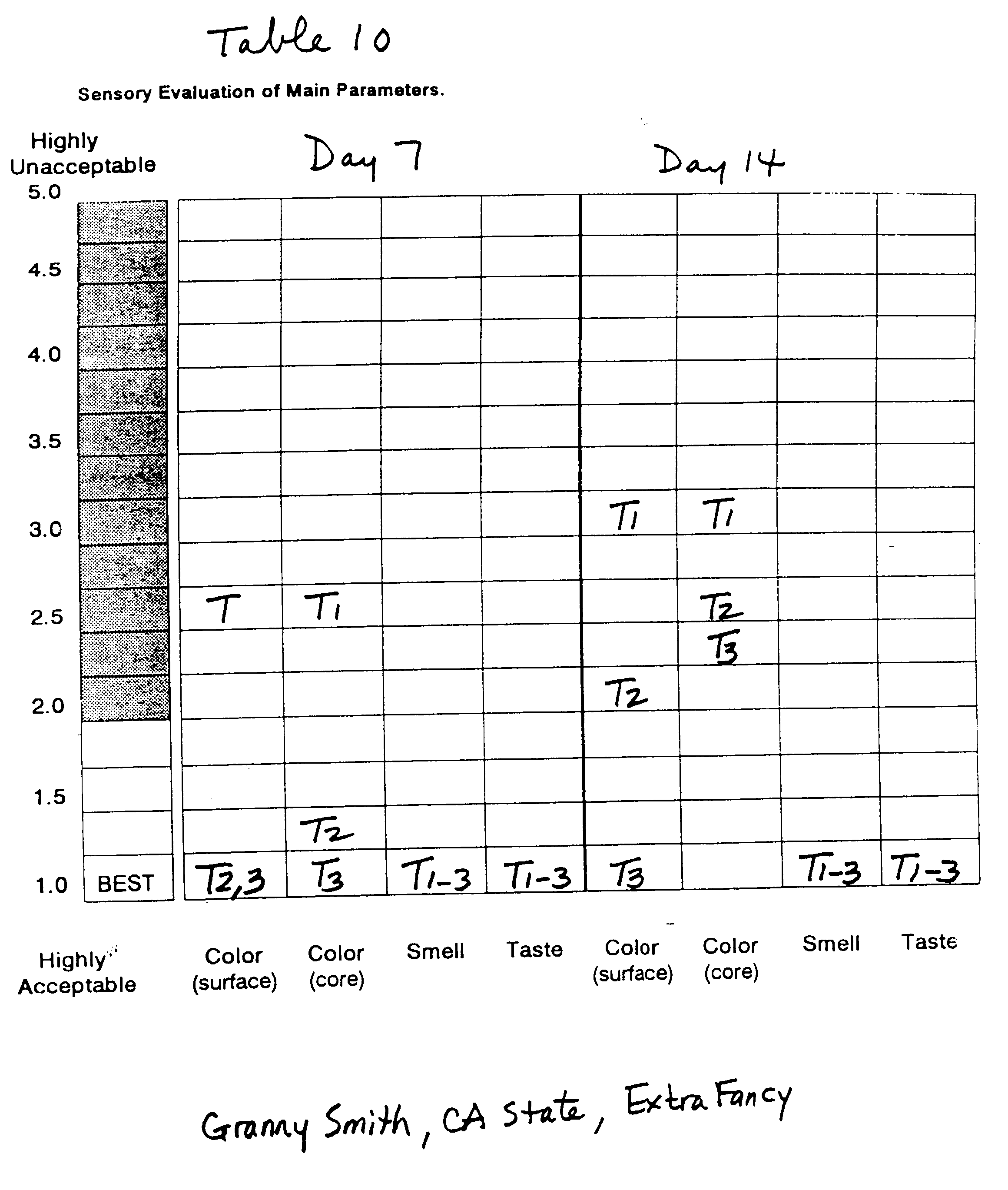
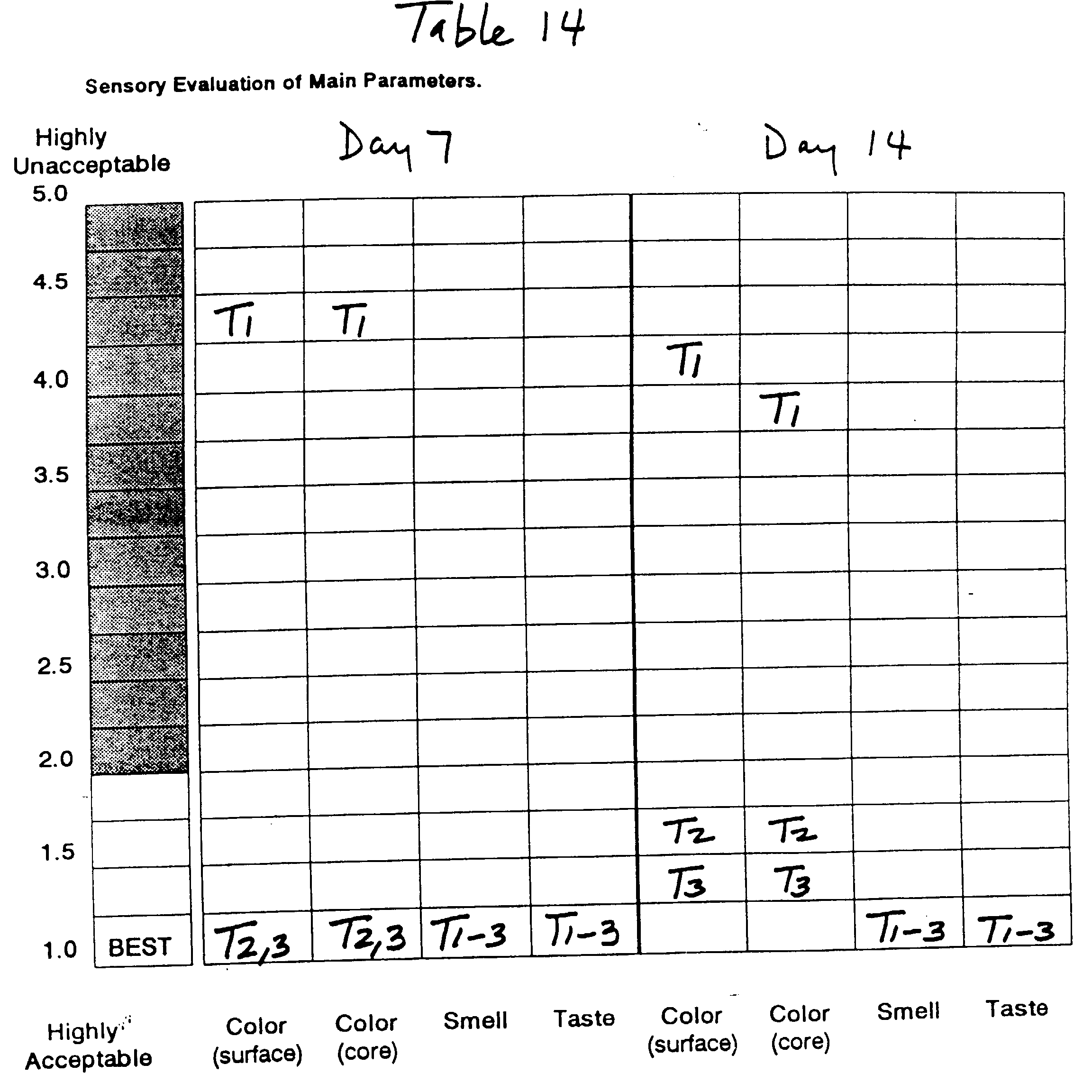
The averages of the sensory evaluations are illustrated
in Tables 10, 12 and 14, respectively.
These examples demonstrate the effectiveness of
the two treatments, T2 and T3, in retarding the
discoloration and maintaining the quality of Granny
Smith apple pieces over a 14-day period utilizing
fruits of different growing areas, i.e., different
growing conditions and different fruit grades. As
compared to the control, T1, apple pieces treated with
T2 and T3 test solutions exhibited better modified
atmospheres inside the packages, minimum changes in
discoloration as measured by [L] and [a] values and
visually maintained the best overall quality.