EP0903038B1 - Adaptive method for outputting encrypted video input data in either its encrypted format or decrypted - Google Patents
Adaptive method for outputting encrypted video input data in either its encrypted format or decrypted Download PDFInfo
- Publication number
- EP0903038B1 EP0903038B1 EP97927747A EP97927747A EP0903038B1 EP 0903038 B1 EP0903038 B1 EP 0903038B1 EP 97927747 A EP97927747 A EP 97927747A EP 97927747 A EP97927747 A EP 97927747A EP 0903038 B1 EP0903038 B1 EP 0903038B1
- Authority
- EP
- European Patent Office
- Prior art keywords
- data
- encrypted
- program
- decrypted
- encrypted program
- Prior art date
- Legal status (The legal status is an assumption and is not a legal conclusion. Google has not performed a legal analysis and makes no representation as to the accuracy of the status listed.)
- Expired - Lifetime
Links
Images
Classifications
-
- H—ELECTRICITY
- H04—ELECTRIC COMMUNICATION TECHNIQUE
- H04N—PICTORIAL COMMUNICATION, e.g. TELEVISION
- H04N21/00—Selective content distribution, e.g. interactive television or video on demand [VOD]
- H04N21/40—Client devices specifically adapted for the reception of or interaction with content, e.g. set-top-box [STB]; Operations thereof
- H04N21/41—Structure of client; Structure of client peripherals
- H04N21/414—Specialised client platforms, e.g. receiver in car or embedded in a mobile appliance
- H04N21/4147—PVR [Personal Video Recorder]
-
- G—PHYSICS
- G11—INFORMATION STORAGE
- G11B—INFORMATION STORAGE BASED ON RELATIVE MOVEMENT BETWEEN RECORD CARRIER AND TRANSDUCER
- G11B27/00—Editing; Indexing; Addressing; Timing or synchronising; Monitoring; Measuring tape travel
- G11B27/02—Editing, e.g. varying the order of information signals recorded on, or reproduced from, record carriers
- G11B27/031—Electronic editing of digitised analogue information signals, e.g. audio or video signals
-
- G—PHYSICS
- G11—INFORMATION STORAGE
- G11B—INFORMATION STORAGE BASED ON RELATIVE MOVEMENT BETWEEN RECORD CARRIER AND TRANSDUCER
- G11B27/00—Editing; Indexing; Addressing; Timing or synchronising; Monitoring; Measuring tape travel
- G11B27/10—Indexing; Addressing; Timing or synchronising; Measuring tape travel
- G11B27/102—Programmed access in sequence to addressed parts of tracks of operating record carriers
-
- G—PHYSICS
- G11—INFORMATION STORAGE
- G11B—INFORMATION STORAGE BASED ON RELATIVE MOVEMENT BETWEEN RECORD CARRIER AND TRANSDUCER
- G11B27/00—Editing; Indexing; Addressing; Timing or synchronising; Monitoring; Measuring tape travel
- G11B27/10—Indexing; Addressing; Timing or synchronising; Measuring tape travel
- G11B27/19—Indexing; Addressing; Timing or synchronising; Measuring tape travel by using information detectable on the record carrier
- G11B27/28—Indexing; Addressing; Timing or synchronising; Measuring tape travel by using information detectable on the record carrier by using information signals recorded by the same method as the main recording
- G11B27/30—Indexing; Addressing; Timing or synchronising; Measuring tape travel by using information detectable on the record carrier by using information signals recorded by the same method as the main recording on the same track as the main recording
- G11B27/3027—Indexing; Addressing; Timing or synchronising; Measuring tape travel by using information detectable on the record carrier by using information signals recorded by the same method as the main recording on the same track as the main recording used signal is digitally coded
-
- G—PHYSICS
- G11—INFORMATION STORAGE
- G11B—INFORMATION STORAGE BASED ON RELATIVE MOVEMENT BETWEEN RECORD CARRIER AND TRANSDUCER
- G11B27/00—Editing; Indexing; Addressing; Timing or synchronising; Monitoring; Measuring tape travel
- G11B27/10—Indexing; Addressing; Timing or synchronising; Measuring tape travel
- G11B27/19—Indexing; Addressing; Timing or synchronising; Measuring tape travel by using information detectable on the record carrier
- G11B27/28—Indexing; Addressing; Timing or synchronising; Measuring tape travel by using information detectable on the record carrier by using information signals recorded by the same method as the main recording
- G11B27/32—Indexing; Addressing; Timing or synchronising; Measuring tape travel by using information detectable on the record carrier by using information signals recorded by the same method as the main recording on separate auxiliary tracks of the same or an auxiliary record carrier
- G11B27/327—Table of contents
-
- H—ELECTRICITY
- H04—ELECTRIC COMMUNICATION TECHNIQUE
- H04N—PICTORIAL COMMUNICATION, e.g. TELEVISION
- H04N21/00—Selective content distribution, e.g. interactive television or video on demand [VOD]
- H04N21/40—Client devices specifically adapted for the reception of or interaction with content, e.g. set-top-box [STB]; Operations thereof
- H04N21/43—Processing of content or additional data, e.g. demultiplexing additional data from a digital video stream; Elementary client operations, e.g. monitoring of home network or synchronising decoder's clock; Client middleware
- H04N21/434—Disassembling of a multiplex stream, e.g. demultiplexing audio and video streams, extraction of additional data from a video stream; Remultiplexing of multiplex streams; Extraction or processing of SI; Disassembling of packetised elementary stream
-
- H—ELECTRICITY
- H04—ELECTRIC COMMUNICATION TECHNIQUE
- H04N—PICTORIAL COMMUNICATION, e.g. TELEVISION
- H04N21/00—Selective content distribution, e.g. interactive television or video on demand [VOD]
- H04N21/40—Client devices specifically adapted for the reception of or interaction with content, e.g. set-top-box [STB]; Operations thereof
- H04N21/43—Processing of content or additional data, e.g. demultiplexing additional data from a digital video stream; Elementary client operations, e.g. monitoring of home network or synchronising decoder's clock; Client middleware
- H04N21/44—Processing of video elementary streams, e.g. splicing a video clip retrieved from local storage with an incoming video stream or rendering scenes according to encoded video stream scene graphs
- H04N21/4405—Processing of video elementary streams, e.g. splicing a video clip retrieved from local storage with an incoming video stream or rendering scenes according to encoded video stream scene graphs involving video stream decryption
-
- H—ELECTRICITY
- H04—ELECTRIC COMMUNICATION TECHNIQUE
- H04N—PICTORIAL COMMUNICATION, e.g. TELEVISION
- H04N21/00—Selective content distribution, e.g. interactive television or video on demand [VOD]
- H04N21/40—Client devices specifically adapted for the reception of or interaction with content, e.g. set-top-box [STB]; Operations thereof
- H04N21/45—Management operations performed by the client for facilitating the reception of or the interaction with the content or administrating data related to the end-user or to the client device itself, e.g. learning user preferences for recommending movies, resolving scheduling conflicts
- H04N21/462—Content or additional data management e.g. creating a master electronic programme guide from data received from the Internet and a Head-end or controlling the complexity of a video stream by scaling the resolution or bit-rate based on the client capabilities
- H04N21/4623—Processing of entitlement messages, e.g. ECM [Entitlement Control Message] or EMM [Entitlement Management Message]
-
- H—ELECTRICITY
- H04—ELECTRIC COMMUNICATION TECHNIQUE
- H04N—PICTORIAL COMMUNICATION, e.g. TELEVISION
- H04N7/00—Television systems
- H04N7/16—Analogue secrecy systems; Analogue subscription systems
- H04N7/162—Authorising the user terminal, e.g. by paying; Registering the use of a subscription channel, e.g. billing
- H04N7/163—Authorising the user terminal, e.g. by paying; Registering the use of a subscription channel, e.g. billing by receiver means only
-
- H—ELECTRICITY
- H04—ELECTRIC COMMUNICATION TECHNIQUE
- H04N—PICTORIAL COMMUNICATION, e.g. TELEVISION
- H04N7/00—Television systems
- H04N7/16—Analogue secrecy systems; Analogue subscription systems
- H04N7/167—Systems rendering the television signal unintelligible and subsequently intelligible
- H04N7/1675—Providing digital key or authorisation information for generation or regeneration of the scrambling sequence
-
- G—PHYSICS
- G11—INFORMATION STORAGE
- G11B—INFORMATION STORAGE BASED ON RELATIVE MOVEMENT BETWEEN RECORD CARRIER AND TRANSDUCER
- G11B2220/00—Record carriers by type
- G11B2220/20—Disc-shaped record carriers
- G11B2220/21—Disc-shaped record carriers characterised in that the disc is of read-only, rewritable, or recordable type
- G11B2220/213—Read-only discs
-
- G—PHYSICS
- G11—INFORMATION STORAGE
- G11B—INFORMATION STORAGE BASED ON RELATIVE MOVEMENT BETWEEN RECORD CARRIER AND TRANSDUCER
- G11B2220/00—Record carriers by type
- G11B2220/20—Disc-shaped record carriers
- G11B2220/25—Disc-shaped record carriers characterised in that the disc is based on a specific recording technology
- G11B2220/2537—Optical discs
- G11B2220/2545—CDs
-
- G—PHYSICS
- G11—INFORMATION STORAGE
- G11B—INFORMATION STORAGE BASED ON RELATIVE MOVEMENT BETWEEN RECORD CARRIER AND TRANSDUCER
- G11B2220/00—Record carriers by type
- G11B2220/20—Disc-shaped record carriers
- G11B2220/25—Disc-shaped record carriers characterised in that the disc is based on a specific recording technology
- G11B2220/2537—Optical discs
- G11B2220/2562—DVDs [digital versatile discs]; Digital video discs; MMCDs; HDCDs
-
- G—PHYSICS
- G11—INFORMATION STORAGE
- G11B—INFORMATION STORAGE BASED ON RELATIVE MOVEMENT BETWEEN RECORD CARRIER AND TRANSDUCER
- G11B2220/00—Record carriers by type
- G11B2220/20—Disc-shaped record carriers
- G11B2220/25—Disc-shaped record carriers characterised in that the disc is based on a specific recording technology
- G11B2220/2537—Optical discs
- G11B2220/2579—HD-DVDs [high definition DVDs]; AODs [advanced optical discs]
-
- G—PHYSICS
- G11—INFORMATION STORAGE
- G11B—INFORMATION STORAGE BASED ON RELATIVE MOVEMENT BETWEEN RECORD CARRIER AND TRANSDUCER
- G11B2220/00—Record carriers by type
- G11B2220/90—Tape-like record carriers
-
- G—PHYSICS
- G11—INFORMATION STORAGE
- G11B—INFORMATION STORAGE BASED ON RELATIVE MOVEMENT BETWEEN RECORD CARRIER AND TRANSDUCER
- G11B27/00—Editing; Indexing; Addressing; Timing or synchronising; Monitoring; Measuring tape travel
- G11B27/02—Editing, e.g. varying the order of information signals recorded on, or reproduced from, record carriers
- G11B27/031—Electronic editing of digitised analogue information signals, e.g. audio or video signals
- G11B27/034—Electronic editing of digitised analogue information signals, e.g. audio or video signals on discs
-
- G—PHYSICS
- G11—INFORMATION STORAGE
- G11B—INFORMATION STORAGE BASED ON RELATIVE MOVEMENT BETWEEN RECORD CARRIER AND TRANSDUCER
- G11B27/00—Editing; Indexing; Addressing; Timing or synchronising; Monitoring; Measuring tape travel
- G11B27/10—Indexing; Addressing; Timing or synchronising; Measuring tape travel
- G11B27/102—Programmed access in sequence to addressed parts of tracks of operating record carriers
- G11B27/105—Programmed access in sequence to addressed parts of tracks of operating record carriers of operating discs
-
- G—PHYSICS
- G11—INFORMATION STORAGE
- G11B—INFORMATION STORAGE BASED ON RELATIVE MOVEMENT BETWEEN RECORD CARRIER AND TRANSDUCER
- G11B27/00—Editing; Indexing; Addressing; Timing or synchronising; Monitoring; Measuring tape travel
- G11B27/10—Indexing; Addressing; Timing or synchronising; Measuring tape travel
- G11B27/102—Programmed access in sequence to addressed parts of tracks of operating record carriers
- G11B27/107—Programmed access in sequence to addressed parts of tracks of operating record carriers of operating tapes
-
- G—PHYSICS
- G11—INFORMATION STORAGE
- G11B—INFORMATION STORAGE BASED ON RELATIVE MOVEMENT BETWEEN RECORD CARRIER AND TRANSDUCER
- G11B27/00—Editing; Indexing; Addressing; Timing or synchronising; Monitoring; Measuring tape travel
- G11B27/10—Indexing; Addressing; Timing or synchronising; Measuring tape travel
- G11B27/19—Indexing; Addressing; Timing or synchronising; Measuring tape travel by using information detectable on the record carrier
- G11B27/28—Indexing; Addressing; Timing or synchronising; Measuring tape travel by using information detectable on the record carrier by using information signals recorded by the same method as the main recording
- G11B27/32—Indexing; Addressing; Timing or synchronising; Measuring tape travel by using information detectable on the record carrier by using information signals recorded by the same method as the main recording on separate auxiliary tracks of the same or an auxiliary record carrier
- G11B27/327—Table of contents
- G11B27/328—Table of contents on a tape [TTOC]
-
- G—PHYSICS
- G11—INFORMATION STORAGE
- G11B—INFORMATION STORAGE BASED ON RELATIVE MOVEMENT BETWEEN RECORD CARRIER AND TRANSDUCER
- G11B27/00—Editing; Indexing; Addressing; Timing or synchronising; Monitoring; Measuring tape travel
- G11B27/10—Indexing; Addressing; Timing or synchronising; Measuring tape travel
- G11B27/19—Indexing; Addressing; Timing or synchronising; Measuring tape travel by using information detectable on the record carrier
- G11B27/28—Indexing; Addressing; Timing or synchronising; Measuring tape travel by using information detectable on the record carrier by using information signals recorded by the same method as the main recording
- G11B27/32—Indexing; Addressing; Timing or synchronising; Measuring tape travel by using information detectable on the record carrier by using information signals recorded by the same method as the main recording on separate auxiliary tracks of the same or an auxiliary record carrier
- G11B27/327—Table of contents
- G11B27/329—Table of contents on a disc [VTOC]
Definitions
- This invention is related to the field of digital signal processing, and more particularly to the conditional access processing, decoding, and formatting of encrypted packet data for storage by a consumer receiver of broadcast, satellite or cable video material, for example.
- MPEG2 Motion Picture Expert Group
- MPEG systems standard video encoding section
- MPEG video standard Video data encoded to the MPEG standard is in the form of a packetized datastream which typically includes the data content of many program channels (analogous to channels 1-125 in cable TV, for example).
- the data content of premium program channels such as HBOTM, CinemaxTM and ShowtimeTM, for example, is usually protected from unauthorized access by methods such as encryption and scrambling. These methods may be used alone, repetitively, or in combination to provide a plurality of levels of protection.
- a conditional access system which manages user billing and controls program descrambling and decryption based on user entitlement.
- the conditional access system may determine whether access is authorized in a variety of ways. For example, authorization may be determined within the decoder from user entitlement information pre-programmed on a so-called "smart card". Alternatively, authorization may be determined at a remote location and implemented within the decoder using user entitlement information that is transmitted from the remote location, as in a cable television pay-per-view service.
- the entitlement information typically includes codes used to generate descrambling and decryption keys that are used for program descrambling and decryption. However, the entitlement information may instead include the keys themselves.
- EP-A-0 649 261 shows a video decoder for decrypting encrypted program data using an associated encryption key in order to display clear pictures.
- a user charging is mentioned that discriminates only between standard TV and HDTV resolution pictures.
- WO-A-96/06504 discloses a smart card that descrambles scrambled video data and scrambled entitlement data necessary for key generation. The descrambled entitlement data is re-inserted in scrambled form in the smart card output signal.
- the document also discloses partial descrambling of video data in the smart card and final descrambling in a decoder.
- encryption encompasses scrambling functions to the extent that the functions are used to prevent unauthorized use.
- Service providers and video receiver Users may desire the capability of determining whether a program broadcast by a service provider is stored in either encrypted or decrypted form.
- a service provider given this capability, is able to structure billing so as to charge Users for storage of premium programs e.g. HBOTM movies, based on permitted subsequent program use.
- HBOTM movies e.g.
- such a system allows a service provider to charge one fee for storing a program in decrypted form with unlimited use and other fees for storing a program in encrypted form with limited use.
- Such a limited use may fix the maximum number of times a stored encrypted program may. be re-played or copied.
- Billing for the program storage may be structured proportionately with the allowed use.
- a User may desire the capability of selecting between encrypted or decrypted program storage for a variety of reasons. For example, a User may wish to take advantage of usage structured billing and elect reduced cost, limited use, encrypted program storage in preference to more expensive, unlimited use, decrypted program storage. Alternatively, a User may wish to select encrypted storage of adult-rated program material to prevent access by children, for example.
- the inventors have hereby recognized that it is desirable to provide an adaptive decoder capable of generating a program representative datastream, in selectable, encrypted or decrypted form for storage, transmission or other applications.
- an adaptive decoder exports a program representative datastream, in selectable, encrypted or decrypted form.
- a method for adaptively processing input encrypted program data with an associated first encryption code either an encrypted input program or a decrypted input program is output.
- the encrypted input program data and an associated second encryption code is exported to an output port.
- input encrypted program data is decrypted using an encryption key derived from the first encryption code to provide decrypted program data.
- the decrypted program data is exported to the output port.
- non-encrypted program data is exported to an output port in a selectable non-encrypted mode.
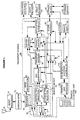
- Figure 1 shows a video receiver system, according to the invention, for adaptively generating a program representative datastream, in user selectable, encrypted or non-encrypted form.
- the disclosed system is described in the context of an MPEG compatible system for receiving MPEG encoded transport streams representing broadcast programs, it is exemplary only. The principles of the invention may also be applied to other types of system including non-MPEG compatible systems, involving other types of encoded datastreams. Further, although the disclosed system is described as processing broadcast programs, this is exemplary only.
- the term 'program' is used to represent any form of packetized data such as telephone messages, computer programs, Internet data or other communications, for example.
- a carrier modulated with video data is received by antenna 10 and processed by unit 15.
- the resultant digital output signal is demodulated by demodulator 20 and decoded by decoder 30.
- the output from decoder 30 is processed by transport system 25 which is responsive to commands from remote control unit 125.
- System 25 provides compressed data outputs for storage, further decoding, or communication to other devices.
- System 25 incorporates a conditional access system for managing user billing and for controlling program descrambling and decryption based on user entitlement.
- a video receiver user selects the program he wishes to view, the programs he wishes to store, the type of storage media used and whether the programs are to be stored in encrypted or non-encrypted form by on-screen menu selection using remote control unit 125.
- System 25 also provides a mechanism for permitting real time or non-real time removal of encryption codes from a non-encrypted program datastream.
- Data port 75 provides an interface for communication of the compressed data from system 25 to other devices such as a computer or High Definition Television (HDTV) receiver, for example.
- Storage device 90 stores the compressed data from system 25 on storage medium 105.
- Device 90 in a playback mode, also supports retrieval of the compressed data from storage medium 105 for processing by system 25 for decoding, communication to other devices or storage on a different storage medium (not shown to simplify drawing).
- the conditional access system within system 25 supports the decryption and billing for program storage, playback, or further processing including communication to other devices.
- the conditional access system of system 25 employs a different decryption and billing mechanism for processing program data received from a broadcast source than from data played back from a local storage source.
- a carrier modulated with video data received by antenna 10 is converted to digital form and processed by input processor 15.
- Processor 15 includes radio frequency (RF) tuner and intermediate frequency (IF) mixer and amplification stages for down-converting the input video signal to a lower frequency band suitable for further processing.
- RF radio frequency
- IF intermediate frequency
- the resultant digital output signal is demodulated by demodulator 20 and decoded by decoder 30.
- the output from decoder 30 is further processed by transport system 25.
- Multiplexer (mux) 37 of service detector 33 is provided, via selector 35, with either the output from decoder 30, or the decoder 30 output further processed by NRSS (National Renewable Standards Committee) descrambling unit 40.
- Selector 35 detects the presence of an insertable, NRSS compatible, descrambling card and provides the output of unit 40 to mux 37 only if the card is currently inserted in the video receiver unit (the NRSS removable conditional access system is defined in EIA Draft Document IS-679, Project PN-3639). Otherwise selector 35 provides the output from decoder 30 to mux 37.
- the presence of the insertable card permits unit 40 to descramble additional premium program channels, for example, and provide additional program services to a viewer.
- NRSS unit 40 and smart card unit 130 share the same system 25 interface such that only either an NRSS card or a smart card may be inserted at any one time.
- the interfaces may be separate to allow series or parallel operation.
- the data provided to mux 37 from selector 35 is in the form of an MPEG compliant packetized transport datastream as defined in MPEG systems standard section 2.4 and includes the data content of one or more program channels.
- the individual packets that comprise particular program channels are identified by Packet Identifiers (PIDs).
- PIDs Packet Identifiers
- the transport stream contains ancillary data supporting transmission and decoding of transport encoded data.
- the ancillary data includes Program Specific Information (PSI) for use in identifying the PIDs and assembling individual data packets to recover the content of all the program channels that comprise the packetized datastream.
- PSI Program Specific Information
- a video receiver user selects the program he wishes to view, the programs he wishes to store, the media to be used for storage and whether the programs are to be stored in encrypted or non-encrypted form by on-screen menu selection using remote control unit 125.
- System controller 115 uses the selection information, provided via interface 120, to configure system 25 to select the programs for storage and display and to generate PSI suitable for the selected storage device and media. Controller 115 configures system 25 elements 45, 47, 50, 55, 65 and 95 by setting control register values within these elements via a data bus and by selecting signal paths via muxes 37 and 110 with control signal C. Controller 115 is also programmable to permit real time and non-real time removal of encryption codes from a non-encrypted program datastream that is to be stored or otherwise processed. This feature enhances encryption security by preventing the export of encryption keys beyond system 25 thereby limiting availability to third parties.
- mux 37 selects either the transport stream from unit 35, or in a playback mode, a datastream retrieved from storage device 90 via store interface 95.
- the data packets comprising the program that the user selected to view are identified by their PIDs by selection unit 45. If an encryption indicator in the header data of the selected program packets indicates the packets are encrypted, unit 45 provides the packets to decryption unit 50. Otherwise unit 45 provides non-encrypted packets to transport decoder 55.
- the data packets comprising the programs that the user selected for storage are identified by their PIDs by selection unit 47.
- Unit 47 provides encrypted packets to decryption unit 50 or non-encrypted packets to mux 110 based on the packet header encryption indicator information.
- Units 45 and 47 employ PID detection filters that match the PIDs of incoming packets provided by mux 37 with PID values pre-loaded in control registers within units 45 and 47 by controller 115.
- the pre-loaded PIDs are used in units 47 and 45 to identify the data packets that are to be stored and the data packets that are to be decoded for use in providing a video image.
- the pre-loaded PIDs are stored in look-up tables in units 45 and 47.
- the PID look-up tables are memory mapped to encryption key tables in units 45 and 47 that associate encryption keys with each pre-loaded PID.
- the memory mapped PID and encryption key look-up tables permit units 45 and 47 to match encrypted packets containing a pre-loaded PID with associated encryption keys that permit their decryption.
- Non-encrypted packets do not have associated encryption keys.
- Units 45 and 47 provide both identified packets and their associated encryption keys to decryptor 50.
- the PID look-up table in unit 45 is also memory mapped to a destination table that matches packets containing pre-loaded PIDs with corresponding destination buffer locations in packet buffer 60.
- the encryption keys and destination buffer location addresses associated with the programs selected by a user for viewing or storage are pre-loaded into units 45 and 47 along with the assigned PIDs by controller 115.
- the encryption keys are generated by ISO 7816-3 compliant smart card system 130 from encryption codes extracted from the input datastream.
- the generation of the encryption keys is subject to customer entitlement determined from coded information pre-stored on the insertable smart card itself (International Standards Organization document ISO 7816-3 of 1989 defines the interface and signal structures for a smart card system).
- Customer entitlement information may be periodically changed by updating the coded information on the insertable smart card via commands in the input datastream.
- the insertable, ISO 7816-3 compliant smart card advantageously contains three algorithm functions.
- Two of the algorithm functions termed the broadcast encryption algorithms, are assigned to generate encryption keys from broadcast encryption codes extracted from the input datastream in non-playback modes of system 25.
- a broadcast encryption algorithm generates encryption keys by decrypting broadcast encryption codes within smart card 130 itself.
- the third algorithm function is applied in system 25 for encrypting and decrypting the derived broadcast encryption keys in storage and playback modes of system 25.
- the playback algorithm encrypts and decrypts the broadcast encryption keys within the insertable smart card itself.
- the playback algorithm function may reside elsewhere, such as in a decoder, for example.
- the three encryption algorithms used in smart card 130 may be any one of a variety of types and the playback algorithm need not be the same type as the broadcast algorithm.
- the broadcast and playback algorithms are deemed to be Data Encryption Standard (DES) algorithm functions as defined in Federal Information Standards (FIPS) Publications 46, 74 and 81 provided by the National Technical Information Service, Department of Commerce.
- DES Data Encryption Standard
- FIPS Federal Information Standards
- these algorithm functions may alternatively be another type such as Rivest-Shamir-Adlemann (RSA) type functions.
- Each of the two broadcast encryption algorithms that are resident on the smart card may be activated by control information in the input datastream.
- Two broadcast encryption algorithms are contained within the smart card in order to permit a service provider to make a simultaneous change in broadcast encryption algorithm for all customers.
- a service provider makes a change in broadcast encryption algorithm by issuing a new smart card with a new algorithm to all customers safely in advance of the date the new algorithm is to be employed.
- the service provider simultaneously: commands the smart card to change to the new algorithm by updating the control information in the broadcast datastream; encrypts programs with the new algorithm; and inserts updated encryption codes in the broadcast datastream.
- a change in algorithm may be implemented by a service provider on a regular basis or as frequently as desired in order to safeguard encryption system security and prevent code-breaking and unauthorized program access.
- the inventors have recognized that the use of such an encryption system involving changing encryption keys poses a problem for storage of programs in encrypted form. Specifically, a program stored in encrypted form along with an associated broadcast encryption code may not be able to be decrypted once the smart card has been changed and the smart card algorithms have been updated. This is because the new algorithm on the smart card is not compatible with an encryption code associated with an earlier version smart card. Consequently, the new smart card algorithm is unable to derive the required broadcast encryption key from the stored encryption code. This means that the stored encrypted program cannot be decrypted and is unusable once a system smart card has been changed.
- the third algorithm function termed the playback algorithm, is used in specific operations and modes of system 25 for encrypting broadcast encryption keys to form playback encryption codes in storage and playback modes of system 25.
- the playback encryption codes may be securely stored, along with encrypted program content, on a storage medium.
- the playback algorithm function decrypts the stored encryption codes to derive the original broadcast encryption keys to enable decryption of the encrypted program content.
- the derived broadcast encryption keys are used by unit 50 to decrypt encrypted program content packets as described later.
- the playback algorithm is not changed as frequently as the two broadcast algorithms and may be left unchanged in successive versions of smart card. This enables the stored encrypted program to be decrypted and used despite changes in smart cards and broadcast encryption algorithms.
- the packets provided by units 45 and 47 to unit 50 are encrypted according to the Data Encryption Standard (DES).
- Decryption unit 50 of system 25 of Figure 1 employs the DES algorithm function in decrypting these encrypted packets. In other implementations of system 25 unit 50 may alternatively use other algorithm functions such as the previously mentioned RSA function.
- Unit 50 applies known techniques to decrypt the encrypted packets using corresponding encryption keys provided by smart card 130 via units 45 and 47.
- the decrypted packets from unit 50 and the non-encrypted packets from unit 45 that comprise the program for display are provided to decoder 55.
- the decrypted packets from unit 50 and the non-encrypted packets from unit 47 that comprise the program for storage are provided to mux 110.
- Unit 60 contains packet buffers accessible by controller 115.
- One of the buffers is assigned to hold data destined for use by controller 115 and three other buffers are assigned to hold packets that are destined for use by application devices 75, 80 and 85.
- a further buffer, the substitution buffer discussed later, is used to hold data for substituting for encryption code data.
- Access to the packets stored in the buffers within unit 60 by both controller 115 and by application interface 70 is controlled by buffer control unit 65.
- Unit 45 provides a destination flag to unit 65 for each packet identified by unit 45 for decoding. The flags indicate the individual unit 60 destination locations for the identified packets and are stored by control unit 65 in an internal memory table.
- Control unit 65 determines a series of read and write pointers associated with packets stored in buffer 60 based on the First-In-First-Out (FIFO) principle.
- the write pointers in conjunction with the destination flags permit sequential storage of an identified packet from units 45 or 50 in the next empty location within the appropriate destination buffer in unit 60.
- the read pointers permit sequential reading of packets from the appropriate unit 60 destination buffers by controller 115 and application interface 70.
- the non-encrypted and decrypted packets provided by units 45 and 50 to decoder 55 contain a transport header as defined by section 2.4.3.2 of the MPEG systems standard. Decoder 55 determines from the transport header whether the non-encrypted and decrypted packets contain an adaptation field (per the MPEG systems standard).
- the adaptation field contains timing information including, for example, Program Clock References (PCRs) that permit synchronization and decoding of content packets.
- PCRs Program Clock References
- decoder 55 signals controller 115 that the packet has been received, by setting a system interrupt within an interrupt mechanism.
- decoder 55 changes the timing packet destination flag in unit 65 and provides the packet to unit 60. By changing the unit 65 destination flag, unit 65 diverts the timing information packet provided by decoder 55 to the unit 60 buffer location assigned to hold data for use by controller 115, instead of to an application buffer location.
- controller 115 Upon receiving the system interrupt set by decoder 55, controller 115 reads the timing information and PCR value and stores it in internal memory. PCR values of successive timing information packets are used by controller 115 to adjust the system 25 master clock (27 MHz). The difference between PCR based and master clock based estimates of the time interval between the receipt of successive timing packets, generated by controller 115, is used to adjust the system 25 master clock (not shown to simplify drawing). Controller 115 achieves this by applying the derived time estimate difference to adjust the input control voltage of a voltage controlled oscillator used to generate the master clock. Controller 115 resets the system interrupt after storing the timing information in internal memory.
- Application control unit 70 sequentially retrieves the audio, video, caption and other data from the designated buffers in buffer 60 and provides the data to corresponding application devices 75, 80 and 85.
- the application devices comprise audio and video decoders 80 and 85 and high speed data port 75.
- Data port 75 may be used to provide high speed data such as computer programs, for example to a computer. Alternatively port 75 may be used to output data to an HDTV decoder, for example.
- Packets that contain PSI information are recognized by unit 45 as destined for the controller 115 buffer in unit 60.
- the PSI packets are directed to this buffer by unit 65 via units 45, 50 and 55 in a similar manner to that described for packets containing program content.
- Controller 115 reads the PSI from unit 60 and stores it in internal memory.
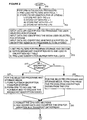
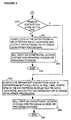
- Controller 115 employs the process of Figures 2 and 3 to generate a program datastream suitable for storage on medium 105 and to bill a user for the storage. Controller 115 also employs the process of Figures 2 and 3 both to generate a playback encryption code for storage on medium 105, and to remove the original broadcast encryption codes from the program datastream to be stored.
- the packet identification and direction process of Figures 2 and 3 is governed by controller 115, control unit 65, and the PID, destination and encryption key look-up tables of units 45 and 47 in the manner previously described.
- the CPSI Condensed Program Specific Information
- the PSI contains information related to all the programs in the datastream input to system 25. Consequently, the CPSI takes up less storage capacity and imposes less overhead than the PSI.
- the CPSI may be repeated in a datastream more frequently than the PSI and so may be derived and applied to reduce the recovery latency of program content.
- the PSI as defined in MPEG systems standard section 2.4.4 comprises four non-encrypted elements or tables of information. These are the Program Association Table (PAT), the Program Map Table (PMT), the Network Information Table (NIT) and the Conditional Access Table (CAT). Each table is formed from data packets that are recognized by a particular PID.
- the PMT defines the PID labels that identify the individual packetized datastreams that constitute a program.
- These individual streams are termed elementary streams in the MPEG standard.
- Elementary streams include datastreams such as video, audio for various languages and caption datastreams.
- the PAT associates a program number with the PIDs that permit identification and assembly of the packets comprising the PMT.
- the NIT is optional and may be structured and used to define physical network parameters such as satellite transmission channel frequencies and transponder channels, for example.
- the CAT contains the conditional access information such as encryption codes that govern access to programs that are dependent upon user entitlement.
- controller 115 ( Figure 1) performs an initialization procedure at system power-up following the start at step 200.
- controller 115 loads the unit 45 ( Figure 1) PID detection filters with the MPEG defined PID values for the PAT and CAT tables (PIDs hex value 0000 and hex value 0001 respectively).
- controller 115 pre-assigns the PAT and CAT packets to the controller buffer in unit 60 by updating the unit 45 destination table.
- the PAT and CAT packets detected by unit 45 are steered via decoder 55 to the controller buffer in unit 60 under control of unit 65.
- control unit 65 signals controller 115 via a PSI interrupt that PSI packets are present in unit 60.
- Controller 115 upon receipt of the PSI interrupt, repetitively accesses the packets stored in its designated unit 60 buffer and stores the complete CAT and PAT data in internal memory. Controller 115 repeats this process to store complete PMT and NIT data in internal memory after determining the PIDs that identify the PMT and NIT packets from the PAT. Controller 115 continuously accesses buffer 60 and captures PSI packets in internal memory upon receipt of PSI interrupts while the receiver is powered on. As a result, controller 115 captures in its internal memory the PAT, PMT, NIT and CAT data that comprises the full PSI of the transport datastream input to system 25.
- step 210 of Figure 2 user generated data (SP, SM, SE) identifying the programs a user wishes to store, as well as those programs that are to be stored in encrypted form, and the media and device to be used for storage, is input to controller 115 ( Figure 1).
- a user may select encrypted storage in preference to non-encrypted storage for a variety of reasons. For example, a service provider may make it cheaper to store in encrypted form as a way of limiting the number of subsequent copies a user may make. A service provider may be achieve this by controlling access to the encrypted program via pre-stored smart card entitlement information.
- the selection data input to controller 115 is entered by a user through on-screen menu selection with remote control unit 125 via interface 120.
- step 215 in response to the input selection data (SP), controller 115 derives the PIDs for the selected programs for storage from the stored PSI.
- the unit 47 detection filters are loaded with the PIDs of the programs to be stored by controller 115. This enables unit 47 to identify the packets comprising the programs selected for storage.
- controller 115 also pre-loads the unit 60 substitution buffer with null data.
- the null data is to be substituted for broadcast encryption codes occurring in programs broadcast in encrypted form that are selected for storage.
- unit 47 ( Figure 1) provides non-encrypted packets to mux 110 and provides encrypted packets (identified by an encryption indicator in the packet header data) along with associated broadcast encryption keys to decryption unit 50.
- the broadcast encryption keys are provided to unit 47 by controller 115 in step 215 of Figure 2, following their generation by smart card 130 ( Figure 1) by decryption of encryption codes obtained from the CAT for the selected programs (SP) in the manner previously described.
- selection data SE requests encrypted storage
- unit 47 passes the encrypted packets to be stored to mux 110. Consequently, in step 215 of Figure 2, the packets comprising the programs to be stored (SP) are provided to mux 110 either in encrypted or decrypted form in response to selection data SE.
- controller 115 forms condensed program specific information (CPSI) for the programs selected for storage (SP) from the full program specific information (PSI) captured from the transport datastream input to system 25. If the SE data requests encrypted storage, controller 115 performs step 227 following decision step 217. In step 227, controller 115 applies the playback algorithm function in smart card system 130 to encrypt the broadcast encryption key previously generated (by decryption of a broadcast encryption code) in step 215 to form a playback encryption code for the program to be stored.
- the CPSI is formed to include the playback encryption code but to exclude the broadcast encryption code originally present in the PSI of the transport datastream input to system 25.
- the datastream formed for the program destined for storage excludes its associated broadcast encryption code.
- keys Once keys are accessible on a storage media, their security is dependent on the sophistication of available reverse engineering and code-breaking techniques. In this system, multiple levels of security are provided by not storing the broadcast encryption codes from which the broadcast encryption keys are derived and by storing the broadcast encryption keys in encrypted form. Further, even if the keys were deduced for the stored program, it would not provide access to current broadcast programs for which the broadcast encryption algorithm is regularly changed.
- controller 115 performs step 225 following decision step 217.
- controller 115 forms the CPSI of the program destined for storage from the PSI of the transport datastream input to system 25 and excludes encryption codes from the CPSI.
- the described encryption system is exemplary only.
- Alternative encryption mechanisms may convey the broadcast and playback encryption codes in datastream information areas other than the PSI.
- Other encryption mechanisms may also require the generation and insertion of the encryption codes at different intervals than is involved in the generation of the PSI. If broadcast encryption codes are not conveyed in PSI, substitution of other data for the these codes may be necessary to exclude them from the datastream formed for the program to be stored. Provision for substitution of null data for the broadcast encryption codes at intervals other than those at which the CPSI occurs is discussed later. Specifically, substitution of broadcast encryption codes in real-time i.e. at packet frequency when the codes are conveyed in packet headers, for example, is discussed in connection with steps 237 - 249.
- controller 115 forms the CPSI data into sections in accordance with the MPEG syntax (paragraphs 2.4.4.3 - 2.4.4.11 of the MPEG systems standard). Controller 115, in step 230, also adds header data to the CPSI data sections to format and packetize the CPSI data for insertion into the datastream to be stored. Controller 115 creates the headers in accordance with sections 2.4.3.2 and 2.4.3.3 of the MPEG systems standard from the PSI header data stored in the controller 115 internal memory. However, CPSI section data is different in length relative to corresponding PSI section data. Therefore, new header parameters including the 'continuity count' indicator and 'payload unit start indicator' are created by controller 115 and inserted in the respective indicator fields within the header data.
- the new continuity count indicator created by controller 115 reflects, for example, the number of packets per PID for the CPSI elements instead of the different number of packets per PID of the corresponding PSI elements.
- the new payload unit start indicator created by controller 115 identifies, for example, the first byte of the CPSI section instead of the first byte of the corresponding PSI section.
- Controller 115 determines, in step 237, whether broadcast encryption codes are conveyed in datastream fields other than the CPSI. Specifically, controller 115 determines whether broadcast encryption codes are conveyed in MPEG compatible adaptation fields of packet headers (per MPEG systems standard syntax section 2.4.3.4). If so, controller 115 performs step 249 to create a composite datastream that comprises CPSI packets and program content packets with null data substituted for the broadcast encryption codes in the packet headers. The encryption code substitution is performed on a packet by packet basis at packet frequency.
- step 249 the substitution packet data pre-loaded during step 215 ( Figure 2) into the substitution buffer in unit 60 is provided from unit 60 to mux 110 ( Figure 1) under control of controller 115.
- step 249 the CPSI in the form of packetized MPEG compatible section data formed in step 230 is provided by controller 115 to mux 110 ( Figure 1).
- Program content packet datastreams from unit 47 or unit 50 as previously discussed in connection with step 215, are also provided to mux 110.
- controller 115 multiplexes between the program content datastream, the CPSI datastream, and the substitution data input to mux 110 using path select signal C to create a composite datastream that is output by mux 110 to storage interface 95.
- the composite datastream comprises program content packets and CPSI packets with null data substituted for the broadcast encryption codes in the packet headers.
- Controller 115 synchronizes insertion of the CPSI packets and null data into the program datastream to be stored, in response to a PSI interrupt signal and a substitution timing signal from control unit 65 ( Figure 1).
- the PSI interrupt indicates the presence of PSI packets in buffer 60 as discussed in connection with step 205.
- the substitution timing signal synchronizes insertion of null data with the occurrence of the broadcast encryption codes in packet headers. In this manner, the packetized sections of the CPSI are inserted into PSI locations to replace the corresponding sections of the PSI and the broadcast encryption codes are removed.
- the non-encrypted CPSI data is insertable in either the encrypted or non-encrypted program content datastreams that are input to mux 110 in order to create either encrypted or non-encrypted programs for storage.
- the broadcast encryption code substitution performed in step 249 may also be applied to codes conveyed in datastream fields other than the MPEG packet header adaptation fields. Further, the encryption codes may be replaced at intervals other than those at which the adaptation fields occur. For example, null data may be substituted for encryption codes occurring in a variety of MPEG and non-MPEG compatible datastream locations including: auxiliary packets within the proprietary Digital Satellite System (DSSTM); Packetized Elementary Stream (PES) fields (per MPEG systems standard syntax sections 2.5.3.7 - 2.5.4.2); Digital Storage Media Control Commands (DSMCC) fields (per MPEG systems standard syntax Appendix A); and non-MPEG packets formatted according to other data transmission protocols such as the standardized CEBus control protocol (Home Automation Standard (CEBus), EIA/IS-60, December 1989).
- DSSTM Digital Satellite System
- PES Packetized Elementary Stream
- DSC Digital Storage Media Control Commands
- non-MPEG packets formatted according to other data transmission protocols such as the standardized CEBus control protocol (
- the code carrying packets may be omitted entirely from the output datastream. This may be accomplished by discarding the packets via PID selection units 45 and 47 ( Figure 1) or by omitting the packets during the multiplexing operation performed in step 249.
- data rate and data structure sensitive parameters within the output datastream syntax may need to be updated to reflect the data rate change occurring as a result of such packet data omission.
- step 249 store interface 95 ( Figure 1) receives the programs to be stored in the form of the packetized datastream (hereinafter termed the CPSI stream) incorporating the CPSI and null data from mux 110.
- step 254 Figure 3
- the conditional access system within system 25 bills the User for the program storage (or communication to other devices).
- the User is billed by storing billing information within the insertable smart card itself.
- the storage of the billing information is initiated by the application of the playback algorithm but billing need not be contemporaneous with application of the algorithm.
- the billing information indicates that the User has stored an encrypted broadcast program. This billing information is later accessed via telephone link by the service provider and used to bill the User via a conventional billing process. Other billing mechanisms are equally possible.
- credits may be deducted from a pre-stored credit sum within a smart card.
- the smart card may vary billing amount based on the type of storage requested e.g. there may be one fee for storage permitting only a single copy or playback of the stored program and another fee for storage permitting unlimited copying or playback of the program.
- the type of storage requested is encoded within designated copy protection data in the CPSI stream itself or in packet data external to the CPSI stream.
- controller 115 determines, in step 237, that no broadcast encryption codes are conveyed in MPEG compatible adaptation fields of packet headers, controller 115 performs steps 240 - 245. These steps mirror steps 249-258 except that because there are no broadcast encryption codes present in the datastreams input to mux 110 representing the program to be stored, there is no need for insertion of null data. Otherwise, controller 115 performs step 240 to create the CPSI stream for storage via store interface 95 and performs step 244 to bill the user for storage in similar fashion to that described in connection with steps 249 and 254. This branch of the process of Figures 2-3 terminates at step 245. However, it should be noted that the CPSI stream may alternatively be provided to other applications in steps 240 and 249 such as display or communication via interface 70 instead of storage via interface 95.
- the CPSI stream from mux 110 is buffered by interface 95 to reduce gaps and bit rate variation in the data.
- the resultant buffered data is processed by storage device 90 to be suitable for storage on medium 105.
- Controller 115 initiates and controls the operation of storage device 90 ( Figure 1) by command via I/O port 100 using a standardized CEBus control protocol (e.g. Home Automation Standard (CEBus), EIA/IS-60, December 1989).
- Storage device 90 is a linear storage medium DVHSTM type device and medium 105 is a linear sequential access type medium such as video tape, for example.
- Storage device 90 encodes the buffered datastream from interface 95 using known error encoding techniques such as channel coding, interleaving and Reed Solomon encoding to produce an encoded datastream suitable for storage.
- Unit 90 stores the resultant encoded datastream incorporating the CPSI on tape medium 105.
- storage unit 90 may be any type of storage unit.
- unit 90 may be a solid state or nonlinear type device for storing data in RAM or on a nonlinear medium.
- a nonlinear type medium is a medium that accommodates non-sequential access such as a disc medium including CDROM or DVD, for example.
- unit 90 and medium 105 are nonlinear or solid state type storage systems, unit 90 separates the CPSI data from the CPSI stream and stores the CPSI data in a designated directory section of the medium. This advantageously avoids repeated storage of the CPSI and reduces the required storage capacity.
- unit 90 may store the CPSI stream as formed and input to unit 90, incorporating one or more repetitions of the CPSI data.
- system 25 of Figure 1 may incorporate a plurality of storage/retrieval paths that support the operation of a plurality of storage devices of various types including linear, nonlinear and solid state types.
- the single storage/retrieval path shown in Figure 1 comprises units 47, 90, 95, 105 and 110, as described. By replicating these elements to create parallel storage functions, system 25 is readily extended to incorporate a plurality of storage paths.
- the storage path and programs destined for a particular storage device are selected by user generated data (SP, SM) input to controller 115 via interface 120 following on-screen menu selection with remote control unit 125, as previously described.
- SP user generated data
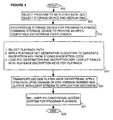
- System 25 of Figure 1 recovers programs from storage device 90 and medium 105 in a playback mode using the process of Figure 4.
- the recovered datastreams are processed by system 25 and provided to application devices 75, 80 and 85 for display or output, for example.
- the program datastreams may be stored on other parallel storage devices (not shown in Figure 1 to simplify the drawing).
- step 505 of Figure 4 following the start at step 500, user generated data (SR, SM) is input to controller 115 of system 25 ( Figure 1) identifying the programs (SR) to be recovered and the storage device (SM) from which the programs are to be recovered.
- the user selection data is input to controller 115 via interface 120 following on-screen menu selection with remote control unit 125. It is assumed for exemplary purposes that the user selects programs to be recovered from storage device 90 ( Figure 1).
- Controller 115 in step 510, initiates recovery of the selected program datastreams by device 90 from medium 105 by command via I/O port 100 using the standardized CEBus control protocol as previously discussed.
- Device 90 decodes the error encoded data retrieved from medium 105 to recover the corresponding data originally provided to device 90 for storage.
- Device 90 may be a DVHSTM linear type storage unit or another type of storage unit such as a solid state RAM or nonlinear type DVD or CDROM type device.
- the recovered decoded datastreams are transferred, in step 510, by device 90 to interface 95. This data transfer is controlled and synchronized by controller 115 via the standard CEBus. Interface 95, buffers the data received from unit 90 to adjust the time intervals between data packets to provide a buffered data output that is MPEG compatible and complies with MPEG bit rate constraints.
- controller 115 directs the buffered output from interface 95 (the playback datastream) via mux 37 to PID selection units 45 and 47 using path select signal C.
- controller 115 determines whether single copy or unlimited copy limitations that were encoded in the designated copy protection data in steps 244 and 254 ( Figure 3), are being exceeded by the recovered program.
- controller 115 in step 515 ( Figure 4), recovers the playback encryption code that was generated in step 227 ( Figure 2) from the CAT for the selected programs (SR) and provides the code to smart card unit 130 in the manner previously described in connection with step 215 ( Figure 2).
- smart card 130 Under control of controller 115, smart card 130, in step 515 ( Figure 4), applies the playback algorithm to generate the original broadcast encryption keys from the playback encryption code.
- the broadcast encryption keys are provided to the PID, destination and encryption key look-up tables in units 45 and 47 by controller 115 in step 515.
- step 520 units 45 and 47 and the remaining units of system 25 process the playback datastream either for storage via mux 110 or for application use via interface 70.
- Both the playback datastream from unit 95 and the transmitted datastream from selector 35, following selection via mux 37, are processed by system 25 in a similar manner. Both these datastreams are processed in the way previously described for the transmitted datastream except for the encryption key generation steps and for the CPSI processing steps.
- smart card 130 applies a playback encryption key generation algorithm instead of a broadcast key generation algorithm.
- Smart card unit 130 applies the playback algorithm function to decrypt the encryption codes previously encoded with the playback encoding algorithm in step 227 of Figure 2. Thereby, unit 130 derives the original broadcast encryption keys for the program selected for playback (SR).
- the broadcast encryption keys are used by DES decryption unit 50 to decrypt the encrypted program content packets in subsequent step 520 ( Figure 4) in the manner previously described for the transmitted datastream.
- the playback datastream selected via mux 37 already incorporates the CPSI. Therefore, in the playback mode, controller 115 in step 520, does not perform the steps related to CPSI formation described in connection with Figures 2-3.
- system 25 in step 520, transport decodes the playback datastream to provide decoded data to application decoders 80 and 85, for display.
- system 25 applies the latest complete CPSI data contained in the playback datastream, in accordance with the MPEG standard, to provide a transport decoded datastream representing selected program SR.
- the CPSI is applied in transport decoding the playback datastream using PID filters 45 and 47, decryptor 50, decoder 55, buffer 60 and control unit 65 in a manner similar to that previously described in connection with Figure 1.
- the transport decoded datastream, excluding the CPSI is provided, via interface 70, to application decoders 80 and 85 for MPEG decoding and image reproduction.
- system 25 provides the playback datastream incorporating the CPSI to other application devices such as to high speed data port 75, for example.
- the CPSI is then available to be applied in transport decoding the playback datastream, as necessary, by these application devices or subsequent devices.
- mux 110 provides the datastream, incorporating the CPSI, to the second storage device via a second storage interface.
- the second storage device and interface (neither are shown in Figure 1) mimic the operation and function of units 90 and 95 respectively.
- the data from interface 70, MPEG decoded by application decoders 80 and 85, is presented via audio and image reproduction devices in units 80 and 85 respectively.
- step 527 the conditional access system within system 25 bills the User for the program playback.
- the User is billed within the insertable smart card itself by storage of billing information upon the application of the playback algorithm.
- the billing information indicates that the User has recovered an encrypted broadcast program. This billing information is later accessed via telephone link by the service provider and used to bill the User via a conventional billing process. Other billing mechanisms, as previously described, may equally be used.
- the playback process of Figure 4 terminates at step 530.
- the architecture of Figure 1 is not exclusive. Other architectures may be derived in accordance with the principles of the invention to accomplish the same objectives. Further, the functions of the elements of the Figure 1 architecture and the process steps of Figure 2-4 may be implemented in whole or in part within the programmed instructions of a microprocessor. In addition, the principles of the invention apply to any system using an MPEG or non-MPEG compatible electronic program guide for conveying any of the information described herein as being conveyed in MPEG PSI tables. The invention principles are not restricted to program guides or PSI conveyed in MPEG compatible PSI tables.
Landscapes
- Engineering & Computer Science (AREA)
- Multimedia (AREA)
- Signal Processing (AREA)
- Databases & Information Systems (AREA)
- Computer Security & Cryptography (AREA)
- Two-Way Televisions, Distribution Of Moving Picture Or The Like (AREA)
- Television Signal Processing For Recording (AREA)
- Storage Device Security (AREA)
Applications Claiming Priority (5)
| Application Number | Priority Date | Filing Date | Title |
|---|---|---|---|
| US1872296P | 1996-05-31 | 1996-05-31 | |
| US18722P | 1996-05-31 | ||
| US761517 | 1996-11-27 | ||
| US08/761,517 US5933500A (en) | 1996-05-31 | 1996-11-27 | Adaptive decoding system for processing encrypted and non-encrypted broadcast, cable or satellite video data |
| PCT/US1997/008876 WO1997046017A1 (en) | 1996-05-31 | 1997-05-22 | An adaptive decoding system for processing encrypted and non-encrypted video data |
Publications (2)
| Publication Number | Publication Date |
|---|---|
| EP0903038A1 EP0903038A1 (en) | 1999-03-24 |
| EP0903038B1 true EP0903038B1 (en) | 2001-12-05 |
Family
ID=26691419
Family Applications (1)
| Application Number | Title | Priority Date | Filing Date |
|---|---|---|---|
| EP97927747A Expired - Lifetime EP0903038B1 (en) | 1996-05-31 | 1997-05-22 | Adaptive method for outputting encrypted video input data in either its encrypted format or decrypted |
Country Status (11)
| Country | Link |
|---|---|
| US (1) | US5933500A (enExample) |
| EP (1) | EP0903038B1 (enExample) |
| JP (2) | JP4338786B2 (enExample) |
| CN (1) | CN1146233C (enExample) |
| AU (1) | AU3213397A (enExample) |
| BR (1) | BR9709508B1 (enExample) |
| CA (1) | CA2256632C (enExample) |
| DE (1) | DE69708867T2 (enExample) |
| ES (1) | ES2165065T3 (enExample) |
| MY (1) | MY119996A (enExample) |
| WO (1) | WO1997046017A1 (enExample) |
Families Citing this family (145)
| Publication number | Priority date | Publication date | Assignee | Title |
|---|---|---|---|---|
| US6035329A (en) * | 1995-12-07 | 2000-03-07 | Hyperlock Technologies, Inc. | Method of securing the playback of a DVD-ROM via triggering data sent via a cable network |
| JPH10164046A (ja) * | 1996-11-29 | 1998-06-19 | Canon Inc | 送信方法、受信方法、送信装置、受信装置、伝送システム及び媒体 |
| US6157673A (en) * | 1996-12-26 | 2000-12-05 | Philips Electronics North America Corp. | Fast extraction of program specific information from multiple transport streams |
| US6289389B1 (en) * | 1997-06-03 | 2001-09-11 | Lextron Systems, Inc. | Enhanced integrated data delivery system |
| EP0912057A3 (en) * | 1997-10-27 | 2000-01-26 | Kabushiki Kaisha Toshiba | Digital broadcast receiver |
| US8300832B2 (en) | 1998-01-08 | 2012-10-30 | Samsung Electronics Co., Ltd. | System and method for copy protection for digital signals |
| US7778418B1 (en) | 1998-01-08 | 2010-08-17 | Samsung Electronics Co., Ltd. | System and method for copy protection for digital signals |
| US7233948B1 (en) | 1998-03-16 | 2007-06-19 | Intertrust Technologies Corp. | Methods and apparatus for persistent control and protection of content |
| US7809138B2 (en) | 1999-03-16 | 2010-10-05 | Intertrust Technologies Corporation | Methods and apparatus for persistent control and protection of content |
| ATE296519T1 (de) * | 1998-03-16 | 2005-06-15 | Intertrust Tech Corp | Streaming-media-abspielgerät mit fortdauernde kontrolle und schutz von medieninhalt |
| JP4114234B2 (ja) * | 1998-06-09 | 2008-07-09 | ソニー株式会社 | 信号処理装置および受信装置と信号処理方法 |
| US8286207B1 (en) | 1998-07-13 | 2012-10-09 | Thomson Licensing | System for processing programs and system timing information derived from multiple broadcast sources |
| US6570922B1 (en) | 1998-11-24 | 2003-05-27 | General Instrument Corporation | Rate control for an MPEG transcoder without a priori knowledge of picture type |
| US6434197B1 (en) | 1999-01-07 | 2002-08-13 | General Instrument Corporation | Multi-functional transcoder for compressed bit streams |
| WO2000057290A1 (en) * | 1999-03-19 | 2000-09-28 | Hitachi, Ltd. | Information processor |
| US7124938B1 (en) * | 1999-03-24 | 2006-10-24 | Microsoft Corporation | Enhancing smart card usage for associating media content with households |
| US6971119B1 (en) | 1999-03-29 | 2005-11-29 | The Directv Group, Inc. | Method and apparatus for transmission, receipt, caching and display of one-way broadcast programming and data |
| US6697489B1 (en) | 1999-03-30 | 2004-02-24 | Sony Corporation | Method and apparatus for securing control words |
| US7730300B2 (en) | 1999-03-30 | 2010-06-01 | Sony Corporation | Method and apparatus for protecting the transfer of data |
| US7565546B2 (en) | 1999-03-30 | 2009-07-21 | Sony Corporation | System, method and apparatus for secure digital content transmission |
| GB9909362D0 (en) * | 1999-04-23 | 1999-06-16 | Pace Micro Tech Plc | Memory database system for encrypted progarmme material |
| JP3977549B2 (ja) * | 1999-04-30 | 2007-09-19 | 株式会社東芝 | コンテンツ管理方法、コンテンツ利用管理システム、コンテンツ利用管理装置及び再生装置 |
| US6275536B1 (en) | 1999-06-23 | 2001-08-14 | General Instrument Corporation | Implementation architectures of a multi-channel MPEG video transcoder using multiple programmable processors |
| US7668189B1 (en) * | 1999-07-08 | 2010-02-23 | Thomson Licensing | Adaptive transport protocol |
| KR100359497B1 (ko) * | 1999-08-12 | 2002-11-04 | 엘지전자 주식회사 | 디지털 tv 중계기에서 채널 정보 갱신 방법 및 장치 |
| US6532593B1 (en) | 1999-08-17 | 2003-03-11 | General Instrument Corporation | Transcoding for consumer set-top storage application |
| US7194032B1 (en) * | 1999-09-03 | 2007-03-20 | Equator Technologies, Inc. | Circuit and method for modifying a region of an encoded image |
| US6298400B1 (en) * | 1999-10-13 | 2001-10-02 | Sony Corporation | Enhancing interface device to transport stream of parallel signals to serial signals with separate clock rate using a pin reassignment |
| US7039614B1 (en) * | 1999-11-09 | 2006-05-02 | Sony Corporation | Method for simulcrypting scrambled data to a plurality of conditional access devices |
| US6961430B1 (en) * | 1999-11-10 | 2005-11-01 | The Directv Group, Inc. | Method and apparatus for background caching of encrypted programming data for later playback |
| US6701528B1 (en) | 2000-01-26 | 2004-03-02 | Hughes Electronics Corporation | Virtual video on demand using multiple encrypted video segments |
| US20030097338A1 (en) * | 2000-02-03 | 2003-05-22 | Piotrowski Tony E. | Method and system for purchasing content related material |
| US7225164B1 (en) | 2000-02-15 | 2007-05-29 | Sony Corporation | Method and apparatus for implementing revocation in broadcast networks |
| US8463780B1 (en) | 2000-03-08 | 2013-06-11 | Music Choice | System and method for providing a personalized media service |
| US7320025B1 (en) | 2002-03-18 | 2008-01-15 | Music Choice | Systems and methods for providing a broadcast entertainment service and an on-demand entertainment service |
| US7325043B1 (en) | 2000-03-08 | 2008-01-29 | Music Choice | System and method for providing a personalized media service |
| US7028082B1 (en) | 2001-03-08 | 2006-04-11 | Music Choice | Personalized audio system and method |
| US7783722B1 (en) | 2000-03-08 | 2010-08-24 | Music Choice | Personalized audio system and method |
| US7275256B1 (en) | 2001-08-28 | 2007-09-25 | Music Choice | System and method for providing an interactive, visual complement to an audio program |
| US7076561B1 (en) | 2000-03-08 | 2006-07-11 | Music Choice | Personalized audio system and method |
| US7856485B2 (en) | 2000-03-08 | 2010-12-21 | Music Choice | Systems and methods for providing customized media channels |
| JP4348818B2 (ja) * | 2000-03-10 | 2009-10-21 | ソニー株式会社 | データ配信システムとその方法およびデータ記録媒体 |
| US6879963B1 (en) | 2000-04-12 | 2005-04-12 | Music Choice | Cross channel delivery system and method |
| ATE268533T1 (de) * | 2000-04-17 | 2004-06-15 | Nagravision Sa | System und methode für sichere datenübertragung |
| US8082572B1 (en) | 2000-06-08 | 2011-12-20 | The Directv Group, Inc. | Method and apparatus for transmitting, receiving, and utilizing audio/visual signals and other information |
| US6647061B1 (en) | 2000-06-09 | 2003-11-11 | General Instrument Corporation | Video size conversion and transcoding from MPEG-2 to MPEG-4 |
| US7050586B1 (en) * | 2000-06-19 | 2006-05-23 | Intertrust Technologies Corporation | Systems and methods for retrofitting electronic appliances to accept different content formats |
| JP2004501591A (ja) * | 2000-06-20 | 2004-01-15 | コスキンス スティーブン ジェイムズ ジョセフ | データを配信するためのシステムおよび方法 |
| US20030206631A1 (en) * | 2000-06-22 | 2003-11-06 | Candelore Brant L. | Method and apparatus for scrambling program data for furture viewing |
| US8140859B1 (en) | 2000-07-21 | 2012-03-20 | The Directv Group, Inc. | Secure storage and replay of media programs using a hard-paired receiver and storage device |
| US7203311B1 (en) | 2000-07-21 | 2007-04-10 | The Directv Group, Inc. | Super encrypted storage and retrieval of media programs in a hard-paired receiver and storage device |
| US6853728B1 (en) | 2000-07-21 | 2005-02-08 | The Directv Group, Inc. | Video on demand pay per view services with unmodified conditional access functionality |
| US7203314B1 (en) | 2000-07-21 | 2007-04-10 | The Directv Group, Inc. | Super encrypted storage and retrieval of media programs with modified conditional access functionality |
| US7457414B1 (en) | 2000-07-21 | 2008-11-25 | The Directv Group, Inc. | Super encrypted storage and retrieval of media programs with smartcard generated keys |
| US7039115B1 (en) | 2000-09-20 | 2006-05-02 | General Instrument Corporation | Processor allocation for channels in a video multi-processor system |
| US6847656B1 (en) * | 2000-09-25 | 2005-01-25 | General Instrument Corporation | Statistical remultiplexing with bandwidth allocation among different transcoding channels |
| US20020042754A1 (en) * | 2000-10-10 | 2002-04-11 | Del Beccaro David J. | System and method for receiving broadcast audio/video works and for enabling a consumer to purchase the received audio/video works |
| US7912220B2 (en) * | 2001-02-05 | 2011-03-22 | Broadcom Corporation | Packetization of non-MPEG stream data in systems using advanced multi-stream POD interface |
| US6925501B2 (en) * | 2001-04-17 | 2005-08-02 | General Instrument Corporation | Multi-rate transcoder for digital streams |
| US7350082B2 (en) | 2001-06-06 | 2008-03-25 | Sony Corporation | Upgrading of encryption |
| US7895616B2 (en) | 2001-06-06 | 2011-02-22 | Sony Corporation | Reconstitution of program streams split across multiple packet identifiers |
| US7747853B2 (en) | 2001-06-06 | 2010-06-29 | Sony Corporation | IP delivery of secure digital content |
| US7336787B2 (en) | 2001-06-06 | 2008-02-26 | Sony Corporation | Critical packet partial encryption |
| KR100889099B1 (ko) * | 2001-08-28 | 2009-03-17 | 시게이트 테크놀로지 엘엘씨 | 데이터 저장 장치의 보안 방법 및 장치 |
| JP2003076432A (ja) * | 2001-09-05 | 2003-03-14 | Nec Corp | プログラム実行装置及びそれに用いるプログラム実行方法並びにそのプログラム |
| US7039955B2 (en) | 2001-09-14 | 2006-05-02 | The Directv Group, Inc. | Embedded blacklisting for digital broadcast system security |
| WO2003028287A1 (en) * | 2001-09-21 | 2003-04-03 | Hughes Electronics Corporation | Method and apparatus for controlling paired operation of a conditional access module and an integrated receiver and decoder |
| US7409562B2 (en) * | 2001-09-21 | 2008-08-05 | The Directv Group, Inc. | Method and apparatus for encrypting media programs for later purchase and viewing |
| SG122759A1 (en) * | 2001-10-29 | 2006-06-29 | Seagate Technology Llc | System and method for protecting a peripheral device against hot plug attacks |
| US7155012B2 (en) | 2002-01-02 | 2006-12-26 | Sony Corporation | Slice mask and moat pattern partial encryption |
| US7765567B2 (en) | 2002-01-02 | 2010-07-27 | Sony Corporation | Content replacement by PID mapping |
| US7823174B2 (en) | 2002-01-02 | 2010-10-26 | Sony Corporation | Macro-block based content replacement by PID mapping |
| US7242773B2 (en) | 2002-09-09 | 2007-07-10 | Sony Corporation | Multiple partial encryption using retuning |
| US7039938B2 (en) | 2002-01-02 | 2006-05-02 | Sony Corporation | Selective encryption for video on demand |
| US7215770B2 (en) | 2002-01-02 | 2007-05-08 | Sony Corporation | System and method for partially encrypted multimedia stream |
| US7292691B2 (en) | 2002-01-02 | 2007-11-06 | Sony Corporation | Progressive video refresh slice detection |
| US7376233B2 (en) | 2002-01-02 | 2008-05-20 | Sony Corporation | Video slice and active region based multiple partial encryption |
| US7233669B2 (en) | 2002-01-02 | 2007-06-19 | Sony Corporation | Selective encryption to enable multiple decryption keys |
| US7218738B2 (en) | 2002-01-02 | 2007-05-15 | Sony Corporation | Encryption and content control in a digital broadcast system |
| US7302059B2 (en) | 2002-01-02 | 2007-11-27 | Sony Corporation | Star pattern partial encryption |
| US7617295B1 (en) | 2002-03-18 | 2009-11-10 | Music Choice | Systems and methods for providing a broadcast entertainment service and an on-demand entertainment service |
| KR20040103891A (ko) * | 2002-04-05 | 2004-12-09 | 마쯔시다덴기산교 가부시키가이샤 | 컨텐츠 이용 시스템 |
| US7469420B2 (en) * | 2002-05-21 | 2008-12-23 | Thomson Licensing | Key transport tamper protection |
| AU2003243217A1 (en) * | 2002-05-21 | 2003-12-31 | Thomson Licensing S.A. | Key transport tamper protection |
| US7530084B2 (en) | 2002-05-28 | 2009-05-05 | Sony Corporation | Method and apparatus for synchronizing dynamic graphics |
| US8818896B2 (en) | 2002-09-09 | 2014-08-26 | Sony Corporation | Selective encryption with coverage encryption |
| US8572408B2 (en) | 2002-11-05 | 2013-10-29 | Sony Corporation | Digital rights management of a digital device |
| US7724907B2 (en) | 2002-11-05 | 2010-05-25 | Sony Corporation | Mechanism for protecting the transfer of digital content |
| US7000241B2 (en) * | 2002-11-21 | 2006-02-14 | The Directv Group, Inc. | Method and apparatus for minimizing conditional access information overhead while ensuring conditional access information reception in multi-tuner receivers |
| US7225458B2 (en) * | 2002-11-21 | 2007-05-29 | The Directv Group, Inc. | Method and apparatus for ensuring reception of conditional access information in multi-tuner receivers |
| WO2004050202A1 (en) * | 2002-12-02 | 2004-06-17 | Alcatel | Games console adaptor unit |
| US8645988B2 (en) | 2002-12-13 | 2014-02-04 | Sony Corporation | Content personalization for digital content |
| US8667525B2 (en) | 2002-12-13 | 2014-03-04 | Sony Corporation | Targeted advertisement selection from a digital stream |
| US20040165586A1 (en) * | 2003-02-24 | 2004-08-26 | Read Christopher Jensen | PID filters based network routing |
| US7626609B1 (en) | 2003-03-07 | 2009-12-01 | Music Choice | Method and system for displaying content while reducing burn-in of a display |
| US7158169B1 (en) | 2003-03-07 | 2007-01-02 | Music Choice | Method and system for displaying content while reducing burn-in of a display |
| CN1757196A (zh) * | 2003-03-07 | 2006-04-05 | 夏普株式会社 | 用于管理加密码、数据处理器和电子装置的系统 |
| US7089425B2 (en) | 2003-03-18 | 2006-08-08 | Ci4 Technologies, Inc. | Remote access authorization of local content |
| US7409702B2 (en) | 2003-03-20 | 2008-08-05 | Sony Corporation | Auxiliary program association table |
| US7292692B2 (en) | 2003-03-25 | 2007-11-06 | Sony Corporation | Content scrambling with minimal impact on legacy devices |
| IL155416A0 (en) * | 2003-04-13 | 2003-11-23 | Nds Ltd | System for securing access to data streams |
| GB2404487A (en) * | 2003-07-31 | 2005-02-02 | Sony Uk Ltd | Access control for digital storage medium content |
| US20070029379A1 (en) * | 2003-08-26 | 2007-02-08 | Swiss Reinsurance Company | Method of automated generation of access controlled, personalized data and/or programs |
| US7286667B1 (en) | 2003-09-15 | 2007-10-23 | Sony Corporation | Decryption system |
| US7346163B2 (en) | 2003-10-31 | 2008-03-18 | Sony Corporation | Dynamic composition of pre-encrypted video on demand content |
| US7263187B2 (en) | 2003-10-31 | 2007-08-28 | Sony Corporation | Batch mode session-based encryption of video on demand content |
| US7343013B2 (en) | 2003-12-16 | 2008-03-11 | Sony Corporation | Composite session-based encryption of video on demand content |
| US7620180B2 (en) | 2003-11-03 | 2009-11-17 | Sony Corporation | Preparation of content for multiple conditional access methods in video on demand |
| US7853980B2 (en) | 2003-10-31 | 2010-12-14 | Sony Corporation | Bi-directional indices for trick mode video-on-demand |
| US7599494B2 (en) | 2004-01-16 | 2009-10-06 | The Directv Group, Inc. | Distribution of video content using a trusted network key for sharing content |
| US7548624B2 (en) | 2004-01-16 | 2009-06-16 | The Directv Group, Inc. | Distribution of broadcast content for remote decryption and viewing |
| US7580523B2 (en) | 2004-01-16 | 2009-08-25 | The Directv Group, Inc. | Distribution of video content using client to host pairing of integrated receivers/decoders |
| US7801303B2 (en) | 2004-03-01 | 2010-09-21 | The Directv Group, Inc. | Video on demand in a broadcast network |
| JP4321340B2 (ja) * | 2004-04-22 | 2009-08-26 | ソニー株式会社 | 再生装置 |
| US7818444B2 (en) | 2004-04-30 | 2010-10-19 | Move Networks, Inc. | Apparatus, system, and method for multi-bitrate content streaming |
| US7590243B2 (en) * | 2004-05-04 | 2009-09-15 | The Directv Group, Inc. | Digital media conditional access system for handling digital media content |
| US7543317B2 (en) | 2004-08-17 | 2009-06-02 | The Directv Group, Inc. | Service activation of set-top box functionality using broadcast conditional access system |
| US7529845B2 (en) * | 2004-09-15 | 2009-05-05 | Nokia Corporation | Compressing, filtering, and transmitting of protocol messages via a protocol-aware intermediary node |
| US8041190B2 (en) | 2004-12-15 | 2011-10-18 | Sony Corporation | System and method for the creation, synchronization and delivery of alternate content |
| US7895617B2 (en) | 2004-12-15 | 2011-02-22 | Sony Corporation | Content substitution editor |
| JP4667108B2 (ja) | 2005-04-11 | 2011-04-06 | パナソニック株式会社 | データ処理装置 |
| WO2006138620A2 (en) | 2005-06-15 | 2006-12-28 | Music Choice | Systems and methods for facilitating the acquisition of content |
| US9325944B2 (en) | 2005-08-11 | 2016-04-26 | The Directv Group, Inc. | Secure delivery of program content via a removable storage medium |
| US8185921B2 (en) | 2006-02-28 | 2012-05-22 | Sony Corporation | Parental control of displayed content using closed captioning |
| US7555464B2 (en) | 2006-03-01 | 2009-06-30 | Sony Corporation | Multiple DRM management |
| US7987514B2 (en) * | 2006-04-04 | 2011-07-26 | Intertrust Technologies Corp. | Systems and methods for retrofitting electronic appliances to accept different content formats |
| US8001565B2 (en) | 2006-05-15 | 2011-08-16 | The Directv Group, Inc. | Methods and apparatus to conditionally authorize content delivery at receivers in pay delivery systems |
| US8095466B2 (en) | 2006-05-15 | 2012-01-10 | The Directv Group, Inc. | Methods and apparatus to conditionally authorize content delivery at content servers in pay delivery systems |
| US8775319B2 (en) | 2006-05-15 | 2014-07-08 | The Directv Group, Inc. | Secure content transfer systems and methods to operate the same |
| US7992175B2 (en) | 2006-05-15 | 2011-08-02 | The Directv Group, Inc. | Methods and apparatus to provide content on demand in content broadcast systems |
| US8996421B2 (en) | 2006-05-15 | 2015-03-31 | The Directv Group, Inc. | Methods and apparatus to conditionally authorize content delivery at broadcast headends in pay delivery systems |
| US9679602B2 (en) | 2006-06-14 | 2017-06-13 | Seagate Technology Llc | Disc drive circuitry swap |
| US9178693B2 (en) | 2006-08-04 | 2015-11-03 | The Directv Group, Inc. | Distributed media-protection systems and methods to operate the same |
| US9225761B2 (en) | 2006-08-04 | 2015-12-29 | The Directv Group, Inc. | Distributed media-aggregation systems and methods to operate the same |
| KR101486372B1 (ko) | 2007-07-25 | 2015-01-26 | 엘지전자 주식회사 | 디지털 방송 시스템 및 데이터 처리 방법 |
| US9305590B2 (en) | 2007-10-16 | 2016-04-05 | Seagate Technology Llc | Prevent data storage device circuitry swap |
| ES2560873T3 (es) | 2007-12-27 | 2016-02-23 | Nec Corporation | Sistema de radiocomunicación, dispositivo de radiocomunicación y método de cifrado |
| EP2079237A1 (en) * | 2008-01-14 | 2009-07-15 | Irdeto Access B.V. | Conditional access system |
| US7965839B2 (en) * | 2008-02-19 | 2011-06-21 | Sony Corporation | Encryption system for satellite delivered television |
| US8301697B2 (en) * | 2009-06-16 | 2012-10-30 | Microsoft Corporation | Adaptive streaming of conference media and data |
| US9197937B1 (en) | 2012-04-26 | 2015-11-24 | Music Choice | Automatic on-demand navigation based on meta-data broadcast with media content |
| WO2013173292A1 (en) | 2012-05-14 | 2013-11-21 | Motorola Mobility Llc | Scalable video coding with enhanced base layer |
| US10219027B1 (en) | 2014-10-24 | 2019-02-26 | Music Choice | System for providing music content to a user |
| US10601794B2 (en) * | 2016-08-01 | 2020-03-24 | Google Llc | Providing online media content via a satellite broadcast system |
| CN111625248B (zh) * | 2020-06-01 | 2023-04-07 | 杭州万高科技股份有限公司 | 一种烧写器以及一种加密烧写方法 |
Family Cites Families (5)
| Publication number | Priority date | Publication date | Assignee | Title |
|---|---|---|---|---|
| US4907273A (en) * | 1984-10-12 | 1990-03-06 | Wiedemer John D | High security pay television system |
| US4945563A (en) * | 1986-11-05 | 1990-07-31 | Satellite Technology Services, Inc. | Video system and method for controlled viewing and videotaping |
| US4790010A (en) * | 1987-02-24 | 1988-12-06 | Zenith Electronics Corporation | Enhanced scrambling method and system for TV signals |
| JP3372611B2 (ja) * | 1993-10-18 | 2003-02-04 | キヤノン株式会社 | 映像伝送システム、映像処理装置及び映像処理方法 |
| MY125706A (en) * | 1994-08-19 | 2006-08-30 | Thomson Consumer Electronics | High speed signal processing smart card |
-
1996
- 1996-11-27 US US08/761,517 patent/US5933500A/en not_active Expired - Lifetime
-
1997
- 1997-05-05 MY MYPI97001953A patent/MY119996A/en unknown
- 1997-05-22 WO PCT/US1997/008876 patent/WO1997046017A1/en not_active Ceased
- 1997-05-22 CN CNB971966311A patent/CN1146233C/zh not_active Expired - Lifetime
- 1997-05-22 EP EP97927747A patent/EP0903038B1/en not_active Expired - Lifetime
- 1997-05-22 CA CA002256632A patent/CA2256632C/en not_active Expired - Fee Related
- 1997-05-22 DE DE69708867T patent/DE69708867T2/de not_active Expired - Lifetime
- 1997-05-22 BR BRPI9709508-7A patent/BR9709508B1/pt not_active IP Right Cessation
- 1997-05-22 AU AU32133/97A patent/AU3213397A/en not_active Abandoned
- 1997-05-22 JP JP54281597A patent/JP4338786B2/ja not_active Expired - Lifetime
- 1997-05-22 ES ES97927747T patent/ES2165065T3/es not_active Expired - Lifetime
-
2008
- 2008-07-11 JP JP2008181803A patent/JP4339388B2/ja not_active Expired - Lifetime
Non-Patent Citations (1)
| Title |
|---|
| REIMERS, U.: "Digitale Fernsehtechnik, pp.9-11, 171-176", 1995, SPRINGER-VERLAG, BERLIN, 995 * |
Also Published As
| Publication number | Publication date |
|---|---|
| BR9709508B1 (pt) | 2009-01-13 |
| CN1226359A (zh) | 1999-08-18 |
| CN1146233C (zh) | 2004-04-14 |
| JP4339388B2 (ja) | 2009-10-07 |
| EP0903038A1 (en) | 1999-03-24 |
| AU3213397A (en) | 1998-01-05 |
| ES2165065T3 (es) | 2002-03-01 |
| US5933500A (en) | 1999-08-03 |
| JP2008252949A (ja) | 2008-10-16 |
| JP4338786B2 (ja) | 2009-10-07 |
| BR9709508A (pt) | 1999-08-10 |
| CA2256632A1 (en) | 1997-12-04 |
| WO1997046017A1 (en) | 1997-12-04 |
| JP2001509322A (ja) | 2001-07-10 |
| MY119996A (en) | 2005-08-30 |
| DE69708867D1 (de) | 2002-01-17 |
| HK1022067A1 (en) | 2000-07-21 |
| CA2256632C (en) | 2004-11-02 |
| DE69708867T2 (de) | 2002-04-11 |
Similar Documents
| Publication | Publication Date | Title |
|---|---|---|
| US5933500A (en) | Adaptive decoding system for processing encrypted and non-encrypted broadcast, cable or satellite video data | |
| EP0941611B1 (en) | A decoding apparatus and method for processing and storing encrypted video data | |
| EP0941610B1 (en) | Method of processing encrypted video data for generating decrypted program data | |
| US5844478A (en) | Program specific information formation for digital data processing | |
| KR100458843B1 (ko) | 암호화된비디오데이터및암호화되지않은비디오데이터를처리하는적응디코딩시스템 | |
| HK1022067B (en) | An adaptive decoding system for processing encrypted and non-encrypted video data | |
| HK1024367B (en) | A decoding apparatus/method and data format for processing and storing encrypted video data |
Legal Events
| Date | Code | Title | Description |
|---|---|---|---|
| PUAI | Public reference made under article 153(3) epc to a published international application that has entered the european phase |
Free format text: ORIGINAL CODE: 0009012 |
|
| 17P | Request for examination filed |
Effective date: 19981124 |
|
| AK | Designated contracting states |
Kind code of ref document: A1 Designated state(s): DE ES FR GB IE IT |
|
| 17Q | First examination report despatched |
Effective date: 19991223 |
|
| RTI1 | Title (correction) |
Free format text: ADAPTIVE METHOD FOR OUTPUTTING ENCRYPTED VIDEO INPUT DATA IN EITHER ITS ENCRYPTED FORMAT OR DECRYPTED |
|
| RTI1 | Title (correction) |
Free format text: ADAPTIVE METHOD FOR OUTPUTTING ENCRYPTED VIDEO INPUT DATA IN EITHER ITS ENCRYPTED FORMAT OR DECRYPTED |
|
| GRAG | Despatch of communication of intention to grant |
Free format text: ORIGINAL CODE: EPIDOS AGRA |
|
| GRAG | Despatch of communication of intention to grant |
Free format text: ORIGINAL CODE: EPIDOS AGRA |
|
| GRAH | Despatch of communication of intention to grant a patent |
Free format text: ORIGINAL CODE: EPIDOS IGRA |
|
| GRAH | Despatch of communication of intention to grant a patent |
Free format text: ORIGINAL CODE: EPIDOS IGRA |
|
| GRAA | (expected) grant |
Free format text: ORIGINAL CODE: 0009210 |
|
| AK | Designated contracting states |
Kind code of ref document: B1 Designated state(s): DE ES FR GB IE IT |
|
| REG | Reference to a national code |
Ref country code: GB Ref legal event code: IF02 |
|
| REG | Reference to a national code |
Ref country code: IE Ref legal event code: FG4D |
|
| REF | Corresponds to: |
Ref document number: 69708867 Country of ref document: DE Date of ref document: 20020117 |
|
| REG | Reference to a national code |
Ref country code: ES Ref legal event code: FG2A Ref document number: 2165065 Country of ref document: ES Kind code of ref document: T3 |
|
| ET | Fr: translation filed | ||
| REG | Reference to a national code |
Ref country code: FR Ref legal event code: D6 |
|
| PLBE | No opposition filed within time limit |
Free format text: ORIGINAL CODE: 0009261 |
|
| STAA | Information on the status of an ep patent application or granted ep patent |
Free format text: STATUS: NO OPPOSITION FILED WITHIN TIME LIMIT |
|
| 26N | No opposition filed | ||
| REG | Reference to a national code |
Ref country code: GB Ref legal event code: 746 Effective date: 20030103 |
|
| REG | Reference to a national code |
Ref country code: DE Ref legal event code: R082 Ref document number: 69708867 Country of ref document: DE Representative=s name: MANFRED ROSSMANITH, DE |
|
| REG | Reference to a national code |
Ref country code: DE Ref legal event code: R082 Ref document number: 69708867 Country of ref document: DE Representative=s name: ROSSMANITH, MANFRED, DIPL.-PHYS. DR.RER.NAT., DE Effective date: 20120724 Ref country code: DE Ref legal event code: R081 Ref document number: 69708867 Country of ref document: DE Owner name: THOMSON LICENSING, FR Free format text: FORMER OWNER: THOMSON CONSUMER ELECTRONICS, INC., INDIANAPOLIS, IND., US Effective date: 20120724 Ref country code: DE Ref legal event code: R081 Ref document number: 69708867 Country of ref document: DE Owner name: THOMSON LICENSING, FR Free format text: FORMER OWNER: THOMSON CONSUMER ELECTRONICS, INC., INDIANAPOLIS, US Effective date: 20120724 |
|
| PGFP | Annual fee paid to national office [announced via postgrant information from national office to epo] |
Ref country code: ES Payment date: 20150413 Year of fee payment: 19 |
|
| PGFP | Annual fee paid to national office [announced via postgrant information from national office to epo] |
Ref country code: IE Payment date: 20150512 Year of fee payment: 19 |
|
| REG | Reference to a national code |
Ref country code: FR Ref legal event code: PLFP Year of fee payment: 20 |
|
| PGFP | Annual fee paid to national office [announced via postgrant information from national office to epo] |
Ref country code: GB Payment date: 20160517 Year of fee payment: 20 Ref country code: DE Payment date: 20160512 Year of fee payment: 20 |
|
| PGFP | Annual fee paid to national office [announced via postgrant information from national office to epo] |
Ref country code: FR Payment date: 20160519 Year of fee payment: 20 Ref country code: IT Payment date: 20160524 Year of fee payment: 20 |
|
| REG | Reference to a national code |
Ref country code: IE Ref legal event code: MM4A |
|
| REG | Reference to a national code |
Ref country code: DE Ref legal event code: R071 Ref document number: 69708867 Country of ref document: DE |
|
| PG25 | Lapsed in a contracting state [announced via postgrant information from national office to epo] |
Ref country code: IE Free format text: LAPSE BECAUSE OF NON-PAYMENT OF DUE FEES Effective date: 20160522 |
|
| REG | Reference to a national code |
Ref country code: GB Ref legal event code: PE20 Expiry date: 20170521 |
|
| PG25 | Lapsed in a contracting state [announced via postgrant information from national office to epo] |
Ref country code: GB Free format text: LAPSE BECAUSE OF EXPIRATION OF PROTECTION Effective date: 20170521 |
|
| REG | Reference to a national code |
Ref country code: ES Ref legal event code: FD2A Effective date: 20180507 |
|
| PG25 | Lapsed in a contracting state [announced via postgrant information from national office to epo] |
Ref country code: ES Free format text: LAPSE BECAUSE OF NON-PAYMENT OF DUE FEES Effective date: 20160523 |