EP0902417A2 - Verfahren und Einrichtung zur Spracherkennung von verwirrenden Wörtern - Google Patents
Verfahren und Einrichtung zur Spracherkennung von verwirrenden Wörtern Download PDFInfo
- Publication number
- EP0902417A2 EP0902417A2 EP98115323A EP98115323A EP0902417A2 EP 0902417 A2 EP0902417 A2 EP 0902417A2 EP 98115323 A EP98115323 A EP 98115323A EP 98115323 A EP98115323 A EP 98115323A EP 0902417 A2 EP0902417 A2 EP 0902417A2
- Authority
- EP
- European Patent Office
- Prior art keywords
- word
- state
- deviation measure
- measure
- model
- Prior art date
- Legal status (The legal status is an assumption and is not a legal conclusion. Google has not performed a legal analysis and makes no representation as to the accuracy of the status listed.)
- Granted
Links
Images

Classifications
-
- G—PHYSICS
- G10—MUSICAL INSTRUMENTS; ACOUSTICS
- G10L—SPEECH ANALYSIS TECHNIQUES OR SPEECH SYNTHESIS; SPEECH RECOGNITION; SPEECH OR VOICE PROCESSING TECHNIQUES; SPEECH OR AUDIO CODING OR DECODING
- G10L15/00—Speech recognition
- G10L15/08—Speech classification or search
- G10L15/14—Speech classification or search using statistical models, e.g. Hidden Markov Models [HMMs]
- G10L15/142—Hidden Markov Models [HMMs]
Definitions
- the invention relates to a method for processing a Speech signal in which for at least two reference words a first one or more similar word components Word model and a second word model with consecutive States are defined for the word components, preferably so-called "hidden Markov" models.
- Word model and a second word model with consecutive States are defined for the word components, preferably so-called "hidden Markov" models.
- To each State belongs to at least one reference vector, its components the expression of characteristics in one for each State the reference signal belonging to the state.
- the first word model is a first state for the similar word component in the first reference word
- in the second word model is a second state for the similar word component in the second Reference word set.
- a speech signal generated when speaking a word is in successive signal sections divided, and for a comparison vector is generated for each signal section, the components of which express the characteristics of the respective Specify signal section.
- the comparison vectors are in the chronological order of their signal sections in succession processed, for predetermined states from the associated Reference vector and from the current comparison vector a current local deviation measure is calculated, the Value with increasing deviation of the comparison vector from Reference vector increases. Also, one for each state current auxiliary deviation measure calculated.
- the last one created Auxiliary deviation measure of the last state of a word model gives the deviation of the spoken word as a measure of word deviation Word to the reference word modeled by the respective word model on. After processing the speech signal completely becomes the reference word as the spoken word recognized which has the smallest word deviation measure.
- the object of the invention is a simple method for Specify processing of a speech signal where also acoustically similar words can be recognized without confusion.
- the invention is based on the consideration that in the approach for language processing with "Hidden Markov" models Reference vectors based on many utterances from different speakers are identified, cross-connections of a word model with the other word models of the vocabulary however, are not taken into account.
- Reference vectors based on many utterances from different speakers are identified, cross-connections of a word model with the other word models of the vocabulary however, are not taken into account.
- the words “three” and "porridge” These two words differ only in the first part, i.e. through the "d” and "B".
- the part “rei” can, however, be used to differentiate between "three” and “porridge” contribute nothing.
- the calculation of the current auxiliary deviation measure for the first state the current local deviation measure for this Condition calculated and with the current local deviation measure compared for the second state.
- the measure of deviation of the first or second state for calculating the auxiliary deviation measure of the first state used.
- This measure will only first the local deviation measures in both word models calculated according to a uniform procedure. Subsequently only one of the two depends on the comparison result local deviation measures used, which makes the above mentioned Adjustment takes place.
- the degree of deviation is preferred selected with the smaller value so that the obvious for the considered state of one word model great similarity to the comparison vector both similar Reference words compared to the other reference words in the vocabulary emphasizes or prefers.
- the method according to the invention also becomes when calculating the auxiliary deviation measure the similar state in the second word model to the local one Deviation measure of the similar state in the first word model Considered.
- This measure can help you differentiate of the spoken word the two word models interact with each other.
- the two reference words two consecutive similar word components and is e.g. according to the first word model, the first similar reference word component to the first spoken similar word component is very similar and continues to be according to the second word model, its second similar reference word component the second spoken similar word component very similar, so the probability is very great that one of the two by the similar word models modeled reference words matches the spoken word.
- This fact is taken into account in that the modeling of the first similar word component in both word models refer to the first word model and when modeling the second similar word component in both word models to the second word model Reference is made.
- auxiliary deviation measure of the second state instead of the local deviation measure of this state is the local deviation measure of the first state used.
- This measure reduces despite taking into account of cross-connections between the word models of the Computing effort compared to the known method, since the Calculation of the local deviation measure of the second state not applicable.
- the reduction in computing effort is special considerable in the case of similarity and comparison vectors, that have a variety of components.
- Similar word components are word components, e.g. have the same sequence of letters. Furthermore belong to the similar word components Word components in different words, pronounced the same or similar become.
- the invention also relates to a Speech processing unit, in particular for performing of the method explained above is used.
- the above The technical effects mentioned also apply to the Speech processing unit.
- the invention relates to a method for processing a speech signal, in which also "Markov models” are used.
- Markov models are used.
- a disadvantage this known method is that long phonemes or parts of words due to their long talk time help differentiate words as short phonemes. However, this is often the reason for wrong decisions.
- It is the object of the second aspect of the invention a simple one Specify a method of processing a speech signal that has a high recognition rate or where the number of wrongly recognized words is small.
- the speaking time of a phoneme is limited to Differentiation of words can be used. This is e.g. due to the fact that the speaking time depends on the speaker fluctuates greatly when pronouncing the same word. A Falsification of the recognition result by the different Talking time of the phonemes must therefore be avoided.
- a dwell time takes into account a measure of the proportion of speaking time the word component modeled by the selected state on the speaking time of the spoken word. Is e.g. a phoneme assigned to each state as part of the word, this means that for the selected state the middle one Talk time of the respective phoneme is taken into account. This measure reduced the number of false recognized words by about 10 to 15%.
- the computing effort increases compared to the known method in the method not according to the invention, since taking into account the Dwell time in the change of an already used one Expresses constants.
- the length of stay is preferably with Measured using measurements, e.g. 200 speakers utter the words of the vocabulary several times.
- the second aspect of the invention relates according to claim 16 also a speech processing unit in which the length of stay is also taken into account. So the apply technical effects just mentioned when taking into account the Dwell time also for the speech processing unit.
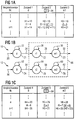
- FIG. 1 shows the calculation of auxiliary deviation measures for word models 10 shown in part b and 12.
- the word model 10 is a so-called “hidden Markov” model for modeling a reference word "three".
- Word model 12 is also a "hidden Markov” model, however for modeling a reference word "porridge”.
- the word model 10 for the reference word "three” has three states Z1, Z2 and Z3.
- the state Z1 is for the sake of Simplification assigned only one reference vector d, the Components the probable form of predefined Characteristics of the pronunciation of the letter "d” in the word specify “three".
- the characteristics include e.g. the expressions of frequencies within specified frequency ranges in a recorded voice signal. So could the reference vector d have been generated from a voltage curve that when pronouncing the letter "d” at the beginning of the word “three” is generated, represented by a transition arrow 20.
- the reference vector d is only for a talk time of 10 ms related, so that the state Z1 several times in succession occurs as soon as the pronunciation of the word "three” begins will, cf.
- Transition arrow 22 shows the transition from state Z1 to state Z2, if after the Pronunciation of the word component "d” the pronunciation of the word component "r” follows. State 2 is therefore part of the word “r”.
- a reference vector r1 which is highly likely the expression of the considered features in Pronouncing the word component "r” in the word “three” indicates is assigned to state Z2.
- the state Z2 can in turn be followed by the state Z2 itself, see. Transition arrow 26. Alternatively, however, after the State Z2 follow state Z3 as indicated by a transition arrow 28 is indicated. State Z3 contains one Reference vector ei1, the word component "egg" in the word "three” is assigned. After state Z3 either follows again the state Z3, cf. Transition arrow 30, or the Pronunciation of the word "three” is terminated. In the latter case the state Z3 is exited, cf. Transition arrow 32.
- a reference vector sequence can be generated with the word model 10 by the states Z1 to Z3 along the transition arrows 20 to 32 e.g. be run through by a program.
- the reference vectors generated when the states Z1 to Z3 are run through are then compared with a sequence of comparison vectors compared that from the speech signal to be processed have been generated.
- a measure of deviation for the word "three” can be calculated the deviation of the spoken word from the reference word "three" of the word model 10 indicates.
- the number of from the Word model 10 is generated sequences of reference vectors however very large. It is to reduce the computing effort known, e.g. use the so-called Viterbi algorithm, around the reference vector sequence from the word model 10 determine which is the smallest deviation resulting from the Has comparison vectors.
- a table is shown with which is the processing of a comparison vector n when performing a simple variant of the Viterbi algorithm explained shall be.
- the currently processed comparison vector n, n + 1 is entered in the left column of the table.
- the second column of the table refers to the state Z1 the reference vector d.
- the third column concerns values that for state Z2, i.e. using the reference vector r1, be calculated.
- the right column of the table concerns the State Z3, i.e. the reference vector ei1.
- the comparison vector n and the reference vector d become one current local deviation measure l1 determined for state Z1, that in the exemplary embodiment the numerical value "4" Has.
- the local deviation measure l1 is e.g. the geometric Distance of the comparison vector n from the reference vector d. A a more precise local deviation measure l1 results if also a probability function is taken into account.
- the deviation of the comparison vector n from Reference vector d is like the pronunciation of the word component "r" expected to be greater than the deviation of the comparison vector n from the reference vector r1.
- the new auxiliary deviation dimensions H1 to H3 for machining of the next comparison vector n + 1 are taken into account of the word model 10 determined.
- the state Z1 can only via the transition arrow 20 or the transition arrow 22 can be reached.
- the influence of Transition arrow 20 is only in a start phase of the Viterbi algorithm considered for the first comparison vector.
- For the Comparison vector n belonging to a signal section that about in the middle of the whole when pronouncing the word "three" generated waveform is only the transition arrow 22 are taken into account.
- As a previous state for state Z1 only state Z1 therefore comes into play Question.
- the calculation of the new auxiliary deviation measure H1 for The comparison vector n + 1 is therefore processed by simply adding the current local deviation measure l1 for the state Z1 to the old auxiliary deviation measure H1 for this condition.
- a new auxiliary deviation measure results H1 14.
- the transition to state Z2 can start from state Z1 via the transition arrow 24 or starting from the state Z2 the transition arrow 26 take place, the self transition indicates.
- word deviation measures W calculated in order to then determine the word deviation measure W, which has the smallest value.
- the word model 12 shown in part b of FIG. 1 has three States Z4, Z5 and Z6, to which reference vectors in this order B, r2 and ei2 belong.
- the components of the Reference vectors B contain the expression of the given one Features when pronouncing the word component "B" during the pronunciation of the word "porridge”.
- the components of the reference vector r2 contain the expression of the same characteristics in the pronunciation of the word component "r” of the word “Porridge”.
- the components of the feature vector also contain ei2 the expression of the characteristics in the pronunciation of the word component "egg" of the word "porridge”.
- the reference vector r1 of the word model 10 and the reference vector r2 of the word model 12 will usually differ somewhat from each other, because the word component "r” in the words “three” and “porridge” is pronounced differently. They also differ Reference vectors ei1 and ei2 from each other.
- the state Z4 is reached via a transition arrow 50, when you start modeling.
- a transition arrow 52 gives a self transition from state Z4 to itself on, i.e. back to state Z4.
- a transition arrow 54 gives the transition from state Z4 to state Z5.
- the self transition from state Z5 to itself is replaced by one Transition arrow 56 shown.
- the transition from state Z5 a transition arrow 58 to state Z6 illustrates Self transition from state Z6 to state Z6 is through one Transition arrow 60 shown.
- the modeling is finished if the state Z6 is left, cf. Transition arrow 62.
- the auxiliary deviation measures H4 to H5 are calculated after that already explained with the help of the word model 10 Scheme. However, there are other numerical values.
- a Table in the lower part c of Figure 1 shows values at the processing of the comparison vector n using the word model 12 can be used or calculated.
- the left column The table in part c of FIG. 1 again shows the current edited comparison vector n, n + 1 etc.
- the second column shows the current auxiliary deviation values H4 and the local ones Deviation values l4 for state Z4, i.e. for the reference vector B.
- the third column of the table in part c of the Figure 1 shows the auxiliary deviation measures H5 and the local ones Deviation measures l5 for the state Z5 or for the reference vector r2.
- the fourth column of the table shows in Part c of Figure 1, the auxiliary deviation measures H6 and the local Deviation measures 16 for state Z6, i.e. for the Reference vector ei2.
- the calculation of the new auxiliary deviation measures H4 to H6 for the next comparison vector n + 1 is processed with the help of the word model 12.
- the word model 12 has the same structure as the word model 10 calculating the new auxiliary deviation values H4 to H6 that have already been explained with reference to the upper table in FIG. 1 Way.
- the auxiliary deviation measure H6 of the state Z6 for the last comparison vector gives the deviation the spoken word from with the word model 12 modeled reference word "porridge" and is therefore as Word deviation measure 12 designated.
- Word models 10 and 12 model the reference words “three” or “porridge” with similar word components, namely “rei”, and thus also have similar word model parts, cf. Dash line 66.
- the calculation of the auxiliary deviation measures explained so far H1 to H6 corresponds to the procedure as for State of the art is applied.
- the Calculation of the auxiliary deviation measures H2, H3, H5 and H6 as follows changed.
- a generalization is that before calculating the new Auxiliary deviation value, e.g. H2, a state Z2 to which it in other word models there are 12 similar states Z5, all current local deviation dimensions l2, l5 to these states Z2, Z5 can be calculated. Then these deviation measures l2, l5 the deviation measure l5 with the smallest Value determined. The smallest value determined in this way is then at the calculation of the new auxiliary deviation values H2, H5 in all similar states Z2, Z5 used.
- FIG. 2 shows a further type of consideration in parts a to c Similar word components in those with the word models 10 and 12 modeled reference words. In doing so within the similar word model parts of word models 10 and 12, cf. Dash line 66, only the local deviation dimensions l2 and l3 calculated for the states Z2 and Z3, so that the local deviation measures l5 and l6 for the states Z5 and Z6 do not need to be calculated. Identifying the new Auxiliary deviation values H2 and H3 for word model 10 are in a table given in part a of Figure 2, which is essentially corresponds to the table in part a of FIG. 1. The values for the new auxiliary deviation measures H1 to H3 are as determined in the known method, without the local Deviation measures 15 and 16 of the word model 12 must be taken into account.
- the calculation of the new auxiliary deviation measure H6 for the State Z6 is similar to that of the auxiliary deviation measure H5 for the Z5 state.
- a local deviation measure l6 for state Z6 are omitted.
- the takeover is again by a superscript star indicated.
- H6 32.
- the Viterbi algorithm explained with reference to FIG. 1 can be generalized if emission probabilities p ( y (n)
- the operator "max" in formula (1) means that the path in the trellis diagram of the word model 10 'is followed, in which the product of the generation probabilities p ( y (n)
- the probability of generation P ( y (1),..., y (N)) is inversely proportional to the word deviation measure W10.
- a disadvantage of the approach according to formula (1) is that word components whose pronunciation takes longer influence the calculated deviation measure W10 more than word components that are pronounced within a short time. However, the length of time a word component is uttered is only of limited relevance for the distinction.
- the average speech duration D (j) is determined using many utterances from different speakers, for example from 500 speakers.
- the average speaking duration is a measure of the proportion of the speaking duration of the word component modeled by the relevant state j in the total speaking duration of the spoken word.
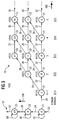
- the average speaking time D (j) can also be called the average length of stay in state j. This can be explained with the aid of FIG. 3 in that for the sequence of states which maximizes the formula (1), a certain number of time steps n are retained in each state.
- the constants CONST_2 (j) are also used in advance for the States j determined after the average speech duration D (j) has been determined for the respective state.
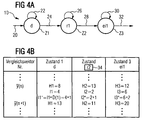
- FIG. 4 shows in part b the calculation of auxiliary deviation measures H1 to H3 for the word model 10 of the reference word “three” shown in part a, taking into account mean speaking times D (j).
- the word similarity measure W10 is calculated according to formula (11) using the simplified Viterbi algorithm already explained with reference to FIGS. 1 and 2.
- a table is shown below the word model 10 in FIG. 4, in the left column of which the comparison vectors currently being processed are shown y (n), y (n + 1) are entered.
- the second column of the table relates to the state Z1 with the reference vector d.
- the third column relates to values which are calculated for the state Z2, ie with the aid of the reference vector r1.
- the right column of the table contains values for the state Z3, ie the reference vector ei1.
- the state Z2 can start from the state Z1 via the transition arrow 24 or starting from state Z2 via the transition arrow 26 can be achieved.
- the word model results for state Z3 10 that only the state Z2 or the state Z3 itself.
Landscapes
- Engineering & Computer Science (AREA)
- Physics & Mathematics (AREA)
- Multimedia (AREA)
- Computational Linguistics (AREA)
- Health & Medical Sciences (AREA)
- Audiology, Speech & Language Pathology (AREA)
- Human Computer Interaction (AREA)
- Acoustics & Sound (AREA)
- Probability & Statistics with Applications (AREA)
- Machine Translation (AREA)
- Information Retrieval, Db Structures And Fs Structures Therefor (AREA)
- Selective Calling Equipment (AREA)
- Electrically Operated Instructional Devices (AREA)
- Electrophonic Musical Instruments (AREA)
- Compression, Expansion, Code Conversion, And Decoders (AREA)
- Mobile Radio Communication Systems (AREA)
Abstract
Description
- Figur 1
- die Berechnung von Hilfsabweichungsmaßen für zwei Wortmodelle der Referenzworte "drei" und "Brei",
- Figur 2
- eine weitere Art der Berechnung der Hilfsabweichungsmaße für die Wortmodelle der Referenzworte "drei" und "Brei",
- Figur 3
- ein sogenanntes Trellis-Diagramm für das Wortmodell des Referenzwortes "drei", und
- Figur 4
- die Berechnung von Hilfsabweichungsmaßen für das Wortmodell des Referenzwortes "drei" unter Berücksichtigung der Sprechdauer für Wortbestandteile.
Claims (16)
- Verfahren zur Verarbeitung eines Sprachsignals,bei dem für mindestens zwei Referenzworte mit einem oder mehreren ähnlichen Wortbestandteilen ein erstes Wortmodell (10) und ein zweites Wortmodell (12) mit aufeinanderfolgenden Zuständen (Z1 bis Z3, Z4 bis 6) für die Wortbestandteile festgelegt werden, vorzugsweise sogenannte "Hidden-Markov"-Modelle,wobei zu jedem Zustand (Z1 bis Z6) mindestens ein Referenzvektor (d, r1, ei1; B, r2, ei2) gehört, dessen Komponenten die Ausprägung von Merkmalen in einem zum jeweiligen Zustand (Z1 bis Z6) gehörenden Referenzsignal angeben,und wobei im ersten Wortmodell (10) ein erster Zustand (Z2) für den ähnlichen Wortbestandteil im ersten Referenzwort und im zweiten Wortmodell (12) ein zweiter Zustand (Z5) für den ähnlichen Wortbestandteil im zweiten Referenzwort festgelegt sind,ein beim Sprechen eines Wortes erzeugtes Sprachsignal in aufeinanderfolgende Signalabschnitte unterteilt wird, für die Vergleichsvektoren (n, n+1) erzeugt werden, deren Komponenten die Ausprägung der Merkmale im jeweiligen Signalabschnitt angeben,die Vergleichsvektoren (n, n+1) in der zeitlichen Reihenfolge ihrer Signalabschnitte nacheinander bearbeitet werden,wobei für vorbestimmte Zustände (Z1 bis Z6) aus dem zugehörigen Referenzvektor (d, r1, ei1; B, r2, ei2) und aus dem aktuellen Vergleichsvektor (n) jeweils ein aktuelles lokales Abweichungsmaß (l1 bis l6) berechnet wird, dessen Wert mit zunehmender Abweichung des Vergleichsvektors (n) vom Referenzvektor (d, r1, ei1; B, r2, ei2) zunimmt,und wobei für jeden Zustand (Z1 bis Z6) ein aktuelles Hilfsabweichungsmaß (H1 bis H6) berechnet wird, das den Unterschied eines zum bisher bearbeiten Teil des Sprachsignals gehörenden Teilwortes und eines Referenzteilwortes angibt, welches durch die im Wortmodell (10, 12) bis zum jeweiligen Zustand (Z1 bis Z6) auftretenden Zustände (Z1 bis Z6) modelliert wird,das zuletzt berechnete Hilfsabweichungsmaß (H3, H6) des letzten Zustands (Z3, Z6) eines Wortmodells (10, 12) als Wortabweichungsmaß (W10, W12) die Abweichung des gesprochenen Wortes vom durch das jeweilige Wortmodell (10, 12) modellierten Referenzwort angibt,und bei dem nach dem vollständigen Bearbeiten des Sprachsignals das Referenzwort mit dem kleinsten Wortabweichungsmaß (W10, W12) als das gesprochene Wort gemeldet wird,
dadurch gekennzeichnet, daß bei der Bearbeitung mindestens eines ausgewählten Vergleichsvektors (n) zum Berechnen des aktuellen Hilfsabweichungsmaßes (H2) des ersten Zustands (Z2) das aktuelle lokale Abweichungsmaß (5) des zweiten Zustands (Z5) einbezogen wird. - Verfahren nach Anspruch 1, dadurch gekennzeichnet, daß bei der Bearbeitung des ausgewählten Vergleichsvektors (n) vor der Berechnung des aktuellen Hilfsabweichungsmaßes (H2) für den ersten Zustand (Z2) das aktuelle lokale Abweichungsmaß (l2) für diesen Zustand (Z2) berechnet wird,und daß abhängig von einem Auswahlkriterium das aktuelle lokale Abweichungsmaß (l2) des ersten Zustands (Z2) oder das aktuelle lokale Abweichungsmaß (l5) des zweiten Zustands (Z5) zur Berechnung des aktuellen Hilfsabweichungsmaßes (H2) für den ersten Zustand (Z2) verwendet wird.
- Verfahren nach Anspruch 2, dadurch gekennzeichnet, daß bei der Bearbeitung des ausgewählten Vergleichsvektors aus dem aktuellen lokalen Abweichungsmaß (l2) für den ersten Zustand (Z2) und aus dem aktuellen lokalen Abweichungsmaß (l5) für den zweiten Zustand (Z5) das Abweichungsmaß (l2, l5) mit dem kleineren Wert ausgewählt wird.
- Verfahren nach einem der vorhergehenden Ansprüche, dadurch gekennzeichnet, daß bei der Bearbeitung des ausgewählten Vergleichsvektors (n) zum Berechnen des aktuellen Hilfsabweichungsmaßes (H5) des zweiten Zustands (Z5) das aktuelle lokale Abweichungsmaß (l2) des ersten Zustands (Z2) berücksichtigt wird.
- Verfahren nach Anspruch 4, dadurch gekennzeichnet, daß zur Berechnung des Hilfsabweichungsmaßes (H2) des ersten Zustands (Z2) und zur Berechnung des Hilfsabweichungsmaßes (H5) des zweiten Zustands (Z5) der Wert desselben lokalen Abweichungsmaßes (l2 bzw. l5) verwendet wird.
- Verfahren nach Anspruch 1, dadurch gekennzeichnet, daß bei der Bearbeitung des aktuellen Vergleichsvektors (n) zum Berechnen des Hilfsabweichungsmaßes (H5) des zweiten Zustands (Z5) anstelle des aktuellen lokalen Abweichungsmaßes (l5) dieses Zustands (Z5) das aktuelle lokale Abweichungsmaß (l2) des ersten Zustands verwendet wird.
- Verfahren nach Anspruch 6, dadurch gekennzeichnet, daß das aktuelle lokale Abweichungsmaß (l5) für den zweiten Zustand (Z5) nicht berechnet wird.
- Verfahren nach einem der vorhergehenden Ansprüche, dadurch gekennzeichnet, daß mehrere ähnliche Wortbestandteile in den beiden Referenzworten durch mehrere aufeinanderfolgende Zustände (Z2, Z3; Z5, Z6) in den zugehörigen Wortmodellen (10, 12) modelliert werden.
- Verfahren nach einem der vorhergehenden Ansprüche, dadurch gekennzeichnet, daß der ähnliche Wortbestandteil innerhalb der Referenzworte die gleiche Position bezüglich des Wortanfangs hat.
- Verfahren nach einem der vorhergehenden Ansprüche, dadurch gekennzeichnet, daß alle Vergleichsvektoren (n, n+1) ausgewählt werden.
- Verfahren nach einem der vorhergehenden Ansprüche, dadurch gekennzeichnet, daß es in einer Telekommunikationsanlage verwendet wird.
- Sprachverarbeitungseinheit, insbesondere zum Durchführen des Verfahrens nach einem der vorhergehenden Ansprüche,mit einer Eingabeeinheit zum Erzeugen eines Sprachsignals aus einem gesprochenen Wort oder zum Eingeben eines Sprachsignals, das beim Sprechen eines Worts erzeugt worden ist,und mit einer Bearbeitungseinheit, die für mindestens zwei Referenzworte mit einem oder mehreren ähnlichen Wortbestandteilen ein erstes Wortmodell (10) und ein zweites Wortmodell (12) mit aufeinanderfolgenden Zuständen (Z1 bis Z3, Z4 bis Z6) enthält, die Ähnlichkeit des Sprachsignals zu den Wortmodellen (10, 12) bestimmt und die das ähnlichste Wortmodell (10, 12) meldet,
dadurch gekennzeichnet, daß die Bearbeitungseinheit so gesteuert wird, daß beim Ermitteln der Ähnlichkeit des Sprachsignals zum ersten Wortmodell (10) mindestens ein bei der Berechnung der Ähnlichkeit des Sprachsignals zum zweiten Wortmodell (12) berechneter Wert einbezogen wird. - Verfahren zur Verarbeitung eines Sprachsignals,bei dem für mindestens ein Referenzwort eines vorgegebenen Wortschatzes ein Wortmodell (10, 10') mit aufeinanderfolgenden Zuständen (Z1 bis Z3) für die Wortbestandteile festgelegt wird, vorzugsweise ein sogenanntes "Hidden-Markov"-Modell,wobei zu jedem Zustand (Z1 bis Z3) mindestens ein Referenzvektor (d, r1, ei1) gehört, dessen Komponenten die Ausprägung von Merkmalen in einem zum jeweiligen Zustand (Z1 bis Z3) gehörenden Referenzsignal angeben,ein beim Sprechen eines Wortes erzeugtes Sprachsignal in aufeinanderfolgende Signalabschnitte unterteilt wird, für die Vergleichsvektoren (n, n+1) erzeugt werden, deren Komponenten die Ausprägung der Merkmale im jeweiligen Signalabschnitt angeben,die Vergleichsvektoren (n, n+1) in der zeitlichen Reihenfolge ihrer Signalabschnitte nacheinander bearbeitet werden,wobei für vorbestimmte Zustände (Z1 bis Z3) aus dem zugehörigen Referenzvektor (d, r1, ei1) und aus dem aktuellen Vergleichsvektor (n) und ein aktuelles lokales Abweichungsmaß (l1 bis l3, l1'' bis l3'') berechnet wird, dessen Wert mit zunehmender Abweichung des Vergleichsvektors (n) vom Referenzvektor (d, r1, ei1) zunimmt,und wobei für jeden Zustand (Z1 bis Z3) ein aktuelles Hilfsabweichungsmaß (H1 bis H3) berechnet wird, das den Unterschied eines zum bisher bearbeiteten Teil des Sprachsignals gehörenden Teilworts zu einem Referenzteilwort angibt, welches durch die im Wortmodell bis zum jeweiligen Zustand (Z1 bis Z3) auftretenden Zustände (Z1 bis Z3) modelliert wird,und bei dem das zuletzt erzeugte Hilfsabweichungsmaß (H3) des letzten Zustands des Wortmodells (10, 10') die Abweichung des gesprochenen Worts zum durch das Wortmodell (10, 10') modellierten Referenzwort angibt,
dadurch gekennzeichnet, daß beim Berechnen der aktuellen lokalen Abweichungsmaße (l1'' bis l3'') mindestens eines ausgewählten Zustands eine Verweildauer (D(j)) berücksichtigt wird, die ein Maß für den Anteil der Sprechdauer des durch den ausgewählten Zustand (Z1 bis Z3) modellierten Wortbestandteils an der Gesamtsprechdauer des gesprochenen Wortes ist. - Verfahren nach Anspruch 13, dadurch gekennzeichnet, daß die Verweildauer (D(j)) eine mittlere Verweildauer ist, die vorzugsweise durch Messungen ermittelt worden ist.
- Verfahren nach Anspruch 13 oder 14, dadurch gekennzeichnet, daß sämtliche Zustände (Z1 bis Z3) des Wortmodells (10, 10') ausgewählt werden.
- Sprachverarbeitungseinheit, insbesondere zum Durchführen des Verfahrens nach einem der Ansprüche 13 bis 15,mit einer Eingabeeinheit zum Erzeugen eines Sprachsignals aus einem gesprochenen Wort oder zum Eingeben eines Sprachsignals, das beim Sprechen eines Worts erzeugt worden ist,und mit einer Bearbeitungseinheit, die für mindestens ein Referenzwort mit mehreren Wortbestandteilen ein Wortmodell (10, 10') aus aufeinanderfolgenden Zuständen (Z1 bis Z3) für die Wortbestandteile enthält und die einen Ähnlichkeitswert berechnet, der die Ähnlichkeit des Sprachsignals zum Wortmodell (10, 10') angibt,
dadurch gekennzeichnet, daß die Bearbeitungseinheit so gesteuert ist, daß beim Berechnen eines lokalen Abweichungsmaßes (l1'' bis l3'') für mindestens einen ausgewählten Zustand eine Verweildauer (D(j)) berücksichtigt wird, die ein Maß für den Anteil der Sprechdauer des durch den ausgewählten Zustand (Z1 bis Z3) modellierten Wortbestandteils an der Gesamtsprechdauer des gesprochenen Wortes ist.
Priority Applications (1)
| Application Number | Priority Date | Filing Date | Title |
|---|---|---|---|
| EP03003961A EP1327975B1 (de) | 1997-09-12 | 1998-08-13 | Verarbeitung eines Sprachsignals |
Applications Claiming Priority (2)
| Application Number | Priority Date | Filing Date | Title |
|---|---|---|---|
| DE19740175 | 1997-09-12 | ||
| DE19740175 | 1997-09-12 |
Related Child Applications (1)
| Application Number | Title | Priority Date | Filing Date |
|---|---|---|---|
| EP03003961A Division EP1327975B1 (de) | 1997-09-12 | 1998-08-13 | Verarbeitung eines Sprachsignals |
Publications (3)
| Publication Number | Publication Date |
|---|---|
| EP0902417A2 true EP0902417A2 (de) | 1999-03-17 |
| EP0902417A3 EP0902417A3 (de) | 2000-02-09 |
| EP0902417B1 EP0902417B1 (de) | 2003-12-10 |
Family
ID=7842174
Family Applications (2)
| Application Number | Title | Priority Date | Filing Date |
|---|---|---|---|
| EP03003961A Expired - Lifetime EP1327975B1 (de) | 1997-09-12 | 1998-08-13 | Verarbeitung eines Sprachsignals |
| EP98115323A Expired - Lifetime EP0902417B1 (de) | 1997-09-12 | 1998-08-13 | Verfahren und Einrichtung zur Spracherkennung von verwirrenden Wörtern |
Family Applications Before (1)
| Application Number | Title | Priority Date | Filing Date |
|---|---|---|---|
| EP03003961A Expired - Lifetime EP1327975B1 (de) | 1997-09-12 | 1998-08-13 | Verarbeitung eines Sprachsignals |
Country Status (3)
| Country | Link |
|---|---|
| EP (2) | EP1327975B1 (de) |
| AT (2) | ATE344958T1 (de) |
| DE (2) | DE59813799D1 (de) |
Cited By (1)
| Publication number | Priority date | Publication date | Assignee | Title |
|---|---|---|---|---|
| CN115240696A (zh) * | 2022-07-26 | 2022-10-25 | 深圳市迪斯声学有限公司 | 一种语音识别方法及可读存储介质 |
Family Cites Families (3)
| Publication number | Priority date | Publication date | Assignee | Title |
|---|---|---|---|---|
| DE4131387A1 (de) * | 1991-09-20 | 1993-03-25 | Siemens Ag | Verfahren zur erkennung von mustern in zeitvarianten messsignalen |
| EP0559349B1 (de) * | 1992-03-02 | 1999-01-07 | AT&T Corp. | Lernverfahren und Gerät zur Spracherkennung |
| US5737489A (en) * | 1995-09-15 | 1998-04-07 | Lucent Technologies Inc. | Discriminative utterance verification for connected digits recognition |
-
1998
- 1998-08-13 EP EP03003961A patent/EP1327975B1/de not_active Expired - Lifetime
- 1998-08-13 DE DE59813799T patent/DE59813799D1/de not_active Expired - Lifetime
- 1998-08-13 AT AT03003961T patent/ATE344958T1/de not_active IP Right Cessation
- 1998-08-13 EP EP98115323A patent/EP0902417B1/de not_active Expired - Lifetime
- 1998-08-13 AT AT98115323T patent/ATE256330T1/de not_active IP Right Cessation
- 1998-08-13 DE DE59810386T patent/DE59810386D1/de not_active Expired - Lifetime
Cited By (2)
| Publication number | Priority date | Publication date | Assignee | Title |
|---|---|---|---|---|
| CN115240696A (zh) * | 2022-07-26 | 2022-10-25 | 深圳市迪斯声学有限公司 | 一种语音识别方法及可读存储介质 |
| CN115240696B (zh) * | 2022-07-26 | 2023-10-03 | 北京集智数字科技有限公司 | 一种语音识别方法及可读存储介质 |
Also Published As
| Publication number | Publication date |
|---|---|
| DE59813799D1 (de) | 2006-12-21 |
| ATE344958T1 (de) | 2006-11-15 |
| EP1327975A1 (de) | 2003-07-16 |
| DE59810386D1 (de) | 2004-01-22 |
| EP0902417A3 (de) | 2000-02-09 |
| ATE256330T1 (de) | 2003-12-15 |
| EP1327975B1 (de) | 2006-11-08 |
| EP0902417B1 (de) | 2003-12-10 |
Similar Documents
| Publication | Publication Date | Title |
|---|---|---|
| DE69938374T2 (de) | Verfahren und Vorrichtung zur Spracherkennung mittels sowohl eines neuralen Netzwerks als auch verborgener Markov-Modelle | |
| DE69414752T2 (de) | Sprecherunabhängiges Erkennungssystem für isolierte Wörter unter Verwendung eines neuronalen Netzes | |
| DE69725802T2 (de) | Vorfilterung mittels lexikalischer Bäumen für die Spracherkennung | |
| DE602005002706T2 (de) | Verfahren und System für die Umsetzung von Text-zu-Sprache | |
| DE69726526T2 (de) | Schema und Modelladaption bei Mustererkennung welche auf Taylorausdehnung basiert | |
| DE60302407T2 (de) | Umgebungs- und sprecheradaptierte Spracherkennung | |
| DE69420842T2 (de) | Spracherkennung unter anwendung einer zweidurchgängigen suchmethode | |
| DE69807765T2 (de) | Kombination von Frequenzverzerrung und spektraler Formung in einem HMM - basierten Spracherkenner | |
| DE3247229C2 (de) | ||
| DE3211313C2 (de) | ||
| DE69030561T2 (de) | Spracherkennungseinrichtung | |
| EP0797185B1 (de) | Verfahren und Vorrichtung zur Spracherkennung | |
| DE69229816T2 (de) | Einrichtung und Verfahren für Sprachmusteridentifizierung | |
| DE69519453T2 (de) | Spracherkennung mit Sprecheradaptierung mittels Berechnung von Mittelwerten akustischer Kategorien | |
| DE19847419A1 (de) | Verfahren zur automatischen Erkennung einer buchstabierten sprachlichen Äußerung | |
| DE69930961T2 (de) | Vorrichtung und verfahren zur sprachsegmentierung | |
| EP1264301B1 (de) | Verfahren zur erkennung von sprachäusserungen nicht-muttersprachlicher sprecher in einem sprachverarbeitungssystem | |
| DE602004000716T2 (de) | Rauschadaptierungssystem für ein Sprachmodell, Verfahren zur Rauschadaptierung und Programm zur Rauschadaptierung für Spracherkennung | |
| EP0533260A2 (de) | Verfahren und Anordnung zum Erkennen der gesprochenen Wörter in einem Sprachsignal | |
| EP1456837B1 (de) | Verfahren und vorrichtung zur spracherkennung | |
| DE10040063A1 (de) | Verfahren zur Zuordnung von Phonemen | |
| EP0533259A2 (de) | Verfahren und Anordnung zum Erkennen einer Folge von Wörtern | |
| EP0285222A2 (de) | Verfahren zum Erkennen zusammenhängend gesprochener Wörter | |
| WO2001086634A1 (de) | Verfahren zum erzeugen einer sprachdatenbank für einen zielwortschatz zum trainieren eines spracherkennungssystems | |
| EP1136982A2 (de) | Erzeugung eines Sprachmodells und eines akustischen Modells für ein Spracherkennungssystem |
Legal Events
| Date | Code | Title | Description |
|---|---|---|---|
| PUAI | Public reference made under article 153(3) epc to a published international application that has entered the european phase |
Free format text: ORIGINAL CODE: 0009012 |
|
| AK | Designated contracting states |
Kind code of ref document: A2 Designated state(s): AT BE CH DE FR GB IT LI NL |
|
| AX | Request for extension of the european patent |
Free format text: AL;LT;LV;MK;RO;SI |
|
| PUAL | Search report despatched |
Free format text: ORIGINAL CODE: 0009013 |
|
| AK | Designated contracting states |
Kind code of ref document: A3 Designated state(s): AT BE CH CY DE DK ES FI FR GB GR IE IT LI LU MC NL PT SE |
|
| AX | Request for extension of the european patent |
Free format text: AL;LT;LV;MK;RO;SI |
|
| 17P | Request for examination filed |
Effective date: 20000303 |
|
| AKX | Designation fees paid |
Free format text: AT BE CH DE FR GB IT LI NL |
|
| 17Q | First examination report despatched |
Effective date: 20021025 |
|
| GRAH | Despatch of communication of intention to grant a patent |
Free format text: ORIGINAL CODE: EPIDOS IGRA |
|
| RIC1 | Information provided on ipc code assigned before grant |
Ipc: 7G 10L 15/08 A |
|
| GRAS | Grant fee paid |
Free format text: ORIGINAL CODE: EPIDOSNIGR3 |
|
| GRAA | (expected) grant |
Free format text: ORIGINAL CODE: 0009210 |
|
| AK | Designated contracting states |
Kind code of ref document: B1 Designated state(s): AT BE CH DE FR GB IT LI NL |
|
| PG25 | Lapsed in a contracting state [announced via postgrant information from national office to epo] |
Ref country code: NL Free format text: LAPSE BECAUSE OF FAILURE TO SUBMIT A TRANSLATION OF THE DESCRIPTION OR TO PAY THE FEE WITHIN THE PRESCRIBED TIME-LIMIT Effective date: 20031210 |
|
| REG | Reference to a national code |
Ref country code: GB Ref legal event code: FG4D Free format text: NOT ENGLISH |
|
| REG | Reference to a national code |
Ref country code: CH Ref legal event code: EP |
|
| REF | Corresponds to: |
Ref document number: 59810386 Country of ref document: DE Date of ref document: 20040122 Kind code of ref document: P |
|
| GBT | Gb: translation of ep patent filed (gb section 77(6)(a)/1977) |
Effective date: 20040310 |
|
| NLV1 | Nl: lapsed or annulled due to failure to fulfill the requirements of art. 29p and 29m of the patents act | ||
| PG25 | Lapsed in a contracting state [announced via postgrant information from national office to epo] |
Ref country code: AT Free format text: LAPSE BECAUSE OF NON-PAYMENT OF DUE FEES Effective date: 20040813 |
|
| PG25 | Lapsed in a contracting state [announced via postgrant information from national office to epo] |
Ref country code: LI Free format text: LAPSE BECAUSE OF NON-PAYMENT OF DUE FEES Effective date: 20040831 Ref country code: CH Free format text: LAPSE BECAUSE OF NON-PAYMENT OF DUE FEES Effective date: 20040831 Ref country code: BE Free format text: LAPSE BECAUSE OF NON-PAYMENT OF DUE FEES Effective date: 20040831 |
|
| ET | Fr: translation filed | ||
| PLBE | No opposition filed within time limit |
Free format text: ORIGINAL CODE: 0009261 |
|
| STAA | Information on the status of an ep patent application or granted ep patent |
Free format text: STATUS: NO OPPOSITION FILED WITHIN TIME LIMIT |
|
| 26N | No opposition filed |
Effective date: 20040913 |
|
| BERE | Be: lapsed |
Owner name: *SIEMENS A.G. Effective date: 20040831 |
|
| REG | Reference to a national code |
Ref country code: CH Ref legal event code: PL |
|
| BERE | Be: lapsed |
Owner name: *SIEMENS A.G. Effective date: 20040831 |
|
| PGFP | Annual fee paid to national office [announced via postgrant information from national office to epo] |
Ref country code: DE Payment date: 20100922 Year of fee payment: 13 |
|
| PGFP | Annual fee paid to national office [announced via postgrant information from national office to epo] |
Ref country code: GB Payment date: 20110824 Year of fee payment: 14 Ref country code: FR Payment date: 20110829 Year of fee payment: 14 |
|
| PGFP | Annual fee paid to national office [announced via postgrant information from national office to epo] |
Ref country code: IT Payment date: 20110825 Year of fee payment: 14 |
|
| REG | Reference to a national code |
Ref country code: GB Ref legal event code: 732E Free format text: REGISTERED BETWEEN 20121025 AND 20121031 |
|
| REG | Reference to a national code |
Ref country code: FR Ref legal event code: TP Owner name: SIEMENS ENTERPRISE COMMUNICATIONS GMBH & CO. K, DE Effective date: 20130108 |
|
| REG | Reference to a national code |
Ref country code: DE Ref legal event code: R119 Ref document number: 59810386 Country of ref document: DE |
|
| REG | Reference to a national code |
Ref country code: DE Ref legal event code: R082 Ref document number: 59810386 Country of ref document: DE Representative=s name: FRITZSCHE PATENT, DE |
|
| GBPC | Gb: european patent ceased through non-payment of renewal fee |
Effective date: 20120813 |
|
| REG | Reference to a national code |
Ref country code: DE Ref legal event code: R082 Ref document number: 59810386 Country of ref document: DE Representative=s name: FRITZSCHE PATENT, DE Effective date: 20130313 Ref country code: DE Ref legal event code: R081 Ref document number: 59810386 Country of ref document: DE Owner name: SIEMENS ENTERPRISE COMMUNICATIONS GMBH & CO. K, DE Free format text: FORMER OWNER: SIEMENS AKTIENGESELLSCHAFT, 80333 MUENCHEN, DE Effective date: 20130313 |
|
| REG | Reference to a national code |
Ref country code: FR Ref legal event code: ST Effective date: 20130430 |
|
| PG25 | Lapsed in a contracting state [announced via postgrant information from national office to epo] |
Ref country code: IT Free format text: LAPSE BECAUSE OF NON-PAYMENT OF DUE FEES Effective date: 20120813 |
|
| PG25 | Lapsed in a contracting state [announced via postgrant information from national office to epo] |
Ref country code: DE Free format text: LAPSE BECAUSE OF NON-PAYMENT OF DUE FEES Effective date: 20130301 Ref country code: GB Free format text: LAPSE BECAUSE OF NON-PAYMENT OF DUE FEES Effective date: 20120813 |
|
| PG25 | Lapsed in a contracting state [announced via postgrant information from national office to epo] |
Ref country code: FR Free format text: LAPSE BECAUSE OF NON-PAYMENT OF DUE FEES Effective date: 20120831 |
|
| REG | Reference to a national code |
Ref country code: DE Ref legal event code: R119 Ref document number: 59810386 Country of ref document: DE Effective date: 20130301 |
|
| REG | Reference to a national code |
Ref country code: FR Ref legal event code: CD Owner name: UNIFY GMBH & CO.KG, DE Effective date: 20140429 |