EP0897643B1 - Verfahren und einrichtung zur verarbeitung von eingehenden rufen in abhängigkeit vom aufenthaltsort des angerufenen mobilen teilnehmers - Google Patents
Verfahren und einrichtung zur verarbeitung von eingehenden rufen in abhängigkeit vom aufenthaltsort des angerufenen mobilen teilnehmers Download PDFInfo
- Publication number
- EP0897643B1 EP0897643B1 EP97923558A EP97923558A EP0897643B1 EP 0897643 B1 EP0897643 B1 EP 0897643B1 EP 97923558 A EP97923558 A EP 97923558A EP 97923558 A EP97923558 A EP 97923558A EP 0897643 B1 EP0897643 B1 EP 0897643B1
- Authority
- EP
- European Patent Office
- Prior art keywords
- msc
- area
- alternative terminal
- mobile station
- mobile
- Prior art date
- Legal status (The legal status is an assumption and is not a legal conclusion. Google has not performed a legal analysis and makes no representation as to the accuracy of the status listed.)
- Expired - Lifetime
Links
- 238000011282 treatment Methods 0.000 title claims description 17
- 238000000034 method Methods 0.000 title claims description 14
- 230000004044 response Effects 0.000 claims description 3
- 210000004027 cell Anatomy 0.000 description 13
- 238000010586 diagram Methods 0.000 description 9
- 210000004271 bone marrow stromal cell Anatomy 0.000 description 2
- 230000008569 process Effects 0.000 description 2
- 108010076504 Protein Sorting Signals Proteins 0.000 description 1
- 206010038743 Restlessness Diseases 0.000 description 1
- 230000008901 benefit Effects 0.000 description 1
- 238000012986 modification Methods 0.000 description 1
- 230000004048 modification Effects 0.000 description 1
- 230000008707 rearrangement Effects 0.000 description 1
- 238000006467 substitution reaction Methods 0.000 description 1
Images



Classifications
-
- H—ELECTRICITY
- H04—ELECTRIC COMMUNICATION TECHNIQUE
- H04W—WIRELESS COMMUNICATION NETWORKS
- H04W4/00—Services specially adapted for wireless communication networks; Facilities therefor
- H04W4/12—Messaging; Mailboxes; Announcements
-
- H—ELECTRICITY
- H04—ELECTRIC COMMUNICATION TECHNIQUE
- H04M—TELEPHONIC COMMUNICATION
- H04M3/00—Automatic or semi-automatic exchanges
- H04M3/42—Systems providing special services or facilities to subscribers
- H04M3/436—Arrangements for screening incoming calls, i.e. evaluating the characteristics of a call before deciding whether to answer it
Definitions
- the present invention relates to a mobile telecommunications system and, in particular, to providing different terminating call treatments to an incoming call based on the called mobile station's service area.
- an incoming call intended for a particular subscriber can be forwarded to the subscriber's designated forward-to-number, announcement machine, or answering machine.
- the incoming call may also be selectively screened and rejected.
- the intended subscriber may also receive a different ring signal depending on the category or the directory number of the incoming caller.
- a telecommunications subscriber has to have a subscription agreement with his service provider for rerouting incoming calls to a specified forward-to-number.
- a subscription service includes Call Forwarding Don't Answer (CFDA), Call Forwarding Busy (CFB), Call Forwarding Variable (CFV), etc.
- mobile telecommunications systems Unlike wireline telecommunications systems, mobile telecommunications systems have a limited number of channels available for providing mobile service to mobile subscribers within a particular service area. Some times, especially during peak service utilization, mobile subscribers are often unable to access mobile telecommunications service because all channels are being used. In a normal situation, this is not a problem for a mobile subscriber and the serving mobile telecommunications network. The mobile subscriber merely receives a congestion tone indicating that all access channels are currently being utilized and that another attempt should be made later.
- An illustration of such an emergency situation is an earthquake or major civil unrest covering a particular mobile service area.
- all of the mobile stations located within the particular mobile service area are affected and, as a result, the serving mobile telecommunications network provider would like to remain open the radio channels to enable the mobile subscribers to make outgoing emergency or high priority calls.
- Incoming calls terminating to the particular mobile service area during the emergency could undesirably seize these certain channels. For example, when loved ones of mobile subscribers are informed of the emergency situation, a higher number of incoming calls tend to be generated to determine the safety of the subscribers. It would be advantageous if control could be exercised while terminating such incoming calls towards the service area covering the emergency situation.
- the control over the termination of incoming calls may be of some benefit in other situations as well. Such a situation is where there is a major convention or meeting being held in a particular area. Preventing the termination of incoming calls to this particular area is necessary so that sensitive proceedings will not be disturbed. In other words, a "quiet" zone is desirable within this area. If a call attempts to terminate to this area, it would be desirable to reroute, for instance, to an operator or an announcement machine.
- the present invention discloses a method and apparatus for providing a different call treatment to an incoming call intended for a mobile station located within a particular service area.
- a routing address representing an alternative terminal is assigned to the particular service area.
- all incoming calls terminating towards the specified service area are rerouted to the alternative terminal by transmitting the specified routing address from the serving mobile switching center (MSC) to the serving gateway mobile switching center (GMSC).
- MSC serving mobile switching center
- GMSC serving gateway mobile switching center
- the GMSC utilizes the received routing address to accordingly reroute the incoming calls to the indicated alternative terminal.
- the alternative terminal then informs the callers why the calls have been rerouted and further provides additional information.
- the alternative terminal can be an announcement machine, an answering machine, an operator terminal, or a Private Branch Exchange (PBX). Furthermore, the alternative terminal can be associated directly with the serving MSC. As another embodiment, the alternative terminal can also be associated with a separate node connected to the serving mobile telecommunications network.
- PBX Private Branch Exchange
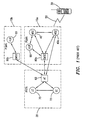
- FIG. 1 is a block diagram illustrating the network interconnection of multiple Public Land Mobile Networks (PLMN) 10 to a Public Switched Telephone Network (PSTN) 20.
- PLMN Public Land Mobile Networks
- PSTN Public Switched Telephone Network
- a mobile station 30 (also known as a mobile terminal or equipment) is associated with one of the PLMNs 10 as the Home PLMN 10a.
- MSC mobile switching centers
- a mobile station 30 communicates with one of the MSCs 40 via over-the-air communications links 50.
- the mobile station 30 served by one PLMN 10 then communicates with other wireline and wireless terminals by connecting to the PSTN 20.
- the access tandem (AT) 60 within the PSTN 20 routes the mobile calls generated from one PLMN 10 to wire-line terminals serviced by one of its local exchanges (LE) 70 within the PSTN 20, or to another PLMN 10 by a way of its gateway mobile switching center (GMSC) 80.
- GMSC gateway mobile switching center
- the incoming call is first routed to the GMSC 80a serving the home PLMN 10a.
- the GMSC 80a sends a signal requesting routing information to the home location register (HLR) 90 for that mobile station 30.
- the HLR 90 stores subscriber information and keeps track of the current location of the mobile station 30.
- the HLR 90 transmits the routing instruction request signal to the serving MSC 40a.
- the serving MSC 40a determines the current location of the mobile station and returns a routing address representing the mobile station back to the HLR 90.
- the HLR 90 further transmits the information back to the GMSC 80a. Utilizing the received routing address, the GMSC 80a transmits the incoming call to the indicated MSC 40a.
- the serving MSC 40a then pages and establishes a speech connection with the mobile station 30 located with its MSC serving area.
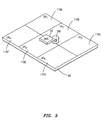
- a PLMN network 10 is a complex configuration comprising multiple MSCs 40, VLRs 100, HLRs (not shown in FIG. 2), Gateway MSC (GMSC) 80, etc.
- GMSC Gateway MSC
- the individual PLMN 10 may contain parts of one or more single Local Access Transport Areas (LATA).
- LATA Local Access Transport Areas
- MSC/VLR areas each being served by an individual MSC/VLR (usually there is a one-to-one relationship between a MSC and its VLR and is often referenced collectively as a MSC/VLR).
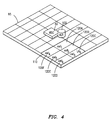
- FIG. 3 illustrates multiple Location Areas 110A-110F within a particular MSC area 95.
- a Location Area is a part of the MSC Service Area in which a mobile station may move freely without updating location information to the MSC/VLR that serves the Location Area. Therefore, a Location Area is the area where a paging message is broadcast to find the called mobile station.
- a Location Area Identity (LAI) which identifies each Location Area is used by the mobile network to search for a mobile station in active state.
- LAI Location Area Identity
- each Location Area 110 is further divided into multiple Cell Areas 120A-120F. Again, these Cell Areas within the Location Area 110 are served by the same MSC 40 and VLR 100.
- the serving mobile network identifies a particular radio coverage area known as a Cell Area using a Cell Global Identity (CGI). Different Cell Areas within a single Location Area are distinguished using a Base Station Identity Code (BSIC) assigned to each serving base station.
- CGI Cell Global Identity
- BSIC Base Station Identity Code
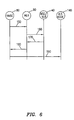
- a GMSC 80 is illustrated communicating routing instructions with a MSC 40 for rerouting an incoming call towards an alternative terminal 140 in accordance with the teachings of the present invention.
- An incoming call towards a mobile station 30 is first received by the GMSC 80 associated with the home HLR 90 serving the mobile station 30.
- the GMSC 80 determines the network address representing the HLR associated with the intended mobile station and transmits a signal 150 requesting routing instruction to the determined HLR 90.
- MSISDN Mobile Station Integrated Services Digital Network
- the HLR 90 stores information indicating which MSC/VLR 40 is currently serving the mobile station 30 and, in turn, transmits a signal 160 requesting routing instruction to the appropriate MSC/VLR 40.
- the serving MSC/VLR determines the geographic area where the mobile station 30 is currently located by determining the particular Cell currently serving the mobile station 30. By determining the serving Cell, as illustrated in FIGS. 3 - 4, the serving MSC/VLR is able to determine which Cell Area, Location Area, MSC area and LATA which are currently covering the mobile station 30.
- the application module 130 within the serving MSC/VLR 40 determines whether a different call treatment should be applied for the incoming call terminating to this particular service area.
- the MSC/VLR 40 determines if a routing address representing an alternative terminal, 140 has been assigned to the particular service area and whether that call treatment should be provided. Such may occur during an emergency where limitations have been placed on the termination of calls to the particular service area.
- a mobile subscriber and its associated mobile station can be assigned a number of different subscriber categories. Depending on the specific subscriber category assigned to the mobile station 30 within the targeted service area, the alternate call treatment can be selectively applied. By assigning a particular subscriber category to the mobile station 30, the mobile station 30 is still able to receive incoming calls within the particular service area regardless of the provision of the alternate call treatment by the application module 130.
- the routing address stored in a storage register (R) 135 is retrieved and transmitted to the requesting HLR 90 via a signal 170.
- the HLR 90 transparently forwards the signal containing the routing address to the original GMSC 80 via a signal 180.
- the GMSC 80 reroutes the incoming call to the alternative terminal 140 as indicated by the routing address transmitted by the MSC/VLR 40 (signal 190).
- the alternative terminal 140 may comprise an announcement machine informing the callers why their calls have been diverted and further providing information regarding, for example, the emergency situation covering the particular service area.
- the alternative terminal 140 may also comprise an operator terminal where a live operator may answer the call and provide the necessary information.
- the alternative terminal comprises a Private Branch Exchange (PBX) where a number of above announcement machines or operators,can be simultaneously provided.
- PBX Private Branch Exchange
- a service area as disclosed in accordance with the teachings of the present invention includes a LATA, a MSC/VLR area, a Location Area (LA) and a Cell Area.
- each mobile service provider PLMN is associated with at least one LATA.
- assigning a routing address representing the alternative terminal 140 with the particular LATA area all incoming calls terminating within the particular LATA area can be screened and be routed to the alternative terminal 140.
- Each PLMN is further subdivided into a number of MSC/VLR areas.
- assigning a routing address representing the alternative terminal 140 with a particular MSC/VLR area all incoming calls terminating within the particular MSC/VLR area can be rerouted to the alternative terminal 140.
- each MSC/VLR area is also subdivided into a number of Location Areas (LA).
- LA Location Areas
- assigning a routing address representing the alternative terminal 140 with a particular Location Area all incoming calls terminating within the particular Location Area can be provided a different terminating call treatment.
- each Location Area is further subdivided into a number of Cell Areas. By assigning a routing address representing the alternative terminal 140 with a particular Cell Area, all incoming calls terminating within the particular Cell Area can also be provided a different call treatment.
- FIG. 7 where a block diagram illustrating the alternative terminal 140 connecting to the serving MSC/VLR 40 is shown.
- the alternative terminal 140 is connected to and served by the MSC/VLR 40.
- the incoming call is first received by the GMSC 80.
- the GMSC 80 sends the signal 150 requesting routing instruction to the serving HLR 90.
- the serving HLR 90 sends the signal 160 requesting routing instruction to the serving MSC/VLR.
- the application module 130 within the serving MSC/VLR 40 determines that a different call treatment needs to be provided for the specific service area where the mobile station 30 is currently located.
- the application module 130 then retrieves the routing address representing the alternative terminal 140 from the storage register 135.
- the alternative terminal 140 is connected directly to the serving MSC/VLR 40 and the routing address represents one of the internal addresses handled by the MSC/VLR itself.
- the routing address is delivered to the HLR 90 via the signal 170 and, in turn, routed to the GMSC 80 via the signal 180.
- the GMSC 80 in response to the receipt of the routing address, routes the incoming call to the MSC/VLR 40 via a signal 200. Instead of paging and connecting the incoming call with the mobile station located within the particular service area, the MSC/VLR 40 connects the incoming call with the alternative terminal 140 as indicated by the received routing address.
- the HLR 90 and the GMSC 80 transparently processes the call as indicated by the generated routing address without realizing that the incoming call is being routed to a different terminal.
Landscapes
- Engineering & Computer Science (AREA)
- Signal Processing (AREA)
- Computer Networks & Wireless Communication (AREA)
- Mobile Radio Communication Systems (AREA)
- Telephonic Communication Services (AREA)
Claims (22)
- Verfahren zum Umleiten eines eingehenden Anrufs, der für eine mobile Station bestimmt ist, zu einem alternativen Anschluss (140), wobei das Verfahren den Schritt umfasst:
Empfangen eines ersten Signals, das einen Umleitungsbefehl für den eingehenden Anruf anfordert, wobei das erste Signal innerhalb eines mobilen Vermittlungszentrums/Besucheranordnungsregisters MSC/VLR (40) empfangen wird, das gegenwärtig der mobilen Station (30) dient; und
gekennzeichnet durch die Schritte:Bestimmen bei dem MSC/VLR eines bestimmten Servicegebiets, wo sich die mobile Station gegenwärtig befindet;Bestimmen (130) bei der MSC/VLR, ob eine unterschiedliche Umleitungsverarbeitung für das bestimmte Servicegebiet angewendet werden sollte;Wiederherstellen einer Umleitungsadresse (135), die dem bestimmten Servicegebiet zugewiesen ist, wobei die Umleitungsadresse den alternativen Anschluss darstellt; undÜbertragen eines zweiten Signals (170), das die Umleitungsadresse durch das MSC/VLR enthält, das instruiert, dass der eingehende Anruf zu dem alternativen Anschluss umgeleitet wird. - Verfahren nach Anspruch 1, dadurch gekennzeichnet, dass das bestimmte Servicegebiet ein mobiles Servicegebiet ist, das aus einer Gruppe gewählt wird, die besteht aus:einem lokalen Zugriffs- und Transportgebiet LATA (;einem Gebiet eines mobilen Vermittlungszentrums MSC;einem Lokalisierungsgebiet LA; odereinem Zellengebiet CA.
- Verfahren nach Anspruch 1, dadurch gekennzeichnet, dass der alternative Anschluss ein Ansagegerät aufweist.
- Verfahren nach Anspruch 1, dadurch gekennzeichnet, dass der alternative Anschluss einen Vermittlungsanschluss aufweist.
- Verfahren nach Anspruch 1, dadurch gekennzeichnet, dass der alternative Anschluss eine private Zweigvermittlung PBX umfasst.
- Verfahren nach Anspruch 1, dadurch gekennzeichnet, dass der alternative Anschluss mit dem MSC verbunden ist.
- Verfahren nach Anspruch 1, dadurch gekennzeichnet, dass der Schritt eines Bestimmens weiter die Schritte aufweist:Wiederherstellen einer Teilnehmerkategorie, die der mobilen Station zugeordnet ist; undBestimmen, ob die unterschiedliche Umleitungsverarbeitung für die wiederhergestellte Teilnehmerkategorie angewendet werden sollte.
- Mobiles Vermittlungszentrum MSC (40) zum Umleiten eines eingehenden Anrufs, der für eine bestimmte mobile Station (30) bestimmt ist, zu einem alternativen Anschluss (140), wobei das MSC aufweist:
eine Einrichtung zum Empfangen eines ersten Signals (160), das einen Umleitungsbefehl zum Übergeben des eingehenden Anrufs an die mobile Station abfragt; und
gekennzeichnet durch:eine Einrichtung zum Bestimmen eines bestimmten Servicegebiets, in dem sich die mobile Station gegenwärtig befindet;eine Einrichtung zum Bestimmen (130), ob eine unterschiedliche Anrufverarbeitung für das bestimmte Servicegebiet angewendet werden sollte; undeine Einrichtung, die auf eine bestätigende Bestimmung zum Wiederherstellen einer Umleitungsadresse (135), die dem bestimmten Servicegebiet zugewiesen ist, wobei die Umleitungsadresse den alternativen Anschluss darstellt, und zum Übertragen eines zweiten Signals (170), das die Umleitungsadresse enthält, reagiert, wobei die Umleitungsadresse den eingehenden Anruf instruiert, zu dem alternativen Anschluss umgeleitet zu werden. - MSC nach Anspruch 8, dadurch gekennzeichnet, dass das bestimmte Servicegebiet ein Servicegebiet ist, das von einer Gruppe gewählt ist, bestehend aus:einem lokalen Zugriffs- und Transportgebiet LATA;einem Gebiet eines mobilen Vermittlungszentrums MSC;einem Lokalisierungsgebiet LA; odereinem Zellengebiet CA.
- MSC nach Anspruch 8, dadurch gekennzeichnet, dass der alternative Anschluss ein Ansagegerät aufweist.
- MSC nach Anspruch 8, dadurch gekennzeichnet, dass der alternative Anschluss einen Vermittlungsanschluss aufweist.
- MSC nach Anspruch 8, dadurch gekennzeichnet, dass der alternative Anschluss eine private Zweigvermittlung PBX aufweist.
- MSC nach Anspruch 8, dadurch gekennzeichnet, dass der alternative Anschluss dem MSC zugeordnet ist.
- MSC nach Anspruch 8, dadurch gekennzeichnet, dass die mobile Station einer bestimmten Teilnehmerkategorie zugewiesen ist, und wobei die Einrichtung zum Bestimmen weiter eine Einrichtung zum Bestimmen aufweist, ob die unterschiedliche Umleitungsverarbeitung auf die mobile Station mit der bestimmten Teilnehmerkategorie angewandt werden soll.
- Mobiles Telekommunikationssystem mit:einem Telekommunikationsknoten (40), der eine Vielzahl von Servicegebieten bedient, wobei ein bestimmtes der Vielzahl der Servicegebiete einem alternativen Umleitungsbefehl zum Vermitteln eingehender Anrufe unterworfen ist; undeinem alternativen Anschluss (140), der einer Umleitungsadresse zugeordnet ist, wobei die Umleitungsadresse weiter einem bestimmten der Vielzahl von Servicegebieten zugewiesen ist;wobei das System gekennzeichnet ist durch:eine Einrichtung zum Bestimmen, dass ein eingehender Anruf an eine mobile Station (30) zu vermitteln ist, die sich innerhalb des bestimmten der Vielzahl von Servicegebieten befindet; undeine Einrichtung, die dem Telekommunikationsknoten zum Umleiten des eingehenden Anrufs zugeordnet ist, wobei die Umleitungsadresse zu dem alternativen Anschluss zur Bedienung anstelle zu der mobilen Station verwendet wird.
- Mobiles Telekommunikationssystem nach Anspruch 15, dadurch gekennzeichnet, dass die Einrichtung zum Umleiten aufweist:ein mobiles Überleitungs-Vermittlungszentrum GMSC (80) zum Übertragen eines ersten Signals (150, 160), das einen Umleitungsbefehl zum Übergeben des eingehenden Anrufs an die mobile Station abfragt; undein mobiles Vermittlungszentrum MSC (40), reagierend auf das erste Signal, mit:einer Einrichtung zum Bestimmen (130), ob der alternative Umleitungsbefehl für die mobile Station angewendet werden sollte; undeiner Einrichtung, die auf eine bestätigende Bestimmung zum Übertragen eines zweiten Signals (170, 180) reagiert, das einen Umleitungsbefehl durch das MSC enthält, wobei der Umleitungsbefehl den eingehenden Anruf instruiert, zu dem alternativen Anschluss umgeleitet zu werden.
- Mobiles Telekommunikationssystem nach Anspruch 15, dadurch gekennzeichnet, dass die Vielzahl von Servicegebieten eines oder mehrere von:einem lokalen Zugriffs- und Transportgebiet LATA;einem Gebiet eines mobilen Vermittlungszentrums MSC;einem Lokalisierungsgebiet LA; undeinem Zellengebiet CA aufweist.
- Telekommunikationssystem nach Anspruch 15, dadurch gekennzeichnet, dass der alternative Anschluss ein Ansagegerät aufweist.
- Mobiles Telekommunikationssystem nach Anspruch 15, dadurch gekennzeichnet, dass der alternative Anschluss einen Vermittlungsanschluss aufweist.
- Mobiles Telekommunikationssystem nach Anspruch 15, dadurch gekennzeichnet, dass der alternative Anschluss eine private Zweigvermittlung PBX aufweist.
- Mobiles Telekommunikationssystem nach Anspruch 15, dadurch gekennzeichnet, dass die Einrichtung zum Bestimmen weiter aufweist:eine Einrichtung zum Bestimmen eines der Vielzahl von Servicegebieten, in der sich die mobile Station gegenwärtig befindet; undeine Einrichtung zum Bestimmen des alternativen Anschlusses, der dem einen der Vielzahl von Servicegebieten zugeordnet ist.
- Mobiles Telekommunikationssystem nach Anspruch 15, dadurch gekennzeichnet, dass die mobile Station einem Teilnehmerkategoriewert zugeordnet ist, und wobei die Einrichtung zum Bestimmen weiter eine Einrichtung zum weiteren Bestimmen umfasst, ob der eingehende Anruf für die Teilnehmerkategorie umgeleitet werden sollte.
Applications Claiming Priority (3)
| Application Number | Priority Date | Filing Date | Title |
|---|---|---|---|
| US08/643,462 US5878115A (en) | 1996-05-08 | 1996-05-08 | Method and apparatus for providing different terminating call treatments based on service area |
| US643462 | 1996-05-08 | ||
| PCT/US1997/007605 WO1997042771A2 (en) | 1996-05-08 | 1997-05-06 | A method and apparatus for providing different terminating call treatments based on service area |
Publications (2)
| Publication Number | Publication Date |
|---|---|
| EP0897643A2 EP0897643A2 (de) | 1999-02-24 |
| EP0897643B1 true EP0897643B1 (de) | 2001-07-25 |
Family
ID=24580926
Family Applications (1)
| Application Number | Title | Priority Date | Filing Date |
|---|---|---|---|
| EP97923558A Expired - Lifetime EP0897643B1 (de) | 1996-05-08 | 1997-05-06 | Verfahren und einrichtung zur verarbeitung von eingehenden rufen in abhängigkeit vom aufenthaltsort des angerufenen mobilen teilnehmers |
Country Status (7)
| Country | Link |
|---|---|
| US (1) | US5878115A (de) |
| EP (1) | EP0897643B1 (de) |
| JP (1) | JP3955331B2 (de) |
| CN (1) | CN1123240C (de) |
| AU (1) | AU729887B2 (de) |
| TW (1) | TW355893B (de) |
| WO (1) | WO1997042771A2 (de) |
Families Citing this family (24)
| Publication number | Priority date | Publication date | Assignee | Title |
|---|---|---|---|---|
| JP3105432B2 (ja) * | 1995-09-19 | 2000-10-30 | キヤノン株式会社 | 電話システム、電話システムを構成する主装置および無線電話機 |
| US5870550A (en) | 1996-02-26 | 1999-02-09 | Network Engineering Software | Web server employing multi-homed, moldular framework |
| US8117298B1 (en) | 1996-02-26 | 2012-02-14 | Graphon Corporation | Multi-homed web server |
| US6061560A (en) * | 1997-04-30 | 2000-05-09 | Nortel Networks Corporation | Method and apparatus for delivering and presenting calling name information in a wireless communications system |
| US5975893A (en) * | 1997-06-20 | 1999-11-02 | Align Technology, Inc. | Method and system for incrementally moving teeth |
| US6131028A (en) * | 1997-12-10 | 2000-10-10 | Integrated Telecom Solutions, Inc. | Method of providing services specified by feature codes based upon location of a wireless telephone unit |
| US6151503A (en) * | 1997-12-17 | 2000-11-21 | Lucent Technologies Inc. | Subscriber activated wireless telephone call rerouting system |
| KR100279721B1 (ko) | 1998-03-14 | 2001-02-01 | 윤종용 | 교환기와과금센터간의인터페이스유지보수방법 |
| WO1999056490A1 (de) * | 1998-04-29 | 1999-11-04 | Siemens Aktiengesellschaft | Selektive nutzung von diensten in einem mobilfunksystem |
| US6370234B1 (en) * | 1998-06-16 | 2002-04-09 | Kroll Family Trust | Public service answering point with automatic triage capability |
| US6876860B1 (en) * | 1999-09-09 | 2005-04-05 | Siemens Aktiengesellschaft | Method for implementing a call-back service in a mobile radio network |
| WO2001020945A1 (en) * | 1999-09-14 | 2001-03-22 | Ericsson Inc. | System and method for location-sensitive handling of telephone calls to mobile stations |
| US6405042B1 (en) * | 2000-02-03 | 2002-06-11 | Lucent Technologies Inc. | Provision of cellular/wire-line service |
| US7194278B1 (en) | 2000-11-20 | 2007-03-20 | Sprint Spectrum L.P. | Method and system for managing device functions based on location |
| JP4395662B2 (ja) * | 2003-06-12 | 2010-01-13 | キャミアント,インク. | Pcmmアプリケーションマネージャ |
| ATE491290T1 (de) * | 2003-06-12 | 2010-12-15 | Camiant Inc | Dynamische dienstablieferung mit topologie- discovery für kommunikationsnetzwerke |
| CN1310532C (zh) * | 2003-09-22 | 2007-04-11 | 华为技术有限公司 | 一种呼叫区域限制方法 |
| EP3145198B1 (de) * | 2004-01-23 | 2018-11-14 | Camiant, Inc. | Video policy server |
| CN101087301B (zh) * | 2006-09-07 | 2010-05-12 | 华为技术有限公司 | 用户接入网络的方法和系统 |
| EP2547131A1 (de) | 2007-07-13 | 2013-01-16 | Telefonaktiebolaget L M Ericsson (publ) | Routing eines Anrufs an UMA-fähige Geräte unter Verwendung einer geografischen Zahl |
| US9113334B2 (en) * | 2008-02-01 | 2015-08-18 | Tekelec, Inc. | Methods, systems, and computer readable media for controlling access to voice resources in mobile networks using mobility management signaling messages |
| EP2311284B1 (de) * | 2008-08-01 | 2017-11-15 | Tekelec, Inc. | Verfahren, system und computerlesbare medien für triggerloses routing und screening basierend auf der position eines mobilfunk-teilnehmers |
| US8874784B2 (en) | 2009-08-10 | 2014-10-28 | Tekelec, Inc. | Systems, methods, and computer readable media for controlling social networking service originated message traffic |
| KR101606659B1 (ko) * | 2011-10-29 | 2016-03-25 | 게이츠 코포레이션 | 인장기 |
Family Cites Families (7)
| Publication number | Priority date | Publication date | Assignee | Title |
|---|---|---|---|---|
| US5353331A (en) * | 1992-03-05 | 1994-10-04 | Bell Atlantic Network Services, Inc. | Personal communications service using wireline/wireless integration |
| US5329578A (en) * | 1992-05-26 | 1994-07-12 | Northern Telecom Limited | Personal communication service with mobility manager |
| SE501009C2 (sv) * | 1993-03-04 | 1994-10-17 | Ericsson Telefon Ab L M | Sätt att omstrukturera en anropssignalram i ett cellulärt mobiltelefonsystem |
| US5521961A (en) * | 1993-03-26 | 1996-05-28 | Celcore, Inc. | Mobility management method for delivering calls in a microcellular network |
| JP2503867B2 (ja) * | 1993-05-19 | 1996-06-05 | 日本電気株式会社 | 移動通信方式 |
| FR2707069B1 (de) * | 1993-06-23 | 1995-09-15 | Cofira Sa | |
| US5473671A (en) * | 1994-03-11 | 1995-12-05 | At&T Corp. | Selective screening of incoming calls for cellular telephone systems |
-
1996
- 1996-05-08 US US08/643,462 patent/US5878115A/en not_active Expired - Lifetime
-
1997
- 1997-05-06 WO PCT/US1997/007605 patent/WO1997042771A2/en not_active Ceased
- 1997-05-06 JP JP54013397A patent/JP3955331B2/ja not_active Expired - Lifetime
- 1997-05-06 EP EP97923558A patent/EP0897643B1/de not_active Expired - Lifetime
- 1997-05-06 CN CN97195938A patent/CN1123240C/zh not_active Expired - Fee Related
- 1997-05-06 AU AU29332/97A patent/AU729887B2/en not_active Ceased
- 1997-06-17 TW TW086105810A patent/TW355893B/zh not_active IP Right Cessation
Also Published As
| Publication number | Publication date |
|---|---|
| CN1223774A (zh) | 1999-07-21 |
| WO1997042771A2 (en) | 1997-11-13 |
| US5878115A (en) | 1999-03-02 |
| CN1123240C (zh) | 2003-10-01 |
| WO1997042771A3 (en) | 1997-12-11 |
| AU2933297A (en) | 1997-11-26 |
| EP0897643A2 (de) | 1999-02-24 |
| JP3955331B2 (ja) | 2007-08-08 |
| JP2000510294A (ja) | 2000-08-08 |
| AU729887B2 (en) | 2001-02-15 |
| TW355893B (en) | 1999-04-11 |
Similar Documents
| Publication | Publication Date | Title |
|---|---|---|
| EP0897643B1 (de) | Verfahren und einrichtung zur verarbeitung von eingehenden rufen in abhängigkeit vom aufenthaltsort des angerufenen mobilen teilnehmers | |
| US5978678A (en) | Cellular telephone network routing method and apparatus for internationally roaming mobile stations | |
| CA2230041C (en) | Method and system for providing wireless communications to a subscriber of a private wireline network | |
| US5815810A (en) | Method and apparatus for improved call connectivity in an intelligent wireless network | |
| US5987318A (en) | Call conference within a home zone | |
| US6556823B2 (en) | Location dependent service for mobile telephones | |
| US5689548A (en) | Emergency call back using MSC numbers | |
| CA2274821C (en) | Providing location-based call forwarding within a mobile telecommunications network | |
| CA2080594C (en) | Auxillary communication service routing | |
| US6556831B1 (en) | Telecommunication system | |
| US5797103A (en) | Method and apparatus for informing a remote unit of a feature-originated call | |
| CA2271804C (en) | Called party availability announcement in a radio telecommunications network | |
| US7139558B1 (en) | Routing of call forwarding according to basic services | |
| US7340262B1 (en) | Method and system for providing location-sensitive call management services to a mobile subscriber | |
| GB2307374A (en) | Optimised Trigger List For Use in Intelligent Network Communications System | |
| WO1999003293A1 (en) | Improved paging scheme for call delivery within a cellular telephone network | |
| WO2000056109A1 (en) | Dynamic call transferring |
Legal Events
| Date | Code | Title | Description |
|---|---|---|---|
| PUAI | Public reference made under article 153(3) epc to a published international application that has entered the european phase |
Free format text: ORIGINAL CODE: 0009012 |
|
| 17P | Request for examination filed |
Effective date: 19981019 |
|
| AK | Designated contracting states |
Kind code of ref document: A2 Designated state(s): DK FI FR GB |
|
| GRAG | Despatch of communication of intention to grant |
Free format text: ORIGINAL CODE: EPIDOS AGRA |
|
| 17Q | First examination report despatched |
Effective date: 20000627 |
|
| GRAG | Despatch of communication of intention to grant |
Free format text: ORIGINAL CODE: EPIDOS AGRA |
|
| GRAH | Despatch of communication of intention to grant a patent |
Free format text: ORIGINAL CODE: EPIDOS IGRA |
|
| GRAH | Despatch of communication of intention to grant a patent |
Free format text: ORIGINAL CODE: EPIDOS IGRA |
|
| GRAA | (expected) grant |
Free format text: ORIGINAL CODE: 0009210 |
|
| AK | Designated contracting states |
Kind code of ref document: B1 Designated state(s): DK FI FR GB |
|
| PG25 | Lapsed in a contracting state [announced via postgrant information from national office to epo] |
Ref country code: DK Free format text: LAPSE BECAUSE OF FAILURE TO SUBMIT A TRANSLATION OF THE DESCRIPTION OR TO PAY THE FEE WITHIN THE PRESCRIBED TIME-LIMIT Effective date: 20011025 |
|
| ET | Fr: translation filed | ||
| REG | Reference to a national code |
Ref country code: GB Ref legal event code: IF02 |
|
| PLBE | No opposition filed within time limit |
Free format text: ORIGINAL CODE: 0009261 |
|
| STAA | Information on the status of an ep patent application or granted ep patent |
Free format text: STATUS: NO OPPOSITION FILED WITHIN TIME LIMIT |
|
| 26N | No opposition filed | ||
| PGFP | Annual fee paid to national office [announced via postgrant information from national office to epo] |
Ref country code: GB Payment date: 20130528 Year of fee payment: 17 |
|
| PGFP | Annual fee paid to national office [announced via postgrant information from national office to epo] |
Ref country code: FI Payment date: 20130530 Year of fee payment: 17 Ref country code: FR Payment date: 20130606 Year of fee payment: 17 |
|
| GBPC | Gb: european patent ceased through non-payment of renewal fee |
Effective date: 20140506 |
|
| PG25 | Lapsed in a contracting state [announced via postgrant information from national office to epo] |
Ref country code: FI Free format text: LAPSE BECAUSE OF NON-PAYMENT OF DUE FEES Effective date: 20140506 |
|
| REG | Reference to a national code |
Ref country code: FR Ref legal event code: ST Effective date: 20150130 |
|
| PG25 | Lapsed in a contracting state [announced via postgrant information from national office to epo] |
Ref country code: FR Free format text: LAPSE BECAUSE OF NON-PAYMENT OF DUE FEES Effective date: 20140602 Ref country code: GB Free format text: LAPSE BECAUSE OF NON-PAYMENT OF DUE FEES Effective date: 20140506 |