EP0891368B1 - Catalytic production or aryl alkyl hydroperoxides by polynuclear transition metal aggregates - Google Patents
Catalytic production or aryl alkyl hydroperoxides by polynuclear transition metal aggregates Download PDFInfo
- Publication number
- EP0891368B1 EP0891368B1 EP96910707A EP96910707A EP0891368B1 EP 0891368 B1 EP0891368 B1 EP 0891368B1 EP 96910707 A EP96910707 A EP 96910707A EP 96910707 A EP96910707 A EP 96910707A EP 0891368 B1 EP0891368 B1 EP 0891368B1
- Authority
- EP
- European Patent Office
- Prior art keywords
- metal
- mixture
- trivalent
- aryl alkyl
- divalent
- Prior art date
- Legal status (The legal status is an assumption and is not a legal conclusion. Google has not performed a legal analysis and makes no representation as to the accuracy of the status listed.)
- Expired - Lifetime
Links
Images

Classifications
-
- C—CHEMISTRY; METALLURGY
- C07—ORGANIC CHEMISTRY
- C07F—ACYCLIC, CARBOCYCLIC OR HETEROCYCLIC COMPOUNDS CONTAINING ELEMENTS OTHER THAN CARBON, HYDROGEN, HALOGEN, OXYGEN, NITROGEN, SULFUR, SELENIUM OR TELLURIUM
- C07F15/00—Compounds containing elements of Groups 8, 9, 10 or 18 of the Periodic Table
- C07F15/06—Cobalt compounds
- C07F15/065—Cobalt compounds without a metal-carbon linkage
-
- C—CHEMISTRY; METALLURGY
- C07—ORGANIC CHEMISTRY
- C07C—ACYCLIC OR CARBOCYCLIC COMPOUNDS
- C07C37/00—Preparation of compounds having hydroxy or O-metal groups bound to a carbon atom of a six-membered aromatic ring
- C07C37/08—Preparation of compounds having hydroxy or O-metal groups bound to a carbon atom of a six-membered aromatic ring by decomposition of hydroperoxides, e.g. cumene hydroperoxide
-
- C—CHEMISTRY; METALLURGY
- C07—ORGANIC CHEMISTRY
- C07C—ACYCLIC OR CARBOCYCLIC COMPOUNDS
- C07C407/00—Preparation of peroxy compounds
-
- C—CHEMISTRY; METALLURGY
- C07—ORGANIC CHEMISTRY
- C07C—ACYCLIC OR CARBOCYCLIC COMPOUNDS
- C07C409/00—Peroxy compounds
- C07C409/02—Peroxy compounds the —O—O— group being bound between a carbon atom, not further substituted by oxygen atoms, and hydrogen, i.e. hydroperoxides
- C07C409/04—Peroxy compounds the —O—O— group being bound between a carbon atom, not further substituted by oxygen atoms, and hydrogen, i.e. hydroperoxides the carbon atom being acyclic
- C07C409/08—Compounds containing six-membered aromatic rings
-
- C—CHEMISTRY; METALLURGY
- C07—ORGANIC CHEMISTRY
- C07C—ACYCLIC OR CARBOCYCLIC COMPOUNDS
- C07C409/00—Peroxy compounds
- C07C409/02—Peroxy compounds the —O—O— group being bound between a carbon atom, not further substituted by oxygen atoms, and hydrogen, i.e. hydroperoxides
- C07C409/04—Peroxy compounds the —O—O— group being bound between a carbon atom, not further substituted by oxygen atoms, and hydrogen, i.e. hydroperoxides the carbon atom being acyclic
- C07C409/08—Compounds containing six-membered aromatic rings
- C07C409/10—Cumene hydroperoxide
-
- C—CHEMISTRY; METALLURGY
- C07—ORGANIC CHEMISTRY
- C07C—ACYCLIC OR CARBOCYCLIC COMPOUNDS
- C07C409/00—Peroxy compounds
- C07C409/02—Peroxy compounds the —O—O— group being bound between a carbon atom, not further substituted by oxygen atoms, and hydrogen, i.e. hydroperoxides
- C07C409/14—Peroxy compounds the —O—O— group being bound between a carbon atom, not further substituted by oxygen atoms, and hydrogen, i.e. hydroperoxides the carbon atom belonging to a ring other than a six-membered aromatic ring
-
- C—CHEMISTRY; METALLURGY
- C07—ORGANIC CHEMISTRY
- C07C—ACYCLIC OR CARBOCYCLIC COMPOUNDS
- C07C45/00—Preparation of compounds having >C = O groups bound only to carbon or hydrogen atoms; Preparation of chelates of such compounds
- C07C45/51—Preparation of compounds having >C = O groups bound only to carbon or hydrogen atoms; Preparation of chelates of such compounds by pyrolysis, rearrangement or decomposition
- C07C45/53—Preparation of compounds having >C = O groups bound only to carbon or hydrogen atoms; Preparation of chelates of such compounds by pyrolysis, rearrangement or decomposition of hydroperoxides
-
- C—CHEMISTRY; METALLURGY
- C07—ORGANIC CHEMISTRY
- C07F—ACYCLIC, CARBOCYCLIC OR HETEROCYCLIC COMPOUNDS CONTAINING ELEMENTS OTHER THAN CARBON, HYDROGEN, HALOGEN, OXYGEN, NITROGEN, SULFUR, SELENIUM OR TELLURIUM
- C07F13/00—Compounds containing elements of Groups 7 or 17 of the Periodic Table
- C07F13/005—Compounds without a metal-carbon linkage
-
- C—CHEMISTRY; METALLURGY
- C07—ORGANIC CHEMISTRY
- C07F—ACYCLIC, CARBOCYCLIC OR HETEROCYCLIC COMPOUNDS CONTAINING ELEMENTS OTHER THAN CARBON, HYDROGEN, HALOGEN, OXYGEN, NITROGEN, SULFUR, SELENIUM OR TELLURIUM
- C07F15/00—Compounds containing elements of Groups 8, 9, 10 or 18 of the Periodic Table
- C07F15/02—Iron compounds
- C07F15/025—Iron compounds without a metal-carbon linkage
-
- C—CHEMISTRY; METALLURGY
- C07—ORGANIC CHEMISTRY
- C07F—ACYCLIC, CARBOCYCLIC OR HETEROCYCLIC COMPOUNDS CONTAINING ELEMENTS OTHER THAN CARBON, HYDROGEN, HALOGEN, OXYGEN, NITROGEN, SULFUR, SELENIUM OR TELLURIUM
- C07F15/00—Compounds containing elements of Groups 8, 9, 10 or 18 of the Periodic Table
- C07F15/04—Nickel compounds
- C07F15/045—Nickel compounds without a metal-carbon linkage
-
- C—CHEMISTRY; METALLURGY
- C07—ORGANIC CHEMISTRY
- C07F—ACYCLIC, CARBOCYCLIC OR HETEROCYCLIC COMPOUNDS CONTAINING ELEMENTS OTHER THAN CARBON, HYDROGEN, HALOGEN, OXYGEN, NITROGEN, SULFUR, SELENIUM OR TELLURIUM
- C07F5/00—Compounds containing elements of Groups 3 or 13 of the Periodic Table
- C07F5/003—Compounds containing elements of Groups 3 or 13 of the Periodic Table without C-Metal linkages
-
- C—CHEMISTRY; METALLURGY
- C07—ORGANIC CHEMISTRY
- C07C—ACYCLIC OR CARBOCYCLIC COMPOUNDS
- C07C2601/00—Systems containing only non-condensed rings
- C07C2601/12—Systems containing only non-condensed rings with a six-membered ring
- C07C2601/14—The ring being saturated
-
- Y—GENERAL TAGGING OF NEW TECHNOLOGICAL DEVELOPMENTS; GENERAL TAGGING OF CROSS-SECTIONAL TECHNOLOGIES SPANNING OVER SEVERAL SECTIONS OF THE IPC; TECHNICAL SUBJECTS COVERED BY FORMER USPC CROSS-REFERENCE ART COLLECTIONS [XRACs] AND DIGESTS
- Y02—TECHNOLOGIES OR APPLICATIONS FOR MITIGATION OR ADAPTATION AGAINST CLIMATE CHANGE
- Y02P—CLIMATE CHANGE MITIGATION TECHNOLOGIES IN THE PRODUCTION OR PROCESSING OF GOODS
- Y02P20/00—Technologies relating to chemical industry
- Y02P20/50—Improvements relating to the production of bulk chemicals
- Y02P20/582—Recycling of unreacted starting or intermediate materials
Definitions
- This invention relates to a new class of compounds. More specifically, it relates to compounds having an oxo (hydroxo) bridged tetranuclear, mixed metal core and to their method of preparation and use in catalysing the oxidation of aryl alkyl hydrocarbons in the presence of an oxygen-containing gas to produce aryl alkyl hydroperoxides.
- oxo hydroxo
- US Patent 4,013,725 discloses a process for preparing hydroperoxides in a homogeneous system by autoxidizing secondary alkyl group-substituted methylbenzenes in the presence of water, a base, an oxygen containing gas, and a watersoluble chelate compound in which multidentate ligands are coordinated to at least one metal from the class of cobalt, nickel, manganese, copper, and iron.
- the present invention is predicated on the discovery that certain compounds having an oxo (hydroxo) bridged tetranuclear, mixed metal core, are useful as oxidation catalysts, in the presence of oxygen containing gas, for the production of organic hydroperoxides.
- the present invention comprises a composition of matter having the formula: M[M a (M b ) 3 (O) x (OH) y (O 2 CR) 2 L 2 ] wherein M is an ammonium ion, one or more alkali metal ions, one or more alkaline earth metal ions, or mixtures thereof.
- M may thus be a single ion or a mixture of ions of differing valence;
- Ma is a divalent metal or mixture of divalent metals, Mb is trivalent metal or mixture of trivalent metals;
- x and y are numerical values the sum of which equals 2.
- M The exact number of ions M and their valence will depend on the value of y and x and the consequential negative valence (n-) of the complex anion [M a (M b )3(O) x (OH) y (O2CR)2L2] n- .
- R is hydrogen or a hydrocarbyl group
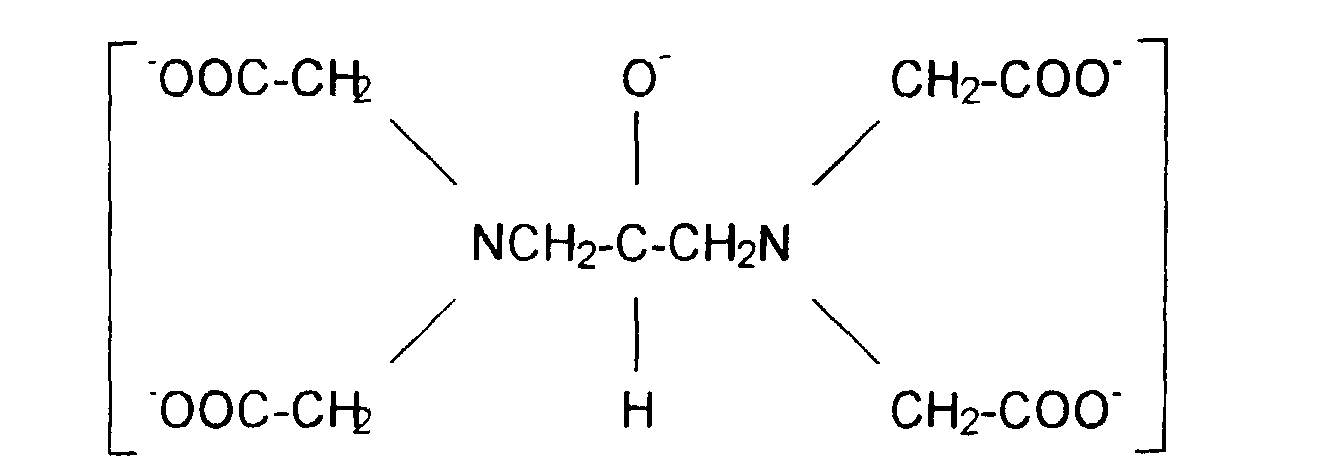
- L is a ligand having the formula:
- the present invention comprises a method of preparing compounds having the formula: M[M a (M b ) 3 (O) x (OH) y (O 2 CR) 2 L 2 ] wherein M, L, M a , M b , x , y and R are as listed above.
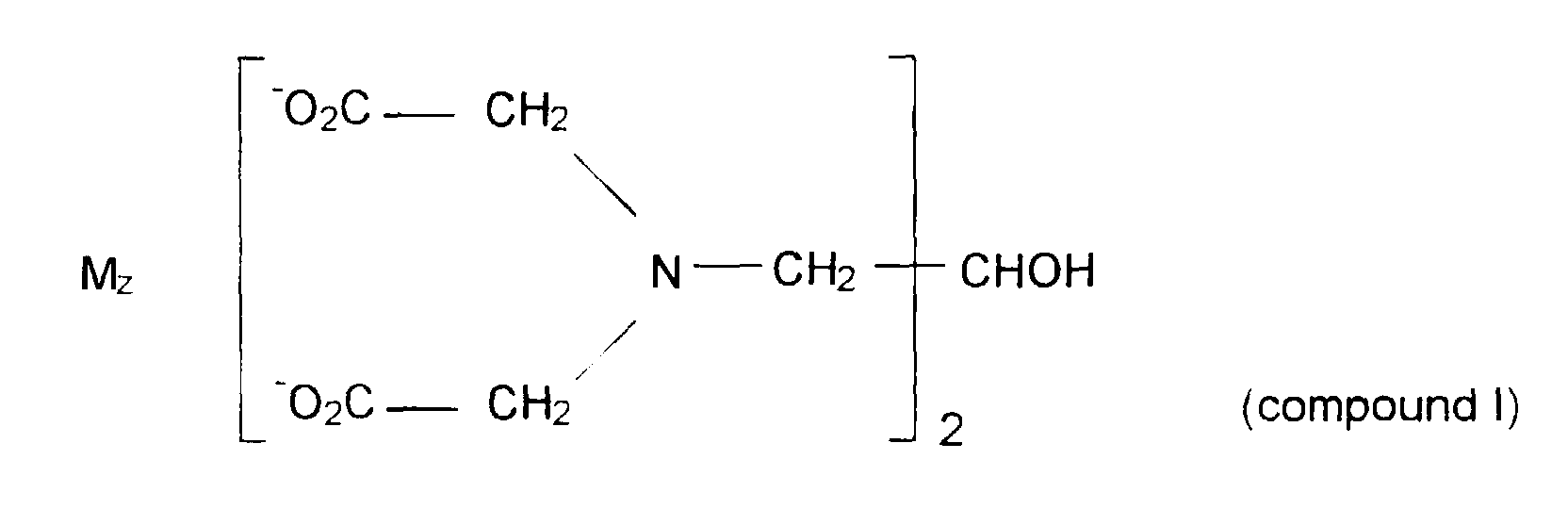
- the method comprises forming an aqueous solution containing: (a) a compound having the formula: wherein M consists of ammonium, alkaline, or an alkaline earth metal ions or mixtures thereof in sufficient amounts for compound I to be electrically neutral, (b) a mixture of a water soluble salt of at least one divalent metal M a and a trivalent metal M b ; and (c) a source of a carboxylate, RCO 2 -, where R is hydrogen or a hydrocarbyl group whereby a compound having the formula M [M a (M b ) 3 (O) x (OH) y (O 2 CR)L 2 ] is prepared.
- the solution is formed in situ by adding an oxidant, such as air, oxygen or hydrogen peroxide to an aqueous solution of compound I, a carboxylate source and (i) a water soluble salt of a divalent metal Ma and a metal oxidizable to a trivalent metal, M b , or (ii) a water soluble salt of a divalent metal oxidizable to a trivalent metal, M b , the addition being in an amount and for a time sufficient to oxidize at least part of oxidizable divalent metal to the trivalent metal M b .
- an oxidant such as air, oxygen or hydrogen peroxide
- the compounds of the present invention in which at least one of M a and M b is selected from a metal have an incomplete d electronic shell, having particular suitability for use in oxidation of hydrocarbons as peroxide decomposers.
- Other compounds of the present invention form solid solutions with the former thereby serving as a diluent and catalyst support for the former compounds.
- the present invention further provides a method for preparing organic hydroperoxides, which method comprises contacting an aryl alkyl hydrocarbon having a benzylic hydrogen with an oxygen containing gas in the presence of an oxo (hydroxo) bridged tetranuclear metal complex having a mixed metal core, one metal of the core being a divalent metal selected from Zn, Cu, Fe, Co, Ni, Mn or mixtures thereof and another metal being a trivalent metal selected from In, Fe, Mn, Ga and Al.
- an oxo (hydroxo) bridged tetranuclear metal complex having a mixed metal core, one metal of the core being a divalent metal selected from Zn, Cu, Fe, Co, Ni, Mn or mixtures thereof and another metal being a trivalent metal selected from In, Fe, Mn, Ga and Al.
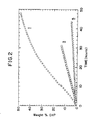
- Figures 2 and 3 show the weight percent of cumene hydroperoxide produced from cumene in the presence of and various catalysts by the oxidation process of the present invention. Also shown in Figure 3 is the amount of cumene hydroperoxide produced in the presence of cumene, air and cumene hydroperoxide as initiator.
- the compounds of the present invention have the formula: M[M a (M b ) 3 (O) x (OH) y (O 2 CR) 2 L 2 ] wherein M is an ammonium ion, one or more alkali metal ions, one or more alkaline earth metal ions, or mixtures thereof, preferably Li, Na, K, NH 4 , Mg, Ca, Sr, Ba or mixtures thereof.
- R is hydrogen or a hydrocarbyl group especially alkyl, aryl, and aralkyl groups.
- R is an alkyl group having from 1 to about 30 carbon atoms and , more preferably, R has from 1 to about 10 carbon atoms; and when R is an aralkyl group, it preferably has from 7 to 10 carbon atoms.
- M a is a divalent metal like Zn, Cu, Fe, Co, Ni, Mn; and, M b is a trivalent metal like In, Fe, Mn, Ga, Al.
- the subscripts x and y are numerical values the sum of which is 2; and L is a ligand having the formula:
- these novel compounds have a core structure of four metal atoms which are bridged by oxo and hydroxo groups and, hence, these compounds are referred to as oxo(hydroxo) bridged tetranuclear metal compounds.
- exemplary salts of M a and M b include metal chlorides, bromides, nitrates, tetrafluoroborates, and sulfates, provided, however, that sulfates are not used when M is Ca, Ba or Sr.
- exemplary sources of carboxylate include carboxylic acids and alkaline metal salts of carboxylic acids.
- suitable aqueous containing solutions are water, water-alcohol, and water-dimethyl fromamide mixtures. In general it is particularly preferred to use water as the solvent.
- the molar ratio of compound I to the metal salts containing M a and M b generally will be in the range of from about 1:1 to about 1:3 and preferably about 1:2.
- an aqueous containing solution of compound I by first neutralizing an aqueous solution of its conjugated acid with an alkali or alkaline earth metal hydroxide or mixture thereof, and thereafter adding the metal carboxylates or metal salts and source of carboxylate.
- the solution is formed in situ by adding an oxidant, such as air, oxygen or hydrogen peroxide to an aqueous solution of compound I, a carboxylate source and (i) a water soluble salt of a divalent metal M a and a metal oxidizable to a trivalent metal, M b ., or (ii) a water soluble salt of a divalent metal oxidizable to a trivalent metal, M b , the addition being in an amount and for a time sufficient to oxidize at least part of the oxidizable divalent metal to the trivalent metal M b .
- an oxidant such as air, oxygen or hydrogen peroxide
- this aqueous mixture is then oxidized if needed.
- the need for oxidation arises only when M b is not present in its trivalent state to start with.
- Mn(ll) salts for the preparation of the complex in which M a is Mn and M b is Ga, there is no need for oxidation because Ga is already present as Ga(lll).
- Mn(ll) salts for the preparation of the complex in which M a in Zn and M b is Mn
- Mn(ll) salts one may start with Mn(ll) salts and oxidize the Mn(ll) to the required Mn(lll) state. This is achieved by adding an oxidant such as air, molecular oxygen, or hydrogen peroxide.
- the gas is bubbled through the mixture at temperatures in the range of about 20°C to about 60°C and in an amount sufficient to form the desired compound.
- hydrogen peroxide used as the oxidant, in general the peroxide will have a concentration range of about 10 wt % to 30 wt % and, preferably, about 25 wt % and will be used in excess, for example, up to about 10 times the stoichiometric amount required.
- the addition of hydrogen peroxide to the reaction mixture results in an exothermic reaction and consequently it is particularly preferred to maintain the temperature of the reaction mixture during oxidation in the range of about 10°C to 60°C, and preferably, in the range of about 20°C to 40°C.
- the desired compound is recovered by fractional crystallization from suitable solvents such as water-dimethylformamide mixtures.
- the compounds of the present invention have utility as catalysts for the production of aryl alkyl hydroperoxides.
- the compounds of the invention in which at least one of M a and M b is a metal having an incomplete d electronic shell, may be used to catalyse the oxidation of cumene to cumene hydroperoxide.
- the oxidation process of the present invention is therefor carried out by contacting an aryl alkyl hydrocarbon with an oxygen-containing gas and at least one tertiary alkyl hydroperoxide and a catalytically effective amount of either an oxo (hydroxo) bridged tetranuclear metal complex having a mixed metal core.
- the aryl alkyl hydrocarbons employed as starting materials in this process may be obtained from commercial sources.
- the aryl alkyl hydrocarbons will have a melting point within the range of temperatures at which the process of the present invention is operated or be capable of being solubilized in an inert solvent.
- the aryl alkyl hydrocarbons should contain a benzylic hydrogen.
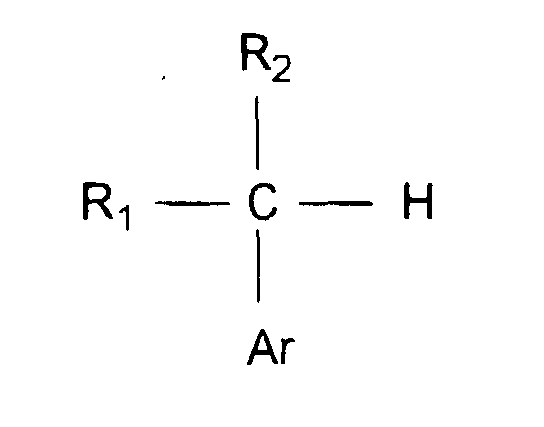
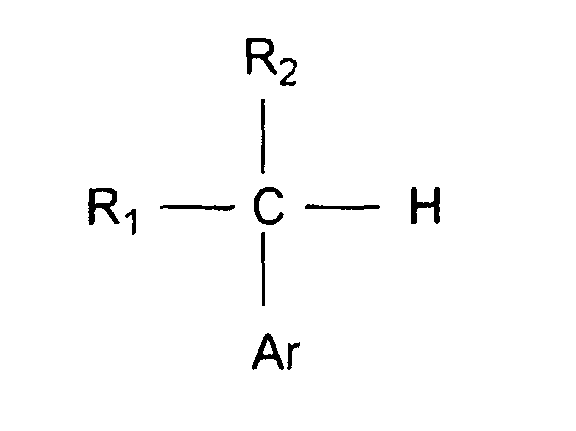
- An example of useful aryl alkyl hydrocarbons is represented by the general formula: where R 1 and R 2 may be the same or different organo groups, preferably alkyl groups having from 1 to about 10 carbon atoms, or hydrogen and Ar is an aromatic or substituted aromatic group, such as alkyl and halo, substitute aromatic groups.
- R 1 and R 2 may most preferably be bonded together to form a cycloaliphatic group such as, for example, a cyclohexyl group in which case the aryl alkyl hydrocarbon will be cyclohexylbenzene.
- a cycloaliphatic group such as, for example, a cyclohexyl group in which case the aryl alkyl hydrocarbon will be cyclohexylbenzene.
- the alkyl group generally will have from 1 to about 10 carbon atoms.
- the oxygen containing gas used preferably is air or oxygen, and, more preferably, is air.
- the amount of catalyst used will vary depending upon the nature and amount of the organic starting material to be oxidized. In general from about 0.001 to about 0.5 parts by weight of catalyst per 100 parts of substrate and preferably from about 0.1 to about 0.2 parts per 100 parts of substrate are satisfactory.
- the solvent for the reaction is preferably an excess amount of the aryl alkyl hydrocarbon to be oxidized, e.g. cyclohexyl benzene; however, hydrocarbons such as benzene, chlorobenzene, halogenated hydrocarbons, and the like may be employed as solvents.
- the hydrocarbon, catalyst and oxygen or oxygen containing gas are contacted in such a way as to provide for good mixing, such as rapid bubbling of the gas through the mixture or mechanical agitation.
- air is used in the contacting.
- the flow rate of air is not critical and the optimum rate will vary depending on the reaction temperature and pressure employed.
- the flow rate of air preferably will be at least 2 liters/hr up to about 10 liters/hr per 100 g of cumene.
- the reaction temperature may range from about 0°C to about 90°C, preferably from about 60°C to about 80°C. Temperatures at the lower end of the preferred range are more desirable.
- the contacting is conducted at atmospheric pressure.
- the present invention results in the selection oxygenation of the aryl alkyl hydrocarbon and does not oxygenate the aromatic or aliphatic hydrocarbons present in the starting material.
- the formation of the corresponding organic hydroperoxide can be monitored, for example, by analyzing aliquots by NMR, iodometric titration, chromatography or other means readily known to one skilled in the art.
- the organic hydroperoxide is readily recovered from the reaction mixture by conventional methods, for example distillation, and as a result, the process may be run in batch or continuously.
- the aryl alkyl hydrocarbon starting material may be passed over the catalyst in a bed or otherwise contacted with the catalyst.
- the organic hydroperoxide may be withdrawn and the organic starting material recycled.
- the present invention further provides a process for the manufacture of phenol and cyclohexanone from cyclohexyl benzene which process comprises;
- the cyclohexylbenzene hydroperoxide is decomposed with acid.
- DHPTA refers to 1,3-diamino-2-hydroxypropane-N,N,N'N'-tetraacetic acid
- DMF is dimethylformamide
- MeOH is methyl alcohol.
- s is a value greater than zero but less than 1, depending upon the ratio of mixed divalent metals used.
- DHPTA 268 mg was added to about 8 ml H 2 O then brought to pH 6 using Ca(OH) 2 . Then 115 mg of Zn(O 2 CCH 3 ).2H 2 O and 3 20 mg of Ga(NO 3 ) 3 .6H 2 O and 100 ⁇ I glacial acetic acid was added to the solution. The pH was then brought to about 8 with Ca(OH) 2 and 2 ml of DMF was added. The solution was filtered and the product was obtained by crystallization.
- Example M [M a (M b ) 3 (O) x (OH) y (O 2 CR) 2 L 2 ] M Ma Mb 1 Ba Ni s Mn 1-s Mn 2 K Mn Ga 3 Na Zn Ga 4 Ba Cu Fe 5 Ba Fe Ga
Landscapes
- Chemical & Material Sciences (AREA)
- Organic Chemistry (AREA)
- Organic Low-Molecular-Weight Compounds And Preparation Thereof (AREA)
- Catalysts (AREA)
Description
- This invention relates to a new class of compounds. More specifically, it relates to compounds having an oxo (hydroxo) bridged tetranuclear, mixed metal core and to their method of preparation and use in catalysing the oxidation of aryl alkyl hydrocarbons in the presence of an oxygen-containing gas to produce aryl alkyl hydroperoxides.
- For information on the plethora of known oxo bridged tetranuclear metal compounds, reference is made to the following review articles: K. Wieghardt, Angew. Chem.lnt. Ed. English, 28, p. 1153 (1989); J, B. Vincent, G. Christou, Adv. Inorg. Chem., 33, p. 197, (1989); G. Christou, Acc. Chem. Res., 22, p.328 (1989); and G.W. Brudvig, R.H. Crabtree, Prog. Inorg. Chem., 37, p. 99 (1989). These articles describe primarily manganese complexes in which the manganese is present in various oxidation states, spatial arrangements and the like. Other literature references and tetranuclear manganese complexes are referred to and disclosed in US
Patent 5, 025, 101. - compounds having an oxo (hydroxo) bridged tetranuclear, mixed metal core, however, have not been previously reported. Hence, the ability to prepare such materials is highly desired.
- The production of organic hydroperoxides from aryl alkyl hydrocarbons in the presence of various transition metal salt complexes has been described in the literature. See, for example, US Patent 2,954,405 disclosing the production of organic hydroperoxides by autoxidation of hydrocarbons in the presence of molecular oxygen and metal phthalocyanines as catalysts. Similarly, US Patent 4,013,725 discloses a process for preparing hydroperoxides in a homogeneous system by autoxidizing secondary alkyl group-substituted methylbenzenes in the presence of water, a base, an oxygen containing gas, and a watersoluble chelate compound in which multidentate ligands are coordinated to at least one metal from the class of cobalt, nickel, manganese, copper, and iron.
- In US Patent 5,025,101 and US Patent 5,183,945 tetranuclear manganese complexes, and their method of preparation, and their use as catalyst in the production of hydroperoxide are disclosed.
- In part the present invention is predicated on the discovery that certain compounds having an oxo (hydroxo) bridged tetranuclear, mixed metal core, are useful as oxidation catalysts, in the presence of oxygen containing gas, for the production of organic hydroperoxides.
- Accordingly, in one embodiment, the present invention comprises a composition of matter having the formula:
- In a further embodiment the present invention comprises a method of preparing compounds having the formula:wherein M consists of ammonium, alkaline, or an alkaline earth metal ions or mixtures thereof in sufficient amounts for compound I to be electrically neutral, (b) a mixture of a water soluble salt of at least one divalent metal Ma and a trivalent metal Mb; and (c) a source of a carboxylate, RCO2-, where R is hydrogen or a hydrocarbyl group whereby a compound having the formula M [Ma(Mb)3(O)x(OH)y(O2CR)L2] is prepared. In one embodiment, the solution is formed in situ by adding an oxidant, such as air, oxygen or hydrogen peroxide to an aqueous solution of compound I, a carboxylate source and (i) a water soluble salt of a divalent metal Ma and a metal oxidizable to a trivalent metal, Mb, or (ii) a water soluble salt of a divalent metal oxidizable to a trivalent metal, Mb, the addition being in an amount and for a time sufficient to oxidize at least part of oxidizable divalent metal to the trivalent metal Mb.
- The compounds of the present invention, in which at least one of Ma and Mb is selected from a metal have an incomplete d electronic shell, having particular suitability for use in oxidation of hydrocarbons as peroxide decomposers. Other compounds of the present invention form solid solutions with the former thereby serving as a diluent and catalyst support for the former compounds.
- The present invention further provides a method for preparing organic hydroperoxides, which method comprises contacting an aryl alkyl hydrocarbon having a benzylic hydrogen with an oxygen containing gas in the presence of an oxo (hydroxo) bridged tetranuclear metal complex having a mixed metal core, one metal of the core being a divalent metal selected from Zn, Cu, Fe, Co, Ni, Mn or mixtures thereof and another metal being a trivalent metal selected from In, Fe, Mn, Ga and Al.
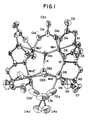
- Figure 1 in the instant application illustrates the oxo (hydroxo) bridged tetranuclear metal core for the composition
- Figures 2 and 3 show the weight percent of cumene hydroperoxide produced from cumene in the presence of and various catalysts by the oxidation process of the present invention. Also shown in Figure 3 is the amount of cumene hydroperoxide produced in the presence of cumene, air and cumene hydroperoxide as initiator.
- The compounds of the present invention have the formula:
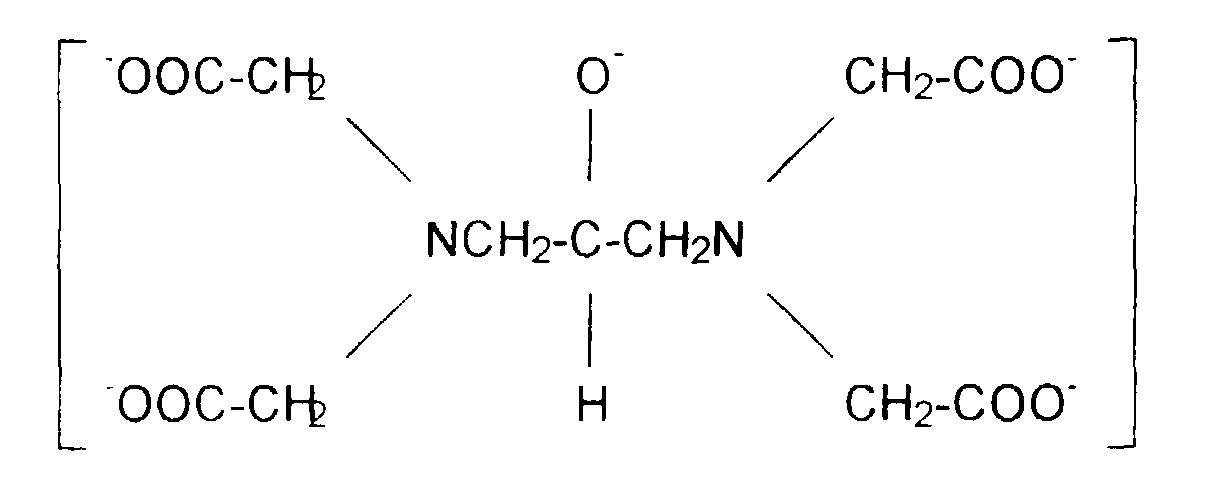
- As shown in the accompanying figure, these novel compounds have a core structure of four metal atoms which are bridged by oxo and hydroxo groups and, hence, these compounds are referred to as oxo(hydroxo) bridged tetranuclear metal compounds.
- In the process for the preparation of compounds of the present invention exemplary salts of Ma and Mb include metal chlorides, bromides, nitrates, tetrafluoroborates, and sulfates, provided, however, that sulfates are not used when M is Ca, Ba or Sr. Exemplary sources of carboxylate include carboxylic acids and alkaline metal salts of carboxylic acids. Among suitable aqueous containing solutions are water, water-alcohol, and water-dimethyl fromamide mixtures. In general it is particularly preferred to use water as the solvent.
- The molar ratio of compound I to the metal salts containing Ma and Mb generally will be in the range of from about 1:1 to about 1:3 and preferably about 1:2.
- Because the acid analogue of the ligand L is commercially available, it is particularly preferred in the practice of the present invention to prepare an aqueous containing solution of compound I by first neutralizing an aqueous solution of its conjugated acid with an alkali or alkaline earth metal hydroxide or mixture thereof, and thereafter adding the metal carboxylates or metal salts and source of carboxylate.
- In one embodiment, the solution is formed in situ by adding an oxidant, such as air, oxygen or hydrogen peroxide to an aqueous solution of compound I, a carboxylate source and (i) a water soluble salt of a divalent metal Ma and a metal oxidizable to a trivalent metal, Mb., or (ii) a water soluble salt of a divalent metal oxidizable to a trivalent metal, Mb, the addition being in an amount and for a time sufficient to oxidize at least part of the oxidizable divalent metal to the trivalent metal Mb.
- As pointed out above, this aqueous mixture is then oxidized if needed. The need for oxidation arises only when Mb is not present in its trivalent state to start with. As shown later in Preparations 11 and 12, for the preparation of the complex in which Ma is Mn and Mb is Ga, there is no need for oxidation because Ga is already present as Ga(lll). On the other hand, as shown in
Preparations 8, 9 and 10 for the preparation of the complex in which Ma in Zn and Mb is Mn, one may start with Mn(ll) salts and oxidize the Mn(ll) to the required Mn(lll) state. This is achieved by adding an oxidant such as air, molecular oxygen, or hydrogen peroxide. When air or oxygen is employed, the gas is bubbled through the mixture at temperatures in the range of about 20°C to about 60°C and in an amount sufficient to form the desired compound. When hydrogen peroxide is used as the oxidant, in general the peroxide will have a concentration range of about 10 wt % to 30 wt % and, preferably, about 25 wt % and will be used in excess, for example, up to about 10 times the stoichiometric amount required. The addition of hydrogen peroxide to the reaction mixture results in an exothermic reaction and consequently it is particularly preferred to maintain the temperature of the reaction mixture during oxidation in the range of about 10°C to 60°C, and preferably, in the range of about 20°C to 40°C. - Typically, the desired compound is recovered by fractional crystallization from suitable solvents such as water-dimethylformamide mixtures.
- The compounds of the present invention have utility as catalysts for the production of aryl alkyl hydroperoxides. For example following the procedure set forth in US
Patent 5, 183, 945 which is incorporated herein by reference, the compounds of the invention, in which at least one of Ma and Mb is a metal having an incomplete d electronic shell, may be used to catalyse the oxidation of cumene to cumene hydroperoxide. - The oxidation process of the present invention is therefor carried out by contacting an aryl alkyl hydrocarbon with an oxygen-containing gas and at least one tertiary alkyl hydroperoxide and a catalytically effective amount of either an oxo (hydroxo) bridged tetranuclear metal complex having a mixed metal core.
- The aryl alkyl hydrocarbons employed as starting materials in this process may be obtained from commercial sources. Preferably the aryl alkyl hydrocarbons will have a melting point within the range of temperatures at which the process of the present invention is operated or be capable of being solubilized in an inert solvent. Importantly, the aryl alkyl hydrocarbons should contain a benzylic hydrogen. An example of useful aryl alkyl hydrocarbons is represented by the general formula:where R1 and R2 may be the same or different organo groups, preferably alkyl groups having from 1 to about 10 carbon atoms, or hydrogen and Ar is an aromatic or substituted aromatic group, such as alkyl and halo, substitute aromatic groups. R1 and R2 may most preferably be bonded together to form a cycloaliphatic group such as, for example, a cyclohexyl group in which case the aryl alkyl hydrocarbon will be cyclohexylbenzene. In the case of alkyl substituted aromatic groups, the alkyl group generally will have from 1 to about 10 carbon atoms.
- The oxygen containing gas used preferably is air or oxygen, and, more preferably, is air.
- The amount of catalyst used will vary depending upon the nature and amount of the organic starting material to be oxidized. In general from about 0.001 to about 0.5 parts by weight of catalyst per 100 parts of substrate and preferably from about 0.1 to about 0.2 parts per 100 parts of substrate are satisfactory.
- In the process of the present invention, the solvent for the reaction is preferably an excess amount of the aryl alkyl hydrocarbon to be oxidized, e.g. cyclohexyl benzene; however, hydrocarbons such as benzene, chlorobenzene, halogenated hydrocarbons, and the like may be employed as solvents.
- Preferably the hydrocarbon, catalyst and oxygen or oxygen containing gas are contacted in such a way as to provide for good mixing, such as rapid bubbling of the gas through the mixture or mechanical agitation. Preferably air is used in the contacting.
- The flow rate of air is not critical and the optimum rate will vary depending on the reaction temperature and pressure employed. In the case of the oxidation of cumene to cumene hydroperoxide, for example, the flow rate of air preferably will be at least 2 liters/hr up to about 10 liters/hr per 100 g of cumene.
- The reaction temperature may range from about 0°C to about 90°C, preferably from about 60°C to about 80°C. Temperatures at the lower end of the preferred range are more desirable.
- Typically the contacting is conducted at atmospheric pressure. Importantly, the present invention results in the selection oxygenation of the aryl alkyl hydrocarbon and does not oxygenate the aromatic or aliphatic hydrocarbons present in the starting material.
- In conducting the method of this invention, the formation of the corresponding organic hydroperoxide can be monitored, for example, by analyzing aliquots by NMR, iodometric titration, chromatography or other means readily known to one skilled in the art. Also, the organic hydroperoxide is readily recovered from the reaction mixture by conventional methods, for example distillation, and as a result, the process may be run in batch or continuously. In a continuous process, the aryl alkyl hydrocarbon starting material may be passed over the catalyst in a bed or otherwise contacted with the catalyst. The organic hydroperoxide may be withdrawn and the organic starting material recycled.
- The present invention further provides a process for the manufacture of phenol and cyclohexanone from cyclohexyl benzene which process comprises;
- (a) contacting cyclohexyl benzene with an oxygen-containing gas and an oxo(hydroxo) bridged tetranuclear metal complex having mixed metal core, under catalytic oxidation conditions to form cyclohexylbenzene hydroperoxide and
- (b) decomposing the cyclohexylbenzene hydroperoxide to form a mixture comprising phenol and cyclohexanone.
-
- Preferably the cyclohexylbenzene hydroperoxide is decomposed with acid.
- The invention will now further be described by means of the following examples.
- A series of detailed catalyst preparations are provided herein to illustrate the general preparation techniques previously described. In the preparations which follow, DHPTA refers to 1,3-diamino-2-hydroxypropane-N,N,N'N'-tetraacetic acid; DMF is dimethylformamide; MeOH is methyl alcohol. Also, in those preparations in which the subscript s is used in the formula, s is a value greater than zero but less than 1, depending upon the ratio of mixed divalent metals used.
- Preparation of Ba2[(Cu0.4Mn0.6)Mn3(O)(OH)(O2CCH3)2L2]
- In a 50 ml Erlenmeyer flask, 268 mg of DHPTA was added to ~7 ml H20. Then enough Ba(OH)2.H20 was added to give a clear solution, followed by 93 mg of Cu(O2CCH3)2.H2O and 343 mg of Mn(O2CCH3)2.4H2O. About 1/2 ml of MeOH and ~1 ml of DMF was added next, while stirring. After the pH was brought to ~8 by adding slowly Ba(OH)2, the solution was treated with ~1 ml of ~25% H2O2. During this addition, the solution color changed from blue to brown. This filtered solution gave crystals by evaporation. The structure of the product was determined by simple crystal x-ray diffraction and sorption spectroscopy. The simple crystal x-ray analysis revealed the presence of CU(II) ions which selectively replaced the Mn(ll) ions.
- Preparation of Ca2[(CusMn1-s)Mn3(O)(OH)(O2CCH3)2L2]
- The procedure of Preparation 1 was followed except that Ca(OH)2 was used in place of Ba(OH)2.
- Preparation of Ba2[CuFe3(O)(OH)(O2CCH3)2L2]
- In a 50 ml Erlenmeyer flask, 268 mg of DHPTA and 100 µI of 100% CH3COOH was added to ~8 ml H2O. The pH was brought to ~6 with Ba(OH)2.H2O. Then 110 mg of Cu(O2CCH3)2.4H2O and 3 45 mg of Fe(NO3)3.6H2O was added to the solution. Then the pH was brought to ~7.5 with Ba(OH)2.H2O and 1 ml DMF was added. The yellow green solution was filtered and the product crystallized by evaporation.
- Alternate Preparation of Ba2[CuFe3(O)(OH)(O2CCH3)2L2]
- In a 50 ml Erlenmeyer flask, 268 mg of DHPTA was added to 10 ml H2O. The solution was brought to pH ~6 with Ba(OH)2.H2O. Then 105 mg of Cu(O2CCH3)2.4H2O and 540 mg of Fe(C104)3.6H2O and 100 µl of CH3COOH were all added. After stirring, the pH was brought to 7.5-8.0 with Ba(OH)2 and 1 ml DMF was added. The crystalline product was obtained by evaporation.
- Preparation of Ca2[ZnGa3(O)(OH)(O2CCH3)2L2]
- 268 mg of DHPTA was added to about 8 ml H2O then brought to
pH 6 using Ca(OH)2. Then 115 mg of Zn(O2CCH3).2H2O and 3 20 mg of Ga(NO3)3.6H2O and 100 µI glacial acetic acid was added to the solution. The pH was then brought to about 8 with Ca(OH)2 and 2 ml of DMF was added. The solution was filtered and the product was obtained by crystallization. - Preparation of Ba2[ZnGa3(O)(OH)(O2CCH3)2L2]
- In a 50 ml Erlenmeyer flask, 268 mg of DHPTA was added to ~8 ml H2O. The solution was brought to
pH 6 with Ba(OH)2.H2O. Then 120 mg of Zn(O2CCH3)2.2H2O and 330 mg of Ga(NO3)3.6H2O was added while stirring. The pH was brought to 7.5 with Ba(OH)2.H2O. Following the addition of 1 ml of DMF, the solution was filtered and the product crystallized by evaporation. - Preparation of Na4[ZnGa3(O)(OH)(O2CCH3)2L2]
- In a 50 ml Erlenmeyer flask 268 mg of DHPTA was added to ~6 ml H2O. The solution was brought to pH ~6.0 with NaOH. Then three drops of 100% CH3COOH was added, followed by 105 mg Zn(O2CCH3)2.2H2O and 340 mg of Ga(NO3)3.6H2O. The pH was then brought to ~8 using NaOH, the solution was filtered and 1 ml DMF added. The product was obtained by crystallization.
- Preparation of Ca2[(ZnsMn1-s)Mn3(O)(OH)(O2CCH3)2L2]
- 268 mg of DHPTA was added with 10 ml H2O to a 50 ml flask. The solution was brought to pH 8 with powdered Ca(OH)2. In another flask, 330 mg of Mn(O2CCH3)2.4H2O and 105 mg Zn(O2CCH3)2.2H2O was dissolved in 10 ml of 1:1 H2O:MeOH. Then 200 mg of CaCl2 was also dissolved in the (Zn,Mn)(O2CCH3)2 solution. Next, the Mn/Zn containing solution was added to the DHPTA solution and stirred for 5 minutes. The pH was adjusted to 8.0 with Ca(OH)2, after which 1/2 ml of 30% H2O2 was added dropwise. Finally, 4 ml of DMF was added, the solution was filtered and the product was obtained by crystallization.
- Alternative preparation of Ca2[(ZnsMn1-s)Mn3(O)(OH)(O2CCH3)2L2]
- In a 50 ml Erlenmeyer flask 268 mg of DHPTA was added to ~7 ml H2O. The solution was brought to pH ~6.5 with Ca(OH)2. Then 105 mg at Zn(O2CCH3)2.2H2O and 330 mg of Mn(O2CCH3)2.6H2O was added to the solution. The pH was brought to ~8 with Ca(OH)2 and 0.5 ml of ~30% H2O2 was added giving off heat and gas. 1 ml of DMF was then added. The crystalline product was obtained by evaporation.
- Preparation of Ba2[(ZnsMn1-s)Mn3(O)(OH)(O2CCH3)2L2]
- In a 50 ml Erlenmeyer flask containing 5 ml H2O, 100 mg of Ba(OH)2.H2O was neutralized with concentrated HC1 to pH 7. Then 330 mg of Mn(O2CCH3)2.4H2O and 105 mg Zn(O2CCH3)2.2H2O were added, along with 10 ml of 1:1 H2O/MeOH. In another 50 ml flask, 268 mg of DHPTA was added to 10 ml of H2O. This was neutralized with solid Ba(OH)2 while stirring. The two solutions were mixed together and stirred for about 10 minutes, after which the pH was adjusted to 8.0 with solid Ba(OH)2.H2O. Next, 0.5 ml of 30% H2O2 was added dropwise. Then 5 ml of DMF was added, the solution was stirred 10 minutes and filtered. The product was obtained by crystallization.
- Preparation of Na4[MnGa3(O)(OH)(O2CCH3)2L2]
- In a 50 ml Erlenmeyer flask, 268 mg of DHPTA was added to ~8 ml H2O under an Ar blanket. The pH was brought to ~6 with NaOH. Then 100 µI of 100% CH3COOH was added, followed by 110 mg of Mn(O2CCH3)2.6H2O and 340 mg of Ga(NO3)3.6H2O. The pH was then brought to 8.5 with NaOH. The pale pink crystalline product was obtained via MeOH diffusion in the aqueous solution.
- Preparation of K4[MnGa3(O)(OH)(O2CCH3)2L2]
- In a 50 ml Erlenmeyer flask, 268 mg of DHPTA was added to ~7 ml H2O. The solution was brought to pH ~6 with KOH. Then 60 µl of 100% CH3COOH was added, followed by 100 mg of Mn(O2CCH3)2.6H2O and 3 50 mg of Ga(NO3)3.6H2O. The pH was brought to ~8 with KOH, the solution filtered and layered with MeOH to give pale pink crystalline product.
- Preparation of Ba2[(NisMn1-s)Mn3(O)(OH)(O2CCH3)2L2]
- In a 50 ml Erlenmeyer flask, 268 mg of DHPTA was added to ~8 ml H2O. The pH was brought to ~6.5 with Ba(OH2).H2O. Next, 110 mg of Ni(O2CCH3)2.6H2O and 330 mg of Mn(O2CCH3)2.6H2O were added. The pH was brought to ~8 and then 1 ml H2O2 (30%) and 1 ml DMF were added slowly. The crystalline product was obtained by evaporation from the filtered solution.
- Preparation of Ba2[FeGa3(O)(OH)(O2CCH3)2L2]
- In a 50 ml Erlenmeyer flask, 268 mg DHPTA was added to ~7 ml H2O containing 100 µl of 100% CH3COOH and the pH was brought to ~6.5 with Ba(OH)2.H2O. Then 454 mg of Ga(NO3)2.6H2O was added, pH was brought to 8 with Ba(OH)2.H2O, the solution filtered under argon and Fe(O2CCH3)2 was added while stirring. Crystals formed via methanol diffusion.
- Preparation of K4[CoMn3(O)(OH)(O2CCH3)2L2]
- In a 50 ml Erlenmeyer flask, 268 mg of DHPTA was added to ~10 ml H2O and the pH was brought to about 6.5 with KOH. Then 110 mg of CO(O2CCH3)2.4H2O and 320 mg of Mn(O2CCH3)2.6H2O was added to the solution. The pH was brought to ~8 with KOH and ~2 ml of 30% H2O2 was added dropwise giving a dark red-brown solution. Then 2 ml of DMF was added and the solution was filtered. Crystals were obtained by evaporation.
- Preparation of Ca2[Fe4(O)(OH)(O2CCH3)2L2]
- In a 50 ml Erlenmeyer flask, 268 mg of DHPTA was added to ~8 ml H2O and the pH was adjusted to ~7.5 with Ca(OH)2. Then 420 mg of Fe(O2CCH3)2 was added.. Then 1 ml of ~30% H2O2 was added giving a dark green solution. The pH was readjusted to 8.0 with Ca(OH)2. Following the addition of 1 ml DMF, the solution was filtered and crystallized by evaporation.
- A series of runs were conducted using as catalysts the compounds listed in Table 1 below. In each example, 0.1g of solid catalyst was added to 50g of neat cumene in a flask. Air at 1 atm of pressure, ws bubbled through the reaction mixture at a rate of 30ml/min. The temperature of the reaction is maintained at 65°C. The conversion of cumene to cumene hydroperoxide (CHP) was monitored by iodometric titrations and oxygen uptake. The accompanying Figures 2 and 3 show the weight% CHP produced vs. time for various catalysts labelled as in Table 1. In Figure 3,
line 6 corresponds to the uncatalyzed auto-oxidation of cumene described in the Comparative Example 1.Example M [Ma(Mb)3(O)x(OH)y(O2CR)2L2] M Ma Mb 1 Ba NisMn1-s Mn 2 K Mn Ga 3 Na Zn Ga 4 Ba Cu Fe 5 Ba Fe Ga - 12.0 grams of cumene (0.1 mole) was combined with 0.2 cm3 of cumene hydroperoxide (as an initiator) and heated to 100°C in a oxygen atmosphere with vigorous stirring. In three hours about 3% oxidation to cumene hydroperoxide occurs. Thus the rate observed for the CHP auto catalysed oxidation at 100°C is about 1% per hour. To compare this with an oxidation carried out at 65°C a simple extrapolation can be done using the Arrhenius equation. Such as extrapolation indicates a reaction rate of about 0.1% per hour at 65°C which is one order of magnitude smaller than that obtained with the catalysts of this invention.
Claims (14)
- A composition of matter having the formula:

- The composition of claim 1 wherein the divalent metal Ma or mixture thereof is selected from Zn, Mn, Fe, Cu, Ni, and Co.
- The composition as claimed in claim 2 wherein the trivalent metal Mb or a mixture thereof, is selected from Mn, Fe, Ga, Al, and In.
- A method of preparing a compound of formula:the method comprising forming an aqueous containing solution of: (a) a first compound of the formula:
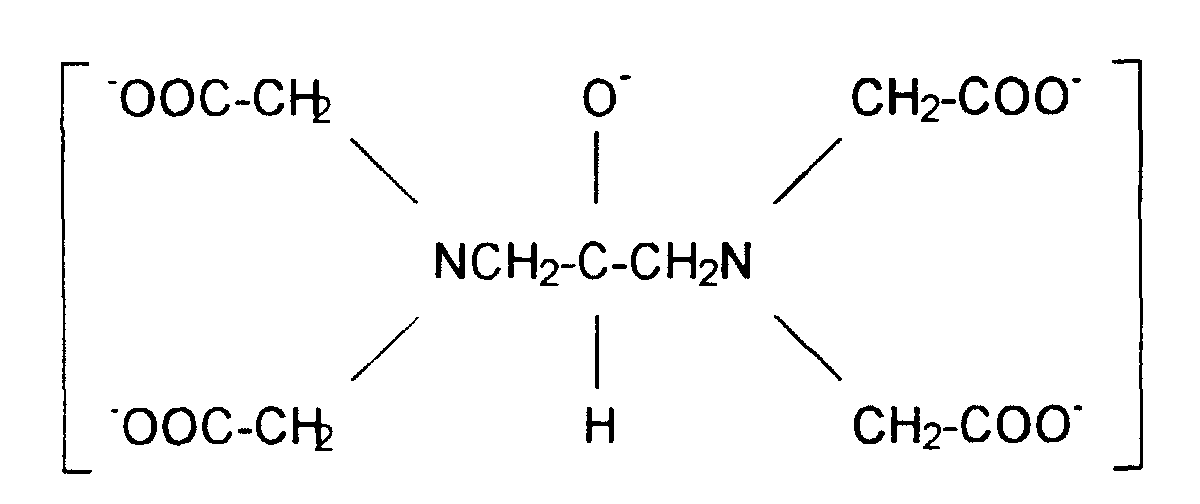 wherein M consists of ammonium, alkaline, or an alkaline earth metal ions or mixtures thereof in sufficient amounts for compound I to be electrically neutral, (b) a mixture of a water soluble salt of at least one divalent metal Ma and a trivalent metal Mb; and (c) a source of a carboxylate, RCO2-, where R is hydrogen or a hydrocarbyl group whereby a compound having the formula M [Ma(Mb)3(O)x(OH)y(O2CR)2L2] is prepared.
- A method as claimed in claim 4 wherein the mixture of water soluble salts is formed in situ by adding an oxidant, such as air, oxygen or hydrogen peroxide to an aqueous solution of the first compound, a carboxylate source and (i) a water soluble salt of at least one divalent metal Ma and a metal oxidizable to a trivalent metal, Mb, or (ii) a water soluble salt of at least one divalent metal oxidizable to a trivalent metal, Mb, the addition of oxidant being in an amount and for a time and at a temperature sufficient to oxidize at least part of oxidizable divalent metal to the trivalent metal Mb.
- A method for oxidizing an aryl alkyl hydrocarbon to an organic hydroperoxide comprising:
contacting an aryl alkyl hydrocarbon having a benzylic hydrogen with an oxygen containing gas and a catalytically effective amount of an oxo(hydroxo) bridged tetranuclear metal complex having a mixed metal core, one metal of the core being a divalent metal selected from Zn, Cu, Fe, Co, Ni, Mn or mixtures thereof and another metal being a trivalent metal selected from In, Fe, Mn, Ga and Al or mixtures thereof. - The method of claim 6 wherein the aryl alkyl hydrocarbon has the general formula:when R1 and R2 are independently hydrogen or organo groups and Ar is an aromatic group.
- The method of claim 7 wherein the organo groups are alkyl groups of from 1 to about 10 carbon atoms.
- The method of claim 6 wherein the oxygen-containing gas is air.
- The method of claim 6 wherein the temperature is in the range of from about 0°C to about 90°C.
- The method of claim 10 wherein the aryl alkyl hydrocarbon is a liquid at the temperature range.
- The method of claim 6 wherein the aryl alkyl hydrocarbon is dissolved in an inert solvent.
- The method of claim 6 wherein the aryl alkyl hydrocarbon is cyclohexylbenzene and the resultant hydroperoxide is cyclohexyl benzene hydroperoxide.
- A process for the manufacture of phenol and cyclohexanone from cyclohexyl benzene which process comprises;(a) contacting cyclohexyl benzene with an oxygen-containing gas and an oxo(hydroxo) bridged tetranuclear metal complex having mixed metal core, under catalytic oxidation conditions to form cyclohexylbenzene hydroperoxide and(b) decomposing the cyclohexylbenzene hydroperoxide to form a mixture comprising phenol and cyclohexanone.
Applications Claiming Priority (2)
| Application Number | Priority Date | Filing Date | Title |
|---|---|---|---|
| PCT/US1996/004522 WO1997036910A1 (en) | 1996-04-02 | 1996-04-02 | Catalytic production of aryl alkyl hydroperoxides by polynuclear transition metal aggregates |
| CA002250743A CA2250743A1 (en) | 1996-04-02 | 1996-04-02 | Catalytic production of aryl alkyl hydroperoxides by polynuclear transition metal aggregates |
Publications (2)
| Publication Number | Publication Date |
|---|---|
| EP0891368A1 EP0891368A1 (en) | 1999-01-20 |
| EP0891368B1 true EP0891368B1 (en) | 2000-08-09 |
Family
ID=25680576
Family Applications (1)
| Application Number | Title | Priority Date | Filing Date |
|---|---|---|---|
| EP96910707A Expired - Lifetime EP0891368B1 (en) | 1996-04-02 | 1996-04-02 | Catalytic production or aryl alkyl hydroperoxides by polynuclear transition metal aggregates |
Country Status (4)
| Country | Link |
|---|---|
| EP (1) | EP0891368B1 (en) |
| CA (1) | CA2250743A1 (en) |
| DE (1) | DE69609736T2 (en) |
| WO (1) | WO1997036910A1 (en) |
Families Citing this family (1)
| Publication number | Priority date | Publication date | Assignee | Title |
|---|---|---|---|---|
| US7692046B2 (en) * | 2007-06-21 | 2010-04-06 | Exxonmobil Chemical Patents Inc. | Heterogeneous arylalkyl oxidation promoter |
Family Cites Families (3)
| Publication number | Priority date | Publication date | Assignee | Title |
|---|---|---|---|---|
| US5099045A (en) * | 1990-05-10 | 1992-03-24 | Exxon Research And Engineering Company | Manganese oligomer containing main group elements |
| NL9201756A (en) * | 1992-10-09 | 1994-05-02 | Univ Delft Tech | Process for the catalyzed decomposition of organic hydroperoxides. |
| JPH08169874A (en) * | 1994-12-16 | 1996-07-02 | Mitsui Petrochem Ind Ltd | Method for producing arylalkyl hydroperoxides |
-
1996
- 1996-04-02 DE DE69609736T patent/DE69609736T2/en not_active Expired - Fee Related
- 1996-04-02 EP EP96910707A patent/EP0891368B1/en not_active Expired - Lifetime
- 1996-04-02 WO PCT/US1996/004522 patent/WO1997036910A1/en not_active Ceased
- 1996-04-02 CA CA002250743A patent/CA2250743A1/en not_active Abandoned
Also Published As
| Publication number | Publication date |
|---|---|
| DE69609736T2 (en) | 2001-03-29 |
| EP0891368A1 (en) | 1999-01-20 |
| CA2250743A1 (en) | 1997-10-09 |
| DE69609736D1 (en) | 2000-09-14 |
| WO1997036910A1 (en) | 1997-10-09 |
Similar Documents
| Publication | Publication Date | Title |
|---|---|---|
| US5922920A (en) | Catalytic production of aryl alkyl hydroperoxides by polynuclear transition metal aggregates | |
| US5347045A (en) | Sulfonated 2,2'-bis (diphenylphosphinomethyl)-1,1'-binaphthalenes, process for their preparation and their use in a process for the hydroformylation of olefinically unsaturated compounds | |
| US5183945A (en) | Catalytic production of aryl alkyl hydroperoxides by manganese complexes | |
| EP0027937A1 (en) | Improved process for producing a mixture containing cyclohexanol and cyclohexanone from cyclohexane | |
| Nishinaga et al. | Regioselective formation of peroxyquinolatocobalt (III) complexes in the oxygenation of 2, 6-di-t-butylphenols with cobalt (II) Schiff-base complexes | |
| EP0522841B1 (en) | Decomposition of organic hydroperoxides | |
| Fernandes et al. | Mild homogeneous oxidation and hydrocarboxylation of cycloalkanes catalyzed by novel dicopper (II) aminoalcohol-driven cores | |
| CA1139783A (en) | Process for the preparation of carboxylic acid from aldehydes | |
| Cheng et al. | Highly efficient Cu (ii)-pyrazoledicarboxylate heterogeneous catalysts for a base-free aerobic oxidation of benzylic alcohol to benzaldehyde with hydrogen peroxide as the oxidant | |
| JP2517340B2 (en) | Hydrocarbon Oxidation Catalyzed by Azide- or Nitride-Activated Metal Coordination Complexes | |
| CA2250743A1 (en) | Catalytic production of aryl alkyl hydroperoxides by polynuclear transition metal aggregates | |
| EP0861688B1 (en) | Process for the hydroxylation of aromatic hydrocarbons | |
| EP0894783A1 (en) | Process for the synthesis of phenol from benzene | |
| EP0916638B1 (en) | Method for hydroxylating aromatic compounds | |
| JPH0557250B2 (en) | ||
| US6548698B1 (en) | Oxidative carbonylation of toluene catalyzed by rhodium and iridium | |
| US5919984A (en) | Catalytic process for the selective oxidation of organic tertiary polyphosphines to phosphine monooxides | |
| JP2002537368A (en) | Method and composition for hydroxylating aromatic substrates | |
| JP3822265B2 (en) | Process for producing arylalkyl hydroperoxides | |
| Nesterova et al. | Heterobimetallic Polynuclear Complexes: Synthesis from Zero-Valent Metals or Their Oxides, Magnetic and Catalytic Applications | |
| JPH08169874A (en) | Method for producing arylalkyl hydroperoxides | |
| JPS5872558A (en) | Preparation of hydroperoxide | |
| EP0019436A1 (en) | Process for preparation of aromatic tertiary alkyl hydroperoxides and their use in preparing phenols | |
| JPH0967337A (en) | Method for producing arylalkyl hydroperoxides | |
| KR870001164B1 (en) | Synthesis process for organic compounds used oxygen complex materials |
Legal Events
| Date | Code | Title | Description |
|---|---|---|---|
| PUAI | Public reference made under article 153(3) epc to a published international application that has entered the european phase |
Free format text: ORIGINAL CODE: 0009012 |
|
| 17P | Request for examination filed |
Effective date: 19981002 |
|
| AK | Designated contracting states |
Kind code of ref document: A1 Designated state(s): BE DE FR GB IT NL SE |
|
| RIN1 | Information on inventor provided before grant (corrected) |
Inventor name: DAKKA, JIHAD, M. Inventor name: ZHANG, BAOSHAN Inventor name: VIA, GRAYSON, H. Inventor name: VANDERSPURT, THOMAS, H. Inventor name: STIBRANY, ROBERT, T. Inventor name: SCHRIVER, GEORGE, W. Inventor name: GORUN, SERGIO, M. Inventor name: BOND, JEFFREY, E. |
|
| GRAG | Despatch of communication of intention to grant |
Free format text: ORIGINAL CODE: EPIDOS AGRA |
|
| 17Q | First examination report despatched |
Effective date: 19991020 |
|
| RIN1 | Information on inventor provided before grant (corrected) |
Inventor name: DAKKA, JIHAD, M. Inventor name: ZHANG, BAOSHAN Inventor name: VIA, GRAYSON, H. Inventor name: VANDERSPURT, THOMAS, H. Inventor name: STIBRANY, ROBERT, T. Inventor name: SCHRIVER, GEORGE, W. Inventor name: GORUN, SERGIO, M. Inventor name: BOND, JEFFREY, E. |
|
| GRAG | Despatch of communication of intention to grant |
Free format text: ORIGINAL CODE: EPIDOS AGRA |
|
| GRAH | Despatch of communication of intention to grant a patent |
Free format text: ORIGINAL CODE: EPIDOS IGRA |
|
| GRAH | Despatch of communication of intention to grant a patent |
Free format text: ORIGINAL CODE: EPIDOS IGRA |
|
| GRAA | (expected) grant |
Free format text: ORIGINAL CODE: 0009210 |
|
| AK | Designated contracting states |
Kind code of ref document: B1 Designated state(s): BE DE FR GB IT NL SE |
|
| REF | Corresponds to: |
Ref document number: 69609736 Country of ref document: DE Date of ref document: 20000914 |
|
| ET | Fr: translation filed | ||
| ITF | It: translation for a ep patent filed | ||
| PG25 | Lapsed in a contracting state [announced via postgrant information from national office to epo] |
Ref country code: SE Free format text: LAPSE BECAUSE OF FAILURE TO SUBMIT A TRANSLATION OF THE DESCRIPTION OR TO PAY THE FEE WITHIN THE PRESCRIBED TIME-LIMIT Effective date: 20001109 |
|
| RAP2 | Party data changed (patent owner data changed or rights of a patent transferred) |
Owner name: EXXONMOBIL RESEARCH AND ENGINEERING COMPANY Owner name: EXXON CHEMICAL PATENTS INC. |
|
| NLT2 | Nl: modifications (of names), taken from the european patent patent bulletin |
Owner name: EXXON CHEMICAL PATENTS INC. EN EXXONMOBIL RESEARCH |
|
| RAP2 | Party data changed (patent owner data changed or rights of a patent transferred) |
Owner name: EXXONMOBIL RESEARCH AND ENGINEERING COMPANY Owner name: EXXONMOBIL CHEMICAL PATENTS INC. |
|
| PLBE | No opposition filed within time limit |
Free format text: ORIGINAL CODE: 0009261 |
|
| STAA | Information on the status of an ep patent application or granted ep patent |
Free format text: STATUS: NO OPPOSITION FILED WITHIN TIME LIMIT |
|
| 26N | No opposition filed | ||
| NLT2 | Nl: modifications (of names), taken from the european patent patent bulletin |
Owner name: EXXONMOBIL CHEMICAL PATENTS INC. EN EXXONMOBIL RES |
|
| REG | Reference to a national code |
Ref country code: GB Ref legal event code: IF02 |
|
| PGFP | Annual fee paid to national office [announced via postgrant information from national office to epo] |
Ref country code: GB Payment date: 20030313 Year of fee payment: 8 |
|
| PGFP | Annual fee paid to national office [announced via postgrant information from national office to epo] |
Ref country code: NL Payment date: 20030318 Year of fee payment: 8 |
|
| PGFP | Annual fee paid to national office [announced via postgrant information from national office to epo] |
Ref country code: FR Payment date: 20030403 Year of fee payment: 8 |
|
| PGFP | Annual fee paid to national office [announced via postgrant information from national office to epo] |
Ref country code: DE Payment date: 20030430 Year of fee payment: 8 |
|
| PGFP | Annual fee paid to national office [announced via postgrant information from national office to epo] |
Ref country code: BE Payment date: 20030514 Year of fee payment: 8 |
|
| PG25 | Lapsed in a contracting state [announced via postgrant information from national office to epo] |
Ref country code: GB Free format text: LAPSE BECAUSE OF NON-PAYMENT OF DUE FEES Effective date: 20040402 |
|
| PG25 | Lapsed in a contracting state [announced via postgrant information from national office to epo] |
Ref country code: BE Free format text: LAPSE BECAUSE OF NON-PAYMENT OF DUE FEES Effective date: 20040430 |
|
| BERE | Be: lapsed |
Owner name: *EXXON RESEARCH AND ENGINEERING CY Effective date: 20040430 Owner name: *EXXON CHEMICAL PATENTS INC. Effective date: 20040430 |
|
| PG25 | Lapsed in a contracting state [announced via postgrant information from national office to epo] |
Ref country code: NL Free format text: LAPSE BECAUSE OF NON-PAYMENT OF DUE FEES Effective date: 20041101 |
|
| PG25 | Lapsed in a contracting state [announced via postgrant information from national office to epo] |
Ref country code: DE Free format text: LAPSE BECAUSE OF NON-PAYMENT OF DUE FEES Effective date: 20041103 |
|
| GBPC | Gb: european patent ceased through non-payment of renewal fee | ||
| PG25 | Lapsed in a contracting state [announced via postgrant information from national office to epo] |
Ref country code: FR Free format text: LAPSE BECAUSE OF NON-PAYMENT OF DUE FEES Effective date: 20041231 |
|
| NLV4 | Nl: lapsed or anulled due to non-payment of the annual fee |
Effective date: 20041101 |
|
| REG | Reference to a national code |
Ref country code: FR Ref legal event code: ST |
|
| PG25 | Lapsed in a contracting state [announced via postgrant information from national office to epo] |
Ref country code: IT Free format text: LAPSE BECAUSE OF NON-PAYMENT OF DUE FEES;WARNING: LAPSES OF ITALIAN PATENTS WITH EFFECTIVE DATE BEFORE 2007 MAY HAVE OCCURRED AT ANY TIME BEFORE 2007. THE CORRECT EFFECTIVE DATE MAY BE DIFFERENT FROM THE ONE RECORDED. Effective date: 20050402 |