EP0889881B1 - New triazoles as therapeutic agents for fungal infections - Google Patents
New triazoles as therapeutic agents for fungal infections Download PDFInfo
- Publication number
- EP0889881B1 EP0889881B1 EP98900110A EP98900110A EP0889881B1 EP 0889881 B1 EP0889881 B1 EP 0889881B1 EP 98900110 A EP98900110 A EP 98900110A EP 98900110 A EP98900110 A EP 98900110A EP 0889881 B1 EP0889881 B1 EP 0889881B1
- Authority
- EP
- European Patent Office
- Prior art keywords
- triazol
- group
- phenyl
- piperazin
- independently selected
- Prior art date
- Legal status (The legal status is an assumption and is not a legal conclusion. Google has not performed a legal analysis and makes no representation as to the accuracy of the status listed.)
- Expired - Lifetime
Links
- 0 **1N=C*C1=O Chemical compound **1N=C*C1=O 0.000 description 1
Classifications
-
- C—CHEMISTRY; METALLURGY
- C07—ORGANIC CHEMISTRY
- C07D—HETEROCYCLIC COMPOUNDS
- C07D231/00—Heterocyclic compounds containing 1,2-diazole or hydrogenated 1,2-diazole rings
- C07D231/02—Heterocyclic compounds containing 1,2-diazole or hydrogenated 1,2-diazole rings not condensed with other rings
- C07D231/10—Heterocyclic compounds containing 1,2-diazole or hydrogenated 1,2-diazole rings not condensed with other rings having two or three double bonds between ring members or between ring members and non-ring members
- C07D231/12—Heterocyclic compounds containing 1,2-diazole or hydrogenated 1,2-diazole rings not condensed with other rings having two or three double bonds between ring members or between ring members and non-ring members with only hydrogen atoms, hydrocarbon or substituted hydrocarbon radicals, directly attached to ring carbon atoms
-
- C—CHEMISTRY; METALLURGY
- C07—ORGANIC CHEMISTRY
- C07D—HETEROCYCLIC COMPOUNDS
- C07D241/00—Heterocyclic compounds containing 1,4-diazine or hydrogenated 1,4-diazine rings
- C07D241/02—Heterocyclic compounds containing 1,4-diazine or hydrogenated 1,4-diazine rings not condensed with other rings
- C07D241/04—Heterocyclic compounds containing 1,4-diazine or hydrogenated 1,4-diazine rings not condensed with other rings having no double bonds between ring members or between ring members and non-ring members
-
- A—HUMAN NECESSITIES
- A61—MEDICAL OR VETERINARY SCIENCE; HYGIENE
- A61P—SPECIFIC THERAPEUTIC ACTIVITY OF CHEMICAL COMPOUNDS OR MEDICINAL PREPARATIONS
- A61P17/00—Drugs for dermatological disorders
-
- A—HUMAN NECESSITIES
- A61—MEDICAL OR VETERINARY SCIENCE; HYGIENE
- A61P—SPECIFIC THERAPEUTIC ACTIVITY OF CHEMICAL COMPOUNDS OR MEDICINAL PREPARATIONS
- A61P31/00—Antiinfectives, i.e. antibiotics, antiseptics, chemotherapeutics
-
- A—HUMAN NECESSITIES
- A61—MEDICAL OR VETERINARY SCIENCE; HYGIENE
- A61P—SPECIFIC THERAPEUTIC ACTIVITY OF CHEMICAL COMPOUNDS OR MEDICINAL PREPARATIONS
- A61P31/00—Antiinfectives, i.e. antibiotics, antiseptics, chemotherapeutics
- A61P31/10—Antimycotics
-
- C—CHEMISTRY; METALLURGY
- C07—ORGANIC CHEMISTRY
- C07D—HETEROCYCLIC COMPOUNDS
- C07D233/00—Heterocyclic compounds containing 1,3-diazole or hydrogenated 1,3-diazole rings, not condensed with other rings
- C07D233/54—Heterocyclic compounds containing 1,3-diazole or hydrogenated 1,3-diazole rings, not condensed with other rings having two double bonds between ring members or between ring members and non-ring members
- C07D233/56—Heterocyclic compounds containing 1,3-diazole or hydrogenated 1,3-diazole rings, not condensed with other rings having two double bonds between ring members or between ring members and non-ring members with only hydrogen atoms or radicals containing only hydrogen and carbon atoms, attached to ring carbon atoms
-
- C—CHEMISTRY; METALLURGY
- C07—ORGANIC CHEMISTRY
- C07D—HETEROCYCLIC COMPOUNDS
- C07D249/00—Heterocyclic compounds containing five-membered rings having three nitrogen atoms as the only ring hetero atoms
- C07D249/02—Heterocyclic compounds containing five-membered rings having three nitrogen atoms as the only ring hetero atoms not condensed with other rings
- C07D249/08—1,2,4-Triazoles; Hydrogenated 1,2,4-triazoles
-
- C—CHEMISTRY; METALLURGY
- C07—ORGANIC CHEMISTRY
- C07D—HETEROCYCLIC COMPOUNDS
- C07D249/00—Heterocyclic compounds containing five-membered rings having three nitrogen atoms as the only ring hetero atoms
- C07D249/02—Heterocyclic compounds containing five-membered rings having three nitrogen atoms as the only ring hetero atoms not condensed with other rings
- C07D249/08—1,2,4-Triazoles; Hydrogenated 1,2,4-triazoles
- C07D249/10—1,2,4-Triazoles; Hydrogenated 1,2,4-triazoles with hetero atoms or with carbon atoms having three bonds to hetero atoms with at the most one bond to halogen, e.g. ester or nitrile radicals, directly attached to ring carbon atoms
-
- C—CHEMISTRY; METALLURGY
- C07—ORGANIC CHEMISTRY
- C07D—HETEROCYCLIC COMPOUNDS
- C07D249/00—Heterocyclic compounds containing five-membered rings having three nitrogen atoms as the only ring hetero atoms
- C07D249/02—Heterocyclic compounds containing five-membered rings having three nitrogen atoms as the only ring hetero atoms not condensed with other rings
- C07D249/08—1,2,4-Triazoles; Hydrogenated 1,2,4-triazoles
- C07D249/10—1,2,4-Triazoles; Hydrogenated 1,2,4-triazoles with hetero atoms or with carbon atoms having three bonds to hetero atoms with at the most one bond to halogen, e.g. ester or nitrile radicals, directly attached to ring carbon atoms
- C07D249/12—Oxygen or sulfur atoms
-
- C—CHEMISTRY; METALLURGY
- C07—ORGANIC CHEMISTRY
- C07D—HETEROCYCLIC COMPOUNDS
- C07D249/00—Heterocyclic compounds containing five-membered rings having three nitrogen atoms as the only ring hetero atoms
- C07D249/02—Heterocyclic compounds containing five-membered rings having three nitrogen atoms as the only ring hetero atoms not condensed with other rings
- C07D249/08—1,2,4-Triazoles; Hydrogenated 1,2,4-triazoles
- C07D249/10—1,2,4-Triazoles; Hydrogenated 1,2,4-triazoles with hetero atoms or with carbon atoms having three bonds to hetero atoms with at the most one bond to halogen, e.g. ester or nitrile radicals, directly attached to ring carbon atoms
- C07D249/14—Nitrogen atoms
-
- C—CHEMISTRY; METALLURGY
- C07—ORGANIC CHEMISTRY
- C07D—HETEROCYCLIC COMPOUNDS
- C07D257/00—Heterocyclic compounds containing rings having four nitrogen atoms as the only ring hetero atoms
- C07D257/02—Heterocyclic compounds containing rings having four nitrogen atoms as the only ring hetero atoms not condensed with other rings
- C07D257/04—Five-membered rings
- C07D257/06—Five-membered rings with nitrogen atoms directly attached to the ring carbon atom
-
- C—CHEMISTRY; METALLURGY
- C07—ORGANIC CHEMISTRY
- C07D—HETEROCYCLIC COMPOUNDS
- C07D277/00—Heterocyclic compounds containing 1,3-thiazole or hydrogenated 1,3-thiazole rings
- C07D277/02—Heterocyclic compounds containing 1,3-thiazole or hydrogenated 1,3-thiazole rings not condensed with other rings
- C07D277/20—Heterocyclic compounds containing 1,3-thiazole or hydrogenated 1,3-thiazole rings not condensed with other rings having two or three double bonds between ring members or between ring members and non-ring members
- C07D277/32—Heterocyclic compounds containing 1,3-thiazole or hydrogenated 1,3-thiazole rings not condensed with other rings having two or three double bonds between ring members or between ring members and non-ring members with hetero atoms or with carbon atoms having three bonds to hetero atoms with at the most one bond to halogen, e.g. ester or nitrile radicals, directly attached to ring carbon atoms
- C07D277/38—Nitrogen atoms
- C07D277/42—Amino or imino radicals substituted by hydrocarbon or substituted hydrocarbon radicals
-
- C—CHEMISTRY; METALLURGY
- C07—ORGANIC CHEMISTRY
- C07D—HETEROCYCLIC COMPOUNDS
- C07D401/00—Heterocyclic compounds containing two or more hetero rings, having nitrogen atoms as the only ring hetero atoms, at least one ring being a six-membered ring with only one nitrogen atom
- C07D401/02—Heterocyclic compounds containing two or more hetero rings, having nitrogen atoms as the only ring hetero atoms, at least one ring being a six-membered ring with only one nitrogen atom containing two hetero rings
- C07D401/06—Heterocyclic compounds containing two or more hetero rings, having nitrogen atoms as the only ring hetero atoms, at least one ring being a six-membered ring with only one nitrogen atom containing two hetero rings linked by a carbon chain containing only aliphatic carbon atoms
-
- C—CHEMISTRY; METALLURGY
- C07—ORGANIC CHEMISTRY
- C07D—HETEROCYCLIC COMPOUNDS
- C07D401/00—Heterocyclic compounds containing two or more hetero rings, having nitrogen atoms as the only ring hetero atoms, at least one ring being a six-membered ring with only one nitrogen atom
- C07D401/14—Heterocyclic compounds containing two or more hetero rings, having nitrogen atoms as the only ring hetero atoms, at least one ring being a six-membered ring with only one nitrogen atom containing three or more hetero rings
-
- C—CHEMISTRY; METALLURGY
- C07—ORGANIC CHEMISTRY
- C07D—HETEROCYCLIC COMPOUNDS
- C07D417/00—Heterocyclic compounds containing two or more hetero rings, at least one ring having nitrogen and sulfur atoms as the only ring hetero atoms, not provided for by group C07D415/00
- C07D417/14—Heterocyclic compounds containing two or more hetero rings, at least one ring having nitrogen and sulfur atoms as the only ring hetero atoms, not provided for by group C07D415/00 containing three or more hetero rings
Definitions
- the present invention relates to the processes for the preparation of triazole compounds of formula I , i.e. 2-aryl-3-(4-substituted piperazin-1-yl)-1-(1H-1,2,4-triazol-1-yl)butan-2-ols, and their use in treating and or preventing the fungal infections in mammals preferably in humans.
- US-A-4738962 discloses azoles as agro-fungicidal agents and EP-A-0321131 discloses azoles as potential antifungal agents but no biological data is disclosed.
- triazoles with broad spectrum anti-fungal activity.
- the triazoles are particularly effective against systemic and lung invasive fungal infections.
- the present invention relates to new triazole derivatives which can be utilised to treat or prevent fungal infections in animals, preferably in humans.
- an antifungal triazole of the general formula I i.e. 2-aryl-3-(4-substituted piperazin-1-yl)-1-(1H-1,2,4-triazol-1-yl)-2-ols and pharmaceutically acceptable salts thereof, wherein:
- halogen is fluorine, chlorine, bromine or iodine.
- Preferred halogens are fluorine and chlorine.
- C 1 -C 4 alkyl is, for example, methyl, ethyl, propyl, 1-methylethyl, n-butyl, 1-methylethyl, isopropyl, 1,1-dimethylethyl, 1-methylpropyl, 2-methylpropyl, cyclopropyl and cyclobutyl.
- Preferred alkyls are methyl and ethyl.
- Ar groups include, 4-fluorophenyl, 2-4-difluorophenyl, 2,4,6-trifluorophenyl, 4-chlorophenyl, 2,4-dichlorophenyl, 2,4,6-trichlorophenyl, 4-trifluoromethylphenyl and 4-trifluoromethoxyphenyl.
- Preferred Ar groups are phenyl group having 1 or 2 substituents each independently selected from fluorine, chlorine, trifluoromethyl and trifluromethoxy. Most preferably, Ar is 2,4-difluorophenyl, 2,4-dichlorophenyl, 4-trifluromethylphenyl or 4-trifluoromethoxyphenyl.
- Examples of 5-or 6-membered monocyclic rings are 1-pyrrolyl, 2-pyrrolyl, 3-pyrrolyl, 2-furyl, 3-furyl, 2-thienyl, 3-thienyl, 1-imidazolyl, 4-imidazolyl, 1-pyrazolyl, 3-pyrazolyl, 4-pyrazolyl, 5-pyrazolyl, 1-(1H)-1,2,4-triazolyl, 3-(1H)-1,2,4-triazolyl, 3-(4H)-1,2,4-triazolyl, 5-(1H)-1,2,4-triazolyl, 4-(4H)-1,2,4-triazolyl, 1,2,3-triazolyl, 2-oxazolyl, 4-oxazolyl, 5-oxazolyl, 2-thiazolyl, 4-thiazolyl, 5-thiazolyl, 1,2,4-oxadiazol-3-yl, 1,2,4-oxadiazol-5-yl, 1,3,4-oxadiazol-2-yl, 1,
- Examples of 8- to 10-membered bicyclic heterocycle groups are 2-benzimidazolyl, 5-benzimidazolyl, 2-benzoxazolyl, 5-benzoxazolyl, 6-benzoxazolyl, 2-benzothiazolyl, 5-benzothiazolyl, 6-benzothiazolyl, imidazolo[4,5-b]pyridin-2-yl, imidazolo[4,5-b]pyridin-5-yl, oxazolo[5,4-b]pyridin-2-yl, oxazolo[5,4-b]pyridin-5-yl, oxazolo[5,4-b]pyridin-6-yl, thiazolo[5,4-b]pyridin-2-yl, thiazolo[5,4-b]pyridin-5-yl and thiazolo[5,4-b]pyridin-6-yl.
- Triazolone-yl may be 2- or 5-substutitued 1,2,4-triazol-3-one, such as 2H-1,2,4-triazol-3-one-4-yl or 4H-1,2,4-triazol-3-one-2-yl.
- R 1 examples include hydrogen, methyl, ethyl, propyl, hydroxymethyl, alkoxymethyl, fluoromethyl and trifluoromethyl.
- R 1 is alkyl. Most preferably, R 1 is methyl.
- R 2 examples include hydrogen, methyl, ethyl, propyl, hydroxymethyl, alkoxymethyl, fluromethyl and trifluoromethyl.
- R 2 is hydrogen.
- the compound may have one or more than one asymmetric centers, resulting in possible stereoisomers.
- This invention relates to single individual isomers as well as mixture of isomers.
- formula I has one asymmetric center and there are two possible isomers, i.e. 2R and 2S isomers.
- This invention relates to mixtures as well as individual isomers.
- the most preferable isomer is the 2R isomer.
- formula I has two asymmetric centers, and there are four possible isomers, i.e. 2R,3R; 2R,3S; 2S,3R and 2S,3S.
- This invention relates to the mixture of isomers as well as individual isomers. The most preferred isomer in this situation is 2R,3R.
- R 7 is a group wherein R is as described above, and most preferred that the other groups additionally are as follows: Ar is 2,4-difluorophenyl, R 1 is methyl, and R 2 through R 6 are each hydrogen.
- the more preferred embodiments of the present invention include the compounds that are disclosed in Table 3. Those disclosed in Example Nos. 36-51 are more preferred, with Example Nos. 43, 47, 50 and 51 being the most preferred.
- the compounds of formula I can be prepared by a convergent approach from the epoxide of formula II and the piperazino compound of formula III (see Scheme 1 ).
- the epoxides were prepared following the synthetic routes described in the literature (Chem. Pharm. Bull., 1993, 41 , 1035-1042).
- the synthetic routes for the preparation of certain piperazino compounds of the formula III are disclosed in Schemes 4-6 and 8 .
- the Scheme 7 describes a linear synthetic route for preparing certain compounds of formula I.
- the epoxide of formula II and the piperazino compound of formula III were reacted in the presence of base such as sodium carbonate, potassium carbonate, cesium carbonate and the like. This reaction was also performed in the presence of lithium perchlorate and sodium perchlorate.
- the suitable solvents were chosen from acetonitrile, DMF, DMSO, THF, dichloromethane, chloroform, methanol, ethanol, isopropanol and tert -butanol. The most preferred solvents were DMF and acetonitrile.
- the temperature of the reaction varied from 60-180 °C, depending on the solvent and reactants. The most preferred temperature was 80-140 °C.
- the reactants were allowed to react to the completion or near to the completion of the reaction.
- the length of reaction time varied from few hours to several hours depending on the reactants, temperature, and the solvent.
- Example 2 was prepared from epoxide IV by two synthetic routes as depicted in Scheme 2 .
- a 1:1 molar ratio of epoxide and ethyl piperazine-1-carboxylate were reacted in the presence of potassium carbonate or lithium perchlorate in a suitable solvent.
- the obtained ester was hydrolysed with strong base such as sodium hydroxide or potassium hydroxide to give piperazinyl compound 2.
- strong base such as sodium hydroxide or potassium hydroxide
- the resulting N-carboxylic acid undergoes in-situ decarboxylation to give the piperazino compound 2 .
- the piperazino compound was obtained in a single step from the reaction of epoxide IV with piperazine.
- the epoxide and excess piperazine were reacted in the presence of lithium perchlorate in a suitable solvent and at a desired temperature.
- the compounds of formula I wherein X is CO were produced from the reaction of piperazinyl compound 2 with acid chloride (R 7 COCl) in the presence of a base such as triethylamine, N-methylmorpholine, N,N-diisopropylethylamine.
- a base such as triethylamine, N-methylmorpholine, N,N-diisopropylethylamine.
- the reaction was carried out in an inert solvent at -20 °C to 80 °C.
- the most preferred solvents were dichloromethane, chloroform, tetrahydrofuran and acetonitrile. Most preferably the reaction was carried out at 0-25 °C.
- Certain compounds of formula I wherein X is SO 2 were prepared from the reaction of 2 and R 7 -SO 2 -Cl. In these reactions, R 7 is as described above.
- Certain compounds of formula I wherein X is CO or CS and R 7 is OR were prepared from the reaction of piperazinyl compound 2 and isocyanates and isothiocyanates. In a typical reaction, a 1:1 molar ratio of compound and isocyanate or isothiocyanate were reacted in a suitable solvent at -15 to 45 °C.
- the preferred solvents were acetonitrile, ethyl acetate and dichloromethane.
- the preferred temperature was 0 to 25 °C.
- the reaction time varied from few hours to several hours depending on the reactants, solvent and temperature.
- Certain compounds of formula I wherein X is a bond and R 7 is a 4-[2-substituted-1,2,4-triazol-3-one-4-yl]phenyl group were prepared in two independent synthetic routes.
- the first route involves the linear approach as described in Scheme 7.
- the intermediates formed during this synthesis are compounds of formula I, wherein X is bond and R 7 is phenyl group with substitution.
- the second synthetic route involves a more efficient convergent approach ( Scheme 1 ).
- an appropriate epoxide of formula II and an appropriate piperazinyl derivative XXIII were reacted in the presence of lithium perchlorate in a suitable solvent and at a suitable temperature.
- the reactants were allowed to react to the completion of the reaction.
- the reaction time varied from few hours to several hours depending on the reactants.
- the epoxides used in this invention are known and were prepared by following the reported procedures.
- the piperazino compounds of formula XXIII were prepared as described in Scheme 8.
- salts of formula I were prepared by mixing the solution of the free base with excess of acid at 0-25 °C. The precipitated salt was collected by filtration. In some cases the solvent was evaporated to dryness and the resulting crude salt was recrystallized in a suitable solvent.
- acids were selected from hydrochloric acid, hydrobromic acid, sulphuric acid, tartaric acid, succinic acid, fumaric acid, methanesulphonic acid or p -toluenesulphonic acid.
- the compounds of the present invention were evaluated in vitro for their antifungal activity and were assessed based on minimum inhibitory concentration of the test compound, i.e. the concentration of the test compound at which growth of particular organism fails to occur.
- the MIC was determined after incubating the test compound with the strain for 48 h at 37 °C in an appropriate medium.
- the microorganisms used in this test include Candida albicans, C. tropicalis, C. kefyr, C. krusei, C. guilliermondii, C. glabrata, Cryptococcus neoformans, Aspergillus niger and A. fumigatus.
- Table 1 In vitro data of certain representative compounds is provided in the following Table.
- Certain selected compounds were evaluated in-vivo for their antifungal efficacy.
- Series of doses of test compounds were administered by oral, i.v and s.c. routes to infected mice, i.e mice that are inoculated with a strain of Candida albicans or Aspergillits fumigatus.
- Efficacy of test compound was determined based on survival of treated mice compared to control. The in vivo efficacy was assessed based on ED 50 of the test compound.
- the following table provides ED 50 of certain compounds for systemic infections of C. albicans and A. fumigatus in mice models.
- In-vivo activity of compounds of formula I Therapeutic efficacy (ED 50 mg/kg) in mice systemic infectinons Example # C. albicans A. fumigatus 36 8.01 >45 40 4.68 67.05 41 8.01 89.28 42 >90 71.14 43 1.57 42.3 46 56.02 >45
- the compounds of formula I and their salts are anti-fungal agents, useful to treat or prevent topical, lung invasive, as well as systemic fungal infections in mammals including humans.
- they are useful in treating topical infections in man caused by species of Candida, Trichophyton , Microsporum , mucosal infections caused by species of Candida, and systemic infections caused by species of Candida, Aspergillus, Cryptococcus, Pneumocystis, Histoplasma or Blastomyces .
- the above compounds have shown impressive in vivo efficacy against mice systemic candidiosis, systemic aspergillosis and lung invasive aspergillosis.
- the compounds of the present invention or their pharmaceutically acceptable salts are used for treatment or prophylaxis of fungal infections in mammals including humans, they can be administered alone, but generally it is more preferred to administer the compounds in a pharmaceutical formulation.
- This formulation varies with intended route of administration.
- the compounds can be administered orally in the form of tablets, coated tablets, capsules, suspensions, solutions and the like.
- These oral preparations which contain the present compounds are prepared with excipients, binders, coloring agents, flavors, etc. which can be formulated in a manner known in the art.
- the present compounds can be injected parenterally, for example intravenously, intramuscularly or subcutaneously.
- injections are sterile aqueous solutions which contain the antifungal agent with other substances, such as salts, glucose or an isotonic agent, and can be formulated in a conventional manner.
- the amount of the present compounds incorporated into the pharmaceutical composition varies depending on the physical and chemical properties of the drug, dosage and route of administration.
- the oral formulations are prepared with 1 to 25% (w/w) antifungal agent and the injection formulation is prepared with 0.1 to 5% (w/w) of antifungal agent.
- the antifungal agents also can be administered in the form of a suppository or pessary, or they may be applied topically in the form of lotion, solution, ointment, cream or dusting powder.
- Suppositories and ointments which contain 1-10% of active ingredient with a base, stabilizer or surfactant can be prepared in a conventional manner.
- the dosage of the compound of formula I or its pharmaceutically acceptable salt can be suitably determined depending on the indivdual cases, taking symptoms, age, sex, disease status, patient condition, route of administration and the like into consideration. Usually the dosage can be 0.01-20 mg /kg in single or divided daily doses.
- the title compound was also prepared by hydrolysis of 2R,3R-2-(2,4-difluorophenyl)-3-(4-ethoxycarbonylpiperazin-1-yl)-1-(1H-1,2,4-triazol-1-yl)butan-2-ol 1 with 2M sodium hydroxide solution.
- the title compound 5 was obtained as a thick viscous oil in 58% yield from the reacton of (2R,3S)-2-(2,4-difluorophenyl)-3-methyl-2-(1H-1,2,4-triazol-1-yl)methyloxirane IV and 2,5-dimethylpiperazine, by a similar method described in example 2 .
- the example 13 was prepared form the reaction of piperazino derivative 2 and 4-(trifluoromethyl)benzoyl chloride by following the similar procedure described for the example 12. Colorless prisms, m.p.: 88-90 °C, Yield 87%.
- the example 14 was prepared form the reaction of piperazino derivative 2 and 4-nitrobenzoyl chloride by following the similar procedure described for the example 12. After column purification the product was obtained as brown prisms in 92% yield. m.p. 90-92 °C.
- the title compound was prepared from piperazinyl compound 2 and p-nitrobenzenesulphonyl chloride by following the similar procedure described for example 12.
- the product was obtained as tan needles in 38% yield after purification on a column of silica gel (CHCl 3 /MeOH; 96:4) followed by recrystalization in ether. m.p.: 160-162 °C.
- the title compound was prepared by opening of the epoxide IV with 1-phenylpiperazine in the presence of lithium perchlorate by following similar procedure described to example 21. After column purification the compound was obtained as a colorless solid. m.p.: 103-105 °C.
- the title compound was prepared similarly to example 21 using the oxirane IV (600 mg, 2.4 mmol), 4-nitrophenylpiperazine (660 mg, 3.2 mmol) and lithium perchlorate (383 mg, 3.6 mmol) as starting materials. After usual workup, the crude reaction product was purified on a column of silica gel (EtOAc/hexane) to give the desired compound as light yellow solid (920 mg, 84%). m.p.
- nitrocompound 30 600 mg, 1.3 mmol
- 120 mg of 5% platinum on charcoal 120 mg was added.
- the reaction mixture was hydrogenated in Parr hydrogenator at room temperature and 45 psi pressure for 18 h.
- the catalyst was removed by filtration and the filtrate was concentrated in vacuo.
- the pure amino compound 31 was obtained by dissolving the product in ethyl acetate and precipitating by addition of hexane (530 mg, 95%). m.p.: 150-151 °C.
- the title compound was prepared similarly to the above procedure using the amine 31(428 mg, 1 mmol) and phenyl chloroformate (235 mg, 1.5 mmol) in the presence of triethylamine (0.4 ml). After usual workup and purification on a silica gel column, the product was obtained as a colorless solid (475 mg, 89%). m.p.: 95-97°C.
- the example 40 was prepared similarly to the above procedure by alkylation of triazolone 35 with 2-bromobutane in the presence of cesium carbonate. After column chromatography the product was obtained as a colorless solid. Yield 88%. m.p.: 156-157 °C.
- the title compound was obtained by removal of t -BOC group of 2-(2-hydroxypropyl)-4-(4-(4- t -BOC-piperazin-1-yl)phenyl]-2H-1,2,4-triazol-3-one with 3M hydrochloric acid.
- the title compound was obtained by removal of t -BOC group of 4-[4-(4- t -BOC-piperazin-1-yl)phenyl]-2-[(4-trifluoromethyl)benzyl]-2H-1,2,4-triazol-3-one with 3M hydrochloric acid. After usual workup the product was obtained as a colorless solid in 95% yield.
Landscapes
- Chemical & Material Sciences (AREA)
- Organic Chemistry (AREA)
- Health & Medical Sciences (AREA)
- Life Sciences & Earth Sciences (AREA)
- Public Health (AREA)
- General Chemical & Material Sciences (AREA)
- Medicinal Chemistry (AREA)
- Nuclear Medicine, Radiotherapy & Molecular Imaging (AREA)
- Chemical Kinetics & Catalysis (AREA)
- Pharmacology & Pharmacy (AREA)
- Veterinary Medicine (AREA)
- Animal Behavior & Ethology (AREA)
- General Health & Medical Sciences (AREA)
- Oncology (AREA)
- Communicable Diseases (AREA)
- Engineering & Computer Science (AREA)
- Bioinformatics & Cheminformatics (AREA)
- Dermatology (AREA)
- Pharmaceuticals Containing Other Organic And Inorganic Compounds (AREA)
- Plural Heterocyclic Compounds (AREA)
- Medicines Containing Plant Substances (AREA)
- Medicines Containing Antibodies Or Antigens For Use As Internal Diagnostic Agents (AREA)
Abstract
Description
- The present invention relates to the processes for the preparation of triazole compounds of formula I, i.e. 2-aryl-3-(4-substituted piperazin-1-yl)-1-(1H-1,2,4-triazol-1-yl)butan-2-ols, and their use in treating and or preventing the fungal infections in mammals preferably in humans.
- Recently the incidence of serious fungal infection has become very prominent in patients undergoing chemotherapy for cancer, organ transplants and patients with AIDS. Most of these infections are caused by opportunistic pathogens like Candida spp., Aspergillus spp., Pneumocystis carnii and Cryptococcus neoformans. The antifungal agents available in the market suffer with draw backs such as, toxicity, narrow spectrum of activity, fungistatic profile rather fungicidal. Some of them also exhibit drug-drug interactions and, as a result, therapy becomes very complex. In view of the high incidence of fungal infections in immunocompromised patients and the recent trend for the steady increase of the populations of these patients, demands for new antifungal agents with broad spectrum of activity and good pharmacokinetic properties have increased.
- Within the available drugs to treat fungal infections, the azole class appears to be more promising. This class of compounds inhibit the biosynthesis of ergosterol in fungi, which is the main constituent of fungal cell membrane. Fluconazole and itraconazole are routinely used for maintenance of fungal infections. Although fluconazole is highly bioavailable, it is not active against filamentous fungi and emergence of fungal resistance has been reported recently (Antimicrob. Agents Chemother. 1995, 39, 1-8). Itraconazole is active against filamentous fungi, but it shows inconsistent results, maybe due to its high protein binding properties and less bioavailability. During the last few years, several research groups have been actively searching for new azoles with optimum pharmacokinetic properties. As a result, a number of candidate azoles have emerged, and some of them are undergoing preclinical and clinical evaluation. Some of the candidate azoles are disclosed in the following publications:
- Sch 51048 (Drugs of the Future, 1995, 20,241-247).
- Sch 56592; Antimicrob. Agents Chemother. (1996, 40, 1910-1913; 36th Interscience Conference Antimicrob. Agents Chemother. Sept. 1996, New Orleans, Abst. F87-F102).
- UK-109,496 (Drugs of the Future, 1996, 21, 266-271; EP 440372).
- TAK-187; 36th Interscience Conference Antimicrob. Agents Chemother. Sept. 1996, New Orleans, Abst. F74; EP 567982).
- KP-103 (36th Interscience Conference Antimicrob. Agents Chemother. Sept. 1996, New Orleans, Abst. F78, WO 94126734).
- ER-30346 (Drugs of the Future, 1996, 21, 20-24)
-
- US-A-4738962 discloses azoles as agro-fungicidal agents and EP-A-0321131 discloses azoles as potential antifungal agents but no biological data is disclosed.
- In the present invention, we report new triazoles with broad spectrum anti-fungal activity. The triazoles are particularly effective against systemic and lung invasive fungal infections.
- The present invention relates to new triazole derivatives which can be utilised to treat or prevent fungal infections in animals, preferably in humans.
- In accordance to the present invention, there is provided an antifungal triazole of the general formula I, i.e. 2-aryl-3-(4-substituted piperazin-1-yl)-1-(1H-1,2,4-triazol-1-yl)-2-ols and pharmaceutically acceptable salts thereof,wherein:
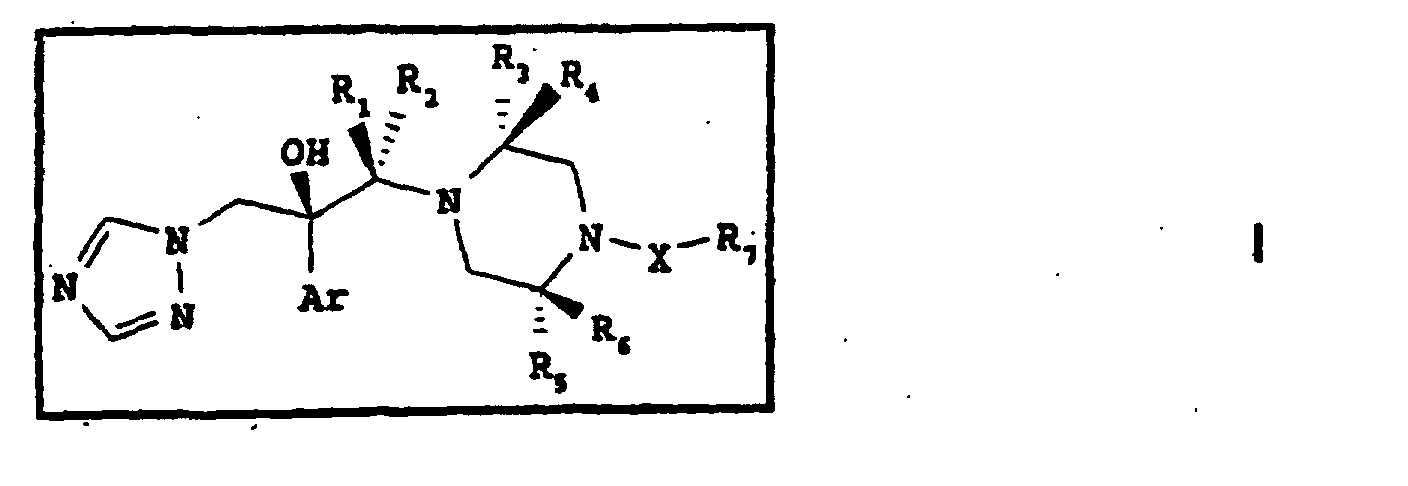
- Ar is a phenyl group which is unsubstituted or substituted by 1-3 substituents each independently selected from the group consisting of halogen, CF3 and OCF3;
- R1 and R2 are each independently hydrogen or C1-C4 alkyl group which is unsubstituted or substituted by 1-3 substituents each independently selected from the group consisting of halogen, hydroxy, C1-C4 alkoxy and amino, with the proviso that where R1 is hydrogen, R2 is other than hydrogen, and vice versa;
- R3 and R4 are each independently hydrogen or C1-C4 alkyl group which is unsubstituted or substituted by 1-3 substituents each independently selected from the group consisting of halogen, hydroxy, C1-C4 alkoxy and amino, or R3 and R4 together form =S;
- R5 and R6 are each independenly hydrogen or C1-C4 alkyl group which is unsubstituted or substituted by 1-3 substituents each independently selected from the group consisting of halogen, hydroxy, C1-C4 alkoxy and amino, or R5 and R6 together form =S;
- X is selected from the group consisting of a direct bond, CO, CS, SO2 and -N=N-;
- R7 is selected from the group consisting of
- (i) phenyl which is unsubstituted or substituted with 1-3 substituents each independently selected from the group consisting of (1) C1-C4 alkyl which is unsubstituted or substituted with 1-3 substituents each independently selected from the group consisting of halogen, hydroxy, C1-C4 alkoxy and amino, (2) C1-C4 alkoxy, (3) halogen, (4) formyl, (5) carboxyl, (6) C1-C4 acyloxy, (7) C1-C4 alkoxycarbonylamino, (8) phenyl- or naphthyloxycarbonylqmino, (9) semicarbazido, (10) formamido, (11) thioformamido, (12) hydroxy, (13) nitro, (14) amino, (15) furyl, (16) triazolyl, (17) thienyl, (18) oxazolyl, (19) imidazolyl and (20) triazolone-yl,
- (ii) a 5- or 6-membered monocyclic or 8- to 10-membered bicydic heterocycle having 1-4 heteroatoms each independently selected from the group consisting of N. O and S, which heterocycle is unsubstituted or ring-substituted with 1-3 substituents each independently selected from the group consisting of (1) C1-C4 alkyl which is unsubstituted or substituted with 1-3 substituents each independently selected from the group consisting of halogen, hydroxy, C1-C4 alkoxy and amino, (2) benzyl which is unsubstituted or substituted with 1-3 substituents selected from the group consisting of C,-C4 alkyl, CF3, halogen and OCF3, (3) halogen, (4) hydroxy, (5) nitro, (6) amino, (7) C1-C4 acylamino, (8) formyl, (9) formamido, (10) thioformamido, (11) C1-C4 alkoxycarbonylamino, (12) phenyl- or naphthyl-oxycarbonylamino and (13) semicarbazido.
- (iii) NHR8 wherein R8 is selected from the group consisting of (1) C1-C4 alkyl which is unsubstituted or substituted with 1-3 substituents each independently selected from the group consisting of halogen, hydroxy, C1-C4 alkoxy and amino, (2) phenyl which is unsubstituted or substituted with 1-3 substituents each independently selected from the group consisting of (a) C1-C4 alkyl which is unsubstituted or substituted with 1-3 substituents each independently selected from the group consisting of halogen, hydroxy, C1-C4 alkoxy and amino, (b) C1-C4 alkoxy, (c) halogen, (d) formyl, (e) carboxyl, (f) C1-C4 acyloxy, (g) C1-C4 alkoxycarbonylamino, (h) phenyl- or naphthyl-oxycarbonylamino, (i) semicarbazido, (j) formamido, (k) thioformamido, (I) hydroxy, (m) nitro, (n) amino, (o) furyl, (p) triazolyl, (q) thienyl, (r) oxazolyl, (s) imidazolyl and (t) triazolone-yl, and (3) a 5- or 6-membered monocyclic or 8-to 10-membered bicyclic heterocycle having 1-3 heteroatoms each independently selected from the group consisting of N, O and S, which is unsubstituted or substituted with 1-3 substituents each independently selected from the group consisting of hydroxy, halogen, amino and carboxyl,
- (iv) OR9 wherein R9 is selected from the group consisting of (1) C1-C4 alkyl which is unsubstituted or substituted with 1-3 substituents each independently selected from the group consisting of halogen, hydroxy, C1-C4 alkoxy and amino, (2) phenyl which is unsubstituted or substituted with 1-3 substituents each independently selected from the group consisting of (a) C1-C4 alkyl which is unsubstituted or substituted with 1-3 substituents each independently selected from the group consisting of halogen, hydroxy, C1-C4 alkoxy and amino, (b) C1-C4 alkoxy, (c) halogen, (d) formyl, (e) carboxyl, (f) C1-C4 acyloxy, (g) C1-C4 alkoxycarbonylamino, (h) phenyl- or naphthyl-oxycarbonylamino, (i) semicarbazido, (j) formamido, (k) thioformamido, (I) hydroxy, (m) nitro, (n) amino, (o) furyl, (p) triazolyl, (q) thienyl, (r) oxazolyl, (s) imidazolyl and (t) triazolone-yl and (3) a 5- or 6-membered monocyclic or 8-to 10-membered bicyclic heterocycle having 1-3 heteroatoms each independently selected from the group consisting of N, O and S, which is unsubstituted or substituted with 1-3 substituents each independently selected from the group consisting of (a) C1-C4 alkyl which is unsubstituted or substituted with 1-3 substituents each independently selected from the group consisting of halogen, hydroxy, C1-C4 alkoxy and amino, (b) phenyl which is unsubstituted or substituted with 1-3 substituents each independently selected from the group consisting of (A) C1-C4 alkyl which is unsubstituted or substituted with 1-3 substituents each independently selected from the group consisting of halogen, hydroxy, C1-C4 alkoxy and amino, (B) C1-C4 alkoxy, (C) halogen, (D) formyl, (E) carboxyl, (F) C1-C4 acyloxy, (G) C1-C4 alkoxycarbonylamino, (H) phenyl- or naphthyl-oxycarbonylamino, (I) semicarbazido, (J) formamido, (K) thioformamido, (L) hydroxy, (M) nitro, (N) amino, (O) furyl, (P) triazolyl, (Q) thienyl, (R) oxazolyl, (S) imidazolyl and (T) triazolone-yl, (c) naphthyl which is unsubstituted or substituted with 1-3 substituents each independently selected from the group consisting of (A) C1-C4 alkyl which is unsubstituted or substituted with 1-3 substituents each independently selected from the group consisting of halogen, hydroxy, C1-C4 alkoxy and amino, (B) C1-C4 alkoxy, (C) halogen, (D) formyl, (E) carboxyl, (F) C1-C4 acyloxy, (G) C1-C4 alkoxycarbonylamino, (H) phenyl- or naphthyl-oxycarbonylamino, (I) semicarbazido, (J) formamido, (K) thioformamido, (L) hydroxy, (M) nitro, (N) amino, (O) furyl, (P) triazolyl, (Q) thienyl, (R) oxazolyl, (S) imidazolyl and (T) triazotone-yl, (d) a 5- or 6-membered monocyclic or 8-to 10-membered bicyclic heterocycle having 1-3 heteroatoms each independently selected from the group consisting of N, O and S, (e) (C1-C4 alkyl)phenyl, (f) (C1-C4 alkyl)naphthyl, (g) hydroxy, (h) halogen, (i) amino and (j) carboxyl, and
- (v) a group of the formula
wherein R is selected from the group consisting of (1) hydrogen, (2) C1-C10 alkyl which is unsubstituted or substituted by 1-5 substituents each independently selected from the group consisting of halogen, hydroxy, C1-C4 alkoxy and amino, (3) phenyl which is unsubstituted or substituted with 1-3 substituents each independently selected from the group consisting of (a) C1-C4 alkyl which is unsubstituted or substituted with 1-3 substituents each independently selected from the group consisting of halogen, hydroxy, C1-C4 alkoxy and amino, (b) C1-C4 alkoxy, (c) halogen, (d) forrnyl, (e) carboxyl, (f) C1-C4 acyloxy, (g) C1-C4 alkoxycarbonylamino, (h) phenyl- or naphthyl-oxycarbonylamino, (i) semicarbazido, (i) formamido, (k) thioformamido, (I) hydroxy, (m) nitro, (n) amino, (o) furyl, (p) triazolyl, (q) thienyl, (r) oxazolyl, (s) imidazolyl, (t) trizolone-yl, (u) CF3 and (v) OCF3, (4) a 5- or 6-membered monocyclic or 8- to 10-membered bicyclic heterocycle having 1-3 heteroatoms each independently selected from the group consisting of N, O and S, which is unsubstituted or substituted with 1-3 substituents each independently selected from the group consisting of (a) C1-C4 alkyl which is unsubstituted or substituted with 1-3 substituents each independently selected from the group consisting of halogen, hydroxy, C1-C4 alkoxy and amino, (b) phenyl which is unsubstituted or substituted with 1-3 substituents each independently selected from the group consisting of (A) C1-C4 alkyl which is unsubstituted or substituted with 1-3 substituents each independently selected from the group consisting of halogen, hydroxy, C1-C4 alkoxy and amino, (B) C1-C4 alkoxy, (C) halogen, (D) formyl, (E) carboxyl, (F) C1-C4 acyloxy, (G) C1-C4 alkoxycarbonylamino, (H) phenyl- or naphthyl-oxycarbonylamino, (I) semicarbazido, (J) formamido, (K) thioformamido, (L) hydroxy, (M) nitro, (N) amino, (O) furyl, (P) triazolyl, (Q) thienyl, (R) oxazolyl, (S) imidazolyl and (T) triazolone-yl, (c) naphthyl which is unsubstituted or substituted with 1-3 substituents each independently selected from the group consisting of (A) C1-C4 alkyl which is unsubstituted or substituted with 1-3 substituents each independently selected from the group consisting of halogen, hydroxy, C1-C4 alkoxy and amino, (B) C1-C4 alkoxy, (C) halogen, (D) formyl, (E) carboxyl, (F) C1-C4 acytoxy, (G) C1-C4 alkoxycarbonylamino, (H) phenyl- or naphthyl-oxycarbonylamino, (I) semicarbazido, (J) formamido, (K) thioformamido, (L) hydroxy, (M) nitro, (N) amino, (O) furyl, (P) triazolyl, (Q) thienyl, (R) oxazolyl, (S) imidazolyl and (T) triazolone-yl, (d) a 5- or 6-membered monocyclic or 8- to 10-membered bicyclic heterocycle having 1-3 heteroatoms each independently selected from the group consisting of N, O and S, (e) (C1-C4 alkyl)phenyl, (f) (C1-C4 alkyl)naphthyl, (g) hydroxy, (h) halogen, (i) amino and (j) carboxyl, (5) phenyl(C1-C4 alkyl) which is unsubstituted or ring-substituted with 1-3 substituents each independently selected from the group consisting of (a) C1-C5 alkyl which is unsubstituted or substituted with 1-3 substituents each independently selected from the group consisting of halogen, hydroxy, C1-C4 alkoxy and amino, (b) halogen, (c) halo(C1-C4 alkyl), (d) C1-C4 alkoxy, (e) hydroxy, (f) amino, (g) carboxyl, (h) trifluormethoxyl, (i) trifluoromethyl, (j) tetrafluoroethyl, (k) tetrafluoroethoxyl, (l) tetrafluoropropyl and (m) tetrafluoropropoxyl, (6) naphthyl(C1-C4 alkyl) which may be substituted with 1-6 substituents selected from (a) C1-C5 alkyl which is unsubstituted or substituted with 1-3 substituents each independently selected from the group consisting of halogen, hydroxy, C1-C4 alkoxy and amino, (b) halogen, (c) (C1-C4 alkyl)halo, (d) C1-C4 alkoxy, (e) hydroxy, (f) amino, (g) carboxyl, (h) trifluormethoxyl, (i) trifluoromethyl, (j) tetrafluoroethyl, (k) tetrafluoroethoxyl, (I) tetrafluoropropyl and (m) tetrafluoropropoxyl, (7) methoxyl, (8) trifluormethoxyl, (9) trifluoromethyl, (10) trifluoroethyl, (11) tetrafluoroethyl, (12) tetrafluoroethoxyl, (13) tetrafluoropropyl and (14) tetrafluoropropoxyl.

-
- In the above definition of formula I, halogen is fluorine, chlorine, bromine or iodine. Preferred halogens are fluorine and chlorine.
- C1-C4 alkyl is, for example, methyl, ethyl, propyl, 1-methylethyl, n-butyl, 1-methylethyl, isopropyl, 1,1-dimethylethyl, 1-methylpropyl, 2-methylpropyl, cyclopropyl and cyclobutyl. Preferred alkyls are methyl and ethyl.
- Examples of Ar groups include, 4-fluorophenyl, 2-4-difluorophenyl, 2,4,6-trifluorophenyl, 4-chlorophenyl, 2,4-dichlorophenyl, 2,4,6-trichlorophenyl, 4-trifluoromethylphenyl and 4-trifluoromethoxyphenyl. Preferred Ar groups are phenyl group having 1 or 2 substituents each independently selected from fluorine, chlorine, trifluoromethyl and trifluromethoxy. Most preferably, Ar is 2,4-difluorophenyl, 2,4-dichlorophenyl, 4-trifluromethylphenyl or 4-trifluoromethoxyphenyl.
- Examples of 5-or 6-membered monocyclic rings are 1-pyrrolyl, 2-pyrrolyl, 3-pyrrolyl, 2-furyl, 3-furyl, 2-thienyl, 3-thienyl, 1-imidazolyl, 4-imidazolyl, 1-pyrazolyl, 3-pyrazolyl, 4-pyrazolyl, 5-pyrazolyl, 1-(1H)-1,2,4-triazolyl, 3-(1H)-1,2,4-triazolyl, 3-(4H)-1,2,4-triazolyl, 5-(1H)-1,2,4-triazolyl, 4-(4H)-1,2,4-triazolyl, 1,2,3-triazolyl, 2-oxazolyl, 4-oxazolyl, 5-oxazolyl, 2-thiazolyl, 4-thiazolyl, 5-thiazolyl, 1,2,4-oxadiazol-3-yl, 1,2,4-oxadiazol-5-yl, 1,3,4-oxadiazol-2-yl, 1,2,4-thiadiazol-3-yl, 1,2,4-thiadiazol-5-yl, 1,3,4-thiadiazol-2-yl, 5-(1H)-tetrazolyl, 5-(2H)-tetrazolyl, 2-pyridyl, 3-pyridyl, 4-pyridyl, 2-pyrimidyl, 4-pyrimidyl and 5-pyrimidyl.
- Examples of 8- to 10-membered bicyclic heterocycle groups are 2-benzimidazolyl, 5-benzimidazolyl, 2-benzoxazolyl, 5-benzoxazolyl, 6-benzoxazolyl, 2-benzothiazolyl, 5-benzothiazolyl, 6-benzothiazolyl, imidazolo[4,5-b]pyridin-2-yl, imidazolo[4,5-b]pyridin-5-yl, oxazolo[5,4-b]pyridin-2-yl, oxazolo[5,4-b]pyridin-5-yl, oxazolo[5,4-b]pyridin-6-yl, thiazolo[5,4-b]pyridin-2-yl, thiazolo[5,4-b]pyridin-5-yl and thiazolo[5,4-b]pyridin-6-yl.
- Triazolone-yl may be 2- or 5-substutitued 1,2,4-triazol-3-one, such as 2H-1,2,4-triazol-3-one-4-yl or 4H-1,2,4-triazol-3-one-2-yl.
- Examples of R 1 include hydrogen, methyl, ethyl, propyl, hydroxymethyl, alkoxymethyl, fluoromethyl and trifluoromethyl. Preferably, R 1 is alkyl. Most preferably, R 1 is methyl.
- Examples of R 2 include hydrogen, methyl, ethyl, propyl, hydroxymethyl, alkoxymethyl, fluromethyl and trifluoromethyl. Preferably, R 2 is hydrogen.
- Depending on the substituents in formula I, the compound may have one or more than one asymmetric centers, resulting in possible stereoisomers. This invention relates to single individual isomers as well as mixture of isomers.
- When R1 and R2 are the same, formula I has one asymmetric center and there are two possible isomers, i.e. 2R and 2S isomers. This invention relates to mixtures as well as individual isomers. The most preferable isomer is the 2R isomer.
- When R1 and R2 are different, formula I has two asymmetric centers, and there are four possible isomers, i.e. 2R,3R; 2R,3S; 2S,3R and 2S,3S. This invention relates to the mixture of isomers as well as individual isomers. The most preferred isomer in this situation is 2R,3R.
- It is more preferred that R7 is a groupwherein R is as described above, and most preferred that the other groups additionally are as follows: Ar is 2,4-difluorophenyl, R1 is methyl, and R2 through R6 are each hydrogen.

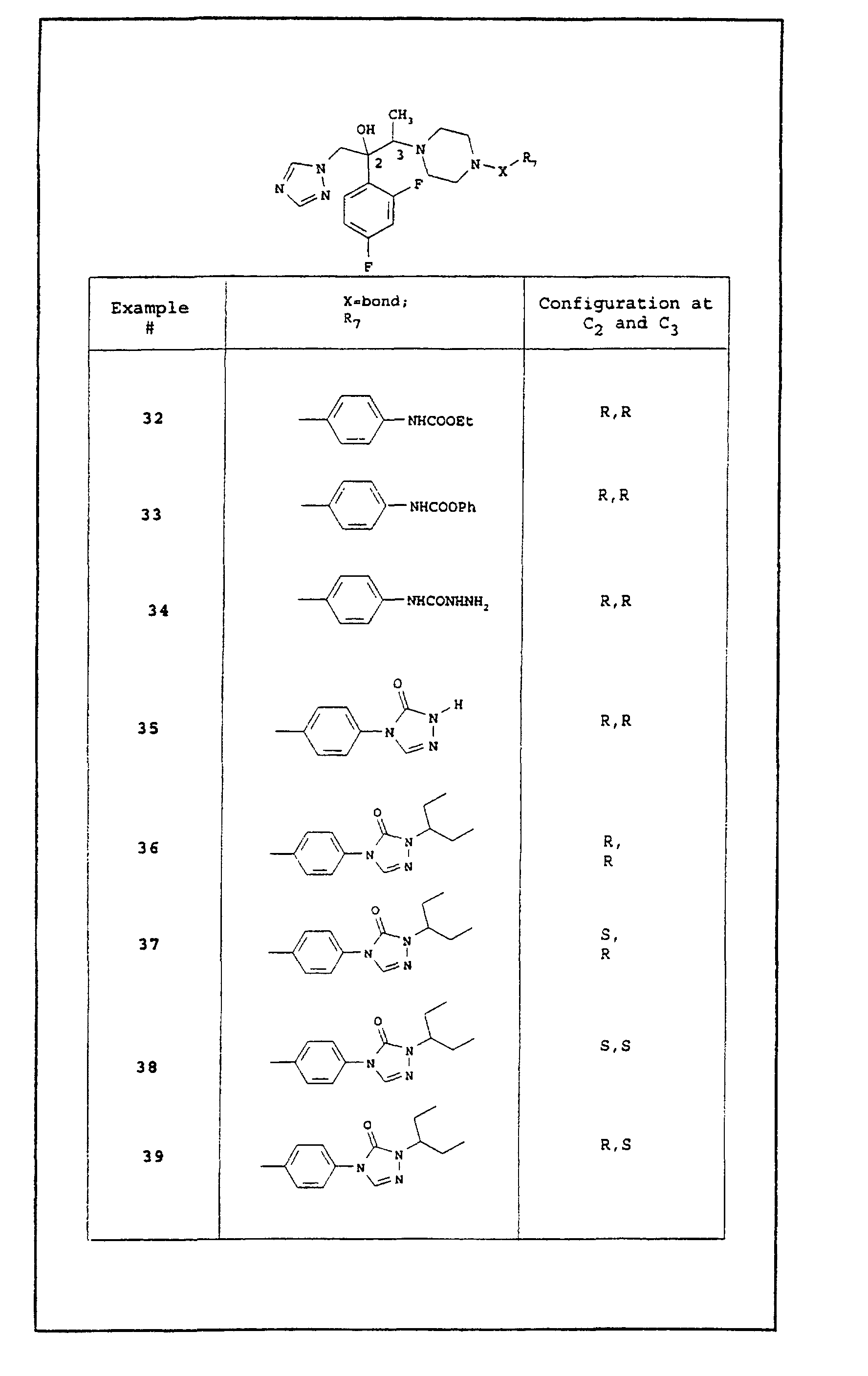
- Specifically, the more preferred embodiments of the present invention include the compounds that are disclosed in Table 3. Those disclosed in Example Nos. 36-51 are more preferred, with Example Nos. 43, 47, 50 and 51 being the most preferred.
- The compounds of formula I can be prepared by a convergent approach from the epoxide of formula II and the piperazino compound of formula III (see Scheme 1). The epoxides were prepared following the synthetic routes described in the literature (Chem. Pharm. Bull., 1993, 41, 1035-1042).
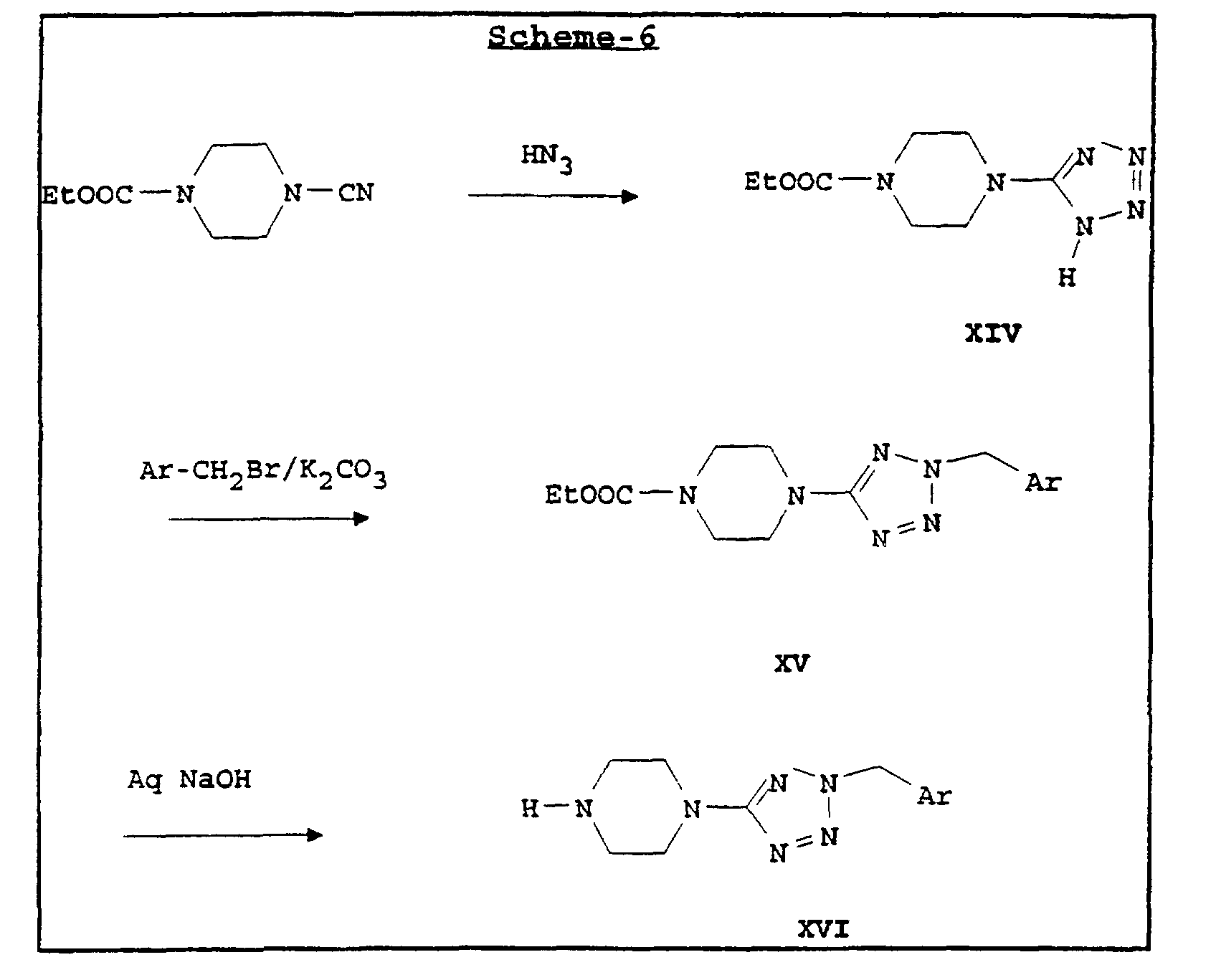
- The synthetic routes for the preparation of certain piperazino compounds of the formula III are disclosed in Schemes 4-6 and 8. The Scheme 7 describes a linear synthetic route for preparing certain compounds of formula I. The epoxide of formula II and the piperazino compound of formula III were reacted in the presence of base such as sodium carbonate, potassium carbonate, cesium carbonate and the like. This reaction was also performed in the presence of lithium perchlorate and sodium perchlorate. The suitable solvents were chosen from acetonitrile, DMF, DMSO, THF, dichloromethane, chloroform, methanol, ethanol, isopropanol and tert-butanol. The most preferred solvents were DMF and acetonitrile. The temperature of the reaction varied from 60-180 °C, depending on the solvent and reactants. The most preferred temperature was 80-140 °C. The reactants were allowed to react to the completion or near to the completion of the reaction. The length of reaction time varied from few hours to several hours depending on the reactants, temperature, and the solvent.

- Certain compounds of formula I were prepared from a common intermediate, which forms Example 2 of this invention as described in Scheme 3. Example 2 was prepared from epoxide IV by two synthetic routes as depicted in Scheme 2. In the first route, a 1:1 molar ratio of epoxide and ethyl piperazine-1-carboxylate were reacted in the presence of potassium carbonate or lithium perchlorate in a suitable solvent. The obtained ester was hydrolysed with strong base such as sodium hydroxide or potassium hydroxide to give piperazinyl compound 2. In this reaction the resulting N-carboxylic acid undergoes in-situ decarboxylation to give the piperazino compound 2. In an alternate route, the piperazino compound was obtained in a single step from the reaction of epoxide IV with piperazine. In a typical procedure, the epoxide and excess piperazine were reacted in the presence of lithium perchlorate in a suitable solvent and at a desired temperature.
- Certain compound of formula I wherein X is CO, SO2, CS, or -N=N- were prepared as described in Scheme 3.
- The compounds of formula I wherein X is CO were produced from the reaction of piperazinyl compound 2 with acid chloride (R7COCl) in the presence of a base such as triethylamine, N-methylmorpholine, N,N-diisopropylethylamine. The reaction was carried out in an inert solvent at -20 °C to 80 °C. The most preferred solvents were dichloromethane, chloroform, tetrahydrofuran and acetonitrile. Most preferably the reaction was carried out at 0-25 °C. Certain compounds of formula I wherein X is SO2 were prepared from the reaction of 2 and R7-SO2-Cl. In these reactions, R7 is as described above.
- Certain compounds of formula I wherein X is CO or CS and R7 is OR were prepared from the reaction of piperazinyl compound 2 and isocyanates and isothiocyanates. In a typical reaction, a 1:1 molar ratio of compound and isocyanate or isothiocyanate were reacted in a suitable solvent at -15 to 45 °C. The preferred solvents were acetonitrile, ethyl acetate and dichloromethane. The preferred temperature was 0 to 25 °C. The reaction time varied from few hours to several hours depending on the reactants, solvent and temperature.

- The reaction of 1H or 2H-1,2,4-triazol-3-diazonium salt with the piperazinyl compound 2 gave the N-azo compound of formula VIII. This reaction was conducted at suitable temperature in suitable solvent in the presence of base like sodium hydroxide, potassium hydroxide and potassium carbonate.
- Certain compounds of formula I wherein X is bond and R7 is unsubstituted or substituted azole were prepared according to Scheme 1 The synthetic routes followed for the preparation of piperazinyl azoles X, XI, XII, XIII and XVI are described in Schemes 4-6. In a typical procedure, piperazinyl azole and epoxide were heated in a suitable solvent in the presence of lithium perchlorate or potassium carbonate for 24-48 h. The molar ratio of the reactants varied from 1:1 to 1:5. After usual workup the product was purified by column chromatography.

- Certain compounds of formula I wherein X is a bond and R7 is a 4-[2-substituted-1,2,4-triazol-3-one-4-yl]phenyl group were prepared in two independent synthetic routes. The first route involves the linear approach as described in Scheme 7. The intermediates formed during this synthesis are compounds of formula I, wherein X is bond and R7 is phenyl group with substitution.

- The second synthetic route involves a more efficient convergent approach (Scheme 1). In a typical procedure, an appropriate epoxide of formula II and an appropriate piperazinyl derivative XXIII were reacted in the presence of lithium perchlorate in a suitable solvent and at a suitable temperature. The reactants were allowed to react to the completion of the reaction. The reaction time varied from few hours to several hours depending on the reactants. The epoxides used in this invention are known and were prepared by following the reported procedures. The piperazino compounds of formula XXIII were prepared as described in Scheme 8.

- Pharmaceutically acceptable salts of formula I were prepared by mixing the solution of the free base with excess of acid at 0-25 °C. The precipitated salt was collected by filtration. In some cases the solvent was evaporated to dryness and the resulting crude salt was recrystallized in a suitable solvent. For the preparation of these acid addition salts, acids were selected from hydrochloric acid, hydrobromic acid, sulphuric acid, tartaric acid, succinic acid, fumaric acid, methanesulphonic acid or p-toluenesulphonic acid.
- The compounds of the present invention were evaluated in vitro for their antifungal activity and were assessed based on minimum inhibitory concentration of the test compound, i.e. the concentration of the test compound at which growth of particular organism fails to occur. The MIC was determined after incubating the test compound with the strain for 48 h at 37 °C in an appropriate medium. The microorganisms used in this test include Candida albicans, C. tropicalis, C. kefyr, C. krusei, C. guilliermondii, C. glabrata, Cryptococcus neoformans, Aspergillus niger and A. fumigatus. In vitro data of certain representative compounds is provided in the following Table.
In vitro activity of compounds of formula I Fungal strains MIC of compounds of formula I, µg/ml # 36 # 40 # 41 # 42 # 43 # 44 # 46 Fluconazole Itraconazole Candida 0.09 0.09 0.09 0.09 0.048 0.048 0.048 0.78 0.09 albicans C. tropicalis 0.09 0.048 0.09 0.09 0.048 0.048 0.048 0.39 0.09 C. kefyr 0.048 0.048 0.48 0.048 0.048 0.048 0.048 0.39 0.09 C. krusei 0.09 0.19 1.56 1.56 0.09 0.09 0.19 50 0.39 C. guilliermondii 0.048 0.048 0.048 0.09 0.09 0.048 0.048 1.56 0.19 C. glabrata 0.09 0.39 0.78 12.5 0.78 1.56 0.39 12.5 0.19 Cryptococcu s neoformans 0.048 0.48 0.48 0.19 0.048 0.048 0.048 1.56 0.39 Saccheromyces cerevisiae 0.19 0.09 0.19 0.39 0.09 0.048 0.09 6.25 0.39 A. niger 0.78 0.78 3.12 3.12 0.19 0.19 0.09 >100 0.39 Aspergillus fumigatus 0.39 0.39 0.78 0.39 0.19 0.048 0.048 >100 0.19 - Certain selected compounds were evaluated in-vivo for their antifungal efficacy. Series of doses of test compounds were administered by oral, i.v and s.c. routes to infected mice, i.e mice that are inoculated with a strain of Candida albicans or Aspergillits fumigatus. Efficacy of test compound was determined based on survival of treated mice compared to control. The in vivo efficacy was assessed based on ED50 of the test compound. The following table provides ED50 of certain compounds for systemic infections of C. albicans and A. fumigatus in mice models.
In-vivo activity of compounds of formula I Therapeutic efficacy (ED50 mg/kg) in mice systemic infectinons Example # C. albicans A. fumigatus 36 8.01 >45 40 4.68 67.05 41 8.01 89.28 42 >90 71.14 43 1.57 42.3 46 56.02 >45 - The compounds of formula I and their salts are anti-fungal agents, useful to treat or prevent topical, lung invasive, as well as systemic fungal infections in mammals including humans. For example they are useful in treating topical infections in man caused by species of Candida, Trichophyton, Microsporum, mucosal infections caused by species of Candida, and systemic infections caused by species of Candida, Aspergillus, Cryptococcus, Pneumocystis, Histoplasma or Blastomyces. The above compounds have shown impressive in vivo efficacy against mice systemic candidiosis, systemic aspergillosis and lung invasive aspergillosis.
- When the compounds of the present invention or their pharmaceutically acceptable salts are used for treatment or prophylaxis of fungal infections in mammals including humans, they can be administered alone, but generally it is more preferred to administer the compounds in a pharmaceutical formulation. This formulation varies with intended route of administration. For example the compounds can be administered orally in the form of tablets, coated tablets, capsules, suspensions, solutions and the like. These oral preparations which contain the present compounds are prepared with excipients, binders, coloring agents, flavors, etc. which can be formulated in a manner known in the art.
- The present compounds can be injected parenterally, for example intravenously, intramuscularly or subcutaneously. These injections are sterile aqueous solutions which contain the antifungal agent with other substances, such as salts, glucose or an isotonic agent, and can be formulated in a conventional manner.
- The amount of the present compounds incorporated into the pharmaceutical composition varies depending on the physical and chemical properties of the drug, dosage and route of administration. Preferably the oral formulations are prepared with 1 to 25% (w/w) antifungal agent and the injection formulation is prepared with 0.1 to 5% (w/w) of antifungal agent.
- Alternatively, the antifungal agents also can be administered in the form of a suppository or pessary, or they may be applied topically in the form of lotion, solution, ointment, cream or dusting powder. Suppositories and ointments which contain 1-10% of active ingredient with a base, stabilizer or surfactant can be prepared in a conventional manner.
- The dosage of the compound of formula I or its pharmaceutically acceptable salt can be suitably determined depending on the indivdual cases, taking symptoms, age, sex, disease status, patient condition, route of administration and the like into consideration. Usually the dosage can be 0.01-20 mg /kg in single or divided daily doses.




- Examples 1-4 & 7 should be regarded as comparative.
- A mixture of (2R,3S)-2-(2,4-difluorophenyl)-3-methyl-2-(1 H-1,2,4-triazol-1-yl)methyloxirane IV (1.0 g, 4.0 mmol), ethyl piperazine-1-carboxylate (1.2 ml, 8 mmol) and potassium carbonate in DMF (5 ml) was heated at 120 °C for 18 h. After cooling the reaction mixture was poured onto crushed ice and extracted with ethyl acetate (3X30 ml). The combined extract was washed with water, brine, dried (MgSO4) and concentrated and the resulting product was purified on a column of silica gel (hexane/EtOAc, 1:1) to give the title compound as off-white solid (400 mg, 24%).
m.p.: 182-183 °C.
1H NMR (CDCl3) δ: 0.90 (d, 3H, CH3), 1.26 (t, 3H, CH3), 2.31-2.49 (m, 2H, CH2), 2.78-3.07 (m, 3H, CH2 and CH), 3.40-3.59 (m, 4H, 2XCH2), 4.15 (q, 2H, OCH2), 4.9 (AB q, 2H, CH2), 5.05 (s, 1H, OH), 6.66-6.84 (m, 2H, Ar-H), 7.36-7.51 (m, 1H, Ar-H), 7.78 (s, 1H, Het-H), 7.92 (s, 1H, Het-H).
FAB-MS: 410.2 (MH+), calcd. C19H25F2N5O3 409.44. - A mixture of (2R,3S)-2-(2,4-difluorophenyl)-3-methyl-2-(1H-1,2,4-triazol-1-yl)methyloxirane (1.0 g, 4.0 mmol), piperazine (860 mg, 10 mmol) and lithium perchlorate (625 mg, 6 mmol) in acetonitrile (15 ml) was heated under reflux for 48 h. The solvent was removed under reduced pressure, the residue was treated with crushed ice and extracted with ethylacetate (3X30 ml). The combined organic extract was washed with water, brine, dried (Na2SO4) and concentrated to give the title compound as thick viscous gum (1.5 g, 78%). The title compound was also prepared by hydrolysis of 2R,3R-2-(2,4-difluorophenyl)-3-(4-ethoxycarbonylpiperazin-1-yl)-1-(1H-1,2,4-triazol-1-yl)butan-2-ol 1 with 2M sodium hydroxide solution.
1H NMR (CDCl3) δ: 0.97 (d, 3H, CH3), 2.32-2.42 (m, 2H, CH2), 2.66-2.90 (complex, 8H, 3XCH2, CH and NH), 4.85 (AB q, 2H, CH2), 6.68-6.83 (m, 2H, Ar-H), 7.42-7.55 (m, 1H, Ar-H), 7.78 (s, 1H, Het-H), 8.0 (s, 1H, Het-H).
FAB-MS: 338.1 (MH+), calcd. C16H21F2N5O 337.38. - To a cooled (0 °C) mixture of (2R,3R)-2-(2,4-difluorophenyl)-3-{piperazin-1-yl)-1-(1H-1,2,4-triazol-1-yl)butan-2-ol 2 (250 mg, 0.74 mmol) and triethylamine (0.42 ml, 3 mmol) in acetonitrile (15 ml) was added cyanogen bromide (160 mg, 1.5 mmol) in acetonitrile (0.5 ml). The reaction mixture was stirred at room temperature for 18 h. The solvent was removed under reduced pressure. To the resulting residue water was added and extracted with ethyl acetate (3X20 ml). The combined organic extract was washed with water, brine and dried over magnesium sulphate. The solvent was removed and the product was purified on a column of silica gel (hexane/EtOAc, 1:1) to give the title compound as a colorless solid (150 mg, 56%).
m.p: 220 °C (decomp).
IR (Nujol) Vmax: 2210 cm-1.
1H NMR (CDCl3) δ: 0.89 (d, 3H, CH3), 2.52-2.61 (m, 2H, CH2), 3.0-3.31 (m, 7H, 3XCH2 and CH), 4.88-4.91 (m, 3H, CH2 and OH), 6.66-6.78 (m, 2H, Ar-H), 7.3-7.5 (m, 1H, Ar-H), 7.78 (s, 1H, Het-H), 7.87 (s, 1H, Het-H).
FAB-MS: 363.0 (MH+), calcd. C17H20F2N6O 362.39. - A mixture of compound 2 (200 mg, 0.6 mmol) and potassium carbonate (248 mg, 1.8 mmol) in DMF (5 ml) was heated at 120 °C for 24 h. The contents were poured into cold water and extracted with ethyl acetate (3X20 ml). The combined organic extract was washed with water, brine and dried over sodium suphate. The solvent was removed under reduced pressure and the resulting product was purified on a column of silica gel (EtOAc/MeOH; 98:2) to give the title compound as colorless solid (80 mg, 36%).
m.p: 118-120 °C.
1H NMR (CDCl3) δ: 0.90 (d, 3H, CH3), 2.44-2.52 (m, 2H, CH2), 2.93-3.11 (m, 3H, CH2 and CH), 3.39-3.59 (m, 4H, 2XCH2), 4.93-4.97 (m, 3H, CH2 and OH), 6.66-6.81 (m, 2H, Ar-H), 7.36-7.48 (m, 1H, Ar-H), 7.79 (s, 1H, Het-H), 7.91 (s, 1H, Het-H), 8.02 (s, 1H, CHO).
FAB-MS: 366.1 (MH+), calcd. C17H21F2N5O2 365.39. - The title compound 5 was obtained as a thick viscous oil in 58% yield from the reacton of (2R,3S)-2-(2,4-difluorophenyl)-3-methyl-2-(1H-1,2,4-triazol-1-yl)methyloxirane IV and 2,5-dimethylpiperazine, by a similar method described in example 2.
1H NMR (CDCl3) δ: 0.85-0.96 (3 d merged, 9H, 3XCH3), 1.85-1.96 (m, 2H), 2.4-2.59 (m, 2H), 2.64-2.96 (m, 3H), 3.27-3.38 (m, 1H), 4.81 (AB q, 2H, CH2), 5.50 (brs, 1H, OH), 6.69- 6.84 (m, 2H, Ar-H), 7.45-7.58 (m, 1H, Ar-H), 7.81 (s, 1H, Het-H), 8.02 (s, 1H, Het-H).
FAB-MS: 366.1 (MH+), calcd. C18H25F2N5O 365.43. - To a mixture of compound 5 (228 mg, 0.62 mmol) and triethylamine (0.18 ml, 1.24 mmol) in dichloromethane (10 ml) at 0 °C was added dropwise ethyl chloroformate (135 mg, 1.24 mmol) in dichloromethane (3 ml). The reaction mixture was stirred at 0 °C for 30 minutes and 1 h at room temperature. The contents were diluted with 30 ml of dichloromethane, washed with water, brine and dried over magnesium sulphate. The solvent was removed under reduced pressure and the resulting oil was chromatographed on a column of silica gel. Elution with hexane/EtOAc (1:1) gave the title compound as an off-white solid (210 mg, 80%).
m.p: 57-59 °C.
1H NMR (CDCl3) δ: 0.94 (d, 3H, CH3), 1.07-1.10 (m, 6H, 2XCH3), 1.28 (t, 3H, CH3), 2.34-2.46 (m, 1H), 2.76-2.82 (m, 1H), 2.96-3.09 (m, 2H), 3.21-3.31 (m, 1H), 3.67 (m, 1H), 3.98-4.27 (m, 3H), 4.80 (AB q, 2H), 5.13 (s, 1H, OH), 6.67-6.82 (m, 2H, Ar-H), 7.39-7.52 (m, 1H, Ar-H), 7.78 (s, 1H, Het-H), 7.94 (s, 1H, Het-H).
FAB-MS: 438.3 (MH+), calcd. C21H29F2N5O3 437.49. - To a mixture of compound 2 (150 mg, 0.44 mmol) and triethylamine (1.0 ml, 0.72 mmol) in dichloromehane (15 ml) was added di-tert-butyldicarbonate (110 mg, 0.48 mmol) at °C. The reaction mixture was stirred for 1h at 0 °C and 3 h at room temperature. Then diluted with chloroform (20 ml), washed with water, brine and dried over sodium sulphate. The solvent was removed under reduced pressure and the resulting product was purified on a column of silica gel (EtOAc/hexane) to give the title compound as a colorless solid (160 mg, 82%).
m.p.: 138-139 °C.
1H NMR (CDCl3) δ: 0.92 (d, 3H, CH3), 1.46 (s, 9H, 3XCH3), 2.34-2.40 (m, 2H, CH2), 2.79-2.92 (m, 2H, CH2), 2.97 (m, 1H, CH), 3.43 (m, 4H, 2XCH2), 4.88 (AB, q, 2H, CH2), 5.11 (s, 1H, OH), 6.66-6.80 (m, 2H, Ar-H), 7.38-7.51 (m, 1H, Ar-H), 7.78 (s, 1H, Het-H), 7.94 (s, 1H, Het-H).
FAB-MS 438.2 (MH+); calcd. C21H29F2N5O3 437.49. - To a ice cooled solution of (2R,3R)-2-(2,4-diflurophenyl)-3-(piperazin-1-yl)-1-(1H-1,2,4-triazole-1-yl)butan-2-ol 2 (150 mg, 0.44 mmol) in acetonitrile (10 ml) was added phenylisocyanate (60 mg, 0.5 mmol) in acetonitrile (4 ml). The reaction mixture was stirred at 0 °C for 2h, diluted with 20 ml of ethyl acetate and successively washed with water, brine and dried over sodium sulphate. This organic extract was concentrated and the residue was purified by passing through a column of silica gel (hexane/EtOAc) to give the title compound as a colorless solid (170 mg, 84%).
m.p.: 98-100 °C (decomp).
1H NMR (CDCl3) δ: 0.92 (d, 3H, CH3), 2.5 (m, 2H, CH2), 3.02 (m, 3H, CH2 and CH), 3.52 (m, 4H, 2XCH2), 4.8-5.1 (AB q and S merged, 3H, CH2 and OH), 6.31 (br s, 1H, NH), 6.65-6.85 (m, 2H, Ar-H), 7.0-7.1 (m, 1H, Ar-H), 7.25-7.5 (m, 5H, Ar-H), 7.78 (s, 1H, Het-H), 7.92 (s, 1H, Het-H).
MS (FAB): 457.0 (MH+), calcd. C23H26F2N6O2 456.49. - The title compound was prepared similarly to example 8 starting from same piperazine derivative and ethylisocyanate. The product was obtained as a colorless solid in 75 % yield.
m.p.: 103-105 °C.
1H NMR (CDCl3) δ: 0.9 (d, 3H, CH3), 1.14 (t, 3H, CH3), 2.42 (m, 2H, CH2), 2.8-3.1 (m and q merged, 3H, CH2 and CH), 3.2-3.5 (m, 6H, 3XCH2), (4.4 brs, 1H, NH), 4.88 (AB q, 2H, CH2), 5.06 (s, 1H, OH), 6.7-6.9 (m, 2H, Ar-H), 7.45 (m, 1H, Ar-H), 7.78 (s, 1H, Het-H), 7.93 (s, 1H, Het-H).
FAB-MS: 409.1 (MH+), calcd. C19H26F2N6O2 408.45. - The title compound was prepared similarly to example 8 starting from same piperazine derivative 2 and phenylisothiocyanate. The product was obtained as a colorless solid in 80% yield.
m.p.: 106-108 °C.
1H NMR (CDCl3) δ: 0.88 (d, 3H, CH3), 2.5 (m, 2H, CH2), 2.9-3.1 (m, 3H, CH2 and H), 3.84 (m, 4H, 2XCH2), 4.8-5.1 (AB q and s merged, CH2 and OH), 6.7-6.85 (m, 2H, Ar-H), 7.1-7.5 (m, 7H, 6 Ar-H and 1 NH), 7.77 (s, 1H, Het-H), 7.88 (s, 1H, Het-H).
FAB-MS: 473.3 (MH+), calcd. C23H26F2N6OS 472.56. - The title compound was prepared similarly to example 8 starting from same piperazine derivative 2 and ethylthioisocyanate. The product was obtained as a colorless solid in 85% yield.
m.p.: 96-98 °C.
1H NMR (CDCl3) δ: 0.88 (d, 3H, CH3), 1.25 (t, 3H, CH3), 2.5 (m, 2H, CH2), 3.06 (m, 3H, CH2 and CH), 3.6-4.0 (q and m merged, 6H, 3XCH2), 4.8-5.0 (AB q and s merged, 3H, CH2 and OH), 5.39 (s, 1H, NH), 6.7-6.9 (m, 2H, Ar-H), 7.4- 7.5 (m, 1H, Ar-H), 7.78 (s, 1H, Het-H), 7.89 (s, 1H, Het-H).
FAB-MS: 425.1 (MH+), calcd. C19H26F2N6OS 424.51. - To a mixture of compound 2 (674 mg, 2 mmol) and triethylamine (0.55 ml, 4 mmol) in tetrahydrofuran (10 ml) was added dropwise 2,4-difluorobezoyl chloride (440 mg, 2.5 mmol) in 5 ml tetrahydrofuran at 0 °C. The reaction mixture was stirred at 0 °C for 30 minutes and at room temperature for 18 h. The solvent was removed under reduced pressure, the residue was dissolved in dichloromethane (50 ml). The organic phase was washed with brine, dried over sodium sulphate. The solvent was removed under reduced pressure and the resulting product was purified on a column of silica gel (EtOAc/hexane, 9:1) to give the title compound as colorless prisms ( 448 mg, 47%).
m.p. = 63-65°C.
1H NMR (CDCl3) δ: 0.88 (d, J = 6.1 Hz, 3H), 2.04-2.59 (m, 2H); 2.99-3.09 (m, 4H); 3.35 (s, 2H); 3.72-4.10 (m, 1H) 4.91 (s, 2H); 5.01 (s, 1H); 6.65-7.00 (m, 5H); 7.34-7.48 (m, 1H); 7.77 (s, 1H); 7.9 (s, 1H).
FAB-MS: 478.3 (MH+), calcd. C23H23F4N5O2 477.46. - The example 13 was prepared form the reaction of piperazino derivative 2 and 4-(trifluoromethyl)benzoyl chloride by following the similar procedure described for the example 12.
Colorless prisms, m.p.: 88-90 °C, Yield 87%.
1H NMR (CDCl3) δ: 0.88 (d, J = 6.5 Hz, 3H); 2.39-2.59 (m, 2H) 3.00-3.10 (m, 4H); 3.41-3.73 (m, 4H); 4.83 (AB q, 2H) 6.65-6.79 (m, 2H); 7.35-7.47 (m, 1H); 7.49 (d, J=8.0 Hz, 2H) 7.66 (d, J=8.0 Hz, 2H); 7.78 (s, 1H), 7.91 (s, 1H).
FAB-MS: 510.1 (MH+), Calcd. C24H24F5N5O2 509.48. - The example 14 was prepared form the reaction of piperazino derivative 2 and 4-nitrobenzoyl chloride by following the similar procedure described for the example 12. After column purification the product was obtained as brown prisms in 92% yield.
m.p. 90-92 °C.
1H NMR (CDCl3) δ: 0.88 (d, J = 6.5 Hz, 3H), 2.42-2.61 (m, 2H) 3.05-3.08 (m, 4H); 3.39-3.73 (m, 3H); 4.92 (s, 3H) 6.66-6.78 (m, 2H); 7.34-7.47 (m, 1H); 7.55 (d, J = 8.6 Hz, 2H) 7.77 (s, 1H); 7.88 (s, 1H); 8.26 (d, J = 8.6 Hz, 2H).
FAB-MS: 487.0 (MH+),C23H24F2N6O4 486.42. - A solution of nitrocompound 14 (487 mg, 1.0 mmol) in ethyl acetate (95 ml) was hydrogenated over 10% Pd-C (50 mg) at 45 psi pressure and room temperature for 6 h. The catalyst was removed by filtration and the filtrate was concentrated to give the amino compound 15 as a colorless solid (330 mg, 72%).
m.p.: 100-102 °C.
1H NMR (CDCl3) δ : 0.89 (d, J = 5.8 Hz, 3H); 2.42-2.47 (m, 2H) 2.88-3.06 (m, 3H); 3.63 (br, 4H); 3.09 (br, 2H) 4.82 (t, J = 16.3 Hz, 2H); 5.02 (br, 1H); 6.61 (d, J = 8.5 Hz, 2H) 6.73-6.79 (m, 2H); 7.22 (d, J = 8.5 Hz, 2H); 7.30-7.48 (m, 1H) 7.77 (s, 1H); 7.92 (s, 1H).
FAB-MS: 457.1 (MH+), calcd. C23H26F2N6O2 456.46. - To a mixture of piperazinyl compound 2 (146 mg, 0.43 mmol) and triethylamine in dichloromethane (5 ml) was added p-toluenesulphonyl chloride (51 mg, 0.45 mmol) in dichloromethane (1 ml) at 0 °C. The reaction mixture was stirred at 0 °C for 15 minutes and 2 h at room temperature. Then the reaction mixture was diluted with chloroform (15 ml), washed with water, brine and dried over sodium sulphate. The solvent was removed under reduced pressure and the resulting product was purified on a column of silica gel (CHCl3/MeOH; 98:2 ) to give the title compound as a colorless solid (75 mg, 16%).
m.p.: 81-83 °C.
1H NMR (CDCl3) δ : 0.88 (d, J = 6.9 Hz, 3H), 2.44 (s, 3H), 2.48-2.57 (m, 2H), 2.92-3.08 (m, 7H), 4.74 (s, 2H), 4.83 (s, 1H), 6.64-6.76 (m, 2H), 7.29-7.36 (m, 3H), 7.63 (s, 1H), 7.68 (s, 1H), 7.74 (s, 1H), 7.80 (s, 1H).
FAB-MS: 491.9 (MH+), calcd. C23H27F2N5O3S 491.55. - The epoxide IV (300 mg, 1.19 mmol) and LiClO4 (235 mg, 1.43 mmol) were dissolved in 12 mL dry acetonitrile and 1-methanesulfonylpiperazine (190 mg, 1.79 mmol) was added. The mixture was heated to reflux for 4 days, cooled and the solvent evaporated. The residue was dissolved in dichloromethane and then washed with water and brine. The solution was dried over Na2SO4 and the solvent evaporated. The crude reaction products were eluted through a silica gel column using 3% MeOH/97% EtOAc as eluent to give the title compound (180 mg, 36%) as a colorless solid.
m.p.: 83-85 °C.
1H NMR (CDCl3) δ: 0.91 (d, J = 6.4 Hz, 3H), 2.56-2.61 (m, 2H), 2.80 (s, 3H), 3.02-3.18 (m, 3H), 3.22-3.30 (m, 4H), 4.89 (s, 2H), 4.93 (s, 1H), 6.66-6.79 (m, 2H), 7.35-7.48 (m, 1H), 7.79 (s, 1H), 7.88 (s, 1H).
FAB-MS: 415.9 (MH+), C17H23F2N5O3S 415.45 - The title compound was prepared from piperazinyl compound 2 and p-nitrobenzenesulphonyl chloride by following the similar procedure described for example 12. The product was obtained as tan needles in 38% yield after purification on a column of silica gel (CHCl3/MeOH; 96:4) followed by recrystalization in ether.
m.p.: 160-162 °C.
1H NMR (CDCl3) δ : 0.87 (d, J = 6.7 Hz, 3H), 2.51-2.66 (m, 2H), 2.96-3.20 (m, 7H), 4.74 (s, 2H), 4.81 (s, 1H), 6.62-6.76 (m, 2H), 7.29-7.41 (m, 1H), 7.72 (s, 1H), 7.77 (s, 1H), 7.94-7.98 (m, 2H), 8.39-8.43 (m, 2H).
FAB-MS: 523.2 (MH+), calcd. C22H24F2N6O5S 522.52. - A solution of nitrocompound 18 (230 mg, 0.44 mmol) in ethanol (10 ml) was hydrogenated over 10% Pd-C (25 mg) at 45 psi pressure and room temperature for 18 h. The catalyst was removed by filtration and the filtrate was concentrated and the resulting product was purified on a column of silica gel (CHCl3/MeOH; 57:43) to give the amino compound 19 as a colorless solid (165 mg, 76%).
m.p.: 95-97 °C.
1H NMR (CDCl3) δ : 0.88 (2, J = 6.1 Hz, 3H), 2.48-2.58 (m, 2H), 2.96-3.09 (m, 7H), 4.14 (br, 2H), 4.75 (s, 2H), 4.86 (s, 1H), 6.63-6.77 (m, 4H), 7.31-7.43 (m, 1H), 7.52-7.57 (m, 2H), 7.74 (s, 1H), 7.83 (s, 1H).
FAB-MS: 493.5 (MH+), calcd. C22H26F2N6O3S 492.54. - To a cooled solution of 3-amino-1H-1,2,4-triazole (378 mg, 4.5 mmol) in concentrated hydrochloric acid (1 ml) was added sodium nitrite (310 mg, 4.5 mmol) in portions. The resulting diazonium salt was transferred to a flask containing compound 2 (1 g, 3.0 mmol) in 20 ml of 3:1 mixture of 10% sodium hydroxide solution and tetrahydrofuran. The resulting reaction mixture was stirred at room temperature for 2 h and extracted with chloroform (3X25 ml). The combined organic extract was washed with water, brine and dried over sodium sulphate. The solvent was removed under reduced pressure and the resulting product was purified on a column of silica gel to give the title compound as thick viscous gum (100 mg, 8%).
1H NMR (CDCl3) δ : 0.92 (d, 3H, CH3), 2.65 (m, 2H, CH2), 3.1-3.3 (m, 3H, CH2 and CH), 4.0 (m, 4H, 2XCH2), 4.95 (m, 3H, CH2 and OH), 6.72-6.81 (m, 2H, Ar-H), 7.4-7.49 (m, 1H, Ar-H), 7.79 (s, 1H, Het-H), 7.91 (s, 1H, Het-H), 7.97 (s, 1H, Het-H).
FAB-MS: 433.2 (MH+), calcd. C18H22F2N10O 432.43. - A mixture of 2-bromothiazole (1.64 g, 10 mmol), ethyl 1-piperazinecarboxylate (1.896, 12 mmol) and sodium iodide (1.498, 10 mmol) in N,N-dimethylformamide (10 ml) was heated at 120°C for 18 h. After cooling, the solvent was removed under reduced pressure and the residue was treated with crushed ice. The desired product was precipitated as colorless solid, was isolated by filtration (2.2 g, 91%).
1H NMR (CDCl3) δ: 1.28 (t, 3H, CH3), 3.48 (m, 4H, 2XCH2), 3.62 (m, 4H, 2XCH2), 4.17 (q, 2H, OCH2), 6.60 (d, 1H, Het-H, J=3.5 Hz), 7.20 (d, 1H, Het-H, J=3.5 Hz) - To a methanolic solution of ethyl 4-(2-thiazolyl)piperazine-1-carboxylate (2 g, 8 mmol), 20 ml of 10% sodium hydroxide solution was added. The resulting mixture was heated under reflux for 5 h. After cooling, the reaction mixture was concentrated under reduced pressure, the residue was diluted with water and extracted with chloroform (3 X 30 ml). The combined extract was washed with water, brine, dried (Na2SO4) and concentrated to give the title compound as a thick viscous liquid (1.2 g, 86%).
1H NMR (CDCl3) δ: 1.68 (br s, 1H, NH), 2.98 (m, 4H, 2XCH2), 3.46 (m, 2XCH2), 6.56 (d, 1H, Het-H, J=3.5 Hz), 7.2 (d, 1H, Het-H, J=3.5 Hz). - To a mixture of (2R,3S)-2-(2,4-difluorophenyl)-3-methyl-2-(1H-1,2,4-triazol-1-yl)methyloxirane IV (502 mg, 2 mmol) and lithium perchlorate (320 mg, 3 mmol) in acetonitrile (10 ml), 2-(piperazin-1-yl)thiazole (X)(507 mg, 3 mmol) was added. The resulting mixture was heated under reflux for 48 h. The reaction mixture was cooled, concentrated under reduced pressure. The residue was disolved in chloroform, washed with water, brine, dried (Na2SO4) and concentrated. The resulting product was purified on a column of silica gel using ethyl acetate and hexane (4:1) as eluent to give the title compound as colorless solid (650 mg, 77%).
m.p.: 180-181 °C.
1H NMR (CDCl3) δ: 0.93 (d, 3H, CH3), 2.57 (m, 2H, CH2), 3.05 (m, 3H, CH2 and CH) 3.51 (m, 4H, 2XCH2), 4.92 (AB q, 2H, CH2), 5.05 (s, 1H, OH), 6.58 (d, 1H, Het-H, J=3.5 Hz), 6.7-6.8 (m, 2H, Ar-H), 7.2 (d, 1H, Het-H, J=3.5 Hz), 7.4-7.5 (m, 1H, Ar-H), 7.78 (s, 1H, Het-H), 7.93 (s, 1-H, Het-H).
FAB-MS: 421.0 (MH+), calcd. C19H22F2N6OS 420.482. - The title compound was prepared in 48% yield from (2R,3S)-2-(2,4-difluorophenyl)-3-methyl-2-(1 H-1,2,4-triazol-1-yl)methyloxirane and 3-(piperazin-1-yl)-1H-1,2,4-triazole (XI) in the presence of lithium perchlorate following the similar procedure described for example 21.
m.p.: 71-73 °C.
1H NMR (CDCl3) δ: 0.91 (d, 3H, CH3), 2.48-2.60 (m, 2H, CH2), 2.90 -3.03 (m, 3H, CH2 and CH), 3.32-3.51 (m, 4H, 2XCH2), 4.81-5.04 (m, 2H, CH2), 5.20 (br, 2H), 6.67-6.86 (m, 2H, Ar-H), 7.35-7.58 (m, 1H, Ar-H), 7.72 (s, 1H, Het-H), 7.78 (s, 1H, Het-H), 8.01 (s, 1H, Het-H)
FAB-MS: 405.0 (MH+), calcd. C18H22F2N8O 404.36. - A mixture of compound 3 (140 mg, 0.39 mmol), sodium azide (31 mg, 0.47 mmol) and ammonium chloride (25 mg, 0.47 mmol) in DMF (5 ml) was heated at 90 °C for 48 h. Solvent was removed under reduced pressure and the residue was extracted with ethyl acetate (3X10 ml). Combined organic extract was washed with water, brine and dried over sodium sulphate. The solvent was removed under reduced pressure and the resulting product was purified on a column of silica gel to give the title compound as a off-white solid (30 mg, 19%).
m.p.: 104-105 °C.
1H NMR (CDCl3) δ: 0.93 (d, 3H, CH3), 2.63 (m, 2H, CH2), 3.07 (m, 3H, CH2 and CH), 3.56 (m, 4H, 2XCH2), 4.93 (AB q and s merged, 3H, CH2 and OH), 6.70-6.77 (m, 2H, Ar-H), 7.42-7.45 (m, 1H, Ar-H), 7.80 (s, 1H, Het-H), 7.96 (s, 1H, Het-H).
FAB-MS: 406.3 (MH+), calcd. C17H21F2N9O 405.42 - The title compound was prepared from the epoxide IV and tetrazolylpiperazine XVI (Ar=4-tetrt-butylphenyl) by following the similar procedure described for example 21.
- After usual workup and column purification the title compound was obtained as a colorless solid in 36% yield.
m.p.: 99-101 °C.
1H NMR (CDCl3) δ : 0.94 (d, 3H, CH3), 1.30 (s, 9H, 3XCH3), 2.47-2.59 (m, 2H, CH2), 2.91-3.01 (m, 3H, CH2 and CH), 3.50 (m, 4H, 2XCH2), 4.88 (AB q, 2H, CH2), 5.12 (br s, 1H, OH), 5.53 (s, 2H, CH2), 6.67-6.81 (m, 2H, Ar-H), 7.29-7.48 (m, 5H, Ar-H), 7.79 (s, 1H, Het-H), 7.95 (s, 1H, Het-H).
FAB-MS: 552.2 (MH+); calcd. C28H35F2N9O 551.61. - The title compound was prepared from the epoxide IV and tetrazolylpiperazine XVI (Ar = 4-(trifluoromethyl)phenyl) by following the similar procedure described for example 21. After usual workup and column purification the title compound was obtained as a colorless solid in 30% yield. m.p.: 71-72 °C.
1H NMR (CDCl3) δ : 0.93 (d, 3H, CH3), 2.51-2.56 (m, 2H, CH2), 2.96-3.02 (m, 3H, CH2 and CH), 3.49 (m, 4H, 2XCH2), 4.90 (AB q, 2H, CH2), 5.07 (s, 1H, OH), 5.62 (s, 2H, CH2), 6.68-6.77 (m, 2H, Ar-H), 7.43-7.65 (m, 5H, Ar-H), 7.78 (s, 1H, Het-H), 7.93 (s, 1H, Het-H).
FAB-MS: 564.1 (MH+), calcd. C25H26F5N9O 563.54. - The title compound was prepared from the epoxide IV and triazolylpiperazine XII (Ar = 4-tert-butylphenyl) by following the similar procedure described for example 21. After usual workup and column purification the title compound was obtained as a colorless solid in 45% yield.
m.p.: 73-75 °C.
1H NMR (CDCl3) δ : 0.93 (d, 3H), 1.30 (s, 9H), 2.49-2.59 (m, 2H), 2.95-3.07 (m, 3H), 3.12-3.14 (m, 4H), 4.78-4.95 (m, 2H), 5.04 (s, 1H), 5.15 (s, 2H), 6.66-6.80 (m, 2H), 7.12 (d, 2H, J=8.3 Hz), 7.34 (d, 2H, J=8.3 Hz), 7.35-7.49 (m, 1H), 7.69 (s,1H), 7.76 (s, 1H), 7.92 (s, 1H).
FAB-MS: 551.4 (MH+), calcd. C29H36F2N8O 550.66 - The title compound was prepared from the epoxide IV and triazolylpiperazine XIII (Ar = 4-tert-butylphenyl) by following the similar procedure described for example 21. After usual workup and column purification the title compound was obtained as a colorless solid in 46% yield.
m.p.: 84-86 °C.
1H NMR (CDCl3): δ: 0.94 (d, 3H, CH3), 1.30 (s, 9H, 3XCH3), 2.45-2.55 (m, 2H), 2.83- 3.01 (m, 3H), 3.42-3.48 (m, 4H), 4.79-4.97 (m, 2H), 5.11 (s, 2H), 5.22 (s, 1H), 6.67-6.81 (m, 2H), 7.16 (d, 2H, J=8.2 Hz), 7.36 (d, 2H, J=8.2 Hz), 7.41-7.53 (m, 1H), 7.66 (s, 1H), 7.78 (s, 1H), 7.97 (s, 1H).
FAB-MS: 551.3 (MH+), calcd. C29H36F2N8O 550.66. - The title compound was prepared from the epoxide IV and triazolylpiperazine XIII (Ar = 4-(trifluoromethyl)phenyl) by following the similar procedure described for example 21. After usual workup and column purification the title compound was obtained as a colorless solid in 18% yield.
m.p.: 69-72 °C
1H NMR (CDCl3) δ: 0.96 (d, 3H, CH3), 2.49-2.54 (m, 2H, CH2), 2.88-2.99 (m, 3H, CH2 and CH ), 3.43 (m, 4H, 2XCH2), 4.93 (AB q, 2H, CH2), 4.98 (2 s merged , 3H, CH2 and OH), 6.69-6.80 (m, 2H, Ar-H), 7.32-7.64 (m, 5H, Ar-H), 7.78 (2 s merged, 2H, Het-H), 7.98 (s, 1H, Het-H).
FAB-MS: 562.9 (MH+), calcd. C20H27F5N8O 562.56. - The title compound was prepared by opening of the epoxide IV with 1-phenylpiperazine in the presence of lithium perchlorate by following similar procedure described to example 21. After column purification the compound was obtained as a colorless solid.
m.p.: 103-105 °C.
1H NMR (CDCl3) δ: 0.99 (d, 3H, CH3), 2.6 (m, 2H, CH2), 2.9-3.05 (m, 3H, CH2 and CH), 4.89 (AB q, 2H, CH2), 5.23 (s, 1H, OH), 6.7-7.0 (complex, 5H, Ar-H), 7.2-7.3 (m, 2H, Ar-H), 7.5 (m, 1H, Ar-H), 7.79 (s, 1H, Ar-H), 7.79 (s, 1H, Het-H), 7.97 (s, 1H, Het-H).
FAB-MS: 414.1 (MH+), calcd. C22H25F2N5O 413.47. - The title compound was prepared similarly to example 21 using the oxirane IV(600 mg, 2.4 mmol), 4-nitrophenylpiperazine (660 mg, 3.2 mmol) and lithium perchlorate (383 mg, 3.6 mmol) as starting materials. After usual workup, the crude reaction product was purified on a column of silica gel (EtOAc/hexane) to give the desired compound as light yellow solid (920 mg, 84%).
m.p. 148-150 °C
1H NMR (CDCl3) δ : 0.94 (d, 3H, CH3), 2.58-2.64 (m, 2H,), 3.06-3.13 (m, 3H), 3.4-3.5 (m, 4H), 4.93 (AB q, 2H, CH2), 5.04 (s, 1H, OH), 6.7-6.85 (m and d merged, 4H, Ar-H), 7.38-7.51 (m, 1H, Ar-H), 7.79 (s, 1H, Het-H), 7.91 (s, 1H, Het-H), 8.13 (d, 2H, Ar-H).
FAB-MS: 459.2 (MH+), calcd. C22H24F2N6O3 458.47 - To a solution of nitrocompound 30 (600 mg, 1.3 mmol) in 50 ml of ethyl acetate, 120 mg of 5% platinum on charcoal was added. The reaction mixture was hydrogenated in Parr hydrogenator at room temperature and 45 psi pressure for 18 h. The catalyst was removed by filtration and the filtrate was concentrated in vacuo. The pure amino compound 31 was obtained by dissolving the product in ethyl acetate and precipitating by addition of hexane (530 mg, 95%).
m.p.: 150-151 °C.
1H NMR (CDCl3) δ : 0.98 (d, 3H, CH3), 2.53-2.59 (m, 2H, CH2), 2.89-3.04 (complex, 7H, 3XCH2 and CH), 4.87 (AB q, 2H, CH2), 6.6-6.9 (2d and m merged, 6H, Ar-H), 7.43-7.55 (m, 1H, Ar-H), 7.79 (s, 1H, Het-H), 7.98 (s, 1H, Het-H).
FAB-MS: 429.2 (MH+), calcd. C22H26F2N6O 428.487. - To a cooled (0 °C) mixture of amine 31 (300 mg, 0.7 mmol) and triethylamine (0.4 ml) in dichloromethane (30 ml) was added ethyl chloroformate (160 mg, 1.5 mmol) in dichloromethane (5 ml). The reaction mixture was stirred at 0 °C for 2 h, then diluted with 30 ml of chloroform, washed with water, brine and dried over sodium sulphate. The solvent was removed under reduced pressure, the residue was purified on a column of silica gel (hexane/EtOAc, 1:1 and 1:2) to give the title compound as amorphous solid (330 mg, 94%).
m.p. 90-92 °C.
1H NMR (CDCl3)δ: 0.99 (d, 3H, CH3), 1.29 (t, 3H, CH3, J=7 Hz), 2.58 (m, 2H, CH2), 2.95 (m, 3H, CH2 and CH), 4.2 (q, 2H, CH2, J=7 Hz), 4.88 (AB q, 2H, CH2), 5.21 (s, 1H, OH), 6.44 (s, 1H, NH), 6.7-6.85 (m, 2H, Ar-H), 6.87 (d, 2H, Ar-H, J=8.9 Hz), 7.26 (d, 2H, Ar-H, J=8.9 Hz), 7.41-7.54 (m, 1H, Ar-H), 7.78 (s, 1H, Het-H), 7.97 (s, 1H, Het-H).
FAB-MS: 501.0 (MH+), calcd. C25H30F2N6O3 500.55. - The title compound was prepared similarly to the above procedure using the amine 31(428 mg, 1 mmol) and phenyl chloroformate (235 mg, 1.5 mmol) in the presence of triethylamine (0.4 ml). After usual workup and purification on a silica gel column, the product was obtained as a colorless solid (475 mg, 89%).
m.p.: 95-97°C.
1H NMR (CDCl3) δ : 0.98 (d, 3H, CH3), 2.58 (m, 2H, CH2), 2.98 (m, 3H, CH2 and CH), 3.15 (m, 4H, 2XCH2), 4.88 (AB q, 2H, CH2), 5.19 (s, 1H, OH), 6.7-7.0 (d and m merged, 4H, Ar-H), 7.2-7.6 (complex, 8H, Ar-H), 7.78 (s, 1H, Het-H), 7.96 (s, 1H, Het-H).
FAB-MS: 549.3 (MH+), calcd. C29H30F2N6O3 548.594. - To a solution of compound 33 (400 mg, 0.73 mmol) in dimethoxyethane (10 ml) was added hydrazine (1 ml) dropwise at room temperature and stirred for 4 h. The reaction mixture was concentrated under reduced pressure and the residue was treated with crushed ice. The precipitated product was isolated by filtration and washed with water and hexane to give the title compound as a colorless solid (300 mg, 85%).
m.p.: 180-182 °C.
1H NMR (CDCl3) δ: 0.99 (d, 3H, CH3), 2.54-2.60 (m, 2H, CH2), 2.90-3.0 (m, 3H, CH2 and CH), 3.10 (m, 4H, 2XCH2), 3.8 (br s, 2H, NH2), 4.88 (AB q, 2H, CH2), 5.7 (br s, 1H, OH), 6.09 s, 1H, NH), 6.7-6.9 (d and m merged, 4H, Ar-H), 7.3-7.6 (d and m merged, 3H, Ar-H), 7.8 (s, 1H, Het-H), 7.93 (br s, 1H, NH), 8.0 (s, 1H, Het-H).
FAB-MS: 487.0 (MH+), calcd. C23H28F2N8O2 486.527. - To a mixture of semicarbazide 34 (486 mg, 1 mmol) and formamidine acetate (416 mg, 4 mmol) in methoxyethanol (5 ml), triethylamine (0.8 ml) was added. The reaction mixture was heated at 110 °C for 18 h. Solvent was removed under reduced pressure and the residue was treated with crushed ice, extracted with ethyl acetate (3 X 30 ml). The combined extract was successively washed with water and brine and dried over sodium sulphate. The solvent was removed under reduced pressure, the crude product was purified on a column of silica gel (EtOAc/MeOH, 9:1) to give the triazolone 35 as a crystaline solid (320 mg, 65%).
m.p.: 223-225 °C.
1H NMR (CDCl3) δ: 0.98 (d, 3H, CH3, J=6.4 Hz), 2.57-2.63 (m, 2H, CH2), 2.95-3.1 (m, 3H, CH2 and CH), 4.9 (AB q, 2H, CH2), 5.14 (s, 1H, OH), 6.7-6.82 (m, 2H, Ar-H), 6.98 (d, 2H, Ar-H, J=8.9 Hz), 7.37 (d, 2H, J=8.9, Ar-H), 7.4-7.5 (m, 1H, Ar-H), 7.62 (s, 1H, Het-H), 7.79 (s, 1H, Het-H), 7.95 (s, 1H, Het-H).
FAB-MS: 497.0 (MH+), calcd. C24H26F2N8O2 496.522 - To a mixture of triazolone 35 (248 mg, 0.5 mmol) and cesium carbonate (326 mg, 1 mmol) in DMF, 3-bromopentane (226 mg, 1.5 mmol) was added. The reaction mixture was heated at 80 °C for 18 h and concentrated in vacuo. The residue was treated with crushed ice, extracted with ethyl acetate (3 X 30 ml). The combined extract was washed with brine, dried (Na2SO4) and the solvent was removed under rduced pressure. The resulting crude product was purified on a column of silica gel (hexane/EtOAc) to give the title compound 36 as a crystaline solid (240 mg, 85%).
- The title compound was also prepared in an alternate method in a convergent approach according to Scheme-1. Thus a mixture of (2R,3S)-2-(2,4-difluorophenyl)-3-methyl-2-(1 H-1,2,4-triazol-1-yl)methyloxirane IV, piperazino compound XXIII (R= 3-pentyl) and lithium perchlorate were heated in acetonitrile for 48 h. After usual workup and chromatographic purification, the title compound was obtained in 75% yield.
m.p.: 143-145 °C.
1H NMR (CDCl3)δ: 0.88 (t, 6H, 2XCH3), 0.98 (d, 3H, CH3), 1.65-1.8 (m, 4H, 2XCH2), 2.60 (m, 2H, CH2), 3.1 (m, 3H, CH2 and CH), 3.2 (m, 4H, 2XCH2), 4.12 (m, 1H, CH), 4.9 (AB q, 2H, CH2), 5.18 (s, 1H, OH), 6.7-6.8 (m, 2H, Ar-H), 6.97 (d, 2H, Ar-H, J=9 Hz), 7.4-7.6 (d and m merged, 3H, Ar-H), 7.64 (s, 1H, Het-H), 7.79 (s, 1H, Het-H), 7.96 (s, 1H, Het-H).
FAB-MS: 567.3 (MH+), calcd. C29H36F2N8O2 566.657. - The title compound was prepared from (2S,3S)-2-(2,4-difluorophenyl)-3-methyl-2-(1H-1,2,4-triazol-1-yl)methyloxirane and piperazino compound XXIII (R = 3-pentyl) by following the similar procedure described for the example 36.
Yield 70%, colorless solid.
m.p.: 83-85 °C.
1H NMR (CDCl3) δ: 0.88 (t, 6H, 2XCH3), 1.25 (d, 3H, CH3), 1.65-1.84 (m, 4H, 2XCH2), 2.46 (m, 2H, CH2), 2.75 (m, 2H, CH2), 2.93 (m, 4H, 2XCH2), 3.19 (q, 1H, CH), 4.05 (m, 1H, CH), 4.44 (d, 1H, J=14 Hz), 4.95 (d, 1H, J=14 Hz), 4.98 (s, 1H, OH), 6.64-6.77 (m, 2H, Ar-H), 6.74 (d, 2H, Ar-H), 7.29-7.43 (m, 3H Ar-H), 7.59 (s, 1H, Het-H), 7.77 (s, 1H, Het-H), 7.93 (s, 1H, Het-H).
FAB-MS: 567.2 (MH+), calcd. C29H36F2N8O2 566.657. - The title compound was prepared from (2S,3R)-2-(2,4-difluorophenyl)-3-methyl-2-(1H-1,2,4-triazol-1-yl)methyloxirane and piperazino compound XXIII (R=3-pentyl) by following the similar procedure described for the example 36.
Yield 87%, off-white solid.
m.p.: 218-220 °C.
1H NMR(CDCl3) δ : 0.88 (t, 6H, 2XCH3), 0.97 (d, 3H, CH3), 1.70-1.84 (m, 4H, 2XCH2), 2.63 (m, 2H, CH2), 3.01 (m, 3H, CH2 and CH), 3.22 (m, 4H, 2XCH2), 4.12 (m, 1H, CH), 4.90 (AB q, 2H, CH2), 5.14 (s, 1H, OH), 6.69-6.82 (m, 2H, Ar-H), 6.96 (d, 2H, Ar-H), 7.40-7.49 (m and d merged, 3H, Ar-H), 7.63 (s, 1H, Het-H), 7.79 (s, 1H, Het-H), 7.95 (s, 1H, Het-H).
FAB-MS: 567.4 (MH+), calcd. C29H36F2N8O2 566.657. - The title compound was prepared from (2R,3R)-2-(2,4-difluorophenyl)-3-methyl-2-(1H-1,2,4-triazol-1-yl)methyloxirane and piperazino compound XXIII (R= 3-pentyl) by following the similar procedure described for the example 36.
Yield 60%, colorless solid.
m.p.: 110-113 °C.
1HNMR (CDCl3) δ : 0.87 (t, 6H, 2XCH3), 1.25 (d, 3H, J=7 Hz), 1.69-1.87 (m, 4H, 2XCH2), 2.46 (m, 2H, CH2), 2.75-2.95 (m, 6H, 3XCH2), 3.19 (q, 1H, J=7 Hz), 4.07 (m, 1H, CH), 4.45 (d, 1H, J=15 Hz), 4.94 (d, 1H, J=15 Hz), 5.03 (s, 1H, OH), 6.66-6.76 (m, 2H, Ar-H), 6.87 (d, 2H, Ar-H), 7.34-7.39 (d and m merged, 3H, Ar-H), 7.60 (s, H, Het-H), 7.77 (s, 1H, Het-H), 7.93 (s, 1H, Het-H).
FAB-MS: 567.1 (MH+), calcd. C29H36F2N8O2 566.657. - The example 40 was prepared similarly to the above procedure by alkylation of triazolone 35 with 2-bromobutane in the presence of cesium carbonate. After column chromatography the product was obtained as a colorless solid. Yield 88%.
m.p.: 156-157 °C.
1H NMR (CDCl3) δ : 0.90 (t, 3H, CH3), 0.98 (d, 3H, CH3), 1.6-1.9 (m, 2H, CH2), 2.60 (m, 2H, CH2), 3.0 (m, 3H, CH2 and CH), 3.22 (m, 4H, 2XCH2), 4.29 (m, 1H, CH), 4.9 (AB q, 2H, CH2), 5.14 (S, 1H, OH), 6.65-6.85 (m, 2H, Ar-H), 6.96 (d, 2H, Ar-H, J=8.9 Hz), 7.5 (m, 1H, Ar-H), 7.61 (s, 1H, Het-H), 7.79 (s, 1H, Het-H), 7.95 (s, 1H, Het-H).
FAB-MS: 553.1 (MH+), calcd. C28H34F2N8O2 552.573. - The title compound 41 was prepared by alkylation of triazolone 35 with 2-bromopropane in the presence of cesium carbonate following the procedure similar to the above described for example 36.
Yield 80%.
m.p.: 166-167 °C.
1H NMR (CDCl3) δ: 0.97 (d, 3H, CH3), 1.40 (d, 6H, 2XCH3), 2.60 (m, 2H, CH2), 3.0 (m, 3H, CH2 and CH), 3.22 (m, 4H, 2XCH2), 4.55 (m, 1 H, CH), 4.9 (AB q, 2H, CH2), 5.15 (s, 1H, OH), 6.7- 6.85 (m, 2H, Ar-H), 6.96 (d, 2H, Ar-H, J=9 Hz), 7.38 (d, 2H, Ar-H, J=9 Hz), 7.5 (m, 1H, Ar-H), 7.59 (s, 1H, Het-H), 7.79 (s, 1H, Het-H), 7.95 (s, 1H, Het-H).
FAB-MS: 539 (MH+), calcd. C27H32F2N8O2 538.6. - To a mixture of triazolone 35 (248 mg, 0.5 mmol) and potassium carbonate (138 mg, 1 mmol) in DMF (6 ml), 1,2-epoxypropane (870 mg, 15 mmol) was added. The reaction mixture was heated at 60 °C for 18 h and concentrated in vacuo. The residue was treated with crushed ice, extracted with ethyl acetate (3 X 30 ml). The combined extract was washed with brine, dried (Na2SO4) and the solvent was removed under reduced pressure. The resulting crude product was purified on a column of silica gel (EtOAc/MeOH, 9:1) to give the hydoxypropyltriazolone 42 as a colorless solid (200 mg, 72%).
m.p.: 110-112 °C (decomp).
1H NMR (CDCl3) δ : 0.97 (d, 3H, CH3), 1.28 (d, 3H, CH3), 2.60 (m, 2H, CH2), 2.9-3.1 (m and q merged, 3H, CH2 and CH), 3.23 (m, 4H, 2XCH2), 3.7-4.0 (m, 2H, CH2), 4.8-5.0 (AB q, 2H, CH2), 5.12 (s, 1H, OH), 6.65-6.85 (m, 2H, Ar-H), 6.96 (d, 2H, Ar-H, J=9 Hz), 7.37 (d, 2H, Ar-H, J=9 Hz), 7.5 (m, 1H, Ar-H), 7.63 (s, 1H, Het-H), 7.78 (s, 1H, Het-H), 7.94 (s, 1H, Het-H).
FAB-MS: 555.3 (MH+), calcd. C27H32F2N8O3 554.60 - To a solution of 1-(nitrophenyl)piperazine (20.7,0.1 mol) and triethylamine (21 ml) in dichloromethane (250 ml) at 0-5 °C was added dropwise a solution of di-tert-butyldicarbonate in dichloromethane (50 ml). The resulting mixture was stirred at 0-5 °C for 2 h and at room temperature for 18 h. Then the reaction mixture was diluted with 100 ml of chloroform, washed with water, brine and dried over sodium sulphate. The solvent was removed under reduced pressure and the residue was triturated with hexane and hexanelethyl acetate mixture to give the title compound as a yellow solid (29 g, 94%).
1H NMR (CDCl3) δ: 1.5 (s, 9H, 3XCH3), 3.43 (t, 4H, 2XCH2), 3.6 (t, 4H, 2XCH2), 6.8 (d, 2H, Ar-H, J=9 Hz), 8.15 (d, 2H, Ar-H, J=9 Hz). - A solution of butyl 4-(4-nitrophenyl)piperazine (60 g, 0.195 mol) in ethyl acetate (800 ml) was hydrogenated in the presence of 10% palldium on charcoal (6.0) at room temperature and 45 psi pressure in the Parr hydrogenator for 18 h. The catalyst was removed by filtration and the filtrate was concentrated in vacuo to give the title compound as a offwhite solid (50 g, 93%).
1H NMR (CDCl3) δ: 1.49 (s, 9H, 3XCH3), 3.0 (t, 4H, 2XCH2), 3.4 (br s, 2H, NH2), 3.5 (t, 4H, 2XCH2), 6.65 (d, 2H, Ar-H), 6.85 (d, 2H, Ar-H). - To a solution of tert-butyl 4-(4-aminophenyl)piperazine-1-carboxylate (50 g, 0.18 mol) and triethylamine (39 ml, 0.27 mol) in dichloromethane (400 ml) was added dropwise a solution of phenyl chloroformate (36.65 g, 0.23 mol) in dichloromethane (100 ml) at 0 oC. The resulting reaction mixture was stirred for 2 h at 0 °C and additional 3 h at room temperature. Then diluted with chloroform (100 ml), washed with water, brine and dried over sodium sulphate. The solvent was removed under reduced pressure, the crude product was purified on a column of silica gel (hexane/EtOAc, 1:1) to give the tiltle compound as colorless solid (60 g, 84%).
m.p.: 158-160 °C.
1H NMR (CDCl3) δ: 1.48 (s, 9H, 3XCH3), 3.0-3.2 (m, 4H, 2XCH2), 3.6 (m, 4H, 2XCH2), 6.8 (brs, 1H, NH), 6.92 (d, 2H, Ar-H), 7.1-7.5 (complex, 7H, Ar-H). - To a solution of tert-butyl 4-(phenoxycarbonylaminophenyl)piperazine-1-carboxylate (36g, 90 mmol) in dimethoxyethane (300 ml), anhydrous hydrazine (40 g, 1.25 mol) was added. The resulting reaction mixture was stirred at room temperature for 3-5 h. Solvent was removed under reduced pressure and the residue was treated with crushed ice and left overnight at room temperature. The precipitated solid was collected, washed with water and hexane to give the title compound as a offwhite solid (25 g, 82%).
1H NMR (CDCl3) δ: 1.48 (s, 9H, 3XCH3), 3.06 (t, 4H, 2XCH2), 3.58 (t, 4H, 2XCH2), 3.82 (s, 2H, NH2), 5.98 (s, 1H, NH), 6.89 (d, 2H, Ar-H, J=8.9 Hz), 7.36 (d, 2H, Ar-H, J=8.9 Hz), 7.95 (s, 1H, NH). - A mixture of 4-[4-(4-t-BOC-piperazin-1-yl)phenylsemicarbazide (25 g, 75 mmol), formamidine acetate (31.2 g, 300 mmol) and triethylamine (50.5 ml, 360 mmol) in methoxyethanol (250 ml) was heated at 110 °C for 18 h. The solvent was removed under reduced pressure, the residue was treated with crushed ice and extracted with ethyl acetate (3X250 ml). Combined extract was successively washed with water and brine and dried over sodium sulphate. The solvent was removed under reduced pressure and the product was purified on a column of silica gel to give the title compound as a colorless solid (16.7 g, 65%).
m.p.: 195-197 °C.
1H NMR (CDCl3) δ: 1.48 (s, (H, 9H, 3XCH3), 3.16 (t, 4H, 2XCH2), 3.59 (t, 4H, 2XCH2), 6.98 (d, Ar-H, J=9 Hz), 7.38 (d, 2H, Ar-H), 7.62 (s, 1H, Het-H), 9.7 (brs, 1H, NH). - A mixture of 4[4-(4-t-BOC-piperazin-1-yl)phenyl-2H-1,2,4-triazol-3-one XXI (3.45 g, 10 mmol), 3-bromopentane (4.53 g) and potassium carbonate (2.76 g, 20 mmol) in DMF (30 ml) was heated at 80 °C for 18 h. The solvent was removed under reduced pressure, the residue was diluted with water, extracted with ethyl acetate (3X50 ml). The combined extract was washed with water, brine, dried (Na2SO4) and concentrated in vacuo. The resulting product was purified on a column of silica gel (2.9 g, 70%) to give the title compound as a colorless solid.
m.p.: 96-97 °C.
1H NMR (CDCl3) δ: 0.88 (t, 6H, 2XCH3), 1.48 (s, 9H, 3XCH3), 1.7-1.9 (m, 4H, 2XCH2), 3.15 (t, 4H, 2XCH2), 3.59 (t, 4H, 2XCH2), 4.05 (m, 1H, CH), 6.98 (d, 2H, Ar-H, J=9 Hz), 7.44 (d, 2H, Ar-H, J=9 Hz), 7.63 (s, 1H, Het-H). - To a solution of 2-(3-pentyl)-4-[4-(4-t-BOC-piperazin-1-yl)phenyl-1H-1,2,4-triazol-3-one (2.5 g, 6 mmol) in ethyl acetate (30 ml), 30 ml of 10% hydrochloric acid was added. The resulting heterogenious mixture was stirred at room temperature for 5 h. Solvent was removed under reduced pressure, the residue was diluted with water, basified with potassium carbonate and extracted with chloroform (3X50 ml). The combined extract was washed with water, brine, dried (Na2SO4) and concentrated to give the title compound as colorless solid (1.8 g, 95%).
m.p.: 135-137 °C.
1H NMR (CDCl3) δ: 0.88 (t, 6H, 2XCH3), 1.7-1.9 (m, 4H, 2XCH2), 3.07 (m, 4H, 2XCH2), 3.18 (m, 4H, 2XCH2), 4.05 (m, 1H, CH), 6.95 (d, 2H, Ar-H), 7.42 (d, 2H, Ar-H), 7.63 (s, 1H, Het-H). - The title compound was obtained by alkylation of triazolone XXI with 2-bromobutane in the presence of potassium carbonate.
m.p.: 134-135 °C.
1H NMR (CDCl3) δ: 0.90 (t, 3H, CH3), 1.39 (d, 3H, CH3), 1.48 (s, 9H, 3XCH3), 1.8 (m, 2H, CH2), 3.15 (t, 4H, 2XCH2), 3.59 (t, 4H, 2XCH2), 4.3 (m, 1H, CH), 6.97 (d, 2H, Ar-H, J=8.9 Hz), 7.42 (d, 2H, Ar-H, J=8.9 Hz), 7.61 (s, 1H, Het-H). - The title compound was obtained by removal of t-BOC group of 2-(2-butyl)-4[4-(4-t-BOC-piperazin-1-yl)phenyl]-2H-1,2,4-triazol-3-one with 3M hydrochloric acid.
m.p.: 91-93 °C.
1H NMR (CDCl3) δ: 0.90 (t, 3H, CH3), 1.39 (d, 3H, CH3), 3.04 (m, 4H, 2XCH2), 3.17 (m, 4H, 2XCH2), 4.29 (m, 1H, CH), 6.98 (d, 2H, Ar-H, J=8.9 Hz), 7.4 (d, 2H, Ar-H, J=8.9 Hz), 7.61 (s, 1H, Het-H). - The title compound was obtained by alkylation of triazolone XXI with 2-bromopropane in the presence of potassium carbonate.
m.p: 166-167 °C.
1H NMR (CDCl3) δ: 1.41 (d, 6H, 2XCH3), 1.49 (s, 9H, 3XCH3), 3.16 (t, 4H, 2XCH2), 3.59 (2XCH2), 4.55 (m, 1H, CH), 6.97 (d, 2H, Ar-H, J=8.9 Hz), 7.40 (d, 2H, Ar-H, J=8.9 Hz), 7.59 (s, 1H, Het-H). - The title compound was obtained by removal of t-BOC group of 4-[4-(4-t-BOC-piperazin-1-yl)phenyl]-2-(2-propyl)-2H-1,2,4-triazol-3-one with 3M hydrochloric acid.
m.p.: 120-121 °C.
1H NMR (CDCl3) δ : 1.41 (d, 6H, 2XCH3), 3.04 (m, 4H, 2XCH2), 3.17 (m, 4H, 2XCH2), 4.55 (m, 1H, CH), 6.97 (d, 2H, Ar-H, J=9 Hz), 7.38 (d, 2H, Ar-H, J=9 Hz), 7.59 (s, 1H, Het-H). - The title compound was obtained by alkylation of triazolone XXI with 1,2-epoxypropane in the presence of potassium carbonate
m.p: 168-170 °C.
1H NMR (CDCl3) δ: 1.28 (d, 3H, CH3), 1.48 (s, 9H, 3XCH3), 3.17 (t, 4H, 2XCH2), 3.4 (brs, 1H, OH), 3.59 (t, 4H, 2XCH2), 3.70 (dd, 1H), 3.96 (dd, 1H), 4.2 (m, 1H, CH), 6.98 (d, 2H, Ar-H, J=8.9 Hz), 7.39 (d, 2H, Ar-H, J=8.9 Hz), 7.63 (s, 1H, Het-H). - The title compound was obtained by removal of t-BOC group of 2-(2-hydroxypropyl)-4-(4-(4-t-BOC-piperazin-1-yl)phenyl]-2H-1,2,4-triazol-3-one with 3M hydrochloric acid.
1H NMR (CDCl3) δ: 1.28 (d, 3H, CH3), 3.0 (m, 4H, 2XCH2), 3.2 (m, 4H, 2XCH2), 3.8-4.0 (m, 2H, CH2), 4.2 (m, 1H, CH), 6.98 (d, 2H, Ar-H, J=9 Hz), 7.3 (d, 2H, Ar-H, J=9 Hz), 7.62 (s, 1H, Het-H) - The title compound was prepared by alkylation of triazolone XXI (X=H) with 4-(trifluoromethyl)benzyl bromide in the presence of potassium carbonate. After usual workup and purification on a column of silica gel, the title compound was obtained in 95% yield as a colorless solid.
1H NMR (CDCl3) δ: 1.49 (s, 9H, 3 x CH3); 3.16 (t, 4H, 2 x 2); 3.59 (t, 4H, 2 x CH2); 5.06 (s, 2H, CH2); 6.98 (d, 2H, J = 8.9 Hz, Ar-H), 7.39 (d, 2H, J = 8.9 Hz, Ar-H); 7.5-7.60 (m, 6H, Ar-H); 7.64 (s, 1H, Het-H). - The title compound was obtained by removal of t-BOC group of 4-[4-(4-t-BOC-piperazin-1-yl)phenyl]-2-[(4-trifluoromethyl)benzyl]-2H-1,2,4-triazol-3-one with 3M hydrochloric acid. After usual workup the product was obtained as a colorless solid in 95% yield.
1H NMR (DMSO-d 6) δ : 2.81-2.84 (m, 4H, 2 x CH2); 3.04-3.07 (m, 4H, 2 x CH2); 5.05 (s, 2H, CH2); 7.0 (d, 2H, J = 9 Hz, Ar-H); 7.43-7.53 (m, 4H, Ar-H); 7.73 (d, 2H, J = 8 Hz, Ar-H); 8.38 (s, 1H, Het-H). - The title compound was prepared from (2R,3S)-2-(2,4-difluorophenyl)-3-methyl-2-(1H-1,2,4-triazol-1-yl)methyloxirane IV and piperazino compound XXIII (R= 4-trifluoromethylbenzyl; X=H) by following the similar procedure described for the example 36.
Colorless solid, 189-191 °C, yield 65%.
1H NMR (CDCl3) δ: 0.98 (d, 3H, J = 5.5 Hz, CH3), 2.57-2.63 (m, 2H, CH2); 3.0-3.05 (m, 3H); 3.08 -3.23 (m, 4H, 2 x CH2); 4.81-4.99 (q, 2H, CH2); 5.07 (s, 2H, CH2); 5.15 (s, 1H); 6.68-7.64 (m, 12H); 7.79 (s, 1H, Het-H); 7.95 (s, 1H, Het-H).
FAB-MS: 657.3 (MH+); calcd. C32H31O2F5N8 656.64. - The title compound was obtained by alkylation of triazolone XXI (X=H) with 2,2,3,3-tetrafluropropyl methanesulphonate in the presence of potassium carbonate. The product was obtained as light yellow solid in quantitative yield.
1H NMR (CDCl3) δ: 1.48 (s, 9H, 3 x CH3); 3.18 (t, 4H, 2 x CH2); 3.59 (t, 4H, 2 x CH2); 4.34-4.48 (m, 2H) 5.71-6.28 (m, 1H, CHF2); 6.98 (d, 2H, Ar-H) 7.39 (d, 2H, Ar-H); 7.69 (s, 1H, Het-H). - The title compound was obtained by the deprotection of the BOC group of the above compound with 3N hydrochloric acid. The product was obtianed as light yellow solid in quantitative yield. This was used in the following step without further purification.
1H NMR (CDCl3) δ: 3.01-3.21 (m, 8H); 4.33-4.62 (m, 3H, CH2 and N-H); 5.67-6.29 (m, 1H, CHF2); 6.97 (d, 2H, Ar-H); 7.37 (d, 2H, Ar-H); 7.70 (s, 1H, Het-H). - The title compound was prepared from (2R,3S)-2-(2,4-difluorophenyl)-3-methyl-2-(1H-1,2,4-triazol-1-yl)methyloxirane IV and piperazino compound XXIII (R=2,2,3,3,-tetrafluoropropyl; X=H) by following the similar procedure described for the example 36.
Colorless solid, Yield 55%.
m.p: 155-157 °C.
1H NMR (CDCl3) δ: 0.97 (d, 3H, J = 5.4 Hz, CH3); 2.57-2.65 (m, 2H, CH2); 3.00-3.23 (m, 7H); 4.35-4.48 (m, 2H, CH2); 4.82-5.00 (m, 2H, CH2); 5.13 (s, 1H); 5.71-6.28 (m, 1H, -CHF2); 6.69-6.83 (m, 2H, Ar-H); 6.96 (d, 2H, J = 9 Hz; Ar-H); 7.35-7.53 (m, 3H, Ar-H); 7.68 (s, 1H, Het-H); 7.79 (s, 1H, Het-H); 7.95 (s, 1H, Het-H).
FAB-MS: 611.2 (MH+), calcd. C27H28O2F6N8 610.56. - The title compound was prepared from the reaction of triazolone XXI (X=H) with 2,2,2-trifluroethyl bromide in a sealed vessel in the presence of potassium carbonate. After usual workup and purification on a column of silica gel, the alkylated compound was obtained as a colorless solid in 21% yield.
1H NMR (CDCl3) δ: 1.49 (s, 9H, 3 x CH3); 3.18 (t, 4H, 2 x CH2); 3.59 (t, 4H, 2 x CH2); 4.44 (q, 2H, CH2); 6.98 (d, 2H, J = 7 Hz, Ar-H); 7.38 (d, 2H, J = 7 Hz, Ar-H); 7.69 (s, 1H, Het-H). - The title compound was obtained by deprotection of BOC group of the above compound with 3M hydrochloric acid.
1H NMR (CDCl3) δ: 1.73 (s, 1H, N-H); 3.00-3.20 (m, 8H, 4 x CH2); 4.44 (q, 2H, CH2); 6.95-7.00 (m, 2H, Ar-H); 7.34-7.39 (m, 2H, Ar-H); 7.68 (s, 1H, Het-H). - The title compound was prepared from (2R,3S)-2-(2,4-difluorophenyl)-3-methyl-2-(1H-1,2,4-triazol-1-yl)methyloxirane IV and piperazino compound XXIII (R= 2,2,2-trifluoroethyl, X=H) by following the similar procedure described for the example 36.
Colorless solid, yield: 59%.
m.p: 95-97 °C.
1H NMR (CDCl3) δ: 0.90 (d, 3H, J = 6.3 Hz, CH3); 2.50-2.56 (m, 2H, CH2); 2.93-3.16 (m, 7H); 4.37 (q, 2H, CH2); 4.83 (m, 2H, CH2); 6.61-6.91 (m, 4H, Ar-H); 7.27-7.46 (m, 3H, Ar-H); 7.61 (s, 1H, Het-H); 7.71 (s, 1H, Het-H); 7.88 (s, 1H, Het-H).
FAB-MS : 579.2 (MH+), calcd. C26H27O2F5N8 578.55. - The title compound was prepared by alkylation of triazolone XXI (X=H) with 2,4-difluorobenzyl bromide in the presence of potassium carbonate. After usual workup the product was obtained in quantitative yield as a colorless solid.
1H NMR (CDCl3) δ : 1.49 (3, 9H, 3 x CH3); 3.17 (t, 4H, 2 x CH2); 3.59 (t, 4H, 2 x CH2); 5.04 (s, 2H, CH2); 6.78-7.01 (m, 4H, Ar-H); 7.29-7.45 (m, 3H, Ar-H); 7.63 (s, 1H, Het-H). - The title compound was obtained by deprotection of BOC group of the above compound with 3N hydrochloric acid.
Colorless solid, 70% yield.
1H NMR (CDCl3) δ: 1.70 (s, 1H, N-H); 2.92-3.10 (m, 8H, 4 x CH2); 4.96 (s, 2H, CH2); 6.71-6.91 (m, 4H, Ar-H); 7.21-7.37 (m, 3H, Ar-H); 7.54 (s, 1H, Het-H). - The title compound was prepared from (2R,3S)-2-(2,4-difluorophenyl)-3-methyl-2-(1H-1,2,4-triazol-1-yl)methyloxirane and piperazino compound XXIII (R= 2,4-difluorobenzyl, X=H) by following the similar procedure described for the example 36.
Colorless solid, yield 53%
m.p.: 161-163 °C.
1H NMR (CDCl3) δ: 0.91 (d, 3H, J = 5.6 Hz, CH3); 2.49-2.57 (m, 2H, CH2); 2.91-3.14 (m, 7H); 4.73-4.91 (m, 2H, CH2); 4.97 (s, 2H, CH2); 5.09 (s, 1H); 6.60-6.90 (m, 6H, Ar-H); 7.25-7.45 (m, 4H, Ar-H); 7.54 (s, 1H, Het-H); 7.70 (s, 1H, Het-H); 7.87 (s, 1H, Het-H).
FAB-MS: 623.1 (MH+); calcd. C30H30 F4O2N8 622.63. - The title compound was prepared by alkylation of triazolone XXI (X=H) with 4-(trifluoromethoxy)benzyl bromide in the presence of potassium carbonate. After usual workup the product was obtained in 90% yield as a colorless solid.
1H NMR (CDCl3) δ: 1.49 (s, 9H, 3 x CH3), 3.13-3.18 (m, 4H, 2 x CH2); 3.56-3.61 (m, 4H, 2 x CH2); 5.00 (s, 2H, CH2); 6.94-6.99 (m, 2H, Ar-H); 7.17-7.22 (m, 2H, Ar-H) 7.38-7.47 (m, 4H, Ar-H); 7.63 (s, 1H, Het-H). - The title compound was obtained by removal of t-BOC group of the aboove compound with 3M hydrochloric acid.
Colorless solid, quantitative yield.
1H NMR (CDCl3) δ: 1.64 (s, 1H, N-H); 3.01-3.20 (m, 8H, 4 x CH2); 5.01 (s, 2H, CH2); 6.95-6.99 (m, 2H, Ar-H); 7.18-7.22 (m, 2H, Ar-H), 7.34-7.47 (m, 4H, Ar-H); 7.61 (s, 1H, Het-H). - The title compound was prepared from (2R,3S)-2-(2,4-difluorophenyl)-3-methyl-2-(1H-1,2,4-triazol-1-yl)methyloxirane and piperazino compound XXIII [R=4-(trifluoromethoxy)benzyl; X=H] by following the similar procedure described for the example 36.
Colorless solid, 91% yield
m.p.: 175-177 °C.
1H NMR (CDCl3) δ: 0.98 (d, 3H, J = 5.7 Hz, CH3); 2.57-2.65 (m, 2H, CH2); 2.99-3.22 (m, 7H); 4.82-4.92 (m, 2H, CH2) 5.01 (s, 2H, CH2); 5.15 (s, 1H); 6.68-7.54 (m, 11H, Ar-H); 7.62 (s, 1H, Het-H); 7.79 (s, 1H, Het-H); 7.95 (s, 1H, Het-H).
FAB-MS: 671.3 (MH+), calcd. C32H31O3F5N8 670.64. - The title compound was prepared by alkylation of triazolone XXI (X=H) with 4-methoxybenzyl bromide in DMF in the presence of potassium carbonate.
Colorless solid, 96% yield.
1H NMR (CDCl3) δ: 1.49 (s, 9H, 3 x CH3); 3.12-3.17 (m, 4H, 2 x CH2); 3.55-3.61 (m, 4H, 2 x CH2); 3.77 (s, 3H, OCH3); 4.94 (s, 2H, CH2); 6.83-6.99 (m, 4H, Ar-H); 7.32-7.41 (m, 4H, Ar-H); 7.59 (s, 1H, Het-H). - The title compound was obtained by deprotection of t-BOC group of 2-(4-methoxybenzyl)-4-[4-(4-tert-BOC-piperazin-1-yl)phenyl-2H-1,2,4-triazol-3-one with 3M hydrochloric acid.
Colorless solid, 94% yield.
1H NMR (CDCl3) δ: 1.62 (s, 1H, N-H); 3.01-3.19 (m, 8H, 4 x CH2); 3.79 (s, 3H, OCH3); 4.95 (s, 2H, CH2); 6.86-6.99 (m, 4H, Ar-H); 7.35-7.39 (m, 4H, Ar-H); 7.57 (s, 1 H, Het-H). - The title compound was prepared from (2R,3S)-2-(2,4-difluorophenyl)-3-methyl-2-(1H-1,2,4-triazol-1-yl)methyloxirane IV and piperazino compound XXIII (R= 4-methoxybenzyt; X=H) by following the similar procedure described for the example 36.
Colorless solid, yield 69%.
m.p. 178-179 °C
1H NMR (CDCl3) δ: 0.96 (d, 3H, J = 6.8 Hz, CH3); 2.56-2.62 (m, 2H CH2); 2.99-3.21 (m, 7H); 3.79 (s, 3H, OCH3); 4.89-4.99 (m, 2H, CH2); 4.95 (s, 2H, CH2); 5.14 (s, 1H); 6.68-6.97 (m, 6H, Ar-H); 7.35-7.53 (m, 5H, Ar-H), 7.58 (s, 1H, Het-H); 7.78 (s, 1H, Het-H); 7.95 (s, 1H, Het-H).
FAB-MS: 617.0 (MH+), calcd. C32H34O3F2N8 616.67. - The title compound was prepared by alkylation of triazolone XXI (X=H) with 2,4-bis(trifluoromethyl)benzyl bromide in the presence of potassium carbonate. After usual workup the product was obtained in 76% yield as a colorless solid.
1H NMR (CDCl3) δ: 1.49 (s, 9H, 3 x CH3); 3.15-3.20 (m, 4H, 2 x CH2); 3.57-3.63 (m, 4H, 2 x CH2); 5.31 (s, 2H, CH2); 6.98-7.02 (m, 2H, Ar-H); 7.40-7.53 (m, 3H, Ar-H); 7.72 (s, 1H, Het-H); 7.77-7.95 (m, 2H, Ar-H). - The title compound was obtained by deprotection of t-BOC group of 4[-4-(4-tert-BOC-piperazin-1-yl)phenyl]-2-(2,4-bis-trifluoromethyl)benzyl-2H-1,2,4-triazol-3-one with 3M hydrochloric acid.
Colorless solid, 91% yield.
1H NMR (CDCl3) δ: 1.88 (s, 1H, NH); 3.02-3.21 (m, 8H, 4 x CH2); 5.31 (s, 2H, CH2); 6.96-7.01 (m, 2H, Ar-H); 7.39-7.95 (m, 5H, Ar-H); 7.70 (s, 1H, Het-H). - The title compound was prepared from (2R,3S)-2-(2,4-difluorophenyl)-3-methyl-2-(1H-1,2,4-triazol-1-yl)methyloxirane IV and piperazino compound XXIII [R= 2,4-bis(trifluromethyl)benzyl; X=H] by following the similar procedure described for the example 36.
Colorless solid, yield: 70%.
m.p.: 146-148 °C.
1H NMR (CDCl3) δ: 0.99 (d, 3H, J = 6.8 Hz, CH3); 2.58-2.66 (m, 2H, CH2); 3.01-3.24 (m, 7H); 4.82-5.00 (m, 2H, CH2); 5.14 (s, 1H); 5.31 (s, 2H, CH2), 6.69-6.83 (m, 2H, Ar-H); 6.96-7.00 (m, 2H, Ar-H) 7.40-7.53 (m, 4H, Ar-H); 7.72 (s, 1H, Het-H) 7.77-7.81 (m, 2H, Ar-H & Het-H); 7.95 (s, 2H, Ar-H & Het-H).
FAB-MS: 723 (MH+), calcd. 722.64. - The title compound was prepared by alkylation of triazolone XXI (X=H) with 4-(2,2,3,3-tetrafluoropropoxy)benzyl bromide in the presence of potassium carbonate. After usual workup the product was obtained in 81% yield as a colorless solid.
1H NMR (CDCl3) δ: 1.49 (s, 9H, 3XCH3), 3.12-3.17 (m, 4H, 2XCH2), 3.55-3.60 (m, 4H, 2XCH2), 4.26-4.37 (m, 2H, OCH2), 4.94 (s, 2H, CH2), 5.76-6.36 (m, 1H, CF2H), 6.86-6.98 (m, 4H, Ar-H), 7.37 (m, 4H, Ar-H), 7.60 (s, 1H, Het-H). - The title compound was obtained by deprotection of t-BOC group of the above compound with 3M hydrochloric acid. After usual workup the product was obtained in 98% yield as colorless solid.
1H NMR (CDCl3) δ: 1.87 (s, 1H, NH), 3.01-3.19 (m, 8H, 4XCH2), 4.27-4.39 (m, 2H, OCH2), 4.96 (s, 2H, CH2), 5.77-6.35 (m, H, CF2H), 6.89-6.99 (m, 4H, Ar-H), 7.33-7.42 (m, 4H, Ar-H), 7.58 (s, 1H, Het-H). - The title compound was prepared from (2R,3S)-2-(2,4-difluorophenyl)-3-methyl-2-(1H-1,2,4-triazol-1-yl)methyloxirane IV and piperazino compound XXIII [R=4-(2,2,3,3-tetrafluoropropoxy)benzyl; X=H] by following the similar procedure described for the example 36.
Yield 86%, coloriess prisms.
m.p.: 83-85 °C.
1H NMR (CDCl3) δ: 0.97 (d, 3H, CH3), 2.57-2.62 (m, 2H, CH2), 2.99-3.22 (m, 7H), 4.27-4.38 (m, 2H, CH2), 4.81-4.99 (m, 2H, CH2), 4.96 (s, 2H, CH2), 5.15 (s, 1H, OH), 5.77-6.35 (m, 1H, CF2H), 6.68-6.98 (m, 6H, Ar-H), 7.35-7.53 (m, 5H, Ar-H), 7.59 (s, 1H, Het-H), 7.78 (s, 1H, Het-H), 7.95 (s, 1H, Het-H).
FAB-MS: 717.3 (MH+), calcd C34H34F6O3N8 716.69. - The title compound was prepared by alkylation of triazolone XXI (X=F) with (trifluoromethyl)benzyl bromide in the presence of potassium carbonate. After usual workup and purification on a column of silica gel, the title compound was obtained in 95% yield as a colorless solid.
1H NMR (CDCl3) δ: 1.48 (s, 9H, 3XCH3), 3.04 (m, 4H, 2XCH2), 3.60 (m, 4H, 2XCH2), 5.06 (s, 2H, CH2), 6.99 (m, 1H, Ar-H), 7.2-7.4 (m, 2H, Ar-H), 7.49-7.62 (m, 4H, Ar-H), 7.64 (s, 1H, Het-H). - The title compound was obtained in 96% yield by deprotection of BOC group of the above compound with 3M hydrochloric acid.
1H NMR (CDCl3) δ: 3.0 (s, 8H, 4XCH2), 5.05 (s, 2H, CH2), 7.0 (m, 1H, Ar-H), 7.2-7.38 (m, 2H, Ar-H), 7.48-7.62 (m, 4H, Ar-H), 7.65 (s, 1H, Het-H). - The title compound was prepared from (2R,3S)-2-(2,4-difluorophenyl)-3-methyl-2-(1H-1,2,4-triazol-1-yl)methyloxirane IV and piperazino compound XXIII [R = 4-(trifluoromethyl)benzyl; X=F] by following the similar procedure described for the example 36.
Colorless solid, Yield 69%.
m.p.: 189-191 °C.
1H NMR (CDCl3) δ: 0.99 (d, 3H, CH3), 2.65 (m, 2H, CH2), 2.95-3.2 (m, 7H, 3XCH2 and CH), 4.90 (AB q, 2H, CH2), 5.07 (s, 2H, CH2), 5.15 (s, 1H, OH), 6.7-6.85 (m, 2H, Ar-H), 7.04 (m, 1H, Ar-H), 7.2-7.62 (m, 7H, Ar-H), 7.64 (s, 1H, Het-H), 7.79 (s, 1H, Het-H), 7.95 (s, 1H, Het-H).
FAB-MS: 673.8 (MH+), calcd. C32H30F6N8O2 672.634
Claims (34)
- A compound of formula I, or an optical isomer or pharmaceutically acceptable salt thereof,wherein:
 Ar is a phenyl group which is unsubstituted or substituted by 1-3 substituents each independently selected from the group consisting of halogen, CF3 and OCF3;R1 and R2 are each independently hydrogen or C1-C4 alkyl group which is unsubstituted or substituted by 1-3 substituents each independently selected from the group consisting of halogen, hydroxy, C1-C4 alkoxy and amino, with the proviso that where R1 is hydrogen, R2 is other than hydrogen, and vice versa;R3 and R4 are each independently hydrogen or C1-C4 alkyl group which is unsubstituted or substituted by 1-3 substituents each independently selected from the group consisting of halogen, hydroxy, C1-C4 alkoxy and amino, or R3 and R4 together form =S;R5 and R6 are each independenly hydrogen or C1-C4 alkyl group which is unsubstituted or Substituted by 1-3 substituents each independently selected from the group consisting of halogen, hydroxy, C1-C4 alkoxy and amino, or R5 and R6 together form =S;X is selected from the group consisting of a direct bond, CO, CS, SO2 and -N=N-;R7 is selected from the group consisting of(i) phenyl which is unsubstituted or substituted with 1-3 substituents each independently selected from the group consisting of (1) C1-C4 alkyl which is unsubstituted or substituted with 1-3 substituents each independently selected from the group consisting of halogen, hydroxy, C1-C4 alkoxy and amino, (2) C1-C4 alkoxy, (3) halogen, (4) formyl, (5) carboxyl, (6) C1-C4 acyloxy, (7) C1-C4 alkoxycarbonylamino, (8) phenyl- or naphthyl-oxycarbonylamino, (9) semicarbazido, (10) formamido, (11) thioformamido, (12) hydroxy, (13) nitro, (14) amino, (15) furyl, (16) triazolyl, (17) thienyl, (18) oxazolyl, (19) imidazolyl and (20) triazolone-yl,(ii) a 5- or 6-membered monocyclic or 8- to 10-membered bicyclic heterocycle having 1-4 heteroatoms each independently selected from the group consisting of N, O and S, which heterocycle is unsubstituted or ring-substituted with 1-3 substituents each independently selected from the group consisting of (1) C1-C4 alkyl which is unsubstituted or substituted with 1-3 substituents each independently selected from the group consisting of halogen, hydroxy, C1-C4 alkoxy and amino, (2) benzyl which is unsubstituted or substituted with 1-3 substituents selected from the group consisting of C1-C4 alkyl, CF3, halogen and OCF3, (3) halogen, (4) hydroxy, (5) nitro, (6) amino, (7) C1-C4 acylamino, (8) formyl, (9) formamido, (10) thioformamido, (11) C1-C4 alkoxycarbonylamino, (12) phenyl- or naphthyl-oxycarbonylamino and (13) semicarbazido,(iii) NHR8 wherein R8 is selected from the group consisting of (1) C1-C4 alkyl which is unsubstituted or substituted with 1-3 substituents each independently selected from the group consisting of halogen, hydroxy, C1-C4 alkoxy and amino, (2) phenyl which is unsubstituted or substituted with 1-3 substituents each independently selected from the group consisting of (a) C1-C4 alkyl which is unsubstituted or substituted with 1-3 substituents each independently selected from the group consisting of halogen, hydroxy, C1-C4 alkoxy and amino, (b) C1-C4 alkoxy, (c) halogen, (d) formyl, (e) carboxyl, (f) C1-C4 acyloxy, (g) C1-C4 alkoxycarbonylamino, (h) phenyl- or naphthyl-oxycarbonylamino, (i) semicarbazido, (j) formamido, (k) thioformamido, (I) hydroxy, (m) nitro, (n) amino, (o) furyl, (p) triazotyl, (q) thienyl, (r) oxazolyl, (s) imidazolyl and (t) triazolone-yl, and (3) a 5- or 6-membered monocyclic or 8-to 10-membered bicyclic heterocycle having 1-3 heteroatoms each independently selected from the group consisting of N, O and S, which is unsubstituted or substituted with 1-3 substituents each independently selected from the group consisting of hydroxy, halogen, amino and carboxyl,(iv) OR9 wherein R9 is selected from the group consisting of (1) C1-C4 alkyl which is unsubstituted or substituted with 1-3 substituents each independently selected from the group consisting of halogen, hydroxy, C1-C4 alkoxy and amino, (2) phenyl which is unsubstituted or substituted with 1-3 substituents each independently selected from the group consisting of (a) C1-C4 alkyl which is unsubstituted or substituted with 1-3 substituents each independently selected from the group consisting of halogen, hydroxy, C1-C4 alkoxy and amino, (b) C1-C4 alkoxy, (c) halogen, (d) formyl, (e) carboxyl, (f) C1-C4 acyloxy, (g) C1-C4 alkoxycarbonylamino, (h) phenyl- or naphthyl-oxycarbonylamino, (i) semicarbazido, (j) formamido, (k) thioformamido, (I) hydroxy, (m) nitro, (n) amino, (o) furyl, (p) triazolyl, (q) thienyl, (r) oxazolyl, (s) imidazolyl and (t) triazolone-yl and (3) a 5- or 6-membered monocyclic or 8-to 10-membered bicyclic heterocycle having 1-3 heteroatoms each independently selected from the group consisting of N, O and S, which is unsubstituted or substituted with 1-3 substituents each independently selected from the group consisting of (a) C1-C4 alkyl which is unsubstituted or substituted with 1-3 substituents each independently selected from the group consisting of halogen, hydroxy, C1-C4 alkoxy and amino, (b) phenyl which is unsubstituted or substituted with 1-3 substituents each independently selected from the group consisting of (A) C1-C4 alkyl which is unsubstituted or substituted with 1-3 substituents each independently selected from the group consisting of halogen, hydroxy, C1-C4 alkoxy and amino, (B) C1-C4 alkoxy, (C) halogen, (D) formyl, (E) carboxyl, (F) C1-C4 acyloxy, (G) C1-C4 alkoxycarbonylamino, (H) phenyl- or naphthyl-oxycarbonylamino, (I) semicarbazido, (J) formamido, (K) thioformamido, (L) hydroxy, (M) nitro, (N) amino, (O) furyl, (P) triazolyl, (Q) thienyl, (R) oxazolyl, (S) imidazolyl and (T) triazolone-yl, (c) naphthyl which is unsubstituted or substituted with 1-3 substituents each independently selected from the group consisting of (A) C1-C4 alkyl which is unsubstituted or substituted with 1-3 substituents each independently selected from the group consisting of halogen, hydroxy, C1-C4 alkoxy and amino, (B) C1-C4 alkoxy, (C) halogen, (D) formyl, (E) carboxyl, (F) C1-C4 acyloxy, (G) C1-C4 alkoxycarbonylamino, (H) phenyl- or naphthyl-oxycarbonylamino, (I) semicarbazido, (J) formamido, (K) thioformamido, (L) hydroxy, (M) nitro, (N) amino, (O) furyl, (P) triazolyl, (Q) thienyl, (R) oxazolyl, (S) imidazolyl and (T) triazolone-yl, (d) a 5- or 6-membered monocyclic or 8-to 10-membered bicyclic heterocycle having 1-3 heteroatoms each independently selected from the group consisting of N, O and S, (e) (C1-C4 alkyl)phenyl, (f) (C1-C4 alkyl)naphthyl, (g) hydroxy, (h) halogen, (i) amino and (j) carboxyl, andv ) a group of the formulawherein R is selected from the group consisting of (1) hydrogen, (2) C1-C10 alkyl which Is unsubstituted or substituted by 1-5 substituents each independently selected from the group consisting of halogen, hydroxy, C1-C4 alkoxy and amino, (3) phenyl which is unsubstituted or substituted with 1-3 substituents each independently selected from the group consisting of (a) C1-C4 alkyl which is unsubstituted OF substituted with 1-3 substituents each independently selected from the group consisting of halogen, hydroxy, C1-C4 alkoxy and amino, (b) C1-C4 alkoxy, (c) halogen, (d) formyl, (e) carboxyl, (f) C1-C4 acyloxy, (g) C1-C4 alkoxycarbonylamino, (h) phenyl- or naphthyl-oxycarbonylamino, (i) semicarbazido, (j) formamido, (k) thioformamido, (I) hydroxy, (m) nitro, (n) amino, (o) furyl, (p) triazolyl, (q) thienyl, (r) oxazolyl, (s) imidazolyl, (t) triazolone-yl, (u) CF3 and (v) OCF3, (4) a 5- or 6-membered monocyclic or 8- to 10-membered bicyclic heterocycle having 1-3 heteroatoms each independently selected from the group consisting of N, O and S, which is unsubstituted or substituted with 1-3 substituents each independently selected from the group consisting of (a) C1-C4 alkyl which is unsubstituted or substituted with 1-3 substituents each independently selected from the group consisting of halogen, hydroxy, C1-C4 alkoxy and amino, (b) phenyl which is unsubstituted or substituted with 1-3 substituents each independently selected from the group consisting of (A) C1-C4 alkyl which is unsubstituted or substituted with 1-3 substituents each independently selected from the group consisting of halogen, hydroxy, C1-C4 alkoxy and amino, (B) C1-C4 alkoxy, (C) halogen, (D) formyl, (E) carboxyl, (F). C1-C4 acyloxy, (G) C1-C4 alkoxycarbonylamino, (H) phenyl- or naphthyl-oxycarbonylamino. (I) semicarbazido, (J) formamido, (K) thioformamido, (L) hydroxy, (M) nitro, (N) amino, (O) furyl, (P) triazolyl, (Q) thienyl, (R) oxazolyl, (S) imidazolyl and (T) triazolone-yl, (c) naphthyl which is unsubstituted or substituted with 1-3 substituents each independently selected from the group consisting of (A) C1-C4 alkyl which is unsubstituted or substituted with 1-3 substituents each independently selected from the group consisting of halogen, hydroxy, C1-C4 alkoxy and amino, (B) C1-C4 alkoxy, (C) halogen, (D) formyl, (E) carboxyl, (F) C1-C4 acyloxy, (G) C1-C4 alkoxycarbonylamino, (H) phenyl- or naphthyl-oxycarbonylamino, (I) semicarbazido, (J) formamido, (K) thioformamido, (L) hydroxy, (M) nitro, (N) amino, (O) furyl, (P) triazolyl, (Q) thienyl, (R) oxazolyl, (S) imidazolyl and (T) triazolone-yl, (d) a 5- or 6-membered monocyclic or 8- to 10-membered bicyclic heterocycle having 1-3 heteroatoms each independently selected from the group consisting of N, O and S, (e) (C1-C4 alkyl)phenyl, (f) (C1-C4 alkyl)naphthyl, (g) hydroxy, (h) halogen, (i) amino and (j) carboxyl, (5) phenyl(C1-C4 alkyl) which is unsubstituted or ring-substituted with 1-3 substituents each independently selected from the group consisting of (a) C1-C5 alkyl which is unsubstituted or substituted with 1-3 substituents each independently selected from the group consisting of halogen, hydroxy, C1-C4 alkoxy and amino, (b) halogen, (c) halo(C1-C4 alkyl), (d) C1-C4 alkoxy, (e) hydroxy, (f) amino, (g) carboxyl, (h) trifluormethoxyl, (i) trifluoromethyl, (j) tetrafluoroethyl, (k) tetrafluoroethoxyl, (I) tetrafluoropropyl and (m) tetrafluoropropoxyl, (6) naphthyl(C1-C4 alkyl) which may be substituted with 1-6 substituents selected from (a) C1-C5 alkyl which is unsubstituted or substituted with 1-3 substituents each independently selected from the group consisting of halogen, hydroxy, C1-C4 alkoxy and amino, (b) halogen, (c) (C1-C4 alkyl)halo, (d) C1-C4 alkoxy, (e) hydroxy, (f) amino, (g) carboxyl, (h) trifluormethoxyl, (i) trifluoromethyl, (j) tetrafluoroethyl, (k) tetrafluoroethoxyl, (I) tetrafluoropropyl and (m) tetrafluoropropoxyl, (7) methoxyl, (8) trifluormethoxyl, (9) trifluoromethyl, (10) trifluoroethyl, (11) tetrafluoroethyl, (12) tetrafluoroethoxyl, (13) tetrafluoropropyl and (14) tetrafluoropropoxyl.
- The compound according to claim 1, wherein Ar is selected from the group consisting of 4-fluorophenyl, 2-4-difluorophenyl, 2,4,6-trifluorophenyl, 4-chlorophenyl, 2,4-dichlorophenyl, 2,4,6-trichlorophenyl, 4-trifluoromethylphenyl and 4-trifluoromethoxyphenyl.
- The compound according to claim 1, wherein Ar is a phenyl group having 1 to 2 substituents each independently selected from the group consisting of fluorine, chlorine, trifluoromethyl and trifluromethoxy.
- The compound according to claim 1, wherein Ar is selected from the group consisting of 2,4-difluorophenyl, 2,4-dichlorophenyl, 4-trifluromethylphenyl and 4-trifluoromethoxyphenyl.
- The compound according to claim 1, wherein Ar is 2,4-diflourophenyl.
- The compound according to claim 1, wherein R1 is alkyl.
- The compound according to claim 1, wherein R1 is methyl.
- The compound according to claim 1, wherein R2 is hydrogen.
- The compound according to claim 1, wherein R1 and R2 are the same, and the compound has a 2R isomeric configuration.
- The compound according to claim 1, wherein R1 and R2 are different, and the compound has a 2R, 3R isomeric configuration.
- The compound according to claim 1, wherein X is a direct bond and R7 is a group of the formula
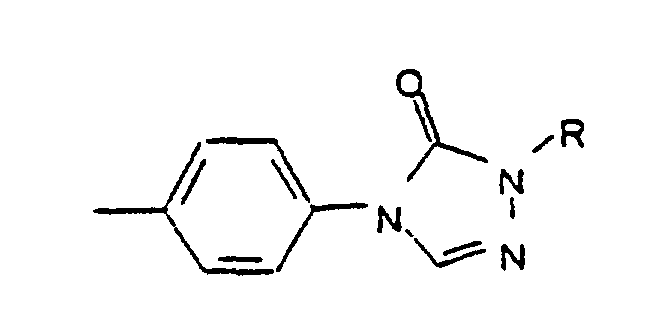
- The compound according to claim 11, wherein Ar is 2,4-difluorophenyl, R1 is methyl, and R2 through R6 are each hydrogen.
- The compound according to claim 1, wherein R, is hydrogen and R2 is methyl.
- The compound according to claim 1, wherein R3 through R6 are each hydrogen.
- The compound according to claim 1, wherein R3 and R5 are each methyl and R4 and R6 are each hydrogen.
- The compound according to claim 1, wherein X is a direct bond.
- The compound according to daim 1, wherein R7 is group of the formulawherein R is selected from the group consisting of 2-propyl, 2-butyl, 3-pentyl, 2-hydroxypropyl, 4-trifluoromethylbenzyl, tetrafluoropropyl, trifluoroethyl, 2,4-difluorobenzyl, 4-methoxybenzyl, 4-trifluoromethoxybenzyl and 2,4-bis(trifluoromethyl)benzyl.
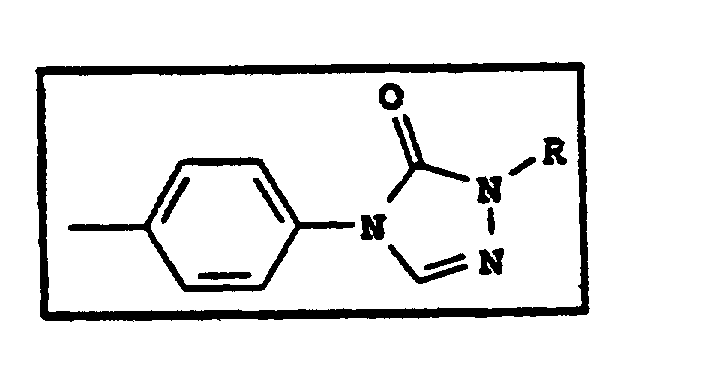
- The compound according to claim 1, wherein the compound is selected from the group consisting of:(2R,3R)-2-(2,4-Difluorophenyl)-3-(2,5-dimethylpiperazin-1-yl)-1-(1H-1,2,4-triazol-1-yl)butan-2-ol,(2R,3R)-2-(2,4-Difluorophenyl)-3-(2,5-dimethyl-4-ethoxycarbonylpiperazin-1-yl)-1-(1H-1,2,4-triazol-1-yl)butan-2-ol,(2R,3R)-3-(Anilinocarbonylpiperazin-1-yl)-2-(2,4-difluorophenyl)-1-(1H-1,2,4-triazol-1-yl)butan-2-ol,(2R,3R)-2-(2,4-Difluorophenyl)-3-(4-ethylaminocarbonylpiperazin-1-yl)-1-(1H-1,2,4-triazol-1-yl)butan-2-ol,(2R,3R)-3-(Anilinothiocarbonylpiperazin-1-yl)-2-(2,4-difluorophenyl)-1-(1H-1,2,4-triazol-1-yl)butan-2-ol,(2R,3R)-2-(2,4-Difluorophenyl)-3-(4-ethylaminothiocarbonylpiperazin-1-yl)-1-(1H-1,2,4-triazol-1-yl)butan-2-ol,(2R,3R)-3-[4-(2,4-Difluorobenzoyl)piperazin-1-yl]-2-(2,4-diflurophenyl)-1-(1 H-1,2,4-triazol-1-yl)butan-2-ol,(2R,3R)-2-(2,4-Difluorophenyl)-1-(1H-1,2,4-triazol-1-yl)-3-[4-(4-trifluoromethylbenzoyl)piperazin-1-yl]butan-2-ol,(2R,3R)-2-(2,4-Difluorophenyl)-3-[4-(4-nitrobenzoyl)piperazin-1-yl]-1-(1 H-1,2,4-triazol-1-yl)butan-2-ol,(2R,3R)-3-[4-(4-Aminobenzoyl)piperazin-1-yl]-2-(2,4-diflurophenyl)-1-(1H-1,2,4-triazol-1-yl)butan-2-ol,(2R,3R)-2-(2,4-Difluorophenyl)-3-[4-(p-toluenesulphonyl)piperazin-1-yl]-1-(1H-1,2,4-triazol-1-yl)butan-2-ol,(2R,3R)-2-(2,4-Difluorophenyl)-3-[4-(methanesulphonyl)piperazin-1-yl]-1-(1 H-1,2,4-triazol-1-yl)butan-2-ol,(2R,3R)-2-(2,4-Dtfluorophenyl)-3-[4-(4-nitrophenylsulphonyl)piperazin-1-yl]-1-(1H-1,2,4-triazol-1-yl)butan-2-ol,(2R,3R)-3-[4-(4-Aminophenylsulphonyl)piperazin-1-yl]- 2-(2,4-difluorophenyl)-1-(1H-1,2,4-triazol-1-yl)butan-2-ol,(2R,3R)-2-(2,4-Difluorophenyl)-3-[4-(3-azo-1H-1,2,4-triazol-3-yl))piperazin-1-yl]-1-(1H-1,2,4-triazol-1-yl)butan-2-ol,(2R,3R)-2-(2,4-Difluorophenyl)-3-[4-(2-thiazolyl)piperazin-1-yl]-1-(1H-1,2,4-triazol-1-yl)butan-2-ol,(2R,3R)-2-(2,4-Difluorophenyi)-3-[4-(1H-1,2,4-triazol-3-yl)piperazin-1-yl]-1-(1H-1,2,4-triazol-1-yl)butan-2-ol,(2R,3R)-2-(2,4-Difluorophenyl)-3-[4-(1H-5-tetrazolyl)piperazin-1-yl]-1-(1 H-1,2,4-triazo(-1-yl)butan-2-ol,(2R,3R)-2-(2,4-Difluorophenyl)-3-{4-[2-(4-tert-butylbenzyl)-2H-tetrazol-5-yl]piperazin-1-yl}-1-(1H-1,2,4-triazol-1-yl)butan-2-ol,(2R,3R)-2-(2,4-Difluorophenyl)-1-(1H-1,2,4-triazol-1-yl)-3-{4-[2-(4-trifluoromethylbenzyl)-2H-tetrazol-5-yl]piperazin-1-yl}butan-2-ol,(2R,3R)-2-(2,4-Difluorophenyl)-3-{4-{2-(4-tert-butylbenzyl)-2H-1,2,4-triazol-3-yl]piperazin-1-yl}-1-(1H-1,2,4-triazol-1-yl)butan-2-ol,(2R,3R)-2-(2,4-Difluorophenyl)-3-{4-[1-(4-tert-butylbenzyl)-1H-1,2;4-triazol-3-yl]piperazin-1-yl}-1-(1 H-1,2,4-triazol-1-yl)butan-2-ol,(2R,3R)-2-(2,4-Difluorophenyl)-1-(1H-1,2,4-triazot-1-yl)-3-{4-(1-(4-trifluoromethylbenzyl)-1H-1,2,4-triazol-3-yl]piperazin-1-yl}butan-2-ol,(2R,3R)-2-(2,4-Difluorophenyl)-3-(4-phenylpiperazin-1-yl)-1-(1 H-1,2,4-triazol-1-yl)butan-2-ol,(2R,3R)-2-(2,4-Difluorophenyl)-3-[4-(4-nitrophenyl)piperazin-1-yl]-1-(1 H-1,2,4-triazol-1-yl)butan-2-ol,(2R,3R)-3-[4-(4-Aminophenyl)piperazin-1-yl]-2-(2,4-difluorophenyl)-1-(1 H-1,2,4-triazol-1-yl)butan-2-ol,(2R,3R)-2-(2,4-Difluorophenyl)-3-[4-(4-ethoxycarbonylaminophenyl)piperazin-1-yl]-1-(1H-1,2,4-triazol-1-yl)butan-2-ol;(2R,3R)-2-(2,4-Difluorophenyl)-3-[4-(4-phenoxycarbonylaminophenyl)piperazin-1-yl]-1-(1 H-1,2,4-triazol-1-yl)butan-2-ol,(2R,3R)-2-(2,4-Difluorophenyl)-3-{4-[4-(semicarbazid-4-yl)phenyl]piperazin-1-yl}-1-(1H-1,2,4-triazol-1-yl)butan-2-ol, and(2R,3R)-2-(2,4-Difluorophenyl)-1-(1H-1,2,4-triazol-1-yl)-3-{4-[4-(2H-1,2,4-triazol-3-one-4-yl)phenyl]piperazin-1-yl}butan-2-ol.
- The compound according to claim 1, wherein the compound is selected from the group consisting of:(2R,3R)-2-(2,4-Difluorophenyl)-3-[4-{4-[2-(3-pentyl)-2H-1,2,4-triazol-3-one-4-yl]phenyl}piperazin-1-yl]-1-(1H-1,2,4-triazol-1-yl)butan-2-ol,(2S,3R)-2-(2,4-Difluorophenyl)-3-[4-{4-[2-(3-pentyl)-2H-1,2,4-triazol-3-one-4-yl]phenyl}piperazin-1-yl]-1-(1H-1,2,4-triazol-1-yl)butan-2-ol,(2S,3S)-2-(2,4-Difluorophenyl)-3-[4-{4-[2-(3-pentyl)-2H-1,2,4-triazol-3-one-4-yl]phenyl}piperazin-1-yl]-1-(1H-1,2,4-triazol-1-yl)butan-2-ol,(2R,3S)-2-(2,4-Difluorophenyl)-3-[4-{4-[2-(3-pentyl)-2H-1,2,4-triazol-3-one-4-yl]phenyl}piperazin-1-yl]-1-(1H-1,2,4-triazol-1-yl)butan-2-ol,(2R,3R)-3-[4-{4-[2-(2-Butyl)-2H-1,2,4-triazol-3-one-4 - yl]phenyl}piperazin-1-yl]-2-(2,4-Difluorophenyl)-1-(1H-1,2,4-triazol-1-yl)butan-2-ol,(2R,3R)-2-(2,4-Difluorophenyl)-3-[4-{4-[2-(2-propyl)-2H-1,2,4-triazol-3-one-4-yl]phenyl}piperazin-1-yl]-1-(1H-1,2,4-triazol-1-yl)butan-2-ol,(2R,3R)-2-(2,4-Difluorophenyl)-3-[4-{4-[2-(2-hydroxypropyl)-2H-1,2,4-triazol-3-one-4-yl]phenyl}piperazin-1-yl]-1-(1 H-1,2,4-triazol-1-yl)butan-2-ol,(2R,3R)-2-(2,4-Difluorophenyl)-1-(1H-1,2,4-triazol-1-yl)-3-[4-{4-[2-(4-trifluoromethyl)benzyl-2H-1,2,4-triazol-3-one-4-yl]phenyl}piperazin-1-yl]butan-2-ol,(2R,3R)-2-(2,4-Difluorophenyl)-3-[4-{4-[2-(2,2,3,3-tetrafluoro)propyl-2H-1,2,4-triazol-3-one-4-yl]phenyl}piperazin-1-yl]-1-(1H-1,2,4-triazol-1-yl)- butan-2-ol,(2R,3R}-2-(2,4-Difluorophenyl)-1-(1H-1,2,4-triazol-1-yl)-3-[4-{4-[2-(2,2,2-trifluoro)ethyl-2H-1,2,4-triazol-3-one-4-yl]phenyl}piperazin-1-yl]butan-2-ol,(2R,3R)-3-[4-{4-[2-(2,4-Difluorobenzyl)-2H-1,2,4-triazol-3-one-4-yl]phenyl}piperazin-1-yl]-2-(2,4-Difluorophenyl)-1-(1H-1,2,4-triazol-1-yl)butan-2-ol,(2R,3R)-2-(2,4-Difiuorophenyl)-3-[4-{4-[2-(4-trifluoromethoxy)benzyl-2H-1,2,4-triazol-3-one-4-yl]phenyl}piperazin-1-yl]-1-(1H-1,2,4-triazol-1-yl)-butan-2-ol,(2R,3R)-2-(2,4-Difluorophenyl)-3-[4-{4-[2-(4-methoxylbenzyl)-2H-1,2,4-triazol-3-one-4-yl]phenyl}piperazin-1-yl]-1-(1 H-1,2,4-triazol-1-yl)-butan-2-ol,(2R, 3R)-3-[4-{4-[2-(2,4-Bis-trifluoromethylbenzyl)-2H-1,2,4-triazol-3-one-4-yl]phenyl}piperazin-1-yl]-2-(2,4-difluorophenyl)-1-(1H-1,2,4-triazol-1-yl)-butan-2-ol,(2R,3R)-2-(2,4-Difluorophenyl)-3-[4-{4-[2-((4-(2,2,3,3-tetrafluoropropoxy)benzyl))-2H-1,2,4-triazol-3-one-4-yl]phenyl}piperazin-1-yl]-1-(1H-1,2,4-triazol-1-yl)butan-2-ol, and(2R,3R)-2-(2,4-Difluorophenyl)-3-[4-{3-fluoro-4-[2-(4-trifluoromethyl)benzyl-2H-1,2,4-triazol-3-one-4-yl]phenyl}piperazin-1-yl]-1-(1H-1,2,4-triazol-1-yl)butan-2-ol.
- The compound according to claim 19, wherein the compound is selected from the group consisting of:(2R,3R)-2-(2,4-Difluorophenyl)-1-(1H-1,2,4-triazol-1-yl)-3-[4-{4-[2-(4-trifluoromethyl)benzyl-2H-1,2,4-triazol-3-one-4-yl]phenyl}piperazin-1-yl]butan-2-ol,(2R,3R)-2-(2,4-Difluorophenyl)-3-[4-{4-[2-(4-trifluoromethoxy)benzyl-2H-1,2,4-triazol-3-one-4-yl]phenyl}piperazin-1-yl]-1-(1H-1,2,4-triazol-1-yl)-butan-2-ol,(2R,3R)-2-(2,4-Difluorophenyl)-3-[4-{4-[2-((4-(2,2,3,3-tetrafluoropropoxy)benzyl))-2H-1,2,4-triazol-3-one-4-yl]phenyl}piperazin-1-yl]-1-(1H-1,2,4-triazol-1-yl)butan-2-ol, and(2R,3R)-2-(2,4-Difluorophenyl)-3-[4-{3-fluoro-4-[2-(4-trifluoromethyl)benzyl-2H-1,2,4-triazol-3-one-4-yl]phenyl}piperazin-1-yl]-1-(1H-1,2,4-triazol-1-yl)butan-2-ol.
- A compound of formula III,wherein:
 R3 and R4 are each independently hydrogen or C1-C4 alkyl group which is unsubstituted or substituted by 1-3 substituents each independently selected from the group consisting of halogen, hydroxy, C1-C4 alkoxy and amino, or R3 and R4 together form =Z, wherein Z is oxygen or sulphur,R5 and R6 are each independenly hydrogen or C1-C4 alkyl group which is unsubstituted or substituted by 1-3 substituents each independently selected from the group consisting of halogen, hydroxy, C1-C4 alkoxy and amino, or R5 and R6 together form =Z, wherein Z is oxygen or sulphur;X is a direct bond;R7 is selected from the group consisting of a group of the formulawherein R is selected from the group consisting of (1) hydrogen, (2) C1-C10 alkyl which is unsubstituted or substituted by 1-5 substituents each independently selected from the group consisting of halogen, hydroxy, C1-C4 alkoxy and amino, (3) phenyl which is unsubstituted or substituted with 1-3 substituents each independently selected from the group consisting of (a) C1-C4 alkyl which is unsubstituted or substituted with 1-3 substituents each independently selected from the group consisting of halogen, hydroxy, C1-C4 alkoxy and amino, (b) C1-C4 alkoxy, (c) halogen, (d) formyl, (e) carboxyl, (f) C1-C4 acyloxy, (g) C1-C4 alkoxycarbonylamino, (h) phenyl- or naphthyl-oxycarbonylamino, (i) semicarbazido, (j) formamido, (k) thioformamido, (I) hydroxy, (m) nitro, (n) amino, (o) furyl, (p) triazolyl, (q) thienyl, (r) oxazolyl, (s) imidazolyl, (t) triazolone-yl, (u) CF3 and (v) OCF3, (4) a 5- or 6-membered monocyclic or 8- to 10-membered bicyclic heterocycle having 1-3 heteroatoms each independently selected from the group consisting of N, O and S, which is unsubstituted or substituted with 1-3 substituents each independently selected from the group consisting of (a) C1-C4 alkyl which is unsubstituted or substituted with 1-3 substituents each independently selected from the group consisting of halogen, hydroxy, C1-C4 alkoxy and amino, (b) phenyl which is unsubstituted or substituted with 1-3 substituents each independently selected from the group consisting of (A) C1-C4 alkyl which is unsubstituted or substituted with 1-3 substituents each independently selected from the group consisting of halogen, hydroxy, C1-C4 alkoxy and amino, (B) C1-C4 alkoxy, (C) halogen, (D) formyl, (E) carboxyl, (F) C1-C4 acyloxy, (G) C1-C4 alkoxycarbonylamino, (H) phenyl- or naphthyl-oxycarbonylamino, (I) semicarbazido, (J) formamido, (K) thioformamido, (L) hydroxy, (M) nitro, (N) amino, (O) furyl, (P) triazolyl, (Q) thienyl, (R) oxazolyl, (S) imidazolyl and (T) triazolone-yl, (c) naphthyl which is unsubstituted or substituted with 1-3 substituents each independently selected from the group consisting of (A) C1-C4 alkyl which is unsubstituted or substituted with 1-3 substituents each independently selected from the group consisting of halogen, hydroxy, C1-C4 alkoxy and amino, (B) C1-C4 alkoxy, (C) halogen, (D) formyl, (E) carboxyl, (F) C1-C4 acyloxy, (G) C1-C4 alkoxycarbonylamino, (H) phenyl- or naphthyl-oxycarbonylamino, (I) semicarbazido, (J) formamido, (K) thioformamido, (L) hydroxy, (M) nitro, (N) amino, (O) furyl, (P) triazolyl, (Q) thienyl, (R) oxazolyl, (S) imidazolyl and (T) triazolone-yl, (d) a 5- or 6-membered monocyclic or 8- to 10-membered bicyclic heterocycle having 1-3 heteroatoms each independently selected from the group consisting of N, O and S, (e) (C1-C4 alkyl)phenyl, (f) (C1-C4 alkyl)naphthyl, (g) hydroxy, (h) halogen, (i) amino and (j) carboxyl, (5) phenyl(C1-C4 alkyl) which is unsubstituted or ring-substituted with 1-3 substituents each independently selected from the group consisting of (a) C1-C5 alkyl which is unsubstituted or substituted with 1-3 substituents each independently selected from the group consisting of halogen, hydroxy, C1-C4 alkoxy and amino, (b) halogen, (c) halo(C1-C4 alkyl), (d) C1-C4 alkoxy, (e) hydroxy, (f) amino, (g) carboxyl, (h) trifluormethoxyl, (i) trifluoromethyl, (j) tetrafluoroethyl, (k) tetrafluoroethoxyl, (l) tetrafluoropropyl and (m) tetrafluoropropoxyl, (6) naphthyl(C1-C4 alkyl) which may be substituted with 1-6 substituents selected from (a) C1-C5 alkyl which is unsubstituted or substituted with 1-3 substituents each independently selected from the group consisting of halogen, hydroxy, C1-C4 alkoxy and amino, (b) halogen, (c) (C1-C4 alkyl)halo, (d) C1-C4 alkoxy, (e) hydroxy, (f) amino, (g) carboxyl, (h) trifluormethoxyl, (i) trifluoromethyl, (j) tetrafluoroethyl, (k) tetrafluoroethoxyl, (I) tetrafluoropropyl and (m) tetrafluoropropoxyl, (7) methoxyl, (8) trifluormethoxyl, (9) trifluoromethyl, (10) trifluoroethyl, (11) tetrafluoroethyl, (12) tetrafluoroethoxyl, (13) tetrafluoropropyl and (14) tetrafluoropropoxyl.
- The compound according to claim 21, wherein the compound is selected from the group consisting of:2-(3-pentyl)-4-[4-(piperazin-1-yl)phenyl]-2H-1,2,4-triazol-3-one,2-(2-butyl)-4-[4-(piperazin-1-yl)phenyl]-2H-1,2,4-triazol-3-one,4-[4-(piperazin-1-yl)phenyl]-2-(2-propyl)-2H-1,2,4-triazol-3-one,2-(2-hydroxypropyl)-4-[4-(piperazin-1-yl)phenyl]-2H-1,2,4-triazol-3-one,4-[4-(piperazin-1-yl)phenyl]-2-[2-(4-trifluoromethyl)benzyl]-2H-1,2,4-triazol-3-one,4-[4-(piperazin-1-yl)phenyl]-2-[2-(2,2,3,3-tetrafluoro)propyl]-2H-1,2,4-triazol-3-one,4-[4-(piperazin-1-yl)phenyl]-2-[2-(3,3,3-trifluoroethyl)]-2H-1,2,4-triazol-3-one,2-(2,4-difluorobenzyl)-4-[4-(piperazin-1-yl)phenyl]-2H-1,2,4-triazol-3-one,4-[4-(piperazin-1-yl)phenyl]-2-(4-trifluoromethoxybenzyl)-2H-1,2,4-triazol-3-one,2-(4-methoxybenzyl)-4-[4-(piperazin-1-yl)phenyl]-2H-1,2,4-triazol-3-one,2-(2,4-bis-trifluoromethylbenzyl)-4-[4-(piperazin-1-yl)phenyl]-2H-1,2,4-triazol-3-one,4-[4-(piperazin-1-yl)phenyl]-2-[4-(2,2,3,3-tetrafluoropropoxy)benzyl]-2H-1,2,4-triazol-3-one, and4-[3-fluoro-4-(piperazln-1-yl)phenyl]-2-(4-trifluoromethylbenzyl)-2H-1,2,4-triazol-3-one.
- A composition for treating a fungal infection comprising a pharmaceutically effective amount of a compound according to any of claims 1-22 in combination with a pharmaceutically acceptable carrier or diluent.
- The pharmaceutical composition according to claim 23, wherein the pharmaceutical composition is an oral formulation and the compound is present in an amount of 1 to 25% (w/w).
- The pharmaceutical composition according to claim 23, wherein the pharmaceutical composition is an injectable formulation and the compound is present in an amount of 0.1 to 5% (w/w).
- The pharmaceutical composition according to claim 23, wherein the pharmaceutical composition is a topical or rectal formulation and the compound is present in an amount of 1 to 10% (w/w).
- Use of a compound in accordance with any of claims 1-26 for the manufacture of a medicament for treating or preventing a fungal infection in a patient in need of such treatment or prevention.
- Use of a compound according to claim 27, wherein the compound is formulated to be administered in a daily dose of 0.01 to 20 mg/kg patient.
- Use of a compound according to claim 28, wherein the compound is formulated to be administered in a daily dose which is divided into a plurality of individual doses.
- Use of a compound according to any of claims 27-29, wherein the fungal infection is a topical infection.
- Use of a compound according to any of claims 27-30, wherein the fungal infection is a systemic infection.
- Use of a compound according to any of claims 27-31, wherein the fungal infection is a mucosal infection.
- Use of a compound according to any of claims 27-32, wherein the fungal infection is a lung-invasive infection.
- A composition according to any of claims 1-22 for use as a pharmaceutical.
Applications Claiming Priority (3)
| Application Number | Priority Date | Filing Date | Title |
|---|---|---|---|
| US78637697A | 1997-01-17 | 1997-01-17 | |
| US786376 | 1997-01-17 | ||
| PCT/IB1998/000046 WO1998031675A1 (en) | 1997-01-17 | 1998-01-15 | New triazoles as therapeutic agents for fungal infections |
Publications (2)
| Publication Number | Publication Date |
|---|---|
| EP0889881A1 EP0889881A1 (en) | 1999-01-13 |
| EP0889881B1 true EP0889881B1 (en) | 2003-04-23 |
Family
ID=25138405
Family Applications (1)
| Application Number | Title | Priority Date | Filing Date |
|---|---|---|---|
| EP98900110A Expired - Lifetime EP0889881B1 (en) | 1997-01-17 | 1998-01-15 | New triazoles as therapeutic agents for fungal infections |
Country Status (8)
| Country | Link |
|---|---|
| EP (1) | EP0889881B1 (en) |
| JP (1) | JP2000507275A (en) |
| KR (1) | KR20000064644A (en) |
| AT (1) | ATE238286T1 (en) |
| AU (1) | AU740324B2 (en) |
| CA (1) | CA2249529A1 (en) |
| DE (1) | DE69813681D1 (en) |
| WO (1) | WO1998031675A1 (en) |
Families Citing this family (6)
| Publication number | Priority date | Publication date | Assignee | Title |
|---|---|---|---|---|
| DE19617040C1 (en) * | 1996-04-27 | 1997-10-30 | Degussa | Process for the production of catalytically active coatings for the synthesis of hydrogen cyanide |
| CN1137102C (en) * | 2000-05-24 | 2004-02-04 | 中国人民解放军第二军医大学 | Substituted propyl triazole as antifungal compound and its salts and their prepn. |
| DE60144284D1 (en) | 2000-11-01 | 2011-05-05 | Millennium Pharm Inc | NITROGENIC HETEROCYCLIC COMPOUNDS AND METHOD FOR THE PRODUCTION THEREOF |
| HUP0303249A3 (en) | 2001-02-22 | 2007-03-28 | Sankyo Co | Water-soluble triazole fungicide compounds and pharmaceutical compositions containing them |
| KR100909953B1 (en) * | 2007-06-15 | 2009-07-31 | 한국화학연구원 | Triazole derivatives having antifungal activity, preparation method thereof and pharmaceutical composition containing the same |
| KR101577053B1 (en) | 2013-11-20 | 2015-12-11 | 한국화학연구원 | A composition for promoting hair growth and hair loss prevention containing triazole derivatives and cosmetic composition for promoting hair growth hair and loss prevention |
Family Cites Families (2)
| Publication number | Priority date | Publication date | Assignee | Title |
|---|---|---|---|---|
| DE3508909A1 (en) * | 1985-03-13 | 1986-09-18 | Bayer Ag, 5090 Leverkusen | PIPERAZINYLMETHYL-1,2,4-TRIAZOLYLMETHYL-CARBINOLE |
| GB8729083D0 (en) * | 1987-12-12 | 1988-01-27 | Pfizer Ltd | Triazole antifungal agents |
-
1998
- 1998-01-15 AT AT98900110T patent/ATE238286T1/en not_active IP Right Cessation
- 1998-01-15 CA CA002249529A patent/CA2249529A1/en not_active Abandoned
- 1998-01-15 JP JP10534037A patent/JP2000507275A/en active Pending
- 1998-01-15 WO PCT/IB1998/000046 patent/WO1998031675A1/en not_active Ceased
- 1998-01-15 DE DE69813681T patent/DE69813681D1/en not_active Expired - Lifetime
- 1998-01-15 KR KR1019980707355A patent/KR20000064644A/en not_active Withdrawn
- 1998-01-15 EP EP98900110A patent/EP0889881B1/en not_active Expired - Lifetime
- 1998-01-15 AU AU53362/98A patent/AU740324B2/en not_active Ceased
Also Published As
| Publication number | Publication date |
|---|---|
| CA2249529A1 (en) | 1998-07-23 |
| AU5336298A (en) | 1998-08-07 |
| WO1998031675A1 (en) | 1998-07-23 |
| ATE238286T1 (en) | 2003-05-15 |
| DE69813681D1 (en) | 2003-05-28 |
| EP0889881A1 (en) | 1999-01-13 |
| KR20000064644A (en) | 2000-11-06 |
| AU740324B2 (en) | 2001-11-01 |
| JP2000507275A (en) | 2000-06-13 |
Similar Documents
| Publication | Publication Date | Title |
|---|---|---|
| US7189858B2 (en) | N-phenyl substituted carbamoyloxyalkyl-azolium derivatives | |
| CA2680292C (en) | Intermediates useful for the preparation of n-substituted carbamoyloxyalkyl-azolium derivatives | |
| US5371101A (en) | Azole compounds, their production and use | |
| AU688455B2 (en) | Watersoluble azole antifungals | |
| Hashemi et al. | Synthesis and biological evaluation of fluconazole analogs with triazole-modified scaffold as potent antifungal agents | |
| RU2131417C1 (en) | Derivatives of azole, methods of their synthesis and antifungal agent | |
| TsuRuoKA et al. | Synthesis and antifungal activity of novel thiazole-containing triazole antifungals. II. Optically active ER-30346 and its derivatives | |
| AU3402301A (en) | Azole compounds as therapeutic agents for fungal infections | |
| AU740324B2 (en) | New triazoles as therapeutic agents for fungal infections | |
| JPH0649033A (en) | Optically active azole compound and its use | |
| US6153616A (en) | Triazoles as therapeutic agents for fungal infections | |
| WO2001089447A2 (en) | Antifungal substituted propyl triazole compound, its salt, and preparation methods thereof | |
| US5484936A (en) | Processes for the preparation of 1,3-bis(1,2,4-triazol-1-yl)-propan-2-ol derivatives | |
| CZ282897A3 (en) | N-benzylazolium derivatives | |
| JP3056412B2 (en) | Azole compounds and their uses | |
| US6670363B1 (en) | Azole compounds as therapeutic agents for fungal infections | |
| CA2405919A1 (en) | 1-(h-1,2,4-triazol-1-yl)butan-2-ol derivatives | |
| JPH08325243A (en) | Novel triazole derivative, method for producing the same, and antifungal agent containing the same | |
| FI65429C (en) | PROCEDURE FOR FRAMSTATION OF THERAPEUTIC ANVAENDBARA HETEROCYCLIC DERIVATIVES AV (4-PHENYL-PIPERAZIN-1-YL-ARYLOXIMETYL-1,3-DIOXOLAN-2-YL) -METHYL-1H-IMZERZERO-1H-IMIDAZER | |
| JP2005298333A (en) | Novel triazole derivative and antimycotic agent having the same as active ingredient | |
| NZ530614A (en) | Azole compounds as therapeutic agents for fungal infections | |
| HK1009444A (en) | N-benzylimidazolium and n-benzyltriazolium derivatives, their preparation and their use as antifungal and antimycotic agents | |
| JPH07228574A (en) | Optically active azole derivative, its production and use thereof | |
| HK1012186A1 (en) | Triazolones as apolipoprotein-b synthesis inhibitors | |
| CS241468B2 (en) | Method of 1h-imidazole and 1h-1,2,4-triazole new derivatives production |
Legal Events
| Date | Code | Title | Description |
|---|---|---|---|
| PUAI | Public reference made under article 153(3) epc to a published international application that has entered the european phase |
Free format text: ORIGINAL CODE: 0009012 |
|
| 17P | Request for examination filed |
Effective date: 19980917 |
|
| AK | Designated contracting states |
Kind code of ref document: A1 Designated state(s): AT BE CH DE DK ES FI FR GB GR IE IT LI LU MC NL PT SE |
|
| 17Q | First examination report despatched |
Effective date: 20000120 |
|
| RAP1 | Party data changed (applicant data changed or rights of an application transferred) |
Owner name: TAIHO PHARMACEUTICAL CO., LTD. Owner name: NAEJA PHARMACEUTICAL INC. |
|
| RAP1 | Party data changed (applicant data changed or rights of an application transferred) |
Owner name: TAIHO PHARMACEUTICAL CO., LTD. Owner name: NAEJA PHARMACEUTICAL INC. |
|
| GRAG | Despatch of communication of intention to grant |
Free format text: ORIGINAL CODE: EPIDOS AGRA |
|
| GRAG | Despatch of communication of intention to grant |
Free format text: ORIGINAL CODE: EPIDOS AGRA |
|
| GRAH | Despatch of communication of intention to grant a patent |
Free format text: ORIGINAL CODE: EPIDOS IGRA |
|
| GRAH | Despatch of communication of intention to grant a patent |
Free format text: ORIGINAL CODE: EPIDOS IGRA |
|
| GRAA | (expected) grant |
Free format text: ORIGINAL CODE: 0009210 |
|
| AK | Designated contracting states |
Designated state(s): AT BE CH DE DK ES FI FR GB GR IE IT LI LU MC NL PT SE |
|
| PG25 | Lapsed in a contracting state [announced via postgrant information from national office to epo] |
Ref country code: NL Free format text: LAPSE BECAUSE OF FAILURE TO SUBMIT A TRANSLATION OF THE DESCRIPTION OR TO PAY THE FEE WITHIN THE PRESCRIBED TIME-LIMIT Effective date: 20030423 Ref country code: LI Free format text: LAPSE BECAUSE OF FAILURE TO SUBMIT A TRANSLATION OF THE DESCRIPTION OR TO PAY THE FEE WITHIN THE PRESCRIBED TIME-LIMIT Effective date: 20030423 Ref country code: IT Free format text: LAPSE BECAUSE OF FAILURE TO SUBMIT A TRANSLATION OF THE DESCRIPTION OR TO PAY THE FEE WITHIN THE PRESCRIBED TIME-LIMIT;WARNING: LAPSES OF ITALIAN PATENTS WITH EFFECTIVE DATE BEFORE 2007 MAY HAVE OCCURRED AT ANY TIME BEFORE 2007. THE CORRECT EFFECTIVE DATE MAY BE DIFFERENT FROM THE ONE RECORDED. Effective date: 20030423 Ref country code: FR Free format text: LAPSE BECAUSE OF FAILURE TO SUBMIT A TRANSLATION OF THE DESCRIPTION OR TO PAY THE FEE WITHIN THE PRESCRIBED TIME-LIMIT Effective date: 20030423 Ref country code: FI Free format text: LAPSE BECAUSE OF FAILURE TO SUBMIT A TRANSLATION OF THE DESCRIPTION OR TO PAY THE FEE WITHIN THE PRESCRIBED TIME-LIMIT Effective date: 20030423 Ref country code: CH Free format text: LAPSE BECAUSE OF FAILURE TO SUBMIT A TRANSLATION OF THE DESCRIPTION OR TO PAY THE FEE WITHIN THE PRESCRIBED TIME-LIMIT Effective date: 20030423 Ref country code: BE Free format text: LAPSE BECAUSE OF FAILURE TO SUBMIT A TRANSLATION OF THE DESCRIPTION OR TO PAY THE FEE WITHIN THE PRESCRIBED TIME-LIMIT Effective date: 20030423 Ref country code: AT Free format text: LAPSE BECAUSE OF FAILURE TO SUBMIT A TRANSLATION OF THE DESCRIPTION OR TO PAY THE FEE WITHIN THE PRESCRIBED TIME-LIMIT Effective date: 20030423 |
|
| REG | Reference to a national code |
Ref country code: GB Ref legal event code: FG4D |
|
| REG | Reference to a national code |
Ref country code: CH Ref legal event code: EP |
|
| REF | Corresponds to: |
Ref document number: 69813681 Country of ref document: DE Date of ref document: 20030528 Kind code of ref document: P |
|
| REG | Reference to a national code |
Ref country code: IE Ref legal event code: FG4D |
|
| PG25 | Lapsed in a contracting state [announced via postgrant information from national office to epo] |
Ref country code: SE Free format text: LAPSE BECAUSE OF FAILURE TO SUBMIT A TRANSLATION OF THE DESCRIPTION OR TO PAY THE FEE WITHIN THE PRESCRIBED TIME-LIMIT Effective date: 20030723 Ref country code: PT Free format text: LAPSE BECAUSE OF FAILURE TO SUBMIT A TRANSLATION OF THE DESCRIPTION OR TO PAY THE FEE WITHIN THE PRESCRIBED TIME-LIMIT Effective date: 20030723 Ref country code: GR Free format text: LAPSE BECAUSE OF FAILURE TO SUBMIT A TRANSLATION OF THE DESCRIPTION OR TO PAY THE FEE WITHIN THE PRESCRIBED TIME-LIMIT Effective date: 20030723 Ref country code: DK Free format text: LAPSE BECAUSE OF FAILURE TO SUBMIT A TRANSLATION OF THE DESCRIPTION OR TO PAY THE FEE WITHIN THE PRESCRIBED TIME-LIMIT Effective date: 20030723 |
|
| PG25 | Lapsed in a contracting state [announced via postgrant information from national office to epo] |
Ref country code: DE Free format text: LAPSE BECAUSE OF FAILURE TO SUBMIT A TRANSLATION OF THE DESCRIPTION OR TO PAY THE FEE WITHIN THE PRESCRIBED TIME-LIMIT Effective date: 20030724 |
|
| NLV1 | Nl: lapsed or annulled due to failure to fulfill the requirements of art. 29p and 29m of the patents act | ||
| PG25 | Lapsed in a contracting state [announced via postgrant information from national office to epo] |
Ref country code: ES Free format text: LAPSE BECAUSE OF FAILURE TO SUBMIT A TRANSLATION OF THE DESCRIPTION OR TO PAY THE FEE WITHIN THE PRESCRIBED TIME-LIMIT Effective date: 20031030 |
|
| REG | Reference to a national code |
Ref country code: CH Ref legal event code: PL |
|
| PG25 | Lapsed in a contracting state [announced via postgrant information from national office to epo] |
Ref country code: LU Free format text: LAPSE BECAUSE OF NON-PAYMENT OF DUE FEES Effective date: 20040115 Ref country code: IE Free format text: LAPSE BECAUSE OF NON-PAYMENT OF DUE FEES Effective date: 20040115 Ref country code: GB Free format text: LAPSE BECAUSE OF NON-PAYMENT OF DUE FEES Effective date: 20040115 |
|
| PG25 | Lapsed in a contracting state [announced via postgrant information from national office to epo] |
Ref country code: MC Free format text: LAPSE BECAUSE OF NON-PAYMENT OF DUE FEES Effective date: 20040131 |
|
| PLBE | No opposition filed within time limit |
Free format text: ORIGINAL CODE: 0009261 |
|
| STAA | Information on the status of an ep patent application or granted ep patent |
Free format text: STATUS: NO OPPOSITION FILED WITHIN TIME LIMIT |
|
| 26N | No opposition filed |
Effective date: 20040126 |
|
| EN | Fr: translation not filed | ||
| GBPC | Gb: european patent ceased through non-payment of renewal fee |
Effective date: 20040115 |
|
| REG | Reference to a national code |
Ref country code: IE Ref legal event code: MM4A |