EP0889780B1 - Compositions and methods for selectively cross-linking films and improved film articles resulting therefrom - Google Patents
Compositions and methods for selectively cross-linking films and improved film articles resulting therefrom Download PDFInfo
- Publication number
- EP0889780B1 EP0889780B1 EP97942689A EP97942689A EP0889780B1 EP 0889780 B1 EP0889780 B1 EP 0889780B1 EP 97942689 A EP97942689 A EP 97942689A EP 97942689 A EP97942689 A EP 97942689A EP 0889780 B1 EP0889780 B1 EP 0889780B1
- Authority
- EP
- European Patent Office
- Prior art keywords
- film
- pce
- layer
- methyl
- copolymer
- Prior art date
- Legal status (The legal status is an assumption and is not a legal conclusion. Google has not performed a legal analysis and makes no representation as to the accuracy of the status listed.)
- Expired - Lifetime
Links
Images




Classifications
-
- C—CHEMISTRY; METALLURGY
- C08—ORGANIC MACROMOLECULAR COMPOUNDS; THEIR PREPARATION OR CHEMICAL WORKING-UP; COMPOSITIONS BASED THEREON
- C08J—WORKING-UP; GENERAL PROCESSES OF COMPOUNDING; AFTER-TREATMENT NOT COVERED BY SUBCLASSES C08B, C08C, C08F, C08G or C08H
- C08J3/00—Processes of treating or compounding macromolecular substances
- C08J3/24—Crosslinking, e.g. vulcanising, of macromolecules
-
- B—PERFORMING OPERATIONS; TRANSPORTING
- B29—WORKING OF PLASTICS; WORKING OF SUBSTANCES IN A PLASTIC STATE IN GENERAL
- B29C—SHAPING OR JOINING OF PLASTICS; SHAPING OF MATERIAL IN A PLASTIC STATE, NOT OTHERWISE PROVIDED FOR; AFTER-TREATMENT OF THE SHAPED PRODUCTS, e.g. REPAIRING
- B29C35/00—Heating, cooling or curing, e.g. crosslinking or vulcanising; Apparatus therefor
- B29C35/02—Heating or curing, e.g. crosslinking or vulcanizing during moulding, e.g. in a mould
- B29C35/08—Heating or curing, e.g. crosslinking or vulcanizing during moulding, e.g. in a mould by wave energy or particle radiation
- B29C35/10—Heating or curing, e.g. crosslinking or vulcanizing during moulding, e.g. in a mould by wave energy or particle radiation for articles of indefinite length
-
- B—PERFORMING OPERATIONS; TRANSPORTING
- B29—WORKING OF PLASTICS; WORKING OF SUBSTANCES IN A PLASTIC STATE IN GENERAL
- B29C—SHAPING OR JOINING OF PLASTICS; SHAPING OF MATERIAL IN A PLASTIC STATE, NOT OTHERWISE PROVIDED FOR; AFTER-TREATMENT OF THE SHAPED PRODUCTS, e.g. REPAIRING
- B29C48/00—Extrusion moulding, i.e. expressing the moulding material through a die or nozzle which imparts the desired form; Apparatus therefor
- B29C48/03—Extrusion moulding, i.e. expressing the moulding material through a die or nozzle which imparts the desired form; Apparatus therefor characterised by the shape of the extruded material at extrusion
- B29C48/07—Flat, e.g. panels
- B29C48/08—Flat, e.g. panels flexible, e.g. films
-
- B—PERFORMING OPERATIONS; TRANSPORTING
- B29—WORKING OF PLASTICS; WORKING OF SUBSTANCES IN A PLASTIC STATE IN GENERAL
- B29C—SHAPING OR JOINING OF PLASTICS; SHAPING OF MATERIAL IN A PLASTIC STATE, NOT OTHERWISE PROVIDED FOR; AFTER-TREATMENT OF THE SHAPED PRODUCTS, e.g. REPAIRING
- B29C71/00—After-treatment of articles without altering their shape; Apparatus therefor
- B29C71/04—After-treatment of articles without altering their shape; Apparatus therefor by wave energy or particle radiation, e.g. for curing or vulcanising preformed articles
-
- B—PERFORMING OPERATIONS; TRANSPORTING
- B32—LAYERED PRODUCTS
- B32B—LAYERED PRODUCTS, i.e. PRODUCTS BUILT-UP OF STRATA OF FLAT OR NON-FLAT, e.g. CELLULAR OR HONEYCOMB, FORM
- B32B27/00—Layered products comprising a layer of synthetic resin
- B32B27/32—Layered products comprising a layer of synthetic resin comprising polyolefins
-
- C—CHEMISTRY; METALLURGY
- C08—ORGANIC MACROMOLECULAR COMPOUNDS; THEIR PREPARATION OR CHEMICAL WORKING-UP; COMPOSITIONS BASED THEREON
- C08L—COMPOSITIONS OF MACROMOLECULAR COMPOUNDS
- C08L23/00—Compositions of homopolymers or copolymers of unsaturated aliphatic hydrocarbons having only one carbon-to-carbon double bond; Compositions of derivatives of such polymers
- C08L23/02—Compositions of homopolymers or copolymers of unsaturated aliphatic hydrocarbons having only one carbon-to-carbon double bond; Compositions of derivatives of such polymers not modified by chemical after-treatment
- C08L23/16—Ethylene-propylene or ethylene-propylene-diene copolymers
-
- B—PERFORMING OPERATIONS; TRANSPORTING
- B29—WORKING OF PLASTICS; WORKING OF SUBSTANCES IN A PLASTIC STATE IN GENERAL
- B29C—SHAPING OR JOINING OF PLASTICS; SHAPING OF MATERIAL IN A PLASTIC STATE, NOT OTHERWISE PROVIDED FOR; AFTER-TREATMENT OF THE SHAPED PRODUCTS, e.g. REPAIRING
- B29C35/00—Heating, cooling or curing, e.g. crosslinking or vulcanising; Apparatus therefor
- B29C35/02—Heating or curing, e.g. crosslinking or vulcanizing during moulding, e.g. in a mould
- B29C35/08—Heating or curing, e.g. crosslinking or vulcanizing during moulding, e.g. in a mould by wave energy or particle radiation
- B29C35/0805—Heating or curing, e.g. crosslinking or vulcanizing during moulding, e.g. in a mould by wave energy or particle radiation using electromagnetic radiation
- B29C2035/0827—Heating or curing, e.g. crosslinking or vulcanizing during moulding, e.g. in a mould by wave energy or particle radiation using electromagnetic radiation using UV radiation
-
- B—PERFORMING OPERATIONS; TRANSPORTING
- B29—WORKING OF PLASTICS; WORKING OF SUBSTANCES IN A PLASTIC STATE IN GENERAL
- B29C—SHAPING OR JOINING OF PLASTICS; SHAPING OF MATERIAL IN A PLASTIC STATE, NOT OTHERWISE PROVIDED FOR; AFTER-TREATMENT OF THE SHAPED PRODUCTS, e.g. REPAIRING
- B29C35/00—Heating, cooling or curing, e.g. crosslinking or vulcanising; Apparatus therefor
- B29C35/02—Heating or curing, e.g. crosslinking or vulcanizing during moulding, e.g. in a mould
- B29C35/08—Heating or curing, e.g. crosslinking or vulcanizing during moulding, e.g. in a mould by wave energy or particle radiation
- B29C35/0805—Heating or curing, e.g. crosslinking or vulcanizing during moulding, e.g. in a mould by wave energy or particle radiation using electromagnetic radiation
- B29C2035/0833—Heating or curing, e.g. crosslinking or vulcanizing during moulding, e.g. in a mould by wave energy or particle radiation using electromagnetic radiation using actinic light
-
- B—PERFORMING OPERATIONS; TRANSPORTING
- B29—WORKING OF PLASTICS; WORKING OF SUBSTANCES IN A PLASTIC STATE IN GENERAL
- B29C—SHAPING OR JOINING OF PLASTICS; SHAPING OF MATERIAL IN A PLASTIC STATE, NOT OTHERWISE PROVIDED FOR; AFTER-TREATMENT OF THE SHAPED PRODUCTS, e.g. REPAIRING
- B29C35/00—Heating, cooling or curing, e.g. crosslinking or vulcanising; Apparatus therefor
- B29C35/02—Heating or curing, e.g. crosslinking or vulcanizing during moulding, e.g. in a mould
- B29C35/08—Heating or curing, e.g. crosslinking or vulcanizing during moulding, e.g. in a mould by wave energy or particle radiation
- B29C35/0866—Heating or curing, e.g. crosslinking or vulcanizing during moulding, e.g. in a mould by wave energy or particle radiation using particle radiation
- B29C2035/0877—Heating or curing, e.g. crosslinking or vulcanizing during moulding, e.g. in a mould by wave energy or particle radiation using particle radiation using electron radiation, e.g. beta-rays
-
- B—PERFORMING OPERATIONS; TRANSPORTING
- B29—WORKING OF PLASTICS; WORKING OF SUBSTANCES IN A PLASTIC STATE IN GENERAL
- B29C—SHAPING OR JOINING OF PLASTICS; SHAPING OF MATERIAL IN A PLASTIC STATE, NOT OTHERWISE PROVIDED FOR; AFTER-TREATMENT OF THE SHAPED PRODUCTS, e.g. REPAIRING
- B29C48/00—Extrusion moulding, i.e. expressing the moulding material through a die or nozzle which imparts the desired form; Apparatus therefor
-
- B—PERFORMING OPERATIONS; TRANSPORTING
- B29—WORKING OF PLASTICS; WORKING OF SUBSTANCES IN A PLASTIC STATE IN GENERAL
- B29L—INDEXING SCHEME ASSOCIATED WITH SUBCLASS B29C, RELATING TO PARTICULAR ARTICLES
- B29L2009/00—Layered products
-
- C—CHEMISTRY; METALLURGY
- C08—ORGANIC MACROMOLECULAR COMPOUNDS; THEIR PREPARATION OR CHEMICAL WORKING-UP; COMPOSITIONS BASED THEREON
- C08L—COMPOSITIONS OF MACROMOLECULAR COMPOUNDS
- C08L2205/00—Polymer mixtures characterised by other features
- C08L2205/02—Polymer mixtures characterised by other features containing two or more polymers of the same C08L -group
-
- C—CHEMISTRY; METALLURGY
- C08—ORGANIC MACROMOLECULAR COMPOUNDS; THEIR PREPARATION OR CHEMICAL WORKING-UP; COMPOSITIONS BASED THEREON
- C08L—COMPOSITIONS OF MACROMOLECULAR COMPOUNDS
- C08L23/00—Compositions of homopolymers or copolymers of unsaturated aliphatic hydrocarbons having only one carbon-to-carbon double bond; Compositions of derivatives of such polymers
- C08L23/02—Compositions of homopolymers or copolymers of unsaturated aliphatic hydrocarbons having only one carbon-to-carbon double bond; Compositions of derivatives of such polymers not modified by chemical after-treatment
- C08L23/10—Homopolymers or copolymers of propene
- C08L23/12—Polypropene
-
- C—CHEMISTRY; METALLURGY
- C08—ORGANIC MACROMOLECULAR COMPOUNDS; THEIR PREPARATION OR CHEMICAL WORKING-UP; COMPOSITIONS BASED THEREON
- C08L—COMPOSITIONS OF MACROMOLECULAR COMPOUNDS
- C08L23/00—Compositions of homopolymers or copolymers of unsaturated aliphatic hydrocarbons having only one carbon-to-carbon double bond; Compositions of derivatives of such polymers
- C08L23/02—Compositions of homopolymers or copolymers of unsaturated aliphatic hydrocarbons having only one carbon-to-carbon double bond; Compositions of derivatives of such polymers not modified by chemical after-treatment
- C08L23/18—Homopolymers or copolymers of hydrocarbons having four or more carbon atoms
- C08L23/20—Homopolymers or copolymers of hydrocarbons having four or more carbon atoms having four to nine carbon atoms
-
- Y—GENERAL TAGGING OF NEW TECHNOLOGICAL DEVELOPMENTS; GENERAL TAGGING OF CROSS-SECTIONAL TECHNOLOGIES SPANNING OVER SEVERAL SECTIONS OF THE IPC; TECHNICAL SUBJECTS COVERED BY FORMER USPC CROSS-REFERENCE ART COLLECTIONS [XRACs] AND DIGESTS
- Y10—TECHNICAL SUBJECTS COVERED BY FORMER USPC
- Y10T—TECHNICAL SUBJECTS COVERED BY FORMER US CLASSIFICATION
- Y10T428/00—Stock material or miscellaneous articles
- Y10T428/13—Hollow or container type article [e.g., tube, vase, etc.]
- Y10T428/1334—Nonself-supporting tubular film or bag [e.g., pouch, envelope, packet, etc.]
-
- Y—GENERAL TAGGING OF NEW TECHNOLOGICAL DEVELOPMENTS; GENERAL TAGGING OF CROSS-SECTIONAL TECHNOLOGIES SPANNING OVER SEVERAL SECTIONS OF THE IPC; TECHNICAL SUBJECTS COVERED BY FORMER USPC CROSS-REFERENCE ART COLLECTIONS [XRACs] AND DIGESTS
- Y10—TECHNICAL SUBJECTS COVERED BY FORMER USPC
- Y10T—TECHNICAL SUBJECTS COVERED BY FORMER US CLASSIFICATION
- Y10T428/00—Stock material or miscellaneous articles
- Y10T428/13—Hollow or container type article [e.g., tube, vase, etc.]
- Y10T428/1352—Polymer or resin containing [i.e., natural or synthetic]
-
- Y—GENERAL TAGGING OF NEW TECHNOLOGICAL DEVELOPMENTS; GENERAL TAGGING OF CROSS-SECTIONAL TECHNOLOGIES SPANNING OVER SEVERAL SECTIONS OF THE IPC; TECHNICAL SUBJECTS COVERED BY FORMER USPC CROSS-REFERENCE ART COLLECTIONS [XRACs] AND DIGESTS
- Y10—TECHNICAL SUBJECTS COVERED BY FORMER USPC
- Y10T—TECHNICAL SUBJECTS COVERED BY FORMER US CLASSIFICATION
- Y10T428/00—Stock material or miscellaneous articles
- Y10T428/31504—Composite [nonstructural laminate]
- Y10T428/31855—Of addition polymer from unsaturated monomers
-
- Y—GENERAL TAGGING OF NEW TECHNOLOGICAL DEVELOPMENTS; GENERAL TAGGING OF CROSS-SECTIONAL TECHNOLOGIES SPANNING OVER SEVERAL SECTIONS OF THE IPC; TECHNICAL SUBJECTS COVERED BY FORMER USPC CROSS-REFERENCE ART COLLECTIONS [XRACs] AND DIGESTS
- Y10—TECHNICAL SUBJECTS COVERED BY FORMER USPC
- Y10T—TECHNICAL SUBJECTS COVERED BY FORMER US CLASSIFICATION
- Y10T428/00—Stock material or miscellaneous articles
- Y10T428/31504—Composite [nonstructural laminate]
- Y10T428/31855—Of addition polymer from unsaturated monomers
- Y10T428/31909—Next to second addition polymer from unsaturated monomers
- Y10T428/31913—Monoolefin polymer
- Y10T428/31917—Next to polyene polymer
-
- Y—GENERAL TAGGING OF NEW TECHNOLOGICAL DEVELOPMENTS; GENERAL TAGGING OF CROSS-SECTIONAL TECHNOLOGIES SPANNING OVER SEVERAL SECTIONS OF THE IPC; TECHNICAL SUBJECTS COVERED BY FORMER USPC CROSS-REFERENCE ART COLLECTIONS [XRACs] AND DIGESTS
- Y10—TECHNICAL SUBJECTS COVERED BY FORMER USPC
- Y10T—TECHNICAL SUBJECTS COVERED BY FORMER US CLASSIFICATION
- Y10T428/00—Stock material or miscellaneous articles
- Y10T428/31504—Composite [nonstructural laminate]
- Y10T428/31855—Of addition polymer from unsaturated monomers
- Y10T428/31931—Polyene monomer-containing
Definitions
- the present invention generally relates to multilayer films comprising polymeric compositions capable of providing enhanced crosslinking efficiency the within at least one layer of said film, to a method of treating said film to provide enhanced crosslink within said at least one layer of the film and to the resultant cross-linked film product as well as articles made from said cross-linked film product.
- the present invention is particularly useful for the manufacture of flexible packaging films including those used to package food items.
- crosslinked polyolefin materials include the use of high energy ionizing irradiation, such as gamma- and accelerated electron beam irradiation (e-beam), as well as chemical crosslinking agents, such as peroxides, silanes and difunctional compounds, monomers and oligomers which can combine with the target polymer.
- high energy ionizing irradiation such as gamma- and accelerated electron beam irradiation (e-beam)
- chemical crosslinking agents such as peroxides, silanes and difunctional compounds, monomers and oligomers which can combine with the target polymer.
- One of the problems generally associated with chemically cross-linked polymers is that the agents capable of causing the cross-link are normally introduced into the composition prior to its being formed into a packaging article (e.g., film).
- a packaging article e.g., film
- cross-linking may occur under the elevated temperature and/or pressure conditions normally encountered while forming the initial film, such as by extrusion.
- the processing step requires much higher energy, may produce a product having unacceptable properties, or, in certain instances, is not practical at all.
- German patent publication P 16 29 772.6 by Rosenthal discloses that a relatively thick (500 micron) polyethylene film can be irradiated with an electron beam at a dose of 5 Megarads at a penetration depth of 250 microns and then stretched to a thickness of 20 microns to produce a film with sides (material adjacent to a major surface of the film) having different properties.
- the treated side was said to have a melting point of about 160°C, while the untreated side was said to have a melting point of 115°C.
- Rosenthal teaches that crosslinking can also be accomplished using UV, gamma-rays or x-rays using a photoinitiator such as a chlorinated aromatic or aliphatic compound. Examples cited include tetrachloroethylene, 1,2,4,5-tetrachtorobenzene, and 1,2,4 trichlorobenzene. Such chlorinated aromatic materials are not desirable from a toxicity standpoint, especially for food packaging.
- European Application 0 549 372 A1 discloses a method of crosslinking the surface of a molded article made of a copolymer of an alkenylsilane and an olefin having at least two unsaturated double bonds, by dipping the article into a solution of a catalyst in hydrocarbon solvent, and then heating the article for two hours at 80°C.
- European Patent Application 0 490 854 A2 teaches a continuous process for crosslinking polyethylene with UV light. Crosslinking occurs during extrusion of the polyethylene while it is in the melt state and under a nitrogen atmosphere.
- the method employs a photoinitiator such as benzophenone or a benzophenone derivative, and tnallylcyanurate (TAC) or triallylisocyanurate (TAIC). While crosslinking aids such as TAC and TAIC are well known in the prior art, they are also highly toxic and unsuitable for food package applications and are taught to require the use of an inert atmosphere, which is costly and inconvenient.
- Packaging materials formed of one or more polymer layers, such as films having two major surfaces and thickness of up to about 1.27 mm (50 mils), have been used to form closed packages.
- the packaging material may be a film which has at least one layer (normally a surface layer) which is suitable to provide heat sealing.
- the ability to be heat sealed relies on the ability of the material to flow when heated near its softening or melting temperature.
- Inner or core layers may be present to provide strength, toughness, shrink characteristics and the like.
- such films are sometimes exposed to radiation, such as electron-beam radiation or other radiation to crosslink the polymeric material forming the film packaging material.
- radiation such as electron-beam radiation or other radiation to crosslink the polymeric material forming the film packaging material.
- Such techniques do not distinguish the different layers forming a film.
- it may adversely affect one or more layers while providing the desired beneficial effect to other layers of the film.
- it is desirable to have certain surface characteristics which provide desired sealability of the outer layer of a polyolefin film when subjected to highspeed packaging equipment.
- the radiation indiscriminately adversely effects the sealability of the film.
- the performance of the sealant layer for its intended purpose is generally lowered when crosslinking is induced. This is because the higher the degree of crosslinking of the sealant material, the less is its ability to flow at a given processing temperature. Thus, the resultant packaging material exhibits weaker and sometimes defective seals.
- a second factor is that in irradiation processes where a tubular film is exposed to irradiation from one side of the tube, then the other in a "multipass" setup, the geometry of the tubular film and the physics of irradiation are such that the surface layers (e.g., sealant material) will absorb more radiation than the internal or core layers.
- the surface layers e.g., sealant material
- the preferred approach is to minimize crosslinking of the sealant layers, the tendency of many typical irradiation processes, is to cause more, not less, crosslinking of the sealant material.
- U.S. Patent 4,863,768 (Ishio et al) teaches low voltage irradiation of films to provide for attenuation of the radiation across the films cross-section (thickness).
- this method has certain defects including the significant financial investment in equipment needed to use this technology on a commercial scale, the inherent unpredictability as to the degree of crosslinking achieved at each layer as well as the inapplicability of this technique for films having a sealant/core/sealant configuration.
- crosslinking enhancers typically in the form of liquids or powders.
- examples include low molecular weight (LMW) compounds such as peroxides, and unsaturated esters such as diallylmaleate. trimethylolpropanetrimethylacrylate, and 1,6-hexanediol diacrylate.
- LMW low molecular weight
- esters such as diallylmaleate. trimethylolpropanetrimethylacrylate, and 1,6-hexanediol diacrylate.
- Peroxides in particular, are inherently thermally unstable. When used, they can initiate crosslinking of polymers in the extruder. The reaction kinetics involved makes the extrusion process difficult to control. Extrusion rates and overall process conditions must be rigorously controlled to avoid fluctuations in final film properties.
- a polymer e.g., polypropylene, PVDC and the like
- US4,894,289 discloses a laminate comprising a layer of a partially crosslinked graft-modified polyolefin elastomer and a layer of a polyamide, polyurethane, or polyester.
- the laminate is said to have excellent weatherability, heat resistance and dimension stability and may be formed into a moulded article.
- EP-A-0475388 discloses a waterproof rubber sheet having a first ethylene- ⁇ -olefin layer which has a high crosslinking rate and a second ethylene- ⁇ -olefin rubber which has a low crosslinking rate which is converted to a sheet wherein the first layer is crosslinked and the second layer is partly crosslinked.
- the sheet has good fusion bond strength and good bond strength at high temperature.
- EP-A-601790 discloses a two layer sheet of thermoplastic elastomers comprising a partially cross-linked skin layer of ⁇ -olefin copolymer rubber and a polyolefin resin and a non-cross-linked back surface layer.
- the two-layer sheets may be moulded, are said to show excellent vacuum forming properties and to provide a moulded product low in surface low in surface glossiness.
- the present invention provides a means to selectively enhance the crosslinking efficiency of a polymeric film and, more particularly, to achieve enhanced crosslinking with respect to certain layer or layers of a multilayer film.
- the present invention further provides a means of achieving selective crosslinking of at least one layer of a polymeric film using actinic irradiation (e.g., ultraviolet radiation or electron beam radiation) and, still further, to permit the desired crosslinking to occur on films containing polypropylene, PVDC and other polymers, without having the resultant film exhibit the degradative effects normally associated with such treatment.
- actinic irradiation e.g., ultraviolet radiation or electron beam radiation
- the present invention provides a multilayer film comprising at least one internal layer of a polymeric crosslink enhancer (PCE) composition comprising
- the present invention further provides a method of forming a film having a plurality of layers wherein at least one of said layers is selected to have an elevated degree of crosslinking with respect to at least one other layer which process comprises:
- the present invention is still further directed to a package comprising a multilayer film of the invention surrounding a cavity suitable for containing or containing an article.
- the present invention is directed to an improved multi-layer film suitable for packaging foodstuffs and other products.
- At least one internal layer of the film formed according to the present invention comprises a polymeric crosslink enhancer (PCE) composition which provides that said at least one layer can be crosslinked to a higher degree than would occur in the absence of enhancer composition without adversely affecting the desirable characteristics of other layers present in the film.
- PCE polymeric crosslink enhancer
- the present invention provides for a polymeric crosslink enhancing composition
- a polymeric crosslink enhancing composition comprising (i) a copolymer comprising units derived from (a) polyene monomer, (b) at least one C 2 -C 20 olefinic monomer, and optionally (c) at least one additional copolymerizable monomer which is different from (a) and (b) above or, alternatively.
- the PCE composition of this invention preferably further contains a photoinitiator compound, especially when the contemplated irradiation of the film is to be by ultra-violet radiation.
- the present PCE composition can be composed of composition (i) comprising a copolymer formed with monomeric units derived from (a) at least one polyene monomer; (b) at least one C 2 -C 20 olefinic monomer; and, optionally, (c) at least one or more copolymenzable monomers other than (a) and (b) above. Further, the present PCE composition may contain a compound suitable to act as a photoinitiator wherein said compound is blended with the PCE copolymer.
- the monomer (a) of the PCE copolymer is selected from a polyene.
- polyenes are exemplified by but not limited to the following: 5-ethylidene-2- norbomene ("ENB"), 5- methylidene-2- norbomene, 5-vinyl-2-norbomene ("VNB”), 5-methylene-2-norbornene, 2,5-norbomadiene, butadiene, isoprene, 1,4 - hexadiene (“HD”), 4-methyl-1,4-hexadiene, 5-methyl-1,4-hexadiene, 4-ethyl-1,4-hexadiene, 1,5-hexadiene, 1,6-heptadiene, 1,4-heptadiene, 1,5-heptadiene, 5-methyl-1,4-heptadiene, 1,4-octadiene, 1,5-octadiene, 1,6-octadiene, 5-
- the preferred polyenes are butadiene, ENB, VNB, HD, DCPD and VCH and particularly preferred as part of AUPOs are ENB and VNB and most preferred are VNB.
- the monomer (a) should be capable of forming units of the PCE copolymer wherein at least some of the units retain ethylenic unsaturation.
- the monomer(s) (b) of the PCE copolymer is at least one C 2 -C 20 olefinic monomer such as an olefin of 2 to 20 carbon atoms.
- Such monomers (b) are exemplified by, but are not limited to: ethylene, propylene, 1-butene, 1-hexene, 3-methyl-1-butene, 3-methyl-1-pentene, 3-ethyl-1-pentene, 4-methyl-1-pentene, 4,4-dimethyl-1-pentene, 4-methyl-1-hexene, 4,4-dimethyl-1-hexene, 4-ethyl-1-hexene, 3-ethyl-1-hexene, 3,5,5-trimethylhexene, 1-octene, 1-decene, 1-dodecene, 1-tetradecene, 1-hexadecene, 1-octadecene, 1-eicosene.
- the PCE copolymer may, optionally, contain at least one third monomer (c) selected from monomers which are other than (a) or (b) monomers described above.
- monomer (c) are exemplified by but not limited to: vinyl aromatics, such as styrene or styrene derivatives and the like, cycloolefin monomers, such as cyclopentene, norbomene, tetracyclododecene and the like, unsaturated esters, such as vinyl acetate, methyl acrylate, ethyl acrylate, and butyl acrylate and the like, and unsaturated acids, such as acrylic acid or methacrylic acid or their acid salts and the like as well as polyvinyl halide such as polyvinyl chloride.
- PCE copolymers of the present invention have a density at 25°C of preferably between 0.8 and 1.0 g/cc.
- the PCE copolymer as used in PCE composition (i), will generally have a polyene content of 0.01 to 40 mole %, preferably from 0.1 to 10 mole %.
- the remainder of the PCE copolymer (the at least one C 2 to C 20 olefinic monomer(s) (b) as well as any third or additional monomer(s) (c) will form 99.99 to 60 mole %, such as 99.9 to 90 mole %, of the polymeric crosslinking enhancer.
- the weight average molecular weight (Mw) of the copolymer should be at least about 20,000 daltons, preferably from at least about 10,000 to 1,000,000 daltons.
- PCE copolymers of the present invention are exemplified by but not limited to ethylene-propylene-diene monomer terpolymers (EPDM's) where the diene monomer is most commonly selected from ENB, HD, DCPD or VCH.
- EPDM's ethylene-propylene-diene monomer terpolymers
- the PCE composition may further include a photoinitiator compound. Such compounds are blended with the PCE copolymer to provide a substantially uniform composition.
- a photoinitiator compound such compounds are blended with the PCE copolymer to provide a substantially uniform composition.
- the PCE composition preferably should contain the photoinitiator in order to increase the crosslink efficiency, i.e., degree of crosslink per unit dose of radiation.
- the PCE composition may, optionally, include a photoinititator.
- Suitable photoinitators include, but are not limited to, benzophenone, ortho - and para -methoxybenzophenone, dimethylbenzophenone, dimethoxybenzophenone, diphenoxybenzophenone, acetophenone, o -methoxy-acetophenone, acenaphthenequinone, methyl ethyl ketone, valerophenone, hexanophenone, ⁇ -phenyl-butyrophenone, p -morpholinopropiophenone, dibenzosuberone, 4-morpholinobenzophenone, benzoin, benzoin methyl ether, 3- o -morpholinodeoxybenzoin, p -diacetylbenzene, 4-aminobenzophenone, 4'-methoxyacetophenone, ⁇ -tetralone, 9-acetylphenanthrene, 2-acetyl-phenanthrene, 10-thioxanthenone
- Polymeric initiators include poly(ethylene/carbon monoxide), oligo[2-hydroxy-2-methyl-1-[4-(1-methylvinyl)phenyl]propanone], polymethylvinyl ketone, and polyvinylaryl ketones.
- Use of a photoinitiator is preferable in combination with UV irradiation because it generally provides faster and more efficient crosslinking.
- Preferred photoinitiators that are commercially available include benzophenone, anthrone, xanthone, and others, the IrgacureTM series of photoinitiators from Ciba-Geigy Corp., including 2,2-dimethoxy-2-phenylacetophenone (IrgacureTM 651); 1-hydroxycyclohexylphenyl ketone (IrgacureTM 184) and 2-methyl-1-[4-(methylthio)phenyl]-2-moropholino prapan-1-one (IrgacureTM 907).
- IrgacureTM 651 2,2-dimethoxy-2-phenylacetophenone
- IrgacureTM 184 1-hydroxycyclohexylphenyl ketone
- 2-methyl-1-[4-(methylthio)phenyl]-2-moropholino prapan-1-one IrgacureTM 907.
- the most preferred photoinitiators will have low migration from the formulated resin, as well as a low vapor pressure at extrusion temperatures and sufficient solubility in the polymer or polymer blends to yield good crosslinking efficiency.
- the vapor pressure and solubility, or polymer compatibility, of many familiar photoinitiators can be easily improved if the photoinitiator is derivatized.
- the derivatized photoinitiators include, for example, higher molecular weight derivatives of benzophenone, such as 4-phenylbenzophenone, 4-allyloxybenzophenone, 4-dodecyloxybenzophenone and the like.
- the photoinitiator can be covalently bonded to the PCE copolymer or to a polymer diluent, as described herein below.
- the most preferred photoinitiators will, therefore, be substantially non-migratory from the packaging structure.
- the photoinitiator is added in a concentration of about 0.1 to 3 weight percent, preferably 1 to 2 weight percent of the layer containing the PCE composition.
- the polymer will typically be added at such a level as to provide 0.1 to 3 percent of photoinitiator by weight of the layer containing the PCE composition.
- the PCE copolymer may be formed by known polymerization processes employing Ziegler-Natta transition metal catalysts as, for example, those based on vanadium. However, it is preferred that the resultant copolymer have the unsaturation uniformly distributed throughout the PCE polymer molecule. That is to state, it is preferred that the copolymers contain unsaturated sites which are essentially isolated from each other. Conventional polymerization processes tend to incorporate multiple identical units adjacent to one another (in blocks) resulting in polymers with less random distribution of unsaturation within the polymer molecule.
- a preferred set of PCE copolymers are PCE copolymers (i) and, of these the most preferred are those which are produced by at least one single-site catalyst, preferably at least one metallocene catalyst, to provide polymeric materials with a super-random distribution of comonomers.
- a single-site catalyst is defined as a catalyst which contains a single type of active center. The resulting polymer from a single-site catalyst exhibits a narrow molecular weight distribution frequently has a polydispersity (Mw/Mn) of less than 3, and narrow compositional distribution.
- a metallocene catalyst is defined as an organometallic compound with at least one pi-bound cyclopentadienyl-moiety (or substituted cyclopentadienyl moiety) and most frequently two pi-bound cyclopentadienyl-moieties or substituted moieties. This includes other C5 pi bound moieties such as indenyls or fluorenyls or derivatives thereof. These materials often display higher regio-regularity and, in certain cases, higher stereoregularity than conventionally prepared copolymers, such as conventionally prepared PCE copolymers. For the purposes of this disclosure such PCE copolymers are referred to as advanced unsaturated poly(olefin)s (hereinafter "AUPO").
- AUPO advanced unsaturated poly(olefin)s
- AUPO's are produced in more chemically homogeneous form, with a molecular weight distribution that is narrow, with less catalyst residue than conventionally prepared PCE copolymers. They are thus beneficial in forming films for packaging applications according to the present invention, especially food packaging. They also offer physical properties superior in utility and scope to current copolymer technology.
- AUPO's can be described as copolymers identical in composition to that described above for PCE copolymers (i). They differ however in the process by which they are manufactured which involves the use of at least one single-site catatlyst and preferably a metallocene catalyst.
- Typical polyenes which traditionally have been used are limited to highly substituted polyenes such as 5-ethylidene-2-norbornene, dicyclopentadiene or 1,4-hexadiene. More reactive polyenes often cannot be employed using vanadium-based catalytic systems (used in conventional EPDM technology, for example) as they tend to crosslink prematurely leading to gelled, difficult to process materials.
- AUPO's which contain more reactive polyenes to facilitate crosslinking and other polymer modification/grafting reactions.
- Such materials can be crosslinked by chemical (such as peroxide, silane or sulfur), or by ionizing or nonionizing radiation processes.
- a first improvement obtained by the use of these AUPO materials is that they require less energy to be crosslinked to a given level of crosslinking, and provide more versatility in crosslinking, than conventional PCE copolymers of the same type.
- AUPO's crosslink to a substantially higher degree than saturated resins at a given energy level. This improvement is largely based on improved distribution of the polyene component along the polymer backbone leading to improved crosslink efficiency.
- a second improvement with AUPO resins involves improved regioselectivity over vanadium-based catalysts giving less chain scission, which competes with crosslinking.
- a third improvement of AUPO's over conventional PCE copolymers of the same type involves the oxidative and light stability of the resin. This leads to unsaturated resins with a lower yellowness index.
- a fourth improvement of AUPO's over conventional PCE copolymers is there greater ease of processing to form films and layers.
- AUPO's by virtue of their higher crosslinking efficiency, offer enhanced orientability, toughness, puncture resistance, tear resistance, impact, tensile strength, and/or elongation, and thus are suitable as for aiding in the formation of a core and/or abuse layer in multilayer films, bags and laminates. They can be selectively crosslinked at a lower radiation (e.g., electron-beam) dosage than currently used materials so that ionizing radiation-sensitive resins, such as vinylidene dichloride copolymers and polypropylene can be used without substantial degradation, and with improved organoleptic quality.
- radiation e.g., electron-beam
- AUPO's also offer comparably better blends with improved physical properties compared with blends using conventional PCE copolymers (including amorphous EPDM resins) due to improved grafting reactions and reduced chain mobility.
- melt crosslinking a blend of two or more polymers which exhibit appreciable solubility at elevated temperatures but phase separate on cooling could be improved if one of the components crosslinks and/or grafts thus reducing the tendency to phase segregate and, thus, improve the aging characteristics. This can result in improved optics in the final film made from these materials. Improvements in blend properties can also be realized since there can be closer matching of resin densities and refractive indices, and also provides for reduced yellowness. Multicomponent blends containing AUPO's with improved optics and physical properties can be thereby produced.
- AUPO's can be chosen with regard to their molecular weight and crystallinity in order to tailor blends of these materials with other resins in order to optimize physical properties of a film made from the blend, e.g. optical properties such as gloss, haze, and clarity. This degree of tailoring is not possible with more conventionally produced PCE copolymers.
- AUPO's also offer outstanding shrink characteristics, i.e. higher free shrink, lower shrinking temperatures, and improved orientability compared with conventional ethylene/alpha-olefin copolymers.
- Typical examples of AUPO'S are those copolymers described above except that they are prepared using a single-site catalytic process, such as metallocenes.
- terpolymers of ethylene-propylene-polyene monomer include, but are not limited to, terpolymers of ethylene-propylene-polyene monomer, ethylene-butene-polyene monomer, ethylene-hexene-polyene monomer, ethylene-heptene-polyene monomer, ethylene-octene-polyene monomer, ethylene-4-methyl-1-pentene-polyene monomer, ethylene-norbomene-polyene monomer , and ethylene-styrene-polyene monomer, where the diene is selected from ENB, VNB, HD, DCPD, VCH, 1,7-octadiene, 1,9-decadiene or DVB.
- Preferred AUPO resins contain highly reactive vinyl groups without premature crosslinking or gelation such as reaction extruder or reactor or the like.
- the preferred dienes include 5-vinyl-2-norbornene.
- Unsaturated PCE copolymers of olefins and 5-vinyl-2-norbornene can be prepared using simple metallocene catalysts such as Cp 2 ZrCl 2 without premature crosslinking. In this case, the cyclic-olefinic group is polymerized leaving the pendant vinyl group available for subsequent crosslinking or modification/grafting reactions.
- Alpha,omega-dienes such as 1,7-octadiene and 1,9-decadiene, and other acyclic dienes containing an alkyl substituent alpha to one of the vinyl groups are also preferred.
- Examples of such acyclic dienes are 3-methyl-1,5-hexadiene, and 3-methyl-1,7-octadiene.
- Vinyl-unsaturated materials exhibit outstanding crosslinking characteristics which lead to films, bags or laminates with improved physical properties.
- Preferred AUPO resins comprise single-site catalyzed polymeric materials with a density of between 0.8 and 1.0 g/cc, such as between 0.84 and 0.96 g/cc, between 0.86 and 0.94 g/cc, between 0.88 and 0.92 g/cc, and between 0.89 and 0.91 g/cc. All density values falling within any of these stated ranges are also included herein.
- the PCE composition of the present invention can be used alone to provide at least one layer of a film or can be used in conjunction with one or more diluent polymers suitable for forming the at least one layer for which enhanced crosslinking is desired.
- the amount of PCE composition (either as PCE copolymer alone or further with photoinitiator, as described above) to be combined with diluent polymer(s) may be from about 0. 1 to 99.9 weight percent of the composition forming the target layer. The exact amount will depend on the degree of crosslinking desired, the compatibility of the subject PCE compsition and the diluent polymers used in a particular instance and, therefore, all values of weight percentages and ranges between 0.1 and 99.9 weight percent are made part of the present teaching.
- the diluent polymers are exemplified by, but not limited to: homopolymers and copolymers of olefins, such as polyethylene, including high density polyethylene, low density polyethylene, ultra-low density polyethylene, linear low density polyethylene, polypropylene, as well as ethylene/propylene copolymers, polystyrene copolymers, ethylene/acrylate or alkacrylate copolymers, ethylene/acrylic acid or alkacrylic acid copolymers and ionomers, ethylene/vinyl acetate and the like and mixtures thereof.
- olefins such as polyethylene, including high density polyethylene, low density polyethylene, ultra-low density polyethylene, linear low density polyethylene, polypropylene, as well as ethylene/propylene copolymers, polystyrene copolymers, ethylene/acrylate or alkacrylate copolymers, ethylene/acrylic acid or alkacrylic acid copolymers and ion
- the crosslink may occur between and/or among molecules of PCE copolymer.
- the PCE copolymer may crosslink or react with molecules or fragments of molecules of the diluent polymer.
- a crosslink may be formed between a first and a second PCE copolymer molecule or crosslinks may occur among a first PCE copolymer molecule, a second PCE copolymer molecule and a third PCE copolymer.
- Crosslink may also occur between at least one PCE copolymer and diluent polymer molecule or a fragment of such molecules.
- Diluent polymer molecules may have residual ethylenic unsaturation suitable as a site for entering into a crosslinking with another molecule.
- the PCE composition is preferably a solid at ambient temperatures which is usually between 20 and 25°C.
- the melt flow index is chosen to be compatible with the rheology of the PCE copolymer with the polymer diluent or with the materials of the other layers of the film, if present.
- PCE copolymers of low weight average molecular weight (LMW) of about 5,000 grams/mole or less are less preferred because they present difficulties in handling, because of the extra step which may be required to compound such low molecular weight compounds with the diluent polymer forming the layer's matrix, and because of the tendency of these low molecular weight materials to bloom or migrate through the film after extrusion if crosslinking is delayed.
- LMW low weight average molecular weight
- the polymeric crosslinking enhancer composition will preferably have a low yellowness index prior to, and following, irradiation and should possess good organoleptic properties (i.e. not impart off-odors or flavors to foods).
- the melt flow index (MFI) of the solid PCE copolymer should be between 0.01 and 100 dg/min under ASTM D-1238 at 2.16 kg/190°C, although higher MFI materials may be used.
- the preferred MFI is between 0.1 and 20 dg/min, and more preferably between 0.1 and 10 dg/min, as such MFI polymers are typically used in packaging applications (ASTM D-1238, Condition E).
- the number average molecular weight (M n ) of the PCE copolymer of the invention is preferably at least 10,000 daltons, and more preferably at least 15,000, 20,000, 40,000, or 60,000 daltons.
- the M n is normally between 10,000 and 1,000,000, preferably between 10,000 and 200,000 daltons, such as between 20,000 and 100,000, between 30,000 and 80,000, between 40,000 and 70,000, and between 50,000 and 60,000 daltons (grams/mole).
- the weight average molecular weight (M w ) of the PCE copolymer should be at least about 10,000 daltons and preferably at least 20,000 daltons.
- the preferred M w can be between 20,000 and 1,000,000 daltons, such as between 30,000 and 350,000, between 50,000 and 250,000, between 70,000 and 170,000, more preferably between 90,000 and 130,000 daltons.
- the viscosity average molecular weight (M v ) of the PCE copolymer can be between 20,000 and 1,000,000, preferably between 30,000 and 350,000, such as between 50,000 and 250,000, between 75,000 and 150,000, more preferably between 90,000 and 125,000 daltons.
- M v the viscosity average molecular weight of the PCE copolymer
- FDA U.S. food law
- PCE copolymer may be amorphous, it is preferred that the copolymer be semi-crystalline.
- AUPO's used as PCE copolymers in the present invention can have crystallinity ranging from 0 to about 70% or greater, such as ranges of from 0.001% to 45% for materials with propylene as the predominant monomer (b), and from 0.001% to 70% for materials with ethylene as the predominant monomer (b).
- crystallinity is defined as the fraction of crystals formed as determined by conventional X-ray diffraction methods.
- PCE copolymers of the present invention contributes additional unsaturation to this "background" or baseline unsaturation primarily due to the polyene present. Too low a polyene content (taking into account the percent of the polyene in the copolymer, the percentage unsaturation of the polyene monomer itself, the amount of antioxidant present, and the percentage of the PCE copolymer in a blend of PCE composition and diluent polymer, where present) can result in insufficient crosslinking enhancement.
- the number of ethylenic double bonds may range from 10 to 33,333 double bonds per 100,000 carbon atoms with from about 20 to about 1000 being preferred. It is understood that all numerical values and ranges within the specific ranges disclosed are incorporated herein by reference.
- the PCE copolymer will provide more double bonds to the layer's composition because of the presence of the polyene, than a similar polymer without the polyene.
- the most desirable unsaturation is vinyl unsaturation (also called terminal or pendent unsaturation), but internal double bonds can also be used.
- Such polymers will contain unsaturation at a level significantly higher than that represented by the polymer end groups, and are also characterized by a uniform distribution of unsaturation within the matrix ( i . e ., random copolymers).
- the unsaturation of such polymers is most readily characterized by infra-red (IR) spectroscopy.
- Too high a polyene content (again taking into account the percent of the polyene in the copolymer, the percentage unsaturation of the polyene monomer itself, the percentage of the PCE composition and diluent polymer, where present) can result in extrusion gels or inclusions which can, if severe enough, affect orientation stability (if an oriented film is being made) and can even result in bubble breaks. Even if not severe enough to cause the film to break, the optics (gloss, clarity, haze) of the final film can be adversely affected by such inclusions. For packaging applications where optics are important, this can mean film which is not commercially acceptable.
- the values of unsaturation given in Table 1 assume that (1) ethylene and propylene are the two other monomers in the PCE copolymer, and (2) the ratio by weight of ethylene to propylene is 3:1.
- the present invention provides a means of providing a desired degree of crosslinking of polymeric material of a particular layer or layers of a film while not adversely effecting any other layers of the film. It is useful in providing the desired crosslinking of the target layer(s) of a multi-layer film having resins, which are normally adversely effected by ionizing irradiation, especially that of E-Beam irradiation as, for example, polypropylene, vinylidene dichloride copolymers and the like. Such polymers tend to undergo chain scission and resultant degradation when exposed to E-Beam radiation at dosages of 10 to 100 kiloGrays. It has been found that the PCE compositions of the present invention when used as a layer or a blend component of a layer, unexpectedly imparts the desired level of crosslink and its associated properties while minimizing or substantially eliminating the degradation products and results normally encountered.
- the film of the invention can be made by any conventional means, including coextrusion, lamination, extrusion coating, or corona bonding, irradiated and optionally oriented.
- the above steps can be carried out in various order and/or repeated as known to those skilled in the art.
- the materials to be used in forming the subject layer of the film may be formed, for example, by initially mixing the PCE composition with diluent polymer (if desired) during the film-forming extrusion step by using a single or twin screw extruder in any of various mixing sections in manners well known in the art. In some instances, it may be preferable to pre-compound the materials prior to the film-forming extrusion step. Irradiation can be done by any conventional means.
- the film is subjected to an actinic radiation treatment, such as ultra-violet, corona discharge, plasma, X-ray, gamma ray, beta ray, or high energy electron treatment, such as electron-beam radiation, which induces cross-linking between molecules of the irradiated material.
- an actinic radiation treatment such as ultra-violet, corona discharge, plasma, X-ray, gamma ray, beta ray, or high energy electron treatment, such as electron-beam radiation, which induces cross-linking between molecules of the irradiated material.
- Ionizing radiation dosages are commonly referred to in terms of the radiation unit "RAD", with one million RADS, also known as a megarad, being designated as "MR", or, in terms of the radiation unit kiloGray (kGy), with 10 kiloGray representing I MR, as is known to those skilled in the art.
- a suitable radiation dosage of high energy electrons is in the range of between 5 and 200 kGy, preferably between 20 and 150 kGy, and more preferably between 30 and 120 kGy such as between 40 and 90 kGy.
- irradiation is carried out by an electron accelerator and the dosage level is determined by standard dosimetry methods.
- Other accelerators such as a Van de Graaff or resonating transformer may be used.
- the radiation is not limited to electrons from an accelerator since any ionizing radiation may be used. As can be seen from the descriptions of preferred films for use in the present invention, the most preferred amount of radiation is dependent upon the film and its end use and the exact dosage can be readily determined by one skilled in the art.
- the film may, alternately, be irradiated with ultra-violet radiation.
- the PCE composition may, preferably, contain at least one photoinitiator agent described herein above.
- the radiation should be emitted from a source capable of emitting radiation of the wavelength of from 170 to 400 nanometers (nm).
- the radiation dosage should be at least 0.1 Joule per cm 2 and preferably from 0.5 to 10 Joules per cm 2 and most preferably from 0.5 to about 5 Joules per cm 2 .
- the dosage required on a particular application will depend on the configuration of the layer in the film, the composition of the layer, the temperature of the film being irradiated and the particular wavelength used.
- the dosage required to cause crosslinking to occur for any particular set of conditions can be determined by the artisan.
- Any UV source capable of being positioned at or near the die lip so that the film passes through the focal point of a lamp while the layer to be crosslinked is still in the melt state can be used.
- the layer need not be crosslinked upon extrusion, but may be crosslinked at some later time, at the convenience of the processor, and typically in conjunction with other processing steps.
- the crosslinking may take place at room temperature or at an elevated temperature which is below the melting point of the film as a whole.
- a film having layers with different melting points can be heated to a temperature between the two melting points and then irradiated.
- the crosslinking effect would be greatly enhanced in the layer with the lower melting point, yielding some of the benefits of melt-phase crosslinking without tying the crosslinking step to the time and location of the extrusion step.
- the present invention as described herein relates to improved methods and materials for making multilayer thermoplastic films, however, one of ordinary skill in the art will readily recognize that it is applicable to thermoplastic objects in a variety of forms such as cups, bottles and trays.
- a film or coating made according to the present invention may be applied to a variety of substrates, including other polymeric materials, paper, glass, silica, and metal, as well as fabrics made from natural and synthetic fibers.
- a common measure of the amount of crosslinking in an irradiated film is gel content or percent (%) gel.
- the flask is then set on a hot plate, the thimble is placed in the siphon cup, and the siphon cup and condenser are positioned into the flask.
- the toluene is brought to a boil, and the heat is adjusted to yield a reflux rate of between two and four drops per second.
- the material is refluxed for twenty one hours.
- the thimble is then removed with forceps.
- the sample is air dried under a hood for at least two hours.
- the sample is transferred to a vacuum oven heated at 50°C under 0.63 to 0.76 m (25 to 30 inches) of mercury vacuum, and the sample is dried in the oven for 24 hours.
- the gel is weighed on an analytical balance.
- An alternate measure of the amount of crosslinking in an irradiated film is "flowability". A lower flowabilility value indicates a greater degree of crosslinking.
- the present invention can be used to crosslink to the polymeric composition of different layers at different levels.
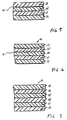
- an abuse-resistant layer (13) and/or an internal layer (16) can be crosslinked to a greater extent than a sealant layer (12). This may be accomplished by varying the amount of PCE composition contained in each target layer.
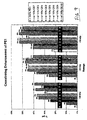
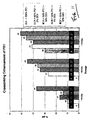
- Figures 9 through 12 are bar graphs comparing monolayer films to other, control films that do not have a crosslinking enhancer. These graphs are described in detail below with respect to the examples.
- the present invention can be used to enhance the crosslink content of one or more layers of a film.
- the film has two major surfaces and a thickness which extends from one major surface to the other.
- the film thickness is composed of n layers where n is a positive integer of from 1 to an upper value Z which can be any positive integer of two or greater and usually is a value of from 2 to 14, preferably 2 to 12.
- the film will have x layers for which enhanced crosslink is desired (target layers) where x is an integer of from 1 to an upper value of (Z-1).
- the target layers may be any layer or combination of layers of the film including layer(s) providing one or both of the film's major surfaces or any of the layers spaced away from the major surfaces (core layers) or a combination thereof.
- the choice of layers will be dictated by the configuration of the film and the layer(s) for which crosslink is desired without causing deterioration of the other layers and, thereby, provide an improved film product.
- Tables 2, 2A, and 2B identify the materials used in the examples. The Tables thereafter describe the films made with these materials.
- PEB1 90 parts PE 1 + 10 parts AB1.
- PEB2 92.5 parts EV2+ 7.5 parts PE1.
- PEB3 90 parts PE6 + 10 parts PE1.
- PEB4 85 parts PE7 + 15 parts PE1.
- PEB5 75 parts PE6 + 25 parts PE1.
- PEB6 75 parts PE7 + 25 parts PE1.
- CEB1 90 parts PE2 + 10 parts CE3.
- CEB2 90 parts PE2 + 10 parts CE2.
- CEB3 70 parts PE2 + 20 parts PE1+10 parts CE2.
- CEB4 60 parts PE2 + 30 parts PE1+10 parts CE2.
- CEB5 60 parts PE2 + 30 parts PE1+10 parts CE3.
- polymeric crosslinking enhancers were also analyzed to determine melt flow index at different ASTM D-1238 conditions, and also to determine density (at room temperature) using heptane displacement in a Toyoseiki densimeter. The results of these analysis appears in Table 4 below.
- Figures 9 and 10 provide bar graphs depicting the received dosage, in KGy, versus the gel % determined for each film sample. Numerals in the drawing correspond to the respective samples. It can be seen that very substantial improvements in crosslinking efficiency (values shown at the top of each bar), as measured by % gel, are obtained by films of the present invention when compared to a control film of LLDPE.
- the thickness (in mils) of each layer of the films of Examples 18 to 23 and COMP.BB was measured, before orientation and was determined to be:
- layer 1 In each film, layer 1 would preferably form the food or product contact layer, and sealant layer, for a typical packaging application.
- the composition of each layer of the films is given in Table 7 below. The double slash (//) indicates where a substrate is adhered to an extrusion coated layer.
- the reactor was charged with toluene (300 to 1300 g), 1-hexene (50 to 200 g) or norbornene (10-100 g), diene (0.1 to 20 g), and MAO (2 to 20 g of MAO/toluene solution containing 10 wt% Al), and saturated with ethylene at either 50 °C and 345 kPa (50 psig) or 75 °C and 413 kPa (60 psig).
- the polymerization was commenced by addition of the metallocene catalyst (0.1 to 3 mg Cp 2 ZrCl 2 in 10 mL toluene) to the reactor and the polymerizations were allowed to proceed for 0.5 to 2 hours.
- the AUPO's described above were found to be compositionally pure as indicated by a single melting endotherm by differential scanning calorimetry (DSC) at 10°C per minute and with narrow polydispersities by gel permeation chromatography (GPC). Table 12 summanzes the characterization of the terpolymers.
- copolymers of ethylene and norbomene as well as unsaturated terpolymers based on these monomers with VNB (at two different levels) were also prepared.
- An ethylene-norbornene copolymer was prepared in a 20 gallon jacketed stainless steel autoclave equipped with baffles and an overhead turbine-style stirrer. The reactor was charged with 48.1 kg of toluene containing 0.2 wt% MAO, 4.2 kg of norbomene solution (65wt% in toluene) and heated to 75 °C and pressurized to 60 psig ethylene.
- the polymerization was initiated by addition of a total of 38 mg of Cp 2 ZrCl 2 and ethylene was fed in on demand. The polymerization was allowed to proceed for 4.25 hours. It was then terminated by addition of 100 mL of methanol. The reactor was vented, the contents discharged and precipitated into methanol and the polymer filtered and dried in a vacuum oven. 7.1 kg of polymer was isolated.
- the polymer (A9 ) had an MFI (190 °C and 2.16 kg) of 1.7 dg/min with a T m of 75 °C.
- the polymer was found, by carbon-13 NMR, to contain 10 mol% NB and the microstructure was consistent with an addition polymerization with NB monomer inserted without ring-opening.
- the reaction conditions for the unsaturated E-NB terpolymers A-7 and A-8 is listed in Table 11 and the characterization of these materials A-7; A-8 and A-9 are listed in Table 13.
- Table 14 demonstrates that AUPO type PCE copolymers (A1-A5) can be employed on their own to generate highly crosslinked films, and to enhance crosslinking (PEB8 and PEB9) in other resins.
- Table 15 clearly shows that enhanced crosslinking of E-NB copolymers can be achieved by blending in a PCE copolymer of the presnt invention or by copolymerization with a diene monomer.
- the level of diene determines the extent to which the crosslinking can be enhanced.
- Films formed with at least one layer containing the subject PCE composition and subjected to irradiation are particularly useful in the production of bags for packaging fresh red meat, smoked and processed meat, pork, cheese, poultry, and the like, as described in e.g. U.S. Patent Nos. 3,741,253 (Brax et al.), 3,891,008 (D'Entremont), 4,048,428 (Baird), and 4,284,458 (Schirmer).
- the film can also be used in other applications.
- the film can be used as a shrink film in packaging applications for packaging food and non-food items.
- Films in which the present invention can be beneficially used are described in e.g. U.S. Patent Nos. 4,551,380 and 4,643,943, both to Schoenberg.
- the present invention can also be used with films having oxygen, moisture, or odor barrier functionality, as described in e.g. 4,064,296 (Bornstein et al.), 4,724,185 (Shah), 4,839,235 (Shah), and 5,004,647 (Shah).
- the film of COMP.D was compositionally and structurally as shown below: 50% PE9 90% OB2 50% PE9 25% PE10 PE10 AD1 AD1 PE10 25% PE10 25% EV4 10%PA1 25% EV4
- the films of Examples 31 and 32 had the same general formulation as shown above for COM.D except that the second and sixth layers (the "B" layers) comprised 90% PE10 + 10% CE3.
- the film of Examples 33 and 34 had the same general formulation as shown above for COMP.D except that the third and fifth layers (the "C" layers) comprised 90% AD1 + 10% CE3.
- the data shows that two films with identical composition and structure ( COMP.D and Example 32), except for the presence of 10% of a crosslinking enhancer in the B layers of Ex. 32, were irradiated at the same dosage, yet had very different MFI values.
- the lower MFI value of Ex. 32 reflects the increased crosslinking of the film of Ex. 32 as the result of the presence of the crosslinking enhancer.
- crosslinking improves processability in making oriented films.
- Films were prepared for use as or in connection with a patch as described in e.g. U.S. Patent No. 4,755,403 (Ferguson).
- An exemplary patch structure was made having the formulation: 87% PE1 87% PE1 10% CE2 EV3 EV3 10% CE2 3% EV1 3% EV1
- This patch material was a tubular patch self-welded to itself at the // interface. It was coextruded, and irradiated at a dosage of 98 kGy. The patch thickness after orientation was 114 ⁇ m (4.5 mils) The patch film was oriented and rendered heat shrinkable. This material can be used alone, or as a patch for a bag or other film.
- a tubular patch film was formed by coextrusion in the same manner as the above exemplary patch of the present invention.
- the film was also irradiated with E-Beam at a dosage of 98 kGy and oriented by stretching to a thickness of 114 ⁇ m (4.5 mils).
- the layer structure was: 90% PE1 90% PE1 10% EV2 EV3 EV3 10% EV2
- the two patch materials were measured for gel % and it was determined that the exemplary film had a gel % of 55.0% while the comparative film had a gel % of only 46.5%.
- a PCE copolymer was prepared by grafting.
- an ethylene-alkyl acrylate-maleic anhydride terpolymer (Lotader 3200, AtoChem Inc.) was melt compounded and reacted with 5% by weight hydroxyl terminated 1,2-PBD (Nisso-PB®, G-3000, Nippon Soda Co., Ltd.).
- 1,2-PBD 1,2-PBD
- 1% benzophenone was further incorporated by melt blending.
- a pressed film was irradiated at room temperature as described above to a UV dose of 0.8 J/cm 2 (measured at 365 nm), which resulted in a gel content of 23% by weight.
- the unirradiated film had a gel content of 0.8% by weight, as a result of the difunctional nature of the 1,2-PBD.
- the first formulation was PCE copolymer of developmental unsaturated LLDPE combined with 1% 4-allyloxybenzophenone.
- the second was the same developmental unsaturated LLDPE with 1%, 4,4'-diallyloxybenzophenone.
- a 10 inch Fusion Systems lamp (H-bulb) mounted on a conveyor belt was used to irradiate pressed films of the above formulations (380 to 510 ⁇ m or 15-20 mil thick) at room temperature (UV doses measured at 365 nm).
Landscapes
- Chemical & Material Sciences (AREA)
- Health & Medical Sciences (AREA)
- Organic Chemistry (AREA)
- Polymers & Plastics (AREA)
- Medicinal Chemistry (AREA)
- Chemical Kinetics & Catalysis (AREA)
- Physics & Mathematics (AREA)
- Thermal Sciences (AREA)
- Oral & Maxillofacial Surgery (AREA)
- Engineering & Computer Science (AREA)
- Toxicology (AREA)
- Mechanical Engineering (AREA)
- Laminated Bodies (AREA)
- Manufacture Of Macromolecular Shaped Articles (AREA)
- Treatments Of Macromolecular Shaped Articles (AREA)
- Peptides Or Proteins (AREA)
Abstract
Description
- The present invention generally relates to multilayer films comprising polymeric compositions capable of providing enhanced crosslinking efficiency the within at least one layer of said film, to a method of treating said film to provide enhanced crosslink within said at least one layer of the film and to the resultant cross-linked film product as well as articles made from said cross-linked film product.
- The present invention is particularly useful for the manufacture of flexible packaging films including those used to package food items.
- It has long been known that the physical properties of polymers can be altered by crosslinking. Control of crosslinking can induce a number of desirable changes in the physical properties of a polymer, depending on the application. For example, for polyolefins, the softening temperature increases, as does the toughness, impact strength, and resistance to attack by solvents and grease. Further, if a crosslinked polymer is stretched to induce orientation, the material will have a greater degree of heat-shrink characteristics than an uncrosslinked counterpart sample. However, these same physical properties can present difficulties for manufacture of a product if an attempt is made to merely substitute the crosslinked material for an uncrosslinked raw material. This is particularly true in manufacturing processes that rely on extrusion, coating, or spraying to produce a thin layer of material.
- An increase in softening temperature or viscosity, for instance, may take a polymer completely out of the useable range for a given type of equipment. A higher softening temperature would require higher manufacturing temperatures, which may cause other useful components of a film or coating to degrade. A higher viscosity may mean that the material is difficult to spray or extrude, or that the resulting thickness of a coating is undesirably high. Some of the changes in physical properties obtained by crosslinking polymers are discussed in Photoinitiated Cross-Linking of Polyethylenes and Diene Copolymers, B. Ranby, ACS Symposium Series, 1990, Vol. 417, pp. 140-150; and Photoinitiated Crosslinking of Low Density Polyethylene I: Reaction and Kinetics, Y. Qing, X. Wenying, and B. Ranby, Polymer and Eng. Sci., Nov. 1991, Vol. 31, No. 22.
- Various processes are known for the industrial manufacture of crosslinked polyolefin materials. These include the use of high energy ionizing irradiation, such as gamma- and accelerated electron beam irradiation (e-beam), as well as chemical crosslinking agents, such as peroxides, silanes and difunctional compounds, monomers and oligomers which can combine with the target polymer.
- One of the problems generally associated with chemically cross-linked polymers is that the agents capable of causing the cross-link are normally introduced into the composition prior to its being formed into a packaging article (e.g., film). Thus, cross-linking may occur under the elevated temperature and/or pressure conditions normally encountered while forming the initial film, such as by extrusion. By having the polymeric material cross-linked prior to or during its being processed into a film or the like, the processing step requires much higher energy, may produce a product having unacceptable properties, or, in certain instances, is not practical at all.
- Various parties have disclosed the use of high energy irradiation as a means of cross-linking polymeric compositions. For example, German
patent publication P 16 29 772.6 by Rosenthal discloses that a relatively thick (500 micron) polyethylene film can be irradiated with an electron beam at a dose of 5 Megarads at a penetration depth of 250 microns and then stretched to a thickness of 20 microns to produce a film with sides (material adjacent to a major surface of the film) having different properties. In that case, the treated side was said to have a melting point of about 160°C, while the untreated side was said to have a melting point of 115°C. Rosenthal teaches that crosslinking can also be accomplished using UV, gamma-rays or x-rays using a photoinitiator such as a chlorinated aromatic or aliphatic compound. Examples cited include tetrachloroethylene, 1,2,4,5-tetrachtorobenzene, and 1,2,4 trichlorobenzene. Such chlorinated aromatic materials are not desirable from a toxicity standpoint, especially for food packaging. -
European Application 0 549 372 A1 discloses a method of crosslinking the surface of a molded article made of a copolymer of an alkenylsilane and an olefin having at least two unsaturated double bonds, by dipping the article into a solution of a catalyst in hydrocarbon solvent, and then heating the article for two hours at 80°C. -
European Patent Application 0 490 854 A2 teaches a continuous process for crosslinking polyethylene with UV light. Crosslinking occurs during extrusion of the polyethylene while it is in the melt state and under a nitrogen atmosphere. The method employs a photoinitiator such as benzophenone or a benzophenone derivative, and tnallylcyanurate (TAC) or triallylisocyanurate (TAIC). While crosslinking aids such as TAC and TAIC are well known in the prior art, they are also highly toxic and unsuitable for food package applications and are taught to require the use of an inert atmosphere, which is costly and inconvenient. - United States Patent No. 4,737,559, issued to Kellen et al April 12, 1988 relates to pressure-sensitive adhesives for bandages. The application discloses that such adhesives tend to build adhesion strength over time, but that the addition of a crosslinking monomer with p-acryloxybenzophenone and subsequent exposure to UV radiation yields an adhesive which has a good ability to conform to the skin surface, adequate initial adhesion, and limited adhesion build-up, while providing low residue upon removal.
- In Polymer, 1993, 34(12), 2585-91, Gedde et al, describe the thermal crosslinking of polyethylene using low molecular weight, 1,2-polybutadiene and peroxides. Thermal crosslinking has limited applicability because of inherent instability during the extrusion and/or molding steps. Such processes always suffer from some degree of trade off between processability and amount of premature crosslinking.
- In Polymer Science, Ser. A, 1994, 36(5), 608-14, Zamotaev et al, describe the UV crosslinking of polypropylene and low density polyethylene using benzophenone and difunctional acrylates.
- In Reza Kenkyu, 1993, 21(9), 974-80, Ueda et al, describe the crosslinking of polyethylene with an excimer laser using benzophenone or 4-chlorobenzophenone as photoinitiators. The excimer laser is an impractical radiation source because it requires focusing to a small area (10x20 mm) and is quite expensive. Furthermore, in this case, long irradiation times and high radiation doses were required.
- While each of the above referenced teachings and others disclose means of cross-linking polymeric films using irradiation, a number of problems are associated with the resultant cross-linked product, especially when the film is contemplated for use as a packaging article. Packaging materials formed of one or more polymer layers, such as films having two major surfaces and thickness of up to about 1.27 mm (50 mils), have been used to form closed packages. For example, the packaging material may be a film which has at least one layer (normally a surface layer) which is suitable to provide heat sealing. The ability to be heat sealed relies on the ability of the material to flow when heated near its softening or melting temperature. Inner or core layers, on the other hand, may be present to provide strength, toughness, shrink characteristics and the like.
- During manufacture, such films are sometimes exposed to radiation, such as electron-beam radiation or other radiation to crosslink the polymeric material forming the film packaging material. Such techniques do not distinguish the different layers forming a film. Thus, when the irradiation is applied, it may adversely affect one or more layers while providing the desired beneficial effect to other layers of the film. For example, it is desirable to have certain surface characteristics which provide desired sealability of the outer layer of a polyolefin film when subjected to highspeed packaging equipment. However, when irradiation is applied to such films to enhance the core layers characteristics, the radiation indiscriminately adversely effects the sealability of the film. In addition, the performance of the sealant layer for its intended purpose is generally lowered when crosslinking is induced. This is because the higher the degree of crosslinking of the sealant material, the less is its ability to flow at a given processing temperature. Thus, the resultant packaging material exhibits weaker and sometimes defective seals.
- If one lowers the dosage of irradiation to which the overall film is exposed (if irradiation is the method of crosslinking) one may be able to lessen the adverse effect on the sealant material. However, when this is done, other layers which benefit from crosslinking (e.g. to provide toughness, improved optics, or greater processability during manufacture) may not perform as well. Thus, the processor is faced with the trade-off between compromising sealing properties and other desired properties of films, such as toughness and processability.
- Furthermore, it is well known that certain resins, such as poly(vinylidene dichloride) (PVDC) and poly(propylene) (PP), and other polymers having tertiary carbons within their structure, degrade upon exposure to ionizing radiation. Thus, improvements in physical properties associated with crosslinking by such method cannot always be realized in films containing such materials.
- In addition to balancing the concerns associated with irradiation crosslinking to achieve good seal properties as well as processability and toughness properties, there are two technical parameters which further complicate this matter. The first is that materials typically used in sealant layers (e.g., ethylene/vinyl acetate copolymers ("EVA") and the like) tend to crosslink to a higher degree at a given irradiation dosage than those materials typically used as part of the internal layers of a film (e.g., ethylene/alpha-olefin copolymers, such as linear low density polyethylene (LLDPE) and the like). Stated another way, a polymeric layer for which crosslinking is desired may be inherently less susceptible to crosslinking than a layer of the film for which crosslinking is not required.
- A second factor is that in irradiation processes where a tubular film is exposed to irradiation from one side of the tube, then the other in a "multipass" setup, the geometry of the tubular film and the physics of irradiation are such that the surface layers (e.g., sealant material) will absorb more radiation than the internal or core layers. Thus, although the preferred approach is to minimize crosslinking of the sealant layers, the tendency of many typical irradiation processes, is to cause more, not less, crosslinking of the sealant material.
- In order to overcome the indiscriminate crosslinking caused by high voltage irradiation, U.S. Patent 4,863,768 (Ishio et al) teaches low voltage irradiation of films to provide for attenuation of the radiation across the films cross-section (thickness). However, this method has certain defects including the significant financial investment in equipment needed to use this technology on a commercial scale, the inherent unpredictability as to the degree of crosslinking achieved at each layer as well as the inapplicability of this technique for films having a sealant/core/sealant configuration.
- Still another proposed solution is the use of crosslinking enhancers typically in the form of liquids or powders. Examples include low molecular weight (LMW) compounds such as peroxides, and unsaturated esters such as diallylmaleate. trimethylolpropanetrimethylacrylate, and 1,6-hexanediol diacrylate. These materials pose several practical problems, including difficulty of handling liquids and powders during extrusion, regulatory status (lack of food law compliance for many of these materials), organoleptic concerns, and poor compatibility with typical extrusion-grade polymers. Peroxides, in particular, are inherently thermally unstable. When used, they can initiate crosslinking of polymers in the extruder. The reaction kinetics involved makes the extrusion process difficult to control. Extrusion rates and overall process conditions must be rigorously controlled to avoid fluctuations in final film properties.
- It is highly desired to have a means to selectively enhance the crosslinking efficiency (i.e., degree of crosslinking at a unit dosage of radiation) of a specific layer or layers of a film in an effective and commercially acceptable manner, preferably in a continuous process. It is further highly desired to provide a means to crosslink one or more layers of a film composed of a polymer (e.g., polypropylene, PVDC and the like) generally deemed degraded by certain ionizing irradiation, especially electron beam radiation. It is still further desired to be able to crosslink a polymer film by irradiation to provide a clear, transparent film product suitable for use in packaging applications.
- US4,894,289 discloses a laminate comprising a layer of a partially crosslinked graft-modified polyolefin elastomer and a layer of a polyamide, polyurethane, or polyester. The laminate is said to have excellent weatherability, heat resistance and dimension stability and may be formed into a moulded article.
- EP-A-0475388 discloses a waterproof rubber sheet having a first ethylene-α-olefin layer which has a high crosslinking rate and a second ethylene-α-olefin rubber which has a low crosslinking rate which is converted to a sheet wherein the first layer is crosslinked and the second layer is partly crosslinked. The sheet has good fusion bond strength and good bond strength at high temperature.
- EP-A-601790 discloses a two layer sheet of thermoplastic elastomers comprising a partially cross-linked skin layer of α-olefin copolymer rubber and a polyolefin resin and a non-cross-linked back surface layer. The two-layer sheets may be moulded, are said to show excellent vacuum forming properties and to provide a moulded product low in surface low in surface glossiness.
- The present invention provides a means to selectively enhance the crosslinking efficiency of a polymeric film and, more particularly, to achieve enhanced crosslinking with respect to certain layer or layers of a multilayer film. The present invention further provides a means of achieving selective crosslinking of at least one layer of a polymeric film using actinic irradiation (e.g., ultraviolet radiation or electron beam radiation) and, still further, to permit the desired crosslinking to occur on films containing polypropylene, PVDC and other polymers, without having the resultant film exhibit the degradative effects normally associated with such treatment.
- The present invention provides a multilayer film comprising at least one internal layer of a polymeric crosslink enhancer (PCE) composition comprising
- (i) a copolymer having polymeric units derived from (a) at least one polyene monomer which is an aliphatic or alicyclic compound containing at least four carbon atoms in a chain and having at least two carbon-carbon double bonds, (b) at least one C2-C20 olefinic monomer and, optionally, (c) at least one copolymerizable monomer other than (a) or (b); wherein the at least one layer formed with PCE composition is crosslinked to a greater degree than at least one other layer of said film, which other layer forms a major surface of the film and is sealable. The PCE composition, preferably, further contains a photoinitiator agent, especially when the radiation to be applied is ultraviolet radiation. The layer(s) having the PCE composition results in a crosslinked layer of the film having a higher degree of crosslink than other layers. The subject PCE composition can be used alone to form a layer of a film or can be blended with one or more polymers to provide a layer of a film for which crosslinking is desired.
-
- The present invention further provides a method of forming a film having a plurality of layers wherein at least one of said layers is selected to have an elevated degree of crosslinking with respect to at least one other layer which process comprises:
- A. forming a film wherein said at least one layer is an internal layer and contains
a polymeric crosslink enhancer (PCE) composition comprising
- (i) a copolymer having polymeric units derived from (a) at least one polyene monomer which is an aliphatic or alicyclic compound containing at least four carbon atoms in a chain and having at least two carbon-carbon double bonds, (b) at least one C2-C20 olefinic monomer and, optionally, (c) at least one copolymerizable monomer other than (a) or (b); and
- B. subjecting the film to actinic radiation.
-
- The present invention is still further directed to a package comprising a multilayer film of the invention surrounding a cavity suitable for containing or containing an article.
- The above invention is fully described herein below.
-
- Figure 1 is a schematic diagram of a melt-state irradiation crosslinking process. In this process, a conical twin screw extruder (1) is attached to a flat sheet die (2) with a die lip gap (3). A source of irradiation, such as a Fusion Systems UV lamp (4) (equipped with a H-bulb) is positioned at or near the die lip gap (3) in such a way as to insure that the extruded film (5) passes through the focal point of the lamp (4). The irradiated film (6) is drawn over a chill roll (7) and cooled. The resulting film is drawn through pinch rolls (8) and wound up on a take-up reel (9);
- Figure 2 is a schematic cross-section of a film suitable for use as part of a multilayer film of the present invention;
- Figures 3 through 8 are schematic cross-sections of alternative embodiments of films of the present invention; and
- Figures 9 through 12 are bar graphs comparing films of the present invention to other films.
-
- The present invention is directed to an improved multi-layer film suitable for packaging foodstuffs and other products. At least one internal layer of the film formed according to the present invention comprises a polymeric crosslink enhancer (PCE) composition which provides that said at least one layer can be crosslinked to a higher degree than would occur in the absence of enhancer composition without adversely affecting the desirable characteristics of other layers present in the film.
- The present invention provides for a polymeric crosslink enhancing composition comprising (i) a copolymer comprising units derived from (a) polyene monomer, (b) at least one C2-C20 olefinic monomer, and optionally (c) at least one additional copolymerizable monomer which is different from (a) and (b) above or, alternatively. In addition, the PCE composition of this invention preferably further contains a photoinitiator compound, especially when the contemplated irradiation of the film is to be by ultra-violet radiation.
- The following terms are defined herein below to aid in describing and defining the subject invention herein and in the claims appended hereto:
- "Film" shall mean a sheet, laminate, non-woven or woven web or the like or combinations thereof, having length and breadth dimensions and having two major surfaces with a thickness therebetween. The film can be composed of more than one layer (laminate, plies) composed of at least two different compositions, extending substantially the length and breadth dimensions of the film. The thickness of the film can be any suitable thickness of up to about 1.27 mm (50 mils) to form a package and is normally up to about 0.51 mm (20 mils) preferably up to about 0.38 mm (15 mils) more preferably up to about 0.25 mm (10 mils) and most preferably from 2.54 µm to 0.20 mm (0.1 to 8 mils).
- "Layer" or "ply" means herein a member forming all or a fraction of the thickness of a film wherein the member extends the length and breadth of the film and is composed of a distinct composition.
- "Crosslinked" or "crosslink" means herein the formation of chemical bonds directly or indirectly (via some chemical structural entity) between two or more of the molecular chains of polymers within a layer of the film. The degree of crosslinking is typically shown by a change in the melt flow index, as measured according to ASTM D-1238 with respect to uncrosslinked composition of the same type. Higher degrees of crosslinking are typically reported gel fraction as measured according to ASTM-D-2765 with values of greater than one percent (1%) gel indicating some degree of crosslink.
- "Polyene" means herein a monomer, as defined in Hawley's Condensed Chemical Dictionary, 12th Edition, page 932, comprising any unsaturated aliphatic or alicyclic compound containing at least four carbon atoms in a chain and having at least two double bonds. The term "at least two double bonds" refers to carbon-carbon double bonds. One or more bonds or double bonds of carbon and an element other than carbon can, optionally, also be present in the polyene, such as carbonyl.
- "Substituted" means herein the result of a chemical reaction in which one atom or group of atoms replaces another atom or group of atoms in the structure of a molecule. It especially refers to the substitution of a hydrogen atom, of a hydrogen-carbon moiety, with an alkyl, aryl, hydroxy, halogen, or other chemical substituent.
- "Polymer" means herein a molecule that has been formed by the union of a considerable number of simple molecules with one another. The simple molecules that will unite to provide a polymer are known as monomers and their union is called polymerization. The polymer may comprise a union of monomers which are all alike to provide a homopolymer, or of two or more varieties of monomers to provide copolymers which are sometimes specifically called copolymers, terpolymers, tetrapolymers, etc.
- "Flowability" means herein the ability of a film or layer to flow under the influence of heat and/or pressure. This term is especially used with respect to films or layers capable of sealing to itself or some other material. Flowability is typically reported as melt flow index (MFI) conventionally measured according to the procedure of ASTM D-1238. Flowability is an alternative way to indicate the level of crosslinking as the higher the degree of crosslink a material, the lower is its MFI.
- "Ultra-violet" or "UV" means radiation at a wavelength or a plurality of wavelengths in the range of from 170 to 400 nm.
- "Ionizing radiation" means high energy radiation capable of generating ions and includes electron beam radiation, gamma rays and x-rays.
- "E-Beam" means ionizing radiation of an electron beam generated by Van de Graaff generator, electron-accelerator or x-ray.
- "PCE" means a polymeric crosslink enhancer and refers to composition of the subject invention and to the components thereof.
- "AUPO" means herein a PCE copolymer of an advanced unsaturated polyolefin type formed by catalytic polymerization using at least one single-site catalyst, preferably at least one catalyst known as metallocene catalyst, to have high random distribution of comonomeric units therein.
-
- The present PCE composition can be composed of composition (i) comprising a copolymer formed with monomeric units derived from (a) at least one polyene monomer; (b) at least one C2-C20 olefinic monomer; and, optionally, (c) at least one or more copolymenzable monomers other than (a) and (b) above. Further, the present PCE composition may contain a compound suitable to act as a photoinitiator wherein said compound is blended with the PCE copolymer.
- The monomer (a) of the PCE copolymer is selected from a polyene. Examples of such polyenes are exemplified by but not limited to the following: 5-ethylidene-2- norbomene ("ENB"), 5- methylidene-2- norbomene, 5-vinyl-2-norbomene ("VNB"), 5-methylene-2-norbornene, 2,5-norbomadiene, butadiene, isoprene, 1,4 - hexadiene ("HD"), 4-methyl-1,4-hexadiene, 5-methyl-1,4-hexadiene, 4-ethyl-1,4-hexadiene, 1,5-hexadiene, 1,6-heptadiene, 1,4-heptadiene, 1,5-heptadiene, 5-methyl-1,4-heptadiene, 1,4-octadiene, 1,5-octadiene, 1,6-octadiene, 5-ethyl-1,6-octadiene, 6-methyl-1,6-octadiene, 7-methyl-1,6-octadiene, 6-ethyl-1,6-octadiene, 6-propyl-1,6-octadiene, 6-butyl-1,6-octadiene, 1,7-octadiene, 6-methyl-1,6-nonadiene, 7-methyl-1,6-nonadiene, 6-ethyl-1,6-nonadiene, 7-ethyl-1,6-nonadiene, 6-methyl-1,6-decadiene, 1,9-decadiene, 6-methyl-1,6-undecadiene, 1,8-nonadiene, 1,13-tetradecadiene, 1,4-dodecadiene, 1,5-cyclooctadiene, 1,4-divinylcyclohexane, 1,3-divinylcyclohexene, 1-allyl-4-vinylcyclohexane, 1,4-divinylcyclohexane, 1,3-divinylcyclopentane, 1-allyl-3-vinylcyclopentane, 1,5-divinylcyclooctane, 1-allyl-5-vinylcyclooctane, 1,5-diallylcyclooctane, 1-allyl-4-isopropenylcyclooctane, 1-allyl-4-isopropenylcyclohexane, 1-isopropenyl-3-vinylcyclopentane, 1-allyl-4-isopropenylcyclohexane, 4-vinylcyclohexene("VCH"), dicyclopentadiene ("DCPD"), divinylbenzene and vinylisopropenylbenzene. They can be used singly or in combination with one another as the polyene component of the polymeric crosslink enhancer. The preferred polyenes are butadiene, ENB, VNB, HD, DCPD and VCH and particularly preferred as part of AUPOs are ENB and VNB and most preferred are VNB.
- The monomer (a) should be capable of forming units of the PCE copolymer wherein at least some of the units retain ethylenic unsaturation.
- The monomer(s) (b) of the PCE copolymer is at least one C2-C20 olefinic monomer such as an olefin of 2 to 20 carbon atoms. Such monomers (b) are exemplified by, but are not limited to: ethylene, propylene, 1-butene, 1-hexene, 3-methyl-1-butene, 3-methyl-1-pentene, 3-ethyl-1-pentene, 4-methyl-1-pentene, 4,4-dimethyl-1-pentene, 4-methyl-1-hexene, 4,4-dimethyl-1-hexene, 4-ethyl-1-hexene, 3-ethyl-1-hexene, 3,5,5-trimethylhexene, 1-octene, 1-decene, 1-dodecene, 1-tetradecene, 1-hexadecene, 1-octadecene, 1-eicosene. Typically the monomer (b) is a C2-C8 -olefin and most typically either ethylene or propylene.
- The PCE copolymer may, optionally, contain at least one third monomer (c) selected from monomers which are other than (a) or (b) monomers described above. Such monomer (c) are exemplified by but not limited to: vinyl aromatics, such as styrene or styrene derivatives and the like, cycloolefin monomers, such as cyclopentene, norbomene, tetracyclododecene and the like, unsaturated esters, such as vinyl acetate, methyl acrylate, ethyl acrylate, and butyl acrylate and the like, and unsaturated acids, such as acrylic acid or methacrylic acid or their acid salts and the like as well as polyvinyl halide such as polyvinyl chloride.
- PCE copolymers of the present invention have a density at 25°C of preferably between 0.8 and 1.0 g/cc.
- The PCE copolymer, as used in PCE composition (i), will generally have a polyene content of 0.01 to 40 mole %, preferably from 0.1 to 10 mole %. The remainder of the PCE copolymer (the at least one C2 to C20 olefinic monomer(s) (b) as well as any third or additional monomer(s) (c) will form 99.99 to 60 mole %, such as 99.9 to 90 mole %, of the polymeric crosslinking enhancer. The weight average molecular weight (Mw) of the copolymer should be at least about 20,000 daltons, preferably from at least about 10,000 to 1,000,000 daltons. A variety of factors will determine the optimal composition for a particular end-use which include compatibility with any diluent polymer, degree of reactivity with respect to the radiation to be utilized and the like. The optimal composition for a particular PCE copolymer can be readily determined by minor experimentation.
- PCE copolymers of the present invention are exemplified by but not limited to ethylene-propylene-diene monomer terpolymers (EPDM's) where the diene monomer is most commonly selected from ENB, HD, DCPD or VCH.
- The PCE composition may further include a photoinitiator compound. Such compounds are blended with the PCE copolymer to provide a substantially uniform composition. When ultra-violet radiation is contemplated as the form of irradiation, the PCE composition preferably should contain the photoinitiator in order to increase the crosslink efficiency, i.e., degree of crosslink per unit dose of radiation. When E-Beam radiation is contemplated as the form of irradiation, the PCE composition may, optionally, include a photoinititator. Although E-Beam radiation is not normally associated with photoinitiators as crosslinking readily occurs in the absence of such compounds, it has been unexpectedly found that when the present PCE composition is employed which contains such photoinitiator compounds, crosslink efficiency increases and, therefore, the operator can use less PCE composition, attain higher degree of crosslink, utilize lower dosage of electron beam radiation or a combination thereof.
- Suitable photoinitators include, but are not limited to, benzophenone, ortho- and para-methoxybenzophenone, dimethylbenzophenone, dimethoxybenzophenone, diphenoxybenzophenone, acetophenone, o-methoxy-acetophenone, acenaphthenequinone, methyl ethyl ketone, valerophenone, hexanophenone, α-phenyl-butyrophenone, p-morpholinopropiophenone, dibenzosuberone, 4-morpholinobenzophenone, benzoin, benzoin methyl ether, 3-o-morpholinodeoxybenzoin, p-diacetylbenzene, 4-aminobenzophenone, 4'-methoxyacetophenone, α-tetralone, 9-acetylphenanthrene, 2-acetyl-phenanthrene, 10-thioxanthenone, 3-acetyl-phenanthrene, 3-acetylindole, 9-fluorenone, 1-indanone, 1,3,5-triacetylbenzene, thioxanthen-9-one, xanthene-9-one, 7-H-benz[de]anthracen-7-one, benzoin tetrahydrophyranyl ether, 4,4'-bis(dimethylamino)-benzophenone, 1'-acetonaphthone, 2'acetonaphthone, acetonaphthone and 2,3-butanedione, benz[a]anthracene-7,12-dione, 2,2-dimethoxy-2-phenylacetophenone, α,α-diethoxy-acetophenone, α,α-dibutoxyacetophenone, anthraquinone, isopropylthioxanthone and the like. Polymeric initiators include poly(ethylene/carbon monoxide), oligo[2-hydroxy-2-methyl-1-[4-(1-methylvinyl)phenyl]propanone], polymethylvinyl ketone, and polyvinylaryl ketones. Use of a photoinitiator is preferable in combination with UV irradiation because it generally provides faster and more efficient crosslinking.
- Preferred photoinitiators that are commercially available include benzophenone, anthrone, xanthone, and others, the Irgacure™ series of photoinitiators from Ciba-Geigy Corp., including 2,2-dimethoxy-2-phenylacetophenone (Irgacure™ 651); 1-hydroxycyclohexylphenyl ketone (Irgacure™ 184) and 2-methyl-1-[4-(methylthio)phenyl]-2-moropholino prapan-1-one (Irgacure™ 907). The most preferred photoinitiators will have low migration from the formulated resin, as well as a low vapor pressure at extrusion temperatures and sufficient solubility in the polymer or polymer blends to yield good crosslinking efficiency. The vapor pressure and solubility, or polymer compatibility, of many familiar photoinitiators can be easily improved if the photoinitiator is derivatized. The derivatized photoinitiators include, for example, higher molecular weight derivatives of benzophenone, such as 4-phenylbenzophenone, 4-allyloxybenzophenone, 4-dodecyloxybenzophenone and the like. The photoinitiator can be covalently bonded to the PCE copolymer or to a polymer diluent, as described herein below. The most preferred photoinitiators will, therefore, be substantially non-migratory from the packaging structure.
- The photoinitiator is added in a concentration of about 0.1 to 3 weight percent, preferably 1 to 2 weight percent of the layer containing the PCE composition. In the case where the photoinitiator is bound to a polymer, the polymer will typically be added at such a level as to provide 0.1 to 3 percent of photoinitiator by weight of the layer containing the PCE composition.
- The PCE copolymer may be formed by known polymerization processes employing Ziegler-Natta transition metal catalysts as, for example, those based on vanadium. However, it is preferred that the resultant copolymer have the unsaturation uniformly distributed throughout the PCE polymer molecule. That is to state, it is preferred that the copolymers contain unsaturated sites which are essentially isolated from each other. Conventional polymerization processes tend to incorporate multiple identical units adjacent to one another (in blocks) resulting in polymers with less random distribution of unsaturation within the polymer molecule.
- A preferred set of PCE copolymers are PCE copolymers (i) and, of these the most preferred are those which are produced by at least one single-site catalyst, preferably at least one metallocene catalyst, to provide polymeric materials with a super-random distribution of comonomers. A single-site catalyst is defined as a catalyst which contains a single type of active center. The resulting polymer from a single-site catalyst exhibits a narrow molecular weight distribution frequently has a polydispersity (Mw/Mn) of less than 3, and narrow compositional distribution. A metallocene catalyst is defined as an organometallic compound with at least one pi-bound cyclopentadienyl-moiety (or substituted cyclopentadienyl moiety) and most frequently two pi-bound cyclopentadienyl-moieties or substituted moieties. This includes other C5 pi bound moieties such as indenyls or fluorenyls or derivatives thereof. These materials often display higher regio-regularity and, in certain cases, higher stereoregularity than conventionally prepared copolymers, such as conventionally prepared PCE copolymers. For the purposes of this disclosure such PCE copolymers are referred to as advanced unsaturated poly(olefin)s (hereinafter "AUPO").
- AUPO's are produced in more chemically homogeneous form, with a molecular weight distribution that is narrow, with less catalyst residue than conventionally prepared PCE copolymers. They are thus beneficial in forming films for packaging applications according to the present invention, especially food packaging. They also offer physical properties superior in utility and scope to current copolymer technology.
- AUPO's can be described as copolymers identical in composition to that described above for PCE copolymers (i). They differ however in the process by which they are manufactured which involves the use of at least one single-site catatlyst and preferably a metallocene catalyst. Typical polyenes which traditionally have been used are limited to highly substituted polyenes such as 5-ethylidene-2-norbornene, dicyclopentadiene or 1,4-hexadiene. More reactive polyenes often cannot be employed using vanadium-based catalytic systems (used in conventional EPDM technology, for example) as they tend to crosslink prematurely leading to gelled, difficult to process materials. It is highly desirable to be able to prepare AUPO's which contain more reactive polyenes to facilitate crosslinking and other polymer modification/grafting reactions. Such materials can be crosslinked by chemical (such as peroxide, silane or sulfur), or by ionizing or nonionizing radiation processes.
- A first improvement obtained by the use of these AUPO materials is that they require less energy to be crosslinked to a given level of crosslinking, and provide more versatility in crosslinking, than conventional PCE copolymers of the same type. AUPO's crosslink to a substantially higher degree than saturated resins at a given energy level. This improvement is largely based on improved distribution of the polyene component along the polymer backbone leading to improved crosslink efficiency.
- A second improvement with AUPO resins involves improved regioselectivity over vanadium-based catalysts giving less chain scission, which competes with crosslinking.
- A third improvement of AUPO's over conventional PCE copolymers of the same type involves the oxidative and light stability of the resin. This leads to unsaturated resins with a lower yellowness index.
- A fourth improvement of AUPO's over conventional PCE copolymers is there greater ease of processing to form films and layers.
- AUPO's, by virtue of their higher crosslinking efficiency, offer enhanced orientability, toughness, puncture resistance, tear resistance, impact, tensile strength, and/or elongation, and thus are suitable as for aiding in the formation of a core and/or abuse layer in multilayer films, bags and laminates. They can be selectively crosslinked at a lower radiation (e.g., electron-beam) dosage than currently used materials so that ionizing radiation-sensitive resins, such as vinylidene dichloride copolymers and polypropylene can be used without substantial degradation, and with improved organoleptic quality.
- AUPO's also offer comparably better blends with improved physical properties compared with blends using conventional PCE copolymers (including amorphous EPDM resins) due to improved grafting reactions and reduced chain mobility. For example, melt crosslinking a blend of two or more polymers which exhibit appreciable solubility at elevated temperatures but phase separate on cooling could be improved if one of the components crosslinks and/or grafts thus reducing the tendency to phase segregate and, thus, improve the aging characteristics. This can result in improved optics in the final film made from these materials. Improvements in blend properties can also be realized since there can be closer matching of resin densities and refractive indices, and also provides for reduced yellowness. Multicomponent blends containing AUPO's with improved optics and physical properties can be thereby produced.
- AUPO's can be chosen with regard to their molecular weight and crystallinity in order to tailor blends of these materials with other resins in order to optimize physical properties of a film made from the blend, e.g. optical properties such as gloss, haze, and clarity. This degree of tailoring is not possible with more conventionally produced PCE copolymers.
- AUPO's also offer outstanding shrink characteristics, i.e. higher free shrink, lower shrinking temperatures, and improved orientability compared with conventional ethylene/alpha-olefin copolymers.
- Methods of making these materials using metallocene catalysts are disclosed in International Application WO 88/04674 by Welborn, et al., . Typical examples of AUPO'S are those copolymers described above except that they are prepared using a single-site catalytic process, such as metallocenes. These include, but are not limited to, terpolymers of ethylene-propylene-polyene monomer, ethylene-butene-polyene monomer, ethylene-hexene-polyene monomer, ethylene-heptene-polyene monomer, ethylene-octene-polyene monomer, ethylene-4-methyl-1-pentene-polyene monomer, ethylene-norbomene-polyene monomer , and ethylene-styrene-polyene monomer, where the diene is selected from ENB, VNB, HD, DCPD, VCH, 1,7-octadiene, 1,9-decadiene or DVB.
- Preferred AUPO resins contain highly reactive vinyl groups without premature crosslinking or gelation such as reaction extruder or reactor or the like. The preferred dienes include 5-vinyl-2-norbornene. Unsaturated PCE copolymers of olefins and 5-vinyl-2-norbornene can be prepared using simple metallocene catalysts such as Cp2ZrCl2 without premature crosslinking. In this case, the cyclic-olefinic group is polymerized leaving the pendant vinyl group available for subsequent crosslinking or modification/grafting reactions. Alpha,omega-dienes, such as 1,7-octadiene and 1,9-decadiene, and other acyclic dienes containing an alkyl substituent alpha to one of the vinyl groups are also preferred. Examples of such acyclic dienes are 3-methyl-1,5-hexadiene, and 3-methyl-1,7-octadiene. Vinyl-unsaturated materials exhibit outstanding crosslinking characteristics which lead to films, bags or laminates with improved physical properties.
- Preferred AUPO resins comprise single-site catalyzed polymeric materials with a density of between 0.8 and 1.0 g/cc, such as between 0.84 and 0.96 g/cc, between 0.86 and 0.94 g/cc, between 0.88 and 0.92 g/cc, and between 0.89 and 0.91 g/cc. All density values falling within any of these stated ranges are also included herein.
- The PCE composition of the present invention can be used alone to provide at least one layer of a film or can be used in conjunction with one or more diluent polymers suitable for forming the at least one layer for which enhanced crosslinking is desired. The amount of PCE composition (either as PCE copolymer alone or further with photoinitiator, as described above) to be combined with diluent polymer(s) may be from about 0. 1 to 99.9 weight percent of the composition forming the target layer. The exact amount will depend on the degree of crosslinking desired, the compatibility of the subject PCE compsition and the diluent polymers used in a particular instance and, therefore, all values of weight percentages and ranges between 0.1 and 99.9 weight percent are made part of the present teaching.
- The diluent polymers are exemplified by, but not limited to: homopolymers and copolymers of olefins, such as polyethylene, including high density polyethylene, low density polyethylene, ultra-low density polyethylene, linear low density polyethylene, polypropylene, as well as ethylene/propylene copolymers, polystyrene copolymers, ethylene/acrylate or alkacrylate copolymers, ethylene/acrylic acid or alkacrylic acid copolymers and ionomers, ethylene/vinyl acetate and the like and mixtures thereof.
- The crosslink may occur between and/or among molecules of PCE copolymer. Further, the PCE copolymer may crosslink or react with molecules or fragments of molecules of the diluent polymer. For example, a crosslink may be formed between a first and a second PCE copolymer molecule or crosslinks may occur among a first PCE copolymer molecule, a second PCE copolymer molecule and a third PCE copolymer. Crosslink may also occur between at least one PCE copolymer and diluent polymer molecule or a fragment of such molecules. Diluent polymer molecules may have residual ethylenic unsaturation suitable as a site for entering into a crosslinking with another molecule. In the case of polymers having tertiary carbon-hydrogen bonds, such as polypropylene and the like, which may undergo scission of the polymer molecule upon ionizing irradiation, it has been found that the presence of the subject PCE coplymer inhibits scission to occur and/or provides a means of recombining the polymer fragments formed with thermselves or as part of the PCE copolymer. Thus, the degradative effect of scission commonly associated with ionizing irradiation of certain polymers is substantially reduced.
- The PCE composition is preferably a solid at ambient temperatures which is usually between 20 and 25°C. When the PCE copolymer is used in a composition which will be used in conjunction with diluent polymer, the melt flow index (MFI) is chosen to be compatible with the rheology of the PCE copolymer with the polymer diluent or with the materials of the other layers of the film, if present. PCE copolymers of low weight average molecular weight (LMW) of about 5,000 grams/mole or less, are less preferred because they present difficulties in handling, because of the extra step which may be required to compound such low molecular weight compounds with the diluent polymer forming the layer's matrix, and because of the tendency of these low molecular weight materials to bloom or migrate through the film after extrusion if crosslinking is delayed. It is preferred to provide the PCE composition as solid pellets so that they are easily blended with the other polymeric raw materials (such as ethylenic polymers), which are also typically provided in pellet form. Thus, these materials can be preblended prior to being fed to an extruder or other apparatus used to form the film structures. The polymeric crosslinking enhancer composition will preferably have a low yellowness index prior to, and following, irradiation and should possess good organoleptic properties (i.e. not impart off-odors or flavors to foods).
- The melt flow index (MFI) of the solid PCE copolymer should be between 0.01 and 100 dg/min under ASTM D-1238 at 2.16 kg/190°C, although higher MFI materials may be used. The preferred MFI is between 0.1 and 20 dg/min, and more preferably between 0.1 and 10 dg/min, as such MFI polymers are typically used in packaging applications (ASTM D-1238, Condition E).
- The number average molecular weight (Mn) of the PCE copolymer of the invention is preferably at least 10,000 daltons, and more preferably at least 15,000, 20,000, 40,000, or 60,000 daltons. The Mn is normally between 10,000 and 1,000,000, preferably between 10,000 and 200,000 daltons, such as between 20,000 and 100,000, between 30,000 and 80,000, between 40,000 and 70,000, and between 50,000 and 60,000 daltons (grams/mole).
- The weight average molecular weight (Mw) of the PCE copolymer should be at least about 10,000 daltons and preferably at least 20,000 daltons. The preferred Mw can be between 20,000 and 1,000,000 daltons, such as between 30,000 and 350,000, between 50,000 and 250,000, between 70,000 and 170,000, more preferably between 90,000 and 130,000 daltons.
- The viscosity average molecular weight (Mv) of the PCE copolymer can be between 20,000 and 1,000,000, preferably between 30,000 and 350,000, such as between 50,000 and 250,000, between 75,000 and 150,000, more preferably between 90,000 and 125,000 daltons. For example, when the subject film has a food contact end-uses, a Mv of at least 120,000 daltons is preferred for purposes of compliance with current U.S. food law (FDA) regulations.
- Although the PCE copolymer may be amorphous, it is preferred that the copolymer be semi-crystalline. Thus, AUPO's used as PCE copolymers in the present invention can have crystallinity ranging from 0 to about 70% or greater, such as ranges of from 0.001% to 45% for materials with propylene as the predominant monomer (b), and from 0.001% to 70% for materials with ethylene as the predominant monomer (b). For the purposes of this disclosure, crystallinity is defined as the fraction of crystals formed as determined by conventional X-ray diffraction methods.
- Conventional polyolefins typically have a certain number of double bonds within their molecular structure. The PCE copolymers of the present invention contributes additional unsaturation to this "background" or baseline unsaturation primarily due to the polyene present. Too low a polyene content (taking into account the percent of the polyene in the copolymer, the percentage unsaturation of the polyene monomer itself, the amount of antioxidant present, and the percentage of the PCE copolymer in a blend of PCE composition and diluent polymer, where present) can result in insufficient crosslinking enhancement. It is preferred that the PCE copolymer contain at least 10 carbon-carbon ethylenic double bonds (C=C) per 100,000 carbon atoms of the copolymer molecule. The number of ethylenic double bonds may range from 10 to 33,333 double bonds per 100,000 carbon atoms with from about 20 to about 1000 being preferred. It is understood that all numerical values and ranges within the specific ranges disclosed are incorporated herein by reference. Thus, the PCE copolymer will provide more double bonds to the layer's composition because of the presence of the polyene, than a similar polymer without the polyene. The most desirable unsaturation is vinyl unsaturation (also called terminal or pendent unsaturation), but internal double bonds can also be used. Such polymers will contain unsaturation at a level significantly higher than that represented by the polymer end groups, and are also characterized by a uniform distribution of unsaturation within the matrix (i.e., random copolymers). The unsaturation of such polymers is most readily characterized by infra-red (IR) spectroscopy.
- Too high a polyene content (again taking into account the percent of the polyene in the copolymer, the percentage unsaturation of the polyene monomer itself, the percentage of the PCE composition and diluent polymer, where present) can result in extrusion gels or inclusions which can, if severe enough, affect orientation stability (if an oriented film is being made) and can even result in bubble breaks. Even if not severe enough to cause the film to break, the optics (gloss, clarity, haze) of the final film can be adversely affected by such inclusions. For packaging applications where optics are important, this can mean film which is not commercially acceptable. Thus, it is preferred to have the polyene content of the PCE copolymer within a range to provide from 10 to about 10,000 and preferably from 20 to 1,000 ethylenic double bonds per 100,000 carbon atoms present in the layer composition.
- For example, the calculated levels of unsaturation (number of C=C bonds per 100,000 carbon atoms) for a representative group of polyenes useful as PCE copolymers are as shown in Table 1 herein below:
Weight % polyene in PCE Copolymer C=C/100,000 C ENB 1,4- HD 0 0 0 1 116 171 2 233 341 3 349 512 4 465 682 5 581 852 6 697 1022 7 813 1192 - The present invention provides a means of providing a desired degree of crosslinking of polymeric material of a particular layer or layers of a film while not adversely effecting any other layers of the film. It is useful in providing the desired crosslinking of the target layer(s) of a multi-layer film having resins, which are normally adversely effected by ionizing irradiation, especially that of E-Beam irradiation as, for example, polypropylene, vinylidene dichloride copolymers and the like. Such polymers tend to undergo chain scission and resultant degradation when exposed to E-Beam radiation at dosages of 10 to 100 kiloGrays. It has been found that the PCE compositions of the present invention when used as a layer or a blend component of a layer, unexpectedly imparts the desired level of crosslink and its associated properties while minimizing or substantially eliminating the degradation products and results normally encountered.
- The film of the invention can be made by any conventional means, including coextrusion, lamination, extrusion coating, or corona bonding, irradiated and optionally oriented. The above steps can be carried out in various order and/or repeated as known to those skilled in the art. The materials to be used in forming the subject layer of the film may be formed, for example, by initially mixing the PCE composition with diluent polymer (if desired) during the film-forming extrusion step by using a single or twin screw extruder in any of various mixing sections in manners well known in the art. In some instances, it may be preferable to pre-compound the materials prior to the film-forming extrusion step. Irradiation can be done by any conventional means. In the irradiation process, the film is subjected to an actinic radiation treatment, such as ultra-violet, corona discharge, plasma, X-ray, gamma ray, beta ray, or high energy electron treatment, such as electron-beam radiation, which induces cross-linking between molecules of the irradiated material.
- The ionizing irradiation of polymeric films is disclosed in U.S. Patent No. 4,064,296, to Bornstein, et. al.,. Ionizing radiation dosages are commonly referred to in terms of the radiation unit "RAD", with one million RADS, also known as a megarad, being designated as "MR", or, in terms of the radiation unit kiloGray (kGy), with 10 kiloGray representing I MR, as is known to those skilled in the art. A suitable radiation dosage of high energy electrons is in the range of between 5 and 200 kGy, preferably between 20 and 150 kGy, and more preferably between 30 and 120 kGy such as between 40 and 90 kGy. Preferably, irradiation is carried out by an electron accelerator and the dosage level is determined by standard dosimetry methods. Other accelerators such as a Van de Graaff or resonating transformer may be used. The radiation is not limited to electrons from an accelerator since any ionizing radiation may be used. As can be seen from the descriptions of preferred films for use in the present invention, the most preferred amount of radiation is dependent upon the film and its end use and the exact dosage can be readily determined by one skilled in the art.
- The film may, alternately, be irradiated with ultra-violet radiation. In this embodiment the PCE composition may, preferably, contain at least one photoinitiator agent described herein above. The radiation should be emitted from a source capable of emitting radiation of the wavelength of from 170 to 400 nanometers (nm). The radiation dosage should be at least 0.1 Joule per cm2 and preferably from 0.5 to 10 Joules per cm2 and most preferably from 0.5 to about 5 Joules per cm2. The dosage required on a particular application will depend on the configuration of the layer in the film, the composition of the layer, the temperature of the film being irradiated and the particular wavelength used. The dosage required to cause crosslinking to occur for any particular set of conditions can be determined by the artisan.
- Any UV source capable of being positioned at or near the die lip so that the film passes through the focal point of a lamp while the layer to be crosslinked is still in the melt state can be used.
- In another embodiment of the invention, the layer need not be crosslinked upon extrusion, but may be crosslinked at some later time, at the convenience of the processor, and typically in conjunction with other processing steps. In this embodiment, the crosslinking may take place at room temperature or at an elevated temperature which is below the melting point of the film as a whole. For example, a film having layers with different melting points can be heated to a temperature between the two melting points and then irradiated. The crosslinking effect would be greatly enhanced in the layer with the lower melting point, yielding some of the benefits of melt-phase crosslinking without tying the crosslinking step to the time and location of the extrusion step.
- The present invention as described herein relates to improved methods and materials for making multilayer thermoplastic films, however, one of ordinary skill in the art will readily recognize that it is applicable to thermoplastic objects in a variety of forms such as cups, bottles and trays. In addition, a film or coating made according to the present invention may be applied to a variety of substrates, including other polymeric materials, paper, glass, silica, and metal, as well as fabrics made from natural and synthetic fibers.
- A common measure of the amount of crosslinking in an irradiated film is gel content or percent (%) gel. The weight fraction of polymer insoluble in a suitable solvent, such as boiling toluene or boiling xylenes, is referred to as the % gel and this is an indication of degree of crosslinking. It is determined by placing a 0.4 to 0.5 gram sample weighed to ± 0.1 mg into a cellulosic or Teflon extraction thimble. About 100 ml solvent is poured into a 400 ml Erlenmeyer flask having a block-tin condenser with copper cover, and borosilicate glass siphon cup. Three to six boiling stones (carborundum or equivalent) are added to the flask. The flask is then set on a hot plate, the thimble is placed in the siphon cup, and the siphon cup and condenser are positioned into the flask. The toluene is brought to a boil, and the heat is adjusted to yield a reflux rate of between two and four drops per second. The material is refluxed for twenty one hours. The thimble is then removed with forceps. The sample is air dried under a hood for at least two hours. The sample is transferred to a vacuum oven heated at 50°C under 0.63 to 0.76 m (25 to 30 inches) of mercury vacuum, and the sample is dried in the oven for 24 hours. The gel is weighed on an analytical balance. Gel % is calculated by the formula:
g X 100 - An alternate measure of the amount of crosslinking in an irradiated film is "flowability". A lower flowabilility value indicates a greater degree of crosslinking.
- The following is a detailed description of the drawings:
- Figure 1 is a schematic diagram of a melt-state irradiation crosslinking process. In this process, a conical twin screw extruder (1) is attached to a flat sheet die (2) with a die lip gap (3). A source of irradiation, such as a Fusion Systems UV lamp (4) (equipped with a H-bulb) is positioned at or near the die lip gap (3) in such a way as to insure that the extruded film (5) passes through the focal point of the lamp (4). The irradiated film (6) is drawn over a chill roll (7) and cooled. The resulting film is drawn through pinch rolls (8) and wound up on a take-up reel (9);
- Figure 2 illustrates a layer I 1 which contains a PCE composition to provide enhanced crosslink at a given irradiation dosage. Such a layer can be combined with other layers to provide a multilayer film.
- Figure 3 shows a multilayer film having layers I 1 and 12.
Layer 12 is a heat sealable layer which can be formed of any polymeric material, such as a polyolefin; more preferably ethylenic polymers, such as ethylene/alpha-olefin or ethylene/unsaturated ester copolymers, such as ethylene/vinyl acetate copolymer, and ethylene/alkyl acrylate copolymer; as well as polyamides, or polyesters.Layer 11 is as described above. - Figure 4 shows a multilayer film with
layers Layer 13 is an abuse-resistant layer useful as an outermost layer of a film for packaging applications. This layer can be formed by any polymeric material such as a polyolefin, more preferably ethylenic polymers, such as ethylene/alpha-olefin or ethylene/unsaturated ester copolymers, polypropylene, polyamide, polyester, and the like. The layers I 1 and 12 are as described above. - Figure 5 shows a multilayer film with
layers Layer 14 is an adhesive layer in films where such a material beneficially ensure or enhance interlaminar bond strength between any or all oflayers layer 14 in a film of the invention, as shown in Figure 4, is by way of example only. Such adhesives may be polymeric, such as an acid or an acid anhydride-grafted polyolefins. Alternatively,layer 13 can represent a conventional adhesive or glue of any suitable kind, e.g. polyurethane adhesive where a laminate of themultilayer film 10 with another is contemplated. The remaining layers are as described above. - Figure 6 shows a multilayer film with
layers Layer 15 comprises an oxygen barrier material, such as ethylene-vinyl alcohol copolymer (EVOH), vinylidene dichloride/vinyl chloride copolymer, vinylidene dichloride/methyl acrylate copolymer, polyester, or polyamide, etc. The remaining layers are as described above. - Figure 7 shows a multilayer film with
layers Layer 16 comprises a core or internal layer which contributes bulk, shrinkability, toughness, or some other function or property to the overall film.Layer 16 can comprise any of the polymers disclosed for the other layers. The remaining layers are as described above. - Figure 8 shows a multilayer film with
layers Layer 17 comprises an adhesive layer in cases where such a material can be beneficial in ensuring or enhancing interlaminar bond strength. Such adhesives have already been described with respect to Figure 4. The remaining layers are as described above. -
- The present invention can be used to crosslink to the polymeric composition of different layers at different levels. For example, an abuse-resistant layer (13) and/or an internal layer (16) can be crosslinked to a greater extent than a sealant layer (12). This may be accomplished by varying the amount of PCE composition contained in each target layer.
- Figures 9 through 12 are bar graphs comparing monolayer films to other, control films that do not have a crosslinking enhancer. These graphs are described in detail below with respect to the examples.
- The present invention can be used to enhance the crosslink content of one or more layers of a film. The film has two major surfaces and a thickness which extends from one major surface to the other. The film thickness is composed of n layers where n is a positive integer of from 1 to an upper value Z which can be any positive integer of two or greater and usually is a value of from 2 to 14, preferably 2 to 12. The film will have x layers for which enhanced crosslink is desired (target layers) where x is an integer of from 1 to an upper value of (Z-1). The target layers may be any layer or combination of layers of the film including layer(s) providing one or both of the film's major surfaces or any of the layers spaced away from the major surfaces (core layers) or a combination thereof. The choice of layers will be dictated by the configuration of the film and the layer(s) for which crosslink is desired without causing deterioration of the other layers and, thereby, provide an improved film product.
- The invention may be further understood by reference to the examples shown below. These examples are given for illustrative purposes only and are not meant to be a limitation on the invention described herein or defined by the claims appended hereto. All parts and percentages are by weight unless otherwise stated.
- Tables 2, 2A, and 2B identify the materials used in the examples. The Tables thereafter describe the films made with these materials.
MATERIAL TRADENAME SOURCE PE1 Dowlex™ 2045.03 Dow PE2 DPF 1150.02 Dow PE3 Affinity™ PL 1270 Dow PE4 Affinity™ PF 1140 Dow PE5 XU59001.00 Dow PE6 XU59202.01 Dow PE7 DPF 1150.01 Dow PE8 Affinity™ XU 59220.04 Dow PE9 Dowlex™ 2045.14 Dow PE10 Dowlex™ 2037 Dow EV1 XV 65.93 Exxon EV2 LD-318.92 Exxon EV3 Escorene™ LD-761.36 Exxon EV4 PE 1335 Rexene OB1 XU 32034.06 Dow OB2 E-151 Evalca PA 1 Grilon™ CF6S EMS EM 1 EMAC™ SP 1305 Chevron AB 1 10,075 ACP concentrate Teknor Color AB2 80,274 ACP concentrate Teknor Color AD1 Admer™ SF 700 A Mitsui CE1 Keltan™ 2308 DSM CE2 Polysar™ 227P Bayer CE3 Vistalon™ 8731 Exxon CE4 Dutral™ 4033 Enichem CE5 Vistalon™ 3708 Exxon CE6 Polysar 847XP Bayer CE7 Nordel™ 2722-elec DuPont CE8 Keltan™ 5509 DSM CE9 Royalene™ IM 7200 Uniroyal CE10 Tafmer™ TP 3180 Mitsui CE11 Royalene™ IM 7100 Uniroyal CE12 EP 181SP JSR CE13 Keltan™ 5808 DSM CE14 Nordel™ 5892 (2760) DuPont CE15 Nordel™ 3681 (2744) DuPont CE16 EP 57P JSR CE17 Dutral™ 4028 Enichem CE18 Dutral™ 4038 Enichem CE19 Keltan™ E801 DSM CE 20 Nordel™ 2722-P DuPont PCE C2 (wt%) DIENE (wt%) DIENE TYPE MOONEY VISCOSITY MFI (dg/min) ML1+8 @ 100°C ML1+4 @ 125°C CE1 73 2.0 ENB CE2 75 3.0 ENB 24.2 14.3 CE3 74 3.0 ENB 30.3 21.0 CE4 76 3.0 ENB 26.9 15.3 CE5 65 3.5 ENB 79.2 47.0 CE6 74 4.0 ENB 85.0 57.0 CE7 72 6.0 HD 31.1 23.2 CE8 73 4.5 ENB CE9 76 4.5 ENB 65.8 46.4 CE10 75 4.7 ENB 12.6 6.6 CE11 74 5.0 ENB 6.0 CE12 75 5.9 ENB CE13 67 6.0 ENB CE14 71 6.0 HD 80.4 58.9 CE15 71 6.0 HD 61.9 46.1 CE16 72 7.1 ENB CE17 76 3-5 ENB CE18 73 3-5 ENB CE19 - --- ENB 3.0 CE20 HD 31.9 24.1 - Mooney Viscosity was measured in accordance with ASTM 1646. In this procedure a Mooney viscometer is used to measure the effects of time of shearing and temperature on the comparative viscosities of rubber compounds. Rotor torque in "Mooney units" (1 MU = 0.833 N.m) is recorded over a 4 or 8 minute period, typically passing through a broad minimum, and the minimum is reported as the Mooney viscosity.
- Certain materials were blended together to form some of the film structures, and these blends are identified as follows:
parts PE 1 + 10 parts AB1. - Some of the PCE copolymers were further analyzed to determine molecular weight and molecular weight distribution. The results of the analysis appear in Table 3.
PCE type Mn (x 1000 g/mol) Mw (x 1000 g/mol) Mz (x 1000 g/mol) Mz+1 (x 1000 g/mol) Mv (x 1000 g/mol) Dispersity Mw/Mn Intrinsic Viscosity (dL/g) CE2 56 121 270 549 109 2.15 1.41 CE3 39 162 574 1,058 117 4.18 1.26 CE4 47 115 203 302 105 2.45 1.31 CE5 62 200 489 873 173 3.22 1.97 CE6 88 217 491 876 188 2.47 2.10 CE7 31 153 505 894 110 4.87 1.15 CE9 71 192 435 766 165 2.73 1.84 CE10 48 90 152 235 84.9 1.86 1.11 CE14 63 248 664 1,096 192 3.96 1.88 CE15 59 206 526 881 163 3.47 1.70 CE20 31 168 611 1,094 116 5.41 1.19 - Some of the polymeric crosslinking enhancers were also analyzed to determine melt flow index at different ASTM D-1238 conditions, and also to determine density (at room temperature) using heptane displacement in a Toyoseiki densimeter. The results of these analysis appears in Table 4 below.
PCE type Melt Flow Index (dg/min) Density (g/cc) 2.16 kg/190°C 10.0 kg/190°C 2.16 kg/230°C CE2 1.33 11.30 2.69 0.878 CE3 0.29 5.35 0.80 0.877 CE4 1.43 10.33 2.98 0.873 CE5 0.14 1.66 0.28 0.839 CE6 0.08 0.99 0.15 0.879 CE7 0.23 5.05 0.56 0.874 CE9 0.10 2.98 0.22 0.879 CE10 4.06 27.40 7.48 0.879 CE14 0.01 0.41 0.03 0.870 CE15 0.02 0.72 0.05 0.868 CE20 0.16 3.78 0.46 0.873 - Sixteen monolayer films were extrusion cast. Each film was then exposed to electron beam irradiation, at a given power setting (beam current), in an E-beam irradiation unit. By adjusting the power settings one can directly change the dosage received. Thus, the beam current is substantially directly proportional to received dosage. The process was repeated twice with additional samples of each film, but at different power settings (different radiation dosage). The composition of these films, and two comparative films (COMP. A and B) produced in the same manner, are given in Tables 5 and 6 below. Each film had a thickness of about 12 mils.
Example Film Structure COMP. A 100 % PE1 1 90% PE1 + 10 % CE7 2 90% PE1 + 10 % CE3 3 90% PE1 + 10 % CE4 4 90% PE1 + 10 % CE2 5 90% PE1 + 10 % CE5 6 90% PE1 + 10 % CE6 7 90% PE1 + 10 % CE9 8 90% PE1 + 10% CE10 Example Film Structure COMP.B 100 % PE2 9 90% PE2 + 10 % CE7 10 90% PE2 + 10 % CE3 11 90% PE2 + 10 % CE4 12 90% PE2 + 10 % CE2 13 90% PE2 + 10 % CE5 14 90% PE2 + 10 % CE6 15 90% PE2 + 10 % CE9 16 90% PE2+ 10% CE10 - Figures 9 and 10 provide bar graphs depicting the received dosage, in KGy, versus the gel % determined for each film sample. Numerals in the drawing correspond to the respective samples. It can be seen that very substantial improvements in crosslinking efficiency (values shown at the top of each bar), as measured by % gel, are obtained by films of the present invention when compared to a control film of LLDPE.
- Seven three-layer films, and one control film (COMP. BB) were cast coextruded to produce a substrate. In each case, the substrate was exposed to electron beam irradiation, at a dosage of about 50 kGy, in an irradiation unit. After irradiation of the substrate, four additional layers were added to the substrate by simultaneous extrusion coating process. The resulting seven-layer films was then oriented by conventional trapped bubble method to produce crosslinked heat shrinkable films. The composition of these films is given in Table 7 below. The thickness (in mils) of each layer of the film of Example 17 was measured , before orientation, and was determined to be:After orientation, the final thickness of the film of Example 17 was 2.7 mils. 1 mil = 25.4 µm

- In a similar manner, the thickness (in mils) of each layer of the films of Examples 18 to 23 and COMP.BB was measured, before orientation and was determined to be:

- After orientation, the final thickness of the film of each of Example 18 to 23 was 2.2 mils. 1 mil = 25.4 µm
- In each film,
layer 1 would preferably form the food or product contact layer, and sealant layer, for a typical packaging application. The composition of each layer of the films is given in Table 7 below. The double slash (//) indicates where a substrate is adhered to an extrusion coated layer.EXAMPLE STRUCTURE COMP.BB PEB3/PE2/ EV 1//OB 1/EM1/PE7/PEB2 17 PES/ CEB 1/EV1//OB1/EM1/PE7/PEB218 PEB3/CEB2/ EV1//OB1/EM1/PE7/PEB2 19 PEB3/CEB1/EV1//OB1/EM1/PE7/ PEB2 20 PEB3/CEB3/EV1//OB1/EM1/PE7/ PEB2 21 PEB3/CEB4/ EV 1//OB 1/EM1/PE7/PEB422 PEB3/CEB5/EV1//OB1/EM1/PE7/PEB4 23 PEB5/CEB4/ EV 1//OB1/EM1/PEB6/PEB6 - Some of the film formulations, and COMP.BB, were rerun at four different dosage levels of E-Beam irradiation in an irradiation unit to evaluate the gel % as a function of level of irradiation. Table 7A shows the dosage received, in KGy, versus the gel % determined for these selected films. The % gel was in each example determined for the substrate (
layers 1 to 3).EX. Gel % @30 kGy @44 kGy @57 kGy @71 kGy COMP. BB 0 0 0 10 18 0 8 15 21 19 0 7 13 21 20 0 6 14 21 - Six monolayer films were extrusion cast, and then exposed to electron beam irradiation, at a given power setting (beam current), in an E-beam irradiation unit. The process was repeated with additional samples of each film, but at two different power settings. The composition of these films, and the three comparative films (COMP. A, B, and C) produced in the same manner, are given in Tables 8 and 9. Figure 11, with respect to the samples of Table 8, and Figure 12, with respect to the samples of Table 9, graphically show the received dosage, in kGy, versus the gel % determined for each film example.
Example Film Structure COMP. A 100 % PE1 24 95% PE1 + 5 % CE3 25 90% PE1 + 10 % CE3 26 95% PE1 + 5 % CES 27 90% PE1 + 10% CE5 Example Film Structure COMP.B 100 % PE2 28 90% PE2 + 10% CE5 COMP. C 100 % PE8 29 90% PE8 + 10% CE5 - The bar graphs of Figures 11 and 12 clearly show that one achieves higher crosslink efficiency with the films containing a PCE composition than the comparative films of examples Comp. A, B and C.
- Polymerizations listed in Tables 10 and 11 herein below were each conducted in a 2L stainless steel autoclave reactor equipped with an overhead helical impeller at either 50 °C and 345 kPa (50 psig) ethylene or 75 °C and 413 kPa (60 psig) ethylene using bis(cyclopentadienyl)zirconium(IV)dichloride (Cp2ZrCl2) and methylaluminoxane (MAO) in dry, degassed toluene. The reactor was charged with toluene (300 to 1300 g), 1-hexene (50 to 200 g) or norbornene (10-100 g), diene (0.1 to 20 g), and MAO (2 to 20 g of MAO/toluene solution containing 10 wt% Al), and saturated with ethylene at either 50 °C and 345 kPa (50 psig) or 75 °C and 413 kPa (60 psig). The polymerization was commenced by addition of the metallocene catalyst (0.1 to 3 mg Cp2ZrCl2 in 10 mL toluene) to the reactor and the polymerizations were allowed to proceed for 0.5 to 2 hours. The reactor was quickly vented and the contents discharged into methanol, filtered and dried. Tables 10 and 11 show the amount and type of starting materials, and the amount and type of polymers, made by this procedure. "E" herein means ethylene, "H" herein means 1-hexene, and "NB" herein means norbornene. A-1 through A-8 represent polymers produced in each of eight polymerization reactions in accordance with the above-described procedure.
Ethylene/1-Hexene/Polyene Copolymer A-1 A-2 A-3 A-4 A-5 A-6 toluene (grams) 300 300 500 506 746 754 1-hexene (grams) 64 67 108 112 178.4 175 diene (type) ENB ENB 5-VNB 5-VNB 5-VNB ENB diene (grams) 3.3 9.6 5.1 15.1 8.3 8.7 MAO (grams) 3.0 2.0 2.0 2.0 7.5 7.5 catalyst (mg) 0.25 0.38 0.25 1.0 0.38 0.5 reaction time (hours) 0.5 2.0 1.7 1.7 1.5 1.7 polymer (type) E-H-ENB E-H-ENB E-H- VNB E-H-VNB E-H-VNB E-H-ENB polymer (grams) 46 52 65 50.4 104 109 Ethylene/Norbornene/Polyene Copolymer A-7 A-8 toluene (grams) 1285 1235 NB (grams) 76 65 diene (type) VNB VNB diene (grams) 4.3 16.5 MAO (grams) 15 12 catalyst (mg) 2.8 1.4 reaction time (hours) 2.0 1.2 polymer(type) E-NB-VNB E-NB-VNB polymer (grams) 103 76 - The AUPO's described above were found to be compositionally pure as indicated by a single melting endotherm by differential scanning calorimetry (DSC) at 10°C per minute and with narrow polydispersities by gel permeation chromatography (GPC). Table 12 summanzes the characterization of the terpolymers.
AUPO A-1 A-2 A-3 A-4 A-5 A-6 Density (g/cc) 0.913 0.919 0.906 0.915 0.908 0.909 Mol% H 5.1 3.7 5.5 4.5 5.4 5.1 Mol% diene 1.2 (ENB) 2.2 (ENB) 0.8 (VNB) 1.9 (VNB) 0.9 (VNB) 1.1 (ENB) Tm (°C) 90 91 91 96 93 93 ΔHf (J/g) 60 40 50 60 70 70 I2 (dg/min) 2.8 6.3 0.6 4.6 4.5 10.5 Mw x 103 (grams/mole) 81 68 124 70 nd nd Mw / Mn 1.9 1.9 1.9 1.9 nd nd - To further illustrate the breadth of the invention, copolymers of ethylene and norbomene, as well as unsaturated terpolymers based on these monomers with VNB (at two different levels) were also prepared. An ethylene-norbornene copolymer was prepared in a 20 gallon jacketed stainless steel autoclave equipped with baffles and an overhead turbine-style stirrer. The reactor was charged with 48.1 kg of toluene containing 0.2 wt% MAO, 4.2 kg of norbomene solution (65wt% in toluene) and heated to 75 °C and pressurized to 60 psig ethylene. After the system equilibrated, the polymerization was initiated by addition of a total of 38 mg of Cp2ZrCl2 and ethylene was fed in on demand. The polymerization was allowed to proceed for 4.25 hours. It was then terminated by addition of 100 mL of methanol. The reactor was vented, the contents discharged and precipitated into methanol and the polymer filtered and dried in a vacuum oven. 7.1 kg of polymer was isolated. The polymer (A9 ) had an MFI (190 °C and 2.16 kg) of 1.7 dg/min with a Tm of 75 °C. The polymer was found, by carbon-13 NMR, to contain 10 mol% NB and the microstructure was consistent with an addition polymerization with NB monomer inserted without ring-opening. The reaction conditions for the unsaturated E-NB terpolymers A-7 and A-8 is listed in Table 11 and the characterization of these materials A-7; A-8 and A-9 are listed in Table 13.
AUPO A-7 A-8 A-9 Density (g/cc) 0.958 0.952 0.958 Mol% NB 14.0 11.2 10.0 Mol% diene 0.2 (VNB) 0.9 (VNB) 0 Tm (°C) 65 68 75 I2 (dg/min) 13.5 3.9 1.7 Mw x 103 (grams/mole) 103 63 112 Mw / Mn 2.3 1.8 2.4 - The resins listed above were found to contain 0% gel prior to exposure to electron -beam radiation. To further explore the utility of AUPO's as crosslinking enhancers, blends containing said materials (10 % unsaturated resin) were prepared on a Brabender mixing chamber with a LLDPE (Dowlex 2045.14 of Dow Chemical Co.); 6.5 wt% octene, (0.920 g/cc, 1.0 dg/min). These blends were:
Gel Content of AUPO Crosslink Enhancers and Their Blends Resin Dose (kGray) 37 70 A 1 (E-H-ENB) 46.9 ± 1.9 74.4 ± 6.3 A2 (E-H-ENB) 45.0 ± 8.3 66.9 ± 4.3 A3 (E-H-5VNB) 66.3 ± 3.5 83.0 ± 4.0 A4(E-H-5VNB) 60.7 ± 3.7 78.1 ± 0.9 A5(E-H-5VNB) 37.2 ± 12.1 nd A6 (E-H-ENB) nd nd PE9 (LLDPE) 0 15 PEB7 (EPDM) 24.0 ± 4.1 25.7 ± 7.3 PEB8 (E-H-5VNB) 21.4 ± 4.1 37.2 ± 12.1 PEB9 (E-H-ENB) 30 45.6 ± 3.5 - Table 14 demonstrates that AUPO type PCE copolymers (A1-A5) can be employed on their own to generate highly crosslinked films, and to enhance crosslinking (PEB8 and PEB9) in other resins.
%Gel Content of E-NB Co-(Ter)polymers as a Function of Dose Dose (kGray) 35 70 100 A9 0 3 35 PEB10 5 19 37 A7 3 43 50 A8 51 73 80 - Table 15 clearly shows that enhanced crosslinking of E-NB copolymers can be achieved by blending in a PCE copolymer of the presnt invention or by copolymerization with a diene monomer. The level of diene determines the extent to which the crosslinking can be enhanced.
- Films formed with at least one layer containing the subject PCE composition and subjected to irradiation, as described herein above and illustrated by Examples 1-30 above, are particularly useful in the production of bags for packaging fresh red meat, smoked and processed meat, pork, cheese, poultry, and the like, as described in e.g. U.S. Patent Nos. 3,741,253 (Brax et al.), 3,891,008 (D'Entremont), 4,048,428 (Baird), and 4,284,458 (Schirmer).
- However, the film can also be used in other applications. For example, the film can be used as a shrink film in packaging applications for packaging food and non-food items. Films in which the present invention can be beneficially used are described in e.g. U.S. Patent Nos. 4,551,380 and 4,643,943, both to Schoenberg.
- In addition, the present invention can also be used with films having oxygen, moisture, or odor barrier functionality, as described in e.g. 4,064,296 (Bornstein et al.), 4,724,185 (Shah), 4,839,235 (Shah), and 5,004,647 (Shah).
- Four oxygen barrier films were formed with layers of PCE copolymer of the present invention (Examples 31 and 34) as well as a comparative control film (COMP.D). Each had the layer structure:
- These films were made by a coextrusion of the layers, and each film was irradiated and onented. A small amount of anhydrous aluminum silicate (an antiblock) and mono- and diglyceride/propylene glycol (an antifog) were compounded into the resin blend of the two outside layers, such that, after compounding, the additives comprised about 6% of the total compounded blend.
- The film of COMP.D was compositionally and structurally as shown below:
50 % PE9 90 % OB2 50 % PE9 25% PE10 PE10 AD1 AD1 PE10 25% PE10 25 % EV4 10 %PA1 25% EV4 - The films of Examples 31 and 32 had the same general formulation as shown above for COM.D except that the second and sixth layers (the "B" layers) comprised 90% PE10 + 10% CE3.
- The film of Examples 33 and 34 had the same general formulation as shown above for COMP.D except that the third and fifth layers (the "C" layers) comprised 90% AD1 + 10% CE3.
- Data comparing the power settings of the E-Beam irradiation unit and MFI of these examples is given in Table 16 herein below.
Example Beam Current (mA) Melt Flow Index (dg/min.) COMP. D 15.0 6.3 31 12.2 6.4 32 15.0 3.7 33 9.0 14.4 34 12.0 5.9 - A review of the data of Table 16 shows two benefits of the present invention.
- First, the data shows that two films with identical composition and structure ( COMP.D and Example 32), except for the presence of 10% of a crosslinking enhancer in the B layers of Ex. 32, were irradiated at the same dosage, yet had very different MFI values. The lower MFI value of Ex. 32 reflects the increased crosslinking of the film of Ex. 32 as the result of the presence of the crosslinking enhancer. As pointed out in the description of the invention, crosslinking improves processability in making oriented films.
- Secondly, the data shows that two films with identical composition and structure (COMP.D and Example 31), except for the presence of 10% of a crosslinking enhancer in the B layers of Ex. 31, had nearly the same MFI (6.3 vs. 6.4) even though the film of Ex. 31 had been irradiated at a power setting of only 12.2 mA, compared with the higher power setting of 15.0 for COMP. D. Again, as pointed out in the description section of this specification, higher levels of crosslinking generally degrade the performance of sealing layers. By lowering the power setting of irradiation to which the extruded tape is exposed, the flowability of the sealant is less severely affected, and the sealant will perform better.
- Films were prepared for use as or in connection with a patch as described in e.g. U.S. Patent No. 4,755,403 (Ferguson). An exemplary patch structure was made having the formulation:
87% PE1 87 % PE1 10% CE2 EV3 EV3 10 % CE2 3 % EV1 3% EV1 - This patch material was a tubular patch self-welded to itself at the // interface. It was coextruded, and irradiated at a dosage of 98 kGy. The patch thickness after orientation was 114 µm (4.5 mils) The patch film was oriented and rendered heat shrinkable. This material can be used alone, or as a patch for a bag or other film.
- For comparative purposes, a tubular patch film was formed by coextrusion in the same manner as the above exemplary patch of the present invention. The film was also irradiated with E-Beam at a dosage of 98 kGy and oriented by stretching to a thickness of 114 µm (4.5 mils). In the case of this control film the layer structure was:
90 % PE1 90 % PE1 10% EV2 EV3 EV3 10% EV2 - The two patch materials were measured for gel % and it was determined that the exemplary film had a gel % of 55.0% while the comparative film had a gel % of only 46.5%.
- In this example, a PCE copolymer was prepared by grafting. In a Brabender mixing chamber, an ethylene-alkyl acrylate-maleic anhydride terpolymer (Lotader 3200, AtoChem Inc.) was melt compounded and reacted with 5% by weight hydroxyl terminated 1,2-PBD (Nisso-PB®, G-3000, Nippon Soda Co., Ltd.). To the formed graft copolymer, 1% benzophenone was further incorporated by melt blending. A pressed film was irradiated at room temperature as described above to a UV dose of 0.8 J/cm2 (measured at 365 nm), which resulted in a gel content of 23% by weight. In contrast, the unirradiated film had a gel content of 0.8% by weight, as a result of the difunctional nature of the 1,2-PBD.
- In this example, two formulations were prepared in a Brabender mixing chamber by melt blending the components. The first formulation was PCE copolymer of developmental unsaturated LLDPE combined with 1% 4-allyloxybenzophenone. The second was the same developmental unsaturated LLDPE with 1%, 4,4'-diallyloxybenzophenone. A 10 inch Fusion Systems lamp (H-bulb) mounted on a conveyor belt was used to irradiate pressed films of the above formulations (380 to 510 µm or 15-20 mil thick) at room temperature (UV doses measured at 365 nm). The following results were obtained:
Gel Content at Various UV Doses in the Solid State Formulation UV Dose (J/cm2 @ 365 nm) Gel Content (% by wt.) Unsat. LLDPE, 1% 4-allyloxybenzophenone 0.2 18.5 same as above 0.4 19.5 same as above 0.8 18.5 Unsat. LLDPE, 1% 4,4'-diallyloxybenzophenone 0.2 11.0 same as above 0.4 22.0 same as above 0.8 34.7 - These data show that useful crosslinking can be obtained even in the solid state for polyethylene-polyene copolymer and that useful crosslinking can be obtained from substituted benzophenone.
Claims (24)
- A multilayer film comprising at least one internal layer of a polymeric crosslink enhancer (PCE) composition comprisingwherein the at least one layer formed with PCE composition is crosslinked to a greater degree than at least one other layer of said film, which other layer forms a major surface of the film and is sealable.(i) a copolymer having polymeric units derived from (a) at least one polyene monomer which is an aliphatic or alicyclic compound containing at least four carbon atoms in a chain and having at least two carbon-carbon double bonds, (b) at least one C2-C20 olefinic monomer and, optionally, (c) at least one copolymerizable monomer other than (a) or (b);
- A film according to claim 1 wherein the PCE composition is PCE composition (i) having an average molecular weight (Mw) of at least 10,000 daltons.
- A film according to claim 1 or 2 wherein the PCE composition comprises a PCE copolymer of an unsaturated polyolefin formed by catalytic polymerisation using at least one single-site catalyst.
- A film according to any one of the preceding claims wherein the PCE composition further comprises a diluent polymer.
- A film according to any one of the preceding claims wherein the polyene of the PCE composition is present in sufficient amount to provide 10 to 25,000 carbon to carbon double bonds per 100,000 carbon atoms in the PCE composition layer.
- A film according to any one of the preceding claims in which the PCE composition comprises an ethylene/propylene/polyene copolymer.
- A film according to any one of the preceding claims wherein the PCE composition further comprises a photoinitiator compound.
- A film according to claim 7 wherein the photoinitiator compound is present in from 0.1 to 3 weight percent of the layer having the PCE composition.
- A film according to claim 1 wherein the polyene monomer comprises a non-conjugated polyene or a substituted polyene.
- A film according to claim 1 wherein the polyene monomer comprises a polyene with vinyl unsaturation or comprises a diene.
- A film according to claim 1 wherein the PCE copolymer comprises semi-crystalline material.
- A film according to claim 1 wherein the polyene monomer is selected from 5-ethylidene-2-norbornene, 5-methylidene-2-norbornene, 5-vinyl-2-norbornene, 5-methylene-2-norbornene, 2,5-norbornadiene, butadiene, isoprene, 1,4-hexadiene, 4-methyl-2,4-hexadiene, 5-methyl-1,4-hexadiene, 9-ethyl-1,4-hexadiene, 1,5-hexadiene, 1,6-heptadiene, 1,4-heptadiene, 1,5-heptadiene, 5-methyl-1,4-heptadiene, 1,4-octadiene, 1,5-octadiene, 1,6-octadiene, 5-ethyl-1,6-octadiene, 6-methyl-1,6-octadiene, 7-methyl-1,6-octadiene, 6-ethyl-1,6-octadiene, 6-propyl-1,6-octadiene, 6-butyl-1,6-octadiene, 1,7-octadiene, 6-methyl-1,6-nonadiene, 7-methyl-1,6-nonadiene, 6-ethyl-1,6-nonadiene, 7-ethyl-1,6-nonadiene, 6-methyl-1,6-decadiene, 1,9-decadiene, 6-methyl-1,6-undecadiene, 1,8-nonadiene, 1,13-tetradecadiene, 1,4-dodecadiene, cyclooctadiene, 4-vinylcyclohexene, 1,4-divinylcyclohexane, 1,3-divinylcyclohexene, 1-allyl-4-vinylcyclohexane, 1,4-divinylcyclohexane, 1,3-divinylcyclopentane, 1-allyl-3-vinylcyclopentane, 1,5-divinylcyclooctane, 1-allyl-5-vinylcyclooctane, 1,5-diallycyclooctane, 1-allyl-4-isopropenylcyclooactane, 1-allyl-4-isopropenylcyclohexane, 1-isporopenyl-3-vinylcyclopentane, 1-allyl-4-isopropenylcyclohexane, 4-vinylcyclohexene, dicyclopentadiene, divinylbenzene, and vinylisopropenylbenzene.
- A film according to any one of the preceding claims wherein the C2-C20 olefinic monomer is selected from ethylene, propylene, 1-butene, 1-hexene, 3-methyl-1-butene, 3-methyl-1-pentene, 3-ethyl-1-pentene, 4-methyl-1-pentene, 4,4-dimethyl-1-pentene, 4-methyl-1-hexene, 4,4-dimethyl-1-hexene, 4-ethyl-1-hexene, 3-ethyl-1-hexene, 3,5,5-trimethylhexene, 1-octene, 1-decene, 1-dodecene, 1-tetradecene, 1-hexadecene, 1-octadecene, 1-eicosene.
- A film according to any one of the preceding claims wherein the additional monomer (c) is selected from vinyl aromatics, cycloolefin monomers, unsaturated esters, unsaturated acids, and salts of unsaturated acids.
- A film according to any one of the preceding claims wherein the PCE copolymer has a density at 25°C of between 0.8 to 1.0 g/cc.
- A film according to any one of the preceding claims wherein the PCE composition further comprises at least one diluent C2-C20 olefinic homopolymer or copolymer or a mixture thereof.
- A film according to claim 16 wherein the diluent polymer is selected from polypropylene, polyvinyl chloride, polybutene, and copolymers and mixtures thereof.
- A film according to claim 16 or 17 wherein at least one diluent polymer is present and said diluent polymer comprises a polymer or copolymer having tertiary carbon atoms in the polymer molecule..
- A process of forming a film having,a plurality of layers wherein at least one of said layers is selected to have an elevated degree of crosslinking with respect to at least one other layer which process comprises:A. forming a film wherein said at least one layer is an internal layer and contains a polymeric crosslink enhancer (PCE) composition comprisingand(i) a copolymer having polymeric units derived from (a) at least one polyene monomer which is an aliphatic or alicyclic compound containing at least four carbon atoms in a chain and having at least two carbon-carbon double bonds, (b) at least one C2-C20 olefinic monomer and, optionally, (c) at least one copolymerizable monomer other than (a) or (b);B. subjecting the film to actinic radiation.
- A process according to claim 19 wherein the radiation is selected from electron beam radiation, ionizing radiation and ultra-violet radiation and the film is at a temperature higher than ambient temperature during irradiation.
- A process according to claim 20 wherein the layer comprising the PCE composition is in a molten state during irradiation.
- A process according to claim 20 or 21 wherein the film is subjected to ultra-violet radiation and the PCE composition further comprises a photoinitiator compound.
- A process according to any one of claims 19 to 22 wherein the multilayer film is as defined in any one of claims 1 to 18.
- A package comprising a multilayer film as defined in any one of claims 1 to 18 surrounding a cavity suitable for containing or containing an article.
Priority Applications (1)
| Application Number | Priority Date | Filing Date | Title |
|---|---|---|---|
| EP03013107A EP1346824B1 (en) | 1996-03-29 | 1997-03-25 | Compositions and methods for selectively cross-linking films and film articles resulting therefrom |
Applications Claiming Priority (12)
| Application Number | Priority Date | Filing Date | Title |
|---|---|---|---|
| US822529 | 1986-01-27 | ||
| US1447696P | 1996-03-29 | 1996-03-29 | |
| US14476P | 1996-03-29 | ||
| US1628996P | 1996-04-26 | 1996-04-26 | |
| US1680096P | 1996-04-26 | 1996-04-26 | |
| US16289P | 1996-04-26 | ||
| US16800P | 1996-04-26 | ||
| US70851796A | 1996-09-05 | 1996-09-05 | |
| US708517 | 1996-09-05 | ||
| US08/822,529 US5993922A (en) | 1996-03-29 | 1997-03-24 | Compositions and methods for selectively crosslinking films and improved film articles resulting therefrom |
| US91980 | 1997-03-24 | ||
| PCT/US1997/004796 WO1997036741A1 (en) | 1996-03-29 | 1997-03-25 | Compositions and methods for selectively cross-linking films and improved film articles resulting therefrom |
Related Child Applications (1)
| Application Number | Title | Priority Date | Filing Date |
|---|---|---|---|
| EP03013107A Division EP1346824B1 (en) | 1996-03-29 | 1997-03-25 | Compositions and methods for selectively cross-linking films and film articles resulting therefrom |
Publications (3)
| Publication Number | Publication Date |
|---|---|
| EP0889780A1 EP0889780A1 (en) | 1999-01-13 |
| EP0889780A4 EP0889780A4 (en) | 2000-10-04 |
| EP0889780B1 true EP0889780B1 (en) | 2004-07-14 |
Family
ID=56289746
Family Applications (1)
| Application Number | Title | Priority Date | Filing Date |
|---|---|---|---|
| EP97942689A Expired - Lifetime EP0889780B1 (en) | 1996-03-29 | 1997-03-25 | Compositions and methods for selectively cross-linking films and improved film articles resulting therefrom |
Country Status (5)
| Country | Link |
|---|---|
| US (1) | US5993922A (en) |
| EP (1) | EP0889780B1 (en) |
| AT (2) | ATE270962T1 (en) |
| AU (1) | AU722248C (en) |
| DE (1) | DE69729856T2 (en) |
Cited By (2)
| Publication number | Priority date | Publication date | Assignee | Title |
|---|---|---|---|---|
| CN105109830A (en) * | 2015-08-11 | 2015-12-02 | 福建农林大学 | Packaging method for adult monochamus alternatus attractant lure core |
| WO2022182259A1 (en) * | 2021-02-24 | 2022-09-01 | SCHATTDECOR Sp. z o.o. | Process for the production of a multilayer coated surface and a product containing a multilayer coated surface |
Families Citing this family (37)
| Publication number | Priority date | Publication date | Assignee | Title |
|---|---|---|---|---|
| US7316833B1 (en) | 1993-06-24 | 2008-01-08 | Penchiney Emballage Flexible Europe | Multi-layer thermoplastic films and packages made therefrom |
| US6207237B1 (en) * | 1998-09-30 | 2001-03-27 | Kimberly-Clark Corporation | Elastic nonwoven webs and films |
| JP2003080583A (en) * | 2000-08-31 | 2003-03-19 | Tokai Rubber Ind Ltd | Fuel hose manufacturing method and ultraviolet crosslinking composition used for the same |
| IL140541A0 (en) * | 2000-12-25 | 2002-02-10 | Syfan Saad 99 Ltd | Improved process for the manufacture of thermoplastic shrink films |
| IL140542A0 (en) * | 2000-12-25 | 2002-02-10 | Syfan Saad 99 Ltd | Improved multilayer barrier polymeric films |
| US6689438B2 (en) * | 2001-06-06 | 2004-02-10 | Cryovac, Inc. | Oxygen detection system for a solid article |
| CA2495990C (en) * | 2002-08-05 | 2008-02-12 | Cryovac, Inc. | High free shrink, high modulus, low shrink tension film with elastic recovery |
| WO2004037871A1 (en) * | 2002-10-24 | 2004-05-06 | Exxonmobil Chemical Patents Inc. | Branched crystalline polypropylene |
| US7439312B2 (en) * | 2002-10-24 | 2008-10-21 | Exxonmobil Chemical Patents Inc. | Branched crystalline polypropylene |
| US7368153B2 (en) * | 2002-12-06 | 2008-05-06 | Cryovac, Inc. | Oxygen detection system for a rigid container |
| US7786736B2 (en) * | 2003-08-06 | 2010-08-31 | University Of Delaware | Method and system for detecting damage in aligned carbon nanotube fiber composites using networks |
| US20070176319A1 (en) * | 2003-08-06 | 2007-08-02 | University Of Delaware | Aligned carbon nanotube composite ribbons and their production |
| US7258930B2 (en) * | 2004-04-28 | 2007-08-21 | Cryovac, Inc. | Oxygen scavenging film with cyclic olefin copolymer |
| FI20045439L (en) * | 2004-11-15 | 2006-05-16 | Maillefer Sa | Method in the extrusion process, extrusion process, apparatus for the extrusion process and extruded body |
| US7473473B2 (en) * | 2004-12-01 | 2009-01-06 | Cryovac, Inc. | Tear resistant shrink film |
| US20060115613A1 (en) * | 2004-12-01 | 2006-06-01 | Cryovac, Inc. | Patch bag and barrier bag |
| US7534615B2 (en) * | 2004-12-03 | 2009-05-19 | Cryovac, Inc. | Process for detecting leaks in sealed packages |
| AU2005318265A1 (en) * | 2004-12-21 | 2006-06-29 | Basell Poliolefine Italia S.R.L. | Polyolefin compositions and permeable films therefrom |
| MX2007015062A (en) * | 2005-06-02 | 2008-02-19 | Arkema France | Multilayer tube for transporting water or gas. |
| FR2886708B1 (en) * | 2005-06-02 | 2007-08-17 | Arkema Sa | USE OF MODIFIED FLUORINE POLYMER FOR THE TRANSPORT OF WATER OR GAS |
| WO2007042049A1 (en) * | 2005-10-11 | 2007-04-19 | Nkt Flexibles I/S | A method of producing a flexible pipe and a flexible pipe |
| FR2892172B1 (en) * | 2005-10-13 | 2007-12-14 | Arkema Sa | MULTILAYER TUBE BASED ON MODIFIED FLUORINATED POLYMER |
| EP1957548B1 (en) * | 2005-12-06 | 2013-08-07 | ExxonMobil Chemical Patents Inc. | Ethylene elastomer compositions |
| US20070141366A1 (en) * | 2005-12-21 | 2007-06-21 | Janet Rivett | Multilayer film with hot tack property |
| US20070178266A1 (en) * | 2006-01-27 | 2007-08-02 | Sonoco Development, Inc. | Multilayer blow-molded, crosslinked container and method of making same |
| DE102006011159A1 (en) * | 2006-03-10 | 2007-09-13 | Benecke-Kaliko Ag | Process for producing a thermoplastic film |
| US7985804B2 (en) * | 2006-11-06 | 2011-07-26 | Exxonmobil Chemical Patents Inc. | Rubber toughened compositions, articles, films, and methods of making the same |
| US8293062B2 (en) * | 2007-05-17 | 2012-10-23 | Macro Engineering and Technology, Inc. | Shrink film with individual layer irradiation |
| FR2918067B1 (en) * | 2007-06-27 | 2011-07-01 | Arkema France | COMPOSITE MATERIAL COMPRISING DISPERSED NANOTUBES IN A FLUORINATED POLYMERIC MATRIX. |
| AU2008282232A1 (en) * | 2007-08-01 | 2009-02-05 | Terumo Bct Biotechnologies, Llc. | Pathogen inactivation of whole blood |
| US8815360B2 (en) | 2007-08-28 | 2014-08-26 | Cryovac, Inc. | Multilayer film having passive and active oxygen barrier layers |
| US9452592B2 (en) | 2007-08-28 | 2016-09-27 | Cryovac, Inc. | Multilayer film having an active oxygen barrier layer with radiation enhanced active barrier properties |
| CN102149768B (en) * | 2008-07-15 | 2016-01-20 | 陶氏环球技术有限责任公司 | Cross linking membrane and the goods prepared by this cross linking membrane |
| JP5475006B2 (en) * | 2008-12-23 | 2014-04-16 | ダウ グローバル テクノロジーズ エルエルシー | Method for delivering a multi-component reaction system to a molding process |
| US20140356566A1 (en) * | 2013-05-28 | 2014-12-04 | Achilles Usa, Inc. | Multi-layer polyolefin films and uses thereof |
| US10421259B2 (en) | 2015-08-19 | 2019-09-24 | Achilles Usa, Inc. | Perforated polyolefin films |
| KR102259746B1 (en) * | 2017-12-26 | 2021-06-02 | 주식회사 엘지화학 | Olefin based polymer |
Family Cites Families (49)
| Publication number | Priority date | Publication date | Assignee | Title |
|---|---|---|---|---|
| DE1629772A1 (en) * | 1965-09-14 | 1971-05-19 | Wolff Walsrode Ag | Process for the production of plastic packaging films |
| US3592881A (en) * | 1969-06-16 | 1971-07-13 | Du Pont | Crosslinked,heat-shrinkable polyethylene film composition |
| US3666876A (en) * | 1970-07-17 | 1972-05-30 | Exxon Research Engineering Co | Novel compositions with controlled electrical properties |
| US3989611A (en) * | 1973-01-08 | 1976-11-02 | The Firestone Tire & Rubber Company | Radiation treatment of polymers containing isobutylene |
| US3867270A (en) * | 1973-09-13 | 1975-02-18 | Exxon Research Engineering Co | UV curing of conjugated diene-containing butyl rubber |
| US4128523A (en) * | 1977-08-18 | 1978-12-05 | The General Tire & Rubber Co. | Polyethylene-EDPM compositions |
| GB2007685B (en) * | 1977-10-11 | 1982-05-12 | Asahi Dow Ltd | Composition for drawn film cold drawn film made of said composition and process for manufacture of said film |
| DE2839733C2 (en) * | 1978-09-13 | 1980-07-17 | Fa. Carl Freudenberg, 6940 Weinheim | Process for the production of cross-linked) u.gf. foamed polypropylene |
| NL189499C (en) * | 1978-12-18 | 1993-05-03 | Asahi Chemical Ind | METHOD FOR MANUFACTURING A SHEET OR FILM AND PACKAGING |
| ZA795410B (en) * | 1978-12-28 | 1980-09-24 | Grace W R & Co | Improved heat sealing irradiated film |
| JPS6040988B2 (en) * | 1980-06-16 | 1985-09-13 | 旭化成株式会社 | Low temperature heat shrinkable multilayer barrier film |
| US4430468A (en) * | 1982-07-21 | 1984-02-07 | E. I. Du Pont De Nemours And Company | Surfactant-containing filled and plasticized thermoplastic compositions based on ethylene interpolymers |
| US4507165A (en) * | 1982-09-15 | 1985-03-26 | Hercules Incorporated | Elastomer insulation compositions for rocket motors |
| US4607074A (en) * | 1984-07-11 | 1986-08-19 | Exxon Research & Engineering Co. | Dynamically cured thermoplastic olefin polymers |
| US4643926A (en) * | 1985-04-29 | 1987-02-17 | W. R. Grace & Co., Cryovac Div. | Flexible medical solution pouches |
| US4714735A (en) * | 1985-05-08 | 1987-12-22 | Exxon Chemical Patents Inc. | Oriented elastomeric film and method of manufacture |
| US4737559A (en) * | 1986-05-19 | 1988-04-12 | Minnesota Mining And Manufacturing Co. | Pressure-sensitive adhesive crosslinked by copolymerizable aromatic ketone monomers |
| JPH044149B2 (en) * | 1986-06-19 | 1992-01-27 | ||
| JPH0725825B2 (en) * | 1986-10-08 | 1995-03-22 | 三井石油化学工業株式会社 | Adhesive for tacky fire |
| DE3789701T2 (en) * | 1986-10-30 | 1994-08-11 | Mitsui Petrochemical Industries, Ltd., Tokio/Tokyo | Laminate and molded article made therefrom. |
| IL84641A (en) * | 1986-12-19 | 1992-05-25 | Exxon Chemical Patents Inc | Unsaturated ethylene polymers |
| JPS6467326A (en) * | 1987-09-09 | 1989-03-14 | Toa Nenryo Kogyo Kk | Manufacture of crosslinking oriented polyethylene film |
| EP0327402A3 (en) * | 1988-02-05 | 1990-10-10 | Tonen Chemical Corporation | Gas-permeable, waterproof composite sheet |
| US5075156A (en) * | 1988-03-15 | 1991-12-24 | Asahi Kasei Kogyo Kabushiki Kaisha | Multi-layered crosslinked ethylenic resin film, a process for production thereof and a method of applying said film |
| US4957974A (en) * | 1988-03-29 | 1990-09-18 | Rohm And Haas Company | Graft copolymers and blends thereof with polyolefins |
| US4894408A (en) * | 1988-08-23 | 1990-01-16 | Exxon Chemical Patents Inc. | Thermoplastic olefin compositions of EPDM rubber and ethylene copolymer resin |
| JPH0272933A (en) * | 1988-09-08 | 1990-03-13 | Tonen Sekiyukagaku Kk | Polyethylene oriented film and manufacture thereof |
| US5055328A (en) * | 1989-06-16 | 1991-10-08 | Viskase Corporation | Differentially cross-linked multilayer film |
| US5252385A (en) * | 1989-07-17 | 1993-10-12 | Tonen Sekiyukagaku Kabushiki Kaisha | Elastomer film and composite containing same |
| US5112882A (en) * | 1989-09-06 | 1992-05-12 | Minnesota Mining And Manufacturing Company | Radiation curable polyolefin pressure sensitive adhesive |
| AU7875791A (en) * | 1990-05-07 | 1991-11-27 | Exxon Chemical Patents Inc. | Unsaturated alpha-olefin copolymers and method for preparation thereof |
| JP2924087B2 (en) * | 1990-05-24 | 1999-07-26 | 三菱化学株式会社 | Crosslinked product and crosslinked foam of random copolymer |
| JPH04169230A (en) * | 1990-09-14 | 1992-06-17 | Sumitomo Chem Co Ltd | Waterproof sheet |
| SE500503C2 (en) * | 1990-12-07 | 1994-07-04 | Inst Polymerutveckling Ab | Method and irradiation unit for continuous cross-linking of polyethylene |
| US5089321A (en) * | 1991-01-10 | 1992-02-18 | The Dow Chemical Company | Multilayer polyolefinic film structures having improved heat seal characteristics |
| CA2062083C (en) * | 1991-04-02 | 2002-03-26 | Drew Ve Speer | Compositions, articles and methods for scavenging oxygen |
| JP3162848B2 (en) * | 1991-12-25 | 2001-05-08 | 三井化学株式会社 | Crosslinked polyolefin molded article and method for producing the same |
| DE69309726T2 (en) * | 1992-01-23 | 1997-08-21 | Mitsui Petrochemical Ind | Ethylene / alpha olefin / 7-methyl-1,6-octadiene copolymer rubber and compositions thereof |
| US5310497A (en) * | 1992-10-01 | 1994-05-10 | W. R. Grace & Co.-Conn. | Oxygen scavenging compositions for low temperature use |
| EP0597502B1 (en) * | 1992-11-13 | 2005-03-16 | Cryovac, Inc. | Heat shrinkable films containing single site catalyzed copolymers |
| US5604043A (en) * | 1993-09-20 | 1997-02-18 | W.R. Grace & Co.-Conn. | Heat shrinkable films containing single site catalyzed copolymers having long chain branching |
| JP3083007B2 (en) * | 1992-12-01 | 2000-09-04 | 三井化学株式会社 | Thermoplastic elastomer two-layer sheet |
| US5763532A (en) * | 1993-01-19 | 1998-06-09 | Exxon Chemical Patents, Inc. | Blends of polypropylene and elastic alpha-olefin/cyclic olefin copolymers |
| US5407970A (en) * | 1993-04-13 | 1995-04-18 | Minnesota Mining And Manufacturing Company | Radiation-curable poly(α-olefin) adhesives containing pendant olefinic funtionality |
| US5523136A (en) * | 1993-04-30 | 1996-06-04 | Cypress Packaging | Packaging film, packages and methods for using them |
| US5482769A (en) * | 1994-06-01 | 1996-01-09 | W. R. Grace & Co.-Conn. | Cross-linked film |
| WO1996007681A1 (en) * | 1994-09-02 | 1996-03-14 | The Dow Chemical Company | Thermoset elastomers |
| US5670595A (en) * | 1995-08-28 | 1997-09-23 | Exxon Chemical Patents Inc. | Diene modified polymers |
| JP3713789B2 (en) * | 1996-03-01 | 2005-11-09 | Jsr株式会社 | Photocrosslinkable copolymer composition |
-
1997
- 1997-03-24 US US08/822,529 patent/US5993922A/en not_active Expired - Lifetime
- 1997-03-25 DE DE69729856T patent/DE69729856T2/en not_active Expired - Fee Related
- 1997-03-25 AU AU43621/97A patent/AU722248C/en not_active Ceased
- 1997-03-25 AT AT97942689T patent/ATE270962T1/en not_active IP Right Cessation
- 1997-03-25 EP EP97942689A patent/EP0889780B1/en not_active Expired - Lifetime
- 1997-03-25 AT AT03013107T patent/ATE431244T1/en not_active IP Right Cessation
Cited By (2)
| Publication number | Priority date | Publication date | Assignee | Title |
|---|---|---|---|---|
| CN105109830A (en) * | 2015-08-11 | 2015-12-02 | 福建农林大学 | Packaging method for adult monochamus alternatus attractant lure core |
| WO2022182259A1 (en) * | 2021-02-24 | 2022-09-01 | SCHATTDECOR Sp. z o.o. | Process for the production of a multilayer coated surface and a product containing a multilayer coated surface |
Also Published As
| Publication number | Publication date |
|---|---|
| DE69729856T2 (en) | 2006-03-16 |
| US5993922A (en) | 1999-11-30 |
| EP0889780A4 (en) | 2000-10-04 |
| DE69729856D1 (en) | 2004-08-19 |
| ATE431244T1 (en) | 2009-05-15 |
| ATE270962T1 (en) | 2004-07-15 |
| EP0889780A1 (en) | 1999-01-13 |
| AU722248B2 (en) | 2000-07-27 |
| AU4362197A (en) | 1997-10-22 |
| AU722248C (en) | 2005-03-10 |
Similar Documents
| Publication | Publication Date | Title |
|---|---|---|
| US5993922A (en) | Compositions and methods for selectively crosslinking films and improved film articles resulting therefrom | |
| AU701139B2 (en) | Improved structures of polymers made from single site catalysts | |
| EP1124726B1 (en) | Heat shrinkable barrier films | |
| US5707751A (en) | Shrink film and methods relating thereto | |
| CA2434451C (en) | Heat shrinkable barrier bags with anti block additives | |
| US6558808B1 (en) | Heat-sealable, polyolefinic multilayer film, process for the production thereof, and the use thereof | |
| EP0600425A1 (en) | Heat shrinkable films containing single site catalyzed copolymers having long chain branching | |
| JP2000505371A (en) | Multilayer oxygen barrier packaging film | |
| AU2002245151A1 (en) | Heat shrinkable barrier bags with anti block additives | |
| WO1997036741A1 (en) | Compositions and methods for selectively cross-linking films and improved film articles resulting therefrom | |
| WO1997036741A9 (en) | Compositions and methods for selectively cross-linking films and improved film articles resulting therefrom | |
| AU752296B2 (en) | Poultry shrink bags | |
| HU202897B (en) | Process for producing copolymere from propylene, an alpha-olefine and ocassionally ethylene, and wrapping sintered foil and laminated foil | |
| JPH06340045A (en) | Packing film | |
| JP2001512404A (en) | Sealing polyethylene to the support | |
| EP0409615B1 (en) | Tough monolayer shrink film for products containing moisture | |
| CA2250254C (en) | Compositions and methods for selectively cross-linking films and improved film articles resulting therefrom | |
| EP1346824B1 (en) | Compositions and methods for selectively cross-linking films and film articles resulting therefrom | |
| KR100486011B1 (en) | Compositions and methods for selectively cross-linking films and improved film articles resulting therefrom | |
| JP2002067245A (en) | Laminate, wrap film and method for producing the same | |
| NZ526464A (en) | Poultry shrink multilayer polymeric film bags with antiblock additives | |
| JPH10139954A (en) | Wrap stretch film |
Legal Events
| Date | Code | Title | Description |
|---|---|---|---|
| PUAI | Public reference made under article 153(3) epc to a published international application that has entered the european phase |
Free format text: ORIGINAL CODE: 0009012 |
|
| 17P | Request for examination filed |
Effective date: 19981009 |
|
| AK | Designated contracting states |
Kind code of ref document: A1 Designated state(s): AT BE CH DE DK ES FI FR GB GR IE IT LI NL PT SE |
|
| RIC1 | Information provided on ipc code assigned before grant |
Free format text: 7B 32B 7/12 A, 7B 32B 27/08 B, 7B 32B 27/32 B, 7C 08F 110/00 B, 7C 08F 132/08 B, 7C 08F 210/00 B, 7C 08F 232/08 B, 7C 08J 3/28 B, 7C 08L 9/00 B, 7B 65D 65/40 B |
|
| A4 | Supplementary search report drawn up and despatched |
Effective date: 20000823 |
|
| AK | Designated contracting states |
Kind code of ref document: A4 Designated state(s): AT BE CH DE DK ES FI FR GB GR IE IT LI NL PT SE |
|
| 17Q | First examination report despatched |
Effective date: 20021119 |
|
| GRAP | Despatch of communication of intention to grant a patent |
Free format text: ORIGINAL CODE: EPIDOSNIGR1 |
|
| GRAS | Grant fee paid |
Free format text: ORIGINAL CODE: EPIDOSNIGR3 |
|
| GRAA | (expected) grant |
Free format text: ORIGINAL CODE: 0009210 |
|
| AK | Designated contracting states |
Kind code of ref document: B1 Designated state(s): AT BE CH DE DK ES FI FR GB GR IE IT LI NL PT SE |
|
| PG25 | Lapsed in a contracting state [announced via postgrant information from national office to epo] |
Ref country code: LI Free format text: LAPSE BECAUSE OF FAILURE TO SUBMIT A TRANSLATION OF THE DESCRIPTION OR TO PAY THE FEE WITHIN THE PRESCRIBED TIME-LIMIT Effective date: 20040714 Ref country code: FI Free format text: LAPSE BECAUSE OF FAILURE TO SUBMIT A TRANSLATION OF THE DESCRIPTION OR TO PAY THE FEE WITHIN THE PRESCRIBED TIME-LIMIT Effective date: 20040714 Ref country code: ES Free format text: LAPSE BECAUSE OF FAILURE TO SUBMIT A TRANSLATION OF THE DESCRIPTION OR TO PAY THE FEE WITHIN THE PRESCRIBED TIME-LIMIT Effective date: 20040714 Ref country code: CH Free format text: LAPSE BECAUSE OF FAILURE TO SUBMIT A TRANSLATION OF THE DESCRIPTION OR TO PAY THE FEE WITHIN THE PRESCRIBED TIME-LIMIT Effective date: 20040714 Ref country code: BE Free format text: LAPSE BECAUSE OF FAILURE TO SUBMIT A TRANSLATION OF THE DESCRIPTION OR TO PAY THE FEE WITHIN THE PRESCRIBED TIME-LIMIT Effective date: 20040714 Ref country code: AT Free format text: LAPSE BECAUSE OF FAILURE TO SUBMIT A TRANSLATION OF THE DESCRIPTION OR TO PAY THE FEE WITHIN THE PRESCRIBED TIME-LIMIT Effective date: 20040714 |
|
| REG | Reference to a national code |
Ref country code: GB Ref legal event code: FG4D |
|
| REG | Reference to a national code |
Ref country code: CH Ref legal event code: EP |
|
| REF | Corresponds to: |
Ref document number: 69729856 Country of ref document: DE Date of ref document: 20040819 Kind code of ref document: P |
|
| REG | Reference to a national code |
Ref country code: IE Ref legal event code: FG4D |
|
| PG25 | Lapsed in a contracting state [announced via postgrant information from national office to epo] |
Ref country code: SE Free format text: LAPSE BECAUSE OF FAILURE TO SUBMIT A TRANSLATION OF THE DESCRIPTION OR TO PAY THE FEE WITHIN THE PRESCRIBED TIME-LIMIT Effective date: 20041014 Ref country code: GR Free format text: LAPSE BECAUSE OF FAILURE TO SUBMIT A TRANSLATION OF THE DESCRIPTION OR TO PAY THE FEE WITHIN THE PRESCRIBED TIME-LIMIT Effective date: 20041014 Ref country code: DK Free format text: LAPSE BECAUSE OF FAILURE TO SUBMIT A TRANSLATION OF THE DESCRIPTION OR TO PAY THE FEE WITHIN THE PRESCRIBED TIME-LIMIT Effective date: 20041014 |
|
| REG | Reference to a national code |
Ref country code: CH Ref legal event code: PL |
|
| ET | Fr: translation filed | ||
| PG25 | Lapsed in a contracting state [announced via postgrant information from national office to epo] |
Ref country code: IE Free format text: LAPSE BECAUSE OF NON-PAYMENT OF DUE FEES Effective date: 20050325 |
|
| PLBE | No opposition filed within time limit |
Free format text: ORIGINAL CODE: 0009261 |
|
| STAA | Information on the status of an ep patent application or granted ep patent |
Free format text: STATUS: NO OPPOSITION FILED WITHIN TIME LIMIT |
|
| 26N | No opposition filed |
Effective date: 20050415 |
|
| REG | Reference to a national code |
Ref country code: IE Ref legal event code: MM4A |
|
| PG25 | Lapsed in a contracting state [announced via postgrant information from national office to epo] |
Ref country code: PT Free format text: LAPSE BECAUSE OF NON-PAYMENT OF DUE FEES Effective date: 20041214 |
|
| PGFP | Annual fee paid to national office [announced via postgrant information from national office to epo] |
Ref country code: NL Payment date: 20090324 Year of fee payment: 13 |
|
| PGFP | Annual fee paid to national office [announced via postgrant information from national office to epo] |
Ref country code: DE Payment date: 20090327 Year of fee payment: 13 |
|
| PGFP | Annual fee paid to national office [announced via postgrant information from national office to epo] |
Ref country code: FR Payment date: 20100406 Year of fee payment: 14 |
|
| PGFP | Annual fee paid to national office [announced via postgrant information from national office to epo] |
Ref country code: IT Payment date: 20100329 Year of fee payment: 14 |
|
| REG | Reference to a national code |
Ref country code: NL Ref legal event code: V1 Effective date: 20101001 |
|
| PG25 | Lapsed in a contracting state [announced via postgrant information from national office to epo] |
Ref country code: NL Free format text: LAPSE BECAUSE OF NON-PAYMENT OF DUE FEES Effective date: 20101001 |
|
| PG25 | Lapsed in a contracting state [announced via postgrant information from national office to epo] |
Ref country code: DE Free format text: LAPSE BECAUSE OF NON-PAYMENT OF DUE FEES Effective date: 20101001 |
|
| REG | Reference to a national code |
Ref country code: FR Ref legal event code: ST Effective date: 20111130 |
|
| PG25 | Lapsed in a contracting state [announced via postgrant information from national office to epo] |
Ref country code: FR Free format text: LAPSE BECAUSE OF NON-PAYMENT OF DUE FEES Effective date: 20110331 |
|
| PG25 | Lapsed in a contracting state [announced via postgrant information from national office to epo] |
Ref country code: IT Free format text: LAPSE BECAUSE OF NON-PAYMENT OF DUE FEES Effective date: 20110325 |
|
| PGFP | Annual fee paid to national office [announced via postgrant information from national office to epo] |
Ref country code: GB Payment date: 20120326 Year of fee payment: 16 |
|
| GBPC | Gb: european patent ceased through non-payment of renewal fee |
Effective date: 20130325 |
|
| PG25 | Lapsed in a contracting state [announced via postgrant information from national office to epo] |
Ref country code: GB Free format text: LAPSE BECAUSE OF NON-PAYMENT OF DUE FEES Effective date: 20130325 |