EP0888157B1 - Process for chromatographic separation of peptides and nucleic acid, and new high affinity ion exchange matrix - Google Patents
Process for chromatographic separation of peptides and nucleic acid, and new high affinity ion exchange matrix Download PDFInfo
- Publication number
- EP0888157B1 EP0888157B1 EP97903706A EP97903706A EP0888157B1 EP 0888157 B1 EP0888157 B1 EP 0888157B1 EP 97903706 A EP97903706 A EP 97903706A EP 97903706 A EP97903706 A EP 97903706A EP 0888157 B1 EP0888157 B1 EP 0888157B1
- Authority
- EP
- European Patent Office
- Prior art keywords
- chohch
- nhch
- anion exchanger
- process according
- groups
- Prior art date
- Legal status (The legal status is an assumption and is not a legal conclusion. Google has not performed a legal analysis and makes no representation as to the accuracy of the status listed.)
- Expired - Lifetime
Links
- 239000003446 ligand Substances 0.000 claims abstract description 78
- 150000001450 anions Chemical class 0.000 claims abstract description 55
- 150000002500 ions Chemical class 0.000 claims abstract description 34
- 239000011159 matrix material Substances 0.000 claims abstract description 30
- 108020004707 nucleic acids Proteins 0.000 claims abstract description 28
- 150000007523 nucleic acids Chemical class 0.000 claims abstract description 28
- 102000039446 nucleic acids Human genes 0.000 claims abstract description 28
- 108090000765 processed proteins & peptides Proteins 0.000 claims abstract description 26
- 125000002887 hydroxy group Chemical group [H]O* 0.000 claims abstract description 13
- 125000004429 atom Chemical group 0.000 claims abstract description 10
- 125000004432 carbon atom Chemical group C* 0.000 claims abstract description 10
- 125000002924 primary amino group Chemical group [H]N([H])* 0.000 claims abstract description 8
- 239000001257 hydrogen Substances 0.000 claims description 44
- 229910052739 hydrogen Inorganic materials 0.000 claims description 44
- 108091034117 Oligonucleotide Proteins 0.000 claims description 37
- 238000000034 method Methods 0.000 claims description 32
- 230000008569 process Effects 0.000 claims description 23
- UFHFLCQGNIYNRP-UHFFFAOYSA-N Hydrogen Chemical compound [H][H] UFHFLCQGNIYNRP-UHFFFAOYSA-N 0.000 claims description 17
- 150000003839 salts Chemical class 0.000 claims description 16
- 238000001179 sorption measurement Methods 0.000 claims description 16
- XSQUKJJJFZCRTK-UHFFFAOYSA-N Urea Chemical compound NC(N)=O XSQUKJJJFZCRTK-UHFFFAOYSA-N 0.000 claims description 15
- 239000004202 carbamide Substances 0.000 claims description 15
- 239000003795 chemical substances by application Substances 0.000 claims description 15
- 238000005859 coupling reaction Methods 0.000 claims description 14
- RTZKZFJDLAIYFH-UHFFFAOYSA-N ether Substances CCOCC RTZKZFJDLAIYFH-UHFFFAOYSA-N 0.000 claims description 14
- 230000008878 coupling Effects 0.000 claims description 13
- 238000010168 coupling process Methods 0.000 claims description 13
- 239000000243 solution Substances 0.000 claims description 13
- 239000000126 substance Substances 0.000 claims description 12
- 229920002678 cellulose Polymers 0.000 claims description 11
- 239000001913 cellulose Substances 0.000 claims description 11
- 125000002496 methyl group Chemical group [H]C([H])([H])* 0.000 claims description 9
- OKTJSMMVPCPJKN-UHFFFAOYSA-N Carbon Chemical group [C] OKTJSMMVPCPJKN-UHFFFAOYSA-N 0.000 claims description 8
- ZRALSGWEFCBTJO-UHFFFAOYSA-N Guanidine Chemical compound NC(N)=N ZRALSGWEFCBTJO-UHFFFAOYSA-N 0.000 claims description 8
- GSEJCLTVZPLZKY-UHFFFAOYSA-N Triethanolamine Chemical compound OCCN(CCO)CCO GSEJCLTVZPLZKY-UHFFFAOYSA-N 0.000 claims description 8
- 125000000217 alkyl group Chemical group 0.000 claims description 8
- 125000004435 hydrogen atom Chemical group [H]* 0.000 claims description 8
- 229910052757 nitrogen Inorganic materials 0.000 claims description 8
- 125000004433 nitrogen atom Chemical group N* 0.000 claims description 8
- 229920000642 polymer Polymers 0.000 claims description 8
- 125000003277 amino group Chemical group 0.000 claims description 7
- 238000006243 chemical reaction Methods 0.000 claims description 7
- 125000004122 cyclic group Chemical group 0.000 claims description 7
- 150000002431 hydrogen Chemical class 0.000 claims description 7
- 229960004418 trolamine Drugs 0.000 claims description 7
- BLRPTPMANUNPDV-UHFFFAOYSA-N Silane Chemical compound [SiH4] BLRPTPMANUNPDV-UHFFFAOYSA-N 0.000 claims description 6
- 125000001495 ethyl group Chemical group [H]C([H])([H])C([H])([H])* 0.000 claims description 6
- 229920006395 saturated elastomer Polymers 0.000 claims description 6
- 229930195734 saturated hydrocarbon Natural products 0.000 claims description 6
- CHJJGSNFBQVOTG-UHFFFAOYSA-N N-methyl-guanidine Natural products CNC(N)=N CHJJGSNFBQVOTG-UHFFFAOYSA-N 0.000 claims description 4
- SWSQBOPZIKWTGO-UHFFFAOYSA-N dimethylaminoamidine Natural products CN(C)C(N)=N SWSQBOPZIKWTGO-UHFFFAOYSA-N 0.000 claims description 4
- 229910000077 silane Inorganic materials 0.000 claims description 4
- 125000000999 tert-butyl group Chemical group [H]C([H])([H])C(*)(C([H])([H])[H])C([H])([H])[H] 0.000 claims description 4
- 229930195735 unsaturated hydrocarbon Natural products 0.000 claims description 4
- 150000001733 carboxylic acid esters Chemical class 0.000 claims description 3
- 239000007864 aqueous solution Substances 0.000 claims description 2
- 230000008859 change Effects 0.000 claims description 2
- 125000004430 oxygen atom Chemical group O* 0.000 claims description 2
- CBOIHMRHGLHBPB-UHFFFAOYSA-N hydroxymethyl Chemical compound O[CH2] CBOIHMRHGLHBPB-UHFFFAOYSA-N 0.000 claims 17
- 125000001183 hydrocarbyl group Chemical group 0.000 claims 6
- 241000269627 Amphiuma means Species 0.000 claims 2
- 150000001732 carboxylic acid derivatives Chemical class 0.000 claims 2
- 150000002118 epoxides Chemical class 0.000 claims 2
- 238000010828 elution Methods 0.000 abstract description 52
- 108010058846 Ovalbumin Proteins 0.000 abstract description 6
- 229910052799 carbon Inorganic materials 0.000 abstract description 6
- 229940092253 ovalbumin Drugs 0.000 abstract description 6
- 125000000467 secondary amino group Chemical group [H]N([*:1])[*:2] 0.000 abstract description 6
- OAKJQQAXSVQMHS-UHFFFAOYSA-N Hydrazine Chemical compound NN OAKJQQAXSVQMHS-UHFFFAOYSA-N 0.000 abstract description 4
- 102000004338 Transferrin Human genes 0.000 abstract description 4
- 108090000901 Transferrin Proteins 0.000 abstract description 4
- 125000001302 tertiary amino group Chemical group 0.000 abstract description 4
- 101710143935 Beta-lactoglobulin-1 Proteins 0.000 abstract description 2
- 101710143930 Beta-lactoglobulin-2 Proteins 0.000 abstract description 2
- 230000000052 comparative effect Effects 0.000 abstract description 2
- 229920000620 organic polymer Polymers 0.000 abstract description 2
- 239000000872 buffer Substances 0.000 description 62
- 238000002474 experimental method Methods 0.000 description 39
- FAPWRFPIFSIZLT-UHFFFAOYSA-M Sodium chloride Chemical compound [Na+].[Cl-] FAPWRFPIFSIZLT-UHFFFAOYSA-M 0.000 description 26
- JLCPHMBAVCMARE-UHFFFAOYSA-N [3-[[3-[[3-[[3-[[3-[[3-[[3-[[3-[[3-[[3-[[3-[[5-(2-amino-6-oxo-1H-purin-9-yl)-3-[[3-[[3-[[3-[[3-[[3-[[5-(2-amino-6-oxo-1H-purin-9-yl)-3-[[5-(2-amino-6-oxo-1H-purin-9-yl)-3-hydroxyoxolan-2-yl]methoxy-hydroxyphosphoryl]oxyoxolan-2-yl]methoxy-hydroxyphosphoryl]oxy-5-(5-methyl-2,4-dioxopyrimidin-1-yl)oxolan-2-yl]methoxy-hydroxyphosphoryl]oxy-5-(6-aminopurin-9-yl)oxolan-2-yl]methoxy-hydroxyphosphoryl]oxy-5-(6-aminopurin-9-yl)oxolan-2-yl]methoxy-hydroxyphosphoryl]oxy-5-(6-aminopurin-9-yl)oxolan-2-yl]methoxy-hydroxyphosphoryl]oxy-5-(6-aminopurin-9-yl)oxolan-2-yl]methoxy-hydroxyphosphoryl]oxyoxolan-2-yl]methoxy-hydroxyphosphoryl]oxy-5-(5-methyl-2,4-dioxopyrimidin-1-yl)oxolan-2-yl]methoxy-hydroxyphosphoryl]oxy-5-(4-amino-2-oxopyrimidin-1-yl)oxolan-2-yl]methoxy-hydroxyphosphoryl]oxy-5-(5-methyl-2,4-dioxopyrimidin-1-yl)oxolan-2-yl]methoxy-hydroxyphosphoryl]oxy-5-(5-methyl-2,4-dioxopyrimidin-1-yl)oxolan-2-yl]methoxy-hydroxyphosphoryl]oxy-5-(6-aminopurin-9-yl)oxolan-2-yl]methoxy-hydroxyphosphoryl]oxy-5-(6-aminopurin-9-yl)oxolan-2-yl]methoxy-hydroxyphosphoryl]oxy-5-(4-amino-2-oxopyrimidin-1-yl)oxolan-2-yl]methoxy-hydroxyphosphoryl]oxy-5-(4-amino-2-oxopyrimidin-1-yl)oxolan-2-yl]methoxy-hydroxyphosphoryl]oxy-5-(4-amino-2-oxopyrimidin-1-yl)oxolan-2-yl]methoxy-hydroxyphosphoryl]oxy-5-(6-aminopurin-9-yl)oxolan-2-yl]methoxy-hydroxyphosphoryl]oxy-5-(4-amino-2-oxopyrimidin-1-yl)oxolan-2-yl]methyl [5-(6-aminopurin-9-yl)-2-(hydroxymethyl)oxolan-3-yl] hydrogen phosphate Polymers Cc1cn(C2CC(OP(O)(=O)OCC3OC(CC3OP(O)(=O)OCC3OC(CC3O)n3cnc4c3nc(N)[nH]c4=O)n3cnc4c3nc(N)[nH]c4=O)C(COP(O)(=O)OC3CC(OC3COP(O)(=O)OC3CC(OC3COP(O)(=O)OC3CC(OC3COP(O)(=O)OC3CC(OC3COP(O)(=O)OC3CC(OC3COP(O)(=O)OC3CC(OC3COP(O)(=O)OC3CC(OC3COP(O)(=O)OC3CC(OC3COP(O)(=O)OC3CC(OC3COP(O)(=O)OC3CC(OC3COP(O)(=O)OC3CC(OC3COP(O)(=O)OC3CC(OC3COP(O)(=O)OC3CC(OC3COP(O)(=O)OC3CC(OC3COP(O)(=O)OC3CC(OC3COP(O)(=O)OC3CC(OC3COP(O)(=O)OC3CC(OC3CO)n3cnc4c(N)ncnc34)n3ccc(N)nc3=O)n3cnc4c(N)ncnc34)n3ccc(N)nc3=O)n3ccc(N)nc3=O)n3ccc(N)nc3=O)n3cnc4c(N)ncnc34)n3cnc4c(N)ncnc34)n3cc(C)c(=O)[nH]c3=O)n3cc(C)c(=O)[nH]c3=O)n3ccc(N)nc3=O)n3cc(C)c(=O)[nH]c3=O)n3cnc4c3nc(N)[nH]c4=O)n3cnc4c(N)ncnc34)n3cnc4c(N)ncnc34)n3cnc4c(N)ncnc34)n3cnc4c(N)ncnc34)O2)c(=O)[nH]c1=O JLCPHMBAVCMARE-UHFFFAOYSA-N 0.000 description 23
- HEMHJVSKTPXQMS-UHFFFAOYSA-M Sodium hydroxide Chemical compound [OH-].[Na+] HEMHJVSKTPXQMS-UHFFFAOYSA-M 0.000 description 18
- 102000004169 proteins and genes Human genes 0.000 description 18
- 108090000623 proteins and genes Proteins 0.000 description 18
- -1 isopropyl- Chemical group 0.000 description 17
- GLUUGHFHXGJENI-UHFFFAOYSA-N Piperazine Chemical compound C1CNCCN1 GLUUGHFHXGJENI-UHFFFAOYSA-N 0.000 description 16
- 238000000926 separation method Methods 0.000 description 16
- XLYOFNOQVPJJNP-UHFFFAOYSA-N water Substances O XLYOFNOQVPJJNP-UHFFFAOYSA-N 0.000 description 16
- 238000005342 ion exchange Methods 0.000 description 15
- 210000002196 fr. b Anatomy 0.000 description 14
- 239000011780 sodium chloride Substances 0.000 description 13
- 238000004587 chromatography analysis Methods 0.000 description 11
- 210000003918 fraction a Anatomy 0.000 description 11
- 239000000499 gel Substances 0.000 description 11
- 210000000540 fraction c Anatomy 0.000 description 10
- 102000004196 processed proteins & peptides Human genes 0.000 description 10
- 150000002924 oxiranes Chemical class 0.000 description 9
- 229920000936 Agarose Polymers 0.000 description 8
- QGZKDVFQNNGYKY-UHFFFAOYSA-N Ammonia Chemical compound N QGZKDVFQNNGYKY-UHFFFAOYSA-N 0.000 description 8
- 238000003795 desorption Methods 0.000 description 8
- 239000000463 material Substances 0.000 description 8
- 238000000746 purification Methods 0.000 description 8
- 239000003480 eluent Substances 0.000 description 7
- 230000001747 exhibiting effect Effects 0.000 description 7
- 230000003993 interaction Effects 0.000 description 7
- HZAXFHJVJLSVMW-UHFFFAOYSA-N 2-Aminoethan-1-ol Chemical compound NCCO HZAXFHJVJLSVMW-UHFFFAOYSA-N 0.000 description 6
- 238000004458 analytical method Methods 0.000 description 6
- 150000001875 compounds Chemical class 0.000 description 6
- 239000012153 distilled water Substances 0.000 description 6
- 239000000203 mixture Substances 0.000 description 6
- WGYKZJWCGVVSQN-UHFFFAOYSA-N propylamine Chemical compound CCCN WGYKZJWCGVVSQN-UHFFFAOYSA-N 0.000 description 6
- LENZDBCJOHFCAS-UHFFFAOYSA-N tris Chemical compound OCC(N)(CO)CO LENZDBCJOHFCAS-UHFFFAOYSA-N 0.000 description 6
- 238000005406 washing Methods 0.000 description 6
- IJGRMHOSHXDMSA-UHFFFAOYSA-N Atomic nitrogen Chemical compound N#N IJGRMHOSHXDMSA-UHFFFAOYSA-N 0.000 description 5
- LFQSCWFLJHTTHZ-UHFFFAOYSA-N Ethanol Chemical compound CCO LFQSCWFLJHTTHZ-UHFFFAOYSA-N 0.000 description 5
- 239000011543 agarose gel Substances 0.000 description 5
- 230000003297 denaturating effect Effects 0.000 description 5
- 150000003944 halohydrins Chemical class 0.000 description 5
- QKNYBSVHEMOAJP-UHFFFAOYSA-N 2-amino-2-(hydroxymethyl)propane-1,3-diol;hydron;chloride Chemical compound Cl.OCC(N)(CO)CO QKNYBSVHEMOAJP-UHFFFAOYSA-N 0.000 description 4
- 239000003463 adsorbent Substances 0.000 description 4
- 229910021529 ammonia Inorganic materials 0.000 description 4
- 230000015572 biosynthetic process Effects 0.000 description 4
- 238000011098 chromatofocusing Methods 0.000 description 4
- 239000000356 contaminant Substances 0.000 description 4
- 150000002430 hydrocarbons Chemical group 0.000 description 4
- 229910052760 oxygen Inorganic materials 0.000 description 4
- 239000001301 oxygen Substances 0.000 description 4
- 238000003786 synthesis reaction Methods 0.000 description 4
- GETQZCLCWQTVFV-UHFFFAOYSA-N trimethylamine Chemical compound CN(C)C GETQZCLCWQTVFV-UHFFFAOYSA-N 0.000 description 4
- JKMHFZQWWAIEOD-UHFFFAOYSA-N 2-[4-(2-hydroxyethyl)piperazin-1-yl]ethanesulfonic acid Chemical compound OCC[NH+]1CCN(CCS([O-])(=O)=O)CC1 JKMHFZQWWAIEOD-UHFFFAOYSA-N 0.000 description 3
- KJJPLEZQSCZCKE-UHFFFAOYSA-N 2-aminopropane-1,3-diol Chemical compound OCC(N)CO KJJPLEZQSCZCKE-UHFFFAOYSA-N 0.000 description 3
- WEVYAHXRMPXWCK-UHFFFAOYSA-N Acetonitrile Chemical compound CC#N WEVYAHXRMPXWCK-UHFFFAOYSA-N 0.000 description 3
- OKKJLVBELUTLKV-UHFFFAOYSA-N Methanol Chemical compound OC OKKJLVBELUTLKV-UHFFFAOYSA-N 0.000 description 3
- 239000007983 Tris buffer Substances 0.000 description 3
- 238000005251 capillar electrophoresis Methods 0.000 description 3
- 238000005515 capillary zone electrophoresis Methods 0.000 description 3
- 150000001721 carbon Chemical group 0.000 description 3
- 239000008367 deionised water Substances 0.000 description 3
- 229910021641 deionized water Inorganic materials 0.000 description 3
- 238000002955 isolation Methods 0.000 description 3
- 108091033319 polynucleotide Proteins 0.000 description 3
- 102000040430 polynucleotide Human genes 0.000 description 3
- 239000002157 polynucleotide Substances 0.000 description 3
- 125000006239 protecting group Chemical group 0.000 description 3
- SQGYOTSLMSWVJD-UHFFFAOYSA-N silver(1+) nitrate Chemical compound [Ag+].[O-]N(=O)=O SQGYOTSLMSWVJD-UHFFFAOYSA-N 0.000 description 3
- YBRBMKDOPFTVDT-UHFFFAOYSA-N tert-butylamine Chemical compound CC(C)(C)N YBRBMKDOPFTVDT-UHFFFAOYSA-N 0.000 description 3
- 238000004448 titration Methods 0.000 description 3
- 239000012581 transferrin Substances 0.000 description 3
- YBJHBAHKTGYVGT-ZKWXMUAHSA-N (+)-Biotin Chemical compound N1C(=O)N[C@@H]2[C@H](CCCCC(=O)O)SC[C@@H]21 YBJHBAHKTGYVGT-ZKWXMUAHSA-N 0.000 description 2
- KULQACNMKIDJNN-GASJEMHNSA-N (2r,3s,4r,5r)-1-aminohexane-1,2,3,4,5,6-hexol Chemical compound NC(O)[C@H](O)[C@@H](O)[C@H](O)[C@H](O)CO KULQACNMKIDJNN-GASJEMHNSA-N 0.000 description 2
- STMDPCBYJCIZOD-UHFFFAOYSA-N 2-(2,4-dinitroanilino)-4-methylpentanoic acid Chemical compound CC(C)CC(C(O)=O)NC1=CC=C([N+]([O-])=O)C=C1[N+]([O-])=O STMDPCBYJCIZOD-UHFFFAOYSA-N 0.000 description 2
- UXFQFBNBSPQBJW-UHFFFAOYSA-N 2-amino-2-methylpropane-1,3-diol Chemical compound OCC(N)(C)CO UXFQFBNBSPQBJW-UHFFFAOYSA-N 0.000 description 2
- 125000003903 2-propenyl group Chemical group [H]C([*])([H])C([H])=C([H])[H] 0.000 description 2
- KQIGMPWTAHJUMN-UHFFFAOYSA-N 3-aminopropane-1,2-diol Chemical compound NCC(O)CO KQIGMPWTAHJUMN-UHFFFAOYSA-N 0.000 description 2
- 239000007989 BIS-Tris Propane buffer Substances 0.000 description 2
- WKBOTKDWSSQWDR-UHFFFAOYSA-N Bromine atom Chemical compound [Br] WKBOTKDWSSQWDR-UHFFFAOYSA-N 0.000 description 2
- 229920002307 Dextran Polymers 0.000 description 2
- MYMOFIZGZYHOMD-UHFFFAOYSA-N Dioxygen Chemical compound O=O MYMOFIZGZYHOMD-UHFFFAOYSA-N 0.000 description 2
- 102000008192 Lactoglobulins Human genes 0.000 description 2
- 108010060630 Lactoglobulins Proteins 0.000 description 2
- YNAVUWVOSKDBBP-UHFFFAOYSA-N Morpholine Chemical compound C1COCCN1 YNAVUWVOSKDBBP-UHFFFAOYSA-N 0.000 description 2
- SJRJJKPEHAURKC-UHFFFAOYSA-N N-Methylmorpholine Chemical compound CN1CCOCC1 SJRJJKPEHAURKC-UHFFFAOYSA-N 0.000 description 2
- 239000012614 Q-Sepharose Substances 0.000 description 2
- PMZURENOXWZQFD-UHFFFAOYSA-L Sodium Sulfate Chemical compound [Na+].[Na+].[O-]S([O-])(=O)=O PMZURENOXWZQFD-UHFFFAOYSA-L 0.000 description 2
- PPBRXRYQALVLMV-UHFFFAOYSA-N Styrene Chemical compound C=CC1=CC=CC=C1 PPBRXRYQALVLMV-UHFFFAOYSA-N 0.000 description 2
- 238000002835 absorbance Methods 0.000 description 2
- 238000005571 anion exchange chromatography Methods 0.000 description 2
- QVGXLLKOCUKJST-UHFFFAOYSA-N atomic oxygen Chemical compound [O] QVGXLLKOCUKJST-UHFFFAOYSA-N 0.000 description 2
- CREXVNNSNOKDHW-UHFFFAOYSA-N azaniumylideneazanide Chemical group N[N] CREXVNNSNOKDHW-UHFFFAOYSA-N 0.000 description 2
- HHKZCCWKTZRCCL-UHFFFAOYSA-N bis-tris propane Chemical compound OCC(CO)(CO)NCCCNC(CO)(CO)CO HHKZCCWKTZRCCL-UHFFFAOYSA-N 0.000 description 2
- GDTBXPJZTBHREO-UHFFFAOYSA-N bromine Substances BrBr GDTBXPJZTBHREO-UHFFFAOYSA-N 0.000 description 2
- 229910052794 bromium Inorganic materials 0.000 description 2
- 230000003139 buffering effect Effects 0.000 description 2
- 238000004113 cell culture Methods 0.000 description 2
- 229920001577 copolymer Polymers 0.000 description 2
- 238000010511 deprotection reaction Methods 0.000 description 2
- ZBCBWPMODOFKDW-UHFFFAOYSA-N diethanolamine Chemical compound OCCNCCO ZBCBWPMODOFKDW-UHFFFAOYSA-N 0.000 description 2
- 239000006167 equilibration buffer Substances 0.000 description 2
- 125000003630 glycyl group Chemical group [H]N([H])C([H])([H])C(*)=O 0.000 description 2
- 229920001477 hydrophilic polymer Polymers 0.000 description 2
- 229920001600 hydrophobic polymer Polymers 0.000 description 2
- 239000007788 liquid Substances 0.000 description 2
- 239000000178 monomer Substances 0.000 description 2
- 239000002245 particle Substances 0.000 description 2
- 125000001453 quaternary ammonium group Chemical group 0.000 description 2
- 239000006228 supernatant Substances 0.000 description 2
- XOAAWQZATWQOTB-UHFFFAOYSA-N taurine Chemical compound NCCS(O)(=O)=O XOAAWQZATWQOTB-UHFFFAOYSA-N 0.000 description 2
- 125000002221 trityl group Chemical group [H]C1=C([H])C([H])=C([H])C([H])=C1C([*])(C1=C(C(=C(C(=C1[H])[H])[H])[H])[H])C1=C([H])C([H])=C([H])C([H])=C1[H] 0.000 description 2
- MYRTYDVEIRVNKP-UHFFFAOYSA-N 1,2-Divinylbenzene Chemical compound C=CC1=CC=CC=C1C=C MYRTYDVEIRVNKP-UHFFFAOYSA-N 0.000 description 1
- 125000000954 2-hydroxyethyl group Chemical group [H]C([*])([H])C([H])([H])O[H] 0.000 description 1
- VEXZGXHMUGYJMC-UHFFFAOYSA-M Chloride anion Chemical compound [Cl-] VEXZGXHMUGYJMC-UHFFFAOYSA-M 0.000 description 1
- BRLQWZUYTZBJKN-UHFFFAOYSA-N Epichlorohydrin Chemical compound ClCC1CO1 BRLQWZUYTZBJKN-UHFFFAOYSA-N 0.000 description 1
- 102000003886 Glycoproteins Human genes 0.000 description 1
- 108090000288 Glycoproteins Proteins 0.000 description 1
- 102000004895 Lipoproteins Human genes 0.000 description 1
- 108090001030 Lipoproteins Proteins 0.000 description 1
- 102000015636 Oligopeptides Human genes 0.000 description 1
- 108010038807 Oligopeptides Proteins 0.000 description 1
- 239000004372 Polyvinyl alcohol Substances 0.000 description 1
- 102000016611 Proteoglycans Human genes 0.000 description 1
- 108010067787 Proteoglycans Proteins 0.000 description 1
- 229920005654 Sephadex Polymers 0.000 description 1
- 239000012507 Sephadex™ Substances 0.000 description 1
- 229920002472 Starch Polymers 0.000 description 1
- 238000011481 absorbance measurement Methods 0.000 description 1
- 239000002253 acid Substances 0.000 description 1
- 150000007513 acids Chemical class 0.000 description 1
- 230000001476 alcoholic effect Effects 0.000 description 1
- 150000001350 alkyl halides Chemical class 0.000 description 1
- 238000005937 allylation reaction Methods 0.000 description 1
- 125000003368 amide group Chemical group 0.000 description 1
- 150000001408 amides Chemical class 0.000 description 1
- 150000001412 amines Chemical class 0.000 description 1
- 150000001413 amino acids Chemical class 0.000 description 1
- 238000005349 anion exchange Methods 0.000 description 1
- 239000011324 bead Substances 0.000 description 1
- 230000001588 bifunctional effect Effects 0.000 description 1
- 229960002685 biotin Drugs 0.000 description 1
- 235000020958 biotin Nutrition 0.000 description 1
- 239000011616 biotin Substances 0.000 description 1
- 150000001735 carboxylic acids Chemical class 0.000 description 1
- 125000002091 cationic group Chemical group 0.000 description 1
- 239000003153 chemical reaction reagent Substances 0.000 description 1
- 238000004132 cross linking Methods 0.000 description 1
- 239000012043 crude product Substances 0.000 description 1
- 238000011033 desalting Methods 0.000 description 1
- 238000010790 dilution Methods 0.000 description 1
- 239000012895 dilution Substances 0.000 description 1
- 238000006073 displacement reaction Methods 0.000 description 1
- 238000004043 dyeing Methods 0.000 description 1
- 230000000694 effects Effects 0.000 description 1
- 239000012149 elution buffer Substances 0.000 description 1
- 150000002148 esters Chemical class 0.000 description 1
- 125000001033 ether group Chemical group 0.000 description 1
- 238000000855 fermentation Methods 0.000 description 1
- 230000004151 fermentation Effects 0.000 description 1
- 239000011521 glass Substances 0.000 description 1
- 150000004676 glycans Chemical class 0.000 description 1
- 229910052736 halogen Inorganic materials 0.000 description 1
- 230000026030 halogenation Effects 0.000 description 1
- 238000005658 halogenation reaction Methods 0.000 description 1
- 150000002367 halogens Chemical group 0.000 description 1
- 230000003301 hydrolyzing effect Effects 0.000 description 1
- OUUQCZGPVNCOIJ-UHFFFAOYSA-N hydroperoxyl Chemical compound O[O] OUUQCZGPVNCOIJ-UHFFFAOYSA-N 0.000 description 1
- 125000004029 hydroxymethyl group Chemical group [H]OC([H])([H])* 0.000 description 1
- JGJLWPGRMCADHB-UHFFFAOYSA-N hypobromite Inorganic materials Br[O-] JGJLWPGRMCADHB-UHFFFAOYSA-N 0.000 description 1
- 230000001771 impaired effect Effects 0.000 description 1
- 125000000959 isobutyl group Chemical group [H]C([H])([H])C([H])(C([H])([H])[H])C([H])([H])* 0.000 description 1
- 230000007246 mechanism Effects 0.000 description 1
- 125000004123 n-propyl group Chemical group [H]C([H])([H])C([H])([H])C([H])([H])* 0.000 description 1
- QJGQUHMNIGDVPM-UHFFFAOYSA-N nitrogen group Chemical group [N] QJGQUHMNIGDVPM-UHFFFAOYSA-N 0.000 description 1
- 239000002773 nucleotide Substances 0.000 description 1
- 125000003729 nucleotide group Chemical group 0.000 description 1
- 239000003960 organic solvent Substances 0.000 description 1
- RUUFMHUAHUPZSS-UHFFFAOYSA-N oxido-oxo-sulfinophosphanium Chemical group P(=O)(=O)S(=O)O RUUFMHUAHUPZSS-UHFFFAOYSA-N 0.000 description 1
- 229920002401 polyacrylamide Polymers 0.000 description 1
- 229920000193 polymethacrylate Polymers 0.000 description 1
- 210000004896 polypeptide structure Anatomy 0.000 description 1
- 229920001282 polysaccharide Polymers 0.000 description 1
- 239000005017 polysaccharide Substances 0.000 description 1
- 229920002451 polyvinyl alcohol Polymers 0.000 description 1
- 238000012545 processing Methods 0.000 description 1
- 239000000047 product Substances 0.000 description 1
- 230000035484 reaction time Effects 0.000 description 1
- 230000009467 reduction Effects 0.000 description 1
- 125000002914 sec-butyl group Chemical group [H]C([H])([H])C([H])([H])C([H])(*)C([H])([H])[H] 0.000 description 1
- HLBBKKJFGFRGMU-UHFFFAOYSA-M sodium formate Chemical compound [Na+].[O-]C=O HLBBKKJFGFRGMU-UHFFFAOYSA-M 0.000 description 1
- 239000001488 sodium phosphate Substances 0.000 description 1
- 229910000162 sodium phosphate Inorganic materials 0.000 description 1
- 229910052938 sodium sulfate Inorganic materials 0.000 description 1
- 235000011152 sodium sulphate Nutrition 0.000 description 1
- 238000010561 standard procedure Methods 0.000 description 1
- 239000008107 starch Substances 0.000 description 1
- 235000019698 starch Nutrition 0.000 description 1
- FDDDEECHVMSUSB-UHFFFAOYSA-N sulfanilamide Chemical compound NC1=CC=C(S(N)(=O)=O)C=C1 FDDDEECHVMSUSB-UHFFFAOYSA-N 0.000 description 1
- 229940124530 sulfonamide Drugs 0.000 description 1
- 229920001059 synthetic polymer Polymers 0.000 description 1
- 229960003080 taurine Drugs 0.000 description 1
- 238000012360 testing method Methods 0.000 description 1
- 150000003568 thioethers Chemical class 0.000 description 1
- RYYWUUFWQRZTIU-UHFFFAOYSA-K thiophosphate Chemical compound [O-]P([O-])([O-])=S RYYWUUFWQRZTIU-UHFFFAOYSA-K 0.000 description 1
- JOXIMZWYDAKGHI-UHFFFAOYSA-N toluene-4-sulfonic acid Chemical compound CC1=CC=C(S(O)(=O)=O)C=C1 JOXIMZWYDAKGHI-UHFFFAOYSA-N 0.000 description 1
- RYFMWSXOAZQYPI-UHFFFAOYSA-K trisodium phosphate Chemical compound [Na+].[Na+].[Na+].[O-]P([O-])([O-])=O RYFMWSXOAZQYPI-UHFFFAOYSA-K 0.000 description 1
Images

Classifications
-
- B—PERFORMING OPERATIONS; TRANSPORTING
- B01—PHYSICAL OR CHEMICAL PROCESSES OR APPARATUS IN GENERAL
- B01D—SEPARATION
- B01D15/00—Separating processes involving the treatment of liquids with solid sorbents; Apparatus therefor
- B01D15/08—Selective adsorption, e.g. chromatography
- B01D15/26—Selective adsorption, e.g. chromatography characterised by the separation mechanism
- B01D15/36—Selective adsorption, e.g. chromatography characterised by the separation mechanism involving ionic interaction, e.g. ion-exchange, ion-pair, ion-suppression or ion-exclusion
- B01D15/361—Ion-exchange
- B01D15/363—Anion-exchange
-
- B—PERFORMING OPERATIONS; TRANSPORTING
- B01—PHYSICAL OR CHEMICAL PROCESSES OR APPARATUS IN GENERAL
- B01J—CHEMICAL OR PHYSICAL PROCESSES, e.g. CATALYSIS OR COLLOID CHEMISTRY; THEIR RELEVANT APPARATUS
- B01J41/00—Anion exchange; Use of material as anion exchangers; Treatment of material for improving the anion exchange properties
- B01J41/04—Processes using organic exchangers
- B01J41/07—Processes using organic exchangers in the weakly basic form
-
- B—PERFORMING OPERATIONS; TRANSPORTING
- B01—PHYSICAL OR CHEMICAL PROCESSES OR APPARATUS IN GENERAL
- B01J—CHEMICAL OR PHYSICAL PROCESSES, e.g. CATALYSIS OR COLLOID CHEMISTRY; THEIR RELEVANT APPARATUS
- B01J41/00—Anion exchange; Use of material as anion exchangers; Treatment of material for improving the anion exchange properties
- B01J41/20—Anion exchangers for chromatographic processes
-
- C—CHEMISTRY; METALLURGY
- C07—ORGANIC CHEMISTRY
- C07K—PEPTIDES
- C07K1/00—General methods for the preparation of peptides, i.e. processes for the organic chemical preparation of peptides or proteins of any length
- C07K1/14—Extraction; Separation; Purification
- C07K1/16—Extraction; Separation; Purification by chromatography
- C07K1/18—Ion-exchange chromatography
-
- B—PERFORMING OPERATIONS; TRANSPORTING
- B01—PHYSICAL OR CHEMICAL PROCESSES OR APPARATUS IN GENERAL
- B01J—CHEMICAL OR PHYSICAL PROCESSES, e.g. CATALYSIS OR COLLOID CHEMISTRY; THEIR RELEVANT APPARATUS
- B01J2220/00—Aspects relating to sorbent materials
- B01J2220/50—Aspects relating to the use of sorbent or filter aid materials
- B01J2220/54—Sorbents specially adapted for analytical or investigative chromatography
Definitions
- the present invention relates to weak anion exchangers, i.e. ion exchangers exhibiting protonated forms of primary, secondary or tertiary amino as anion exchanging ligand.
- the invention is based on our discovery that this type of anion exchangers, when having certain hydrogen binding atoms at a distance from the nitrogen in the weak anion exchanging group of the ligand as defined in the independent claims, can exhibit enhanced binding properties to peptides or nucleic acids. Because the binding is broken by guanidine or urea, this has been construed as a presence of hydrogen bonds between peptide/nucleic acid and anion exchanging ligand.
- amino group structures and expression
- a protonated and non-protonated primary, secondary, tertiary amino group as well as a quaternary ammonium group.
- to separate is meant removing or separating off one or more nucleic acids/peptides from a more or less complex mixture of substances. Separation can be used in connection with isolation, purification, and analysis of nucleic acid/peptide. Separation is effected by way of substances interacting with the ligands of the anion exchanger. The interaction is different for different substances which leads to separation.
- nucleic acid By nucleic acid is meant both RNA and DNA, including single and double stranded or modified forms of these, such as phosphothionate forms which exhibit protecting groups and markers (isotope, biotin, hapten etc.). Nucleic acid can be an oligo- or poly-nucleotide. The number of bases and basepairs, respectively in oligonucleotides is typically ⁇ 200. The invention is preferably applied to isolation and purification of synthetically produced oligonucleotides.
- peptide compounds exhibiting polypeptide structure, i.e. proteins, such as lipoproteins, glycoproteins, proteoglycans etc., and oligopeptides (i.e. peptides having 2-10 amino acids).
- EP 276,138 and DE 3,935,098 describe anion exchangers exhibiting weak anion exchanging groups having a hydroxyl group at a distance of two carbon atoms away from a nitrogen in the ion exchanging group.
- the ion exchanging group has been introduced using a bifunctional reagent which, through a silane group couples to a glass matrix and through an epoxide to a primary or secondary amino glass-O-Si-(CH 2 ) 3 -O-CH 2 CHOHCH 2 -NH-(CH 2 ) 2 -OH Silane structures are relatively unstable and restrict the range of available pH values.
- EP 276,138 suggests that the matrix also can be an organic polymer.
- EP 167,488 also describes ion exchangers exhibiting weak ion exchanging groups having a hydroxyl group at a distance of two carbon atoms away from a nitrogen atom. The ion exchanging group binds through an amide to the matrix. None is mentioned regarding separation of peptides or nucleic acid.
- ECTEOLA cellulose for purification of nucleic acid.
- ECTEOLA cellulose has been produced by coupling triethanolamine, N(CH 2 CH 2 OH) 3 to cellulose using epoxide. It has been considered that the resulting groups are -CH 2 CHOHCH 2 -N + (CH 2 CH 2 OH) 3 , i.e.
- ECTEOLA cellulose is a strong ion exchanger.
- commercial variants of ECTEOLA cellulose have relatively high buffer capacity at pH 7-10, which indicates presence of weak ion exchanging groups, which in turn means that hydroxyl groups in triethanol amine has been used for binding to cellulose.
- Ion exchangers based on triethanol amine, which through reaction with epoxide, have been coupled to cellulose are not comprised within the scope of the new matrices of the invention.
- Synthetically produced oligonucleotides are often purified on ion exchangers. In addition to the oligonucleotide which is intended to be produced, the synthesis usually also gives shorter variants. Obtained oligonucleotides usually have the terminal protecting group left. This leads to difficulties in purification and processing. It is often desirable to be able to perform chromatography and deprotection in one step.
- the solution (including the eluent) applied on the anion exchanger is typically aqueous consisting of water, possibly comprising a liquid miscible with water, for example ethanol, methanol, acetonitrile, mixtures miscible with water etc.
- the solution may also be any of the above mentioned organic solvents.
- the solutions, especially eluents often contain salts, buffer substances, substances which break hydrogen bonds etc.
- the solution containing nucleic acid/peptide can be a supernatant of a cell culture, but can also be a synthesis mixture, possibly partially processed, or an extract.
- the ionic strength in the solution should be such that it enables the desired binding/adsorption to the ion exchanger.
- the ionic strength/conductivity can be higher or lower than 15-20 mS/cm.
- the anion exchangers are represented by formula I.
- the man skilled in the art can by simple experiments in ways that are shown in the experimental part (Experiment 2C) decide whether an ion exchanger meets the above mentioned criteria for elution ionic strength. ----- means that the ligand arm replaces a group R 1-6 or a hydrogen in any of the groups R 1-6 in the ligand.
- the ligand arm is replacing R 1 or R 5 or R 6 .
- the ligand often has a molecular weight of ⁇ 1000.
- M is a matrix and contains additional ion exchanging ligands, typically according to formula I.
- n 2.
- R 1-6 is selected among hydrogen and linear, branched or cyclic saturated or unsaturated hydrocarbon group, which can be monovalent or divalent.
- Divalent groups consist of two connected groups R 1-6 , so that a 5 or 6 membered ring is formed together with any of the atoms in formula I marked with bold letters.
- Typical examples of pairs of R 1-6 , forming divalent groups, are R 5 and R 6 , R 1 and R 5 or R 1 and R 6 .
- the carbon chain can be disrupted by one or more amino nitrogen or ether oxygen atoms (-NR 7 - and -O- respectively) and/or one or more hydrogens can be substituted by an amino group (-N + R 8 R 9 R 10 ) or by a group -OR 11 .
- One and the same carbon atom binds, apart from to carbon and hydrogen, typically to maximum one oxygen or nitrogen atom.
- Contemplated carbon chains, including possible disruptions of oxygen or nitrogen atoms are generally ⁇ 10 atoms in length, preferably 6 or fewer atoms.
- R 1-6 can exhibit one or more ether oxygen atoms, hydroxyl groups or amino nitrogen atoms at a distance of 2 or 3 atoms away from the nitrogen atom, to which R 5 and R 6 bind (above all in R 5 and R 6 ).
- R 5 and R 6 can be hydrogen. If either of R 5 and R 6 is hydrogen it is preferable if the other is unsubstituted alkyl (C n H 2n+1 - or corresponding cyclic forms C n H 2n -; n is an integer, generally 1-10). R 5 and R 6 can not simultaneously be selected among methyl and ethyl.
- R 1-6 are lower alkyl (having 1-6 carbon atoms), such as methyl, ethyl, n-propyl, isopropyl-, n-butyl-, sec- butyl, t-butyl and isobutyl, including corresponding forms substituted by a group -N + R 8 R 9 R 10 or -OR 11 .
- Exemplary substituted forms are hydroxymethyl; -hydroxyethyl; 2-hydroxypropyl; 2-hydroxy-1-methylethyl; 1-hydroxymethyl-2-hydroxyethyl; 2-hydroxybutyl; 1-(hydroxymethyl)propyl; 1-methyl-2-hydroxypropyl; 2-hydroxy-1,1,-di(hydroxymethyl)ethyl; 1,1-di(hydroxymethyl)ethyl; 1-hydroxymethyl-1-methylethyl; 1,1-di(hydroxymethyl)propyl-; 2,3-dihydroxypropyl; 2,3,4-trihydroxybutyl-; 2,3,4,5-tetrahydroxypentyl and 2,3,4,5,6-pentahydroxyhexyl- and corresponding amino groups where for example -NH 2 substitutes one or more -OH.
- R 7-11 are selected among the same groups as R 1-6 , preferably one, two, three or four of R 7-11 are hydrogen or lower alkyl C 1-6 . In the case where all R 8-10 are alkyl groups -N + R 8 R 9 R 10 is a quaternary ammonium group.
- Divalent hydrocarbon groups which can be formed by pairs of groups R 1-6 are for example -CH 2 CH 2 - and -CH 2 CH 2 CH 2 -; -CH 2 CH 2 CH 2 CH 2 -; -CH 2 CH 2 CH 2 CH 2 -; -CH 2 CH 2 OCH 2 CH 2 -; -CH 2 CH 2 NHCH 2 CH 2 -; -CH 2 NHCH 2 CH 2 -; -CH 2 OCH 2 CH 2 -; -CH 2 CH 2 CHOHCH 2 CH 2 - and -CH 2 CH 2 CH[N + (CH 3 ) 3 ]CH 2 CH 2 -.
- X is -OH or -NR 12 R 13 , where R 12-13 are selected among the same groups as R 1 , R 3 , R 5 , and R 6 . In the most common case at least one of R 12-13 is hydrogen, i.e. -NHR 12 or -NHR 13 .
- the ligand arm B is an organic structure which is hydrolytically stable under pH conditions normally utilized for anion exchange chromatography, i.e. pH 2-14.
- the ligand arm lacks typically hydrolytically unstable structures, such as silane, carboxylic acid ester (-COO-) or carboxylic acid amide (-CONH-).
- the ligand arm is preferably a linear, branched or cyclic saturated or unsaturated hydrocarbon chain, which optionally is broken by one or more ether oxygen- and/or amino nitrogen atoms (-NR' 7 -) or substituted by one or more groups -N + R' 8 R' 9 R' 10 or -OR' 11 .
- R' 7-11 are selected according to the same rules as for R 7-11 .
- R' 7 , R' 11 and at least one of R' 8-10 are hydrogen, preferably two or three.
- the R' 7-11 that are not hydrogen, are typically lower alkyl (having 1-6 carbon atoms).
- One and the same carbon atom in the ligand arm binds, apart from carbon and hydrogen, typically to at the most one oxygen or nitrogen atom.
- Preferred ligand arms B often have a length of 0-20 atoms.
- the group -CH 2 X' can be included in halohydrin, alkyl halide, vicinal dihalide etc.
- Preferred couplings is effected via epoxide, halohydrin and vicinal dihalide, as they per se lead to a hydroxyl group that is ⁇ (at a distance of 2 carbon atoms away) to an amino group.
- Example of preferred structures -B-CHXCR 3 R 4 - which can be formed as a result of this type of couplings are -CH 2 CHOHCH 2 -O-CH 2 CHOHCH 2 -; -CH 2 CHOHCH 2 -O-(CH 2 ) 4 -O-CH 2 CHOHCH 2 -; -CH 2 CHOHCH 2 - etc., i.e. B is -CH 2 CHOHCH 2 -O-CH 2 -; -CH 2 CHOHCH 2 -O-(CH 2 ) 4 -O-CH 2 -; -CH 2 -.
- Epoxide-/vicinal dihalide-/halohydrin groups can be introduced in a known way by allylation of a polymer containing hydroxyl group(s), for example by reaction with allylglycidyl ether, and subsequent halogenation. See e.g. Rickumsson S (EP 87995) and Lindgren G (WO 9404192).
- the ligand arm B binds typically to the matrix M through an ether structure where the ether oxygen derives from a hydroxyl in the matrix.
- Thioether (-S-) and sulphonamide (-SO 2 NH-) have comparable hydrolytic stability with ether and can thus equivalently replace ether in the ligand arm or in the groups R 1-13 or R' 7-11 .
- Preferred ligands are formed if the following compounds are reacted with matrix bound epoxide/halohalide/vicinal dihalide:
- the shown ligands have been formed as a result of coupling through the amino nitrogen.
- coupling can be effected at a hydroxyl group, giving other ligands according to formula I.
- the coupling reaction can be directed so that it occurs more or less selective at either the amino nitrogen or the hydroxyl oxygen. It appears that the ligand can contain atoms both from the compound which is coupled to the matrix and from the reactive group utilized for coupling.
- the most preferred ligands for separation of nucleic acid were those which are formed if matrix bound vicinal dihalide, halohydrin or epoxide is reacted with t-butylamine, 2-amino-1,3-dihydroxypropane, tris(hydroxymethyl)methylamine, ethanolamine or n-propylamine.
- the preferred anion exchangers for peptide separation require elution ionic strengths of more than, typically ⁇ 125%, in many cases ⁇ 140%, such as ⁇ 200%, of the elution ionic strength which, according to above, is required for a quaternary ion exchanger with Q-groups for desorption of at least one of the proteins given in the experimental part (figure 3).
- the matrix M in the invention is generally a hydrophilic polymer insoluble in water, which also includes hydrophobic polymers which have been derivatized so as to be hydrophilic.
- hydrophilic polymers based on polysaccharides, such as agarose, dextran, cellulose, starch, pullulane etc.
- polyhydroxy polymers based on polysaccharides, such as agarose, dextran, cellulose, starch, pullulane etc.
- purely synthetic polymers such as polyacrylamide, polymethacrylamide, poly(hydroxyalkyl vinyl ethers), poly(hydroxyalkyl acrylate) and corresponding polymethacrylate, polyvinyl alcohol, and polymers based on styrene and divinylbenzene (DVB), and copolymers where corresponding monomers are included.
- Polymers soluble in water can be derivatized to insolubility, e.g. by cross-linking or by attachment via adsorption or covalent binding to an insoluble body.
- Hydrophilic groups can be introduced on hydrophobic polymers (e.g. styrene-DVB-copolymers) by effecting polymerisation together with monomer, having groups which can be transformed to OH, or by hydrophilization of the final polymer, e.g. by adsorption of suitable compounds, such as hydrophilic polymers.
- the matrix is often porous to increase the surface, which is contacted with surrounding liquid.
- Polymer arms (tentacles) can also be included in the matrix, each arm exhibiting one or more ligands bound via the ligand arm B according to formula I.
- Preferred matrices lack hydrolytically unstable groups such as silane, ester and amide groups.
- the level of ligand according to formula I in the ion exchangers of the invention and in the ion exchangers which can be used in the method of the invention is generally in the range of 0.001-4 mmole, preferably 0.01-1 mmole, per ml matrix saturated with water. Possible and preferred ranges are determined by the structure of the matrix.
- the level of ligand is thus for agarose-based matrices generally in the range of 0.1-0.3 mmole per ml swelled matrix (gel).
- the range can be expanded up to 0.5-0.6 mmole per ml swelled matrix (gel).
- Contemplated levels of ligand are determined in a way that is shown in the experimental part.
- Desorption especially for peptides, can be performed at higher ionic strength than what is required on desorption of the same substance from a quaternary ion exchanger with Q-group according to above.
- agents which break hydrogen bonds are guanidine and urea. Information regarding agents which break hydrogen bonds see Levine et al., Biochemistry 2 (1963) 168-175. Depending on how tightly the substance to be desorbed binds to the ligand and the choice of agents which break hydrogen bonds , the concentration of agents which break hydrogen bonds may vary from 0 M up to the solubility for respective agent. Typical levels of agents which break hydrogen bonds are in the range of 0.1 M up to 5 M. As an agent which breaks hydrogen bonds on desorption, the ligand of the ion exchanging matrix can also potentially be used in free form or a homologous compound according to the formula where R 1-6 , n and X have the same meaning as in formula I. Change of pH can per se lead to breaking of hydrogen bonds.
- desorption can be performed at relatively low ionic strengths if agents which break hydrogen bonds (e.g. free ligand) are included in the desorption solution or by raising pH so that the ligand is unloaded and the hydrogen bonds are impaired.
- agents which break hydrogen bonds e.g. free ligand
- Salt desorption can be used for both peptides and nucleic acids and means that the concentration of salt (ionic strength) is increased.
- concentration of salt ionic strength
- the increase may vary from 0 M up to the solubility for respective salt. The increase is often in the range of 0.01-4 M.
- pH for the initially applied aqueous solution and the eluent may vary.
- the greatest differences in elution ionic strengths for different proteins are obtained at a pH where the weak anion exchanging groups are positively charged and the peptide which is to be separated is negatively charged. This means generally that too high pH values (> 10) and too low pH values are to be avoided.
- the interaction of hydrogen binding character means that the present type of anion exchanger also can bind weakly positively charged proteins (see figure 2A).
- the pH of the eluent used for desorbing adsorbed nucleic acid/peptide is preferably adjusted so that buffering components not can bind to the ligand of the anion exchanger, i.e. they are positively charged.
- Suitable buffer components are cationic bases and acids, such as amines, and zwitterions.
- Buffering components in utilized eluents are typically within the concentration range of 10-50 mM.
- the invention can be used for conventional chromatography on a packed and fluidized bed in column, batchwise adsorption procedures etc.
- the matrices can be in form of particles (beads), monolitic or in form of surfaces (e.g. in sensors).
- Quaternary ion exchanger (Q-ion exchanger; comparative ion exchanger).
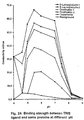
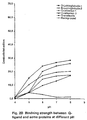
- FIG. 2A shows the elution ionic strength for the different proteins on the quaternary ion exchanger and figure 2B on the tris-ion exchanger. It is apparent that the elution ionic strength for the tris-ion exchanger in the pH range of 6 ⁇ 1 is considerably higher than for the quaternary ion exchanger. Moreover, the difference between elution ionic strength for the protein binding most tightly to the gel and the one binding most weakly is considerably higher on the tris-ion exchanger than on the quaternary ion exchanger (up to pH about 7.5). This shows that it is possible to increase the dynamics in the separation (greater range of ionic strength) by utilizing weak ion exchangers according to the invention.
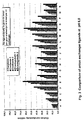
- Figure 3 shows the elution ionic strength in mS/cm at pH 6.0 for prepared ion exchangers for the studied model proteins. It is apparent that ion exchangers exhibiting a primary or secondary amino group at a distance of two carbon atoms away from a hydrogen binding group is distinguished from quaternary ligand for ability to separate the studied model proteins from each other by means of anion exchange chromatography.
- fraction B contained the majority of the low molecular contaminants with a purity for 25-mer of about 40%.
- fraction C contained almost exclusively 25-mer oligonucleotide with a purity of approximately 94%.
- Figure 8A shows the elution pattern obtained when pH of the applied sample was 6.8. Approximately 75% of the bound components were eluted by buffer F but a lesser part (fraction C, 10% of applied A 260 ) is apparently so tightly bound that it requires buffer F for elution.
- the result is similar to the one obtained in experiment 1 and indicates that applied oligonucleotides are bound to the anion exchanger by ionic and hydrogen bond forces. This can be due to the high density of charged groups on the oligonucleotides, which in turn gives them a high buffer capacity.
- the result could be that the pH of the anion exchanger actually is lower than equilibrium-pH, when the solution of nucleotides (adjusted to pH 6.8) passes through the same.
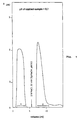
- Figure 8B shows the elution pattern obtained when pH of the loaded sample was 9.0. In this case most of the loaded sample was unbound (88%) and about 10% was eluted with buffer F. This is clearly opposed to the results in figure 8A and shows that the oligonucleotides only are bound to the anion exchanger via ionic forces. The binding capacity of the anion exchanger is significantly lowered since tris(hydroxymethyl)aminomethane is only weakly ionized at this pH.
- experiment 5 show that separation of oligonucleotides on the tris-ion exchanger used is influenced by the pH of the sample as well as pH of the anion exchanger.
- the pH value can be varied between 7 and 9 for optimizing purification of a crude product containing a mixture of synthetically produced oligonucleotides.
- the object of this experiment was to investigate if a high concentration of Tris-HCl buffer (1 M, pH 7.0) could displace oligonucleotides bound to the matrix.
- the column was equilibrated by 50 mM Tris-HCl buffer (pH 7.0 (buffer I), and 2 ml of the sample was applied to the equilibrated column (compare experiment 1 above). After elution of the unbound fraction (A) by equilibration buffer, the column was washed with the following buffers in the following order:
- fraction A exclusively contained low molecular contaminants
- fraction B contained mainly the "trityl-off” variant of the synthetic oligonucleotide with a purity of 80 %
- the most retarded fraction C had a purity of at least 80 % and contained the "trityl-on" variant of the 25-mer oligonucleotide.
Landscapes
- Chemical & Material Sciences (AREA)
- Organic Chemistry (AREA)
- Analytical Chemistry (AREA)
- Chemical Kinetics & Catalysis (AREA)
- Biochemistry (AREA)
- Life Sciences & Earth Sciences (AREA)
- Health & Medical Sciences (AREA)
- Biophysics (AREA)
- General Health & Medical Sciences (AREA)
- Genetics & Genomics (AREA)
- Medicinal Chemistry (AREA)
- Molecular Biology (AREA)
- Proteomics, Peptides & Aminoacids (AREA)
- Peptides Or Proteins (AREA)
Abstract
Description
- The present invention relates to weak anion exchangers, i.e. ion exchangers exhibiting protonated forms of primary, secondary or tertiary amino as anion exchanging ligand. The invention is based on our discovery that this type of anion exchangers, when having certain hydrogen binding atoms at a distance from the nitrogen in the weak anion exchanging group of the ligand as defined in the independent claims, can exhibit enhanced binding properties to peptides or nucleic acids. Because the binding is broken by guanidine or urea, this has been construed as a presence of hydrogen bonds between peptide/nucleic acid and anion exchanging ligand.
- Our discovery has led to both a new process for separating nucleic acid or peptide, and new ion exchange adsorbents (ion exchanging matrices) which can be used in the method.
- By amino group (structures and expression) is meant, if not otherwise stated, a protonated and non-protonated primary, secondary, tertiary amino group as well as a quaternary ammonium group.
- By the expression "to separate" is meant removing or separating off one or more nucleic acids/peptides from a more or less complex mixture of substances. Separation can be used in connection with isolation, purification, and analysis of nucleic acid/peptide. Separation is effected by way of substances interacting with the ligands of the anion exchanger. The interaction is different for different substances which leads to separation.
- By nucleic acid is meant both RNA and DNA, including single and double stranded or modified forms of these, such as phosphothionate forms which exhibit protecting groups and markers (isotope, biotin, hapten etc.). Nucleic acid can be an oligo- or poly-nucleotide. The number of bases and basepairs, respectively in oligonucleotides is typically ≤ 200. The invention is preferably applied to isolation and purification of synthetically produced oligonucleotides.
- By peptide is meant compounds exhibiting polypeptide structure, i.e. proteins, such as lipoproteins, glycoproteins, proteoglycans etc., and oligopeptides (i.e. peptides having 2-10 amino acids).
- EP 276,138 and DE 3,935,098 describe anion exchangers exhibiting weak anion exchanging groups having a hydroxyl group at a distance of two carbon atoms away from a nitrogen in the ion exchanging group. The ion exchanging group has been introduced using a bifunctional reagent which, through a silane group couples to a glass matrix and through an epoxide to a primary or secondary amino
- EP 167,488 also describes ion exchangers exhibiting weak ion exchanging groups having a hydroxyl group at a distance of two carbon atoms away from a nitrogen atom. The ion exchanging group binds through an amide to the matrix. Nothing is mentioned regarding separation of peptides or nucleic acid.
- The inventors of EP 276, 138 turn down our types of ligands since they find their binding ability too strong. The explanation is wrong which probably also is the reason for them not to understand to utilize the general feature on which the strong binding ability of our novel ligands is based (hydrogen-bonding). Probably, they have not even realized the need for binding.at high ionic strength.
- There is also a relatively wide range of literature regarding ECTEOLA cellulose for purification of nucleic acid. ECTEOLA cellulose has been produced by coupling triethanolamine, N(CH2CH2OH)3 to cellulose using epoxide. It has been considered that the resulting groups are -CH2CHOHCH2-N+(CH2CH2OH)3, i.e. ECTEOLA cellulose is a strong ion exchanger. However, it has been shown that commercial variants of ECTEOLA cellulose have relatively high buffer capacity at pH 7-10, which indicates presence of weak ion exchanging groups, which in turn means that hydroxyl groups in triethanol amine has been used for binding to cellulose. Ion exchangers based on triethanol amine, which through reaction with epoxide, have been coupled to cellulose are not comprised within the scope of the new matrices of the invention.
- Weak ion exchangers with ligands which are polyvalent in relation to an amino group have previously been used for chromatofocusing. By this type of chromatography an internal pH gradient is generated on the column. Adsorption and elution is performed with low ionic strengths, to avoid bound substances to be displaced by salts in the buffer. Presently used ionic strengths for adsorption are < 50 mM NaCl, typically < 30 mM. For elution the ionic strengths are even lower (5 fold lower). See Sluyterman et al., "Ten years of chromatofocusing: a discussion" (J,. Chromatog. 470(2) (1989) 417-426). According to this definition chromatofocusing is not within the scope of the process of the invention.
- In chromatography there is a general need for obtaining improved methods for separation of peptides and nucleic acid. Especially can be mentioned purification of proteins from supernatants derived from fermentation and other cell culture plants. These media often contain high levels of salt (conductivity ≥ 15-20 mS/cm) making them difficult to apply directly on conventional ion exchangers. Pretreatment must be done, for example by desalting or dilution, which in turn leads to more expensive process costs. There is also a need for ion exchange adsorbents giving adsorption at high ionic strength, preferably at ionic strengths which correspond to conductivities of ≥ 15-20 mS/cm, and which can be desorbed at low ionic strengths, for example by a simple adjustment of pH.
- Synthetically produced oligonucleotides are often purified on ion exchangers. In addition to the oligonucleotide which is intended to be produced, the synthesis usually also gives shorter variants. Obtained oligonucleotides usually have the terminal protecting group left. This leads to difficulties in purification and processing. It is often desirable to be able to perform chromatography and deprotection in one step.
- There is also a desire for improved ion exchange methods, which give improved dynamics, improved capacity and a reduced number of steps for purification and isolation of peptides and nucleic acid.
- The discovery of the initially mentioned enhanced binding properties has enabled us to provide anion exchangers (I) showing greater dynamics in the separation of proteins and nucleic acid. This can be expressed in such a way that the maximum elution ionic strength in the pH range 2-14 for the anion exchanger (I) is higher than, in preferred cases ≥ 125%, in many cases ≥ 140%, such as ≥ 200% of the required elution ionic strength for a quaternary anion exchanger (II) with ion exchanging group (CH3)3N+- (=Q-group; the same matrix, same coupling group from the quaternary nitrogen and in towards the matrix, the same level of ligand as for the anion exchanger (I) and measured at the same pH) for desorption of at least one of the proteins given in the experimental part (see figure 3), transferrin,
ovalbumin 1,ovalbumin 2, β-lactoglobulin 1 and β-lactoglobulin 2). The variation of the elution ionic strength with pH of the anion exchanger that was used according to the invention for certain proteins is illustrated in figure 2A. - The method according to the invention is defined in
claim 1. - The solution (including the eluent) applied on the anion exchanger is typically aqueous consisting of water, possibly comprising a liquid miscible with water, for example ethanol, methanol, acetonitrile, mixtures miscible with water etc. The solution may also be any of the above mentioned organic solvents. The solutions, especially eluents, often contain salts, buffer substances, substances which break hydrogen bonds etc.
- The solution containing nucleic acid/peptide, can be a supernatant of a cell culture, but can also be a synthesis mixture, possibly partially processed, or an extract. The ionic strength in the solution should be such that it enables the desired binding/adsorption to the ion exchanger. Depending on ion exchanging groups and protein or oligo-/poly-nucleotide, which is to be adsorbed, the ionic strength/conductivity can be higher or lower than 15-20 mS/cm.
- The anion exchangers are represented by formula I. The man skilled in the art can by simple experiments in ways that are shown in the experimental part (Experiment 2C) decide whether an ion exchanger meets the above mentioned criteria for elution ionic strength.----- means that the ligand arm replaces a group R1-6 or a hydrogen in any of the groups R1-6 in the ligand. Preferably the ligand arm is replacing R1 or R5 or R6.
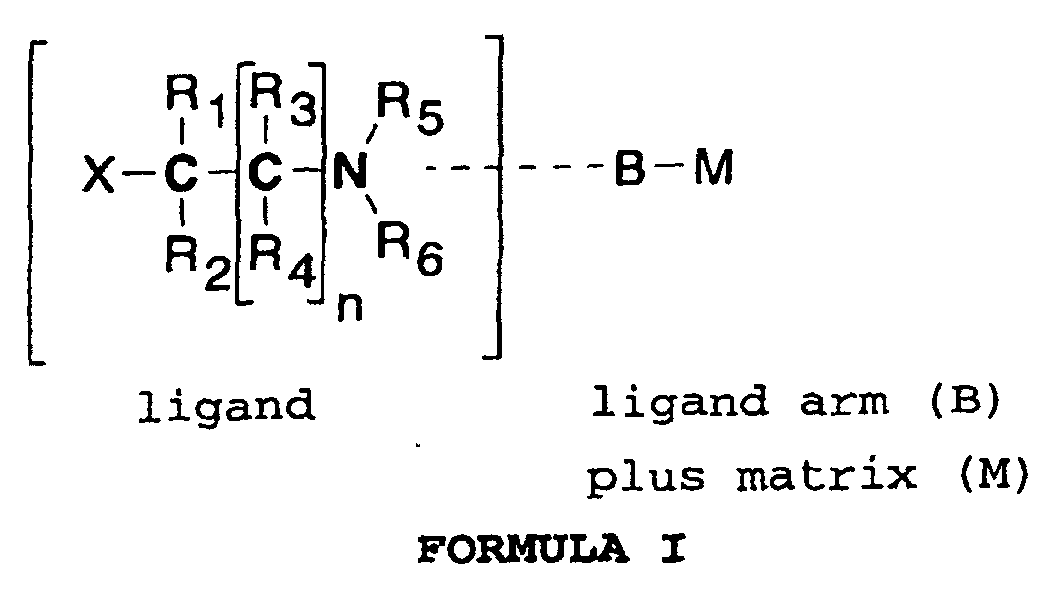
- The ligand often has a molecular weight of ≤ 1000.
- M is a matrix and contains additional ion exchanging ligands, typically according to formula I.
- n is 2.
- R1-6 is selected among hydrogen and linear, branched or cyclic saturated or unsaturated hydrocarbon group, which can be monovalent or divalent. Divalent groups consist of two connected groups R1-6, so that a 5 or 6 membered ring is formed together with any of the atoms in formula I marked with bold letters. Typical examples of pairs of R1-6, forming divalent groups, are R5 and R6, R1 and R5 or R1 and R6. In contemplated hydrocarbon groups the carbon chain can be disrupted by one or more amino nitrogen or ether oxygen atoms (-NR7- and -O- respectively) and/or one or more hydrogens can be substituted by an amino group (-N+R8R9R10) or by a group -OR11. One and the same carbon atom binds, apart from to carbon and hydrogen, typically to maximum one oxygen or nitrogen atom. Contemplated carbon chains, including possible disruptions of oxygen or nitrogen atoms, are generally ≤ 10 atoms in length, preferably 6 or fewer atoms. R1-6 can exhibit one or more ether oxygen atoms, hydroxyl groups or amino nitrogen atoms at a distance of 2 or 3 atoms away from the nitrogen atom, to which R5 and R6 bind (above all in R5 and R6).
- R1, R3 and R4 are preferably hydrogen. In the case where n = 2, R3 and R4 on one of the carbon atoms can be different from those on the other carbon atom.
- Either or both of R5 and R6 can be hydrogen. If either of R5 and R6 is hydrogen it is preferable if the other is unsubstituted alkyl (CnH2n+1- or corresponding cyclic forms CnH2n-; n is an integer, generally 1-10). R5 and R6 can not simultaneously be selected among methyl and ethyl.
- Examples of R1-6 are lower alkyl (having 1-6 carbon atoms), such as methyl, ethyl, n-propyl, isopropyl-, n-butyl-, sec- butyl, t-butyl and isobutyl, including corresponding forms substituted by a group -N+R8R9R10 or -OR11. Exemplary substituted forms are hydroxymethyl; -hydroxyethyl; 2-hydroxypropyl; 2-hydroxy-1-methylethyl; 1-hydroxymethyl-2-hydroxyethyl; 2-hydroxybutyl; 1-(hydroxymethyl)propyl; 1-methyl-2-hydroxypropyl; 2-hydroxy-1,1,-di(hydroxymethyl)ethyl; 1,1-di(hydroxymethyl)ethyl; 1-hydroxymethyl-1-methylethyl; 1,1-di(hydroxymethyl)propyl-; 2,3-dihydroxypropyl; 2,3,4-trihydroxybutyl-; 2,3,4,5-tetrahydroxypentyl and 2,3,4,5,6-pentahydroxyhexyl- and corresponding amino groups where for example -NH2 substitutes one or more -OH.
- R7-11 are selected among the same groups as R1-6, preferably one, two, three or four of R7-11 are hydrogen or lower alkyl C1-6. In the case where all R8-10 are alkyl groups -N+R8R9R10 is a quaternary ammonium group.
- Divalent hydrocarbon groups which can be formed by pairs of groups R1-6 are for example -CH2CH2- and -CH2CH2CH2-; -CH2CH2CH2CH2-; -CH2CH2CH2CH2CH2-; -CH2CH2OCH2CH2-; -CH2CH2NHCH2CH2-; -CH2NHCH2CH2-; -CH2OCH2CH2-; -CH2CH2CHOHCH2CH2- and -CH2CH2CH[N+(CH3)3]CH2CH2-.
- X is -OH or -NR12R13, where R12-13 are selected among the same groups as R1, R3, R5, and R6. In the most common case at least one of R12-13 is hydrogen, i.e. -NHR12 or -NHR13.
- The ligand arm B is an organic structure which is hydrolytically stable under pH conditions normally utilized for anion exchange chromatography, i.e. pH 2-14. The ligand arm lacks typically hydrolytically unstable structures, such as silane, carboxylic acid ester (-COO-) or carboxylic acid amide (-CONH-). The ligand arm is preferably a linear, branched or cyclic saturated or unsaturated hydrocarbon chain, which optionally is broken by one or more ether oxygen- and/or amino nitrogen atoms (-NR'7-) or substituted by one or more groups -N+R'8R'9R'10 or -OR'11. R'7-11 are selected according to the same rules as for R7-11. In the most common case R'7, R'11 and at least one of R'8-10 are hydrogen, preferably two or three. The R'7-11, that are not hydrogen, are typically lower alkyl (having 1-6 carbon atoms). One and the same carbon atom in the ligand arm binds, apart from carbon and hydrogen, typically to at the most one oxygen or nitrogen atom.
- Preferred ligand arms B often have a length of 0-20 atoms. The ligand arm B often derives from couplings involved in a reactions between epoxide or -CH2X' (where X'=halogen, which can be replaced by another functionally equivalent group, such as tosylate) and ammonia, primary, secondary amino (NHR5R6, where R5 and R6 are according to above) or alcoholic hydroxyl. The group -CH2X' can be included in halohydrin, alkyl halide, vicinal dihalide etc. Preferred couplings is effected via epoxide, halohydrin and vicinal dihalide, as they per se lead to a hydroxyl group that is β (at a distance of 2 carbon atoms away) to an amino group. Coupling via epoxide, halohydrin and vicinal dihalide means that in formula I n =1, X = OH and R3-4 = H, i.e. the structure nearest to NR5R6 becomes -CH2CHOHCH2-. Example of preferred structures -B-CHXCR3R4- which can be formed as a result of this type of couplings are -CH2CHOHCH2-O-CH2CHOHCH2-; -CH2CHOHCH2-O-(CH2)4-O-CH2CHOHCH2-; -CH2CHOHCH2- etc., i.e. B is -CH2CHOHCH2-O-CH2-; -CH2CHOHCH2-O-(CH2)4-O-CH2-; -CH2-. Epoxide-/vicinal dihalide-/halohydrin groups can be introduced in a known way by allylation of a polymer containing hydroxyl group(s), for example by reaction with allylglycidyl ether, and subsequent halogenation. See e.g. Nochumsson S (EP 87995) and Lindgren G (WO 9404192).
- The ligand arm B binds typically to the matrix M through an ether structure where the ether oxygen derives from a hydroxyl in the matrix.
- Thioether (-S-) and sulphonamide (-SO2NH-) have comparable hydrolytic stability with ether and can thus equivalently replace ether in the ligand arm or in the groups R1-13 or R'7-11.
- Preferred ligands are formed if the following compounds are reacted with matrix bound epoxide/halohalide/vicinal dihalide:

- The shown ligands have been formed as a result of coupling through the amino nitrogen. Alternatively coupling can be effected at a hydroxyl group, giving other ligands according to formula I. This means that one and the same anion exchanger according to the invention often exhibits one or more ligands according to formula I. The coupling reaction can be directed so that it occurs more or less selective at either the amino nitrogen or the hydroxyl oxygen. It appears that the ligand can contain atoms both from the compound which is coupled to the matrix and from the reactive group utilized for coupling.
- At the date of priority, the most preferred ligands for separation of nucleic acid were those which are formed if matrix bound vicinal dihalide, halohydrin or epoxide is reacted with t-butylamine, 2-amino-1,3-dihydroxypropane, tris(hydroxymethyl)methylamine, ethanolamine or n-propylamine.
- The preferred anion exchangers for peptide separation require elution ionic strengths of more than, typically ≥125%, in many cases ≥140%, such as ≥200%, of the elution ionic strength which, according to above, is required for a quaternary ion exchanger with Q-groups for desorption of at least one of the proteins given in the experimental part (figure 3).
- The matrix M in the invention is generally a hydrophilic polymer insoluble in water, which also includes hydrophobic polymers which have been derivatized so as to be hydrophilic. Examples are polyhydroxy polymers based on polysaccharides, such as agarose, dextran, cellulose, starch, pullulane etc., and purely synthetic polymers, such as polyacrylamide, polymethacrylamide, poly(hydroxyalkyl vinyl ethers), poly(hydroxyalkyl acrylate) and corresponding polymethacrylate, polyvinyl alcohol, and polymers based on styrene and divinylbenzene (DVB), and copolymers where corresponding monomers are included. Polymers soluble in water, can be derivatized to insolubility, e.g. by cross-linking or by attachment via adsorption or covalent binding to an insoluble body. Hydrophilic groups can be introduced on hydrophobic polymers (e.g. styrene-DVB-copolymers) by effecting polymerisation together with monomer, having groups which can be transformed to OH, or by hydrophilization of the final polymer, e.g. by adsorption of suitable compounds, such as hydrophilic polymers. The matrix is often porous to increase the surface, which is contacted with surrounding liquid. Polymer arms (tentacles) can also be included in the matrix, each arm exhibiting one or more ligands bound via the ligand arm B according to formula I.
- Preferred matrices lack hydrolytically unstable groups such as silane, ester and amide groups.
- The level of ligand according to formula I in the ion exchangers of the invention and in the ion exchangers which can be used in the method of the invention is generally in the range of 0.001-4 mmole, preferably 0.01-1 mmole, per ml matrix saturated with water. Possible and preferred ranges are determined by the structure of the matrix. The level of ligand is thus for agarose-based matrices generally in the range of 0.1-0.3 mmole per ml swelled matrix (gel). For dextran-based matrices the range can be expanded up to 0.5-0.6 mmole per ml swelled matrix (gel). Contemplated levels of ligand are determined in a way that is shown in the experimental part.
- These are according to formula I as defined in
claim 1 with the additional conditions that if one or two of the groups R5 and R6 contains one or more nitrogen atoms then at least one of the groups also contains one or more oxygen atoms (-OR11, where R11 is according to above). Both R5 and R6 and cannot at the same time be selected among methyl and ethyl. Preferred forms of the ion exchangers of the invention exhibit elution ionic strengths according to above. Anion exchangers produced by coupling of triethanolamine via a reaction with epoxide are not a part of this aspect of the invention. The meaning of -----, n, B, M, X, R1-4, R7-11 and R'7-11 is the same as for formula I. The anion exchangers according to the invention are defined in claim 17. - The adsorption in the process of the invention is performed in a way which has been stated above.
- By, after the adsorption step, possibly after intermediate washing, raising the ionic strength in an aqueous eluent and/or adding a denaturating agent and/or by varying pH, it is possible in a known way to selectively desorb substances, which have been adsorbed, for example peptides and nucleic acid, and collect the desired substance in a purified form in the eluate. Changes of ionic strength, presence of denaturating agents and pH can be performed gradually (one or more steps) or in form of a continuous gradient.
- Desorption, especially for peptides, can be performed at higher ionic strength than what is required on desorption of the same substance from a quaternary ion exchanger with Q-group according to above.
- Typical agents which break hydrogen bonds (denaturating agents) are guanidine and urea. Information regarding agents which break hydrogen bonds see Levine et al., Biochemistry 2 (1963) 168-175. Depending on how tightly the substance to be desorbed binds to the ligand and the choice of agents which break hydrogen bonds , the concentration of agents which break hydrogen bonds may vary from 0 M up to the solubility for respective agent. Typical levels of agents which break hydrogen bonds are in the range of 0.1 M up to 5 M. As an agent which breaks hydrogen bonds on desorption, the ligand of the ion exchanging matrix can also potentially be used in free form or a homologous compound according to the formulawhere R1-6, n and X have the same meaning as in formula I. Change of pH can per se lead to breaking of hydrogen bonds.

- Use of denaturating/hydrogenbond-breaking agents is above all applicable for separation of nucleic acid and can easily be combined with a salt gradient (=conductivity gradient) or changes of pH.
- Generally speaking, if the adsorption involves a significant portion of hydrogen bonds , desorption can be performed at relatively low ionic strengths if agents which break hydrogen bonds (e.g. free ligand) are included in the desorption solution or by raising pH so that the ligand is unloaded and the hydrogen bonds are impaired.
- Salt desorption (possibly in form of gradient) can be used for both peptides and nucleic acids and means that the concentration of salt (ionic strength) is increased. The increase may vary from 0 M up to the solubility for respective salt. The increase is often in the range of 0.01-4 M.
- pH for the initially applied aqueous solution and the eluent may vary. For peptides, which principally are bound to the adsorbent through ionic interaction, the greatest differences in elution ionic strengths for different proteins are obtained at a pH where the weak anion exchanging groups are positively charged and the peptide which is to be separated is negatively charged. This means generally that too high pH values (> 10) and too low pH values are to be avoided. The interaction of hydrogen binding character means that the present type of anion exchanger also can bind weakly positively charged proteins (see figure 2A).
- The pH of the eluent used for desorbing adsorbed nucleic acid/peptide is preferably adjusted so that buffering components not can bind to the ligand of the anion exchanger, i.e. they are positively charged. Suitable buffer components are cationic bases and acids, such as amines, and zwitterions. Buffering components in utilized eluents are typically within the concentration range of 10-50 mM.
- The process of the invention according to the above can be seen as using anion exchangers for separation according to the above with the condition that chromatofocusing according to the above and separation on ECTEOLA-cellulose are not included.
- The invention can be used for conventional chromatography on a packed and fluidized bed in column, batchwise adsorption procedures etc. The matrices can be in form of particles (beads), monolitic or in form of surfaces (e.g. in sensors).
-
- Figure 1:
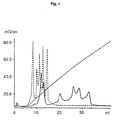
- Chromatography for comparison of agarose gel with tris-ligand described above (ligand according to formula I = (HOCH2)3CH2NCH2CHOH-, ligand arm -CH2OCH2CHOHCH2-) and with Q-ligand (ligand = (CH3)3N+CH2CHOH-, ligand arm -CH2OCH2CHOHCH2-). Broken line chromatogram refers to Q-ligand (Q-Sepharose® HP, Pharmacia Biotech AB, Uppsala, Sweden). Solid line chromatogram refers to tris-ligand.
- Figures 2A and 2B:
- pH dependence of the elution ionic strength for proteins on above-described agarose gels with tris-ligand (2A) and Q-ligand (2B), respectively.
- Figure 3:
- Elution ionic strengths - comparison between different
anion exchange ligands:
- A-C. Q-ligand 0.03, 0.11, 0.17 mmol/ml, respectively
- D. ammonia 0.10 mmole/g;
- E. bisaminopropylamine 0.31 mmole/g;
- F. propylamine 0.13 mmole/g;
- G. t-butylamine 0.15 mmole/g;
- H. ethanolamine 0.14 mmole/g;
- I. diethanolamine 0.15 mmole/g;
- J. triethanolamine 0.06 mmole/g;
- K. 2-amino-1,3-propanediol 0.14 mmole/g;
- L. 3-amino-1,2-propanediol 0.14 mmole/g;
- M. 2-amino-2-methyl-1,3-propanediol 0.15 mmole/g;
- N. tris(hydroxymethyl)aminomethane 0.12 mmol/g
- O. bistrispropane 0.11 mmole/g);
- P. aminosorbitol 0.11 mmole/g;
- Q. methylmorpholine 0.12 mmole/g;
- R. morpholine 0.28 mmole/g
-
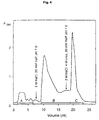
- Figure 4:
-
Experiment 1. Elution atpH 7 with salt followed by urea. - Figure 5:
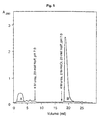
-
Experiment 2. Elution atpH 7 with urea followed by salt. - Figure 6:
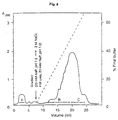
-
Experiment 3. Elution atpH 7 with salt gradient - Figure 7:
-
Experiment 4. Elution atpH 9 with salt. pH for loaded sample 8.2. - Figure 8A:
-
Experiment 5. pH for loaded sample 6.8. Elution with salt followed by salt plus urea. - Figure 8B:
-
Experiment 6. pH for loaded sample 9.0. Elution with salt. - Cross-linked agarose (30 µ particles) prepared by reaction between epichlorohydrin and agarose in the presence of NaOH according to Porath et al (J. Chromatog. 60 (1971) 167-77 and U.S. 3,959,251) was reacted with allylglycidyl ether with NaOH as a base to a allyl level (CH2=CHCH2OCH2CHOHCH2-) of 0.18-0.22 mmole/ml). 40 g of the cross-linked allylated agarose washed with water was added together with 160 ml distilled water and 9.2 g sodium sulphate in a 400 ml beaker equipped with a suspended magnetic stirrer, after which bromine water was added to remaining yellow dyeing. Reduction of excess of bromine was effected with sodium formiate, after which the gel was washed with distilled water (> 5 bed volumes), dry suctioned for 15-30 seconds. Subsequently the brominated gel was added together with 60 ml distilled water and 60 g tris(hydroxymethyl)aminomethane (= tris, gives the ligand (HOCH2)3CH2NCH2CHOH- (according to formula I, herein below this ligand is called tris-ligand and the ion exchanger is called tris-ion exchanger) in a 3-necked 100 ml Bellco-flask with suspended magnetic bar. Initially the pH was 10.9. The reaction was continued over night (23 hours) at 40°C. pH after completion of reaction time was 10.0. Subsequently, the gel was washed thoroughly with distilled water (> 10 bed volumes) and possible storage was conducted in distilled water containing 23 % (w/w) ethanol.
- Inflection point titration directly on the substituted matrix with NaOH-solution gave a level of ligand of 0.13 mmole/g dry suctioned gel.
- Starting from cross-linked allylhydroxypropyl agarose, according to above, ammonia (0.10 mmole/ml), bisaminopropylamine (0.31 mmole/ml), propylamine (0.13 mmole/ml), t-butylamine (0.15 mmole/ml), ethanolamine (0.14 mmole/ml), diethanolamine (0.15 mmole/ml), triethanolamine (0.06 mmole/ml), 2-amino-1,3-propanediol (0.14 mmole/ml), 3-amino-1,2-propanediol (0.14 mmole/ml), 2-amino-2-methyl-1,3-propanediol (0.15 mmole/ml), bistrispropane (0.11 mmole/ml), aminosorbitol (0.11 mmole/ml) and methylmorpholine (0.12 mmole/ml) were coupled in an analogous way. The ion exchange capacity is put within brackets for each complete ion exchanger.
- These were prepared from cross-linked agarose produced according to the above, substituted with allyl-groups in an amount that matched predetermined ion exchange capacity. The allylated agarose was treated with bromine and reacted with trimethylamine. Ion exchangers having three capacities were prepared (0.03 mmole/l, 0.11 mmole/l and 0.17 mmole/l).
- Inflection point titration under conditions of equilibrium directly on the ion exchanger in the pH range of 2-11 for weak ion exchangers. Strong ion exchangers were saturated with Cl- and the excess was washed off with distilled water, after which adsorbed chloride ion was eluated with a solution of AcO- and was determined by AgNO3 titration of the eluate.
- Q-Sepharose® HP (Pharmacia Biotech, Uppsala, Sweden) with a capacity of 0.17±0.3 mmole/ml, and the same coupling chemistry and matrix as in experiment 1 B.
- Gel according to above was packed in a
HR 5/5 column (Pharmacia Biotech AB) to a gel height of 5-6 cm with a back pressure of about 5 bar. - Sample:
-
transferrin 1 mg/ml,ovalbumin 2 mg/ml,lactoglobulin 2 mg/ml, loop volume 50 µl - Buffer A:
-
piperazine 20 mM, pH 6.0 - Buffer B:
-
piperazine 20 mM, NaCl 1.0 M, pH 6.0 - Flow:
- 0.2 ml/min
- Gradient volume:
- 40 ml
- UV-detector:
- 280 nm 0.05 AU
- Column and gel according to 2
A. Flow 1 ml/min. Gradient: 20 ml to 0.5 M NaCl (40 ml to 1.0 M NaCl where appropriate). Samples are evident from figures 2A and 2B. - Buffer by respective pH.
-
pH 4Hepes 20 mM-HCl - pH 4.6
piperazine 20 mM-HCl -
pH 5 piperazine 2.0 mM-HCl - pH 5.5
piperazine 20 mM-HCl -
pH 6piperazine 20 mM-HCl -
pH 7Bes 20 mM - pH 7.5 Hepes 20 mM-NaOH
- pH 8.0 Hepes 20 mM-NaOH
- pH 8.2 tris 20 mM-HCl
-
pH 9taurine 20 mM-NaOH -
- Result: See figures 2A and 2B in which conductivity at top maximum is plotted versus pH. Figure 2A shows the elution ionic strength for the different proteins on the quaternary ion exchanger and figure 2B on the tris-ion exchanger. It is apparent that the elution ionic strength for the tris-ion exchanger in the pH range of 6±1 is considerably higher than for the quaternary ion exchanger. Moreover, the difference between elution ionic strength for the protein binding most tightly to the gel and the one binding most weakly is considerably higher on the tris-ion exchanger than on the quaternary ion exchanger (up to pH about 7.5). This shows that it is possible to increase the dynamics in the separation (greater range of ionic strength) by utilizing weak ion exchangers according to the invention.
- Column according to 2 A. Gel according to 1 A.
- Samples:
- Transferrin (1 mg/ml), ovalbumin (1 mg/ml), β-lactoglobulin (1 mg/ml).
- Buffer A:
- Piperazine 20 mM pH 6.0
- Buffer B:
- Piperazine 20 mM, NaCl 1.0 M or 0.5 M, pH 6.0
- Gradient volume:
- 40 ml (to 1 M) and 20 ml (to 0.5 M) respectively
- Result: Figure 3 shows the elution ionic strength in mS/cm at pH 6.0 for prepared ion exchangers for the studied model proteins. It is apparent that ion exchangers exhibiting a primary or secondary amino group at a distance of two carbon atoms away from a hydrogen binding group is distinguished from quaternary ligand for ability to separate the studied model proteins from each other by means of anion exchange chromatography.
- Ligands: Experiments have been conducted with the same ligands as for proteins. Only results for tris-ion exchangers are presented.
- Columns:
HR 5/5 column packed to a bed volume of about 1 ml. Buffers : - A. 20 mM sodium phosphate, pH 7.0.
- B. 2 M NaCl in buffer A, pH 7.0.
- C. 2 M NaCl & 4 M urea in buffer A, pH 7.0.
- D. 4 M urea in buffer A, pH 7.0
- E. 20 mM Gly/NaOH, pH 9.0.
- F. 2 M NaCl in buffer E, pH 9.0.
-
- Sample: Synthetic phosphorothioate 25-mer oligonucleotide (
mol weight 7 500 dalton) with a removed protecting group (trityl). Concentration was 1.08 mmole/ml (8.1 mg/ml) and conductivity about 2 mS/cm. After synthesis and deprotection of trityl group the sample was rotation evaporated (to remove ammonia) and redissolved in deionized water. pH in the solution was typically adjusted to 8.2 before the sample was applied on the packed column (HR 5/5,bed volume 1 ml). - The sample (2 ml containing 16 mg synthetic oligonucleotide, total A260 = 440) was applied to the column (
HR 5/5, Vt=1 ml), which was pre-equilibrated with buffer A or buffer E, which was followed by washing of unbound components with buffer A or E. Elution was conducted with buffer B and buffer C (for runs at pH 7.0) or with buffer F (for runs at pH 9.0) (elution rate 153 cm/h, temperature 21°C). The eluate was collected as fractions A, B, C etc. Absorbance at 260 nm was measured for each fraction. The percentage distribution in relation to the total absorbance applied to the column was calculated for each fraction. Collected fractions were desalted on Sephadex® G-25 equilibrated with deionized water. A suitable volume of each fraction was then analysed by capillary electrophoresis to determine purity. - Elution course see figure 4. The sample was applied on a column equilibrated with buffer A. After elution of unbound material (fraction A,) with equilibration buffer, bound material was eluted with buffer B (fraction B) followed by buffer C (fraction C). Based on absorbance measurements at A260 the distribution of oligonucleotide was: fraction A 6%, fraction B 32% and fraction C 62%. Analysis by capillary zone electrophoresis of fractions B and C showed that fraction B almost exclusively contained low molecular contaminants while fraction C contained 25-mer with a purity of at least 90%. The fact that this fraction was eluted with buffer containing 2 M NaCl and 4 M urea indicates that ionic and hydrogen bonds are involved in binding of oligonucleotide to the weak anion exchanger at
pH 7. - The experiment was repeated with the double amount of sample (32 mg 25-mer). The results were generally the same as previously and show that the anion exchanger has high adsorption capacity for this type of oligonucleotides. The counterpart to fraction C showed even higher purity, which can indicate sample-sample displacement with improved purity for the most tightly bound component (in this case 25-mer).
- The elution pattern is apparent from figure 5. In this experiment,
experiment 1 was repeated except that, after washing with equilibrium buffer, the column was first eluted with buffer D (4 M urea) and then with buffer C. Figure 4 shows that small amounts of unbound material was washed with equilibrium buffer (fraction A), that no bound components were eluted only with buffer D but that quantitative elution was obtained with buffer C (fraction B). The results support that the binding to the weak anion exchanger is effected via interaction of ionic and hydrogen binding. Percentage distribution between the fractions was -fraction A 6% and fraction B 93%. Analysis by capillary electrophoresis showed that fraction B was 78% pure 25-mer with several small low molecular peaks. It is evident that an intermediate washing of the column with 2 M NaCl (buffer B, see experiment 1) results in elution of the majority of low molecular compounds and a high purity of 25-mer in fraction C. - The elution pattern is apparent from figure 6. In this experiment,
experiment 1 was repeated except that, after washing with equilibrium buffer, the column was eluted with a linear gradient from buffer A to buffer C (where in the concentration of NaCl & urea was increased simultaneously and linearly) or from buffer D to buffer C. In the latter case the column was first washed with buffer D to equilibrate it with the buffer containing 4 M urea. In both experiments elution of bound material occurred as a broad peak with several shoulders, especially in the front-part. This peak was collected as two fractions (fraction B and fraction C, fraction A was material following after washing with equilibrium buffer). Analysis by capillary zone electrophoresis showed that the front-part (fraction B) contained the majority of the low molecular contaminants with a purity for 25-mer of about 40%. The later part of the elution curve (fraction C) contained almost exclusively 25-mer oligonucleotide with a purity of approximately 94%. -
Experiment 1 was repeated, with the exception that adsorption and elution of the mixture of oligonucleotides was performed atpH 9 using buffer E and F. pH of the sample was adjusted to pH 8.2 and 2 ml (16.2 mg oligonucleotide) was applied to the column, which had been equilibrated with buffer E. After elution of the unbound fraction (A) with buffer E, bound components (fraction B) were eluted with buffer F. Based on A260 for fractions A and B percent distribution was calculated to 47% in fraction A and to 49% in fraction B. The elution pattern is shown in figure 7. The obtained result shows: - 1. Opposed to the results for elution at
pH 7, the bound components were eluted completely with 2 M NaCl (buffer F). At this pH the oligonucleotides seemed to be bound exclusively by ionic interaction without any hydrogen bonds. - 2. Analysis by capillary electrophoresis showed that the unbound components (fraction A) contained contaminants and that fraction B had a purity of at least 60%. The purity of fraction B was increased to about 90% if it was eluted with a linear gradient from buffer E to buffer F.
-
- It was noted that separation of oligonucleotides at
pH 9 was not reproducible. This was principally due to pH differences in the sample applied to the column, which can be seen from the elution pattern in figures 8A and 8B. The experiments are identical withexperiment 4 above. - Figure 8A shows the elution pattern obtained when pH of the applied sample was 6.8. Approximately 75% of the bound components were eluted by buffer F but a lesser part (fraction C, 10% of applied A260) is apparently so tightly bound that it requires buffer F for elution. The result is similar to the one obtained in
experiment 1 and indicates that applied oligonucleotides are bound to the anion exchanger by ionic and hydrogen bond forces. This can be due to the high density of charged groups on the oligonucleotides, which in turn gives them a high buffer capacity. The result could be that the pH of the anion exchanger actually is lower than equilibrium-pH, when the solution of nucleotides (adjusted to pH 6.8) passes through the same. This hypothesis is probable since tris(hydroxymethyl)aminomethane is weakly dissociated atpH 9. Our results support this hypothesis, since pH in the unbound fraction (fraction A) was 8.9 while pH for the bound fraction (B) was 8.2, though pH in the elution buffer was 9.0 throughout the experiment. - Figure 8B shows the elution pattern obtained when pH of the loaded sample was 9.0. In this case most of the loaded sample was unbound (88%) and about 10% was eluted with buffer F. This is clearly opposed to the results in figure 8A and shows that the oligonucleotides only are bound to the anion exchanger via ionic forces. The binding capacity of the anion exchanger is significantly lowered since tris(hydroxymethyl)aminomethane is only weakly ionized at this pH.
- The results obtained in
experiment 5 show that separation of oligonucleotides on the tris-ion exchanger used is influenced by the pH of the sample as well as pH of the anion exchanger. The pH value can be varied between 7 and 9 for optimizing purification of a crude product containing a mixture of synthetically produced oligonucleotides. -
Experiment 1 was repeated, with the exception that, after elution of the unbound fraction A, oligonucleotides which bound to the matrix were eluted by a linear gradient (10 bed volumes) of buffer A (pH 7.0) to buffer F (pH 9.0). The result showed that bound oligonucleotides started eluting from the matrix when pH of the effluent was about 8.5. The eluted peak was broad and the purity of the strongly bound component was comparable to the one obtained inexperiment 3 above. The result shows that the synthetic oligonucleotide (25-mer) is bound to the matrix by a combination of ionic and hydrogen bonds up to pH 8.5 and by ionic interactions only at higher pH values. - The object of this experiment was to investigate if a high concentration of Tris-HCl buffer (1 M, pH 7.0) could displace oligonucleotides bound to the matrix. The column was equilibrated by 50 mM Tris-HCl buffer (pH 7.0 (buffer I), and 2 ml of the sample was applied to the equilibrated column (compare
experiment 1 above). After elution of the unbound fraction (A) by equilibration buffer, the column was washed with the following buffers in the following order: - Buffer II: 3 M NaCl in equilibration buffer (buffer I)
- Buffer III: 1 M Tris-HCl buffer, pH 7.0, and
- Buffer IV: 2 M NaCl, 1 M Tris-HCl, pH 7.0.
-
- The result showed that, of the loaded material:
- 1. 12.5 % did not bind to the column
- 2. 43 % was eluted by buffer II
- 3. 34 % was eluted by buffer III
- 4. 11 % was eluted by buffer IV.
-
- Thus it is clear that the majority of the tightly bound oligonucleotides (about 34 %) is eluted with 1 M Tris-HCl buffer, pH 7.0. The most likely explanation for this is that the combination of tris(hydroxymethyl)methylamine and the counter ion Cl- does weaken hydrogen bonds and ionic bonds, respectively, between the ligand and bound oligonucleotides. This explanation is in line with the proposed mechanism for adsorption of oligonucleotides to tris-ligand and its analogs. The result also shows that higher ionic strength (see buffer IV) is required for eluting the most tightly bound fraction. This gives further support to our hypothesis, that binding at pH 7.0 of synthetic oligonucleotides to matrix, exhibiting tris-ligand, is due to ionic interaction with considerable enhancement through hydrogen binding.
- This experiment was performed at pH 9.0 and followed the procedure given in
experiment 4 above. The crude sample contained a mixture of "trityl-on" and "trityl-off" synthetic oligonucleotides. Approximately 16 mg of the sample in 1 ml deionized water was applied to the column and the experiment was run according toexperiment 4. Elution with buffer E (2 M NaCl in 20 mM Gly/NaOH buffer, pH 9.0) gave two well separated fractions (designated B and C). Percentage distribution of material absorbing at 260 nm (A260) in the pooled fractions was : fraction A = 14 %, fraction B = 45 %, and fraction C = 44 %. Analysis by capillary zone electrophoresis showed that fraction A exclusively contained low molecular contaminants, fraction B contained mainly the "trityl-off" variant of the synthetic oligonucleotide with a purity of 80 %, and the most retarded fraction C had a purity of at least 80 % and contained the "trityl-on" variant of the 25-mer oligonucleotide. - This result, together with the earlier described, illustrate the great potential of the invention as a chromatography method for readily purification of synthetic oligonucleotides in high yield and with high purity. By choosing optimal pH conditions during the adsorption process the capacity for
oligonucleotide 5 of the matrix used can be higher than 20 mg/ml adsorbent.
Claims (24)
- A chromatographic process for separating off a peptide or a nucleic acid, comprising contacting an aqueous solution containing the peptide or the nucleic acid with an anion exchanger (I) under such conditions that the anion exchanger (I) binds substances in the solution so that the desired peptide or nucleic acid is separated from at least one substance in the solution, whereinwherein
 a. ------ means that the ligand arm B is replacing a group R1-6 or a hydrogen in any of the groups R1-6 in the ligand,b. M is a polymer matrix containing further anion exchanging ligands according to Formula (I),c. B is an organic structure which lacks structures that are hydrolytically unstable at pH 2-14, such as silane, carboxylic acid ester (-COO-) or carboxylic acid amide (-CONH-), and which contains hydrocarbon chains selected among the same carbon chains as R1-6,d. n is 2,e. R1-6 are selected among hydrogen or linear, branched or cyclic saturated or unsaturated hydrocarbon group, which can be monovalent or divalent, with a carbon chain which optionally is disrupted by one or more amino nitrogen- or ether oxygen atoms (-NR,- and -O- respectively) and/or has one or more hydrogens replaced by an amino group (-N+R8R9R10) or by a group
-OR11, with the proviso that:A. if R1-6 is a divalent group then this comprises two groups R1-6, which together with at least one of the atoms written in bold letters in formula I form a 5 or 6 membered ring, andB. R5 and R6 can not simultaneously be selected among methyl and ethyl,f. R7-11 are selected among the same groups as R1-6, preferably lower unsubstituted alkyl (C1-6) and hydrogen,g. X is -OH or -NR12R13, R12-13 being selected among the same groups as R1-6,h. anion exchangers which have been prepared by coupling triethanol amino to cellulose via epoxide are not included. - Process according to claim 1, characterized in that B is replacing R1 or R2.
- Process according to any of the claims 2, characterized in that B is a linear, branched or cyclic saturated hydrocarbon chain optionally disrupted by ether oxygen atoms and which optionally has one or more hydrogens replaced by hydroxyl.
- Process according to any of the claims 2-3, characterized in that B is -CH2CHOHCH2-O-CH2-, -CH2CHOHCH2-O-(CH2)4-O-CH2-, -CH2-.
- Process according to any of the claims 2-4, characterized in that n is 1 and R1-4 are hydrogen.
- Process according to any of the claims 2-5, characterized in that R5 and/or R6 is hydrogen.
- Process according to any of the claims 2-6, characterized in that X is a hydroxyl group.
- Process according to any of the claims 2-7, characterized in that at least one of R5-6 contains a group -N+R8R9R10) or -OR11 at a distance of two carbon atoms away from the nitrogen atom to which R5-6 bind, wherein R8-11 are selected among the same groups as R1, R2, R5 and R6, preferably hydrogen or lower alkyl (1-6 carbon atoms).
- Process according to any of the claims 2-8, characterized in that the ligand is selected among:-CHOHCH2NH2; -CHOHCH2NH(CH2)3NH(CH2)3NH2; -CHOHCH2N[CH2)3NH2]2; -CHOHCH2NH[C(CH3)3]; -CHOHCH2NHCH2CH2OH; -CHOHCH2N(CH2CH2OH)2; -CHOHCH2NHC(CH2OH)3; -CHOHCH2NHCH(CH2OH)2; -CHOHCH2NHCH2CH2CH3; -CHOHCH2NHCH2CHOHCH2OH; -CHOHCH2NHC(CH3)(CH2OH)2; -CHOHCH2NHCH2(CHOH)4CH2OH; -CHOHCH2N[C(CH2OH)3](CH2)3NHC(CH2OH)3.
- Process according to any of the claims 2-9, characterized in that a peptide is separated off and that the anion exchanger exhibits ligands selected among:-CHOHCH2NH2; -CHOHCH2NH(CH2)3NH(CH2)3NH2; -CHOHCH2NHCH2CH2OH; -CHOHCH2NHCH(CH2OH)2; -CHOHCH2NHCH2CHOHCH2OH; -CHOHCH2NHC(CH3)(CH2OH)2; -CHOHCH2NHC(CH2OH)3; -CHOHCH2N[C(CH2OH)3](CH2)3NHC(CH2OH)3.
- Process according to any of the claims 1-10, characterized in that a peptide is separated off by adsorption to the anion exchanger and that adsorbed peptide is eluted bya. a denaturing agent, e.g. urea or guanidine and/orb. salt, and/orc. change of pH.
- Process according to any of the claims 1-11, characterized in that a peptide is separated off and that the peeptide is applied to the anion exchanger in a solution having an ionic strength of ≥ 15 mS/cm.
- Process according to any of the claims 2-9, characterized in that nucleic acid is separated off and that the anion exchanger exhibits ligands selected among:-CHOHCH2NH[C(CH3)3]; -CHOHCH2NHCH(CH2OH)2; -CHOHCH2NHC(CH2OH)3; -CHOHCH2NHCH2CH2OH; -CH2CHOHCH2NHCH2CH2CH3.
- Process according to any of the claims 2-9 and 13, characterized in that nucleic acid is separated off by adsorption to the ion exchanger and that adsorbed nucleic acid subsequently is eluted bya. a denaturing agent, e.g. urea or guanidine and/or,b. salt and/orc. increasing of pH so that the ligands are completely or partially unloaded.
- Process according to any of the claims 2-9 and 13-14, characterized in that the nucleic acid is a synthetic oligonucleotide.
- Process according to any of the claims 1-15, characterized in that the anion exchanger is according to any of the claims 17-23.
- A chromatographic anion exchanger comprising the structurewhere
 a. ------ means that the ligand arm B is replacing a group R1-6 or a hydrogen in any of the groups R1-6 in the ligand,b. M is a polymer matrix containing further anion exchanging ligands,c. B is an organic structure which lacks hydrolytically unstable structures, such as silane, carboxylic acid ester (-COO-) or carboxylic acid amide (-CONH-), and which contains hydrocarbon chains selected among the same carbon chains as R1-4'd. n is 2,e. i. R1, R2, R3 and R4 are selected among hydrogen and linear, branched or cyclic saturated or unsaturated hydrocarbon group, which can be monovalent or divalent, with a carbon chain which optionally is disrupted by one or more amino nitrogen- or ether oxygen atoms (-NR7- and -O- respectively) and/or has one or more hydrogens replaced by an amino group (-N+R8R9R10) or by a group -OR11, with the proviso thatA. if any of the groups is divalent then this comprises two groups R1-6, which together with at least one of the atoms written in bold letters in formula I form a 5 or 6 membered ring,ii. R5 and R6 are selected among the same groups as R1-4 with the provisos thatB. if one or two of the groups R5 and R6 contain one or more nitrogen atoms then at least one of the groups also contains one or more oxygen atoms (-OR11, where R11 is according to paragraph f below),C. both R5 and R6 cannot at the same time be selected among methyl and ethyl,f. R7-11 are selected among the same groups as R1-4, preferably lower unsubstituted alkyl (C1-6) and hydrogen,g. X is -OR or -NR12R13, wherein R12 and R13 are selected among the same groups as R1-6,h. anion exchangers prepared by coupling of triethanol amine to cellulose via a reaction with epoxide are not included.
 - Anion exchanger according to claim 17, characterized in that B replaces R1 or R2.
- Anion exchanger according to any of the claims 17-18, characterized in that B is a linear, branched or cyclic saturated hydrocarbon chain which optionally is disrupted by ether oxygen atoms and which optionally has one or more hydrogens replaced by hydroxyl.
- Anion exchanger according to any of the claims 17-19, characterized in that B is -CH2CHOHCH2-O-CH2-; -CH2CHOHCH2-O-(CH2)4-O-CH2-; or -CH2-.
- Anion exchanger according to any of the claims 17-20, characterized in that n is 1 and that R1-4 are hydrogen.
- Anion exchanger according to any of the claims 17-21, characterized in that R5 and/or R6 is hydrogen.
- Anion exchanger according to any of the claims 17-22, characterized in that the ligand is selected among:-CHOHCH2NH2; -CHOHCH2N[CH2)3NH2]2; -CHOHCH2NH[C(CH3)3]; -CHOHCH2NHCH2CH2OH; -CHOHCH2N(CH2CH2OH)2; -CHOHCH2NHC(CH2OH)3; -CHOHCH2NHCH(CH2OH)2; -CHOHCH2NHCH2CHOHCH2OH; -CHOHCH2NHC(CH3)(CH2OH)2; -CHOHCH2NHCH2(CHOH)4CH2OH; -CHOHCH2N[C(CH2OH)3](CH2)3NHC(CH2OH)3; -CHOHCH2NHCH2CH2CH3.
Applications Claiming Priority (3)
| Application Number | Priority Date | Filing Date | Title |
|---|---|---|---|
| SE9600590A SE9600590D0 (en) | 1996-02-19 | 1996-02-19 | Methods for chromatographic separation of peptides and nucleic acid and new high-affinity ion exchange matrix |
| SE9600590 | 1996-02-19 | ||
| PCT/SE1997/000237 WO1997029825A1 (en) | 1996-02-19 | 1997-02-14 | Process for chromatographic separation of peptides and nucleic acid, and new high affinity ion exchange matrix |
Publications (2)
| Publication Number | Publication Date |
|---|---|
| EP0888157A1 EP0888157A1 (en) | 1999-01-07 |
| EP0888157B1 true EP0888157B1 (en) | 2004-05-19 |
Family
ID=20401430
Family Applications (1)
| Application Number | Title | Priority Date | Filing Date |
|---|---|---|---|
| EP97903706A Expired - Lifetime EP0888157B1 (en) | 1996-02-19 | 1997-02-14 | Process for chromatographic separation of peptides and nucleic acid, and new high affinity ion exchange matrix |
Country Status (8)
| Country | Link |
|---|---|
| US (1) | US6090288A (en) |
| EP (1) | EP0888157B1 (en) |
| JP (1) | JP4422797B2 (en) |
| AT (1) | ATE267037T1 (en) |
| AU (1) | AU713635B2 (en) |
| DE (1) | DE69729182T2 (en) |
| SE (1) | SE9600590D0 (en) |
| WO (1) | WO1997029825A1 (en) |
Families Citing this family (70)
| Publication number | Priority date | Publication date | Assignee | Title |
|---|---|---|---|---|
| GB9425138D0 (en) * | 1994-12-12 | 1995-02-08 | Dynal As | Isolation of nucleic acid |
| KR100463475B1 (en) | 1995-06-08 | 2005-06-22 | 로셰 디아그노스틱스 게엠베하 | Magnetic Pigment |
| DE19520398B4 (en) | 1995-06-08 | 2009-04-16 | Roche Diagnostics Gmbh | Magnetic pigment |
| US6027945A (en) | 1997-01-21 | 2000-02-22 | Promega Corporation | Methods of isolating biological target materials using silica magnetic particles |
| SE9700769D0 (en) | 1997-03-04 | 1997-03-04 | Pharmacia Biotech Ab | Matrices for separation and separation that utilize the matrices |
| DE19736366A1 (en) * | 1997-08-21 | 1999-02-25 | Ernst Prof Dr Bayer | Isolating anionic substances e.g. protein, nucleic acids, from aqueous systems |
| KR20010032806A (en) * | 1997-12-06 | 2001-04-25 | 매튜 존 베이커 | Isolation of nucleic acids |
| US6914137B2 (en) * | 1997-12-06 | 2005-07-05 | Dna Research Innovations Limited | Isolation of nucleic acids |
| US7078224B1 (en) | 1999-05-14 | 2006-07-18 | Promega Corporation | Cell concentration and lysate clearance using paramagnetic particles |
| SE9802214D0 (en) * | 1998-06-18 | 1998-06-18 | Amersham Pharm Biotech Ab | Ion exchanger and its use |
| US6441152B1 (en) * | 1998-12-08 | 2002-08-27 | Boston Probes, Inc. | Methods, kits and compositions for the identification of nucleic acids electrostatically bound to matrices |
| AU2862100A (en) * | 1999-01-27 | 2000-08-18 | Folim G. Halaka | Materials and methods for the purification of polyelectrolytes |
| US6310199B1 (en) | 1999-05-14 | 2001-10-30 | Promega Corporation | pH dependent ion exchange matrix and method of use in the isolation of nucleic acids |
| US6270970B1 (en) | 1999-05-14 | 2001-08-07 | Promega Corporation | Mixed-bed solid phase and its use in the isolation of nucleic acids |
| SE9904197D0 (en) * | 1999-11-22 | 1999-11-22 | Amersham Pharm Biotech Ab | An method for anion exchange adsorption on matrices carrying mixed mode ligands |
| SE9904272D0 (en) * | 1999-11-25 | 1999-11-25 | Amersham Pharm Biotech Ab | A method for selective removal of a substance from samples containing compounds having nucleic acid structure |
| GB9927904D0 (en) * | 1999-11-25 | 2000-01-26 | Amersham Pharm Biotech Ab | A method fro obtaining a nucleic acid variant |
| DK1257562T3 (en) * | 2000-02-08 | 2007-04-02 | Upfront Chromatography As | Novel resin materials and their use for isolating proteins or peptides |
| US20020194901A1 (en) * | 2000-12-19 | 2002-12-26 | Showa Denko K.K. | Porous polymer particle, alkali-resistant anion exchanger, producing method thereof, column for ion chromatography, and method for measuring anions |
| US20030066336A1 (en) * | 2000-12-19 | 2003-04-10 | Showa Denko K.K. | Method for measuring anions |
| SE0004932D0 (en) * | 2000-12-31 | 2000-12-31 | Apbiotech Ab | A method for mixed mode adsorption and mixed mode adsorbents |
| DE60202240T2 (en) * | 2001-05-21 | 2005-12-15 | Fuji Photo Film Co., Ltd., Minami-Ashigara | Apparatus for carrying out biochemical analyzes and process for their preparation |
| SE0103084D0 (en) * | 2001-09-14 | 2001-09-14 | Amersham Pharm Biotech Ab | Generation of ion exchange media |
| GB0127809D0 (en) * | 2001-11-20 | 2002-01-09 | Dna Res Innovations Ltd | Purification of nucleic acid |
| CA2473376A1 (en) | 2002-01-16 | 2003-07-31 | Invitrogen Dynal As | Method for isolating nucleic acids and protein from a single sample |
| WO2003074571A2 (en) * | 2002-02-28 | 2003-09-12 | Keck Graduate Institute | Cationic polyelectrolytes in biomolecule purification and analysis |
| US20060035224A1 (en) * | 2002-03-21 | 2006-02-16 | Johansen Jack T | Purification methods for oligonucleotides and their analogs |
| GB0207975D0 (en) * | 2002-04-05 | 2002-05-15 | Genovision As | Isolating nucleic acid |
| GB0212826D0 (en) * | 2002-05-31 | 2002-07-10 | Dna Res Innovations Ltd | Materials and methods relating to polyions and substance delivery |
| US6989442B2 (en) * | 2002-07-12 | 2006-01-24 | Sirna Therapeutics, Inc. | Deprotection and purification of oligonucleotides and their derivatives |
| WO2004078349A1 (en) * | 2003-03-05 | 2004-09-16 | Amersham Biosciences Ab | A method of preparing multi-modal anion-exchange ligands |
| SE0302911D0 (en) * | 2003-10-31 | 2003-10-31 | Amersham Biosciences Ab | Novel separation matrix |
| US20050106589A1 (en) * | 2003-11-17 | 2005-05-19 | Hashem Akhavan-Tafti | Compositions and methods for releasing nucleic acids from solid phase binding materials |
| SE0303532D0 (en) * | 2003-12-23 | 2003-12-23 | Amersham Biosciences Ab | Purification of immunoglobulins |
| US7479222B2 (en) * | 2004-02-05 | 2009-01-20 | Millipore Corporation | Porous adsorptive or chromatographic media |
| EP1693108A1 (en) * | 2004-12-04 | 2006-08-23 | MERCK PATENT GmbH | Mixed-modal anion-exchange type separation material |
| KR100668337B1 (en) | 2005-05-21 | 2007-01-12 | 삼성전자주식회사 | IH-dependent ion exchanger with high binding capacity to nucleic acid as compared to protein, solid substrate to which it is immobilized, and method for separating nucleic acid using the material and solid substrate |
| EP1754534A1 (en) | 2005-08-03 | 2007-02-21 | MERCK PATENT GmbH | Crosslinked hydrophile polymer |
| WO2007014591A1 (en) | 2005-08-03 | 2007-02-08 | Merck Patent Gmbh | Hydrophilic crosslinked polymer |
| GB2443505B (en) | 2006-09-26 | 2008-12-31 | Ge Healthcare Bio Sciences | Nucleic acid purification method |
| GB2445441B (en) | 2006-09-26 | 2010-06-30 | Ge Healthcare Bio Sciences | Nucleic acid purification method |
| GB2445442A (en) * | 2006-09-26 | 2008-07-09 | Ge Healthcare Bio Sciences | Nucleic acid purification using anion exchange |
| US9433922B2 (en) | 2007-08-14 | 2016-09-06 | Emd Millipore Corporation | Media for membrane ion exchange chromatography based on polymeric primary amines, sorption device containing that media, and chromatography scheme and purification method using the same |
| DE202008017854U1 (en) | 2007-08-14 | 2010-08-19 | Millipore Corp., Billerica | Means for ion exchange membrane chromatography on the basis of primary polymeric amines, sorption with this means, chromatography method and purification method using it |
| US20090130738A1 (en) * | 2007-11-19 | 2009-05-21 | Mikhail Kozlov | Media for membrane ion exchange chromatography |
| EP2250182B1 (en) * | 2008-02-07 | 2015-12-02 | GE Healthcare Bio-Sciences Corp. | Isolation of dna, rna and protein from a single sample |
| JP5999899B2 (en) | 2008-04-08 | 2016-09-28 | バイオ−ラッド ラボラトリーズ インコーポレーティッド | Chromatographic purification of antibodies |
| US20110065900A1 (en) * | 2008-05-30 | 2011-03-17 | Ge Healthcare Bio-Science Ab | Separation method utilizing polyallylamine ligands |
| CN103348242B (en) | 2011-01-12 | 2016-08-17 | 积水医疗株式会社 | Single nucleotide polymorphism detection method |
| US9481881B2 (en) | 2011-01-12 | 2016-11-01 | Sekisui Medical Co., Ltd. | Eluent for ion-exchange chromatography, and method of analyzing nucleic acid chains |
| KR102088639B1 (en) * | 2011-02-10 | 2020-03-16 | 세키스이 메디칼 가부시키가이샤 | Filler for ion exchange chromatography and method for separating and detecting nucleic acid strand |
| WO2013134251A2 (en) | 2012-03-08 | 2013-09-12 | Bio-Rad Laboratories, Inc. | Anionic exchange-hydrophobic mixed mode |
| US9169304B2 (en) | 2012-05-01 | 2015-10-27 | Pfenex Inc. | Process for purifying recombinant Plasmodium falciparum circumsporozoite protein |
| IN2015DN02055A (en) | 2012-09-17 | 2015-08-14 | Grace W R & Co | |
| MY195756A (en) * | 2012-09-17 | 2023-02-09 | Grace W R & Co | Functionalized Particulate Support Material and Methods of Making and Using the Same |
| WO2014084790A1 (en) * | 2012-11-29 | 2014-06-05 | Jerker Porath | Superhydroxylated adsorbents and uses thereof |
| EP3094390B1 (en) | 2014-01-16 | 2021-07-07 | W.R. Grace & CO. - CONN. | Affinity chromatography media and chromatography devices |
| CN106102903A (en) * | 2014-03-14 | 2016-11-09 | 通用电气医疗集团生物工艺研发股份公司 | Separation Matrices for Bioparticle Purification |
| EP3137209B1 (en) | 2014-05-02 | 2022-10-05 | W.R. Grace & CO. - CONN. | Functionalized support material and methods of making and using functionalized support material |
| SG11201609908VA (en) | 2014-05-28 | 2016-12-29 | Agency Science Tech & Res | Virus reduction method |
| US10526287B2 (en) | 2015-04-23 | 2020-01-07 | Constellation Pharmaceuticals, Inc. | LSD1 inhibitors and uses thereof |
| SG10201911134QA (en) | 2015-06-05 | 2020-01-30 | Grace W R & Co | Adsorbent bioprocessing clarification agents and methods of making and using the same |
| CN109715648A (en) * | 2016-09-15 | 2019-05-03 | 克拉维格两合股份有限公司 | Polymeric mesh object is used for the purposes of macromolecule purifying |
| MD3532459T2 (en) | 2016-10-26 | 2024-06-30 | Constellation Pharmaceuticals Inc | LSD1 inhibitors and medical uses thereof |
| CN110709696B (en) * | 2017-06-22 | 2022-01-04 | 昭和电工株式会社 | Method for separating and analyzing mixture of oligonucleotides |
| EP3749697A4 (en) | 2018-02-05 | 2021-11-03 | Bio-Rad Laboratories, Inc. | CHROMATOGRAPHIC RESIN WITH A LIGAND WITH ANION EXCHANGE-HYDROPHOBIC MIXED MODE |
| CN111818980B (en) | 2018-03-08 | 2022-10-11 | 生物辐射实验室股份有限公司 | Anion exchange-hydrophobic mixed mode chromatography resins |
| US11896969B2 (en) | 2019-09-05 | 2024-02-13 | Bio-Rad Laboratories, Inc. | Anionic exchange-hydrophobic mixed mode chromatography resins |
| CN114787622B (en) | 2019-12-05 | 2025-03-25 | 沃特世科技公司 | Polyphosphonic Acids for Improving Recovery and Minimizing System Losses |
| EP4182460A1 (en) * | 2020-07-14 | 2023-05-24 | Waters Technologies Corporation | Kits and methods useful for separating oligonucleotides from matrix components |
Family Cites Families (5)
| Publication number | Priority date | Publication date | Assignee | Title |
|---|---|---|---|---|
| US4767670A (en) * | 1987-01-21 | 1988-08-30 | E. I. Du Pont De Nemours And Company | Chromatographic supports for separation of oligonucleotides |
| SE8902315D0 (en) * | 1989-06-27 | 1989-06-27 | Pharmacia Ab | anion exchange |
| US5087359A (en) * | 1989-08-07 | 1992-02-11 | J. T. Baker Inc. | Quaternized PEI silica solid supports for chromatography |
| ATE103507T1 (en) * | 1989-08-07 | 1994-04-15 | Baker J T Inc | SOLID CARRIER OF QUATERMIZED PEI SILICA FOR CHROMATOGRAPHY. |
| SE9004129D0 (en) * | 1990-12-21 | 1990-12-21 | Pharmacia Lkb Biotech | ANION EXCHANGER |
-
1996
- 1996-02-19 SE SE9600590A patent/SE9600590D0/en unknown
-
1997
- 1997-02-14 AU AU18180/97A patent/AU713635B2/en not_active Ceased
- 1997-02-14 EP EP97903706A patent/EP0888157B1/en not_active Expired - Lifetime
- 1997-02-14 DE DE69729182T patent/DE69729182T2/en not_active Expired - Lifetime
- 1997-02-14 US US09/117,678 patent/US6090288A/en not_active Expired - Lifetime
- 1997-02-14 WO PCT/SE1997/000237 patent/WO1997029825A1/en not_active Ceased
- 1997-02-14 JP JP52927797A patent/JP4422797B2/en not_active Expired - Lifetime
- 1997-02-14 AT AT97903706T patent/ATE267037T1/en not_active IP Right Cessation
Also Published As
| Publication number | Publication date |
|---|---|
| EP0888157A1 (en) | 1999-01-07 |
| ATE267037T1 (en) | 2004-06-15 |
| DE69729182T2 (en) | 2005-01-27 |
| AU713635B2 (en) | 1999-12-09 |
| WO1997029825A1 (en) | 1997-08-21 |
| DE69729182D1 (en) | 2004-06-24 |
| AU1818097A (en) | 1997-09-02 |
| JP4422797B2 (en) | 2010-02-24 |
| JP2000504625A (en) | 2000-04-18 |
| SE9600590D0 (en) | 1996-02-19 |
| US6090288A (en) | 2000-07-18 |
Similar Documents
| Publication | Publication Date | Title |
|---|---|---|
| US6090288A (en) | Process for chromatographic separation of peptides and nucleic acid, and new high affinity ion exchange matrix | |
| EP2265129B1 (en) | Chromatography purification of antibodies | |
| EP1235749B1 (en) | A method for anion-exchange adsorption | |
| EP1137466B1 (en) | A chromatography method and a column material useful in said method | |
| Alpert et al. | Preparation of a porous microparticulatee anion-exchange chromatography support for proteins | |
| EP3570974B1 (en) | Multimodal chromatographic media for protein separation | |
| EP0804448B1 (en) | Method for the purification of short nucleic acids | |
| JPS6225102A (en) | Method for crosslinking porous polysaccharides | |
| Hedhammar et al. | Chromatographic methods for protein purification | |
| JPH04501230A (en) | anion exchanger | |
| KR20050105496A (en) | A method of generating metal chelating affinity ligands | |
| JP4629660B2 (en) | Production method of multimode anion exchange ligand | |
| US20050267295A1 (en) | Method for selective removal of a substance from samples containing compounds having nucleic acid structure | |
| JP4643006B2 (en) | Separation method using cation exchanger | |
| CA2242927C (en) | Process for chromatographic separation of peptides and nucleic acid, and new high affinity ion exchange matrix | |
| EP1455920B1 (en) | Separation method | |
| US7368561B2 (en) | Isolation of antisense oligonucleotides | |
| JPS60169427A (en) | Method of separation of protein |
Legal Events
| Date | Code | Title | Description |
|---|---|---|---|
| PUAI | Public reference made under article 153(3) epc to a published international application that has entered the european phase |
Free format text: ORIGINAL CODE: 0009012 |
|
| 17P | Request for examination filed |
Effective date: 19980828 |
|
| AK | Designated contracting states |
Kind code of ref document: A1 Designated state(s): AT BE CH DE DK ES FR GB IE IT LI LU NL SE |
|
| RAP1 | Party data changed (applicant data changed or rights of an application transferred) |
Owner name: AMERSHAM BIOSCIENCES AB |
|
| 17Q | First examination report despatched |
Effective date: 20020827 |
|
| GRAP | Despatch of communication of intention to grant a patent |
Free format text: ORIGINAL CODE: EPIDOSNIGR1 |
|
| GRAS | Grant fee paid |
Free format text: ORIGINAL CODE: EPIDOSNIGR3 |
|
| GRAA | (expected) grant |
Free format text: ORIGINAL CODE: 0009210 |
|
| AK | Designated contracting states |
Kind code of ref document: B1 Designated state(s): AT BE CH DE DK ES FR GB IE IT LI LU NL SE |
|
| PG25 | Lapsed in a contracting state [announced via postgrant information from national office to epo] |
Ref country code: NL Free format text: LAPSE BECAUSE OF FAILURE TO SUBMIT A TRANSLATION OF THE DESCRIPTION OR TO PAY THE FEE WITHIN THE PRESCRIBED TIME-LIMIT Effective date: 20040519 Ref country code: LI Free format text: LAPSE BECAUSE OF FAILURE TO SUBMIT A TRANSLATION OF THE DESCRIPTION OR TO PAY THE FEE WITHIN THE PRESCRIBED TIME-LIMIT Effective date: 20040519 Ref country code: IT Free format text: LAPSE BECAUSE OF FAILURE TO SUBMIT A TRANSLATION OF THE DESCRIPTION OR TO PAY THE FEE WITHIN THE PRESCRIBED TIME-LIMIT;WARNING: LAPSES OF ITALIAN PATENTS WITH EFFECTIVE DATE BEFORE 2007 MAY HAVE OCCURRED AT ANY TIME BEFORE 2007. THE CORRECT EFFECTIVE DATE MAY BE DIFFERENT FROM THE ONE RECORDED. Effective date: 20040519 Ref country code: CH Free format text: LAPSE BECAUSE OF FAILURE TO SUBMIT A TRANSLATION OF THE DESCRIPTION OR TO PAY THE FEE WITHIN THE PRESCRIBED TIME-LIMIT Effective date: 20040519 Ref country code: BE Free format text: LAPSE BECAUSE OF FAILURE TO SUBMIT A TRANSLATION OF THE DESCRIPTION OR TO PAY THE FEE WITHIN THE PRESCRIBED TIME-LIMIT Effective date: 20040519 Ref country code: AT Free format text: LAPSE BECAUSE OF FAILURE TO SUBMIT A TRANSLATION OF THE DESCRIPTION OR TO PAY THE FEE WITHIN THE PRESCRIBED TIME-LIMIT Effective date: 20040519 |
|
| REG | Reference to a national code |
Ref country code: GB Ref legal event code: FG4D |
|
| REG | Reference to a national code |
Ref country code: CH Ref legal event code: EP |
|
| REG | Reference to a national code |
Ref country code: IE Ref legal event code: FG4D |
|
| REF | Corresponds to: |
Ref document number: 69729182 Country of ref document: DE Date of ref document: 20040624 Kind code of ref document: P |
|
| PG25 | Lapsed in a contracting state [announced via postgrant information from national office to epo] |
Ref country code: DK Free format text: LAPSE BECAUSE OF FAILURE TO SUBMIT A TRANSLATION OF THE DESCRIPTION OR TO PAY THE FEE WITHIN THE PRESCRIBED TIME-LIMIT Effective date: 20040819 |
|
| REG | Reference to a national code |
Ref country code: SE Ref legal event code: TRGR |
|
| PG25 | Lapsed in a contracting state [announced via postgrant information from national office to epo] |
Ref country code: ES Free format text: LAPSE BECAUSE OF FAILURE TO SUBMIT A TRANSLATION OF THE DESCRIPTION OR TO PAY THE FEE WITHIN THE PRESCRIBED TIME-LIMIT Effective date: 20040830 |
|
| NLV1 | Nl: lapsed or annulled due to failure to fulfill the requirements of art. 29p and 29m of the patents act | ||
| REG | Reference to a national code |
Ref country code: CH Ref legal event code: PL |
|
| PG25 | Lapsed in a contracting state [announced via postgrant information from national office to epo] |
Ref country code: LU Free format text: LAPSE BECAUSE OF NON-PAYMENT OF DUE FEES Effective date: 20050214 Ref country code: IE Free format text: LAPSE BECAUSE OF NON-PAYMENT OF DUE FEES Effective date: 20050214 |
|
| ET | Fr: translation filed | ||
| PLBE | No opposition filed within time limit |
Free format text: ORIGINAL CODE: 0009261 |
|
| STAA | Information on the status of an ep patent application or granted ep patent |
Free format text: STATUS: NO OPPOSITION FILED WITHIN TIME LIMIT |
|
| 26N | No opposition filed |
Effective date: 20050222 |
|
| REG | Reference to a national code |
Ref country code: IE Ref legal event code: MM4A |
|
| REG | Reference to a national code |
Ref country code: FR Ref legal event code: CD |
|
| PGFP | Annual fee paid to national office [announced via postgrant information from national office to epo] |
Ref country code: SE Payment date: 20120228 Year of fee payment: 16 |
|
| REG | Reference to a national code |
Ref country code: DE Ref legal event code: R082 Ref document number: 69729182 Country of ref document: DE Representative=s name: J D REYNOLDS & CO., GB |
|
| REG | Reference to a national code |
Ref country code: SE Ref legal event code: EUG |
|
| PG25 | Lapsed in a contracting state [announced via postgrant information from national office to epo] |
Ref country code: SE Free format text: LAPSE BECAUSE OF NON-PAYMENT OF DUE FEES Effective date: 20130215 |
|
| REG | Reference to a national code |
Ref country code: FR Ref legal event code: PLFP Year of fee payment: 20 |
|
| PGFP | Annual fee paid to national office [announced via postgrant information from national office to epo] |
Ref country code: DE Payment date: 20160226 Year of fee payment: 20 |
|
| PGFP | Annual fee paid to national office [announced via postgrant information from national office to epo] |
Ref country code: GB Payment date: 20160226 Year of fee payment: 20 Ref country code: FR Payment date: 20160217 Year of fee payment: 20 |
|
| REG | Reference to a national code |
Ref country code: DE Ref legal event code: R082 Ref document number: 69729182 Country of ref document: DE Representative=s name: J D REYNOLDS & CO., GB Ref country code: DE Ref legal event code: R081 Ref document number: 69729182 Country of ref document: DE Owner name: GE HEALTHCARE BIOPROCESS R&D AB, SE Free format text: FORMER OWNER: GE HEALTHCARE BIO-SCIENCES AB, UPPSALA, SE |
|
| REG | Reference to a national code |
Ref country code: FR Ref legal event code: TP Owner name: GE HEALTHCARE BIOPROCESS R&D AB, SE Effective date: 20160912 |
|
| REG | Reference to a national code |
Ref country code: GB Ref legal event code: 732E Free format text: REGISTERED BETWEEN 20160929 AND 20161004 |
|
| REG | Reference to a national code |
Ref country code: DE Ref legal event code: R071 Ref document number: 69729182 Country of ref document: DE |
|
| REG | Reference to a national code |
Ref country code: GB Ref legal event code: PE20 Expiry date: 20170213 |
|
| PG25 | Lapsed in a contracting state [announced via postgrant information from national office to epo] |
Ref country code: GB Free format text: LAPSE BECAUSE OF EXPIRATION OF PROTECTION Effective date: 20170213 |