EP0882787B1 - Method for cultivation of hepatocytes - Google Patents
Method for cultivation of hepatocytes Download PDFInfo
- Publication number
- EP0882787B1 EP0882787B1 EP98304469A EP98304469A EP0882787B1 EP 0882787 B1 EP0882787 B1 EP 0882787B1 EP 98304469 A EP98304469 A EP 98304469A EP 98304469 A EP98304469 A EP 98304469A EP 0882787 B1 EP0882787 B1 EP 0882787B1
- Authority
- EP
- European Patent Office
- Prior art keywords
- hepatocytes
- cells
- medium
- colonies
- analogue
- Prior art date
- Legal status (The legal status is an assumption and is not a legal conclusion. Google has not performed a legal analysis and makes no representation as to the accuracy of the status listed.)
- Expired - Lifetime
Links
Images


Classifications
-
- C—CHEMISTRY; METALLURGY
- C07—ORGANIC CHEMISTRY
- C07K—PEPTIDES
- C07K14/00—Peptides having more than 20 amino acids; Gastrins; Somatostatins; Melanotropins; Derivatives thereof
- C07K14/435—Peptides having more than 20 amino acids; Gastrins; Somatostatins; Melanotropins; Derivatives thereof from animals; from humans
- C07K14/475—Growth factors; Growth regulators
-
- C—CHEMISTRY; METALLURGY
- C12—BIOCHEMISTRY; BEER; SPIRITS; WINE; VINEGAR; MICROBIOLOGY; ENZYMOLOGY; MUTATION OR GENETIC ENGINEERING
- C12N—MICROORGANISMS OR ENZYMES; COMPOSITIONS THEREOF; PROPAGATING, PRESERVING, OR MAINTAINING MICROORGANISMS; MUTATION OR GENETIC ENGINEERING; CULTURE MEDIA
- C12N5/00—Undifferentiated human, animal or plant cells, e.g. cell lines; Tissues; Cultivation or maintenance thereof; Culture media therefor
- C12N5/06—Animal cells or tissues; Human cells or tissues
- C12N5/0602—Vertebrate cells
- C12N5/067—Hepatocytes
-
- C—CHEMISTRY; METALLURGY
- C12—BIOCHEMISTRY; BEER; SPIRITS; WINE; VINEGAR; MICROBIOLOGY; ENZYMOLOGY; MUTATION OR GENETIC ENGINEERING
- C12N—MICROORGANISMS OR ENZYMES; COMPOSITIONS THEREOF; PROPAGATING, PRESERVING, OR MAINTAINING MICROORGANISMS; MUTATION OR GENETIC ENGINEERING; CULTURE MEDIA
- C12N2500/00—Specific components of cell culture medium
- C12N2500/30—Organic components
- C12N2500/38—Vitamins
-
- C—CHEMISTRY; METALLURGY
- C12—BIOCHEMISTRY; BEER; SPIRITS; WINE; VINEGAR; MICROBIOLOGY; ENZYMOLOGY; MUTATION OR GENETIC ENGINEERING
- C12N—MICROORGANISMS OR ENZYMES; COMPOSITIONS THEREOF; PROPAGATING, PRESERVING, OR MAINTAINING MICROORGANISMS; MUTATION OR GENETIC ENGINEERING; CULTURE MEDIA
- C12N2501/00—Active agents used in cell culture processes, e.g. differentation
- C12N2501/10—Growth factors
-
- C—CHEMISTRY; METALLURGY
- C12—BIOCHEMISTRY; BEER; SPIRITS; WINE; VINEGAR; MICROBIOLOGY; ENZYMOLOGY; MUTATION OR GENETIC ENGINEERING
- C12N—MICROORGANISMS OR ENZYMES; COMPOSITIONS THEREOF; PROPAGATING, PRESERVING, OR MAINTAINING MICROORGANISMS; MUTATION OR GENETIC ENGINEERING; CULTURE MEDIA
- C12N2501/00—Active agents used in cell culture processes, e.g. differentation
- C12N2501/998—Proteins not provided for elsewhere
-
- C—CHEMISTRY; METALLURGY
- C12—BIOCHEMISTRY; BEER; SPIRITS; WINE; VINEGAR; MICROBIOLOGY; ENZYMOLOGY; MUTATION OR GENETIC ENGINEERING
- C12N—MICROORGANISMS OR ENZYMES; COMPOSITIONS THEREOF; PROPAGATING, PRESERVING, OR MAINTAINING MICROORGANISMS; MUTATION OR GENETIC ENGINEERING; CULTURE MEDIA
- C12N2502/00—Coculture with; Conditioned medium produced by
- C12N2502/13—Coculture with; Conditioned medium produced by connective tissue cells; generic mesenchyme cells, e.g. so-called "embryonic fibroblasts"
Definitions
- the present invention relates to a method for cultivation of hepatocytes. More particularly, the present invention relates to a method of efficient primary culture and subculture of hepatocytes which may be useful as materials for research in cell biology and molecular biology, on the development, differentiation and proliferation processes of hepatocytes or on the carcinogenic mechanisms thereof; or as medical materials for development of therapeutic techniques for various hepatic diseases.
- An animal is a multicellular organism formed through repeated division of a fertilized egg and differentiation thereof into various structures (cellar aggregates) taking charge of different functions. Each structure making up the body of an organism maintains the individual by producing cells having active differentiation ability through constant division and growth of individual cells. Therefore, in order to understand the biological facts of animals including humans or to develop therapeutic techniques through the elucidationn of carcinogenic mechanisms, it is believed to be important to make a detailed analysis of cells constituting individual structures to clarify the development and differentiation processes and the mechanisms of proliferation by techniques of cell biology or molecular biology.
- Some methods have been conventionally well established: a means to analyze in detail the cells of structures in vivo , to culture cells taken out in vitro , and to further divide and grow the cultured cells to ensure their survival through subcultures.
- the subculture of primary hepatocytes isolated from mature individuals has been considered impossible if hepatocytes from rats and mice are used. That is, adhesion-dependent mature hepatocytes are seriously damaged upon detachment from a culture substrate in the operation of subculture and further these cells are difficult to adhere again onto a culture substrate, so it is not possible to study the development, differentiation and proliferation processesof hepatocytes in the subculture system.
- the present inventors have overcome such difficulty by development of ingredients and the like in a culture medium, thus succeeding in the subculture of primary cells isolated from the liver of a mature rat, and this culture method has already been filed as a patent application (Japanese Patent Application No. 89056/1996).
- the present inventors have obtained parenchymal hepatocytes having a clonal growth ability considered to contain hepatic progenitor cells whose presence had not been confirmed at that time, a method of preparation thereof and a method of subculture thereof, and the present inventors have filed a patent application therefor (Japanese Patent Application No. 213686/1995).
- hepatocytes can be efficiently proliferated by adding a culture supernatant (conditioned medium: CM) of 3T3 cells to a culture medium for hepatocytes or by co-culturing hepatocytes with 3T3 cells, and these culture methods have been filed as a patent application (Japanese Patent Application No. 133985/1996).
- CM culture supernatant
- the object of the present invention is to provide an improved culture method for cultivation of hepatocytes efficiently by specifying a hepatocyte growth promoting factor producible by 3T3 cells and using this growth promoting factor.
- the first embodiment of the present application is a method for primary culture of hepatocytes comprising culturing hepatocytes isolated from the liver of a mature mammal containing pleiotrophin, fetal bovine serum and nicotinamide or an analogue thereof, thereby forming the primary colonies of the hepatocytes.
- the second embodiment is a method for subculture of hepatocytes, which comprises:
- the third embodiment is a method for subculture of hepatocytes, which comprises:
- the medium further contains ascorbic acid or an analogue thereof, and the medium is DMEM medium containing epidermal growth factor and DMSO.
- the pleiotrophin used in the methods of the present invention is preferably in substantially pure form.
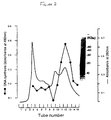
- Figure 1 shows the result of separation of 3T3 cell-derived growth promoting factors by a column of heparin-Sepharose. ⁇ :Absorbance at 280 nm; ⁇ :BrdU incorporated; ---:NaCl concentration. The right space is proteins separated from tube 5 and 9 on SDS-PAGE.
- Figure 2 shows the gel filtration chromatography of fraction II obtained by the heparin-affinity chromatography. ⁇ :Absorbance at 280 nm; ⁇ :hepatocytes growth promoting activity. The right space is proteins separated from tube 10 on SDS-PAGE.
- Figure 3 shows the degree of DNA synthesis of hepatocytes by PTNs.
- ⁇ PTN purified from 3T3 cell-CM;
- ⁇ synthetic human PTN;
- ⁇ recombinant human PTN;
- ⁇ synthetic human midkine.
- Hepatocytes to be subjected to the primary culture in the first invention may be any cells constituting the liver of a matured mammal, and such cells can be isolated from the liver of an animal in a method known in the art, and then cells contained in a fraction precipitated by low-speed centrifugation (50 G) can be cultured .
- the first embodiment makes use of a medium to which pleiotrophin (PTN), fetal bovine serum (FBS) and nicotinamide or an analogue thereof have been added. More preferably, the medium further contains an ascorbic acid or an analogue thereof (e.g. L-ascorbic acid phosphate)
- hepatocytes are cultured in a mixed medium consisting of a medium containing FBS and nicotinamide or an analogue thereof as colony-forming ingredients for hepatocytes and a CM of 3T3 cells as a growth promoting factor for hepatocytes
- the method of the present invention is characterized in that PTN is added in place of a CM of 3T3 cells to the medium of said prior application.
- the compound PTN is a heparin-binding protein , and its action as a growth factor and trophic factor for nerve cells is known.
- Some researchers have reported its action of promoting division of somatic cells such as fibroblasts, endothelial cells, epithelial cells etc., but there are also reports negating such action, so the effect of PTN on somatic cells is not established (The Journal of Biological Chemistry, Vol. 267, No. 36, pp. 25889-25897, 1992). In particular, its physiological activity on hepatocytes has not been known up to now.
- the compound PTN is commercially available as recombinant human PTN (R&D Systems Inc.), and this commercial product can also be used in the method of the present invention.
- PTN can also be obtained from a CM of 3T3 cells prepared in the same manner as in the prior application (Japanese Patent Application No. 133985/1996) or from a culture supernatant of other animal cells.
- PTN derived from 3T3 cells may be obtained by using a part of a known amino acid sequence of PTN as a probe to isolate a coding sequence of PTN from an existing cDNA library and then expressing this coding sequence in a suitable host-vector system.
- the medium to which PTN, FBS, ascorbic acid or an analogue thereof and nicotinamide or an analogue thereof are added as the essential ingredients is preferably DMEM medium containing epidermal growth factor and DMSO.
- the epidermal growth factor (EGF) and DMSO are not essential for colony formation but are preferably added to the medium by virtue of their action of promoting colony formation.
- a fraction obtained by low-speed centrifugation contains endothelial cells, Kupffer's stellate cells, stellate cells, bile-duct epithelial cells in addition to hepatocytes and is considered to provide hepatocytes with a specific environment, and said nicotinamide or an analogue thereof, ascorbic acid or an analogue thereof and DMSO inhibit the growth of these non-parenchymal cells, thus making it possible to selectively culturing and proliferating parenchymal hepatocytes.
- the amounts of these ingredients added to the medium can be, for example, about 0.1 ng/ml to 10 ⁇ g/ml for PTN, 5 to 30 % for FBS, 0.1 to 1.0 mM for ascorbic acid or an analogue thereof, 1 to 100 ng/ml for EGF, 1 to 20 mM for nicotinamide or an analogue thereof, and 0.1 to 2 % for DMSO.
- Culture is preferably conducted in a 5 % CO 2 atmosphere at a temperature of about 37 °C
- the primary colonies of hepatocytes may be obtained according to the culture as described above. Cells forming these colonies may be further screened by the method of the prior application (Japanese Patent Application No. 133985/1996) whereby parenchymal hepatocytes and non-parenchymal cells can be identified.
- These subculture methods involve detaching colonies of hepatocytes obtained in primary culture (primarily cultured cells) from a vessel and culturing them again in another vessel to proliferate the cells.
- the same method as in said prior application Japanese Patent Application No. 213686/1995 may be used as the primary culture method (second embodiment), or the primary culture method according to the first embodiment may be used (third embodiment).
- the medium is removed from the vessel and then the colonies are preferably treated with a solution of EDTA (0.002 to 0.2 %) and trypsin (0.005 to 0.5 %) for about 10 minutes whereby the colonies can be separated into hepatocytes and non-parenchymal cells.
- the liquid containing these separated cells may be filtered through a filter (pore diameter: about 20 ⁇ m) to remove small aggregations so that the cells can be dispersed.
- the cells thus dispersed are cultured again in a medium to which PTN, FBS and nicotinamide or an analogue thereof have been added. More preferably, the medium is further added with an ascorbic acid or an analogue thereof.
- the medium is further added with an ascorbic acid or an analogue thereof.
- the methods of this invention as described above can be applied to hepatocytes from every mammal including human, so the hepatocytes (parenchymal hepatocytes) having a clonal growth ability obtained from various animal species can be subjected to primary culture to form colonies and these primarily cultured cells can be further subcultured.
- the subcultured cells with a clonal growth ability from parenchymal hepatocytes recovered from human livers can be used to produce hydrid-type artificial liver etc., and are expected to bring about new developments in techniques for treatment of hepatic diseases as well.
- the present invention permits efficient colony formation of hepatocytes from a mature mammal and subsequent subculture thereof. Accordingly, the present invention enables detailed study of the development and differentiation processes ofhepatocytes, and on the mechanisms of proliferation and expression of functions thereof, thus providing new means of elucidating the mechanism of human hepatic diseases including hepatoma as well as for developing therapeutic methods.
- 3T3 cells inoculated into a vessel were cultured in DMEM medium containing 10 % FBS, penicillin and streptomycin until the cells became confluent. Then, the cells were washed twice with PBS, the medium was exchanged with FBS-free DMEM medium, and the cells were cultured at 37 °C in a 5 % CO 2 atmosphere for 48 hours.
- This medium (3T3 CM) was filtered through a filter with a pore diameter of 0.45 ⁇ m and concentrated 50-fold through an ultramembrane.
- this concentrated 3T3 CM was fractionated through a heparin column.
- the heparin column was previously equilibrated with PBS buffer.
- the proteins adsorbed onto the column were eluted with NaCl.
- the resulting fractions were sterilized by filtration through a filter with a pore diameter of 0.22 ⁇ m, and each fraction was added to DMEM medium (10 % FBS, 44 mM NaHCO 3 , 20 mM HEPES, 0.5 mg/l insulin, 10 -7 M dexamethasone, 30 mg/l L-proline, penicillin, streptomycin, 10 mM nicotinamide, 10 ng/ml EGF and 0.2 mM L-ascorbic acid phosphate), and hepatocytes were cultured in it for 4 days.
- the fractions II eluted 0.8 M to 1.4 M NaCl were collected from the fractions obtained from the heparin column, and were further separated by gel filtration chromatography.
- the column was equilibrated previously with PBS buffer and the proteins adsorbed onto the column were eluted with the same buffer.
- a plurality of the resulting proteins were examined for their proliferation activity on hepatocytes by using the incorporation of BrdU measured in the same manner as above, and as shown in Figure 2, the eluates of tube 10 to 15 showing the activity were pooled, desalted, concentrated, and subjected to SDS-polyacrylamide gel electrophoresis. The result was indicated in the right space of Figure 2.
- a single band between the molecular weights 10,000 and 20,000 was obtained, and from this band, one protein was purified.
- Example 2 Acquisition of hepatocytes and primary culture
- Hepatocytes were collected from 10-week-old Fisher rats by a collagenase perfusion method and centrifuged at low speed (50 g, 1 min.x3 times) to give a parenchymal cell fraction as precipitates. These cells were inoculated into a culture vessel of 3.5 cm in diameter (4x10 4 cells/vessel) and cultured at 37 °C in a 5 % CO 2 atmosphere for 2 to 3 hours in DMEM medium (10 % FBS, 44 mM NaHCO 3 , 20 mM HEPES, 0.5 mg/l insulin, 10 -7 M dexamethasone, 30 mg/l L-proline, penicillin and streptomycin) .
- DMEM medium 10 % FBS, 44 mM NaHCO 3 , 20 mM HEPES, 0.5 mg/l insulin, 10 -7 M dexamethasone, 30 mg/l L-proline, penicillin and streptomycin
- DMEM medium prepared by adding PTN (10 ng/ml) in Example 1, 10 mM nicotinamide, 10 ng/ml EGF and 0.2 mM L-ascorbic acid phosphate to the above medium, and on Day 4 of culture, 1 % DMSO was added to the medium, and culture was continued.
- hepatocytes were cultured in the presence of commercially available human PTN (R&D Systems Inc.) in place of 3T3 cell-derived PTN or in the absence of PTN (control), and the degree of proliferation of hepatocytes was determined in terms of incorporation of BrdU.
- Hepatocytes (4 x 10 3 cells/cm 2 ) were cultured for 6 days in 1.6-cm wells in 0.4 ml of HCGM containing varied amounts of PTN or midkine. Media were refilled at day 4. DNA synthesis was measured by incubating the cells with BrdU for the last 2 days. The results were shown in Figure 3.
- the PTN purified from 3T3 cell-CM was most effective for stimulating DNA synthesis of hepatocytes.
- Example 3 Subculture of hepatocytes
- Example 2 In the primary culture in Example 2, the medium was removed from the vessel after hepatocyte colonies were formed, and the colonies were treated with 0.02 % EDTA and 0.05 % trypsin and dispersed in a solution. This cell dispersion was divided by pipetting to give dispersions of hepatocytes. Then, each dispersion was filtered through a filter with a pore diameter of 20 ⁇ m to remove small aggregations of cells therefrom, and most of the cells were thereby dispersed.
- DMEM medium (10 % FBS, 44 mM NaHCO 3 , 20 mM HEPES, 0.5 mg/l insulin, 10 -7 M dexamethasone, 30 mg/l L-proline, penicillin and streptomycin) to which PTN prepared in Example 1 had been added, and the formation of colonies and the number of cells per colony were determined.
- DMEM medium 10 % FBS, 44 mM NaHCO 3 , 20 mM HEPES, 0.5 mg/l insulin, 10 -7 M dexamethasone, 30 mg/l L-proline, penicillin and streptomycin
Landscapes
- Health & Medical Sciences (AREA)
- Chemical & Material Sciences (AREA)
- Life Sciences & Earth Sciences (AREA)
- Engineering & Computer Science (AREA)
- Organic Chemistry (AREA)
- Biomedical Technology (AREA)
- Genetics & Genomics (AREA)
- Zoology (AREA)
- Bioinformatics & Cheminformatics (AREA)
- Biotechnology (AREA)
- Wood Science & Technology (AREA)
- Biochemistry (AREA)
- General Health & Medical Sciences (AREA)
- Gastroenterology & Hepatology (AREA)
- Proteomics, Peptides & Aminoacids (AREA)
- Toxicology (AREA)
- Biophysics (AREA)
- Cell Biology (AREA)
- Molecular Biology (AREA)
- Microbiology (AREA)
- Medicinal Chemistry (AREA)
- General Engineering & Computer Science (AREA)
- Micro-Organisms Or Cultivation Processes Thereof (AREA)
Description
- The present invention relates to a method for cultivation of hepatocytes. More particularly, the present invention relates to a method of efficient primary culture and subculture of hepatocytes which may be useful as materials for research in cell biology and molecular biology, on the development, differentiation and proliferation processes of hepatocytes or on the carcinogenic mechanisms thereof; or as medical materials for development of therapeutic techniques for various hepatic diseases.
- An animal is a multicellular organism formed through repeated division of a fertilized egg and differentiation thereof into various structures (cellar aggregates) taking charge of different functions. Each structure making up the body of an organism maintains the individual by producing cells having active differentiation ability through constant division and growth of individual cells. Therefore, in order to understand the biological facts of animals including humans or to develop therapeutic techniques through the elucidationn of carcinogenic mechanisms, it is believed to be important to make a detailed analysis of cells constituting individual structures to clarify the development and differentiation processes and the mechanisms of proliferation by techniques of cell biology or molecular biology.
- Some methods have been conventionally well established: a means to analyze in detail the cells of structures in vivo, to culture cells taken out in vitro, and to further divide and grow the cultured cells to ensure their survival through subcultures. However, the subculture of primary hepatocytes isolated from mature individuals has been considered impossible if hepatocytes from rats and mice are used. That is, adhesion-dependent mature hepatocytes are seriously damaged upon detachment from a culture substrate in the operation of subculture and further these cells are difficult to adhere again onto a culture substrate, so it is not possible to study the development, differentiation and proliferation processesof hepatocytes in the subculture system.
- The present inventors have overcome such difficulty by development of ingredients and the like in a culture medium, thus succeeding in the subculture of primary cells isolated from the liver of a mature rat, and this culture method has already been filed as a patent application (Japanese Patent Application No. 89056/1996).
- Further, the present inventors have obtained parenchymal hepatocytes having a clonal growth ability considered to contain hepatic progenitor cells whose presence had not been confirmed at that time, a method of preparation thereof and a method of subculture thereof, and the present inventors have filed a patent application therefor (Japanese Patent Application No. 213686/1995).
- Further, the present inventors have found that a small number of hepatocytes can be efficiently proliferated by adding a culture supernatant (conditioned medium: CM) of 3T3 cells to a culture medium for hepatocytes or by co-culturing hepatocytes with 3T3 cells, and these culture methods have been filed as a patent application (Japanese Patent Application No. 133985/1996).
- Accordingly, the object of the present invention is to provide an improved culture method for cultivation of hepatocytes efficiently by specifying a hepatocyte growth promoting factor producible by 3T3 cells and using this growth promoting factor.
- As a result of their eager study for specifying a hepatocyte growth promoting factor producible by 3T3 cells, the present inventors found this factor to be pleiotrophin to arrive at the present invention.
- That is, the first embodiment of the present application is a method for primary culture of hepatocytes comprising culturing hepatocytes isolated from the liver of a mature mammal containing pleiotrophin, fetal bovine serum and nicotinamide or an analogue thereof, thereby forming the primary colonies of the hepatocytes.
- The second embodiment is a method for subculture of hepatocytes, which comprises:
- (a) culturing hepatocytes isolated from the liver of a mature mammal in a medium containing fetal bovine serum and nicotinamide or an analogue thereof, thereby forming the primary colonies of the hepatocytes;
- (b) detaching the colony cells from the medium by using a solution containing EDTA and trypsin to disperse the cells;
- (c) re-culturing the dispersed hepatocytes in a medium containing pleiotrophin, fetal bovine serum and nicotinamide or an analogue thereof, thereby forming secondary colonies of the hepatocytes; and optionally
- (d) repeating the steps (b) and (c) to form multi-generated colonies of the hepatocytes.
-
- The third embodiment is a method for subculture of hepatocytes, which comprises:
- (a) culturing hepatocytes isolated from the liver of a mature mammal in a medium containing pleiotrophin, fetal bovine serum and nicotinamide or an analogue thereof, thereby forming colonies of the hepatocytes;
- (b) detaching the colony cells from the medium by using an EDTA/trypsin solution to disperse the cells;
- (c) re-culturing the dispersed hepatocytes in the same medium as in the step (a), thereby forming the secondary colonies of the hepatocytes; and optionally
- (d) repeating the steps (b) and (c) to form multi-generated colonies of the hepatocytes.
-
- In preferred embodiments of these methods, the medium further contains ascorbic acid or an analogue thereof, and the medium is DMEM medium containing epidermal growth factor and DMSO. The pleiotrophin used in the methods of the present invention is preferably in substantially pure form.
- Figure 1 shows the result of separation of 3T3 cell-derived growth promoting factors by a column of heparin-Sepharose. ―:Absorbance at 280 nm; ―:BrdU incorporated; ---:NaCl concentration. The right space is proteins separated from
tube - Figure 2 shows the gel filtration chromatography of fraction II obtained by the heparin-affinity chromatography. ―:Absorbance at 280 nm; ―:hepatocytes growth promoting activity. The right space is proteins separated from
tube 10 on SDS-PAGE. - Figure 3 shows the degree of DNA synthesis of hepatocytes by PTNs. :PTN purified from 3T3 cell-CM; ○: synthetic human PTN; □: recombinant human PTN; ▪: synthetic human midkine.
- Hepatocytes to be subjected to the primary culture in the first invention may be any cells constituting the liver of a matured mammal, and such cells can be isolated from the liver of an animal in a method known in the art, and then cells contained in a fraction precipitated by low-speed centrifugation (50 G) can be cultured . For this culture, the first embodiment makes use of a medium to which pleiotrophin (PTN), fetal bovine serum (FBS) and nicotinamide or an analogue thereof have been added. More preferably, the medium further contains an ascorbic acid or an analogue thereof (e.g. L-ascorbic acid phosphate)
- That is, while in one embodiment of the culture method in the above prior application (Japanese Patent Application No. 133985/1996), hepatocytes are cultured in a mixed medium consisting of a medium containing FBS and nicotinamide or an analogue thereof as colony-forming ingredients for hepatocytes and a CM of 3T3 cells as a growth promoting factor for hepatocytes, the method of the present invention is characterized in that PTN is added in place of a CM of 3T3 cells to the medium of said prior application.
- The compound PTN is a heparin-binding protein , and its action as a growth factor and trophic factor for nerve cells is known. Some researchers have reported its action of promoting division of somatic cells such as fibroblasts, endothelial cells, epithelial cells etc., but there are also reports negating such action, so the effect of PTN on somatic cells is not established (The Journal of Biological Chemistry, Vol. 267, No. 36, pp. 25889-25897, 1992). In particular, its physiological activity on hepatocytes has not been known up to now.
- The compound PTN is commercially available as recombinant human PTN (R&D Systems Inc.), and this commercial product can also be used in the method of the present invention. Using the isolation and purification procedures described below, PTN can also be obtained from a CM of 3T3 cells prepared in the same manner as in the prior application (Japanese Patent Application No. 133985/1996) or from a culture supernatant of other animal cells. Alternatively, PTN derived from 3T3 cells may be obtained by using a part of a known amino acid sequence of PTN as a probe to isolate a coding sequence of PTN from an existing cDNA library and then expressing this coding sequence in a suitable host-vector system.
- The medium to which PTN, FBS, ascorbic acid or an analogue thereof and nicotinamide or an analogue thereof are added as the essential ingredients is preferably DMEM medium containing epidermal growth factor and DMSO. The epidermal growth factor (EGF) and DMSO are not essential for colony formation but are preferably added to the medium by virtue of their action of promoting colony formation. A fraction obtained by low-speed centrifugation contains endothelial cells, Kupffer's stellate cells, stellate cells, bile-duct epithelial cells in addition to hepatocytes and is considered to provide hepatocytes with a specific environment, and said nicotinamide or an analogue thereof, ascorbic acid or an analogue thereof and DMSO inhibit the growth of these non-parenchymal cells, thus making it possible to selectively culturing and proliferating parenchymal hepatocytes. The amounts of these ingredients added to the medium can be, for example, about 0.1 ng/ml to 10 µg/ml for PTN, 5 to 30 % for FBS, 0.1 to 1.0 mM for ascorbic acid or an analogue thereof, 1 to 100 ng/ml for EGF, 1 to 20 mM for nicotinamide or an analogue thereof, and 0.1 to 2 % for DMSO. Culture is preferably conducted in a 5 % CO2 atmosphere at a temperature of about 37 °C
- The primary colonies of hepatocytes may be obtained according to the culture as described above. Cells forming these colonies may be further screened by the method of the prior application (Japanese Patent Application No. 133985/1996) whereby parenchymal hepatocytes and non-parenchymal cells can be identified.
- Hereinafter, the method for subculture of hepatocytes according to the present invention (second and third embodiments) is described.
- These subculture methods involve detaching colonies of hepatocytes obtained in primary culture (primarily cultured cells) from a vessel and culturing them again in another vessel to proliferate the cells. The same method as in said prior application (Japanese Patent Application No. 213686/1995) may be used as the primary culture method (second embodiment), or the primary culture method according to the first embodiment may be used (third embodiment). To detach colonies of primarily cultured cells obtained in either method, the medium is removed from the vessel and then the colonies are preferably treated with a solution of EDTA (0.002 to 0.2 %) and trypsin (0.005 to 0.5 %) for about 10 minutes whereby the colonies can be separated into hepatocytes and non-parenchymal cells. The liquid containing these separated cells may be filtered through a filter (pore diameter: about 20 µm) to remove small aggregations so that the cells can be dispersed.
- In the subculture methods of the present invention, the cells thus dispersed are cultured again in a medium to which PTN, FBS and nicotinamide or an analogue thereof have been added. More preferably, the medium is further added with an ascorbic acid or an analogue thereof. By this subculture, colonies can be efficiently formed even if the cells are inoculated at low cell density (for example, about 1x10⁴ cells/35 mm dish). The specific ingredients in the medium may be the same as in the first embodiment.
- The methods of this invention as described above can be applied to hepatocytes from every mammal including human, so the hepatocytes (parenchymal hepatocytes) having a clonal growth ability obtained from various animal species can be subjected to primary culture to form colonies and these primarily cultured cells can be further subcultured. The subcultured cells with a clonal growth ability from parenchymal hepatocytes recovered from human livers can be used to produce hydrid-type artificial liver etc., and are expected to bring about new developments in techniques for treatment of hepatic diseases as well.
- As described above in detail, the present invention permits efficient colony formation of hepatocytes from a mature mammal and subsequent subculture thereof. Accordingly, the present invention enables detailed study of the development and differentiation processes ofhepatocytes, and on the mechanisms of proliferation and expression of functions thereof, thus providing new means of elucidating the mechanism of human hepatic diseases including hepatoma as well as for developing therapeutic methods.
- Hereinafter, the subculture method of this invention is described in more detail and specifically with reference to Examples, which however are not intended to limit the present invention.
- 3T3 cells inoculated into a vessel (5x10³ cells/10 cm dish) were cultured in DMEM medium containing 10 % FBS, penicillin and streptomycin until the cells became confluent. Then, the cells were washed twice with PBS, the medium was exchanged with FBS-free DMEM medium, and the cells were cultured at 37 °C in a 5 % CO2 atmosphere for 48 hours. This medium (3T3 CM) was filtered through a filter with a pore diameter of 0.45 µm and concentrated 50-fold through an ultramembrane.
- Then, this concentrated 3T3 CM was fractionated through a heparin column. The heparin column was previously equilibrated with PBS buffer. The proteins adsorbed onto the column were eluted with NaCl. The resulting fractions were sterilized by filtration through a filter with a pore diameter of 0.22 µm, and each fraction was added to DMEM medium (10 % FBS, 44 mM NaHCO3, 20 mM HEPES, 0.5 mg/l insulin, 10-7 M dexamethasone, 30 mg/l L-proline, penicillin, streptomycin, 10 mM nicotinamide, 10 ng/ml EGF and 0.2 mM L-ascorbic acid phosphate), and hepatocytes were cultured in it for 4 days. Then, BrdU was added to the medium, and after 48 hours, synthesis of DNA by the hepatocytes was determined by examining their incorporation of BrdU in ELISA. As a result, as shown on Figure 1, the mitogenic activity was separated into two fractions: fraction I (
tube number 3 to 5) eluted with NaCl from 0.2 M to 0.6 M and fraction II (tube number 7 to 10) eluted with NaCl from 0.8 M to 1.4 M. That is, the incorporation of BrdU into the hepatocytes was raised when a fraction eluted with at least 0.8 M NaCl was added to the medium so that the promotion of DNA synthesis was confirmed, and it was thus revealed that a hepatocyte growth promoting factor was present in this fraction. - Hence, the fractions II eluted 0.8 M to 1.4 M NaCl were collected from the fractions obtained from the heparin column, and were further separated by gel filtration chromatography. The column was equilibrated previously with PBS buffer and the proteins adsorbed onto the column were eluted with the same buffer. A plurality of the resulting proteins were examined for their proliferation activity on hepatocytes by using the incorporation of BrdU measured in the same manner as above, and as shown in Figure 2, the eluates of
tube 10 to 15 showing the activity were pooled, desalted, concentrated, and subjected to SDS-polyacrylamide gel electrophoresis. The result was indicated in the right space of Figure 2. As being clear from Figure 2, a single band between the molecular weights 10,000 and 20,000 was obtained, and from this band, one protein was purified. - By determining the amino acid sequence of this protein, it was found that 15 contiguous amino acids in its amino acid sequence agreed completely with a known amino acid sequence of mouse PTN (Biochemical and Biophysical Communications, vol. 173, No. 1, pp. 246-251, 1990), and thus this protein was confirmed to be 3T3 cell-derived PTN.
- Hepatocytes were collected from 10-week-old Fisher rats by a collagenase perfusion method and centrifuged at low speed (50 g, 1 min.x3 times) to give a parenchymal cell fraction as precipitates. These cells were inoculated into a culture vessel of 3.5 cm in diameter (4x10⁴ cells/vessel) and cultured at 37 °C in a 5 % CO2 atmosphere for 2 to 3 hours in DMEM medium (10 % FBS, 44 mM NaHCO3, 20 mM HEPES, 0.5 mg/l insulin, 10-7 M dexamethasone, 30 mg/l L-proline, penicillin and streptomycin) . Then the culture medium was exchanged with DMEM medium prepared by adding PTN (10 ng/ml) in Example 1, 10 mM nicotinamide, 10 ng/ml EGF and 0.2 mM L-ascorbic acid phosphate to the above medium, and on
Day 4 of culture, 1 % DMSO was added to the medium, and culture was continued. Separately, hepatocytes were cultured in the presence of commercially available human PTN (R&D Systems Inc.) in place of 3T3 cell-derived PTN or in the absence of PTN (control), and the degree of proliferation of hepatocytes was determined in terms of incorporation of BrdU. - As a result, it was confirmed that (both 3T3 cell-derived and commercially available) PTN promoted the proliferation of hepatocytes.
- Furthermore, DNA synthesis of hepatocytes by PTN was measured. Hepatocytes (4 x 10³ cells/cm2) were cultured for 6 days in 1.6-cm wells in 0.4 ml of HCGM containing varied amounts of PTN or midkine. Media were refilled at
day 4. DNA synthesis was measured by incubating the cells with BrdU for the last 2 days. The results were shown in Figure 3. Among PTNs, the PTN purified from 3T3 cell-CM was most effective for stimulating DNA synthesis of hepatocytes. - In the primary culture in Example 2, the medium was removed from the vessel after hepatocyte colonies were formed, and the colonies were treated with 0.02 % EDTA and 0.05 % trypsin and dispersed in a solution. This cell dispersion was divided by pipetting to give dispersions of hepatocytes. Then, each dispersion was filtered through a filter with a pore diameter of 20 µm to remove small aggregations of cells therefrom, and most of the cells were thereby dispersed. These dispersed cells were plated as a thin layer onto a vessel and cultured again in DMEM medium (10 % FBS, 44 mM NaHCO3, 20 mM HEPES, 0.5 mg/l insulin, 10-7 M dexamethasone, 30 mg/l L-proline, penicillin and streptomycin) to which PTN prepared in Example 1 had been added, and the formation of colonies and the number of cells per colony were determined. Separately the cells were cultured in the same manner in fresh DMEM medium not containing PTN as the control, and the formation of colonies and the number of cells were determined.
- The result indicated that the hepatocytes cultured in the PTN-containing medium produced more colonies than in the control and also that the number of cells per colony was significantly higher than in the control.
Claims (5)
- A method for primary culture of hepatocytes, which comprises culturing hepatocytes isolated from the liver of a mature mammal in a medium containing pleiotrophin, fetal bovine serum and nicotinamide or an analogue thereof, thereby forming the primary colonies of the hepatocytes.
- A method for subculture of hepatocytes, which comprises:(a) culturing hepatocytes isolated from the liver of a mature mammal in a medium containing fetal bovine serum and nicotinamide or an analogue thereof, thereby forming primary colonies of the hepatocytes;(b) detaching the colony cells from the medium by using an EDTA/trypsin solution to disperse the cells;(c) re-culturing the dispersed hepatocytes in a medium containing pleiotrophin, fetal bovine serum and nicotinamide or an analogue thereof, thereby forming secondary colonies of the hepatocytes ; and optionally(d) repeating the steps (b) and (c) to form multi-generated colonies of the hepatocytes.
- A method for subculture of hepatocytes, which comprises:(a) culturing hepatocytes isolated from the liver of a mature mammal in a medium containing pleiotrophin, fetal bovine serum and nicotinamide or an analogue thereof, thereby forming primary colonies of the hepatocytes;(b) detaching the colony cells from the medium by using a solution containing EDTA and trypsin to disperse the cells;(c) re-culturing the dispersed hepatocytes in the same medium as in the step (a), thereby forming secondary colonies of the hepatocytes; and optionally(d) repeating the steps (b) and (c) to form multi-generated colonies of the hepatocytes.
- The method as claimed in any one of claims 1 to 3, wherein the medium further contains ascorbic acid or an analogue thereof.
- The method as claimed in any one of claims 1 to 4, wherein the medium is DMEM medium containing epidermal growth factor and DMSO.
Applications Claiming Priority (3)
| Application Number | Priority Date | Filing Date | Title |
|---|---|---|---|
| JP14970897 | 1997-06-06 | ||
| JP9149708A JP3014343B2 (en) | 1997-06-06 | 1997-06-06 | Hepatocyte culture method |
| JP149708/97 | 1997-06-06 |
Publications (2)
| Publication Number | Publication Date |
|---|---|
| EP0882787A1 EP0882787A1 (en) | 1998-12-09 |
| EP0882787B1 true EP0882787B1 (en) | 2005-12-07 |
Family
ID=15481092
Family Applications (1)
| Application Number | Title | Priority Date | Filing Date |
|---|---|---|---|
| EP98304469A Expired - Lifetime EP0882787B1 (en) | 1997-06-06 | 1998-06-05 | Method for cultivation of hepatocytes |
Country Status (4)
| Country | Link |
|---|---|
| US (1) | US6136600A (en) |
| EP (1) | EP0882787B1 (en) |
| JP (1) | JP3014343B2 (en) |
| DE (1) | DE69832662T2 (en) |
Families Citing this family (13)
| Publication number | Priority date | Publication date | Assignee | Title |
|---|---|---|---|---|
| CA2344653A1 (en) | 1998-09-29 | 2000-04-06 | Gamida Cell Ltd. | Methods of controlling proliferation and differentiation of stem and progenitor cells |
| US6364912B1 (en) * | 1999-09-17 | 2002-04-02 | Depuy Orthopeaedics, Inc. | Pleiotrophin-based compositions for enhancing connective tissue repair |
| JP2003052395A (en) * | 2001-08-09 | 2003-02-25 | Japan Tissue Engineering:Kk | Transplant adequacy determination method |
| IL152904A0 (en) * | 2002-01-24 | 2003-06-24 | Gamida Cell Ltd | Utilization of retinoid and vitamin d receptor antagonists for expansion of renewable stem cell populations |
| DE10227606B3 (en) * | 2002-06-20 | 2004-01-22 | Bionethos Holding Gmbh | Use of thrombopoietin for the cultivation of hepatocytes |
| EP1578995A2 (en) * | 2002-11-18 | 2005-09-28 | Agency for Science, Technology and Research | Method and system for cell and/or nucleic acid molecules isolation |
| KR100632938B1 (en) * | 2004-12-22 | 2006-10-12 | 삼성전자주식회사 | DRAM device having capacitor and method for forming same |
| JP6177687B2 (en) * | 2010-05-07 | 2017-08-09 | ユニバーシティー オブ ノース カロライナ アット チャペル ヒル | Use of a mixture used in the manufacture of a medicament for transplantation of cells from parenchyma |
| WO2012048170A2 (en) | 2010-10-06 | 2012-04-12 | Massachusetts Institute Of Technology | Humanized animals via tissue engineering and uses therefor |
| WO2017062757A1 (en) | 2015-10-08 | 2017-04-13 | Massachusetts Institute Of Technology | In situ expansion of engineered devices for regeneration |
| US20210222128A1 (en) | 2020-01-22 | 2021-07-22 | Massachusetts Institute Of Technology | Inducible tissue constructs and uses thereof |
| EP4188965A1 (en) | 2020-07-14 | 2023-06-07 | Massachusetts Institute of Technology | Synthetic heparin mimetics and uses thereof |
| CN114752549B (en) * | 2022-05-11 | 2022-11-25 | 中国农业科学院兰州畜牧与兽药研究所 | Sheep primary hepatocyte isolation culture method |
-
1997
- 1997-06-06 JP JP9149708A patent/JP3014343B2/en not_active Expired - Fee Related
-
1998
- 1998-06-05 US US09/092,305 patent/US6136600A/en not_active Expired - Fee Related
- 1998-06-05 EP EP98304469A patent/EP0882787B1/en not_active Expired - Lifetime
- 1998-06-05 DE DE69832662T patent/DE69832662T2/en not_active Expired - Fee Related
Also Published As
| Publication number | Publication date |
|---|---|
| DE69832662T2 (en) | 2006-08-10 |
| DE69832662D1 (en) | 2006-01-12 |
| US6136600A (en) | 2000-10-24 |
| EP0882787A1 (en) | 1998-12-09 |
| JPH10337180A (en) | 1998-12-22 |
| JP3014343B2 (en) | 2000-02-28 |
Similar Documents
| Publication | Publication Date | Title |
|---|---|---|
| Hawrot et al. | [53] Long-term culture of dissociated sympathetic neurons | |
| EP1656446B1 (en) | Conditioned cell culture medium, method to obtain the same and use of it for maintenance, proliferation and differentiation of mammalian cells | |
| Coulomb et al. | A new method for studying epidermalization in vitro | |
| Yang et al. | Growth of cultured cells using collagen as substrate | |
| KR100979664B1 (en) | Adipose-derived stem cells and lattices | |
| JP3021379B2 (en) | Skin equivalent containing Langerhans cells | |
| CA2115140A1 (en) | Proliferation of hepatocyte precursors | |
| US6136600A (en) | Method for cultivation of hepatocytes | |
| US20160237408A1 (en) | Adipose derived adult stem cells in hepatic regeneration | |
| KR102034496B1 (en) | Bioartificial proximal tubule systems and methods of use | |
| WO2007117565A2 (en) | Standardization of processes for culturing primary cells | |
| US20050019910A1 (en) | Human cell culture medium and culture method | |
| US20100136688A1 (en) | Method of differentiating mammalian progenitor cells into insulin producing pancreatic islet cells | |
| WO2009080794A1 (en) | Method for preparing cell-specific extracellular matrices | |
| JP3211941B2 (en) | Method for obtaining human small hepatocytes and methods for primary and subculture of these cells | |
| JP3014322B2 (en) | Culture method of small hepatocytes | |
| Fischer et al. | Improved conditions for murine epidermal cell culture | |
| Mahoney et al. | Cultures of cells from fetal rat brain: methods to control composition, morphology, and biochemical activity | |
| Harriger et al. | Cornification and basement membrane formation in a bilayered human skin equivalent maintained at an air-liquid interface | |
| CN113667632B (en) | Cell culture medium additive, cell culture medium and method for in-vitro cell expansion | |
| Edelson et al. | Effects of two extracellular matrices on morphologic and biochemical properties of human type II cells in vitro | |
| RU2342164C2 (en) | Skin equivalent and method for its production | |
| JP6956984B1 (en) | Blastocyst preparation method | |
| JP2003235548A (en) | Culture medium and culture method for human cells | |
| Yagi et al. | Stimulative effect of non-parenchymal liver cells on ability of tyrosine aminotransferase induction in hepatocytes |
Legal Events
| Date | Code | Title | Description |
|---|---|---|---|
| PUAI | Public reference made under article 153(3) epc to a published international application that has entered the european phase |
Free format text: ORIGINAL CODE: 0009012 |
|
| AK | Designated contracting states |
Kind code of ref document: A1 Designated state(s): DE FR GB |
|
| AX | Request for extension of the european patent |
Free format text: AL;LT;LV;MK;RO;SI |
|
| 17P | Request for examination filed |
Effective date: 19990517 |
|
| AKX | Designation fees paid |
Free format text: AT BE CH LI |
|
| RBV | Designated contracting states (corrected) |
Designated state(s): DE FR GB |
|
| REG | Reference to a national code |
Ref country code: DE Ref legal event code: 8566 |
|
| RAP1 | Party data changed (applicant data changed or rights of an application transferred) |
Owner name: JAPAN SCIENCE AND TECHNOLOGY AGENCY |
|
| GRAP | Despatch of communication of intention to grant a patent |
Free format text: ORIGINAL CODE: EPIDOSNIGR1 |
|
| GRAS | Grant fee paid |
Free format text: ORIGINAL CODE: EPIDOSNIGR3 |
|
| GRAA | (expected) grant |
Free format text: ORIGINAL CODE: 0009210 |
|
| AK | Designated contracting states |
Kind code of ref document: B1 Designated state(s): DE FR GB |
|
| REG | Reference to a national code |
Ref country code: GB Ref legal event code: FG4D |
|
| REF | Corresponds to: |
Ref document number: 69832662 Country of ref document: DE Date of ref document: 20060112 Kind code of ref document: P |
|
| PGFP | Annual fee paid to national office [announced via postgrant information from national office to epo] |
Ref country code: GB Payment date: 20060615 Year of fee payment: 9 |
|
| PGFP | Annual fee paid to national office [announced via postgrant information from national office to epo] |
Ref country code: DE Payment date: 20060616 Year of fee payment: 9 |
|
| PGFP | Annual fee paid to national office [announced via postgrant information from national office to epo] |
Ref country code: FR Payment date: 20060619 Year of fee payment: 9 |
|
| ET | Fr: translation filed | ||
| PLBE | No opposition filed within time limit |
Free format text: ORIGINAL CODE: 0009261 |
|
| STAA | Information on the status of an ep patent application or granted ep patent |
Free format text: STATUS: NO OPPOSITION FILED WITHIN TIME LIMIT |
|
| 26N | No opposition filed |
Effective date: 20060908 |
|
| GBPC | Gb: european patent ceased through non-payment of renewal fee |
Effective date: 20070605 |
|
| REG | Reference to a national code |
Ref country code: FR Ref legal event code: ST Effective date: 20080229 |
|
| PG25 | Lapsed in a contracting state [announced via postgrant information from national office to epo] |
Ref country code: DE Free format text: LAPSE BECAUSE OF NON-PAYMENT OF DUE FEES Effective date: 20080101 |
|
| PG25 | Lapsed in a contracting state [announced via postgrant information from national office to epo] |
Ref country code: GB Free format text: LAPSE BECAUSE OF NON-PAYMENT OF DUE FEES Effective date: 20070605 |
|
| PG25 | Lapsed in a contracting state [announced via postgrant information from national office to epo] |
Ref country code: FR Free format text: LAPSE BECAUSE OF NON-PAYMENT OF DUE FEES Effective date: 20070702 |