EP0882297B1 - Behandlung radioaktiver abfälle - Google Patents
Behandlung radioaktiver abfälle Download PDFInfo
- Publication number
- EP0882297B1 EP0882297B1 EP96910080A EP96910080A EP0882297B1 EP 0882297 B1 EP0882297 B1 EP 0882297B1 EP 96910080 A EP96910080 A EP 96910080A EP 96910080 A EP96910080 A EP 96910080A EP 0882297 B1 EP0882297 B1 EP 0882297B1
- Authority
- EP
- European Patent Office
- Prior art keywords
- norm
- particle size
- particles
- drilling mud
- component
- Prior art date
- Legal status (The legal status is an assumption and is not a legal conclusion. Google has not performed a legal analysis and makes no representation as to the accuracy of the status listed.)
- Expired - Lifetime
Links
- 239000012857 radioactive material Substances 0.000 title claims description 7
- 239000002245 particle Substances 0.000 claims description 49
- 238000000034 method Methods 0.000 claims description 37
- 230000008569 process Effects 0.000 claims description 26
- 238000005553 drilling Methods 0.000 claims description 21
- 238000010951 particle size reduction Methods 0.000 claims description 15
- 238000002156 mixing Methods 0.000 claims description 14
- 238000004519 manufacturing process Methods 0.000 claims description 13
- 230000002285 radioactive effect Effects 0.000 claims description 13
- 238000010790 dilution Methods 0.000 claims description 11
- 239000012895 dilution Substances 0.000 claims description 11
- 239000011236 particulate material Substances 0.000 claims description 10
- 239000000463 material Substances 0.000 claims description 9
- TZCXTZWJZNENPQ-UHFFFAOYSA-L barium sulfate Chemical compound [Ba+2].[O-]S([O-])(=O)=O TZCXTZWJZNENPQ-UHFFFAOYSA-L 0.000 claims description 8
- 230000002427 irreversible effect Effects 0.000 claims description 6
- 239000000440 bentonite Substances 0.000 claims description 4
- 229910000278 bentonite Inorganic materials 0.000 claims description 4
- SVPXDRXYRYOSEX-UHFFFAOYSA-N bentoquatam Chemical compound O.O=[Si]=O.O=[Al]O[Al]=O SVPXDRXYRYOSEX-UHFFFAOYSA-N 0.000 claims description 4
- 239000003795 chemical substances by application Substances 0.000 claims description 3
- 239000000945 filler Substances 0.000 claims description 2
- 239000011343 solid material Substances 0.000 claims 4
- 239000004606 Fillers/Extenders Substances 0.000 claims 1
- 235000019738 Limestone Nutrition 0.000 claims 1
- 239000000470 constituent Substances 0.000 claims 1
- 239000006028 limestone Substances 0.000 claims 1
- 239000003607 modifier Substances 0.000 claims 1
- 230000000694 effects Effects 0.000 description 7
- 239000007789 gas Substances 0.000 description 7
- 238000000227 grinding Methods 0.000 description 7
- XLYOFNOQVPJJNP-UHFFFAOYSA-N water Substances O XLYOFNOQVPJJNP-UHFFFAOYSA-N 0.000 description 5
- VTYYLEPIZMXCLO-UHFFFAOYSA-L Calcium carbonate Chemical compound [Ca+2].[O-]C([O-])=O VTYYLEPIZMXCLO-UHFFFAOYSA-L 0.000 description 4
- 239000002893 slag Substances 0.000 description 4
- 230000015572 biosynthetic process Effects 0.000 description 3
- 239000012530 fluid Substances 0.000 description 3
- 238000005755 formation reaction Methods 0.000 description 3
- 238000005549 size reduction Methods 0.000 description 3
- 239000007787 solid Substances 0.000 description 3
- 229910000831 Steel Inorganic materials 0.000 description 2
- 230000008901 benefit Effects 0.000 description 2
- 229910000019 calcium carbonate Inorganic materials 0.000 description 2
- 239000011362 coarse particle Substances 0.000 description 2
- 238000005202 decontamination Methods 0.000 description 2
- 230000003588 decontaminative effect Effects 0.000 description 2
- 238000003801 milling Methods 0.000 description 2
- 239000000203 mixture Substances 0.000 description 2
- 239000000843 powder Substances 0.000 description 2
- 238000011084 recovery Methods 0.000 description 2
- 238000004513 sizing Methods 0.000 description 2
- 239000010802 sludge Substances 0.000 description 2
- 239000000243 solution Substances 0.000 description 2
- 239000010959 steel Substances 0.000 description 2
- 239000002699 waste material Substances 0.000 description 2
- BVKZGUZCCUSVTD-UHFFFAOYSA-L Carbonate Chemical compound [O-]C([O-])=O BVKZGUZCCUSVTD-UHFFFAOYSA-L 0.000 description 1
- 230000002411 adverse Effects 0.000 description 1
- 238000004140 cleaning Methods 0.000 description 1
- 239000000356 contaminant Substances 0.000 description 1
- 238000010586 diagram Methods 0.000 description 1
- 239000003085 diluting agent Substances 0.000 description 1
- 238000011143 downstream manufacturing Methods 0.000 description 1
- 230000007613 environmental effect Effects 0.000 description 1
- 230000001747 exhibiting effect Effects 0.000 description 1
- 238000001914 filtration Methods 0.000 description 1
- 239000010419 fine particle Substances 0.000 description 1
- 231100001261 hazardous Toxicity 0.000 description 1
- 239000002920 hazardous waste Substances 0.000 description 1
- 230000036541 health Effects 0.000 description 1
- 230000006872 improvement Effects 0.000 description 1
- 230000007774 longterm Effects 0.000 description 1
- 238000002844 melting Methods 0.000 description 1
- 230000008018 melting Effects 0.000 description 1
- 239000003208 petroleum Substances 0.000 description 1
- 231100000614 poison Toxicity 0.000 description 1
- 230000002035 prolonged effect Effects 0.000 description 1
- 239000002901 radioactive waste Substances 0.000 description 1
- 238000005514 radiochemical analysis Methods 0.000 description 1
- 230000001105 regulatory effect Effects 0.000 description 1
- 238000005070 sampling Methods 0.000 description 1
- 239000013535 sea water Substances 0.000 description 1
- 238000000926 separation method Methods 0.000 description 1
- 239000007921 spray Substances 0.000 description 1
- 238000003860 storage Methods 0.000 description 1
- ZSLUVFAKFWKJRC-UHFFFAOYSA-N thorium Chemical compound [Th] ZSLUVFAKFWKJRC-UHFFFAOYSA-N 0.000 description 1
- 239000003440 toxic substance Substances 0.000 description 1
- JFALSRSLKYAFGM-UHFFFAOYSA-N uranium(0) Chemical compound [U] JFALSRSLKYAFGM-UHFFFAOYSA-N 0.000 description 1
- 239000004034 viscosity adjusting agent Substances 0.000 description 1
- 238000001238 wet grinding Methods 0.000 description 1
- 239000008207 working material Substances 0.000 description 1
Images
Classifications
-
- C—CHEMISTRY; METALLURGY
- C09—DYES; PAINTS; POLISHES; NATURAL RESINS; ADHESIVES; COMPOSITIONS NOT OTHERWISE PROVIDED FOR; APPLICATIONS OF MATERIALS NOT OTHERWISE PROVIDED FOR
- C09K—MATERIALS FOR MISCELLANEOUS APPLICATIONS, NOT PROVIDED FOR ELSEWHERE
- C09K8/00—Compositions for drilling of boreholes or wells; Compositions for treating boreholes or wells, e.g. for completion or for remedial operations
- C09K8/02—Well-drilling compositions
- C09K8/04—Aqueous well-drilling compositions
- C09K8/14—Clay-containing compositions
- C09K8/16—Clay-containing compositions characterised by the inorganic compounds other than clay
-
- E—FIXED CONSTRUCTIONS
- E21—EARTH OR ROCK DRILLING; MINING
- E21B—EARTH OR ROCK DRILLING; OBTAINING OIL, GAS, WATER, SOLUBLE OR MELTABLE MATERIALS OR A SLURRY OF MINERALS FROM WELLS
- E21B47/00—Survey of boreholes or wells
- E21B47/04—Measuring depth or liquid level
- E21B47/053—Measuring depth or liquid level using radioactive markers
-
- G—PHYSICS
- G21—NUCLEAR PHYSICS; NUCLEAR ENGINEERING
- G21F—PROTECTION AGAINST X-RADIATION, GAMMA RADIATION, CORPUSCULAR RADIATION OR PARTICLE BOMBARDMENT; TREATING RADIOACTIVELY CONTAMINATED MATERIAL; DECONTAMINATION ARRANGEMENTS THEREFOR
- G21F9/00—Treating radioactively contaminated material; Decontamination arrangements therefor
- G21F9/28—Treating solids
Definitions
- the present invention relates to a process for handling a radioactive waste material resulting from oil and gas recovery operations.
- NEM radioactive material
- Process operating conditions of reducing pressure and temperature contribute to the formation of deposits in which the radioactive species have been incorporated and concentrated.
- the deposits manifest as scale and sludge deposits within conduits, valves, and the like components of oil and gas production plant.
- An object of the present invention is to provide a means of dealing with NORM in produced fluids and gases from oil and gas reservoirs in a working plant environment.
- a further object of the present invention is to provide a process for treating NORM and turning the treated material to advantage in the industry.
- NORM represents a particular hazard to personnel who operate, maintain and clean the drilling and ancillary equipment by exposure to radioactivity by prolonged proximity to NORM deposits and possible inhalation of NORM airborne particles.
- NORM scale as recovered from steelwork is a fine powder, coarse particles or large flakes, of density of about 2 to 4 g/ml, which will show activity of up to approximately 2000 Bq/g whilst permissible levels from the point of view of personnel protection require a maximum tolerance of about 0.37 Bq/g.
- the present invention as defined in the claims provides a process for treating naturally occurring radioactive material (NORM).
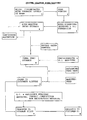
- the process comprises a particle size reduction step wherein the NORM particles are treated to attain a selected particle size corresponding to that of a particulate drilling mud component.
- a suitable mud component preferred for this purpose is barites (barytes) because of its high opacity with respect to radioactivity.
- the particle size reduction is conveniently accomplished by co-grinding of the NORM and mud component particles. However separate grinding and mixing steps may also be applied.
- the present treatment process is conducted with the aim of achieving irreversible dilution of the NORM particles in a selected mud component thereby nullifying the radioactivity thereof and enabling the mixed particles to be readily used in forming a drilling mud.
- the particle size reduction step may be achieved by any of grinding, milling, crushing or pulverising provided that the size reduction step is pursued until a substantially uniform particle size is obtained for the NORM and mud particles. It will also be apparent that both NORM and mud components may be sized separately and then mixed. However it would be convenient to introduce the coarse NORM material as recovered by usual techniques to a selected particulate mud component and subject the whole to an appropriate sizing procedure to produce a substantially homogeneous blend or mixture for use in the subsequent mud manufacturing process. Such a simultaneous particle size reduction step avoids or at least reduces the need for additional mixing steps and tends to ensure that uniformity of particle size is achievable.
- the advantages of the invention are achieved particularly by careful selection of particle size of the NORM particles and matching the selected size to that of a substantial component of proposed drilling mud, e.g. particles of weighting agent, filler, viscosity modifier or density regulating agents such as barytes, bentonite, calcium carbonate and the like.
- a substantial component of proposed drilling mud e.g. particles of weighting agent, filler, viscosity modifier or density regulating agents such as barytes, bentonite, calcium carbonate and the like.
- the NORM particle components are irreversibly diluted to remove hazard risks and moreover the usual need to treat the NORM particles as active waste is obviated. Any losses of the new mud downhole merely returns the included NORM particles to the geological region from which the NORM particles originated.
- the invention provides a neat "invisible" means of disposal of the NORM particles and also provides a utility therefor by inclusion in a working material.
- the selection of a particle size reduction method is not critical and any convenient method may be utilised provided that consistent substantially uniform and predictable particle size is attainable thereby. Thus fine grinding, milling, crushing and variations and combinations thereof would be considered.
- the actual particle size is not critical since the important aspect is to match the selected particle size with that of the intended particulate solids diluent. Obviously due regard would be given to the particle sizes necessary for manufacturing a stable functional mud. However it is the identical or close size match which results in essentially irreversible dilution in the mixing process. Taking the example of utility in drilling mud manufacture then typically the particle size will be (as determined according to American Petroleum Institute sizing standards) of the order of 97% ⁇ 75 ⁇ .
- the extracted NORM is subjected to an optional preliminary particle size reduction by grinding to attain a convenient particle size and the particles obtained are introduced to a feed of fresh barytes particles.
- Final grinding and mixing of these materials is achievable in a number of ways known in the art for intimate solids mixing and should be continued to obtain a substantially homogeneous material of appropriate particle size for drilling mud manufacture e.g. of about 75 ⁇ for at least about 97% of the material (A.P.I.).
- Appropriate sampling coupled with radiochemical analysis enables a routine procedure to be determined for a particular source of NORM. Thus some initial trivial experimentation enables satisfactory grinding/mixing periods to be calculated.
- a scale having an activity of 50 Bq/g is treated by particle size reduction and mixing with size matched bulk barytes particles (the barytes has negligible activity) at the rate of 1 g scale per 1 kg barytes.
- This dilution means a final activity of 0.05 Bq/g, a factor of 10 lower than the limit of 0.37 Bq/g.
- the selected bulk particulate material may equally be bentonite or carbonate.
- the NORM scale removed from process equipment by an approved decontamination procedure and which may be a fine powder, coarse particles or flakes is optionally sized to match another mud component e.g. bentonite or calcium carbonate provided that the essential step of providing a close particle size match is observed.
- the NORM to be processed may be added during differing stages of the mud manufacture provided that an appropriate size reduction step is applied to the NORM alone or in admixture with another particulate material.
Landscapes
- Engineering & Computer Science (AREA)
- Chemical & Material Sciences (AREA)
- Life Sciences & Earth Sciences (AREA)
- Physics & Mathematics (AREA)
- General Life Sciences & Earth Sciences (AREA)
- Geology (AREA)
- Mining & Mineral Resources (AREA)
- Inorganic Chemistry (AREA)
- Dispersion Chemistry (AREA)
- Environmental & Geological Engineering (AREA)
- High Energy & Nuclear Physics (AREA)
- Geochemistry & Mineralogy (AREA)
- General Engineering & Computer Science (AREA)
- Geophysics (AREA)
- Fluid Mechanics (AREA)
- Materials Engineering (AREA)
- Organic Chemistry (AREA)
- Solid-Sorbent Or Filter-Aiding Compositions (AREA)
- Disintegrating Or Milling (AREA)
- Physical Or Chemical Processes And Apparatus (AREA)
- Analysing Materials By The Use Of Radiation (AREA)
- Treatment Of Sludge (AREA)
Claims (12)
- Verfahren zur Behandlung natürlich vorkommenden radioaktiven Materials (NORM), umfassend die Auswahl von NORM zur Verwendung als Schlammbestandteil in einem Herstellungsverfahren für Bohrschlamm, sowie die Verringerung der Teilchengröße der NORM-Teilchen zum Gewinnen einer ausgewählten, einer teilchenförmigen Bohrschlamm-Komponenten entsprehenden Teilchengrösse, wobei eine irreversible Verdünnung der NORM-Teilchen in dieser Komponenten erreicht werden kann, um deren radioaktive Natur wirkungslos zu machen.
- Verfahren nach Anspruch 1, bei dem das NORM vor der Verwendung in dem Bohrschlamm-Herstellungsverfahren einer Verringerung der Teilchengrössen unterzogen wird.
- Verfahren nach Anspruch 1, bei dem das NORM vor Verwendung im Bohrschlamm-Herstellungsverfahren mit mindestens einer der teilchenförmigen Bohrschlamm-Komponenten vermischt wird.
- Verfahren nach Anspruch 1, bei dem der/die ausgewählte(n) Komponente(n) und NORM einem gleichzeitigen Verfahren zur Verringerung der Teilchengrösse unterzogen werden.
- Verfahren nach Anspruch 1, bei dem das NORM mit mindestens einer teilchenförmigen Bohrschlamm-Komponenten vermischt und in einem Schritt während des Bohrschlamm-Herstellungsverfahren einer Verringerung der Teilchengrösse unterzogen wird.
- Verfahren nach Anspruch 1, umfassend die folgenden Schritte:(a) Auswahl mindestens eines teilchenförmigen Materials zur Verwendung als Bohrschlamm-Komponente;(b) Verringerung der Teilchengrösse des NORM, um Teilchen einer ausgewählten Teilchengrösse zu erhalten, die der mindestens eines teilchenförmigen Materials entspricht;(c) inniges Mischen der NORM-Teilchen und mindestens eines teilchenförmigen Materials, wobei die irreversible Verdünnung der NORM-Teilchen in diesem Material erreicht werden kann, um deren radioaktive Natur wirkungslos zu machen; und Verwendung der gemischten Teilchen in einem Bohrschlamm-Herstellungsverfahren.
- Verfahren nach Anspruch 1, das umfasst:(i) Auswahl mindestens eines in Teilchenform gebrachten Materials zur Verwendung als Bohrschlamm-Komponente;(ii) Mischen des ausgewählten, zumindestens eines teilchenförmigen Materials mit NORM; und(iii) Verringerung der Teilchengrösse des gemischten NORM aus ausgewählten, mindestens einen teilchenförmigen Material, um Teilchen einer ausgewählten Teilchengrösse zu erhalten, die der zur Verwendung im Bohrschlamm passenden entspricht; wobei die irreversible Verdünnung der NORM-Teilchen in der Komponente erreicht werden kann, um deren radioaktive Natur wirkungs zu machen.
- Verfahren nach Anspruch 1 oder 6 oder 7, bei dem die Bohrschlamm-Komponente ein teilchenförmigen Material ist, ausgewählt aus der Gruppe bestehend aus Mitteln zur Einstellung der Zähigkeit, Schweremittel. Dichteveränderern, Materialien zum Unterdrücken von Umlauf-Verlusten, sowie Füll- und Streckungsmitteln.
- Verfahren nach Anspruch 1 oder 6 oder 7, bei dem die Bohrschlamm-Komponente ein teilchenförmiges Material ist, ausgewählt aus der Gruppe bestehend aus Bentonit, Baryt (Schwerspat) und Kalkstein (Kalziumkarbonat).
- Verfahren nach Anspruch 1 oder 6 oder 7, bei dem die Teilchen der Grösse nach so gesichtet werden, dass etwa 97% kleiner als 75 µ (mikron (A.P.I.)) sind.
- Verfahren nach Anspruch 1, umfassend die Auswahl mindestens eines im wesentlichen nicht-radioaktiven festen Materials in teilchenförmiger Grösse, die Verringerung der Teilchengrösse der NORM-Teilchen, um eine ausgewählte Teilchengrösse zu erreichen, die der des ausgewähltem im wesentlichen nicht-radioaktiven festen Materials entspricht, sowie das Mischen des NORM mit dem ausgewählte, im wesentlichen nicht-radioaktiven festen Material, wobei die irreversible Verdünnung der NORM-Teilchen in besagter Komponente erreicht werden kann, um deren radioaktive Natur wirkungslos zu machen.
- Verfahren nach Anspruch 11, bei dem NORM und das ausgewählte, im wesentlichen nicht-radioaktive feste Material zusammen einer Verringerung der Teilchengrösse unterzogen wird, um im gleichen Schritte eine im wesentlichen einheitliche Teilchengrösse und deren Mischen zu erreichen.
Applications Claiming Priority (3)
| Application Number | Priority Date | Filing Date | Title |
|---|---|---|---|
| GB9603947A GB2310530B (en) | 1996-02-24 | 1996-02-24 | Treatment of radioactive material |
| GB9603947 | 1996-02-24 | ||
| PCT/GB1996/000905 WO1997031379A1 (en) | 1996-02-24 | 1996-04-15 | Treatment of radioactive material |
Publications (2)
| Publication Number | Publication Date |
|---|---|
| EP0882297A1 EP0882297A1 (de) | 1998-12-09 |
| EP0882297B1 true EP0882297B1 (de) | 2000-06-14 |
Family
ID=10789348
Family Applications (1)
| Application Number | Title | Priority Date | Filing Date |
|---|---|---|---|
| EP96910080A Expired - Lifetime EP0882297B1 (de) | 1996-02-24 | 1996-04-15 | Behandlung radioaktiver abfälle |
Country Status (12)
| Country | Link |
|---|---|
| US (1) | US5678239A (de) |
| EP (1) | EP0882297B1 (de) |
| AU (1) | AU708507B2 (de) |
| CA (1) | CA2244186A1 (de) |
| DE (1) | DE69608917T2 (de) |
| DK (1) | DK0882297T3 (de) |
| ES (1) | ES2148748T3 (de) |
| GB (1) | GB2310530B (de) |
| NO (1) | NO322187B1 (de) |
| PT (1) | PT882297E (de) |
| RU (1) | RU2163404C2 (de) |
| WO (1) | WO1997031379A1 (de) |
Families Citing this family (1)
| Publication number | Priority date | Publication date | Assignee | Title |
|---|---|---|---|---|
| US5833395A (en) * | 1997-04-24 | 1998-11-10 | Atlantic Richfield Company | Method for reducing the concentration of contaminating radioactive material in contaminated soil |
Citations (2)
| Publication number | Priority date | Publication date | Assignee | Title |
|---|---|---|---|---|
| US5165275A (en) * | 1990-06-07 | 1992-11-24 | Donovan Brothers, Inc. | Compensated gamma ray mudlog |
| US5225674A (en) * | 1992-01-21 | 1993-07-06 | Texaco Inc. | Method of delineating naturally fractured intervals in subterranean formations |
Family Cites Families (9)
| Publication number | Priority date | Publication date | Assignee | Title |
|---|---|---|---|---|
| US4177241A (en) * | 1977-09-08 | 1979-12-04 | General Electric Company | Apparatus and process for recovering nuclear fuel from scrap material |
| SU722931A1 (ru) * | 1978-07-24 | 1980-03-25 | Предприятие П/Я В-2683 | Буровой раствор |
| US4547298A (en) * | 1983-02-02 | 1985-10-15 | Exxon Production Research Co. | Drilling mud composition which may be converted to cement upon irradiation |
| US4691772A (en) * | 1985-04-22 | 1987-09-08 | Union Oil Company Of California | Process for obtaining permeability logs using radioactive drilling mud additives |
| GB2283852B (en) * | 1991-01-09 | 1995-07-26 | Exxon Chemical Patents Inc | Process for conditioning material for disposal |
| DE4119989C2 (de) * | 1991-06-18 | 1994-02-03 | Naue Fasertechnik | Strahlenschutzmatte zur Abschirmung von radioaktiver Strahlung |
| RU2008733C1 (ru) * | 1991-11-25 | 1994-02-28 | Московское научно-производственное объединение "Радон" | Способ иммобилизации радиоактивных отходов в неорганические матричные материалы |
| US5238583A (en) * | 1992-03-09 | 1993-08-24 | Derrick's Enterprise, Inc. | Method for converting a contaminated waste material to an innocuous granular substance |
| GB2272566B (en) * | 1992-11-17 | 1996-01-24 | Clyde Shaw Ltd | Decontamination method |
-
1996
- 1996-02-24 GB GB9603947A patent/GB2310530B/en not_active Expired - Fee Related
- 1996-03-14 NO NO19961055A patent/NO322187B1/no not_active IP Right Cessation
- 1996-04-15 CA CA002244186A patent/CA2244186A1/en not_active Abandoned
- 1996-04-15 PT PT96910080T patent/PT882297E/pt unknown
- 1996-04-15 WO PCT/GB1996/000905 patent/WO1997031379A1/en not_active Ceased
- 1996-04-15 DE DE69608917T patent/DE69608917T2/de not_active Expired - Fee Related
- 1996-04-15 RU RU98117563/06A patent/RU2163404C2/ru active
- 1996-04-15 DK DK96910080T patent/DK0882297T3/da active
- 1996-04-15 EP EP96910080A patent/EP0882297B1/de not_active Expired - Lifetime
- 1996-04-15 ES ES96910080T patent/ES2148748T3/es not_active Expired - Lifetime
- 1996-04-15 AU AU53391/96A patent/AU708507B2/en not_active Ceased
- 1996-05-01 US US08/640,690 patent/US5678239A/en not_active Expired - Lifetime
Patent Citations (2)
| Publication number | Priority date | Publication date | Assignee | Title |
|---|---|---|---|---|
| US5165275A (en) * | 1990-06-07 | 1992-11-24 | Donovan Brothers, Inc. | Compensated gamma ray mudlog |
| US5225674A (en) * | 1992-01-21 | 1993-07-06 | Texaco Inc. | Method of delineating naturally fractured intervals in subterranean formations |
Also Published As
| Publication number | Publication date |
|---|---|
| AU708507B2 (en) | 1999-08-05 |
| GB2310530A (en) | 1997-08-27 |
| NO961055L (no) | 1997-08-25 |
| GB9603947D0 (en) | 1996-04-24 |
| CA2244186A1 (en) | 1997-08-28 |
| NO961055D0 (no) | 1996-03-14 |
| AU5339196A (en) | 1997-09-10 |
| DK0882297T3 (da) | 2000-10-16 |
| NO322187B1 (no) | 2006-08-28 |
| DE69608917D1 (de) | 2000-07-20 |
| DE69608917T2 (de) | 2000-10-26 |
| RU2163404C2 (ru) | 2001-02-20 |
| PT882297E (pt) | 2000-11-30 |
| EP0882297A1 (de) | 1998-12-09 |
| GB2310530B (en) | 1998-05-20 |
| WO1997031379A1 (en) | 1997-08-28 |
| US5678239A (en) | 1997-10-14 |
| ES2148748T3 (es) | 2000-10-16 |
Similar Documents
| Publication | Publication Date | Title |
|---|---|---|
| Findeiß et al. | Fate and environmental impact of thorium residues during rare earth processing | |
| DE69219160T2 (de) | Verfahren zur selektiven konzentrierung der radioaktivität einer thorium-enthaltender magnesiumschlacke | |
| US20040024281A1 (en) | Method for stabilization of material or waste to reduce metals and fluoride leaching potential | |
| Song et al. | Effect of monovalent and divalent ion solutions as washing agents on the removal of Sr and Cs from soil near a nuclear power plant | |
| US8796501B2 (en) | Method for treatment of hazardous paint residue | |
| US9346087B2 (en) | Non-embedding method for heavy metal stabilization using beef bone meal and blast media | |
| EP0882297B1 (de) | Behandlung radioaktiver abfälle | |
| US20080125616A1 (en) | Method for stabilization of Pb and Cd from incinerator ash | |
| US20120220810A1 (en) | Method for optimal paint residue stabilization | |
| GB2266002A (en) | A method of removing radioactive material from metallic objects | |
| Goswami et al. | Preconcentration and recovery of uranium and thorium from Indian monazite sand by using a modified fly ash bed | |
| Read et al. | Implementation of a strategy for managing radioactive scale in the China Clay industry | |
| KR20230052638A (ko) | 우라늄 오염토양 복원방법 | |
| US20060047177A1 (en) | Method for in-line stabilization of paint residue | |
| EP0705128A1 (de) | Lösungsmittelextraktion | |
| KR102568063B1 (ko) | 중액분리법을 이용한 방사화 콘크리트 폐기물에서의 방사성 핵종 분리방법 | |
| Findeiß | Effects of radioactive by-products along the extraction of rare earth elements on aquatic and terrestrial organisms | |
| Kulpa et al. | Deployment of chemical extraction soil treatment on uranium contaminated soil | |
| Pearl | Soil washing treatment trials at UKAEA | |
| Michalik et al. | European waste catalogue—A platform for a common approach to NORM and other industrial waste | |
| Wilson et al. | Carbonate and citric acid leaching of uranium from uranium-contaminated soils: Pilot-scale studies (Phase II) | |
| Hlainga et al. | Study on the Treatment of Liquid Waste from Rare Earth Processing by Chemical Precipitation | |
| Olsen et al. | Soil Decontamination at Rocky Flats | |
| Pearl | The Potential Application of Soil Washing to the Treatment of Radioactively Contaminated Soils, Rubble and Rocks From UKAEA’s Sites | |
| Andronov et al. | Treatment of locally accumulated liquid radioactive waste at the shelter to remove transuranium elements |
Legal Events
| Date | Code | Title | Description |
|---|---|---|---|
| PUAI | Public reference made under article 153(3) epc to a published international application that has entered the european phase |
Free format text: ORIGINAL CODE: 0009012 |
|
| 17P | Request for examination filed |
Effective date: 19980811 |
|
| AK | Designated contracting states |
Kind code of ref document: A1 Designated state(s): DE DK ES FR IE IT NL PT |
|
| 17Q | First examination report despatched |
Effective date: 19990315 |
|
| GRAG | Despatch of communication of intention to grant |
Free format text: ORIGINAL CODE: EPIDOS AGRA |
|
| GRAG | Despatch of communication of intention to grant |
Free format text: ORIGINAL CODE: EPIDOS AGRA |
|
| GRAH | Despatch of communication of intention to grant a patent |
Free format text: ORIGINAL CODE: EPIDOS IGRA |
|
| GRAH | Despatch of communication of intention to grant a patent |
Free format text: ORIGINAL CODE: EPIDOS IGRA |
|
| GRAA | (expected) grant |
Free format text: ORIGINAL CODE: 0009210 |
|
| AK | Designated contracting states |
Kind code of ref document: B1 Designated state(s): DE DK ES FR IE IT NL PT |
|
| REF | Corresponds to: |
Ref document number: 69608917 Country of ref document: DE Date of ref document: 20000720 |
|
| ET | Fr: translation filed | ||
| REG | Reference to a national code |
Ref country code: IE Ref legal event code: FG4D |
|
| ITF | It: translation for a ep patent filed | ||
| REG | Reference to a national code |
Ref country code: DK Ref legal event code: T3 Ref country code: ES Ref legal event code: FG2A Ref document number: 2148748 Country of ref document: ES Kind code of ref document: T3 |
|
| REG | Reference to a national code |
Ref country code: PT Ref legal event code: SC4A Free format text: AVAILABILITY OF NATIONAL TRANSLATION Effective date: 20000904 |
|
| PGFP | Annual fee paid to national office [announced via postgrant information from national office to epo] |
Ref country code: PT Payment date: 20010319 Year of fee payment: 6 |
|
| PGFP | Annual fee paid to national office [announced via postgrant information from national office to epo] |
Ref country code: IE Payment date: 20010321 Year of fee payment: 6 |
|
| PGFP | Annual fee paid to national office [announced via postgrant information from national office to epo] |
Ref country code: FR Payment date: 20010326 Year of fee payment: 6 |
|
| PGFP | Annual fee paid to national office [announced via postgrant information from national office to epo] |
Ref country code: DK Payment date: 20010330 Year of fee payment: 6 |
|
| PGFP | Annual fee paid to national office [announced via postgrant information from national office to epo] |
Ref country code: NL Payment date: 20010331 Year of fee payment: 6 |
|
| PGFP | Annual fee paid to national office [announced via postgrant information from national office to epo] |
Ref country code: DE Payment date: 20010404 Year of fee payment: 6 |
|
| PLBE | No opposition filed within time limit |
Free format text: ORIGINAL CODE: 0009261 |
|
| STAA | Information on the status of an ep patent application or granted ep patent |
Free format text: STATUS: NO OPPOSITION FILED WITHIN TIME LIMIT |
|
| PGFP | Annual fee paid to national office [announced via postgrant information from national office to epo] |
Ref country code: ES Payment date: 20010419 Year of fee payment: 6 |
|
| 26N | No opposition filed | ||
| PG25 | Lapsed in a contracting state [announced via postgrant information from national office to epo] |
Ref country code: IE Free format text: LAPSE BECAUSE OF NON-PAYMENT OF DUE FEES Effective date: 20020415 |
|
| PG25 | Lapsed in a contracting state [announced via postgrant information from national office to epo] |
Ref country code: ES Free format text: LAPSE BECAUSE OF NON-PAYMENT OF DUE FEES Effective date: 20020416 |
|
| PG25 | Lapsed in a contracting state [announced via postgrant information from national office to epo] |
Ref country code: DK Free format text: LAPSE BECAUSE OF NON-PAYMENT OF DUE FEES Effective date: 20020430 |
|
| PG25 | Lapsed in a contracting state [announced via postgrant information from national office to epo] |
Ref country code: PT Free format text: LAPSE BECAUSE OF NON-PAYMENT OF DUE FEES Effective date: 20021031 |
|
| PG25 | Lapsed in a contracting state [announced via postgrant information from national office to epo] |
Ref country code: NL Free format text: LAPSE BECAUSE OF NON-PAYMENT OF DUE FEES Effective date: 20021101 Ref country code: DE Free format text: LAPSE BECAUSE OF NON-PAYMENT OF DUE FEES Effective date: 20021101 |
|
| REG | Reference to a national code |
Ref country code: DK Ref legal event code: EBP |
|
| PG25 | Lapsed in a contracting state [announced via postgrant information from national office to epo] |
Ref country code: FR Free format text: LAPSE BECAUSE OF NON-PAYMENT OF DUE FEES Effective date: 20021231 |
|
| NLV4 | Nl: lapsed or anulled due to non-payment of the annual fee |
Effective date: 20021101 |
|
| REG | Reference to a national code |
Ref country code: PT Ref legal event code: MM4A Free format text: LAPSE DUE TO NON-PAYMENT OF FEES Effective date: 20021031 |
|
| REG | Reference to a national code |
Ref country code: IE Ref legal event code: MM4A |
|
| REG | Reference to a national code |
Ref country code: FR Ref legal event code: ST |
|
| REG | Reference to a national code |
Ref country code: ES Ref legal event code: FD2A Effective date: 20030514 |
|
| PG25 | Lapsed in a contracting state [announced via postgrant information from national office to epo] |
Ref country code: IT Free format text: LAPSE BECAUSE OF NON-PAYMENT OF DUE FEES Effective date: 20050415 |