EP0876027B1 - Verfahren und Vorrichtung zur Erzielung einer perfekten Vorwärtssicherheit in geschlossenen Benutzergruppen - Google Patents
Verfahren und Vorrichtung zur Erzielung einer perfekten Vorwärtssicherheit in geschlossenen Benutzergruppen Download PDFInfo
- Publication number
- EP0876027B1 EP0876027B1 EP98303315A EP98303315A EP0876027B1 EP 0876027 B1 EP0876027 B1 EP 0876027B1 EP 98303315 A EP98303315 A EP 98303315A EP 98303315 A EP98303315 A EP 98303315A EP 0876027 B1 EP0876027 B1 EP 0876027B1
- Authority
- EP
- European Patent Office
- Prior art keywords
- node
- value
- key
- nodes
- context variable
- Prior art date
- Legal status (The legal status is an assumption and is not a legal conclusion. Google has not performed a legal analysis and makes no representation as to the accuracy of the status listed.)
- Expired - Lifetime
Links
- 238000000034 method Methods 0.000 title claims description 39
- 238000012545 processing Methods 0.000 claims description 23
- 230000001052 transient effect Effects 0.000 claims description 15
- 239000002131 composite material Substances 0.000 claims description 8
- 230000005540 biological transmission Effects 0.000 claims description 3
- 230000001419 dependent effect Effects 0.000 claims description 2
- 230000006870 function Effects 0.000 description 19
- 238000004891 communication Methods 0.000 description 15
- 238000007726 management method Methods 0.000 description 14
- 238000004422 calculation algorithm Methods 0.000 description 11
- 230000008859 change Effects 0.000 description 11
- 230000007246 mechanism Effects 0.000 description 7
- 230000007774 longterm Effects 0.000 description 6
- 238000013475 authorization Methods 0.000 description 4
- 230000004044 response Effects 0.000 description 4
- 230000001010 compromised effect Effects 0.000 description 3
- 230000009471 action Effects 0.000 description 2
- 230000008901 benefit Effects 0.000 description 2
- 230000008878 coupling Effects 0.000 description 2
- 238000010168 coupling process Methods 0.000 description 2
- 238000005859 coupling reaction Methods 0.000 description 2
- 238000012217 deletion Methods 0.000 description 2
- 230000037430 deletion Effects 0.000 description 2
- 239000000284 extract Substances 0.000 description 2
- 230000008569 process Effects 0.000 description 2
- 238000004364 calculation method Methods 0.000 description 1
- 230000015556 catabolic process Effects 0.000 description 1
- 238000004590 computer program Methods 0.000 description 1
- 238000006731 degradation reaction Methods 0.000 description 1
- 238000010586 diagram Methods 0.000 description 1
- 230000003203 everyday effect Effects 0.000 description 1
- 238000013213 extrapolation Methods 0.000 description 1
- 230000006872 improvement Effects 0.000 description 1
- 239000000463 material Substances 0.000 description 1
- 230000008520 organization Effects 0.000 description 1
- 230000011664 signaling Effects 0.000 description 1
- 239000000126 substance Substances 0.000 description 1
- 238000012795 verification Methods 0.000 description 1
Images



Classifications
-
- H—ELECTRICITY
- H04—ELECTRIC COMMUNICATION TECHNIQUE
- H04L—TRANSMISSION OF DIGITAL INFORMATION, e.g. TELEGRAPHIC COMMUNICATION
- H04L63/00—Network architectures or network communication protocols for network security
- H04L63/04—Network architectures or network communication protocols for network security for providing a confidential data exchange among entities communicating through data packet networks
-
- H—ELECTRICITY
- H04—ELECTRIC COMMUNICATION TECHNIQUE
- H04L—TRANSMISSION OF DIGITAL INFORMATION, e.g. TELEGRAPHIC COMMUNICATION
- H04L12/00—Data switching networks
- H04L12/02—Details
- H04L12/16—Arrangements for providing special services to substations
- H04L12/18—Arrangements for providing special services to substations for broadcast or conference, e.g. multicast
-
- H—ELECTRICITY
- H04—ELECTRIC COMMUNICATION TECHNIQUE
- H04L—TRANSMISSION OF DIGITAL INFORMATION, e.g. TELEGRAPHIC COMMUNICATION
- H04L12/00—Data switching networks
- H04L12/28—Data switching networks characterised by path configuration, e.g. LAN [Local Area Networks] or WAN [Wide Area Networks]
- H04L12/46—Interconnection of networks
- H04L12/4604—LAN interconnection over a backbone network, e.g. Internet, Frame Relay
-
- H—ELECTRICITY
- H04—ELECTRIC COMMUNICATION TECHNIQUE
- H04L—TRANSMISSION OF DIGITAL INFORMATION, e.g. TELEGRAPHIC COMMUNICATION
- H04L63/00—Network architectures or network communication protocols for network security
- H04L63/04—Network architectures or network communication protocols for network security for providing a confidential data exchange among entities communicating through data packet networks
- H04L63/0428—Network architectures or network communication protocols for network security for providing a confidential data exchange among entities communicating through data packet networks wherein the data content is protected, e.g. by encrypting or encapsulating the payload
- H04L63/0435—Network architectures or network communication protocols for network security for providing a confidential data exchange among entities communicating through data packet networks wherein the data content is protected, e.g. by encrypting or encapsulating the payload wherein the sending and receiving network entities apply symmetric encryption, i.e. same key used for encryption and decryption
-
- H—ELECTRICITY
- H04—ELECTRIC COMMUNICATION TECHNIQUE
- H04L—TRANSMISSION OF DIGITAL INFORMATION, e.g. TELEGRAPHIC COMMUNICATION
- H04L63/00—Network architectures or network communication protocols for network security
- H04L63/04—Network architectures or network communication protocols for network security for providing a confidential data exchange among entities communicating through data packet networks
- H04L63/0428—Network architectures or network communication protocols for network security for providing a confidential data exchange among entities communicating through data packet networks wherein the data content is protected, e.g. by encrypting or encapsulating the payload
- H04L63/0442—Network architectures or network communication protocols for network security for providing a confidential data exchange among entities communicating through data packet networks wherein the data content is protected, e.g. by encrypting or encapsulating the payload wherein the sending and receiving network entities apply asymmetric encryption, i.e. different keys for encryption and decryption
-
- H—ELECTRICITY
- H04—ELECTRIC COMMUNICATION TECHNIQUE
- H04L—TRANSMISSION OF DIGITAL INFORMATION, e.g. TELEGRAPHIC COMMUNICATION
- H04L63/00—Network architectures or network communication protocols for network security
- H04L63/06—Network architectures or network communication protocols for network security for supporting key management in a packet data network
- H04L63/061—Network architectures or network communication protocols for network security for supporting key management in a packet data network for key exchange, e.g. in peer-to-peer networks
-
- H—ELECTRICITY
- H04—ELECTRIC COMMUNICATION TECHNIQUE
- H04L—TRANSMISSION OF DIGITAL INFORMATION, e.g. TELEGRAPHIC COMMUNICATION
- H04L63/00—Network architectures or network communication protocols for network security
- H04L63/08—Network architectures or network communication protocols for network security for authentication of entities
- H04L63/0823—Network architectures or network communication protocols for network security for authentication of entities using certificates
-
- H—ELECTRICITY
- H04—ELECTRIC COMMUNICATION TECHNIQUE
- H04L—TRANSMISSION OF DIGITAL INFORMATION, e.g. TELEGRAPHIC COMMUNICATION
- H04L9/00—Cryptographic mechanisms or cryptographic arrangements for secret or secure communications; Network security protocols
- H04L9/08—Key distribution or management, e.g. generation, sharing or updating, of cryptographic keys or passwords
- H04L9/0816—Key establishment, i.e. cryptographic processes or cryptographic protocols whereby a shared secret becomes available to two or more parties, for subsequent use
- H04L9/0838—Key agreement, i.e. key establishment technique in which a shared key is derived by parties as a function of information contributed by, or associated with, each of these
- H04L9/0841—Key agreement, i.e. key establishment technique in which a shared key is derived by parties as a function of information contributed by, or associated with, each of these involving Diffie-Hellman or related key agreement protocols
-
- H—ELECTRICITY
- H04—ELECTRIC COMMUNICATION TECHNIQUE
- H04L—TRANSMISSION OF DIGITAL INFORMATION, e.g. TELEGRAPHIC COMMUNICATION
- H04L9/00—Cryptographic mechanisms or cryptographic arrangements for secret or secure communications; Network security protocols
- H04L9/40—Network security protocols
Definitions
- the present invention relates to the field of key management schemes, and more particularly, the present invention relates to a key management scheme for Internet working protocols to provide additional security at the network layer.
- the Internet comprises a spiderweb of connected networks which criss-cross the globe and permit users to send and receive data packets between computers. Although many of the computers coupled to the Internet are disposed at fixed locations, portable computer systems may be physically moved from one location on a network to another. Wireless links coupling the computers to the Internet, including direct satellite links, also allow users to access the Internet from remote areas. As a result of the dramatic increase in the use of the Internet throughout the world, concerns regarding network security naturally arise.
- PEM Privacy Enhanced Mail
- a cracker may sever one of the authenticated parties from the Internet connection, and receive and transmit substitute data packets to the other unwitting party (or potentially to both parties). Once the Internet connection is established, data packets are sent over the network in the clear. For example, a cracker may interject himself between, for example, a user "A” in communication with a user "B” on the Internet, and issue a disconnect command to user A.
- SKIP Simple Key Management For Internet Protocols
- Node I is provided with a secret value i, and a public value ⁇ ' mod p.
- Node J is provided with a secret value j, and a public value ⁇ j mod p.
- Data packets (referred to as "datagrams") are encrypted using the teachings of the present invention to enhance network security.
- a source node I obtains a Diffie-Helman (DH) certificate for node J (either from a local cache, from a directory service, or directly from node J), and obtains node J's public value ⁇ j mod p from the DH certificate.
- Node I then computes the value of ⁇ ij mod p, and derives a key K ij from the value ⁇ ij mod p.
- DH Diffie-Helman
- a transient key K p is generated at random and is used to encrypt the datagram to be sent by node I.
- the key K p is used for a configurable number of bytes, which is the maximum number of bytes the node will encrypt using K p .
- the key K p is then encrypted with key K ij .
- the node J Upon receipt of the encrypted datagram by the receiving node J, the node J obtains a DH certificate for node I (either from a local cache, from a directory service or directly from node J) and obtains the public value ⁇ i mod p. Node J then computes the value of ⁇ ij mod p and derives the key K ij . Node J utilizes the key K ij to decrypt the transient key K p , and using the decrypted transient key K p , node J decrypts the datagram packet, thereby resulting in the original data in unencrypted form.
- K ij stays constant until the DH certificate changes. Depending on the environment, obtaining a new DH certificate may result in system performance degradation.
- the present invention discloses a method and apparatus for generating other implicit keys from K ij , without the necessity of generating a new DH certificate or requiring any communication between node I and J to change keys.
- one secret may be used to generate literally millions of secret keys by stepping the context, where a context is defined by an implicit interchange key.
- the present invention provides methods and apparatus for achieving perfect forward secrecy in closed user groups, through the application of one-way functions to the implicit pair-wise secrets for each node.
- the present invention discloses an improved application of SKIP for datagram multicasts.
- the present invention provides an improved simple key management scheme (SKIP) having particular application to datagram protocols, such as the Internet protocol (IP).
- SKIP simple key management scheme
- IP Internet protocol
- the present invention discloses methods and apparatus for achieving perfect forward security in closed user groups having X nodes.
- a first data processing device node I
- a second data processing device node J
- node I communicates with node J using the Internet protocol.
- a unique secret value and a public value to each of the X nodes is provided.
- a context variable N i is also provided to each of the X nodes.
- Each of the X nodes obtain a certificate for other (X-1) nodes and obtains the other (X-1) nodes' public value ( ⁇ j mod p) from the certificate.
- Each node in a closed user group precomputes all shared secrets (e.g., ⁇ (2 N )ij mod p) for each closed group node. Each node then deletes its secret (i, j, ..., etc.). As the value of N is incremented, each node may compute [K ij ] N for any value of N without the need to recalculate the shared secret.
- a receiving node J Upon receipt of a data packet in the context N, (for a datagram transmitted, for example, by node I), a receiving node J computes [K ij ] N i and decrypts the data packet using [K ij ] N .
- the operations referred to are machine operations.
- Useful machines for performing the operations of the present invention include general purpose digital computers (referred herein as "nodes"), or other similar devices.
- nodes general purpose digital computers
- the present invention relates to method steps for operating a computer, coupled to a series of networks, and processing electrical or other physical signals to generate other desired physical signals.
- the present invention also relates to apparatus for performing these operations.
- This apparatus may be specially constructed for the required purposes or it may comprise a general purpose computer selectively activated or reconfigured by a computer program stored in the computer.
- the method/process steps presented herein are not inherently related to any particular computer or other apparatus.
- Various general purpose machines may be used with programs in accordance with the teachings herein, or it may prove more convenient to construct specialized apparatus to perform the required method steps. The required structure for a variety of these machines will be apparent from the description given below.
- FIG. 1 illustrates a data processing system in accordance with the teachings of the present invention.
- a computer 10 which comprises three major components. The first of these is an input/output (I/O) circuit 12 which is used to communicate information in appropriately structured form to and from other portions of the computer 10.
- computer 10 includes a central processing (CPU) 13 coupled to the I/O circuit 12 and a memory 14. These elements are those typically found in most general purpose computers and, in fact, computer 10 is intended to be representative of a broad category of data processing devices.
- an interface circuit 17 coupled to the I/O circuit 12 for coupling the computer 10 to a network, in accordance with the teachings herein.
- the interface circuit 17 may include encrypting and decrypting circuitry incorporating the present invention, or as will be appreciated, the present invention may be implemented in software executed by computer 10.
- a raster display monitor 16 is shown coupled to the I/O circuit 12 and issued to display images generated by CPU 13 in accordance with the present invention. Any well known variety of cathode ray tube (CRT) or other type of display may be utilized as display 16.
- CTR cathode ray tube
- FIG. 2 a simplified diagram conceptually illustrates the Internet 20 coupled to a private network 22, a second private network 26, and a third private network 30.
- the network topology illustrated in Figure 2 is representative of the existing Internet topology, however, it will be noted that the present invention provides an improved key management scheme which has application for use in networks other than the Internet.
- IP Internet protocol
- nodes I and J represent computers, such as the computer illustrated in Figure 1, coupled to their respective networks.
- an operation by, for example, "node I” shall be understood to mean an operation by the computer coupled to network 22.
- Figure 2 represents nodes I and J as intermediate or end user computers, that the present invention may also be applied to firewalls. In such event, nodes I and J would represent firewall machines coupled between their respective networks and the Internet 20.
- One way to obtain authenticity and privacy at a datagram layer is to use RSA public key certificates.
- node I desires to send a datagram to, for example, node J
- the node I communicates with node J and authenticates itself using a certificate based key management infrastructure.
- An example of a certificate based infrastructure key management for secure Internet e-mail is the Privacy Enhanced Mail (PEM) system.
- PEM Privacy Enhanced Mail
- the certificates used by PEM are RSA public key certificates.
- An RSA public key certificate is one which contains an RSA public key. (See, A.Aziz, W.Diffie, "Privacy and Authentication for Wireless LANs", IEEE Personal Communications, February 1994; and also, W.Diffie, M.Wiener, P.Oorschot, "Authentication and Authenticated Key Exchanges”.)
- RSA certificates can be used to provide authenticity and privacy for a datagram protocol. The first way is to use out-of-band establishment of an authenticated session key, using one of several session key establishment protocols. This session key can then be used to encrypt IP data traffic.
- Such a scheme has the disadvantage of establishing and maintaining a pseudo session state on top of a session-less protocol.
- the IP source must first communicate with the IP destination to acquire this session key.
- the IP source and the IP destination need to communicate again to effectuate the change.
- Each such communication involves the use of a computationally expensive public-key operation.
- This communication requirement is particularly ill-suited to a datagram protocol like IP, which does not require the receiving computer to be in operation to send packets to it, although to establish and change negotiated session keys the receiving computer must be operational.
- the second way an RSA certificate can be used to provide authenticity and privacy in a datagram protocol is to complete in-band signaling of the packet encryption key, such that the packet encryption key is encrypted in the recipient's public key.
- PEM utilizes to accomplish message encryption.
- this scheme has the disadvantage of having to carry the packet encryption key encrypted in the recipient's public key in every packet. Since an RSA encrypted key would minimally need to be 64 bytes, and can be 128 bytes, this scheme incurs the overhead of 64-128 bytes of keying information in every packet.
- a public key operation would need to be performed to recover the new packet encryption key.
- both the protocol and computational overhead of such a scheme is high.
- DH Diffie-Hellman
- DH public-key certificates avoids the pseudo session state establishment, and the communications requirement between the two communicating computers to acquire and change packet encrypting keys (see, W. Diffie, M.Hellman, "New Directions in Cryptography", IEEE Transactions on Information Theory). Furthermore, the use of a DH public-key certificate does not incur the overhead of carrying 64-128 bytes of keying information in every packet, and is better suited to protocols such as IP, since it does not require the receiving computer to be operational to establish and change packet encrypting keys.
- the present invention utilizes DH public-key certificates for key management, such that each IP source and destination is provided with a Diffie-Hellman public key.
- This DH public-key is distributed in the form of a certificate.
- the certificate can be signed using either an RSA or DSA signature algorithm.
- the certificate is referred to herein as a "Diffie-Hellman" (DH) certificate, because the public value that is certified is a Diffie-Hellman public value.
- DH Diffie-Hellman
- DH certificates use of DH certificates to compute a shared key is fundamentally different than the use of the DH certificate to negotiate a session key, for example, as described in the paper by Whitfield Diffie, entitled “Authentication and Authenticated Key Exchanges” (Kluwer Academic Publishers, 1992), because the present invention uses a zero-message protocol to compute a shared secret. All past uses of DH certificates have involved exchanging messages between the two communicating parties.
- the present invention discloses an improved method and apparatus for generating additional implicit interchange keys for use with the SKIP scheme.
- a "context" is an implicit interchange key, where an interchange key is a key which is used to encrypt other keys, as opposed to a traffic key.
- K ij was considered the interchange key. Accordingly, it is desirable to step the interchange key creating new additional interchange keys, thereby creating further secrets from the original implicit pair-wise interchange key generated.
- each IP source or destination computer for example node I, is provided with a secret value i, and computes a public value ⁇ i mod p.
- node J is provided with a secret value j, and computes a public value ⁇ j mod p.
- ⁇ j mod p For purposes of illustration, assume that node I wishes to communicate to node J coupled to private network 30 in Figure 2. As previously described in the parent applications, both I and J can acquire a shared secret ⁇ ij mod p without having to communicate, so long as the public key of each IP node is known to all other IP nodes.
- the values ⁇ and p are system parameters, where p is a prime number. It will be appreciated by one skilled in the art that local caching of DH certificates can eliminate the constant need for directory service, thereby minimizing system overhead.
- One improvement of the present invention is to create additional shared secrets of ⁇ ij mod p.
- the computable shared secret is used as a key encrypting key to provide for IP packet based authentication and encryption.
- ⁇ ij mod p was defined in the original SKIP scheme as a "long term key", and the value K ij was derived from this long term key.
- the key K ij is used as the key for a known shared key cryptosystem (SKCS) such as DES or RC2.
- K ij constitutes an implicit pair-wise share secret, since K ij does not need to be sent in every packet or negotiated out of band. Simply by examining the source of an IP packet, the destination IP node (for example node J) may compute the shared secret K ij .
- ⁇ Nij ⁇ Nij .
- ⁇ Nij mod p ⁇ (M N )ij .
- N is a number that is stored on a pairwise basis in each node. The value of N may be different for different nodes, I, K, ..., etc.
- SKCS key sizes are in the range of 40-172 bits.
- the present invention then utilizes the interchange key [K ij ] N to encrypt a "transient key", which is referred to as K p .
- the key K p is generated at random to encrypt a configurable number of data packets. After the configurable number of data packets have been sent, a new K p is generated at random.
- the transient key K p is used to encrypt an IP data packet, or a collection of IP data packets.
- the encryption using K p limits the amount of data in the long-term key which a potential cracker can access.
- the actual IP data traffic is not encrypted in interchange key [K ij ] N .
- the transient keys of the long-term key are encrypted using [K ij ] N , and the transient keys are used to encrypt IP data traffic.
- the amount of data encrypted in the interchange key [K ij ] N is limited to a relatively small amount over a long period of time.
- [K ij ] N is derived from ⁇ Nij mod p.
- the generalized one-way function of ⁇ (M N )ij mod p may also be used.
- the IP source such as node I, which has been provided with the secret value i, communicates with the IP node J which has been provided with a secret value j
- the node I computes the shared secret ⁇ Nij mod p.
- the value of N is a value which is initially set by each node to be equal to 1, and incremented based on time and updated using the value of N stored in received packets.
- the value ofN is disposed within a field identified as the Security Association ID ("SAID") in a Specification of IP Security Protocol (IPSP) defined by the Internet Engineering Task Force.
- SAID Security Association ID
- IP Security Protocol IP Security Protocol
- an IP source such as node I, which has been provided with the secret value i, communicates with the IP node J which has been provided with the secret value j, the node I computes the shared secret ⁇ N i ij mod p.
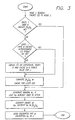
- node I To calculate ⁇ N i ij mod p, node I must determine if it has a cached authenticated public DH key for node J. If node I does not have this DH key, it must obtain node I's DH certificate, verify the DH certificate and cache node J's DH public value (see Figure 3 ). The value of [K ij ] N i is then computed and cached.
- node I has a cached [K ij ] N i interchange key, and a cached authenticated public DH key for node J, these steps are not repeated.
- Node I then generates a random key K p and encrypts this key using [K ij ] N i .
- Node I then encrypts the IP packet data in K p , and encrypts K p in [K ij ] N i .
- Node I transmits the encrypted IP datagram packet and the encrypted key K p to the receiving node J.
- Node I further includes its current value of N i in the SAID field of the outgoing packet.
- the outgoing datagram packet sent by the source node I takes the form illustrated in Figure 6 .
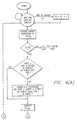
- the receiving node J initially sets its value of N j as a variable which is changed internally, or upon the receipt of a valid encrypted package. For example, as shown in Figure 4(a) after a predetermined time the value of N j in node J is incremented to N j +1. The incrementing of N is done in the same manner for each node as that described herein with reference to node J. However, for simplicity and ease of understanding, only the case of node J is described in this Specification.
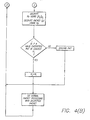
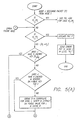
- the value of the context variable N j at node J is compared to the value of N i in the SAID field of the received packet. If N i is greater than node J's value of N j , node J determines if it has a cached and verified public key for node I. If node J does not have the public key, it obtains a DH certificate for node I and verifies and extracts a DH public value for node I. Node J then computes the value of [K ij ] N i and decrypts the packet (P) using [K ij ] N i and K p .
- Node J determines if the packet P is a valid encrypted packet in the context N i . This determination may be accomplished in using a number of mechanisms including checksum verifications, examining header formats and the like. If the packet is not validly encrypted in context N i , then the data packet is considered invalid and discarded. If the data packet (P) is determined to be a valid encrypted packet in the context N i then the value of N j for node J is set equal to N i . Normal data packet processing is then done by node J.
- node J determines if it has a cached and verified DH public key for node I. If node J does not have a cached and verified DH public key for node I, node J proceeds to obtain the DH certificate for node I, verifies the certificate, and extracts the DH public value for node I. The value of [K ij ] N i is then determined and cached for later use. As illustrated in Figure 3, node J then proceeds to decrypt the encrypted value of K p in the received data packet using [K ij ] N j , and decrypts the IP data utilizing K p . Node J then completes normal packet processing with the decrypted data packet. Normal packet processing may include the delivery to an appropriate local transport entity, or other outbound interface.
- the Message Indicator is a field that is used to preserve the statelessness of the protocol of the present invention. If a single key is used to encrypt multiple packets, (which is highly desirable since changing the key on a per packet basis constitutes significant computational overhead) then the packets need to be decryptable regardless of lost or out-of-order packets.
- the MI field serves this purpose.
- the actual content of the MI field is dependent on the choice of SKCS used for K p and its operating mode. For example, if K p refers to a block cipher (e.g. DES) operating in Cipher-Block-Chaining (CBC) mode, then the MI for the first packet encrypted in key K p is the Initialization Vector (IV).
- DES block cipher
- CBC Cipher-Block-Chaining
- the MI is the last blocksize-bits of ciphertext of the last (in transmit order) packet. For DES or RC2 this would be 64 bits. For stream ciphers like RC4, the MI is simply the count of bytes that have already been encrypted in key K p (and may also be 64 bits).
- the receiving node J can discover this fact without having to perform a public-key operation.
- the receiving node J uses the cached value [K ij ] N j to decrypt the encrypted packet key K p , and this is a shared-key cryptosystem operation.
- the packet encrypting key can be changed by the transmitting side.
- the nodes I and J have no public-key signature algorithm. It will be appreciated that the lack of a public-key signature algorithm is not a major issue, since signing each packet using a public-key cryptosystem is too cumbersome in any case.
- the integrity of the packets is determined in a pair-wise fashion using a SKCS.
- any security system it is generally assumed that the keys are not compromised.
- a cracker successfully obtains K p .
- the cracker can also learn the encryption of K p under K ij because this information is part of the packet header.
- the cracker may then send forged traffic to either nodes I or J pretending to be the other node.
- a cracker learns a node's secret (e.g., i)
- a closed user group is one whose membership is determined once and for all at a given point in time; no new members are added after that point.
- the damage limitation feature of the invention explained below, is referred to as "perfect forward secrecy.”
- the nodes of the closed user group will periodically change the interchange key [K ij ] N which they use.
- the key in use at any particular point in time will be the Nth level interchange key, [K ij ] N , for some integer N.
- the nodes of the closed user group will increment N, and thus begin using a new interchange key [K ij ] N+1 .
- perfect forward secrecy is used in this specification to mean that if an Nth level interchange key [K ij ] N is compromised, an intruder will not be able to read traffic encrypted with previous keys [K ij ] S for S ⁇ N.
- f(z) which is used to obtain the interchange key [K ij ] N from the previous interchange key [K ij ] N-1 , and with appropriate choice of the modulus p.
- perfect forward secrecy may be achieved.
- the key to perfect forward secrecy is that f be a one-way function, that is to say, one which is difficult to invert, so that if one knows f(z), it is difficult to compute z.
- This deletion of the DH secret i is valuable because, in practice, it is likely that the compromise of an interchange key [K ij ] N will occur (if it occurs at all) because a cracker has managed to obtain access to the entire contents of some node I, as for example by obtaining the password of a user account with complete control over the node.
- a node I determines that communication with the other nodes in the user group is proceeding in terms of a particular [K ij ] N , so that no further traffic with [K ij ] S for S ⁇ N will need to be read or generated, then the node should delete any copies it has of [K ij ] S for any S ⁇ N after a timeout period.
- the decision that communication with the other nodes in the user group is employing a particular is made as described previously in the specification. That is to say, upon the receipt of a data packet (P) in the context N i (e.g., a data packet from node I), node J computes [K ij ] N i and decrypts the data packet P.
- P data packet
- the trusted party generated p by multiplying random primes, it is desirable that the trusted party forget those primes after having communicated their product to the nodes in the closed user group, lest a cracker penetrate the trusted system and be able to discover factorizations which have remained lying around. This is a difference between the generation of moduli for this system as compared to RSA, in which it is expected that one of the communicating parties remembers the factorization for as long as a key pair is in use.
- the key management scheme described herein may also be used to provide an integrity check (in addition to secrecy) for packets.
- the key K p may be used directly by either node I or node J to compute a Message Authentication Code (MAC) either over the entire packet or over the portions that require authentication.
- MAC Message Authentication Code
- the method of the present invention may be used in conjunction with datagram multicasting protocols such as IP (or IPng) multicast.
- IP IPng
- This application requires key-management awareness in the establishment and joining process of multicast groups.
- the notion of a group owner should exist.
- a group membership creation primitive will establish the group key K g and the membership list of addresses that are allowed to transmit and receive encrypted multicast datagrams to and from group address M. This action will be taken by the group owner.
- the group key K g is not used as a packet encryption key, but rather as the Group Interchange Key (GIK). Namely, K g is used as a key-encrypting-key, similar to way the pair keys [K ij ] N are used in SKIP for unicast IP.
- GKI Group Interchange Key
- Nodes wishing to transmit/receive encrypted datagrams to multicast address M acquire the GIK K g .
- this is accomplished by sending an encrypted/authenticated request-to-join primitive to the group owner. If the requesting node's address is part of the group's authorized membership list, the group owner sends the GIK K g , algorithm identifier, associated lifetime information and key-change policy in an encrypted packet, using the pair-wise secure protocol previously described in this Specification.
- the packet formats for the GIK request/response is given below. This describes the payload portion of either a TCP or UDP packet, which has been enhanced using SKIP unicast procedures. If using UDP, multiple requests may be sent, in case of packet losses of earlier requests/response messages. The request is sent to TCP/UDP port # XXXX corresponding to the group owner's unicast IP address.
- the first field specifies the version of this protocol, which is 1. Following this field is the actual IP multicast address for which the GIK is being requested.
- the request packet that is sent must have the minimal IPSP enhancement of source-origin authentication, and may optionally be encrypted and/or have playback protection by use of the sequence number field.
- the group owner's response is an encrypted packet containing the GIK K g .
- the response is sent to TCP/UDP port # XXXX and is addressed to the requestor's unicast IP address.
- This packet format is as follows. As before, it defines the data-portion of a TCP or UDP packet.
- the 64-bit expiry time specifies when the multicast key is considered to have expired. This is in terms of seconds since, Jan. 1, 1994, expressed in GMT.
- the recommended key-change interval is what every source of encrypted traffic to the multicast group uses to determine the key-change policy. There are two ways currently envisioned to specify a key-change policy. The first is in terms of elapsed time since last key-change. Another is in terms of the amount of data encrypted in a given packet encryption key. It is contemplated that each source will use whichever of these methods which determines the more frequent key-change policy, whether this is in terms of amount of traffic encrypted in a given key, or in terms of elapsed time (in seconds) since the last key change.
- Transmitting nodes to group address M will randomly generate packet encryption keys K p , and encrypt these keys using K g .
- the packet structure is similar to the structure used for encrypted unicast SKIP packets, except that the packet keys K p are not encrypted in the pair-wise keys K ij , but instead are encrypted using the GIK K g .
- An example encrypted multicast packet is shown below.
- the destination IP address will be used by the receiver to determine whether to use unicast of multicast key-processing procedures on a received IP packet. In case the destination address is an IP multicast address, it will use the group IK K g to decrypt the packet encryption key K p .
- Every member of the multicast group can change packet encryption keys as often as required (in line with the policy set by the group owner), without involving key-setup communications overhead involving every member of the group. This can be extremely frequent, even once every few seconds, even with very large multicast groups, because there is no extra communications overhead for changing packet encryption keys.
- An implementation of this improved protocol will use the destination IP multicast address to look-up the GIK K g .
- An advantage of the method of the present invention is that only the keying information is distributed in a pair-wise fashion.
- the actual encrypted data packet is sent using the standard multicast delivery mechanisms, thereby allowing the same network bandwidth efficiency that is expected of a network layer multicast protocol when operating over subnetworks which also support multicasting (for example, Ethernet, FDDI, etc).
- This scheme is considered to scale well, even for a large number of nodes, because key-change requires no extra communications overhead.
- TLCA Top Level Certifying Authority
- IPRA Internet Policy Registration Authority
- PCAs Policy Certifying authorities
- CAs organizational Certificate authorities
- IP addresses In addition to the identity certificates, which are part of PEM, additional authorization certificates are needed to properly track the ownership of IP addresses. Since it is desirable to directly use IP addresses in the DH certificates, name subordination principles alone cannot be used to determine if a particular CA has the authority to bind a particular IP address to a DH public key. However, the present invention may use the X.509/PEM certificate format, since the subject Distinguished Name (DN) in the certificate can be the ASCII decimal representation of an IP (or IPng) address.
- DN Distinguished Name
- the node certificates are issued by organizational CAs which have jurisdiction over the range of IP addresses that are being certified.
- the PCAs will have to perform suitable checks (in line with the policy of that PCA), to confirm that the organization which has jurisdiction over a range of addresses is issued a certificate giving it the authority to certify the DH values of individual nodes with those addresses.
- This authority may be delegated in the form of a authorization certificate signed by the PCA.
- the CA's Distinguished Name (DN) will be bound to the range of IP addresses over which it has jurisdiction.
- the CA has either an RSA or DSA certificate from the PCA.
- the CA which has authority over a range of IP addresses can delegate authority over part of the range to a subordinate CA, by signing another authorization certificate using its own private key.
- the organizational CA so authorized is identified by the range of addresses that it can issue certificates for.
- the range of IP addresses are identified in the certificate in the form of a IP address prefix length list.
Landscapes
- Engineering & Computer Science (AREA)
- Computer Security & Cryptography (AREA)
- Computer Networks & Wireless Communication (AREA)
- Signal Processing (AREA)
- Computer Hardware Design (AREA)
- Computing Systems (AREA)
- General Engineering & Computer Science (AREA)
- Data Exchanges In Wide-Area Networks (AREA)
- Computer And Data Communications (AREA)
Claims (27)
- Ein Verfahren zum Senden von Daten von einem ersten Datenverarbeitungsgerät an ein zweites Datenverarbeitungsgerät in einer geschlossenen Benutzergruppe mit einer Vielzahl von Knoten, wobei das erste Datenverarbeitungsgerät einen ersten Knoten der Vielzahl von Knoten darstellt und das zweite Datenverarbeitungsgerät einen zweiten Knoten der Vielzahl von Knoten darstellt, und jeder der Knoten einen eindeutigen geheimen Wert, einen öffentlichen Wert und einen Wert einer Kontextvariable enthält, und das Verfahren in dem ersten Knoten die Schritte umfasst:Erhalten eines Zertifikats für jeden der anderen Knoten der Vielzahl von Knoten und Bestimmen der öffentlichen. Werte für jeden der anderen Knoten in der Vielzahl von Knoten von den Zertifikaten;Vorberechnen eines gemeinsamen Geheimnisses für jeden der anderen Knoten in der Vielzahl von Knoten unter Verwendung des geheimen Wertes des ersten Knotens und der bestimmten öffentlichen Werte von jedem der anderen Knoten;Löschen des geheimen Wertes des ersten Knotens;Berechnen eines Austauschschlüssels von dem vorberechneten gemeinsamen Geheimnis für den ersten und zweiten Knoten;Verschlüsseln von an den zweiten Knoten zu übertragende Daten unter Verwendung des Austauschschlüssels;Senden der verschlüsselten Daten an den zweiten Knoten;Benachrichtigen des zweiten Knotens von dem gegenwärtigen Wert der Kontextvariable für den ersten Knoten.
- Das Verfahren wie in Anspruch 1 definiert, wobei die Schritte in dem zweiten Knoten ferner umfassen:Empfangen der verschlüsselten Daten und einer Benachrichtigung über den gegenwärtigen Wert der Kontextvariable für den ersten Knoten von dem ersten Knoten;Vergleichen des Werts der Kontextvariable für den zweiten Knoten mit dem Wert der Kontextvariable für den ersten Knoten; undfalls der Wert der Kontextvariable für den ersten Knoten größer ist als der Wert der Kontextvariable für den zweiten Knoten, Berechnen des Austauschschlüssels von dem vorberechneten gemeinsamen Geheimnis für den ersten und zweiten Knoten, und Setzen des Werts der Kontextvariable für den zweiten Knoten gleich dem Wert der Kontextvariable für den ersten Knoten, falls die empfangenen verschlüsselten Daten bestimmt werden für den Wert der Kontextvariable des ersten Knotens gültig verschlüsselt zu sein.
- Das Verfahren wie durch Anspruch 1 oder 2 definiert, wobei die zu dem zweiten Knoten zu übertragenden Daten einen transienten bzw. Übergangs-Schlüssel enthalten, der verwendet wird zum Verschlüsseln anderer an den zweiten Knoten zu übertragenden Daten.
- Das Verfahren wie durch Anspruch 3 definiert, wobei das Verfahren in dem zweiten Knoten ferner die Schritte enthält:Entschlüsseln des Übergangsschlüssels unter Verwendung des Austauschschlüssels, undEntschlüsseln der anderen Daten mit dem Übergangsschlüssel.
- Das Verfahren wie durch einen der Ansprüche 2 bis 4 definiert, ferner umfassend den Schritt bei dem zweiten Knoten:falls der Wert der Kontextvariable für den ersten Knoten gleich ist dem Wert der Kontextvariable für den zweiten Knoten, Berechnen des Austauschschlüssels von dem vorgegebenen gemeinsamen Geheimnis für den ersten und zweiten Knoten.
- Das Verfahren wie durch einen der Ansprüche 2 bis 5 definiert, ferner umfassend den Schritt bei dem zweiten Knoten:falls der Wert der Kontextvariable für den zweiten Knoten größer ist als der Wert der Kontextvariable für den ersten Knoten, Verwerfen der Daten und Angeben einer Fehlerbedingung.
- Das Verfahren wie durch einen der Ansprüche 1 bis 6 definiert, ferner umfassend den Schritt,
ausgeführt nach einer vorbestimmten Zeitperiode bei jedem Knoten, eines Erhöhens des Werts bei Kontextvariable, bereitgestellt für jeden Knoten. - Das Verfahren wie durch Anspruch 7 definiert, wobei das Verfahren in dem ersten Knoten ferner die Schritte umfasst, die nach dem Schritt eines Erhöhens des Werts der Kontextvariable für jeden Knoten ausgeführt werden:Berechnen eines nächsten Austauschschlüssels von dem gegenwärtigen Austauschschlüssel für jeden der anderen Knoten, undLöschen der gegenwärtigen Austauschschlüssel und der vorberechneten gemeinsamen Geheimnisse für jeden der anderen Knoten.
- Das Verfahren wie in einem der vorhergehenden Ansprüche vorgetragen, wobei für jeden Knoten der Knoten der Wert der Kontextvariable, bereitgestellt für jeden Knoten, anfangs gleich 1 gesetzt wird.
- Das Verfahren wie durch Anspruch 8 oder Anspruch 9, wenn abhängig von Anspruch 8, definiert, wobei der nächste Austauschschlüssel von dem gegenwärtigen Austauschschlüssel berechnet wird durch Anwenden einer Einwegfunktion auf den gegenwärtigen Austauschschlüssel.
- Das Verfahren wie durch Anspruch 10 definiert, wobei die Einwegfunktion gleich ist zu zMmod p, wobei p eine Kompositnummer bzw. zusammengesetzte Nummer ist, die schwer zu faktorieren ist.
- Das Verfahren wie durch einen der Ansprüche 1 bis 9 definiert, wobei der Austauschschlüssel ein implizit paarweises Geheimnis ist, das als ein Schlüssel für ein gemeinsames Schlüsselkryptosystem (SKCS) verwendet wird und von a(M^N)ij abgeleitet wird, wobei a ein Systemparameter ist.
- Das Verfahren wie durch Anspruch 12 definiert, wobei die anderen Daten ein Datenpaket umfassen, das eine Ursprungsadresse, eine Bestimmungsadresse und ein SKCS-Identifiziererfeld enthält.
- Das Verfahren wie durch Anspruch 12 oder 13 definiert, wobei das Datenpaket ferner ein Nachrichtenindikatorfeld enthält.
- Eine Vorrichtung zum Verschlüsseln von Daten für eine Übertragung von einem ersten Datenverarbeitungsgerät (10) an ein zweites Datenverarbeitungsgerät in einer geschlossenen Benutzergruppe mit einer Vielzahl von Knoten, wobei das erste Datenverarbeitungsgerät (10) einen ersten Knoten der Vielzahl von Knoten darstellt und das zweite Datenverarbeitungsgerät einen zweiten Knoten der Vielzahl von Knoten darstellt, und jeder der Knoten ein Speichergerät (14) enthält, das ausgebildet ist zum Speichern eines eindeutigen geheimen Wertes, eines öffentlichen Werts und eines Werts einer Kontextvariable, und die Vorrichtung, die als der erste Knoten bezeichnet wird, umfasst:ein Berechnungsgerät (13), ausgebildet zum:Bestimmen der öffentlichen Werte der anderen Knoten von einem Zertifikat für jeden der anderen Knoten;Vorberechnen eines gemeinsamen Geheimnisses für jeden der anderen Knoten von dem geheimen Wert des ersten Knotens und den bestimmten öffentlichen Werten von jedem der anderen Knoten;Löschen des geheimen Werts des ersten Knotens nach einem Vorberechnen aller der gemeinsamen Geheimnisse für die anderen Knoten;ein Verschlüsselungsgerät (13; 17), ausgebildet zum Ableiten eines Austauschschlüssels von dem vorberechneten gemeinsamen Geheimnis für den ersten und zweiten Knoten, und Verschlüsseln von an den zweiten Knoten übertragene Daten unter Verwendung des Austauschschlüssels; undeine Schnittstellenschaltung (17), ausgebildet zum Übertragen der verschlüsselten Daten an den zweiten Knoten und zum Benachrichtigen des zweiten Knotens über den Wert der Kontextvariable für den ersten Knoten.
- Die Vorrichtung wie durch Anspruch 15 definiert, wobei der erste Knoten ferner enthält:wobei das Entschlüsselungsgerät (13; 17) ausgebildet ist zum Verwenden des Austauschschlüssels, um den Übergangsschlüssel zu entschlüsseln, die anderen Daten unter Verwendung des Übergangsschlüssels zu entschlüsseln und den Wert der Kontextvariable für den ersten Knoten gleich dem Wert der Kontextvariable des zweiten Knotens zu setzen.einen Empfänger (17) zum Empfangen von verschlüsselten Daten von dem zweiten Knoten, wobei die verschlüsselten Daten einen transienten bzw. Übergangsschlüssel umfassen, der verwendet wird zum Verschlüsseln anderer an den ersten Knoten zu übertragenden Daten;ein Entschlüsselungsgerät (13; 17) gekoppelt mit dem Empfänger zum Entschlüsseln der verschlüsselten Daten; wobei das Entschlüsselungsgerät (13; 17) umfasst:eine Vergleichseinrichtung ausgebildet zum Vergleichen des Werts der Kontextvariable für den zweiten Knoten mit dem Wert der Kontextvariable für den ersten Knoten;ein Schlüssel-Berechnungsgerät, ausgebildet zum Berechnen des Austauschschlüssels von dem vorberechneten gemeinsamen Geheimnis für den ersten und zweiten Knoten, falls der Wert der Kontextvariable für den zweiten Knoten größer ist als der Wert der Kontextvariable für den ersten Knoten;
- Die Vorrichtung wie durch Anspruch 16 definiert, wobei, falls der Wert der Kontextvariable für den zweiten Knoten gleich dem Wert der Kontextvariable für den ersten Knoten ist, der erste Knoten ausgebildet ist zum Berechnen des Kontextvariable Austauschschlüssels von dem vorberechneten gemeinsamen Geheimnis für den ersten und zweiten Knoten, und wobei das Entschlüsselungsgerät (13; 17) ausgebildet ist zum Verwenden des Austauschschlüssels, um den Übergangsschlüssel zu entschlüsseln und die anderen Daten unter Verwendung des Übergangsschlüssels zu entschlüsseln.
- Die Vorrichtung wie durch Anspruch 17 definiert, wobei, falls der Wert der Kontextvariable für den zweiten Knoten geringer ist als der Wert der Kontextvariable für den ersten Knoten, der erste Knoten ausgebildet ist zum Verwerfen der Daten.
- Die Vorrichtung wie durch einen der Ansprüche 15 bis 18 definiert, wobei der erste Knoten ausgebildet ist zum Erhöhen des Werts der Kontextvariable nach einer vorbestimmten Zeitperiode.
- Die Vorrichtung wie durch Anspruch 19 definiert, wobei der erste Knoten ferner ausgebildet ist zum Berechnen eines nächsten Austauschschlüssels von einem gegenwärtigen Austauschschlüssel, und Löschen der gegenwärtigen Austauschschlüssel und den vorberechneten gemeinsamen Geheimnissen für alle der anderen Knoten.
- Die Vorrichtung wie durch einen der Ansprüche 17 bis 20 definiert, wobei die anderen Daten ein Datenpaket umfassen, das ein Kontextfeld enthält, das ausgebildet ist zum Speichern des Werts der Kontextvariable für den ersten Knoten.
- Die Vorrichtung wie durch einen der Ansprüche 15 bis 21 definiert, wobei der Wert der Kontextvariablen für den ersten und zweiten Knoten anfangs gleich 1 gesetzt sind.
- Die Vorrichtung wie durch einen der Ansprüche 15 bis 22 definiert, wobei der öffentliche Wert für jeden der Knoten almod p ist, wobei l der eindeutige geheime Wert für jeden der Knoten ist, und a und p Systemparameter sind, wobei p eine Kompositzahl bzw. zusammengesetzte Zahl ist, die schwer zu faktorieren ist.
- Die Vorrichtung wie durch einen der Ansprüche 20 bis 23 definiert, wobei der nächste Austauschschlüssel von dem gegenwärtigen Austauschschlüssel berechnet wird durch Anwenden einer Einweg-Funktion auf den gegenwärtigen Austauschschlüssel.
- Die Vorrichtung wie durch einen der Ansprüche 15 bis 24 definiert, wobei der Austauschschlüssel ein implizit paarweises Geheimnis ist, das als ein Schlüssel für ein gemeinsames Schlüssel-Kryptosystem SKCS verwendet wird.
- Die Vorrichtung wie durch einen der Ansprüche 21 bis 25 definiert, wobei das Datenpaket eine Ursprungsadresse, eine Bestimmungsadresse und ein SKCS-Identifizierer-Feld enthält.
- Die Vorrichtung wie durch Anspruch 26 definiert, wobei das Datenpaket ferner ein Nachrichtenindikatorfeld enthält.
Applications Claiming Priority (2)
| Application Number | Priority Date | Filing Date | Title |
|---|---|---|---|
| US846973 | 1997-04-30 | ||
| US08/846,973 US6091820A (en) | 1994-06-10 | 1997-04-30 | Method and apparatus for achieving perfect forward secrecy in closed user groups |
Publications (3)
| Publication Number | Publication Date |
|---|---|
| EP0876027A2 EP0876027A2 (de) | 1998-11-04 |
| EP0876027A3 EP0876027A3 (de) | 2002-07-17 |
| EP0876027B1 true EP0876027B1 (de) | 2005-12-14 |
Family
ID=25299466
Family Applications (1)
| Application Number | Title | Priority Date | Filing Date |
|---|---|---|---|
| EP98303315A Expired - Lifetime EP0876027B1 (de) | 1997-04-30 | 1998-04-28 | Verfahren und Vorrichtung zur Erzielung einer perfekten Vorwärtssicherheit in geschlossenen Benutzergruppen |
Country Status (3)
| Country | Link |
|---|---|
| US (1) | US6091820A (de) |
| EP (1) | EP0876027B1 (de) |
| JP (1) | JPH1155243A (de) |
Families Citing this family (38)
| Publication number | Priority date | Publication date | Assignee | Title |
|---|---|---|---|---|
| US6367019B1 (en) * | 1999-03-26 | 2002-04-02 | Liquid Audio, Inc. | Copy security for portable music players |
| US7181014B1 (en) * | 1999-09-10 | 2007-02-20 | Cisco Technology, Inc. | Processing method for key exchange among broadcast or multicast groups that provides a more efficient substitute for Diffie-Hellman key exchange |
| US6977928B1 (en) | 2000-04-13 | 2005-12-20 | International Business Machines Corporation | Method and system for data flow multicasting |
| WO2001095068A2 (en) | 2000-06-09 | 2001-12-13 | Certicom Corp. | A method for the application of implicit signature schemes |
| US7185196B1 (en) * | 2000-09-15 | 2007-02-27 | Atheros Communications, Inc. | Key caching system |
| GB2372413A (en) * | 2001-02-20 | 2002-08-21 | Hewlett Packard Co | Digital credential exchange |
| GB2372412A (en) * | 2001-02-20 | 2002-08-21 | Hewlett Packard Co | Digital credential monitoring |
| EP1780979A1 (de) | 2001-10-02 | 2007-05-02 | Seiko Epson Corporation | Kommunikationsvermittlungseinrichtung zum Vermitteln einer gesicherten Kommunikation über ein Netzwerk |
| US7188365B2 (en) | 2002-04-04 | 2007-03-06 | At&T Corp. | Method and system for securely scanning network traffic |
| US7203957B2 (en) * | 2002-04-04 | 2007-04-10 | At&T Corp. | Multipoint server for providing secure, scaleable connections between a plurality of network devices |
| US7574738B2 (en) | 2002-11-06 | 2009-08-11 | At&T Intellectual Property Ii, L.P. | Virtual private network crossovers based on certificates |
| DE50301796D1 (de) * | 2002-11-25 | 2006-01-05 | Siemens Ag | Verfahren und Anordnung zum verschlüsselten Übertragen von Kommunikationsdatenströmen über ein paketorientiertes Kommunikationsnetz |
| ATE438973T1 (de) * | 2004-04-02 | 2009-08-15 | Research In Motion Ltd | Einsatz und provisionierung drahtloser in der hand gehaltener einrichtungen |
| US7646872B2 (en) | 2004-04-02 | 2010-01-12 | Research In Motion Limited | Systems and methods to securely generate shared keys |
| US20070055879A1 (en) * | 2005-08-16 | 2007-03-08 | Jianjun Luo | System and method for high performance public key encryption |
| US8457307B2 (en) * | 2007-07-17 | 2013-06-04 | Certicom Corp. | Method and system for generating implicit certificates and applications to identity-based encryption (IBE) |
| CN101593196B (zh) * | 2008-05-30 | 2013-09-25 | 日电(中国)有限公司 | 用于快速密文检索的方法、装置和系统 |
| US8594333B2 (en) * | 2008-09-05 | 2013-11-26 | Vixs Systems, Inc | Secure key access with one-time programmable memory and applications thereof |
| US9501429B2 (en) * | 2008-09-05 | 2016-11-22 | Vixs Systems Inc. | Dynamic key and rule storage protection |
| US9432184B2 (en) * | 2008-09-05 | 2016-08-30 | Vixs Systems Inc. | Provisioning of secure storage for both static and dynamic rules for cryptographic key information |
| US8364964B2 (en) * | 2009-12-29 | 2013-01-29 | General Instrument Corporation | Registering client devices with a registration server |
| US8707454B1 (en) | 2012-07-16 | 2014-04-22 | Wickr Inc. | Multi party messaging |
| US10567349B2 (en) | 2013-06-25 | 2020-02-18 | Wickr Inc. | Secure time-to-live |
| US9866591B1 (en) | 2013-06-25 | 2018-01-09 | Wickr Inc. | Enterprise messaging platform |
| US10129260B1 (en) | 2013-06-25 | 2018-11-13 | Wickr Inc. | Mutual privacy management |
| US9830089B1 (en) | 2013-06-25 | 2017-11-28 | Wickr Inc. | Digital data sanitization |
| US9698976B1 (en) | 2014-02-24 | 2017-07-04 | Wickr Inc. | Key management and dynamic perfect forward secrecy |
| US9584530B1 (en) | 2014-06-27 | 2017-02-28 | Wickr Inc. | In-band identity verification and man-in-the-middle defense |
| US9654288B1 (en) | 2014-12-11 | 2017-05-16 | Wickr Inc. | Securing group communications |
| EP3311320A4 (de) * | 2015-06-22 | 2018-12-05 | Cyphre, LLC | Beschleunigte verschlüsselung und entschlüsselung von dateien mit gemeinsamen geheimnissen und verfahren dafür |
| US9584493B1 (en) | 2015-12-18 | 2017-02-28 | Wickr Inc. | Decentralized authoritative messaging |
| US10291607B1 (en) | 2016-02-02 | 2019-05-14 | Wickr Inc. | Providing real-time events to applications |
| US9590958B1 (en) | 2016-04-14 | 2017-03-07 | Wickr Inc. | Secure file transfer |
| US9591479B1 (en) | 2016-04-14 | 2017-03-07 | Wickr Inc. | Secure telecommunications |
| US11063921B2 (en) | 2018-11-06 | 2021-07-13 | International Business Machines Corporation | Extracting data from passively captured web traffic that is encrypted in accordance with an anonymous key agreement protocol |
| US12531731B2 (en) * | 2022-01-13 | 2026-01-20 | Dell Products L.P. | Encryption key rotation based on dataset size or time between key rotation intervals |
| US12160510B2 (en) | 2022-04-18 | 2024-12-03 | Dell Products L.P. | Automatic key cleanup to better utilize key table space |
| US12549358B2 (en) | 2023-09-19 | 2026-02-10 | Dell Products L.P. | Encryption key rotation using dataset size and predicted threshold time based on data ingest rates |
Family Cites Families (1)
| Publication number | Priority date | Publication date | Assignee | Title |
|---|---|---|---|---|
| EP0693836A1 (de) * | 1994-06-10 | 1996-01-24 | Sun Microsystems, Inc. | Verfahren und Einrichtung für ein Schlüsselmanagementschema für Internet-Protokolle |
-
1997
- 1997-04-30 US US08/846,973 patent/US6091820A/en not_active Expired - Lifetime
-
1998
- 1998-04-24 JP JP11547398A patent/JPH1155243A/ja active Pending
- 1998-04-28 EP EP98303315A patent/EP0876027B1/de not_active Expired - Lifetime
Also Published As
| Publication number | Publication date |
|---|---|
| US6091820A (en) | 2000-07-18 |
| EP0876027A3 (de) | 2002-07-17 |
| EP0876027A2 (de) | 1998-11-04 |
| JPH1155243A (ja) | 1999-02-26 |
Similar Documents
| Publication | Publication Date | Title |
|---|---|---|
| US6026167A (en) | Method and apparatus for sending secure datagram multicasts | |
| US6091820A (en) | Method and apparatus for achieving perfect forward secrecy in closed user groups | |
| US5668877A (en) | Method and apparatus for stepping pair keys in a key-management scheme | |
| US5588060A (en) | Method and apparatus for a key-management scheme for internet protocols | |
| US5416842A (en) | Method and apparatus for key-management scheme for use with internet protocols at site firewalls | |
| US6240513B1 (en) | Network security device | |
| Harkins et al. | The internet key exchange (IKE) | |
| Harkins et al. | RFC2409: The Internet key exchange (IKE) | |
| US6965992B1 (en) | Method and system for network security capable of doing stronger encryption with authorized devices | |
| US9094206B2 (en) | Method and system for secure session establishment using identity-based encryption (VDTLS) | |
| US7036010B2 (en) | Method and apparatus for a secure communications session with a remote system via an access-controlling intermediate system | |
| US5757924A (en) | Network security device which performs MAC address translation without affecting the IP address | |
| US6993651B2 (en) | Security protocol | |
| CN101156348B (zh) | 使用配对函数在各方之间的通信中确保保密的方法和设备 | |
| WO2002082769A2 (en) | Facilitating legal interception of ip connections | |
| Brown | Cebolla: Pragmatic ip anonymity | |
| Yijun et al. | A secure key exchange and mutual authentication protocol for wireless mobile communications | |
| Smyslov et al. | RFC 9838: Group Key Management Using the Internet Key Exchange Protocol Version 2 (IKEv2) | |
| Bridgelall | Introduction to Digital Networks and Security | |
| Atighehchi et al. | A cryptographic keys transfer protocol for secure communicating systems | |
| Kwok et al. | Zero-configuration identity-based IP network encryptor | |
| Yener | Internet Security | |
| Bridgelall | Introduction to Cryptography | |
| Stallings | Protocol Basics: Secure Shell Protocol. The Internet Protocol Journal, Volume 12, No. 4 | |
| Davis | IPSec base virtual private network |
Legal Events
| Date | Code | Title | Description |
|---|---|---|---|
| PUAI | Public reference made under article 153(3) epc to a published international application that has entered the european phase |
Free format text: ORIGINAL CODE: 0009012 |
|
| AK | Designated contracting states |
Kind code of ref document: A2 Designated state(s): AT BE CH CY DE DK ES FI FR GB GR IE IT LI LU MC NL PT SE |
|
| AX | Request for extension of the european patent |
Free format text: AL;LT;LV;MK;RO;SI |
|
| PUAL | Search report despatched |
Free format text: ORIGINAL CODE: 0009013 |
|
| AK | Designated contracting states |
Kind code of ref document: A3 Designated state(s): AT BE CH CY DE DK ES FI FR GB GR IE IT LI LU MC NL PT SE |
|
| AX | Request for extension of the european patent |
Free format text: AL;LT;LV;MK;RO;SI |
|
| 17P | Request for examination filed |
Effective date: 20030102 |
|
| AKX | Designation fees paid |
Designated state(s): FR GB NL |
|
| REG | Reference to a national code |
Ref country code: DE Ref legal event code: 8566 |
|
| 17Q | First examination report despatched |
Effective date: 20040121 |
|
| GRAP | Despatch of communication of intention to grant a patent |
Free format text: ORIGINAL CODE: EPIDOSNIGR1 |
|
| RAP1 | Party data changed (applicant data changed or rights of an application transferred) |
Owner name: SUN MICROSYSTEMS, INC. |
|
| GRAS | Grant fee paid |
Free format text: ORIGINAL CODE: EPIDOSNIGR3 |
|
| GRAA | (expected) grant |
Free format text: ORIGINAL CODE: 0009210 |
|
| AK | Designated contracting states |
Kind code of ref document: B1 Designated state(s): FR GB NL |
|
| PG25 | Lapsed in a contracting state [announced via postgrant information from national office to epo] |
Ref country code: NL Free format text: LAPSE BECAUSE OF FAILURE TO SUBMIT A TRANSLATION OF THE DESCRIPTION OR TO PAY THE FEE WITHIN THE PRESCRIBED TIME-LIMIT Effective date: 20051214 |
|
| REG | Reference to a national code |
Ref country code: GB Ref legal event code: FG4D |
|
| PG25 | Lapsed in a contracting state [announced via postgrant information from national office to epo] |
Ref country code: GB Free format text: LAPSE BECAUSE OF NON-PAYMENT OF DUE FEES Effective date: 20060428 |
|
| NLV1 | Nl: lapsed or annulled due to failure to fulfill the requirements of art. 29p and 29m of the patents act | ||
| PLBE | No opposition filed within time limit |
Free format text: ORIGINAL CODE: 0009261 |
|
| STAA | Information on the status of an ep patent application or granted ep patent |
Free format text: STATUS: NO OPPOSITION FILED WITHIN TIME LIMIT |
|
| 26N | No opposition filed |
Effective date: 20060915 |
|
| GBPC | Gb: european patent ceased through non-payment of renewal fee |
Effective date: 20060428 |
|
| EN | Fr: translation not filed | ||
| PG25 | Lapsed in a contracting state [announced via postgrant information from national office to epo] |
Ref country code: FR Free format text: LAPSE BECAUSE OF FAILURE TO SUBMIT A TRANSLATION OF THE DESCRIPTION OR TO PAY THE FEE WITHIN THE PRESCRIBED TIME-LIMIT Effective date: 20070202 |
|
| PG25 | Lapsed in a contracting state [announced via postgrant information from national office to epo] |
Ref country code: FR Free format text: LAPSE BECAUSE OF FAILURE TO SUBMIT A TRANSLATION OF THE DESCRIPTION OR TO PAY THE FEE WITHIN THE PRESCRIBED TIME-LIMIT Effective date: 20060430 |
|
| PG25 | Lapsed in a contracting state [announced via postgrant information from national office to epo] |
Ref country code: FR Free format text: LAPSE BECAUSE OF FAILURE TO SUBMIT A TRANSLATION OF THE DESCRIPTION OR TO PAY THE FEE WITHIN THE PRESCRIBED TIME-LIMIT Effective date: 20051214 |