EP0875863B2 - Elektronische Frankiermaschine mit mehreren Taktsystemen zur verbesserten Sicherheit - Google Patents
Elektronische Frankiermaschine mit mehreren Taktsystemen zur verbesserten Sicherheit Download PDFInfo
- Publication number
- EP0875863B2 EP0875863B2 EP98106454A EP98106454A EP0875863B2 EP 0875863 B2 EP0875863 B2 EP 0875863B2 EP 98106454 A EP98106454 A EP 98106454A EP 98106454 A EP98106454 A EP 98106454A EP 0875863 B2 EP0875863 B2 EP 0875863B2
- Authority
- EP
- European Patent Office
- Prior art keywords
- time
- clock
- counter
- metering system
- real time
- Prior art date
- Legal status (The legal status is an assumption and is not a legal conclusion. Google has not performed a legal analysis and makes no representation as to the accuracy of the status listed.)
- Expired - Lifetime
Links
- 238000000034 method Methods 0.000 claims description 15
- 230000002401 inhibitory effect Effects 0.000 claims 2
- 230000000717 retained effect Effects 0.000 claims 1
- 238000007639 printing Methods 0.000 description 20
- 230000006854 communication Effects 0.000 description 15
- 238000004891 communication Methods 0.000 description 15
- 239000013078 crystal Substances 0.000 description 8
- 230000000694 effects Effects 0.000 description 7
- 238000004519 manufacturing process Methods 0.000 description 7
- 238000012423 maintenance Methods 0.000 description 6
- 230000006870 function Effects 0.000 description 5
- 238000007689 inspection Methods 0.000 description 5
- 230000008569 process Effects 0.000 description 5
- 238000012545 processing Methods 0.000 description 4
- 230000004622 sleep time Effects 0.000 description 4
- 238000003860 storage Methods 0.000 description 3
- 230000001174 ascending effect Effects 0.000 description 2
- 238000004364 calculation method Methods 0.000 description 2
- 230000008859 change Effects 0.000 description 2
- 230000001105 regulatory effect Effects 0.000 description 2
- 238000012795 verification Methods 0.000 description 2
- 230000007175 bidirectional communication Effects 0.000 description 1
- 230000005540 biological transmission Effects 0.000 description 1
- 238000006243 chemical reaction Methods 0.000 description 1
- 238000013461 design Methods 0.000 description 1
- 238000001514 detection method Methods 0.000 description 1
- 238000010586 diagram Methods 0.000 description 1
- 230000002708 enhancing effect Effects 0.000 description 1
- 230000000977 initiatory effect Effects 0.000 description 1
- 238000007641 inkjet printing Methods 0.000 description 1
- 230000003993 interaction Effects 0.000 description 1
- 230000007246 mechanism Effects 0.000 description 1
- 238000012986 modification Methods 0.000 description 1
- 230000004048 modification Effects 0.000 description 1
- 238000012544 monitoring process Methods 0.000 description 1
- 230000008520 organization Effects 0.000 description 1
- 238000005192 partition Methods 0.000 description 1
- 238000010926 purge Methods 0.000 description 1
- 230000001360 synchronised effect Effects 0.000 description 1
- 230000000007 visual effect Effects 0.000 description 1
Images


Classifications
-
- G—PHYSICS
- G07—CHECKING-DEVICES
- G07B—TICKET-ISSUING APPARATUS; FARE-REGISTERING APPARATUS; FRANKING APPARATUS
- G07B17/00—Franking apparatus
- G07B17/00185—Details internally of apparatus in a franking system, e.g. franking machine at customer or apparatus at post office
- G07B17/00193—Constructional details of apparatus in a franking system
-
- G—PHYSICS
- G07—CHECKING-DEVICES
- G07B—TICKET-ISSUING APPARATUS; FARE-REGISTERING APPARATUS; FRANKING APPARATUS
- G07B17/00—Franking apparatus
- G07B17/00185—Details internally of apparatus in a franking system, e.g. franking machine at customer or apparatus at post office
- G07B17/00193—Constructional details of apparatus in a franking system
- G07B2017/00241—Modular design
-
- G—PHYSICS
- G07—CHECKING-DEVICES
- G07B—TICKET-ISSUING APPARATUS; FARE-REGISTERING APPARATUS; FRANKING APPARATUS
- G07B17/00—Franking apparatus
- G07B17/00185—Details internally of apparatus in a franking system, e.g. franking machine at customer or apparatus at post office
- G07B17/00193—Constructional details of apparatus in a franking system
- G07B2017/00258—Electronic hardware aspects, e.g. type of circuits used
-
- G—PHYSICS
- G07—CHECKING-DEVICES
- G07B—TICKET-ISSUING APPARATUS; FARE-REGISTERING APPARATUS; FRANKING APPARATUS
- G07B17/00—Franking apparatus
- G07B17/00185—Details internally of apparatus in a franking system, e.g. franking machine at customer or apparatus at post office
- G07B17/00314—Communication within apparatus, personal computer [PC] system, or server, e.g. between printhead and central unit in a franking machine
- G07B2017/00354—Setting of date
-
- G—PHYSICS
- G07—CHECKING-DEVICES
- G07B—TICKET-ISSUING APPARATUS; FARE-REGISTERING APPARATUS; FRANKING APPARATUS
- G07B17/00—Franking apparatus
- G07B17/00185—Details internally of apparatus in a franking system, e.g. franking machine at customer or apparatus at post office
- G07B17/00362—Calculation or computing within apparatus, e.g. calculation of postage value
- G07B2017/00427—Special accounting procedures, e.g. storing special information
Definitions
- the present invention relates to clock systems with secure clocks and is applicable inter alia to a clock system for enhancing security in a value metering system such as a postage metering system.
- Electronic postage metering systems have been developed which include both a single printing arrangement associated with a single accounting arrangement. These printing and accounting systems have been usually housed in a single secure housing to provide for protection against tampering to provide for security. Other types of electronic postage metering systems have involved the utilization of portable detachably connectable accounting systems such as smart cards and other portable type devices.
- Prepayment meters employ descending registers for securely storing value within the meter prior to printing while post payment (current account) meters employ ascending registers to account for value imprinted.
- Postal charges or other terms referring to postal or postage meter or meter system as used herein should be understood to mean charges, meters or systems, for either postal charges, tax charges, private carrier charges, tax service or private carrier service, as the case may be, and other value metering systems, such as certificate metering systems such as is disclosed in European Patent Application of Cordery, Lee, Pintsov, Ryan and Weiant, Serial No. 96113397.2, filed August 14, 1996, for SECURE USER CERTIFICATION FOR ELECTRONIC COMMERCE EMPLOYING VALUE METERING SYSTEM and assigned to Pitney Bowes, Inc. (corresponding to US-A-5 796 841 ).
- Postage metering systems have also been developed which employ encrypted information on a mailpiece.
- the postage value for a mailpiece may be encrypted together with the other data to generate a digital token.
- a digital token is encrypted information that authenticates the information imprinted on a mailpiece such as postage value. Examples of postage metering systems which generate and employ digital tokens are described in U.S. Patent No. 4,757,537 for SYSTEM FOR DETECTING UNACCOUNTED FOR PRINTING IN A VALUE PRINTING SYSTEM, issued July 12, 1988; U.S. Patent No. 4,831,555 for SECURE POSTAGE APPLYING SYSTEM, issued May 15, 1989; U.S. Patent No.
- EP-A-0 635 790 describes a client/server-based secure timekeeping computer system.
- a secure-time server located in a physically trusted environment, includes a highly accurate time-of-day (TOD) clock, along with a key storage area containing a table of public/private key pairs corresponding to clients in the client/server network.
- the server encrypts a current time value from its TOD clock using a private key corresponding to a selected client.
- the encrypted time value is then sent to the client over an open communications channel.
- Each client in the network is equipped with its own secure timekeeping facility housed within the secure boundaries of a single, tamper-proof VLSI chip.
- a client Upon receipt of a secure-time transmission, a client uses its own copy of its private key to decrypt the time value, then loads the decrypted time value into its TOD clock.
- the tamper-proof VLSI chip in each client also includes an authenticated-time indicator, which is set to TRUE to indicate that the TOD clock contains a trusted time. Programs that require secure time may check the authenticated time indicator before executing and may cancel execution if a secure time is not available. Programs that do not require secure time are able to execute regardless.
- the secure timekeeping facility in a client may further include calibration and clock stability adjustment mechanisms which receive client clock calibration adjustment values and accuracy duration values, and which apply these values at intervals to maintain the accuracy of the client TOD clock within acceptable limits and mark the clock as untrusted when it can no longer be maintained within acceptable limits.
- the postage printing program of the user directly controls the printer so as to prevent end users from printing more that one copy of any envelope or label with the same serial number.
- the patent suggests that by capturing and storing the serial numbers on all mailpieces, and then periodically processing the information, the postal service can detect fraudulent duplication of envelopes or labels. In this system, funds are accounted for by and at the mailer site. The mailer creates and issues the unique serial number which is not submitted to the postal service prior to mail entering the postal service mail processing stream. Moreover, no assistance is provided to enhance the deliverability of the mail beyond current existing systems.
- the United States Postal Service has specified particular inspection periods which must be implemented for a personal security device or metering type device to remain in service.
- a secure clock which is inaccessible by the user so that the unit may not be maintained in operation beyond the inspection expiration date.
- the clock may be used to disable operation or disable certain operations of the personal security device.
- another critical function of secure clocks that may be employed in an encrypted indicia type of system is the utilization of the date and time (or portions thereof) as part of the encrypted indicia which may be used in verification to ensure the validity of the imprint.
- the secure clock among other functions, provides a changing time which precludes the same personal security device from printing two encrypted indicias having the exact same attributes. This facilitates detection of fraudulent copies of indicias.
- a clock module can be employed as a time synchronizer for other circuitry in the system in a value metering system.
- a method of providing a system clock time for a value metering system according to claim 4.
- FIGURE 1 Certain aspects of the metering system structure and organization shown in FIGURE 1 are shown and described in European Patent Application Serial Number 97114566.9 filed August 22, 1997, for ELECTRONIC POSTAGE METER SYSTEM SEPARABLE PRINTING AND ACCOUNTING ARRANGEMENT INCORPORATING PARTITION OF INDICIA AND ACCOUNTING INFORMATION.
- An electronic postage meter system shown generally at 2, includes a removable printhead module 4 within a housing 5, a base module 6, a secure internal accounting system module 8 and an external secure accounting system module 10, which will be hereafter explained in greater detail. These accounting systems account for the operation of the metering system and for the printing of postage value.
- Separate secure housings, such as 7, may be provided for protecting the accounting system, and for protecting the secure clock module 48.
- a single secure housing or other housing arrangement may be utilized to provide physical security and/or evidence of tampering.
- the print module 4 includes a printhead 12 which may be an ink jet printhead or other variable printing means.
- a printhead driver 14 provides the necessary signals and voltages to the printhead.
- a temperature sensor 16 is used to sense the ambient temperature. Since ambient temperature changes the viscosity of the printhead ink, this information enables change of the signals and voltages to the printhead to maintain a constant drop size.
- a smart card chip 18 which contains internal non-volatile storage receives encrypted command and control signals from the base unit 6 and provides information to an ASIC 20 to operate the printhead driver 14.
- the ASIC 20, may be of the type described in U.S. Patent No. 5,651,103 for a MAIL HANDLING APPARATUS AND PROCESS FOR PRINTING AN IMAGE COLUMN-BY-COLUMN IN REAL TIME, issued July 22, 1997.
- the ASIC 20 is connected to a crystal clock 22 and obtains the necessary operating program information from a ROM or flash memory 24 so as to appropriately control the sequence of the information to the ink printhead driver 14 such that the printhead 12 produces a valid and properly imprinted indicium (which herein is meant to include a digital token in whatever format it is to be imprinted).
- the base module 6 includes a micro controller 26 which is connected to operate the electronic postage meter system motors and display and is coupled to the various accounting systems.
- the micro controller 26 is connected to a modem 28 which includes a modem chip 30 connected to a crystal clock 32 and a data access arrangement 34 for enabling modem communications between the metering system 2 and external systems.
- An RS 232 port 85 is provided.
- the RS 232 port 85 is connected to the micro controller 26 via a switch 90 which is operated under the control of the micro controller 26 such that either the RS 232 port 85 is enabled or the modem 28 is enabled. Should the RS 232 port 85 be enabled, the port may be used for communicating with the metering system by way of modem, direct connection or other serial communication technique suitable for RS 232 communications.
- the micro controller 26 additionally provides various control signals to operate the meter system including signals to the printhead carriage motor, the printhead shift motor and the printhead maintenance motor which are utilized to move position and maintain the printhead 12.
- the micro controller 26 is operated under control of two separate crystal clocks 36 and 38.
- the higher frequency 9.8 megahertz crystal clock is used when the electronic meter system is in active operation and the lower speed 32 kilohertz crystal clock 36 is used when the meter is in a "sleep mode" and the display is blanked and the system is in a quiescent state.
- Various power is provided to the micro computer and to the electronic postage meter system including a 5 volt regulated power supply 40, a 30 volt adjustable power supply 42, and a 24 volt regulated power supply 44.
- envelope sensor 52 which senses the presence of an envelope in the envelope slot of the metering system
- shift home sensor 54 which senses the home position of the shift motor (Y motor)
- cam home sensor 56 which senses the home position of the shift motor (Y motor)
- cover open sensor 57 a maint home sensor 58 and a carriage home sensor 60.
- the micro controller 26 is additionally connected to a key pad 62 and an LCD Display Module 64. This enables a user to enter data into the metering system to view information show in the display 64.
- the metering system 2 employs two accounting systems.
- the first accounting system referred to above as the secure internal accounting system module 8
- the second accounting system referred to above as the external secure accounting system module 10
- the smart cards are micro processor based devices which each provide for secure metering functionality.
- These smart card accounting systems or smart card vault systems securely maintain various registers associated with the metering system and provide the meter accounting functionality. Additionally, the accounting systems provide for the capability of communicating register information and postage refilling and removal information to add or remove value from the various accounting registers.
- Each of the secure accounting systems generate the indicia and/or digital tokens needed to be imprinted on a mailpiece by the printhead 12.
- the modules provide for encrypted communications into and out of the accounting system such as may be associated with the funds refilling or funds debiting function.
- the accounting system provides for authentication of the printhead module smart card 18 and the accounting system. Whenever there is a request by a user through the keypad 62 or otherwise, to print postage, or whenever else it is desired, a mutual authentication occurs.
- the accounting system authenticates that it is in communication with a printhead module smart card chip 18, each authenticating the other as being authentic and valid metering systems.
- Encrypted communications are enabled between the active secure accounting system and the smart card chip 18 which is part of the printing system to provide security that the messages are authorized uncorrupted messages. This may be by way of a cryptographic certificate.
- the metering system 2 provides added functionality and capability to the system by the employment of the two separate accounting systems 8 and 10.
- the internal smart card accounting system 8 is connected to the micro controller 26 via a plug connector 66. This facilitates removal of the internal smart card should external inspection be required where the device is inoperative.
- a 3.57 megahertz crystal clock 68 is connected to the internal smart card and to the micro controller 26. Additionally, the clock 68 is connected to the external smart card via the external smart card plug connector 70.
- the micro controller provides a smart card sensor switch 72 which detects the presence or absence of the external smart card.
- the switch When the external smart card is detected as being present, the switch is connected to the micro controller 26 via the connector cable 74 causing the micro controller 26 to enable the external smart card power control circuitry 74 to apply power to the external smart card and gates the crystal clock 68 to provide clock signals to the external smart card, both via the smart card connector 70.
- the system is configured such that it may be a system operated with both the internal accounting system 8 and an external accounting 10, or with only the internal accounting system 8 or with only the external accounting system 10.
- the external smart card is arranged so that it can be connected to other electronic metering systems and provides a portable means for a user to have postal funds available for imprinting on a mail piece or tape on other than a specific postage metering system.
- the same authentication between the external smart card and the print head smart card chip 18 occurs.
- the system is designed with a priority arrangement. If no external secure accounting system, such as a smart card, is connected to the electronic postage meter system 2, the meter accounting functionality is provided by the smart card of the internal secure accounting system 8. This internal accounting system 8 becomes the active accounting system for the metering system. However, if an external accounting system 10 is connected into the system via the connector 70, the system will make the smart card of the external accounting system 10 the active accounting system for the metering system 2.
- Connector 70 is a flexible multi purpose connector.
- the connector 70 enables connections of other types of smart cards such as card 76, which contains ad slogan information (alpha numerics and/or graphic information), card 78 which contains rate table information, and smart card 80, which contains authentication code information.
- card 76 which contains ad slogan information (alpha numerics and/or graphic information)
- card 78 which contains rate table information
- smart card 80 which contains authentication code information. It should be recognized that, when each of these cards 76, 78 or 80 is connected into the system via the multi-function connector 70, a self authentication process is effectuated between the smart card and the print module smart card chip 18 to ensure that valid cards and data are being employed. It may use the same encryption and/or cryptographic certificate techniques to ensure valid authentic and uncorrupted message communication. This system may be used for moving information and data into and out of the meter system 2.
- the information of the type stored on cards 76, 78 and 80 are communicated from the card via the connector and the micro controller 26 to the smart card chip 18, the ASIC 20 and is stored in the flash memory 24 or the smart card chip 18 internal memory. For those embodiments which employ a ROM rather than a flash memory, the information is written into the print module smart card chip 18.
- a refilling operation for the metering system 2 may be remotely implemented via the modem 28 or RS232 connector 85.
- a remote connection is established via the modem 28 or RS 232 connector 85 to a remote data center. This enables bidirectional communication between the data center via the modem 28 or connector 85 via the micro controller 26 to either the internal accounting system 8 and/or the external accounting system 10 and to the print module smart card chip 18.
- the system is configured such that if an external smart card 10 is connected to the system via connector 70, the communications will be with the external smart card and not the internal smart card chip. It should be expressly recognized that other protocols can be implemented by use of the keyboard to designate which of the two accounting systems should be the active system for the purpose of recharging or other meter system operation.
- the communications involves the remote data center interrogating the internal or external accounting system to obtain necessary information such as the status of the funding registers (ascending register and descending register), other inspection information such as evidence of tampering, meter system serial number, internal resettable timer status and resets, and other information depending upon the nature of the particular system.
- the user may enter via the keyboard 62 a desired postage funding refill amount and upon suitable and successful interrogation of the active accounting system, the remote data center provides an encrypted recharging message which is communicated into the accounting system enabling refunding of the accounting system register with added additional postage value.
- communications in this matter enables remote inspection of the metering system integrity and to upload or download other information relating to the meter system operation such as monitoring the operability and maintenance from the print module 4. Additionally, if various meter usage information is maintained in the system, this information may be uploaded to the remote data center. Moreover, the remote data center provides a vehicle for downloading additional and new encryption key or keys into the system if so configured and provides the capability for other functionality and services such as meter usage profile. Moreover, at the time of remote meter resetting, a receipt may be caused to be imprinted by the print module as a receipt for the postage accounting system funds refilling. The receipt provides tangible evidence to the user of the date time amount and other pertinent data to the postage accounting system refilling transaction. The receipt may include transaction number and encrypted data such as a cryptographic certificate.
- the digital token is required to contain information concerning the physical location of the electronic postage of the metering system. This may be because of licensing requirements wherein a particularly meter is licensed to be operated in a particular location, as for example within a particular zip code area, the originating postal code of the mailer.
- the metering system 2 accommodates this requirement and enables the utilization of external smart card from originating zip locations other than that the of the license location for the metering system 2.
- the meter location information may also be important where it is required for use when metered mail must be deposited within the zip code or originating location of the mailer.
- the location of the metering system 2 is stored in the print module memory 4.
- This information may be the originating zip code for the mailer or other required location or other information.
- the information in the flash memory 24 or the smart card chip 18 is employed in imprinting a indicia or digital token on a mail piece by print head 12. It is necessary that the digital token generated either by the external smart card 10 or the internal smart card chip 18 be such that the digital token which contains originating postal code data be such that it is accurate and consistent with the data stored in the flash memory 24 or smart card chip 18 internal memory.
- the originating location data may be also stored in the internal accounting system 8.
- an external accounting system 10 or smart card is connected into the system, and a request for postage is initiated, as part of the authentication process, the communications is established between the external accounting system 10 and the print head smart card chip 18.
- a comparison is made between the originating location information stored in the flash memory 24 or smart card chip 18 internal memory and the originating location information stored in the external smart card. If there is a correspondence between these two location information storage, the printing of postage and generation of the digital token or indicia may proceed in the normal fashion with any other authentication and processing that may be employed.
- the location information stored in the flash memory 24 or smart card chip 18 internal memory is inconsistent with the location information stored in the external smart card, the system will not operate. At this time, the location information in the external smart card is over written or alternatively may be put in a separate memory location (a travel memory location). Correspondence now exist between the location information stored in the flash memory 24 or smart card chip 18 internal memory and the location information stored in the external smart card. Thus, when imprinting postage and generating digital tokens an agreement exists between the data generated on the mail piece from the location information in the flash memory 24 or smart card chip 18 internal memory and from the location information stored in the external smart card.
- the location information stored in the external smart card can be periodically checked against the location information stored in the flash memory 24 or smart card chip 18. Moreover, location information stored in both the flash memory 24 and the internal accounting system or external accounting system can be checked, if desired, whenever communications are established with the remote accounting center via the modem 28 or RS232 port 85. Still further, should it be desired, a special purpose external smart card may be connected into the system to interrogate and verify various information stored both in the flash memory 24 and the internal smart card chip 18 or internal accounting system 8.
- a secure clock module 48 is connected to the micro controller 26.
- the secure clock module 48 includes a real time clock 49 which may be a continuous counter that continues operation whether or not the external power is applied to the metering system and an elapsed time counter 51.
- the elapsed time counter operates only when external system power is applied.
- Both the real time clock 49 and the elapsed time counter 51 are powered by a internal secure clock module battery/circuitry 53. When external power is removed from the meter system, the count of the elapsed time counter is maintained although it is no longer incremented. On the other hand, the real time clock 49 continues to operate.
- the micro controller 26 includes an internal system time counter 33. This may be an internal module within the micro controller. Alternatively, it may be a separate external module connected to the micro controller in a way to operate as a systems time counter. It should be expressly noted the micro controller 26 system time counter 33 may be implemented in software as opposed to an external or internal micro controller module.
- the ROM 24 includes a country specific time zone offset 27 and a user settable offset 29.
- Time zone offset 27 provides an offset from Greenwich Mean Time. This time is set in the real time clock 49. This offset is specific to the particular location of the metering system in relation to Greenwich England.
- the user settable offset 29 is a user settable limited offset. This allows the meter user to offset the meter clock time to accommodate various issues. For example, the user may offset the clock for daylight savings time. Alternatively, the user may offset the meter system to accommodate different time zones within the particular specific country. The user offset 29 also allows the user to adjust when "midnight" occurs.
- This user offset may be limited to a specific number of hours, as for example, plus or minus 12 hours.
- the amount of the offset and whether it is a positive or negative offset may be determined by various criteria as, for example, the requirements of various postal services. Certain personal services may preclude the ability to move the clock backward.
- the ability to have a user settable offset 29, with a particular limitation on the number of hours of offset, provides flexibility in having a settable secure clock while providing the inherent clock security functionality (within the limits of the offset).
- a manufacturing facility 82 contains a clock setting application.
- the manufacturing facility connects to the metering system via a modem 84 or other form of connection such as RS232 port 85.
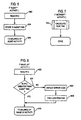
- Greenwich Mean Time is received from an external application at 202.
- Greenwich Mean Time is loaded into the real time clock 49 at 204 and into the elapsed time counter at 206. This provides an initial synchronization of the real time clock and the elapsed time counter 51 at the time the value metering system is put into operation or the clocks are activated.
- the elapsed time counter 51 can have a different value loaded into it so long as it has a defined known relationship to the real time clock 204. At this point in time, the real time clock and elapsed time counter 51 may be initialized to operate, if necessary.
- the GEM time is then calculated at 208. This GEM time is the form of the time used in the value metering system 2 for certain applications when a clock time is needed, as for example, those applications noted above.
- Real time clock 49 is loaded with the number of seconds elapsed since January 1, 1970, 00:00 Greenwich Mean Time.
- GEM time is the number of half days since January 1, 1992 and the number of seconds since the last 12:00 (midnight or noon).
- the country specific time zone offset 27 and user settable offset 29 is taken into account.
- the real time clock 49 is read at 302 and normalized to seconds since January 1, 1992 at 304.
- the time zone is adjusted at 306. This is an adjustment for the time zone offset.
- User offset is adjusted at 308.
- the number of half days since January 1, 1992 is calculated at 310 and stored and the number of seconds since noon or midnight remaining after the half day calculation is stored at 312.
- the data stored at steps 310 and 312 become the basis for the system time counter 33 (clock) in the micro controller 26 and the GEM time used in the system.
- the system time counter 33 continues during operation of the metering system to count seconds and when a noon or midnight is reached, increment the counting of half days. It should be recognized that the system time counter 33 associated with the micro controller 26 has been converted by means of the secure clock module 48 to have a real time related count or clock data usable by the system. This is because the system time counter 33 is in synchronism with the secure clock module 48. Thus the micro controller 26, which normally does not have secure clock capability through the interaction of the micro controller clock and the secure clock module, is made to have a secure real time data usable for various applications as noted above.
- the elapsed time counter 51 is read and saved as the last power down time at 402.
- the real time clock 49 time is read at 404.
- a determination is made at 406 if the real time clock 49 time is greater than the elapsed time counter 51 time, and if it is not, an error code is displayed at 408 and value meter printing or any other selected function is disallowed or disabled at 410.
- the real time clock 49 time is greater than the elapsed time counter 51 time
- the real time clock 49 is stored in the elapsed time counter 51 at 412. This, again, synchronizes the elapsed time counter and the real time clock 49.
- the GEM time is calculated at 414. This is the call of the subroutine shown in FIGURE 3 .
- FIGURE 5 After the value metering system 2 has been inactive for a predetermined period of time, as for example, ten minutes, the system may be put into an inactive or "sleep" state. At that time, the real time clock 49 is read at 502. The reading which is the sleep time is stored at 504 and the program branches back at 506 to continue the balance of any other sleep activity processing such as turning off displays, power supplies, shift crystal clocks, and the like, associated with shifting to a standby mode.
- any other sleep activity processing such as turning off displays, power supplies, shift crystal clocks, and the like, associated with shifting to a standby mode.
- the real time clock is read at 602.
- a determination is made at 604 if the real time clock 49 time is greater than the sleep time which has been stored at the time the meter became active. If the real time clock time is not greater than the sleep time, an error code is displayed at 606 and printing or other functions are disallowed or disabled at 608. If, on the other hand, the time clock 49 time is greater than the sleep time, the balance of the wake-up activity routine is invoked at 610.
- the meter is programmed to synchronize at midnight.
- the GEM time is calculated at 702 for midnight activity. This may be associated with conducting routine maintenance on the device such as purging the ink jet print head, resetting user settable features that may be set during the day such as advance date, advertising slogan, class of mail service, and the like, or other desired functionality. It should be recognized that midnight activity can be invoked at any desired time of the day or multiple times of the day as desired.
- This feature provides yet further security by re-synchronizing the meter system at predetermined times to ensure correct synchronization between the real time clock module 48 and the system time counter 33. Added security is also provided by checking the time relationship of the real time clock 49 and elapsed time counter 51 time in FIGURES 4 and 6 (or any other desired point in the process).
Landscapes
- Physics & Mathematics (AREA)
- General Physics & Mathematics (AREA)
- Devices For Checking Fares Or Tickets At Control Points (AREA)
- Electric Clocks (AREA)
Claims (5)
- Wertmesssystem, das eine Systemuhrzeit einsetzt, umfassend:einen Mikrocontroller (26) mit einem Systemzeitzähler (33), wobei der Systemzeitzähler (33) die Zeit ab einem ersten Datum misst;ein sicheres Uhrmodul (48) mit einer Echtzeituhr (49), wobei die Echtzeituhr Zeit ab einem zweiten Datum misst; undMittel zum Umwandeln einer Zeit der Echtzeituhr (49) aus dem zweiten Zeitdatum in das erste Zeitdatum und zum Speichern der umgewandelten Zeit der Echtzeituhr im Systemzeitzähler (33), um eine vorgegebene Beziehung zwischen dem Systemzeitzähler (33) und dem sicheren Uhrmodul (48) bereitzustellen, dadurch gekennzeichnet, dass:das sichere Uhrmodul (48) weiterhin einen Verlaufszeitzähler (51) umfasst, die Echtzeituhr (49) die dadurch gehaltene Zeit unabhängig davon inkrementiert, ob externer Strom dem Wertmesssystem zugeführt wird, und der Verlaufszeitzähler (51) eine dadurch gehaltene Zeit nur inkrementiert, wenn der externe Strom dem Wertmesssystem zugeführt wird, wobei das Wertmesssystem weiter umfasst:Mittel zum Vergleichen der Zeit des Verlaufszeitzählers (51) mit der Zeit der Echtzeituhr (49) unmittelbar nachdem der externe Strom an das Wertmesssystem wieder angelegt wird;Mittel zum Speichern der durch die Echtzeituhr (49) gehaltenen Zeit im Verlaufszeitzähler (51) nach dem Vergleich nur dann, wenn die Zeit der Echtzeituhr (49) größer als die Zeit des Verlaufszeitzählers (51) ist; undMittel zum Erzeugen eines Fehlercodes und Hemmen des Betriebs des Wertmesssystems, falls die Zeit des Verlaufszeitzählers (51) größer als die Zeit der Echtzeituhr (49) ist.
- Wertmesssystem gemäß Anspruch 1, wobei das Mittel zum Umwandeln einen Länder-spezifischen Zeitzonenversatz (27) und einen Anwender-einstellbaren Versatz (29) berücksichtigt.
- Wertmesssystem gemäß Anspruch 1, wobei die Zeit des Verlaufszeitzählers (51) durch den Verlaufszeitzähler (51) gehalten wird, wenn der externe Strom abgeschaltet wird und das Wertmesssystem heruntergefahren wird.
- Verfahren des Bereitstellens einer Systemuhrzeit für ein Wertmesssystem, wobei die Systemuhrzeit ab einem ersten Datum durch einen Systemzeitzähler (33) eines Mikrocontrollers (26) gemessen wird, wobei das Verfahren die Schritte umfasst:Bereitstellen eines sicheren Uhrmoduls (48) mit einer Echtzeituhr (49), wobei die Echtzeituhrzeit ab einem zweiten Datum misst;Umwandeln einer Zeit der Echtzeituhr (49) aus dem zweiten Datum in das erste Datum;Speichern der umgewandelten Zeit der Echtzeituhr (49) im Systemzeitzähler (33), um eine vorgegebene Beziehung zwischen dem Systemzeitzähler (33) und dem sicheren Uhrmodul (48) bereitzustellen; gekennzeichnet dadurch, dass:das sichere Uhrmodul (48) einen Verlaufszeitzähler (51) aufweist, wobei die Echtzeituhr (4) die dadurch gehaltene Zeit unabhängig davon inkrementiert, ob externer Strom dem Wertmesssystem zugeführt wird und der Verlaufszeitzähler (51) eine dadurch gehaltene Zeit nicht inkrementiert, wenn das Wertmesssystem heruntergefahren wird;Vergleichen der Zeit der Echtzeituhr (49) mit der Zeit des Verlaufszeitzählers (51), wenn das Wertmesssystem heraufgefahren wird;Speichern der Zeit der Echtzeituhr (49) im Verlaufszeitzähler (51) nach dem Vergleichsschritt nur, falls die Zeit der Echtzeituhr (49) größer als die Zeit des Verlaufszeitzählers (51) ist; undErzeugen eines Fehlercodes und Hemmen des Betriebs des Wertmesssystems, falls die Zeit des Verlaufszeitzählers (51) größer als die Zeit der Echtzeituhr (49) ist.
- Verfahren gemäß Anspruch 4, wobei der Umwandlungsschritt einen Länder-spezifischen Zeitzonenversatz (27) und einen Anwender-einstellbaren Versatz (29) berücksichtigt.
Priority Applications (1)
| Application Number | Priority Date | Filing Date | Title |
|---|---|---|---|
| DE69828331T DE69828331T3 (de) | 1997-04-30 | 1998-04-08 | Elektronische Frankiermaschine mit mehreren Taktsystemen zur verbesserten Sicherheit |
Applications Claiming Priority (2)
| Application Number | Priority Date | Filing Date | Title |
|---|---|---|---|
| US846646 | 1997-04-30 | ||
| US08/846,646 US5999921A (en) | 1997-04-30 | 1997-04-30 | Electronic postage meter system having plural clock system providing enhanced security |
Publications (4)
| Publication Number | Publication Date |
|---|---|
| EP0875863A2 EP0875863A2 (de) | 1998-11-04 |
| EP0875863A3 EP0875863A3 (de) | 2000-08-09 |
| EP0875863B1 EP0875863B1 (de) | 2004-12-29 |
| EP0875863B2 true EP0875863B2 (de) | 2011-01-19 |
Family
ID=25298531
Family Applications (1)
| Application Number | Title | Priority Date | Filing Date |
|---|---|---|---|
| EP98106454A Expired - Lifetime EP0875863B2 (de) | 1997-04-30 | 1998-04-08 | Elektronische Frankiermaschine mit mehreren Taktsystemen zur verbesserten Sicherheit |
Country Status (4)
| Country | Link |
|---|---|
| US (1) | US5999921A (de) |
| EP (1) | EP0875863B2 (de) |
| CA (1) | CA2233759C (de) |
| DE (1) | DE69828331T3 (de) |
Families Citing this family (24)
| Publication number | Priority date | Publication date | Assignee | Title |
|---|---|---|---|---|
| DE29806161U1 (de) * | 1998-04-06 | 1998-07-30 | AFG-Elektronik GmbH, 90765 Fürth | Uhr |
| US6757628B1 (en) * | 1998-07-14 | 2004-06-29 | Landis+Gyr Inc. | Multi-level transformer and line loss compensator and method |
| US20020111921A1 (en) * | 2001-02-09 | 2002-08-15 | Aupperle Bryan E. | Verification method for web-delivered materials |
| US20030145192A1 (en) * | 2001-10-30 | 2003-07-31 | Turner George Calvin | Measures to enhance the security and safety of mail within the postal system through the use of encrypted identity stamps, encrypted identity envelopes, encrypted indentity labels and seals |
| US7146504B2 (en) * | 2002-06-13 | 2006-12-05 | Microsoft Corporation | Secure clock on computing device such as may be required in connection with a trust-based system |
| US7234071B2 (en) * | 2002-11-29 | 2007-06-19 | Sigmatel, Inc. | On-chip realtime clock module has input buffer receiving operational and timing parameters and output buffer retrieving the parameters |
| US7370212B2 (en) | 2003-02-25 | 2008-05-06 | Microsoft Corporation | Issuing a publisher use license off-line in a digital rights management (DRM) system |
| US7116969B2 (en) * | 2004-02-12 | 2006-10-03 | Sharp Laboratories Of America, Inc. | Wireless device having a secure clock authentication method and apparatus |
| US7266714B2 (en) * | 2004-06-15 | 2007-09-04 | Dolby Laboratories Licensing Corporation | Method an apparatus for adjusting the time of a clock if it is determined that the degree of adjustment is within a limit based on the clocks initial time |
| US8438645B2 (en) | 2005-04-27 | 2013-05-07 | Microsoft Corporation | Secure clock with grace periods |
| US8725646B2 (en) | 2005-04-15 | 2014-05-13 | Microsoft Corporation | Output protection levels |
| US20060265758A1 (en) | 2005-05-20 | 2006-11-23 | Microsoft Corporation | Extensible media rights |
| US8327448B2 (en) | 2005-06-22 | 2012-12-04 | Intel Corporation | Protected clock management based upon a non-trusted persistent time source |
| US8682795B2 (en) * | 2005-09-16 | 2014-03-25 | Oracle International Corporation | Trusted information exchange based on trust agreements |
| US7613661B2 (en) * | 2006-08-02 | 2009-11-03 | Pitney Bowes Inc. | Method and system for detecting duplicate printing of indicia in a metering system |
| US20090222614A1 (en) * | 2008-02-29 | 2009-09-03 | Kabushiki Kaisha Toshiba | Information processing apparatus and nonvolatile semiconductor memory drive |
| US20090222613A1 (en) * | 2008-02-29 | 2009-09-03 | Kabushiki Kaisha Toshiba | Information processing apparatus and nonvolatile semiconductor memory drive |
| US8364930B2 (en) * | 2008-03-07 | 2013-01-29 | Kabushiki Kaisha Toshiba | Information processing apparatus and storage drive adapted to perform fault analysis by maintenance of tracing information |
| US20090228640A1 (en) * | 2008-03-07 | 2009-09-10 | Kabushiki Kaisha Toshiba | Information processing apparatus and non-volatile semiconductor memory drive |
| US8055936B2 (en) * | 2008-12-31 | 2011-11-08 | Pitney Bowes Inc. | System and method for data recovery in a disabled integrated circuit |
| US8060453B2 (en) * | 2008-12-31 | 2011-11-15 | Pitney Bowes Inc. | System and method for funds recovery from an integrated postal security device |
| US8344872B2 (en) * | 2009-12-10 | 2013-01-01 | Pitney Bowes Inc. | System and method for sensing presence of media in a mailing machine |
| US10404977B2 (en) * | 2014-12-03 | 2019-09-03 | Nec Display Solutions, Ltd. | Display device, usage management method and program of a display device |
| US11366934B2 (en) | 2018-11-13 | 2022-06-21 | Samsung Electronics Co., Ltd. | System and method for anti-rollback |
Citations (1)
| Publication number | Priority date | Publication date | Assignee | Title |
|---|---|---|---|---|
| US5487096A (en) † | 1991-07-10 | 1996-01-23 | Dallas Semiconductor Corporation | Integrated circuit with real time, elapsed time, and cycle counter clocks |
Family Cites Families (50)
| Publication number | Priority date | Publication date | Assignee | Title |
|---|---|---|---|---|
| US3978457A (en) * | 1974-12-23 | 1976-08-31 | Pitney-Bowes, Inc. | Microcomputerized electronic postage meter system |
| US4168533A (en) * | 1976-01-14 | 1979-09-18 | Pitney-Bowes, Inc. | Microcomputerized miniature postage meter |
| US4122526A (en) * | 1976-12-20 | 1978-10-24 | Pitney-Bowes, Inc. | Calculating and postal zip code-to-postal zone converting apparatus |
| JPS53144377A (en) * | 1977-05-20 | 1978-12-15 | Sharp Corp | Repeating timer |
| US4301507A (en) * | 1979-10-30 | 1981-11-17 | Pitney Bowes Inc. | Electronic postage meter having plural computing systems |
| US4535419A (en) * | 1982-10-22 | 1985-08-13 | Pitney Bowes Inc. | System and method for computing fractional postage values |
| US4579054A (en) * | 1982-12-08 | 1986-04-01 | Pitney Bowes Inc. | Stand-alone electronic mailing machine |
| US4493252A (en) * | 1983-03-09 | 1985-01-15 | Pitney Bowes Inc. | Postage printing apparatus having a movable print head in a print drum |
| DE3501569C2 (de) * | 1984-01-20 | 1996-07-18 | Canon Kk | Datenverarbeitungseinrichtung |
| US4725718A (en) * | 1985-08-06 | 1988-02-16 | Pitney Bowes Inc. | Postage and mailing information applying system |
| US4757537A (en) * | 1985-04-17 | 1988-07-12 | Pitney Bowes Inc. | System for detecting unaccounted for printing in a value printing system |
| US4831555A (en) * | 1985-08-06 | 1989-05-16 | Pitney Bowes Inc. | Unsecured postage applying system |
| US4775246A (en) * | 1985-04-17 | 1988-10-04 | Pitney Bowes Inc. | System for detecting unaccounted for printing in a value printing system |
| GB2173738B (en) * | 1985-04-19 | 1989-07-12 | Roneo Alcatel Ltd | Secure transport of information between electronic stations |
| US4812994A (en) * | 1985-08-06 | 1989-03-14 | Pitney Bowes Inc. | Postage meter locking system |
| US4796193A (en) * | 1986-07-07 | 1989-01-03 | Pitney Bowes Inc. | Postage payment system where accounting for postage payment occurs at a time subsequent to the printing of the postage and employing a visual marking imprinted on the mailpiece to show that accounting has occurred |
| US5375172A (en) * | 1986-07-07 | 1994-12-20 | Chrosny; Wojciech M. | Postage payment system employing encryption techniques and accounting for postage payment at a time subsequent to the printing of postage |
| US4858138A (en) * | 1986-09-02 | 1989-08-15 | Pitney Bowes, Inc. | Secure vault having electronic indicia for a value printing system |
| US4802218A (en) * | 1986-11-26 | 1989-01-31 | Wright Technologies, L.P. | Automated transaction system |
| US4813912A (en) * | 1986-09-02 | 1989-03-21 | Pitney Bowes Inc. | Secured printer for a value printing system |
| US4853523A (en) * | 1987-10-05 | 1989-08-01 | Pitney Bowes Inc. | Vault cartridge having capacitive coupling |
| CA1301334C (en) * | 1988-02-08 | 1992-05-19 | Pitney Bowes Inc. | Postal charge accounting system |
| US5111030A (en) * | 1988-02-08 | 1992-05-05 | Pitney Bowes Inc. | Postal charge accounting system |
| US5065000A (en) * | 1988-08-01 | 1991-11-12 | Pavo Pusic | Automated electronic postage meter having a direct acess bar code printer |
| US5051564A (en) * | 1989-01-03 | 1991-09-24 | Schmidt Alfred C | Method and apparatus for controlling a machine |
| US5237506A (en) * | 1990-02-16 | 1993-08-17 | Ascom Autelca Ag | Remote resetting postage meter |
| US5293319A (en) * | 1990-12-24 | 1994-03-08 | Pitney Bowes Inc. | Postage meter system |
| US5319562A (en) * | 1991-08-22 | 1994-06-07 | Whitehouse Harry T | System and method for purchase and application of postage using personal computer |
| JPH0553996A (ja) * | 1991-08-29 | 1993-03-05 | Sharp Corp | 世界時計機能を備えた情報処理装置 |
| US5440108A (en) * | 1991-10-11 | 1995-08-08 | Verifone, Inc. | System and method for dispensing and revalung cash cards |
| US5197042A (en) * | 1991-10-31 | 1993-03-23 | Pitney Bowes Inc. | Postage meter having auto dating device |
| GB9127477D0 (en) * | 1991-12-30 | 1992-02-19 | Alcatel Business Systems | Franking meter system |
| US5309363A (en) * | 1992-03-05 | 1994-05-03 | Frank M. Graves | Remotely rechargeable postage meter |
| GB9226813D0 (en) * | 1992-12-23 | 1993-02-17 | Neopost Ltd | Franking machine and method of franking |
| US5490077A (en) * | 1993-01-20 | 1996-02-06 | Francotyp-Postalia Gmbh | Method for data input into a postage meter machine, arrangement for franking postal matter and for producing an advert mark respectively allocated to a cost allocation account |
| FR2701781B1 (fr) * | 1993-02-17 | 1995-03-31 | Neopost Ind | Machine à affranchir permettant un contrôle de la consommation journalière. |
| FR2704343B1 (fr) * | 1993-04-21 | 1995-07-13 | Secap | Machine à affranchir en deux parties. |
| US5457642A (en) * | 1993-10-08 | 1995-10-10 | Pitney Bowes Inc. | Mail processing system including required data center verification |
| US5390251A (en) * | 1993-10-08 | 1995-02-14 | Pitney Bowes Inc. | Mail processing system including data center verification for mailpieces |
| US5483458A (en) * | 1993-12-09 | 1996-01-09 | Pitney Bowes Inc. | Programmable clock module for postage metering control system |
| GB9401757D0 (en) * | 1994-01-31 | 1994-03-23 | Neopost Ltd | Franking machine |
| GB9421489D0 (en) * | 1994-03-22 | 1994-12-07 | Optimum Solutions Limited | Electricity distribution & charging system |
| US5724425A (en) * | 1994-06-10 | 1998-03-03 | Sun Microsystems, Inc. | Method and apparatus for enhancing software security and distributing software |
| DE4422263A1 (de) * | 1994-06-24 | 1996-01-04 | Francotyp Postalia Gmbh | Verfahren zum Abstimmen des Datenbestandes zwischen einer elektronischen Frankiermaschine und einem Datenzentrum |
| US5613007A (en) * | 1994-11-30 | 1997-03-18 | Pitney Bowes Inc. | Portable thermal printing apparatus including a security device for detecting attempted unauthorized access |
| GB9500074D0 (en) * | 1995-01-04 | 1995-03-01 | Neopost Ltd | Franking machine system |
| US5625692A (en) * | 1995-01-23 | 1997-04-29 | International Business Machines Corporation | Method and system for a public key cryptosystem having proactive, robust, and recoverable distributed threshold secret sharing |
| FR2730082B1 (fr) * | 1995-01-31 | 1997-04-18 | Neopost Ind | Systeme de datage automatique pour machine d'affranchissement |
| US5796841A (en) | 1995-08-21 | 1998-08-18 | Pitney Bowes Inc. | Secure user certification for electronic commerce employing value metering system |
| CA2211692A1 (en) * | 1995-12-11 | 1997-06-19 | Akira Sugiyama | Device for generating characteristic time and authentication apparatus using such device |
-
1997
- 1997-04-30 US US08/846,646 patent/US5999921A/en not_active Expired - Lifetime
-
1998
- 1998-03-31 CA CA002233759A patent/CA2233759C/en not_active Expired - Fee Related
- 1998-04-08 EP EP98106454A patent/EP0875863B2/de not_active Expired - Lifetime
- 1998-04-08 DE DE69828331T patent/DE69828331T3/de not_active Expired - Lifetime
Patent Citations (1)
| Publication number | Priority date | Publication date | Assignee | Title |
|---|---|---|---|---|
| US5487096A (en) † | 1991-07-10 | 1996-01-23 | Dallas Semiconductor Corporation | Integrated circuit with real time, elapsed time, and cycle counter clocks |
Also Published As
| Publication number | Publication date |
|---|---|
| DE69828331T2 (de) | 2005-12-08 |
| EP0875863B1 (de) | 2004-12-29 |
| EP0875863A2 (de) | 1998-11-04 |
| DE69828331D1 (de) | 2005-02-03 |
| DE69828331T3 (de) | 2011-08-18 |
| EP0875863A3 (de) | 2000-08-09 |
| US5999921A (en) | 1999-12-07 |
| CA2233759C (en) | 2000-11-28 |
Similar Documents
| Publication | Publication Date | Title |
|---|---|---|
| EP0875863B2 (de) | Elektronische Frankiermaschine mit mehreren Taktsystemen zur verbesserten Sicherheit | |
| EP0825561B1 (de) | Elektronisches Frankiermaschinensystem mit internem Abrechnungssystem und entfernbarem externem Abrechnungssystem | |
| CA2213207C (en) | Electronic postage meter system separable printer and accounting arrangement incorporating partition of indicia and accounting information | |
| CA1258916A (en) | System for detecting unaccounted for printing in a value printing system | |
| US5490077A (en) | Method for data input into a postage meter machine, arrangement for franking postal matter and for producing an advert mark respectively allocated to a cost allocation account | |
| CA2148648C (en) | Advance postage payment system employing pre-computed digital tokens and with enhanced security | |
| AU750777B2 (en) | Multiple registered postage meters | |
| US4760534A (en) | Mailing system with postage value transfer and accounting capability | |
| EP0825566B1 (de) | System zum Installieren und zur Standortbewegung einer Frankiermaschine | |
| EP0927956B1 (de) | Verfahren zum Entfernen von Postguthaben von einer Frankiersicherheitsvorrichtung | |
| AU2002330240B2 (en) | Method and system for dispensing virtual stamps | |
| US5812536A (en) | Secure accounting system employing RF communications for enhanced security and functionality | |
| US5799093A (en) | Process and apparatus for remote system inspection of a value dispensing mechanism such as a postage meter | |
| GB2326130A (en) | Electronic postage meter system having enhanced clock security | |
| US6023690A (en) | Method and apparatus for securely resetting a real time clock in a postage meter | |
| US20020002544A1 (en) | Method and apparatus for user-sealing of secured postage printing equipment | |
| EP0873616B1 (de) | Drucken von postgebührenmit kryptographischer taktsicherheit | |
| EP0939384A2 (de) | Frankiersystem mit sicherer Fehlerberichtung von einem Drucker | |
| CA2325609C (en) | Advance postage payment system employing pre-computed digital tokens and with enhanced security | |
| MXPA97006446A (en) | Separable printer of the electronic release system and counting arrangement that incorporates individual division and information | |
| MXPA97006447A (en) | Electronic release system that has an internal counting system and a removable external counting system |
Legal Events
| Date | Code | Title | Description |
|---|---|---|---|
| PUAI | Public reference made under article 153(3) epc to a published international application that has entered the european phase |
Free format text: ORIGINAL CODE: 0009012 |
|
| AK | Designated contracting states |
Kind code of ref document: A2 Designated state(s): DE FR GB |
|
| AX | Request for extension of the european patent |
Free format text: AL;LT;LV;MK;RO;SI |
|
| PUAL | Search report despatched |
Free format text: ORIGINAL CODE: 0009013 |
|
| AK | Designated contracting states |
Kind code of ref document: A3 Designated state(s): AT BE CH CY DE DK ES FI FR GB GR IE IT LI LU MC NL PT SE |
|
| AX | Request for extension of the european patent |
Free format text: AL;LT;LV;MK;RO;SI |
|
| 17P | Request for examination filed |
Effective date: 20010208 |
|
| AKX | Designation fees paid |
Free format text: DE FR GB |
|
| 17Q | First examination report despatched |
Effective date: 20020418 |
|
| GRAP | Despatch of communication of intention to grant a patent |
Free format text: ORIGINAL CODE: EPIDOSNIGR1 |
|
| GRAS | Grant fee paid |
Free format text: ORIGINAL CODE: EPIDOSNIGR3 |
|
| GRAA | (expected) grant |
Free format text: ORIGINAL CODE: 0009210 |
|
| AK | Designated contracting states |
Kind code of ref document: B1 Designated state(s): DE FR GB |
|
| REG | Reference to a national code |
Ref country code: GB Ref legal event code: FG4D |
|
| REF | Corresponds to: |
Ref document number: 69828331 Country of ref document: DE Date of ref document: 20050203 Kind code of ref document: P |
|
| PLBI | Opposition filed |
Free format text: ORIGINAL CODE: 0009260 |
|
| PLAX | Notice of opposition and request to file observation + time limit sent |
Free format text: ORIGINAL CODE: EPIDOSNOBS2 |
|
| 26 | Opposition filed |
Opponent name: FRANCOTYP-POSTALIA GMBH Effective date: 20050929 |
|
| ET | Fr: translation filed | ||
| PLAF | Information modified related to communication of a notice of opposition and request to file observations + time limit |
Free format text: ORIGINAL CODE: EPIDOSCOBS2 |
|
| PLBB | Reply of patent proprietor to notice(s) of opposition received |
Free format text: ORIGINAL CODE: EPIDOSNOBS3 |
|
| RDAF | Communication despatched that patent is revoked |
Free format text: ORIGINAL CODE: EPIDOSNREV1 |
|
| APBP | Date of receipt of notice of appeal recorded |
Free format text: ORIGINAL CODE: EPIDOSNNOA2O |
|
| APAH | Appeal reference modified |
Free format text: ORIGINAL CODE: EPIDOSCREFNO |
|
| APBQ | Date of receipt of statement of grounds of appeal recorded |
Free format text: ORIGINAL CODE: EPIDOSNNOA3O |
|
| PLBP | Opposition withdrawn |
Free format text: ORIGINAL CODE: 0009264 |
|
| APBU | Appeal procedure closed |
Free format text: ORIGINAL CODE: EPIDOSNNOA9O |
|
| PUAH | Patent maintained in amended form |
Free format text: ORIGINAL CODE: 0009272 |
|
| STAA | Information on the status of an ep patent application or granted ep patent |
Free format text: STATUS: PATENT MAINTAINED AS AMENDED |
|
| 27A | Patent maintained in amended form |
Effective date: 20110119 |
|
| AK | Designated contracting states |
Kind code of ref document: B2 Designated state(s): DE FR GB |
|
| PGFP | Annual fee paid to national office [announced via postgrant information from national office to epo] |
Ref country code: DE Payment date: 20110427 Year of fee payment: 14 |
|
| REG | Reference to a national code |
Ref country code: DE Ref legal event code: R119 Ref document number: 69828331 Country of ref document: DE Effective date: 20121101 |
|
| PG25 | Lapsed in a contracting state [announced via postgrant information from national office to epo] |
Ref country code: DE Free format text: LAPSE BECAUSE OF NON-PAYMENT OF DUE FEES Effective date: 20121101 |
|
| REG | Reference to a national code |
Ref country code: FR Ref legal event code: PLFP Year of fee payment: 19 |
|
| PGFP | Annual fee paid to national office [announced via postgrant information from national office to epo] |
Ref country code: GB Payment date: 20160427 Year of fee payment: 19 |
|
| PGFP | Annual fee paid to national office [announced via postgrant information from national office to epo] |
Ref country code: FR Payment date: 20160425 Year of fee payment: 19 |
|
| GBPC | Gb: european patent ceased through non-payment of renewal fee |
Effective date: 20170408 |
|
| REG | Reference to a national code |
Ref country code: FR Ref legal event code: ST Effective date: 20171229 |
|
| PG25 | Lapsed in a contracting state [announced via postgrant information from national office to epo] |
Ref country code: FR Free format text: LAPSE BECAUSE OF NON-PAYMENT OF DUE FEES Effective date: 20170502 |
|
| PG25 | Lapsed in a contracting state [announced via postgrant information from national office to epo] |
Ref country code: GB Free format text: LAPSE BECAUSE OF NON-PAYMENT OF DUE FEES Effective date: 20170408 |