Technical Field
This invention relates to a process for producing a
freeze-dried preparation of a virus vector for gene
therapy which is excellent in safety and storage stability
and a gene transfer preparation obtained by this process.
Background art
Owing to the rapid progress in genetic engineering,
there have been developed various molecular biological
processes. With these developments, techniques for
analyzing genetic information and gene functions have been
remarkably advanced. As a result, a number of attempts
have been made to feed back the results thus achieved into
actual clinical treatments. One of the most remarkable
advances has been achieved in the field of gene therapy.
That is to say, there have been successfully identified
and decoded genes causative of various hereditary diseases.
On the other hand, techniques have been established for
physically or chemically transferring these genes into
cells. Accordingly, gene therapy has already completed
the stage of fundamental experiments and thus reached the
stage of clinical application.
Since the first clinical test on gene therapy was
performed in 1989 in the United States, gene therapy has
been already applied to clinical tests in Italy, the
Netherlands, France, England and China. In the United
States, in particular, the Recombinant DNA Committee (RAC)
of NIH has approved 54 gene therapy protocols by July 1994
and, therefore, attempts have been made to apply gene
therapy to the treatment of hereditary diseases such as
congenial immunological deficiency (adenosine deaminase
deficiency), familial hypercholesterolemia and cystic
fibrosis and various types of cancer such as malignant
melanoma and glioma. Moreover, a number of fundamental
studies on the gene therapy for AIDS have been made in
recent years.
Gene therapy is classified into germline cell gene
therapy and somatic cell gene therapy depending on the
type of the target cells to which genes are to be transferred.
From another point of view, it is classified into
augmentation gene therapy wherein a new (normal) gene is
added while leaving the abnormal (causative) gene as such
and replacement gene therapy wherein the abnormal gene is
replaced by the normal one. At the present stage, the
augmentation gene therapy on somatic cells is exclusively
effected due to ethical and technical restrictions. A
gene therapy process performed today comprises taking out
the target cells from the body and, after the completion
of the gene transfer, putting the cells back into the body
again through self-transplantation (i.e., ex vivo gene
therapy). Further, it is now under consideration to
administer genes directly to patients in future (i.e., in
vivo gene therapy).
One of the large problems in the clinical application
of gene therapy is how to safely and efficiently
introduce a foreign gene into the target cells. Although
it was tried to employ physical procedures such as
microinjection early in the 1980's, only a poor transfer
efficiency could be established and genes could not be
transferred in a stable state thereby. Furthermore, the
limited techniques for cell incubation on a mass scale in
those days made it impossible to put such attempts into
practical use. Subsequently, there were developed
recombinant viruses (virus vectors) for efficiently transferring
foreign genes into target cells, which made it
possible for the first time to apply the gene therapy to
clinical purposes.
There are several types of virus vectors as will be
described hereinbelow. The virus vectors most frequently
employed in the gene therapy today are retrovirus vectors
originating in moloney murine leukemia virus (MoMLV).
That is to say, genes are transferred by taking advantage
in the propagation manner of this virus. A retrovirus is
an RNA virus having an envelope which invades into cells
through the bond of the envelope protein to the receptor
in the host cell side. After the invasion, the single-stranded
virus RNA is converted into a double-stranded DNA
via a reverse transcriptase and thus integrated into the
genomic DNA of the infected cells in a stable state,
though at random. However, the integration cannot be
completed unless the cells are dividing and proliferating
[Miller D.G., et al., Molecular and Cellular Biology, 10
(8), 4239 (1990)]. The retrovirus gene thus integrated is
called a provirus. From this provirus, RNA is transcribed
and thus viral proteins are synthesized. Then new viral
particles are formed from these proteins and the virus RNA.
In a retrovirus vector, the retrovirus gene in the above-mentioned
case recombines with a foreign gene [Miller A.D.,
Current Topics in Microbiology and Immunology, 158, 1
(1992)]. On the MoMLV vector, a number of studies have
been carried out hitherto and many improvements have been
achieved on the safety thereof. As a result, no serious
trouble has occurred so far. With respect to the MoMLV
vector, however, it is known that the gene is integrated
into the genomic DNA of the target cells at random and the
long terminal repeat (hereinafter referred to simply as
LTR) sustains the promotion activity for expressing the
gene. Therefore, it cannot be denied that the random
integration of the foreign gene might happen to activate
an oncogen existing therearound by chance so as to cause
carcinogenesis in the target cells, though there has never
been reported such a case so far. Thus, it has been
urgently required to develop vectors with improved safety.
From a practical viewpoint, the most serious problem
regarding the MoMLV vector resides in that a gene cannot
be transferred thereby into cells which are not under
division. This fact makes gene repair in neuroblasts
impossible in a number of congenital metabolic errors.
Moreover, hematopoietic stem cells, liver cells, muscle
cells, etc. to be treated by gene therapy are usually on
the stationary stage in most cases and thus a gene can be
transferred thereinto only at a low efficiency. Although
cells taken off from the body are subjected to treatments
for promoting division so as to elevate the gene transfer
efficiency, it is seemingly difficult to transfer a gene
into the above-mentioned cells in vivo. Therefore, it is
required to develop vectors ensuring efficient gene
transfer into cells not being under division too in future.
Although herpes virus vectors are expected as being
usable in the transfer of a foreign gene into neuroblasts
[Palella, T.D., et al., Mol. Cell. Biol., 8, 457, (1988)],
the potent cytotoxicity and large genomic size (150 kb)
disturb the development thereof.
HIV vectors have been developed as vectors which
enable specific gene transfer into CD4-positive T
lymphocytes owing to the host characteristics of the virus
per se [Shimada, T., et al., J. Clin. Invest., 88, 1043
(1991)]. Since lymphocytes serve as important target
cells in gene therapy for congenital immunological
deficiency, AIDS, cancer, etc., expections are placed on
the usefulness of the HIV vectors. The largest disadvantage
of the HIV vectors resides in that they might be
contaminated with wild strains. If this problem could be
solved, the HIV vectors might be employed in gene therapy
in vivo via intravascular administration.
Further, adenovirus vectors have attracted public
attention, since they enable gene transfer into cells
which are not under division and can be easily
concentrated to a level of about 1010. Recent studies
indicate that genes can be transferred in vivo at a high
ratio into airway epithelial cells, liver cells, muscular
cells, etc. by using these adenovirus vectors [Lavrero,
L.D., et. al., Hum. Gene Therapy, 1, 241 (1990); Quantin,
B., Proc. Natl. Acad. Sci. U.S.A., 89, 2581 (1992)]. On
the other hand, such an adenovirus vector essentially has
a characteristic that a foreign gene is not integrated
into the genomic DNA of the target cells. After treating
the target cells with the vector, therefore, the effects
of the gene transfer can be sustained only for several
weeks or several months at the longest. Accordingly, it
is required to repeat the gene transfer, which brings
about some problems such as increased physical and mental
stress for the patient, a decrease in the gene transfer
efficiency due to the appearance of anti-adenovirus
antibody, etc. In addition, clinical attempts have been
already initiated to administer an adenovirus vector with
a bronchoscope for treating cystic fibrosis. However, it
is reported that inflammatory responses arise in these
cases due to the immunogenicity and cytotoxicity of the
adenoviral particles.
In contrast, adeno-associated virus (AAV) vectors
are characterized in that a foreign gene is integrated
into the genomic DNA of the target cells and the vectors
have neither any pathogenicity nor cytotoxicity [Muzyczka,
N., Currnet Topics in Microbiology and Immunology, 158, 97
(1992)]. Moreover, the ITR (inverted terminal repeat)
thereof, which is needed in packaging viral particles and
gene integration into genomic DNA, has no promoting
activity for gene expression. Thus, the gene expression
can be arbitrarily switched on/off by setting an
appropriate inner promoter or a tissue-specific promoter
can be employed. In the case of the AAV vectors, use can
be made of hosts over a wide range, which makes these
vectors applicable to various target cells/diseases.
Owing to these characteristics, the AAV vectors are
expected as novel virus vectors, i.e., a substitute for
the MoMLV vectors. It is also found that AAV of wild type
is integrated into a definite site in the 19th chromosome
[Suwadogo, M. and Roeder, R.G., Prc. Natl. Acad. Sci.
U.S.A, 82, 4394 (1985)]. Thus AAV vectors attract public
attention as vectors capable of targeting the gene
integration site.
However, any manufacturing pharmaceutical discussion
has been made on none of these virus vectors in order
to storage them in a stable state and maintain the
uniformity thereof. Although virus vectors are stored in
a frozen state today, the storage period is limited and it
is observed that the virus vectors suffer from a decrease
in titer with the passage of time. In practical clinical
studies, it is therefore needed to prepare a vector in
each test and examine the decrease in the gene transfer
efficiency during the storage prior to the treatment.
Since such examinations comprise complicated procedures
and take a considerably long time, it has been strongly
required to establish a method for supplying stabilized
virus vectors having improved and uniform performance.
It was attempted to freeze-dry MoMLV vectors by
using gelatin as a stabilizer [Kotani, H., et al., Human
Gene Therapy, 5, 19 (1994)]. Since gelatin usually
originates in animals such as swine, it might serve as an
immunogen at a high possibility when administered in vivo.
Thus, the above method cannot be always referred to as a
safe one.
In clinical studies on gene therapy performed today,
detailed examinations are made on the type of vectors and
the pharmacological effects of genes for therapeutic use.
Because they are preparations for gene therapy, virus
vectors should be supplied safely so as to ensure a
uniform performance. Namely, it is essentially required
to establish a process for storing these vectors in a
stable state. However, few studies have been made in this
field.
Disclosure of the Invention
The present inventors have conducted extensive
studies to solve the above-mentioned problems. As a
result, they have successfully established a technique for
stably supplying virus vectors having high safety and
uniform performance, i.e., a technique for storing virus
vectors in a stable state, thus making it possible to
freeze-dry various virus vectors without lowering the gene
transfer efficiency.
It is known that several types of viruses would not
lose their infectivity even after freeze-drying. In such
a case, it has been a practice to add gelatin and
saccharides thereto. On the other hand, attempts have
been also made to freeze-dry virus vectors similar to
these viruses. In these cases, gelatin and saccharides
are added too. However, it cannot always be considered as
a safe method, since there arises a fear that these
additives might serve as an immunogen at a high
possibility when administered in vivo.
Under these circumstances, it has been attempted in
the present invention to develop a freeze-drying method
whereby a high gene transfer efficiency can be sustained
not by using gelatin, etc. which might serve as an
immunogen but by using exclusively low-molecular-weight
substances which have been already employed as pharmaceutical
additives.
Accordingly, the present invention provides a
process for producing a gene transfer preparation which
comprises adding one or more additives selected from among
arginine, glutamic acid or its sodium salt, serine,
glucose, inositol, lactose, mannitol, sorbitol, trehalose
and xylose to a recombinant virus vector followed by
freeze-drying.
The present invention further provides a gene
transfer preparation produced by the above-mentioned
process.
Brief Description of the Drawings
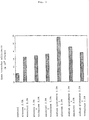
Fig. 1 is a graph which shows gene transfer
efficiencies achieved by adding various additives each at
a concentration of 5%.
Fig. 2 is a graph which shows gene transfer
efficiencies achieved by adding various additives each at
concentrations of 2.5% and 5%.
Fig. 3 is a graph which shows gene transfer
efficiencies achieved by adding combinations of two
additives each at a concentration of 2.5%.
Best Mode for Carrying Out the Invention
The virus vector to be used in the present
invention may be an arbitrary one usable in gene therapy
selected from among, for example, the above-mentioned
moloney murine leukemia virus (MoMLV) vectors, herpes
virus vectors, adenovirus vectors, adeno-associated virus
vectors and human immunodeficiency virus (HIV) vectors.
Such a vector is dissolved in a medium such as DMEM medium
or PBS to thereby give a virus vector stock solution. The
virus vector stock solution may have an arbitrary
concentration.
The process of the present invention can be
achieved by adding additive(s) to the above-mentioned
virus vector stock solution and freeze-drying the same.
It is preferable that the additives to be used in the
present invention are less immunogenic substances such as
low-molecular-weight amino acids, derivatives thereof,
saccharides and derivatives thereof.
Preferable examples of the amino acids and
derivatives thereof include arginine, glutamic acid or its
sodium salt and serine. Among all, glutamic acid or its
sodium salt is particularly preferable therefor.
Preferable examples of the saccharides and
derivatives thereof include glucose, inositol, lactose,
mannitol, sorbitol, trehalose and xylose. Among all,
glucose is the most desirable example thereof.
One or more substances selected from these amino
acids and saccharides may be freely combined and employed
as the additive(s) depending on the type of the virus
vector employed, the concentration of the virus vector
stock solution, etc. Selection can be made of a
combination of an amino acid with another amino acid, a
saccharide with another saccharide, or an amino acid with
a saccharide. Among all, the combination of sodium
glutamate with glucose is the most desirable one, since a
high gene transfer efficiency (virus vector titer) can be
maintained thereby.
Each additive selected from amino acids and
saccharides is used at a weight ratio to the vector
solution of from about 1% to about 10%, preferably from
about 1.5% to about 7% and still preferably from about
1.5% to about 5%.
The solution may further contain ascorbic acid,
polyethylene glycol, polyvinylpyrrolidone, polyvinyl
alcohol, preservatives, etc. Since it is preferable that
the virus vector solution is isotonic, the osmotic
pressure of the solution can be controlled by adding a
buffer thereto.
The thus obtained virus vector solution containing
various additives is freeze-dried. Freeze-drying can be
performed by a publicly known method. For example, the
virus vector solution is frozen with liquid nitrogen and
then treated with a freeze-dryer (manufactured by Finaqua).
The freeze-dried gene transfer preparation was then packed
in vials and stored preferably at low temperatures till
using. The gene transfer preparation of the present
invention can be reconstituted with water before using.
As will be shown in the Examples hereinafter, the virus
vector reconstituted with water sustained a high gene
transfer efficiency.
The present invention makes it possible to obtain a
gene transfer preparation sustaining a high gene transfer
efficiency by using not any ingredient likely to serve as
an immunogen (gelatin, etc.) but exclusively low-molecular-weight
substances which have been already
employed as pharmaceutical additives. The gene transfer
preparation of the present invention can be easily stored
and sustains a high titer. Therefore, it is usable in
every virus vector preparation and has a very broad
application range.
Examples
To further illustrate the present invention in
greater detail, and not by way of limitation, the
following Examples will be given.
Example 1: Preparation of recombinant MoMLV vector
A cell culture dish (9 cm in diameter) was
inoculated with PA317/β-19 (provided by Prof. Shimada,
Nippon Medical School) capable of producing a recombinant
MoMLV vector containing neomycin resistance gene. Then
these cells were incubated in DMEM medium (manufactured by
Gibco) containing 10% of fetal calf serum (manufactured by
Gibco) under usual conditions (37°C, 5% CO2) up to about
80% confluence. Subsequently, the medium was replaced and,
12 hours thereafter, the medium containing the recombinant
MoMLV vector was recovered and referred to as the virus
vector stock solution.
Example 2: Preparation and freeze-drying of recombinant
MoMLV vector solution
To the virus vector stock solution obtained in
Example 1 were added the amino acids, saccharides or
combinations thereof as given in Figs. 1 to 3 in such a
manner as to give a final concentration of 5% or 2.5%.
After freezing with liquid nitrogen, each sample was
freeze-dried with a freeze-dryer (manufactured by Finaqua)
over day and night. The freeze-dried product thus
obtained was stored at -40°C till using. As a control, an
additive-free sample was also prepared. Each additive was
a product manufactured by Wako Pure Chemical Industries,
Ltd.
Example 3: Method for determining the titer (gene transfer
efficiency) of recombinant MoMLV vector
A cell culture dish (6 cm in diameter) was
inoculated with 3T3 cells (manufactured by Dainippon
Pharmaceutical Co., Ltd.). These cells were incubated in
DMEM medium (manufactured by Gibco) containing 10% of
fetal calf serum (manufactured by Gibco) under usual
conditions (37°C, 5% CO2) up to 80% confluence and then
employed in the determination of the titer.
Distilled water for injection (manufactured by
Otsuka Pharmaceutical Co., Ltd.) was added to each of the
freeze-dried products obtained in Example 2 to thereby
prepare a re-suspension of the vector having the same
volume as the one before freeze-drying. 10 µl of this re-suspension
of the vector was mixed with 990 µl of DMEM
containing 10% of fetal calf serum to thereby give a
vector solution for titer determination. From the 3T3
cells incubated up to 80% confluence, the medium was
eliminated and 1,000 µl of the vector solution for titer
determination was added thereto. After incubating the
cells under the usual conditions for 4 hours, 3 ml of DMEM
containing 10% of fetal calf serum was added thereto and
the incubation was continued for additional 24 hours.
Subsequently, the cells were incubated in DMEM containing
10% of fetal calf serum containing 800 µg/ml of G418
(manufactured by Gibco), i.e., an analog of neomycin. The
number of the drug-resistant colonies thus formed was
referred to as the titer (cfu/ml).
Example 4: Determination of the titer of recombinant MoMLV
vector
Fig. 1 shows the results obtained by using various
additives each at a concentration of 5%. Thus, it is
revealed that glucose, sodium glutamate, mannitol and
trehalose achieved high titers. Figs. 2 and 3 show the
results obtained by adding these additives each at a
concentration of 2.5% and using combinations of two
additives. These results indicate that a freeze-dried
virus vector preparation with a high titer can be obtained
by using sodium glutamate with glucose.