EP0859840B1 - Biologically active eph family ligands - Google Patents
Biologically active eph family ligands Download PDFInfo
- Publication number
- EP0859840B1 EP0859840B1 EP96937006A EP96937006A EP0859840B1 EP 0859840 B1 EP0859840 B1 EP 0859840B1 EP 96937006 A EP96937006 A EP 96937006A EP 96937006 A EP96937006 A EP 96937006A EP 0859840 B1 EP0859840 B1 EP 0859840B1
- Authority
- EP
- European Patent Office
- Prior art keywords
- efl
- ligand
- sequence
- protein
- nucleic acid
- Prior art date
- Legal status (The legal status is an assumption and is not a legal conclusion. Google has not performed a legal analysis and makes no representation as to the accuracy of the status listed.)
- Expired - Lifetime
Links
- 239000003446 ligand Substances 0.000 title claims abstract description 104
- 108090000623 proteins and genes Proteins 0.000 claims abstract description 67
- 102000004169 proteins and genes Human genes 0.000 claims abstract description 44
- 238000000034 method Methods 0.000 claims abstract description 30
- 238000004519 manufacturing process Methods 0.000 claims abstract description 7
- 102000050554 Eph Family Receptors Human genes 0.000 claims abstract description 6
- 108091008815 Eph receptors Proteins 0.000 claims abstract description 6
- 150000007523 nucleic acids Chemical class 0.000 claims description 23
- 230000014509 gene expression Effects 0.000 claims description 22
- 108020004707 nucleic acids Proteins 0.000 claims description 19
- 102000039446 nucleic acids Human genes 0.000 claims description 19
- 239000013598 vector Substances 0.000 claims description 18
- 239000012634 fragment Substances 0.000 claims description 15
- 239000002773 nucleotide Substances 0.000 claims description 15
- 125000003729 nucleotide group Chemical group 0.000 claims description 15
- 102000004022 Protein-Tyrosine Kinases Human genes 0.000 claims description 11
- 108090000412 Protein-Tyrosine Kinases Proteins 0.000 claims description 11
- 108020004414 DNA Proteins 0.000 claims description 7
- 108091028043 Nucleic acid sequence Proteins 0.000 claims description 6
- 230000002068 genetic effect Effects 0.000 claims description 3
- 239000008194 pharmaceutical composition Substances 0.000 claims description 3
- 101100421131 Caenorhabditis elegans sek-1 gene Proteins 0.000 claims description 2
- 239000013612 plasmid Substances 0.000 claims description 2
- 125000003275 alpha amino acid group Chemical group 0.000 claims 2
- 230000001537 neural effect Effects 0.000 abstract description 4
- 239000002299 complementary DNA Substances 0.000 abstract description 3
- 102000007056 Recombinant Fusion Proteins Human genes 0.000 abstract description 2
- 108010008281 Recombinant Fusion Proteins Proteins 0.000 abstract description 2
- 210000004027 cell Anatomy 0.000 description 52
- 102000005962 receptors Human genes 0.000 description 38
- 108020003175 receptors Proteins 0.000 description 38
- 235000018102 proteins Nutrition 0.000 description 33
- 150000001413 amino acids Chemical class 0.000 description 17
- 230000006870 function Effects 0.000 description 15
- 235000001014 amino acid Nutrition 0.000 description 14
- 229940024606 amino acid Drugs 0.000 description 14
- 230000004071 biological effect Effects 0.000 description 12
- 241001465754 Metazoa Species 0.000 description 9
- 239000013604 expression vector Substances 0.000 description 9
- 239000005557 antagonist Substances 0.000 description 8
- 108090000765 processed proteins & peptides Proteins 0.000 description 8
- 108091008598 receptor tyrosine kinases Proteins 0.000 description 8
- 102000027426 receptor tyrosine kinases Human genes 0.000 description 8
- 210000001519 tissue Anatomy 0.000 description 8
- 108091026890 Coding region Proteins 0.000 description 7
- 101100127166 Escherichia coli (strain K12) kefB gene Proteins 0.000 description 7
- ROHFNLRQFUQHCH-YFKPBYRVSA-N L-leucine Chemical compound CC(C)C[C@H](N)C(O)=O ROHFNLRQFUQHCH-YFKPBYRVSA-N 0.000 description 7
- ROHFNLRQFUQHCH-UHFFFAOYSA-N Leucine Natural products CC(C)CC(N)C(O)=O ROHFNLRQFUQHCH-UHFFFAOYSA-N 0.000 description 7
- 108010025020 Nerve Growth Factor Proteins 0.000 description 7
- 210000004556 brain Anatomy 0.000 description 7
- 210000002569 neuron Anatomy 0.000 description 7
- 102000004196 processed proteins & peptides Human genes 0.000 description 7
- 239000012528 membrane Substances 0.000 description 6
- 229920001184 polypeptide Polymers 0.000 description 6
- 101100445394 Mus musculus Ephb4 gene Proteins 0.000 description 5
- 108700020796 Oncogene Proteins 0.000 description 5
- 230000015572 biosynthetic process Effects 0.000 description 5
- 230000000694 effects Effects 0.000 description 5
- 230000012010 growth Effects 0.000 description 5
- 210000000653 nervous system Anatomy 0.000 description 5
- 238000003752 polymerase chain reaction Methods 0.000 description 5
- 102100031982 Ephrin type-B receptor 3 Human genes 0.000 description 4
- DHMQDGOQFOQNFH-UHFFFAOYSA-N Glycine Chemical compound NCC(O)=O DHMQDGOQFOQNFH-UHFFFAOYSA-N 0.000 description 4
- 101001064458 Homo sapiens Ephrin type-B receptor 3 Proteins 0.000 description 4
- 101100065487 Mus musculus Epha4 gene Proteins 0.000 description 4
- 101100445391 Mus musculus Ephb3 gene Proteins 0.000 description 4
- 102000007072 Nerve Growth Factors Human genes 0.000 description 4
- 108091034117 Oligonucleotide Proteins 0.000 description 4
- 108010033276 Peptide Fragments Proteins 0.000 description 4
- 102000007079 Peptide Fragments Human genes 0.000 description 4
- 238000013459 approach Methods 0.000 description 4
- 238000003556 assay Methods 0.000 description 4
- 230000008512 biological response Effects 0.000 description 4
- 230000008859 change Effects 0.000 description 4
- 238000004587 chromatography analysis Methods 0.000 description 4
- 230000001086 cytosolic effect Effects 0.000 description 4
- 239000000539 dimer Substances 0.000 description 4
- 208000037265 diseases, disorders, signs and symptoms Diseases 0.000 description 4
- 108020001507 fusion proteins Proteins 0.000 description 4
- 102000037865 fusion proteins Human genes 0.000 description 4
- 230000002209 hydrophobic effect Effects 0.000 description 4
- 230000003834 intracellular effect Effects 0.000 description 4
- 239000003550 marker Substances 0.000 description 4
- 230000000926 neurological effect Effects 0.000 description 4
- 230000035755 proliferation Effects 0.000 description 4
- 230000019491 signal transduction Effects 0.000 description 4
- MTCFGRXMJLQNBG-REOHCLBHSA-N (2S)-2-Amino-3-hydroxypropansäure Chemical compound OC[C@H](N)C(O)=O MTCFGRXMJLQNBG-REOHCLBHSA-N 0.000 description 3
- 101001050288 Homo sapiens Transcription factor Jun Proteins 0.000 description 3
- AYFVYJQAPQTCCC-GBXIJSLDSA-N L-threonine Chemical compound C[C@@H](O)[C@H](N)C(O)=O AYFVYJQAPQTCCC-GBXIJSLDSA-N 0.000 description 3
- 241000699666 Mus <mouse, genus> Species 0.000 description 3
- 102000015336 Nerve Growth Factor Human genes 0.000 description 3
- 108090000742 Neurotrophin 3 Proteins 0.000 description 3
- 102100029268 Neurotrophin-3 Human genes 0.000 description 3
- 108091000080 Phosphotransferase Proteins 0.000 description 3
- 108010071563 Proto-Oncogene Proteins c-fos Proteins 0.000 description 3
- 102000007568 Proto-Oncogene Proteins c-fos Human genes 0.000 description 3
- 108020004511 Recombinant DNA Proteins 0.000 description 3
- MTCFGRXMJLQNBG-UHFFFAOYSA-N Serine Natural products OCC(N)C(O)=O MTCFGRXMJLQNBG-UHFFFAOYSA-N 0.000 description 3
- AYFVYJQAPQTCCC-UHFFFAOYSA-N Threonine Natural products CC(O)C(N)C(O)=O AYFVYJQAPQTCCC-UHFFFAOYSA-N 0.000 description 3
- 239000004473 Threonine Substances 0.000 description 3
- JLCPHMBAVCMARE-UHFFFAOYSA-N [3-[[3-[[3-[[3-[[3-[[3-[[3-[[3-[[3-[[3-[[3-[[5-(2-amino-6-oxo-1H-purin-9-yl)-3-[[3-[[3-[[3-[[3-[[3-[[5-(2-amino-6-oxo-1H-purin-9-yl)-3-[[5-(2-amino-6-oxo-1H-purin-9-yl)-3-hydroxyoxolan-2-yl]methoxy-hydroxyphosphoryl]oxyoxolan-2-yl]methoxy-hydroxyphosphoryl]oxy-5-(5-methyl-2,4-dioxopyrimidin-1-yl)oxolan-2-yl]methoxy-hydroxyphosphoryl]oxy-5-(6-aminopurin-9-yl)oxolan-2-yl]methoxy-hydroxyphosphoryl]oxy-5-(6-aminopurin-9-yl)oxolan-2-yl]methoxy-hydroxyphosphoryl]oxy-5-(6-aminopurin-9-yl)oxolan-2-yl]methoxy-hydroxyphosphoryl]oxy-5-(6-aminopurin-9-yl)oxolan-2-yl]methoxy-hydroxyphosphoryl]oxyoxolan-2-yl]methoxy-hydroxyphosphoryl]oxy-5-(5-methyl-2,4-dioxopyrimidin-1-yl)oxolan-2-yl]methoxy-hydroxyphosphoryl]oxy-5-(4-amino-2-oxopyrimidin-1-yl)oxolan-2-yl]methoxy-hydroxyphosphoryl]oxy-5-(5-methyl-2,4-dioxopyrimidin-1-yl)oxolan-2-yl]methoxy-hydroxyphosphoryl]oxy-5-(5-methyl-2,4-dioxopyrimidin-1-yl)oxolan-2-yl]methoxy-hydroxyphosphoryl]oxy-5-(6-aminopurin-9-yl)oxolan-2-yl]methoxy-hydroxyphosphoryl]oxy-5-(6-aminopurin-9-yl)oxolan-2-yl]methoxy-hydroxyphosphoryl]oxy-5-(4-amino-2-oxopyrimidin-1-yl)oxolan-2-yl]methoxy-hydroxyphosphoryl]oxy-5-(4-amino-2-oxopyrimidin-1-yl)oxolan-2-yl]methoxy-hydroxyphosphoryl]oxy-5-(4-amino-2-oxopyrimidin-1-yl)oxolan-2-yl]methoxy-hydroxyphosphoryl]oxy-5-(6-aminopurin-9-yl)oxolan-2-yl]methoxy-hydroxyphosphoryl]oxy-5-(4-amino-2-oxopyrimidin-1-yl)oxolan-2-yl]methyl [5-(6-aminopurin-9-yl)-2-(hydroxymethyl)oxolan-3-yl] hydrogen phosphate Polymers Cc1cn(C2CC(OP(O)(=O)OCC3OC(CC3OP(O)(=O)OCC3OC(CC3O)n3cnc4c3nc(N)[nH]c4=O)n3cnc4c3nc(N)[nH]c4=O)C(COP(O)(=O)OC3CC(OC3COP(O)(=O)OC3CC(OC3COP(O)(=O)OC3CC(OC3COP(O)(=O)OC3CC(OC3COP(O)(=O)OC3CC(OC3COP(O)(=O)OC3CC(OC3COP(O)(=O)OC3CC(OC3COP(O)(=O)OC3CC(OC3COP(O)(=O)OC3CC(OC3COP(O)(=O)OC3CC(OC3COP(O)(=O)OC3CC(OC3COP(O)(=O)OC3CC(OC3COP(O)(=O)OC3CC(OC3COP(O)(=O)OC3CC(OC3COP(O)(=O)OC3CC(OC3COP(O)(=O)OC3CC(OC3COP(O)(=O)OC3CC(OC3CO)n3cnc4c(N)ncnc34)n3ccc(N)nc3=O)n3cnc4c(N)ncnc34)n3ccc(N)nc3=O)n3ccc(N)nc3=O)n3ccc(N)nc3=O)n3cnc4c(N)ncnc34)n3cnc4c(N)ncnc34)n3cc(C)c(=O)[nH]c3=O)n3cc(C)c(=O)[nH]c3=O)n3ccc(N)nc3=O)n3cc(C)c(=O)[nH]c3=O)n3cnc4c3nc(N)[nH]c4=O)n3cnc4c(N)ncnc34)n3cnc4c(N)ncnc34)n3cnc4c(N)ncnc34)n3cnc4c(N)ncnc34)O2)c(=O)[nH]c1=O JLCPHMBAVCMARE-UHFFFAOYSA-N 0.000 description 3
- 238000004166 bioassay Methods 0.000 description 3
- 230000001413 cellular effect Effects 0.000 description 3
- 238000001514 detection method Methods 0.000 description 3
- 238000011161 development Methods 0.000 description 3
- 230000018109 developmental process Effects 0.000 description 3
- 230000004069 differentiation Effects 0.000 description 3
- 238000006471 dimerization reaction Methods 0.000 description 3
- 238000002347 injection Methods 0.000 description 3
- 239000007924 injection Substances 0.000 description 3
- 230000003993 interaction Effects 0.000 description 3
- 210000004185 liver Anatomy 0.000 description 3
- 102000020233 phosphotransferase Human genes 0.000 description 3
- 238000000746 purification Methods 0.000 description 3
- 230000009261 transgenic effect Effects 0.000 description 3
- 102000007698 Alcohol dehydrogenase Human genes 0.000 description 2
- 108010021809 Alcohol dehydrogenase Proteins 0.000 description 2
- 102000004219 Brain-derived neurotrophic factor Human genes 0.000 description 2
- 108090000715 Brain-derived neurotrophic factor Proteins 0.000 description 2
- 238000007900 DNA-DNA hybridization Methods 0.000 description 2
- 102000006397 Ephrin-B1 Human genes 0.000 description 2
- 108010044099 Ephrin-B1 Proteins 0.000 description 2
- 102000018233 Fibroblast Growth Factor Human genes 0.000 description 2
- 108050007372 Fibroblast Growth Factor Proteins 0.000 description 2
- 239000004471 Glycine Substances 0.000 description 2
- QNAYBMKLOCPYGJ-REOHCLBHSA-N L-alanine Chemical compound C[C@H](N)C(O)=O QNAYBMKLOCPYGJ-REOHCLBHSA-N 0.000 description 2
- 241000699670 Mus sp. Species 0.000 description 2
- 102000010780 Platelet-Derived Growth Factor Human genes 0.000 description 2
- 108010038512 Platelet-Derived Growth Factor Proteins 0.000 description 2
- 108010076504 Protein Sorting Signals Proteins 0.000 description 2
- 102000004278 Receptor Protein-Tyrosine Kinases Human genes 0.000 description 2
- 108090000873 Receptor Protein-Tyrosine Kinases Proteins 0.000 description 2
- 102000006601 Thymidine Kinase Human genes 0.000 description 2
- 108020004440 Thymidine kinase Proteins 0.000 description 2
- 102100023132 Transcription factor Jun Human genes 0.000 description 2
- 230000004913 activation Effects 0.000 description 2
- 239000002671 adjuvant Substances 0.000 description 2
- 239000000556 agonist Substances 0.000 description 2
- 235000004279 alanine Nutrition 0.000 description 2
- 125000000539 amino acid group Chemical group 0.000 description 2
- 238000004458 analytical method Methods 0.000 description 2
- 239000000427 antigen Substances 0.000 description 2
- 108091007433 antigens Proteins 0.000 description 2
- 102000036639 antigens Human genes 0.000 description 2
- 230000009286 beneficial effect Effects 0.000 description 2
- 230000000903 blocking effect Effects 0.000 description 2
- 210000004899 c-terminal region Anatomy 0.000 description 2
- 230000003197 catalytic effect Effects 0.000 description 2
- 210000003169 central nervous system Anatomy 0.000 description 2
- 239000013522 chelant Substances 0.000 description 2
- 238000010367 cloning Methods 0.000 description 2
- 235000018417 cysteine Nutrition 0.000 description 2
- 230000002950 deficient Effects 0.000 description 2
- 238000003745 diagnosis Methods 0.000 description 2
- 238000009826 distribution Methods 0.000 description 2
- 239000003814 drug Substances 0.000 description 2
- 210000002257 embryonic structure Anatomy 0.000 description 2
- 210000002950 fibroblast Anatomy 0.000 description 2
- 229940126864 fibroblast growth factor Drugs 0.000 description 2
- 238000007429 general method Methods 0.000 description 2
- 238000004128 high performance liquid chromatography Methods 0.000 description 2
- 210000004408 hybridoma Anatomy 0.000 description 2
- 238000001114 immunoprecipitation Methods 0.000 description 2
- 239000007943 implant Substances 0.000 description 2
- 238000001727 in vivo Methods 0.000 description 2
- 238000003780 insertion Methods 0.000 description 2
- 230000037431 insertion Effects 0.000 description 2
- 210000004698 lymphocyte Anatomy 0.000 description 2
- 238000012423 maintenance Methods 0.000 description 2
- 210000001161 mammalian embryo Anatomy 0.000 description 2
- 239000000203 mixture Substances 0.000 description 2
- 230000004048 modification Effects 0.000 description 2
- 238000012986 modification Methods 0.000 description 2
- 230000003988 neural development Effects 0.000 description 2
- 108010079892 phosphoglycerol kinase Proteins 0.000 description 2
- 230000026731 phosphorylation Effects 0.000 description 2
- 238000006366 phosphorylation reaction Methods 0.000 description 2
- 230000008569 process Effects 0.000 description 2
- 230000001737 promoting effect Effects 0.000 description 2
- 230000006798 recombination Effects 0.000 description 2
- 230000001105 regulatory effect Effects 0.000 description 2
- 241000894007 species Species 0.000 description 2
- 230000004083 survival effect Effects 0.000 description 2
- 230000001225 therapeutic effect Effects 0.000 description 2
- 238000010361 transduction Methods 0.000 description 2
- 230000026683 transduction Effects 0.000 description 2
- 238000001890 transfection Methods 0.000 description 2
- 108010064884 trkA Receptor Proteins 0.000 description 2
- 102000015533 trkA Receptor Human genes 0.000 description 2
- 108010064892 trkC Receptor Proteins 0.000 description 2
- 102000047459 trkC Receptor Human genes 0.000 description 2
- 238000001262 western blot Methods 0.000 description 2
- ASWBNKHCZGQVJV-UHFFFAOYSA-N (3-hexadecanoyloxy-2-hydroxypropyl) 2-(trimethylazaniumyl)ethyl phosphate Chemical compound CCCCCCCCCCCCCCCC(=O)OCC(O)COP([O-])(=O)OCC[N+](C)(C)C ASWBNKHCZGQVJV-UHFFFAOYSA-N 0.000 description 1
- UFBJCMHMOXMLKC-UHFFFAOYSA-N 2,4-dinitrophenol Chemical compound OC1=CC=C([N+]([O-])=O)C=C1[N+]([O-])=O UFBJCMHMOXMLKC-UHFFFAOYSA-N 0.000 description 1
- 108010088751 Albumins Proteins 0.000 description 1
- 102000002260 Alkaline Phosphatase Human genes 0.000 description 1
- 108020004774 Alkaline Phosphatase Proteins 0.000 description 1
- 239000004475 Arginine Substances 0.000 description 1
- DCXYFEDJOCDNAF-UHFFFAOYSA-N Asparagine Natural products OC(=O)C(N)CC(N)=O DCXYFEDJOCDNAF-UHFFFAOYSA-N 0.000 description 1
- 210000002237 B-cell of pancreatic islet Anatomy 0.000 description 1
- 241000894006 Bacteria Species 0.000 description 1
- 108020004705 Codon Proteins 0.000 description 1
- 241000186216 Corynebacterium Species 0.000 description 1
- 102000053602 DNA Human genes 0.000 description 1
- 239000003155 DNA primer Substances 0.000 description 1
- BWGNESOTFCXPMA-UHFFFAOYSA-N Dihydrogen disulfide Chemical compound SS BWGNESOTFCXPMA-UHFFFAOYSA-N 0.000 description 1
- 108090000204 Dipeptidase 1 Proteins 0.000 description 1
- 241000233866 Fungi Species 0.000 description 1
- 108010001515 Galectin 4 Proteins 0.000 description 1
- 102100039556 Galectin-4 Human genes 0.000 description 1
- 108700028146 Genetic Enhancer Elements Proteins 0.000 description 1
- 108700039691 Genetic Promoter Regions Proteins 0.000 description 1
- WHUUTDBJXJRKMK-UHFFFAOYSA-N Glutamic acid Natural products OC(=O)C(N)CCC(O)=O WHUUTDBJXJRKMK-UHFFFAOYSA-N 0.000 description 1
- 108091005904 Hemoglobin subunit beta Proteins 0.000 description 1
- 108010093488 His-His-His-His-His-His Proteins 0.000 description 1
- 101000996663 Homo sapiens Neurotrophin-4 Proteins 0.000 description 1
- 101000727826 Homo sapiens Tyrosine-protein kinase RYK Proteins 0.000 description 1
- XQFRJNBWHJMXHO-RRKCRQDMSA-N IDUR Chemical compound C1[C@H](O)[C@@H](CO)O[C@H]1N1C(=O)NC(=O)C(I)=C1 XQFRJNBWHJMXHO-RRKCRQDMSA-N 0.000 description 1
- 102000001706 Immunoglobulin Fab Fragments Human genes 0.000 description 1
- 108010054477 Immunoglobulin Fab Fragments Proteins 0.000 description 1
- 102000008394 Immunoglobulin Fragments Human genes 0.000 description 1
- 108010021625 Immunoglobulin Fragments Proteins 0.000 description 1
- 108700005091 Immunoglobulin Genes Proteins 0.000 description 1
- 108090001061 Insulin Proteins 0.000 description 1
- XUJNEKJLAYXESH-REOHCLBHSA-N L-Cysteine Chemical compound SC[C@H](N)C(O)=O XUJNEKJLAYXESH-REOHCLBHSA-N 0.000 description 1
- ONIBWKKTOPOVIA-BYPYZUCNSA-N L-Proline Chemical compound OC(=O)[C@@H]1CCCN1 ONIBWKKTOPOVIA-BYPYZUCNSA-N 0.000 description 1
- ODKSFYDXXFIFQN-BYPYZUCNSA-P L-argininium(2+) Chemical compound NC(=[NH2+])NCCC[C@H]([NH3+])C(O)=O ODKSFYDXXFIFQN-BYPYZUCNSA-P 0.000 description 1
- DCXYFEDJOCDNAF-REOHCLBHSA-N L-asparagine Chemical compound OC(=O)[C@@H](N)CC(N)=O DCXYFEDJOCDNAF-REOHCLBHSA-N 0.000 description 1
- CKLJMWTZIZZHCS-REOHCLBHSA-N L-aspartic acid Chemical compound OC(=O)[C@@H](N)CC(O)=O CKLJMWTZIZZHCS-REOHCLBHSA-N 0.000 description 1
- WHUUTDBJXJRKMK-VKHMYHEASA-N L-glutamic acid Chemical compound OC(=O)[C@@H](N)CCC(O)=O WHUUTDBJXJRKMK-VKHMYHEASA-N 0.000 description 1
- ZDXPYRJPNDTMRX-VKHMYHEASA-N L-glutamine Chemical compound OC(=O)[C@@H](N)CCC(N)=O ZDXPYRJPNDTMRX-VKHMYHEASA-N 0.000 description 1
- HNDVDQJCIGZPNO-YFKPBYRVSA-N L-histidine Chemical compound OC(=O)[C@@H](N)CC1=CN=CN1 HNDVDQJCIGZPNO-YFKPBYRVSA-N 0.000 description 1
- AGPKZVBTJJNPAG-WHFBIAKZSA-N L-isoleucine Chemical compound CC[C@H](C)[C@H](N)C(O)=O AGPKZVBTJJNPAG-WHFBIAKZSA-N 0.000 description 1
- KDXKERNSBIXSRK-YFKPBYRVSA-N L-lysine Chemical compound NCCCC[C@H](N)C(O)=O KDXKERNSBIXSRK-YFKPBYRVSA-N 0.000 description 1
- FFEARJCKVFRZRR-BYPYZUCNSA-N L-methionine Chemical compound CSCC[C@H](N)C(O)=O FFEARJCKVFRZRR-BYPYZUCNSA-N 0.000 description 1
- COLNVLDHVKWLRT-QMMMGPOBSA-N L-phenylalanine Chemical compound OC(=O)[C@@H](N)CC1=CC=CC=C1 COLNVLDHVKWLRT-QMMMGPOBSA-N 0.000 description 1
- QIVBCDIJIAJPQS-VIFPVBQESA-N L-tryptophane Chemical compound C1=CC=C2C(C[C@H](N)C(O)=O)=CNC2=C1 QIVBCDIJIAJPQS-VIFPVBQESA-N 0.000 description 1
- OUYCCCASQSFEME-QMMMGPOBSA-N L-tyrosine Chemical compound OC(=O)[C@@H](N)CC1=CC=C(O)C=C1 OUYCCCASQSFEME-QMMMGPOBSA-N 0.000 description 1
- KZSNJWFQEVHDMF-BYPYZUCNSA-N L-valine Chemical compound CC(C)[C@H](N)C(O)=O KZSNJWFQEVHDMF-BYPYZUCNSA-N 0.000 description 1
- 206010024774 Localised infection Diseases 0.000 description 1
- KDXKERNSBIXSRK-UHFFFAOYSA-N Lysine Natural products NCCCCC(N)C(O)=O KDXKERNSBIXSRK-UHFFFAOYSA-N 0.000 description 1
- 239000004472 Lysine Substances 0.000 description 1
- 241000713333 Mouse mammary tumor virus Species 0.000 description 1
- 101710107068 Myelin basic protein Proteins 0.000 description 1
- 241001045988 Neogene Species 0.000 description 1
- 208000001738 Nervous System Trauma Diseases 0.000 description 1
- 208000012902 Nervous system disease Diseases 0.000 description 1
- 102000003683 Neurotrophin-4 Human genes 0.000 description 1
- 102100033857 Neurotrophin-4 Human genes 0.000 description 1
- 108090000099 Neurotrophin-4 Proteins 0.000 description 1
- 238000000636 Northern blotting Methods 0.000 description 1
- 101150056950 Ntrk2 gene Proteins 0.000 description 1
- 102000016978 Orphan receptors Human genes 0.000 description 1
- 108070000031 Orphan receptors Proteins 0.000 description 1
- 241000283973 Oryctolagus cuniculus Species 0.000 description 1
- 108010067372 Pancreatic elastase Proteins 0.000 description 1
- 108090000526 Papain Proteins 0.000 description 1
- 241000237988 Patellidae Species 0.000 description 1
- 102000057297 Pepsin A Human genes 0.000 description 1
- 108090000284 Pepsin A Proteins 0.000 description 1
- 241000276498 Pollachius virens Species 0.000 description 1
- ONIBWKKTOPOVIA-UHFFFAOYSA-N Proline Natural products OC(=O)C1CCCN1 ONIBWKKTOPOVIA-UHFFFAOYSA-N 0.000 description 1
- 239000004365 Protease Substances 0.000 description 1
- 241000700159 Rattus Species 0.000 description 1
- 101100065491 Rattus norvegicus Epha5 gene Proteins 0.000 description 1
- 101100065498 Rattus norvegicus Epha7 gene Proteins 0.000 description 1
- 241001068295 Replication defective viruses Species 0.000 description 1
- 241000714474 Rous sarcoma virus Species 0.000 description 1
- 240000004808 Saccharomyces cerevisiae Species 0.000 description 1
- 238000002105 Southern blotting Methods 0.000 description 1
- 229940100514 Syk tyrosine kinase inhibitor Drugs 0.000 description 1
- QIVBCDIJIAJPQS-UHFFFAOYSA-N Tryptophan Natural products C1=CC=C2C(CC(N)C(O)=O)=CNC2=C1 QIVBCDIJIAJPQS-UHFFFAOYSA-N 0.000 description 1
- 102100029759 Tyrosine-protein kinase RYK Human genes 0.000 description 1
- KZSNJWFQEVHDMF-UHFFFAOYSA-N Valine Natural products CC(C)C(N)C(O)=O KZSNJWFQEVHDMF-UHFFFAOYSA-N 0.000 description 1
- 241000251539 Vertebrata <Metazoa> Species 0.000 description 1
- 208000027418 Wounds and injury Diseases 0.000 description 1
- 230000002378 acidificating effect Effects 0.000 description 1
- 230000003213 activating effect Effects 0.000 description 1
- 239000013543 active substance Substances 0.000 description 1
- 108010050122 alpha 1-Antitrypsin Proteins 0.000 description 1
- 108010026331 alpha-Fetoproteins Proteins 0.000 description 1
- 230000004075 alteration Effects 0.000 description 1
- WNROFYMDJYEPJX-UHFFFAOYSA-K aluminium hydroxide Chemical compound [OH-].[OH-].[OH-].[Al+3] WNROFYMDJYEPJX-UHFFFAOYSA-K 0.000 description 1
- 210000004102 animal cell Anatomy 0.000 description 1
- 239000003242 anti bacterial agent Substances 0.000 description 1
- 229940088710 antibiotic agent Drugs 0.000 description 1
- ODKSFYDXXFIFQN-UHFFFAOYSA-N arginine Natural products OC(=O)C(N)CCCNC(N)=N ODKSFYDXXFIFQN-UHFFFAOYSA-N 0.000 description 1
- 235000009582 asparagine Nutrition 0.000 description 1
- 229960001230 asparagine Drugs 0.000 description 1
- 235000003704 aspartic acid Nutrition 0.000 description 1
- 230000035578 autophosphorylation Effects 0.000 description 1
- 210000003719 b-lymphocyte Anatomy 0.000 description 1
- 230000001580 bacterial effect Effects 0.000 description 1
- 230000008901 benefit Effects 0.000 description 1
- OQFSQFPPLPISGP-UHFFFAOYSA-N beta-carboxyaspartic acid Natural products OC(=O)C(N)C(C(O)=O)C(O)=O OQFSQFPPLPISGP-UHFFFAOYSA-N 0.000 description 1
- 102000006635 beta-lactamase Human genes 0.000 description 1
- 230000008827 biological function Effects 0.000 description 1
- 230000033228 biological regulation Effects 0.000 description 1
- 210000005013 brain tissue Anatomy 0.000 description 1
- 210000000481 breast Anatomy 0.000 description 1
- 108020001778 catalytic domains Proteins 0.000 description 1
- 230000010261 cell growth Effects 0.000 description 1
- 108091092356 cellular DNA Proteins 0.000 description 1
- 230000008614 cellular interaction Effects 0.000 description 1
- 239000003638 chemical reducing agent Substances 0.000 description 1
- 239000003795 chemical substances by application Substances 0.000 description 1
- XUJNEKJLAYXESH-UHFFFAOYSA-N cysteine Natural products SCC(N)C(O)=O XUJNEKJLAYXESH-UHFFFAOYSA-N 0.000 description 1
- 150000001945 cysteines Chemical class 0.000 description 1
- 230000006378 damage Effects 0.000 description 1
- 230000001419 dependent effect Effects 0.000 description 1
- 238000000502 dialysis Methods 0.000 description 1
- 230000029087 digestion Effects 0.000 description 1
- 230000000447 dimerizing effect Effects 0.000 description 1
- 238000004520 electroporation Methods 0.000 description 1
- 210000001671 embryonic stem cell Anatomy 0.000 description 1
- 239000000839 emulsion Substances 0.000 description 1
- 239000006274 endogenous ligand Substances 0.000 description 1
- 230000002255 enzymatic effect Effects 0.000 description 1
- 102000012803 ephrin Human genes 0.000 description 1
- 108060002566 ephrin Proteins 0.000 description 1
- 102000052116 epidermal growth factor receptor activity proteins Human genes 0.000 description 1
- 108700015053 epidermal growth factor receptor activity proteins Proteins 0.000 description 1
- 238000009472 formulation Methods 0.000 description 1
- 210000005153 frontal cortex Anatomy 0.000 description 1
- 230000004927 fusion Effects 0.000 description 1
- 210000000609 ganglia Anatomy 0.000 description 1
- 230000007045 gastrulation Effects 0.000 description 1
- 239000000499 gel Substances 0.000 description 1
- 238000002523 gelfiltration Methods 0.000 description 1
- 238000001415 gene therapy Methods 0.000 description 1
- 239000011521 glass Substances 0.000 description 1
- 235000013922 glutamic acid Nutrition 0.000 description 1
- 239000004220 glutamic acid Substances 0.000 description 1
- ZDXPYRJPNDTMRX-UHFFFAOYSA-N glutamine Natural products OC(=O)C(N)CCC(N)=O ZDXPYRJPNDTMRX-UHFFFAOYSA-N 0.000 description 1
- 230000013595 glycosylation Effects 0.000 description 1
- 238000006206 glycosylation reaction Methods 0.000 description 1
- 230000001456 gonadotroph Effects 0.000 description 1
- 239000003102 growth factor Substances 0.000 description 1
- PJJJBBJSCAKJQF-UHFFFAOYSA-N guanidinium chloride Chemical compound [Cl-].NC(N)=[NH2+] PJJJBBJSCAKJQF-UHFFFAOYSA-N 0.000 description 1
- 108060003552 hemocyanin Proteins 0.000 description 1
- 210000003630 histaminocyte Anatomy 0.000 description 1
- HNDVDQJCIGZPNO-UHFFFAOYSA-N histidine Natural products OC(=O)C(N)CC1=CN=CN1 HNDVDQJCIGZPNO-UHFFFAOYSA-N 0.000 description 1
- 239000000710 homodimer Substances 0.000 description 1
- 230000006801 homologous recombination Effects 0.000 description 1
- 238000002744 homologous recombination Methods 0.000 description 1
- 238000004191 hydrophobic interaction chromatography Methods 0.000 description 1
- 210000003016 hypothalamus Anatomy 0.000 description 1
- 230000028993 immune response Effects 0.000 description 1
- 238000007901 in situ hybridization Methods 0.000 description 1
- 238000000338 in vitro Methods 0.000 description 1
- 230000000415 inactivating effect Effects 0.000 description 1
- 210000003000 inclusion body Anatomy 0.000 description 1
- 230000006698 induction Effects 0.000 description 1
- 230000001939 inductive effect Effects 0.000 description 1
- 208000014674 injury Diseases 0.000 description 1
- 230000030214 innervation Effects 0.000 description 1
- 229910052500 inorganic mineral Inorganic materials 0.000 description 1
- 238000001361 intraarterial administration Methods 0.000 description 1
- 238000007912 intraperitoneal administration Methods 0.000 description 1
- 238000007913 intrathecal administration Methods 0.000 description 1
- 238000001990 intravenous administration Methods 0.000 description 1
- 238000004255 ion exchange chromatography Methods 0.000 description 1
- 238000002955 isolation Methods 0.000 description 1
- AGPKZVBTJJNPAG-UHFFFAOYSA-N isoleucine Natural products CCC(C)C(N)C(O)=O AGPKZVBTJJNPAG-UHFFFAOYSA-N 0.000 description 1
- 229960000310 isoleucine Drugs 0.000 description 1
- 210000000982 limb bud Anatomy 0.000 description 1
- 230000004807 localization Effects 0.000 description 1
- 210000004072 lung Anatomy 0.000 description 1
- 230000001404 mediated effect Effects 0.000 description 1
- 108020004999 messenger RNA Proteins 0.000 description 1
- 229910052751 metal Inorganic materials 0.000 description 1
- 239000002184 metal Substances 0.000 description 1
- MYWUZJCMWCOHBA-VIFPVBQESA-N methamphetamine Chemical compound CN[C@@H](C)CC1=CC=CC=C1 MYWUZJCMWCOHBA-VIFPVBQESA-N 0.000 description 1
- 229930182817 methionine Natural products 0.000 description 1
- 244000005700 microbiome Species 0.000 description 1
- 238000000520 microinjection Methods 0.000 description 1
- 239000011707 mineral Substances 0.000 description 1
- 238000010369 molecular cloning Methods 0.000 description 1
- 230000004001 molecular interaction Effects 0.000 description 1
- 239000000178 monomer Substances 0.000 description 1
- 210000003205 muscle Anatomy 0.000 description 1
- 230000035772 mutation Effects 0.000 description 1
- 210000000066 myeloid cell Anatomy 0.000 description 1
- 108010065781 myosin light chain 2 Proteins 0.000 description 1
- YOHYSYJDKVYCJI-UHFFFAOYSA-N n-[3-[[6-[3-(trifluoromethyl)anilino]pyrimidin-4-yl]amino]phenyl]cyclopropanecarboxamide Chemical compound FC(F)(F)C1=CC=CC(NC=2N=CN=C(NC=3C=C(NC(=O)C4CC4)C=CC=3)C=2)=C1 YOHYSYJDKVYCJI-UHFFFAOYSA-N 0.000 description 1
- 101150091879 neo gene Proteins 0.000 description 1
- 229940053128 nerve growth factor Drugs 0.000 description 1
- 210000003061 neural cell Anatomy 0.000 description 1
- 210000000276 neural tube Anatomy 0.000 description 1
- 230000004770 neurodegeneration Effects 0.000 description 1
- 208000015122 neurodegenerative disease Diseases 0.000 description 1
- 230000004766 neurogenesis Effects 0.000 description 1
- 230000004031 neuronal differentiation Effects 0.000 description 1
- 230000006576 neuronal survival Effects 0.000 description 1
- 239000003900 neurotrophic factor Substances 0.000 description 1
- 230000007935 neutral effect Effects 0.000 description 1
- 210000004248 oligodendroglia Anatomy 0.000 description 1
- 238000011275 oncology therapy Methods 0.000 description 1
- 230000008520 organization Effects 0.000 description 1
- 210000001672 ovary Anatomy 0.000 description 1
- 229940055729 papain Drugs 0.000 description 1
- 235000019834 papain Nutrition 0.000 description 1
- 230000037361 pathway Effects 0.000 description 1
- 229940111202 pepsin Drugs 0.000 description 1
- 210000001428 peripheral nervous system Anatomy 0.000 description 1
- 230000000144 pharmacologic effect Effects 0.000 description 1
- 230000009120 phenotypic response Effects 0.000 description 1
- COLNVLDHVKWLRT-UHFFFAOYSA-N phenylalanine Natural products OC(=O)C(N)CC1=CC=CC=C1 COLNVLDHVKWLRT-UHFFFAOYSA-N 0.000 description 1
- 230000003169 placental effect Effects 0.000 description 1
- 230000004983 pleiotropic effect Effects 0.000 description 1
- 229920001983 poloxamer Polymers 0.000 description 1
- 229920000447 polyanionic polymer Polymers 0.000 description 1
- 108010094020 polyglycine Proteins 0.000 description 1
- 229920000232 polyglycine polymer Polymers 0.000 description 1
- 229920005862 polyol Polymers 0.000 description 1
- 150000003077 polyols Chemical class 0.000 description 1
- 230000035935 pregnancy Effects 0.000 description 1
- 238000002360 preparation method Methods 0.000 description 1
- 230000009465 prokaryotic expression Effects 0.000 description 1
- 230000006337 proteolytic cleavage Effects 0.000 description 1
- 238000003259 recombinant expression Methods 0.000 description 1
- 238000005215 recombination Methods 0.000 description 1
- 230000008929 regeneration Effects 0.000 description 1
- 238000011069 regeneration method Methods 0.000 description 1
- 230000007261 regionalization Effects 0.000 description 1
- 230000022532 regulation of transcription, DNA-dependent Effects 0.000 description 1
- 239000003488 releasing hormone Substances 0.000 description 1
- 230000004044 response Effects 0.000 description 1
- 230000004043 responsiveness Effects 0.000 description 1
- 108091008146 restriction endonucleases Proteins 0.000 description 1
- 238000004366 reverse phase liquid chromatography Methods 0.000 description 1
- 210000001202 rhombencephalon Anatomy 0.000 description 1
- 239000000523 sample Substances 0.000 description 1
- 210000002027 skeletal muscle Anatomy 0.000 description 1
- 239000000243 solution Substances 0.000 description 1
- 210000000278 spinal cord Anatomy 0.000 description 1
- 230000004936 stimulating effect Effects 0.000 description 1
- 230000000638 stimulation Effects 0.000 description 1
- 238000007920 subcutaneous administration Methods 0.000 description 1
- 239000000758 substrate Substances 0.000 description 1
- 238000013268 sustained release Methods 0.000 description 1
- 239000012730 sustained-release form Substances 0.000 description 1
- 210000002820 sympathetic nervous system Anatomy 0.000 description 1
- 238000003786 synthesis reaction Methods 0.000 description 1
- 230000002381 testicular Effects 0.000 description 1
- 238000012360 testing method Methods 0.000 description 1
- 210000001550 testis Anatomy 0.000 description 1
- 230000008467 tissue growth Effects 0.000 description 1
- 230000030968 tissue homeostasis Effects 0.000 description 1
- 230000002103 transcriptional effect Effects 0.000 description 1
- 230000009466 transformation Effects 0.000 description 1
- 238000013519 translation Methods 0.000 description 1
- 102000035160 transmembrane proteins Human genes 0.000 description 1
- 108091005703 transmembrane proteins Proteins 0.000 description 1
- 101150111535 trk gene Proteins 0.000 description 1
- 108010064880 trkB Receptor Proteins 0.000 description 1
- 102000015534 trkB Receptor Human genes 0.000 description 1
- OUYCCCASQSFEME-UHFFFAOYSA-N tyrosine Natural products OC(=O)C(N)CC1=CC=C(O)C=C1 OUYCCCASQSFEME-UHFFFAOYSA-N 0.000 description 1
- 241000701447 unidentified baculovirus Species 0.000 description 1
- 238000011144 upstream manufacturing Methods 0.000 description 1
- 239000004474 valine Substances 0.000 description 1
Images

Classifications
-
- C—CHEMISTRY; METALLURGY
- C07—ORGANIC CHEMISTRY
- C07K—PEPTIDES
- C07K14/00—Peptides having more than 20 amino acids; Gastrins; Somatostatins; Melanotropins; Derivatives thereof
- C07K14/435—Peptides having more than 20 amino acids; Gastrins; Somatostatins; Melanotropins; Derivatives thereof from animals; from humans
- C07K14/46—Peptides having more than 20 amino acids; Gastrins; Somatostatins; Melanotropins; Derivatives thereof from animals; from humans from vertebrates
- C07K14/47—Peptides having more than 20 amino acids; Gastrins; Somatostatins; Melanotropins; Derivatives thereof from animals; from humans from vertebrates from mammals
- C07K14/4701—Peptides having more than 20 amino acids; Gastrins; Somatostatins; Melanotropins; Derivatives thereof from animals; from humans from vertebrates from mammals not used
- C07K14/4702—Regulators; Modulating activity
-
- A—HUMAN NECESSITIES
- A61—MEDICAL OR VETERINARY SCIENCE; HYGIENE
- A61P—SPECIFIC THERAPEUTIC ACTIVITY OF CHEMICAL COMPOUNDS OR MEDICINAL PREPARATIONS
- A61P25/00—Drugs for disorders of the nervous system
Definitions
- the present invention provides for a novel ligand that binds proteins belonging to the Eph subfamily of receptorlike protein tyrosine kinases, such as the Elk receptor and methods for making soluble forms of this ligand that are biologically active.
- polypeptide ligands to bind cells and thereby elicit a phenotypic response such as cell growth, survival or differentiation is often mediated through transmembrane tyrosine kinases.
- the extracellular portion of each receptor tyrosine kinase (RTK) is generally the most distinctive portion of the molecule, as it provides the protein with its ligand-recognizing characteristic. Binding of a ligand to the extracellular domain results in signal transduction via an intracellular tyrosine kinase catalytic domain which transmits a biological signal to intracellular target proteins.
- RTKs appear to undergo dimerization or some related conformational change following ligand binding (Schlessinger, J., 1988, Trend Biochem. Sci. 13:443-447; Ullrich and Schlessinger, 1990, Cell, 61:203-212; Schlessinger and Ullrich, 1992, Neuron 9:383-391); molecular interactions between dimerizing cytoplasmic domains lead to activation of kinase function.
- the ligand is a dimer that binds two receptor molecules (Hart, et al., 1988, Science, 240: 1529-1531; Heldin, 1989, J. Biol. Chem. 264:8905-8912) while, for example, in the case of EGF, the ligand is a monomer (Weber, et al., 1984, J. Biol. Chem., 259:14631-14636).
- tissue distribution of a particular tyrosine kinase receptor within higher organisms provides relevant data as to the biological function of the receptor.
- the tyrosine kinase receptors for some growth and differentiation factors, such as fibroblast growth factor (FGF) are widely expressed and therefore appear to play some general role in tissue growth and maintenance.
- FGF fibroblast growth factor
- Trk RTK Trk RTK family
- the Nerve Growth Factor family consisting of NGF, BDNF, NT-3 and NT-4/5 (known as the neurotrophins) which bind these receptors promote the differentiation of diverse groups of neurons in the brain and periphery (Lindsay, R. M, 1993, in Neurotrophic Factors, S.E. Loughlin & J.H. Fallon, eds., pp. 257-284 (San Diego, CA: Academic Press).
- Trk family receptor Trk family receptor
- tissue The localization of one such Trk family receptor, trkB, in tissue provided some insight into the potential biological role of this receptor, as well as the ligands that bind this receptor (referred to herein as cognates).
- cognates the ligands that bind this receptor.
- trkB was found to be preferentially expressed in brain tissue, although significant levels of trkB mRNAs were also observed in lung, muscle, and ovaries. Further, trkB transcripts were detected in mid and late gestation embryos.
- trkB transcripts were localized in the central and peripheral nervous systems, including brain, spinal cord, spinal and cranial ganglia, paravertebral trunk of the sympathetic nervous system and various innervation pathways, suggesting that the trkB gene product may be a receptor involved in neurogenesis and early neural development as well as play a role in the adult nervous system.
- the cellular environment in which an RTK is expressed may influence the biological response exhibited upon binding of a ligand to the receptor.
- a neuronal cell expressing a Trk receptor is exposed to a neurotrophin which binds that receptor, neuronal survival and differentiation results.
- the same receptor is expressed by a fibroblast, exposure to the neurotrophin results in proliferation of the fibroblast (Glass, et al., 1991, Cell 66:405-413).
- the extracellular domain provides the determining factor as to the ligand specificity, and once signal transduction is initiated the cellular environment will determine the phenotypic outcome of that signal transduction.
- RTK receptor and signal transduction pathways utilized by NGF involves the product of the trk proto-oncogene (Kaplan et al., 1991, Nature 350 :156-160; Klein et al., 1991, Cell 65 :189-197). Klein et al. (1989, EMBO J. 8 :3701-3709) reported the isolation of trkB , which encodes a second member of the tyrosine protein kinase family of receptors found to be highly related to the human trk protooncogene.
- TrkB binds and mediates the functional responses to BDNF, NT-4, and, to a lesser extent, NT-3 (Squinto, et al., 1991, Cell 65:885-903; Ip, et al., 1992, Proc. Natl. Acad. Sci. U.S.A. 89 :3060-3064; Klein, et al., 1992, Neuron, 8 :947-956).
- the products of trk and trkB were found to share 57 percent homology in their extracellular regions, including 9 of the 11 cysteines present in trk . This homology was found to increase to 88 percent within their respective tyrosine kinase catalytic domains.
- Trk gene family has now been expanded to include the trkC locus, with NT-3 having been identified as the preferred ligand for trkC (Lamballe, et al., 1991, Cell 66: 967-979; Valenzuela, et al. 1993, Neuron 10:963-974).
- Eph-related transmembrane tyrosine kinases comprise the largest known family of receptor-like tyrosine kinases, with many members displaying specific expression in the developing and adult nervous system.
- Ephk eph homology kinase
- PCR polymerase chain reaction
- the elk gene encodes a receptorlike protein-tyrosine kinase that also belongs to the eph subfamily, and which is expressed almost exclusively in the brain (and at lower levels in the testes) (Letwin, et al. 1988; Oncogene 3:621-678; Lhotak, et al., 1991 Mol. Cell. Biol. 11: 2496-2502). Based on its expression profile, the Elk receptor and its cognate ligand are expected to play a role in cell to cell interactions in the nervous system. Other members of the Eph family of receptors that fall within the same subclass as Elk include the Nuk/Cek5, Hek2/Sek4 and Htk receptors (Brambilla and Klein, 1995, Mol. Cell. Neurosci., 6:487-495, Gale, et al., 1996, Neuron 17:9-19).
- the closely related Eck receptor appears to function in a more pleiotropic manner; it has been identified in neural, epithelial and skeletal tissues and it appears to be involved in the gastrulation, craniofacial, and limb bud sites of pattern formation in the mouse embryo (Ganju, et al. 1994, Oncogene 9:1613-1624).
- the present invention provides a novel polypeptide ligand, designated as Efl-6, that binds to the Elk, Nuk/Cek5, Hek2/Sek4, Htk, and Sek1 receptors on cells and nucleic acids encoding such ligands. More importantly, the invention provides a means of making biologically active, soluble forms of this ligand, which are useful in promoting a differential function and/or influencing the phenotype, such as growth and/or proliferation, of receptors bearing cells.
- the present invention provides an isolated and purified nucleic acid molecule encoding Efl-6 [Eph transmembrane tyrosine kinase family ligands-6] protein wherein the sequence of said nucleic acid is selected from the group consisting of:
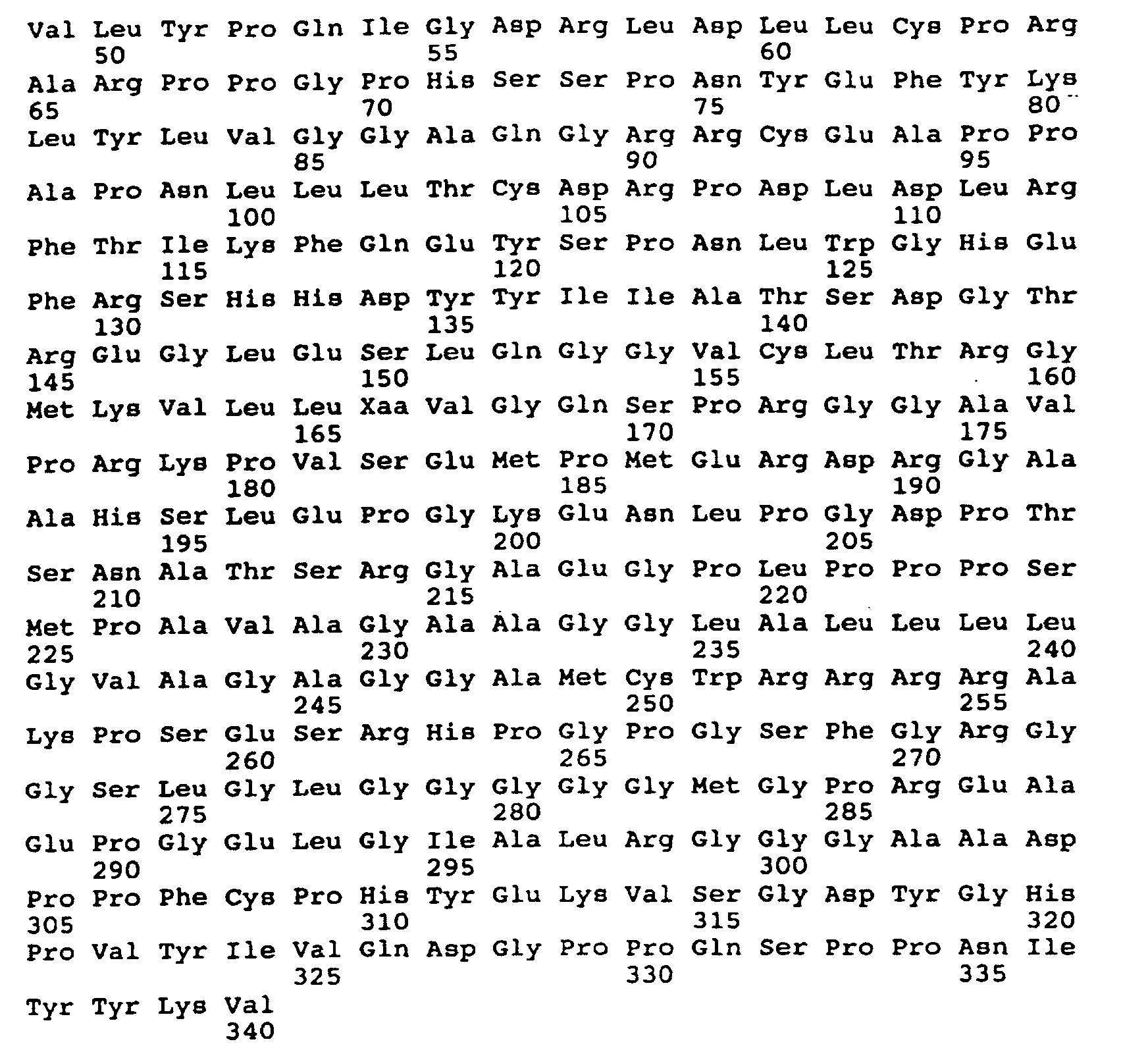
- the present invention provides isolated and purified mature Efl-6 protein having an amino acid sequences as set forth in Figure 1 or a fragment thereof capable of binding to the Elk receptor.
- the present invention provides an isolated nucleic acid encoding the extracellular domain of Efl-6 (sEfl-6) having a sequence selected from the following:
- the invention also provides vectors comprising a nucleic acid of the invention and host cells containing such vectors. It further provides methods of producing Efl-6 or s Efl-6 ligands comprising growing host cells under conditions permitting production of the ligand and recovering the ligand so produced. The invention also provides antibodies which specifically bind to these ligands.
- soluble forms of the ligands described herein may be used to promote biological responses in Elk, Nuk/Cek5, Hek2/Sek4, Htk, and Sek1 receptor-expressing cells.
- a general method is described herein which produces "clustering" of ligands for eph-related receptors, which functions to make otherwise inactive soluble ligands biologically active, or which enhances the biological activity of ligands that, absent such clustering, would have only low levels of biological activity.
- the ligands described herein also have diagnostic utilities. In particular methods of detecting aberrancies in their function or expression may be used in the diagnosis of neurological or other disorders.
- manipulation of the interaction between the ligands and their cognate receptor may be used in assay systems designed to identify both agonists and antagonists of Eph receptor ligands.
- Such agonists and antagonists may be developed for use in the eventual treatment of neurological or other disorders.
- the invention further provides pharmaceutical compositions comprising an Efl-6 protein or a fragment thereof which binds to the Elk receptor and a pharmacologically acceptable carrier.
- the present invention provides for a novel polypeptide ligand that binds to the Elk receptor.
- the novel polypeptide ligand of the present invention is also able to bind other members of the Elk subclass of Eph receptors, including Nuk/Cek5, Hek2/Sek4 and Htk, as well as the only receptor known to "cross subclasses", known as Sek1 (Brambilla and Klein, 1995, Mol. Cell. Neurosci., 6:487-495, Gale, et al., 1996, Neuron 17:9-19).
- the "Elk” receptor refers to Elk, as well as the above receptors known to bind the Elk ligands.
- the invention further provides a means of making biologically active, soluble forms of the Efl-6 ligand, which are useful in promoting a differential function and/or influencing the phenotype, such as growth and/or proliferation, of receptor bearing cells.
- the invention also provides for nucleic acids encoding such a polypeptide ligand, and both prokaryotic and eukaryotic expression systems for producing this protein.
- the invention also provides for antibodies to this ligand.
- Efl E ph transmembrane tyrosine kinase f amily l igands
- Efl-6 E ph transmembrane tyrosine kinase f amily l igands-6.
- a deposit designated as pbluescript SK - encoding Efl-6 was made with the American Type Culture Collection on October 19, 1995 and has received accession number 97319.
- soluble forms of the Elk ligand may be used to promote biological responses in Elk receptor-expressing cells.
- Efl-6 soluble forms of the Elk ligand
- a general method is described herein which produces "clustering" of Efl-6 ligand which functions to make otherwise inactive soluble ligand biologically active, or which enhances the biological activity of the ligand which, absent such clustering, would have only low levels of biological activity.
- the Efl-6 ligand described herein may also have diagnostic utilities.
- methods of detecting aberrancies in its function or expression may be used in the diagnosis of neurological or other disorders.
- manipulation of the interaction between the ligand and its cognate receptor may be used in the treatment of neurological or other disorders.
- Efl-6 includes functionally equivalent molecules in which amino acid residues are substituted for residues within the sequence resulting in a silent change.
- one or more amino acid residues within the sequence can be substituted by another amino acid of a similar polarity which acts as a functional equivalent, resulting in a silent alteration.
- Substitutes, for an amino acid within the sequence may be selected from other members of the class to which the amino acid belongs.
- the nonpolar (hydrophobic) amino acids include alanine, leucine, isoleucine, valine, proline, phenylalanine, tryptophan and methionine.
- the polar neutral amino acids include glycine, serine, threonine, cysteine, tyrosine, asparagine, and glutamine.
- the positively charged (basic) amino acids include arginine, lysine and histidine.
- the negatively charged (acidic) amino acids include aspartic acid and glutamic acid.
- proteins or fragments thereof which exhibit the same or similar biological activity and derivatives which are differentially modified during or after translation, e.g. , by glycosylation, proteolytic cleavage, linkage to an antibody molecule or other cellular ligand, etc.
- Efl-6 may do so naturally or may be genetically engineered to produce this ligand, as described supra , by transfection, transduction, electroporation, microinjection, via a transgenic animal, etc. of nucleic acid encoding Efl-6 described herein in a suitable expression vector.
- a vector containing the cDNA encoding for EFl-6 deposited with the American Type Culture Collection under the terms of the Budapest Treaty on October 19, 1995 as pBluescriptSK - Efl-6 has been given the ATCC designation 97319.
- Nucleic acids contemplated by the invention include the sequence as contained in the deposit and as set forth in Figure 1, and nucleic acid sequences which are degenerate of the above sequences as a result of the genetic code, but which encode ligand(s) that bind the Elk receptor.
- the present invention contemplates use of the ligands described herein in soluble forms, truncated forms, and tagged forms. This includes monomeric forms of the ligand which may bind to the receptor and function as an antagonist.
- any of the methods known to one skilled in the art for the insertion of DNA fragments into a vector may be used to construct expression vectors encoding Efl-6 using appropriate transcriptional/translational control signals and the protein coding sequences. These methods may include in vitro recombinant DNA and synthetic techniques and in vivo recombinations (genetic recombination). Expression of nucleic acid sequence encoding the Efl-6 or peptide fragments thereof may be regulated by a second nucleic acid sequence so that the protein or peptide is expressed in a host transformed with the recombinant DNA molecule. For example, expression of the Efl-6 described herein may be controlled by any promoter/enhancer element known in the art.
- Promoters which may be used to control expression of the ligands include, but are not limited to the long terminal repeat as described in Squinto et al., (1991, Cell 65 :1-20); the SV40 early promoter region (Bernoist and Chambon, 1981, Nature 290 :304-310), the CMV promoter, the M-MuLV 5' terminal repeat the promoter contained in the 3' long terminal repeat of Rous sarcoma virus (Yamamoto, et al., 1980, Cell 22 :787-797), the herpes thymidine kinase promoter (Wagner et al., 1981, Proc. Natl. Acad. Sci. U.S.A.
- prokaryotic expression vectors such as the ⁇ -lactamase promoter (Villa-Kamaroff, et al., 1978, Proc. Natl. Acad. Sci. U.S.A. 75 :3727-3731), or the tac promoter (DeBoer, et al., 1983, Proc. Natl. Acad. Sci. U.S.A.
- mouse mammary tumor virus control region which is active in testicular, breast, lymphoid and mast cells (Leder, et al., 1986, Cell 45 :485-495), albumin gene control region which is active in liver (Pinkert, et al., 1987, Genes and Devel. 1 :268-276), alpha-fetoprotein gene control region which is active in liver (Krumlauf, et al., 1985, Mol. Cell. Biol. 5 :1639-1648; Hammer et al., 1987, Science 235 :53-58); alpha 1-antitrypsin gene control region which is active in the liver (Kelsey, et al, 1987, Genes and Devel.
- beta-globin gene control region which is active in myeloid cells (Mogram, et al., 1985, Nature 315 :338-340; Kollias, et al., 1986, Cell 46 :89-94); myelin basic protein gene control region which is active in oligodendrocyte cells in the brain (Readhead, et al., 1987, Cell 48 :703-712); myosin light chain-2 gene control region which is active in skeletal muscle (Shani, 1985, Nature 314 :283-286), and gonadotropic releasing hormone gene control region which is active in the hypothalamus (Mason et al., 1986, Science 234 :1372-1378).
- expression vectors capable of being replicated in a bacterial or eukaryotic host comprising Efl-6 encoding nucleic acid as described herein, are used to transfect the host and thereby direct expression of such nucleic acid to produce the Efl-6 proteins, which may then be recovered in biologically active form.
- a biologically active form includes a form capable of binding to the relevant receptor, such as Elk, and causing a differentiated function and/or influencing the phenotype of the cell expressing the receptor.
- Such biologically active forms would, for example, induce phosphorylation of the tyrosine kinase domain of the Elk receptor, or stimulation of synthesis of cellular DNA.
- biologically active Elf-6 ligand includes monomeric forms that bind the receptor and act as antagonists.
- Expression vectors containing the gene inserts can be identified by three general approaches: (a) DNA-DNA hybridization, (b) presence or absence of "marker" gene functions, and (c) expression of inserted sequences.
- first approach the presence of a foreign gene inserted in an expression vector can be detected by DNA-DNA hybridization using probes comprising sequences that are homologous to an inserted efl -6 gene.
- second approach the recombinant vector/host system can be identified and selected based upon the presence or absence of certain "marker" gene functions (e.g.
- recombinants containing the insert can be identified by the absence of the marker gene function.
- recombinant expression vectors can be identified by assaying the foreign gene product expressed by the recombinant.
- Such assays can be based, for example, on the physical or functional properties of the efl -6 gene product, for example, by binding of the ligand to the Elk receptor or portion thereof which may be tagged with, for example, a detectable antibody or portion thereof or binding to antibodies produced against the Efl-6 protein or a portion thereof.
- Efl-6 appears to be a conventional transmembrane protein with a cytoplasmic domain.
- the transmembrane domain is shown underlined in Figure 1.
- the soluble or extracellular domain of the ligand (sEfl-6) is encoded by the nucleotide sequence from about nucleotide 274 to about nucleotide 873.
- the ligands described herein may be produced as membrane bound forms in animal cell expression systems or may be expressed in soluble form. Soluble forms of the ligands may be expressed using methods known to those in the art.
- a commonly used strategy involves use of oligonucleotide primers, one of which spans the N-terminus of the protein, the other of which spans the region just upstream to a hydrophobic segment of the protein, which represents either the GPI-linkage recognition domain or a transmembrane domain of the protein.
- the oligonucleotide spanning the C-terminus region is modified so as to contain a stop codon prior to the hydrophobic domain.
- the two oligonucleotides are used to amplify a modified version of the gene encoding a protein that is secreted instead of membrane bound.
- a convenient restriction site in the vector can be used to insert an altered sequence that removes the GPI-linkage recognition domain or transmembrane domain, thus resulting in a vector capable of expressing a secreted form of the protein.
- the soluble protein so produced would include the region of the protein from the N- terminus to the region preceding the hydrophobic GPI recognition domain or transmembrane domain.
- soluble ligands produced according to the invention bind to the receptors in the eph subfamily, such soluble ligands often have little or no biological activity.
- soluble ligands are activated, according to the present invention, by ligand "clustering".
- Clustering refers to any method known to one skilled in the art for creating multimers of the soluble portions of ligands described herein.
- a "clustered" efl-6 is a dimer, made for example, according to the present invention utilizing the Fc domain of IgG (Aruffo, et al., 1991, Cell 67:35-44), which results in the expression of the soluble ligand as a disulfide-linked homodimer.
- secreted forms of the ligand are constructed with epitope tags at their C-termini; anti-tag antibodies are then used to aggregate the ligands.
- the invention contemplates other "engineered" ligand molecules that exist as or form multimers.
- dimers of the extracellular domains may be engineered using leucine zippers.
- the leucine zipper domains of the human transcription factors c-jun and c-fos have been shown to form stable heterodimers [Busch and Sassone-Corsi, Trends Genetics 6: 36-40 (1990); Gentz, et al., Science 243: 1695-1699 (1989)] with a 1:1 stoichiometry.
- jun-jun homodimers have also been shown to form, they are about 1000-fold less stable than jun-fos heterodimers.
- Fos-fos homodimers have not been detected.
- the leucine zipper domain of either c-jun or c-fos are fused in frame at the C-terminus of the soluble or extracellular domains of the above mentioned ligands by genetically engineering chimeric genes.
- the fusions may be direct or they may employ a flexible linker domain, such as the hinge region of human IgG, or polypeptide linkers consisting of small amino acids such as glycine, serine, threonine or alanine, at various lengths and combinations.
- the chimeric proteins may be tagged by His-His-His-His-His-His (His6), to allow rapid purification by metal-chelate chromatography, and/or by epitopes to which antibodies are available, to allow for detection on western blots, immunoprecipitation, or activity depletion/blocking in bioassays.
- His6 His-His-His-His-His-His
- multimers may be made by genetically engineering and expressing molecules that consist of the soluble or extracellular portion of the ligand followed by the Fc-domain of hIgG, followed by either the c-jun or the c-fos leucine zippers described above [Kostelny, et al., J. Immunol. 148: 1547-1553 (1992)]. Since these leucine zippers form predominately heterodimers, they may be used to drive formation of the heterodimers where desired. As for the chimeric proteins described using leucine zippers, these may also be tagged with metal chelates or an epitope. This tagged domain can be used for rapid purification by metal-chelate chromatography, and/or by antibodies, to allow for detection on western blots, immunoprecipitation, or activity depletion/blocking in bioassays.
- multimeric soluble ligands are prepared by expression as chimeric molecules utilizing flexible linker loops.
- a DNA construct encoding the chimeric protein is designed such that it expresses two or more soluble or extracellular domains fused together in tandem ("head to head") by a flexible loop.
- This loop may be entirely artificial (e.g. polyglycine repeats interrupted by serine or threonine at a certain interval) or "borrowed” from naturally occurring proteins (e.g. the hinge region of hIgG).
- Molecules may be engineered in which the length and composition of the loop is varied, to allow for selection of molecules with desired characteristics.
- a biologically active, clustered soluble eph family ligand comprises (soluble Efl) n , wherein the soluble efl is the extracellular domain of a ligand that binds an eph family receptor and n is 2 or greater.
- Efl-6 is made biologically active according to the process of the invention.
- clustering will require analysis of the biological activity utilizing bioassays such as those described herein. For example, receptor phosphorylation induced by stimulating receptor expressing reporter cells with COS cells overexpressing membrane forms of the ligands, soluble forms of the ligands and clustered ligands may be compared.
- dimerization of the ligand is sufficient to induce biological activity
- the methods described herein are used to determine the sufficiency of a particular clustering technique. Often dimerization of a soluble ligand utilizing Fc appears to be insufficient for achieving a biological response, yet further clustering of the ligand according to the invention using anti-Fc antibodies may result in a substantial increase in biological activity.
- Cells of the present invention may transiently or, preferably, constitutively and permanently express Efl-6 in native form, or in soluble form as tagged Efl-6 or clustered Efl-6 as described herein.
- the recombinant factor may be purified by any technique which allows for the subsequent formation of a stable, biologically active protein.
- the factor may be recovered from cells either as a soluble protein or as inclusion bodies, from which it may be extracted quantitatively by 8M guanidinium hydrochloride and dialysis.
- conventional ion exchange chromatography, hydrophobic interaction chromatography, reverse phase chromatography or gel filtration may be used.
- recombinant efl-6 may be used to inactivate or "knock out" the endogenous gene by homologous recombination, and thereby create an Efl-6 protein deficient cell, tissue, or animal.
- recombinant efl may be engineered to contain an insertional mutation, for example the neo gene, which would inactivate the native efl -6 gene.
- Such a construct under the control of a suitable promoter, may be introduced into a cell, such as an embryonic stem cell, by a technique such as transfection, transduction, injection, etc. Cells containing the construct may then be selected by G418 resistance.
- Cells which lack an intact efl -6 may then be identified, e.g. by Southern blotting or Northern blotting or assay of expression. Cells lacking an intact efl -6 may then be fused to early embryo cells to generate transgenic animals deficient in such ligand. A comparison of such an animal with an animal expressing endogenous Efl-6 would aid in the elucidation of the role of the ligands in development and maintenance. Such an animal may be used to define specific neuronal populations, or any other in vivo processes, normally dependent upon the ligand.
- the present invention also provides for antibodies to the Efl-6 described herein which are useful for detection of the ligand in, for example, diagnostic applications. Antibodies to the ligand may also be useful for achieving clustering according to the invention. In instances where endogenous ligand exists, the antibody itself may act as the therapeutic by activating existing ligand.
- any technique which provides for the production of antibody molecules by continuous cell lines in culture may be used.
- the hybridoma technique originally developed by Kohler and Milstein (1975, Nature 256 :495-497), as well as the trioma technique, the human B-cell hybridoma technique (Kozbor, et al., 1983, Immunology Today 4 :72), and the EBV-hybridoma technique to produce human monoclonal antibodies are within the scope of the present invention.
- the monoclonal antibodies for diagnostic or therapeutic use may be human monoclonal antibodies or chimeric human-mouse (or other species) monoclonal antibodies.
- Human monoclonal antibodies may be made by any of numerous techniques known in the art (e.g. , Teng, et al., 1983, Proc. Natl. Acad. Sci. U.S.A. 80:7308-7312; Kozbor, et al., 1983, Immunology Today 4:72-79; Olsson, et al., 1982, Meth. Enzymol. 92:3-16).
- Chimeric antibody molecules may be prepared containing a mouse antigen-binding domain with human constant regions (Morrison et al., 1984, Proc. Natl. Acad. Sci. U.S.A. 81:6851, Takeda et al., 1985, Nature 314:452).
- adjuvants may be used to increase the immunological response, depending on the host species, and including but not limited to Freund's (complete and incomplete), mineral gels such as aluminum hydroxide, surface active substances such as lysolecithin, pluronic polyols, polyanions, peptides, oil emulsions, keyhole limpet hemocyanins, dinitrophenol, and potentially useful human adjuvants such as BCG (Bacille Calmette-Guerin) and Corynebacterium parvum .
- BCG Bacille Calmette-Guerin
- a molecular clone of an antibody to a selected Efl-6 epitope can be prepared by known techniques. Recombinant DNA methodology (see e.g., Maniatis, et al., 1982, Molecular Cloning, A Laboratory Manual, Cold Spring Harbor Laboratory, Cold Spring Harbor, New York) may be used to construct nucleic acid sequences which encode a monoclonal antibody molecule, or antigen binding region thereof.
- Antibody molecules may be purified by known techniques, e.g. , immunoabsorption or immunoaffinity chromatography, chromatographic methods such as HPLC (high performance liquid chromatography), or a combination thereof, etc.
- the present invention provides for antibody molecules as well as fragments of such antibody molecules.
- Antibody fragments which contain the idiotype of the molecule can be generated by known techniques.
- such fragments include but are not limited to: the F(ab') 2 fragment which can be produced by pepsin digestion of the antibody molecule; the Fab' fragments which can be generated by reducing the disulfide bridges of the F(ab') 2 fragment, and the Fab fragments which can be generated by treating the antibody molecule with papain and a reducing agent.
- the ligands of the present invention may be used for treating patiens suffering from a neurological disorder by treating the patient with an effective amount of Efl-6, or peptide fragments thereof, capable of binding to Elk receptor.
- the Elk receptor is also expressed primarily in brain. Accordingly, it is believed that the Elk binding ligand described herein will support the induction of a differential function and/or influence the phenotype, such as growth and/or survival of neural cells, expressing this receptor.
- Efl-6 (described as Elk ligand 3 in the reference) is notable for its remarkable restricted and prominent expression in the floor plate and roof plate of the developing neural tube and its rhombomere-specific expression in the developing hindbrain. This distribution suggests a role of Efl-6 and its reciprocal receptor, in neuronal guidance and boundary formation, critical features in the organization of the developing vertebrate central nervous system.
- the present invention also provides for pharmaceutical compositions comprising the Efl-6 described herein, or peptide fragments thereof, in a suitable pharmacologic carrier.
- Efl-6 proteins or peptide fragments may be administered systemically or locally. Any appropriate mode of administration known in the art may be used, including, but not limited to, intravenous, intrathecal, intraarterial, intranasal, oral, subcutaneous, intraperitoneal, or by local injection or surgical implant. Sustained release formulations are also provided for.
- Efl-6 antagonists including, but not limited to, soluble forms of Efl-6 which may compete with cell-bound ligand for interaction with Elk receptor.
- soluble forms of the Elk receptors e.g. expressed as "receptorbodies" produced as described herein
- receptorbodies may act as antagonists by binding, and thereby inactivating the ligand. It may be desirable to provide such antagonists locally at the injury site rather than systemically. Use of an Efl-6 antagonist providing implant may be desirable.
- Efl-6 responsiveness may benefit from an increase in Efl-6 responsiveness. It may therefore be beneficial to increase the number or binding affinity of Efl-6 in patients suffering from such conditions. This could be achieved through gene therapy using either Efl-6, Efl-6 expressing cells, or Elk receptor or receptor chimeras (cells expressing the extracellular domain of the Elk receptor). Selective expression of such recombinant proteins in appropriate cells could be achieved using their encoding genes controlled by tissue specific or inducible promoters or by producing localized infection with replication defective viruses carrying the recombinant genes.
- the Efl-6 encoding DNA as deposited with the ATCC and having accession number 97319 was isolated from a Stratagene (La Jolla, California) human brain (frontal cortex) library (Catalogue No. 936212).
- the library is in the ⁇ ZAPII vector.
- the sequence of the Efl-6 coding region of this vector is set forth in Figure 1.
- Assays or purification of the Efl-6 protein may be conducted by use of an Elk receptorbody, which consists of the extracellular domain of Elk fused to the IgG1 constant region.
- This receptorbody is prepared as follows: The Fc portion of human IgG1, starting from the hinge region and extending to the carboxy terminus of the molecule, was cloned from placental cDNA using PCR with oligonucleotides corresponding to the published sequence of human IgG1. Convenient restriction sites were also incorporated into the oligonucleotides so as to allow cloning of the PCR fragment into an expression vector.
- Expression vectors containing full length receptors were modified either by restriction enzyme digests or by PCR strategies so as to replace the transmembrane and intracellular domains with restriction sites that allow cloning the human IgG1 fragment into these sites; this was done in such a way as to generate a fusion protein with the receptor ectodomain as its amino-terminus and the Fc portion of human IgG1 as its carboxy-terminus.
- An alternative method of preparing receptorbodies is described in Goodwin, et. al. 1993. Cell 73:447-456.
Landscapes
- Health & Medical Sciences (AREA)
- Chemical & Material Sciences (AREA)
- Life Sciences & Earth Sciences (AREA)
- Organic Chemistry (AREA)
- Medicinal Chemistry (AREA)
- General Health & Medical Sciences (AREA)
- Biochemistry (AREA)
- Biophysics (AREA)
- Genetics & Genomics (AREA)
- Gastroenterology & Hepatology (AREA)
- Zoology (AREA)
- Molecular Biology (AREA)
- Toxicology (AREA)
- Proteomics, Peptides & Aminoacids (AREA)
- Chemical Kinetics & Catalysis (AREA)
- Biomedical Technology (AREA)
- Public Health (AREA)
- Veterinary Medicine (AREA)
- Pharmacology & Pharmacy (AREA)
- Nuclear Medicine, Radiotherapy & Molecular Imaging (AREA)
- General Chemical & Material Sciences (AREA)
- Neurosurgery (AREA)
- Neurology (AREA)
- Animal Behavior & Ethology (AREA)
- Bioinformatics & Cheminformatics (AREA)
- Engineering & Computer Science (AREA)
- Peptides Or Proteins (AREA)
- Micro-Organisms Or Cultivation Processes Thereof (AREA)
- Preparation Of Compounds By Using Micro-Organisms (AREA)
- Pharmaceuticals Containing Other Organic And Inorganic Compounds (AREA)
- Medicines That Contain Protein Lipid Enzymes And Other Medicines (AREA)
Abstract
Description
| DEPOSIT | ACCESSION NUMBER |
| pBluescript SK-Efl-6 | 97319 |
- (A) NAME/KEY: Coding Sequence
- (B) LOCATION: 202...1224
- (D) OTHER INFORMATION: Coding region of putative signal sequence from 202 to 273; coding region of mature protein from 274 to 1224; coding region for putative transmembrane from 874 to 948.



Claims (18)
- An isolated and purified nucleic acid molecule encoding Efl-6 [Eph transmembrane tyrosine kinase family ligands-6] protein wherein the sequence of said nucleic acid is selected from the group consisting of:(a) the sequence of the DNA encoding mature Efl-6 protein contained in the plasmid pBluescriptSK-Efl-6 as deposited with the American Type Culture Collection on October 19, 1995 and designated as 97319;(b) the sequence of the DNA encoding mature Efl-6 protein having the amino acid sequence as set forth in Figure 1; and(c) DNA sequences that are degenerate as a result of the genetic code to a DNA sequence of (a), or (b) and which encode an Efl-6 protein that binds to the Elk subfamily of Eph receptors: Elk, Nuk/Cek 5, Hek 2/Sek 4, Htk and Sek 1.
- An isolated and purified Efl-6 protein encoded by a nucleic acid according to claim 1.
- Isolated and purified mature Efl-6 protein having an amino acid sequence as set forth in Figure 1 or a fragment thereof capable of binding to the Elk receptor.
- An isolated nucleic acid encoding the extracellular domain of Efl-6 (sEfl-6) having a sequence selected from the following:(a) the sequence set forth from about nucleotide 274 to about nucleotide 873 of Figure 1; and(b) a sequence which encodes the extracellular domain of Efl-6 as set forth in Figure 1.
- Purified sEfl-6 encoded by the nucleotide sequence of claim 4.
- (sEfl-6)n comprising the sEfl-6 protein according to claim 5, wherein n is 2 or greater.
- Efl-6 ligandbody comprising soluble Efl-6 protein according to claim 5 and the Fc portion of IgG.
- A vector which comprises a nucleic acid molecule of claim 1.
- A vector according to claim 8 wherein the nucleic acid molecule is operatively linked to an expression control sequence capable of directing its expression in a host cell.
- A host cell containing a vector according to claim 9.
- A vector which comprises a nucleic acid molecule of claim 4.
- A vector according to claim 11 wherein the nucleic acid molecule is operatively linked to an expression control sequence capable of directing its expression in a host cell.
- A host cell containing a vector according to claim 12.
- A method of producing Efl-6 ligand which comprises growing cells of a host according to claim 9 under conditions permitting production of the ligand, and recovering the ligand so produced.
- A method of producing Efl-6 soluble ligand which comprises growing cells of a host according to claim 12 under conditions permitting production of the ligand, and recovering the ligand so produced.
- An antibody which specifically binds the ligand of claim 2, 3 or 5.
- An antibody according to claim 16 which is a monoclonal antibody.
- A pharmaceutical composition comprising an Efl-6 protein or a fragment thereof which binds to the Elk receptor as defined in claim 2, 3 or 5 and a pharmacologically acceptable carrier.
Applications Claiming Priority (3)
| Application Number | Priority Date | Filing Date | Title |
|---|---|---|---|
| US701595P | 1995-10-25 | 1995-10-25 | |
| US7015P | 1995-10-25 | ||
| PCT/US1996/017201 WO1997015667A1 (en) | 1995-10-25 | 1996-10-25 | Biologically active eph family ligands |
Publications (2)
| Publication Number | Publication Date |
|---|---|
| EP0859840A1 EP0859840A1 (en) | 1998-08-26 |
| EP0859840B1 true EP0859840B1 (en) | 2005-12-28 |
Family
ID=21723735
Family Applications (1)
| Application Number | Title | Priority Date | Filing Date |
|---|---|---|---|
| EP96937006A Expired - Lifetime EP0859840B1 (en) | 1995-10-25 | 1996-10-25 | Biologically active eph family ligands |
Country Status (8)
| Country | Link |
|---|---|
| US (2) | US6602683B1 (en) |
| EP (1) | EP0859840B1 (en) |
| JP (1) | JPH11514238A (en) |
| AT (1) | ATE314470T1 (en) |
| AU (1) | AU712737B2 (en) |
| DE (1) | DE69635667T2 (en) |
| IL (1) | IL124202A (en) |
| WO (1) | WO1997015667A1 (en) |
Families Citing this family (4)
| Publication number | Priority date | Publication date | Assignee | Title |
|---|---|---|---|---|
| WO1997004091A1 (en) * | 1995-07-20 | 1997-02-06 | Amrad Operations Pty. Ltd. | Novel receptor ligands and genetic sequences encoding same |
| US6696557B1 (en) * | 1996-04-19 | 2004-02-24 | Genentech, Inc. | AL-2 neurotrophic factor nucleic acid |
| CA2354846A1 (en) | 1998-12-23 | 2000-06-29 | Regeneron Pharmaceuticals, Inc. | Method of enhancing the biological activity of ligands |
| EP2096174A1 (en) * | 2008-02-28 | 2009-09-02 | Centro De Investigación Cooperativa En Biociencias CiC bioGune | Ubiquitin binding polypeptides |
Citations (1)
| Publication number | Priority date | Publication date | Assignee | Title |
|---|---|---|---|---|
| WO1996026958A2 (en) * | 1995-02-27 | 1996-09-06 | President And Fellows Of Harvard College | Eph RECEPTOR LIGAND ELF-2 |
Family Cites Families (5)
| Publication number | Priority date | Publication date | Assignee | Title |
|---|---|---|---|---|
| PT669929E (en) | 1992-11-13 | 2007-04-30 | Immunex Corp | Elk ligand, a cytokine |
| US6303769B1 (en) * | 1994-07-08 | 2001-10-16 | Immunex Corporation | Lerk-5 dna |
| WO1997004091A1 (en) * | 1995-07-20 | 1997-02-06 | Amrad Operations Pty. Ltd. | Novel receptor ligands and genetic sequences encoding same |
| AU2538697A (en) * | 1996-03-21 | 1997-10-22 | Immunex Corporation | Cytokine designated lerk-8 |
| US6696557B1 (en) * | 1996-04-19 | 2004-02-24 | Genentech, Inc. | AL-2 neurotrophic factor nucleic acid |
-
1996
- 1996-10-25 DE DE69635667T patent/DE69635667T2/en not_active Expired - Lifetime
- 1996-10-25 JP JP9516843A patent/JPH11514238A/en active Pending
- 1996-10-25 EP EP96937006A patent/EP0859840B1/en not_active Expired - Lifetime
- 1996-10-25 US US09/051,994 patent/US6602683B1/en not_active Expired - Lifetime
- 1996-10-25 AT AT96937006T patent/ATE314470T1/en active
- 1996-10-25 WO PCT/US1996/017201 patent/WO1997015667A1/en not_active Ceased
- 1996-10-25 AU AU74778/96A patent/AU712737B2/en not_active Ceased
-
1998
- 1998-04-23 IL IL124202A patent/IL124202A/en not_active IP Right Cessation
-
2003
- 2003-04-17 US US10/417,924 patent/US20030215918A1/en not_active Abandoned
Patent Citations (1)
| Publication number | Priority date | Publication date | Assignee | Title |
|---|---|---|---|---|
| WO1996026958A2 (en) * | 1995-02-27 | 1996-09-06 | President And Fellows Of Harvard College | Eph RECEPTOR LIGAND ELF-2 |
Non-Patent Citations (2)
| Title |
|---|
| BERGEMANN A.D. ET AL: "ELF-2, A NEW MEMBER OF THE EPH LIGAND FAMILY, IS SEGMENTALLY EXPRESSED IN MOUSE EMBRYOS IN THE REGION OF THE HINDBRAIN AND NEWLY FORMING SOMITES", MOL. AND CELL. BIOLOGY, vol. 15, no. 9, 1 September 1995 (1995-09-01), WASHINGTON, DC, US, pages 4921 - 4929, XP000578783 * |
| GALE NICHOLAS W. ET AL: "Eph Receptors and Ligands Comprise Two Major Specificity Subclasses and Are Reciprocally Compartmentalized during Embryogenesis", NEURON, vol. 17, no. 1, July 1996 (1996-07-01), CAMBRIDGE, MA, US, pages 9 - 19, XP002048874 * |
Also Published As
| Publication number | Publication date |
|---|---|
| DE69635667T2 (en) | 2006-09-07 |
| DE69635667D1 (en) | 2006-02-02 |
| JPH11514238A (en) | 1999-12-07 |
| ATE314470T1 (en) | 2006-01-15 |
| EP0859840A1 (en) | 1998-08-26 |
| US6602683B1 (en) | 2003-08-05 |
| US20030215918A1 (en) | 2003-11-20 |
| WO1997015667A1 (en) | 1997-05-01 |
| IL124202A (en) | 2006-06-11 |
| AU712737B2 (en) | 1999-11-11 |
| AU7477896A (en) | 1997-05-15 |
Similar Documents
| Publication | Publication Date | Title |
|---|---|---|
| US5814478A (en) | Tyrosine kinase receptors and ligands | |
| JP4493854B2 (en) | Method for enhancing biological activity of a ligand | |
| AU691915B2 (en) | Biologically active EPH family ligands | |
| US5747033A (en) | Method of enhancing the biological activity of Eph family ligands | |
| US5426177A (en) | Ciliary neurotrophic factor receptor | |
| AU712737B2 (en) | Biologically active EPH family ligands | |
| US5656473A (en) | Human Dmk receptor | |
| AU748167B2 (en) | Novel nucleic acid and polypeptide | |
| CA2236001C (en) | Biologically active eph family ligands | |
| US6316206B1 (en) | Method for screening comprising cells expressing the CNTF receptor | |
| CA2195528C (en) | Denervated muscle kinase (dmk), a receptor of the tyrosine kinase super family | |
| US6207413B1 (en) | Nucleic acids encoding novel orphan cytokine receptors | |
| AU2332099A (en) | Orphan receptors | |
| JP2004201693A (en) | Denervated muscle kinase (DMK), tyrosine kinase superfamily receptor |
Legal Events
| Date | Code | Title | Description |
|---|---|---|---|
| PUAI | Public reference made under article 153(3) epc to a published international application that has entered the european phase |
Free format text: ORIGINAL CODE: 0009012 |
|
| 17P | Request for examination filed |
Effective date: 19980513 |
|
| AK | Designated contracting states |
Kind code of ref document: A1 Designated state(s): AT BE CH DE DK ES FI FR GB GR IE IT LI LU MC NL PT SE |
|
| RIN1 | Information on inventor provided before grant (corrected) |
Inventor name: YANCOPOULOS, GEORGE, D. Inventor name: GALE, NICHOLAS, W. Inventor name: DAVIS, SAMUEL |
|
| 17Q | First examination report despatched |
Effective date: 20010709 |
|
| GRAP | Despatch of communication of intention to grant a patent |
Free format text: ORIGINAL CODE: EPIDOSNIGR1 |
|
| GRAS | Grant fee paid |
Free format text: ORIGINAL CODE: EPIDOSNIGR3 |
|
| GRAA | (expected) grant |
Free format text: ORIGINAL CODE: 0009210 |
|
| AK | Designated contracting states |
Kind code of ref document: B1 Designated state(s): AT BE CH DE DK ES FI FR GB GR IE IT LI LU MC NL PT SE |
|
| PG25 | Lapsed in a contracting state [announced via postgrant information from national office to epo] |
Ref country code: IT Free format text: LAPSE BECAUSE OF FAILURE TO SUBMIT A TRANSLATION OF THE DESCRIPTION OR TO PAY THE FEE WITHIN THE PRESCRIBED TIME-LIMIT;WARNING: LAPSES OF ITALIAN PATENTS WITH EFFECTIVE DATE BEFORE 2007 MAY HAVE OCCURRED AT ANY TIME BEFORE 2007. THE CORRECT EFFECTIVE DATE MAY BE DIFFERENT FROM THE ONE RECORDED. Effective date: 20051228 Ref country code: FI Free format text: LAPSE BECAUSE OF FAILURE TO SUBMIT A TRANSLATION OF THE DESCRIPTION OR TO PAY THE FEE WITHIN THE PRESCRIBED TIME-LIMIT Effective date: 20051228 |
|
| REG | Reference to a national code |
Ref country code: GB Ref legal event code: FG4D |
|
| REG | Reference to a national code |
Ref country code: CH Ref legal event code: EP |
|
| REG | Reference to a national code |
Ref country code: IE Ref legal event code: FG4D |
|
| REF | Corresponds to: |
Ref document number: 69635667 Country of ref document: DE Date of ref document: 20060202 Kind code of ref document: P |
|
| PG25 | Lapsed in a contracting state [announced via postgrant information from national office to epo] |
Ref country code: SE Free format text: LAPSE BECAUSE OF FAILURE TO SUBMIT A TRANSLATION OF THE DESCRIPTION OR TO PAY THE FEE WITHIN THE PRESCRIBED TIME-LIMIT Effective date: 20060328 Ref country code: GR Free format text: LAPSE BECAUSE OF FAILURE TO SUBMIT A TRANSLATION OF THE DESCRIPTION OR TO PAY THE FEE WITHIN THE PRESCRIBED TIME-LIMIT Effective date: 20060328 Ref country code: DK Free format text: LAPSE BECAUSE OF FAILURE TO SUBMIT A TRANSLATION OF THE DESCRIPTION OR TO PAY THE FEE WITHIN THE PRESCRIBED TIME-LIMIT Effective date: 20060328 |
|
| PG25 | Lapsed in a contracting state [announced via postgrant information from national office to epo] |
Ref country code: ES Free format text: LAPSE BECAUSE OF FAILURE TO SUBMIT A TRANSLATION OF THE DESCRIPTION OR TO PAY THE FEE WITHIN THE PRESCRIBED TIME-LIMIT Effective date: 20060408 |
|
| REG | Reference to a national code |
Ref country code: CH Ref legal event code: NV Representative=s name: PATENTANWAELTE SCHAAD, BALASS, MENZL & PARTNER AG |
|
| PG25 | Lapsed in a contracting state [announced via postgrant information from national office to epo] |
Ref country code: PT Free format text: LAPSE BECAUSE OF FAILURE TO SUBMIT A TRANSLATION OF THE DESCRIPTION OR TO PAY THE FEE WITHIN THE PRESCRIBED TIME-LIMIT Effective date: 20060529 |
|
| ET | Fr: translation filed | ||
| PG25 | Lapsed in a contracting state [announced via postgrant information from national office to epo] |
Ref country code: IE Free format text: LAPSE BECAUSE OF NON-PAYMENT OF DUE FEES Effective date: 20061025 |
|
| PG25 | Lapsed in a contracting state [announced via postgrant information from national office to epo] |
Ref country code: MC Free format text: LAPSE BECAUSE OF NON-PAYMENT OF DUE FEES Effective date: 20061031 |
|
| PLBE | No opposition filed within time limit |
Free format text: ORIGINAL CODE: 0009261 |
|
| STAA | Information on the status of an ep patent application or granted ep patent |
Free format text: STATUS: NO OPPOSITION FILED WITHIN TIME LIMIT |
|
| 26N | No opposition filed |
Effective date: 20060929 |
|
| REG | Reference to a national code |
Ref country code: IE Ref legal event code: MM4A |
|
| PG25 | Lapsed in a contracting state [announced via postgrant information from national office to epo] |
Ref country code: LU Free format text: LAPSE BECAUSE OF NON-PAYMENT OF DUE FEES Effective date: 20061025 |
|
| PGFP | Annual fee paid to national office [announced via postgrant information from national office to epo] |
Ref country code: NL Payment date: 20101024 Year of fee payment: 15 Ref country code: FR Payment date: 20101105 Year of fee payment: 15 Ref country code: AT Payment date: 20101004 Year of fee payment: 15 |
|
| PGFP | Annual fee paid to national office [announced via postgrant information from national office to epo] |
Ref country code: DE Payment date: 20101027 Year of fee payment: 15 Ref country code: CH Payment date: 20101025 Year of fee payment: 15 |
|
| PGFP | Annual fee paid to national office [announced via postgrant information from national office to epo] |
Ref country code: GB Payment date: 20101025 Year of fee payment: 15 Ref country code: BE Payment date: 20101026 Year of fee payment: 15 |
|
| BERE | Be: lapsed |
Owner name: *REGENERON PHARMACEUTICALS INC. Effective date: 20111031 |
|
| REG | Reference to a national code |
Ref country code: NL Ref legal event code: V1 Effective date: 20120501 |
|
| REG | Reference to a national code |
Ref country code: CH Ref legal event code: PL |
|
| GBPC | Gb: european patent ceased through non-payment of renewal fee |
Effective date: 20111025 |
|
| REG | Reference to a national code |
Ref country code: FR Ref legal event code: ST Effective date: 20120629 |
|
| PG25 | Lapsed in a contracting state [announced via postgrant information from national office to epo] |
Ref country code: BE Free format text: LAPSE BECAUSE OF NON-PAYMENT OF DUE FEES Effective date: 20111031 Ref country code: NL Free format text: LAPSE BECAUSE OF NON-PAYMENT OF DUE FEES Effective date: 20120501 Ref country code: LI Free format text: LAPSE BECAUSE OF NON-PAYMENT OF DUE FEES Effective date: 20111031 Ref country code: DE Free format text: LAPSE BECAUSE OF NON-PAYMENT OF DUE FEES Effective date: 20120501 Ref country code: CH Free format text: LAPSE BECAUSE OF NON-PAYMENT OF DUE FEES Effective date: 20111031 |
|
| REG | Reference to a national code |
Ref country code: DE Ref legal event code: R119 Ref document number: 69635667 Country of ref document: DE Effective date: 20120501 |
|
| PG25 | Lapsed in a contracting state [announced via postgrant information from national office to epo] |
Ref country code: FR Free format text: LAPSE BECAUSE OF NON-PAYMENT OF DUE FEES Effective date: 20111102 Ref country code: GB Free format text: LAPSE BECAUSE OF NON-PAYMENT OF DUE FEES Effective date: 20111025 |
|
| REG | Reference to a national code |
Ref country code: AT Ref legal event code: MM01 Ref document number: 314470 Country of ref document: AT Kind code of ref document: T Effective date: 20111025 |
|
| PG25 | Lapsed in a contracting state [announced via postgrant information from national office to epo] |
Ref country code: AT Free format text: LAPSE BECAUSE OF NON-PAYMENT OF DUE FEES Effective date: 20111025 |