EP0859610B1 - Ibogamine congeners - Google Patents
Ibogamine congeners Download PDFInfo
- Publication number
- EP0859610B1 EP0859610B1 EP96928041A EP96928041A EP0859610B1 EP 0859610 B1 EP0859610 B1 EP 0859610B1 EP 96928041 A EP96928041 A EP 96928041A EP 96928041 A EP96928041 A EP 96928041A EP 0859610 B1 EP0859610 B1 EP 0859610B1
- Authority
- EP
- European Patent Office
- Prior art keywords
- compound according
- substituted alkyl
- nhr
- ether
- unsubstituted
- Prior art date
- Legal status (The legal status is an assumption and is not a legal conclusion. Google has not performed a legal analysis and makes no representation as to the accuracy of the status listed.)
- Expired - Lifetime
Links
- AREITJMUSRHSBK-UHFFFAOYSA-N ibogamine Natural products CCC1CC2C3CC1CN2CCc4c3[nH]c5ccccc45 AREITJMUSRHSBK-UHFFFAOYSA-N 0.000 title description 43
- LRLCVRYKAFDXKU-YGOSVGOTSA-N ibogamine Chemical compound N1([C@@H]2[C@H]3C[C@H](C1)C[C@@H]2CC)CCC1=C3NC2=CC=CC=C12 LRLCVRYKAFDXKU-YGOSVGOTSA-N 0.000 title description 11
- 239000000039 congener Substances 0.000 title description 7
- 150000001875 compounds Chemical class 0.000 claims abstract description 61
- 125000000547 substituted alkyl group Chemical group 0.000 claims abstract description 37
- 125000000217 alkyl group Chemical group 0.000 claims abstract description 26
- 150000003839 salts Chemical class 0.000 claims abstract description 15
- 125000003917 carbamoyl group Chemical group [H]N([H])C(*)=O 0.000 claims abstract description 14
- 229910052739 hydrogen Inorganic materials 0.000 claims abstract description 13
- CBOIHMRHGLHBPB-UHFFFAOYSA-N hydroxymethyl Chemical group O[CH2] CBOIHMRHGLHBPB-UHFFFAOYSA-N 0.000 claims abstract description 9
- 229910052736 halogen Inorganic materials 0.000 claims abstract description 7
- 150000002367 halogens Chemical class 0.000 claims abstract description 7
- 125000000717 hydrazino group Chemical group [H]N([*])N([H])[H] 0.000 claims abstract description 7
- 229910052760 oxygen Inorganic materials 0.000 claims abstract description 6
- 229910052717 sulfur Inorganic materials 0.000 claims abstract description 6
- LFQSCWFLJHTTHZ-UHFFFAOYSA-N Ethanol Chemical compound CCO LFQSCWFLJHTTHZ-UHFFFAOYSA-N 0.000 claims description 51
- ZPUCINDJVBIVPJ-LJISPDSOSA-N cocaine Chemical compound O([C@H]1C[C@@H]2CC[C@@H](N2C)[C@H]1C(=O)OC)C(=O)C1=CC=CC=C1 ZPUCINDJVBIVPJ-LJISPDSOSA-N 0.000 claims description 42
- 239000000203 mixture Substances 0.000 claims description 32
- 239000003814 drug Substances 0.000 claims description 24
- 229960003920 cocaine Drugs 0.000 claims description 21
- 238000011282 treatment Methods 0.000 claims description 17
- 239000000126 substance Substances 0.000 claims description 12
- 125000000956 methoxy group Chemical group [H]C([H])([H])O* 0.000 claims description 9
- 206010012335 Dependence Diseases 0.000 claims description 6
- 238000002360 preparation method Methods 0.000 claims description 6
- 125000002947 alkylene group Chemical group 0.000 claims description 5
- 229910052799 carbon Inorganic materials 0.000 claims description 5
- 229940127240 opiate Drugs 0.000 claims description 5
- 125000001797 benzyl group Chemical group [H]C1=C([H])C([H])=C(C([H])=C1[H])C([H])([H])* 0.000 claims description 4
- SNICXCGAKADSCV-JTQLQIEISA-N (-)-Nicotine Chemical compound CN1CCC[C@H]1C1=CC=CN=C1 SNICXCGAKADSCV-JTQLQIEISA-N 0.000 claims description 3
- GVGLGOZIDCSQPN-PVHGPHFFSA-N Heroin Chemical compound O([C@H]1[C@H](C=C[C@H]23)OC(C)=O)C4=C5[C@@]12CCN(C)[C@@H]3CC5=CC=C4OC(C)=O GVGLGOZIDCSQPN-PVHGPHFFSA-N 0.000 claims description 3
- 229960002069 diamorphine Drugs 0.000 claims description 3
- 229960002715 nicotine Drugs 0.000 claims description 3
- SNICXCGAKADSCV-UHFFFAOYSA-N nicotine Natural products CN1CCCC1C1=CC=CN=C1 SNICXCGAKADSCV-UHFFFAOYSA-N 0.000 claims description 3
- 239000003937 drug carrier Substances 0.000 claims description 2
- 229960004756 ethanol Drugs 0.000 claims description 2
- 239000000021 stimulant Substances 0.000 claims description 2
- 229940125717 barbiturate Drugs 0.000 claims 1
- 101100516572 Caenorhabditis elegans nhr-8 gene Proteins 0.000 abstract 2
- 101100240516 Caenorhabditis elegans nhr-10 gene Proteins 0.000 abstract 1
- 101100516554 Caenorhabditis elegans nhr-5 gene Proteins 0.000 abstract 1
- RTZKZFJDLAIYFH-UHFFFAOYSA-N Diethyl ether Chemical compound CCOCC RTZKZFJDLAIYFH-UHFFFAOYSA-N 0.000 description 93
- HEDRZPFGACZZDS-MICDWDOJSA-N Trichloro(2H)methane Chemical compound [2H]C(Cl)(Cl)Cl HEDRZPFGACZZDS-MICDWDOJSA-N 0.000 description 56
- VLKZOEOYAKHREP-UHFFFAOYSA-N n-Hexane Chemical compound CCCCCC VLKZOEOYAKHREP-UHFFFAOYSA-N 0.000 description 48
- OKKJLVBELUTLKV-UHFFFAOYSA-N Methanol Chemical compound OC OKKJLVBELUTLKV-UHFFFAOYSA-N 0.000 description 44
- BQJCRHHNABKAKU-KBQPJGBKSA-N morphine Chemical compound O([C@H]1[C@H](C=C[C@H]23)O)C4=C5[C@@]12CCN(C)[C@@H]3CC5=CC=C4O BQJCRHHNABKAKU-KBQPJGBKSA-N 0.000 description 39
- YMWUJEATGCHHMB-UHFFFAOYSA-N Dichloromethane Chemical compound ClCCl YMWUJEATGCHHMB-UHFFFAOYSA-N 0.000 description 38
- -1 such as Chemical group 0.000 description 36
- CSNNHWWHGAXBCP-UHFFFAOYSA-L Magnesium sulfate Chemical compound [Mg+2].[O-][S+2]([O-])([O-])[O-] CSNNHWWHGAXBCP-UHFFFAOYSA-L 0.000 description 34
- VOXIUXZAOFEFBL-UHFFFAOYSA-N Voacangin Natural products CCC1CC2CN3CC1C(C2)(OC(=O)C)c4[nH]c5ccc(OC)cc5c4C3 VOXIUXZAOFEFBL-UHFFFAOYSA-N 0.000 description 34
- HSIBGVUMFOSJPD-CFDPKNGZSA-N ibogaine Chemical compound N1([C@@H]2[C@H]3C[C@H](C1)C[C@@H]2CC)CCC1=C3NC2=CC=C(OC)C=C12 HSIBGVUMFOSJPD-CFDPKNGZSA-N 0.000 description 34
- OLOCMRXSJQJJPL-UHFFFAOYSA-N ibogaine Natural products CCC1CC2CC3C1N(C2)C=Cc4c3[nH]c5ccc(OC)cc45 OLOCMRXSJQJJPL-UHFFFAOYSA-N 0.000 description 34
- 241000700159 Rattus Species 0.000 description 31
- YXFVVABEGXRONW-UHFFFAOYSA-N Toluene Chemical compound CC1=CC=CC=C1 YXFVVABEGXRONW-UHFFFAOYSA-N 0.000 description 30
- 239000000243 solution Substances 0.000 description 29
- 125000000325 methylidene group Chemical group [H]C([H])=* 0.000 description 27
- 150000002148 esters Chemical class 0.000 description 25
- UHOVQNZJYSORNB-UHFFFAOYSA-N Benzene Chemical compound C1=CC=CC=C1 UHOVQNZJYSORNB-UHFFFAOYSA-N 0.000 description 24
- IJGRMHOSHXDMSA-UHFFFAOYSA-N nitrogen Substances N#N IJGRMHOSHXDMSA-UHFFFAOYSA-N 0.000 description 23
- 229940079593 drug Drugs 0.000 description 22
- 230000000694 effects Effects 0.000 description 22
- 238000000034 method Methods 0.000 description 22
- XLYOFNOQVPJJNP-UHFFFAOYSA-N water Substances O XLYOFNOQVPJJNP-UHFFFAOYSA-N 0.000 description 22
- QTBSBXVTEAMEQO-UHFFFAOYSA-N Acetic acid Chemical compound CC(O)=O QTBSBXVTEAMEQO-UHFFFAOYSA-N 0.000 description 21
- IAZDPXIOMUYVGZ-UHFFFAOYSA-N Dimethylsulphoxide Chemical compound CS(C)=O IAZDPXIOMUYVGZ-UHFFFAOYSA-N 0.000 description 21
- VYPSYNLAJGMNEJ-UHFFFAOYSA-N Silicium dioxide Chemical compound O=[Si]=O VYPSYNLAJGMNEJ-UHFFFAOYSA-N 0.000 description 19
- RERZNCLIYCABFS-UHFFFAOYSA-N harmaline Chemical compound C1CN=C(C)C2=C1C1=CC=C(OC)C=C1N2 RERZNCLIYCABFS-UHFFFAOYSA-N 0.000 description 19
- 229960005181 morphine Drugs 0.000 description 19
- 239000002904 solvent Substances 0.000 description 19
- 238000001644 13C nuclear magnetic resonance spectroscopy Methods 0.000 description 18
- WYURNTSHIVDZCO-UHFFFAOYSA-N Tetrahydrofuran Chemical compound C1CCOC1 WYURNTSHIVDZCO-UHFFFAOYSA-N 0.000 description 18
- DTJQBBHYRQYDEG-SVBQBFEESA-N 18-methoxycoronaridine Chemical compound C([C@@H]1C[C@@H]([C@H]2[C@]3(C1)C(=O)OC)CCOC)N2CCC1=C3NC2=CC=CC=C12 DTJQBBHYRQYDEG-SVBQBFEESA-N 0.000 description 17
- 229910052943 magnesium sulfate Inorganic materials 0.000 description 17
- ZMXDDKWLCZADIW-UHFFFAOYSA-N N,N-Dimethylformamide Chemical compound CN(C)C=O ZMXDDKWLCZADIW-UHFFFAOYSA-N 0.000 description 16
- 150000001412 amines Chemical class 0.000 description 16
- HEMHJVSKTPXQMS-UHFFFAOYSA-M Sodium hydroxide Chemical compound [OH-].[Na+] HEMHJVSKTPXQMS-UHFFFAOYSA-M 0.000 description 15
- ZMANZCXQSJIPKH-UHFFFAOYSA-N Triethylamine Chemical compound CCN(CC)CC ZMANZCXQSJIPKH-UHFFFAOYSA-N 0.000 description 15
- 238000005160 1H NMR spectroscopy Methods 0.000 description 14
- 206010044565 Tremor Diseases 0.000 description 14
- 238000001819 mass spectrum Methods 0.000 description 14
- 239000000741 silica gel Substances 0.000 description 14
- 229910002027 silica gel Inorganic materials 0.000 description 14
- 150000001299 aldehydes Chemical class 0.000 description 13
- 229930013930 alkaloid Natural products 0.000 description 13
- XEKOWRVHYACXOJ-UHFFFAOYSA-N Ethyl acetate Chemical compound CCOC(C)=O XEKOWRVHYACXOJ-UHFFFAOYSA-N 0.000 description 12
- LYCAIKOWRPUZTN-UHFFFAOYSA-N Ethylene glycol Chemical compound OCCO LYCAIKOWRPUZTN-UHFFFAOYSA-N 0.000 description 12
- 229910052757 nitrogen Inorganic materials 0.000 description 12
- 230000006399 behavior Effects 0.000 description 11
- 238000010992 reflux Methods 0.000 description 11
- 238000006243 chemical reaction Methods 0.000 description 10
- 239000012044 organic layer Substances 0.000 description 10
- 229960000583 acetic acid Drugs 0.000 description 9
- 150000001408 amides Chemical class 0.000 description 9
- 150000002081 enamines Chemical class 0.000 description 9
- 239000010410 layer Substances 0.000 description 9
- 239000012280 lithium aluminium hydride Substances 0.000 description 9
- 125000002496 methyl group Chemical group [H]C([H])([H])* 0.000 description 9
- HEDRZPFGACZZDS-UHFFFAOYSA-N Chloroform Chemical compound ClC(Cl)Cl HEDRZPFGACZZDS-UHFFFAOYSA-N 0.000 description 8
- 230000001154 acute effect Effects 0.000 description 8
- 239000000706 filtrate Substances 0.000 description 8
- 229940042795 hydrazides for tuberculosis treatment Drugs 0.000 description 8
- KWGKDLIKAYFUFQ-UHFFFAOYSA-M lithium chloride Chemical compound [Li+].[Cl-] KWGKDLIKAYFUFQ-UHFFFAOYSA-M 0.000 description 8
- CTSLXHKWHWQRSH-UHFFFAOYSA-N oxalyl chloride Chemical compound ClC(=O)C(Cl)=O CTSLXHKWHWQRSH-UHFFFAOYSA-N 0.000 description 8
- 239000011541 reaction mixture Substances 0.000 description 8
- 230000009467 reduction Effects 0.000 description 8
- 238000006722 reduction reaction Methods 0.000 description 8
- 230000002829 reductive effect Effects 0.000 description 8
- VZGDMQKNWNREIO-UHFFFAOYSA-N tetrachloromethane Chemical compound ClC(Cl)(Cl)Cl VZGDMQKNWNREIO-UHFFFAOYSA-N 0.000 description 8
- VHUUQVKOLVNVRT-UHFFFAOYSA-N Ammonium hydroxide Chemical compound [NH4+].[OH-] VHUUQVKOLVNVRT-UHFFFAOYSA-N 0.000 description 7
- FAPWRFPIFSIZLT-UHFFFAOYSA-M Sodium chloride Chemical compound [Na+].[Cl-] FAPWRFPIFSIZLT-UHFFFAOYSA-M 0.000 description 7
- 150000001241 acetals Chemical class 0.000 description 7
- 239000002253 acid Substances 0.000 description 7
- 239000002585 base Substances 0.000 description 7
- 239000012043 crude product Substances 0.000 description 7
- 125000001495 ethyl group Chemical group [H]C([H])([H])C([H])([H])* 0.000 description 7
- 230000003647 oxidation Effects 0.000 description 7
- 238000007254 oxidation reaction Methods 0.000 description 7
- 238000003825 pressing Methods 0.000 description 7
- 239000011780 sodium chloride Substances 0.000 description 7
- 238000012360 testing method Methods 0.000 description 7
- YLQBMQCUIZJEEH-UHFFFAOYSA-N tetrahydrofuran Natural products C=1C=COC=1 YLQBMQCUIZJEEH-UHFFFAOYSA-N 0.000 description 7
- HCKNRHBSGZMOOF-UHFFFAOYSA-N 1-methoxy-2-methylperoxyethane Chemical compound COCCOOC HCKNRHBSGZMOOF-UHFFFAOYSA-N 0.000 description 6
- QTBSBXVTEAMEQO-UHFFFAOYSA-M Acetate Chemical compound CC([O-])=O QTBSBXVTEAMEQO-UHFFFAOYSA-M 0.000 description 6
- WEVYAHXRMPXWCK-UHFFFAOYSA-N Acetonitrile Chemical compound CC#N WEVYAHXRMPXWCK-UHFFFAOYSA-N 0.000 description 6
- KFZMGEQAYNKOFK-UHFFFAOYSA-N Isopropanol Chemical compound CC(C)O KFZMGEQAYNKOFK-UHFFFAOYSA-N 0.000 description 6
- 229910010084 LiAlH4 Inorganic materials 0.000 description 6
- LRHPLDYGYMQRHN-UHFFFAOYSA-N N-Butanol Chemical compound CCCCO LRHPLDYGYMQRHN-UHFFFAOYSA-N 0.000 description 6
- 241001246918 Tabernanthe iboga Species 0.000 description 6
- 125000003710 aryl alkyl group Chemical group 0.000 description 6
- 210000004556 brain Anatomy 0.000 description 6
- 230000007850 degeneration Effects 0.000 description 6
- 150000005690 diesters Chemical class 0.000 description 6
- POULHZVOKOAJMA-UHFFFAOYSA-M dodecanoate Chemical compound CCCCCCCCCCCC([O-])=O POULHZVOKOAJMA-UHFFFAOYSA-M 0.000 description 6
- 239000012362 glacial acetic acid Substances 0.000 description 6
- 229940070765 laurate Drugs 0.000 description 6
- 239000002244 precipitate Substances 0.000 description 6
- 210000000449 purkinje cell Anatomy 0.000 description 6
- 238000003756 stirring Methods 0.000 description 6
- NVVDQMVGALBDGE-PZXGUROGSA-N (-)-coronaridine Chemical compound C([C@@H]1C[C@@H]([C@H]2[C@]3(C1)C(=O)OC)CC)N2CCC1=C3NC2=CC=CC=C12 NVVDQMVGALBDGE-PZXGUROGSA-N 0.000 description 5
- VEXZGXHMUGYJMC-UHFFFAOYSA-N Hydrochloric acid Chemical compound Cl VEXZGXHMUGYJMC-UHFFFAOYSA-N 0.000 description 5
- 238000000692 Student's t-test Methods 0.000 description 5
- DHKHKXVYLBGOIT-UHFFFAOYSA-N acetaldehyde Diethyl Acetal Natural products CCOC(C)OCC DHKHKXVYLBGOIT-UHFFFAOYSA-N 0.000 description 5
- 238000000540 analysis of variance Methods 0.000 description 5
- KDDCNSWPVMLDHI-UHFFFAOYSA-N azepino[3,2-b]indole Chemical compound C1=CC=CN=C2C3=CC=CC=C3N=C21 KDDCNSWPVMLDHI-UHFFFAOYSA-N 0.000 description 5
- SBZXBUIDTXKZTM-UHFFFAOYSA-N diglyme Chemical compound COCCOCCOC SBZXBUIDTXKZTM-UHFFFAOYSA-N 0.000 description 5
- 239000004210 ether based solvent Substances 0.000 description 5
- 239000007788 liquid Substances 0.000 description 5
- 239000000047 product Substances 0.000 description 5
- 230000004044 response Effects 0.000 description 5
- 239000007787 solid Substances 0.000 description 5
- 238000012353 t test Methods 0.000 description 5
- 229940086542 triethylamine Drugs 0.000 description 5
- RYHBNJHYFVUHQT-UHFFFAOYSA-N 1,4-Dioxane Chemical compound C1COCCO1 RYHBNJHYFVUHQT-UHFFFAOYSA-N 0.000 description 4
- VTYYLEPIZMXCLO-UHFFFAOYSA-L Calcium carbonate Chemical compound [Ca+2].[O-]C([O-])=O VTYYLEPIZMXCLO-UHFFFAOYSA-L 0.000 description 4
- MHAJPDPJQMAIIY-UHFFFAOYSA-N Hydrogen peroxide Chemical compound OO MHAJPDPJQMAIIY-UHFFFAOYSA-N 0.000 description 4
- 241001465754 Metazoa Species 0.000 description 4
- CTQNGGLPUBDAKN-UHFFFAOYSA-N O-Xylene Chemical compound CC1=CC=CC=C1C CTQNGGLPUBDAKN-UHFFFAOYSA-N 0.000 description 4
- KDLHZDBZIXYQEI-UHFFFAOYSA-N Palladium Chemical compound [Pd] KDLHZDBZIXYQEI-UHFFFAOYSA-N 0.000 description 4
- CDBYLPFSWZWCQE-UHFFFAOYSA-L Sodium Carbonate Chemical compound [Na+].[Na+].[O-]C([O-])=O CDBYLPFSWZWCQE-UHFFFAOYSA-L 0.000 description 4
- FRCVRUHRFLXLAI-PZXGUROGSA-N ac1l4hbb Chemical compound N1([C@H]2[C@@H](CCO)C[C@@H](C1)C[C@]21C(=O)OC)CCC2=C1NC1=CC=CC=C21 FRCVRUHRFLXLAI-PZXGUROGSA-N 0.000 description 4
- BVVCDLLKIBUISQ-UHFFFAOYSA-N acetonitrile;pyridine Chemical compound CC#N.C1=CC=NC=C1 BVVCDLLKIBUISQ-UHFFFAOYSA-N 0.000 description 4
- VSCWAEJMTAWNJL-UHFFFAOYSA-K aluminium trichloride Chemical compound Cl[Al](Cl)Cl VSCWAEJMTAWNJL-UHFFFAOYSA-K 0.000 description 4
- 150000008280 chlorinated hydrocarbons Chemical class 0.000 description 4
- VYFYYTLLBUKUHU-UHFFFAOYSA-N dopamine Chemical compound NCCC1=CC=C(O)C(O)=C1 VYFYYTLLBUKUHU-UHFFFAOYSA-N 0.000 description 4
- 150000002170 ethers Chemical class 0.000 description 4
- 238000003818 flash chromatography Methods 0.000 description 4
- 125000002887 hydroxy group Chemical group [H]O* 0.000 description 4
- 238000001802 infusion Methods 0.000 description 4
- 238000001990 intravenous administration Methods 0.000 description 4
- KJIFKLIQANRMOU-UHFFFAOYSA-N oxidanium;4-methylbenzenesulfonate Chemical compound O.CC1=CC=C(S(O)(=O)=O)C=C1 KJIFKLIQANRMOU-UHFFFAOYSA-N 0.000 description 4
- 239000000376 reactant Substances 0.000 description 4
- HPALAKNZSZLMCH-UHFFFAOYSA-M sodium;chloride;hydrate Chemical compound O.[Na+].[Cl-] HPALAKNZSZLMCH-UHFFFAOYSA-M 0.000 description 4
- 239000007858 starting material Substances 0.000 description 4
- 239000000725 suspension Substances 0.000 description 4
- 239000008096 xylene Substances 0.000 description 4
- GWRGHAJVUZLGHL-OAHLLOKOSA-N (15R)-17-ethyl-1,11-diazatetracyclo[13.3.1.04,12.05,10]nonadeca-4(12),5,7,9,16-pentaene Chemical compound C([C@H](CC1)C=C(C2)CC)N2CCC2=C1NC1=CC=CC=C21 GWRGHAJVUZLGHL-OAHLLOKOSA-N 0.000 description 3
- KWTSXDURSIMDCE-QMMMGPOBSA-N (S)-amphetamine Chemical compound C[C@H](N)CC1=CC=CC=C1 KWTSXDURSIMDCE-QMMMGPOBSA-N 0.000 description 3
- ZWEHNKRNPOVVGH-UHFFFAOYSA-N 2-Butanone Chemical compound CCC(C)=O ZWEHNKRNPOVVGH-UHFFFAOYSA-N 0.000 description 3
- CSCPPACGZOOCGX-UHFFFAOYSA-N Acetone Chemical compound CC(C)=O CSCPPACGZOOCGX-UHFFFAOYSA-N 0.000 description 3
- ZTQSAGDEMFDKMZ-UHFFFAOYSA-N Butyraldehyde Chemical compound CCCC=O ZTQSAGDEMFDKMZ-UHFFFAOYSA-N 0.000 description 3
- 241001631457 Cannula Species 0.000 description 3
- OKTJSMMVPCPJKN-UHFFFAOYSA-N Carbon Chemical group [C] OKTJSMMVPCPJKN-UHFFFAOYSA-N 0.000 description 3
- 230000009471 action Effects 0.000 description 3
- 150000001413 amino acids Chemical class 0.000 description 3
- 125000003118 aryl group Chemical group 0.000 description 3
- MCQRPQCQMGVWIQ-UHFFFAOYSA-N boron;methylsulfanylmethane Chemical compound [B].CSC MCQRPQCQMGVWIQ-UHFFFAOYSA-N 0.000 description 3
- 230000002490 cerebral effect Effects 0.000 description 3
- 239000003795 chemical substances by application Substances 0.000 description 3
- 238000004440 column chromatography Methods 0.000 description 3
- 230000000994 depressogenic effect Effects 0.000 description 3
- GDWAYKGILJJNBB-UHFFFAOYSA-N diethyl 2-prop-2-enylpropanedioate Chemical compound CCOC(=O)C(CC=C)C(=O)OCC GDWAYKGILJJNBB-UHFFFAOYSA-N 0.000 description 3
- 239000007924 injection Substances 0.000 description 3
- 238000002347 injection Methods 0.000 description 3
- JMMWKPVZQRWMSS-UHFFFAOYSA-N isopropanol acetate Natural products CC(C)OC(C)=O JMMWKPVZQRWMSS-UHFFFAOYSA-N 0.000 description 3
- 229940011051 isopropyl acetate Drugs 0.000 description 3
- GWYFCOCPABKNJV-UHFFFAOYSA-M isovalerate Chemical compound CC(C)CC([O-])=O GWYFCOCPABKNJV-UHFFFAOYSA-M 0.000 description 3
- 239000003921 oil Substances 0.000 description 3
- 238000007911 parenteral administration Methods 0.000 description 3
- 238000011160 research Methods 0.000 description 3
- 229910052708 sodium Inorganic materials 0.000 description 3
- 239000011734 sodium Substances 0.000 description 3
- 239000012279 sodium borohydride Substances 0.000 description 3
- 229910000033 sodium borohydride Inorganic materials 0.000 description 3
- 125000001424 substituent group Chemical group 0.000 description 3
- 150000003568 thioethers Chemical class 0.000 description 3
- 230000003512 tremorgenic effect Effects 0.000 description 3
- UGLFJJFAVRPMEU-UHFFFAOYSA-N 1-[butoxy-[butoxy-(2-ethoxy-1,2-dimethoxy-2-propoxyethoxy)-pentoxymethoxy]-(2-ethoxy-1,2-dimethoxy-2-propoxyethoxy)methoxy]pentane Chemical compound CCCOC(OC)(OCC)C(OC)OC(OCCCC)(OCCCCC)OC(OCCCC)(OCCCCC)OC(OC)C(OC)(OCC)OCCC UGLFJJFAVRPMEU-UHFFFAOYSA-N 0.000 description 2
- NONSUXKKDDHMKI-UHFFFAOYSA-N 2-ethoxy-1-phenylmethoxyethanol Chemical compound CCOCC(O)OCC1=CC=CC=C1 NONSUXKKDDHMKI-UHFFFAOYSA-N 0.000 description 2
- XKRFYHLGVUSROY-UHFFFAOYSA-N Argon Chemical compound [Ar] XKRFYHLGVUSROY-UHFFFAOYSA-N 0.000 description 2
- CPELXLSAUQHCOX-UHFFFAOYSA-M Bromide Chemical compound [Br-] CPELXLSAUQHCOX-UHFFFAOYSA-M 0.000 description 2
- NVVDQMVGALBDGE-UHFFFAOYSA-N Dihydrocatharanthin Natural products C1C2(C(=O)OC)C3C(CC)CC1CN3CCC1=C2NC2=CC=CC=C12 NVVDQMVGALBDGE-UHFFFAOYSA-N 0.000 description 2
- SNRUBQQJIBEYMU-UHFFFAOYSA-N Dodecane Natural products CCCCCCCCCCCC SNRUBQQJIBEYMU-UHFFFAOYSA-N 0.000 description 2
- DGAQECJNVWCQMB-PUAWFVPOSA-M Ilexoside XXIX Chemical compound C[C@@H]1CC[C@@]2(CC[C@@]3(C(=CC[C@H]4[C@]3(CC[C@@H]5[C@@]4(CC[C@@H](C5(C)C)OS(=O)(=O)[O-])C)C)[C@@H]2[C@]1(C)O)C)C(=O)O[C@H]6[C@@H]([C@H]([C@@H]([C@H](O6)CO)O)O)O.[Na+] DGAQECJNVWCQMB-PUAWFVPOSA-M 0.000 description 2
- 241000124008 Mammalia Species 0.000 description 2
- 229910019142 PO4 Inorganic materials 0.000 description 2
- OFBQJSOFQDEBGM-UHFFFAOYSA-N Pentane Chemical compound CCCCC OFBQJSOFQDEBGM-UHFFFAOYSA-N 0.000 description 2
- NBIIXXVUZAFLBC-UHFFFAOYSA-N Phosphoric acid Chemical compound OP(O)(O)=O NBIIXXVUZAFLBC-UHFFFAOYSA-N 0.000 description 2
- JUJWROOIHBZHMG-UHFFFAOYSA-N Pyridine Chemical compound C1=CC=NC=C1 JUJWROOIHBZHMG-UHFFFAOYSA-N 0.000 description 2
- 229920002472 Starch Polymers 0.000 description 2
- QAOWNCQODCNURD-UHFFFAOYSA-N Sulfuric acid Chemical compound OS(O)(=O)=O QAOWNCQODCNURD-UHFFFAOYSA-N 0.000 description 2
- UCIDWKVIQZIKEK-NXWOVTFFSA-N Tabernanthine Chemical compound N1([C@@H]2[C@H]3C[C@@H](C1)C[C@@H]2CC)CCC1=C3NC2=CC(OC)=CC=C12 UCIDWKVIQZIKEK-NXWOVTFFSA-N 0.000 description 2
- 125000002777 acetyl group Chemical group [H]C([H])([H])C(*)=O 0.000 description 2
- 230000002378 acidificating effect Effects 0.000 description 2
- 239000005456 alcohol based solvent Substances 0.000 description 2
- 150000001298 alcohols Chemical class 0.000 description 2
- 125000004849 alkoxymethyl group Chemical group 0.000 description 2
- 230000029936 alkylation Effects 0.000 description 2
- 238000005804 alkylation reaction Methods 0.000 description 2
- VIROVYVQCGLCII-UHFFFAOYSA-N amobarbital Chemical compound CC(C)CCC1(CC)C(=O)NC(=O)NC1=O VIROVYVQCGLCII-UHFFFAOYSA-N 0.000 description 2
- 229940025084 amphetamine Drugs 0.000 description 2
- 150000004945 aromatic hydrocarbons Chemical class 0.000 description 2
- 239000003849 aromatic solvent Substances 0.000 description 2
- AGEZXYOZHKGVCM-UHFFFAOYSA-N benzyl bromide Chemical compound BrCC1=CC=CC=C1 AGEZXYOZHKGVCM-UHFFFAOYSA-N 0.000 description 2
- SIPUZPBQZHNSDW-UHFFFAOYSA-N bis(2-methylpropyl)aluminum Chemical compound CC(C)C[Al]CC(C)C SIPUZPBQZHNSDW-UHFFFAOYSA-N 0.000 description 2
- 239000012267 brine Substances 0.000 description 2
- RYYVLZVUVIJVGH-UHFFFAOYSA-N caffeine Chemical compound CN1C(=O)N(C)C(=O)C2=C1N=CN2C RYYVLZVUVIJVGH-UHFFFAOYSA-N 0.000 description 2
- 229910000019 calcium carbonate Inorganic materials 0.000 description 2
- 235000010216 calcium carbonate Nutrition 0.000 description 2
- 239000002775 capsule Substances 0.000 description 2
- 150000007942 carboxylates Chemical class 0.000 description 2
- 150000001735 carboxylic acids Chemical class 0.000 description 2
- 239000000969 carrier Substances 0.000 description 2
- GKWYINOZGDHWRA-UHFFFAOYSA-N catharanthine Natural products C1C(CC)(O)CC(CC2C(=O)OC)CN1CCC1=C2NC2=CC=CC=C12 GKWYINOZGDHWRA-UHFFFAOYSA-N 0.000 description 2
- 238000004587 chromatography analysis Methods 0.000 description 2
- OROGSEYTTFOCAN-DNJOTXNNSA-N codeine Chemical compound C([C@H]1[C@H](N(CC[C@@]112)C)C3)=C[C@H](O)[C@@H]1OC1=C2C3=CC=C1OC OROGSEYTTFOCAN-DNJOTXNNSA-N 0.000 description 2
- 239000012230 colorless oil Substances 0.000 description 2
- 238000009833 condensation Methods 0.000 description 2
- 230000005494 condensation Effects 0.000 description 2
- 239000007859 condensation product Substances 0.000 description 2
- 238000001816 cooling Methods 0.000 description 2
- 229960000632 dexamfetamine Drugs 0.000 description 2
- 125000003438 dodecyl group Chemical group [H]C([H])([H])C([H])([H])C([H])([H])C([H])([H])C([H])([H])C([H])([H])C([H])([H])C([H])([H])C([H])([H])C([H])([H])C([H])([H])C([H])([H])* 0.000 description 2
- 229960003638 dopamine Drugs 0.000 description 2
- 239000002552 dosage form Substances 0.000 description 2
- 238000001647 drug administration Methods 0.000 description 2
- 238000001035 drying Methods 0.000 description 2
- 238000002474 experimental method Methods 0.000 description 2
- 238000000605 extraction Methods 0.000 description 2
- 238000010438 heat treatment Methods 0.000 description 2
- 125000003187 heptyl group Chemical group [H]C([*])([H])C([H])([H])C([H])([H])C([H])([H])C([H])([H])C([H])([H])C([H])([H])[H] 0.000 description 2
- 125000004051 hexyl group Chemical group [H]C([H])([H])C([H])([H])C([H])([H])C([H])([H])C([H])([H])C([H])([H])* 0.000 description 2
- 239000001257 hydrogen Substances 0.000 description 2
- 150000002431 hydrogen Chemical class 0.000 description 2
- 238000007327 hydrogenolysis reaction Methods 0.000 description 2
- 230000007062 hydrolysis Effects 0.000 description 2
- 238000006460 hydrolysis reaction Methods 0.000 description 2
- 239000003701 inert diluent Substances 0.000 description 2
- SUMDYPCJJOFFON-UHFFFAOYSA-N isethionic acid Chemical compound OCCS(O)(=O)=O SUMDYPCJJOFFON-UHFFFAOYSA-N 0.000 description 2
- 150000002576 ketones Chemical class 0.000 description 2
- 230000002045 lasting effect Effects 0.000 description 2
- HQKMJHAJHXVSDF-UHFFFAOYSA-L magnesium stearate Chemical compound [Mg+2].CCCCCCCCCCCCCCCCCC([O-])=O.CCCCCCCCCCCCCCCCCC([O-])=O HQKMJHAJHXVSDF-UHFFFAOYSA-L 0.000 description 2
- 230000007246 mechanism Effects 0.000 description 2
- 239000002808 molecular sieve Substances 0.000 description 2
- QJGQUHMNIGDVPM-UHFFFAOYSA-N nitrogen group Chemical group [N] QJGQUHMNIGDVPM-UHFFFAOYSA-N 0.000 description 2
- 125000002347 octyl group Chemical group [H]C([*])([H])C([H])([H])C([H])([H])C([H])([H])C([H])([H])C([H])([H])C([H])([H])C([H])([H])[H] 0.000 description 2
- 239000012074 organic phase Substances 0.000 description 2
- WEXRUCMBJFQVBZ-UHFFFAOYSA-N pentobarbital Chemical compound CCCC(C)C1(CC)C(=O)NC(=O)NC1=O WEXRUCMBJFQVBZ-UHFFFAOYSA-N 0.000 description 2
- 230000002085 persistent effect Effects 0.000 description 2
- 235000021317 phosphate Nutrition 0.000 description 2
- 150000003013 phosphoric acid derivatives Chemical class 0.000 description 2
- CHKVPAROMQMJNQ-UHFFFAOYSA-M potassium bisulfate Chemical compound [K+].OS([O-])(=O)=O CHKVPAROMQMJNQ-UHFFFAOYSA-M 0.000 description 2
- 229910000343 potassium bisulfate Inorganic materials 0.000 description 2
- 230000002035 prolonged effect Effects 0.000 description 2
- 239000002287 radioligand Substances 0.000 description 2
- 230000035945 sensitivity Effects 0.000 description 2
- 239000002002 slurry Substances 0.000 description 2
- URGAHOPLAPQHLN-UHFFFAOYSA-N sodium aluminosilicate Chemical compound [Na+].[Al+3].[O-][Si]([O-])=O.[O-][Si]([O-])=O URGAHOPLAPQHLN-UHFFFAOYSA-N 0.000 description 2
- 229910000029 sodium carbonate Inorganic materials 0.000 description 2
- 239000001488 sodium phosphate Substances 0.000 description 2
- 238000012453 sprague-dawley rat model Methods 0.000 description 2
- 239000008107 starch Substances 0.000 description 2
- 235000019698 starch Nutrition 0.000 description 2
- 208000011117 substance-related disease Diseases 0.000 description 2
- 150000003460 sulfonic acids Chemical class 0.000 description 2
- 239000006188 syrup Substances 0.000 description 2
- 235000020357 syrup Nutrition 0.000 description 2
- UCIDWKVIQZIKEK-UHFFFAOYSA-N tabernanthine Natural products CCC1CC(C2)CC3C1N2CCC1=C3NC2=CC(OC)=CC=C12 UCIDWKVIQZIKEK-UHFFFAOYSA-N 0.000 description 2
- 239000000454 talc Substances 0.000 description 2
- 229910052623 talc Inorganic materials 0.000 description 2
- 235000012222 talc Nutrition 0.000 description 2
- 238000012956 testing procedure Methods 0.000 description 2
- 230000001225 therapeutic effect Effects 0.000 description 2
- 230000001052 transient effect Effects 0.000 description 2
- RIOQSEWOXXDEQQ-UHFFFAOYSA-N triphenylphosphine Chemical compound C1=CC=CC=C1P(C=1C=CC=CC=1)C1=CC=CC=C1 RIOQSEWOXXDEQQ-UHFFFAOYSA-N 0.000 description 2
- APJYDQYYACXCRM-UHFFFAOYSA-N tryptamine Chemical compound C1=CC=C2C(CCN)=CNC2=C1 APJYDQYYACXCRM-UHFFFAOYSA-N 0.000 description 2
- 230000000007 visual effect Effects 0.000 description 2
- 238000010626 work up procedure Methods 0.000 description 2
- QBYIENPQHBMVBV-HFEGYEGKSA-N (2R)-2-hydroxy-2-phenylacetic acid Chemical compound O[C@@H](C(O)=O)c1ccccc1.O[C@@H](C(O)=O)c1ccccc1 QBYIENPQHBMVBV-HFEGYEGKSA-N 0.000 description 1
- GHYOCDFICYLMRF-UTIIJYGPSA-N (2S,3R)-N-[(2S)-3-(cyclopenten-1-yl)-1-[(2R)-2-methyloxiran-2-yl]-1-oxopropan-2-yl]-3-hydroxy-3-(4-methoxyphenyl)-2-[[(2S)-2-[(2-morpholin-4-ylacetyl)amino]propanoyl]amino]propanamide Chemical compound C1(=CCCC1)C[C@@H](C(=O)[C@@]1(OC1)C)NC([C@H]([C@@H](C1=CC=C(C=C1)OC)O)NC([C@H](C)NC(CN1CCOCC1)=O)=O)=O GHYOCDFICYLMRF-UTIIJYGPSA-N 0.000 description 1
- OOBHFESNSZDWIU-GXSJLCMTSA-N (2s,3s)-3-methyl-2-phenylmorpholine Chemical compound C[C@@H]1NCCO[C@H]1C1=CC=CC=C1 OOBHFESNSZDWIU-GXSJLCMTSA-N 0.000 description 1
- DIWRORZWFLOCLC-HNNXBMFYSA-N (3s)-7-chloro-5-(2-chlorophenyl)-3-hydroxy-1,3-dihydro-1,4-benzodiazepin-2-one Chemical compound N([C@H](C(NC1=CC=C(Cl)C=C11)=O)O)=C1C1=CC=CC=C1Cl DIWRORZWFLOCLC-HNNXBMFYSA-N 0.000 description 1
- SJZKULRDWHPHGG-UHFFFAOYSA-N 1-benzylpiperidin-4-one Chemical class C1CC(=O)CCN1CC1=CC=CC=C1 SJZKULRDWHPHGG-UHFFFAOYSA-N 0.000 description 1
- YZUPZGFPHUVJKC-UHFFFAOYSA-N 1-bromo-2-methoxyethane Chemical compound COCCBr YZUPZGFPHUVJKC-UHFFFAOYSA-N 0.000 description 1
- IXPNQXFRVYWDDI-UHFFFAOYSA-N 1-methyl-2,4-dioxo-1,3-diazinane-5-carboximidamide Chemical compound CN1CC(C(N)=N)C(=O)NC1=O IXPNQXFRVYWDDI-UHFFFAOYSA-N 0.000 description 1
- IIZPXYDJLKNOIY-JXPKJXOSSA-N 1-palmitoyl-2-arachidonoyl-sn-glycero-3-phosphocholine Chemical compound CCCCCCCCCCCCCCCC(=O)OC[C@H](COP([O-])(=O)OCC[N+](C)(C)C)OC(=O)CCC\C=C/C\C=C/C\C=C/C\C=C/CCCCC IIZPXYDJLKNOIY-JXPKJXOSSA-N 0.000 description 1
- KWTSXDURSIMDCE-UHFFFAOYSA-N 1-phenylpropan-2-amine Chemical compound CC(N)CC1=CC=CC=C1 KWTSXDURSIMDCE-UHFFFAOYSA-N 0.000 description 1
- JDFGPEMCSCTFBG-VYGKMDHKSA-N 18-benzyloxycoronaridine Chemical compound C([C@H]1CC2C[C@@]3([C@H]1N(C2)CCC=1C2=CC=CC=C2NC3=1)C(=O)OC)COCC1=CC=CC=C1 JDFGPEMCSCTFBG-VYGKMDHKSA-N 0.000 description 1
- PKRSYEPBQPFNRB-UHFFFAOYSA-N 2-phenoxybenzoic acid Chemical compound OC(=O)C1=CC=CC=C1OC1=CC=CC=C1 PKRSYEPBQPFNRB-UHFFFAOYSA-N 0.000 description 1
- CUZKCNWZBXLAJX-UHFFFAOYSA-N 2-phenylmethoxyethanol Chemical compound OCCOCC1=CC=CC=C1 CUZKCNWZBXLAJX-UHFFFAOYSA-N 0.000 description 1
- 125000003903 2-propenyl group Chemical group [H]C([*])([H])C([H])=C([H])[H] 0.000 description 1
- KPUSZZFAYGWAHZ-UHFFFAOYSA-N 3-azabicyclo[2.2.2]octane Chemical class C1CC2CCC1NC2 KPUSZZFAYGWAHZ-UHFFFAOYSA-N 0.000 description 1
- KOWCVKFOFUQVSN-UHFFFAOYSA-N 4-(1,3-dioxolan-2-yl)-6-methoxyhexanal Chemical compound COCCC(CCC=O)C1OCCO1 KOWCVKFOFUQVSN-UHFFFAOYSA-N 0.000 description 1
- DZZPZQCKAHZLBI-UHFFFAOYSA-N 4-(1,3-dioxolan-2-yl)-6-phenylmethoxyhexanal Chemical compound O1CCOC1C(CCC=O)CCOCC1=CC=CC=C1 DZZPZQCKAHZLBI-UHFFFAOYSA-N 0.000 description 1
- WUBBRNOQWQTFEX-UHFFFAOYSA-N 4-aminosalicylic acid Chemical compound NC1=CC=C(C(O)=O)C(O)=C1 WUBBRNOQWQTFEX-UHFFFAOYSA-N 0.000 description 1
- USSIQXCVUWKGNF-UHFFFAOYSA-N 6-(dimethylamino)-4,4-diphenylheptan-3-one Chemical compound C=1C=CC=CC=1C(CC(C)N(C)C)(C(=O)CC)C1=CC=CC=C1 USSIQXCVUWKGNF-UHFFFAOYSA-N 0.000 description 1
- PULNGKOFHCQQQA-UHFFFAOYSA-N 7-methoxy-1-methyl-4,9-dihydro-3h-pyrido[3,4-b]indol-9-ium;chloride Chemical compound [Cl-].CC1=NCCC2=C1[NH2+]C1=CC(OC)=CC=C12 PULNGKOFHCQQQA-UHFFFAOYSA-N 0.000 description 1
- 206010001497 Agitation Diseases 0.000 description 1
- 208000007848 Alcoholism Diseases 0.000 description 1
- GUBGYTABKSRVRQ-XLOQQCSPSA-N Alpha-Lactose Chemical compound O[C@@H]1[C@@H](O)[C@@H](O)[C@@H](CO)O[C@H]1O[C@@H]1[C@@H](CO)O[C@H](O)[C@H](O)[C@H]1O GUBGYTABKSRVRQ-XLOQQCSPSA-N 0.000 description 1
- 239000005995 Aluminium silicate Substances 0.000 description 1
- QGZKDVFQNNGYKY-UHFFFAOYSA-O Ammonium Chemical compound [NH4+] QGZKDVFQNNGYKY-UHFFFAOYSA-O 0.000 description 1
- BSYNRYMUTXBXSQ-UHFFFAOYSA-N Aspirin Chemical compound CC(=O)OC1=CC=CC=C1C(O)=O BSYNRYMUTXBXSQ-UHFFFAOYSA-N 0.000 description 1
- 241000416162 Astragalus gummifer Species 0.000 description 1
- 206010003591 Ataxia Diseases 0.000 description 1
- BVKZGUZCCUSVTD-UHFFFAOYSA-M Bicarbonate Chemical class OC([O-])=O BVKZGUZCCUSVTD-UHFFFAOYSA-M 0.000 description 1
- WKBOTKDWSSQWDR-UHFFFAOYSA-N Bromine atom Chemical compound [Br] WKBOTKDWSSQWDR-UHFFFAOYSA-N 0.000 description 1
- COVZYZSDYWQREU-UHFFFAOYSA-N Busulfan Chemical compound CS(=O)(=O)OCCCCOS(C)(=O)=O COVZYZSDYWQREU-UHFFFAOYSA-N 0.000 description 1
- 240000007681 Catha edulis Species 0.000 description 1
- VEXZGXHMUGYJMC-UHFFFAOYSA-M Chloride anion Chemical compound [Cl-] VEXZGXHMUGYJMC-UHFFFAOYSA-M 0.000 description 1
- ZCKAMNXUHHNZLN-UHFFFAOYSA-N Chlorphentermine Chemical compound CC(C)(N)CC1=CC=C(Cl)C=C1 ZCKAMNXUHHNZLN-UHFFFAOYSA-N 0.000 description 1
- WBYWAXJHAXSJNI-SREVYHEPSA-N Cinnamic acid Chemical compound OC(=O)\C=C/C1=CC=CC=C1 WBYWAXJHAXSJNI-SREVYHEPSA-N 0.000 description 1
- 206010010947 Coordination abnormal Diseases 0.000 description 1
- XFXPMWWXUTWYJX-UHFFFAOYSA-N Cyanide Chemical compound N#[C-] XFXPMWWXUTWYJX-UHFFFAOYSA-N 0.000 description 1
- 206010013654 Drug abuse Diseases 0.000 description 1
- 241000196324 Embryophyta Species 0.000 description 1
- VGGSQFUCUMXWEO-UHFFFAOYSA-N Ethene Chemical compound C=C VGGSQFUCUMXWEO-UHFFFAOYSA-N 0.000 description 1
- JOYRKODLDBILNP-UHFFFAOYSA-N Ethyl urethane Chemical compound CCOC(N)=O JOYRKODLDBILNP-UHFFFAOYSA-N 0.000 description 1
- QUSNBJAOOMFDIB-UHFFFAOYSA-N Ethylamine Chemical compound CCN QUSNBJAOOMFDIB-UHFFFAOYSA-N 0.000 description 1
- 239000005977 Ethylene Substances 0.000 description 1
- 238000006783 Fischer indole synthesis reaction Methods 0.000 description 1
- KRHYYFGTRYWZRS-UHFFFAOYSA-M Fluoride anion Chemical compound [F-] KRHYYFGTRYWZRS-UHFFFAOYSA-M 0.000 description 1
- 108010010803 Gelatin Proteins 0.000 description 1
- 102100039289 Glial fibrillary acidic protein Human genes 0.000 description 1
- 101710193519 Glial fibrillary acidic protein Proteins 0.000 description 1
- WYCLKVQLVUQKNZ-UHFFFAOYSA-N Halazepam Chemical compound N=1CC(=O)N(CC(F)(F)F)C2=CC=C(Cl)C=C2C=1C1=CC=CC=C1 WYCLKVQLVUQKNZ-UHFFFAOYSA-N 0.000 description 1
- LPHGQDQBBGAPDZ-UHFFFAOYSA-N Isocaffeine Natural products CN1C(=O)N(C)C(=O)C2=C1N(C)C=N2 LPHGQDQBBGAPDZ-UHFFFAOYSA-N 0.000 description 1
- GUBGYTABKSRVRQ-QKKXKWKRSA-N Lactose Natural products OC[C@H]1O[C@@H](O[C@H]2[C@H](O)[C@@H](O)C(O)O[C@@H]2CO)[C@H](O)[C@@H](O)[C@H]1O GUBGYTABKSRVRQ-QKKXKWKRSA-N 0.000 description 1
- 235000010643 Leucaena leucocephala Nutrition 0.000 description 1
- 240000007472 Leucaena leucocephala Species 0.000 description 1
- JAQUASYNZVUNQP-USXIJHARSA-N Levorphanol Chemical compound C1C2=CC=C(O)C=C2[C@]23CCN(C)[C@H]1[C@@H]2CCCC3 JAQUASYNZVUNQP-USXIJHARSA-N 0.000 description 1
- 239000002879 Lewis base Substances 0.000 description 1
- 229910013868 M2SO4 Inorganic materials 0.000 description 1
- ZPXSCAKFGYXMGA-UHFFFAOYSA-N Mazindol Chemical compound N12CCN=C2C2=CC=CC=C2C1(O)C1=CC=C(Cl)C=C1 ZPXSCAKFGYXMGA-UHFFFAOYSA-N 0.000 description 1
- XADCESSVHJOZHK-UHFFFAOYSA-N Meperidine Chemical compound C=1C=CC=CC=1C1(C(=O)OCC)CCN(C)CC1 XADCESSVHJOZHK-UHFFFAOYSA-N 0.000 description 1
- NPPQSCRMBWNHMW-UHFFFAOYSA-N Meprobamate Chemical compound NC(=O)OCC(C)(CCC)COC(N)=O NPPQSCRMBWNHMW-UHFFFAOYSA-N 0.000 description 1
- DUGOZIWVEXMGBE-UHFFFAOYSA-N Methylphenidate Chemical compound C=1C=CC=CC=1C(C(=O)OC)C1CCCCN1 DUGOZIWVEXMGBE-UHFFFAOYSA-N 0.000 description 1
- 241000699670 Mus sp. Species 0.000 description 1
- 206010029350 Neurotoxicity Diseases 0.000 description 1
- GRYLNZFGIOXLOG-UHFFFAOYSA-N Nitric acid Chemical compound O[N+]([O-])=O GRYLNZFGIOXLOG-UHFFFAOYSA-N 0.000 description 1
- 240000005523 Peganum harmala Species 0.000 description 1
- 235000005126 Peganum harmala Nutrition 0.000 description 1
- MFOCDFTXLCYLKU-CMPLNLGQSA-N Phendimetrazine Chemical compound O1CCN(C)[C@@H](C)[C@@H]1C1=CC=CC=C1 MFOCDFTXLCYLKU-CMPLNLGQSA-N 0.000 description 1
- 229920005372 Plexiglas® Polymers 0.000 description 1
- 241000206607 Porphyra umbilicalis Species 0.000 description 1
- MWQCHHACWWAQLJ-UHFFFAOYSA-N Prazepam Chemical compound O=C1CN=C(C=2C=CC=CC=2)C2=CC(Cl)=CC=C2N1CC1CC1 MWQCHHACWWAQLJ-UHFFFAOYSA-N 0.000 description 1
- IWYDHOAUDWTVEP-UHFFFAOYSA-N R-2-phenyl-2-hydroxyacetic acid Natural products OC(=O)C(O)C1=CC=CC=C1 IWYDHOAUDWTVEP-UHFFFAOYSA-N 0.000 description 1
- 241000283984 Rodentia Species 0.000 description 1
- UIIMBOGNXHQVGW-DEQYMQKBSA-M Sodium bicarbonate-14C Chemical compound [Na+].O[14C]([O-])=O UIIMBOGNXHQVGW-DEQYMQKBSA-M 0.000 description 1
- 206010041349 Somnolence Diseases 0.000 description 1
- 238000000944 Soxhlet extraction Methods 0.000 description 1
- 235000021355 Stearic acid Nutrition 0.000 description 1
- SEQDDYPDSLOBDC-UHFFFAOYSA-N Temazepam Chemical compound N=1C(O)C(=O)N(C)C2=CC=C(Cl)C=C2C=1C1=CC=CC=C1 SEQDDYPDSLOBDC-UHFFFAOYSA-N 0.000 description 1
- 206010044221 Toxic encephalopathy Diseases 0.000 description 1
- 229920001615 Tragacanth Polymers 0.000 description 1
- 206010047700 Vomiting Diseases 0.000 description 1
- 238000010521 absorption reaction Methods 0.000 description 1
- XBMIVRRWGCYBTQ-UHFFFAOYSA-N acetylmethadol Chemical compound C=1C=CC=CC=1C(CC(C)N(C)C)(C(OC(C)=O)CC)C1=CC=CC=C1 XBMIVRRWGCYBTQ-UHFFFAOYSA-N 0.000 description 1
- 229950005506 acetylmethadol Drugs 0.000 description 1
- 125000003668 acetyloxy group Chemical group [H]C([H])([H])C(=O)O[*] 0.000 description 1
- 150000007513 acids Chemical class 0.000 description 1
- 230000004913 activation Effects 0.000 description 1
- 125000002252 acyl group Chemical group 0.000 description 1
- 125000004423 acyloxy group Chemical group 0.000 description 1
- 238000013019 agitation Methods 0.000 description 1
- 235000010443 alginic acid Nutrition 0.000 description 1
- 239000000783 alginic acid Substances 0.000 description 1
- 229920000615 alginic acid Polymers 0.000 description 1
- 229960001126 alginic acid Drugs 0.000 description 1
- 150000004781 alginic acids Chemical class 0.000 description 1
- 150000001335 aliphatic alkanes Chemical class 0.000 description 1
- 150000003797 alkaloid derivatives Chemical class 0.000 description 1
- 150000001336 alkenes Chemical class 0.000 description 1
- 125000003342 alkenyl group Chemical group 0.000 description 1
- 125000004183 alkoxy alkyl group Chemical group 0.000 description 1
- 125000003545 alkoxy group Chemical group 0.000 description 1
- 125000005907 alkyl ester group Chemical group 0.000 description 1
- 150000001350 alkyl halides Chemical class 0.000 description 1
- ZIXLDMFVRPABBX-UHFFFAOYSA-N alpha-methylcyclopentanone Natural products CC1CCCC1=O ZIXLDMFVRPABBX-UHFFFAOYSA-N 0.000 description 1
- 229960004538 alprazolam Drugs 0.000 description 1
- VREFGVBLTWBCJP-UHFFFAOYSA-N alprazolam Chemical compound C12=CC(Cl)=CC=C2N2C(C)=NN=C2CN=C1C1=CC=CC=C1 VREFGVBLTWBCJP-UHFFFAOYSA-N 0.000 description 1
- 229910052782 aluminium Inorganic materials 0.000 description 1
- XAGFODPZIPBFFR-UHFFFAOYSA-N aluminium Chemical compound [Al] XAGFODPZIPBFFR-UHFFFAOYSA-N 0.000 description 1
- 229910000147 aluminium phosphate Inorganic materials 0.000 description 1
- 235000012211 aluminium silicate Nutrition 0.000 description 1
- 239000000908 ammonium hydroxide Substances 0.000 description 1
- 229960001301 amobarbital Drugs 0.000 description 1
- 229940035676 analgesics Drugs 0.000 description 1
- 238000010171 animal model Methods 0.000 description 1
- 239000000730 antalgic agent Substances 0.000 description 1
- 230000001754 anti-pyretic effect Effects 0.000 description 1
- 239000002221 antipyretic Substances 0.000 description 1
- 229940125716 antipyretic agent Drugs 0.000 description 1
- 239000011260 aqueous acid Substances 0.000 description 1
- 229910052786 argon Inorganic materials 0.000 description 1
- 125000004104 aryloxy group Chemical group 0.000 description 1
- 239000012298 atmosphere Substances 0.000 description 1
- 230000002238 attenuated effect Effects 0.000 description 1
- WPYMKLBDIGXBTP-UHFFFAOYSA-N benzoic acid group Chemical group C(C1=CC=CC=C1)(=O)O WPYMKLBDIGXBTP-UHFFFAOYSA-N 0.000 description 1
- 229960002837 benzphetamine Drugs 0.000 description 1
- YXKTVDFXDRQTKV-HNNXBMFYSA-N benzphetamine Chemical compound C([C@H](C)N(C)CC=1C=CC=CC=1)C1=CC=CC=C1 YXKTVDFXDRQTKV-HNNXBMFYSA-N 0.000 description 1
- 239000011230 binding agent Substances 0.000 description 1
- 230000015572 biosynthetic process Effects 0.000 description 1
- 230000037396 body weight Effects 0.000 description 1
- 238000009835 boiling Methods 0.000 description 1
- 210000000133 brain stem Anatomy 0.000 description 1
- GDTBXPJZTBHREO-UHFFFAOYSA-N bromine Substances BrBr GDTBXPJZTBHREO-UHFFFAOYSA-N 0.000 description 1
- 229910052794 bromium Inorganic materials 0.000 description 1
- RMRJXGBAOAMLHD-IHFGGWKQSA-N buprenorphine Chemical compound C([C@]12[C@H]3OC=4C(O)=CC=C(C2=4)C[C@@H]2[C@]11CC[C@]3([C@H](C1)[C@](C)(O)C(C)(C)C)OC)CN2CC1CC1 RMRJXGBAOAMLHD-IHFGGWKQSA-N 0.000 description 1
- 229960001736 buprenorphine Drugs 0.000 description 1
- IFKLAQQSCNILHL-QHAWAJNXSA-N butorphanol Chemical compound N1([C@@H]2CC3=CC=C(C=C3[C@@]3([C@]2(CCCC3)O)CC1)O)CC1CCC1 IFKLAQQSCNILHL-QHAWAJNXSA-N 0.000 description 1
- 229960001113 butorphanol Drugs 0.000 description 1
- 125000000484 butyl group Chemical group [H]C([*])([H])C([H])([H])C([H])([H])C([H])([H])[H] 0.000 description 1
- 229960001948 caffeine Drugs 0.000 description 1
- VJEONQKOZGKCAK-UHFFFAOYSA-N caffeine Natural products CN1C(=O)N(C)C(=O)C2=C1C=CN2C VJEONQKOZGKCAK-UHFFFAOYSA-N 0.000 description 1
- 239000001506 calcium phosphate Substances 0.000 description 1
- 229910000389 calcium phosphate Inorganic materials 0.000 description 1
- 235000011010 calcium phosphates Nutrition 0.000 description 1
- 230000003327 cancerostatic effect Effects 0.000 description 1
- 229940054025 carbamate anxiolytics Drugs 0.000 description 1
- 150000004657 carbamic acid derivatives Chemical class 0.000 description 1
- 150000001733 carboxylic acid esters Chemical group 0.000 description 1
- 239000003054 catalyst Substances 0.000 description 1
- 238000010531 catalytic reduction reaction Methods 0.000 description 1
- PUAQLLVFLMYYJJ-ZETCQYMHSA-N cathinone Chemical compound C[C@H](N)C(=O)C1=CC=CC=C1 PUAQLLVFLMYYJJ-ZETCQYMHSA-N 0.000 description 1
- 229950002698 cathinone Drugs 0.000 description 1
- 239000003874 central nervous system depressant Substances 0.000 description 1
- 210000001638 cerebellum Anatomy 0.000 description 1
- 229960004782 chlordiazepoxide Drugs 0.000 description 1
- ANTSCNMPPGJYLG-UHFFFAOYSA-N chlordiazepoxide Chemical compound O=N=1CC(NC)=NC2=CC=C(Cl)C=C2C=1C1=CC=CC=C1 ANTSCNMPPGJYLG-UHFFFAOYSA-N 0.000 description 1
- 125000001309 chloro group Chemical group Cl* 0.000 description 1
- 229950007046 chlorphentermine Drugs 0.000 description 1
- 229960004362 clorazepate Drugs 0.000 description 1
- XDDJGVMJFWAHJX-UHFFFAOYSA-N clorazepic acid Chemical compound C12=CC(Cl)=CC=C2NC(=O)C(C(=O)O)N=C1C1=CC=CC=C1 XDDJGVMJFWAHJX-UHFFFAOYSA-N 0.000 description 1
- HXCXASJHZQXCKK-UHFFFAOYSA-N clortermine Chemical compound CC(C)(N)CC1=CC=CC=C1Cl HXCXASJHZQXCKK-UHFFFAOYSA-N 0.000 description 1
- 229950000649 clortermine Drugs 0.000 description 1
- PIQVDUKEQYOJNR-VZXSFKIWSA-N cocaine hydrochloride Chemical compound [Cl-].O([C@H]1C[C@@H]2CC[C@@H]([NH+]2C)[C@H]1C(=O)OC)C(=O)C1=CC=CC=C1 PIQVDUKEQYOJNR-VZXSFKIWSA-N 0.000 description 1
- 229960003771 cocaine hydrochloride Drugs 0.000 description 1
- 229960004126 codeine Drugs 0.000 description 1
- 229910052681 coesite Inorganic materials 0.000 description 1
- 230000000052 comparative effect Effects 0.000 description 1
- 238000010668 complexation reaction Methods 0.000 description 1
- 229940125797 compound 12 Drugs 0.000 description 1
- 235000008504 concentrate Nutrition 0.000 description 1
- 239000012141 concentrate Substances 0.000 description 1
- 239000000356 contaminant Substances 0.000 description 1
- 238000007796 conventional method Methods 0.000 description 1
- 238000005859 coupling reaction Methods 0.000 description 1
- 235000019788 craving Nutrition 0.000 description 1
- 229910052906 cristobalite Inorganic materials 0.000 description 1
- 239000013058 crude material Substances 0.000 description 1
- 125000004093 cyano group Chemical group *C#N 0.000 description 1
- BGTOWKSIORTVQH-UHFFFAOYSA-N cyclopentanone Chemical compound O=C1CCCC1 BGTOWKSIORTVQH-UHFFFAOYSA-N 0.000 description 1
- 230000003247 decreasing effect Effects 0.000 description 1
- 125000002704 decyl group Chemical group [H]C([H])([H])C([H])([H])C([H])([H])C([H])([H])C([H])([H])C([H])([H])C([H])([H])C([H])([H])C([H])([H])C([H])([H])* 0.000 description 1
- 230000007812 deficiency Effects 0.000 description 1
- 238000013461 design Methods 0.000 description 1
- XLMALTXPSGQGBX-GCJKJVERSA-N dextropropoxyphene Chemical compound C([C@](OC(=O)CC)([C@H](C)CN(C)C)C=1C=CC=CC=1)C1=CC=CC=C1 XLMALTXPSGQGBX-GCJKJVERSA-N 0.000 description 1
- 229960004193 dextropropoxyphene Drugs 0.000 description 1
- VTMVHDZWSFQSQP-VBNZEHGJSA-N dezocine Chemical compound C1CCCC[C@H]2CC3=CC=C(O)C=C3[C@]1(C)[C@H]2N VTMVHDZWSFQSQP-VBNZEHGJSA-N 0.000 description 1
- 229960003461 dezocine Drugs 0.000 description 1
- 125000004985 dialkyl amino alkyl group Chemical group 0.000 description 1
- 229960003529 diazepam Drugs 0.000 description 1
- AAOVKJBEBIDNHE-UHFFFAOYSA-N diazepam Chemical compound N=1CC(=O)N(C)C2=CC=C(Cl)C=C2C=1C1=CC=CC=C1 AAOVKJBEBIDNHE-UHFFFAOYSA-N 0.000 description 1
- 235000005911 diet Nutrition 0.000 description 1
- 230000037213 diet Effects 0.000 description 1
- HPNMFZURTQLUMO-UHFFFAOYSA-N diethylamine Chemical compound CCNCC HPNMFZURTQLUMO-UHFFFAOYSA-N 0.000 description 1
- XXEPPPIWZFICOJ-UHFFFAOYSA-N diethylpropion Chemical compound CCN(CC)C(C)C(=O)C1=CC=CC=C1 XXEPPPIWZFICOJ-UHFFFAOYSA-N 0.000 description 1
- 229960004890 diethylpropion Drugs 0.000 description 1
- 239000003085 diluting agent Substances 0.000 description 1
- BEPAFCGSDWSTEL-UHFFFAOYSA-N dimethyl malonate Chemical compound COC(=O)CC(=O)OC BEPAFCGSDWSTEL-UHFFFAOYSA-N 0.000 description 1
- QKIUAMUSENSFQQ-UHFFFAOYSA-N dimethylazanide Chemical compound C[N-]C QKIUAMUSENSFQQ-UHFFFAOYSA-N 0.000 description 1
- BNIILDVGGAEEIG-UHFFFAOYSA-L disodium hydrogen phosphate Chemical compound [Na+].[Na+].OP([O-])([O-])=O BNIILDVGGAEEIG-UHFFFAOYSA-L 0.000 description 1
- 229910000397 disodium phosphate Inorganic materials 0.000 description 1
- 235000019800 disodium phosphate Nutrition 0.000 description 1
- BDYJQEZZBXOCDG-UHFFFAOYSA-L disodium sulfate hexahydrate Chemical compound O.O.O.O.O.O.S(=O)(=O)([O-])[O-].[Na+].[Na+] BDYJQEZZBXOCDG-UHFFFAOYSA-L 0.000 description 1
- 239000002270 dispersing agent Substances 0.000 description 1
- 239000006185 dispersion Substances 0.000 description 1
- DLNKOYKMWOXYQA-UHFFFAOYSA-N dl-pseudophenylpropanolamine Natural products CC(N)C(O)C1=CC=CC=C1 DLNKOYKMWOXYQA-UHFFFAOYSA-N 0.000 description 1
- SNRUBQQJIBEYMU-NJFSPNSNSA-N dodecane Chemical class CCCCCCCCCCC[14CH3] SNRUBQQJIBEYMU-NJFSPNSNSA-N 0.000 description 1
- 229940000406 drug candidate Drugs 0.000 description 1
- 239000000890 drug combination Substances 0.000 description 1
- 206010013663 drug dependence Diseases 0.000 description 1
- 239000000839 emulsion Substances 0.000 description 1
- CDCHDCWJMGXXRH-UHFFFAOYSA-N estazolam Chemical compound C=1C(Cl)=CC=C(N2C=NN=C2CN=2)C=1C=2C1=CC=CC=C1 CDCHDCWJMGXXRH-UHFFFAOYSA-N 0.000 description 1
- 229960002336 estazolam Drugs 0.000 description 1
- CCIVGXIOQKPBKL-UHFFFAOYSA-M ethanesulfonate Chemical compound CCS([O-])(=O)=O CCIVGXIOQKPBKL-UHFFFAOYSA-M 0.000 description 1
- 125000003754 ethoxycarbonyl group Chemical group C(=O)(OCC)* 0.000 description 1
- MJRZRAYEFIFNKQ-UHFFFAOYSA-N ethyl 2-(2-methoxyethyl)pent-4-enoate Chemical compound CCOC(=O)C(CC=C)CCOC MJRZRAYEFIFNKQ-UHFFFAOYSA-N 0.000 description 1
- 125000004494 ethyl ester group Chemical group 0.000 description 1
- 239000004403 ethyl p-hydroxybenzoate Substances 0.000 description 1
- 235000010228 ethyl p-hydroxybenzoate Nutrition 0.000 description 1
- 229940043351 ethyl-p-hydroxybenzoate Drugs 0.000 description 1
- LIWAQLJGPBVORC-UHFFFAOYSA-N ethylmethylamine Chemical compound CCNC LIWAQLJGPBVORC-UHFFFAOYSA-N 0.000 description 1
- NUVBSKCKDOMJSU-UHFFFAOYSA-N ethylparaben Chemical compound CCOC(=O)C1=CC=C(O)C=C1 NUVBSKCKDOMJSU-UHFFFAOYSA-N 0.000 description 1
- 230000029142 excretion Effects 0.000 description 1
- 230000001747 exhibiting effect Effects 0.000 description 1
- 239000003777 experimental drug Substances 0.000 description 1
- 230000004438 eyesight Effects 0.000 description 1
- 229960002428 fentanyl Drugs 0.000 description 1
- IVLVTNPOHDFFCJ-UHFFFAOYSA-N fentanyl citrate Chemical compound OC(=O)CC(O)(C(O)=O)CC(O)=O.C=1C=CC=CC=1N(C(=O)CC)C(CC1)CCN1CCC1=CC=CC=C1 IVLVTNPOHDFFCJ-UHFFFAOYSA-N 0.000 description 1
- 238000001914 filtration Methods 0.000 description 1
- 125000001153 fluoro group Chemical group F* 0.000 description 1
- 229960003528 flurazepam Drugs 0.000 description 1
- SAADBVWGJQAEFS-UHFFFAOYSA-N flurazepam Chemical compound N=1CC(=O)N(CCN(CC)CC)C2=CC=C(Cl)C=C2C=1C1=CC=CC=C1F SAADBVWGJQAEFS-UHFFFAOYSA-N 0.000 description 1
- 239000011888 foil Substances 0.000 description 1
- 235000013305 food Nutrition 0.000 description 1
- 239000008273 gelatin Substances 0.000 description 1
- 229920000159 gelatin Polymers 0.000 description 1
- 235000019322 gelatine Nutrition 0.000 description 1
- 235000011852 gelatine desserts Nutrition 0.000 description 1
- 230000004914 glial activation Effects 0.000 description 1
- 210000005046 glial fibrillary acidic protein Anatomy 0.000 description 1
- 229930182478 glucoside Natural products 0.000 description 1
- 150000008131 glucosides Chemical class 0.000 description 1
- 239000008187 granular material Substances 0.000 description 1
- 229940093915 gynecological organic acid Drugs 0.000 description 1
- 229960002158 halazepam Drugs 0.000 description 1
- 150000004820 halides Chemical class 0.000 description 1
- 230000003400 hallucinatory effect Effects 0.000 description 1
- 230000008821 health effect Effects 0.000 description 1
- 238000004128 high performance liquid chromatography Methods 0.000 description 1
- 238000006197 hydroboration reaction Methods 0.000 description 1
- 150000003840 hydrochlorides Chemical class 0.000 description 1
- OROGSEYTTFOCAN-UHFFFAOYSA-N hydrocodone Natural products C1C(N(CCC234)C)C2C=CC(O)C3OC2=C4C1=CC=C2OC OROGSEYTTFOCAN-UHFFFAOYSA-N 0.000 description 1
- XMBWDFGMSWQBCA-UHFFFAOYSA-N hydrogen iodide Chemical compound I XMBWDFGMSWQBCA-UHFFFAOYSA-N 0.000 description 1
- 238000005984 hydrogenation reaction Methods 0.000 description 1
- 125000002768 hydroxyalkyl group Chemical group 0.000 description 1
- UWYVPFMHMJIBHE-OWOJBTEDSA-N hydroxymaleic acid group Chemical group O/C(/C(=O)O)=C/C(=O)O UWYVPFMHMJIBHE-OWOJBTEDSA-N 0.000 description 1
- 125000004029 hydroxymethyl group Chemical group [H]OC([H])([H])* 0.000 description 1
- IKJFDJLQPHDRTD-ISYVNWANSA-N ibogaine hydrochloride Chemical compound Cl.N1([C@@H]2[C@H]3C[C@H](C1)C[C@@H]2CC)CCC1=C3NC2=CC=C(OC)C=C12 IKJFDJLQPHDRTD-ISYVNWANSA-N 0.000 description 1
- 238000001727 in vivo Methods 0.000 description 1
- 208000016290 incoordination Diseases 0.000 description 1
- 229930005303 indole alkaloid Natural products 0.000 description 1
- 150000002475 indoles Chemical class 0.000 description 1
- 239000004615 ingredient Substances 0.000 description 1
- 230000002401 inhibitory effect Effects 0.000 description 1
- 230000000977 initiatory effect Effects 0.000 description 1
- 230000003993 interaction Effects 0.000 description 1
- 238000007918 intramuscular administration Methods 0.000 description 1
- 238000007912 intraperitoneal administration Methods 0.000 description 1
- 239000007928 intraperitoneal injection Substances 0.000 description 1
- 238000007914 intraventricular administration Methods 0.000 description 1
- 238000002955 isolation Methods 0.000 description 1
- 125000001449 isopropyl group Chemical group [H]C([H])([H])C([H])(*)C([H])([H])[H] 0.000 description 1
- 210000004731 jugular vein Anatomy 0.000 description 1
- NLYAJNPCOHFWQQ-UHFFFAOYSA-N kaolin Chemical compound O.O.O=[Al]O[Si](=O)O[Si](=O)O[Al]=O NLYAJNPCOHFWQQ-UHFFFAOYSA-N 0.000 description 1
- 239000005453 ketone based solvent Substances 0.000 description 1
- 239000008101 lactose Substances 0.000 description 1
- 239000000787 lecithin Substances 0.000 description 1
- 235000010445 lecithin Nutrition 0.000 description 1
- 229940067606 lecithin Drugs 0.000 description 1
- 230000003902 lesion Effects 0.000 description 1
- 229960003406 levorphanol Drugs 0.000 description 1
- 150000007527 lewis bases Chemical class 0.000 description 1
- 230000006742 locomotor activity Effects 0.000 description 1
- 230000007774 longterm Effects 0.000 description 1
- 229960004391 lorazepam Drugs 0.000 description 1
- 210000001699 lower leg Anatomy 0.000 description 1
- 239000000314 lubricant Substances 0.000 description 1
- 235000019359 magnesium stearate Nutrition 0.000 description 1
- 229960002510 mandelic acid Drugs 0.000 description 1
- 238000004519 manufacturing process Methods 0.000 description 1
- 239000000463 material Substances 0.000 description 1
- 231100000682 maximum tolerated dose Toxicity 0.000 description 1
- 229960000299 mazindol Drugs 0.000 description 1
- 229960004815 meprobamate Drugs 0.000 description 1
- 229910052751 metal Inorganic materials 0.000 description 1
- 239000002184 metal Substances 0.000 description 1
- 229960001797 methadone Drugs 0.000 description 1
- 229960001252 methamphetamine Drugs 0.000 description 1
- MYWUZJCMWCOHBA-VIFPVBQESA-N methamphetamine Chemical compound CN[C@@H](C)CC1=CC=CC=C1 MYWUZJCMWCOHBA-VIFPVBQESA-N 0.000 description 1
- 125000001160 methoxycarbonyl group Chemical group [H]C([H])([H])OC(*)=O 0.000 description 1
- NBBBHSSRYQINTH-UHFFFAOYSA-N methyl 3-chloro-2-oxopropanoate Chemical compound COC(=O)C(=O)CCl NBBBHSSRYQINTH-UHFFFAOYSA-N 0.000 description 1
- 229920000609 methyl cellulose Polymers 0.000 description 1
- 150000004702 methyl esters Chemical class 0.000 description 1
- MGJXBDMLVWIYOQ-UHFFFAOYSA-N methylazanide Chemical compound [NH-]C MGJXBDMLVWIYOQ-UHFFFAOYSA-N 0.000 description 1
- 239000001923 methylcellulose Substances 0.000 description 1
- 235000010981 methylcellulose Nutrition 0.000 description 1
- 229960002900 methylcellulose Drugs 0.000 description 1
- 229960001344 methylphenidate Drugs 0.000 description 1
- 229960003793 midazolam Drugs 0.000 description 1
- DDLIGBOFAVUZHB-UHFFFAOYSA-N midazolam Chemical compound C12=CC(Cl)=CC=C2N2C(C)=NC=C2CN=C1C1=CC=CC=C1F DDLIGBOFAVUZHB-UHFFFAOYSA-N 0.000 description 1
- 150000007522 mineralic acids Chemical class 0.000 description 1
- 238000012544 monitoring process Methods 0.000 description 1
- 229910000403 monosodium phosphate Inorganic materials 0.000 description 1
- 235000019799 monosodium phosphate Nutrition 0.000 description 1
- 229960004715 morphine sulfate Drugs 0.000 description 1
- GRVOTVYEFDAHCL-RTSZDRIGSA-N morphine sulfate pentahydrate Chemical compound O.O.O.O.O.OS(O)(=O)=O.O([C@H]1[C@H](C=C[C@H]23)O)C4=C5[C@@]12CCN(C)[C@@H]3CC5=CC=C4O.O([C@H]1[C@H](C=C[C@H]23)O)C4=C5[C@@]12CCN(C)[C@@H]3CC5=CC=C4O GRVOTVYEFDAHCL-RTSZDRIGSA-N 0.000 description 1
- 125000004573 morpholin-4-yl group Chemical group N1(CCOCC1)* 0.000 description 1
- 125000004108 n-butyl group Chemical group [H]C([H])([H])C([H])([H])C([H])([H])C([H])([H])* 0.000 description 1
- 125000000740 n-pentyl group Chemical group [H]C([H])([H])C([H])([H])C([H])([H])C([H])([H])C([H])([H])* 0.000 description 1
- 125000004123 n-propyl group Chemical group [H]C([H])([H])C([H])([H])C([H])([H])* 0.000 description 1
- NETZHAKZCGBWSS-CEDHKZHLSA-N nalbuphine Chemical compound C([C@]12[C@H]3OC=4C(O)=CC=C(C2=4)C[C@@H]2[C@]1(O)CC[C@@H]3O)CN2CC1CCC1 NETZHAKZCGBWSS-CEDHKZHLSA-N 0.000 description 1
- 229960000805 nalbuphine Drugs 0.000 description 1
- 239000005445 natural material Substances 0.000 description 1
- 239000013642 negative control Substances 0.000 description 1
- 125000001971 neopentyl group Chemical group [H]C([*])([H])C(C([H])([H])[H])(C([H])([H])[H])C([H])([H])[H] 0.000 description 1
- 210000001577 neostriatum Anatomy 0.000 description 1
- 210000004498 neuroglial cell Anatomy 0.000 description 1
- 230000007135 neurotoxicity Effects 0.000 description 1
- 231100000228 neurotoxicity Toxicity 0.000 description 1
- 229910017604 nitric acid Inorganic materials 0.000 description 1
- 231100000252 nontoxic Toxicity 0.000 description 1
- 230000003000 nontoxic effect Effects 0.000 description 1
- 125000001400 nonyl group Chemical group [H]C([*])([H])C([H])([H])C([H])([H])C([H])([H])C([H])([H])C([H])([H])C([H])([H])C([H])([H])C([H])([H])[H] 0.000 description 1
- 210000001009 nucleus accumben Anatomy 0.000 description 1
- QIQXTHQIDYTFRH-UHFFFAOYSA-N octadecanoic acid Chemical compound CCCCCCCCCCCCCCCCCC(O)=O QIQXTHQIDYTFRH-UHFFFAOYSA-N 0.000 description 1
- OQCDKBAXFALNLD-UHFFFAOYSA-N octadecanoic acid Natural products CCCCCCCC(C)CCCCCCCCC(O)=O OQCDKBAXFALNLD-UHFFFAOYSA-N 0.000 description 1
- JRZJOMJEPLMPRA-UHFFFAOYSA-N olefin Natural products CCCCCCCC=C JRZJOMJEPLMPRA-UHFFFAOYSA-N 0.000 description 1
- 150000007524 organic acids Chemical class 0.000 description 1
- 235000005985 organic acids Nutrition 0.000 description 1
- 239000003960 organic solvent Substances 0.000 description 1
- 229960004535 oxazepam Drugs 0.000 description 1
- ADIMAYPTOBDMTL-UHFFFAOYSA-N oxazepam Chemical compound C12=CC(Cl)=CC=C2NC(=O)C(O)N=C1C1=CC=CC=C1 ADIMAYPTOBDMTL-UHFFFAOYSA-N 0.000 description 1
- 238000007427 paired t-test Methods 0.000 description 1
- 230000037361 pathway Effects 0.000 description 1
- VOKSWYLNZZRQPF-GDIGMMSISA-N pentazocine Chemical compound C1C2=CC=C(O)C=C2[C@@]2(C)[C@@H](C)[C@@H]1N(CC=C(C)C)CC2 VOKSWYLNZZRQPF-GDIGMMSISA-N 0.000 description 1
- 229960005301 pentazocine Drugs 0.000 description 1
- 229960001412 pentobarbital Drugs 0.000 description 1
- 125000001147 pentyl group Chemical group C(CCCC)* 0.000 description 1
- 229960000482 pethidine Drugs 0.000 description 1
- 239000003208 petroleum Substances 0.000 description 1
- 239000008024 pharmaceutical diluent Substances 0.000 description 1
- 239000000546 pharmaceutical excipient Substances 0.000 description 1
- 229960000436 phendimetrazine Drugs 0.000 description 1
- 229960003209 phenmetrazine Drugs 0.000 description 1
- DDBREPKUVSBGFI-UHFFFAOYSA-N phenobarbital Chemical compound C=1C=CC=CC=1C1(CC)C(=O)NC(=O)NC1=O DDBREPKUVSBGFI-UHFFFAOYSA-N 0.000 description 1
- 229960002695 phenobarbital Drugs 0.000 description 1
- 125000001997 phenyl group Chemical group [H]C1=C([H])C([H])=C(*)C([H])=C1[H] 0.000 description 1
- WLJVXDMOQOGPHL-UHFFFAOYSA-N phenylacetic acid Chemical compound OC(=O)CC1=CC=CC=C1 WLJVXDMOQOGPHL-UHFFFAOYSA-N 0.000 description 1
- 150000004031 phenylhydrazines Chemical class 0.000 description 1
- DLNKOYKMWOXYQA-APPZFPTMSA-N phenylpropanolamine Chemical compound C[C@@H](N)[C@H](O)C1=CC=CC=C1 DLNKOYKMWOXYQA-APPZFPTMSA-N 0.000 description 1
- 229960000395 phenylpropanolamine Drugs 0.000 description 1
- 239000004926 polymethyl methacrylate Substances 0.000 description 1
- 229920001296 polysiloxane Polymers 0.000 description 1
- 239000013641 positive control Substances 0.000 description 1
- 230000036515 potency Effects 0.000 description 1
- 230000003389 potentiating effect Effects 0.000 description 1
- 239000000843 powder Substances 0.000 description 1
- 229960004856 prazepam Drugs 0.000 description 1
- 239000003755 preservative agent Substances 0.000 description 1
- 230000008569 process Effects 0.000 description 1
- 102000004196 processed proteins & peptides Human genes 0.000 description 1
- 108090000765 processed proteins & peptides Proteins 0.000 description 1
- 125000001501 propionyl group Chemical group O=C([*])C([H])([H])C([H])([H])[H] 0.000 description 1
- 125000001436 propyl group Chemical group [H]C([*])([H])C([H])([H])C([H])([H])[H] 0.000 description 1
- 238000000746 purification Methods 0.000 description 1
- UMJSCPRVCHMLSP-UHFFFAOYSA-N pyridine Natural products COC1=CC=CN=C1 UMJSCPRVCHMLSP-UHFFFAOYSA-N 0.000 description 1
- 238000001953 recrystallisation Methods 0.000 description 1
- 230000001020 rhythmical effect Effects 0.000 description 1
- YGSDEFSMJLZEOE-UHFFFAOYSA-N salicylic acid Chemical compound OC(=O)C1=CC=CC=C1O YGSDEFSMJLZEOE-UHFFFAOYSA-N 0.000 description 1
- 238000007790 scraping Methods 0.000 description 1
- 125000002914 sec-butyl group Chemical group [H]C([H])([H])C([H])([H])C([H])(*)C([H])([H])[H] 0.000 description 1
- 125000003548 sec-pentyl group Chemical group [H]C([H])([H])C([H])([H])C([H])([H])C([H])(*)C([H])([H])[H] 0.000 description 1
- KQPKPCNLIDLUMF-UHFFFAOYSA-N secobarbital Chemical compound CCCC(C)C1(CC=C)C(=O)NC(=O)NC1=O KQPKPCNLIDLUMF-UHFFFAOYSA-N 0.000 description 1
- 229960002060 secobarbital Drugs 0.000 description 1
- 238000007493 shaping process Methods 0.000 description 1
- 239000000377 silicon dioxide Substances 0.000 description 1
- 235000010413 sodium alginate Nutrition 0.000 description 1
- 239000000661 sodium alginate Substances 0.000 description 1
- 229940005550 sodium alginate Drugs 0.000 description 1
- BEOOHQFXGBMRKU-UHFFFAOYSA-N sodium cyanoborohydride Chemical compound [Na+].[B-]C#N BEOOHQFXGBMRKU-UHFFFAOYSA-N 0.000 description 1
- AJPJDKMHJJGVTQ-UHFFFAOYSA-M sodium dihydrogen phosphate Chemical compound [Na+].OP(O)([O-])=O AJPJDKMHJJGVTQ-UHFFFAOYSA-M 0.000 description 1
- 239000008247 solid mixture Substances 0.000 description 1
- 238000000638 solvent extraction Methods 0.000 description 1
- 239000008117 stearic acid Substances 0.000 description 1
- 230000000638 stimulation Effects 0.000 description 1
- 229910052682 stishovite Inorganic materials 0.000 description 1
- 238000007920 subcutaneous administration Methods 0.000 description 1
- 238000006467 substitution reaction Methods 0.000 description 1
- 239000000375 suspending agent Substances 0.000 description 1
- 208000011580 syndromic disease Diseases 0.000 description 1
- 238000003786 synthesis reaction Methods 0.000 description 1
- 229960003188 temazepam Drugs 0.000 description 1
- 125000000999 tert-butyl group Chemical group [H]C([H])([H])C(*)(C([H])([H])[H])C([H])([H])[H] 0.000 description 1
- IXZDIALLLMRYOU-UHFFFAOYSA-N tert-butyl hypochlorite Chemical compound CC(C)(C)OCl IXZDIALLLMRYOU-UHFFFAOYSA-N 0.000 description 1
- XBXCNNQPRYLIDE-UHFFFAOYSA-N tert-butylcarbamic acid Chemical compound CC(C)(C)NC(O)=O XBXCNNQPRYLIDE-UHFFFAOYSA-N 0.000 description 1
- 229910052716 thallium Inorganic materials 0.000 description 1
- BKVIYDNLLOSFOA-UHFFFAOYSA-N thallium Chemical compound [Tl] BKVIYDNLLOSFOA-UHFFFAOYSA-N 0.000 description 1
- 238000002560 therapeutic procedure Methods 0.000 description 1
- 150000003573 thiols Chemical class 0.000 description 1
- 238000011200 topical administration Methods 0.000 description 1
- 239000000196 tragacanth Substances 0.000 description 1
- 235000010487 tragacanth Nutrition 0.000 description 1
- 229940116362 tragacanth Drugs 0.000 description 1
- 238000012549 training Methods 0.000 description 1
- JOFWLTCLBGQGBO-UHFFFAOYSA-N triazolam Chemical compound C12=CC(Cl)=CC=C2N2C(C)=NN=C2CN=C1C1=CC=CC=C1Cl JOFWLTCLBGQGBO-UHFFFAOYSA-N 0.000 description 1
- 229960003386 triazolam Drugs 0.000 description 1
- QORWJWZARLRLPR-UHFFFAOYSA-H tricalcium bis(phosphate) Chemical compound [Ca+2].[Ca+2].[Ca+2].[O-]P([O-])([O-])=O.[O-]P([O-])([O-])=O QORWJWZARLRLPR-UHFFFAOYSA-H 0.000 description 1
- 229910052905 tridymite Inorganic materials 0.000 description 1
- JSPLKZUTYZBBKA-UHFFFAOYSA-N trioxidane Chemical compound OOO JSPLKZUTYZBBKA-UHFFFAOYSA-N 0.000 description 1
- 238000007492 two-way ANOVA Methods 0.000 description 1
- TYPMTMPLTVSOBU-XJHWFDBESA-N vobasine Chemical class C1C(C2=CC=CC=C2N2)=C2C(=O)C[C@H]2\C(=C/C)CN(C)[C@@H]1[C@H]2C(=O)OC TYPMTMPLTVSOBU-XJHWFDBESA-N 0.000 description 1
- 230000008673 vomiting Effects 0.000 description 1
- 230000002618 waking effect Effects 0.000 description 1
- 230000003442 weekly effect Effects 0.000 description 1
- 238000005303 weighing Methods 0.000 description 1
- 239000000080 wetting agent Substances 0.000 description 1
Images



Classifications
-
- C—CHEMISTRY; METALLURGY
- C07—ORGANIC CHEMISTRY
- C07D—HETEROCYCLIC COMPOUNDS
- C07D487/00—Heterocyclic compounds containing nitrogen atoms as the only ring hetero atoms in the condensed system, not provided for by groups C07D451/00 - C07D477/00
- C07D487/22—Heterocyclic compounds containing nitrogen atoms as the only ring hetero atoms in the condensed system, not provided for by groups C07D451/00 - C07D477/00 in which the condensed system contains four or more hetero rings
-
- A—HUMAN NECESSITIES
- A61—MEDICAL OR VETERINARY SCIENCE; HYGIENE
- A61K—PREPARATIONS FOR MEDICAL, DENTAL OR TOILETRY PURPOSES
- A61K31/00—Medicinal preparations containing organic active ingredients
- A61K31/33—Heterocyclic compounds
- A61K31/395—Heterocyclic compounds having nitrogen as a ring hetero atom, e.g. guanethidine or rifamycins
- A61K31/55—Heterocyclic compounds having nitrogen as a ring hetero atom, e.g. guanethidine or rifamycins having seven-membered rings, e.g. azelastine, pentylenetetrazole
Definitions
- the present invention relates to ibogamine congeners and to methods for treating addictive behavior.
- Ibogaine is one of several alkaloids found in the root bark of the African shrub Tabernanthe iboga. It has a ring skeleton common with ibogamine and has been identified as a potential interrupter of addictive behavior.
- US 3,681,362 describes a process for totally synthesising isoquinuclidine alkaloids, particularly the iboga alkaloids involving a carboxylic acid ester residue at the position 18, starting from 2-indole acetylisoquinuclidine-6-ones.
- JP 05059053 describes specific indole alkaloids that may be useful as analgesics or antipyretics.
- GB 1445287 discloses specified derivatives of iboga type alkaloids formed by oxidation.
- JP 3041081 describes the production of specified dimeric alkaloids, for use as carcinostatic agents, using a specific coupling reaction.
- Bert et al (Planta Medica, 1988, 54(3) 191-192) discloses non-amphetaminic central stimulation by alkaloids from the ibogane and vobasine series.
- Azoug et al ( Phytochemistry , 1995, 39(5), 1223-1228) describes the specific alkaloids found in the stem bark and leaves of Peschiera buchtieni .
- Glick et al (Brain Research, 719, 1996, 29-35) discloses the effects of 18-methoxycoronaridine on morphine and cocaine self-administration and on mesolimbic dopamine release in rats.
- Glick et al (Brain Research, 657, 1994, 14-22) describes the effects of specific iboga alkaloids on morphine and cocaine self administration in rats and the relationship to tremorigenic effects and to effects on dopamine release in nucleus accumbens and striatum.
- Deecher et al (Brain Research, 571, 1992, 242-247) discloses the mechanisms of action of ibogaine and harmaline congeners based on radioligand binding studies.
- ibogaine's efficacy as an anti-addictive therapy appears to vary substantially from one individual to another; even the most ardent supporters of ibogaine's usefulness would probably concede that at least 30% of treated addicts do not-decrease their drug intake.
- Ibogaine also exhibits several side effects that limit its therapeutic utiliy. For example, the compound exhibits undesirable stimulant and hallucinogenic properties.
- ibogaine induces tremors. Very similar tremors are induced by harmaline, another natural alkaloid that is chemically related to ibogaine but derived from a different plant ( Peganum harmala ). Both ibogaine- and harmaline-induced tremors appear to be due to activation of an olivo-cerebellar pathway [3-5], and, in rats, high doses of both agents have recently been shown to damage the cerebellar vermis, presumably as a result of overstimulation of cerebellar Purkinje cells [5,6]. In addition ibogaine has an acute effect on motivated behavior during the first hour immediately following administration, as indicated by severely reduced bar pressing for water.
- the present invention is directed to overcoming this deficiency in the art.
- the present invention relates to a compound having the formula: wherein n is from 0 to 8;
- R 1 is CH 2 OH, CH(OH)R 5 , CH 2 OR 5 , CO 2 R 5 , C(O)NH 2 , C(O)NHR 5 , C(O)NR 5 R 6 , C(O)NHNH 2 , C(O)NHNHR 5 , C(O)NHNR 5 R 6 , C(O)NR 5 NH 2 , C(O)NR 5 NHR 6 , C(O)NR 5 NR 6 R 7 , C(O)NHNH(C(O)R 5 ), C(O)NHNR 5 (C(O)R 6 ), C(O)NR 5 NH(C(O)R 6 ), C(O)NR 5 NR 6 (C(O)R 7 ); or C(O)R 5 , R 2 is substituted alkyl, YH, YR 8 , YC(O)R 8 , C(O)
- R 5 , R 6 , R 7 , R 8 , R 9 ,R 10 , and R 11 are the same or different and are selected from the group consisting of unsubstituted alkyl and substituted alkyl;
- R 12 is selected from the group consisting of H, unsubstituted alkyl, and substituted alkyl; and Y is O or S; provided that when n is 0, R 2 is substituted alkyl other than CH(OH)CH 3 ; further provided that when n is 0, R 2 is CH(OH)CH 2 OH, R 3 and R 4 are H and R 12 is H, R 1 is not CO 2 CH 3 ; and further provided that when n is 2, R 2 is OH, R 12 is H, R 4 is H and R 3 is H or OCH 3 , R 1 is not CO 2 CH 3 ; further provided that when n is 0, R 2 is CH(OCO 2 CH 2 C 6 H 5 )CH 3 , R 3 and R 4 are OCH 3 and R 12 is H, R 1
- the present invention also provides a method of treating a subject addicted to an addictive substance.
- the method includes administering to the addicted subject an effective amount of a compound having the above formula, a compound having the above formula where n is 0 and R 2 is CH(OH)CH 3 , a compound having the above formula where n is 2, R 2 is OH, R 12 is H, R 3 and R 4 are each H and R 1 is CO 2 CH 3 or a compound having the above formula where n is 2, R 2 is OH, R 12 is H, R 3 and R 4 are the same or different and are selected from the group consisting of H and OCH 3 , and R 1 is CO 2 CH 3 .
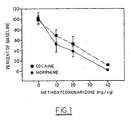
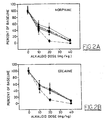
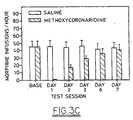
- the compounds of the present invention reduce both morphine and cocaine self administration in the addicted subject but do not affect other motivated behavior, such as bar pressing to obtain water. In addition, these compounds produce very little if any tremor, and no noticeable Purkinje cell degeneration.
- the present invention relates to ibogamine congeners and to methods for treating addictive behavior using these congeners.
- One aspect of the present invention relates to a compound having the formula:
- R 1 is selected from the group consisting of an alcohol, an ether, an ester, an amide, a hydrazide, a cyanide, or a ketone.
- Suitable alcohols include CH 2 OH and CH(OH)R 5
- suitable ethers include those having the formulae CH 2 OR 5
- suitable esters include those having the formulae CO 2 R 5
- Amides can be unsubstituted, such as C(O)NH 2 , monosubstituted, such as. C(O)NHR 5 , or disubstituted, such as C(O)NR 5 R 6 .
- Suitable hydrazides include unsubstituted hydrazides, having the formula C(O)NHNH 2 , monosubstituted hydrazides, having the formulae C(O)NHNHR 5 or C(O)NR 5 NH 2 , disubstituted hydrazides, having the formulae C(O)NHNR 5 R 6 or C(O)NR 5 NHR 6 , or trisubstituted hydrazides, having the formulae C(O)NR 5 NR 6 R 7 .
- the hydrazides can also contain an amide functionality at the terminal nitrogen, such as hydrazides having the formulae C(O)NHNH(C(O)R 5 ), C(O)NHNR 5 (C(O)R 6 ), C(O)NR 5 NH(C(O)R 6 ), or C(O)NR 5 NR 6 (C(O)R 7 ).
- Suitable ketones are those where R 1 is C(O)R 5 .
- R 5 , R 6 , and R 7 can be either unsubstituted alkyl, such as, methyl, ethyl, n-propyl, iso-propyl, n-butyl, sec-butyl, tert-butyl, n-pentyl, sec-pentyl, and neo-pentyl, hexyl, heptyl, octyl, nonyl, decyl, dodecyl, dodecyl, and the like, or substituted with any of a number of known substituents, such as sulfo, carboxy, cyano, halogen (e.g., fluoro, chloro), hydroxy, alkenyl (e.g., allyl, 2-carboxy-allyl), alkoxy (e.g., methoxy, ethoxy), aryl (e.g., phenyl, p-sulfophenyl
- substituted alkyls include arylalkyls, such as 2-phenyleth-1-yl, 2-phenylprop-1-yl, benzyl, and arylalkyls bearing substitutents on the aromatic ring, such as 2-(5-chlorophenyl)prop-1-yl, N-piperidino, N-pyrrolidino, and N-morpholino.
- R 5 , R 6 , and R 7 can be the same or different and the combination is selected primarily with consideration given to the substitution's effect on water-solubility and biological compatibility, although other factors, such as availability of starting materials and synthetic ease, may enter into the selection.
- Suitable esters include ethyl ester, benzyl ester, dialkylaminoalkyl esters, and, preferably, methyl ester.
- Amides can be, for example. N-methylamide. N-ethylamide, N,N-dimethylamide, N,N-diethylamide, N-methyl-N-ethylamide, and peptides derived from amino acids and their esters or amides.
- R 2 can also be a hydrazide, such as N',N'-dimethylhydrazide, N',N"-dimethylhydrazide, or preferably, unsubstituted hydrazide.
- the ibogamine skeleton can be unsubstituted at the C20 position (such as in the case of desethylcoronaridine), or it can be substituted at the C20 position with an alkyl or, preferably, a derivatized alkyl.
- the alkyl chain, represented in the above formula by (CH 2 ) n can have from zero to eight carbons, inclusive, such as methyl, ethyl, propyl, butyl, pentyl, hexyl, heptyl, and octyl, and is preferably ethyl.
- the alkyl chain is derivatized with R 2 at the terminal carbon of the alkyl chain (or, in the case where n is zero, at the C20 carbon).
- R 2 is selected from the group consisting of a substituted alkyl, a hydroxy, an ether, a thiol, a thioether, an amine, or an acid or thioacid derivative. In cases where n is zero.
- R 2 is substituted alkyl, Illustrative examples of suitable substituted or unsubstituted alkyls include those given for R 5 , R 6 , and R 7 , above. Suitable ethers and thioethers have the formulae OR 8 and SR 9 , respectively.
- Suitable amines include unsubstituted amines (NH 2 ). monosubstituted amines (NHR 8 ), or disubstituted amines (NR 8 R 9 ). Acid or thioacid derivatives can have the formulae OC(O)R 8 , SC(O)R 8 , C(O)NH 2 , C(O)SR 8 , C(O)OR 8 , C(O)NHR 8 , C(O)NR 8 R 9 , NHC(O)R 8 , or NR 8 C(O)R 9 . In each of the above.
- R 8 and R 9 can be the same or different and are selected from the group consisting of substituted or unsubstituted alkyl, examples of which are the sarne as those given for R 5 . R 6 . and R 7 . above.
- suitable ethers and thioethers include methoxy, ethoxy, propoxy, butoxy, pentoxy, methoxyethoxymethyl ether (OCH 2 OCH 2 CH 2 OCH 3 ), methylthio, ethylthio, dimethylaminoalkoxy, and sugar acetals, such as a glucoside.
- Suitable amine derivatives include methylamino, ethylamino, propylamino, butylamino, pentylamino, dimethylamino, diethylamino, dipropylamino, dibutylamino, methylethylamino, methylpropylamino, methylbutylamino, ethylpropylamino, ethylbutylamino, propylbutylamino, pyrrolidino, piperidino, and morpholino.
- Acid or thioacid derivatives can be, for example.
- R 3 and R 4 can be the same or they can be different. Each can be selected from hydrogen, halide (such as fluoride, chloride, bromide, and iodide), alkyl, hydroxy, ether or amine.
- the alkyl can be substituted or unsubstituted and is exemplified by the substituted or unsubstituted alkyls used to illustrate R 5 , R 6 , and R 7 .
- Suitable ethers have the formulae DR 10 and suitable amines include unsubstituted amines (NH 2 ), monosubstituted amines (NHR 10 ), or disubstituted amines (NR 10 R 11 ).
- R 8 and R 9 can be the same or different and are selected from the group consisting of substituted or unsubstituted alkyl, examples of which are the same as those given for R 5 , R 6 , and R 7 , above.
- R 3 , R 4 , or both R 3 and R 4 can be methoxy, ethoxy, propoxy, butoxy, pentoxy, methoxyethoxymethyl ether (OCH 2 OCH 2 CH 2 OCH 3 ), methylamino, ethylamino, propylamino, butylamino, pentylamino, dimethylamino, diethylamino, dipropylamino, dibutylamino, methylethylamino, methylpropylamino, methylburylamino, ethylpropylamino, ethylbutylamino, propylbutylamino, and arylalkyl, such, as benzyl.
- R 3 and R 4 substituents can be linked via an alkylene, such as methylene or ethylene, to form a five- or six-membered ring, such as where R 3 and R 4 , together, are -OCH 2 O-, -OCH 2 CH 2 O-, -NHCH 2 O-, -NHCH 2 CH 2 O-, -NHCH 2 NH-, and -NHCH 2 CH 2 NH-.
- R 12 can be a hydrogen, a substituted alkyl, such as an arylalkyl, or an unsubstituted alkyl. Suitable unsubstituted and substituted alkyls include those used to exemplify R 5 , R 6 , and R 7 , above.
- pharmaceutically acceptable salts are non-toxic salts which can be employed by those skilled in the an for in vivo use.
- Suitable pharmaceutically acceptable salts are the salts formed with inorganic acids, such as hydrochloric acid, sulfuric acid, nitric acid, and phosphoric acid, metal bicarbonates, such as sodium bicarbonate, monometal phosphates, such as monosodium phosphate, and dimetal phosphates, such as disodium phosphate.
- the salts can also be formed by reaction with organic acids, such as carboxylic acids or sulfonic acids.
- Suitable carboxylic acids include acetic, propionic, glycolic, lactic, pyruvic, malonic, succinic, fumaric, malic, tartaric, citric, cyclamic, ascorbic, maleic, hydroxymaleic, dihydroxymaleic, benzoic, phenylacetic, 4-aminobenzoic, anthranillic, cinnamic, salicyclic, 4-aminosalicyclic, 2-phenoxybenzoic, 2-acetoxybenzoic, and mandelic acid.
- Suitable sulfonic acids are for example, methanesulfonic, ethanesulfonic, and ⁇ -hydroxyethane-sulfonic acid.
- the compounds of the present invention have four chiral carbon centers in the ibogamine skeleton.
- a “compound” of the present invention includes compounds having the aforementioned formulae without regard to the stereochemistry at these chiral centers. Accordingly, “compound” includes compounds which are racemic as well as to those which are optically pure with respect to the C20.
- the “compounds” of the present invention include those which are racemic and those which are optically pure with respect to the three bridgehead chiral carbons.
- the compounds of the present invention can be synthesized using the methodology described in Bornmann [7] by reacting an appropriate 3-substituted-3-(1.3-dioxolan-2-yl)butanal having the formula: wherein n is from 0 to 8 and R 2 is substituted alkyl, YH, YR 8 , YC(O)R 8 , C(O)YR, C(O)NH 2 , C(O)NHR 8 , C(O)NR 8 R 9 , NR 8 R 9 NHC(O)R 8 , NR 8 C(O)R 9 , NHC(O)OR 8 , NR 8 C(O)OR 9 , C(O)R 8 , R 8 and R 9 are the same or different and are selected from the group consisting of unsubstituted or substituted alkyl; and Y is O or S; provided that when n is 0, R 2 is substituted alkyl with an indotoazspine having the formula: wherein
- Suitable solvents include alcohol solvents, such as methanol, ethanol, isopropanol, and n-butanol: ester-containing solvents, such as ethyl acetate and isopropyl acetate: ether solvents, such as tetrahydrofuran, diglyme, and dioxane: chlorinated hydrocarbons, such as methylene chloride, chloroform, and carbon tetrachloride: aromatic hydrocarbons, such as benzene, toluene, and xylene; acetonitrile; pyridine: and dimethylformamide.
- a solvent is chosen in which both reactants are substantially soluble. Methanol is particularly preferred.
- condensation product is treated in a suitable solvent with an equivalent amount of an appropriate arylalkyl containing a good leaving group, such as an arylalkyl tosylate, an arylalkyl mesylate, or an arylalkyl halide, preferably benzyl bromide, for 0.5 to 72 hours, preferably 16 hours, at 50 °C to 120°C, preferably at the reflux temperature of the solvent.
- an appropriate arylalkyl containing a good leaving group such as an arylalkyl tosylate, an arylalkyl mesylate, or an arylalkyl halide, preferably benzyl bromide
- Suitable solvents include lower alkanes, such as pentane, hexane, or petroleum ether; aromatic hydrocarbon solvents, such as benzene, toluene, and xylene; alcohols, such as methanol, ethanol, isopropanol, and n-butanol; and ether solvents, such as diethyl ether, diglyme, or tetrahydrofuran.
- lower alkanes such as pentane, hexane, or petroleum ether
- aromatic hydrocarbon solvents such as benzene, toluene, and xylene
- alcohols such as methanol, ethanol, isopropanol, and n-butanol
- ether solvents such as diethyl ether, diglyme, or tetrahydrofuran.
- Typical solvents for the base treatment include alcohol solvents, such as methanol, ethanol, isopropanol, and n-butanol; ketone solvents, such as acetone, methyl ethyl ketone, and cyclopentanone; ester-containing solvents, such as ethyl acetate and isopropyl acetate: ether solvents, such as tetrahydrofuran, diglyme, and dioxane; chlorinated hydrocarbons, such as methylene chloride, chloroform, and carbon tetrachloride; acetonitrile; pyridine: and dimethylformamide,
- a solvent is chosen in which both reactants are substantially soluble. Methanol is particularly preferred.
- Base treatment can be conducted at any temperature from room temperature to the boiling point of the solvent, but is advantageously
- the transient enamine acrylate spontaneously cyclizes to produce a versatiline derivative having the formula:
- the versatiline derivative can be prepared in accordance with the method described by Kuehne [8]. Briefly, the 3-substituted-3-(1,3-dioxolan-2-yl)butanal is treated with an N-arylalkyl derivative having the formula: where R 13 is an arylalkyl, such as benzyl.
- Suitable solvents for the reaction include aromatic solvents, such as benzene, toluene, and xylene; ester-containing solvents, such as ethyl acetate and isopropyl acetate; ether solvents, such as tetrahydrofuran, diglyme, and dioxane: chlorinated hydrocarbons, such as methylene chloride, chloroform, and carbon tetrachloride: acetonitrile; pyridine: and dimethylformamide. Toluene is particularly preferred.
- the reaction is typically conducted at a temperature from 100°C to 120°C, preferably at reflux.
- the verastiline derivative is then converted to a cleavamine having the formula: by reduction with, for example, sodium borohydride in an acidic solvent, preferably acetic acid.
- the reduction is effected by heating, preferably to a temperature between 80°C and 110°C. more preferably between 85°C and 95°C.
- Reduction preferably catalytic reduction using H 2 over palladium/carbon catalyst, followed by treatment with acidic alcohol, preferably with hydrochloric acid in methanol, followed by addition of a base, such as ammonium hydroxide, yields an enamine having the formula:
- Suitable solvents include aromatic solvents, such as benzene, toluene, and xylene; ether solvents, such as tetrahydrofuran, diglyme, and dioxane: chlorinated hydrocarbons, such as methylene chloride, chloroform, and carbon tetrachloride: acetonitrile; pyridine: and dimethylformamide.
- aromatic solvents such as benzene, toluene, and xylene
- ether solvents such as tetrahydrofuran, diglyme, and dioxane
- chlorinated hydrocarbons such as methylene chloride, chloroform, and carbon tetrachloride: acetonitrile
- pyridine and dimethylformamide.
- the compound of the present invention can be prepared by storing the enamine under vacuum or in an inert atmosphere, such as under argon or nitrogen, for at least 12 hours, preferably 4 days to 6 days.
- the amide to amine conversion can also be effected by conventional procedures, such as with diisobutylaluminum hydride in an ether, preferably tetrahydrofuran ("THF" to give a substituted amine.
- THF tetrahydrofuran
- Compounds having C 16 hydroxy or alkoxymethyl substitutents are prepared by reduction of the corresponding C 16 ester, such as with LiAlH 4 /THF to the C16 hydroxymethyl or with LiAlH 4 /AlCl 3 to the C16 alkoxymethyl. Reduction of C16 amides with LiAlH 4 would provide C16 amines.
- the compound of the present invention can optionally be purified by recrystallization, solvent extraction using, for example, a Soxhlet extraction apparatus, chromatography, such as HPLC or conventional column chromatography, or other conventional purification methods.
- the compounds of the present invention can be converted to the acid addition salt, such as by contacting a solution of the compound with an appropriate acid.
- Preparation of the 3-substituted-(1.3-dioxolan-2-yl)butanal starting materials is achieved by conventional methods.
- these reactants are prepared by oxidation of a 2-substituted-4-hydroxybutyric ester.
- the latter can be obtained by alkylation of a allylmalonic ester with an alkyl halide and a base (e.g. sodium alkoxide) followed by decarboalkoxylation with LiCl, hydroboration with diborane or with borane dimethylsulfide complex, and oxidation with hydrogen peroxide and sodium hydroxide.
- a base e.g. sodium alkoxide
- Oxidation of the 4-hydroxy-2-substituted butanoic ester is achieved with dimethyl sulfoxide and oxalyl chloride.
- the resulting aldehyde is protected, preferably as its acetal with ethylene glycol.
- Reduction of the ester function, such as with LiAlH 4 is followed by oxidation of the resultant alcohol with dimethylsulfoxide and oxalyl chloride.
- the indoloazepine starting material with which the butanal is reacted, is typically prepared by methods which have been well-developed in the art, such as those described in references [9-13]. Briefly, the indoloazepine starting material can be prepared by condensation of tryptamine with methyl 3-chloropyruvate. The resulting carboline is heated in pyridine to provide an unsaturated indoloazepine (vinytogous urethane). The latter is reduced with sodium cyanoborohydride.
- the appropriately substituted N b -benzylindoloazepine is prepared by alkylation of the above N b -H indoloazepine with benzyl bromide and sodium carbonate.
- indoloazepines with substituents on the aromatic ring can be made by Fischer Indole synthesis from substituted phenylhydrazines and N-benzyl-4-piperidones, followed by reaction with t-butyl hypochlorite and thallium dimethyl malonate, and, then, with lithium chloride.
- the compounds of the present invention are useful in treating subjects, such as mammals and including rats and humans, exhibiting addictive behavior, by administering the compounds to such subjects in an effective amount.
- the compounds of the present invention may be administered alone or in combination with suitable pharmaceutical carriers or diluents.
- suitable pharmaceutical carriers or diluents suitable pharmaceutical carriers or diluents.
- the diluent or carrier ingredients should be selected so that they do not diminish the therapeutic effects of the compounds of the present invention.
- the compounds herein may be made up in any suitable form appropriate for the desired use; e.g., oral, parenteral, or topical administration.
- parenteral administration are intraventricular, intracerebral, intramuscular, intravenous, intraperitoneal, rectal, and subcutaneous administration.
- Suitable dosage forms for oral use include tablets, dispersible powders, granules, capsules, suspensions, syrups, and elixirs.
- Inert diluents and carriers for tablets include, for example, calcium carbonate, sodium carbonate, lactose, and talc.
- Tablets may also contain granulating and disintegrating agents such as starch and alginic acid, binding agents such as starch, gelatin, and acacia, and lubricating agents such as magnesium stearate, stearic acid, and talc. Tablets may be uncoated or may be coated by known techniques to delay disintegration and absorption.
- Inert diluents and carriers which may be used in capsules include, for example, calcium carbonate, calcium phosphate, and kaolin.
- Suspensions, syrups, and elixirs may contain conventional excipients, for example, methyl cellulose, tragacanth, sodium alginate: wetting agents, such as lecithin and polyoxyethylene stearate: and preservatives, e.g., ethyl-p-hydroxybenzoate.
- Dosage forms suitable for parenteral administration include solutions, suspensions, dispersions, emulsions, and the like. They may also be manufactured in the form of sterile solid compositions which can be dissolved or suspended in sterile injectable medium immediately before use. They may contain suspending or dispersing agents known in the art.
- One aspect of the present invention is directed to therapeutically treating a subject suffering from an addiction to an addictive substance.
- the compounds of the present invention are useful where the addictive substance is a barbituate: an opiate, such as morphine, codeine, heroin, levorphanol, meperidine, methadone, propoxyphene, acetylmethadol (LAAM), pentazocine, butorphanol, nalbuphine, buprenorphine, dezocine, fentanyl, and combinations of these opiates; a stimulant, such as d-amphetamine.
- an opiate such as morphine, codeine, heroin, levorphanol, meperidine, methadone, propoxyphene, acetylmethadol (LAAM), pentazocine, butorphanol, nalbuphine, buprenorphine, dezocine, fentanyl, and combinations of these opiates
- a stimulant such as
- the subject
- Treatment comprises administering to the mammal an effective amount of a compound having the formula: wherein n is from 0 to 8:
- R 1 is CH 2 OH, CH(OH)R 5 , CH 2 OR 5 , CO 2 R 5 , C(O)NH 2 , C(O)NHR 5 , C(O)NR 5 R 6 , C(O)NHNH 2 , C(O)NHNHR 5 , C(O)NHNR 5 R 6 , C(O)NR 5 NN 2 , C(O)NR 5 NHR 6 .
- R 2 is substituted alkyl, YH, YR 8 , YC(O)R 8 , C(O)YR 8 , C(O)NH 2 , C(O)NHR 8 , C(O)NR 8 R 9 , NH 2 NHR 8 , NR 8 R 9 , NHC(O)R 8 , or NR 8 C(O)R 9 ;
- R 3 and R 4 are the same or different and are selected from the group consisting of H, halogens, unsubstituted or substituted alkyl, OH, OR 10 NH 2 , NHR 10 , NR 10 R 11 ,NHC(
- the actual preferred amount of compound of the present invention used will vary according to the particular compound, the particular composition formulated, and the mode of application. Many factors that modify the action will be taken into account by those skilled in the art; e.g. body weight, sex, diet, time of administration, route of administration, rate of excretion, condition of the host, drug combinations, reaction sensitivities and severities and severity of addiction. Administration can be carried out continuously or periodically within the maximum tolerated dose. Optimal application rates for a given set of conditions can be ascertained by those skilled in the art using conventional dosage administration tests in view of the above guidelines. Preferably the compound is administered in a dose from about 1.0 to about 80 mg/kg of the subject's mass.
- Example 7 4-(1,3-Dioxolan-2-yl)-6-methoxyhexanal ( 8 ) .
- the alcohol 7 (6 g, 29.37 mmol), prepared according to Example 6, was oxidized using 2 M (COCl) 2 (18 mL. 36 mmol), dry DMSO (5.1 mL. 72 mmol) and triethyl amine (20.7 mL. 144 mmol) analogous to the oxidation of the alcohol 4 , as described in example 4. Similar work up as for 5 gave the aldehyde 8 (4.8 g. 81%) as a colorless oil.
- IR (KBr) v max 2939, 2880, 2735, 1719. 1451. 1391. 1111, 1038. 947 cm -1 ; 1 HNMR (CDCl 3 ) ⁇ 1.45-2.85 (m. 5 H). 2.54 (t.
- Contaminant benzyloxy-2-ethoxy ethanol (12.4 g) was first eluted with ether/hexane (2:1) while the alcohol 12 (24 g. 59% based on diethyl allylmalonate) was eluted with 2% methanol in ether.
- IR (KBr) ⁇ max 3404, 3071. 3033. 2930, 2868, 1640, 1498, 1454, 1361. 1202. 1100, 1042, 996, 916, 737, 697 cm -1 ;
- 1 HNMR (CDCl 3 ) ⁇ 1.63-1.73 (m. 3 H). 2.02-2.15 (m, 2 H). 2.84 (t, J 5.8 Hz.
- Example 12 4-(1,3-Dioxolan-2-yl)-6-benzyloxyhex-1-ene ( 14 ).
- Example 13 4-(1,3-Dioxolan-2-yl)-6-benzyloxyhexan-1-ol (15) .
- Example 14 4-(1,3-Dioxolan-2-yl)-6-benzyloxyhexanal ( 16 ) .
- the alcohol 15 (16.8 g. 59.92 mmol), prepared according to Example 13, was oxidized using 2 M (COCl) 2 (37.50 mL. 75 mmol), dry DMSO (10.6 mL. 150 mmol), and triethylamine (43 mL. 300 mmoi) as for the oxidation of compound 12 . Similar work up as for 13 gave a crude product, which was purified by column chromatoerphy. eluting with ether/hexane (2:1), to give the aldehyde 16 (4.8 g, 81%) as a colorless oil.
- IR (KBr) ⁇ max 2942. 2878, 2725, 1723, 1496, 1434, 1413, 1368. 1211.
- N b -benzylindoloazapine 17 (3.8 g. 11.36 mmol), prepared according to the procedure described in Kuehne [12] and 4-(1.3-dioxolan-2-yl)-6-methoxyhexanal ( 8 , 2.75 g. 13.63 mmol), prepared according to Example 7, in dry toluene (75 mL) was heated at reflux for 12 h using a Dean-Stark trap filled with 4 A molecular sieves, under nitrogen. The reaction mixture was cooled to room temperature and concentrated on a rotary evaporator.
- the enamine 21 (2.0 g. 5.40 mmol), prepared according to Example 16, in dry toluene (30 mL) was heated at 130°C for 3 h. The reaction mixture was cooled to room temperature and concentrated on a rotary evaporator. Flash chromatography of the crude product on silica gel, eluting with ether/hexane, gave 18-methoxycoronaridine 22 (1.4g, 70%) as a white solid.
- Example 18 Methyl (3aSR,4RS)-3-benzyl-2,3,3a,4,5,7-hexahydro-4-[(2- ⁇ -(1,3-dioxolan-2-yl)-4-benzyloxy)-1-butyl]-1H-pyrrolo[2,3-d]carbazole-6-carboxylates (23a, 23b) .
- N b -benzylindoloazapine 17 (5.0 g, 14.95 mmol), prepared according to Kuehne [12], and 4-(1, 3-dioxolan-2-yl)-6-benzyloxyhexanal ( 16 , 5.0 g. 17.94 mmol), prepared according to Example 14. in dry toluene (100 mL) was heated at reflux for 12 h. using a Dean-Stark trap filled with 4A molecular sieves under nitrogen. The reaction mixture was cooled to room temperature and concentrated on a rotary evaporator. The concentrate was flash chromatographed on silica gel, eluting with ether/hexane (1:1) to give 23a (4.4 g. 49%) and 23b (4.1 g, 46%).
- Example 19 Methyl 3-benzyl-1,2,3,4,5,6,7,8-octahydro-5 ⁇ -[(2- ⁇ -(1,3-dioxolan-2-yl)-4-benzyloxy)-1-butyl]azonino[6,7]indole-7 ⁇ and 7 ⁇ carboxylates (24a,24b) .
- the enamine 26 (2.0 g, 5.40 mmol), prepared in Example 20, in dry toluene (30 mL) was heated at 130°C for 3 hours. The reaction mixture was cooled to room temperature and concentracted on a rotary evaporator. Flash chromatography of the crude product on silica gel, eluting with ether/hexane, save the title product 27 (1.4 g, 70%) as a white solid.
- racemic albifloranine 28, 0.6g, 75%), 13 CNMR 175.17, 135.87, 135.55, 128.37, 121.92, 119.17, 118.25, 110.39, 109.97, 59.27, 57.93, 54.62, 52.90, 52.68, 51.55, 36.32, 36.26, 34.62, 29.26, 26.97, 21.48.
- 18-methoxycoronaridine was prepared by the method described in Example 17, above.
- Ibogaine hydrochloride and harmaline hydrochloride were purchased from the Sigma Chemical Company (St. Louis. MO).
- the R- and S-enantiomers of ibogamine and coronaridine (structures shown in [14]) were prepared according to the methodology of Bornmann [7] and Kuehne [13]. Racemic desethylcoronaridine were synthesized using the procedures described in Bornmann [7].
- Tabemanthine was supplied by P. Potier, CNRS. Institute of Chemistry of Natural Substances. Gif-sur-Yvette, France. All drugs were administered intraperitoneally; doses are expressed as the hydrochloride salts. Different drugs and doses (or saline) were administered to different groups of rats: rats were injected fifteen minutes before a morphine or cocaine self-administration session.
- Example 25 Subjects and Apparatus.
- the subjects were naive female Sprague-Dawley (Taconic. Germantown. NY) rats approximately 3 months old and weighing 230-250 g at the beginning of the experiment: female rats were used because they grow at a much slower rate than males and are less likely than males to outgrow their intravenous cannulas. Rats were housed singly in Wahmann hanging cages and maintained on a normal light/dark cycle (lights on/off at 7:00 a.m./7:00 p.m.). All self-administration testing was conducted in twelve BRS/LVE operant test cages, each enclosed in a sound attenuated cubicle.
- the intravenous self-administration system consisted of polyethylene-silicone cannulas constructed according to the design of Weeks [15], BRS/LVE harnesses and commutators, and Harvard Apparatus infusion pumps (no. 55-2222).
- Shaping of the bar-press response was initially accomplished by training rats to bar-press for water. Cannulas were then implanted in the external jugular vein according to procedures described by Weeks [15]. Self-administration testing began with a single 24-h session followed by daily 1-h sessions. 5 days (Monday-Friday) a week: rats were tested about the same time each day, during the middle of the light cycle. Depending upon the group, a lever-press response produced either a 20 ⁇ l morphine) or 50 ⁇ l (cocaine) infusion of drug solution (0.01 mg of morphine sulfate or 0.1 mg of cocaine hydrochloride) in about 0.2 (morphine) or 0.5 (cocaine) seconds. Since all rats generally weighed 250 ⁇ 20 g.
- each response delivered approximately 0.04 mg/kg of morphine or 0.4 mg/kg of cocaine; these doses are about two to four times the threshold doses required for maintaining self-administration behavior [16.17].
- One non-contingent drug infusion was administered at the beginning of each session. Experiments to assess the effects of the iboga and harmala alkaloids were begun when baseline self-administration rates stabilized ( ⁇ 10% variation from one day to the next across 5 days), usually after two weeks of testing.
- Example 28 Drug self-administration.
- Figures 1 and 2 shows the initial acute effects of 18-methoxycoronaridine and all of the remaining alkaloids, respectively, on morphine and cocaine self-administration. Each drug produced a dose-related depression of morphine and cocaine intake (ANOVA. P ⁇ 0.001 in every case). The potencies of the 18-methoxycoronaridine and the other alkaloids were very similar and, as shown in Figure 2, cannot be distinguished, with the exception that desethylcoronaridine was approximately twice as potent as any of the other drugs.
- Figures 3 shows that ibogaine (40 mg/kg), R-ibogamine (40 mg/kg).
- Ibogamine (20-40 mg/kg), harmaline (10-40 me/kg) and desethycoronaridine (10-40 mg/kg) were obviously tremongenic for 3-4 h and no attempt was made to compare these drugs quantitatively.
- visual observations and videotape recordings of 18-methoxycoronaridine (40 mg/kg) and both R- and S-enantiomers of both ibogamine (40 mg/kg) and coronaridine (40 mg/kg) indicated very little if any tremorigenic activity. The effects of these latter drugs were therefore assessed using the automated testing procedure developed to quantitate tremors.
- Ibogaine (40 mg/kg) and saline (1 ml/kg) were used as positive and negative controls, respectively. While ibogaine produced a significant increase in movements indicative of tremors, the 18-methoxycoronaridine and the ibogamine and coronaridine enantiomers had no effects that differed significantly from the effects of saline.
- One set of animals received an ibogaine dose tested by O'Hearn and Molliver; 100 mg/kg per day for three consecutive days. All of these animals displayed bilaterally symmetric, parasagittal strips of Purkinje cell degeneration. The degeneration was more extensive than suggested by O'Hearn and Molliver, consistently occurring in the medial simple fobule and Crus 1 as well as the vermis and intermediate regions of lobules 5, 6, and 7.
- a second set of animals received a dose of 18-methoxycoronaridine (100 mg/kg). No evidence of Purkinje cell degeneration was found in these animals.
Landscapes
- Chemical & Material Sciences (AREA)
- Organic Chemistry (AREA)
- Health & Medical Sciences (AREA)
- Medicinal Chemistry (AREA)
- Pharmacology & Pharmacy (AREA)
- Epidemiology (AREA)
- Life Sciences & Earth Sciences (AREA)
- Animal Behavior & Ethology (AREA)
- General Health & Medical Sciences (AREA)
- Public Health (AREA)
- Veterinary Medicine (AREA)
- Pharmaceuticals Containing Other Organic And Inorganic Compounds (AREA)
- Medicines Containing Antibodies Or Antigens For Use As Internal Diagnostic Agents (AREA)
- Glass Compositions (AREA)
- Executing Machine-Instructions (AREA)
- Oscillators With Electromechanical Resonators (AREA)
Abstract
Description
- This invention was made with the support of the National Cancer Institute (Grant No. CA 12010) and the National Institute for Drug Abuse (Grant No. DA 03817). The Federal Government may retain certain rights in the invention.
- The present invention relates to ibogamine congeners and to methods for treating addictive behavior.
- Throughout this application various publications are referenced, many in parenthesis. Full citations for these publications are provided at the end of the Detailed Description.
- Ibogaine is one of several alkaloids found in the root bark of the African shrub Tabernanthe iboga. It has a ring skeleton common with ibogamine and has been identified as a potential interrupter of addictive behavior.
- Male members of the Mitsogho people in Gabon ingest scrapings of the iboga root as part of the initiation rite into the Bwiti, a secret society of men. The rite of passage, which continues for several days, begins with a period of violent vomiting, followed by periods of drowsiness, motor incoordination, agitation, tremor, progression through a dream state, and, finally, sleep. The rite is thought to constitute an encounter with higher spiritual entities.
- People who have taken purified ibogaine as an experimental drug report a similar sequence of events lasting three days, including visions, periods of high energy accompanied by flashes of light, and, eventually, sleep. Upon waking, many drug addicts reportedly lose their craving for addictive drugs over extended periods of time.
- US 3,681,362 describes a process for totally synthesising isoquinuclidine alkaloids, particularly the iboga alkaloids involving a carboxylic acid ester residue at the position 18, starting from 2-indole acetylisoquinuclidine-6-ones.
- US 3,481,937 discloses indolo [3',2'-d]-1-azabicyclo [6,3,1]dodecane derivatives and acid addition salts thereof which have useful central depressant activity.
- JP 05059053 describes specific indole alkaloids that may be useful as analgesics or antipyretics.
- GB 1445287 discloses specified derivatives of iboga type alkaloids formed by oxidation.
- JP 3041081 describes the production of specified dimeric alkaloids, for use as carcinostatic agents, using a specific coupling reaction.
- Bert et al, (Planta Medica, 1988, 54(3) 191-192) discloses non-amphetaminic central stimulation by alkaloids from the ibogane and vobasine series.
- Azoug et al, (Phytochemistry, 1995, 39(5), 1223-1228) describes the specific alkaloids found in the stem bark and leaves of Peschiera buchtieni.
- Glick et al, (Brain Research, 719, 1996, 29-35) discloses the effects of 18-methoxycoronaridine on morphine and cocaine self-administration and on mesolimbic dopamine release in rats.
- Glick et al, (Brain Research, 657, 1994, 14-22) describes the effects of specific iboga alkaloids on morphine and cocaine self administration in rats and the relationship to tremorigenic effects and to effects on dopamine release in nucleus accumbens and striatum.
- Deecher et al, (Brain Research, 571, 1992, 242-247) discloses the mechanisms of action of ibogaine and harmaline congeners based on radioligand binding studies.
- U.S. Patents Nos. 4,499,096, 4,587,243, and 5,152,994, all to Lotsof, report that ibogaine is effective in treating opiate (heroin), stimulant (cocaine and amphetamine), nicotine, caffeine, and alcohol addictions. The treatment supposedly interrupts the physiological and psychological aspects of addiction and eliminates the desire to use drugs. In both opiate and stimulant syndromes, a single oral treatment with ibogaine or its salts, in dosages of 6 to 19 mg/kg, is said to be effective for about 6 months, and a series of four treatments is said to eliminate addictive behavior for approximately 3 years. Using an animal model of drug addiction, several studies have sought to determine whether these claims can be substantiated under controlled conditions. In one preliminary study [1], ibogaine dose-dependently decreased morphine self-administration in the hour after ibogaine treatment (acute effect) and to a lesser but significant extent, a day later (aftereffect). In some rats there was a persistent decrease in morphine intake for several days or weeks after a single injection of ibogaine, whereas other rats began to show such persistent changes after two to three weekly injections, and a few rats appeared to be entirely resistant to prolonged aftereffects. Similar effects of ibogaine on cocaine self-administration in rats were recently reported by Cappendijk and Dzoljic [2].
- In humans, as in rats, ibogaine's efficacy as an anti-addictive therapy appears to vary substantially from one individual to another; even the most ardent supporters of ibogaine's usefulness would probably concede that at least 30% of treated addicts do not-decrease their drug intake.
- Ibogaine also exhibits several side effects that limit its therapeutic utiliy. For example, the compound exhibits undesirable stimulant and hallucinogenic properties. In addition, ibogaine induces tremors. Very similar tremors are induced by harmaline, another natural alkaloid that is chemically related to ibogaine but derived from a different plant (Peganum harmala). Both ibogaine- and harmaline-induced tremors appear to be due to activation of an olivo-cerebellar pathway [3-5], and, in rats, high doses of both agents have recently been shown to damage the cerebellar vermis, presumably as a result of overstimulation of cerebellar Purkinje cells [5,6]. In addition ibogaine has an acute effect on motivated behavior during the first hour immediately following administration, as indicated by severely reduced bar pressing for water.
- In view of the serious health effects and negative societal effects associated with addictive behavior, and the side effects of ibogaine treatment, the need continues for compounds which reduce addiction to addictive substances. The present invention is directed to overcoming this deficiency in the art.
- The present invention relates to a compound having the formula:

n is from 0 to 8;
R1 is CH2OH, CH(OH)R5, CH2OR5, CO2R5, C(O)NH2, C(O)NHR5, C(O)NR5R6, C(O)NHNH2, C(O)NHNHR5, C(O)NHNR5R6, C(O)NR5NH2, C(O)NR5NHR6, C(O)NR5NR6R7, C(O)NHNH(C(O)R5), C(O)NHNR5(C(O)R6), C(O)NR5NH(C(O)R6), C(O)NR5NR6(C(O)R7); or C(O)R5,
R2 is substituted alkyl, YH, YR8, YC(O)R8, C(O)YR8, C(O)NH2, C(O)NHR8, C(O)NR8R9, NH2, NHR8, NR8R9, NHC(O)R8, or NR8C(O)R9;
R3 and R4 are the same or different and are selected from the group consisting of H, halogens, unsubstituted or substituted alkyl, OH, OR10, NH2, NHR10, NR10R11, NHC(O)R10, or NR10C(O)R11, and R3 and R4 can be linked via an alkylene to form a five or six membered ring.
R5, R6, R7, R8, R9,R10, and R11 are the same or different and are selected from the group consisting of unsubstituted alkyl and substituted alkyl;
R12 is selected from the group consisting of H, unsubstituted alkyl, and substituted alkyl; and
Y is O or S;
provided that when n is 0, R2 is substituted alkyl other than CH(OH)CH3;
further provided that when n is 0, R2 is CH(OH)CH2OH, R3 and R4 are H and R12 is H, R1 is not CO2CH3; and
further provided that when n is 2, R2 is OH, R12 is H, R4 is H and R3 is H or OCH3, R1 is not CO2CH3;
further provided that when n is 0, R2 is CH(OCO2CH2C6H5)CH3, R3 and R4 are OCH3 and R12 is H, R1 is not CO2 CH3;
further provided that when n is 0, R2 is CH(OOCCH3)CH3, R12 is H, R3 and R4 are both OCH3 or both H, or R3 is OCH3 and R4 is H, R1 is not CO2CH3,
or pharmaceutically acceptable salts thereof. - The present invention also provides a method of treating a subject addicted to an addictive substance. The method includes administering to the addicted subject an effective amount of a compound having the above formula, a compound having the above formula where n is 0 and R2 is CH(OH)CH3, a compound having the above formula where n is 2, R2 is OH, R12 is H, R3 and R4 are each H and R1 is CO2CH3 or a compound having the above formula where n is 2, R2 is OH, R12 is H, R3 and R4 are the same or different and are selected from the group consisting of H and OCH3, and R1 is CO2CH3.
- The compounds of the present invention reduce both morphine and cocaine self administration in the addicted subject but do not affect other motivated behavior, such as bar pressing to obtain water. In addition, these compounds produce very little if any tremor, and no noticeable Purkinje cell degeneration.
-
- Figure 1 is a plot of the acute effects of 18-methoxycoronaridine on morphine and cocaine self administration. Each data point is the mean (± S.E.) from 3-8 rats. Baseline was calculated as the average for the three sessions preceding drug or saline (0 mg/kg) administration. All doses had significant effects (ANOVA and t-tests, P<0.05-0.001).
- Figure 2 is a plot of the acute effects of ibogaine, harmaline, tabemanthine, desethylcoronaridine. R-coronaridine. S-coronaridine, R-ibogamine, and S-ibogamine on morphine and cocaine self administration. Each data point is the mean (± S.E.) from 3-8 rats. Baseline was calculated as the average for the three sessions preceding drug or saline (0 mg/kg) administration. All doses of all drugs had significant effects (ANOVA and t-tests, P<0.05-0.001).
- Figure 3 is a bar graph showing the aftereffects of alkaloids (20 mg/kg for desethylcoronaridine and 40 mg/kg for all others) on morphine self administration. Each data point is the mean (± S.E.) from 5-8 rats. 'Base' refers to the baseline rate of responding, calculated as the average for the three sessions preceding drug or saline treatment. There were significant effects on
Day 1 for all drugs and on day two for 18-methoxycoronaridine, ibogaine, tabernanthine, desethylcoronaridine, R-coronaridine, and R-ibogamine (ANOVA and t-tests. P<0.05-0.001). - Figure 4 is a bar graph showing the aftereffects of alkaloids (20 mg/kg for desethylcoronaridine and 40 mg/kg for all others) on cocaine self administration. Each data point is the mean (± S.E.) from 4-8 rats. 'Base' refers to the baseline rate of responding, calculated as the average for the three sessions preceding drug or saline treatment. There were significant effects on
Day 1 for all drugs and on day two for 18-methoxycoronaridine, ibogaine, tabernanthine, desethylcoronaridine, R-coronaridine, and R-ibogamine (ANOVA and t-tests. P<0.05-0.001). - Figure 5 is a bar graph showing the aftereffects of ibogaine (40 mg/kg) on bar pressing for water; presession administration on
Day 1. Each data point is the mean (± S.E.) from six rats. 'Base' refers to the baseline rate of responding, calculated as the average for the three sessions preceding ibogaine treatment. There was a significant effect on Day I (P<0.001. t-test) but not thereafter. - Figure 6 is a line graph showing the acute effects of 18-methoxycoronaridine on bar pressing for water administered intraperitoneally ("IP") 15 minutes before a one hour test session. No acute affects are noted.
- The present invention relates to ibogamine congeners and to methods for treating addictive behavior using these congeners. One aspect of the present invention relates to a compound having the formula:

- R1 is selected from the group consisting of an alcohol, an ether, an ester, an amide, a hydrazide, a cyanide, or a ketone. Suitable alcohols include CH2OH and CH(OH)R5, suitable ethers include those having the formulae CH2OR5, and suitable esters include those having the formulae CO2R5, Amides can be unsubstituted, such as C(O)NH2, monosubstituted, such as. C(O)NHR5, or disubstituted, such as C(O)NR5R6. Suitable hydrazides include unsubstituted hydrazides, having the formula C(O)NHNH2, monosubstituted hydrazides, having the formulae C(O)NHNHR5 or C(O)NR5NH2, disubstituted hydrazides, having the formulae C(O)NHNR5R6 or C(O)NR5NHR6, or trisubstituted hydrazides, having the formulae C(O)NR5NR6R7. The hydrazides can also contain an amide functionality at the terminal nitrogen, such as hydrazides having the formulae C(O)NHNH(C(O)R5), C(O)NHNR5(C(O)R6), C(O)NR5NH(C(O)R6), or C(O)NR5NR6(C(O)R7). Suitable ketones are those where R1 is C(O)R5.
- R5, R6, and R7 can be either unsubstituted alkyl, such as, methyl, ethyl, n-propyl, iso-propyl, n-butyl, sec-butyl, tert-butyl, n-pentyl, sec-pentyl, and neo-pentyl, hexyl, heptyl, octyl, nonyl, decyl, dodecyl, dodecyl, and the like, or substituted with any of a number of known substituents, such as sulfo, carboxy, cyano, halogen (e.g., fluoro, chloro), hydroxy, alkenyl (e.g., allyl, 2-carboxy-allyl), alkoxy (e.g., methoxy, ethoxy), aryl (e.g., phenyl, p-sulfophenyl), aryloxy (e.g., phenyloxy), carboxylate (e.g., methoxycarbonyl, ethoxycarbonyl), acyloxy (e.g., acetyloxy), acyl (e.g.. acetyl, propionyl), and others known to those skilled in the art. In addition, substituted alkyls include arylalkyls, such as 2-phenyleth-1-yl, 2-phenylprop-1-yl, benzyl, and arylalkyls bearing substitutents on the aromatic ring, such as 2-(5-chlorophenyl)prop-1-yl, N-piperidino, N-pyrrolidino, and N-morpholino. Each of R5, R6, and R7 can be the same or different and the combination is selected primarily with consideration given to the substitution's effect on water-solubility and biological compatibility, although other factors, such as availability of starting materials and synthetic ease, may enter into the selection.
- Suitable esters include ethyl ester, benzyl ester, dialkylaminoalkyl esters, and, preferably, methyl ester. Amides can be, for example. N-methylamide. N-ethylamide, N,N-dimethylamide, N,N-diethylamide, N-methyl-N-ethylamide, and peptides derived from amino acids and their esters or amides. R2 can also be a hydrazide, such as N',N'-dimethylhydrazide, N',N"-dimethylhydrazide, or preferably, unsubstituted hydrazide.
- The ibogamine skeleton can be unsubstituted at the C20 position (such as in the case of desethylcoronaridine), or it can be substituted at the C20 position with an alkyl or, preferably, a derivatized alkyl. The alkyl chain, represented in the above formula by (CH2)n, can have from zero to eight carbons, inclusive, such as methyl, ethyl, propyl, butyl, pentyl, hexyl, heptyl, and octyl, and is preferably ethyl. The alkyl chain is derivatized with R2 at the terminal carbon of the alkyl chain (or, in the case where n is zero, at the C20 carbon). R2 is selected from the group consisting of a substituted alkyl, a hydroxy, an ether, a thiol, a thioether, an amine, or an acid or thioacid derivative. In cases where n is zero. R2 is substituted alkyl, Illustrative examples of suitable substituted or unsubstituted alkyls include those given for R5, R6, and R7, above. Suitable ethers and thioethers have the formulae OR8 and SR9, respectively. Suitable amines include unsubstituted amines (NH2). monosubstituted amines (NHR8), or disubstituted amines (NR8R9). Acid or thioacid derivatives can have the formulae OC(O)R8, SC(O)R8, C(O)NH2, C(O)SR8, C(O)OR8, C(O)NHR8, C(O)NR8R9, NHC(O)R8, or NR8C(O)R9. In each of the above. R8 and R9 can be the same or different and are selected from the group consisting of substituted or unsubstituted alkyl, examples of which are the sarne as those given for R5. R6. and R7. above. As an illustration, suitable ethers and thioethers include methoxy, ethoxy, propoxy, butoxy, pentoxy, methoxyethoxymethyl ether (OCH2OCH2CH2OCH3), methylthio, ethylthio, dimethylaminoalkoxy, and sugar acetals, such as a glucoside. Suitable amine derivatives include methylamino, ethylamino, propylamino, butylamino, pentylamino, dimethylamino, diethylamino, dipropylamino, dibutylamino, methylethylamino, methylpropylamino, methylbutylamino, ethylpropylamino, ethylbutylamino, propylbutylamino, pyrrolidino, piperidino, and morpholino. Acid or thioacid derivatives can be, for example. OC(O)CH3, OC(O)CH2CH3, OC(O)(CH2)2CH3, OC(O)(CH2)3CH3, OC(O)(CH2)4CH3, OC(O)(CH2)5CH3, OC(O)(CH2)6CH3, OC(O)(CH2)10CH3, OC(O)(CH2)12CH3, SC(O)(CH2)20CH3, SC(O)CH3, SC(O)CH2CH3, SC(O)(CH2)2CH3, SC(O)(CH2)3CH3, SC(O)(CH2)4CH3, SC(O)(CH2)5CH3, SC(O)(CH2)6CH3, SC(O)(CH2)10CH3, SC(O)(CH2)12CH3, SC(O)(CH2)20CH3, NHC(O)CH3, NHC(O)CH2CH3, NHC(O)(CH2)2CH3, NHC(O)(CH2)3CH3, NHC(O)(CH2)10CH3, NHC(O)(CH2)12CH3, NHC(O)(CH2)20CH3, N(CH3)C(O)CH3, N(CH3)C(O)CH2CH3, N(CH3)C(O)(CH2)2CH3, N(CH3)C(O)(CH2)3CH3, N(CH3)C(O)(CH2)10CH3, N(CH3)C(O)(CH2)12CH3, N(CH3)C(O)(CH2)20CH3, and esters and amides derived from amino acids and amino acid amides.
- R3 and R4 can be the same or they can be different. Each can be selected from hydrogen, halide (such as fluoride, chloride, bromide, and iodide), alkyl, hydroxy, ether or amine. The alkyl can be substituted or unsubstituted and is exemplified by the substituted or unsubstituted alkyls used to illustrate R5, R6, and R7, Suitable ethers have the formulae DR10 and suitable amines include unsubstituted amines (NH2), monosubstituted amines (NHR10), or disubstituted amines (NR10R11). In each of the above, R8 and R9 can be the same or different and are selected from the group consisting of substituted or unsubstituted alkyl, examples of which are the same as those given for R5, R6, and R7, above. As an illustration, R3, R4, or both R3 and R4 can be methoxy, ethoxy, propoxy, butoxy, pentoxy, methoxyethoxymethyl ether (OCH2OCH2CH2OCH3), methylamino, ethylamino, propylamino, butylamino, pentylamino, dimethylamino, diethylamino, dipropylamino, dibutylamino, methylethylamino, methylpropylamino, methylburylamino, ethylpropylamino, ethylbutylamino, propylbutylamino, and arylalkyl, such, as benzyl. In addition, the R3 and R4 substituents can be linked via an alkylene, such as methylene or ethylene, to form a five- or six-membered ring, such as where R3 and R4, together, are -OCH2O-, -OCH2CH2O-, -NHCH2O-, -NHCH2CH2O-, -NHCH2NH-, and -NHCH2CH2NH-.
- R12 can be a hydrogen, a substituted alkyl, such as an arylalkyl, or an unsubstituted alkyl. Suitable unsubstituted and substituted alkyls include those used to exemplify R5, R6, and R7, above.
- Illustrative examples of compounds of the present invention are as follows:
- 18-hydroxyconopharyngine;
- 16-ethoxycarbonyl-18-hydroxyibogamine;
- 16-ethoxycarbonyl-18-hydroxyibogaine;
- 16-ethoxycarbonyl-18-hydroxyibogaline;
- 16-hydroxymethyl-18-hydroxyibogamine;
- 16-hydroxymethyl-18-hydroxyibogaine;
- 16-hydroxymethyl-18-hydroxyibogaline:
- 18-methoxycoronaridine;
- 18-methoxyvoacangine;
- 18-methoxyconopharyngine;
- 16-ethoxycarbonyl-18-methoxyibogamine;
- 16-ethoxycarbonyl-18-methoxyibogaine;
- 16-ethoxycarbonyl-18-methoxyibogaline;
- 16-hydroxymethyl-18-methoxyibogamine;
- 16-hydroxymethyl-18-methoxyibogaine;
- 16-hydroxymethyl-18-methoxyibogaline;
- 18-benzyloxycoronaridine;
- 18--benzyloxyvoacangine;
- 18--benzyloxyconopharyngine;
- 16-ethoxycarbonyl-18-benzyloxyibogamine;
- 16-ethoxycarbonyl-18-benzyloxyibogaine;
- 16-ethoxycarbonyl-18-benzyloxylbogaline;
- 18-hydroxycoronaridine laurate;
- 18-hydroxyvoacangine laurate;
- 18-hydroxyconopharyngine laurate;
- 16-ethoxycarbonyl-18-hydroxyibogamine laurate;
- 16-ethoxycarbonyl-18-hydroxyibogaine laurate;
- 16-ethoxycarbonyl-18-hydroxyibogaline laurate;
- 18-hydroxycoronaridine acetate;
- 18-hydroxyvoacangine acetate;
- 18-hydroxyconopharyngine acetate;
- 16-ethoxycarbonyL-18-hydroxyibogamine acetate;
- 16-ethoxycarbonyl-18-hydroxyibogaine acetate;
- 16-ethoxycarbonyl-18-hydroxyibogaline acetate:
- 18-hydroxycoronaridine methoxyethoxymethyl ether:
- 18-hydroxyvoacangine methoxyethoxymethyl ether:
- 18-hydroxyconopharyngine methoxyethoxymethyl ether;
- 16-ethoxycarbonyl-18-hydroxyibogamine methoxyethoxymethyl ether:
- 16-ethoxycarbonyl-18-hydroxyibogaine methoxyethoxymethyl ether;
- 16-ethoxycarbonyl-18-hydroxyibogaline methoxyethoxymethyl ether;
- Particularly preferred are compounds having the formulae:


- As used herein, pharmaceutically acceptable salts are non-toxic salts which can be employed by those skilled in the an for in vivo use. Suitable pharmaceutically acceptable salts are the salts formed with inorganic acids, such as hydrochloric acid, sulfuric acid, nitric acid, and phosphoric acid, metal bicarbonates, such as sodium bicarbonate, monometal phosphates, such as monosodium phosphate, and dimetal phosphates, such as disodium phosphate. The salts can also be formed by reaction with organic acids, such as carboxylic acids or sulfonic acids. Suitable carboxylic acids include acetic, propionic, glycolic, lactic, pyruvic, malonic, succinic, fumaric, malic, tartaric, citric, cyclamic, ascorbic, maleic, hydroxymaleic, dihydroxymaleic, benzoic, phenylacetic, 4-aminobenzoic, anthranillic, cinnamic, salicyclic, 4-aminosalicyclic, 2-phenoxybenzoic, 2-acetoxybenzoic, and mandelic acid. Suitable sulfonic acids are for example, methanesulfonic, ethanesulfonic, and β-hydroxyethane-sulfonic acid.
- As will be recognized by those skilled in the art, the compounds of the present invention have four chiral carbon centers in the ibogamine skeleton. As used herein, a "compound" of the present invention includes compounds having the aforementioned formulae without regard to the stereochemistry at these chiral centers. Accordingly, "compound" includes compounds which are racemic as well as to those which are optically pure with respect to the C20. In addition, the "compounds" of the present invention include those which are racemic and those which are optically pure with respect to the three bridgehead chiral carbons.
- The compounds of the present invention can be synthesized using the methodology described in Bornmann [7] by reacting an appropriate 3-substituted-3-(1.3-dioxolan-2-yl)butanal having the formula:

n is from 0 to 8 and
R2 is substituted alkyl, YH, YR8, YC(O)R8, C(O)YR, C(O)NH2, C(O)NHR8, C(O)NR8R9, NR8R9 NHC(O)R8, NR8C(O)R9, NHC(O)OR8, NR8C(O)OR9, C(O)R8,
R8 and R9 are the same or different and are selected from the group consisting of unsubstituted or substituted alkyl; and
Y is O or S;
provided that when n is 0, R2 is substituted alkyl
with an indotoazspine having the formula:
R1 is CO2R5, C(O)NH2, C(O)NHR5, C(O)NP5R6, C(O)NHNH(C(O)R5), C(O)NHN(C(O)R5)R6, C(O)NHNR5R6, C(O)NR5NH(C(O)R6), C(O)NR5NR6(C(O)R7), or C(O)NR5NR6R7;
R3 and R4 are the same or different and are selected from the group cousisting of H, halogens, unsubstituted or substituted alkyl, OH, OR10, NH(C(O)R10), NR10(C(O)R11), or NR10R11;
R5, R6, R7, R10, and R11 are the same or different and are selected from the group consisting of unsubstituted or substituted alkyl; and
and R12 is selected from the group consisting of H unsubstituted alkyl, and substituted alkyl
under conditions effective to form a condensation product having the formula:
Typically, equimolar amounts of the two reactants are dissolved in an organic solvent and maintained at room temperature for 1/2 to 72 hours, preferably for 16 hours. Suitable solvents include alcohol solvents, such as methanol, ethanol, isopropanol, and n-butanol: ester-containing solvents, such as ethyl acetate and isopropyl acetate: ether solvents, such as tetrahydrofuran, diglyme, and dioxane: chlorinated hydrocarbons, such as methylene chloride, chloroform, and carbon tetrachloride: aromatic hydrocarbons, such as benzene, toluene, and xylene; acetonitrile; pyridine: and dimethylformamide. Preferably, a solvent is chosen in which both reactants are substantially soluble. Methanol is particularly preferred. - After reaction is complete, the condensation product is treated in a suitable solvent with an equivalent amount of an appropriate arylalkyl containing a good leaving group, such as an arylalkyl tosylate, an arylalkyl mesylate, or an arylalkyl halide, preferably benzyl bromide, for 0.5 to 72 hours, preferably 16 hours, at 50 °C to 120°C, preferably at the reflux temperature of the solvent. Suitable solvents include lower alkanes, such as pentane, hexane, or petroleum ether; aromatic hydrocarbon solvents, such as benzene, toluene, and xylene; alcohols, such as methanol, ethanol, isopropanol, and n-butanol; and ether solvents, such as diethyl ether, diglyme, or tetrahydrofuran.
- Treatment of the product, with an organic-soluble Lewis base, preferably triethylamine, produces a transient enamine acrylate having the formula:

- The transient enamine acrylate spontaneously cyclizes to produce a versatiline derivative having the formula:

- Alternatively, the versatiline derivative can be prepared in accordance with the method described by Kuehne [8]. Briefly, the 3-substituted-3-(1,3-dioxolan-2-yl)butanal is treated with an N-arylalkyl derivative having the formula:

where R13 is an arylalkyl, such as benzyl. Suitable solvents for the reaction include aromatic solvents, such as benzene, toluene, and xylene; ester-containing solvents, such as ethyl acetate and isopropyl acetate; ether solvents, such as tetrahydrofuran, diglyme, and dioxane: chlorinated hydrocarbons, such as methylene chloride, chloroform, and carbon tetrachloride: acetonitrile; pyridine: and dimethylformamide. Toluene is particularly preferred. The reaction is typically conducted at a temperature from 100°C to 120°C, preferably at reflux. - Irrespective of the route used in its preparation, the verastiline derivative is then converted to a cleavamine having the formula:
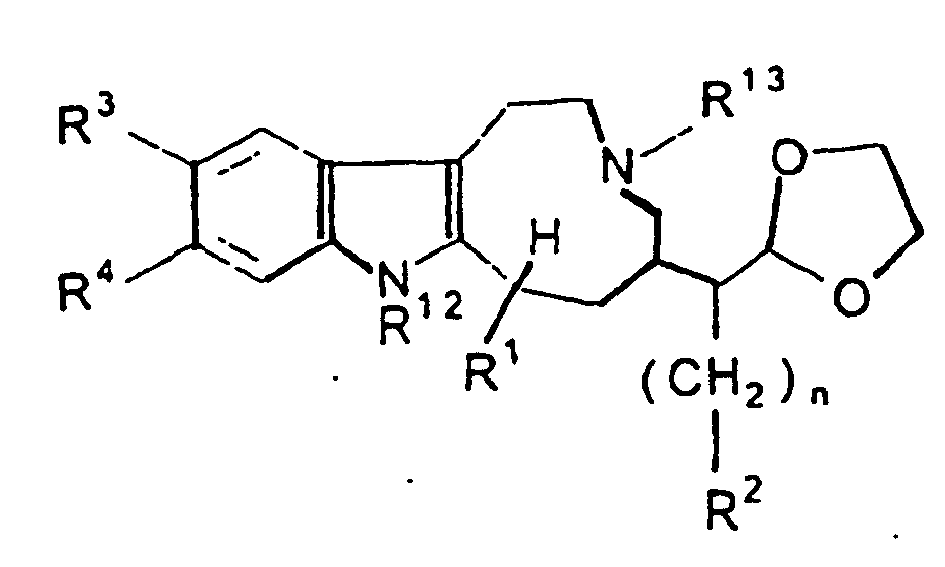
- Reduction, preferably catalytic reduction using H2 over palladium/carbon catalyst, followed by treatment with acidic alcohol, preferably with hydrochloric acid in methanol, followed by addition of a base, such as ammonium hydroxide, yields an enamine having the formula:

- The enamine is then heated, preferably at between 80°C and 120°C for 4 to 12 hours in a suitable solvent, to produce a compound of the present invention having the formula 1:

- As an alternative to using a 3-substituted-(1,3-dioxolan)-2-yl)butanal, where R2 is hydroxy, compounds of the present invention bearing a C18 hydroxyalkyl moiety ( 1 (R2=OH)) can also be prepared by reduction of the corresponding C 18 alkyl ester (such as, 1 (R2=COOR5)), for example, with a half-molar equivalent of lithium aluminum hydride or with diisobutylaluminum hydride. Compounds bearing the alkoxyalkyl moiety ( 1 (R2=OR5)) can likewise be prepared from the corresponding esters ( 1 (R2=COOR5)). such as by reduction with LiAlH4/AlCl3. In a similar manner, it can be advantageous to prepare compounds of the present invention having basic amines (such as 1 (R2=NH2 or R2=NHR8)) from the corresponding amides (such as 1 (R2=NHC(O)R8 or R2=NR8C(O)R9)) by hyrdrolysis with aqueous acid rather that by starting with amine-containing 3-substituted-(1,3-dioxolan)-2-yl)butanal. The amide to amine conversion can also be effected by conventional procedures, such as with diisobutylaluminum hydride in an ether, preferably tetrahydrofuran ("THF" to give a substituted amine. Again, this alternative method is particularly advantageous when n is less than three.
- Compounds having C 16 hydroxy or alkoxymethyl substitutents are prepared by reduction of the corresponding C 16 ester, such as with LiAlH4/THF to the C16 hydroxymethyl or with LiAlH4/AlCl3 to the C16 alkoxymethyl. Reduction of C16 amides with LiAlH4 would provide C16 amines. C16 hydrazides containing basic nitrogens (such as 1 (R1=C(O)NHNH2, C(O)NHNR5, C(O)NR5NH2, or C(O)NR5NHR6) can be prepared from the corresponding hydrazide carbamates, typically t-butyl carbamate, by hydrolysis with acids.
- Subsequent to preparation, the compound of the present invention can optionally be purified by recrystallization, solvent extraction using, for example, a Soxhlet extraction apparatus, chromatography, such as HPLC or conventional column chromatography, or other conventional purification methods. In addition, prior to, subsequent to, or as an aid in isolation, the compounds of the present invention can be converted to the acid addition salt, such as by contacting a solution of the compound with an appropriate acid.
- Preparation of the 3-substituted-(1.3-dioxolan-2-yl)butanal starting materials, is achieved by conventional methods. Typically these reactants are prepared by oxidation of a 2-substituted-4-hydroxybutyric ester. The latter can be obtained by alkylation of a allylmalonic ester with an alkyl halide and a base (e.g. sodium alkoxide) followed by decarboalkoxylation with LiCl, hydroboration with diborane or with borane dimethylsulfide complex, and oxidation with hydrogen peroxide and sodium hydroxide. Oxidation of the 4-hydroxy-2-substituted butanoic ester is achieved with dimethyl sulfoxide and oxalyl chloride. The resulting aldehyde is protected, preferably as its acetal with ethylene glycol. Reduction of the ester function, such as with LiAlH4, is followed by oxidation of the resultant alcohol with dimethylsulfoxide and oxalyl chloride.
- The indoloazepine starting material, with which the butanal is reacted, is typically prepared by methods which have been well-developed in the art, such as those described in references [9-13]. Briefly, the indoloazepine starting material can be prepared by condensation of tryptamine with methyl 3-chloropyruvate. The resulting carboline is heated in pyridine to provide an unsaturated indoloazepine (vinytogous urethane). The latter is reduced with sodium cyanoborohydride.
- When using the alternative route to the preparation of versatiline derivatives, the appropriately substituted Nb-benzylindoloazepine is prepared by alkylation of the above Nb-H indoloazepine with benzyl bromide and sodium carbonate. Alternatively, indoloazepines with substituents on the aromatic ring can be made by Fischer Indole synthesis from substituted phenylhydrazines and N-benzyl-4-piperidones, followed by reaction with t-butyl hypochlorite and thallium dimethyl malonate, and, then, with lithium chloride.
- The compounds of the present invention are useful in treating subjects, such as mammals and including rats and humans, exhibiting addictive behavior, by administering the compounds to such subjects in an effective amount. The compounds of the present invention may be administered alone or in combination with suitable pharmaceutical carriers or diluents. The diluent or carrier ingredients should be selected so that they do not diminish the therapeutic effects of the compounds of the present invention.
- The compounds herein may be made up in any suitable form appropriate for the desired use; e.g., oral, parenteral, or topical administration. Examples of parenteral administration are intraventricular, intracerebral, intramuscular, intravenous, intraperitoneal, rectal, and subcutaneous administration.
- Suitable dosage forms for oral use include tablets, dispersible powders, granules, capsules, suspensions, syrups, and elixirs. Inert diluents and carriers for tablets include, for example, calcium carbonate, sodium carbonate, lactose, and talc. Tablets may also contain granulating and disintegrating agents such as starch and alginic acid, binding agents such as starch, gelatin, and acacia, and lubricating agents such as magnesium stearate, stearic acid, and talc. Tablets may be uncoated or may be coated by known techniques to delay disintegration and absorption. Inert diluents and carriers which may be used in capsules include, for example, calcium carbonate, calcium phosphate, and kaolin. Suspensions, syrups, and elixirs may contain conventional excipients, for example, methyl cellulose, tragacanth, sodium alginate: wetting agents, such as lecithin and polyoxyethylene stearate: and preservatives, e.g., ethyl-p-hydroxybenzoate.
- Dosage forms suitable for parenteral administration include solutions, suspensions, dispersions, emulsions, and the like. They may also be manufactured in the form of sterile solid compositions which can be dissolved or suspended in sterile injectable medium immediately before use. They may contain suspending or dispersing agents known in the art.
- One aspect of the present invention is directed to therapeutically treating a subject suffering from an addiction to an addictive substance. In particular, the compounds of the present invention are useful where the addictive substance is a barbituate: an opiate, such as morphine, codeine, heroin, levorphanol, meperidine, methadone, propoxyphene, acetylmethadol (LAAM), pentazocine, butorphanol, nalbuphine, buprenorphine, dezocine, fentanyl, and combinations of these opiates; a stimulant, such as d-amphetamine. I-amphetamine, dl-amphetamine, methamphetamine, benzphetamine, pheniermine: diethylpropion, phenmetrazine, phendimetrazine, chlorphentermine, clortermine, mazindol, phenylpropanolamine, cocaine, methylphenidate, nicotine, cathinone (khat plant), and combinations of these stimulants: a depressant, such as meprobamate, chlordiazepoxide, diazepam, oxazepam, lorazepam, flurazepam, prazepam, chlorazepate, alprazolam, triazolam, temazepam, halazepam, quadazepam, midazolam, estazolam, ethanol, pentobarbital, phenobarbital, secobarbital, amobarbital, and combinations of these depressants; or combinations of these addictive substances. The subject can be addicted to one of these addictive substances or to a plurality of these addictive substances.
- Treatment comprises administering to the mammal an effective amount of a compound having the formula:

n is from 0 to 8:
R1 is CH2OH, CH(OH)R5, CH2OR5, CO2R5, C(O)NH2, C(O)NHR5, C(O)NR5R6, C(O)NHNH2, C(O)NHNHR5, C(O)NHNR5R6, C(O)NR5NN2, C(O)NR5NHR6. C(O)NR5NR6R7, C(O)NHNH(C(O)R5), C(O)NHNR5(C(O)R6), C(O)NR5NH(C(O)R6), C(O)NR5NR6(C(O)R7), CN or C(O)R5;
R2 is substituted alkyl, YH, YR8, YC(O)R8, C(O)YR8, C(O)NH2, C(O)NHR8, C(O)NR8R9, NH2NHR8, NR8R9, NHC(O)R8, or NR8C(O)R9;
R3 and R4 are the same or different and are selected from the group consisting of H, halogens, unsubstituted or substituted alkyl, OH, OR10 NH2, NHR10, NR10R11,NHC(O)R10, or NR10C(O)R11; and R3 and R4 can be linked via an alkylene to form a five or six membered ring;
R5, R6, R7, R8, R9, R10, and R11 are the same or different and are selected from the group consisting of unsubstituted alkyl and substituted alkyl;
R12 is selected from the group consisting of H, unsubstituted alkyl, and substituted alkyl; and
Y is O or S;
provided that when n is 0, R2 is substituted alkyl;
or a pharmaceutically acceptable salt thereof. - It will be appreciated that the actual preferred amount of compound of the present invention used will vary according to the particular compound, the particular composition formulated, and the mode of application. Many factors that modify the action will be taken into account by those skilled in the art; e.g. body weight, sex, diet, time of administration, route of administration, rate of excretion, condition of the host, drug combinations, reaction sensitivities and severities and severity of addiction. Administration can be carried out continuously or periodically within the maximum tolerated dose. Optimal application rates for a given set of conditions can be ascertained by those skilled in the art using conventional dosage administration tests in view of the above guidelines. Preferably the compound is administered in a dose from about 1.0 to about 80 mg/kg of the subject's mass.
- The present invention is further illustrated by the following examples.
- Ibogamine congeners were synthesized as described in detail below with reference to the following reaction scheme:

- Metallic sodium (15 g, 230 mmol) was dissolved in dry ethanol (250 mL) with cooling in an ice bath, under nitrogen, and diethyl allylmalonate (Lancaster Synthesis. Windham. MA) (105 g, 525 mmol) in absolute ethanol (50 mL) was added dropwise under nitrogen. The mixture was stirred at room temperature for 1 h. and 2-bromoethyl methyl ether (87.57 g. 630 mmol) in absolute ethanol (50 mL was then added dropwise. The mixture was heated at reflux for 3 h and then cooled to room temperature. The precipitated solid was filtered and washed with ethanol (2 x 100 mL). The residue obtained upon concentration of the filtrate was diluted with water (1 L). The mixture was extracted with ether (2 x 150 mL), dried over MgSO4 and concentrated to give the diester ether 2 (118 g, 87%) as a viscous liquid. IR (KBr) νmax 3069, 2971, 2927, 1734, 1640, 1459. 1443. 1382, 1361, 1284. 1223, 1196, 1119, 1077, 1031, 922, 856 cm-1: 1HNMR (CDCl3) δ 1.24 (t, J = 7.0 Hz, 6 H). 2.17 (t, J = 6.4 Hz. 2 H). 2.68 (d. J = 7.1 Hz. 2 H). 3.2 (s. 3 H). 3.41 (t, J = 6.5 Hz. 2 H), 4.17 (dis q. 4 H). 5.04-5.12 (m. 2 H). 5.63-5.79 (m. I H): 13CNMR (CDCl3) δ 13.98, 32.05. 37.31, 55.08, 58.52, 61.13, 68.34, 118.93, 132.49, 170.17; mass spectrum (EI), m/z (rel intensity) 259 (M+ + 1. 16), 227 (20), 213 (19), 200 (37), 185 (13), 167 (17), 154 (25), 153 (65), 139 (38). 125 (25), 108 (100). 81 (30), 79 (31), 67 (23), 59 (23), 53 (23).
- A mixture of diester 2 (40 g. 155 mmol), prepared according to Example 1. and lithium chloride (13 g, 300 mmol) in DMSO (100 mL), DMF (20 mL), and water (2 mL) was heated to 170°C for 6 h and cooled to room temperature. The mixture was poured into water (250 mL), extracted with CH2Cl2 (3 x 100 mL), and dried over MgSO4. The solvent was removed under reduced pressure to afford the monoester ether 3 (25.2 g. 87%): IR (KBr) νmax 3079. 2974. 2921, 2869, 1732, 1640. 1461, 1443, 1470. 1374. 1177. 1121, 1029. 990. 916. 855 cm-1; 1HNMR (CDCl3) δ 1.25 (t, J = 7.05 Hz. 3H). 1.65-1.75 (m. 1H), 1.85-1.95 (m, 1H), 2.20-2.40 (m, 2H). 2.50-2.60 (m. 1H), 3.30 (s. 3H), 3.35-3.45 (m. 2H). 4.13 (q, J = 7.05, 2H). 5.00-5.07 (dd, J = 10.2, 25 Hz. 2H). 5.71-5.74 (m. 1H); 13CNMR (CDCl3) δ 14.21, 31.44, 36.45, 42.12. 58.48, 60.12. 70.37, 70.38. 116.79, 135.19, 175.19; mass spectrum (EI). m/Z (rel intensity) 223 (11). 200 (19). 185 (M-1. 4.5). 154 (19). 153 (46), 143 (33). 128 (33). 121 (37). 120 (34), 112 (22), 108 (88). 95 (28), 82 (41), 81 (98). 79 (94), 59 (38). 57 (71). 55 (100). 54 (38). 53 (59).
- A 1 M solution of lithium aluminium hydride (135 mL, 134 mmol) was added via cannula to a stirred solution of the ester 3 (25 g, 134 mmol), prepared according to Example 2, in dry ether (200 mL) The mixture was stirred for 2 h at room temperature under nitrogen and cooled to 0°C. and water (10 mL) was added dropwise, with stirring, followed by dropwise addition of 15% NaOH (10 mL) and water (30 mL) at 0°C. to produce a white precipitate. The precipitate was filtered, and washed with ether (2 x 50 mL). The filtrate was dried over MgSO4, filtered, and concentrated to give the alcohol 4 (16.5 g. 85.4%). IR (KBr) νmax 3410. 3071. 2930. 2860. 1641. 1442. 1384. 1185. 1109. 1043, 993, 911 cm-1; 1HNMR (CDCl3) δ 1.61-1.75 (m. 3 H). 2.02-2.30 (m. 2 H). 3.35 (s. 3 H). 3.36-3.60 (m. 4 H). 5.01-5.06 (m. 2 H). 5.77-5.79 (m, 1 H); 13CNMR (CDCl3): δ 31.33. 35.95. 38.56, 58.29, 65.17. 70.98. 116.07, 136.59: mass spectrum (EI). m/z (rel intensity) 145 (7). 144 (M+. 3). 143 (23). 126 (15). 113 (20), 111 (42). 102 (17). 95 (27), 94 (57). 93 (31), 83 (49). 82 (41). 81 (61). 79 (100), 71 (70). 70 (42), 69 (38). 67 (65). 58 (46). 57 (34). 55 (75). 54 (48). 53 (34).
- Dry dimethylsulfoxide (18.4 mL. 260 mmol) in dry CH2Cl2 (30 mL) was added dropwise to a stirred solution of 2 M (COCl)2 (65 mL. 130 mmol) at -78°C during 15 min under nitrogen. The alcohol 4 (15 g. 104 mmol), prepared according to Example 3, in dry dichloromethane (50 mL) was then added during 10 min. resulting in a slightly cloudy solution, which was stirred for 30 min at -78°C. A solution of triethyl amine (75 mL. 520 mmol) in dichloromethane (50 mL) was then added dropwise during 15 min. The mixture was then stirred for 1h at room temperature, and the reaction was quenched by adding water (25 mL), with rapid stirring. The resulting slurry was immediately poured into ether (300 mL) and washed with 20% KHSO4 (2 x 200 mL). The layers were separated, and the aqueous layer was extracted with ether (2 x 100 mL). The combined organic layers were washed with brine solution (2 x 100 mL), dried over MgSO4, filtered, and concentrated to afford the crude aldehyde 5 (12.4 g, 84%) as an oil, which was used in the following condensation with ethylene glycol. IR (KBr) vmax 2951, 2921, 2863, 1720, 1638, 1456, 1379, 1255, 1121, 1033, 997, 909 cm-1; 1HNMR(CDCl3) δ 1.73-1.77 (m. 1 H). 1.92-1.96 (m. 1 H), 2.23-2.27 (m, 1 H). 2.42-2.46 (m. 1 H). 2.50-2.52 (m. 1 H). 3.29 (s. 3 H). 3.39-3.43 (m. 2 H). 5.05-5.10 (m. 2 H). 5.72-5.77 (m, 1 H). 9.64 (s. 1 H). 13CNMR (CDCl3) δ 28.65. 33.04. 48.57. 58.57. 70.00. 117.40. 134.85: mass spectrum (EI), m/z (rel intensity) 167 (23), 157 (17), 149 (100). 143 (16). 142 (4. M+), 141 (12). 129 (28). 127 (64), 112(22), 111 (26). 109 (14). 100 (16). 97 (23). 95 (31). 93 (22). 87 (24). 85 (36). 84 (53). 83 (45). 82 (21). 81 (49). 79 (27). 71 (70). 70 (26). 69 (51). 67 (55). 59 (49), 57 (80), 55 (87). 53 (31).
- A stirred solution of crude aldehyde 5 (12.4 g. 87.20 mmol), prepared according to Example 4, ethylene glycol (8.1g. 130 mmol), p-toluene sulfonic acid monohydrate (1 g) in dry benzene (200 mL) contained in a 500 mL round-bottom flask fitted with a Dean Stark trap was heated at reflux for 12 hrs. The mixture was cooled to room temperature, the benzene laver was separated, and the aqueous layer was extracted with ether (2 x 100 ml). Combined organic layers were dried over MgSO4 and filtered. The residue obtained on concentration was purified by flash column chromatography on silica gel using ether/hexane (1:1) as eluant to give 6 (14.5 g, 89%) as an oil. IR (KBr) νmax 2981. 2934. 2832. 1637. 1457. 1388. 1119. 1036. 988. 947. 906 cm-1: 1HNMR (CDCl3) δ 1.57-1.85 (m. 3H). 2.09-2.45 (m. 2H). 3.31 (s. 3H). 3.44 (t. J= 6.4 Hz. 2H). 3.83-3.94 (m. 4H). 4.81 (s. 1H), 4.99-5.07 (m. 2H). 5.75-5.90 (m. 1H): 13CNMR (CDCl3) δ 28.42. 33.83. 58.29. 64.82. 64.92. 70.87. 106.01. 116.07. 136.66: mass spectrum (EI), m/Z (rel intensity) 186 (M+. 9). 155 (11), 141 (9), 127 (10). 111(11). 99 (30). 91 (30). 84 (32). 79 (29), 73 (100). 55 (7).
- A 1 M solution of borane-methyl sulfide complex in dichloromethane (18 mL. 18 mmol) was added dropwise to a stirred solution of the olefinic acetal 6 (10 g, 53.7 mmol), prepared according to Example 5, in hexane (40 mL) at 0°C. The mixture was stirred for 3 h at room temperature and then cooled to 0°C. and then absolute ethanol (10 mL) was added dropwise, followed by 15% NaOH (10 mL) and 30% H2O2 (10 mL). The reaction mixture was heated at reflux for 1 h. cooled to room temperature, and poured into water (200 mL). The organic layer was separated, and the aqueous layer was extracted with ether (3 x 50 mL). The organic layers were combined, dried over MgSO4, and concentrated under reduced pressure. The crude product was chromatographed on a silica gel column, eluting with 2% methanol in ether, to give the alcohol 7 (6.1 g, 56%) as a viscous liquid. IR (KBr) νmax 3434. 2929, 2808, 1646, 1451, 1403, 1111, 953 cm-1: 1HNMR (CDCl3) δ 1.03-1.85 (m, 7 H), 3.30 (s, 3 H), 3.43-3.50 (m, 2 H). 3.61 (t, J = 6.3 Hz. 2 H). 3.83-4.00 (m, 4 H). 4.79 (d, J = 3.7 Hz. 1 H): 13CNMR (CDCl3) δ 25.44. 29.04. 30.15. 58.33, 62.66, 64.78, 64.84, 70.98, 106.45, 33.83. 58.29, 64.82. 64.92. 70.87. 106.01: mass spectrum (EI). m/z (rei intensity) 159 (M+ - 45. 6.4). 143 (29). 127 (95). 111 (35), 73 (100), 67 (7). 55 (83).
- The alcohol 7 (6 g, 29.37 mmol), prepared according to Example 6, was oxidized using 2 M (COCl)2 (18 mL. 36 mmol), dry DMSO (5.1 mL. 72 mmol) and triethyl amine (20.7 mL. 144 mmol) analogous to the oxidation of the alcohol 4 , as described in example 4. Similar work up as for 5 gave the aldehyde 8 (4.8 g. 81%) as a colorless oil. IR (KBr) vmax 2939, 2880, 2735, 1719. 1451. 1391. 1111, 1038. 947 cm-1; 1HNMR (CDCl3) δ 1.45-2.85 (m. 5 H). 2.54 (t. J = 6.8 Hz. 2 H). 3.31 (s. 3 H), 3.43-3.46 (m, 2 H). 3.83-3.95 (m. 4 H), 2.54 (t, J = 6.8 Hz, 2 H). 3.31 (s. 3 H), 3.43-3.46 (m, 2 H). 3.83-3.95 (m, 4 H). 4.77 (d, J = 3.3 Hz. 1 H), 9.76 (t, J = 1.5 Hz. 1 H); 13CNMR (CDCl3) δ 21.51, 29.23, 37.99, 41.72, 58.42, 64.81, 64.88, 70.66. 106.26, 202.39; mass spectrum (EI). m/z (rel intensity) 210 (33), 202 (M+, 3), 201 (15). 157 (19), 144 (27), 143 (38), 141 (19), 127 (17), 126 (1), 111 (30), 109 (12), 100 (4), 99 (11), 73 (100), 59 (10), 57 (8). 55 (12), 54 (5).
- To a suspension of triphenylphosphine (69 g. 263 mmol) in anhydrous acetonitrile (200 mL) was added bromine (13.6 mL. 263 mmol), dropwise, with stirring at 0°C over 15 min. and then 2-benzyloxyethanol (40 g. 263 mmol) (Aldrich Chemical Co.. St. Louis, MO)in dry acetonitrile (25 mL) was added dropwise at 0°C over 30 min. The yellow colored solution was stirred for an additional 30 min at 0°C, and the solvent was evaporated under reduced pressure. The residue was suspended in ether (200 mL), and the precipitated solid was filtered and washed with ether (3 x 100 mL). The filtrate was concentrated, and the residue was chromatographed on a silica gel column, eluting with ether/hexane (1:4) to give 9 (43g. 77%) as a pale yellow liquid. IR (KBr) vmax 3087. 3063. 3030. 2964. 2859. 1495. 1453, 1422. 1360. 1276..1205. 1110, 1040, 1028, 738. 698. 672 cm-1; 1HNMR (CDCl3) δ 3.47 (t. J= 6 Hz. 2 H). 3.77 (t, J = 6 Hz, 2 H). 4.57 (s. 2 H). 7.28-7.35 (m. 5 H); 13CNMR (CDCl3) δ 30.39. 69.99, 73.14, 127.72. 127.84. 128.47, 137.76.
- Sodium (5.3 g. 230 mmol) was dissolved in dry ethanol with cooling in an ice bath and diethyl allylmalonate (36.84 g, 184 mmol) in absolute ethanol (50 mL) was added dropwise, under nitrogen. The mixture was stirred at room temperature for 1 h. and the bromide 9 (39.62 g. 184.2 mmol), prepared according to Example 8, in absolute ethanol (50 mL) was added dropwise. The mixture was heated at 60°C for 3 h and cooled to room temperature. Precipitated solid was filtered and washed with ethanol (2 x 50 mL). The residue obtained upon concentration of the filtrate was diluted with water (500 mL). The mixture was extracted with ether (3 x 100 mL), dried over MgSO4, and concentrated to give a viscous liquid (54 g). 1 HNMR of this product showed a 3:1 ratio of 10 and benzyloxy-2-ethoxy ethanol. The mixture of products was inseparable by chromatography and hence the mixture was directly subjected to decarboethoxylation. IR (KBr) νmax 3077. 2989. 2939. 2874. 1741. 1456. 1347, 1279. 1220. 1201. 1106. 1030, 926. 858, 741, 702. cm-1: 1HNMR (CDCl3) δ 1.19 (t. J = 7.4 Hz. 6 H), 2.24 (t, J = 6.5 Hz. 2 H). 2.69 (d, J = 7.4 Hz. 2 H). 3.51 (t, J = 6.5 Hz. 2 H), 4.13 (q, J = 7.4 Hz. 4 H). 4.43 (s, 2 H). 5.04-5.07 (m, 2 H). 5.60-5.70 (m. 1 H). 7.20-7.40 (m, 5 H): 13CNMR (CDCl3) δ 13.88, 32.01, 37.08. 55.57, 61.01, 65.78, 72.83, 118.78, 127.31, 127.46, 128.06, 132.40, 138.10. 170.82; mass spectrum (EI), m/z (rel intensity) 335 (1.2), 334 (M+, 0.75), 249 (9.5), 227 (15), 203 (22), 200 (60), 180 (40). 143 (17), 134 (22). 127 (22), 125 (15), 109 (25), 108 (70). 107 (90). 105 (55), 91 (100). 89 (15), 65 (14).
- A mixture of crude diester 10 (54 g), prepared according to Example 9. and lithium chloride (10.1 g. 234.67 mmol) in DMSO (78 mL). DMF (15 mL), and water (1.5 mL) was heated at 170°C for 6 h and cooled to room temperature. The mixture was poured into water (250 mL) and extracted with CH2Cl2 (3 x 100 mL), and the extract was dried over MgSO4. The solvent was removed under reduced pressure to afford crude monoester 11 (44 g). IR (KBr) νmax 3065, 3029, 2981, 2928, 2863, 1729. 1642. 1496. 1451, 1378. 1179, 1106, 1025, 996, 915, 853, 737, 696 cm-1; 1HNMR (CDCl3) δ 1.19 (t, J = 6.9 Hz, 3H). 1.75-1.79 (m, 1 H). 1.93-1.97 (m 1 H), 2.22-2.38 (m. 2 H). 2.62-2.63 (m. I H). 3.42-3.57 (m. 2 H). 4.04-4.12 (m, 2 H), 4.45 (s 2 H). 5.01-5.02 (m. 2 H). 5.70-5.75 (m. I H), 7.23-7.33 (m. 5 H); 13CNMR (CDCl3) δ 14.00, 31.45, 36.36, 42.05, 59.97, 67.83, 72.76. 116.82. 127.33. 127.36. 127.54. 128.22. 138.20. 175.04: mass spectrum (EI), m/z (rel intensity) 263 (M+ - 1. 1.7). 180 (3.4), 171 (2.6). 156 (12). 155 (11), 131 (3), 128 (23), 107 (14). 101(8), 100 (10), 97 (4), 92 (11). 91 (100), 89 (8). 81 (7). 79 (11), 77 (7). 73 (14), 69 (9). 67 (8). 65 (14).
- A 1 M solution of lithium aluminium hydride (122 mL. 122 mmol) was added via cannula to a stirred solution of crude ester 11 (44 g), prepared according to Example 10. in dry ether (150 mL). The mixture was stirred for 2 h at room temperature under nitrogen, cooled to 0°C. and water (9 mL) was added dropwise with stirring, followed by 15% NaOH (9 mL) and water (27 mL), which was added dropwise at 0°C to produce a white precipitate. The precipitate was filtered and washed with ether (2 x 50 mL). The filtrate was dried over MgSO4. The residue, obtained upon concentration, was subjected to column chromatography on silica gel. Contaminant benzyloxy-2-ethoxy ethanol (12.4 g) was first eluted with ether/hexane (2:1) while the alcohol 12 (24 g. 59% based on diethyl allylmalonate) was eluted with 2% methanol in ether. IR (KBr) νmax 3404, 3071. 3033. 2930, 2868, 1640, 1498, 1454, 1361. 1202. 1100, 1042, 996, 916, 737, 697 cm-1; 1HNMR (CDCl3) δ 1.63-1.73 (m. 3 H). 2.02-2.15 (m, 2 H). 2.84 (t, J = 5.8 Hz. 1 H), 3.45-3.58 (m. 4 H). 4.49 (s, 2 H). 5.00-5.03 (m. 2 H). 5.70-5.85 (m. 1 H). 7.26-7.35 (m, 5 H); 13CNMR (CDCl3) δ 31.65, 36.20, 38.91, 53.36, 65.58, 68.66, 73.13, 116.28, 127.69, 127.71, 128.39, 136.75, 137.88: mass spectrum (EI), m/z (rel intensity) 263 (M++ 1, 10), 203 (1.5), 185 (2.3), 181 (3.5), 143 (2.5), 129 (5), 111 (6). 108 (6). 107 (22). 95 (5), 93 (6). 92 (12), 91 (100). 81 (16). 79 (10), 77 (5), 67 (10), 65 (13).
- Dry DMSO (19.36 mL. 273.6 mmol) in dry CH2Cl2 (35 mL) was added dropwise to a stirred solution of 2 M (COCl)2 (68.40 mL. 136.8 mmol) at -78°C during 15 min. The alcohol 12 (24 g, 109.44 mmol), prepared according to Example 11, in dry dichloromethane (50 mL) was then, added during 10 min. resulting in a slightly cloudy solution. This was stirred for 30 min at -78°C and a solution of triethyl amine (79 mL. 547.2 mmol) in dichloromethane (50 mL) was then added dropwise during 15 min. The mixture was stirred for 30 min at -78°C and 30 min at 0°C. The reaction was quenched by adding water (26 mL) with rapid stirring. The resulting slurry was immediately poured into ether (300 mL) and washed with 20% KHSO4 (2 x 200 mL). The layers were separated and the aqueous layer was extracted with ether (2 x 100 mL). The combined organic layers were washed with brine solution (2 x 100 mL), dried over M2SO4, filtered, and concentrated to afford crude aldehyde 13 (22 g) which was immediately used for protection. A stirred solution of crude 13 (22 g. 101.25 mmol), ethylene glycol (9.4 g. 151.87 mmol), and p-toluenesulfonic acid monohydrate (1 g) in dry benzene (200 mL), contained in a 500 mL round-bottom flask fitted with a Dean Stark trap, was heated at reflux for 12 h. The mixture was cooled to room temperature, the benzene layer was separated, and the aqueous layer was extracted with ether (2 x 100 mL). The combined organic layers were dried over MgSO4 and filtered. The residue obtained on concentration was purified by column chromatography on silica gel, using ether/hexane (1:1) as eluant, to give acetal 14 (21 g, 73.5%) as an oil. IR (KBr) νmax 3066, 3030, 2927, 2881. 1642, 1457, 1400. 1365, 1208, 1156, 1100, 1028, 946, 739, 628 cm-1; 1HNMR (CDCl3) δ 1.62-1.66 (m. 1 H), 1.79-1.91 (m. 2 H). 2.08-2.11 (m. 1 H). 2.25-2.28 (m. 1 H), 3.54 (t, J = 6.9 Hz. 2 H). 3.78-3.90 (m. 4 H). 4.47 (s. 2 H). 4.80 (d, J= 3.8 Hz. 1 H). 4.97-5.04 (m. 2 H). 5.77-5.82 (m. 1 H), 7.23-7.34 (m, 5 H); 13CNMR (CDCl3) δ 28.55, 33.78. 38.33. 64.77, 64.86, 68.40, 72.59, 106.00, 116.04. 127.29. 127.45, 128.16, 136.66. 138.62; mass spectrum (EI), m/z (rel intensity) 262 (MT. 1.6). 171 (4.4). 156 (3.2). 149 (9). 128 (3.3). 1 14 (2.6) 109 (7). 105 (4.1). 99 (3.6). 92 (3.7). 91 (31). 81 (3.7). 77 (5). 73 (100). 67 (4). 65 (6).
- A I M solution of borane-methyl sulfide complex in dichloromethane (27 mL. 27 mmol) was added dropwise to a stirred solution of the olefin 14 (21 g, 80.36 mmol), prepared according to Example 12, in hexane (60 mL) at 0°C. The mixture was stirred for 3 h at room temperature, then cooled to 0°C. and then absolute ethanol (15 mL) was added dropwise, followed by 15% NaOH (15 mL) and 30% H2O2 (15 mL). The reaction mixture was heated at reflux for 1 h. cooled to room temperature, and poured into water (200 mL). The organic layer was separated, and the aqueous layer was extracted with ether (3 x 75 mL). The organic layers were combined, dried over MgSO4. and concentrated under reduced pressure. The crude product was chromatographed on a silica gel column, eluting with 2% methanol in ether, to give the alcohol 15 (16.8 g, 74.6%) as a viscous liquid. IR (KBr) νmax 3442, 3034, 2952, 2878, 1458, 1407, 1364, 1206, 1103, 846, 742, 698 cm-1; 1HNMR (CDCl3) δ 1.36-1.39 (m. 1 H). 1.53-1.64 (m, 4 H), 1.79-1.90 (m. 3 H), 3.53-3.59 (m. 4 H). 3.79-3.92 (m. 4 H), 4.49 (s. 2 H). 4.78 (d, J = 3.6 Hz. 1 H), 7.25-7.32 (m. 5 H): 13CNMR (CDCl3) δ 25.38, 29.23, 30.17, 38.19, 62.76, 64.78, 64.84. 68.52. 72.72. 106.49. 127.39, 127.56, 128.23. 138.54: mass spectrum (EI), m/z (rel intensity) 280 (M+..02). 235 (2.1), 220 (14), 219 (84), 218 (69). 172 (15), 146 (23), 127 (15), 91 (35), 84 (9). 73 (10), 65 (5.5).
- The alcohol 15 (16.8 g. 59.92 mmol), prepared according to Example 13, was oxidized using 2 M (COCl)2 (37.50 mL. 75 mmol), dry DMSO (10.6 mL. 150 mmol), and triethylamine (43 mL. 300 mmoi) as for the oxidation of compound 12 . Similar work up as for 13 gave a crude product, which was purified by column chromatoerphy. eluting with ether/hexane (2:1), to give the aldehyde 16 (4.8 g, 81%) as a colorless oil. IR (KBr) νmax 2942. 2878, 2725, 1723, 1496, 1434, 1413, 1368. 1211. 1153, 1098. 1031, 951, 742. 661 cm-1: 1HNMR (CDCl3) δ 1.56-1.86 (m, 5 H), 2.52 (t, J = 7.6 Hz. 2H), 3.52-3.57 (m. 2H). 3.79-3.92 (m. 4 H). 4.48 (s, 2 H). 4.75 (d, J = 3.3 Hz, 1 H). 7.25-7.34 (m. 5 H), 9.71 (s, 1 H): 13CNMR (CDCl3) δ 21.48, 29.33, 38.00, 41.71, 64.79, 68.73, 72.82, 106.28, 127.42, 127.55, 128.25, 138.48: mass spectrum (EI), m/z (rel intensity) 279 (M+ - 1. 7.5). 219(7). 171 (15), 144(8), 127(53), 91(31), 83(9), 73(100), 65(4).
- A solution of Nb-benzylindoloazapine 17 (3.8 g. 11.36 mmol), prepared according to the procedure described in Kuehne [12] and 4-(1.3-dioxolan-2-yl)-6-methoxyhexanal ( 8 , 2.75 g. 13.63 mmol), prepared according to Example 7, in dry toluene (75 mL) was heated at reflux for 12 h using a Dean-Stark trap filled with 4 A molecular sieves, under nitrogen. The reaction mixture was cooled to room temperature and concentrated on a rotary evaporator. The crude material was flash chromatographed on silica gel, eluting with ether/hexane (1:1), to give the tetracyclic product 18 (4.86 g, 82%) as an inseparable mixture of diastereomers. TLC (SiO2, ether/hexane 2:1) Rf 0.32, CAS blue: UV (EtOH)
λ max 214, 226, 300, 330; IR (KBr) νmax 3882, 2950, 2877, 1680, 1610, 1478, 1465, 1438, 1281, 1247, 1206, 1118, 1050, 949. 748, 701 cm-1; mass spectrum (EI), m/z (rel intensity) 518 (M+, 25), 385(21). 332(17), 304(29), 341(12), 160(13), 91(88), 83(9), 73(100). - A solution of the mixture of tetracyclic diastereomers 18 (4.8 g, 9.04 mmol), prepared according to Example 15, in glacial acetic acid (50 mL) was heated to 90° C. NaBH4 (1.03 g. 17 mmol) was added in small portions over a period of 10 min. The mixture was then poured over crushed ice, made basic with NH4OH and extracted with ether (3 x 50mL). The organic phase was dried over MgSO4 and concentrated to give an inseparable mixture of cleavamine diasteromers 19 (4.4g, 91 %), which was used directly for hydrogenolysis. A solution of this crude cleaveamine 19 (4.4 g). 10% Pd/C (1 g) in glacial acetic acid (100 mL) was subjected to hydrogenation at I atm of H2 for 6 h. The reaction mixture was filtered through a plug of Celite and washed with acetic acid (2 x 20 mL) and methanol (2 x 20 mL). The filtrate was basified with cold concentrated NH4OH, and the resulting white precipitate was extracted with ether (4 x 25 mL). The organic layer was dried over MgSO4 and concentrated to give the secondary amine acetal 20 (3.1 g. 87%), which, for hydrolysis of the acetal function, was dissolved in methanol (35 mL), glacial acetic acid (2 mL), and 10% HCl (35 mL). The mixture was stirred for 12 h at room temperature under nitrogen, cooled to 0°C. and basified with 15% NH4OH in saturated brine. Extraction with ether 14 x 50 mL), drying over MgSO4. and concentration gave a crude product, which was flash chromatographed on silica gel, elutine with ether/hexane (1:1), to give the enamine 21 (2.02 g. 76%).
- The enamine 21 (2.0 g. 5.40 mmol), prepared according to Example 16, in dry toluene (30 mL) was heated at 130°C for 3 h. The reaction mixture was cooled to room temperature and concentrated on a rotary evaporator. Flash chromatography of the crude product on silica gel, eluting with ether/hexane, gave 18-methoxycoronaridine 22 (1.4g, 70%) as a white solid. UV (EtOH) λmax 228, 278, 285, 294 nm; 13CNMR δ 175.59, 136.50, 134.80, 128.80, 121.92, 119.21, 118.41, 110.36, 110.00, 70.77, 58.00, 57.60, 54.96, 53.09, 52.58, 51.58, 36.46, 33.90. 33.78. 31.95, 27.33, 22.09.
- A solution of Nb-benzylindoloazapine 17 (5.0 g, 14.95 mmol), prepared according to Kuehne [12], and 4-(1, 3-dioxolan-2-yl)-6-benzyloxyhexanal ( 16 , 5.0 g. 17.94 mmol), prepared according to Example 14. in dry toluene (100 mL) was heated at reflux for 12 h. using a Dean-Stark trap filled with 4A molecular sieves under nitrogen. The reaction mixture was cooled to room temperature and concentrated on a rotary evaporator. The concentrate was flash chromatographed on silica gel, eluting with ether/hexane (1:1) to give 23a (4.4 g. 49%) and 23b (4.1 g, 46%).
- A solution of the tetracycle 23a (4.0 g. 6.73 mmol), prepared in Example 18, in glacial acetic acid (40 mL) was heated at 90°C. NaBH4 (0.77 g, 20 mmol) was added in small portions over a period of 10 min. The mixture was then poured over crushed ice, made basic with NH4OH, and extracted with ether (3 x 50 mL). The organic phase was dried over MgSO4 and concentrated. Flash chromatography of the crude materials on silica gel, eluting the ether/hexane (2:1), save 24a (3.25 g. 81%) and 24b (0.65g, 16%). Analogously, the tetracycle 23b was reduced to the corresponding cleavamine esters 24c and 24d.
- A solution of cleaveamines 24a and 24b (2.7 g. 4.51 mmol) and 10% Pd/C (1g) in ethyl acetate (50 mL) and glacial acetic acid (5 mL) was subjected to hydrogenolysis at I atm of H2 for 16 hours. The reaction mixture was filtered throu gh a plug of Celite and washed with acetic acid (2 x 20 mL) and methanol (2 x 20 mL). The filtrate was basified with cold concentrated NH4OH. and the resulting white precipitate was extracted with ether (4 x 25 mL). The organic layer was dried over MgSO4 and concentrated to give the secondary amine acetal 25 (1.75g, 77%), which was dissolved in methanol (16 mL), glacial acetic acid (1 mL), and 10% HCl (16 mL). The mixture was stirred in a round bottom flask covered with aluminum foil for 24 hours, at room temperature under nitrogen, then cooled to 0°C and basified with 15% NH4OH in saturated brine. Extraction with ether (4 x 50 mL), drying over MgSO4. and concentration gave a crude product, which was flash chromatographed on silica gel, eluting with ether/hexane (1:1), to give the enamine 26 (1.3 g, 86%).
- The enamine 26 (2.0 g, 5.40 mmol), prepared in Example 20, in dry toluene (30 mL) was heated at 130°C for 3 hours. The reaction mixture was cooled to room temperature and concentracted on a rotary evaporator. Flash chromatography of the crude product on silica gel, eluting with ether/hexane, save the title product 27 (1.4 g, 70%) as a white solid. UV (EtOH) λmax 214, 234, 278, 286, 294 nm; 13CNMR δ 175.44, 138.60, 136.52, 135.47, 128.66, 128.15, 127.52, 127.45, 121.76, 119.07, 118.27, 110.31, 110.13, 72.80, 68.38, 57.51, 54.86, 53.06, 52.56, 61.64, 36.33, 34.12, 33.79, 31.87, 27.22, 21.94.
- A mixture of 27 (1g), prepared according to Example 21, 10% Pd/C (1 g), and ammonium fornate (2 g) in dry methanol (50 mL) was heated at reflux for 4 hours and then cooled to room temperature. The mixture was filtered through a Celite pad, and the filtrate was concentrated. The residue was flash chromatographed on silica gel, eluting with 1% MeOH in ether, to give racemic albifloranine (28, 0.6g, 75%), 13CNMR 175.17, 135.87, 135.55, 128.37, 121.92, 119.17, 118.25, 110.39, 109.97, 59.27, 57.93, 54.62, 52.90, 52.68, 51.55, 36.32, 36.26, 34.62, 29.26, 26.97, 21.48.
- A solution of 2.0 g (5.4 mmol) of 18-methoxycoronaridine ( 22 ), prepared in accordance with Example 17. in 100 mL of dry tetrahydrofuran and 205 mg (5.4 mmol) of LiAlH4 was heated at reflux for 4 hours. Addition of 10 g of sodium sulfate hexahydrate to the cooled mixture and stirring for 5 hours, followed by filtration and concentration provided the carbinol 29 (2.0 g, 99% yield). 13CNMR δ 135.45. 128.56, 121.15, 118.83, 117.98, 111.05, 110.33, 71.05, 65.81, 58.57, 54.41, 53.32, 47.67, 36.54, 34.35, 32.19, 30.62, 27.74, 21.83, 15.23.
- 18-methoxycoronaridine was prepared by the method described in Example 17, above. Ibogaine hydrochloride and harmaline hydrochloride were purchased from the Sigma Chemical Company (St. Louis. MO). The R- and S-enantiomers of ibogamine and coronaridine (structures shown in [14]) were prepared according to the methodology of Bornmann [7] and Kuehne [13]. Racemic desethylcoronaridine were synthesized using the procedures described in Bornmann [7]. Tabemanthine was supplied by P. Potier, CNRS. Institute of Chemistry of Natural Substances. Gif-sur-Yvette, France. All drugs were administered intraperitoneally; doses are expressed as the hydrochloride salts. Different drugs and doses (or saline) were administered to different groups of rats: rats were injected fifteen minutes before a morphine or cocaine self-administration session.
- The subjects were naive female Sprague-Dawley (Taconic. Germantown. NY) rats approximately 3 months old and weighing 230-250 g at the beginning of the experiment: female rats were used because they grow at a much slower rate than males and are less likely than males to outgrow their intravenous cannulas. Rats were housed singly in Wahmann hanging cages and maintained on a normal light/dark cycle (lights on/off at 7:00 a.m./7:00 p.m.). All self-administration testing was conducted in twelve BRS/LVE operant test cages, each enclosed in a sound attenuated cubicle. Responses on either of two levers (mounted 15 cm apart on the front wall of each test cage) were recorded on an IBM compatible 386 computer with a Med Associates, Inc. interface. The intravenous self-administration system consisted of polyethylene-silicone cannulas constructed according to the design of Weeks [15], BRS/LVE harnesses and commutators, and Harvard Apparatus infusion pumps (no. 55-2222).
- Shaping of the bar-press response was initially accomplished by training rats to bar-press for water. Cannulas were then implanted in the external jugular vein according to procedures described by Weeks [15]. Self-administration testing began with a single 24-h session followed by daily 1-h sessions. 5 days (Monday-Friday) a week: rats were tested about the same time each day, during the middle of the light cycle. Depending upon the group, a lever-press response produced either a 20 µl morphine) or 50 µl (cocaine) infusion of drug solution (0.01 mg of morphine sulfate or 0.1 mg of cocaine hydrochloride) in about 0.2 (morphine) or 0.5 (cocaine) seconds. Since all rats generally weighed 250±20 g. each response delivered approximately 0.04 mg/kg of morphine or 0.4 mg/kg of cocaine; these doses are about two to four times the threshold doses required for maintaining self-administration behavior [16.17]. One non-contingent drug infusion was administered at the beginning of each session. Experiments to assess the effects of the iboga and harmala alkaloids were begun when baseline self-administration rates stabilized (≤10% variation from one day to the next across 5 days), usually after two weeks of testing.
- Whole body tremors were assessed in two ways. Direct visual observations were made of rats confined in a Plexiglas cylindrical (9 inches in diameter) enclosure: videotapes were sometimes made so that initial observations could be confirmed at a later time. Tremors were rated as absent, moderate or intense on a minute to minute basis for 30 min. beginning 15 min. after drug administration. An automated and quantitative technique, based on a method originally designed for mice by other investigators [18], was also developed and utilized. Briefly, a PLEXIGLAS™ enclosure was mounted on an audio speaker, the output of which was connected to a Hewlett-Packard 3392A integrator: the sensitivity of the integrator was adjusted such that random locomotor activity was generally ignored while large peaks representing tremors could be readily identified. Tremors were recorded and counted for 30 min. beginning 15 min, after drug administration.
- Figures 1 and 2 shows the initial acute effects of 18-methoxycoronaridine and all of the remaining alkaloids, respectively, on morphine and cocaine self-administration. Each drug produced a dose-related depression of morphine and cocaine intake (ANOVA. P<0.001 in every case). The potencies of the 18-methoxycoronaridine and the other alkaloids were very similar and, as shown in Figure 2, cannot be distinguished, with the exception that desethylcoronaridine was approximately twice as potent as any of the other drugs. Figures 3 shows that ibogaine (40 mg/kg), R-ibogamine (40 mg/kg). R-coronaridine (40 mg/kg), tabemanthine (40 mg/kg) and desethylcoronaridine (20 mg/kg), each administered for the first time, depressed morphine intake for at least a day afterwards. Figure 4 shows similar results for cocaine. In each of these cases, a group x days interaction was significant (P<0.05 in a two-way ANOVA), and paired t-tests with baseline values were significant (P<0.05-0.01) for
days - The effects of ibogaine and 18-methoxycoronaridine on motivated behavior were studied [1] by monitoring water bar pressing. Ibogaine (40 mg/kg) acutely depressed bar pressing for water for the first hour following ibogaine administration but bar pressing for water recovered to normal by the second day (Figure 5). As shown in Figure 6. this acute, short-term decrease in motivated behavior was not observed following 18-methoxycoronadine administration.
- Ibogamine (20-40 mg/kg), harmaline (10-40 me/kg) and desethycoronaridine (10-40 mg/kg) were obviously tremongenic for 3-4 h and no attempt was made to compare these drugs quantitatively. However, visual observations and videotape recordings of 18-methoxycoronaridine (40 mg/kg) and both R- and S-enantiomers of both ibogamine (40 mg/kg) and coronaridine (40 mg/kg) indicated very little if any tremorigenic activity. The effects of these latter drugs were therefore assessed using the automated testing procedure developed to quantitate tremors. Ibogaine (40 mg/kg) and saline (1 ml/kg) were used as positive and negative controls, respectively. While ibogaine produced a significant increase in movements indicative of tremors, the 18-methoxycoronaridine and the ibogamine and coronaridine enantiomers had no effects that differed significantly from the effects of saline.
- In a study similar to that conducted by O'Hearn and Molliver [5], female Sprague Dawley (Charles River) rats were given IP injections of ibogaine and allowed to survive seven days after the last injection. Purkinje cell degeneration was evaluated with a Fink Heimer II stain: enhanced glial cell activity, with a GFAP antibody stain.
- One set of animals received an ibogaine dose tested by O'Hearn and Molliver; 100 mg/kg per day for three consecutive days. All of these animals displayed bilaterally symmetric, parasagittal strips of Purkinje cell degeneration. The degeneration was more extensive than suggested by O'Hearn and Molliver, consistently occurring in the medial simple fobule and
Crus 1 as well as the vermis and intermediate regions oflobules - Although the invention has been described in detail for the purpose of illustration, it is understood that such detail is solely for that purpose, and variations can be made therein by those skilled in the art without departing from the spirit and scope of the invention which is defined by the following claims.
-
- 1.
- Glick, et al., Effects and Aftereffects of Ibogaine on Morphine Self-administration in Rats, Eur J. Pharmacol.. 195:341-345 (1991).
- 2.
- Cappendijk, et al., Inhibitory Effects of Ibogaine on Cocaine Self-administration in Rats. Eur J. Pharmacol.. 241:261-265 (1993).
- 3.
- de Montigny, et al., Rhythmic Activity Induced by Harmaline in the Olivocerebello-bulbar System of the Cat. Brain Res., 53:81-95 (1973).
- 4.
- Llinas, et al., The Olivo-cerebellar System: Functional Properties as Revealed by Harmaline-induced Tremor. Erp. Brain Res., 18:69-87 (1973).
- 5.
- O'Hearn, et al., Degeneration of Purkinje Cells in Parasagittal Zones of the Cerebellar Vermis After Treatment with Ibogaine or Harmaline. Neuroscience, 55:303-310 (1993).
- 6.
- O'Hearn, et al,. Ibogaine Induces Glial Activation in Parasagittal Zones of the Cerebellum, NeuroReport, 4:299-302 (1993).
- 7.
- Bornmann, et al., J. Org. Chem., 57:1752 (1992).
- 8.
- Kuehne, et al., J. Org. Chem., 58:4147 (1993).
- 9.
- Kuehne, et al., J. Org. Chem., 43:3705 (1978).
- 10.
- Kuehne, et al., J. Org. Chem., 44:1063 (1979).
- 11.
- Kuehne, et al., J. Org. Chem., 45:3259 (1980).
- 12.
- Kuehne, et al., J. Org. Chem., 50:919 (1985).
- 13.
- Kuehne, et al., J. Org. Chem., 56:513 (1991).
- 14.
- Deecher, et al., Mechanisms of Action of Ibogaine and Harmaline Congeners Based on Radioligand Binding Studies. Brain Res.. 571:242-247 (1992)
- 15.
- Weeks, Long-term Intravenous Infusion, pp. 155-168 in Methods of Psychobiology. Vol. 2. R.D. Myers, ed,. Academic Press, New York. 1972.
- 16.
- Glick, et al.. Changes in Morphine Self-administration after Brainstem Lesions in Rats. Psychopharmacology. 52:151-156 (1977)
- 17.
- Glick, et al.. Food Deprivation and Stimulant Self-administration in Rats: Differences Between Cocaine and d-amphetamine. Psychopharmacology, 91:372-374 (1987)
- 18.
- Remington. et al., A Simple Method for Quantifying Tremor in Rodents. Pharmacol. Biochem. Behav., 4:721-723 (1976)
and pharmaceutically acceptable salts thereof.
Claims (24)
- A compound having the formula:

wherein
n is from 0 to 8:
R1 is CH2OH, CH(OH)R5, CH2OR5, CO2R5, C(O)NH2, C(O)NHR5, C(O)NR5R6, C(O)NHNH2, C(O)NHNHR5, C(O)NHNR5R6, C(O)NR5NH2, C(O)NR5NHR6, C(O)NR5NR6R7, C(O)NHNH(C(O)R5), C(O)NHNR5(C(O)R6), C(O)NR5NH(C(O)R6), C(O)NR5NR6(C(O)R7), or C(O)R5;
R2 is substituted alkyl, YH, YR8, YC(O)R8, C(O)YR8, C(O)NH2, C(O)NHR8, C(O)NR8R9, NH2, NHR8, NR8R9, NHC(O)R8, or NR8C(O)R9;
R3 and R4 are the same or different and are selected from the group consisting of H, halogens, unsubstituted or substituted alkyl, OH, OR10 NH2, NHR10, NR10R11, NHC(O)R10, or NR10C(O)R11; and R3 and R4 can be linked via an alkylene to form a five or six membered ring
R5, R6, R7, R8, R9, R10 and R11 are the same or different and are selected from the group consisting of unsubstituted alkyl and substituted alkyl;
R12 is selected from the group consisting of H, unsubstituted alkyl, and substituted alkyl; and
Y is O or S;
provided that when n is 0, R2 is substituted alkyl other than CH(OH)CH3;
further provided that when n is 0, R2 is CH(OH)CH2OH, R3 and R4 are H and R12 is H, R1 is not CO2CH3;
further provided that when n is 0, R2 is CH(OCO2CH2C6H5)CH3, R3 and R4 are OCH3 and R12 is H, R1 is not CO2CH3;
further provided that when n is 2, R2 is OH, R12 is H, R4 is H, and R3 is H or OCH3 R1 is not CO2CH3;
further provided that when n is 0, R2 is CH(OOCCH3)CH3, R12 is H, R3 and R4 are both OCH3 or both H or R3 is OCH3 and R4 is H, R1 is not CO2 CH3,
or a pharmaceutically acceptable salt thereof. - A compound according to Claim 1, wherein R3 and R4 are H.
- A compound according to Claim 1, wherein R12 is H.
- A compound according to Claim 1, wherein R1 is CO2R5.
- A compound according to Claim 4, wherein R5 is CH3.
- A compound according to Claim 1, wherein R1 is CH2OH.
- A compound according to Claim 1, wherein n is 2 and R2 is YR8.
- A compound according to Claim 7, wherein Y is O.
- A compound according to Claim 8, wherein R8 is CH3.
- A compound according to Claim 8, wherein R8 is CH2Ph.
- A compound according to Claim 8, wherein R8 is CH2OCH2CH2OCH3.
- A compound according to Claim 1, wherein n is 2 and R2 is YH.
- A compound according to Claim 12, wherein Y is O.
- A compound according to Claim 1, wherein n is 2 and R2 is YC(O)R8.
- A compound according to Claim 14, wherein Y is O.
- A compound according to Claim 15, wherein R8 is (CH2)mCH3 and wherein m is from 0 to 20.
- A compound according to Claim 16, wherein m is 10.
- A compound according to Claim 1, having the formula:


- A composition comprising a compound according to any one of the preceding claims and a pharmaceutically acceptable carrier.
- The use of a compound having the formula:
wherein
n is from 0 to 8:
R1 is CH2OH, CH(OH)R5, CH2OR5, CO2R5, C(O)NH2, C(O)NHR5, C(O)NR5R6, C(O)NHNH2, C(O)NHNHR5, C(O)NHNR5R6, C(O)NR5NH2, C(O)NR5NHR6, C(O)NR5NR6R7, C(O)NHNH(C(O)R5), C(O)NHNR5(C(O)R6), C(O)NR5NH(C(O)R6), C(O)NR5NR6(C(O)R7), CN or C(O)R5;
R2 is substituted alkyl, YH, YR8, YC(O)R8, C(O)YR8, C(O)NH2, C(O)NHR8, C(O)NR8R9, NH2, NHR8, NR8R9, NHC(O)R8, or NR8C(O)R9;
R3 and R4 are the same or different and are selected from the group consisting ofH, halogens, unsubstituted or substituted alkyl, OH, OR10, NH2, NHR10, NR10R11, NHC(O)R10, or NR10C(O)R11; and R3 and R4 can be linked via an alkylene to form a five or six membered ring
R5, R6, R7, R8, R9, R10 and R11 are the same or different and are selected from the group consisting of unsubstituted alkyl and substituted alkyl;
R12 is selected from the group consisting of H, unsubstituted alkyl, and substituted alkyl; and
Y is O or S;
provided that when n is 0, R2 is substituted alkyl;
or a pharmaceutically acceptable salt thereof in the preparation of a medicament for the treatment of an addiction to an addictive substance. - The use of a compound according to any one of Claims 1 to 18 in the preparation of a medicament for the treatment of an addiction to an addictive substance.
- Use according to Claim 20 or Claim 21, wherein the addictive substance is selected from the group consisting of opiates, stimulants, depressants, barbiturates, and combinations thereof.
- Use according to Claim 20 or Claim 21, wherein the addictive substance is heroin, cocaine, ethanol or nicotine.
- Use according to any one of Claims 20 to 23, wherein the compound is administered in a dose of from about 1.0 to about 80 mg per kilogram of the subject's mass.
Applications Claiming Priority (3)
| Application Number | Priority Date | Filing Date | Title |
|---|---|---|---|
| US204895P | 1995-08-08 | 1995-08-08 | |
| US2048 | 1995-08-08 | ||
| PCT/US1996/012627 WO1997005869A1 (en) | 1995-08-08 | 1996-08-02 | Ibogamine congeners |
Publications (3)
| Publication Number | Publication Date |
|---|---|
| EP0859610A1 EP0859610A1 (en) | 1998-08-26 |
| EP0859610A4 EP0859610A4 (en) | 2002-05-15 |
| EP0859610B1 true EP0859610B1 (en) | 2006-01-11 |
Family
ID=21699020
Family Applications (1)
| Application Number | Title | Priority Date | Filing Date |
|---|---|---|---|
| EP96928041A Expired - Lifetime EP0859610B1 (en) | 1995-08-08 | 1996-08-02 | Ibogamine congeners |
Country Status (6)
| Country | Link |
|---|---|
| US (1) | US6211360B1 (en) |
| EP (1) | EP0859610B1 (en) |
| AT (1) | ATE315389T1 (en) |
| DE (1) | DE69635737D1 (en) |
| IL (1) | IL123220A0 (en) |
| WO (1) | WO1997005869A1 (en) |
Families Citing this family (34)
| Publication number | Priority date | Publication date | Assignee | Title |
|---|---|---|---|---|
| US6780871B2 (en) | 2001-01-29 | 2004-08-24 | Albany Medical College | Methods and compositions for treating addiction disorders |
| BR0106261A (en) * | 2001-12-26 | 2003-09-02 | Fundacao Oswaldo Cruz | Drug compositions containing indole alkaloids for the treatment of AIDS |
| US20030199496A1 (en) * | 2002-04-22 | 2003-10-23 | Simon David Lew | Pharmaceutical compositions containing alpha3beta4 nicotinic receptor antagonists and methods of their use |
| US20050251442A1 (en) * | 2004-05-07 | 2005-11-10 | Joseph Ficalora | Consumer incentive system and business method |
| SI2244572T1 (en) * | 2008-01-28 | 2016-08-31 | Albany Medical College | Use of ibogamine congeners for treating obesity |
| US8362007B1 (en) | 2010-05-11 | 2013-01-29 | Demerx, Inc. | Substituted noribogaine |
| US9394294B2 (en) | 2010-05-11 | 2016-07-19 | Demerx, Inc. | Methods and compositions for preparing and purifying noribogaine |
| US8765737B1 (en) | 2010-05-11 | 2014-07-01 | Demerx, Inc. | Methods and compositions for preparing and purifying noribogaine |
| US8802832B2 (en) | 2010-06-22 | 2014-08-12 | Demerx, Inc. | Compositions comprising noribogaine and an excipient to facilitate transport across the blood brain barrier |
| US8741891B1 (en) | 2010-06-22 | 2014-06-03 | Demerx, Inc. | N-substituted noribogaine prodrugs |
| US8637648B1 (en) | 2010-06-22 | 2014-01-28 | Demerx, Inc. | Compositions comprising noribogaine and an excipient to facilitate transport across the blood brain barrier |
| US9586954B2 (en) | 2010-06-22 | 2017-03-07 | Demerx, Inc. | N-substituted noribogaine prodrugs |
| JP6049615B2 (en) * | 2010-07-23 | 2016-12-21 | デマークス・インコーポレイテッドDemerx,Inc. | Noribogaine composition |
| EP2481740B1 (en) * | 2011-01-26 | 2015-11-04 | DemeRx, Inc. | Methods and compositions for preparing noribogaine from voacangine |
| US8742096B2 (en) * | 2011-03-28 | 2014-06-03 | Demerx, Inc. | Methods and compositions for preparing noribogaine from voacangine |
| US9617274B1 (en) | 2011-08-26 | 2017-04-11 | Demerx, Inc. | Synthetic noribogaine |
| EP2788003A4 (en) | 2011-12-09 | 2015-05-27 | Demerx Inc | Phosphate esters of noribogaine |
| WO2013085849A2 (en) * | 2011-12-09 | 2013-06-13 | Demerx, Inc. | Sulfate esters of noribogaine |
| US20130178618A1 (en) | 2012-01-10 | 2013-07-11 | William Allen Boulanger | Novel pharmaceutical intermediates and methods for preparing the same |
| CA2858820C (en) | 2012-01-25 | 2021-08-17 | Demerx, Inc. | Synthetic voacangine |
| US9150584B2 (en) | 2012-01-25 | 2015-10-06 | Demerx, Inc. | Indole and benzofuran fused isoquinuclidene derivatives and processes for preparing them |
| CA2908240A1 (en) * | 2012-03-27 | 2013-10-03 | Albany Medical College | Blocking of cue-induced drug reinstatement |
| US9045481B2 (en) | 2012-12-20 | 2015-06-02 | Demerx, Inc. | Substituted noribogaine |
| US8940728B2 (en) | 2012-12-20 | 2015-01-27 | Demerx, Inc. | Substituted noribogaine |
| CA2896133A1 (en) * | 2012-12-20 | 2014-06-26 | Demerx, Inc. | Substituted noribogaine |
| JP6470185B2 (en) | 2013-01-24 | 2019-02-13 | タイラートン インターナショナル ホールディングス インコーポレイテッドTylerton International Holdings Inc. | Body structure imaging |
| AU2014208383A1 (en) | 2013-01-24 | 2015-07-23 | Tylerton International Holdings Inc. | Neuronal imaging and treatment |
| WO2015033317A2 (en) | 2013-09-08 | 2015-03-12 | Shlomo Ben-Haim | Detection of reduced-control cardiac zones |
| CN106102583B (en) | 2014-01-10 | 2024-08-09 | 泰勒顿国际控股公司 | Detection of scar and fibrous cardiac areas |
| WO2015195673A2 (en) | 2014-06-18 | 2015-12-23 | Demerx, Inc. | Halogenated indole and benzofuran derivatives of isoquinuclidene and processes for preparing them |
| US10776961B2 (en) | 2014-07-30 | 2020-09-15 | Navix International Limited | Registering nuclear medicine data |
| WO2021178691A1 (en) * | 2020-03-05 | 2021-09-10 | The Trustees Of Columbia University In The City Of New York | Ibogaine analogs as therapeutics for neurological and psychiatric disorders |
| US11680066B2 (en) * | 2020-05-18 | 2023-06-20 | Jeffrey Alan McKinney | Ibogaine-related compounds and corresponding methods |
| US12116372B1 (en) | 2023-12-14 | 2024-10-15 | William Allen Boulanger | Process for preparing methyl 3-bromo-2-(2,3,4,9-tetrahydro-1H-pyrido[3,4-b]indol-1-yl)propanoate |
Family Cites Families (9)
| Publication number | Priority date | Publication date | Assignee | Title |
|---|---|---|---|---|
| CH434281A (en) * | 1964-03-04 | 1967-04-30 | Geigy Ag J R | Process for the production of polycyclic indole derivatives |
| US3681362A (en) | 1968-06-29 | 1972-08-01 | Shionogi & Co | Process for the preparation of isoquinuclidine alkaloids |
| GB1445287A (en) * | 1973-10-24 | 1976-08-11 | Omnium Chimique Sa | Derivatives of iboga type alkaloids |
| FR2296418B1 (en) | 1974-12-30 | 1978-07-21 | Anvar | |
| US4499096A (en) | 1983-11-18 | 1985-02-12 | Lotsof Howard S | Rapid method for interrupting the narcotic addiction syndrome |
| US4587243A (en) | 1985-07-15 | 1986-05-06 | Lotsof Howard S | Rapid method for interrupting the cocaine and amphetamine abuse syndrome |
| JPH0341081A (en) * | 1989-07-10 | 1991-02-21 | Mitsui Petrochem Ind Ltd | Production of dimeric alkaloids |
| US5152994A (en) | 1990-05-31 | 1992-10-06 | Lotsof Howard S | Rapid method for interrupting or attenuating poly-drug dependency syndromes |
| JPH0559053A (en) * | 1991-02-28 | 1993-03-09 | Mikio Yamazaki | Indole alkaloid compound |
-
1996
- 1996-08-02 IL IL12322096A patent/IL123220A0/en unknown
- 1996-08-02 DE DE69635737T patent/DE69635737D1/en not_active Expired - Lifetime
- 1996-08-02 WO PCT/US1996/012627 patent/WO1997005869A1/en not_active Ceased
- 1996-08-02 AT AT96928041T patent/ATE315389T1/en not_active IP Right Cessation
- 1996-08-02 US US09/011,809 patent/US6211360B1/en not_active Expired - Lifetime
- 1996-08-02 EP EP96928041A patent/EP0859610B1/en not_active Expired - Lifetime
Non-Patent Citations (2)
| Title |
|---|
| KAN C. ET AL: "Determination de Structures par RMN du 1H ? 400 MHz: Albifloranine, un Nouvel Alcalo?de de Tabernaemontana albiflora", PLANTA MEDICA, vol. 41, 1981, pages 72 - 74 * |
| SAXTON J.E.: "Indoles; The Monoterpenoid Indole Alkaloids", 1983, WILEY AND SONS INC., NEW YORK, CHICHESTER, BRISBANE, TORONTO, SINGAPORE * |
Also Published As
| Publication number | Publication date |
|---|---|
| DE69635737D1 (en) | 2006-04-06 |
| EP0859610A4 (en) | 2002-05-15 |
| IL123220A0 (en) | 1998-09-24 |
| US6211360B1 (en) | 2001-04-03 |
| EP0859610A1 (en) | 1998-08-26 |
| ATE315389T1 (en) | 2006-02-15 |
| WO1997005869A1 (en) | 1997-02-20 |
Similar Documents
| Publication | Publication Date | Title |
|---|---|---|
| US6211360B1 (en) | Ibogamine congeners | |
| FI87197C (en) | Process for the preparation of therapeutically active phenylcarbamates | |
| US4760069A (en) | Oximes of oxymorphone, naltrexone and naloxone as potent, selective opioid receptor agonists and antagonists | |
| JPH06135964A (en) | Substituted quinuclidine derivative | |
| WO1996003127A1 (en) | A method of treating chemical dependency in mammals and a composition therefor | |
| GB2144414A (en) | Novel compounds and compositions useful for producing analgesia | |
| JP4109718B2 (en) | Isatin derivatives as acetylcholinesterase inhibitors and analgesics | |
| EP0418591A2 (en) | (+)-Isomers of endoetheno/endoethano-epoxymorphinan derivatives as antitussive agents | |
| US20050232870A1 (en) | Method of treatment of dopamine-related dysfunction | |
| KR20080030666A (en) | Use of 31,11-cis-dihydrotetrabenazine for the treatment of symptoms of Huntington's disease | |
| JPH11502857A (en) | Synthesis of bis-indolylmaleimides | |
| US5169852A (en) | Method of suppressing appetite by administration of tetrahydro-beta-carboline derivatives | |
| JPH05132430A (en) | Use of glycine/nmda receptor ligand relating to therapy of drug dependence and withdrawal symptoms | |
| US5834478A (en) | Morphinan hydroxamic acid compounds | |
| US20030229071A1 (en) | Plant extracts and alkaloids having antitussive activity | |
| EP0486671A1 (en) | Orally active nonaddicting analgesics | |
| CA2769149A1 (en) | Compositions and methods for treating parkinson's disease | |
| CA2228847C (en) | Ibogamine congeners | |
| US4297487A (en) | Phosphonium salts | |
| EP3636642A1 (en) | Indoleacetic acid derivative and preparation method and pharmaceutical use thereof | |
| US4183939A (en) | Glaucine analgesic method | |
| US4376779A (en) | N-(Substituted)-2-aza-2'-hydroxy-5,6-benzotricyclo[6.3.01,8.04,11 ] undecane centrally-acting analgesics | |
| HU218479B (en) | Use of bicyclactam derivatives for the preparation of pharmaceutical compositions having anxiolytic activity | |
| CA1098035A (en) | Anti-tussive and anti-thrombotic compositions containing tetrahydroxyaporphine or l-glaucine | |
| CA1167469A (en) | N - substituted-benzyl-11-endo-amino-5,6,7,8,9,10- hexahydro-2-hydroxy (or methoxy)-6,9- methanobenzocyclooctene (or nonene) centrally-acting analgesics |
Legal Events
| Date | Code | Title | Description |
|---|---|---|---|
| PUAI | Public reference made under article 153(3) epc to a published international application that has entered the european phase |
Free format text: ORIGINAL CODE: 0009012 |
|
| 17P | Request for examination filed |
Effective date: 19980309 |
|
| AK | Designated contracting states |
Kind code of ref document: A1 Designated state(s): AT BE CH DE DK ES FI FR GB GR IE IT LI LU MC NL PT SE |
|
| A4 | Supplementary search report drawn up and despatched |
Effective date: 20020404 |
|
| AK | Designated contracting states |
Kind code of ref document: A4 Designated state(s): AT BE CH DE DK ES FI FR GB GR IE IT LI LU MC NL PT SE |
|
| RIC1 | Information provided on ipc code assigned before grant |
Free format text: 7A 61K 31/33 A, 7C 07D 471/22 B |
|
| 17Q | First examination report despatched |
Effective date: 20020711 |
|
| GRAP | Despatch of communication of intention to grant a patent |
Free format text: ORIGINAL CODE: EPIDOSNIGR1 |
|
| GRAS | Grant fee paid |
Free format text: ORIGINAL CODE: EPIDOSNIGR3 |
|
| RIN1 | Information on inventor provided before grant (corrected) |
Inventor name: KUEHNE, MARTIN, E. Inventor name: GLICK, STANLEY, D. |
|
| GRAA | (expected) grant |
Free format text: ORIGINAL CODE: 0009210 |
|
| AK | Designated contracting states |
Kind code of ref document: B1 Designated state(s): AT BE CH DE DK ES FI FR GB GR IE IT LI LU MC NL PT SE |
|
| PG25 | Lapsed in a contracting state [announced via postgrant information from national office to epo] |
Ref country code: NL Free format text: LAPSE BECAUSE OF FAILURE TO SUBMIT A TRANSLATION OF THE DESCRIPTION OR TO PAY THE FEE WITHIN THE PRESCRIBED TIME-LIMIT Effective date: 20060111 Ref country code: LI Free format text: LAPSE BECAUSE OF FAILURE TO SUBMIT A TRANSLATION OF THE DESCRIPTION OR TO PAY THE FEE WITHIN THE PRESCRIBED TIME-LIMIT Effective date: 20060111 Ref country code: IT Free format text: LAPSE BECAUSE OF FAILURE TO SUBMIT A TRANSLATION OF THE DESCRIPTION OR TO PAY THE FEE WITHIN THE PRESCRIBED TIME-LIMIT;WARNING: LAPSES OF ITALIAN PATENTS WITH EFFECTIVE DATE BEFORE 2007 MAY HAVE OCCURRED AT ANY TIME BEFORE 2007. THE CORRECT EFFECTIVE DATE MAY BE DIFFERENT FROM THE ONE RECORDED. Effective date: 20060111 Ref country code: FI Free format text: LAPSE BECAUSE OF FAILURE TO SUBMIT A TRANSLATION OF THE DESCRIPTION OR TO PAY THE FEE WITHIN THE PRESCRIBED TIME-LIMIT Effective date: 20060111 Ref country code: CH Free format text: LAPSE BECAUSE OF FAILURE TO SUBMIT A TRANSLATION OF THE DESCRIPTION OR TO PAY THE FEE WITHIN THE PRESCRIBED TIME-LIMIT Effective date: 20060111 Ref country code: BE Free format text: LAPSE BECAUSE OF FAILURE TO SUBMIT A TRANSLATION OF THE DESCRIPTION OR TO PAY THE FEE WITHIN THE PRESCRIBED TIME-LIMIT Effective date: 20060111 Ref country code: AT Free format text: LAPSE BECAUSE OF FAILURE TO SUBMIT A TRANSLATION OF THE DESCRIPTION OR TO PAY THE FEE WITHIN THE PRESCRIBED TIME-LIMIT Effective date: 20060111 |
|
| REG | Reference to a national code |
Ref country code: CH Ref legal event code: EP |
|
| REG | Reference to a national code |
Ref country code: IE Ref legal event code: FG4D |
|
| REF | Corresponds to: |
Ref document number: 69635737 Country of ref document: DE Date of ref document: 20060406 Kind code of ref document: P |
|
| PG25 | Lapsed in a contracting state [announced via postgrant information from national office to epo] |
Ref country code: SE Free format text: LAPSE BECAUSE OF FAILURE TO SUBMIT A TRANSLATION OF THE DESCRIPTION OR TO PAY THE FEE WITHIN THE PRESCRIBED TIME-LIMIT Effective date: 20060411 Ref country code: DK Free format text: LAPSE BECAUSE OF FAILURE TO SUBMIT A TRANSLATION OF THE DESCRIPTION OR TO PAY THE FEE WITHIN THE PRESCRIBED TIME-LIMIT Effective date: 20060411 |
|
| PG25 | Lapsed in a contracting state [announced via postgrant information from national office to epo] |
Ref country code: DE Free format text: LAPSE BECAUSE OF FAILURE TO SUBMIT A TRANSLATION OF THE DESCRIPTION OR TO PAY THE FEE WITHIN THE PRESCRIBED TIME-LIMIT Effective date: 20060412 |
|
| PG25 | Lapsed in a contracting state [announced via postgrant information from national office to epo] |
Ref country code: ES Free format text: LAPSE BECAUSE OF FAILURE TO SUBMIT A TRANSLATION OF THE DESCRIPTION OR TO PAY THE FEE WITHIN THE PRESCRIBED TIME-LIMIT Effective date: 20060422 |
|
| PG25 | Lapsed in a contracting state [announced via postgrant information from national office to epo] |
Ref country code: PT Free format text: LAPSE BECAUSE OF FAILURE TO SUBMIT A TRANSLATION OF THE DESCRIPTION OR TO PAY THE FEE WITHIN THE PRESCRIBED TIME-LIMIT Effective date: 20060612 |
|
| NLV1 | Nl: lapsed or annulled due to failure to fulfill the requirements of art. 29p and 29m of the patents act | ||
| REG | Reference to a national code |
Ref country code: CH Ref legal event code: PL |
|
| PG25 | Lapsed in a contracting state [announced via postgrant information from national office to epo] |
Ref country code: IE Free format text: LAPSE BECAUSE OF NON-PAYMENT OF DUE FEES Effective date: 20060802 |
|
| PG25 | Lapsed in a contracting state [announced via postgrant information from national office to epo] |
Ref country code: MC Free format text: LAPSE BECAUSE OF NON-PAYMENT OF DUE FEES Effective date: 20060831 |
|
| ET | Fr: translation filed | ||
| PLBE | No opposition filed within time limit |
Free format text: ORIGINAL CODE: 0009261 |
|
| STAA | Information on the status of an ep patent application or granted ep patent |
Free format text: STATUS: NO OPPOSITION FILED WITHIN TIME LIMIT |
|
| 26N | No opposition filed |
Effective date: 20061012 |
|
| PG25 | Lapsed in a contracting state [announced via postgrant information from national office to epo] |
Ref country code: GR Free format text: LAPSE BECAUSE OF FAILURE TO SUBMIT A TRANSLATION OF THE DESCRIPTION OR TO PAY THE FEE WITHIN THE PRESCRIBED TIME-LIMIT Effective date: 20060412 |
|
| PG25 | Lapsed in a contracting state [announced via postgrant information from national office to epo] |
Ref country code: LU Free format text: LAPSE BECAUSE OF NON-PAYMENT OF DUE FEES Effective date: 20060802 |
|
| REG | Reference to a national code |
Ref country code: FR Ref legal event code: PLFP Year of fee payment: 20 |
|
| PGFP | Annual fee paid to national office [announced via postgrant information from national office to epo] |
Ref country code: GB Payment date: 20150826 Year of fee payment: 20 |
|
| PGFP | Annual fee paid to national office [announced via postgrant information from national office to epo] |
Ref country code: FR Payment date: 20150825 Year of fee payment: 20 |
|
| REG | Reference to a national code |
Ref country code: GB Ref legal event code: PE20 Expiry date: 20160801 |
|
| PG25 | Lapsed in a contracting state [announced via postgrant information from national office to epo] |
Ref country code: GB Free format text: LAPSE BECAUSE OF EXPIRATION OF PROTECTION Effective date: 20160801 |