BACKGROUND OF THE INVENTION
The present invention relates to an improvement
in a separator material for alkaline storage batteries,
more specifically a separator material excellent in
electrolyte absorption and gas-permeability.
In general, sealed alkaline storage batteries
are required to have a higher discharge capacity, a longer
cycle life, and a rapid chargeability. To cope with the
requirements, there have been various attempts to improve
filling ability and utilization of the active material in
the electrodes, as well as gas absorption capability of
the negative electrode.
The capacity density and cycle life of the
battery are greatly influenced by the amount of the
alkaline electrolyte contained in the battery. In
general, it is better that an electrolyte is contained in
larger amounts from the aspects of the discharge capacity
and the cycle life of battery. From the aspect of oxygen
gas-absorption at the negative electrode during
overcharging, however, a smaller amount of electrolyte is
better in order not to deteriorate but to improve the
gas-permeability of the separator. Incidentally, the
amount of electrolyte is limited in a sealed battery of a
given size because the electrolyte can exist only in a
state of being impregnated and retained in the electrodes
and the separator of a battery and cannot exist in a free
state.
One factor which adversely affects the cycle
life of sealed batteries is the dry out or starvation of
electrolyte in the separator. This is not occurred in a
battery at initial stage of charge/discharge cycles,
because the separator appropriately absorbs and retains
the electrolyte at this stage. However, with the progress
of charge/discharge cycles, the electrodes are expanded,
and the resultant expansion pressure forces the
electrolyte contained in the separator to leak out from
the separator. The leaking electrolyte will be absorbed
by the electrodes. This is the mechanism of the
electrolyte deficiency in the separator.
As a result, the electric resistance of the
separator increases, which results in a decrease in the
discharge voltage of the battery. The starvation of
electrolyte in the separator is greatly influenced by the
electrolyte absorption of the nickel positive electrode.
In addition, the discharge reaction is also inhibited by
the starvation of electrolyte at the separator and the
discharge capacity of the battery decreases.
To make a sealed battery, on the other hand, it
is required to move the oxygen gas generated from the
positive electrode during overcharging of the battery to
the negative electrode where the gas must be reduced.
When the amount of electrolyte in the separators is
increased, the gas-permeability of the separators
decreases and, in some instances, the electrolyte may
cover the surface of the negative electrode more densely
than is necessary. As a result, three-phase interface for
reduction of the gas decreases, and the oxygen gas
reduction by the negative electrode is reduced
accordingly, which makes it difficult to make a sealed
battery.
In either case, the separator material plays an
important role in realizing the above-mentioned battery
performances. Essential factors required for the
separator material are low electric resistance, excellent
alkali-resistance and oxidation resistance. In addition
to these, the separator materials are also required to
have preferable electrolyte absorption and appropriate
gas-permeable properties and to maintain these properties
for a long term. In order to provide a separator material
which has an appropriate heat-resistant property and which
does not decompose even in a highly concentrated alkaline
electrolyte at high temperatures, there are various
proposed methods for imparting the separator materials
with a hydrophilic property, by, for instance, sulfonation
of the surface of individual fibers of a non-woven fabric
sheet comprising a polyolefine resin fiber consisting
mainly of polypropylene as disclosed in Japanese Patent
Publication Hei 6-101323, by graft polymerization of a
polyolefin resin fiber with acrylic acid, and the like.
In either method, it is necessary for improving
the electrolyte absorption property to increase the area
of the fibers which are in contact with the electrolyte by
enlarging the surface areas of the fibers. It is also
necessary to distribute the electrolyte in the separators
uniformly by shortening the intermingling distances of
individual fibers. For the above-mentioned reasons, it is
effective to reduce the filament diameter of individual
fibers. For that the reason, there is proposed a
non-woven fabric sheet comprising fibers produced by a
melt-blow process which includes blowing of a molten resin
through nozzles of a small diameter. Another proposed
non-woven fabric sheet is produced from segmented
composite fibers. The segmented composite fibers have a
filament cross-section comprising a plurality of resin
materials so arranged that one resin material is between
the other resin materials, and are spun so as to be
longitudinally divided into a plurality of ultra-thin
individual fibers by a fluid stream or the like.
The non-woven fabric sheet comprising polyolefin
resin fibers, such as polypropylene or the like, produced
by the conventional melt-blow process has a problem of
unsatisfactory tensile strength of the individual fibers,
which causes the problem of lacking a mechanical strength
as a separator material which is necessary during the
battery production process.
Incidentally, another non-woven fabric sheet
comprises the segmented composite fibers which have been
processed into a state of non-woven fabric in a dry or wet
process whereby the individual fibers are entangled with
each other. The non-woven fabric sheet thus configured
has a greater tensile strength than the fabric produced by
the melt-blow process and can solve the problem
encountered with one produced by the melt-blow process,
because the individual fibers have been drawn at the stage
of spinning. However, since the individual fibers are
essentially thin, the non-woven fabric sheet produced by
this process is insufficient in mechanical strength and
thus lacks the so-called "nerve". This leads to a problem
of lacking the mechanical strength as a separator material
which is necessary at the time of rolling it up with the
electrodes in a spiral fashion during the battery
production process.
In addition, if the filament diameter of the
individual fibers is made small, mesh of the non-woven
fabric sheet produced with the fibers is often dense.
This may lower the gas-permeability of a separator
material. For that reason, it is necessary to controle,
in compliance with the battery inner pressure, the
gas-permeability and the electrolyte absorption property
which contradicts the gas-permeability.
BRIEF SUMMARY OF THE INVENTION
It is therefore the primary object of the
present invention to solve the above-mentioned problems
inherent to the prior art and to provide a separator
material for alkaline storage batteries which has an
appropriate electrolyte absorption property,
gas-permeability and a sufficient physical strength.
Another object of the present invention is to
provide a separator material which gives such batteries
that do not raise their inner pressure and have a long
cycle life, when applied to an alkaline storage battery of
high capacity density.
The present invention provides a separator
material for alkaline storage batteries comprising a
non-woven fabric sheet of a mixture of thin polyolefin
resin fibers having a filament diameter ranging from 2 µm
to 8 µm with thick polyolefin resin fibers having a
filament diameter ranging from 9 µm to 15 µm, wherein a
ratio by weight of the thin resin fibers to the thick
resin fibers is between 90:10 and 50:50, a basis weight
of the non-woven fabric sheet is ranging from 40 g/m2 to
70 g/m2 and a gas-permeability is ranging from 3
cc/cm2·sec. to 14 cc/cm2·sec., and the thin and thick
resin fibers are surface-treated to have a hydrophilic
property.
By employing the non-woven fabric sheet
configured with the thin fibers as a main ingredient and
mixing the thick fibers with the thin fibers in a
preferable ratio, it is possible to provide a separator
material for alkaline storage batteries having a
preferable electrolyte absorption property and
gas-permeability as well as a sufficient tensile strength
and high stiffness, the so-called "nerve".
Processes for imparting the surfaces of the
individual resin fibers with the hydrophilic property are
preferably performed by graft polymerization with acrylic
acid or by sulfonation.
Qualitative requirement of the thick resin
fibers to be mixed with the thin resin fibers may be any
of polyolefin resin containing ethylene component, and can
arbitrarily selected from fibers consisting mainly of
polypropylene and containing polyethylene, core-sheath
fibers produced by coating core fibers of polypropylene
with sheathes of polyethylene, and the like. In addition,
as far as the non-woven fabric is comprised of these
fibers as a main ingredient, small amounts of another
fibers containing no ethylene component, for instance,
polypropylene fibers may be mixed therewith.
By mixing the thick resin fibers with the thin
resin fibers in particular, it is possible to enhance the
tensile strength and the stiffness, the so-called "nerve"
of the separator of the non-woven fabric sheet configured
with the fibers, to facilitate its handling, and to
improve the productivity of the batteries. In addition,
it is also possible to control the gas-permeability and
electrolyte absorption of the separator material with
ease, and maintain the battery inner pressure low enough,
even when the battery has a higher discharge capacity
density, whereby a longer cycle life of the battery can be
realized.
While the novel features of the present
invention are set forth particularly in the appended
claims, the invention, both as to organization and
content, will be better understood and appreciated, along
with other objects and features thereof, from the
following detailed description taken in conjunction with
the drawings.
BRIEF DESCRIPTION OF THE SEVERAL VIEWS OF THE DRAWING
FIG. 1 is an enlarged schematic view showing the
separator material in accordance with an embodiment of the
present invention which comprises a non-woven fabric sheet
of the thin fibers and the thick fibers wherein the
surfaces of the individual fibers are treated by graft
polymerization with acrylic acid.
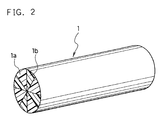
FIG. 2 is an enlarged schematic perspective view
of the segmented composite fiber used for the separator
material.
DETAILED DESCRIPTION OF THE INVENTION
As described previously, the separator material
in accordance with the present invention comprises a non-woven
fabric sheet of a mixture of thin polyolefin resin
fibers and thick polyolefin resin fibers in a
predetermined proportion, wherein a basis weight of the
non-woven fabric sheet is 40 to 70 g/m2 and gas
permeability is 3 to 14 cc/cm2·sec. This configuration
ensures not only the physical strength of the separator
material, which is a requisite for the battery production
process, but also the electrolyte absorption and gas-permeability
properties of the separator material, which
are requisites for a sealed storage battery.
Since the polyolefin resin fibers used in
configuring the above-mentioned non-woven fabric sheet
have an insufficient electrolyte absorption property,
hydrophilic groups are introduced onto the surfaces of the
individual fibers in accordance with the present
invention. It is preferable to introduce the hydrophilic
groups onto the surfaces of the individual fibers by graft
polymerization with a hydrophilic monomer having a
carboxyl group. This imparts the separator material with
a long-term hydrophilic property.
In accordance with the present invention, the
separator material is imparted with the long-term
hydrophilic property by graft polymerization of the
surfaces of the polyolefin resin fibers which have an
insufficient hydrophilic property with acrylic acid, or by
sulfonation of the parts of the fibers having ethylene
component by immersing the fibers in fuming sulfuric acid
or concentrated sulfuric acid, thereby to modify the parts
of ethylene component with sulfone groups.
For imparting the separator material with
hydrophilic property, any other methods such as treatment
with a surface active agent of the fiber surfaces,
treatment by corona discharge and the like may also be
used in addition to the above-mentioned treatments.
The thin resin fibers 1 which constitute the
separator material shown in FIG.1 are segmented composite
fibers of polypropylene and polyethylene. The thick resin
fibers 2 are core-sheath fibers comprising core fibers of
polypropylene and sheathes of polyethylene for covering
the core polypropylene fibers. In addition to these,
polypropylene fibers may be added thereto. By adding the
thick fibers to the thin fibers, the "nerve" required for
the non-woven fabric sheet configured with them can be
strengthened. In addition, the gas-permeability of the
non-woven fabric can also be increased because the pore
sizes of the separator material are increased by the
addition of the thick fibers.
By employing the separator material in
accordance with the present invention, it is possible to
provide a sealed alkaline storage battery having a long
cycle life, the inner pressure of which does not rise for
a long term.
In the following paragraphs, preferred
embodiments of the present invention will be described.
In the embodiments, a description will be made
on the separator material by taking, as its specific
examples, a nickel-metal hydride storage battery
configured with the separator material comprising the
non-woven fabric sheet of polypropylene resin fibers whose
surfaces are treated by graft polymerization with acrylic
acid.
Such non-woven fabric sheet of polypropylene
resin fibers is produced in compliance with the following
procedures. First, segmented composite fibers each having
a cross-section where polyethylene components and
polypropylene components are alternately arranged as shown
in FIG. 2 are prepared. The segmented composite fibers
are divided into four polypropylene fibers 1a and four
polyethylene fibers 1b by the subsequent segmentation
treatment. Nominal filament diameters of the individual
fibers 1a and 1b are 4.7 µm.
As the thick resin fibers, core-sheath fibers
which comprise cores of polypropylene resin and sheathes
of polyethylene resin covering the cores add which have
nominal filament diameters of 9 µm are also prepared. In
this description, the nominal filament diameters of the
individual fibers 1a and 1b having a non-circular
cross-section are defined to represent the larger
diameters of the cross-sections.
A primary non-woven fabric sheet is produced by
dispersing the thick fibers and the segmented composite
fibers in an aqueous dispersing medium containing no
binding agent, and scooping up the dispersed fibers with a
wire cloth from the dispersion. Subsequently, the primary
non-woven fabric sheet is treated in a water stream to
separate the segmented composite fibers and intermingle
the individual fibers with each other. This produces a
secondary non-woven fabric sheet. In this manner, the
non-woven fabric sheet which has a basis weight and a
thickness of 55 g/m2 and 180 µm, respectively, is
obtained. In this example, the proportion by weight of
the above-mentioned thin fibers to the thick fibers is
adjusted to 80:20.
Separate from this, a solution comprising 20 wt%
of acrylic acid, 65 wt% of distilled water, 0.5 wt% of
benzophenone, 0.3 wt% of Mohr's salt, 13.7 wt% of
methoxyethanol and 0.5 wt% of nonionic surface active
agent is prepared. In this solution, the above-mentioned
non-woven fabric sheet is immersed for 10 minutes. In
order to exclude the influence of oxygen during the
subsequent polymerization as much as possible, this
solution has previously been de-oxidized with nitrogen
prior to the immersion.
After removing the excessive solution, the
immersed non-woven fabric sheet is subjected to the graft
polymerization with acrylic acid by irradiating both
surfaces of the non-woven fabric sheet with ultraviolet
ray under a de-oxidized atmosphere using two low-pressure
mercury lamps (output: 110 watt), each placed at a 5 cm
distance from the surfaces of the non-woven fabric sheet.
Subsequently, the unreacted acrylic acid and
other components remaining on the non-woven fabric sheet
are removed by washing it with distilled water at 60 °C.
Subsequent drying and calendering of the fabric sheet
produces a separator material having a basis weight of 60
g/m2 and a thickness of 120 µm. In the non-woven fabric
sheet consisting mainly of polypropylene resin fibers
subjected to the graft polymerization with acrylic acid,
the modification amount by the hydrophilic monomer is
defined by a graft ratio calculated from the following
equation (1) on the basis of the weight (W0) of the
separator material before the graft polymerization and the
weight (W1) after the graft polymerization,
Modification amount = 100 × (W1-W0)/W0
Based on the above equation, the calculated
modification amount (graft ratio) of the above-mentioned
separator material is 9 %.
Evaluation of the strength in "nerve" of the
separator material is made by measuring its stiffness
representing the bending repulsion on a Gurley-type tester
in compliance with a method stipulated in 6.20. 1. A of
JIS L1096-1979.
Evaluation of the gas-permeability of the
separator material is made by measuring its
gas-permeability at a pressure difference of 12.7 mm aq.
on a Frazir type gas-permeation tester in compliance with
a method stipulated in 6.27. 1. A of JIS L1096-1979.
The electrolyte absorption property of the
separator material is evaluated by measuring its
electrolyte absorption ratio under pressure. That of the
polypropylene non-woven fabric sheet subjected to the
graft polymerization with acrylic acid is evaluated in the
following procedures.
First, a test piece is prepared by cutting the
above-mentioned polypropylene non-woven fabric sheet to a
3-cm-size circle. After the weight (Wa) is measured, the
test piece is immersed in an aqueous solution of KOH
having a specific gravity of 1.30 for 3 hours or more.
Subsequently, the excess electrolyte adhering to the
surfaces of the test piece is removed and then the test
piece is inserted into a folded filter paper. The test
piece is applied with a pressure of 60 kg/cm2 for 30
seconds. Then, the weight (Wb) of the pressed test piece
is measured. The electrolyte absorption ratio under
pressure is calculated from the following equation (2).
Electrolyte absorption ratio = 100 × (Wa-Wb)/Wa
Based on the above definitions, the stiffness
representing the strength of "nerve", the gas-permeability
and the electrolyte absorption ratio under pressure of the
above-mentioned separator material are found to be 5.0 mg,
45 cc/cm2·sec. and 25 %, respectively.
EXAMPLES 1 - 6, COMPARATIVE EXAMPLES 1 - 3
By varying the mixing ratio of the thin resin
fibers with the thick resin fibers, the filament diameters
of the individual fibers and the qualities of the resin
fibers, nine (9) samples of non-woven fabric sheets "a" -
"i" as listed in Table 1 below, comprising polypropylene
resin fibers subjected to the graft polymerization with
acrylic acid, were prepared. These fabric samples
included, as their thin fibers, the previously-described
segmented composite fibers of polyethylene and
polypropylene. The samples of Examples 1 through 5 and of
Comparative example 3 included the core-sheath fibers
comprising cores of polypropylene and sheathes of
polyethylene as the thick fibers. For the sample of
Example 6, polypropylene fibers were used. In all the
separator materials, the graft ratio (modification ratio)
was adjusted to 9%. The characteristics of these
separator materials are also listed in Table 1 below.
| | Separator | Thin fiber/Thick fiber | Mixing ratio | Stiffness | Gas-permeation rate | Electrolyte absorption ratio |
| Example 1 | a | 4.7µm 9µm | 80:20 | 5.0 | 4.5 | 25% |
| Example 2 | b | 4.7µm 15µm | 50:50 | 8.0 | 14.0 | 18% |
| Example 3 | c | 4.7µm 9µm | 30:70 | 11.0 | 16.0 | 10% |
| Example 4 | d | 4.7µm 9µm | 10:90 | 13.0 | 18.0 | 8% |
| Example 5 | e | 3.6µm 9µm | 50:50 | 6.0 | 5.0 | 20% |
| Example 6 | f | 4.7µm 15µm | 90:10 | 4.0 | 3.0 | 28% |
| Comparative example 1 | g | 4.7µm --- | 100:0 | 1.0 | 1.5 | 40% |
| Comparative example 2 | h | 3.6µm --- | 100:0 | 0.8 | 1.0 | 45% |
| Comparative example 3 | i | ---9µm | 0:100 | 18.0 | 20.0 | 5% |
When the ratio of the thin fibers with a
filament diameter of 4.7 µm, which are segmented into
polyethylene fibers and polypropylene fibers, to the thick
fibers with a filament diameter of 9 µm, which are core-sheath
fibers comprising core polypropylene fibers and
polyethylene sheaths, was varied from "a" to "d" as listed
in Table 1, the stiffness of the non-woven fabric was
enhanced as the ratio of thick fibers increased. This is
because the amount of fibers with strong "nerve" was
increased in the fabric. The gas-permeation rate also
increased as the ratio of thick fibers increased. This is
because the pore size became larger as the ratio of thick
fibers increased. On the other hand, as the ratio of
thick fibers increased, there were decreases in the total
surface area of the fibers and the electrolyte absorption
of the separator.
When the filament diameter of the thin fibers
was adjusted to 3.6 µm, substantially the same levels of
the stiffness, the gas-permeation rate and the electrolyte
absorption ratio under presue as those of the separator
"a" were obtained at a mixing ratio of the thin fibers to
the thick fibers of 50:50 (separator "e"), where the
proportion of the thick fibers was larger than that of the
separator "a" comprising the thin fibers of the filament
diameter of 4.7 µm.
When the filament diameter of the thick fibers
was adjusted to 15 µm, substantially the same levels of
the stiffness, the gas-permeation rate and the electrolyte
absorption ratio under pressure as those of the separator
"a" were obtained, at a ratio of 10 % (separator "f") of
the thin fibers having the filament diameter of 4.7 µm
which was smaller than that of the separator "a"
comprising the thick fibers having the filament diameter
of 9 µm.
Since the separator "g" or "h" comprising only
the thin fibers having the filament diameter of 4.7 µm or
3.6 µm lacked any fibers which were strong in "nerve", the
stiffness was extremely low. In addition, the
gas-permeation rate decreased with the smaller pore sizes.
On the other hand, there was a tendency of very high
electrolyte absorption because of large surface area.
The separator "i" comprising only the thick
fibers had high stiffness because of its strong "nerve",
and the gas-permeation rate was large because the pore
sizes became large. The smaller the surface area of the
fibers, the larger the decrease in the electrolyte
absorption.
Next, sealed alkaline storage batteries were
produced by using the above-mentioned separators "a" to
"i" in the following procedure.
First, 100 parts by weight of nickel hydroxide
powder as an active material was kneaded with 6 parts by
weight of cobalt hydroxide and water to prepare a paste
which was then filled into a foamed nickel porous
substrate, and subsequently dried and pressed. The
pressed substrate was immersed in an aqueous dispersion of
fluorocarbon resin, dried, and cut to a predetermined
size, which gave a positive electrode.
For a negative electrode, a hydrogen storage
alloy having a composition represented by the formula
MmNi3.55Mn0.4Al0.3Co0.75 (Mm is a mixture of rare earth
elements) having a crystal structure of CaCu5 type was
used. This alloy was pulverized in a ball mill into fine
powders having an average particle diameter of about 30 µm
which were then immersed in an aqueous solution of KOH at
80 °C and washed with water. A paste was obtained by
mixing this hydrogen storage alloy powder with an aqueous
dispersion of stylene-butadiene rubber, carboxymethyl
cellulose, carbon powder and water, and the obtained paste
was applied onto a punched steel sheet elated with nickel.
After dried, the applied punched steel sheet was pressed
and cut to a predetermined size. This gave a negative
electrode.
Subsequently, a combination of the
above-mentioned positive electrode, one of the separators
"a" to "i" listed in Table 1, which had been subjected to
the graft polymerization with acrylic acid and had a
sufficient length twice the length of the positive
electrode plus 40 mm, for covering both the front and rear
surfaces of the positive electrode, and the negative
electrode, which had the length of the positive electrode
plus 35 mm and a theoretical capacity as large as 1.3 to
1.4 times the theoretical capacity of the positive
electrode, was rolled up in a spiral fashion, and
configured in an electrode group, which was then inserted
in a battery case. After injecting an appropriate amount
of electrolyte comprising an aqueous solution composed
mainly of KOH and containing a small amount of NaOH and
LiOH into the battery case, the battery case was sealed
with a sealing plate and a gasket, thereby to obtain a
sealed battery having a discharge capacity of 1,800 mAh.
After three (3) preliminary charge/discharge
cycles, the batteries A to I configured with the separator
materials "a" to "i" listed in Table 1 at an ambient
temperature of 20 °C were subjected to an inner pressure
test and a cycle life test.
Conditions for the inner pressure test included
charging at a current of 1.8 A at an ambient temperature
of 20 °C for 72 minutes.
Conditions for the cycle life test included
repeated charging at a current of 1.8 A for 72 minutes and
discharging at a current of 1.8 A until the terminal
voltage dropped to 1.0 V at an ambient temperature of 20 °C,
and the cycle life of the tested battery was determined
by the number of cycles up to the time point when the
discharge capacity decreased to 60% of the initial
discharge capacity.
In addition, by configuring the spirally
rolled-up electrode groups with the separator materials of
these nine (9) kinds on the mass production facilities,
adaptabilities of the separator materials to mass
production were investigated.
Evaluation on the adaptability was made by
detecting a leakage-associated defective ratio defined by
the following equation (3), resulting from rolling-up
shift between the electrode plates and the separator
material during the electrode group configuration process.
Leakage-associated defective ratio =
100 × (Number of leakage defective
cells)/(Number of total cells)
If the stiffness of the separator material is
low, the separator material may sometimes be transferred
while it is shifted aside during the process of
transferring from the start of rolling-up to the electrode
group configuration step in combining the electrode plates
with the separator material in the electrode group
configuring unit. Consequently, in the spirally rolled-up
electrode group, the axial positions of the electrode
plates may sometimes shift from that of the separator, and
the electrode plates project over the separator. This
causes the increase of the leakage-associated defective.
Table 2 summarizes the results of the leakage-associated
defective ratio during the electrode group
configuration by mass production, the battery inner
pressures and the cycle lives of the respective batteries
A to I.
| | Battery | Leakage defective resulting from the rolling-up shift during the electrode group configuration (%) | Battery inner pressure (kg/cm2) | Cycle life (cycles) |
| Example 1 | A | 0% | 5.5 | 420 |
| Example 2 | B | 0% | 4.0 | 380 |
| Example 3 | C | 0% | 3.8 | 290 |
| Example 4 | D | 0% | 3.5 | 270 |
| Example 5 | E | 0% | 5.8 | 400 |
| Example 6 | F | 0% | 7.5 | 430 |
| Comparative example 1 | G | 20% | 12.0 | 250 |
| Comparative example 2 | H | 30% | 15.0 | 230 |
| Comparative example 3 | I | 0% | 3.0 | 200 |
As clearly seen from Table 2, the separator
materials "a" to "f" of Working examples 1 to 6 were
excellent in the adaptability to the mass production as
compared with that of the separator materials of
Comparative examples 1 and 2.
In addition, since the batteries A to F had a
higher electrolyte absorption property as compared with
that of the battery I, they were excellent in cycle life
characteristics. Although the batteries G and H were
excellent in electrolyte absorption property, their cycle
life characteristics were low because their inner pressure
characteristics were inferior. Since the batteries A, B,
E and F, in particular, were excellent in both
gas-permeability and electrolyte absorption property, they
demonstrated a small increase in inner pressure and had
cycle life characteristics of not less than 300 cycles.
These confirmed that they had no problem in practical use.
It is desirable that the separator material has
a basis weight of 40 g/m2 to 70 g/m2 and a thickness of
50 µm to 180 µm. If the basis weight is smaller than 40
g/m2, it is difficult to secure necessary stiffness, even
if the mixing ratio of the thick fibers is large. In
contrast, if the basis weight is larger than 70 g/m2, or
if the thickness is not more than 50 µm, it is difficult
to secure appropriate gas-permeability. In addition, if
the thickness is not less than 180 µm, it is difficult to
realize a higher capacity density of the battery because
space occupied by the separator increases with the thicker
separator material.
In the foregoing embodiments, although the wet
process was taken as an example for preparing the
non-woven fabric sheet, a similar technical advantage is
obtained with a dry process.
In addition, evaluations on the separator
materials prepared by varying the graft polymerization
ratio stepwisely 1%, 5%, 10%, 15% and 20% were also made,
by changing the concentration of the solution used in the
graft polymerization, which revealed a similar technical
advantage at any graft polymerization ratio of 2% to 15%.
At the graft polymerization ratio of 1%, only an inferior
cycle life characteristic was obtained because of
insufficient electrolyte absorption property, At another
graft polymerization ratio of 20%, an inferior cycle life
characteristic was also obtained, of which reason was
unknown.
Such a tendency as appreciated in the treatment
for imparting hydrophilic property by the graft
polymerization with acrylic acid is not limited to the
graft polymerization and also appreciated in the treatment
by sulfonation, by corona discharge or with a surface
active agent.
The treatment by sulfonation is performed under
the following conditions. The non-woven fabric sheet is
immersed in 20% fuming sulfuric acid at 35 °C for about 20
minutes, followed by washing with water and drying.
From the results of evaluations conducted on the
separator materials prepared by varying the amount of the
introduced sulfone groups stepwisely 0.03, 0.05, 1, 1.5, 2
and 2.5 milli equivalent/g, on the basis of the total
amount of the resin, a similar technical advantage was
obtained with the separator materials comprising the
sulfone groups in an amount ranging from 0.05 milli
equivalent/g to 2 milli equivalent/g. However, with the
amount of 0.03 milli equivalent/g, only an insufficient
electrolyte absorption property was obtained. At 2.5
milli equivalent/g, an inferior cycle life characteristic
was also obtained, of which reason remained unknown.
According to the investigation made by the present
inventors, the amount of the sulfone groups to be
introduced into the fibers is preferably in a range of 0.1
milli equivalent/g to 1 milli equivalent/g.
The treatment by corona discharge is performed
under the following conditions. An electrode which has a
width of 20 mm and a length of 600 mm and is connected to
a high voltage power source with an output of 30 kV, and a
counter electrode of the same size which has a layer
coated with a dielectric substance are installed with a
gap of 3.2 mm therebetween, through which the belt-like
non-woven fabric sheet can travel. While the non-woven
fabric sheet is transferred through the gap, a corona
discharge is effected between both electrodes so that the
total energy irradiated on one face of the non-woven
fabric is 17.5 kW/m2, thereby to treat the surfaces of the
fibers of the non-woven fabric sheet with the ozone
generated during the discharge. From the results of the
evaluation of the separator material thus treated, a
similar technical advantage to that of the above-mentioned
separator was obtained.
Treatment with surface active agent was
performed as follows:
The above-mentioned non-woven fabric sheet was
immersed in an aqueous solution containing a nonionic
surface active agent and dried to prepare a non-woven
fabric sheet of which surfaces are applied with the
surface active agent of 0.1 wt% of the separator.
Then, the separator material thus treated was
evaluated and a similar effect to that of the above-mentioned
separator could be obtained
Although the foregoing description is limited to
the nickel-metal hydride storage battery, the separator
material in accordance with the present invention can also
be used in any other alkaline storage batteries comprising
any of the nickel hydroxide positive electrode or the
hydrogen storage alloy negative electrode, such as
nickel-zinc storage batteries, manganese dioxide-metal
hydride storage batteries and the like, with a similar
technical advantage.
It is understood that various other
modifications will be apparent to and can be readily made
by those skilled in the art without departing from the
scope and spirit of the present invention. Accordingly,
it is not intended that the scope of the claims appended
hereto be limited to the description as set forth herein,
but rather that the claims be construed as encompassing
all the features of patentable novelty that reside in the
present invention, including all features that would be
treated as equivalents thereof by those skilled in the art
to which this invention pertains.